

Submitted:
03 June 2025
Posted:
05 June 2025
You are already at the latest version
Abstract
Non-Timber Forest Products (NTFPs) are crucial for the livelihoods of tribal communities in the Mayurbhanj District of Odisha. This district, rich in forest resources, is home to a significant tribal population whose economic, cultural, and social well-being is intricately tied to the collection and utilization of NTFPs. These products, which include fruits, medicinal plants, bamboo, honey, and fibers, serve as vital sources of income, food security, and traditional medicine. NTFPs also promote social cohesion within communities, with women playing a central role in their collection and trade. NTFPs play an important role in the livelihoods of many communities around the world, providing food, income, medicine and other resources. They are also important for biodiversity conservation and sustainable forest management. This study aimed to document the traditional uses, phytochemical structures, collection methods, processing techniques, and marketing strategies of 92 species belonging to 46 families of Non-Timber Forest Products (NTFPs) found in a Rasgovindpur Block, Mayurbhanj, Odisha. The data was collected through interviews with local communities and experts, as well as literature reviews. It is primarily based on field surveys carried out Rasgovindpur Block, mainly in three panchayat Badampur, Raghabpur and Totapada, where dwellers provided information on plant species used in household materials. The traditional uses of these NTFPs were categorized based on their medicinal, culinary, cosmetic, and other applications. First-hand information on medicinal uses was gathered from knowledgeable tribals, rural and traditional healers (Kabiraj) through semi structured questionnaire. Plants contain numerous biologically active compounds which are help improve human life so, major phytochemical compound structures were given here. For the description of specific QR code generate for each of the plant species., while collection methods, processing techniques, and marketing strategies were described based on local practices and market trends. It is re-stressed that pharmacological and phytochemical investigations may be undertaken on all these reported plants species to validate the claims. The information provided may also help in the discovery of new drugs of plant origin.
Keywords:
medicinal plants
; wild edibles
; fruits and nuts
; mushrooms and fungi
; resins and gums
; natural dyes
1. Introduction
In India, the production of forests plays a crucial role in the socio-economic, cultural, and livelihoods of rural people who rely on forests for nourishment, energy, services, wholesome food, fodder, building materials, medicine, and a variety of other supplies and ecosystem services. After agriculture, the forest sector is the second-largest land use system. 1.7% of the nation’s GDP comes from forests (FAO, 2016). The villages on the edge of the forest provide a range of goods and services to the residents. The functions of forests include supporting sustainable livelihoods, fostering environmental stability, and preserving biodiversity. The fact that a typical tribal family gets half of their annual income from the forest, 13% from livestock, 18% from agriculture, and 18% from other sources of work, on average, indicates how dependent their communities are on the forest (Maikhuri RK et al., 1998). It’s interesting to recall that for many years prior, the evaluation of forest resources was mostly based on timber production. Nevertheless, the lifestyle of the rural tribal people depends on the gathering of a variety of other forest products, known as Non-Timber Forest Products (NTFPs), in addition to timber from forests. NTFPs, are rarely discussed by the public or government despite Odisha being a rich source of these items. NTFPs, or non-timber forest products, are any services or products that are generated in forests but are not wood. These consist of medicinal plants, fruits, vegetables, nuts, essences, resins, gum, palms, rattans and bamboo, as well as fibers and flosses, leaves, grasses, seeds, lac, honey and other materials (Panayotou and Ashton, 1993). Since the beginning of time, people have used non-timber forest products (NTFPs) for a wide range of needs, including fiber, food, fodder, agricultural amenities traditional medicine, household materials, construction materials, and many more uses that are culturally specific (Malik, 2000). The two primary categories of NTFPs are edibles and non-edibles. Non-edible items include oils for cosmetic use, grasses, medicinal products and ornamental plants. Edible products include plants and animals, honey, oils, spices, and more(Adepoju and Sheu, 2007). NTFPs, or non-timber forest products, are any services or products that are generated in forests but are not wood. According to Panayotou and Ashton (1993), these consist of fruits, nuts, vegetables, medicinal plants, gum, resins, essences, bamboo, rattans, and palms, as well as fibers and flosses, grasses, leaves, seeds, honey, lac, and other materials. Since the beginning of time, people have used non-timber forest products (NTFPs) for a wide range of needs, including food, fodder, fiber, traditional medicine, agricultural amenities, household materials, construction materials, and many more uses that are culturally specific (Malik, 2000). The two primary categories of NTFPs are edibles and non-edibles. According to Adepoju and Sheu (2007), non-edible items include grasses, ornamental plants, oils for cosmetic use, medicinal products, and fish. Edible products include plants and animals, honey, oils, fish, spices, and more. 50 million people in India depend on NTFPs for their subsistence(Shaanker et al., 2004). The Government of India and The Ministry of Environment and Forests (MoEFCC), estimated that in 2010–2011, NTFP revenue amounted to approximately 20 billion (Mishra et al., 2009). About 40% of all official forest revenues in India come from NTFPs; in some states, like Odisha, that percentage can reach 70% (Rao and Rao, 2022). In India, non-timber harvesting peripheral projects generate an annual income of US$ 2.7 billion and employ half of all forestry workers (Islam and Quli, 2017). Furthermore, these resources provide for 50% of forest incomes and 70% of export revenue derived from forest products (Shiva and Verma, 2002). Therefore, the first need for the government would be to provide a precise legal definition of the word “NTFP” that specifies everything it would like to include for the purposes of certification and commercial harvesting. A policy for the collection, use, and sale of non-timber forest products (NTFPs) has been released by some states, including Andhra Pradesh and Orissa(Chauhan et al., 2008). The schedule includes information on specific species, royalty rates, and other relevant details. The following organizations supported the promotion of NTFPs: International Development Research Centre (IDRC), Canadian International Development Agency (CIDA), Food and Agriculture Organization of the United Nations (FAO), Centre for International Forestry Research (CIFOR), International Union for the Conservation of Nature (IUCN) ,World Bank (WB),and the Biodiversity Support Programme (BSP) (Pandey et al ., 2016). With an annual commercial turnover of more than Rs. 6000 crores, it is one of the largest unorganized sectors. Even though over 275 million people in India—or 27% of the country’s entire population—rely on this industry for their monetary and subsistence lives, it is still not widely acknowledged (Malhotra, 2010).
Livelihood of local people
According to estimates from the World Health Organization, 80% of people who live in underdeveloped nations rely on wild plants to help them with part of their nutritional and health needs. Indigenous knowledge of the forest resources used for agricultural production and food security is held by the local people. These sources of income can occasionally be used by the locals to generate additional opportunities for livelihood (IUCN, 2001).The states of Andhra Pradesh, Bihar, Chhatisgarh, Jharkhand, Odisha, Madhya Pradesh and Maharashtra are home to over 65% of India’s tribal population, which also produces around 70% of the country’s nontimber forest products (Guha, 1983).
Social and ritual values
Numerous forest products are essential to social interactions and ceremonial practices in traditional cultures. The customs and beliefs that have been passed down to the tribal people from ancient times have resulted in its religion. The custom of using plants for different purposes is solely rooted in folklore. Other customs include the worship of various trees, Goddess Banadurga, Mother Earth, the Sun God, Jangal Devata and Daluani Devata. Numerous NTFPs are utilized in worship to appease the planets, offer sacrifices for fire, ward off bad spirits (kendu leaves), pray for prosperity in all endeavors, appease the planet Saturn, and honor the forest goddess, among other purposes.
Socio economic development
The income from NTFPs ranged from Rs 234 to Rs 5569 (US $8-$186) per hectare per year, with a mean of Rs 2299 (US $79), according to research done on ten forest protection committees under the Joint Forest Management program (Malhotra et al., 1991). The share of overall export revenue from forest products that comes from non-timber forest products (NTFPs) has been increasing, with an average of 60 to 70 percent coming from these exports. Odisha receives a significant amount of revenue from NTFPs. Through the Odisha Forest Development Corporation, the state government of Odisha manages the trading and acquisition of various NTFPs (OFDC). After Madhya Pradesh and Chhattisgarh, Odisha is the third-largest producer of Kendu leaves. The yearly Kendu leaves or Bidi production in Odisha is around 4.5 to 5 lakhs quintal (Sahoo et al.,2020).
Medicinal value and traditional health care
The use of NTFPs in traditional medicine is deeply rooted in cultural practices and indigenous knowledge, passed down through generations. NTFPs are rich sources of bioactive compounds with potential medicinal benefits, offering natural remedies for a wide range of ailments. Their availability in forests and other natural habitats makes them accessible to communities, especially in remote areas where modern healthcare services may be limited or unavailable. Additionally, the sustainable harvesting and utilization of NTFPs contribute to the conservation of biodiversity and the preservation of traditional healing practices. Over 4 billion people receive their primary healthcare from traditional plant-based medical systems, according to the World Health Organization. Every group in the Northeast states has a traditional medical system based on ethnobotany (Dattagupta and Gupta, 2014). Tribal people collected NTFPs mainly to address their subsistence needs. Non-timber resources can significantly improve environmental health, cultural resilience, diverse economic growth, and sustainable rural development. While the majority of NTFPs have a high commercial value, a small percentage have poor cash values and are therefore used for consumption rather than sales. When an article by Peter et al. (1989) published in “Nature” asserted that collecting these products could yield higher profits from tropical forests than logging, it effectively sparked the interest of environmentalists worldwide regarding the relevance of NTFPs. Formerly the NTFP sector was ignored by main stream forestry for many years, and they were regarded as “minor” (Minor Forest Produce), even though the Forest Department made a fine living from having monopoly rights over a number of these NTFPs and MFPs. Environmental concerns are starting to play a bigger role in international trade and economic policy as a result of the notable increase in public awareness of environmental issues over the past few decades in both developed and developing nations. Consumer interests has encouraged data collection procedures aimed at distinguishing the environmental impact of products, as evidenced by the creation of “eco-labeling,” a procedure that aims to offer a sign of the extent to which a product is adapted to the environment appropriateness of goods and services. An overview of the five states In India, states including Andhra Pradesh, Chhattisgarh, Orissa, and Uttarakhand have implemented NTFP-based benefit sharing models between the 1970s and 2000; however, these states have not yet developed sustainable harvesting mechanisms (Bhattacharya and Hyat, 2004). The governments of the aforementioned five states have primarily established distinct organizations tasked with acquiring, processing, storing, and promoting raw materials for NTFPs. More recently, the Indian government launched the Minimum Support Price (MSP) procurement initiative, in which covers 12 items across 8 states and is expected to assist 100 million people. NTFPs are taken from the wild without any knowledge of the maturity stage or parts that need to be taken. Before using plant material, its quality must be determined. The production of numerous NTFPs has decreased due to a number of factors, including overharvesting, early collecting, climate change (particularly severe drought and flooding), and others. The overabundance of demand from the herbal enterprises compelled the local villagers to collect products from several forest ranges before their time. Traders and suppliers employ local people to pick up certain products. Plants are becoming more vulnerable and experiencing less regeneration as a result of damaging collection procedures. Experts in biodiversity have noticed that the number of these trees is declining quickly, and that the populations of the related animals, such as bird and honey bee species, have also declined sharply. This has had a detrimental effect on the reproductive biology of several NTFP tree species. So the aim of the present research helps to collect information about NTFPs of Mayurbhanj district and their ethnopharmacological importance among local people.
2. Material and Methods
Study Area
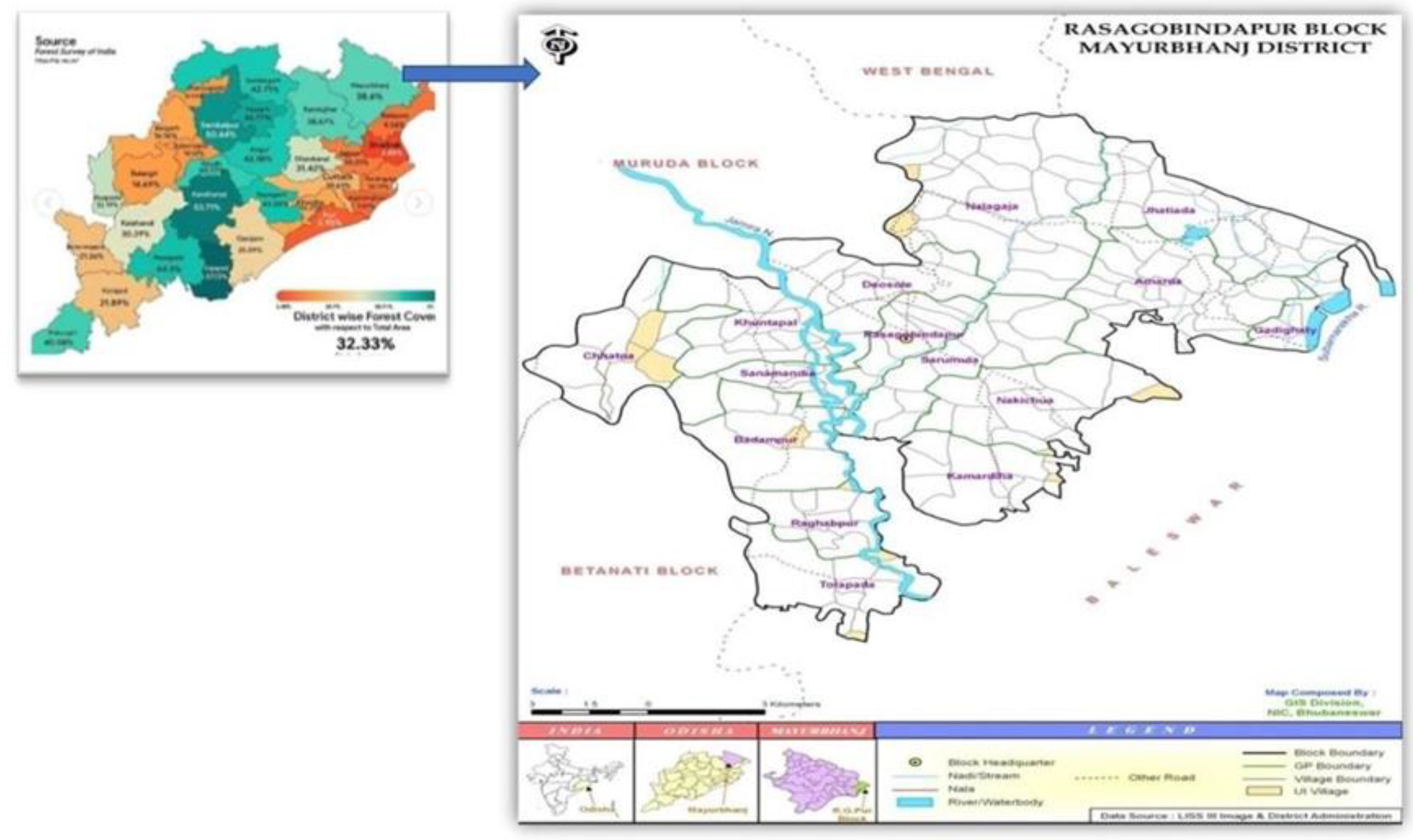
The district of Mayurbhanj is very large, with almost 10418 km² of territory. The district is located between latitudes 21° 16’ and 22° 34’ North and longitudes 85° 40’ and 87° 11’ East. The district is bounded on the North by West Bengal and Jharkhand, on the west by Keonjhar district and on the East by Balasore district of Orissa. The Rasgovindpur block’s Totapada, Raghabpur, and Badampur panchayats are the subject of the most recent study. This Block became operational on January 26, 1961. The Block Head Quarter is 40 miles from the District Head Quarter in Baripada, near Rasgobindpur. The Block’s geographic area is 101.01 square miles, made up of 16 G.P.
Figure 1.
Odisha map showing the study sites.
Data collection
The study’s primary focus was on five villages: Totapada (Totapada panchayat), Bartana, and Kalama (Raghabpur panchayat), Badhi and Patharachhatia (Badampur panchayat). Twenty households from each village participated in the NTFP collection; the data were gathered at random. Individual interviews were conducted during the initial interactions with the local population. “Native experts,” or those regarded by the community as possessing extraordinary knowledge about plant usage, were identified. One hundred and sixty (74 women and 42 men) persons were interviewed. Among these interviews ,30% were aged, 21-40 years, 20% were 61 years old or more and half of the sample (50%) were in the 41-60 age range. The field study was carried out from August 2023 to April 2024, and the information on the use of plants was obtained through questionnaires, complemented by interviews and informal conversations. Total 92 samples were collected from the selected villages. Interviews were conducted one-on-one or in groups with elderly and experienced people, local healers of the villages, and plant parts and products used by the people for food, fodder, and beverages. Additionally, questions were asked about drugs, drug manufacturing techniques, suggested dosages, etc. by knowledgeable individuals or medicine men called Kaviraj. The plants have been sorted alphabetically for ease of use. In collaboration with the Flora of Orissa, the correct naming for the plant has been provided. In order to confirm the field study, if possible, images were taken and locals were interviewed one-on-one and in groups. A picture makes the presentation and result easier for us to understand. As a result, photographs have been taken of the plants, their parts, and people utilizing the plants. All the plant products description is stored with online QR code for future reference.
3. Results
The primary and secondary data serve as the foundation for the field work. Using a questionnaire survey and conversation, the respondents in the relevant communities provided the primary data. Several published sources have been used in the collection of secondary data. A total of 92 species belonging to 46 families with their household plant parts have been listed in Table 1. It is observed that out of the several parts leave, stem and flowers, fruits, barks which are plentily available almost in all seasons of the year are used for various household appliances and medicine.
Top 10 families are Fabaceae with 16 species followed by Anacardiaceae with 5 species, Combretacea, Moraceae, Poaceae and Zingiberaceae with 4 species and Euphorbiaceae, Lamiaceae, Malvaceae and Rutaceae with 3 species. Rest of the families are represented by two or one species. Because of their relevance in biomedicine, plants—which are photosynthetic eukaryotes belonging to the kingdom Plantae—contribute greatly to our economy. Due to the presence of phytochemicals, all 92 species have some pharmacological qualities. Alkaloids, tannins, flavonoids, and phenolic compounds are the most significant of these bioactive components found in plants. The names and chemical structures of a few significant phytochemicals found in the gathered plant species are shown in Table 2. One could consider the plants under study to be a possible source of practical medications. To isolate, identify, define, and clarify the structure of the bioactive chemicals in these plants, more research is being done. Numerous pharmacological characteristics, such as antioxidant, anti- inflammatory, antibacterial, and anticancer effects, have been discovered for these substances. The pharmaceutical, nutritional supplement, and beauty industries can benefit greatly from the phytochemical diversity of non-traditional fish oils (NTFPs). NTFPs are the source of many conventional medications and natural cures, and continued research is identifying novel bioactive substances with possible medical uses.
Collection, processing and marketing of some major NTFPS
Non-timber forest products (NTFPs) are mainly collected and sold in tribal or rural regions because these communities regardless of age or gender are engaged in gathering nature’s bounty. Although it takes a lot of time, the process of gathering dry items that fall to the ground ripe is straightforward. Ripe fruits, sal seeds, mahua flowers, and other items are harvested from the base of trees. Simply sweep the area completely and wait patiently for the prize to fall in order to obtain these NTFPs objects. This method requires no labor at all. Some NTFPs, such as the leaves of Sal, Kendu, and Siali, are harvested when still green. After being sun-dried to remove moisture, these materials are treated for various applications. In both situations, there is no need for any tools or implements. All you need are a couple of bamboo baskets. To fell the tree and extract its bark, sap, and other dry materials, you’ll need an axe and a knife. Collecting resin, gum, and honey requires a lot of work. An enthusiast for these goods typically packs a knife, climbing rope, and regular axe for their trip. It is a common observation that items that have been acquired are removed from the forest by means of pole carrying or headloads.
Sal leaf
From February to May, new leaves grow; from January to March, they turn yellow and begin to fall. Women and children are the main leaf collectors; they use pluckers that are 20 to 22 feet long or gather leaves that have fallen to the forest floor. Twigs with four to five leaves are often plucked, and the leaves are then separated from the twigs. Khali (raw plates) are created by sewing green leaves together with bamboo or neem nails. For one plate, about 9–11 leaves and 10–11 splints are needed. To prevent fungal invasion, the stitched plates are carefully sun-dried for 48 in an open area. This should not be exceeded because it could lower the goods durability and flexibility. These dehydrated leaves are left open all night to absorb some moisture, which prevents the leaves from breaking when sewing.
Kendu leaves
The collecting of Kendu (Diospyros melanoxylon) leaves is one of the non-timber forest products (NTFPs) that is mostly found in the central peninsula of India, including parts of Maharashtra, Andhra Pradesh, Madhya Pradesh, Orissa, and Chhattisgarh. The clearing of fields, budding, tapering, and trimming often occurs in the month of March, which is when the kendu leave gathering process begins. It takes a month for fresh softy leaves to multiply. These leaves are subsequently harvested by individual homes primarily between mid-April and June. Manual leaf collection is done from standing trees and shrubs. Working to and from the tendu growing places, picking leaves, letting them dry in the sun, and sorting and bundling the leaves are the main tasks involved.
Sal seed
The seeds are carefully gathered, either by climbing the trees or after they have fallen to the ground. The sala seeds are gathered and then let to dry in the sun. This aids in eliminating any surplus moisture and stops the growth of mold. Longer seed preservation is another benefit of drying. Tribal people use rudimentary instruments like sieves or their hands to remove any debris or contaminants after the seeds have dried. This guarantees that only clean seeds will proceed with processing.
Kochila seeds
The seeds are manually gathered, frequently by climbing the trees to pluck them or after they have fallen to the ground. The Kochila seeds are gathered and then allowed to dry in the sun. To be sold to traders, the dried seeds are kept in airtight containers. After being dried and cleaned, some of the Kochila seeds are ground into a fine powder or processed using manual presses, wooden pestles and mortars, or grinding stones to extract the oils.
Karanja seeds
Around the nation, the fruits are collected at various dates, primarily in May and June. Each seed weighs between 1.1 and 1.8 grams when it is harvested in the spring. According to the locals, collecting karanja pods takes about a week, and dehulling and decorticating the pods to remove the seeds takes almost the same length of time.
Mahula flower
According to tribal perspectives, mahula is the most significant tree species since it serves a multitude of functions. It has significant spiritual, cultural, therapeutic, decorative, and multipurpose uses. Approximately 40% of the tribal population in Mayurbhanj derives their livelihood from the Mahua flowers and fruits. The Mahua flowers are mostly used to make whiskey, which is much sought after in the tribal area due to the low cost of the goods, which negatively impacts the tribe’s economy.
Kusuma seeds
The cluster of fruit are gathered by climbing the Schleichera oleosa trees. After wiping the fruits in water and allowing them to dry, the pulp is removed. It is frequently employed as a lac bug host, Laccifer lacca (Karr). In southern India, it is a popular bee plant for nectar and for the manufacture of kusumi lac.
Tentuli
A significant fruit tree, the tamarind is planted in regions of India that receive rain, particularly in Karnataka, Tamil Nadu, Maharashtra, Andhra Pradesh, Madhya Pradesh, and Odisha. Every year, over 2.50 lakh tonnes of tamarind pulp are produced in India. Although raw tamarind is traded in March, April, and May, the harvesting season actually runs from February to April.When the fruits of the tree are entirely mature or fall from the tree, they are harvested. Harvested fruits are gathered, categorized, and graded. Fruits with fragile skins are peeled off, and the seed-containing pulp is extracted. Seeds with pulp are sun-dried for five to seven days. Pulp that has been semi-dried is wrapped and packed in sizable plastic bags. Many tough, glossy, brown seeds are contained in each pod. The materials surrounding the seeds are soft, edible that prized part of fruit.
Sabai grass
The Mayurbhanj District is endowed with naturally occurring Sabai grass in the forest, as well as cultivable kinds cultivated on private property, government land, and residential forests’ backyards. Making rope is typically a part-time job for rural families. Before going to bed, work is frequently completed in the evening, early in the morning, and late at night. But the labor of twisting takes up the entire day. Mainly women and kids are involved. Sabai Ropes are generally sold both inside and beyond the state for use in paper manufacturing companies and in the weaving of charpai (Cots). Sabai rope is woven and coiled over the frame to give a finishing shape, which attains exceptional excellence. It is also used to make tea poi, little baskets, sofa sets, and chairs, among other things.
Bamboo
The tallest grasses in the globe are bamboos. The Poaceae family includes bamboos. Of the 1250 species of bamboo, 130 are found in India. Of these, 13 species are located in Odisha, where three to four species are abundant and 25% of Indians live in poverty. As a result, bamboo housing might develop into an affordable substitute. Bamboo has been utilized in the construction of houses in a variety of applications, including roofing, walls, doors, and windows. Bamboo is used to make a wide variety of everyday household items, including wall plates, wall hangers, trays, mats, baskets, toys, and nets. Bamboo strips are used to create decorative arrangements of fruits and flowers in bamboo products of various sizes and forms. Bamboo is used to make flutes, a common musical instrument in India.
Cane
As members of the Calamoideae, a sizable subfamily of the Palm family (Arecaceae), rattans are scaly, climbing palms. Worldwide, there are over 600 species of rattans that are divided into 14 genera.With five genera and sixty species, mostly located in the Western Ghats, Andaman Islands, and North-eastern India, India has a good diversity of rattans. The locals harvest rattan using traditional methods, which involve gathering the vines in bundles from the forest and chopping them with machetes. The thorns and outer skin of the rattan are removed during processing after harvest. After processing, the rattan is dried to remove excess moisture. Tribals frequently employ ancient weaving methods to make rattan furniture, baskets, and other items. These goods are often created by hand and can be intricately designed.
Marketing
All 5 surveyed village had inadequate economic and infrastructural development. The main jobs were subsistence farming, gathering non-timber forest products (NTFPs) from nearby woods or from private trees (Mahula), raising livestock such as cows, goats, lambs, pigs, and chickens, and earning seasonal wages. People gathered various forest products for their own use, to sell in the neighborhood marketplaces (Hatas) for cash, or to trade for necessities. Local people play a vital role in the marketing of non-timber forest products (NTFPs) as they often rely on these resources for their livelihoods. By engaging in the sustainable harvesting, processing, and selling of NTFPs, local communities can generate income while promoting conservation efforts. The collected NTFPs are categorized Into different groups such as oil seeds includes sal seeds, neem seeds, karanj seeds, kusum seeds and . Second, food products such as charkoli, amla, jammun, mahula, kendu, mushrooms, tentuli . Third, medicinal products such as harida, bahada, jhuna and siali bark. Fourth, leaves such as sala, kendu and siali are categorized into leaves. Except these, the other major NTFPs are sabai grass. To make a good living, sal leaves are gathered, dried, and sewn into handmade plates that are then sold in the neighborhood haata (weekly markets). On the other hand, machine-pressed sal leaf plates are highly sought after in towns, where they can increase more revenue by improving through automated molding. For tribal women and children, collecting and reselling toothbrushes made of Mahua (Madhuca latifolia), Sal (Shorea robusta), Karanj (Millettia pinnata), and Neem (Azadirachta indica) in local and city marketplaces is a well-liked and profitable enterprise. Mahua dried flowers are used to make country whiskey, which is sold by indigenous women in makeshift stores. Customers buy it during local weekly haats, practically all celebrations, memorials, and cultural events. Therefore, the forests that surround the communities not only offer an abundance of grazing areas and ample fodder for raising cattle, but they also present chances for employment and revenue.
Issues and Challenges for marketing of NTFPs
When it comes to marketing non-timber forest products (NTFPs), locals confront a number of obstacles, such as restricted market access, volatile prices, a lack of market knowledge, and weak negotiating power. Their capacity to reach potential customers and bargain for reasonable rates for their goods may be hampered by inadequate transportation, infrastructure, and market expertise. Additionally, their income and way of life may be impacted by market price fluctuations, which makes it challenging to properly plan and budget. Locals may find it difficult to compete with larger manufacturers and organizations that have greater resources and marketing capabilities if they do not have access to current market knowledge and the required certifications for quality control. To increase the market value of NTFPs and maintain a consistent income, it is also essential to ensure sustainable harvesting practices and implement value addition strategies. All things considered, in order to optimize their economic prospects and encourage environmental preservation, the local population needs assistance developing their marketing abilities, finding customers, and negotiating the challenges of selling Natural Therapeutic Products.
4. Discussion
The study revealed a rich diversity of NTFPs in the study area, with a wide range of traditional uses and phytochemical structures. Despite their traditional use in our country, the plants and their chemical compounds have not been thoroughly studied to confirm earlier beliefs reveal new medicinal properties and focus on their possible pharmaceutical applications. These plants have proven to be very important in research on medicinal plants. and the phytochemicals they contain make them plants for use in medical research and development. Local communities have developed sustainable collection methods and processing techniques to ensure the availability of these resources for future generations. However, challenges such as overharvesting, habitat destruction, and lack of market access were also identified. Sustainable management practices and market development initiatives are needed to conserve these valuable resources and support the livelihoods of local communities. Further research is recommended to explore the potential of these NTFPs for economic development and biodiversity conservation in the region. To strengthen the pharmacological profile of these species for drug development, the extraction, identification and mode of action of the bioactive components at the molecular level should be investigated in more detail. In addition, more research is needed to clarify the relationship between traditional uses and their pharmacological functions. Therefore, they are recommended for further studies on the pharmacological importance of these phytochemicals in the body. This study is another confirmation that these plants are good sources of income for individuals, income production and bio-perspectives.
5. Conclusion
Non-Timber Forest Products (NTFPs) play a crucial role in livelihoods, biodiversity conservation, and sustainable forest management. These resources, including medicinal plants, fruits, nuts, resins, bamboo, and essential oils, provide economic opportunities for rural communities while reducing pressure on timber harvesting. NTFPs support traditional knowledge and cultural practices, particularly among indigenous groups, and contribute to food security and health care. Their sustainable harvesting ensures ecosystem balance, promoting biodiversity conservation and climate resilience. However, challenges such as overexploitation, market access, and policy gaps need to be addressed through better governance, community involvement, and value chain development to maximize their potential benefits.
References
- Aakruti, A. K., Swati, R. D., & Vilasrao, J. K. (2013). Overview of Indian medicinal tree: Bambusa bambos (Druce). Int. Res. J. Pharm, 4, 52-56.
- Adepoju AA, Sheu SA. Economic valuation of non-timber forest products (NTFPs) [online]; 2007. Available:https://mpra.ub.uni-Muenchen.de/2689/.
- Adepoju, A. A., & Salau, A. S. (2007). Economic valuation of non-timber forest products (NTFPs).
- Ahenkan, A., & Boon, E. (2011). Non-timber forest products (NTFPs): Clearing the confusion in semantics. Journal of Human Ecology, 33(1), 1-9. [CrossRef]
- Ahmad, I., Kumar, D., & Patel, H. (2021). Computational investigation of phytochemicals from Withania somnifera (Indian ginseng/ashwagandha) as plausible inhibitors of GluN2B-containing NMDA receptors. Journal of biomolecular structure and dynamics, 40(17), 7991-8003. [CrossRef]
- Al Rashid, M. H., Mandal, V., Mandal, S. C., & Amirthalingam, R. (2017). Diospyros melanoxylon roxb in cancer prevention: pharmacological screening, pharmacokinetics and clinical studies. International Journal of Pharmacognosy, 4(7): 217-223.
- Al-Snafi, A. E. (2017). Anticancer effects of Arabian medicinal plants (part 1)-A review. IOSR Journal of Pharmacy, 7(4), 63-102. [CrossRef]
- Amalraj, A., & Gopi, S. (2017). Medicinal properties of Terminalia arjuna (Roxb.) Wight & Arn.: a review. Journal of traditional and complementary medicine, 7(1), 6578.
- Anwar, W.S., Abdel-maksoud, F.M., Sayed, A.M., Abdel-Rahman, A. M., Makboul, M.A., & Zaher, A. M. (2023). Potent hepatoprotective activity of common rattan (Calamus rotang L.) leaf extract and its molecular mechanism. BMC Complement Med Ther,23.
- Arote, S. R., & Yeole, P. G. (2010). Pongamia pinnata L: a comprehensive review. International Journal of PharmTech Research, 2(4), 2283-2290.
- Ashokkumar, K. (2015). Gloriosa superba (L.): a brief review of its phytochemical properties and pharmacology. Int J Pharmacogn Phytochem Res, 7(6), 1190-3.
- Ayyanar, M., & Subash-Babu, P. (2012). Syzygium cumini (L.) Skeels: A review of its phytochemical constituents and traditional uses. Asian Pacific journal of tropical biomedicine, 2(3), 240-246. [CrossRef]
- Bahorun, T., Neergheen, V.S., & Aruoma, O. I. (2005). Phytochemical constituents of Cassia fistula. African Journal of Biotechnology ,4 (13), 1530-1540. [CrossRef]
- Bahuguna, V. K. (2000). Forests in the economy of the rural poor: an estimation of the dependency level. AMBIO: A Journal of the Human Environment, 29(3), 126-129.
- Baliga, M. S., Bhat, H. P., Joseph, N., & Fazal, F. (2011). Phytochemistry and medicinal uses of the bael fruit (Aegle marmelos Correa): A concise review. Food Research International, 44(7), 1768-1775. [CrossRef]
- Balkrishna, A., Chauhan, M., Dabas, A., & Arya, V. (2022). A Comprehensive Insight into the Phytochemical, Pharmacological Potential, and Traditional Medicinal Uses of Albizia lebbeck (L.) Benth. Evidence-Based Complementary and Alternative Medicine, 2022. [CrossRef]
- Balraju, W., Dinesha, S., Patil, G., Pradhan, D., Arshad, A., & Tripathi, S. K. (2023). Socio- economic drivers for the collection of Tendu leaves, a case study from Katghora Forest Division, Chhattisgarh, India.
- Batiha, G. E. S., Akhtar, N., Alsayegh, A. A., Abusudah, W. F., Almohmadi, N. H., Shaheen, H. M., ... & De Waard, M. (2022). Bioactive compounds, pharmacological actions, and pharmacokinetics of genus Acacia. Molecules, 27(21), 7340. 21.
- Bhadoriya, S. S., Ganeshpurkar, A., Narwaria, J., Rai, G., & Jain, A. P. (2011). Tamarindus indica: Extent of explored potential. Pharmacognosy reviews, 5(9), 73.
- Bharathi, T. N., Girish, M., Girish, M. R., & Jayaram, M. S. (2022). An Economic Analysis of Production and Marketing of Tamarind in Srinivasapura Taluk of Kolar District, Karnataka. Mysore Journal of Agricultural Sciences, 56(4).
- Bhati, R., Singh, A., Saharan, V. A., Ram, V., & Bhandari, A. (2012). Strychnos nuxvomica seeds: Pharmacognostical standardization, extraction, and antidiabetic activity. Journal of Ayurveda and integrative medicine, 3(2), 80.
- Bhatia, H., Kaur, J., Nandi, S., Gurnani, V., Chowdhury, A., Reddy, P. H., ... & Rathi, B. (2013). A review on Schleichera oleosa: Pharmacological and environmental aspects. journal of pharmacy research, 6(1), 224-229. [CrossRef]
- Bhattacharya, P., & Hayat, S. F. (2004). Sustainable NTFP management for rural development: a case from Madhya Pradesh, India. International Forestry Review, 6(2), 161-168. [CrossRef]
- Bhattacharya, P., & Prasad, R. (2001). Integrated options for forest management in India. Victor, M. and Barash, A, 49-57.
- Bhattacharya, P., Prasad, R., Bhattacharyya, R., & Asokan, A. (2008). Towards certification of wild medicinal and aromatic plants in four Indian states. Unasylva, 59(230), 35- 44.
- Brintha, S., Rajesh, S., Renuka, R., Santhanakrishnan, V. P., & Gnanam, R. (2017). Phytochemical analysis and bioactivity prediction of compounds in methanolic extracts of Curculigo orchioides Gaertn. Journal of Pharmacognosy and Phytochemistry, 6(4), 192-197.
- Butt, S. Z., Hussain, S., Munawar, K. S., Tajammal, A., & Muazzam, M. A. (2021). Phytochemistry of Ziziphus Mauritiana; its nutritional and pharmaceutical potential. Scientific Inquiry and Review, 5(2), 1-15. [CrossRef]
- Campbell, B. M., & Luckert, M. K. (Eds.). (2002). Uncovering the hidden harvest: valuation methods for woodland and forest resources. Earthscan.
- Chahal, K. K., Bhardwaj, U., Kaushal, S., & Sandhu, A. K. (2015). Chemical composition and biological properties of Chrysopogon zizanioides (L.) Roberty syn. Vetiveria zizanioides (L.) Nash-A Review.
- Chamariya, R., Raheja, R., Suvarna, V., & Bhandare, R. (2022). A critical review on phytopharmacology, spectral and computational analysis of phytoconstituents from Streblus asper Lour. Phytomedicine Plus, 2(1), 100177. [CrossRef]
- Chandel, P. K., Prajapati, R. K., & Dhurwe, R. K. (2018). Documentation of traditional collection methods of different NTFPs in Dhamtari forest area. Journal of Pharmacognosy and Phytochemistry, 7(1), 1531-1536.
- Charanraj, N., Venkateswararao, P., Vasudha, B., & Narender, B. (2019). Phytopharmacology of Chloroxylon swietenia: a review. Journal of Drug Delivery and Therapeutics, 9(1), 273-278. [CrossRef]
- Chauhan, K. V. S., Sharma, A. K., & Kumar, R. (2008). Non-timber forest products subsistence and commercial uses: trends and future demands. International Forestry Review, 10(2), 201-216. [CrossRef]
- Chen, X., Dai, X., Liu, Y., Yang, Y., Yuan, L., He, X., & Gong, G. (2022). Solanum nigrum Linn.: an insight into current research on traditional uses, phytochemistry, and pharmacology. Frontiers in Pharmacology, 13, 918071. [CrossRef]
- Chopra, K. (1993). The value of non-timber forest products: an estimation for tropical deciduous forests in India. Economic botany, 47, 251-257. [CrossRef]
- Chouhan, H. S., Swarnakar, G., & Jogpal, B. (2021). Medicinal properties of Ricinus communis: A review. International Journal of Pharmaceutical Sciences and Research, 12(7), 3632-3642.
- Dalvi, T. S., Kumbhar, U. J., & Shah, N. (2022). Madhuca longifolia: ethanobotanical, phytochemical studies, pharmacological aspects with future prospects. IJABS, 2, 1- 9.
- Das, D., & Sahoo, M. K. (2023). Fostering Sustainable Growth: Evaluating Financing Strategies for Tamarind Value Chains in Rayagada District of Odisha.
- Dash SR, Karjee PK, Patra B, Bal R, Kar A.2024. Chemical constituent, essential oil and biological activities of different species of lamiaceae and their effect on human health. Afr. J. Biomed. Res. 27 (3): 5361-5370.
- Dattagupta, Shovan, and Abhik Gupta. “Traditional processing of non-timber forest products in Cachar, Assam, India.” (2014).
- Deep SK, Patra B, Baral A, Nayak Y, Pradhan SN (2022). Impact of global climate change on extremophilic diversity. Journal of east china university of science and technology. 65 (3): 842-853. [CrossRef]
- Deep SK, Patra B, Mohanta AK, Ekka RK, Sethi BK, Behera PK, Pradhan SN. 2023. Role of Critical contaminants in ground water of Kalahandi district of Odisha and their health risk assessment. Ann. For. Res. 66(1): 3963-3981.
- Deora, S. L., & Khadabadi, S.S. (2009). Screening of antistress properties of Chlophytum borivilianum tuber. Pharmacologyonline, 1,320-328.
- Dev, L. R., Anurag, M., & Rajiv, G. (2010). Oroxylum indicum: A review. Pharmacognosy Journal, 2(9), 304-310. [CrossRef]
- Dey, A., Kumar, H., & Das, S.(2022). Significance of Non-Timber Forest Products (NTFPs) to the Tribal Wealth of Ranchi District, Jharkhand. Eco. Env. & Cons. 28 (4). [CrossRef]
- Dhingra, A. K., Chopra, B., & Mittal, S. K. (2013). Martynia annua L.: a review on its ethnobotany, phytochemical and pharmacological profile. Journal of pharmacognosy and phytochemistry, 1(6), 135-140.
- Dransfield, J. (1982). Notes on rattans (Palmae: Lepidocaryoideae) occurring in Sabah, Borneo. Kew Bulletin, 783-815. [CrossRef]
- ElSohly, M. A., Radwan, M. M., Gul, W., Chandra, S., & Galal, A. (2017). Phytochemistry of Cannabis sativa L. Progress in the chemistry of organic natural products, 103, 1–36. [CrossRef]
- Farzana, M. U. Z. N., & Al Tharique, I. (2014). A review of ethnomedicine, phytochemical and pharmacological activities of Acacia nilotica (Linn) willd. Journal of Pharmacognosy and Phytochemistry, 3(1), 84-90.
- Félix-Silva, J. Félix-Silva, J., Giordani, R. B., Silva-Jr, A. A. D., Zucolotto, S. M., & FernandesPedrosa, M. D. F. (2014). Jatropha gossypiifolia L.(Euphorbiaceae): a review of traditional uses, phytochemistry, pharmacology, and toxicology of this medicinal plant. Evidence-Based Complementary and Alternative Medicine, 2014.
- Gadgil, M. (2003). India’s Biological Diversity Act 2002: An act for the new millenium. [CrossRef]
- Gaire, B. P., & Subedi, L. (2014). Phytochemistry, pharmacology and medicinal properties of Phyllanthus emblica Linn. Chinese journal of integrative medicine, 1-8. [CrossRef]
- Gauraha, A. K. (1992). Micro-economic analysis of a tribal village. Indian Journal of Agricultural Economics, 47(3), 446-447.
- Ghosal, S. (2011). Importance of non-timber forest products in native household economy. Journal of Geography and Regional planning, 4(3), 159.
- Gochhi SK, Patra B, Dey SK. 2023.comparative study of bioactive components of betel leaf essential oil using GCMS analysis. Gradiva review journal. 9(9): 08-20.
- Greeshma, M., Manoj, G. S., & Murugan, K. (2017). Phytochemical analysis of leaves of teak (tectona grandis lf) by gc ms. Kongunadu Research Journal, 4(1), 75-78. [CrossRef]
- Guo, R., Wang, T., Zhou, G., Xu, M., Yu, X., Zhang, X., ... & Wang, Z. (2018). Botany, phytochemistry, pharmacology and toxicity of Strychnos nux-vomica L.: a review. The American journal of Chinese medicine, 46(01), 1-23.
- Gupta, A. K., Sharma, M. L., & Singh, L. (2017). Utilization pattern of non-timber forest products (NTFPs) among the tribal population of Chhattisgarh, India. International Journal of Bio-resource and Stress Management, 8(Apr, 2), 327-333. [CrossRef]
- Haldhar, R., Prasad, D., & Bhardwaj, N. (2019). Surface adsorption and corrosion resistance performance of Acacia concinna pod extract: An efficient inhibitor for mild steel in acidic environment. Arabian Journal for Science and Engineering, 45(1), 131-141. [CrossRef]
- Islam, M. A., & Quli, S. M. S. (2017). The role of non-timber forest products (NTFPs) in tribal economy of Jharkhand, India. International Journal of Current Microbiology and Applied Sciences, 6(10), 2184-2195. [CrossRef]
- Islam, M. A., Quli, S. M. S., Sofi, P. A., Bhat, G. M., & Malik, A. R. (2015). Livelihood dependency of indigenous people on forest in Jharkhand, India. Vegetos, 28(3), 106- 118. [CrossRef]
- Jena, P. K., (2019). Economic Role of Non-Timber Forest Products (NTFPs) in the Livelihood of Scheduled Tribes in Similipal Area of Mayurbhanj District of Odisha. International Journal of Business and Management Invention, 8(2), 01-09.
- Jerin, V. A. Jerin, V. A., Lazarus, T. P., Gopakumar, S., Durga, A. R., Nishan, M. A., & Gopinath, P. P. (2022). Role of Non-Timber Forest Products in Income Generation of the Tribal Population: A Review. Asian Journal of Agricultural Extension, Economics & Sociology, 40(11), 285-294. [CrossRef]
- Johnson, T. S., Agarwal, R. K., & Agarwal, A. (2013). Non-timber forest products as a source of livelihood option for forest dwellers: role of society, herbal industries and government agencies. Current Science, 104(4), 440-443.
- Johnson, T. S., Agarwal, R. K., & Agarwal, A. (2013). Non-timber forest products as a source of livelihood option for forest dwellers: role of society, herbal industries and government agencies. Current Science, 104(4), 440-443.
- Journal of Biosciences, 28(2), 145-147.
- Kala, C.P. 2011. Indigenous uses and sustainable harvesting of trees by local people in the Pachmarhi Biosphere Reserve of India. Int. J. Med. Arom. Plants, Vol. 1, No. 2, pp. 153-161.
- Kandari, L. S., Gharai, A. K., Negi, T., & Phondani, P. C. (2012). Ethnobotanical Knowledge of Medicinal Plants among Tribal Communities in Orissa. India. J Forest Res Open Access, 1(104), 2.
- Kauser, A. S., Hasan, A., Parrey, S. A., Ahmad, W., & Ethnobotanical, P. (2016). Pharmacological Properties of Saraca asoca Bark: A Review. European J. Pharmaceut. Med. Res, 3, 274-279.
- Khemka A, Patra B, Pradhan SN (2020) Revisiting the migrants health and prosperity in Odisha: A sustainable perspective. Covid 19, Migration and sustainable development. ISBN 978-93-89224-65-8, Kunal book publishers and distributors. Editors: Sudhakar Patra, Kabita Kumari Sahu, Shakuntala Pratihary, Ambika Prasad Nanda.
- Kumar, V., & Van Staden, J. (2016). A review of Swertia chirayita (Gentianaceae) as a traditional medicinal plant. Frontiers in pharmacology, 6, 173604.
- Kumari, M., Radha, Kumar, M., Zhang, B., Amarowicz, R., Puri, S., ... & Lorenzo, J. M. (2022). Acacia catechu (Lf) Willd.: a review on bioactive compounds and their health promoting functionalities. Plants, 11(22), 3091.
- Kumari, S., Bhatt, V., Suresh, P. S., & Sharma, U. (2021). Cissampelos pareira L.: A review of its traditional uses, phytochemistry, and pharmacology. Journal of Ethnopharmacology, 274, 113850.
- Mahanto R, Behera D, Patra B, Das S, Lakra K, Pradhan SN, Abbas A, Ali SK .2024. Plant based natural products in cancer therapeutics. Journal of drug Targeting. [CrossRef]
- Mahapatra, A. K., Albers, H. J., & Robinson, E. J. (2005). The impact of NTFP sales on rural households’ cash income in India’s dry deciduous forest. Environmental Management, 35(3), 258-265.
- Maikhuri, R. K., Nautiyal, S., Rao, K. S., & Saxena, K. G. (1998). Role of medicinal plants in the traditional health care system: a case study from Nanda Devi Biosphere Reserve. Current Science, 152-157.
- Malhotra, K. C., Debal Deb, D. D., Dutta, M., Vasulu, T. S., Yadav, G., & Adhikari, M. (1993). The role of non-timber forest products in village economies of south-west Bengal.
- Mallik, R. M. (2000). Sustainable management of non-timber forest products in Orissa: Some issues and options. Indian Journal of Agricultural Economics, 55(3), 384397.
- Mishra, M., Kotwal, P. C., & Prasad, C. (2009). Harvesting of medicinal plants in the forest of Central India and its impact on quality of raw materials: a case of Nagpur District, India. Ecoprint: An International Journal of Ecology, 16, 35-42. [CrossRef]
- Modi, A., Mishra, V., Bhatt, A., Jain, A., Mansoori, M. H., Gurnany, E., & Kumar, V. (2016). Delonix regia: historic perspectives and modern phytochemical and pharmacological researches. Chinese journal of natural medicines, 14(1), 31-39.
- Mohanta AK, Patra B, Sahoo C (2022) Practice and Challenges for municipal solid waste management in Balasore district, Odisha. Chinese Journal of geotechnical Engineering. 44(11): 1-9. [CrossRef]
- Mohanta AK, Sahoo C, Jena R, Sahoo S, Bishoyi SK, Patra B, Dash SR, Pradhan B. 2024. Effect of inappropriate solid waste on microplastic contamination in Balasore district and its aquatic environment. Bulletin of the National Research Centre. 120 (48), 1-13. [CrossRef]
- Mohanta YK, Biswas K, Mishra AK, Patra B, Mishra B, Panda J, Avula SK, Varma RS, Panda BP, Nayak D.2024. Amelioration of gold nanoparticles mediated through Ocimum oil extracts induces reactive oxygen species and mitochondrial instability against MCF-7 breast carcinoma. Royal society of Chemistry. 14, 27816-27830. [CrossRef]
- Mohanta YK, Mishra AK, Nayak D, Patra B, Bratovcic A, Avula SK, Mohanta TK, Murugan K, Saravanan M (2022) Exploring dose dependent cytotoxicity profile of Gracilaria edulis mediated green synthesized silver nanoparticles against MDA-MB-231 breast carcinoma. Oxidative Medicine and Cellular Longevity. 3863138. [CrossRef]
- Mohanta, AK, Patra B, Deep SK, Ali AKI, Pradhan SN, Sahoo C. (2022) Recent advancements in utilization of municipal solid waste for the invention of bioproducts: the framework for low income countries. Journal of east china university of science and technology. 65 (3): 422-465. [CrossRef]
- Moura, J. D. S., Sousa, R. P. E., Martins, L. H. D. S., Costa, C. E. F. D., Chisté, R. C., & Lopes, A. S. (2023). Thermal Degradation of Carotenoids from Jambu Leaves (Acmella oleracea) during Convective Drying. Foods, 12(7), 1452. [CrossRef]
- Murthy, I. K., Bhat, P. R., Ravindranath, N. H., & Sukumar, R. (2005). Financial valuation of non-timber forest product flows in Uttara Kannada district, Western Ghats, Karnataka. Current Science, 1573-1579.
- Murugesu, S., Selamat, J., & Perumal, V. (2021). Phytochemistry, pharmacological properties, and recent applications of Ficus benghalensis and Ficus religiosa. Plants, 10(12), 2749.
- Neha, B., Honey, J., Ranjan, B., & Mukesh, B. (2012). Pharmacognostical and preliminary phytochemical investigation of Acorus calamus linn. Asian Journal of Pharmaceutical Research, 2(1), 39-42.
- Okhale, S. E., & EM, N. (2016). Abrus precatorius Linn (Fabaceae): phytochemistry, ethnomedicinal uses, ethnopharmacology and pharmacological activities. Int J Pharm Sci Res, 1, 37-43.
- Pande, V. C., Kurothe, R. S., Rao, B. K., Kumar, G., Parandiyal, A. K., Singh, A. K., & Kumar, A. (2012). Economic analysis of bamboo plantation in three major ravine systems of India §. Agricultural Economics Research Review, 25(1), 49-59.
- Pandey, A. K., Tripathi, Y. C., & Kumar, A. (2016). Non timber forest products (NTFPs) for sustained livelihood: Challenges and strategies. Research Journal of Forestry,10(1), 1-7. [CrossRef]
- Panigrahi, S., Meher, D., & Siri, P. (2019). Reliance and livelihood significance of nontimber forest products available in Odisha: A review. Journal of Pharmacognosy and Phytochemistry, 8(1), 2428-2432.
- Patra B, Gautam R, Priyadarsini E, Paulraj R, Pradhan SN, Muthupandian S, Meena R (2019). Piper betle: Augmented synthesis of gold nanoparticles and its invitro cytotoxicity assessment on HeLa and HEK293 cells. Journal of Cluster Science. 31:133-145. [CrossRef]
- Patra B & Dey SK (2016). A Review on Piper betle L. Journal of Medicinal plants Studies. 4(6): 185-192.
- Patra B (2015). Labanyagada: The Protected red sandal forest of Gajapati district, Odisha, India. International Journal of Herbal Medicine. 3(4): 35-40 [E-ISSN:2321-2187 P-ISSN:2394-0514]. [CrossRef]
- Patra B, Behera SK, Biswal AK. 2025. Drug discovery from traditional phytotheraphy. Qeios. [CrossRef]
- Patra B, Das MT, Pradhan SN, Dash SR, Bhuyan PP, Pradhan B. 2025. Ferrochrome pollution and its consequences on groundwater ecosystem and public health. Limnological Review. 25: 23. [CrossRef]
- Patra B, Das N, Shamim MZ, Mohanta TK, Mishra B, Mohanta YK. (2023) Dietary natural polyphenols against bacterial and fungal infections: An emerging gravity in health care and food industry. Bioprospecting of tropical medicinal plants. Springer nature. [CrossRef]
- Patra B, Deep S, Pradhan SN. (2021) Different Bioremediation Techniques for Management of Waste Water: An overview. Recent Advancements in Bioremediation of Metal Contaminants. IGI Global publishing house. ISBN13: 9781799848882, ISBN10: 1799848884, EISBN13: 9781799848899. https://www.igi-global.com/book/recent-advancements-bioremediation-metal-contaminants/244607(Taylor Francis group), Editors: Satarupa Dey, Biswaranjan Acharya. [CrossRef]
- Patra B, Deep SK, Rosalin R, Pradhan SN (2022). Flavored food additives on leaves of piper betle L.: A human health perspective. Applied biochemistry and biotechnology. [CrossRef]
- Patra B, Dey SK & Das MT (2015). Forest management practices for conservation of Biodiversity: An Indian Perspective. International Journal of Environmental Biology. 5 (4): 93-98.
- Patra B, Gautam R, Das MT, Pradhan SN, Dash SR, Mohanta AK. 2024. Microplastics associated contaminants from disposable paper cups and their consequence on human health. Labmed Discovery. 1(2), 100029. [CrossRef]
- Patra B, Meena R, Rosalin R, Singh M, Paulraj R, Ekka RK, Pradhan SN (2022). Untargeted metabolomics in piper betle leaf extracts to discriminate the cultivars of coastal odisha, India. Applied biochemistry and biotechnology. [CrossRef]
- Patra B, Pal R, Paulraj R, Pradhan SN, Meena R. (2020) Minerological composition and carbon content of soil and water amongst Betel vineyards of coastal Odisha, India. SN Applied Sciences. 2: 998.
- Patra B, Paulraj R, Muthupandian S, Meena R, Pradhan SN (2021). Modern Nanomaterials Extraction and Characterisation Techniques in plant samples and their biomedical potential. Handbook of Research on Nano-Strategies for Combatting Antimicrobial Resistance and Cancer. Pages 400, ISBN13: 9781799850496, ISBN10: 1799850498, EISBN13: 9781799850502. (Taylor Francis group). https://www.igi-global.com/book/nano-strategies-combatting-antimicrobial-resistance/244660IGI Global publishing house. Editors: Muthupandian Saravanan (Mekelle University, Ethiopia), Venkatraman Gopinath (University of Malaya, Malaysia) and Karthik Deekonda (Monash University, Malaysia). [CrossRef]
- Patra B, PP Mohanty, Biswal AK . 2025. Improved Seed Germination Technique for Prosopis Cineraria (L.) Druce: A Rare Sacred Plant of Hindus. Qeios, 2632-3834.
- Patra B, Pradhan SN (2018). A Study on Socio-economic aspects of Betel Vine Cultivation of Bhogarai area of Balasore District, Odisha. Journal of Experimental Science. 9: 13-17 [ISSN: 2218-1768]. [CrossRef]
- Patra B, Pradhan SN (2023) Contamination of Honey: A Human Health Perspective. Health Risks of food additives – Recent developments and Trends in Food Sector (ISBN 978-1-83768-189-1) Intechopen Publishers.
- Patra B, Pradhan SN, Das MT & Dey SK (2018). Eco-physiological Evaluation of the Betel Vine Varieties Cultivated in Bhogarai area of Balasore District, Odisha, India for disease management and increasing crop yield. International Journal of Recent Scientific Research. 9(4): 25822-25828 [ISSN: 0976-3031]. [CrossRef]
- Patra B, Pradhan SN, Paulraj R. (2024) Strategic Urban Air Quality Improvement: Perspectives on public health. Air quality and human health. Springer nature. In: Padhy, P.K., Niyogi, S., Patra, P.K., Hecker, M. (eds) Air Quality and Human Health. Springer, Singapore. [CrossRef]
- Patra B, Sahu A, Meena R, Pradhan SN (2021) Estimation of genetic diversity in piper betle L. Based on the analysis of morphological and molecular markers. Letters in Applied NonoBioScience. 10(2): 2240-2250.
- Patra B, Sahu D & Misra MK (2014). Ethno-medicobotanical studies of Mohana area of Gajapati district, Odisha. India. International Journal of Herbal Medicine.2(4): 40-45. (IF:2.6). [CrossRef]
- Pattnaik, A., Sarkar, R., Sharma, A., Yadav, K. K., Kumar, A., Roy, P., Mazumder, A., Karmakar, S., & Sen, T. (2013). Pharmacological studies on Buchanania lanzan Spreng.- a focus on wound healing with particular reference to anti-biofilm properties. Asian Pacific journal of tropical biomedicine, 3(12), 967–974.
- Puri B. K. (2018). Editorial: The Potential Medicinal Uses of Cassia tora Linn Leaf and Seed Extracts. Reviews on recent clinical trials, 13(1), 3–4. [CrossRef]
- Rahman, M. S., Mujahid, M. D., Siddiqui, M. A., Rahman, M. A., Arif, M., Eram, S., ... & Azeemuddin, M. D. (2018). Ethnobotanical uses, phytochemistry and pharmacological activities of Pterocarpus marsupium: a review. Pharmacognosy Journal, 10(6s). [CrossRef]
- Rajagopal, K., Varakumar, P., Baliwada, A., & Byran, G. (2020). Activity of phytochemical constituents of Curcuma longa (turmeric) and Andrographis paniculata against coronavirus (COVID-19): an in silico approach. Future journal of pharmaceutical sciences, 6, 1-10. [CrossRef]
- Ram, P., Shukla, P. K., & Pratibhar, B. (1996). Leaves from the forest: a case study of Diospyros melanoxylon (tendu leaves) in Madhya Pradesh. Leaves from the forest: a case study of Diospyros melanoxylon (tendu leaves) in Madhya Pradesh.
- Rastogi, S., Kulshreshtha, D. K., & Rawat, A. K. S. (2006). Streblus asper Lour.(Shakhotaka): a review of its chemical, pharmacological and ethnomedicinal properties. Evidence-Based Complementary and Alternative Medicine, 3, 217-222.
- Ravi, A., & Oommen, P. S. (2012). Phytochemical characterization of Holigarna arnottiana Hook. F. J Pharm Res, 5(6), 3202-3203.
- Renuka, C. (2007). Status of rattan resources and uses in South Asia. Rattan: Current Research Issues And Prospects For Conservation And Sustainable Development Fao, 101.
- Rutuja, R. S., Shivsharan, U., & Shruti, A. M. (2015). Ficus religiosa (Peepal): A phytochemical and pharmacological review. Interantional Journal of Pharmaceutical and Chemical Sciences, 4, 360-370.
- Sahoo, M., Nayak, H., & Mohanty, T. L. (2019). Role of socio-economic variables and non- timber forest products on the livelihood dependency of forest fringe communities in Khordha forest division, Odisha. Odisha, e-planet17, 2, 127-133.
- Sahoo, S. R., Panda, N. K., Subudhi, S. N., & Das, H. K. (2020). Contribution of nontimber forest produces (NTFPs) in the socio-economic development of forest dwellers in Odisha. Journal of Pharmacognosy and Phytochemistry, 9(4S), 81-85.
- Saklani, S., Rawat, Y., Plygun, S., Shariati, M. A., Nigam, M., Maurya, V. K., ... & Mishra, A. P. (2019). Biological activity and preliminary phytochemical screening of Terminalia Alata Heyne Ex Roth. Journal of microbiology, biotechnology and food Sciences, 8(4), 1010-1015. [CrossRef]
- Salehi, B., Gültekin-Özgüven, M., Kırkın, C., Özçelik, B., Morais-Braga, M. F. B., Carneiro, J. N. P., Bezerra, C. F., Silva, T. G. D., Coutinho, H. D. M., Amina, B., Armstrong, L., Selamoglu, Z., Sevindik, M., Yousaf, Z., Sharifi-Rad, J., Muddathir, A. M., Devkota, H. P., Martorell, M., Jugran, A. K., Martins, N., Cho, W. C. (2019). Anacardium Plants: Chemical,Nutritional Composition and Biotechnological Applications. Biomolecules, 9(9), 465. [CrossRef]
- Sarkar, S. K., & Chatopadhyay, R. N. (2006). Sal leaves—The source of poor man’s income and employment. Journal of Non-Timber Forest Products, 13(1), 9-15.
- Sasi, S., Anjum, N., & Tripathi, Y. C. (2018). Ethnomedicinal, phytochemical and pharmacological aspects of Flacourtia jangomas: a review. International Journal of Pharmacy and Pharmaceutical Sciences, 9-15. [CrossRef]
- Sasidharan, S., KP, S. K., Das S, K., Nair J, H. (2021). Caesalpinia bonduc: A Ubiquitous yet Remarkable Tropical Plant Owing Various Promising Pharmacological and Medicinal Properties with Special References to the Seed. Medicinal & Aromatic Plants, 10(7), 394.
- Satpathy, S. K. (2018). Mahua Flowers and Seeds: A Livelihood strategy of tribal’s in Mayurbhanj district of Odisha, India. IOSR Journal Of Humanities And Social Science, 23(6), 6-11.
- Sekar, C., Rai, R. V., & Ramasamy, C. (1996). Role of minor forest products in tribal economy of India: a case study. Journal of Tropical Forest Science, 280-288.
- Selim, M. A., El-Askary, H. I., Sanad, O. A., Ahmed, M. N., & Sleem, A. A. (2006). Phytochemical and pharmacological study of pterospermum acerifolium Willd. growing in Egypt. Bull. Fac. Pharm, 44, 119-123.
- Semalty, M., Semalty, A., Badola, A., Joshi, G. P., & Rawat, M. S. M. (2010). Semecarpus anacardium Linn.: a review. Pharmacognosy reviews, 4(7), 88. [CrossRef]
- Shaanker, R. U., Ganeshaiah, K. N., Krishnan, S., Ramya, R., Meera, C., Aravind, N. A., & Reddy, B. C. (2004). Livelihood gains and ecological costs of non-timber forest product dependence: assessing the roles of dependence, ecological knowledge and market structure in three contrasting human and ecological settings in south India. Environmental Conservation, 31(3), 242-253. [CrossRef]
- Shah, S. S., Shah, S. S., Iqbal, A., Ahmed, S., Khan, W. M., Hussain, S., & Li, Z. (2018). Report: Phytochemical screening and antimicrobial activities of red silk cotton tree (Bombax ceiba L.). Pakistan journal of pharmaceutical sciences, 31(3), 947– 952.
- Shamsuddin, T., Alam, M. S., Junaid, M., Akter, R., Hosen, S. M., Ferdousy, S., & Mouri, N. J. (2021). Adhatoda vasica (Nees.): A review on its botany, traditional uses, phytochemistry, pharmacological activities and toxicity. Mini Reviews in Medicinal Chemistry, 21(14), 1925-1964.
- Sharma, S., & Arora, S. (2015). Phytochemicals and pharmaceutical potential of Delonix regia (bojer ex Hook) Raf a review. Int J Pharm Pharm Sci, 7(8), 17-29.
- Sheba, L. A., & Anuradha, V. (2019). An updated review on Couroupita guianensis Aubl: a sacred plant of India with myriad medicinal properties. Journal of Herbmed Pharmacology, 9(1), 1-11. [CrossRef]
- Shravya, S., Vinod, B. N., & Sunil, C. (2017). Pharmacological and phytochemical studies of Alangium salvifolium Wang. – A review. Bulletin of Faculty of Pharmacy, Cairo University, 55, 217–222. [CrossRef]
- Sindhu, R. K., Upma, K. A., & Arora, S. (2010). Santalum album linn: a review on morphology, phytochemistry and pharmacological aspects. International Journal of PharmTech Research, 2(1), 914-919.
- Singh, L., kumar, A., Choudhary, A., & Singh, G. (2018). Asparagus racemosus: The plant with immense medicinal potential. Journal of Pharmacognosy and Phytochemistry, 7(3), 2199-2203.
- Singh, M. K., Khare, G., Iyer, S. K., Sharwan, G., & Tripathi, D. K. (2012). Clerodendrum serratum: A clinical approach. Journal of Applied Pharmaceutical Science, (Issue), 11-15.
- Sinha, S., Sharma, A., Reddy, P. H., Rathi, B., Prasad, N. V. S. R. K., & Vashishtha, A. (2013). Evaluation of phytochemical and pharmacological aspects of Holarrhena antidysenterica (Wall.): A comprehensive review. Journal of pharmacy research, 6(4), 488-492. [CrossRef]
- Sobeh, M., Mahmoud, M. F., Hasan, R. A., Abdelfattah, M. A., Osman, S., Rashid, H. O., & Wink, M. (2019). Chemical composition, antioxidant and hepatoprotective activities of methanol extracts from leaves of Terminalia bellirica and Terminalia sericea (Combretaceae). PeerJ, 7, e6322.
- Sonowal, C. J. (2007). Demographic transition of tribal people in forest villages of Assam. Studies of Tribes and Tribals, 5(1), 47-58. [CrossRef]
- Soren, P., & Naik, I. C. (2020). Role of tribal livelihood of non-timber forest product collected in similipal area of Mayurbhanj District of odisha. PalArch’s Journal of Archaeology of Egypt/Egyptology, 17(7), 4086-4096.
- Srinivasa Reddy, C., Sri Rama Murthy, K., & Ammani, K. (2022). Phytochemistry and Pharmacology of Aromatic Medicinal Plant Commiphora caudata (Wight & Arn.) Engl. Natural Product Experiments in Drug Discovery, 109-120.
- Srinivasan, P., Kothai, R., & Arul, B. (2020). A Comprehensive review on Commiphora caudata (Wight &Arn). International Journal of Pharmaceutical Research (09752366), 12(4).
- Srivastav, S., Singh, P., Mishra, G., Jha, K. K., & Khosa, R. L. (2011). Achyranthes aspera- An important medicinal plant: A review. J Nat Prod Plant Resour, 1(1), 114.
- Srivastava, A. K., & Singh, V. K. (2017). Biological action of Piper nigrum-the king of spices. European Journal of biological research, 7(3), 223-233.
- Srivastava, K., Pandey, S. D., Patel, R. K., Sharma, D., & Nath, V. (2016). Insect Pest Management Practices in Litchi. Insect Pests Management of Fruit Crops.
- Ștefănescu, R., Tero-Vescan, A., Negroiu, A., Aurică, E., & Vari, C. E. (2020). A comprehensive review of the phytochemical, pharmacological, and toxicological properties of Tribulus terrestris L. Biomolecules, 10(5), 752.
- Sultan, M. T., Anwar, M. J., Imran, M., Khalil, I., Saeed, F., Neelum, S., ... & Al Jbawi, E. (2023). Phytochemical profile and pro-healthy properties of Terminalia chebula: A comprehensive review. International Journal of Food Properties, 26(1), 526-551. [CrossRef]
- Sushma, V., Pal, S. M., & Viney, C. (2017). GC-MS analysis of phytocomponents in the various extracts of Shorea robusta Gaertn F. Int. J. Pharmacogn. Phytochem. Res, 9, 783-788. [CrossRef]
- Swain SK, Barik SK, Das MT, Pradhan SN, Deep SK, Dash SR, Jena R, Patra B. 2023. Multi scale structure and nutritional properties of different millet varieties and their potential health effects. Gradiva review journal. 9(8): 588-607.
- Taheri, Y., Herrera-Bravo, J., Huala, L., Salazar, L. A., Sharifi-Rad, J., Akram, M., ... & Cho, W. C. (2021). Cyperus spp.: a review on phytochemical composition, biological activity, and health-promoting effects. Oxidative Medicine and Cellular Longevity, 2021.
- Talukdar, N. R., Choudhury, P., Barbhuiya, R. A., & Singh, B. (2021). Importance of non- timber forest products (NTFPs) in rural livelihood: A study in Patharia Hills Reserve Forest, northeast India. Trees, Forests and People, 3, 100042. [CrossRef]
- Timalsina, D., & Devkota, H. P. (2021). Eclipta prostrata (L.) L.(Asteraceae): ethnomedicinal uses, chemical constituents, and biological activities. Biomolecules, 11(11), 1738. [CrossRef]
- Tiwari, P., Jena, S., Sahu, K. P. (2019). Butea Monosperma: Phytochemistry and Pharmacology. Acta Scientific Pharmaceutical Sciences, 3(4), 19-26.
- Tripathy R, Patra B. 2025. Streblus asper Lour: nature’s remedy for modern ailments. Preprint.org. [CrossRef]
- Umar, M. I., Asmawi, M. Z. B., Sadikun, A., Altaf, R., & Iqbal, M. A. (2011). Phytochemistry and medicinal properties of Kaempferia galanga L.(Zingiberaceae) extracts. Afr. J. Pharm. Pharmacol, 5(14), 1638-1647.
- Umar, N. M., Parumasivam, T., Aminu, N., & Toh, S. M. (2020). Phytochemical and pharmacological properties of Curcuma aromatica Salisb (wild turmeric). Journal of Applied Pharmaceutical Science, 10(10), 180-194.
- Upadhyay, A. K., Kumar, K., Kumar, A., & Mishra, H. S. (2010). Tinospora cordifolia (Willd.) Hook. f. and Thoms.(Guduchi)–validation of the Ayurvedic pharmacology through experimental and clinical studies. International journal of Ayurveda research, 1(2), 112.
- Verma A, Maurya A, Patra B, Gaharwar US, Paulraj R (2019). Extraction of polyaromatic hydrocarbons from the leachate of major landfill sites of Delhi. Journal of Advances and Scholarly Researches in Allied Education. 16(6):1080-1083.
- Vyawahare, N., Pujari, R., Khsirsagar, A., Ingawale, D., Patil, M., & Kagathara, V. (2008). Phoenix dactylifera: An update of its indegenous uses, phytochemistry and pharmacology. The Internet Journal of Pharmacology, 7(1), 1-9.
- Wagh, V. D., Wagh, K. V., Tandale, Y. N., & Salve, S. A. (2009). Phytochemical, pharmacological and phytopharmaceutics aspects of Sesbania grandiflora (Hadga): A review. Journal of Pharmacy Research, 2(5), 889-892.
- Warrier, R. R., Priya, S. M., & Kalaiselvi, R. (2021). Gmelina arborea–an indigenous timber species of India with high medicinal value: A review on its pharmacology, pharmacognosy and phytochemistry. Journal of Ethnopharmacology, 267, 113593.
- Yadav, M., & Dugaya, D. (2013). Non-timber forest products certification in India: opportunities and challenges. Environment, development and sustainability, 15, 567-586. [CrossRef]
- Yadav, M., Dugaya, D., & Basera, K. (2011). Opportunities and Challenges for NWFP certification in India. In International Conference on Non Wood Forest Produce for sustained livelihood during December (Vol. 1719, p. 2011).
- Yadav, R. K., Nandy, B. C., Maity, S., Sarkar, S., & Saha, S. (2015). Phytochemistry, pharmacology, toxicology, and clinical trial of Ficus racemosa. Pharmacognosy reviews, 9(17), 73. [CrossRef]
- Yadav, S. K., Rai, S. N., & Singh, S. P. (2017). Mucuna pruriens reduces inducible nitric oxide synthase expression in Parkinsonian mice model. Journal of Chemical Neuroanatomy, 80, 1-10. [CrossRef]
- Yeasmin, L., Ali, M. N., Gantait, S., & Chakraborty, S. (2015). Bamboo: an overview on its genetic diversity and characterization. 3 Biotech, 5, 1-11. [CrossRef]
- Yusuf, A. J., & Abdullahi, M. I. (2019). The phytochemical and pharmacological actions of Entada africana Guill. & Perr. Heliyon, 5(9). [CrossRef]
- Zanin, J. L., de Carvalho, B. A., Martineli, P. S., dos Santos, M. H., Lago, J. H., Sartorelli, P., Viegas, C., Jr, & Soares, M. G. (2012). The genus Caesalpinia L. (Caesalpiniaceae): phytochemical and pharmacological characteristics. Molecules (Basel, Switzerland), 17(7), 7887–7902. [CrossRef]

Table 1.
NTFPs and plant parts used by tribal livelihood of Mayurbhanj district of Odisha.
| Scientific Name & Family | Plant parts | Uses | QR code |
|---|---|---|---|
| Abrus precatorius L. [FABACEAE] | Seed | Scratches and sores |  |
| Acacia auriculiformis A.Cunn. ex Benth. [FABACEAE] | Leaves seed stem | Skin diseases , headache and bloody dysentery. |  |
| Acacia concinna (Willd.) DC. [FABACEAE] | Fruit | For jaundice, fever, skin problems, piles, ascites. |  |
| Acacia catechu (L.)Willd., Oliv. [FABACEAE] | Bark | Cold and cough. |  |
|
Acacia nilotica (L.) Del. [FABACEAE] |
Bark | Diarrhea. |  |
| Acorus calamus L. [ACORACEAE] | Rhizome | Chest pain, colic, cramps, diarrhea, digestive disorders, |  |
| Acalypha indica L. [EUPHORBIACEAE] | Leaf | Digestion. |  |
| Achyranthus aspera L. [AMARANTHACEAE] | Stem | Asthma, bronchitis, and coughs. |  |
| Acmella oleraceae L. [ASTERACEAE] | Root | Inflammation, swelling. |  |
| Adhatoda vasica Nees [ACANTHACEAE] | Leaf | Coughs, sore throat, and other throat infections. |  |
|
Aegle marmelos (L.) Corr. [RUTACEAE] |
Fruit, leaf | Eczema, psoriasis, and skin infections |  |
|
Albizzia lebbeck (L.) Benth [MIMOSACEAE] |
Bark seed | Diarrhoea and piles. |  |
|
Alangium salviifolium (L.f.) Wangerin [CORNACEAE] |
Fruit | Eye disorders. |  |
|
Anacardium occidentale L. [ANACARDIACEAE] |
Fruit seed | Burning. |  |
|
Asperagus racemosus Willd. [LILIACEAE] |
Root stem | Reducing acidity. |  |
|
Bambusa bambos Druce [POACEAE] |
Culm leave root | Skin disease |  |
| Bambax ceiba L. [MALVACEAE] | Fruit, | Pillows, cushions, and mattresses. |  |
| Butea monosperma (Lam.)Taub. [FABACEAE] | Flower seed bark | Ulcer, inflammation, hepatic disorder, and eye diseases. |  |
| Buchanania lanzan Spreng. [ANACARDIACEAE] | Fruit seed | Used as edible fruits. |  |
| Caesalpinia bonduc (L.) Roxb. [FABACEAE] | Seed | Arthritis, rheumatism, and skin infections. |  |
| Cannabis sativa L. [CANNABACEAE] | Leaf root | Childbirth. |  |
| Calamus rotung L. [ARECACEAE] | Spine root | Root for fevers and as an antidote to snake venom. |  |
| Capparis zeylanica L. [CAPPARACEAE] | Root, Bark Leaves |
Snake bite |  |
| Cassia fistula L. [FABACEAE] | Root fruit | Throat disorders. |  |
| Cassia tora (L.)Urban [APIACEAE] | Seed | Itching. |  |
|
Chloraphylum borivilliamum Santapau & R.R.Fern. [ASPARAGACEAE] |
Root | Used in diarrhea, dysentery etc. |  |
|
Chloroxylon swietiana DC. [RUTACEAE] |
Leave | Leaves powder is used for indigestion. |  |
| Cissampelos pareira L. [MENISPERMACEAE] | Root Leaves |
Used in skin ailments, burns, eye trouble |  |
| Clerodendrum serratum (L.) Moon [LAMIACEAE] | Stem | Painkiller |  |
| Commiphora caudata (Wight&Arn.)Engl. [BURSERACEAE] | Latex root | Mouth ulcer |
 |
|
Couroupita guianensis Aubl [LECYTHIDACEAE] |
Flower Bark |
Snakebite |  |
| Curcuma longa L. [ZINGIBERACEAE] | Rhizome | Skin disease |  |
|
Curcuma aromatica Salisb. [ZINGIBERACEAE] |
Rhizome | Immunity |  |
|
Curculigo orchiodes Gaertn. [HYPOXIDACEAE] |
Root | Deafness, cough, asthma, piles, diarrhoea |  |
| Cyperus esculentus L. [CYPERACEAE] | Root |
Dysentery, and excessive thirst. |  |
| Cyperus rotundus L. [CYPERACEAE] | Root |
Vomiting. Stomach problem. |  |
|
Delonix regia (Boj. Ex Hook.) Raf. [FABACEAE] |
Leaves | Scorpion bite |  |
|
Desmostachya bipinnata (L.) Stapf. [POACEAE] |
Leaves | Fever |  |
|
Diospyros melanoxylon Roxb. [EBENACEAE] |
Leaf, fruit | Loose motion. |  |
| Eclipta prostrata L. [ASTERACEAE] | Bark , leaf | Check bleeding |  |
| Entada rheedii Spreng. [FABACEAE] | Seed |
Fever |  |
|
Ficus benghalensis Linn. [MORACEAE] |
Bark | Weakness. |  |
| Ficus racemosa L. [MORACEAE] | Bark Leaves Fruit Root |
Wound and ulcers. |  |
| Ficus religiosa Linn. [MORACEAE] | Bark, fruit | Diarrhea, leucoderma. Asthma. |  |
| Flacourtia indica (Burm.f.) Merr. [SALICACEAE] | Fruit bark | Fever. |  |
| Gloriosa superba L. [COLCHICACEAE] | Leaves root tuber | Control pests |  |
| Gmelina arborea Roxb. [LAMIACEAE] | Fruit | Fodder. |  |
| Holarrhena pubescens Wall. Ex G.Don [APOCYANACEAE] | Root |
Snake bite. |
 |
| Holigarna arnottiana Wall. Ex Hook. F. [ANACARDIACEAE] | Bark Leaves |
Respiratory problems. |  |
| Jatropha gossypiifolia L. [EUPHORBIACEAE] | Seed fruit latex | Teeth problems |  |
| Justicia adhatoda L. [ACANTHACEAE] | Leaf | Cough and cold. |  |
| Kaempferia galanga L. [ZINGIBERACEAE] | Rhizome | Diabetes, hypertension, cough, asthma, joint fractures, rheumatism. |  |
| Limonia acidissima L. [RUTACEAE] | Fruit | Fruits. |  |
| Oroxylum indicum (L.) Benth. ex.Kurz [BIGNONIACEAE] | Bark seed | Ulcer |
 |
| Madhuca longifolia (J.kanig)J.F.Macbr [SAPOTACEAE] | Seed, flower, Latex | Diarrhoea. |
 |
| Martynia annua L. [MARTYNIACEAE] | Leaves fruit | Antidote to scorpion bites and stings. |  |
| Mucuna prurita (L.)DC. [FABACEAE] | Seed | Antidote for snakebite |  |
| Phyllanthus emblica L. [PHYLLANTHACEAE] | Fruit | Jaundice. |  |
|
Phoenix sylvestris (L.) Roxb. [ARECACEAE] |
Fruit leave | Thatching roof |  |
|
Pongania pinnata (L.)Pierre [FABACEAE] |
Seed, stem | Rheumatism. |
 |
|
Petrospermum acerifilium (L.) Willd. [MALVACEAE] |
Flower | Diarrhea. |  |
| Pterocarpus marsupium Roxb. [FABACEAE] | Bark leave | Gastrointestinal disorders. |  |
| Piper longum L. [PIPERACEAE] | Fruit root | Colds, asthma, arthritis, |
 |
| Ricinus communis L. [EUPHORBIACEAE] | Seed | Abdominal disorders, arthritis, backache |  |
| Santalum album L. [SANTALACEAE] | Stem | Acne. |  |
| Schleichera oleosa (Lour.)Oken [SAPINDACEAE] | Fruit | Acne, itching, burns . |  |
| Solanum nigrum L. [SOLANACEAE] | Fruit leaf root | Cough. |  |
|
Sideroxylon tomentosum Roxb. [SAPOTACEAE] |
Bark | Diarrhea, and skin disease |  |
| Shorea robusta Roth [DIPTEROCARPACEAE] | Bark seed fruit latex | Diarrhea. |  |
| Semecarpus anacardium L.f. [ANACARDIACEAE] | Fruit Seed |
Eczema, dermatitis |
 |
| Sesbania grandiflora (L.) Poiret [FABACEAE] | Bark | Stomach issue and scabies. |  |
| Streblus asper Lour. [MORACEAE] | Leaf, Root Stem |
Eczema. |  |
|
Strychnos nux vomica L. [LOGANIACEAE] |
Seed Leaves Root |
Cholera. |  |
|
Schrebrera swictenioides Roxb. [OLEACEAE] |
Bark fruit root | Wound healing. |  |
| Supindus emarginatus Vahl. [SAPINDACEAE] | Fruit bark | Snake bite, toothache, dysentery |  |
|
Swertia angustifoli Buchanan-Hamilton ex D. Don [GENTIANACEAE] |
Bark | Pneumonia, scabies, skin, snakebite, vaginal discharge. |  |
| Saraca asoca (Roxb.)Willd. [FABACEAE] | Flower Bark |
Bleeding. |  |
| Spondias pinnata (L.f.)Kurz [ANACARDIACEAE] | Fruit bark | Diarrhoea and dysentery |  |
| Sida acuta Burm.f. [MALVACEAE] | Root Leaves |
Fever, dysentery, skin diseases |
 |
|
Syzygium cumini (L.) Skeels. [MYRTACEAE] |
Fruit bark | Asthma, thirst, dysentery and ulcers. |  |
| Tamarindus indica L. [FABACEAE] | Fruit | Stomach pain, throat pain |
 |
| Tinoepora cordifolia (Thumb.)Miers [MENISPERMACEAE] | Stem | Diarrhea, dysentery, bone fracture |  |
| Tectona grandis L.f. [LAMIACEAE] | Leaves | Wound healing. |  |
|
Terminalia alata Heyne ex Roth [COMBRETACEA] |
Leaves bark root | Snakebites, dysentery. |  |
| Terminalia chebula Retz. [COMBRETACEAE] | Fruit | Digestive agent |  |
|
Terminalia bellirica (Gaertn.)Roxb. [COMBRETACEAE] |
Fruit | Diarrhea. |  |
|
Terminalia arjuna (Roxb.) Wight &Arn. [COMBRETACEAE] |
Bark | Skin diseases |  |
|
Tribulus terresfris L. [ZYGOPHYLLACEAE] |
Seed spine | Skin disease, Acne etc. |
 |
|
Vitiveria zizanioides (L.)Nash [POACEAE] |
Root flower | Headache and diarrhoea. |  |
|
Withania somnifera (L.)Dunal [SOLANACEAE] |
Root | Piles, cough and fever. |  |
|
Zingibera officinale Roscoe. [ZINGIBERACEAE] |
Rhizome | Vomiting |
 |
|
Ziziphus mauritiana Lam. [RHAMNACEAE] |
Fruit | Food. |  |
Disclaimer/Publisher’s Note: The statements, opinions and data contained in all publications are solely those of the individual author(s) and contributor(s) and not of MDPI and/or the editor(s). MDPI and/or the editor(s) disclaim responsibility for any injury to people or property resulting from any ideas, methods, instructions or products referred to in the content. |
© 2025 by the authors. Licensee MDPI, Basel, Switzerland. This article is an open access article distributed under the terms and conditions of the Creative Commons Attribution (CC BY) license (http://creativecommons.org/licenses/by/4.0/).
Copyright: This open access article is published under a Creative Commons CC BY 4.0 license, which permit the free download, distribution, and reuse, provided that the author and preprint are cited in any reuse.


