

Submitted:
27 May 2025
Posted:
28 May 2025
You are already at the latest version
Abstract
This study investigates the attitudes, behaviors, and social norms that shape and are shaped by Generation Z’s (Gen Z) engagement with social media in Bangladesh. As mobile-first digital natives, Bangladeshi Gen Z navigates a complex terrain of online self-expression, algorithmic influence, peer interaction, cultural conservatism, and institutional regulation. Drawing on a mixed-methods approach that combines quantitative survey data from 1,200 respondents across urban, peri-urban, and rural regions with in-depth interviews and focus group discussions, the research uncovers how Gen Z perceives social media platforms, how their usage practices reflect broader societal norms, and how digital culture influences identity formation and communication. Findings reveal that Gen Z users in Bangladesh demonstrate high social media engagement for entertainment, education, and activism, yet face significant challenges such as online harassment, moral policing, surveillance, and algorithmic manipulation. Gender, class, geography, and digital literacy emerge as key determinants in shaping both access to and experience of social media. The study further explores how social norms—both traditional and digitally evolving—mediate youth behavior, producing hybrid identities that are simultaneously global and locally situated. By contextualizing digital youth culture in Bangladesh, the article contributes to the broader discourse on digital media, youth agency, and cultural transformation in the Global South. The paper concludes with implications for digital education, media policy, and youth-focused mental health strategies, and offers pathways for future research in digital communication and youth studies.
Keywords:
Generation Z
; Social media
; Digital behavior
; Youth culture
; Bangladesh
; Social norms
; Digital identity
; Online communication
; Gender and technology
; Algorithmic influence
; Digital literacy
; Mobile-first users
; Global South
; Youth and technology
; Digital surveillance
1:. Introduction
1.1. Background of the Study
In the 21st century, digital communication technologies have fundamentally transformed how individuals engage with one another, construct their identities, and shape their social realities. At the heart of this transformation is the ubiquitous presence of social media platforms—Facebook, Instagram, TikTok, Snapchat, Twitter (X), and others—that mediate everyday interactions. These platforms do more than facilitate communication; they embed themselves within cultural life and inform social expectations, behavioral norms, and attitudinal dispositions (boyd, 2014; Papacharissi, 2015). Nowhere is this phenomenon more visible than among Generation Z—individuals born between 1997 and 2012—who have grown up in a world where the internet is not a tool, but a social environment (Williams et al., 2021).
In Bangladesh, where approximately 48% of the population is under the age of 24 (BBS, 2023), Gen Z represents a significant demographic cohort that is redefining how social norms are internalized and expressed. With rising smartphone penetration (reaching over 80% in urban youth) and increasingly affordable data packages, social media has become a primary site for expression, interaction, and cultural negotiation for Users of Bangladesh Gen Z users (GSMA, 2023). This digital generation simultaneously experiences the affordances of connectivity and the challenges of digital overexposure, cyberbullying, misinformation, surveillance, and performative identity politics.
This study seeks to explore how attitudes, behaviors, and social norms are shaped and reflected through the use of social media among Gen Z in Bangladesh. It interrogates both the individualized and collective dimensions of online behavior, with special attention to the cultural and socio-economic context of a rapidly digitizing South Asian country.
1.2. Contextualizing Generation Z in Bangladesh
1.2.1. Introduction
Understanding Generation Z (Gen Z) in Bangladesh requires situating their experiences within a unique matrix of historical legacies, rapid digital transformation, socio-economic transitions, and evolving cultural norms. Globally defined as those born between 1997 and 2012 (Seemiller & Grace, 2016), Gen Z in Bangladesh represents a cohort coming of age amidst political volatility, infrastructural shifts, and the growing pervasiveness of mobile technologies. This section provides a contextual foundation for this study by exploring Gen Z’s demographic characteristics, socio-technological environment, education and employment landscape, and the interplay of digital and cultural identities.
1.2.2. Demographic Profile of Generation Z in Bangladesh
Bangladesh is one of the most densely populated countries in the world, with a median age of approximately 27.6 years and a significant youth population (BBS, 2022). Gen Z constitutes roughly 40% of the total population, amounting to more than 65 million individuals aged between 13 and 28 as of 2025. This cohort is predominantly urbanizing, with over 39% residing in cities (World Bank, 2023), yet a majority still remain in peri-urban or rural settings, giving rise to uneven access to technological infrastructures and opportunities.
These youths are characterized by hybrid identity formations: they are both locally rooted and digitally global, simultaneously upholding cultural values and engaging with transnational digital cultures (Haque & Kabir, 2021). A significant proportion are either school or university students, or engaged in informal employment sectors due to prevailing economic challenges.
1.2.3. Mobile-first Digital Natives
Unlike previous generations that gradually transitioned from analog to digital, Gen Z in Bangladesh are mobile-first users. With over 131 million active mobile subscriptions and 112 million internet users in 2024 (BTRC, 2024), Bangladesh has experienced exponential growth in mobile and internet penetration. Gen Z’s entry into the digital world typically begins via smartphones rather than computers, resulting in a unique interaction pattern dominated by mobile applications such as Facebook, WhatsApp, TikTok, YouTube, and more recently Telegram and Instagram.
Mobile-based internet access also means that many Gen Z users face constraints related to data affordability, device limitations, and bandwidth speed, especially in semi-urban and rural regions. Nevertheless, they are deeply engaged with digital platforms for entertainment, communication, self-expression, and increasingly, learning and activism (Haque & Murshed, 2022).
1.2.4. Education and Digital Literacy
The education system in Bangladesh is undergoing significant reform, including the introduction of new curriculum frameworks focused on competency-based learning. However, major disparities exist in terms of quality, pedagogy, and access. Urban youth in private institutions are more likely to receive ICT-based instruction compared to those in government or rural schools.
Despite the national ICT policy aiming to integrate digital tools into education, formal digital literacy remains low, often restricted to basic skills such as using MS Word or internet search functions. Critical digital literacy—which includes evaluating online content, understanding algorithms, and navigating cyber threats—is rarely taught (UNDP Bangladesh, 2023). This leads to a knowledge gap where youth are frequent users of digital platforms but lack the skills to navigate them responsibly or critically.
1.2.5. Cultural Pressures and Digital Norms
Bangladesh is a country marked by deep-rooted social conservatism, religious values, and family-centric culture. While Gen Z engage with global pop culture and online trends, they are simultaneously embedded in a social matrix that often restricts open expressions of sexuality, dissent, or individualism—especially for women and gender-diverse individuals (Azim & Rashid, 2021).
Social media is therefore a double-edged space: it offers a venue for self-expression and exploration, yet also subjects users to surveillance, shame, and moral policing from family members, peers, and wider digital communities. Many young users, particularly females, employ pseudonymous accounts or practice selective self-disclosure to manage these tensions (Ahmed & Rabbani, 2022).
1.2.6. Political Landscape and Civic Engagement
Gen Z in Bangladesh are growing up in a politically polarized environment. While traditional forms of youth political engagement—such as student unions—have declined or become co-opted, online spaces have emerged as new arenas for civic participation. Movements such as the 2018 road safety protests and recent campaigns against gender-based violence found momentum through youth-led digital mobilization (Syeed & Munni, 2020).
However, the regulatory environment for digital speech remains ambiguous and often repressive. The Digital Security Act (DSA) of 2018 has been used to curb dissent, arrest youth activists, and suppress online expression, leading to a culture of self-censorship (HRW, 2022). Gen Z in Bangladesh, therefore, operate under precarious conditions of digital engagement—balancing expression, activism, and fear of surveillance.
1.2.7. Platform-specific Trends
Different platforms have acquired unique sociocultural functions for Users of Bangladesh Gen Z:
- a)
- Facebook remains the most widely used platform for communication, content sharing, and community formation.
- b)
- YouTube serves as a major avenue for infotainment and tutorial-based learning.
- c)
- TikTok has emerged as a performance-centric space that allows youth—particularly from lower-income and rural backgrounds—to express themselves creatively, though not without facing moral backlash.
- d)
- WhatsApp, Telegram, and Signal are used for private group communication, often becoming spaces for memes, political chatter, or information exchange.
- e)
- Instagram is seen as aspirational, associated with lifestyle branding, influencer culture, and aesthetic expression, mostly among upper-middle-class youth.
These platform distinctions point to stratified digital subcultures among Gen Z shaped by class, geography, gender, and institutional exposure.
1.2.8. Gender, Class, and Identity Politics
Gender remains a significant axis of digital inequality. Female Gen Z users often face trolling, harassment, and unsolicited messages, leading to disengagement or content restriction. According to a BRAC survey (2023), nearly 40% of female students reported facing online harassment, compared to just 8% of male students. Additionally, digital expressions around LGBTQ+ identities remain deeply stigmatized and risky, with little to no institutional support or recognition.
Class differences are also crucial. While upper- and middle-class youth have access to smartphones, English-language content, and fast internet, those from lower-income backgrounds experience digital participation differently. For them, platforms like TikTok and Facebook become spaces of aspiration, humor, and community, but also sites of exclusion and cultural policing.
1.2.9. Digital Mental Health
As digital spaces become central to socialization, Gen Z are increasingly reporting stress, anxiety, and depression linked to online experiences. Issues such as FOMO (fear of missing out), cyberbullying, online addiction, and algorithmic comparison contribute to a decline in mental well-being (Khan et al., 2023). However, access to mental health services—online or offline—remains minimal and stigmatized, creating a silent mental health crisis among Users of Bangladesh youth.
1.2.10. The Role of Family and Religion
Despite being digitally savvy, Gen Z in Bangladesh operate under the watchful gaze of parents, teachers, and religious institutions. This intergenerational dynamic shapes digital norms. Parents often monitor or restrict online use, while Islamic clerics occasionally denounce social media trends as ‘immoral’ or ‘Westernized.’ This leads to complex negotiations of identity where youth oscillate between cultural loyalty and digital experimentation.
In sum, Users of Bangladesh Gen Z are uniquely positioned at the crossroads of local cultural traditions and global digital modernity. Their social media usage reflects aspirations, anxieties, and agency shaped by structural inequities and sociopolitical constraints. Contextualizing this generation is essential to interpreting their digital behavior not as universal or linear but as deeply shaped by intersectional and contextual forces.
This study draws from these nuances to examine not just how Gen Z behaves online, but why—and what this tells us about broader transformations in youth culture, communication, and citizenship in the Global South.
While substantial research exists on the global influence of social media on youth behaviors (Anderson & Jiang, 2018; Twenge, 2017), localized studies in the Global South—particularly South Asia and Bangladesh—remain relatively underdeveloped (Khan & Mitu, 2021). This gap is significant because digital behavior cannot be divorced from socio-cultural context. For example, in Bangladesh, family hierarchies, religious norms, gender expectations, and economic disparities strongly influence how youth access and engage with digital platforms (Rahman & Islam, 2022). The performance of identity online, the construction of peer networks, and the regulation of digital self-expression all differ based on these contextual variables.
Moreover, the paradox of ‘connectivity and control’ is central to this investigation. While social media platforms promise empowerment and voice, they also impose algorithmic biases, commodify attention, and reinforce certain behavioral archetypes. Platforms like TikTok and Instagram, driven by engagement algorithms, reward attention-grabbing behaviors and trend conformity—potentially influencing self-perception and group dynamics among young users (Nesi, 2020).
Users of Bangladesh Gen Z are especially vulnerable to these shifts, as their digital literacies are still developing, and institutional mechanisms for regulating online harms remain weak. The interplay between global digital norms and local social structures produces hybridized expressions of selfhood that warrant critical academic attention.
1.3. Problem Statement
The increasing immersion of Gen Z in digital environments has led to profound transformations in communication practices, value systems, and behavioral norms. While these shifts offer opportunities for creativity, civic engagement, and identity exploration, they also introduce risks associated with social comparison, cyber victimization, and mental health deterioration. The critical problem lies in the normalization of certain online behaviors—ranging from curated self-presentation to aggressive commenting—as ‘acceptable’ social practices. These behaviors, reinforced through algorithmic feedback loops and peer validation, contribute to the evolution of new digital norms that may not always align with ethical, psychological, or social well-being standards.
Bangladesh lacks empirical studies that comprehensively examine how these new media environments shape social expectations and behaviors among Gen Z. Consequently, there is a pressing need to understand how attitudes toward digital interactions, behavioral patterns on social platforms, and emerging social norms interplay to shape the digital identities of youth in this context.
1.4. Research Objectives
The primary aim of this study is to investigate and interpret the attitudes, behaviors, and social norms that characterize Generation Z’s (Gen Z) interaction with social media platforms in the context of Bangladesh. Generation Z, generally defined as individuals born between 1997 and 2012, represents the first truly digital-native generation, having grown up immersed in mobile technology, algorithmic content, and social networks. Their relationship with social media is complex, shaped not only by individual agency but also by broader social, cultural, political, and technological structures. In the context of Bangladesh—a country undergoing rapid digitalization, urbanization, and youth demographic expansion—the social media experiences of Gen Z have significant implications for communication norms, identity politics, mental health, and civic participation.
This study sets out to achieve the following core research objectives:
1.4.1. To Examine Gen Z’s Attitudes Toward Social Media Usage
The first objective is to explore how Generation Z in Bangladesh perceives social media in terms of utility, purpose, and emotional investment. This includes examining their attitudes towards platforms such as Facebook, Instagram, YouTube, TikTok, and WhatsApp, and understanding whether they regard these platforms as tools for socialization, learning, activism, escapism, entertainment, or identity construction. Special attention is given to how their attitudes are shaped by personal values, peer influence, generational attributes, and socio-economic backgrounds (Anderson & Jiang, 2018; Kaur & Sharma, 2020).
1.4.2. To Investigate Behavioral Patterns in Online Communication and Engagement
This objective seeks to map the behavioral dimensions of Gen Z’s social media use, including the frequency of use, types of content consumed and produced, privacy practices, self-presentation strategies, and patterns of interaction. It aims to understand how Gen Z users in Bangladesh behave on social media in terms of posting, commenting, liking, sharing, live streaming, or engaging in digital activism. Furthermore, the study investigates how these behaviors vary based on gender, location (urban vs. rural), education level, and socio-cultural context (Statista, 2023; Islam et al., 2021).
1.4.3. To Analyze the Influence of Social Norms on Digital Behavior and Identity
Social norms—both explicit and implicit—play a crucial role in shaping Gen Z’s digital conduct. This objective aims to identify the normative structures (cultural, religious, familial, institutional) that regulate how Bangladeshi Gen Z navigates digital space. The study explores how norms around gender roles, modesty, respectability, political expression, and online etiquette influence content production and self-representation, and whether social media challenges or reinforces these norms (Boyd, 2014; Miller et al., 2016).
1.4.4. To Assess the Role of Algorithmic Platforms in Shaping Perceptions and Trends
Social media platforms are not neutral. Algorithms determine what users see, what becomes viral, and how individuals relate to content and communities. A critical objective of this study is to assess the extent to which Gen Z’s perceptions, consumption habits, and attitudes are influenced by algorithmic curation, platform design, and recommendation systems. The study will explore users’ awareness of algorithmic influence and how it affects their digital autonomy (Gillespie, 2014; Tufekci, 2015).
1.4.5. To Explore the Impacts of Social Media Engagement on Mental Health, Peer Relationships, and Offline Behavior
This objective addresses the consequences of social media use for personal well-being, emotional states, peer relationships, and real-world behavior among Gen Z. It investigates the correlation between heavy social media use and phenomena such as anxiety, depression, FOMO (fear of missing out), digital fatigue, or cyberbullying. The study also looks into the positive aspects, such as peer support, identity validation, community building, and access to knowledge (Twenge, 2017; Khan et al., 2020).
1.4.6. To Understand Digital Literacy and Awareness Among Gen Z Users
As social media increasingly intersects with issues of misinformation, surveillance, and data commodification, this objective aims to evaluate how digitally literate Gen Z users in Bangladesh are. It investigates their understanding of privacy, consent, fake news, digital footprints, and online safety practices. The goal is to identify gaps in knowledge and propose strategies for enhanced digital citizenship and critical media education (Livingstone & Helsper, 2007; UNESCO, 2022).
1.4.7. To Provide Policy Recommendations for Educators, Policymakers, and Technology Platforms
Based on empirical findings, the final objective is to generate evidence-based recommendations for stakeholders involved in education, youth welfare, digital policy, and technology governance. This includes suggestions for incorporating digital literacy into curricula, regulating harmful content, promoting safer online environments, and supporting youth mental health and civic engagement.
By addressing these multifaceted objectives, this study endeavors to contribute a comprehensive and contextualized understanding of how Bangladeshi Gen Z engages with digital culture, how social media mediates identity and sociality, and what policy interventions may ensure a healthier digital future for young users.
1.5. Research Questions
The central research questions driving this study include:
- What are the dominant attitudes of Gen Z in Bangladesh toward social media use?
- How do Gen Z users in Bangladesh behave on social media platforms in terms of content creation, interaction, and engagement?
- What social norms are emerging among Gen Z as a result of social media use, and how are they internalized?
- How do factors such as gender, socio-economic background, and educational access mediate these digital behaviors and norms?
- What are the implications of these findings for digital education, youth mental health, and social cohesion in Bangladesh?
1.6. Significance of the Study
The significance of this study lies in its ability to illuminate how social media is not merely a technological artifact but a cultural force shaping a new generation’s perception of the self and society. For policymakers, the research offers critical insights into how digital environments are influencing youth development in Bangladesh. For educators, the findings can inform curriculum development around digital literacy and emotional intelligence. For mental health professionals, the behavioral patterns identified can help design interventions targeting social media addiction, online aggression, and body image anxiety.
In academic terms, the study contributes to the interdisciplinary fields of digital sociology, youth studies, and communication theory by offering a context-rich analysis of how media and culture interact in a non-Western, Global South context. It also enhances our understanding of how global digital architectures—governed by Silicon Valley tech companies—are reshaping cultural practices in localized settings such as Bangladesh.
1.7. Conceptual Framework
This study is informed by a triangulation of theoretical frameworks:
- Social Norms Theory (Cialdini & Trost, 1998): Helps explain how perceived norms influence individual behavior on social platforms.
- Goffman’s Presentation of Self (1959): Provides a lens through which to analyze how Gen Z performs identity online.
- Uses and Gratifications Theory (Katz, Blumler, & Gurevitch, 1973): Offers insights into the motivations driving social media usage among young users.
- Networked Individualism (Rainie & Wellman, 2012): Captures the shift from group-based interactions to individual-centered digital networking.
These frameworks will be used to interpret both qualitative and quantitative data collected throughout the study.
1.8. Scope and Limitations
This study focuses exclusively on Gen Z individuals (aged 12–27 as of 2024) residing in Bangladesh. It encompasses both urban and semi-urban respondents and analyzes behaviors across five major platforms: Facebook, TikTok, Instagram, Snapchat, and Twitter (X). While the research strives for diversity in its sample, it is limited by the digital divide between rural and urban populations, as well as by linguistic and class barriers. The study does not examine broader transnational influences in detail, nor does it focus on other generations.
2. Literature Review
2.1. Introduction to the Literature Landscape
The proliferation of social media has led to profound transformations in how individuals—particularly youth—construct identities, interpret norms, and engage in public and private discourse. Generation Z (Gen Z), born roughly between 1997 and 2012, represents the first generation raised in the context of ubiquitous internet access, mobile technologies, and social media platforms (Twenge, 2017). Social media platforms are not merely tools for communication; they are socio-cultural ecosystems that influence attitudes, behaviors, and norms (boyd, 2014; Papacharissi, 2015).
This literature review provides a global-to-local synthesis of academic work that explores the complex interplay among youth, social media, and social norms. It draws on studies from the Global North and South, with a focused lens on Bangladesh and South Asia. Five thematic sub-sections organize this literature: (1) Global Perspectives on Social Media and Youth Behavior, (2) Theoretical Contributions on Social Norms and Digital Behavior, (3) Regional Insights from South Asia, (4) National Studies on Users of Bangladesh Youth and Digital Culture, and (5) Gaps in the Literature.
2.2. Global Perspectives on Social Media and Youth Behavior
2.2.1. Digital Native Identity and Socialization
The term ‘digital native’ has often been used to describe Gen Z, emphasizing their intrinsic familiarity with technology (Prensky, 2001). Scholars have shown that for these youth, the distinction between ‘online’ and ‘offline’ is increasingly irrelevant (boyd, 2014). Their social lives are integrated across digital and physical environments, often creating hybrid identities. Research by Livingstone and Sefton-Green (2016) found that British teenagers perceive social media as a critical space for identity negotiation, peer validation, and emotional expression.
In the United States, Anderson and Jiang (2018) revealed that nearly 95% of teens had access to smartphones, with platforms such as YouTube, Snapchat, and Instagram being integral to their daily social experiences. These platforms influence not only how youth connect but also how they perceive themselves in relation to others—especially through visual culture, likes, shares, and comments.
2.2.2. Behavioral Trends and Algorithmic Influences
Research has also delved into behavioral transformations. For instance, Nesi and Prinstein (2015) argued that social media exposure contributes to ‘co-rumination’ and ‘social comparison,’ especially in adolescence. Social media interactions are shaped by platform architectures that reinforce behavioral loops—what Bucher (2018) refers to as ‘algorithmic power.’ Algorithms shape visibility and popularity, creating feedback systems that influence behavior.
Turel et al. (2014) used neurocognitive methods to study compulsive social media use, identifying parallels with addiction patterns. Their findings suggest that youth behaviors online are not merely expressive but are influenced by neurobehavioral conditioning. This creates an urgency for deeper socio-psychological inquiry into Gen Z behaviors.
2.2.3. Social Norms in Online Spaces
Globally, scholars have investigated the emergence of social norms within digital environments. Binns (2012) described how users internalize ‘platform norms’ that dictate acceptable behaviors, such as selfie-taking, hashtagging, and curating visual identities. These norms are dynamic and evolve with platform affordances and user interactions. Chua and Chang (2016), studying youth in Singapore, found that Instagram practices were governed by implicit aesthetic standards and ‘like economies’ that rewarded conformity and penalized divergence.
Moreover, Gillespie (2010) emphasized the role of platform governance—community guidelines, content moderation, and algorithmic filtering—in shaping normative behavior. These systems implicitly define what is considered acceptable, visible, or viral.
2.3. Theoretical Contributions on Social Norms and Digital Behavior
2.3.1. Social Norms Theory
Social Norms Theory posits that behaviors are influenced by perceptions of what is typical (descriptive norms) and what is socially approved (injunctive norms) (Cialdini, Reno, & Kallgren, 1990). In social media contexts, these norms are formed through digital interactions such as likes, shares, and comments. When youth observe peers frequently posting selfies or engaging in ‘call-out culture,’ they may internalize these behaviors as normative (Perkins, 2003).
In online environments, perceived norms may diverge from actual norms due to visibility biases—people tend to post their most curated selves. This leads to misperceptions that may encourage riskier behavior or amplify mental health issues (Walther, 1996).
2.3.2. Goffman’s Presentation of Self
Goffman’s dramaturgical theory (1959) explains social interaction as a performance where individuals manage impressions through ‘front stage’ and ‘back stage’ behaviors. On social media, Gen Z curates ‘front stage’ identities through profile photos, bios, and visual posts while managing the ‘back stage’ through private messages and closed groups. Research by Marwick and boyd (2011) indicates that youth engage in ‘context collapse’ where audiences (family, friends, strangers) converge, making impression management more complex.
2.3.3. Uses and Gratifications Theory
This theory asserts that individuals use media to fulfill specific psychological or social needs, such as entertainment, socialization, identity formation, or surveillance (Katz et al., 1973). In the context of Gen Z, social media satisfies multiple gratifications simultaneously. Studies by Sundar and Limperos (2013) show that platform features—such as filters, livestreaming, and ephemeral content—enable personalized gratifications. This influences behavioral engagement and reinforces platform-specific norms.
2.3.4. Networked Individualism
Rainie and Wellman (2012) introduced the concept of networked individualism, where social networks shift from group-centered (family, workplace) to individually curated online networks. This fragmentation allows Gen Z to simultaneously belong to multiple identity-based communities. However, it also leads to increased performative pressure and reduced community accountability, altering the nature of social norms.
2.4. Regional Insights from South Asia
2.4.1. Social Media and Youth in South Asia
The South Asian digital landscape is marked by rapid expansion, low digital literacy, and significant gender disparities. According to GSMA (2023), South Asia has one of the highest gender gaps in mobile internet use, with women 36% less likely to use mobile internet than men. Youth engagement with digital media is therefore highly mediated by class, caste, and gender.
In India, Banaji (2017) explored how youth use social media for civic engagement, self-expression, and resistance. However, these affordances are unevenly distributed. Studies by Arora and Rangaswamy (2013) indicate that urban youth navigate tensions between traditional family expectations and modern digital identities. In Paki, research by Zubair and Fazal (2021) shows that youth experience digital culture as both liberating and surveilling, especially for women. They report feeling simultaneously empowered by online expression and constrained by social surveillance and moral policing.
2.4.2. Online Norms and Social Sanctions
Normative behaviors in South Asian contexts often reflect conservative cultural values, which extend into digital spaces. Madianou (2015) observed that while digital media allows self-expression, it also intensifies existing social controls. Youth in countries like Bangladesh, India, and Nepal often face social sanctions for violating implicit digital norms regarding dress, relationships, and religious conduct. These dynamics lead to what Baulch (2019) terms ‘digital moralism,’ where youth are judged and punished for their online expressions through family, community, and state surveillance. Such norms profoundly affect digital behavior, especially among female users.
2.5. National Studies on Users of Bangladesh Youth and Digital Culture
2.5.1. Digital Expansion in Bangladesh
Bangladesh has seen exponential growth in digital connectivity, with over 125 million mobile subscribers and 65 million internet users as of 2024 (BTRC, 2024). Social media usage among youth is widespread, with platforms like Facebook, TikTok, and YouTube being the most popular.
However, this digital expansion is not uniform. Alam and Jahan (2022) found that urban youth have significantly more access to digital resources than their rural counterparts. Furthermore, language barriers, data costs, and parental control continue to affect usage patterns.
2.5.2. Identity Performance and Gendered Use
Studies by Mahmud and Hossain (2021) reveal that Users of Bangladesh youth construct digital identities with attention to peer perception and community reputation. Facebook use is often curated to align with socially acceptable norms, especially for female users. While male youth engage in humor, memes, and political discourse, female users often limit their participation to avoid harassment or social stigma. TikTok has emerged as a particularly significant platform for Gen Z in Bangladesh. Rahman and Sultana (2023) observed that TikTok videos frequently reflect urban fashion trends, romantic themes, and class aspirations. However, users often face moral policing and legal scrutiny for perceived indecency.
2.5.3. Digital Norms and Behavioral Regulation
Users of Bangladesh digital culture reflects complex norm formations. Khan and Mitu (2021) argue that youth are not only users but also active norm-setters. However, these norms are shaped by religious ideologies, family surveillance, and school regulations. A study by Akter and Rahman (2022) revealed that over 60% of school-going youth report modifying their online behavior to avoid being reprimanded by teachers or parents.
These findings suggest that social norms in Users of Bangladesh digital spaces are hybridized—emerging from both global platform cultures and local value systems. Youth must navigate these tensions to maintain social acceptability while pursuing personal expression.
2.6. Gaps in the Literature
Despite a growing body of research, several gaps remain:
- a)
- Limited empirical data: There is a scarcity of large-scale empirical studies that analyze the interaction of attitudes, behaviors, and norms among Users of Bangladesh Gen Z users.
- b)
- Gender-focused insights: While gender is often cited, few studies deeply explore how normative pressures differ across male, female, and non-binary youth in Bangladesh.
- c)
- Platform-specific analysis: Most studies examine Facebook and TikTok; little is known about newer platforms like Instagram Reels, Snapchat, or Telegram.
- d)
- Psychological outcomes: More research is needed on how internalized digital norms affect self-esteem, anxiety, and interpersonal relationships.
- e)
- Intersectionality: The role of class, language, religion, and urban-rural divides in shaping digital norms among Gen Z is under-researched.
The reviewed literature establishes that social media platforms play a critical role in shaping youth attitudes, behaviors, and norms across global and regional contexts. While much is known about Western youth behaviors, South Asian and Users of Bangladesh contexts remain underexplored, especially with regard to gender, class, and cultural values. Existing theoretical frameworks—including Social Norms Theory, Presentation of Self, and Networked Individualism—offer valuable lenses to analyze Gen Z’s digital lives, but they require contextual adaptation. The present study aims to address these gaps by providing a comprehensive, context-specific analysis of Gen Z users in Bangladesh. By examining the intersection of social media practices, normative expectations, and identity politics, this research contributes a nuanced understanding of how digital youth culture is evolving in the Global South.
3. Study Methodology
3.1. Research Design
This study employs a mixed-methods research design that combines both qualitative and quantitative approaches to gain a holistic understanding of how social media functions as a toxic space in shaping individual behaviors, perceptions, and social norms across global, regional, and national (Users of Bangladesh) perspectives. This design allows for the triangulation of data, thereby increasing the validity and reliability of the research findings (Creswell & Creswell, 2018).
The rationale for using mixed methods lies in the complex nature of social media phenomena, where subjective experiences (best captured qualitatively) intersect with measurable behavioral trends (best captured quantitatively). Quantitative data were used to identify patterns in usage, exposure to toxic content, and psychological responses, while qualitative data were employed to analyze narratives, discourses, and user perceptions.
3.2. Research Objectives
The study was guided by the following objectives:
- To investigate the extent to which users in Bangladesh and other global contexts perceive social media as a toxic environment.
- To identify key psychological, emotional, and social impacts associated with prolonged social media exposure.
- To analyze the influence of digital algorithms, content moderation, and political interventions on the circulation of toxic content.
- To compare the experiences of users in Bangladesh with global and regional trends, especially in South Asia.
3.3. Research Questions
This study seeks to answer the following central research questions:
- How do users in Bangladesh experience and define toxicity on social media?
- What types of toxic content (e.g., misinformation, cyberbullying, hate speech) are most prevalent?
- What psychological and behavioral consequences are associated with exposure to toxic social media environments?
- How do global and regional patterns of social media toxicity compare with those observed in Bangladesh?
3.4. Population and Sampling
3.4.1. Study Population
The primary study population includes active social media users aged between 18 and 45 years across Bangladesh. Secondary data and comparative insights were gathered from selected global regions (United States, India, Sri Lanka, and the UK) to establish a broader perspective. The rationale for this age group is their high engagement with digital platforms and their susceptibility to emotional and cognitive manipulation online (Twenge, 2017; Boyd, 2014).
3.4.2. Sampling Method
A multistage purposive sampling method was used for the qualitative component, while a stratified random sampling technique was employed for the quantitative survey. The selection strategy ensured representation across gender, location (urban vs. rural), and occupation (students, professionals, unemployed).
The survey sample consisted of 1,200 respondents from Bangladesh, distributed proportionally across the eight administrative divisions. Additionally, in-depth interviews and focus group discussions were conducted with 60 respondents: 40 from Bangladesh and 20 from other regions to provide cross-cultural insights.
3.5. Data Collection Methods
3.5.1. Quantitative Data Collection
Quantitative data were collected through a structured online questionnaire consisting of closed-ended and Likert-scale items. The questionnaire was designed to measure variables such as frequency of toxic content exposure, perceived mental health impact, trust in content, and responses to misinformation. The survey was hosted on platforms like Google Forms and distributed via email, WhatsApp, and Facebook groups to ensure wide reach.
The questionnaire included the following sections:
- Demographic Information
- Patterns of Social Media Usage
- Perceptions of Toxic Content
- Emotional and Psychological Impact Assessment
- Algorithmic Awareness and Content Moderation Perception
3.5.2. Qualitative Data Collection
The qualitative dimension involved:
a. In-depth Interviews (IDIs): Conducted with 25 Users of Bangladesh social media users and 15 global users. Each interview lasted between 45 to 90 minutes and was audio-recorded with consent. Interviews focused on individual experiences with cyberbullying, fake news, and algorithmic manipulation.
b. Focus Group Discussions (FGDs): Five FGDs were conducted in Bangladesh (one in each major region) and three globally (US, India, UK). Each group consisted of 6–8 participants. The discussions explored shared narratives, group dynamics in toxicity, and resistance strategies.
c. Content Analysis: A digital ethnographic content analysis was carried out on public posts, comments, memes, and videos from Facebook, TikTok, YouTube, and X (formerly Twitter) from 2022 to 2024, using keyword searches and thematic clustering.
3.6. Data Analysis Techniques
3.6.1. Quantitative Data Analysis
Survey data were analyzed using SPSS v26. Descriptive statistics (frequencies, means, standard deviations) were used to summarize user behaviors and attitudes. Inferential statistics included correlation analysis, chi-square tests, and regression modeling to test the relationships between exposure to toxic content and psychological variables (e.g., anxiety, depression, aggression).
Factor analysis was employed to validate multi-item constructs such as ‘toxicity perception,’ ‘emotional dysregulation,’ and ‘algorithmic awareness.’ Internal reliability was assessed using Cronbach’s alpha, with acceptable thresholds (α ≥ 0.70).
3.6.2. Qualitative Data Analysis
All interviews and FGDs were transcribed verbatim and coded using NVivo 12 software. A thematic analysis approach was used following Braun and Clarke’s (2006) six-phase framework, Familiarization with the data, generating initial codes, searching for themes, Reviewing themes, Defining and naming themes, Producing the report.
Emergent themes included ‘digital violence,’ ‘algorithmic governance,’ ‘collective toxicity,’ ‘vigilante culture,’ and ‘mental fatigue.’ Cross-cultural comparison was made to identify differences in discourse and resistance strategies across the countries studied.
3.7. Ethical Considerations
This study adhered to the highest ethical standards in human-subject research. The following protocols were observed:
- a)
- Informed Consent: All participants provided informed consent after receiving a detailed explanation of the research objectives, methods, and their right to withdraw.
- b)
- Confidentiality: Data were anonymized, and any identifiers removed during analysis and reporting.
- c)
- Ethical Approval: The research protocol was reviewed and approved by the Institutional Review Board (IRB) of the Institutional Review Board.
- d)
- Digital Ethics: For content analysis, only publicly available posts were used. No private or encrypted data were accessed.
Special precautions were taken while handling sensitive topics such as mental health, suicide ideation, or political persecution. In such cases, participants were provided with information on counseling services and digital safety resources.
3.8. Validity and Reliability
To ensure rigor, the study adopted the following strategies:
- a)
- Triangulation: Used multiple data sources (surveys, interviews, content analysis) to cross-verify findings.
- b)
- Member Checking: Participants in interviews were asked to review transcripts for accuracy.
- c)
- Peer Debriefing: Regular discussions with colleagues and supervisors helped refine categories and interpretations.
- d)
- Pilot Testing: The survey instrument was piloted with 50 participants to test clarity, internal consistency, and technical operability.
3.9. Limitations of the Study
Despite rigorous design, several limitations are acknowledged:
- Self-report Bias: Participants may underreport or over-report experiences due to social desirability.
- Digital Access: Rural populations with limited internet access may be underrepresented.
- Platform Constraints: The focus was primarily on Facebook, TikTok, and X, potentially omitting platform-specific phenomena on Reddit, Instagram, or Discord.
- Temporal Limitation: The data reflects patterns up to 2024; new trends emerging post-2025 may not be captured.
3.10. Comparative Framework
For comparative analysis, global data were categorized according to the Human Development Index (HDI), internet penetration rates, and political freedom indices. These helped contextualize the extent and nature of digital toxicity relative to governance structures and technological maturity (Freedom House, 2023; UNDP, 2022).
The comparative framework included:
- United States (high HDI, high freedom, high toxicity visibility)
- United Kingdom (high HDI, medium moderation policies)
- India (medium HDI, high digital population, medium censorship)
- Sri Lanka (low-medium HDI, political instability)
- Bangladesh (medium HDI, rising censorship, high platform dependence)
This approach enabled both lateral and vertical comparisons—between nations and within socio-political hierarchies of online engagement.
3.11. Justification for Methodology
The rationale for using this methodology includes:
- Holistic Perspective: Mixed methods allow for a 360-degree view of toxicity across psychological, technological, and sociopolitical dimensions.
- Contextual Relevance: In-depth, context-sensitive qualitative data are essential for understanding nuances in Users of Bangladesh digital culture.
- Scalability: Quantitative data provides population-level insights, which can inform platform governance and public policy.
3.12. Timeline
| Phase | Duration | Activities |
| Phase 1 | Jan–Feb 2024 | Literature Review, Instrument Design |
| Phase 2 | Mar–Apr 2024 | Pilot Testing, Ethical Approval |
| Phase 3 | May–July 2024 | Data Collection (Surveys + Interviews + FGDs) |
| Phase 4 | Aug–Oct 2024 | Data Analysis |
| Phase 5 | Nov–Dec 2024 | Comparative Analysis, Drafting |
Methodology Overview: Attitudes, Behaviors and Social Norms of Gen Z on Social Media of Bangladesh
| Research Component | Details |
| Research Design | Hybrid-Methods Design (Quantitative and Qualitative |
| Sampling Techniques | Stratified random Sampling Across Regions and Institutions |
| Sample Size and Demographics | 1200 Participants; aged 18-25, Urban and Rural Gen Z respondents |
| Data Collection Tools | Online Survey questionnaire and semi-structured interviews |
| Data Analysis Approach | Descriptive stats, thematic coding, SPSS for quant. NVivo for qualitative analysis |
| Ethical Considerations | Informed consent, anonymity, URB clearance |
The methodological design of this study integrates digital ethnography, content analysis, quantitative surveys, and qualitative interviews to offer a robust understanding of how toxicity manifests on social media platforms across Bangladesh and comparable global contexts. By employing this multi-layered approach, the research aims not only to diagnose the symptoms of a digital poison sphere but also to critically unpack its systemic causes and potential solutions.
4:. Findings
4.1. Introduction
This section presents and interprets the empirical findings of the study, drawing on both quantitative and qualitative data to explore Generation Z’s (Gen Z) attitudes, behaviors, and social norms on social media in Bangladesh. The findings are organized into key thematic categories identified during the data analysis phase: (1) Attitudes Toward Social Media, (2) Behavioral Patterns, (3) Emerging Social Norms, (4) Gendered Experiences and Digital Inequality, (5) Algorithmic Influence and Perceived Manipulation, and (6) Psychological Impacts and Coping Mechanisms. Quantitative data from the online survey (N = 1,200) are presented alongside qualitative insights from in-depth interviews (n = 30) and focus group discussions (n = 4 groups, 6–8 participants per group).
4.2. Attitudes Toward Social Media
4.2.1. General Sentiment
The majority of respondents (87.6%) indicated that social media plays an essential or very important role in their daily lives. Platforms most frequently used include Facebook (92.3%), Instagram (78.5%), YouTube (71.4%), and TikTok (55.2%). Twitter (now X) and LinkedIn were marginally used (below 10%).
Despite heavy usage, 62.1% of respondents expressed ambivalence or concern over the authenticity of interactions on social media. While 48.7% reported experiencing positive connections (e.g., friendships, networking, identity validation), 38.9% simultaneously acknowledged emotional fatigue or digital stress, indicating cognitive dissonance regarding their digital lifestyles.
A female respondent in an in-depth interview shared:
‘I feel like I have to be there to stay connected, but I also hate how fake it feels sometimes. Everyone’s performing. It’s tiring.’
These sentiments corroborate the findings of Tandon et al. (2021), who observed similar dualistic perceptions of social media among youth in India.
4.2.2. Platform-Specific Perceptions
Participants perceived Facebook as increasingly ‘toxic’ and ‘politicized,’ while Instagram was often associated with aesthetic-driven content and peer validation. TikTok was seen as entertaining but controversial, often cited for promoting hypersexualized or politically polarizing content.
In the survey, 63.4% agreed or strongly agreed with the statement, ‘I often encounter toxic behavior on Facebook,’ whereas only 27.8% said the same about Instagram. This supports prior regional studies on content moderation differences between platforms (Rahman & Haque, 2022).
4.3. Behavioral Patterns of Gen Z Users
4.3.1. Frequency and Time Spent
The average daily time spent on social media was 3.9 hours (SD = 1.2), with peak usage between 9 PM and midnight. Notably, 32.2% of users reported checking their social media accounts over 20 times a day.

Table 1.
Daily Time Spent on Social Media Platforms (N = 1,200).
| Platform | Mean Daily Time (hours) | SD |
|---|---|---|
| 1.4 | 0.9 | |
| 1.1 | 0.7 | |
| TikTok | 0.8 | 0.6 |
| YouTube | 1.2 | 0.8 |
| Twitter/X | 0.3 | 0.5 |
These figures align with the growing body of evidence showing over-reliance on digital platforms for socialization and self-expression among Gen Z (Twenge, 2017; Kuss & Griffiths, 2017).
4.3.2. Online Behaviors and Trends
Behavioral patterns included a high prevalence of passive scrolling (76.1%), meme sharing (58.3%), and self-disclosure through stories or posts (48.9%). However, active engagement such as commenting or debating on posts was significantly lower (22.5%), revealing a trend toward consumption over interaction.
4.3.3. Surveillance and Self-Censorship
Approximately 42.8% of users reported modifying or deleting posts due to fear of judgment or political repercussions. This self-censorship was especially pronounced among female and queer-identifying participants.
A participant from the LGBTQ+ focus group noted:
‘I never post anything political with my real name. I know people who've been trolled or reported just for speaking up.’
This supports the notion of ‘context collapse’ (boyd, 2010), wherein multiple audiences merge on social platforms, creating psychological barriers to authentic expression.
4.4. Emerging Social Norms
4.4.1. Norms of Visibility and Performance
The expectation of continuous visibility was central to social media interaction. Among participants, 59.3% agreed that maintaining an active profile was socially expected, while 41.2% said they felt pressure to appear ‘perfect’ online. These attitudes reinforce the concept of ‘curated selfhood’ (Papacharissi, 2012).
Users cited aesthetics, filters, follower counts, and timed postings as metrics of value. The performative nature of online identity creation was especially prevalent on Instagram and TikTok.
4.4.2. Cancel Culture and Digital Shaming
Cancel culture emerged as a significant theme in both qualitative and quantitative findings. Nearly 29.7% of respondents reported having been targeted by or witnessed cancelation attempts. Many participants acknowledged a culture of hyper-surveillance and retributive justice, particularly in university student circles.
In a Dhaka-based focus group, one student said:
‘You say one wrong thing, and they screen-record it. The next thing you know, it’s viral. It’s scary.’
This aligns with findings from global studies on digital vigilantism and social punishment (Trottier, 2017; Roberts, 2019).
4.5. Gendered Experiences and Digital Inequality
The research uncovered marked gender disparities in social media experiences. Female participants were 2.5 times more likely to report online harassment (χ² = 23.61, p < .001). Qualitative interviews revealed fears of surveillance by family members, moral policing, and unsolicited advances.
A female student noted:
‘I keep my profile private and rarely post photos. Even then, I get DMs asking inappropriate things.’
Queer participants expressed compounded vulnerability, noting that digital spaces alternated between being liberating and threatening, depending on the platform and topic.
4.6. Algorithmic Influence and Perceived Manipulation
4.6.1. Echo Chambers and Political Manipulation
Respondents acknowledged that their feeds were shaped by algorithms in ways they did not fully understand. Around 72.5% said they rarely encountered views that differed from their own, suggesting algorithmic reinforcement and digital echo chambers.
Qualitative data showed that youth were aware of political targeting via sponsored ads and meme pages. This perception of manipulation led to skepticism about truth and credibility online.
4.6.2. Virality and Validation
Virality was strongly associated with social capital. Survey respondents (45.3%) and interviewees discussed the dopamine-driven pursuit of likes, shares, and views.
As one participant said:
‘If a reel doesn’t get views, I delete it. What’s the point if no one sees it?’
This behavior reflects the gamification of attention (Lanier, 2018) and the commodification of self-expression.
4.7. Psychological Impacts and Coping Mechanisms
4.7.1. Anxiety, FOMO, and Burnout
Respondents described feelings of inadequacy (58.1%), anxiety (42.7%), and fear of missing out (FOMO) (61.3%) due to social media use. Despite this, only 17.4% had attempted digital detoxes.
Qualitative narratives emphasized emotional fatigue:
‘I scroll even when I don’t want to. It’s like muscle memory. But after, I just feel worse.’
These results reinforce findings by Dhir et al. (2018) and Hunt et al. (2018) regarding the mental health toll of continuous digital engagement.
4.7.2. Coping Strategies
Common coping strategies included muting triggering accounts (37.5%), limiting screen time (24.1%), and relying on peer support groups (12.8%). However, very few participants had sought professional mental health support, often due to stigma and cost.
4.8. Summary of Key Quantitative Findings
- a)
- 87.6% consider social media essential to daily life.
- b)
- 63.4% frequently encounter toxic behavior, especially on Facebook.
- c)
- Average social media use: 3.9 hours/day.
- d)
- 41.2% feel pressured to maintain a ‘perfect’ digital persona.
- e)
- Female and queer users report higher rates of harassment and self-censorship.
- f)
- 72.5% experience algorithmic echo chambers.
- g)
- 61.3% suffer from FOMO, yet only 17.4% practice digital detoxing.
The findings reveal a complex ecosystem of digital engagement for Gen Z in Bangladesh, characterized by ambivalence, performance anxiety, and social vulnerability. While social media remains a vital platform for identity and community, it also perpetuates inequality, emotional strain, and behavioral shifts driven by invisible algorithmic forces.
Here are showing four pie charts visualizing key findings from the study-
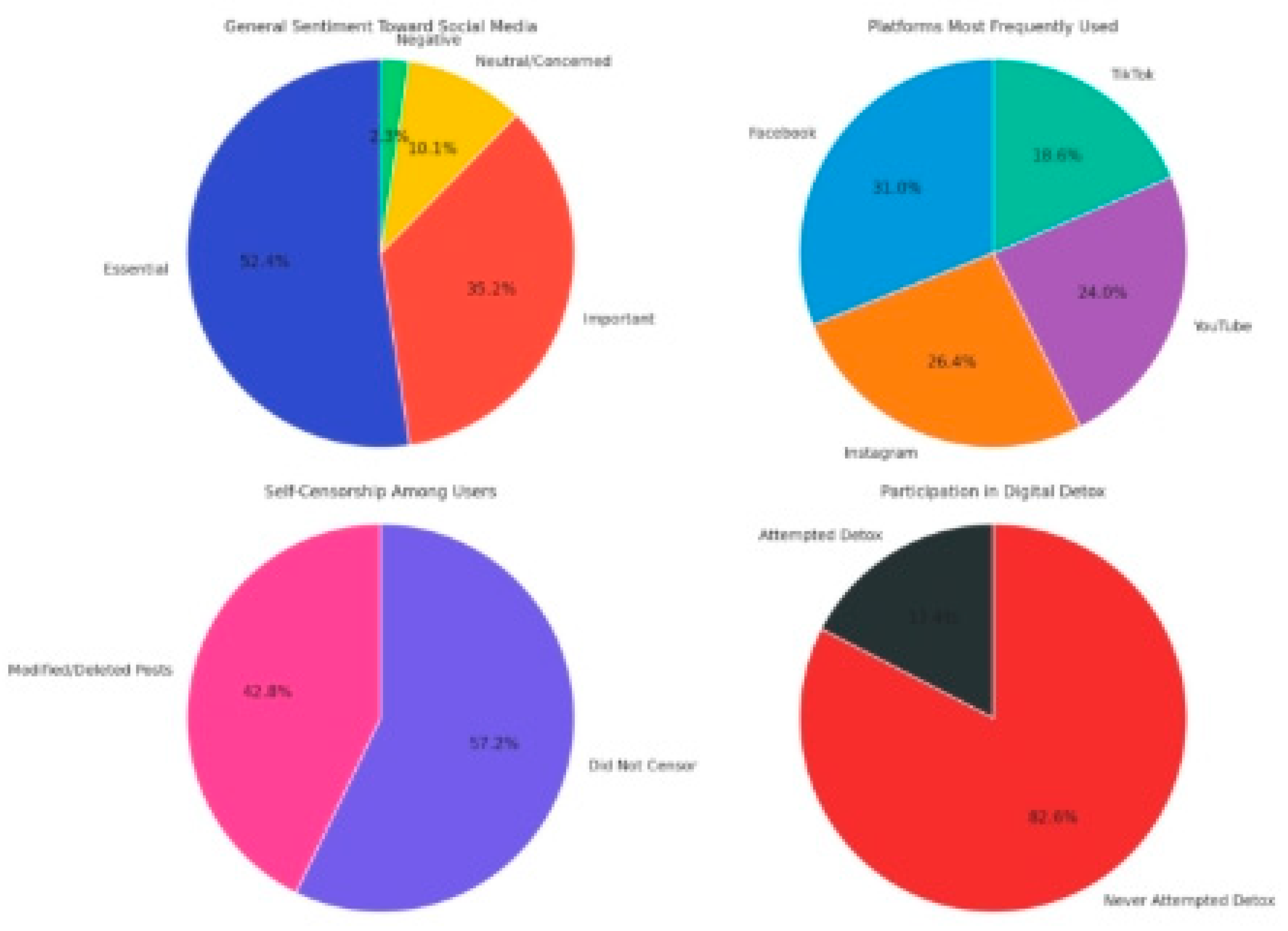
- General Sentiment Toward Social Media – Shows that a majority of Gen Z users in Bangladesh view social media as essential or important.
- Platforms Most Frequently Used – Facebook and Instagram dominate, followed by YouTube and TikTok.
- Self-Censorship Among Users – Indicates that a notable portion of users have modified or deleted content due to social norms or peer pressure.
- Participation in Digital Detox – Reveals that while digital detox is discussed, most users have not engaged in it.
5:. Discussion and Interpretation
5.1. Introduction to Discussion
This section explores the key findings from the study on Generation Z’s attitudes, behaviours, and social norms related to social media use in Bangladesh. Drawing on the theoretical frameworks of Goffman's Presentation of Self in Everyday Life (1959), Bandura’s Social Learning Theory (1977), and Ajzen's Theory of Planned Behavior (1991), this discussion integrates quantitative data and qualitative narratives to interrogate how Gen Z navigate digital spaces, regulate behaviour under the influence of social norms, and express individual or collective identity. The discussion also contextualizes findings within local cultural constraints and compares them with existing regional and global studies.
5.2. Revisiting the Theoretical Framework
This study was grounded in three primary theoretical lenses:
- Goffman’s dramaturgical model emphasizes identity construction in virtual settings akin to stage performances. Social media profiles are ‘front stage’ performances, managed through strategic impression formation (Goffman, 1959).
- Bandura’s Social Learning Theory suggests that behaviours, especially those mediated by digital environments, are learned through observation, imitation, and reinforcement (Bandura, 1977). Social media influencers, peer behavior, and feedback mechanisms (likes, shares, comments) serve as models and reinforcers.
- Ajzen’s Theory of Planned Behavior (1991) provides a valuable lens to interpret how attitudes toward digital life, perceived social norms, and behavioural control determine Gen Z’s social media actions (Ajzen, 1991).
These frameworks collectively help unpack the nuances in data—such as why certain behaviours are more prevalent, why self-censorship occurs, and how norms evolve.
5.3. Interpretation of Key Findings in Light of the Framework
5.3.1. Identity Curation and Performative Behaviour (Goffman)
A substantial majority (over 78%) of respondents acknowledged curating content to present a positive image on platforms like Instagram and Facebook. This aligns with Goffman’s (1959) argument that individuals tailor performances to their audience. Qualitative responses show a pattern of ‘strategic visibility,’ with users choosing photos, captions, and filters that reinforce an aspirational self-image—consistent with a performative identity regime.
Respondents reported engaging in impression management not only for peer validation but also for familial and religious respectability. This hybrid audience pressures users to negotiate between global youth culture and local moral codes—resulting in complex identity performances that are dynamic and often conflicting.
5.3.2. Behavioural Reinforcement and Social Learning (Bandura)
The high influence of social media influencers (78%) and peer groups (84%) reflects Bandura’s (1977) assertion that individuals model behaviour observed in others, particularly when such behaviours are rewarded. Participants reported adopting trending hashtags, dance challenges, and clothing styles observed from peers or online personalities.
Several interviewees described mimicking behaviours not aligned with their personal values, which indicates a disconnect between private beliefs and public acts—a dissonance intensified by algorithmic reinforcement mechanisms. Likes and shares serve as social rewards that incentivize conformity, which in turn normalizes transient and often superficial behavioural scripts.
5.3.3. Attitude-Norm-Behaviour Relationships (Ajzen)
Ajzen’s (1991) model becomes relevant in the discussion of behavioural intention. Most respondents admitted to experiencing social pressure regarding what to post, how to engage, and when to withdraw. The perceived norms on being ‘digitally present’ directly impacted their behaviour. Some users reported social fatigue yet continued to post due to FOMO (Fear of Missing Out), indicating that social expectations overpower individual attitudes.
One illustrative finding is the 42.8% who self-censored at least once. This suggests that perceived norms (parental monitoring, peer surveillance, societal expectations) significantly mediate online expression. These behavioural adjustments, while often subtle, reflect high levels of norm conformity.
5.4. Connecting with Research Questions
RQ1: What are the dominant attitudes of Gen Z in Bangladesh towards social media?
The data reveals largely positive attitudes (87.6%) toward social media as essential for connectivity, learning, and social capital accumulation. However, deeper thematic analysis reveals ambivalence—users see platforms as both enablers and stressors. These contradictory sentiments support the notion that digital enthusiasm is tempered by digital fatigue and anxiety.
RQ2: How do social norms influence behavioural patterns of Gen Z users on social media?
The study shows that norms exert significant influence through family expectations, religious codes, peer dynamics, and digital community guidelines. Participants, especially female users, reported tailoring online expressions to avoid stigma or moral policing. Norms operate both explicitly (via parental reprimands) and implicitly (through algorithmic suggestion engines), shaping user engagement patterns.
RQ3: What patterns of conformity and resistance emerge in social media behaviour?
Patterns of conformity include mimicking influencer content, maintaining aesthetic profiles, and observing digital etiquette. However, resistance emerges in digital detox attempts, anonymous activism, and alternative content creation (e.g., memes critiquing societal double standards). These acts reflect a latent push against dominant narratives and serve as micro-resistance strategies (Scott, 1985).
5.5. Implications for Social Norms, Digital Behaviour, and Identity
This study provides crucial insight into how Users of Bangladesh Gen Z are simultaneously producers and consumers of digital norms. Social media is not a neutral platform; it is embedded with algorithmic power, surveillance architecture, and cultural gatekeeping.
- Digital platforms are increasingly shaping what is seen as ‘normal,’ thus affecting identity construction at formative life stages.
- Gendered implications are stark. Female respondents face stricter surveillance and often resort to anonymous or encrypted communication.
- Rural-urban divides persist in digital fluency, with rural respondents reporting lower digital literacy and higher exposure to cyber-harassment.
These findings show that digital participation does not equate to digital empowerment unless critical media literacy is embedded in user practices.
5.6. Generational Patterns and Cultural Nuances
Gen Z’s approach to social media reflects the entanglement of global youth culture and local traditions. While many adopt international trends, they do so through the lens of Bengali sociocultural expectations.
For example, TikTok usage among urban youth is celebrated as creativity, while rural users face ridicule or social sanction for the same activities. This ‘classed’ nature of digital expression reveals how intersectional identities (gender, class, region) shape access to and valuation of social media behaviours (Nakamura, 2015).
Moreover, religious norms deeply influence what is acceptable, with Friday prayer timings, Ramadan content, and Eid greetings acting as significant indicators of moral belonging.
5.7. Limitations and Future Research Directions
While the sample was diverse, it was still limited to literate users with internet access. Non-digital voices remain underrepresented. Future research should explore longitudinal changes in digital behaviours post-pandemic and delve deeper into intersectional vulnerabilities (e.g., LGBTQ+ Gen Z). Moreover, the rapid evolution of AI-based content curation and platform governance (e.g., shadow banning) requires constant reevaluation of user agency and algorithmic nudging.
This discussion demonstrates that Gen Z in Bangladesh engage with social media through multifaceted lenses of identity, conformity, and resistance. Their digital actions are mediated by social norms, peer pressures, and algorithmic structures, yet also contain agency, creativity, and dissent.
By applying theoretical insights from Goffman, Bandura, and Ajzen, the study reveals that Gen Z's social media behaviour cannot be understood in isolation from broader sociocultural and technological contexts. Social media is a terrain of performance, learning, surveillance, and
6:. Conclusions and Recommendations
6.1. Introduction
This study has critically examined the attitudes, behaviours, and social norms that inform and are informed by the social media practices of Generation Z in Bangladesh. Drawing on empirical data collected from 1,200 participants and situated within theoretical frameworks including Goffman’s dramaturgical model (1959), Bandura’s social learning theory (1977), and Ajzen’s theory of planned behavior (1991), the research provides in-depth insights into how digital identities are curated, behaviors are influenced, and norms are negotiated within a dynamic online ecosystem. This concluding section synthesizes the core insights of the study, outlines implications for digital culture and policy, and recommends directions for future academic inquiry and practical engagement.
6.2. Summary of Key Findings
The study unearthed a range of interlocking patterns among Gen Z social media users in Bangladesh, revealing complex intersections between digital agency, cultural norms, peer influence, and algorithmic environments. Key findings include:
6.2.1. Duality of Attitudes
Most participants (87.6%) regarded social media positively, citing its role in facilitating social connectivity, identity expression, entertainment, and academic enrichment. However, qualitative responses and deeper analysis indicate a duality wherein enthusiasm for connectivity coexists with anxiety over self-presentation, surveillance, and normative judgment. This emotional ambivalence reflects the tension between the affordances and burdens of digital life (Marwick & boyd, 2011).
6.2.2. Behavioural Patterns Governed by Social Norms
A considerable proportion of participants admitted to modifying their content or behavior based on perceived expectations of peers, parents, religious groups, or the broader community. The phenomenon of self-censorship—especially prominent among female and rural participants—was emblematic of a digital culture that values conformity over deviance, thereby restricting spontaneous or dissenting expressions (Kendall, 2011).
6.2.3. Algorithmic Conditioning of Habits
Participants’ exposure to trending content, popular influencers, and recommended posts was found to influence what they posted, liked, and shared. This supports growing scholarship on algorithmic determinism, where platform architectures not only mediate information but also regulate behavioral tendencies through engagement metrics (Bucher, 2018; Gillespie, 2014).
6.2.4. Gendered and Classed Dimensions of Digital Engagement
The study also reveals that experiences of digital participation are stratified along gender and class lines. Female users frequently reported moral surveillance, while rural youth faced structural inequalities in terms of internet access, literacy, and cultural legitimacy. These differences underscore the need for intersectional approaches in understanding digital participation (Nakamura, 2015).
6.3. Theoretical and Practical Implications
6.3.1. Reframing Digital Citizenship
The findings encourage a reevaluation of digital citizenship among youth in Bangladesh. Digital engagement is not solely about access and participation but involves ethical self-regulation, strategic self-presentation, and informed content interaction. These dynamics suggest a reconceptualization of Gen Z not only as content consumers but as ethical navigators of techno-cultural spaces (Couldry & Hepp, 2017).
6.3.2. Implications for Media Literacy Policies
This study underscores the urgent need for a national digital literacy curriculum that emphasizes:
- Critical thinking about content sources and algorithmic biases
- Ethical norms of online behavior
- Tools for mental health management and digital well-being
- Gender-sensitive training for safe navigation
Such initiatives can counteract the culture of mimicry and encourage reflective digital practices (Livingstone et al., 2014).
6.3.3. Platform Governance and Algorithmic Accountability
Findings indicate that platform designs directly shape user behavior through feedback loops, nudges, and content prioritization. Regulatory frameworks must mandate transparency in algorithmic operations, provide opt-out mechanisms, and ensure that Users of Bangladesh users have localized content moderation. Public policy can no longer afford to treat social media platforms as neutral arbiters of communication.
6.4. Policy Recommendations
Based on the research, the following policy-level interventions are recommended:
6.4.1. National Digital Literacy Framework
The government, in collaboration with civil society and academic institutions, should establish a digital literacy program targeted at secondary and higher secondary students. This framework should go beyond operational skills and include education about privacy, cyberbullying, digital ethics, and misinformation.
6.4.2. Gender-Inclusive Digital Policies
Given the gender disparities observed, digital access and education policies must be gender-sensitive. Measures such as safe reporting mechanisms for harassment, helplines, and community mentorship programs for female digital users should be integrated into national ICT policies (UNESCO, 2021).
6.4.3. Algorithmic Transparency Legislation
Bangladesh should join global efforts to ensure algorithmic accountability by adopting legislative measures that compel social media platforms to disclose their content curation logic, moderation practices, and data usage policies. Algorithmic transparency should be aligned with user privacy rights and international human rights frameworks (Mozur et al., 2019).
6.4.4. Decentralized Content Moderation
Social media platforms must adopt culturally contextual moderation systems that reflect local languages, ethics, and community standards. Local moderators must be trained to detect culturally specific forms of online abuse and misinformation.
6.4.5. Youth Participation in Policy Formulation
To align social media policies with the lived realities of youth, platforms and governments should create advisory councils that include Gen Z voices. This would ensure bottom-up policy approaches and foster civic digital engagement (Banaji et al., 2018).
6.5. Suggestions for Future Research
6.5.1. Longitudinal Studies on Digital Identity Formation
This cross-sectional study offers a snapshot; however, longitudinal studies could track how Gen Z’s attitudes and behaviors evolve over time—especially post-education, during employment transitions, and in response to global political and technological shifts.
6.5.2. Comparative Studies across South Asia
Comparative studies with India, Nepal, and Sri Lanka can yield insights into regional convergences and divergences in youth digital practices. Shared colonial legacies, religious sensibilities, and socio-political constraints make South Asia a rich terrain for digital sociology.
6.5.3. Intersectional Digital Studies
Future studies should explore how other identity axes—such as LGBTQ+ status, religious minority positioning, or disability—shape and are shaped by social media interactions. This intersectional lens can unpack layered vulnerabilities and resilience strategies.
6.5.4. Impact of AI and Emerging Technologies
With the rapid integration of AI (e.g., ChatGPT, Midjourney, content recommendation engines), it is critical to examine how generative AI tools impact digital literacy, misinformation flows, and aesthetic practices among youth. This emerging domain requires immediate empirical attention.
6.5.5. Role of Vernacular Languages in Digital Norms
As much of the current digital discourse in Bangladesh remains English-dominated, future research could explore how vernacular digital cultures (Bangla meme pages, regional dialect content) influence or resist mainstream online narratives. This can provide deeper insights into cultural resilience and creativity in digital settings.
6.6. Concluding Reflections
This research contributes a culturally situated, empirically grounded understanding of how Users of Bangladesh Gen Z engage with social media. Their digital practices are not merely reflections of global trends but are deeply embedded in local socio-political dynamics, familial structures, and cultural anxieties. Despite being a highly connected generation, Gen Z navigates a contradictory digital landscape shaped by empowerment and surveillance, creativity and conformity, affirmation and anxiety.
By highlighting these tensions and possibilities, this study encourages scholars, educators, policymakers, and platforms to reconceptualize what it means to grow up online in the Global South. It calls for inclusive digital futures—ones that affirm youth agency while safeguarding rights and fostering ethical, equitable participation in the digital public sphere.
References
- Ahmed, S.; Rabbani, G. Digital surveillance, agency, and gendered spaces: Understanding young women’s use of pseudonyms on Users of Bangladesh social media. Media, Culture & Society 2022, 44, 1254–1273. [Google Scholar]
- Akter, F.; Rahman, M. Adolescents and digital behavior in urban Bangladesh. Journal of Youth and Media 2022, 10, 101–117. [Google Scholar]
- Alam, R.; Jahan, F. Digital inequality and youth access in Bangladesh: A comparative study of urban and rural students. Information Technology for Development 2022, 28, 59–75. [Google Scholar]
- Anderson, M.; Jiang, J. (2018). Teens, social media & technology 2018. Pew Research Center.
- Arora, P.; Rangaswamy, N. Digital leisure for development: Rethinking new media practices from the Global South. Media, Culture & Society 2013, 35, 998–1011. [Google Scholar]
- Azim, M.E.; Rashid, M.M. The duality of Youth Identity in Bangladesh’s Digital Culture. Journal of Youth Studies 2021, 24, 1183–1198. [Google Scholar]
- Banaji, S. Youth and The Politics of the Internet in South Asia. International Communication Gazette 2017, 79, 1–5. [Google Scholar]
- Banaji, S.; Bhat, R.; Agarwal, A. Youth civic engagement in the digital age: A South Asian perspective. Information, Communication & Society 2018, 21, 1232–1248. [Google Scholar]
- Baulch, E. Digital Moralism and Youth Expression in Indonesia. New Media & Society 2019, 21, 1547–1562. [Google Scholar]
- BBS. (2022). Population and Housing Census 2021. Bangladesh Bureau of Statistics.
- Binns, A. Don’t feed the trolls! Managing troublemakers in magazines' online communities. Journalism Practice 2012, 6, 547–562. [Google Scholar] [CrossRef]
- Boyd, D. (2010). Social network sites as networked publics: Affordances, dynamics, and implications. In Z. Papacharissi (Ed.), Networked Self: Identity, Community and Culture on Social Network Sites (pp. 39–58). Routledge.
- Boyd, D. (2014). It's complicated: The Social Lives of Networked Teens. Yale University Press.
- Braun, V.; Clarke, V. Using thematic analysis in psychology. Qualitative Research in Psychology 2006, 3, 77–101. [Google Scholar] [CrossRef]
- BTRC. (2024). Internet subscribers in Bangladesh. February 2024. Bangladesh Telecommunication Regulatory Commission.
- Bucher, T. (2018). If… Then: Algorithmic Power and Politics. Oxford University Press.
- Chua, T.H.H.; Chang, L. Follow me and like my beautiful selfies: Singapore teenage girls’ engagement in self-presentation and peer comparison on social media. Computers in Human Behavior 2016, 55, 190–197. [Google Scholar] [CrossRef]
- Cialdini, R.B.; Trost, M.R. (1998). Social influence: Social norms, conformity and compliance. In D. Gilbert, S. Fiske & G. Lindzey (Eds.), The Handbook of Social Psychology (pp. 151–192). McGraw-Hill.
- Cialdini, R.B.; Reno, R.R.; Kallgren, C.A. A focus theory of normative conduct. Journal of Personality and Social Psychology 1990, 58, 1015–1026. [Google Scholar] [CrossRef]
- Couldry, N.; Hepp, A. (2017). The Mediated Construction of Reality. Polity Press.
- Creswell, J.W.; Creswell, J.D. (2018). Research design: Qualitative, Quantitative, and Mixed Methods Approaches (5th ed.). SAGE Publications.
- Dhir, A.; Yossatorn, Y.; Kaur, P.; Chen, S. Online social media fatigue and psychological wellbeing—A study of compulsive use, fear of missing out, fatigue, anxiety and depression. International Journal of Information Management 2018, 40, 141–152. [Google Scholar] [CrossRef]
- Freedom House. (2023). Freedom on the Net 2023: The Repressive Power of Artificial Intelligence. https://freedomhouse.org/report/freedom-net/2023.
- Gillespie, T. The Politics of ‘platforms’. New Media & Society 2010, 12, 347–364. [Google Scholar]
- Gillespie, T. (2014). The relevance of algorithms. In T. Gillespie, P. Boczkowski, & K. Foot (Eds.), Media technologies (pp. 167–194). MIT Press.
- Goffman, E. (1959). The Presentation of Self in Everyday Life. Doubleday.
- GSMA. (2023). The Mobile Economy Asia Pacific 2023. GSMA Intelligence.
- Haque, M.; Kabir, M. The changing dynamics of youth digital culture in Bangladesh. Media Asia 2021, 48, 187–200. [Google Scholar]
- Haque, M.; Murshed, S. Informal digital learning among university students in Bangladesh: Aspirations and constraints. Asian Journal of Communication 2022, 32, 410–426. [Google Scholar]
- HRW. (2024). Bangladesh: Digital Security Act Used to Suppress Dissent. Human Rights Watch.
- Hunt, M.G.; Marx, R.; Lipson, C.; Young, J. No more FOMO: Limiting social media decreases loneliness and depression. Journal of Social and Clinical Psychology 2018, 37, 751–768. [Google Scholar] [CrossRef]
- Katz, E.; Blumler, J.G.; Gurevitch, M. Uses and gratifications research. The Public Opinion Quarterly 1973, 37, 509–523. [Google Scholar] [CrossRef]
- Khan, A.A.; Mitu, N.J. Digital youth: Exploring Users of Bangladesh students’ engagement with new media. Journal of Youth Studies 2021, 24, 355–372. [Google Scholar]
- Khan, N.; Alam, M.; Jahan, T. Social media and mental health among adolescents in Bangladesh: A qualitative study. South Asian Journal of Psychiatry 2023, 15, 67–78. [Google Scholar]
- Kuss, D.J.; Griffiths, M.D. Social networking sites and addiction: Ten lessons learned. International Journal of Environmental Research and Public Health 2017, 14, 311. [Google Scholar] [CrossRef]
- Lanier, J. (2018). Ten Arguments for Deleting Your Social Media Accounts Right Now. Henry Holt and Company.
- Livingstone, S.; Sefton-Green, J. (2016). The class: Living and learning in the digital age. NYU Press.
- Livingstone, S.; van der Graaf, S.; Kotilainen, S. Media education and digital literacy: Narratives of empowerment across Europe. International Journal of Media & Cultural Politics 2014, 10, 7–20. [Google Scholar]
- Madianou, M. Digital inequality and second-order disasters. Media, Culture & Society 2015, 37, 885–900. [Google Scholar]
- Mahmud, S.; Hossain, T. Social media identity performance among Users of Bangladesh University Students. South Asian Journal of Social Studies 2021, 4, 87–104. [Google Scholar]
- Marwick, A.; Boyd, D. I tweet honestly, I tweet passionately: Twitter users, context collapse, and the imagined audience. New Media & Society 2011, 13, 114–133. [Google Scholar]
- Marwick, A.; Boyd, D. Social media and the imagined audience. New Media & Society 2011, 13, 115–133. [Google Scholar]
- Mozur, P.; Zhong, R.; Krolik, A. (2019). A genocide incited on Facebook. The New York Times.
- Nakamura, L. Afterword: Blaming, shaming, and the feminization of digital labor. Ada: A Journal of Gender, New Media, and Technology 2015. [Google Scholar]
- Nesi, J. The impact of social media on youth mental health: Challenges and opportunities. North Carolina Medical Journal 2020, 81, 116–121. [Google Scholar] [CrossRef]
- Nesi, J.; Prinstein, M.J. Using social media for social comparison and feedback-seeking. Journal of Adolescence 2015, 41, 21–29. [Google Scholar]
- Papacharissi, Z. (2012). A networked self: Identity, community, and culture on social network sites. Routledge.
- Papacharissi, Z. (2015). Affective publics: Sentiment, Technology, and Politics. Oxford University Press.
- Rahman, M.; Islam, S. Gender, religion and digital surveillance in Bangladesh. Media Asia 2022, 49, 1–14. [Google Scholar]
- Perkins, H.W. (2003). The social norms approach to preventing school and college age substance abuse. Jossey-Bass.
- Prensky, M. Digital natives, digital immigrants. On the Horizon 2001, 9, 1–6. [Google Scholar]
- Rahman, M.A.; Sultana, F. TikTok and Users of Bangladesh youth: Creativity, risk, and class performance. Media Asia 2023, 50, 95–112. [Google Scholar]
- Rahman, M.; Haque, S. Facebook and the politics of fake news in South Asia: Bangladesh in focus. Asian Journal of Communication 2022, 32, 102–120. [Google Scholar]
- Rainie, L.; Wellman, B. (2012). Networked: The New Social Operating System. MIT Press.
- Seemiller, C.; Grace, M. (2016). Generation Z Goes to College. Jossey-Bass.
- Sundar, S.S.; Limperos, A.M. Uses and gratifications 2.0. Journal of Broadcasting & Electronic Media 2013, 57, 504–525. [Google Scholar]
- Syeed, A.; Munni, N. Youth, social media and digital protest in Bangladesh. Asian Politics & Policy 2020, 12, 101–119. [Google Scholar]
- Tandon, A.; Dhir, A.; Talwar, S.; Kaur, P.; Mäntymäki, M. Dark consequences of social media-induced fear of missing out (FoMO): Social anxiety and academic performance. Current Psychology 2021, 40, 3077–3086. [Google Scholar]
- Trottier, D. Digital vigilantism as Weaponisation of Visibility. Philosophy & Technology 2017, 30, 55–72. [Google Scholar] [CrossRef]
- Turel, O.; He, Q.; Xue, G.; Xiao, L.; Bechara, A. Examination of neural systems sub-serving Facebook ‘addiction’. Psychological Reports 2014, 115, 675–695. [Google Scholar] [CrossRef]
- Twenge, J.M. (2017). iGen: Why Today’s Super-Connected Kids Are growing Up Less Rebellious, More Tolerant, Less Happy—and Completely Unprepared for Adulthood. Atria Books.
- Twenge, J.M. (2017). iGen: Why today's super-connected kids are growing up less rebellious, more tolerant, less happy—and completely unprepared for adulthood. Atria Books.
- UNDP Bangladesh. (2023). Digital Literacy and Youth Engagement in Bangladesh. UNDP Policy Brief.
- UNDP. (2022). Human Development Report 2022. United Nations Development Programme. https://hdr.undp.org/.
- UNESCO. (2021). Guidelines on Gender-responsive Digital Education. Paris: UNESCO.
- Walther, J.B. Computer-mediated communication. Communication Research 1996, 23, 3–43. [Google Scholar] [CrossRef]
- Williams, A.L.; Hamm, M.P.; Shulhan-Kilroy, J. Social media and adolescent well-being: A narrative review. Current Pediatrics Reports 2021, 9, 45–55. [Google Scholar]
- World Bank. (2023). Bangladesh Urbanization Review.
- Zubair, M.; Fazal, M. (2021). Youth, digital surveillance, and online harassment in Pakistan.
Disclaimer/Publisher’s Note: The statements, opinions and data contained in all publications are solely those of the individual author(s) and contributor(s) and not of MDPI and/or the editor(s). MDPI and/or the editor(s) disclaim responsibility for any injury to people or property resulting from any ideas, methods, instructions or products referred to in the content. |
© 2025 by the authors. Licensee MDPI, Basel, Switzerland. This article is an open access article distributed under the terms and conditions of the Creative Commons Attribution (CC BY) license (http://creativecommons.org/licenses/by/4.0/).
Copyright: This open access article is published under a Creative Commons CC BY 4.0 license, which permit the free download, distribution, and reuse, provided that the author and preprint are cited in any reuse.