

Submitted:
28 May 2025
Posted:
28 May 2025
You are already at the latest version
Abstract
Transforming management practices to be more agile means making organizations more flexible and responsive, but this process comes with several challenges. Key issues include cultural resistance from employees who are used to traditional methods, a lack of commitment and skills from leadership to support the change, and inadequate training for staff to understand agile practices. Additionally, existing processes may not align well with agile principles, and communication barriers between departments can hinder collaboration, making the transition difficult. Cultural resistance is a major challenge when organizations try to adopt agile management practices. This resistance often stems from a need for a significant mindset shift, as employees and leaders may feel comfortable with their current processes and hesitant to change. Additionally, there is a fear among employees that implementing agile practices could disrupt their roles and lead to job insecurity, making them reluctant to embrace new ways of working. Leadership commitment is crucial for successful agile transformation because strong support from leaders helps ensure that agile practices are genuinely implemented rather than just superficially adopted. Additionally, leaders need the right skills to navigate the complexities of agile frameworks, as a lack of knowledge can hinder progress. Without adequate training for employees and alignment with existing processes, organizations may struggle to effectively implement agile practices and achieve their goals. On another strong note, some challenging open problems are provided, to enrich the existing knowledge with new insights towards a next generation intelligent agile managerial practice.
Keywords:
cultural resistance
; leadership commitment
; inadequate training and knowledge
; process alignment
; regulatory constraints
; communication barriers
; measurement and accountability
; scalability
; short-term vs. long-term focus
; technology and tools
; sustaining momentum
| It’s easy to be grumpy And a little bit fragile It seems that nowadays Everyone wants me to be agile I am not always ready To wake up with a smile I didn’t necessarily sleep well And jump out of bed fully mobile |
I know that I need to adjust But it sometimes takes a while You see I need more information To justify a new style I am willing to be swayed I am not in the smallest percentile Just respect my views from the past They could even be worthwhile! |
| Agile poem, by Sue Ellson | |
1. Background
The authors of [1] had explained that traditional methods of managing organizations, which focus on efficiency and rigid structures, are no longer effective in today’s fast-paced business environment that values quick innovation and an entrepreneurial approach. The authors [1] aimed to review existing research to argue for the need for ongoing strategic changes that improve organizational agility, through defining agility, creating a framework for understanding the skills that enhance it, and exploring how these skills can improve overall company performance in a rapidly changing world. explains that traditional methods of managing organizations, which focus on efficiency and rigid structures, are no longer effective in today’s fast-paced business environment that values quick innovation and an entrepreneurial approach.
Organizational agility [1] refers to a company’s ability to quickly adapt and respond to changes in its environment, such as new technologies or shifting customer needs. Research [1] shows that companies that embrace change and transform their structures tend to perform better than those that remain static. However [1], achieving this agility is complex and requires organizations to develop flexible processes and capabilities to effectively manage ongoing change.
Transitioning from traditional [1], rigid organizational structures to adaptive learning organizations is a long and challenging process that requires continuous change to better meet customer needs. The model proposed by Greiner [1] illustrates how businesses evolve over time, suggesting that periods of growth and change can blend into significant transformations that enhance a company’s ability to adapt. To thrive in today’s fast-paced and unpredictable market [1], organizations must develop dynamic capabilities—like teamwork and flexibility—that enable them to respond quickly to changing customer demands and competitive pressures.
The agile wheel reference model(See Figure 1, c.f., [1]), illustrates how different parts of an organization work together to create agility, which is the ability to adapt quickly to changes. Just like a wheel needs all its spokes to be strong and intact for it to roll smoothly, an organization needs all its components—like teamwork, flexibility, and quick decision-making—to be effective. If any part is weak or missing [1], the organization’s ability to respond to challenges will be compromised.
Strategic commitment [1] to agility means that organizations need to continuously adapt and change their strategies to stay competitive in a fast-paced environment. This involves [1] not just making new policies but also rethinking traditional management practices and structures to better respond to customer needs. By combining market research and organizational development [1], companies can create a more flexible approach that allows them to quickly adjust to changes in the market while still focusing on their core strengths.
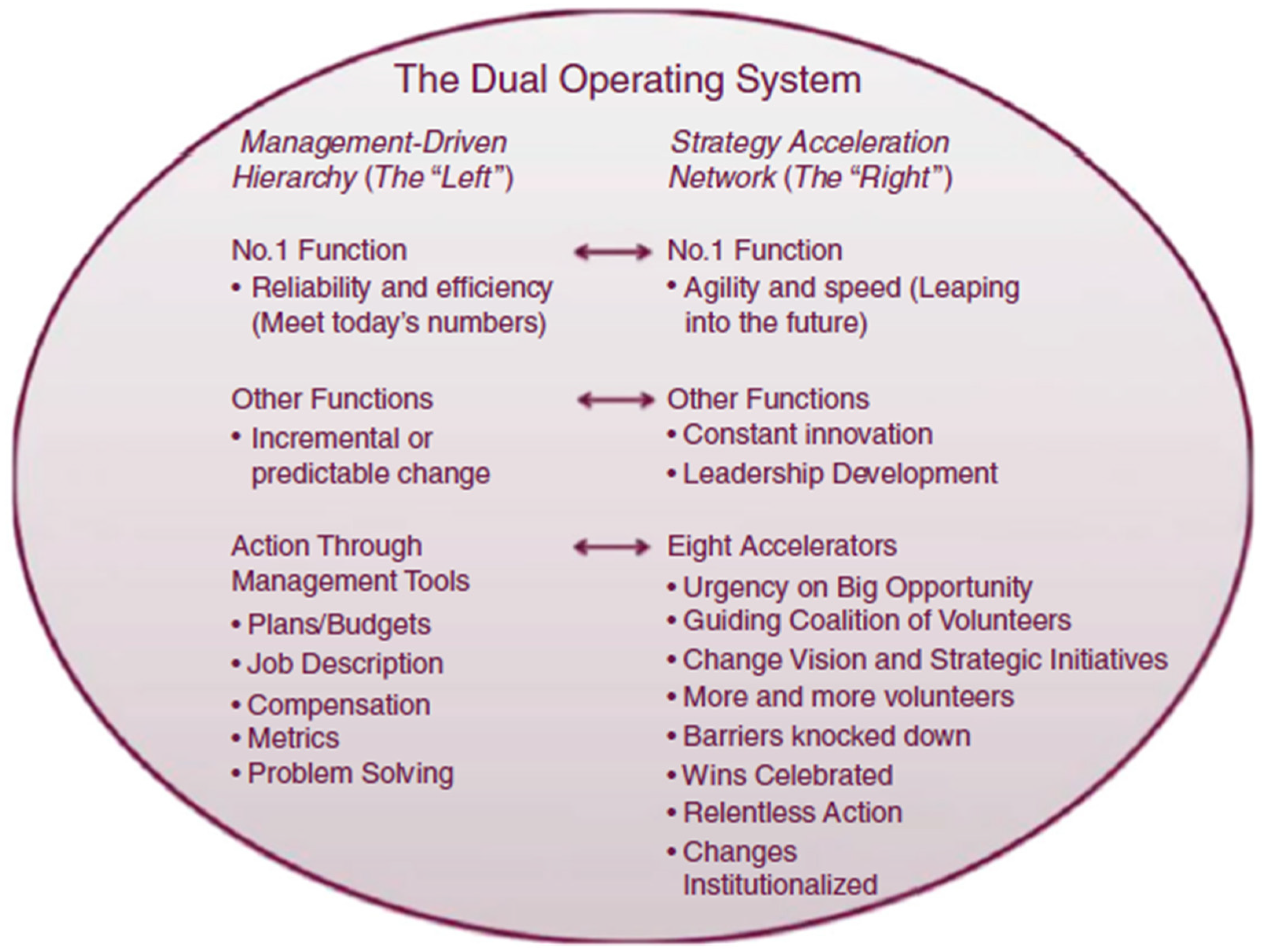
Figure 2 (c.f., [1]) illustrates the concept of a dual operating system in organizations, where a small group of employees (5-10%) works in a flexible, network-like structure focused on innovation and quick decision-making. This strategy operating system operates alongside the traditional management hierarchy, which is designed for efficiency and handling routine tasks. By separating these two systems, the organization can remain agile and responsive to changes while still maintaining its core functions effectively.
Figure 1.
The four key areas that are essential for a company to be agile: agile strategy, agile processes, agile linkages, and agile people. Each of these areas represents a different aspect of how a company can adapt and respond quickly to changes in the market.
Figure 1.
The four key areas that are essential for a company to be agile: agile strategy, agile processes, agile linkages, and agile people. Each of these areas represents a different aspect of how a company can adapt and respond quickly to changes in the market.
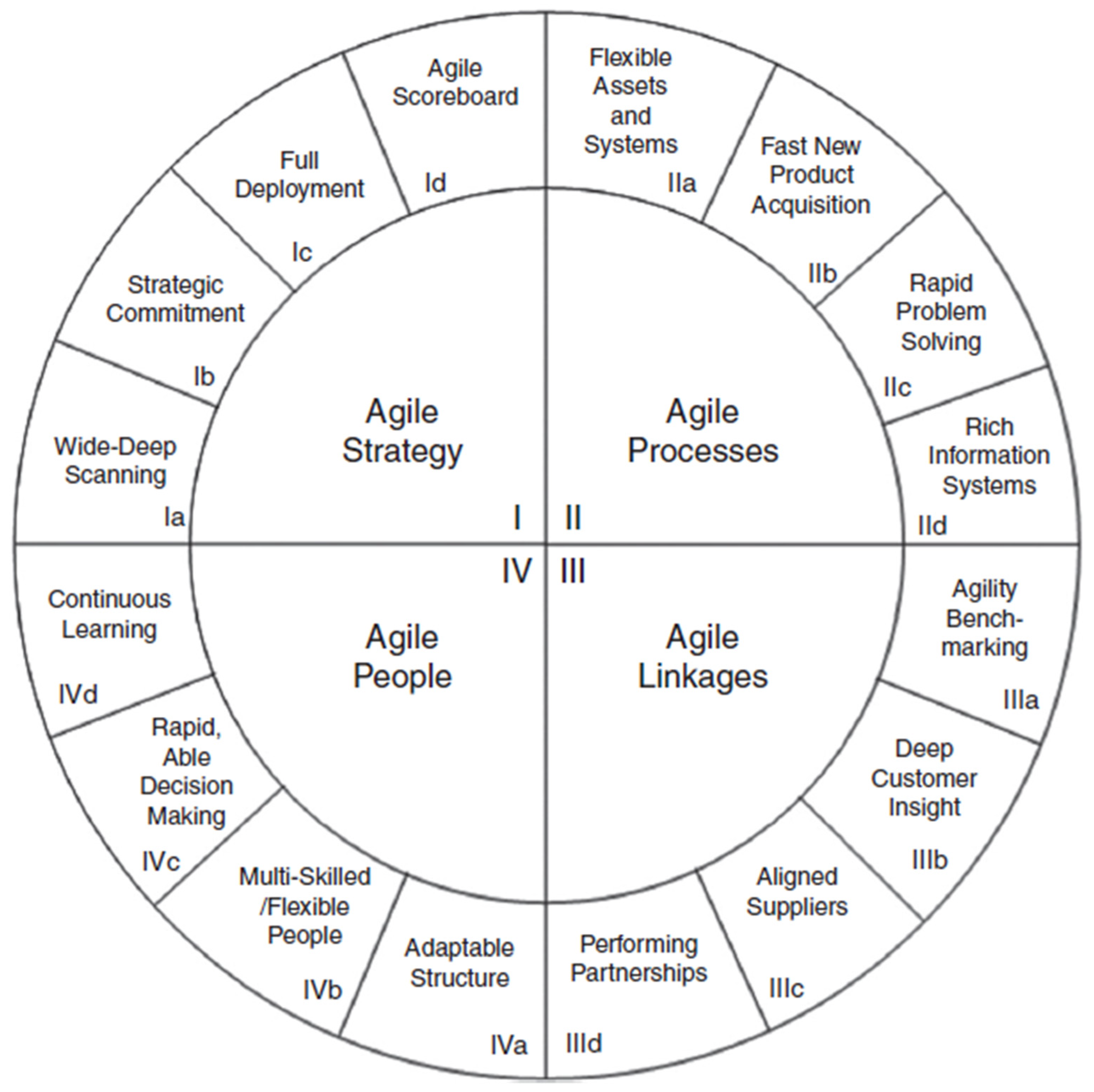
Figure 2.
The dual operating system is a management framework that combines two structures within an organization: a traditional hierarchy focused on daily operations and a more flexible network aimed at innovation and strategic initiatives. This approach allows a small group of employees to work without the usual bureaucratic constraints, enabling faster decision-making and adaptability to changes in the market. By balancing these two systems, organizations can improve efficiency while also fostering continuous innovation and responsiveness to customer needs.
Figure 2.
The dual operating system is a management framework that combines two structures within an organization: a traditional hierarchy focused on daily operations and a more flexible network aimed at innovation and strategic initiatives. This approach allows a small group of employees to work without the usual bureaucratic constraints, enabling faster decision-making and adaptability to changes in the market. By balancing these two systems, organizations can improve efficiency while also fostering continuous innovation and responsiveness to customer needs.
There is a considerable emphasis [1] on the strong relationships between people in different roles and departments within a company are essential for being agile and responsive to changes, as depicted in Figure 3 (c.f., [1]). This suggests [1] that using advanced technology can help improve these connections among employees, suppliers, and customers, but it’s important to also focus on the human aspects, like understanding people’s needs and motivations. This balance is crucial for organizations to adapt quickly and effectively in a competitive environment.
Transforming an organization to be more agile is a challenging process that requires significant time and effort [2], involving changes in strategy, structure, culture, operations, and technology. While there are existing frameworks for organizational agility [2], practitioners often seek real-life examples and experiences to better understand how to navigate the challenges they face during transformation. The study [2] focused on three publicly funded organizations in the UK, exploring their unique paths to agility and the tensions they encountered along the way, providing insights that can help other organizations in similar situations.
On another different note [3], examines how digital business transformation helps organizations become more agile, meaning they can quickly adapt to changes and innovate in response to market demands. This highlights the importance of using digital tools like artificial intelligence [3], cloud computing, and data analytics to improve flexibility and responsiveness. However [3], for these technologies to be effective, they must align with the organization’s overall strategy and culture, supported by strong leadership and a structure that encourages quick decision-making.
Legacy systems [3] refer to outdated technology and structures within organizations that can hinder their ability to adapt and innovate during digital transformation. These systems often cannot easily integrate with modern technologies [3], making it difficult for companies to respond to market changes. To overcome these challenges [3], organizations should strategically manage legacy systems, possibly by gradually phasing them out or integrating them with new technologies, while also ensuring strong leadership and communication throughout the process.
Digital transformation is a crucial strategy that helps organizations become more agile [3], allowing them to quickly adapt to market changes and customer needs. Successful examples, like General Electric and Schneider Electric, show how integrating digital technologies can improve efficiency and create new opportunities. However [3], many companies fail in their digital transformation efforts due to a lack of clear strategy, underestimating cultural changes, and not engaging key stakeholders, highlighting the importance of a well-rounded approach to achieve success.
Artificial intelligence (AI) and machine learning (ML) [3] are crucial technologies that help organizations become more agile in today’s fast-changing business environment. They achieve this by automating routine tasks [3], analyzing large amounts of data to improve decision-making, and personalizing customer experiences. However, companies must also address challenges like job displacement and ethical concerns to fully benefit from these technologies.
Agility is a broad concept in software development that is hard to define precisely [4], but it is often guided by the Agile Manifesto, which outlines key principles. In practice [4], various methods like Scrum, Extreme Programming (XP), and others are used by organizations, and the term “agile practitioners” includes anyone from executives to developers involved in agile processes. In essence [4], to explore the challenges faced by these practitioners and how these challenges appear in organizational settings, using studies and surveys to gather insights.
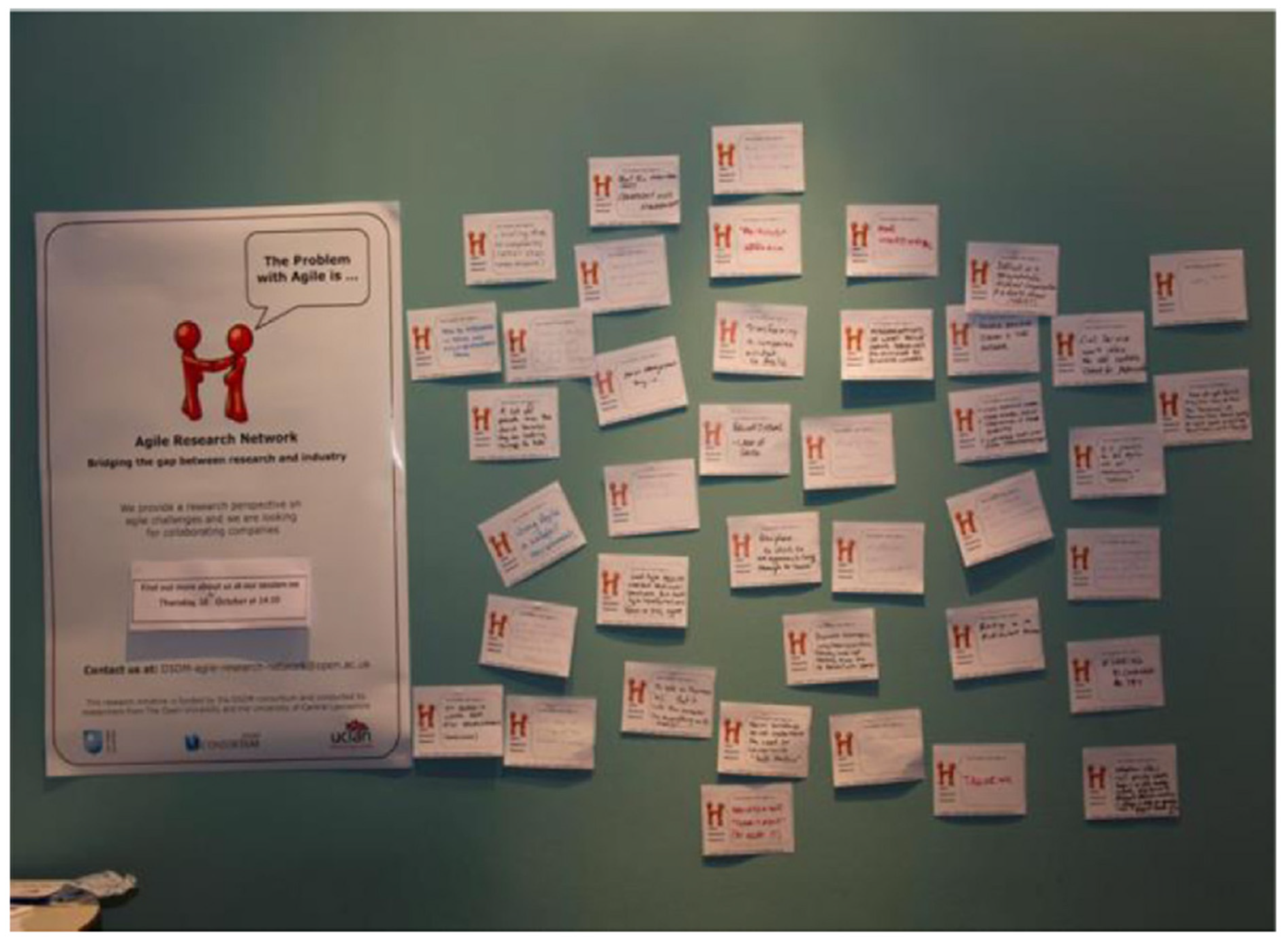
The Challenge Wall (See Figure 4, c.f., [4]) is a tool used at various Agile conferences to gather feedback from agile practitioners about the difficulties they face in their work. Attendees write down their challenges on the wall [4], which helps researchers identify common issues in agile development. This information is then analyzed to better understand the problems practitioners encounter and to improve agile practices in organizations.
Exploring the complexity of challenges [4] faced by practitioners in agile project management would display the difficulty researchers have in addressing these challenges due to funding and resource limitations. It also emphasizes the need for in-depth [4], real-world studies (in vivo) to better understand these issues, rather than relying solely on simplified research approaches. Additionally [4], it points out that while some themes like organization and sustainability have been researched, there are still significant gaps in understanding misconceptions and failures related to agile practices.
Predominantly [5], it was argued that organizations need to adopt an Agile approach to effectively plan, deliver, and adapt their business models in response to changing market conditions. This shift requires a change in organizational culture, leadership styles [5], and management practices to prioritize flexibility, collaboration, and customer focus. Successful implementation of Agile depends on strong commitment from top management and overcoming cultural barriers that may resist this transformation.
Figure 4.
At the Agile Business Conference in 2013 [4], researchers identified several challenges faced by large companies using agile methods. These challenges included issues like developers feeling insecure about their skills, needing to be versatile in their roles, and lacking business knowledge. To better understand these challenges, the researchers used a “Challenge Wall” at various agile events to collect feedback from practitioners, which helped them analyze the difficulties in implementing agile practices in organizations.
Figure 4.
At the Agile Business Conference in 2013 [4], researchers identified several challenges faced by large companies using agile methods. These challenges included issues like developers feeling insecure about their skills, needing to be versatile in their roles, and lacking business knowledge. To better understand these challenges, the researchers used a “Challenge Wall” at various agile events to collect feedback from practitioners, which helped them analyze the difficulties in implementing agile practices in organizations.
On another strong investigated [6] how universities can improve their ability to adapt to changes, especially during digital transformation, by focusing on effective human resource management (HRM) strategies. Key strategies include developing digital skills among staff [6], fostering a culture of innovation, and ensuring strong communication and collaboration across departments. By implementing these strategies [6], universities can become more resilient and better equipped to handle challenges in the rapidly changing educational landscape.
The economic situation has pushed organizations to improve their processes [7], culture, and technology to adapt quickly to changes. To achieve these improvements [7], many companies are adopting agile methods, which initially focused on software development teams but are now expanding to the entire organization to enhance customer value. This shift [7], known as Agile Transformation, involves overcoming various challenges, such as gaining support from management and changing established work cultures, to successfully implement agile practices across different teams and departments.
The relationship between job performance [8], organizational response, and organizational support is interconnected, meaning they influence each other, as in Figure 5 (c.f., [8]). It was shown that [8] when organizations provide strong support, it creates a positive work environment where employees feel valued and motivated, which in turn boosts their job performance. Additionally [8], offering training, encouraging open communication, and fostering a supportive culture would help employees adapt and perform better, especially during challenging times.
The theoretical framework is a structured way to understand how different concepts are related in a [8]. In this context [8], it shows how organizational support, organizational response, and job performance interact with each other, suggesting that when an organization provides strong support, it can improve job performance, especially in changing business environments. The framework also includes control variables like firm size and industry [8], which help researchers understand the main relationships without being influenced by these other factors.
There are two primary components to the results [9]. The first is the idea map [9], which is a conceptual depiction of the primary transformation issues and potential fixes that came out of the six focus groups. Second [9], the pattern matches show how each cluster’s perceived relevance and viability is ranked.
It is evident from the Group Concept Map (Figure 6, c.f., [9]) that participants positioned Strategic Enablers in the middle of the concept map. “To create space and room for continuous improvement” (Item 88) and “To clearly define actions and objectives to be achieved by sharing decision power and responsibility” (Item 69) are two examples of the five things in this cluster. As a systemic “attractor,” the core cluster affects the dynamic interactions between every other cluster on the map [9].
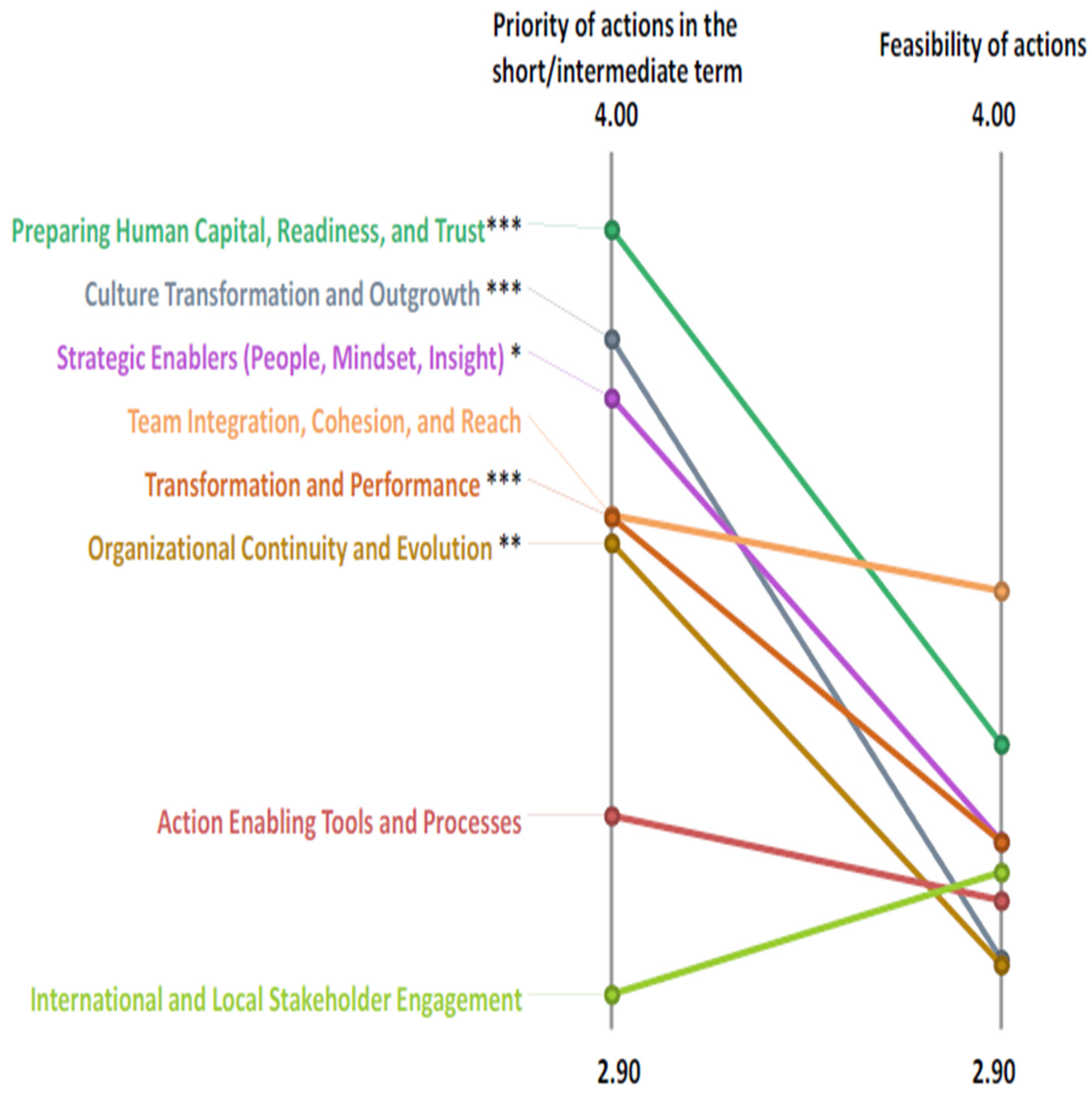
Estimates of the perceived priority and feasibility scales of the agile transformation clusters found on the concept map are displayed in the pattern matches graph (Figure 7, c.f., [9])). In relation to the two measures under consideration (Likert-type five-point scales), pattern matches aid in determining how clusters are graded. Overall, there is a statistical difference between the priority and feasibility scales across participants, according to the nonparametric Wilcoxon signed-rank test for matched data (p-value < 0.05).
Figure 6.
The Concept Map for the Group.
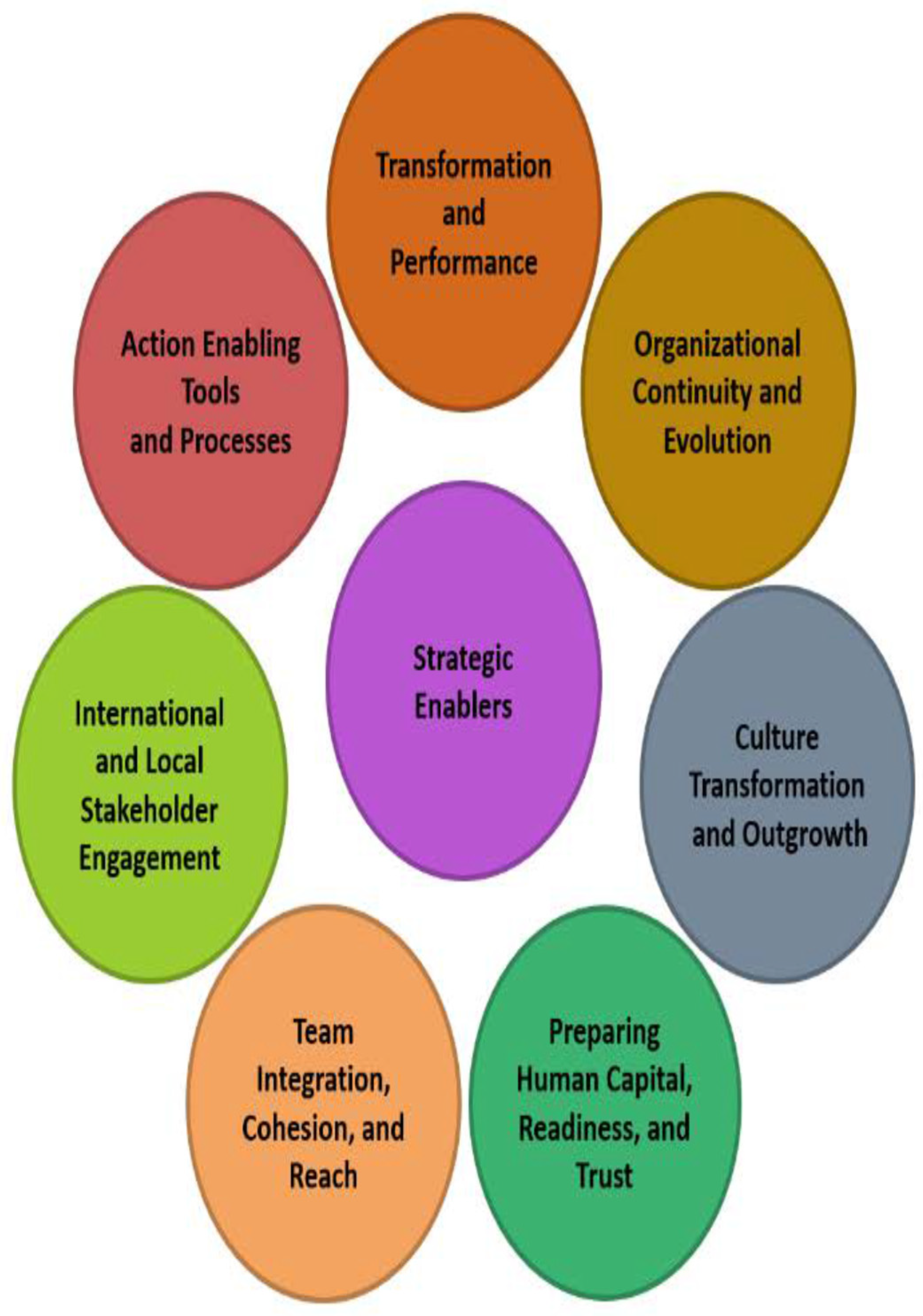
Figure 7.
Similarities between the relative importance and viability of agile transformation initiatives evaluations using Likert-type scales with five points.
Figure 7.
Similarities between the relative importance and viability of agile transformation initiatives evaluations using Likert-type scales with five points.
A concept map (Figure 8, c.f., [9]) is a visual tool that helps organize and represent knowledge by showing relationships between different ideas or concepts. Regions of meaning (RM) refer to specific areas within a concept map that group related concepts together, helping to clarify how they connect and contribute to a broader understanding of a topic. This approach is useful in education and research for enhancing comprehension and facilitating learning.
Another different taste of research [10], examined how knowledge management processes (KMPs) affect business transformation (BT) at Mutah University [10], focusing on the role of IT agility as a mediator. The researchers surveyed 305 participants, analyzing the data using SPSS software to determine the relationships between KMPs, IT agility [10], and BT. The findings [10] suggested that effective KMPs significantly contribute to successful business transformation, especially when supported by agile IT practices.
The term “VUCA,” which stands for volatility [11], uncertainty, complexity, and ambiguity, was created by social scientists at the U.S. Army War College to describe challenging environments that future leaders would face. In recent years [11], this concept has gained popularity in both business and geopolitical discussions, emphasizing the need for organizations to be agile in responding to rapid changes and uncertainties. It is suggested [11] that leaders can manage VUCA by identifying specific challenges, understanding barriers to agility, and implementing practices that enhance their organization’s ability to adapt effectively.
The authors [11] suggested that there are three important actions that leaders should take to help their teams or organizations succeed during difficult and unpredictable times(See Figure 9, c.f., [11]), which they refer to as “turbulence.” These actions [11] include identifying the specific challenges they face (VUCA), understanding what prevents them from being agile, and putting practices in place to improve their agility. By focusing on these areas [11], leaders can better navigate the complexities of their environments and support their teams effectively.
Figure 10 (c.f., [11]) shows the ten most disruptive trends that business leaders identified in the study. These trends [11] are important because they highlight the challenges and changes that organizations may face in the future. Understanding these trends [11] helps leaders prepare and adapt their strategies to stay competitive and effective in a rapidly changing environment.
VUCA stands for volatility, uncertainty, complexity, and ambiguity, which are challenges that organizations face in today’s fast-changing environment, as depicted in Figure 11 (c.f., [11]). These factors [11] can create obstacles for managers as they try to lead their teams and make decisions. To navigate VUCA effectively [11], leaders are encouraged to adopt recommended practices that promote agility, clear communication, and teamwork, helping their organizations adapt and thrive despite these challenges.
In [11], the authors explore how leaders can effectively manage VUCA, which stands for volatility, uncertainty, complexity, and ambiguity, by focusing on human dynamics. They [11] suggested three key actions: identifying VUCA factors, recognizing obstacles to becoming agile, and implementing practices that enhance agility. The authors [11] provided tools like the VUCA Audit and a Leader’s Checklist to help leaders understand disruptive trends and improve communication and knowledge sharing within their organizations, ultimately guiding them to navigate change more effectively.
Supply chains are complex networks that connect businesses and can have a big impact on the environment and society. The work of [12] looked at how companies can become more flexible and responsive (called strategic agility) to work better with their partners on environmental innovations, which helps improve sustainability. By analyzing data from managers in Turkey [12], the researchers found that being agile and participating in local innovation efforts can lead to better collaboration and stronger environmental performance in supply chains.
A conceptual model (Figure 12, c.f., [12]) is a visual representation that helps to explain how different ideas or components are related to each other within a specific context. In this case [12], the model illustrates how a firm’s organizational strategic agility can influence environmental innovation among its suppliers, showing the connections between regional innovation initiatives, supplier collaboration, and the overall ability to address environmental challenges. This model [12] serves as a framework for understanding how firms can effectively drive sustainable practices through their relationships with suppliers.
2. Key methodologies of AM
The current section is entirely devoted to showcasing the key methodologies of AM.
2.1. Cultural Resistance
Cultural resistance [13] refers to the reluctance of employees and leaders to adopt new practices, such as agile management, because they are comfortable with their current ways of working. This resistance often stems from a fear of change [13], where individuals worry that new methods could threaten their job security or alter their established roles and responsibilities. To successfully implement agile practices [13], organizations must address these fears and encourage a mindset shift among their teams.
Since 2004, “change management” [13] has become an important concept in law enforcement as organizations face rapid technological advancements. To effectively manage these changes, police management should adopt a growth mindset [13], which encourages employees to view challenges as opportunities for learning and improvement. By creating a supportive environment and clear communication [13], leaders can help their teams adapt to new processes and technologies, ultimately leading to smoother transitions and better overall performance.
A growth mindset encourages employees to view changes and challenges as chances to learn and improve [13], rather than threats to their current abilities. In law enforcement [13], where new technologies are constantly emerging, having a growth mindset is essential for adapting and succeeding in a rapidly changing environment. This mindset helps individuals bounce back from setbacks [13], stay motivated, and ultimately leads to greater success in their careers by promoting continuous learning and development.
In practice [13], there are two mindsets: a fixed mindset and a growth mindset. Individuals with a fixed mindset believe their abilities and intelligence are unchangeable, which can limit their willingness to take risks and learn from failures. In contrast, those with a growth mindset view their skills as developable through effort and learning [13], leading to greater career satisfaction and success, as they embrace challenges and see setbacks as opportunities for improvement.
2.2. Leadership Commitment
Leadership commitment [14] is crucial for successfully implementing agile transformation in organizations. When leaders do not provide adequate support, it can result in a superficial application of agile principles [14], meaning that the changes are not genuinely embraced or effective. Additionally [14], if leaders lack the skills needed to navigate the complexities of agile frameworks, they may struggle to effectively guide their teams through the transition, which can further impede progress.
Based on that, [14] discussed how many federal employees have been working from home, which offers benefits like flexible hours and a better work-life balance. However [14], managing these remote workers can be difficult for public organizations due to the costs of monitoring them and potential issues that might reduce their job satisfaction. Thus, [14] investigated how strong leadership support for telework and a focus on performance can improve employee satisfaction with telework programs, using data from federal employee surveys conducted in 2008 and 2015.
The earlier approach to managing human resources [14], known as scientific management, focused on controlling workers’ behavior through wages and strict oversight. However [14], this view is limited because it doesn’t consider how various factors, like workplace relationships and culture, influence employee motivation and behavior. Modern theories suggest that leadership style and the work environment play significant roles in employee satisfaction [14], indicating that motivation is not solely based on money but also on how employees perceive their relationships with leaders and the overall workplace culture.
In [14], the researchers used ordered logit regression models to analyze factors affecting teleworker satisfaction at the USPTO. They [14] found that support from senior leaders and supervisors, as well as a performance-oriented culture, significantly increased teleworker satisfaction with telework programs. The study [14] also noted limitations, such as differences in survey questions over time and the focus on a single agency, suggesting that future research should explore these factors in other federal agencies and over longer periods.
2.3. Inadequate Training and Knowledge
Inadequate training [15] and knowledge can be significant barriers to successfully implementing agile practices in an organization. Employees might lack the necessary skills or understanding of agile methodologies [15], such as Scrum or Kanban, which means they may need training programs to develop these competencies. Additionally [15], since there are different interpretations of what being “agile” means, this can lead to confusion and inconsistency in how agile practices are applied across teams.
To adapt to the fast-changing conditions in the insurance industry [15], many companies are adopting agile methods, which fundamentally change how they operate. The insurance sector is crucial for the economy and people’s well-being [15], and it has faced challenges like increased competition and the impact of the COVID-19 pandemic. This aimed [15] to identify the barriers to adopting agility in the insurance sector and understand how these barriers relate to each other, ultimately helping organizations improve their responsiveness and innovation.
Enterprise agility [15] in the insurance industry is essential because it allows companies to innovate and quickly adapt to changes in a competitive market. The study [15] investigated the barriers that hinder this agility, such as a lack of leadership alignment and ineffective technology adoption. By using methods like TISM and MICMAC analysis [15], the researchers aim to understand the complex relationships between these barriers and identify key areas for improvement in the insurance sector.
TISM, or Total Interpretive Structural Modeling [15], is a method used to analyze complex relationships between different factors in a system, such as barriers to enterprise agility in the insurance sector. In [15], TISM helps to create a structured framework that shows how these barriers interact with each other, allowing researchers to understand their impacts better. The process is visually represented in Figure 13 (c.f., [15]), which outlines the steps taken to identify and analyze these relationships.
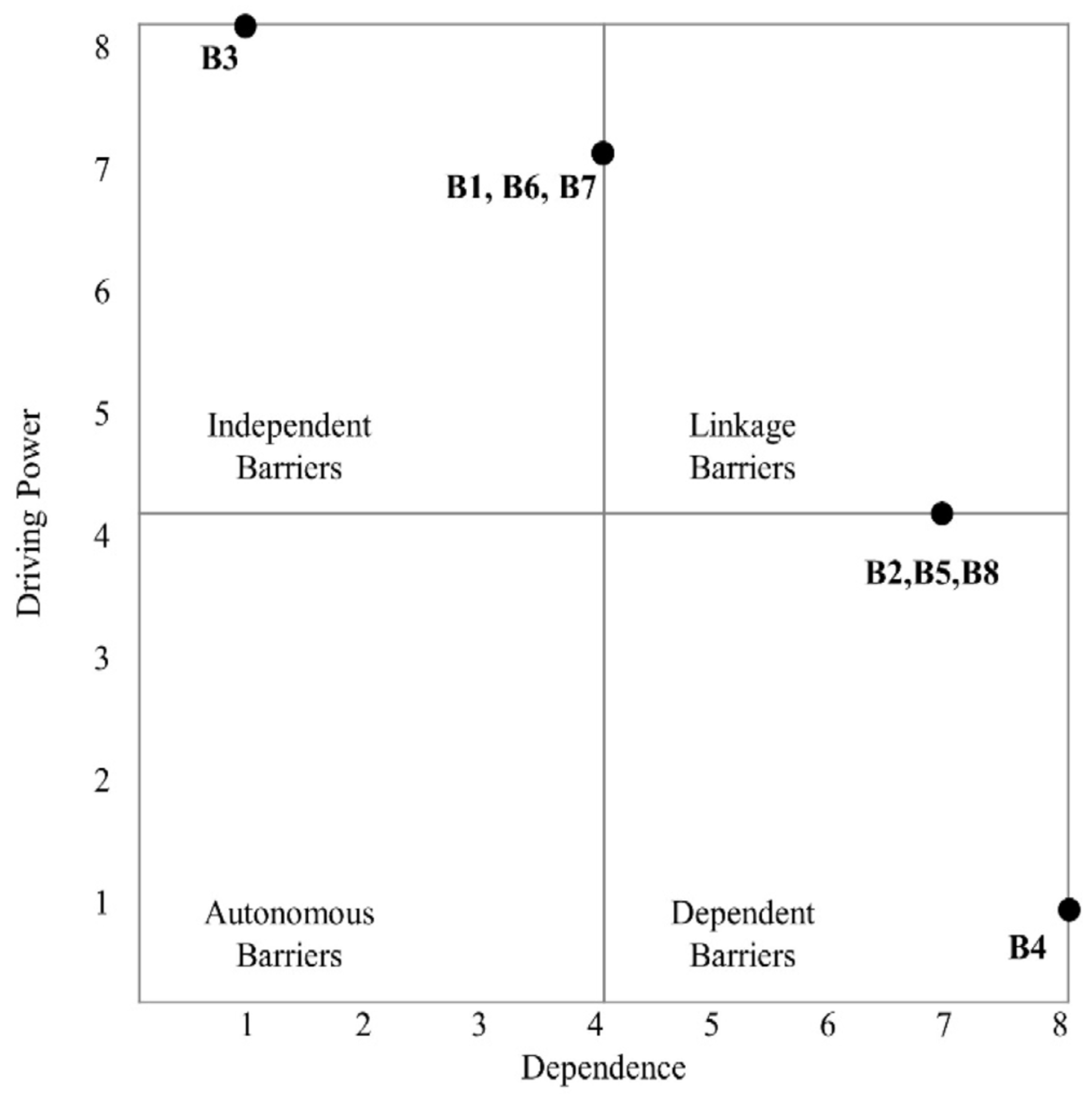
The MICMAC analysis [15] is a method used to understand how different barriers to agility in the insurance sector influence each other. In this analysis [15], the barriers are plotted on a graph where one axis shows how much each barrier depends on others, and the other axis shows how much power they must drive change. This helps identify which barriers are more influential and which ones are more reliant on others, allowing organizations to prioritize which issues to address first.
Figure 14.
The graph of MICMAC.
The insurance industry is constantly changing to meet customer needs [15], which requires companies to adjust their processes and goals. By creating clear objectives and strong processes [15], organizations can improve communication and collaboration among departments, making them more agile and responsive to changes. This work of [15] identified barriers to achieving agility in the Indian insurance sector and suggests ways to overcome these challenges, such as aligning departmental goals with the overall company objectives and providing ongoing training for employees.
2.4. Process Alignment
Process alignment [16] refers to the challenge of fitting agile practices into an organization’s existing workflows and procedures. Many companies have established ways of doing things that may not match the flexible and iterative nature of agile methodologies, making it difficult to adopt these new practices. Additionally, industries with strict regulations may face further complications, as these rules can restrict the adaptability that agile approaches typically offer.
Manufacturers are shifting from just selling products to offering combined systems of products [16], services, and software, a change known as digital servitization. This transition [16] is driven by changing customer needs, competition, and advancements in technology, which require companies to create “smart solutions” that add more value. To succeed [16], companies like Wärtsilä needed to adapt their processes and structures to better understand customers and improve collaboration across different departments.
To create a successful innovation model [16], Wärtsilä launched a new process in 2017 with strong support from top management. This model [16] focuses on understanding customer needs early in the development process and encourages collaboration across different business units to gather diverse perspectives. The process includes several routines [16], such as idea screening and MVP (Minimum Viable Product) passing, which help ensure that new ideas are valuable and feasible before moving forward with larger-scale development.
Solution development [16] and revamping is a collaborative process aimed at increasing the chances of success for new products. It involves different teams [16], such as sales and technology, working together to ensure that new solutions fit well with existing products and can be effectively marketed. The goal [16] is to quickly turn ideas into market-ready products while maintaining quality and understanding customer needs, which helps the organization adapt to a complex business environment.
Increased collaboration [16] among different teams at Wärtsilä has led to quicker development cycles and better understanding between departments. A general manager noted that using a shared language is crucial for effective communication [16], as it helps teams allocate resources efficiently and prioritize tasks. Additionally [16], there is a recognition of the ongoing challenge of balancing separate team structures (silos) with more integrated approaches, suggesting that the organization is continually adapting to improve collaboration and efficiency.
Wärtsilä [16] has implemented new routines and practices that have positively impacted their operations. These changes [16] have allowed the company to bring solutions to market more quickly, adapt more easily to changes in strategy, and better understand customer needs. Additionally [16], these new practices have improved collaboration between different teams within the organization, leading to more effective development processes.
2.5. Regulatory Constraints
Regulatory constraints [17] refer to the strict rules and guidelines that certain industries must follow, such as healthcare or finance. These regulations can conflict with agile practices [17], which emphasize flexibility and quick adaptation to change. As a result [17], organizations in regulated industries may find it challenging to fully implement agile methods without compromising compliance with these important regulations.
The landscape of product management [17] is constantly changing due to the fast-paced and competitive market. Agile methodologies, which were originally designed for software development, have become important tools for improving flexibility and innovation in product management across various industries. These methodologies focus on adapting quickly to market changes [17], encouraging collaboration among teams, and continuously improving products based on customer feedback, making them essential for success in today’s dynamic business environment.
The work in [17] discussed how agile methodologies are changing the way organizations manage product development in response to rapidly changing markets. It aims to review existing research on agile practices, highlighting their benefits [17], challenges, and strategic importance in improving responsiveness and innovation.
In today’s fast-changing business world, Agile methodologies [17], which were originally created for software development, help organizations adapt quickly to new challenges. These methods focus on flexibility [17], continuous improvement, and collaboration among team members, allowing businesses to respond to customer needs and market changes more effectively. By using Agile principles [17], companies can enhance their efficiency and innovation while managing the complexities of modern business environments.
Agile methodologies are popular in software development because they focus on three main principles: iterative development [17], stakeholder collaboration, and flexibility in planning. Iterative development allows teams to break projects into smaller parts, delivering features gradually and adapting to changes quickly. By involving customers and stakeholders throughout the process [17], Agile ensures that the final product meets user needs while allowing for adjustments based on feedback, making the development process more efficient and effective.
The practical application [17] of agile methodologies has shown both benefits and challenges across various industries. For example, a major telecommunications company switched from a traditional approach to agile [17], resulting in faster product launches and higher employee satisfaction. Case studies from sectors like finance [17], healthcare, and automotive demonstrate that agile practices can improve responsiveness to market changes, enhance collaboration, and lead to better outcomes, but they also require significant organizational adjustments and support for successful implementation.
Agile methodologies [17] are important in modern business because they help organizations quickly adapt to changing markets. They offer benefits like faster product development [17], better customer satisfaction through continuous feedback, and increased team productivity due to collaboration and clear communication. However, challenges such as managing project scope, ensuring team skills, and maintaining stakeholder engagement must be addressed for successful implementation.
Adopting agile practices is important for organizations that want to be more flexible and responsive [17], but it can be challenging to shift from traditional methods. Key challenges include changing the organizational culture to embrace collaboration and transparency, overcoming resistance from employees who may fear losing their roles [17], and ensuring continuous engagement with all stakeholders. To successfully implement agile methodologies [17], organizations need strong leadership, effective training, and clear communication strategies to address these obstacles.
The adoption of agile practices [17] in organizations leads to greater flexibility and responsiveness in managing projects and developing products. However [17], organizations often face challenges such as changing their culture to support collaboration, providing necessary training for employees, and integrating agile methods with existing processes. Successfully addressing these challenges requires a clear strategy [17], strong leadership, and ongoing support to fully realize the benefits of agile methodologies.
Agile methodologies [17] are flexible approaches that help organizations manage projects and adapt to changes quickly, highlighting key principles like teamwork [17], customer collaboration, and iterative development [17], showing how companies like Spotify and General Electric successfully use Agile to innovate and respond to market needs. While there are challenges in implementing Agile, such as resistance to change, the overall benefits—like improved collaboration and faster delivery of products—make it a valuable strategy for modern businesses.
One significant trend in agile practices is the integration of artificial intelligence (AI) and machine learning (ML) [17], which can improve agile teams by providing real-time insights and predicting project outcomes. This technology helps teams identify potential issues early [17], allowing them to adjust their strategies and workflows to avoid project failures. Additionally [17], organizations are increasingly adopting hybrid agile models that combine agile with other methodologies to better meet specific project needs, while also focusing on customer experience to adapt products quickly based on user feedback.
In [18], several successful agile practices were identified, such as backlog grooming, which helps the team prioritize tasks and understand customer needs. Agile ceremonies [18], like sprint planning and demonstrations, allowed for regular check-ins and adaptations based on project progress, receiving positive feedback from participants. The project [18] also emphasized keeping the solution simple and maintaining code standards to ensure quality and facilitate collaboration among developers, which aligns with agile principles.
The digitalization of the financial sector has greatly increased the demand for software development [18], especially to create or improve products and meet regulatory requirements. Financial institutions are adopting agile methods to manage these projects, which focus on flexibility and quick responses to change. However, the challenge lies in balancing agile practices with the strict documentation and compliance needed in regulated environments, as agile methods typically prioritize speed and collaboration over extensive documentation.
In [18], researchers analyzed interview data by categorizing it into different challenge categories using a 4-set Venn diagram on a Miro board. Each category represented a set, and since the sets overlapped, there were 15 unique combinations of challenges. The researchers placed sticky notes with text units into the appropriate intersections of Figure 15 (c.f., [18]).
The work in [18] has discussed the challenges of using agile practices in projects that must follow strict regulations, like the EPK project in Norway. Unlike traditional research [18], the authors believe there isn’t a single correct way to handle these projects because they are influenced by the people involved and the changing nature of regulations. They emphasize the importance of involving legal specialists to navigate complex regulatory requirements and ensure compliance throughout the project.
2.6. Communication Barriers
Communication barriers [19] in an organization can significantly hinder the adoption of agile practices. When departments work in isolation [18], or “silos,” it leads to poor communication and collaboration, which are essential for agile methodologies that emphasize teamwork and flexibility. Additionally [19], if the goals of individual teams do not align with the overall objectives of the organization, it can create conflicts and make it difficult to implement agile practices effectively.
ASEAN [19], which includes 10 countries like Indonesia and Malaysia, is the third-largest economic power after Japan and China. The ASEAN Economic Community (AEC) [19] was established to enhance competitiveness and attract foreign investment, which is crucial for creating jobs and improving the welfare of its citizens. Effective cross-cultural communication is essential within organizations in this region, as it helps skilled workers adapt to different cultures and languages, ensuring their professional success in a diverse environment.
Organizational communication is the process through which information is created and exchanged among members of an organization [19], helping them navigate uncertain and changing environments. It involves [19] seven key concepts: the ongoing nature of communication (process), the meaningful messages exchanged (message), the network of people involved (network), the interdependence of different parts of the organization (interdependence), the relationships between individuals (relationship), the various factors influencing decisions (environment), and the need to address gaps in information (uncertainty). Effective communication [19] within an organization is crucial for understanding, coordination, and overall functioning.
Several barriers to communication within organizations had been identified [19], such as differences in background, selective listening, and varying interpretations of language. These barriers can lead to misunderstandings [19], especially in cross-cultural settings where individuals may have different cultural contexts and communication styles. To improve communication [19], it is essential for individuals to understand these differences, be open to learning about other cultures, and consider learning the local language to enhance interactions with colleagues from diverse backgrounds.
2.7. Measurement and Accountability
In agile methodologies [20,21], measuring success can be challenging because traditional performance metrics often focus on individual achievements rather than the collective performance of a team. This shift [20,21] towards team accountability means that organizations must adapt their evaluation methods to reflect how well teams work together and deliver results. As a result [20,21], some organizations may struggle to embrace this change, making it harder to assess the effectiveness of their agile practices.
The New Public Management (NPM) doctrine emphasizes the importance of public accountability in organizations [21], particularly those in the public sector. This means that managers need to clearly define responsibilities and goals, focusing on performance and efficiency. When public organizations are held accountable [21], they are more likely to improve their performance, reduce issues like fraud, and build trust with citizens and stakeholders.
The role of performance measurement systems (PMS) in public organizations has been a significant topic in public accounting research [21], especially as these organizations seek to improve their effectiveness and accountability. While many studies focus on how to design and implement PMS [21], there is a gap in understanding how these systems impact organizational performance through public accountability, particularly in developing countries like Vietnam.
Recent reforms in public management, known as New Public Management (NPM) [21], encourage public organizations to adopt performance measurement systems (PMS) to improve their effectiveness by setting goals, evaluating performance, and providing incentives. These systems [21] help organizations gather important information that can enhance accountability to stakeholders by ensuring transparency in how public resources are used. However [21], the impact of NPM has been mixed, with both positive and negative effects depending on the specific context of each organization, highlighting the need for careful consideration of institutional factors in public governance.
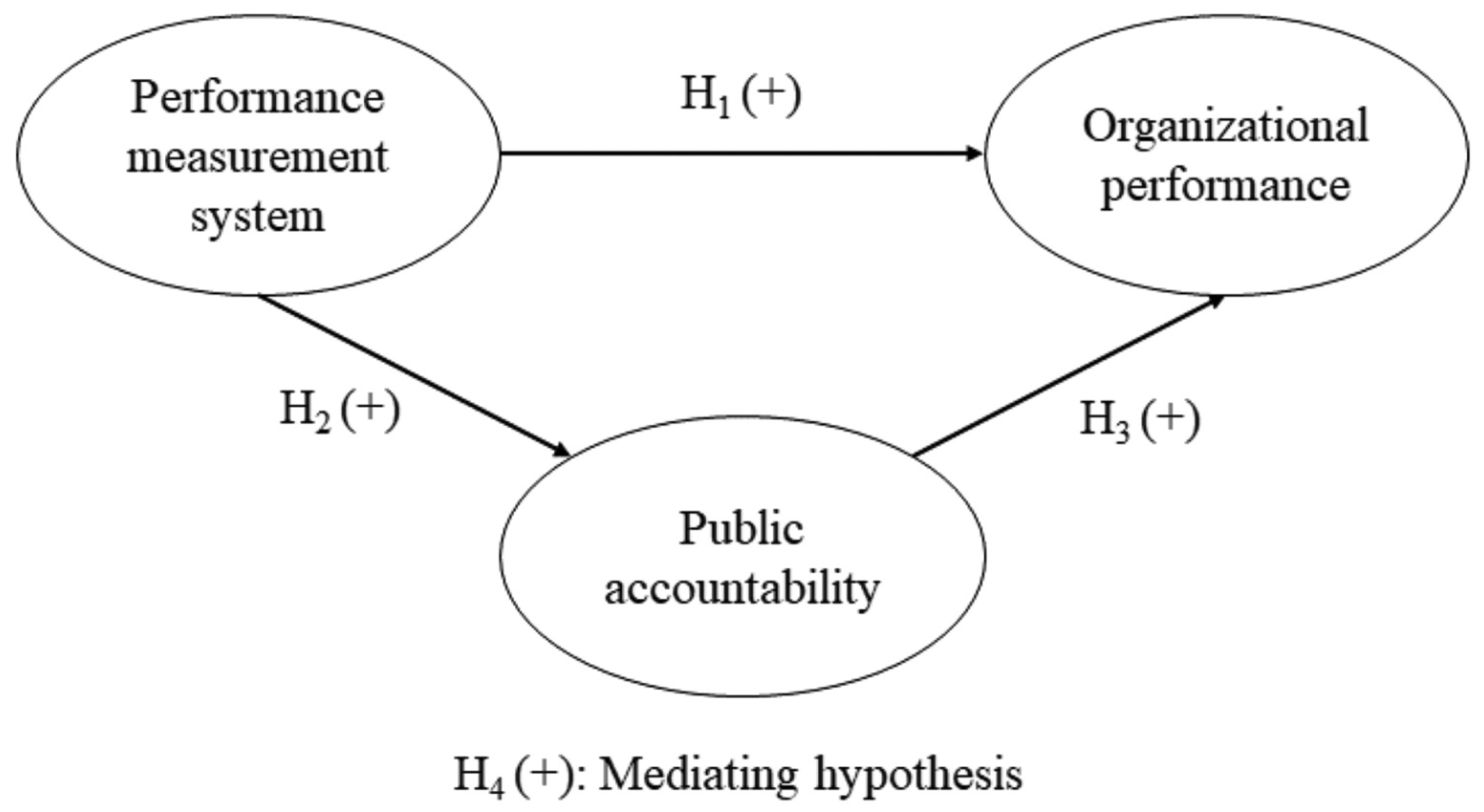
Hypothesis 3 (H3) suggests that when public organizations are accountable to the public, as in Figure 16 (c.f., [21]), it leads to better organizational performance. This means that if these organizations are transparent and responsible in their actions, they are more likely to achieve their goals effectively and efficiently. The idea [21] is that accountability helps build trust and encourages organizations to operate better, benefiting both the public and stakeholders involved.
To evaluate the effectiveness of the measurement model in [21], researchers used SmartPLS 3 to check the reliability and validity of the variables involved. It is found that the scales used were highly reliable [21], with Cronbach’s alpha values between 0.84 and 0.90, indicating strong internal consistency. Additionally [21], they assessed convergent validity, which showed that the observed variables were closely related to their respective constructs, confirming that the measurement model was appropriate for testing the study’s hypotheses.
2.8. Scalability
Scalability [22] in the context of agile refers to the challenge of implementing agile practices not just within individual teams, but across the entire organization. While it’s often easier for one team to adopt agile methods [22], coordinating multiple teams to work together effectively can be complex and may lead to misalignment. Additionally [22], managing resource allocation—such as time, budget, and personnel—becomes more complicated in larger organizations that have several ongoing projects, making it difficult to ensure that all teams have what they need to succeed.
Agile Software Development (ASD) methods were originally created for small teams working closely together [22], but experts argue that these methods struggle to scale effectively for larger projects. The work of [22] had examined various scaling models, like SAFe and LeSS, to see how well they address challenges that arise when trying to apply ASD principles to bigger teams and projects. Despite the existence of these models [22], there are still significant issues that need to be resolved for successful large-scale implementation of Agile practices.
Looking closer at frameworks for scaling Agile—SAFe, LeSS, and DAD—focusing on their roles, processes [22], and key features, details were provided about the creators and organizations behind these models, along with an assessment of their maturity based on various factors like case studies and training. The researchers [22] aimed to evaluate these models specifically against identified challenges in scalability, rather than just reviewing them, highlighting issues like physical dependencies and fragmentation in team coordination.
In the context of “Fragmentation,” [22] different Agile models like SAFe and LeSS propose various roles and practices to improve coordination between teams. For example [22], SAFe emphasizes synchronization and communication through a program layer that helps teams work together more effectively, while LeSS simplifies coordination by having a single Product Owner to reduce communication overload. However [22], challenges still exist, such as balancing team autonomy with the need for inter-team collaboration, which can affect overall team performance.
In the light of [22], many challenges of scaling Agile practices, particularly when simply adding more roles, like product owners and meetings, to larger projects, would seemingly arise. This approach [22] often leads to increased complexity and interdependencies, which can hinder agility rather than enhance it. The authors [22] argued that solutions for large-scale projects need to go beyond just duplicating small-scale practices and may require rethinking Agile principles to effectively address scalability issues.
The concept of “Short-Term vs. Long-Term Focus” [23] in agile transformations highlights the challenge organizations face when they want quick results from adopting agile practices. Often [23], it was expected immediate improvements can lead to disappointment if those results take time to show. Additionally [23], during the transition to agile methods, it’s important for organizations to find a balance between being flexible and maintaining stability in their operations.
In the context of Agile software development, “Technology and Tools” [24] refers to the importance of selecting appropriate tools to facilitate Agile processes. With so many tools available [24], it can be difficult to choose the right ones that fit the team’s needs. Additionally [24], there may be challenges in integrating these tools with existing technology systems, which could require updates or new systems to effectively support Agile workflows.
Sustaining momentum [25] in agile practices refers to the ongoing effort needed to keep teams engaged and productive over time. Fatigue and burnout can occur when employees face constant changes and demands without proper management [25], leading to decreased motivation. Additionally [25], as the initial excitement of adopting agile methods fades, organizations may struggle to maintain agility as a fundamental part of their operations, making it essential to implement strategies that support long-term commitment to agile principles.
The following section provides a plethora of several potential emerging open problems.
3. Open Problems
- The study [3] revealed that digital transformation offers many opportunities for businesses, but there are significant challenges to overcome, such as outdated systems, reluctance to change, and a lack of necessary skills among employees. To succeed, organizations need to take a comprehensive approach that combines new technologies with the development of their workforce and changes in company culture. This way, businesses can create a strong and flexible model that can adapt to the fast-changing digital landscape.
- It is suggested that [3] more research is needed to understand how digital transformation affects the way organizations are structured over the long term. This showcase [3] the importance of creating new ways to measure how advanced a company is in its digital capabilities and flexibility. Furthermore [3], this calls for more real-world research to look at how new technologies impact various industries and their business practices.
- In discussion of the goals for research in agile methodologies [4], highlighting areas like maturity, understanding, and impact that needed more focus by 2015, it would be noted that while research in this field has increased and methods like action research are becoming more common, there is still a disconnect between academic findings and what industry practitioners need. This gap [4] suggests that even with growing research, practical applications and insights are not fully aligned with industry requirements.
- It is fundamentally suggested that to get a better understanding of the discussed challenges [4], more research should be conducted with a larger and more diverse group of participants. Inevitably, it is recommended to use different methods, like workshops and discussions, to gather more insights and strengthen their findings.
- Every research study has potential weaknesses that can affect the reliability of its results. In [7], the researchers conducted interviews with participants who were informed about the topics being discussed and allowed them to speak freely, ensuring confidentiality. Some steps were taken [7] to minimize bias in their analysis by discussing findings among themselves and consulting existing literature, which helped to understand the challenges faced by organizations at different stages of their agile transformation journey.
- The small sample size and the restriction on the results’ ability to be generalised are the study’s [9] primary drawbacks. While the focus group phase had more than enough participants to produce a good representation of the conceptual domain [9], it would have been better to have more experts participate in the sorting and rating phase so that subgroup research could be conducted. In fact, the study’s [9] goal is to present a comprehensive overview of the subject of agile transformation by considering the viewpoints and experiences of all parties that may be involved in this process.
- However [9], it is never feasible to to further deconstruct the key results to obtain an intra-group view due to the selection and number of participants in the sorting and rating phase. To get reliable results [9], the sorting and rating groups must be between 20 and 25 in size. To examine not only the aggregate data but also to compare the outcomes among the various participant subgroups, it may be beneficial to gather additional data in the future.
- The researchers [10] faced several limitations while conducting their study. First [10], they only focused on Mutah University, which means their findings may not apply to other universities. Additionally [10], they only looked at three specific factors: employee orientation, perceived knowledge [10], and employee satisfaction, and their study was limited to participants from the business school. Finally [10], logistical challenges, such as funding and transportation issues, made it difficult to include a larger group of participants or to explore more factors.
- Defining obstacles to agility involves identifying challenges that prevent organizations from adapting quickly to changes in their environment [11], known as VUCA (Volatility, Uncertainty, Complexity, and Ambiguity). Common obstacles include resistance to change due to comfort with existing practices [11], structural barriers that hinder communication between departments, and slow decision-making processes. Addressing these obstacles [11] is crucial for organizations to enhance their agility and effectively respond to evolving market demands.
- The work in [12] offered valuable insights into how companies can be agile and innovative in their supply chains, particularly in Turkey. However [12], it has limitations, such as relying on subjective data and not exploring long-term effects. It is a must to to reveal how could combine different types of data, look at other emerging economies, and use qualitative methods to better understand how individual and organizational factors influence environmental sustainability and innovation.
- The study [14] has some limitations, such as using different survey questions in 2008 and 2015, which means not all relevant factors, like support from leaders and education level, were measured. Additionally [14], the surveys were given to different groups of federal employees, making it hard to track changes over time. The research [14] focused only on teleworkers from the USPTO, which helps reduce bias but limits how well the findings can be applied to other federal agencies or levels of government.
- The study [16] has some limitations, particularly because it focuses on a single case, which means the findings cannot be broadly applied to all situations. Instead [15], the research aimed to develop theories about the processes and practices used by a specific manufacturing company in creating smart solutions. While the insights may be useful for similar companies [15], caution is needed when applying these ideas elsewhere, as different companies and industries may have unique characteristics that affect how these concepts work in practice.
- The study [21] has some limitations, mainly because it used survey questionnaires filled out at a single point in time, which may not fully capture the relationships between the variables over a longer period. Additionally [21], since each questionnaire was completed by only one participant, any correlations found could be influenced by the same source of data, known as common method bias. To improve the reliability of the results [21], there is a big need to establish measure related variables using different sources, such as having managers assess organizational performance while accountants evaluate performance measurement systems (PMS) and public accountability.
4. Conclusion and Outlook
Transforming management practices to be more agile involves making organizations more adaptable and quicker to respond to changes, but this shift faces several challenges. Key issues include resistance from employees who prefer traditional methods, insufficient commitment and skills from leaders to guide the change, and a lack of training for staff on agile practices. Additionally, existing processes may not fit well with agile principles, and poor communication between departments can make it harder to collaborate effectively during the transition. The door is open to different platforms of thinking to rethink how can we steer agile managerial thinking ahead via attempting to find possible solutions to the provided open problems as well finding better window to research avenues for next-generation agility.
References
- Appelbaum, S.H.; Calla, R.; Desautels, D.; Hasan, L. The challenges of organizational agility (part 1). Industrial and Commercial Training 2017, 49, 6–14. [Google Scholar] [CrossRef]
- Strode, D.E.; Sharp, H.; Barroca, L.; Gregory, P.; Taylor, K. Tensions in organizations transforming to agility. IEEE Transactions on Engineering Management 2002, 69, 3572–3583. [Google Scholar] [CrossRef]
- Ononiwu, M.I.; Onwuzulike, O.C.; Shitu, K. The role of digital business transformation in enhancing organizational agility. World Journal of Advanced Research and Reviews 2024, 23, 285–308. [Google Scholar] [CrossRef]
- Gregory, P.; Barroca, L.; Sharp, H.; Deshpande, A.; Taylor, K. The challenges that challenge: Engaging with agile practitioners’ concerns. Information and Software Technology 2016, 77, 92–104. [Google Scholar] [CrossRef]
- Holbeche, L.S. Shifts in organizational culture when implementing agility. Journal of Creating Value 2019, 5, 124–138. [Google Scholar] [CrossRef]
- Tiwow, G.M.; Batmetan, J.R.; Sumual, T.E.; Sumual, S.D. Human Resources Management in Trouble Time: Strategy to Increase Organization Agility for Digital Transformation in University. International Journal of Information Technology and Education 2023, 2, 99–112. [Google Scholar] [CrossRef]
- Reginaldo, F.; Santos, G. Challenges in agile transformation journey: a qualitative study. In Proceedings of the XXXIV Brazilian Symposium on Software Engineering; October 2020; pp. 11–20. [Google Scholar] [CrossRef]
- Goraya, M.A.S.; Yaqub, M.Z.; Khan, M.A.; Akram, M.S.; Alofaysan, H. Transforming performance: how agility, response, resilience and support shape success in digital strategies. Information Technology & People 2024. [Google Scholar] [CrossRef]
- Pirrone, G.; Milotta, M.; Hagen, B.; Cloutier, M. Agility to Handle Dynamics of Business Transformation. Management of Sustainability and Well-Being for Individuals and Society 2024, 75. [Google Scholar]
- Mbaidin, H.O.; Allahawiah, S.; Tarawneh, S.; Alqatawneh, N.A.N.C.Y.; Al-Qatawneh, N.O.U.R. The impact of knowledge management processes on business transformation as mediated by it agility. Journal of Theoretical and Applied Information Technology 2020, 98. [Google Scholar]
- Baran, B.E.; Woznyj, H.M. Managing VUCA: The human dynamics of agility. Organizational Dynamics 2020. [Google Scholar] [CrossRef]
- Bouguerra, A.; Hughes, M.; Rodgers, P.; Stokes, P.; Tatoglu, E. Confronting the grand challenge of environmental sustainability within supply chains: How can organizational strategic agility drive environmental innovation? Journal of Product Innovation Management 2024, 41, 323–346. [Google Scholar] [CrossRef]
- House, M. Change Management Growth Mindset/Fixed Mindset. 2024. [Google Scholar]
- Kwon, M.; Jeon, S.H. Do leadership commitment and performance-oriented culture matter for federal teleworker satisfaction with telework programs? Review of Public Personnel Administration 2020, 40, 36–55. [Google Scholar] [CrossRef]
- Singh, N.; Panigrahi, R.; Panigrahi, R.R.; Shrivastava, A.K. An integrated total interpretive structural modeling and MICMAC model for uncovering enterprise agility barriers in the insurance industry. Decision Analytics Journal 2024, 10, 100421. [Google Scholar] [CrossRef]
- Huikkola, T.; Kohtamäki, M.; Rabetino, R.; Makkonen, H.; Holtkamp, P. Overcoming the challenges of smart solution development: Co-alignment of processes, routines, and practices to manage product, service, and software integration. Technovation 2022, 118, 102382. [Google Scholar] [CrossRef]
- Amajuoyi, P.; Benjamin, L.B.; Adeus, K.B. Agile methodologies: Adapting product management to rapidly changing market conditions. GSC Advanced Research and Reviews 2024, 19, 249–267. [Google Scholar] [CrossRef]
- Rikheim, A.S.; Schjølberg, E.H. The use of Agile practices in regulatory evoked development: A case study of a large-scale inter-company project in the financial industry. Master’s thesis, NTNU, 2023. [Google Scholar]
- Mogea, T. Cross-Cultural Communication Barriers in Organizations. CENDEKIA: Jurnal Ilmu Sosial, Bahasa dan Pendidikan 2023, 3, 20–33. [Google Scholar] [CrossRef]
- Halachmi, A. Performance measurements, accountability, and improving performance. In Public Productivity Handbook; CRC Press, 2019; pp. 349–368. [Google Scholar]
- Tran, Y.T.; Nguyen, N.P. The impact of the performance measurement system on the organizational performance of the public sector in a transition economy: Is public accountability a missing link? Cogent Business & Management 2020, 7, 1792669. [Google Scholar] [CrossRef]
- Ozkan, N.; Tarhan, A.K. Evaluation of Scrum-based Agile Scaling Models for Causes of Scalability Challenges. In ENASE; 2020; pp. 365–373. [Google Scholar] [CrossRef]
- Russo, D. The agile success model: a mixed-methods study of a large-scale agile transformation. ACM Transactions on Software Engineering and Methodology (TOSEM) 2021, 30, 1–46. [Google Scholar] [CrossRef]
- Sravan, N.K.; Vuyyyru, V.A.; Gottapu, P.; Theeda, A.; Peddineni, L. Agile Management Tools: Technological Evaluations and Future Archetype. In Proceedings of the 2024 4th International Conference on Pervasive Computing and Social Networking (ICPCSN); IEEE, May 2024; pp. 914–918. [Google Scholar] [CrossRef]
- Naslund, D.; Kale, R. Is agile the latest management fad? A review of success factors of agile transformations. International Journal of Quality and Service Sciences 2020, 12, 489–504. [Google Scholar] [CrossRef]
Figure 3.
The organizational agility model refers to a framework that helps businesses respond quickly and effectively to changes in their environment, such as market demands or technological advancements. It emphasizes key factors like quality, speed, and responsiveness, which are essential for maintaining competitiveness. The model also highlights the importance of leadership, culture, and advanced technologies in fostering an agile organization that can adapt and thrive in a dynamic landscape.
Figure 3.
The organizational agility model refers to a framework that helps businesses respond quickly and effectively to changes in their environment, such as market demands or technological advancements. It emphasizes key factors like quality, speed, and responsiveness, which are essential for maintaining competitiveness. The model also highlights the importance of leadership, culture, and advanced technologies in fostering an agile organization that can adapt and thrive in a dynamic landscape.
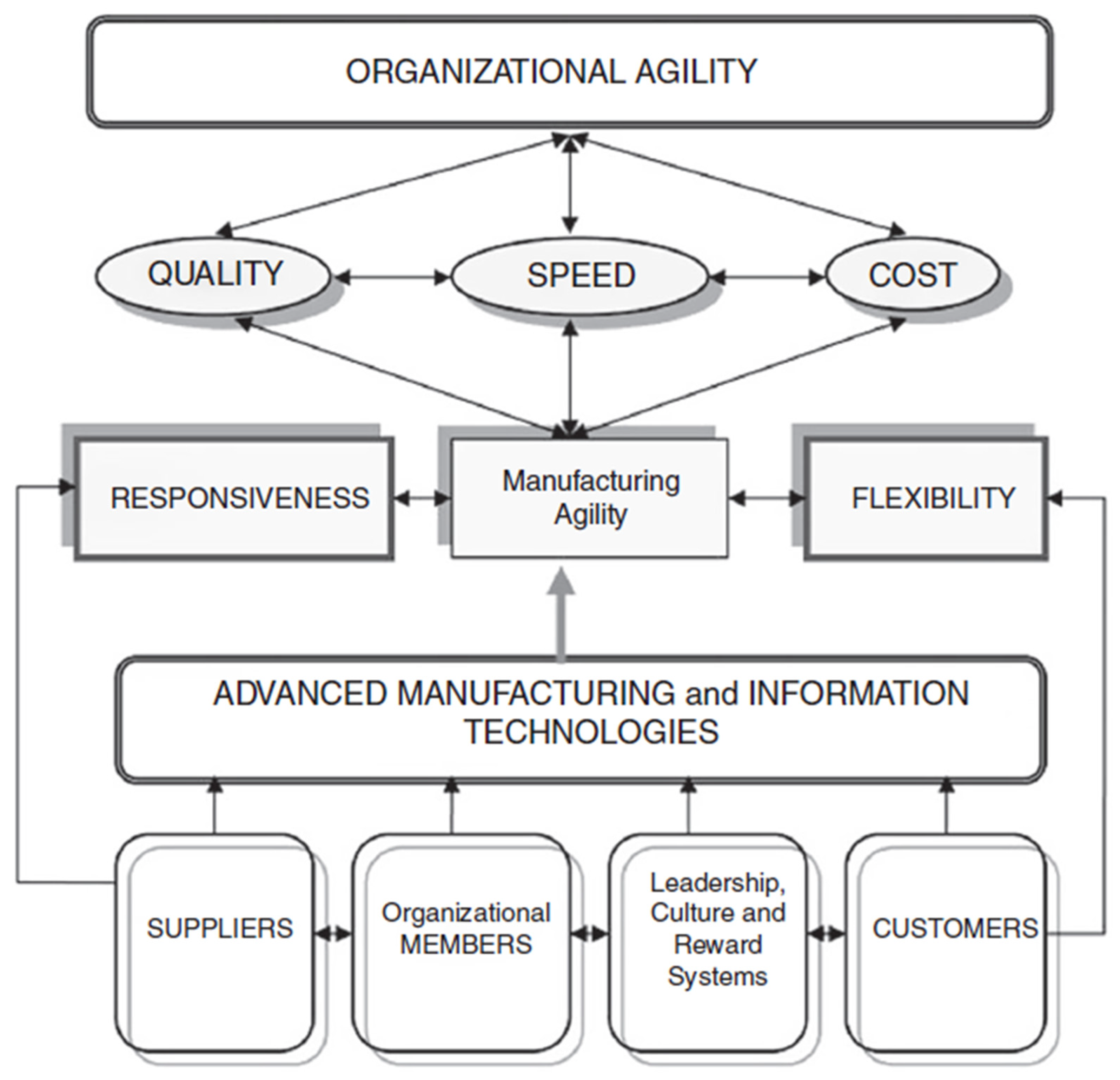
Figure 5.
The theoretical framework is a structured way to understand how different concepts are related in a study. In this context [8], it shows how organizational support, organizational response, and job performance interact with each other, suggesting that when an organization provides strong support, it can improve job performance, especially in changing business environments. The framework also includes control variables like firm size and industry, which help researchers understand the main relationships without being influenced by these other factors.
Figure 5.
The theoretical framework is a structured way to understand how different concepts are related in a study. In this context [8], it shows how organizational support, organizational response, and job performance interact with each other, suggesting that when an organization provides strong support, it can improve job performance, especially in changing business environments. The framework also includes control variables like firm size and industry, which help researchers understand the main relationships without being influenced by these other factors.
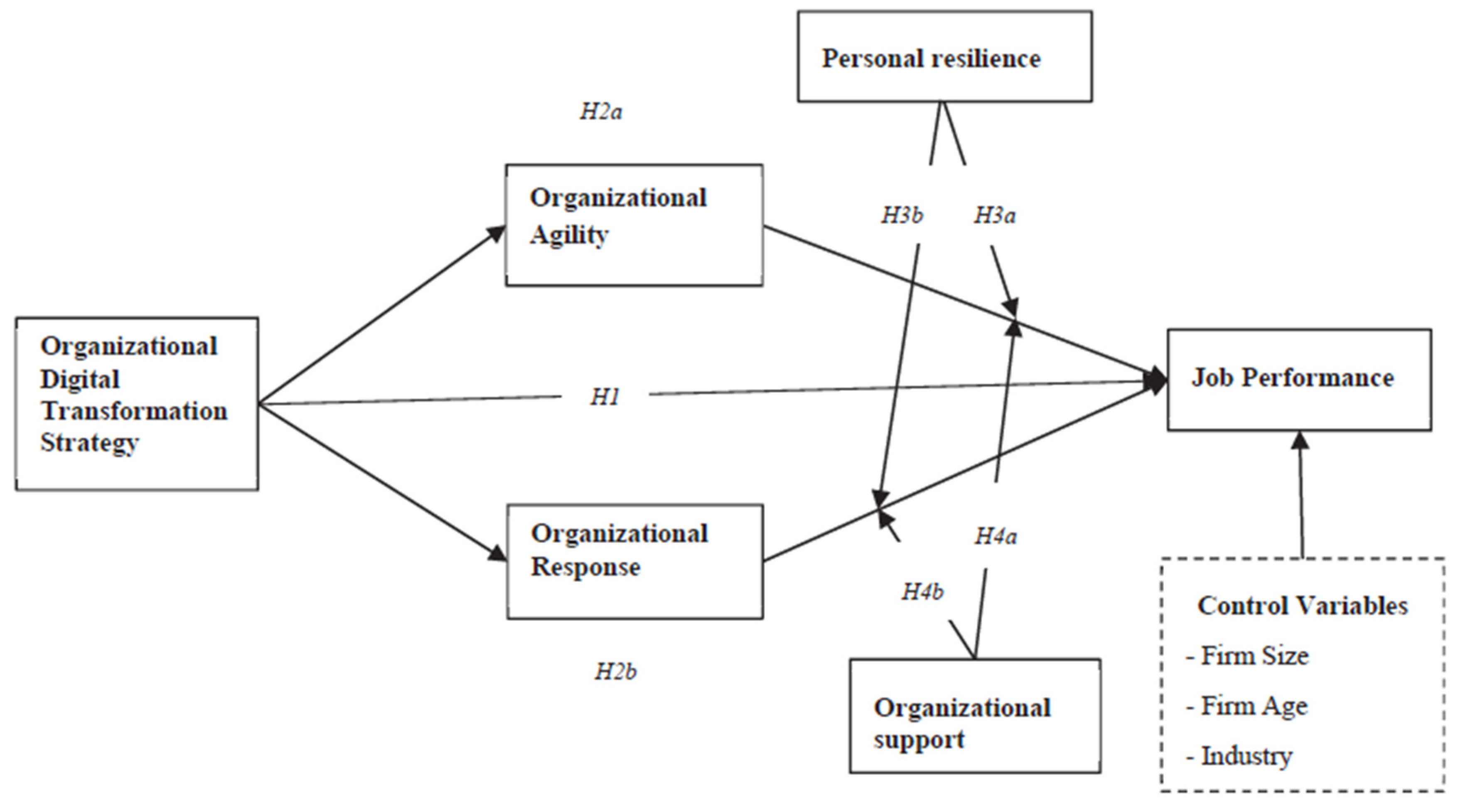
Figure 8.
The regions of meaning (RM) and concept map.
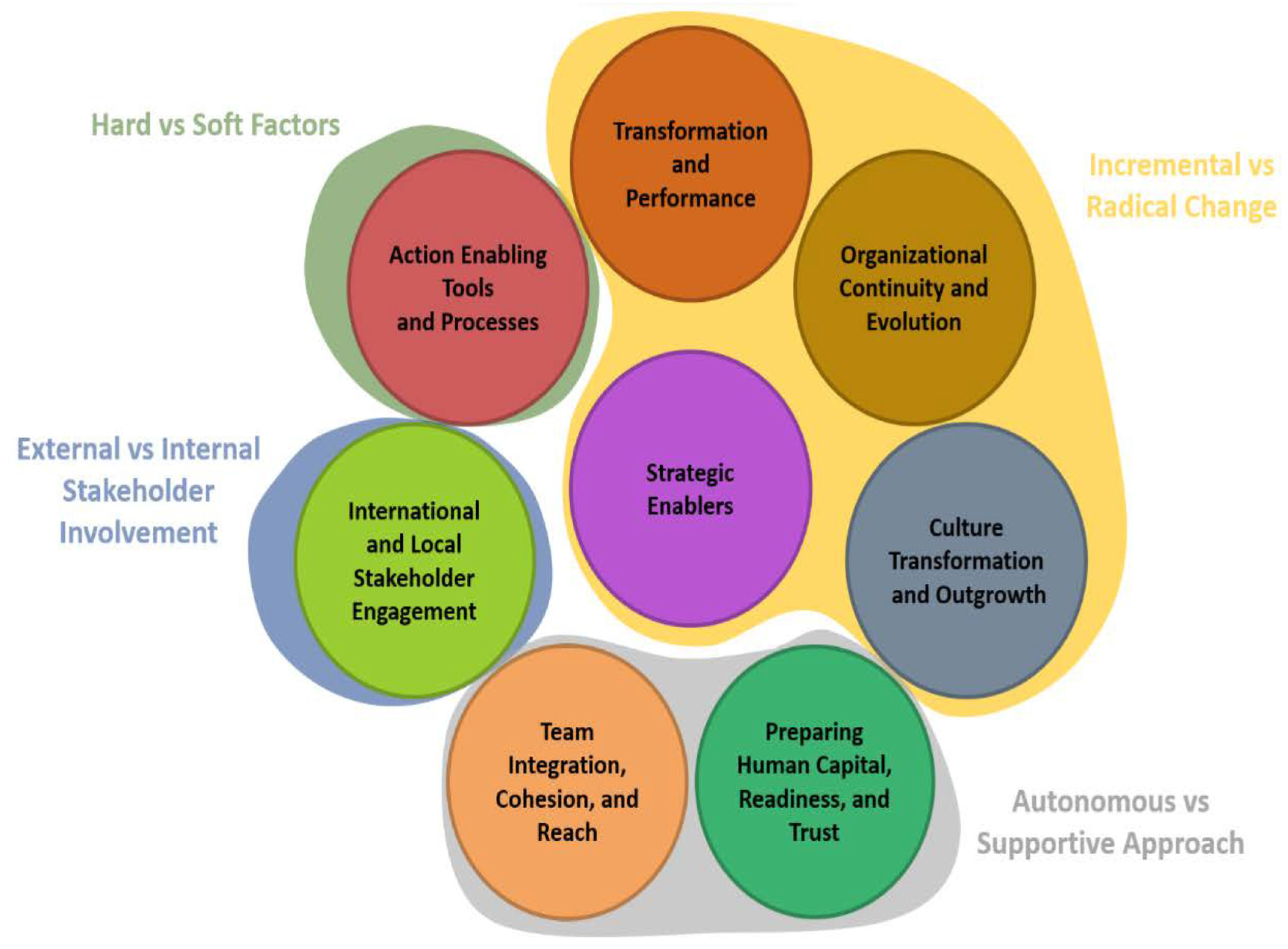
Figure 9.
Managing VUCA refers to how leaders handle the challenges of volatility, uncertainty, complexity, and ambiguity in their environments. To effectively navigate these challenges, leaders can take three interconnected actions: sensing changes in their surroundings, understanding the implications of those changes, and responding appropriately to threats and opportunities. By doing so, they can better prepare their organizations for the unpredictable nature of the business landscape.
Figure 9.
Managing VUCA refers to how leaders handle the challenges of volatility, uncertainty, complexity, and ambiguity in their environments. To effectively navigate these challenges, leaders can take three interconnected actions: sensing changes in their surroundings, understanding the implications of those changes, and responding appropriately to threats and opportunities. By doing so, they can better prepare their organizations for the unpredictable nature of the business landscape.
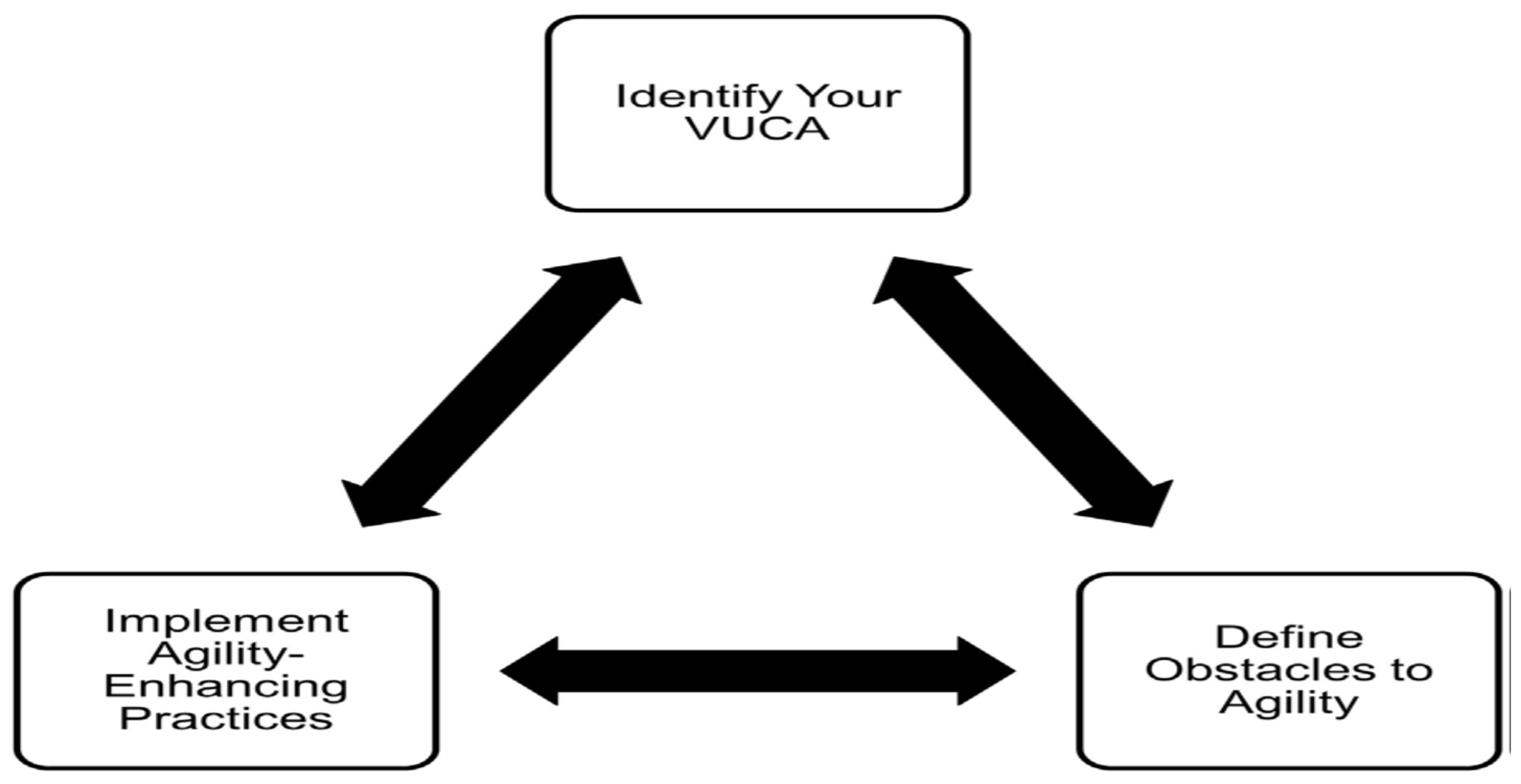
Figure 10.
The top 10 disruptive trends identified by business leaders are the key changes or challenges that they believe will significantly impact their organizations in the next three years. These trends are rated on a scale from 1 to 5, where 1 means the trend will have no effect and 5 means it will have a very strong effect. Understanding these trends helps leaders prepare and adapt their strategies to navigate the changing business environment effectively.
Figure 10.
The top 10 disruptive trends identified by business leaders are the key changes or challenges that they believe will significantly impact their organizations in the next three years. These trends are rated on a scale from 1 to 5, where 1 means the trend will have no effect and 5 means it will have a very strong effect. Understanding these trends helps leaders prepare and adapt their strategies to navigate the changing business environment effectively.
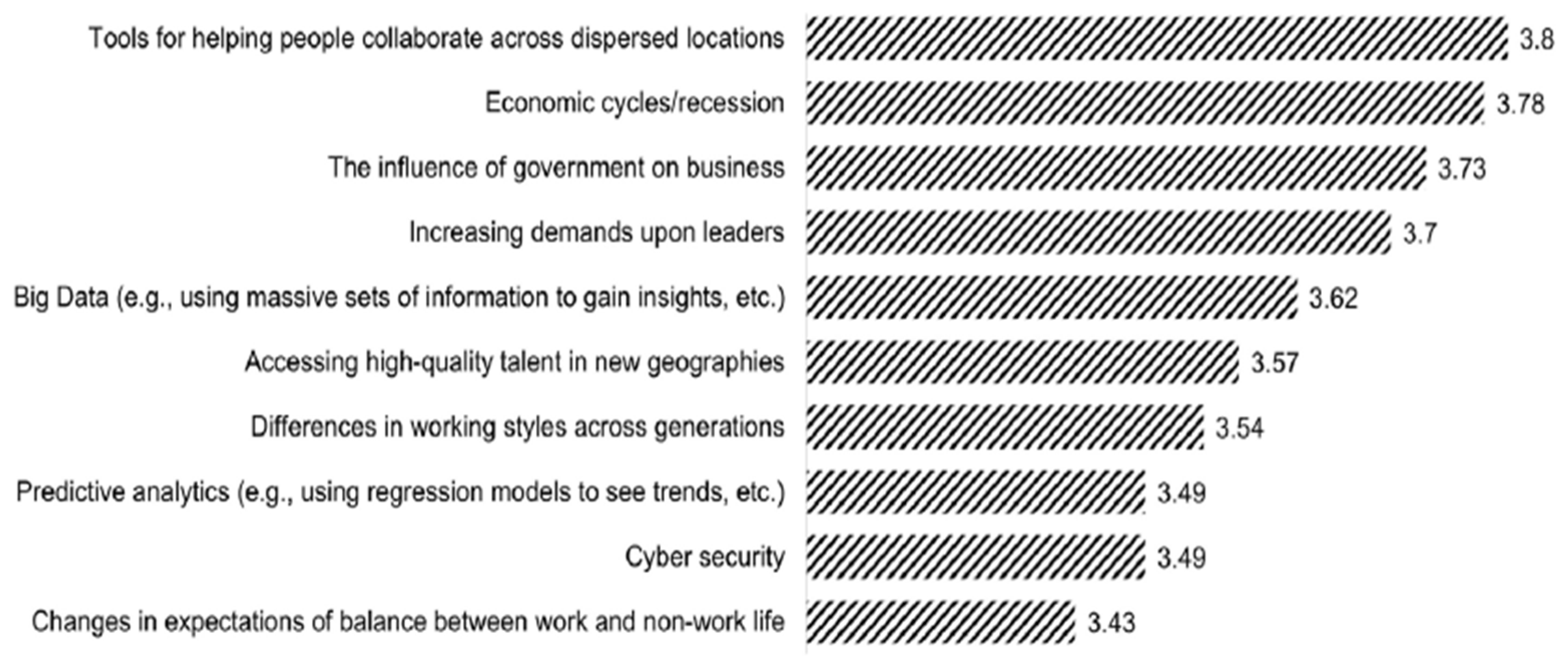
Figure 11.
Management Challenges, VUCA, and Suggested Practices. VUCA stands for volatility, complexity, ambiguity, and uncertainty.
Figure 11.
Management Challenges, VUCA, and Suggested Practices. VUCA stands for volatility, complexity, ambiguity, and uncertainty.
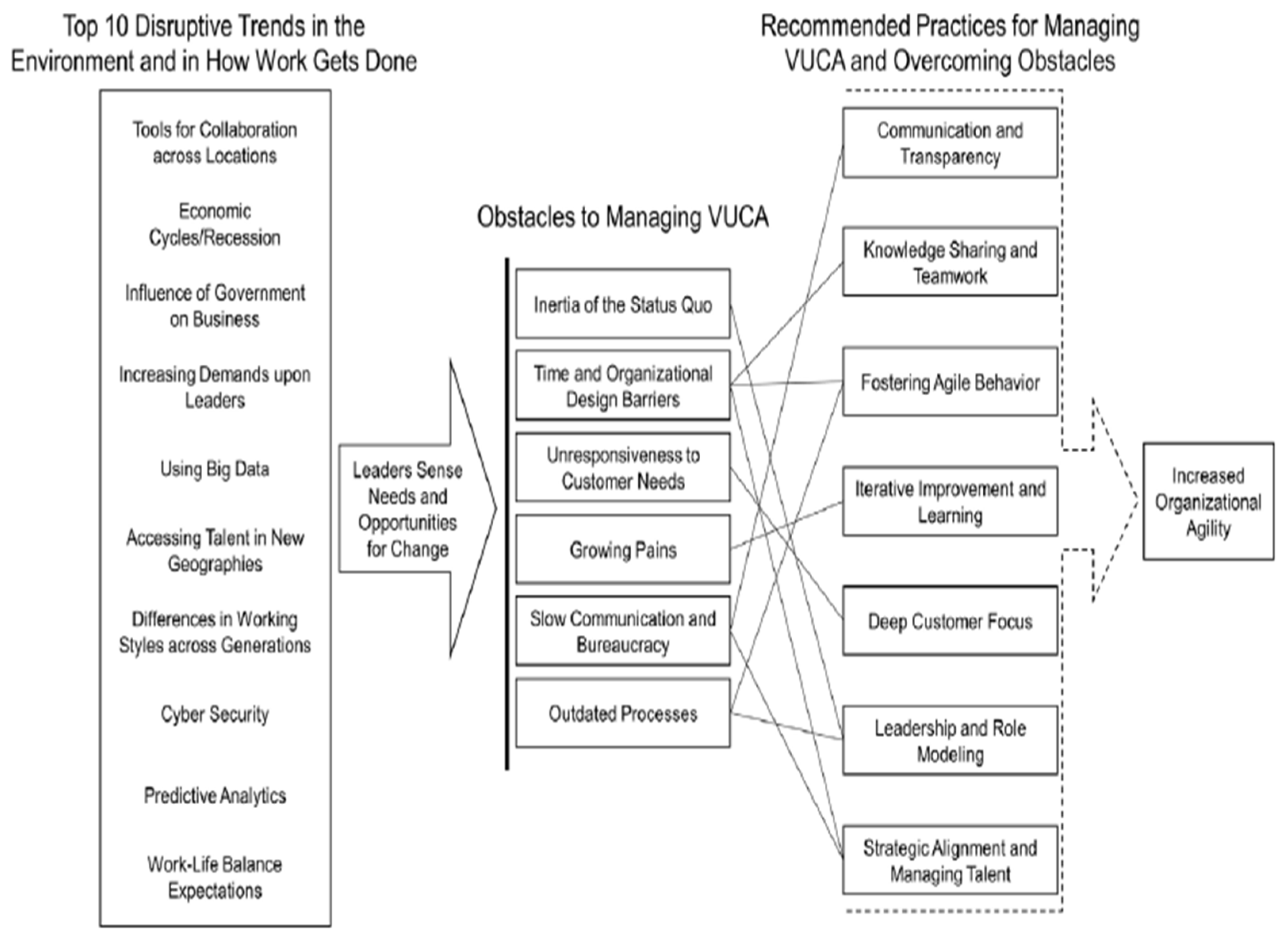
Figure 12.
conceptual framework.
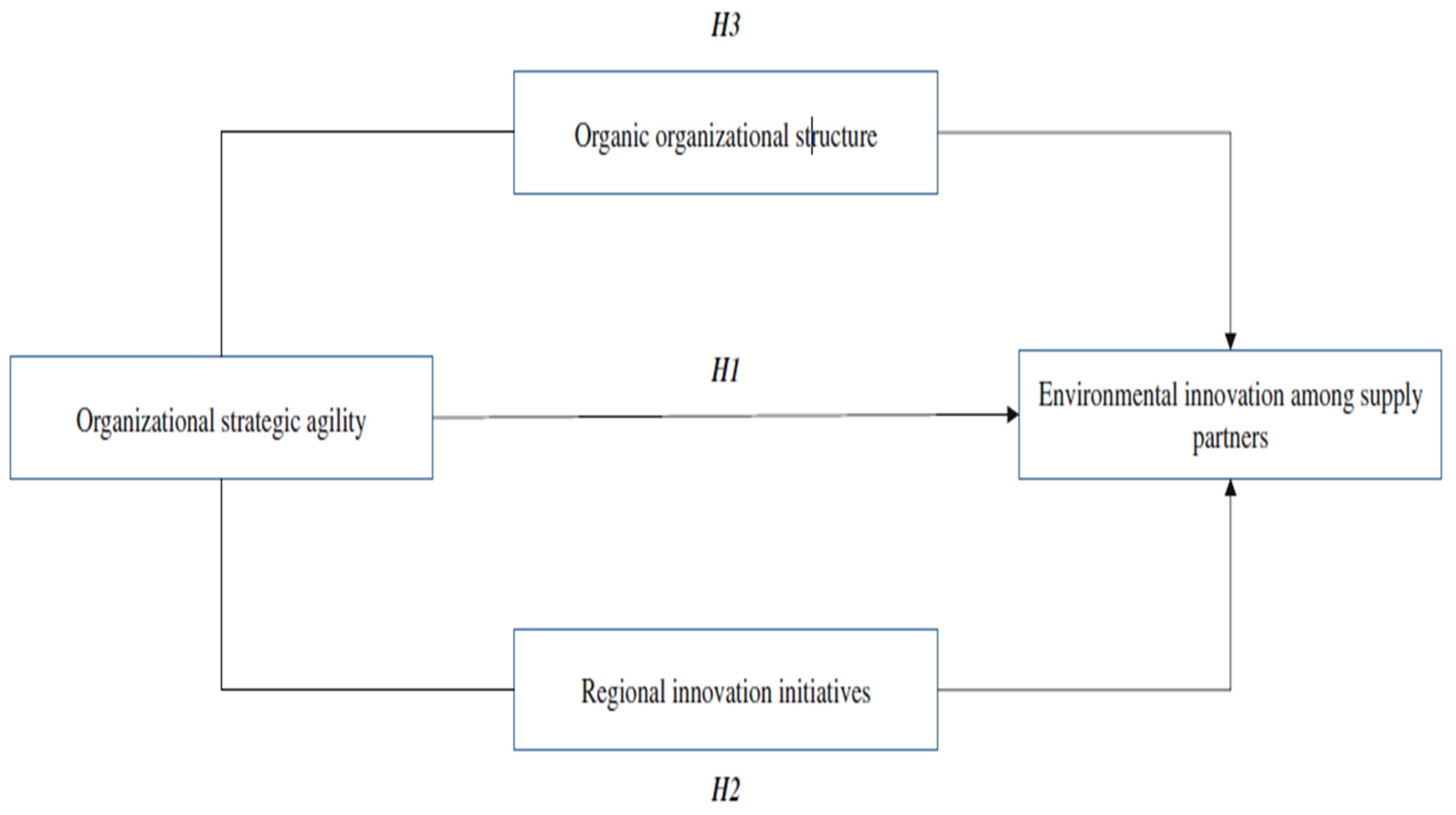
Figure 13.
The framework of the research methodology.
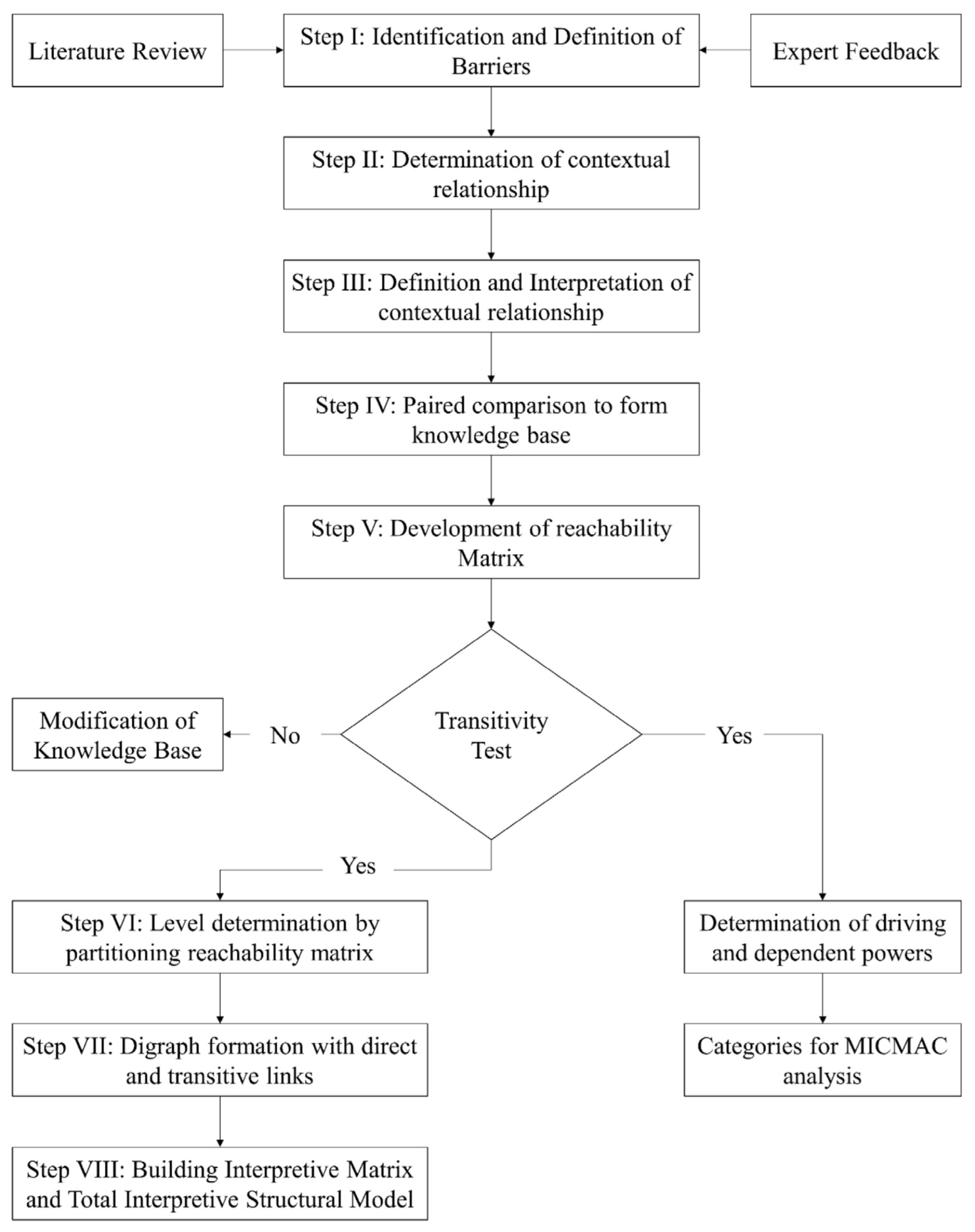
Figure 15.
Sticky notes with units specified text are sorted using a 4-set Venn diagram.
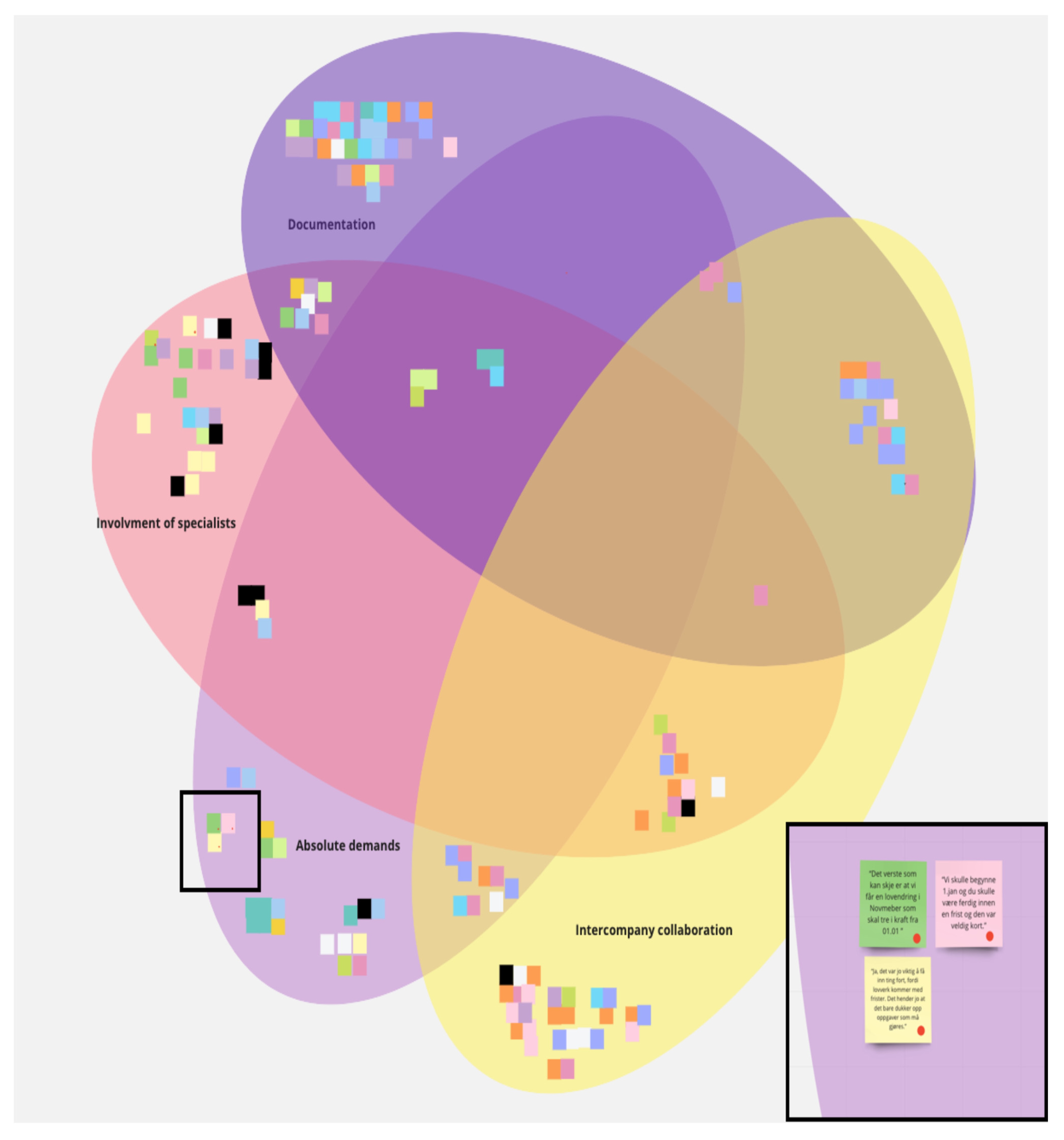
Figure 16.
The model in theory.
Disclaimer/Publisher’s Note: The statements, opinions and data contained in all publications are solely those of the individual author(s) and contributor(s) and not of MDPI and/or the editor(s). MDPI and/or the editor(s) disclaim responsibility for any injury to people or property resulting from any ideas, methods, instructions or products referred to in the content. |
© 2025 by the authors. Licensee MDPI, Basel, Switzerland. This article is an open access article distributed under the terms and conditions of the Creative Commons Attribution (CC BY) license (http://creativecommons.org/licenses/by/4.0/).
Copyright: This open access article is published under a Creative Commons CC BY 4.0 license, which permit the free download, distribution, and reuse, provided that the author and preprint are cited in any reuse.


