

Submitted:
27 May 2025
Posted:
28 May 2025
You are already at the latest version
Abstract
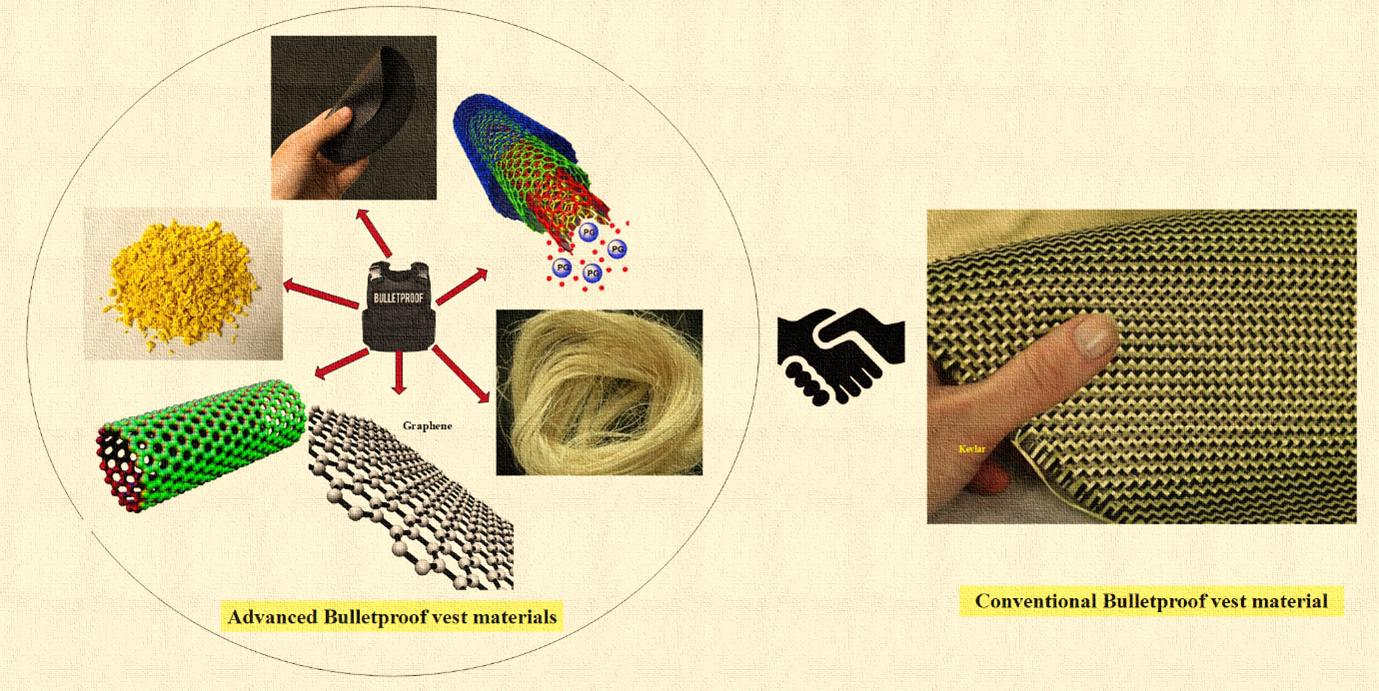
In most cases, bulletproof vests do not give the desired total protection to the users; therefore, it would be more accurate to refer to them as "Bullet-resistant." Most vests comprise steel or ceramic plates covered in para-aramids or artificial high-performance fibres like Kevlar, Spectra, and Dyneema. Despite its high tensile strength, Kevlar also has disadvantages like poor compression strength, which makes it urgent to find alternatives to the materials used in bulletproof vests. With the recent advances in technology and innovation, many materials are used other than para-aramid fibres, like Kevlar, Spectra, and Dyneema. These include Graphene, which weighs less than paper yet is the most robust material ever. Natural fibres which are reinforced in the Kevlar polymer composite, carbon nanotube-polymer composites, Kenaf fibre, Cordura, ballistic nylon, TWIP (twinning induced plastic) steel, shear thickening fluid (STF) filled paper panels, etc. With so many alternatives to advanced materials used in ballistic applications, many researchers are researching the materials. However, it is still in research and development and not commercially available for military and other purposes.
Keywords:
bulletproof vest
; Kevlar
; graphene
; kenaf
; carbon nanotubes
; shear thickening fluid (STF)
1. Introduction
The bulletproof vest helps protect our bodies from bullets and weapons, shrapnel, and other particles and fragments from bombs, grenades, etc. Bulletproof vests are bullet-resistant, which means they will stop specific types and sizes of bullets moving at typical speeds from penetrating the vest. The wearer may still sustain injuries even if the vest is powerful enough to stop the bullet from penetrating (Silveira et al., 2021). Body armour was reportedly first constructed in 1538 and made of steel plates. Kevlar was discovered in the year 1971, and because of its excellent strength-to-weight ratio, it is highly recommended for high-end applications, particularly for protection from deliberate attacks (Roy Choudhury, Majumdar, and Datta 2011; Salman and Leman 2018; Singh and Kushwaha 2013).
Bulletproof vests have five types: type I, II, IIA, III, IIIA, and IV. The most prevalent types are Type II and IIIA. Type IIA vests are thin, flexible, and covert, offering the lowest level of protection that the NIJ currently certifies. As the lowest category submitted, Type IIA replaced Type I. 40 S&W 180-grain FMJ and 9mm 124-grain FMJ-RN at 1,225 ft/s and 1,155 ft/s, respectively, are used in the NIJ’s Type IIA body armour testing. Type II has the drawback of offering little defence against Behind Armour Blunt Trauma (BABT) (Kumar 2016).
Type II is the most common ballistic protection level used by the general public and law enforcement. Type II body armour is durable enough to block most common handgun threats, including 9mm and 0.40 S&W, according to the National Institute of Justice’s tests utilising high-velocity 9mm and 0.357 Magnum ammunition. A Type II vest will not absorb as much kinetic energy as a Type IIIA vest since it is lighter, which increases blunt-force trauma. The drawback of Type IIIA is that it exhibits less BABT protection than Type IIIA. The heaviest soft body armour currently on the market, Type IIIA offers defence against pistol-calibre carbines, shotgun slugs, and high-velocity, high-energy handgun rounds. But Type IIIA vests’ higher density makes them heavier and less mobile. (Kumar 2016)
Compared to the lighter option, the thicker vests in this category tend to limit mobility considerably. Most commercially available pistol rounds are among the fewer dangers that Type IIIA body armour can defend against. Its concealability and range of mobility are restricted. Kevlar has low compression strength and cannot be used in all vests. The COVID-19 pandemic is thought to have had less of an effect on the market. Over the past few years, there has been a noticeable increase in the demand for bulletproof vests. Due to the temporary shutdown of production facilities in 2020, the companies’ output for making bulletproof vests remained lower than in previous years. But since 2021, the market has recovered, which may be attributed to the demand from the military and police enforcement. During the forecast period, the need for bulletproof vests is anticipated to grow at a CAGR of over 2.0 % (2022–2031). The market’s main growth driver is expected to be increased military spending by developed and developing nations (Kumar 2016).
According to figures released by the Stockholm International Peace Research Institute (SIPRI) in 2021, total worldwide military spending increased to USD 1981 billion in 2020, a rise of 2.6 % in real terms from 2019 and in the country wise military spending distribution, USA holds 892 Billion USD of the total 1981 Billion USD as shown in Figure 1. During the forecast period, the rise in terrorism and aggressive activities between various nations in Asia-Pacific, Europe, the Middle East, and Africa forces these nations to acquire protection solutions for their dismounted infantry, which could accelerate the market’s growth. By incorporating cutting-edge technologies like 3D printing and composite materials, companies and governments are investing in developing advanced light vests with increased mobility, which is anticipated to create new market opportunities for producers of bulletproof vests during the forecast period (Crouch 2019; Kushwaha, Avadhani, and Singh 2015a; Risby et al. 2008).
The primary reason for advancements in ballistic applications and replacements in the current materials used in bulletproof vests is the affordability, sustainability and more advanced mechanical properties replacements. Such reserves can be eco-friendlier and more sustainable than Kevlar or have more mechanical properties. But to have both advancements, we can still have hybrid composites of natural fibres and graphene, which collectively become a super-advanced material for ballistic applications.
Such recent developments not only replace Kevlar but also opens a wide hole in research and more advancements in ballistic applications. Such improvements help make more lightweight armours that portray more than III+ protection and allow the ballistic industry to create more affordable and sustainable applications.
In the recent development of bulletproof vests, there are three general approaches in which changes were made.
1.1. Polymer Composites
Researchers try to make a composite with Kevlar or a polymer like Rame-Kevlar composite, Carbon Nanotube-Polymer composite, Natural fibre reinforced polymer composite, glass fibre composite armour, etc. Composites made of carbon nanotubes (CNTs) and polymers have advanced incredibly quickly in recent years. Nanotubes’ electrical, thermal, and mechanical properties are astounding (Lonkar et al. 2012). Solubility, dispersion, and stress transmission must all be maximised for nanotubes to have the best mechanical properties.
Poor load transmission between nanotubes in bundles and between nanotubes and the surrounding polymer chains may cause interfacial slippage if the interface between the nanotube and polymer is not adequately constructed (S. Kushwaha, V. Avadhani, and P. Singh, 2013). It is common practice to subject CNTs to chemical functionalisation and ultrasonication to improve the nanotubes’ dispersion in solvents (P. Singh and S. Kushwaha 2017). In the polymer composite business, natural fibres are typically used as reinforcement for bio-composite products, as shown in Figure 2.
Natural fibres are gaining popularity for various reasons, including their comparative advantages over synthetic fibre-reinforced plastics in increased sustainability, eco-friendliness, and renewable supplies. Additionally, the structural plastics industry has frequently used fibre-reinforced polymers for various applications. One or more reinforcing phases embedded in a single continuous matrix, one reinforcing phase embedded in two or more matrices, or two or more reinforcing phases included in multiple matrices can all be parts of a hybrid combination.
The benefits of hybrid composites due to the excellence of one kind of ingredient may outweigh the drawbacks of other constituents. A hybrid ballistic system is a multi-layered one that typically consists of two or more high-performance fibres. The qualities of mixed materials often depend on the aspect ratio of the fibre, the individual fibre’s characteristics, its orientation, length, and the matrix’s and the fibres’ adhesion (Kushwaha et al. 2014; Lonkar et al. 2012).
1.2. Natural Fibres
The range of natural fibres used as a composite in ballistic applications include flax, kenaf, aramid, curious, jute, basalt, coir, hemp, Bamboo fibre, Rubber particles, and textile materials (woven fabrics) (Albert et al. 2023). Natural fibres have several drawbacks that make them incompatible with polymers, including high water absorption rates, dead cells, wax, and oil when employed in their raw form. Their surface needs to be changed to get around this.
The primary goal of surface modification is to improve the qualities of natural fibres to give composite systems superior strength. These processes mainly focus on the amorphous area of the cellulose, which increases compatibility between the fibre and polymer matrix. Multiple hydroxyl groups in the undeveloped portion of cellulose give the fibre a polar character, which results in weak bonding with the polymer matrix (Matveev et al. 1997; Medvedovski 2010; Vidya et al. 2020).
To boost the adherence of the fibre to the matrix and improve its mechanical properties, surface modification was used to reduce the polar nature of the thread by reducing or deleting the hydroxyl groups (Aharonian et al. 2021; Akella 2020; Ashok, Srinivasa, and Basavaraju 2019). Depending on how they are used, plants that produce natural fibres are divided into primary and secondary categories. Figure 3 shows Primary plants cultivated expressly for their fibres, such as cotton, jute, kapok, hemp, kenaf, and sisal. In contrast, secondary plants, such as bananas, coconut coir, pineapple, and oil palm, are created as by-products. Natural fibres are generated nearly 30 million tonnes annually and used in various manufacturing processes, including garments, packaging, paper production, vehicles, construction materials, and sporting goods (Ali and Lamprecht 2013; Anggoro and Kristiana 2015a; Kushwaha, Avadhani, and Singh 2015b; Nurazzi et al. 2021; Pourhashem et al. 2020).
The benefits of low density, high stiffness, low cost, low-risk manufacturing, and renewable resources have led to the selection of natural fibres. However, it also has certain drawbacks, including inconsistent consistency that varies depending on unforeseen circumstances like the atmosphere and moisture absorption, reduced durability, and a lower processing temperature. Natural fibres’ hydrophilic characteristics cause them to absorb moisture, negatively impacting their mechanical properties like flexural strength, flexural modulus, and fracture toughness. Effective hybridisation of natural fibres with synthetic or natural fibre can address most drawbacks. The inability of natural fibres to completely replace glass fibres is due, in large part, to the disparity in strength.
1.3. Kevlar Replacement
A recent advancement includes the complete replacement of Kevlar and the discovery of new materials for vests like TWIP (twinning-induced steel), Cordura, ballistic nylon, graphene, etc. Available bulletproof vest panels are made of hard armour material, ultra-high molecular weight polyethene, or para-aramids (Kevlar). Some of the green composite approaches explored in studies for bulletproof vests are X-ray waste and fibre reinforcement (Azmi et al., 2019). The ballistic characteristics of the fabric can be improved by adding shear-thickening fluid.
In creating composites, fibres from one substance—the binder—are joined to another sense—the reinforcement. Fibre-reinforced polymers come in two varieties: glass-reinforced polymer (GRP) and carbon fibre-reinforced polymer (CFRP) (FRPs) (Azmi et al. 2019). Since epoxy resin was utilised to construct the materials, they did not attach very effectively. The specimen nevertheless exhibited specific impact resistance characteristics; the outcomes may be enhanced by strengthening the interfacial bond between the two materials. Graphene nanoparticles are strewn throughout the shrapnel and Kevlar fibre layers. Modern bulletproof vests have been proven to perform better when boron carbide is added to the design (Vignesh et al. 2021). Kevlar fibres are linked together between layers of reinforced, compliant polymer or resin-like Kraton.
When a bullet strikes the panel, the iron plate sandwiched between layers of panel fractures and crushes it into pieces, absorbing the bullet’s kinetic energy. The primary ingredient for Kevlar, P-phenyleneterepthalamides (PPTA), has a crystalline rod-like structure that self-assembles as the concentration increases. Kevlar has excellent tensile strength but cannot deflect Type III or higher bullets, as shown in Figure 4 (Parimala and Vijayan 1993).
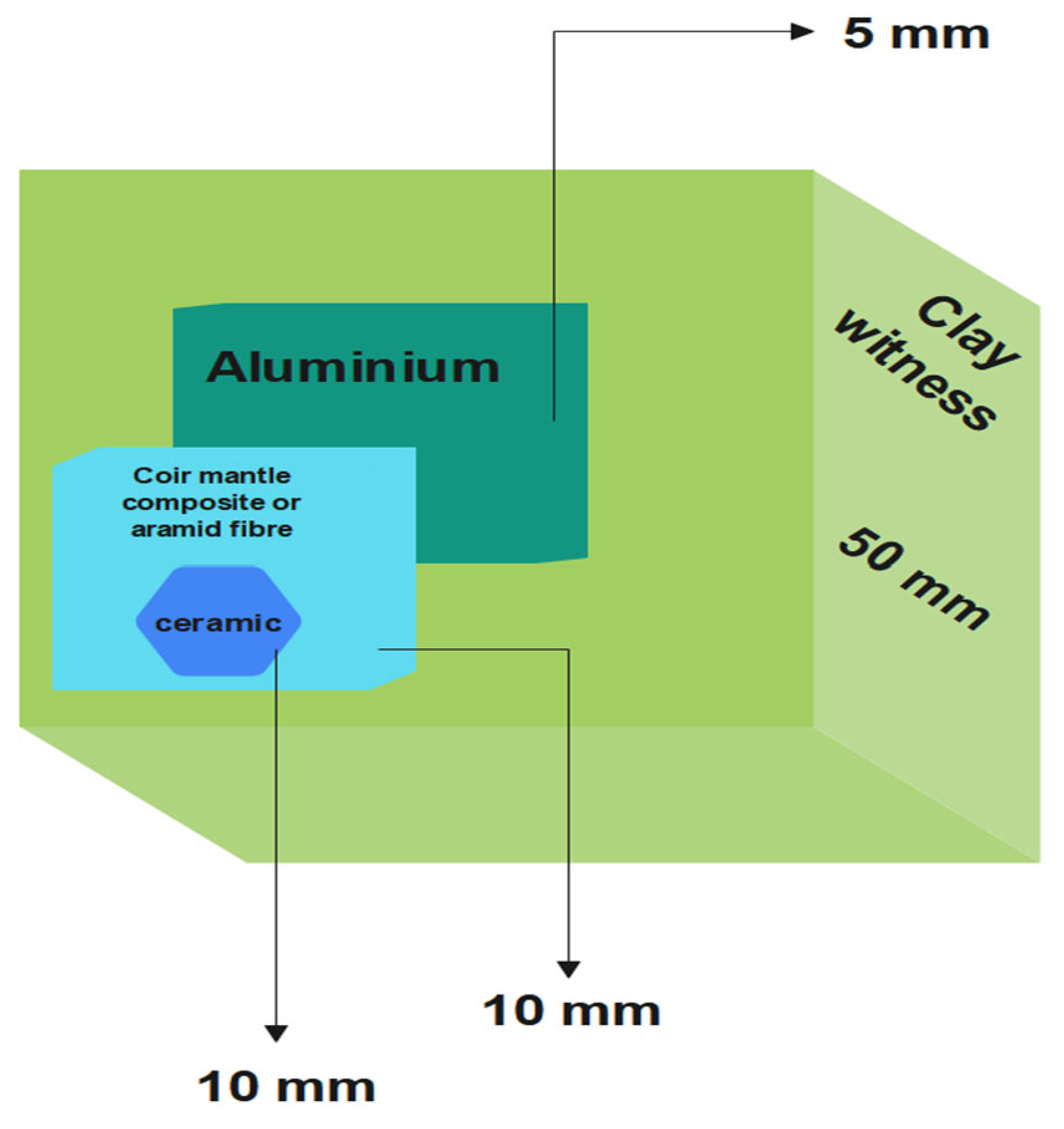
A sandwich composite comprised of twinning-induced plastic (TWIP) steel, polypropylene-polyethene polymer and water is employed as a bulletproof material (Nyanor, Hamada, and Hassan 2018). The inner layer of the more modern, lighter ballistic applications has been improved with various composites, while the outside coating is ceramic. The part of the bulletproof vest that most significantly increases the shield’s capacity to defend is its outer shell. When put through a puncture test, Cordura performed better than Ballistic Nylon, which received the best marks for abrasion resistance (Fayed, Abo El Amaim, and Elgohary 2021). Figure 5, Figure 6 and Figure 7 showcases the recent advancements in ballistic applications from 1996 to the present.
2. Results and Discussion
2.1. Kevlar
Kevlar’s impact resistance, great strength, and low weight make it a good defence against bullets fired from handguns. Different layers of Kevlar with various weights are currently being explored to create a secure bulletproof vest. Testing is done using several ballistic gel combinations (experimental substances intended to imitate the effects of gunshots on animal muscular tissue). Ballistic impacts are generated by 9 mm Parabellum ammunition (Stopforth and Adali 2019).
The woven Kevlar fabric used in the vests is constructed of synthetic fibres produced through polymerisation. Kevlar has a strength-to-weight ratio that is five times greater than steel. Experimental ballistic testing on Kevlar-Phenolic composite samples revealed that the results did not match those in the most recent publications. Therefore, it also means that a proportion of controlled experiments and research is still required on Kevlar and materials like Kevlar (Nascimento et al. 2018; Nguyen et al. 2020; Stopforth and Adali 2019). Most Kevlar tests are usually done with a Glock 17 handgun (9 mm). The ballistic gel has a 996 kg/m3 density, almost the same as the density of human flesh (1004 kg/m3). In experiments, many grades of Kevlar are utilised (160 GSM, 200 GSM, and 400 GSM), also shown in Figure 8. After testing, it was revealed that using fewer layers of Kevlar makes the projectile travel farther through the ballistic gel rather than halting it (Nascimento et al., 2018; Nguyen et al., 2020). Effectiveness only emerges once there are more layers.
Figure 8.
Distance projectiles travel into the ballistic gel with no Kevlar to penetrate (Nguyen et al. 2020; Stopforth and Adali 2020).
Figure 8.
Distance projectiles travel into the ballistic gel with no Kevlar to penetrate (Nguyen et al. 2020; Stopforth and Adali 2020).
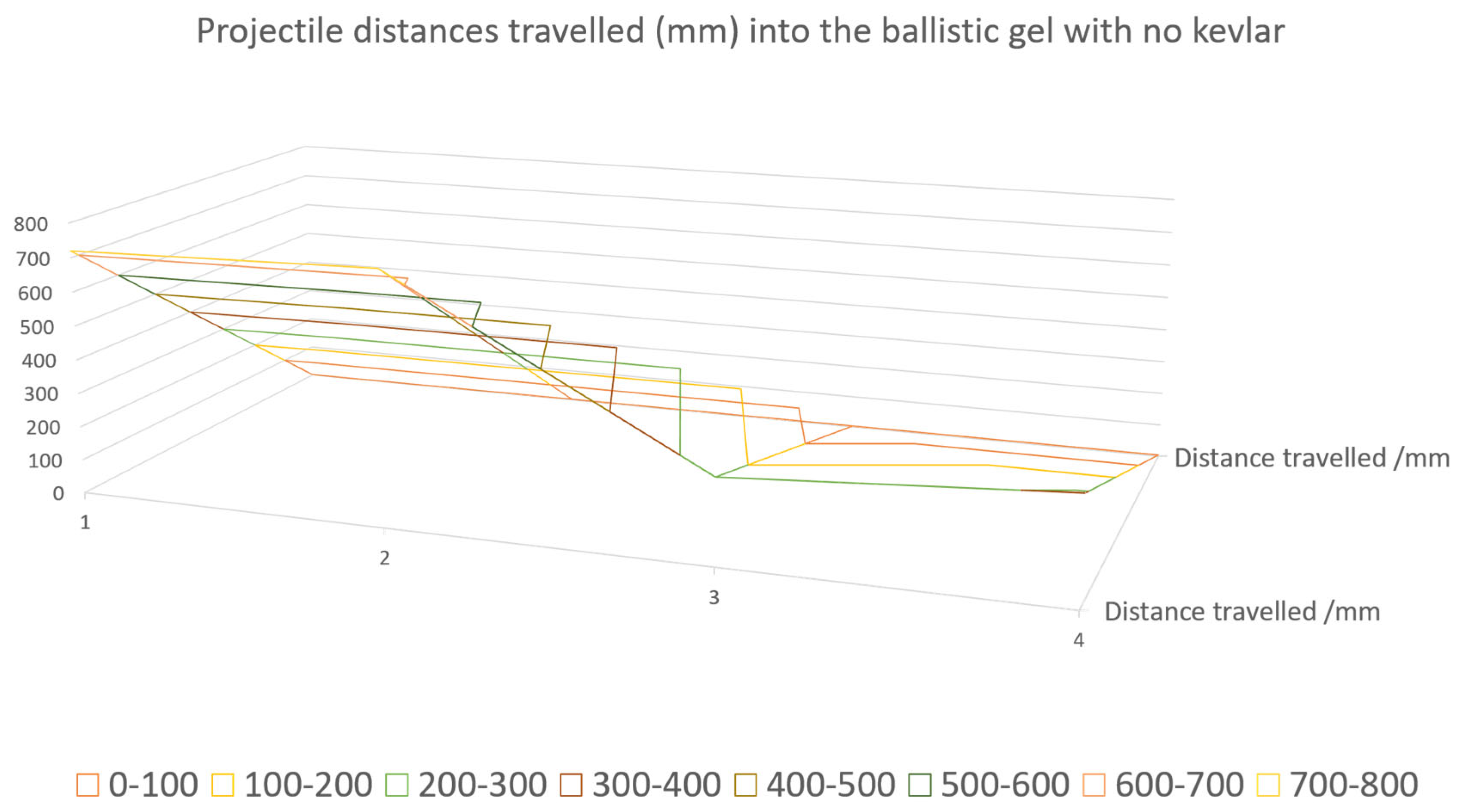
Figure 9.
Distance travelled by the projectiles after penetrating different layers of 160 GSM Kevlar.
Figure 9.
Distance travelled by the projectiles after penetrating different layers of 160 GSM Kevlar.
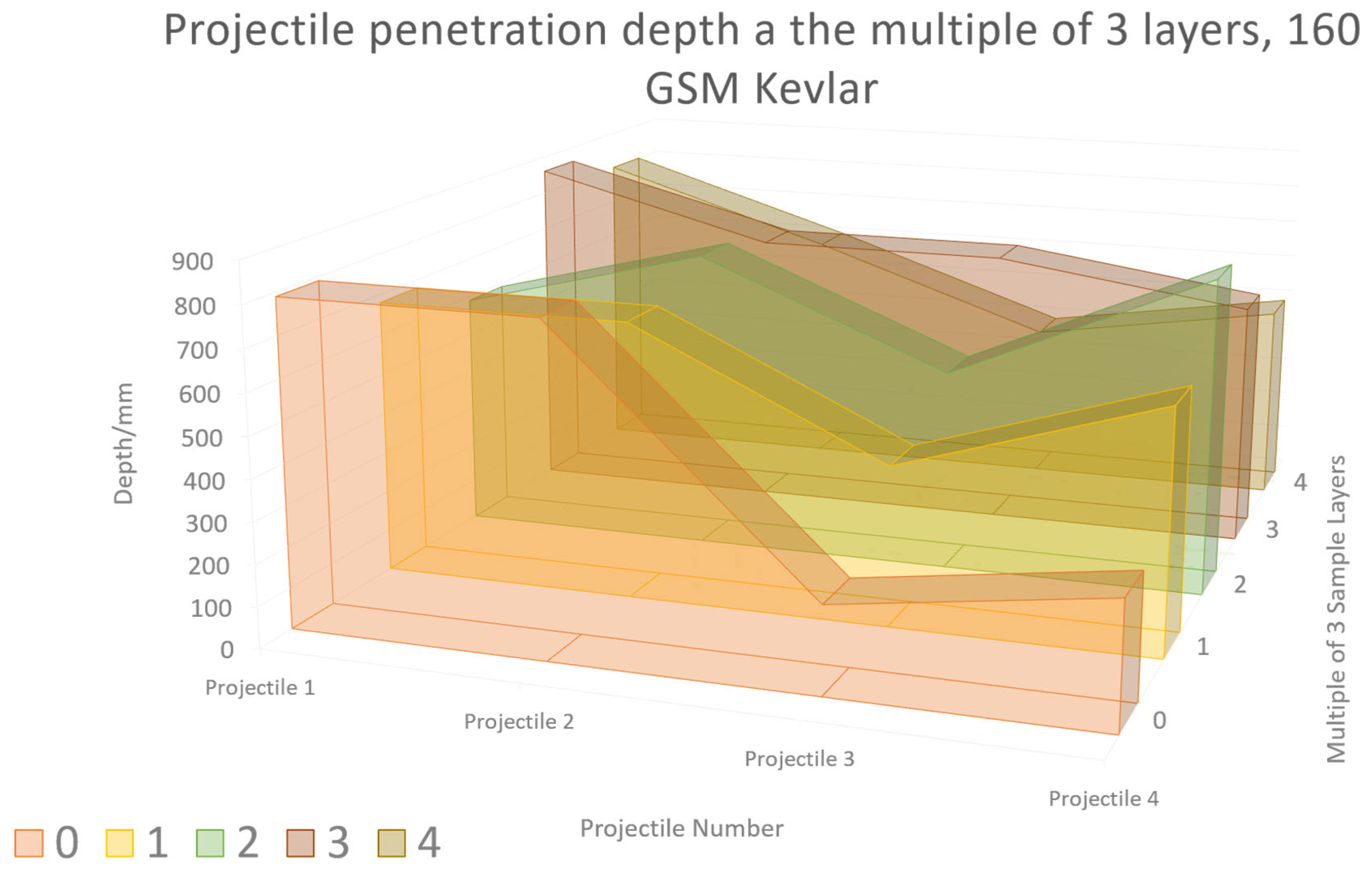
In their experiment, a 9 mm Glock 17 was more effective against 200 GSM Kevlar. Two distinct Kevlar varieties with differing weights do not have a linear connection with one another. At least 21 layers of 200 GSM Kevlar are needed to stop the projectile, as projected in Figure 8. And different layers are required in other cases, as the projectile profile is a significant factor in the bullet’s penetration.
2.2. Graphene Nanosheets Reinforced Kevlar-29
Graphene is a material that has high thermal conductivity, high electrical conductivity, high mechanical stiffness, a high specific area, high intrinsic mobility, and a high Young’s modulus. The most popular material for bulletproof vests for ballistic protection has been Kevlar-29. Although Kevlar is strong, it cannot withstand compressional force. The weight of the jackets increases due to the inclusion of these plates (Vignesh et al. 2021). Graphene is a 2D allotrope of carbon that weighs less than paper but is still the most robust material ever. The shrapnel and layers of Kevlar fibre are both interspersed with graphene nanoparticles. It has been demonstrated that adding boron carbide to a contemporary design of bulletproof vests increases the amount of protection (Raji et al. 2019).
The fibres of Kevlar are bound together between layers of reinforced, compliant polymer, or resin-like Kraton. The iron plate put between layers of panel fractures and crushes the bullet into fragments when it strikes the panel, which absorbs the bullet’s kinetic energy. P-phenyleneterepthalamides (PPTA), the raw material for Kevlar, have a crystalline rod-like structure that self-assembles as the concentration is raised. Despite having high tensile strength, Kevlar cannot deflect Type III or higher-level projectiles. The average weight of a bulletproof vest is about 8-10 kg (10-25 layers) (Dresch et al. 2021; Ellis. L R 1996).
2.2.1. Degradation of Kevlar Under UV Radiation and in Acidic/Alkaline Environment
In the experiments conducted, it was found that the flexibility of graphene is greater than that of Kevlar-29, reducing the number of breaks during the weaving and knitting processes. Ten graphene sheets (2.7 mm thick) were included between the Kevlar layers, which decreased the jacket’s overall distortion and improved its stability. Thus, it is stated at the end that adding reinforcement with graphene between Kevlar layers enhances the jacket’s strength (Vignesh et al. 2021).
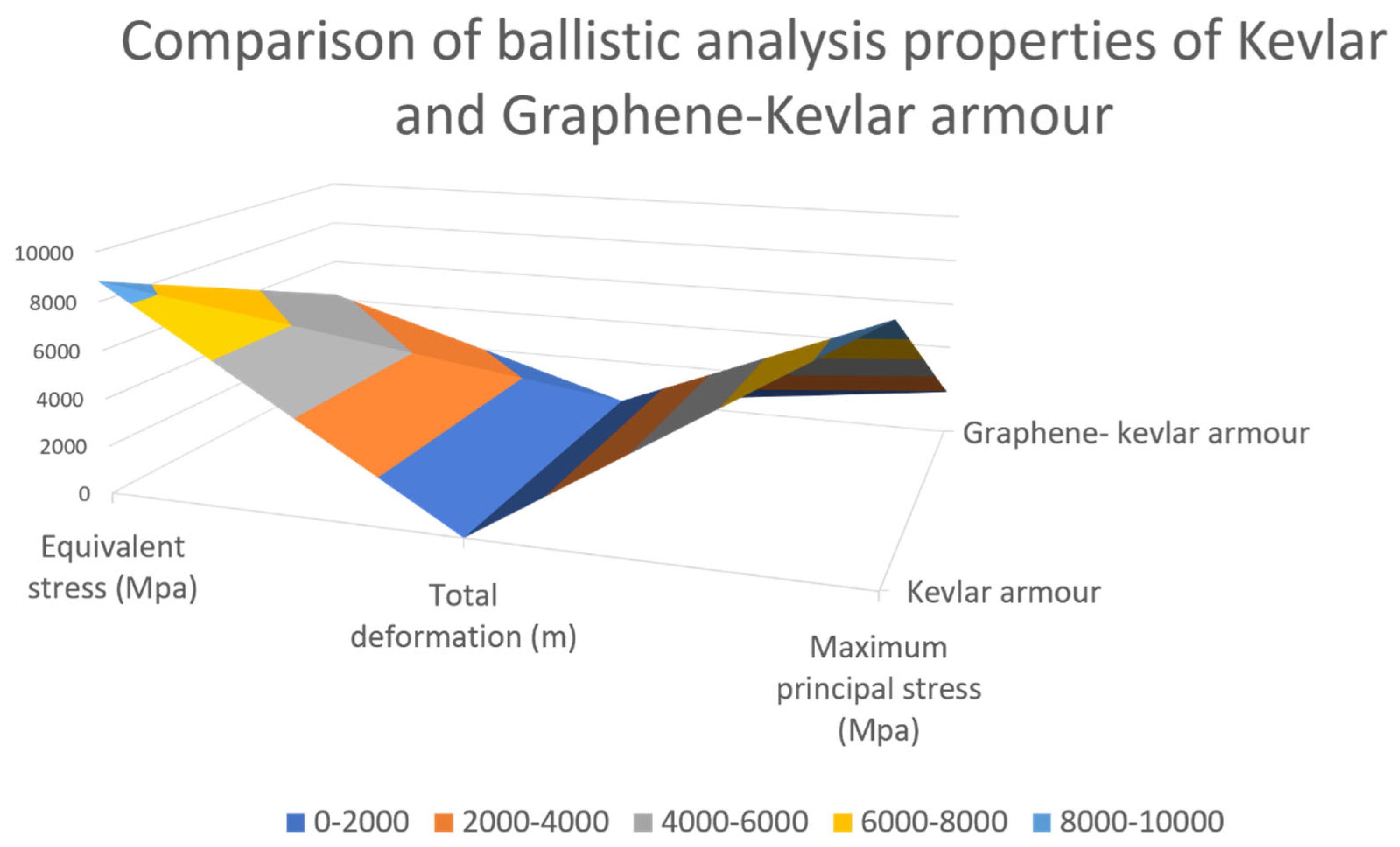
One of the only disadvantages of graphene was that they have larger impact holes than even steel, resulting in cracks faster than Kevlar. If the impact holes can be reduced with the help of a composite, then graphene would be the most robust material to be used in bulletproof vests. The comparison of several properties of Kevlar and Graphene and the analysis of Kevlar-Graphene ballistic armour are also presented in Figure 10.
Figure 10.
Comparison of ballistic properties of Kevlar and Graphene (Vignesh et al. 2021).
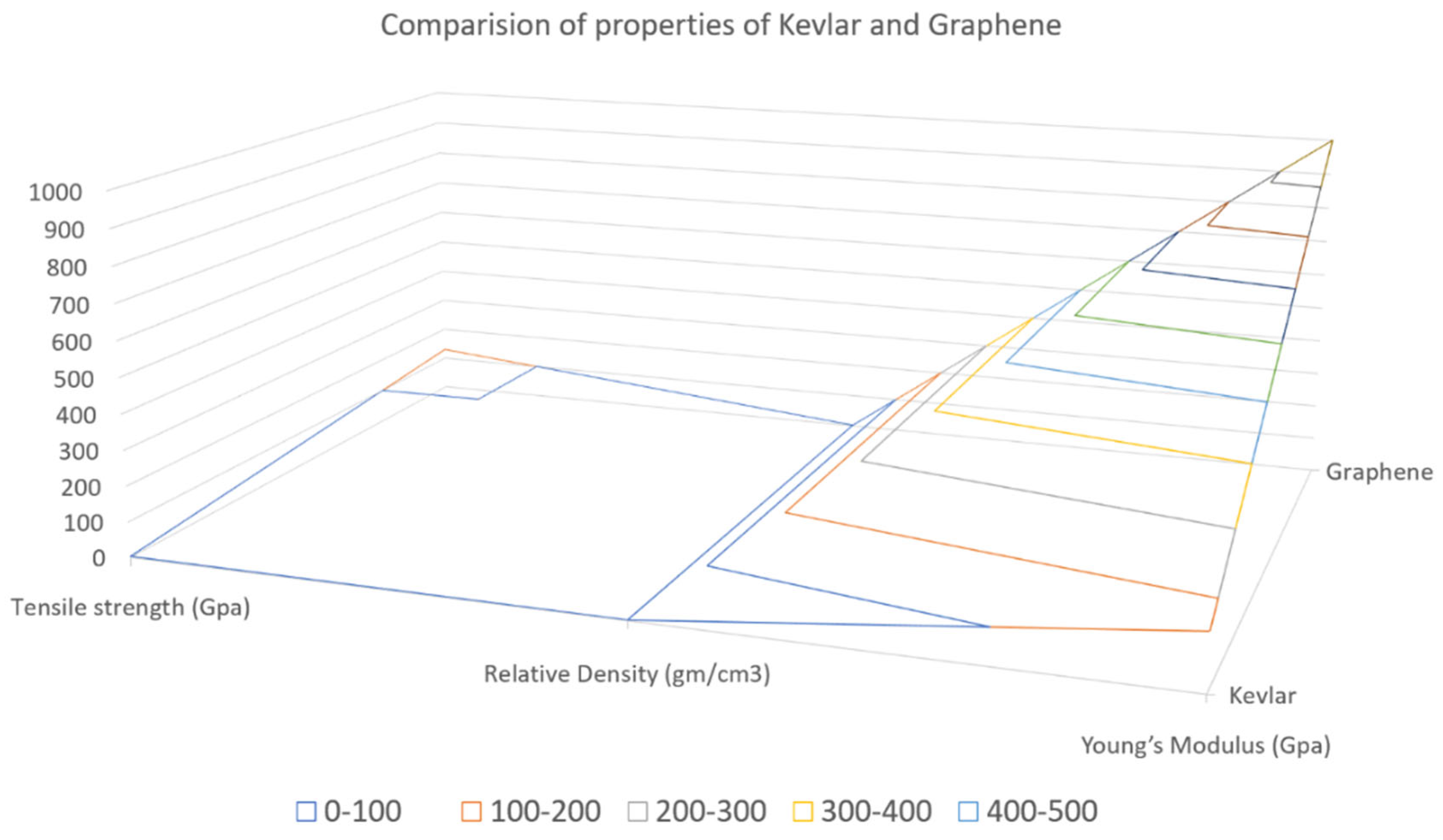
Figure 11.
Comparison of ballistic analysis properties of Kevlar and Graphene-Kevlar armour.
2.3. Natural Fibre Reinforced Polymer Composites
The disposed Kevlar materials (used) impact ecosystem disruption (environmental pollution). Enhancing the kinetic energy absorption and dissipation of natural fibres has significantly improved the structure’s performance, replacing the recent Kevlar and aramid (Kushwaha et al. 2014; Nascimento et al. 2018). Natural fibres are cheap and easy to manufacture, with vast availability. Natural fibres are categorised into animal-based fibres (Cocoon silk, chicken feathers, wool and spider silk) and plant fibres. Natural fibres have a low cost, are lightweight, pose few health risks, are biodegradable, have a high specific strength, and exhibit excellent thermal and acoustic insulation properties. Currently, there are two varieties of body armour: hard body armour (made of ceramics, reinforced plastics, metal plates, etc.) and soft body armour (High-performance ballistics fibres layers) (Nascimento et al. 2017; S. Kushwaha et al. 2013). The Ballistic protection mechanism showcased by natural fibre-reinforced polymer composite is shown in Figure 12.
Among the natural fibres, basalt fibres exhibit excellent performance in more incredible ballistic limit velocity for NIJ Level II ballistic applications. Adding nano cellulose, thickening fluid, and rubber components to armour structure systems can improve natural fibre performance.
2.4. Carbon Nanotube Polymer Composites
Excellent electrical, thermal, and mechanical properties can be found in carbon nanotubes (CNTs) (Bhat et al. 2021; Byrne and Gun’ko 2010). Theoretically, CNTs have astounding mechanical qualities, with strengths 10–100 times greater than the most robust steel and a carrying capacity for an electric current 1000 times greater than copper wire. It can be used for flexible displays, e-paper, and bulletproof vests. Adding carbon-based fillers to polymers decreases their weight and is a heat conductor (Steinke 2022).
Suitable additives for polymer reinforcement have been covalently functionalised into nanotubes. However, nanotube functionalisation added to polymers causes higher percolation values. New ultra-strong polymer nanotube materials are necessary for bulletproof vests (to make them cost-efficient), which will require vast quantities of CNTs and Boron Nitride Nanotubes (BNNTs) (Hu et al. 2012; S. Kushwaha, V. Avadhani, and P. Singh 2014).
2.5 KENAF/X-Ray Film Hybrid Composites
Kenaf fibre (natural fibre) was chemically treated with sodium hydroxide solution and used in X-ray films with a surface treatment. Tests showed that the configurations of this hybrid fibre were robust (tensile strength = 396.9 MPa) and flexible (wearable, flexural modulus = 6.24 GPa). It can stop a bullet at speeds of up to 230 m/s (Azmi et al. 2018).
Along with stopping bullets, the vests aim to protect humans from mortars, grenades, and artillery shells. Current bulletproof vest panels contain either para-aramids (Kevlar), UHMWPE (ultra-high-molecular-weight polyethene), or hard armour material. X-ray waste and fibre reinforcement are some green composite concepts used in research for bulletproof vests (Azmi et al., 2018). Adding shear-thickening fluid to the fabric can enhance its ballistic properties.
In the production of composites, one substance, known as the binder, joins the fibres of another substance, known as the reinforcement. Glass-reinforced polymer (GRP) and carbon fibre-reinforced polymer (CFRP) are two types of fibre-reinforced polymers (FRPs). The materials did not adhere to one another well since epoxy resin was used to create them. The specimen still showed some impact resistance features; the results could improve by increasing the interfacial bond between the two materials (Azmi et al. 2018).
The interfacial bonds were still lacking in the kenaf fibre hybrid, even though it improved the interfacial to some point. Several properties of Kenaf are shown in Figure 13. They are also slightly more rigid, making them uncomfortable for the human body. The chemical treatment of kenaf fibres also weakened the strength of the thread, though it still absorbs significant impact energy.
2.6. Rubber Particles in Kevlar Reinforced Polymer Composites
Nano-clay addition, fibre reorientation, hardened epoxy use, etc., on KFRP (Kevlar Fibre Reinforced Polymer) improves the impact response. Optimum results were shown with the combination of epoxy and rubber on Kevlar, improving impact resistance, reducing blunt trauma, or lowering the back signature. Fibres are categorised into two parts in bulletproof vests; they can be woven or non-woven. A plain weave pattern significantly affects Kevlar fibre by increasing its impact resistance caused due to fewer fibres getting influenced by the crimp effect. Aramids are used for High-velocity impact resistance (Asyraf et al., 2022). When many tests are conducted, the ballistic limit is the velocity that will cause half of the sample to be penetrated. Kenaf/Kevlar hybrid composite showed better results than unidirectional and unwoven Kenaf/Kevlar hybrid composites. The addition of Ramie fibre in Kevlar increases the energy absorption of the vests. The thread-to-matrix ratio of various Kevlar/Epoxy with rubber composites is shown in Figure 14, with the maximum fibre-to-matrix ratio in Kevlar/epoxy composite with 6.25% rubber.
2.7. Polymer Laminates in Light Bullet Proof Vests
Polyethene (Spectra, Dyneema) and aramid (Kevlar, Twaron) are the most common fibres used in ballistic applications. Using loosely packed textiles made of high-strength fibre is adequate to stop small-calibre bullets (with a kinetic energy of less than 700J). Some researchers advise using fibres with a high relative elongation in the polymer warp but a low modulus of high elasticity. Laminate systems are utilised in areas with lower risk, primarily to reduce the impact of projectiles from small arms and fragments (Zochowski et al., 2023). Wherever there are strict public safety standards, ceramic-laminate plates are employed. Regarding high-strength fibres, their properties need to be analysed; Figure 15, Figure 16 and Figure 17 showcases their densities, modulus of elasticity and tensile strength of such high-strength fibres.
2.8. Cordura and Ballistic Nylon
The outer shell of the bulletproof vest is the component that contributes most to the shield’s ability to provide protection. Cordura is more durable as it was less damaged after the puncture test; in contrast, the highest score for abrasion resistance was found in ballistic nylon. The API bullet more heavily impacted ballistic nylon, whereas the MSC bullet impacted Cordura and ballistic nylon equally (Zochowski et al., 2023). The comparisons of Cordura and ballistic nylon have been projected in Figure 18.
2.9. Twip Steel, Water and Polymer Sandwich Composite
A sandwich composite made of twinning-induced plastic (TWIP) steel, polypropylene-polyethene polymer and water is used as a bulletproof application. The recent lighter ballistic applications comprise an outer ceramic layer, and the inner layer is innovated with different composites.
It did not fail, but a higher cone was formed using a 2 mm steel plate and 1 mm water. The bullet was not stopped when water was replaced with 40 PP-60 PE polymer. By adding both polymers and water, the results improved. The best results were shown when 20 mm thick water and 1 mm 40 PP-60 PE polymer were added together (Sliwinski, Kucharczyk, and Guminski 2018).
2.10. Textile Materials (Woven Fabrics)
As the area increases, the bullet energy is more significant and can absorb more. To strengthen their resistance, several of the textile types used for bulletproof vests were reinforced with the aid of polyurethane plates, ceramic, titanium, or steel, among other materials (Bilisik and Syduzzaman 2022). Tensile strength, elongation, stiffness, and other mechanical qualities must be applied to the yarn materials used to make bulletproof vests. Because of its superior durability, stiffness, tensile strength, and tear resistance, polyurethane is one of the most widely used synthetic polymers for coating materials (Fayed et al., 2023). The pictorial representation of the resistance of such fabric is portrayed in Figure 19.
The ballistic nylon (BN) sample came in second place, with the Cordura material having the most significant ratings for tensile strength, tear strength, elongation, and puncture resistance. Due to the fabric density of the polyester duck (PD) sample being higher than PET, polyester (PET sample) displayed the lowest record.
2.11. Printed Titanium Structures
Ballistic inserts were created by sandwiching four different printed titanium structure designs between layers of Twaron CT 750 aramid fibre (Talebi 2006). Bulletproof vests on the market have ballistic inserts made of multilayer ceramic, ceramic-composite, polyethene segments, and titanium. All four variants stopped the ballistic projectile (9x19 mm FMJ Parabellum Projectile. But more experimentation is required as the experiments were done on the simulation (Zochowski et al. 2021).
2.12. Kevlar/Polyurea Composites and Shear Thickening Fluids (STF)
The polyurea/Kevlar composite was created by diluting, mixing, and brushing diphenylmethane isocyanate and amine-terminated polyether resin onto Kevlar cloth. This composite shows better results than Kevlar fabrics. Compared to traditional Kevlar, the composite with shear-thickened fluids (STF) was 17 % lighter and thinner. By using multiple layers, it improves the resistance, but it also increases its weight, so it makes an ideal bulletproof vest (Chang et al. 2021). Fibres are the primary structure of multi-layer armour’s front end, and STF is used at the back to increase efficiency (Luz et al. 2015). Additionally, the Class IIIA criteria for bulletproof vests are met by this composite.
2.13. Natural Fibres
Various natural fibres, such as flax, basalt, kenaf, curious, aramid, jute, coir, and hemp, are used in ballistic applications. With its numerous layers, the multi-layered ballistic armour system (MBAS) shields the wearer against ballistic impact. Natural fibres outperform synthetic fibres in terms of specific strength modulus, availability, biodegradability, lightweight design, decreased health risks, and carbon footprint (Luz et al. 2017). They also contribute to the national GDP of countries with agricultural-based economies, like India. Composites made of curious, jute and coir fibres exhibit the same fracture process as composites based on aramid. Natural fibres are very cost-effective, as observed in the setup model in Figure 20.
3. Conclusions
With so many recent advanced materials examined and researched, one of the most important conclusions drawn is that all the materials are still in the research and development phase. Most of the experimentation was on computational simulations and needed to be more practical. Due to this, many sources of error that occur in applicable conditions were cancelled. With more funding from various countries on bulletproof vest materials, practical experiments can occur, leading to the successful commercialisation of an ideal bulletproof vest that the military can use at an affordable rate. The following conclusions are pointed out below:
- 1)
- The inclusion of graphene in between Kevlar improves the strength of the vest.
- 2)
- By adding nano cellulose, thickening fluids, and rubber, the performance of natural rubber can be increased.
- 3)
- Chemically treating kenaf fibre to create composite results in the weakening of threads, but it still absorbs significant impact energy.
- 4)
- By adding rubber to Kevlar, you increase the composite’s impact resistance and ductile behaviour.
- 5)
- Laminate systems can only be used where there is less risk; hence, they are only used in lightweight bulletproof vests.
- 6)
- Cordura was more durable, whereas ballistic nylon had the highest value in abrasion resistance.
- 7)
- STF composites were 17 % lighter and thinner than Kevlar.
- 8)
- Natural fibres were the most cost-effective among all the materials.
4. Future Perspectives
Some of the future perspectives are
- 1)
- New ultra-strong polymer nanotube materials are necessary for bulletproof vests to make them cost-efficient. It will require large quantities of CNTs (carbon nanotubes).
- 2)
- The kenaf X-ray film hybrid composites still showed some impact resistance, but we can improve the results by increasing the interfacial bond between the two.
- Materials.
- 3)
- A practical experiment with bulletproof vest inserts containing titanium structures is necessary, as most of the experiments conducted by researchers and scientists are simulations.
Funding
There are no financial constrained found with the authors.
Acknowledgments
The authors equally acknowledge the Indian Institute of Technology, Madras, and the University School of Chemical Technology, Guru Gobind Singh Indraprastha University, for providing excellent research facilities and a supportive atmosphere. The authors would also like to acknowledge MOKSH Research and Development for providing all necessary support during this research.
Ethical Approval
Submission of this article implies that the work described here has not been published previously (except in the form of an abstract, a published lecture or academic thesis, etc.), that it is not under consideration for publication elsewhere, that its publication is approved by all authors and tacitly or explicitly by the responsible authorities where the work was carried out, and that, if accepted, it will not be published elsewhere in the same form, in English or in any other language, including electronically without the written consent of the copyright-holder.
Consent to Participate
Not Applicable
Consent to Publish
Not Applicable
Authors Contribution
Harshit Mittal: Writing original drafts, Critical Analysis, Resources, Adapting and Making Figures. Omkar Kushwaha: Critical Analysis, Internal Editing, Resources and Writing original draft.
Availability of data and materials
The data will be made available on request to the corresponding author (Omkar Kushwaha).
References
- Aharonian, C., N. Tessier-Doyen, P. M. Geffroy, and C. Pagnoux. 2021. “Elaboration and Mechanical Properties of Monolithic and Multilayer Mullite-Alumina Based Composites Devoted to Ballistic Applications.” Ceramics International 47(3):3826–32. [CrossRef]
- Akella, Kiran. 2020. “Multilayered Ceramic-Composites for Armour Applications.” Pp. 403–33 in Handbook of Advanced Ceramics and Composites. Cham: Springer International Publishing.
- Albert, James S., Ana C. Carnaval, Suzette G. A. Flantua, Lúcia G. Lohmann, Camila C. Ribas, Douglas Riff, Juan D. Carrillo, Ying Fan, Jorge J. P. Figueiredo, Juan M. Guayasamin, Carina Hoorn, Gustavo H. de Melo, Nathália Nascimento, Carlos A. Quesada, Carmen Ulloa Ulloa, Pedro Val, Julia Arieira, Andrea C. Encalada, and Carlos A. Nobre. 2023. “Human Impacts Outpace Natural Processes in the Amazon.” Science 379(6630). [CrossRef]
- Ali, Mohamed Ehab, and Alf Lamprecht. 2013. “Polyethylene Glycol as an Alternative Polymer Solvent for Nanoparticle Preparation.” International Journal of Pharmaceutics 456(1):135–42. [CrossRef]
- Anggoro, Didi Dwi, and Nunung Kristiana. 2015a. “Combination of Natural Fiber Boehmeria Nivea (Ramie) with Matrix Epoxide for Bullet Proof Vest Body Armor.” P. 040002 in.
- Anggoro, Didi Dwi, and Nunung Kristiana. 2015b. “Combination of Natural Fiber Boehmeria Nivea (Ramie) with Matrix Epoxide for Bullet Proof Vest Body Armor.” P. 040002 in.
- Ashok, R. B., C. V. Srinivasa, and B. Basavaraju. 2019. “Dynamic Mechanical Properties of Natural Fiber Composites—a Review.” Advanced Composites and Hybrid Materials 2(4):586–607. [CrossRef]
- Asyraf, M. Z., M. J. Suriani, C. M. Ruzaidi, A. Khalina, R. A. Ilyas, M. R. M. Asyraf, A. Syamsir, Ashraf Azmi, and Abdullah Mohamed. 2022. “Development of Natural Fibre-Reinforced Polymer Composites Ballistic Helmet Using Concurrent Engineering Approach: A Brief Review.” Sustainability 14(12):7092. [CrossRef]
- Azmi, A. M. R., M. T. H. Sultan, M. Jawaid, and A. F. M. Nor. 2019. “A Newly Developed Bulletproof Vest Using Kenaf–X-Ray Film Hybrid Composites.” Pp. 157–69 in Mechanical and Physical Testing of Biocomposites, Fibre-Reinforced Composites and Hybrid Composites. Elsevier.
- Azmi, Ahmad M. R., Mohamed T. H. Sultan, Mohammad Jawaid, Abd R. A. Talib, and Ariff F. M. Nor. n.d. Tensile and Flexural Properties of a Newly Developed Bulletproof Vest Using a Kenaf/X-Ray Film Hybrid Composite.
- Bhat, Aayush, J. Naveen, M. Jawaid, M. N. F. Norrrahim, Ahmad Rashedi, and A. Khan. 2021. “Advancement in Fiber Reinforced Polymer, Metal Alloys and Multi-Layered Armour Systems for Ballistic Applications – A Review.” Journal of Materials Research and Technology 15:1300–1317. [CrossRef]
- Bilisik, Kadir, and Md Syduzzaman. 2022. “Protective Textiles in Defence and Ballistic Protective Clothing.” Pp. 689–749 in Protective Textiles from Natural Resources. Elsevier.
- Byrne, Michele T., and Yurii K. Gun’ko. 2010. “Recent Advances in Research on Carbon Nanotube-Polymer Composites.” Advanced Materials 22(15):1672–88. [CrossRef]
- Cavallaro P.V. 2011. “Soft Body Armor: An Overview of Materials, Manufacturing, Testing, and Ballistic Impact Dynamics.” Defense Technical Information Center.
- Chang, Chang-Pin, Cheng-Hung Shih, Jhu-Lin You, Meng-Jey Youh, Yih-Ming Liu, and Ming-Der Ger. 2021. “Preparation and Ballistic Performance of a Multi-Layer Armor System Composed of Kevlar/Polyurea Composites and Shear Thickening Fluid (STF)-Filled Paper Honeycomb Panels.” Polymers 13(18):3080. [CrossRef]
- Crouch, Ian G. 2019. “Body Armour – New Materials, New Systems.” Defence Technology 15(3):241–53. [CrossRef]
- Davis, Dan M. 2012. “Finite Element Modeling of Ballistic Impact on a Glass Fiber Composite Armor.” California Polytechnic State University, San Luis Obispo, California.
- Dresch, Alexander B., Janio Venturini, Sabrina Arcaro, Oscar R. K. Montedo, and Carlos P. Bergmann. 2021. “Ballistic Ceramics and Analysis of Their Mechanical Properties for Armour Applications: A Review.” Ceramics International 47(7):8743–61. [CrossRef]
- Ellis. L R. 1996. “BALLISTIC IMPACT RESISTANCE OF GRAPHITE EPOXY COMPOSITES WITH SHAPE MEMORY ALLOY AND EXTENDED CHAIN POLYETHYLENE SPECTRATM HYBRID COMPONENTS.” Virginia Polytechnic Institute and State University, Blacksburg, Virginia.
- Fayed, A. I. H., Y. A. Abo El Amaim, and Doaa H. Elgohary. 2021. “Enhancing the Performance of Cordura and Ballistic Nylon Using Polyurethane Treatment for Outer Shell of Bulletproof Vest.” Journal of King Saud University - Engineering Sciences. [CrossRef]
- Fayed, A. I. H., Y. A. Abo El Amaim, Ossama Ramy, and Doaa H. Elgohary. 2023. “Assessment of the Mechanical Properties of Different Textile Materials Used for Outer Shell of Bulletproof Vest: Woven Fabrics for Military Applications.” Research Journal of Textile and Apparel 27(1):1–18. [CrossRef]
- Fernando, EASK, SN Niles, AN Morrison, P. Pranavan, IU Godakanda, and MM Mubarak. 2015. “Design of a Bullet-Proof Vest Using Shear Thickening Fluid.” International Journal of Advanced Scientific and Technical Research 434–44.
- Hu, Jinlian, Yong Zhu, Huahua Huang, and Jing Lu. 2012. “Recent Advances in Shape–Memory Polymers: Structure, Mechanism, Functionality, Modeling and Applications.” Progress in Polymer Science 37(12):1720–63. [CrossRef]
- Kumar, N. 2016. “Bulletproof Vest and Its Improvement – A Review.” International Journal of Scientific Development and Research 34–39.
- Kumaravel, S., and A. Venkatachalam. 2014. “Development of Nylon, Glass/Wool Blended Fabric for Protective Application.” Journal of Polymer and Textile Engineering 5–9.
- Kushwaha, O. S., C. Ver Avadhani, N. S. Tomer, and R. P. Singh. 2014. “Accelerated Degradation Study of Highly Resistant Polymer Membranes for Energy and Environment Applications.” Advances in Chemical Science 19–30.
- Kushwaha, Omkar S., C. V. Avadhani, and R. P. Singh. 2015a. “Preparation and Characterization of Self-Photostabilizing UV-Durable Bionanocomposite Membranes for Outdoor Applications.” Carbohydrate Polymers 123:164–73. [CrossRef]
- Kushwaha, Omkar S., C. V. Avadhani, and R. P. Singh. 2015b. “Preparation and Characterization of Self-Photostabilizing UV-Durable Bionanocomposite Membranes for Outdoor Applications.” Carbohydrate Polymers 123:164–73. [CrossRef]
- Lee, Young S., E. D. Wetzel, and N. J. Wagner. 2003. “The Ballistic Impact Characteristics of Kevlar® Woven Fabrics Impregnated with a Colloidal Shear Thickening Fluid.” Journal of Materials Science 38(13):2825–33. [CrossRef]
- Lonkar, Sunil P., Omkar S. Kushwaha, Andreas Leuteritz, Gert Heinrich, and R. P. Singh. 2012. “Self Photostabilizing UV-Durable MWCNT/Polymer Nanocomposites.” RSC Advances 2(32):12255. [CrossRef]
- Luz, Fernanda Santos da, Edio Pereira Lima Junior, Luis Henrique Leme Louro, and Sergio Neves Monteiro. 2015. “Ballistic Test of Multilayered Armor with Intermediate Epoxy Composite Reinforced with Jute Fabric.” Materials Research 18(suppl 2):170–77. [CrossRef]
- Luz, Fernanda Santos da, Sergio Neves Monteiro, Eduardo Sousa Lima, and Édio Pereira Lima Júnior. 2017. “Ballistic Application of Coir Fiber Reinforced Epoxy Composite in Multilayered Armor.” Materials Research 20(suppl 2):23–28. [CrossRef]
- Matveev, V. S., G. A. Budnitskii, G. P. Mashinskaya, L. B. Aleksandrova, and N. M. Sklyarov. 1997. “Structural and Mechanical Characteristics of Aramid Fibres for Bullet-Proof Vests.” Fibre Chemistry 29(6):381–84. [CrossRef]
- Medvedovski, Eugene. 2010. “Ballistic Performance of Armour Ceramics: Influence of Design and Structure. Part 1.” Ceramics International 36(7):2103–15. [CrossRef]
- Mylvaganam, Kausala, and L. C. Zhang. 2007. “Ballistic Resistance Capacity of Carbon Nanotubes.” Nanotechnology 18(47):475701. [CrossRef]
- Nascimento, Lucio Fabio Cassiano, Luane Isquerdo Ferreira Holanda, Luis Henrique Leme Louro, Sergio Neves Monteiro, Alaelson Vieira Gomes, and Édio Pereira Lima. 2017. “Natural Mallow Fiber-Reinforced Epoxy Composite for Ballistic Armor Against Class III-A Ammunition.” Metallurgical and Materials Transactions A 48(10):4425–31. [CrossRef]
- Nascimento, Lucio Fabio Cassiano, Sergio Neves Monteiro, Luis Henrique Leme Louro, Fernanda Santos da Luz, Jheison Lopes dos Santos, Fábio de Oliveira Braga, and Rubens Lincoln Santana Blazutti Marçal. 2018. “Charpy Impact Test of Epoxy Composites Reinforced with Untreated and Mercerized Mallow Fibers.” Journal of Materials Research and Technology 7(4):520–27. [CrossRef]
- Nguyen, Thuy-Tien N., George Meek, John Breeze, and Spyros D. Masouros. 2020. “Gelatine Backing Affects the Performance of Single-Layer Ballistic-Resistant Materials Against Blast Fragments.” Frontiers in Bioengineering and Biotechnology 8. [CrossRef]
- Nurazzi, N. M., M. R. M. Asyraf, A. Khalina, N. Abdullah, H. A. Aisyah, S. Ayu Rafiqah, F. A. Sabaruddin, S. H. Kamarudin, M. N. F. Norrrahim, R. A. Ilyas, and S. M. Sapuan. 2021. “A Review on Natural Fiber Reinforced Polymer Composite for Bullet Proof and Ballistic Applications.” Polymers 13(4):646. [CrossRef]
- Nyanor, Peter, Atef S. Hamada, and Mohsen Abdel-Naeim Hassan. 2018. “Ballistic Impact Simulation of Proposed Bullet Proof Vest Made of TWIP Steel, Water and Polymer Sandwich Composite Using FE-SPH Coupled Technique.” Key Engineering Materials 786:302–13. [CrossRef]
- Obradović, V., D. B. Stojanović, I. Živković, V. Radojević, P. S. Uskoković, and R. Aleksić. 2015. “Dynamic Mechanical and Impact Properties of Composites Reinforced with Carbon Nanotubes.” Fibers and Polymers 16(1):138–45. [CrossRef]
- Odesanya, Kazeem Olabisi, Roslina Ahmad, Mohammad Jawaid, Sedat Bingol, Ganiyat Olusola Adebayo, and Yew Hoong Wong. 2021. “Natural Fibre-Reinforced Composite for Ballistic Applications: A Review.” Journal of Polymers and the Environment 29(12):3795–3812. [CrossRef]
- Oleiwi, J. K., and Q. A. Hamad. 2018. “Studying the Mechanical Properties of Denture Base Materials Fabricated from Polymer Composite Materials.” Al-Khwarizmi Engineering Journal 100–111.
- P. Singh, R., and O. S. Kushwaha. 2017. “Progress Towards Efficiency of Polymer Solar Cells.” Advanced Materials Letters 8(1):2–7. [CrossRef]
- Parimala, H. V., and K. Vijayan. 1993. “Effect of Thermal Exposure on the Tensile Properties of Kevlar Fibres.” Journal of Materials Science Letters 12(2). [CrossRef]
- Pereira, Paulo Henrique Fernandes, Morsyleide de Freitas Rosa, Maria Odila Hilário Cioffi, Kelly Cristina Coelho de Carvalho Benini, Andressa Cecília Milanese, Herman Jacobus Cornelis Voorwald, and Daniela Regina Mulinari. 2015. “Vegetal Fibers in Polymeric Composites: A Review.” Polímeros 25(1):9–22. [CrossRef]
- Pourhashem, Sepideh, Farhad Saba, Jizhou Duan, Alimorad Rashidi, Fang Guan, Elham Garmroudi Nezhad, and Baorong Hou. 2020. “Polymer/Inorganic Nanocomposite Coatings with Superior Corrosion Protection Performance: A Review.” Journal of Industrial and Engineering Chemistry 88:29–57. [CrossRef]
- R, Seshagiri, Vinod Vivian G, and Anne Miriam Alexander. 2015. “Bullet Proof Vest Using Non-Newtonian Fluid.” International Journal of Students’ Research in Technology & Management 3(8):451–54. [CrossRef]
- Radif, Z. S., A. Ali, and K. Abdan. 2011. “Development of a Green Combat Armour from Rame-Kevlar-Polyester Composite.” Pertanika J. Sci. Technol 339–48.
- Raji, Marya, Nadia Zari, Abou el kacem Qaiss, and Rachid Bouhfid. 2019. “Chemical Preparation and Functionalization Techniques of Graphene and Graphene Oxide.” Pp. 1–20 in Functionalized Graphene Nanocomposites and their Derivatives. Elsevier.
- Risby, M. S., S. V. Wong, A. M. S. Hamouda, A. R. Khairul, and M. Elsadig. 2008. “Ballistic Performance of Coconut Shell Powder/Twaron Fabric against Non-Armour Piercing Projectiles.” Defence Science Journal 58(2):248–63. [CrossRef]
- Roy Choudhury, A. K., P. K. Majumdar, and C. Datta. 2011. “Factors Affecting Comfort: Human Physiology and the Role of Clothing.” Pp. 3–60 in Improving Comfort in Clothing. Elsevier.
- S. Kushwaha, Omkar, C. V. Avadhani, and R. P. Singh. 2013. “Photo-Oxidative Degradation Of Polybenzimidazole Derivative Membrane.” Advanced Materials Letters 4(10):762–68. [CrossRef]
- S. Kushwaha, Omkar, C. V. Avadhani, and R. P. Singh. 2014. “Effect Of UV Rays On Degradation And Stability Of High Performance Polymer Membranes.” Advanced Materials Letters 5(5):272–79. [CrossRef]
- Salman, Suhad D., and Zulkiflle B. Leman. 2018. “Physical, Mechanical and Ballistic Properties of Kenaf Fiber Reinforced Poly Vinyl Butyral and Its Hybrid Composites.” Pp. 249–63 in Natural Fibre Reinforced Vinyl Ester and Vinyl Polymer Composites. Elsevier.
- Silveira, Pedro Henrique Poubel Mendonça da, Thuane Teixeira da Silva, Matheus Pereira Ribeiro, Paulo Roberto Rodrigues de Jesus, Pedro Craveiro Rodrigues dos Santos Credmann, and Alaelson Vieira Gomes. 2021. “A Brief Review of Alumina, Silicon Carbide and Boron Carbide Ceramic Materials for Ballistic Applications.” Academia Letters. [CrossRef]
- Singh, R. P., and O. S. Kushwaha. 2013. “International Council of Materials Education.” Journal of Materials Education 79–119.
- Sliwinski, Michal, Wojciech Kucharczyk, and Robert Guminski. 2018. “Overview of Polymer Laminates Applicable to Elements of Light-Weight Ballistic Shields of Special Purpose Transport Means.” Scientific Journal of the Military University of Land Forces 189(3):228–43. [CrossRef]
- Steinke, K. 2022. “Nanomaterial-Based Surface Modifications for Improved Ballistic and Structural Performance of Ballistic Materials.” Doctoral Dissertation.
- Stopforth, Riaan, and Sarp Adali. 2019. “Experimental Study of Bullet-Proofing Capabilities of Kevlar, of Different Weights and Number of Layers, with 9 mm Projectiles.” Defence Technology 15(2):186–92. [CrossRef]
- Stopforth, Riaan, and Sarp Adali. 2020. “Experimental Investigation of the Bullet-Proof Properties of Different Kevlar, Comparing.22 Inch with 9 Mm Projectiles.” Current Materials Science 13(1):26–38. [CrossRef]
- Talebi, H. 2006. “Finite Element Modeling of Ballistic Penetration into Fabric Armor.” Doctoral Dissertation, Universiti Putra Malaysia.
- Vidya, Laxman Mandal, Balram Verma, and Piyush K. Patel. 2020. “Review on Polymer Nanocomposite for Ballistic & Aerospace Applications.” Materials Today: Proceedings 26:3161–66. [CrossRef]
- Vignesh, S., R. Surendran, T. Sekar, and B. Rajeswari. 2021. “Ballistic Impact Analysis of Graphene Nanosheets Reinforced Kevlar-29.” Materials Today: Proceedings 45:788–93. [CrossRef]
- Walley, S. M. 2014. “An Introduction to the Properties of Silica Glass in Ballistic Applications.” Strain 50(6):470–500. [CrossRef]
- Wambua, Paul, Bart Vangrimde, Stepan Lomov, and Ignaas Verpoest. 2007. “The Response of Natural Fibre Composites to Ballistic Impact by Fragment Simulating Projectiles.” Composite Structures 77(2):232–40. [CrossRef]
- Zochowski, Pawel, Marcin Bajkowski, Roman Grygoruk, Mariusz Magier, Wojciech Burian, Dariusz Pyka, Miroslaw Bocian, and Krzysztof Jamroziak. 2021. “Ballistic Impact Resistance of Bulletproof Vest Inserts Containing Printed Titanium Structures.” Metals 11(2):225. [CrossRef]
- Zochowski, Pawel, Marcin Cegła, Krzysztof Szczurowski, Jędrzej Mączak, Marcin Bajkowski, Ewa Bednarczyk, Roman Grygoruk, Mariusz Magier, Dariusz Pyka, Mirosław Bocian, Krzysztof Jamroziak, Roman Gieleta, and Piotr Prasuła. 2023. “Experimental and Numerical Study on Failure Mechanisms of the 7.62 × 25 Mm FMJ Projectile and Hyperelastic Target Material during Ballistic Impact.” Continuum Mechanics and Thermodynamics. [CrossRef]
Figure 1.
Military Spending in USD Billion per country as per 2023.
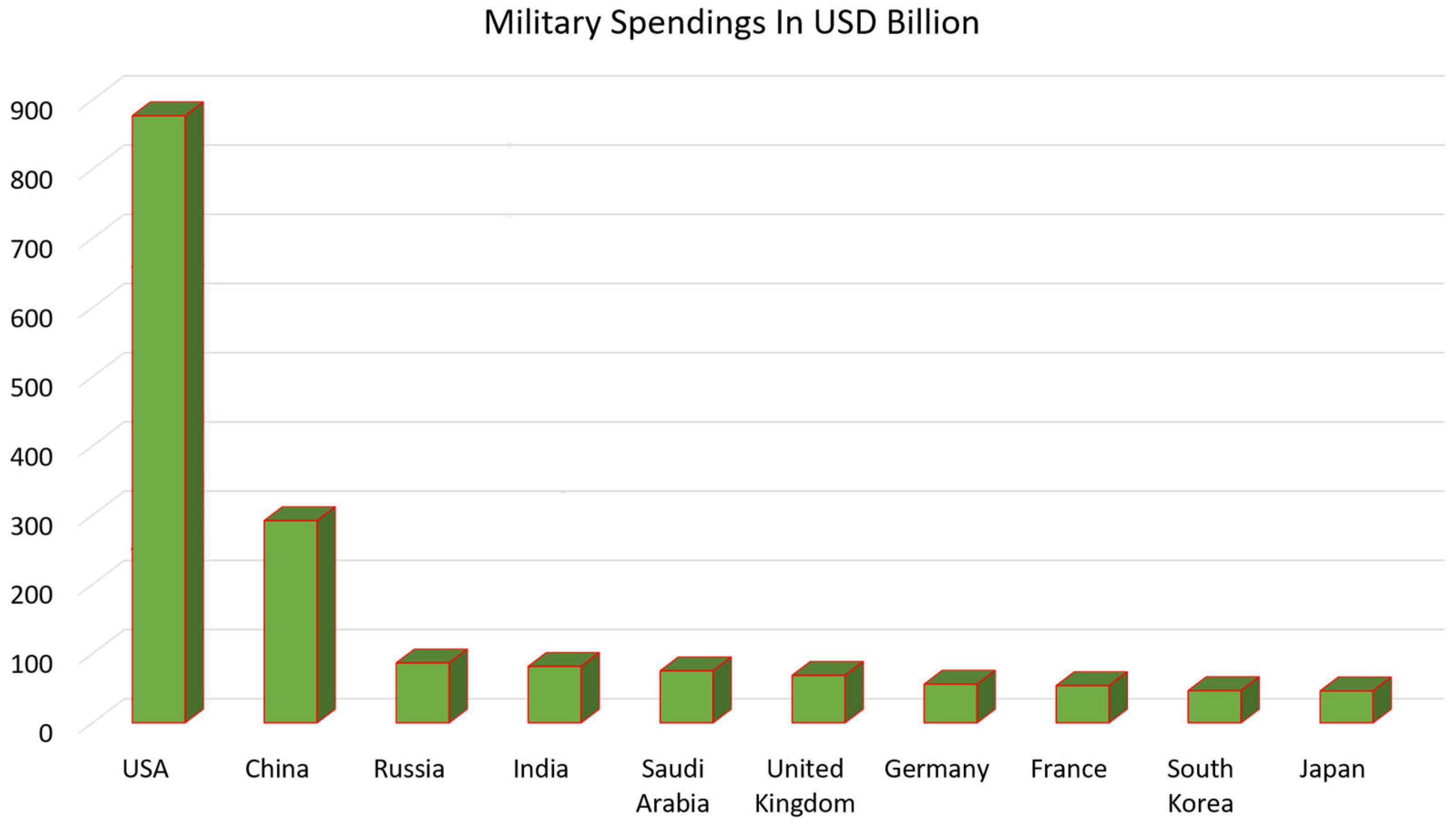
Figure 2.
(a) Mallow plant; (b) mallow fibre and pure fabric used to be incorporated in epoxy composites (Nascimento et al. 2017).
Figure 2.
(a) Mallow plant; (b) mallow fibre and pure fabric used to be incorporated in epoxy composites (Nascimento et al. 2017).
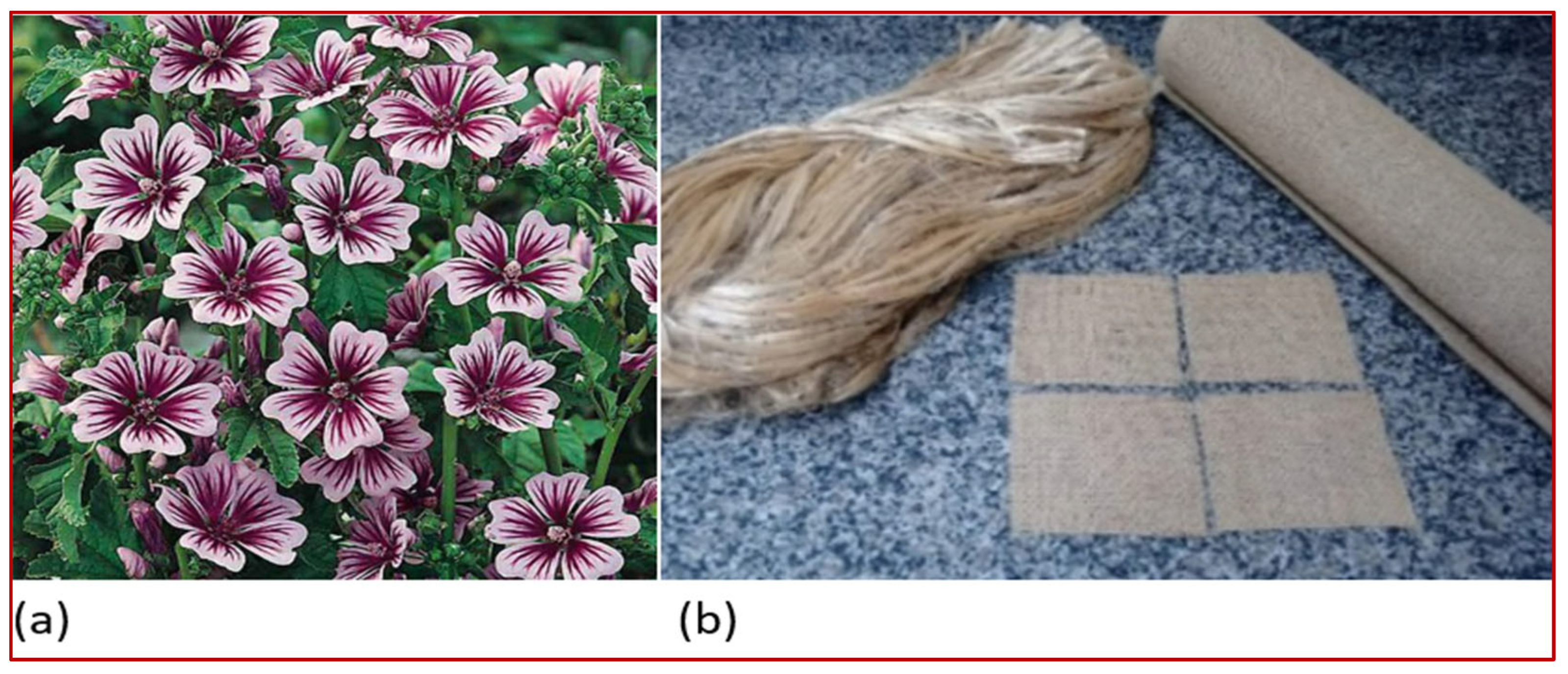
Figure 3.
Different types of natural fibres as obtained naturally (Odesanya et al. 2021).
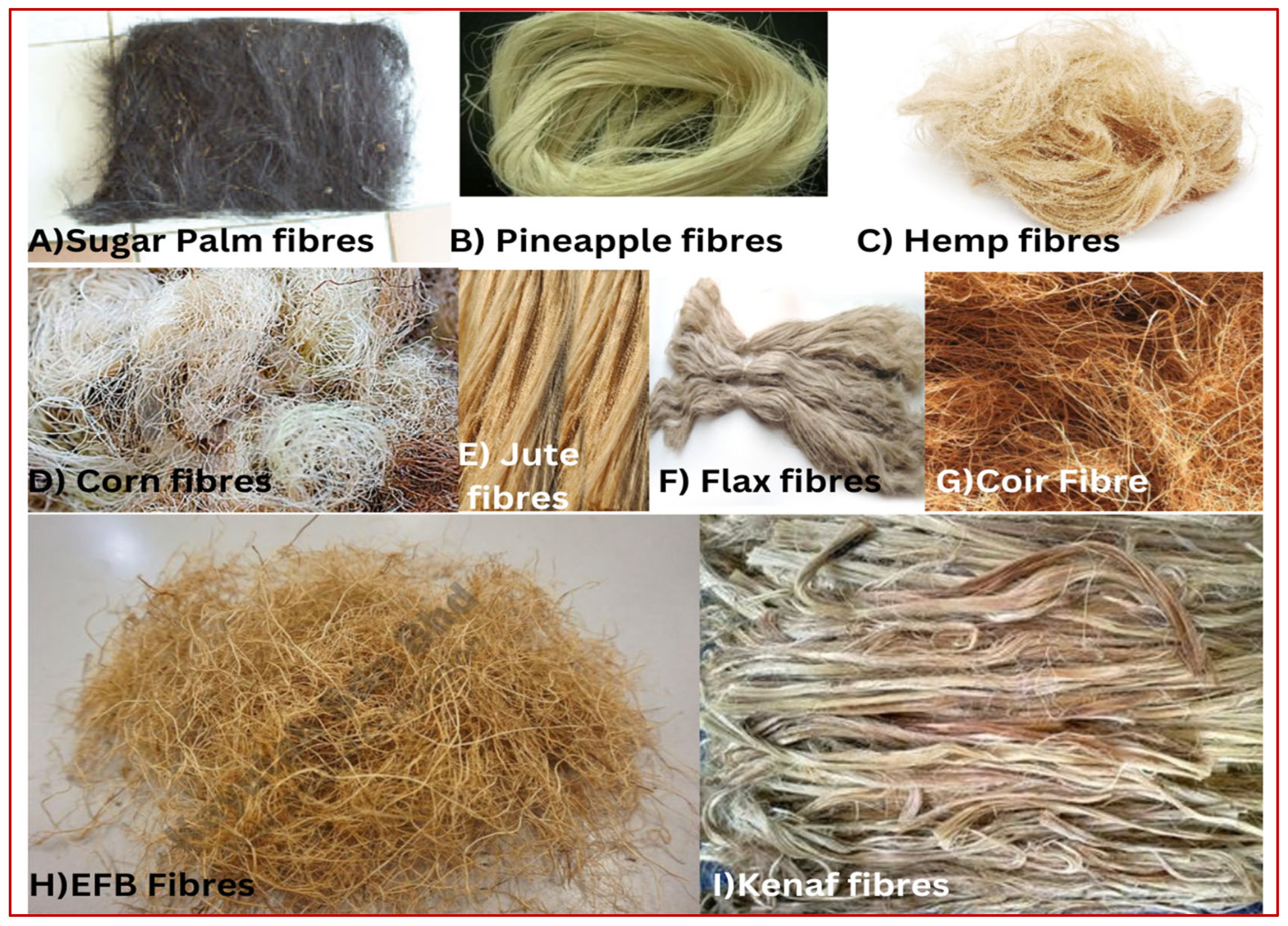
Figure 4.
Summary of various stands applied on different armours (Nurazzi et al. 2021).
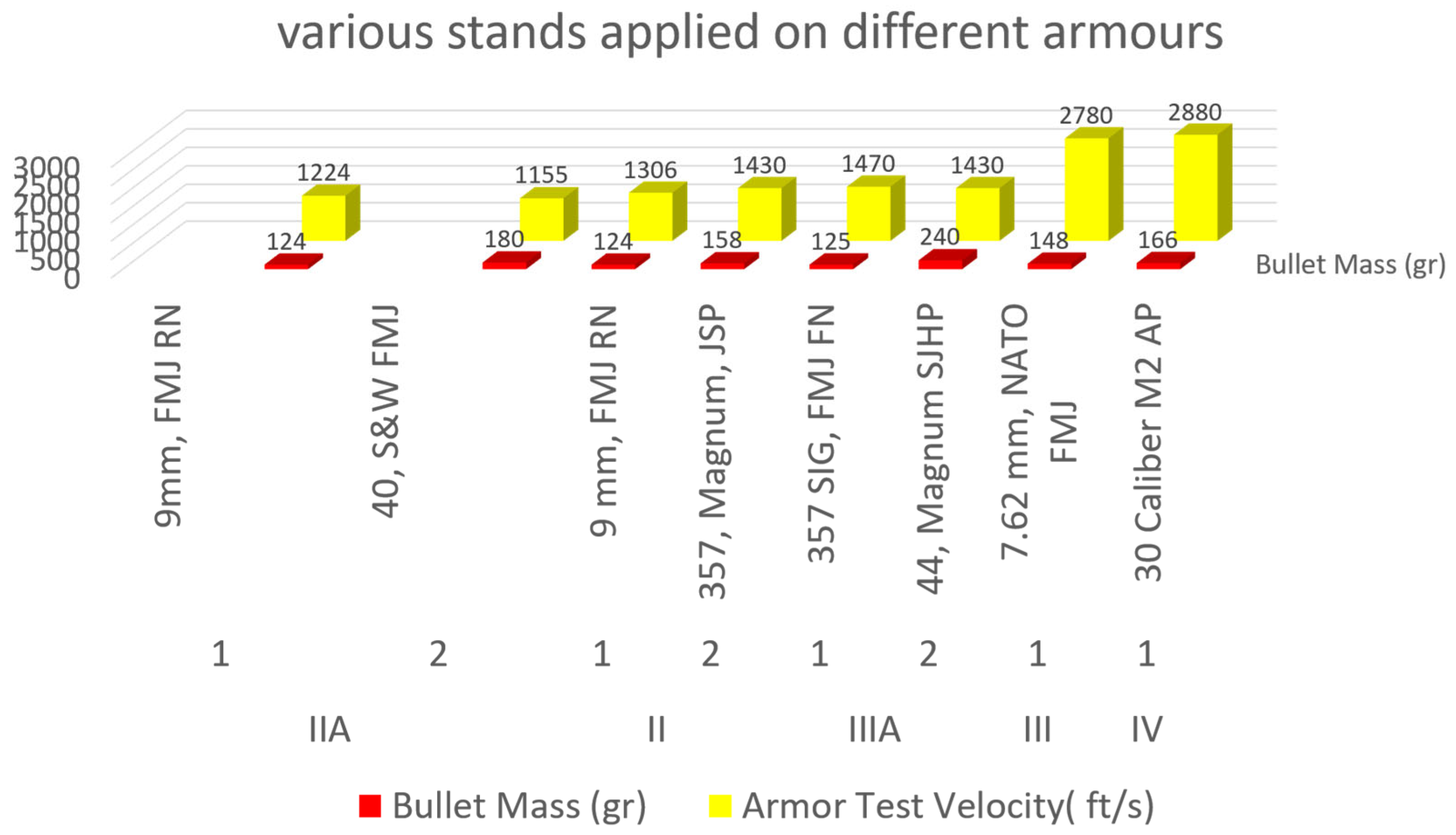
Figure 5.
Ballistic advancements timeline from 1996 to 2008 (Azmi et al. 2019; Lee, Wetzel, and Wagner 2003; Mylvaganam and Zhang 2007; Risby et al. 2008; Wambua et al. 2007).
Figure 5.
Ballistic advancements timeline from 1996 to 2008 (Azmi et al. 2019; Lee, Wetzel, and Wagner 2003; Mylvaganam and Zhang 2007; Risby et al. 2008; Wambua et al. 2007).
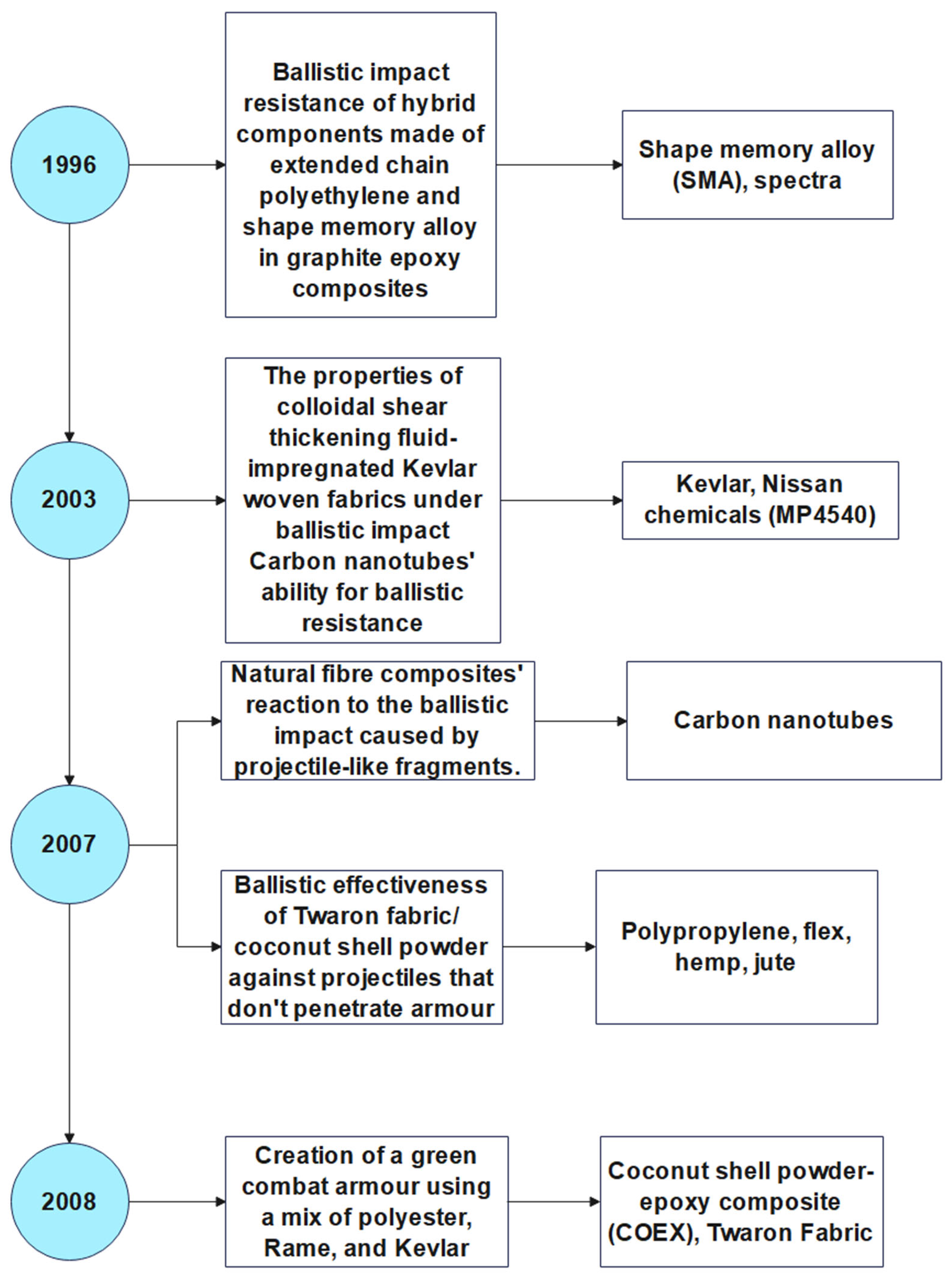
Figure 6.
Ballistic advancements timeline from 2008 to 2014 (Azmi et al. 2019; Davis 2012; Kumaravel and Venkatachalam 2014; Radif, Ali, and Abdan 2011).
Figure 6.
Ballistic advancements timeline from 2008 to 2014 (Azmi et al. 2019; Davis 2012; Kumaravel and Venkatachalam 2014; Radif, Ali, and Abdan 2011).
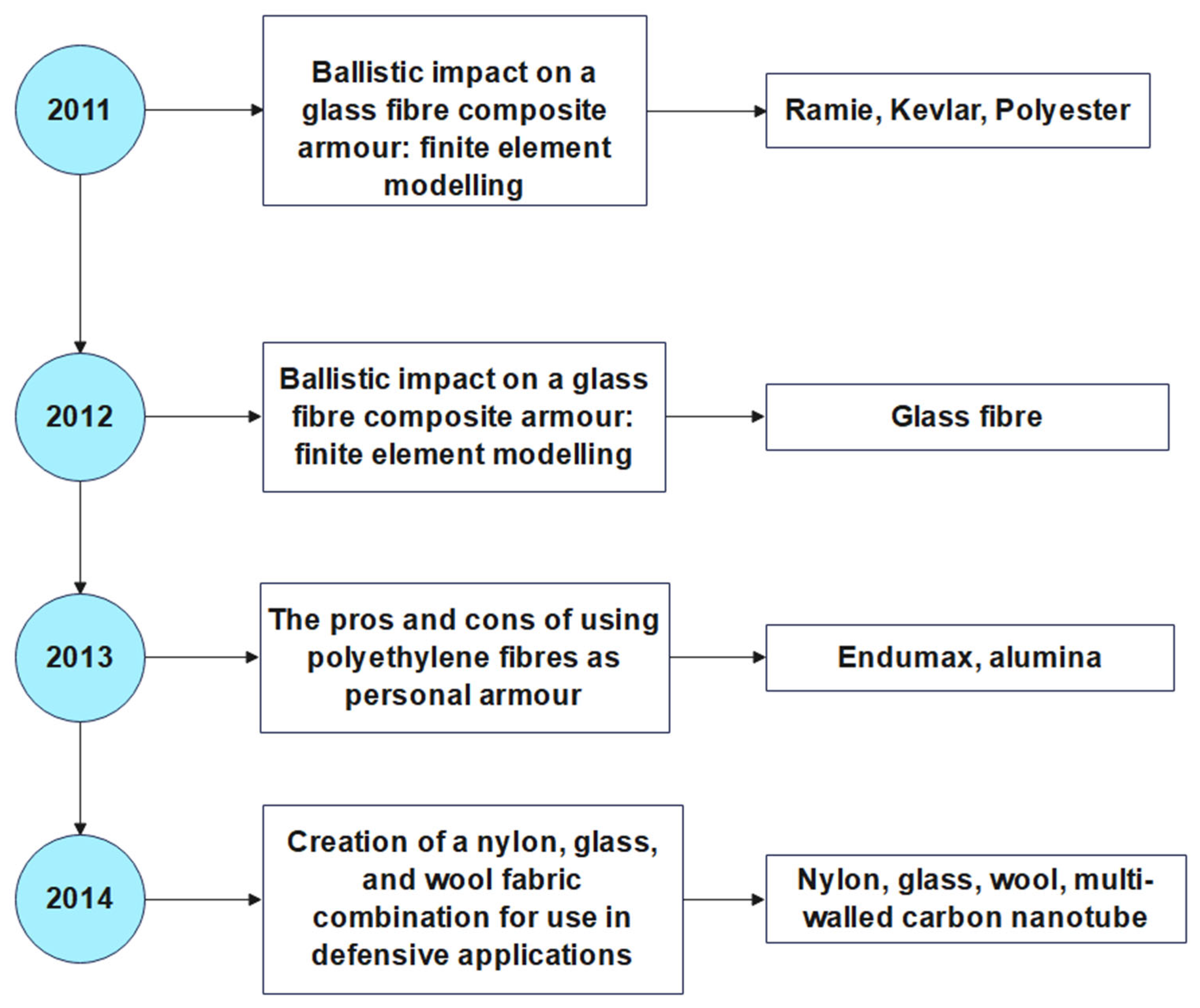
Figure 7.
Ballistic advancements timeline after 2015 (Anggoro and Kristiana 2015b; Azmi et al. 2019; Fernando et al. 2015; Luz et al. 2015; Obradović et al. 2015; Oleiwi and Hamad 2018; Pereira et al. 2015; R, G, and Alexander 2015; Walley 2014).
Figure 7.
Ballistic advancements timeline after 2015 (Anggoro and Kristiana 2015b; Azmi et al. 2019; Fernando et al. 2015; Luz et al. 2015; Obradović et al. 2015; Oleiwi and Hamad 2018; Pereira et al. 2015; R, G, and Alexander 2015; Walley 2014).
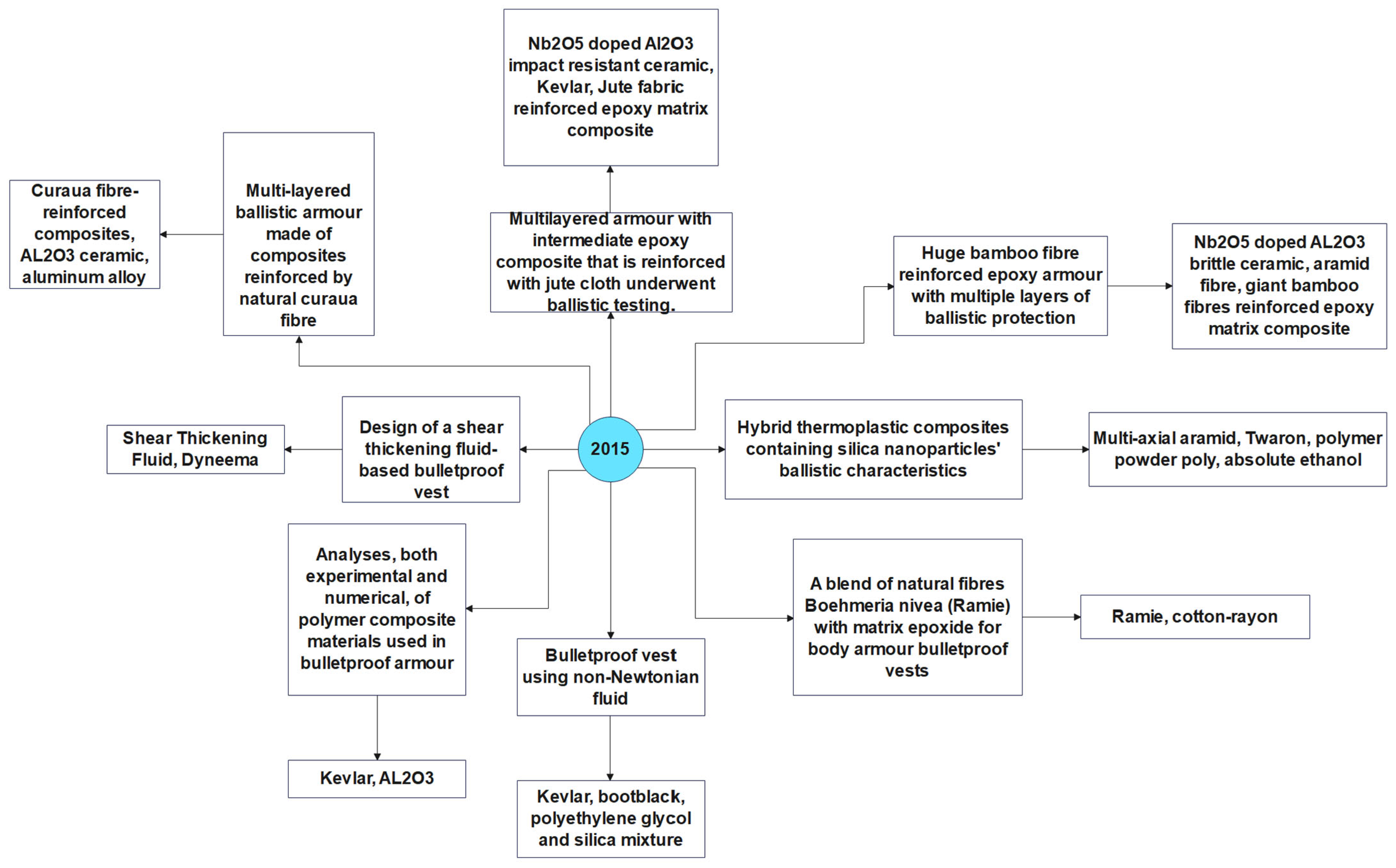
Figure 12.
Diagrammatic representation of Ballistic Protection Mechanism at a) t=0 and b) t=t.
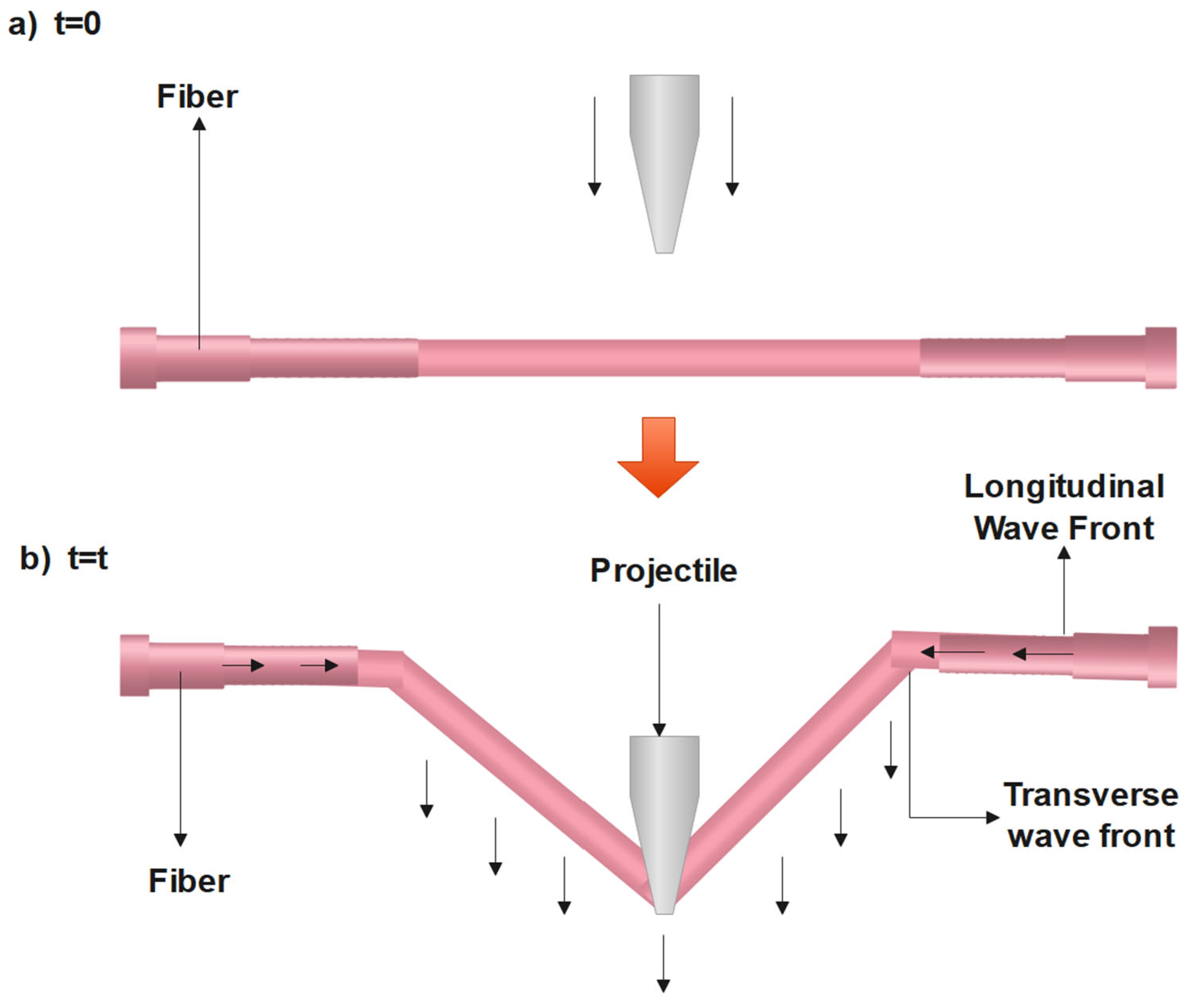
Figure 13.
Kenaf Fibre Properties (Azmi et al. 2018).
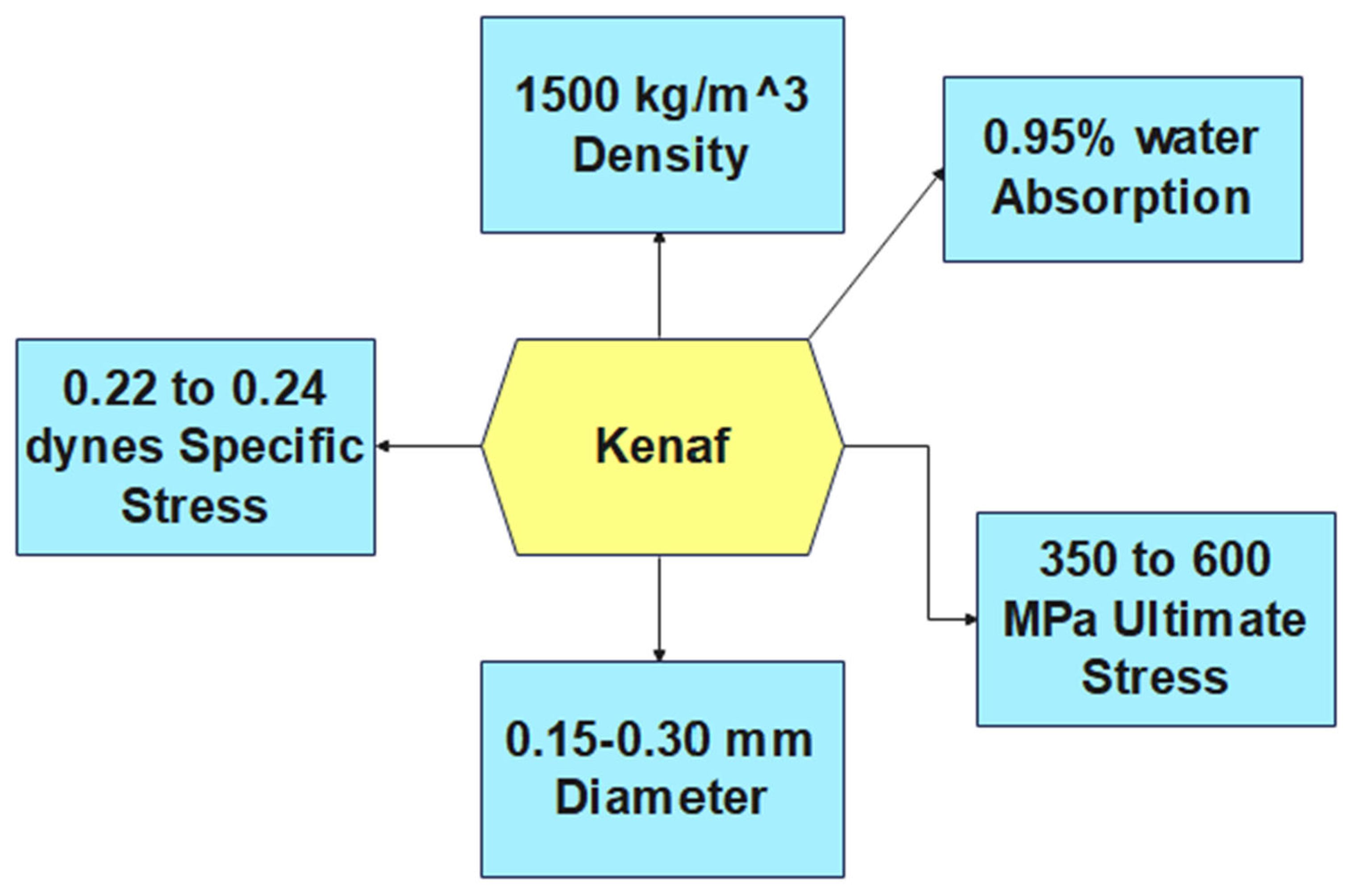
Figure 14.
Fibre to Matrix Ratio of Various Kevlar/epoxy with Rubber Composites (Asyraf et al. 2022).
Figure 14.
Fibre to Matrix Ratio of Various Kevlar/epoxy with Rubber Composites (Asyraf et al. 2022).
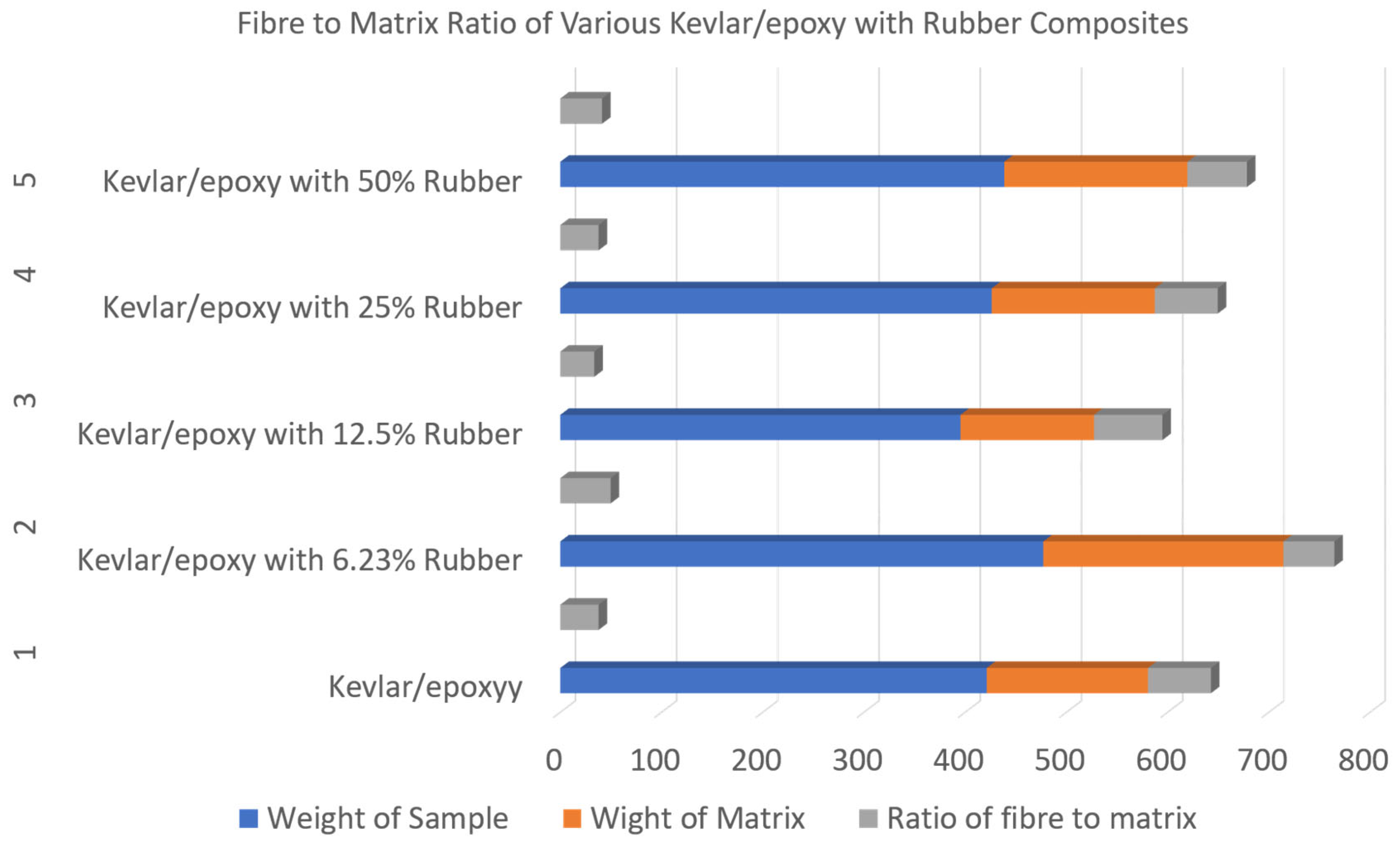
Figure 15.
High Strength Fibres Densities (Zochowski et al. 2023).
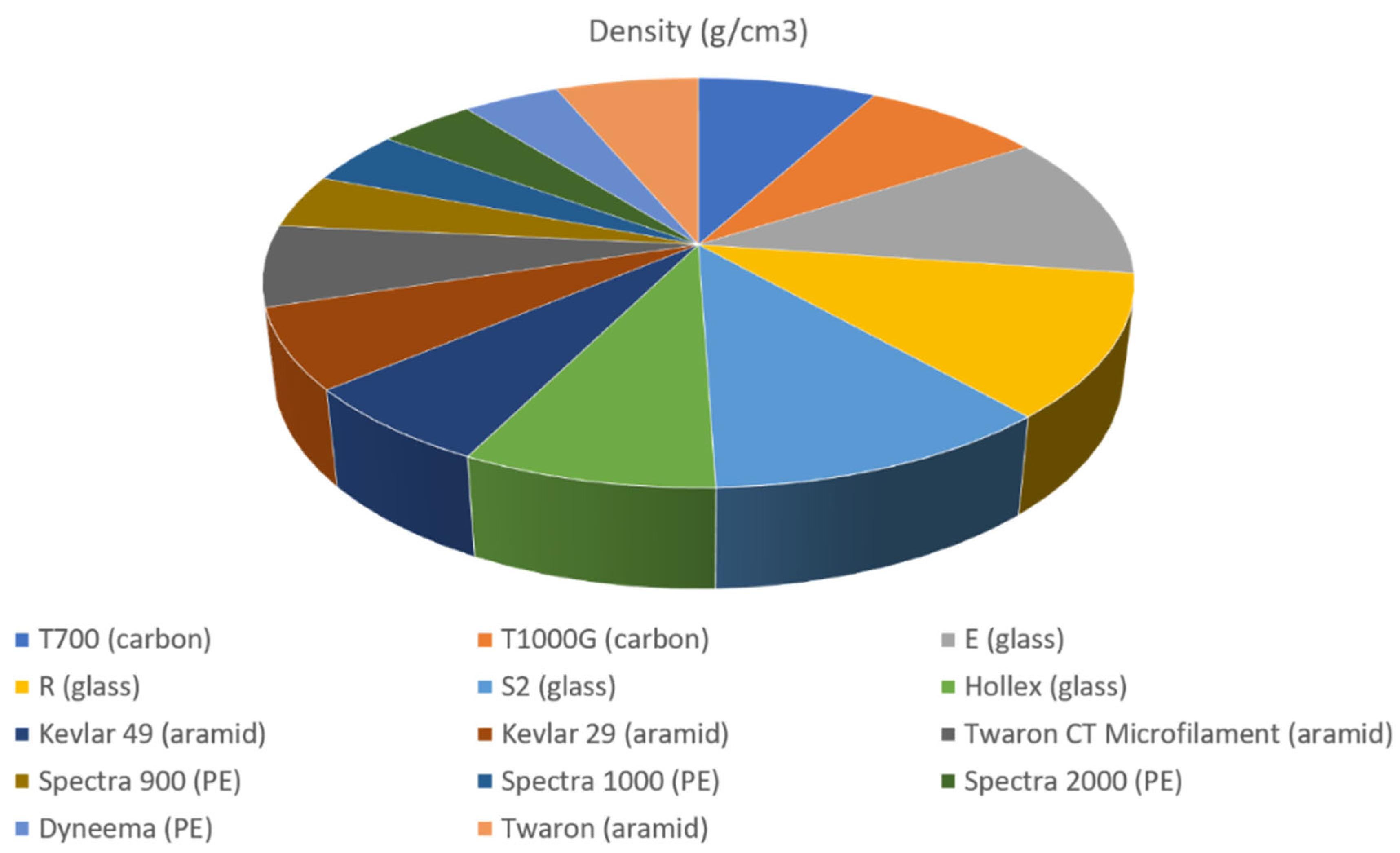
Figure 16.
Analysis of High Strength Fibres Modulus of Elasticity (Zochowski et al. 2023).
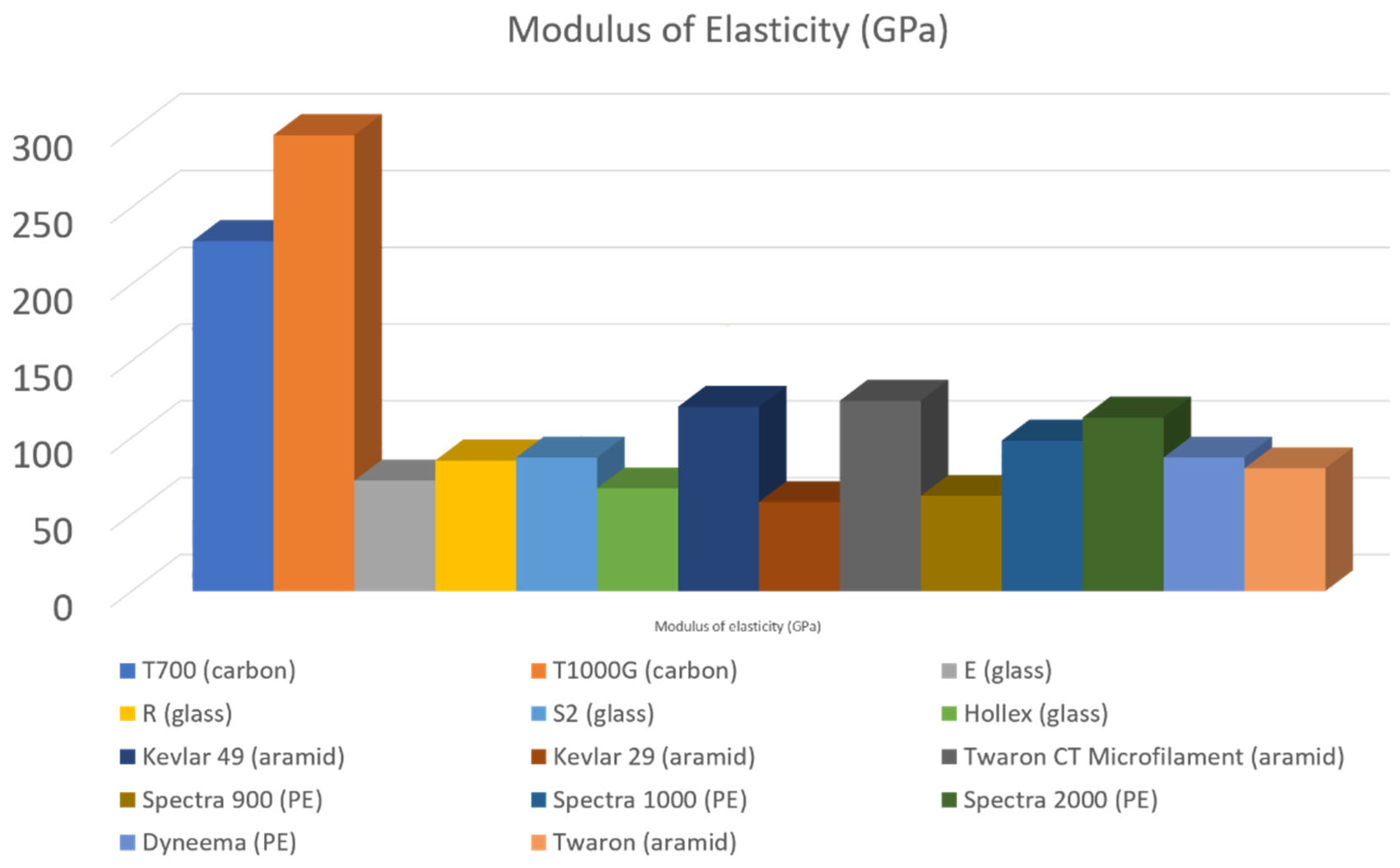
Figure 17.
High Strength Fibres Tensile Strength (Zochowski et al. 2023).
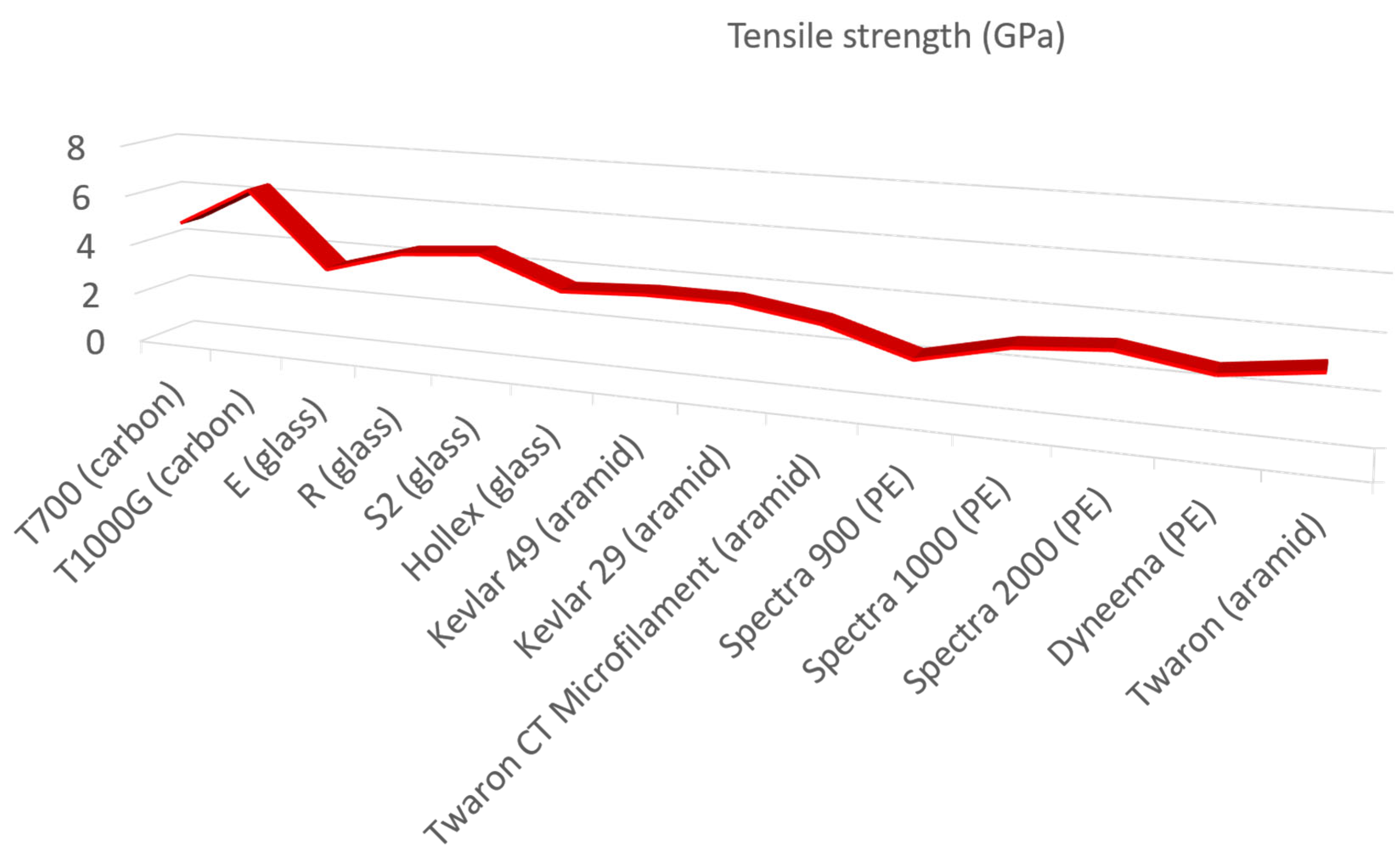
Figure 18.
Cordura and Ballistic Nylon Samples Classification.
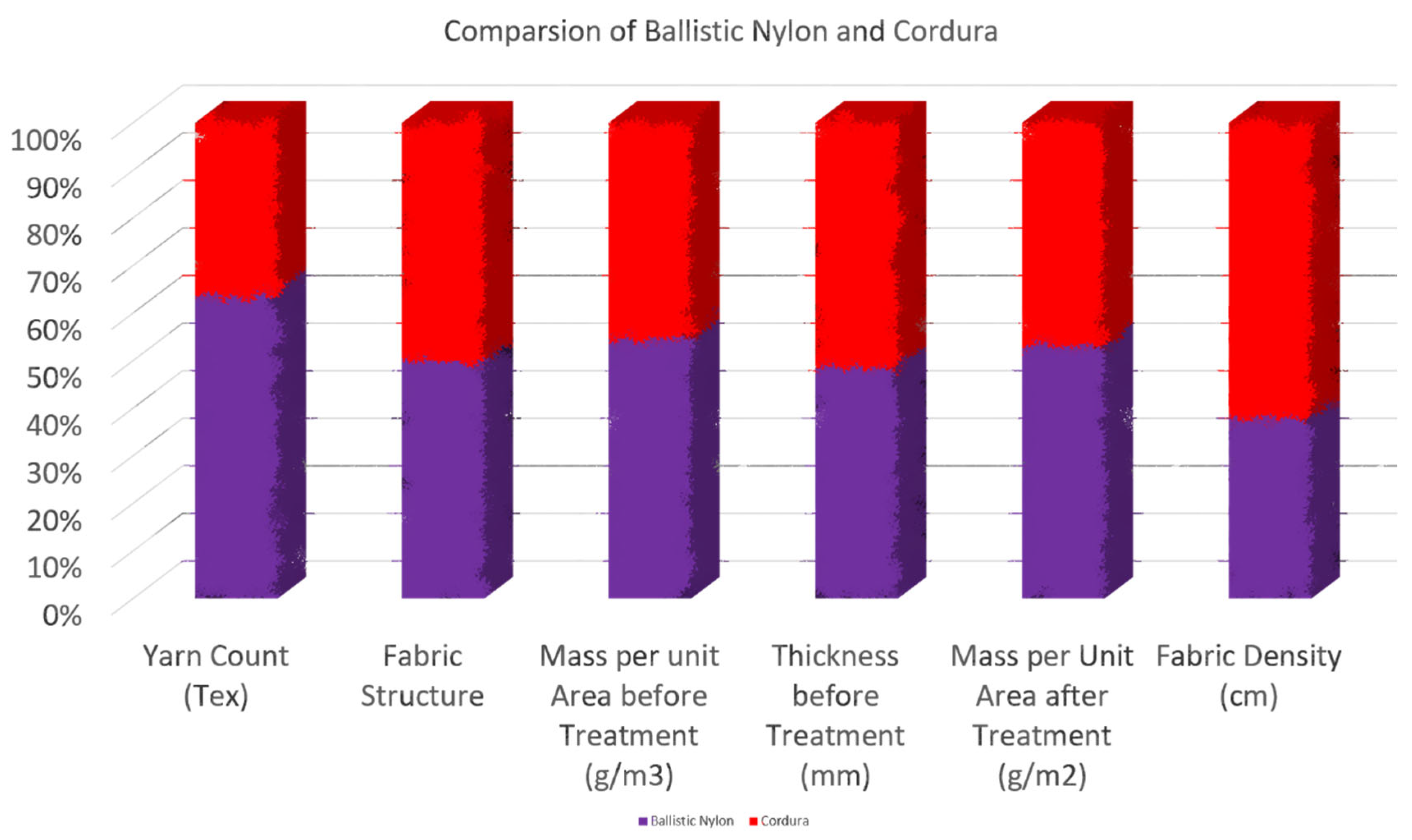
Figure 19.
Puncture behaviour of ballistic versus stab-resistant woven fabrics as observed during the simulation model (Cavallaro P.V 2011).
Figure 19.
Puncture behaviour of ballistic versus stab-resistant woven fabrics as observed during the simulation model (Cavallaro P.V 2011).
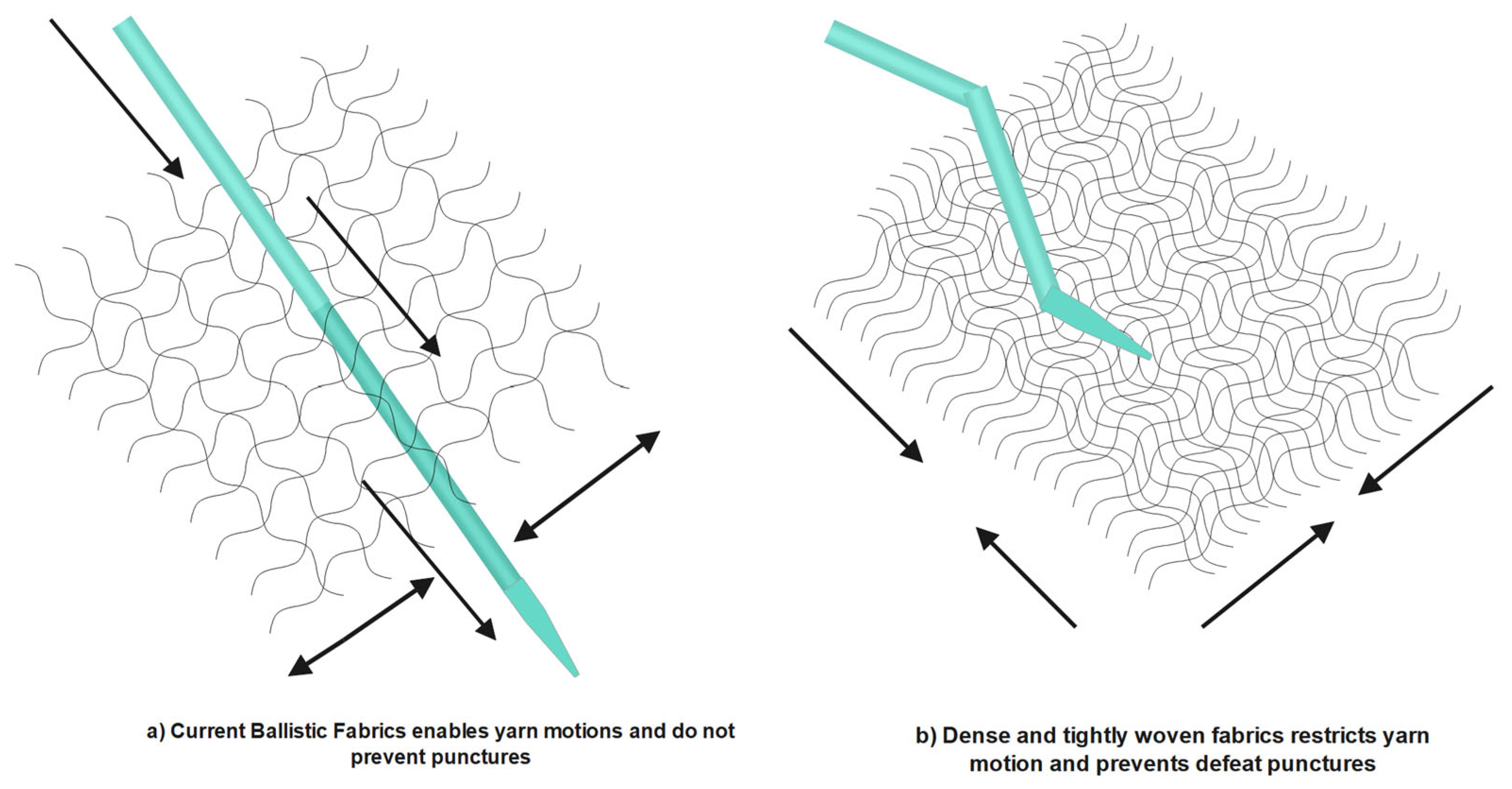
Figure 20.
Typical MBAS setup model for testing (Luz et al. 2017).
Disclaimer/Publisher’s Note: The statements, opinions and data contained in all publications are solely those of the individual author(s) and contributor(s) and not of MDPI and/or the editor(s). MDPI and/or the editor(s) disclaim responsibility for any injury to people or property resulting from any ideas, methods, instructions or products referred to in the content. |
© 2025 by the authors. Licensee MDPI, Basel, Switzerland. This article is an open access article distributed under the terms and conditions of the Creative Commons Attribution (CC BY) license (http://creativecommons.org/licenses/by/4.0/).
Copyright: This open access article is published under a Creative Commons CC BY 4.0 license, which permit the free download, distribution, and reuse, provided that the author and preprint are cited in any reuse.


