
Submitted:
25 May 2025
Posted:
26 May 2025
You are already at the latest version
Abstract
The advent of smart nanocarrier drug delivery systems has transformed therapeutic strategies by enabling precise, targeted, and controlled delivery of drugs. This review presents an integrative overview of recent advancements in bioinspired vesicular systems, including liposomes, polymeric nanoparticles, and programmable lipid nanoparticles, emphasizing their structural innovations and mechanisms of action. Liposomal modifications, such as PEGylation and ligand conjugation, have improved circulation time and site-specificity, while pH-responsive nanoparticles enhance drug release in tumor microenvironments. The emergence of magnetic microrobots introduces an active, controllable delivery paradigm, complementing passive targeting approaches. Traditional dosage forms like proniosomes and effervescent tablets retain their relevance by enhancing drug solubility and bioavailability. Herbal-based therapies, integrated with nanotechnology, offer promising adjuncts in managing diseases like urolithiasis. Additionally, the role of extracellular vesicles as natural carriers underscores the translational challenges and safety considerations critical to clinical success. By synthesizing multidisciplinary research findings, this article underscores the potential of these nanotechnologies to improve therapeutic efficacy, minimize side effects, and pave the way for personalized medicine. This comprehensive review serves as a foundation for future research and clinical applications in targeted drug delivery systems.
Keywords:
nanocarriers
; liposomes
; targeted drug delivery
; pH-responsive nanoparticles
; magnetic microrobots
1. Introduction to Bioinspired and Smart Nanocarrier Drug Delivery Systems
The field of targeted drug delivery has experienced significant advancements due to the development of bioinspired and smart nanocarrier systems, which offer precise delivery of therapeutics to specific sites within the body, minimizing off-target effects and enhancing efficacy [1]. These smart nanocarriers are engineered to respond to physiological triggers, improving drug release profiles and enabling personalized therapeutic interventions tailored to patient-specific needs [2]. Nanotechnology-based approaches in cancer treatment, for example, leverage the unique properties of nanoscale materials to overcome biological barriers and improve drug accumulation in tumors, thus addressing long-standing challenges in oncology [3].

Table 1.
Introduction to Bioinspired and Smart Nanocarrier Drug Delivery Systems.
| Topic | Description |
| Advancement in Targeted Delivery | Development of bioinspired and smart nanocarriers enables site-specific drug delivery, reducing off-target effects and improving therapeutic efficacy. |
| Stimuli-Responsive Systems | Smart nanocarriers are designed to respond to physiological cues (e.g., pH, temperature, enzymes), allowing for controlled and personalized drug release. |
| Nanotechnology in Oncology | Nanocarriers help overcome biological barriers and improve drug accumulation in tumors, significantly enhancing outcomes in cancer treatment. |
2. Liposomal Innovations and Vesicular Drug Delivery Advances
Liposomal drug delivery systems have evolved as versatile carriers capable of encapsulating both hydrophilic and hydrophobic drugs, thereby enhancing drug stability and bioavailability while reducing systemic toxicity [4]. Various types of liposomes, including multilamellar and stealth liposomes, have been tailored to improve circulation time and target specificity, making them valuable tools in modern therapeutics [5]. Recent innovations have focused on modifying liposomal surfaces with ligands and polymers to achieve site-specific delivery and controlled release, thus increasing therapeutic efficiency [6]. Furthermore, advances in liposomal formulations have demonstrated significant potential in treating diverse diseases by improving drug pharmacokinetics and biodistribution profiles [7].
Table 2.
Liposomal Innovations and Vesicular Drug Delivery Advances.
| Subsection | Description |
| Versatility of Liposomal Carriers | Liposomal systems can encapsulate both hydrophilic and hydrophobic drugs, improving their stability and bioavailability while reducing systemic toxicity [4]. |
| Types of Liposomes | Formulations such as multilamellar and stealth liposomes are engineered to enhance circulation time and target specificity, playing a critical role in modern drug delivery [5]. |
| Surface Modification Techniques | Recent strategies involve ligand and polymer surface modifications for site-specific targeting and controlled release, thereby improving therapeutic outcomes [6]. |
| Clinical Potential of Liposomes | Advanced liposomal formulations have shown improved pharmacokinetics and biodistribution, supporting their use across various disease treatments and expanding clinical applicability [7]. |
3. Polymeric Nanoparticles and Programmable Lipid Systems
Polymeric nanoparticles have gained considerable attention due to their tunable properties, biocompatibility, and ability to provide controlled drug release, making them suitable for a wide range of therapeutic applications [8]. Recent advancements in programmable lipid nanoparticles have introduced a four-domain model that allows precise manipulation of particle structure and function, facilitating targeted drug delivery with enhanced cellular uptake [9]. Liposomal systems continue to diversify, with different types being developed to address specific therapeutic challenges, such as improving drug loading capacity and stability [10]. The composition of liposomes critically influences their pharmacokinetics and therapeutic outcomes, underscoring the importance of rational design and thorough characterization in clinical applications [11].
Table 3.
Polymeric Nanoparticles and Programmable Lipid Systems.
| Subsection | Description |
| Advantages of Polymeric Nanoparticles | Polymeric nanoparticles are valued for their tunable properties, high biocompatibility, and ability to provide sustained and controlled drug release, making them applicable across various therapeutic areas [8]. |
| Programmable Lipid Nanoparticles | A four-domain structural model enables precision in design and function of lipid nanoparticles, improving targeted delivery and cellular uptake [9]. |
| Diversification of Liposomal Systems | Continuous innovation in liposome design targets specific challenges such as drug loading efficiency, encapsulation stability, and delivery precision [10]. |
| Impact of Liposomal Composition | The pharmacokinetics and therapeutic performance of liposomal drugs are strongly influenced by their composition, highlighting the need for rational formulation and clinical validation [11]. |
4. pH-Responsive and PEGylated Nanoparticles for Targeted Therapy
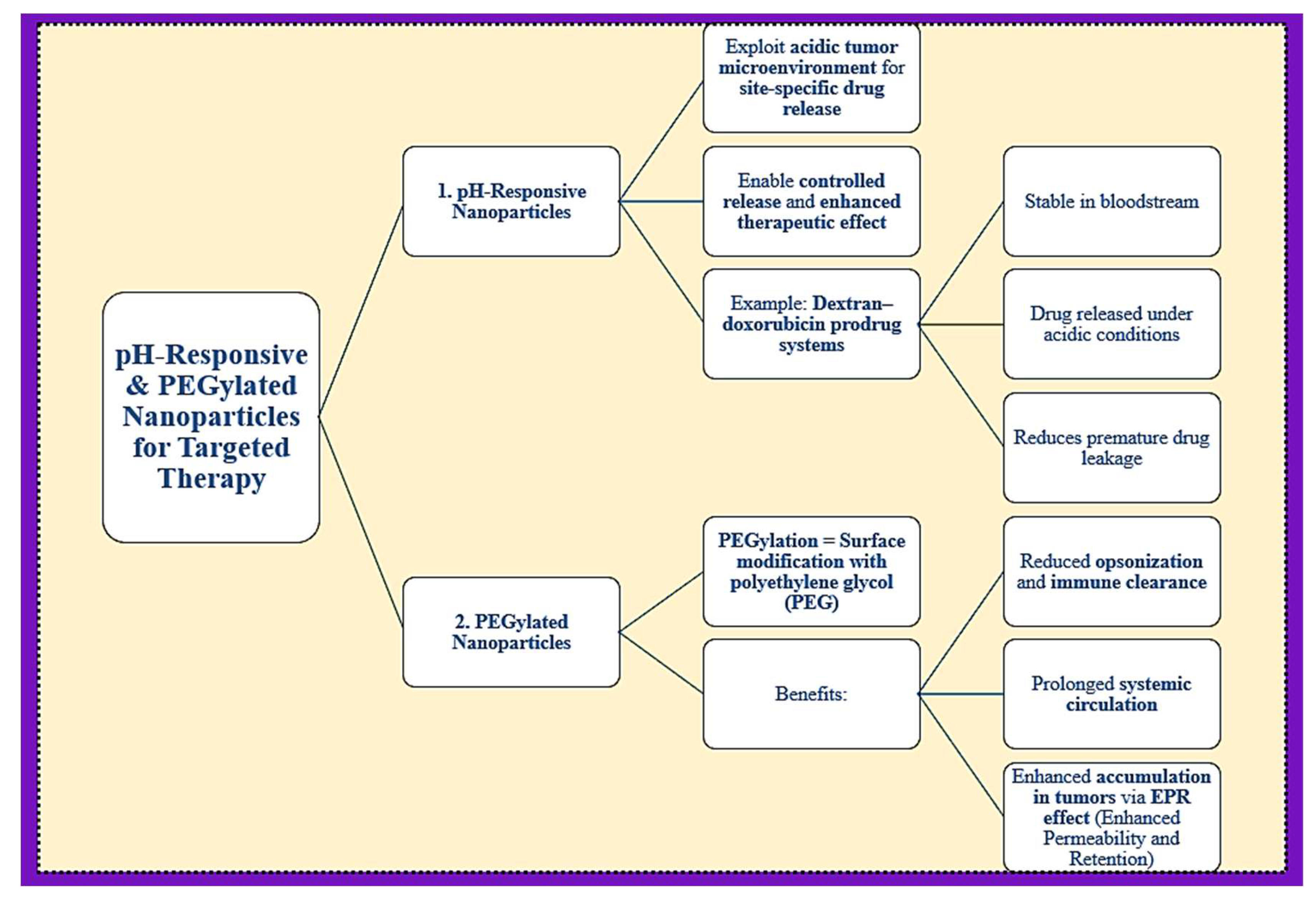
pH-responsive nanoparticles have emerged as effective platforms for targeted drug delivery, exploiting the acidic microenvironment of tumors to trigger controlled drug release and enhance therapeutic outcomes [12]. The design of dextran-doxorubicin prodrug-based systems demonstrates the utility of pH-sensitive linkages in improving drug stability and minimizing premature release during circulation [13]. Additionally, PEGylation of nanoparticles improves their systemic circulation time by reducing opsonization and clearance, thereby increasing accumulation in solid tumors through enhanced permeability and retention effects [14].
Figure 1.
pH-Responsive and PEGylated Nanoparticles for Targeted Therapy.
5. Microrobots and Magnetic Nanotechnologies in Drug Delivery
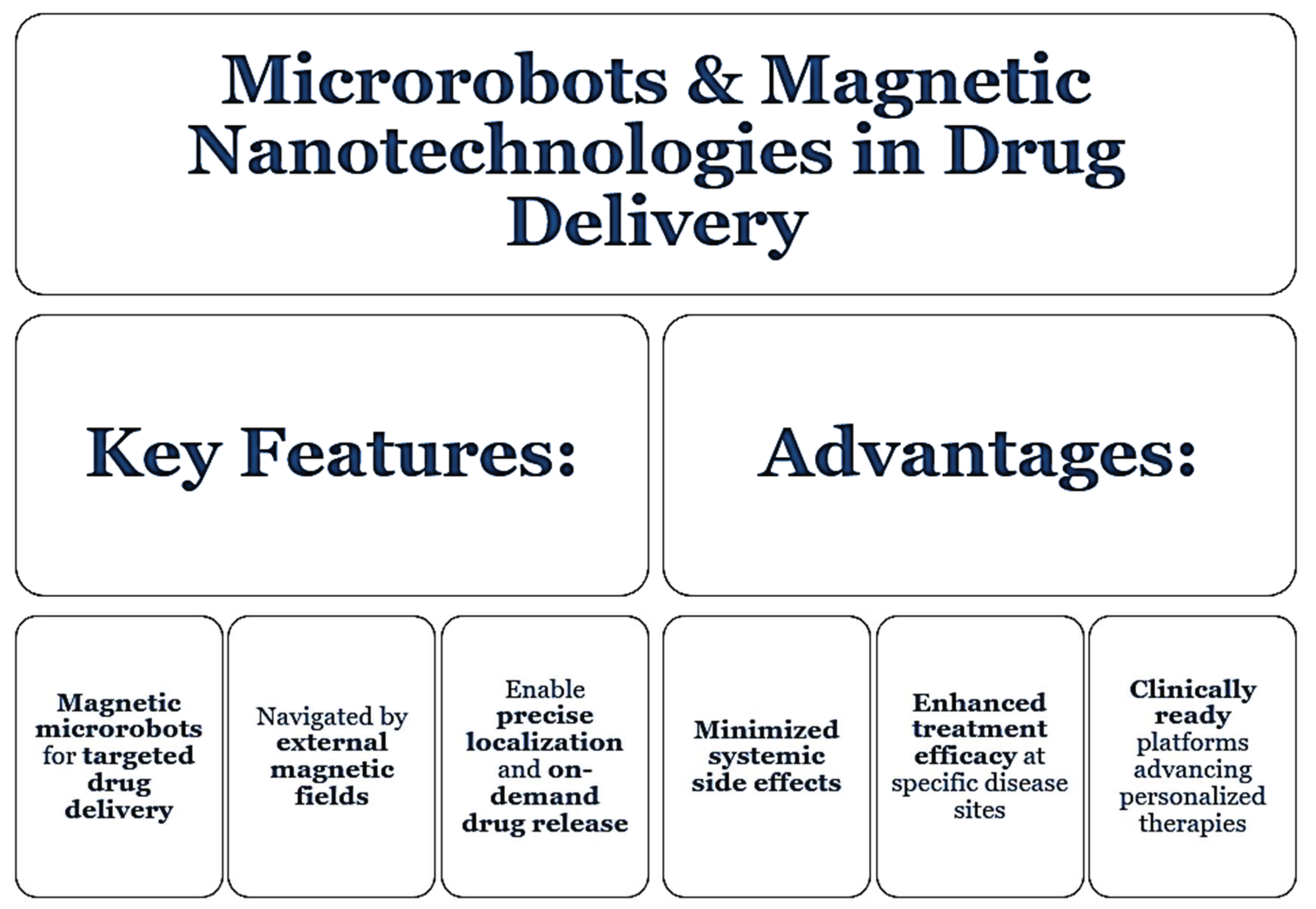
Magnetic microrobots represent a cutting-edge advancement in targeted therapies, offering precise navigation and controlled drug release within the human body. These clinically ready microrobots leverage external magnetic fields to reach specific sites, improving treatment efficacy while minimizing systemic side effects [15].
Figure 2.
Microrobots and Magnetic Nanotechnologies in Drug Delivery.
6. Proniosomes, Effervescent Systems, and Herbal-Based Approaches
Proniosomes serve as stable precursors to niosomes, enhancing the delivery of poorly soluble drugs through their unique vesicular structure and ease of formulation [16]. Effervescent tablets offer distinct advantages in drug administration by providing rapid disintegration and improved bioavailability, which can be strategically used in combination therapies [17]. Herbal medicines, such as Tribulus terrestris fruits, are gaining attention for their potential in treating urolithiasis, presenting a complementary approach that can be integrated with nanotechnology-based drug delivery systems [18].
7. Extracellular Vesicles, Safety, and Translational Considerations
Extracellular vesicles (EVs) play crucial roles in intercellular communication and have emerged as promising natural nanocarriers for drug delivery due to their inherent biocompatibility and ability to cross biological barriers [19]. However, the interaction of synthetic liposomes with blood proteins can influence their biodistribution and clearance, necessitating careful design to enhance stability and circulation time [20]. Liposomal vesicles have demonstrated efficacy in delivering anti-inflammatory agents, showing improved therapeutic effects in topical applications [21]. The foundational work on liposomes highlighted their versatility and set the stage for subsequent innovations in drug delivery systems [22]. Mesoporous silica nanoparticles have been developed as smart nanocarriers, combining high drug loading capacity with controlled release properties, particularly for colorectal cancer therapy [23]. Nanotechnology continues to expand its applications in oncology, offering opportunities to overcome traditional treatment limitations through enhanced targeting and reduced toxicity [24]. Recent advancements emphasize integrating liposomal and nanoparticle platforms to refine targeted drug delivery, enhancing clinical outcomes and safety profiles [25].
Table 4.
Extracellular Vesicles, Safety, and Translational Considerations.
| Subsection | Description |
| Role of Extracellular Vesicles (EVs) | EVs act as natural nanocarriers in intercellular communication and drug delivery due to their high biocompatibility and capability to traverse biological barriers [19]. |
| Interaction with Blood Proteins | Synthetic liposomes can interact with plasma proteins, altering their biodistribution and clearance. Strategic design is essential to improve circulation time and drug stability [20]. |
| Therapeutic Efficacy in Topical Applications | Liposomal vesicles are effective in delivering anti-inflammatory drugs, improving therapeutic outcomes in localized treatments [21]. |
| Historical Significance of Liposomes | Foundational research established liposomes as versatile drug delivery platforms, paving the way for future developments in nanomedicine [22]. |
| Mesoporous Silica Nanoparticles | These nanoparticles exhibit smart characteristics—high drug loading and responsive release—making them particularly useful in colorectal cancer treatment [23]. |
| Expanding Applications in Oncology | Nanotechnology enables improved tumor targeting and reduced toxicity, addressing limitations of conventional therapies [24]. |
| Integration of Liposomal and Nanoparticle Systems | Recent strategies merge liposomes and nanoparticles to optimize targeting, pharmacokinetics, and patient safety, showing promise for clinical translation [25]. |
Conclusions
The evolution of drug delivery systems has been profoundly influenced by bioinspired and smart nanocarriers, which offer unprecedented precision in targeting and releasing therapeutics. Liposomal and vesicular platforms have expanded in versatility, enabling enhanced drug stability and tailored delivery through surface modifications and controlled release mechanisms. Polymeric nanoparticles and programmable lipid systems further push these boundaries by allowing tunable, responsive designs that address complex biological environments. pH-responsive and PEGylated nanoparticles optimize drug accumulation and reduce systemic clearance, particularly in cancer therapies. Emerging technologies, such as magnetic microrobots, provide active, externally guided delivery options that promise to revolutionize treatment specificity. Meanwhile, traditional approaches like proniosomes and effervescent formulations, along with herbal-based therapies, continue to complement advanced nanotechnologies, creating integrated therapeutic strategies. Extracellular vesicles, as natural nanocarriers, along with synthetic liposomes, highlight ongoing challenges and advancements in safety, biodistribution, and translational applications. Overall, the convergence of these multidisciplinary approaches enhances the efficacy, safety, and personalization of drug delivery, offering significant potential for clinical translation and improved patient outcomes.
References
- Sengar, A. (2025). Advancements in Targeted Drug Delivery: Innovations in Liposomal, Nanoparticle, and Vesicular Systems. Int J Bioinfor Intell Comput, 4(2), 1–9.
- Sengar, A. Precision in Practice: Nanotechnology and Targeted Therapies for Personalized Care. Int. J. Adv. Nano Comput. Anal. 2024, 3, 56–67. [Google Scholar] [CrossRef]
- Ferrari, M. Cancer nanotechnology: opportunities and challenges. Nat. Rev. Cancer 2005, 5, 161–171. [Google Scholar] [CrossRef] [PubMed]
- Sengar, A. (2025). Liposomes and Beyond: Pioneering Vesicular Systems for Drug Delivery. Journal of BioMed Research and Reports, 7(1), 1–6. [CrossRef]
- Alavi, M.; Karimi, N.; Safaei, M. Application of Various Types of Liposomes in Drug Delivery Systems. Adv. Pharm. Bull. 2017, 7, 3–9. [Google Scholar] [CrossRef] [PubMed]
- Sengar, A. (2025). Innovations and Mechanisms in Liposomal Drug Delivery: A Comprehensive Intro-duction. J Emerg Med OA, 3(1), 1–5.
- Akhter, S. , Ahmad, M. Z., Ahmad, F. J., Storm, G., & Alvi, M. M. (2013). Advances in liposomal drug delivery: A review. Current Drug Delivery, 10(5), 546–561.
- Zielińska, A. , Carreiró, F., Oliveira, A. M., Neves, A., & Pires, B. (2020). Polymeric nanoparticles: Pro-duction, characterization, toxicology and ecotoxicology. Molecules, 25(16), 3731.
- Liu, Z. , Chen, J., Xu, M., Gracias, D. H., Yong, K.-T., Wei, Y., & Ho, H.-P. (2024). Advancements in pro-grammable lipid nanoparticles: Exploring the four-domain model for targeted drug delivery. arXiv:2408.05695.
- Tseu, G. Y. , & Kamaruzaman, K. A. (2023). A review of different types of liposomes and their applica-tions. Molecules, 28(3), 1498.
- Large, D. E. , Abdelmessih, R. G., Fink, E. A., & Auguste, D. T. (2021). Liposome composition in drug delivery: design, synthesis, characterization, and clinical application. Advanced Drug Delivery Reviews, 176, 113851.
- Song, J.; Xu, B.; Yao, H.; Lu, X.; Tan, Y.; Wang, B.; Wang, X.; Yang, Z. Schiff-Linked PEGylated Doxorubicin Prodrug Forming pH-Responsive Nanoparticles With High Drug Loading and Effective Anticancer Therapy. Front. Oncol. 2021, 11. [Google Scholar] [CrossRef] [PubMed]
- Zhang, X.; Zhang, T.; Ma, X.; Wang, Y.; Lu, Y.; Jia, D.; Huang, X.; Chen, J.; Xu, Z.; Wen, F. The design and synthesis of dextran-doxorubicin prodrug-based pH-sensitive drug delivery system for improving chemotherapy efficacy. Asian J. Pharm. Sci. 2020, 15, 605–616. [Google Scholar] [CrossRef] [PubMed]
- Jain, R.K.; Stylianopoulos, T. Delivering nanomedicine to solid tumors. Nat. Rev. Clin. Oncol. 2010, 7, 653–664. [Google Scholar] [CrossRef] [PubMed]
- Landers, F. C. , Hertle, L., Pustovalov, V., Sivakumaran, D., Brinkmann, O., Meiners, K.,... & Nelson, B. J. (2025). Clinically ready magnetic microrobots for targeted therapies. arXiv:2501.11553.
- Sengar, A. , Saha, S., Sharma, L., Hemlata, Saindane, P. S., & Sagar, S. D. (2024). Fundamentals of proni-osomes: Structure & composition, and core principles. World Journal of Pharmaceutical Research, 13(21), 1063–1071.
- Sengar, A. , Tile, S. A., Sen, A., Malunjkar, S. P., Bhagat, D. T., & Thete, A. K. (2024). Effervescent tablets explored: Dosage form benefits, formulation strategies, and methodological insights. World Journal of Pharmaceutical Research, 13(18), 1424–1435.
- Sengar, A.; et al. (2025). Advancing urolithiasis treatment through herbal medicine: A focus on Tribulus terrestris fruits. World Journal of Pharmaceutical Research, 14(2), 91–105.
- Yáñez-Mó, M.; Siljander, P.R.-M.; Andreu, Z.; Bedina Zavec, A.; Borràs, F.E.; Buzas, E.I.; Buzas, K.; Casal, E.; Cappello, F.; Carvalho, J.; et al. Biological properties of extracellular vesicles and their physiological functions. J. Extracell. Vesicles 2015, 4, 27066. [Google Scholar] [CrossRef] [PubMed]
- Chonn, A.; Semple, S.; Cullis, P. Association of blood proteins with large unilamellar liposomes in vivo. Relation to circulation lifetimes. J. Biol. Chem. 1992, 267, 18759–18765. [Google Scholar] [CrossRef] [PubMed]
- Puglia, C.; Trombetta, D.; Venuti, V.; Saija, A.; Bonina, F. Evaluation of in-vivo topical anti-inflammatory activity of indometacin from liposomal vesicles. J. Pharm. Pharmacol. 2004, 56, 1225–1232. [Google Scholar] [CrossRef] [PubMed]
- Gregoriadis, G., & Florence, A. T. (1993). Liposomes in drug delivery. Drug Development and Industrial Pharmacy, 19(6), 785–804.
- Mann, R. A. , Hossen, M. E., Withrow, A. D. M., Burton, J. T., Blythe, S. M., & Evett, C. G. (2024). Mes-oporous silica nanoparticles-based smart nanocarriers for targeted drug delivery in colorectal cancer therapy. arXiv:2409.18809.
- Nie, S., Xing, Y., Kim, G. J., & Simons, J. W. (2007). Nanotechnology applications in cancer. Annual Review of Biomedical Engineering, 9, 257–288.
- Sengar, A. (2025). Advancements in Liposomal and Nanoparticle-Based Targeted Drug Delivery. Pharm Res J, 2(1), 1–5.
Disclaimer/Publisher’s Note: The statements, opinions and data contained in all publications are solely those of the individual author(s) and contributor(s) and not of MDPI and/or the editor(s). MDPI and/or the editor(s) disclaim responsibility for any injury to people or property resulting from any ideas, methods, instructions or products referred to in the content. |
© 2025 by the authors. Licensee MDPI, Basel, Switzerland. This article is an open access article distributed under the terms and conditions of the Creative Commons Attribution (CC BY) license (http://creativecommons.org/licenses/by/4.0/).
Copyright: This open access article is published under a Creative Commons CC BY 4.0 license, which permit the free download, distribution, and reuse, provided that the author and preprint are cited in any reuse.


