

Submitted:
19 May 2025
Posted:
23 May 2025
You are already at the latest version
Abstract
This study shows the effective approximate solutions of a particular case of fractional SIR and SIS epidemic models (FSIR and FSIS EMs) for constant population, characterized by connected nonlinear differential equations. The Elzaki transform (ET), an integral transform, is utilized in this process. Fractional derivatives (FDs) are by definition characterized by the Caputo sense. The solutions to the FSIR and FSIS EMs were found in an understandable, sequential fashion using ET. This work also discusses the convergence of the ET approach to the solutions of the FSIR and FSIS EMs. Two examples of nonlinear FSIR and FSIS EM are presented to demonstrate the suggested approach. The results of this novel approach show that it is an effective way to solve FSIR and FSIS EMs and that it speeds up the procedure. One observation regarding the use of integral transforms to solve fractional SIR and SIS epidemic models is that integral transforms, such as the ET, can greatly simplify the process of finding analytical solutions. By transforming the fractional differential equations that govern these models into algebraic equations, researchers can more easily study and interpret the dynamics of disease spread within communities.
Keywords:
Fractional Order SIR and SIS Models
; Epidemiology
; Elzaki Transform
; Convergence Analysis
MSC: 35A22; 35R11
1. Introduction
In mathematics and mathematical modeling, the integral transform has various applications. DEs, IEs, and IDEs can all be resolved using equation solving (ET). This method is unsuitable for solving nonlinear DEs due to the nonlinear variables. Nonlinear DEs can be solved with ET aid using the differential transform method, homotopy approach, or any other method. In the present era, nonlinear equations have grown in importance. There are many uses for nonlinear phenomena in engineering, physics, and applied mathematics. It requires inventiveness to find novel exact or approximate solutions to nonlinear PDEs, which is difficult even in fields like applied mathematics and physics where exact solutions are essential.
Many writers have focused on studying the solutions of nonlinear PDEs with different methods in the past few years. Many techniques have been tried, such as ET, Laplace; double Laplace, homotopy perturbation, variantal iteration, differential transform, Laplace variational iteration, and ET transforms [1,2,3,4,5,6,7,8,9,10,11,12]. Numerous analytical and numerical techniques, including the local fractional Fourier method and the local fractional variational iteration approach, have been developed to solve nonlinear PDEs with FDs.
Although FDs have a long history in mathematics, the scientific community did not use them for a very long period. One reason why FDs are so despised could be the predominance of non-equivalent definitions. Another problem is that it is difficult to interpret the geometric significance of FDs because they are nonlocal. But in the last 20 years, mathematicians and engineers have started to focus significantly more on fractional calculus. It was found that FDs are a useful tool for simulating many different applications, especially multidisciplinary ones. For instance, FDs can be used to resolve the issue resulting from the fluid-dynamic traffic model's assumption of continuous traffic flow and to explain the nonlinear oscillation of earthquakes.
Based on actual data, a number of studies suggest fractional PDEs and DEs features for seepage flow in porous media. Over the last ten years, scientists have found that the most comprehensive explanation for a variety of physical phenomena, including dumping laws and diffusion processes, comes from non-integer order derivatives. These findings stimulated research on fractional calculus in many fields, such as natural philosophy, technology, and alchemy.
Epidemiology is a branch of biology that focuses on statistical modeling of disease spread. The initial step in characterizing physical real-world problems that emerge in epidemiology is to employ differential equations. To the best of our knowledge, the earliest mathematical model of epidemiology was created and solved in 1760 by Daniel Bernoulli. Since the work of Kermack and McKendrick [13], the subject of mathematical epidemiology has grown greatly, and a variety of models have been created and applied to the study of infectious diseases [14,15].
The biological discipline of epidemiology examines the statistics the issue with epidemiological models is that, even in the simplest mathematical models of real phenomena, which are composed of sets of first-order DEs, they are not necessarily integrable. Nucci and Leach [16], who developed an integrable SIS model via Lie analysis, have detailed these features in accordance with Leach and Nucci [5].
According to Khan [6], the homotopy analysis method yields the convergent series solutions for the SIR and SIS models, despite the model's apparent poor performance in mathematics. The index, topological concepts, Poincar´e-Bendixson type theorems, stability, bifurcation theory, and Lyapunov method have all been heavily utilized by a number of writers to analyze these models [14].
To understand the meaning of SIS and SIR, consider the following: given a constant population, divide it into three groups: susceptible (S) = capable of contracting the disease; infective (I) = infected and capable of spreading the disease to susceptible; and removed (R) = either recovered from the disease, died, developed immunity, or was isolated from other components. In the SIR model, all three classes are present; however, in the SIS model, since the sickness does not confer immunity against reinfection, the infectious agent returns to the susceptible class upon recovery.
In fact, closed-form solutions to mathematical models are crucial for a thorough understanding of the qualitative components of natural science. The effects of disease on a population are described by mathematical models in epidemiology; hence, careful examination of these models is required. Given this, the main goal of this work is to obtain an exact, pure analytical solution for the SIS and SIR epidemic model, a particular application of the model put forth by McKendrick and Kermack [13], ET was used to study a few technical and biological challenges in [20,21,22], and it showed high efficacy in identifying exact solutions, and in [23,24,25], finally the conformable ET was studied.
Fractional calculus is an extension of classical calculus that deals with integrals and derivatives of non-integer orders. The concept has evolved significantly since it was first proposed more than three centuries ago, impacting several disciplines such as viscoelasticity, control theory, and anomalous diffusion.
This study presents a detailed demonstration of the unique method, which is based on the Elzaki transform (ET). We additionally explore in this study the potential application of this new transform to the newly proposed F SIR and F SIS EM solution approach. Both impulsive and discontinuous functions respond well to this strategy.
The document is structured as follows: Section 2 provides the fundamental definitions, theorems, and Caputo FDs of ET. Section 3 contains a convergence study, several instances, and a formula for resolving FSIR & FSIS EMs. A debate wrapped up Section 4.
Definition 1:
It is claimed that one has a real function. in the space if a real number exists such that where , in addition to being stated to be in the space if and only if
Definition 2:
The Riemann–Liouville integral operator, of the order of a function is,
Among the essential characteristics of the operator are the subsequent ones:
For and
Definition 3:
According to Caputo, the FDs of are:
Or,
For and
The fundamental characteristics of the operator are as follows:
Where are constants.
2. Elzaki Transform
To solve PDEs, ODEs, and systems of ODEs, Tarig M. Elzaki has provided examples of how to apply the modified Sumudu transform, or ET. For DEs with variable coefficients that cannot be solved by Sumudu and Laplace transforms, ET is a helpful technique [18]. The use of ET is powerful in applied mathematics and engineering. An overview of the main ideas behind this shift is provided below:
The ET of is,
Definition 4:
Let be the ET of the derivatives of . Then:
Where is ET of the nth derivative of the function, see [9].
Some useful ETs utilized in this paper are listed below:
Let: and,
Then;
Let: then:
Lemma 1:
The R-L operator of order has the following expression for its ET:
Proof:
ET of R-L FIO of order is:
Where,
Lemma 2:
ET of Caputo FDs for is;
Proof:
.
Equation (4) enables us to determine the outcome. Equation (5) is expressed as:
Also we have: Now, in order to extract the function from its ET, we prove the following lemma.
Lemma 3:
If and then:
Proof:
Then;
3. Analysis of Proposed Scheme
Fractional-order DEs describes a system having a memory kernel or memory function that depends on both the current and earlier states of the system. However, a system's current state is the only thing that an IDEs can explain. When ET is applied to nonlinear FSIR & FSIS EMs in this study, the equations are converted into straightforward algebraic equations that are easily solved repeatedly. The solutions are then found by using the inverse of the ET.
Using the following initial conditions and nonlinear FSIR & FSIS EMs, we demonstrate the basic principle of this approach:
First, consider the nonlinear FSIR EM,
Where Here is the infectivity coefficient of the typical Lotka-Volterra interaction term, are given constants, is the susceptible population, is the infected population, and the recovery coefficient.
By using ET to Eqs (8), we get:
By using ET's property, we can obtain:
Equation (9), after treating each of the two sides as the Elzaki inverse, get the following result:
Utilize these relationships to find iterative solutions to the problem:
Equation (8), are believed to have the following series form solutions:
The following can be inferred from Equation (10), the solutions can then be found using Equation (11).
Second, consider the nonlinear F SIS EM,
Where Here is the infectivity coefficient of the typical Lotka-Volterra interaction term, are given constants, is the susceptible population, is the infected population, and the recovery coefficient.
From Equation (12), we see that , where is total population.
Using ET in Equation (12), to get:
Then:
Take the inverse of ET to find:
Make use of these relationships to solve the problem repeatedly:
As of right now, the series form solutions to Equation (12) are as follows:
The following can be deduced from Equation (14). After that, Equation (15), can be used to find the solutions.
From Equation (14), the following can be inferred. The solutions can then be found using Equation (15).
3.1. Convergence Analysis
The convergence of the ET technique to the FSIR & FSIS EM solutions is covered in this section.
Theorem 1:
if is a Banach space then, in Equation (11) and (15) is convergence to if , s.t.
Proof:
It is said that the partial sum sequence is,
The next task is to demonstrate that in Banach space is a Cauchy series.
for all
Then, is a geometric series and and
That is to say, if the sequence solution converges, then is a Cauchy in Banach space.
4. Numerical Applications
This section presents a numerical application to show how the suggested method is very accurate, straightforward, and applicable. The numerical results are very encouraging.
Example 1.
Consider the FSIR EM linking the Caputo FDs
For ; the exact solutions of Eqs (16) are (See. [19]),
We can get the following recurrence connection by taking the same earlier steps:
Equation (17), give:
Then the solutions are,
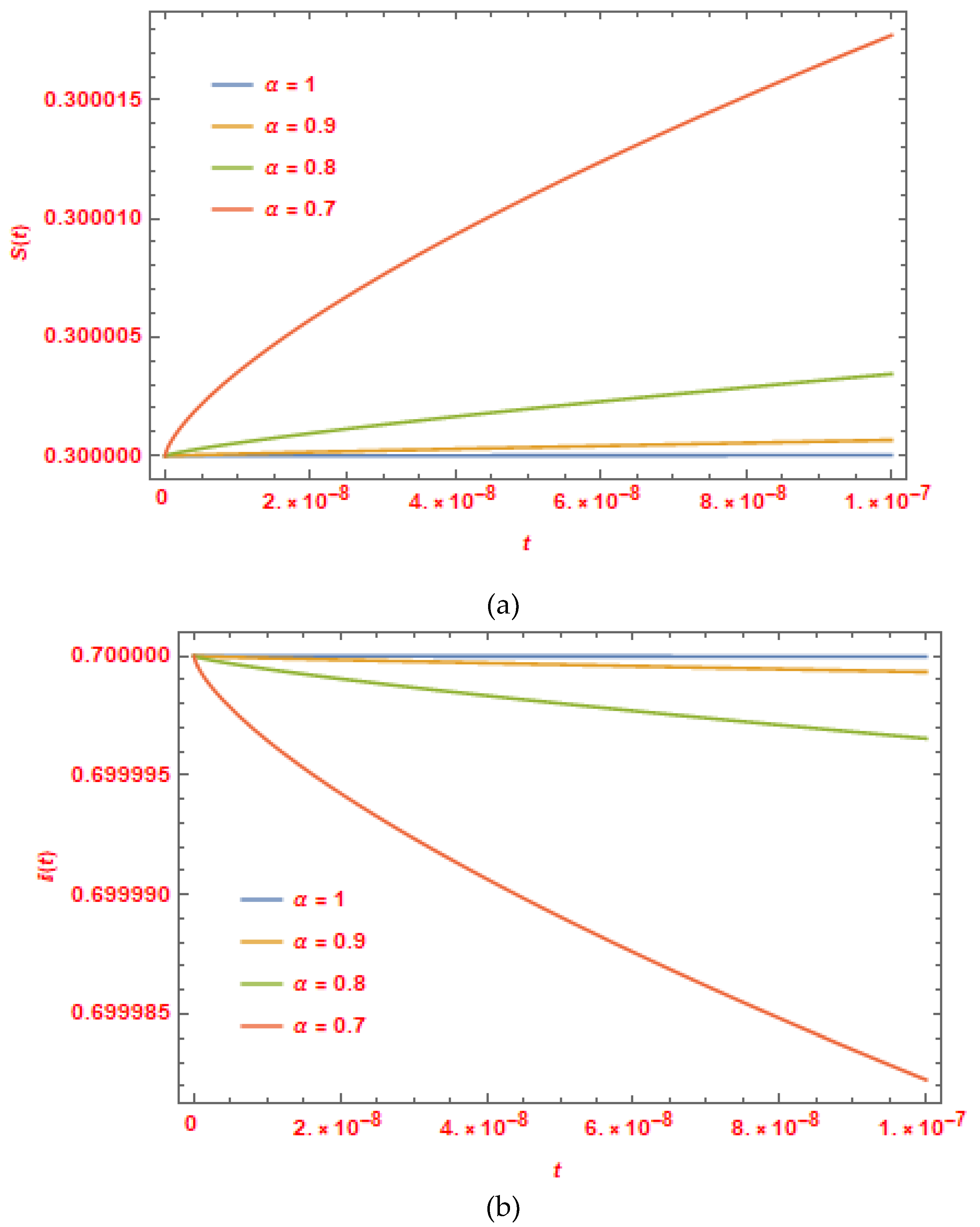
Figure 1.
(a) and (b): Plots of solutions of example 1 produced with the current methods.
Example2.
Consider the FSIS EM pertaining to the Caputo FDs,
For ; the exact solutions of Eqs (18) are,
By following the same previous procedures, we may obtain the following recurrence connection:
Then we obtain:
5. Results and Simulations
Graphs show the physical behavior of the FSIR & FSIS EM solution obtained by applying the suggested technique combining the Caputo FDs and the ET. When the fractional order of the derivative changes, it also changes the value of the solution that is produced in series form using the approach that is being provided.
The line graphs in Figure 1(a) and (b) illustrate how the solution to Example 1 behaves. To illustrate the similarity, the line graph is colored differently for various values. Plots of outcome at, , and were denoted by the red, green, yellow, and blue lines, respectively.
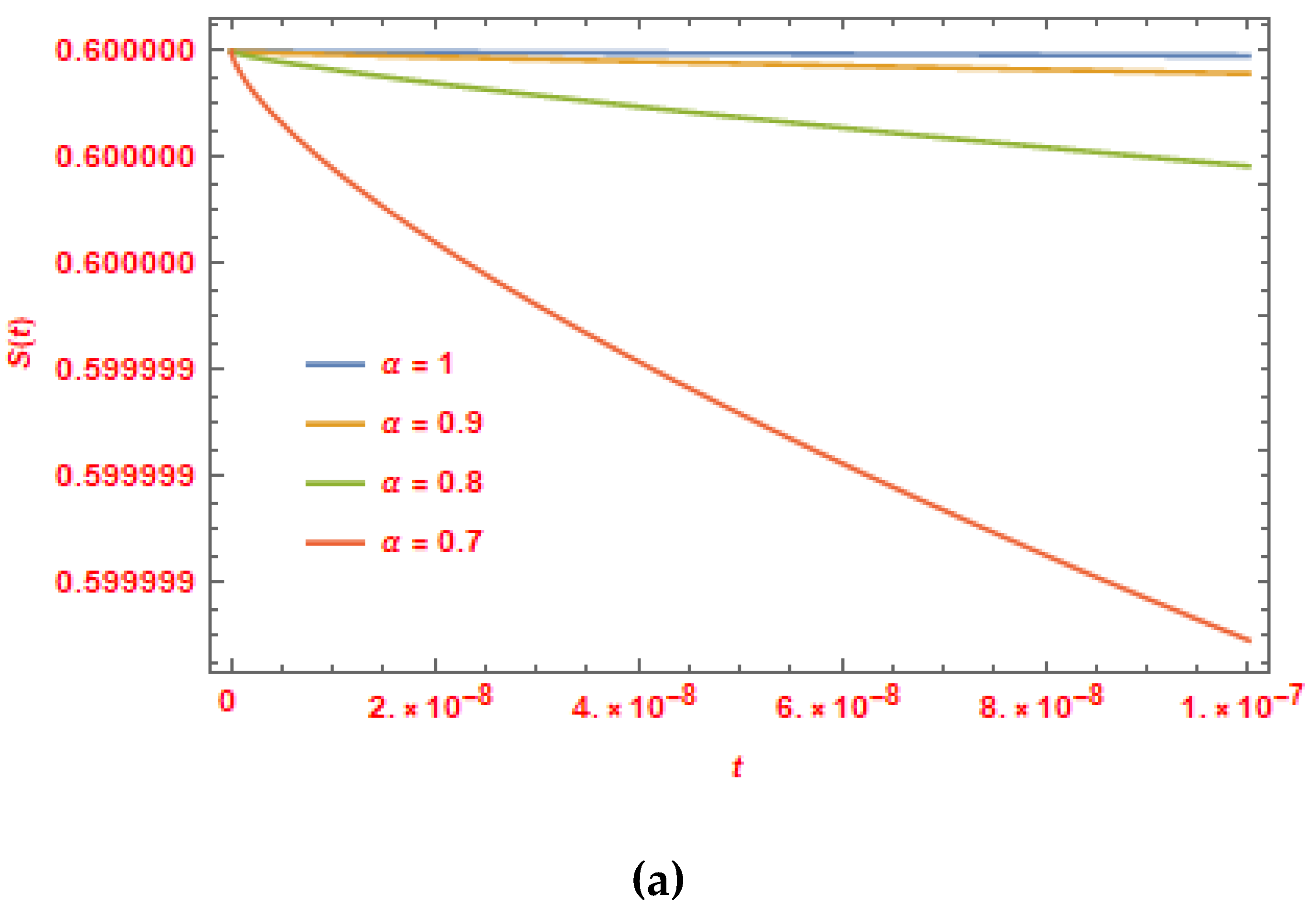
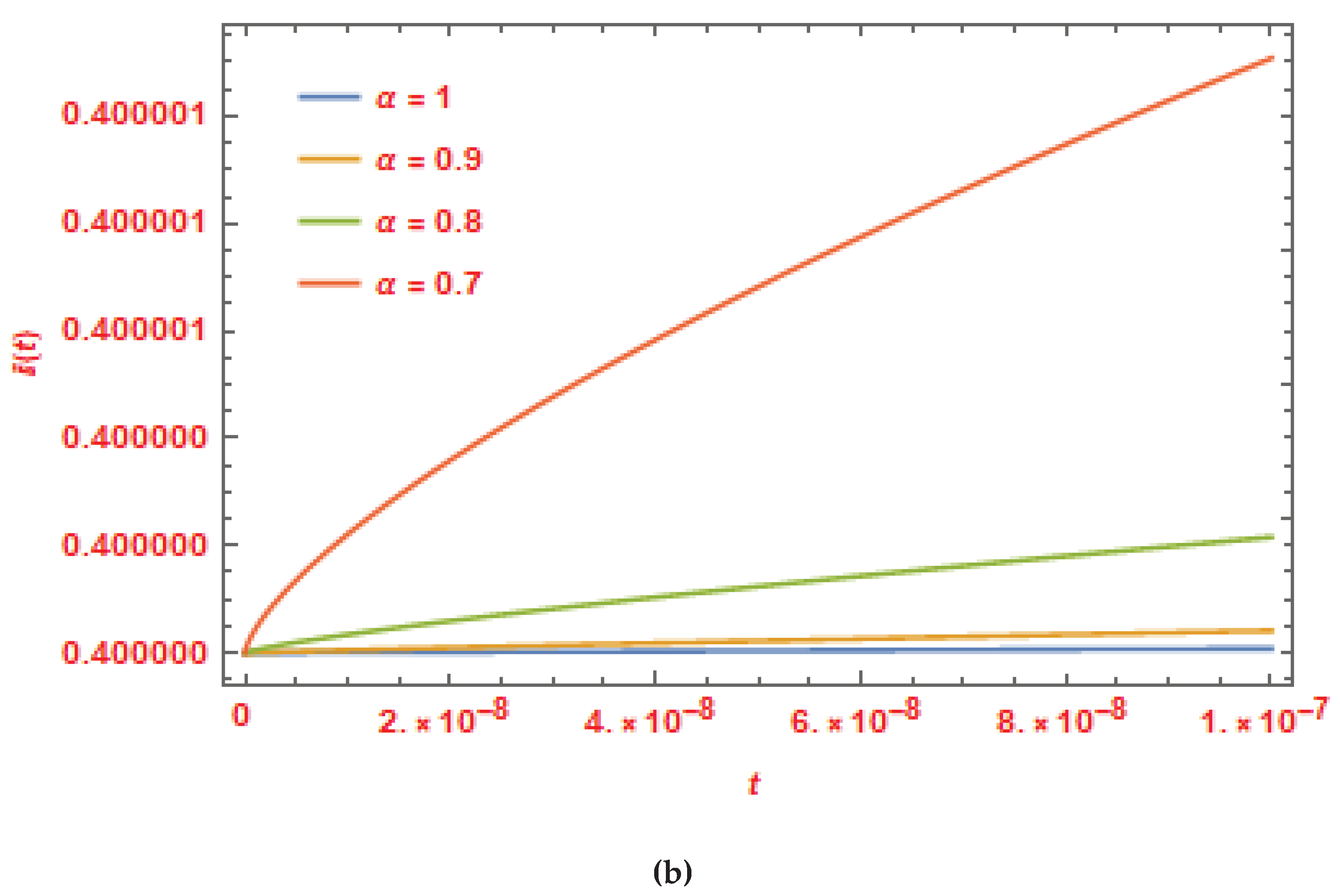
Figure 2 (a) and (b) show lines plots of the solution for , and , visually illustrating the impact of on the solution of Example 2.
The graphs for various fractional order values show that the suggested method uses a limited number of computed terms to get results with excellent accuracy. The correctness of the obtained findings is confirmed by comparing them with the actual solutions at , which are summarized in Figure 1 and Figure 2.
From the foregoing, it can be inferred that the suggested method may be used to accurately and efficiently find the solution of FSIR & FSIS EMs with initial conditions. The practical uses of FDs have not yet been thoroughly investigated since fractional calculus theory and fractional order models are still developing. Nonetheless, we can see that when the value of fractional order increases, the solution for the FSIR & FSIS EMs continually changes. In the end, it is confirmed that Caputo FDs is an extension of the classical integer order derivative as the solution at agrees with the solution of the classical integer order FSIR & FSIS EMs.
6. Conclusions
This work proposes a novel computational method for solving the FSIR & FSIS EMs using the Caputo FDs. The ET technique is the name of this procedure. This study presents a numerical example that illustrates the simplicity, precision, and efficiency of the proposed method. Moreover, this method yields solutions in the form of infinite series that converge fast to the exact solutions. The investigation also demonstrated that the figures in this work attest to the method's efficacy in resolving the FSIR & FSIS EMs. Lastly, drawing from this study, we conclude that the proposed method is a powerful and practical mathematical tool for investigating a range of real-world problems that occur in engineering and the natural sciences that may be represented by fractional DE.
Our results show that the current method is efficient for FDEs based on an integral transform, which allows it to be used for additional linear and non-linear FPDEs in the future. Furthermore, expanding this approach's applicability or integrating it with other numerical approaches or symbolic computing software is one of our key goals moving ahead in order to create a more developed application that can be employed in a range of applied sciences.
Authors Contributions
Tarig M. Elzaki created the approach, oversaw the project, found technical problems, and made sure the text, Eltyeb, was thoroughly reviewed and edited, conducted the inquiry, offering proficiency in combining and evaluating the material. Shams, made the contribution to programming and conception. Every author has read and approved the manuscript.
Data Availability Statement
Data are contained within this article.
Acknowledgement
The authors extend their appreciation to the Deputyship for Research & Innovation, Ministry of Education in Saudi Arabia for funding this research work through the project number MoE-IF-UJ-R2-22-04220768-1
Conflicts of Interest
The authors declare that they have no competing interests.
References
- J. Biazar, H. Ghazvini, He’s variational iteration method for solving linear and non-linear systems of ordinary differential equations, Appl. Math. Comput. 191 (2007) 287–297. [CrossRef]
- S.A. Khuri, A. Sayfy, A Laplace variational iteration strategy for the solution of differential equations,Applied Mathematics Letters 25 (2012) 2298–2305. [CrossRef]
- E. Hesameddini and H. Latifizadeh, “Reconstruction of variational iteration algorithms using the Laplace transform,” International Journal of Nonlinear Sciences and Numerical Simulation, vol. 10, no.11-12, pp. 1377–1382, 2009. [CrossRef]
- G.C. Wu. Laplace transform Overcoming Principle Drawbacks in Application of the Variational Iteration Method to Fractional Heat Equations, THERMAL SCIENCE 16 (4) (2012) 1257-1261. [CrossRef]
- Tarig M. Elzaki, Application of Projected Differential Transform Method on Nonlinear Partial Differential Equations with Proportional Delay in One Variable, World Applied Sciences Journal 30 (3): 345-349, 2014. [CrossRef]
- Tarig M. Elzaki, and J. Biazar, Homotopy Perturbation Method and Elzaki Transform for Solving System of Nonlinear Partial Differential Equations, World Applied Sciences Journal 24 (7): 944-948, 2013. [CrossRef]
- Tarig. M. Elzaki- Salih M. Elzaki – Elsayed A. Elnour, On the New Integral Transform “ELzaki Transform” Fundamental Properties Investigations and Applications, Global Journal of Mathematical Sciences: Theory and Practical, ISSN 0974-3200 Volume 4, Number 1 (2012), pp. 1-13 © International Research Publication House.
- Tarig M. Elzaki, and Salih M. Elzaki, On the Connections Between Laplace and Elzaki Transforms, Advances in Theoretical and Applied Mathematics. ISSN 0973-4554 Volume 6, Number 1 (2011), pp. 1-11.
- Tarig. M. Elzaki, Eman M. A. Hilal. Solution of Telegraph Equation by Modified of Double Sumudu Transform "Elzaki Transform", Mathematical Theory and Modeling, ISSN 2224-5804 (Paper) ISSN 2225-0522 (Online), Vol.2, No.4, (2012), pp, 95-103.
- Tarig. M. Elzaki, Double Laplace Variational Iteration Method for Solution of Nonlinear Convolution Partial Differential Equations, Archives Des Sciences, ISSN 1661-464X, Vol. 65, No. 12;Dec 2012, PP. 588-593.
- Shams A. Ahmed, Tarig M. Elzaki, Anis Mohamed, "Solving Partial Differential Equations of Fractional Order by Using a Novel Double Integral Transform", Mathematical Problems in Engineering, vol. 2023, Article ID 9971083, 12 pages, 2023. [CrossRef]
- Tarig M. Elzaki, Mourad Chamekh and Shams A. Ahmed, Convergence and application of a modified double Laplace transform (MDLT) in some equations of mathematical physics, Advances in Differential Equations and Control Processes 30(2) (2023), 151-168. [CrossRef]
- Kermack, W. O. & McKendrick, A. G. 1927 Contribution to the Mathematical Theory of Epidemics, Proc Roy. Soc. Lond. A. A115, 700-721. [CrossRef]
- Diekmann, O., Heesterbeek, J.A.P. & Metz, J. A. J.1990 On the Definition and Computation of the Basic Reproductive Ratio in Models for Infectious Diseases in Heterogeneous Population, J. Math Biol. 28, 365-382. [CrossRef]
- Hethcote, H. W. 2000 The Mathematics of Infectious Diseases, SIAM Rev. 42, 599-653.
- West, R. W. & Thompson, J. R.1997 Models for the Simple Epidemic, Math. Biosci. 141, 29-39.
- Nucci, M. C. & Leach, P. G. L. 2004 An integrable SIS model, J. Math. Anal. Appl. 290, 506-518. [CrossRef]
- Tarig M. Elzaki and A. A. Ishag. Modified Laplace Transform and Ordinary Differential Equations with Variable Coefficients, World Engineering & Applied Sciences Journal 10 (3): 79-84, 2019. [CrossRef]
- G. Shabbir, H. Khan,and M.A. Sadiq, A note on Exact solution of SIR and SIS epidemic models, arXiv: 10102.5035v1, [math.CA] (2010), 1{6}.
- Tarig M. Elzaki, Mourad Chamekh, Shams A. Ahmed, Modified Integral Transform for Solving Benney-Luke and Singular Pseudo-Hyperbolic Equations, acta mechanica et automatica, vol.18 no.1 (2024). (https://intapi.sciendo.com/pdf/10.2478/ama-2024-0018). [CrossRef]
- Tarig M. Elzaki, Mohamed Z. MOHAMED, A NOVEL ANALYTICAL METHOD FOR THE EXACT SOLUTION OF THE FRACTIONAL-ORDER BIOLOGICAL POPULATION MODEL, August 2024Acta Mechanica et Automatica 18(3):564-570. [CrossRef]
- Abd. Elmohmoud, Eltaib M., and Tarig M. Elzaki. 2025. "An Innovative Analytical Approach for the Solution of Fractional Differential Equations Using the Integral Transform" Axioms 14, no. 5: 363. [CrossRef]
- Shams A. Ahmed, Rania Saade, Ahmad Qazza and Tarig Elzaki, Applying Conformable Double Sumudu – Elzaki Approach to Solve Nonlinear Fractional Problems, Progr. Fract. Differ. Appl. 10, No. 2, 271-286 (2024). (https://www.naturalspublishing.com/Article.asp?ArtcID=26619). [CrossRef]
- Elzaki, T.M., Ahmed, S.A. Novel approach for solving fractional partial differential equations using conformable Elzaki Transform. J.Umm Al-Qura Univ. Appll. Sci. (2024). [CrossRef]
- Shams A. Ahmed, Mohammed G. S. Al-Safi, Tarig M. Elzaki, Approximate Solutions for the Differential Equations by Using the Nonconformable Fractional Sumudu Transform, International Journal of Mathematics and Mathematical Sciences16 May 2025. [CrossRef]
Disclaimer/Publisher’s Note: The statements, opinions and data contained in all publications are solely those of the individual author(s) and contributor(s) and not of MDPI and/or the editor(s). MDPI and/or the editor(s) disclaim responsibility for any injury to people or property resulting from any ideas, methods, instructions or products referred to in the content. |
© 2025 by the authors. Licensee MDPI, Basel, Switzerland. This article is an open access article distributed under the terms and conditions of the Creative Commons Attribution (CC BY) license (http://creativecommons.org/licenses/by/4.0/).
Copyright: This open access article is published under a Creative Commons CC BY 4.0 license, which permit the free download, distribution, and reuse, provided that the author and preprint are cited in any reuse.


