
Submitted:
20 May 2025
Posted:
20 May 2025
You are already at the latest version
Abstract
Symmetry in vehicle body morphology is a crucial factor for achieving visual sensory balance in users, and it also serves as an important method for enhancing the efficiency of vehicle body research and development.This study proposes an AHP-SD-TOPSIS-AIGC integrated morphological design method to address multi-factorial design complexities in new energy commercial vehicle body styling under emotion-driven frameworks. Through literature retrieval and survey analysis, a Kansei evaluation system was constructed, with hierarchical design indicators established via Analytic Hierarchy Process (AHP) and weights determined through consistency matrices. TOPSIS identified optimal style forms exhibiting high emotional intention coupling, while edge detection algorithms extracted symmetrical spline features for body contour modeling. AIGC tools subsequently generated innovative solutions, validated through truck design applications to confirm method rationality and effectiveness. Results demonstrate precise alignment of styling elements with user preferences and targeted improvement identification, extendable to bus-type vehicles for multi-intention emotional design adaptation.
Keywords:
Multi-Factors-Driven
; Kansei engineering
; commercial vehicles
; body morphology
; emotional design
; AI image generation
1. Introduction
Symmetry is a fundamental characteristic of commercial vehicle body morphology and a crucial factor in users' visual perception of balance.Commercial vehicles are important means of transportation in economic development activities, playing a key role in the transportation of consumer goods, infrastructure construction, and export cargo transportation. These vehicles are responsible for more than 70% of China's overland freight transportation, and are a key pillar of China's economic and infrastructure development. In recent years, the continuous promotion of the national “dual-carbon” strategy has prompted the exploration and development of new energy sources for commercial vehicles [1]. Industry forecasts suggest China's new energy commercial vehicle market will hit around 76 billion yuan by 2024, growing at an average annual rate of 19.5%. Benefiting from low operating costs, technological advancements, and policy support, its appeal to users is rising. Various indicators point to significant growth potential in this market.
Sustainable development, energy conservation and emission reduction, and environmental protection have always been the main themes of today's world development era.The trend of passenger carization of new energy commercial vehicles has become the mainstream development direction of major OEMs, and the design thinking is focusing more and more on the comfort experience of drivers and passengers. Relevant research mainly focuses on technology development, optimization of the vehicle from the body parts materials, structure, technology, electronic control and other directions, such as aerodynamic design to reduce air resistance or lightweight to improve the energy consumption and economy and range [2], and comprehensive analysis and optimization of energy consumption [3], driving mode control research to improve the comfort of handling [4], drive train research to improve the performance of power [5], and the design of the frame stress analysis fatigue analysis to reduce costs and increase efficiency [6], etc., through the above technology upgrades can highlight the brand power of commercial vehicles. However, the new energy commercial vehicle body morphology research is the major OEMs are more neglected part, most OEMs imitate the existing foreign products, or outsourcing design companies to complete the styling program, the lack of uniqueness and creativity [7]. Therefore, there is a certain degree of homogenization of body shape design in the new energy vehicle market, and the styling differences between various family systems and brands are not obvious, and there is a lack of distinctive brand personality and labels.
The body shape is the most intuitive element of the user's perception of the car, which has a multifaceted impact on the image of the car company, cultural values and product brand power. It is not only a direct reflection of the aesthetics of automobile design, but also carries the positioning of the model and brand concept. In the new car launch or auto show, the body shape is the first impression of users' perceptual cognition of the vehicle, which is the unconscious reaction to the product body shape. For example, the streamlined body can give the vehicle dynamism and vitality, so that users feel its sense of speed and rhythm; while the stable body shape, which conveys a calm and luxurious atmosphere, highlighting the owner's taste and status. This kind of unconscious reaction triggered by external stimuli is called “Kansei” in the academic world, which is the comprehensive performance of the user using all the senses, including vision, hearing, feeling, smell, taste and cognition and other senses, to things, the environment and the state of the specific feeling and imagery held by the comprehensive performance. It belongs to the category of tacit knowledge that is not easy to be verbalized, reflecting the user's deep-seated needs for the product [8].
Kansei engineering, as a discipline that studies how to transform the perceptual needs of target users into product design elements, is widely used to understand the emotional needs and preferences of users for product research. Therefore, Kansei engineering can provide new ideas and methods for commercial vehicle body design [9], and the research on vehicle perceptual cognition is mainly focused on the field of passenger cars in the following three aspects:
① Kansei studies of CMF for automotive interior and exterior trim, such as Su Jianning et al [10] studied the coupling characteristics of automotive body CMF to meet users' perceptual needs for automotive exterior design; QI et al [11] compared user preferences and coupling degree of design samples to explore the synergistic characteristics of CMF design and people's cognitive process; and Shi Xiaotao et al [12] combined Kansei engineering and oculogyroscopy for interior seating for optimization.
② Research on automobile styling feature lines, such as Hu Weifeng et al [13] extracted the feature lines of the benchmark car, quantitatively described them using Bessel curves, and genotyped them based on genetic algorithms, reaching the goal of evolving styling genes through the image-driven by user expectations, and leading the subsequent automobile styling design work accordingly; Ma Liza et al [14] obtained the user's invisible intention based on eye movement experiments, combined with the eye movement index on the benchmark car for automotive styling feature line saliency analysis and feature line extraction, using shape grammar, to realize the inheritance and mutation of automotive styling features, combined with the case to arrive at the final design scheme.
③ Research on automotive interior and exterior styling design methods, such as Li Yu et al [15] to design parameters and imagery goals as nodes, the correlation between nodes as edges, to establish a gene network model of the automobile shape for analysis, to guide the design of automobiles.
Although the Kansei research on automobiles has achieved stage-by-stage results, the individual studies are relatively one-sided, and the design factors affecting new energy commercial vehicles are diversified, and the selected perceptual vocabulary is difficult to meet the needs of multifactorial evaluation; some designs pursue high aesthetics while neglecting their practicability, and lack of reasonable technology and man-machine layout; or some models are too complex in appearance design, resulting in increased wind resistance coefficient, which in turn affects the vehicle's This will affect the vehicle's range capability and energy consumption performance. To sum up, the design elements of body shape are multifaceted, and are the products of human-machine and aerodynamic layout, color and material selection, style and operation experience, etc., which need to be considered as a balance between practicality, aesthetics, comfort and other elements of the vehicle. Kansei engineering may not be able to cover all the existing perceptual factors and potential user needs, and it is difficult to judge the importance of perceptual terms. Therefore, in this study, through the pre-AHP hierarchical analysis and Delphi expert group analysis, multi-dimensional, multi-angle and multi-attribute body shape driving elements of commercial vehicles are summarized, and more levels of user needs as well as potential perceptual factors are excavated; the perceptual semantics condensed through hierarchical is more subdivided and accurate, and it will express the whole product intrinsic elements more comprehensively, and the weight relationship between different perceptual semantics is obtained by using the consistency matrix method. The weight relationship between different perceptual semantic terms is obtained using the consistency matrix method; the user's subjective intention for different driving elements of the product is quantified by the Osgood semantic differentiation method (SD method) [16]; and finally, the positive and negative ideal solutions and relative proximity of each perceptual data index are determined using the TOPSIS multi-attribute decision-making method [17,18], which is used to assess the perceptual coupling of the solution and the computational solution [19,20].
Integrate AHP-SD-TOPSIS-AIGC new energy commercial vehicle design and Kansei evaluation methods to solve the problem of perceptual coupling between new energy commercial vehicles with multiple elements, categories, and forms, to quickly obtain users' comprehensive evaluation of multiple elements of new energy commercial vehicles, to determine the most suitable research direction, to generate multiple sets of solutions, and to guide new energy commercial vehicles to optimize in the direction of conforming to the Kansei preference of the majority of users. optimization direction that meets the Kansei preferences of most users.
2. Materials and Methods
The specific steps are shown in Figure 1, including five main steps:
In the first step, commercial vehicle materials are widely collected through the Internet, literature, and case studies; semantic vocabulary of commercial vehicle features is collected through online user evaluation, and a Kansei imagery vocabulary is established.
In step 2, the AHP hierarchical analysis model was established, industry experts were invited to score, a complementary judgment matrix was constructed, the weights of each index were calculated using the consistent matrix method, the Kansei intention words were matched and summarized, the core perceptual semantic words were condensed, and the weights were assigned with the comprehensive weights of each level.
In step 3, the sample material was extracted from the design elements and processed and generalized to identify representative models as test samples, and the core perceptual semantic words that were condensed were used as perceptual vocabulary to implement Kansei experiments.
In step 4, the Euclidean distance and relative proximity are calculated using the TOPSIS multi-attribute decision-making method. The smaller the value of the distance from the positive ideal solution, the higher the coupling of body styling intentions.
In step 5, the above information and data are summarized and aggregated, and the appropriate overall and local body shape is selected to guide the generation of the body design scheme in combination with the AIGC technology.
2.1. Construction of the Design Element System for New Energy Commercial Vehicle Body
2.1.1. Building Driving Elements
Compared with new energy passenger cars and traditional commercial vehicles, new energy commercial vehicles show significant differences in demand characteristics and purpose of use. Due to the lower cost of electricity compared to fuel costs, new energy commercial vehicles show a lower cost advantage in long-term operation. A series of policy support and subsidy measures have reduced initial investment costs, providing strong support for their market promotion. At the same time, new energy commercial vehicles usually enjoy higher road access privileges, which further enhances their operational efficiency and market competitiveness. The above factors have contributed to the booming development of the new energy commercial vehicle sector, while its intrinsic driving factors are significantly different from those of passenger vehicles, which need to be further explored and researched.
A total of 152 questionnaires were distributed in this study, and the results were analyzed and summarized to extract the elemental points that fit the research theme through data analysis. From the results of the research data, it can be seen that the core concerns of commercial vehicle consumers are product price, range and reliability, followed by driving comfort, performance and safety, novelty of styling, loading capacity, after-sales experience, brand influence and other elements. Through the Delphi method, relying on the results of the expert group discussion, we clarify the corresponding level contents of the first-level driving elements and the second-level elements from the subjective and objective “performance layer, perception layer, and technology layer” indicators of the new energy commercial vehicle body shape design.
There are three guideline layers (B1,C2,D3) for the First-Level Driving Factors, including styling factors, experience factors, and engineering factors. The performance layer mainly reflects the external characteristics of the commercial vehicle form, the perception layer mainly reflects the multi-sensory experience of the vehicle user, and the technology layer mainly reflects the objective technical points that need to be considered for the form. There are 10 indicator layers (B11-B14, C21-C23, D31-D33) for the Second-Level Driving Factors, including color and material, styling features, brand characteristics, Level of Customization, operational experience, Affective experience, technological experience, man-machine layout, aerodynamics, and Manufacturing Cost. The hierarchical model of the driving elements for the design of new energy commercial vehicle body shape is shown in Figure 2. These 10 elements extensively cover the core key elements to be considered in the design of new energy commercial vehicle body shape from both subjective and objective perspectives, and constitute the main guidance in the design process.
2.1.2. Determining Indicator Weights
By establishing a hierarchical model, the elements of the product are decomposed into the levels of objectives, guidelines, and programs to more comprehensively reflect the subjective and objective driving elements of the new energy commercial vehicle form design. In order to understand the relationship and importance of the elements, an expert focus group was set up to discuss and construct a judgment matrix, in which Santy's 1-9 scaling method was used, the meaning of which is shown in Table 1. A=(aij)n.n, aij represents the first row and column of the indicators, and its complementary value is aij=1/aij; n is the number of indicators.
The
Normalize the matrix values by linearly mapping the data within the range of [0,1], the sum of each row in the judgment matrix is calculated, and the normalized eigenvectors, i.e., the weight vectors of the hierarchical levels of the judgment matrix, are calculated by using the summation method of equation (2).
To d Determine whether the matrix passes the consistency test, the CR value is the basis of whether the consistency test passes or not, the largest characteristic root is obtained through equation (3), the consistency index CI is obtained through equation (4), and the consistency ratio CR is obtained through equation (5), the CR value is the basis of whether the consistency test passes or not, and the RI is the average stochastic consistency index, when the CR<0.1, it indicates that the judgment matrix A passes the consistency test, on the contrary, it does not pass, then the matrix needs to be trimmed.
2. Con2.2. Construction and Categorization of a Sample Library of Morphological and Local Features of New Energy Commercial Vehicle Bodies
Through in-depth excavation of diversified information channels such as the official websites of various enterprises and commercial vehicle platforms, and with “new energy heavy-duty truck” as the keyword, we have carefully collected and organized a total of 94 related vehicle modeling pictures, which require high clarity, a positive 45° body angle, the same front direction, and other local materials with a uniform perspective and scale. and scale. After the Photoshop image processing software for its processing, the use of image segmentation or adjust the contrast between light and dark and other methods to highlight the main part. The body shapes with high similarity, strong redundancy and weak brand influence are eliminated, and 20 brands with 48 models are initially filtered out.
Inviting five corporate professionals and eight automotive stylists to set up a panel of experts, the car's modelling line features are finally divided into five categories: ① Flat and slightly curved models are characterised by their overall shape being close to a cube, but the corners are rounded and chamfered, making the sense of unity stronger. Such models of the upper part of the chassis and the chassis are closely integrated, did not form a clear separation, presenting a unified and harmonious aesthetic. ② streamlined surface type body models are characterised by the integration of streamlined design elements, smooth body lines, showing a clear large-scale curve, similar to the flat type, the upper and lower parts of the same no obvious dividing line, the style modeling is more coherent and unified, showing a dynamic sense of aesthetics. ③ Flat split type and ④ streamline split type are based on the above forms, with obvious split lines on the upper part of the front end and the chassis, which are not integrated, and the style and local details are richer. The ⑤ Straight Line Cut model is known for its unique sense of cutting lines, the most representative of which is the Tesla Sabre pickup truck. The entire body of this model is made of aluminium alloy steel plate, without chamfering treatment, presenting an angular appearance.
Given the inherent bilateral symmetry of automotive body structures, parametric modelling can be optimally executed by unilateral contour generation followed by axial mirror transformations to ensure geometric integrity and reduce computational redundancy.
Using the inherent symmetry of the vehicle body shape, a multi-ridge feature extraction method was implemented by an advanced edge detection algorithm, which achieves accurate capture of local style contours and maintains the geometric consistency of the bilateral parts [21]. By applying Roberts operator [22] in Matlab, the edge information in the car image, including contour lines and feature lines, can be accurately detected. Ten models were selected according to the line features, which were screened by a panel of experts, and the styling lines were extracted and analysed and categorized, and the models with novel styling, obvious brand features and representative styling were finally selected and classified into five categories. These models not only cover the mainstream new energy heavy-duty truck design in the market, but also include some cutting-edge concept models, and an excerpt of the classified content is shown in Table 2.
3.Kansei evaluation 2.3. The Perceptual Evaluation Process of Vehicle Body Shapes and Local Features
2.3.1. Vocabulary Extraction of Kansei Imagery
Design imagery is the process by which designers give life and meaning to a product through
its form, a process that prompts users to personalize and recreate the aesthetic value of the product
through imagining, analyzing, and other mental activities in their minds. When this concept is
applied to automobile styling, it means that people recognize and understand the appearance of an
automobile not only by simply receiving information about its external shape, but also by deeply
analyzing and understanding the design features, aesthetic principles and overall styling concepts
behind such information. This process covers both the specific features of the car’s appearance, the
norms or trends followed in the design, and the individual's subjective experience and understanding
of the unique aesthetics of the car’s shape [23], with the help of the emotional vocabulary of the
secondary driving elements of the emotional expression of the user population to facilitate the user
population's subjective understanding of the shape of the car body and the real emotional perception
[24].
In order to establish a multi-dimensional vocabulary of Kansei imagery to accurately reflect the
styling characteristics of the target product, new energy heavy-duty trucks, a wide range of resources
have been collected, including but not limited to automotive professional magazines, relevant
academic literature, and designers’ professional evaluations, a total of 90 words closely related to the
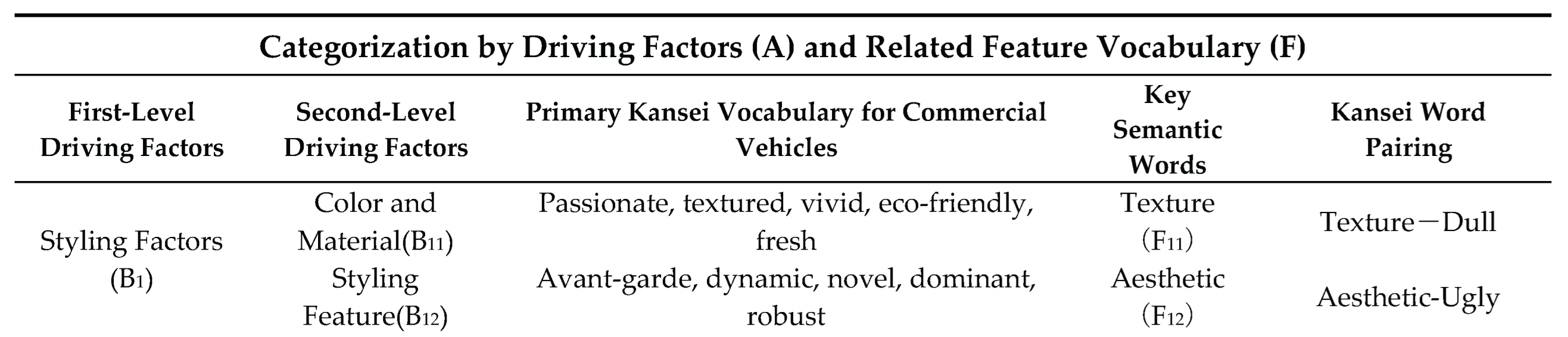
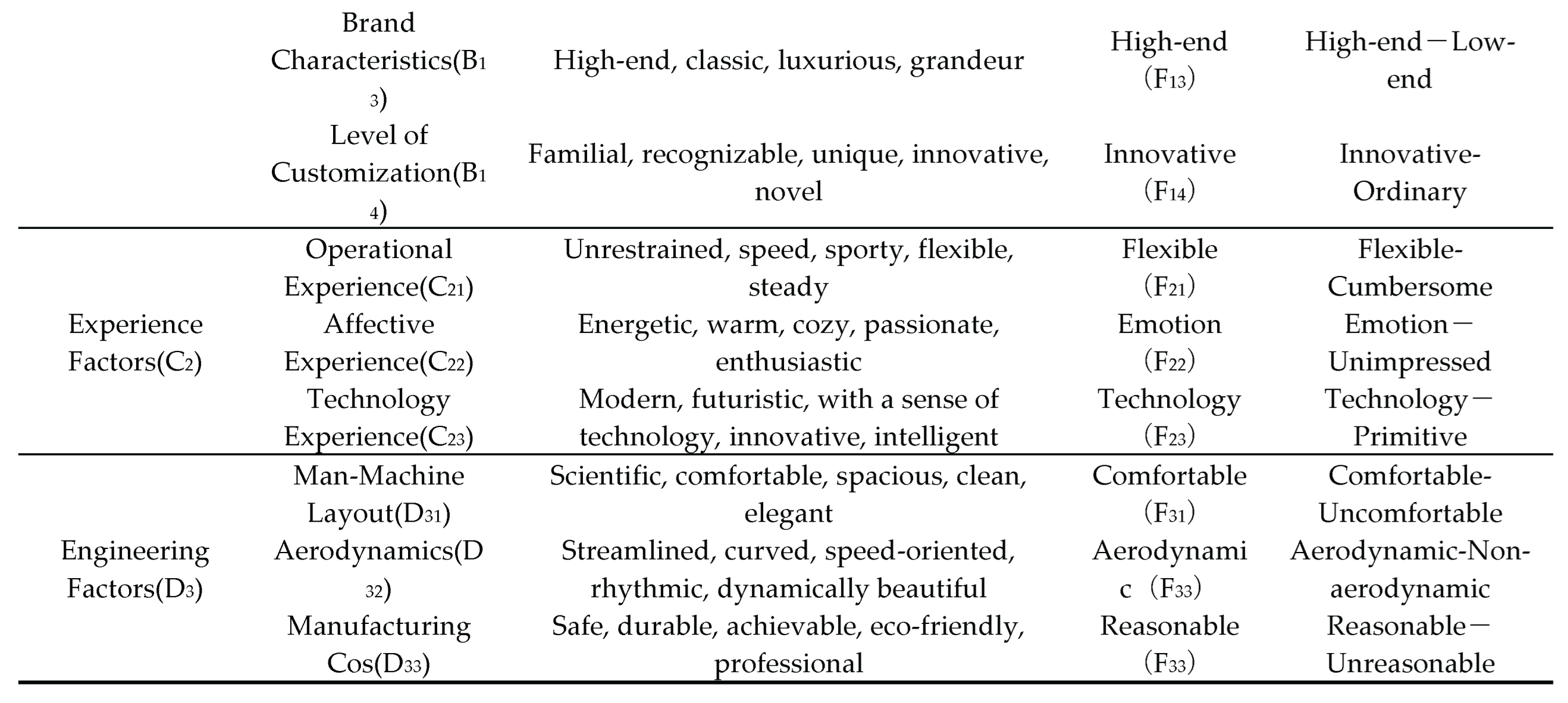
brand styling of heavy-duty trucks were summarized (see Table 3). And the Kansei intention
vocabulary in the summary table of characteristic semantic words is categorized to each index layer,
and the corresponding 10 core semantic words are condensed to represent the intention preference
vocabulary for the index layer (see Table 4), thus pairing up the ten sets of perceptual semantic word
groups here. This method not only effectively avoids the redundant overlapping of lexical meanings,
promotes the accurate mapping of perceptual language to design elements, but also greatly enriches
the expression dimension of product design features, thus ensuring the scientific nature of the
assessment process and the effectiveness of the results [25].

Table 3.
Summary Table of Feature Semantic Word Extraction (excerpt)
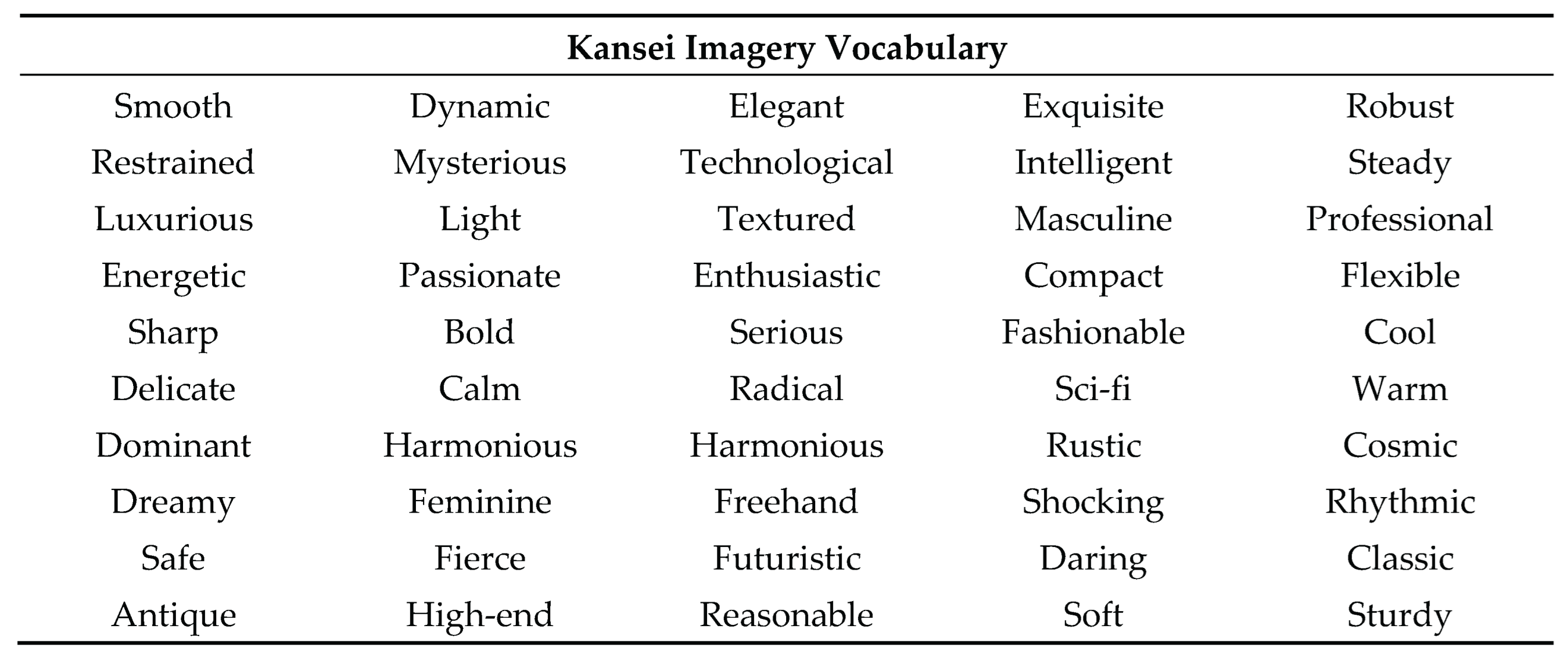 |
Table 4.
Hierarchical System of Design Elements for Commercial Vehicles.
 |
 |
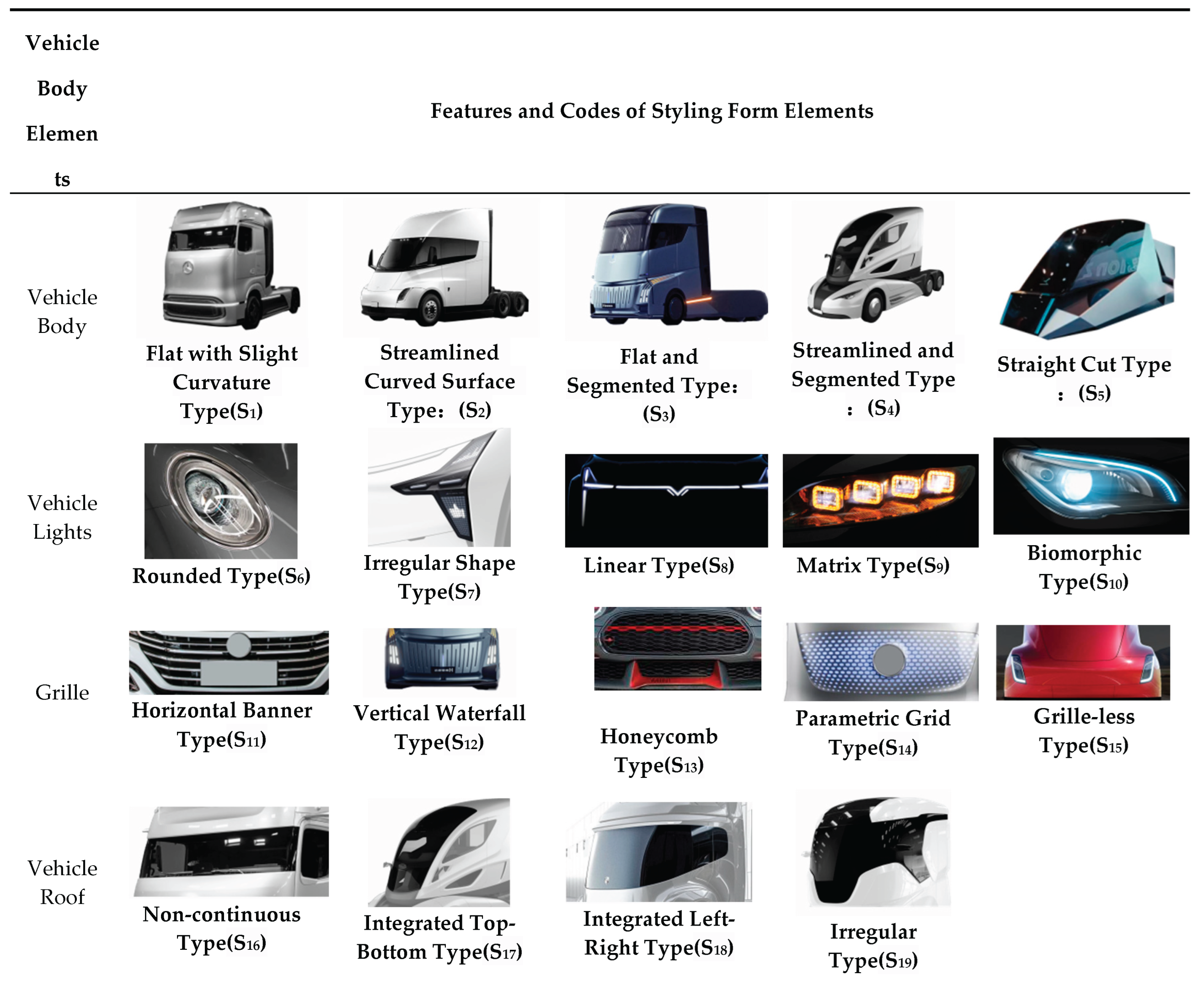
2.3.2. Determining the Evaluation Sample
The expert team carries out systematic classification and selection in the sample database, and
extracts representative body shape samples from the five classification categories. On this basis, the
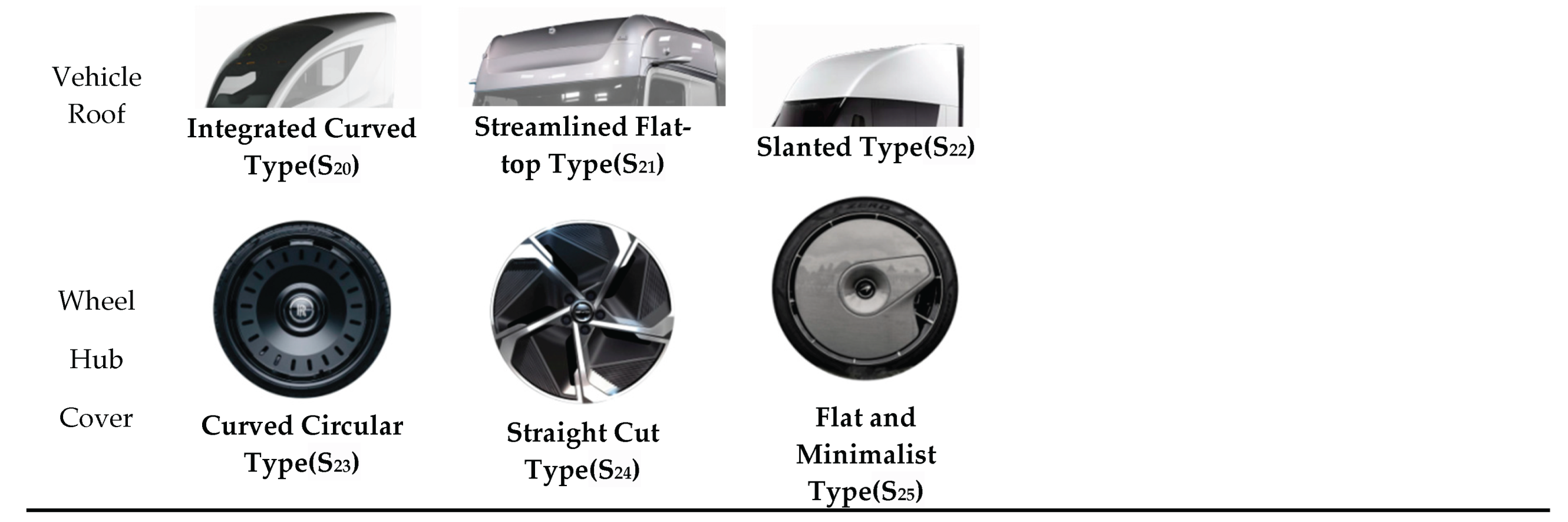
local features of commercial vehicles were further disassembled and categorized, initially focusing
on the five core modules of lights, grille, windows, roof and hubcaps. Subsequently, for the specific
categories under these modules, the expert team carried out in-depth segmentation, and selected the
representative component forms, so as to construct a set of samples for evaluation, as shown in Table
5.
Table 5.
Vehicle feature classification.
 |
 |
2.3.3. Data Acquisition
In order to construct the evaluation system of Kansei imagery, this study takes Semantic
Differential (SD) as the theoretical basis, and analyzes the carefully collected and organized materials
in depth, and then constructs an evaluation matrix, the specific form of which is shown in Equation
(6). This matrix is presented as an n × m dimension, where n represents the number of evaluated
objects and m represents the number of evaluation indicators. In order to obtain Kansei-perceptual
evaluations about the sample, a set of Kansei imagery questionnaires were carefully designed and
distributed, and respondents were invited to score the sample based on their personal perceptions.
Subsequently, the collected Kansei evaluation data were subjected to a rigorous data processing
process using homogenization to ensure the objectivity and accuracy of the evaluation results, and to
systematically explore and analyze the intrinsic connection between Kansei imagery and the
characteristics of the sample.

2.4. TOPSIS-Based Scheme Ranking Preference
TOPSIS is a multi-attribute decision-making method for evaluating and selecting the best decision-making solution. Its central idea lies in first determining the positive ideal solution (optimal solution) and negative ideal solution (worst solution) of each index, the positive ideal solution is the best value of each candidate solution, and the negative ideal solution is the worst value of each candidate solution. Then the Euclidean distance between each solution and the positive ideal solution and the negative ideal solution is calculated, and the proximity of each solution to the optimal solution is thus obtained as a criterion for evaluating the advantages and disadvantages of the solutions. If a scheme is closer to the positive ideal solution and farther away from the negative ideal solution, it is considered to be closer to the ideal scheme [26].
2.4.1. Matrix Normalization
The obtained evaluation matrices of each form of new energy commercial vehicles are normalized and standardized to eliminate the differences in scale and numerical range between different attributes. Here, the polar deviation method is used to obtain the normalized matrix Z. Where a and b are unequal, it can be called a range indicator, and when a and b are equal, it can be called an intermediate indicator.
(1)Positive indicators:
(2)Negative indicators:
(3)Moderate indicators:
A weighting matrix was constructed by combining the AHP second-level driver element weights. Normalized matrix Each column is multiplied with the corresponding AHP weights for each class to weight the raw data.
2.4.2. Positive and Negative Ideal Solutions Euclidean Distance and Relative Proximity Solving
The processed matrix needs to determine the positive and negative ideal solutions, the positive ideal solution is the solution that is desired to achieve the maximum value on multiple attributes in optimal decision making, i.e., the solution that achieves the optimal level on all attributes, in general, the smaller the positive ideal value, the higher the evaluation, and the higher the coupling with Kansei intention, and the negative ideal solution is the opposite of this. The positive ideal solution consists of the maximum value of each column element in the weighted normalized matrix, and the negative ideal solution consists of the minimum value of each column element. The weighted normalization matrix at this point is:
Positive Ideal Solution:
Negative Ideal Solution:
This ranking uses the Euclidean distance to calculate the distance between the object and the positive ideal solution and the negative ideal solution, which provides the basis for the subsequent evaluation and ranking, and by comparing the distance between the evaluation object and the positive ideal solution and the negative ideal solution, the degree of proximity of the evaluation object to the optimal solution and the worst solution can be judged. This experiment uses a positive indicator, the closer the distance to the positive ideal solution and the farther the distance to the negative ideal solution, the better the evaluation object is.
Relative closeness was calculated and ranked using the negative ideal solution distance. Relative proximity ranges from 0 to 1, where larger means that the further away from the negative ideal solution, the higher the Kansei-intentional coupling, the better the result.
3. Results
New energy heavy trucks in the new energy commercial vehicles occupy a pivotal position, very representative of the new energy tractor in the new energy heavy trucks in the proportion of 26.42% climbed to more than 75%, is the dominant force in the long-distance bulk cargo transportation, and its power, range, speed, and other requirements are also higher, so the example of new energy tractor as the object of study.
3.1. Determination of Driver Weights
Organize experts from various departments of the enterprise, invite 6 enterprise personnel and form a focus group, based on their knowledge and experience of the work, adopt a comparison level of 1-9 to quantitatively assign values to the driving elements required for the design of new energy commercial vehicle body forms, statistically organize the scalar values of each index, and combine with the formula (1) to construct a judgment matrix for the driving elements at each level, as follows:
For the judgment matrix, after normalization, WA=(0.4055, 0.1150, 0.4796), the largest characteristic root =3.029, CIA=0.015, CRA=0.02511, CRA0.1 passes the consistency test, and if it doesn't pass, the matrix needs to be trimmed. Similarly, other index weights can be obtained, the specific values are shown in Table 6.
3.2. A Kansei Experiment Based on the Semantic Differential Approach
The Kansei evaluation will be conducted with the help of questionnaire instruments, aiming to explore the subjective preference of participants for the market style and design element samples. The semantic difference method (SD) is used to construct a Kansei imagery evaluation scale, with Table 5 as the experimental sample, listed in Table 4 of the 10 groups of perceptual adjective groups, examples can be referred to in Table 7, the larger the value of the semantic word coupling is higher. Through the statistical analysis of the questionnaire data and calculate the average value, it can be simple and fast to collect and understand the user's subjective feelings and quantify them, this questionnaire was issued 63 copies, after the questionnaire reliability analysis, the Clonbach coefficients are all around 0.87, greater than 0.8, the reliability of the quiz or scale meets the requirements, and the results have a reference value. The results of the experiment were obtained and are shown in Table 8 (body shape Kansei data) and Table 9 (car local shape Kansei data)
3.3. TOPSIS Kansei Coupling Calculation
The results obtained by the semantic difference method can not be used directly, it is difficult to make a decision in the number of items and many attributes of the data, from Table 8 and Table 9 can be seen in the data have negative values, the need to standardize them, here the use of polar deviation method to normalize the matrix, the use of positive indicators, i.e., the larger the value of the indicator, the better the indicator, and attached to the weighting value after the weighting standardization matrix, as shown in Table 10.
Based on t Based on the results obtained from normalization, the Euclidean distance and relative proximity of the positive and negative ideal solutions are calculated. Among them, the positive ideal solution refers to the program that obtains the maximum value in each evaluation index, and the negative ideal solution is the program that reaches the minimum value in each evaluation index. Euclidean distance is used to measure the distance between each indicator and the positive ideal solution and the negative ideal solution, based on the distance between each indicator and the positive ideal solution and the negative ideal solution, we can obtain the relative proximity of each indicator and the optimal indicator, so as to evaluate the advantages and disadvantages of each indicator. If the evaluation index value is closest to the positive ideal solution, it is the optimal solution, and vice versa, it is the worst solution. The relative proximity belongs to another evaluation process of the distance between the reference points of the positive and negative ideal solutions, and the smaller the value of the distance from the positive ideal solution, the better the indicator is. The results are calculated and shown in Figure 3, which can clearly reflect the proximity comparison relationship between different styles of each part of the body shape.
3.4. Analysis and Generation of AIGC Design Schemes
The results of the above experiments were summarized, analyzed and processed, and are shown in Table 11. The body shape with the highest overall score is “S10”, a flat segmented model represented by Geely Remote Star Han, which scores evenly as can be seen from the data table. Its exterior design may adopt smooth lines and unique geometric shapes, the body is flat and at the same time the contours are rounded and full, and the aerodynamics is optimized to reduce wind resistance and improve energy efficiency and driving performance. Cutting waistline divides the top and bottom, rich in style and unity, and all parts of the vehicle echo each other in shape to form an overall coordinated and beautiful exterior image, with a well-proportioned body and a spacious and comfortable interior.
In the body localizat
In the body section, the lamps part of the intention coupling degree overall high, S8 linear lamps intention coupling degree is very high, linear lamps are often fused with the body lines, forming a whole design language, enhance the overall sense of the vehicle. Next is the S10 bionic type, the intentional coupling is relatively high, the grille selected S13 honeycomb grid-like, which implies strong power and solid performance, so that the vehicle has a more solid foundation and strong driving force. Because the new energy commercial vehicle does not need an air intake grille, the lighting grille texture is used to reflect the method. The windows use the left and right one-piece type, which scores much higher than other types and has a stronger sense of wholeness. s20 roof curved one-piece type has a strong sense of overall curves, so the curves of the roof have a rounded transition with the curves of the front face, and the S24 straight line cutting type has the highest coupling of the hubcaps, but the score of this style is the lowest when put on a whole vehicle, so it maintains the overall simple and smooth style, and locally adopts the delicate and unique style to show the character The S24 linear cut wheel covers are the most popular style in the whole car, so keep the simple and smooth style on the whole, use the exquisite and unique style on the local, show the individuality.
The final sorting will filter out the highest intentional coupling of the form, through the edge detection algorithms (such as Canny operator or Roberts operator), to extract the parts of the form feature line, Canny operator detection of more details, for the grille, hubcap such a rich in details of the form can be used in this tool. These feature lines are processed using the Bezier curve drawing tool in CorelDRAW vector drawing software. With the help of AIGC technology, a variety of conceptual sketches and creative directions can be generated quickly to stimulate the creative inspirations of the design workers, greatly improve the efficiency of the creation, shorten the time required for the creation of the image, and provide a wealth of choices for the user [27,28,29,30]. This time, Stable Diffusion software is used, mainly using the principle of Generative Adversarial Networks (GANs) to generate real images, and the low-dimensional feature vectors are converted into high-dimensional image data according to the analysis of the shape of the spline, line thickness, color and other information.
3.5. Design Solution Selection and Verification
After the extracted spline is broken up and reorganized, the commands are input as required to transform the perceptual words into cue words recognizable by the AI, and the weight values are derived through AHP analysis and assigned to the cue words. For example, beautiful: 1.6 represents that the weight of the cue word is increased by 1.6 times, and the value is kept between 1-2 as much as possible for the best effect, as shown in Table 12.
According to t Gradually decreasing based on weight rankings, its relevance, reentry amplitude, etc. selected the middle amplitude of the parameter values, and left and right fine-tuning, in turn, to generate 200 effect diagrams, and ultimately selected four new energy commercial heavy truck design scheme as Figure 5, Figure 6, Figure 7 and Figure 8. 75 Kansei questionnaires were issued, 71 valid questionnaires, evaluation screening, questionnaire results data of the Clonbach coefficient are around 0.89, greater than 0.8, indicating that the The results are valid.TOPSIS proximity is generally greater than 0.5, according to the questionnaire evaluation results sorting, and finally selected the program with the highest perceptual coupling as T3, as shown in Table 13.
4.Con
4.Discussion
This study is grounded in the solid theoretical foundation of Kansei Engineering, skillfully integrating cutting-edge methodologies such as Artificial Intelligence (AI) image generation technology, with new energy commercial vehicles serving as the focus of in-depth research. Its core focus lies in leveraging scientific and advanced research techniques to efficiently and rationally uncover users' emotional resonance and aesthetic preferences towards the exterior design of new energy commercial vehicles. It is dedicated to exploring a pathway that precisely translates these deep-seated user needs into key elements of product exterior design, thereby giving rise to innovative design solutions that not only meet user expectations but also exhibit creativity.
Addressing the multifaceted complexity of emotion-driven design in the body shape design of new energy commercial vehicles, this study firstly proposes an innovative method integrating AHP (Analytic Hierarchy Process) - SD (Semantic Differential Method) - TOPSIS (Technique for Order Preference by Similarity to Ideal Solution) - AIGC (Artificial Intelligence Generated Content) for morphological design. This method aims to scientifically and precisely translate users' emotional needs into design elements for vehicle body shapes. Firstly, we extensively collect relevant information through mainstream search engines and literature searches, conducting thorough and detailed investigations and analyses to establish a sentiment evaluation sample library. This step provides abundant materials and references for subsequent morphological design. Then, based on the AHP method, we establish an index system of driving factors for the body shape design of new energy commercial vehicles. By classifying emotional vocabulary according to various levels of indicators and refining core semantic words, we further use the consistent matrix method to determine the weights of multi-dimensional factor indicators for body shape design. This process ensures that the selection of design elements not only aligns with users' emotional needs but also embodies scientific and rational design principles. Subsequently, based on the closeness values in TOPSIS, we prioritize the design schemes and derive the style morphology with the highest coupling degree to the emotional intentions of commercial vehicle users. This step effectively enhances the pertinence and effectiveness of the design, ensuring that the design scheme precisely meets users' aesthetic preferences. Finally, based on the symmetry of the vehicle body shape, we use edge detection algorithms to extract multiple local morphological style feature sample curves and fit their line shapes into the commercial vehicle body contours. On this basis, we utilize AIGC tools to generate innovative schemes and validate them through a case study of heavy-duty truck body shape design. The results indicate that this method can quickly generate multiple sets of design schemes that meet users' emotional needs and complete sentiment evaluations, thereby verifying the rationality and effectiveness of the research.
This study proposes a design process for the exterior of new energy commercial vehicles that integrates the concept of Kansei Engineering with AHP (Analytic Hierarchy Process), SD (Semantic Differential Analysis), TOPSIS (Technique for Order of Preference by Similarity to Ideal Solution), and AIGC (Artificial Intelligence Generated Content) technologies. This process significantly enhances the capability to capture users' morphological needs for new energy commercial vehicles expressed in Chinese characters while ensuring design accuracy. It achieves precision and objectivity in demand mining. We delve into how to scientifically and reasonably incorporate control conditions such as user needs, functional practicability, and market orientation into the AI image generation process, thereby efficiently producing a large number of conceptual sketches for new energy commercial vehicle body shapes that meet user expectations. Compared with AI-generated schemes that rely entirely on designers' individual creativity or lack refined conditional control, the method proposed in this study demonstrates significant advantages in objectivity, rigor, and accuracy. It not only substantially improves the overall efficiency and rationality of vehicle body exterior analysis and design but also effectively overcomes the limitations of traditional Kansei Engineering methods in directly generating concrete product images. Meanwhile, this method addresses issues such as vague objectives and lack of theoretical support that may arise in the scheme generation process using a single AI tool, providing more reliable and objective guidance for final decisions in vehicle body design. Furthermore, the application of this process significantly shortens the cycle from conceptual design to mass production for automakers, bringing revolutionary changes to the design and development of new energy commercial vehicles. It not only provides automakers with more efficient and precise design tools but also points the way forward for the intelligent and personalized development of future automotive design.
5. Conciusions
This paper proposes a design approach for rapidly generating new energy commercial vehicle body shapes that align with market and user demands. This approach aids enterprises in swiftly and scientifically matching body shapes that conform to users' aesthetics and completing the design scheme for vehicle body shapes.Using perceptual engineering to quantify the user's subjective intention, combined with the evaluation of the actual programme to guide the AIGC to generate a programme to assist designers in the shape of the design. The integrated AHP-SD-TOPSIS-AIGC product design methodology adopted in the study allows for a comprehensive perceptual evaluation of the product, based on the three levels of ‘modelling-experience-engineering’ in the ‘performance-perception-technology layer’. Based on the first-level driving elements of ‘performance layer, experience layer and technology layer’, and the subordinate ten second-level driving elements, AIGC constructs a form evaluation system for new energy commercial vehicles, and the experts summarise the multi-dimensional, multi-angle and multi-attribute driving elements of the product design and score them, so as to dig out more user needs and potential perceptual factors, and make the semantics of perceptiveness more detailed and accurate. Subdivided accurately. It solves the problem of perceptual coupling of multiple elements, multiple categories and multiple forms of products, and quickly obtains comprehensive user evaluation. The commercial vehicle form designed by this method can highly couple with the perceptual intention of the user group, so that the body shape meets the preference of most users for the future commercial vehicle form. Based on the symmetry characteristics of the body shape, the AI Image Generation tool is used to quickly provide a more systematic, objective and innovative design idea for the styling design of new energy commercial vehicles.
Along with the intelligent development of new energy commercial vehicles, the use of intelligent components such as LiDAR and electronic mirrors has become more diversified, and thus the local features selected in this case are not comprehensive. Factors affecting the user preference of new energy commercial vehicles involve policy support, after-sales service, profit model and other factors in addition to the vehicle itself. The follow-up study will combine the complex network analysis method or introduce the fuzzy evaluation theory to study the relationship between the driving factors. In addition, the perceptual experiment will combine the most advanced design concepts at home and abroad, continue to enrich the local component elements, screen better experimental samples, and make the results more objective based on eye movement and EEG multimodal analysis.
Author Contributions
Conceptualization,B.L. and Z.H.; methodology,B.L.; software,B.L.and Z.H.; validation,B.L., Z.H.,Y.L.and Z.W.; formal analysis,B.L.; investigation,B.L.,Z.H.,Y.L.and Z.W.; resources,B.L.; data curation,B.L.; writing—original draft preparation,investigation,B.L.,Z.H., Y.L.and Z.W.; writing—review and editing,B.L. and Y.L. ; visualization,B.L.; supervision,B.L., Z.H., Y.L.and Z.W.; project administration,B.L.; funding acquisition,B.L. All authors have read and agreed to the published version of the manuscript.
Funding
This research was funded by the National Social Science Fund of China(grant nu-mber: NO.22BSH122),the Key R&D Project in Shaanxi Province(grant number: NO.2022ZDLSF07-07),the Special Fund for Natural Sciences of Shaanxi Provincial Department of Education(grant number: NO.23JK0567), and the Key R&D Project in Shaanxi Province(grant number: NO.2025SF-YBXM-231)
Data Availability Statement
The datasets used during the current study are available from the corresponding author upon reasonable request.
Conflicts of Interest
The authors declare no conflicts of interest.
References
- Liu Fujian.The Development Trend of Commercial Vehicles under Carbon Neutrality[J].Auto Time,2024,(11):22-24.
- Meng Zihao,Wang Dengfeng,Zhang Xiaopeng,et al.Integrated optimization design of lightweight and fatigue life for the integrated structure of cell-to-frame[J].Automotive Engineering,2024,46(12):2143-2153+2219.
- Liu Yongtao,Cao Ying,Liu Chuanpan,et al.Progress of energy and power system technologies for commer-cial vehicles under chinascarbon peaking and carbon neutrality goals[j].chinese journal of automotive engineering,2022,12(04):478-494.
- Zhang Xiao,Yang Ling-yun,Yang Zhichao,et al.Research on driving mode control of new energy commercial vehicles[J].Auto Electric Parts,2023,(06):40-42.
- Gao Yunpeng ,Qiao Hai ,Chen Jinhua ,et al.Design of the high-torque density permanent magnet synchronous motor used in new energy commercial vehicles[J].Electrical Machinery Technology,2024,(01):1-6.
- He Guo, Li Qingzhang, Han Yanxiao,et al.Improvement analysis on the braking weaknessof a new energy commercial vehicle[J].Automobile Applied Technology,2022,47(19):109-113.
- Qin Guanghao.New energy heavy-duty truck styling design Research and application[D].Henan University of Technology,2023.
- CARREIRA, R., PATRÍCIO, L., JORGE, R. N., & MAGEE, C. L.[J]. Development of an extended Kansei engineering method to incorporate experience requirements in product–service system design.Journal of Engineering Design,2013,24(10),738–764.
- LU W ,YE C ,FANG Y,et al.A systematic review of Kansei engineering in vehicle design[J].Digital Engineering,2024,3100022-100022.
- SU Jianning,HU Qing,ZHANG Shutao,et al.Research on coupling design characteristics for color-material-finishing of car body[J].Journal Of Machine Design,2020,37(04):119-125.
- TIAN Q H, ZHANG C, ZHU W, et al. Study on fuzzy duration of serial coupled iterative design tasks in product development[J]. IOP Conference Series: Materials Science and Engineering, 2020, 892(1): 012080.
- SHI Xiaotao, GUO Xia1, LU Zihan,et al.CMF Design and Application of Chinese Elements in Cockpit Seat Based on Kansei Engineering[J].Packaging Engineering,2023,44(06):441-448.
- HU Weifeng,ZHAO Jianghong,Automobile styling gene evolution driven by users’ expectation image[j].Journal Of Mechanical Engineering,2011,47(16):176-181.
- MA Lisha, LU Jian, SHAN Junjun,et al.Design method of automobile modeling feature line based on eye movement tracking [J].Packaging Engineering,2019,40(04):234-241.
- LI Yu,LU Chunfu,LIU Xiaojian,et al.Gene network model of automobile styling design[J].Computer Integrated Manufacturing Systems,2018,24(05):1249-1260.
- OSGOOD C E,SUCI G J,TANNENBAUM P H.The measurement of meaning [M].Chicago:University ofIllinois Press,1957.
- S R ,V P ,RUSHO A M , et al.Optimizing additive manufacturing parameters for graphene-reinforced PETG impeller production: A fuzzy AHP-TOPSIS approach[J].Results in Engineering,2024,24103018-103018.
- Tianxiong W .A Novel Approach of Integrating Natural Language Processing Techniques with Fuzzy TOPSIS for Product Evaluation[J].Symmetry,2022,14(1):120-120.
- SU Jianning, CHEN Yanhao, JING Nan,et al.Coupling characteristics study in product image modeling design[J].Journal Of Machine Design,2017,34(01):105-109.
- LIU Lanyu,ZHEN Gangqiang.DESIGN OF PORTABLE OXYGEN CONCENTRATOR BASED ON KJ-AHP METHOD[J].Design,2023,36(17):112-115.
- LU Weihua,JIANG Guanyue,LIU Yuting,et al.Kanseievaluationofinteriorlayoutdesignofbusinessjetcockpi[J].Computer Integrated Manufacturing Systems,2024,30(01):28-41.
- BI Zhuo1,HAN Bing.Anti-noise roberts edge detector[J].Computer Technology And Development,2013,23(06):258-261.
- HU Weifeng,ZHAO Jianghong.Automobile styling gene evolution driven by users’ expectation image[J].JOURNAL OF MECHANICAL ENGINEERING,2011,47(16):176-181.
- Sakai Yoshihisa, the palace is full of people, and Aoyama Hideki Design System for Basic Shapes of Automatic Vehicles Using Sensory Language [J]. Proceedings of Academic Lectures at the Precision Engineering Society Volume 2003A ,Issue 0. 2003. PP 13-13.
- YANG Lei,XIANG Zerui,ZHAO Chao,et al.Exterior design for air rail train based on feature semantics and fuzzy analytic hierarchy process [J].Packaging Engineering,2024,45(10): 150-157+167.
- LIU Anqi, CHENG Xufeng, WANG Mingru .ultiple affective responses design method of product based on kansei engineering and topsis-aism [J].Packaging Engineering,2024,45(12):183-193.
- Yuanjian Du , Xiaoxue Liu , Mobing Cai a, Kyungjin Park .A Product’s Kansei Appearance Design Method Based on Conditional-Controlled AI Image Generation [J].Sustainability,2024,16,8837.
- Wang, C.; Chung, J. Research on AI Painting Generation Technology Based on the [Stable Diffusion]. Int. J. Adv. Smart Converg.2023, 12, 90–95.
- ZHU Bin,YANG Cheng,YU Chunyang,etal. Product image recognition based on deep learning[J].Journalof Computer-Aided Designand Computer Graphies,2018,30(9):1778-1784.
- Lai, X.; Zhang, S.; Mao, N.; Liu, J.; Chen, Q. Kansei engineering for new energy vehicle exterior design: An internet big data mining approach. Comput. Ind. Eng. 2022, 165, 107913.
Figure 1.
Technology Roadmap.
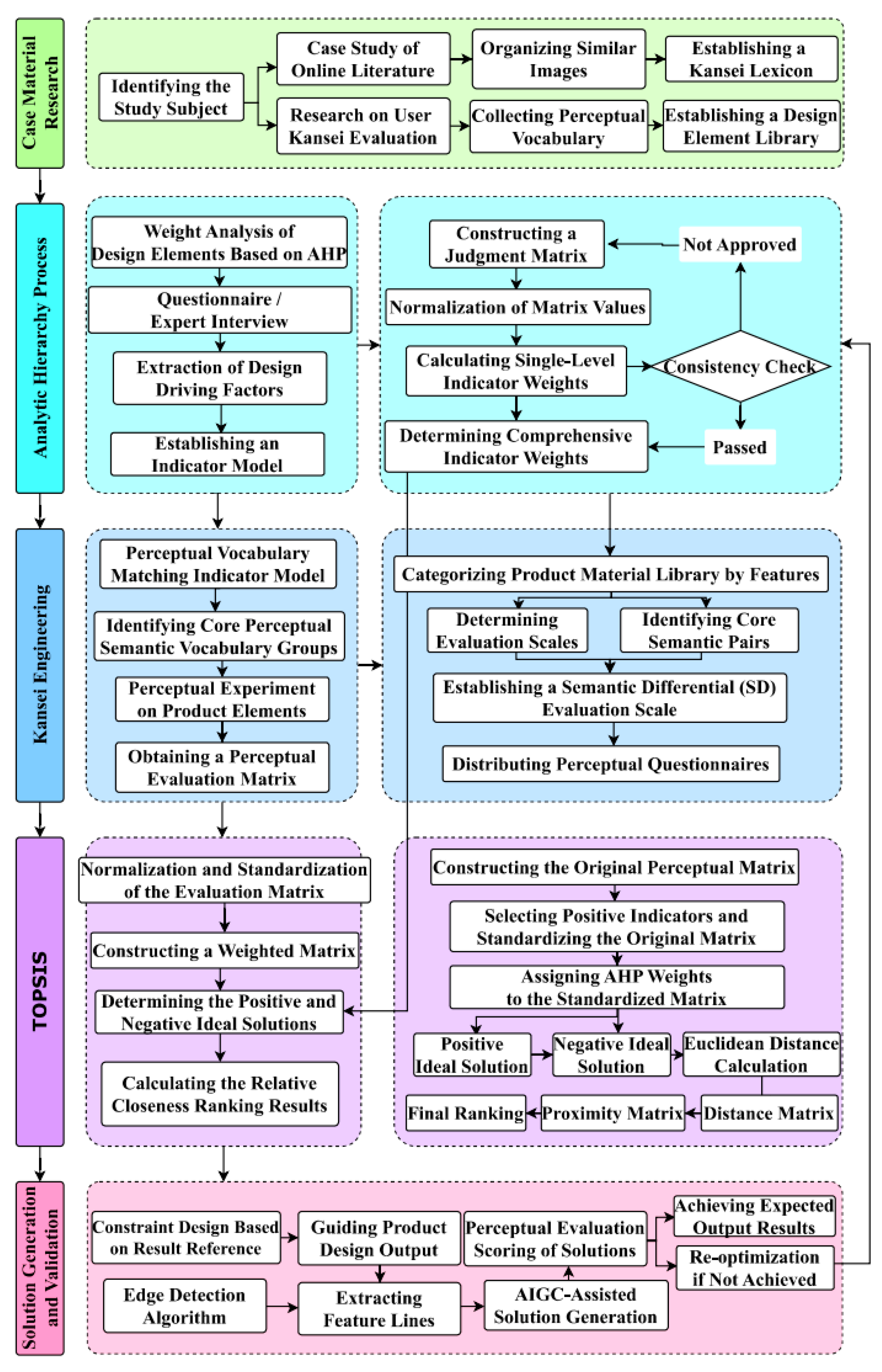
Figure 2.
Hierarchical model diagram of driving elements for body shape design of new energy commercial vehicles.
Figure 2.
Hierarchical model diagram of driving elements for body shape design of new energy commercial vehicles.
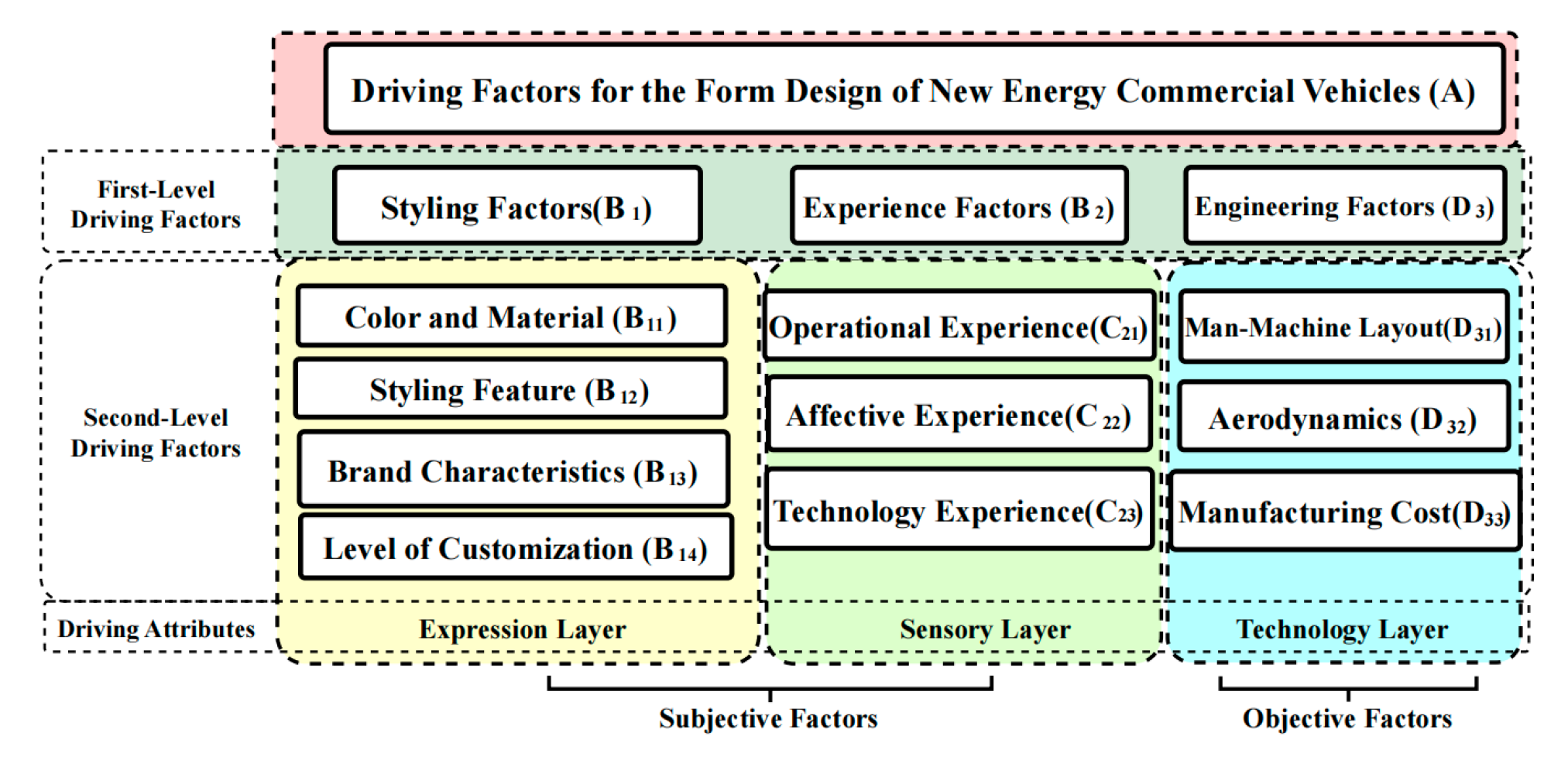
Figure 3.
TOPSIS body shape evaluation calculation results.
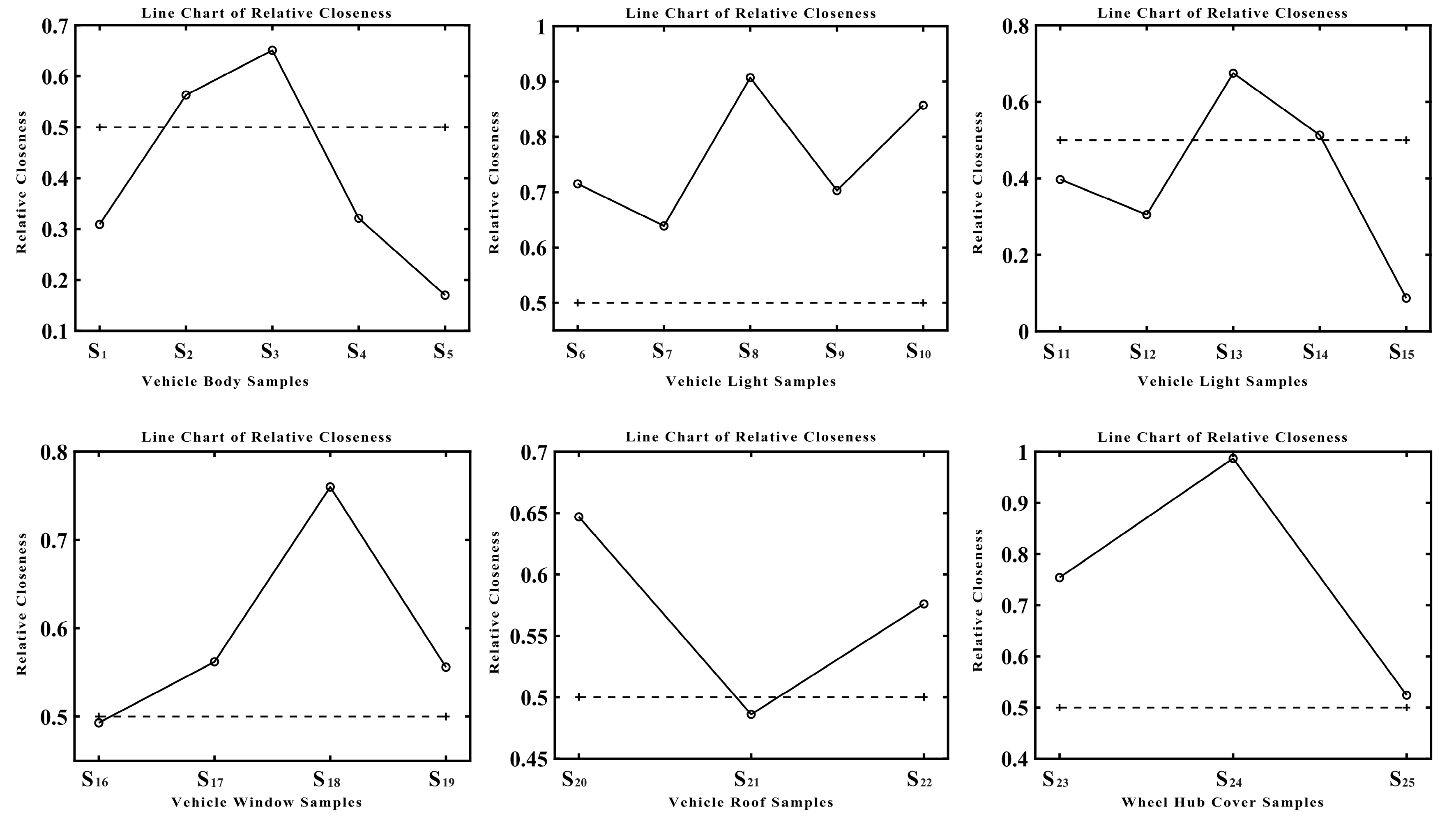
Figure 4.
Flowchart for AIGC Scheme Design.
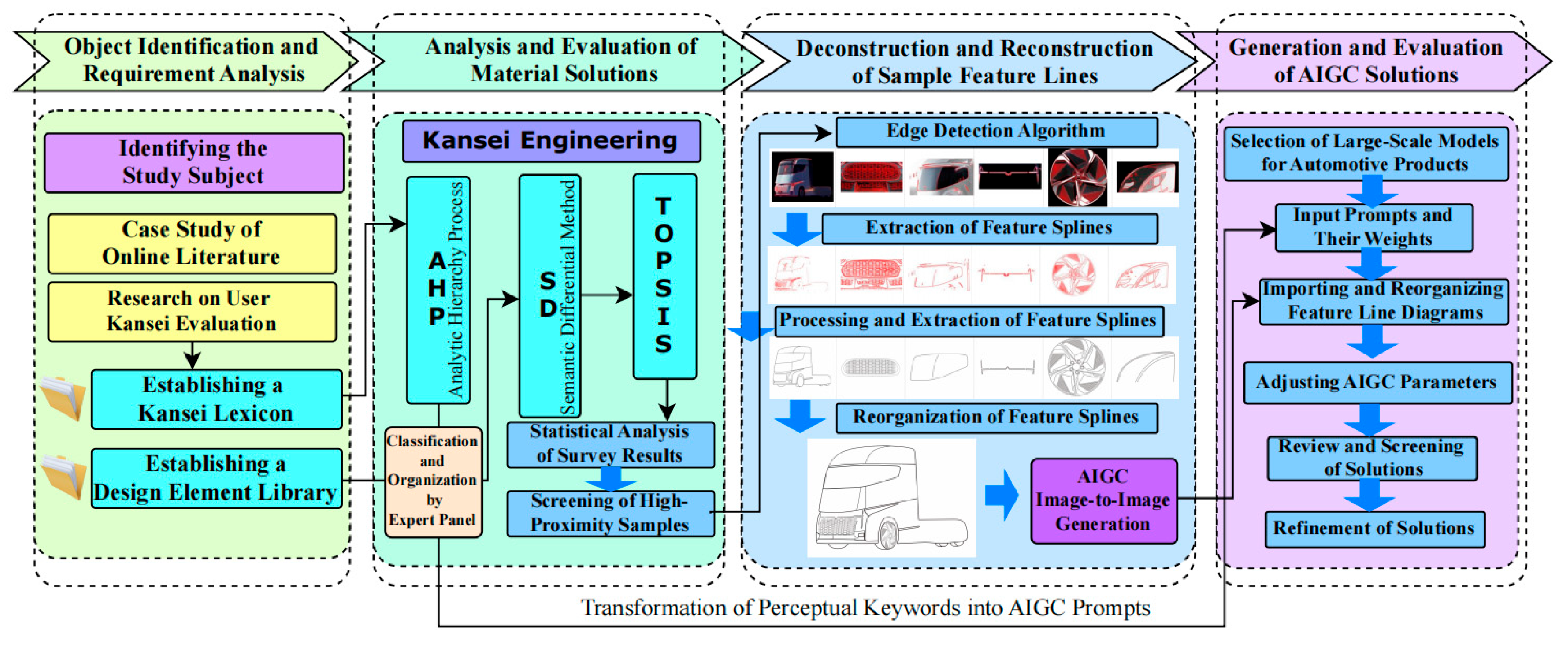
Figure 5.
Rendering T1.
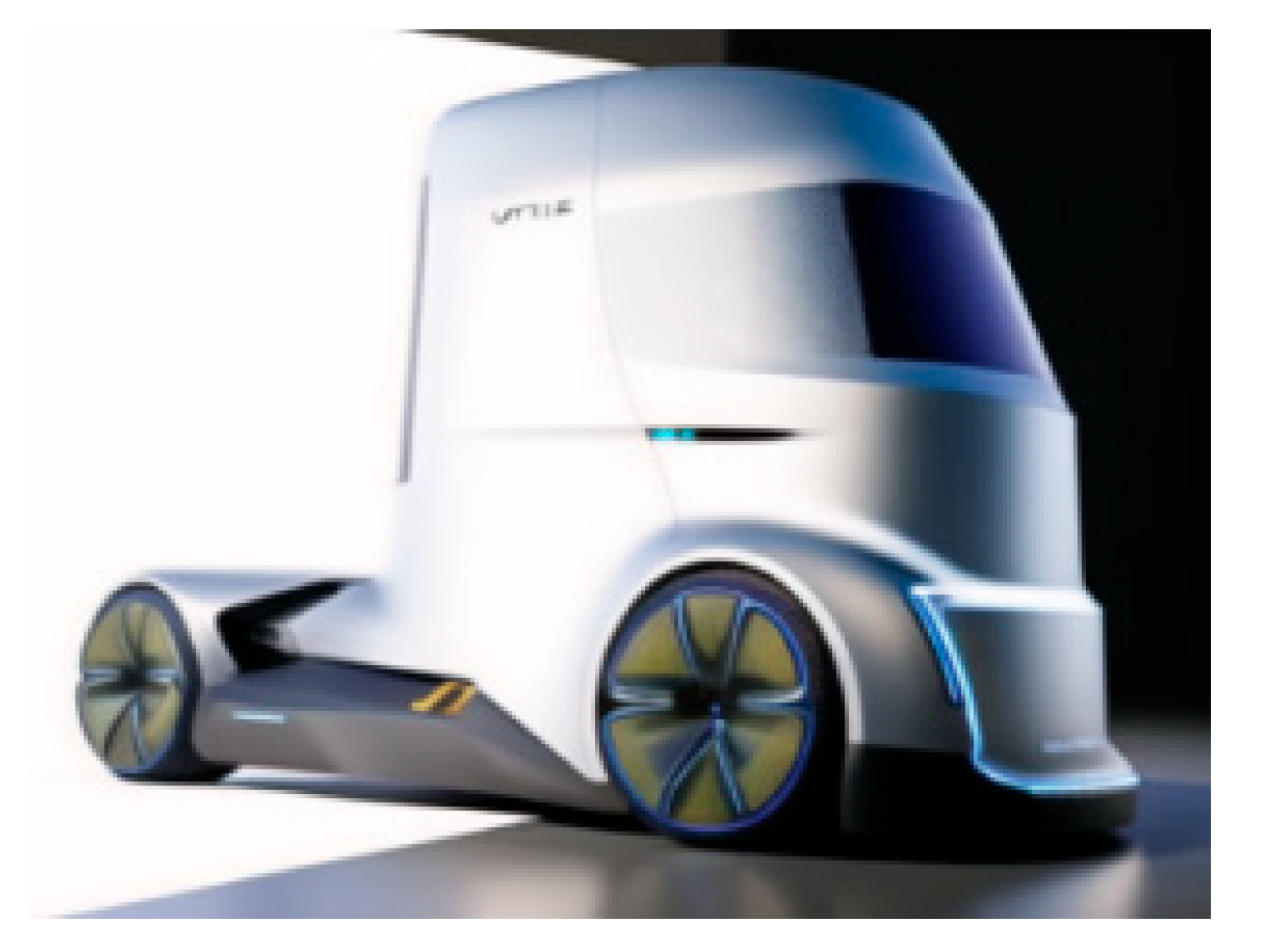
Figure 6.
Rendering T2.
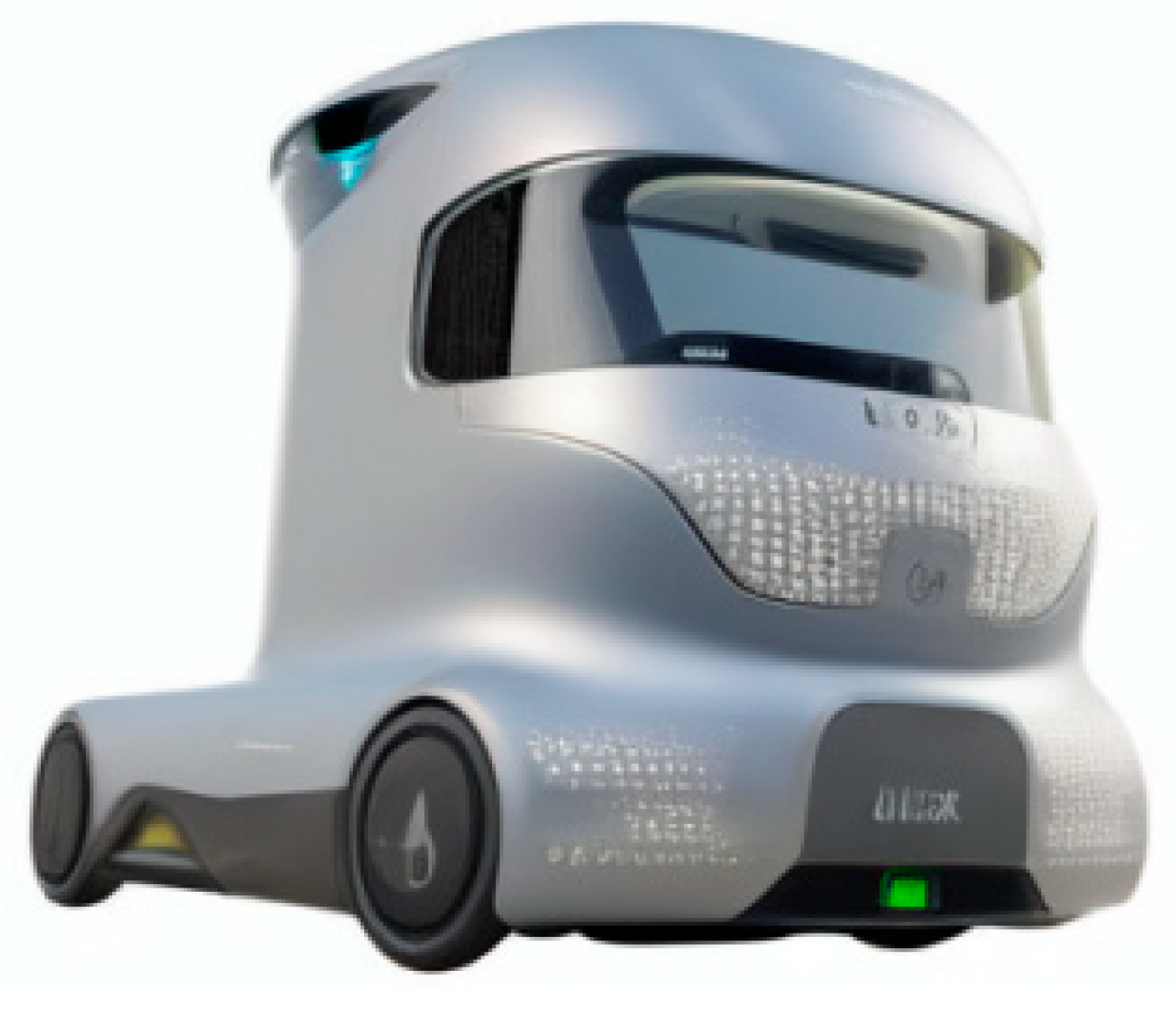
Figure 7.
Rendering T3.
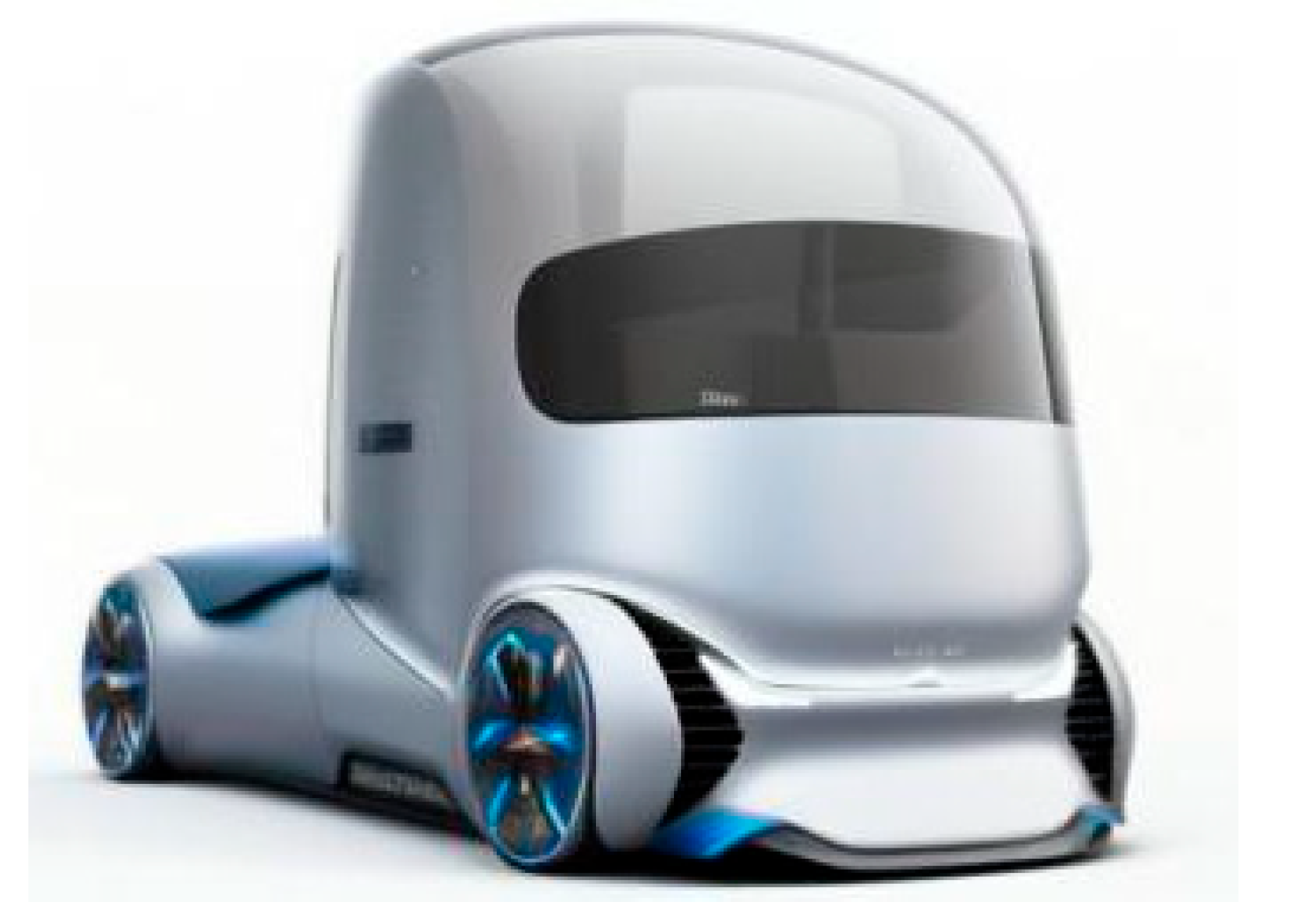
Figure 8.
Rendering T4.
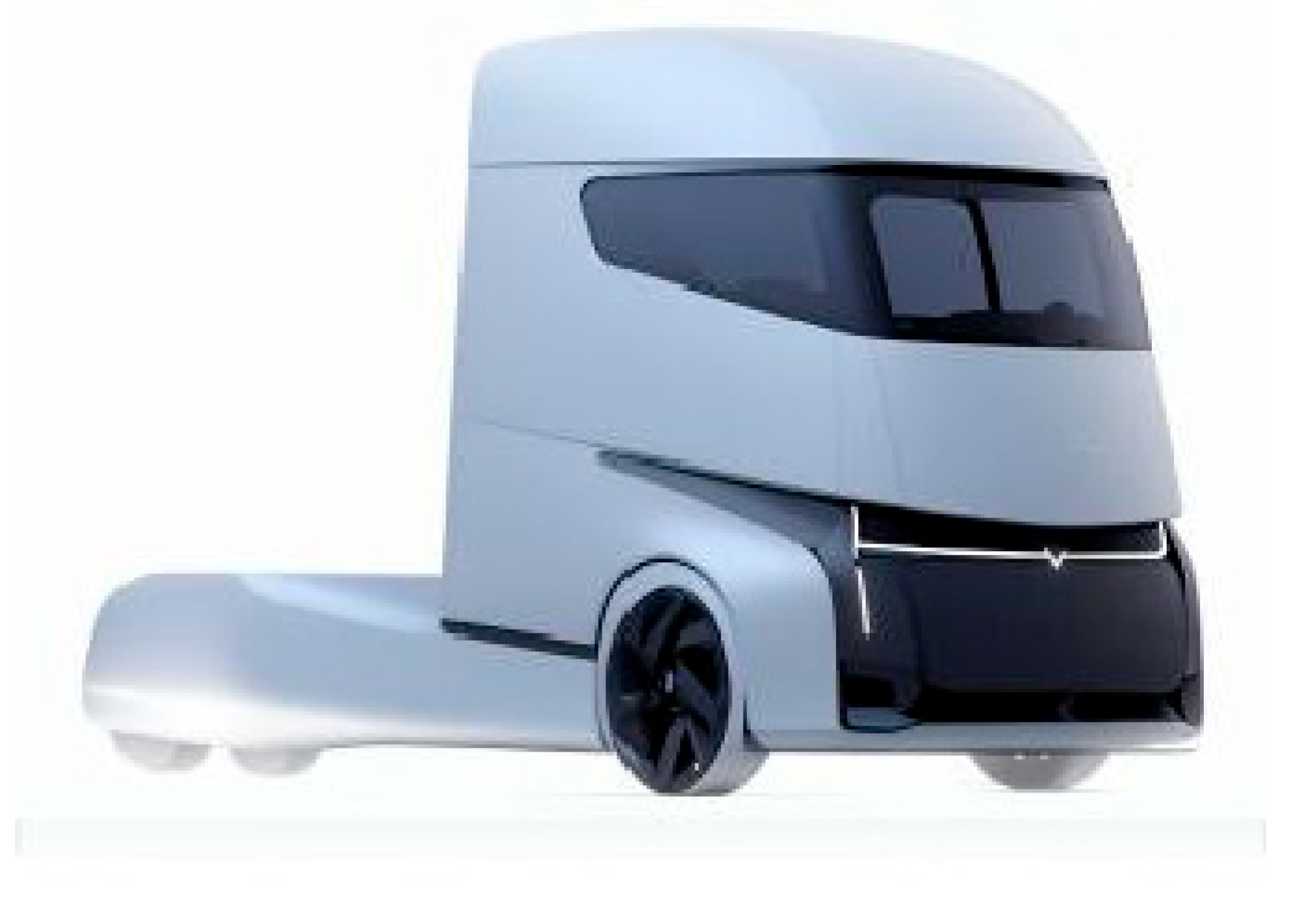
Table 1.
Judgment Matrix Scale Evaluation Scale Definition.
| Numerical Scale | Meaning (Degree of Importance) | |
|---|---|---|
| 1 | Both elements are equally important | |
| 3 | The former is slightly more important than the latter | |
| 5 | The former is significantly more important than the latter | |
| 7 | The former is much more important than the latter | |
| 9 | The former is extremely more important than the latter | |
| 1/3 | The former is slightly less important than the latter | |
| 1/5 | The former is significantly less important than the latter | |
| 1/7 | The former is much less important than the latter | |
| 1/9 | The former is extremely less important than the latter | |
| 2,4,6,8 | Intermediate values between the above | |
Table 2.
Example of Classification and Numbering of Body Shape Characteristic Lines.
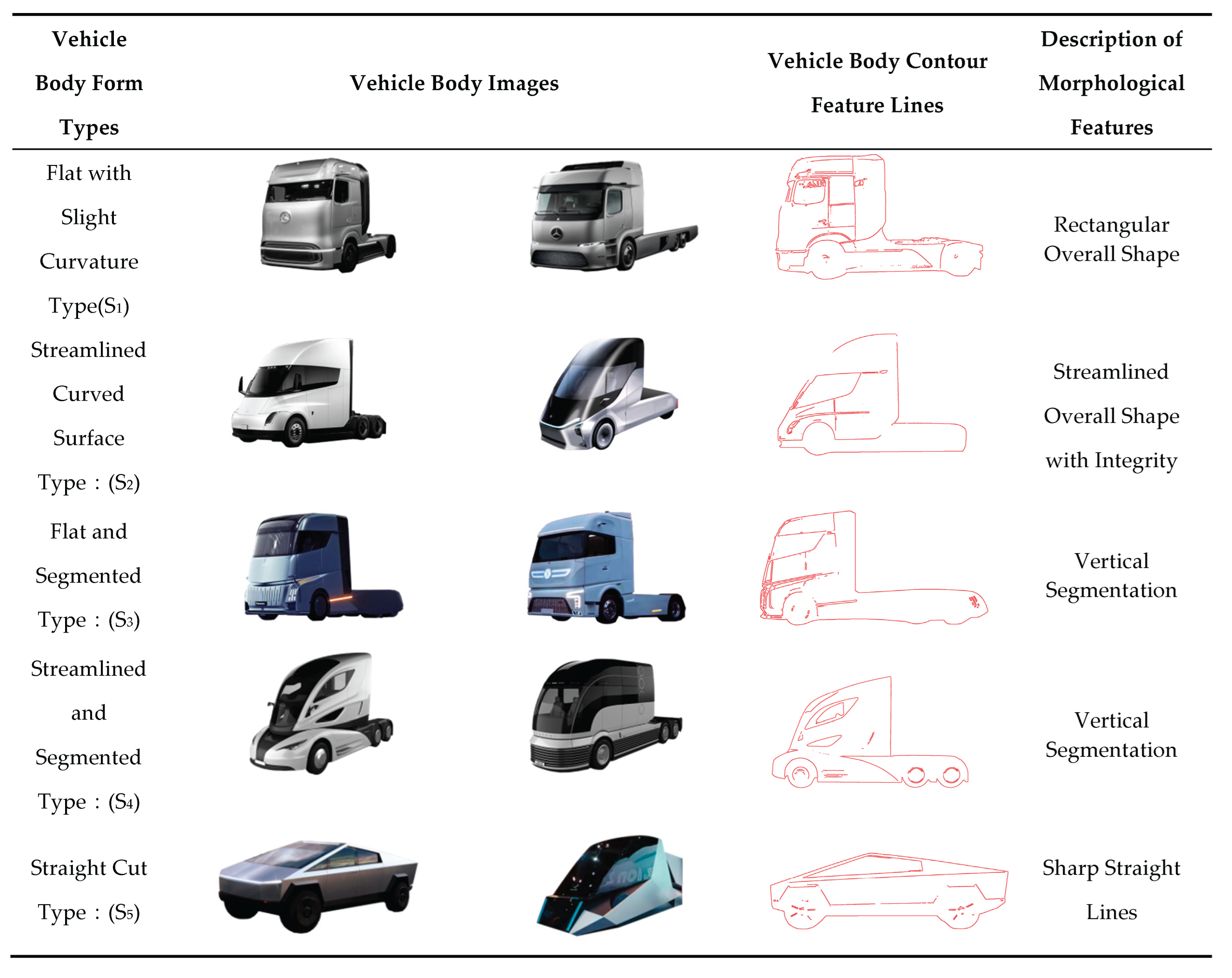 |
Table 6.
Calculation results of design element hierarchy for commercial vehicles.
| Weight of each indicator | ||||||
|---|---|---|---|---|---|---|
| First-Level Driving Factors | First-Level Weight | Second-Level Driving Factors | Key Semantic Words | Comprehensive Weight | Consistency Check | Rank |
| Styling Factors (B1) |
0.4055 | Color and Material(B11) | Texture(F11) | 0.0853 |
=0.05179 =0.05819 |
4 |
| Styling Feature(B12) | Aesthetic(F12) | 0.1951 | 2 | |||
| Brand Characteristics(B13) | High-end(F13) | 0.0853 | 4 | |||
| Level of Customization(B14) | Innovative(F14) | 0.0397 | 9 | |||
| Experience Factors (C2) |
0.1150 | Operational Experience(C21) | Flexible(F21) | 0.0551 |
=0.01456 =0.02511 |
6 |
| Affective Experience(C22) | Emotion(F22) | 0.0132 | 10 | |||
| Technology Experience(C23) | Technology(F23) | 0.0466 | 8 | |||
| Engineering Factors(D3) |
0.4796 | Man-Machine Layout(D31) | Comfortable(F31) | 0.1249 |
=0.01935 =0.03337 |
3 |
| Aerodynamics(D32) | Aerodynamic(F33) | 0.0509 | 7 | |||
| Manufacturing Cos(D33) | Reasonable(F33) | 0.3037 | 1 | |||
Table 7.
Example of questionnaire survey.
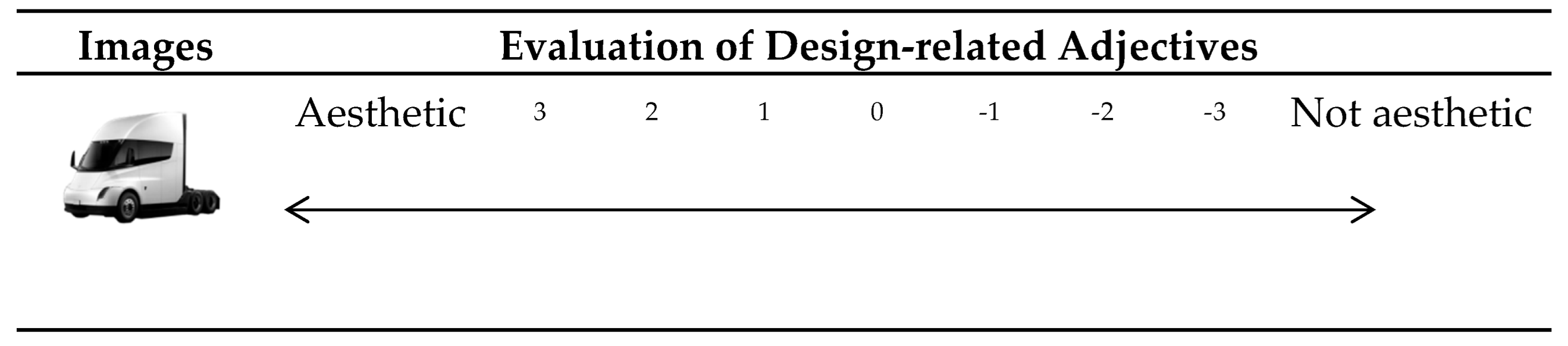 |
Table 8.
Statistics on the average sensory data of commercial vehicle body shape.
| F11 | F12 | F13 | F14 | F21 | F21 | F23 | F31 | F32 | F33 | |
|---|---|---|---|---|---|---|---|---|---|---|
| S1 | 1.03 | 0.21 | 1.10 | 1.21 | 0.40 | -0.22 | 1.24 | 0.68 | 1.24 | 0.60 |
| S2 | 1.33 | 1.13 | 1.22 | 1.40 | 0.98 | 0.44 | 1.38 | 1.03 | 1.65 | 1.11 |
| S3 | 1.35 | 1.30 | 1.52 | 1.35 | 0.76 | 0.95 | 1.29 | 1.33 | 0.89 | 1.33 |
| S4 | 1.46 | 0.75 | 1.24 | 1.78 | 1.49 | 0.59 | 1.75 | 0.30 | 1.75 | 0.32 |
| S5 | 0.52 | 0.44 | 1.08 | 1.75 | 0.78 | 0.19 | 1.32 | -0.03 | -0.13 | 0.08 |
Table 9.
Statistics on the average results of sensory data of local morphology of commercial vehicles.
Table 9.
Statistics on the average results of sensory data of local morphology of commercial vehicles.
| F11 | F12 | F13 | F14 | F21 | F21 | F23 | F31 | F32 | F33 | |
| S6 | 1.22 | 1.33 | 1.30 | 0.73 | 1.11 | 0.86 | 1.08 | 1.21 | 1.44 | 1.67 |
| S7 | 1.40 | 1.32 | 1.54 | 1.63 | 1.22 | 1.10 | 1.70 | 1.02 | 0.76 | 1.29 |
| S8 | 1.94 | 2.00 | 2.00 | 1.84 | 1.79 | 1.52 | 2.03 | 1.71 | 1.63 | 1.75 |
| S9 | 1.52 | 1.19 | 1.33 | 1.37 | 1.27 | 1.13 | 1.17 | 1.29 | 0.90 | 1.62 |
| S10 | 1.71 | 1.83 | 1.68 | 1.25 | 1.41 | 1.32 | 1.46 | 1.54 | 1.79 | 1.75 |
| S11 | 0.51 | 0.49 | 0.21 | -0.32 | 0.24 | 0.00 | 0.08 | 0.52 | 0.41 | 1.08 |
| S12 | 0.59 | 0.48 | 0.63 | 0.89 | 0.27 | 0.32 | 0.89 | 0.52 | 0.51 | 0.67 |
| S13 | 1.30 | 1.41 | 1.46 | 1.14 | 0.97 | 1.08 | 1.17 | 1.08 | 1.03 | 1.43 |
| S14 | 1.17 | 1.06 | 1.33 | 1.59 | 1.10 | 0.62 | 1.60 | 0.89 | 1.10 | 0.98 |
| S15 | 0.60 | 0.19 | 0.54 | 1.02 | 0.24 | 0.02 | 0.62 | 0.21 | 0.49 | -0.13 |
| S16 | 0.81 | 0.90 | 0.92 | 0.65 | 0.32 | 0.49 | 0.75 | 0.71 | 0.63 | 1.17 |
| S17 | 1.32 | 1.21 | 1.70 | 1.41 | 1.37 | 1.05 | 1.59 | 0.98 | 1.40 | 1.02 |
| S18 | 1.43 | 1.71 | 1.60 | 1.52 | 1.49 | 1.14 | 1.60 | 1.57 | 1.83 | 1.44 |
| S19 | 1.57 | 1.22 | 1.62 | 1.78 | 1.30 | 1.25 | 1.79 | 1.29 | 1.67 | 0.90 |
| S20 | 1.38 | 1.44 | 1.46 | 1.29 | 1.30 | 1.22 | 1.51 | 1.33 | 1.86 | 1.19 |
| S21 | 0.81 | 0.68 | 0.59 | 0.38 | 0.54 | 0.52 | 0.73 | 0.94 | 0.67 | 1.22 |
| S22 | 1.13 | 0.97 | 0.98 | 0.83 | 0.89 | 0.63 | 0.75 | 1.06 | 1.32 | 1.33 |
| S23 | 1.46 | 1.44 | 1.56 | 1.10 | 1.32 | 1.14 | 1.30 | 1.43 | 1.24 | 1.62 |
| S24 | 2.05 | 2.06 | 2.03 | 1.97 | 1.89 | 1.81 | 2.14 | 1.84 | 1.65 | 2.00 |
| S25 | 1.29 | 1.03 | 1.33 | 1.49 | 0.87 | 0.86 | 1.33 | 0.97 | 1.35 | 1.02 |
Table 10.
Weighted Standardization Matrix (Vehicle Form).
| F11 | F12 | F13 | F14 | F21 | F21 | F23 | F31 | F32 | F33 | |
| S1 | 0.029 | 0.002 | 0.042 | 0.027 | 0.005 | 0.000 | 0.026 | 0.047 | 0.035 | 0.104 |
| S2 | 0.045 | 0.098 | 0.047 | 0.030 | 0.025 | 0.004 | 0.029 | 0.071 | 0.046 | 0.177 |
| S3 | 0.047 | 0.116 | 0.061 | 0.029 | 0.017 | 0.008 | 0.027 | 0.091 | 0.026 | 0.208 |
| S4 | 0.053 | 0.058 | 0.048 | 0.036 | 0.042 | 0.005 | 0.038 | 0.022 | 0.048 | 0.064 |
| S5 | 0.001 | 0.026 | 0.041 | 0.036 | 0.018 | 0.003 | 0.028 | 0.000 | 0.000 | 0.030 |
Table 11.
Intentional coupling degree ranking results.
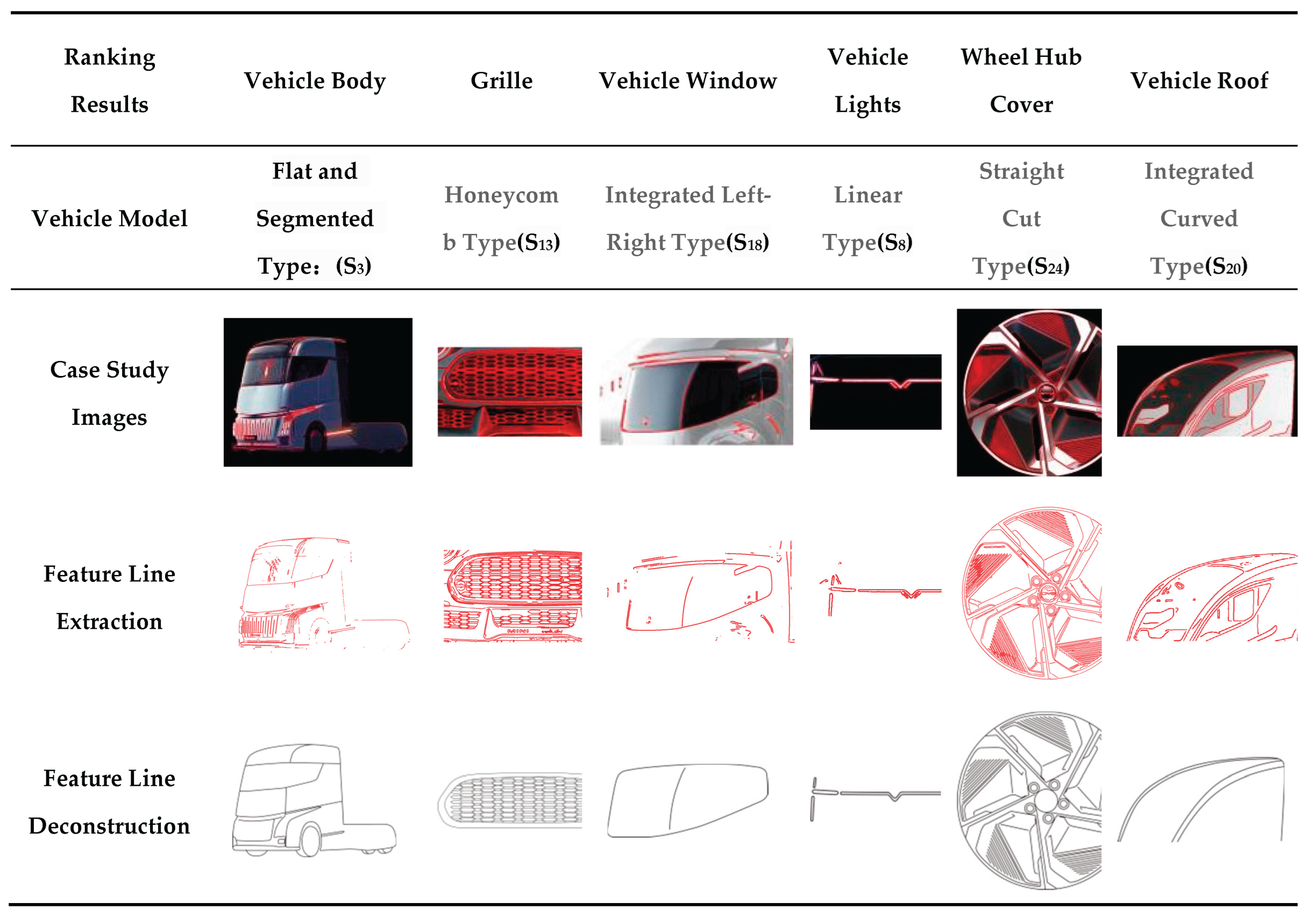 |
Table 12.
AIGC prompt word conversion and weighting.
| Item | Kansei Words | Weight Value | Rank | AI Prompt Conversion: Weight |
| F11 | Texture(F11) | 0.0853 | 4 | High-Quality Texture:1.3 |
| F12 | Aesthetic(F12) | 0.1951 | 2 | Aesthetically Pleasing:1.6 |
| F13 | High-end(F13) | 0.0853 | 4 | High-End:1.3 |
| F14 | Innovative(F14) | 0.0397 | 9 | Innovative:1.1 |
| F21 | Flexible(F21) | 0.0551 | 6 | Versatile:1.2 |
| F22 | Emotion(F22) | 0.0132 | 10 | Emotion-Rich:1 |
| F23 | Technology(F23) | 0.0466 | 8 | Technological:1.1 |
| F31 | Comfortable(F31) | 0.1249 | 3 | Comforting:1.4 |
| F33 | Aerodynamic(F33) | 0.0509 | 7 | Streamlined Shape:1.2 |
| F33 | Reasonable(F33) | 0.3037 | 1 | Well-Structured:1.7 |
Table 13.
Scheme evaluation.
| Item | Distance to Positive Ideal Solution (D+) | Distance to Negative Ideal Solution (D-) | Relative Closeness (C) | Rank |
| T1 | 0.181 | 0.234 | 0.563 | 4 |
| T2 | 0.204 | 0.274 | 0.573 | 3 |
| T3 | 0.053 | 0.390 | 0.881 | 1 |
| T4 | 0.177 | 0.265 | 0.599 | 2 |
Disclaimer/Publisher’s Note: The statements, opinions and data contained in all publications are solely those of the individual author(s) and contributor(s) and not of MDPI and/or the editor(s). MDPI and/or the editor(s) disclaim responsibility for any injury to people or property resulting from any ideas, methods, instructions or products referred to in the content. |
© 2025 by the authors. Licensee MDPI, Basel, Switzerland. This article is an open access article distributed under the terms and conditions of the Creative Commons Attribution (CC BY) license (http://creativecommons.org/licenses/by/4.0/).
Copyright: This open access article is published under a Creative Commons CC BY 4.0 license, which permit the free download, distribution, and reuse, provided that the author and preprint are cited in any reuse.


