
Submitted:
17 May 2025
Posted:
19 May 2025
You are already at the latest version
Abstract
Dental anxiety is a prevalent psychological barrier that hinders individuals from seeking timely dental care, thereby compromising their oral and general health. Despite advances in dental technologies and patient-centered care, many individuals continue to experience fear related to dental treatment. This study explores the underlying causes of dental anxiety and investigates practical strategies to mitigate it, with a specific focus on the Kazakhstani population. Inspired by a personal experience involving the author’s young child, this survey-based research analyzes responses from 167 participants. The results highlight common anxiety triggers such as pain, dental instrument sounds, and treatment costs, while also identifying key strategies that reduce fear, including empathetic communication, procedure explanation, and a comfortable clinical setting. The findings underscore the importance of emotional intelligence and communication skills among dental practitioners.
Keywords:
dental anxiety
; dental fear
; patient communication
; Kazakhstan
; oral health
; behavioral dentistry
Introduction
Fear of visiting the dentist, commonly known as dental anxiety, affects a significant proportion of the global population. Studies suggest that up to 80% of individuals experience dental anxiety to some degree, with severe anxiety causing avoidance of necessary dental care. This avoidance can exacerbate oral health issues, negatively affecting overall health and quality of life.
In Kazakhstan, this phenomenon remains underexplored despite its evident impact. Motivated by personal experience, the author—both a dentist and a mother—set out to explore the factors contributing to dental anxiety within this unique cultural context, particularly among younger individuals.
Literature Review
Dental anxiety is recognized as multifactorial, stemming from psychological, environmental, and past experiential influences. The Modified Dental Anxiety Scale (MDAS) highlights that individuals experiencing high anxiety levels are more prone to avoid routine dental visits, thereby increasing health risks and treatment costs. Parental attitudes and early childhood experiences significantly shape children's lifelong attitudes towards dentistry.
In regions like Kazakhstan, socioeconomic factors and healthcare accessibility further complicate this issue. Recent advancements, such as noise-canceling headphones and sedation dentistry, offer promising solutions, though the role of dentist-patient trust remains paramount.
Methodology
This research employed a quantitative, cross-sectional survey design conducted in April 2025 to examine dental anxiety among residents of Kazakhstan. A total of 167 participants voluntarily responded to an anonymous survey distributed via Google Forms through social media platforms.
The survey consisted of eight questions, including demographic information (age, gender), frequency of dental visits, presence of dental anxiety, reasons for anxiety, avoidance of dental care due to fear, and potential strategies for reducing dental anxiety. Data analysis was conducted using Microsoft Excel.
Results
Key Findings:
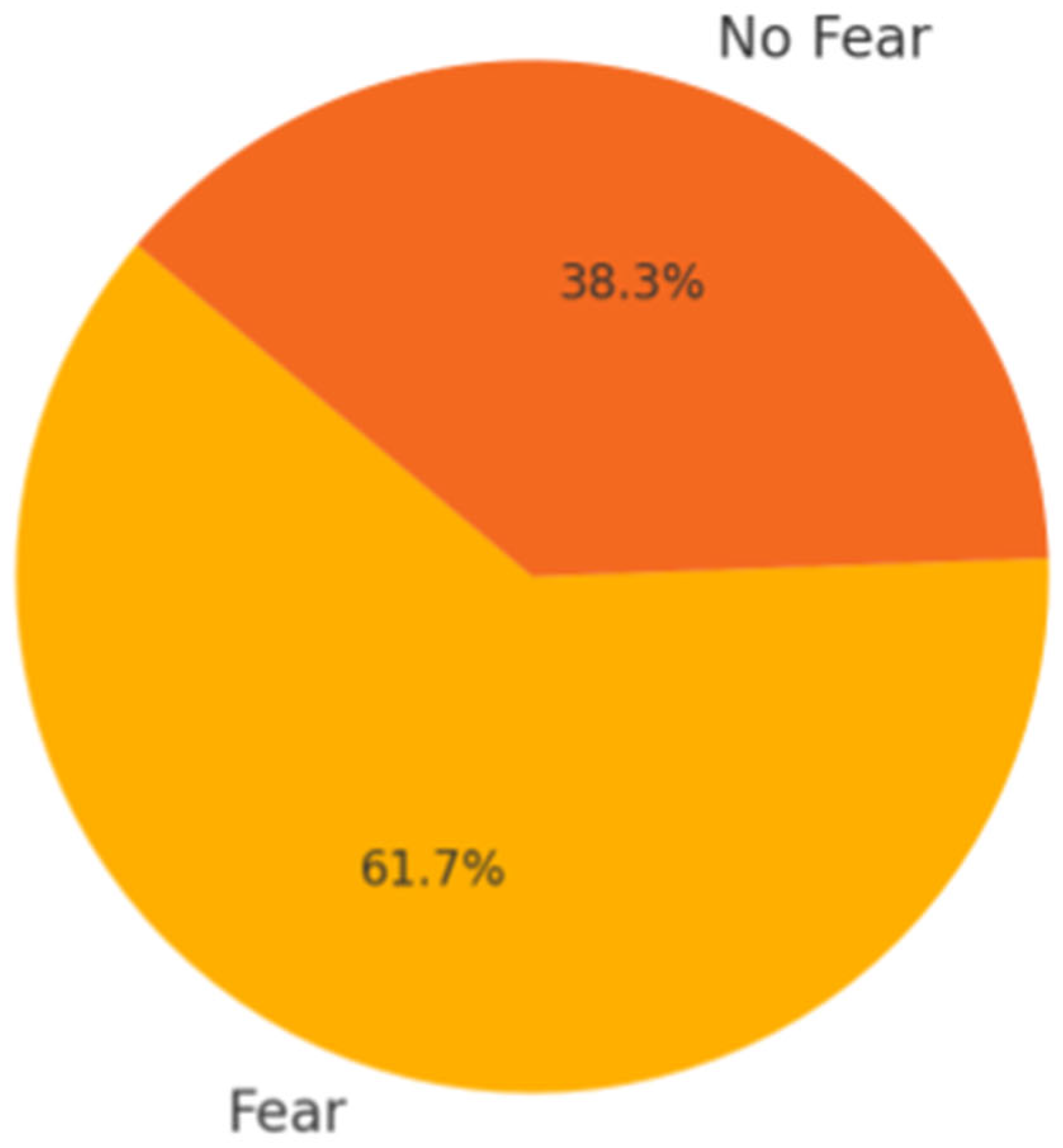
- Dental Anxiety Prevalence: 61.7% of respondents (103 individuals) reported experiencing fear or anxiety regarding dental visits.
Figure 1.
Prevalence of Dental Anxiety.
-
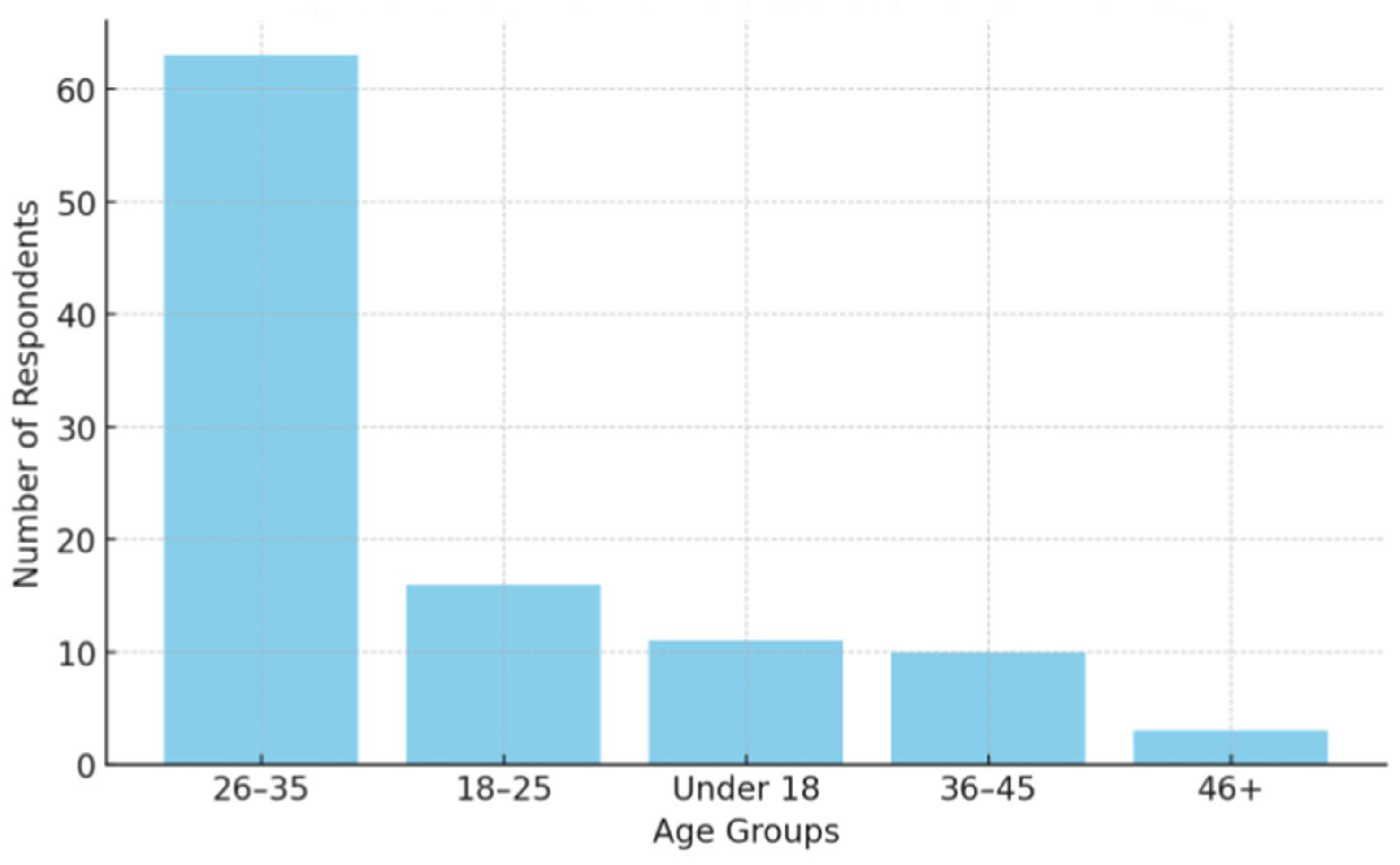
Age Distribution of Anxiety:
- ○
- Ages 26–35: 63 respondents
- ○
- Ages 18–25: 16 respondents
- ○
- Under 18: 11 respondents
- ○
- Ages 36–45: 10 respondents
- ○
- Ages 46 and above: 3 respondents
Figure 2.
Age Distribution of Dental Anxiety.
-
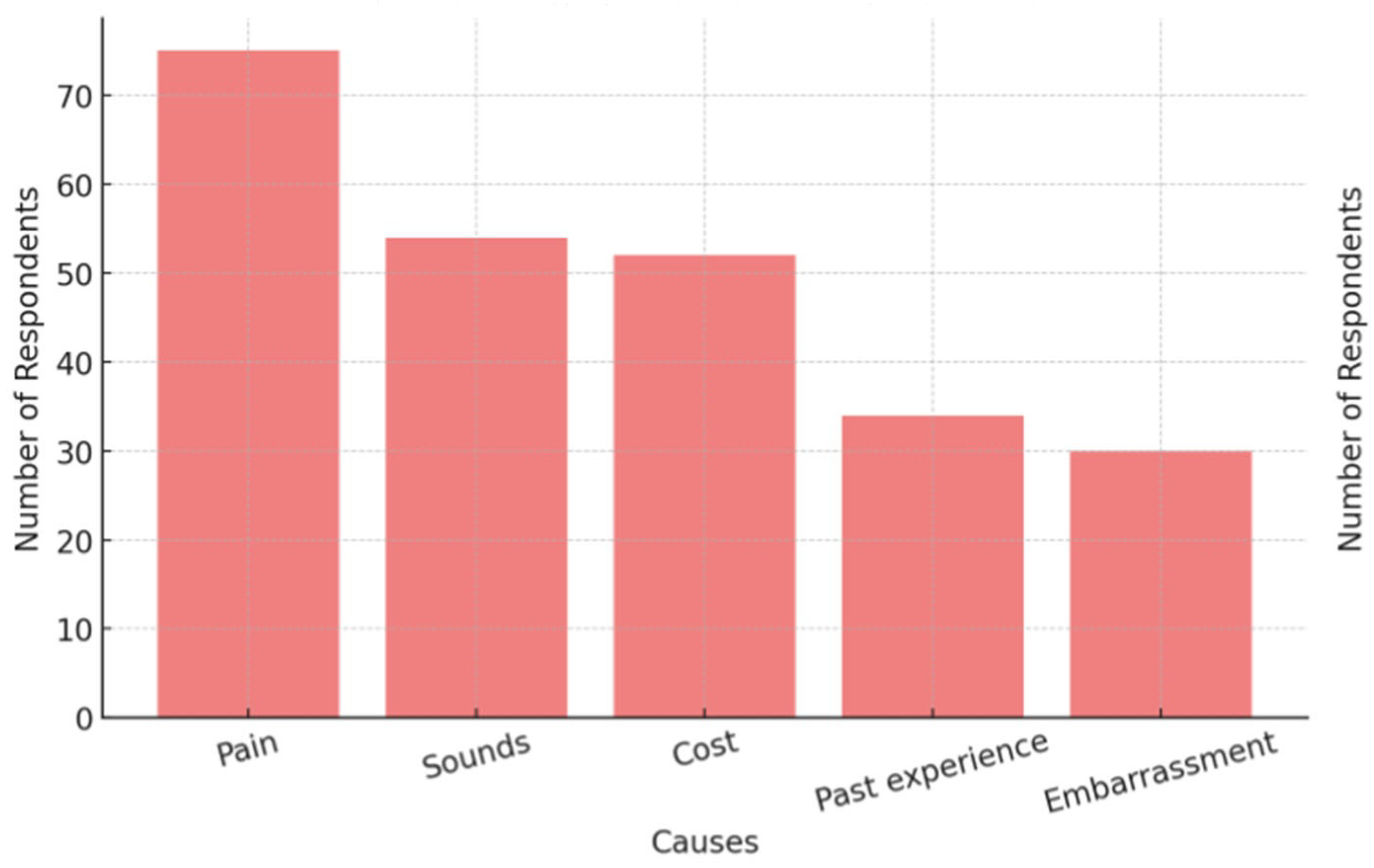
Primary Causes of Dental Anxiety:
- Pain during treatment: 75 respondents
- Sounds of dental instruments: 54 respondents
- Cost of treatment: 52 respondents
- Negative past experiences: 34 respondents
- Embarrassment about oral health condition: 30 respondents
Figure 3.
Causes of Dental Anxiety.
-
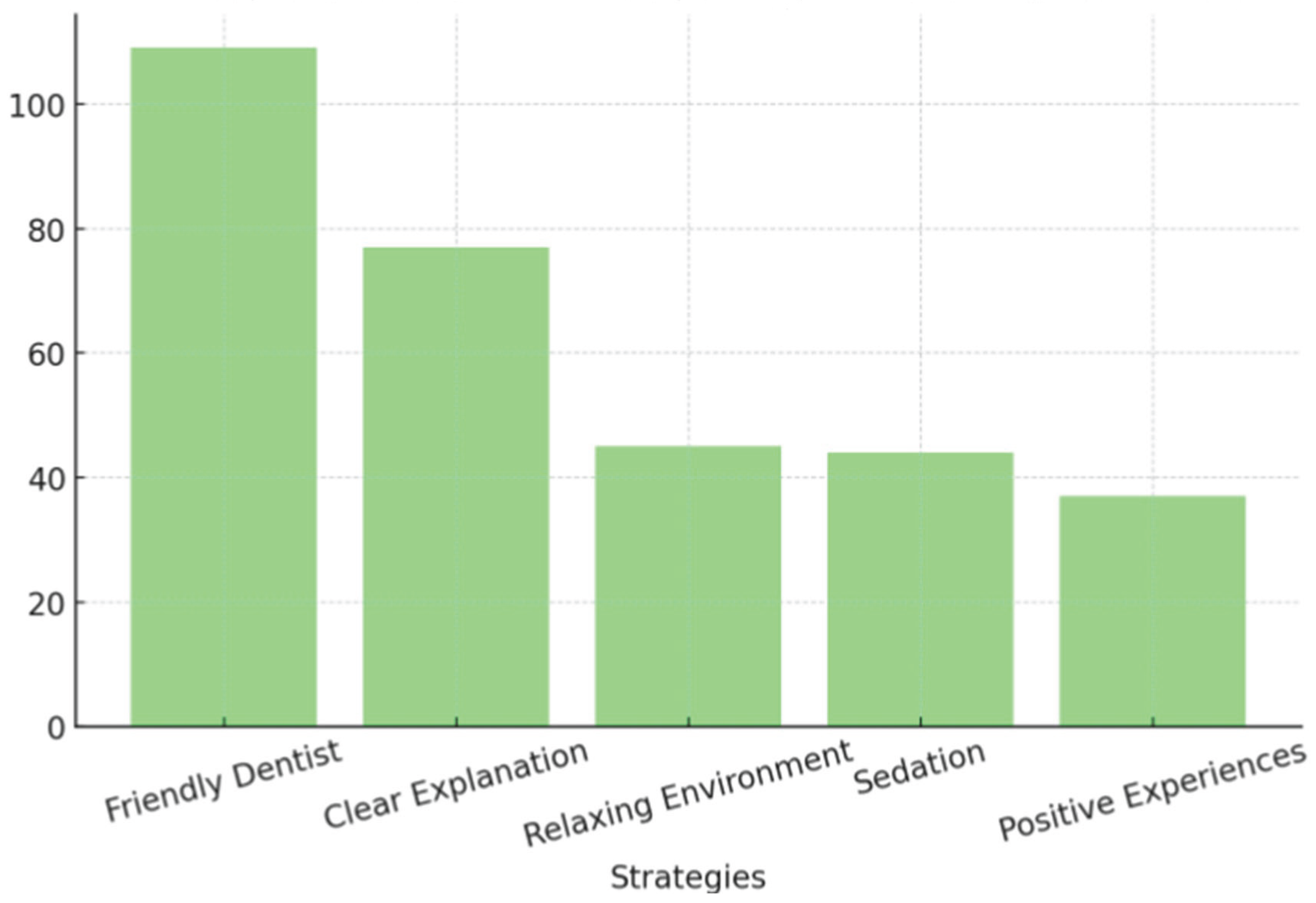
Suggested Methods to Reduce Dental Anxiety:
- Friendly and empathetic dentist: 109 respondents
- Clear explanation of procedures: 77 respondents
- Relaxing clinical environment: 45 respondents
- Sedation or anesthesia: 44 respondents
- Positive past experiences: 37 respondents
Figure 4.
Recommended Strategies to Reduce Dental Anxiety.
Discussion
This study highlights the significant prevalence of dental anxiety among respondents in Kazakhstan, particularly within the 26–35 age group. The primary factors contributing to dental anxiety included pain during treatment, the sound of dental instruments, and the high cost of dental care.
The findings emphasize the necessity for enhanced emotional intelligence and effective patient communication among dental professionals. Notably, a friendly and empathetic approach by dentists, coupled with clear procedural explanations, significantly mitigated anxiety. Additionally, improving the clinical environment and offering sedation options were strongly recommended.
This research underscores the importance of professional communication skills and psychological training within dental practice. Future studies should further explore the effectiveness of specific interventions aimed at reducing dental anxiety.
Conclusions
This study provides insight into dental anxiety's prevalence and underlying causes in Kazakhstan, highlighting practical measures dental professionals can take to mitigate patient fears and anxiety.
Author Information: Aisha Melsova: General Dentist, graduated in 2021 internship from Asfendiyarov Kazakh National Medical University, currently on maternity leave but remains passionately engaged in research activities, balancing motherhood with academic exploration.
References
- Armfield JM. How do we measure dental fear and what are we measuring anyway? Oral Health Prev Dent. 2010, 8, 107–115.
- Humphris GM, Morrison T, Lindsay SJ. The Modified Dental Anxiety Scale: validation and United Kingdom norms. Community Dent Health 1995, 12, 143–150.
- Locker D, Shapiro D, Liddell A. Negative dental experiences and their relationship to dental anxiety. Community Dent Health 1996, 13, 86–92.
- Townend E, Dimigen G, Fung D. A clinical study of child dental anxiety. Behav Res Ther. 2000, 38, 31–46. [CrossRef] [PubMed]
- Klingberg G, Broberg AG. Dental fear/anxiety and dental behaviour management problems in children and adolescents: a review of prevalence and concomitant psychological factors. Int J Paediatr Dent. 2007, 17, 391–406. [CrossRef] [PubMed]
Disclaimer/Publisher’s Note: The statements, opinions and data contained in all publications are solely those of the individual author(s) and contributor(s) and not of MDPI and/or the editor(s). MDPI and/or the editor(s) disclaim responsibility for any injury to people or property resulting from any ideas, methods, instructions or products referred to in the content. |
© 2025 by the authors. Licensee MDPI, Basel, Switzerland. This article is an open access article distributed under the terms and conditions of the Creative Commons Attribution (CC BY) license (http://creativecommons.org/licenses/by/4.0/).
Copyright: This open access article is published under a Creative Commons CC BY 4.0 license, which permit the free download, distribution, and reuse, provided that the author and preprint are cited in any reuse.


