
Submitted:
13 May 2025
Posted:
14 May 2025
Read the latest preprint version here
Abstract
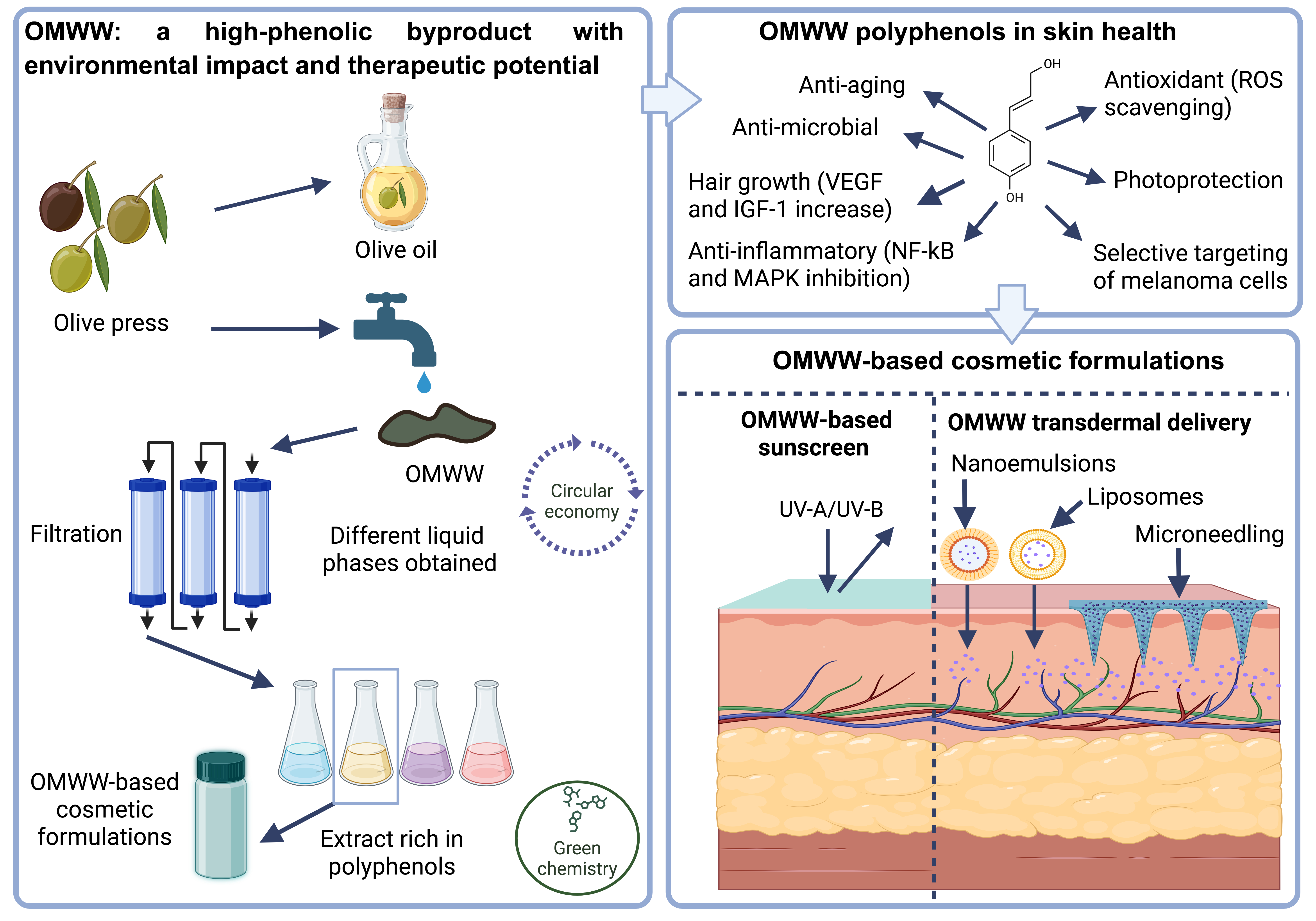
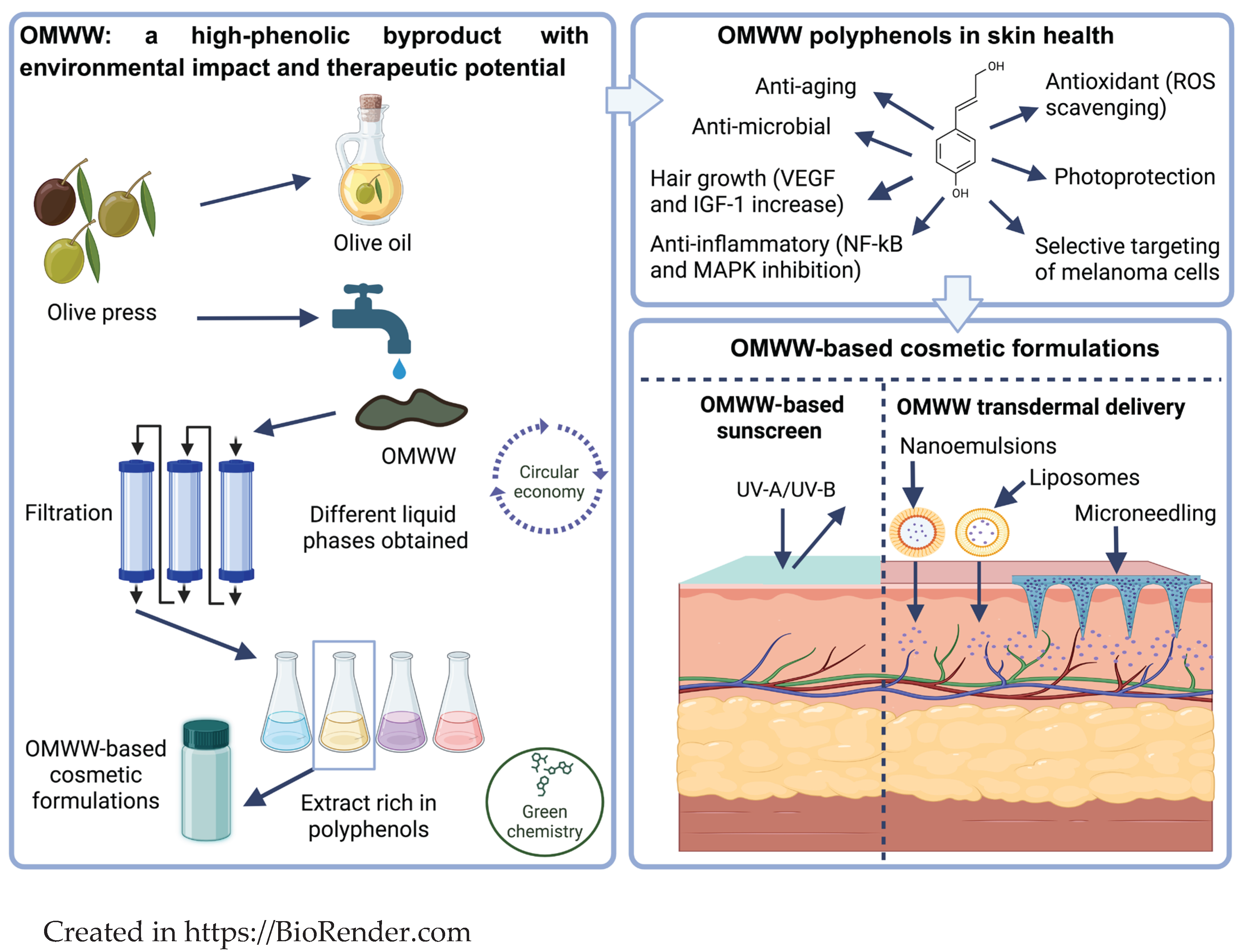
Skin health is increasingly recognized as crucial to overall well-being, driving interest in cosmeceuticals that combine cosmetic benefits with dermatological activity. Olive oil and its derivatives, particularly polyphenol-rich extracts, are valued for their antioxidant, anti-inflammatory, and regenerative properties. Olive mill wastewater (OMWW), a byproduct of olive oil production, traditionally seen as an environmental pollutant, has emerged as a promising source of high-value dermatological ingredients. Key polyphenols such as hydroxytyrosol, oleuropein, and tyrosol exhibit potent antioxidant, anti-inflammatory, antimicrobial, and photoprotective effects. These compounds mitigate oxidative stress, prevent collagen degradation, modulate NF-κB and MAPK signaling, and promote cellular repair and regeneration. This review examines the dermatological potential of OMWW, highlighting its incorporation into innovative topical formulations like oil-in-water nanoemulsions, liposomes, and microneedles that enhance skin penetration and bioavailability. Additionally, OMWW fractions have shown selective antiproliferative effects on melanoma cells, suggesting potential in skin cancer prevention. Valorization of OMWW through biorefinery processes aligns with circular economy principles, converting agro-industrial waste into sustainable cosmeceutical ingredients. This sustainable approach not only meets consumer demand for natural, effective products but also reduces the ecological footprint of olive oil production, offering a scalable, eco-friendly strategy for next-generation dermatological applications.
Keywords:
olive mill wastewater (OMWW)
; phenolic compounds
; antioxidant
; photoprotection
; anti-aging
; hair growth
; skin barrier
; skin cancer prevention
; dermatological formulations
; cosmeceuticals
1. Introduction
 Skin health plays a vital role beyond aesthetics, contributing to essential physiological functions such as infection prevention (Kennedy et al., 2018), thermoregulation, water loss hindrance and ultraviolet (UV) radiation exposure protection (Ibrahim et al., 2021; Biniek et al., 2012). Structurally, the skin is composed of three main layers, epidermis, dermis, and subcutaneous tissue, each with distinct but complementary roles in maintaining homeostasis (Wickett et al., 2006; Yousef et al., 2025; Wong et al., 2016; Hirao, 2017). The outermost layer, the epidermis, is composed of keratinocytes, corneocytes, and melanocytes, which are responsible for retaining moisture, preventing pathogen entry, and shielding deeper layers from harmful environmental agents, UV light and burns. Beneath this lies the dermis, a layer enriched with blood vessels, nerves, sweat glands, and sebaceous glands that contribute to skin elasticity, hydration, and sensory reception. The deepest layer, the subcutaneous tissue, is composed of fat and connective tissue, providing insulation, energy storage, and mechanical cushioning (López-Ojeda et al., 2019). Within the epidermis, the stratum corneum serves as the skin’s primary barrier against external agents. It consists of interlocked corneocytes embedded in lipid bilayers, creating a robust defence against the penetration of harmful molecules (Hwa et al., 2011). The skin functions as a metabolic defence barrier that helps block UV radiation from reaching deeper tissues (Verma et al., 2024). However, prolonged exposure to solar UV radiation, particularly UV-A and UV-B, can lead to oxidative stress and skin damage. Notably, UV-B radiation is capable of penetrating the full thickness of the epidermis and reaching the dermis layer of human skin (Addas et al., 2021). Skin cancer, including melanoma and more common non-melanoma types such as basal and squamous cell carcinomas, represents a significant and growing public health burden, largely driven by UV radiation exposure, underscoring the critical importance of consistent and effective photoprotection (Raymond-Lezman et al., 2024; Rager et al., 2005; Ahmed et al., 2020). Besides skin cancer, several other skin and subcutaneous disorders, including acne, alopecia, bacterial and fungal infections, pressure ulcers, pruritus, psoriasis, scabies, urticaria, and viral skin conditions, contribute substantially to the global disease burden, affecting nearly one-third of the population and exerting both physical and psychological impacts (Urban et al., 2020; Flohr et al., 2021). The public health significance of skin conditions has been recognized globally. Most recently, the 77th World Health Assembly (May 29, 2024) emphasized the need to integrate dermatological care into universal health coverage systems due to the widespread and long-term consequences of untreated skin disorders. Environmental and lifestyle factors, including diet, hydration, sleep, and stress management, significantly influence skin health, emphasizing the need for a holistic approach (Saluja et al., 2017; Knaggs et al., 2023). Fundamental skincare practices, such as cleansing, moisturizing, and the daily use of sunscreen, are essential to preserve and improve skin functions (Lodén, 2012; Draelos, 2018). While the stratum corneum is essential for maintaining skin integrity, this protective mechanism presents a significant challenge for the delivery of active ingredients in skincare (López-Ojeda et al., 2019; Mărănducă et al., 2020). To address this, the cosmetic industry has developed innovative formulations and technologies, such as nanoemulsions, liposomes, and microneedling, which can selectively overcome the skin’s barrier function and enable the targeted delivery of active compounds to deeper skin layers (Pegoraro et al., 2012; Kim et al., 2020; Gorzelanny et al., 2020; Seah et al., 2018). Among these, oil-in-water (O/W) emulsions are particularly valued for their ability to solubilize and deliver natural compounds with antimicrobial and anti-inflammatory activity that are otherwise poorly soluble (Ponphaiboon et al., 2024).
Epidemiological and preclinical studies indicate that populations in Mediterranean countries who traditionally adhere to the Mediterranean diet, characterized by a high intake of extra virgin olive oil (EVOO), exhibit a reduced risk of inflammation-related chronic diseases, including cancer (Sofi et al., 2008). Beyond its dietary use, EVOO has also been traditionally employed in Mediterranean cultures for cosmetic purposes, particularly in skincare, and, accordingly, mounting evidence supports its role in promoting skin health (González-Acedo et al., 2023). In line with the growing interest in olive-derived products, olive mill wastewater (OMWW), a byproduct of olive oil extraction, has attracted attention not only for its bioactive potential but also due to its significant environmental burden. Although biodegradable, OMWW poses serious ecological risks: its high phenolic content and low pH contribute to phytotoxicity, while its lipid content promotes oxygen depletion, thereby disrupting aquatic ecosystems (Sciubba et al., 2020). Notably, OMWW contains higher concentrations of phenolic compounds than olive oil itself, some of which have demonstrated relevance in topical pharmacology due to their anti-inflammatory effects, antimicrobial activity, wound-healing efficacy, antimelanoma potential, and photoprotective properties. Thus, the multifaceted role of OMWW phenolics in skin health and therapeutic skincare represents a valuable opportunity to repurpose an otherwise problematic waste product of olive oil extraction (Carrara, Kelly, 2021).
This review aims to explore the dermatological potential of OMWW by examining its bioactive composition, mechanisms of action, and preclinical evidence. It also discusses emerging formulation strategies for its application in cosmetic and cosmeceutical products.
2. Methods
A literature review was conducted using the PubMed database to identify relevant studies on the dermatological applications of OMWW and other olive oil byproducts. The search was restricted to English-language articles published between 2000 and 2025. The following Medical Subject Headings (MeSH) terms and keywords were used in various combinations: “olive oil” OR “olive mill wastewater” OR “olive byproducts”; “phenolic compounds” OR “hydroxytyrosol” OR “oleuropein” OR “tyrosol”; “skin care” OR “cosmeceuticals” OR “topical formulations” OR “anti-aging” OR “photoprotection”; “nanocarriers” OR “nanoemulsions” OR “liposomes” OR “microneedling”; “hair growth” OR “dermal papilla cells” OR “VEGF” OR “IGF-1”;“anti-inflammatory” OR “NF-kB” OR “MAPK” OR “oxidative stress”; “skin cancer” OR “melanoma” OR “photocarcinogenesis”. Articles were selected based on their relevance to OMWW composition, biological effects, topical applications, and formulation strategies. Reference lists from key articles were also screened to identify additional studies.
3. Results
3.1. Leveraging Phytocompounds in Cosmeceutical Formulations: Market Trends and Delivery Advances
Cosmeceuticals occupy a unique position in skincare, bridging the gap between cosmetics and pharmaceuticals. These topical products are marketed as cosmetics but contain bioactive ingredients with functional properties suggestive of pharmacological activity. Typically aimed at improving skin appearance, cosmeceuticals also address underlying issues such as aging, pigmentation, and inflammation (Pandey et al., 2023). Despite their growing popularity, the term “cosmeceutical” is not officially recognized by regulatory bodies such as the U.S. Food and Drug Administration (FDA) or the European Medicines Agency. As a result, products marketed as cosmeceuticals are regulated either as cosmetics, drugs, or a combination of both, depending on their intended use and claims. In regulatory terms, products marketed as cosmeceuticals are classified either as cosmetics, drugs, or both, depending on their intended use and claims. Cosmetics are defined as articles intended to be applied to the human body for cleansing, beautifying, promoting attractiveness, or altering the appearance. Drugs, on the other hand, are articles intended for use in the diagnosis, cure, mitigation, treatment, or prevention of disease, or to affect the structure or function of the body.
Regulatory distinctions include: 1. Products classified as cosmetics are subject to the regulations outlined in the Federal Food, Drug, and Cosmetic Act (FD&C Act) and the Fair Packaging and Labeling Act (FPLA). 2. Products classified as drugs must comply with drug regulations, including premarket approval requirements and good manufacturing practices. 3. Some products can be classified as both cosmetics and drugs if they have multiple uses or make both cosmetic and drug claims. Examples are: antidandruff shampoos, acne treatment products that also serve as cleansers, antiperspirant deodorants and fluoride toothpaste.
This dual classification results in variability in the testing rigor, safety, and efficacy standards applied to cosmeceuticals. Some undergo pharmaceutical-grade evaluations, while others are subject to less stringent requirements.
The term “cosmeceutical” was first introduced by Dr. Albert Kligman in the 1980s (Kligman et al., 2000), who proposed three criteria to define their efficacy:
- Penetration of Active Ingredients: The active compound must penetrate the stratum corneum in sufficient concentration to reach its target site within the skin.
- Known Mechanism of Action: The compound must have a clearly understood mechanism by which it achieves its effect, such as promoting collagen synthesis, inhibiting pigmentation, or reducing inflammation.
- Clinical efficacy: The product must demonstrate measurable results consistent with its claims through well-designed clinical trials.
The growth of the cosmeceuticals market has been significantly influenced by the Baby Boomer cohort, individuals born between 1946 and 1964, who exhibit a strong inclination towards maintaining dermal health and youthful aesthetics (Rivers, 2008). This demographic’s emphasis on anti-aging formulations targeting cutaneous concerns such as rhytides, dermal elasticity, and complexion radiance has positioned them as a crucial consumer segment in the cosmeceutical industry. Unlike preceding generations, Baby Boomers approach the aging process with a focus on sustained vitality and self-actualization, integrating cosmetic interventions with holistic wellness strategies (Barone et al., 2024). This paradigm shift, combined with increasing global awareness of dermatological health, e-commerce expansion, and advancements in product formulations, has catalyzed rapid market growth. In 2022, the global cosmeceuticals market was valued at USD 56.08 billion and is projected to reach USD 128.54 billion by 2032, exhibiting a compound annual growth rate (CAGR) of 8.7% (Precedence Research, “Cosmeceuticals Market Size To Surpass USD 128.54 Bn By 2032”, March 2024). Skin care products dominate this market, accounting for USD 25.32 billion in 2022 and expected to reach USD 59.00 billion by 2032. Growth is particularly pronounced in the Asia Pacific region, with the market valued at USD 26.22 billion in 2023 and projected to reach USD 38.3 billion by 2030, growing at a 4.1% CAGR. This growth is fueled by a rising middle class, increased disposable incomes, and heightened consumer awareness of cosmeceuticals’ benefits (Grand View Research, “Cosmeceutical Market Size & Share | Industry Report, 2030”, October 1, 2024). Influences like Western beauty standards and social media-driven skincare trends have further boosted demand. Growth is particularly pronounced in the Asia Pacific region, with the market valued at USD 26.22 billion in 2023 and projected to reach USD 38.3 billion by 2030, growing at a 4.1% CAGR (Fortune Business Insights, “Cosmeceuticals Market Size, Share & Global Report [2032]”, December 2, 2024).
The trend toward holistic wellness aligns with emerging evidence on the systemic benefits of plant-derived bioactive compounds, which have long been incorporated into cosmeceutical formulations for applications such as sun protection, hydration, anti-aging, and skin therapy. However, their effectiveness is often limited by poor skin penetration and instability and nanotechnology-based delivery systems might improve both the stability and bioavailability of phytocompounds. Compounds like Aloe vera, curcumin, resveratrol, quercetin, vitamins C and E, genistein, and green tea catechins have successfully been delivered through formulations for use in creams, gels, and lotions targeting skin, lips, and hair (Ganesan et al., 2016).
3.2. Overview of Skin Care Products Delivery Technologies
Modern skincare formulations increasingly rely on advanced delivery systems to enhance the effectiveness of active ingredients. Among these, emulsions typically consist of fine oil droplets dispersed in an aqueous base, resulting in a lightweight, easily absorbed formulation. They offer improved stability, sensory profiles, and efficacy, with rheological properties playing a key role in product optimization (Morávková et al., 2011). The performance of emulsion-based systems depends on multiple formulation parameters, including emulsion type, droplet size, emollients, and emulsifiers, all of which significantly impact the dermal and transdermal delivery of bioactive compounds (Sambhakar et al., 2023; Pérez-Pérez et al., 2024). These factors govern the interactions between the formulation vehicle, active agents, and skin layers, thereby determining the overall therapeutic efficacy (Bressel et al., 2024).
Among the most promising advancements are nanoemulsions, which are fine O/W dispersions with nanoscale droplet sizes, typically ranging from 20 to 200 nanometers in diameter and enhance active ingredient delivery and skin penetration while potentially strengthening the skin barrier. Their small size allows these nanoscale emulsions to penetrate the skin’s barrier more effectively, enabling the encapsulation and delivery of a variety of active compounds, including hydrophilic and lipophilic molecules, to the target sites within the epidermis and dermis (Sharma et al., 2012). Similarly, liposomes are vesicles composed of phospholipid bilayers that can entrap both hydrophilic and lipophilic active ingredients. These nano-sized carriers can fuse with the stratum corneum, facilitating the transport of their cargo across the skin’s surface and into the deeper tissue layers (Hua, 2015). Another innovative approach is microneedling, which involves the use of arrays of microscopic needles to create temporary, painless micropores in the stratum corneum. This technique allows for the enhanced permeation of topically applied active compounds, overcoming the skin’s natural barrier and enabling their delivery to the target sites within the epidermis and dermis (Litchman et al., 2022).
Together, these advanced delivery systems hold the potential to overcome the key challenge in skincare: ensuring that active ingredients reach their target sites in sufficient concentrations to exert therapeutic or cosmetic effects.
3.3. Characterization of Olive Oil and Olive Oil Preparation Byproducts Composition: Applications in Dermatology
In the holistic wellness scenario, evidence on the systemic benefits of olive-derived phytochemicals in human health is continuously emerging (Aiello et al., 2024). Historically, the use of olive oil and its byproducts in skincare dates back to ancient civilizations, including Egyptians, Greeks, and Romans. These cultures recognized olive oil’s moisturizing, cleansing, and protective properties, incorporating it into their daily skincare routines (Gorini et al., 2019). In ancient Greece, athletes applied olive oil before competition to enhance skin suppleness, prevent chafing, and protect against environmental exposure. It was also used in massages to alleviate muscle fatigue (Nomikos et al., 2010). Interestingly, olive oil byproducts were also utilized, demonstrating an early understanding of the comprehensive benefits of olive processing (Albini et al., 2023). The Greeks referred to the watery, bitter fluid that separates from olive oil during pressing as “amorge”, and they employed it for various purposes, including skincare. Later, the Romans adopted and expanded upon this knowledge, naming the substance “amurca”, which is well known for its anti-microbial activity (Janakatet al., 2015). A testament to the enduring legacy of olive-based skincare is the Aleppo soap from Syria, one of the oldest soaps in history. Made with olive oil and laurel oil, this traditional soap highlights the ancient yet timeless integration of olive derivatives into skincare practices (Phelps, 1967).
From the cosmeceutical point of view, olive oil and its derivatives, particularly those rich in polyphenols, have long been recognized for their multifaceted benefits (Albini et al., 2023). The antioxidant, anti-inflammatory, and regenerative properties of olive polyphenols make them invaluable for addressing various skin concerns, from aging to environmental damage. These compounds, such as hydroxytyrosol and oleuropein, support skin health by combating oxidative stress, soothing inflammation, and promoting tissue repair. Indeed, it has been shown that the intake of EVOO is be able to target crucial inflammatory pathways, including nuclear factor kappa-light-chain-enhancer of activated B cells (NF-kB) and mitogen-activated protein kinase (MAPK), offering therapeutic benefits for managing inflammatory skin conditions (Aparicio-Soto et al., 2019). Furthermore, recent research has focused on the valorization of OMWW, a by-product of the olive oil industry, due to its rich content of bioactive compounds, particularly phenolics (Caporaso et al., 2023; Alkhalidi et al., 2023), which account for up to 98% of the total phenols found in olive fruit (Aggoun et al., 2016; Alkhalidi et al., 2023).
OMWW is a major byproduct of olive oil production, with an estimated 30 million m³ generated annually worldwide. This wastewater poses severe environmental risks due to its organic load, phenolic content, and low pH. However, the compounds that make OMWW an environmental concern also make it a potentially valuable resource for the cosmetic and pharmaceutical industries (Albini et al., 2023). The exploitation of OMWW through biorefinery processes not only addresses environmental challenges but also enhances the economic viability of the olive oil industry. For instance, advanced extraction techniques such as ultrafiltration and resin-based methods have been shown to concentrate bioactive compounds like hydroxytyrosol to levels as high as 7204 mg/L (Alkhalidi et al., 2023; Sciubba et al., 2020). While olive oil typically contains 50-800 mg/kg of total phenols, OMWW can contain up to 10,000 mg/L of these compounds, offering more potent antioxidant, anti-inflammatory, and antimicrobial properties compared to olive oil itself.
These innovative approaches support the sustainable reuse of OMWW as a source of high-value compounds with potential applications in the biofuel, pharmaceutical, cosmetic, food, and agricultural sectors (Caporaso et al., 2023; Alkhalidi et al., 2023; Benincasa et al., 2019).
The composition of OMWW is diverse and can vary significantly depending on factors such as olive cultivar, maturation stage, and the technology used for oil extraction (Cuffaro et al., 2023). The potential applications in skincare of OMWW can be attributed to its unique chemical composition, particularly its high content of phenolic compounds. OMWW is predominantly composed of water (83–94%), organic matter (4–16%), and mineral salts (0.4–2.5%). The organic fraction includes sugars such as glucose, fructose, and mannitol; nitrogenous compounds like proteins and amino acids; various organic acids, including acetic, malic, and citric acids; as well as residual lipids derived from olive oil. Although present in smaller quantities, the minor components of OMWW are of particular interest due to their potent biological activities. Among these, phenolic compounds stand out as the most valuable for dermatological applications. More than 50 phenolics have been identified, including simple phenols (e.g., hydroxytyrosol and tyrosol), secoiridoids (such as oleuropein and its derivatives), flavonoids (like luteolin, apigenin, and their glycosides), and lignans (notably pinoresinol and acetoxypinoresinol). These compounds, especially hydroxytyrosol and oleuropein, are known for their strong antioxidant, anti-inflammatory, and antimicrobial effects, making OMWW a promising ingredient for skincare formulations that might help soothe irritated or inflamed skin and be beneficial for sensitive or reactive skin types. OMWW contains low molecular weight phenolics, such as hydroxytyrosol and tyrosol, and higher molecular weight phenolics (600-5000 Da), including oleuropein, caffeic acid, and verbascoside (Cardinali et al., 2010; El-Abbassi et al., 2012). In addition, OMWW contains essential minerals, such as potassium, sodium, calcium, and magnesium, which support skin health, as well as trace amounts of vitamin E (tocopherols) and dietary fibers like mucilage and pectin, further enhancing its protective and restorative potential (Table 1). This rich composition has potential applications in skincare and dermatology (Carrara, Kelly, 2021).
The integration of OMWW into O/W emulsions presents a promising approach for addressing oxidative and inflammatory skin stress. These formulations can potentially harness the synergistic effects of OMWW’s diverse bioactive compounds, offering a multifaceted approach to skin health (Ponphaiboon et al., 2024; Kilic et al., 2019).
In vivo studies have shown promising results, with a sugar and mineral-enriched fraction from OMWW improving skin hydration without adverse effects (Di Mauro et al., 2017).
These findings highlight the potential of OMWW-based formulations to offer a comprehensive approach to skin health, addressing multiple concerns simultaneously, including hydration, photoprotection, anti-aging, and potentially even skin cancer prevention.
3.4. Anti-Aging, Photoprotective and Anti-Microbial Potential in Skin Applications
Recent scientific research has increasingly highlighted the skin benefits of olive oil derivatives. Hydroxytyrosol and oleuropein, two prominent polyphenols found in olive leaves and OMWW, exhibit moderate inhibitory effects on elastase and collagenase, enzymes associated with skin aging (Li et al., 2021). These compounds, along with other antioxidants, play a crucial role in preventing photo-induced skin aging by neutralizing reactive oxygen species that contribute to wrinkles and atypical pigmentation (Masaki et al., 2010). Studies on OMWW extracts rich in hydroxytyrosol have demonstrated their ability to reduce oxidative damage to skin cells. High molecular weight phenolics present in these extracts demonstrate efficient scavenging activities against hydroxyl and peroxyl radicals (Cardinali et al., 2010). By integrating OMWW polyphenols, skincare products can achieve superior sun protection. Studies reveal that OMWW fractions exert both antioxidant and pro-oxidant effects on UV-A-damaged keratinocytes, suggesting a dual mechanism of photoprotection (Lecci et al., 2021). Olive oil derivatives exhibit remarkable photoprotective properties, making them valuable additions to sunscreen formulations. Their ability to mitigate the damaging effects of UV radiation has been attributed primarily to phenolic compounds such as hydroxytyrosol and oleuropein. These bioactive molecules help counteract the harmful impact of both UV-A and UV-B rays, which are known to induce oxidative stress, inflammation, DNA damage, and an increased risk of skin cancer. Hydroxytyrosol and oleuropein exert their protective effects through multiple mechanisms. Their strong antioxidant capacity allows them to neutralize free radicals generated by UV exposure, preventing oxidative damage to cellular components (Svobodová et al., 2003). Additionally, these compounds have demonstrated anti-inflammatory properties, reducing the release of pro-inflammatory cytokines that contribute to UV-induced erythema and long-term skin aging (Perugini et al., 2008). ROS, generated by UV exposure, pollution, and metabolic processes, can degrade collagen and elastin, accelerating the aging process. Of note, oleuropein and hydroxytyrosol exhibit synergistic inhibitory effects on elastase and collagenase, enzymes associated with skin aging and extracellular matrix degradation (Li et al., 2021; Galletti et al., 2022). In vitro studies using human keratinocytes have shown that OMWW significantly reduced reactive oxygen species (ROS) formation and protected against cellular damage. Accordingly, OMWW extracts demonstrate significant antioxidant properties, effectively scavenging free radicals and inhibiting LDL oxidation (Visioli et al., 1999; Cardinali et al., 2010). The antioxidant activity of these compounds also helps prevent collagen breakdown caused by UV-induced oxidative stress, making them a valuable ingredient in anti-aging formulations. Hydroxytyrosol, a major phenolic compound in OMWW, has been found to prevent blue light-induced damage in human skin cells (Avola et al., 2019). These findings support the role of hydroxytyrosol as a potent anti-aging compound, capable of preserving skin cell integrity and function (Lecci et al., 2021).
Beyond their antioxidant and anti-inflammatory functions, these phenolics also exhibit antimicrobial activity against common skin pathogens, including Staphylococcus aureus and Propionibacterium acnes, therefore offering potential benefits for managing acne-prone or blemished skin (Galletti et al., 2022). In addition, OMWW contributes to the reinforcement of the skin’s barrier function. Studies have shown that its polyphenols support keratinocyte repair and migration, essential for maintaining the integrity of the epidermis and promoting skin resilience (Lecci et al., 2021).
Together, these properties position OMWW as a potent anti-aging ingredient. Its antioxidant and anti-inflammatory actions, combined with its ability to support skin structure and barrier function, work synergistically to reduce signs of aging such as wrinkles, loss of elasticity, and dullness, helping to maintain healthier, more youthful-looking skin. The utilization of OMWW in skincare not only harnesses these beneficial properties but also addresses a significant environmental challenge in olive oil-producing regions.
3.5. Anti-Inflammatory Effects and Pathway Modulation
The potential of OMWW in mitigating skin inflammation and oxidative stress relies on its high polyphenol content. These bioactive compounds have been shown to modulate inflammatory signaling, notably by downregulating key pathways such as NF-kB and MAPK (Carrara, Kelly, 2021; Carrara, Beccali 2021). Elevated expression of phosphorylated NF-kB, extracellular Regulated Kinase 1 and 2 (ERK1/2), and p38 MAPK has been observed in several inflammatory skin diseases, including eczema and psoriasis (Wang et al., 2009). Those signaling molecules drive the expression of pro-inflammatory cytokines, such as tumor necrosis factor-α (TNF-α), interleukin (IL)-6 and IL-8, enzymes like inducible nitric oxide synthase (iNOS) and cyclooxygenase- 2 (COX-2), and increase oxidative stress and apoptosis in the local tissue (Wang et al., 2009; Zhou et al., 2009). Keratinocytes and resident immune cells are central to this process, and their dysregulation contributes to lesion formation and disease progression (Albanesi et al., 2005; Goldminz et al., 2013). Several anti-psoriatic therapies, including TNF-α blockers and glucocorticoids, reduce active NF-kB levels, while novel therapeutics targeting NF-kB signaling are being developed for chronic inflammatory skin disorders (Goldminz et al., 2013).
Schlupp et al. showed that OMWW extract effectively reduced IL-8 release in human keratinocytes (HaCaT cells) after TNF-α stimulation, suggesting strong anti-inflammatory properties comparable to that of hydrocortisone. Also, OMWW significantly decreased hydrogen peroxide-induced ROS formation in HaCaT cells, displaying an antioxidative effect superior to that of 100 µM ascorbic acid, indicating a robust ability to protect skin cells from oxidative stress. The observed time-dependent effect also allowed for the assessment of both immediate and prolonged effects of the extract, potentially offering insights into its ability to mitigate inflammation over time (Schlupp et al., 2019).
OMWW-derived formulations demonstrated topical anti-inflammatory efficacy in both in vitro and in vivo models, reducing IL-1α, IL-8, iNOS, and COX-2 expression (Smeriglio et al., 2019).
These findings support the potential use of OMWW-derived compounds in dermatology and dermo-cosmetic preparations for skin health and protection. Besides this, their properties make them attractive candidates for nutraceutical interventions to ameliorate systemic inflammation in aging subjects, potentially addressing the low-grade inflammatory state known as “inflammaging” (Franceschi et al., 2000; Pojero et al., 2022; Fulop et al., 2023).
3.6. Skin Cancer Prevention and Selective Antiproliferative Effects
Olive-derived extracts, including OMWW and those from olive leaves (OLE), have shown considerable promise in the prevention and treatment of skin cancers, particularly melanoma, in both in vitro and in vivo models (Chinembiri et al., 2014).
These extracts exhibit multifaceted mechanisms of action, combining antioxidant, anti-inflammatory, and modulatory activity on several signaling pathways. OMWW extracts have demonstrated potential in selectively inhibiting A375 melanoma cell proliferation while enhancing the growth of normal human epidermal keratinocytes. The selective inhibition of melanoma cell proliferation while sparing normal human epidermal keratinocytes highlights their safety and specificity (Schlupp et al., 2019). Similarly, OLE has been shown to suppress melanoma cell proliferation, invasion, and epithelial-to-mesenchymal transition (De Cicco et al., 2022). The anti-cancer properties of olive-derived extracts are attributed to their ability to induce cell cycle arrest and apoptosis induction (Mijatović et al., 2011), modulation of the MAPK, phosphatidylinositol 3-kinase (PI3K), and signal transducer and activator of transcription 3 (STAT3) signaling pathways (De Cicco et al., 2022; Schlupp et al., 2019) alongside their antioxidant and anti-inflammatory effects (Galletti et al., 2022; Schlupp et al., 2019). OMWW has also been shown to suppress the C-X-C chemokine receptor type 4 (CXCR4)-mediated signaling in lung cancer, thereby interfering with the formation of metastasis (Gallazzi et al., 2020).
Studies have noted the low toxicity of phenolic compounds enriched in OMWW on normal cells. OMWW is characterized for a high content of oleuropein (Abu-Lafi et al., 2017), which demonstrates potent anti-melanoma activity by inducing apoptosis and inhibiting the PI3K/AKT/mammalian target of rapamycin (mTOR) pathway in B-rapidly accelerated fibrosarcoma (BRAF)-mutated melanoma cells. At 250 µM, oleuropein significantly reduces melanoma cell viability and enhances the cytotoxicity of chemotherapeutic agents. Importantly, it selectively targets melanoma cells while sparing normal fibroblasts, likely due to differential uptake via glucose transporters 1 and 3 (GLUT1/3), which are overexpressed in cancer cells. This selectivity highlights oleuropein’s promise as a non-toxic therapy across different pathologies, including cancer (Ruzzolini et al., 2018). This safety profile, combined with the extracts’ antimicrobial activity (Abu-Lafi et al., 2017) and ability to reduce ROS formation (Papadopoulou et al., 2017), suggests significant potential for various skin-related applications, particularly in the realm of skin cancer prevention.
This dual action, enhancing efficacy while reducing toxicity, has also been observed in breast cancer models treated with OMWW-derived extracts (Benedetto et al., 2022). Anti-inflammatory and anti-angiogenic properties of OMWW extracts have been documented in prostate cancer models (Baci et al., 2019). The chemopreventive potential of OMWW extracts has been observed due to their ability to inhibit colon cancer cell growth in vitro and in vivo (Bassani et al., 2016). Of note, polyphenol-rich OMWW extracts may potentiate the effects of chemotherapy while minimizing off-target damage (Albini et al., 2021), aligning with the broader evidence supporting olive compounds as key nutraceuticals in disease prevention and interception (Albini et al., 2019).
3.7. Hair Health and Follicular Stimulation by OMWW
Scalp hair growth is a complex biological process governed by the intricate interplay of structural components and cyclical phases. The growth process is regulated by hair follicles, specialized structures composed of both epithelial and dermal components. The epithelial component includes protective sheaths surrounding the hair shaft, while the dermal component, particularly the dermal papilla at the follicle’s base, plays a pivotal role in regulating hair growth. Human follicle dermal papilla cells (HFDPC) release growth factors such as insulin-like growth factor-1 (IGF-1) and vascular endothelial growth factor (VEGF), which stimulate cell proliferation, maintaining the active growth phase (Zhang et al., 2024). Human scalp hair provides protection against harmful ultraviolet (UV) radiation, shielding the scalp from sunburn and minimizing the risk of long-term UV damage. Additionally, it helps regulate temperature by offering insulation, reducing heat loss in colder conditions while minimizing direct heat exposure in warmer climates (Lasisi et al., 2023). Hair follicles are also connected to nerve endings, giving scalp hair a sensory role (Agramunt et al., 2023). This sensitivity allows individuals to detect subtle external stimuli, including the presence of small particles or even insects on the head. Beyond these physical functions, scalp hair plays a prominent role in social and cultural contexts. Hairstyles and haircare practices are powerful expressions of identity, attractiveness, and social status, often carrying deep personal or cultural meaning. Issues like thinning or loss can lead to significant emotional distress and affect social interactions. Hair growth follows a cyclical pattern divided into three main phases: anagen, catagen, and telogen, with some researchers also recognizing exogen (shedding) as a distinct phase (Natarelli et al., 2023). The anagen phase is the active growth stage, the catagen phase is a brief transitional period, during which the hair follicle shrinks and detaches from the dermal papilla, signaling the end of active growth and finally, the telogen phase is a resting stage where old hair is shed to make way for new growth. Human hair follicles cycle asynchronously, ensuring that individual follicles undergo these phases independently, preventing uniform shedding or growth across the scalp (Halloy et al., 2002). However, disruptions to this cycle can lead to hair thinning or loss (Lin et al., 2022; Natarelli et al., 2023).
Hormonal imbalances, such as those caused by polycystic ovary syndrome (PCOS) or thyroid disorders, can interfere with follicle function (Galletti et al., 2022). Nutritional deficiencies, particularly in iron, zinc, or biotin, also impede healthy hair growth (Almohanna et al., 2019). Environmental factors, including UV radiation and pollution, contribute to oxidative stress, damaging hair follicles and accelerating hair aging (Samra et al., 2024). Also, dihydrotestosterone (DHT) plays a significant role in the pathogenesis of androgenetic alopecia (AGA), the most common form of hair loss. DHT is a potent androgen derived from testosterone through the action of the 5α-reductase enzyme. A study evaluated the usefulness of DHT levels in diagnosing AGA and found that, while DHT is crucial in AGA pathogenesis, serum DHT levels alone may not be a reliable diagnostic marker. The authors concluded that the most important factors in AGA development appear to be the genetically-determined sensitivity of hair follicles to DHT and their varied reactions to androgen concentrations (Urysiak-Czubatka et al., 2014). DHT binding to androgen receptors in susceptible hair follicles leads to follicular miniaturization and eventual hair loss (Kische et al., 2017).
A study carried out by Lisa-Marie Sittek’s group (Sittek et al., 2021) explored the potential of OMWW extract as a promising ingredient for hair care and hair growth enhancement. The findings revealed that OMWW extract significantly enhanced the proliferation of HFDPCs and increased the secretion of IGF-1 and VEGF, indicating its potential to promote hair growth. Furthermore, the OMWW extract exhibited a concentration-dependent ability to reduce ROS levels, with the highest dilution (1:250) leading to a remarkable 60.76% reduction in free radicals. Since DHT has been shown to increase ROS production (Sittek et al., 2021) and reduce IGF-1 expression, leading to impaired hair follicle proliferation and suppressed hair regrowth (Zhao et al., 2011), OMWW may offer therapeutic benefits in AGA by counteracting these effects.
Table 2 provides an overview of the in vitro and in vivo effects of OMWW on cells and tissue, while Table 3 provides an overview of the key bioactive properties of OMWW and its constituent compounds, highlighting their mechanisms of action and potential dermatological applications and cosmeceutical formulations.
4. Conclusions
Today, the cosmetic industry is increasingly incorporating olive-derived bioactives from byproducts like OMWW, pomace, and leaves (Dauber et al., 2023). These byproducts contain valuable compounds such as fatty acids, tocopherols, polyphenols, and squalene, which offer antioxidant, anti-aging, and antimicrobial properties (Dauber et al., 2023). Furthermore, extracts from olive byproducts show promise in cancer prevention and cardioprotection, highlighting their potential in modern healthcare applications (Albini et al., 2023).
Building on this foundation, products incorporating active compounds from OMWW, a by-product of olive oil production, exemplify the next level of innovation. OMWW contains even higher concentrations of phenolic compounds than olive oil itself, offering superior antioxidant and anti-inflammatory properties. These bioactive components align with Kligman’s last two principles by demonstrating clear mechanisms of action and measurable outcomes in scientific studies. Many polyphenols in OMWW, such as hydroxytyrosol and tyrosol, are relatively small molecules, which may enhance their ability to penetrate the skin, aligning with Kligman’s first principle. However, the lack of standardized testing protocols across the cosmeceutical industry complicates direct product comparisons, highlighting the need for transparent and rigorous research.
5. Future Directions
Future research should prioritize the optimization of extraction and purification techniques to maximize the yield of bioactive compounds, such as hydroxytyrosol, oleuropein, and tyrosol, while maintaining their biological activity. Advances in nanotechnology and delivery systems, could further enhance the bioavailability and skin penetration of these potent polyphenols holding promise for applications in anti-aging creams, regenerative serums, and photoprotective lotions. Of note, the synergy between nanoemulsions and microneedling might maximize the therapeutic potential of OMWW. However, achieving these goals will require clinical trials are necessary to validate the efficacy and safety of OMWW-based dermatological products. A greater emphasis on biorefinery processes may also support the sustainable valorization of OMWW, aligning with circular economy principles by transforming an environmental pollutant into a valuable dermatological resource. Collaborative efforts between industry, academia, and regulatory bodies will be crucial to standardize product formulations, ensuring quality, safety, and efficacy. These initiatives could position OMWW-derived products as a flagship example of sustainable innovation in modern dermatology.
Author Contributions
Manuscript drafting, literature search and coordination: A.A. and F.A. Manuscript editing and illustration: All. Approval to submit:All.
Funding
This work has been supported by the Italian Ministry of Health Ricerca Corrente–IRCCS IEO and IRCCS MultiMedica and through the project “Studi sulle proprietà degli estratti di acque di vegetazione dell’olio di oliva. Approfondimenti di prevenzione e nutraceutica” to the IEO-MONZINO Foundation and IRCCS IEO (A.A.).
Institutional Review Board Statement
Not applicable.
Informed Consent Statement
Not applicable.
Data availability statement
No new data were created or analyzed in this study. Data sharing is not applicable to this article.
Acknowledgments
The authors acknowledge Lara Vecchi for editorial assistance.
Conflicts of interest
The authors declare no potential conflicts of interest.
References
- Abu-Lafi, S. Al-Natsheh, M.S., Yaghmoor, R. & Al-Rimawi, F. (2017) ’Enrichment of Phenolic Compounds from Olive Mill Wastewater and In Vitro Evaluation of Their Antimicrobial Activities’. Evidence-Based Complementary and Alternative Medicine 2017, 3706915. [Google Scholar] [CrossRef]
- Addas, A. Ragab, M., Maghrabi, A., Abo-Dahab, S.M. & El-Nobi, E.F. (2021) ’UV Index for Public Health Awareness Based on OMI/NASA Satellite Data at King Abdulaziz University, Saudi Arabia’. Advances in Mathematical Physics 2021, 2835393. [Google Scholar] [CrossRef]
- Aggoun, M. , Arhab, R., Cornu, A., Portelli, J. & Barkat, M. (2016) ’Olive mill wastewater: Phenolic composition and antioxidant activity’, Journal of Environmental Management, 170(1), pp. 1–9.
- Agramunt, J. , Parke, B., Mena, S., Ubels, V., Jimenez, F., Williams, G., Rhodes, A.D., Limbu, S., Hexter, M., Knight, L., Hashemi, P., Kozlov, A.S. & Higgins, C.A. (2023) ’Mechanical stimulation of human hair follicle outer root sheath cultures activates adjacent sensory neurons’, Science Advances, 9(43), eadh3273. [CrossRef]
- Ahmed, B. , Qadir, M.I. & Ghafoor, S. (2020) ’Malignant Melanoma: Skin Cancer-Diagnosis, Prevention, and Treatment’, Critical Reviews in Eukaryotic Gene Expression, 30(4), pp. 291–297. [CrossRef]
- Aiello, A. , et al. (2024) ’Effect of a Phytochemical-Rich Olive-Derived Extract on Anthropometric, Hematological, and Metabolic Parameters’, Nutrients, 16(18), p. 3068. [CrossRef]
- Albanesi, C. , De Pità, O. & Girolomoni, G. (2005) ’Resident skin cells in psoriasis: a special look at the pathogenetic functions of keratinocytes’, Clinics in Dermatology, 25(6), pp. 581–588.
- Albini, A. , Albini, F., Corradino, P., Dugo, L., Calabrone, L. & Noonan, D.M. (2023) ’From antiquity to contemporary times: how olive oil by-products and wastewater can contribute to health’, Frontiers in Nutrition, 10. [CrossRef]
- Albini, A. et al. A Polyphenol-Rich Extract of Olive Mill Wastewater Enhances Cancer Chemotherapy Effects, While Mitigating Cardiac Toxicity. Frontiers in Pharmacology 2021, 12, 694762. [Google Scholar] [CrossRef] [PubMed]
- Albini, A. , et al. (2019) ’Nutraceuticals and ‘Repurposed’ Drugs of Phytochemical Origin in Prevention and Interception of Chronic Degenerative Diseases and Cancer’, Current Medicinal Chemistry, 26(6), pp. 973–987. [CrossRef]
- Alkhalidi, H. , Sciubba, F. & Gallo, G. (2023) ’Olive mill wastewater: From by-product to smart antioxidant material’, Sustainability, 15(5), p. 1234.
- Almohanna, H.M. , Ahmed, A.A., Tsatalis, J.P. & Tosti, A. (2019) ’The Role of Vitamins and Minerals in Hair Loss: A Review’, Dermatology and Therapy (Heidelberg), 9(1), pp. 51–70. [CrossRef]
- Aparicio-Soto, M. , Sánchez-Hidalgo, M., Rosillo, M.Á., Castejón, M.L. & Alarcón-de-la-Lastra, C. (2019) ’Extra virgin olive oil: a key functional food for prevention of immune-inflammatory diseases’, Food & Function, 10(7), pp. 3805–3824.
- Avola, R. , Graziano, A.C.E., Pannuzzo, G., Bonina, F. & Cardile, V. (2019) ’Hydroxytyrosol from olive fruits prevents blue-light-induced damage in human keratinocytes and fibroblasts’, Journal of Cellular Physiology, 234(6), pp. 9065–9076. [CrossRef]
- Baci, D. , et al. (2019) ’Downregulation of Pro-Inflammatory and Pro-Angiogenic Pathways in Prostate Cancer Cells by a Polyphenol-Rich Extract from Olive Mill Wastewater’, International Journal of Molecular Sciences, 20(2), p. 307. [CrossRef]
- Barone, M. , De Bernardis, R. & Persichetti, P. (2024) ’Aesthetic Medicine Across Generations: Evolving Trends and Influences’, Aesthetic Plastic Surgery. [CrossRef]
- Bassani, B. , et al. (2016) ’Potential Chemopreventive Activities of a Polyphenol Rich Purified Extract from Olive Mill Wastewater on Colon Cancer Cells’, Journal of Functional Foods, 27, pp. 236–248. [CrossRef]
- Benedetto, N. et al. (2022) ’An Olive Oil Mill Wastewater Extract Improves Chemotherapeutic Activity Against Breast Cancer Cells While Protecting From Cardiotoxicity. Frontiers in Cardiovascular Medicine 2022, 9, 867867. [Google Scholar] [CrossRef] [PubMed]
- Benincasa, C. , Santoro, I., Nardi, M., Cassano, A. & Sindona, G. (2019) ’Eco-Friendly Extraction and Characterisation of Nutraceuticals from Olive Leaves’, Molecules, 24(19), p. 3481. [CrossRef]
- Biniek, K. , Levi, K. & Dauskardt, R.H. (2012) ’Solar UV radiation reduces the barrier function of human skin’, Proceedings of the National Academy of Sciences of the United States of America, 109(42), pp. 17111–17116. [CrossRef]
- Bressel, M. , Kauffmann, J. & Schmitt, S. (2024) ’Critical Review of Techniques for Food Emulsion Characterization: Rheological Analysis of Emulsions and Their Implications for Formulation Stability’, Food Hydrocolloids, 102(3), pp. 1069–1085. [CrossRef]
- Caporaso, N. , Formisano, D. & Genovese, A. (2023) ’Valorization of lyophilized olive mill wastewater: Chemical and biological properties for functional applications’, Sustainability, 15(4), p. 3360.
- Cardinali, A. , De Marco, E. & De Santis, G. (2010) ’Phenolic compounds in olive mill wastewater: Analysis and characterization’, Food Chemistry, 120(3), pp. 690–695.
- Carrara, M. , Kelly, M.T., Roso, F., Larroque, M. & Margout, D. (2021) ’Potential of Olive Oil Mill Wastewater as a Source of Polyphenols for the Treatment of Skin Disorders: A Review’, Journal of Agricultural and Food Chemistry, 69(26), pp. 7268–7284. [CrossRef]
- Carrara, M. Beccali, M., Cellura, M. & Pipitone, F. (2021) ’Olive mill wastewater: A source of biologically active compounds. Journal of Cleaner Production 2021, 279, 123841. [Google Scholar]
- Chinembiri, T.N. , du Plessis, L.H., Gerber, M., Hamman, J.H. & du Plessis, J. (2014) ’Review of natural compounds for potential skin cancer treatment’, Molecules, 19(8), pp. 11679–11721.
- Cuffaro, D. , Vassallo, A. & La Carrubba, V. (2023) ’Valorization of olive mill wastewater: Recovery of bioactive compounds for food applications’, Sustainability, 15(1), p. 1234.
- Dauber, C. , Parente, E., Zucca, M.P., Gámbaro, A. & Vieitez, I. (2023) ’Olea europea and By-Products: Extraction Methods and Cosmetic Applications’, Cosmetics, 10(4), p. 112. [CrossRef]
- De Cicco, P. , Catani, M.V., Gasperi, V., Sibilano, M., Quaglietta, M. & Savini, I. (2022) ’Olive Leaf Extract Inhibits Proliferation, Epithelial-Mesenchymal Transition and Metastatic Potential of Human Melanoma Cells’, Antioxidants, 11(2), p. 263.
- Di Mauro, M.D. , Tomasello, B., Giardina, R.C., Dattilo, S., Mazzei, V., Sinatra, F., Caruso, M., D’Antona, N. & Renis, M. (2017) ’Sugar and mineral enriched fraction from olive mill wastewater for promising cosmeceutical application: Characterization, in vitro and in vivo studies’, Food & Function, 8(12), pp. 4713–4722.
- Draelos, Z.D. (2018) ’The science behind skin care: Cleansers’, Journal of Cosmetic Dermatology, 17(1), pp. 8–14. [CrossRef]
- El-Abbassi, A. , Fadhl, B.M. & Khaireddine, A. (2012) ’Olive mill wastewater: A review on its composition and treatment methods’, Journal of Environmental Management, 95(Suppl), pp. S1–S15.
- Flohr, C. & Hay, R. (2021) ’Putting the burden of skin diseases on the global map’, British Journal of Dermatology, 184(2), pp. 189–190. [CrossRef]
- Franceschi, C. , Bonafè, M., Valensin, S., Olivieri, F., De Luca, M., Ottaviani, E. & De Benedictis, G. (2000) ’Inflamm-aging. An evolutionary perspective on immunosenescence’, Annals of the New York Academy of Sciences, 908, pp. 244–254. [CrossRef]
- Fulop, T. , Larbi, A., Pawelec, G., Khalil, A., Cohen, A.A., Hirokawa, K., Witkowski, J.M. & Franceschi, C. (2023) ’Immunology of Aging: the Birth of Inflammaging’, Clinical Reviews in Allergy & Immunology, 64(2), pp. 109–122. [CrossRef]
- Gallazzi, M. , et al. (2020) ’An Extract of Olive Mill Wastewater Downregulates Growth, Adhesion and Invasion Pathways in Lung Cancer Cells: Involvement of CXCR4′, Nutrients, 12(4), p. 903. [CrossRef]
- Galletti, F. , Peluso, G., Bifulco, M. & Russo, G.L. (2022) ’Biological effects of the olive tree and its derivatives on the skin’, Food & Function, 13(11), pp. 5952–5970.
- Ganesan, P. & Choi, D.K. (2016) ’Current application of phytocompound-based nanocosmeceuticals for beauty and skin therapy’, International Journal of Nanomedicine, 11, pp. 1987–2007. [CrossRef]
- Goldminz, A.M. , Au, S.C., Kim, N., Gottlieb, A.B. & Lizzul, P.F. (2013) ’NF-κB: An essential transcription factor in psoriasis’, Journal of Dermatological Science, 69(2), pp. 89–94.
- González-Acedo, A. , Ramos-Torrecillas, J., Illescas-Montes, R., Costela-Ruiz, V.J., Ruiz, C., Melguizo-Rodríguez, L. & García-Martínez, O. (2023) ’The Benefits of Olive Oil for Skin Health: Study on the Effect of Hydroxytyrosol, Tyrosol, and Oleocanthal on Human Fibroblasts’, Nutrients, 15(9), p. 2077. [CrossRef]
- Gorini, I. , Iorio, S., Ciliberti, R., Licata, M. & Armocida, G. (2019) ’Olive oil in pharmacological and cosmetic traditions’, Journal of Cosmetic Dermatology, 18, pp. 1575–1579. [CrossRef]
- Gorzelanny, C. , Meß, C., Schneider, S.W., Huck, V. & Brandner, J.M. (2020) ’Skin Barriers in Dermal Drug Delivery: Which Barriers Have to Be Overcome and How Can We Measure Them?’, Pharmaceutics, 12(7), p. 684. [CrossRef]
- Halloy, J. , Bernard, B.A., Loussouarn, G., Goldbeter, A. (2002) ’The follicular automaton model: Effect of stochasticity and of synchronization of hair cycles’, Journal of Theoretical Biology, 214(3), pp. 469–479. [CrossRef]
- Hirao, T. (2017) ’Structure and Function of Skin From a Cosmetic Aspect’, in Elsevier eBooks (p. 673). Elsevier BV. [CrossRef]
- Hua, S. (2015) ’Lipid-based nano-delivery systems for skin delivery of drugs and bioactives’, Frontiers in Pharmacology, 6, pp. 1–15.
- Hwa, C. , Bauer, E.A. & Cohen, D.E. (2011) ’Skin biology’, Dermatologic Therapy, 24, pp. 464–470. [CrossRef]
- Kennedy, K.J. , Price, K., Rando, T.L., Boylan, J. & Dyer, A.R. (2018) ’Ensuring healthy skin as part of wound prevention: An integrative review of health professionals’ actions’, Journal of Wound Care, 27(11), pp. 707–715. [CrossRef]
- Kilic, A. , Masur, C., Reich, H., Knie, U., Dähnhardt, D., Dähnhardt-Pfeiffer, S. & Abels, C. (2019) ’Skin acidification with a water-in-oil emulsion (pH 4) restores disrupted epidermal barrier and improves structure of lipid lamellae in the elderly’, Journal of Dermatology, 46(6), pp. 457–465. [CrossRef]
- Kim, B. , Cho, H.-E., Moon, S.H., Ahn, H., Bae, S., Cho, H.-D. & An, S. (2020) ’Transdermal delivery systems in cosmetics’, in Biomedical Dermatology (Vol. 4, Issue 1). BioMed Central. [CrossRef]
- Kische, H. , Arnold, A., Gross, S., Wallaschofski, H., Völzke, H., Nauck, M. & Haring, R. (2017) ’Sex Hormones and Hair Loss in Men From the General Population of Northeastern Germany’, JAMA Dermatology, 153(9), pp. 935–937. [CrossRef]
- Kligman, D. (2000) ’Cosmeceuticals’, Dermatologic Clinics, 18(4), pp. 609–615. [CrossRef]
- Knaggs, H. & Lephart, E.D. (2023) ’Enhancing Skin Anti-Aging through Healthy Lifestyle Factors’, Cosmetics, 10(5), p. 142. [CrossRef]
- Ibrahim, A.A.E. , Bagherani, N., Smoller, B.R., Reyes-Baron, C. & Bagherani, N. (2021) ’Functions of the Skin’, in Atlas of Dermatology, Dermatopathology and Venereology. Springer, Cham. [CrossRef]
- Janakat, S. , Al-Nabulsi, A., Allehdan, S., Olaimat, A. & Holley, R. (2015) ’Antimicrobial activity of amurca (olive oil lees) extract against selected foodborne pathogens’, Food Science and Technology, 35, pp. 259–265. [CrossRef]
- Lasisi, T. , Smallcombe, J.W., Kenney, W.L., Shriver, M.D., Zydney, B., Jablonski, N.G. & Havenith, G. (2023) ’Human scalp hair as a thermoregulatory adaptation’, Proceedings of the National Academy of Sciences of the United States of America, 120(24), e2301760120. [CrossRef]
- Lecci, R. , Romani, A., Ieri, F., Mulinacci, N., Pinelli, P., Bernini, R. & Caporali, A. (2021) ’Antioxidant and Pro-Oxidant Capacities as Mechanisms of Photoprotection of Olive Polyphenols on UVA-Damaged Human Keratinocytes’, Antioxidants, 10(4), p. 600.
- Li, H. , He, H., Liu, C., Akanji, T., Gutkowski, J., Li, R., Ma, H., Wan, Y., Wu, P., Li, D., Seeram, N.P. & Ma, H. (2022) ’Dietary polyphenol oleuropein and its metabolite hydroxytyrosol are moderate skin permeable elastase and collagenase inhibitors with synergistic cellular antioxidant effects in human skin fibroblasts’, International Journal of Food Sciences and Nutrition, 73(4), pp. 460–470. [CrossRef]
- Lin, X. Zhu, L. & He, J. (2022) ’Morphogenesis, Growth Cycle and Molecular Regulation of Hair Follicles. Frontiers in Cell and Developmental Biology 2022, 10, 899095. [Google Scholar] [CrossRef] [PubMed]
- Litchman, G. , Nair, P.A., Badri, T. & Kelly, S.E. (2022) ’Microneedling’, in StatPearls [Internet]. Treasure Island (FL): StatPearls Publishing; 2025 Jan. Available from: https://www.ncbi.nlm.nih.gov/books/NBK470464/.
- Lodén, M. (2012) ’Effect of moisturizers on epidermal barrier function’, Clinical Dermatology, 30(3), pp. 286–296. [CrossRef]
- López-Ojeda, W. , Pandey, A., Alhajj, M. & Oakley, A. (2019) ’Anatomy, Skin (Integument)’, in StatPearls [Internet]. Treasure Island (FL): StatPearls Publishing. Available from: https://europepmc.org/abstract/MED/28723009.
- Mărănducă, A. , Mărănducă, L. & Simionescu, R. (2020) ’The structure and function of the skin’, Romanian Journal of Morphology and Embryology, 61(1), pp. 7–14.
- Masaki, H. (2010) ’Role of antioxidants in the skin: Anti-aging effects’, Journal of Dermatological Science, 58(2), pp. 85–90. [CrossRef]
- Mijatović, S. , Timotijević, G., Miljković, Đ., Radović, J., Maksimović-Ivanić, D., Dekanski, D. & Stošić-Grujičić, S. (2011) ’Multiple antimelanoma potential of dry olive leaf extract’, International Journal of Cancer, 128(8), pp. 1955–1965.
- Morávková, T. Stern, P. (2011) ’Rheological and Textural Properties of Cosmetic Emulsions. Applied Rheology 2011, 21, 35200. [Google Scholar] [CrossRef]
- Natarelli, N. , Gahoonia, N. & Sivamani, R.K. (2023) ’Integrative and Mechanistic Approach to the Hair Growth Cycle and Hair Loss’, Journal of Clinical Medicine, 12(3), p. 893. [CrossRef]
- Nomikos, N.N. , Nomikos, G.N. & Kores, D.S. (2010) ’The use of deep friction massage with olive oil as a means of prevention and treatment of sports injuries in ancient times’, Archives of Medical Science, 6(5), pp. 642–645. [CrossRef]
- Osmond, G.W. , Augustine, C.K., Zipfel, P.A., Padussis, J. & Tyler, D.S. (2012) ’Enhancing melanoma treatment with resveratrol’, Journal of Surgical Research, 172(1), pp. 109–115.
- Otto, A. , Du Plessis, J. & Wiechers, J.W. (2009) ’Formulation effects of topical emulsions on transdermal and dermal delivery’, International Journal of Cosmetic Science, 31(1), pp. 1–19.
- Pandey, A. , Jatana, G.K. & Sonthalia, S. (2023) ’Cosmeceuticals’, in StatPearls [Internet]. Treasure Island (FL): StatPearls Publishing; 2025 Jan.
- Papadopoulou, A. , Petrotos, K., Stagos, D., Gerasopoulos, K., Maimaris, A., Makris, H., Kafantaris, I., Makri, S., Kerasioti, E., Halabalaki, M., Brieudes, V., Ntasi, G., Kokkas, S., Tzimas, P., Goulas, P., Zakharenko, A.M., Golokhvast, K.S., Tsatsakis, A. & Kouretas, D. (2017) ’Enhancement of Antioxidant Mechanisms and Reduction of Oxidative Stress in Chickens after the Administration of Drinking Water Enriched with Polyphenolic Powder from Olive Mill Waste Waters’, Oxidative Medicine and Cellular Longevity, 2017, p. 8273160. [CrossRef]
- Patel, M. & Joshi, A. (2012) ’Nanoemulsions for cosmeceutical applications: Advantages and formulation considerations’, Advanced Drug Delivery Reviews, 64(6), pp. 670–685.
- Pegoraro, C. , MacNeil, S. & Battaglia, G. (2012) ’Transdermal drug delivery: from micro to nano’, Nanoscale, 4(6), p. 1881. [CrossRef]
- Pérez-Pérez, V. , Jiménez-Martínez, C., González-Escobar, J.L. & Corzo-Ríos, L.J. (2024) ’Exploring the impact of encapsulation on the stability and bioactivity of peptides extracted from botanical sources: trends and opportunities’, Frontiers in Chemistry, 12, p. 1423500. [CrossRef]
- Perugini, P. , Vettor, M., Rona, C., Troisi, L., Villanova, L., Genta, I., Conti, B. & Pavanetto, F. (2008) ’Efficacy of oleuropein against UVB irradiation: preliminary evaluation’, International Journal of Cosmetic Science, 30(2), pp. 113–120. [CrossRef]
- Phelps, A.H. Jr. (1967) ’Air pollution aspects of soap and detergent manufacture’, Journal of the Air Pollution Control Association, 17(8), pp. 505–507. [CrossRef]
- Pojero, F. , Poma, P., Spanò, V., Montalbano, A., Barraja, P. & Notarbartolo, M. (2022) ’Targeting senescence with olive oil polyphenols as a novel therapeutic strategy for chronic diseases’, European Journal of Medicinal Chemistry, 227, p. 113910.
- Ponphaiboon, J. , Limmatvapirat, S. & Limmatvapirat, C. (2024) ’Development and Evaluation of a Stable Oil-in-Water Emulsion with High Ostrich Oil Concentration for Skincare Applications’, Molecules, 29(5), p. 982. [CrossRef]
- Rager, E.L. , Bridgeford, E.P. & Ollila, D.W. (2005) ’Cutaneous melanoma: update on prevention, screening, diagnosis, and treatment’, American Family Physician, 72(2), pp. 269–276.
- Raymond-Lezman, J.R. Riskin, S.I. (2024) ’Sunscreen Safety and Efficacy for the Prevention of Cutaneous Neoplasm. Cureus 2024, 16, e56369. [Google Scholar] [CrossRef] [PubMed]
- Rivers, J.K. (2008) ’The role of cosmeceuticals in antiaging therapy’, Skin Therapy Letter, 13(8), pp. 5–9.
- Ruzzolini, J. , Peppicelli, S., Andreucci, E., Bianchini, F., Scardigli, A., Romani, A., la Marca, G., Nediani, C. & Calorini, L. (2018) ’Oleuropein, the Main Polyphenol of Olea europaea Leaf Extract, Has an Anti-Cancer Effect on Human BRAF Melanoma Cells and Potentiates the Cytotoxicity of Current Chemotherapies’, Nutrients, 10(12), p. 1950. [CrossRef]
- Saluja, S.S. & Fabi, S.G. (2017) ’A Holistic Approach to Antiaging as an Adjunct to Antiaging Procedures: A Review of the Literature’, Dermatologic Surgery, 43(4), pp. 475–484. [CrossRef]
- Sambhakar, P. , Malik, S., Bhatia, R., Al Harrasi, S., Rani, A., Saharan, R.C., Kumar, R., Suresh, G. & Sehrawat, R. (2023) ’Nanoemulsion: An Emerging Novel Technology for Improving the Bioavailability of Drugs’, Journal of Pharmaceutical Sciences, 112(1), pp. 1–15. [CrossRef]
- Samra, T. , Lin, R.R. & Maderal, A.D. (2024) ’The Effects of Environmental Pollutants and Exposures on Hair Follicle Pathophysiology’, Skin Appendage Disorders, 10(4), pp. 262–272. [CrossRef]
- Schlupp, P. , Schmidts, T.M., Pössl, A., Wildenhain, S., Lo Franco, G., Lo Franco, A. & Lo Franco, B. (2019) ’Effects of a Phenol-Enriched Purified Extract from Olive Mill Wastewater on Skin Cells’, Cosmetics, 6(2), p. 30. [CrossRef]
- Sciubba, F. , Chronopoulou, L., Pizzichini, D., Lionetti, V., Fontana, C., Aromolo, R., Socciarelli, S., Gambelli, L., Bartolacci, B., Finotti, E., Benedetti, A., Miccheli, A., Neri, U., Palocci, C. & Bellincampi, D. (2020) ’Olive Mill Wastes: A Source of Bioactive Molecules for Plant Growth and Protection against Pathogens’, Biology (Basel), 9(12), p. 450. [CrossRef]
- Seah, B.C.-Q. & Teo, B.M. (2018) ’Recent advances in ultrasound-based transdermal drug delivery’, International Journal of Nanomedicine, 7749. Dove Medical Press. [CrossRef]
- Sharma, N. & Sarangdevot, K. (2012) ’Nanoemulsions: A new topical drug delivery system for the treatment of acne’, Journal of Research in Pharmacy, 27(1), pp. 1–11.
- Sittek, L.-M. , Schmidts, T.M. & Schlupp, P. (2021) ’Polyphenol-Rich Olive Mill Wastewater Extract and Its Potential Use in Hair Care Products’, Journal of Cosmetics, Dermatological Sciences and Applications, 11, pp. 356–370.
- Smeriglio, A. , Denaro, M., Mastracci, L., Grillo, F., Cornara, L., Shirooie, S., Nabavi, S.M. & Trombetta, D. (2019) ’Safety and efficacy of hydroxytyrosol-based formulation on skin inflammation: in vitro evaluation on reconstructed human epidermis model’, DARU Journal of Pharmaceutical Sciences, 27, pp. 283–293.
- Sofi, F. Cesari, F., Abbate, R., Gensini, G.F. & Casini, A. (2008) ’Adherence to Mediterranean diet and health status: meta-analysis. BMJ 2008, 337, a1344. [Google Scholar] [CrossRef] [PubMed]
- Svobodová, A. , Psotová, J. & Walterová, D. (2003) ’Natural phenolics in the prevention of UV-induced skin damage: A review’, Biomedicine & Pharmacotherapy, 147(2), pp. 137–145.
- Urban, K. , Chu, S., Giesey, R.L., Mehrmal, S., Uppal, P., Delost, M.E. & Delost, G.R. (2020) ’Burden of skin disease and associated socioeconomic status in Asia: A cross-sectional analysis from the Global Burden of Disease Study 1990-2017′, JAAD International, 2, pp. 40–50. [CrossRef]
- Urysiak-Czubatka, I. , Kmieć, M.L. & Broniarczyk-Dyła, G. (2014) ’Assessment of the usefulness of dihydrotestosterone in the diagnostics of patients with androgenetic alopecia’, Postępy Dermatologii i Alergologii, 31(4), pp. 207–215. [CrossRef]
- Verma, A. , Zanoletti, A., Kareem, K.Y. et al. (2024) ’Skin protection from solar ultraviolet radiation using natural compounds: a review’, Environmental Chemistry Letters, 22, pp. 273–295. [CrossRef]
- Visioli, F. , Galli, C. & Caruso, D. (1999) ’Antioxidant properties of olive oil phenols’, Journal of Nutritional Biochemistry, 10(5), pp. 305–310.
- Wang, H. , Syrovets, T., Kess, D., Büchele, B., Hainzl, H., Lunov, O. & Simmet, T. (2009) ’Targeting NF-κB with a natural triterpenoid alleviates skin inflammation in a mouse model of psoriasis’, Journal of Immunology, 183(7), pp. 4755–4763.
- Wickett, R.R. & Visscher, M.O. (2006) ’Structure and function of the epidermal barrier’, American Journal of Infection Control, 34(10). [CrossRef]
- Wong, R. , Geyer, S., Weninger, W., Guimberteau, J.-C. & Wong, J.K. (2016) ’The dynamic anatomy and patterning of skin’, Experimental Dermatology, 25, pp. 92–98. [CrossRef]
- World Health Assembly (WHA) (n.d.) ’Resolution on Skin Diseases’. Available at: https://globalskin.org/component/content/article/101-advocacy/641-wha-resolution-on-skin-diseases?Itemid=1710 (Accessed: [Insert Access Date]).
- Yousef, H. , Alhajj, M., Fakoya, A.O., et al. (2024) ’Anatomy, Skin (Integument), Epidermis’, in StatPearls [Internet]. Treasure Island (FL): StatPearls Publishing; 2025 Jan. Available at: https://www.ncbi.nlm.nih.gov/books/NBK470464/.
- Zhang, H.L. , Qiu, X.X. & Liao, X.H. (2024) ’Dermal Papilla Cells: From Basic Research to Translational Applications’, Biology (Basel), 13(10), p. 842. [CrossRef]
- Zhao, J. , Harada, N. & Okajima, K. (2011) ’Dihydrotestosterone inhibits hair growth in mice by inhibiting insulin-like growth factor-I production in dermal papillae’, Growth Hormone & IGF Research, 21(5), pp. 260–267. [CrossRef]
- Zhou, Q. , Mrowietz, U. & Rostami-Yazdi, M. (2009) ’Oxidative stress in the pathogenesis of psoriasis’, Free Radical Biology and Medicine, 47(7), pp. 891–905.
Disclaimer/Publisher’s Note: The statements, opinions and data contained in all publications are solely those of the individual author(s) and contributor(s) and not of MDPI and/or the editor(s). MDPI and/or the editor(s) disclaim responsibility for any injury to people or property resulting from any ideas, methods, instructions or products referred to in the content. |
© 2025 by the authors. Licensee MDPI, Basel, Switzerland. This article is an open access article distributed under the terms and conditions of the Creative Commons Attribution (CC BY) license (http://creativecommons.org/licenses/by/4.0/).
Copyright: This open access article is published under a Creative Commons CC BY 4.0 license, which permit the free download, distribution, and reuse, provided that the author and preprint are cited in any reuse.