

Submitted:
10 May 2025
Posted:
12 May 2025
You are already at the latest version
Abstract
Aim: Based on data from the China Health and Retirement Longitudinal Study 2020 (CHARLS 2020), this study analyzed the effects of physical activity on chronic diseases and depression in older adults in urban and rural areas and discussed the differences between these residential areas. Methods: Based on the CHARLS 2020 data, 6,579 older people aged 65 years and above were selected. Descriptive statistics, chi-square test, two-way analysis of variance, and Pearson’s correlation analysis were used to explore the influence of different intensities of physical activity on chronic diseases and depression. Results: The participation of urban and rural older adults in sports activities of different intensities had different effects on chronic diseases and depressive symptoms. Urban residents participated in high-intensity activities more than that observed with rural residents, which is related to the low incidence of chronic diseases and relief of depression; moderate-intensity activities were also effective in relieving depression. Rural residents mostly participated in low-intensity activities related to depression relief, but these activities have a limited impact on chronic diseases. Conclusion: Public health intervention strategies should be formulated based on regional characteristics. Furthermore, appropriate sports activities should be promoted in rural areas to improve the health of older adults, and cities should strengthen mental health interventions, promote social interactions, and construct support networks.
Keywords:
Physical Activity
; Chronic Diseases
; Depression
; Older Adult
; Disparities
; Urban
; Rural
1. Introduction
As China’s aging population continues to increase, health issues among older adults have become a critical challenge for the public health sector. According to a report by the National Health Commission of the People’s Republic of China, a substantial proportion of older adults have chronic diseases, with 78% reporting at least one chronic condition [1]. Chronic conditions, including hypertension, diabetes, dyslipidemia, heart disease, and stroke, are particularly prevalent among older adults, with incidence rates rising markedly with age [2,3,4]. Furthermore, depression is common among older adults and closely associated with insufficient social support, loneliness, and gradual deterioration of physical health [5,6]. Despite advancements in the treatment of chronic diseases and mental health interventions for older adults, their health issues continue to present significant challenges. These challenges are exacerbated by the uneven distribution of healthcare resources between urban and rural areas, limited health management capacity at the grassroots level, and fragmentation of disease prevention and control systems, all of which hinder improvement in the health of older adults[7,8].
From a physiological perspective, metabolic functions and the immune system of older adults gradually decline with age, thereby increasing their susceptibility to chronic diseases [3]. Many older adults fail to engage in adequate physical activity (PA), which is a significant contributing factor to various health issues [9,10]. Studies have indicated that regular PA can substantially lower hypertension incidence, enhance blood glucose control in diabetes, and mitigate depressive symptoms [11]. PA, through mechanisms such as the enhancement of cardiovascular function and regulation of the neuroendocrine system, has been demonstrated to be an effective intervention for preventing chronic diseases and improving the mental health of older adults [12,13]. In addition to its role in chronic disease prevention, PA also plays a crucial role in preserving and enhancing mental well-being, thereby offering dual benefits to older adults. Incorporating regular PA into the daily routine of older adults is a critical strategy for mitigating chronic diseases and mental health disorders. Mental health conditions, such as depression and anxiety, can significantly worsen the physical health of older adults [14,15]. These conditions may impair immune function and contribute to the progression of chronic diseases [16]. PA stimulates the release of endorphins, which enhances mood and alleviate stress [17]. Furthermore, regular exercise fosters social interaction and reduces feelings of loneliness, thereby promoting overall mental well-being [18].
However, disparities in health issues between older adults living in urban and rural areas should not be overlooked. Older adults residing in urban areas compared with rural areas generally benefit from greater access to well-developed sports facilities, more comprehensive health information, and better economic resources, all of which contribute to increased participation in PA and advancement in health management practices [19]. In contrast, older adults in rural areas often experience challenges, such as limited transportation infrastructure, low health awareness, and inadequate medical resources, resulting in reduced engagement in PA and less effective disease management [20]. Although older adults in urban areas benefit from improved access to healthcare services and medical care, their rural counterparts face significant challenges in accessing similar resources. Therefore, a comprehensive analysis of urban-rural differences is essential in studying the health issues of older adults to gain a thorough understanding of these disparities and establish a foundation for more targeted intervention strategies.
Although existing research has examined the relationship between PA, chronic diseases, and depression, several limitations persist in current studies. Many studies do not sufficiently account for urban-rural disparities, resulting in an incomplete understanding of health outcomes among older adults. These disparities are not simply due to differences in PA participation rates, but rather to factors such as lifestyle, access to health resources, economic conditions, and social support [21]. In other words, there may be inequalities in older adults’ opportunities for physical activity between urban and rural areas, and differences in the experience of the effects of participation in PA, such as chronic diseases and depression [22,23]. Failure to account for these urban-rural disparities in research often results in findings that are predominantly applicable to urban populations, thereby hindering the development of effective intervention strategies for rural older adults and diminishing the overall efficacy and relevance of public health policies.
Moreover, most existing studies have primarily examined individual diseases and failed to adequately account for multiple chronic diseases. In older adults, common chronic diseases, including hypertension, diabetes, and heart disease, frequently co-occur, and their interactions may exacerbate mental health disorders such as depression and anxiety [24,25,26,27]. Consequently, studies focusing solely on individual diseases may fail to highlight the comprehensive effects of PA in addressing multiple health problems. PA, through its multifaceted benefits, does not only enhance the management of various chronic diseases but also plays a crucial role in improving the emotional and mental health of older adults [28,29].
Existing evidence has further highlighted the correlations between residential areas, number of PA days, chronic diseases, and depression among older adults. Researchers have reported that urban or rural residency can significantly influence the relationship between PA frequency and health outcomes. Specifically, urban older adults generally exhibit higher chronic disease prevalence but lower levels of depression than that observed among rural older adults [23]. Additionally, the number of days engaged in regular PA is closely related to a reduced chronic disease incidence and improved mental health status [30,31]. Researchers have emphasized that the association varies by residential area; in urban populations, number of PA activity days are more strongly and negatively correlated with depression, whereas in rural populations, a stronger negative correlation with the prevalence of chronic diseases is observed [32,33,34]. These differential patterns suggest that the strength and direction of the correlations between PA frequency and health outcomes are context-dependent and shaped by the distinct health profiles and environmental conditions of urban and rural older adults.
Finally, numerous studies have used small-scale sample data, thereby restricting the generalizability of their findings. For instance, variations in health status and PA between urban and rural older adult populations are shaped by multiple factors, including regional differences, cultural backgrounds, and economic conditions [35,36]. If research relies solely on specific regions or limited sample sizes, the findings may not accurately represent the health status of older adult populations at the national level, particularly in countries with pronounced urban-rural disparities. Small sample sizes can result in inaccurate assessments of the impact of PA on the health of older adults, thereby diminishing the effectiveness of intervention strategies.
To overcome the limitations of existing research, this study utilized data from the China Health and Retirement Longitudinal Study (CHARLS), which encompasses a broad sample of older adults and offers a nationally representative sample. Through an urban-rural stratified analysis of older adult populations, this study aimed to more precisely assess the impact of urban-rural disparities on PA participation and health outcomes, thereby addressing the issue of insufficient consideration of these differences in prior research. Furthermore, this study extends beyond the examination of a single disease and considers the co-occurrence of multiple chronic diseases, including hypertension, diabetes, dyslipidemia, heart disease, stroke, and depression. This study further evaluated the multifaceted benefits of PA in mitigating these health concerns, thereby addressing the research gap identified in prior studies that predominantly focused on individual diseases. In addition, this study sought to bridge several gaps in existing research by employing large-scale, nationally representative data to compare the prevalence of chronic diseases and depression among urban and rural older adults who participate and do not in PA. The findings of this study can elucidate the distinct effects of PA on chronic diseases and mental health among urban and rural older adult populations, thereby providing theoretical support for policymakers in developing targeted intervention strategies.
2. Materials and Methods
2.1. Research Design
We submitted a research proposal to the National Development Institute of Peking University and obtained approval to use data from the CHARLS 2020 for our study. This data is a nationally representative longitudinal survey project organized by the National Institute of Development Studies of Peking University, which mainly covers information about the Chinese adult population aged 45 years and older [37]. Given that this study focuses on the health status of the elderly population aged 65 years and older, we screened and extracted data from the CHARLS 2020 database from a sample of age-eligible individuals for subsequent analysis and discussion.
The CHARLS 2020 survey included 19,395 participants. Of these, 7,321 were aged 65 years or older. This study examined differences in the prevalence of chronic diseases and depression among older adults based on their participation in PA, with a focus on urban and rural populations. Among the 7,321 older adults, 4,878 resided in urban areas, and 1,701 lived in rural areas. However, 742 individuals who did not reside in designated geographical areas were excluded from the analysis. In total, 6,579 older adults were included in this study. Detailed information is presented in Figure 1, with the exclusion criteria indicated using asterisks.
To ensure the representativeness of the sample, the CHARLS 2020 survey covered 28 provinces, 150 regions, and 450 towns and urban communities across China, providing a comprehensive representation of the older adult population. The survey employed a multistage probability proportional to size random sampling method (county/district → village/community → household) based on implicit stratification, with stratification indicators including region, urban-rural classification, and gross domestic product per capita [38]. Data was collected through face-to-face interviews using a computer-assisted personal interviewing system.
The CHARLS 2020 study was approved by the Biomedical Ethics Committee of Peking University (Approval Number: IRB00001052-11015), and written informed consent was obtained from all participants or their designated proxy respondents. To further strengthen compliance with research ethics, this study also received additional ethical approval from the Institutional Review Board of Hunan University of Science and Technology, the affiliated institution of a co-researcher (Approval Number: HT2025002).
2.2. Measures
Demographic characteristics included sex, age, type of residence, educational level, marital status, poverty status, and smoking and drinking habits. Age was categorized into the following groups: 65-69 years, 70-74 years, 75-79 years, and 80 years and older. Educational level was classified as less than primary school, middle school, high school, or higher than college. Residence types were divided into urban and rural. Marital status was categorized as married (with a spouse present), separated, divorced, widowed, or never married. Smoking habits were classified as currently smoking, formerly smoked, or never smoked. Drinking habits were categorized as drinking more than once a month, drinking less than once a month, or do not drink.
We used a local shortened version of the globally recognized International Physical Activity Questionnaire, which is a widely used tool for assessing an individual’s PA level. PA was categorized into three types: vigorous intensity, moderate intensity, and mild intensity [39]. Vigorous-intensity activities are activities that cause shortness of breath. Examples include carrying heavy loads, digging, hoeing, aerobic workouts, cycling at high speeds, and riding cargo bicycles or motorcycles. The number of vigorous-intensity PA days refers to the days in the past week when the respondent experienced shortness of breath during exercise lasting more than 10 minutes (e.g., “During a usual week, on how many days did you engage in vigorous activities for at least 10 minutes?”). The duration of vigorous PA was recorded in hours and minutes per day. Moderate-intensity activities are activities that cause faster breathing pace than the usual. Examples include carrying light loads, cycling at a normal pace, mopping, practicing Tai Chi, and brisk walking. Respondents answered questions such as, “During a usual week, on how many days did you engage in moderate activities for at least 10 minutes?” and “How much time do you usually spend doing moderate activities on one of those days?” Low-intensity activities included walking from one location to another at work or home and walking for leisure, exercise, sports, or entertainment. In this study, PA participation was categorized into high-, moderate-, and low-intensity activities. PA participants were defined as individuals who engaged in PA two or more times per week, whereas non-participants were defined as those who engaged in PA less than two times per week.
In this study, depression was assessed based on participants’ experiences of depressive symptoms. The 10-item Center for Epidemiologic Studies Depression (CESD-10) scale was used to assess depression. This scale has been validated as a reliable and effective tool for assessing mental health in older Chinese populations [40,41]. The CESD-10 consists of 10 items that reflect common depressive symptoms, such as feeling down, loss of interest, sleep disturbances, loneliness, and lack of energy. Respondents rated the frequency of each symptom over the past week on a four-point scale: 0 (rarely or none of the time [<1 day]), 1 (some or few times [1–2 days]), 2 (occasionally or a moderate amount of the time [3–4 days]), and 3 (most or all of the time [5–7 days]). For the two positive affect items (“I was happy” and “I felt hopeful about the future”), the scoring was reversed. The total CESD-10 score ranged from 0 to 30, with higher scores indicating more severe depressive symptoms. A score of 10 or higher is generally indicative of depression risk [42,43].
The chronic disease rate refers to the prevalence of long-term medical conditions among participants, including hypertension, diabetes, heart disease, and stroke. These conditions were assessed through self-reported diagnoses by healthcare providers. Specifically, the participants were asked, "Have you ever been diagnosed with hypertension, diabetes, heart disease, or stroke by a doctor?" This ensured that only medically confirmed diagnoses were included in the analyses.
2.3. Statistical Analysis
Statistical analyses were conducted using IBM SPSS software, to examine differences in chronic diseases and depression between PA participants and non-participants between urban and rural residential areas.
To assess the differences in PA participation of varying intensities and the prevalence of chronic diseases by residential area, we performed chi-square tests. The chi-square test was used to determine the relationship between categorical variables (e.g., residential area) and the presence or absence of chronic diseases. All statistical tests were performed with a significance threshold set at p < 0.05 to ensure the robustness of the findings.
We performed two-way analysis of variance tests to assess the main effects of PA level and residential area on depression scores. In addition, we investigated the interaction between PA level and residential areas to determine whether the relationship between PA and depression differed according to residential environment. We compared depression scores between PA participants and non-participants at each PA level (high-, moderate-, and low-intensity) in both urban and rural populations. When significant differences were found, post hoc tests were performed to further explore these changes.
In addition, correlation analyses were performed to investigate the relationships between urban residence, PA level, chronic diseases, and depression. Pearson’s correlation coefficients were calculated to quantify the strength and direction of the associations between these variables. The significance level for the correlation analysis was set at p < 0.05; for highly significant correlations, a more stringent threshold of p < 0.001 was applied. This analysis was targeted at gaining insight into the association between urban residence and chronic disease prevalence and the effects of PA on chronic diseases and depression.
The statistical significance for all the statistical tests was set at p < 0.05, which is a commonly accepted threshold for statistical analysis.
3. Results
3.1. Differences in Chronic Diseases by Residential Areas
3.1.1. Differences in Hypertension by Residential Areas
According to the findings (see Table 1), vigorous-intensity PA was associated with a noticeably lower prevalence of hypertension among urban participants than among non-participants; however, this difference was not statistically significant (4.5%) (p > 0.05). In contrast, in rural areas, participants had a significantly lower prevalence of hypertension (15.0%) than that had by non-participants (36.8%) (p < 0.001). Regarding moderate-intensity PA, urban participants had a lower prevalence of hypertension than that had by non-participants, but the difference was not statistically significant (p > 0.05). However, in rural areas, participants (21.3%) showed a significantly lower prevalence of hypertension than that showed by non-participants (30.5%) (p < 0.001). For low-intensity PA, participants in both urban and rural areas exhibited a higher prevalence of hypertension than that exhibited by non-participants; however, these differences were not statistically significant (p > 0.05). Overall, these findings suggest an inverse relationship between PA intensity and hypertension prevalence, highlighting that vigorous- and moderate-intensity PA may be particularly effective in reducing the risk of hypertension.
3.1.2. Differences in Diabetes by Residential Areas
According to the findings (see Table 2), vigorous-intensity PA was associated with a lower prevalence of diabetes among urban participants than among non-participants; however, this difference was not statistically significant (p > 0.05). In contrast, in rural areas, the prevalence of diabetes was significantly lower among participants (4.7%) than among non-participants (11.7%) (p < 0.01). For moderate-intensity PA, participants in both urban and rural areas exhibited a lower prevalence of diabetes than that exhibited by non-participants; however, these differences were not statistically significant (p > 0.05). For low-intensity PA, participants in both urban and rural areas demonstrated a higher prevalence of diabetes than that demonstrated by non-participants; however, this difference was not statistically significant (p > 0.05). These findings suggest an inverse relationship between vigorous-intensity PA and diabetes prevalence in rural areas, indicating that vigorous-intensity PA may play the most effective role in reducing the risk of diabetes.
3.1.3. Differences in Heart Disease by Residential Areas
According to the findings (see Table 3), vigorous-intensity PA was associated with a statistically significant reduction in the prevalence of heart disease in urban participants compared with non-participants (35.9%) (p < 0.001). Similarly, in rural areas, the prevalence of heart disease among participants was significantly lower than that among non-participants (7.3%) (p < 0.001). For moderate-intensity PA, the prevalence of heart disease among urban participants was significantly lower than that among non-participants (22.4%) (p < 0.01). In contrast, in rural areas, participants with moderate-intensity PA exhibited a lower prevalence of heart disease (11.7%) than that exhibited by non-participants (15.8%); however, this difference was not statistically significant (p > 0.05). Regarding low-intensity PA, participants in both urban and rural areas demonstrated higher rates of cardiovascular disease than that demonstrated by non-participants, but these differences were not statistically significant (p > 0.05). These findings highlight the significant association between PA intensity and cardiovascular disease prevalence, suggesting that vigorous-intensity PA and, to a lesser extent, moderate-intensity PA may play a particularly effective role in preventing cardiovascular disease.
3.1.4. Differences in Stroke by Residential Areas
According to the findings (see Table 4), vigorous-intensity PA was associated with a lower prevalence of stroke among participants than among non-participants in urban areas; however, this difference was not statistically significant. In contrast, in rural areas, participants with vigorous-intensity PA (3.0%) had a significantly lower prevalence of stroke than that had by non-participants (8.7%) (p < 0.001). For moderate-intensity PA, participants in urban areas (4.6%) and rural areas (4.3%) exhibited a lower prevalence of stroke than that exhibited by non-participants (8.2% and 7.4%, respectively). These differences were statistically significant in both urban and rural areas (p < 0.001). Regarding low-intensity PA, participants in both urban and rural areas demonstrated higher stroke prevalence rates than non-participants; however, these differences were not statistically significant (p > 0.05). These findings suggest that vigorous- and moderate-intensity PA may play significant roles in reducing the risk of stroke.
3.2. Differences in Depression by Residential Areas
According to these findings (see Table 5), vigorous-intensity PA was associated with lower depression levels among participants than non-participants in urban areas. However, in rural areas, participants exhibited slightly higher depression levels than those exhibited by non-participants. Nevertheless, the main effects of vigorous PA, residential area, and their interactions were not statistically significant (p > 0.05). For moderate-intensity PA, depression levels among participants (M = 7.170) were lower than those among non-participants (M = 8.290) in urban areas, whereas in rural areas, participants (M = 10.370) had slightly higher depression levels than those had by non-participants (M = 10.270). The main effects of moderate PA and residential areas on depression levels were not statistically significant (p > 0.05); however, the interaction effect between moderate PA and residential areas was statistically significant (p < 0.01). Regarding low-intensity PA, depression levels among participants (M = 7.410) were significantly lower than those among non-participants (M = 9.790) in urban areas. In rural areas, participants (M = 10.140) had slightly lower depression levels than those had by non-participants (M = 10.730). Although the main effects of low PA and residential area were not statistically significant (p > 0.05), their interaction effect was statistically significant (p < 0.01). These findings suggest that the relationship between PA intensity and depression may vary depending on the residential area. In particular, the interaction between residential areas and PA appeared to influence depression levels in the moderate and low PA groups.
3.3. Correlation Between Urban Residence, PA, Chronic Diseases, and Depression
When examining the correlation between urban residence, PA, chronic diseases, and depression in older adults (see Table 6), those residing in urban areas compared with urban areas exhibited a higher prevalence of diabetes (r = 0.103, p < 0.001). Conversely, urban residency compared with rural residency was associated with a lower prevalence of depression (r = -0.169, p < 0.001).
As the days of vigorous-intensity PA increased, the prevalence of hypertension (r = -0.095, p < 0.001), diabetes (r = -0.071, p < 0.001), heart disease (r = -0.112, p < 0.001), and stroke (r = -0.059, p < 0.001) decreased. However, a weak but statistically significant positive correlation was observed between days of vigorous-intensity PA and depression (r = 0.030, p < 0.05), suggesting a complex relationship that warrants further investigation. Similarly, an increase in days of moderate-intensity PA was associated with a reduction in the prevalence of hypertension (r = -0.069, p < 0.001), heart disease (r = -0.033, p < 0.05), stroke (r = -0.062, p < 0.001), and depression (r = -0.027, p < 0.05). In contrast, a significant negative correlation was observed only between days of low-intensity PA and depression, indicating that as days of low-intensity PA increased, the prevalence of depression decreased (r = -0.089, p < 0.001).
These findings suggest that high-intensity PA may reduce the risk of hypertension, diabetes, heart disease, and stroke. Additionally, regarding relationship between PA levels and depression, both moderate- and low-intensity PA appeared to contribute to a lower depression prevalence, with low-intensity PA demonstrating a stronger correlation.
4. Discussion
This study utilized data from the CHARLS 2020 survey to examine the associations between PA of varying intensities (vigorous, moderate, and low) and a range of health outcomes, including chronic conditions (hypertension, diabetes, heart disease, and stroke) and depression, among urban and rural older adults in China. It compared the health statuses of physically active and inactive older adults across these settings to identify disparities in PA levels and health indicators. Additionally, correlation analyses were conducted to explore the different health benefits of PA between urban and rural populations, thereby elucidating the role of regular PA in promoting the physical and mental health of older adults in China. These findings provide evidence-based strategies to enhance the well-being of aging populations in diverse regional contexts.
The results of this study further validate the positive role of PA in the prevention of chronic diseases, a finding that is consistent with existing literature findings. Studies have shown that regular participation in PA can help reduce the probability of developing various chronic diseases, including hypertension, diabetes, heart disease and stroke, in older adults [44]. Notably, moderate-to-vigorous PA (MVPA) is strongly associated with enhanced cardiometabolic health [45]. For example, You et al. [46] found that Chinese older adults who regularly participated in moderate- to vigorous-intensity PA had a significantly lower risk of hypertension than those who only performed low-intensity exercise. Similarly, a national cross-sectional study conducted by Huang and Lu [47] showed that the health benefits of higher-intensity PA were more pronounced and negatively associated with the incidence of chronic diseases such as hypertension, diabetes, heart disease and stroke compared to low-intensity exercise. Furthermore, a meta-analysis by Lee, Folsom & Blair [48] provided additional support for these findings, indicating that moderate-intensity PA compared with insufficient PA was linked to approximately 20% of individuals engaging in moderate-intensity activity and approximately 27% among those engaging in high-intensity PA. These findings are consistent with the broader epidemiological literature on the protective effects of PA against chronic diseases.
Moreover, this study differentiated between the effects of varying PA intensities, a distinction that has been noted in previous research. Only moderate-intensity PA was significantly associated with improved health outcomes, whereas low-intensity PA showed little or no benefit [49]. Consistent with this, Li [50] reported a positive association between low-intensity PA and the prevalence of type 2 diabetes among urban older adults in China, which was interpreted as a possible consequence of increased low-intensity PA following a diabetes diagnosis accordance to medical recommendations [51]. Similarly, Booths et al. [52] observed that low-intensity PA alone may be insufficient to prevent chronic diseases and, in cross-sectional analyses, was more frequently observed among individuals already diagnosed with chronic conditions. In contrast, engagement in MVPA has demonstrated clear protective health effects [53].
However, the health benefits of different PAs of varying intensities differ between older adults living in urban and rural areas. Among those residing in rural areas, individuals engaging in MVPA demonstrated more pronounced improvements in blood pressure control, whereas older adults in urban areas experienced a greater reduction in the overall prevalence of chronic diseases. This disparity may stem from several limiting factors commonly faced by rural populations, including low levels of health literacy, limited access to healthcare services, and suboptimal medication adherence [54]. Consequently, when rural older adults begin participating in regular MVPA, they may exhibit more substantial improvements owing to a lower baseline health and wider margin for enhancement [55]. In contrast, In contrast, oder adults living in urban areas usually have better access to medical services and equipment, and health education for oder adults is often conducted in urban areas [56]. These factors help them to manage their health more effectively and prevent chronic diseases [57]. This study analyzed the differences in the preventive effects of PA intensity on chronic diseases such as hypertension, diabetes, heart disease, and stroke in different living environments, and emphasized the importance of tailoring public health strategies to local conditions. The results of the study provide valuable theoretical support and practical references for optimizing the health intervention pathways for older adults in China. Specifically, in urban communities, fitness clubs, community activity organizations, and public facilities such as parks can be used to promote moderate-intensity exercise programs suitable for older adults, such as Tai Chi, Qigong, and square dancing, which are culturally rich; whereas in rural areas, it is recommended to promote PA programs with local cultural characteristics in conjunction with local cooperatives and village service centers. In rural areas, it is recommended that local cooperatives and village-level service centers be combined to promote PA with regional cultural characteristics, so that older adults can regularize PA in their familiar living environments, thereby increasing their continued participation in PA.
The results indicate that the relationship between PA and depression also exhibits urban–rural disparities. Among urban older adults, those who actively participated in PA had significantly lower depression scores than those had by non-participants. However, among older rural adults, the impact of PA on depression prevalence is relatively limited. This may be attributed to factors commonly found in rural areas such as social isolation, inadequate access to mental health services, and greater economic stress (The association between PA and depression was found to differ between urban and rural older adults. In urban areas, depression scores were significantly lower among older adults who actively participated in PA than those who did not.Comparatively, in rural areas, the impact of PA on the prevalence of depression was relatively limited. This may be related to rural-specific issues such as social isolation, inadequate mental health services, and higher economic burden )[58]. A growing body of empirical evidence suggests that regular engagement in PA can enhance psychological well-being and reduce the risk of depression in later life(Numerous studies have confirmed that regular PA can help improve mental health and reduce the prevalence of depression in later life) [59]. Consistent with these findings, this study found that older adults who engaged in regular exercise reported significantly lower depression scores than those reported by older adults who were physically inactive [60]. However, the psychological benefits of PA appear to differ according to the intensity level and are not uniformly distributed across urban and rural populations. Specifically, moderate-intensity PA was associated with a significant reduction in depressive symptoms among older urban adults [61], whereas no statistically significant effect was found among their rural counterparts [62]. Likewise, low-intensity PA was linked to modest mental health benefits in urban areas but had a negligible impact in rural regions [63].
In urban environments, older adults frequently participate in activities such as brisk walking, organized Tai Chi sessions, Qigong, and public square dancing, which do not only promote cardiovascular health but also facilitate social engagement, which jointly contributes to a reduced risk of depression [64]. In contrast, PAs among rural older adults typically consist of labor-intensive activities, including planting crops, chopping wood, and walking on a hilly terrain. Although these activities entail physical effort, they may not address the underlying psychological stress, feelings of social isolation, or feelings of loneliness [65]. Consequently, even when rural older adults attain moderate levels of PA, the absence of a supportive psychosocial context may attenuate the mental health benefits typically associated with PA [66]. This explanation aligns with prior findings by Jin, Liu & Niyomsilp [59], who reported that the buffering effect of PA on depressive symptoms was primarily observed among older urban adults, with limited benefits observed in rural populations(PA had a significant effect on alleviating depressive symptoms in urban older adults, whereas in rural areas this benefit appeared to be more limited.). Similarly, Shvedko et al. [67] highlighted the need to consider environmental context when developing PA-based interventions to enhance the mental health of older adults. Contextual factors, such as social support systems and access to healthcare services, may significantly influence the efficacy of a given PA intervention across different residential settings, potentially limiting its effectiveness in rural areas (importance of considering the impact of environmental factors when designing PA interventions based on enhancing the mental health of older adults. Specific PA interventions in different residential settings can also be influenced by environmental factors such as social support systems and healthcare services, thus limiting their effectiveness in rural areas )[68]. By exploring the general utility of PA as a health intervention and the moderating role of residential context and PA intensity, this study contributes novel empirical insights to the previous literature. These findings highlight the need for mental health promotion strategies that respond to the lived reality of older adults in both urban and rural settings. From a public health policy perspective, it is essential for policymakers to develop interventions that address not only the physical, but also the social and environmental determinants of PA to enhance participation and overall effectiveness among older populations.
Correlation analysis revealed significant associations between the frequency of PA participation and the prevalence of chronic diseases and depression among older adults. Specifically, the findings indicated that an increase in the weekly frequency of MVPA is associated with a decreased likelihood of developing hypertension and diabetes [69]. This association was particularly pronounced in rural areas. Older adults residing in rural regions who engage in moderate or vigorous PA multiple days per week exhibit significantly greater reductions in the prevalence of hypertension and diabetes than that observed in their urban counterparts [70]. One plausible explanation for this disparity is that PA among rural older adults in China primarily stems from routine labor-intensive tasks such as farming. Although frequent, such activities may not consistently meet the intensity thresholds necessary to confer optimal protective effects [71]. Furthermore, persistent economic and healthcare limitations contribute to higher rates of chronic diseases and depression in rural populations [72]. Consequently, when rural older adults engage in higher-intensity PA, the resultant health benefits may be more pronounced [73]. In contrast, older adults in urban settings compared with those in rural settings generally engage in low PA. They mostly participate in PA as recreational or a leisure, wherein even moderate-intensity exercises can yield meaningful health improvements [74].
Moreover, this study identified a nonlinear relationship between the frequency of PA and prevalence of depression among older adults. Specifically, moderately frequent participation in moderate-intensity PA was significantly associated with a reduced risk of depression, whereas frequent engagement in vigorous-intensity PA was linked to a slight increase in depressive symptoms, a pattern that was particularly evident among older adults residing in urban areas. This phenomenon may be attributed to the social nature of moderately frequent participation and moderate-intensity PA, which often involves interpersonal interactions, thereby enhancing emotional well-being and psychological health(This phenomenon may be due to the fact that moderate-frequency moderate-intensity PA is usually accompanied by socialization activities that contribute to the well-being and psychological health of older adults ) [75]. Comparatively, frequent participation in high-intensity PA in may trigger psychological stress. This is because some oder adults use it as a means of coping with physical problems such as obesity or chronic diseases, inadvertently adding to the mental burden [76,77].These findings emphasize the complexity PA faces when used as a mental health intervention tool, and that its intervention effects are not universally applicable, but are influenced by a combination of multiple factors, such as an individual's motivation to participate, the social environment, and physical adaptability [78].The present study further suggests that there are differential effects of PA frequency and intensity in promoting physical and mental health. Specifically, regular participation in high-intensity PA by ruralolder adults significantly reduces the incidence ofchronic diseases; whereas regular moderate-intensity PA by urbanolder adults has a more pronounced positive effect on alleviatingdepression [59]. Therefore, future interventions for older adults should be geographically designed according to urban-rural differences [79]. For instance, for rural areas, older adults may be encouraged to participate in moderate- to high-intensity PA multiple times per week, whereas in urban areas, moderate-frequency and appropriate-intensity PA is recommended to minimize the physical load and risk that may be associated with high-intensity exercise [80]. In summary, this study reveals the important impact of PA frequency on the physical and mental health status of older adults, and provides a useful theoretical basis and practical reference for the development of more targeted health strategies in the future. Future research should explore the long-term effects of PA on health outcomes across diverse regional and cultural contexts with emphasis on longitudinal study designs to establish causal relationships.
In summary, the study findings are consistent with the broader body of literature, both within China and internationally, demonstrating that adequate PA yields significant benefits for older adults by preventing major chronic diseases and enhancing mental health. Moreover, this study contributes to existing research by revealing the differential effects of varying activity intensities observed in urban and rural older populations, thereby offering more nuanced evidence to guide the development of future health promotion strategies targeting older adults. Therefore, future studies should explicitly address such relationships, particularly considering how variations in residential settings influence the health of older adults, thereby informing targeted and effective intervention strategies. Furthermore, public health interventions should be tailored to the distinct characteristics and needs of urban and rural older adult populations, encouraging daily PA of appropriate intensity to optimize its preventive effects on chronic diseases and promotive effects on mental well-being.
5. Conclusions
This study systematically analyzed the impact of varying PA intensities on chronic diseases and depression among urban and rural older populations using data from the CHARLS 2020. The results indicated that regular moderate-to-high intensity PA is beneficial for improving the overall health of older adults, with notable differences in health benefits between urban and rural areas.
First, there was a significant difference in the prevalence of chronic diseases between older adults who participated in PA and those who did not. Compared with urban older adults, rural older adults had a higher prevalence of hypertension, diabetes, heart disease and stroke, which was mainly due to the scarcity of medical resources and the lack of awareness of health management and disease prevention in rural areas. Therefore, PAs play an important role in alleviating common health problems among ruralolder adults. Although urban residents can also obtain health benefits from PA, the effect is not as pronounced, which may be related to the higher life stress and poor lifestyle in the urban environment, which offset the positive effects of PA to a certain extent. The above findings further emphasize the importance of fully integrating regional realities when formulating public health intervention strategies, and constructing a more targeted and adaptive system of sport and health policies. In rural areas, various PA programs suitable for rural settings should be actively promoted to prevent and reduce the occurrence of chronic diseases among the older adult population. However, in urban areas, policy efforts are required to encourage participation in PAs while reducing environmental stress and improving lifestyles.
Second, a significant difference in depression was observed between participants with regular and non-participants by region. The depression levels of older adults who participated in PA in urban areas was significantly lower than that of the non-participant group. This indicates that PA in urban environments is effective for improving mental health, such as alleviating depression. However, no difference in depression levels existed between participants and non-participants in rural areas. This is because close relationships among neighbors, social solidarity, and the community spirit in rural areas have a positive effect on preventing and alleviating depression. This may explain why the effect of PA on mental health was not evident in rural areas. Furthermore, this finding suggests that encouraging older adult participation in sports activities in urban areas is particularly important for mental health interventions, whereas in rural areas, it may be possible to strengthen existing support networks by combining community resources. This highlights the need for mental health improvement programs tailored to regional characteristics. In urban areas, policies are needed to promote mental health through various physical activities suitable for older adults, whereas in rural areas, PA programs that can strengthen social solidarity should be implemented(In addition, this finding reveals that in urban areas, encouraging older adults to participate in PA is extremely crucial to the promotion of mental health, and that their mental health can be enhanced by developing policies that are appropriate for older adults' PA; whereas in rural areas, community resources can be integrated and existing social support systems can be strengthened through the development of PA programs that can enhance neighborhood relations and community cohesion. PA programs that can enhance neighborhood relations and community cohesion to enhance the well-being of rural older adults. All these views emphasize the importance of developing strategies to improve mental health according to geographical characteristics.)
Finally, the correlation between urban residence, PA, chronic diseases, and depression indicated that PA had a more pronounced alleviating effect on chronic diseases in rural areas, particularly for conditions such as hypertension and diabetes. However, the impact of PA on depression is more pronounced in urban areas, where environmental stressors may enhance the mental health benefits of PA. These findings suggest that although PA is beneficial for older adults in both urban and rural settings, the extent of its impact is influenced by the distinct characteristics of each residential environment. This suggests that tailored intervention strategies should be developed based on regional characteristics to align effectively with the primary health objectives of PA interventions.(this paper reveals the association between urban living environment, PA, chronic diseases and depression. The findings suggest that PA is more effective in alleviating chronic diseases in rural areas particularly for conditions such as hypertension and diabetes ; on the contrary, PA is more effective in alleviating depression in urban areas, which may be due to the higher stress of urban life, and therefore enhances the positive effects of PA on mental health. These findings suggest that although PA has health benefits for both urban and rural older adults, its effects are influenced by the characteristics of the residential environment. Therefore, regional differences need to be taken into account when developing interventions to better achieve the health goals of PA interventions.)
In summary, this study utilized cross-sectional data from the CHARLS 2020 to examine differences in chronic disease prevalence and depression levels between PA participants and non-participants among older adults across different regions. the findings of this study highlight the importance of considering the living environment when designing public health interventions aimed at promoting PA among older adults. The establishment and implementation of region-specific strategies that reflect the environmental and social contexts of urban and rural areas may enhance the health benefits of PA and contribute to more effective management of chronic diseases and mental health issues. Policymakers and stakeholders should develop and apply PA and health promotion policies tailored to the specific characteristics of each region.(In summary, by analyzing cross-sectional data from CHARLS 2020, this paper examines the differences in the incidence of chronic diseases and the degree of depression between older adults who participated in PA and those who did not participate in PA in different geographic areas. The study found that it is important to emphasize the impact of the environment in which older adults live when developing strategies aimed at increasing their PA participation. Policymakers and stakeholders should develop and implement locally tailored PAs to enhance the positive impact of older adults' participation in PA and to control chronic diseases and mental health problems more effectively.)Future research should employ longitudinal data to monitor the temporal changes in PA, chronic diseases, and mental health, while also providing a comprehensive evaluation of the multidimensional benefits of PA for older adults.
6. Implications
This study highlighted context-specific health patterns by analyzing the associations between PA, chronic diseases, and depression among older adults in urban and rural areas. Previous studies have often overlooked the dual impact of PA on physical and mental health across different residential environments, particularly the nuanced differences between urban and rural populations. In response, this study differentiated the health benefits of PA by intensity level and incorporated residential context as a critical moderating variable, thereby revealing complex interaction effects. Using data from the nationally representative CHARLS 2020, this study moved beyond the traditional single-disease perspective and provided a comprehensive analysis of the co-occurrence of multiple chronic conditions and depression. Importantly, the findings suggest that MVPA is particularly effective in enhancing cardiovascular health among rural older adults, whereas mental health benefits are more evident in urban settings. This divergence provides new theoretical insights into the environment-specific dynamics of health outcomes and highlights the importance of refining intervention models by incorporating spatial and social determinants.
From a practical perspective, the findings of this study have significant implications for public health interventions, older adult care policies, and community-based exercise programs. This study provides evidence for the development of context-specific intervention strategies by identifying the different health benefits of PA in urban and rural settings. Specifically, the results highlight the importance of enhancing chronic disease prevention by expanding access to structured moderate-to-vigorous activity programs in rural areas, where healthcare resources are scarce and the chronic disease burden remains substantial. From a public policy perspective, in urban areas, where social isolation and psychological stress are more prevalent, promoting low-to-moderate intensity PA that fosters social engagement may be more effective in alleviating depression among older adults. Moreover, the observed positive correlation between specific PA intensities and mental health outcomes suggests that future interventions should consider not only the physical benefits but also the psychosocial mechanisms involved in PA participation, including motivation, perceived stress, and social support. In rural areas, existing community organizations, such as agricultural cooperatives, can play a vital role in facilitating the dissemination and expansion of PA programs. Both national and local governments should prioritize support for marginalized rural older adult populations by enhancing access to PA and sports programs. Consequently, local health authorities and community sports organizations should actively engage in the development and dissemination of PA programs tailored to regional characteristics. Overall, this study underscores the need to tailor PA interventions to specific conditions in urban and rural areas, thereby enhancing the practicality and relevance of such strategies to the needs of older adults.
Declaration of Competing Interest
The authors declare that they have no known competing financial interests or personal relationships that could have appeared to influence the work reported in this paper.
Data Availability
Data will be made available on request.
Author Contributions
Z.-W.L.: Conceptualization, writing discussion, methodology design, and writing original draft. C -Q.L.: Research design, data collection, and data transformation and analysis, writing research methods, and paper revision. S.-H.S.: Resources, writing conclusion and paper summary, paper revision. Z.-M.H.: Resources, writing literature, and paper revision. R.Y.: Resources, writing literature, paper revision. Z.-X.Z.: Writing introduction, implications, and paper revision. K.-S.K.: Conceptualization, data analysis, methodology, result interpretation, paper revision. All authors have read and agreed to the publis8hed version of the manuscript.
Funding
This research received no external funding.
Institutional Review Board Statement
This study followed IRB guidelines, all participants signed consent forms before the investigation, and this study was approved by the ethics regulations of Hunan University of Science and Technology (HT2025002).
Acknowledgments
This research received no external funding.
References
- National Health Commission of the People's Republic of China. (2022, December 21). Notice on the issuance of the "Health China Action (2019-2030)" outline. State Council of the People's Republic of China. https://www.gov.cn/gongbao/content/2022/content_5692863.htm.
- Hill, N. L. , Bhargava, S., Brown, M. J., Kim, H., Bhang, I., Mullin, K.,... & Mogle, J. Cognitive complaints in age-related chronic conditions: A systematic review. PLoS One 2021, 16, e0253795. [Google Scholar] [PubMed]
- Li, Z., Zhang, Z., Ren, Y., Wang, Y., Fang, J., Yue, H., ... & Guan, F. (2021). Aging and age-related diseases: from mechanisms to therapeutic strategies. Biogerontology, 22(2), 165-187.
- Sharma, P., Maurya, P., & Muhammad, T. (2021). Number of chronic conditions and associated functional limitations among older adults: cross-sectional findings from the longitudinal aging study in India. BMC Geriatrics, 21, 1-12.
- Abdoli, N., Salari, N., Darvishi, N., Jafarpour, S., Solaymani, M., Mohammadi, M., & Shohaimi, S. (2022). The global prevalence of major depressive disorder (MDD) among the elderly: A systematic review and meta-analysis. Neuroscience & Biobehavioral Reviews, 132, 1067-1073.
- Zhang, P., Wang, L., Zhou, Q., Dong, X., Guo, Y., Wang, P., ... & Sun, C. (2023). A network analysis of anxiety and depression symptoms in Chinese disabled elderly. Journal of Affective Disorders, 333, 535-542.
- Hu, D., Yan, W., Zhu, J., Zhu, Y., & Chen, J. (2021). Age-related disease burden in China, 1997-2017: findings from the global burden of disease study. Frontiers in Public Health, 9, 638704.
- Lobanov-Rostovsky, S., He, Q., Chen, Y., Liu, Y., Wu, Y., Liu, Y., ... & Brunner, E. J. (2023). Growing old in China in socioeconomic and epidemiological context: systematic review of social care policy for older people. BMC Public Health, 23(1), 1272.
- Keramat, S. A., Alam, K., Rana, R. H., Chowdhury, R., Farjana, F., Hashmi, R., ... & Biddle, S. J. (2021). Obesity and the risk of developing chronic diseases in middle-aged and older adults: Findings from an Australian longitudinal population survey, 2009–2017. PLoS One, 16(11), e0260158.
- Delpino, F. M., de Lima, A. P. M., da Silva, B. G. C., Nunes, B. P., Caputo, E. L., & Bielemann, R. M. (2022). Physical activity and multimorbidity among community-dwelling older adults: a systematic review with meta-analysis. American Journal of Health Promotion, 36(8), 1371-1385.
- Wong, M. Y. C., Ou, K. L., Chung, P. K., Chui, K. Y. K., & Zhang, C. Q. (2023). The relationship between physical activity, physical health, and mental health among older Chinese adults: A scoping review. Frontiers in Public Health, 10, 914548.
- De Sousa, R. A. L., Rocha-Dias, I., de Oliveira, L. R. S., Improta-Caria, A. C., Monteiro-Junior, R. S., & Cassilhas, R. C. (2021). Molecular mechanisms of physical exercise on depression in the elderly: a systematic review. Molecular Biology Reports, 48, 3853-3862.
- Sardeli, A. V., Griffth, G. J., Dos Santos, M. V. M. A., Ito, M. S. R., & Chacon-Mikahil, M. P. T. (2021). The effects of exercise training on hypertensive older adults: an umbrella meta-analysis. Hypertension Research, 44(11), 1434-1443.
- Van Milligen, B. A., Lamers, F., de Hoop, G. T., Smit, J. H., & Penninx, B. W. (2011). Objective physical functioning in patients with depressive and/or anxiety disorders. Journal of Affective Disorders, 131(1-3), 193-199.
- Sosa, A. L., Miranda, B., & Acosta, I. (2021). Links between mental health and physical health, their impact on the quality of life of the elderly, and challenges for public health. In Understanding the Context of Cognitive Aging: Mexico and the United States pp. 63-87). Cham: Springer International Publishing.
- Kiecolt-Glaser, J. K., & Glaser, R. (2002). Depression and immune function: central pathways to morbidity and mortality. Journal of Psychosomatic Research, 53(4), 873-876.
- Hossain, M. N., Lee, J., Choi, H., Kwak, Y. S., & Kim, J. (2024). The impact of exercise on depression: how moving makes your brain and body feel better. Physical Activity and Nutrition, 28(2), 43-51. https://www.gov.cn/gongbao/content/2022/content_5692863.htm.
- Son, J. S., Nimrod, G., West, S. T., Janke, M. C., Liechty, T., & Naar, J. J. (2021). Promoting older adults’ physical activity and social well-being during COVID-19. Leisure Sciences, 43(1-2), 287-294.
- Xu, J., & Ma, J. (2024). Urban-Rural Disparity in the Relationship Between Geographic Environment and the Health of the Elderly. Applied Spatial Analysis and Policy, 17(3), 1335-1357.
- Kappus, R. M. (2024). Addressing Physical Inactivity in Aging, Rural Communities. Journal of Clinical Exercise Physiology, 13(1), 18-21.
- Lin, S. F., Chu, C. H., Chou, W. T., Hsieh, T. C., & Kuo, Y. L. (2024). Different impacts of physical activity on health in urban and rural older adults. Public Health Nursing, 41(6), 1514-1525.
- Zhang, L., Sun, F., Li, Y., Tang, Z., & Ma, L. (2021). Multimorbidity in community-dwelling older adults in Beijing: prevalence and trends, 2004–2017. The Journal of Nutrition, Health & Aging, 25, 116-119.
- Zhang, J., Xiao, S., Shi, L., Xue, Y., Zheng, X., Dong, F., ... & Zhang, C. (2022). Differences in health-related quality of life and its associated factors among older adults in urban and rural areas. Risk Management and Healthcare Policy, 15, 1447-1457.
- Fan, Z. Y., Yang, Y., Zhang, C. H., Yin, R. Y., Tang, L., & Zhang, F. (2021). Prevalence and patterns of comorbidity among middle-aged and elderly people in China: a cross-sectional study based on CHARLS data. International Journal of General Medicine, 1449-1455.
- Roomaney, R. A., van Wyk, B., Turawa, E. B., & Pillay-van Wyk, V. (2021). Multimorbidity in South Africa: a systematic review of prevalence studies. BMJ Open, 11(10), e048676.
- Zhou, X., & Zhang, D. (2021). Multimorbidity in the elderly: a systematic bibliometric analysis of research output. International Journal of Environmental Research and Public Health, 19(1), 353.
- Chen, Y., Shi, L., Zheng, X., Yang, J., Xue, Y., Xiao, S., ... & Zhang, C. (2022). Patterns and determinants of multimorbidity in older adults: study in health-ecological perspective. International Journal of Environmental Research and Public Health, 19(24), 16756.
- Lo, Y. P., Chiang, S. L., Lin, C. H., Liu, H. C., & Chiang, L. C. (2021). Effects of individualized aerobic exercise training on physical activity and health-related physical fitness among middle-aged and older adults with multimorbidity: a randomized controlled trial. International Journal of Environmental Research and Public Health, 18(1), 101.
- Jørgensen, L. B., Bricca, A., Bernhardt, A., Juhl, C. B., Tang, L. H., Mortensen, S. R., ... & Skou, S. T. (2022). Objectively measured physical activity levels and adherence to physical activity guidelines in people with multimorbidity—A systematic review and meta-analysis. PLoS One, 17(10), e0274846.
- Lee, J., Kim, J., Chow, A., & Piatt, J. A. (2021). Different levels of physical activity, physical health, happiness, and depression among older adults with diabetes. Gerontology and Geriatric Medicine, 7, 2333721421995623.
- Lee, J. M., & Ryan, E. J. (2022). The relationship between the frequency and duration of physical activity and depression in older adults with multiple chronic diseases. Journal of Clinical Medicine, 11(21), 6355.
- Deng, Y., & Paul, D. R. (2018). The relationships between depressive symptoms, functional health status, physical activity, and the availability of recreational facilities: a rural-urban comparison in middle-aged and older Chinese adults. International Journal of Behavioral Medicine, 25, 322-330.
- Wang, Y., Li, Z., & Fu, C. (2021). Urban-rural differences in the association between social activities and depressive symptoms among older adults in China: a cross-sectional study. BMC Geriatrics, 21, 569.
- Li, Y., Cui, M., Pang, Y., Zhan, B., Li, X., Wang, Q., ... & Yang, Q. (2024). Association of physical activity with socio-economic status and chronic disease in older adults in China: cross-sectional findings from the survey of CLASS 2020 after the outbreak of COVID-19. BMC Public Health, 24(1), 37.
- Moreno-Llamas, A., García-Mayor, J., & De la Cruz-Sánchez, E. (2023). Urban–rural differences in perceived environmental opportunities for physical activity: a 2002–2017 time-trend analysis in Europe. Health Promotion International, 38(4), daad087.
- Muhammad, T., Srivastava, S., Hossain, B., Paul, R., & Sekher, T. V. (2022). Decomposing rural–urban differences in successful aging among older Indian adults. Scientific Reports, 12(1), 6430.
- Zhao, Y., Strauss, J., Chen, X., Wang, Y., Gong, J., Meng, Q., Wang, G., & Wang, H. (2020). China health and retirement longitudinal study wave 4 user’s guide. National School of Development, Peking University, pp. 5-6.
- Zhao, Y., Hu, Y., Smith, J. P., Strauss, J., & Yang, G. (2014). Cohort profile: the China health and retirement longitudinal study (CHARLS). International Journal of Epidemiology, 43(1), 61-68.
- Forde, C. (2018). Scoring the International Physical Activity Questionnaire (IPAQ). University of Dublin, p. 3.
- Boey, K. W. (1999). Cross-validation of a short form of the CES-D in Chinese elderly. International Journal of Geriatric Psychiatry, 14(8), 608-617.
- Chen, H., & Mui, A. C. (2014). Factorial validity of the Center for Epidemiologic Studies Depression Scale short form in older population in China. International Psychogeriatrics, 26(1), 49-57.
- Fu, H., Si, L., & Guo, R. (2022). What is the optimal cut-off point of the 10-item center for epidemiologic Studies depression scale for screening depression among Chinese individuals aged 45 and over? An exploration using latent profile analysis. Frontiers in Psychiatry, 13, 820777.
- Guo, J., Guan, L., Fang, L., Liu, C., Fu, M., He, H., & Wang, X. (2017). Depression among Chinese older adults: A perspective from Hukou and health inequities. Journal of Affective Disorders, 223, 115-120.
- Tan, K. H. L. , & Siah, C. J. R. Effects of low-to-moderate physical activities on older adults with chronic diseases: A systematic review and meta-analysis. Journal of Clinical Nursing 2022, 31, 2072–2086. [Google Scholar] [PubMed]
- Franklin, B. A., Eijsvogels, T. M., Pandey, A., Quindry, J., & Toth, P. P. (2022). Physical activity, cardiorespiratory fitness, and cardiovascular health: A clinical practice statement of the ASPC Part I: Bioenergetics, contemporary physical activity recommendations, benefits, risks, extreme exercise regimens, potential maladaptations. American Journal of Preventive Cardiology, 12, 100424.
- You, Y., Teng, W., Wang, J., Ma, G., Ma, A., Wang, J., & Liu, P. (2018). Hypertension and physical activity in middle-aged and older adults in China. Scientific Reports, 8(1), 16098.
- Huang, Y., & Lu, Z. (2024). A cross-sectional study of physical activity and chronic diseases among middle-aged and elderly in China. Scientific Reports, 14(1), 30701.
- Lee, C. D., Folsom, A. R., & Blair, S. N. (2003). Physical activity and stroke risk: a meta-analysis. Stroke, 34(10), 2475-2481.
- Sanders, L. M. J., Hortobágyi, T., Karssemeijer, E. G. A., Van der Zee, E. A., Scherder, E. J. A., & Van Heuvelen, M. J. G. (2020). Effects of low-and high-intensity physical exercise on physical and cognitive function in older persons with dementia: a randomized controlled trial. Alzheimer's Research & Therapy, 12, 28.
- Li, M. A. (2018). Effect of physical activity on the metabolic diseases among elderly people in urban China-Based on the PASE of epidemiology. Journal of Shanghai University of Sport, 42(4), 100-104.
- Kanaley, J. A., Colberg, S. R., Corcoran, M. H., Malin, S. K., Rodriguez, N. R., Crespo, C. J., ... & Zierath, J. R. (2022). Exercise/physical activity in individuals with type 2 diabetes: a consensus statement from the American College of Sports Medicine. Medicine and Science in Sports and Exercise, 54(2), 353.
- Booth, F. W., Roberts, C. K., Thyfault, J. P., Ruegsegger, G. N., & Toedebusch, R. G. (2017). Role of inactivity in chronic diseases: evolutionary insight and pathophysiological mechanisms. Physiological Reviews.
- Kramer, A. (2020). An overview of the beneficial effects of exercise on health and performance. Advances in Experimental Medicine and Biology, 1228, 3-22.
- Goins, R. T., Williams, K. A., Carter, M. W., Spencer, S. M., & Solovieva, T. (2005). Perceived barriers to health care access among rural older adults: a qualitative study. The Journal of Rural Health, 21(3), 206-213.
- Islam, F. M. A., Islam, M. A., Hosen, M. A., Lambert, E. A., Maddison, R., Lambert, G. W., & Thompson, B. R. (2023). Associations of physical activity levels, and attitudes towards physical activity with blood pressure among adults with high blood pressure in Bangladesh. PloS One, 18(2), e0280879.
- Mattson, J. (2011). Transportation, distance, and health care utilization for older adults in rural and small urban areas. Transportation Research Record, 2265(1), 192-199.
- Zhang, X., Dupre, M. E., Qiu, L., Zhou, W., Zhao, Y., & Gu, D. (2017). Urban-rural differences in the association between access to healthcare and health outcomes among older adults in China. BMC Geriatrics, 17, 151.
- Hu, H., Cao, Q., Shi, Z., Lin, W., Jiang, H., & Hou, Y. (2018). Social support and depressive symptom disparity between urban and rural older adults in China. Journal of Affective Disorders, 237, 104-111.
- Jin, X., Liu, H., & Niyomsilp, E. (2023). The impact of physical activity on depressive symptoms among urban and rural older adults: empirical study based on the 2018 CHARLS database. Behavioral Sciences, 13(10), 864.
- Hidalgo, J. L. T., & Sotos, J. R. (2021). Effectiveness of physical exercise in older adults with mild to moderate depression. Annals of Family Medicine, 19(4), 302-309. 4).
- Yu, D. J., Yu, A. P., Leung, C. K., Chin, E. C., Fong, D. Y., Cheng, C. P., ... & Siu, P. M. (2023). Comparison of moderate and vigorous walking exercise on reducing depression in middle-aged and older adults: A pilot randomized controlled trial. European Journal of Sport Science, 23(6), 1018-1027.
- Song, D., & Doris, S. F. (2019). Effects of a moderate-intensity aerobic exercise programme on the cognitive function and quality of life of community-dwelling elderly people with mild cognitive impairment: a randomised controlled trial. International Journal of Nursing Studies, 93, 97-105.
- Cremers, G., Taylor, E., Hodge, L., & Quigley, A. (2022). Effectiveness and acceptability of low-intensity psychological interventions on the well-being of older adults: a systematic review. Clinical Gerontologist, 45(2), 214-234.
- Jia, X., Yu, Y., Xia, W., Masri, S., Sami, M., Hu, Z., ... & Wu, J. (2018). Cardiovascular diseases in middle aged and older adults in China: the joint effects and mediation of different types of physical exercise and neighborhood greenness and walkability. Environmental Research, 167, 175-183.
- Liu, L. J., & Guo, Q. (2007). Loneliness and health-related quality of life for the empty nest elderly in the rural area of a mountainous county in China. Quality of Life Research, 16, 1275-1280.
- Yue, L., Lin, H., Qin, L., Gui-Zhen, Q., Huan, Z., & Shan, Z. (2021). Moderating effect of psychological resilience on the perceived social support and loneliness in the left-behind elderly in rural areas. Front Nurs, 8, 357-63.
- Shvedko, A., Whittaker, A. C., Thompson, J. L., & Greig, C. A. (2018). Physical activity interventions for treatment of social isolation, loneliness or low social support in older adults: A systematic review and meta-analysis of randomised controlled trials. Psychology of Sport and Exercise, 34, 128-137.
- Han, T., Han, M., Moreira, P., Song, H., Li, P., & Zhang, Z. (2023). Association between specific social activities and depressive symptoms among older adults: A study of urban-rural differences in China. Frontiers in Public Health, 11, 1099260.
- Carpes, L., Costa, R., Schaarschmidt, B., Reichert, T., & Ferrari, R. (2022). High-intensity interval training reduces blood pressure in older adults: A systematic review and meta-analysis. Experimental Gerontology, 158, 111657.
- Sobngwi, E., Mbanya, J. C., Unwin, N. C., Kengne, A. P., Fezeu, L., Minkoulou, E. M., ... & Alberti, K. G. M. M. (2002). Physical activity and its relationship with obesity, hypertension and diabetes in urban and rural Cameroon. International Journal of Obesity, 26(7), 1009-1016.
- Zhu, W., Chi, A., & Sun, Y. (2016). Physical activity among older Chinese adults living in urban and rural areas: a review. Journal of Sport and Health Science, 5(3), 281-286.
- Xiang, L., Yang, J., Yamada, M., Shi, Y., & Nie, H. (2025). Association between chronic diseases and depressive inclinations among rural middle-aged and older adults. Scientific Reports, 15(1), 7784.
- Kim, S., Lee, E. J., & Kim, H. O. (2021). Effects of a physical exercise program on physiological, psychological, and physical function of older adults in rural areas. International Journal of Environmental Research and Public Health, 18(16), 8487.
- Liu, Y., Huang, L., Liu, Q., Qian, G.Z., Zou, H. & Zhang, S (2021). Moderating effect of psychological resilience on the perceived social support and loneliness in the left-behind elderly in rural areas. Frontiers of Nursing, 8(4), 357-363.
- Halepoto, D. M., Elamin, N. E., Alhowikan, A. M., Halepota, A. T., & AL-Ayadhi, L. Y. (2024). Impact of physical exercise on behavioral and social features in individuals with autism spectrum disorder. Pedagogy of Physical Culture and Sports, 28(3), 239-248.
- Rueggeberg, R., Wrosch, C., & Miller, G. E. (2012). The different roles of perceived stress in the association between older adults' physical activity and physical health. Health Psychology, 31(2), 164-171.
- Figueira, H. A., Figueira, O. A., Figueira, A. A., Figueira, J. A., Polo-Ledesma, R. E., Lyra da Silva, C. R., & Dantas, E. H. M. (2023). Impact of physical activity on anxiety, depression, stress and quality of life of the older people in Brazil. International Journal of Environmental Research and Public Health, 20(2), 1127.
- Firth, J., Rosenbaum, S., Stubbs, B., Gorczynski, P., Yung, A. R., & Vancampfort, D. (2016). Motivating factors and barriers towards exercise in severe mental illness: a systematic review and meta-analysis. Psychological Medicine, 46(14), 2869-2881.
- Delle Fave, A., Bassi, M., Boccaletti, E. S., Roncaglione, C., Bernardelli, G., & Mari, D. (2018). Promoting well-being in old age: The psychological benefits of two training programs of adapted physical activity. Frontiers in Psychology, 9, 828.
- Schmidt, L. L., Johnson, S., Genoe, M. R., Jeffery, B., & Crawford, J. (2021). Social interaction and physical activity among rural older adults: a scoping review. Journal of Aging and Physical Activity, 30(3), 495-509.
Figure 1.
Flow diagram of the study participants.
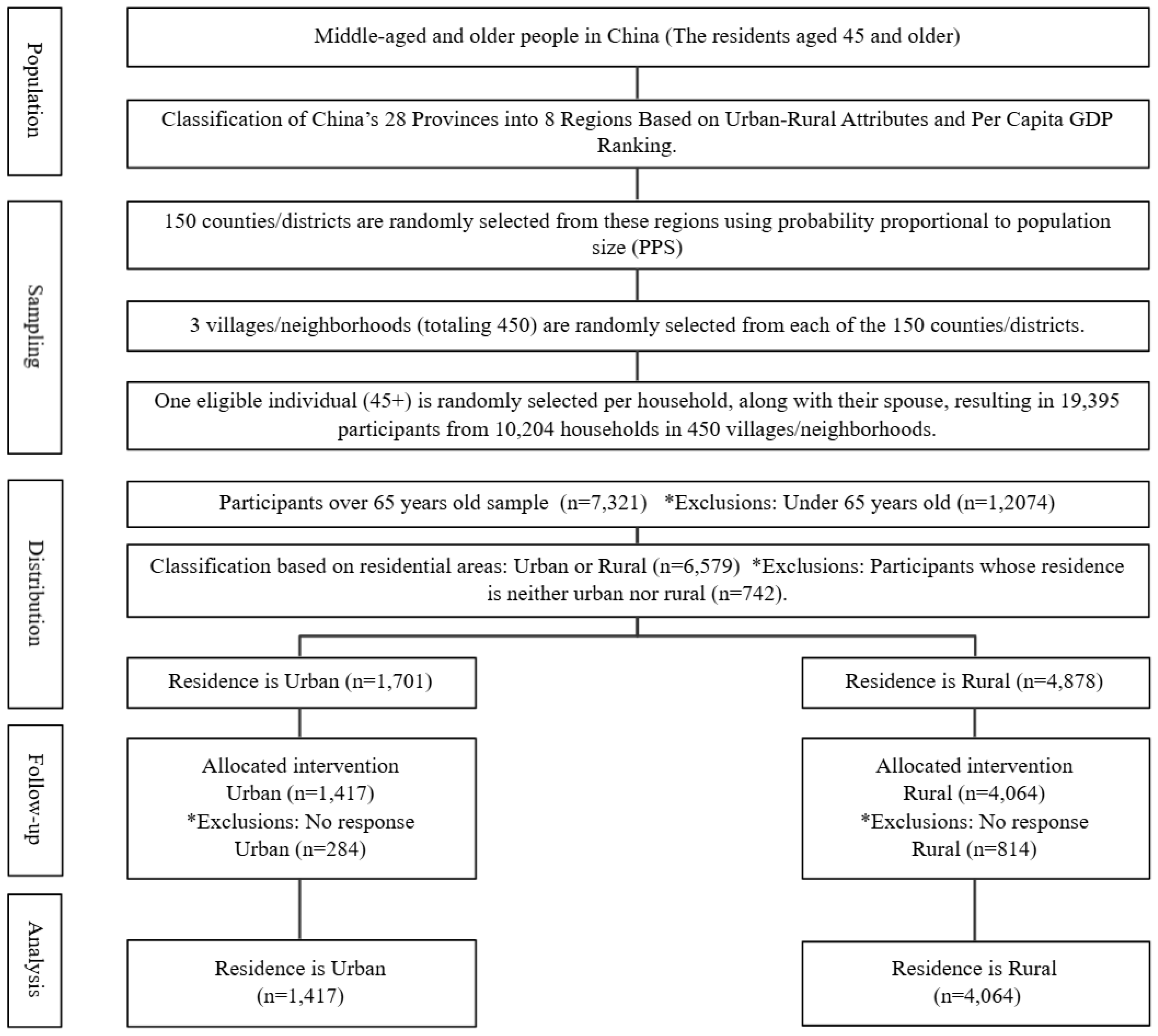

Table 1.
Differences in hypertension.
| Variables | Urban | Rural | P-value | |||
| Hypertention experience rate | Hypertention inexperience rate | Hypertention experience rate | Hypertention inexperience rate | |||
| Vigorous PA | Participant | 64(4.5%) | 73(5.2%) | 610(15.0%) | 743(18.3%) | 3.422(0.064) |
| Non-participant | 704(49.7%) | 576(40.6%) | 1,496(36.8%) | 1,215(29.9%) | 36.859(0.000) | |
| Moderate PA | Participant | 339(23.9%) | 315(22.2%) | 867(21.3%) | 942(23.2%) | 2.735(0.098) |
| Non-participant | 429(30.3%) | 334(23.6%) | 1,239(30.5%) | 1,016(25.0%) | 19.799(0.000) | |
| Low PA | Participant | 640(45.2%) | 561(39.6%) | 1,502(37.0%) | 1,405(34.6%) | 2.629(0.105) |
| Non-participant | 128(9.0%) | 88(6.2%) | 604(14.9%) | 553(13.6%) | 0.095(0.758) | |
| Total | 768(54.2%) | 649(45.8%) | 2,106(51.8%) | 1,958(48.2%) | ||
*Note: The value in the first row of the p-value column represents the statistical significance for the urban area, while the second row indicates the average difference between PA participants and non-participants in the rural area. This description applies to the three intensities of PA.
Table 2.
Differences in diabetes.
| Variables | Urban | Rural | P-value | |||
| Diabetes experience rate | Diabetes inexperience rate | Diabetes experience rate | Diabetes inexperience rate | |||
| Vigorous PA | Participant | 28(2.0%) | 109(7.7%) | 189(4.7%) | 1,164(28.6%) | 2.081(0.149) |
| Non-participant | 334(23.6%) | 946(66.8%) | 476(11.7%) | 2,235(55.0%) | 8.495(0.004) | |
| Moderate PA | Participant | 158(1.2%) | 496(35.0%) | 281(6.9%) | 1,528(37.6%) | 1.230(0.267) |
| Non-participant | 204(14.4%) | 559(39.4%) | 384(9.4%) | 1,871(46.0%) | 1.640(0.200) | |
| Low PA | Participant | 310(21.9%) | 891(62.9%) | 484(11.9%) | 2,423(59.6%) | 0.291(0.590) |
| Non-participant | 52(3.7%) | 164(11.6%) | 181(4.5%) | 976(24.0%) | 0.611(0.434) | |
| Total | 362(25.5%) | 1,055(74.5%) | 665(16.4%) | 3,399(83.6%) | ||
Table 3.
Differences in heart disease.
| Variables | Urban | Rural | P-value | |||
| Heart disease experience rate | Heart disease inexperience rate | Heart disease experience rate | Heart disease inexperience rate | |||
| Vigorous PA | Participant | 35(2.5%) | 102(7.2%) | 296(7.3%) | 1,057(26.0%) | 10.577(0.001) |
| Non-participant | 509(35.9%) | 771(54.4%) | 823(20.3%) | 1,888(46.5%) | 32.532(0.000) | |
| Moderate PA | Participant | 226(15.9%) | 428(30.2%) | 477(11.7%) | 1,332(32.8%) | 7.550(0.006) |
| Non-participant | 318(22.4%) | 445(31.4%) | 642(15.8%) | 1,613(39.7%) | 2.223(0.136) | |
| Low PA | Participant | 453(32.0%) | 748(52.8%) | 790(19.4%) | 2,117(52.1%) | 1.506(0.220) |
| Non-participant | 91(6.4%) | 125(8.8%) | 329(8.1%) | 828(20.4%) | 0.658(0.417) | |
| Total | 544(38.4%) | 873(61.6%) | 1,119(27.5%) | 2,945(72.5%) | ||
Table 4.
Differences in stroke occurrence.
| Variables | Urban | Rural | P-value | |||
| Stroke experience rate | Stroke inexperience rate | Stroke experience rate | Stroke inexperience rate | |||
| Vigorous PA | Participant | 14(1.0%) | 123(8.7%) | 120(3.0%) | 1,233(30.3%) | 0.888(0.346) |
| Non-participant | 167(11.8%) | 1,113(78.5%) | 354(8.7%) | 2,357(58.0%) | 15.370(0.000) | |
| Moderate PA | Participant | 65(4.6%) | 589(41.6%) | 175(4.3%) | 1,634(40.2%) | 8.759(0.003) |
| Non-participant | 116(8.2%) | 647(45.7%) | 299(7.4%) | 1,956(48.1%) | 12.525(0.000) | |
| Low PA | Participant | 152(10.7%) | 1,049(74.0%) | 329(8.1%) | 2,578(63.4%) | 0.097(0.755) |
| Non-participant | 29(2.0%) | 187(13.2%) | 145(3.6%) | 1,012(24.9%) | 1.186(0.276) | |
| Total | 181(12.8%) | 1,236(87.2%) | 474(11.7%) | 3,590(88.3%) | ||
Table 5.
Two-way ANOVA for differences in depression by PA and residential area.
| Variables | N | Urban | Rural | F value | |
| Vigorous PA | Participant | 1,490 | 7.270±6.056 | 10.370±6.505 | 0.543(0.596)74.183(0.074)1.074(0.300) |
| Non-participant | 3,991 | 7.830±6.080 | 10.280±6.683 | ||
| Moderate PA | Participant | 2,463 | 7.170±5.755 | 10.370±6.718 | 0.698(0.557)17.944(0.148)9.232(0.002) |
| Non-participant | 3,018 | 8.290±6.300 | 10.270±6.548 | ||
| Low PA | Participant | 4,108 | 7.410±5.911 | 10.140±6.586 | 2.738(0.346)4.192(0.289)11.503(0.001) |
| Non-participant | 1,373 | 9.790±6.596 | 10.730±6.701 | ||
*Note: In the F-value column, the first row represents the F-value (p) for physical activity (PA), the second row represents the F-value (p) for residential area, and the third row represents the F-value (p) for the interaction between PA and residential area.
Table 6.
Correlation analysis on urban residence, PA, chronic diseases, and depression.
| Variables | Urban | Vigorous PA | Moderate PA | Low PA | Hypertension | Diabetes | Heart Disease | Stroke | Depression |
| Urban | 1 | ||||||||
| Vigorous PA | -.207** | 1 | |||||||
| Moderate PA | .037** | .208** | 1 | ||||||
| Low PA | .156** | 0.025 | .175** | 1 | |||||
| Hypertension | 0.021 | -.095** | -.069** | -0.011 | 1 | ||||
| Diabetes | .103** | -.071** | -0.025 | 0.024 | .205** | 1 | |||
| Heart Disease | .103** | -.112** | -.033* | -0.005 | .207** | .170** | 1 | ||
| Stroke | 0.015 | -.059** | -.062** | -0.011 | .164** | .094** | .131** | 1 | |
| Depression | -.169** | .030* | -.027* | -.089** | .097** | .076** | .147** | .107** | 1 |
Note *p<0.05 ** p<0.01.
Disclaimer/Publisher’s Note: The statements, opinions and data contained in all publications are solely those of the individual author(s) and contributor(s) and not of MDPI and/or the editor(s). MDPI and/or the editor(s) disclaim responsibility for any injury to people or property resulting from any ideas, methods, instructions or products referred to in the content. |
© 2025 by the authors. Licensee MDPI, Basel, Switzerland. This article is an open access article distributed under the terms and conditions of the Creative Commons Attribution (CC BY) license (http://creativecommons.org/licenses/by/4.0/).
Copyright: This open access article is published under a Creative Commons CC BY 4.0 license, which permit the free download, distribution, and reuse, provided that the author and preprint are cited in any reuse.


