

Submitted:
25 February 2025
Posted:
25 February 2025
You are already at the latest version
Abstract
Introduction: With the global rise in elderly populations, the demand for healthcare and long-term care services has grown, particularly for addressing mental health. While AI has shown promise for health management of older adults, its effects on physical activity, mental health, and their associations remain largely unexamined.
Objective: This study aimed to investigate the role of AI in improving mental health among older adults through the promotion of physical activity and elucidating the underlying mechanisms.
Methods: Bibliometric methods, including CiteSpace and VOSviewer, were employed to analyze 1,831 publications, identifying trends, collaborations, hotspots, and potential applications in this domain.
Results: AI interventions significantly enhanced mental health in older adults by promoting physical activity. Prominent mechanisms included tailored psychological support, cognitive rehabilitation, and targeted cardiovascular and musculoskeletal interventions. These mechanisms drove better cognitive function, emotional regulation, and physical resilience. These interventions were supported in their effectiveness by biomarkers of BDNF, serotonin, and increased physical activity levels.
Conclusion: The present study combines insights on AI, physical activity, and mental health to facilitate emerging research opportunities and practical applications. It highlights the importance of AI for individualized exercise interventions, smart health monitoring, and cognitive and emotional rehabilitation. The insights provide an important compass for scholars and practitioners to harness the power of AI to meet the mental health needs of aging societies by systematically mapping the global research landscape that jointly features the changing demographic profile of older persons and anticipated solutions through the use of AI technologies, delivering evidence-based measures.
Keywords:
Artificial Intelligence
; physical activity
; mental health
; bibliometric analysis
; research trends
1. Introduction
Currently, the world is rapidly aging. Extensive estimation of the global burden of disease has shown that population aging is one of the most important public health threats. By the year 2050, age-related diseases are projected to be amongst the top causes of disease burden globally. Older adults struggle with overlapping complicated health conditions, and mental health is among the most valuable. (Xi et al., 2022; Bloom et al., 2015; Suzman et al., 2015; Hong et al., 2023; Byass, 2008). Chronic depression and anxiety in older adults can negatively impact immune function, cardiovascular health, and metabolic processes, increasing the risk of chronic diseases like heart disease, hypertension, and diabetes (Civieri et al., 2024; Frasca et al., 2017). In recent few years, AI has demonstrated potential in reducing chronic disease prevalence among older people, especially by supporting mental health (Graham et al., 2020; Qian et al., 2021). Physical activity is another effective intervention for improving the mental health of older adults, helping to alleviate symptoms of depression and anxiety(Kazeminia et al., 2020; Lok et al., 2017). AI applications have boosted physical activity levels by providing personalized exercise plans and enabling remote monitoring, fostering long-term healthy habits.(Daly et al., 2020; Shaik et al., 2023). Considering the intricate relationship between mental health and physical inactivity, this interplay often forms a vicious cycle, exacerbating depression, diminishing physical strength, and increasing the risk of falls. (Iso-Markku et al., 2022; Militello et al., 2024), the potential for AI to explore these challenges by promoting physical activity is valuable. While AI’s impact both on physical activity and mental health in older adults is existence, the intrinsic connection of this relationship demand further study.
It is crucial to explore the relationship between AI, physical activity, and mental health in older adults, especially in the days global aging accelerates. Many senior people face dual challenges of declining physical functioning and mental health issues(Bleijenberg et al., 2017). AI technologies can enhance exercise intensity and frequency among older adults. Understanding whether AI-driven physical activity interventions improve mental health can provide valuable guidance for exercise and wellness strategies tailored to this population. Additionally, as smart wearables and AI tools become more accessible, older adults can exercise more independently, lessening their reliance on family support networks. Exploring how AI enhances exercise safety and effectiveness for mental well-being can benefit healthcare providers, families, and caregivers in supporting seniors’ health. Overall, AI-driven innovations in health management improve quality of life for the elderly, reduce chronic disease incidence, and alleviate healthcare system pressures, thereby freeing resources and promoting societal health.
A comprehensive analysis of research on AI, physical activity, and mental health among older adults is lacking (Karim et al., 2022). As the number of studies on these interconnected topics continues to grow, this study seeks to synthesize existing knowledge and provide a panoramic view using econometric and visualization methods. Unlike traditional content analysis, this approach offers an objective and comprehensive overview by revealing spatial and temporal trends, identifying influential scholars, highlighting emerging thematic frontiers, and advancing the field of study. To the extend of our knowledge, no systematic analysis has been conducted on AI-driven interventions through enhancing physical activity to improve mental health in older adults. This study aims to fill this gap by employing bibliometric mapping and visualization techniques to address key questions: i) identify the most influential countries, institutions, categories, and journals in global AI research on older adults’ mental health; ii) examine current concerns and emerging areas within the field; and iii) summarize the impact of AI on promoting physical activity to improve mental health, while outlining research frontiers that warrant further exploration.
This thesis is innovative in several key ways. It presents the first knowledge-mapping review of AI applications for mental health in older adults through physical activity research, offering a unique approach to comprehensively review key literature features and identify emerging trends. Drawing on authoritative databases, it systematically examines international collaborations, evolving trends, and multilevel studies in AI and older adults’ mental health. Additionally, this paper highlights research directions to further advance knowledge on using AI for physical activity interventions that improve mental health among older adults. The paper is structured as follows: the methodology section outlines the research approach. The results and discussion section characterizes the literature using knowledge mapping and bibliometric strategies. The research hotspots and application areas analysis reviews key themes through reference co-citation and keyword co-occurrence analyses. The Conclusion and Future Perspectives section summarizes findings and suggests avenues for future research.
2. Methodology
2.1. Data Acquisition and Search Strategy
In this paper, the indexes of four Web of Science core ensembles, namely, the Science Citation Index Expanded (SCI-Expanded), the Social Science Citation Index (SSCI), the Arts and Humanities Citation Index (A&HCI), and the Emerging Sources Citation Index (ESCI), were selected as the data source. The WoS database was chosen for a number of reasons. Firstly, WoSCC, as a standard database based on knowledge graph analysis(Meho & Yang, 2007), has been widely used in bibliometric studies(Cabeza et al., 2020; Cascajares et al., 2021; Pradhan & Zala, 2021; Pranckutė, 2021). Second, WoSCC, as a multidisciplinary database covering the literature of more than 20,000 journals in the fields of environmental sciences, public health, etc., avoids the bias of the search strategy towards the medical field compared to specialized databases such as, e.g., PubMed. While interdisciplinary databases similar to Scopus also have broad coverage, its metadata categorization, WoS has an advantage over Scopus in that it not only provides categorization by author, year, discipline, and type of literature (as provided by Scopus), but also supports categorization by institution and country(Chadegani et al., 2013; Y. Wang et al., 2024), which makes it easier for scholars to analyze the distribution of organizations. Taking all these factors into account, we finally selected the four indexes of WoSCC for further analysis.
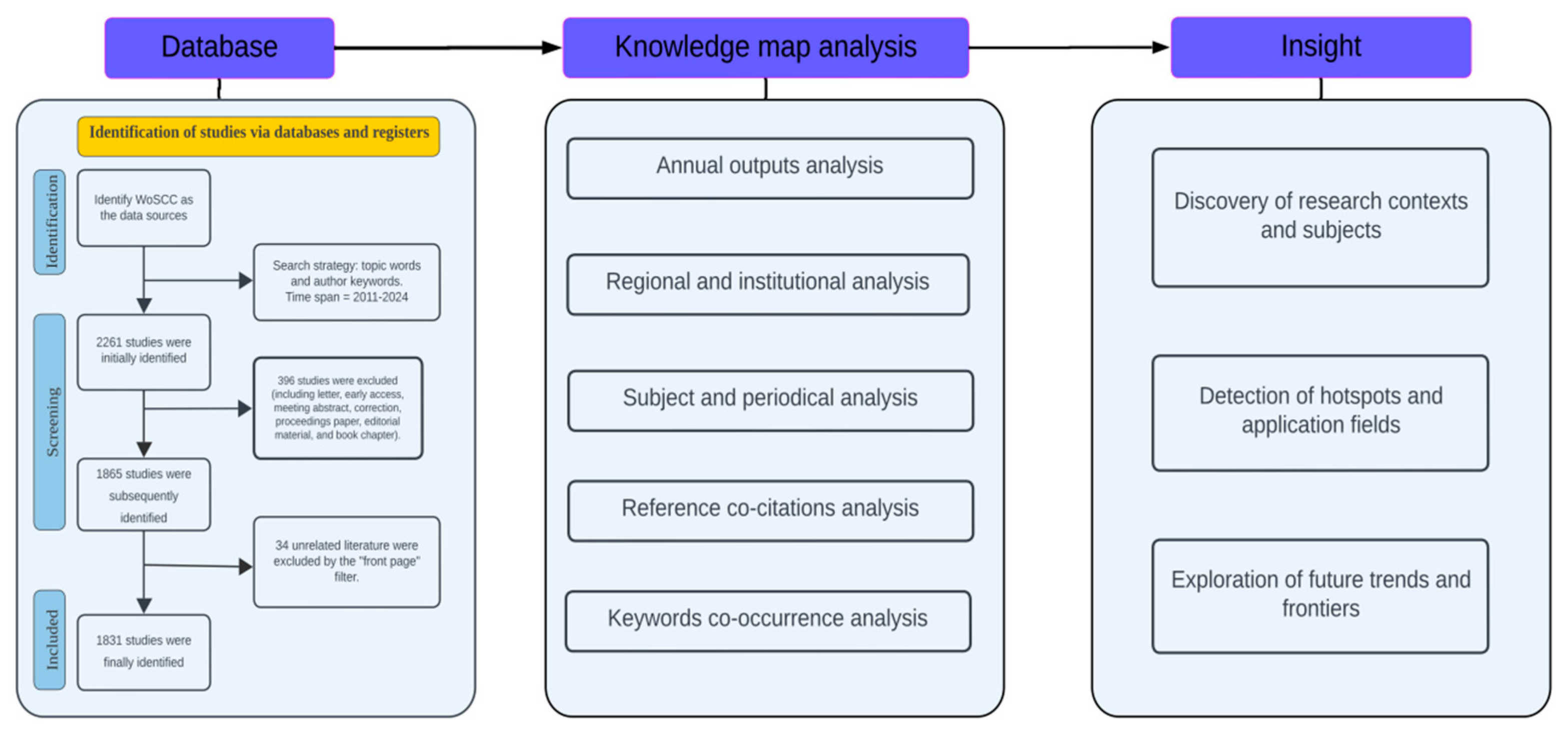
The literature was searched as follows:[TS = (“artificial intelligence” OR “AI” OR “companion AI “ OR “socially assistive AI” OR “companion robot” OR “social robot “ OR “elderly assistive AI” OR “wearable technology” OR “smart wearable” OR “AI companion wearable” OR “AI companion” OR “assistive device” OR “digital OR “robotic assistant” OR “intelligent personal assistant” OR “care robot” OR “cognitive robot” OR “robotic robot “care robot” OR “cognitive assistant” OR “smart speaker” OR “AI-driven technology” OR “virtual assistant” OR “health technology “ OR “digital health tool” OR “assistive robotics” OR “smart home device” OR “voice assistant” OR “intelligent agent” OR “AI system “ OR “virtual care” OR “telehealth” OR “telemedicine” OR “ambient assisted living” OR “healthcare robot” OR “personal healthcare healthcare robot” OR “personal healthcare” OR “personal healthcare device” OR “AI health assistant” OR “smart caregiving” OR “elder care technology” OR “intelligent health monitoring”)AND TS = (“cognitive function “ OR “cognitive health” OR “cognitive decline” OR “memory enhancement” OR “cognitive support” OR “cognitive ability” OR “ cognitive performance” OR “mental health” OR “memory training” OR “ neurocognitive” OR “cognitive rehabilitation” OR “brain health” OR “cognitive stimulation” OR “memory function” OR “executive function “ OR “cognitive aging” OR “cognitive skills” OR “mental function “ OR “cognitive engagement” OR “cognitive intervention” OR “ neuroplasticity” OR “learning ability” OR “mental acuity” OR “ cognitive fitness” OR “brain training” OR “anxiety relief” OR “ stress reduction” OR “emotional support” OR “well-being” OR “ quality of life” OR “depression”. quality of life” OR “depression” OR “emotional well-being” OR “ psychosocial health” OR “psychological health” OR “emotional stability” OR “social interaction” OR “social support” OR “life satisfaction”) AND TS = (“older adults” OR “elderly” OR “aging population” OR “senior citizens” OR “older people” OR “geriatric” OR “aging individuals” OR “older generation” OR “senior adults” OR “advanced age” OR “late adulthood” OR “older patients” OR “aged patients” OR “older population” OR “aged adults” OR “seniors” OR “ older individuals” OR “retired people” OR “aged individuals” OR “ gerontology” OR “late-life” OR “aging adults”)], spanning 2011–2024 . To avoid bias, all hits were retrieved from the WoSCC as “full record and citation reference” and used on October 7, 2024 for further analysis. With reference to previous studies, only “articles or reviews” were selected for analysis, and the language was limited to “English”(Fei et al., 2023); other literature types and non-English articles were excluded. The reason why we setting the timeframe at 2011 is because most of the research on smart geriatric care started in 2011(X. Liu et al., 2023). The amount of studies then increased significantly after China released the policy document named “Action Plan for the Development of Smart Healthy Aging Industry (2017–2020) “in 2017(Hung, 2023). Basic information about each literature was collected in a text file, such as country, institution, journal source, author, and reference. Initially 2,261 documents were found; then they were filtered by document type and language, resulting in 1,831 documents. The research framework is summarized in (Figure 1)
Figure 1.
Flow Chart of Study Design for AI-Enhanced Physical Activity Intervention.
2.2. Research Methods and Analysis Tools
The research methodology of knowledge mapping and bibliometrics was used in this study. Knowledge mapping methods enable the visualization and analysis of a specific domain, which mainly involves steps such as data mining, scientometrics, information analysis and graphing. Knowledge mapping is widely used to obtain more granular information related to the content of the study by presenting the distribution of literature and overall research overview(C. Chen, 2006). A bibliometric overview, on the other hand, is a generally recognized means of assessing subject development from a library and information science perspective(Pinto et al., 2019) that can reveal patterns in knowledge flows and domain structure, demonstrate their scientific underpinnings and emergent themes(Li, 2023), and ultimately provide in-depth analyses of knowledge domains. Combining these two strategies can present readers with intuitive illustrations that help understand the current state of the field, its frontiers and hotspots, and provide guidance for future research directions(Jochen Gläser et al., 2017) .
In this study, two Java-based visualization tools, CiteSpace and VOSviewer, were used to describe and present the results of the bibliometric analysis.CiteSpace was developed by Prof. Chaomei Chen of Drexel University and focuses on knowledge graph construction(C. Chen, 2006), and the current version is 6.4.R1.In this paper, CiteSpace is used to visualize and display country and institutional networks, author collaboration networks, cited author relationships, biplot overlays of research categories and journals, and timeline plots of co-cited references. Notably, a co-citation relationship is defined as a situation where two documents are cited by the same third party(Small, 1973).VOSviewer (version 1.6.16) is then used to generate issue-specific keyword co-occurrence maps.
In addition, a knowledge graph usually consists of a set of nodes and connecting lines used to demonstrate collaborative relationships among literature(C. Chen, 2006). Nodes are used to indicate elements such as countries, authors, institutions, journals, references, or keywords, and the size of the node indicates the centrality of the literature, i.e., the larger the node, the higher the frequency of occurrence or citation(Yang et al., 2014). The centrality index in this study is regarded as a bridge from earlier to more recent views, reflecting the extent to which paths in the network pass through the node, and is usually normalized to the interval [0, 1]. Meanwhile, the inter-node connectivity lines indicate the association between nodes; the stronger the connection, the wider the line. The knowledge graph also shows keywords and references with emergent characteristics. Keyword bursting describes the strength of the frequency of topic occurrence, while citation bursting is used to indicate the citation frequency of references(Glenisson et al., 2005). Nodal emergence values are calculated by the Kleinberg algorithm(Mane & Börner, 2004), and with the help of these emergence indices and maps, scholars can identify emerging trends and research hotspots more effectively.
3. Results and Discussions
3.1. Annual Outputs Analysis
The search of the WoSCC database yielded 1,831 publications related to the dual promotional effects of AI on physical activity and mental health in older adults. Based on statistical analysis, the annual publication trends since 2011 are illustrated in (Figure 2). The changes in the number of publications by year can be indicators of possible research trends. In general, these trends fall into three phases: 2011–2017, 2017–2020, and 2020-present. Although the potential of technology-facilitated exercise to help improve older adults’ mental health has been acknowledged, initial studies were limited. In 2011, the potential of novel technologies to address mental health issues in older adults , sparking scholarly interest. Nevertheless, between 2011 and 2017, annual publications remained below 60, reflecting an early stage of research development.
Figure 2.
The output of publications and growth trends of pieces of Mental Health in the older adults Through AI-Enhanced Physical Activity research.
Figure 2.
The output of publications and growth trends of pieces of Mental Health in the older adults Through AI-Enhanced Physical Activity research.
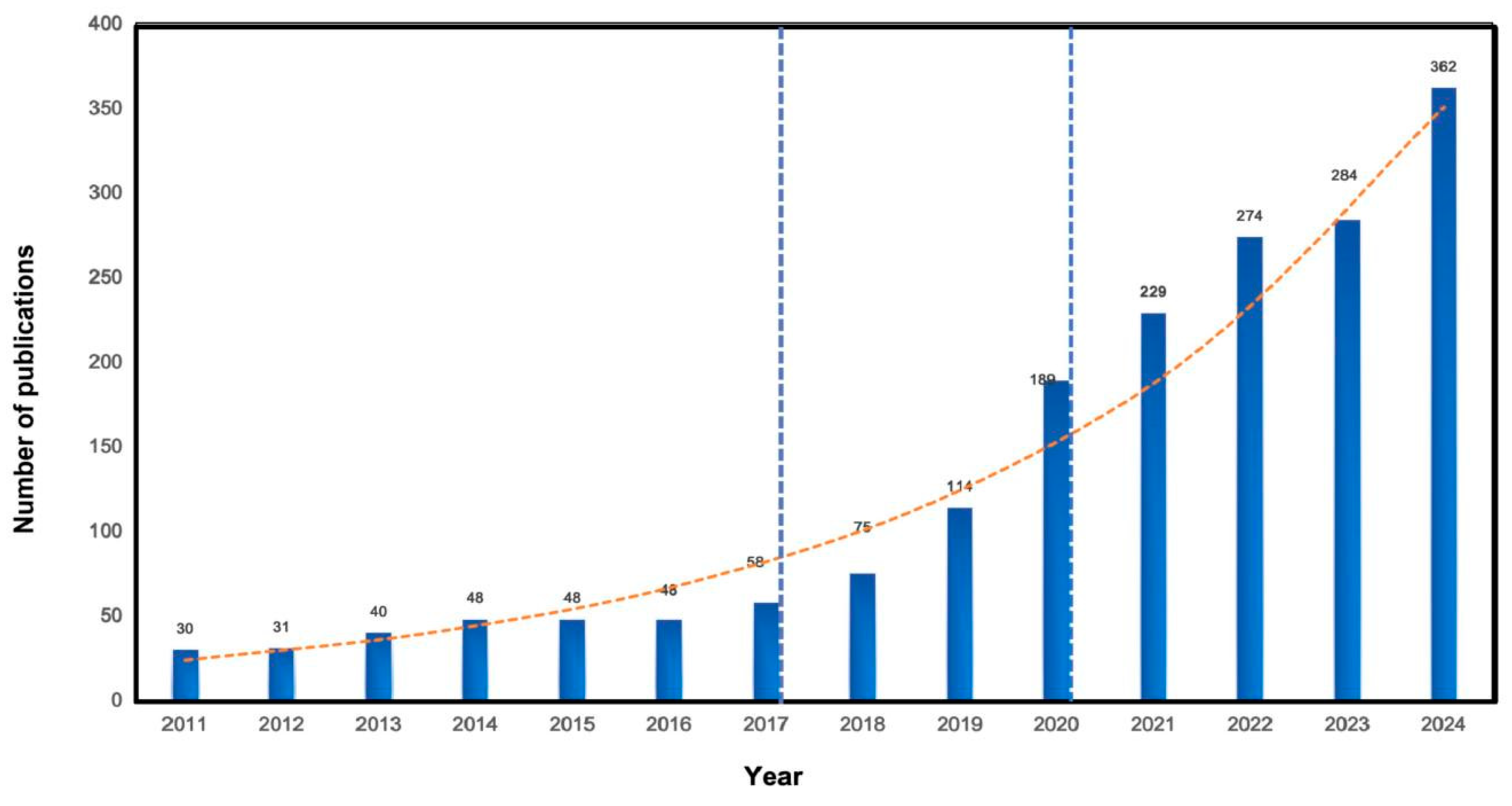
With the rapid advancement of AI technology after 2017—particularly in cognitive rehabilitation and intelligent companionship—the number of relevant studies increased significantly. Graham et al. (2020) detailed recent developments in AI-driven cognitive function and mental health support, emphasizing AI’s potential benefits in promoting mental health for older adults and boosting confidence in this field. Since 2017, annual publications have grown steadily, reaching 189 in 2020 and continuing an upward trajectory. For example, Liao et al. (2020) demonstrated improvements in older adults’ daily activities through a combination of cognitive training and physical activity using virtual reality. Similarly, Jiang et al., (2023) highlighted the importance of multidisciplinary interventions for mental health, while Forberger et al. (2017) promoted healthy aging in Europe through scientific and technological innovations. Using a curve-fitting method, Y = 2.74x^2 − 11037.96x + 11109369, where y represents the number of publications and x represents the year, it is estimated that publications on this topic will continue to rise.
3.2. Regional and Institutional Analysis
Scholars from more than 90 regions and 500 institutions have contributed significantly to research on AI’s dual facilitation of physical activity and mental health in older adults. (Table 1) lists the top 10 contributing countries and institutions, while (Figure 3A) illustrates a collaboration network across different countries. Each dot in the figure represents a country, with the dot’s size corresponding to the volume of publications. The international academic collaboration network, generated via CiteSpace, contains 407 nodes and 929 connections, indicating a global spread of publications across 407 countries or regions and active partnerships among them. The primary collaborations are divided into three groups, led by the US, UK, and China, with the US producing the most literature (623 publications), followed by China (189) and the UK (175). Canada (168) and Italy (150) round out the top five, with each contributing over 150 publications, signifying substantial contributions.

Table 1.
Ranking of top 10 countries and institutions of pieces of Mental Health in the older adults Through Al-Enhanced Physical Activity research.
Table 1.
Ranking of top 10 countries and institutions of pieces of Mental Health in the older adults Through Al-Enhanced Physical Activity research.
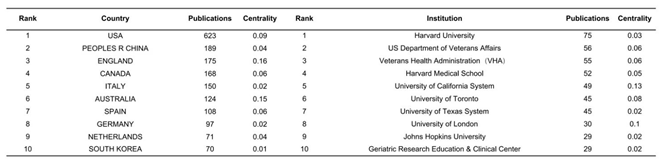 |
Figure 3.
Global Distribution and Institutional Contribution to AI-Enhanced Physical Activity Research for Mental Health in Older Adults. a. The map of countries involved in research on mental health in older adults through AI-enhanced physical activity. b. The institutions contributing to this field of study. c. The world distribution of research publications and collaborations in this emerging domain.
Figure 3.
Global Distribution and Institutional Contribution to AI-Enhanced Physical Activity Research for Mental Health in Older Adults. a. The map of countries involved in research on mental health in older adults through AI-enhanced physical activity. b. The institutions contributing to this field of study. c. The world distribution of research publications and collaborations in this emerging domain.
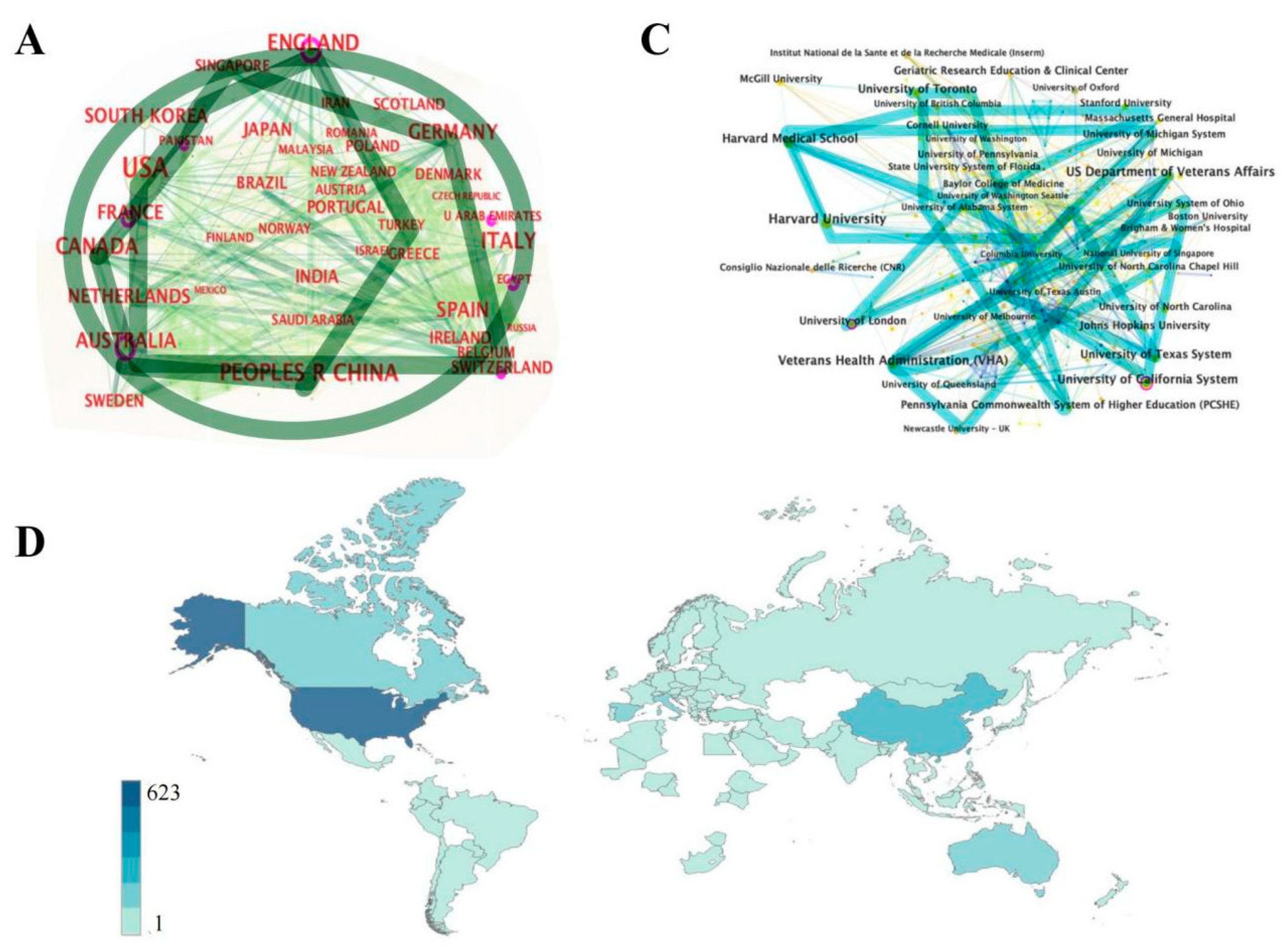
(Figure 3B) displays institutional collaborations, showing 407 nodes and 929 links among organizations. According to this network, Harvard University leads with 75 publications, followed by the US Department of Veterans Affairs and the Veterans Health Administration (VHA) with 56 and 55 publications, respectively. These institutions, along with others in the top 10, demonstrate strong centrality and influence within the academic community. Notably, universities comprise more than half of the leading institutions, reflecting their significant role in fostering innovation. Nevertheless, non-university institutions oftcen exhibit weaker collaborative ties, while universities maintain extensive networks.
(Figure 3C) highlights the distribution of contributions across countries and regions, with North America, Western Europe, and Australia leading the field in AI-driven physical activity and mental health research for older adults. Western countries dominate the top 10 organizations, which may reflect their greater resource investment in technological and health-related research. AI technologies such as wearables and exercise trackers have enabled Western organizations to make significant progress in enhancing exercise participation, addressing psychological challenges, and preventing disease among older adults. Meanwhile, China, as a developing country facing severe aging challenges, has also made notable contributions to this field. Given its large and diverse population, China faces challenges in improving physical activity levels for older adults nationwide and addressing prevalent chronic diseases and physical decline through exercise interventions.
Investigating the application of AI technologies in managing older adults’ exercise and enhancing mental health, particularly through tailored solutions for different regions and economic contexts, remains critical. While Western countries and institutions are key drivers, global collaboration across diverse regions is essential to achieve meaningful advances in this area of research.
3.3. Subject and Periodical Analysis
(Figure 4A) illustrates the disciplines contributing to research on AI’s dual impact on physical activity and mental health in older adults. Disciplines such as ‘Gerontology,’ ‘Neuroscience,’ and ‘Psychology’ are highlighted with purple circles, indicating their central roles in this research area. The network contains 138 nodes and 294 connections, representing 138 subdisciplines involved and 294 collaborative pathways across these fields. Compared to previous literature focused solely on physical activity for mental health in older adults(Forberger et al., 2017; Smith et al., 2017), this network demonstrates greater complexity and comprehensiveness. Exercise science and rehabilitation medicine serve as core disciplines, while collaborations with fields like electrical engineering, neuroscience, and psychology broaden research perspectives. The increasing diversity of disciplines has fostered interdisciplinary collaborations, deepening our understanding of AI’s role in enhancing older adults’ mental health through increased physical activity.
Figure 4.
The interdisciplinary landscape and Global collaboration in AI-enhanced physical activity research aimed at improving mental health in older adults. a. Clustered categories of research disciplines involved, highlighting key areas such as geriatrics, computer science, and public health. b. Major contributing journals and their interconnections, illustrating the primary sources of knowledge dissemination. c. Timeline and trends in prominent journal publications over the years, showcasing evolving research focus areas. d. Specific research contexts categorized into key themes, such as personalized psychosocial interventions, effects and models, and neurocognitive impacts. e. Core research themes divided into mental, bone, cognitive, and cardiovascular health, emphasizing the multifaceted nature of the studies. f. Visualization of the physiological and psychological areas impacted by AI-enhanced physical activity, such as neurological, cognitive, cardiovascular, and musculoskeletal health systems.
Figure 4.
The interdisciplinary landscape and Global collaboration in AI-enhanced physical activity research aimed at improving mental health in older adults. a. Clustered categories of research disciplines involved, highlighting key areas such as geriatrics, computer science, and public health. b. Major contributing journals and their interconnections, illustrating the primary sources of knowledge dissemination. c. Timeline and trends in prominent journal publications over the years, showcasing evolving research focus areas. d. Specific research contexts categorized into key themes, such as personalized psychosocial interventions, effects and models, and neurocognitive impacts. e. Core research themes divided into mental, bone, cognitive, and cardiovascular health, emphasizing the multifaceted nature of the studies. f. Visualization of the physiological and psychological areas impacted by AI-enhanced physical activity, such as neurological, cognitive, cardiovascular, and musculoskeletal health systems.
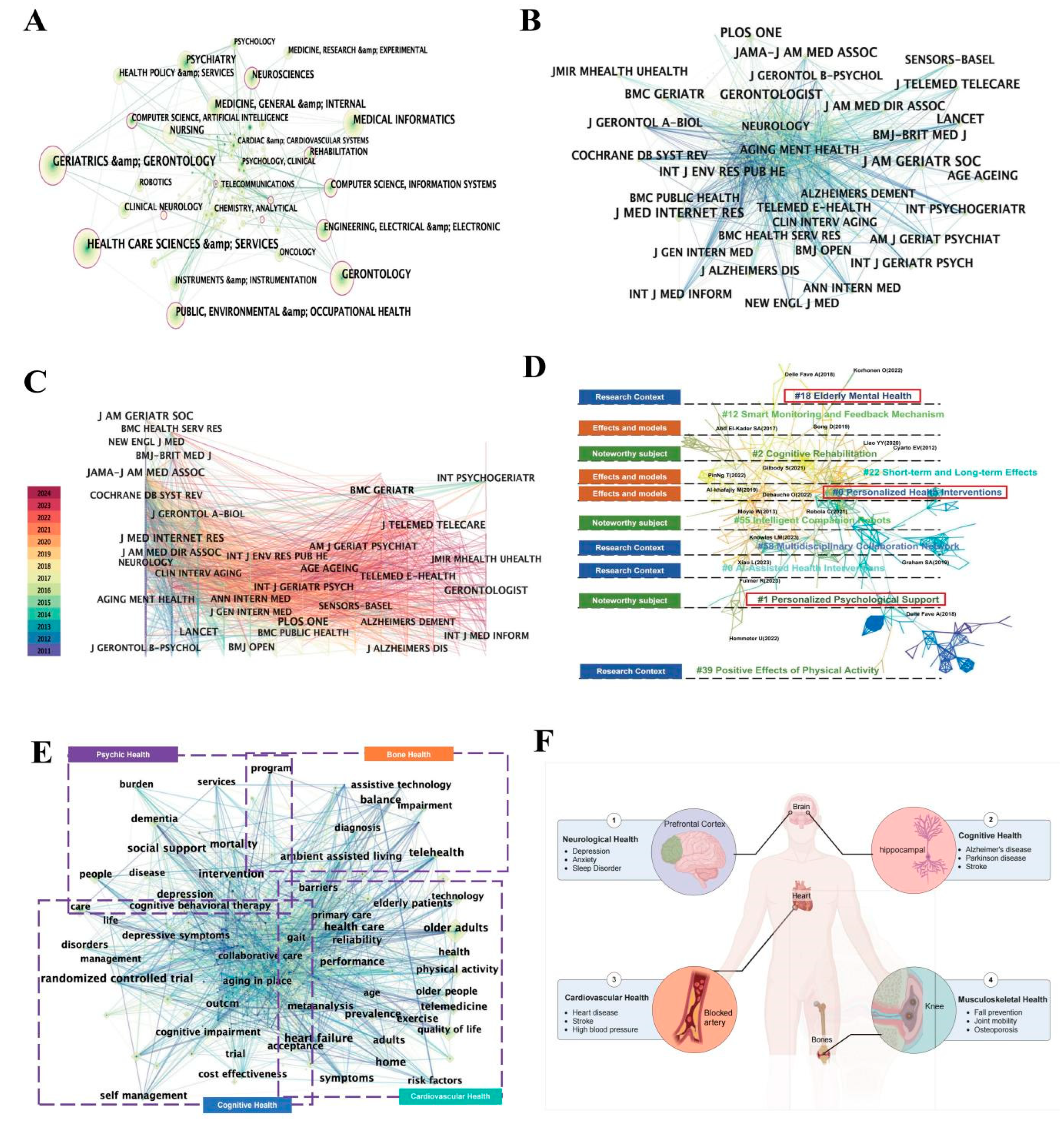
Following the analysis of disciplines, we examined the cited journals relevant to AI’s dual facilitation of physical activity and mental health in older adults. Cited journals refer to those where papers in the field are published, while citing journals are those containing references cited in these works.(Figure 4B) offers an overview of cited journals, featuring 731 nodes and 5,601 connections. These journals span a wide array of disciplines, including environmental sciences, with key publications such as the Journal of the American Geriatrics Society and the International Journal of Environmental Research and Public Health. These sources offer valuable insights into the environmental factors affecting AI-driven mental health interventions for older adults. Leading medical journals like The Lancet and the New England Journal of Medicine provide cutting-edge medical perspectives on the effects of physical activity on mental health. Core publications in nursing and gerontology, such as The Gerontologist and BMC Geriatrics, also play a crucial role, while generalist journals like PLOS ONE and iScience enrich the breadth of research. The diverse range of cited journals indicates a shift from single-discipline focus to multidisciplinary clusters, providing a robust theoretical basis for ongoing research.
(Figure 4C) presents a visual analysis of journal evolution related to AI, physical activity, and mental health in older adults from 2011 to 2024, capturing the dynamics of academic trends through publication patterns. The timezone view reveals that from 2011 to 2015, research predominantly focused on geriatrics and neuroscience. Since 2018, there has been a notable shift toward healthcare data analytics and computerized care, underscoring the growing importance of interdisciplinary and international collaboration. The emerging and interdisciplinary nature of AI-driven physical activity to improve mental health in older adults calls for in-depth exploration and increased multidimensional communication and collaboration.
3.4. Analysis of Co-Cited References
Co-cited reference analysis refers to the fact that when two scientific documents are simultaneously cited by the same article, the more co-citations the two documents have, the stronger the relationship between them(C. Chen, 2006). By analyzing this co-citation relationship, researchers can construct a complex citation network. In this study, we used CiteSpace software to concretely demonstrate the citation network structure of AI’s dual promotion of physical activity and mental health in older adults through a scientific knowledge map. By analyzing clusters of co-cited literature, we were able to trace the roots of scientific developments in the field and mine them for major research themes and future trends.
There are three options that can be used to create clusters of tags: log-likelihood ratio (LLR), latent semantic indexing (LSI) and mutual information (MI). We used the LLR algorithm because this strategy can cover the “uniqueness and coverage” of all tags. Research topics were divided into clusters, labeled with “#”, and then their temporal trajectory was described, as shown in (Figure 4D). The darker the cluster color, the later the literature appeared. Here, we have grouped several noteworthy themes into three categories: “Research Context”, “Impacts and Patterns”, and “Hot Topics”. Modal (Q-value) and weighted average profile (S-value) values were used to assess the plausibility of the clusters, with clusters with Q > 0.5 and S > 0.7 generally considered compelling. In this analysis, the Q-value was 0.88 and the S-value was 0.95, further validating the validity of the cluster delineation.
The context of this study can be categorized into four main sub-clusters: the mental health of older adults, the positive effects of physical activity, AI-assisted health interventions, and multidisciplinary collaborative networks. In recent years, ‘AI-assisted health’ has emerged as a novel research topic, especially in personalized physical activity and mental health support. AI provides personalized exercise plan for older adults, enhancing their physical and mental well-being through real-time monitoring and feedback. (Beauchamp et al., 2021; Cortellessa et al., 2021; Delle Fave et al., 2018; Korhonen et al., 2022). Nevertheless, the debate about the effectiveness and sustainability of AI’s role in linking physical activity with mental health in older adults remains unsolved. In the meanwhile current research broadly agrees that maintaining physical activity can improve mental health and whole body health in older adults(Battaglia et al., 2016; Delle Fave et al., 2018; Hou et al., 2024), A well-established correlation exists between physical activity, mental health, and quality of life. Previous studies indicate that adequate physical activity improves mental health outcomes, reducing senior depression and anxiety(de Oliveira et al., 2019; Figueira et al., 2023; Lok et al., 2017). Consequently, AI has gained traction as a health management and mental health assessment tool for older adults. Despite technological limitations, researchers are actively exploring how AI can systematically support older adults’ physical and mental health, with findings suggesting that the positive effects of physical activity often outweigh potential technological barriers(Graham et al., 2020; Li, 2023; Rutkowski et al., 2019.; Seifert et al., 2019). Additionally, recent studies are refining frameworks to better quantify AI intervention effects, advancing the field of geriatric health(Knowles et al., 2016; Li, 2023).
Research effects and models in this domain fall into three main areas: personalized health interventions, short- and long-term impacts, and intelligent monitoring and feedback mechanisms. AI-assisted personalized health interventions are among the primary models for improving older adults’ mental health. Growing evidence indicates that AI can support health management through real-time monitoring and dynamic feedback(Al-khafajiy et al., 2019; Debauche et al., 2022). Specifically, AI technologies help older adults monitor their emotional states, track physical activity, and provide immediate feedback and motivation, significantly reducing depression and anxiety(Lucia et al., 2024; Vankipuram et al., 2012). Most studies focus on short-term interventions due to the ethical and technical challenges of long-term health interventions. Current evidence suggests that short-term interventions can trigger positive psychological responses, while sustained interventions may lead to deeper health benefits, such as reducing long-term depression risk(Gilbody et al., 2022; Ng et al., 2017). Intelligent monitoring and feedback mechanisms further enhance AI interventions by adjusting health intervention content in real time based on the evolving health status of older adults. The most widely used model combines moderate aerobic exercise with intelligent feedback systems, significantly enhancing mental health and quality of life in older adults(El-Kader & Al-Jiffri, 2017; Song & Yu, 2019).
Several emerging themes in this research area include smart companion robots, personalized psychological support, cognitive rehabilitation, and health support for rural populations. Mental health issues such as loneliness and anxiety are prevalent among older adults, and smart companion robots offer effective emotional support and companionship(Malle et al., 2023). Personalized psychological support services use AI to identify and address the emotional state of older adults, providing tailored guidance to alleviate depression and anxiety(Fulmer et al., 2018). AI-augmented cognitive rehabilitation, often combined with physical activity, helps mitigate memory and cognitive decline in older adults(Cyarto et al., 2012; Liao et al., 2020). In rural areas, where older adults often face limited healthcare resources, AI fills critical health support gaps through remote monitoring and personalized health programs(Al-khafajiy et al., 2019; Bourouis et al., 2011). In summary, smart companionship, personalized psychological support, cognitive rehabilitation, and rural health support represent crucial themes in the application of AI to enhance physical activity and mental health among older adults, meriting focused attention and continued research.
3.5. Analysis of Co-Occurrence Keywords
Keyword co-occurrence graphs can effectively highlight the main research interests and emerging hotspots within a particular field. In this study, we conducted a keyword co-occurrence analysis on research related to AI applications for physical activity and the health of older adults using CiteSpace software. The resulting merged network consists of 489 nodes and 2,146 connections. Among the 400 analyzed keywords, ‘older adults,’ ‘quality of life,’ and ‘care’ were the most frequent, appearing 569, 302, and 224 times, respectively. These keywords indicate the central themes of the field. Other frequently occurring terms include ‘artificial intelligence,’ ‘physical activity,’ and ‘depression,’ all of which draw significant attention.
To further understand the research hotspots in AI-driven physical activity and health for older adults, we categorized the keywords into four clusters: ‘Psychic Health,’ ‘Cognitive Health,’ ‘Cardiovascular Health,’ and ‘Bone Health,’ as shown in (Figure 4E). The ‘Psychic Health’ cluster explores how AI-assisted physical activity can help improve psychological issues, like smaller episodes of depression and anxiety common with older adults, enhancing overall life satisfaction and emotional stability. The cluster, ‘Cognitive Health’, aims to slow cognitive decline with supported physical activities based on artificial intelligence, especially through processes like BDNF (Brain-Derived Neurotrophic Factor). BDNF improves (brain) memory, attention, and blocks the development of degenerative cognitive diseases like Alzheimer’s. The Cardiovascular Health cluster focuses on the potential of AI to enhance cardiovascular health by delivering individualized exercise regimens and real-time monitoring to older adults, reducing the likelihood of psychological distress caused by cardiovascular ailments. Last but not least, the ‘Bone Health’ cluster explores how AI-aided exercise can improve bone density, prevent fractures, and promote well-being in older adults by increasing independent living.
The results of this analysis provide a detailed understanding of the research hotspots where AI can improve mental health through promoting physical activity in older adults. This in-depth exploration will be further discussed in the Research Hotspots and Application Areas Analysis section. (Figure 4F) highlights the application areas and key research focuses of the study.
4. Research Hot Spots and Application Fields Analyses
4.1. Psychic Health
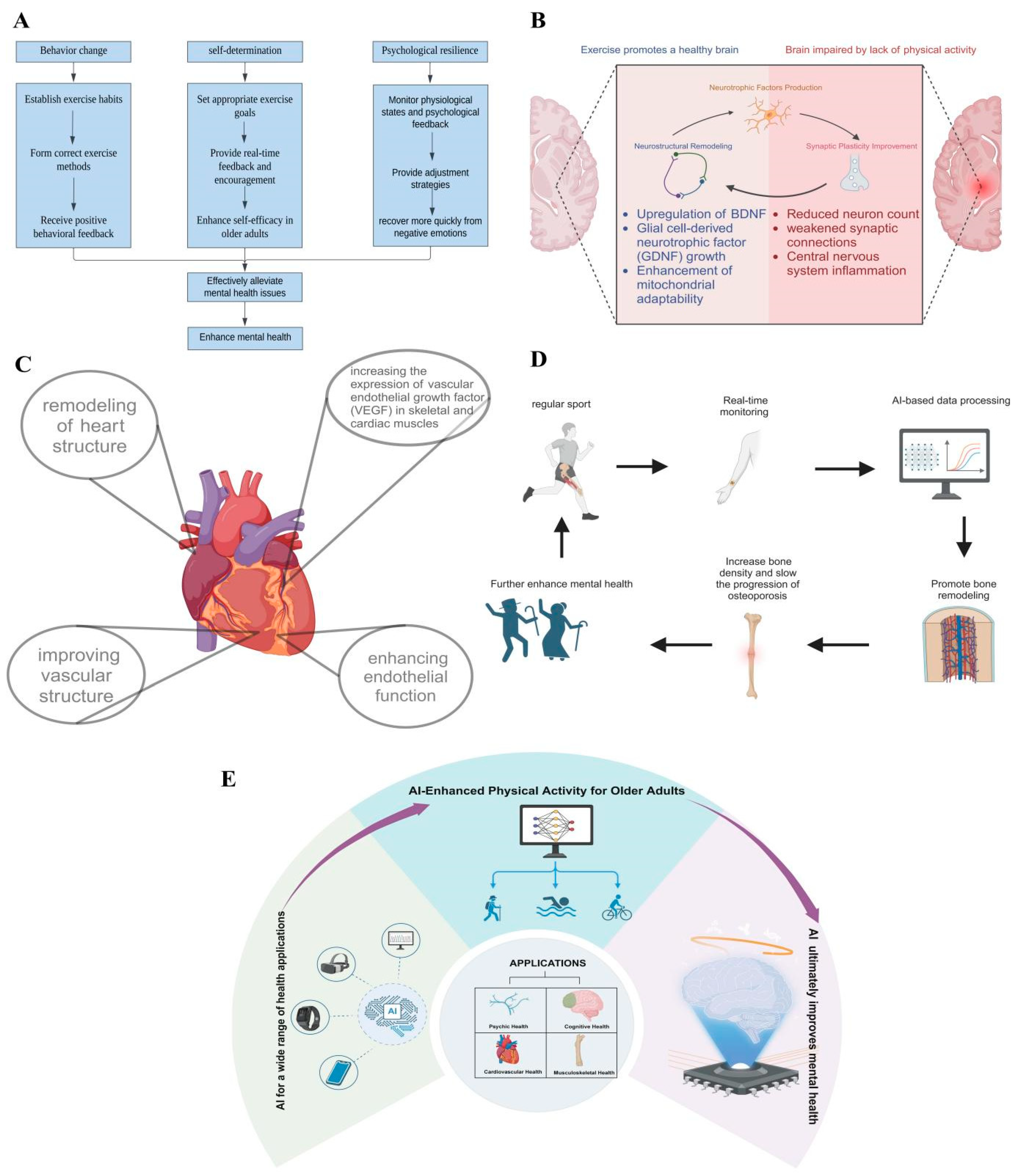
The direct impact of AI-assisted physical activity on older adults’ mental health is first observed within the mental health domain. In this context, AI-assisted physical activity can facilitate behavior change, self-determination, and psychological resilience among older adults, ultimately influencing their mental health( Ávila et al., 2022). Firstly, AI-assisted physical activity supports older adults in gradually developing healthy exercise habits. By leveraging AI devices for monitoring and feedback, correct exercise methods are established, making older adults more likely to adhere to exercise routines and generating positive behavioral feedback loops (Dell’Acqua et al., 2013; Ehn et al., 2018). This reinforced behavior can alleviate difficulties in emotion regulation, thereby reducing symptoms of depression and anxiety (Alexandrino-Silva et al., 2019). Secondly, intrinsic motivation, behavioral autonomy, and self-efficacy are critical components in the pursuit of mental health (Ryan & Deci, 2000). Individualized exercise programs designed with AI assistance enhance older adults’ self-efficacy by setting achievable exercise goals, providing real-time feedback, and offering encouragement, fostering greater ownership over their health management (Lee et al., 2021). Studies have shown that increased intrinsic motivation significantly improves life satisfaction and emotional stability among older adults(Rodrigues et al., 2023). Ongoing AI assistance during exercise helps older adults achieve accomplishment, overcome feelings of helplessness and improving self-worth, causing significant improvement in mental health. Finally, psychological resilience is at play in older adults’ mental well-being. AI-driven physical exercise increases their ability to handle stress and adversity, Hence strengthening their resilience.(Liu, 2023, Lok et al., 2017). AI devices can monitor physiological states and provide psychological feedback, suggesting strategies to help older adults better manage mood swings and stress(Goumopoulos & Menti, 2019). This feedback mechanism enables quicker recovery from negative emotions and increases adaptability to life’s challenges for the elderly (Benitez-Lugo et al., 2022). According to positive psychology’s theory of well-being, human fulfillment feelings derives from positive emotions, engagement, relationships, meaning, and accomplishment(Gander et al., 2016). (Figure 5A) summarizes the mechanisms by which AI-assisted physical activity impacts mental health.
Figure 5.
Mechanisms and Applications of AI-enhanced physical activity interventions for improving mental health in older adults. a. Behavioral and psychological pathways, showcasing behavior change, self-determination, and psychological resilience as interconnected processes leading to enhanced mental health in older adults. b. Neural mechanisms illustrating the dual effects of exercise on brain health, including neurotrophic factor production, synaptic plasticity improvement, and mitigation of central nervous system inflammation. c. Cardiovascular benefits, emphasizing heart remodeling, vascular structure improvements, and enhanced endothelial function via increased expression of growth factors. d. A procedural framework integrating regular physical activity with real-time monitoring and AI-based data processing to promote mental health, bone remodeling, and overall well-being. e. The broader applications of AI-enhanced physical activity, demonstrating its impact across cardiovascular, musculoskeletal, cognitive, and mental health, supported by real-time monitoring and tailored interventions.
Figure 5.
Mechanisms and Applications of AI-enhanced physical activity interventions for improving mental health in older adults. a. Behavioral and psychological pathways, showcasing behavior change, self-determination, and psychological resilience as interconnected processes leading to enhanced mental health in older adults. b. Neural mechanisms illustrating the dual effects of exercise on brain health, including neurotrophic factor production, synaptic plasticity improvement, and mitigation of central nervous system inflammation. c. Cardiovascular benefits, emphasizing heart remodeling, vascular structure improvements, and enhanced endothelial function via increased expression of growth factors. d. A procedural framework integrating regular physical activity with real-time monitoring and AI-based data processing to promote mental health, bone remodeling, and overall well-being. e. The broader applications of AI-enhanced physical activity, demonstrating its impact across cardiovascular, musculoskeletal, cognitive, and mental health, supported by real-time monitoring and tailored interventions.
In conclusion, AI empowers older adults to engage more actively in physical activity, fostering a sense of accomplishment and enhancing their quality of life(Lauzé et al., 2017). The AI-assisted health management system provides not only physical support for exercise but also a positive psychological experience, offering older adults inner fulfillment(Wilmink et al., 2020). In conclusion, AI-assisted physical activity offers all dimensions of support for improving older adults’ mental health, effectively alleviating mental health issues and enhancing their overall well-being.
4.2. Cognitive Health
Epidemiologic evidence indicates that the elderly population is particularly susceptible to cognitive decline and neurological disorders due to physiological aging. These conditions include Alzheimer’s disease (AD), Parkinson’s disease (PD), and stroke (CVA)(Aarsland et al., 2021; Acharya et al., 2021; Bangen et al., 2010; Breteler, 2000; Lo Coco et al., 2016). Such disorders largely impact the physical functioning and quality of life of elderly people. Research has shown that cognitive decline can affect the brain through multiple pathways(Green et al., 2013; Wirth et al., 2014).
First aging causes progressive structural changes in the brain: the number of neurons and the strength of synaptic connections decrease. These changes hurt the brain’s ability to process information, showing up as declines in memory, attention, and ability to learn. Second, a close relationship has been observed between changes in cognitive performance and declines in various aspects of brain function, in particular, executive functions and decision-making control, in which performance gradually diminishes among older people. Recent studies indicate that cognitive problems are associated with central nervous system (CNS) inflammatory responses as well.(Walker et al., 2019; Wang et al., 2019). Although the inflammatory response is a defense mechanism, prolonged inflammation can lead to neuronal damage and disrupt normal brain function. Neuroinflammation not only worsens the deterioration of brain structures but also related to further cognitive decline.
Nevertheless, it is well-established that exercise not only enhances brain function in healthy individuals but also offers protective and preventive benefits for those with neurological diseases, such as Alzheimer’s and Parkinson’s (Paillard et al., 2015; Thomas et al., 2020). The main effects of exercise on the brain can be categorized into three areas: neural structure remodeling, neurotrophic factor production, and improved synaptic plasticity(Mashhadi et al., 2021; Rothman & Mattson, 2013; van Praag & Christie, 2015). Notably, brain-derived neurotrophic factor (BDNF) is an important element in improving cognitive and mental health through exercise. Previous studies have shown that impaired cognitive function and psychiatric disorders are strongly correlated with decreased BDNF levels(Teng et al., 2021; Y. Wang et al., 2016). Exercise significantly upregulates BDNF and glial cell-derived neurotrophic factor (GDNF) production (Coelho et al., 2013; Sleiman et al., 2016). Additionally, exercise promotes mitochondrial adaptations, enhancing the brain’s oxidative stress environment and helping to prevent or rehabilitate neuropsychiatric disorders (Marques-Aleixo et al., 2015; O’Reilly et al., 2023).
A short-term study using AI-powered personalized exercise programs and virtual health assistants, combined with aerobic and resistance training, assessed cognitive status in older adults. The results demonstrated that AI technology can optimize exercise intensity and frequency, thereby improving cognitive performance, particularly in memory and attention. Based on these findings, several studies are integrating AI algorithms with brain imaging techniques to better understand these effects(Hassandra et al., 2021; Prabha et al., 2024; Rutkowski et al., 2023.). (Figure 5B) summarizes the mechanisms by which physical activity contributes to cardiovascular health. In summary, AI technology is emerging as a critical research direction for promoting exercise and improving mental health in older adults. Its applications in cognitive health are particularly significant, with BDNF serving as a key mediator linking AI-assisted exercise to cognitive function enhancement.
4.3. Cardiovascular Health
Cardiovascular disease (CVD) is closely linked to the mental health of older adults, with its prevalence increasing significantly with age and exerting profound effects on physical health and daily living. CVD is one of the leading causes of death and disability among older adults. Studies indicate that cardiovascular problems simultaneously impact older adults’ mental health, independence in daily living, and social participation (Babić et al., 2022; Rodrigues et al., 2023). A meta-analysis found that older adults with cardiovascular disease experience reduced independence in daily activities, particularly following severe cardiovascular events such as myocardial infarction and heart failure, which often necessitate long-term care and rehabilitation support (Kitamura et al., 2017, 2021). Additional studies show that CVD triggers symptoms such as chronic fatigue, dyspnea, and decreased exercise capacity, all of which limit daily activity participation and adversely affect the mental health of older adults (Kochovska et al., 2022; Vigorito & Giallauria, 2014). Complications of CVD, including hypertension, diabetes, and atherosclerosis, further worsen the challenges and distress faced by older adults.
Biologically, CVD contributes to increased oxidative stress and inflammatory responses, damaging the vascular endothelium and impairing circulation and cardiac function (Guzik & Touyz, 2017; Senoner & Dichtl, 2019). These pathological changes not only compromise mental health and mobility but also elevate the risk of severe outcomes such as stroke and heart failure.Exercise training is widely used as an adjunctive therapy for cardiovascular disease (Downing & Balady, 2011; Parker, 2012). Regular exercise and physical activity have been shown to improve cardiorespiratory fitness and reduce cardiovascular mortality risk in a safe, feasible, and effective manner (Lavie et al., 2019; N. N. Wu et al., 2019). Exercise positively impacts the cardiovascular system through mechanisms such as remodeling cardiac structure (physiological hypertrophy of the heart), improving vascular structure (increasing arteriolar diameters and thinning vessel walls), enhancing vascular endothelial growth factor (VEGF) expression in skeletal and cardiac muscle, and promoting vascular endothelial function (Leung et al., 2008; Tao et al., 2023). (Figure 5C) highlights the contribution of physical activity to cardiovascular health.
A key question is whether AI-assisted exercise can significantly improve cardiovascular and mental health in older adults. A lot of studies shows that AI technology can help older adults effectively regulate exercise intensity through real-time monitoring, optimizing their cardiovascular health. For example, one study found that an AI-monitored personalized exercise program improved heart rate variability and reduced cardiovascular event risk in older adults(Eggenberger et al., 2020). AI technologies also monitor respiratory and cardiorespiratory function during exercise, ensuring that the cardiovascular load remains within the safe limits(Meza et al., 2017). Recent research shows that AI-assisted maximal-intensity exercise leads to significant improvements in cardiorespiratory fitness, with AI playing a crucial role in managing respiratory rhythm and exercise intensity(Simonsson et al., 2023). AI-integrated exercise interventions for older adults with CVD have also been effective in reducing cardiovascular inflammatory markers and improving anti-inflammatory responses(Ahn & Kim, 2020). This indicates that AI-assisted exercise not only enhances cardiovascular function but also prevents further disease happening. For older adults with weaker cardiovascular function or chronic inactivity, AI-monitored moderate exercise plans can gradually restore their exercise capacity, thereby enhancing mental health.
In sum, AI offers an effective management tool for older adults’ cardiovascular health through personalized exercise plans and real-time monitoring. AI-assisted exercise optimizes cardiovascular health, reduces CVD risk, and ensures safe and effective during exercise practices, ultimately empowering older adults to lead more active lives and improving their mental well-being.
4.4. Musculoskeletal Health
The skeletal system plays a crucial role in research related to the mental health of older adults. Maintaining musculoskeletal health is not only a key factor for ensuring the quality of life but also profoundly impacts their mental health(McLeod et al., 2016; Tieland et al., 2017). Recently, AI-assisted physical activity has increasingly focused on promoting bone health and enhancing musculoskeletal conditions to support mental health and emotional regulation in older adults. Epidemiologic evidence suggests a strong link between physical activity and increased bone density, as well as a reduced risk of fractures(Haxhi et al., 2022; J. Wu et al., 2024). Using AI for custom-tailored workout plans results in a marked increase in older adults’ bone density, leading to better emotional stability and reducing psychological complaints like anxiety and depression. In particular, AI-assisted exercise programs tailor the amount and intensity of exercise to minimize the risk of injury and strengthen bones, thereby improving older adults’ self-confidence and overall satisfaction in life.
Bone health is mainly dependent on the bone remodeling mechanism, a process that naturally slows with age. Studies have shown that regular weight-bearing exercise promotes bone remodeling and improves bone quality by increasing osteoblast activity(Dibello et al., 2024; Pasqualini et al., 2019). AI devices can monitor exercise intensity in real-time, ensuring older adults bone receive adequate weight-bearing stimulation within safe limits. This boosts bone density and slows the progression of osteoporosis (Watson et al., 2019). Furthermore, studies indicate that the protective effects of AI-assisted exercise interventions on musculoskeletal may be associated with anti-inflammatory mechanisms. For instance, AI-guided aerobic exercise regimens not only promote osteoblast activity but also protect bone health by reducing chronic inflammation in bone tissue(Benedetti et al., 2018). Chronic inflammation in bone tissue is closely linked to osteoporosis, and AI-assisted exercise plays a critical role in modulating the inflammatory response to better protect the skeletal system(Ramachandran et al., 2024). Reduced inflammation levels also ease physical discomfort and help older adults maintain a positive appearance, further improving mental health. Moreover, exercise interventions positively impact bone health by activating the bone morphogenetic protein (BMP) signaling pathway and promoting the release of osteogenic factors (Chen et al., 2024; Sánchez-Duffhues et al., 2015). AI devices provide personalized exercise regimens by monitoring the skeletal status and exercise responses of older adults, activating relevant bone growth factors, and supporting continued bone health. Through these mechanisms, AI-assisted exercise programs help older adults maintain skeletal integrity, reduce fracture risk, and alleviate related anxiety (Daly et al., 2020), thus positively impacting their mental well-being.
In summary, bone health has emerged as a key theme in research on AI-assisted physical activity for improving mental health in older adults. With the support of AI technology, personalized exercise programs and scientific monitoring tools can significantly enhance both the skeletal and mental health of older adults. (Figure 5D) summarizes the AI-assisted physical activity processes related to bone remodeling in older adults.
5. Conclusion and Future Perspective
5.1. Conclusion
This study is the first to use a knowledge map strategy to describe the distribution of research, major themes, and related research hotspots in the field of AI-facilitated physical activity aimed at improving the mental health of older adults. While previous studies have explored the dual facilitating effects of AI on physical activity and mental health among older adults, a comprehensive understanding of AI’s role in enhancing mental health through physical activity remains limited. One reason for this gap is that AI technology, as a relatively new digital tool, has only recently gained widespread use in health-related applications, and the issue of older adults’ mental health has gained increasing attention in response to global aging trends. Another reason may be the relatively brief history of interdisciplinary development concerning the impact of AI and its benefits on the relationship between physical activity and mental health in older adults. Nevertheless, annual literature publication volumes and disciplinary analyses indicate that this field is currently experiencing rapid growth.
An analysis of 1,831 relevant publications from the WoSCC database reveals significant growth in AI research within the context of exercise health for older adults since 2011. The United States, the United Kingdom, and China are leading contributors, with key organizations such as Harvard University, the U.S. Department of Veterans Affairs, and the Veterans Health Administration (VHA) playing vital roles in examining the impact and benefits of AI on physical activity and mental health in older adults. The research context mainly involves themes such as older adults’ mental health, the positive effects of physical activity, AI-assisted health interventions, and multidisciplinary collaborative networks. Research models focus on personalized health interventions, short- versus long-term effects, and intelligent monitoring and feedback mechanisms. Key topics of interest include intelligent companion robots, personalized psychological support, cognitive rehabilitation, and health support in rural areas.
Additionally, this paper explores four application areas of AI in older adults’ motor health. Mental health is a vital area of the health of older adults and is also supported by numerous studies. Research shows artificial intelligence can reduce anxiety and depression among older adults who exercise and may vie to encourage them by offering virtual companionship or providing psychological support that improves their mental health. When it comes to cognitive health, AI-enabled cognitive training and exercise monitoring have proven useful in assisting older adults with Alzheimer’s disease, Parkinson’s disease, stroke, and other conditions, especially through early intervention for cognitive disorders. Another area where AI and ML will help is cardiovascular health, where machine learning can enhance cardiorespiratory fitness and lower the risk of cardiovascular diseases using both personalized exercise regimens and real-time monitoring. Finally, a review of studies describes the application of artificial intelligence-based physical activity interventions, which have improved bone density, fracture risk, and quality of life in older subjects. The interplay among these four domains provides multidimensional support for AI-assisted physical activity to enhance the mental health of older adults. Figure 5E summarizes the flow of this paper, though further research is needed to fully elucidate the specific mechanisms and effects.
5.2. Future Perspectives
Future research on AI-facilitated physical activity for improving older adults’ mental health must address the field’s early-stage challenges by establishing standardized frameworks, core health indicators, and systematic approaches to ensure consistency across paradigms, interventions, and outcome measures. Key strategies include long-term tracking of personalized exercise plans, short-term AI interventions with real-time feedback, AI-assisted rehabilitation to enhance physical and mental health, tailored solutions for managing chronic diseases, and comprehensive systems integrating personalized exercise and health monitoring. Despite significant progress, limited research explores AI’s interaction with biological mechanisms or its integrated effects on physical, mental, and cognitive health. By leveraging advancements in AI technology and multidimensional data analysis, future studies should prioritize interdisciplinary collaboration and optimize the dose-effect relationship between AI and physical activity to maximize health outcomes and uncover novel pathways for improving older adults’ overall well-being.
5.3. Strength and Limitations
The primary strength of this study lies in its comprehensive analysis of global literature on how Artificial Intelligence (AI) can enhance physical activity to improve the mental health of older adults, approached from an interdisciplinary perspective using innovative strategies. By integrating knowledge mapping and visualization analysis, this study reveals the current state of research and practical applications, highlighting global collaborations and key trends across different countries, regions, and disciplines. The structured data analysis, including cluster and keyword co-citation analyses, offers valuable insights into how AI-driven interventions impact physical activity and mental health. Nevertheless, limitations such as the restricted use of unstructured knowledge and qualitative methods must be addressed to provide a more complete understanding of AI’s potential.
Future research should expand the scope by incorporating a broader range of AI technologies and leveraging multi-database analyses to uncover nuanced pathways and innovative applications. This would enable a deeper exploration of how AI can be optimized to create personalized, data-driven exercise interventions that promote mental well-being, reduce anxiety and depression, and enhance overall quality of life for older adults. Further interdisciplinary collaboration and standardization of key health indicators will help establish more effective AI-based health management systems, paving the way for transformative solutions to support the mental and physical health of the aging population.
Author Contributions
Conceptualization, Wen Fang and Bo Yin; Methodology, Sijing Fan, Hongyun Zheng and Yanwei You; Software, Sijing Fan; Validation, Hongyun Zheng; Investigation, Bo Yin; Resources, Wen Fang and Zijian Fang; Data curation, Yanwei You; Writing—original draft, Sijing Fan; Writing—review & editing, Hongyun Zheng and Zijian Fang; Supervision, Wen Fang, Zijian Fang, Xinming Ye and Baixia Li; Project administration, Wen Fang; Funding acquisition, Wen Fang.Authorship must be limited to those who have contributed substantially to the work reported.
Funding
This project is supported by the Tsinghua IDG/McGovern “Brain+X” Seed Grant Doctoral and Postdoctoral Program;Shanghai Education Science Research General Program GSA2024003. The authors would like to thank the anonymous reviewers for the relevant and constructive suggestions, which helped us to substantially improve the manuscript.
Institutional Review Board Statement
During the preparation of the manuscript, the authors used This tool assisted in ensuring that the manuscript’s statements were presented clearly and understandably, facilitating better communication of the research findings. This tool assisted in ensuring that the manuscript’s statements were presented clearly and understandably, facilitating better communication of the research findings. This tool assisted in ensuring that the manuscript’s statements were presented clearly and understandably, facilitating better communication of the research findings.
Data Availability Statement
The authors declare that they have no known competing financial interests or personal relationships that could have appeared to influence the work reported in this paper.
Conflicts of Interest
The authors declare that they have no known competing financial interests or personal relationships that could have appeared to influence the work reported in this paper.
References
- Aarsland, D., Batzu, L., Halliday, G. M., Geurtsen, G. J., Ballard, C., Ray Chaudhuri, K., & Weintraub, D. (2021). Parkinson disease-associated cognitive impairment. Nature Reviews Disease Primers, 7(1), 47. [CrossRef]
- Acharya, V., Fan, K., Snitz, B. E., Ganguli, M., DeKosky, S., Lopez, O. L., Feingold, E., & Kamboh, M. I. (2021). Genome-wide meta-analysis of age-related cognitive decline in population-based older individuals. Alzheimer’s & Dementia, 17(S2), e058723. [CrossRef]
- Ahn, N., & Kim, K. (2020). Can Active Aerobic Exercise Reduce the Risk of Cardiovascular Disease in Prehypertensive Elderly Women by Improving HDL Cholesterol and Inflammatory Markers? International Journal of Environmental Research and Public Health, 17. [CrossRef]
- Alexandrino-Silva, C., Ribeiz, S. R., Frigerio, M. B., Bassolli, L., Alves, T. F., Busatto, G., & Bottino, C. (2019). Prevention of depression and anxiety in community-dwelling older adults: The role of physical activity. Archives of Clinical Psychiatry (São Paulo), 46(1), 14–20. [CrossRef]
- Al-khafajiy, M., Baker, T., Chalmers, C., Asim, M., Kolivand, H., Fahim, M., & Waraich, A. (2019). Remote health monitoring of elderly through wearable sensors. Multimedia Tools and Applications, 78(17), 24681–24706. [CrossRef]
- Babić, D., Kamenečki, G., Milošević, M., Završnik, J., & Železnik, D. (2022). Functional Independence and Social Support as Mediators in the Maintenance of Mental Health among Elderly Persons with Chronic Diseases. Collegium Antropologicum, 46(1), 37–45. [CrossRef]
- Bangen, K. J., Delano-Wood, L., Wierenga, C. E., McCauley, A., Jeste, D. V., Salmon, D. P., & Bondi, M. W. (2010). Associations between stroke risk and cognition in normal aging and Alzheimer’s disease with and without depression. International Journal of Geriatric Psychiatry, 25(2), 175–182. [CrossRef]
- Battaglia, G., Bellafiore, M., Alesi, M., Paoli, A., Bianco, A., & Palma, A. (2016). Effects of an adapted physical activity program on psychophysical health in elderly women. Clinical Interventions in Aging, 11, 1009–1015. [CrossRef]
- Beauchamp, M. R., Hulteen, R. M., Ruissen, G. R., Liu, Y., Rhodes, R. E., Wierts, C. M., Waldhauser, K. J., Harden, S. H., & Puterman, E. (2021). Online-Delivered Group and Personal Exercise Programs to Support Low Active Older Adults’ Mental Health During the COVID-19 Pandemic: Randomized Controlled Trial. Journal of Medical Internet Research, 23(7), e30709. [CrossRef]
- Benedetti, M., Furlini, G., Zati, A., & Mauro, G. letizia. (2018). The Effectiveness of Physical Exercise on Bone Density in Osteoporotic Patients. BioMed Research International, 2018. [CrossRef]
- Benitez-Lugo, M.-L., Suárez-Serrano, C., Galvao-Carmona, A., Vazquez-Marrufo, M., & Chamorro-Moriana, G. (2022). Effectiveness of feedback-based technology on physical and cognitive abilities in the elderly. Frontiers in Aging Neuroscience, 14. [CrossRef]
- Bleijenberg, N., Drubbel, I., Neslo, R. Ej., Schuurmans, M. J., Ten Dam, V. H., Numans, M. E., De Wit, G. A., & De Wit, N. J. (2017). Cost-Effectiveness of a Proactive Primary Care Program for Frail Older People: A Cluster-Randomized Controlled Trial. Journal of the American Medical Directors Association, 18(12), 1029-1036.e3. [CrossRef]
- Bloom, D. E., Canning, D., & Lubet, A. (2015). Global Population Aging: Facts, Challenges, Solutions & Perspectives. Daedalus, 144(2), 80–92. [CrossRef]
- Bourouis, A., Feham, M., & Bouchachia, A. (2011). Ubiquitous Mobile Health Monitoring System for Elderly (UMHMSE). International Journal of Computer Science and Information Technology, 3(3), 74–82. [CrossRef]
- Breteler, M. M. B. (2000). Vascular Involvement in Cognitive Decline and Dementia: Epidemiologic Evidence from the Rotterdam Study and the Rotterdam Scan Study. Annals of the New York Academy of Sciences, 903(1), 457–465. [CrossRef]
- Byass, P. (2008). Towards a global agenda on ageing. Global Health Action, 1, 10.3402/gha.v1i0.1908. [CrossRef]
- Cabeza, L. F., Chàfer, M., & Mata, É. (2020). Comparative Analysis of Web of Science and Scopus on the Energy Efficiency and Climate Impact of Buildings. Energies, 13(2), 409. [CrossRef]
- Cascajares, M., Alcayde, A., Salmerón-Manzano, E., & Manzano-Agugliaro, F. (2021). The Bibliometric Literature on Scopus and WoS: The Medicine and Environmental Sciences Categories as Case of Study. International Journal of Environmental Research and Public Health, 18(11), 5851. [CrossRef]
- Chadegani, A. A., Salehi, H., Yunus, M. M., Farhadi, H., Fooladi, M., Farhadi, M., & Ebrahim, N. A. (2013). A Comparison between Two Main Academic Literature Collections: Web of Science and Scopus Databases. Asian Social Science, 9(5), Article 5. [CrossRef]
- Chen, C. (2006). CiteSpace II: Detecting and visualizing emerging trends and transient patterns in scientific literature. Journal of the American Society for Information Science and Technology, 57(3), 359–377. [CrossRef]
- Chen, Y., Guo, B., Ma, G., & Cao, H. (2024). Sensory nerve regulation of bone homeostasis: Emerging therapeutic opportunities for bone-related diseases. Ageing Research Reviews, 99, 102372. [CrossRef]
- Civieri, G., Abohashem, S., Grewal, S. S., Aldosoky, W., Qamar, I., Hanlon, E., Choi, K. W., Shin, L. M., Rosovsky, R. P., Bollepalli, S. C., Lau, H. C., Armoundas, A. A., Seligowski, A. V., Turgeon, S. M., Pitman, R. K., Tona, F., Wasfy, J. H., Smoller, J. W., Iliceto, S., … Tawakol, A. (2024). Anxiety and Depression Associated With Increased Cardiovascular Disease Risk Through Accelerated Development of Risk Factors. JACC: Advances, 3(9), 101208. [CrossRef]
- Coelho, F. G. D. M., Gobbi, S., Andreatto, C. A. A., Corazza, D. I., Pedroso, R. V., & Santos-Galduróz, R. F. (2013). Physical exercise modulates peripheral levels of brain-derived neurotrophic factor (BDNF): A systematic review of experimental studies in the elderly. Archives of Gerontology and Geriatrics, 56(1), 10–15. [CrossRef]
- Cortellessa, G., Benedictis, R. D., Fracasso, F., Orlandini, A., Umbrico, A., & Cesta, A. (2021). AI and robotics to help older adults: Revisiting projects in search of lessons learned. Paladyn, Journal of Behavioral Robotics, 12(1), 356–378. [CrossRef]
- Cyarto, E. V., Lautenschlager, N. T., Desmond, P. M., Ames, D., Szoeke, C., Salvado, O., Sharman, M. J., Ellis, K. A., Phal, P. M., Masters, C. L., Rowe, C. C., Martins, R. N., & Cox, K. L. (2012). Protocol for a randomized controlled trial evaluating the effect of physical activity on delaying the progression of white matter changes on MRI in older adults with memory complaints and mild cognitive impairment: The AIBL Active trial. BMC Psychiatry, 12(1), 167. [CrossRef]
- Daly, R., Gianoudis, J., Kersh, M., Bailey, C. A., Ebeling, P., Krug, R., Nowson, C., Hill, K., & Sanders, K. (2020). Effects of a 12-Month Supervised, Community-Based, Multimodal Exercise Program Followed by a 6-Month Research-to-Practice Transition on Bone Mineral Density, Trabecular Microarchitecture, and Physical Function in Older Adults: A Randomized Controlled Trial. Journal of Bone and Mineral Research, 35. [CrossRef]
- de Oliveira, L. da S. S. C. B., Souza, E. C., Rodrigues, R. A. S., Fett, C. A., & Piva, A. B. (2019). The effects of physical activity on anxiety, depression, and quality of life in elderly people living in the community. Trends in Psychiatry and Psychotherapy, 41, 36–42. [CrossRef]
- Debauche, O., Penka, J. B. N., Mahmoudi, S., Lessage, X., Hani, M., Manneback, P., Lufuluabu, U. K., Bert, N., Messaoudi, D., & Guttadauria, A. (2022). RAMi: A New Real-Time Internet of Medical Things Architecture for Elderly Patient Monitoring. Inf., 13. [CrossRef]
- Dell’Acqua, P., Klompstra, L. V., Jaarsma, T., & Samini, A. (2013). An assistive tool for monitoring physical activities in older adults. 2013 IEEE 2nd International Conference on Serious Games and Applications for Health (SeGAH), 1–6. [CrossRef]
- Delle Fave, A., Bassi, M., Boccaletti, E. S., Roncaglione, C., Bernardelli, G., & Mari, D. (2018). Promoting Well-Being in Old Age: The Psychological Benefits of Two Training Programs of Adapted Physical Activity. Frontiers in Psychology, 9. [CrossRef]
- Dibello, V., Lobbezoo, F., Solfrizzi, V., Custodero, C., Lozupone, M., Pilotto, A., Dibello, A., Santarcangelo, F., Grandini, S., Daniele, A., Lafornara, D., Manfredini, D., & Panza, F. (2024). Oral health indicators and bone mineral density disorders in older age: A systematic review. Ageing Research Reviews, 100, 102412. [CrossRef]
- Downing, J., & Balady, G. J. (2011). The Role of Exercise Training in Heart Failure. Journal of the American College of Cardiology, 58(6), 561–569. [CrossRef]
- Eggenberger, P., Annaheim, S., Kündig, K. A., Rossi, R., Münzer, T., & Bruin, E. D. de. (2020). Heart Rate Variability Mainly Relates to Cognitive Executive Functions and Improves Through Exergame Training in Older Adults: A Secondary Analysis of a 6-Month Randomized Controlled Trial. Frontiers in Aging Neuroscience, 12. [CrossRef]
- Ehn, M., Eriksson, L. C., Åkerberg, N., & Johansson, A.-C. (2018). Activity Monitors as Support for Older Persons’ Physical Activity in Daily Life: Qualitative Study of the Users’ Experiences. JMIR mHealth and uHealth, 6(2), e34. [CrossRef]
- El-Kader, S. A. A., & Al-Jiffri, O. (2017). Aerobic exercise improves quality of life, psychological well-being and systemic inflammation in subjects with Alzheimer’s disease. African Health Sciences, 16 4, 1045–1055. [CrossRef]
- Fei, L., Kang, X., Sun, W., & Hu, B. (2023). Global research trends and prospects on the first-generation college students from 2002 to 2022: A bibliometric analysis via CiteSpace. Frontiers in Psychology, 14. [CrossRef]
- Figueira, H. A., Figueira, O. A., Figueira, A. A., Figueira, J. A., Polo-Ledesma, R. E., Lyra Da Silva, C. R., & Dantas, E. H. M. (2023). Impact of Physical Activity on Anxiety, Depression, Stress and Quality of Life of the Older People in Brazil. International Journal of Environmental Research and Public Health, 20(2), 1127. [CrossRef]
- Forberger, S., Bammann, K., Bauer, J., Boll, S., Bolte, G., Brand, T., Hein, A., Koppelin, F., Lippke, S., Meyer, J., Pischke, C., Voelcker-Rehage, C., & Zeeb, H. (2017). How to Tackle Key Challenges in the Promotion of Physical Activity among Older Adults (65+): The AEQUIPA Network Approach. International Journal of Environmental Research and Public Health, 14(4), 379. [CrossRef]
- Frasca, D., Blomberg, B. B., & Paganelli, R. (2017). Aging, Obesity, and Inflammatory Age-Related Diseases. Frontiers in Immunology, 8. [CrossRef]
- Fulmer, R., Joerin, A., Gentile, B., Lakerink, L., & Rauws, M. (2018). Using Psychological Artificial Intelligence (Tess) to Relieve Symptoms of Depression and Anxiety: Randomized Controlled Trial. JMIR Mental Health, 5. [CrossRef]
- Gander, F., Proyer, R. T., & Ruch, W. (2016). Positive Psychology Interventions Addressing Pleasure, Engagement, Meaning, Positive Relationships, and Accomplishment Increase Well-Being and Ameliorate Depressive Symptoms: A Randomized, Placebo-Controlled Online Study. Frontiers in Psychology, 7. [CrossRef]
- Gilbody, S., Brabyn, S., Mitchell, A., Ekers, D., McMillan, D., Bailey, D., Hems, D., Graham, C. A. C., Keding, A., & Bosanquet, K. (2022). Can We Prevent Depression in At-Risk Older Adults Using Self-Help? The UK SHARD Trial of Behavioral Activation. The American Journal of Geriatric Psychiatry, 30(2), 197–207. [CrossRef]
- Glenisson, P., Glänzel, W., Janssens, F., & De Moor, B. (2005). Combining full text and bibliometric information in mapping scientific disciplines. Information Processing & Management, 41(6), 1548–1572. [CrossRef]
- Goumopoulos, C., & Menti, E. (2019). Stress Detection in Seniors Using Biosensors and Psychometric Tests. Procedia Computer Science, 152, 18–27. [CrossRef]
- Graham, S. A., Lee, E. E., Jeste, D. V., Van Patten, R., Twamley, E. W., Nebeker, C., Yamada, Y., Kim, H.-C., & Depp, C. A. (2020). Artificial intelligence approaches to predicting and detecting cognitive decline in older adults: A conceptual review. Psychiatry Research, 284, 112732. [CrossRef]
- Green, A. E., Kraemer, D. J. M., DeYoung, C. G., Fossella, J. A., & Gray, J. R. (2013). A Gene–Brain–Cognition Pathway: Prefrontal Activity Mediates the Effect of COMT on Cognitive Control and IQ. Cerebral Cortex, 23(3), 552–559. [CrossRef]
- Guzik, T. J., & Touyz, R. M. (2017). Oxidative Stress, Inflammation, and Vascular Aging in Hypertension. Hypertension, 70(4), 660–667. [CrossRef]
- Hassandra, M., Galanis, E., Hatzigeorgiadis, A., Goudas, M., Mouzakidis, C., Karathanasi, E. M., Petridou, N., Tsolaki, M., Zikas, P., Evangelou, G., Papagiannakis, G., Bellis, G., Kokkotis, C., Panagiotopoulos, S. R., Giakas, G., & Theodorakis, Y. (2021). A Virtual Reality App for Physical and Cognitive Training of Older People With Mild Cognitive Impairment: Mixed Methods Feasibility Study. JMIR Serious Games, 9(1), e24170. [CrossRef]
- Haxhi, J., Mattia, L., Vitale, M., Pisarro, M., Conti, F., & Pugliese, G. (2022). Effects of physical activity/exercise on bone metabolism, bone mineral density and fragility fractures. International Journal of Bone Fragility. [CrossRef]
- Hong, C., Sun, L., Liu, G., Guan, B., Li, C., & Luo, Y. (2023). Response of Global Health Towards the Challenges Presented by Population Aging. China CDC Weekly, 5(39), 884. [CrossRef]
- Hou, B., Wu, Y., & Huang, Y. (2024). Physical exercise and mental health among older adults: The mediating role of social competence. Frontiers in Public Health, 12. [CrossRef]
- Hung, J. (2023). Smart Elderly Care Services in China: Challenges, Progress, and Policy Development. Sustainability, 15(1), Article 1. [CrossRef]
- Iso-Markku, P., Kujala, U. M., Knittle, K., Polet, J., Vuoksimaa, E., & Waller, K. (2022). Physical activity as a protective factor for dementia and Alzheimer’s disease: Systematic review, meta-analysis and quality assessment of cohort and case–control studies. British Journal of Sports Medicine, 56(12), 701–709. [CrossRef]
- Jiang, D., Xu, X., Liu, Z., & Yang, Q. (2023). Editorial: Mental health in older adults with cognitive impairments and dementia: a multidisciplinary perspective. Frontiers in Psychiatry, 14, 1297903. [CrossRef]
- Jochen Gläser, Glänzel, W., & Scharnhorst, A. (2017). Same data—different results? Towards a comparative approach to the identification of thematic structures in science. Scientometrics, 111(2), 981–998. [CrossRef]
- Karim, H. T., Vahia, I. V., Iaboni, A., & Lee, E. E. (2022). Editorial: Artificial Intelligence in Geriatric Mental Health Research and Clinical Care. Frontiers in Psychiatry, 13, 859175. [CrossRef]
- Kazeminia, M., Salari, N., Vaisi-Raygani, A., Jalali, R., Abdi, A., Mohammadi, M., Daneshkhah, A., Hosseinian-Far, M., & Shohaimi, S. (2020). The effect of exercise on anxiety in the elderly worldwide: A systematic review and meta-analysis. Health and Quality of Life Outcomes, 18(1), 363. [CrossRef]
- Kitamura, M., Izawa, K. P., Ishihara, K., Yaekura, M., Nagashima, H., Yoshizawa, T., & Okamoto, N. (2021). Predictors of activities of daily living at discharge in elderly patients with heart failure with preserved ejection fraction. Heart and Vessels, 36(4), 509–517. [CrossRef]
- Kitamura, M., Izawa, K. P., Taniue, H., Mimura, Y., Imamura, K., Nagashima, H., & Brubaker, P. H. (2017). Relationship between Activities of Daily Living and Readmission within 90 Days in Hospitalized Elderly Patients with Heart Failure. BioMed Research International, 2017, 1–7. [CrossRef]
- Knowles, L. M., Skeath, P., Jia, M., Najafi, B., Thayer, J., & Sternberg, E. M. (2016). New and Future Directions in Integrative Medicine Research Methods with a Focus on Aging Populations: A Review. Gerontology, 62(4), 467–476. [CrossRef]
- Kochovska, S., Currow, D., Chang, S., Johnson, M., Ferreira, D., Morgan, D., Olsson, M., & Ekström, M. (2022). Persisting breathlessness and activities reduced or ceased: A population study in older men. BMJ Open Respiratory Research, 9(1), e001168. [CrossRef]
- Korhonen, O., Kari, T., & Institute for Advanced Management Systems Research, Turku, Finland; Natural Resources Institute Finland (Luke), Helsinki, Finland. (2022). Physical Activity Application Supporting Young Elderly: Insights for Personalization. 35 Th Bled eConference Digital Restructuring and Human (Re)Action, 81–95. [CrossRef]
- Lauzé, M., Martel, D. D., & Aubertin-Leheudre, M. (2017). Feasibility and Effects of a Physical Activity Program Using Gerontechnology in Assisted Living Communities for Older Adults. Journal of the American Medical Directors Association, 18(12), 1069–1075. [CrossRef]
- Lavie, C. J., Ozemek, C., Carbone, S., Katzmarzyk, P. T., & Blair, S. N. (2019). Sedentary Behavior, Exercise, and Cardiovascular Health. Circulation Research, 124(5), 799–815. [CrossRef]
- Lee, E.-J., So, W.-Y., Youn, H.-S., & Kim, J. (2021). Effects of School-Based Physical Activity Programs on Health-Related Physical Fitness of Korean Adolescents: A Preliminary Study. International Journal of Environmental Research and Public Health, 18(6), 2976. [CrossRef]
- Leung, F. P., Yung, L. M., Laher, I., Yao, X., Chen, Z. Y., & Huang, Y. (2008). Exercise, Vascular Wall and Cardiovascular Diseases. Sports Medicine, 38(12), 1009–1024. [CrossRef]
- Li, X. (2023). Evaluation and Analysis of Elderly Mental Health Based on Artificial Intelligence. Occupational Therapy International, 2023. [CrossRef]
- Liao, Y.-Y., Tseng, H.-Y., Lin, Y.-J., Wang, C.-J., & Hsu, W.-C. (2020). Using virtual reality-based training to improve cognitive function, instrumental activities of daily living and neural efficiency in older adults with mild cognitive impairment. European Journal of Physical and Rehabilitation Medicine, 56(1). [CrossRef]
- Lindsay Smith, G., Banting, L., Eime, R., O’Sullivan, G., & van Uffelen, J. G. Z. (2017). The association between social support and physical activity in older adults: A systematic review. International Journal of Behavioral Nutrition and Physical Activity, 14(1), 56. [CrossRef]
- Liu, L. (2023). Analysis of Elderly Psychological Resilience and Its Role in Coping with Life Stress. International Journal of Education and Humanities, 11(1), Article 1. [CrossRef]
- Liu, X., Chau, K.-Y., Liu, X., & Wan, Y. (2023). The Progress of Smart Elderly Care Research: A Scientometric Analysis Based on CNKI and WOS. International Journal of Environmental Research and Public Health, 20(2), 1086. [CrossRef]
- Lo Coco, D., Corrao, S., & Lopez, G. (2016). Cognitive impairment and stroke in elderly patients. Vascular Health and Risk Management, 105. [CrossRef]
- Lok, N., Lok, S., & Canbaz, M. (2017). The effect of physical activity on depressive symptoms and quality of life among elderly nursing home residents: Randomized controlled trial. Archives of Gerontology and Geriatrics, 70, 92–98. [CrossRef]
- Lucia, S., Forte, R., Boccacci, L., Grimandi, L., Bittner, M., Aydin, M., Trentin, C., Tocci, N., & Di Russo, F. (2024). A Nonpharmacologic Treatment for Anxiety in Older Adults Based on Cognitive-Motor Training With Response-Generated Feedback. The Journals of Gerontology, Series B: Psychological Sciences and Social Sciences, 79(2), gbad170. [CrossRef]
- Malle, Vivienne Chi1, , and Claudia B. Rebola2, Gorbunova, G., Yashkin, A., Kravchenko, J., Yashin, A., Akushevich, I., & Stallard, E. (2023). OLDER ADULTS’ UNDERSTANDING OF SIGNALS COMMUNICATED BY ROBOT COMPANIONS FOR CAREGIVING. Innovation in Aging, 7(Supplement_1), 608–609. [CrossRef]
- Mane, K. K., & Börner, K. (2004). Mapping topics and topic bursts in PNAS. Proceedings of the National Academy of Sciences, 101(suppl_1), 5287–5290. [CrossRef]
- Marques-Aleixo, I., Santos-Alves, E., Balça, M. M., Rizo-Roca, D., Moreira, P. I., Oliveira, P. J., Magalhães, J., & Ascensão, A. (2015). Physical exercise improves brain cortex and cerebellum mitochondrial bioenergetics and alters apoptotic, dynamic and auto(mito)phagy markers. Neuroscience, 301, 480–495. [CrossRef]
- Mashhadi, Z., Saadati, H., & Dadkhah, M. (2021). Investigating the Putative Mechanisms Mediating the Beneficial Effects of Exercise on the Brain and Cognitive Function. International Journal of Medical Reviews, 8(1), 45–56. [CrossRef]
- McLeod, M., Breen, L., Hamilton, D. L., & Philp, A. (2016). Live strong and prosper: The importance of skeletal muscle strength for healthy ageing. Biogerontology, 17(3), 497–510. [CrossRef]
- Meho, L. I., & Yang, K. (2007). Impact of data sources on citation counts and rankings of LIS faculty: Web of science versus scopus and google scholar. Journal of the American Society for Information Science and Technology, 58(13), 2105–2125. [CrossRef]
- Meza, R. M., Santos, R., Nolazco-Flores, J., Rodríguez-Ortiz, G., Anguiano, R., Ríos, A., & Block, A. E. (2017). PlaIMoS: A Remote Mobile Healthcare Platform to Monitor Cardiovascular and Respiratory Variables. Sensors (Basel, Switzerland), 17. [CrossRef]
- Militello, R., Luti, S., Gamberi, T., Pellegrino, A., Modesti, A., & Modesti, P. A. (2024). Physical Activity and Oxidative Stress in Aging. Antioxidants, 13(5), 557. [CrossRef]
- Ng, T.-P., Nyunt, M. S. Z., Feng, L., Feng, L., Niti, M., Tan, B. Y., Chan, G., Khoo, S. A., Chan, S. M., Yap, P., & Yap, K. B. (2017). Multi-domains lifestyle interventions reduces depressive symptoms among frail and pre-frail older persons: Randomized controlled trial. The Journal of Nutrition, Health and Aging, 21(8), 918–926. [CrossRef]
- O’Reilly, C. L., Miller, B. F., & Lewis, T. L. (2023). Exercise and mitochondrial remodeling to prevent age-related neurodegeneration. Journal of Applied Physiology, 134(1), 181–189. [CrossRef]
- Paillard, T., Rolland, Y., & de Souto Barreto, P. (2015). Protective Effects of Physical Exercise in Alzheimer’s Disease and Parkinson’s Disease: A Narrative Review. Journal of Clinical Neurology, 11(3), 212–219. [CrossRef]
- Parker, B. (Ed.). (2012). Stress Proof the Heart: Behavioral Interventions for Cardiac Patients. Springer New York. [CrossRef]
- Pasqualini, L., Ministrini, S., Lombardini, R., Bagaglia, F., Paltriccia, R., Pippi, R., Collebrusco, L., Reginato, E., Sbroma Tomaro, E., Marini, E., D’Abbondanza, M., Scarponi, A. M., De Feo, P., & Pirro, M. (2019). Effects of a 3-month weight-bearing and resistance exercise training on circulating osteogenic cells and bone formation markers in postmenopausal women with low bone mass. Osteoporosis International, 30(4), 797–806. [CrossRef]
- Pinto, M., Fernández-Pascual, R., Caballero-Mariscal, D., Sales, D., Guerrero, D., & Uribe, A. (2019). Scientific production on mobile information literacy in higher education: A bibliometric analysis (2006–2017). Scientometrics, 120(1), 57–85. [CrossRef]
- Prabha, S., Sajad, M., Hasan, G. M., Islam, A., Imtaiyaz Hassan, M., & Thakur, S. C. (2024). Recent advancement in understanding of Alzheimer’s disease: Risk factors, subtypes, and drug targets and potential therapeutics. Ageing Research Reviews, 101, 102476. [CrossRef]
- Pradhan, P., & Zala, L. N. (n.d.). Bibliometrics Analysis and Comparison of Global Research Literatures on Research Data Management extracted from Scopus and Web of Science during 2000—2019.
- Pranckutė, R. (2021). Web of Science (WoS) and Scopus: The Titans of Bibliographic Information in Today’s Academic World. Publications, 9(1), Article 1. [CrossRef]
- Qian, K., Zhang, Z., Yamamoto, Y., & Schuller, B. W. (2021). Artificial Intelligence Internet of Things for the Elderly: From Assisted Living to Health-Care Monitoring. IEEE Signal Processing Magazine, 38(4), 78–88. IEEE Signal Processing Magazine. [CrossRef]
- Ramachandran, R., Manan, A., Kim, J., & Choi, S. (2024). NLRP3 inflammasome: A key player in the pathogenesis of life-style disorders. Experimental & Molecular Medicine, 56(7), 1488–1500. [CrossRef]
- Rodrigues, F., Jacinto, M., Couto, N., Monteiro, D., Monteiro, A. M., Forte, P., & Antunes, R. (2023). Motivational Correlates, Satisfaction with Life, and Physical Activity in Older Adults: A Structural Equation Analysis. Medicina (Kaunas, Lithuania), 59(3), 599. [CrossRef]
- Rothman, S. M., & Mattson, M. P. (2013). Activity-dependent, stress-responsive BDNF signaling and the quest for optimal brain health and resilience throughout the lifespan. Neuroscience, 239, 228–240. [CrossRef]
- Rutkowski, T. M., Abe, M. S., Koculak, M., & Otake-Matsuura, M. (n.d.). Cognitive Assessment Estimation from Behavioral Responses in Emotional Faces Evaluation Task—AI Regression Approach for Dementia Onset Prediction in Aging Societies -.
- Ryan, R. M., & Deci, E. L. (n.d.). Self-Determination Theory and the Facilitation of Intrinsic Motivation, Social Development, and Well-Being.
- Sánchez-Duffhues, G., Hiepen, C., Knaus, P., & Ten Dijke, P. (2015). Bone morphogenetic protein signaling in bone homeostasis. Bone, 80, 43–59. [CrossRef]
- Seifert, A., Reinwand, D., & Schlomann, A. (2019). Designing and Using Digital Mental Health Interventions for Older Adults: Being Aware of Digital Inequality. Frontiers in Psychiatry, 10. [CrossRef]
- Senoner, T., & Dichtl, W. (2019). Oxidative Stress in Cardiovascular Diseases: Still a Therapeutic Target? Nutrients, 11(9), 2090. [CrossRef]
- Shaik, T., Tao, X., Higgins, N., Li, L., Gururajan, R., Zhou, X., & Acharya, U. R. (2023). Remote patient monitoring using artificial intelligence: Current state, applications, and challenges. WIREs Data Mining and Knowledge Discovery, 13(2), e1485. [CrossRef]
- Simonsson, E., Sandström, S. L., Hedlund, M., Holmberg, H., Johansson, B., Lindelöf, N., Boraxbekk, C., & Rosendahl, E. (2023). Effects of Controlled Supramaximal High-Intensity Interval Training on Cardiorespiratory Fitness and Global Cognitive Function in Older Adults: The Umeå HIT Study—A Randomized Controlled Trial. The Journals of Gerontology Series A: Biological Sciences and Medical Sciences, 78, 1581–1590. [CrossRef]
- Sleiman, S. F., Henry, J., Al-Haddad, R., El Hayek, L., Abou Haidar, E., Stringer, T., Ulja, D., Karuppagounder, S. S., Holson, E. B., Ratan, R. R., Ninan, I., & Chao, M. V. (2016). Exercise promotes the expression of brain derived neurotrophic factor (BDNF) through the action of the ketone body β-hydroxybutyrate. eLife, 5, e15092. [CrossRef]
- Small, H. (1973). Co-citation in the scientific literature: A new measure of the relationship between two documents. Journal of the American Society for Information Science, 24(4), 265–269. [CrossRef]
- Song, D., & Yu, D. S. F. (2019). Effects of a moderate-intensity aerobic exercise programme on the cognitive function and quality of life of community-dwelling elderly people with mild cognitive impairment: A randomised controlled trial. International Journal of Nursing Studies, 93, 97–105. [CrossRef]
- Suzman, R., Beard, J. R., Boerma, T., & Chatterji, S. (2015). Health in an ageing world—What do we know? The Lancet, 385(9967), 484–486. [CrossRef]
- Tao, X., Chen, Y., Zhen, K., Ren, S., Lv, Y., & Yu, L. (2023). Effect of continuous aerobic exercise on endothelial function: A systematic review and meta-analysis of randomized controlled trials. Frontiers in Physiology, 14. [CrossRef]
- Teng, Z., Wang, L., Li, S., Tan, Y., Qiu, Y., Wu, C., Jin, K., Chen, J., Huang, J., Tang, H., Xiang, H., Wang, B., Yuan, H., & Wu, H. (2021). Low BDNF levels in serum are associated with cognitive impairments in medication-naïve patients with current depressive episode in BD II and MDD. Journal of Affective Disorders, 293, 90–96. [CrossRef]
- Thomas, B. P., Tarumi, T., Sheng, M., Tseng, B., Womack, K. B., Cullum, C. M., Rypma, B., Zhang, R., & Lu, H. (2020). Brain Perfusion Change in Patients with Mild Cognitive Impairment After 12 Months of Aerobic Exercise Training. Journal of Alzheimer’s Disease : JAD, 75(2), 617. [CrossRef]
- Tieland, M., Trouwborst, I., & Clark, B. (2017). Skeletal muscle performance and ageing. Journal of Cachexia, Sarcopenia and Muscle, 9, 3–19. [CrossRef]
- van Praag, H., & Christie, B. (2015). Tracking Effects of Exercise on Neuronal Plasticity. Brain Plasticity, 1(1), 3–4. [CrossRef]
- Vankipuram, M., McMahon, S., & Fleury, J. (2012). ReadySteady: App for Accelerometer-based Activity Monitoring and Wellness-Motivation Feedback System for Older Adults. AMIA Annual Symposium Proceedings, 2012, 931.
- Vigorito, C., & Giallauria, F. (2014). Effects of exercise on cardiovascular performance in the elderly. Frontiers in Physiology, 5. [CrossRef]
- Walker, K. A., Ficek, B. N., & Westbrook, R. (2019). Understanding the Role of Systemic Inflammation in Alzheimer’s Disease. ACS Chemical Neuroscience, 10(8), 3340–3342. [CrossRef]
- Wang, R. P.-H., Ho, Y.-S., Leung, W. K., Goto, T., & Chang, R. C.-C. (2019). Systemic inflammation linking chronic periodontitis to cognitive decline. Brain, Behavior, and Immunity, 81, 63–73. [CrossRef]
- Wang, Y., Liu, H., Zhang, B.-S., Soares, J. C., & Zhang, X. Y. (2016). Low BDNF is associated with cognitive impairments in patients with Parkinson’s disease. Parkinsonism & Related Disorders, 29, 66–71. [CrossRef]
- Wang, Y., Morkūnas, M., & Wei, J. (2024). Mapping the Landscape of Climate-Smart Agriculture and Food Loss: A Bibliometric and Bibliographic Analysis. Sustainability, 16(17), Article 17. [CrossRef]
- Watson, S., Weeks, B., Weis, L., Harding, A., Horan, S., & Beck, B. (2019). High-Intensity Resistance and Impact Training Improves Bone Mineral Density and Physical Function in Postmenopausal Women With Osteopenia and Osteoporosis: The LIFTMOR Randomized Controlled Trial. Journal of Bone and Mineral Research, 34. [CrossRef]
- Wermelinger Ávila, M. P., Corrêa, J. C., Lucchetti, A. L. G., & Lucchetti, G. (2022). Relationship Between Mental Health, Resilience, and Physical Activity in Older Adults: A 2-Year Longitudinal Study. Journal of Aging and Physical Activity, 30(1), 73–81. [CrossRef]
- Wilmink, G., Dupey, K., Alkire, S., Grote, J., Zobel, G., Fillit, H. M., & Movva, S. (2020). Artificial Intelligence-Powered Digital Health Platform and Wearable Devices Improve Outcomes for Older Adults in Assisted Living Communities: Pilot Intervention Study. JMIR Aging, 3(2), e19554. [CrossRef]
- Wirth, M., Haase, C. M., Villeneuve, S., Vogel, J., & Jagust, W. J. (2014). Neuroprotective pathways: Lifestyle activity, brain pathology, and cognition in cognitively normal older adults. Neurobiology of Aging, 35(8), 1873–1882. [CrossRef]
- Wu, J., Niu, L., Yang, K., Xu, J., Zhang, D., Ling, J., Xia, P., Wu, Y., Liu, X., Liu, J., Zhang, J., & Yu, P. (2024). The role and mechanism of RNA-binding proteins in bone metabolism and osteoporosis. Ageing Research Reviews, 96, 102234. [CrossRef]
- Wu, N. N., Tian, H., Chen, P., Wang, D., Ren, J., & Zhang, Y. (2019). Physical Exercise and Selective Autophagy: Benefit and Risk on Cardiovascular Health. Cells, 8(11), 1436. [CrossRef]
- Xi J.-Y., Lin X., & Hao Y.-T. (2022). Measurement and projection of the burden of disease attributable to population aging in 188 countries, 1990-2050: A population-based study. Journal of Global Health, 12, 04093. [CrossRef]
- Yang, Y., Dong, Y., & Chawla, N. V. (2014). Predicting Node Degree Centrality with the Node Prominence Profile (No. arXiv:1412.2269). arXiv. [CrossRef]
Disclaimer/Publisher’s Note: The statements, opinions and data contained in all publications are solely those of the individual author(s) and contributor(s) and not of MDPI and/or the editor(s). MDPI and/or the editor(s) disclaim responsibility for any injury to people or property resulting from any ideas, methods, instructions or products referred to in the content. |
© 2025 by the authors. Licensee MDPI, Basel, Switzerland. This article is an open access article distributed under the terms and conditions of the Creative Commons Attribution (CC BY) license (http://creativecommons.org/licenses/by/4.0/).
Copyright: This open access article is published under a Creative Commons CC BY 4.0 license, which permit the free download, distribution, and reuse, provided that the author and preprint are cited in any reuse.


