

Submitted:
03 May 2025
Posted:
05 May 2025
You are already at the latest version
Abstract
This study explores comfort and functional design principles in high-rise residential buildings from architectural and interior design perspectives. Through a literature review, the concepts of comfort and functionality are defined, and a selected penthouse design is analyzed in light of these criteria. The research emphasizes the influence of user needs and spatial organization on comfort. Findings indicate that functional planning directly impacts user satisfaction in high-rise living environments. The study offers insights to guide professionals in future design processes. A penthouse located atop the Grand Boulevard Tower Tulip in Sulaymaniyah, Iraq—designed by Omurga Architecture and Vertaba Studio—is examined as a case study. Penthouse residences, typically found in global metropolitan centers, are increasingly common in the Middle East due to the rise of luxury housing developments. Although such projects are gaining momentum in transforming regions like Iraq, academic research on the architectural and interior dynamics of penthouses remains scarce. Given Iraq’s ongoing urbanization and rising demand for upscale living, there is a notable gap in scholarly studies. This research addresses that need by investigating penthouse design criteria within the specific socio-economic context of Iraq.
Keywords:
High-Rise Buildings
; Penthouse Design
; Comfort
; Functional Design
1. Introduction
Emerging in the 1870s under the influence of the Industrial Revolution, high-rise buildings were initially designed to accommodate the increasing workforce population, particularly in the United States.
These early structures primarily served as office spaces; however, as construction technologies advanced, high-rise buildings also began to be used for residential purposes, gaining significance as symbols of prestige and status. In megacities, rapid population growth has led to dense urban development. To address the housing needs resulting from this population increase, high-rise buildings have been utilized not only to provide residential units but also to preserve urban green spaces by promoting vertical development. The dramatic rise in urban populations and the scarcity of land resources have necessitated vertical architectural solutions, while penthouse apartments—designed to meet the demand for luxury housing—are becoming increasingly significant (Smith & Taylor, 2021).
Contemporary urbanization dynamics are increasingly shaped by vertical architectural solutions, prompting both architectural and sociological discussions around high-rise residential buildings.
In metropolitan areas, factors such as limited land availability, population density, and expectations of prestige have brought new interpretations to the forefront of architectural design. Within this framework, penthouse apartments stand out as a distinctive residential typology, both in terms of spatial configuration and quality of life. Situated on the uppermost floors of high-rise buildings, these dwellings are perceived as exclusive spaces that are distinguished not only physically but also socially (Gehl, 2011; Dovey, 2010).

Table 1.
This Graph Showing Urbanization Rates Worldwide. (Source: United Nations Department of Economic and Social Affairs, Population Division, World Urbanization Prospects).
Table 1.
This Graph Showing Urbanization Rates Worldwide. (Source: United Nations Department of Economic and Social Affairs, Population Division, World Urbanization Prospects).
| Urbanization Rates Worldwide (1960–2030) | |
|---|---|
| Year | RatesWorldwide |
| 1960 | 33.6 |
| 1970 | 36.5 |
| 1980 | 39.3 |
| 1990 | 43.0 |
| 2000 | 47.0 |
| 2010 | 51.6 |
| 2020 | 56.2 |
| 2030 | 60.4 |
*The data for the year 2030 is an estimate.
This study aims to evaluate penthouse designs in high-rise residential buildings in terms of comfort and functional design. The research is conducted through a case study of a penthouse in Iraq, discussing the effects of user experience and spatial organization on comfort.
Although the literature includes various studies on housing design, comprehensive research addressing how comfort and functionality are integrated specifically in high-rise residential buildings remains limited. In this context, the study seeks to contribute to academic literature and offer guiding design principles for architects and interior architects.
The selection of a case study located in Sulaymaniyah, Iraq, rather than in European countries where penthouses are more commonly found, stems from the design team's direct involvement in the architectural planning of the project under Omurga Architecture.
Moreover, the Middle East—particularly Iraq—has recently become a preferred region due to the onset of urban transformation and the shifting lifestyles of the young population.
Penthouse apartments are regarded as status symbols in this region, and their architectural compatibility with the local climate has further contributed to their growing popularity.
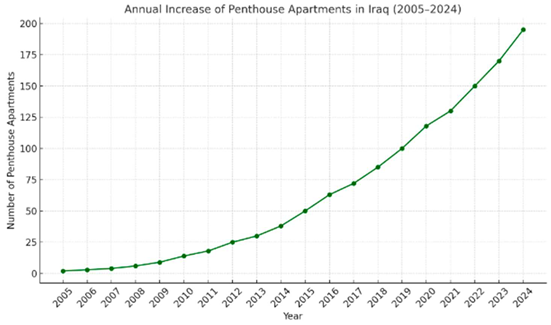
Table 2.
Growth Rate of Penthouse Developments in the Iraqi Region (2005–2024).
 |
However, there is a notable lack of comprehensive and systematic studies on how comfort, functionality, and aesthetic elements are integrated from the perspectives of architecture and interior design in high-rise residential buildings in Iraq, particularly in penthouse apartments. This gap creates a void in terms of academic knowledge production and limits efforts to develop sustainable, user-centered luxury residential designs in the region.
Research Problem: The rapidly increasing demand for penthouse residences in Iraq has not been adequately evaluated in accordance with architectural and interior design principles. This situation may lead to various issues both in terms of meeting user needs and in ensuring compatibility with the urban context.
Research Questions:
- What are the architectural and interior design features of penthouse apartments in Iraq?
- To what extent do these designs meet the criteria of user comfort, functionality, and aesthetics?
- How can penthouse residential designs in Iraq be compared to similar global practices?
In conclusion, examining the architectural and interior design aspects of penthouse residences in Iraq will offer new perspectives on luxury housing design and practices in the region. This research will contribute to the academic literature and guide the development of new design approaches within the fields of architecture and interior design.
2. Materials and Methods
The literature on penthouse design encompasses key topics such as the historical development process, architectural and interior design approaches, the concept of luxury in high-rise residential buildings, and regional differences. This section aims to evaluate the existing body of knowledge by reviewing previous research on the design and usage characteristics of penthouse residences.
Historical Development of the Penthouse Concept
Penthouse apartments have become an integral part of the luxury residential concept since the early 20th century. The first examples of this housing type appeared in major metropolises like New York and London, and over time, it has evolved into a form of exclusive living spaces catering to high-income groups (Smith, 2003). Studies on the development of penthouse apartments in the literature reveal that these buildings not only offer comfort and prestige but also provide spatial advantages such as city views and private terraces (Jones, 2015).
Penthouse Design from an Architectural and Interior Design Perspective
In the architectural design of penthouse apartments, flexibility, the use of open spaces, and individualized areas are among the key design criteria (Brown & Taylor, 2018). From an interior design perspective, these structures are shaped with a user-centered design approach, where material selection, spatial organization, and ergonomic factors play a significant role (White, 2020). Additionally, the large spaces with high ceilings in penthouse residences incorporate sustainability elements such as the use of natural light and ventilation.
Regional Differences in Penthouse Residences
Global trends in penthouse design vary according to geographic and cultural differences. In Europe and America, penthouse residences are typically shaped by a modern and minimalist design approach, while penthouse projects in the Middle East tend to incorporate more traditional luxury details (Ahmed, 2019). Studies specific to Iraq show that, as part of the modernization process, penthouse residences in the country are influenced by both local architectural fabric and Western design approaches (Hassan & Ali, 2021). However, research on penthouse residences in Iraq is limited, and there is a need for further academic studies on the subject.
Conclusion and Research Gap
The literature review indicates that research on penthouse design is largely Western-centric, and studies focusing on the Middle East and Iraq are scarce. In this context, a detailed examination of penthouse residences in Iraq, from both architectural and interior design perspectives, will fill an important gap in understanding regional design approaches. This study aims to address this gap in the literature and evaluate penthouse residences in Iraq within an international context.
This study adopts a mixed-methods approach to evaluate the comfort and functional design of penthouse residences in high-rise buildings. In the research, qualitative data are gathered through architectural analysis and observation techniques, while quantitative data are supported through statistical evaluations
3. Results
3.1. Penthouse Apartments and Design Criteria
High-rise residential buildings are significant structures that define the skyline of modern cities. These buildings not only serve the function of housing but also represent complex systems that impact the quality of life. They are expected to go beyond the traditional function of housing by responding to the social, psychological, and cultural needs of users. Ali and Armstrong (1995) emphasize the importance of integrating architectural aesthetics with engineering solutions in the design process of high-rise structures. Additionally, Yeang (1999) notes that integrating the concept of sustainability into these buildings is a fundamental requirement, both in terms of environmental impact and user experience.
Penthouse apartments in high-rise buildings are typically described as luxurious living spaces located on the upper floors of major cities. These spaces are positioned on the rooftops of high-rise buildings, often offering panoramic views of the city, and are equipped with spacious interiors and high standards. In the design of penthouse apartments, achieving a balance between aesthetics and functionality is of great importance. In modern architecture, the design of penthouse apartments is not only about creating living spaces but also about reflecting personal comfort, aesthetic taste, and prestige. Therefore, the details of penthouse design include essential elements that reflect the professional knowledge and experience of architects and interior designers.
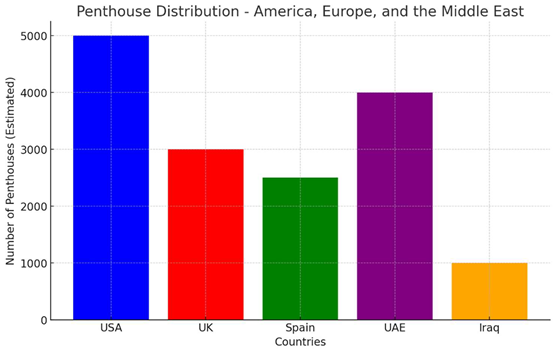
Table 3.
Growth Rate of Penthouse Developments in the Iraqi Region (2005–2024).
 |
One of the most prominent features of penthouse apartments is their location on the roof of the building. They are often equipped with large windows that offer panoramic views of the city, adding a prestigious aura to these types of residences. Most penthouses are known for their large and expansive living areas; these features provide comfort, freedom, and luxury to their residents. The interior design of these apartments is predominantly open-plan, which enriches the user experience both aesthetically and functionally. High ceilings, large glass surfaces, and spacious balconies are some of the most distinguishing features of penthouse apartments.
In addition, penthouse apartments are typically equipped with private entrances, swimming pools, gyms, cinemas, and Jacuzzis, among other luxury amenities. These features not only offer residents a living space but also promise a luxurious lifestyle. The architectural structure of penthouse apartments is aesthetically enriched with elegant designs and modern materials. Often, elements that promote integration with nature are used, with careful consideration of both interior and exterior transitions to create harmony with the natural environment.
Table 4.
Growth Rate of Penthouse Developments in the Iraqi Region (2005–2024).
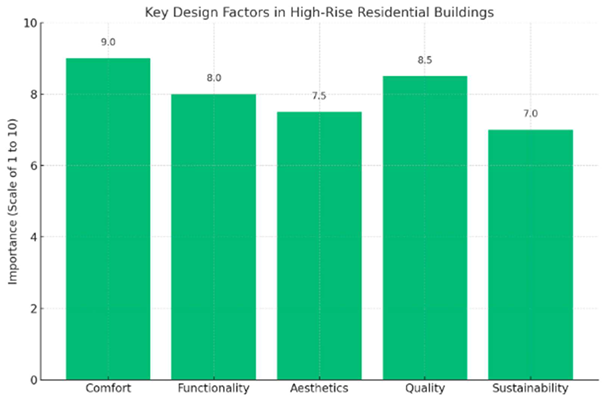 |
The graphic illustrates the relative importance of five key design criteria—comfort, functionality, aesthetics, quality, and sustainability—based on expert judgment and review of relevant architectural literature.
3.1.1. Spatial Organization and Natural Lighting
One of the most important elements in the design of penthouse apartments is the efficient use of space. In these apartments, which offer large interior spaces, the functional organization of the area is crucial both aesthetically and in terms of usability. The design of the interior should carefully consider the transitions between rooms, storage areas, and the arrangement of living spaces. Open-plan designs create a sense of spaciousness while allowing users to utilize the living space more flexibly. However, it is important that this design is executed properly to ensure that private areas maintain adequate privacy. For example, sufficient distance may need to be maintained between the bedroom and the living room.
Certain principles should be considered in the spatial organization and planning process. These principles have been developed to achieve a functional, aesthetic, and ergonomic spatial organization.
- Hierarchy: This is defined as the discipline of organizing the planned space according to the user density. Common areas should be designed to be more accessible, while private areas must be arranged to ensure privacy.
- Balance and Symmetry: The proportion that needs to be established in the space to ensure aesthetic order should be organized accordingly. Concepts such as balance and symmetry enhance comfort levels, while architects, in some cases, should strive to achieve harmony within the whole through asymmetric details.
- Human Scale: Designs that are compatible with human proportions positively influence both the comfort of use and spatial perception. When a space is close to human scale, it also positively impacts user psychology.
- Spatial Organization: The organization of interior spaces should be created in harmony with each other and based on needs, which is one of the fundamental principles of spatial organization. For example, the living room being near the dining area, or the workspace in offices being close to meeting rooms. Ensuring functional coherence in spaces is a priority of spatial organization.
Hierarchy, symmetry, balance, and human scale are considered fundamental design parameters in spatial organization (Ching, 2018).
In penthouse apartments, high ceilings contribute to the space appearing visually larger and more spacious. This design element, particularly in smaller spaces, helps create a sense of volume. High ceilings enhance the visual perception of the space and make the interior feel more open and expansive. Additionally, such designs allow unique interior details to stand out, such as suspended ceilings, large chandeliers, and decorative elements.
Maximizing natural light in the design of penthouse apartments is an essential aspect of architecture. Large glass surfaces and window designs not only allow natural light to enter but also enable the reflection of the outside view into the interior. External elements such as city or sea views visually enrich living spaces and provide a sense of tranquility to the residents. Furthermore, the lighting design of the interior should not only be functional but also aimed at creating atmosphere. The interplay of light and shadow can enhance the visual perception of the space.
3.1.2. Material Selection and Technological Integration
The materials used in the design of penthouse apartments have a direct impact on the aesthetics and functionality of the structure. In these luxury apartments, the use of durable, aesthetic, and high-quality materials is essential. Floor coverings, wall finishes, furniture, and accessories used in the interior define the overall ambiance of the space. Natural stones, quality woods, glass, and metal materials are frequently preferred. Additionally, the use of environmentally friendly materials has become an important trend in modern designs.
The integration of technological elements is also a significant design criterion in modern penthouse apartments. Smart home systems, environmental controls, lighting, security, and entertainment systems are indispensable components of such luxury living spaces. A penthouse equipped with advanced technology offers comfort and security to its residents. Furthermore, systems that ensure environmental sustainability, energy efficiency, and eco-friendly technologies are crucial for modern designs.
Penthouse apartments are among the most prestigious examples of luxury housing, where designs represent a perfect balance between aesthetics and functionality. Every criterion used in these designs aims to provide residents with both a comfortable and visually satisfying living space. From spatial organization and material usage to the selection of natural light and technological integration, numerous elements contribute to making these buildings special and unique. The factors that need to be considered in the design of penthouse apartments, which cater to the luxury segment of high-rise housing projects, combine with the creative solutions of architects and interior designers, playing a significant role in shaping the living spaces of the future.
3.2. Comfort and Functionality in Penthouse Apartments
3.2.1. Acoustic Comfort and Thermal Comfort
Comfort is a holistic design criterion that addresses users' physical, visual, thermal, and acoustic needs. Lechner (2014) emphasizes that thermal comfort is one of the most important indicators of building performance, while Vischer (2008) states that users' spatial perception directly influences their behavior. In penthouse apartments, especially due to the buildings' contact with the outer shell, thermal insulation and sound control are critical design parameters. In this context, material choices such as natural stone, wood, and insulated glass systems are essential for ensuring the continuity of comfort. Penthouse apartments, as one of the luxurious and prestigious examples of modern architecture, prioritize high quality and comfort in the design of living spaces. These apartments are typically located on the top floors of high-rise buildings and may have unique positions offering panoramic views, isolated from their surroundings. However, in the design of penthouse apartments, not only visual aesthetics but also various elements should be considered to provide residents with a comfortable and functional living space.
Comfort is a fundamental criterion in the design of penthouse apartments, and in this context, several factors must be considered together. Thermal comfort is one of these factors. Apartments located on higher floors are more sensitive to external weather conditions. This situation, particularly, requires the selection of special materials to maintain temperature balance and ensure energy efficiency. Insulated glass systems not only help maintain temperature balance within the interior but also significantly block external noise. Additionally, materials such as natural stone and high-quality wood provide warmth to the space while creating a natural atmosphere, offering comfort to the residents. These materials also ensure that the interior is aesthetically pleasing. Wooden floors and natural stones create a visually warm and inviting environment while also offering functional advantages. Wood, due to its natural structure, helps maintain temperature balance, while stone materials are durable and long-lasting.
Acoustic comfort is another important element in the design of penthouse apartments. Creating a living space isolated from the noise of urban life is a critical factor for the mental and physical well-being of the residents. In penthouse apartments located near city centers, sound insulation against environmental noise is of great importance. Therefore, double-glazed windows, sound-absorbing panels, and acoustically optimized flooring materials are preferred to ensure the acoustic balance of the interior and allow residents to live without being disturbed by noise.
The other dimensions of comfort are also related to aesthetic perception and visual experience. In the design of penthouse apartments, the color, texture, and pattern harmony of materials significantly affect the atmosphere of the space. Light colors make the space appear larger and more open, while natural stones and wooden surfaces add authenticity and warmth. The materials used in the design are carefully selected to create visual harmony and textural diversity. The combination of wood and metal creates a contrast, forming a dynamic and sophisticated identity for the space. Additionally, large glass surfaces are preferred to allow natural light to enter, which makes the interior look more spacious and inviting. The entry of natural light into the space not only serves as an aesthetic element but also functions as a factor supporting thermal comfort.
In interior arrangements, functionality and sensitivity to user needs are seen as key factors determining the success of the design (Lee & Park, 2020).
n the design of penthouse apartments, the integration of technology plays a significant role in enhancing the functionality of the interior and the quality of life. Smart home systems, environmental control, lighting, security, and entertainment systems stand out as elements that enhance the comfort and safety of the residents. Smart systems increase energy efficiency within the space, allowing residents to use their living spaces more sustainably and efficiently. Additionally, the ability to control all electronic devices in the home improves residents' living standards and makes daily life more comfortable.
In conclusion, penthouse apartments aim to offer superior living conditions to their residents by establishing a perfect balance between comfort and aesthetics. High-quality material choices, acoustic and thermal comfort, aesthetic perception, and technological integration emerge as fundamental criteria in the design of such apartments. Each design element aims to ensure that residents live in a comfortable environment both physically and emotionally. The design of penthouse apartments is a holistic process that aims to create not only a visually impressive space but also a functional and comfortable living area.
3.2.2. Functionality in Penthouse Apartments
In high-rise building designs, comfort, functionality, and sustainability principles should be evaluated through an integrated approach (Ghosh & Rahman, 2022).
Functionality refers to the organization of spaces in accordance with user needs and the provision of functional solutions. Lawson (2001) argues that spaces are shaped through interaction with user behaviors, thus functional design is not only physical but also experiential. Alexander (1977) notes that functional patterns play a decisive role in spatial analysis. In penthouse apartments, functionality is supported by open-plan solutions, modular furniture, and smart systems, enabling versatile use of space.
In penthouse apartments, functionality is a fundamental design criterion that requires living spaces to have not only aesthetic value but also high standards in terms of usability and efficiency. Penthouse apartments, which are part of the luxury segment in high-rise residential projects, aim to provide expansive and comfortable living spaces while also being carefully organized in terms of functionality. In these types of apartments, the functionality of the space is ensured through various elements that make daily life more practical and comfortable for residents.
Functionality is directly related to the efficiency of the use of a living space, and in penthouse apartments, it is of great importance to organize the space correctly and design each area to meet its specific needs in order to increase this efficiency. First, creating open and spacious areas in the planning stage for efficient use of space enhances residents' freedom of movement and makes the living area more functional. Especially large open areas allow for different functional spaces (living, dining, working, etc.) to be independent of each other yet harmoniously integrated. Such designs ensure the separation of social interaction areas from private spaces, while ensuring that each space serves its required functions.
Another important aspect of functionality in penthouse apartments is the design of storage spaces. In luxury living spaces, balancing design aesthetics with storage needs is essential. Built-in closets, integrated storage solutions, and modular furniture are commonly preferred functional arrangements in such spaces. Storage areas allow users to store their belongings in an organized manner, both in visible and hidden areas, thereby making the living space more organized and functional.
The arrangement of the interior also plays a critical role in functionality. High ceilings and large glass surfaces not only make the space visually larger and more airy but also allow light to enter. This improves energy efficiency while creating a natural atmosphere in the space. Furthermore, the interior layout should be determined based on the function of each area. For example, the transition area between the living room and the dining area should ensure that the living spaces integrate harmoniously and functionally.
Additionally, smart home systems used in modern penthouse apartments are an important element that enhances functionality. These systems allow various functions such as lighting, heating, security, and entertainment to be managed through a centralized control system. Smart home systems enable users to utilize their living spaces more efficiently while increasing comfort in daily life. These technological solutions offer great convenience in optimizing energy consumption, ensuring security, and meeting other functional requirements within the living space.
In conclusion, functionality in penthouse apartments is achieved by organizing each space according to its intended purpose, ensuring that the space is used efficiently and functionally. This design approach not only enhances the quality of life of the residents but also creates an environment where aesthetic and functional elements are balanced together. Functional design is supported not only by the physical arrangement of living spaces but also by the integration of technology and smart systems. This plays a significant role in ensuring comfort in penthouse apartments, while also helping users carry out their daily routines in a more practical and comfortable manner.
3.3. Urban Integration and Landscape Optimization
“Skyline residences, particularly penthouses, act as private observatories of the city, establishing a unique visual and spatial dialogue between the individual and the urban landscape.” — (Frampton, K., Modern Architecture: A Critical History, 2020)
Penthouse apartments, due to their elevated positions, create a strong visual and spatial interaction with the urban fabric, offering users an integrated experience of both the city panorama and natural landscape elements. In this context, urban integration and landscape optimization are not only seen as visual elements but are also critical design criteria in terms of spatial perception, quality of life, and user experience.
The integration of penthouse apartments with the city is not limited to their physical positioning but also includes elements such as transportation networks, relationships with public spaces, and interactions with the urban social fabric. In this regard, balancing the scale of urban spaces with that of individual living areas is of great importance for both the user experience and the sustainable growth dynamics of the city. In penthouse designs, the active use of public and semi-public spaces surrounding the building should be considered a strategy that encourages residential participation in city life.
Urban Integration and Landscape Optimization in Penthouse Apartments
The optimization of the landscape in penthouse apartments aims to expand spatial perception and enhance psychological comfort by offering users an uninterrupted panoramic view. Large expanses of glass surfaces, sliding windows, open terraces, and transparent balustrades serve as design elements that support visual continuity. Additionally, a landscape-oriented seating arrangement and furniture placement strengthen the relationship between the interior and exterior spaces, optimizing natural lighting and air circulation. The adoption of biophilic design principles in penthouse apartments plays a key role in the integration of urban landscapes into the interior. Green roof applications, vertical gardens, and balcony planting solutions offer a nature-infused living experience within the urban density, enhancing the psychological and physical well-being of the users.
Urban integration and landscape optimization are fundamental components of penthouse apartments that not only enhance the aesthetic experience but also improve user experience functionally and psychologically. Supported by appropriate design strategies, this integration provides a sustainable, comfortable, and aesthetically pleasing spatial experience in modern urban living.
4. Discussion and Case Study: Iraq/Suleymaniye Grand Boulevard Tower Tulip Penthouse
4.1. Project Overview
Located in the city of Suleymaniye, Iraq, the penthouse apartment on the top floor of the Grand Boulevard Tower project presents a unique example that merges modern architectural lines with local context. Al-Hafith and Salman (2016) note that the reinterpretation of cultural elements in residential architecture in Iraq is a significant trend, while Mahdi (2017) warns that modern residential designs could threaten local identity. In this project, large glass surfaces, natural materials, and open-plan layouts have been used to create both an aesthetic and functional spatial organization.
In recent years, the demand for luxury residences in Iraq has increased, particularly in major cities, leading to the proliferation of penthouse apartments (Al-Shammari & Zangana, 2019).
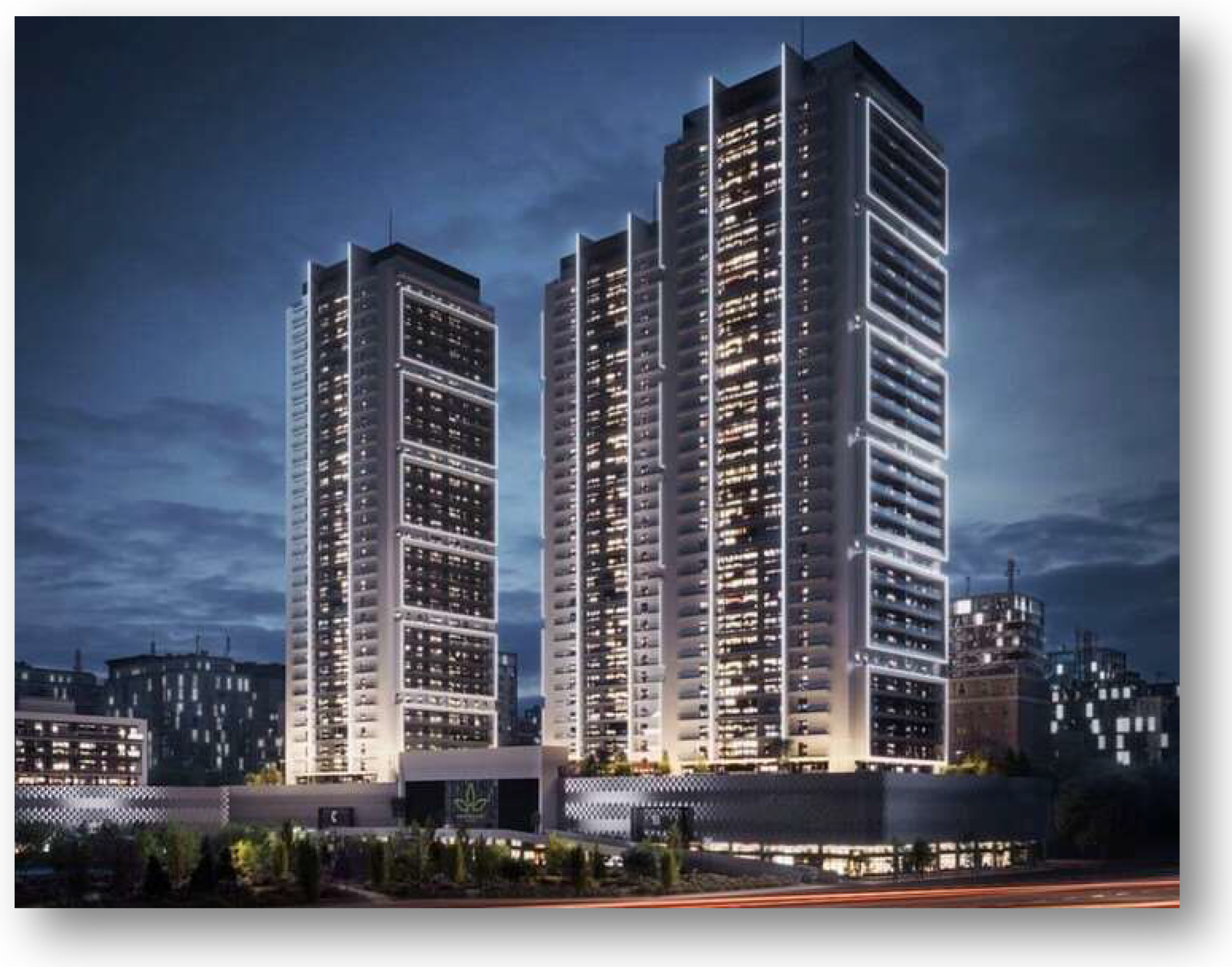
The Grand Boulevard project is developed in close proximity to the Suleymaniye Justice Palace and consists of three different residential towers: Orchid, Lavender, and Tulip. Each tower is 36 stories high, with six independent residential units on each floor. Only 25% of the project is composed of residential areas, while 75% is dedicated to a large green space named Nergis Park.
Figure 1.
Map of Sulaymaniyah, Iraq, and City View.
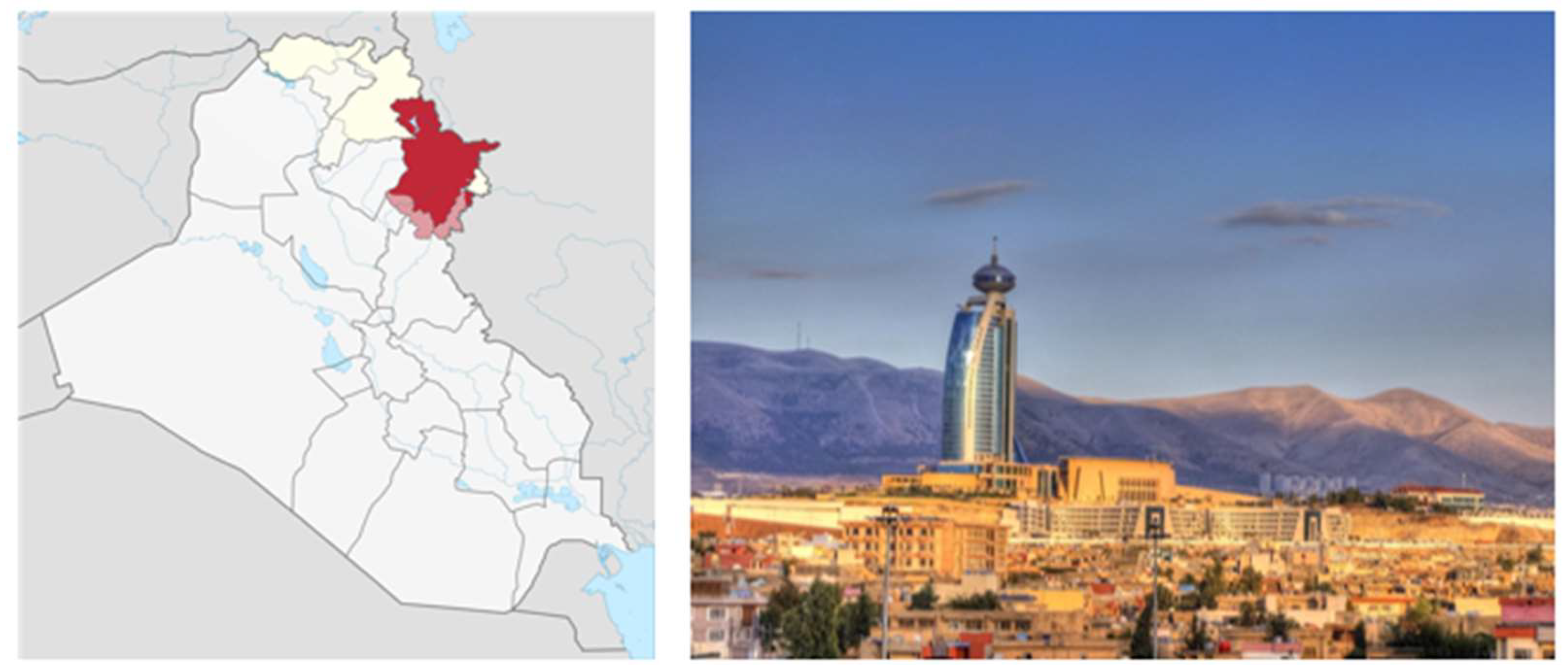
Tulip Tower stands out as a project aiming to offer luxurious living spaces. Large glass surfaces and panoramic views, combined with modern design principles, provide residents with a comfortable living experience. The project is designed in harmony with the urban fabric of Suleymaniye and integrates with the surrounding green spaces.
Designed in 2024 by Omurga Architecture / Stüdyo Vertebra, the project is located on the top floor of the Grand Boulevard Tower Tulip in Sulaymaniyah, Iraq. The tower, embedded within the city, aims to offer a residential experience with aesthetic and functional solutions tailored to the needs and desires of the user.
Penthouse apartments are typically located on the uppermost floors of high-rise buildings, standing out with large terraces, high ceilings, and luxurious interior furnishings. The penthouses in Tulip Tower also carry these features, offering residents unique views of both the city and the surrounding natural areas. These apartments are designed in line with the requirements of modern living, combining aesthetics and functionality.
The project includes interior design and architecture that adhere to the rules and principles of architecture/interior design, covering the selection and usage of natural materials, and detailed interior design work, including furniture and accessory arrangements.
Figure 2.
Sulaymaniyah, Iraq, Grand Boulevard Orchid, Lavender, and Tulip Towers.
4.2. Material Selection and Comfort
The Studio Vertebra team has adopted a design approach that prioritizes user comfort, consciously selecting natural materials and embracing a spacious interior layout. The chosen material palette has been evaluated in terms of its compatibility with the project's context and its contribution to user comfort, making it one of the fundamental components of the design.
Figure 3.
Material Board.
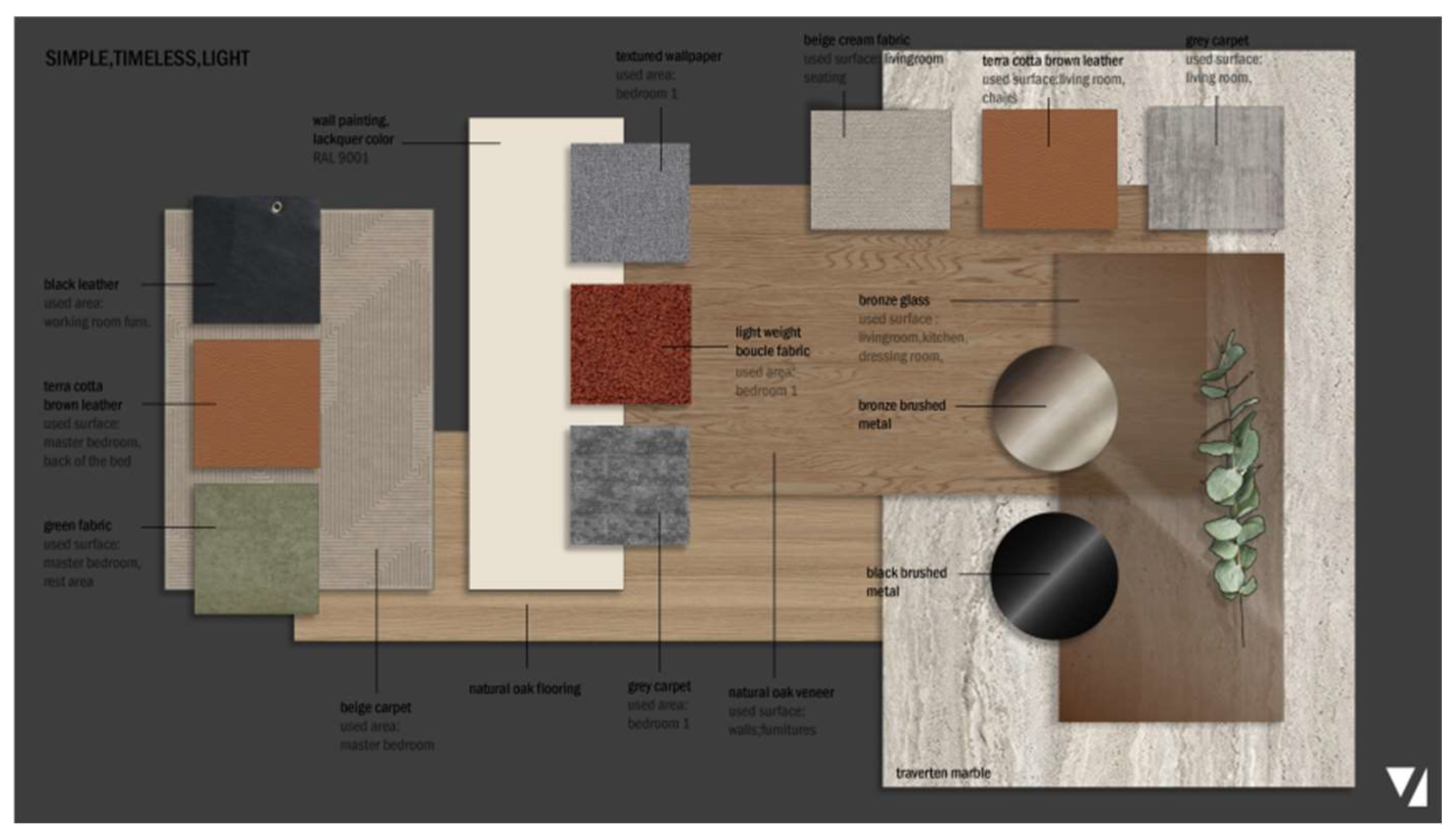
Among the fundamental principles of the design, the use of natural materials, the balance of warm and neutral tones, and the creation of a sophisticated atmosphere have been prioritized. Within the framework of a timeless and bright design concept, a texture has been formed through the combination of natural wood, stone, and textile surfaces. Light-colored travertine and wooden surfaces enhance the spaciousness of the space, while dark metals and textured fabrics provide contrast, establishing a sophisticated balance. The use of terracotta and rust tones creates a warm atmosphere, reinforcing the luxurious and comfort-oriented character of penthouse living. At the same time, the natural stone and metal details offer a material palette that aligns with contemporary and minimalist design principles.
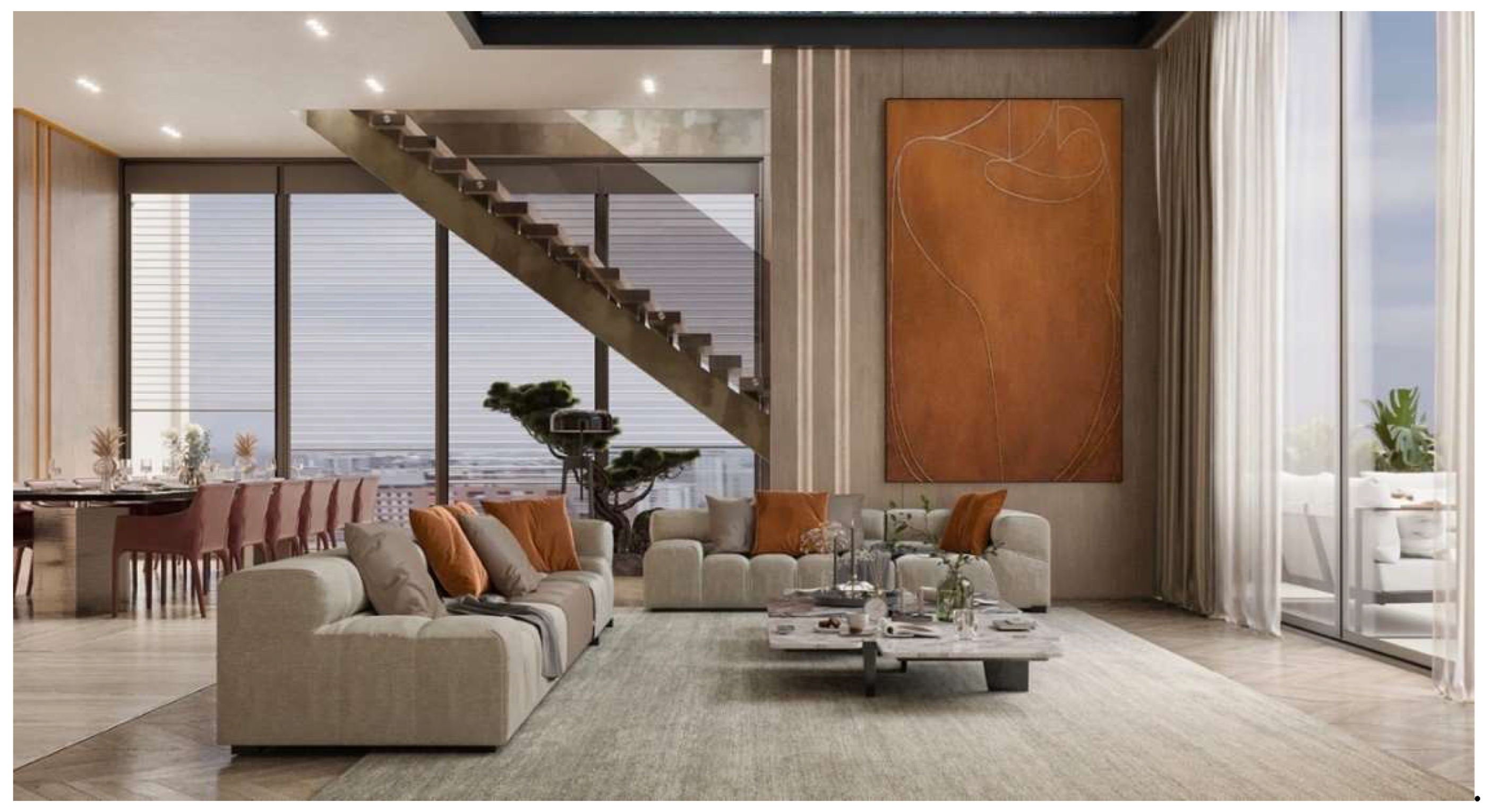
Figure 4.
Penthouse Living Area.
4.3. Interior Organization and Functionality
The interior design has been developed by the Studio Vertebra team in accordance with contemporary architectural principles. The interior organization, created with a minimalist and functional design approach, aims to offer the user a unique living experience in terms of individual privacy and to maintain spatial integrity. The spatial distribution within the residence has been shaped within the framework of an open-plan concept, thereby enhancing natural lighting opportunities and reinforcing the perception of spaciousness.
Figure 5.
Penthouse Living Area.
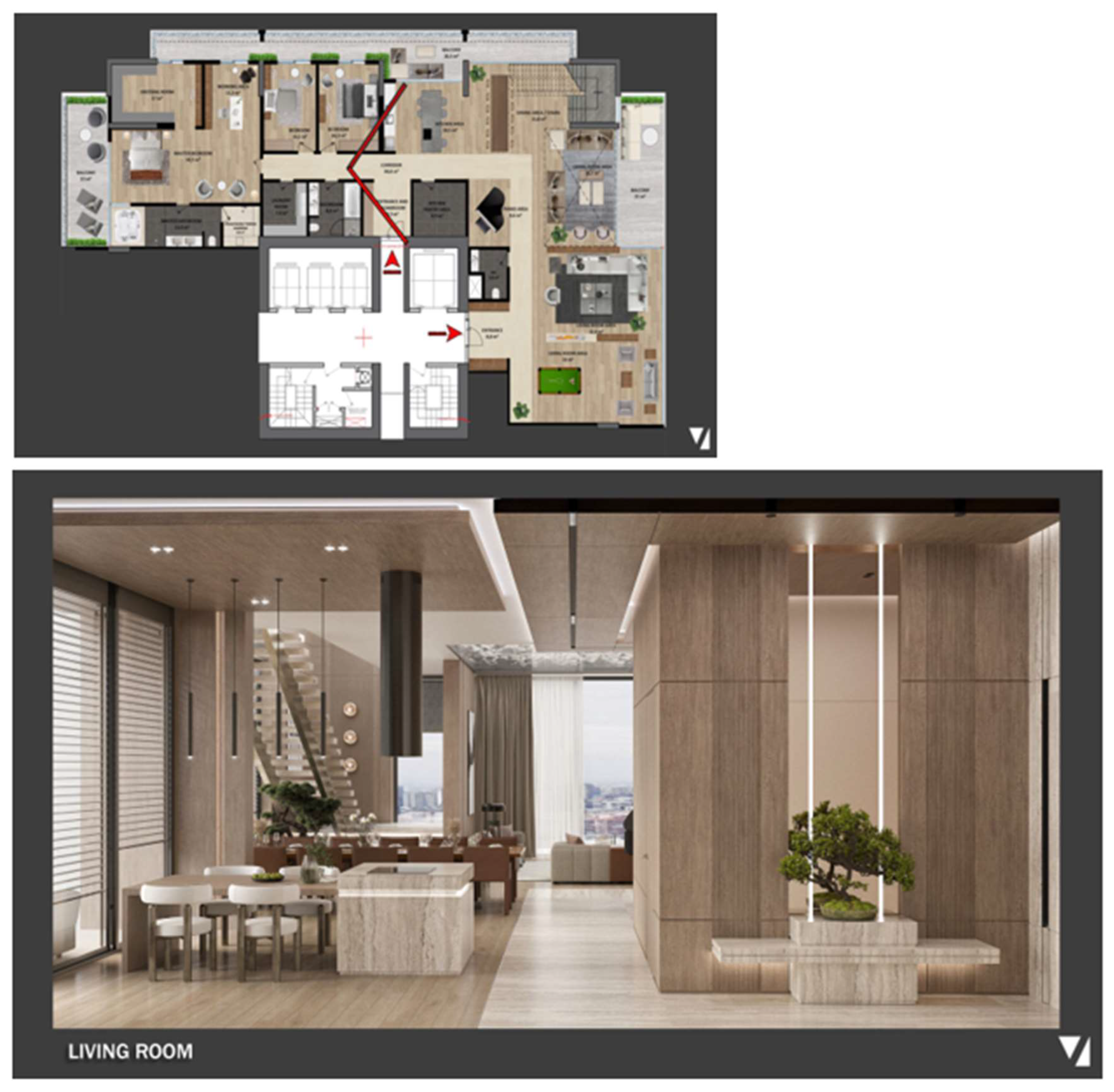
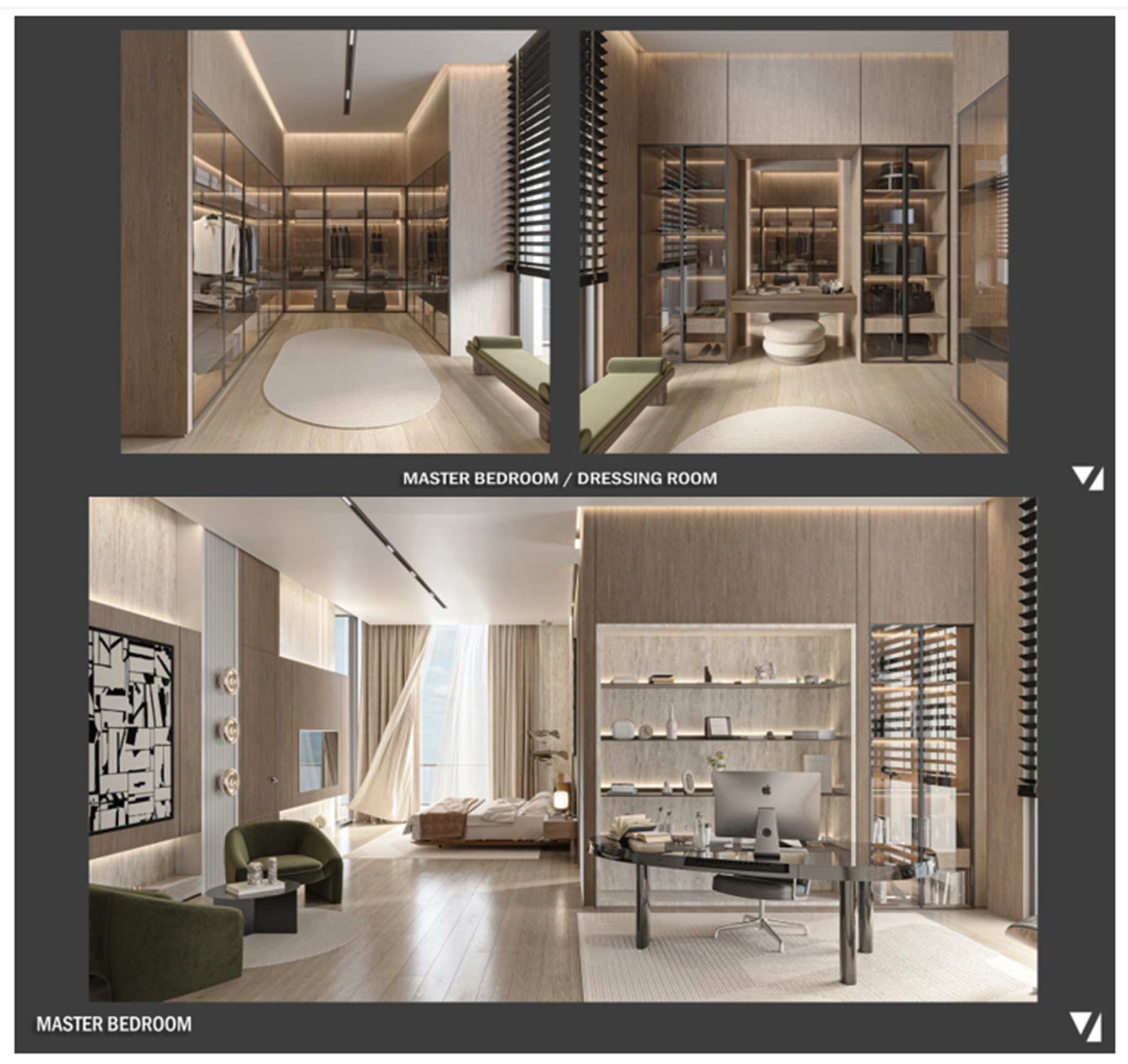
The selection of furniture and interior elements has been made with the user’s needs in mind, emphasizing flexibility and ergonomic criteria. In order for the living spaces to meet functional requirements, a design approach has been adopted that includes movable partitions, integrated storage solutions, and multi-functional usage scenarios. This way, the interior layout not only possesses a flexible structure that can respond to the user's changing needs but also enhances spatial comfort.
Figure 6.
Master Bedroom and Walk-in Closet.
4.4. Integration with the City and the View
The location of the project site ensures that users benefit maximally from the city view, while aesthetic and functional solutions have been developed in the design process according to user needs. The penthouse apartments, positioned on higher floors, establish a strong interaction with the urban fabric and the landscape, while offering users a private living space, distanced from urbandensity.
In the project, the spatial organization aims to maximize the continuity between interior and exterior spaces. The outdoor seating area is enclosed with large glass railings, providing users with an uninterrupted view experience. The seating arrangement has been designed according to the natural landscape and the view towards the sunset. The semi-enclosed, semi-open spatial layout allows for direct connections with both the city and nature at different times of the day. The upper floor of the penthouse, located in Iraq, has been designed to meet the user's socializing and relaxation needs. The seating area, partition, play areas, and landscaping on the upper floor offer a flexible spatial layout that caters to both individual and communal use. The view-oriented seating arrangement enhances the individuals' interaction with the city while offering a serene lifestyle.
Figure 7.
Upper Floor Outdoor Area.
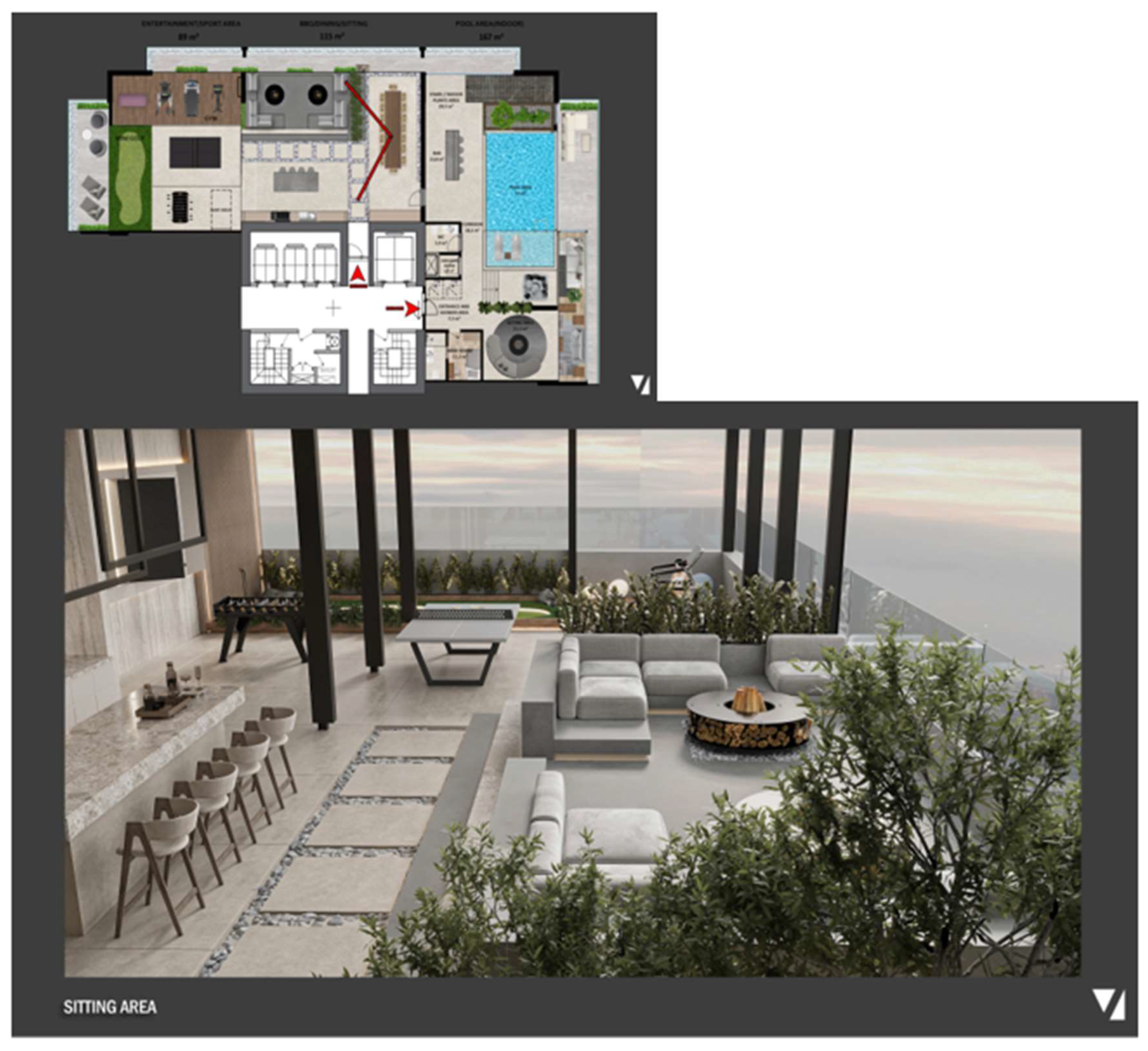
As a result, this penthouse project in Sulaymaniyah, Iraq, has maximized the user experience by establishing a strong connection with the city and nature through spatial organization, the use of natural materials, and wide openings. The functional diversification of outdoor spaces and their design to meet both social and individual user needs ensures that this residence aligns with the framework of modern architectural understanding.
4.5. Discussion
The findings of this study emphasize that comfort and functionality are no longer secondary attributes in high-rise residential architecture but have become integral components that shape user satisfaction and spatial quality. The case study of the Grand Boulevard Tower Tulip penthouse underscores the necessity of a human-centered approach in designing luxury living spaces. This approach extends beyond aesthetic choices and includes ergonomic planning, acoustic and thermal comfort, and the flexibility of interior configurations.
One of the critical insights derived from this study is the alignment of local user expectations with global design standards. While the penthouse project in Iraq shares several features with international practices—such as panoramic views, open-plan layouts, and the use of sustainable materials—it also integrates cultural and contextual nuances. This balance between global and local factors, often referred to as “glocalization” in architectural discourse, contributes to a more authentic and adaptive design outcome.
Furthermore, the role of natural materials and technological integration, highlighted in both the literature and the case study, suggests that modern luxury is increasingly defined by both sensorial richness and digital functionality. This duality offers opportunities for architects and interior designers to redefine luxury in a more sustainable, user-responsive manner. The findings also reveal a gap in the systematic application of sustainability principles, indicating the need for further policy development and design standardization in the regional context.
In relation to the theoretical framework, this study supports Vischer’s (2008) argument that spatial perception significantly influences user behavior and satisfaction. The combination of open spaces, natural lighting, and smart systems not only enhances comfort but also contributes to the psychological well-being of users. These results validate the premise that the design of penthouse residences should be guided by interdisciplinary collaboration, bringing together architectural innovation, environmental psychology, and urban planning.
Ultimately, this discussion reinforces the importance of context-aware, flexible, and user-oriented strategies in the architectural and interior design of penthouse apartments. It also highlights the necessity for continued academic inquiry into luxury housing typologies in under-researched regions, such as Iraq, where the intersection of rapid urbanization and evolving lifestyle preferences creates both challenges and opportunities for sustainable development.
5. Conclusions
This study evaluated the penthouse residences in Iraq from an architectural and interior design perspective, and several conclusions were drawn based on the findings. The data obtained reveal that the increasing urbanization trends and the demand for housing targeted at higher income groups in Iraq have accelerated the development of penthouse-type structures. These buildings not only provide comfortable living spaces but also emphasize individual privacy, the use of spacious outdoor areas, and prestige. While comfort, functionality, and aesthetics are prioritized in penthouse residences, it has been observed that contemporary design criteria such as sustainability have not been adequately considered. Moreover, as the development of this building type in Iraq is largely driven by market demand, there are instances where local climate, culture, and contextual factors have been overlooked in architectural design. This may result in the buildings being insufficient in meeting user needs and failing to integrate with the urban fabric in the long term. The case study conducted in this research indicates that the penthouse designs in Iraq share similarities with global examples in certain aspects; however, areas requiring improvement in material quality, ergonomics, and spatial organization have been identified. When compared to the literature, it is clear that the architectural practices in Iraq have yet to adopt a systematic design approach.
In this context, advanced studies on penthouse residential design in Iraq should be increased both theoretically and practically. Furthermore, local governments and planning authorities developing standards for this building type will contribute to improving the quality of architectural and interior design. This will lead to more successful outcomes in terms of both user satisfaction and urban sustainability.
In conclusion, this study aims to examine penthouse apartments in high-rise residential buildings from an architectural and interior design perspective, focusing on comfort and functionality. As a result of the analyses, flexible space usage, open-plan kitchens, and the preference for luxury materials have emerged as prominent features in penthouse designs.
The research contributes to the literature in this field by offering an integrated architectural and interior design approach. Additionally, it serves as a guide for designers and developers in creating user-centered solutions for penthouse apartments.
References
- .Alexander, C. (1977). A Pattern Language: Towns, Buildings, Construction. Oxford University Press.
- Ali, M. M. , & Armstrong, P. J. (1995). Architecture of Tall Buildings. McGraw-Hill.
- Ali, M. M. , & Moon, K. S. Structural developments in tall buildings: Current trends and future prospects. Architectural Science Review 2007, 50, 205–223. [Google Scholar]
- Al-Hafith, O. , & Salman, K. A. (2016). Cultural and climatic influences on residential architecture in Iraq.
- Al-Shammari, M. , & Zangana, K. Luxury housing in Iraq: Socioeconomic and urban development patterns. Middle East Architecture Journal 2019, 13, 32–49. [Google Scholar]
- Ahmed, H. Regional differences in penthouse design: The Middle East context. Journal of Middle Eastern Architecture 2019, 34, 67–81. [Google Scholar]
- Attia, S. (2018). Regenerative and Positive Impact Architecture: Learning from Case Studies. Springer.
- Brown, P. , & Taylor, R. Architectural flexibility and spatial design in penthouse dwellings. Journal of Modern Architecture 2018, 22, 54–65. [Google Scholar]
- Bullivant, L. (2006). Responsive Environments: Architecture, Art and Design. V&A Publications.
- Ching, F. D. K. (2018). Architecture: Form, Space, and Order (4th ed.). Wiley.
- Dovey, K. (2010). Becoming Places: Urbanism/Architecture/Identity/Power. Routledge.
- Dovey, K. , & Woodcock, I. (2015). High-Rise Living: Architectural Form and Urban Experience.
- Eastman, C. , Teicholz, P., Sacks, R., & Liston, K. (2011). BIM Handbook: A Guide to Building Information Modeling for Owners, Managers, Designers, Engineers, and Contractors. Wiley.
- Edwards, B. (2000). Sustainable Architecture: European Directives and Building Design. Architectural Press.
- Frampton, K. (2020). Modern Architecture: A Critical History. Thames & Hudson.
- Gehl, J. (2010). Cities for People. Island Press.
- Gehl, J. (2011). Life Between Buildings: Using Public Space. Island Press.
- Ghosh, A. , & Rahman, M. Sustainable comfort: Evaluating environmental and thermal comfort in tall buildings. Sustainable Cities and Society 2022, 75, 103213. [Google Scholar]
- Hassan, F. , & Ali, M. Modernization and traditional influences in Iraqi penthouse architecture. Architectural Research Quarterly 2021, 26, 98–111. [Google Scholar]
- Herzog, T. , Krippner, R., & Lang, W. (2004). Facade Construction Manual. Birkhäuser.
- Jones, L. Luxury living: A study of penthouses in global cities. Urban Studies Review 2015, 30, 112–127. [Google Scholar]
- Kara, M. , & Tostões, A. (2020). Luxury and space: The architectural evolution of penthouse living.
- Knaack, U. , Klein, T., Bilow, M., & Auer, T. (2012). Façades: Principles of Construction. Birkhäuser.
- Koolhaas, R. (1995). S, M, L, XL. Monacelli Press.
- Lawson, B. (2001). The Language of Space. Architectural Press.
- Lechner, N. (2014). Heating, Cooling, Lighting: Sustainable Design Methods for Architects. Wiley.
- Lee, H. , & Park, S. Interior architecture in high-rise residential buildings: Human-centered and functional design perspectives. Architecture and Human Environment Journal 2020, 18, 221–240. [Google Scholar]
- Lynch, K. (1960). The Image of the City. MIT Press.
- Mahdi, T. H. Modern housing and local identity in Baghdad. Archnet-IJAR 2017, 11, 157–170. [Google Scholar]
- McLennan, J. F. (2004). The Philosophy of Sustainable Design. Ecotone Publishing.
- Meiss, P. (1991). Elements of Architecture: From Form to Place. Routledge.
- Negroponte, N. (1995). Being Digital. Knopf.
- Neufert, E. , & Neufert, P. (2012). Architects' Data. Wiley-Blackwell.
- Pallasmaa, J. (2005). The Eyes of the Skin: Architecture and the Senses. Wiley.
- Rapoport, A. (1969). House Form and Culture. Prentice-Hall.
- Rowe, P. G. (1991). Design Thinking. MIT Press.
- Smith, A. The development of penthouses in the early 20th century. Journal of Architectural History 2003, 45, 78–92. [Google Scholar]
- Smith, J. , & Taylor, R. Vertical living: Trends in high-rise luxury housing. Journal of Urban Housing Studies 2021, 35, 145–162. [Google Scholar]
- Tschumi, B. (1996). Architecture and Disjunction. MIT Press.
- Vischer, J. C. Towards a user-centred theory of the built environment. Building Research & Information 2008, 36, 231–240. [Google Scholar]
- Yeang, K. (1999). The Green Skyscraper: The Basis for Designing Sustainable Intensive Buildings. Prestel.
- Yeang, K. (2008). EcoDesign: A Manual for Ecological Design. Wiley.
- White, M. Interior design trends in penthouses: User-centered approaches and sustainable practices. Interior Design Journal 2020, 15, 142–159. [Google Scholar]
- Zevi, B. (1993). Architecture as Space: How to Look at Architecture. Da Capo Press.
Disclaimer/Publisher’s Note: The statements, opinions and data contained in all publications are solely those of the individual author(s) and contributor(s) and not of MDPI and/or the editor(s). MDPI and/or the editor(s) disclaim responsibility for any injury to people or property resulting from any ideas, methods, instructions or products referred to in the content. |
© 2025 by the authors. Licensee MDPI, Basel, Switzerland. This article is an open access article distributed under the terms and conditions of the Creative Commons Attribution (CC BY) license (http://creativecommons.org/licenses/by/4.0/).
Copyright: This open access article is published under a Creative Commons CC BY 4.0 license, which permit the free download, distribution, and reuse, provided that the author and preprint are cited in any reuse.


