

Submitted:
29 April 2025
Posted:
30 April 2025
You are already at the latest version
Preprints on COVID-19 and SARS-CoV-2
Abstract
The COVID-19 pandemic has caused major changes in education, transforming how students and educators communicate, teach, and learn. Beyond distance learning, the pandemic also brought attention to wider concerns about the physical and mental health of students. However, the specific link between COVID-19 and student academic performance is still not widely explored. This study examines how the pandemic affected grades and academic outcomes, looking at both highly interactive subjects and less interactive ones. It also studies students across all levels of performance, from top achievers to those who struggle. The findings show that COVID-19 has clearly influenced student performance. The effects are even stronger in subjects that depend heavily on interaction, challenging the common belief that these subjects do well in virtual environments. Another important discovery is that even high-performing students faced disruptions in their academic progress. In theory, the study expands the understanding of how distance learning, combined with the effects of a global crisis, can harm the academic results of students over time. By uncovering these complex relationships, the research provides deeper insight into the challenges caused by online education and health concerns. In practice, this study offers helpful advice for educators managing the difficulties brought on by pandemics and other crises. It encourages teachers to adjust their methods to better support each student and lessen the negative impacts on learning. These findings serve as a guide for maintaining academic quality and supporting student well-being during times of uncertainty.
Keywords:
online learning
; COVID
; distance learning
; student performance
; health
1. Introduction
Traditional higher education necessitates ongoing and active engagement between instructors and students, as emphasized by (Marco-Fondevila et al., 2022). This dynamic communication framework fundamentally facilitates a two-way exchange of knowledge rather than adhering to a unidirectional approach. Scholars universally acknowledge that the learning process thrives on interaction, involving both the interplay between educators and learners and the collaborative engagement among students themselves, as highlighted by (Sawall et al., 2021).
Despite the advent of the Internet introducing a novel avenue for communication and instruction, it has not supplanted in-person learning entirely. Educational consensus holds that distance learning via the Internet is viewed as a supplementary tool rather than a substitute for the traditional face-to-face learning mode, as articulated by Marco-Fondevila et al., 2022.
The established educational landscape faced a formidable challenge with the onset of the COVID-19 pandemic. Commencing in late 2019, the global closure of schools became imperative due to the emergence of new variants of the coronavirus, coupled with alarming rates of infection and mortality (Sawall et al., 2021). Consequently, the traditional classroom setting underwent a radical shift, compelling the abrupt migration of teaching and learning activities to online platforms such as Zoom, Google Meet, Microsoft Teams, and various communication tools (Truong, 2022).
This transition has, however, brought about a significant alteration in the dynamics of interaction between educators and students, as well as among students themselves. The accustomed face-to-face exchanges have been replaced by virtual interfaces, encompassing screens, cameras, and microphones (Kazi et al., 2021). Notably, educators have reported an increase in one-sided discourse during the pandemic, with limited engagement from students who often refrain from activating their cameras and microphones (Truong, 2023). Concurrently, students have encountered challenges in maintaining focus during online studies and navigating the obstacles of seeking assistance from teachers and classmates, a departure from the ease of interaction in pre-pandemic times (Lovasz-Bukvova, 2021).
This transformative shift in the educational landscape prompted by the COVID-19 pandemic has significantly altered the teaching experience for educators and the learning experience for students. Yet, the extent to which the pandemic correlates with students' performance, as measured by their grades and marks, remains unclear (Cavanaugh et al., 2022).
Beyond mere physical distancing, students are not spared from the intrusive effects of coronaviruses. Individuals infected with the novel coronavirus typically manifest symptoms within a 14-day window, prompting many countries and organizations to enforce a quarantine period ranging from 14 to 21 days (Relucenti et al., 2022). Throughout this duration, those afflicted commonly experience sensations of dizziness, fatigue, headaches, and overall exhaustion (Tomal et al., 2021). A subset of students reported initial symptoms such as fever and impaired breathing during the early days of illness, followed by challenges in smelling, tasting, and maintaining focus on their tasks (Díez-Pascual & Jurado-Sánchez, 2022).
The novel coronaviruses, both physically and mentally, impact students, reframing the narrative of the COVID-19 pandemic in education as not solely centred on distance learning but rather addressing the physical and mental well-being of learners. This unprecedented situation is underscored by the fact that the integration of the Internet into education is a relatively recent development of 30 years, and the last pandemic occurred a century ago (Saleh et al., 2022).
Recent research has highlighted the impact of the COVID-19 pandemic on students' learning experiences. However, a notable gap persists in understanding the long-term correlation with students' academic outcomes (Cavanaugh et al., 2022). Moreover, there is a need to explore potential variations in this correlation among different subjects and student groups.
This study aims to address the following research questions:
- Is there a significant relationship between COVID-19 and students' performance?
- Does the correlation between COVID-19 and students' performance vary significantly among different subjects?
- Do students affected by COVID-19 exhibit significantly poorer academic performance?
The subsequent sections of this paper are organized as follows: Section 2 provides a comprehensive review of studies in the realm of distance learning and unhealthy learning. Section 3 delineates the methodology employed in this study, including details about the sample characteristics and data collection methods. The analysis of the collected data and its results are presented in Section 4. Section 5 delves into a thorough discussion of the findings, exploring both theoretical contributions and practical implications. Finally, Section 6 concludes the paper by summarizing key contributions and suggesting directions for further research.
2. Literature Review
The exploration of distance learning has been a persistent subject of discussion and research over the years. Recent technological advancements have ushered in a multitude of communication channels, reshaping the landscape of education. In today's educational milieu, prevalent platforms like Zoom, Google Meetings, and Microsoft Teams have become integral tools for schools organizing online classes, as highlighted by Kazi et al., 2021. Furthermore, certain universities have embraced additional features such as whiteboards and grouping functionalities, contributing to more seamless communication and potentially elevating the overall interactivity level. This technological integration underscores the evolving nature of distance learning and its significant impact on educational practices.
The utilization of platforms like Zoom and Google Meetings has not only facilitated the transition to online classes but has also prompted some universities to enhance communication capabilities. The integration of whiteboard and grouping functionalities exemplifies this trend, offering a more immersive and collaborative learning experience. As a result, the potential for increased interactivity within the virtual classroom environment becomes apparent. The convergence of technology and education reflects a paradigm shift, challenging traditional notions of face-to-face learning. Recent studies, including the work of M.Buhari et al., 2022, contribute to this evolving narrative by asserting that distance learning and in-person learning are, in essence, indistinguishable. However, it is noteworthy that these studies primarily focused on healthy participants, leaving room for further exploration into the experiences of individuals with health considerations during distance learning.
While recent studies have concluded that the distinctions between distance learning and face-to-face learning are minimal, it is crucial to consider the health aspect of participants in these educational environments. Notably, research by Lovasz-Bukvova, 2021 emphasizes the importance of conducting self-rated health assessments during the screening phases of research projects. This conscientious approach acknowledges the potential impact of health conditions on the learning experiences of participants and highlights the need for a comprehensive understanding of the diverse factors influencing the effectiveness of distance learning.
Existing research has consistently highlighted the substantial impact of illness on work performance, as exemplified by Malan, 2021. In industrial settings, individuals grappling with health issues often face exclusion from the workforce, with companies instituting annual health examinations to inform task assignments. Learning, regarded as a form of intellectual labour, necessitates a considerable investment of both physical and mental energy, as underscored by Marco-Fondevila et al., 2022. Previous studies have unequivocally affirmed that the process of learning stands out as one of the most energy-intensive endeavours, reflecting the cognitive and physiological demands inherent in acquiring knowledge (Waugh et al., 2022).
The dynamics of work and learning have undergone distinctive changes during the COVID-19 pandemic. While infected factory workers have experienced layoffs, students have persistently engaged in their educational pursuits. In the context of distant learning amid the pandemic, users encompass individuals who are not only navigating remote educational content but may also be contending with illness, potentially serving as carriers of infectious diseases. This unique intersection of learning and health status during the COVID-19 pandemic sets it apart from other forms of distance learning, as elucidated by Lovasz-Bukvova, 2021. The concurrent presence of illness in the realm of distant learning underscores the need for nuanced considerations in understanding the multifaceted challenges faced by students during these unprecedented times.
Contemplating the potential adverse impact of simultaneous distance and illness on student performance, this study posits the following hypothesis:
H1:
There exists a significantly negative correlation between the Covid-19 pandemic and students' academic performance.
In the realm of education, schools serve as crucibles for a diverse array of subjects, with some specifically dedicated to theory and the dissemination of knowledge, as elucidated by Pirrone et al., 2022. In the traditional offline setting, these subjects often unfold in the form of PowerPoint presentations projected on a screen within a classroom. Lecturers employ a combination of textual content and illustrative images to convey theoretical models, concepts, and formulas. Unfortunately, the interactivity in these sessions tends to be minimal, as students are seldom allowed to pose questions. Instead, queries are typically reserved for directed interactions with the lecturers, reflecting a scenario where the boundary between face-to-face and distance learning for these subjects becomes somewhat blurred, as highlighted by Marco-Fondevila et al., 2022.
The classroom dynamics for subjects steeped in theory and knowledge sharing underscore a commonality between offline and online education experiences. Whether delivered through a projector in a traditional classroom or via a virtual platform, the interaction quotient remains remarkably low. Kazi et al., 2021 corroborate this observation, pointing out that, in both distance learning and face-to-face instruction, the exchange between educators and students is at its minimum during sessions centred on these theoretical subjects. This revelation prompts a broader reflection on the need for innovative pedagogical approaches that can enhance engagement and foster a more dynamic learning environment, transcending the limitations inherent in the conventional dissemination of theoretical knowledge.
As the traditional classroom setup adheres to established norms for delivering theoretical content, the overarching challenge lies in bridging the gap between distance and face-to-face learning experiences. Pirrone et al., 2022 and Marco-Fondevila et al., 2022 prompt us to question the efficacy of the current instructional methods, urging educators to explore avenues that encourage active student participation and meaningful interactions, irrespective of the mode of delivery. A paradigm shift toward fostering a more inclusive and engaging learning atmosphere could redefine the landscape of education, transforming it into an arena where theoretical subjects become vibrant and dynamic domains of exploration for students, regardless of the educational setting.
Certain academic subjects necessitate a heightened level of interaction between educators and students, as well as among the students themselves, to ensure comprehensive understanding and skill development. An exemplar of such subjects is English preparation, as elucidated by Kamal et al., 2021. In English preparation classes, active engagement in speaking and listening exercises is crucial for language proficiency. The dynamics of these activities are inherently more conducive to face-to-face modes, where real-time communication facilitates nuanced language comprehension and expression. Transitioning to online platforms, however, presents challenges in both quantitative and qualitative aspects of these interaction-driven activities. Despite the limitations, assessments at the middle and end of the term continue to demand a holistic demonstration of language skills, encompassing speaking, listening (conducted one-on-one with assessors), as well as reading and writing. This raises concerns that students, having experienced reduced interaction during their online studies, may encounter difficulties in achieving optimal scores in examinations, potentially impacting their overall performance (Kamal et al., 2021).
The intricacies of language acquisition, especially in subjects like English preparation, underscore the importance of tailored instructional methodologies that align with the inherent requirements of the discipline. Kamal et al., 2021 observations shed light on the indispensable role of face-to-face modes in cultivating linguistic proficiency through immersive speaking and listening activities. The challenges posed by the limitations of online platforms highlight the need for educators to explore innovative strategies that mitigate the impact on students' language development, ensuring a holistic approach to assessments that accurately reflect their linguistic capabilities.
While technology has undoubtedly expanded the horizons of education, the nuances of certain subjects, such as those focusing on language acquisition, necessitate a nuanced approach. The potential discrepancy in scores between face-to-face and online assessments in interaction-intensive subjects emphasizes the imperative for educators to strike a balance between leveraging technological advancements and preserving the inherent value of in-person interactions for optimal learning outcomes (Kamal et al., 2021).
This study posits the following hypothesis:
H2:
There is a statistically significant difference in the correlation between COVID-19 and students' performance when comparing highly interactive subjects to other subjects.
A pervasive assumption asserts that students facing illness tend to exhibit lower academic performance compared to their healthier counterparts, as suggested by Menon & Bhagat, 2021. The reported experiences of students infected with coronaviruses, characterized by symptoms such as dizziness, fatigue, headaches, and overall tiredness, raise concerns about the potential negative impact on academic outcomes (Menon & Bhagat, 2021). The challenging circumstances surrounding illness could potentially hinder students' ability to concentrate and engage effectively with their studies, leading to a consequential reduction in their academic marks. Despite this common assumption, a critical question remains unanswered – do students affected by coronaviruses indeed perform more poorly academically? While preliminary studies align with the belief that unwell students may score lower than their healthy counterparts, there exists a need for further investigation to establish a definitive correlation between illness and academic performance.
Previous research indicates a tendency for students, regardless of their current academic standing, to be adversely affected by ailments such as stomachaches or headaches, potentially causing them to divert attention away from assignment deadlines (Menon & Bhagat, 2021). The universality of these physical discomforts suggests that the impact on academic performance may extend beyond the context of a student's current standing in classes. However, the nuanced relationship between health and academic outcomes demands more comprehensive research to understand the specific mechanisms through which illness influences students' abilities to meet academic demands.
As the academic community grapples with the potential implications of illness on student performance, it is essential to navigate beyond assumptions and delve into empirical evidence to elucidate the intricate connections between health and academic success. A deeper understanding of these dynamics can inform targeted strategies and support systems to help students overcome the challenges posed by illness, ensuring a more equitable and inclusive educational environment (Menon & Bhagat, 2021).
Contrary to the general assumption that infectious diseases like COVID-19 inevitably impede learning, there is a compelling perspective suggesting that students can still engage in the educational process even when affected by such illnesses, as noted by Pirrone et al., 2022. An intriguing facet of this argument posits that "good" students, typically characterized by heightened societal engagement, might be more susceptible to contracting the virus. This insight challenges conventional notions about the correlation between academic success and social activity, prompting a reevaluation of the potential impact of COVID-19 on the academic performance of these ostensibly high-achieving students.
Conversely, the assertion by Omari, 2020 introduces a contrasting perspective, proposing that "bad" students, who are somewhat more socially inactive, may be less prone to infection. This raises an interesting dichotomy, suggesting that students with lower levels of social engagement might exhibit a reduced likelihood of contracting novel coronaviruses. If this holds, it implies that students affected by COVID-19 could potentially perform better academically than their more socially active counterparts. However, this intriguing hypothesis remains unexplored, and the existing body of research has not definitively established any relationship between sickness and students' academic results. The need for a thorough evaluation backed by empirical data and evidence becomes paramount to unravelling the intricate interplay between health, social behaviour, and academic outcomes.
The intricate relationship between infectious diseases and academic performance underscores the need for a nuanced understanding of how external factors influence students' abilities to thrive in educational settings. As researchers delve into the multifaceted dynamics of illness and its potential impact on diverse student profiles, a comprehensive evaluation will contribute valuable insights to inform educational policies and support structures tailored to the unique needs of students navigating health challenges in academic environments (Pirrone et al., 2022).
This study posits the following hypothesis:
H3:
There is a statistically significant likelihood that students with high academic performance are more susceptible to novel coronavirus infections.
3. Methodology
In the exploration of students' performance, this study employs scaled grades and numerical marks as the metrics for measurement, serving as the dependent variable in the three aforementioned hypotheses, as illustrated in Figure 1. The research adopts a deductive and quantitative approach to scrutinize the significance of the relationships posited in the hypotheses. Utilizing this methodological framework allows for a systematic evaluation of the proposed connections between COVID-19, academic performance, and the potential influence of students' health on their educational outcomes.
The study draws on data from various institutions worldwide, with a particular focus on Vietnam, a country profoundly affected by the COVID-19 pandemic. Notably, many universities in Vietnam implemented measures urging students to stay home, irrespective of whether they exhibited COVID-19 symptoms, as highlighted by (Sawall et al., 2021). However, variations in institutional policies exist, with some institutions requiring students to provide evidence of a positive novel coronavirus diagnosis if they choose to stay home. This approach aims to differentiate between those eligible for online learning and those mandated to attend in-person classes. The resulting hybrid mode of education has become prevalent, especially as the nationwide situation in Vietnam improved from January 2022, as reported by (Tao et al., 2022).
Greenwich Vietnam was deliberately chosen as the focal institution for this study due to its comprehensive approach to managing and documenting COVID-19 cases among its student body. Throughout the spring semester, spanning from January 19, 2022, to May 23, 2022, the institution diligently recorded a total of 205 cases of COVID-19 among its student population of 1200. Access to the students' records has provided valuable insights into the diverse demographics of the affected individuals, considering factors such as gender and academic majors. Among the reported 205 COVID-19 cases, 97 were male and 108 were female. Additionally, a breakdown by academic programs reveals that 140 students were enrolled in the English preparation program, while 65 pursued specialized majors, offering a nuanced perspective on the impact of COVID-19 across different segments of the student body.
Greenwich Vietnam's meticulous documentation of COVID-19 cases and the subsequent access to student records facilitates a detailed exploration of how the pandemic has affected students from various backgrounds. The diverse representation in terms of gender and academic majors within the reported cases contributes to the robustness of the study, enabling a more nuanced analysis of the potential correlations between health outcomes and academic performance in the context of the ongoing global health crisis.
Data for this study was systematically collected during the spring semester using a multi-way panel format. The dataset not only includes information about the subjects in which students were enrolled but also comprises details about their academic performance both before and after being affected by COVID-19. The student's marks were meticulously recorded on a GPA scale of 10, offering a comprehensive assessment of their scholastic achievements over the semester. After the data collection phase, rigorous checks were conducted to ensure the dataset's adherence to essential statistical criteria. These assessments included evaluations for normal distribution, reliability, and validity, with results indicating satisfactory values such as skewness at 0.03 and kurtosis at 2.96.
Post-data collection and validation, the analytical phase involved the application of t-tests to scrutinize Hypotheses 1 and 3. Concurrently, the ANOVA test was employed to assess the interaction posited in Hypothesis 2. The selected statistical tests aim to uncover any significant associations or differences in the academic performance of students both before and after being affected by COVID-19, considering the proposed relationships outlined in the study's hypotheses. The resulting findings and insights derived from these statistical analyses are comprehensively detailed in Section 4 of the study, providing a robust foundation for the subsequent discussion and interpretation of the study's outcomes.
4. Results and Findings
Hypothesis 1 of the study delved into the correlation between COVID-19 and students' academic performance, revealing a statistically significant decline (t = 3.84, p < 0.001). The comprehensive analysis demonstrated that students experienced a substantial reduction in their marks, dropping from an average of 6.62+/-2.88 to 5.91+/-3.44 after being infected with COVID-19. The statistical significance of this decline emphasizes the potential impact of the virus on students' scholastic achievements, highlighting a noteworthy shift in academic performance following exposure to COVID-19, as visually represented in Figure 2.
The findings from Hypothesis 1 underscore the importance of investigating the consequences of COVID-19 on students' academic outcomes. The observed decline in marks suggests a tangible manifestation of the challenges posed by the virus, prompting a deeper exploration into the nuanced factors contributing to this downturn in performance. This insight contributes to the broader understanding of the intricate relationship between health crises and educational outcomes, urging further consideration of support mechanisms to mitigate the academic impact on students affected by the virus.
The confirmed finding from this study underscores the significant negative impact of coronaviruses on students' academic results. In contrast to previous research suggesting no significant difference between distance learning and traditional face-to-face methods (Pirrone et al., 2022), this study reveals a distinct interaction between unhealthy learning conditions and remote education. The ramifications of learning in a distant and compromised health environment become evident as the study shows that symptoms such as fever and difficulty breathing contribute to students feeling fatigued and dizzy. Consequently, these health challenges impede their ability to concentrate on academic tasks, resulting in a discernible decline in their overall performance. This revelation emphasizes the importance of recognizing students affected by coronavirus as individuals facing health-related challenges that necessitate tailored support and understanding within the educational context.
The juxtaposition of the current study's findings against the backdrop of prior research highlights the nuanced and context-dependent nature of the relationship between learning modalities and health conditions. It underscores the necessity of considering the unique circumstances presented by infectious diseases, such as coronaviruses, and their impact on students' learning experiences. As the educational landscape continues to evolve, acknowledging and addressing the intersectionality of health and learning is paramount to developing responsive and adaptive educational frameworks that prioritize the well-being of students.
Within the framework of Hypothesis 2, the examination of the interaction between COVID-19 and various academic subjects has yielded compelling evidence of a substantial connection (F = 24.02, p < 0.001). This statistical analysis establishes that COVID-19 has a pronounced impact, causing more significant damage to highly interactive courses compared to other subjects. In essence, the study demonstrates that students' academic performance, particularly in specialized subjects, experiences a notable reduction in marks after being infected with novel coronaviruses, as visually represented in Figure 3. The observed differences in the magnitude of impact on diverse academic subjects underscore the need for tailored strategies and support mechanisms to address the unique challenges posed by COVID-19 in distinct educational contexts.
The outcomes of Hypothesis 2 provide valuable insights into the differential impact of COVID-19 across various academic disciplines. The identification of highly interactive courses as more vulnerable to the consequences of the virus highlights the importance of adapting educational approaches to the specific needs of these subjects. This nuanced understanding serves as a foundation for developing targeted interventions to mitigate the disruptions caused by COVID-19 in specialized courses, ensuring a more effective and resilient academic environment for students facing the challenges posed by the ongoing global health crisis.
The observed finding is illuminated by the substantial reduction in interaction attributed to remote learning, aligning with the findings of Kamal et al., 2021. The implication is that subjects demanding heightened interaction, such as English preparation courses, bear a significantly greater impact when learning in a distant setting. Consequently, the impact of coronaviruses on academic performance is more pronounced in subjects reliant on frequent and robust interactions, such as English-speaking and listening classes. This insight suggests a strategic approach for students facing the challenges of coronavirus infections, wherein they may opt to prioritize lowly interactive subjects, such as mathematics, programming, and finance, over their highly interactive counterparts, preserving the latter for a time when in-person learning is more feasible.
The strategic decision to temporarily shift focus from highly interactive to less interactive subjects reflects a pragmatic response to the limitations imposed by the pandemic. Students, recognizing the challenges posed by reduced interaction in remote learning environments, may navigate their academic choices to adapt to the circumstances effectively. This adaptive strategy not only acknowledges the diverse nature of academic disciplines but also underscores the importance of flexibility in educational planning to enhance resilience in the face of external disruptions such as the ongoing public health crisis.
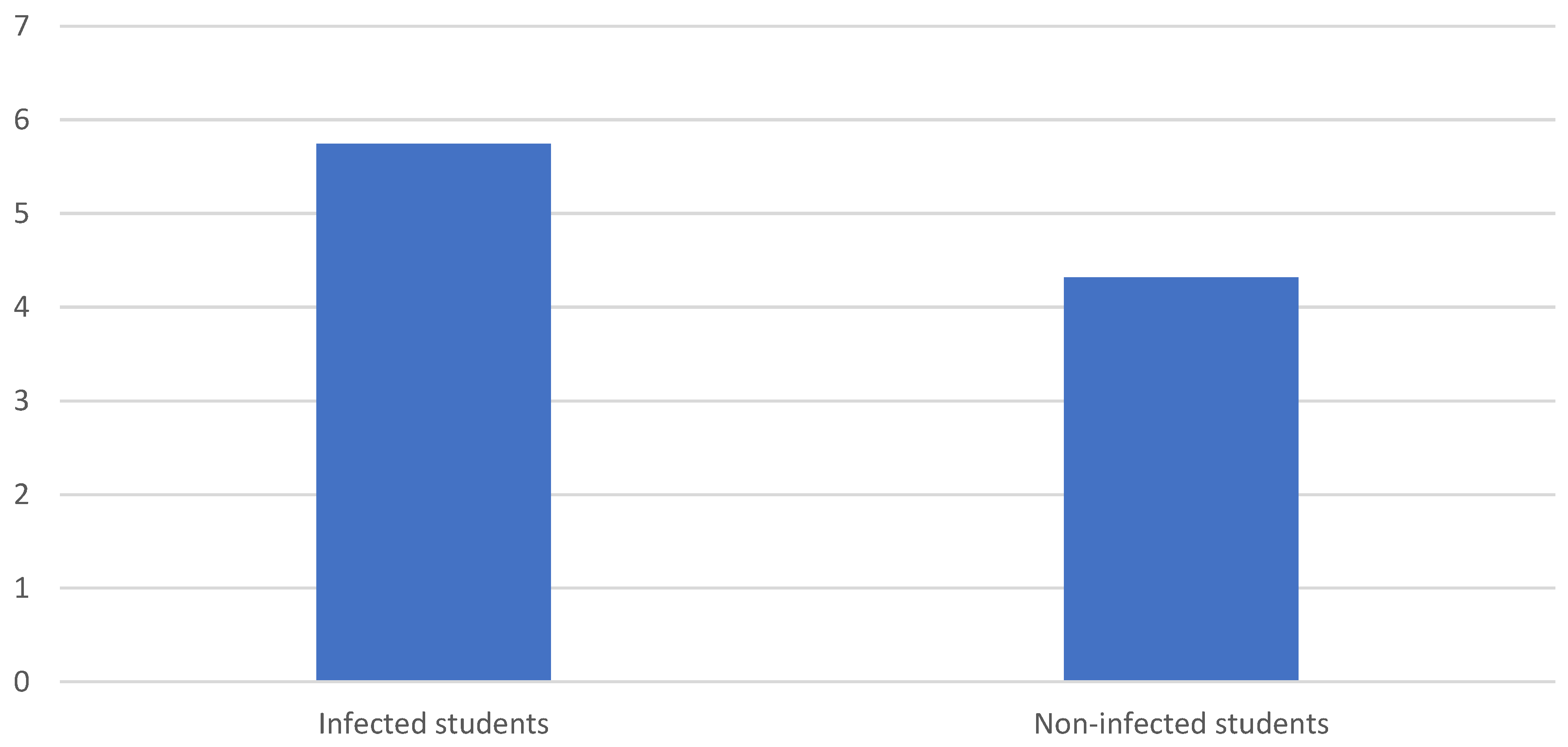
Hypothesis 3 introduces a compelling perspective on the relationship between students' academic performance and their exposure to coronaviruses. The test comparing the marks of students who have contracted the virus with those who have not has yielded an intriguing result—students with coronaviruses surprisingly exhibit significantly higher scores than their counterparts without the virus, as visually depicted in Figure 4. This unexpected finding prompts a nuanced examination of the potential factors contributing to the observed difference in academic performance, challenging conventional assumptions about the negative impact of coronavirus infections on students' scholastic achievements.
The counterintuitive nature of the result from Hypothesis 3 invites a deeper exploration into the complex dynamics between health conditions and academic outcomes. While conventional wisdom may suggest a negative correlation between illness and academic performance, this unexpected finding prompts a reevaluation of the intricate interplay between health, resilience, and the multifaceted factors influencing students' success in their studies. Further investigation into the nuanced factors contributing to this unexpected outcome can offer valuable insights into the resilience and adaptability of students in the face of health challenges, providing a more comprehensive understanding of the complex relationship between health crises and academic achievement.
The unexpected finding in Hypothesis 3 introduces a layer of complexity to the relationship between coronavirus infections and students' academic performance. At first glance, this outcome appears to contradict the anticipated results outlined in Hypothesis 1, where infection with novel coronaviruses was expected to lead to a general decline in students' marks. Additionally, existing research, as confirmed by Sajwani et al., 2022, underscores that illnesses can affect individuals indiscriminately. However, COVID-19 presents a unique scenario, as it stands out as an exceptionally transmissible virus, surpassing the historical virulence of other known viruses (Menon & Bhagat, 2021). The heightened transmissibility of coronaviruses, coupled with the observation that individuals who are more socially active are more susceptible to these infectious agents, adds a layer of complexity to the narrative (Lamo et al., 2022). Moreover, the unexpected finding in this study suggests that highly performing students, who tend to be more socially engaged, are significantly more likely to contract coronaviruses, introducing a nuanced interplay between academic success, social activity, and health outcomes.
This surprising discovery prompts a reassessment of the conventional understanding of the relationship between health, academic performance, and social engagement. While the initial expectation was a negative impact on academic scores for students with coronavirus infections, the counterintuitive result in Hypothesis 3 suggests that students, particularly those who excel academically and are socially active, may exhibit a level of resilience or adaptability that influences their academic outcomes even in the face of health challenges. This revelation emphasizes the need for a comprehensive understanding of the multifaceted factors shaping the complex interplay between health conditions, social dynamics, and academic achievement, contributing to a more nuanced perspective in navigating the intricate landscape of education during a health crisis.
5. Discussion and Conclusions
This study has uncovered noteworthy insights, foremost among them being the affirmation of a negative correlation between COVID-19 and students' academic results. The discerned decline in marks for all students after contracting COVID-19 aligns with established knowledge that underscores the detrimental impact of illnesses on overall work effectiveness, as acknowledged by Menon & Bhagat, 2021. Notably, this finding challenges the consensus of other studies that posit no significant difference between distance learning and traditional face-to-face methods, as asserted by M. Buhari et al., 2022. By dispelling this misconception, the study sheds light on the intricate dynamics of the negative interaction between distance learning and unhealthy conditions, emphasizing the need for a nuanced understanding of the challenges posed by the convergence of these factors. Building on this, the study delves deeper to unveil that the correlation between COVID-19 and students' marks exhibits significant variations across different subjects, particularly between language-related subjects and others, according to the findings of Kazi et al., 2021.
These findings collectively contribute to a more comprehensive understanding of the multifaceted impact of COVID-19 on students' academic performance. By unravelling the complexities surrounding the interplay of health, learning modalities, and subject domains, the study not only refines existing knowledge but also provides a nuanced perspective for educators and policymakers. The identification of subject-specific variations underscores the importance of tailored approaches to address the diverse challenges presented by the pandemic within distinct academic domains. This study serves as a valuable resource for shaping educational strategies that acknowledge the unique intricacies of learning during health crises, fostering adaptability and resilience in the face of unprecedented challenges (Truong & Hoang, 2022).
One of the most unexpected revelations from this study is the counterintuitive finding that students with COVID-19 tend to exhibit better performance in classes both before and after the infection. In essence, highly performing students are identified as more likely to contract coronaviruses than their counterparts with lower academic achievements. This paradoxical outcome is rationalized by the notion that top-performing students are inherently more active and society-oriented, as emphasized by Marco-Fondevila et al., 2022. These findings challenge preconceived notions about the potential negative impact of health conditions on academic success, suggesting resilience or adaptability among high-achieving students that influence their academic outcomes even amid health challenges.
The implications of these unexpected findings carry significant weight for educators and educational institutions. As the study highlights, recognizing that top-performing students may be more susceptible to contracting coronaviruses necessitates a reconsideration of educational strategies. The call for more personalized and adaptive educational approaches emerges as a response to this revelation, urging educators to tailor classes to the unique needs and characteristics of students, especially those who excel academically. This insight encourages a shift toward more flexible and individualized educational frameworks that not only accommodate the diverse learning styles of high-achieving students but also address the challenges posed by health crises, fostering an environment where students can continue to learn and perform optimally despite external disruptions (Truong et al., 2020).
Distinguishing itself from prior research, this study extends beyond the realm of distance learning to encompass the broader concept of unhealthy learning and its intertwined correlation with students' academic performance. The theoretical contribution of this study is particularly noteworthy, as it introduces new constructs that enrich existing theories on both distant learning and the efficacy of learning during health crises, as posited by Uzir et al., 2023. By expanding the scope of inquiry to encompass the holistic impact of unhealthy learning conditions on academic outcomes, this research offers a more comprehensive understanding of the challenges posed by external factors on students' scholastic achievements.
Practically, this study has immediate implications for educators, empowering them to tailor students' schedules and adapt teaching methodologies to better accommodate individuals in crises. The call for customization and flexibility in educational practices emerges as a crucial response to the nuanced interplay between health conditions and academic performance. Looking ahead, future studies are encouraged to delve deeper into the varying effects of COVID-19 across different countries, genders, and demographic groups. This approach promises a more nuanced understanding of the diverse ways in which the pandemic has impacted education globally (Truong, 2024). Ultimately, the study aligns with the broader goal of mitigating the adverse effects of the COVID-19 pandemic on education, advocating for the implementation of targeted measures that can effectively reduce its impact to a minimal level.
References
- Cavanaugh, J., Jacquemin, S., & Junker, C. (2022). A look at student performance during the COVID-19 pandemic. https://www.scopus.com/inward/record.uri?eid=2-s2.0-85132067712&doi=10.1108%2fQAE-01-2022-0008&partnerID=40&md5=495096f8fdd4b29f790e1352b7983243.
- Díez-Pascual, A. M., & Jurado-Sánchez, B. (2022). Remote Teaching of Chemistry Laboratory Courses during COVID-19. https://www.scopus.com/inward/record.uri?eid=2-s2.0-85129913677&doi=10.1021%2facs.jchemed.2c00022&partnerID=40&md5=88b35fc33c553eefec7a602439a630ce. [CrossRef]
- Kamal, M. I., Zubanova, S., Isaeva, A., & Movchun, V. (2021). Distance learning impact on the English language teaching during COVID-19. https://www.scopus.com/inward/record.uri?eid=2-s2.0-85106736977&doi=10.1007%2fs10639-021-10588-y&partnerID=40&md5=05a0c58e860ca18c4f41b182ee60acae.
- Kazi, R. N. A., El-Kashif, M. M. L., & Kolhar, M. (2021). A comparative study of learning outcomes between video-based and traditional lecture-based teaching in physiology. https://www.scopus.com/inward/record.uri?eid=2-s2.0-85109356476&doi=10.3329%2fbjms.v20i4.54142&partnerID=40&md5=f14530dcf628dc94b189ed6c498e0c05. [CrossRef]
- Lamo, P., Perales, M., & De-La-fuente-valentín, L. (2022). Case of Study in Online Course of Computer Engineering during COVID-19 Pandemic. https://www.scopus.com/inward/record.uri?eid=2-s2.0-85124479289&doi=10.3390%2felectronics11040578&partnerID=40&md5=a43ffe06d2e1efcef0a1fbcf45ce4927. [CrossRef]
- Lovasz-Bukvova, H. (2021). Covid-19 in teaching and learning: Early findings from published studies. https://www.scopus.com/inward/record.uri?eid=2-s2.0-85112707679&partnerID=40&md5=5e9f4784540ce7ad3dcfdd9b46e5deb1.
- Malan, M. (2021). The Effectiveness of Cooperative Learning in an Online Learning Environment Through a Comparison of Group and Individual Marks. https://www.scopus.com/inward/record.uri?eid=2-s2.0-85125409741&doi=10.34190%2fEJEL.19.6.2238&partnerID=40&md5=8b2907a5d1c77dca4b593e34e32f9e9e. [CrossRef]
- Marco-Fondevila, M., Rueda-Tomás, M., & Latorre-Martínez, M. P. (2022). Active Participation and Interaction, Key Performance Factors of Face-to-Face Learning. https://www.scopus.com/inward/record.uri?eid=2-s2.0-85133193254&doi=10.3390%2feducsci12070429&partnerID=40&md5=a4965accf5c15a35bd9b54a2ffe51244.
- M.buhari, S., Suganya, R., & Rajaram, S. (2022). Student’s Performance through Online and Offline in core Information Technology courses: A Comparison. https://www.scopus.com/inward/record.uri?eid=2-s2.0-85127385204&partnerID=40&md5=9ae323443793691b651170cb6eed1239. [CrossRef]
- Menon, S., & Bhagat, V. (2021). A Review Study on the impact of COVID-19 on Mental Health in the workplace and on working people. https://www.scopus.com/inward/record.uri?eid=2-s2.0-85122972277&doi=10.52711%2f0974-360X.2021.01162&partnerID=40&md5=0a49a0327d86420ef9b2f90175a04022. [CrossRef]
- Omari, R. al. (2020). The effect of covid19 on the academic achievement of accounting department students at the university of jordan, aqaba branch an experimental study. https://www.scopus.com/inward/record.uri?eid=2-s2.0-85105899214&doi=10.31838%2fsrp.2020.11.109&partnerID=40&md5=b92607db22ee626699980d1640c0cb08.
- Pirrone, C., di Corrado, D., Privitera, A., Castellano, S., & Varrasi, S. (2022). Students’ Mathematics Anxiety at Distance and In-Person Learning Conditions during COVID-19 Pandemic: Are There Any Differences? An Exploratory Study. https://www.scopus.com/inward/record.uri?eid=2-s2.0-85131736506&doi=10.3390%2feducsci12060379&partnerID=40&md5=d268b505c463162a21de30bf76acac01. [CrossRef]
- Relucenti, M., Alby, F., Heyn, R., Marino, F., Fatigante, M., Miglietta, S., Familiari, P., Zucchermaglio, C., Familiari, G., & Gaudio, E. (2022). Face-to-face vs distance learning in human anatomy education: a longitudinal study of students’ perspective and learning outcomes during COVID-19 pandemic. https://www.scopus.com/inward/record.uri?eid=2-s2.0-85130436365&doi=10.36253%2fijae-12800&partnerID=40&md5=58fc39ef9a9da7cf1908ddbd68f58f46. [CrossRef]
- Sajwani, N. H., Qawas, A., al Ali, N., Sajwani, F. H., Alrustamani, A. H., al Maamari, S., al Mazrouei, S. K., al Shehhi, B., al Rand, H., & Fikri, A. M. (2022). The effect of lockdowns and distance learning on the health-related behaviours of school students in the United Arab Emirates. BMC Primary Care, 23(1). https://doi.org/10.1186/s12875-022-01856-y. [CrossRef]
- Saleh, M. N.-E.-D., Salem, T. A. R., Alamro, A. S., & Wadi, M. M. (2022). Web-based and paper-based examinations: Lessons learnt during the COVID-19 pandemic lockdown. https://www.scopus.com/inward/record.uri?eid=2-s2.0-85119926235&doi=10.1016%2fj.jtumed.2021.09.004&partnerID=40&md5=b4ef7d40ec3aab88a98260fa40952f8b. [CrossRef]
- Sawall, E., Honnef, A., Mohamed, M., Alqahtani, A. A. S., & Alshayeb, T. (2021). COVID-19 zero-interaction school attendance system. https://www.scopus.com/inward/record.uri?eid=2-s2.0-85106736360&doi=10.1109%2fIEMTRONICS52119.2021.9422614&partnerID=40&md5=b4045472a71490dd8195cd7ad524764e.
- Tao, N. P. H., Makram, A. M., Khanh, P. N. Q., An, N. T., Safi, A., & Huy, N. T. (2022). The negative impact of school closures on children and parents in Vietnam during COVID-19. https://www.scopus.com/inward/record.uri?eid=2-s2.0-85132870655&doi=10.1016%2fS2213-2600%2822%2900221-1&partnerID=40&md5=5da3aff6228d69aa1274ab75f53b1c90. [CrossRef]
- Tomal, J., Rahmati, S., Boroushaki, S., Jin, L., & Ahmed, E. (2021). The Impact of COVID-19 on Students’ Marks: A Bayesian Hierarchical Modeling Approach. https://www.scopus.com/inward/record.uri?eid=2-s2.0-85101134945&doi=10.1007%2fs40300-021-00200-1&partnerID=40&md5=a65e0422175d1687cd7ee12fcd70a719. [CrossRef]
- Truong, V. (2022). Natural language processing in advertising–a systematic literature review. 2022 5th Asia Conference on Machine Learning and Computing (ACMLC),.
- Truong, V. (2023). Optimizing mobile in-app advertising effectiveness using app publishers-controlled factors. Journal of Marketing Analytics, 1-19. [CrossRef]
- Truong, V. (2024). Textual emotion detection–A systematic literature review.
- Truong, V., & Hoang, V. (2022). Machine learning optimization in computational advertising—A systematic literature review. Intelligent Systems Modeling and Simulation II: Machine Learning, Neural Networks, Efficient Numerical Algorithm and Statistical Methods, 97-111.
- Truong, V., Nkhoma, M., & Pansuwong, W. (2020). Enhancing the effectiveness of mobile in-app programmatic advertising using publishers-controlled factors. Proceedings of the 2020 the 3rd International Conference on Computers in Management and Business,.
- Uzir, N. ’A., Khairuddin, I. E., Zaini, M. K., & Izzuddin Izham, M. A. A. N. (2023). Towards a Conceptual Framework to Mitigate Dropout Risk in Open and Distance Learning (ODL) in Higher Education Institutions. In Lecture Notes in Networks and Systems (Vol. 488). https://doi.org/10.1007/978-3-031-08090-6_58.
- Waugh, S., Devin, J., Lam, A. K.-Y., & Gopalan, V. (2022). FE-learning and the virtual transformation of histopathology teaching during COVID-19: its impact on student learning experience and outcome. https://www.scopus.com/inward/record.uri?eid=2-s2.0-85122529579&doi=10.1186%2fs12909-021-03066-z&partnerID=40&md5=a298ecdcd493a59b7cea6c756fcff608. [CrossRef]
Figure 1.
Conceptual Model.
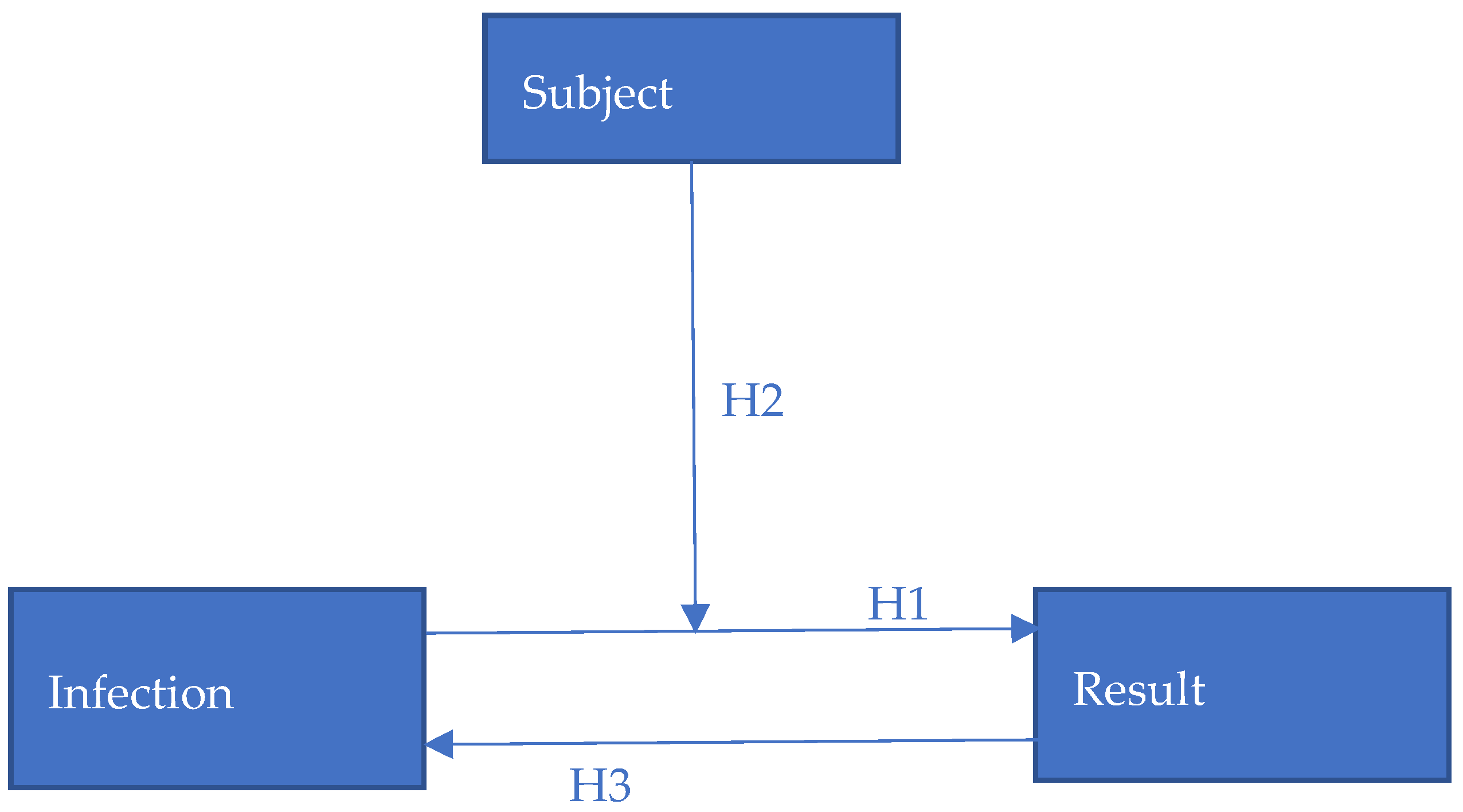
Figure 2.
t-test result on the difference between student marks before and after COVID-19.
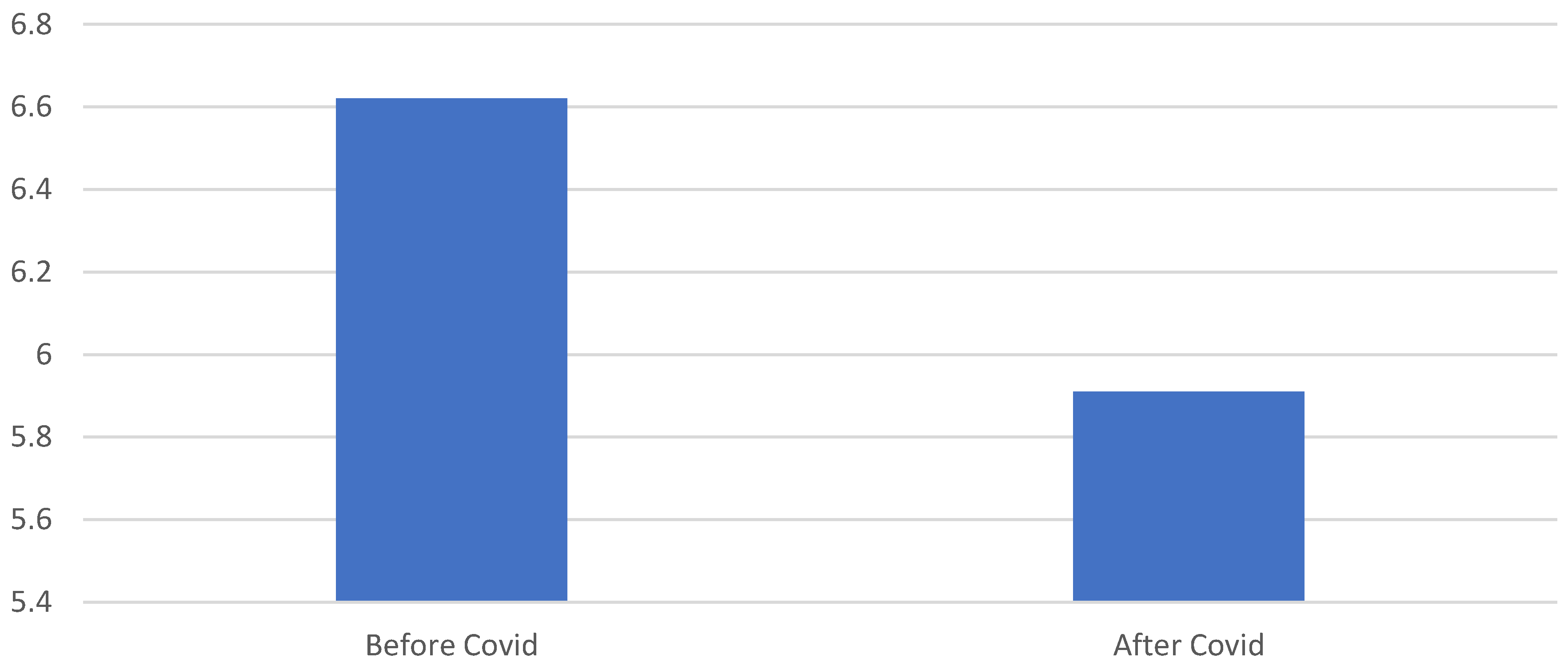
Figure 3.
ANOVA test result on the difference in students’ marks before and after COVID-19 between highly interactive subjects and others.
Figure 3.
ANOVA test result on the difference in students’ marks before and after COVID-19 between highly interactive subjects and others.
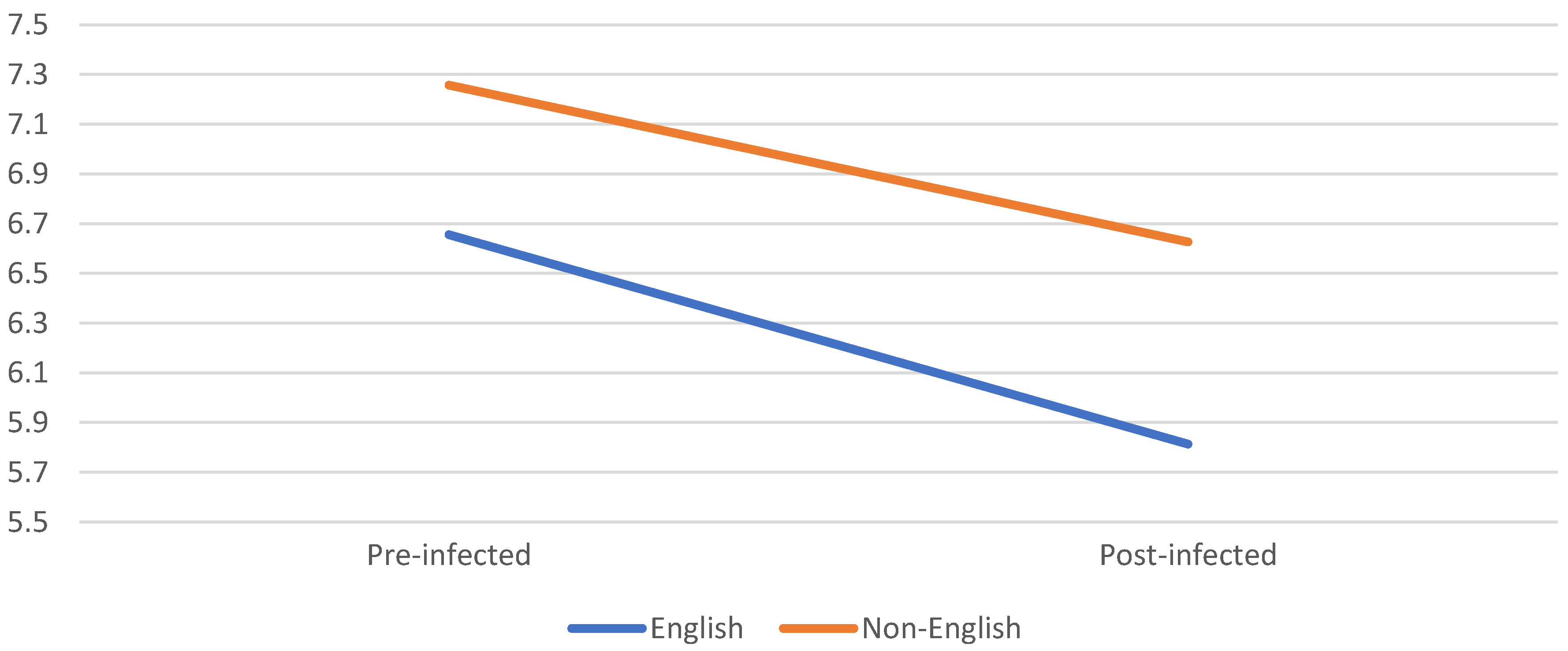
Figure 4.
t-test result on the students’ marks between infected and non-infected students.
Disclaimer/Publisher’s Note: The statements, opinions and data contained in all publications are solely those of the individual author(s) and contributor(s) and not of MDPI and/or the editor(s). MDPI and/or the editor(s) disclaim responsibility for any injury to people or property resulting from any ideas, methods, instructions or products referred to in the content. |
© 2025 by the authors. Licensee MDPI, Basel, Switzerland. This article is an open access article distributed under the terms and conditions of the Creative Commons Attribution (CC BY) license (http://creativecommons.org/licenses/by/4.0/).
Copyright: This open access article is published under a Creative Commons CC BY 4.0 license, which permit the free download, distribution, and reuse, provided that the author and preprint are cited in any reuse.


