

Submitted:
22 April 2025
Posted:
23 April 2025
You are already at the latest version
Abstract
The progress toward the energy transition has made it essential to secure large quantities of critical metals to meet both short- and long-term demand, driving the exploration of new approaches such as deep-sea mining (DSM). This study conducts a bibliometric analysis to examine the current scientific landscape of DSM, identifying trends, critical factors, and research gaps through a combined PESTEL and bibliographic analysis covering co-authorship, co-citation, co-occurrence, and bibliographic coupling. This comprehensive approach not only highlights emerging areas but also helps guide research efforts toward priority topics that support the advancement of DSM toward more sustainable exploitation. The results provide a general overview of recurrent themes and underexplored areas, serving as a basis for future research. While significant progress has been made in the environmental, technological, political, and legal dimensions, there remains a major gap in studies addressing the economic and social aspects of DSM, which account for less than 14% of the literature analyzed. This imbalance limits the integration of a truly sustainable framework, underscoring the need to promote interdisciplinary approaches and foster synergies among organizations and countries to build a more balanced and holistic understanding.
Keywords:
Deep-sea mining (DSM)
; Sustainability
; Bibliometrics
; Bibliometric indicators
; PESTEL analysis
1. Introduction
The mining sector is experiencing growth driven by the increasing demand for essential minerals for modern society [1]. These minerals are considered critical and face a high supply risk [2], in addition to a progressive decline in ore grades over time, which has made resource access increasingly difficult and raised both costs and technical challenges [3]. This situation may hinder progress toward the energy transition, prompting the search for alternative extraction methods. As a result, global interest in deep-sea mining (DSM) has grown significantly [4], given that the seabed hosts mineral resources of considerable potential—sometimes even superior to those found in the Earth’s crust [2,5]. In response to this growing interest, the past decade has seen a marked increase in scientific research and publications on DSM, fueled by its strategic and economic potential. A recent example is Norway, which became the first country to approve DSM operations in January 2024 [6]. However, due to environmental concerns, the Norwegian government decided in December 2024 to postpone the granting of exploitation licenses for seabed mining.
In this context, accessing deep-sea mineral resources may provide a solution to the supply gap for critical metals and represent an economic opportunity. Nevertheless, this activity also presents major challenges in achieving its objectives. DSM has sparked controversy among various stakeholders, including scientists and local communities in Oceania, where concerns prevail regarding the uncertainty of its potential impacts on marine ecosystems [7]. Additionally, there is limited research on the commercial-scale impacts of DSM on terrestrial mining operations [8], as well as its social and economic implications [9].
It is therefore crucial to develop a comprehensive understanding of the current state of DSM-related research to assess the feasibility of its implementation by considering both its potential benefits and associated risks, aiming for sustainable development. This study seeks to examine the current scientific landscape of DSM and identify the research areas that require greater attention. To achieve this, a bibliometric methodology is employed—based on co-authorship, co-citation, co-occurrence, and bibliographic coupling—combined with a PESTEL analysis. The PESTEL framework is a tool used to evaluate the Political, Economic, Social, Technological, Environmental, and Legal factors that shape the context in which an industry or activity operates. This type of analysis helps identify key opportunities and threats, as well as their current state and future trends [10]. Its application is particularly useful in complex industries like DSM, which is gaining momentum in regulatory, technological, and socio-environmental contexts that are subject to rapid changes and may vary significantly across countries.
Bibliometric analysis allows for the assessment of the current research landscape and advances within a specific field. Moreover, it facilitates the identification of underexplored areas, helping to guide research efforts toward relevant and strategic topics [11].
The structure of this article is as follows. First, the theoretical framework is presented, including an overview of the extraction methods of interest and the main characteristics of DSM. Next, the research design and analytical methodology are described. This is followed by a presentation and discussion of the results from the PESTEL and bibliometric analyses, in relation to key trends and challenges. Finally, the article outlines the implications of these findings for the sustainable development of DSM and proposes priority research areas and policy guidance to help balance current approaches to seabed resource exploitation.
2. Theoretical Framework
The extraction of deep-sea resources primarily involves polymetallic nodules, ferromanganese crusts, and seafloor massive sulfides (SMS), as well as other types such as gas hydrates [12], placers, phosphorites, and evaporites [13]. The latter four have received significantly less scientific attention compared to the former, which have been the subject of more advanced research and technological development. These resources contain key metals such as copper, manganese, iron, nickel, cobalt, zinc, molybdenum, lithium, gold, silver, and rare earth elements, among others [8]. Some of these minerals occur in concentrations that far exceed terrestrial reserves, making them of high economic interest due to their potential to support the development of green technologies [2,14,15]. One of the most notable examples is the Clarion-Clipperton Zone (CCZ), where manganese reserves are equivalent to all known terrestrial reserves, and those of nickel, cobalt, and titanium even surpass land-based estimates [16].
2.1. Description of Strategic Deep-Sea Resources
The most relevant resources exhibit the following characteristics:
2.1.1. Polymetallic Nodules
Are found on the surface of abyssal plains at depths ranging from 3,500 to 6,500 meters [17]. They form around a nucleus—typically an inorganic material—where minerals accumulate in concentric layers. Their morphology resembles that of a potato, with sizes ranging from 1 to 12 cm. Growth rates are extremely slow, between 2 and 5 millimeters per million years [18,19]. A conservative estimate suggests that the CCZ holds approximately 21.1 billion dry metric tons of nodules, containing nearly 6 billion tons of manganese, 270 million tons of nickel, 234 million tons of copper, and 46 million tons of cobalt [20]. For example, nodules in the CCZ contain 3.4 times more cobalt, 4 times more yttrium, and 1.8 times more nickel compared to terrestrial reserves [2,14].
2.1.2. Ferromanganese Crusts
Are found on seamounts and form through the precipitation of minerals at depths between 400 and 7,000 meters [21]. Their thickness can vary from less than one centimeter to up to 26 centimeters in some cases [22]. Like nodules, their growth is extremely slow, ranging from 1 to 5 mm per million years. Studies estimate that in the Pacific Ocean, the Principal Crust Zone (PCZ) holds about 7.533 billion dry metric tons of crusts, which contain four times more cobalt and nine times more tellurium than all known terrestrial reserves [2].
2.1.3. Seafloor Massive Sulfides (SMS)
Are associated with hydrothermal vents in geologically active zones, typically occurring along mid-ocean ridges at depths between 500 and 5,000 meters [23,24]. These environments are characterized by extreme conditions, with temperatures exceeding 400°C [25]. SMS deposits vary in size, from just a few centimeters to over 45 meters, and in some cases can contain up to 420 million tons of material [5,26]. In contrast to polymetallic nodules and ferromanganese crusts, global estimates for SMS deposits remain limited and highly uncertain due to their geological complexity. Consequently, a precise quantitative comparison with terrestrial reserves is currently not feasible [15].
2.2. Assessment of Potential Impacts Generated by DSM
Although several authors have studied the potential impacts of DSM [27,28,29], there is still uncertainty regarding the magnitude and duration of the consequences this activity may have on the marine environment [7]. These effects are not yet fully understood, either in the short or long term, and the social and economic impacts have received limited attention in the literature.
Figure 1 illustrates a schematic representation of the potential environmental impacts that may arise on the seafloor. While these impacts have been addressed in various studies, research efforts tend to focus on specific aspects, such as habitat removal [30], suspended sediments [31], and substrate alteration [12].
For this reason, it is important to conduct a bibliometric analysis combined with a PESTEL analysis of existing DSM-related research to identify underexplored areas and help guide and prioritize future research efforts. This approach not only contributes to closing knowledge gaps but also aims to encourage a more balanced research agenda by promoting a comprehensive understanding of the impacts and opportunities associated with DSM.
3. Methodology
3.1. Database and Document Selection
To conduct a bibliometric analysis, it is essential to select an appropriate database that contains relevant bibliographic information. Scopus and Web of Science (WoS) are considered the most prestigious and widely used online databases for bibliometric research [32]. For the purposes of this bibliographic study, the Scopus platform was selected, as it provides a larger and more comprehensive collection of literature [33].
The bibliographic search was carried out in January 2025 using the following search terms, combined with Boolean operators:“Deep sea” AND “Mining” OR “Seabed” AND “Mining” OR “Seafloor” AND “Mining”, within the Scopus database. Figure 2 presents the data selection criteria along with the first documentation filter. The initial search returned 1,005 relevant records, covering publications from 1970 to the present.
For the second filter, each selected article was transcribed into Microsoft Excel in order to summarize key bibliometric parameters and verify that the entries matched the intended research scope in terms of title, abstract, and keywords. After this screening, 94 documents were removed due to duplication or lack of direct relevance to the topic, resulting in a final database of 911 documents. Figure 3 illustrates the evolution of publications in this field over the past 54 years, highlighting the increasing attention it has received in recent times.
3.2. PESTEL Analysis
With the database defined and structured in a spreadsheet, a detailed analysis was conducted in which each article was classified according to the components of the PESTEL framework. According to Yüksel (2012), this methodology enables the identification of dynamics within six key domains—Political, Economic, Social, Technological, Environmental, and Legal—providing a comprehensive perspective that facilitates the anticipation of emerging trends and critical gaps in the literature.
3.3. Bibliometric Analysis
3.3.1. Research Methods
According to Moral-Muñoz et al. (2020), bibliometric analyses are essential tools for assessing scientific progress within a specific field. These methods are key to constructing visual maps that represent the structure and relationships among disciplines, research areas, authors, and institutions. Such maps help to understand research dynamics, interconnections, and emerging trends within a given domain. Moreover, this analytical approach is complemented by a PESTEL analysis to identify knowledge gaps and guide future research toward more sustainable development. In this context, various bibliometric techniques can be applied. This study employs the following: co-authorship analysis, co-citation analysis, co-occurrence analysis, and bibliographic coupling.
- Co-authorship analysis: This method examines collaboration among authors, which occurs when two or more researchers co-author a document [34]. It allows the identification of collaboration patterns (academic, institutional, or national) and the analysis of scientific communities within a research field.
- Co-occurrence analysis: Based on keyword co-occurrence, this method identifies the frequency with which related terms appear together in the literature, thereby revealing key thematic areas [37].
- Bibliographic coupling: This technique links documents that share common references. If two articles appear together in the reference list of a third, their similarity can be measured based on the number of shared citations [38]. This method helps to uncover connections between documents with overlapping bibliographic foundations.
3.3.2. Visualization of Bibliometric Analysis
The results were visualized using network maps generated with VOSviewer (version 1.6.20). VOSviewer was selected due to its powerful visualization capabilities and user-friendly interface [39]. This type of analysis enables the creation of network maps composed of nodes and links, which are generated from the bibliographic dataset. The size of the node represents the bibliometric count of the item, while the thickness of the connecting line indicates the strength of the relationship—closer nodes represent stronger relevance between items. Additionally, based on the degree of similarity in the data, elements are grouped into clusters, each assigned a different color to facilitate interpretation.
For the co-authorship analysis, VOSviewer’s fractional counting method was used. This function divides the weight of a link proportionally, preventing the overrepresentation of authors involved in multiple collaborations. For the co-citation analysis, the full counting option was applied, as each co-citation represents a unique contribution. This approach allows for accurate identification of the most influential works in the field. In the co-occurrence analysis, full counting was also used, as it considers the absolute number of occurrences for each keyword, providing a direct measure of term relevance.
Finally, in the bibliographic coupling analysis, the fractional counting method was employed. This approach distributes the weight more evenly among documents sharing common references, preventing papers with numerous citations from disproportionately dominating the results.
4. Results and Discussion
The following section presents the results of the PESTEL analysis and the bibliometric analyses of co-authorship, co-citation, co-occurrence, and bibliographic coupling.
4.1. PESTEL Analysis
This analysis helps identify the thematic priorities within the body of existing research. Out of a total of 911 articles analyzed, Figure 4 shows that more than 50% of scientific studies are concentrated in the technological (30.0%) and environmental (25.1%) domains. These findings reflect strong interest in the development of new technologies for resource extraction, as well as in understanding and mitigating the future environmental impacts associated with DSM.
In contrast, the political (14.6%), economic (11.6%), and legal (11.6%) dimensions are less represented compared to environmental and technological topics, although their relative presence is similar. The social dimension (2.3%) is the least addressed, highlighting a significant gap in the literature.
These results point to ongoing scientific concern with issues related to regulatory frameworks, governance, and project feasibility. Such aspects are particularly relevant in a context where robust international policies and legal frameworks are required to manage DSM activities. Since its establishment in 1994, the International Seabed Authority (ISA) has overseen these matters and is currently developing a mining code that remains under negotiation. The findings also suggest that less attention has been given to impacts beyond the marine environment, such as long-term effects on social cohesion, impacts on local communities, or the influence of DSM projects on socioeconomic development and public acceptance, as well as community resilience to disruptions introduced by this emerging industry.
A more detailed temporal analysis is presented in Figure 5, which shows that social research began to emerge after 2010, primarily focusing on stakeholder perceptions and the potential socioeconomic impacts of DSM. Additionally, it has been observed that most publications in this field originate from institutions in countries such as the United States, Germany, China, and the United Kingdom, reflecting a geographical bias in DSM research [40]. This trend may limit understanding of social challenges in other regions, such as the Pacific, where sociocultural and economic contexts differ significantly.
This highlights the need to expand research efforts toward a more global and inclusive perspective, integrating holistic approaches that not only focus on technical and environmental dimensions but also strive to achieve balance across all PESTEL categories.
Figure 5 illustrates the scientific evolution of DSM-related research. Two main publication peaks can be identified: the first occurring between 1970 and 1990, and a second period of accelerated growth beginning around 2010.
The first peak (1970–1990) reflects relatively higher interest in economic, legal, and political issues. This can be attributed to early excitement generated by scientific discoveries such as polymetallic nodules in the 1960s and ferromanganese crusts in the 1970s, both of which raised interest due to their economic potential. However, this momentum slowed after 1985, possibly due to technological and economic limitations, as well as the adoption of the United Nations Convention on the Law of the Sea (UNCLOS) in 1982. While UNCLOS aimed to provide a legal framework for seabed resource exploitation, its implementation and international agreements took years to materialize, which may have contributed to the decline in scientific attention during that period.
The second peak, from 2010 onward, has been driven by the increasing demand for critical minerals required for the energy and technology transition, along with technological advances in mining machinery and pilot projects, such as those conducted in the Clarion-Clipperton Zone (CCZ). Notably, between 2017 and 2018, the number of publications doubled. This surge may be linked to growing interest in DSM regulations by the ISA, environmental concerns, legal developments, and strategic initiatives by countries such as China and Norway to explore and exploit deep-sea resources.
Based on the analysis of Figure 4 and Figure 5, it becomes evident that the evolution of different PESTEL dimensions has not been uniform. Environmental and technological topics currently dominate the field, while economic research has remained consistent but limited. In contrast, social research has only gained visibility since 2010, with increased momentum after 2020. These trends demonstrate how research priorities are shaped by shifting historical, political, economic, and technological contexts, which continually redefine the global agenda surrounding DSM.
4.2. Bibliometric Analysis
4.2.1. Co-Authorship Bibliometric Analysis
This analysis makes it possible to identify and distinguish the collaborative dynamics between researchers and their respective thematic areas. Based on the VOSviewer analysis, Figure 6 presents the co-authorship network related to DSM studies. It is important to note that prior to the analysis, the data were cleaned to remove duplicate author entries. Two input thresholds were then applied: (i) authors must have published at least three documents in the dataset, and (ii) must have a minimum of 30 citations. Out of 2,191 authors, only 91 met these criteria.
These thresholds were determined as part of a methodological proposal, after testing combinations using 50 citations and 3, 4, or 5 publications. While increasing the number of authors led to more clusters, the resulting networks were oversaturated with information, making interpretation more difficult. Additionally, many clusters formed around narrow topics, limiting their representativeness in comparison to the broader insights obtained from the PESTEL analysis.
Using the selected parameters, a total of 9 clusters were identified. The network contains 263 links and a total link strength of 117.50, which reflects the accumulated strength of connections between nodes. A higher total link strength indicates more frequent or internal collaborations between nodes, helping infer the level of connectedness within the dataset.
The identified clusters clearly reflect a segmentation of DSM research topics aligned with the PESTEL framework. In some cases, clusters address more than one dimension, revealing interconnections and the interdisciplinary nature of research in this field. The clusters are described below in descending order based on the number of authors they include. The authors mentioned correspond to those who most frequently co-occur in the co-authorship network generated by VOSviewer. Therefore, their inclusion does not require a specific analysis of their individual publications:
- Red Cluster: Comprised of 9 authors, including Jones, Smith, and Simon Lledó, mainly focused on the environmental dimension, particularly on the impact of DSM on benthic communities. It also incorporates the technological dimension, related to the development and application of spatial data analysis tools.
- Yellow Cluster: Composed of 8 authors, such as Vanreusel and Haeckel, focused on environmental issues concerning marine benthic biodiversity and ecosystem recovery.
- Blue Cluster: Includes 8 authors like Dahlgren, Glover, and Wiklund, linked to environmental research, especially ecological, taxonomic, and genetic studies of deep-sea organisms.
- Purple Cluster: Comprising 8 authors, including Clark, Rowden, and Levin, this group focuses on environmental themes such as habitat conservation and mitigation strategies. It also indirectly touches on political and legal dimensions by contributing to governance and regulatory frameworks. Notably, the links in this cluster are thicker, indicating stronger and more frequent collaborations.
- Green Cluster: Formed by 8 authors, including Durden, Jaeckel, and Gjerde, this cluster addresses the environmental, legal, and political dimensions, particularly governance, regulation, and sustainability policies for mitigating DSM's ecological impacts.
- Light Blue Cluster: Consisting of 5 authors, including Sweetman and Stratmann, this group combines environmental and technological dimensions, focusing on modeling DSM impacts in vulnerable ecosystems, carbon cycle disruptions, and the resilience of benthic communities.
- Orange Cluster: Composed of 4 authors such as Gooday and Pawlowski, focused on environmental themes related to protist biodiversity and monitoring changes caused by DSM. Their work provides crucial input for the sustainable management of seabed ecosystems.
- Brown Cluster: Contains 2 authors, Van Dover and Mestre, focused on environmental issues, particularly the balance between exploitation and conservation. They also propose mitigation and habitat restoration strategies and indirectly address political dimensions by advocating for precautionary approaches and sustainable practices in DSM management.
- Pink Cluster: Composed of 2 authors, notably Lily and Craik, who address sustainability challenges in DSM, focusing mainly on political and legal issues such as environmental risks and the gaps in governance frameworks necessary for responsible exploitation.
These findings reveal active collaboration among researchers and thematic segmentation in DSM research. While the identified clusters span key areas such as environmental, technological, political, and legal dimensions, significant gaps persist in the social and economic aspects, underscoring the lack of multidisciplinary research that addresses these areas.
Moreover, the relatively low presence of the technological dimension in the co-authorship network contrasts with the dominance observed in Figure 4. This discrepancy may be due to the dispersed nature of technological studies, which often involve collaborations across institutions and disciplines rather than centralized authorship.
Figure 7 shows co-authorship patterns by year of publication, highlighting the most influential authors. Most are represented in darker tones, indicating more recent activity—especially around 2017. It is important to note that this approach introduces a bias toward recent publications, as the network includes only authors with studies from recent years, aligning with the upward trend in DSM research seen in Figure 5.
This bias highlights the underrepresentation of pioneering DSM studies, which may be due to less collaborative research practices in earlier years, limited bibliometric records, or the overshadowing of older studies by more recent evidence. Therefore, while this analysis is useful for accurately identifying current trends in DSM research, it is not fully representative of the historical evolution of the field.
4.2.2. Co-Citation Bibliometric Analysis
This analysis was conducted to identify relationships between key references in the field of DSM using a reference co-citation analysis. The analysis was based on a total of 27,384 cited references, with a minimum citation threshold of six. This selection criterion allowed for the inclusion of the greatest possible amount of information while ensuring that the resulting network remained visible and interpretable. Based on this threshold, 43 items, 272 links, and a total link strength of 428 were obtained.
Figure 8 shows the layout of the results, highlighting the formation of five clusters.
- The red cluster is focused on documents related to the impacts of DSM on deep-sea ecosystems, damage assessments, and mitigation strategies regarding the impacts generated by mining activities.
- The purple cluster centers on the intersection between ecological impacts and regulatory implications.
- The blue cluster is related to emerging technologies and marine resource exploration.
- The yellow cluster is associated with the economic potential of seabed resources as well as the advancements needed for DSM exploration.
- Finally, the green cluster relates to the implementation of regulations overseen by the ISA, the regulation of exploration under the framework of the United Nations Convention on the Law of the Sea (UNCLOS), and governance issues concerning environmental projection.
The analyzed clusters show a prioritization of connections among environmental, political, and legal areas, with lower representation in economic and technological approaches. This highlights a significant gap in the social, technological, and economic aspects, indicating that documents addressing these topics do not share as many citations with those focused on environmental issues, regulations, or other perspectives. This may be due to a lack of connection between authors or research groups working in these areas—particularly in the case of technology, where a considerable number of studies exist. As for the economic and social dimensions, the results clearly reveal the need to promote further research addressing these themes.
Figure 9A,B present the author co-citation analysis, applying a threshold of 100 citations per author. This filter was chosen based on the number of links generated, as a lower citation threshold would have significantly increased the number of links and nodes in the network, leading to oversaturation and overlapping of information, which would hinder pattern recognition. This analysis resulted in 45 authors out of a total of 35,975.
Figure 9A displays the co-citation network, revealing the formation of three clusters. The network contains 989 links and a total link strength of 250,025. On the other hand, Figure 9B shows the co-citation density map, which allows identification of areas with greater scientific activity. Brighter colors (particularly yellow) indicate authors who are highly influential in their respective research fields.
The co-citation analysis identified three clusters with distinct thematic focuses. The green cluster includes authors such as Smith (614 citations), Gooday (307 citations), and Jones (420 citations), among others, who have primarily focused on topics related to the ecology and biodiversity of DSM.
In contrast, the red cluster groups together authors such as Levin (365 citations), Clark (413 citations), and Van Dover (303 citations), who are focused on policy, governance, regulatory frameworks, and sustainability of DSM.
Lastly, the blue cluster includes authors such as Hein (220 citations), Koschinsky (203 citations), and others, whose work addresses marine resources, deposit characterization, and their economic potential, as well as extraction technologies.
The results indicate that each cluster reflects a well-defined thematic orientation: the red cluster is focused on environmental issues; the green cluster addresses policy and governance, corresponding to the political and legal dimensions of the PESTEL framework; and the blue cluster covers topics with an economic and technological emphasis. These findings reveal a research gap in the social and economic dimensions, which remain underrepresented and tend to focus mainly on quantifying seabed resources.
Another important point is the technological area: although it is present in the blue cluster, it does not appear as dominant as in the PESTEL analysis. This could be due to the fact that, although there are numerous studies related to technology, they have not been cited as frequently, leading to a citation bias in the results. This highlights the importance of strengthening interdisciplinary connections and exploring understudied areas to comprehensively address the challenges and opportunities of DSM.
4.2.3. Author Keyword Co-Occurrence Analysis
Figure 10 shows the network of author keywords found across the entire selected database. For this analysis, duplicate keyword entries were removed. A minimum threshold of five occurrences was established, resulting in a total of 171 links and a total link strength of 496. The results are complemented by Table 1, which presents a ranking of the top 10 most frequent keywords, including their number of appearances and respective link strength.
Based on Figure 10 and Table 2, terms such as “Deep-sea Mining”, “International Seabed Authority”, and “Polymetallic Nodules” stand out as key interests in the network, in addition to showing a strong connection among them, evidenced by the thickness of their links. These terms have experienced a significant increase in recent research, especially between 2018 and 2020, focusing on mineral resources, the ISA, numerical modeling, and regulation. However, similar to what was observed in Figure 7, there is a noticeable bias toward more recent keywords, leaving historical contributions less represented, as they tend to be more scattered and show a lower degree of collaboration. This may be attributed to the evolution of scientific language and the research interests of that period.
Following the same analysis in Figure 11, six well-defined clusters are identified, which are briefly described below.
- The green cluster, centered on DSM-related topics as the main axis, as well as concepts such as Environmental Impact Assessments (EIA) and the Common Heritage of Mankind.
- The red cluster, related to environmental impacts and their ecological dimension.
- The blue cluster covers aspects of exploration and numerical simulations used to model impacts and different processes related to DSM. It also includes the blue economy, linked to the exploration of marine resources with responsible economic growth.
- The yellow cluster is associated with seabed resources such as polymetallic nodules.
- The purple cluster relates to resources of hydrothermal origin, such as hydrothermal vents.
- Finally, the light blue cluster is linked to topics on governance, sponsoring states, and DSM regulation.
In summary, while this analysis highlights the relevance of legal frameworks, the ISA, and the environmental dimension surrounding DSM, it also reveals the need to strengthen the sustainability focus in current research. It is necessary to generate a broader perspective that incorporates the social, economic dimensions, as well as climate adaptation and long-term planning for DSM, in order to foster balance in scientific research.
4.2.4. Bibliographic Coupling Analysis
Figure 12 shows the bibliographic coupling analysis of documents, which allows the identification of research cores based on connections between documents through shared references. For this analysis, a threshold of 50 citations was applied, considering only highly relevant articles. This approach aims to reduce network noise and facilitate the interpretation of scientific intercorrelations. The analysis resulted in a total of 31 documents, 217 links, and a total link strength of 266.52.
It can be observed that authors such as Levin et al. (2016) and Petersen et al. (2016) stand out due to their significant impact on other research, supported by the frequency of citations and their central positioning in the network. These studies have been fundamental to the construction of current knowledge. Additionally, six clusters were identified, reflecting connections in thematic and temporal areas by grouping studies according to specific interests.
- The red cluster groups the initial and pioneering studies on DSM, focused on seabed resources.
- The light blue cluster explores emerging technologies related to seabed extraction, where the connections are stronger—evidenced by the thickness of the network lines—which indicates a significant amount of shared bibliographic bases.
- The green cluster addresses more environmental and ecological topics.
- The yellow cluster encompasses issues related to regulation and legal frameworks surrounding DSM.
- The blue cluster includes more recent technological developments.
- Finally, the purple cluster focuses on environmental impacts and mitigation strategies in DSM resource extraction and also shows a higher degree of interconnection between the works—similarly to what is observed in the light blue cluster.
This analysis reveals a stronger emphasis on areas such as regulatory frameworks, policy, the environmental dimension, and the development of technology aimed at reducing impacts and supporting pilot projects. However, it also highlights a lack of representation in the social and economic dimensions, which are and will be critical to understanding and projecting the future of DSM.
5. Conclusions
This study aims to contribute to a more holistic understanding of DSM through the use of bibliometric techniques combined with a PESTEL analysis, with the objective of identifying both emerging areas and those that require greater attention. The results reveal that although significant scientific progress has been made in the environmental, governance, regulatory, and technological dimensions, there is a notable lack of research addressing the economic and social aspects, which account for less than 14% of the studies reviewed. By highlighting these thematic gaps, this study helps lay the foundation for a more informed, equitable, and strategic discussion about the future of DSM.
In this context, it becomes a priority to strengthen research on the economic and social impacts of DSM in order to better understand the effects of these activities on local communities, regional economies, market behavior, and long-term financial viability, among others. Additionally, it is necessary to examine the current barriers that have prevented these dimensions from gaining relevance in research, and how this disconnect might affect the sustainable development of DSM.
Furthermore, the networks generated by VOSviewer revealed an underrepresentation of older data. This could be explained by the increasing scientific interest and relevance that DSM has gained in recent years. Therefore, it would be important to integrate and contextualize earlier research to achieve a more comprehensive analysis and avoid temporal bias in the conclusions. It is also suggested to examine the dynamics among organizations, countries, and key stakeholders involved in DSM, in order to better understand these interactions and foster new synergies and collaborations—ultimately promoting a more multidisciplinary research environment.
Funding
This work was partially funded by the Chilean National Research Agency (ANID) under the Basal Project AFB230001 and the Solar Energy Research Center (SERC-Chile; Project 1523A0006). This work also received support from a doctoral scholarship granted by ANID (Chilean National Agency for Research and Development).
Data Availability Statement
The data used in this study were obtained and processed from the Scopus bibliographic database.
Acknowledgments
The authors acknowledge the financial support provided by the Advanced Mining Technology Center (AMTC; Basal Project AFB230001) and the Solar Energy Research Center (SERC-Chile; Project 1523A0006).
Conflicts of Interest
The author declares no conflicts of interest.
References
- E. Ramirez-Llodra et al., «Submarine and deep-sea mine tailing placements: A review of current practices, environmental issues, natural analogs and knowledge gaps in Norway and internationally», Marine Pollution Bulletin, vol. 97, n.o 1-2, pp. 13-35, ago. 2015. [CrossRef]
- J. R. Hein, K. Mizell, A. Koschinsky, y T. A. Conrad, «Deep-ocean mineral deposits as a source of critical metals for high- and green-technology applications: Comparison with land-based resources», Ore Geology Reviews, vol. 51, pp. 1-14, jun. 2013. [CrossRef]
- G. M. Mudd y S. M. Jowitt, «Growing Global Copper Resources, Reserves and Production: Discovery Is Not the Only Control on Supply», Economic Geology, vol. 113, n.o 6, pp. 1235-1267, sep. 2018. [CrossRef]
- S. E. Beaulieu, T. E. Graedel, y M. D. Hannington, «Should we mine the deep seafloor?», Earth’s Future, vol. 5, n.o 7, pp. 655-658, jul. 2017. [CrossRef]
- M. Hannington, J. Jamieson, T. Monecke, S. Petersen, y S. Beaulieu, «The abundance of seafloor massive sulfide deposits», Geology, vol. 39, n.o 12, pp. 1155-1158, dic. 2011. [CrossRef]
- Delivorias, «Norway to mine part of the Arctic seabed», 2024.
- R. Cormier y J. Londsdale, «Risk assessment for deep sea mining: An overview of risk», Marine Policy, vol. 114, p. 103485, abr. 2020. [CrossRef]
- L. A. Levin, D. J. Amon, y H. Lily, «Challenges to the sustainability of deep-seabed mining», Nat Sustain, vol. 3, n.o 10, pp. 784-794, jul. 2020. [CrossRef]
- Richard Roth, «Update on Financial Payment systems: Seabed Mining for Polymetallic Nodules», Environmental and Resource Economics, vol. 17, n.o 4, pp. 395-408, 2018. [CrossRef]
- G. C. De Sousa y J. A. Castañeda-Ayarza, «PESTEL analysis and the macro-environmental factors that influence the development of the electric and hybrid vehicles industry in Brazil», Case Studies on Transport Policy, vol. 10, n.o 1, pp. 686-699, mar. 2022. [CrossRef]
- Chen, «Science Mapping: A Systematic Review of the Literature», Journal of Data and Information Science, vol. 2, n.o 2, pp. 1-40, mar. 2017. [CrossRef]
- K. A. Miller, K. F. Thompson, P. Johnston, y D. Santillo, «An Overview of Seabed Mining Including the Current State of Development, Environmental Impacts, and Knowledge Gaps», Front. Mar. Sci., vol. 4, p. 418, ene. 2018. [CrossRef]
- E. Marino, I. Blasco, L. Blanco, F. J. González, L. Somoza, y T. Medialdea, «Llega la era de la minería submarina», ILUSTRE COLEGIO OFICIAL DE GEOLOGOS, may 2017. [CrossRef]
- J. R. Hein, F. Spinardi, N. Okamoto, K. Mizell, D. Thorburn, y A. Tawake, «Critical metals in manganese nodules from the Cook Islands EEZ, abundances and distributions», Ore Geology Reviews, vol. 68, pp. 97-116, jul. 2015. [CrossRef]
- S. Petersen, A. Krätschell, N. Augustin, J. Jamieson, J. R. Hein, y M. D. Hannington, «News from the seabed – Geological characteristics and resource potential of deep-sea mineral resources», Marine Policy, vol. 70, pp. 175-187, ago. 2016. [CrossRef]
- N. Toro, R. I. Jeldres, J. A. Órdenes, P. Robles, y A. Navarra, «Manganese Nodules in Chile, an Alternative for the Production of Co and Mn in the Future—A Review», Minerals, vol. 10, n.o 8, p. 674, jul. 2020. [CrossRef]
- J. R. Hein, T. A. Conrad, y R. E. Dunham, «Seamount Characteristics and Mine-Site Model Applied to Exploration- and Mining-Lease-Block Selection for Cobalt-Rich Ferromanganese Crusts», Marine Georesources & Geotechnology, vol. 27, n.o 2, pp. 160-176, may 2009. [CrossRef]
- S. Gollner et al., «Resilience of benthic deep-sea fauna to mining activities», Marine Environmental Research, vol. 129, pp. 76-101, ago. 2017. [CrossRef]
- P. Halbach, V. Marchig, y C. Scherhag, «Regional variations in Mn, Ni, Cu, and Co of ferromanganese nodules from a basin in the Southeast Pacific», Marine Geology, vol. 38, n.o 4, pp. M1-M9, nov. 1980. [CrossRef]
- M. Morgan, «Comparison of vaginal misoprostol and gemeprost as pre-treatment in first trimester pregnancy interruption», BJOG, vol. 107, n.o 1, pp. 145-146, ene. 2000. [CrossRef]
- J. R. Hein y A. Koschinsky, «Deep-Ocean Ferromanganese Crusts and Nodules», en Treatise on Geochemistry, Elsevier, 2014, pp. 273-291. [CrossRef]
- E. Baker y Y. Beaudoin, «A physical, biological, environmental, and technical review».
- M. D. Hannington, C. E. J. De Ronde, y S. Petersen, «Sea-Floor Tectonics and Submarine Hydrothermal Systems», en One Hundredth Anniversary Volume, Society of Economic Geologists, 2005. [CrossRef]
- P. P. E. Weaver, D. S. M. Billett, y C. L. Van Dover, «Environmental Risks of Deep-sea Mining», en Handbook on Marine Environment Protection, M. Salomon y T. Markus, Eds., Cham: Springer International Publishing, 2018, pp. 215-245. [CrossRef]
- L. Van Dover, C. R. German, K. G. Speer, L. M. Parson, y R. C. Vrijenhoek, «Evolution and Biogeography of Deep-Sea Vent and Seep Invertebrates», Science, vol. 295, n.o 5558, pp. 1253-1257, feb. 2002. [CrossRef]
- R. German, S. Petersen, y M. D. Hannington, «Hydrothermal exploration of mid-ocean ridges: Where might the largest sulfide deposits be forming?», Chemical Geology, vol. 420, pp. 114-126, ene. 2016. [CrossRef]
- J. Amon et al., «Insights into the abundance and diversity of abyssal megafauna in a polymetallic-nodule region in the eastern Clarion-Clipperton Zone», Sci Rep, vol. 6, n.o 1, p. 30492, jul. 2016. [CrossRef]
- D. Paulikas, S. Katona, E. Ilves, y S. H. Ali, «Life cycle climate change impacts of producing battery metals from land ores versus deep-sea polymetallic nodules», Journal of Cleaner Production, vol. 275, p. 123822, dic. 2020. [CrossRef]
- C. L. Van Dover, «Impacts of anthropogenic disturbances at deep-sea hydrothermal vent ecosystems: A review», Marine Environmental Research, vol. 102, pp. 59-72, dic. 2014. [CrossRef]
- T. R. Vonnahme et al., «Effects of a deep-sea mining experiment on seafloor microbial communities and functions after 26 years», Sci. Adv., vol. 6, n.o 18, p. eaaz5922, may 2020. [CrossRef]
- J. Spearman et al., «Measurement and modelling of deep sea sediment plumes and implications for deep sea mining», Sci Rep, vol. 10, n.o 1, p. 5075, mar. 2020. [CrossRef]
- R. Pranckutė, «Web of Science (WoS) and Scopus: The Titans of Bibliographic Information in Today’s Academic World», Publications, vol. 9, n.o 1, p. 12, mar. 2021. [CrossRef]
- V. K. Singh, P. Singh, M. Karmakar, J. Leta, y P. Mayr, «The journal coverage of Web of Science, Scopus and Dimensions: A comparative analysis», Scientometrics, vol. 126, n.o 6, pp. 5113-5142, jun. 2021. [CrossRef]
- C. Biscaro y C. Giupponi, «Co-Authorship and Bibliographic Coupling Network Effects on Citations», PLoS ONE, vol. 9, n.o 6, p. e99502, jun. 2014. [CrossRef]
- C. Chen, F. Ibekwe-SanJuan, y J. Hou, «The structure and dynamics of cocitation clusters: A multiple-perspective cocitation analysis», J. Am. Soc. Inf. Sci., vol. 61, n.o 7, pp. 1386-1409, jul. 2010. [CrossRef]
- H. Small, «Co-citation in the scientific literature: A new measure of the relationship between two documents», J. Am. Soc. Inf. Sci., vol. 24, n.o 4, pp. 265-269, jul. 1973. [CrossRef]
- C. Galvez, «Análisis de co-palabras aplicado a los artículos muy citados en Biblioteconomía y Ciencias de la Información (2007-2017)», Transinformação, vol. 30, n.o 3, pp. 277-286, dic. 2018. [CrossRef]
- K. W. Boyack y R. Klavans, «Co-citation analysis, bibliographic coupling, and direct citation: Which citation approach represents the research front most accurately?», J. Am. Soc. Inf. Sci., vol. 61, n.o 12, pp. 2389-2404, dic. 2010. [CrossRef]
- N. J. Van Eck y L. Waltman, «Software survey: VOSviewer, a computer program for bibliometric mapping», Scientometrics, vol. 84, n.o 2, pp. 523-538, ago. 2010. [CrossRef]
- R. A. Kleiv y M. Thornhill, «Deep-Sea Mining—A Bibliometric Analysis of Research Focus, Publishing Structures, International and Inter-Institutional Cooperation», Minerals, vol. 12, n.o 11, p. 1383, oct. 2022. [CrossRef]
Figure 1.
Potential environmental impacts generated by DSM.
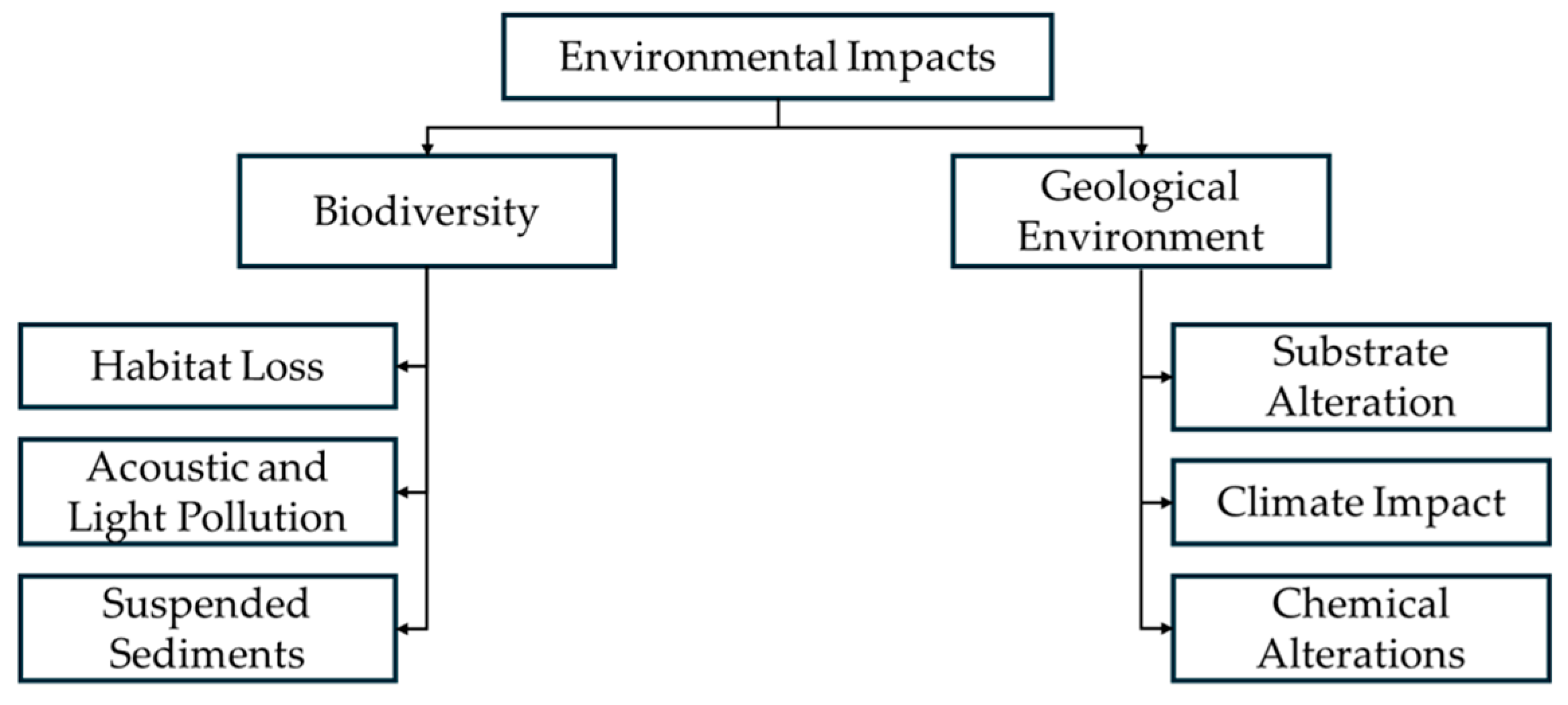
Figure 2.
Data selection criteria.
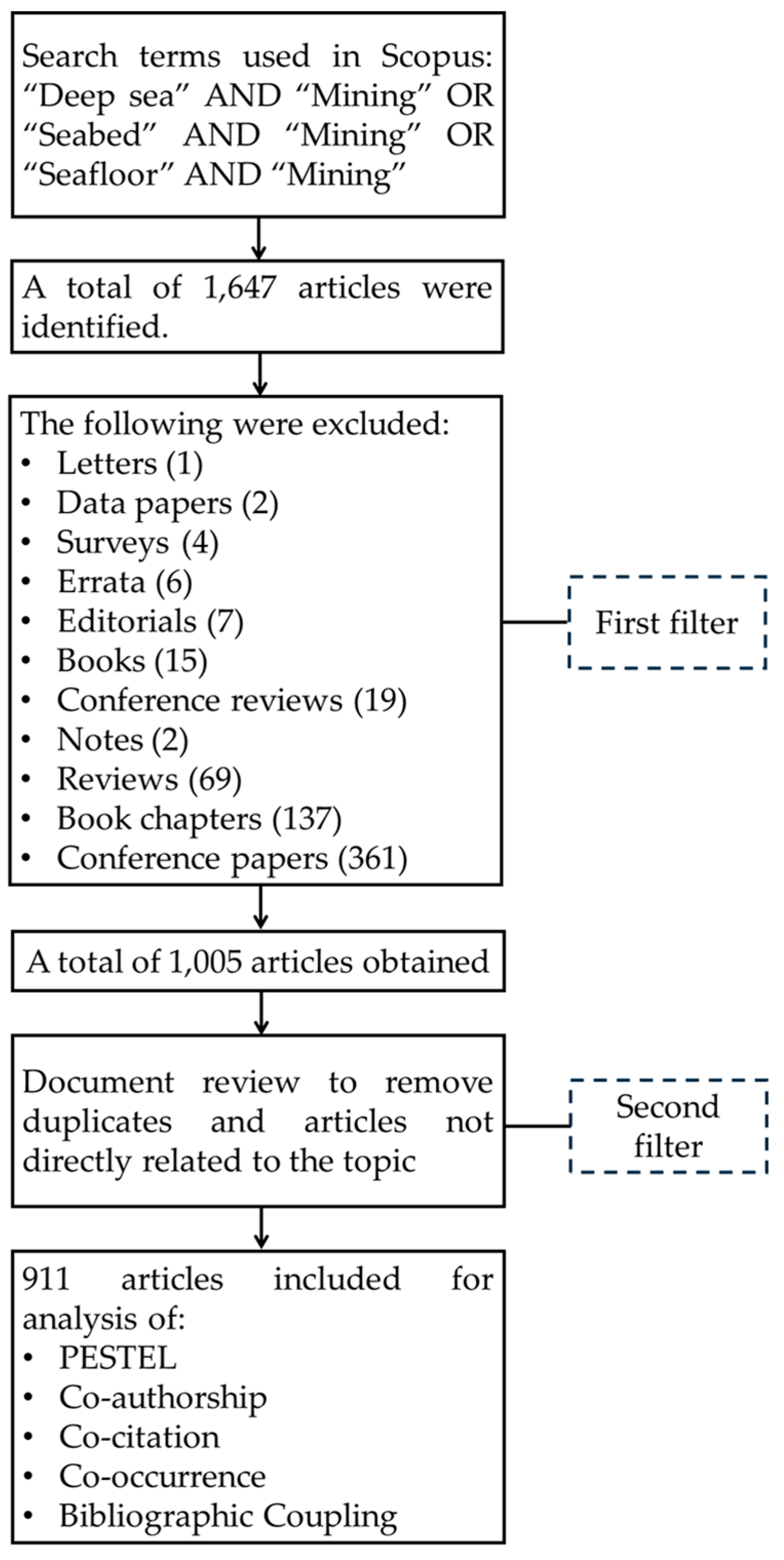
Figure 3.
Temporal evolution of DSM-related research.
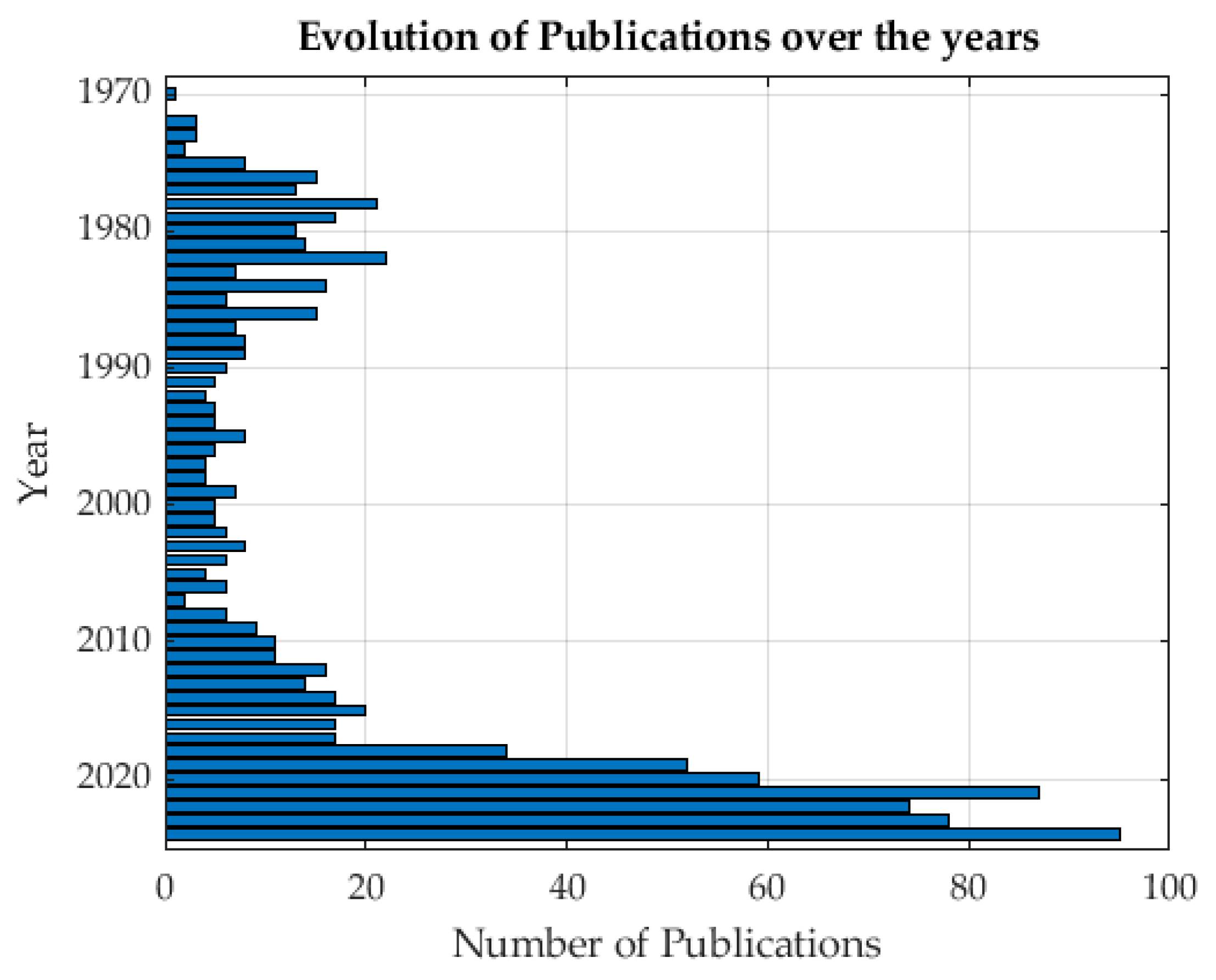
Figure 4.
Proportion of studies by PESTEL dimension.
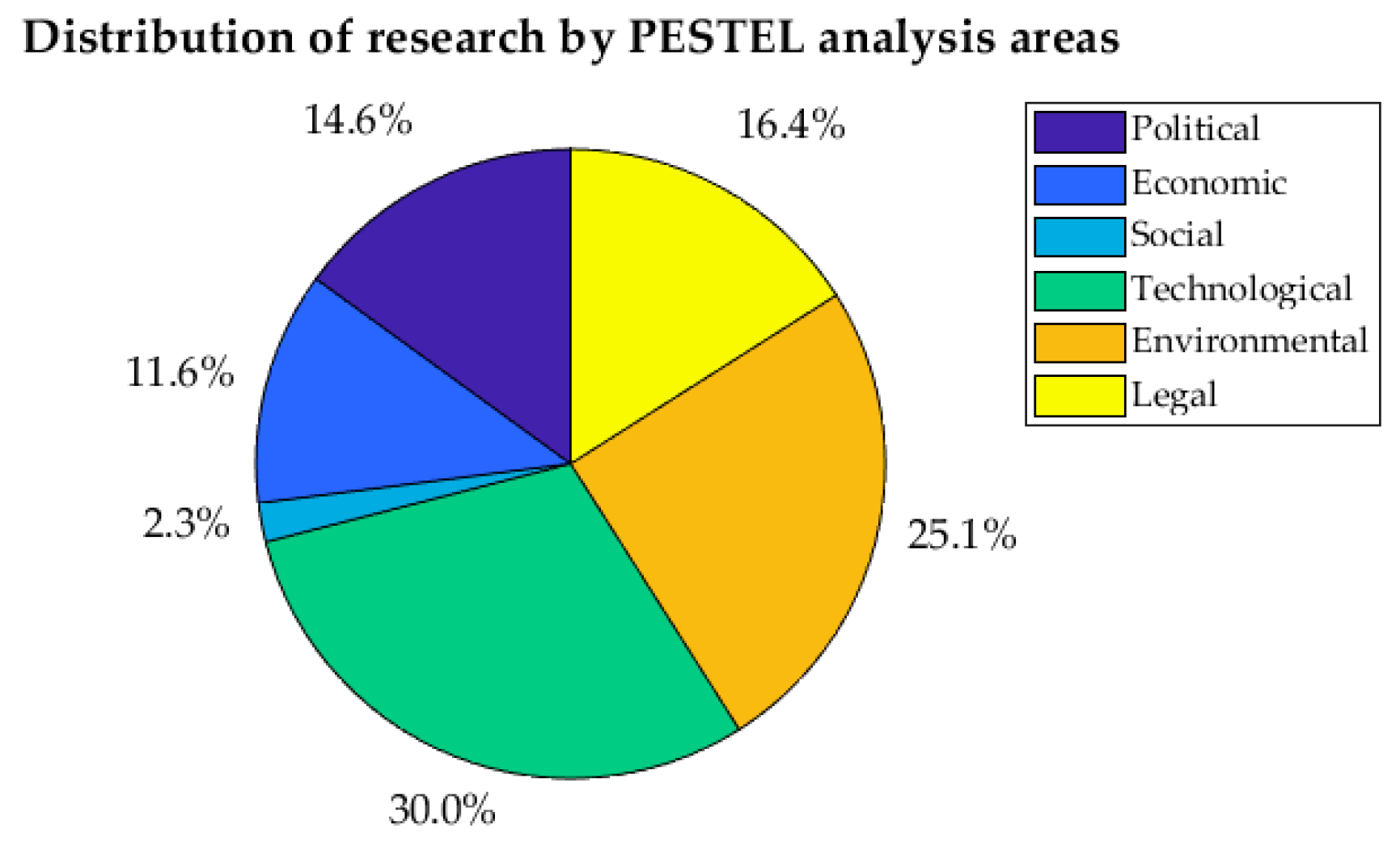
Figure 5.
Annual distribution of DSM-related articles by PESTEL dimension.
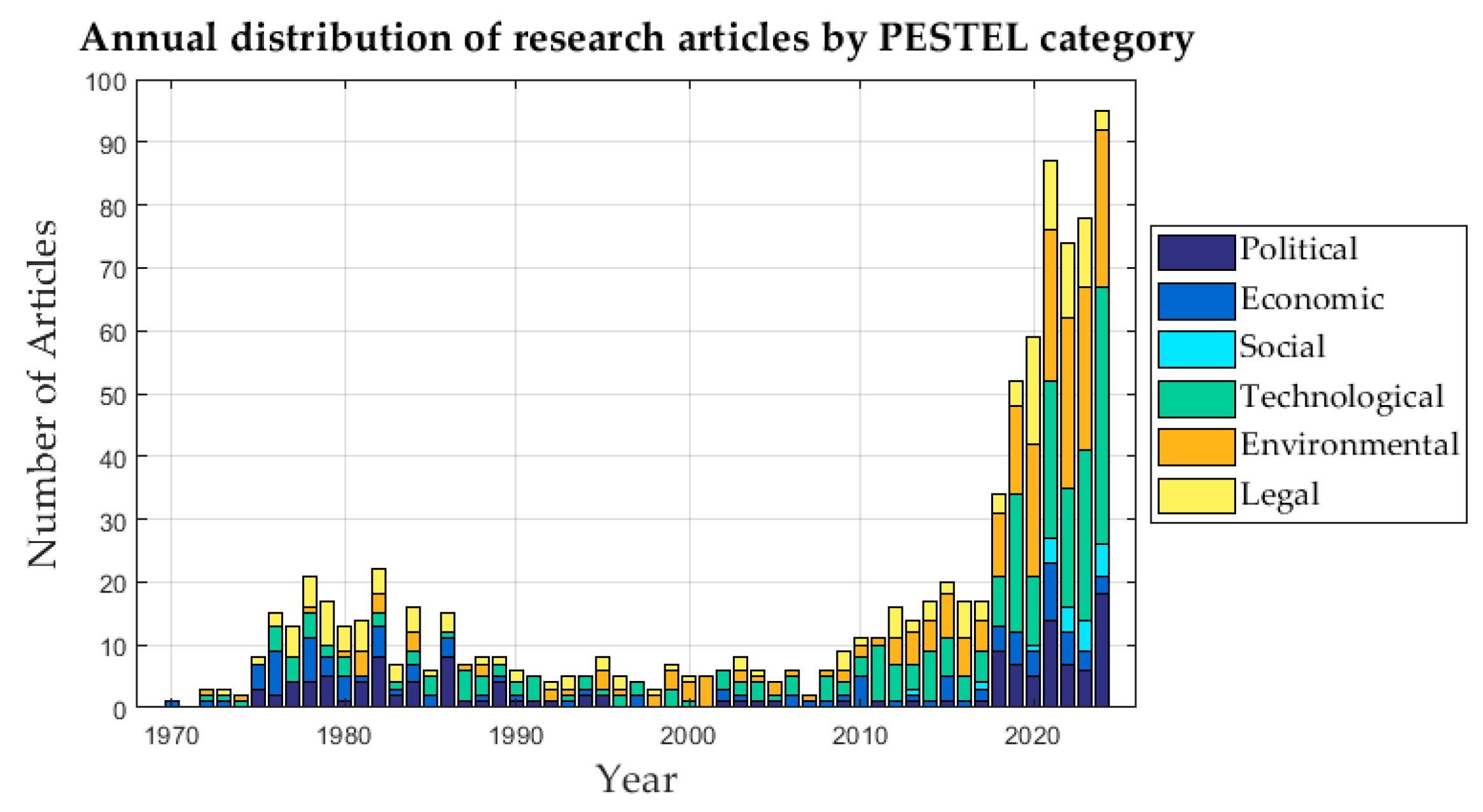
Figure 6.
Co-authorship network map of DSM bibliometric analysis.
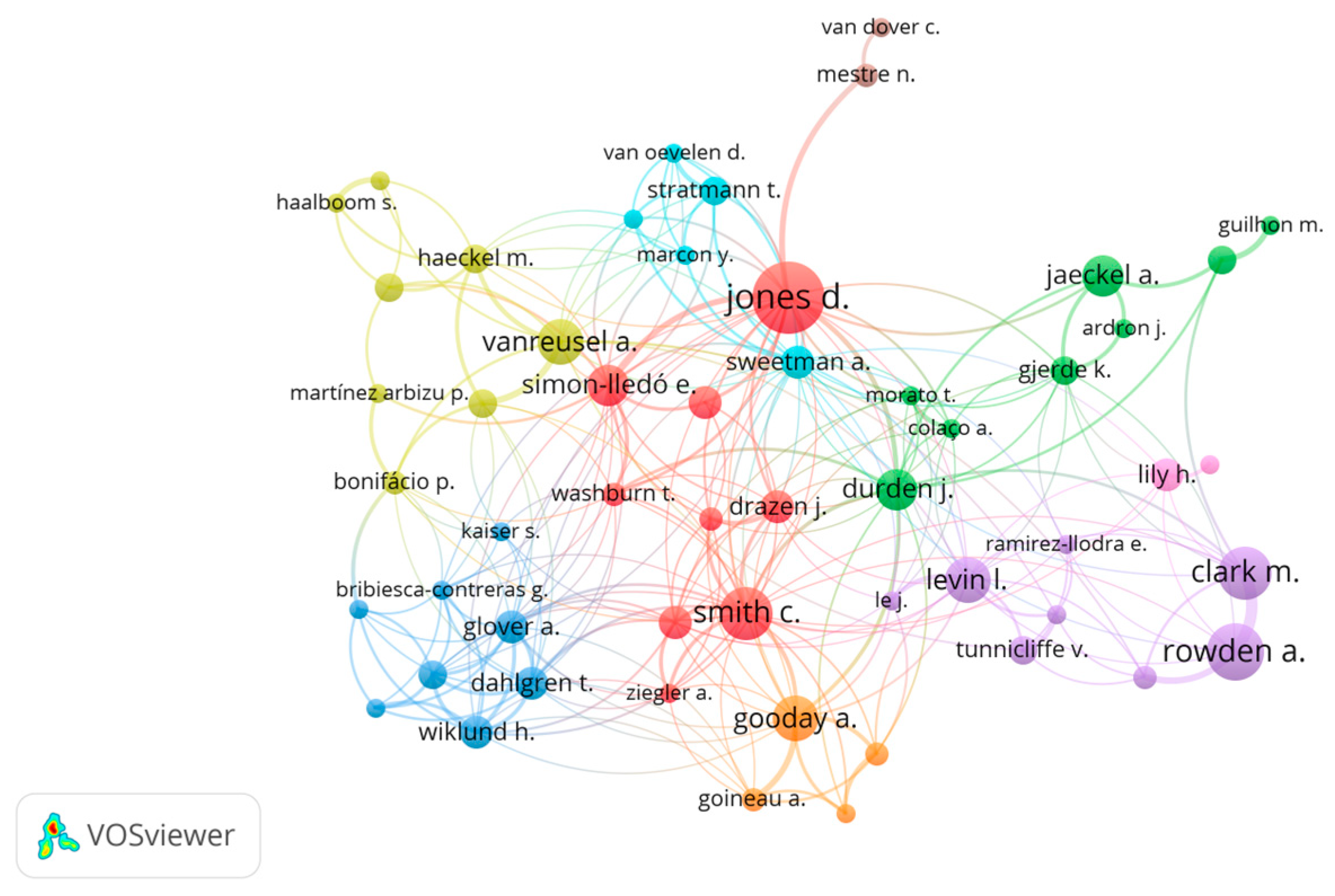
Figure 7.
Co-authorship analysis in DSM-related studies based on year of publication.
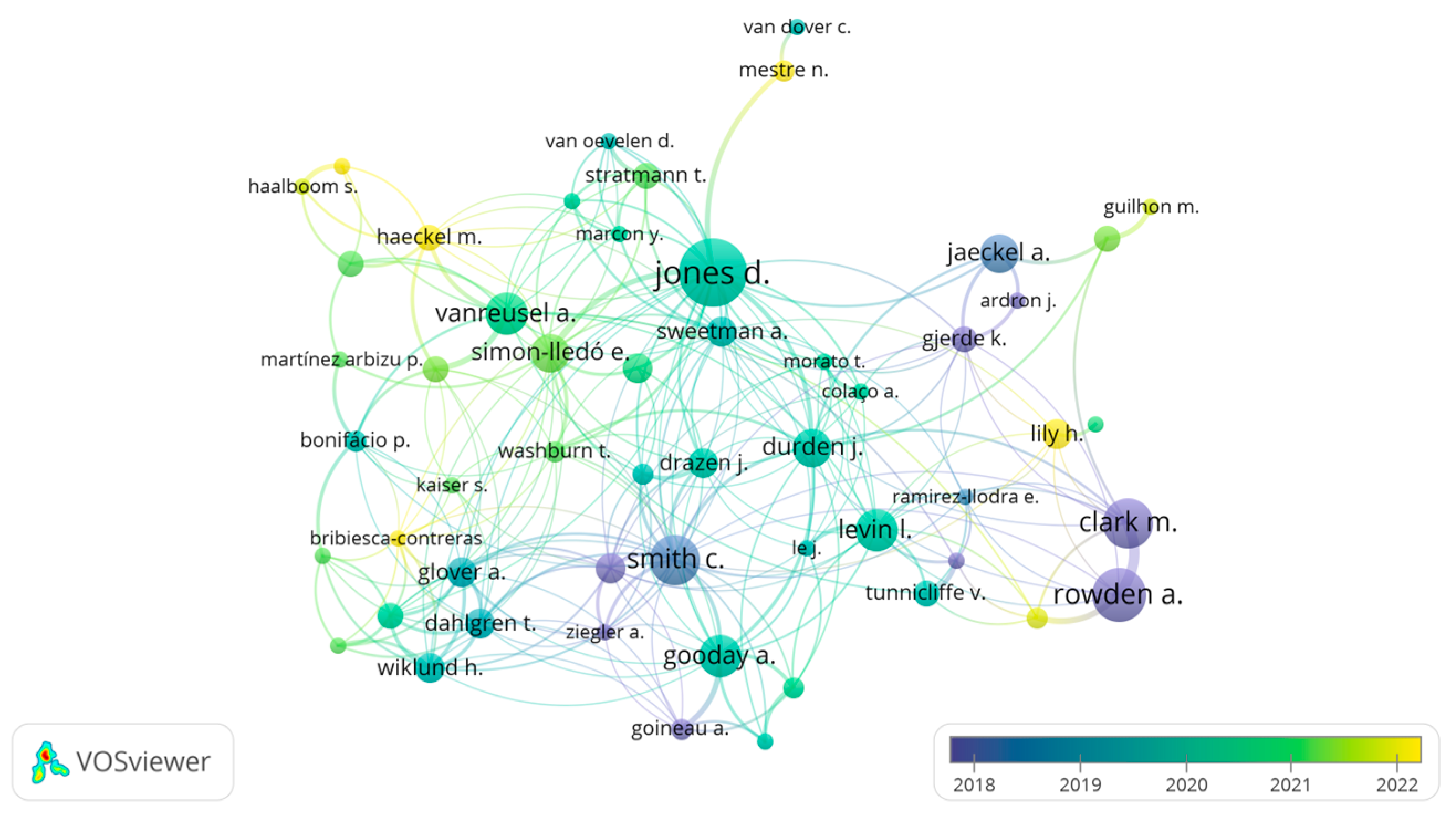
Figure 8.
Co-citation network of the bibliometric analysis, grouping key references based on their joint appearance in the literature.
Figure 8.
Co-citation network of the bibliometric analysis, grouping key references based on their joint appearance in the literature.
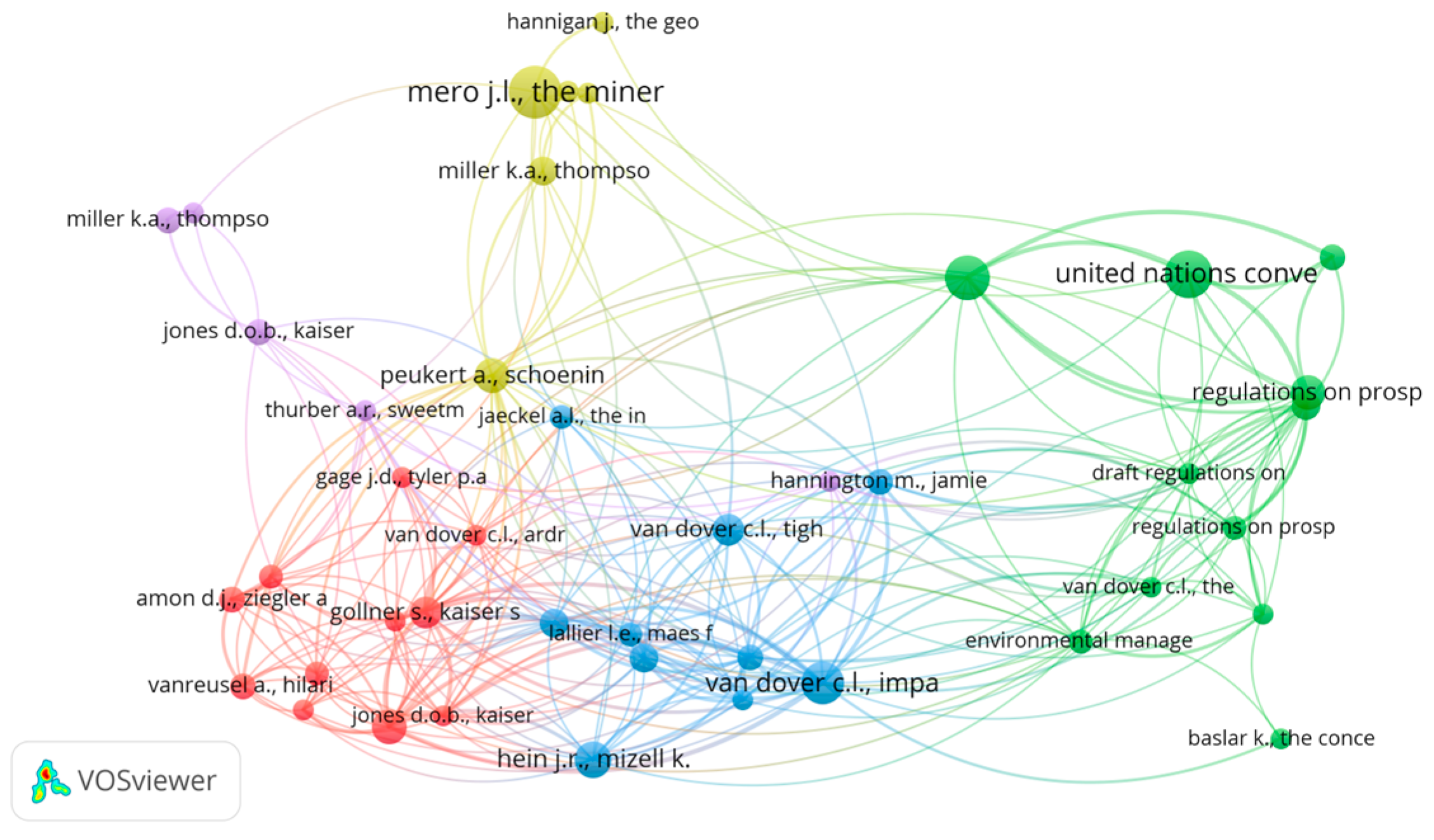
Figure 9.
(a) Author co-citation network; (b) Density visualization associated with co-citation analysis.
Figure 9.
(a) Author co-citation network; (b) Density visualization associated with co-citation analysis.
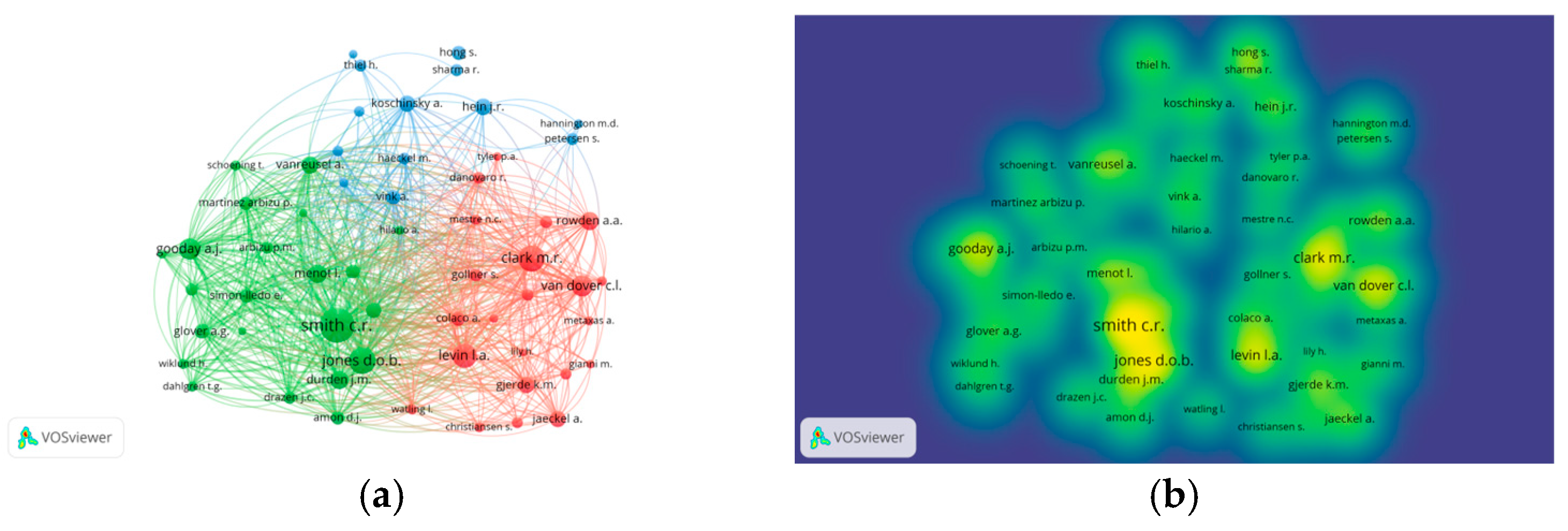
Figure 10.
Co-occurrence network of author keywords in DSM-related studies, by year of publication.
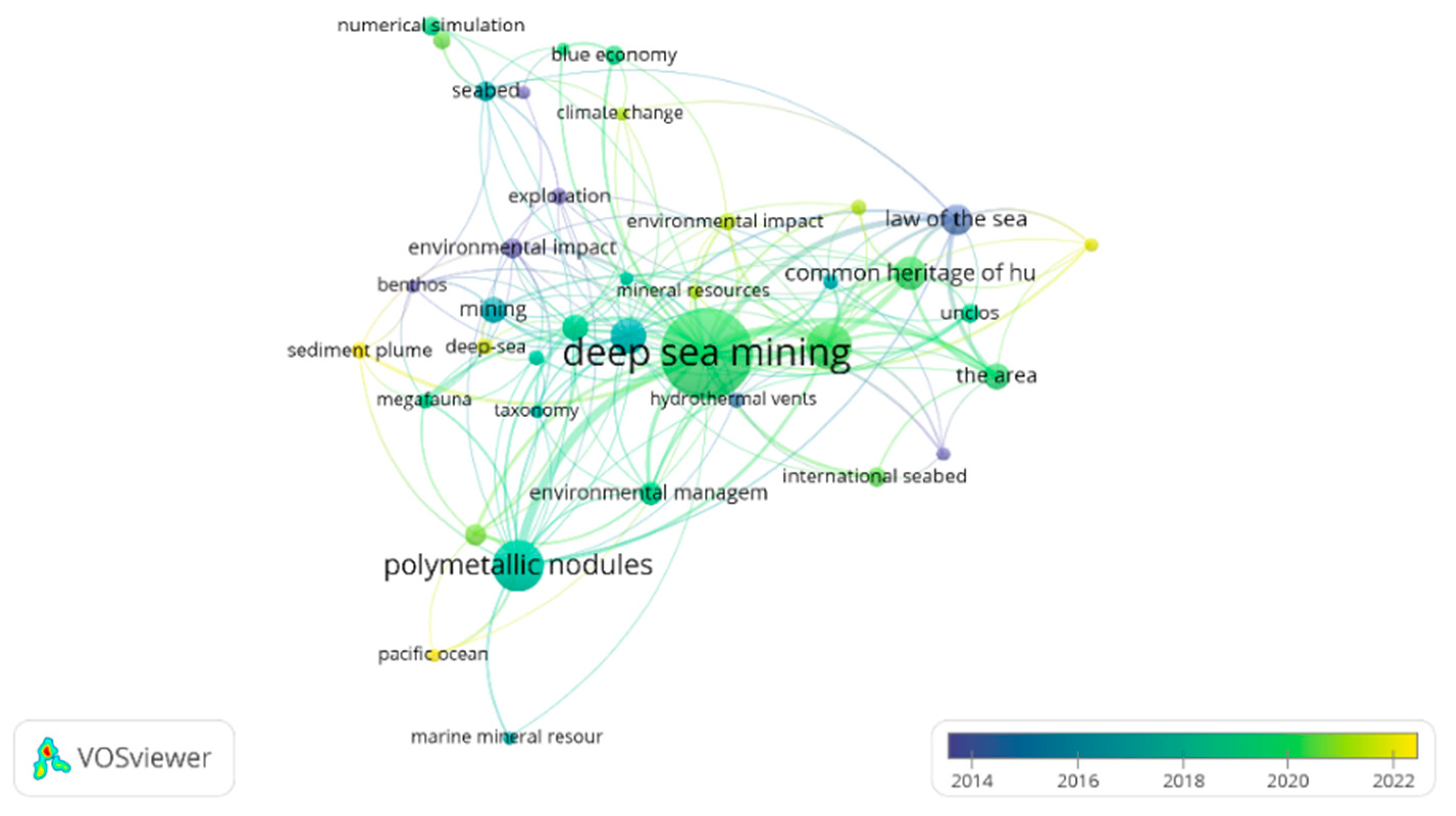
Figure 11.
Co-occurrence network of author keywords in DSM-related studies.
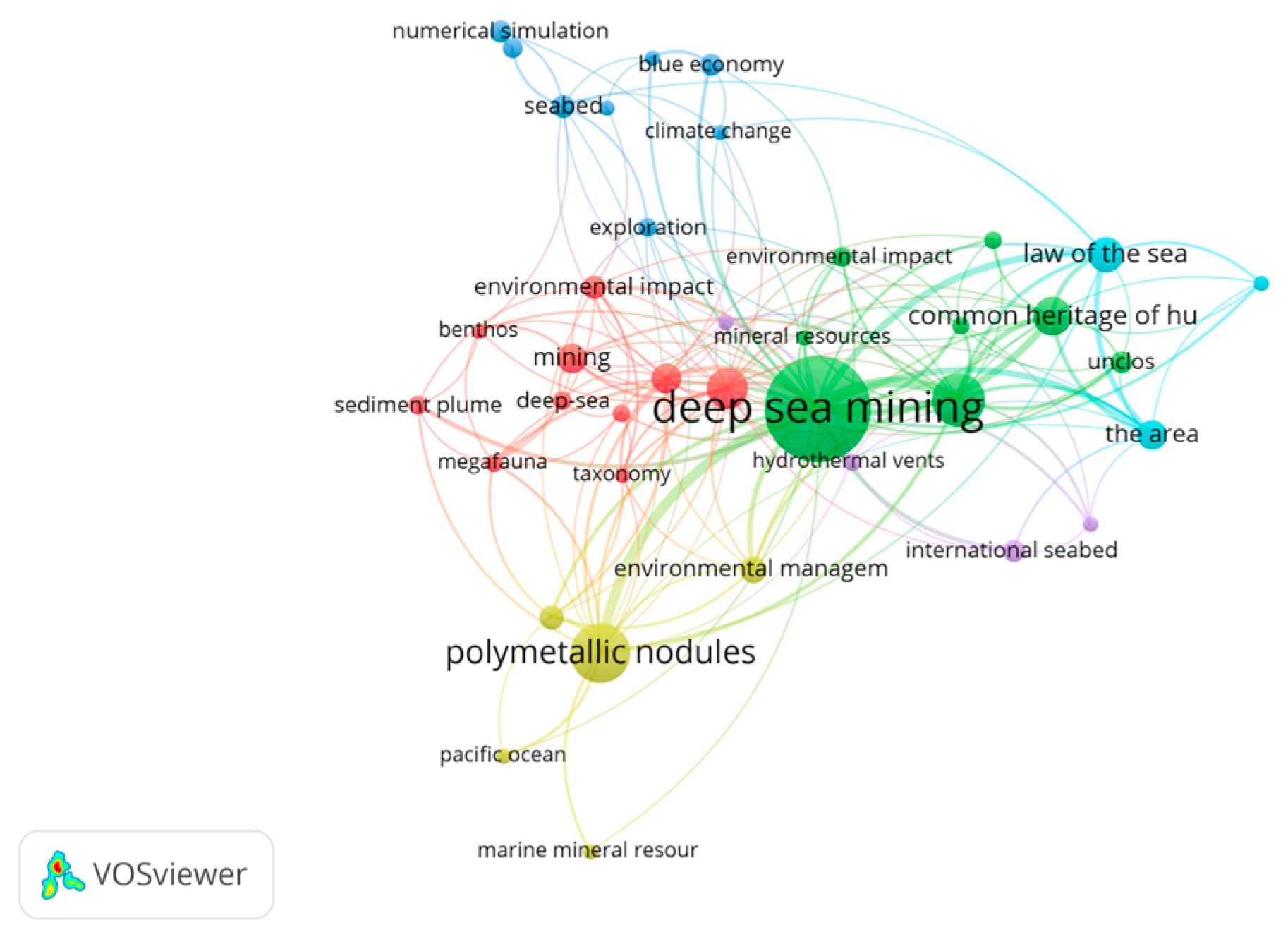
Figure 12.
Bibliographic coupling network of documents, based on the number of shared references in DSM-related studies.
Figure 12.
Bibliographic coupling network of documents, based on the number of shared references in DSM-related studies.
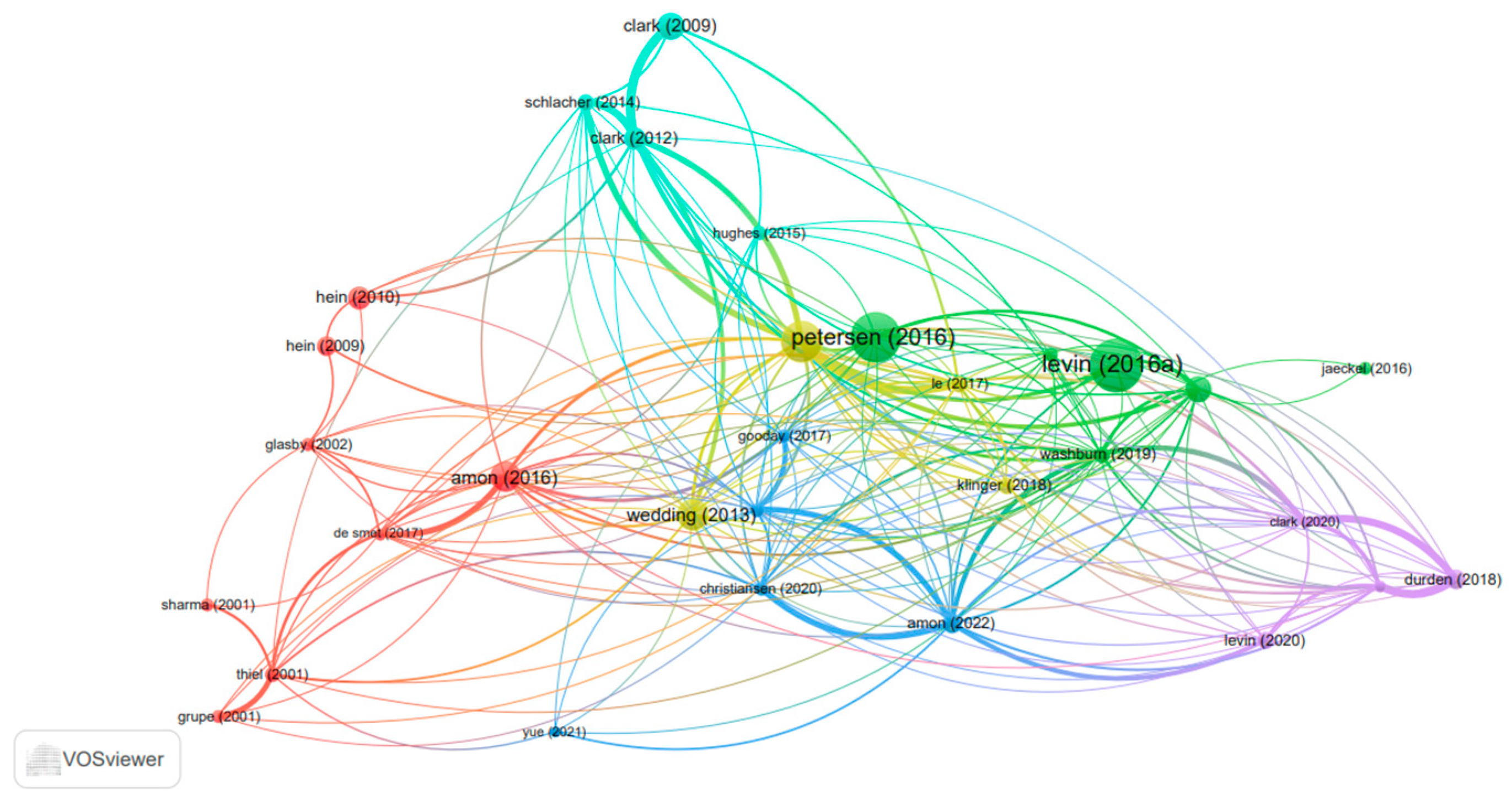

Table 1.
Occurrence of author keywords. Source: Based on VOSviewer results.
| Keyword | Occurrences | Total Link Strength |
|---|---|---|
| Deep sea mining | 215 | 237 |
| International seabed authority | 55 | 102 |
| Polymetallic nodules | 70 | 82 |
| Common heritage of mankind | 29 | 56 |
| Law of the sea | 25 | 55 |
| The area | 17 | 45 |
| Deep sea | 33 | 37 |
| Biodiversity | 18 | 34 |
| Environmental management | 14 | 27 |
| Clarion – Clipperton Zone | 12 | 24 |
Disclaimer/Publisher’s Note: The statements, opinions and data contained in all publications are solely those of the individual author(s) and contributor(s) and not of MDPI and/or the editor(s). MDPI and/or the editor(s) disclaim responsibility for any injury to people or property resulting from any ideas, methods, instructions or products referred to in the content. |
© 2025 by the authors. Licensee MDPI, Basel, Switzerland. This article is an open access article distributed under the terms and conditions of the Creative Commons Attribution (CC BY) license (https://creativecommons.org/licenses/by/4.0/).
Copyright: This open access article is published under a Creative Commons CC BY 4.0 license, which permit the free download, distribution, and reuse, provided that the author and preprint are cited in any reuse.


