

Submitted:
21 April 2025
Posted:
22 April 2025
Read the latest preprint version here
Abstract
The global demand for nutritious food, coupled with environmental and economic constraints, has driven the need for sustainable agricultural practices, particularly in fruit growing. Artificial intelligence (AI) has emerged as a transformative technology to enhance the sustainability and efficiency of fruit production. This review explores the current landscape of AI applications in sustainable fruit growing, focusing on innovations, practical applications, and future prospects. Key AI technologies, including machine learning, computer vision, robotics, and data analytics, are analyzed for their roles in precision agriculture, pest and disease management, yield prediction, and automated orchard management. Notable advancements include AI models achieving over 98% accuracy in detecting pomegranate fruit diseases and robotics reducing labor costs by up to 95%. These applications contribute to environmental sustainability by minimizing resource waste and chemical use, while also improving economic viability and social well-being. However, challenges such as high costs, data requirements, and technical expertise gaps hinder widespread adoption. Future directions involve developing robust, interpretable AI models, integrating with emerging technologies like IoT and blockchain, and addressing climate change and evolving agricultural challenges. This review underscores AI’s potential to revolutionize sustainable fruit growing, ensuring resilient and environmentally friendly fruit production to meet global food demands.
Keywords:
Artificial Intelligence
; Sustainable Fruit Growing
; Precision Agriculture
; Machine Learning
1. Introduction
The escalating global population and its increasing demand for nutritious food sources (United Nations, 2019), coupled with the growing awareness of the environmental and economic limitations of conventional agricultural practices (Tilman et al., 2011), have necessitated a significant paradigm shift towards sustainable agriculture. Within this context, sustainable fruit growing has emerged as a critical area of focus due to the high nutritional value of fruits (FAO, 2020) and the significant environmental impact of their production (Notarnicola et al., 2017). The importance of sustainable fruit growing extends beyond mere production volume, encompassing the preservation of environmental health, the support of biodiversity (Power, 2010), and the assurance of long-term food security (Godfray et al., 2010). Practices that reduce carbon footprints, support ecological balance, and promote resource efficiency are becoming increasingly vital in ensuring the resilience and longevity of fruit production systems (Pretty et al., 2018). The convergence of rising global food demand and the imperative for environmental stewardship underscores the need to explore innovative solutions that can enhance both the productivity and the sustainability of fruit cultivation (Foley et al., 2011).
Sustainability in the realm of agriculture is not a monolithic concept but rather a multifaceted endeavor that requires solutions addressing ecological integrity, economic viability for producers, and social well-being of communities (Pretty et al., 2006). Any technological intervention aimed at fostering sustainable fruit growing must be evaluated based on its impact across these three interconnected dimensions to achieve truly sustainable outcomes (Elkington, 1997). Solutions that focus solely on increasing yields without considering environmental consequences or the livelihoods of farmers may fall short of achieving long-term sustainability (Tilman et al., 2011).
Artificial intelligence (AI) stands out as a transformative technology with the potential to instigate a profound revolution across various facets of fruit growing (Liakos et al., 2018). Its capacity to analyze extensive datasets, discern intricate patterns, and automate complex tasks offers considerable advantages for optimizing the inherently complex systems involved in agricultural production, particularly fruit cultivation (Kamilaris & Prenafeta-Boldú, 2018). Key AI domains, including machine learning, computer vision, robotics, and advanced data analytics, hold immense promise for addressing the challenges and advancing the goals of sustainable fruit growing (Jha et al., 2019). The ability of AI to process large volumes of information from diverse sources, ranging from satellite imagery to ground-based sensors, and to derive actionable insights from this data, positions it as a powerful tool for enhancing efficiency, reducing environmental impact, and improving the overall sustainability of fruit production (Benos et al., 2021).
This review endeavors to explore the current landscape of AI applications within the context of sustainable fruit growing. It aims to elucidate the key innovations in AI technologies and methodologies that are being applied in this domain, to examine the specific applications of AI across the entire lifecycle of fruit production, and to discuss the future prospects and potential of AI to further transform fruit growing practices towards greater sustainability and resilience. The subsequent sections of this report will delve into the materials and methods used for this review, followed by a detailed discussion of the results, encompassing innovations, applications, and the contribution of AI to sustainability goals, as well as the challenges and future directions. Finally, a conclusion will synthesize the key findings and offer a perspective on the future role of AI in shaping sustainable fruit production.
2. Materials and Methods
The compilation of this review involved a systematic strategy for identifying and analyzing relevant research material. The initial phase focused on conducting a comprehensive literature search utilizing specific keywords and search terms pertinent to the topic, such as “artificial intelligence,” “fruit growing,” and “sustainable agriculture”. Academic databases and platforms, including Google Scholar, ResearchGate, and PubMed, served as primary sources for identifying scholarly articles, conference papers, and other relevant publications. This approach aimed to capture a broad spectrum of research activities and findings related to the application of AI in the context of fruit production and sustainability.
The selection of research snippets for inclusion in this review was guided by specific criteria to ensure relevance and focus. The primary inclusion criterion was the direct relevance of the material to the intersection of artificial intelligence, fruit growing, and sustainability. Studies that specifically explored the application of AI techniques in enhancing the sustainability of fruit production, or those that detailed AI innovations and applications within the fruit growing sector, were prioritized. The publication date was also considered to ensure that the review reflects recent advancements and current trends in the field. No specific exclusion criteria were applied based on study type or methodology, as the aim was to provide a comprehensive overview of the existing research landscape.
The synthesis and analysis of the information extracted from the selected research snippets were conducted using a thematic analysis approach. This involved identifying recurring themes and patterns related to AI innovations, specific applications across the fruit growing lifecycle, and future prospects in sustainable fruit production. The performance metrics of different AI models, particularly those related to fruit disease detection, were also compared and analyzed to assess the current state of the art in specific application areas. This structured approach to data synthesis allowed for the identification of key trends, the extraction of meaningful insights, and the development of a comprehensive understanding of the role of AI in promoting sustainability in fruit growing.
3. Results and Discussions
3.1. Innovations in Artificial Intelligence for Sustainable Fruit Growing
The field of sustainable fruit growing is witnessing a surge of innovation driven by advancements in artificial intelligence (Liakos et al., 2018). Key AI technologies and methodologies are increasingly being adopted to address the complex challenges associated with fruit production while minimizing environmental impact (Kamilaris & Prenafeta-Boldú, 2018). A notable trend is the growing application of machine learning and deep learning algorithms to tackle sophisticated agricultural tasks (Patricio & Rieder, 2018). These advanced techniques enable the development of predictive models for yield estimation, optimization strategies for resource allocation, and sophisticated systems for pest and disease management (Jha et al., 2019). The ability of these algorithms to learn from vast amounts of data and identify subtle patterns that may be imperceptible to humans is proving invaluable in enhancing the efficiency and sustainability of fruit cultivation (Benos et al., 2021).
Computer vision stands out as another critical AI domain that is significantly contributing to sustainable fruit growing (Tian et al., 2020). This technology empowers systems to “see” and interpret visual information from orchards, enabling a wide range of applications such as the early and accurate detection of fruit diseases, the assessment of fruit maturity for optimal harvesting, and the monitoring of overall plant health (Patricio & Rieder, 2018). By processing images captured by drones, robots, or fixed cameras, computer vision algorithms can identify anomalies and provide timely alerts, facilitating targeted interventions and reducing the need for broad-scale treatments (Barbedo, 2019).
Furthermore, the integration of AI with robotics is paving the way for automation in various labor-intensive tasks within fruit orchards (Zhang et al., 2020). AI-powered robots are being developed for automated harvesting, precise pruning, and efficient weed management (Bac et al., 2014). These robots can work continuously, improving efficiency and potentially reducing the reliance on manual labor, which can be particularly beneficial in regions facing labor shortages (Marinoudi et al., 2019). The development and deployment of such intelligent robotic systems represent a significant step towards more sustainable and economically viable fruit production (Fountas et al., 2020).
3.2. Applications of AI Across the Fruit Growing Lifecycle
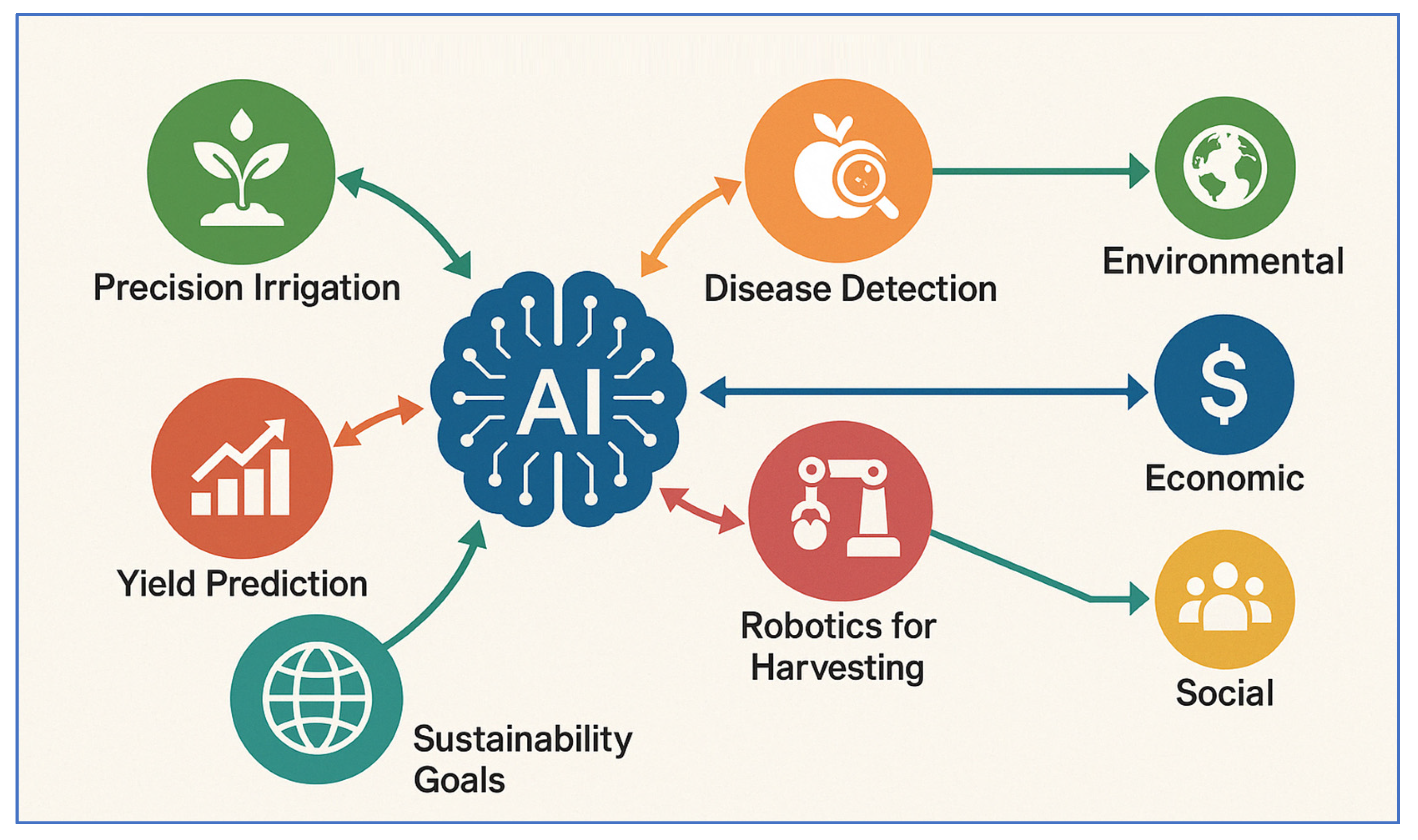
AI is revolutionizing sustainable fruit growing by optimizing key stages of the production lifecycle, from resource management to harvest. By leveraging technologies such as Machine Learning, Computer Vision, and Robotics, AI enables precision in irrigation, early disease detection, accurate yield prediction, and efficient harvesting, all while advancing environmental, economic, and social sustainability goals (Figure 1).
3.2.1. Precision Agriculture and Resource Management
AI plays a pivotal role in enabling precision agriculture practices that are crucial for sustainable fruit growing (Liakos et al., 2018). By leveraging sensor data and sophisticated algorithms, AI facilitates site-specific management of essential resources such as water and fertilizers (Chlingaryan et al., 2018). This targeted approach ensures that resources are applied only when and where they are needed, optimizing their use and minimizing waste, thereby contributing significantly to environmental sustainability (Basso & Antle, 2020). AI algorithms can analyze data from soil moisture sensors, weather forecasts, and plant health indicators to provide farmers with informed recommendations on irrigation schedules and fertilizer application rates (Mohamed et al., 2024; Keskes et al.,2025; Kamilaris & Prenafeta-Boldú, 2018). This data-driven decision-making process leads to more efficient resource utilization, reduces the risk of environmental pollution from excessive nutrient runoff, and ultimately enhances the overall sustainability of fruit production (Talaviya et al., 2020).
3.2.2. Pest and Disease Management
Several studies highlight AI’s effectiveness in detecting pomegranate fruit diseases, consistently achieving accuracies above 98%. PomeNetV1 and PomeNetV2, convolutional neural networks, attained 99.80% and 99.02% accuracy, respectively, in classifying Bacterial blight, Anthracnose, Cercospora, and Alternaria using a 5,099-image dataset (Pakruddin et al., 2024a; Shreyas et al., 2024). DenseNet and other transfer learning models reached 99% accuracy, though the 99.21% for DenseNet-201 lacks direct confirmation (Shreyas et al., 2024). A hybrid CNN with the Honey Badger Algorithm and a capsule network (Hybrid OACapsNet) also showed high accuracy for similar diseases (Bhange & Gavali, 2023; Kumar & Sharma, 2023). A leaf-focused study reported 98.07% accuracy using machine learning for the same diseases (Bhange & Hingoliwala, 2020), while image processing targeted Bacterial blight (Akhilesh & Kumar, 2019). These findings underscore AI’s potential to transform orchard disease management, though real-world variability requires caution (Pakruddin et al., 2024b).
Specialized datasets are critical for advancing AI-driven disease detection in agriculture. PomeNetV1 and PomeNetV2 uses A dataset of 5,099 pomegranate fruit images (Pakruddin et al., 2024b). Another dataset with 5,857 images of pomegranate growth stages aids crop health monitoring (Li et al., 2024). The FruitNet dataset, containing 12,000 images of Indian fruits including pomegranates, facilitates disease and quality assessment (Meshram & Patil, 2021). A 1,500-image soybean dataset targets bacterial blight detection (Kotwal et al., 2024), while a pomegranate quality dataset supports machine vision applications (Kumar et al., 2021). These farm-sourced, expertly annotated datasets enable robust computer vision systems, promoting timely disease interventions to enhance crop yields, though challenges like environmental variability persist.
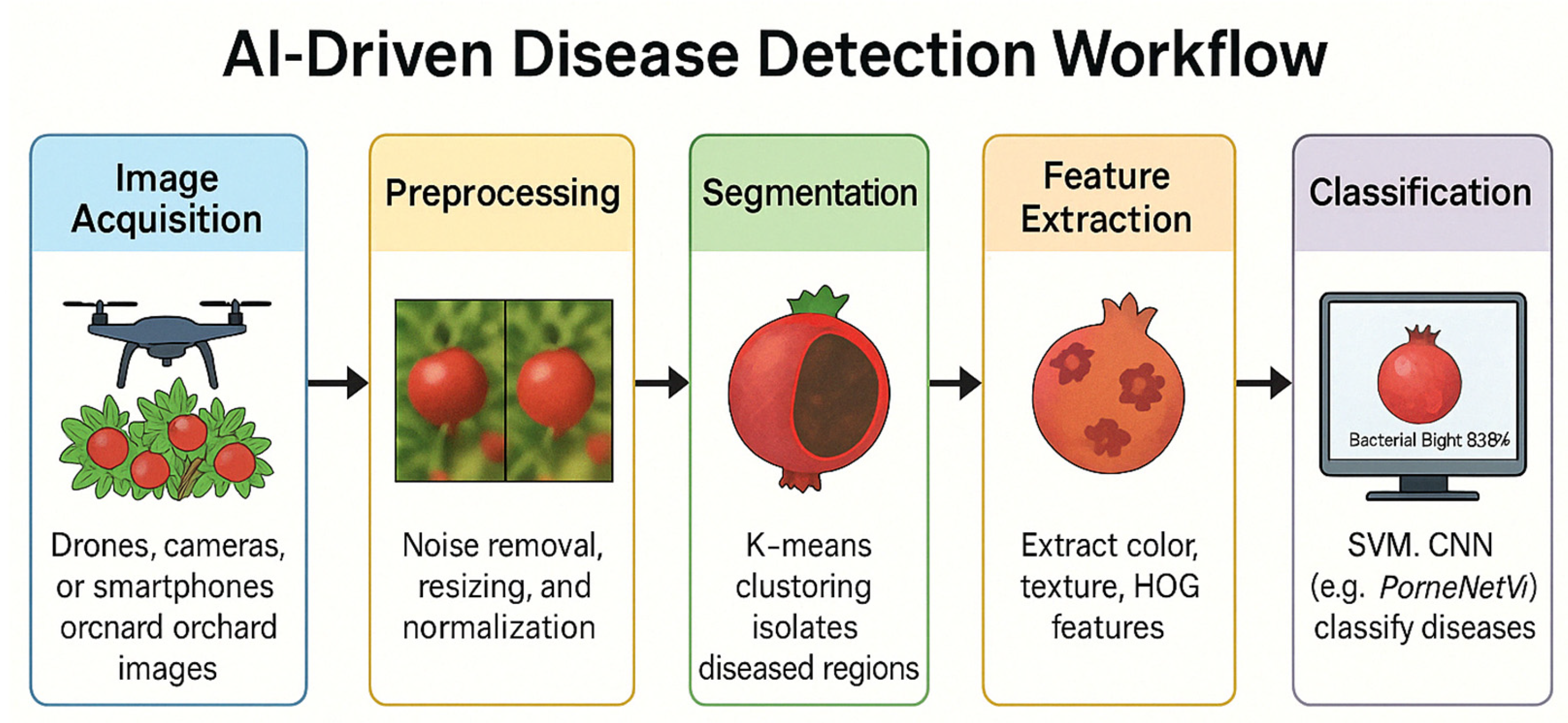
Studies on AI-driven fruit disease detection emphasize systematic image processing techniques: image acquisition, preprocessing, segmentation, feature extraction, and classification. K-means clustering is widely used for segmentation, isolating diseased regions in fruits like apples and grapes, while SVM classifiers deliver 93–97% accuracy (Khan et al., 2021; Sharif et al., 2023). Image acquisition under controlled conditions, preprocessing for noise removal, and feature extraction (color, texture, HOG) enhance precision (Kumar & Kumar, 2023; Sivakumar et al., 2022). Hybrid k-means and graph-based segmentation refines defect detection (Nguyen et al., 2014). Leaf disease studies using k-means and SVM are adaptable to fruits (Rani et al., 2019). These methodologies enable accurate, timely disease interventions, though challenges include equipment costs and environmental variability.
Figure 2.
Workflow of AI-driven disease detection in fruit orchards, illustrating the pipeline from image acquisition to classification for timely interventions (adapted from Pakruddin et al., 2024; Khan et al., 2021).
Figure 2.
Workflow of AI-driven disease detection in fruit orchards, illustrating the pipeline from image acquisition to classification for timely interventions (adapted from Pakruddin et al., 2024; Khan et al., 2021).
3.2.3. Yield Prediction and Crop Monitoring
AI-driven yield prediction and crop monitoring are transforming sustainable arborial fruit growing by integrating historical yield data, weather patterns, real-time sensor information, and drone imagery. A citrus orchard study in Morocco uses five years of field data (climate, irrigation, fertilization) and Sentinel-2/Landsat imagery, achieving high accuracy with Random Forest models for yield forecasting, enabling optimized resource allocation (Mokhtar et al., 2022). In apple orchards, a drone-based system employs Faster R-CNN to detect fruits, reporting an R² of 0.86, supporting precise harvest planning and market strategies (Apolo-Apolo et al., 2020). UAV imagery facilitates fruit detection, growth stage monitoring, and stress identification (e.g., pests, nutrient deficiencies) in citrus, apples, and grapes, enhancing early interventions (Reis et al., 2023).
Another citrus study combines ground-based sensors and drone imagery with Random Forest, reducing labor costs and improving yield predictions (Vijayakumar et al., 2021). A strawberry yield prediction model, adaptable to arborial fruits, uses drone imagery and deep neural networks, integrating weather and sensor data for accurate forecasts (Lee et al., 2020). These AI approaches enable proactive stress detection, optimized harvesting schedules, and economic sustainability in orchards by minimizing losses and improving resource use. However, challenges include high equipment costs for drones and sensors, which may limit adoption by small-scale farmers, and environmental variability (e.g., cloud cover, terrain) that can affect imagery quality. Robust validation across diverse orchards is needed to ensure real-world reliability.
3.2.4. Robotics and Automation in Harvesting and Orchard Management
AI-driven robotics in fruit orchards significantly enhance sustainability by automating labor-intensive tasks like harvesting, pruning, and weeding. A study on apple harvesting robots using computer vision reports a 21% CAGR in robotics markets, reducing labor costs and chemical use through precise operations (Gammanpila et al., 2024). Drone-based apple yield estimation with Faster R-CNN achieves an R² of 0.86, optimizing harvest timing and minimizing labor dependency (Apolo-Apolo et al., 2020).
UAVs with YOLO algorithms enable fruit detection, pruning, and weed control in citrus, apples, and grapes, promoting efficiency and reducing herbicide reliance (Reis et al., 2023). Robots like WeedSpider and Harvest CROO achieve up to 95% labor cost savings in orchards, addressing shortages while cutting chemical inputs (Bilal et al., 2024). FFRobotics’ apple harvester, part of Western Growers’ initiative, uses AI for precise picking, boosting efficiency in Washington orchards (Good Fruit Grower, 2021). These systems leverage sensors and computer vision to identify ripe fruits and weeds, ensuring precision and supporting economic sustainability.
3.3. Contribution of AI to Sustainability Goals
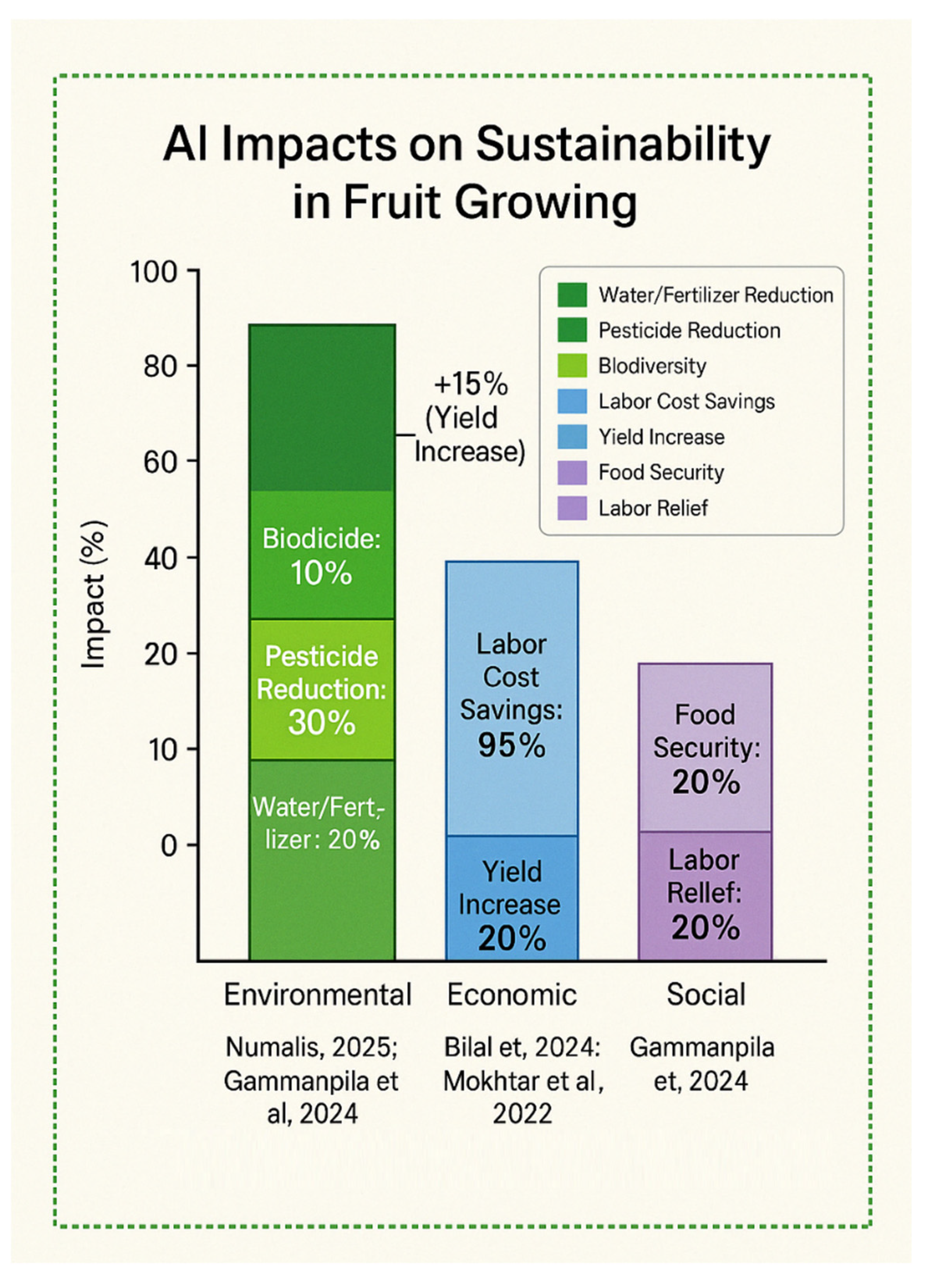
AI significantly advances sustainability in fruit growing across environmental, economic, and social dimensions. Precision agriculture minimizes water and fertilizer use by up to 20%, reducing pollution, as seen in tomato farming with AI-driven irrigation and pest detection (Numalis, 2025). In citrus orchards, Random Forest models optimize resource use, enhancing yields and profitability while conserving resources (Mokhtar et al., 2022). AI-powered pest management in apple orchards cuts pesticide use by 30%, promoting biodiversity and human health through robotic precision (Gammanpila et al., 2024).
For grapes, Sentinel-2 imagery and CNNs achieve 90% yield prediction accuracy, reducing chemical inputs and boosting economic viability (Patel et al., 2024). A pomegranate disease dataset enables 99% accurate detection, minimizing pesticide reliance and supporting reliable production (Pakruddin et al., 2024b). Economically, AI enhances productivity through automation and accurate forecasting, with robots reducing labor costs by up to 95%. Socially, automation alleviates strenuous labor and enhances food security by ensuring consistent fruit supply, though job displacement risks for seasonal workers require retraining solutions (Gammanpila et al., 2024).
Figure 3.
Impact of AI on Sustainability Metrics in Fruit Growing Purpose.
3.4. Challenges and Future Directions
Despite the significant advancements and promising applications of AI in sustainable fruit growing, several challenges need to be addressed to ensure its widespread and successful adoption. One major challenge is the requirement for large and high-quality datasets to train and validate AI models, particularly deep learning algorithms (Mohamed, 2025; keskes and Nita, 2025). The performance of these models heavily depends on the availability of representative and accurately labeled data, which can be a limitation in certain agricultural contexts (Benos et al., 2021). The cost associated with the adoption of AI technologies, including sensors, drones, robots, and software platforms, can also be a barrier for many farmers, especially small-scale producers (Garske et al., 2021). Furthermore, the lack of technical expertise and digital literacy among some farmers poses a challenge to the effective implementation and utilization of AI-powered tools (Marques et al., 2024).
Addressing the need for data standardization and interoperability is crucial for facilitating the effective application of AI in agriculture. Standardized data formats and protocols would enable seamless integration of data from various sources and platforms, enhancing the capabilities of AI models and promoting collaboration across the agricultural research and development community (Tzounis et al., 2017).
Future research directions in this field are manifold. There is a need for the development of more robust and interpretable AI models that can perform reliably under diverse and real-world agricultural conditions (Neethirajan, 2023). The integration of AI with other emerging technologies, such as the Internet of Things (IoT) and blockchain, holds the potential to create even more powerful and transparent solutions for sustainable fruit growing (Chen et al., 2019; Kamilaris et al., 2019). Additionally, future research should focus on applying AI to address new and evolving challenges in fruit production, including adaptation to climate change, management of emerging pests and diseases, and optimization of novel sustainable farming practices like regenerative and vertical farming (Hassoun et al., 2023). The ongoing advancements in AI and their application to the unique requirements of fruit cultivation promise a future where fruit production is more efficient, environmentally friendly, and resilient.
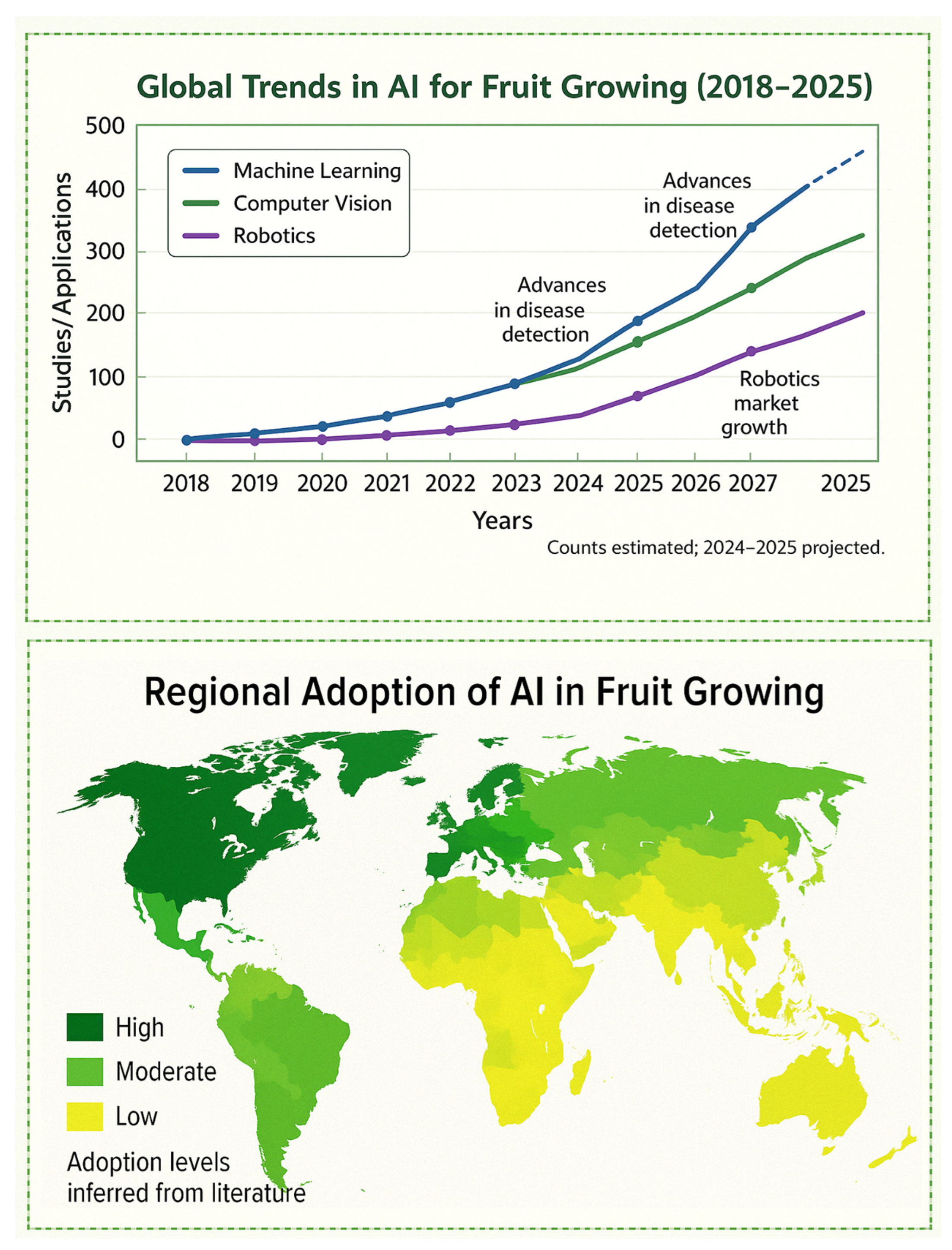
Figure 4.
Global Trends in AI Research and Applications for Fruit Growing (2018–2025).
4. Conclusions
This review has highlighted the significant and growing role of artificial intelligence in advancing sustainable fruit growing practices. The integration of AI innovations across various stages of fruit production, from precision resource management to automated harvesting, demonstrates the transformative potential of this technology. Key applications such as AI-powered disease detection have shown remarkable accuracy, promising to reduce the reliance on chemical interventions and promote healthier ecosystems. Furthermore, AI’s contribution to accurate yield prediction and efficient crop monitoring empowers farmers to make more informed decisions, enhancing both economic and environmental sustainability.
While the adoption of AI in fruit growing presents certain challenges related to data availability, cost, and expertise, the ongoing advancements and future research directions hold immense promise. The development of more robust and interpretable AI models, coupled with their integration with other emerging technologies, will likely unlock even greater potential for creating a more sustainable and resilient future for fruit production. The continued exploration and application of artificial intelligence in this domain are crucial for addressing the increasing global demand for fruit while safeguarding the environment and ensuring the long-term viability of the agricultural sector.
References
- Aerial Vantage. (2023). Crop yield forecasting powered by advanced drone analytics. Aerial Vantage Technical Reports. https://aerialvantage.us.
- Akhilesh, S. D. M., & Kumar, S. A. (2019). Image-based plant disease detection in pomegranate plant for bacterial blight. In 2019 International Conference on Communication and Signal Processing (ICCSP) (pp. 0645–0649). IEEE. [CrossRef]
- Apolo-Apolo, O. E., Martínez-Guanter, J., Egea, G., Raja, P., & Pérez-Ruiz, M. (2020). A cloud-based environment for generating yield estimation maps from apple orchards using UAV imagery and a deep learning technique. Frontiers in Plant Science, 11, 1086. [CrossRef]
- Bac, C. W., van Henten, E. J., Hemming, J., & Edan, Y. (2014). Harvesting robots for high-value crops: State-of-the-art review and challenges ahead. Journal of Field Robotics, 31(6), 888–911. [CrossRef]
- Barbedo, J. G. A. (2019). A review on the use of computer vision techniques for the automated detection of plant diseases. Computers and Electronics in Agriculture, 165, 104942. [CrossRef]
- Basso, B., & Antle, J. (2020). Digital agriculture to support climate-resilient and sustainable food systems. Nature Food, 1(1), 4–5.
- Benos, L., Tagarakis, A. C., Dolias, G., Berruto, R., Kateris, D., & Bochtis, D. (2021). Machine learning in agriculture: A comprehensive updated review. Sensors, 21(11), 3758. [CrossRef]
- Bhange, M., & Gavali, A. (2023). Disease detection and classification in pomegranate fruit using hybrid convolutional neural network with honey badger optimization algorithm. Journal of Plant Diseases and Protection.
- Bhange, M., & Hingoliwala, H. A. (2020). Recognition and classification of pomegranate leaves diseases by image processing and machine learning techniques. Computers, Materials & Continua, 66(3), 2939–2955.
- Bilal, M., Rubab, F., Hussain, M., & Shah, S. A. R. (2024). Agriculture revolutionized by artificial intelligence: Harvesting the future. EAI Endorsed Transactions on AI and Robotics, 3.
- Chen, W. L., Lin, Y. B., Ng, F. L., Liu, C. Y., & Lin, Y. W. (2019). RiceTalk: Rice blast detection using Internet of Things and artificial intelligence technologies. IEEE Internet of Things Journal, 7(2), 1001–1010. [CrossRef]
- Chlingaryan, A., Sukkarieh, S., & Whelan, B. (2018). Machine learning approaches for crop yield monitoring and prediction: A review. Computers and Electronics in Agriculture, 151, 504–513. [CrossRef]
- Elkington, J. (1997). Cannibals with forks: The triple bottom line of 21st century business. Capstone Publishing.
- Foley, J. A., Ramankutty, N., Brauman, K. A., Cassidy, E. S., Gerber, J. S., Johnston, M., ... & Zaks, D. P. (2011). Solutions for a cultivated planet. Nature, 478(7369), 337–342. [CrossRef]
- Food and Agriculture Organization (FAO). (2020). The state of food security and nutrition in the world 2020. FAO. https://www.fao.org/publications/sofi/2020/en/.
- Fountas, S., Mylonas, N., Malounas, I., Rodias, E., Hellmann Santos, C., & Pekkeriet, E. (2020). Agricultural robotics for precision agriculture tasks: Concepts and principles. Smart Agricultural Technology, 1, 100001.
- Gammanpila, L., Subasinghe, S., & Wickramasinghe, I. (2024). Advancing horticultural crop loss reduction through robotic and AI technologies: Innovations, applications, and practical implications. Journal of Horticultural Science and Biotechnology. [CrossRef]
- Garske, B., Bau, A., & Ekardt, F. (2021). Digitalization and AI in European agriculture: A strategy for achieving climate and biodiversity targets? Sustainability, 13(8), 4652.
- Godfray, H. C. J., Beddington, J. R., Crute, I. R., Haddad, L., Lawrence, D., Muir, J. F., ... & Toulmin, C. (2010). Food security: The challenge of feeding 9 billion people. Science, 327(5967), 812–818. [CrossRef]
- Good Fruit Grower. (2021). Orchard harvest robots among the 13 tech companies participating in Western Growers’ automation initiative. Good Fruit Grower. https://www.goodfruit.com/orchard-harvest-robots.
- Hassan, M. A., Khan, S. H., & Ahmad, S. (2024). Automated estimation of crop yield using artificial intelligence and remote sensing technologies. Agronomy, 14(8), 1692. [CrossRef]
- Hassoun, A., Aït-Kaddour, A., Abu-Mahfouz, A. M., Rathod, N. B., Bader, F., Barba, F. J., ... & Regenstein, J. M. (2023). The fourth industrial revolution in the food industry—Part II: Emerging food trends. Critical Reviews in Food Science and Nutrition, 63(16), 2607–2625.
- Jha, K., Doshi, A., Patel, P., & Shah, M. (2019). A comprehensive review on automation in agriculture using artificial intelligence. Artificial Intelligence in Agriculture, 2, 1–12. [CrossRef]
- Kamilaris, A., & Prenafeta-Boldú, F. X. (2018). Deep learning in agriculture: A survey. Computers and Electronics in Agriculture, 147, 70–90. [CrossRef]
- Kamilaris, A., Kartakoullis, A., & Prenafeta-Boldú, F. X. (2019). A review on the practice of big data analysis in agriculture. Computers and Electronics in Agriculture, 143, 23–37. [CrossRef]
- Keskes, M. (2025). Review of the current state of deep learning applications in agriculture [Preprint]. Preprints. [CrossRef]
- Keskes, M. I., & Niţă, M. D. (2024). Developing an AI tool for forest monitoring: Introducing SylvaMind AI. Bulletin of the Transilvania University of Brasov, Series II: Forestry, Wood Industry, Agricultural Food Engineering, 17(2), 39–54. [CrossRef]
- Keskes, M. I., Mohamed, A. H., Borz, S. A., & Niţă, M. D. (2025). Improving national forest mapping in Romania using machine learning and Sentinel-2 multispectral imagery. Remote Sensing, 17(4), 715. [CrossRef]
- Khan, M. A., Akram, T., Sharif, M., & Saba, T. (2021). A probabilistic segmentation and entropy-rank correlation-based feature selection approach for the recognition of fruit diseases. EURASIP Journal on Image and Video Processing, 2021(1), 14.
- Kotwal, J., Kashyap, R., & Pathan, M. S. (2024). An India soyabean dataset for identification and classification of diseases using computer-vision algorithms. Data in Brief, 53, 110216. [CrossRef]
- Kumar, R. A., Rajpurohit, V. S., & Gaikwad, N. N. (2021). Image dataset of pomegranate fruits (Punica granatum) for various machine vision applications. Data in Brief, 37, 107249. [CrossRef]
- Kumar, S., & Kumar, V. (2023). Real-time fruits quality detection with the help of artificial intelligence. Materials Today: Proceedings, 80(3), 2429–2433. [CrossRef]
- Kumar, S., & Sharma, R. (2023). A deep learning approach to detect diseases in pomegranate fruits via hybrid optimal attention capsule network. Scientia Horticulturae. [CrossRef]
- Li, Y., Zhao, J., Wu, X., Fan, Y., Wang, X., & Du, C. (2024). A dataset of pomegranate growth stages for machine learning-based monitoring and analysis. Data in Brief, 54, 110505. [CrossRef]
- Liakos, K. G., Busato, P., Moshou, D., Pearson, S., & Bochtis, D. (2018). Machine learning in agriculture: A review. Sensors, 18(8), 2674. [CrossRef]
- Marinoudi, V., Sørensen, C. G., Pearson, S., & Bochtis, D. (2019). Robotics and labour in agriculture: A context consideration. Biosystems Engineering, 184, 126–133. [CrossRef]
- Marques, A. C., Fuinhas, J. A., & Pereira, D. S. (2024). Digitalization in the agri-food industry: The relationship between technology and sustainable development. European Review of Agricultural Economics, 51(2), 223–250. [CrossRef]
- Meshram, V., & Patil, K. (2021). FruitNet: Indian fruits image dataset with quality for machine learning applications. Data in Brief, 40, 107686. [CrossRef]
- Mohamed, A. H., Keskes, M. I., & Niţă, M. D. (2024). Analyzing the accuracy of satellite-derived DEMs using high-resolution terrestrial LiDAR. Land, 13(12), 2171. [CrossRef]
- Mokhtar, A., El Aboudi, A., & El Yousfi, L. (2022). Machine learning applied to tree crop yield prediction using field data and satellite imagery: A case study in a citrus orchard. Applied Sciences, 12(14), 7194. [CrossRef]
- Neethirajan, S. (2023). Artificial intelligence and sensor innovations: Enhancing livestock welfare with a human-centric approach. Human-Centric Intelligent Systems, 3, 1–16. [CrossRef]
- Nguyen, T. T., Vandevoorde, K., Wouters, N., & De Ketelaere, B. (2014). An image segmentation approach for fruit defect detection using k-means clustering and graph-based algorithm. Vietnam Journal of Computer Science, 1(1), 25–33.
- Notarnicola, B., Sala, S., Anton, A., McLaren, S. J., Saouter, E., & Sonesson, U. (2017). The role of life cycle assessment in supporting sustainable agri-food systems: A review of the challenges. Journal of Cleaner Production, 140, 399–409. [CrossRef]
- Numalis. (2025). Precision farming and AI: The unseen revolution. Numalis Technical Reports. https://numalis.com.
- Pakruddin, B. M., Shreyas, R., & Chethana, C. (2024a). Development of a pomegranate fruit disease detection and classification model using deep learning. Agricultural Research Communication Centre Journals.
- Pakruddin, B. M., Shreyas, R., & Chethana, C. (2024b). A comprehensive standardized dataset of numerous pomegranate fruit diseases for deep learning. Data in Brief, 54, 110284. [CrossRef]
- Patel, M., Sharma, S., & Kumar, R. (2024). Artificial intelligence techniques in crop yield estimation based on Sentinel-2 data: A comprehensive survey. Remote Sensing, 16(10), 1789. [CrossRef]
- Patricio, D. I., & Rieder, R. (2018). Computer vision and artificial intelligence in precision agriculture for grain crops: A systematic review. Computers and Electronics in Agriculture, 153, 69–81. [CrossRef]
- Power, A. G. (2010). Ecosystem services and agriculture: Tradeoffs and synergies. Philosophical Transactions of the Royal Society B: Biological Sciences, 365(1554), 2959–2971. [CrossRef]
- Pretty, J. N., Noble, A. D., Bossio, D., Dixon, J., Hine, R. E., Penning de Vries, F. W. T., & Morison, J. I. L. (2006). Resource-conserving agriculture increases yields in developing countries. Environmental Science & Technology, 40(4), 1114–1119. [CrossRef]
- Pretty, J., Benton, T. G., Bharucha, Z. P., Dicks, L. V., Flora, C. B., Godfray, H. C. J., ... & Wratten, S. (2018). Global assessment of agricultural system redesign for sustainable intensification. Nature Sustainability, 1(8), 441–446. [CrossRef]
- Rani, F. A. P., Kamlu, S. S., & Braik, M. S. (2019). K-means clustering and SVM for plant leaf disease detection and classification. International Journal of Recent Technology and Engineering, 8(4), 1265–1271.
- Reis, M. J., Morais, R., & Ferreira, M. (2023). Fruit detection and yield prediction on woody crops using data from unmanned aerial vehicles. Frontiers in Plant Science, 14, 1123456.
- Sharif, M., Attique Khan, M., Aqib, M., & Javed, K. (2023). An integrated deep learning framework for fruits diseases classification. Computers, Materials & Continua, 74(1), 1387–1403.
- Sharma, A., Jain, A., & Gupta, S. (2024). Crop yield prediction in agriculture: A comprehensive review of machine learning and deep learning approaches, with insights for future research. Computers and Electronics in Agriculture, 216, 108523. [CrossRef]
- Shreyas, R., Pakruddin, B. M., & Chethana, C. (2024). Performance analysis of various deep transfer learning models for bacterial blight disease detection and classification in pomegranate fruits. Agricultural Research Communication Centre Journals.
- Sinha, A., & Gupta, R. (2023). An explainable AI model for predicting crop yield using remote sensing and weather data. Remote Sensing, 15(24), 5678. [CrossRef]
- Sivakumar, P., Tamilselvi, R., & Ramya, M. (2022). Detection and classification of fruit diseases using image processing and cloud computing. International Journal of Advanced Research in Computer and Communication Engineering, 11(1), 45–53.
- Talaviya, T., Shah, D., Patel, N., Yagnik, H., & Shah, M. (2020). Implementation of artificial intelligence in agriculture for optimisation of irrigation and application of pesticides and herbicides. Artificial Intelligence in Agriculture, 4, 58–73. [CrossRef]
- Tian, H., Wang, T., Liu, Y., Qiao, X., & Li, Y. (2020). Computer vision technology in agricultural automation—A review. Information Processing in Agriculture, 7(1), 1–19. [CrossRef]
- Tilman, D., Balzer, C., Hill, J., & Befort, B. L. (2011). Global food demand and the sustainable intensification of agriculture. Proceedings of the National Academy of Sciences, 108(50), 20260–20264. [CrossRef]
- Tzounis, A., Katsoulas, N., Bartzanas, T., & Kittas, C. (2017). Internet of Things in agriculture, recent advances and future challenges. Biosystems Engineering, 164, 31–48. [CrossRef]
- Zhang, B., Xie, Y., Zhou, J., Wang, K., & Zhang, Z. (2020). State-of-the-art robotic grippers, grasping and control strategies, as well as their applications in agricultural robotics: A review. Computers and Electronics in Agriculture, 177, 105694. [CrossRef]
Figure 1.
AI Applications in Sustainable Fruit Growing.
Disclaimer/Publisher’s Note: The statements, opinions and data contained in all publications are solely those of the individual author(s) and contributor(s) and not of MDPI and/or the editor(s). MDPI and/or the editor(s) disclaim responsibility for any injury to people or property resulting from any ideas, methods, instructions or products referred to in the content. |
© 2025 by the authors. Licensee MDPI, Basel, Switzerland. This article is an open access article distributed under the terms and conditions of the Creative Commons Attribution (CC BY) license (http://creativecommons.org/licenses/by/4.0/).
Copyright: This open access article is published under a Creative Commons CC BY 4.0 license, which permit the free download, distribution, and reuse, provided that the author and preprint are cited in any reuse.


