

Submitted:
20 April 2025
Posted:
21 April 2025
You are already at the latest version
Abstract
This paper explores Al Governance by Design (AIGD), a proactive approach that integrates ethical, legal, and societal considerations directly into Al system development from inception. By analyzing established frameworks and organizational practices, we present core principles, implementation strategies, and key challenges organizations face when adopting this approach, with specific focus on agentic Al systems. The framework demonstrates how design-centric governance enables organizations to build more trustworthy Al systems, effectively mitigate risks, and align with societal values. We propose specialized governance mechanisms for autonomous agentic systems and provide practical implementation guidelines across various domains. The paper contributes to the advancement of responsible Al governance by offering a structured methodology for embedding governance throughout the Al lifecycle, particularly for systems with high degrees of autonomy and decision-making capability.
Keywords:
Agentic AI Systems
; AI Governance by Design
; Autonomous Decision-Making
; Responsible AI
; Governance Mechanisms
; Trustworthy AI
; Ethical AI Design
Figure 1.
Embedding Ethical and Legal Governance in Autonomous Al Systems via AI Governance by Design (AIGD).
Figure 1.
Embedding Ethical and Legal Governance in Autonomous Al Systems via AI Governance by Design (AIGD).
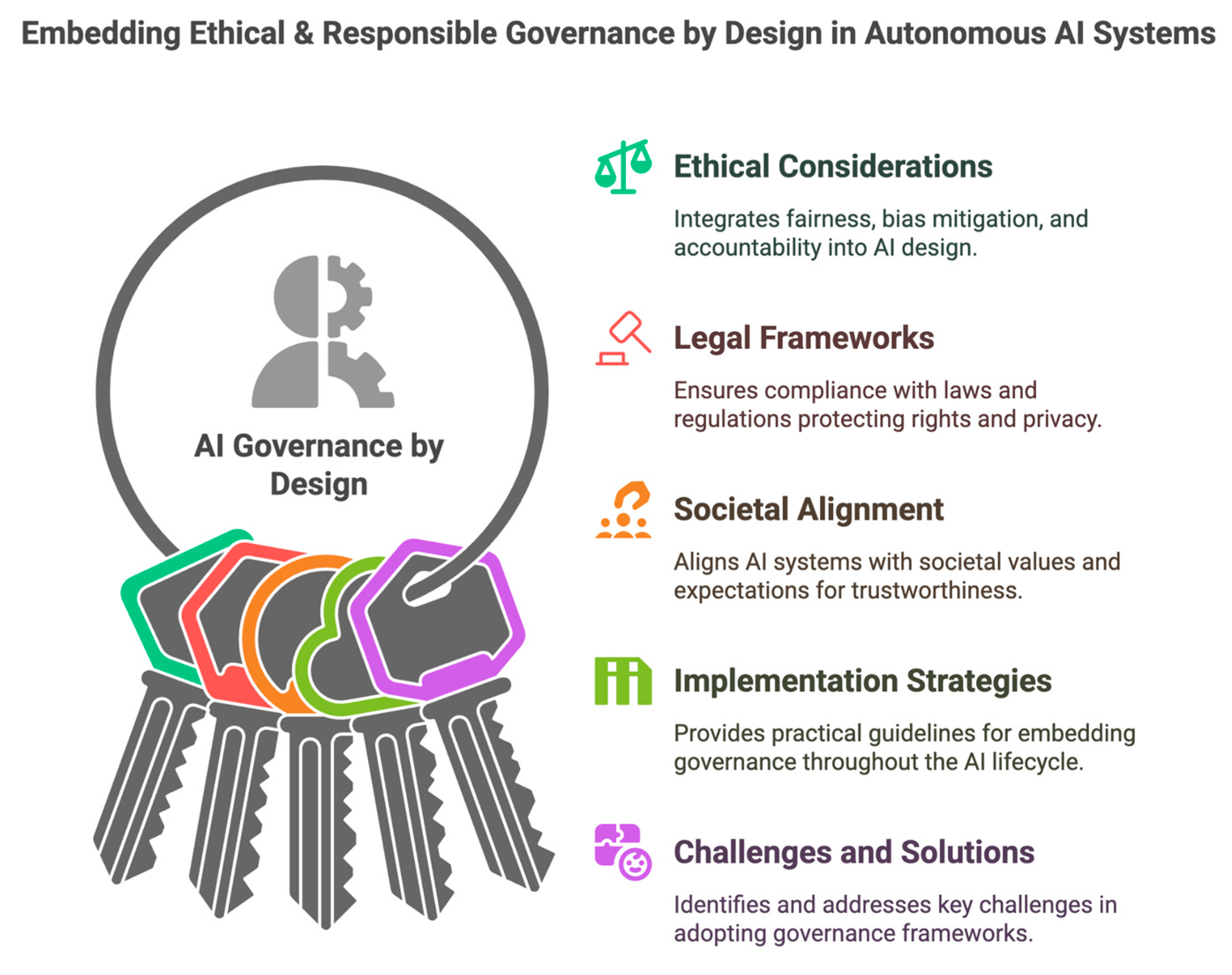
AIGD includes the following:-
- Ethical Considerations:- Integrates fairness, bias mitigation, and accountability into Al design.
- Legal Frameworks:- Ensures compliance with laws and regulations protecting rights and privacy.
- Societal Alignment:- Aligns Al systems with societal values and expectations for trustworthiness.
- Implementation Strategies:- Provides practical guidelines for embedding governance throughout the Al lifecycle.
- Challenges and Solutions:- Identifies and addresses key challenges in adopting governance frameworks.
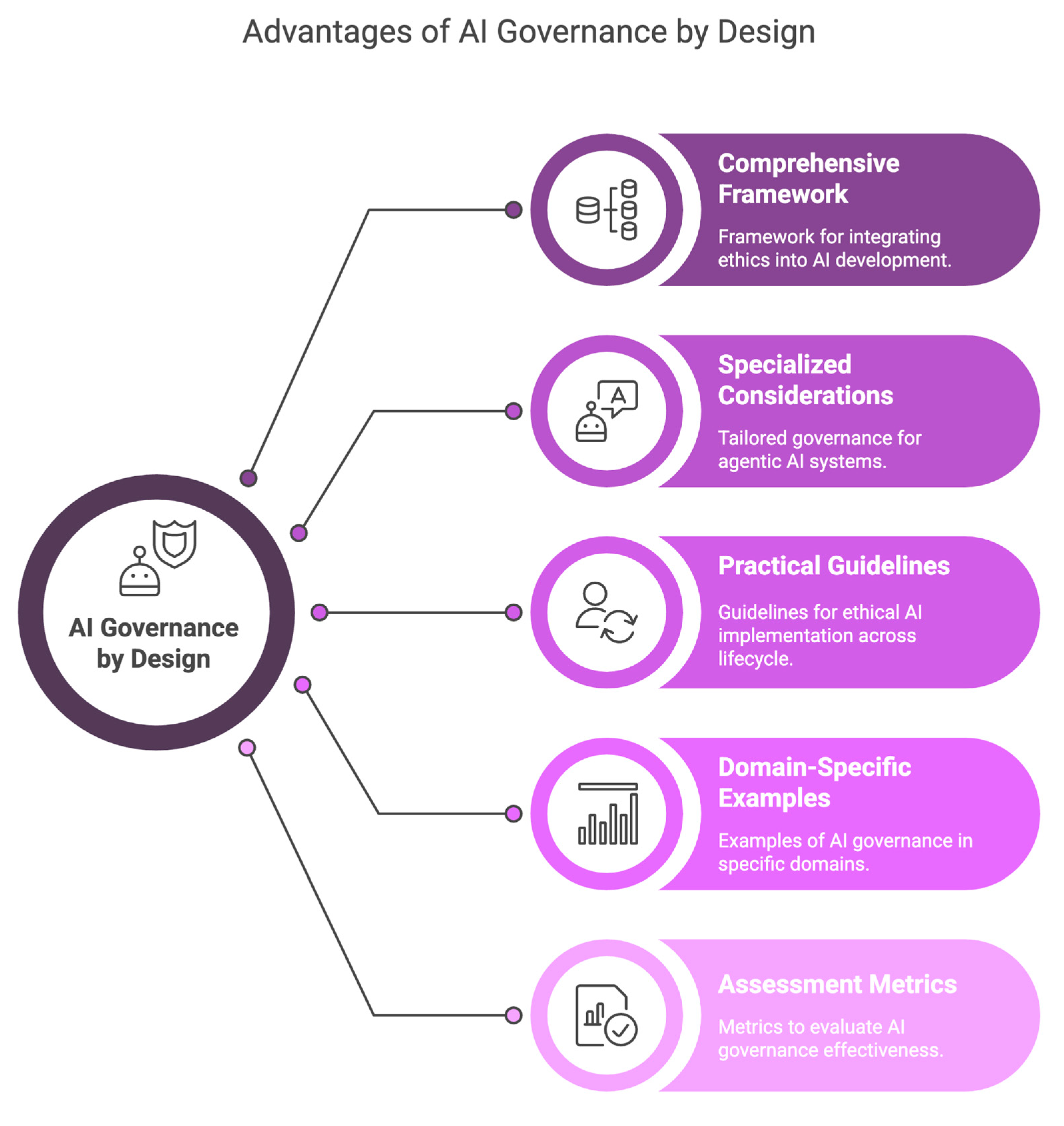
Figure 2.
Advantages of AI Governance by Design (AIGD).
I. Introduction
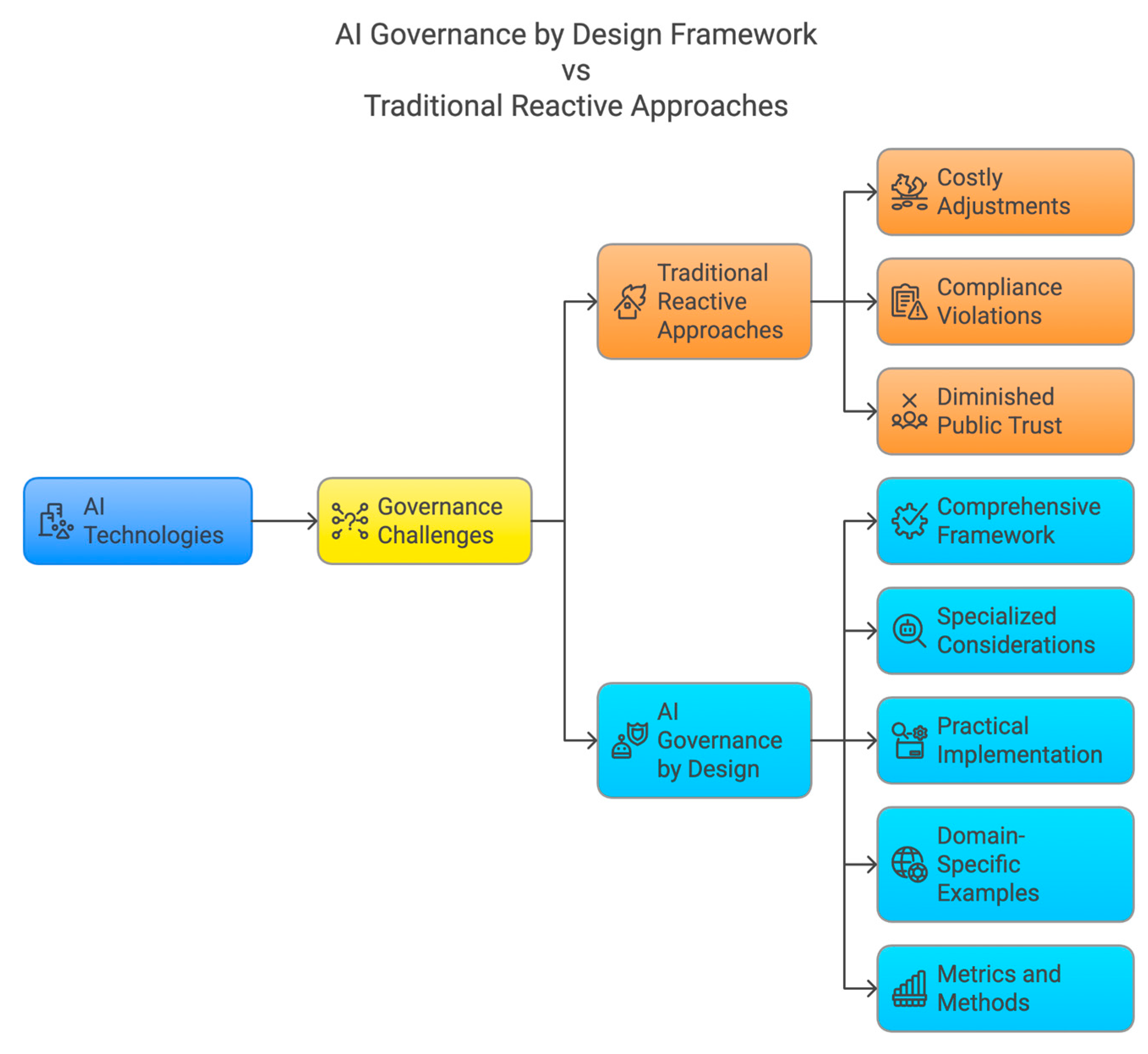
The rapid proliferation of artificial intelligence (Al) technologies offers unprecedented opportunities for organizations while also introducing significant governance challenges11,20. Concerns about algorithmic bias6,7, data privacy12,13, security vulnerabilities, and ethical implications of autonomous systems highlight the need for effective oversight mechanisms. Traditional reactive approaches to Al governance—addressing ethical and regulatory concerns after systems are already developed and deployed—often lead to costly adjustments, compliance violations, and diminished public trust 5. In response, a design-centric approach called Al Governance by Design has emerged, advocating for embedding ethical, legal, and societal values into Al technologies from inception2. This paper makes the following contributions:-
- Presents a comprehensive framework for Al Governance by Design.
- Offers specialized governance considerations for agentic Al systems.
- Provides practical implementation guidelines across the Al lifecycle.
- Analyzes domain-specific governance examples for three types of agentic systems.
- Proposes metrics and methods for assessing governance effectiveness.
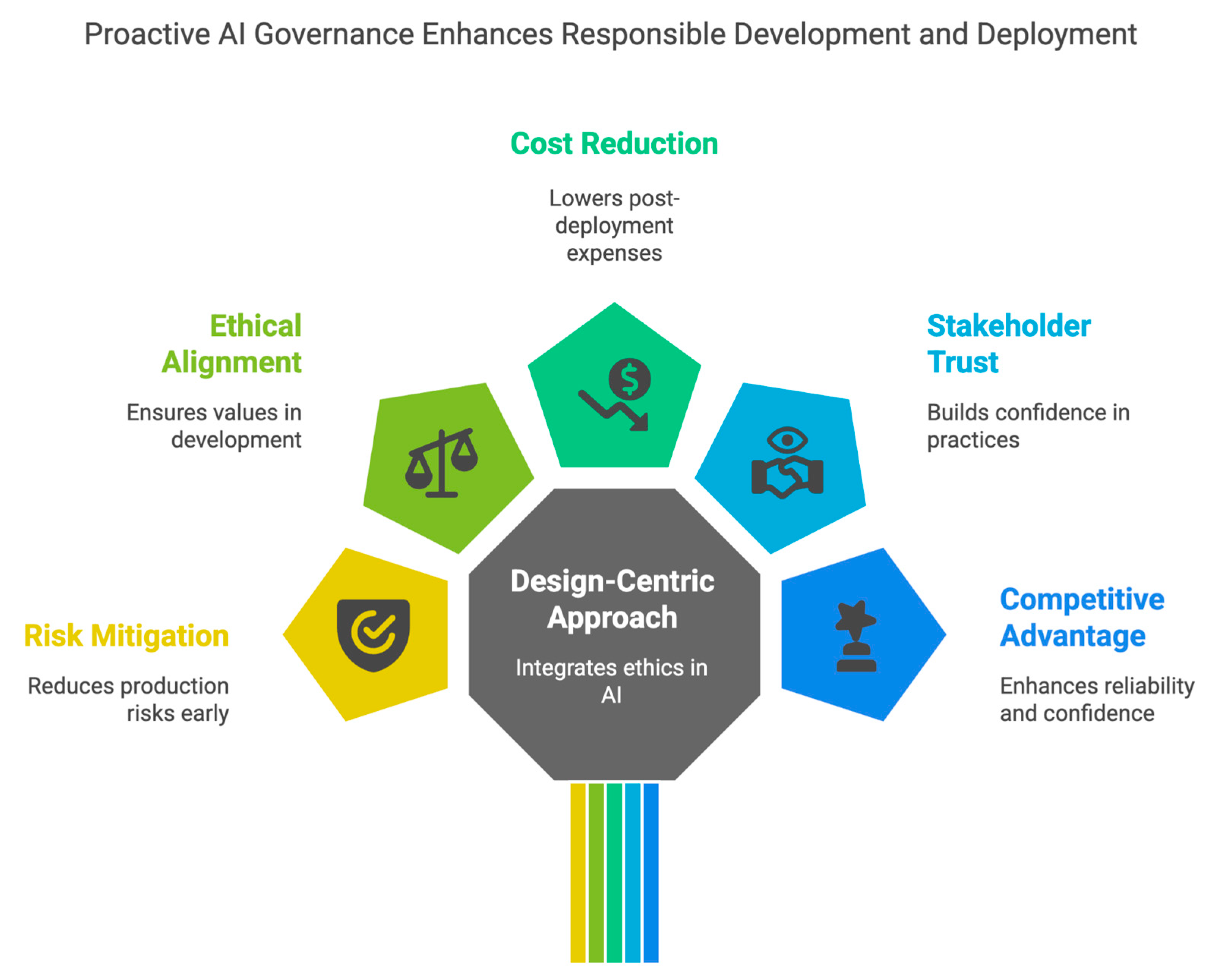
Figure 3.
Design -Centric Approach of AIGD integrate Ethics in AI products.
II. Understanding Al Governance by Design
Al Governance by Design represents a paradigm shift from reactive to proactive governance. Rather than treating ethical and regulatory considerations as afterthoughts, this approach integrates them directly into the Al development lifecycle from the beginning.
A. Limitations of Reactive Governance
Reactive governance approaches face several critical limitations:-
- Technological advancement outpaces regulatory frameworks.
- Complex and opaque Al models make post-deployment accountability challenging.
- Reactive measures lead to increased compliance costs and technical debt.
- Post-deployment adjustments can be costly and disruptive to operations.
Figure 4.
AIGD vs Traditional Reactive Approaches of Governance.
B. Benefits of a Design-Centric Approach
A design-centric approach to governance offers numerous advantages:-
- Proactively mitigates risks before they manifest in production environments.
- Ensures alignment with ethical and societal values from the outset of development.
- Reduces the likelihood of costly post-deployment adjustments and retrofitting.
- Fosters greater stakeholder trust through demonstrated commitment to responsible practices.
- Creates competitive advantages through enhanced system reliability and user confidence.
III. Core Principles of Al Governance by Design (AIGD)
A. Fairness and Bias Mitigation
Creating Al systems that operate impartially and equitably requires proactive measures to identify and address potential biases in data, algorithms, and outcomes6,7. This involves rigorous data selection, bias detection techniques, diverse development teams, and continuous fairness assessments throughout the development lifecycle.
B. Transparency and Explainability
Making Al systems understandable and accessible to scrutiny requires providing meaningful information about how they function and arrive at decisions8,9. While technical explainability can be challenging for complex models, organizations should strive to provide appropriate levels of transparency based on the system’s impact and use case.
C. Accountability and Responsibility
Defining clear roles and responsibilities for Al development, deployment, and outcomes is essential for effective governance10. Establishing mechanisms for oversight, auditing, and addressing concerns ensures appropriate human accountability throughout the Al lifecycle.
Figure 5.
AIGD brings together essential pillars of effective governance and ethical implementation by Design.
Figure 5.
AIGD brings together essential pillars of effective governance and ethical implementation by Design.
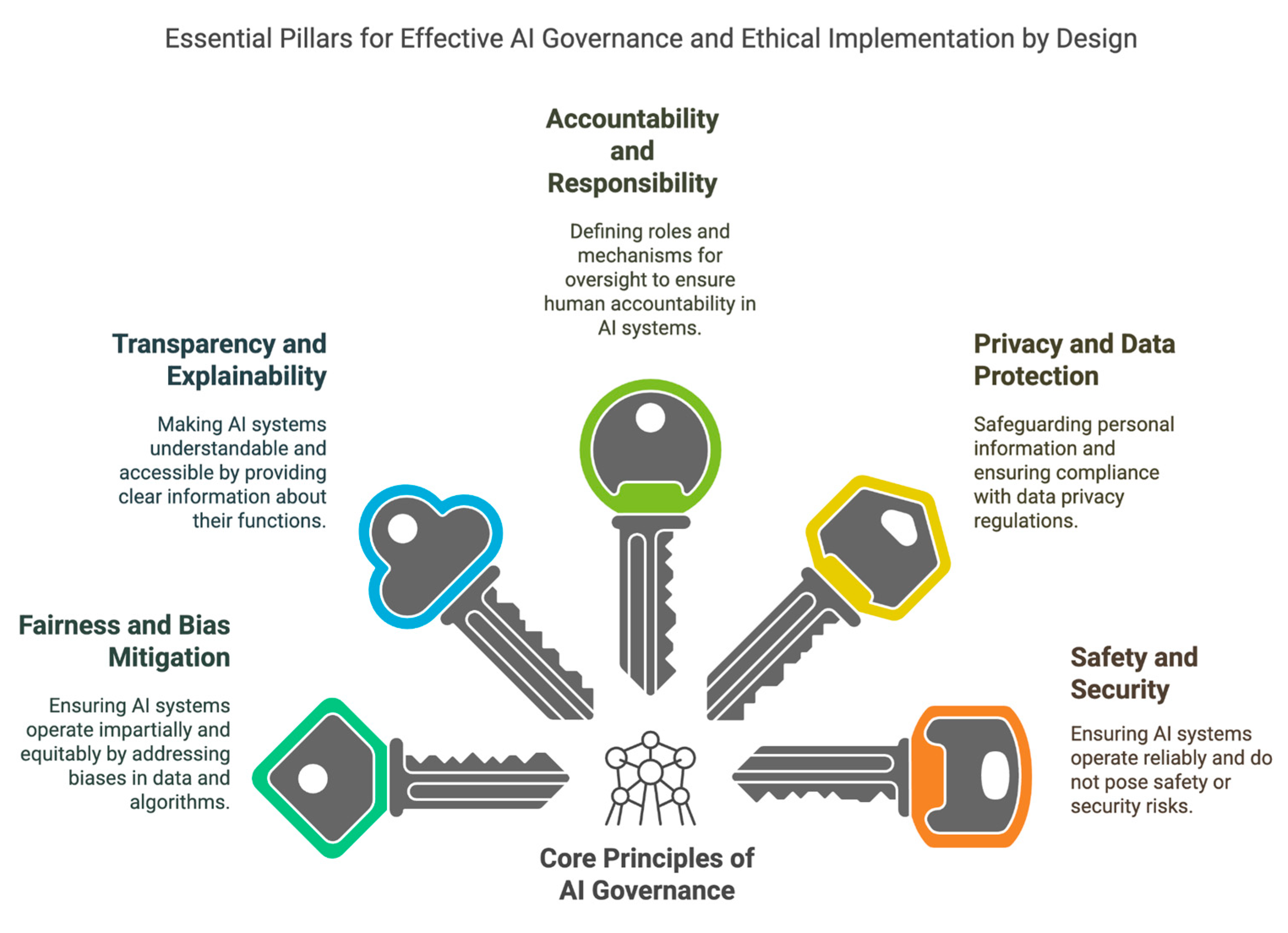
D. Privacy and Data Protection
Safeguarding individuals’ personal information and ensuring Al systems operate within legal and ethical boundaries related to data privacy requires robust data governance practices12,13. This includes privacy-enhancing technologies, data minimization principles, and compliance with relevant regulations.
E. Safety and Security
Ensuring Al systems operate reliably and do not pose unreasonable safety or security risks requires comprehensive testing and validation. Risk assessment frameworks, red team exercises, and adversarial testing help identify potential vulnerabilities before deployment.
F. Human Oversight and Control
Maintaining human involvement in critical Al decisions ensures that Al systems do not displace ultimate human responsibility and accountability. Appropriate human-in-the-loop or human-on-the-loop mechanisms should be implemented based on risk levels and potential impacts.
IV. Al Governance by Design (AIGD) for Agentic Systems
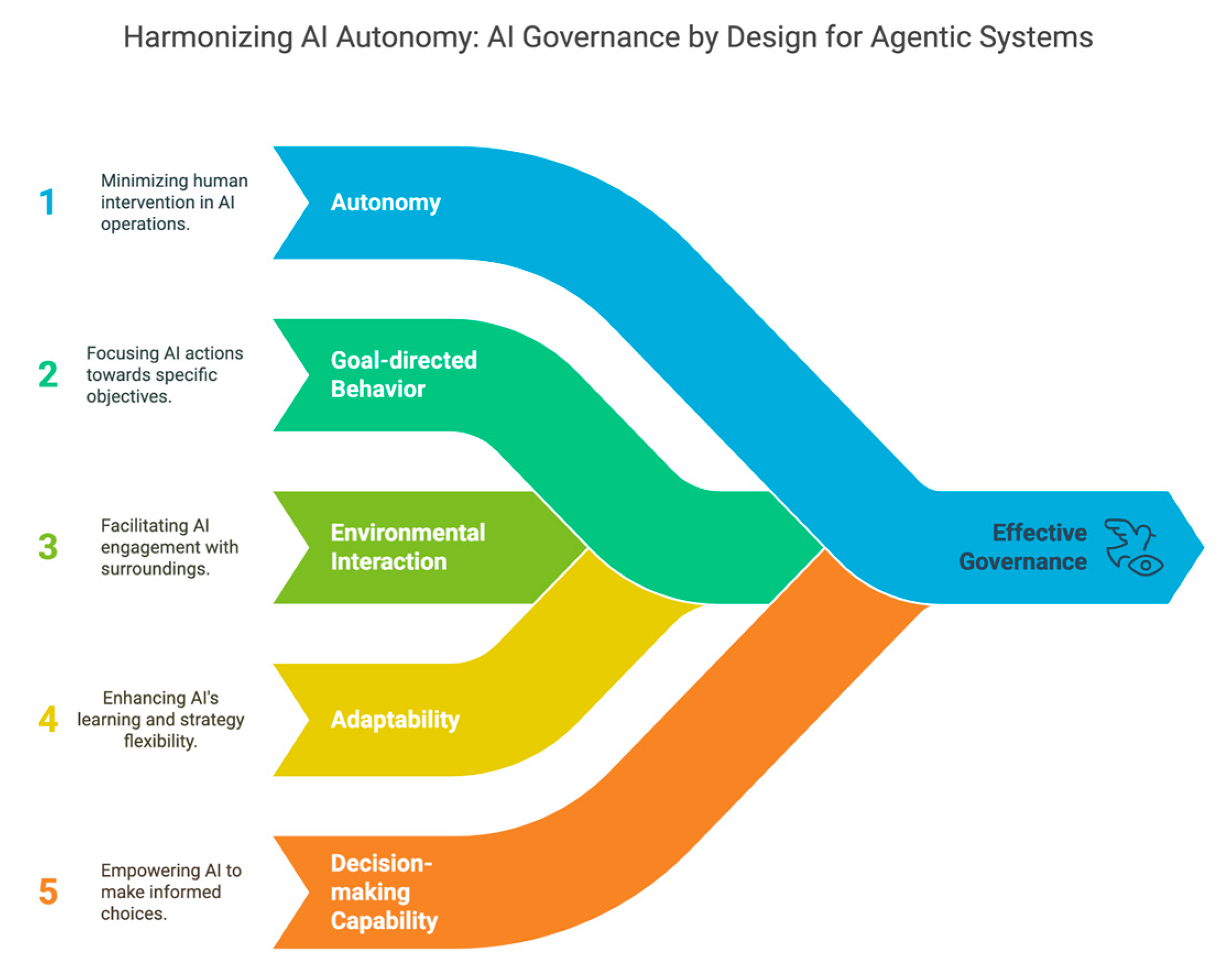
Agentic Al systems—those capable of autonomous decision-making, taking actions, and adapting to environmental feedback—present unique governance challenges that extend beyond traditional Al applications. These systems require special governance considerations due to their increased autonomy, potential for emergent behaviors, and broader impact scope.
Figure 6.
Characteristics of Agentic AI Systems and Need for effective Governance.
A. Defining Agentic Al Systems
Agentic Al systems exhibit several distinctive characteristics and thus require unique Governance efforts unlike previous technologies :-
- Autonomy:- Ability to operate with minimal human intervention.
- Goal-directed behavior:- Pursuit of defined objectives.
- Environmental interaction:- Direct engagement with digital or physical environments.
- Adaptability:- Learning and strategy adjustment based on feedback.
- Decision-making capability:- Making choices among alternatives to achieve goals.
B. Special Governance Considerations for Agentic Al
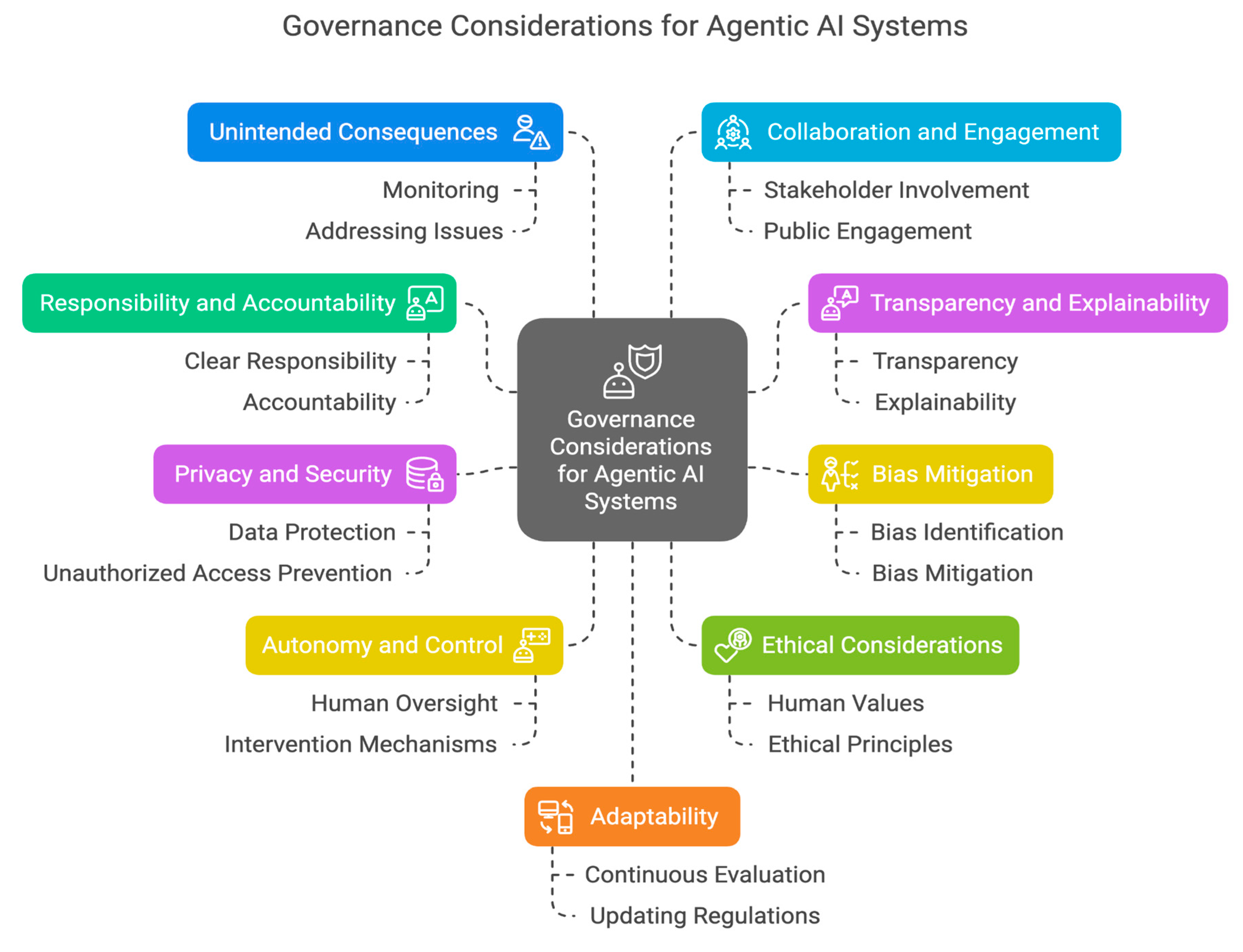
When developing and deploying agentic AI systems, it is crucial to consider several unique governance aspects due to their autonomous nature and potential for significant impact. These considerations might include:-
- Establishing Clear Lines of Responsibility and Accountability:- As agentic AI systems can act autonomously, it is essential to determine who is responsible and accountable for their actions. This includes considering scenarios where the AI system’s actions result in harm or unintended consequences.
- Ensuring Transparency and Explainability:- Agentic AI systems should be transparent and explainable, meaning their decision-making processes and actions should be understandable to humans. This is crucial for building trust and enabling effective oversight.
- Mitigating Bias and Discrimination:- Agentic AI systems can inadvertently perpetuate or amplify existing biases and discrimination. It is essential to implement measures to identify and mitigate these biases to ensure fairness and equity.
- Safeguarding Privacy and Security:- Agentic AI systems often process vast amounts of data, including personal and sensitive information. Robust privacy and security measures must be implemented to protect this data and prevent unauthorized access or misuse.
- Balancing Autonomy and Control:- While agentic AI systems are designed to operate autonomously, it is crucial to maintain appropriate levels of human control and oversight. This includes implementing mechanisms for intervention and deactivation when necessary.
- Promoting Human Values and Ethical Considerations:- Agentic AI systems should be designed and operated in alignment with human values and ethical principles. This includes considering the potential impact of AI systems on society and taking steps to minimize harm and maximize benefit.
- Addressing Unintended Consequences and Emergent Behaviors:- Agentic AI systems can exhibit unintended consequences and emergent behaviors that are difficult to predict. It is crucial to monitor AI systems closely and be prepared to address these issues as they arise.
- Fostering Collaboration and Public Engagement:- The development and deployment of agentic AI systems should be a collaborative and inclusive process that involves diverse stakeholders, including the public. This helps ensure that AI systems are aligned with societal needs and values.
- Adapting Governance Frameworks to Technological Advancements:- The field of AI is rapidly evolving, and governance frameworks must be adaptable to keep pace with technological advancements. This includes continuously evaluating and updating regulations and standards to ensure they remain relevant and effective.
- International Collaboration and Standardization:- As AI technologies transcend national borders, international collaboration and standardization are crucial for ensuring consistent and responsible governance practices.
Figure 7.
Special Governance Considerations for Agentic AI Systems.
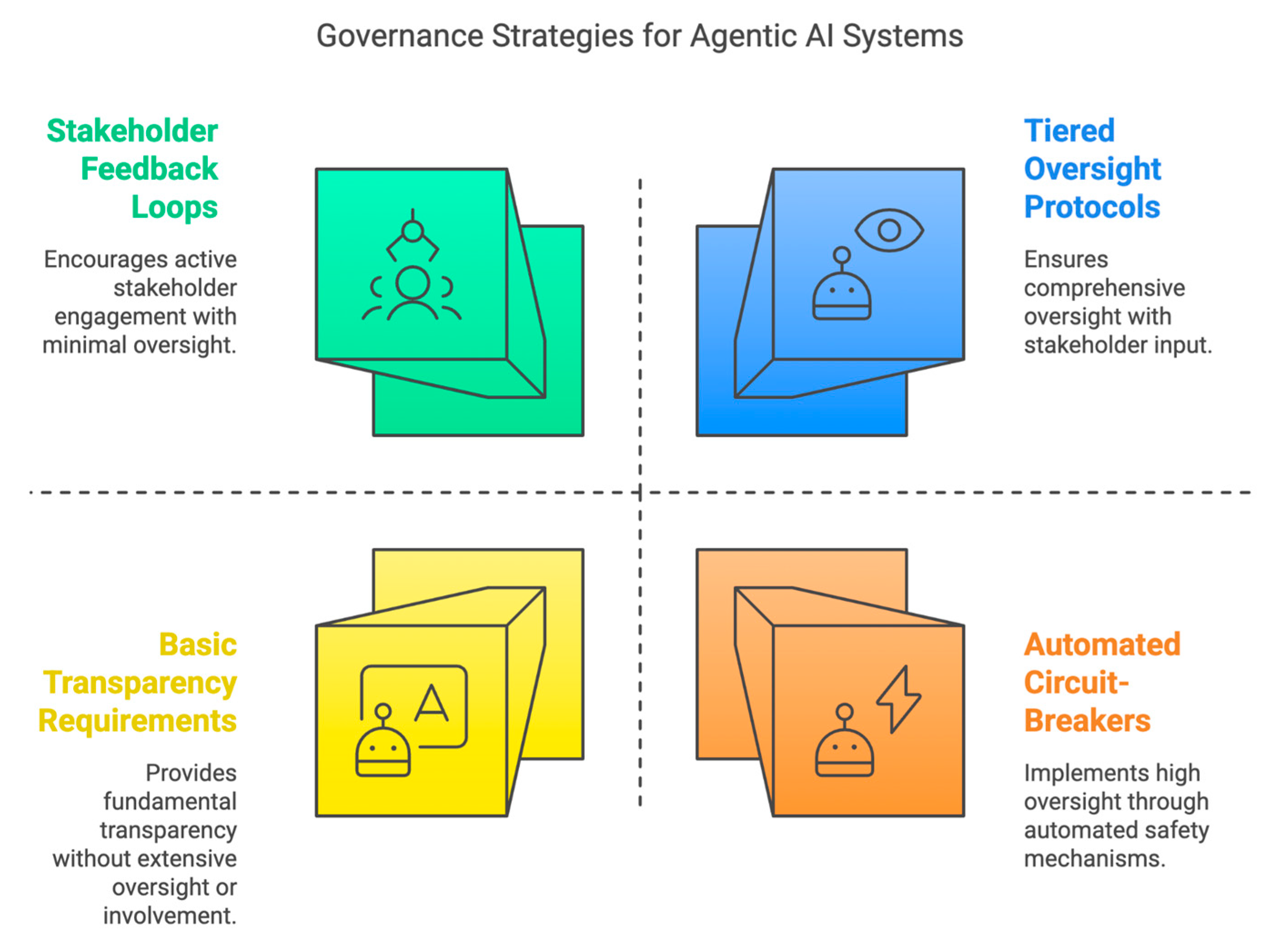
C. Mitigating Actions for Agentic AI Systems
-
Extended Control Mechanisms
- (a)
- Implementation of tiered human oversight protocols based on risk levels.
- (b)
- Establishment of automated circuit-breakers and kill switches.
- (c)
- Regular testing of intervention capabilities under varied conditions.
-
Agency-Specific Transparency Requirements
- (a)
- Clear disclosure of system boundaries and capabilities.
- (b)
- Explicit communication of the degree of autonomy in decision-making.
- (c)
- Logging of agentic decisions and their rationales.
-
Behavioral Monitoring and Drift Detection
- (a)
- Continuous monitoring for unexpected emergent behaviors.
- (b)
- Detection of goal misalignment or strategy drift.
- (c)
- Regular validation against initial specifications and intentions.
-
Stakeholder Participation in Governance
- (a)
- Inclusion of end-users in governance design processes.
- (b)
- Regular feedback loops with affected communities.
- (c)
- Multi-disciplinary input on agency parameters and limits.
Figure 8.
Governance Strategies for Agentic AI Systems.
V. Framework for Implementation Across the Al Lifecycle
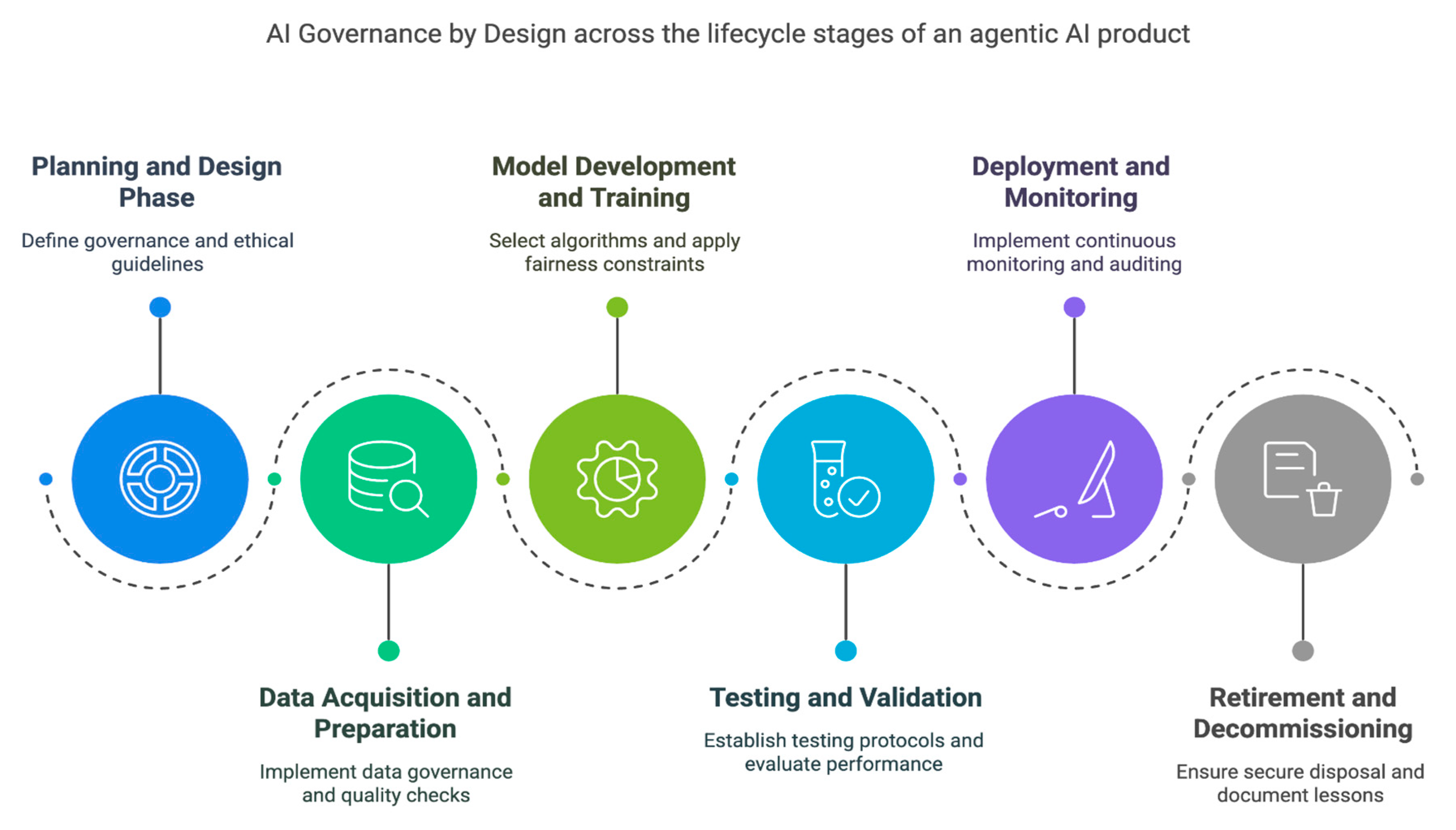
A. Planning and Design Phase
- Define governance requirements early in the project lifecycle.
- Involve cross-functional teams with diverse expertise.
- Establish ethical guidelines and boundaries.
- Conduct initial risk assessment and impact analysis.
B. Data Acquisition and Preparation
- Implement robust data governance practices13.
- Ensure data quality, privacy, and representativeness.
- Conduct bias checks and mitigation strategies.
- Document data provenance and transformations.
C. Model Development and Training
- Select algorithms with governance considerations in mind.
- Implement bias detection and mitigation techniques6,7.
- Ensure transparency in model development processes8,9.
- Apply fairness constraints during optimization.
Figure 9.
AI Governance by Design across the lifecycle stages of Agentic AI Systems.
D. Testing and Validation
- Establish rigorous testing protocols for safety, reliability, and fairness.
- Evaluate performance across various scenarios and user groups.
- Identify unintended consequences or biases.
- Conduct adversarial testing of governance controls.
E. Deployment and Monitoring
- Establish continuous monitoring mechanisms.
- Implement regular auditing procedures.
- Evaluate ongoing performance and compliance.
- Enable appropriate human oversight.
F. Retirement and Decommissioning
- Ensure secure and ethical disposal of Al models.
- Properly handle associated data in accordance with regulations.
- Document lessons learned for future implementations.
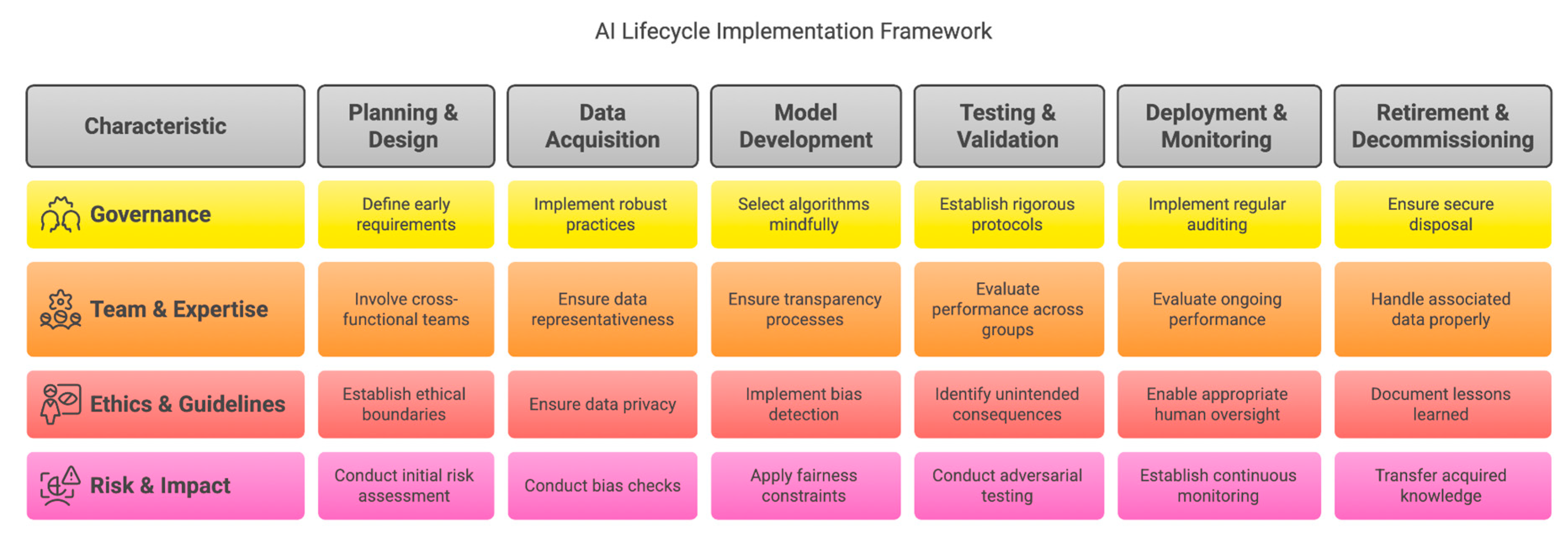
Figure 9B.
AI Governance by Design (AIGD) and its Characteristics across the lifecycle stages of Agentic AI Systems.
Figure 9B.
AI Governance by Design (AIGD) and its Characteristics across the lifecycle stages of Agentic AI Systems.
VI. Case Studies:- Al Governance by Design for Agentic Systems
A. Autonomous Financial Trading Agent
-
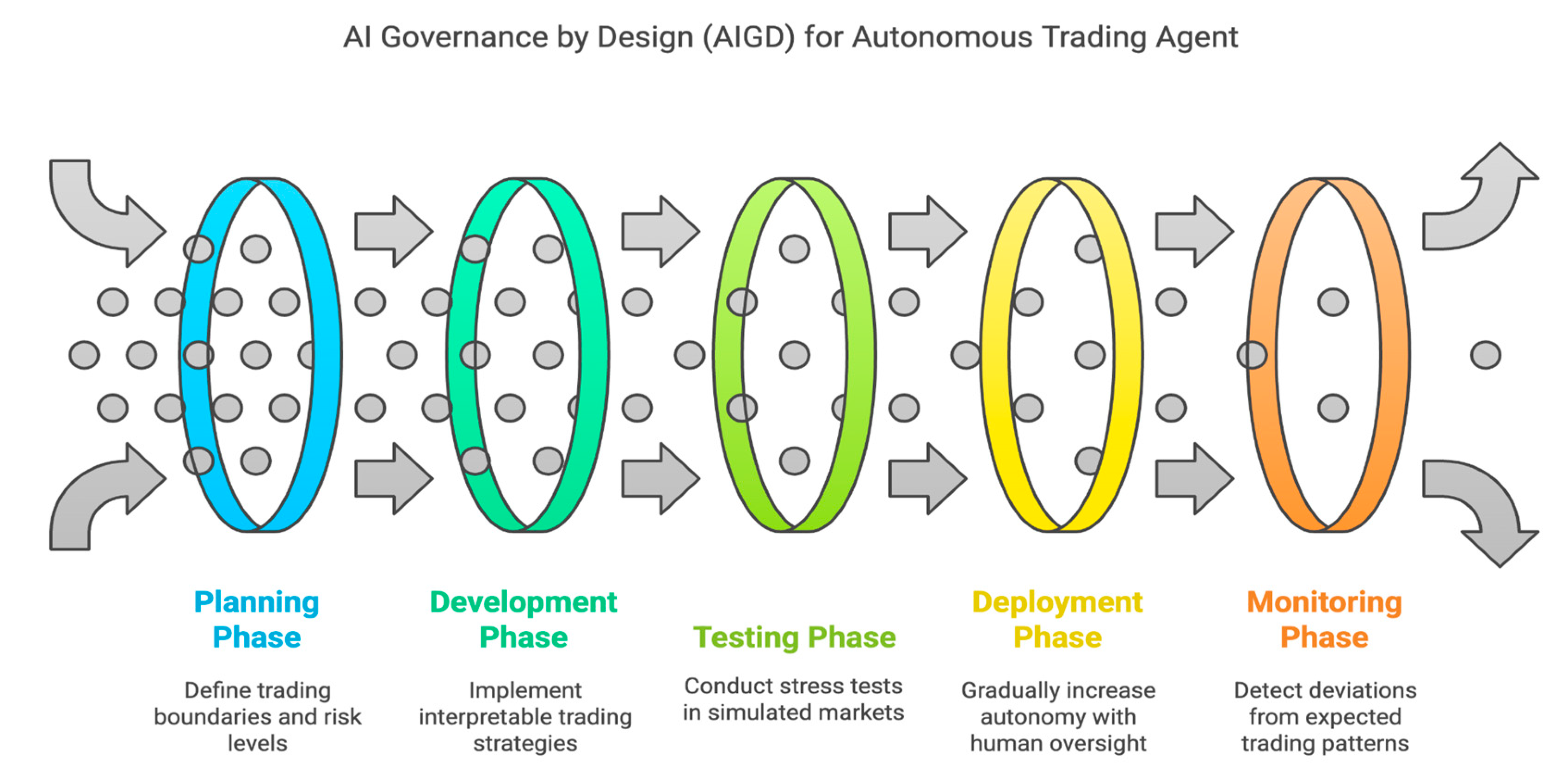
Governance Design Elements:-
- (a)
- Planning Phase:- Define clear boundaries for trading amounts, risk levels, and asset classes.
- (b)
- Development Phase:- Implement interpretable strategies with clear decision trees.
- (c)
- Testing Phase:- Run stress tests in simulated market conditions including market crashes.
- (d)
- Deployment Phase:- Start with human-in-the-loop approval for trades, gradually increasing autonomy.
- (e)
- Monitoring Phase:- Implement real-time drift detection if trading patterns deviate from expected parameters.
-
Agentic Safeguards:-
- (a)
- Maximum trade size limits that dynamically adjust based on market volatility.
- (b)
- Behavioral fingerprinting to detect unusual trading patterns.
- (c)
- Daily risk exposure reports with mandatory human review.
- (d)
- Multi-level authentication for changing trading parameters.
Figure 10.
AI Governance by Design (AIGD) across the lifecycle stages for Autonomous Trading Agent.
B. Enterprise Al Assistant with Resource Access
-
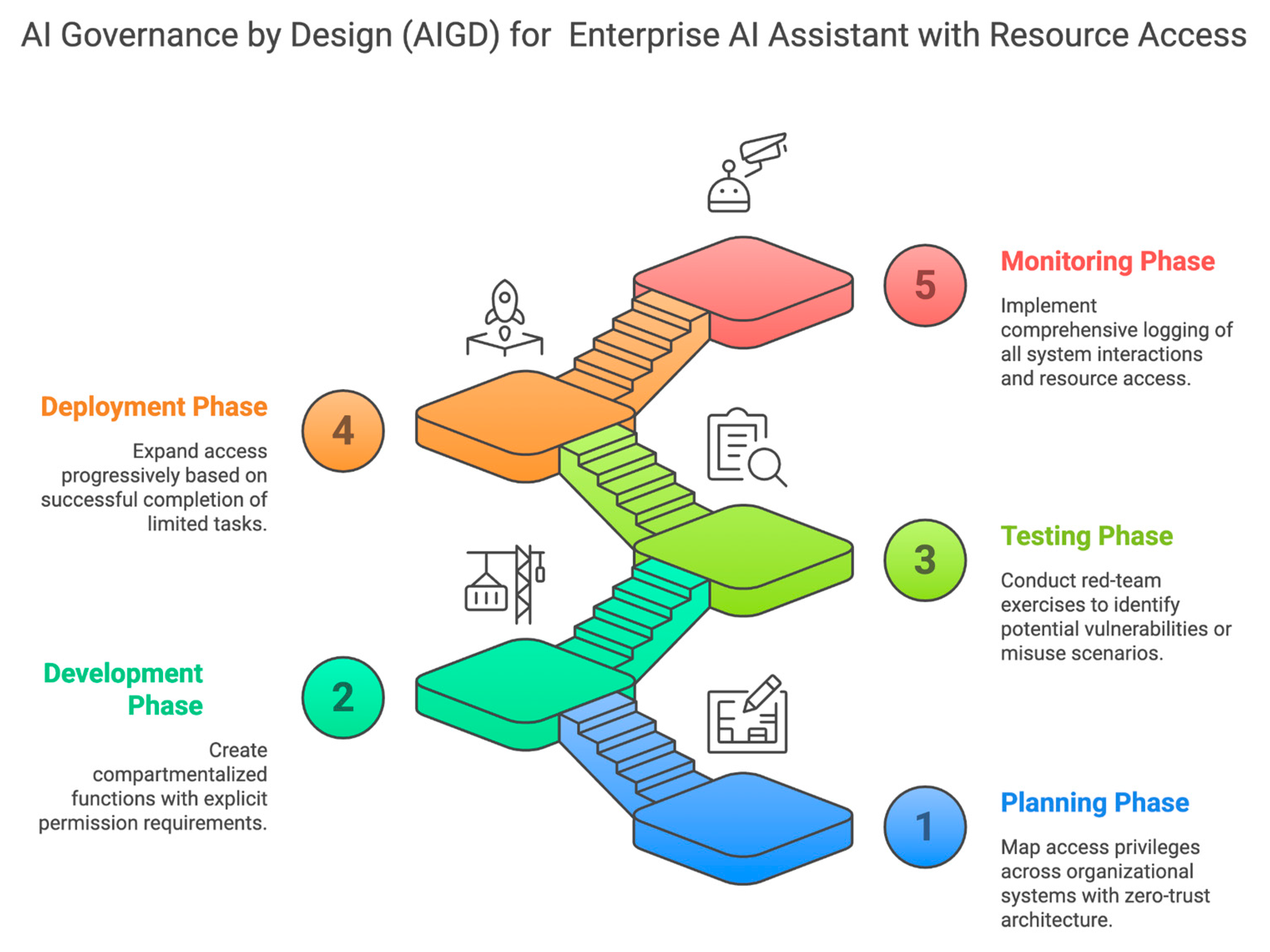
Governance Design Elements:-
- (a)
- Planning Phase:- Map access privileges across organizational systems with zero-trust architecture.
- (b)
- Development Phase:- Create compartmentalized functions with explicit permission requirements.
- (c)
- Testing Phase:- Red-team exercises to identify potential vulnerabilities or misuse scenarios.
- (d)
- Deployment Phase:- Progressive access expansion based on successful completion of limited tasks.
- (e)
- Monitoring Phase:- Comprehensive logging of all system interactions and resource access.
-
Agentic Safeguards:-
- (a)
- Task-specific access provisioning with automatic expiration.
- (b)
- Natural language processing to detect potentially harmful instructions.
- (c)
- Regular auditing of interaction logs for anomalous patterns.
- (d)
- Contextual authentication based on task sensitivity.
Figure 11.
AI Governance by Design (AIGD) across the lifecycle stages for Enterprise Al Assistant with Resource Access.
Figure 11.
AI Governance by Design (AIGD) across the lifecycle stages for Enterprise Al Assistant with Resource Access.
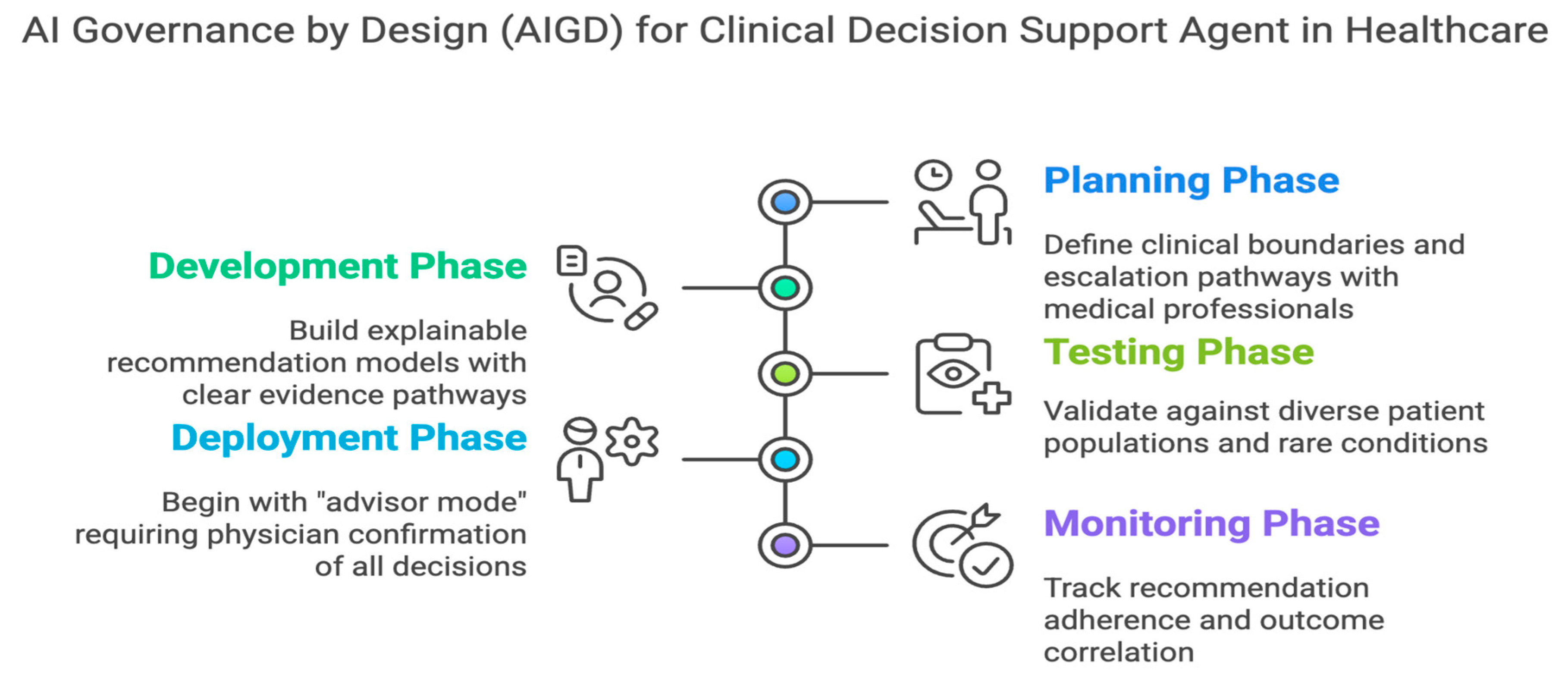
C. Clinical Decision Support Agent in Healthcare
-
Governance Design Elements:-
- (a)
- Planning Phase:- Define clinical boundaries and escalation pathways with medical professionals.
- (b)
- Development Phase:- Build explainable recommendation models with clear evidence pathways.
- (c)
- Testing Phase:- Validate against diverse patient populations and rare conditions.
- (d)
- Deployment Phase:- Begin with "advisor mode" requiring physician confirmation of all decisions.
- (e)
- Monitoring Phase:- Track recommendation adherence and outcome correlation.
-
Agentic Safeguards:-
- (a)
- Mandatory uncertainty disclosure when confidence levels fall below thresholds.
- (b)
- Automated detection of potential diagnosis biases across demographic groups.
- (c)
- Scheduled recalibration based on latest medical literature.
- (d)
- Dual validation requirements for high-risk recommendations.
Figure 12.
AI Governance by Design (AIGD) across the lifecycle stages for Clinical Decision Support Agent in Healthcare.
Figure 12.
AI Governance by Design (AIGD) across the lifecycle stages for Clinical Decision Support Agent in Healthcare.
VII. Key Challenges in Implementation
A. Expertise and Skills Gap
Many organizations struggle to find professionals with the necessary knowledge to develop and implement effective Al governance frameworks. This shortage of talent can impede the ability of organizations to address complex ethical and societal implications of Al, particularly for agentic systems that require specialized oversight.
B. Complex Regulatory Landscape
Organizations must navigate a diverse and rapidly evolving set of Al regulations and guidelines across different jurisdictions. This complexity is magnified for agentic systems that may operate across multiple domains or geographies, requiring careful attention to compliance requirements.
C. Balancing Innovation and Compliance
Finding the right balance that allows for responsible innovation while ensuring adequate oversight is crucial for competitive advantage. This is particularly challenging for agentic systems where excessive constraints might limit beneficial capabilities, while insufficient governance could lead to unacceptable risks.
Figure 13.
Key Challenges in Implementing AI Governance for Agentic Systems.
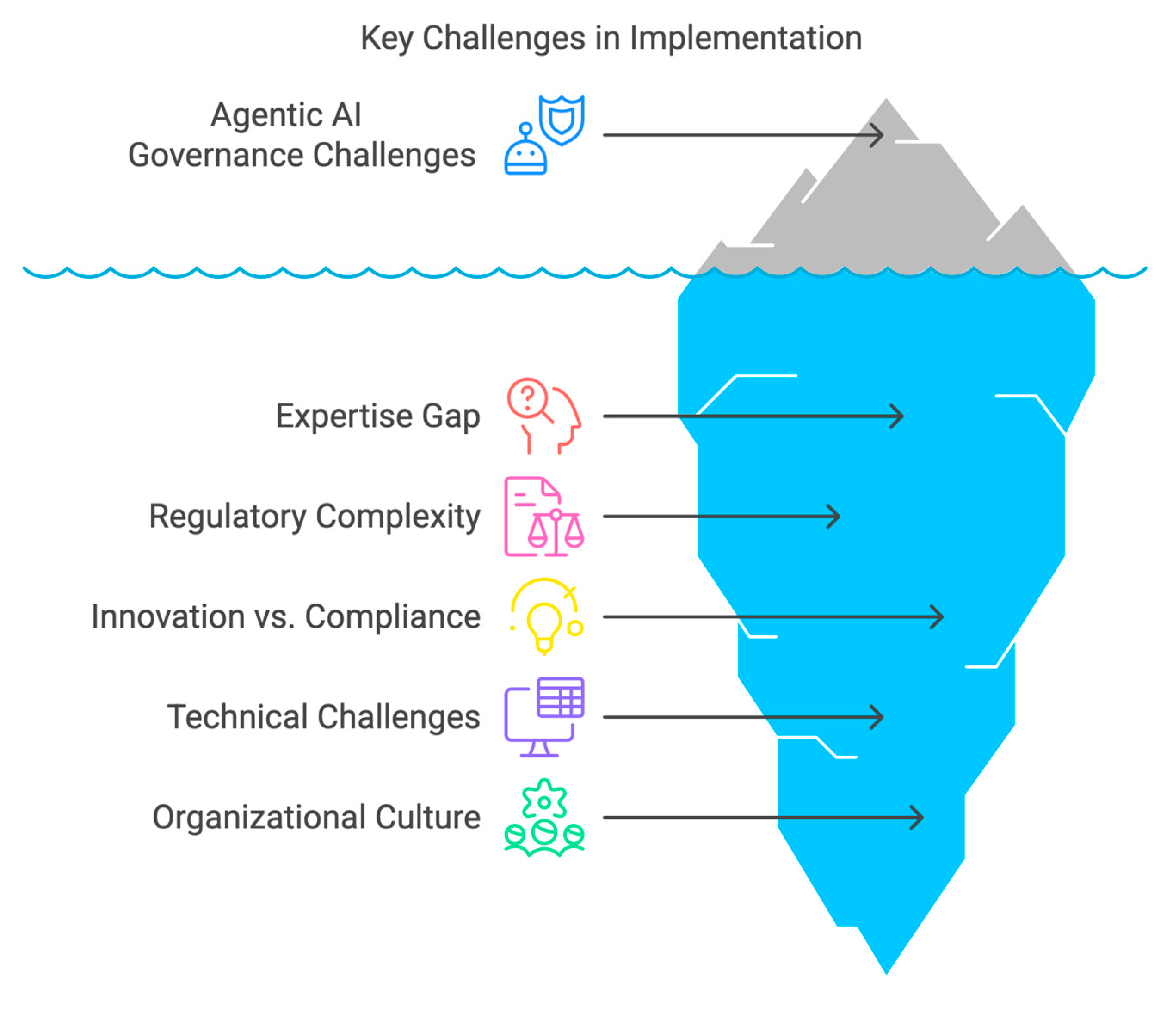
D. Technical Challenges
Several technical challenges complicate governance implementation:
- Algorithmic bias detection in complex, adaptive systems [6, 7].
- Transparency and explainability for advanced machine learning models [8,9}.
- Effective drift detection for systems that learn continuously.
- Reliable failsafe mechanisms that don’t impede legitimate operations.
E. Organizational and Cultural Factors
Cultural challenges and lack of buy-in can impede the successful adoption of Al governance frameworks. Organizations must foster a culture that values responsible Al development and deployment, with appropriate incentives and accountability mechanisms.
VIII. Comparative Analysis of Established Frameworks
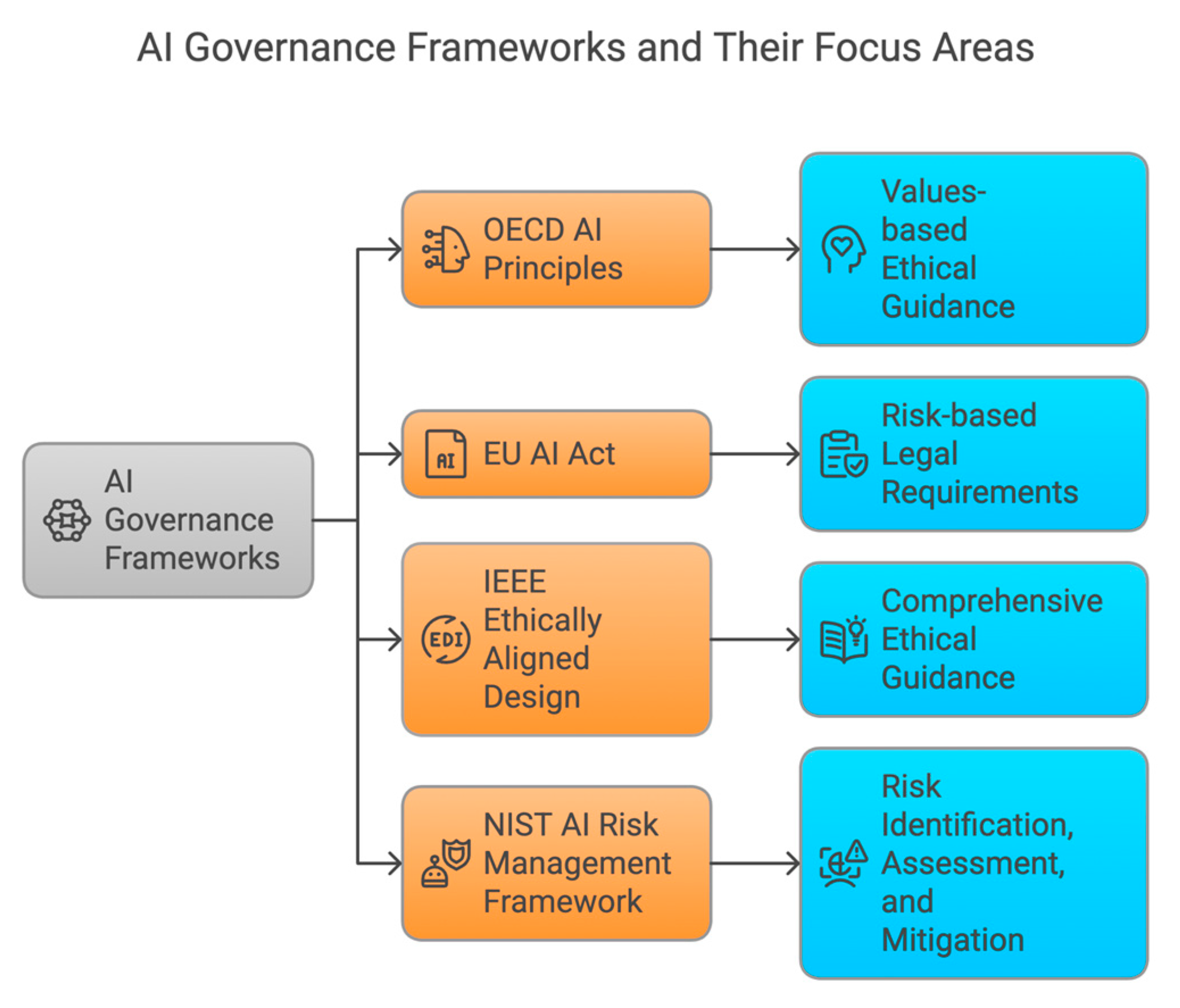
AI Governance frameworks globally are diverse, each with a unique focus on risk management and ethical considerations1,14,15. These frameworks can be complex and challenging for AI leaders to navigate. The AI Global Governance Watch by Res-AI (https://res-ai.ca/) aims to simplify this process by providing a comprehensive user guide for Governance of Gen AI systems22. This guide helps AI leaders understand and implement the various frameworks, ensuring their AI systems align with global standards and best practices. These frameworks address a wide range of issues, including data privacy, algorithmic bias, transparency, accountability, and human oversight. They also consider the potential societal impacts of AI, such as job displacement and economic inequality. By understanding and adhering to these frameworks, organizations can mitigate risks, build trust, and ensure their AI systems are used responsibly and ethically.
Figure 14.
AI Governance Frameworks and their focus areas.
IX. Measuring Effectiveness of Governance Initiatives
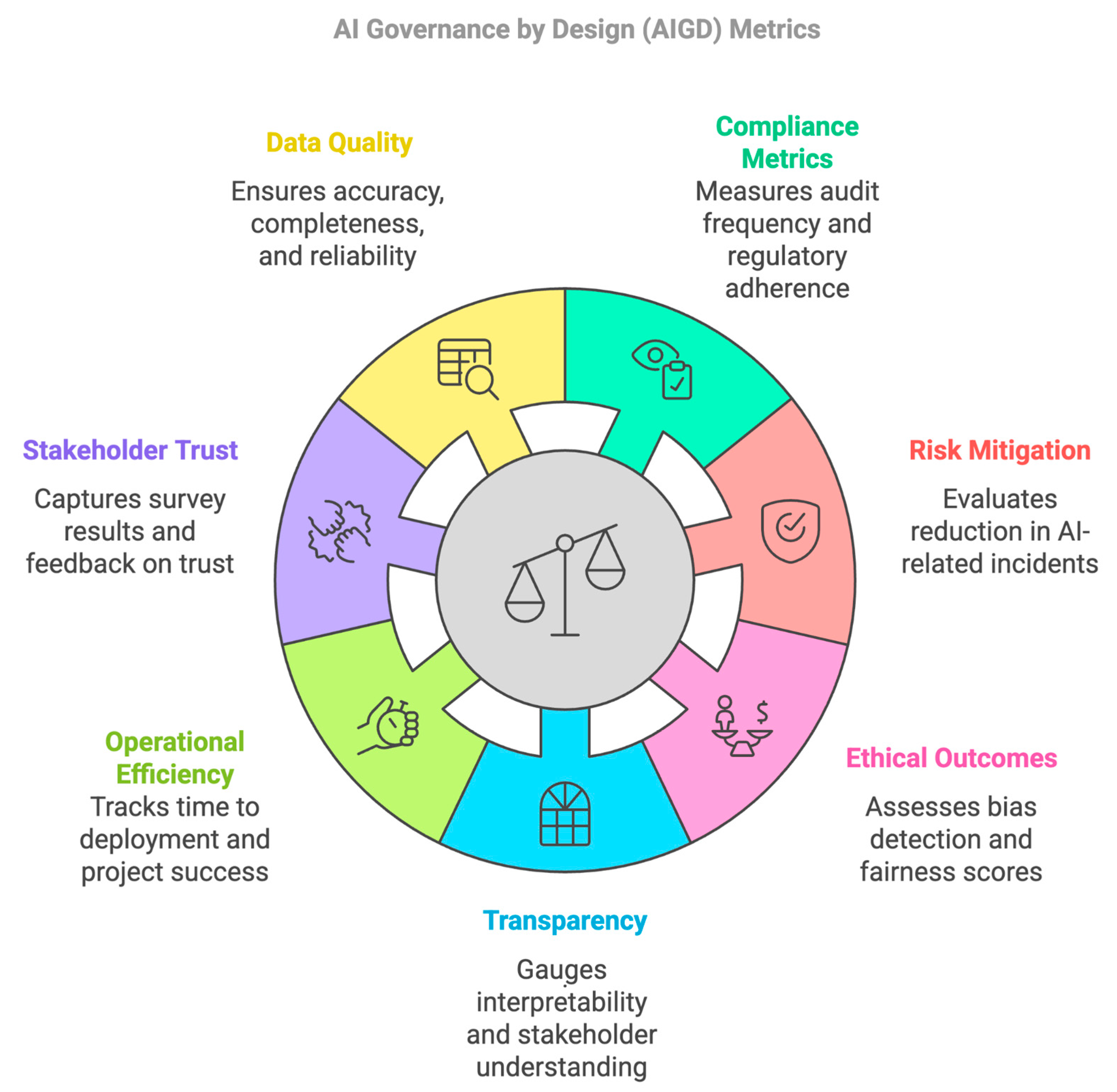
Organizations can track several key metrics to evaluate the success of their Al governance frameworks:-
- Compliance Metrics:- Audit frequency, regulatory violations, certification status.
- Risk Mitigation:- Reduction in Al-related incidents and security breaches.
- Ethical Outcomes:- Bias detection rates, fairness scores across demographic groups.
- Transparency:- Interpretability scores, stakeholder comprehension measures.
- Operational Efficiency:- Time to deployment, project success rates, governance overhead.
- Stakeholder Trust:- Survey results, feedback analysis, adoption metrics.
- Data Quality:- Accuracy, completeness, and reliability metrics.
Figure 14.
AI Governance by Design (AIGD) Metrics to measure and improve the Agentic AI Systems.
X. Conclusion and Future Work
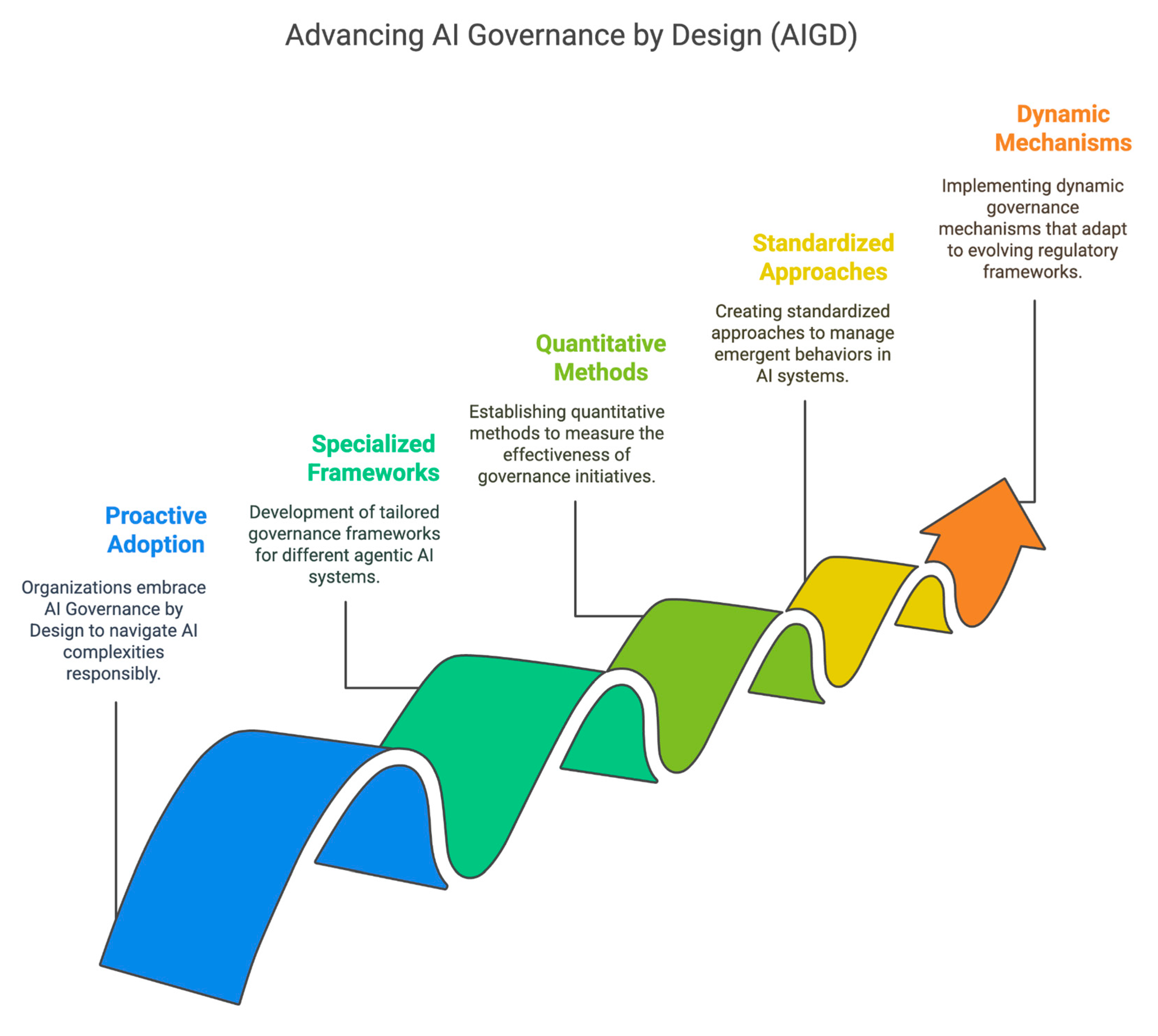
As Al becomes increasingly integrated into organizational processes, with agentic systems representing the cutting edge of this evolution, Al Governance by Design plays a pivotal role in responsible adoption. By embracing this proactive approach, organizations can navigate the complexities of Al with greater confidence, fostering innovation while upholding ethical standards. Future research should focus on developing more specialized governance frameworks for different categories of agentic Al systems, quantitative methods for measuring governance effectiveness, and standardized approaches for handling emergent behaviors. Additionally, as regulatory frameworks continue to evolve, there is a need for more dynamic governance mechanisms that can adapt to changing requirements while maintaining core ethical principles.
Figure 15.
Future Steps towards Advancing the AI Governance by Design (AIGD).
Acknowledgments
This work was supported in part by contributions from industry and academic partners at Blue Dot Impact, MIT, Vector Institute, University of Texas, Austin focused on advancing responsible Al development and deployment.
References
- Artificial Intelligence Governance & Alignment with Enterprise Governance, Medium, Mar. 2025. https://transcend.io/blog/enterprise-ai-governance.
- "Governance by Design: Embedding Compliance and Ethics in Al Development," AIGN, Mar. 2025. https://aign.global/ai-governance-consulting/patrick-upmann/governance-by-design-embedding-compliance-and-ethics-in-ai-development/.
- "The Algorithmic Problem in Artificial Intelligence Governance," United Nations University, Mar. 2025. https://unu.edu/article/algorithmic-problem-artificial-intelligence-governance.
- "Dynamic Al governance: A recipe for crafting trustworthy Al," Deloitte, Mar. 2025. https://www2.deloitte.com/us/en/insights/industry/public-sector/static-to-dynamic-ai-governance.html.
- "Looking beyond compliance: The wide-ranging costs of not implementing Al governance," IBM, Mar. 2025. https://repository.law.miami.edu/cgi/viewcontent.cgi?article=1454&context=umblr.
- "What Is Algorithmic Bias?, IBM, Mar. 2025. https://www.ibm.com/think/topics/algorithmic-bias#:~:text=Algorithmic%20bias%20occurs%20when%20systematic,socioeconomic%2C%20racial%20and%20gender%20biases.
- "Combating Algorithmic Bias: Solutions to Al Development to Achieve Social Justice," Trends Research, Mar. 2025. https://trendsresearch.org/insight/combating-algorithmic-bias-solutions-to-ai-development-to-achieve-social-justice/.
- "Al on Trial: Navigating Explainability and Transparency," Tech For Good Institute, Mar. 2025. https://techforgoodinstitute.org/blog/expert-opinion/ai-on-trial-navigating-explainability-and-transparency/.
- "Addressing Transparency & Explainability When Using Al Under Global Standards," Mayer Brown, Mar. 2025. https://www.mayerbrown.com/-/media/files/perspectives-events/publications/2024/01/addressing-transparency-and-explainability-when-using-ai-under-global-standards.pdf%3Frev=8f001eca513240968f1aea81b4516757.
- "Al Governance Framework: Accountability & Consumer Rights, Dialzara, Mar. 2025. https://dialzara.com/blog/ai-governance-framework-accountability-and-consumer-rights/.
- "What is Al Governance?," Palo Alto Networks, Mar. 2025. <https://www.paloaltonetworks.ca/cyberpedia/ai-governance#:~:text=AI%20governance%20encompasses%20the%20policies,and%20maintenance%20of%20AI%20systems.>.
- "The growing data privacy concerns with Al: What you need to know," DataGuard, Mar. 2025. https://www.dataguard.com/blog/growing-data-privacy-concerns-ai/.
- "Data Governance for Al: Challenges & Best Practices," Atlan, Mar. 2025. https://atlan.com/know/data-governance/for-ai/.
- "9 Principles of an Al Governance Framework," Duality Tech, Mar. 2025. https://dualitytech.com/blog/ai-governance-framework/.
- "Principles For Enterprise Al Governance," Forbes, Mar. 2025. https://www.forbes.com/councils/forbestechcouncil/2024/12/17/why-leaders-should-follow-principles-based-ai-governance/.
- "What is Responsible Al," Microsoft Learn, Mar. 2025. https://learn.microsoft.com/en-us/azure/cloud-adoption-framework/organize/responsible-ai.
- "What Is Al ethics? The role of ethics in Al," SAP, Mar. 2025. https://www.sap.com/resources/what-is-ai-ethics#:~:text=AI%20ethics%20helps%20ensure%20that,and%20the%20potential%20societal%20impacts.
- "Al Plans Hampered By Lack Of Skills, Governance Challenges," Silicon UK, Mar. 2025. https://www.silicon.co.uk/e-innovation/ai-plans-hampered-by-lack-of-skills-governance-challenges-573946.
- "What is Al Compliance and Why It Matters For Businesses," Tevora, Mar. 2025. https://www.tevora.com/resource/what-is-ai-compliance/.
- "Keys to fostering Al Governance that creates Business Value," Plain Concepts, Mar. 2025. https://www.plainconcepts.com/ai-governance/.
- "Resistance to Al: Governance and Cultural Challenges," Allganize’s Al, Mar. 2025. https://www.allganize.ai/en/blog/resistance-to-ai-governance-and-cultural-challenges.
- "A User Guide for Responsible Generative AI Governance"Vector Institute, Mar. 2025. https://res-ai.ca/.
Disclaimer/Publisher’s Note: The statements, opinions and data contained in all publications are solely those of the individual author(s) and contributor(s) and not of MDPI and/or the editor(s). MDPI and/or the editor(s) disclaim responsibility for any injury to people or property resulting from any ideas, methods, instructions or products referred to in the content. |
© 2025 by the authors. Licensee MDPI, Basel, Switzerland. This article is an open access article distributed under the terms and conditions of the Creative Commons Attribution (CC BY) license (http://creativecommons.org/licenses/by/4.0/).
Copyright: This open access article is published under a Creative Commons CC BY 4.0 license, which permit the free download, distribution, and reuse, provided that the author and preprint are cited in any reuse.


