

Submitted:
09 April 2025
Posted:
09 April 2025
You are already at the latest version
Abstract
A Climate change and its adverse effects are now the greatest threats faced by society. As a consequence, it is essential to adopt strategic instruments and adaptation measures – especially in the most vulnerable and susceptible areas, such as coastal zones. An analysis has been carried out on the instruments and adaptation measures designed to combat the effects of climate change in coastal countries of the European Union. A bibliographic search of technical and scientific documents has been carried out using various information platforms. Strategic planning instruments were subsequently studied and adaptation measures were classified. The results of this study indicate that, in relation to strategic instruments, there has been a significant and progressive increase in the adoption of adaptation plans and strategies that address problems faced by coastal areas. Physical-structural adaptation measures are the most widely used, especially ecosystem-based and engineering measures, even in specific projects implemented at different territorial scales of governance. One of the main conclusions drawn from the analysis is that, from an operational perspective, the local scale is the most suitable for implementing adaptation measures.
Keywords:
Climate Change
; adaptation
; European Union
; plans
; coastal zones
1. Introduction
The There are clear indications today that the climate is changing and this has become a fundamental challenge that needs to be addressed on a global scale. Climate change primarily affects global temperature patterns, disrupts the water cycle, and promotes ocean acidification [1]. However, significant variations have also been observed in precipitation patterns and the frequency and intensity of various climatic and meteorological phenomena [2], amongst other effects. [3,4]. It is predicted that climate alterations will occur more rapidly over time and this will lead to even more devastating consequences and impacts, thus making it crucial to recognize and understand these changes and take urgent, timely action.
The impacts of climate change affect both human and natural systems on multiple levels and these in turn are influenced by socioeconomic development and local policies. As a consequence, addressing climate change is a complex task. The population of coastal cities globally increased from about 360 million in 1990 to about 500 million in 2015 [5]. Furthermore, it is expected that by 2050 two-thirds of the global population will live in coastal areas and an estimated 800 million people will reside in more than 570 coastal cities that are vulnerable to a sea level rise of 0.5 meters [6]. The vulnerability of coastal areas will therefore be further exacerbated by rapid population growth [7]. The risks arising from the various impacts of climate change stem from the interaction between hazards, vulnerability, and exposure. The implementation of appropriate adaptation measures can reduce vulnerability and exposure, thereby mitigating the risk [8]. The ways in which climate risks emerge from the interaction between climate change, ecosystems, and society as interdependent systems are illustrated in Figure 1. The implementation of policies and tools at all scales (supranational, national, regional, and local) is essential [9,10] to maximize the effectiveness of the measures applied. This approach entails integration of instruments that promote climate resilience and position adaptation as a priority on the global political agenda [11].
The measures that can be taken to mitigate and adapt are diverse and numerous; however, given the complexity of this phenomenon, these measures alone are not sufficient. Mitigation measures are aimed at reducing GHG emissions, i.e., addressing the source, whereas adaptation measures aim to avoid or limit the risks and negative impacts associated with climate change [12]. However, mitigation has been considered as a priority for a long time [13] and it is the focus of numerous policies and instruments, especially in Europe [14]. Adaptation is perceived to be complementary to mitigation and it predominantly has a local scope in terms of benefits [15]. Once it had been accepted that mitigation alone was insufficient, national programs related to adaptation capacity, options, strategies, and measures began to be developed [11]. Today, these two options are accepted as complementary approaches to address the effects of climate change [9,16] and, as a consequence, future impacts on socioeconomic and environmental systems can be more effectively reduced. Nevertheless, there is still an imbalance between the application of these two approaches [13].
The relevance of adaptation, according to Enríquez-de-Salamanca et al. [15], lies in the fact that it encompasses both spatial and temporal scales. National adaptation instruments primarily include the National Adaptation Strategy (NAS), a document that outlines the direction for adaptation action, and the National Adaptation Plan (NAP), which is more detailed and includes a roadmap for implementing specific planned actions and measures [17]. In contrast, adaptation is influenced, as well as conditioned, by social aspects and issues, financial resources, political context, etc. [9]. This situation is evident because many traditional measures have been adjusted to new or larger-scale impacts, although the true need is the establishment of innovative measures. In most cases, if the measures implemented over a relatively short period are approached with a long-term perspective and within the framework of sustainable development, they can contribute to enhancing response capacities and future options.
According to the IPCC [18], different approaches are established to manage risks and the adaptation measures can be placed into the following categories: protective measures to shield from impacts and reduce risk; accommodative measures to reduce vulnerability; and retreat measures that involve the abandonment of high-risk areas. Within these classifications, and for greater precision, these measures can be further categorized according to their physical-structural, institutional, and social natures (Table 1).
Based on the information outlined above, these measures are necessary in all ecosystems in which significant impacts are expected. Due to their complex nature and vulnerability to the effects of climate change, coastal areas are of particular interest in the context of mitigation strategies [12]. The effects of climate change observed in coastal areas include ocean acidification, more frequent storms and floods, beach erosion, and impacts on dunes, amongst others. In this regard, the rise in mean sea level is especially noteworthy as it results from the loss of terrestrial ice volumes, primarily from Antarctica and Greenland [19]. Indeed, it is in these areas where the impacts of this phenomenon are increasingly evident [20]. In addition to the overexploitation of resources, namely aquaculture and land-use changes [21], coastal areas face considerable pressures that lead to their continuous transformation and degradation [22,23]. A clear example is the high urban pressure in the coastal environment [24], which leads to a reduction in natural spaces [25]. Finally, coastal areas provide numerous ecological, economic, social, and cultural benefits [26] in addition to offering greater resilience in coastal and marine populations. These areas also help to mitigate the impacts of weather events, thus playing a significant role in adaptation [21]. Consequently, the development of strategic planning instruments that focus on controlling and mitigating the effects of climate change on the coast and its surroundings is essential in order to protect the functions and ecosystem services provided by these zones [22].
1.1. Background in the European Union
The global fight against climate change began in 1988 with the establishment of the IPCC as the main body for evaluating this phenomenon (Figure 2). In 1992, the United Nations Framework Convention on Climate Change (UNFCCC) was adopted to mitigate the concentrations of greenhouse gases (GHGs) [27]. The Kyoto Protocol (1997) subsequently set emission reduction targets for 2008-2012 and this marked an important milestone in international commitments to mitigate climate change. This international framework laid the foundation for regional climate action and prompted the European Union to develop its own adaptation strategies [28].
In response to the Kyoto Protocol, the European Union launched its first official communication in 2005 under the slogan “Winning the Battle Against Global Climate Change”, which promoted the adoption of adaptation policies in its member states [11]. At the same time, scientific advancements and the growing consensus on the impacts of climate change began to influence the development of these policies. In this context, Finland became the first European country to implement an explicit adaptation strategy in 2005, followed by Spain in 2006 [29,30]. These examples served as models for other countries, especially those with coastlines, who began to develop instruments to address climate change. Furthermore, in 2005 a working group on impacts and adaptation was established within the European Climate Change Programme (ECCP) [29]. Although these initiatives laid the groundwork, it was not until 2007 that the EU recognized the importance of developing comprehensive strategies at the national and local levels, as reflected in the publication of the Green Paper “Adapting to Climate Change in Europe: Options for EU Action” [31]. This publication was followed by a White Paper in 2009 [32].
In 2013, the European Adaptation Strategy was approved and member states were urged to develop and implement integrated adaptation policies [33]. The number of plans and strategies has since increased significantly, particularly from 2011 onwards, due to the rise in extreme events [34] such as floods, heatwaves, and storms that occurred during the first decade of the 21st century [29]. The increase in adaptations and plans in numerous coastal EU countries is represented graphically in Figure 3. Furthermore, in many countries the governance of their adaptation policies has been improved through reviews and updates of their national instruments.
In 2015, the Paris Agreement consolidated global efforts by strengthening resilience and adaptive capacity [14] and this marked a milestone in international climate policy [35]. In Europe this commitment was reflected in an increase in policies and legal frameworks aimed at mitigating and adapting to the impacts of climate change [36]. However, these measures are still considered to be insufficient to address the current challenges [9,10].
The European Adaptation Strategy was adopted in 2021 and this sets out new pathways to address the inevitable effects of climate change with the aim of moving toward a climate-neutral and resilient Europe by 2050. Despite recognizing that progress on adaptation by EU member states has been slow [37], a large majority of countries have already adopted various adaptation policies (Figure 4) [8], which include climate change laws, although these are at different stages of preparation, development, and implementation. According to Pietrapertosa et al. [9] around 76% of European countries have adopted a NAS and 61% have developed a NAP.
The effects linked to climate change are not manifested in the same way through space and time. In Europe the diversity of climates, ecosystems, and socioeconomic characteristics plays a significant role. The north may benefit due to the interaction of multiple factors associated with rising temperatures, such as a reduction in energy demand or an increase in tourism. In contrast, southern Europe is particularly vulnerable to the worsening of extreme climate events such as droughts and floods [8,36]. Among the most widely studied effects are the risks associated with the rising mean sea level [24] and both river and coastal flooding [38]. Recent examples include the floods caused by Storm Gloria in 2020, which severely affected the Mediterranean coasts [39,40], as well as those resulting from an isolated depression in the atmosphere (DANA) in October 2024 in the same region. Most studies have concentrated on Western Europe, where the Netherlands and Germany have greater adaptation capacities and resources to implement measures [30]. Nonetheless, in recent years there has been an increase in policies, legal frameworks, and funding dedicated to adaptation and mitigation across the European continent [8].
In general, global adaptation efforts show heterogeneous progress and require greater coherence to address impacts effectively. The aim of this study is to assess and analyze the different adaptation instruments by considering implementation capacities in coastal EU member countries. The objective is to provide a comprehensive analysis of strategic instruments and to offer a clear perspective on current adaptive capacities and areas for improvement within the context of coastal management. To this end, the development and trajectory of climate change adaptation plans and strategies in the EU coastal member states are considered first. The progress of strategic plans implemented since the adoption of European climate policies is then considered based on the guidelines set by organizations such as the IPCC and the European Commission. The measures implemented in each coastal country are determined and classified as these areas are affected more by impacts such as sea level rise, erosion, and marine biodiversity loss.
2. Materials and Methods
The first step in the process involved conducting a comprehensive search and compiling scientific information from several key databases, including Climate-ADAPT, Climate Law, and the OECD. Other relevant sources of information were considered and these can be categorized as follows:
- Regulatory: Legislation and management instruments at various administrative levels, including regional, national, and supranational scales.
- Technical: Research papers, reports, projects, and official documents produced by public institutions for the implementation of their functions.
- Documentary: Reports issued by non-governmental organizations (NGOs).
- Digital: Websites of international organizations and information systems from public institutions.
A systematic review and analysis of regulatory documents and adaptation measures at the European level were subsequently conducted. The countries included in the study were selected based on their membership of the European Union and the presence of a coastal area. The search focused on collecting adaptation-related plans and strategies through the Climate-ADAPT platform. It was assumed that each instrument reflected the most recent and valid version for each member state as all instruments should have been updated by 2023 on this platform.
The final phase of the study involved a detailed identification and analysis of adaptation measures. This review of strategic instruments aimed to identify and assess specific measures and actions implemented in coastal areas. The analysis period covered the years from 2014 onward, starting with the Fifth Assessment Report (AR5) of the IPCC, which marked the first formal establishment of different approaches to manage climate change risks, including the classification of adaptation measures [18]. Four of the 22 coastal countries within the EU were excluded from the analysis, namely Germany, Denmark, Malta, and Poland, as their instruments were approved before 2014. Therefore, a total of 18 countries were included in this study.
3. Results and Discussion
3.1. Analysis of the Climate Change Plans and Strategies of Coastal Countries in the European Union (EU)
The analysis of adaptation instruments implemented by the coastal states of the European Union reveals several key similarities and differences. In most of the documents the importance of both current and future climate variability is emphasized as a crucial factor for planning. One exception to this trend is Lithuania, in which case the primary focus is on the procedures for implementing the plan itself. Furthermore, more than half of the plans underline the need for monitoring and evaluation after the implementation of adaptation measures, with the exceptions being Belgium, Croatia, Estonia, Finland, France, Ireland, Lithuania, and Sweden. This continuous evaluation is essential to ensure that the measures are effective, functional, and have positive environmental effects, as indicated by previous studies [26,35,41].
The key topics addressed by these instruments can be differentiated into three main approaches: (i) economic, which represents 58% of the topics covered, and (ii) natural and (iii) social, with 32% and 10% of the topics, respectively. Among the most frequently mentioned topics in each approach are agriculture and energy, biodiversity and water resource management, and human health (Figure 5).
It is noteworthy that some countries do not perceive the effects of climate change solely as negative and potential benefits are identified [11]. This is the case for Cyprus, Finland, Ireland, Latvia, and the Netherlands, where benefits such as longer agricultural, forestry, and tourism seasons are projected due to rising temperatures. All of these changes could boost the economies of the countries in question.
In an effort to enhance the resilience of coastal areas, the European Union has incorporated a series of cross-cutting instruments into its policy framework and these include the Water Framework Directive (WFD) (2000), the Recommendation on Integrated Coastal Zone Management (ICZM) (2002), the Floods Directive (2007), the Marine Strategy Framework Directive (MSFD) (2008), and Maritime Spatial Planning (MSP) (2014) [41]. Subsequently, the first European Adaptation Strategy (2013) acknowledged the vulnerability of coastal areas to climate change effects due to their high exposure [33,41]. As a result, the number of plans and strategies that address coastal areas has steadily increased (Figure 6) and numerous countries have developed specific policies and strategic instruments for coastal zones in the context of climate change.
One of the most notable instruments is Germany’s GAK Law (2015), the aim of which is to improve coastal protection measures, and Bulgaria’s Black Sea Coast Spatial Planning Act (2016), which specifically regulates coastal construction. Spain, in turn, launched the Spanish Coastal Climate Change Adaptation Strategy in 2017, with the goal of increasing the resilience and adaptive capacity of its coasts in response to climate change. In the same year, Portugal introduced its Coastal Action Plan, which proposes an active and sustainable management approach for coastal zones and considers both short- and long-term impacts. More recently, in 2023 Romania adopted the National Water Management Strategy 2023–2035. The aim of this strategy is to strengthen adaptation efforts and minimize vulnerability to climate change effects while also ensuring equitable and sustainable management of water resources.
Despite the differences between these instruments, some do share significant similarities. For instance, in terms of regulations, the German and Bulgarian laws both focus on establishing clear guidelines for human activities in coastal areas and prioritize sustainability and the safety of coastal development. Additionally, both Portugal and Spain seek to complement and support broader coastal management goals within European and regional frameworks [42]. Finally, it is worth mentioning the Baltic Sea Region Climate Adaptation Strategy and Action Plan (BALTADAPT) [43], which involves several Baltic Sea countries (Denmark, Germany, Poland, Lithuania, Latvia, Estonia, Finland, and Sweden). This plan represents a significant step toward climate adaptation at a macro-regional level and stands out due to its cooperative and regional approach to managing climate change effects.
3.2. Adaptation Measures of Strategic Instruments in Coastal Countries of the European Union
Climate change adaptation in the coastal states of the European Union (EU) requires, as a starting point, the identification and definition of future climate scenarios. This approach enables the establishment of precise adaptation measures aligned with expected impacts, particularly in coastal areas. In line with this approach, numerous member states have developed national plans and strategies that include adaptation proposals and specific lines of action (Table 2). However, significant challenges remain in translating planning into action. A large proportion of these measures are never implemented or even effectively considered within national plans and strategies [12]. This is the case for the NAPs and NASs of Slovenia, the Netherlands, and Sweden.
Furthermore, although most coastal EU states have incorporated adaptation measures into their strategies, Belgium, Bulgaria, and Finland are notable exceptions as they lack concrete measures or action plans for their coastal areas, despite these regions being critically exposed to the effects of climate change.
Adaptation measures have been classified according to the framework established by the IPCC in an effort to ensure coherence and to provide additional insights into their characteristics. This framework categorizes measures based on their natures into three main groups, namely physical-structural, social, and institutional [18]. This classification facilitates the evaluation of proposed actions considering their approach and applicability in different contexts.
The implementation of coastal adaptation measures often depends on technological, legal, and regulatory capacities, the available financial frameworks, and the coastal management policies adopted by each country [41]. Many of these measures are interconnected and can be classified into several categories, such as the development of early warning and monitoring systems or the implementation of planned retreat or relocation strategies [12]. The vast majority of measures are flexible in nature and this allows for their abandonment without incurring significant financial costs [12], with exceptions being engineering and service measures. Among the physical-structural solutions, ecosystem-based and engineering measures are the most common. This is because coastal ecosystems are particularly vulnerable to climate change and human activities, in addition to the multiple benefits they provide for human well-being. As a result, more than half of European countries have integrated this approach into their adaptation plans. Notable exceptions are Croatia, Spain, Greece, and Lithuania.
As far as engineering measures are concerned, there is a gradual shift towards more sustainable approaches. The increased use and understanding of the coast means that this adaptation subtype is the most commonly considered in regulatory instruments, although it is not equally observed across all countries. Traditionally, a fixed coastline was assumed and hard or “gray” infrastructure, such as dikes and seawalls, was employed to prevent flooding and erosion. These measures predominated during the 20th century in Spain [25], Portugal [42], and even the Netherlands, where 15% of the coastline consists of dikes and other artificial marine barriers [57]. However, these measures do not provide a reliable long-term solution as they can increase erosion in adjacent areas, affect the seabed, and reduce the natural capacity to respond to changing conditions [12]. In Portugal these types of infrastructure have been observed to drive urban expansion and occupation of marginal areas as they generate a false sense of security [26]. In Belgium, the Sigma Plan is a project that combines the use of dikes with controlled flooding areas. This plan was updated in 2005 to consider future climate change scenarios. The Sigma Plan currently incorporates additional measures for the years beyond 2050 in anticipation of further sea level rises. In recent years, however, these solutions have given way to “soft” interventions that provide economic and social benefits, such as beach regeneration and dredging [20]. Although these measures allow the coast to respond dynamically to change, they are merely temporary responses [58]. In recent studies it was found the these interventions have modified beaches since 1950 [59] and altered the coastal landscape in Lithuania [60]. The transition to a new approach that combines gray-green coastal protection has become a priority on the north Norfolk coast (UK). This coastline consists of various habitats: freshwater, brackish and intertidal wetlands, beaches, and dunes. More than 100,000 people reside along the 40 km of coastline between Hunstanton and Weybourne and this region faces flood and erosion risks. In past years traditional engineering measures have been proposed to prevent flood damage. However, growing evidence from monitoring programs has demonstrated that gray infrastructure is not always effective and that, conversely, a green approach can be effective in enhancing coastal resilience. These “softer” engineering options include beach regeneration (e.g., on the Lincolnshire coast), foreshore recharge (in the Orwell estuary), and managed retreat [61].
Technological advances have facilitated adaptation. Indeed, the application of technology in measures contributes to the appropriate preparation for future events [21]. Conversely, the absence of technology could hinder the implementation of adaptive options by limiting the range of possible responses (IPCC, 2014). However, such measures are less frequent and are only mentioned in the plans of countries like Italy and Cyprus. Several projects should be highlighted in this regard: CASCADE, a cooperation between Italy and Croatia, concerns successful approaches for monitoring, observing, modeling, and managing the Adriatic Sea in order to enhance the protection of endangered habitats and species [62]. At the European level, CE2COAST provides climate, biogeochemical, and ecological indicators to understand and project the impacts of climate change, thus facilitating the development of adaptation and mitigation policies and strategies [63].
There is an increasing commitment to ecosystem-based adaptation approaches as they help to protect natural systems and provide benefits that help populations in the fight against climate change [64,65]. In Europe, LIFE programs have promoted the protection and conservation of coastal ecosystems, highlighting initiatives such as LIFE DUNAS (Portugal), LIFE COASTadapt (Sweden), LIFE CARBON2MINE (Spain), and LIFE EBRO-ADMICLIM (Spain). At the international level, the FutureMARES project integrates regions of the Mediterranean, Northeast Atlantic, Caribbean, Pacific Islands, and South American coasts to develop socially and economically viable nature-based solutions (NBS) that are focused on climate change adaptation and mitigation in coastal areas [66]. In the last two decades, initiatives for ecosystem conservation have been implemented as adaptation measures to combat the effects of climate change. Amongst these initiatives it is worth highlighting the restoration of the former saltworks of Camargue (France). The French Coastal Conservation Society acquired land once used for salt production after a period of inactivity. A total of 300 hectares of marshland habitat were restored between 2008 and 2012 [67]. About 70% of the area is only 1 meter above sea level and, as a consequence, it is highly vulnerable to flooding. In the 1860s, dikes were built to prevent flooding of its southern coastal section. The result was the poldering of the delta and this reduced sediment input from the Rhône River, which in turn affected dune formation and increased coastal erosion. These changes have been accelerated by rising sea levels due to climate change [68].
A similar example is located in Lippenbroek (Belgium), where the marshland ecosystem was restored in the region along the Scheldt River, which was primarily composed of agricultural land reclaimed from the sea through dikes. The river estuary is situated in a densely populated area in the northern part of the country and its tidal influence extends up to 155 km inland, covering areas ranging from saltwater to brackish and freshwater. After a major flood in 1977, the Belgian government initiated the ’Sigma Plan’ to protect the Flemish part of the Scheldt estuary from tides by raising the dike levels. However, downstream of the estuary, flooding with brackish water hindered most agricultural activities and led to the recognition of the need for natural restoration sites and compensation areas, especially around Antwerp for port expansion, which supports the idea of natural development in these areas [69].
In the Netherlands the traditional reinforcement dike has been replaced by the construction of sandy barriers. Additionally, native vegetation was planted in certain sections of the intertidal zone of the deposited sand embankment to enhance its stability [70]. This system of dikes and sand dunes has also been used in protected areas of the Wadden Sea in Texel (Netherlands) [71].
Service measures, which are essential for maintaining critical infrastructure in coastal areas, are limited to Cyprus and Ireland. These include innovations such as the elevation of buildings, the adaptation of urban drainage systems, and the development of floating homes. For over a decade, the United Kingdom and the Netherlands have been at the forefront in developing strategies for house and building elevation [26], as well as individual flood barriers such as automatic gates and protective systems for homes and businesses exposed to storm surges and river flooding [72]. In Spain, the CLIMPORT project has recently been launched to integrate the effects of climate change into the design and construction of resilient port infrastructures [73].
The development of programs and projects that monitor climate variables and the state of coastal areas is essential to provide critical information to authorities, managers, coastal communities, and industries. In this context, the BEACHTECH project employs innovative methodologies to assess flood risk, coastal erosion, and tourist appeal in climate change scenarios on the beaches of Lesbos, Chios, and Cyprus. Monitoring systems have been installed to track the evolution of the coastline and the carrying capacity of the beaches in the long term. This tracking system provides near-real-time environmental data that can be accessed by the public through web applications [74]. Similarly, UK Climate Projections provides projected climate data for the 21st century in the United Kingdom using digital tools for coastal management and adaptation [75].
However, despite the growing dissemination of information about climate change and the empirical evidence of its effects, there remains a lack of awareness among the population regarding the magnitude of its impacts and the measures needed for mitigation and adaptation. Rousell and Cutter-Mackenzie-Knowles [76] highlighted that awareness and understanding among the youth and children is limited, incorrect, and controlled by the media. This perception gap requires the implementation of educational and social measures and effective communication strategies [23]. Nevertheless, educational and informational measures feature prominently in most of the adaptation instruments considered. In an effort to address this disconnect among the younger generation, the CMCC Foundation has developed “ChangeGame,” an interactive and educational video game in which the effects of climate change are simulated and players manage cities facing heatwaves, droughts, and sea-level rises, thus promoting sustainability and efficient resource management [77].
Behavioral measures are not the most widely considered approaches despite the fact that they are very important as they allow for the preparation, planning, or relocation of housing and/or activities. In some states these measures are beginning to gain higher prominence, e.g., in the Spanish coastal climate change adaptation strategy [78]. Among the actions that have been most commonly carried out in this respect are those related to training and awareness [79].
Adaptation cannot be limited to social or structural interventions and the role of government is essential to ensure its effectiveness. In the last two decades, the understanding of coastal adaptation by policymakers has evolved [58]. Currently, almost all European countries, except Estonia, Greece, and Portugal, have implemented or improved climate adaptation frameworks and specific programs. However, while laws and regulations provide security and strengthen resilience in vulnerable communities [18], they are not as numerous as policies and programs.
In the realm of policies and programs, initiatives such as MaCoBioS stand out [80]. MaCoBioS is focused on the development of integrated and efficient strategies for managing and conserving coastal marine ecosystems in the face of climate change in Northern Europe, the northwest Mediterranean, and the Lesser Antilles. It is also worth noting The Coastal Plan of the Šibenik-Knin County (Croatia), which aims to integrate adaptation into coastal planning, and the LIFE CYPADAPT program, which promotes specific measures to strengthen resilience in coastal environments.
From an economic perspective, these measures can be implemented immediately and have relatively low costs [23]. Some countries, such as Denmark and Spain, have insurance for natural disaster losses. The geographical location of Spain makes it vulnerable to extreme weather events and this necessitates effective insurance systems for risk management [36]. Furthermore, coastal tourism, a key economic engine in southern Europe, is still not widely integrated into adaptation instruments except in France and Italy, which have explicitly addressed the relationship between the economy and climate change. Countries such as Croatia, France, Greece, Italy, and Spain are developing ICZM/MSP action plans for sustainable tourism development in pilot areas and scaling them to the Mediterranean [81]. Some coastal tourist municipalities have also developed climate change adaptation guidelines [82].
It is worth noting that social and institutional measures stand out for their ability to address adaptation efficiently and in a relatively short period of time [23]. These interventions, which include educational initiatives, awareness campaigns, and institutional reforms, not only strengthen community resilience but also facilitate the transition to more sustainable management models. Finally, in the Paris Agreement, municipalities and cities were already identified as key actors for adaptation [14,83]. Therefore, most adaptation measures must be decided and undertaken from national and regional scales down to local ones, where the impacts are truly felt [27] and where direct adaptation is provided [83].
5. Conclusions
In light of the evidence of climate change and the complexity, uncertainty, and duration of successive impacts, all coastal EU member countries have adopted strategic planning instruments for adaptation.
Regarding these instruments, a significant increase in the development and adoption of adaptation plans and strategies has been observed since 2012. The aim of most of these plans is to ensure their effectiveness and coordination, as well as to promote cooperation between different institutions and levels. Additionally, among the key elements to consider for adaptation, coastal areas have gained increasing importance over time. Due to their vulnerability to climate change effects, such as the rising sea level and extreme weather events, coastal areas have received greater attention in national adaptation plans and strategies. In fact, there has been an increase in the development of specific policies and strategic instruments for coastal areas.
Of the countries considered in this study 72% have implemented some form of specific adaptation measure along the coastline and, despite current technological and scientific advances, physical-structural measures – especially ecosystem-based and engineering solutions – remain predominant. As such, greater efforts are needed to improve and increase other types of measures as they are interconnected. These include educational and informational measures to raise awareness and prepare the population for climate change, as well as institutional measures to improve decision-making processes and promote cooperation among stakeholders.
Author Contributions
Conceptualization, M.M.; methodology, M.M., J.A.C.-R. and M.L.P.-C.; writing—original draft preparation, M.M.; writing—review and editing, J.A.C.R. and M.L.P.-C. All authors have read and agreed to the published version of the manuscript.
Funding
“This research received no external funding.
Institutional Review Board Statement
“Not applicable”.
Informed Consent Statement
“Not applicable.”
Data Availability Statement
The original contributions presented in the study are included in the article. Further inquiries can be directed to the corresponding author.
Acknowledgments
This work is part of the research project “Innovation for the management of sustainable and competitive coastal tourism destinations. Climate vulnerability and blue tourism in Andalusia (CosturA)”. R+D+I project, obtained under competitive concurrence, in the framework of the Complementary Plan of Marine Sciences and the Plan of Recovery, Transformation and Resilience call 2023 of the Junta de Andalucía (Andalusian Regional Government). Funded by the European Union (Next Generation EU).”
Conflicts of Interest
“The authors declare no conflicts of interest”.
References
- Nimma, D., Devi, O.R., Laishram, B., Ramesh, J.V.N., Bouddupalli, S., Ayyasamy, R., Tirth, V., and Arabil, A. Implications of climate change on freshwater ecosystems and their biodiversity. Desalination and Water Treatment 2025, 321, 100889. [CrossRef]
- IPCC. Climate Change 2023: Synthesis Report. Contribution of Working Groups I, II and III to the Sixth Assessment Report of the Intergovernmental Panel on Climate Change. IPCC, Geneva, Switzerland, 2023, 184 pp.
- Beca-Carretero, P., Winters, G., Teichberg, M., Procaccini, G., Schneekloth, F., Zambrano, R., Chiquillo, K., and Reuter, H. Climate change and the presence of invasive species will threaten the persistence of the Mediterranean seagrass community. Science of The Total Environment 2024, 910, 168675. [CrossRef]
- Kroeker, K.I., Bell, L.E., Donham, E.M., Hoshijima, U., Lummis, S., Toy, J.A., and Willis-Norton, E. Ecological change in dynamic environments: Accounting for temporal environmental variability in studies of ocean change biology. Global Change Biology 2020, 26, 54–67. [CrossRef]
- OECD. Coastal Cities and Climate Change. OECD Publishing, Paris, France, 2010, 275 pp. https://www.oecd.org/env/cities-and-climate-change-9789264091375-en.htm.
- WEF (World Economic Forum). The Global Risks Report 2019, 14th Edition. World Economic Forum, Geneva, Switzerland, 2019, pp. 114.
- Barragán, J.M. and de Andrés, M. Analysis and trends of the world’s coastal cities and agglomerations. Ocean & Coastal Management 2015, 114, 11–20. [CrossRef]
- IPCC. Summary for Policymakers. In: Climate Change 2022: Impacts, Adaptation and Vulnerability. Contribution of Working Group II to the Sixth Assessment Report of the Intergovernmental Panel on Climate. Cambridge University Press, Cambridge, UK and New York, NY, USA, 2022, 3-33.
- Pietrapertosa, F., Khokhlov, V., Salvia, M. and Cosmi, C. Climate change adaptation policies and plans: A survey in 11 South East European countries. Renewable and Sustainable Energy Reviews, 3041. [CrossRef]
- Presicce, L. Buscando instrumentos de coordinación para la gobernanza climática multinivel en España. Actualidad Jurídica Ambiental 2020, 101, 13–33. [Google Scholar] [CrossRef]
- Biesbroek, R., Swart, R. J., Carter, T. R., Cowan, C., Henrichs, T., Mela, H., Morecroft, M.D. and Rey, D. Europe adapts to climate change: Comparing National Adaptation Strategies. Global Environmental Change. [CrossRef]
- Baills, A., Garcin, M. and Bulteau, T. Assessment of selected climate change adaptation measures for coastal areas. Ocean & Coastal Management 2020, 185, 105059. [CrossRef]
- Dovie, D.B.K. Case for equity between Paris climate agreement’s co-benefits and adaptation. Science of The Total Environment 2019, 656, 732–739. [Google Scholar] [CrossRef]
- Reckien, D., Salvia, M., Heidrich, O., Church, J. M., Pietrapertosa, F., De Gregorio-Hurtado, S., D’Alonzo, V., Foley, A., Simoes, S. G., Lorencová, E. K., Orru, H., Orru, K., Wejs, A., Flacke, J., Olazabal, M., Geneletti, D., Feliu, E., Vasilie, S., Nador, C., Krook-Riekkola, A., Matosović, M., Fokaides, P. A., Ioannou, B. I., Flamos, A., Spyridaki, N.A., Balzan, M.V., Fülöp, O., Paspaldzhiev, I., Grafakos, S., and Dawson, R. How are cities planning to respond to climate change? Assessment of local climate plans from 885 cities in the EU-28. Journal of Cleaner Production 2018, 191, 207–219. [CrossRef]
- Enríquez-de-Salamanca, A., Díaz-Sierra, R, Martín-Aranda, R. M. and Santos, M. J. Environmental impacts of climate change adaptation. Environmental Impact Assessment Review 2017, 64, 87–96. [CrossRef]
- Sharifi, A. Co-benefits and synergies between urban climate change mitigation and adaptation measures: A literature review. Science of The Total Environment 2021, 750, 141642. [Google Scholar] [CrossRef]
- EEA (European Environment Agency). Adaptación en Europa. Abordar los riesgos y oportunidades del cambio climático en el contexto de los desarrollos socioeconómicos (No. 3/2013). EEA, Copenhagen, Denmark, 2013, pp. 136.
- IPCC (Intergovernmental Panel on Climate Change). Climate Change 2014: Impacts, Adaptation, and Vulnerability. Part A: Global and Sectoral Aspects. Contribution of Working Group II to the Fifth Assessment Report of the Intergovernmental Panel on Climate Change. Cambridge University Press, Cambridge, United Kingdom and New York, NY, USA, 2014, 833-868.
- IPCC. Summary for Policymakers. In: Global Warming of 1.5 °C, An IPCC Special Report on the Impacts of Global Warming of 1.5 °C above Pre-Industrial Levels and Related Global Greenhouse Gas Emission Pathways, in the Context of Strengthening the Global Response to the Threat of Climate Change, Sustainable Development, and Efforts to Eradicate Poverty. Cambridge University Press, Cambridge, UK and New York, NY, USA, 2018, 32 pp.
- Toimil, A., Losada, I.J., Nicholls, R.J., Dalrymple, R.A. and Stive, M.J.F. Addressing the challenges of climate change risks and adaptation in coastal areas: A review. Coastal Engineering 2020, 156, 103611. [CrossRef]
- Ferro-Azcona, H., Espinoza-Tenorio, A, Calderón-Contreras, R., Ramenzoni, V.C., Gómez-País, M. M. and Mesa-Jurado, M.A. Adaptive capacity and social-ecological resilience of coastal areas: A systematic review. Ocean & Coastal Management 2019, 173, 36–51. [CrossRef]
- Sheaves, M., Sporne, I., Dichmont, C.M., Bustamante, R., Dale, P., Deng, R., Dutra, L., van Putten, I., Savina-Rollan, M. and Swinbourne, A. Principles for operationalizing climate change adaptation strategies to support the resilience of estuarine and coastal ecosystems: An Australian perspective. Marine Policy 2016, 68, 229–240. [CrossRef]
- Sinay, L. and Carter, R. W. Climate Change Adaptation Options for Coastal Communities and Local Governments. Climate 2020, 8(1), pp. 7-15. [CrossRef]
- Vousdoukas, M.I., Mentaschi, L., Voukouvalas, E., Verlaanand, M. and Feyen, L. Extreme sea levels on the rise along Europe’s coasts. Earth’s Future 2017, 5, 304–323. [CrossRef]
- Olcina., J. Adaptación a los riesgos climáticos en España: algunas experiencias. Nimbus 2012, 29-30, 461–474.
- Antunes do Carmo, J.S. The changing paradigm of coastal management: The Portuguese case. Science of The Total Environment 2019, 695, 133807. [Google Scholar] [CrossRef]
- Heidrich, O., Reckien, D., Olazabal, M., Foley, A., Salvia, M., de Gregorio Hurtado, S. Orru, H., Flacke, J., Geneletti, D., Pietrapertosa, F., Hamann, J.J.-P., Tiwary, A., Feliu, E. and Dawson, R.J. National climate policies across Europe and their impacts on cities strategies. Journal of Environmental Management 2016, 168, 36–45. [CrossRef]
- European Court of Auditors Climate adaptation in the EU. Action not keeping up with ambition. Publications Office of the European Union, Luxembourg, 2024, pp. 63. Available online: https://www.eca.europa.eu/ECAPublications/SR-2024-15/SR-2024-15_EN.pdf.
- Rayner, T. and Jordan, A. Adapting to a changing climate: an emerging European Union policy? Climate Change Policy in the European Union, Open University Press, Oxford, UK, 2010. [CrossRef]
- Biesbroek, R. and Delaney, A. Mapping the evidence of climate change adaptation policy instruments in Europe. Environmental Research Letters 2020, 15(8), 083005. [CrossRef]
- EC (European Commission). Libro Verde de la Comisión al Consejo, al Parlamento Europeo, al Comité Económico y Social Europeo y al Comité de las Regiones. Adaptación al cambio climático en Europa: Opciones para la acción de la UE. Reporte técnico. European Commission, Bruselas, Bélgica, 2007.
- EC. Libro Blanco sobre la Adaptación al Cambio Climático: Hacia un Marco de Acción Europeo. 147 Comisión de las Comunidades Europeas, Bruselas, Belgica, 2009.
- EC. Una estrategia de la UE sobre adaptación al cambio climático SWD. 132 Comisión Europea, Bruselas, Bélgica, 2013.
- Massey, E., Biesbroek, R., Huitema, D. and Jordan, A. Climate policy innovation: The adoption and diffusion of adaptation policies across Europe. Global Environmental Change 2014, 29, 434–443. [CrossRef]
- Berrang-Ford, L., Biesbroek, R., Ford, J.D., Lesnikowki, A., Tanabe., A., Wang, F.M., Chen, C., Hsu, A., Hellmann, J.J., Pringle, P., Grecequet, M., Amado, J.C., Hug, A., Lwasa, S. and Heymann, S.J. Tracking global climate change adaptation among governments. Nature Climate Change 2019, 9, 440–449. [CrossRef]
- EEA (European Environment Agency). Climate change, impacts and vulnerability in Europe 2016 An indicator-based report (No. 1/2017). EEA, Copenhagen, Denmark, 2017, pp. 424.
- Lawlor, P. and Cooper, J.A.G. Analysis of contemporary climate adaptation policies in Ireland and their application to the coastal zone. Ocean & Coastal Management 2024, 259, 107404. [CrossRef]
- Vousdoukas, M.I., Mentaschi, L., Voukouvalas, E., Bianchi, A., Dottori, F. and Feyen, L. Climatic and socioeconomic controls of future coastal flood risk in Europe. Nature Climate Change 2018, 8, 776–780. [CrossRef]
- Amores, A., Marcos, M., Carrió, D. and Gómez-Pujol, L. Coastal Impacts of Storm Gloria (January 2020) over the Northwestern Mediterranean. Natural Hazards and Earth System Sciences 2020, 20(7), 1955–1968. [CrossRef]
- Agencia Estatal de Meteorología. Borrasca Gloria. AEMET. Gobierno de España. Available on line: https://www.aemet.es/es/conocermas/borrascas/2019-2020/estudios_e_impactos/gloria (accessed on 11/11/2024).
- Losada, I. J., Toimil, A., Muñoz, A., Garcia-Fletcher, A.P. and Diaz-Simal, P. A planning strategy for the adaptation of coastal areas to climate change: The Spanish case. Ocean & Coastal Management 2019, 182, 104983. [CrossRef]
- Magalhães, F. Intervenções de defesa costeira – balanço e perspetivas futuras. Territorium 2020, 27(I), 175–183. [Google Scholar] [CrossRef]
- Baltic Sea Region Climate Change Adaptation Strategy (BALTADAPT) Available online: https://www.ecologic.eu/4180 (accessed on 11/03/2025).
- Department of Environment, Ministry of Agriculture, Natural Resources and Environment of Cyprus. Development of a national strategy for adaptation to the negative impacts of climate change in Cyprus. National Adaptation Plan of Cyprus to Climate Change. Republic of Cyprus, 2017, 281 pp. Available on line: https://www.oeb.org.cy/wp-content/uploads/2025/02/EN_National-Adaptation-Strategy-CY.pdf.
- Ministry of Environment and Energy of Republic of Croatia. Draft Climate Change Adaptation Strategy in the Republic of Croatia for the period to 2040 with a view to 2070. Republic of Croatia, Zagreb, Croacia, 2017, 101 pp. Available on line: https://mingo.gov.hr/UserDocsImages/KLIMA/Climate%20change%20adaptation%20strategy.pdf.
- Ministry for Ecological Transition and the Demographic Challenge of Spain. National Climate Change Adaptation Plan (2021-2030). Gobierno de España, Madrid, España, 2020, 164 pp. Available on line: https://www.miteco.gob.es/content/dam/miteco/es/cambio-climatico/temas/impactos-vulnerabilidad-y-adaptacion/pnacc-2021-2030-en_tcm30-530300.pdf.
- Ministry of Environment of the Republic of Estonia. Climate Change Adaptation Development Plan until 2030. Republic of Estonia, Tallin, Estonia, 2017, 54 pp. Available on line: https://faolex.fao.org/docs/pdf/est178660.pdf.
- Ministry of Ecological and Solidarity Transition of France. National Climate Change Adaptation Plan 2018-2022 (PNACC-2). Republic of France, Paris, France, 2017, 24 pp. Available on line: https://www.ecologie.gouv.fr/sites/default/files/documents/2018.12.20_PNACC2.pdf.
- Ministry of the Environment and Energy of Greece. National Climate Change Adaptation Strategy. Hellenic Republic, Athens, 2016, 115 pp. Available on line: https://faolex.fao.org/docs/pdf/gre190684.pdf.
- Department of the Environment of Government of Ireland. Climate Action Plan 2023 (CAP23). Government of Ireland, Dublin, Ireland, 2023, 284 pp. Available on line: https://www.gov.ie/en/publication/7bd8c-climate-action-plan-2023/.
- Ministry of the Environment and Protection of Land and Sea of Italy. National Climate Change Adaptation Strategy. Republic of Italy, Roma, Italy, 2015, 195 pp. Available on line: https://www.mase.gov.it/sites/default/files/archivio/allegati/clima/documento_SNAC.pdf.
- Ministry of Environment and Energy Security of Italy. National Climate Change Adaptation Plan. Republic of Italy, Roma, Italy, 2023, 113 pp. Available on line: https://faolex.fao.org/docs/pdf/ita218832.pdf.
- Ministry of Environmental Protection and Regional Development. Latvian National Plan for Adaptation to Climate Change until 2030. Latvia, Riga, 2019, 83 pp. Available on https://www.varam.gov.lv/en/media/32915/download?attachment.
- Ministry of Environment. National Energy and Climate Action Plan of The Republic of Lithuania for 2021-2030. Republic of Lithuania, Vilnius, 2019, 273 pp. Available on line: https://energy.ec.europa.eu/system/files/2022-08/lt_final_necp_main_en.pdf.
- Resolution of the Council of Ministers. Climate Change Adaptation Programme of Action. Republic of Portugal, Lisbon, 2019, 36 pp.
- Ministry of Environment, Water and Forests. National Action Plan for the implementation of the National Strategy on Adaptation to Climate Change for the period 2023-2030 (NSCAP). Republica Populară Română, Bucarest, 2023, 144 pp.
- Van Koningsveld M. and Mulder J.P.M. Sustainable Coastal Policy Developments in The Netherlands. A Systematic Approach Revealed. Journal of Coastal Research 2004, 20(2), 375–385. [CrossRef]
- Bongarts Lebbe, T., Rey-Valette, H., Chaumillon, É., Camus, G., Almar, R., Cazenave, A., Claudet, J., Rocle, N., Meur-Férec, C., Viard, F., Mercier, D., Dupuy, C., Ménard, F., Rossel, B.A., Mullineaux, L., Sicre, M-A., Zivian, A., Gaill, F. and Euzen, A. Designing Coastal Adaptation Strategies to Tackle Sea Level Rise. Frontiers in Marine Science 2021, 8, 740602. [CrossRef]
- Pagán, J.I., López, I., Aragonés, L., and Tenza-Abril, A. J. Experiences with beach nourishments on the coast of Alicante, Spain. In Eighth International Symposium “Monitoring of Mediterranean Coastal Areas. Problems and Measurement Techniques”, Firenze University Press, Florence, Italy, 2020, pp. 441-450.
- Karaliūnas, V., Jarmalavičius, D., Pupienis, D., Janušaitė, R., Žilinskas, G., and Karlonienë, D. Shore nourishment impact on coastal landscape transformation: An example of the Lithuanian Baltic Sea coast. Journal of Coastal Research 2020, 95(SI), 840-844. [CrossRef]
- Myatt-Bell, L.B., Scrimshaw, M.D., Lester, J.N., Potts, J.S. Public perception of managed realignment: Brancaster West Marsh, North Norfolk, UK. Marine Policy 2002, 26(1), 45-57. [CrossRef]
- CASCADE: CoAStal and marine waters integrated monitoring systems for ecosystems protection and managemEnt. Italy-Croatia Cross-Border Cooperation Programme. Available online: https://programming14-20.italy-croatia.eu/web/cascade (accessed on 11/03/2025).
- JPI Climate. 2025. CE2COAST. – JPI Climate. Available on line: https://jpi-climate.eu/project/ce2coast/ (accessed on 10/03/2025).
- USAID (United State Agency for International Development). Adapting to coastal climate change: a guidebook for development planners. U.S. Agency for International Development, NY, 2009, 148 pp.
- Geneletti, D. and Zardo, L. Ecosystem-based adaptation in cities: An analysis of European urban climate adaptation plans. Land Use Policy 2016, 50, 38–47. [CrossRef]
- FutureMARES. Available online: https://www.futuremares.eu (accessed on 11/03/2025).
- Segura L., M. Thibault & B. Poulin. Nature based Solutions: Lessons learned from the restoration of the former saltworks in southern France. Tour du Valat, France, 2018, pp. 39.
- Davranche, A., Arzel, C., Pouzet, P., Carrasco, A, R., Lefebvre, Thibault, M., Newton, A, Fleurant, C., Maanan, M., Poulin, B. A multi-sensor approach to monitor the ongoing restoration of edaphic conditions for salt marsh species facing sea level rise: An adaptive management case study in Camargue, France. Science of The Total Environment 2024, 908, 168289. [CrossRef]
- Cox, T., Maris, T., De Vleeschauwer, P., De Mulder, T., Soetaert, K., Meire, P. Flood control areas as an opportunity to restore estuarine hábitat. Ecological Engineering 2006, 28(1), 55-63. [CrossRef]
- Ministerie van Infraestructuur en Waterstaat. Houtrib Dike Sandy Foreshore Pilot Project. Public summary. Ecoshape, Dordrecht, The Netherlands, 2018, pp. 6.
- Perk, L., Van Rijn, L., Koudstaal, K., Fordeyn, J. A Rational Method for the Design of Sand Dike/Dune Systems at Sheltered Sites; Wadden Sea Coast of Texel, The Netherlands. J. Mar. Sci. Eng. 2019, 7(9), 324. [CrossRef]
- Zhu, X., Linham, M. M., and Nicholls, R. J. Technologies for Climate Change Adaptation - Coastal Erosion and Flooding. Danmarks Tekniske Universitet, Risø Nationallaboratoriet for Bæredygtig Energi. TNA Guidebook Series, 2010, 167 pp.
- Proyecto CLIMPORT: Sistema de modelado del diseño y construcción de infraestructuras portuarias adaptadas al cambio climático. FCC. Available online: at https://www.fccco.com/-/proyecto-climport (accessed on 10/03/2025).
- BeachTech: Coastal erosion due to climate change: assessment and ways to address it effectively in the tourist areas of the North Aegean and Cyprus. Available online: https://beachtech.eu/ (accessed on 10/03/2025).
- UK Climate Projections (UKCP). Met Office. Available on line: https://www.metoffice.gov.uk/research/approach/collaboration/ukcp/index (accessed on 10/03/2025).
- Rousell, D. and Cutter-Mackenzie-Knowles, A. A systematic review of climate change education: Giving children and young people a ‘voice’and a ‘hand’in redressing climate change. Children’s Geographies 2019, 18(2), 191-208. [CrossRef]
- Foundation Euro-Mediterranean Centre on Climate Change. ChangeGame. Available online: https://www.changegame.org/ (accessed on 10/03/2025).
- Ministerio de Agricultura y Pesca, Alimentación y Medio Ambiente. Estrategia de Adaptación al Cambio Climático de la Costa Española. Dirección General de Sostenibilidad de la Costa y del Mar, Madrid, España, 2016, 120 pp. Available on line: https://www.miteco.gob.es/content/dam/miteco/es/costas/temas/proteccion-costa/estrategiaadaptacionccaprobada_tcm30-420088.pdf.
- CONAMA. Informe de análisis de las investigaciones científico-técnicas y proyectos en materia de adaptación al cambio climático en costas. Fundación CONAMA, Madrid, España, 2024, pp. 23. Available online: https://www.conama.org/2024/actividades/adaptacion-de-la-costa-al-cambio-climatico/.
- MaCoBioS Project. Available on line: https://macobios.eu/ (accessed on 27/11/2024).
- CoEvolve project. Available on line: https://www.coevolve.eu/ (accessed on 11/12/2024).
- González Domingo, A. and Tonazzini, D. Guía de adaptación de destinos de costa e insulares al cambio climático: Calvià (Mallorca). Ed. eco-union. Barcelona, España, 2019, 42 pp. Available on line: https://www.adaptecca.es/sites/default/files/documentos/guia_adaptur_costa_visual.pdf.
- Araos, M., Berrang-Ford, L., Ford, J. D., Austin, S. E., Biesbroek, R. and Lesnikowski, A. Climate change adaptation planning in large cities: A systematic global assessment. Environmental Science & Policy 2016, 66, 375–382. [CrossRef]
Figure 1.
Components that define the risk derived from climate change according to the Sixth Assessment Report [8].
Figure 1.
Components that define the risk derived from climate change according to the Sixth Assessment Report [8].
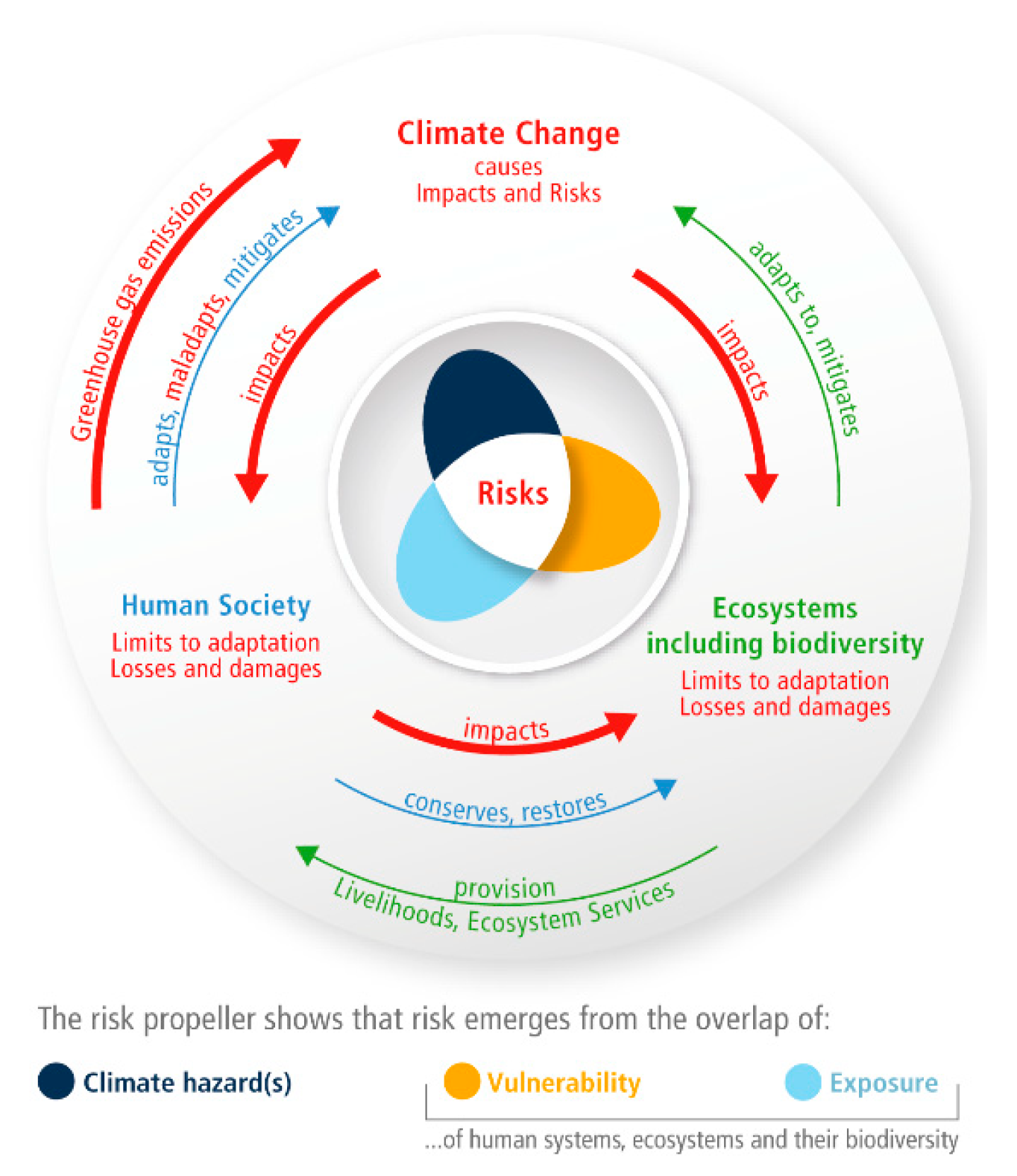
Figure 2.
Chronology of putting climate change on the international political agenda.

Figure 3.
Evolution of the adoption of strategic instruments for climate change by coastal EU member countries (2005–2024).
Figure 3.
Evolution of the adoption of strategic instruments for climate change by coastal EU member countries (2005–2024).
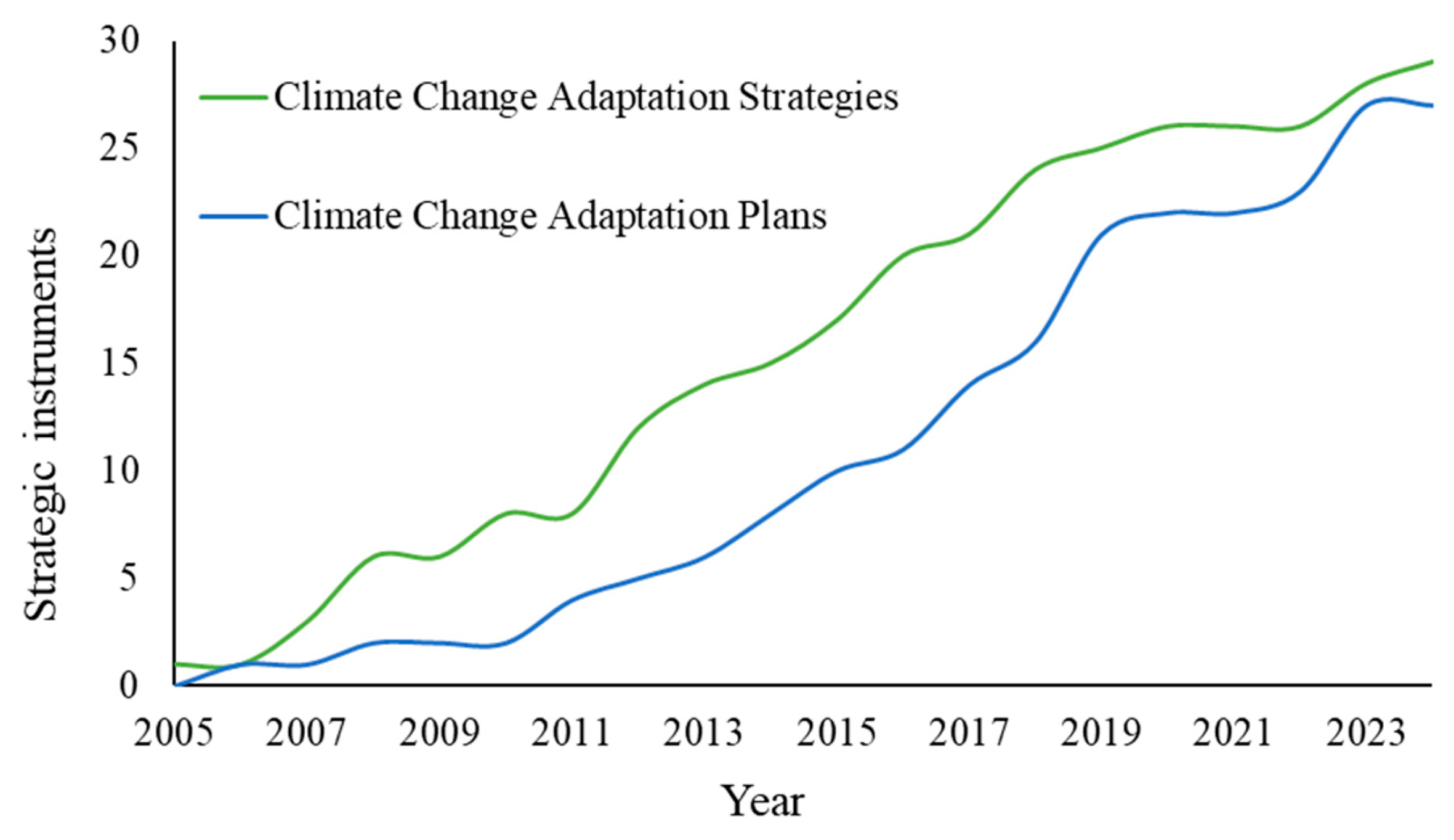
Figure 4.
National climate change adaptation policies of EU members [National Adaptation Strategy (NAS), National Adaptation Plan (NAP)].
Figure 4.
National climate change adaptation policies of EU members [National Adaptation Strategy (NAS), National Adaptation Plan (NAP)].
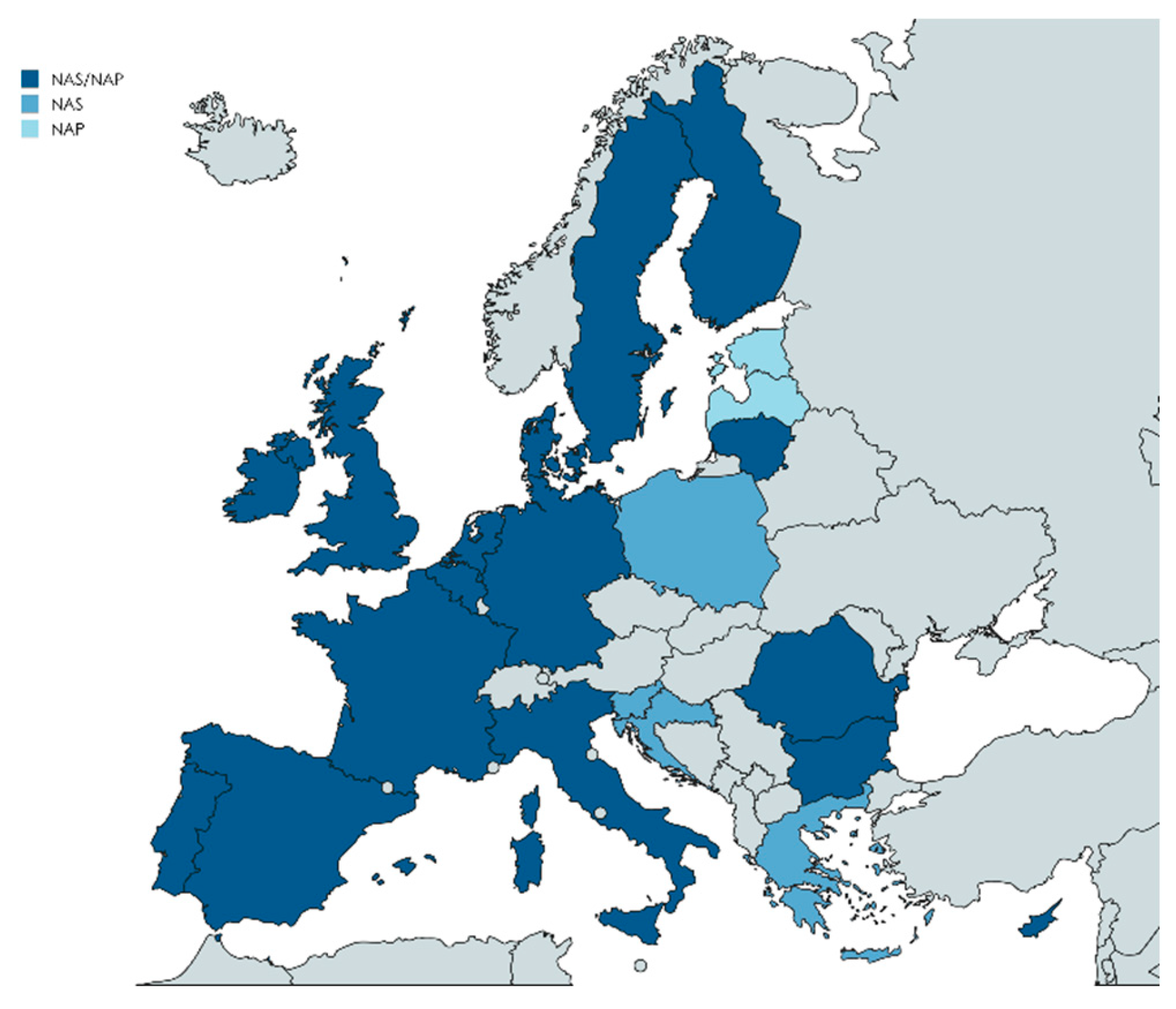
Figure 5.
Percentages of key topics considered in the adaptation instruments of coastal EU member countries, divided by approaches.
Figure 5.
Percentages of key topics considered in the adaptation instruments of coastal EU member countries, divided by approaches.
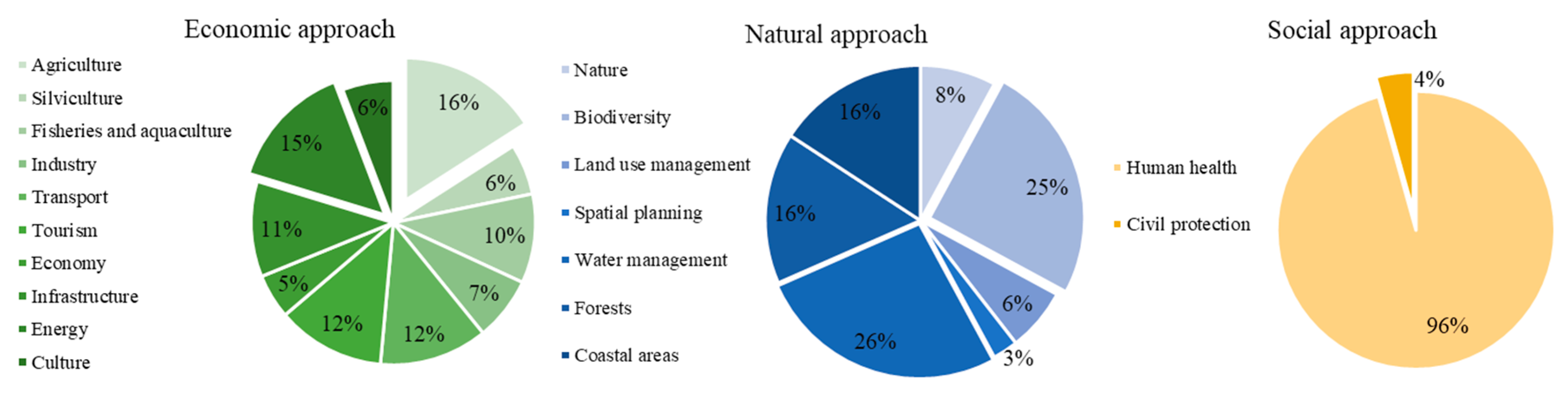
Figure 6.
Evolution of Coastal Zone Adoption in the Adaptation Instruments of EU Coastal Member States.
Figure 6.
Evolution of Coastal Zone Adoption in the Adaptation Instruments of EU Coastal Member States.
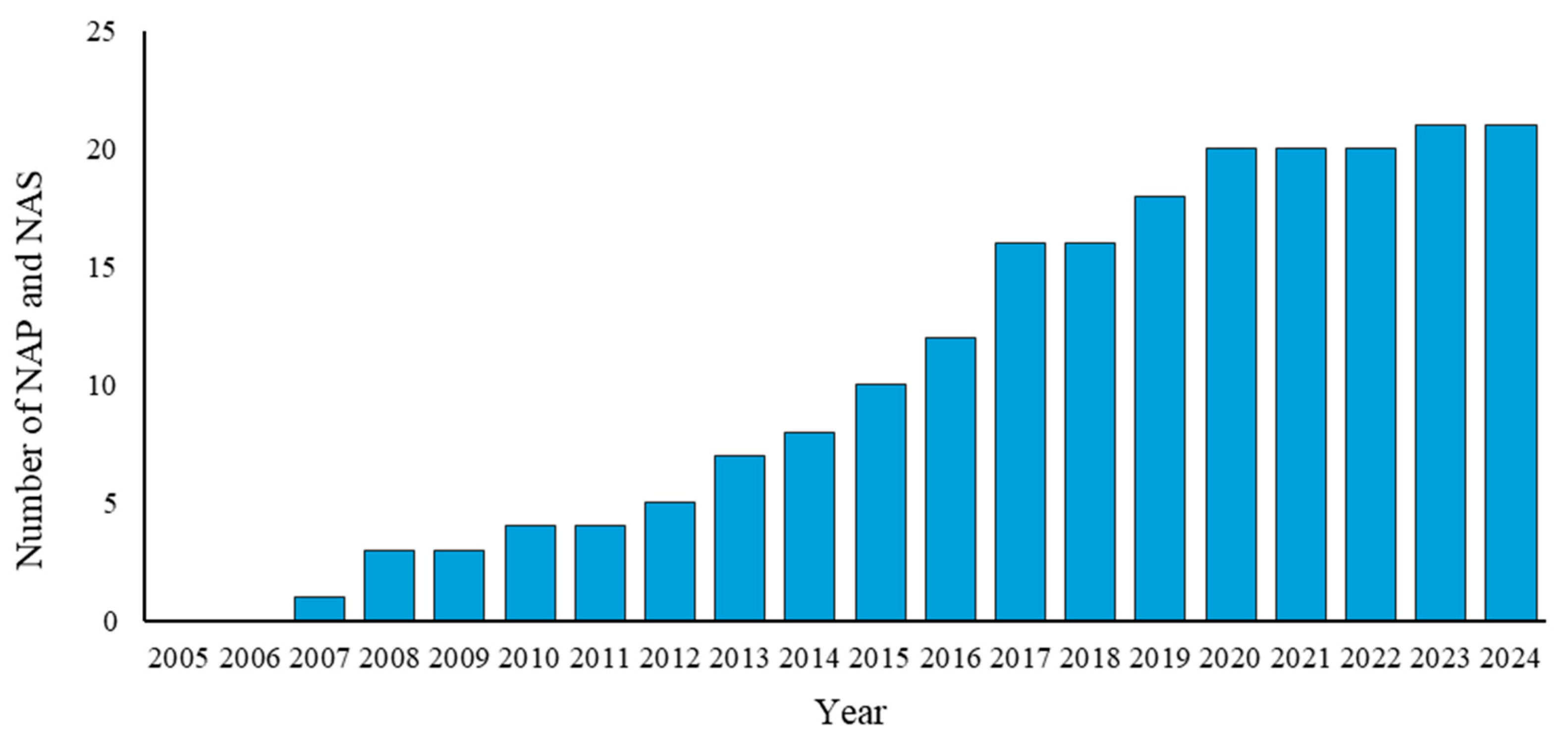

Table 1.
Classification of adaptation measures and examples in coastal areas. Adapted from IPCC [18].
Table 1.
Classification of adaptation measures and examples in coastal areas. Adapted from IPCC [18].
| Category | Type | Title 3 Examples |
|---|---|---|
| Structural/physical | Engineered & built environment |
Coastal protection and flood control structures; improve drainage; flood and cyclone shelters... |
| Technological | New crop varieties; knowledge; hazard and vulnerability monitoring and schemes; early warning systems... | |
| Ecosystem- based | Ecological restoration; Soil conservation; control of overfishing; ecological corridors... | |
| Services | Social safety nets and social protection; essential public health services... | |
| Institutional | Economic | Financial incentives; insurance; payment for ecosystem services; contingency funds in case of disasters... |
| Laws and regulations | Urban planning legislation; building standards and practices; disaster risk reduction legislation; protected areas... | |
| National and government policies and programs | Adaptation plans; urban upgrading programs; disaster planning and preparedness; integrated coastal zone management... | |
| Social | Educational | Awareness raising and mainstreaming in education; participatory action research and social learning; knowledge sharing; knowledge sharing and learning platforms... |
| Informational | Development of hazard and vulnerability schemes; early warning and response systems; surveillance and remote sensing; climate services... | |
| Behavioral | Household preparation and evacuation planning; migration; soil and water conservation... |
Table 2.
Proposed adaptation measures in the strategic planning instruments of EU coastal member states*.
Table 2.
Proposed adaptation measures in the strategic planning instruments of EU coastal member states*.
| Type | Subtype | Adaptation measure | Instrument/Country |
|---|---|---|---|
| Structural/ Physical |
Engineering | Constructing or reinforcing seawalls, jetties, artificial reefs, fixed/mobile barriers or coastal protection infrastructure | 1, 2, 6, 7, 8, 9, 10, 12, 13 |
| Beach regeneration and dredging of channels and creation of artificial beaches and dune systems | |||
| Construction of structures to resist saline intrusion | |||
| Developing protection or buffer zones on the seafront | |||
| Adoption of protection systems by increasing the height of sea walls and other infrastructures | |||
| Technology | Develop more effective warning and monitoring systems and tools | 1, 8 | |
| Develop models of coastal morphodynamic and hydrodynamic response | |||
| Ecosystemic | Discharge and contribute solids to rivers | 1, 4, 5, 7, 8, 9, 10, 12, 13 | |
| Protect, conserve, and renaturalize valuable coastal ecosystems | |||
| Safeguard key species and coastal biodiversity. | |||
| Intervention and management of cliffs | |||
| Natural restoration of sediment transit in river basins | |||
| Service | Modify buildings in low-lying areas to make them more resistant to the weather and the action of the sea | 1, 7 | |
| Adequacy of harbor facilities and jetties data | |||
| Social | Information | Monitoring and tracking of climate variables and coastal conditions | 1, 3, 5, 7, 8, 10, 11, 12, 13 |
| Assessment of infrastructure and coastal protection measures | |||
| Development of studies, projects, and research on the effects of climate change | |||
| Study on the identification of individuals who are vulnerable to climate change in coastal areas | |||
| Educational | Develop knowledge of the coast and its relationship with climate change at different educational and social levels | 2, 3, 5, 7, 8, 12, 13 | |
| Capacity-building and awareness-raising at both human and institutional levels | |||
| Behavioral | Salt-tolerant crops | 5, 6, 8 | |
| Strategic retreat or relocation of coastal urban developments, activities, and anthropogenic uses | |||
| Discouraging coastal urban development | |||
| Institutional | Economic | Increase and promote financial resources for climate change adaptation | 5, 8 |
| Develop coverage strategies (insurance against economic disruptions in ecosystem service provision) | |||
| Develop risk insurance for ecosystem benefit losses and economic losses | |||
| Adopt economic and financial instruments | |||
| Law and regulations | Implement and/or improve climate change or coastal zone laws and regulations | 1, 3, 7, 8, 13 | |
| Enforce compliance and regulatory codes | |||
| Policy and programs | Adopt and/or improve coastal management strategies, plans, and programs at national and local scales | 1, 2, 3, 5, 7, 8, 9, 10, 11, 13 | |
| Integrate coastal conservation, use, and management plans |
Disclaimer/Publisher’s Note: The statements, opinions and data contained in all publications are solely those of the individual author(s) and contributor(s) and not of MDPI and/or the editor(s). MDPI and/or the editor(s) disclaim responsibility for any injury to people or property resulting from any ideas, methods, instructions or products referred to in the content. |
© 2025 by the authors. Licensee MDPI, Basel, Switzerland. This article is an open access article distributed under the terms and conditions of the Creative Commons Attribution (CC BY) license (http://creativecommons.org/licenses/by/4.0/).
Copyright: This open access article is published under a Creative Commons CC BY 4.0 license, which permit the free download, distribution, and reuse, provided that the author and preprint are cited in any reuse.


