

Submitted:
07 April 2025
Posted:
08 April 2025
You are already at the latest version
Abstract
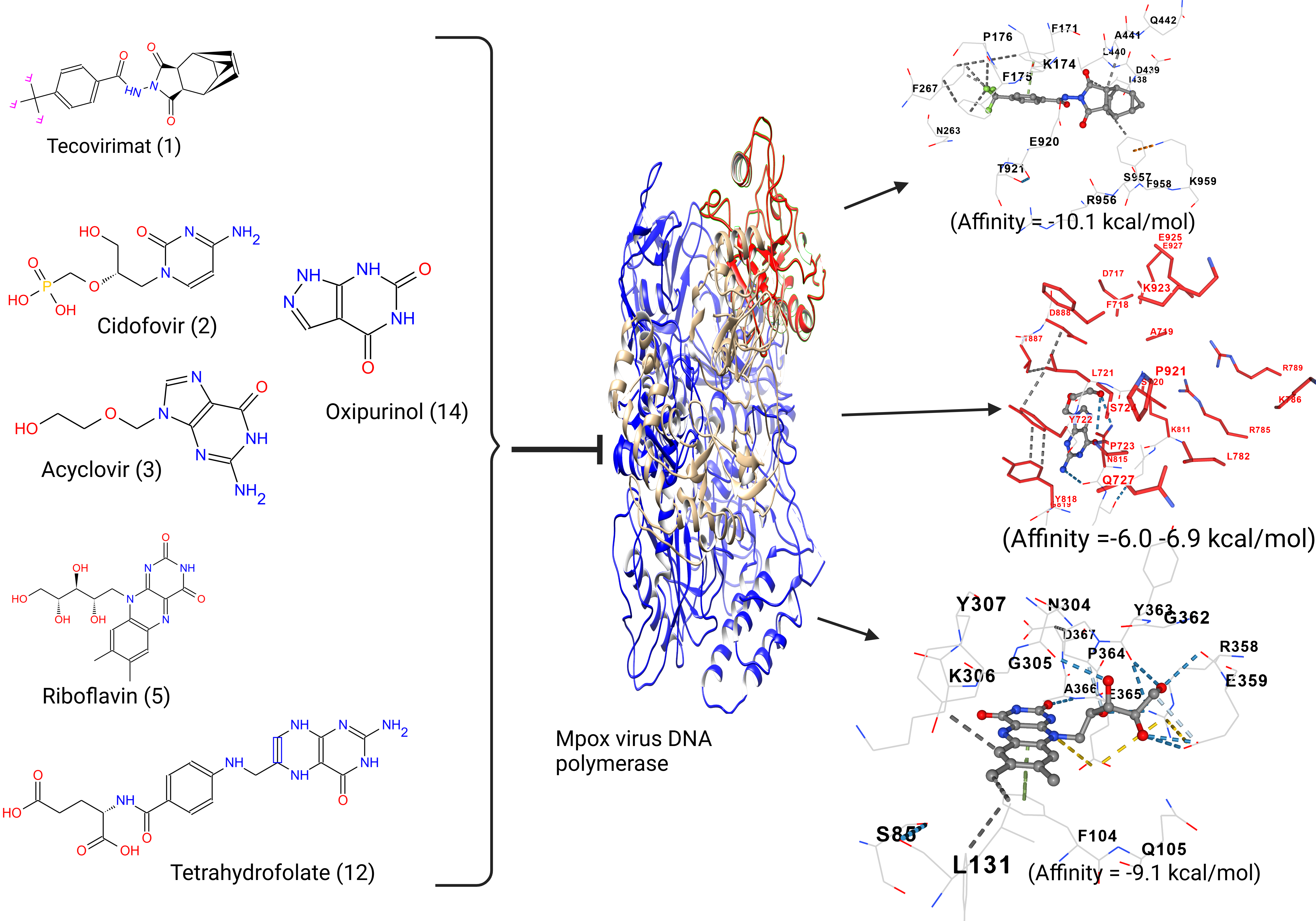
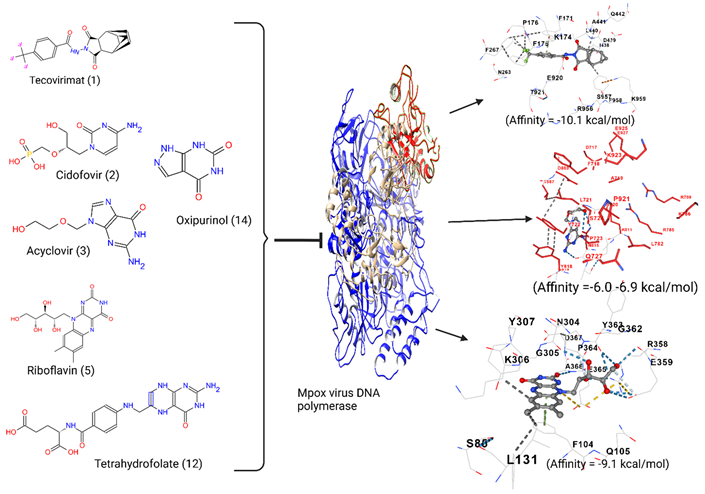
Unpredictable emerging and re-emerging of Mpox virus (MPXV) outbreaks account for urgent interventions. While no drug has been approved for Mpox treatment, repurposing of nucleoside analog drugs such as tecovirimat and cidofovir is the current focus of many intervention initiatives. Intrigued by their molecular structural similarities, we hypothesized that acyclovir, allopurinol, and B vitamins, which structurally resemble tecovirimat and cidofovir, could be competitive inhibitors of the MPXV DNA polymerase, abrogating DNA synthesis viral multiplication. We applied computational molecular docking experiments to investigate this hypothesis. Our results revealed that acyclovir fits exactly into the binding cavity for cidofovir and interacts with the same MPXV DNA polymerase amino acid residues with comparatively similar binding energy. We also found that oxipurinol (a metabolite of allopurinol) expresses higher affinity for MPXV DNA polymerase than cidofovir. Interestingly, the B vitamins riboflavin and folic acid outcompeted cidofovir, acyclovir and deoxyribonucleoside triphosphates (dNTPs), the natural substrates for DNA polymerase. From these ligand-receptor interactions we infer that acyclovir, oxipurinol and B vitamins are competitive inhibitors, targeting the active rather than the allosteric site of MPXV DNA polymerase. Our findings provide a novel insight into the B vitamin’s mode of action, emphasizing their antiviral potential via direct hijacking of the viral DNA replication machinery. While B vitamins are easy to find and cheaper, wet laboratory studies equipped with bioinformatics capacity could validate our findings to drive clinical trials. Once well established, B vitamins can be a cheap and reliable venture for pandemic preparedness for viral outbreaks.
Keywords:
Acyclovir
; Allopurinol
; B vitamins
; Molecular docking
; Mpox virus
; Multi-domain DNA polymerase
Graphical abstract
1. Introduction
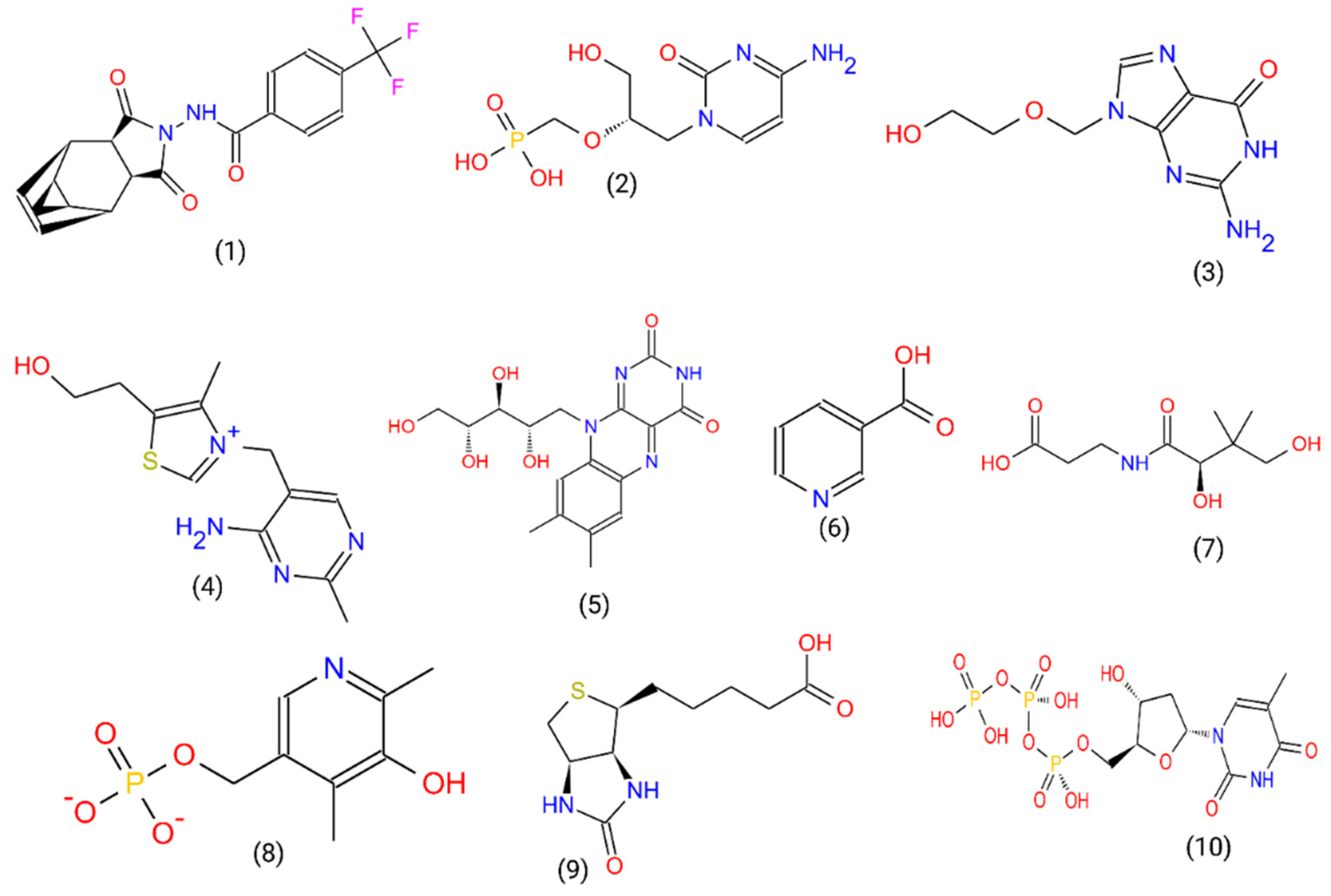
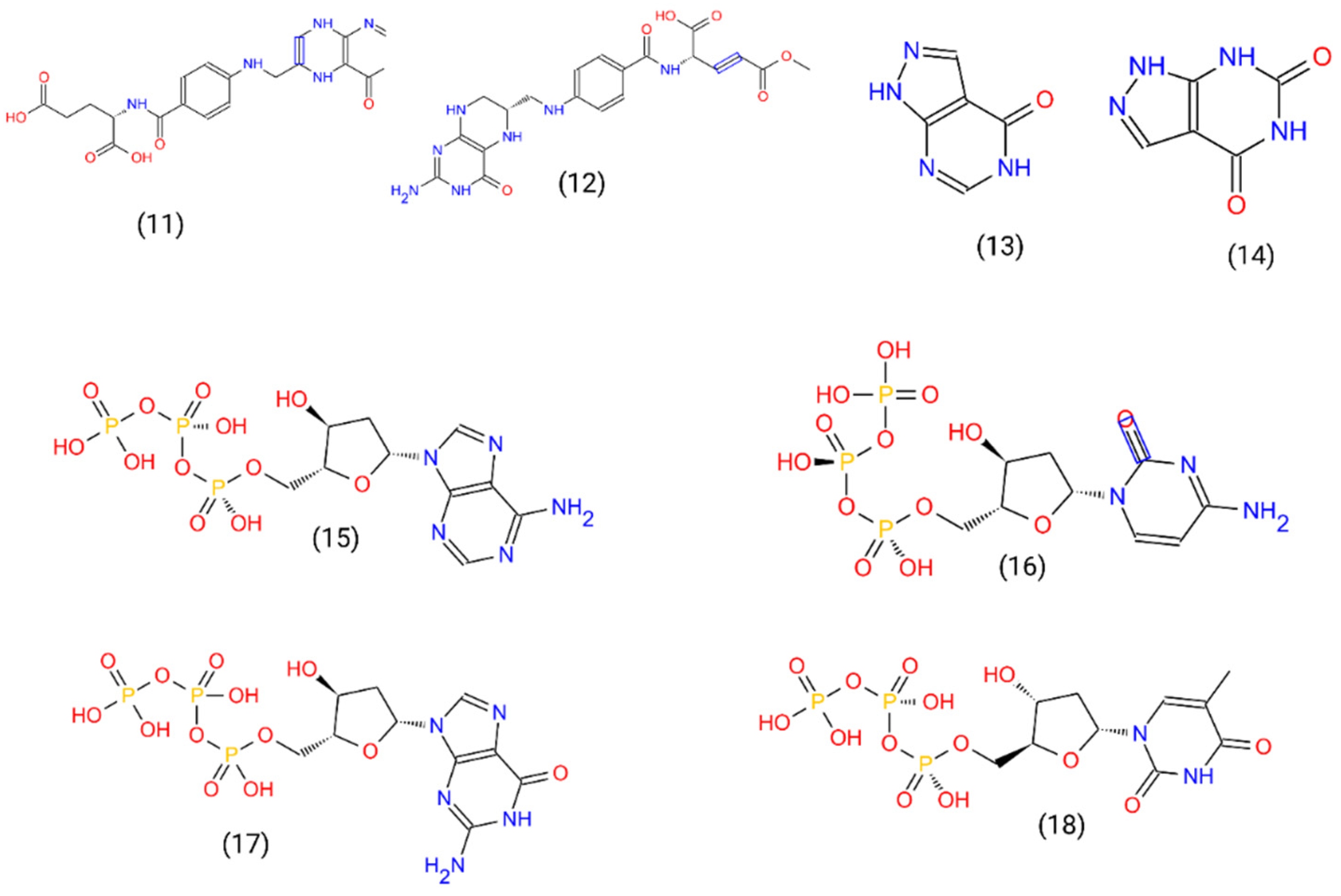
Mpox (monkeypox) virus (MPXV) is rapidly escalating, posing a significant global health threat, with over 90,000 cases reported world-wide to date [1]. Sporadic emergence, re-emergence and spread of outbreaks have created a global conundrum, necessitating urgent intervention actions. Currently, countries across West, Central and East Africa face a heightened risk of unpredictable outbreaks, with overlapping distribution of Mpox clades 1a, 1b, 2a and 2b [2]. The virus belongs to the Family Poxviridae, along with the genera Yatapoxvirus, Molluscipoxvirus, and Orthopoxvirus. The latter is the genus of mpox and smallpox, horsepox and cowpox viruses [3]. The mpox virus genome consists of a double-stranded deoxyribonucleic acid (dsDNA) of approximately 220 kb, with around 223 open reading frames (ORFs) [4]. This genome is replicated in the host cytoplasm under the catalysis of a multidomain DNA polymerase complex F8-A22-E4 [1]. Potential antiviral drugs targeting the Mpox virus primary inhibit the DNA polymerase, placing them within the nucleoside analog class. Tecovirimat (1) and cidofovir (2) are two antiviral agents indicated for the treatment of smallpox and vaccinia virus infections, making them suitable candidates for repurposing to combat Mpox [1]. These drugs have demonstrated robust inhibitory activity against the F8 component of the polymerase machinery [1,2]. However, despite their favorable pharmacological profiles, they remain under clinical evaluation for Mpox treatment. Whether and how B vitamins could portray antiviral activity by directly interacting with DNA polymerase or other components in the catalytic machinery is not yet understood. Most B vitamins (4-12) contain nucleosides and structurally resemble antivirals and deoxyribonucleoside triphosphates (dNTPs), the raw materials for DNA synthesis. Based on this understanding, we hypothesized that thiamine (vitamin B1), riboflavin (vitamin B2), niacin (B3), pantothenic acid (B5), pyridoxal (vitamin B6), biotin (vitamin B7) and folic acid (vitamin B9) should possess antiviral activity by mimicking the modes of nucleoside-derived antivirals and dNTPs (15-18), thus directly affecting the viral DNA polymerase at either active or allosteric sites.
Repurposing existing potential antiviral therapies for Mpox may offer numerous advantages including reduced development time and cost savings as these drugs have already undergone safety and efficacy evaluations for other diseases [5]. Their known safety profiles and established manufacturing processes facilitate faster regulatory approval and rapid deployment, especially in outbreak settings [6]. Additionally repurposed drugs can be combined with new or existing therapies to enhance efficacy and minimize resistance, making them a practical and efficient strategy for addressing emerging infectious threats. In this work, we sought to unveil promising therapeutic strategies against Mpox virus by combining sequence alignment, comparative structural perspectives and molecular docking.
2. Methods
2.1. Concise Comparative Analysis of the DNA Polymerase Enzyme Chain A
We retrieved DNA polymerase peptide sequences of chain A for 15 selected viruses from the human herpesvirus group and the genus Orthopoxvirus from the UniProt database (https://www.uniprot.org/) and Protein database (https://www.ncbi.nlm.nih.gov/protein/) of the National Center for Biotechnology Information (NCBI). We then aligned the sequences with MAFFT v7 [7] and computed their phylogenetic relationships with the Maximum Likelihood (ML) method to infer their diversity and cluster assignments.
2.2. Ligand and Receptor Preparation and Molecular Docking
To represent the potential of nucleoside analogs, we retrieved the standard antiretroviral drugs (cidofovir, tecovirimat and acyclovir) and B vitamin molecular structures from the PubChem database in their 3-dimension isomeric forms in protein databank (pdb) file format. Then we retrieved the receptor enzyme targets from the Protein DataBank (PDB) database (https://www.rcsb.org/) and removed their cognate ligands using Discovery Studio v4.5 under Biovia (https://www.3ds.com/products/biovia/discovery-studio). We also removed water and heteroatoms before adding polar hydrogens to the protein targets within the AutodockTools v1.15.7 and then performed molecular docking experiments with Autodock Vina parameters [8] using the CB-dock 2 platform, using cavity detection and blind docking algorithms [9]. Binding cavities with the highest Vina scores, defined as affinities or binding energies, in kcal/mol, were recorded and the docking output was visualized and refined within the UCSF Chimera environment v1.17.1 [10].
Figure 1.
Molecular structures of selected standard drugs in comparison with B vitamins and deoxyribonucleoside triphosphates, the substrates of the DNA polymerase. Other nucleoside analogs such as allopurinol (13) and oxipurinol (14) used to treat gout are presented.
Figure 1.
Molecular structures of selected standard drugs in comparison with B vitamins and deoxyribonucleoside triphosphates, the substrates of the DNA polymerase. Other nucleoside analogs such as allopurinol (13) and oxipurinol (14) used to treat gout are presented.
Comparative diversity of DNA polymerase chain A between herpesviruses and poxviruses. The DNA polymerase chain A showed consistency across the Poxviridae family. Shown in Figure 2, the strains in the Poxviridae family cluster together, suggestively implying conservation of multiple regions.
3. Results
3.1. Acyclovir Interacts with Mpox DNA Polymerase Chain A at the Binding Cavity Specific for dTTP
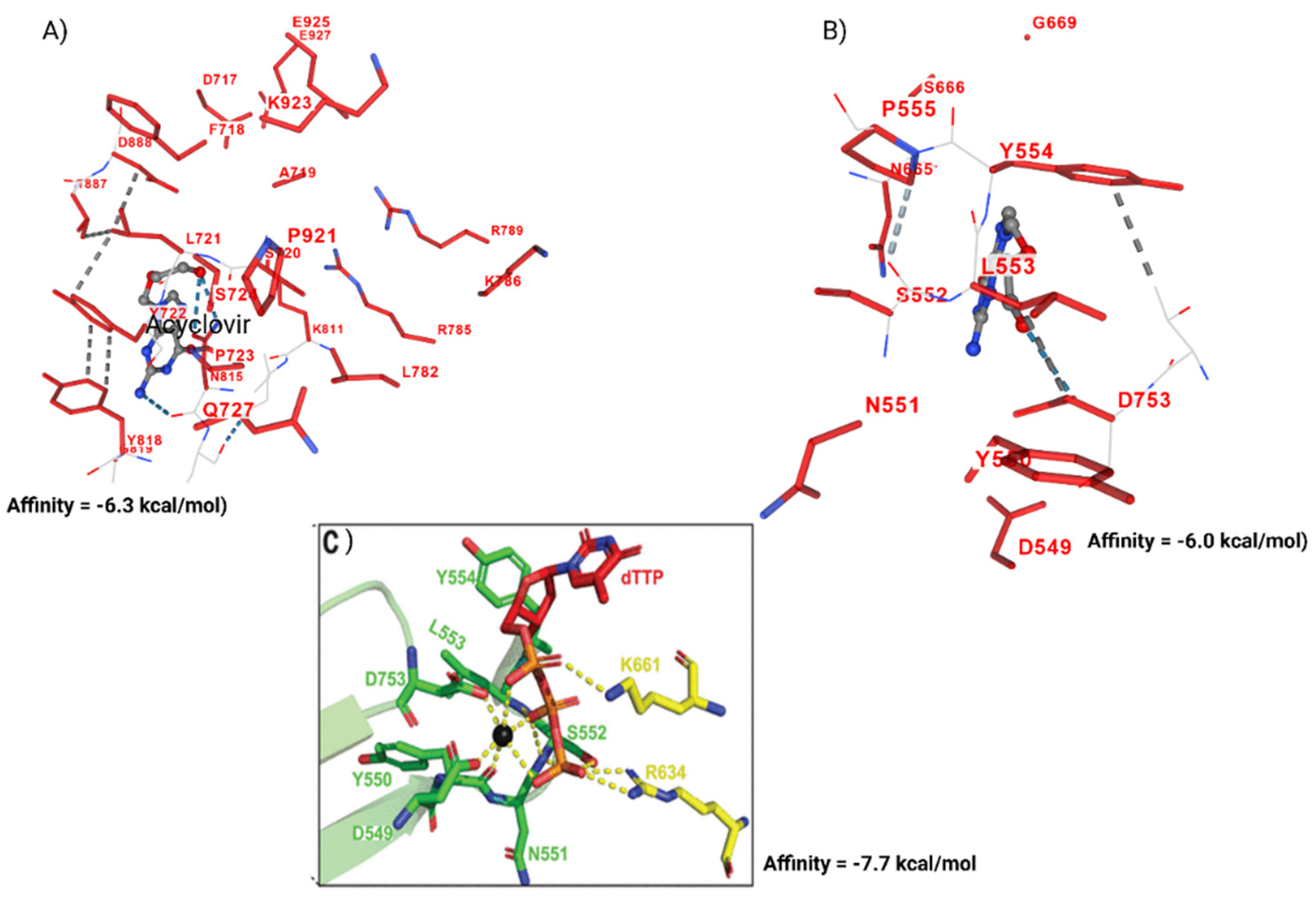
From blind docking, acyclovir expresses a binding affinity of -6.3 kcal/mol to HSV1 DNA polymerase, -6.0 kcal/mol for MPXV DNA polymerase, which are considerably lower than that of dTTP (7.7 kcal/mol). Interestingly, the drug (2) interacts with several amino acids of the catalytic domain, which are deployed to recruit the natural ligand (18). Shown in Figure 2, the amino acids include TYR554, LEU553, ASN551, and ASP549, which were characterized from a recent work by Peng and colleagues [11].
Figure 3.
Binding pockets for acyclovir on (A) HSV1 DNA polymerase (PDB ID 8V1T) and (B) MPXV DNA polymerase (PDB ID 8J86) active sites elucidated from this study. The interacting amino acids in the cavities are related to dTTP-MPXV DNA polymerase interaction (C), which was characterized by Peng et al. [11].
Figure 3.
Binding pockets for acyclovir on (A) HSV1 DNA polymerase (PDB ID 8V1T) and (B) MPXV DNA polymerase (PDB ID 8J86) active sites elucidated from this study. The interacting amino acids in the cavities are related to dTTP-MPXV DNA polymerase interaction (C), which was characterized by Peng et al. [11].
3.2. Oxipurinol, Riboflavin and Folic Acid Express Higher Affinity for Mpox DNA Polymerase Than Cidofovir
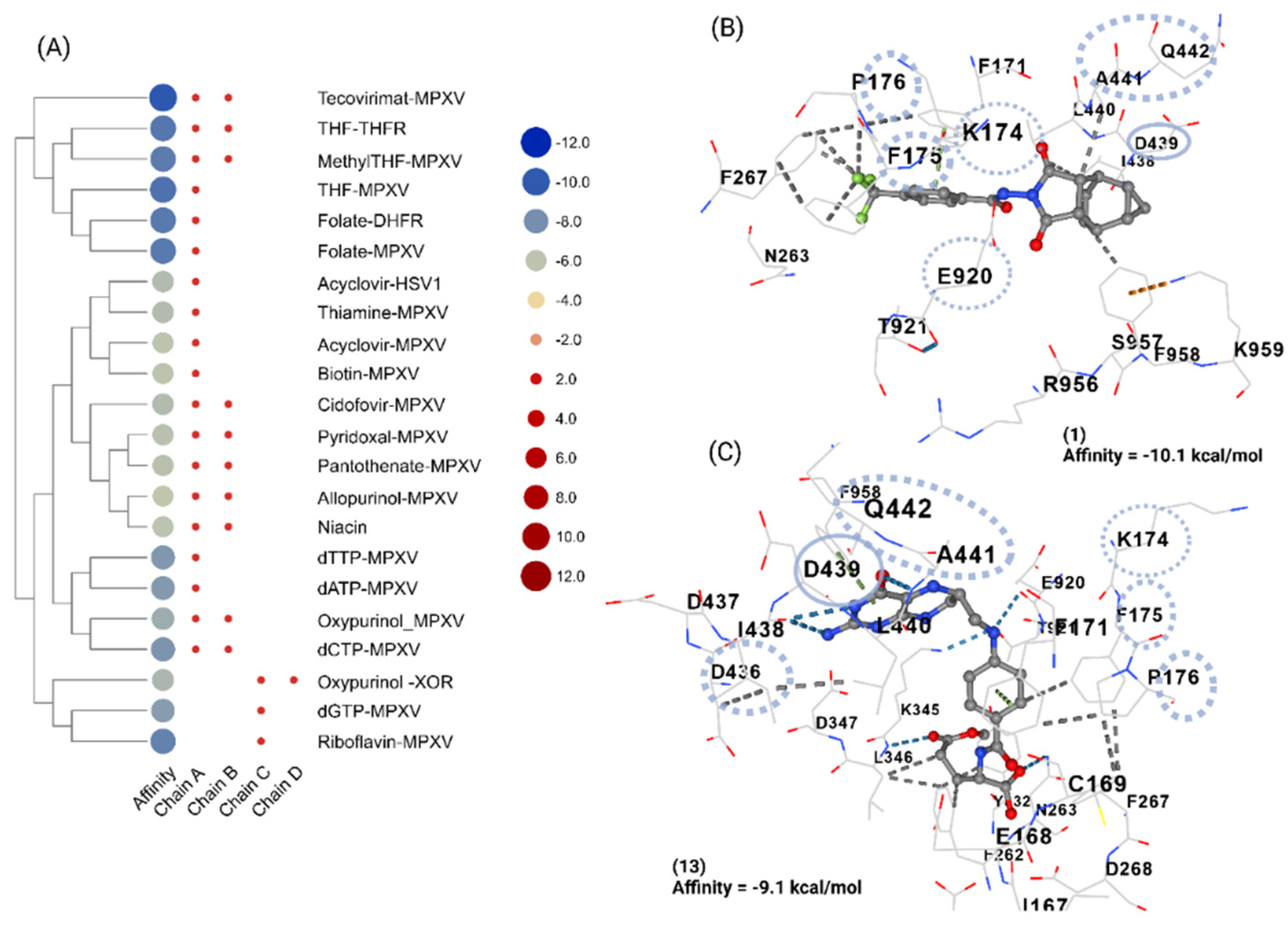
While tecovirimat (1) showed the highest affinity (-10.1 kcal/mol) for DNA polymerase, the B vitamins (5) and (10) expressed higher affinity (~ -9.1 kcal/mol) than cidofovir (2, -6.3 kcal/mol) and all the dNTPs (15-18). In addition, the folate metabolites tetrahydrofolate (11) and methyltetrahydrofolate (12) expanded their interaction by binding both chains A and B of the MPXV DNA polymerase apoenzyme F8. Biochemically, the fact that folate and its derivatives are critical to DNA synthesis lies in their role in the biosynthesis of nucleobases (purine and pyrimidine biosynthesis) and the amino acid methionine as coenzymes. However, they are normally not expected to interact with DNA polymerase because they are not part of the catalytic machinery. Moreover, fitting into the cavity in which a standard drug (1) fits is suggestive of their therapeutic potential. We also find that oxipurinol, the metabolite of allopurinol expresses higher affinity (-6.9 kcal/mol) for MPXV DNA polymerase that it for its natural enzyme, xanthine oxidoreductase (https://www.rcsb.org/structure/2CK).
Shown in Figure 4, the two ligands (1) and (12) clearly share a significant number of amino acid residues in the binding cavity. For instance, in common, PHE176, PRO176, LYS174, GLN442 and SP439 are among the residues interacting with hydrogen bonding represented in dotted lines. The two vitamins are more competitive than the native cytosolic dNTPs (15-18). It follows that the standard drug tecovirimat (1) has the highest binding affinity (-10. 1kcal/mol) of compared candidates.
4. Discussion
So far, experimental and clinical studies evidence shows that tecovirimat and cidofovir can significantly suppress the replication of MPXV clade IIa and IIb [12]. Furthermore, increasing evidence suggests the efficacy of cidofovir in treatment of patients with mpox and comorbidities including HIV [13]. While the mainstream application of acyclovir has been in the treatment of viruses of under the family Herpesviridae [14,15,16], our findings clearly demonstrate that structural similarity between acyclovir and cidofovir converges them together at MPXV DNA polymerase F8, interestingly blocking the binding site of deoxythymidine triphosphate (dTTP) by hijacking exactly the same amino acid residues as described in the functional characterization of MPXV DNA polymerase holoenzyme [11]. This insight increases our understanding and suggests that acyclovir has the potential to be repositioned to fight Mpox infections. Although, as shown in Figure 2, the Herpesviridae family is largely distant from the Poxviridae family, this convergence of modes of action between acyclovir and cidofovir opens avenues for exploiting sequence homology and conserved functional signatures between Herpesviridae and Poxviridae to design broad-spectrum antivirals through comprehensive exploitation of structural activity relationship (CAR). We therefore call for a combination of computational biochemistry and wet laboratory experiments in reverse omics approaches to validate and consolidate these findings. While repurposing of available drugs is promising for reliable solutions, salvaging of non-drug agents for drug development is virtually neglected. Moreover, the stringency of resource, funds and global health system policies could detain clinical trial and approval of drugs under repurpose projects, making them unreliable for emergency. To address this challenge, the consideration of easy-to-find and cheap alternatives could be a reliable route to quick action. Therefore, while we emphasize validation studies for acyclovir and allopurinol, we call for attention to B vitamins as anti-poxviral candidates in preference to the mainstream candidates under investigation from classical drug discovery, even including those under repurpose projects. We show that B vitamins have potentially novel pharmacological relevance, which is, by far, more powerful than acyclovir or cidofovir.
Moreover, although tecovirimat has shown higher affinity for MPXV DNA polymerase in our silico docking, riboflavin, along with folic acid and its metabolites have clearly demonstrated higher affinity for MPXV DNA polymerase than all the dNTPs. This strongly suggests that these vitamins are competitive inhibitors rather than allosteric modulators of the MPXV DNA polymerase, comparable to the drugs cidofovir and tecovirimat, which have been recommended for the treatment of clades 1and 2 [17,18]. Moreover, the ability of methyltrahydrofolate to interact with both chains of the MPXV DNA polymerase is suggestive of its multitarget potential for abrogating MPXV DNA synthesis machinery. Although studies on the inhibitory activity of B vitamins on viral DNA synthesis are lacking, B vitamins such as riboflavin and folate have been reported to mediate anti-inflammatory activity and inhibit infection by attacking viral nucleocapsid protein of SARS-Cov-2 [19,20]. Our findings attract a keen interest in redefining the molecular mechanisms supporting the health benefits of B vitamins.
The fascinating side of our findings is that vitamins are available and readily accessible to the local communities as commercial products or as food supplements. Additionally, B vitamins are ubiquitous and can be obtained from food resources as nutrients. Therefore, comprehensive research on the role of B vitamins as antivirals against poxviruses has the potential to shorten the route to drug discovery, saving lives of people and millions of funds, which could be invested in synthetic, time-consuming and labor-intensive classical antiviral drug discovery.
5. Conclusions
While used to treat a genetically different viral family, acyclovir interacts with perfect fit with MPXV DNA polymerase, inhibiting dTTP and potentially abrogating DNA synthesis. From the observed high interaction of riboflavin and folic with MPXV DNA polymerase, we infer that these vitamins are therapeutic candidates that can be developed into anti-poxviral drugs to manage mpox and related conditions. We therefore recommend urgent studies to investigate and eventually validate the application of B vitamins as drugs for intervention of poxviral infections. If well established, B vitamins can be a cheap and reliable venture for pandemic preparedness for viral outbreaks.
Ethics statement
No human or animal was recruited in this study.
Conflict of Interest Statement
The authors declare that they have no known competing financial interests or personal relationships that could have appeared to influence the work reported in this paper.
Acknowledgments
The authors acknowledge Prof. Heysel Scott for the computer support, under Fogarty International Center at the U.S. National Institutes of Health (NIH), Grant #D43TW012247.
References
- Xu Y, Wu Y, Wu X, Zhang Y, Yang Y, Li D, et al. Structural basis of human mpox viral DNA replication inhibition by brincidofovir and cidofovir. Int J Biol Macromol 2024;270:132231. [CrossRef]
- Beiras CG, Malembi E, Escrig-Sarreta R, Ahuka S, Mbala P, Mavoko HM, et al. Concurrent outbreaks of mpox in Africa—an update. The Lancet 2025;405:86–96. [CrossRef]
- Babkin IV, Babkina IN, Tikunova NV. An Update of Orthopoxvirus Molecular Evolution. Viruses 2022;14. [CrossRef]
- Yu Z, Zou X, Deng Z, Zhao M, Gu C, Fu L, et al. Genome analysis of the mpox (formerly monkeypox) virus and characterization of core/variable regions. Genomics 2024;116:110763. [CrossRef]
- Li G, Li S, Liang C, Xiao Q, Luo J. Drug repositioning based on residual attention network and free multiscale adversarial training. BMC Bioinformatics 2024;25:261. [CrossRef]
- Ashburn TT, Thor KB. Drug repositioning: identifying and developing new uses for existing drugs. Nat Rev Drug Discov 2004;3:673–83. [CrossRef]
- Rozewicki J, Li S, Amada KM, Standley DM, Katoh K. MAFFT-DASH: integrated protein sequence and structural alignment. Nucleic Acids Res 2019;47:W5–10. [CrossRef]
- Eberhardt J, Santos-Martins D, Tillack AF, Forli S. AutoDock Vina 1.2.0: New Docking Methods, Expanded Force Field, and Python Bindings. J Chem Inf Model 2021;61:3891–8. [CrossRef]
- Liu Y, Yang X, Gan J, Chen S, Xiao Z-X, Cao Y. CB-Dock2: improved protein–ligand blind docking by integrating cavity detection, docking and homologous template fitting. Nucleic Acids Res 2022;50:W159–64. [CrossRef]
- Pettersen EF, Goddard TD, Huang CC, Couch GS, Greenblatt DM, Meng EC, et al. UCSF Chimera—A visualization system for exploratory research and analysis. J Comput Chem 2004;25:1605–12. [CrossRef]
- Peng Q, Xie Y, Kuai L, Wang H, Qi J, Gao GF, et al. Structure of monkeypox virus DNA polymerase holoenzyme. Science 2023;379:100–5. [CrossRef]
- Prévost J, Sloan A, Deschambault Y, Tailor N, Tierney K, Azaransky K, et al. Treatment efficacy of cidofovir and brincidofovir against clade II Monkeypox virus isolates. Antiviral Res 2024;231:105995. [CrossRef]
- Stafford A, Rimmer S, Gilchrist M, Sun K, Davies EP, Waddington CS, et al. Use of cidofovir in a patient with severe mpox and uncontrolled HIV infection. Lancet Infect Dis 2023;23:e218–26. [CrossRef]
- Morrel EM, Spruance SL, Goldberg DI, Iontophoretic Acyclovir Cold Sore Study Group. Topical Iontophoretic Administration of Acyclovir for the Episodic Treatment of Herpes Labialis: A Randomized, Double-Blind, Placebo-Controlled, Clinic-Initiated Trial. Clin Infect Dis 2006;43:460–7. [CrossRef]
- Ahronowitz I, Fox LP. Herpes zoster in hospitalized adults: Practice gaps, new evidence, and remaining questions. J Am Acad Dermatol 2018;78:223-230.e3. [CrossRef]
- Pisitpayat P, Jongkhajornpong P, Lekhanont K, Nonpassopon M. Role of Intravenous Acyclovir in Treatment of Herpes Simplex Virus Stromal Keratitis with Ulceration: A Review of 2 Cases. Am J Case Rep 2021;22:e930467. [CrossRef]
- Postal J, Guivel-Benhassine F, Porrot F, Grassin Q, Crook JM, Vernuccio R, et al. Antiviral activity of tecovirimat against monkeypox virus clades 1a, 1b, 2a, and 2b. Lancet Infect Dis 2025;25:e126–7. [CrossRef]
- Arasu MV, Vijayaragavan P, Purushothaman S, Rathi MA, Al-Dhabi NA, Gopalakrishnan VK, et al. Molecular docking of monkeypox (mpox) virus proteinase with FDA approved lead molecules. J Infect Public Health 2023;16:784–91. [CrossRef]
- Akasov RA, Chepikova OE, Pallaeva TN, Gorokhovets NV, Siniavin AE, Gushchin VA, et al. Evaluation of molecular mechanisms of riboflavin anti-COVID-19 action reveals anti-inflammatory efficacy rather than antiviral activity. Biochim Biophys Acta BBA - Gen Subj 2024;1868:130582. [CrossRef]
- Chen Y, Wei ,Jin-lai, Qin ,Rui-si, Hou ,Jin-ping, Zang ,Guang-chao, Zhang ,Guang-yuan, et al. Folic acid: a potential inhibitor against SARS-CoV-2 nucleocapsid protein. Pharm Biol 2022;60:862–78. [CrossRef]
Figure 2.
Comparative phylogram to infer diversity of the DNA polymerase between poxviruses. The tree was inferred from maximum likelihood method and LG substitution method from MAFFT-aligned sequences, with 1000 bootstrap replications. The tree was rooted at the center. The major clade for poxviruses is labelled as A, while that of human herpesviruses was broken into two subgroups B (HSV3) and C 1 (HSV1).
Figure 2.
Comparative phylogram to infer diversity of the DNA polymerase between poxviruses. The tree was inferred from maximum likelihood method and LG substitution method from MAFFT-aligned sequences, with 1000 bootstrap replications. The tree was rooted at the center. The major clade for poxviruses is labelled as A, while that of human herpesviruses was broken into two subgroups B (HSV3) and C 1 (HSV1).
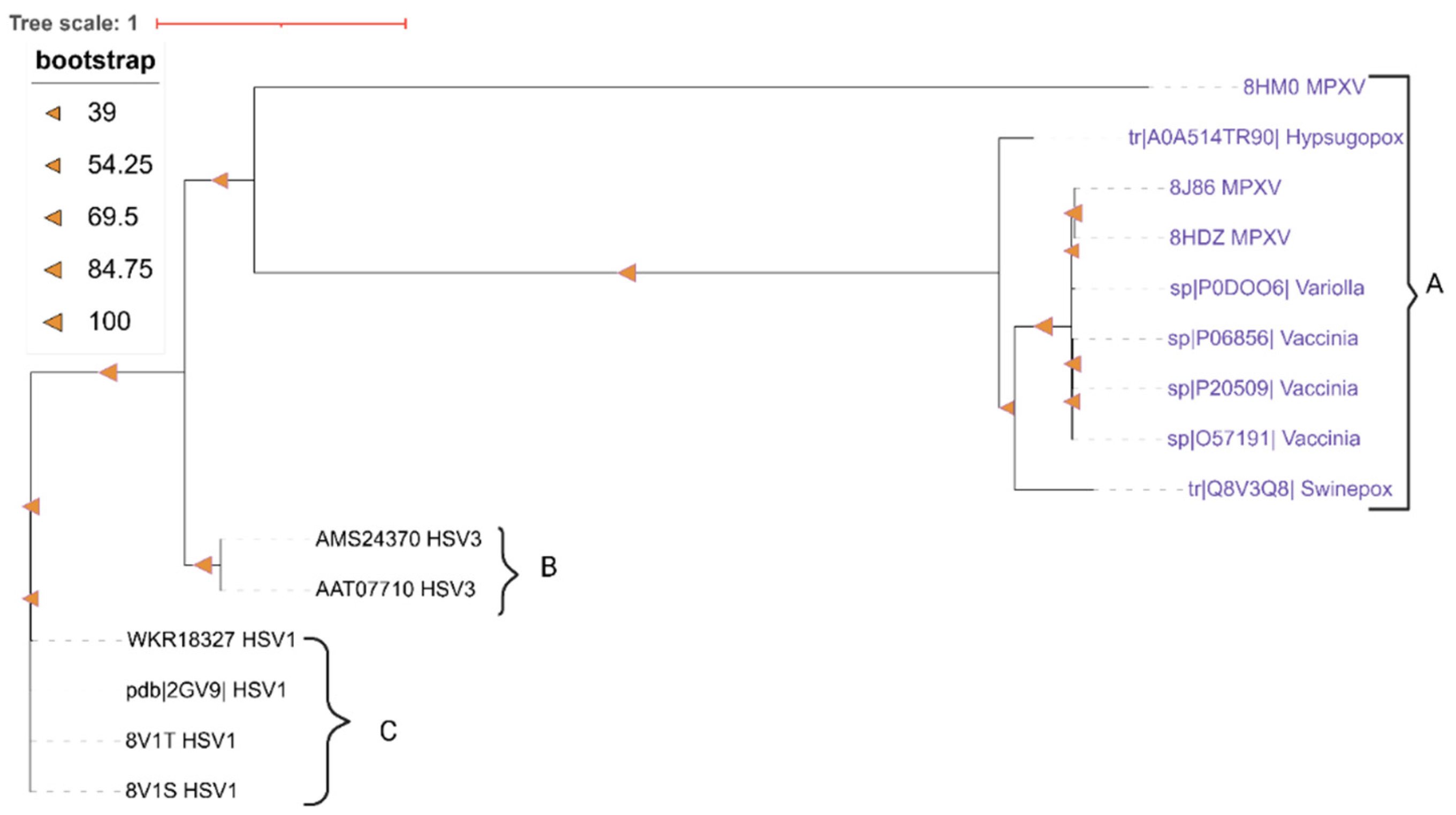
Figure 4.
Clustering based on binding affinities and binding domain for each ligand tested. The heatmap on the left (A) indicates the affinity differences in kcal/mol and each chain involved for each ligand for selected corresponding highest Vina score. In the left, two of the ligands with the highest affinities for MPXV DNA polymerase are presented. i.e., (B) the interaction between the standard drug tecovirimat (1) with MPXV DNA polymerase (PDB ID 8J86) against (C) the interaction between methyltetrahydrofolate (12) with MPXV DNA polymerase (PDB ID 8J86). Common/shared amino acids residues for the two comparative ligands are indicated by a dotted or undotted circle around each residue.
Figure 4.
Clustering based on binding affinities and binding domain for each ligand tested. The heatmap on the left (A) indicates the affinity differences in kcal/mol and each chain involved for each ligand for selected corresponding highest Vina score. In the left, two of the ligands with the highest affinities for MPXV DNA polymerase are presented. i.e., (B) the interaction between the standard drug tecovirimat (1) with MPXV DNA polymerase (PDB ID 8J86) against (C) the interaction between methyltetrahydrofolate (12) with MPXV DNA polymerase (PDB ID 8J86). Common/shared amino acids residues for the two comparative ligands are indicated by a dotted or undotted circle around each residue.
Disclaimer/Publisher’s Note: The statements, opinions and data contained in all publications are solely those of the individual author(s) and contributor(s) and not of MDPI and/or the editor(s). MDPI and/or the editor(s) disclaim responsibility for any injury to people or property resulting from any ideas, methods, instructions or products referred to in the content. |
© 2025 by the authors. Licensee MDPI, Basel, Switzerland. This article is an open access article distributed under the terms and conditions of the Creative Commons Attribution (CC BY) license (http://creativecommons.org/licenses/by/4.0/).
Copyright: This open access article is published under a Creative Commons CC BY 4.0 license, which permit the free download, distribution, and reuse, provided that the author and preprint are cited in any reuse.


