

Submitted:
07 April 2025
Posted:
08 April 2025
You are already at the latest version
Abstract
This paper presents a structured methodology for identifying and addressing key communication challenges in the forestry sector, using the Czech Republic as a case study. The approach integrates the CIMO model, problem tree analysis, SWOT evaluation, and the confrontation matrix to identify critical factors influencing communication challenges and prioritize strategic responses. Findings from a representative public survey (n = 3,600), participatory workshops, and expert consultations indicate that the absence of a unified, long-term communication strategy is the central issue. This fragmentation contributes to public misunderstanding, erodes trust, and limits policy support. In response, the study proposes evidence-based tools to improve the sector's visibility, coherence, and engagement with the public. The findings offer practical guidance for establishing a coordinated, stakeholder-oriented communication strategy. With direct payments for ecosystem services currently being debated in CZ, this study is particularly timely, as effective communication is key to securing public and political support. While grounded in the Czech context, the lessons learned, and methods employed have broader relevance and may inform similar efforts in forestry and other sectors or regions seeking to strengthen legitimacy and stakeholder alignment through strategic communication.
Keywords:
forestry communication
; stakeholder engagement
; sustainable forestry
; problem tree analysis
; CIMO model
; confrontation matrix
1. Introduction
Forests provide many ecosystem services essential to environmental stability and human wellbeing. These include carbon sequestration, climate regulation, water retention, biodiversity conservation, soil protection, and cultural or recreational values [1,2]. In recent decades, forest management has shifted from a traditional, production-oriented focus to a multifunctional approach that integrates ecological, economic, and social objectives [3,4]. Despite these developments, public understanding of modern forestry practices often remains limited. In many European countries, including CZ, forestry continues to be viewed by parts of the population as outdated, economically driven, or disconnected from broader sustainability goals. [5] emphasize that a lack of coherent communication across different segments of the forestry sector reinforces such perceptions, contributing to persistent stereotypes of the industry as profit-focused and resistant to change. This perception gap is further compounded by limited public exposure to forestry, a lack of consistent media coverage of current practices, and fragmented communication efforts across the sector. As Janoušková [6] note, sustainable development is often inadequately represented in the mass media, resulting in oversimplified and outdated portrayals of key sectors, including forestry.
The accelerating pace of climate change has significantly amplified the role of forestry in global mitigation and adaptation strategies. Forests are increasingly acknowledged as pivotal nature-based solutions; however, their effectiveness depends on enabling policy environments, science-informed management, and sustained societal support [7,8]. Therefore, improving communication between the forestry sector and the public is not just about managing perceptions or public image. It is essential to ensure that forestry policies are well-integrated across sectors, that the forestry sector remains resilient to future challenges, and that decision-making includes diverse stakeholders across the landscape. As [9] emphasize, transforming environmental challenges into opportunities for sustainable rural development—including those in forestry—requires communication strategies that integrate professional expertise with grassroots knowledge and participatory engagement.
In the Czech Republic, the forestry sector has faced significant ecological and operational challenges, most notably a large-scale bark beetle outbreak in recent years. These infestations have prompted extensive salvage logging operations, which, although intended to mitigate further pest spread, have escalated pressures on forest ecosystems and forest owners alike [10] (see also Figure 1). In addition to its environmental consequences, the calamity exposed operational deficiencies in the sector's ability to communicate urgent interventions. This is a critical limitation, as existing research identifies effective communication as a fundamental component of crisis management, enabling the structured planning, implementation, and adjustment of interventions [11].
The methods and tools described in this article were initially developed and applied during the crisis. They now represent documented lessons learned and contribute to a broader strategic approach to communication planning in the forestry sector.
Beyond post-calamity recovery, this study is particularly relevant given the changing policy context, specifically the proposed introduction of direct payments for ecosystem services (PES) in the Czech Republic. These policy decisions mark a critical stage for the forestry sector, requiring broad societal trust and political consensus. Without effective communication strategies that convey the measurable ecological and socio-economic benefits of PES, the political commitment necessary for associated measures—such as reforestation and adaptive silviculture—may be compromised [12]. Achieving this commitment depends on credible evidence and the implementation of structured, audience-specific communication within the forestry sector and directed towards the general public. Insufficient public understanding and political will may delay or obstruct essential interventions, and the deployment of tools such as PES may face considerable resistance. As [13] emphasize, forestry contributes to biodiversity conservation, habitat maintenance, regional economic development, and the delivery of sustainable land management. These functions underscore the need for clear, consistent communication to support evidence-based policy and enhance public trust.
Media framing plays a significant role in shaping public perceptions of forestry. Public narratives around forest management frequently become polarised during periods of heightened attention—such as the bark beetle outbreak. In such contexts, environmentalist perspectives often dominate media discourse, emphasizing the visible impacts of disturbances while downplaying the scientific and operational complexities associated with professional forestry [14,15,16]. This imbalance in representation can lead to a public narrative that prioritizes immediate environmental concerns at the expense of long-term, science-based forest management approaches. Consequently, forestry professionals face increasing challenges in communicating the multidimensional nature of their work, including trade-offs among ecosystem services, operational constraints, and long-term sustainability objectives. Research by Paruelo [17] underscores the importance of stakeholder perception in ecosystem service management and highlights the need for communication strategies that deliver accurate, context-specific information to support informed decision-making. These findings collectively point to the necessity of strategic communication in forestry—approaches that actively engage diverse stakeholders and integrate ecological, social, and economic dimensions into broader sustainability and climate policy discussions.
In this context, communication should be conceptualized as a strategic and integral function of contemporary forestry. It encompasses the accurate transmission of information and the ability to engage diverse audiences, align with societal values, and situate forestry within broader policy frameworks related to sustainability, climate change mitigation, and rural development. Developing such communication capacities necessitates specialized expertise, institutional alignment, and a long-term strategic outlook.
This paper addresses these challenges by examining the underlying causes of communication failure in forestry and identifying the structural and perceptual barriers that hinder mutual understanding. It outlines a methodology to develop evidence-based communication strategies, drawing on problem tree analysis, stakeholder engagement, and analytical tools such as the CIMO model and confrontation matrix. While the study focuses on the Czech Republic, its findings and approaches are relevant to other contexts where forestry faces similar pressures to adapt, explain, and justify its role in a rapidly changing world.
2. Materials and Methods
2.1. Research Questions and Objectives
As introduced earlier, the research focuses on the Czech Republic (CZ), a Central European country with a total area of 78,863 km², of which approximately one-third is forested.
Based on the context established in the previous chapter, this study is guided by three key research questions:
- What are the underlying causes of communication challenges in forestry?
- What central problem contributes to the gap between forestry professionals and the public?
- How can this problem be addressed, what goals should be set, and what methods should be employed to achieve them?
The study responds to these questions by applying a structured, evidence-based approach to communication in the forestry sector, grounded in strategic analysis and stakeholder engagement.
The following objectives directly reflect the research questions:
- Examine the root causes of misconceptions in forestry communication by analysing underlying factors and mechanisms.
- Define the central problem contributing to the communication gap between forestry professionals and the public, with particular attention to its origins and consequences.
- Establish a set of foundational tools, methods, and analytical approaches to address the communication gap.
- Assess public perceptions of forestry through a large-scale quantitative survey, using the findings to identify misconceptions and inform strategic communication goals.
2.2. Study Design and Rationale
The study employed a mixed-methods approach to assess communication challenges in the Czech forestry sector comprehensively. A structured research framework combines conceptual models, qualitative techniques, and quantitative tools, with each component aligned to one or more of the study's core objectives.
The methodology consisted of three interrelated components: conceptual models, including the CIMO logic and Problem Tree Analysis, which provided a basis for understanding root causes and systemic dynamics (Objectives A and B); strategic qualitative tools, such as SWOT analysis and the Confrontation Matrix, supported the development of a cohesive communication strategy (Objective C); and a nationally representative public survey offered quantitative insights into public perceptions and audience segmentation (Objective D).
2.3. CIMO Model
The CIMO model (Context, Intervention, Mechanism, Outcome), developed by Denyer [18], was used to explore the causal mechanisms underlying public misperceptions and to evaluate potential intervention strategies [19,20]. The model was applied during two participatory workshops in 2021 involving 37 participants, including forestry practitioners and policymakers. Structured group discussions and guided reflection exercises were used to analyse the factors shaping public perceptions:
C - Context. Which individuals, relationships, institutional settings, natural conditions or broader systems are being studied?
I - Intervention. The effects of what event, action, and impact of natural factors or activity are being studied?
M - Mechanisms. What are the mechanisms that explain the relationship between interventions and outcomes? Under what circumstances are these mechanisms activated or not activated?
Outcomes - What are the effects of the intervention? Under what circumstances are these mechanisms activated or not activated?
The CIMO model functioned as an analytical framework for diagnosing systemic communication challenges and as a strategic tool for identifying leverage points in forestry communication planning. Its application aimed to generate a design proposition - structured, context-specific understanding of communication dynamics and their influence on public perceptions - to support more coherent and targeted communication strategies.
2.4. Problem Tree Analysis
Problem Tree Analysis (PTA) is a conceptual tool used in this case to identify the central problem of forestry sector communication in the Czech Republic. This structured approach facilitates the analysis of causal chains and helps prioritize areas for intervention across the sector [21,22]. The PTA was developed during participatory workshops with forest stakeholders in 2021 and is designed to map out the logic of causes and effects through a tree metaphor: the roots represent the underlying causes of communication challenges, the trunk symbolizes the central problem affecting forestry communication, and the branches illustrate the consequences that arise, such as reduced trust, polarised opinions, and public disengagement.
The PTA method ensures that these symptoms are not treated as independent problems but are instead traced back to systemic drivers. This encourages stakeholders to identify failure patterns, consider structural factors such as institutional fragmentation or incoherent narratives, and focus on deeper leverage points for strategic reform.
2.5. SWOT Analysis
A comprehensive SWOT analysis evaluated internal and external factors influencing forestry communication. A diverse expert panel of nine specialists—including academic researchers, public forest administrators, private forest owners, NGO representatives, and media consultants—was assembled to ensure a broad spectrum of professional perspectives and sectoral representation.
To enhance clarity, each factor received an alphanumeric code: S for Strengths, W for Weaknesses, O for Opportunities, and T for Threats. The factors listed in Table 1 were explained in detail (see Supplement – Detailed SWOT) using codes such as S1, W3, O5, and T2 for ease of reference. This coding system and detailed explanation of the factors were essential for interpreting strategic pairings in the Confrontation TOWS Matrix (Table 2), allowing for precise tracking and evaluation of factor interactions.
2.6. Confrontation TOWS Matrix & Delphi Method
The SWOT results were refined through a Confrontation Matrix, which systematically intersected internal strengths and weaknesses with external opportunities and threats to identify key strategic relationships. Based on the approach developed by Weihrich (1982), this framework enabled the mapping of interrelations between components of forestry sector communication.
To strengthen the evaluation process, we employed the Delphi method, which is known for its systematic approach and ability to harness the expertise of a diverse group of individuals. This structured, iterative consensus-building technique involved the same expert panel that contributed to the SWOT analysis and was central to identifying the most critical and actionable factors influencing communication in the forestry sector. The Delphi method is well-suited for facilitating expert consensus in complex domains such as policy and communication strategy [25,26].
Delphi Procedure:
- Initial Questionnaire Distribution: Experts were presented with the complete set of SWOT factors and asked to evaluate the strategic intersections in the TOWS Matrix using a five-point symbolic scale (--, -, 0, +, ++). They also provided qualitative commentary to justify their ratings.
- Analysis and Feedback: The responses underwent a statistical analysis, during which modal values were calculated to determine areas of agreement and disagreement among the experts. A feedback report outlining these patterns was subsequently shared with all participants.
- Subsequent Iterative Rounds for Consensus Building: Two additional rounds of evaluation were conducted. During each round, experts were invited to reassess their responses considering the feedback provided by the group. This iterative refinement allowed for nuanced calibration and gradual convergence on shared evaluations.
- Final Analysis: The concluding phase of the Delphi process consolidated final expert ratings into a consensus-based evaluation. This output identified and provided foundational building elements essential for formulating a communication strategy, including defining specific communication goals. It thereby enabled and supported the structured framing of the forestry sector's overarching communication strategy (Objective C).
2.7. Quantitative Survey and Data Analysis
To quantitatively assess public perceptions (Objective D), a large-scale Market Media To quantitatively assess public perceptions (Objective D), a large-scale Market Media Lifestyle (MML) survey was conducted—representing one of the most comprehensive public opinion studies on forestry communication to date The research agency Median collected the data using the Computer-Assisted Web Interviewing (CAWI) method, recognised for its efficiency and capacity to reach large, demographically diverse populations [27,28].
The survey included a representative sample of 3,600 individuals aged 12–79, drawn from the general Czech population (n = 8,874,950). The sampling strategy ensured coverage of key demographic groups, including youth (12–24 years), families with dependent children, and residents of urban areas (cities with more than 20,000 inhabitants), thereby allowing for meaningful segmentation of attitudes and perceptions toward forestry. A structured questionnaire explored how respondents characterise forestry as a field and how they perceive the current role and relevance of forestry professionals in society.
Complementing the MML survey, forest visitation trends over a five-year period (2019–2023) were analysed based on a long-term national survey tracking visitation, wild berry collection, and mushroom foraging in the Czech Republic[29]. This yielded a sufficient sample (n = 5,096) to assess the frequency and intensity of forest visits across age cohorts.
Both research studies followed established ethical standards, having been conducted by the research agencies Median and Stemmark—members of the European Society for Opinion and Marketing Research (ESOMAR)—and thus adhered to internationally recognised guidelines for market and social research [30].
The empirical results provided the foundation for setting measurable communication goals, segmenting target audiences, and strategically positioning messages. Results were synthesised in the Discussion chapter and visualised through a positioning matrix (see [31]). providing a structured framework for aligning target groups with tailored communication strategies (see Figure 4).
3. Results
3.1. The CIMO Model Approach
As illustrated in Figure 2, the CIMO model enabled a retrospective analysis of how contextual drivers, ineffective interventions, and reinforcing mechanisms contributed to the public perception crisis in Czech forestry during the bark beetle outbreak. Rather than isolated missteps, the problems reflected systemic interactions between entrenched ecological vulnerabilities, institutional fragmentation, and a lack of coordinated communication. These insights informed the development of strategic recommendations for improving future forestry communication. The model is structured around four analytical quadrants—Context, Intervention, Mechanism, and Outcomes—each clarifying a different aspect of causality:
Context (top-left quadrant): Structural and institutional conditions—including climate change, regulatory frameworks, political settings, and a long-standing wood production focus—interacted with historical practices such as extensive monoculture planting and administrative fragmentation. These factors framed forestry decision-making and shaped ecological vulnerability and the sector's limited capacity for proactive communication, particularly among small forest owners.
Intervention (top-right quadrant): During the outbreak, interventions were largely absent or uncoordinated. The forestry sector failed to launch timely, coherent public outreach, and a conservative approach often hampered the implementation of the latest scientific knowledge. Small forest owners were frequently inactive, and institutional actors lacked a unified communication strategy. This quadrant highlights actions taken and those neglected—revealing how inaction, fragmented messaging, and resistance to innovation created a vacuum that allowed public misunderstanding and media misframing to take hold.
Mechanism (bottom-right quadrant): Reinforcing processes—such as warming-enhanced bark beetle life cycles, weakened tree defenses, monoculture vulnerability, and delayed, uncoordinated actions against the infestation—were central to escalating the crisis. These mechanisms, linking context to outcomes, were not effectively communicated to the public, resulting in widespread misinformation and eroded trust.
Outcomes (bottom-left quadrant): The resulting effects included a breakdown in public trust, loss of institutional legitimacy, significant economic damage, and inconsistent policy responses. These were not isolated incidents but systemic consequences of contextual rigidity, weak or missing interventions, and underutilized communication mechanisms.
This quadrant-based structure visualizes how complex dynamics unfold across institutional, ecological, and communicative domains. It underscores that the forestry sector's communication shortcomings were embedded in broader systemic conditions. By identifying the interplay of structural constraints, delayed responses, and reinforcing mechanisms, the model helps prevent recurring negative feedback loops and avoids the risk of entering a vicious cycle (circulus vicious). The CIMO model thus serves not only as a diagnostic framework but also as a strategic planning tool—enabling the identification of leverage points for anticipatory, integrated communication responses and fostering an upward spiral of continuous improvement. This quadrant-based structure visualises how complex dynamics unfold across institutional, ecological, and communicative domains. It underscores that the forestry sector’s communication shortcomings were embedded in broader systemic conditions. By identifying the interplay of structural constraints, delayed responses, and reinforcing mechanisms, the model helps prevent recurring negative feedback loops and avoids the risk of entering a vicious cycle (circulus vicious). The CIMO model thus serves not only as a diagnostic framework but also as a strategic planning tool—enabling the identification of leverage points for anticipatory, integrated communication responses and fostering an upward spiral of continuous improvement.
3.2. Revealing the Central Problem Through Problem Tree Analysis
Participants identified declining public perception and acceptance of the forestry sector during the stakeholder workshops as the central issue (see Figure 3). The root cause was found to be the absence of a unified communication strategy, resulting in a fragmented public image and weakened credibility. This lack of coordination reinforced additional problems such as inconsistent messaging, limited engagement by small forest owners, and inadequate communication capacity across the sector.
The Problem Tree Analysis (PTA) provided a structured approach to mapping these interconnected challenges. It revealed that despite improved communication efforts by larger organizations—such as Lesy ČR, VLS, and SVOL—the sector overall still suffers from uncoordinated messaging and undervalued internal communication, particularly among more than 300,000 small forest owners. The far-reaching consequences include diminished political support, declining interest in forestry education, and persistent polarised public narratives.
These recurring effects—such as adverse media portrayals, low institutional credibility, and limited youth engagement—are symptoms of deeper systemic issues. The PTA helped stakeholders trace these challenges to foundational drivers like institutional fragmentation, inconsistent long-term messaging, and the absence of a shared communication vision. This diagnosis clarified the distinction between surface-level symptoms and structural causes, identifying key leverage points for targeted, strategic reform. identifying key leverage points for targeted, strategic reform.
3.3. SWOT Analysis and TOWS Matrix
These insights from the CIMO and PTA analyses contributed to the SWOT analysis by highlighting relevant communication issues. However, the main impetus for conducting the SWOT was the recognized need to develop and support a coherent and strategic communication framework for the forestry sector. The specific factors identified through the SWOT are listed in Table 1, while detailed explanations of these factors are provided in the supplementary material (see Supplement – Comprehensive SWOT Analysis).

Table 1.
SWOT Analysis.
| Strengths (S) | Weaknesses (W) |
|---|---|
| S1: Positive Public Attitude to Forest S2: Free Public Access to Forests S3: Developed Forest Infrastructure S4: Forest Pedagogy Network S5: Ecological Role of Forests S6: Market-Based Financing S7: Sustainability Ethos S8: Advanced Technology S9: Public Involvement in Forest Regeneration |
W1: Unclear Strategic Direction W2: Inconsistent Public Communication W3: Weak Response to Misinformation W4: Missed Communication Opportunities W5: Slow Adaptation to Social Change W6: Public Misunderstanding of Forestry Economics W7: Inactive or Uninformed Forest Owners |
| Opportunities (O) | Threats (T) |
| O1: High Public Willingness to Engage O2: Post-Calamity Regeneration Success O3: Leverage High Forest Visitor Rates O4: Changing Social Needs and Preferences O5: Forestry's Climate Role O6: Modern Technological Image O7: Influential Media Figures |
T1: Increasing Media Criticism T2: Declining Public Support T3: Reduced Influence in Policy T4: Decline in Competitiveness and Lower Investment T5: Poorly Informed Decisions and Legislation T6: Natural & Economic Crises |
Confrontation TOWS Matrix
The Confrontation Matrix evaluated and matched internal (strengths and weaknesses) with external (opportunities and threats) factors identified in the SWOT analysis. The analysis focused on identifying strategic pairings to determine the most critical factors that would guide the development of the communication strategy (see Table 2).
Table 2.
Evaluation of the SWOT Analysis Using the Confrontation Matrix.
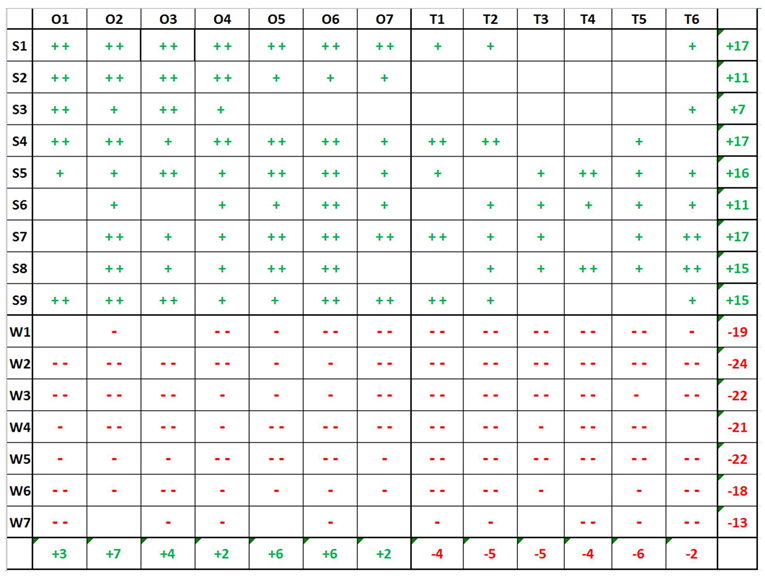 |
Based on the evaluation of individual factors using the Confrontation Matrix, the most important strengths of the forestry sector that can be leveraged in the communication strategy include:
- S1: Positive Public Attitude to Forest
- S4: Forest Pedagogy Network
- S7: Sustainability Ethos
Among the most significant weaknesses are:
- W2: Inconsistent Public Communication
- W3: Weak Response to Misinformation
- W5: Slow Adaptation to Societal Change
The most prominent opportunities identified include:
- O2: Post-Calamity Regeneration Success
- O5: Forestry’s Climate Role
- O6: Modern Technological Image
The most pressing threats are:
- T2: Declining Public Support
- T3: Reduced Influence in Policy
- T5: Poorly Informed Decisions and Legislation
The Confrontation Matrix helped prioritize combinations of internal and external factors that should shape communication strategy development. For example, the strength represented by the Forest Pedagogy Network (S4) should be strategically paired with the Post-Calamity Regeneration Success (O2) to build positive narratives. Conversely, Inconsistent Public Communication (W2) and Weak Response to Misinformation (W3) must be addressed to counteract Declining Public Support (T2) and Poorly Informed Decisions and Legislation(T5).
To address these priorities, a strategic approach should include:
- Coordinated messaging among stakeholders, centred around sustainability (S7) and enhanced by a modern, innovation-focused image (O6). It should also involve proactive responses to misinformation through digital tools, swift messaging, and greater transparency (W3).
- More substantial investment in public education and youth outreach through the Forest Pedagogy Network (S4), focusing on engaging audiences via social networks.
- Framing forestry's climate relevance (O5) and regeneration successes (O2) in a relatable way to foster public trust and support.
- This integrated approach—grounded in SWOT evidence—aims to improve message consistency, strengthen public trust, and support the strategic Positioning of forestry within policy and public communication frameworks.
This integrated approach—grounded in SWOT evidence—aims to improve message consistency, strengthen public trust, and support the strategic positioning of forestry within policy and public communication frameworks.
3.4. Quantitative Survey Findings
The quantitative survey results provide insight into public perceptions of forestry across key demographic groups. Table 3 shows that nearly half of all respondents (49.3%) consider forestry to be a mission—a responsibility to preserve natural values—while others describe it as a traditional, profit-oriented, outdated field or as a modern discipline requiring innovation. These attitudes vary considerably by age. For instance, youth aged 12–24 were more likely to characterize forestry as obsolete (8.7%) or profit-driven (14%), suggesting a more critical or sceptical view than the broader population.
Table 4 further illustrates the sector's image problem. While 41% of respondents described forestry professionals as 'important,' this neutral response lacked a clear evaluative tone—neither explicitly endorsing nor criticizing their role. In contrast, 40.9% of participants combined characterized foresters as either 'helpless' or 'unable to manage the situation.' Youth again stood out as the most critical demographic, with 18.5% stating that foresters cannot handle current challenges, compared to 15.6% in the general population.
These perceptions are further reinforced by data in Table 5, which shows forest visitation frequency by age group. While low visitation rates among the elderly (43.4% visiting rarely or never) can be attributed to limited mobility, their positive attitudes toward forests were likely shaped during their youth through frequent, direct experiences with nature. In contrast, a similarly high rate (32.4%) among individuals under 25 suggests a broader generational shift, with opinions increasingly shaped by indirect sources such as media rather than personal experience. Since this younger generation is also shaping future public opinion and political agendas, this highlights the urgency of strategic, evidence-based communication that engages youth as future opinion leaders and political actors—essential for maintaining long-term sector legitimacy.
Together, these findings underscore a fragmented and sometimes contradictory public image of forestry—marked by generational divides, mixed perceptions of professional competence, and varying levels of direct engagement. The results indicate an urgent need for targeted, transparent, and youth-oriented communication strategies emphasizing forestry's modern, socially relevant, and ecological roles.
4. Discussion
4.1. Interpretation of Strategic Models and Analytical Results
The development of the communication methodology was based on the CIMO logic (Context–Intervention–Mechanism–Outcome), which has proven effective in identifying key points in forestry communication. Communication can also serve as a tool for transforming context, interventions, mechanisms, and outcomes in the future. In Czech forestry, the primary challenge (C) is a fragmented sector that faces declining trust and minimal media presence. The proposed intervention (I) is a unified, strategic communication methodology that activates the mechanism (M) of shared narratives and coordinated messaging. This approach aims to achieve the desired outcomes (O): increased trust, engagement, and legitimacy.
Several studies in forest and environmental governance support the rationale for this approach. For instance, Freeman [32] emphasise that communication must be framed as an inclusive social process, particularly when adapting to socio-ecological complexity. Axelsson [4] further note that implementing sustainable forest management across diverse contexts requires integrating stakeholder knowledge through joint learning. These ideas align with the foundations of the CIMO logic and support its relevance to the Czech situation.
The Problem Tree Analysis (PTA) further illustrates the central communication issue: "the declining societal recognition of the significance of forestry and the competence of foresters." This fundamental problem is compounded by several root causes, primarily the lack of cohesive communication, insufficient internal awareness, and a weak public understanding of forestry's broader social and environmental roles. The PTA emphasised that this could lead to cascading effects such as slow adaptation, sectoral isolation, and adverse legislative consequences without intervention.
The SWOT analysis offered a high-level diagnostic overview of the sector's communication capacities and risks. Among the strengths are public affinity for forests and access to institutional environmental education channels. Conversely, weaknesses include inadequate inter-organisational coordination, limited engagement with digital media, and predominantly reactive communication practices. Opportunities such as climate advocacy and intergenerational renewal stand in stark contrast to threats like misinformation and the dominance of external stakeholders. These insights were further explored through the Confrontation Matrix, which aided in prioritising strategic responses during a crisis [33,34].
4.2. Communication Goals and Strategic Positioning
The findings presented in Chapter 3 revealed a notable perception gap: forests are generally regarded positively, yet forestry professionals are frequently seen as reactive or disorganised. To bridge this gap, it is essential to strategically reposition the forestry sector as not only ecologically significant but also socially responsive and professionally adept.
Only 6.2% of respondents from the general population (see Table 4) believe foresters "know what to do," while 41% see them as "important" but do not express a clear view of their competence. Notably, over 40% perceive foresters as either helpless, unable to cope or merely victims of circumstances. This highlights the urgency of developing a long-term repositioning strategy that actively reshapes public understanding and goes beyond passive communication.
These results support a differentiated strategy focused on three key audience segments derived from the overall responses of the Czech population aged 12–79 (see Table 4). It is important to note that these segments—Supporters, the Persuadable Middle, and Sceptics—are not evenly distributed across subgroups such as youth (12–24 years), families with children, and residents of cities over 20,000 inhabitants. The distribution of views varies by demographic, as reflected in the respective columns of Table 4:
- Supporters ( ~18%): Reinforcing this segment requires consistent, transparent communication that avoids controversy or mixed messages.
- The Persuadable Middle ( ~41%): This group sees forestry as important but is uncertain about its effectiveness. To engage them, communication must focus on explaining foresters' work, showcasing long-term planning, and emphasising ecological responsibility.
- Sceptics (Helpless/Negative View, ~41%): Changing perceptions here is more challenging but not impossible. Approaches should include storytelling, the use of relatable personalities, and emotionally resonant campaigns.
This segmentation supports the concept of strategic Positioning, which goes beyond factual communication to address how forestry is perceived in the public consciousness. As noted in Chapter 2, Positioning is not about defining foresters' identity internally but about aligning external perceptions with values relevant to the public. This repositioning entails a deliberate strategic focus, where the goal is not merely to define foresters' inherent identity through internal narratives but rather to shape and communicate an image that resonates with—and is validated by—the public sphere [35].
Currently, forestry is seen as reactive, passive, and economically driven. The goal is to reposition the sector as proactive, solution-oriented, and emotionally resonant—qualities that build trust, engagement, and alignment with broader environmental and societal values. This shift is crucial for reaching younger audiences (12–24), who currently hold the least favourable views, as Table 3 and Table 4 noted. To bridge this gap, the forestry sector must adopt modern, targeted communication strategies that resonate with young people's values and media habits. This means investing in digital storytelling, participatory content creation, and strategic collaborations with credible influencers who can convey forestry's relevance in contemporary terms. Transparency, emotional appeal, and the ability to link forestry to broader societal issues—such as climate resilience, wellbeing, and sustainable living—are essential.
Figure 4.
Changing the positioning of the Forest Sector (FS) perception.
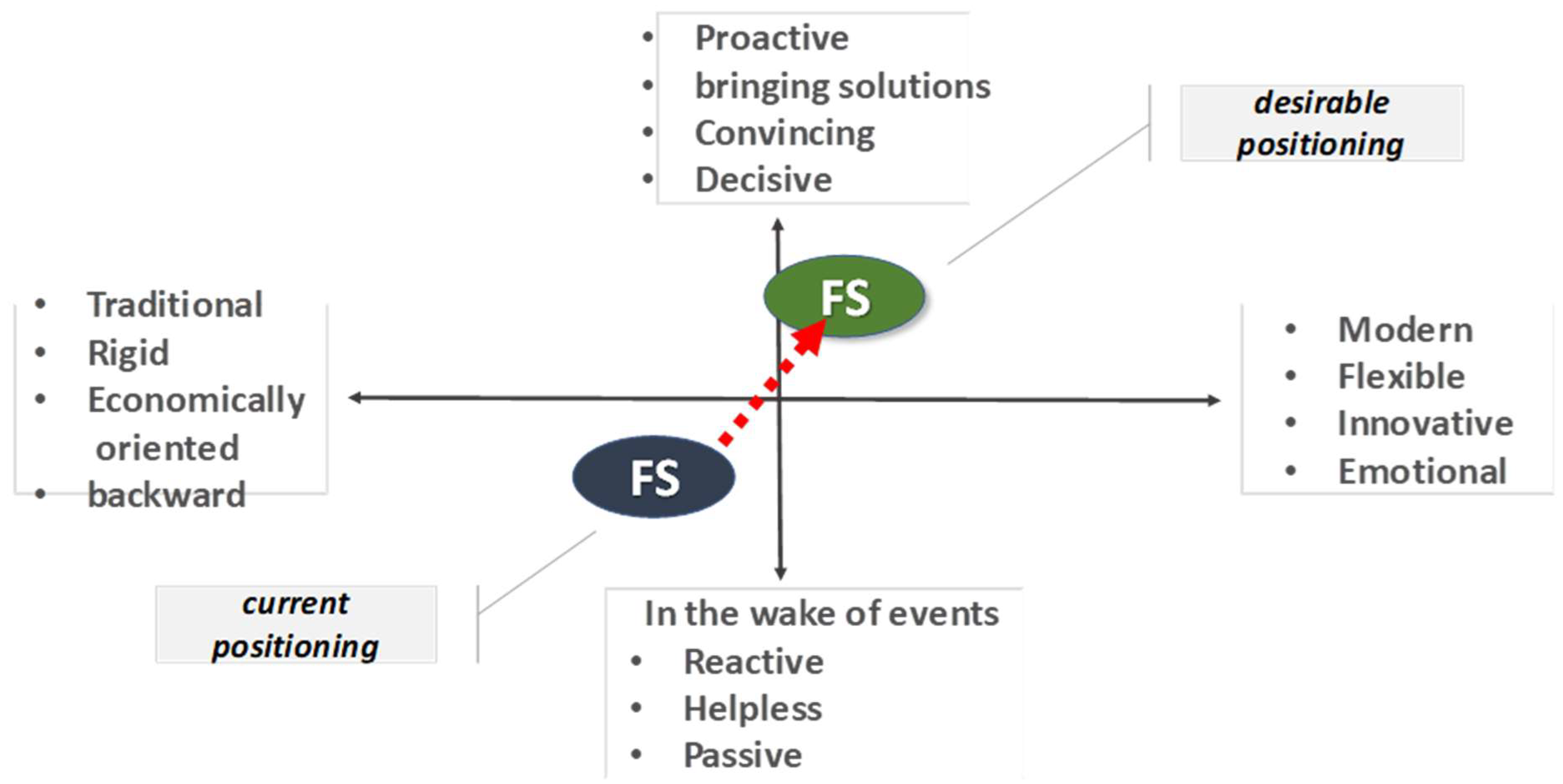
To illustrate the desired perceptual change, Figure 4 presents a strategic map contrasting the current and desired public positioning of the forestry sector:
The critical perspective held by the younger generation, often concentrated in larger urban agglomerations, represents a key long-term challenge. In the future, these individuals will co-shape public discourse, political direction, and decision-making processes related to forests and their governance. If the forestry sector fails to communicate effectively with these groups, there is a risk of further deepening public distrust and polarisation.
The observation that approximately one-third of individuals under 25 rarely or never visit forests is particularly concerning. Unlike older respondents, whose reduced access stems from understandable health-related limitations, the low engagement among youth reflects broader cultural and behavioural changes. Urban lifestyles may drive this generational disconnect, reduced exposure to natural environments during childhood, and a growing sense of alienation from nature. Forests may no longer hold immediate relevance in the daily lives of many young people, who instead engage in environmental issues primarily through virtual channels. This disconnection has profound implications for the future of sustainable forest management. A weakening of personal, sensory, and emotional connections with forests among the next generation threatens to erode long-term public support for forestry interventions—whether related to biodiversity, climate change mitigation, or rural development. Moreover, it risks diminishing civic engagement and environmental stewardship more broadly.
For these younger respondents, knowledge and imagery related to forests are increasingly mediated through digital platforms such as YouTube, Instagram, TikTok, and podcasts. These spaces are dominated by sustainability, rewilding, environmental activism, and nature-based leisure themes, often delivered by influencers or content creators who serve as informal intermediaries. While such content raises environmental awareness, it may frame forestry topics in oversimplified or ideologically skewed narratives that diverge from scientific forestry principles and professional management realities. As a result, young audiences may develop emotionally charged but poorly informed impressions of forestry.
These findings underscore the urgency of rethinking how the forestry sector communicates with younger demographics. The survey confirms that forestry suffers from a fragmented and, at times, contradictory public image—marked by trust in traditional values among older generations and growing scepticism or indifference among youth. Although public attitudes remain broadly supportive, the generational divide is becoming increasingly pronounced.
Achieving this positioning shift demands a system-wide approach to communication that is proactive, adaptive, and institutionally embedded. Four interlinked components are essential:
- Central coordination platform – A unifying institutional mechanism is needed to synchronise communication across diverse forestry actors. Such a platform would ensure messaging continuity despite political leadership or staffing changes, providing a stable backbone for long-term engagement. Institutional resilience stems from effective internal coordination [36].
- Audience-specific strategies – Tailored communication is especially vital for under-engaged groups such as youth and urban populations. Strategies should include digital storytelling, influencer engagement, and participatory formats to foster emotional connection and perceived relevance. Jenkins [37] provide compelling evidence on the role of "spreadable media," which leverages participatory content and influencer networks to bridge the gap between institutional messaging and audience engagement.
- Feedback loops – Public perception must be continuously monitored using sentiment analysis, surveys, and structured stakeholder dialogue. These insights should drive real-time strategy adjustments, ensuring both responsiveness and accountability. Heath and Johansen [24] highlight that feedback is essential for iterative strategic improvement, reinforcing the value of evidence-based decision-making in public relations.
- Long-term commitment – Research in both public sector reform and corporate communication highlights that sustained investment and ongoing engagement are essential for successful repositioning [36,38,39]. Strategic transformation cannot be accomplished through ad hoc initiatives; it demands consistent leadership, enduring institutional commitment, and alignment with broader governance and policy frameworks to achieve the objectives illustrated in the repositioning map (Figure 4).
These findings underscore that communication should be recognised as a core component of forestry governance, integral to policy implementation, stakeholder engagement, and institutional resilience. A systemic communication strategy is vital for rebuilding public trust, aligning with societal values, and increasing the sector's visibility and relevance within a rapidly evolving socio-political context.
One potentially transformative model for long-term communication innovation is the Quintuple Helix framework. This model advocates systemic collaboration across five key societal subsystems: academia, industry, government, civil society, and the natural environment [40]. By adopting this approach, Czech forestry actors could more effectively embed their messaging within the broader discourse on sustainability—thereby enhancing innovation capacity and reinforcing democratic legitimacy.
5. Conclusions
This chapter synthesises insights from the preceding sections, concisely responding to the three guiding research questions posed in the introduction. It reflects on the root causes of communication challenges and key disconnects between foresters and the public and outlines practical strategies for achieving long-term, strategic communication reform.
The findings reveal that communication challenges stem from weak internal coordination, a lack of shared messaging, and limited integration of public communication into sectoral strategies. The core issue widening the gap is a perception deficit: while forests are positively regarded, foresters are often mistrusted or unconvincing. This results from fragmented communication and the absence of a unified, long-term narrative. Resolving this requires sector-wide positioning strategies, improved audience targeting, and sustained public engagement. Communication must be treated as a strategic imperative. Without a unified voice and coordinated messaging, the sector remains vulnerable to misunderstanding, scattered outreach, and weak public support.
Results confirm that a data-driven, audience-focused communication strategy—anchored in clear positioning and segmentation—can significantly improve public perception of foresters and their work. Engaging undecided and younger audiences through tailored messaging is essential for long-term impact. However, lasting change demands more than isolated efforts; it calls for institutional commitment, structural coordination, and consistent execution.
Moving forward, the sector should prioritise creating a national coordination platform to lead the development and implementation of a cohesive communication strategy. This strategy should set clear goals, include measurable indicators, and adapt approaches to diverse public segments using both traditional and digital tools.
Simultaneously, building internal capacity through targeted training and regular monitoring of public perceptions is vital. Embedding communication into relevant policies and funding structures while gradually strengthening cross-sectoral collaboration will help prepare the ground for more ambitious models such as the Quintuple Helix.
In conclusion, effective communication must be integrated into the core of forestry governance. It is a tool for visibility and a mechanism for building trust, aligning public values with forest policy, and securing the future of sustainable forestry in the Czech Republic.
Funding
This work was supported by the National Agency for Agricultural Research of the Czech Republic (NAZV), project No. QK23020008.
Data Availability Statement
The raw data supporting the conclusions of this article will be made available by the author on request.
Conflicts of Interest
The author declares no conflicts of interest.
Appendix A
Detailed SWOT Analysis
Strengths (S)
S1: Positive Public Attitude to Forest
The public widely appreciates forests, especially for recreation and non-productive functions. Wood is also positively viewed as a renewable, ecological material.
S2: Free Public Access to forests
Unrestricted public access to Czech forests for recreation and foraging is a unique strength, supporting widespread forest engagement and societal connection to forestry.
S3: Developed Forest Infrastructure
A dense network of forest roads, trails, and recreational infrastructure enhances public access, awareness, and enjoyment—though sometimes at odds with forestry operations.
S4: Forest Pedagogy Network
An established network of forest educators delivers well-structured environmental education, especially for school children. Demand often exceeds capacity, demonstrating strong public interest.
S5: Ecological Role of Forests
Forests are widely acknowledged as essential for climate mitigation and water retention, reinforcing their strategic ecological and societal value.
S6: Market-Based Financing
Forestry in the Czech Republic has long operated on a self-financing basis, relying on timber revenues with minimal subsidies. This resilience could gain importance as public budgets tighten.
S7: Sustainability Ethos
Sustainability is a deeply embedded legal and practical principle in Czech forestry, recognised by professionals and small forest owners alike.
S8: Advanced Technology
Forestry benefits from strong technical infrastructure, including digital forest inventories and efficient, low-impact harvesting technologies accessible even to smallholders.
S9: Public Engagement in Regeneration
There is high public enthusiasm for volunteering and financially supporting reforestation efforts, reflecting a strong base for participatory forestry initiatives.
Weaknesses (W)
W1: Unclear Strategic Direction
Forestry lacks a clear, unified direction across Czech and EU policies. Conflicting objectives—such as increasing protected areas versus promoting wood use—create ambiguity and reduce the sector’s strategic resilience.
W2: Inconsistent Public Communication
The sector lacks shared messaging goals and fails to proactively communicate its priorities. Inconsistent external communication undermines forestry’s image and weakens public and political support.
W3: Weak Response to Misinformation
Forestry actors have limited capacity to counter disinformation and are hesitant to engage in coordinated public messaging. This allows misconceptions to persist, particularly on social and digital platforms.
W4: Missed Communication Opportunities
Despite high public engagement with forests, the sector underuses existing infrastructure and communication channels to showcase forestry’s contributions, such as reforestation and modern management techniques.
W5: Slow Adaptation to Societal Change
Forestry’s conservative culture hinders its ability to respond to shifting societal and political expectations—such as those reflected in the EU Forestry Strategy for 2030.
W6: Public Misunderstanding of Forestry Economics
The public often lacks awareness of how forestry is funded and managed. This contributes to scepticism towards harvesting and weakens support for sustainable forest operations.
W7: Inactive or Uninformed Forest Owners
A significant share of small forest owners are disengaged or unaware of their management responsibilities, which can harm the sector’s reputation and reduce resilience to ecological and regulatory change.
Opportunities (O)
O1: High Public Willingness to Engage
Public enthusiasm for forests often translates into a strong willingness to volunteer. This underused potential offers a valuable opportunity to foster positive attitudes and strengthen local support through direct involvement.
O2: Post-Calamity Regeneration Success
Forest regeneration has progressed in most regions despite drought, pests, and wildlife challenges. This success story—particularly when visualised through satellite imagery—can be a powerful tool in public communication.
O3: Leverage High Forest Visitor Rates
High forest visitation rates provide an opportunity to informally educate the public about forestry work. Engaging forest users through on-site interpretation can positively influence attitudes and behaviours.
O4: Changing Social Needs and Preferences
Changes in public values and lifestyles open space for expanding forestry’s relevance—through bioeconomy models, forest-based tourism, agroforestry, and lifelong forest education.
O5: Forestry's Climate Role
Forests are central to climate adaptation and mitigation. Communicating this clearly enhances forestry’s public value and underscores the need for professional, sustainable management.
O6: Modern Technological Image
Czech forestry already applies advanced technologies—such as precision forestry and satellite monitoring. Highlighting these innovations can reposition the sector as forward-looking and science-driven.
O7: : Influential Media Figures
Well-known public figures with personal ties to forests can serve as trusted messengers. Systematic collaboration with such personalities can raise forestry’s profile and credibility among wider audiences.
Threats (T)
T1: Increasing Media Criticism
As the bark beetle crisis fades, critical voices—particularly from environmental groups—are increasingly visible in media and academic discourse. These narratives rarely include forestry sector perspectives, partly due to weak communication capacity and lacking a central platform.
T2: Declining Public Support
Forestry is often portrayed as profit-oriented by NGOs and public figures, contributing to a loss of legitimacy. As public interest shifts toward non-productive ecosystem services, doubts grow about forestry's readiness to adapt and contribute meaningfully.
T3: Policy Marginalisation
Emerging EU strategies favour centralised governance and overlook forestry’s productive and multifunctional roles. Steps away from market-based models risk undermining forestry's ability to finance public goods, with no clear alternative funding in place.
T4: Decline in Competitiveness and Lower Investment
Uncoordinated changes across the forestry-wood value chain may reduce competitiveness, employment opportunities—especially in rural areas—and investor confidence in forestry and wood processing.
T5: Poorly Informed Decisions and Legislation
Political and legislative decisions increasingly lack input from sector experts. Without holistic, interdisciplinary analysis, policies may fail to reflect operational realities, putting long-term sector viability at risk.
T6: Future Disruptions
Natural disasters and socio-economic crises remain ongoing risks. If these coincide, forestry could lose visibility in public discourse and policy agendas, weakening both its resilience and long-term relevance.
References
- FAO Global Forest Resources Assessment 2020. Global Forest Resources Assessment 2020 2020.
- Millennium Ecosystem Assessment Ecosystems and Human Well-being: Synthesis; Washington, DC, 2005.
- Siry, J. P.; Cubbage, F. W.; Ahmed, M. R. Sustainable forest management: global trends and opportunities. For Policy Econ 2005, 7, 551–561. [CrossRef]
- Axelsson, R.; Angelstam, P.; Degerman, E.; Teitelbaum, S.; Andersson, K.; Elbakidze, M.; Drotz, M. K. Social and cultural sustainability: Criteria, indicators, verifier variables for measurement and maps for visualization to support planning. Ambio 2013, 42, 215–228. [CrossRef]
- McDonagh, J.; Farrell, M.; Mahon, M.; Ryan, M. New opportunities and cautionary steps? Farmers, forestry and rural development in Ireland. European Countryside 2010, 2, 236–251. [CrossRef]
- Janoušková, S.; Hák, T.; Nećas, V.; Moldan, B. Sustainable Development—A Poorly Communicated Concept by Mass Media. Another Challenge for SDGs? Sustainability 2019, Vol. 11, Page 3181 2019, 11, 3181. [CrossRef]
- Chazdon, R.; Brancalion, P. Restoring forests as a means to many ends. Science (1979) 2019, 364, 24–25. [CrossRef]
- IPCC Climate Change 2022 - Mitigation of Climate Change: Working Group III Contribution to the Sixth Assessment Report of the Intergovernmental Panel on Climate Change. Climate Change 2022 - Mitigation of Climate Change 2023.
- Cardey, S.; Eleazar, P. J. M.; Ainomugisha, J.; Kalowekamo, M.; Vlasenko, Y. Communication for Development: Conceptualising Changes in Communication and Inclusive Rural Transformation in the Context of Environmental Change. Social Sciences 2024, Vol. 13, Page 324 2024, 13, 324. [CrossRef]
- Cienciala, E. Climate-Smart Forestry Case Study: Czech Republic; Springer, Cham, 2022.
- Flint, C. G.; McFarlane, B.; Müller, M. Human dimensions of forest disturbance by insects: An international synthesis. Environ Manage 2009, 43, 1174–1186. [CrossRef]
- Gežík, V.; Brnkaľáková, S.; Baštáková, V.; Kluvánková, T.; Gežík, V.; Brnkaľáková, S.; Baštáková, · V; Kluvánková, · T Economic and Social Perspective of Climate-Smart Forestry: Incentives for Behavioral Change to Climate-Smart Practices in the Long Term. 2022, 435–451.
- Imbrenda, V.; Coluzzi, R.; Mariani, F.; Nosova, B.; Cudlinova, E.; Salvia, R.; Quaranta, G.; Salvati, L.; Lanfredi, M. Working in (Slow) Progress: Socio-Environmental and Economic Dynamics in the Forestry Sector and the Contribution to Sustainable Development in Europe. Sustainability 2023, Vol. 15, Page 10271 2023, 15, 10271. [CrossRef]
- Hellström, E. Conflict cultures - Qualitative comparative analysis of environmental conflicts in forestry. Silva Fennica Monographs 2001, 2. [CrossRef]
- Morris, J. L.; Cottrell, S.; Fettig, C. J.; Hansen, W. D.; Sherriff, R. L.; Carter, V. A.; Clear, J. L.; Clement, J.; DeRose, R. J.; Hicke, J. A.; et al. Managing bark beetle impacts on ecosystems and society: priority questions to motivate future research. Journal of Applied Ecology 2017, 54, 750–760. [CrossRef]
- Arpin, I.; Cosson, A. Seeking legitimacy in European biodiversity conservation policies: The case of French national parks. Environ Sci Policy 2021, 116, 181–187. [CrossRef]
- Paruelo, J. M. Ecosystem services and tree plantations in Uruguay: A reply to Vihervaara et al. (2012). For Policy Econ 2012, 22, 85–88. [CrossRef]
- Denyer, D.; Tranfield, D.; Van Aken, J. E. Developing Design Propositions through Research Synthesis. Organization Studies 2008, 29, 393–413. [CrossRef]
- Kajanus, M.; Leban, V.; Glavonjić, P.; Krč, J.; Nedeljković, J.; Nonić, D.; Nybakk, E.; Posavec, S.; Riedl, M.; Teder, M.; et al. What can we learn from business models in the European forest sector: Exploring the key elements of new business model designs. For Policy Econ 2019, 99, 145–156. [CrossRef]
- Riedl, M.; Hrib, M.; Jarský, V.; Jarkovská, M. Media analysis in a case study of Šumava National Park: A permanent dispute among interest groups. For Policy Econ 2018, 89, 71–79. [CrossRef]
- Cirucci, A. M.; Pruchniewska, U. M. Problem Trees. In UX Research Methods for Media and Communication Studies; Routledge, 2021; pp. 115–121.
- FAO Participatory rural communication appraisal: Starting with the people; 2nd ed.; SADC Centre of Communication for Development: Rome, 2004.
- Pickton, D. J.; Wright, S. What’s swot in strategic analysis? Strategic Change 1998, 7, 101–109.
- Heath, R. L.; Johansen, W. The International Encyclopedia of Strategic Communication. The International Encyclopedia of Strategic Communication 2018.
- Okoli, C.; Pawlowski, S. D. The Delphi method as a research tool: an example, design considerations and applications. Information & Management 2004, 42, 15–29. [CrossRef]
- Linstone, H.; Turoff, M. The Delphi Method: Techniques and Applications; Addison-Wesley, 2002.
- Couper, M. P. Web surveys: A review of issues and approaches. Public Opin Q 2000, 64, 464–494.
- Haan, M.; Ongena, Y. P.; Aarts, K. Reaching Hard-to-Survey Populations: Mode Choice and Mode Preference. J Off Stat 2014, 30, 355–379. [CrossRef]
- Riedl, M.; Němec, M.; Jarský, V. Thirty Years of Research on Ecosystem Services: The Socio-Economic Role of Forest Visits and Foraging in Enhancing Human Well-Being. Forests 2024, Vol. 15, Page 1845 2024, 15, 1845. [CrossRef]
- ESOMAR ESOMAR Code and Guidelines for Market, Opinion and Social Research and Data Analytics <https://esomar.org/code-and-guidelines/icc-esomar-code> (accessed Feb 18, 2025).
- Demaris, R.; Ries, A.; Trout, J. Positioning: The Battle for Your Mind. J Mark 1992, 56, 122. [CrossRef]
- Freeman, R. E.; Harrison, J. S.; Wicks, A. C. Managing for Stakeholders. Managing for Stakeholders 2017.
- Carlsen, J.; Andersson, T. D. Strategic SWOT analysis of public, private and not-for-profit festival organisations. International Journal of Event and Festival Management 2011, 2, 83–97.
- Preble, J. F. Integrating the Crisis Management Perspective into the Strategic Management Process. Journal of Management Studies 1997, 34, 769–791. [CrossRef]
- Settle, Q.; Baker, L. M.; Irani, T. Employee Perceptions of Branding Materials and External Communications for a State Forestry Organization. J Agric Educ 2018, 59, 75–86. [CrossRef]
- Weick, K.; Sutcliffe, K. Managing the Unexpected: Resilient Performance in an Age of Uncertainty; Weick, K. E.; Sutcliffe, K. M., Eds.; Jossey-Bass, 2007.
- Jenkins, Henry.; Ford, Sam.; Green, Joshua. Spreadable media : creating value and meaning in a networked culture; New York University Press, 2013.
- Cornelissen, Joep. Corporate Communication: A Guide to Theory and Practice Seventh Edition; SAGE, 2023.
- Bryson, John. Strategic Planning for Public and Nonprofit Organizations, 5th Edition; Wiley, 2018.
- Carayannis, E. G.; Campbell, D. F. J. Triple Helix, Quadruple Helix and Quintuple Helix and How Do Knowledge, Innovation and the Environment Relate To Each Other? : A Proposed Framework for a Trans-disciplinary Analysis of Sustainable Development and Social Ecology. International Journal of Social Ecology and Sustainable Development 2010, 1, 41–69.
Figure 1.
Salvage felling in CZ ( thousand m3) (https://csu.gov.cz/produkty/lesnictvi-2023).
Figure 1.
Salvage felling in CZ ( thousand m3) (https://csu.gov.cz/produkty/lesnictvi-2023).
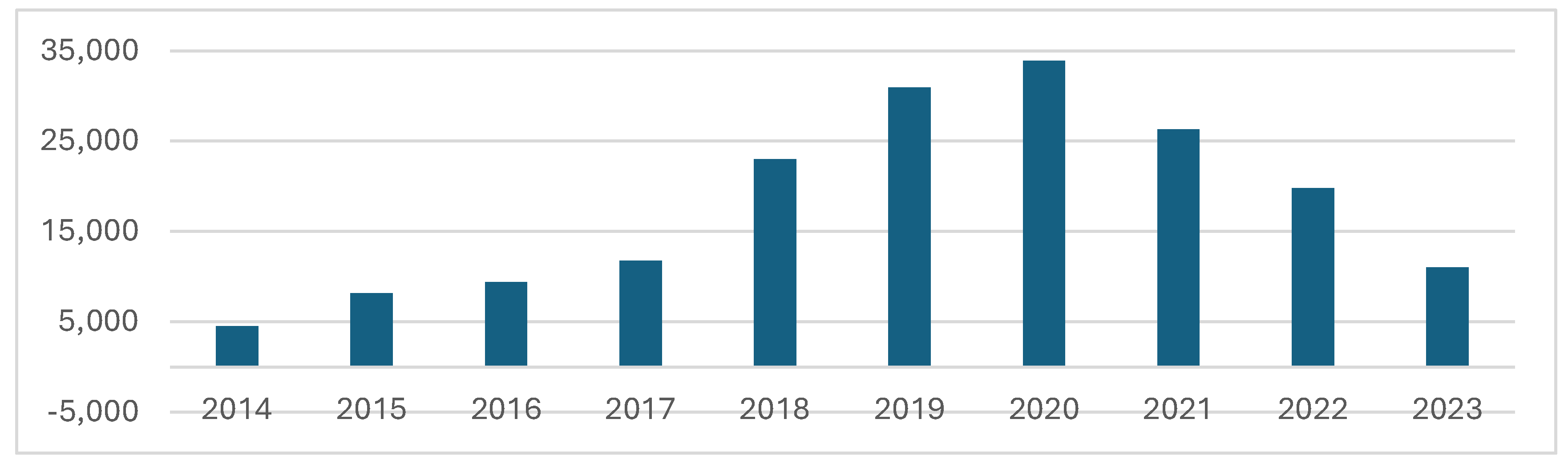
Figure 2.
CIMO model of Czech forestry during the bark beetle outbreak.
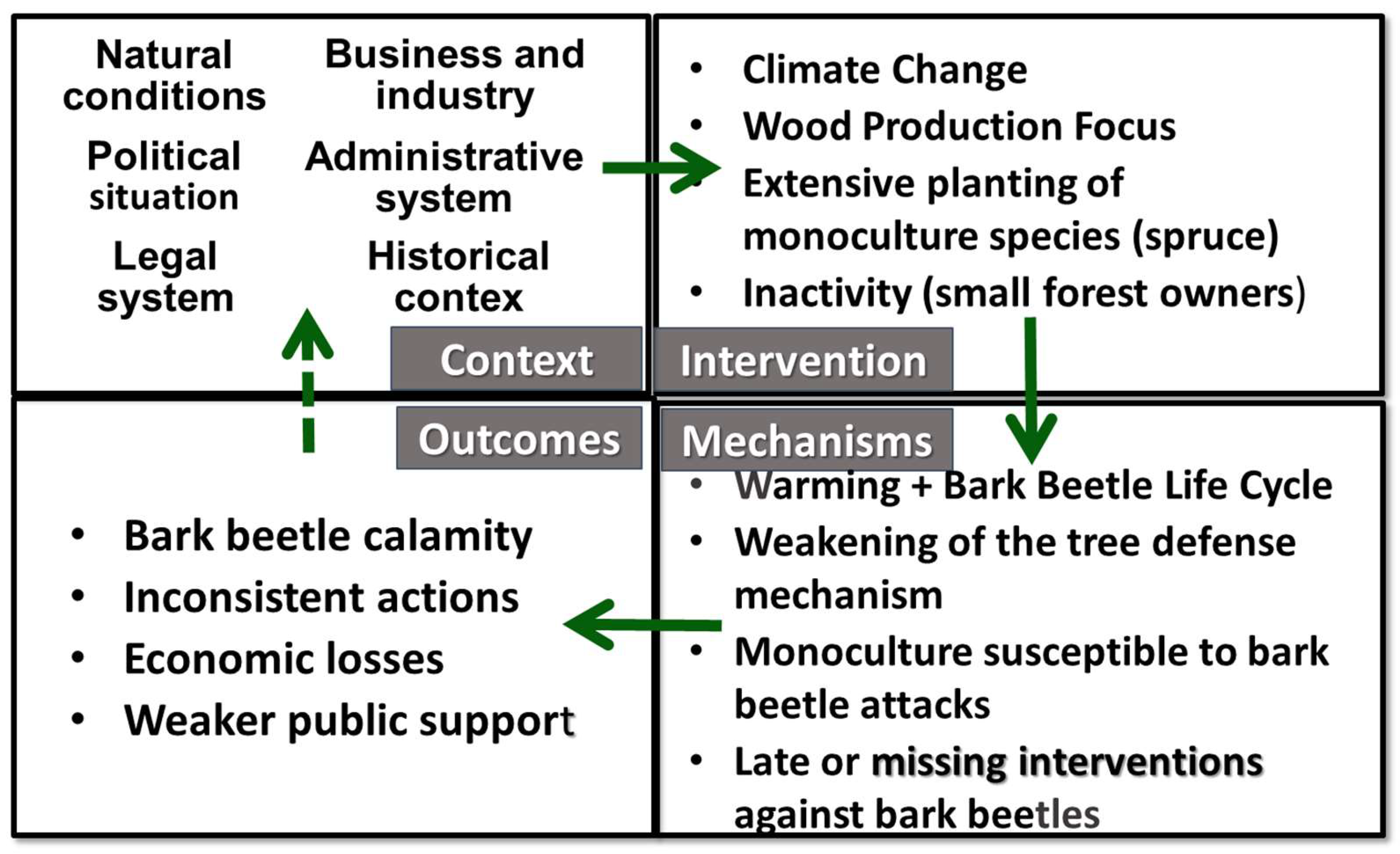
Figure 3.
Problem tree of causes and consequences.
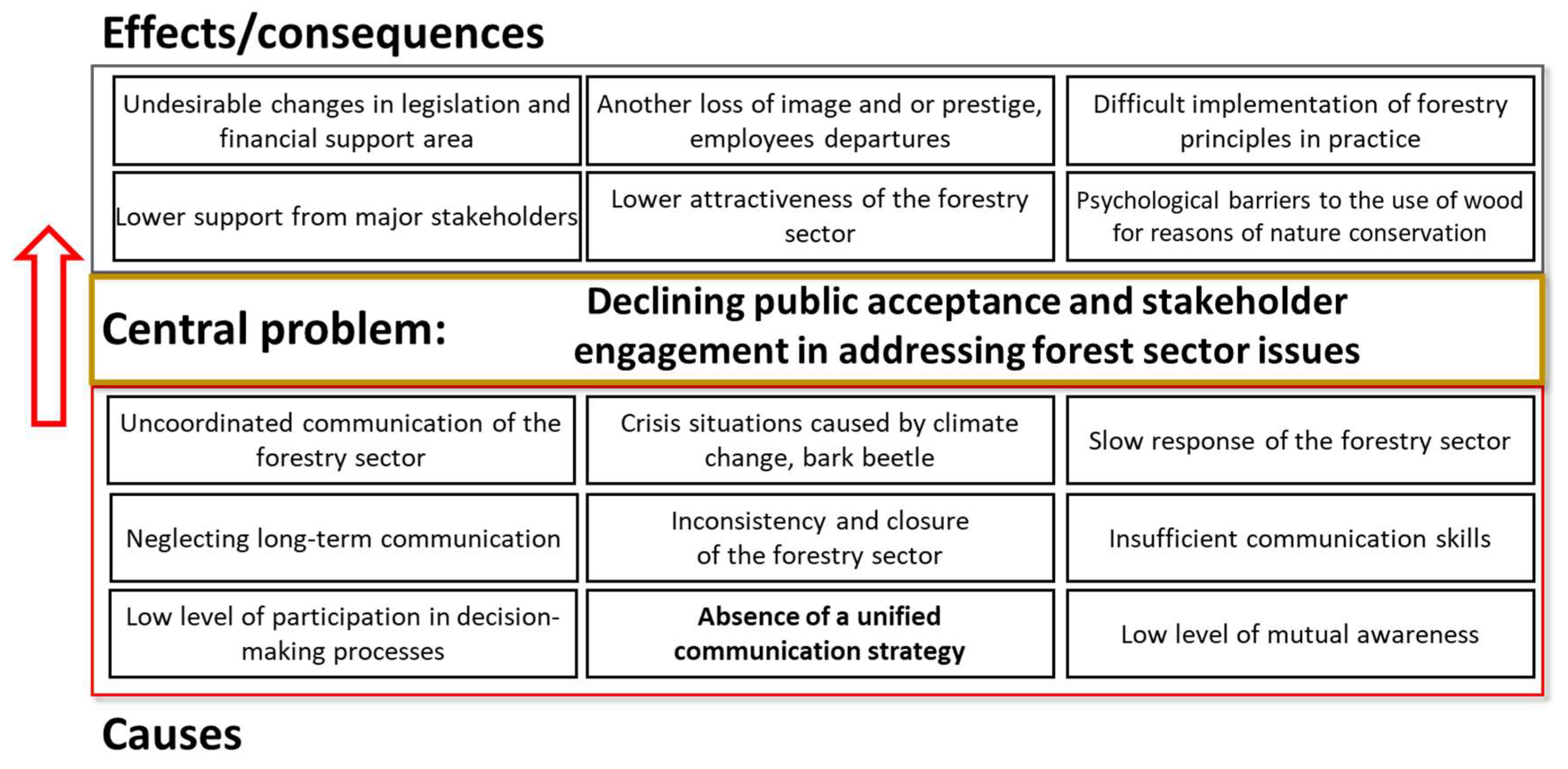
Table 3.
How would you characterize forestry as a field?
| Youth 12-24 years old | Families with children | People from cities above 20,000 inhabitants |
aged 12-79 In total |
|
|---|---|---|---|---|
| % | % | % | % | |
| Forestry is a modern field that requires innovation | 14,9 | 15,0 | 13,4 | 14,5 |
| Forestry is a mission, an obligation to preserve natural values | 39,3 | 47,5 | 50,8 | 49,3 |
| Forestry is a traditional field with a conservative approach | 23,1 | 18,1 | 17,1 | 17,7 |
| Forestry is an economic sector geared towards raw material production and profit | 14,0 | 13,2 | 13,6 | 12,3 |
| Forestry is an outdated discipline whose role should be replaced by nature conservation | 8,7 | 6,2 | 5,1 | 6,2 |
| total % | 100 | 100 | 100 | 100 |
| Total people | 1 325 981 | 3 256 962 | 3 768 873 | 8 874 950 |
Table 4.
How do you perceive the role of forestry and workers in forestry at the present time?
| Youth 12-24 years old | Families with children | People from cities above 20,000 | Aged 12–79 Total | |
|---|---|---|---|---|
| % | % | % | % | |
| They know what to do and how to handle the situation | 7,9 | 7,4 | 6,2 | 6,2 |
| They are "victims of the bark beetle calamity" and they are doing their best | 9,7 | 10,4 | 12,6 | 11,8 |
| They are important (neutral perception | 41,4 | 40,2 | 41,0 | 41,0 |
| They appear helpless | 22,4 | 25,5 | 25,1 | 25,3 |
| They can't handle the situation | 18,5 | 16,5 | 15,1 | 15,6 |
| 100 | 100 | 100 | 100 | |
| in Total | 1 325 981 | 3 256 962 | 3 768 873 | 8 874 950 |
Table 5.
How often do you visit the forest per year (number of respondents 5094, Czech population 18+, the year 2019-23).
Table 5.
How often do you visit the forest per year (number of respondents 5094, Czech population 18+, the year 2019-23).
| Age Group | Never visit | Very rarely (1–2× per year) | Monthly (1× per month) | Weekly (1× per week) | Very often (several times per week) | Total =100% |
|---|---|---|---|---|---|---|
|
Elderly (65+) |
20,9% | 22,5% | 21,7% | 19,4% | 15,5% | 1 138 |
| Older adults (45–64) | 8,8% | 23,9% | 29,5% | 21,0% | 16,7% | 1 730 |
|
Adults (26–44) |
7,2% | 22,2% | 33,3% | 22,0% | 15,2% | 1 810 |
|
Young (under 25) |
9,1% | 23,3% | 31,0% | 22,1% | 14,4% | 416 |
| Total | 11,0% | 22,9% | 29,2% | 21,1% | 15,7% | 5 094 |
Disclaimer/Publisher’s Note: The statements, opinions and data contained in all publications are solely those of the individual author(s) and contributor(s) and not of MDPI and/or the editor(s). MDPI and/or the editor(s) disclaim responsibility for any injury to people or property resulting from any ideas, methods, instructions or products referred to in the content. |
© 2025 by the authors. Licensee MDPI, Basel, Switzerland. This article is an open access article distributed under the terms and conditions of the Creative Commons Attribution (CC BY) license (http://creativecommons.org/licenses/by/4.0/).
Copyright: This open access article is published under a Creative Commons CC BY 4.0 license, which permit the free download, distribution, and reuse, provided that the author and preprint are cited in any reuse.


