

Submitted:
03 April 2025
Posted:
07 April 2025
You are already at the latest version
Abstract
With the advancement of rural construction, the transformation of traditional kitchens faces issues such as uniform design, destruction of traditional aesthetics, high costs, and difficulties in localization, which affect the quality of kitchen renovations and the living standards of villagers. This study explores methods for kitchen transformation in traditional residences of Northwest Yunnan under low-technology strategies, aiming to enhance the quality of rural kitchens while preserving traditional aesthetics. Through field research, case analysis, and climate simulation, a kitchen renovation plan tailored to Tangfang Village in Yunnan Province was developed and implemented, including measures for optimizing functional flow, improving ventilation and lighting, enhancing water supply and drainage systems, increasing energy efficiency, and addressing insulation and moisture prevention. The renovated kitchens showed significant improvements in lighting, ventilation, and thermal comfort, with costs controlled within a reasonable range, achieving enhancements in architectural quality, user comfort, and endogenous motivation for autonomy. This research provides an operable model for rural construction, which, through low-technology strategies and collaborative creation models, not only enhances the functional use of rural kitchens but also preserves the cultural value of traditional architecture, holding significant importance for promoting sustainable rural development.
Keywords:
rural kitchen
; Northwest Yunnan
; traditional village
; low-tech
Introduction
This paper takes the kitchen in the self-built house of the traditional Tangfang Village in Fengqing County, Yunnan Province as the main case to study the quality improvement methods of rural kitchens in traditional villages in the southwestern mountainous areas of Yunnan. By summarizing the transformation results of multiple rural kitchen cases, the paper conducts system updates (lighting, water supply and drainage, smoke and steam exhaust, energy efficiency, insulation and moisture prevention) for the case sites, and points out the importance of improving the quality of rural demonstration cases and the publicity of kitchens to the development of villages.
1.1. Rural Kitchen Characteristics
The construction and renovation of kitchens should take into full account the differences between urban and rural areas [1], the regional differences between villages and the general local conditions, raise questions in a targeted manner, and explore specific solutions [2]. In collecting other excellent cases of kitchen renovation, and sorting out the renovation methods (Table 1). In summary, there are few cases focusing on kitchen functions in rural construction, and the general practice is to focus on standardized design and template design of atlas selection [3], which has the following four shortcomings. First, the design style is easy to be the same in thousands of villages, second, the modern design and facilities inserted destroy the original traditional style [4,5], third, the foreign construction model is difficult to adapt to the local situation [6,7], and fourth, the high-tech standard engineering design often leads to high cost, high loss, high investment[8,9] and other construction problems in rural construction projects.
By summarizing the current status and actual characteristics of kitchen space [10], following the excellent renovation experience, and controlling the construction investment through low-tech means, targeted solutions were proposed based on the technical difficulties of the pilot case, and a co-creation model was adopted to fully mobilize the enthusiasm of villagers to participate independently.

Table 1.
Kitchen pilot renovation case.
| Renovation Case | Renovation method | Transformation results and experience |
|---|---|---|
| Huayao kitchen in a rural house in Chongmutang Village, Hunan Province 1 |
|
|
| Elderly-friendly kitchen in Shanting Town, Fujian |
|
|
| Cleaning kitchen in Lijiahe Village, Linxia Prefecture, Gansu |
|
|
| Kitchen reform in rural areas of southern Anhui 2 |
|
|
1.2. Tangfang Village Kitchen Evolution
Tangfang Village, Fengqing County, Lincang City, Yunnan Province was selected as one of the first batch of traditional protected villages in China in 2012. It is located at an altitude of about 2,400 meters, in the western part of the Yunnan-Guizhou Plateau, close to the Lancang River, and is an important post station on the lower section of the Ancient Tea-Horse Road. Tangfang natural village consists of 38 households, of which 30 are permanent residents. The China Regional Coordinated Development and Rural Construction Research Institute of Sun Yat-sen University entered Tangfang Village in 2021. Through village surveys, issue summary, system sorting, design intervention, case demonstration and other steps, Tangfang Village will be piloted for renovation and transformation of rural construction with different functions, thereby exploring a kitchen renovation method that is economically affordable, technically feasible and reproducible in governance for local farmers.
Tangfang Village has the same architectural roots as the Bai and Naxi peoples in northwest Yunnan, and is mainly built in the wooden tile-roofed style.[12]Due to its geographical location and changes in living habits and dietary customs, the kitchen space has evolved.
Before the founding of the People's Republic of China, Tangfang Village was initially built in wooden thatched or tiled houses, with the fire pit as the core of daily life[13]. Although the fire pit was a simple fire point with an iron frame (Figure 1-a), it was extremely important. It was used to obtain heat, process food, and obtain light for lighting. At the same time, a habit of gathering around the fire pit for various activities such as living, meeting guests, and dining was formed. At the same time, the fire pit was often given symbolic meaning and was associated with the worship of gods, ancestors, and other spiritual things, becoming a place for various ritual activities [14].
In the 1950s, as the kitchen and dining functions were separated, the fire pit and the kitchen were also divided into two spaces. At this time, the construction technology was improved, and the earth stove (Figure 1-b) with rammed earth as the enclosure, wooden boards as the frame, and iron frames on top began to emerge. This earth stove is short (between 330-500mm in height) and small in size (500mm-800mm in width), which is very inconvenient to use while squatting. In the 1960s, the mining and application of stone slabs reached its peak, and stone stoves built with stones appeared (Figure 1-c). There are two stoves on the stove to place large pots and small pots. The large pot is used to stir-fry tea, cook pig food, and cook New Year pigs for the New Year; the small pot is used for daily cooking. However, the gaps in the stone enclosure are large, and the problem of smoke leakage is serious. After the founding of the People's Republic of China, with the mass production of bricks, brick stoves with chimneys (Figure 1-d) became the mainstream.
After being separated from the fire pit house, the kitchen has always existed in the form of a simple side house. As an auxiliary room, the construction rules of the kitchen have long been ignored; in the process of spontaneous construction, farmers are also unable to cope with the new demands that continue to emerge (Table 2). In recent years, the popularity of tourism in Tangfang Village and surrounding villages has increased, and the expansion, quality improvement and renewal of the kitchen have become more urgent. Based on a large amount of research and summary of the evolutionary rules, the team focused on the local special cultural customs and dining habits, and improved the deficiencies of various kitchen systems according to the requirements of the household owners.
2. Materials and Methods
2.1. Characteristics Basic Strategies for Kitchen Renovation
According to the results of the household survey and the evolution of the kitchen, Tao Rongchao's home (Figure 2), located at the key point of the Ancient Tea-Horse Road, was selected as a pilot for renovation practice. As the space used by Tao Rongchao's household owner for daily activities such as boiling water and frying tea, the kitchen has important renovation significance. It is planned to carry out low-tech renovation from three levels to achieve sustainable development of rural construction (Figure 3). That is, in terms of technology, local supervision and co-construction, connecting the discourse system of craftsmen with the discourse system of modern architectural design to achieve low-cost consumption. In theory, it combines traditional practices, integrates local knowledge, and updates the design on the basis of self-renovation, reducing the difficulty of the renovation plan, thereby increasing the enthusiasm of villagers to participate and achieving a low-destructive style. In terms of model, a co-creation model is adopted throughout the process to ensure the accuracy of the project implementation, and the design is optimized in real time according to local conditions.
2.2. Low-Tech Transformation Strategy
Low-tech takes traditional construction technology as its starting point and explores how to achieve the goal of ecologically sustainable construction through traditional technology. Its characteristics are low construction cost, low technical requirements, and ecological and traditional materials. It embodies a popular ecological concept, an advocacy of traditional manual technology and local humanistic feelings, and also a way of real life. Advocating low cost, low investment and low damage [15] is a return to the original state when science and technology have reached a certain level, rather than backward and outdated technology. It has a strong local and traditional character [16]. The basic starting point for the construction of low-tech ecological buildings is to use local materials, adapt to local conditions, and integrate technologies. In short, low technology is a popular technology that is easy to master, has low technical requirements, and is low-cost and low-destructive. It can solve problems simply, quickly and economically. It is more suitable for some small-scale and economically backward areas, and the effect is remarkable.
2.3. Renovation Plan:
2.3.1. Existing Problems
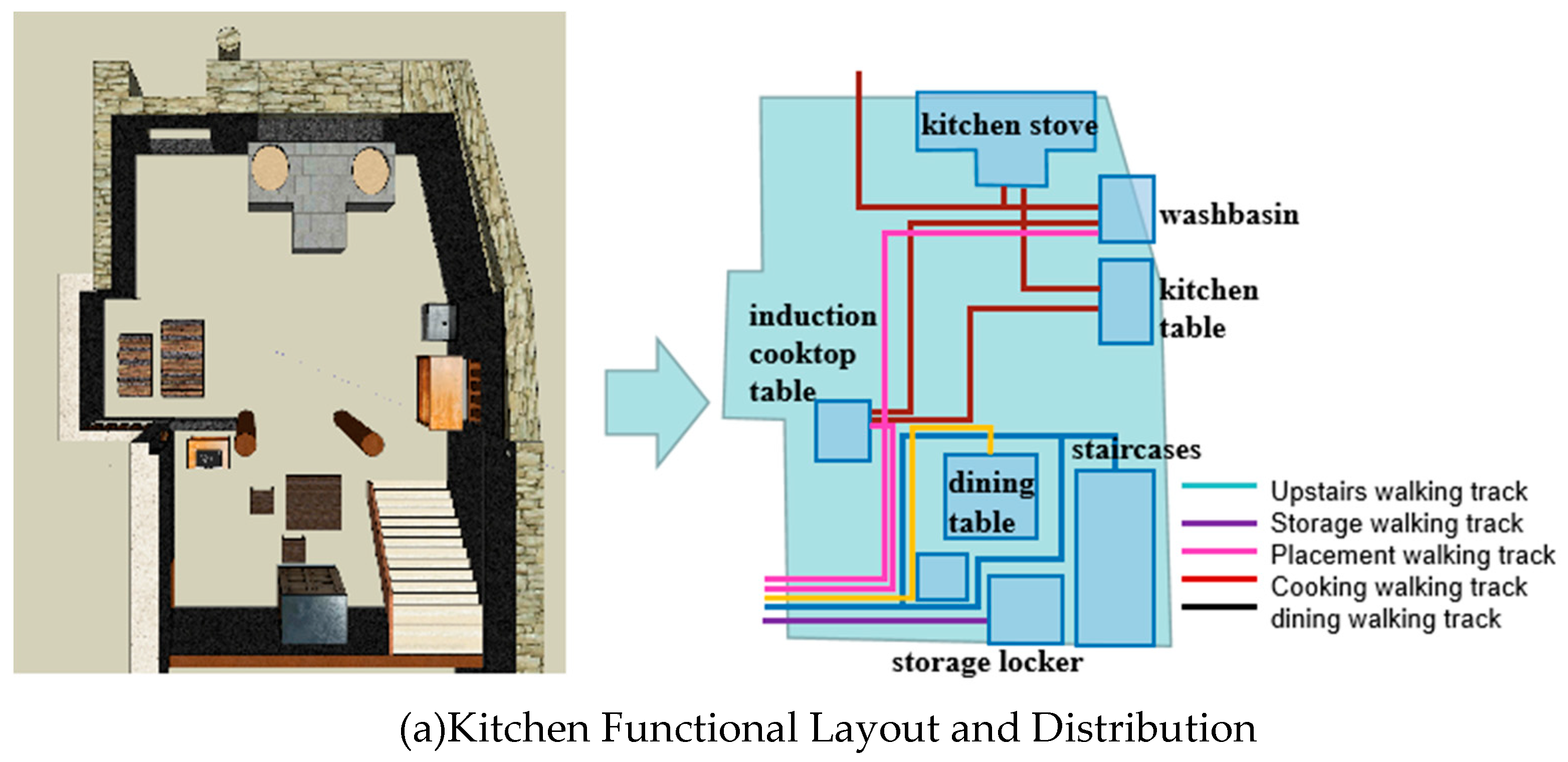
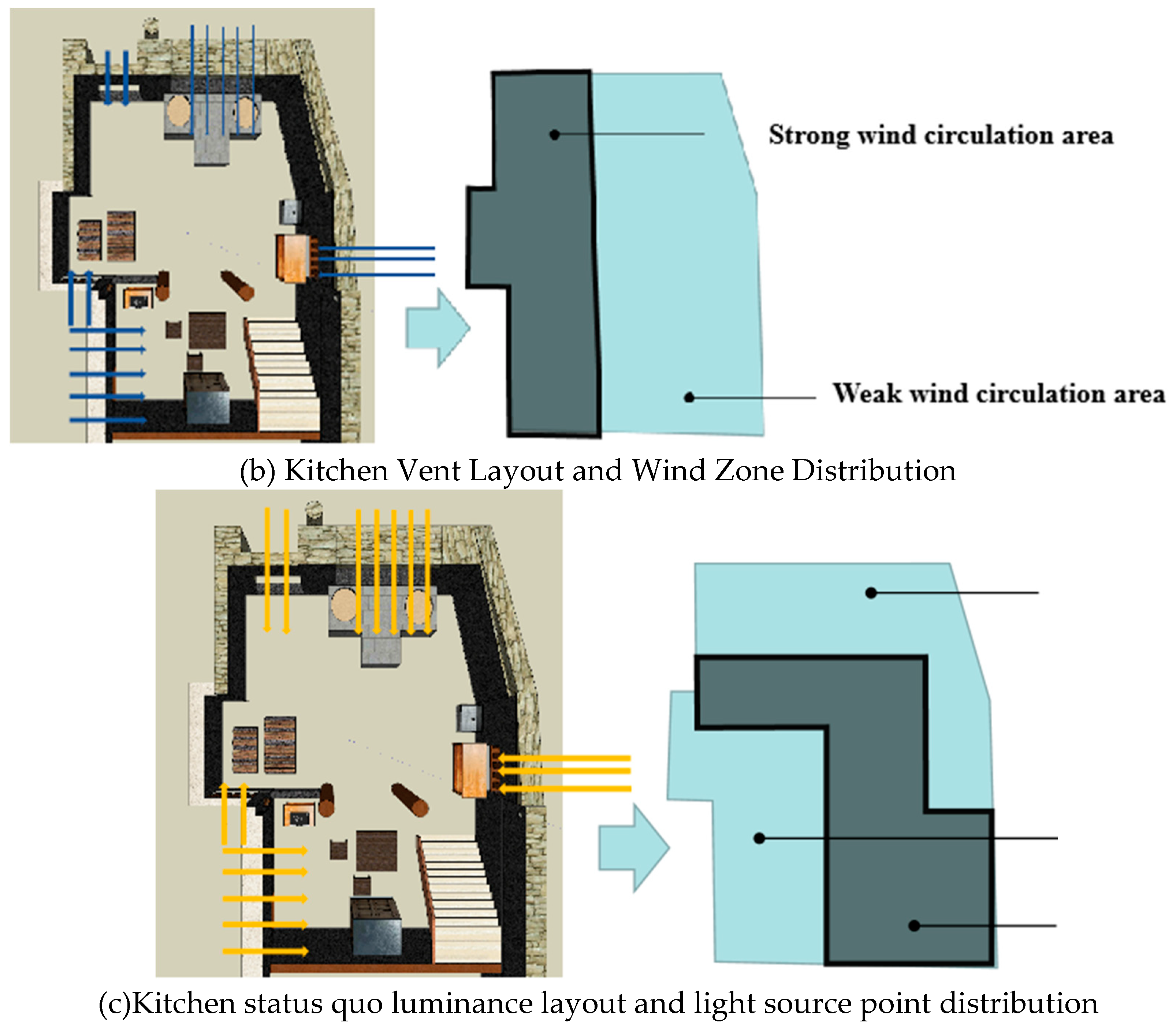
The main problems are as follows (Figure 4)
- Functional flow problem:
Too many cluttered items, furniture and a large stairwell hinder the flow of daily life and compress the space for dining and going upstairs.
- 2.
- Ventilation issues:
The window-to-wall ratio in the kitchen is unreasonable, and the windows are sealed with gauze to prevent snakes and rats, resulting in a low ventilation rate. At the same time, the fuel in the simple chimney is not burned completely, and the indoor smoke is heavy. A large amount of smoke cannot be directly discharged to the outside, the walls and roofs are heavy with a large particle size ratio, and the sanitary conditions are poor, which is harmful to health.
- 3.
- Lighting issues:
First, the building height is low. This results in insufficient light during cooking and other activities, affecting operational safety. Second, the original wall material is highly permeable and easily adheres to oil smoke, which causes the wall to become blackened. The blackened wall has a low refractive index for light, resulting in insufficient light in the room as a whole. Third, the ratio of doors to windows is small during construction, resulting in insufficient day-lighting and light transmittance.
- 4.
- Water supply and drainage issues:
There is no reasonable water supply and drainage system in the kitchen, so it is very inconvenient to use water. Tao Rongchao uses the water outlet in the yard to wash dishes and vegetables.
- 5.
- Housing structure problems:
Low floor heights exacerbate the feeling of cramped space; wooden structures lack durability and are susceptible to insect damage, decay, cracking, deformation, and fire threats, requiring regular anti-corrosion and optimization of thermal expansion and contraction deformation design. Node connections (such as mortise and tenon joints) are prone to aging and loss, affecting stability. Material quality and construction technology are directly related to safety performance, and local wood such as Yunnan pine is facing a decline in quality and efficiency due to over-harvesting. It is necessary to strengthen fire prevention measures, select sustainable wood, and strengthen maintenance to extend the life of the building.
Figure 4.
Current issues in the kitchen.
2.3.2. Low-Tech Transformation Measures
A design plan (Figure 5) is formed based on the existing problems and transformation measures are formulated(Table 3).
- 1.
- Functional Flow
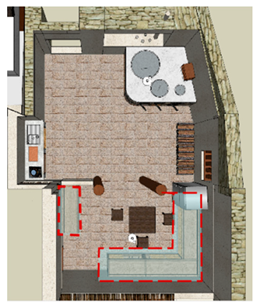
Ensure functional flow for meal preparation, cooking and dining. The entrance is the dining area, the middle is the meal preparation area and the back is the cooking area. The layout of the dining area can be adjusted dynamically according to the number of people eating. Rationalize the functional layout. According to the size and shape of the kitchen, arrange the location and height of the stove, sink, workbench and storage cabinet reasonably to ensure that the distance between them is reasonable and the use is practical, emotional and safe [17], and reduce the moving distance during the cooking process. The stove can be divided into different functions. The large stove is mainly used for firewood cooking, and the small stove is used for induction cooker cooking or meal preparation. By optimizing the working triangle of the kitchen, that is, the layout between the stove, refrigerator and sink, it forms an efficient working area and improves cooking efficiency.
- 2.
- Ventilation technology
The original traditional stove consists of stove body, stove mountain, chimney, wind box several parts of the composition of the stove surface has a size to match the size of the large iron pot, into the fire and ash outlet are in the back of the stove. Nowadays, the rural areas mostly use the simpler structure of wood-saving and coal-saving stoves, with the chimney buried in the wall, and the ash outlet set at the back of the stove, adding fuel from above to the burning port. In order to solve the problem of smoke and gas leakage of the traditional big stove, the original big stove is upgraded. The fire eyes of the upgraded big stove are equipped with multiple concentric fire rings, which can be adjusted in size and depth according to different needs, and can be used with different sizes of round-bottomed steamers, cooking pots, and stir-fry pans. The chimney is partially pre-built in the wall and the smoke vent leads to the outdoors. Construct the base firmly and choose a location for the cooker under a window on the windward side, with a flat floor that is not susceptible to moisture. Use masonry to build the base and pad the height of the base to ensure that the bottom of the kitchen stove is above the ground to avoid the influence of ground moisture The base structure should have enough area and thickness to support the weight of the kitchen stove and vibration during use.
For thermal insulation design, use thermal insulation materials such as slag, ash, vermiculite, etc. inside the kitchen stove to reduce heat loss. The kitchen stove is constructed in a double layer with the center filled with insulation material. Stove top layout hearth should be large enough and regular in shape to facilitate adequate combustion of fuel. Design easy to open and close the stove door, easy to add fuel and control combustion, and ensure that there is enough space around the stove for people to operate.
For smoke exhaust ventilation, the flue is designed to be on the side close to the hearth. Create a smoke-free space by reserving the grates and bulkheads at the base of the base to separate the air intake ducts, and set up the fire stop ring and flue. The flue should be of sufficient height and reasonably inclined to take advantage of the principle of rising hot air currents. The flue should be connected to a chimney, and the design should take into account the efficiency of smoke exhaust to avoid smoke backflow or indoor pollution. Meanwhile, a secondary air intake structure is added to the cooker design to improve combustion efficiency and reduce fuel consumption. And design a reasonable shape of combustion chamber with hemispherical or domed shape to increase the combustion area[18]. By changing the window-wall ratio, ensure that the window has a constant natural air intake, conducive to the formation of a good indoor environment, and the use of appropriate measures to increase the air intake make-up air can effectively reduce the quality of particulate matter concentrations in the kitchen [19].
The wall structure uses three different traditional masonry techniques to ensure structural stability. The first is the dry masonry method: large stones are used for the courtyard wall and the base, and the natural shape is used to bite and divide, and local mud reinforcement is used to enhance wind and insect resistance. The second is the core masonry method, where large stones are used to build the outer wall, and gravel (which can be mixed with mud) or cement is filled inside. Cement filling is insect-proof and stable, and gravel filling is easy to recycle; the wall is a "sandwich" structure, taking into account both thermal insulation and thickness restrictions. The material selection uses local linen stone, which is classified by stone type: face stone (flattening the main wall), corner stone (regular corners), and pad stone (filling gaps). The local " buckle up" masonry method is used to maximize friction bite through the cross-staggered upper and lower layers, and the gap is ≤3mm. Thickened stones are added after each pad stone to ensure stability. Optimizing construction technology In the kitchen renovation, cement is used to fill the drainage side wall to prevent moisture, and gravel is used to fill the entrance and exit side. The indoor wall is smoothed with waterproof cement-based mortar to enhance the waterproof performance. Through the combination of different stones, a variety of facade textures are formed while maintaining the structural density.
- 3.
- Lighting technology:
Considering that the floor height is not enough to bring in light, the solution is to replace part of the shale tiles on the roof with tempered glass to increase the daylight. Compared with the bright tiles used in the renovation, tempered glass has the advantages of higher light transmittance, higher explosion and crack resistance. Second, optimize the wooden grille structure of the second-floor kitchen partition and increase the floor height. After cleaning the debris, increase the light intake on the second floor. Third, expand the original window sash area and increase the light transmission area of the window. Change the original sealed fine mesh screen window to a grille window. Fourth, replace the sealing paint on the stone wall with straw paint, thereby brightening the wall inside the house to refract and soften the light. Fifth, add high-efficiency, low-power solar lamps to ensure all-day light.
- 4.
- Water supply and drainage technology:
rainwater collection and purification, the traditional water tank is retained as a water storage facility to collect rainwater for non-drinking water scenarios (irrigation, flushing toilets, etc.), and a two-stage treatment system is added - a sedimentation and purification pool and a filtration device to ensure that the water quality meets the standard. The water tank is connected to a double pipe (inlet/drainage pipe) to achieve linkage with the drainage system. Modern stove water supply and drainage: the washing table is connected to the water supply and drainage pipe, and the treatment area and the washing area are designed in different areas. The outdoor part of the graded drainage system is set up according to the terrain slope to add drainage ditches and permeable pavement (shale rock waterproof layer + linen stone permeable layer) to improve the permeability and reduce runoff; the indoor part is pre-buried with underground drainage pipes; the roof optimizes the design of eaves gutters and down pipes, adjusts the slope and arrangement, integrates rainwater collection facilities, and stores them in the reservoir after initial filtration. Traditional ground paving technology: leveling according to the design elevation and compacting the plain soil, and paving with square cross-seam stone slabs. During construction, the straightness and flatness are controlled by dragging and laying lines, and the slurry is laid before bricklaying. The joints are puttyed and the tooth joints are shoveled and braked to ensure that the slope is ≤3 mm to achieve natural drainage. The wall base is built with widened rough stone, and a drip line or slope is set on the top, combined with the peripheral dispersion system to prevent water from penetrating the foundation and accumulating water.
- 5.
- Functional facilities:
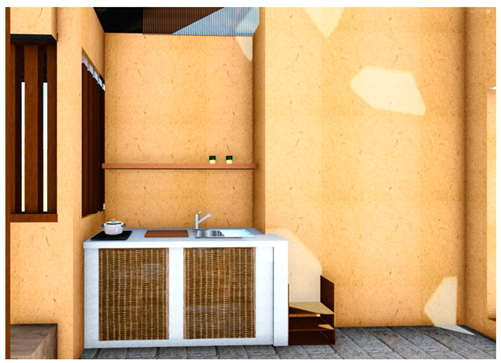
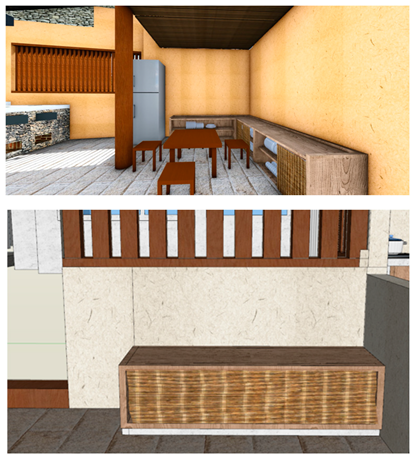
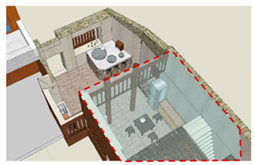
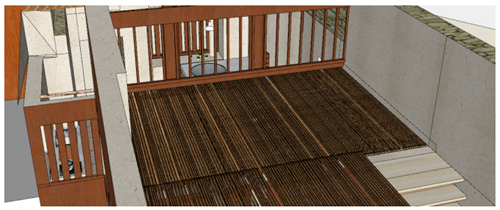
First, add a modern stove using environmentally friendly and sustainable materials, such as bamboo (bamboo curtains), recycled wood, etc., to retain the local natural characteristics. Second, add enough storage space. The L -shaped cabinet has multiple drawers built in to place and store tableware, ingredients and cooking tools. A vertical shelf is set on the wall of the stove, a simple shelf is added next to the stove, and a footrest is added at the corner of the entrance. Third, the function is transferred to move the dining table originally in the fire pit or courtyard to the kitchen to meet the needs of multiple people dining.
3. Results
3.1. Spatial Environment Results – Improved Aesthetics
Enhancement of the suitability of built space through low- tech strategies. In terms of quality of use, the architectural space after the completion of the house has been upgraded from the original low-quality functional space that only meets basic usage needs to a high-quality space with significantly improved lighting and ventilation performance. In terms of environmental technology, we have upgraded from low-quality means such as construction according to standardized drawings and demolition and reconstruction to minimum transformation based on site conditions, precise customization according to needs and processes, to high-quality modern technologies such as systematic fixed-point facility upgrades.
Through on-site communication, design explanation, construction accompaniment, and learning from local construction experience, we optimized node technology on this basis (Figure 6), ensured the suitability of low-tech, and made details as "refined" as possible, thereby improving the quality of the building(Figure 7).
In addition, the spiritual demonstration effect is also very obvious, giving a lot of inspiration to the local people. Farmers can gradually recognize the structural beauty of buildings after technological improvement, feel the comfort of buildings under the integration of traditional and modern technological transformation, and the plan emphasizes the preservation of traditional customs and traditional skills, which can enhance the sense of belonging of villagers and enhance the general awareness of the importance of protecting the traditional village style. Renovation and transformation can not only improve the quality of rural construction, but also inspire the public in professional fields, thereby improving the quality of spiritual and cultural education.
3.2. Physical Environment Results - Improved Comfort
In order to verify whether the indoor environment of the stone house has been improved and judge the effect of the renovation, the Ladybug plug-in in the computer simulation software Grasshopper was used to import the EPW meteorological data of Lincang City to simulate the light, wind and heat environment after the physical environment renovation. By establishing a basic model with simplified structure and optimized materials, setting meteorological information data, indoor heat source, natural lighting parameters, ventilation equipment parameters and other information, simulation analysis was carried out, and the comparison of simulation analysis effects before and after the renovation was obtained.
3.2.1. Light Environment Analysis:
Before the renovation, the natural lighting value of the original windows was relatively small due to the limitations of area and materials. After the renovation, the lighting interface materials and structures are optimized. The opening rate of the solid wood grille on the window surface is 30%-40%, and the transmittance T=0.25-0.35. The skylight tempered glass rising top lighting unit uses 6mm tempered ultra-white glass with a transmittance of T=0.89 and an ultraviolet blocking rate of >85%, which significantly improves the lighting efficiency in the diffuse and vertical directions. The wooden grille and skylight form a "soft light + direct light" composite lighting mode. The lighting distribution simulation calculates the percentage of automatic sunlight monitoring results before and after the renovation(DA) and the annual lighting simulation shows the main space sunlight (sDA) It can be obtained that the average values of the kitchen and dining area (key areas) (Figure 8-a) increased to 50% and 29.37% respectively, and the average ratio of effective natural lighting hours increased from 19.77% to 45.45% (Figure 8-b and Figure 8-c), and the sDA value increased from 0.39 to 0.51. At the same time, the effective daylight factor (DF) of the skylight area reached 5.8%, an increase of 222% compared with the side windows (DF=1.8%) before the renovation, meeting the requirement of DF≥3% for the kitchen area in the "Yunnan Rural Residential Building Energy Saving Design Guidelines"[20].The illumination of the kitchen worktop has increased from less than 100 lux before the renovation to 300-450 lux, meeting the functional lighting requirements for cooking activities (recommended value 300-500 lux). The second is to reconstruct the window-to-wall ratio and lighting path. The window-to-wall ratio is increased from 0.25 to 0.35, but the actual light-transmitting area of the wooden grille only accounts for 32% of the window area, thereby avoiding excessive heat gain. The renovation effectively increased the average annual amount of light entering the room (Figure 9-a and Figure 9-b), and the effective natural lighting hours increased from 35% to 65%, reducing reliance on artificial lighting during the day.
Solar lamps and straw paint wall coatings can increase the indoor brightness while ensuring that the indoor glare is within an acceptable range. The unified glare value is a parameter that measures the degree of discomfort to the human eye [21].By calculating (1)
the indoor glare value and the glare amount at each point after the renovation are obtained. According to the numerical values corresponding to different subjective feelings (Table 4), the UGR value is usually divided into five levels: 28, 22, 16, 10, and 0: 28 is an unbearable value; 22 is a just uncomfortable value, 16 is a just acceptable value, and 10 is a no glare value. According to the calculation results corresponding to the subjective feelings and numerical visualization, after the renovation, the proportion of perceptible glare throughout the year increased from 15% to 70%, and the proportion of imperceptible glare throughout the year decreased from 80% to 10%. The subjective comfort level of glare is within the acceptable range and the proportion of comfort has increased significantly. (Figure 10)
The annual simulation of glare caused by direct observation of the sun and sky is performed by the "image-less method". It relies on a set of normalized coefficients (daylight coefficients) that represent the flux transfer from a sky patch to various viewing positions, where the direction and solid angle of the sky patch relative to each viewing position and direction are known (2)

The daylight glare probability (DGP) for a particular sky condition is calculated from a luminance term using the vertical eye illuminance and a contrast term, which is a weighted sum of the luminances of the glare sources. The imageless method modifies the DGP by replacing the illuminance and luminance terms of the DGP equation with a calculation based on the daylight coefficient (3) [22]
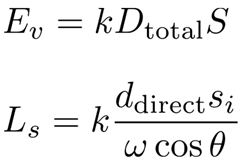
Given a vector of DGP values for all the occupancy times of a given view, glare autonomy can be defined as the fraction of time that a view is free of glare. Glare autonomy can be defined by setting a glare threshold, defining the absence of glare when the DGP is below the threshold ( set to 4 0%), and displaying the glare autonomy of multiple views by mapping them to positions and viewing directions. Comparing the glare autonomy diagrams of various indoor points before and after the renovation, the porous structure of the wooden grille window reduces direct glare through diffuse reflection, and the DGP is reduced to below 0.15. With the increase of light inlets, the distribution of light sources in the room is more uniform and reasonable. After the renovation, the long-term lighting points (i.e. 50% < DGP < 90%) are mainly located in the cooking area (kitchen) and dining area (living room) (Figure 11).
3.2.2. Wind Environment Analysis
The renovation effectively avoided the wind shadow effect formed by the continuous interface by adopting a decentralized window-to-wall ratio design. In summer, large-scale openings (opening ratio > 40%) are set on the upstream interface of the dominant wind direction, and small-scale openings (opening ratio < 20%) are used on the leeward side to form a significant wind pressure difference gradient. This asymmetric window opening strategy creates a Venturi effect in the building gaps, guiding the airflow to accelerate through the building cavity. It was measured that the ventilation wind speed on the first floor increased by about 28%, and on the second floor by 19%. Based on the local wind direction and speed data of the wind rose diagram, differentiated design is used to achieve seasonal ventilation control. In winter, a windproof guidance mode is adopted to reduce the window area on the windward side (the window opening rate is reduced by 35% after the renovation), and the cold air penetration rate is reduced through airtight structure (CFD simulation shows that the infiltration air volume is reduced by 42%). In summer, the ventilation path is strengthened and the smoke exhaust shaft is used to form a thermal pressure ventilation synergy effect. The measured indoor air age is shortened by 25% compared with that before the renovation, and the air exchange efficiency (ACH) is increased to 2.8 times/hour, meeting the preferred option requirements of the "Green Building Evaluation Standard" GB/T 50378-2019 [23]. After the renovation, the vertical air duct systematization was achieved through the atrium space and double-layer skin structure. Wind environment simulation shows that the wind speed at the first-floor air inlet is 0.8-1.2m/s. After being accelerated by the roof wind-pulling effect, the wind speed at the second-floor air outlet reaches 1.5-2.0m/s, forming a stable chimney effect. Compared with the situation before the renovation where the average wind speed in a single layer was less than 0.5m/s, the wind speed field distribution became more uniform after the renovation (the speed unevenness coefficient α dropped from 0.68 to 0.42). After the renovation, it reached the internationally accepted threshold (ASHRAE 55 recommends α<0.5 for uniform distribution), which meets the engineering optimization goals. (Figure 12)After the transformation, the airflow streamlines changed from disordered turbulence (turbulent kinetic energy k>0.5m²/s²) to laminar flow (k<0.2m²/s²)(4)
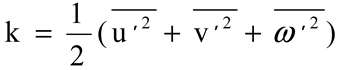
The standard deviation of the velocity field σ before the transformation dropped from 0.85m/s to 0.54m/s(5)
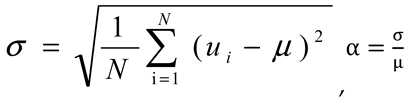 a decrease of 37%, which directly led to a decrease in the α value and effectively eliminated the local stagnant wind area ( the area share was reduced from 32% to 9%). The measured results show that the natural ventilation potential increases by 320 hours throughout the year, verifying the effectiveness of climate-adaptive passive natural ventilation strategies in improving building environmental performance.
3.2.3. Thermal Environment Analysis
According to the three parts of the building space, the thermal diagram (Figure 13) is divided from top to bottom into the cooking area (kitchen), dining area (reception room) and storage area (room). The temperature distribution can be seen from the indoor temperature diagrams of each part: after the renovation of the three areas, the proportion of the temperature in the thermal comfort level (16°C to 26°C) throughout the year increased significantly, and the high temperature period (28°C to 40°C) decreased significantly. The frequency of extreme temperatures in the overall space is reduced, and the temperatures of various parts of the room are within the human comfort range for most of the year.
The shading comfort benefit diagram (Figure 14)combined with degree-day data reflects the effect of balancing solar shading and day-lighting optimization after the renovation. The diagram is divided into three areas: the temperature is suitable near the 0°C-days/m² value, which can maximize the window area. Winter heating demand area (positive value): The high saturation of red indicates that shading treatment in this area is harmful, blocking beneficial sunlight in cold conditions. Summer cooling demand area (negative value): The high saturation of blue in the figure indicates that the unit needs to be properly shaded to avoid overheating. When the temperature is above the upper temperature threshold, the solar vector of several hours has a positive contribution to the expectation of shade, and when the temperature is below the lower temperature threshold, the solar vector of several hours has a negative contribution. Based on this, the local maximum solar vector positive contribution net degree Celsius days throughout the year is calculated to be 400.80 deg-C days, and the maximum solar vector negative contribution net degree Celsius days throughout the year is 100.63 deg-C days. Before the renovation, the net degree Celsius days improved by shading were 86 deg-C days, and the area required to be shaded was 9.28㎡. After the renovation, the net temperature improved by shading to 93 deg-C days, and the required shade area was reduced to 8.93㎡, realizing an increase in thermal comfort benefits after the renovation.
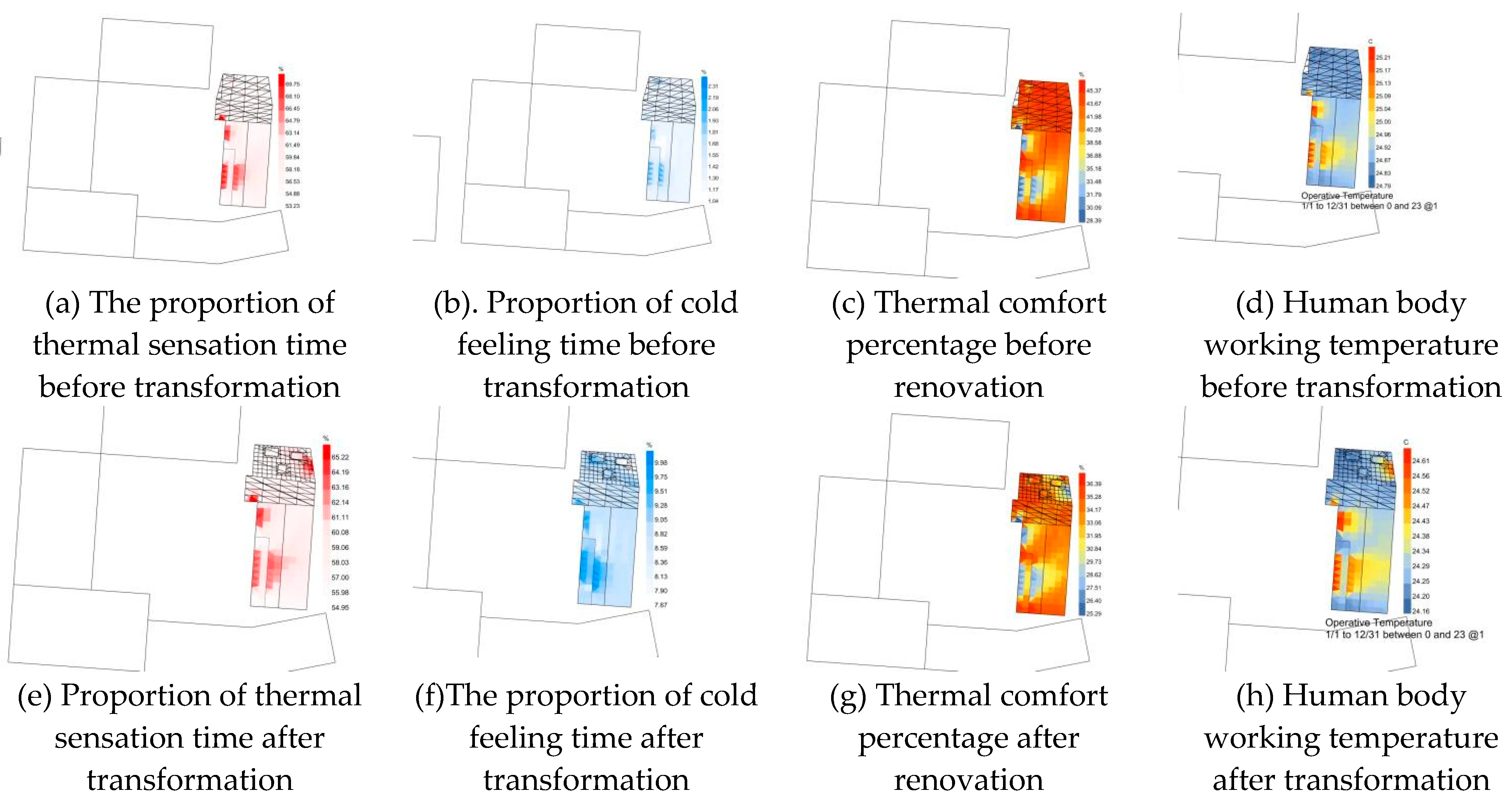
The hot and cold area heat map calculates the heat sensation percentage (HSP), cold sensation percentage (CSP), and thermal comfort percentage (TCP)values to visualize uncomfortable high temperature and cold locations, and reflects the proportion of working temperature value to measure the thermal comfort of the room. (Figure 19) From the heat map, it can be seen that the hot sensation time of the room after the renovation is reduced to 66.22% compared with the room before the renovation, and the cold sensation time is increased to 9.83%. The hot and cold comfort is more balanced, the PMV thermal comfort index is optimized by 0.3-0.5, and the proportion of thermal comfort space area and the distribution of working temperature space area are more even.
Figure 15.
Thermal diagram of hot and cold areas before and after the transformation.
In summary, the changes in thermal environment characteristics caused by the transformation are summarized. The first is to upgrade the thermal performance through the enclosing structure to ensure the thermal insulation of the wall. The outer layer (finishing layer) of the renovated wall structure is made of natural shale stone (80-100mm thick), which is both decorative and durable. The surface roughness enhances rainwater diversion and reduces thermal radiation absorption (solar absorption coefficient α=0.35). The middle layer (insulation and filling layer) is mixed and filled with crushed stone aggregate (particle size 10-20mm) and rock wool insulation board (λ=0.038 W/m·K) to form a porous composite structure, which not only improves the compressive strength (≥0.5 MPa) but also reduces the overall thermal conductivity (λ comprehensive = 0.15 W/m·K). The inner layer (sealing and structural layer) is plastered with cement-based mortar (mixed with aerogel particles, λ=0.024 W/m·K) (thickness 20mm) to seal the gaps between the gravel and block thermal bridges, while improving the air tightness of the wall (permeability ≤1.0 m³/m²·h). The second is to optimize the sealing of doors and windows (EPDM sealing strips are embedded in the side windows), which reduces the infiltration of cold air by 48% and significantly reduces heat loss in winter. The average indoor temperature in winter increased from 8°C to 14°C, the peak temperature in summer dropped from 36°C to 31°C, the standard deviation of temperature fluctuation σ decreased by 42%, and the thermal environment stability was improved. The third is to utilize the thermal mass of the stove, upgrading the traditional earth stove to a heat-storage brick masonry (specific heat capacity 1.2 kJ/kg·K), which prolongs the release of waste heat at night. Fourth, heat pressure and ventilation work together, with the glass skylight and wooden grille side windows forming a "low-in and high-out" airflow path, accelerating the dissipation of heat storage during the day.
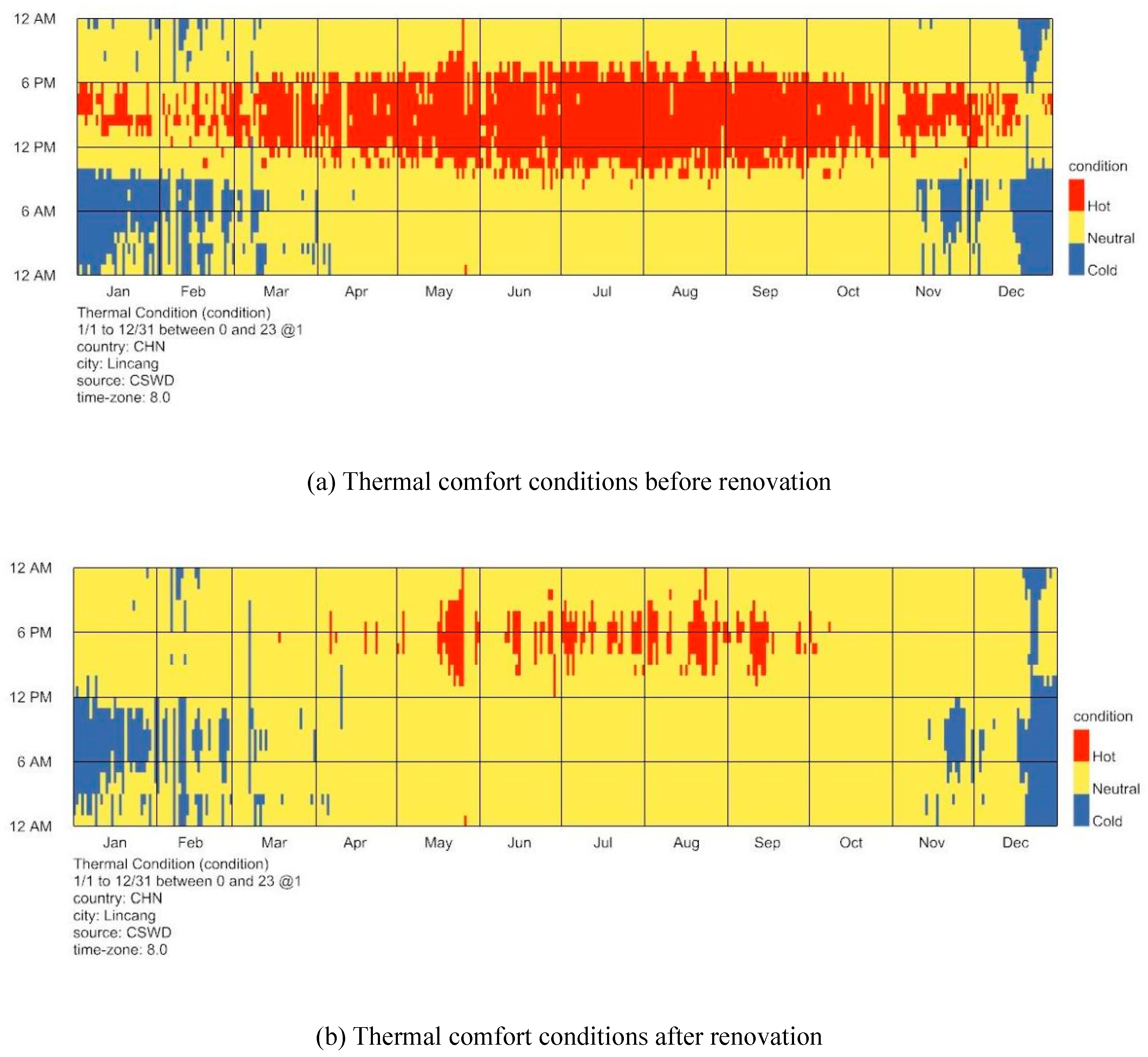
The changes in the proportion of comfortable time before and after the renovation are compared based on the annual thermal comfort chart. Before the renovation, the heat-sensing period was concentrated in the afternoon (12:00-16:00) from May to September, accounting for 32%, and the cold-sensing period was from night to early morning (20:00-8:00) from December to February, accounting for 41%; the thermal comfort period was only 27% throughout the year. After the renovation, the heat-sensing period was reduced to 18%, and the peak temperature was reduced by 2-3℃; the cold-sensing period was reduced to 22%, and the minimum temperature was increased by 4℃; the proportion of thermal comfort period increased to 60%. Through the coordination of insulation and ventilation, the renovation made the indoor temperature more moderate in summer and warmer in winter, narrowed the temperature difference between day and night (from 10-15℃ before the renovation to 5-8℃), and weakened the impact of seasonal extreme temperatures, providing a more comfortable indoor environment.
Figure 16.
Thermal comfort conditions before and after renovation.
3.2.4. Building Performance Analysis:
The year-round indoor thermal comfort map(Figure 17) shows that the range of human comfort in indoor buildings is in the yellow zone, that is, the indoor environment of the renovated buildings is more in the "thermal comfort" and "mild heat stress" ranges, indicating that thermal comfort has improved.
The year-round indoor thermal comfort map shows that the range of human comfort in indoor buildings is in the yellow zone, that is, the indoor environment of the renovated buildings is more in the "thermal comfort" and "mild heat stress" ranges, indicating that thermal comfort has improved.
According to the annual load diagram before and after the transformation (Figure 18), the upper figure is the visualization of the monthly load, and the lower figure is the visualization of the monthly load energy consumption balance. Before the transformation, the average annual total load value was 245.29 kWh/m 2, of which the cooling load intensity was 55.56 kWh/m 2, the heating load intensity was 0.499 kWh/m 2, the lighting load intensity was 13.929 kWh/m 2, and the electrical equipment load intensity was 42.496 kWh/m 2. After the transformation, the average annual total load value is 101.45 kWh/m 2, of which the cooling load intensity is 27.87 Wh/m 2, the heating load intensity is 8.00 kWh/m 2, the lighting load intensity is 0.53 kWh/m 2, and the electrical equipment load intensity is 0.70 kWh/m 2. At the same time, with the optimization of water supply and drainage and water collection systems, the value of infiltration intensity dropped to 0.0006 m 3 /s, and the total volume flow of water per unit floor area was 0.15L/hm 2. As a result, the process load intensity dropped from 0.481 kWh/m 2 to 0.0262 kWh/m 2, and the hot water load density dropped from 132.32 kWh/m 2 to 64.30 kWh/m 2. At the same time, with the application of solar lamps, the load of electrical equipment has dropped significantly and the solar energy value has increased slightly. It reduces energy consumption and improves indoor comfort. It can be seen that the renovation measures reduce the cooling demand during the high temperature period in summer through the shading system and natural ventilation design; and reduce the heating demand in winter through insulation materials and sealing design. It improves the energy efficiency of buildings, reduces dependence on fossil fuels, reduces carbon emissions, and enhances the sustainability of buildings [24].
3.3. Spatial Governance Results: Increased Participation
Theorem-type environments (including propositions, lemmas, corollaries etc.) can be formatted as follows:
3.3.1. Before Renovation
Tao Rongchao's family is relatively poor, with unstable sources of income. His daughter goes to school all year round, and he lives alone at home farming. Before the kitchen renovation, he could only make a living and think that changing the kitchen space would not make much difference to his life. During the research phase, when asked about the current situation, he smiled and said that it can still be used now. During the plan adjustment phase, he always shook his head and waved his hands and said, "I am a country boy with no education. How can I understand design or problems?" Or he sighed with a bit of helplessness, "I have no opinion." He also always pointed to the standardized ceilings or white walls that were added to every household in the previous rural dilapidated house renovation project and joked, "You designers can't use it after designing it in two days." Due to the long-term lack of discourse power in rural design and the suppression of design needs during the consultation phase, the householder has a deep-rooted prejudice against design plans and government policies [25]and a distrust of designers and the government, [26]resulting in a low willingness to participate in rural construction. The householder can accept the current status of the kitchen and does not have high expectations for the kitchen after the renovation.
3.3.2. Under Renovation
The designers, through local co-construction, verbal encouragement and guidance, active adjustments in design, in-depth communication, put themselves in the shoes of the householders to understand their potential needs that were not mentioned, and put forward targeted solutions. The government, through decentralization of discourse power, puts householders in the main position of governance and construction, and encourages the transition from government control to cooperative management, as well as self-governance with greater freedom under the new model.
When the renovation project returns to the real needs of users and the simplicity required by the rural landscape, instead of being a government face-saving project that was previously designed to “dress up, put on makeup” or a check-in point for designers to realize their ideal of rural construction, the household owner finally lets down his guard and speaks his mind, and the attitude towards renovation changes from passive to active. (Figure 19)
3.3.3. After Transformation
During the design stage, farmers transformed from "listeners" to "designers" and proposed using bright tiles for roof partitions, which are cheap, easy to install, and more rainproof and insect-proof, thus filling the gap in non-user design thinking. During the construction phase, farmers can take the initiative to provide suggestions for the implementation of the kitchen construction plan. For example, adding a shelf to the stove will make storage more convenient, and making the large stove top slippery for easier cleaning. Farmers have significantly increased their attention to the construction process, from watching and being indifferent to taking part in it themselves, providing their own slate and wood, and actively participating in tasks such as paving the ground and transporting building materials. During the maintenance and operation stage, due to the increased level of voluntary participation, farmers' satisfaction with the built kitchens has significantly increased, and they have taken the initiative to place kitchen utensils and clean facilities. Farmers took the initiative to undertake the subsequent cleaning and waste removal work of the maintenance construction site. At the same time, farmers are willing to participate in design decisions and take the initiative to explain the design to visiting tourists. In daily use, the father and daughter prepare meals together in the new, more spacious and brighter kitchen, and can sit down in the more convenient dining area to eat and chat, thus establishing a closer family connection. Through the co-creation model, we can get rid of the original governance thinking that takes the government as the governance subject and the process form is rigid, integrate the characteristics of decentralized individual construction of villagers in the village, transform from model-based overall transformation to personalized demand customization pilot update, transform to farmers as the main body, explore core needs, promote endogenous motivation, establish a healthy governance order, and truly realize self-management and self-governance with high flexibility and better governance effect [27].
4. Discussion
4.1. Low-Cost Control
The economical nature of low technology is reflected in the low and controllable cost, and it is sustainable in construction, so cost control is a low-tech transformation. Due to the ban on logging of forest resources and the limited mining of slate resources, most of the main materials of the house can only be purchased and cannot be mined, so the construction cost of slate houses today has reached tens of thousands of yuan①. In addition to the cost of materials, labor costs also account for a large expenditure. According to the actual purchase records of local building materials prices, labor, construction equipment, infrastructure and other expenditure records, the project cost expenditure table is summarized. The economic cost calculation of the renewal measures and the required materials shows that the renewal cost is 40,016 yuan. Among them, combined with the rural health revolution policy being promoted in China and the subsidy policy for poor areas, relevant policy subsidies can be sought for the structural reinforcement part with higher costs, and the actual expenditure is less than 40,000 yuan. It is more practical and economical for low - income local villagers, greatly reducing the difficulty of acceptance and cost pressure.
Table 4.
Project Expenditure.
| Update measures | Renovation Materials | Renovation time limit (days) | Economic cost (yuan) | Cost Structure |
| Wall structure | Straw paint, waterproof coating, cement mortar, linen stone | 2 | 3000 | |
| Smoke exhaust ventilation | Traditional stove: grate, partition, bricks, linen stone | 3 | 3870 | |
| Kitchen flue: hood, brick | 1 | 2000 | ||
| Modern stove: waterproof varnish, bamboo curtain, bricks, tiles, sand and gravel | 3 | 1400 | ||
| Lighting measures | Roof structure: tempered glass, shale slabs, | 1 | 3000 | |
| Wooden structure repair: local Yunnan pine | 1 | 1000 | Replacement of rotten beams, rafters | |
| Water supply and drainage measures | Ground reconstruction: fine stone concrete, mixed mud, putty | 2 | 550 | |
| Material and soil transportation/construction equipment use | —— | 2 | 550 | |
| Labor | —— | 15 | 24640 | Senior worker (a total of 84 people) 21,000 yuan, laborer (a total of 20 people) 2,800 yuan, including craftsman insurance of 840 yuan |
| total | 15 | 40010 |
4.2. Low Investment Mode
In the model of co-creation[28],by building houses together with villagers, each subject of this model has multiple roles, multiple services are integrated, and a systematic governance mechanism is used to ensure the construction effect. All villagers are[29]household heads and main participants, as well as construction workers, governance participants, supervisors, designers and decision makers with active voice. The planning team is a designer, construction supervisor, construction party, and governance coordinator. Governments at all levels are resource managers and governance coordinators, as well as supervisors, resource allocation and public introduction decision makers, and designers of governance mechanisms.
By establishing a systematic workflow framework (Figure 20), the entire construction cycle of consultation, construction, management, evaluation and sharing can be completed.
With low autonomy and consciousness of villagers, low enthusiasm for construction, low flexibility and low matching of requirements, and high financial investment, the low investment of the co-creation model is reflected in the following aspects[30]. First, the work cycle is significantly shortened. With the efforts of multiple parties, the original self-construction cycle of 60 to 90 days has been shortened to 15 days. Second, co-construction increases work efficiency. Through the cooperation of local craftsmen and migrant workers, villagers are encouraged to invest their labor to carry out construction.(Figure 21)Third, co-management promotes self-management by household owners, and reduces the cost of later maintenance through self-construction, self-management and self-maintenance by villagers. The team supervises the construction on the spot and conducts regular return visits, and the online and offline continuous[31]follow -up mechanism. The construction team takes measures such as construction repair, rework, and reconstruction for unqualified parts based on comprehensive opinions. The comprehensive integrated service can efficiently replace supervision. Fourth, co-evaluation improves the incentive mechanism. Through self-evaluation, mutual evaluation and other evaluation of the pilot transformation results, the small amount of compensation in the form of rewards instead of subsidies can leverage the willingness of villagers to make major transformations. As the pilot is gradually promoted, the living environment will gradually improve. Fifth, sharing improves the feasibility of governance, enhances villagers’ sense of happiness and belonging, changes the driving force of transformation from external promotion to voluntary implementation[32], and changes project governance from external governance to self-governance.
4.3. Low-Cost Control
Low loss refers to the preservation of the spatial environment and the inheritance of cultural traditions, which is specifically reflected in the following three aspects.
First, the original layout is respected in terms of space, and the spatial scale is continued. The location of the stairwell is retained and reset to rationalize the layout of the kitchen and dining room, and the flexible spatial scale is applied through various arrangements and combinations of facilities such as " L -shaped + straight-line" and " L- shaped + square", avoiding large-scale demolition and reconstruction of the framework.
The second is to use existing materials. The leftover stone scraps from the wall masonry are used for the stove surface. The raw materials are reused, and the roof slates are repaired and waterproofed before being re-laid. Local materials are retained and permeable bricks are replaced with local stones. To ensure ecological energy conservation in the design, the courtyard of the drain outlet is transformed into a rain garden, and the natural filtering function of plants and soil is used to purify rainwater.
The third is to preserve traditional skills and culture. Inheritance and preservation of local characteristics and reasonable innovation of traditional skills can achieve low emotional consumption. By adjusting the layout of the roof frame wood structure and the mortise and tenon joints, the stone slab layout is applied to the stone-steel-glass interface. The local characteristics are preserved, the space emphasizes the stone cultural elements, and the characteristic stone water tanks, stone drainage ditches and stone stoves are preserved to continue the historical memory of the village and enhance cultural identity.
5. Conclusions
Low-technology strategies were adopted in the construction to create an environmentally friendly and harmonious living space. The whole process of renovation insists on low-cost construction based on local conditions and materials, which not only reflects regional characteristics, but also promotes the sustainable use of resources. At the same time, it adopts a low-input co-creation model. By working together with local craftsmen, the project has been able to create a local building that incorporates local knowledge and combines traditional skills with modern technology to modernise and enhance the space. By communicating with the householder and learning from each other, the programme will be more accurate and localised to meet the actual needs, and the householder's right to make design decisions and have a say will be enhanced. By communicating with the government and obtaining policy support, the efficiency of resource allocation and the fairness of capital going to the countryside are improved. In this way, traditional construction techniques are preserved and inherited, while modernisation balances the traditional style with modern needs. By referring to the local construction logic and balancing tradition and modernity in material space and spiritual culture, it not only accelerates the process of farmhouse renovation, but also ensures the effect of renovation and achieves low-loss retention. The low-tech strategy realises the sustainability of rural construction, i.e. the transformation result achieves the improvement of building quality, the comfort of use and the endogenous motivation of self-governance.
Due to the small number of construction pilots, the scope of application is small and replicability is more limited. In the future, the team expects this pilot experience to form a model innovation in rural construction, and explore and help rural construction to flourish.
Author Contributions
J.W.: Conceptualization, writing—review and editing, supervision, resources; X.Li.: investigation, methodology, software, writing—original draft preparation, validation, formal analysis. All authors have read and agreed to the published version of the manuscript.
Funding
This research received no external funding.
Institutional Review Board Statement
Not applicable.
Informed Consent Statement
Not applicable.
Data Availability Statement
Not applicable.
Acknowledgments
The authors appreciate the two anonymous reviewers for their valuable and constructive comments. We would like to express our appreciation to the editor and two anonymous reviewers for the time and effort you have taken to provide such insightful guidance.
Conflicts of Interest
The authors declare no conflict of interest.
Abbreviations
The following abbreviations are used in this manuscript:
| DA | Daylight autonomy |
| DF | Daylight factor |
| sDA | Spatial daylight autonomy |
| DGP | Daylight Glare Probability |
| UGR | Unified Glare Rating |
| HSP | Lists of values between 0 and 100 for the Heat Sensation Percent(Percentage of occupancy time when thermal conditions are above acceptable/comfortable temperatures.) |
| CSP | Lists of values between 0 and 100 for the Cold Sensation Percent(Percentage of occupancy time when thermal conditions are below acceptable/comfortable temperatures.) |
| TCP | Lists of values between 0 and 100 for the Thermal Comfort Percent.(Percentage of occupancy time where thermal conditions are acceptable/comfortable.) |
| Working temperature value | Operative temperature is defined as a uniform temperature of an imaginary black enclosure in which an occupant would exchange the same amount of heat by radiation plus convection as in the actual nonuniform environment |
| PMV | Predicted Mean Vote(The Predictive Mean Valuation (PMV) index is a comprehensive evaluation index that takes the basic equations of human heat balance and the psycho physiological rating of subjective thermal sensations as a starting point, and takes into account a number of factors related to the human body's sense of thermal comfort.The PMV index shows the average index of the group's vote for seven levels of thermal sensation, ranging from (+3 to -3). |
| ACH | Air changes per hour(Air changes per hour is simply the amount of times all of the air in a room is replaced with completely new air) |
| ASHRAE | The American Society of Heating, Refrigerating and Air-Conditioning Engineers |
Appendix A
Appendix A.1
Table A1.
Quantitative Methods Applied and Corresponding Formulas and Descriptions.
| Quantitative method |
Formula | Letter meaning |
|---|---|---|
| Calculating the Unified Glare Rating measures an individual's comfort level with lighting indoors through the Unified Glare Index. | Lb - background luminance (cd/m2); La - luminance of each luminaire in the direction of the observer (cd/m2); ω - the stereo angle (sr) formed by the luminous part of each luminaire to the observer's eye; p - position index of each individual luminaire. |
|
| Calculating hourly Daylight Glare Probability (DGP) for each sensor in a model's sensor grids. Glare Autonomy (GA) results in percent. GA is the percentage of occupied hours that each view is free of glare (with a DGP below the glare threshold). |
 |
Ev= Vertical eye illuminance Ls= glare luminance Ws= solid angle of the glare source P = Gus position index n = number of glare sources |
| CalculatingLs: glare luminance and Ev:Vertical eye illuminance |
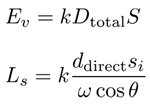 |
Dtotal= Vector of daylight coefficients for all sky patches S = vector of point-in-time sky luminance for all sky patches ddirect= daylight coefficients for the direct component of sky patch i only Si= point-in-time sky brightness value for sky patch i k = luminous efficiency of 179Ln/W white light |
| k Turbulent kinetic energy: characterises the kinetic energy carried per unit mass of fluid due to turbulent pulsations. Larger values indicate more violent velocity fluctuations in the flow field (e.g., separating flows, vortices, etc.); smaller values indicate that the flow tends to be more laminar (uniform velocity distribution) | 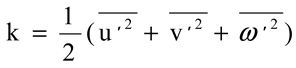 |
u′, v′, ω′: velocity pulsation component of the fluid in the ,y,z direction (deviation of the instantaneous velocity from the mean velocity) (: time averaging operator;. :Energy normalisation factor per unit mass of fluid. |
| σ means the standard deviation of the velocity field. Reflects the degree of deviation of the velocity value of each position from the average velocity; the larger σ is, the more uneven the velocity distribution (such as local high-speed or low-speed areas); the smaller σ is, the more uniform the velocity distribution. α means Uneven velocity coefficient. Usually defined as the ratio of the standard deviation of the velocity to the mean velocity, it is used to quantify the degree of dispersion of the wind velocity distribution in space. The lower the coefficient, the more uniform the airflow distribution. |
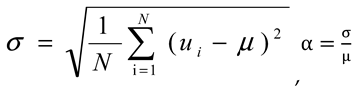 |
: The instantaneous velocity of the ith measurement point in space; : the average velocity of all measurement points in space N: total number of measurement points |
References
- Lu, J.; Su, Y.; Xu, F.; et al. Huayao kitchen:Renewal of rural residential kitchen in Chongmutai village. J. Archit. 2019, 68–73. [Google Scholar]
- Zhang, D.; Zhang, W.; Chen, D. Concept analysis and exploration of ideas for the cluster model of traditional rural settlement protection and development in the new era. Urban Development Research 2022, 29, 16–21+39. [Google Scholar]
- Hu, Z.; Fang, X. Thinking about the auxiliary approach of landscape characteristic assessment to rural planning in the Pearl River Delta. Small Town Construction 2021, 39, 35–44+76. [Google Scholar]
- Wen, M. Protection and development of traditional villages in Tongren City under the background of rural revitalization strategy. Rural Economy and Science and Technology 2025, 36, 130–133. [Google Scholar]
- Shen, Y.; Zhang, X.; Zhu, H.; et al. Research on the construction of local human settlement environment based on cultural gene genealogy: A case study of Shaxi Ancient Town in Dali. Art and Design (Theory) 2024, 2, 73–76. [Google Scholar] [CrossRef]
- Liu, Y. Urban-rural integration and rural revitalization in the new era of China. Acta Geographica Sinica 2018, 73, 637–650. [Google Scholar]
- Wang, W. New rural elites and rural charity: resource integration, project docking and incentive mechanism innovation. Journal of Yunnan Nationalities University (Philosophy and Social Sciences Edition) 2020, 37, 52–57. [Google Scholar] [CrossRef]
- Qi, Y.; Tong, S. Application of “Low-tech” in the Intervention of Traditional Style Buildings: A Case Study of House No. 009 in Pingshan Village, Shangyu District, Shaoxing. Urban Architecture 2024, 21, 18–23+33. [Google Scholar] [CrossRef]
- Pan, J.; Zhang, L.; Zhong, F. More than just building rural areas: the content and principles of contemporary rural construction. China Book Review 2014, 32–41. [Google Scholar]
- Tan, Q.; Huang, J.; Wang, D.; et al. Study on spatial characteristics of functional modules of rural kitchens in Hefei. Furniture and Interior Decoration 2024, 31, 118–123. [Google Scholar] [CrossRef]
- Ma, H.; Li, Z.; Wang, Q.; et al. Study on the actual characteristics and renewal strategies of kitchen space in rural houses: A case study of southern Anhui. Central China Architecture 2022, 40, 58–62. [Google Scholar] [CrossRef]
- Liu, D. Study on the architectural genealogy of wooden tile houses in northwest Yunnan based on the investigation of construction techniques. Master degree, Beijing Jiaotong University, Beijing, 2023. [Google Scholar] [CrossRef]
- Long, S. The Basic Form and Characteristics of Folk Beliefs of the Yi Ethnic Group in Southern Yunnan and Their Impact. Journal of Xichang College (Social Science Edition) 2024, 36, 18–27. [Google Scholar] [CrossRef]
- Zheng, W.; Wang, Z. Design of village and town residential space based on settlement fractal isomorphism research: A case study of Yi traditional settlements in Chuxiong area. Southern Architecture 2021, 130–137. [Google Scholar]
- Mostaedi, A. Low-tech housing strategies, Han, L., Translator; Beijing, China, 2005; 6–7.
- Tudoran, O.A.; C Dumitrescu, C.G. Tendencies in ecological architecture. Reducing energy consumption during the projection phase. Low-tech type of ecology. Journal of environmental protection and ecology 2013, 14, 744–752. [Google Scholar]
- Yu, Y.; Gong, Y. Research on the design of kitchen island for the elderly. Industrial Design 2023, 81–83. [Google Scholar]
- Men, Y.; Jiang, K.; Yao, j.; et al. Mitigating household air pollution exposure through kitchen renovation. Environmental Science and Ecotechnology 2025, 23, 100–501. [Google Scholar] [CrossRef] [PubMed]
- Liu, Y.; Li, C.; Ma, H. Numerical simulation of the impact of different air intake modes on the diffusion of double pollution from cooking in residential kitchens. Journal of Safety and Environment 2023, 23, 2514–2522. [Google Scholar] [CrossRef]
- Yunnan Provincial Department of Housing and Urban-Rural Development. Civil Building Energy-saving Design Standard. Available online: https://zfcxjst.yn.gov.cn/submodule/Editor/uploadfile/20200120110553549.pdf (accessed on 17 January 2020).
- Li, J. Research on facade shading system of cultural and sports buildings based on indoor natural lighting quality: Taking the Shangcun Cultural and Sports Center project as an example. Architecture and Culture 2024, 71–73. [Google Scholar] [CrossRef]
- Day - lighting Simulations with Radiance Using Matrix-based Methods (2019-03-09). Available online: https://www.radiance-online.org/learning/tutorials/matrix-based-methods.8 (accessed on 9 March 2019).
- Ministry of Housing and Urban-Rural Development of the People's Republic of China"Green Building Evaluation Standard" (GB/T50378-2019). Available online: https://www.mohurd.gov.cn/gongkai/zc/wjk/art/2024/art_17339_779172.html (accessed on 11 July 2024).
- Dang, Y.; Zhao, K.; Wang, X.; et al. Exploration of new rural low-carbon building model based on prototype theory. New Architecture 2024, 90–95. [Google Scholar]
- Sun, Y. Promoting "good governance" through "participation" - Research on the impact of participatory rural planning from the perspective of governance. Urban Planning 2018, 42, 70–77. [Google Scholar]
- Lu, J.; Zeng, Y.; Xu, Y. Rough regions: Regional differentiation of new brutalism and its contemporary value. Journal of Western Human Settlements 2025, 40, 12–18. [Google Scholar] [CrossRef]
- Dong, W.; Li, Y.; Dong, Yu.; et al. Exploration of progressive construction planning model for rural communities. Planner 2019, 35, 82–87. [Google Scholar]
- Huang, Y.; Lang, W.; Chen, T.; et al. Co-creation workshop: a new model of participatory community planning. Planner 2015, 31, 38–42. [Google Scholar]
- Sun, Y.; Zhang, S. Research on the governance mechanism and construction effect of rural construction: A comparison of four rural construction cases in Fenghua, Zhejiang Province. Journal of Urban Planning 2021, 44–51. [Google Scholar] [CrossRef]
- Liu, D. Exploration of the path of rural construction based on the linkage of “village regulations, village construction and village management”: A case study of the rural co-creation experiment in Yucun, Zhejiang Province. Urban Planning 2024, 48, 57–66. [Google Scholar]
- Chinese Government Website Guidelines for Farmers’ Participation in Rural Construction (Trial). Available online: https://www.gov.cn/zhengce/zhengceku/2023-01/17/content_5737525.htm (accessed on 6 January 2023).
- China Rural Research Network. Farmers’ Participation in Village-level Governance: On the Realization of Rural Social Governance Community. Available online: https://ccrs.ccnu.edu.cn/List/H5Details.aspx?tid=20186 (accessed on 3 December 2023).
Figure 1.
Evolution of the form of a fire pit or kitchen stove.
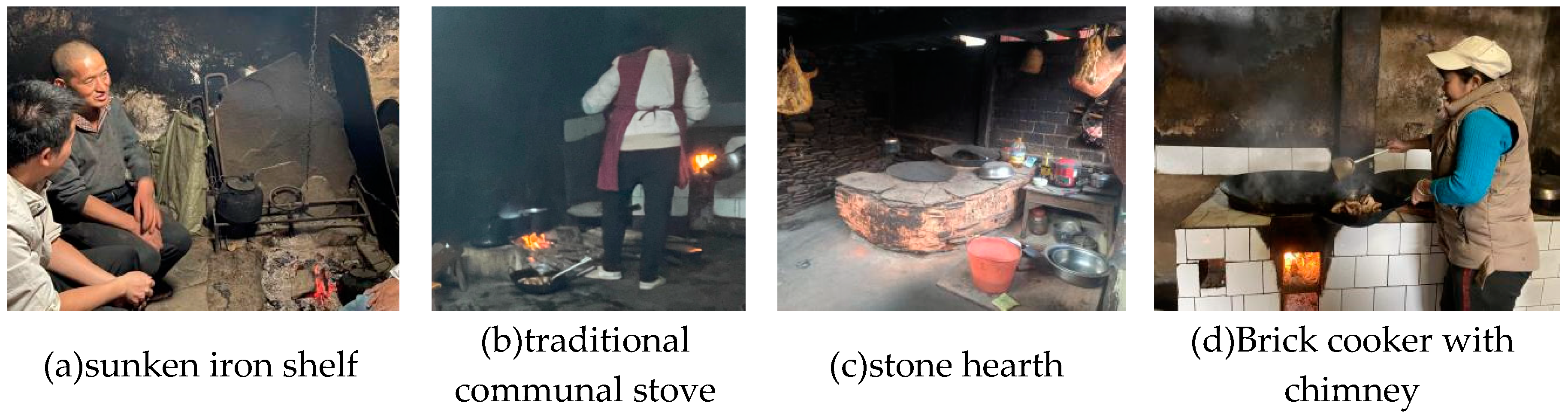
Figure 2.
Pilot area location.
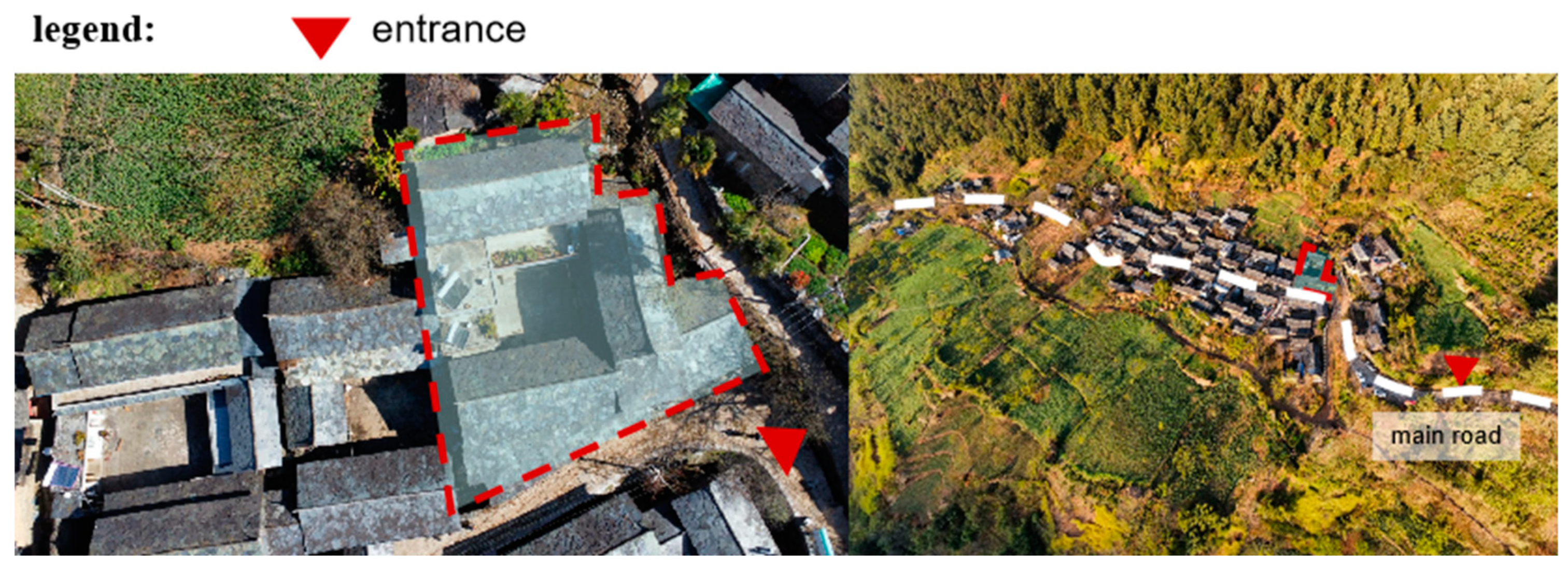
Figure 3.
Low-tech retrofit design strategy process.
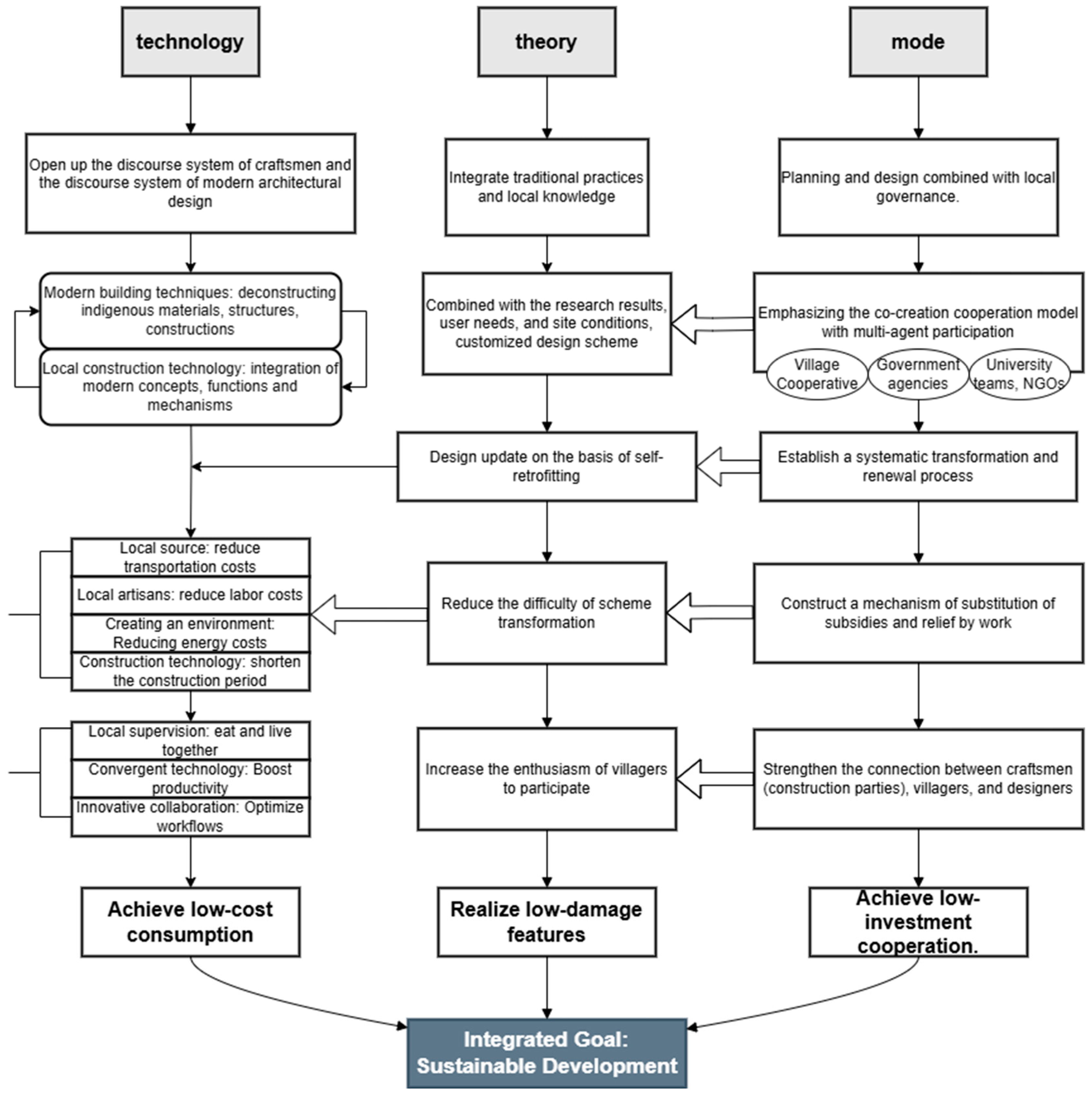
Figure 5.
Kitchen plan and AA section.
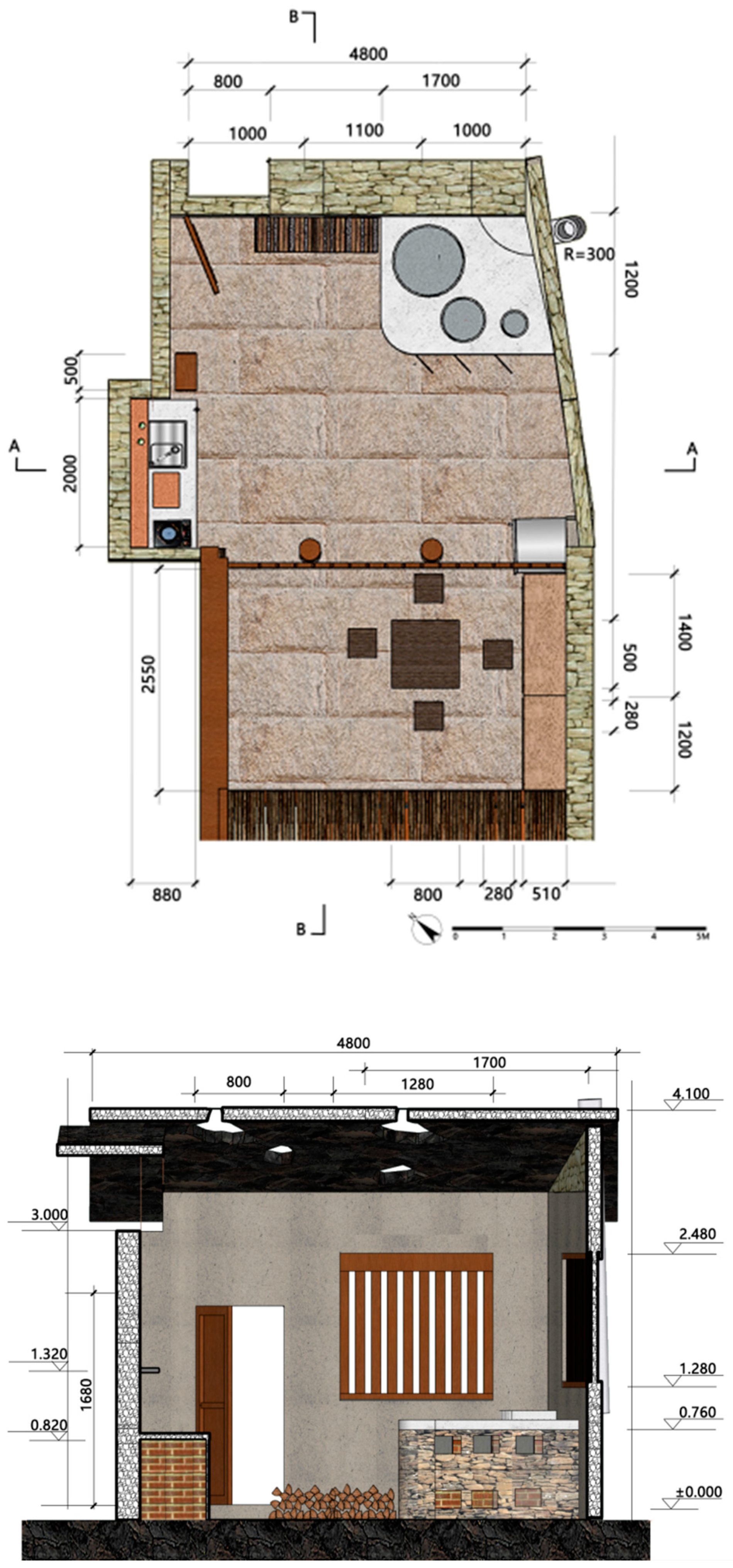
Figure 6.
On-site traditional stove construction process.
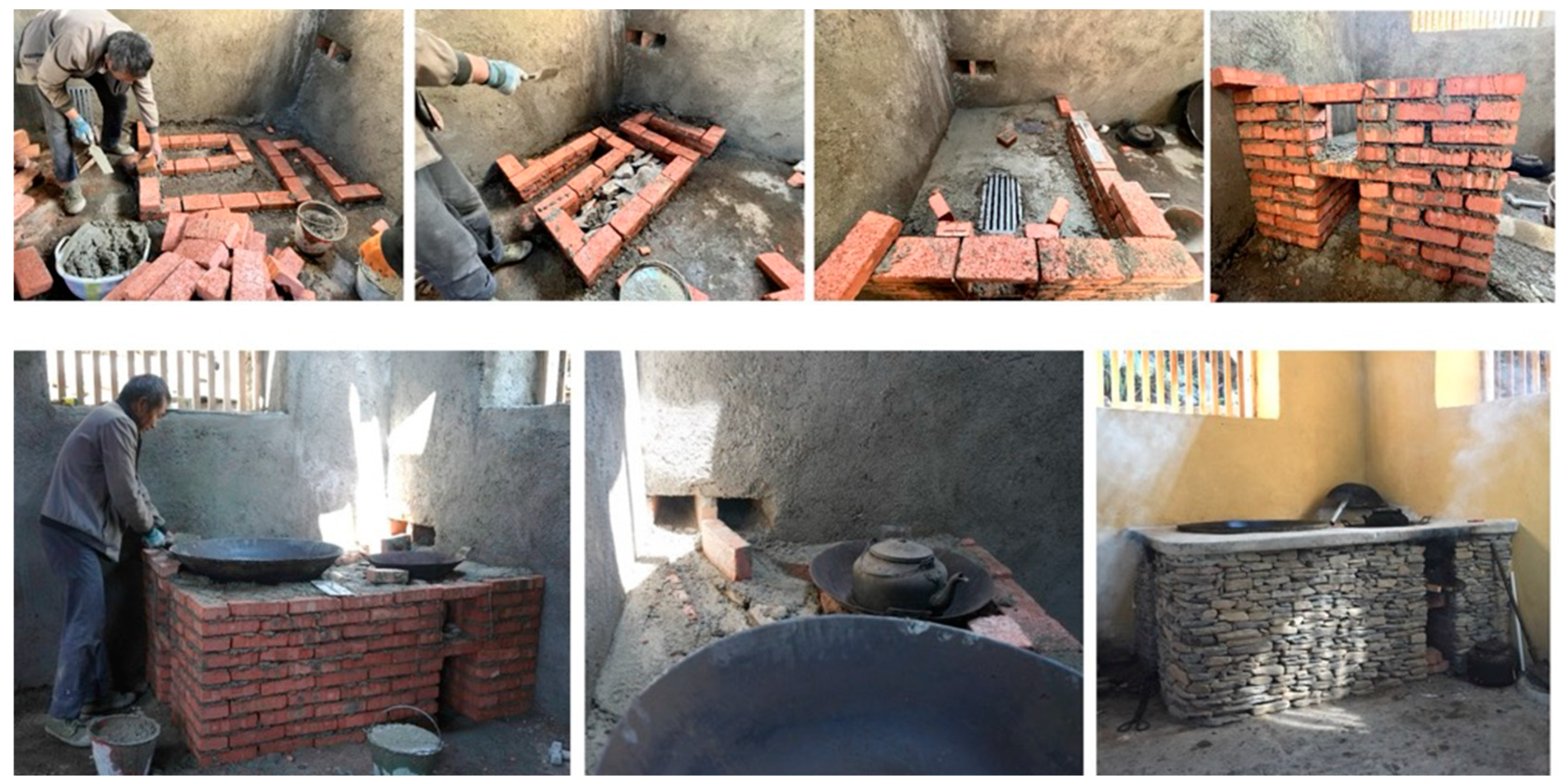
Figure 7.
Comparison of the kitchen before and after renovation.
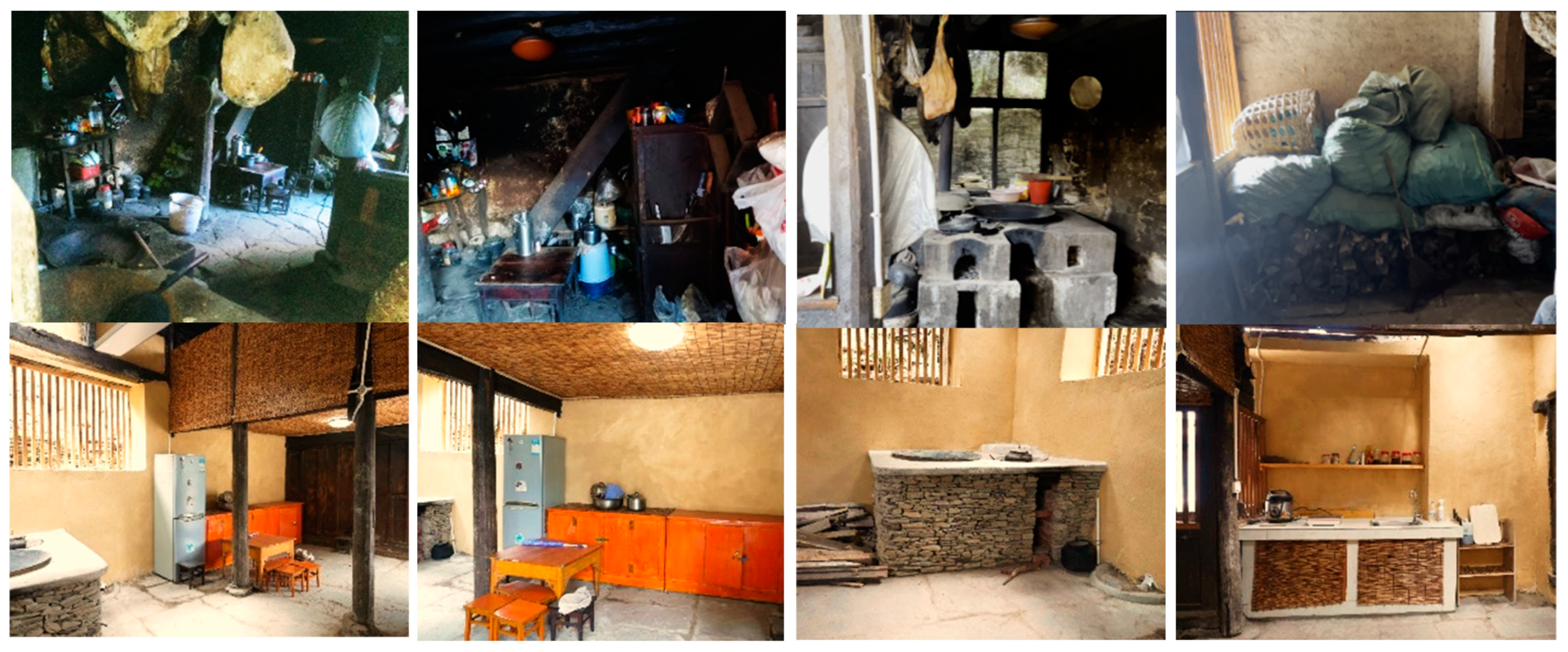
Figure 8.
Comparison of the kitchen before and after renovation.
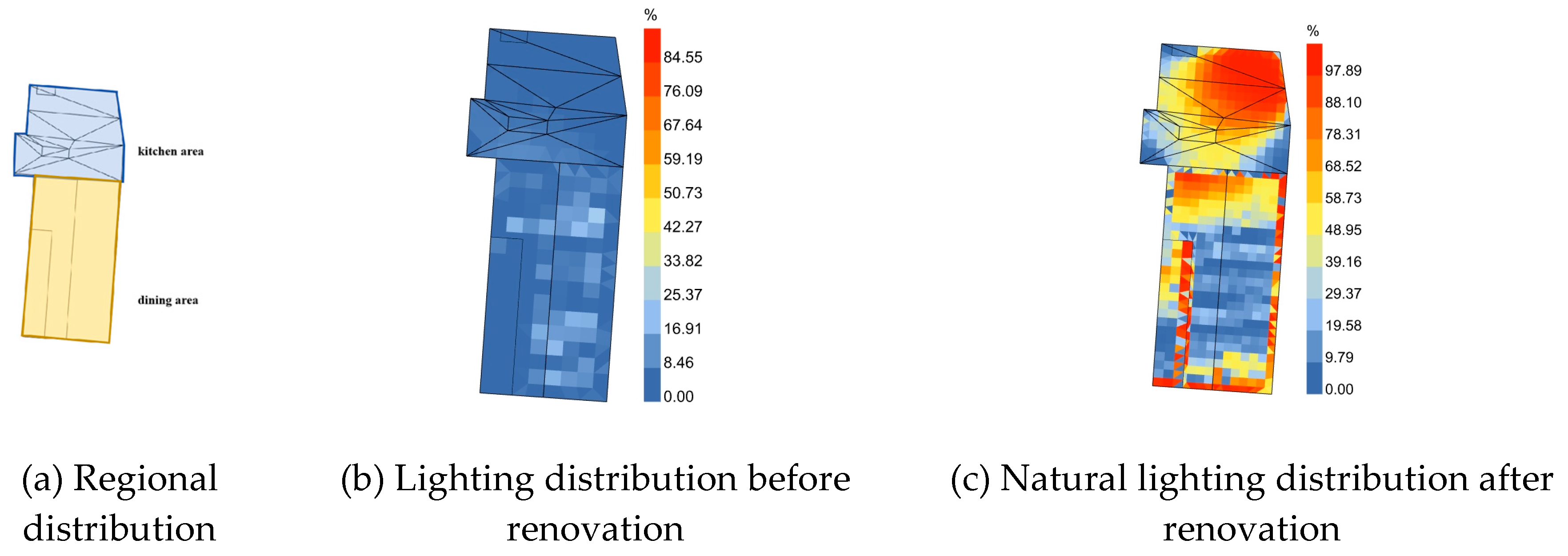
Figure 9.
Annual natural light volume before and after renovation.
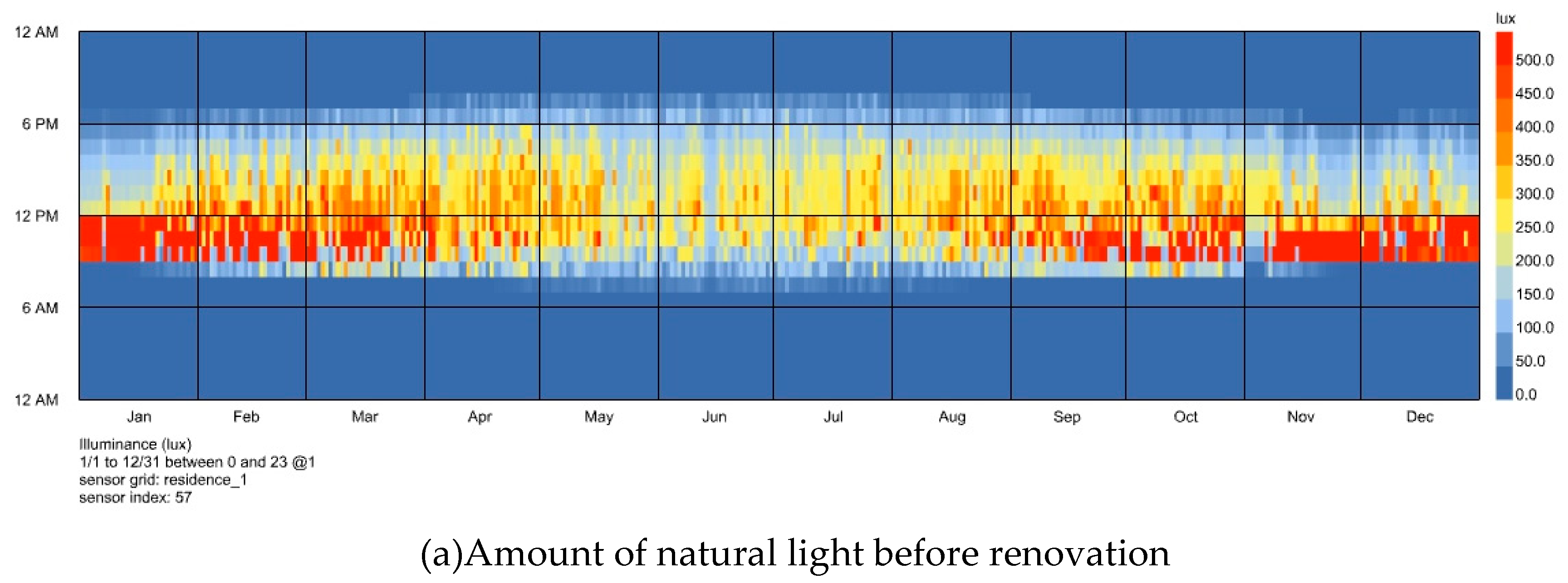
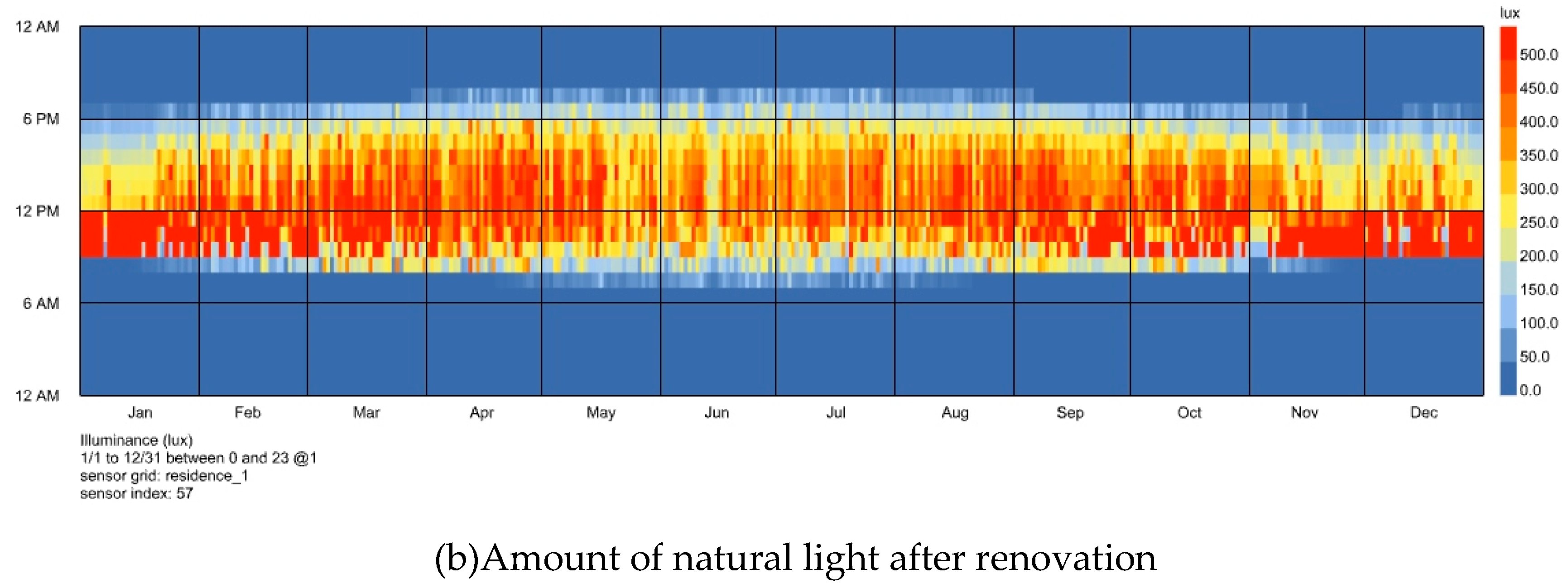
Figure 10.
Indoor glare comfort throughout the year before and after renovation.
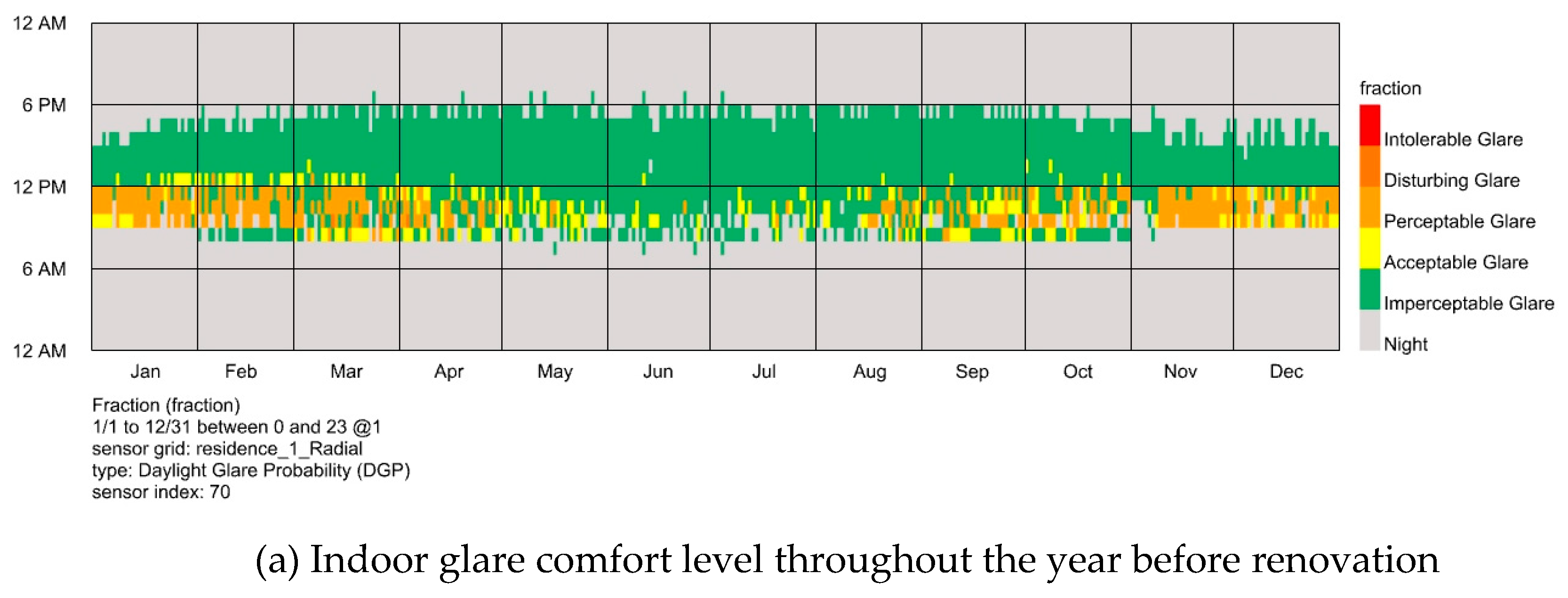
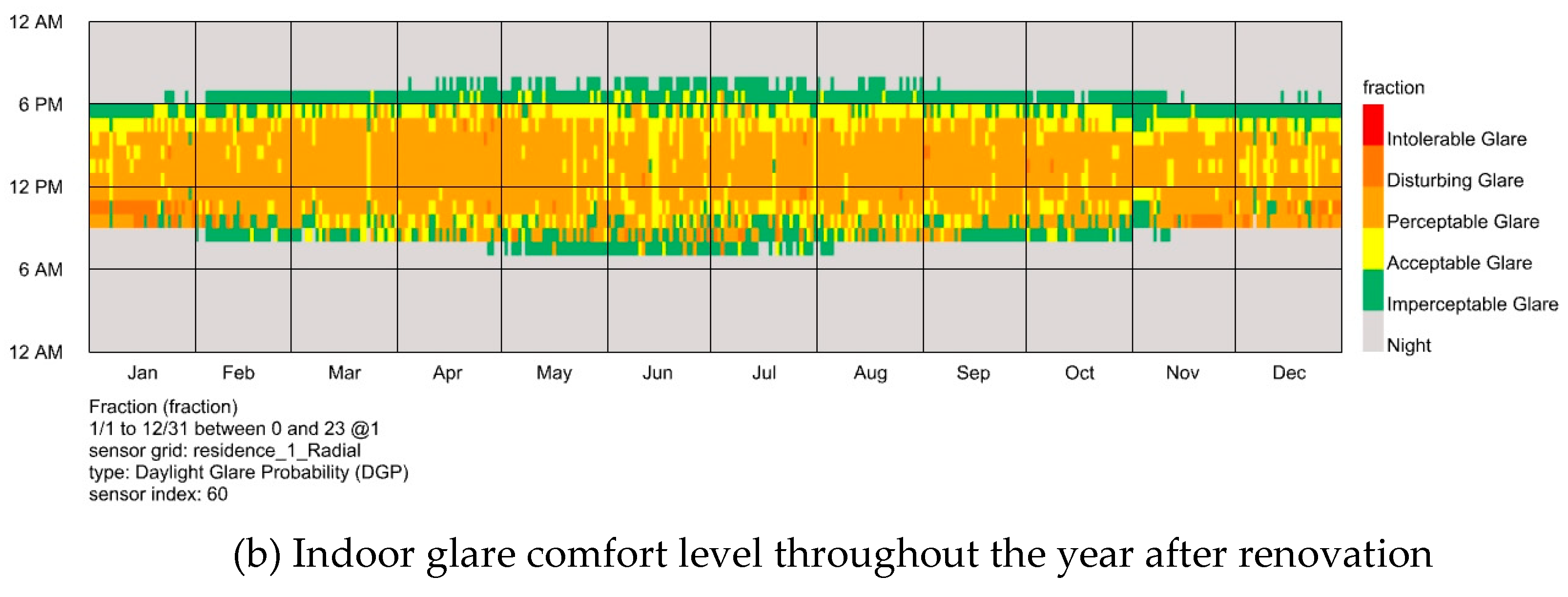
Figure 11.
Glare autonomy at various points in the room before and after renovation.
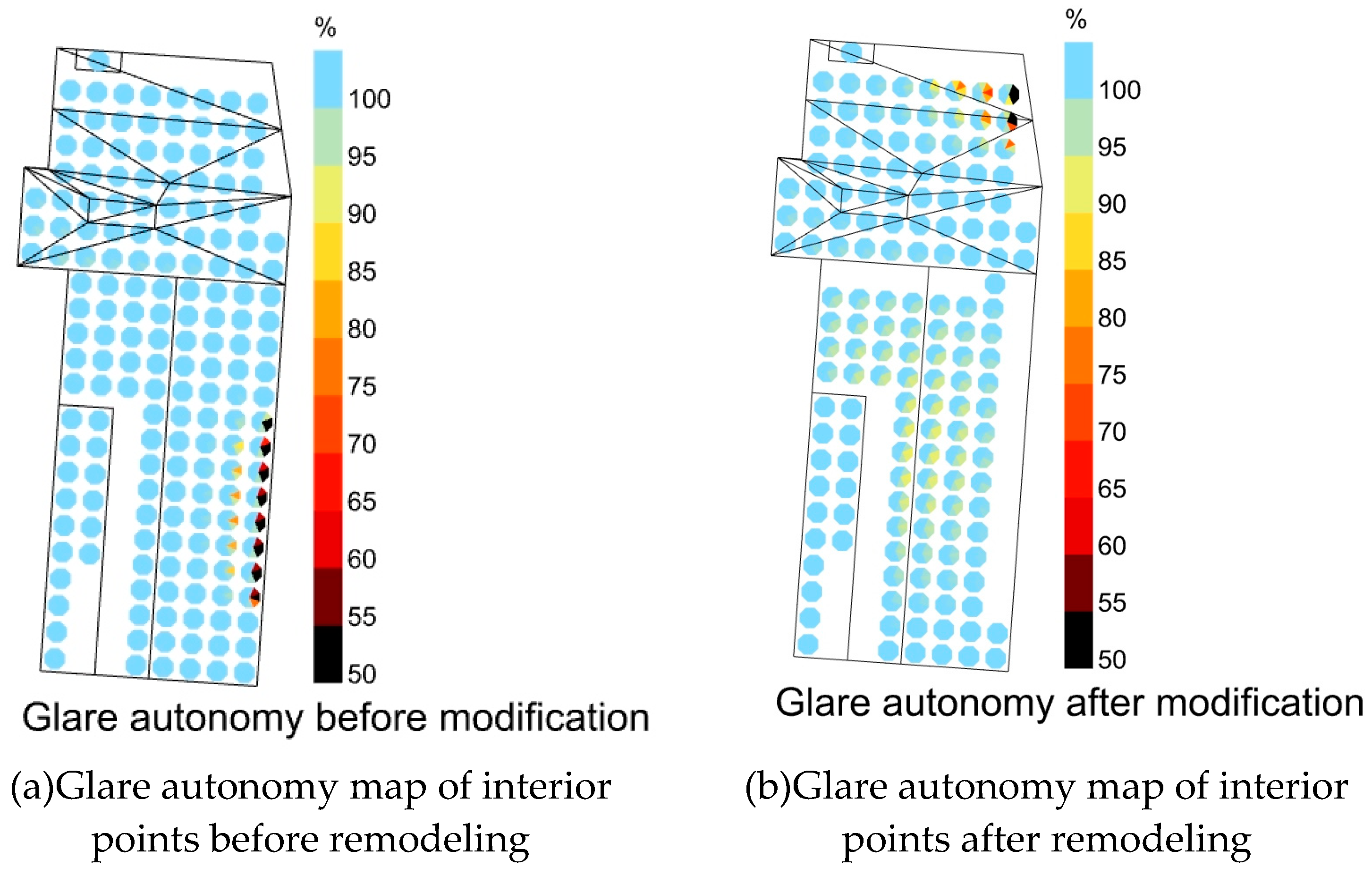
Figure 12.
Indoor ventilation wind speed diagram before and after renovation.
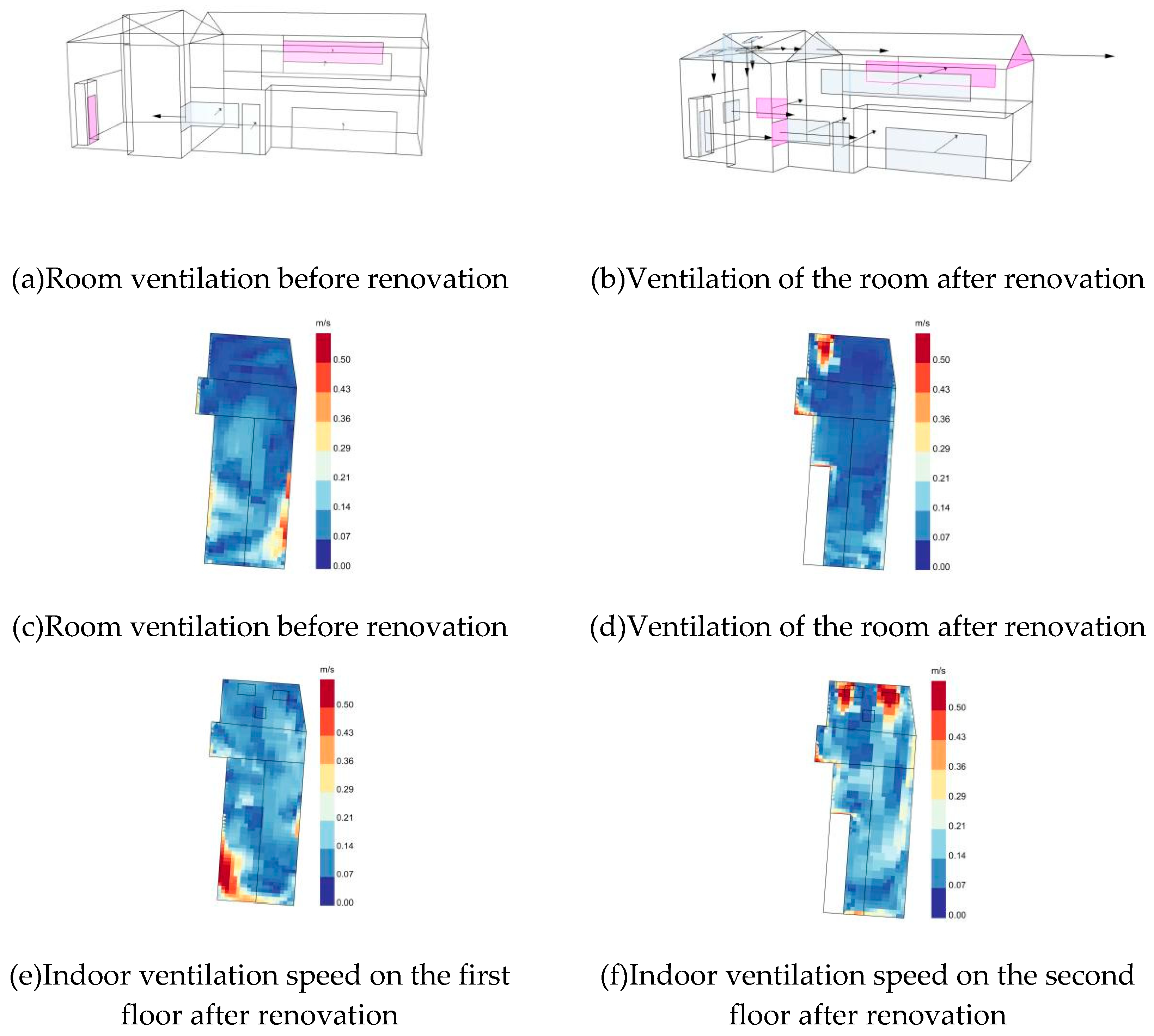
Figure 13.
Indoor temperature of each part of the building before and after renovation.
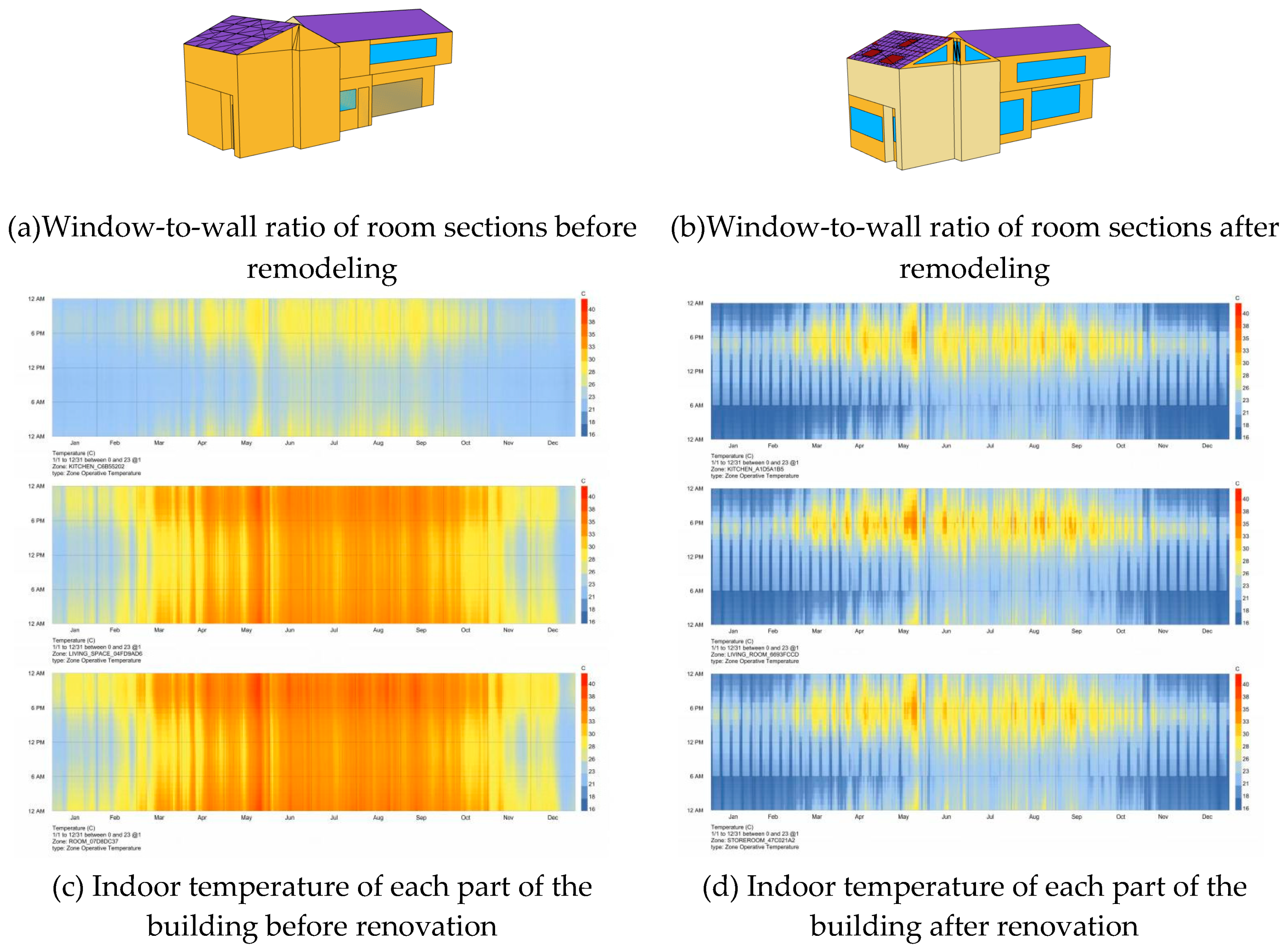
Figure 14.
Thermal comfort of shading before and after renovation.
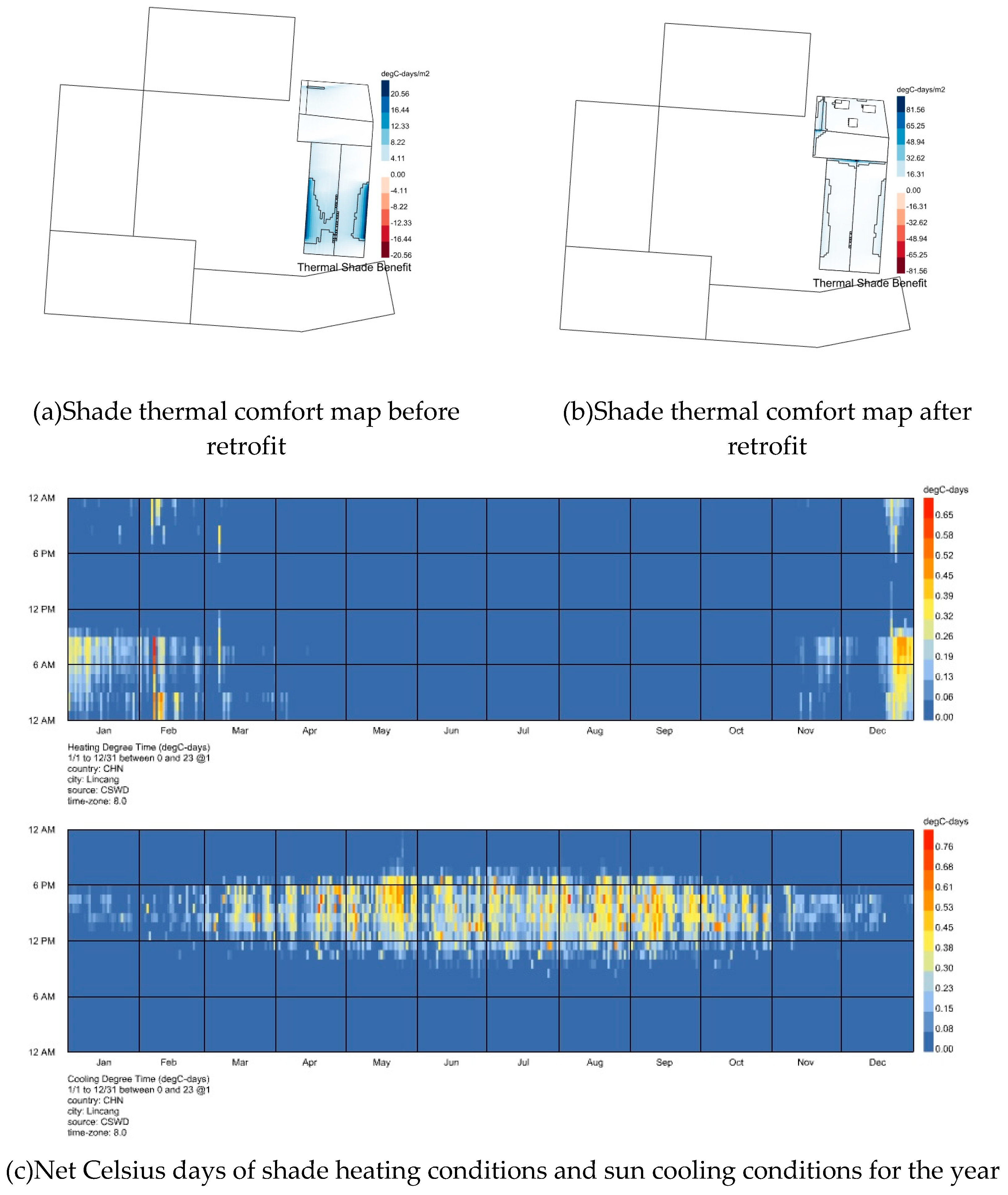
Figure 17.
Indoor thermal comfort throughout the year.
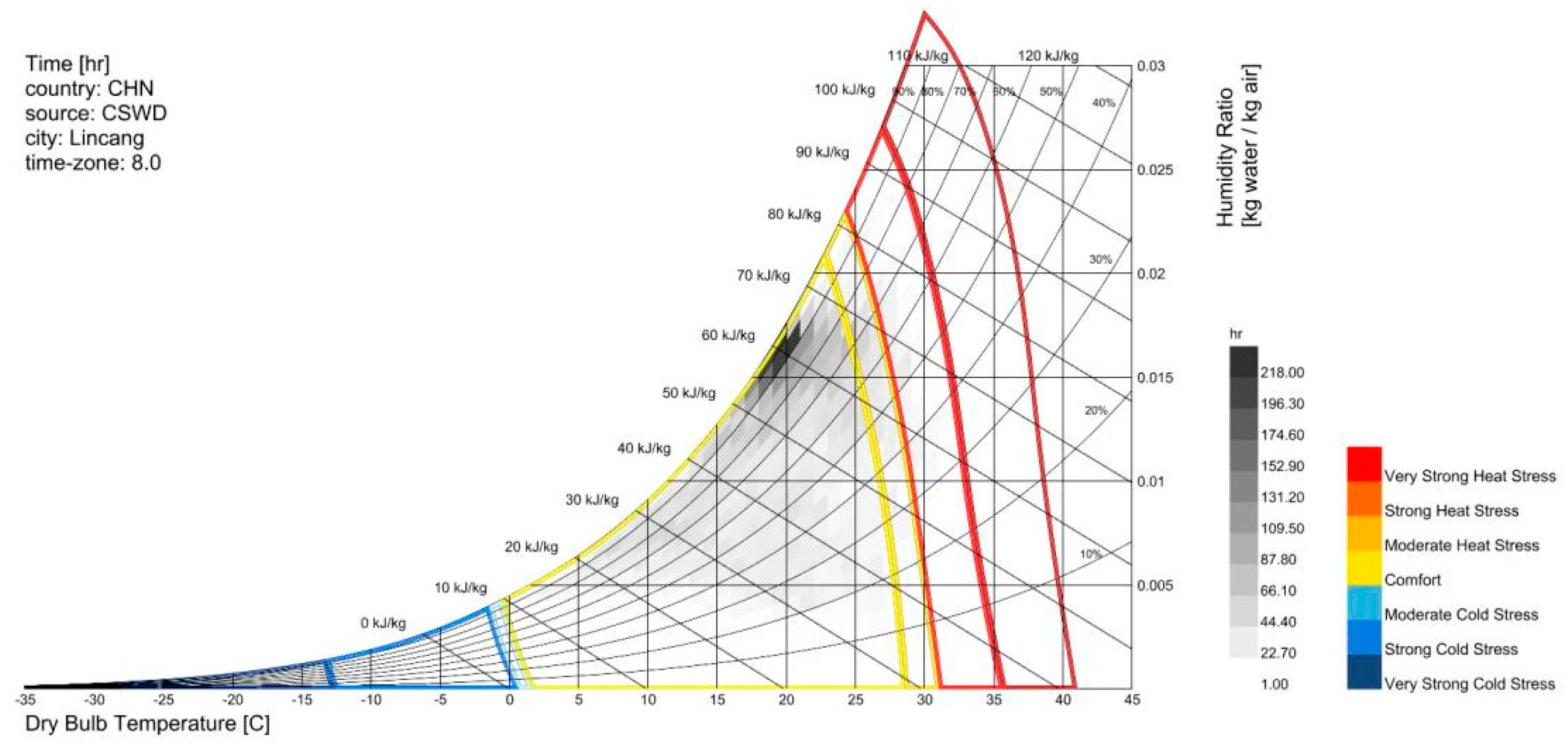
Figure 18.
Annual load distribution before and after the transformation.
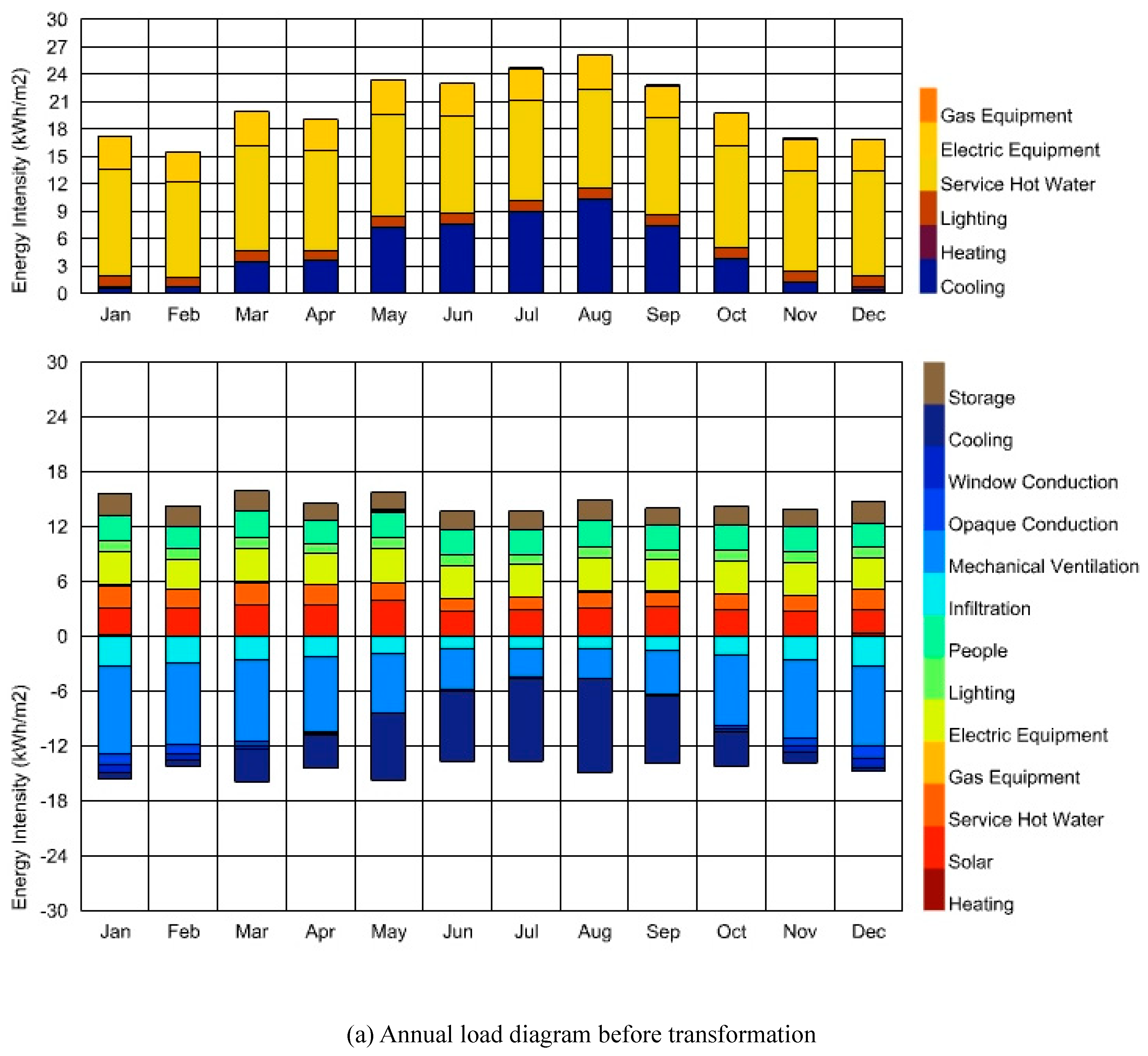
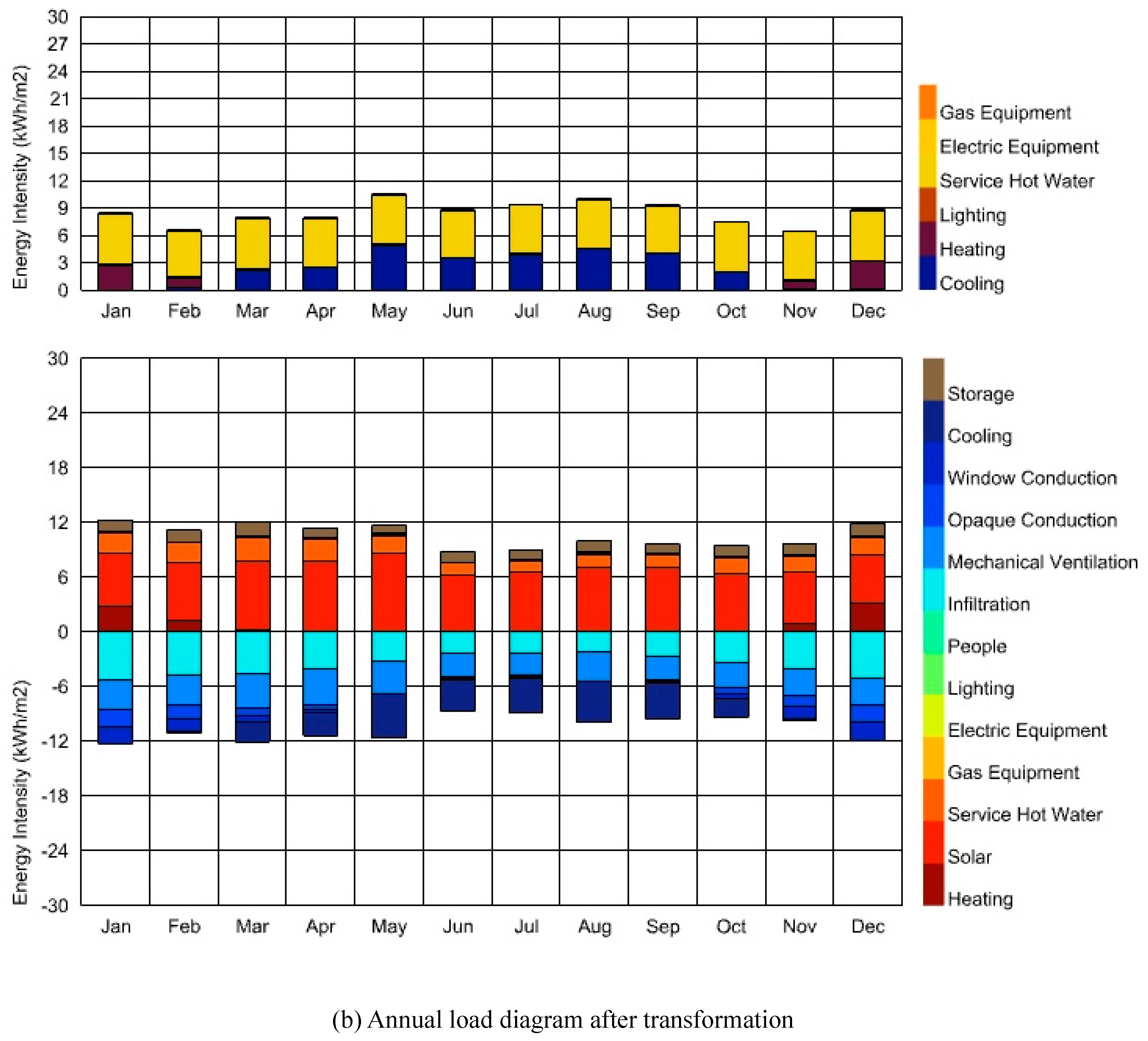
Figure 19.
The transformation and driving role of household head Tao Rongchao.
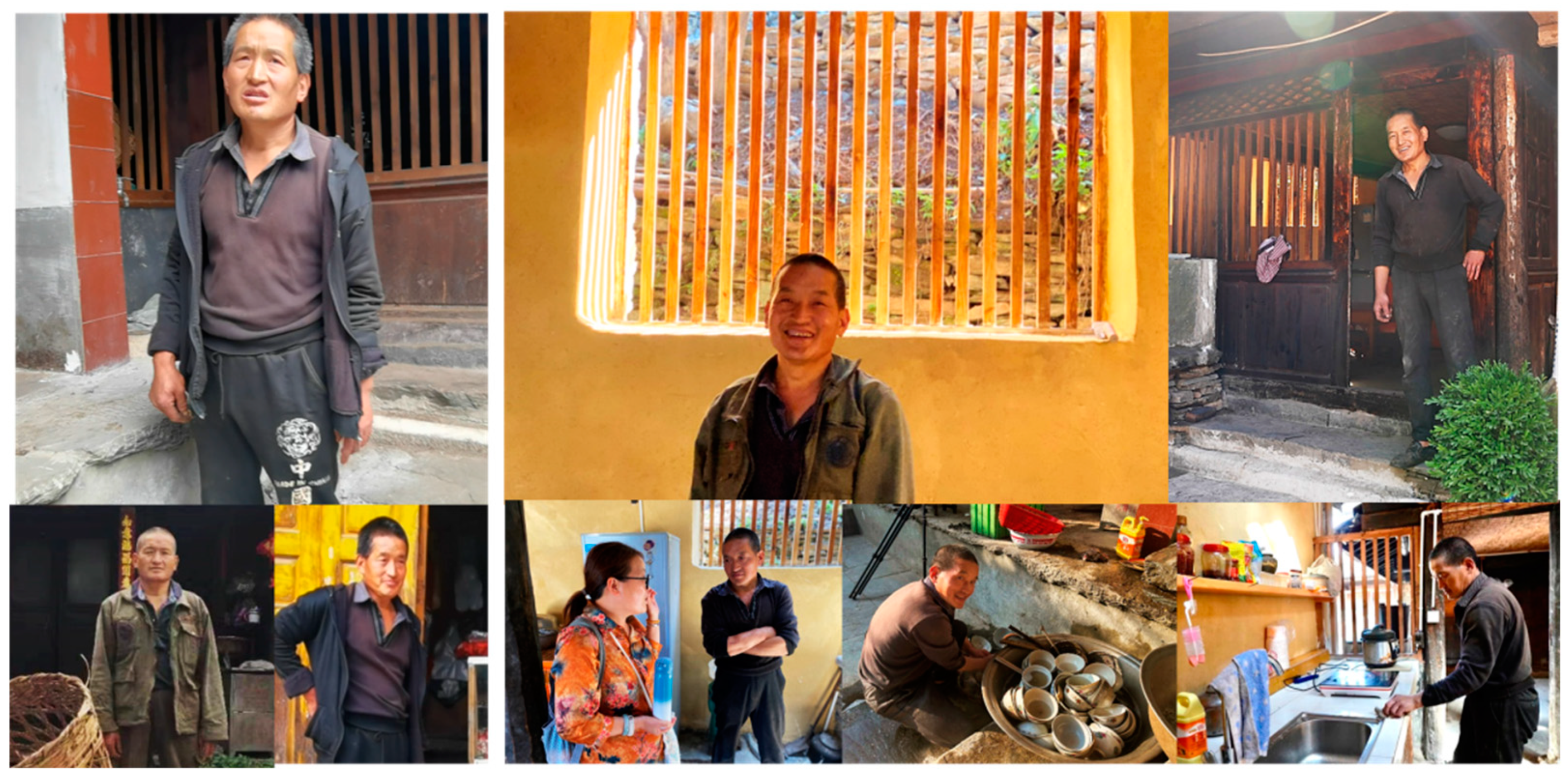
Figure 20.
Systematic workflow architecture under the co-creation model.
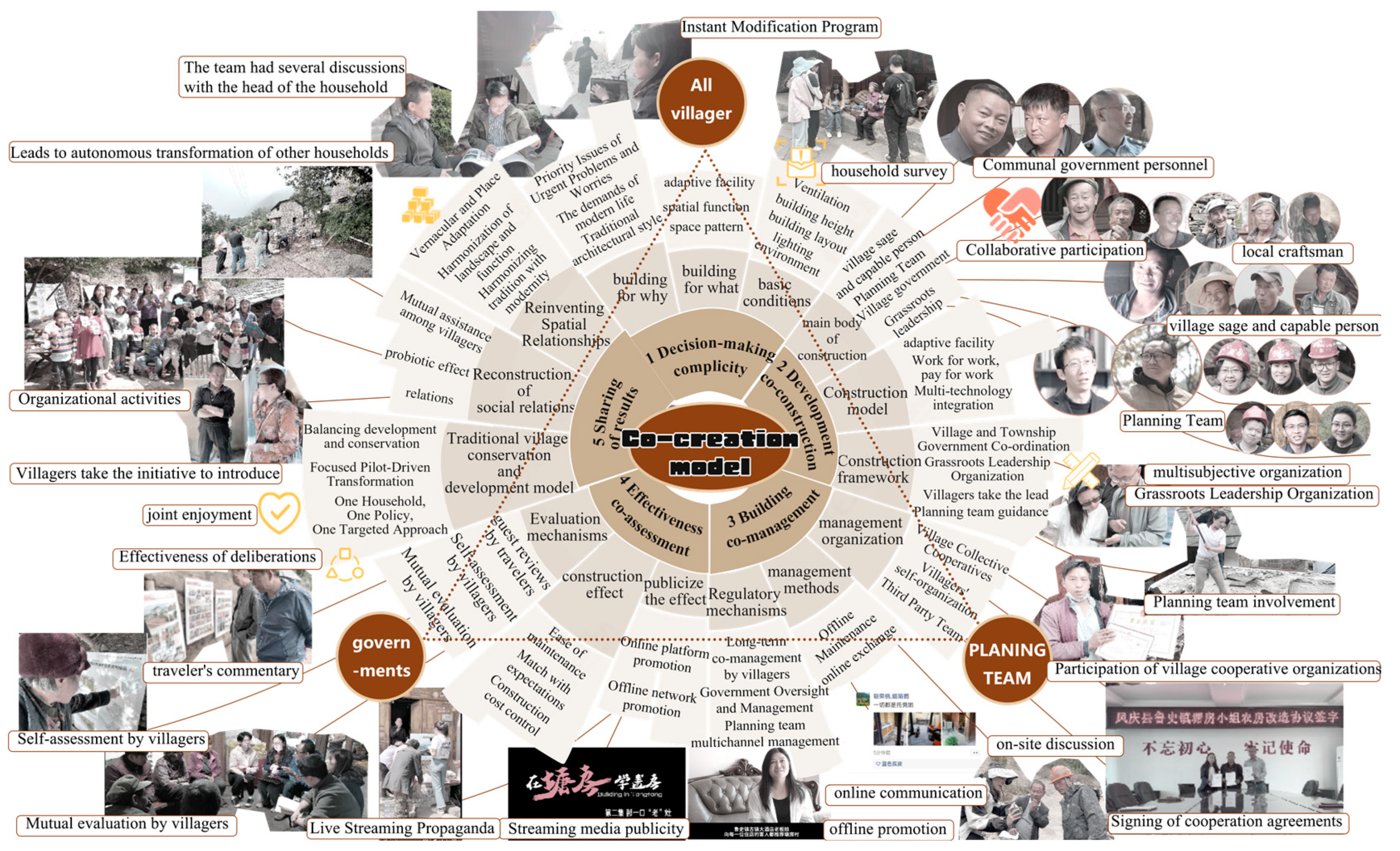
Figure 21.
Co-construction process of kitchen renovation.
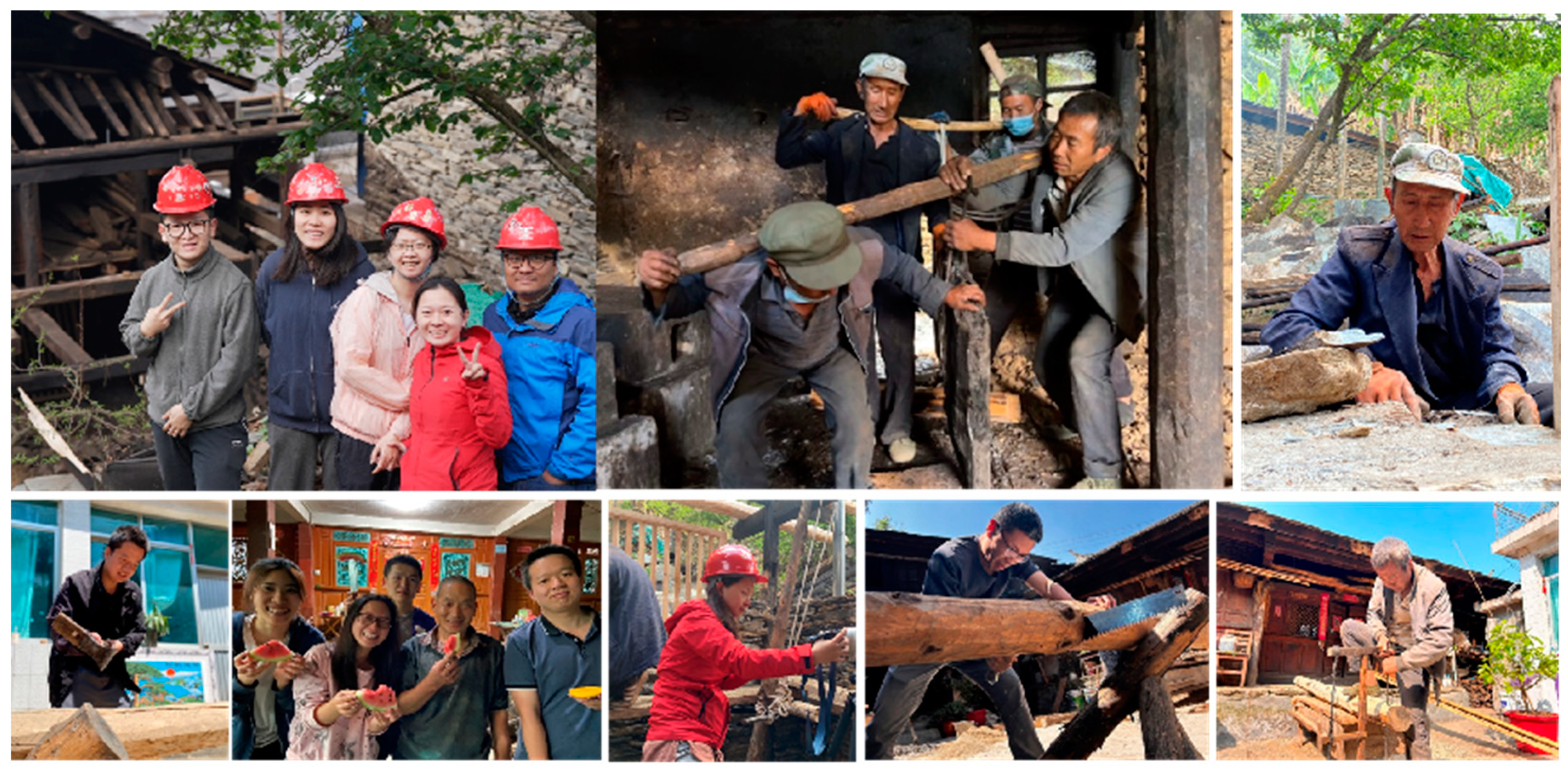
Table 2.
Spontaneous transformation of the villagers' kitchens in the form.
| question | Self-transformation solution | Application Scenario |
|---|---|---|
| Functional flow problem | Extra storage is placed on the second floor, a new storage room, and on the balcony |  |
| Ventilation Problems | Use mud or plaster to seal the stove to prevent smoke leakage | 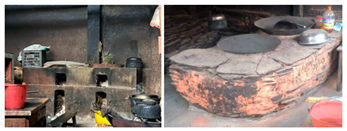 |
| Water supply and drainage issues | Use water tank to store water and connect external water pipe to drain water | 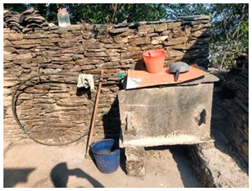 |
| Lighting issues | Replace roof or mezzanine slate with bright tiles | 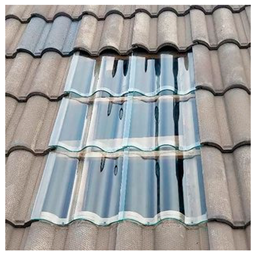 |
Table 3.
Low-tech transformation measures.
| Technical measures | Specific approach | |
|---|---|---|
| Functional facilities | 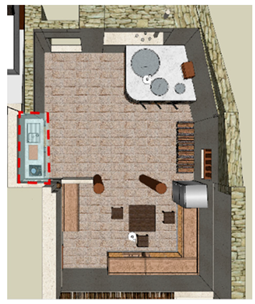 |
 |
| (a) Cabinets and shelves | ||
 |
 |
|
| (b) Cabinets, step cabinets | ||
 |
 |
|
| (c) Woven wooden frame + rattan ceiling | ||
| Ventilation technology | 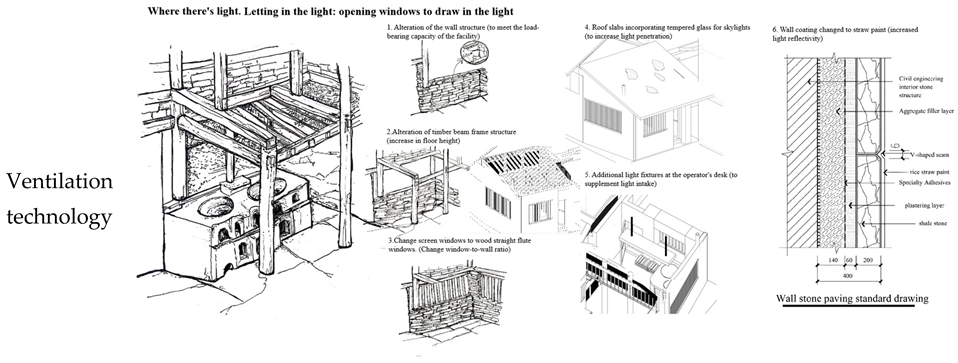 |
|
| (e)Stove exhaust, modify window-to-wall ratio | ||
| Lighting technology | 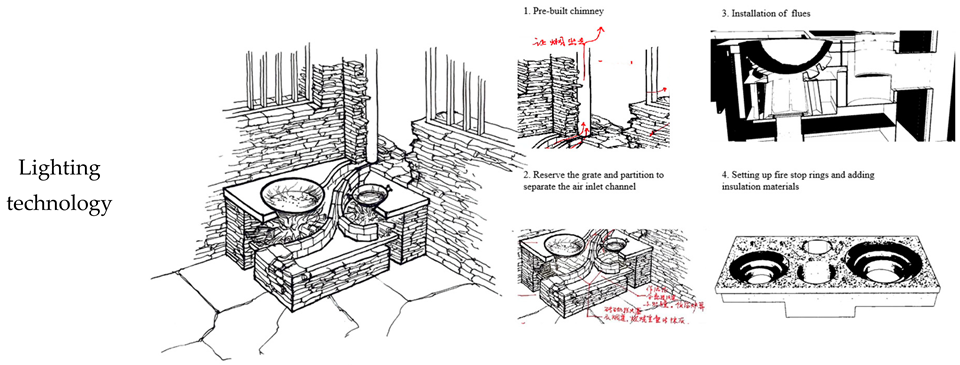 |
|
| (f)Open windows to let in light, change the wall | ||
Table 4.
Relationship between unified glare value and subjective feeling.
| Unified Glare Ratio (UGR) | Subjective feeling |
|---|---|
| UGR<9 | Feels black ( hard to detect glare) |
| 9≤UGR<10 | Feel more comfortable (glare is acceptable) |
| 10≤UGR<16 | Feeling acceptable and comfortable ( glare can be perceived) |
| 16≤UGR<22 | Feeling of discomfort (distracting glare) |
| 22≤UGR<28 | Feeling very uncomfortable (can't stand the glare) |
Disclaimer/Publisher’s Note: The statements, opinions and data contained in all publications are solely those of the individual author(s) and contributor(s) and not of MDPI and/or the editor(s). MDPI and/or the editor(s) disclaim responsibility for any injury to people or property resulting from any ideas, methods, instructions or products referred to in the content. |
© 2025 by the authors. Licensee MDPI, Basel, Switzerland. This article is an open access article distributed under the terms and conditions of the Creative Commons Attribution (CC BY) license (http://creativecommons.org/licenses/by/4.0/).
Copyright: This open access article is published under a Creative Commons CC BY 4.0 license, which permit the free download, distribution, and reuse, provided that the author and preprint are cited in any reuse.


