

Submitted:
28 March 2025
Posted:
31 March 2025
You are already at the latest version
Abstract
The primary function of microglia is to maintain brain homeostasis. However, in several neurodegenerative diseases, such as Alzheimer's disease, the pathophysiological hallmarks that drive disease progression involve neurotoxicity and alterations in neuroinflammation. In this study, we exposed murine neonatal primary microglial cultures to external signals that mimic the in vivo stimuli caused by pathogens, injury, or toxic agents. In the presence of benzoyl ATP (bzATP) and lipopolysaccharide (LPS), we observed a coordinated increase in the expression of interleukins and chemokines. We focused on the dynamics of the differentially expressed microRNAs (miRNAs) that are statistically significant (DEMs) and tracked their post-activation dynamics. Monitoring miRNAs 3 and 8 hours (h) post-activation revealed robust changes in 33 and 57 DEMs, most of which were upregulated. The DEMs exhibiting the strongest temporal regulation included miR-155, miR-132, miR-3473e, miR-222, and miR-146b. Additionally, a strong downregulation of miR-3963 was attributed to the exposure to bzATP. Through their regulation of TNFα and NFκB signaling pathways, the identified DEMs reflect the cellular response to inflammatory signals. We incubated the activated cells with ladostigil, a neuroprotective compound that has been shown to reduce oxidative stress, inflammation, and cognitive decline. While there was no significant effect 3 h post-activation, at 8 h, a few miRNAs implicated in inflammation suppression such as miR-27a, miR-27b, and miR-23b were upregulated in a ladostigil-dependent manner. We conclude that the miRNA expression profile provides a sensitive indicator of the regulatory mechanisms underlying inflammation-related responses in microglia. We propose that primary microglia subjected to controlled activation paradigms can serve as a robust model for inflammatory states in the brain to monitor the aging brain along the progression of neurodegenerative diseases.
Keywords:
Innate immune system
; RNA-seq
; miRBase
; Cytokines
; Clip-seq
; oxidative stress
; ladostigil
; neurodegenerative disease
; LPS
Introduction
Neuroinflammation is a key factor in neurodegenerative diseases (NDDs). Diseases such as Alzheimer's (AD), Parkinson's (PD), multiple sclerosis (MS), and amyotrophic lateral sclerosis (ALS) are characterized by chronic inflammation, mitochondrial dysfunction, and neuronal degeneration [1,2]. Microglia, the resident immune cells of the CNS, play a central role in responding to injury and pathological stimuli [3]. In AD, prolonged activation of microglia leads to β-amyloid clearance and synaptic loss, while the release of inflammatory mediators from microglia causes neuronal damage [4,5,6]. The transition of microglia from a homeostatic to an activated state in response to stressors like brain injury or pathogens [7,8] is coupled with a morphological shift and transformation from ramified to amoeboid forms [9]. Activated microglia are categorized into pro- and anti-inflammatory states, with chronic activation leading to excessive secretion of pro-inflammatory cytokines, contributing to NDD pathology [10,11].
Taken together, the parameters of the inflammatory response are useful markers for disease progression [12,13]. During a chronic state, microglia secrete excessive pro-inflammatory cytokines (such as TNF-α, IL-1β, and IL-6) and reactive oxygen species (ROS). Molecular characterization of murine microglia has identified microglial-specific transcripts (~100) that correspond to their cell identity. Among them, Tmem119, P2ry12, Siglech, and Cx3cr1 are highly expressed in resting microglia and are considered part of the homeostatic gene set. Microglial activation induces a set of molecular markers (e.g., Iba1, Cd68, Apoe, Lpl, and Cst7) together with inflammatory genes such as Ccl2, Il1b, and Nos2 [11]. Transcriptomic analysis of single-cell sequencing has expanded the list of marker genes and improved our understanding of the molecular signature underlying microglial functional states [14].
Studies on primary microglial cultures stimulated with ATP (bzATP) and lipopolysaccharides (LPS) have revealed coordinated inflammatory gene expression, including activation of the TNFα and NF-κB pathways [15]. Ladostigil, a neuroprotective compound, has been shown to reduce oxidative stress, inflammation, and cognitive decline in aging rodent brains [16]. Long-term application of ladostigil in mice restored the lowered mitochondrial potential induced in cells by H2O2 and decreased markers of oxidative stress. In microglial cultures, ladostigil inhibited nuclear translocation of EGR1 and NF-κB, phosphorylation of ERK1/2, and p38 and release of pro-inflammatory cytokines [17]. [17]. While cell lines like BV2 and S9 serve as models, primary microglia better reflect in vivo responses [18]. The microglial primary culture is amenable to pharmacological testing.
In this study, we focused on the profile of microRNAs (miRNAs) in microglial cells. MiRNAs are emerging as biomarkers for neurodegenerative diseases (NDDs) due to their role in regulating inflammation and oxidative stress, with potential applications in disease monitoring [19,20]. However, it is not yet clear how the modulate microglial activation selectively preserve their neuroprotective functions [21]. This study examines the changes in the miRNA transcriptomic profile upon stimulation and in the presence of ladostigil. We monitor the dynamics of the activation process by focusing on the differentially expressed miRNAs and discuss these miRNAs as potential indicators of microglial inflammatory states.
Materials and Methods
Compounds and reagents
The cell culture reagents, including Dulbecco’s Modified Eagle Medium (DMEM), DMEM/F12, gentamycin sulfate and L-glutamine were obtained from Biological Industries (Beit-Haemek, Israel). The activation protocol included stable ATP 2′-3′-O-(4-benzoyl benzoyl) adenosine 5′-triphosphate (BzATP) and lipopolysaccharide (LPS), from Escherichia coli 055:B5, purified by trichloracetic acid extraction (Sigma-Aldrich, Jerusalem, Israel). Ladostigil was a gift from Spero Biopharma (Israel).
Preparation of microglial cultures
Primary microglia were prepared according to a previously described protocol [22]. The cells were isolated from the brains of neonatal male Balb/C mice (Harlan Sprague Dawley Inc., Jerusalem, Israel). Briefly, cells were isolated and plated for 1 week in poly-L-lysine-coated flasks. Following a dissociation protocol, non-adherent and loosely adhered cells were re-plated for 1 h on uncoated bacteriological plates, which allowed the removal of cells exhibiting slower adherence kinetics. Microglial cells were propagated and supplemented with conditioned medium containing mouse-CSF (colony-stimulating factor) and maintain in heat-inactivated fetal calf serum (FCS). For experiments, the microglial culture was washed and the medium was replaced with purified BSA for 24 h. The purity of the culture was confirmed by morphological criteria and a set of markers as previously described [23]. The cultures are estimated to be >95% microglia pure. Under such conditions, the microglial culture remains responsive for four weeks.
Measurement of cytokines
Data presented are for microglial cells stimulated by a combination of bzATP (400 µM) and LPS (0.75 µg/mL). We showed that the concentration of LPS (0.75 µg/ml) given together with BzATP did not affect cell viability after 3 and 24 h using the MTT assay as previously described [17]. Cell lysates were tested and normalized by protein levels using BCA Protein Assay (Pierce, Meridian, Rockford, IL, USA) and cytokine ELISA assay were performed according to manufacturer’s protocols. Cells were grown to 75% confluence in 6-well plates. Measurements of cytokine secretion were made 24 h after activation in the presence of BSA (0.4 µM) using Max deluxe (Biolegend, CA, USA) commercial ELISA kits. Assays for cytokine release were conducted with 5 × 10⁵ cells per well and cytokine assays were calibrated by using internal standard curves.
MicroRNA-seq
Microglial cultures were harvested using a cell-scraper. Total RNA was purified from ~106 cells using QIAzol Lysis Reagent RNeasy plus Universal Mini Kit (QIAGEN, GmbH, Hilden, Germany). To ensure homogenization, a QIAshredder (QIAGEN, GmbH, Hilden, Germany) mini-spin column was used. Samples were transferred to a RNeasy Mini spin column and centrifuged for 15 s at 8000× g at room temperature. The mixture was processed according to the manufacturer’s standard protocol. Samples with an RNA integrity number (RIN) >9, as measured by Agilent 2100 Bioanalyzer, were considered for further analysis. RNA libraries (in triplicates) were prepared according to NEBNext Small RNA Library Prep Set for Illumina (Multiplex Compatible) Library Preparation Manual. Adaptors were then ligated to the 5′ and 3′ ends of the RNA, and cDNA was prepared from the ligated RNA and amplified to prepare the sequencing library. The amplified sequences were purified on E-Gel® EX 4% Agarose gels (ThermoFisher, Waltham, MA, USA, # G401004), and sequences representing RNA smaller than 200 nt were extracted from the gel. The library was sequenced using the Illumina NextSeq 500 Analyzer.
Bioinformatic analysis and statistics
All next-generation sequencing data underwent quality control using FastQC, version 0.11.9. Adapter trimming and quality filtering were performed using Trimmomatic, version 0.39, with the AllTrueSeqPE adapter list and a minimum read length threshold of 15 nucleotides [24]. Processed reads aligned to the reference genome (GRCm38) using miRDeep2 [25]. Quantification of miRNAs was performed using miRDeep2 with miRBase v22 annotations. Trimmed mean of M-values (TMM) normalization of miRNA read counts and differential expression analysis were performed using edgeR, version 3.36.0 [26]. TMM is a between-sample method that is suitable to compare different libraries. The low variability of the TMM values within a triplicate group confirms the quality of the RNA-seq data. For differential expression (DE) analysis, genes were filtered by requiring at least three samples to have a counts-per-million (CPM) value greater than four, with an FDR q-value < 0.05. The term ‘Same’ marks changes in expression that are bounded by 33%. Partition of DEMs to clusters was done according to threshold listed in Supplementary Table S1.
Results of unsupervised clustering was performed using the R-base function “prcomp”. The analysis captures the maximum amount of variation in the data. Figure with added annotation were generated using the ggplot2 R package, version 3.3.5. All other statistical tests were performed using R-base functions. When appropriate, p-values <0.05 were calculated and considered statistically significant. Results from microglial cell experiments are presented as mean ± SD (standard deviation; see details in [15]).
Physical protein-protein interaction (PPI) set is based on STRING [27]. STRING network was used based on high PPI confidence score (>0.6). Connectivity network excluded neighborhood, gene fusion and co-occurrence as evidence. miRNet 2.0 was used for analyzing miRNA functions through network-based visual analytics. For functional analysis, the platform integrates miRNA with targets, transcription factors (TFs) and a knowledge-based graph [28]. Enrichment for miRNAs was based on miRinGO, that address indirect gene targets genes through transcription factors (TFs) according to miRNA expression in specific tissues [29]. Database of dbDEMC 3.0 (database of differentially expressed miRNAs in human cancers) covers 40 cancer types with large-scale compilation of miRNA gene expression from experiments [30].
Results
Release of pro-inflammatory cytokines in response of microglia to activation
Microglial function was assessed by quantifying TNF-α and IL-6 secretion after stimulation (see Methods). The baseline of secreted cytokines in untreated cells was below detection levels. TNFα and IL-6, were only detected 8 and 24 h after activation. At 8 h post activation, the absolute levels of TNF-α and IL-6 were approximately 430 and 6 pg/μg, respectively. We normalized the amount of protein released to the basal level measured for bzATP, 24 h after exposure (Figure 1A) The level of induction was >20 fold higher than that in the presence of bzATP. While the absolute level of IL6 was lower than that of TNF-α, the induction was approximately 50-100-fold for the combination of bzATP/LPS (Figure 1B). The pro-inflammatory cytokine secretion increased significantly and consistently for 48 h. However, IL-6 secretion was slightly less stable and was sensitive to cell density (at a range of 1 x 10⁵ to 5 x 10⁵ cells per well). We analyzed the transcript levels of Tnf and Il6 in untreated and the stimulated cells. Tnf was detectable at low levels in naïve cells but not Il6 in accordance with the results from secreted cytokines. While monitoring mRNA levels is valid in a few hours post activation, measurement of the secreted proteins, requires a longer time for completing ribosomal translation, folding, post modifications and trafficking. Similar to the results from Figure 1B, the secretion of IL-6 continues to rise, which is consistent with the increase in Il6 transcript levels. These findings indicate that the pro-inflammatory response is robust and coordinated, while the activation kinetics is unique for the different cytokines.
The alternation in miRNA profile in the presence of bzATP is minimal
We sought to follow the temporal behavior of the activated cells by the change in the miRNA profiles. None of the 372 identified miRNAs was significantly changed 3 h after exposure to BzATP (restricted to the predetermined expression threshold, see Methods), and only a minimal change in miRNA profile was detected 8 h after exposure. Among all 372 miRNAs only three were statistically significant (i.e., DEMs), miR-146b-3p and miR-146b-5p were upregulated to a level of 1.66 and 1.41 relative to untreated cells (N.T.) while miR-3963 was downregulated. Notably, the degree of downregulation of miR-3963 was 5.8-fold in the presence of bzATP/LPS after 8 h, but did not reach the maximal level shown by bzATP alone (10.9-fold). From these results we conclude that the addition of bzATP alone was unable to activate the full response of microglial cells, but potentially primes miR-146b, and suppresses miR-3963.
Temporal expression miRNA profiles following bzATP/LPS activation
As we observed a minimal response of pro-inflammatory cytokine secretion by exposure cells to bzATP (Figure 1), we analyzed the miRNA-seq results in cells that were subjected to the activation protocol by bzATP and LPS (bzATP/LPS). We tested the cells’ miRNA transcriptome at 3 h and 8 h after exposure. The experimental groups were separated using unsupervised clustering based on the miRNA expression data (Supplementary Figure S1). We identified 372 miRNAs that represent 345 uniquely labeled using miRNA-seq analysis. We measured the fold change relative to untreated cells and set a relaxed threshold on the fold change (log2FC >|0.33|). Each identified miRNA was assigned by its expression trend relative to that in the untreated cells as well as to the expression level monitored at a previous time point.
Figure 2A shows the partitions of miRNAs into modules according to their expression patterns. We divided all miRNAs into nine expression patterns by their paired expression at the time points (expression trends are defined as in Supplementary Table S1). Each cluster is indicated by the number of miRNAs that match the expression pattern. As expected, most miRNAs (59%) were marked as unchanged even after 8 h (labeled ‘same–same’). Another 14% were characterized by a delayed response (i.e., labeled as ‘same-up’ and ‘same-down’; Figure 2A, black color). We found that 18% of the miRNAs were already upregulated in the short time frame (3 h post activation) with more of them displaying a transient expression wave (Figure 2A, orange color). Only 6 miRNAs exhibited a consistant and robust increase in expression (Figure 2B). These miRNAs are expected to carry the signature for maintaining the activated state of the microglia culture. The identified miRNAs include miR-146b, miR-155-5p, miR-29b-2, miR-5121 and miR-6240. For 11% of the miRNAs, expression was suppressed compared to that in naïve cells (Figure 2A, blue color) and the expression of miR-301a and miR-760 was monotonically downregulated (Figure 2C). We conclude that many miRNAs are subjected to temporal regulation during the initial hours following the activation protocol by bzATP/LPS. Expression modules for all miRNAs are listed in Supplementary Table S2.
Activation of microglia by bzATP/LPS alters the miRNAs expression profile, including abundant miRNAs
Table 1 lists 20 miRNAs that are highly expressed (>100 CPM) and were significantly changed 8 h following activation by bzATP/LPS. The list shows miRNAs by their mature variants (i.e., 5p or 3p) and ranks them by the fold change relative to N.T. cells. Most of the miRNAs were upregulated, with maximal fold change seen for miR-155-5p. The expression of the most abundant miRNA, miR-21a-5p (accounts for 16.2% of all identified miRNAs), was strongly upregulated (Table 1, 1.59-fold). It is anticipated that even a moderate increase in expression of an abundant miRNA (albeit by ~ 60%) may indirectly affect the stability of other miRNAs, thus impacting global cell regulation [31]. Not all abundant miRNA families were altered following activation. Although there are 20 such miRNAs that belong to the let-7 family, which accounts for >30% of all miRNAs in the cells, they remain unchanged (an exception is the downregulation of let-7b-5p, Table 1). We concluded that the in vitro activation of the primary neonatal microglial culture is specific, resulting in substantial changes in miRNA profiles involving 15% of the abundant miRNAs (≥100 CPM). Among these differentially expressed miRNAs (DEMs) also the highly abundant miRNAs such as miR-21a, miR-146b and miR-7a.
Applying the same analysis for the miRNAs at an earlier phase of activation (3 h) showed that only 10 upregulated miRNAs were identified and none were downregulated. Among these DEMs we identified miR-21a and miR-146b, as well as abundant miRNAs that are only significant at the early phase of the activation (e.g., miR-125a, miR-125b; Supplementary Table S3). We conclude that the establishment of fully activated microglia is reflected by the temporal specificity in miRNA profiles.
Dynamics of differentially expressed miRNAs (DEMs) by bzATP/LPS activation
Activation of the primary microglial culture by bzATP/LPS changed the expression profile of miRNAs. Of the 372 mapped miRNAs that were expressed in substantial amounts, 38.8% are expressed with ≥100 CPM (counts per million). Mapping led to minor duplication (with 345 uniquely labeled mature miRNAs defined also by their 5p and 3p arms from the precursor pre-miRNAs. Figure 3A shows that the majority of miRNAs have a low expression, with 50% of the miRNAs below 50 CPM and only 14 with >20,000 CPM. This set accounts for more than 73% of all cellular miRNAs (Supplementary Table S3. We report that as in other cells, the miRNA expression level in microglial cells ranges over 5 orders of magnitude.
In all cells, the post-transcriptional regulation mediated by miRNAs on translational arrest is expected to be fast and transcriptionally independent [32]. We therefore tested the dynamics of miRNA at two time points following stimulation by bzATP/LPS (Figure 3). Normalized expression levels of all identified miRNAs are listed in Supplementary Table S4. There were 33 and 57 DEMs among the 372 miRNAs that met the statistically significant threshold (FDR ≤0.05) for the short-term (3 hours, Figure 3B) and long-term (8 hours, Figure 3C) activation protocols, respectively, while 50% of them had a fold change of ≥|1.5|.
A small set of temporally responsive miRNAs dictates the establishment of the fully activated microglia
Inspection of the results from the miRNAs that are consistently upregulated according to the set of time-dependent unique DEMs allowed us to infer the contribution of miRNAs in establishing the activated microglial state, but also highlighted examples of transient expression. Figure 4 shows the DEMs along the activation timeline. Figure 4A present a Venn diagram with most DEMs identified for the 3 h and 8h activation paradigms (Supplementary Figure S2). Only 9 miRNAs are unique to the early time point. Furthermore, more than half of the DEMs at 8 h are also unique (27 DEMs), with similar numbers of up-and downregulation. Figure 4B (left) illustrates instances of DEMs where their fold change was maximal at the early time point. For example, the miR-155-3p was upregulated by 22-fold at 3h and 7.6-fold at 8 h of activation. An opposite trend where the fold change at a later time point continues to increase, is shown (Figure 4B, right). The miR-132-5p and miR-155-3p show maximal expression at 3 h and remain substantially high also at 8 h, while that of miR-155-5p and mir-146b are maximal 8 h post activation. These miRNAs exhibit strong temporal sensitivity (≤30% difference between the two time points. We concluded that these miRNAs are of a special interest as their levels may dictate a time-dependent regulation of the microglial culture that was shifted to new inflammatory states.
To further test the dynamics of miRNAs, we focused on miRNAs that were significantly altered between the two time points during microglia activation (3 h and 8 h). Figure 4C displays an MA plot of time-dependent fold change versus mean expression post activation (Supplementary Table S5). We identified 15 miRNAs (4%) that are temporal DEMs (T-DEMs), with 5 that are maximally changed at the 3 h time point (marked red) and 10 that were further altered at a later time point (8 h, colored blue). The direct time-dependent comparison highlighted several miRNAs that are more sensitive to the dynamics of the activation process. This includes miR-455-5p, mir-365-2-5p, and miR-139-3p. An opposite trend (i.e., maximal expression occurs at 8 h post activation) included the following T-DEMs: mir-146b-3p, miR-664-3p, miR-671-3p, miR-155-5p, miR-7a-5p, miR-146a-5p and miR-365-3p. We observed that miR-365 showed a temporal dynamic, while different variants of miR-365 exhibited an opposite temporal trend (miR-365-2-5p and miR-365-p).
Temporal expression of a set of miRNAs is coupled with differentially expressed inflammatory genes
The exposure of the cells to bzATP/LPS led to a group of miRNAs to change their expression (Figure 4C). We tested whether these T-DEMs affected the establishment of the microglial inflammatory state. We mapped miRNAs to their appropriate targets and limited our analysis to miRNA-mRNA pairs that were experimentally validated. The list of T-DEMs (Supplementary Table S3) includes miRNAs that are classified as early and late responders, based on the time point of their maximal expression (3 h or 8 h post-activation). We merged T-DEMs with RNA-seq data that were collected from microglia under identical activation conditions [15] and used miRNet 2.0 platform by its multiple-modality capability. The list of mRNA-seq results included 7,970 genes (FDR ≤0.05, filtered for coding genes) among which 149 were identified as direct targets in microglia (Supplementary Table S6). The rest of the genes were either not expressed in microglia or failed our thresholds. We focused on the 25 genes with a substantial temporal expression change (T-DEGs with log2(FC)<|1|). All listed miRNA-target pairs shown were validated experimentally, and were identified of microglia as T-DEGs (Table 2).
Table 2 lists 21 of these miRNA-targets (filtered by an expression threshold of ≥10 CPM) along with their statistical properties. Several observations emerged regarding the potential impact of miRNAs on the direct targets: (i) Most listed miRNAs are abundant (>200 CPM, bold). Extremely abundant miRNAs include miR-7a-5p and miR-146a-5p with expressed levels of 16,738 and 11,147 CPM, respectively. (ii) miR-155 is associated with many of the targets (11 of 21). (iii) Some of the target genes are very highly expressed in microglia. Examples include Tnf (CPM 5250.7), Nlrp3 (CPM 1000) and Nfkb1 (CPM 533.3). (iv) Among the listed targets, five were strongly upregulated compared to naïve cells (DEMs with log2(FC)<|1|), with Nos2 and Tnfa showing fold change of 29.13 and 18.92, respectively.
Figure 5A shows the results of miRNet 2.0, centered around a small set of T-DEMs. It is evident that miR-155-5p is a major hub, with a large number of paired mRNA genes, and some genes are regulated by more than one miRNA. Revisiting the results from miR-155-5p shows that it is strongly upregulated (22-fold) just 3 h of post-activation and remains high at 8 h. The direct targets of miR-155 are Socs1 (suppressor of cytokine signaling 1) and Inpp5d (inositol polyphosphate-5-phosphatase D), leading to enhanced NF-κB signaling and inflammation. In addition, Tnf acts as a hub in the inflammatory network (Figure 5B). It is paired with T-DEM miR-132-5p which is maximally expressed 3 h after exposing the cells to bzATP/LPS (Table 2). The expression at 8 h of the Tnf transcript is 3.4-fold higher than at 3 h. The miR-132 is highly conserved between humans and mice and has been shown as a regulator of neural signaling, where its dysregulation contributes to axonal damage. A direct interaction of miR-132 with Tnf transcript remains questionable. Still, miR-132-5p negatively regulates the release of TNF, possibly by targeting upstream regulators like NF-κB [33]. Although speculative, it is likely that the presence of miR-132-5p at early time point, and its reduced amounts at later stages, led to a delayed accumulation of Tnf transcripts in activated microglial cultures. We show that miR-146a-5p is paired with the Nos2 (nitric oxide synthase 2, Table 2). Overexpression of miR-146a-5p in the BV2 microglial cell line reduced the expression of iNOS, encoded by Nos2 gene [34]. A similar effect was observed in miR-146a knockout mice, which resulted in the overproduction of pro-inflammatory cytokines (e.g., IL-1β, TNFα, IL-6) [35]. These results confirm that miR-146a-5p acts to attenuate the microglial inflammatory state.
Nlrp3 is one of the genes most strongly expressed after microglial activation. The assembly of the NLRP3 inflammasome leads to the release of the pro-inflammatory cytokine, IL-1β. While no direct effect of miR-7a-5p on Nlrp3 was shown in microglial cells. miR-7a-5p is highly expressed and known to play a role in modulating neuroinflammation by directly targeting Nlrp3, resulting in reduced pro-inflammatory cytokine production. Over half of all targeted genes to T-DEMs are annotated as ‘regulation of cytokine production’ (GO:0001817; enrichment p-value 3.4e-06). We conclude that miR-146a-5p acts to attenuate the microglial inflammatory state. While Figure 5A presents overall interactions of miRNAs with validated target genes from any tissue, Figure 5B shows protein-protein interaction (PPI) network of target T-DEGs, as identified by RNA-seq from bzATP/LPS activated microglia [15]. Many of the listed genes belong to cytokine release and immune-related categories. We further tested the miRNA-target pairs (Table 2) by examining the pathways represented in Reactome [36]. Figure 5C presented an enrichment analysis for the set of pathways that dominate the input genes. We show that cytokine signaling , interleukins, and TCR pathways are very significant. Other pathways indicate that a large fraction of the input gene list was implicated in the NLR3 inflammasome.
Ladostigil induced miRNAs that may serve as mediators in suppressing inflammation
Analysis of miRNA profiles in the activation protocol Indicated that the system is suitable for pharmacological manipulation and analysis [37]. Accordingly, we examined the effect of ladostigil on miRNA profiles. Ladostigil, an aminoindan derivative [38] has been shown to reduce the production and secretion of pro-inflammatory cytokines [17]. RNA-seq analysis revealed that Egr1, Egr2 (Early growth response protein 1 and 2) and several metalloproteinases (MMPs) were upregulated following microglia activation protocol while incubation of ladostigil significantly reversed this trend [17,37]. We wanted to determine whether miRNAs could be the mediators controlling the overall reduction in the inflammatory state of microglia. miRNAs may exert their function by several modes of action including cellular relocation [39], loading into AGO proteins for stabilization, indirect competition with other RNAs [40]. In a a short time-window, the miRNA profile was compared between to that in N.T. (with 2 h incubation with ladostigil) and 3 h following full activation. We found that none of the 372 identified miRNAs was significantly altered (Figure 6A). We concluded that miRNA expression changes were not involved in the immediate response to ladostigil. However, at 8 h ladostigil, significantly upregulated 4 miRNAs: miR-23b-5p (1.48-fold), miR-27a-5p, miR-27b-5p (1.27-1.28-fold; Figure 6B, Supplementary Table S7) and miR-365-2-5p (1.93-fold). While the role of miR-365-2-5p is not known, the other miRNAs have previously been implicated in inflammation suppression (Table 3). Despite the relatively moderate fold changes in miR-27a and miR-27b, they are highly abundant and thus may be involved is suppression of multiple targets (average amounts in microglia is 532.2 and 167.5 CPM, respectively). Specifically, miR-27b counteracted the effects of TNFα and was linked to restoring mitochondrial function, reducing apoptosis, and the Akt/Foxo1 pathway [41]. Others have shown that changes in miR-23b are associated with PD [42], and have been implicated in the oxidative stress response [43] and in suppressing α-synuclein expression. In mice with induced sepsis, miR-23b-5p was reduced, coupled with the elevation in ADAM10 and other MMPs. Expression of metalloproteases increased in the activated microglia, was suppressed by ladostigil, together with the decrease in the levels of inflammatory cytokine (TNF-α, IL-1β, IL-6) [17].
Table 3 summarizes the current knowledge on the link between the overexpression of miRNAs and their potential targets that drive inflammation reduction. We conclude that ladostigil induces a restricted set of miRNAs that enhance the ability of the cells to cope with oxidative stress and the induction of pro-inflammatory signature of the treated cells. The central role of miRNAs in attenuating NF-kB signaling (Table 3) is in accord with the significance of this pathway in the modulation by ladostigil in other cellular systems (e.g., [37]).
Discussion
Our study focused on changes in miRNAs in primary neonatal purified cultures of microglia that exhibit a strong response to external signals such as bzATP and LPS. These stimuli mimic the microglial microenvironment upon exposure to pathogens causing substantial cell death. The contribution of miRNAs to the inflammatory environment has been extensively studied in neurodegenerative diseases (NDDs). Dysregulation of miRNAs in microglia has been reported, in the ALS mouse model (with mutated SOD1), along with their response to inflammatory signals, including microglial NLRP3 inflammasome activation [52]. miR-365 and miR-125b were among the miRNAs significantly upregulated in ALS microglia, [53]. The study showed that miR-365 interferes with the interleukin-6 (IL-6) pathway, while miR-125b affects the STAT3 signaling pathway. These interactions led to increased production of TNFα, contributing to neurodegeneration in ALS. Similar to our findings, in the model of ALS, miR-22, miR-155, miR-125b, and miR-146b were upregulated [53].
Our results are consistent with the centrality of miR-155 in the inflammatory phenotype of M1 macrophages [54,55]. Using real-time PCR, it was confirmed that miR-155 contributes to the suppression of mRNA targets that lead to the induction of iNos, IL-1β, Tnfα, IL-6, and IL-12. Among the direct targets of miR-155 are Inpp5d, Ptprj, and other transcripts that were also identified in our study as T-DEGs (Table 2). The contribution of chronic neuroinflammation to major NDDs, including AD, (PD), ALS, and multiple sclerosis (MS), is reflected by the miRNA signature from microglia [42]. We suggest that temporal analysis of cellular miRNAs can be utilized as a sensitive indicator for NDD progression and also to develop new therapeutic strategies for modulating the neuroinflammatory state.
Chronic treatment with ladostigil in aging rats attenuated some aspects of neuroinflammation, including the upregulation of the Adora 2 ATP receptor together with memory decline [9]. In microglial cultures, activation by bzATP /LPS led to the upregulation of Egr1, Egr2, and PDGF-β, which are linked to P2X7R signaling and neuroinflammation [17]. The upregulation of transcripts such as Egr1 by ladostigil highlighted its role in suppressing oxidative stress and MAPK pathways. We suggest that the observed miRNA signature supports the importance of ladostigil in counteracting neuroinflammatory processes, most likely through the suppression of oxidative damage [37]. Such regulation by ladostigil was validated in the aging rat brain and in the prevention of memory decline. We show that the specific miRNAs that were induced by ladostigil were shown in model organisms and cellular systems to suppress inflammation, most likely by the activation the NF-kB signaling (Table 3).
An apparent limitation of our cellular system is the lack of any crosstalk between the microglial culture and other cell types. Cell communication is expected to occur between microglia, neurons, and other cells in the central nervous system (CNS) (e.g., astrocytes, endothelial cells, stem cells). Exosomes and additional types of extracellular vesicles (EVs) serve as an added layer of cell communication [56]. Many of the miRNAs reported in this study were identified as circular miRNAs (e.g., in serum, plasma, CSF) across a wide range of CNS disorders [57]. For example, in mouse models, astrocyte-derived exosomes were shown to regulate microglial responses following traumatic brain injury (TBI). Isolated exosomes carry miR-873a-5p, which inhibited ERK and NF-κB signaling in microglia, thus reducing neuroinflammation and accelerating the repair process [58]. Increased levels of EV-associated miRNAs miR-21, miR-146, miR-7a, and miR-7b of were found in injured mouse brains [59]. It was suggested that the source of miR-21 is neurons near the lesion site, and consequently, EVs altered the response of microglia. In our system, a similar set of miRNAs was upregulated by bzATP/LPS without any trigger from neurons or other cell types. We suggest that even a moderate increase in the expression levels of miR-21, miR-146a, miR-146b, and miR-7a can cause a shift in cellular miRNA regulation due to their extreme abundance (Table 1). Changes in the relative abundance of miRNAs may activate an indirect effect on the availability of many other less abundant miRNAs [31].
Exosome-based communication between resting and activated microglia was validated in a mouse model, of retinal angiogenesis. It was confirmed that miR-155-5p within the exosomes caused activation of the NF-κB pathway [60]. In another system, miR-181a-3p from mesenchymal stem cells (MSCs) affected oxidative stress in PD. Using SH-SY5Y neuroblast-like cells as a model for drug-induced PD, it was shown that miR-181a-3p was transferred via EVs from MSCs to the SH-SY5Y cells, where it affected the p38 MAPK pathway by inhibiting EGR1. We argue that the attenuation of oxidative stress underpins the mechanism of action of ladostigil [37], which can be manifested directly or through EV-mediated miRNA cellular communication. The regulatory impact of miRNAs within EVs on intercellular communication is strongly dependent on amounts and targets’ stoichiometry [61]. Currently, circular miRNAs and the molecular content of exosomes are considered attractive biomarkers. The temporal expression of miRNAs in cells are promising non-invasive indicators of cellular inflammatory states. Our findings provide insights into miRNA-mRNA regulatory networks in regulating the inflammatory state of primary microglia, offering potential therapeutic targets. Dysregulation of miRNAs, especially the most abundant ones, suggests they can serve as early biomarkers for oxidative stress-induced neuronal damage in NDDs, CNS disorders, and other brain pathologies.
Supplementary Materials
The following supporting information can be downloaded at the website of this paper posted on Preprints.org.
Funding
Research funds were given to M.W. by The Hebrew University of Jerusalem.
Data Availability
RNA-seq data files for miRNAs were deposited in ArrayExpress under the accession E-MTAB-14921.
Acknowledgment
We thank the members from the Linial’s lab for useful discussion. We thank Slomo Rotshenker for his support in developing the microglial culture protocol. We thank the Clore Scholars Program for the fellowship and support to K.Z.
Conflicts of Interest
The rights for ladostigil are currently held by The Hebrew University of Jerusalem. A private Israeli company has the option to license ladostigil from the University. M.W. is a shareholder in this company.
Abbreviations
| AD | Alzheimer’s disease |
| ATP | Adenosine triphosphate |
| BSA | Bovine serum albumin |
| BzATP | 2'-3'-O-(4-benzoyl benzoyl) adenosine 5'-triphosphate |
| DEG | Differentially expressed genes |
| DEM | Differentially expressed miRNAs |
| DMEM | Dulbecco’s modified Eagle medium |
| FC | Fold change |
| FDR | False discovery rate |
| GO | Gene ontology |
| h | Hours |
| LPS | Lipopolysaccharide |
| MAPK | Mitogen-activated protein kinase |
| NF-κB | Nuclear factor kappa-light-chain-enhancer of activated B cells |
| N.T. | Not treated |
| RNAseq | RNA sequencing |
| TMM | Trimmed Mean of M-values normalization of RNA |
References
- Thakur, S.; Dhapola, R.; Sarma, P.; Medhi, B.; Reddy, D. H. , Neuroinflammation in Alzheimer’s disease: current progress in molecular signaling and therapeutics. Inflammation 2023, 46, 1–17. [Google Scholar]
- Voet, S.; Srinivasan, S.; Lamkanfi, M.; van Loo, G. , Inflammasomes in neuroinflammatory and neurodegenerative diseases. EMBO molecular medicine 2019, 11, e10248. [Google Scholar]
- Zhang, W.; Xiao, D.; Mao, Q.; Xia, H. , Role of neuroinflammation in neurodegeneration development. Signal transduction and targeted therapy 2023, 8, 267. [Google Scholar]
- Leng, F.; Edison, P. , Neuroinflammation and microglial activation in Alzheimer disease: where do we go from here? Nature Reviews Neurology 2021, 17, 157–172. [Google Scholar]
- Von Bernhardi, R.; Eugenín-von Bernhardi, L.; Eugenín, J. , Microglial cell dysregulation in brain aging and neurodegeneration. Frontiers in aging neuroscience 2015, 7, 124. [Google Scholar]
- Raffaele, S.; Lombardi, M.; Verderio, C.; Fumagalli, M. , TNF production and release from microglia via extracellular vesicles: impact on brain functions. Cells 2020, 9, 2145. [Google Scholar] [CrossRef]
- Rajendran, L.; Paolicelli, R. C. , Microglia-mediated synapse loss in Alzheimer's disease. Journal of Neuroscience 2018, 38, 2911–2919. [Google Scholar]
- Zhang, G.; Wang, Z.; Hu, H.; Zhao, M.; Sun, L. , Microglia in Alzheimer’s disease: a target for therapeutic intervention. Frontiers in Cellular Neuroscience 2021, 15, 749587. [Google Scholar] [CrossRef]
- Shoham, S.; Linial, M.; Weinstock, M. , Age-induced spatial memory deficits in rats are correlated with specific brain region alterations in microglial morphology and gene expression. Journal of Neuroimmune Pharmacology 2019, 14, 251–262. [Google Scholar]
- Colonna, M.; Butovsky, O. , Microglia Function in the Central Nervous System During Health and Neurodegeneration. Annu Rev Immunol 2017, 35, 441–468. [Google Scholar]
- Butovsky, O.; Jedrychowski, M. P.; Moore, C. S.; Cialic, R.; Lanser, A. J.; Gabriely, G.; Koeglsperger, T.; Dake, B.; Wu, P. M.; Doykan, C. E.; Fanek, Z.; Liu, L.; Chen, Z.; Rothstein, J. D.; Ransohoff, R. M.; Gygi, S. P.; Antel, J. P.; Weiner, H. L. , Identification of a unique TGF-beta-dependent molecular and functional signature in microglia. Nat Neurosci 2014, 17, 131–143. [Google Scholar] [CrossRef]
- Hemonnot, A.-L.; Hua, J.; Ulmann, L.; Hirbec, H. , Microglia in Alzheimer disease: well-known targets and new opportunities. Frontiers in aging neuroscience 2019, 11, 233. [Google Scholar] [CrossRef]
- Al-Ghraiybah, N. F.; Wang, J.; Alkhalifa, A. E.; Roberts, A. B.; Raj, R.; Yang, E.; Kaddoumi, A. , Glial Cell-Mediated Neuroinflammation in Alzheimer's Disease. Int J Mol Sci 2022, 23. [Google Scholar] [CrossRef]
- Potru, P. S.; Vidovic, N.; Wiemann, S.; Russ, T.; Trautmann, M.; Spittau, B. , A Custom Panel for Profiling Microglia Gene Expression. Cells 2024, 13. [Google Scholar] [CrossRef]
- Zohar, K.; Lezmi, E.; Reichert, F.; Eliyahu, T.; Rotshenker, S.; Weinstock, M.; Linial, M. , Coordinated Transcriptional Waves Define the Inflammatory Response of Primary Microglial Culture. Int J Mol Sci 2023, 24. [Google Scholar] [CrossRef]
- Linial, M.; Stern, A.; Weinstock, M. , Effect of ladostigil treatment of aging rats on gene expression in four brain areas associated with regulation of memory. Neuropharmacology 2020, 177, 108229. [Google Scholar] [CrossRef]
- Reichert, F.; Zohar, K.; Lezmi, E.; Eliyahu, T.; Rotshenker, S.; Linial, M.; Weinstock, M. , Ladostigil Reduces the Adenoside Triphosphate/Lipopolysaccharide-Induced Secretion of Pro-Inflammatory Cytokines from Microglia and Modulate-Immune Regulators, TNFAIP3, and EGR1. Biomolecules 2024, 14, 112. [Google Scholar] [CrossRef]
- He, Y.; Yao, X.; Taylor, N.; Bai, Y.; Lovenberg, T.; Bhattacharya, A. , RNA sequencing analysis reveals quiescent microglia isolation methods from postnatal mouse brains and limitations of BV2 cells. J Neuroinflammation 2018, 15, 153. [Google Scholar] [CrossRef]
- Thounaojam, M. C.; Kaushik, D. K.; Basu, A. , MicroRNAs in the brain: it's regulatory role in neuroinflammation. Mol Neurobiol 2013, 47, 1034–1044. [Google Scholar] [CrossRef]
- Hussein, M.; Magdy, R. , MicroRNAs in central nervous system disorders: current advances in pathogenesis and treatment. The Egyptian Journal of Neurology, Psychiatry and Neurosurgery 2021, 57, 36. [Google Scholar] [CrossRef]
- Guo, Y.; Hong, W.; Wang, X.; Zhang, P.; Korner, H.; Tu, J.; Wei, W. , MicroRNAs in Microglia: How do MicroRNAs Affect Activation, Inflammation, Polarization of Microglia and Mediate the Interaction Between Microglia and Glioma? Front Mol Neurosci 2019, 12, 125. [Google Scholar] [CrossRef]
- Reichert, F.; Rotshenker, S. , Complement-receptor-3 and scavenger-receptor-AI/II mediated myelin phagocytosis in microglia and macrophages. Neurobiology of disease 2003, 12, 65–72. [Google Scholar]
- Gitik, M.; Liraz-Zaltsman, S.; Oldenborg, P.-A.; Reichert, F.; Rotshenker, S. , Myelin down-regulates myelin phagocytosis by microglia and macrophages through interactions between CD47 on myelin and SIRPα (signal regulatory protein-α) on phagocytes. Journal of neuroinflammation 2011, 8, 1–11. [Google Scholar]
- Dobin, A.; Davis, C. A.; Schlesinger, F.; Drenkow, J.; Zaleski, C.; Jha, S.; Batut, P.; Chaisson, M.; Gingeras, T. R. , STAR: ultrafast universal RNA-seq aligner. Bioinformatics 2013, 29, 15–21. [Google Scholar]
- Friedlander, M. R.; Mackowiak, S. D.; Li, N.; Chen, W.; Rajewsky, N. , miRDeep2 accurately identifies known and hundreds of novel microRNA genes in seven animal clades. Nucleic Acids Res 2012, 40, 37–52. [Google Scholar]
- Robinson, M. D.; McCarthy, D. J.; Smyth, G. K. , edgeR: a Bioconductor package for differential expression analysis of digital gene expression data. Bioinformatics 2010, 26, 139–140. [Google Scholar]
- Szklarczyk, D.; Gable, A. L.; Lyon, D.; Junge, A.; Wyder, S.; Huerta-Cepas, J.; Simonovic, M.; Doncheva, N. T.; Morris, J. H.; Bork, P. , STRING v11: protein–protein association networks with increased coverage, supporting functional discovery in genome-wide experimental datasets. Nucleic acids research 2019, 47, D607–D613. [Google Scholar]
- Chang, L.; Zhou, G.; Soufan, O.; Xia, J. , miRNet 2.0: network-based visual analytics for miRNA functional analysis and systems biology. Nucleic acids research 2020, 48, W244–W251. [Google Scholar]
- Sayed, M.; Park, J. W. , miRinGO: Prediction of biological processes indirectly targeted by human microRNAs. Non-coding RNA 2023, 9, 11. [Google Scholar] [CrossRef]
- Xu, F.; Wang, Y.; Ling, Y.; Zhou, C.; Wang, H.; Teschendorff, A. E.; Zhao, Y.; Zhao, H.; He, Y.; Zhang, G. , dbDEMC 3.0: functional exploration of differentially expressed miRNAs in cancers of human and model organisms. Genomics, Proteomics and Bioinformatics 2022, 20, 446–454. [Google Scholar]
- Mahlab-Aviv, S.; Linial, N.; Linial, M. , miRNA Combinatorics and its Role in Cell State Control—A Probabilistic Approach. Frontiers in Molecular Biosciences 2021, 8, 772852. [Google Scholar]
- Iwakawa, H. O.; Tomari, Y. , The Functions of MicroRNAs: mRNA Decay and Translational Repression. Trends Cell Biol 2015, 25, 651–665. [Google Scholar]
- Remenyi, J.; van den Bosch, M. W.; Palygin, O.; Mistry, R. B.; McKenzie, C.; Macdonald, A.; Hutvagner, G.; Arthur, J. S.; Frenguelli, B. G.; Pankratov, Y. , miR-132/212 knockout mice reveal roles for these miRNAs in regulating cortical synaptic transmission and plasticity. PLoS One 2013, 8, e62509. [Google Scholar] [CrossRef]
- Huang, Y.; Lin, X.; Lin, X. , MiR-146a-5p Contributes to Microglial Polarization Transitions Associated With AGEs. Mol Neurobiol 2023, 60, 3020–3033. [Google Scholar]
- Martin, N. A.; Hyrlov, K. H.; Elkjaer, M. L.; Thygesen, E. K.; Wlodarczyk, A.; Elbaek, K. J.; Aboo, C.; Okarmus, J.; Benedikz, E.; Reynolds, R.; Hegedus, Z.; Stensballe, A.; Svenningsen, A. F.; Owens, T.; Illes, Z. , Absence of miRNA-146a Differentially Alters Microglia Function and Proteome. Front Immunol 2020, 11, 1110. [Google Scholar]
- Gillespie, M.; Jassal, B.; Stephan, R.; Milacic, M.; Rothfels, K.; Senff-Ribeiro, A.; Griss, J.; Sevilla, C.; Matthews, L.; Gong, C. , The reactome pathway knowledgebase 2022. Nucleic acids research 2022, 50, D687–D692. [Google Scholar]
- Zohar, K.; Lezmi, E.; Eliyahu, T.; Linial, M. , Ladostigil attenuates induced oxidative stress in human neuroblast-like SH-SY5Y cells. Biomedicines 2021, 9, 1251. [Google Scholar] [CrossRef]
- Schneider, L. S.; Geffen, Y.; Rabinowitz, J.; Thomas, R. G.; Schmidt, R.; Ropele, S.; Weinstock, M.; Group, L. S. , Low-dose ladostigil for mild cognitive impairment: A phase 2 placebo-controlled clinical trial. Neurology 2019, 93, e1474–e1484. [Google Scholar]
- van Wijk, N.; Zohar, K.; Linial, M. , Challenging cellular homeostasis: Spatial and temporal regulation of miRNAs. International journal of molecular sciences 2022, 23, 16152. [Google Scholar]
- Reichholf, B.; Herzog, V. A.; Fasching, N.; Manzenreither, R. A.; Sowemimo, I.; Ameres, S. L. , Time-Resolved Small RNA Sequencing Unravels the Molecular Principles of MicroRNA Homeostasis. Mol Cell 2019, 75, 756–768.e7. [Google Scholar]
- D'Onofrio, N.; Prattichizzo, F.; Martino, E.; Anastasio, C.; Mele, L.; La Grotta, R.; Sardu, C.; Ceriello, A.; Marfella, R.; Paolisso, G.; Balestrieri, M. L. , MiR-27b attenuates mitochondrial oxidative stress and inflammation in endothelial cells. Redox Biol 2023, 62, 102681. [Google Scholar]
- Xu, K.; Li, Y.; Zhou, Y.; Zhang, Y.; Shi, Y.; Zhang, C.; Bai, Y.; Wang, S. , Neuroinflammation in Parkinson's disease: focus on the relationship between miRNAs and microglia. Front Cell Neurosci 2024, 18, 1429977. [Google Scholar]
- Geng, X.; Zou, Y.; Li, S.; Qi, R.; Yu, H.; Li, J. , MALAT1 Mediates alpha-Synuclein Expression through miR-23b-3p to Induce Autophagic Impairment and the Inflammatory Response in Microglia to Promote Apoptosis in Dopaminergic Neuronal Cells. Mediators Inflamm 2023, 2023, 4477492. [Google Scholar]
- Hu, L.; Zhang, H.; Wang, B.; Ao, Q.; Shi, J.; He, Z. , MicroRNA-23b alleviates neuroinflammation and brain injury in intracerebral hemorrhage by targeting inositol polyphosphate multikinase. Int Immunopharmacol 2019, 76, 105887. [Google Scholar]
- Zhang, W.; Lu, F.; Xie, Y.; Lin, Y.; Zhao, T.; Tao, S.; Lai, Z.; Wei, N.; Yang, R.; Shao, Y.; He, J. , miR-23b Negatively Regulates Sepsis-Induced Inflammatory Responses by Targeting ADAM10 in Human THP-1 Monocytes. Mediators Inflamm 2019, 2019, 5306541. [Google Scholar]
- Wang, S.; Kawashima, N.; Han, P.; Sunada-Nara, K.; Yu, Z.; Tazawa, K.; Fujii, M.; Kieu, T. Q.; Okiji, T. , MicroRNA-27a-5p Downregulates Expression of Proinflammatory Cytokines in Lipopolysaccharide-Stimulated Human Dental Pulp Cells via the NF-kappaB Signaling Pathway. Int J Mol Sci 2024, 25. [Google Scholar]
- Kobeissy, P. H.; Deneve-Larrazet, C.; Marvaud, J. C.; Kansau, I. , MicroRNA miR-27a-5p Reduces Intestinal Inflammation Induced by Clostridioides difficile Flagella by Regulating the Nuclear Factor-kappaB Signaling Pathway. J Infect Dis 2025, 231, e38–e46. [Google Scholar] [CrossRef]
- Qu, M.; Su, S.; Jiang, L.; Yu, X.; Zhang, J.; Zhu, H.; Han, K.; Zhang, X. , Exosomal miR-27a-5p attenuates inflammation through Toll-like receptor 7 in foodborne Salmonella infections. Vet Microbiol 2025, 302, 110394. [Google Scholar]
- Liang, S.; Song, Z.; Wu, Y.; Gao, Y.; Gao, M.; Liu, F.; Wang, F.; Zhang, Y. , MicroRNA-27b Modulates Inflammatory Response and Apoptosis during Mycobacterium tuberculosis Infection. J Immunol 2018, 200, 3506–3518. [Google Scholar] [CrossRef]
- Thulasingam, S.; Massilamany, C.; Gangaplara, A.; Dai, H.; Yarbaeva, S.; Subramaniam, S.; Riethoven, J. J.; Eudy, J.; Lou, M.; Reddy, J. , miR-27b*, an oxidative stress-responsive microRNA modulates nuclear factor-kB pathway in RAW 264.7 cells. Mol Cell Biochem 2011, 352, 181–188. [Google Scholar]
- Akhtar, N.; Rasheed, Z.; Ramamurthy, S.; Anbazhagan, A. N.; Voss, F. R.; Haqqi, T. M. , MicroRNA-27b regulates the expression of matrix metalloproteinase 13 in human osteoarthritis chondrocytes. Arthritis Rheum 2010, 62, 1361–1371. [Google Scholar]
- Deora, V.; Lee, J. D.; Albornoz, E. A.; McAlary, L.; Jagaraj, C. J.; Robertson, A. A. B.; Atkin, J. D.; Cooper, M. A.; Schroder, K.; Yerbury, J. J.; Gordon, R.; Woodruff, T. M. , The microglial NLRP3 inflammasome is activated by amyotrophic lateral sclerosis proteins. Glia 2020, 68, 407–421. [Google Scholar] [CrossRef]
- Parisi, C.; Arisi, I.; D'Ambrosi, N.; Storti, A. E.; Brandi, R.; D'Onofrio, M.; Volonte, C. , Dysregulated microRNAs in amyotrophic lateral sclerosis microglia modulate genes linked to neuroinflammation. Cell Death Dis 2013, 4, e959. [Google Scholar] [CrossRef]
- Jablonski, K. A.; Gaudet, A. D.; Amici, S. A.; Popovich, P. G.; Guerau-de-Arellano, M. , Control of the Inflammatory Macrophage Transcriptional Signature by miR-155. PLoS One 2016, 11, e0159724. [Google Scholar]
- Zingale, V. D.; Gugliandolo, A.; Mazzon, E. , MiR-155: An Important Regulator of Neuroinflammation. Int J Mol Sci 2021, 23. [Google Scholar]
- Meldolesi, J. , Exosomes and ectosomes in intercellular communication. Current Biology 2018, 28, R435–R444. [Google Scholar]
- Jin, X. F.; Wu, N.; Wang, L.; Li, J. , Circulating microRNAs: a novel class of potential biomarkers for diagnosing and prognosing central nervous system diseases. Cell Mol Neurobiol 2013, 33, 601–613. [Google Scholar]
- Long, X.; Yao, X.; Jiang, Q.; Yang, Y.; He, X.; Tian, W.; Zhao, K.; Zhang, H. , Astrocyte-derived exosomes enriched with miR-873a-5p inhibit neuroinflammation via microglia phenotype modulation after traumatic brain injury. J Neuroinflammation 2020, 17, 89. [Google Scholar]
- Harrison, E. B.; Hochfelder, C. G.; Lamberty, B. G.; Meays, B. M.; Morsey, B. M.; Kelso, M. L.; Fox, H. S.; Yelamanchili, S. V. , Traumatic brain injury increases levels of miR-21 in extracellular vesicles: implications for neuroinflammation. FEBS Open Bio 2016, 6, 835–846. [Google Scholar]
- Chen, Y. F.; Luh, F.; Ho, Y. S.; Yen, Y. , Exosomes: a review of biologic function, diagnostic and targeted therapy applications, and clinical trials. J Biomed Sci 2024, 31, 67. [Google Scholar]
- Chevillet, J. R.; Kang, Q.; Ruf, I. K.; Briggs, H. A.; Vojtech, L. N.; Hughes, S. M.; Cheng, H. H.; Arroyo, J. D.; Meredith, E. K.; Gallichotte, E. N.; Pogosova-Agadjanyan, E. L.; Morrissey, C.; Stirewalt, D. L.; Hladik, F.; Yu, E. Y.; Higano, C. S.; Tewari, M. , Quantitative and stoichiometric analysis of the microRNA content of exosomes. Proc Natl Acad Sci USA 2014, 111, 14888–14893. [Google Scholar] [CrossRef] [PubMed]
Figure 1.
Quantitation of TNFα and IL-6 released from primary neonatal murine microglial culture following stimulation. (A) Relative induction of TNFα protein 24 h post stimulation. Values are normalized to the levels of TNFα in the presence of bzATP. (B) Relative induction of IL-6 protein 24 h post stimulation. Values are normalized to the levels of IL-6 in the presence of bzATP. Notably, the basal level of TNFα and IL-6 were below detection in unstimulated cells. Samples were collected from conditioned media supplemented with BSA, harvested, and measured 24 h after stimulation. A mean and standard deviation (s.d.) of 3 experiments in triplicates.
Figure 1.
Quantitation of TNFα and IL-6 released from primary neonatal murine microglial culture following stimulation. (A) Relative induction of TNFα protein 24 h post stimulation. Values are normalized to the levels of TNFα in the presence of bzATP. (B) Relative induction of IL-6 protein 24 h post stimulation. Values are normalized to the levels of IL-6 in the presence of bzATP. Notably, the basal level of TNFα and IL-6 were below detection in unstimulated cells. Samples were collected from conditioned media supplemented with BSA, harvested, and measured 24 h after stimulation. A mean and standard deviation (s.d.) of 3 experiments in triplicates.
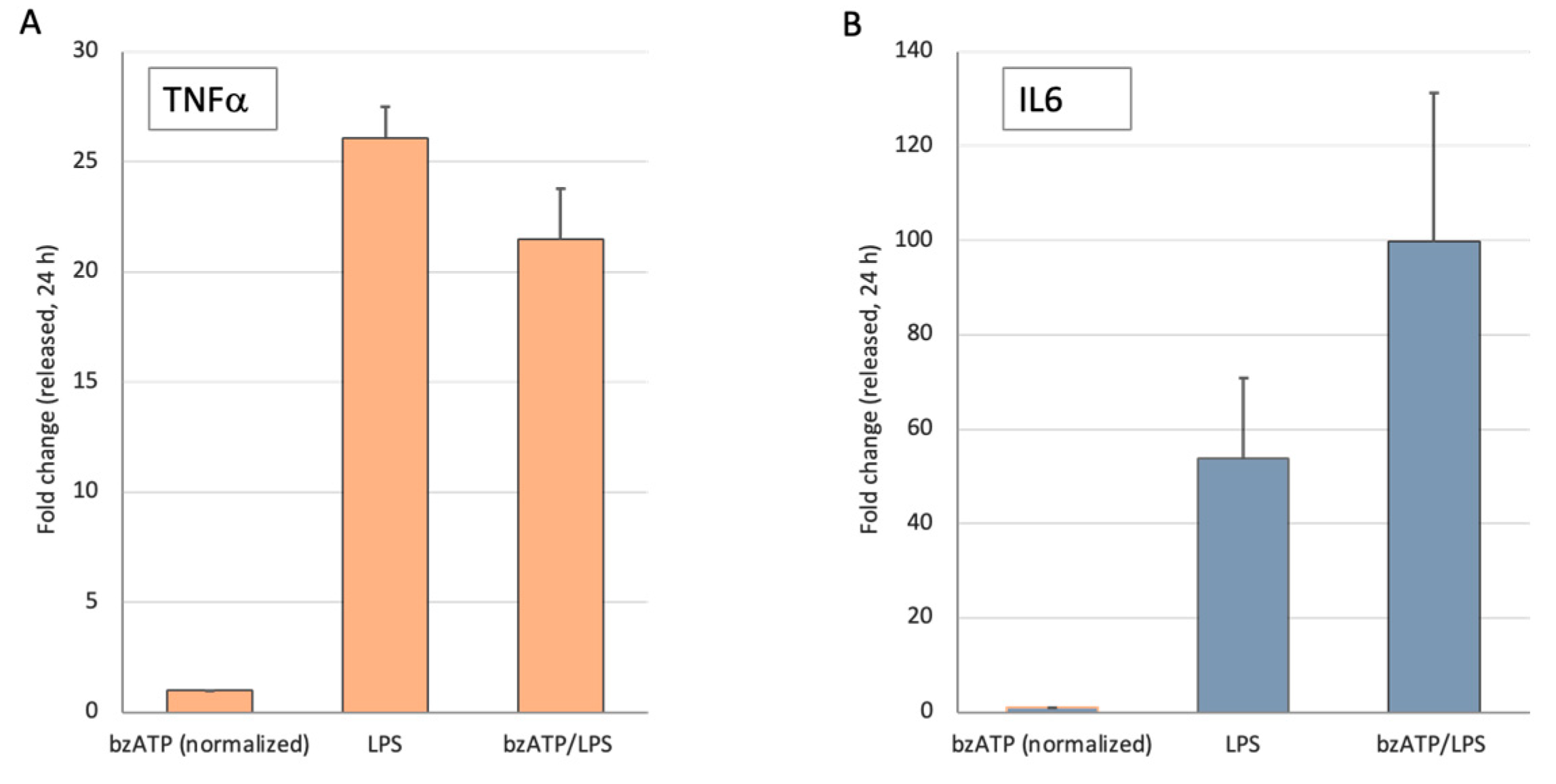
Figure 2.
Trends in gene expression of microglial miRNAs following activation protocol with BzATP/LPS for 3 h and 8 h. (A) The 345 identified miRNAs are classified into nine modules based on their combined expression trend (up, down or same, and their combinations). For definition and thresholds see details in Supplementary Table S1). The baseline (log(FC) = 0) is shown by horizontal red line. The miRNAs associated with fast kinetics are colored for up (orange), same (black) and down (blue). The number of miRNAs that belong to each module is indicated. (B) The fold change of the miRNAs that are labelled ‘up-up’. (C) The fold change of the miRNAs that are labelled ‘down-down’. The analysis is based on the data in Supplementary Table S2.
Figure 2.
Trends in gene expression of microglial miRNAs following activation protocol with BzATP/LPS for 3 h and 8 h. (A) The 345 identified miRNAs are classified into nine modules based on their combined expression trend (up, down or same, and their combinations). For definition and thresholds see details in Supplementary Table S1). The baseline (log(FC) = 0) is shown by horizontal red line. The miRNAs associated with fast kinetics are colored for up (orange), same (black) and down (blue). The number of miRNAs that belong to each module is indicated. (B) The fold change of the miRNAs that are labelled ‘up-up’. (C) The fold change of the miRNAs that are labelled ‘down-down’. The analysis is based on the data in Supplementary Table S2.
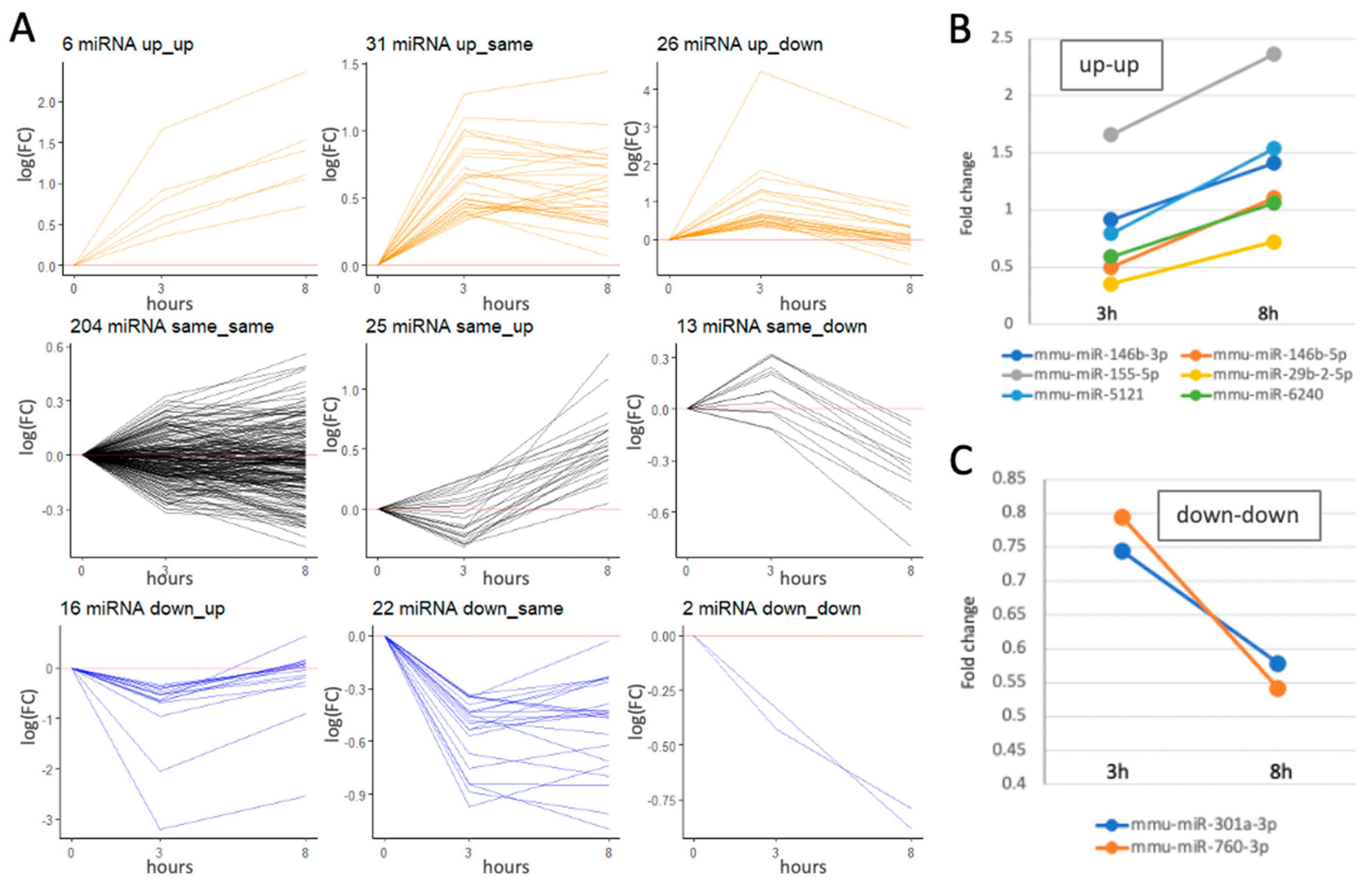
Figure 3.
A global view of miRNAs statistics in microglia culture and time-dependent DEMs following activation. (A) Partition of the 372 identified miRNAs by their number of miRNAs by their expression level bins (orange, CPM) and total counts (blue). (B) A list of 33 significant DEMs 3 h post activation. (C) A list of 57 significant DEMs 8 h post-activation. The lists are sorted by fold change values. Vertical red dashed lines mark the differential expression by 2-fold, for underregulated and upregulated expression trend. The red frame around the miRNA names marks the miRNAs that were differentially expressed by ≥1.5-fold.
Figure 3.
A global view of miRNAs statistics in microglia culture and time-dependent DEMs following activation. (A) Partition of the 372 identified miRNAs by their number of miRNAs by their expression level bins (orange, CPM) and total counts (blue). (B) A list of 33 significant DEMs 3 h post activation. (C) A list of 57 significant DEMs 8 h post-activation. The lists are sorted by fold change values. Vertical red dashed lines mark the differential expression by 2-fold, for underregulated and upregulated expression trend. The red frame around the miRNA names marks the miRNAs that were differentially expressed by ≥1.5-fold.
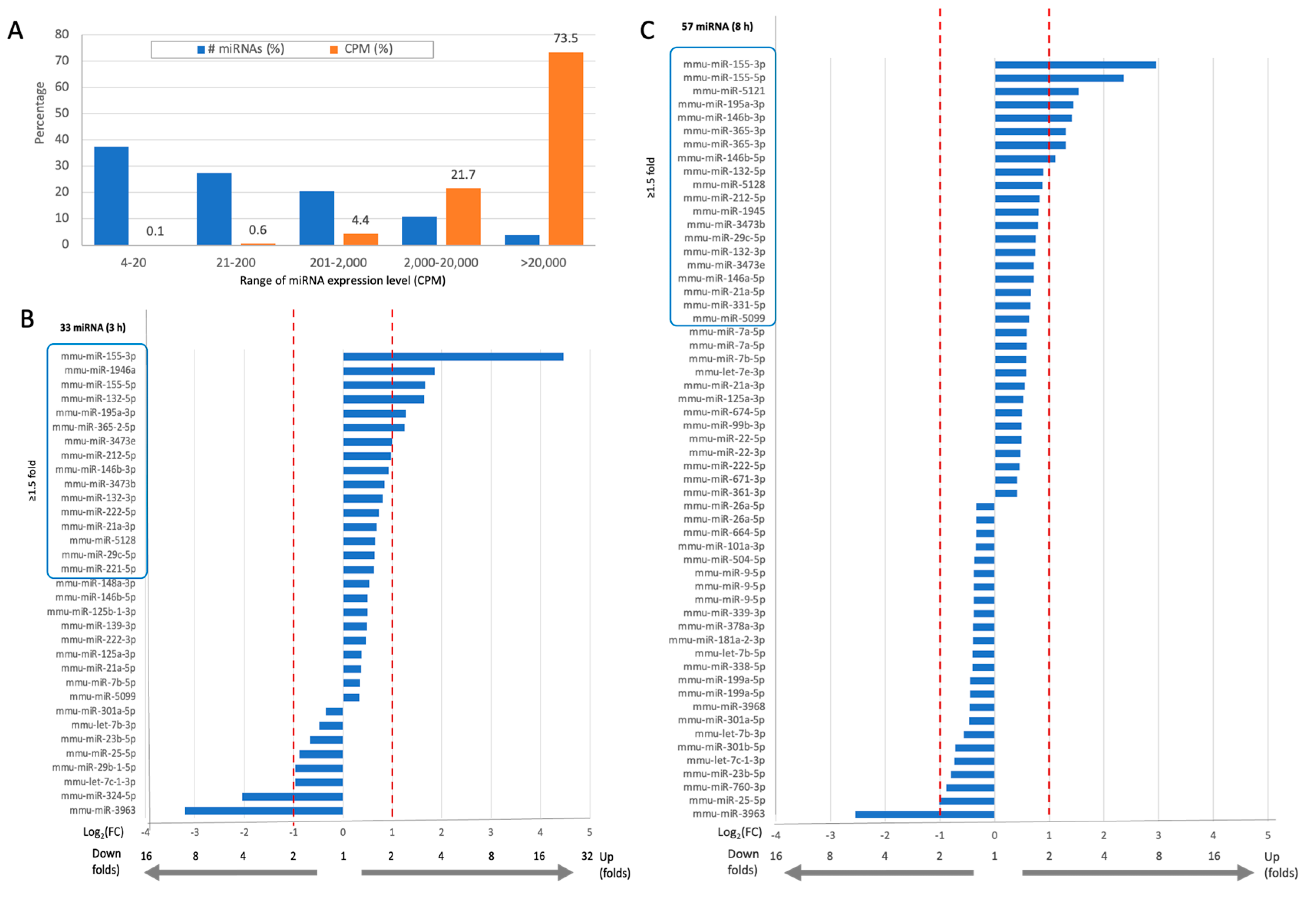
Figure 4.
Dynamics of DEMs following activation of microglial culture. (A) Venn diagram of the DEMs of two time points (3 h and 8 h). The unique set that are not shared by both time points are listed. Included all significant DEMs (FDR ≤0.05) and log10(FC) of >|0.33| relative to N.T. cells. The listed names of DEGs are colored as up-and downregulated DEMs by red and green font, respectively. (B) Based on the overlap in A, representative DEMs are listed with a change difference >30% between the 3 h and 8 h of cell activation relative to N. T. The listed DEMs show ‘up-down’ (left) and ‘up-up’ (right). (C) MA plot of the log2(FC) relative to the CPM (in log) for the 372 identified miRNAs. The temporal DEMs (T-DEMs) are colored by the change expression trends with expression of 8 h > 3 h in blue and 3 h > 8 h in red. Gray are miRNAs that showed no temporal expression pattern. The change in expression was determined by a threshold of log2(FC) > |0.33| and an FDR q-value < 0.05.
Figure 4.
Dynamics of DEMs following activation of microglial culture. (A) Venn diagram of the DEMs of two time points (3 h and 8 h). The unique set that are not shared by both time points are listed. Included all significant DEMs (FDR ≤0.05) and log10(FC) of >|0.33| relative to N.T. cells. The listed names of DEGs are colored as up-and downregulated DEMs by red and green font, respectively. (B) Based on the overlap in A, representative DEMs are listed with a change difference >30% between the 3 h and 8 h of cell activation relative to N. T. The listed DEMs show ‘up-down’ (left) and ‘up-up’ (right). (C) MA plot of the log2(FC) relative to the CPM (in log) for the 372 identified miRNAs. The temporal DEMs (T-DEMs) are colored by the change expression trends with expression of 8 h > 3 h in blue and 3 h > 8 h in red. Gray are miRNAs that showed no temporal expression pattern. The change in expression was determined by a threshold of log2(FC) > |0.33| and an FDR q-value < 0.05.
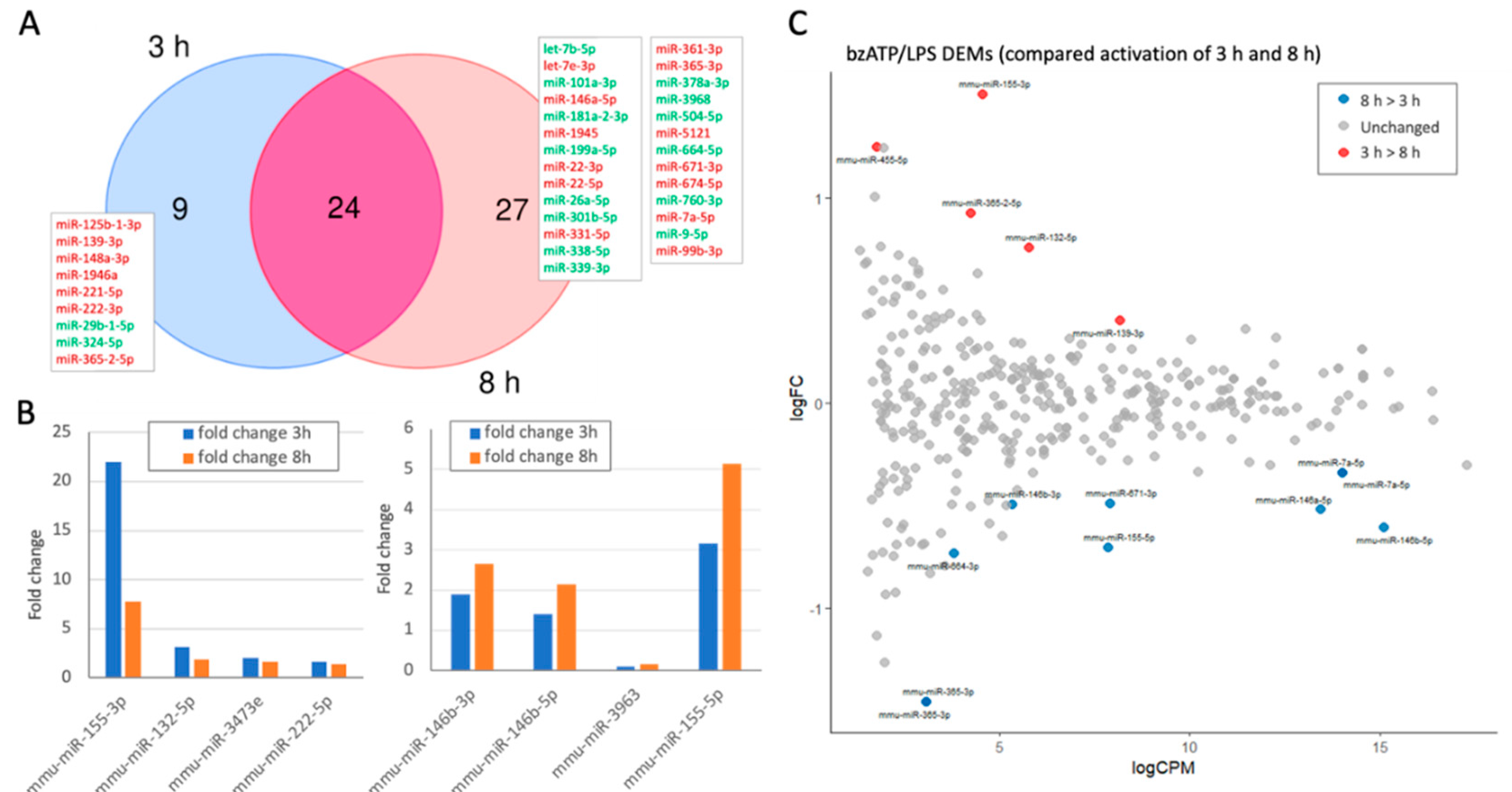
Figure 5.
Network view for T-DEMs and gene targets. (A) miRNet 2.0 view for the 6 identified T-DEMs (blue square) and their experimentally validated targets (pink marker, 244 genes). Genes connecting several miRNAs are labelled. The dominant connection of miR-155-5p is evident. (B) STRING view for a set of 21 protein coding targets (T-DEGs, Table 2). The protein-protein interaction (PPI) network is significant (PPI enrichment p-value: 0.00986). Enrichment of gene ontology biological process (GO_BP) of Immune system process (GO:0002376) and Regulation of cytokine production (GO:0001817) are colored red and blue, respectively (p-value 3.4 e-06). (C) The functional enrichment of the listed genes (21 genes, Table 2) by Reactome pathways. From left to right: The fraction of gene input (red); Significant pathways by Reactome are sorted by p-values (blue); The overlapping genes for each of Reactome’s enriched pathways (orange).
Figure 5.
Network view for T-DEMs and gene targets. (A) miRNet 2.0 view for the 6 identified T-DEMs (blue square) and their experimentally validated targets (pink marker, 244 genes). Genes connecting several miRNAs are labelled. The dominant connection of miR-155-5p is evident. (B) STRING view for a set of 21 protein coding targets (T-DEGs, Table 2). The protein-protein interaction (PPI) network is significant (PPI enrichment p-value: 0.00986). Enrichment of gene ontology biological process (GO_BP) of Immune system process (GO:0002376) and Regulation of cytokine production (GO:0001817) are colored red and blue, respectively (p-value 3.4 e-06). (C) The functional enrichment of the listed genes (21 genes, Table 2) by Reactome pathways. From left to right: The fraction of gene input (red); Significant pathways by Reactome are sorted by p-values (blue); The overlapping genes for each of Reactome’s enriched pathways (orange).
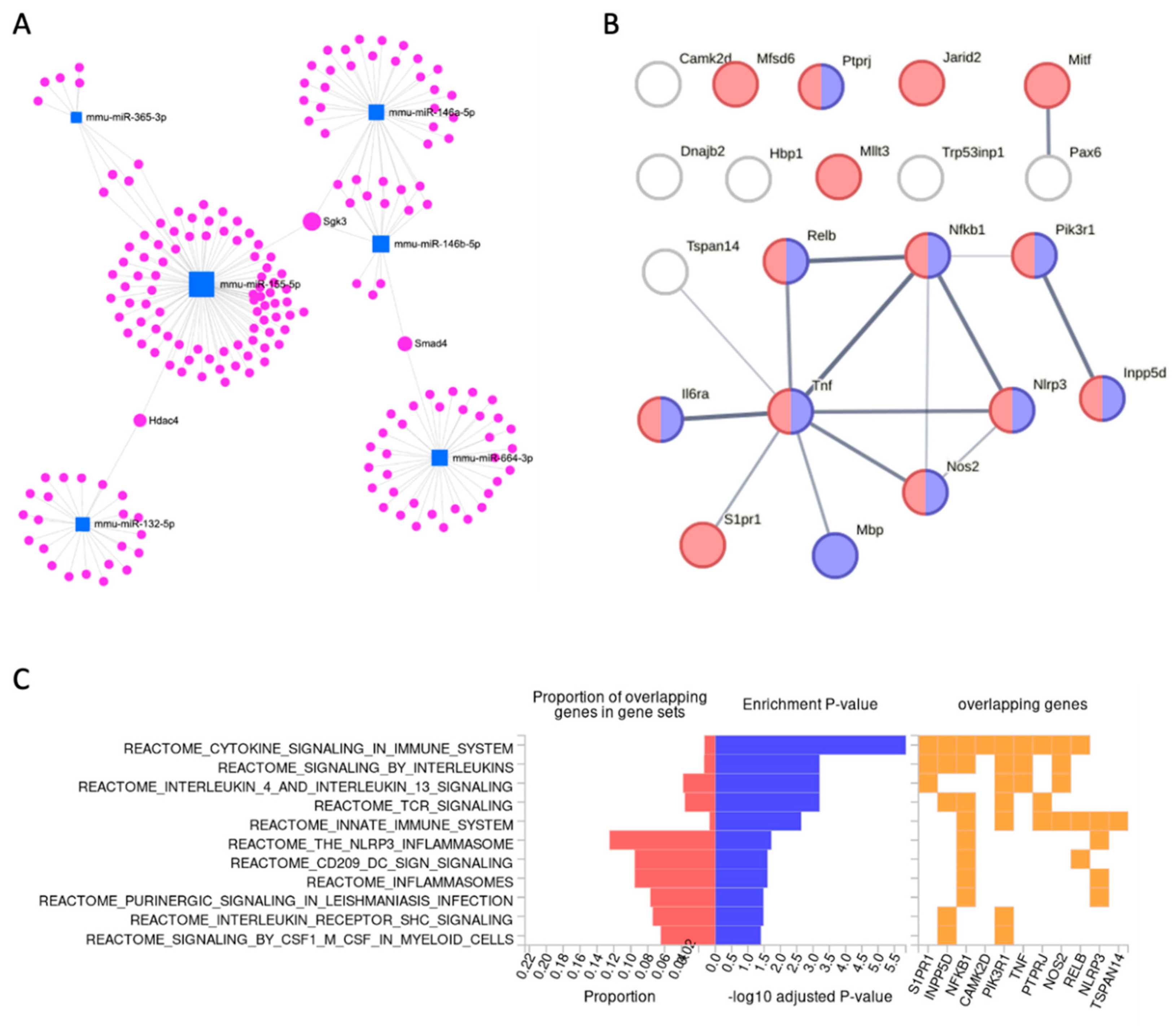
Figure 6.
The effect of ladogtigil on miRNA expression. MA plots of the log2(FC) relative to the CPM (in log) for the 372 identified miRNAs in a fully activated setting (bzATP/LPS). (A) 3 h post activation relative to N.T. (B) 8 h post activation relative to N.T. The miRNAs that were upregulated by ladostigil are marked in red font. Gray color are miRNAs that showed no significant expression change. The change in expression was determined by a threshold of log2(FC) > |0.33| and an FDR q-value <0.05. The dashed lines mark stable expression.
Figure 6.
The effect of ladogtigil on miRNA expression. MA plots of the log2(FC) relative to the CPM (in log) for the 372 identified miRNAs in a fully activated setting (bzATP/LPS). (A) 3 h post activation relative to N.T. (B) 8 h post activation relative to N.T. The miRNAs that were upregulated by ladostigil are marked in red font. Gray color are miRNAs that showed no significant expression change. The change in expression was determined by a threshold of log2(FC) > |0.33| and an FDR q-value <0.05. The dashed lines mark stable expression.
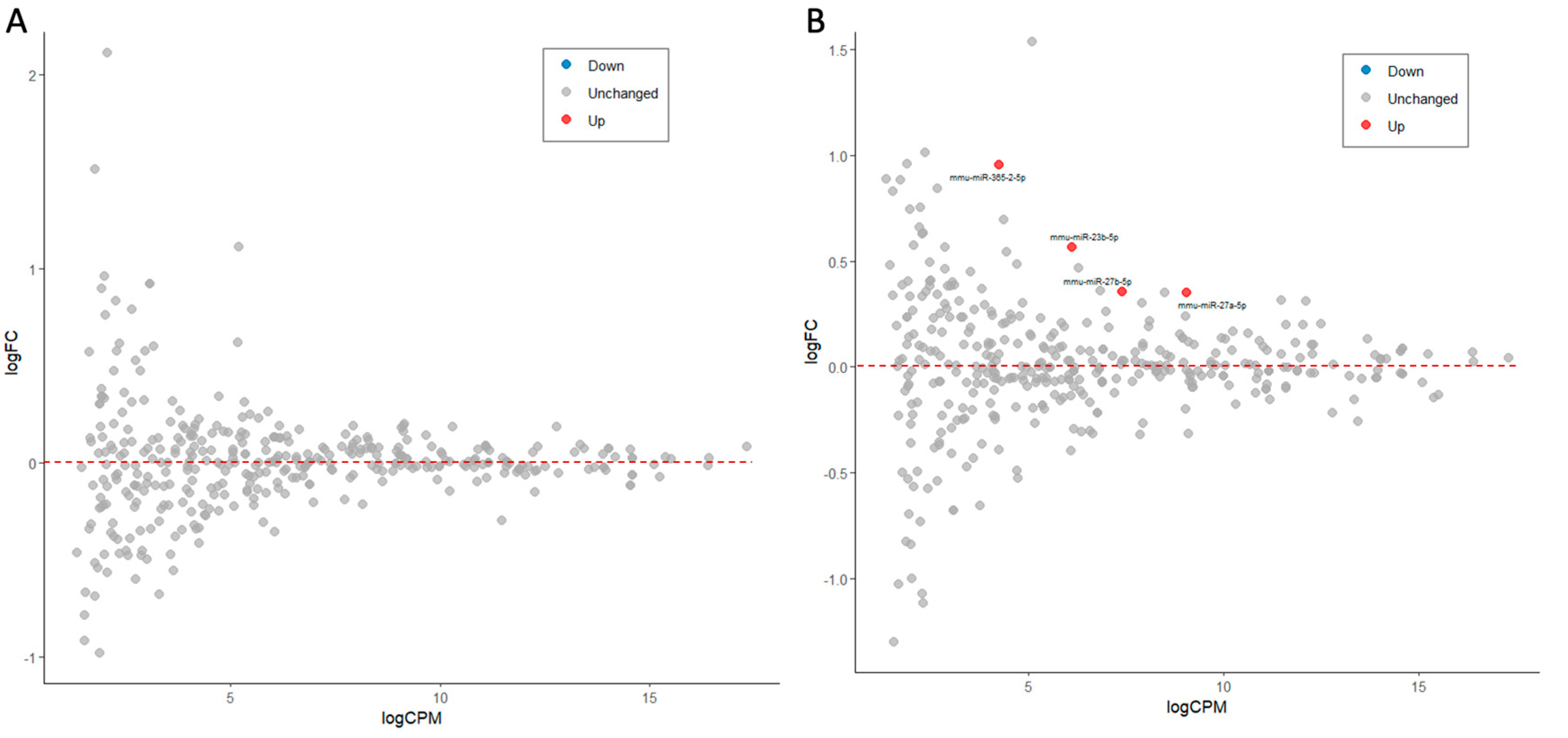

Table 1.
List of abundant (average CPM ≥100) DEMs 8 h post activation in the presence of bzATP/LPS.
| miRNA | FDR | Fold Change | Ave. CPM | Trend |
|---|---|---|---|---|
| mmu-miR-155-5p | 2.04E-15 | 5.14 | 231.0 | Up |
| mmu-miR-146b-5p | 3.29E-16 | 2.15 | 35,262.0 | Up |
| mmu-miR-146a-5p | 3.17E-07 | 1.64 | 11,147.5 | Up |
| mmu-miR-21a-5p | 3.06E-13 | 1.59 | 161,946.4 | Up |
| mmu-miR-5099 | 8.14E-07 | 1.55 | 4,425.2 | Up |
| mmu-miR-7a-5p | 7.51E-09 | 1.50 | 16,738.0 | Up |
| mmu-miR-125a-3p | 2.87E-06 | 1.44 | 106.7 | Up |
| mmu-miR-99b-3p | 3.54E-06 | 1.40 | 523.7 | Up |
| mmu-miR-22-5p | 1.27E-04 | 1.40 | 169.7 | Up |
| mmu-miR-22-3p | 9.06E-08 | 1.39 | 3,072.8 | Up |
| mmu-miR-222-5p | 1.90E-05 | 1.37 | 243.8 | Up |
| mmu-miR-671-3p | 5.08E-03 | 1.33 | 238.8 | Up |
| mmu-miR-361-3p | 6.20E-05 | 1.33 | 330.7 | Up |
| mmu-miR-26a-5p | 2.87E-06 | 0.79 | 15,464.0 | Down |
| mmu-miR-101a-3p | 2.07E-05 | 0.79 | 825.0 | Down |
| mmu-miR-504-5p | 9.77E-03 | 0.78 | 114.8 | Down |
| mmu-miR-9-5p | 2.87E-06 | 0.77 | 2,290.4 | Down |
| mmu-miR-378a-3p | 1.47E-07 | 0.76 | 4,776.9 | Down |
| mmu-let-7b-5p | 1.95E-03 | 0.76 | 4,927.1 | Down |
| mmu-miR-3968 | 7.01E-03 | 0.73 | 142.6 | Down |
Table 2.
T-DEMs and their experimental validated targets based on bzATP/LPS microglia RNA-seq data.
| Validated target. | Gene name | miRNAa (E: 3h >8h) |
FDR T-DEG (3h-8h) |
DEG Ave. CPM |
FC T-DEG (3h>8h) |
FC DEG (8h to N.T.) |
|---|---|---|---|---|---|---|
| Camk2d | calcium/calmodulin-dependent protein kinase II, delta | miR-146a-5p | 1.2E-18 | 47.2 | 0.50 | 1.31 |
| Dnajb2 | DnaJ heat shock protein family (Hsp40) member B2 | E: miR-155-3p | 1.4E-15 | 16.0 | 2.17 | 1.90 |
| Hbp1 | high mobility group box transcription factor 1 | miR-155-5p | 3.2E-14 | 16.3 | 2.05 | 0.68 |
| Il6ra | interleukin 6 receptor, alpha | miR-155-5p | 8.2E-17 | 18.3 | 2.58 | 0.54 |
| Inpp5d | inositol polyphosphate-5-phosphatase D | miR-155-5p | 5.2E-25 | 178.1 | 2.20 | 1.04 |
| Jarid2 | jumonji, AT rich interactive domain 2 | miR-155-5p | 6.5E-21 | 35.0 | 0.42 | 2.29 |
| Mbp | myelin basic protein | miR-7a-5p | 4.7E-21 | 71.5 | 2.10 | 0.54 |
| Mfsd6 | major facilitator superfamily domain containing 6 | miR-155-5p miR-365-3p | 4.9E-22 | 116.0 | 2.06 | 1.35 |
| Mitf | melanogenesis associated transcription factor | E: miR-155-3p | 1.3E-28 | 354.5 | 0.34 | 1.05 |
| Mllt3 | myeloid/lymphoid or mixed-lineage leukemia; translocated to, 3 | miR-146a-5p miR-146b-5p | 2.9E-14 | 12.0 | 2.41 | 0.71 |
| Nfkb1 | nuclear factor of kappa light polypeptide gene enhancer in B cells 1, p105 | miR-146b-5p | 3.6E-26 | 523.3 | 0.43 | 2.59 |
| Nlrp3 | NLR family, pyrin domain containing 3 | miR-7a-5p | 1.6E-29 | 1000.0 | 0.25 | 3.85 |
| Nos2 | nitric oxide synthase 2, inducible | miR-146a-5p | 6.0E-17 | 22.6 | 3.10 | 39.13 |
| Pax6 | paired box 6 | miR-7a-5p | 6.2E-14 | 12.6 | 2.53 | 0.50 |
| Pik3r1 | phosphoinositide-3-kinase regulatory subunit 1 | E: miR-132-5p | 1.2E-20 | 47.4 | 2.16 | 0.81 |
| Ptprj | protein tyrosine phosphatase, receptor type, J | miR-155-5p | 1.0E-22 | 392.8 | 0.42 | 1.89 |
| Relb | avian reticuloendotheliosis viral (v-rel) oncogene related B | miR-146a-5p | 3.5E-26 | 56.2 | 0.34 | 1.10 |
| S1pr1 | sphingosine-1-phosphate receptor 1 | miR-155-5p | 2.1E-15 | 10.9 | 4.13 | 0.30 |
| Tnf | tumor necrosis factor | E: miR-132-5p | 4.8E-28 | 5250.7 | 0.29 | 18.92 |
| Trp53inp1 | transformation related protein 53 inducible nuclear protein 1 | miR-155-5p | 1.1E-16 | 18.3 | 3.24 | 0.57 |
| Tspan14 | tetraspanin 14 | miR-155-5p | 9.2E-20 | 41.9 | 2.32 | 0.94 |
amiRNA signified by temporal pattern. The early (E) indicate maximal expression 3 h following activation. The other miRNAs are signified as late pattern (i.e., maximal expression at 8 h post activation). The abundant miRNAs with an average CPM >200 is marked in bold.
Table 3.
Upregulation by ladostigil of miRNAs that act in reducing inflammation in multiple model systems.
Table 3.
Upregulation by ladostigil of miRNAs that act in reducing inflammation in multiple model systems.
| miRNA | Activation /Condition | Cellular and Modela | Target gene/ pathwayb | Refrerence |
|---|---|---|---|---|
| miR-23b-5p | intracerebral hemorrhage (ICH) | Rat brain | IPMK | [44] |
| Sepsis-Induced | Mouse | MMP/ ADAM10 | [45] | |
| miR-27a-5p | LPS activated | Human dental pulp cells (hDPCs) | TAB1/NF-κB | [46] |
| Clostridioides infection | Mouse Intestine | NF-κB signaling | [47] | |
| Salmonella infection | EVs, RAW264.7 cells | TLR7/ NF-κB | [48] | |
| miR-27b-5p | TNF alpha exposure | Human aortic endothelial cells (HAECs) | Akt-FOXO1 | [41] |
| Mycobacterium Infection | RAW264.7 cells | NF-κB signaling | [49] | |
| Hydrogen peroxide induced | RAW264.7 cells | NF-κB signaling | [50] | |
| IL-1β-induced | Human osteoarthritis chondrocytes | MMP-13/NF-kB/ p38 | [51] |
aEVs, exosomal vesicles; RAW264.7 are mouse derived cell line of peripheral macrophages. SW-1353 are human chondrosarcoma cell line. bIPMK, Inositol polyphosphate multikinase; ADAM10, ADAM metallopeptidase domain 10; TAB1, TGF-beta activated kinase 1/MAP3K7 binding protein 1; TLR7, Toll-like receptor 7.
Disclaimer/Publisher’s Note: The statements, opinions and data contained in all publications are solely those of the individual author(s) and contributor(s) and not of MDPI and/or the editor(s). MDPI and/or the editor(s) disclaim responsibility for any injury to people or property resulting from any ideas, methods, instructions or products referred to in the content. |
© 2025 by the authors. Licensee MDPI, Basel, Switzerland. This article is an open access article distributed under the terms and conditions of the Creative Commons Attribution (CC BY) license (http://creativecommons.org/licenses/by/4.0/).
Copyright: This open access article is published under a Creative Commons CC BY 4.0 license, which permit the free download, distribution, and reuse, provided that the author and preprint are cited in any reuse.


