
Submitted:
24 March 2025
Posted:
25 March 2025
You are already at the latest version
Abstract
To produce robust and high-quality planting material, the goal of this study is to examine the effects of fertilization practices under irrigation in the nursery. A challenging production period was experienced by nurseries in Romania because of weather-related variables. Water has therefore become essential to the process of growing fruit, to which fertilizers are added to raise the soil's nutrient level. The growth of the trees' morphological and physiological characteristics is where the effects of fertilization and watering are most noticeable. The two main elements influencing fruit nursery development and production are water management and fertilizer application. The study was conducted at a private nursery located in Romania's northwest. The study involved five repetitions of a trifactorial experiment using the plum cultivars Cacanska Lepotica and Stanley.
Keywords:
plum cultivar
; leaf area
; irrigation
; fertilization
; nursery
1. Introduction
Except for the alpine regions, Romania’s pedoclimatic conditions are generally suitable for tree production. They help produce fruits of exceptional quality that are exquisitely colored, have a unique scent, and have a delightful flavor. Rich in readily absorbed sugars, proteins, organic acids, pectic and aromatic compounds, mineral salts, lipids, and other nutrients, fruits constitute an essential part of the human diet. Fruit tree culture is also very significant in Romania since it produces a solid base of fresh and preserved fruit and serves as a raw material for the food sector. From this perspective, our nation’s geographic location offers significant benefits. Large tracts of land are used for fruit cultivation, which is the primary reason it is important in our nation.
An integrated framework that produces planting material in specialized nurseries is beneficial to Romanian fruit growing. Concentrating the production of tree planting material in these nurseries first implies the production of high-quality trees, strict sanitary and biological control, rapid opportunities to introduce the most valuable cultivars, the development of a profitable economic activity, and the use of efficient culture technologies.
The primary method of improving the amount and quality of fruit tree output, as well as the sensible and effective use of natural resources, is to optimize fruit plant culture methods.
The extension of the fruit producing sector, the filling of gaps in the new orchards, and the replanting of the lands still held by old orchards are all significant jobs facing our nation’s fruit growing industry. A lot of high-quality tree planting material must be produced to complete these duties.
Given the need to quickly produce many trees and fruit bushes of valuable cultivars and exceptional quality, nurseries are even more important in the current stage of fruit producing growth. To produce huge numbers of high-quality seedlings and grafted trees, the soil’s fertility must be permanently increased, and the soil must contain the appropriate amount of water.
Economic efficiency and yield levels in irrigated agriculture depend primarily on the irrigation regime applied to each individual crop. By establishing and applying a rational irrigation regime, the aim is to supply the soil with water in accordance with the requirements of the plants. The irrigation regime is influenced by natural and technical factors [1]. Among the natural factors, climate has a decisive influence, through the amount of precipitation and its distribution, through the evolution of temperatures, relative air humidity, droughts, etc. The soil manifests its influence through its physical and hydro physical properties, determines the possibility of retaining water from precipitation and the possibility of making water available to plants. The irrigation regime must be applied according to the distribution of rainfall in the respective year, increasing or reducing the number of waterings according to the water reserve in the soil. In fruit nurseries, the water content in the soil must be maintained within the range of active humidity, i.e., at a level higher than the minimum ceiling. Thus, the water content of the soil must be maintained above the wilting coefficient near which the plants undergo a series of changes during the growth process. For the correct assessment of the irrigation moment, the field capacity of the soil for water or the range of active moisture must be considered. The need to irrigate crops stands out if comparisons are made, on the one hand, between the water consumption of the plants and the amount of useful water from precipitation and groundwater intake, and, on the other hand, between the productions obtained in slightly rainier years than normal and dry years or in irrigated and non-irrigated crop [2]. In addition to precipitation, to appreciate the need for irrigation, one must know the course of temperature, relative air humidity, the frequency and intensity of winds, because the destructive effects of drought are amplified in dry periods accompanied by high temperatures, low relative air humidity, hot and dry winds. In such cases, the soil drought is also accompanied by an atmospheric drought. The growth of horticultural plants is affected by high temperatures and drought, through the inhibitory effects they have on cell division and extension, as well as on some morphological changes regarding the increase in thickness of leaves and cuticle, reduction of the number of stomata, wilting, change in position of leaves on the plant, abscission, and the change in the number of aquaporins. Unfortunately, in recent years Romania has faced a severe atmospheric drought.
Although nurseries are organized in Romania on generally fertile land, the application of fertilizers is required to create the most favorable conditions for the growth of seedlings and trees, as well as for the activity of soil microorganisms. Although the climatic conditions in Romania ensure the normal growth of saplings and trees without irrigation, nevertheless in excessively dry years this work becomes necessary. Prolonged drought hampers the growth of plants in nurseries. To this is added the fact that in the nursery the trees must have a rapid growth rate, in a short period, in the conditions where the root system of the saplings has been considerably reduced by shaping, to plant and must be restored in the shortest possible time, to be able to explore a large volume of soil. Hence the need to apply fertilizers and works to improve soil fertility and obtain high productions of fruit trees in nurseries. Fertilization of the nursery must include a complex of works that lead to the long-term improvement of the physical and chemical properties and to the completion of the necessary nutrients in assimilable forms per vegetation phase, in relation to the requirements of the trees [3].
In modern fruit growing, fertilization is one of the most important technological links. Due to their specificity, fruit plants occupy the same area of land for a long time, develop their root system at a significant depth and due to the high productivity, they achieve, they extract from the soil, with the harvest, appreciable amounts of nutrients. Under these conditions, it is necessary to intervene every year, in several rounds, with fertilizations that ensure, on the one hand, the achievement of a certain level of production, and on the other hand, a certain level and ratio of the nutritional elements through returning the amounts of easily accessible nutrients extracted with the harvest in order to be able to maintain, in this way, the fertility of the soil in accordance with the age of the plantation and the level of production [4]. Fertilization must be based on the permanent follow-up of the level of soil supply with the requirements of the trees, the differentiated establishment of the fertilization system under the ratio the type, doses, and periods of fertilizer administration. The system of fertilization must also be differentiated depending on the species, cultivar, rootstock [5].
Chemical fertilizers with phosphorus and potassium are an integral part of basic soil fertilization. The appropriate supply of phosphorus and potassium ensures the good growth of the planting material and especially the maturation of the wood [6]. The insufficiency of these nutrients results in rapid growth, without the maturation of the wood. When the fruit trees are supplied with nitrogen, the lack of phosphorus and potassium causes the extension of the vegetation period and the under-ripening of the wood, so that the leaves of the trees do not fall until the arrival of frost, and the planting material is sensitive to frost. Phosphorus and potassium from fertilizers have a low mobility in the soil, their ions being retained by chemical processes for a long time near the place where they were placed [7]. Therefore, to be effective, fertilizers with phosphorus and potassium must be incorporated to the depth of spreading of the root system. Among the chemical properties of the soil, determinants of the quality of the planting material, the most important are the reaction and the humus content [8].
The annual consumption of nutrients from the soil in a nursery with a production of 50,000 trees per hectare is around 70-80 kg N, 15-20 kg P2O5 and 50-60 kg K2O. Soils whose values of physical and chemical properties are within the limits considered optimal, in the geographical area where Romania is located, can annually pass into soluble forms 20-40 kg N, 5-10 kg P2O5 and 30-50 kg K2O per hectare, insufficient quantities to obtain a high quality tree planting material. Trees in the nursery phase require nitrogen in large quantities to ensure growth [9]. The phase of maximum nitrogen consumption corresponds to the phenophase of intense shoot growth. Towards the end of the vegetation period, the consumption of nitrogen must decrease in favor of the consumption of phosphorus and potassium [10]. Nitrogen from chemical fertilizers is in very soluble forms, which move in the soil both by diffusion and by water flow. The doses and the time of application must be established so that the nitrogen in the fertilizers is found at the level of the spreading of the roots at the times and in the quantities required by the trees [11].
It is known that the irrational application of fertilizers in the nursery, in large doses, in a unilateral and unbalanced way, the administration of some forms of fertilizers that do not correspond to the biological requirements of the species and soils can have negative effects, so that instead of the expected increases in tree production its decreases are recorded [12].
Nitrogen is considered an essential and indispensable element for plant growth and development, with functions and presence in plant tissues noted over three centuries ago. Nitrogen is considered a main component of proteins and protides, which are a constituent part of the enzymes involved in energy and synthesis transformations in the plant [13]. Nitrogen participates in building the molecular architecture of the substances that make up the organism’s genetic code, in growth processes and where growth occurs, protein substances are formed. With the previously stated essential roles, it can be concluded that nitrogen is a primary macro element (along with P and K) with determining roles in the quantitative and qualitative formation of agricultural and horticultural plant crops [14]. Phosphorus participates in building the molecular architecture of nucleic acids, which make up the genetic code of cells. It has an essential role in the processes of phosphorylation, generating energy-rich compounds, such as adenosine triphosphoric acid, which through enzymatically controlled biochemical reactions release the energy needed for metabolic processes [15]. Phosphorus intervenes in chlorophyll functions, participating in the synthesis of carbohydrates, as well as some fats and lipids. It favorably influences the processes of fruiting, transport, and deposition of carbohydrates in fruits, roots, tubers. It accelerates maturity and stimulates the development of the root system. Phosphorus is an element that increases the resistance of plants to adverse conditions (frost, diseases, falling and breaking, etc.) It increases the resistance of plants to drought, counterbalances the excess of nitrogen, the growth of the root system [16]. According to these specific but also complex roles, phosphorus is attributed the quality of primary macro element with essential functions found in importance and effects alongside nitrogen and potassium. Due to its reduced mobility and the great possibilities of being fixed in chemical compounds with low solubility or insoluble, certain rules must be followed when applying phosphorus fertilizers, first, poorly soluble phosphorus fertilizers must be applied as close as possible to the tree roots [17]. This is the most efficient method of improving their nutrition with phosphorus; adjusting the pH to values of 6-7 determines an increase in phosphorus mobility and, respectively, in its absorption by the trees; the repeated application of phosphorus fertilizers leads over time to the enrichment of the upper part of the soil in phosphorus and the advancement in depth of the area well supplied with phosphorus; application of easily soluble phosphorus fertilizers together with irrigation water [18]. The natural cycle of phosphorus is different from that of nitrogen. Soils contain lower amounts of phosphorus than nitrogen or potassium. On the other hand, phosphorus tends to react with soil constituents to form insoluble compounds that are difficult for plants to access, which requires the application of fertilizers [19]. Phosphorus deficiency slows down the synthesis of ribonucleic acid, which causes a decrease in protein formation, a slowdown in plant growth: the leaves remain small, purple-reddish spots or striations begin to appear and the leaf petiole elongates. In a more advanced phase, because of unfavorable conditions for nitrogen assimilation, the leaves turn yellow. In fruit trees there is a decrease in the formation of fruit buds and poor fruiting [20].
Insufficiency or excess of P causes major disturbances in the synthesis, translocation, and accumulation of organic substances in plants. In the insufficient state, small and insufficient amounts of compounds with P are synthesized, which should accumulate the energy for the metabolic processes in the plant. Consequently, in this situation, the synthesis of proteins, carbohydrates and lipids is disturbed. N-NO3 accumulates in plants at the expense of proteins [21]. Excessive phosphating causes a deficiency of Zn and Cu and reduced accumulations of chlorophyll, carbohydrates, and proteins. Fruit trees have a P content in leaves of 0.3-0.9%, in fruit branches 0.2-0.4%, and in the trunk, old branches and roots of 0.09-0.3%. The rate of absorption of phosphorus ions from the soil solution by plant roots is determined by their concentration in the vicinity of active roots [22]. This concentration, in turn, depends on the intensity of the nutrient diffusion processes and the displacement of the soil solution following the absorption of water by the plants. In horticultural practice, the aim is to increase the concentration of phosphorus in the liquid phase of the soil through the application of fertilizers and measures that contribute to increasing the coefficient of use of phosphorus in the soil (granulation, localized application, etc.) [23].
Regarding the efficiency in relation to the presence of other ions in the soil, there is an interaction between phosphorus ions and other ions in the soil, which influences the efficiency and the coefficient of use of phosphorus fertilizers [24]. The P/N interaction in the soil is due to some chemical interactions that increase the accessibility of phosphorus, some physiological interactions (photosynthesis, respiration, consumption) that increase the assimilation capacity, as well as a direct effect of some fertilizers that increase the solubility of phosphates. In the case of the P/K interaction, potassium salts increase the assimilability of phosphorus fertilizers. The effect of phosphorus fertilizers is also manifested in the following years, in relation to the dose used, the type of fertilizers and the soil conditions. Plants use 1/10 to ½ of the total phosphate fertilizers in the environment, and the rest accumulates in the soil in compounds that are more difficult to dissolve and less accessible to plants [25].
Phosphorus, considered to have multiple nutritional roles and involved in the synthesis of some compounds but also in the proportionate growth and development of tissues and plants can be included among the elements that stabilize the resistance of plants to the attack of diseases and pests [26].
Potassium, along with nitrogen and phosphorus, is one of the primary macro elements with an essential role in plant nutrition, with distinct and known physiological and metabolic functions. Potassium is necessary for plant growth and development and is found in all cells, tissues and organs of living plants, growth zones, cambial tissue, seeds. In the plant, most of it is in the form of ions (K+) [18]. Due to its enzymatic roles largely channeled in the synthesis of high molecular weight carbohydrates (starch, cellulose) and proteins, it is very involved in increasing the resistance of plants to the attack of diseases and pests. Fertilization with K increases plant resistance to fungi, bacteria, viruses [27]. The efficiency of potassium fertilizers increases when plants are supplied with assimilable forms of nitrogen and phosphorus. In fruit trees, the greatest yield increases are obtained when potash fertilizers are applied together with nitrogen fertilizers. As a fertilizer for plants, its role and efficiency have increased especially since the middle of the last century, when the theory and practice of uniform fertilizations were abandoned and the optimal and rational ones, in accordance with the requirements of soils and plants, were abandoned. In addition, the conditions of multi-year fertilizations only with N and P, ignoring the specific effects in this context of potassium, made the application of this element current and necessary, under the conditions of rational use of other elements [20]. Quantitatively and qualitatively increased yields cannot be achieved without the application of potassium. Potassium is administered in all types of soil in the form of potash, having a content of 30-40% or 50% K2O [28]. Potassium plays an important role in the process of growth, fruiting, and tissue maturation. Mineral fertilizers can be applied in the form of dust, granules, granulated organo-minerals in liquid form. Its roles and importance as a nutrient are known, some of them since the last two centuries, and it is appreciated as the most important cation for plant organisms, especially since it is among the cations the most abundant and necessary for plant cells and tissues. However, unlike nitrogen and phosphorus, recognized as elements with predominantly plastic roles, potassium does not enter the composition of the main organic compounds in plant tissues and is found in cells mainly in an ionic state [29]. Potassium is absorbed by plants in significant quantities, in some cases superior to other nutrients, including nitrogen. Unlike the other macro elements of primary or secondary order, potassium does not enter the composition of organic substances in plants. The presence of potassium in the cells of the roots at sufficiently high content levels, causes the easier absorption of water from the soil and its transfer to the central cylinder of the root and from there to the other organs of the plant. In this way, plants become more resistant to stressful drought conditions. Potassium regulates the intracellular pressure and the state of turgor of plant tissues, which causes the elongation of young tissues [30].
The amount of potassium necessary for the complete realization of the life cycle of agricultural and horticultural crops is a net appropriation of the respective species and depends on their specific potassium consumption and on the size of the harvest obtained or expected [31].
Regarding the need to ensure the necessary water in the nursery, it is known that water conditions the growth process of the planting material in the nursery [32]. The decrease of the water content in the soil below certain limits causes a decrease in the water content of the plant, which at the level of the cell causes a decrease in its turgor The reduction of turgor has the effect of slowing down the processes of cell division, but especially slowing down the process of cell elongation which, in turn, affects the growth of leaves, shoots and roots [33]. The decrease in cellular turgor influences the photosynthetic activity by reducing the surface of the leaves and by the productivity of photosynthesis per surface unit, reducing the degree of opening of the stomata. In the nursery, especially by promoting the new methods of rapid multiplication, there are many situations when the soil must be well supplied with water, to create conditions for the growth of the fruit tree planting material [34]. The distribution of precipitation on the territory of Romania ensures in some areas and periods of the year an optimal supply of soil with water.
However, there are also many years, especially in areas with annual rainfall of less than 600 mm, when there are significant water deficits in the soil that negatively influence the growth of the nursery stock, and as such the application of irrigation is necessary
The practical value of the research consists in the application of different rules of irrigation and fertilization on the plum seedlings in the nursery, for the development of the horticultural field and raising it to a productive level. This research is a current one, in the context of the need to provide the soil in the nursery with nutrients and water, to obtain large productions of high-quality tree planting material. By applying different irrigation and fertilization rules, they will consist in obtaining a healthy and vigorous tree planting material. It is known that the irrational application of fertilizers in large doses, in a unilateral and unbalanced way, the administration of some forms of fertilizers that do not meet the biological requirements of the species and soils can have negative effects, so that instead of the expected increases in production, decreases are recorded. Regarding irrigation, excess water always has adverse influences on the growth and fruiting of fruit plants in general. It can favor the extension of the vegetation period in autumn, the decrease in resistance to the attack of cryptogamic diseases in general, the decrease in the volume of the root system and its functioning until asphyxiation.
2. Materials and Methods
2.1. Natural Framework of the Experimental Field
The research was carried out in a private nursery, located in the northwestern part of Romania, on a plain unit, being the result of a long process of accumulation and erosion through the diversion of the hydrographic network, which descends from the mountainous and hilly areas. From the point of view of spontaneous vegetation, the experimental field falls within the forest-steppe area, but there is no woody vegetation in its natural state and natural meadows.
The spontaneous vegetation is represented by the following species: Stellaria media, Lamium purpureum, Taraxacum officinale, Polygonum aviculare, Conium maculatum, Chenopodium album, Amarantus retroflexus, Echinochloa crus galli, Portulaca oleracea, Agropyron repens, Digitaria sanguinalis, Rumex acetosella, Xanthium strumarium.
The average annual temperature (Table 1) is 11.92 °C, the warmest month is August with 22.5 ˚ C, and the coldest month is January. The average number of winter days (with minimum daily temperature equal to or lower than 0 °C) is 92 per year, and the number of frost days (with maximum temperature equal to or lower than 0 °C) is 24 per year. In the multiannual average, 90 summer days (with average temperature equal to or higher than 25 °C) and 31 tropical days (with average temperature equal to or higher than 30 °C) are recorded per year. Early autumn mists rarely appear in September, but are frequent in October and November. Late spring frosts are frequent in March, less often in April and only accidental in May.
According to the data presented in Table 1, it can be observed that, in terms of temperature, the average values for the period 2022-2024 were higher than the multi-year average, while the average temperature for 2024 was slightly lower. In 2022, average monthly temperatures oscillated between 1.2o C in December and 24.1o C in August. The range of variation in average temperatures in 2022 was higher than in the previous year, with limits between: -0.9o C in January and 24o C in August. In 2024, against the background of lower average monthly temperatures than in previous years, a higher amplitude is found between -1.5o C in January and 23.2o C in August. The average temperature for the vegetation period April-September was between 18.2o C in 2024 and 20.1o C in 2022.
Compared to the multi-year monthly averages, the precipitation in 2022 mainly recorded lower values associated with negative deviations of 4-35 mm, while in four months a higher level of precipitation is observed with significant increases of 21-80 mm in the months of June -July. As such, in 2022, after the important rainfall in June-July, there followed a period with a reduced level of rainfall and lower than the multi-year averages, but overall, this year was the richest in rainfall (Table 2).
For the year 2024, considered the driest, three periods were identified, depending on the variation of monthly precipitation compared to the multi-year average. The first period from January-May was characterized by negative deviations of 2-16 mm, followed by the months of June-July with positive deviations of 39-85 mm and the July-December period with negative variations of 16-25 mm. The distribution of monthly precipitation over the three periods was also observed during 2024 against the background of negative variations of 2-48 mm in the January-May period and 9-21 in the last period. Precipitations higher than the multiannual average by 39-85 mm from June-July contributed to the increase in the amount of precipitation for this year, which was intermediate between the other two in terms of rainfall (Table 2).
To identify, delimit and characterize the soil units within the land where the research was carried out, a pedological profile was carried out from which samples were collected on 4 horizons. Following the analyses, the soil taxonomic unit identified was weakly glaciated, loamy clay on fluvial deposits, arable. The soil texture is fine throughout the depth of the studied profile. The soil reaction is slightly alkaline on 0-30 cm and 50-80 cm, neutral on 30-50 cm and 80-120 cm. The degree of saturation in bases is high (84-90 %), the content of humus is medium, and that of phosphorus and potassium is very high.
The apparent density on the analyzed soil profile has values between 1.26 and 1.34 t/m3 being considered medium. The hygroscopicity coefficient had values of 8.83-9.04%, being associated with high values for the wilting coefficient (13.25-13.56%) and field capacity (25.81-26.85%). The minimum threshold recorded values of 19.53-20.21% equivalent to relative values of 75-76% of the field capacity.
2.2. Experimental Layout
A trifactorial experiment of the 4 x 2 x 4 type, arranged in five repetitions, was used to study the research objectives. Plots of four trees planted at 0.7 x 0.25 m each had irrigation as the primary factor, cultivar as the secondary factor, and fertilization as the tertiary factor. There were four different irrigation protocols used: non-irrigated, 10 mm, 20 mm, and 30 mm irrigation. Complex fertilizer 16:16:16 was utilized in the following amounts (kg/ha) to generate the NPK dosages associated with the fertilization treatments: 50 kg for N8P8K8, 100 kg for N16P16K16, and 150 kg for N24P24K24. Two plum cultivars were used, Stanley and Cacanska Lepotica.
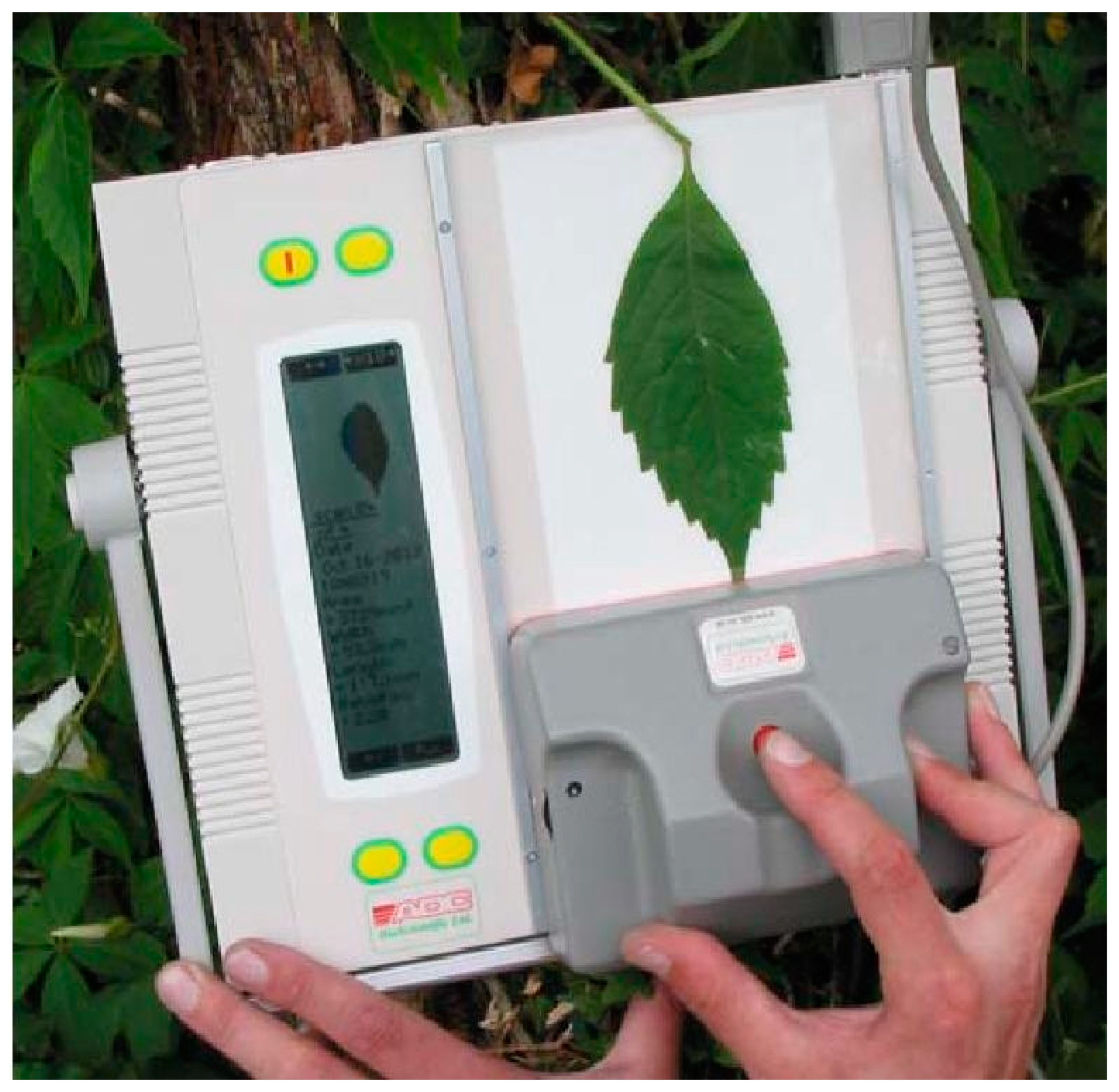
The AM 350 model device was used to calculate the leaf area, has scanning speed up to 20 mm/sec, maximum measured width 103 mm, maximum measured length 2 m, linear precision/repeatability 1%, area +/- 2%, perimeter + /- 5% and a resolution of 0.065 mm².
Figure 1.
First field of the nursery.
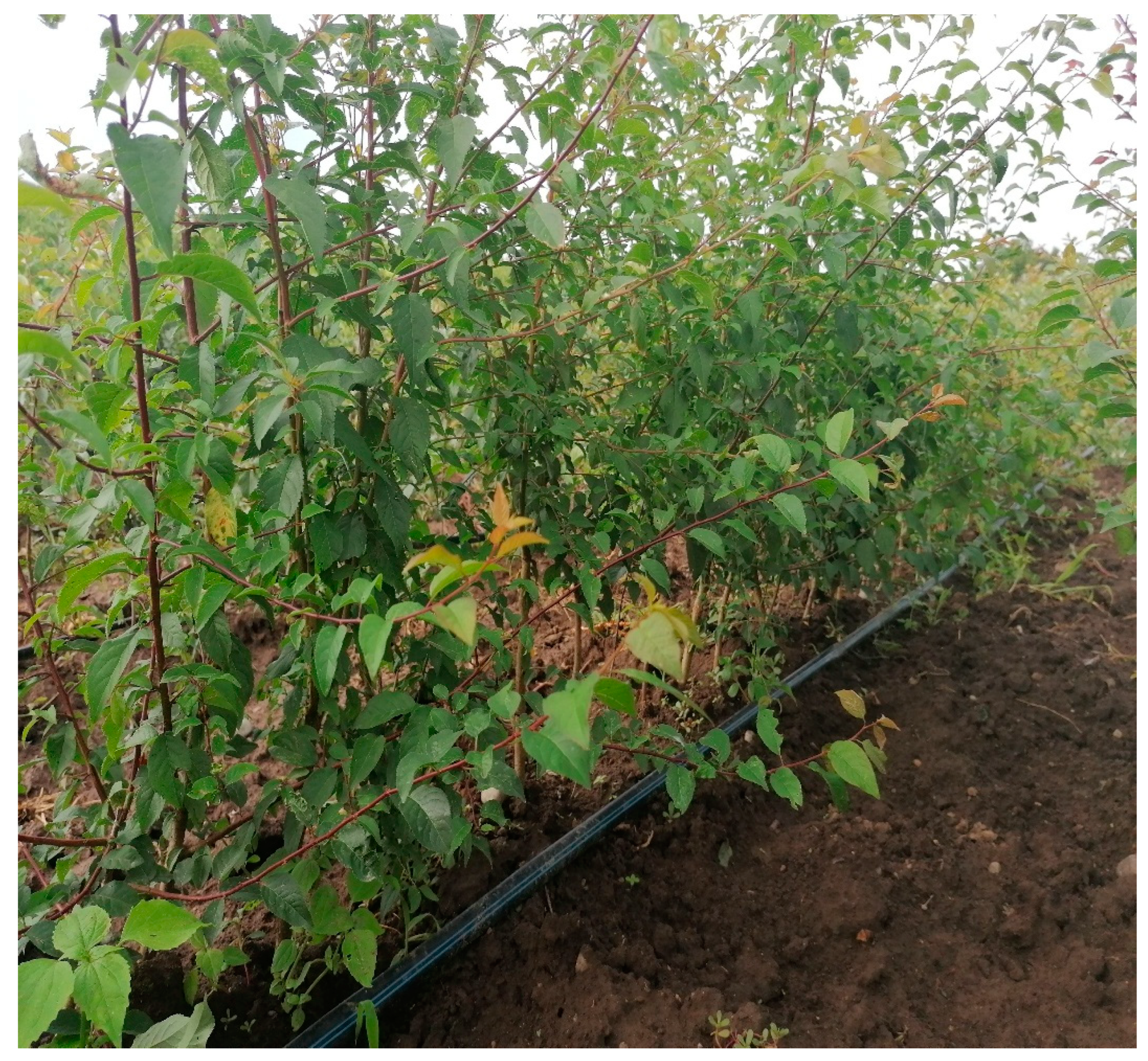
Figure 2.
Second field of the nursery.
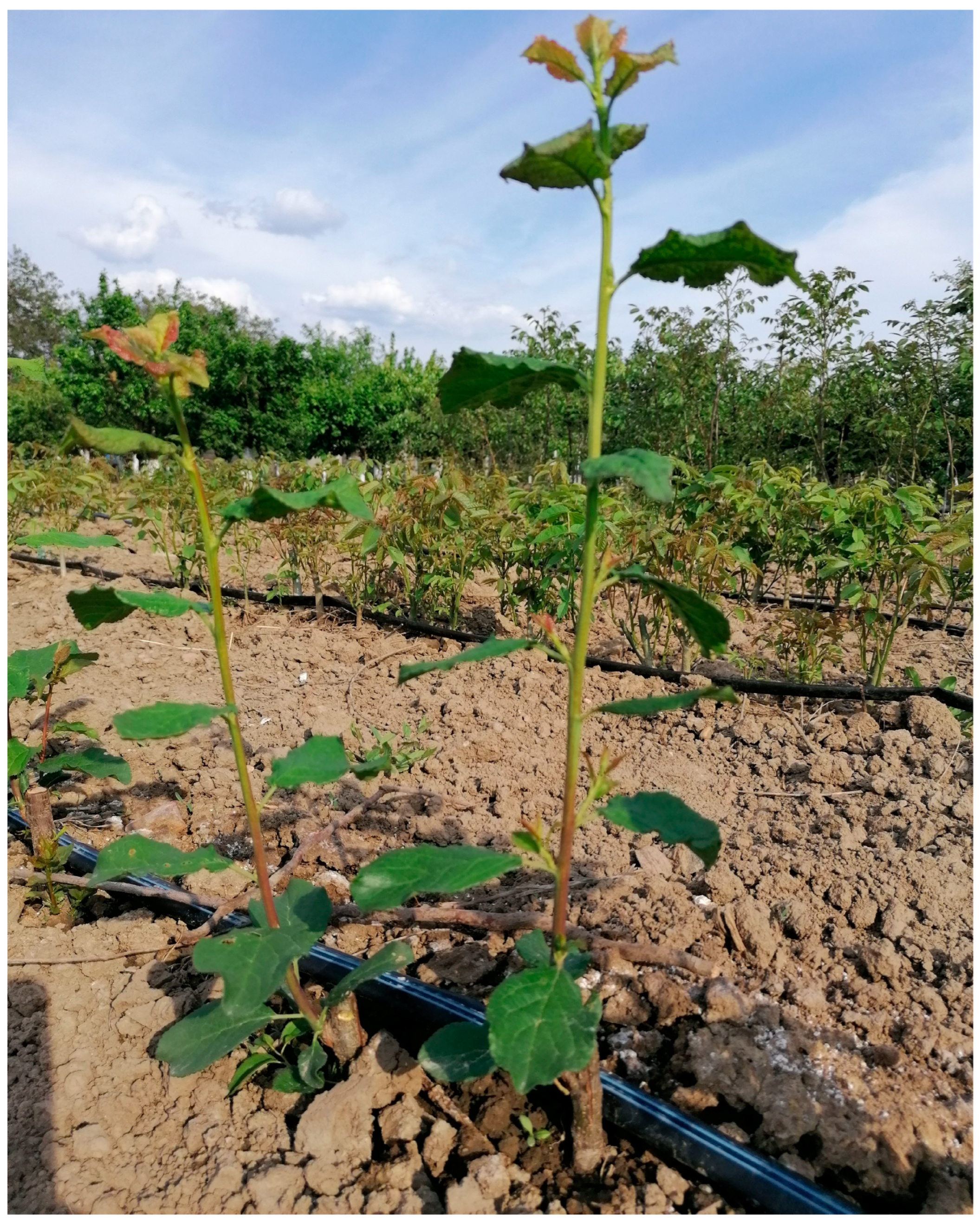
Figure 3.
Leaf area determination device used during the research.
2.3. Calculations
During the research, descriptive statistical analysis was used. The watering rate was calculated by applying the following formula:
where m – watering rate (m3/ ha); H= the thickness of the soil layer intended to be supplied with water in meters; Gv= the volumetric weight of the soil (t/m3); C= field capacity for water, in weight percentages relative to dry soil; P= minimum ceiling or momentary supply, percentage of dry soil weight.
m= 110 x H x Gv (C – P min.)
The water consumption from the soil, represented by the amount of water extracted by the trees in the nursery during the transpiration process, to which is added the amount of water lost through evaporation on the land surface, was calculated according to the formula:
where ET= evapotranspiration, t= the amount of water lost from the soil through plant transpiration (m3/ha); e= water evaporated on the soil surface (m3/ha).
ET=∑ (t+e)
The application of the first watering - the interval between the emergence of the plants and the first watering - is determined by the available reserve of water in the soil at the beginning of the vegetation period, by the specific consumption of the respective crop and by the precipitations that fell in the considered interval:
and the interval between two waterings was calculated according to the formula:
where T is the interval in days; e+t is the total daily consumption of the respective crop, in m3/ha/day; Ri - the initial reserve of water in the soil, at the depth of wetting, at the beginning of the vegetation period, is also found with the help of a relationship similar to that of the final reserve, only that instead of the coefficient of withering, the field water capacity of the soil is introduced ( m3 / ha; P - the instantaneous supply (water content at the time of watering) of the soil layer H, in percent by weight of the dry soil.
3. Results
3.1. Effect of Irrigation and Fertilization on Leaf Area
At the level of the entire experience, it is confirmed that against the background of the climatic conditions, the cultivar did not significantly influence the development of the leaf apparatus in the seedlings. Under the effect of the different fertilization treatments, the leaf surface showed an amplitude of variation of 682 cm2, with values between 4226 cm2 on the unfertilized agricultural background and 4908 cm2 in the case of applying the dose of 24 kg of NPK, under the conditions of a variability of 6.3% between treatments (Table 3).
The application of NPK fertilization variants determined the recording of significant increases in the growth of this character by 6.53-16.14% compared to the non-fertilized agricultural background. The addition of fertilization from 8 to 16 kg and from 16 to 24 kg, respectively, was effectively utilized by the seedlings that achieved significant growth of 180-226 cm2.
From the point of view of the influence of fertilization on the development of the foliar apparatus achieved on a certain watering rate (Table 4), it can be observed that the highest amplitude of variation was recorded in the case of the 30 mm norm, while in the case of the norm of 10 mm the amplitude between NPK doses was smaller.
In the absence of fertilization, the watering norms studied allowed obtaining values of the leaf surface between 4006 cm2 in the non-irrigated agricultural background and 4415 cm2 at the 30 mm norm, respectively a variability of 5.79% between the watering norms (Table 5).
The three watering standards allowed the achievement of 5.24-10.21% increases in the leaf apparatus in these conditions compared to the non-irrigated version, but only the effect of the 30 mm standard was significant. The modification of watering norms did not generate significant increases, against the background of variations in the leaf surface of 51-199 cm2. Under the conditions of fertilization with 8 kg of NPK, a variation of this character can be observed from 4196 cm2 for the non-irrigated version to 4838 cm2 for the watering norm of 30 mm. On this agricultural land, only the watering norms of 20 and 30 mm showed significant effects associated with increases of 11.81-15.31% compared to the non-irrigated version. Also, changing the watering rate by 10 mm had an insignificant effect, so only the increase in the watering rate from 10 to 30 mm determined a significant variation of 10.86% of the leaf surface. Under the effect of applying the treatment with 16 kg of NPK, the leaf surface was between 4343 and 5008 cm2. As such, in this case irrigation with 20-30 mm generated a significant increase of 11.81-15.31 % of this character, compared to the non-irrigated variant. The change in the watering rate from 10 to 20 mm was associated with a significant variation of 7.43% of the leaf surface, instead the additional irrigation from 20 to 30 mm had a smaller and insignificant effect of 4.54%.
Against the background of fertilization with 24 kg of NPK, the application of irrigation with 20-30 mm favored a significant increase of this character by 491-720 cm2. In the case of this agricultural background, only the increase of the watering rate from 10 to 30 mm showed a high efficiency materialized by a significant development of the leaf apparatus with 524 cm2. Based on the information in Figure 4, in the case of the non-irrigated variant, the exponential regression indicates that the development of the foliar apparatus showed an average rate of 22.96 cm2 for each kg of NPK applied, with limits of 18.3 cm2 between doses of 8 and 16 kg up to 26.75 cm2/kg NPK between 16-24 kg doses. The respective estimates have a precision of 99.62%, under the conditions of a solar surface of 4009 cm2 in the absence of fertilization.
For the norm of 10 mm, the effect of fertilization on this character is expressed by a regression that is based on a precision of 99.08% and indicates an average growth with a relatively constant rate of 18-19.5 cm2/kg NPK up to the dose of 16 kg and a higher rate of 26.75 cm2/kg NPK between the last doses. Under the conditions of irrigation with 20 mm, there is a variation of the leaf surface associated with an average rate of 32.52 cm2/kg NPK, based on a coefficient of determination of 97.67% and an initial value of this character of 4310 cm2 on the non-irrigated agricultural background. Against the background of irrigation with 30 mm, the average rate of development of the foliar apparatus was 35.92 cm2/kg NPK applied, with different values from one dose to another (21.25-52.87 cm2/kg NPK), in conditions for an estimation accuracy of this character of 96%.
Compared to the non-fertilized agricultural background, the treatments with 8-16 kg had a positive effect materialized by insignificant increases of this character of 4.74-8.41%, while the treatment with 24 kg NPK had a significant effect of 13.75%. Only the change in the dose of NPK from 8 to 24 kg was associated with significant effects of 8.6% on the increase in leaf area.
Against the background of irrigation with the norm of 10 mm, the applied fertilization options allowed obtaining values of this character between 4216 cm2 for the unfertilized agricultural background and 4753 cm2 for the dose of 24 kg of NPK, with an amplitude of variation of 537 cm2 and a variability of 6.52% between treatments. In these soil moisture conditions, only the treatment with 24 kg of NPK generated a significant increase of 12.74% compared to the unfertilized version. Also, the treatment with 24 kg of NPK had a significantly superior effect on this character and compared to the dose of 8 kg of NPK. Under the effect of irrigation with 20 mm, fertilization with 16-24 kg of NPK showed a significant influence on the increase of the leaf surface, associated with increases of 589-781 cm2. Only the addition of fertilization from 8 to 24 kg generated a significant variation of 9.55% of this character. Considering the effect of fertilization on the leaf surface of the seedlings on different watering rates (Table 6), it can be observed that in the absence of irrigation, the seedlings recorded values ranging from 4006 cm2 in the case of the unfertilized variant, up to 4557 cm2 in the 24 kg variant NPK, against the background of a variability between treatments of 6.46%.
Under the conditions of application of the watering rule of 30 mm, the seedlings recorded leaf surface values from 4415 cm2 in the case of the unfertilized variant, up to 5277 cm2 in the variant with 24 kg of NPK, against the background of a variability between treatments of 8.06%. Compared to the non-fertilized agricultural background, the NPK treatments had a significantly higher efficiency materialized by increases of 9.58-19.52%. Changing the dose of NPK from 8 to 24 kg was associated with a significant development of the leaf apparatus by 9.07%.
3.2. Effect of Cultivar and Fertilization on Leaf Area
Regarding the combined effect of the cultivar and fertilization on the leaf surface (Table 7), in the Stanley cultivar only the treatments with 16-24 kg NPK showed significantly positive influences, against the background of small variations between the treatments. In the case of seedlings of the Cacanska Lepotica cultivar, fertilization significantly influenced this character.
According to the information in Figure 5, based on the exponential regression, it can be observed that in the case of the Cacanska Lepotica cultivar, the variation of the leaf surface showed an average rate of 34.17 cm2 for each kg NPK, with the limits of 25.5 cm/kg NPK between the doses of 8-16 kg and up to 42.87 cm2/kg NPK for the 8 kg dose. The respective estimates have a precision of 98.61%, under the conditions of a leaf surface of 4194 cm2 in the absence of fertilization.
For the Stanley cultivar, the effect of fertilization on the development of the leaf apparatus was less, showing an average growth rate equivalent to 22.67 cm2/kg NPK, against the background of variations from 19.62 cm2/kg NPK between treatments with 8-16 kg NPK and respectively 25.97 cm2/kg NPK between the doses of 8 kg and the unfertilized version.
The predictability of the logarithmic regression between the fertilization dose and the variation of this character for the Stanley cultivar is 99.55%, based on an initial value of 4306 cm2 on the unfertilized agricultural background.
Regarding the effect of fertilization on the leaf surface for each cultivar (Table 8), it can be observed that at Stanley the values were between 4293 cm2 for the unfertilized variant and 4837 cm2 in the case of applying the dose of 24 kg of NPK. Compared to the unfertilized version, only the treatments with 16-24 kg had significant effects associated with increases of 364-544 kg. It is also found that only the addition of fertilization from 8 to 24 kg NPK generated a significant increase of this character by 7.5%.
In the case of the leaf surface of the seedlings of the Cacanska Lepotica cultivar, the variability between the fertilization effects was higher associated with an amplitude of 820 cm2, between 4160 cm2 on the unfertilized soil and 4980 cm2 for the dose of 24 kg NPK. The three treatments generated a significant development with 8.25-19.71% of the leaf apparatus. The addition of fertilization by increasing the doses from 8 to 16 and 24 kg determined a significant increase of this character by 273-477 cm2.
3.3. Effect of Irrigation, Fertilization and Cultivar on Leaf Area
Considering the combined effect of the three factors (Table 9), fertilization did not significantly influence the leaf surface of the Stanley cultivar on the non-irrigated agricultural background, under the conditions of an amplitude of 394 cm2. In the case of the Cacanska Lepotica cultivar, only fertilization with 16-24 kg of NPK determined a significant increase in the leaf surface by 435-707 cm2.
On the arable land irrigated with 10 mm, only the fertilization with 24 kg of NPK determined a significant increase in the leaf surface of both cultivars by 486-688 cm2, in the conditions of small and insignificant variations between the three doses applied.
In the case of irrigation with 20 mm, a significant increase in the leaf surface is observed by 569 cm2 in the seedlings of the Stanley cultivar and by 992 cm2 in the seedlings of the Cacanska Lepotica cultivar fertilized with 24 kg of NPK, compared to the untreated variant, while the change in the dose of NPK was associated with insignificant variations of this character.
Under the effect of irrigation with 30 mm, it is observed that in both cultivars’ fertilization showed a higher influence on the leaf surface, associated with significant differences of 725-996 cm2 compared to the non-fertilized variant and insignificant variations between treatments. For all the agricultural backgrounds that represent the combinations between fertilization and irrigation, no significant variations are observed between the two cultivars for this character.
4. Discussion
This research is a current one, given that the production of tree planting material in Romania is in a continue evolution. Romania, due to its geographical location at the confluence of the continental and Mediterranean climates, generally offers favorable climate and soil conditions for many fruit nurseries. Numerous autochthonous cultivars attest to the presence of fruit growing on the lands of our country since ancient times. Initially, the fruit nurseries were concentrated in the areas with a richer rainfall regime, so that the rootstock capture depended to a greater extent on the rainfall regime, the human intervention at the beginning being modest in this regard. In Romania, fruit growing is visibly developing as a commercial activity, a development that requires the production of many trees in specialized nurseries, of the cultivars demanded by the consumer market. This would not be possible without the continuous improvement of the quality of the tree planting material. Obtaining a fruit tree planting material with high biological value and favorable economy requires a careful concern regarding the applied technology, including irrigation and fertilization. Romanian soils require regular maintenance of their fertility. Applying fertilizers to the soil guarantees the plant adequate nutrition during its development. With fruit trees in the nursery, as with all cultivated plants, the growth process depends to the greatest extent on the climate and soil conditions available to them. Of these, along with heat, light, air, mineral substances, and water play a very important role. It enters the composition of the various organs of the tree in the proportion of 75-85% and sometimes even more, of their total weight. In addition to the fact that water ensures the circulation of fertilizing elements from the soil to the plant, water participates as a basic element in the synthesis of all the organic substances that make up the tissues of the rootstocks, respectively of the trees. That is why it is necessary for the trees to always have water and mineral substances available, in sufficient quantity, for the growth processes to take place with as much intensity as possible. During the research, it was found that water consumption is different not only according to the spectrum of plants, but also according to the production per surface unit. It also depends on the length of the growing season. Water consumption also correlates with the degree of soil supply with nutrients. With a good supply of nutrients, water consumption is higher.
5. Conclusions
In conclusion, the application of NPK fertilization variants led to the recording of significant increases in leaf surface growth by 6.53-16.14% compared to the non-fertilized agricultural background. The addition of fertilization from 8 to 16 kg and from 16 to 24 kg, respectively, was effectively utilized by the grafted trees that achieved significant increases of 180-226 cm2. In the Stanley cultivar, only the treatments with 16-24 kg of NPK showed significantly positive influences on the leaf surface, against the background of small variations between the treatments. In the case of the Cacanska Lepotica cultivar, fertilization had a significantly higher influence on this character.
As future research directions, it is appropriate to analyze the economic efficiency of the production of grafted trees in different conditions of irrigation and fertilization.
Author Contributions
Conceptualization, A.V.; methodology, A.V.; software, A.V.; validation, A.V.; formal analysis, A.V.; investigation, A.V.; resources, A.V.; data curation, A.V.; writing—original draft preparation, A.V.; writing—review and editing, A.V.; visualization, A.V.; supervision, A.V.; project administration, A.V.; funding acquisition, A.V. All authors have read and agreed to the published version of the manuscript
Funding
This research received no external funding
Data Availability Statement
Data are contained within the article or the references
Conflicts of Interest
The author declares no conflicts of interest.
References
- Oprea, S.; Ropan, G. General Fruit Growing; Academic Press: Cluj Napoca, Romania, 2010; p. 39. [Google Scholar]
- Păun, C. Fruit Trees Nursery; La Sânziene Press: Bucharest, Romania, 2017; p. 142. [Google Scholar]
- Hoza, D. Pomology; Prahova Press: Ploiești, Romania, 2000; p. 73. [Google Scholar]
- Lăcătușu, R. Agrochemistry; Terra Nostra Press: Iasi, Romania, 2006; p. 144. [Google Scholar]
- Smith, P. Trees: From Root to Leaf; University of Chicago Press: Chicago, USA, 2022; p. 59. [Google Scholar]
- Soman, P. Fertigation Scheduling of Field Crops; New India Publishing Agency: New Delhi, India, 2022; p. 152. [Google Scholar]
- Stănică, F. Experimental research on fertilization in orchards; Invel Multimedia Publishing House: Bucharest, Romania, 2004; p. 74. [Google Scholar]
- Jäger, H. The Fruit Trees Nursery; Salzwasser Publishing House: Paderborn, Germany; p. 39.
- Pinske, J. Irrigation in the Garden; BLV Publishing House: München, Germany, 2017; p. 84. [Google Scholar]
- Mazilu, C.; Duțu, I. The Nursery Gardener’s Guide; Invel Multimedia Publishing House: Bucharest, Romania, 2014; p. 93. [Google Scholar]
- Fohrer, N. Hydrology; UTB Publishing House: Berlin, Germany, 2016; p. 135. [Google Scholar]
- Cronin, D. Irrigation and Soil Nutrition; Syrawood Publishing House: New York, NY, U.S.A., 2019; p. 62. [Google Scholar]
- Chira, L. Plum culture; MAST Publishing House: Bucharest, Romania, 2010; p. 49. [Google Scholar]
- Asănică, A.; Hoza, D. Pomology; Ceres Publishing House: Bucharest, Romania, 2013; p. 143. [Google Scholar]
- Carr, M.K.V. Advances in Irrigation Agronomy: Fruit Crops; Cambridge University Press: Cambridge, U.K., 2014; p. 76. [Google Scholar]
- Cepoiu, N.; Păun, C.; Spiță, V. Practical Horticulture; Ceres Publishing House: Bucharest, Romania, 2008; p. 29. [Google Scholar]
- Cichi, M. Fruit Trees Growing, Universitaria Publishing House: Craiova, Romania, 2018, pp. 67-68.
- Venig, A. Technologies for the Production of Tree Planting Material, University of Oradea Press: Oradea, Romania, 2006, pp. 124-125.
- Vidican, R.; Rusu, M. Application of Fertilizers - Practical Guide, Colorama Publishing House: Cluj Napoca, Romania, 2018, pp. 84.
- Vlaic, R. A. Traceability of Biochemical Compounds in Plum Fruits, Mega Publishing House: Cluj Napoca, Romania, 2019, pp. 90.
- Wheeler, J. Growing Fruit Trees, University of Chicago Press: Chicago, U.S.A., 2023, pp. 75.
- Vallejo-Gómez, D.; Marisol, O.; Carlos, A. H. Smart Irrigation Systems in Agriculture: A Systematic Review, Agronomy 2023, 13(2), 342.
- Toma, S. Application of Fertilizers in Sustainable Agriculture, Academy of Sciences of Moldova: Chișinău, Moldova, 2008, pp. 29.
- Steele, A. H. Drip Irrigation: Technology, Management and Efficiency, NOVA Publishing House: New York, NY, U.S.A., 2015, pp. 95.
- Shibiao, C.; Bangyu, Z.; Zhiyuan, Z.; Zhaoxia, Z.; Na, Y.; Bingnian, Z. Precision Nitrogen Fertilizer and Irrigation Management for Apple Cultivation Based on a Multilevel Comprehensive Evaluation Method of Yield, Quality, and Profit Indices, Water 2023, 15(3), 468.
- Schwankl, L. Drip Irrigation in the Home Landscape, Regents of the University of California Publishing House: California, U.S.A. 2015, pp. 84-85.
- Shepard, M. Water for Any Farm, Acres Publishing House: Wisconsin, U.S.A., 2020, pp. 59.
- Rajemahadik, V.A.; Chavan, V.G. Textbook of Irrigation and Water Management, Brillion Publishing House: New Delhi, India, 2019, pp. 39-40.
- Riedel, J. S.; Driscoll, E. Horticulture Today, Goodheart- Willcox Publishing House: Illinois, U.S.A., 2021, pp. 134.
- Ropelewska, E.; Xiang, C.; Zhan, Z.; Kadir, S.; Muhammet, F. A. Benchmarking Machine Learning Approaches to Evaluate the Cultivar Differentiation of Plum (Prunus domestica L.) Kernels, Agriculture 2022, 12(2), 285.
- Tucker, R. Agronomy: Agricultural Practices in a Changing World, Syrawood Publishing House: New York, NY, U.S.A 2018, pp. 48-49.
- Thomas, C. G. Irrigation and Water Management, Ane Books Publishing House: New Delhi, India, 2021, pp. 58.
- Miller, G. Water Management for Sustainable Agriculture, Burleigh Dodds Science Publishing Limited: Cambridge, U.K., 2018, pp. 136.
- Guy, S. Fertilization and Irrigation, Cropaia Publishing House: Hasharon, Israel, 2021, pp. 121.
Figure 4.
Variation of leaf area under the effect of different watering norms and fertilizations.
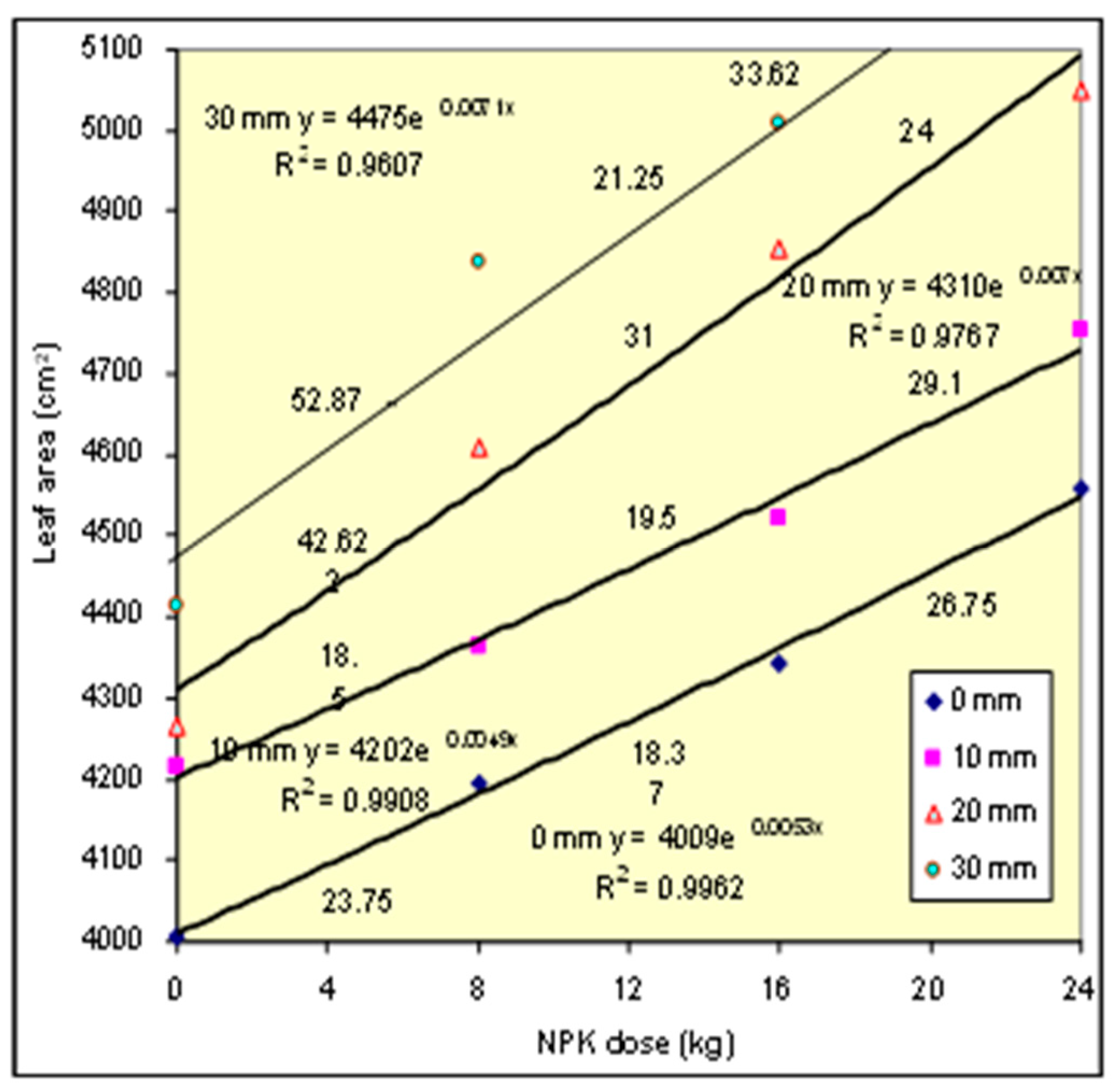
Figure 5.
Variation of leaf area for the two cultivars under the effect of different fertilizations.
Figure 5.
Variation of leaf area for the two cultivars under the effect of different fertilizations.
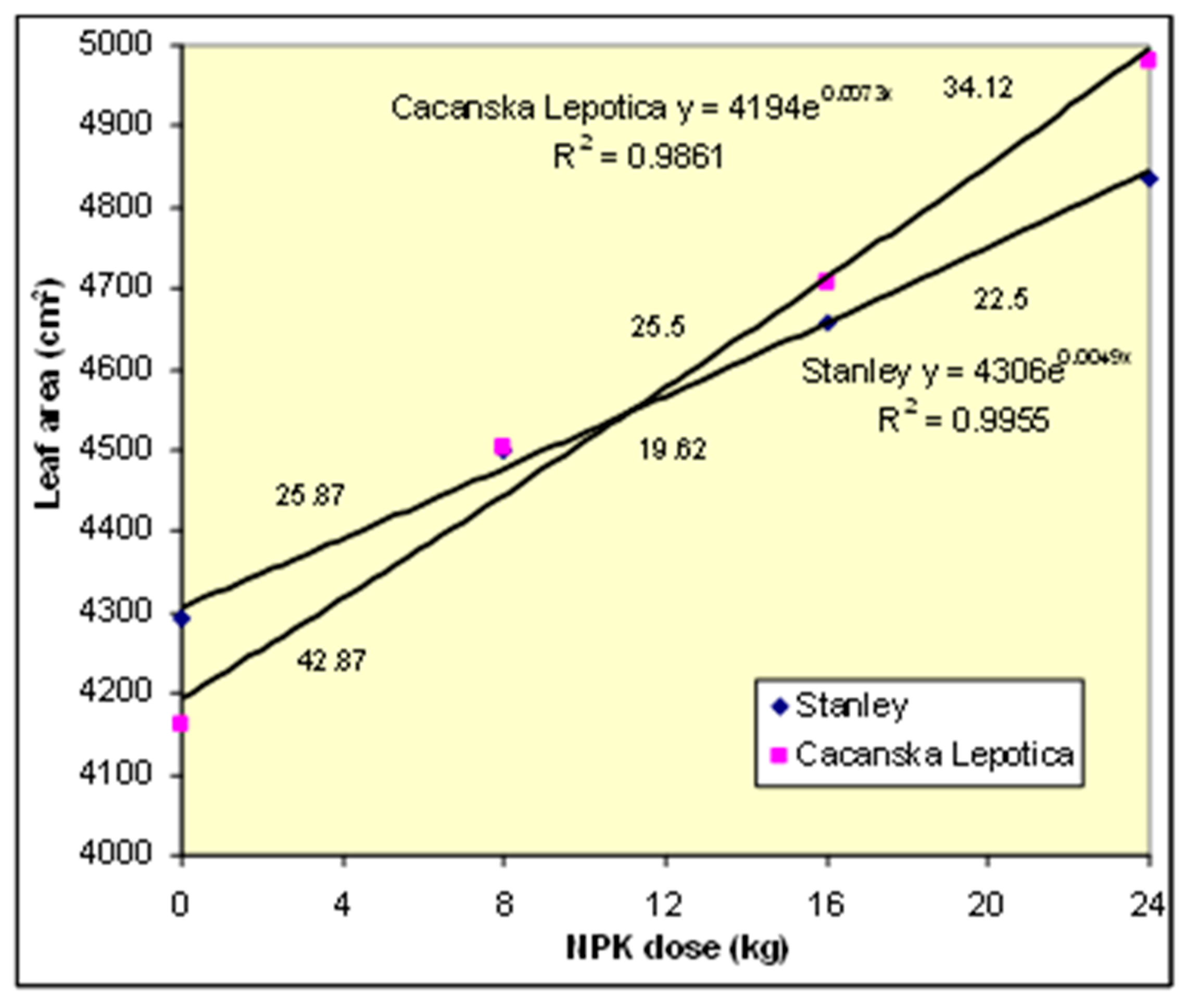

Table 1.
The monthly average temperatures in the research field during 2022-2024.
| Month Year | I | II | III | IV | V | VI | VII | VIII | IX | X | XI | XII | Average |
|---|---|---|---|---|---|---|---|---|---|---|---|---|---|
| 2022 | 3.2 | 1.3 | 3.8 | 15.7 | 19.7 | 21.2 | 22.0 | 24.1 | 17.8 | 13.7 | 8.0 | 1.2 | 12.64 |
| 2023 | -0.9 | 3.6 | 8.4 | 13.3 | 14.8 | 23.0 | 21.8 | 24.0 | 17.8 | 13.2 | 10.9 | 4.2 | 12.84 |
| 2024 | -1.5 | 4.4 | 6.9 | 11.0 | 14.5 | 20.2 | 21.6 | 23.2 | 18.9 | 12.7 | 5.1 | 4.9 | 11.81 |
| Average | 2.0 | 2.5 | 6.5 | 11.5 | 16.5 | 20.0 | 22.0 | 22.5 | 18.0 | 12.5 | 7.0 | 2.0 | 11.92 |
Table 2.
The monthly average rainfall in the research field during 2022-2024.
| Month Year | I | II | III | IV | V | VI | VII | VIII | IX | X | XI | XII | Sum |
|---|---|---|---|---|---|---|---|---|---|---|---|---|---|
| 2022 | 32.2 | 58.6 | 65.8 | 38.3 | 57.6 | 83.6 | 127.6 | 36.9 | 22.1 | 12.7 | 39.8 | 61.0 | 636 |
| 2023 | 46.8 | 8.7 | 12.0 | 46.0 | 105.8 | 119.3 | 21.9 | 11.5 | 33.0 | 10.9 | 35.3 | 46.4 | 498 |
| 2024 | 13.5 | 45.2 | 43.8 | 15.4 | 60.0 | 101.5 | 133.2 | 29.0 | 31.0 | 62.7 | 14.1 | 45.2 | 595 |
| Average | 61 | 56 | 56 | 61 | 62 | 63 | 48 | 45 | 48 | 48 | 35 | 70 | 653 |
Table 3.
Average leaf area under the effect of the different fertilization.
| NPK dose | Leaf area (cm2) | Relative values (%) | Difference/Significance | |
|---|---|---|---|---|
| N8P8K8 – N0P0K0 | 4502 | 4226 | 106.53 | 276** |
| N16P16K16– N0P0K0 | 4682 | 4226 | 110.79 | 456*** |
| N24P24K24 – N0P0K0 | 4908 | 4226 | 116.14 | 682*** |
| N16P16K16 – N8P8K8 | 4682 | 4502 | 104.00 | 180* |
| N24P24K24 – N8P8K8 | 4908 | 4502 | 109.02 | 406*** |
| N24P24K24 – N16P16K16 | 4908 | 4682 | 104.83 | 226* |
DL (LSD)5%=172 cm2; DL (LSD)1%=228 cm2; DL (LSD)0,1%=295 cm2.
Table 4.
The effect of irrigation and fertilization on leaf area.
| NPK dose | ||||||
|---|---|---|---|---|---|---|
| Watering norm | N0P0K0 | N8P8K8 | N16P16K16 | N24P24K24 | S% | |
| 0 mm | y 4006 b | y 4196 c | xy 4343 c | x 4557 c | 4275+44 | 6.46 |
| 10 mm | y 4216 ab | y 4364 bc | xy 4520 bc | x 4753 bc | 4464+46 | 6.52 |
| 20 mm | z 4267 ab | yz 4608 ab | xy 4856 ab | x 5048 ab | 4695+54 | 7.32 |
| 30 mm | z 4415 a | y 4838 a | xy 5008 a | x 5277 a | 4885+62 | 8.06 |
| 4226+39 | 4502+51 | 4682+53 | 4908+55 | 4580+32 | ||
| S% | 5.79 | 7.17 | 7.34 | 7.04 | 8.73 | |
Irrigation – DL (LSD)5%=327 cm2; DL (LSD)1%=433 cm2; DL (LSD)0,1%=559 cm2; (a,b,c). Fertilization – DL (LSD)5%=345 cm2; DL (LSD)1%=456 cm2; DL (LSD)0,1%=590 cm2; (x,y,z).
Table 5.
The effect of irrigation on leaf area under different fertilizations.
| Watering norm x NPK | Leaf area (cm2) | Relative values (%) | Difference/Significance | |
|---|---|---|---|---|
| N0P0K0 | ||||
| 10 mm – 0 mm | 4216 | 4006 | 105.24 | 210 |
| 20 mm – 0 mm | 4267 | 4006 | 106.52 | 261 |
| 30 mm – 0 mm | 4415 | 4006 | 110.21 | 409* |
| 20 mm – 10 mm | 4267 | 4216 | 101.21 | 51 |
| 30 mm – 10 mm | 4415 | 4216 | 104.72 | 199 |
| 30 mm – 20 mm | 4415 | 4267 | 103.47 | 148 |
| N8P8K8 | ||||
| 10 mm – 0 mm | 4364 | 4196 | 104.00 | 168 |
| 20 mm – 0 mm | 4608 | 4196 | 109.82 | 412* |
| 30 mm – 0 mm | 4838 | 4196 | 115.30 | 642*** |
| 20 mm – 10 mm | 4608 | 4364 | 105.59 | 244 |
| 30 mm – 10 mm | 4838 | 4364 | 110.86 | 474** |
| 30 mm – 20 mm | 4838 | 4608 | 104.99 | 230 |
| N16P16K16 | ||||
| 10 mm – 0 mm | 4520 | 4343 | 104.08 | 177 |
| 20 mm – 0 mm | 4856 | 4343 | 111.81 | 513** |
| 30 mm – 0 mm | 5008 | 4343 | 115.31 | 665*** |
| 20 mm – 10 mm | 4856 | 4520 | 107.43 | 336* |
| 30 mm – 10 mm | 5008 | 4520 | 110.80 | 488** |
| 30 mm – 20 mm | 5008 | 4856 | 103.13 | 152 |
| N24P24K24 | ||||
| 10 mm – 0 mm | 4753 | 4557 | 104.30 | 196 |
| 20 mm – 0 mm | 5048 | 4557 | 110.77 | 491** |
| 30 mm – 0 mm | 5277 | 4557 | 115.80 | 720*** |
| 20 mm – 10 mm | 5048 | 4753 | 106.21 | 295 |
| 30 mm – 10 mm | 5277 | 4753 | 111.02 | 524** |
| 30 mm – 20 mm | 5277 | 5048 | 104.54 | 229 |
DL (LSD)5%=327 cm2 DL (LSD)1%=433 cm2 DL (LSD)0,1%=559 cm2.
Table 6.
The effect of fertilization on leaf area under different waterings norms.
| NPK dose x Watering norm | Leaf area (cm2) | Relative values (%) | Difference/Significance | |
|---|---|---|---|---|
| 0 mm | ||||
| N8P8K8 – N0P0K0 | 4196 | 4006 | 104.74 | 190 |
| N16P16K16– N0P0K0 | 4343 | 4006 | 108.41 | 337 |
| N24P24K24 – N0P0K0 | 4557 | 4006 | 113.75 | 551** |
| N16P16K16 – N8P8K8 | 4343 | 4196 | 103.50 | 147 |
| N24P24K24 – N8P8K8 | 4557 | 4196 | 108.60 | 361* |
| N24P24K24 – N16P16K16 | 4557 | 4343 | 104.93 | 214 |
| 10 mm | ||||
| N8P8K8 – N0P0K0 | 4364 | 4216 | 103.51 | 148 |
| N16P16K16– N0P0K0 | 4520 | 4216 | 107.21 | 304 |
| N24P24K24 – N0P0K0 | 4753 | 4216 | 112.74 | 537** |
| N16P16K16 – N8P8K8 | 4520 | 4364 | 103.57 | 156 |
| N24P24K24 – N8P8K8 | 4753 | 4364 | 108.91 | 389* |
| N24P24K24 – N16P16K16 | 4753 | 4520 | 105.15 | 233 |
| 20 mm | ||||
| N8P8K8 – N0P0K0 | 4608 | 4267 | 107.99 | 341 |
| N16P16K16– N0P0K0 | 4856 | 4267 | 113.80 | 589*** |
| N24P24K24 – N0P0K0 | 5048 | 4267 | 118.30 | 781*** |
| N16P16K16 – N8P8K8 | 4856 | 4608 | 105.38 | 248 |
| N24P24K24 – N8P8K8 | 5048 | 4608 | 109.55 | 440* |
| N24P24K24 – N16P16K16 | 5048 | 4856 | 103.95 | 192 |
| 30 mm | ||||
| N8P8K8 – N0P0K0 | 4838 | 4415 | 109.58 | 423* |
| N16P16K16– N0P0K0 | 5008 | 4415 | 113.43 | 593*** |
| N24P24K24 – N0P0K0 | 5277 | 4415 | 119.52 | 862*** |
| N16P16K16 – N8P8K8 | 5008 | 4838 | 103.51 | 170 |
| N24P24K24 – N8P8K8 | 5277 | 4838 | 109.07 | 439* |
| N24P24K24 – N16P16K16 | 5277 | 5008 | 105.37 | 269 |
DL (LSD)5%=345 cm2 DL (LSD)1%=456 cm2 DL (LSD)0,1%=590 cm2.
Table 7.
The effect of cultivar and fertilization on leaf area.
| NPK dose | ||||||
|---|---|---|---|---|---|---|
| Cultivar | N0P0K0 | N8P8K8 | N16P16K16 | N24P24K24 | S% | |
| Stanley | z 4293 a | yz 4500 a | xy 4657 a | x 4837 a | 4572+41 | 7.94 |
| Cacanska Lepotica | z 4160 a | y 4503 a | xy 4707 a | x 4980 a | 4587+49 | 9.50 |
| 4226+39 | 4502+51 | 4682+53 | 4908+55 | 4580+32 | ||
| S% | 5.79 | 7.17 | 7.34 | 7.04 | 8.73 | |
Cultivar – DL (LSD)5%=14.59 cm2; DL (LSD)1%=21.83 cm2; DL (LSD)0,1%=34.34 cm2; (a,b); Fertilization – DL (LSD)5%=6.48 cm2; DL (LSD)1%=8.58 cm2; DL (LSD)0,1%=11.25 cm2; (x,y,z).
Table 8.
The effect of fertilization on the leaf area of the two cultivars.
| NPK dose x Cultivars | Leaf area (cm2) | Relative values (%) | Difference/Significance | |
|---|---|---|---|---|
| Stanley | ||||
| N8P8K8 – N0P0K0 | 4500 | 4293 | 104.82 | 207 |
| N16P16K16– N0P0K0 | 4657 | 4293 | 108.48 | 364** |
| N24P24K24 – N0P0K0 | 4837 | 4293 | 112.67 | 544*** |
| N16P16K16 – N8P8K8 | 4657 | 4500 | 103.49 | 157 |
| N24P24K24 – N8P8K8 | 4837 | 4500 | 107.49 | 337** |
| N24P24K24 – N16P16K16 | 4837 | 4657 | 103.87 | 180 |
| Cacanska Lepotica | ||||
| N8P8K8 – N0P0K0 | 4503 | 4160 | 108.25 | 343** |
| N16P16K16– N0P0K0 | 4707 | 4160 | 113.15 | 547*** |
| N24P24K24 – N0P0K0 | 4980 | 4160 | 119.71 | 820*** |
| N16P16K16 – N8P8K8 | 4707 | 4503 | 104.53 | 204 |
| N24P24K24 – N8P8K8 | 4980 | 4503 | 110.59 | 477*** |
| N24P24K24 – N16P16K16 | 4980 | 4707 | 105.80 | 273* |
DL (LSD)5%=244 cm2; DL (LSD)1%=323 cm2; DL (LSD)0,1%=417 cm2.
Table 9.
The effect of irrigation and fertilization on leaf area of the two cultivars.
| Specification | Watering norm | |||
|---|---|---|---|---|
| 0 mm | ||||
| NPK dose | ||||
| Cultivar | N0P0K0 | N8P8K8 | N16P16K16 | N24P24K24 |
| Stanley | x 4124 a | x 4261 a | x 4363 a | x 4518 a |
| Cacanska Lepotica | y 3888 a | xy 4131 a | x 4323 a | x 4595 a |
| 10 mm | ||||
| NPK dose | ||||
| Cultivar | N0P0K0 | N8P8K8 | N16P16K16 | N24P24K24 |
| Stanley | y 4308 a | xy 4406 a | xy 4483 a | x 4794 a |
| Cacanska Lepotica | y 4125 a | xy 4322 a | xy 4558 a | x 4713 a |
| 20 mm | ||||
| NPK dose | ||||
| Cultivar | N0P0K0 | N8P8K8 | N16P16K16 | N24P24K24 |
| Stanley | y 4322 a | xy 4519 a | xy 4873 a | x 4891 a |
| Cacanska Lepotica | y 4212 a | xy 4697 a | x 4839 a | x 5204 a |
| 30 mm | ||||
| NPK dose | ||||
| Cultivar | N0P0K0 | N8P8K8 | N16P16K16 | N24P24K24 |
| Stanley | z 4417 a | yz 4814 a | xy 4910 a | x 5143 a |
| Cacanska Lepotica | z 4414 a | yz 4862 a | xy 5107 a | x 5410 a |
Cultivar– DL (LSD)5%=459 cm2; DL (LSD)1%=607 cm2; DL (LSD)0,1%=783 cm2; (a,b); Fertilization - DL5%=487 cm2; DL1%=645 cm2; DL0,1%=834 cm2; (x,y); DL (LSD)5%=460 cm2; DL (LSD)1%=609 cm2; DL (LSD)0,1%=784 cm2 ;.
Disclaimer/Publisher’s Note: The statements, opinions and data contained in all publications are solely those of the individual author(s) and contributor(s) and not of MDPI and/or the editor(s). MDPI and/or the editor(s) disclaim responsibility for any injury to people or property resulting from any ideas, methods, instructions or products referred to in the content. |
© 2025 by the authors. Licensee MDPI, Basel, Switzerland. This article is an open access article distributed under the terms and conditions of the Creative Commons Attribution (CC BY) license (http://creativecommons.org/licenses/by/4.0/).
Copyright: This open access article is published under a Creative Commons CC BY 4.0 license, which permit the free download, distribution, and reuse, provided that the author and preprint are cited in any reuse.


