
Submitted:
24 March 2025
Posted:
25 March 2025
You are already at the latest version
Abstract
This research examines the governance of carbon rights in comparison with 6 other coun-tries, focusing on Vietnam's carbon markets and REDD+ implementation. Through con-stitutional theory and comparative analysis, the study explores carbon rights and their governance frameworks. It utilizes surveys, in-depth interviews, and literature reviews to scrutinize governance mechanisms. A comparative analysis of Vietnam with countries such as Australia, New Zealand, Brazil, Democratic Republic of Congo, Indonesia, and the Philippines was performed. It highlights differences in legal, institutional, and policy frameworks. Australia and New Zealand, early adopters of carbon rights policies pro-moting private ownership, have developed strong markets. In contrast, Indonesia and other Global South nations are still evolving their frameworks, with a focus on state-controlled systems that restrict participation and equity.
The findings indicate substantial gaps in Vietnam's carbon rights governance compared to other countries, especially in terms of legal clarity, stakeholder engagement, and policy coherence. Accordingly, this study recommends that Vietnam should adopt a robust legal framework for carbon rights, improve transparency in carbon markets, and integrate REDD+ strategies within broader environmental governance objectives. Vietnam’s carbon rights ought to be designated as national assets to ensure equitable distribution among various forest ownership groups. Benefit-sharing mechanisms could be fashioned following the successful implementation of the Payment for Forest Environmental Services (PFES) policy. The research concludes that, with these enhancements, Vietnam could emerge as a key player in the global carbon market and effectively leverage REDD+ for sustainable development and climate objectives.
Keywords:
benefit sharing
; carbon rights
; emissions trading
; land tenure
; REDD+
; Voluntary carbon markets
1. Introduction
The concept of carbon rights refers to the legal and institutional mechanisms that define ownership, management, and trade of carbon emissions, reductions, or sequestration. Internationally, carbon rights have garnered significant attention as pillars of global efforts to combat climate change, particularly through carbon markets and REDD+ (Reducing Emissions from Deforestation and Forest Degradation). Recent years have seen a marked increase in global discourse on carbon policy, pricing, and benefit sharing [1]. At the heart of these discussions lie mechanisms such as carbon pricing—including carbon taxes and cap-and-trade systems—that seek to internalize the environmental costs of carbon emissions [2]. Leading institutions like the United Nations Framework Convention on Climate Change (UNFCCC) and the World Bank have been at the forefront, urging nations to adopt carbon pricing mechanisms to meet their climate commitments under the Paris Agreement. For example, the World Bank’s Carbon Pricing Leadership Coalition (CPLC) facilitates knowledge-sharing forums, showcasing exemplary practices for carbon pricing systems that ensure social equity [3]. REDD+ (Reducing Emissions from Deforestation and Forest Degradation) has been pivotal in international efforts to mitigate climate change by addressing deforestation and forest degradation [4,5]. Launched under the UNFCCC, REDD+ has enabled developed countries to provide financial support to developing nations for sustainable forest management. Contributions from the Global Forest Coalition highlight REDD+ in promoting not only carbon sequestration but also biodiversity conservation and the well-being of indigenous communities [6]. Effective benefit-sharing mechanisms are essential for the success of REDD+ and other carbon offset initiatives [7]. Initiatives such as the Bonn Challenge and the New York Declaration on Forests emphasize the development of equitable benefit-sharing frameworks that accommodate community needs and enhance transparency [8]. These discussions stress the importance of involving local stakeholders in the design and implementation of projects to ensure a fair distribution of benefits.
Vietnam expressed interest in REDD+ from an early stage [9]. The integration of international and regional cases is instrumental in shaping Vietnam’s approach to carbon governance [10]. The country’s ability to integrate global best practices with local conditions underscores the importance of creating policies that promote both environmental sustainability and social equity. Vietnam’s example demonstrates how global and regional efforts can align to advance sustainable development and enhance climate resilience. Alongside national programs, a variety of REDD+ initiatives have been executed by both international and domestic entities across multiple localities to prepare Vietnam for future REDD+ engagements [11]. Vietnam was among the first nations to formulate a National REDD+ Action Programme (NRAP) in 2012. This programme initially concentrated on establishing institutional frameworks for REDD+ at the national level and had completed Phase I, which focused on preparation, by 2013 before progressing to Phase II [12,13]. However, it provided minimal information on specific strategic policies and measures for actually achieving REDD+ objectives [14]. Vietnam finalized the Warsaw Framework in 2019 [13] . In recent years, the Government of Vietnam has made significant progress in addressing challenges related to forest and landuse [15]. Notably, Vietnam is one of the few countries implementing REDD+ Readiness, the Forest Law Enforcement, Governance and Trade (FLEGT) Voluntary Partnership Agreement (VPA), and payments for ecosystem services (PES) concurrently [16]. While these accomplishments underscore Vietnam’s leadership in climate finance and forest governance, challenges such as scalability, transparency in benefit distribution, and stakeholder engagement are critical areas that need attention to maintain momentum and secure long-term success. Key issues, including the ownership of forest carbon rights, procedures for the registration, verification, monitoring, and recognition of carbon credit certificates, as well as high transaction costs, remain unresolved and must be addressed to facilitate favorable market conditions for both buyers and sellers [9].
The study proposes evidence-based, equitable, and transparent policy recommendations that contribute to Vietnam’s climate commitments and offer insights for broader global applications in REDD+ and carbon market development [17]. Furthermore, this research identifies critical challenges such as policy fragmentation, legal ambiguities, and barriers to effective stakeholder engagement. It also explores opportunities to strengthen governance mechanisms by analyzing the contribution of carbon rights to Vietnam’s Nationally Determined Contributions (NDCs) under the Paris Agreement [18]. Additionally, the study assesses the alignment of existing legal and policy frameworks with land tenure systems, forestry laws, and international carbon market standards [19,20,21,22].
This study aims to critically investigate forest carbon rights governance in Vietnam, focusing on their role in implementing REDD+ initiatives and integrating carbon markets. It seeks to analyze Vietnam's legal and policy frameworks through comparative insights from six countries using constitutional theory, providing recommendations to enhance carbon credit systems, promote equity, and support climate commitments.
2. Materials and Methods
This study collected two types of data to achieve its research objectives. Primary data consisted of a comprehensive review of existing legal frameworks, policy documents, and academic literature related to carbon rights, REDD+, Payments for Forest Environmental Services (PFES), and both Vietnamese and international approaches to carbon markets. This review provided a foundational understanding of the subject matter. Secondary data was obtained through in-depth interviews conducted with 61 experts representing key stakeholders, including policymakers, legal experts, project developers, local community leaders, and representatives from international organizations. These interviews aimed to gather qualitative data on the practical challenges and opportunities associated with implementing carbon rights governance frameworks. The schemes of this study are depicted in Figure 1.
Constitutional Theory as a methodology provides a robust framework for analyzing the legal and institutional structures underpinning governance [23]. This approach focuses on principles such as power allocation, rights protection, and accountability, enabling a critical evaluation of legal frameworks and their alignment with constitutional norms [24]. This method is particularly suited for examining carbon rights governance, ensuring a systematic assessment of legality, equity, and environmental justice while allowing for comparative insights [25]. Its emphasis on constitutional principles makes it an ideal approach for addressing the complex policy and legal questions central to this study [26].
In-depth interviewing involves conducting intensive individual interviews with a small number of respondents to explore their perspectives on specific ideas, programs, or situations [27,28].
A comparative analysis was conducted to evaluate Vietnam's carbon rights regime against those of other countries. This analysis identified best practices, lessons learned, and models that successfully integrate carbon rights within broader environmental, forest, and land-use governance frameworks. Insights from the literature review, interviews, and comparative analysis were synthesized to refine policy recommendations [29]. The thesis utilized data from scientific databases and case studies to address the core research questions and develop a comprehensive problem-solving approach. International experiences from seven countries—Australia, New Zealand, the Democratic Republic of Congo (DRC), Indonesia, and the Philippines—were analyzed in the literature review. These countries were chosen for their leadership in carbon policy development or similarities to Vietnam’s policy-making process. Their experiences are insightful, serving as benchmarks and sources of lessons for Vietnam’s ongoing efforts in carbon governance. The findings were validated through triangulation, ensuring a comprehensive and robust methodological approach.
In-depth interviews were conducted with experts directly involved in forestry policies, land use rights, and carbon governance in Vietnam, spanning from local to central levels. This diverse respondent pool provided a comprehensive dataset, synthesized through systematic analysis to develop effective policy strategies. The interviews revealed critical insights into the role of carbon rights in achieving Vietnam’s NDCs and integrating REDD+ and carbon market mechanisms. Furthermore, they identified challenges such as policy gaps, governance inefficiencies, and stakeholder engagement barriers, while highlighting opportunities for improvement. The objective of these interviews was to analyze the role of carbon rights in Vietnam's climate commitments, evaluate the effectiveness of related policy and management frameworks, and recommend legal alignments to enhance their integration with broader environmental and governance measures. The survey comprised 17 questions, with three key questions selected and highlighted in this document for their significance in developing carbon rights management processes and clarifying the roles of relevant government agencies.
The interviews were conducted across four key phases: June 2022, March 2023, August 2023, and January 2024. Each phase provided iterative feedback to refine the research findings and recommendations.
3. Results
3.1. Data collection
A total of 61 experts who met the selection criteria, spanning from local to central levels, participated in the survey. They represent a diverse group of policy actors, ensuring a comprehensive understanding of the complexities of carbon rights governance, as detailed in Table 1.
The surveyed expert group ranged in age from 24 to 50 years, representing Vietnam's primary working-age population. This demographic includes both young policymakers and experienced professionals. The average salary of the experts varied significantly, ranging from $180 to $3,500, reflecting disparities across sectors. Specifically, central government experts work in national ministries and agencies, local government officials are part of provincial and forestry departments, research institute experts hail from universities and research institutions, and NGO professionals are involved in non-profit projects in Vietnam.
The findings offer critical perspectives on developing carbon rights governance in Vietnam before significant carbon-related project developments. Clarifying carbon ownership and tenure is vital, given that millions of people depend on forests and their resources.
3.2. Data analysis
3.2.1. Role of Carbon Rights in Vietnam's Climate Commitments
By conducting a survey to develop the carbon rights policy, the respondent’s answer on the important of carbon rights is showed in Table 2.
Through a survey questionnaire, respondents emphasized the importance of carbon rights in both sharing the outcomes of REDD+ and carbon projects and in fulfilling Vietnam’s climate commitments. Among local government participants, (73.33±23.33) responded "Very important," representing the highest percentage, followed by central government participants at (70.59±20.59) as listed in Table 2. Both local and central government respondents demonstrated high levels of agreement, with percentages exceeding 70%. In contrast, researchers show more fragmented results (42.86±7.14) vs (57.14±7.14) “Agree”, and NGOs display a pattern that includes a significant proportion of “Disagree” (13.33±20.00). These findings demonstrate that government agencies consider carbon rights pivotal for Vietnam’s climate commitments. Identifying carbon rights is increasingly viewed as crucial for subsequent actions and the formulation of long-term strategic climate plans in Vietnam. Overall, these results highlight the necessity of customizing policy strategies to each stakeholder group’s perspective, while accounting for the variability inherent in these survey estimates.
Table 3 reveals that, among the various perceived challenges to policy formulation and implementation, “lack of policy framework for carbon” is the most frequently cited concern, with an overall response rate of (34.43±14.43), although the significance of this issue varies considerably by stakeholder group. Local Government respondents, for instance, are the most likely to emphasize both the absence of a carbon policy framework (46.67±13.34) and knowledge gaps (40.00±6.67), suggesting that subnational authorities may feel particularly under resourced in addressing climate-related mandates. Researchers also emphasize insufficient policy frameworks (42.86±22.86), though with greater variability in responses, indicating a broader diversity of views within the academic sector. NGOs, meanwhile, distribute their concerns more evenly across various categories (e.g., lack of policy framework, lack of knowledge, and limitations in state management), reflecting moderate uncertainty or heterogeneity within that group. Central Government respondents express lower, yet still significant concerns about policy gaps and state‐management constraints (23.53±3.53) in each category. These patterns, along with the standard errors, underscore the multifaceted nature of policy‐related challenges as perceived by each stakeholder group. In practice, these insights point to the need for more coherent policy design, enhanced knowledge transfer, and improved governance structures that are specifically tailored to each sector’s unique challenges and priorities.
Local Communities and Indigenous peoples, as primary beneficiaries of carbon credit payments, depend directly on forests for their livelihood and resource extraction. However, their voices have not been adequately considered in the policymaking process. Enhancing their role in developing carbon rights and benefit-sharing mechanisms is crucial for ensuring equitable and inclusive governance. According to survey results, a majority of participants believe local communities and Indigenous peoples are engaged in decisions concerning carbon rights. Specifically, (50.82±17.49) strongly agreed, while (45.90±12.57) agreed. A very small proportion (3.28±30.05) disagreed, and no participants strongly disagreed as indicated in Table 4. These results indicate strong positive consensus across all stakeholder groups, with “Strongly Agree” and “Agree” collectively accounting for the vast majority of responses. NGOs and Local Government both show 60.00% “Strongly Agree,” alongside 33.33% and 40.00% “Agree,” respectively, suggesting a generally robust endorsement of the issue among these groups. Researchers are evenly split between “Strongly Agree” and “Agree” both (50.00±0.00). Central Government displays a moderate skew toward “Agree” (58.82±25.49) over “Strongly Agree” (35.29±1.96), with a small result (5.88±27.45) expressing disagreement. Notably, there are no “Strongly Disagree” responses reported. Overall, the data underscore that, despite some variability, most stakeholders view the policy or measure favorably, underscoring a broad base of support with minimal opposition across sectors.
3.2.2. Examination of Legal, Policy, and Management Frameworks in Vietnam
Carbon rights in Vietnam are intrinsically tied to the country's environmental services, which have developed over decades. These frameworks prioritize public benefit, particularly in new policy areas such as carbon rights, which initially focus on state forest management. Early identification of beneficiaries is crucial to avoid complexities in sharing REDD+ outcomes.
Vietnam is one of the few countries in Asia with a well-defined legal framework recognizing the critical role of forest carbon in climate change adaptation and mitigation. This framework also facilitates forest carbon trading. Vietnam's policy framework for forest carbon rights originated with the Civil Code (2015), which broadly defined property to include certified carbon credits as forest assets. Recognizing these credits established a foundation for treating forest carbon as a valuable asset, aligning Vietnam's legal system with international trends in carbon governance. The Forestry Law (2017) expanded this framework by explicitly recognizing forest carbon sequestration and storage as one of five forest environmental services under Article 61. It also introduced benefit-sharing mechanisms, delineated in Article 73, to ensure that revenues from forest environmental services, including those related to carbon, benefit forest owners and communities. Yet, the development of practical regulations for implementing these services was limited, underlining significant implementation challenges despite the law’s ambitious provisions.
Building upon these foundational laws, Vietnam introduced Decree No. 156/2018, which provided detailed guidance on managing payments for forest environmental services. Articles 64 to 75 of the decree addressed the financial management and allocation of these payments but lacked specific mechanisms for carbon sequestration services. A notable advancement occurred with Decree No. 107/2022, which piloted carbon payment mechanisms for forest environmental services in the North Central Region. This decree established procedures for distributing revenues based on emissions reduction results, underscoring the importance of benefit-sharing at provincial and community levels. Moreover, the Environmental Protection Law (2020) was a turning point, formalizing the development of a domestic carbon market and enabling the trading of carbon credits and emission quotas. These legal and policy developments were supported by Vietnam’s updated Nationally Determined Contributions (2022), which committed to ambitious emissions reduction targets through forest conservation, sustainable management, and carbon market participation. Collectively, these measures demonstrate Vietnam’s dedication to establishing a comprehensive framework for forest carbon rights, while addressing the practical implementation gaps and optimizing benefit-sharing.
Vietnam’s legal and policy framework underscores the progressive strides taken to institute a comprehensive carbon rights regime. However, challenges such as the absence of specific regulations for forest carbon sequestration services and their effective implementation persist. Continuous refinement along with stakeholder engagement is essential to enhance governance and fulfill Vietnam’s climate commitments.
3.2.3. International Lessons Learned from 6 Countries
In Vietnam, carbon rights are closely linked to the nation's environmental services, evolving over several decades. These frameworks are designed to prioritize public benefit, especially in emerging areas such as carbon policy.
The case study selection for comparative analysis encompassed six countries: Australia, New Zealand, the Democratic Republic of Congo (DRC), Indonesia, Brazil, and the Philippines, as detailed in Table 5. Australia and New Zealand were selected for their sophisticated carbon rights management policies, owing to their leadership in the development and implementation of carbon governance frameworks. The Democratic Republic of Congo was included because of its involvement in Emission Reductions Payment Agreements (ERPAs), which underpin the foundation of Vietnam’s ongoing policy initiatives. The ERPAs in Vietnam represent the initial efforts in formalizing revenue-sharing mechanisms from carbon credit transactions. Indonesia and the Philippines, as regional peers, exhibit similarities with Vietnam in their REDD+ pathways and have also started to address carbon rights issues, although their frameworks are still being perfected. These case studies aim to provide comparative insights into policy development, implementation strategies, and lessons that are relevant to Vietnam’s advancement in carbon governance.
The comparison table illustrates substantial variations in forest area, cover, types, and ownership models across different countries. Brazil and the Democratic Republic of Congo (DRC) possess the largest forest areas, with Brazil covering 497 million hectares and the DRC 154 million hectares, primarily characterized by tropical rainforests. In contrast, New Zealand and the Philippines have smaller forest extents, but New Zealand boasts a relatively high forest cover (31%), while the Philippines has only 23.3%. Australia and Indonesia display similar forest types, such as rainforests, mangroves, and dry forests, yet their ownership models vary significantly—Australia's system is more balanced (76% national, 24% private), whereas the majority of Indonesia's forests are nationally owned (85%). Vietnam’s forest governance shows a composite structure, with 68% under national control and 32% privately owned, closely resembling Indonesia’s system. This data highlights how forest policies and land tenure systems differ globally, and these differences influence conservation efforts, carbon rights, and sustainable forest management.
Table 6 shows significant variation in the governance of carbon rights across countries, reflecting divergences in legal frameworks, ownership models, and market engagement mechanisms. In Australia and New Zealand, carbon rights are well-defined and associated with private ownership, which facilitates robust participation in carbon markets. The Carbon Farming Initiative in Australia links carbon rights to land tenure and prioritizes project registration and permanence obligations to ensure accountability in emissions offset activities. Similarly, New Zealand recognizes carbon rights as separate property rights under the Carbon Rights Legislation Amendment Act (1998), allowing forest owners to sell carbon credits independently of land ownership and fostering a transparent and flexible market. [30]
Indonesia, along with other Global South countries, faces challenges in regulating carbon rights to ensure equitable benefit-sharing for its citizens. Approximately 9,2 million families reside in forest areas, of whom 1,7 million are categorized as impoverished [31]. Although regulations allow the transfer of carbon rights, the national carbon market is underdeveloped and heavily regulated, creating uncertainties for businesses. This model benefits the government but raises concerns about marginalized communities that lack legal ownership of forest areas. The current regulations position the state as the principal owner of carbon commodities in Indonesia, granting licenses to third parties, including communities. Although Presidential Regulation No.98/2021 permits the transfer of carbon rights within carbon trading mechanisms, the national carbon market remains underdeveloped. [32,33].
Conversely, in Brazil, carbon rights are classified into two categories: non-tradable UREDDs for non-compensatory benefits and tradable CREDDs for offsetting emissions or facilitating international trade. This system demands rigorous proof of land ownership and project permanence, including explicit benefit-sharing mechanisms for Indigenous communities hosting REDD+ projects. Indonesia and the Democratic Republic of Congo (DRC) implement centralized models, where governments retain primary ownership of carbon rights. In Indonesia, although rights can be transferred to third parties through licenses, the market remains underdeveloped due to complex regulations and limited private sector engagement. Similarly, the DRC’s Homologation Decree facilitates rights transfers through certification, though centralized control might restrict equitable participation. [34]
In the Philippines, carbon rights are linked to natural resource rights, empowering Indigenous Peoples to retain rights over ancestral domains and benefit from revenue-sharing mechanisms. This inclusive approach ensures that carbon rights contribute to both environmental and societal objectives. These variations underscore how governance models influence the effectiveness and equity of carbon rights frameworks [35]. Countries with decentralized or community-inclusive models, such as Australia, New Zealand, and the Philippines, generally promote broader participation, whereas centralized approaches in Brazil, Indonesia, and the DRC focus on state control but can encounter difficulties in equitable benefit-sharing and stakeholder involvement.
In principle, REDD+ or PFES could provide a pathway to local empowerment and poverty reduction. Nevertheless, additional exploration into the mechanisms required to ensure effective reach to individuals whose livelihoods depend on the forest is necessary. Effective benefit sharing guarantees fair revenue distribution and local community development, enhancing project success and allowing project developers to exhibit high integrity – meeting demand at the premium end of the market [36]. Africa is uniquely positioned to deliver high-impact carbon projects with robust social benefits. Effective benefit-sharing mechanisms (BSMs) are crucial to this success, ensuring community direct participation and prosperity. While maintaining high-integrity standards is important, a strategic approach that customizes BSMs to local conditions can distinguish African projects in a competitive market, attracting a premium due to their significant social impact [37].
3.2.4. Challenges in Carbon Rights Policymaking Process
Transforming carbon into a new form of property supports REDD+ by recognizing the value in maintaining carbon stocks and sequestering carbon in forests. However, such activities generate revenue only if appropriate emissions trading systems or fund-based compensation mechanisms are established to support the trading of carbon rights.
Figure 2 illustrated the challenges Vietnam faces in developing a Carbon Rights policy. Vietnam, like many other nations, confronts significant challenges in defining carbon rights, managing carbon reduction distribution certificates, facilitating carbon transfers, and establishing financial management and benefit-sharing mechanisms [9]. A robust legal framework to define and allocate carbon rights is a relatively new challenge, necessitating extensive efforts, stakeholder engagement, and significant financial resources. The policymaking process in this area is generally lengthy and depends on the country's developmental orientation and institutional capacities.
Vietnam's carbon market strategy necessitates a comprehensive evaluation of pivotal policy elements, including market structure, integration, and financial management. The distinction between compulsory and voluntary carbon markets is crucial, as a compulsory system corresponds with the Paris Agreement to enhance access to international finance, while a voluntary market offers increased flexibility, particularly beneficial for forestry-related projects, and facilitates private sector engagement and administrative enhancements. Furthermore, the integration of domestic and international markets requires a robust legal framework for carbon credit registration, appraisal, and trading mechanisms, coupled with the establishment of financial support systems to ensure seamless market participation. Additionally, effective financial management and benefit-sharing mechanisms are crucial to define implementation costs, beneficiary structures, and payment frameworks, ensuring transparency, equitable distribution, and stakeholder trust. Strengthening these components will facilitate Vietnam’s transition to a well-regulated, inclusive, and internationally competitive carbon market.
Developing a robust carbon transfer policy requires addressing these challenges through inclusive, transparent, and adequately supported strategies. These initiatives will not only ensure Vietnam’s compliance with international norms but also promote sustainable development and enhance climate resilience.
3.2.5. Legal Alignment for Carbon Rights Policies
The development of forest carbon credit projects presents a significant opportunity for Vietnam’s forest protection and management units, particularly due to high market demand [38]. Additionally, forest carbon credits frequently command higher prices than other credit types. According to 2019 data, the average price of a REDD+ credit was $3.79 per credit, while credits from afforestation and vegetation regeneration projects averaged $7.89 per credit [39].
Vietnam’s Project on Emission Reduction in the North Central Region (2018-2025), covering six provinces, aims to reduce greenhouse gas (GHG) emissions by 32.09 million tons of CO₂ equivalent. The Forest Carbon Partnership Fund (FCPF) has committed to purchasing 10.3 million tons at $5 per credit. Moreover, reports from Ecosystem Marketplace forecast a significant rise in forest carbon credit prices, driven by increased demand from private sector entities.
Participating in both compulsory and voluntary carbon markets offers multiple financial opportunities for Vietnam’s forestry sector. In particular, voluntary markets provide flexibility in developing mechanisms and policies, facilitating the sale of higher-priced carbon credits. To build a robust carbon market, this study identifies three key legal alignments: (1) carbon rights identification, (2) carbon transfer mechanisms, and (3) the simultaneous development of domestic and international carbon markets. These strategies are detailed in Table 7.
Many countries adopt the second approach, viewing Carbon Rights as National Property, as listed in Table 8. This model links carbon rights to national property under state administration, emphasizing autonomy and integrating mechanisms for benefit-sharing. For Vietnam, applying this model necessitates clear legal definitions, enhanced technical and financial capacities, and comprehensive cost assessments to avert conflicts. [40].
It is crucial to acknowledge that while each policy measure can address multiple barriers, no single policy can resolve all challenges comprehensively. The involvement of diverse actors, technologies, and sectors mandates the careful design, enforcement, and regular updates of policies. Figure 3 illustrates the procedural recommendations for policymakers and stakeholders involved in the formulation, enactment, and revision of carbon rights policies.
4. Discussion
This study provides a detailed understanding of the governance and policy framework surrounding forest carbon rights in Vietnam, highlighting both existing challenges and potential areas for enhancement. Through an interdisciplinary approach that incorporates constitutional theory and comparative analysis across six countries, this research provides novel insights into effectively integrating carbon rights within Vietnam’s REDD+ initiatives and carbon markets.
Survey results highlight the pivotal role of carbon rights in achieving Vietnam's climate commitments under the Paris Agreement. Both central and local government respondents strongly emphasized the need for clear definitions of carbon rights to support the implementation of REDD+ and carbon credit systems. [41,42]. This underscores a significant institutional recognition of carbon rights as foundational to advancing Vietnam's environmental governance and sustainable development. Issues concerning carbon rights include their definition, operation in areas with ambiguous land ownership, and whether legal institutions are robust enough to safeguard these rights [43,44]. Carbon rights, conceptualized here as entitlement to carbon credits, occupy a peculiar position in the REDD+ debate [45].
A majority of respondents recognized that engaging local communities and indigenous peoples is crucial for the success of carbon rights governance. The comparative analysis with countries such as Australia, New Zealand, the Philippines, and Indonesia reveals diverse approaches to defining and securing carbon rights. Notable examples include New Zealand’s distinct recognition of carbon rights as separable from land ownership and the Philippines’ incorporation of indigenous rights into carbon policies [30,46]. These international examples emphasize the necessity for robust institutional frameworks, precise legal definitions, and equitable benefit-sharing mechanisms.
Vietnam's existing legal frameworks, including the Forestry Law and the Payment for Forest Environmental Services (PFES), provide a solid foundation for the governance of carbon rights. [47,48] However, the incorporation of carbon rights into these frameworks remains underdeveloped, especially in terms of defining ownership and facilitating the transfer of carbon credits in both voluntary and compulsory markets [14,49,50]. The research highlights Vietnam's potential to capitalize on both voluntary and compulsory carbon markets to attract climate finance. Given the higher prices for forest carbon credits compared to other credit types, Vietnam’s forestry sector stands to gain significant economic benefits if governance frameworks are strengthened and market mechanisms are aligned with international standards. The study proposes three approaches for aligning carbon rights governance with national and international standards: (1) Carbon Rights Based on Ownership: This approach incentivizes private and community engagement while addressing capacity constraints. (2) Carbon Rights as National Property: This maintains state ownership while integrating benefit-sharing mechanisms. (3) Benefit-Sharing Mechanisms: This ensures transparency and equity across national, regional, and project levels [51]. The findings underscore the need for tailored policy interventions to address Vietnam's unique challenges in carbon rights governance. For policymakers, this means adopting a multi-stakeholder approach that prioritizes local engagement and transparency. Legal reforms should aim to formalize carbon rights and integrate them with broader environmental governance frameworks, such as REDD+ and PFES.
The study identified four key challenges: the lack of a comprehensive policy framework, knowledge gaps, transparency issues, and limitations in state management. It provided insights and recommendations to address these challenges. However, these findings are not entirely comprehensive as they exclusively focus on carbon rights within the forestry sector. Legal definitions of carbon rights in relation to existing land tenure systems remain indistinct, particularly when addressing the complexities of ownership and benefit-sharing mechanisms, as consensus among all stakeholders has not yet been achieved. Additionally, further testing is required in the selection of policy models; even in countries that have adopted specific models, adjustments may still be necessary.
5. Recommendations and Conclusions
Integrating constitutional theory with comparative international insights, this study provides a critical analysis and deep interviews aimed at improving Vietnam’s governance of carbon rights. The recommendations carve a pathway for Vietnam to fulfill its climate commitments while ensuring equitable benefit-sharing and sustainable forest management. As global interest in carbon markets intensifies, Vietnam’s ability to navigate these challenges and opportunities will establish it as a regional leader in climate governance and carbon credit systems.
This study has delved into the complexities of forest carbon rights and their pivotal role in Vietnam's REDD+ implementation and broader climate commitments. Through in-depth interviews, policy analysis, and comparative assessments, the research has brought to light key issues associated with the governance, legal framework, and benefit-sharing mechanisms surrounding carbon rights. It was found that carbon rights are crucial for Vietnam's climate strategy, especially in meeting its NDCs. Government institutions, both central and local, recognize the importance of defining carbon rights to enable fair benefit-sharing and promote participation in carbon markets. Comparative analysis of international carbon rights frameworks underscores the varied approaches to defining and securing carbon rights. Successful examples from Australia, New Zealand, and Brazil underscore the necessity of clear legal definitions, benefit-sharing mechanisms, and robust institutional frameworks. These examples offer valuable insights for Vietnam in addressing its distinct governance challenges. Vietnam should treat Carbon Rights as National Property under state management, ensuring precise legal definitions, improved technical capacity, and equitable benefit-sharing. Strengthening policy frameworks and cost assessments will enable a balance between state control and private sector engagement, creating a transparent and inclusive carbon governance system aligned with global climate objectives.
In conclusion, to strengthen Vietnam's carbon rights governance and enhance its participation in both domestic and international carbon markets, it is essential to establish legal ownership of carbon rights by aligning them with existing land tenure and forest ownership frameworks. This alignment will help clarify beneficiaries and minimize conflicts. Additionally, adopting equitable benefit-sharing models that prioritize local communities, incentivize forest conservation, and attract investments in REDD+ projects is imperative. Improving inter-ministerial coordination and streamlining policy instruments will further enhance the effectiveness of carbon rights management and market integration. Developing robust domestic carbon markets, while aligning them with international mechanisms, will facilitate carbon trading and attract climate finance. Engaging local communities, NGOs, and private actors more vigorously in policy formulation, implementation, and monitoring is critical.
Based on the findings of this study, Vietnam has the potential to significantly improve its carbon rights governance by learning from the experiences of other countries. Establishing clear legal definitions for carbon rights, enhancing stakeholder engagement, and fostering public-private partnerships are essential steps towards this improvement. By addressing these gaps, Vietnam can amplify the benefits of REDD+ and participate more effectively in international carbon markets. This study concludes that with appropriate reforms, Vietnam's REDD+ initiatives and carbon market mechanisms can become pivotal in achieving both national and global climate objectives.
Author Contributions
V.T.C designed and conducted the study; V.T.C and N.N.A. contributed to data analysis and interpretation; P.D.K. and K.H.D. provided technical advice and support for this study; V.T.C wrote the paper.
Funding
This research was funded by the Korea Forestry Promotion Institute scholarship program.
Conflicts of Interest
Declare conflicts of interest or state “The authors declare no conflicts of interest.”.
References
References
- Zhao, Y.; Wang, C.; Cai, W. Carbon pricing policy, revenue recycling schemes, and income inequality: A multi-regional dynamic CGE assessment for China, Resources, Conservation and Recycling, 2022, vol. 181, p. 16. [CrossRef]
- World Bank, State and Trends of Carbon Pricing 2024, Washington DC., 2024, p.18.
- World Bank, Carbon Pricing Leadership Report 2021/22, Washington DC., 2022, p.6.
- United Nations Framework Convention on Climate Change, What is REDD+?, [Online]. Available: https://unfccc.int/topics/land-use/workstreams/redd/what-is-redd. [Accessed 14 January 2025].
- Fekadu, L.; Sileshi, D.; Teshome, S. Ecological and Economic Impacts of REDD+ Implementation in Developing Countries, Earth & Environmental Science Research & Reviews, 2022, Vol 5, Issue 4, p.217-224.
- Hall, R., REDD+ and the Underlying Causes of Deforestation and Forest Degradation, Global Forest Coalition, 2013, p.78.
- Wong, G;, Pham, T.T.; Valencia, I.; Luttrell, C.; Larson, A.; Yang, A.; Hassan, A.; Kovacevic, M.; Moeliono, M.; Dwisatrio, B.; Barletti, J.P.S. Designing REDD+ benefit-sharing mechanisms: From policy to practice, CIFOR, Bogor, Indonesia, 2022, p.5.
- Forest Declaration Assessment, What is the New York Declaration on Forests?, Forest Declaration Assessment, [Online]. Available: https://forestdeclaration.org/about/new-york-declaration-on-forests/. [Accessed 14 01 2015].
- Pham, T.T.; Hong, T.T.K.; Nguyen, C.C. Forest carbon market in Vietnam: Legal framework, opportunities and challenges, CIFOR, 2022, p.11.
- International Institute for Sustainable Development, Border Carbon Adjustment Mechanisms and Impacts on Vietnam, 2024. [Online]. Available: https://www.iisd.org/system/files/2024-09/border-carbon-adjustments-vietnam.pdf, p.6.
- Ministry of Agriculture and Rural Development of Vietnam, Emission Reductions Program Document (ER-PD): Vietnam, 2016. [Online]. Available: https://www.forestcarbonpartnership.org/system/files/documents/Vietnam%20Final%20ER-PD%20%20Oct%2031%20%28rev%29%20for%20CF15.pdf, p.13.
- McNally, R.; Nguyen, C. Review of Viet Nam’s National REDD+ Action Programme and its Implementation, UN-REDD+, 2016, p.2-3.
- UN-REDD+, National Programme Final Report, UN-REDD+, 2019, p.6.
- Kissinger, G.; Brockhaus, M.; Bush S.R. Policy integration as a means to address policy fragmentation: Assessing the role of Vietnam’s national REDD+ action plan in the central highlands, Environmental Science and Policy, 2021, vol. 119, pp. 85-92. [CrossRef]
- McNally, R.; Rastall R.; Ly, T.M.H.; Mcfarland W.; Nguyen, T.B.T.; Pham, T.N. REDD+ and Deforestation-free Agriculture in Vietnam, SNV Netherlands Development Organization, 2019, p.4.
- Wainwright, R., Progress towards strong forest governance in Voluntary Partnership Agreement countries Report, 2021. [Online]. Available: https://www.fern.org/fileadmin/uploads/fern/Documents/2021/Progress_against_FG_in_VPA_countries_18-20_-_Spidergram_report.pdf.
- Pistorius, T., The Impacts of International REDD+ Finance in Vietnam Report, 2015. [Online]. Available: https://www.climateandlandusealliance.org/wp-content/uploads/2015/08/ Impacts_of_International_REDD_Finance_Case_Study_Vietnam.pdf.
- NDC Partnership, Vietnam’s Updated NDC: A Comprehensive and Unified Climate Action Pathway Report, 2020.
- United Nations Framework Convention on Climate Change, Nationally Determined Contribution, 2022, p.4-7.
- United Nations Development Programme, Independent country programme evaluation. Vietnam, 2021, p.38.
- ThinkLandscape, Viet Nam becomes the first country in Asia-Pacific to fulfill the Warsaw Framework for REDD+, 2019.
- The Ministry of Natural Resources and Environment of the Socialist Republic of Viet Nam, Forming a carbon credit exchange, 2022.
- Schmitt, C., Constitutional Therory, Duke University Press, 2008, p.379-396.
- Persson, T.; Roland G.; Tabellini G. Separation of Powers and Political Accountability, The Quarterly Journal of Economics, 1997, vol. 112, no. 4, pp. 1163-1202. [CrossRef]
- Coan, A., The Foundation of Constitutional Theory, [Online]. Available: https://wlr.law.wisc.edu/wp-content/uploads/sites/1263/2017/11/Coan-Final-1.pdf, p.881.
- Schwartz, B.P. The Constitutionality of the Federal Carbon Pricing Benchmark & Backstop Proposals, Manitoba Law Journal, 2016, vol. 41, pp. 211-220. [CrossRef]
- Rutledge, P.; Hogg, J.L. In-Depth Interviews, International Encyclopedia of Media Psychology, p.1-6.
- Guion, L.; Diehl, D.; McDonald, D. Conducting an In-depth Interview, EDIS, 2011, vol. 8, p.1-3.
- Streck, C. Shades of REDD+The Right to Carbon, the Right to Land, the Right to Decide, Ecosystem Marketplace, 2020. [Online]. Available: https://www.ecosystemmarketplace.com/articles/the-right-to-carbon-the-right-to-land-the-right-to-decide/.
- Dibley, A.; Wilder, M. Forest Carbon Rights: Lessons Learned from Australia and New Zealand, 2016, Carbon & Climate Law Review, 2016, vol. 10, no. 3, pp. 202.
- Cetera K., Recognition of Forest Carbon Rights in Indonesia: A Constitutional Approach, Lentera Hukum, 2022, vol. 9, p.151-176. [CrossRef]
- Dyck, M.;, Streck, C. Trouwloon, D., The Voluntary Carbon Market Explained (VCM Primer), Climate and Land, 2023. [Online]. Available: https://vcmprimer.org/wp-content/uploads/2023/11/vcm-explained-chapter10.pdf.
- The Government of Indonesia, Indonesia Country Investment Plan (IP), CIF Accelerating Coal Transition (ACT), 2023, p.18.
- Gabbatiss, J.; Viglione G., The Carbon Brief Profile: Democratic Republic of the Congo, Carbon Brief, 2024.
- The German Agency for International Cooperation , Who owns the carbon in the trees?, 2013. [Online]. Available: https://www.iied.org/sites/default/files/pdfs/migrate/17097IIED.pdf.
- Climate Action Platform, Unlocking Local Value: Rethinking Benefit Sharing in African Carbon Projects, 2024.
- Klotz, D., New Analysis Reveals Potential Risks of Climate Investments in Forest Carbon in Absence of Effective Safeguards and Community Rights, 2021. [Online]. Available: https://rightsandresources.org/wp-content/uploads/PR-carbon-brief-final.pdf.
- Klynveld Peat Marwick Goerdeler (KPMG), New regulations on environmental protection, 2022.
- World Bank, Nesting of REDD+ Initiatives: Manual for Policymakers, 2021, vol.1.
- Pham, T.T; Hoang, T.L; Dao, T.L.C; Tran, N.M.H; Nguyen, T.V.A; Nguyen, T.T.A, The Experience of 87 Countries in Defining and Transferring Carbon Rights, 2021, p.43.
- Hepburn, S., Carbon Rights as New Property: The benefits of statutory verification, Sydney Law Review, 2009, vol. 10, no. 31, p. 239.
- Felicani-Robles, F., UN-REDD Programme. Carbon rights and the importance of benefit sharing, 2022.
- UN-REDD+, Carbon Rights, 2008.
- U.S.Agency for International Development, Forest Carbon Rights Guidebook: A Tool for Framing Legal Rights to Carbon Benefits Generated through REDD+ Programming, USAID, 2012.
- Karsenty, A.; Vogel, A.; Castell, F. Carbon rights, REDD+ and payments for environmental services, Environmental Science & Policy, 2014, vol. 35, pp. 20-29. [CrossRef]
- New Zealand Parliament, Carbon Rights Legislation Amendment Bill 1998, 1998.
- Nam K., Carbon credit trading floor in Vietnam is expected to operate in 2028, VietnamAgriculture, 2024.
- UN-REDD+, National Programme Final Report: Vietnam, 2019. [Online]. Available: https://mptf.undp.org/sites/default/files/documents/35000/20200304_final_narrative_report-un_redd_viet_nam_ redacted.pdf.
- Streck, C., Who Owns REDD+? Carbon Markets, Carbon Rights and Entitlements to REDD+ Finance, Forests, 2020, vol.11, p.959.
- F. Felicani-Robles, Comparative study of carbon rights in the context of jurisdictional REDD+, 2024. [Online]. Available: https://openknowledge.fao.org/items/0a4d69f3-287f-4a46-ae17-ae6160caac30.
- Ministry of Agriculture and Rural Development of Vietnam, Forest Carbon Partnership. Participatory Self-Assessment of the REDD+ Readiness Package in Vietnam, 2016.
Figure 1.
Schemes of the Study.
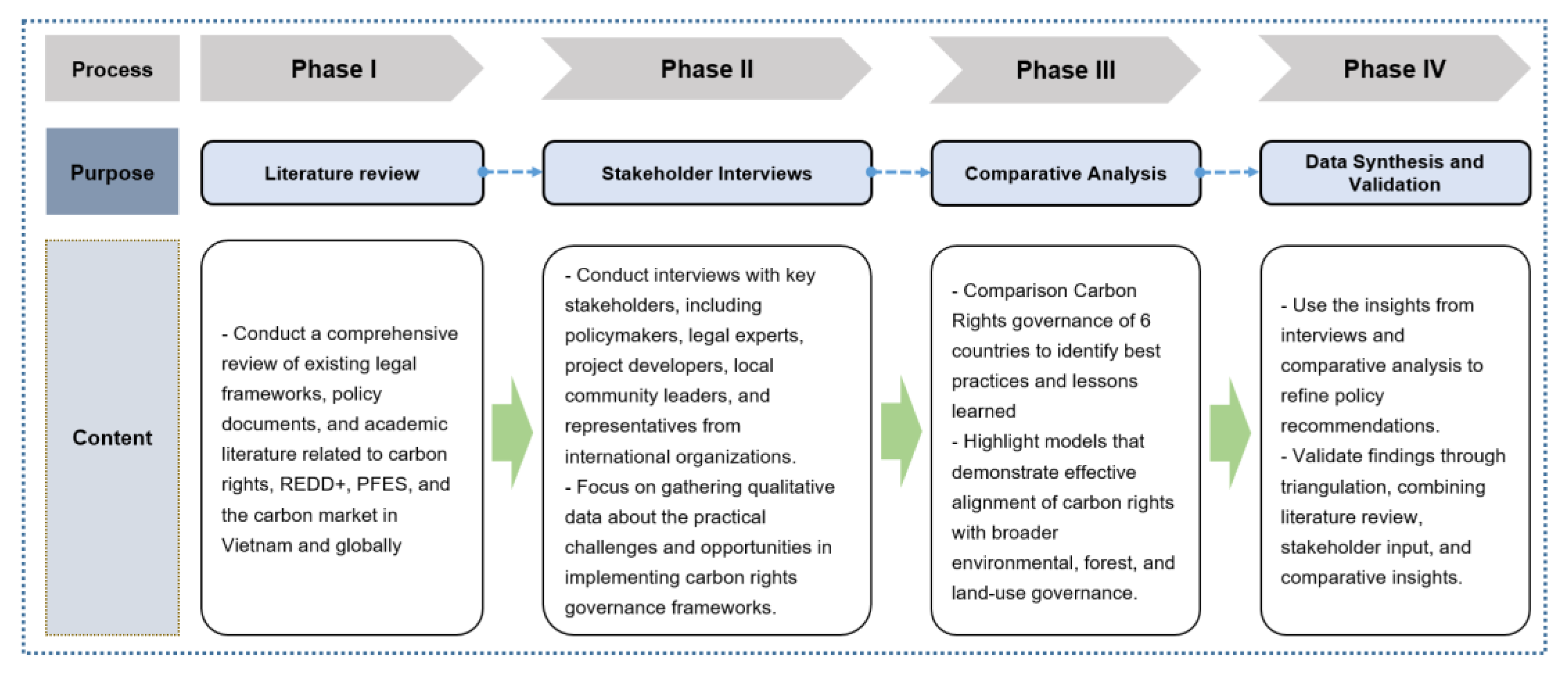
Figure 2.
Current situation and future challenges in Carbon Rights Policy Making in Vietnam.
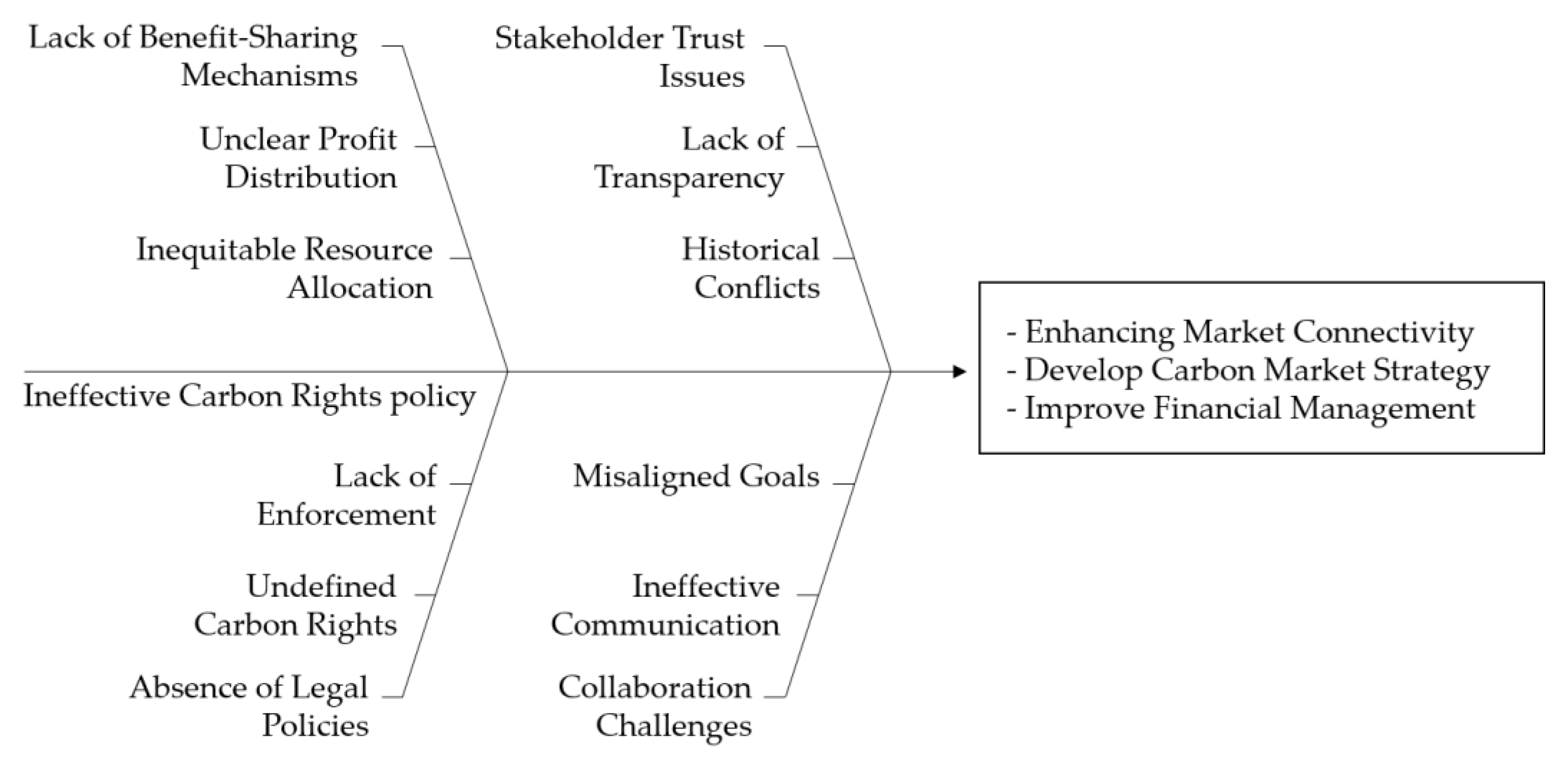
Figure 3.
Recommended Procedures for Carbon Rights Policymaking.
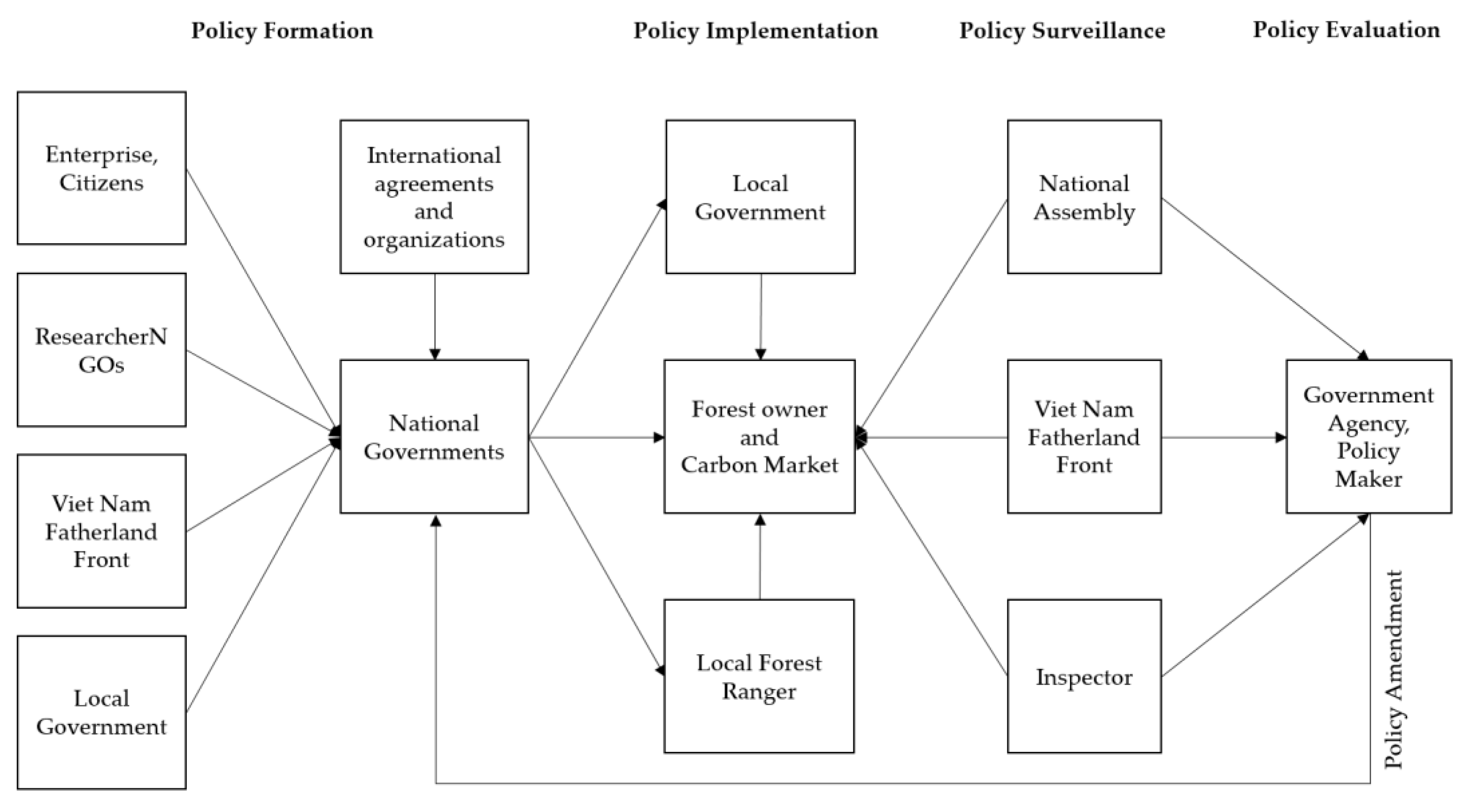

Table 1.
Survey results showing the characteristics of respondents as policy actors.
| Variables (n=61) | Frequency | Percent (%) | Mean | Standard Deviation | Range | Minimum | Maximum |
|---|---|---|---|---|---|---|---|
| Age Group (years) | 38.31 | 6.51 | 26 | 24 | 50 | ||
| 24 - 34 | 18 | 29.5 | |||||
| 35 - 44 | 33 | 54.1 | |||||
| > 45 | 10 | 16.4 | |||||
| Monthly Salary (USD) | 869.02 | 756.45 | 3320 | 180 | 3500 | ||
| 200 - 499 | 35 | 57.4 | |||||
| 500 - 999 | 11 | 18.0 | |||||
| > 1,000 | 15 | 24.6 | |||||
| Sector of Institution | 2.46 | 1.15 | 3 | 1 | 4 | ||
| Central Government | 17 | 27.9 | |||||
| Local Government | 14 | 23.0 | |||||
| Research Institute | 15 | 24.6 | |||||
| NGO | 15 | 24.6 |
Table 2.
Respondents' answers on the importance of carbon rights (%).
| Survey Categories | Total Agree | Agree | Disagree | Total Disagree |
|---|---|---|---|---|
| Central Government (n=17) | 70.59±20.59 | 29.41±20.59 | - | - |
| Local Government (n=15) | 73.33±23.33 | 26.67±23.33 | - | - |
| Researcher (n=14) | 42.86±7.14 | 57.14±7.14 | - | - |
| NGO (n=15) | 53.33±20.00 | 33.33±0.00 | 13.33±20.00 | - |
| Total (n=61) | 60.66±24.59 | 36.07±2.74 | 3.28±30.05 | - |
Table 3.
Respondents' Selections on Challenges Encountered in Defining and Securing Carbon Rights (%).
Table 3.
Respondents' Selections on Challenges Encountered in Defining and Securing Carbon Rights (%).
| Survey Groups | Lack of a policy framework on Carbon | Insufficient knowledge | Insufficient transparency | State management still has numerous limitations | Balancing stakeholder interests |
|---|---|---|---|---|---|
| Central Government (n=17) | 23.53±3.53 | 29.41±9.41 | 11.76±8.24 | 23.53±3.53 | 11.76±8.24 |
| Local Government (n=15) | 46.67±13.34 | 40.00±6.67 | 13.33±20.00 | - | - |
| Researcher (n=14) | 42.86±22.86 | 21.43±1.43 | 7.14±12.86 | 14.29±5.71 | 14.29±5.71 |
| NGO (n=15) | 26.67±6.67 | 26.67±6.67 | 13.33±6.67 | 20.00±0.00 | 13.33±6.67 |
| Total (n=61) | 34.43±14.43 | 29.51±9.51 | 11.48±8.52 | 14.75±5.25 | 34.43±14.43 |
Table 4.
Respondents' response on Engagement of Local Communities and Indigenous Peoples in Decisions Regarding Carbon Rights (%).
Table 4.
Respondents' response on Engagement of Local Communities and Indigenous Peoples in Decisions Regarding Carbon Rights (%).
| Survey Groups | Strongly Agree | Agree | Disagree | Strongly Disagree |
|---|---|---|---|---|
| Central Government (n=17) | 35.29±1.96 | 58.82±25.49 | 5.88±27.45 | - |
| Local Government (n=15) | 60.00±10.00 | 40.00±10.00 | - | - |
| Researchers (n=14) | 50.00±0.00 | 50.00±0.00 | - | - |
| NGOs (n=15) | 60.00±26.67 | 33.33±0.00 | 6.67±26.66 | - |
| Total (n=61) | 50.82±17.49 | 45.90±12.57 | 3.28±30.05 | - |
Table 5.
Comparative Forest Situation with Vietnam among 6 Countries.
| Country | Total Forest Area (million ha) | Forest Coverage (%) | Principal Forest Types | Forest Owner ship (%) | |
|---|---|---|---|---|---|
| National | Private | ||||
| Australia | 125 | 16.0 | Dry eucalyptus forests, tropical rainforests, and mangroves. | 76 | 24 |
| New Zealand | 8 | 31.0 | Temperate rainforests, montane forests, and coastal forests. | 50 | 50 |
| Brazil | 497 | 59.0 | Tropical rainforests, mangroves, savannas, and montane forests. | 75 | 25 |
| Democratic Republic of Congo | 154 | 67.2 | Tropical rainforests, swamp forests, and savannahs. | 90 | 10 |
| Indonesia | 92.1 | 49.2 | Tropical rainforests, mangroves, and peat swamp forests. | 85 | 15 |
| Philippines | 7.1 | 23.3 | Tropical rainforests, mangroves, and montane forests. | 60 | 40 |
| Vietnam | 14.7 | 47.5 | Tropical rainforests, mangroves, bamboo forests, and planted forests. | 68 | 32 |
Source: Global Forest Resources Assessments, FAO (2020).
Table 6.
International Lessons on Carbon Rights Systems.
| Country | Carbon Rights | Capability to participate in carbon offsetting activities |
|---|---|---|
| Australia | Defined at the state level under the Carbon Farming Initiative (CFI), connected to land tenure and associated with permanence obligations. | Credits issued to project implementers; registration of all projects is mandatory. |
| Indonesia | Government-owned, issuing licenses under Presidential Regulation No. 98/2021, though the market is stringently regulated. | Transferable to third parties, but there are restrictions on land rights within forest estates. |
| Democratic Republic of Congo | Government-owned under the Homologation Decree (2018), where rights are transferable via certification. | Transfer rights through the Certificate d’homologation process. |
| New Zealand | Recognized as distinct property rights under the Carbon Rights Legislation Amendment Act 1998. | Private forest owners are permitted to independently sell carbon credits. |
| Philippines | Integrated with natural resource rights, managed by DENR; Indigenous Peoples maintain ancestral rights. | Includes revenue sharing and profit allocation from the use of natural resources. |
Table 7.
Legal Alignment of Carbon Rights Policies.
| Approach | Explanation |
|---|---|
| Carbon Rights Based on Ownership | In state-managed forests, carbon rights are held by the state. In non-state-managed forests, carbon rights are assigned to the respective owners, motivating private and community involvement in emissions reduction initiatives. However, residential communities may need state assistance due to limited capacity. |
| Carbon Rights as National Property | Carbon rights, irrespective of the type of land ownership, are maintained by the state to preserve national sovereignty. Non-state entities may benefit from timber sales, usage of forest products, and environmental services but are precluded from owning or transferring carbon rights. Designated ministries (e.g., Finance, Agriculture) are better positioned to oversee emissions trading and provide technical guidance. |
| Benefit-Sharing Mechanisms | Carbon transfer and benefit-sharing systems can be implemented at national, regional, or project levels. At the nationallevel, central governments oversee the distribution of benefits, while at the regional level, local governments participate. Project-specific mechanisms detail the transfer processes to ensure transparency and fair distribution among all stakeholders. |
Disclaimer/Publisher’s Note: The statements, opinions and data contained in all publications are solely those of the individual author(s) and contributor(s) and not of MDPI and/or the editor(s). MDPI and/or the editor(s) disclaim responsibility for any injury to people or property resulting from any ideas, methods, instructions or products referred to in the content. |
© 2025 by the authors. Licensee MDPI, Basel, Switzerland. This article is an open access article distributed under the terms and conditions of the Creative Commons Attribution (CC BY) license (http://creativecommons.org/licenses/by/4.0/).
Copyright: This open access article is published under a Creative Commons CC BY 4.0 license, which permit the free download, distribution, and reuse, provided that the author and preprint are cited in any reuse.


