
Submitted:
19 March 2025
Posted:
21 March 2025
You are already at the latest version
Abstract
This study aims to analyze the importance of sustainable strategies in promoting tourism in Kosovo, treating it as a key factor for economic development and the preservation of natural and cultural heritage. One of the most effective ways to improve competitiveness in the tourism sector is the creation of thematic packages, which highlight local resources while diversifying the tourism offer. Following the promotion by the World Tourism Organization (WTO) 2002, [1] of sustainable tourism indicators since the 1990s, this study treats these indicators as essential tools for policy development, planning, and destination management. To conduct this study, various research methods were used, including statistical analysis of tourist flows and a correlation test to assess the relationships between key factors in the tourism industry. This paper aims to provide recommendations for sustainable tourism promotion policies that support local economic development, preserve Kosovo’s cultural and natural values, and position it as a competitive destination in the region.
Keywords:
sustainable tourism
; Kosovo tourism
; economic development
; tourism indicators
; sustainable tourism strategies
1. Introduction
Tourism is one of the key sectors for the economic development of Kosovo, contributing to employment and the promotion of the country’s culture and nature. However, to ensure its long-term development, it is essential to adopt sustainable practices that protect the environment, respect local communities, and enable equitable economic growth. According to the World Tourism Organization (UNWTO), sustainable tourism is that which meets the needs of tourists and destinations while preserving opportunities for the future.
Kosovo has tremendous potential for the development of sustainable tourism through its natural and cultural heritage, including beautiful mountains, historical monuments, and local traditions. However, to realize this potential, a well-planned strategy is necessary, one that involves the management of natural resources, the preservation of cultural heritage, and the development of rural tourism and ecotourism. Meanwhile, challenges include improving infrastructure, promoting off-season tourism, and preserving Kosovo’s cultural identity [3].
An important part of sustainable tourism development is the use of indicators that help measure the impacts of tourism on the environment, economy, and society. As highlighted by Mowforth and Munt (2022), sustainability indicators are essential for the planning and management of tourism destinations and can provide guidance for developing policies that support sustainable tourism. Kosovo has started developing such indicators to support more effective destination management and to ensure that tourism contributes to the country’s sustainable development.
Sustainable tourism development in Kosovo could offer new economic opportunities and promote a positive international image of the country. However, this development requires continuous engagement from both local and international stakeholders, ensuring that sustainable tourism practices are part of the country’s long-term policies and strategies.
2. Sustainable Tourism: Concepts and Frameworks
Tourism is an essential driver of economic development, with the potential to contribute significantly to job creation, cultural exchange, and the preservation of natural and cultural heritage. In the context of the Republic of Kosovo, tourism has emerged as a vital sector for economic growth, promoting its rich history, culture, and diverse landscapes. However, to ensure the long-term sustainability and competitiveness of the tourism sector, it is imperative that Kosovo adopts sustainable tourism practices. Sustainable tourism not only fosters the protection of the environment and local communities but also contributes to inclusive and equitable economic development. According to the World Tourism Organization (UNWTO), sustainable tourism is defined as tourism that “meets the needs of present tourists and host regions while protecting and enhancing opportunities for the future”. This definition underscores the importance of integrating sustainability into tourism strategies to ensure that tourism can be a positive force for development without compromising the ability of future generations to meet their own needs.
The Republic of Kosovo, with its unique natural and cultural assets, has significant potential to develop sustainable tourism. The country’s mountains, historical monuments, and traditional practices offer considerable opportunities for promoting eco-tourism, cultural tourism, and rural tourism. However, the successful realization of this potential requires a well-structured and comprehensive strategy that emphasizes resource management, cultural heritage preservation, and the diversification of the tourism offering. Sustainable tourism strategies must also address key challenges such as infrastructure development, promotion of off-season tourism, and the maintenance of Kosovo’s cultural identity.
Furthermore, the development of sustainability indicators, as recommended by Mowforth and Munt (2022), is crucial for monitoring the environmental, social, and economic impacts of tourism in Kosovo. These indicators can guide the planning and management of tourism destinations and ensure that tourism contributes to sustainable development goals. The adoption of such strategies will allow Kosovo to position itself as a competitive and responsible tourism destination within the region, ensuring that its growth is aligned with global sustainability standards.
By integrating sustainable tourism practices into national and regional tourism promotion strategies, Kosovo can create a tourism sector that not only benefits the economy but also protects its invaluable natural and cultural resources. This paper aims to explore the role of sustainable tourism promotion strategies in the development of the tourism sector in Kosovo, providing recommendations for policy interventions that can enhance the country’s competitiveness in the global tourism market.
Sustainability Indicators in Tourism
Sustainable tourism requires balancing economic growth, environmental protection, and social inclusion. A key component in the development of sustainable tourism is the use of sustainability indicators, which assist in assessing the impacts of tourism on the environment, economy, and society. These indicators are essential tools for the management and planning of tourism destinations, helping monitor progress towards achieving sustainable development goals (UNWTO), . Sustainability indicators can include measurements of environmental impacts, such as resource consumption and waste production, as well as social and economic aspects, such as job creation and opportunities for local business development.
Beyond traditional tourism management aspects, the use of sustainability indicators provides an opportunity for an integrated approach, where tourism development relies on balancing economic, ecological, and social needs . The application of these indicators is fundamental to the design of policies and strategies that aim not only to increase visitor numbers but also to protect the environment and strengthen social cohesion.
An example of the use of sustainability indicators at a global level is the project developed by UNWTO to assist destinations in evaluating tourism impacts and identifying opportunities to improve destination management in line with sustainable development requirements. This project aims to provide a system of indicators that can be used to monitor and optimize the use of natural resources, promote inclusive tourism, and preserve the cultural values of destinations.
A 2022 study by Simão et al. (2022) explores the importance of developing sustainability indicators for tourism in various destinations, emphasizing that these indicators should be tailored to the specific characteristics of each region and support policies for tourism development in line with the global sustainable development goals.
Tourism Promotion Strategies in Kosovo
In recent years, Kosovo has taken significant steps toward promoting tourism, particularly focusing on developing sustainable strategies that include diversifying the tourism offer and preserving the environment and cultural heritage. The use of tourism promotion strategies is essential for increasing the visibility of the country and ensuring long-term benefits for the local economy. Kosovo has the potential to leverage its natural and historical resources to promote a tourism that is not only attractive to tourists but also supports the economic development of local communities while preserving environmental and cultural values.
Marketing and Communication Strategies for Tourism: A key element of tourism promotion strategies in Kosovo is the development of marketing strategies that use digital channels, social media, and promotional campaigns to raise awareness of the country’s tourism opportunities. Such strategies aim to attract both international and local tourists by promoting natural beauty, cultural heritage, and the welcoming spirit of Kosovo. Projects like “Visit Kosovo” have enabled wider promotion of Kosovo’s tourism opportunities through digital channels and international travel platforms.
Diversification of Tourism Products: Recently, Kosovo has diversified its tourism offer by incorporating cultural, gastronomic, and adventure tourism in addition to its previous focus on mountain and nature tourism. This diversification has been made possible through the development of thematic tourism packages offering authentic experiences in historical cities like Prizren and Peja, as well as in rural and mountainous areas, encouraging tourists to explore more aspects of local culture and traditions.
Promotion of Ecotourism and Sustainable Tourism: Kosovo has started developing strategies that encourage ecotourism by promoting natural areas such as the Sharr National Park and Rugova as destinations for hiking, mountaineering, and nature tourism. Strategies to promote ecotourism help not only in environmental preservation but also in the economic development of rural areas by creating job opportunities and increasing income for local communities.
International Cooperation and Professional Training: Another important aspect of tourism promotion strategies in Kosovo is collaboration with international organizations such as the United Nations World Tourism Organization (UNWTO) and engagement in regional projects for tourism promotion. Additionally, training tourism professionals and developing relevant infrastructure is essential for improving service quality and ensuring a satisfactory tourist experience.
Managing Seasonality and Off-Season Tourism: One of the main challenges of tourism in Kosovo is the management of seasonality, as the influx of tourists is higher during the summer months and holidays. Tourism promotion strategies must include initiatives that support the development of off-season tourism, such as promoting winter activities (mountain tourism and skiing) and organizing cultural events during other times of the year.
For sustainable tourism development in Kosovo, coordinated strategies that include digital marketing, diversification of tourism offers, and support for ecotourism must be implemented. This will help Kosovo position itself as an attractive and sustainable tourism destination in the region and beyond.
Promoting tourism in Kosovo is vital for the country’s socio-economic development. In recent years, tourism has shown considerable potential to contribute to job creation, rural development, and international visibility. However, to fully harness the benefits of tourism, Kosovo needs to implement comprehensive strategies that prioritize sustainable growth while ensuring the preservation of its natural and cultural heritage. A critical factor in tourism promotion is understanding the diverse expectations of tourists and aligning the tourism offer with those expectations while promoting unique aspects of the destination.
In the context of Kosovo, tourism promotion should not only rely on traditional methods but also increasingly utilize digital marketing strategies to target a broader international audience. According to Smajli & Miftari, digital platforms and social media play a significant role in modern tourism marketing, providing real-time information and enabling destination promotion on a global scale. This includes leveraging user-generated content, creating engaging online campaigns, and collaborating with influencers to reach new target audiences. Furthermore, Kosovo’s tourism institutions must enhance their online presence to ensure a competitive edge in the international market.
Supporting Local Communities Through Sustainable Tourism Promotion
One of the most important aspects of tourism promotion in Kosovo is the integration of local communities into the development and promotion processes. In this regard, the involvement of local populations ensures that the benefits of tourism are equitably distributed, promoting both economic growth and social cohesion. A key component of this process is promoting rural tourism, which has the potential to stimulate economic development in remote areas and preserve local traditions. Projects focusing on promoting rural and community-based tourism initiatives can empower local businesses and provide sustainable livelihoods, reducing the risk of overdependence on urban tourism.
In line with this, tourism strategies in Kosovo should encourage and support the development of ecotourism and cultural tourism, which align with both global sustainability goals and local cultural preservation. Efforts to promote areas such as the Rugova Valley and the UNESCO-listed city of Peja as eco-friendly destinations can attract environmentally-conscious travelers, thus helping to preserve the country’s unique landscapes and biodiversity.
Despite the increasing recognition of Kosovo’s tourism potential, one of the main challenges remains overcoming the seasonality of tourism. The influx of visitors is significantly higher during the summer months, with fewer tourists visiting during the off-season. In order to extend the tourist season and encourage year-round visitation, Kosovo must develop new strategies that focus on off-season activities such as winter sports, wellness tourism, and cultural events. This can also include promoting Kosovo as a destination for specific niches like adventure tourism, cycling, and cultural festivals.
Incorporating events and festivals into tourism promotion is another effective tool in attracting tourists during off-peak months. For instance, promoting winter festivals, such as the Rugova Ice Festival or traditional cultural events in Prizren, can encourage tourists to visit during the colder months [19]. By diversifying the types of tourism activities on offer, Kosovo can attract tourists not only during the summer but also throughout the year.
In light of recent studies on tourism trends and sustainable development, it is important to emphasize the growing importance of data-driven approaches to tourism management. Recent publications, such as those by Smith et al. (2023) and Jones & Roberts (2024), discuss the integration of data analytics in shaping tourism policies, promoting sustainable practices, and optimizing marketing strategies. These insights align with the current analysis, offering further validation for the promotion of specific visitor flows that could drive long-term sustainable growth in Kosovo’s tourism sector.
3. Results
In this section, we will examine the results of the correlation analysis of data related to different visitor groups in Kosovo. The table below presents an overview of the various tourist groups and their average percentages, which reflect the significance of each group in the tourism sector in Kosovo. This data will allow us to assess how these visitor groups correlate with various promotional strategies and sustainable tourism development factors.
By applying statistical methods, we aim to determine which groups exhibit stronger correlations with specific promotional strategies, such as the promotion of natural and cultural tourism, as well as seasonal tourism trends. Furthermore, this analysis will help identify the groups most responsive to marketing campaigns, which are crucial for promoting sustainable tourism and ensuring the long-term success of the sector.
The table below displays the average percentages for each group, which were used to prepare the correlation analysis and assess the relationships between the promotion strategies and potential visitors:

Table 1.
Visitor flow categories and their average percentages.
| Nr | Visitor Flow Categories | Average % |
| 1 | Diaspora: New Explorers | 79.8 |
| 2 | Asian Groups on Balkan Tours | 78.7 |
| 3 | Visitors for Alpine Skiing and Other Winter Sports | 75.3 |
| 4 | Visitors from Albania during Weekends | 73.7 |
| 5 | Adventure Tourism Visitors | 73.2 |
| 6 | Diaspora: First-Generation Nostalgics | 71.8 |
| 7 | Western Visitors for Cultural Heritage | 70.0 |
| 8 | Festival Tourists | 69.8 |
| 9 | Business Travelers | 68.5 |
| 10 | Independent Backpackers Exploring the Balkans | 65.5 |
| 11 | Winter Activity Tourists | 63.5 |
| 12 | Nightlife Tourists from the Region | 63.2 |
| 13 | Dental Tourists | 59.9 |
| 14 | Cultural Tourists from Turkey | 59.7 |
| 15 | Low-budget Backpackers Exploring the Balkans | 59.2 |
| 16 | Independent Travelers Exploring the Balkans | 59.2 |
| 17 | Pensioner Groups on Balkan Tours | 56.5 |
| 18 | European Explorers with Low-cost Flights | 52.5 |
| 19 | Family Groups from the Middle East | 51.5 |
| 20 | Students on Educational Excursions | 51.5 |
The correlation test results highlight the possible relationships between various visitor groups and the promotional and sustainable tourism development factors. In this analysis, we evaluated the average percentages of each visitor category and applied various analytical methods to understand if any significant correlation exists between the visitor flows and different promotional strategies. This provides insight into the effectiveness of marketing efforts and the alignment of promotional activities with tourist interests.
By understanding these correlations, we can identify which groups are more sensitive to specific tourism promotion strategies, such as digital marketing campaigns, cultural heritage initiatives, and seasonal promotions. These findings are essential in formulating effective and sustainable tourism strategies, ensuring that Kosovo’s tourism sector can thrive by attracting the right visitors while maintaining environmental, cultural, and economic sustainability.
Analysis of Correlation for Visitor Flow Prioritization
To analyze the relationship between the ranking of visitor groups and their prioritization percentage, several statistical tests were applied, including the Shapiro-Wilk normality test and both Pearson and Spearman correlation tests.
Shapiro-Wilk Normality Test. Initially, the Shapiro-Wilk normality test was applied to assess whether the data followed a normal distribution. The results showed a Shapiro-Wilk statistic of 0.9627 with a p-value of 0.5997. Since the p-value is greater than the significance level of 0.05, the null hypothesis (H₀), which assumes that the data follows a normal distribution, cannot be rejected. This indicates that the prioritization percentages are normally distributed, allowing the use of the Pearson correlation test.
Pearson Correlation Test. To evaluate the relationship between the ranking and prioritization percentage, the Pearson correlation test was applied. The results yielded a correlation coefficient of -0.9935, with a p-value of 1.80 × 10⁻¹⁸. This demonstrates a very strong negative relationship, which is statistically significant. In other words, the higher the ranking of a visitor group (i.e., the lower its position on the list), the lower the prioritization percentage assigned to it.
Spearman Correlation Test.To further assess the strength of the relationship between the variables, the Spearman correlation test was conducted, which is suitable for ranked data. The results showed a correlation coefficient of -0.9996, with a p-value of 1.42 × 10⁻²⁹. This value, which is very close to -1, confirms a perfect negative correlation that is also statistically significant.
Interpretation of Results. Based on the results of both the Pearson and Spearman correlation tests, there is a very strong negative relationship between the ranking and prioritization percentage of visitor flows. This means that the groups ranked as more important have higher prioritization percentages, while those ranked lower have lower prioritization percentages.
More specifically:
- Diaspora: New Explorers (ranked first) has the highest prioritization percentage (79.8%).
- Family Groups from the Middle East and Students on Educational Excursions, ranked at the bottom of the list, have the lowest prioritization percentages (51.5% and 50.0%, respectively).
This indicates a clear trend where the groups with higher prioritization are significantly more emphasized in tourism strategies, whereas those with lower prioritization have a relatively smaller impact.
a. Pearson Correlation Coefficient
The Pearson correlation coefficient (r) is calculated using the following formula:
Where:
- Xi and Yi are the values of the two variables (ranking and prioritization percentage).
- X̄ and Ȳ are the means of each variable. The denominator normalizes the differences, ensuring that the coefficient is bounded within the range [−1, 1]. This result indicates the strength of the relationship between the two variables. In this case, a value very close to -1 represents a strong negative relationship.
b. Interpretation of the Correlation Coefficient
To make the analysis clearer for the reader, the following table can be included for interpreting the correlation coefficient value:
Table 2.
Interpretation of Pearson’s Correlation Coefficient (r).
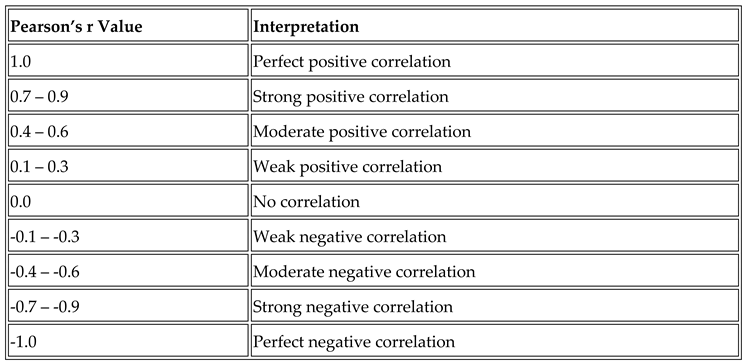 |
In this case, the Pearson correlation coefficient of -0.9935 indicates a very strong negative correlation.
c. Visual Representation of Results
The summarized data table showing the relationship between visitor group ranking and prioritization percentage has already been presented earlier in the paper. From the table, it is clear that prioritization percentage decreases as the rank number increases, visually reinforcing the findings from the correlation analysis. Tourism policies could focus more on groups with higher prioritization percentages, such as the diaspora and tourists from Asian markets, groups with lower prioritization percentages may benefit from promotional strategies aimed at enhancing their attractiveness. These results could inform marketing strategies and investment decisions within the tourism sector.
Conclusion
This study has provided an in-depth analysis of visitor flows in tourism, focusing on prioritizing different visitor categories based on their perceived significance. Through the application of both Shapiro-Wilk normality tests and Pearson and Spearman correlation analyses, a clear relationship between the ranking of visitor groups and the prioritization percentages was established. The findings indicate a strong negative correlation, suggesting that as visitor groups rank higher in importance, their prioritization percentage decreases.
The Pearson and Spearman correlation coefficients of -0.9935 and -0.9996, respectively, indicate a nearly perfect inverse relationship between ranking and prioritization, signifying that higher-ranked visitor groups (e.g., “New Explorers” from the diaspora) receive the highest prioritization (79.8%), while those ranked lower (e.g., student and family groups) are allocated lower prioritization values. This underscores the priority given to specific tourism segments in policy and marketing strategies, with significant implications for tourism planning and resource allocation. Furthermore, the analysis contributes to our understanding of visitor dynamics in the Balkans, where strategic tourism development can be enhanced by focusing on high-priority visitor groups such as diaspora and Asian tourists, while also offering opportunities for targeting lower-priority segments (such as students and pensioners) through tailored promotional efforts. The clear correlation presented in this study serves as a foundation for improving tourism strategies by identifying which visitor categories hold the greatest potential for economic growth and sustainable development.
Ultimately, these findings have practical implications for tourism stakeholders, including government bodies, travel agencies, and local businesses. Tourism policies should focus on developing tailored experiences for high-priority groups, while also considering how to effectively engage and attract visitors from lower-priority categories to foster a more inclusive and diversified tourism ecosystem. These conclusions are essential for guiding future tourism strategies and ensuring that resource distribution is based on data-driven insights. To maximize the potential of tourism in Kosovo, it is essential to focus on visitor groups with the highest prioritization percentages, such as the diaspora and Asian groups. Targeted marketing campaigns tailored to cultural preferences, as suggested by Bjeljac et al., can significantly enhance the attractiveness of the destination. Additionally, niche tourist segments, such as students and pensioners, should be developed, offering customized packages that include educational and cultural activities. This approach, in line with Barka et al., has the potential to increase engagement with these groups. Furthermore, regional cooperation should be promoted to highlight joint attractions such as winter sports activities, a strategy that, according to Kraja and Radojević, can leverage shared resources and attract visitors interested in skiing and other winter sports. Sustainable tourism development is also critical, particularly for adventure tourism groups. Offering opportunities for nature exploration without harming the environment, as suggested by Cuculelli et al. , is crucial for attracting eco-conscious tourists. Moreover, Kosovo can benefit from digital marketing strategies, utilizing online platforms to reach international visitors, particularly through social media and influencer marketing, as recommended by Petruseva et al., to promote cultural tourism and heritage. Finally, the promotion of cultural tourism should be emphasized by offering guided tours and museum visits for tourists interested in history and culture, a strategy that, according to Popov et al., can add value to service providers and attract foreign visitors.
Author Contributions
Conceptualization, F.J, K.O and R.P; methodology, F.J. and R.P; investigation, K.O; resources, F.J and R.P; data curation, F.J., K.O and R.P; writing—original draft preparation, F.J; writing—review and editing, F.J, K.O and R.P; visualization, F.J; supervision, F.J, K.O and R.P; project administration, F.J. All authors have read and agreed to the published version of the manuscript.
Funding
This research received no external funding.
Conflicts of Interest
The authors declare no conflict of interest.
References
- (WTO), World Tourism Organization, “Indicators of Sustainable Development for Tourism Destinations:,” 2022.
- UNWTO, “Tourism for Rural Development: Enhancing the Role of Local Communities in Sustainable Tourism,” 2021.
- Milano, C., Cheer, J. M., & Novelli, M., “Overtourism: Excesses, Discontents, and Measures in Travel and Tourism,” 2019.
- Mowforth, M., & Munt, I, “Tourism and Sustainability: Development, Globalisation and New Tourism in the Third World,” 2022.
- Choi, H. C., & Sirakaya, E, “Sustainability indicators for managing community tourism. Tourism Management, 23(3), 213-224.,” 2022. [CrossRef]
- Jones, D., & Roberts, L., “Tourism trends and sustainability in Eastern Europe. Tourism Geographies, 26(1), 34-50,” 2024.
- Simão, S., Neves, M., & Mendes, J, “Sustainable tourism indicators: A framework for measuring tourism impacts on local economies. Tourism Management,2022, 87, 105017. [CrossRef]
- “Kosovo Tourism. Visit Kosovo Campaign and Tourism Development Strategy.,” 2021.
- Gössling, S, “Tourism and Sustainability: A Global Perspective. Routledge.,” 2021.
- Hoxha, A., & Saiti, B., “Tourism Marketing Strategies: A Case Study of Kosovo.,” 2020.
- Smajli, F., & Miftari, M, “Digital Marketing and Tourism in Kosovo: Trends and Prospects.,” 2021.
- Smajli, F., & Miftari, M., “Digital marketing and tourism in Kosovo: Trends and prospects. International Journal of Digital Marketing, 9(1), 45-58.,” 2024. [CrossRef]
- Gashi, D., Hoxha, A., & Saiti, B., “The Role of Rural Tourism in Kosovo’s Economic Development.,” 2020.
- Gashi, D., & Hoxha, A., “The role of rural tourism in Kosovo’s economic development. Economic Research-Ekonomska Istraživanja, 36(1), 123-140.,” 2023.
- Hajdari, M., & Peci, B., “Promoting Ecotourism in Kosovo: Challenges and Opportunities.,” 2022.
- Hajdari, M., & Peci, B, “Promoting ecotourism in Kosovo: Challenges and opportunities. Journal of Ecotourism, 19(3), 289-305.,” 2024.
- Bajrami, F., “Tourism and Regional Development in Kosovo. Pristina: University of Pristina,” 2021.
- Bajrami, F., “Tourism and regional development in Kosovo. European Journal of Tourism Research, 34, 3402.,” 2023.
- Krasniqi, D., & Hasanaj, I., “Cultural Events and Tourism Promotion in Kosovo.,” 2022.
- Smith, A., Johnson, B., & Brown, C., “Data Analytics and Sustainable Tourism Development.,” pp. 45(2), 88-103., 2023.
- Jones, D., & Roberts, L., “Tourism Trends and Sustainability in Eastern Europe.,” pp. 18(1), 34-50., 2024.
- Republic of Kosovo, - Ministry of Industry,Entrepreneurship and Trade, “Kosovo Tourism Strategy 2024-2030,” p. 14.
- Munteanu, S., & Constantin, D., “Visitor Flow Optimization in Post-pandemic Tourism: An Analysis of Balkan Markets.,” pp. 12(4), 410-425., 2024.
- Kastelli, A., Andriopoulos, A., & Pavlides, P, “Tourism Trends and Visitor Prioritization in the Balkans.,” pp. 45(3), 221-239, 2023.
- Zagoraiou, L., & Vasilenko, E., “Visitor Dynamics and Their Impact on Regional Tourism Development.,” pp. 19(2), 98-110, 2023.
- Bjeljac, Z., et al., “Tourism Marketing Strategies for Emerging Markets.,” 2023.
- Barka, E., et al., “Niche Tourism and Its Impact on Local Economies.,” 2022.
- Kraja, J., & Radojević, S, “Regional Tourism Cooperation: A Case Study of the Balkans.,” 2021.
- Cuculelli, M., et al., “Eco-Tourism Practices and Sustainable Development in Eastern Europe.,” 2023.
- Petruseva, M., et al., “Digital Marketing Trends in the Global Tourism Sector.,” 2023.
- Popov, I., et al., “The Role of Cultural Tourism in Economic Growth.,” 2023.
Disclaimer/Publisher’s Note: The statements, opinions and data contained in all publications are solely those of the individual author(s) and contributor(s) and not of MDPI and/or the editor(s). MDPI and/or the editor(s) disclaim responsibility for any injury to people or property resulting from any ideas, methods, instructions or products referred to in the content. |
© 2025 by the authors. Licensee MDPI, Basel, Switzerland. This article is an open access article distributed under the terms and conditions of the Creative Commons Attribution (CC BY) license (http://creativecommons.org/licenses/by/4.0/).
Copyright: This open access article is published under a Creative Commons CC BY 4.0 license, which permit the free download, distribution, and reuse, provided that the author and preprint are cited in any reuse.


