

Submitted:
20 May 2024
Posted:
20 May 2024
You are already at the latest version
Abstract
E-tourism is one of the most important modern services to achieve the development of the tourism sector while relying on sophisticated communication technologies. Certainly, these innovations in the field of tourism have disrupted this sector with new and different dimensions of tourism development. This has led various regions and countries to accelerate the search for the tools that are necessary to achieve excellence and sustainable development in tourism. This research aims to study the development factors of e-tourism to achieve excellence and sustainable development in the tourism of the Ha’il region. Therefore, we applied two analyses: in the first one, we used a statistical analysis based on the survey sent to employees from tourism companies. The objective of this analysis is to determine the main factors of e-tourism to achieve excellence in tourism in the Ha’il region. The results of the statistical analysis have given us the following elements: There are only four main factors that allow authorities to achieve excellence in tourism in the Ha’il region, namely ST, CP, HRS, and SC factors. Then we proceed with a second analysis, to determine the main factors of excellence in tourism that drive the achievement of sustainable development in tourism in the Ha’il region. For this reason, we applied an artificial intelligence method based on the unsupervised machine learning technique. The results obtained from the machine learning technique show that five factors determine the excellence in tourism and reveal the sustainable development of Ha’il’s tourism. These factors are ST, CP, FP, HRS, and GC. Consequently, we consider that all the factors found in both analyses are important to realise excellence in tourism and sustainable development in tourism. However, to achieve sustainable development in tourism in Ha’il, Saudi authorities must develop the three common factors found in the two analyses, namely ST, CP, and HRS.
Keywords:
E-tourism
; excellence in tourism
; sustainable development in tourism
; artificial intelligence
; machine learning
1. Introduction
In recent years and in the era of new digital technologies and innovations, traditional tourism is under a major shift toward an electronic world that created the "e-tourism” system. The concept of e-tourism indicates the combination between the ‘e’ of electronic and tourism. This phenomenon is defined as the use of digital technologies in the tourism industry to access data on events, news, and reservations related to tourism and to guide travellers during their trip.
Some findings define e-tourism as a process of digitising all functions, services, and stages of management and business in the value chain of the tourism system to increase the efficiency of interaction between businesses, consumers, and the public to achieve competitive sustainability [19].
Thus, e-tourism takes into account all the services needed for online travellers. This makes travelling easier for tourists and encourages them to travel to different countries. This has created a new tourist environment that encourages competition between countries to attract more tourists. Therefore, e-tourism has become very important due to the role it plays in stimulating the tourism movement in the country that adopts it in a systematic way, which benefits the development of society and economy.
Therefore, it has become necessary for different countries to complete and develop e-tourism to achieve excellence and sustainable tourism. In this context, Saudi Arabia is seeking to develop its tourism sector through its development strategy and vision 2030 to change the Saudi tourism sector since the launch of the National Tourism Strategy in 2019. However, Saudi Arabia topped the United Nations Tourism Ranking for the growth of international tourist arrivals in 2023 compared to 2019 achieving an increase of 56%. This illustrates the actual context for developing the Saudi tourism approach. This study aims to identify the most important development factors of e-tourism in the Ha’il region to achieve excellence in tourism and sustainable tourism. The remainder of this paper is organised as follows. Section 2 presents a review of the literature on e-tourism, excellence in tourism, sustainable tourism, and an overview of tourism in the Ha’il region. Section 3 presents a conceptual model and hypothesis. Section 4, the methodology of this study. Section 5 provides conclusions and recommendations.
2. Review of the Literature
2.1. Theoretical Background of E-tourism
Tourism in the modern era is called an "industrial hybrid" because of its seamless integration with information and communication technologies. The United Nations Conference on Trade and Development first used the term "e-tourism" in a concrete way in 2000 and was intimately related to digital trade [27]. E-tourism, often known as digital tourism, encompasses all activities related to online tourism. It refers to tourism transactions in which parties communicate online rather than directly through physical exchanges or connections. According to the United Nations World Tourism Organisation (UNWTO), "e-tourism is defined as the virtual way of making tourists travel and giving an overview of a possible trip to Internet users to turn them into tourists, by offering them electronic brochures using efficient navigation through the diversity of tourist offers" [24], Condratov [9] defines e-tourism as a means to establish commercial relations mainly sales while using the Internet. This involves offering tourist-related products, such as flights, hotel reservations, and car rentals. Fong et al. [14] consider that the notion of digital tourism does not exist in the literature, but we speak of ‘digital culture’ related to tourism innovation. Tourism refers to the time when traditional travel agents, tour operators, national tourist offices, airlines, car rental companies, hotels, and other accommodation providers offer Internet services that allow travellers to organise their trips online. According to Kazandzhieva and Santana [19] believe that e-tourism is an objective reality, its rapid dynamics and development lead to significant changes in the traditional model of the classical tourist system. Thus, the creation of an e-tourism system is a logical continuation of the digitisation of all the processes of the value chain of the travel and tourism industry. This is how the development factors and the background of tourism support the economy [1].
However, IT offers many positive perspectives and possibilities for development, particularly e-tourism, but consequently creates serious problems in terms of society, economy, politics, and individual. Li et al. [21] described the key forms and factors to strengthen tourism through the implementation of economic, social, and environmental goals for the development of tourist destinations. His study focusses on travel agencies that have integrated new technologies into their tourism services. As a result, he discovered that he had a positive impact on the environment and local communities. As a result, consumer motivations for sustainable e-tourism are increasing.
Alternatively, tourism has an important economic, environmental, and social impact in the modern world. This is how the development of this industry depends on three elements to be sustainable. The environment, skills and relationships, and market power are the three determining components of tourism development. The equal and required development of the latter promotes the development of e-tourism and, as a result, sustainable development in tourism [5].
2.2. Sustainable Development in Tourism
The concept of sustainability was introduced into tourism from the notion of sustainable development after the publication of the report of the World Commission on Environment and Development (WCED, 1987). After a few years, researchers defined the notion of Sustainable Tourism Development (STD) and linked it with Sustainable Development Goals (SDGs) [3]. Furthermore, the United Nations considers that the concept of sustainable development includes understanding the effects of development through the use of nontraditional characteristics to achieve development in different sectors, particularly tourism. This development process requires particularity and excellence in tourism that depend on the development of new specific forms of tourism [23]. Therefore, e-tourism is a modern phenomenon and promotes sustainable development. Fauzel and Ragoobur [12] argued that the development of tourism is essential to realise sustainable tourism because it is specific and allows us to achieve excellence. Similarly, Fennel [13] has shown that sustainable tourism development is a dynamic process that constantly faces new challenges as applied technologies and aspects of tourism consumption evolve. Therefore, sustainable tourism depends on the development of e-tourism to be more competitive and to realise the excellence of one or more regions. Aghili et al. [2] showed the importance of industrial tourism, particularly e-tourism, in the achievement of sustainable development. In addition, two approaches are found in the tourism literature to measure the excellence of destination tourism. The first finding related to competitiveness indicators is explained by survey data [29,35]. The second finding using quantitative data measuring dimensions of destination competitiveness [16,25].
The United Nations World Tourism Organisation (UNWTO) announced in 2017 that it was important to "make tourism a catalyst for positive change." Therefore, tourism is an essential tool to promote the SDGs in Agenda 2030, including 17 targets. All objectives help to achieve the development of the tourism sector directly or indirectly, but what is most important is what the United Nations has set out in the Sustainable Development Agenda (2015-2030). The United Nations has focused on sustainable development factors for tourism to achieve sustainable development through sustainable development goals 8, 12 and 14. We found that item 8.9 of SDG8 is dedicated to developing and implementing policies to promote sustainable tourism that creates jobs and promotes local culture and products. We also find an element 12.b of SDG12, which aims to develop and implement tools to monitor the impact of sustainable development on sustainable tourism that creates employment and promotes local culture and products. Similarly, the item 14.7 of SDG14 has been identified as one of the tools to increase the economic benefits of the least developed countries [17].
2.3. Tourism in the Ha'il Region
Ha’il is located in the northwest part of Saudi Arabia. It is bordered to the north by the northern border areas of Al-Jawf, to the west by Tabuk, and to the southwest by Medina. Ha’il represents 6% of Saudi Arabia's territory and has a rich historical heritage. In addition, several factors make it a tourist destination, including the diversity of terrain, such as mountains, valleys, and plains. Its climate is relatively cold, hot and sand, as well as the availability of wild gardens. However, it has not received the necessary attention to become an international tourist destination. Therefore, it is necessary to establish a tourism development strategy in the Ha’il region to encourage internal competition between regions toward excellence in tourism. Therefore, the tourist attractions of any region are an integrated compound of human and natural characteristics and tourist establishments to form a solid base to create opportunities for the development of the tourist movement. These factors directly or indirectly affect tourism activity as attractive factors. The following table shows how much tourism in Ha’il has evolved in the last five years.
According to Table 1, between 2019 and 2023 domestic tourism trips increased by 62,31%, inbound tourism to Ha’il increased by 87,90%, tourism trip to work 42,04%, and visiting friends and relatives increased by62,31% (all the percentages are calculated by the average annual growth rate). The improvement in these rates in the Ha’il region is due to several reasons why investment in the region has increased by opening several resorts, cafes, and entertainment venues. The number of events such as the "Ha’il International Rally", to which the outer courtyards of the Mejlis Park have been allocated, has also intensified. The activities range from handicrafts to folk cuisine, challenge and adventure events, the effectiveness of Saudi falcons shows, the events of the Social Development Centre, the events of the Order of Knowledge and Disbelief Authority, Islamic affairs events, events of Ha’il University, health affairs events, passport events, events of the Department of Education, events of the Municipal Council, events of the General Directorate of Drug Control and events of the Women's Marketing Festival. All of these events coincide with vacation days in Saudi Arabia. This facilitates the mobility of the region.
Figure 1 shows us the increase in domestic tourism, especially in the Mecca region, due to its importance in religious tourism for the performance of Hajj and Umrah, since Riyadh, as the capital has a strong turnout, and the eastern region due to its importance in maritime tourism, especially as a border area with Bahrain. For other regions, domestic tourism is moderate to weak. Regarding the Ha’il region, we note that domestic tourism is relatively high compared to other interior talks because the region has undergone significant development in the tourism sector and provides high-quality tourist facilities, such as hotels, restaurants and leisure centres. These facilities provide convenience and facilities to visitors and enhance the attractiveness of the area as a tourist destination.
3. Conceptual Model and Hypothesis
3.1. Conceptual
The model in this study was based on some factors conceptualised and measured in different literature [18,20]. All factors are constructed from a questionnaire survey, which is divided by theme. Table 2 presents different proposed factors that affect e-tourism.
3.1.1. Supporting Technology
Due to the challenges associated with e-tourism, many travel agencies are trying to use modern technology to improve their services to be more competitive in the market. Therefore, according to Subramanian and Masron [36] and Shrestha and Jeong [33], ST is one of the fundamental factors that promotes the development of e-tourism. In fact, it will allow for the increase in efficiency and productivity of tourism businesses in a region. Likewise, ICT integration facilitates information exchange, reduces costs, and provides a unique competitive advantage to tourism businesses.
3.1.2. Financial Performance
Some researchers like Ji and Yin [18], suggested the importance that tourism businesses attach to social responsibility. In fact, the FP of a tourism company will allow it to be more efficient, since it will be able to diversify its investments in the tourism sector at a high level.
3.1.3. Government Commitment
Contextual factors specific to the development of e-tourism in a region include GC. This factor helps to encourage establishments to present new initiatives [20].
3.1.4. Human Resource Skills
Many researchers believe that staff skills are manifested by their abilities to manage e-tourism services. Werthner [39] believes that the efficiency of the e-tourism services offered by tourism companies requires a relevant and precise speed of execution for the service to be efficient. This reflects real HRS.
3.1.5. Awareness
3.1.6. Owners’ Knowledge Management
According to Lama et al. [20], management support is also an important factor that influences the decision on e-tourism. A good relationship between OKM and employees positively influences performance.
3.1.7. Socio-Cultural
Concerning the SC aspect, it is noted as an important factor in several literatures. Eyisi et al. [11] proved that e-tourism is strongly influenced by various cultural norms and values found in various countries and regions, such as language, morals, and customs.
3.1.8. Competition Pressure
Competition pressure represents an important factor for the development of e-tourism [28]. In fact, CP motivates tourism companies to improve their services to guarantee their presence and conquer market share.
3.1.9. Market Readiness and Size
3.2. Hypothesis
The hypothesis was formulated to validate the adoption of the factor in e-tourism. The suggested topics are divided into three types of factors. Based on these themes, eight hypotheses were developed to test the impact on the acceptance of e-tourism. The hypotheses are divided according to the dimensions of the e-tourism to test their effect on excellence in tourism: i) the environment factors are tested by , , ; ii) skills and relationship factors are tested by , , , and iii) market forces factors are tested by , .
: There is no influence for the development of e-tourism factors on Excellence in Tourism (ET).
: The development of ST positively influences the excellence in tourism.
: The development of FP positively influences the excellence in tourism.
: The development of GC positively influences the excellence in tourism.
: The development of HRS positively influences the excellence in tourism.
: The development of AW positively influences the excellence in tourism.
: The development of OKM positively influences the excellence in tourism.
: The development of SC positively influences excellence in tourism.
: CP positively influences the excellence in tourism.
: Promoting MRS positively influences the excellence in tourism.
The proposed research model is shown in Figure 2.
4. Methodology
This research is divided into two sections. The first was about statistical analysis. The purpose of this analysis is to determine the main development factors of e-tourism to achieve excellence in tourism in Ha’il region. Subsequently, the second section is to determine the development factors of e-tourism to achieve sustainable tourism development in the Ha’il region (see Section 4.1 and Section 4.2).
4.1. Measurement and Results of Statistical Analysis
In this phase of the statistical analysis study, we used the survey questionnaire method for closed data. We started by preparing the questionnaire. In fact, the survey was divided into three axes related to the implementation of e-tourism in the Ha’il region. The surveys included 25 paragraphs divided into eight components distributed into three types for the environment factors of development of e-tourism. Furthermore, we suppose four development factors for e-tourism, called relations factors, and two factors on the market dynamics in the Ha’il region. All of this factor is considered as variables relevant to our hypothesis of research. Therefore, the questionnaire was sent to the employees of tourism companies in the Ha’il region, as well as to carriers of customers travelling by road and air. After the compilation of the responses, various options were explored using the SPSS version.
However, after distributing the questionnaire, we received two types of responses that depend on the sets of questions for the demographic and study summary (see Table 2). This is to facilitate the understanding of the questions addressed to the Ha’il region in Saudi Arabia (the questionnaire was translated into Arabic). We also used a five-point Likert scale ranging from 1 – strongly disagree to 5 – strongly agree. Relative weight was also calculated to determine the appropriate range of weighted mean values for each score. So, the responses to the questionnaire distributed to employees of tourist companies in the Ha’il region, as well as customer carriers travelling by land and air, were compiled using Google forms in the electronic design of the questions and then distributed through WhatsApp to get as many responses as possible. As a consequence, 489 responses were received, of which only 426 were usable and therefore submitted for additional data analysis.
4.1.1. Demographic Profile of the Respondents and Descriptive Statistics
In this section, we note in Table 3 that the members of the majority of the Working Group in the tourism sector are men (74.4 %) of the youth group (18-30 years) at a rate (40.6 %). This shows that work in this sector has been newly developed in the Ha’il area and appeals to the young group. The share of workers' experience in this sector is less than 5 years (46.5 %). This is due to the promotion of tourism projects in recent years according to the objectives of the internal development of Saudi Arabia. We also show that most of the tourist workers in the Ha’il region are non-Saudi (70.2%). This is because many managers and entrepreneurs are Saudi, while employment is the majority of other nationalities.
4.1.2. Discussions of the Results of the First Analysis
Statistical analysis begins with the normality test, which confirms that the data are usable with a limit of -3 to 3. The asymmetry and kurtosis of each questionnaire are below the limit.
For each factor in the model, descriptive statistics were calculated. The averages ranged from mean 2.784 (OKM) to 4.078 (HRS) and were statistically significant. These results indicate that the factors explain the proposed model. That is, all components represent the average perception of the approved variable (e-tourism).
Therefore, it is important to verify the reliability and validity of the model estimation. For this we used the alpha Crombach test to determine the internal consistency of the model factors. Furthermore, the alpha Cronbach values represent (>0.6). For this reason, it is acceptable and reliable for exploratory research. Also, we can consider that the values above 0.7 are also recommended for the confirmation study. Furthermore, Table 4 confirms the reliability of the survey data. Regarding the validity of the content, Table 4 shows that the results of the validity and content test are verified. The validity of the content was tested by a group of three experts to verify the questionnaire questions from our study. The result showed the validity of the convergence by calculating the extracted average difference (> 0.5) and the estimated load value of the normal factor load (> 0.7). The validation of the distinction was also obtained by comparing the quadratic root values of the average variability extracted with the correlation values of the variables individually. The average variance extracted (AVE) for each construction was also calculated, (AVE > 0.5), which means that all variables explain the dependent variable). Consequently, the construct values are reliable and can be used as justification. We also verified the structural model according to the relationships formulated between the constructions. The structural model was estimated using several measurements, including Goodness of Fit (GoF): χ 2/df < 5, Mean Square Error (RMSEA < 0.08). Also calculated as standard root residue (SRMR < 0.1), the comparative indicator.
In addition, table 4 shows that all correlation factors between independent variables (ST, FP, GC, HRS, AW, OKM, SC, CP, MRS) and dependent variables (ET) have a statistical function of 0.01 and 0.05. The value ranged from 0.243 (ET to MRS) to 0.489 (ET to OMK as well as SC). This indicates that the repellent relationship between all variables is relatively average, but very strong with some variables such as ST (0.878) and HRS (0.835). This demonstrated that the massive use of information technology by tourism organisations increases profits. However, the organisation needs superior human resources in the computer field. Therefore, as our study on technology and HRS shows, these are complementary and relevant factors, as shown by the ST variant, and HRS (0.891) are important for tourism organisations to achieve their ideal vision and mission.
Before discussing the analysis of multiple regression results, let us start with a summary of the means of the different dimensions of the construction studied (environmental factors, skills and relationship factors, market forces factors) shown in Figure 2. First, the overall averages are high (more than 4 on a five-point Likert scale) for environmental factors, particularly for ST and HRS, and for skills and relationship factors constructions that are related factors. This means that, in general, respondents consider technology to be very important in bringing customers closer to tourism firms, and the same applies to employees who must master new technologies to offer good performance. Similarly, the respondents agree with the statements relating to the dimensions of the relationship. As for the dimension of market forces factors. This is generally small and has the lowest average (2.809). Therefore, Table 5 represents the multiple regression to measure the relationship between the dependent variable (ET) and the independent factors. The estimates’ results showed that the R square is 0. This means that about 80.10% of the variation in the number of Ha’il’s tourism excellence factors was taken into account by the quality variables of e-tourism. Furthermore, 19.9% were influenced by other external factors. Research also showed that, when examined with a 95% confidence level, the four factors of different dimensions were found to be significant (0.000). The model was found to be important. According to Santos et al. [31], the performance of e-tourism is directly and positively related to supporting technology and is considered an important element. Furthermore, the results of the regression measurement show that the model is important. However, according to Santos et al. [31], the performance of e-tourism is directly and positively related to technology support and is an important element as users consider their past experiences with a company relevant to their management decision. These results are consistent with previous studies which concluded that the higher level of HRS about previous experiences with a company where technological support promotes, skills and relationship factors. Tourists will be felt both in the company and at the selected destination. After applying several experimental models, we measured the impact relation between ET and the different variables presented in our hypothesis. We retained the best ANOVA analysis model that reflected the most variables validated in regression. These variables appeared as follows (ST, CP, HRS and SC) as valid for (P = 0.000). This signifies the importance of these factors that positively influence e-tourism. Indeed, the probability associated with Fisher's F is 0.000. However, the variables have a good explanatory power of the model (80.1%) of the total variance with a significance threshold of P = 0.000. The Beta standard is between 0.096 and 0.618 with a statistical significance ˂ 5% (p = 0.000) that shows the positive effect of the variable on e-tourism.
Similarly, the results of the model regression analysis confirmed the findings. Skills and relationship dimensions explain 80.1% of total variance with a significance threshold (0.007). Therefore, hypotheses (, , , ) are accepted. This means the importance of these four factors in determining the development of e-tourism and achieving excellence in tourism in the Ha’il region. So, the hypothesis (, , , ) are rejected.
In fact, in the first model, we had only presented a single ST factor as excellence in tourism. The second model gave two determining factors of excellence (ST and CP). Subsequently, in a third model, the results given ST, CP, and SC. Finally, the fourth model provides us with ST, CP, SC, and HRS. The model regression presented that the R-square is equal to 80.1%. Therefore, it gives perfect results overall.
4.2. Measurement and Analysis Using Artificial Intelligence Method
In this phase, we study the main important development factors of e-tourism to achieve excellence in tourism in the Ha’il region. Therefore, we refer to the United Nations and the World Tourism Organisation in Agenda 21 to dispatch the factors allowed to the SDGs presented in Table 6. In addition, we have also argued each determined link with the SDGs to which sustainable tourism refers.
Similarly, the dependent variable of excellence in tourism related to 17 SDGs, but since we determine sustainable tourism, Table 6 focusses in particular on SDG8 and SDG12. We have eliminated SDG14 since the Ha’il region does not benefit from aquatic resources.
4.2.1. Proposed Method
In this section, we proposed the second analysis based on the unsupervised machine learning technique. Recall that the objective of this analysis is to reveal the main development factors of e-tourism to achieve sustainable development in the tourism of the Ha’il region. The proposed method is based on an unsupervised machine learning technique. This unsupervised learning technique enables a system to be trained from a set of unlabelled observations and data [37].
The method we propose is based on two pillars. The first pillar aims to partition factors into subsets (i.e., a group of similar points) using a clustering technique. By successive iterations, this clustering technique attempts to determine centroids (one per cluster) around which the data can be grouped. The second pillar consists of automatically classifying observation factors (i.e., a group of points) by calculating the using a weighted Euclidean distance [38] of each observation (i.e., each point) from a central clustering point called a centroid. Therefore, based on the weighted Euclidean distance calculation, the best data points that have a positive influence and help ensure tourism excellence will be ranked.
We programmed the proposed method using the Java programming language. The results obtained, which define the best support invoices for tourism excellence, is a system whose architecture is shown in Figure 3. The proposed unsupervised learning system is based on four stages. In the first step, we use a corpus of observations collected from studies carried out by the General Authority for Statistics of the Kingdom of Saudi Arabia (https://www.stats.gov.sa/) and the Ha’il Chamber of Commerce (https://hc.org.sa/).
Data collection will undergo a preprocessing and standardisation phase. This data normalisation phase aims to put all numerical variables on the same scale to prevent certain variables from dominating the analysis because their scale is larger. This corpus is built on a set of 1464 monthly observation data during the years 2000 and 2022 in the Ha’il region. These observations are structured around statistical calculations performed on indicators and the determination of development factors of sustainable tourism, which will serve to determine sustainable development (see Table 6). This data normalisation phase aims to bring all numerical variables to the same scale to prevent certain variables from dominating the analysis due to their larger scale. Thus, this phase relies on techniques for standardising and resizing numerical variables (e.g., min-max scaling) to ensure that they are comparable on a common scale.
At the end of the pre-processing and normalisation phase, the data will be consistent and comparable, and each indicator entity (i.e., each attribute) will be related to homogenised and normalised data, making subsequent analysis by the training algorithm much easier.
The second step leads to the construction of the ".ARFF" file (Attribute-Relation File Format). This file contains a finite set of "" score vectors corresponding to attribute values (i.e., pre-processed and normalised factors calculated and observed from survey data).
Recall that the ".ARFF" training file contains a first header section made up of a list of attributes and their type characteristics (i.e., numeric, nominal string, date, and nominal) and a second data section with the values. Each row in the second section of the data values constructs a score vector, which has the following structure , with representing the pre-processed and normalised value of the calculated and observed factors.
In the third step, a clustering algorithm is used for unsupervised machine learning, namely the K-means algorithm [38]. This algorithm tries, by successive iterations, to partition a data set into K distinct clusters. Each cluster has a central grouping point called the centroid (i.e., the cluster's centre of gravity) around which the closest data (i.e., points in the score vectors) can be grouped by calculating the Euclidean distance. This Euclidean distance is calculated between each data point and the cluster centroids. Figure 4 shows an illustration of the groupings of V-score vectors generated by the K-means algorithm with k=2.
Following the indication of the K-means algorithm to classify the observations into two clusters (K-means with K=2), we found two centroids to divide the observations into two distinct groups. As illustrated in Figure 4, we note that the 2-means clustering algorithm has defined two clusters of data points marked by the colours red and blue. These groupings are performed by calculating the distance of each observation (i.e., a V-score vector point) from the cluster centroid, thus automatically classifying the V-score vectors into two groups: {Tourism_Factor} and {Not_Tourism_Factor}.
In the fourth step, our system classifies and evaluates the importance of a score vector point by calculating a weighted Euclidean distance to the cluster centroid. The closer the point in the score vector is to the centroid of the Tourism_Factor cluster (by calculating the weighted Euclidean distance), the more important it is, and the more it is an excellent factor for the realisation and development of e-tourism.
Recall that the weighted Euclidean distance is a measure of the geometric distance between two points in a multidimensional space. Therefore, using a 2D space, the calculation of the weighted Euclidean distance is given by the following formula: with "x" representing the {Tourism_Factor} cluster centroid and "y" score vector belonging to the same cluster as centroid "x".
However, the weighted Euclidean distances will determine which factors (i.e., which are presented by the points of the V-score vectors in 2D space) have more influence and importance for the development of e-tourism. The list of these factors, presented in a 2D space and sorted in descending order of importance (the factors are sorted using weighted Euclidean distances), is shown in Table 7.
4.2.2. Discussion of the Result of the Second Analysis
The results of this phase of the analysis indicate the main factors of the development of e-tourism that make it possible to achieve sustainable development in the tourism of the Ha’il region. To achieve this goal, we applied an unsupervised machine learning technique on a monthly tourism database in Saudi Arabia from 2000 to 2022 (about 1464 observations). In fact, the basis is global for Saudi Arabia because the achievement of sustainable tourism development is a primary goal for all regions of Saudi Arabia cited in its Vision Agenda 2030. After the achievement of standardisation, we found only five important factors of excellence that promote the achievement of tourism development in the Ha’il region. These factors are ST, CP, FP, HRS, and GC. However, we also conclude that artificial intelligence analysis has the ability to determine the factors of the most important dimension (environmental factors). E-tourism relies heavily on the social and cultural clouds of the environmental dimension. This justifies that environmental factors are a good predictor and stimulator of other factors of other dimensions (skills and relationship and market forces).
Similarly, the results of the study encourage the Ha’il authorities to turn toward the development and sustainable integration of the tourism industry. This requires further development of the environmental dimension. In general, the results indicate a change in the link between tourism excellence and sustainable development. This explains the importance of the combination of statistical analysis and machine learning analysis that we have applied in our study. It is true that the results found are specific to the region of Ha’il, but also link with all regions in Saudi Arabia. In fact, the concept of sustainable tourism and excellence in tourism must be reconsidered, and it is important to propose reforms in this sector for the Ha’il region and all other regions of Saudi Arabia.
5. Conclusions and Recommendations
The main objective of this paper is to study the development factors of e-tourism to achieve excellence and sustainable development in the tourism of the Ha’il region. In this context, we have applied two complementary analyses. The first is based on statistical analysis. Then the second is based on the artificial intelligence method, which is unsupervised machine learning. In fact, in the statistical analysis, we have, based on the survey, 426 responses from employees of tourism businesses. The objective of this analysis is to determine the main development factors of e-tourism to achieve excellence in Ha’il. The results of this first step show that there are only four main factors that allow authorities to achieve excellence: ST, CP, HRS, and SC. Then we applied the second analysis to determine, with the machine learning technique, the factors of excellence in tourism that allow to achieve the sustainable development of tourism in the Ha’il region. For this reason, we maintained a monthly database of tourism in Saudi Arabia from 2000 to 2022 (about 1464 observations). Therefore, we found that five development factors and the excellence of e-tourism promote the achievement of sustainable development in tourism. These factors are ST, CP, FP, HRS, and GC.
Consequently, we conclude a positive impact of the environment on the development of e-tourism in the Ha’il region. Therefore, this indicates the important need to apply a strategy to develop tourism resources in the Ha’il region. However, the results of this study allow us to conclude that the realisation of tourism development remains an objective aimed at by the regional authorities of KSA. Therefore, the Ha’il region has specific characteristics that promote the achievement of excellence in tourism. For this reason, it is important to develop e-tourism factors for Ha’il to achieve long-term tourism development.
Furthermore, according to the results of these two analyses, various policies recommend that the authorities of the Ha’il region accelerate the achievement of excellence and the development of tourism. In fact, decision makers must maximise tourism awareness campaigns in society. Similarly, regional authorities can also encourage the adoption of digital technology in the Ha’il region. It is also important to promote investments in the e-tourism protection programme for businesses and to support tourism growth in the Ha’il region through increased funding. However, authorities can develop services for seasonal tourism programmes in the Ha’il region. It is also better to create vocational training programs, especially with digital instruments. There is also a need to encourage private initiatives to raise tourism standards in Ha’il. Therefore, it is recommended to adopt flexible assessment methods for different groups of society to ensure that the tourist service is correctly assessed. Finally, it is important to encourage investment in global community events and try to polarise the Ha’il region. For example, review the overall marketing of the effectiveness of the rally so that it is a victory for tourism and the excellence of the region. Furthermore, these recommendations require the regional development of the technological infrastructure, such as the development of security equipment and services, information and artificial intelligence. This would create skills and competencies in this area.
Funding
This research has been funded by Scientific Research Deanship at University of Ha’il – Saudi Arabia through project number “RD-21 135”.
References
- Abdullaeva S. E., Oripova D. K., 2023, “Development of Main Directions for Achieving Sustainability in Tourism”, International Journal of Social Science Research and Review, Vol. 6, No. 6. [CrossRef]
- Aghili A., Arofzad S., Nazari R., 2022, “Sustainable Development According to Sport Tourism Business in Iran”, Sports Business Journal, Vol.3, Issue 1, No. 5.
- Anser M. K., Adeley B. N., Tabash M. I., Tiwari A. K, 2021, “Services trade–ICT–tourism nexus in selected Asian countries: new evidence from panel data techniques”, Current Issues in Tourism, Vol. 25, Issue 15.
- Ayed S. A., 2021, “The impact of e-commerce drivers on e-customer loyalty: Evidence from KSA”, International Journal of Data and Network Science, Vol. 6, Issue 1, pp. 73-80.
- Baloch Q. B., Saleh S. N., Iqbal N., Sheeraz M., Asadullah M., Mahar S., Khan S., 2023, “Impact Of Tourism Development Upon Environmental Sustainability: A Suggested Framework For Sustainable Ecotourism”, Environmental Science And Pollution Research, Vol. 30, pp. 5917-5930. [CrossRef]
- Buhalis D., Leung X. Y., Fan D., Darcy S., Chen G., Xu F., Tan G.W. H., 2023, “Editorial: Tourism 2030 and the contribution to the sustainable development goals: the tourism review viewpoint”, Tourism Review, Vol. 78, No. 2, pp. 293-313.
- Chams N., Blondon J. G., 2019, “On the importance of sustainable human resource management for the adoption of sustainable development goals”, Resources, Conservation and Recycling, Vol. 141, pp. 109-102.
- Chen J., Huang Y., Wu E., IP R.,Wang K., 2023, “How does rural tourism experience affect green consumption in terms of memorable rural-based tourism experiences, connectedness to nature and environmental awareness?”, Journal of Hospitality and Tourism Management, Vol. 54, pp. 166-177.
- Condratov I., 2013, “e-Tourism: Concept and evolution”, EcoForum, Vol. 2, Issue 1, pp. 58-61.
- Dias A., Rodriguez M. R. G., Hallak R., 2023, “Nascent entrepreneurship: a critical perspective and research agenda in tourism and hospitality”, International Journal of Contemporary Hospitality Management, Vol. 35, Issue 7.
- Eyisi A., Lee D., Trees K., 2023, “Local perceptions of tourism development and socio-cultural impacts in Nigeria”, Tourism Planning & Development, Vol. 20, Issue 4, pp. 499-521. [CrossRef]
- Fauzel S., Ragoobur V., 2023, “Sustainable development and tourism growth in an island economy: a dynamic investigation”, Journal of Policy Research in Tourism, Leisure and Events, Vol. 15, Issue 4, pp. 501-512.
- Fennel D., 2020, “Technology and the sustainable tourist in the new age of disruption”, Journal of Sustainable Tourism, Vol. 29, No. 4.
- Fong B., Olmedo E., Chang P. K., 2023, “YouTubers and the Malaysian Youths: An Exploration into Digital Parasocial Relationships: An Exploration into Digital Parasocial Relationships”, Journal of Ethnic and Diversity Studies, Vol. 1, Issue 1.
- Gamsakhurdia T., Fetelava S., 2023, “Financing of The Sustainable Tourism Industry in Georgia”, EBESCO, Deutsche Internationale Zeitschrift für Zeitgenössische Wissenschaft, No. 59, pp. 26-33.
- Gómez M., Pratt M. A., Molina A., 2018, “Wine tourism research: a systematic review of 20 vintages from 1995 to 2014”, Current Issues in Tourism,Vol. 22, Issue 18. [CrossRef]
- Gu X., Hunt C. A., Jia H., Niu L., 2022, “Evaluating Nature-Based Tourism Destination Attractiveness with a Fuzzy-AHP Approach”, Sustainability, Vol. 14, No. 13.
- Ji J., Yin J., 2022, “Diffusion Characteristics and Driving Factors of the Smart Tourism City Policy-Event History Analysis”, Sustainability, Vol. 14, No. 11.
- Kazandzhieva V., Santana H., 2021, “E-tourism: Definition, development and conceptual framework”, Tourism: An International Interdisciplinary Journal, Vol. 67, No. 4.
- Lama S., Prahadan S., Shrestha A., 2020, “Exploration and implication of factors affecting e-tourism adoption in developing countries: a case of Nepal”, Information Technology & Tourism, Vol. 22, pp. 5-32.
- Li Y., Liu Y., Solangi Y. A., 2024, “Analysis of Factors and Strategies for the Implementation of Sustainable Tourism in a Green Economic Structure in China”, Journal of Cleaner Production, Vol. 434.
- Liu H., Hasan M., Cui D., Yan J., Sun G., 2022, “Evaluation of tourism competitiveness and mechanisms of spatial differentiation in Xinjiang, China”, PLOS ONE, Public Library of Science, Vol. 17, No. 2, pp. 1-19.
- Lora A. V., 2023, “The societal impact of tourism research of the Research Excellence Framework 2021”, Journal of Policy Research in Tourism, Leisure and Events, Vol. 15, No. 4, pp. 502-512.
- Moncayo D. F., 2019, “Influence of electronic commerce in tourism”, Journal of Business and entrepreneurial studies, Vol. 3, No. 2.
- Myrovali G., Morfoulaki M., Mpaltzi T., 2023, “Can Destination Cards Help to Shape Areas’ Sustainability?”, Sustainability, Vol. 15, No. 11.
- Nanda W. D., Widianingsih I., Miftha A. Z., 2023, “The Linkage of Digital Transformation and Tourism Development Policies in Indonesia from 1879–2022: Trends and Implications for the Future”, Sustainability, Vol. 15, No. 13. [CrossRef]
- Oyabu T., Nambo H., Kimura H., Liu A., 2022, “Statistical relation between foreign visitors to Japan for business and the amount of Japan's total trade”, Journal of Global Tourism, Vol. 7, No. 2, pp.119-123. [CrossRef]
- Preko A., Amoako G. K., Dzogbenuku R. K., Kosiba J., 2022, “Digital tourism experience for tourist site revisit: an empirical view from Ghana”, Journal of Hospitality and Tourism Insights, Vol. 6, Issue 2, pp. 779-796. [CrossRef]
- Rahimi M. K., Safaghat T., Beiginia A., Jafari H., 2022, “Investigating the Marketing Status of Healthcare Tourism of Selected Public and Private Hospitals in Yazd in 2021”, Journal of health research in community, Mazandaran University of Medical Sciences, Vol. 8, Issue 1, pp. 60-68.
- Saad A., Gharaibeh B., 2023, “E-tourism adoption in travel agencies: new qualitative insights from a developing country”, International Journal of Tourism Policy, Vol. 13, No. 3, pp. 248-261.
- Santos F. D., Lunardi G. L., Maia C. R., Añaña E. S., 2020, "Factors that influence consumers’ participation in electronic tourism", RBTUR, Vol. 14, Issue 2, pp. 139-155.
- Shafiee S., Ghatari A. R., Hasanzadeh A., Jahanyan S., 2019, “Developing a model for sustainable smart tourism destinations: A systematic review”, Tourism Management Perspectives, Vol. 31, pp. 287-300. [CrossRef]
- Shrestha D., Jeong S. R., 2021, “An ICT Framework for Tourism Industry of Nepal: Prospect and Challenges”, Journal of Internet Computing and Services, Vol. 17, No. 6, pp. 113-122. [CrossRef]
- Spenceley A., Rylance A., 2019, “Chapter 8: The contribution of tourism to achieving the United Nations Sustainable Development Goals”, Collection of Social and Political Science, pp. 107-125.
- Streimikiene D., Svagzdiene B., Jasinskas E., Simanavicius A., 2020, “Sustainable tourism development and competitiveness: The systematic literature review”, Sustainable Development, Vol. 29, Issue 1, pp. 259-271. [CrossRef]
- Subramanian Y., Masron T. A., 2021, “The impact of tourism on entrepreneurship in developing countries”, Business Strategy and Development, Vol. 5, Issue 3, pp. 139-303.
- Vannieuwenhuyze A., 2019, “Intelligence Artificielle Vulgarisée—Le Machine Learning et le Deep Learning par la Pratique”, ENI : Strasbourg, France.
- Vouros A., Langdell S., Croucher M., Vasilaki E., 2021, “An empirical comparison between stochastic and deterministic centroid initialisation for K-means variations”, Mach. Learn. [CrossRef]
- Werthner H., 2022, ”A digital humanism view on e-tourism”, Information Technology & Tourism, Vol. 24, pp. 347-360. [CrossRef]
- Wu D., Li H., Wang Y., 2023, ”Measuring sustainability and competitiveness of tourism destinations with data envelopment analysis”, Journal of Sustainable Tourism, Vol. 31, Issue 6, pp. 1315-1335.
Figure 1.
Domestic tourist trips in 2022 by destination province. Inspired by authors from Saudi Statistics (https://stats.gov.sa/).
Figure 1.
Domestic tourist trips in 2022 by destination province. Inspired by authors from Saudi Statistics (https://stats.gov.sa/).
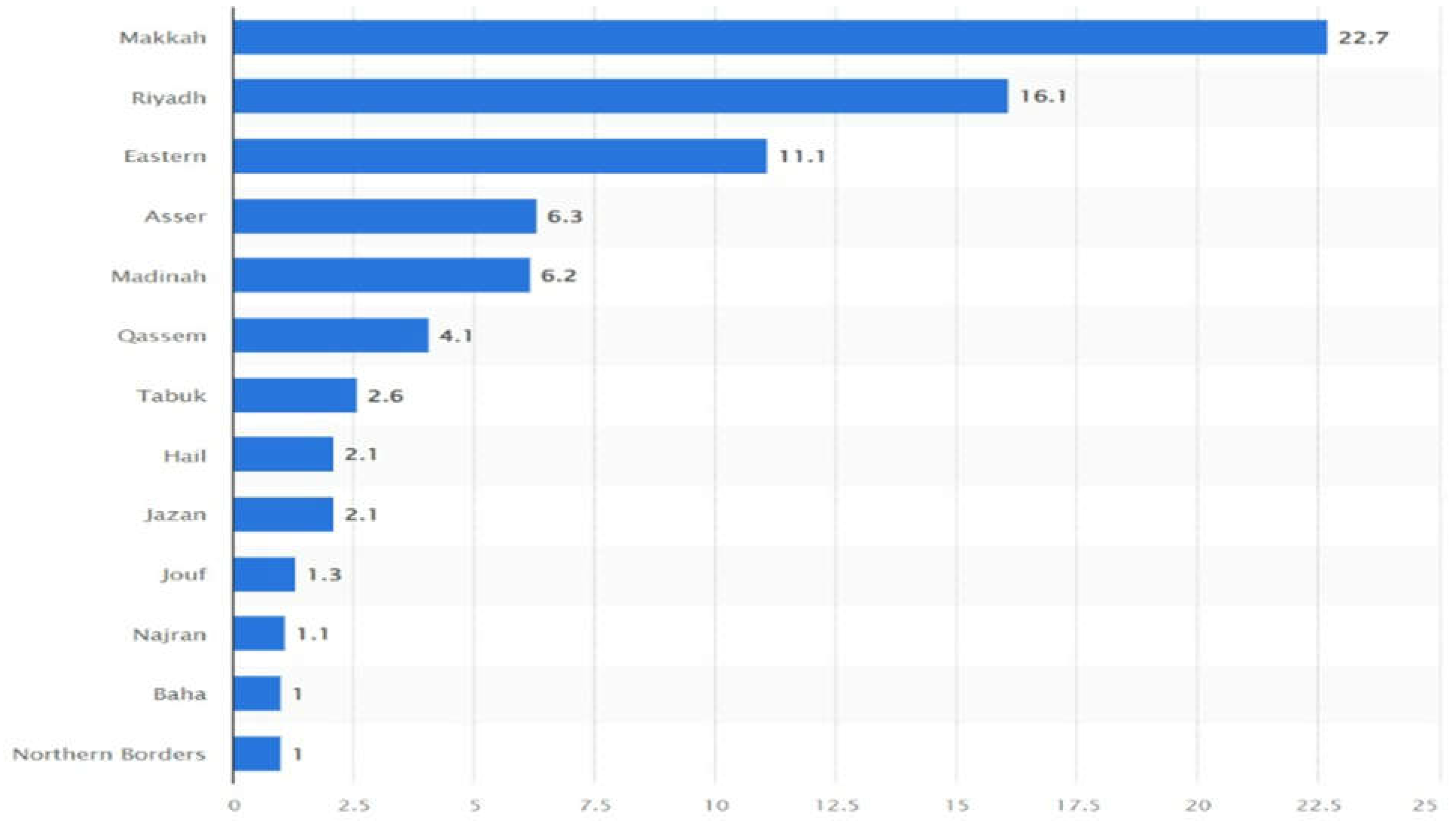
Figure 2.
Model for the development factors of e-tourism to achieve excellence in tourism.
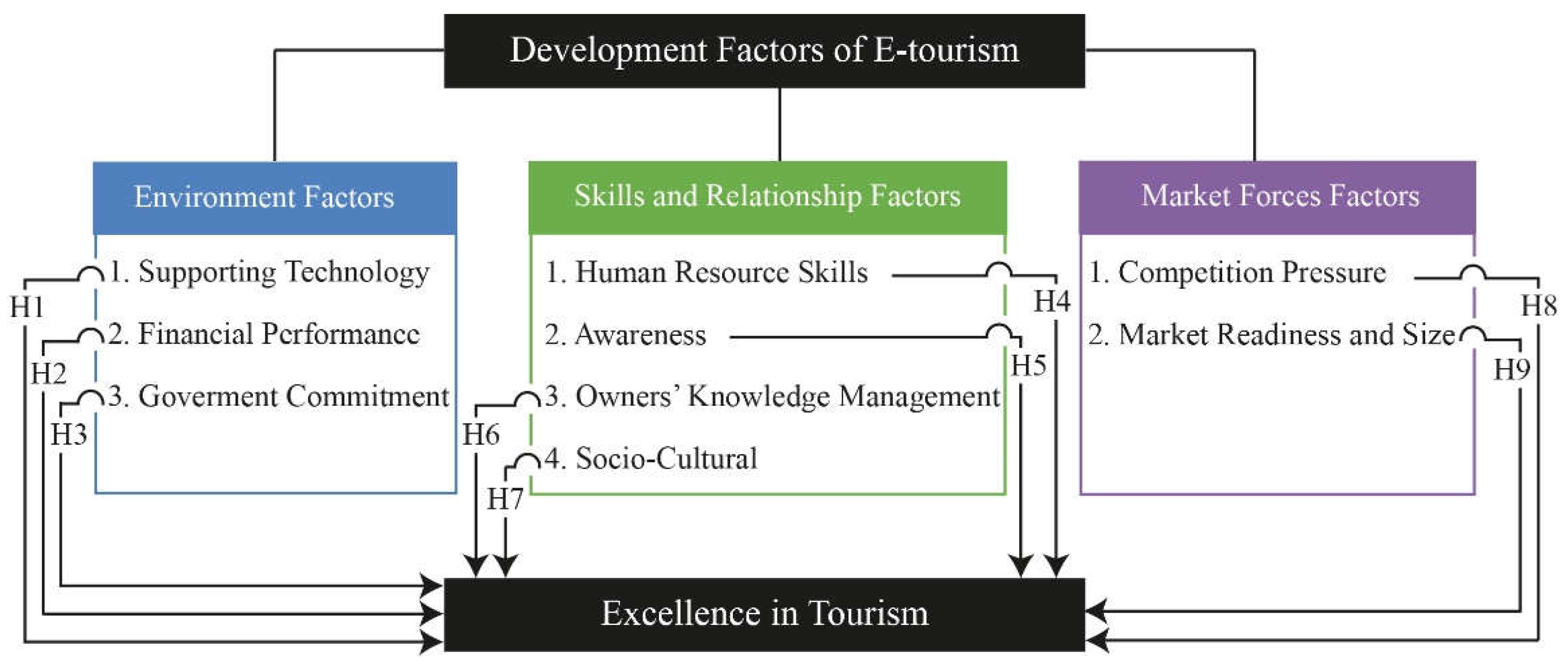
Figure 3.
The architecture of the proposed system.
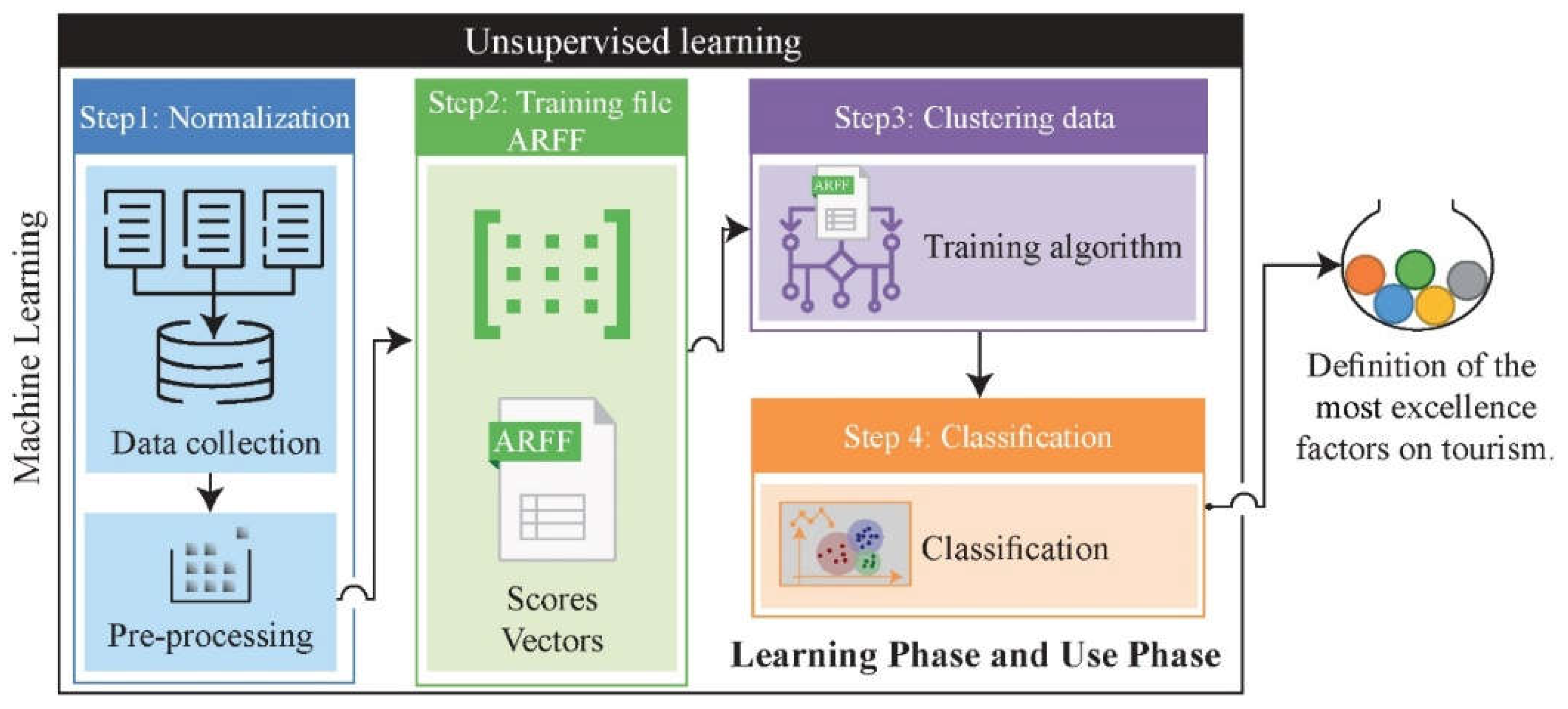
Figure 4.
Classification of score vector points using the clustering algorithm with k=2.
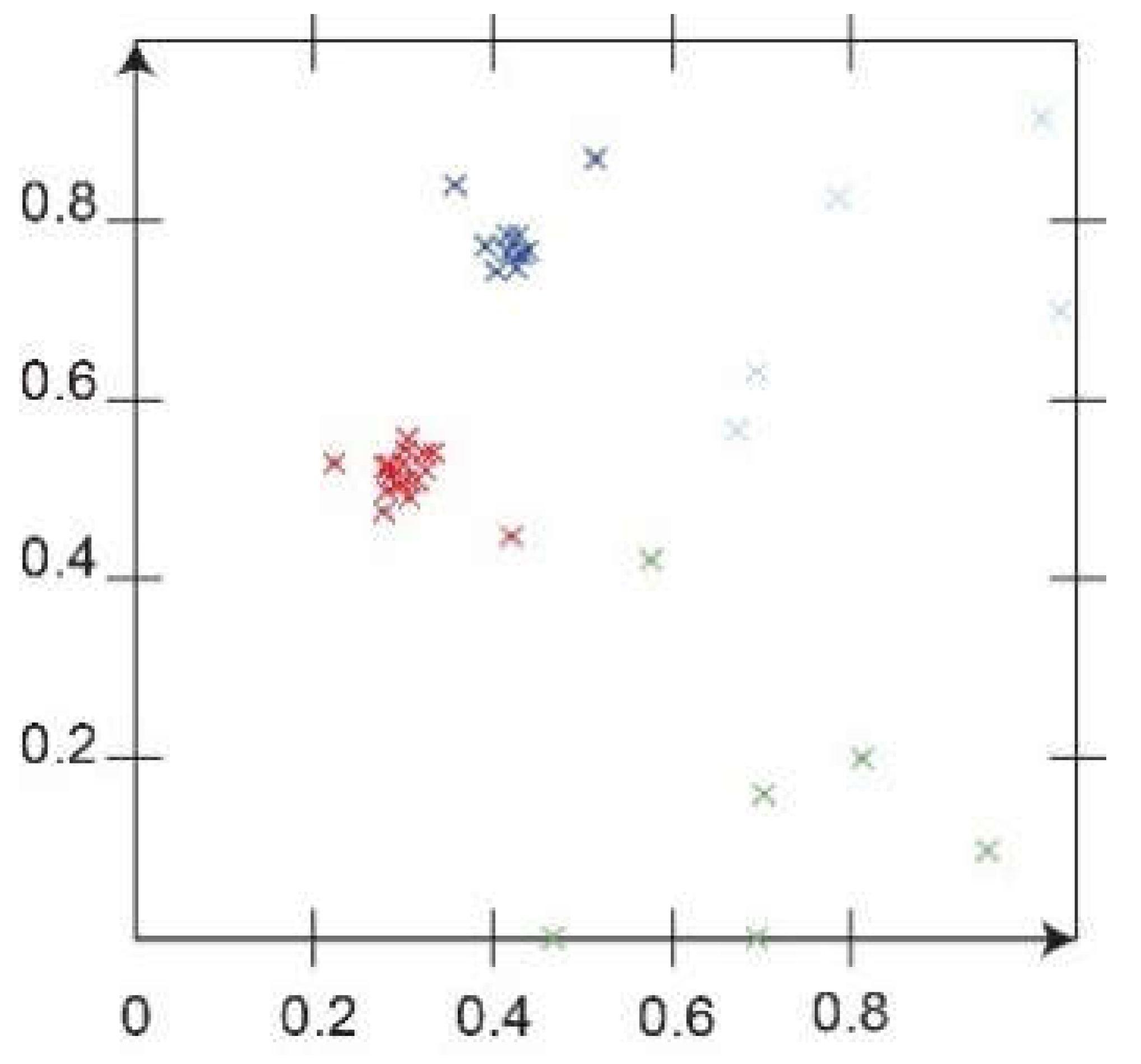

Table 1.
Evolution of tourism in the Ha’il region.
| # | 2019 | 2020 | 2021 | 2022 | 2023 |
|---|---|---|---|---|---|
| Domestic tourism trips | 973 | 1160 | 1860 | 2174 | 2582 |
| Inbound tourism to Ha’il | 15 | 10 | 90 | 105 | 124 |
| Tourism trip to work | 51 | 34 | 65 | 75 | 88 |
| Visiting friends and relatives | 716 | 869 | 1254 | 1580 | 1900 |
Inspired by the authors of the document of the Ha’il Tourism Development Association (https://dev.hail.is.sa/).
Table 2.
E-tourism development factors.
| Dimensions | Development Factors of E-tourism | Code | Description | References |
|---|---|---|---|---|
| Environment Factors | Supporting Technology | ST | Capability to implement technology to develop e-tourism | [26,33,36] |
| Financial Performance | FP | Financial performance of the institution to develop e-tourism | [18] | |
| Government Commitment | GC | Local motivation provided by the government for e-tourism. | [20] | |
| Skills and Relationship Factors | Human Resources Skills | HRS | Human resource skills and competencies required to develop e-tourism | [39] |
| Awareness | AW | Degree of awareness, ease, and confidence in the adoption of e-tourism | [4,30] | |
| Owners’ Knowledge Management | OKM | Owners’ knowledge and information about e-tourism and its benefits and uses | [20] | |
| Socio-Cultural | SC | Degree of perception of culture, language, perceived benefits, thinking on e-tourism | [11] | |
| Market Forces Factors | Competition Pressure | CP | Pressure to develop the adoption of e-tourism because of competition | [20,28] |
| Market Readiness and Size | MRS | Degree of market readiness to develop e-tourism | [20] |
Table 3.
Sample demographic profile.
| Number | Demographic Factors | Category | Frequency | Percent |
|---|---|---|---|---|
| 1 | Gender | Male | 317 | 74.4 |
| Female | 109 | 25.6 | ||
| 3 | Age | 18 to 30 years | 173 | 40.6 |
| 30 to 40 years | 138 | 32.4 | ||
| 40 to 50 years | 70 | 16.4 | ||
| Above 50 years | 45 | 10.6 | ||
| 4 | Experience in tourism (Work Experience) | Less than 1 year | 44 | 10.3 |
| 1 to 5 years | 198 | 46.5 | ||
| 5 to 10 years | 95 | 22.3 | ||
| Above 10 years | 89 | 20.9 | ||
| 5 | Nationality | Saudi | 127 | 29.8 |
| Non-Saudi | 299 | 70.2 |
Table 4.
Correlation matrix and descriptive statistics.
| # | Mean | St Deviation | α Crombach | AVE | ET | ST | FR | GC | HRS | AW | OKM | SC | CP | MRS |
|---|---|---|---|---|---|---|---|---|---|---|---|---|---|---|
| ET | 3.996 | 0,660 | 0,903 | 0.862 | 1 | |||||||||
| ST | 4.018 | 0.674 | 0.900 | 0.898 | 0.878 0.000 | 1 | ||||||||
| FP | 3.051 | 0.833 | 0.873 | 0.865 | 0.295 0.000 | 0.278 0.000 | 1 | |||||||
| GC | 3.593 | 0.768 | 0.868 | 0.864 | 0.329 0.000 | 0.275 0.000 | 0.402 0.000 | 1 | ||||||
| HRS | 4.078 | 0.624 | 0.867 | 0.862 | 0.835 0.000 | 0.891 0.000 | 0.285 0.000 | 0.334 0.000 | 1 | |||||
| AW | 3.641 | 0.745 | 0.835 | 0.861 | 0.286 0.000 | 0.333 0.000 | 0.393 0.000 | 0.304 0.000 | 0.387 0.001 | 1 | ||||
| OKM | 2.785 | 0.757 | 0.831 | 0.861 | 0.489 0.000 | 0.259 0.000 | 0.762 0.000 | 0.351 0.000 | 0.242 0.000 | 0.344 0.000 | 1 | |||
| SC | 3.827 | 0.679 | 0.872 | 0.861 | 0.489 0.000 | 0.453 0.000 | 0.243 0.000 | 0.248 0.000 | 0.429 0.000 | 0.283 0.000 | 0.235 0.000 | 1 | ||
| CP | 3.500 | 0.817 | 0.873 | 0.886 | 0.403 0.000 | 0.334 0.000 | 0.395 0.000 | 0.826 0.000 | 0.374 0.000 | 0.283 0.000 | 0.346 0.000 | 0.259 0.000 | 1 | |
| MRS | 2.809 | 0.802 | 0.775 | 0.824 | 0.243 0.000 | 0.268 0.000 | 0.291 0.000 | 0.262 0.000 | 0.248 0.000 | 0.283 0.000 | 0.346 0.000 | 0.305 0.000 | 0.124 0.000 | 1 |
Table 5.
Results of the measurement model.
| # | B | St-Error | Standardized Coef. Beta | T | Sig |
|---|---|---|---|---|---|
| ST | 0.606 | 0.480 | 0.618 | 12.686 | 0.000 |
| CP | 0.706 | 0.190 | 0.940 | 3.961 | 0.000 |
| HRS | 0.221 | 0.520 | 0.208 | 4.267 | 0.000 |
| SC | 0.930 | 0.240 | 0.096 | 3.882 | 0.000 |
|
ANOVA Sum Square Mean Square F Sign |
148.7222 37.181 423.767 0.000 |
||||
|
Model Regression R R-Square Adjusted R Square R Square Change F Change |
0.895 0.801 0.799 0.007 15.068 |
||||
Table 6.
Classification of e-tourism factors according to SDGs.
| Development Factors of E-tourism | Sustainable Development Goals (SDGs) | References |
|---|---|---|
| Supporting Technology (ST) | SDG12 | [32] |
| Financial Performance (CP) | SDG8 | [15] |
| Government Commitment (GC) | SDG12 | [6] |
| Human Resource Skills (HRS) | SDG8 | [7] |
| Awareness (AW) | SDG8 | [10] |
| Owners’ Knowledge Management (OKM) | SDG8 | [34] |
| Socio-Cultural (SC) | SDG12 | [8] |
| Competition Pressure (CP) | SDG8 | [40] |
| Market Readiness and Size (MRS) | SDG8 | [22] |
Table 7.
Classification of e-tourism in descending order of importance using weighted Euclidean distances.
Table 7.
Classification of e-tourism in descending order of importance using weighted Euclidean distances.
| Development Factors of E-tourism | Sustainable Development Goals (SDGs) |
|---|---|
| Supporting Technology (ST) | SDG12 |
| Competition Pressure (CP) | SDG8 |
| Financial Performance (FP) | SDG8 |
| Human Resource Skills (HRS) | SDG8 |
| Government Commitment (GC) | SDG12 |
Disclaimer/Publisher’s Note: The statements, opinions and data contained in all publications are solely those of the individual author(s) and contributor(s) and not of MDPI and/or the editor(s). MDPI and/or the editor(s) disclaim responsibility for any injury to people or property resulting from any ideas, methods, instructions or products referred to in the content. |
© 2024 by the authors. Licensee MDPI, Basel, Switzerland. This article is an open access article distributed under the terms and conditions of the Creative Commons Attribution (CC BY) license (http://creativecommons.org/licenses/by/4.0/).
Copyright: This open access article is published under a Creative Commons CC BY 4.0 license, which permit the free download, distribution, and reuse, provided that the author and preprint are cited in any reuse.


