

Submitted:
17 March 2025
Posted:
18 March 2025
You are already at the latest version
Abstract
This study utilizes ENVI-met simulations to examine the effectiveness of nature-based urban design strategies in enhancing outdoor thermal comfort for senior citizens during Mediterranean heat waves. The research focuses on a high-density, post-refugee neighborhood in Greater Athens, assessing both baseline and optimized urban scenarios featuring mature trees and water elements. Simulations conducted on July 23, 2023—the hottest recorded day of the year—demonstrate substantial reductions in Physiologically Equivalent Temperature (PET), with improvements ranging from 11.17 K to 22.45 K in the morning, 2.17 K to 14.55 K in the afternoon, and 0.56 K to 4.78 K in the evening. Furthermore, dynamic comfort analysis reveals a reduction in energy balance of up to 191.92 W during peak heat hours, alleviating thermal strain on elderly individuals. These findings highlight the pivotal role of shading and evaporative cooling strategies in mitigating urban heat stress, particularly for vulnerable populations. The study underscores the urgency of integrating climate-responsive urban interventions into policy frameworks to enhance resilience against extreme heat events.
Keywords:
vegetation
; heatwaves
; senior adults
; elderly
; cities
; fountains
; water
; ENVI-met
; PET
; dynamic thermal comfort
1. Introduction
Outdoor public spaces are vital for promoting human well-being, as they provide environments that support relaxation, social interaction, and physical activity, all of which contribute to better mental and physical health [1,2,3]. As cities face increasing climate-related challenges, the resilience of outdoor public spaces must be prioritized to ensure they remain functional and accessible for all, particularly vulnerable groups [4]. These spaces offer opportunities to connect with nature, reduce stress, and enhance overall life satisfaction [5,6]. Thoughtful design that takes into account the diverse needs of various demographics—such as age, gender, and mobility—ensures that public spaces are inclusive and accessible for all [7,8,9]. Considering these factors, spaces can foster a sense of belonging and community, allowing individuals from different walks of life to feel welcomed and engaged. While outdoor public spaces are integral to human well-being, their design must not only address the diverse needs of different demographics but also account for increasing environmental risks [2,10].
One such risk is the rising frequency and intensity of heat waves, which pose significant health threats, especially to vulnerable populations. Recent studies have shown that heat-related mortality among older adults has increased significantly, particularly in urban environments with insufficient green infrastructure [11,12,13]. Among these, the elderly are particularly at risk due to age-related declines in the body’s ability to regulate temperature [4]. Studies suggest that age 60 serves as a threshold for vulnerability to heat stress, while others highlight increased concerns for individuals over 80 [14]. Even in healthy aging, the body's capacity to regulate temperature declines, increasing susceptibility to heat stress, dehydration, cardiovascular complications, and the exacerbation of chronic diseases [15]. Physiological factors such as diminished sweat gland function, impaired circulation, and chronic diseases—including cardiovascular disorders, diabetes, and respiratory conditions—exacerbate these risks [16]. Medications, both independently and in combination, can interact with the aging process and chronic diseases, leading to alterations in homeostatic mechanisms that regulate body temperature during heat stress [17]. Beyond physiological vulnerabilities, social and environmental factors significantly influence elderly susceptibility to heat waves. Social isolation may also limit their access to immediate assistance during extreme heat events [18]. Also, reduced mobility, financial constraints, and energy poverty issues further increase exposure risks. Elderly individuals from lower-income backgrounds are often at even greater risk, as they may lack access to air conditioning, cooling centers, or medical assistance during extreme heat events.[19].
Urban environments, characterized by heat-retaining materials and limited greenery, amplify thermal stress, disproportionately affecting older populations [20]. Urban morphology plays a critical role in shaping microclimatic conditions, as narrow streets and high-rise buildings can trap heat, exacerbating the urban heat island effect [21]. Mitigating the impact of heat waves on the elderly requires a multi-dimensional approach, integrating medical interventions, community support, and urban design strategies. Medical and behavioral adaptations are essential, such as maintaining hydration, monitoring medications, avoiding outdoor exposure during peak heat hours, and utilizing cooling methods. Public health initiatives, including heat alert systems, community outreach programs, and cooling centers, play a crucial role in reducing heat-related mortality among older adults [22,23].
Urban planning and design are pivotal in enhancing outdoor thermal comfort for the elderly. Community-driven approaches, where elderly residents contribute to the design of urban interventions, can improve the effectiveness and social acceptance of climate adaptation strategies [24]. Age-friendly urban spaces should incorporate shaded areas, hydration stations, well-ventilated walkways, and reflective materials to minimize heat absorption [25,26,27]. Green infrastructure, such as trees and water features, significantly contributes to reducing the urban heat island effect, creating more thermally comfortable environments [28]. In addition to vegetation, blue infrastructure—such as fountains, ponds, and misting systems—can provide evaporative cooling, further enhancing thermal comfort [29]. Physiologically Equivalent Temperature (PET) is a key metric for assessing thermal comfort, integrating factors such as air temperature, humidity, solar radiation, and wind speed to provide a comprehensive understanding of outdoor heat exposure [30,31,32]. By employing dynamic PET analysis, urban planners can evaluate real-time thermal conditions and implement targeted cooling strategies. Integrating these urban design strategies into local climate adaptation policies and heat action plans is essential for achieving resilience [33]. Advanced modeling tools like ENVI-met further support the optimization of outdoor thermal comfort by simulating microclimate conditions and assessing the long-term impact of urban interventions [34,35,36,37]. Through static and dynamic PET simulations, planners can refine designs to ensure effective cooling strategies, ultimately reducing heat stress among elderly populations [38].
These evidence-based approaches reinforce the importance of interdisciplinary collaboration in creating resilient urban spaces that prioritize the health and well-being of older adults during extreme heat events. Addressing heatwave risks for the elderly requires a convergence of medical expertise, social policies, and sustainable urban design [39]. With the frequency of extreme heat events expected to rise, developing age-inclusive urban environments should be a priority for policymakers, urban planners, and public health officials alike [40]. By integrating physiological insights, community-driven interventions, and microclimate modeling, cities can develop effective strategies to enhance thermal comfort and resilience. Future research should explore how combinations of green and blue infrastructure, alongside innovative materials, can optimize outdoor thermal comfort for older citizens [41,42]. As climate change intensifies, prioritizing age-friendly environments will be critical in safeguarding the health and quality of life of older populations worldwide.
2. Materials and Methods
The study follows a structured methodology divided into three main stages: the pre-field work stage, fieldwork stage, and post-field work stage. These stages are designed to systematically analyze and optimize thermal comfort for senior adults in outdoor spaces, particularly during Mediterranean heat waves. The selected case study is an area situated within the capital of Greece. Located within Athens, the study area experiences a hot Mediterranean climate with dry summers, classified as Csa according to the Köppen–Geiger system. This climate type is characterized by generally mild temperatures and moderate seasonal fluctuations [28]. It was designed as an urban refugee settlement in the aftermath of the Asia Minor Catastrophe of 1922. [43] Following a Hippodamian grid, the area consists of rectangular city blocks (around 57x82 m each) with communal open space in the middle, characterized by high building and population density [44]. It is essential to note that this study is part of a broader research project involving multiple ENVI-met simulations aimed at investigating the potential for improving outdoor thermal conditions in the selected area [28,45]. It includes unpublished data and findings that focus on the specific needs of elderly individuals. Building on previous research, elderly individuals represent a substantial segment of the area's population [46]. Consequently, this study aims to explore the specific aspects of senior-friendly design to address their needs effectively.
The pre-field work stage begins with a contextualization of the research problem through an extensive literature review. A general review explores the challenges related to thermal comfort for senior adults in outdoor spaces and examines the impact of heat stress during Mediterranean heat waves. (Figure 1). Following this, a more specific literature review is conducted to assess existing research on optimizing thermal comfort in outdoor environments. This step also identifies research gaps and modifies new studies. The insights gained from this stage lead to the formulation of research questions, which guide the subsequent phases of the study. The research questions are presented below:
- RQ1: What is the impact of existing urban conditions in a densely built neighborhood of Greater Athens on the outdoor thermal comfort of senior adults during extreme heat events?
- RQ2: How do nature-based interventions, such as mature trees and water features, mitigate thermal stress by reducing Physiologically Equivalent Temperature (PET) and enhancing dynamic thermal comfort for elderly individuals?
- RQ3: How effective are established urban design strategies in enhancing thermal resilience for vulnerable populations, such as senior adults?
The fieldwork stage focuses on collecting relevant field data to analyze the physical characteristics of the selected study area (Figure 1 and Figure 2). This involves examining the urban topography, urban layout, and focal points, as well as identifying the flora species, surface materials, and construction elements that influence microclimate conditions. The data gathered is then synthesized into a general 2D masterplan, which serves as the foundational reference for further analysis and simulations. In the post-field work stage (Figure 1), the study employs ENVI-met 5.6.1 simulations to evaluate different thermal comfort scenarios. The first step is to establish a baseline scenario that reflects the existing urban conditions. An optimal scenario is then proposed, incorporating a significant number of adult trees and fountains (each measuring 1 square meter, with four per block, Figure 3) to enhance thermal comfort.
The simulation was conducted on the hottest day of July 2024, ensuring the results account for extreme heat conditions. On that particular day, the highest recorded air temperature was 41.7°C at 3:00 p.m., while the lowest temperature was documented as 30.9°C at 6:00 a.m. Relative humidity peaked at 54% at 6:00 a.m. and decreased to a minimum of 23% at 3:09 p.m. The average wind speed was measured at 4.6 km/h (1.27 m/s), with a wind direction 180°. These data were derived from the Meteosearch website and were utilized as input for the ENVI-met software to initialize the microclimatic simulations. The total duration of the simulation for each scenario was 48 hours. The designated study area spans approximately 181.91 square meters in length and 82.73 square meters in width (Figure 2). In the ENVI-met model, the spatial configuration consists of 182 grids along the x-axis, 83 grids along the y-axis, and 30 grids along the z-axis. Each grid cell is uniformly sized at 1 meter in all directions (dx = 1 m, dy = 1 m, dz = 1 m). The model is oriented at an angle of -22 degrees relative to the grid north. The site's geographic coordinates are approximately 23.67° longitude and 37.98° latitude. The study location, Nikaia-Agios Ioannis Rentis, falls within the Eastern European Standard Time zone. The designated soil profiles for the nesting grids include [0200ST] Asphalt Road (Soil A) and [0200PP] Pavement Concrete, categorized as worn and unclean. Building heights range from 3 to 15 meters, with the majority of buildings standing at approximately 7.5 meters in height. Tree height ranges from 3 meters along the pavements to 15 meters in the central areas of each city block, within the open communal spaces. The area includes medium-sized trees with a cylindrical trunk and spherical canopy. For the optimal scenario, as noted in previous studies, the geometry of the tree canopy plays a crucial role in shading [28]. The newly planted trees, with their heart-shaped canopy, are bound to provide a broader shaded area compared to the cylindrical canopy of the existing trees, as observed in earlier research.
Bio-met 5.6.1 PET and Dynamic Comfort models are used to assess thermal comfort levels for senior adults (default option 80-year-old male, 0.5 clo, preferred speed of 0.9 m/s)) at different times of the day, including morning, afternoon, and evening. It is important to note that the Mediterranean PET scale has been employed for the interpretation and analysis of the results.

Table 1.
Original and Mediterranean PET Scale [47].
Table 1.
Original and Mediterranean PET Scale [47].
| PET (°C). | Mediterranean Scale b | Thermal comfort Assessment |
|---|---|---|
| Original Scale a | ||
| > 41.1 | > 40.0 | Very hot |
| 35.1 to 41.0 | 34.0 to 40.0 | Hot |
| 29.1 to 35.0 | 28.0 to 34.0 | Warm |
| 23.1 to 29.0 | 26.0 to 28.0 | Slightly warm |
| 18.1 to 23.0 | 19.0 to 26.0 | Neutral |
| 13.1 to 18.0 | 15.0 to 19.0 | Slightly cool |
| 8.1 to 13.0 | 12.0 to 15.0 | Cool |
| 4.1 to 8.0 | 8.0 to 12.0 | Cold |
| <4.0 | <8.0 | Very cold |
aMatzarakis and Mayer 1996 bCohen et al., 2013.
By following this structured methodology, the study aims to provide insights into the effectiveness of urban design interventions in mitigating thermal stress for vulnerable populations, contributing to the development of more resilient and inclusive outdoor spaces.
3. Results
3.1. Baseline Scenario—9 a.m.
The diagram in Figure 4 illustrates the environmental conditions affecting elderly individuals at 9 a.m. in the baseline scenario. Key parameters such as air temperature, humidity, wind speed, and thermal comfort indices are depicted. PET values vary from 34.45 to 61.85oC indicating ‘Hot’ and ‘Very hot’ thermal conditions from early in the morning. The data suggest a relatively moderate thermal environment, with values indicating a stable energy balance. However, early signs of thermal discomfort may be present, particularly in areas with limited shade or high surface heat retention, such as along the main vehicular roads and the inner parts of the blocks where no vegetation is present. The diagram, thus, highlights differences in urban and vegetated zones, showing how localized microclimates impact thermal comfort. The effects of varied solar radiation exposure are also evident, affecting heat dissipation rates and individual comfort levels. As presented in Figure 4, shaded areas provide lower PET values (from 43.45 to 41.49 oC).
3.2. Baseline Scenario, 3 p.m.
This diagram in Figure 5, presents the conditions at 3 p.m., a critical period due to peak ambient temperatures. The results indicate increased thermal discomfort levels, with higher Physiologically Equivalent Temperature (PET) values and energy balance deviations. PET values vary from 38.14 to 62.39 oC indicating ‘Hot’ and ‘Very hot’ thermal conditions. The elderly population is particularly susceptible to these conditions, as shown by elevated discomfort indicators. The diagram visualizes significant heat accumulation in paved areas and urban heat islands, emphasizing the need for shading and cooling strategies. Thermal strain is pronounced, suggesting that without mitigation measures, individuals in these environments may experience severe thermal discomfort and increased health risks. The influence of building orientation and material reflectivity is also noticeable, affecting the temperature distribution across different urban sections. To be more specific, shaded areas by adjacent buildings provide pockets with lower PET values up to 49.86oC, while non-vegetated enclaves exposed to direct sunlight provide higher PET values, around 62.39oC. It is important to note, though, that all enclaves of the examined area, show high levels of thermal discomfort with values that rise higher than 39oC.
3.3. Baseline Scenario, 8 p.m.
The evening scenario demonstrates a decline in temperature and overall thermal load. PET values vary from 36.35 to 45.79 oC, indicating ‘Hot’ and ‘Very hot’ thermal conditions and, therefore, residual heat from the day may still contribute to discomfort, particularly in urban pockets with high thermal mass. The diagram in Figure 6 shows a gradual return to more tolerable conditions, yet variations in energy balance suggest localized thermal retention effects. Buildings, pavements, and unshaded surfaces continue to emit heat, which may prolong the thermal strain into the night. The elderly, especially those with limited mobility, may still experience elevated physiological stress, highlighting the need for better night-time ventilation and cooling solutions. The persistence of high ground surface temperatures in certain urban pockets indicates a need for strategies such as increased nighttime airflow, enhanced vegetation, or modified materials with lower thermal conductivity.
3.4. Optimal Scenario—9 a.m.
In the optimal scenario at 9 a.m. (Figure 7), the diagram highlights improved thermal conditions through various mitigation measures. PET values vary from 34.23 to 61.79oC (‘Hot’ and ‘Very hot’ thermal conditions). Compared to the baseline, air temperature and PET values are lower, indicating enhanced thermal comfort. The modifications applied in this scenario contribute to a more stable energy balance, reducing early-day discomfort. Figure 7 also shows a more uniform temperature distribution, suggesting that interventions have successfully minimized localized heat extremes. The inclusion of shaded pedestrian areas and enhanced natural ventilation pathways further enhances overall thermal resilience in the morning hours.
3.5. Optimal Scenario—3 p.m.
Figure 8 presents conditions during peak afternoon hours under the optimal scenario. PET values vary from 37.94 to 61.86 oC (‘Hot’ and ‘Very hot’ thermal conditions). Compared to the baseline, significant reductions in thermal discomfort markers are evident. Lower PET values, through improved shading, contribute to an overall enhancement in thermal comfort. Figure 8 showcases a more sustainable thermal environment, where green infrastructure, passive cooling, and urban design elements help to mitigate extreme heat exposure, reducing potential health risks. The presence of water features in urban design further contributes to cooling effects, demonstrating the multifaceted approach to heat mitigation.
3.6. Optimal Scenario—8 p.m..
The nighttime conditions in the optimal scenario depict a further improvement in thermal comfort compared to the baseline. In the optimal scenario PET values at 8 p.m. vary from 36.36 to 44.67oC (‘Hot’ and ‘Very hot’ thermal conditions). Figure 9, demonstrates a more consistent decline in thermal load, mitigating late-evening heat stress effects. The presence of natural ventilation corridors and strategic landscaping contributes to improved cooling, making the nighttime experience more comfortable. The optimal scenario illustrates the long-term benefits of climate-responsive urban planning. The reduction of retained heat in key urban sections suggests that well-planned mitigation techniques can significantly lower nighttime discomfort levels, leading to an overall improvement in livability.
3.7. Comparison Between Baseline and Optimal Scenarios
This set of diagrams provides a direct comparison between the baseline and optimal scenarios at three key time points (9 a.m., 3 p.m., and 8 p.m.). The data reveal that mitigation strategies significantly lower thermal stress, particularly during peak hours. The optimal scenario exhibits a more stable energy balance and reduced PET values across all periods. The comparison underscores the effectiveness of adaptive measures, including shading through green infrastructure, in enhancing elderly individuals' thermal comfort. The visual representation of temperature distribution in both scenarios further highlights the effectiveness of interventions in reducing urban heat stress. The statistical differences in temperature gradients between the two scenarios serve as concrete evidence of the benefits of climate-sensitive urban planning. To be more specific, the absolute difference in PET values, at 9 a.m. varies from -11.17 K to 22.45K (Figure 10). During the hottest period of the day, at 3 p.m., the absolute difference in PET values varies from 2.17 to 14.55K (Figure 11). In addition, at 8 p.m., absolute PET difference varies from -0.56 to 4.78K.
3.8. Further Analysis of Peak Temperature Hours. Dynamic Comfort, Dpet, Static PET, and Energy Balance. Comparison Between Baseline and Optimal Scenarios
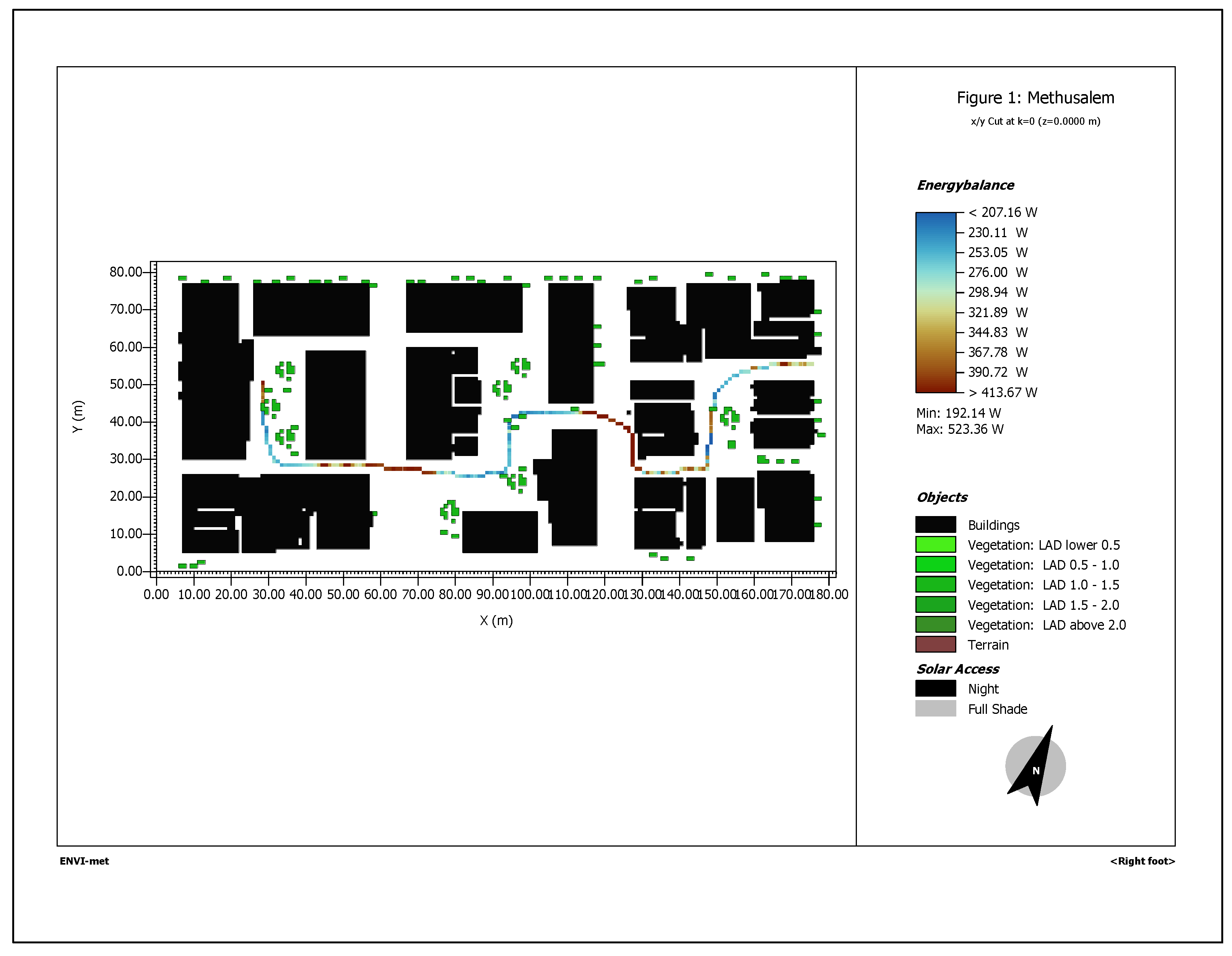
The following diagrams focusing on 3 p.m. provide additional insights into heat stress during the hottest period of the day. The baseline scenario exhibits high PET values, indicating significant thermal discomfort. In contrast, the optimal scenario showcases mitigative effects, including lower PET values and a more balanced energy profile. These findings suggest the importance of urban planning interventions in reducing heat-related risks. Research results provided below (Figure 13, Figure 14, Figure 15, Figure 16, Figure 17 and Figure 18) highlight the stark contrast in heat absorption and dissipation between scenarios, reinforcing the need for well-integrated passive cooling strategies. The comparison also demonstrates the proportional influence of various mitigation factors, reinforcing the importance of a multi-layered approach to thermal management. In particular, this section examines dynamic comfort parameters, including Dpet, static PET, and energy balance variations. The results indicate that under the baseline scenario, fluctuations in PET values correlate with heightened discomfort during peak hours. Conversely, the optimal scenario demonstrates a more consistent and favorable thermal environment, reflecting the efficacy of intervention measures. The effectiveness of cooling interventions such as urban greening and water elements, is evident through the stabilized comfort indices. To be more specific, static PET values in the baseline scenario range from 46.06 to 61 oC (Figure 13), while in the optimal from 42.77 to 60 oC (Figure 16). In addition, dPET values in the baseline scenario vary from 21.78 to 23.43 oC (Figure 14), while in the optimal range from 21.78 to 22.98 oC (Figure 17). As for energy balance, values range from 248.47 to 525.16W (Figure 15) in the baseline scenario, whereas in the optimal we observe lower values that vary from 192.14 to 523.36W (Figure 18).
The optimal scenario consistently outperforms the baseline in terms of thermal comfort and energy balance stability. The data suggest that implementing targeted mitigation strategies can substantially improve the well-being of elderly individuals, particularly during periods of extreme heat exposure. The visuals reinforce these conclusions by illustrating the spatial distribution of thermal discomfort and energy flux, making it clear that urban design plays a crucial role in shaping comfort and resilience to extreme weather conditions.
4. Discussion
The findings of this study highlight the significant impact of urban design interventions in mitigating heat stress for senior adults during extreme heat events. By employing ENVI-met simulations, the study assessed thermal comfort in a densely built neighborhood of Greater Athens under both baseline and optimized scenarios. The results indicate that the integration of mature trees and water features contributes to substantial reductions in Physiologically Equivalent Temperature (PET) values, particularly during peak afternoon hours when heat stress is most pronounced. A key observation from the baseline scenario is the pronounced heat stress experienced in non-vegetated areas, where PET values exceed critical thresholds for thermal discomfort.
The findings are consistent with previous research suggesting that intense urbanization, characterized by urban surfaces with high thermal mass, contributes to prolonged heat retention and intensifies the urban heat island effect [48]. The optimal scenario, however, demonstrates the effectiveness of shading and evaporative cooling in reducing PET values, with absolute reductions reaching up to 22.45 K in the morning, 14.55 K in the afternoon, and 4.78 K in the evening. These findings support the argument that nature-based solutions play a vital role in enhancing outdoor thermal comfort, highlighting the special benefits for vulnerable populations such as the elderly [48,49,50,51,52,53]. In addition to static PET analysis, the study examined dynamic thermal comfort parameters, including dPET and energy balance variations. The optimized scenario consistently outperformed the baseline condition, with energy balance reductions reaching up to 191.92 W during peak afternoon hours. This result suggests that targeted urban interventions can significantly moderate the energy flux experienced by individuals, thereby reducing strain and the risk of heat-related illnesses.
The findings indicate that nature-based interventions in high-density Mediterranean cities produce significant Physiologicallyly Equivalent Temperature (PET) reductions, with maximum decreases of up to 12°C observed under tree shading [54,55]. A breakdown of the contributions of different mechanisms suggests that tree shading accounts for the largest share, typically contributing 60–80% of the total PET reduction, while evapotranspiration and soil thermal properties provide secondary contributions of 10–25% and 5–15%, respectively [55,56]. The primary reason for shading’s dominant role is its direct modification of mean radiant temperature (Tmrt), the key meteorological factor influencing PET in high-solar environments. Studies indicate that dense canopy coverage can lower Tmrt by 15–20°C, leading to PET reductions of over 10°C in shaded zones. Shading blocks shortwave solar radiation, reducing surface heating and preventing dangerous heat exposure during peak afternoon hours. PET reductions are especially pronounced in urban squares and streets where trees provide overhead coverage and lower direct solar exposure [54,55,57].
Evapotranspiration enhances cooling through latent heat flux, but its contribution is limited in water-scarce Mediterranean environments [58]. Studies show that without consistent soil moisture availability, vegetation’s latent cooling potential declines dramatically during peak dry season months [55]. Models indicate that tree-pit irrigation and engineered soils improve transpiration efficiency, allowing evapotranspirative cooling to contribute up to 20–25% of total PET reductions in well-optimized scenarios [59]. The observation of PET reductions up to 12°C under well-shaded environments aligns with existing findings from Mediterranean cities such as Rome, Athens, and Thessaloniki [55,60]. Similar studies report PET drops of 10–15°C in shaded areas compared to unshaded streets, reinforcing the central role of tree canopies [56,61]. In Rome, tree shading provided the most substantial cooling effects, with PET reductions ranging from 8–12°C, comparable to our reported values [62]. In Athens, thermal comfort benefits were notable in urban spaces with extensive canopy cover, where PET reductions reached 6–10°C during peak sun hours [56,61]. In Thessaloniki, tree-based shading cooled streets by up to 12°C, but cooling pavement materials provided only marginal additional benefits [54].
A critical gap in the existing literature is the lack of elderly-focused PET assessments. While general PET reductions are well-documented, few studies explicitly examine how older adults perceive and physiologically respond to these cooling interventions. Older adults exhibit reduced sweat efficiency and impaired thermoregulation, making direct temperature reductions via shading more beneficial than reliance on evaporative cooling [29]. Thermal comfort perception differs; studies suggest that elderly populations experience heat stress at lower PET thresholds than younger individuals, making even modest shading improvements critically important [54,63].
The reduction of energy balance in optimized urban scenarios is particularly significant for elderly populations, as aging is associated with altered thermoregulation and metabolic energy expenditure. Senior adults experience lower resting metabolic rates and impaired energy balance regulation, increasing their susceptibility to heat strain [64]. Energy balance is vital for successful aging, as it supports metabolic function and resilience to environmental stressors [65]. This study’s findings, showing up to 191.92 W reduction in energy flux through nature-based interventions, highlight the role of optimized urban environments in mitigating heat strain for elderly populations. By enhancing thermal comfort, climate-responsive urban planning can promote healthier and more resilient aging in high-density Mediterranean cities. Moreover, this study’s findings have important implications for urban planning and policy-making. The results underscore the necessity of incorporating green infrastructure in high-density urban environments to enhance microclimatic conditions and protect at-risk populations [12]. The observed improvements in thermal comfort also highlight the need for interdisciplinary collaboration between urban planners, environmental scientists, and public health officials to develop holistic strategies that enhance urban resilience to climate change-induced heat extremes.
5. Conclusions
This study demonstrates that strategic urban design interventions, particularly the incorporation of mature trees and water features, can significantly enhance outdoor thermal comfort for senior adults during Mediterranean heat waves. ENVI-met simulations provided quantifiable evidence of thermal improvements, with optimized scenarios yielding lower PET values and enhanced energy balance stability. The findings emphasize the importance of integrating nature-based solutions into urban planning to mitigate heat stress, particularly in neighborhoods characterized by high building and population density. Given the increasing frequency of extreme heat events, policymakers must incorporate nature-based solutions into urban climate adaptation plans. Municipal authorities should prioritize the expansion of green and blue infrastructure through regulatory frameworks, financial incentives, and community-driven initiatives. Integrating these interventions into zoning regulations and urban regeneration programs will ensure their long-term sustainability and maximize their benefits for vulnerable populations, particularly senior citizens. The implementation of shading and cooling elements not only reduces ambient temperatures but also contributes to broader climate adaptation strategies, reinforcing the role of sustainable urban development in fostering resilient cities. Future research should explore the long-term impact of such interventions, considering seasonal variations and the potential for adaptive design solutions that evolve with changing climate patterns. However, this study has certain limitations. The use of ENVI-met simulations provides valuable insights into microclimatic conditions, yet real-world observational data would further validate the effectiveness of the proposed interventions. Additionally, while this research focuses on thermal comfort improvements, other social and behavioral factors—such as elderly individuals’ perceptions and adaptive responses to heat—should be considered in future studies. Additionally, studies incorporating real-world observational data alongside simulation models would provide a more comprehensive understanding of the effectiveness of different mitigation strategies. Further research should also explore how elderly individuals interact with climate-adaptive urban environments in everyday life. Combining qualitative approaches, such as interviews and surveys, with quantitative microclimatic analyses would provide a holistic understanding of thermal comfort needs. Moreover, experimental studies incorporating physiological measurements could offer deeper insights into the actual health benefits of urban cooling interventions. By prioritizing age-friendly urban environments, policymakers can help safeguard vulnerable populations against the escalating risks posed by extreme heat events, ensuring equitable access to safe and comfortable public spaces.
Author Contributions
Conceptualization, T.E.; methodology, T.E.; software, T.E. and A.T.; validation, A.T., T.E., and A.M.; formal analysis, T.E., A.T., and A.M.; investigation, T.E.; resources, T.E., A.M., and A.T.; data curation T.E. and A.T.; writing—original draft preparation, T.E.; writing—review and editing, A.M. and A.T.; visualization, T.E.; supervision, E.T..; project administration, A.M. All authors have read and agreed to the published version of the manuscript.
Funding
This research received no external funding.
Data Availability Statement
Data are contained within the article.
Acknowledgments
Special thanks to Public Health researcher Katerina Aslanoglou for her great contribiution to the editing of this paper. Special thanks to George Chloupis, Department of Survey Engineering, University of West Attica for providing the ENVI-met software license to be used for the purposes of this research.
Conflicts of Interest
The authors declare no conflicts of interest.
References
- Mela, A.; Tousi, E.; Melas, E.; Varelidis, G. Spatial Distribution and Quality of Urban Public Spaces in the Attica Region (Greece) during the COVID-19 Pandemic: A Survey-Based Analysis. Urban Sci 2023;8:2. [CrossRef]
- Mela, A.; Tousi, E.; Varelidis, G. Assessing Urban Public Space Quality: A Short Questionnaire Approach. Urban Sci 2025;9. [CrossRef]
- Chen, L.; Liu, L.; Wu, H.; Peng, Z.; Sun, Z. Change of Residents’ Attitudes and Behaviors toward Urban Green Space Pre- and Post- COVID-19 Pandemic. Land 2022;11:1051. [CrossRef]
- Eady, A.; Dreyer, B.; Hey, B.; Riemer, M.; Wilson, A. Reducing the risks of extreme heat for seniors: Communicating risks and building resilience. Heal Promot Chronic Dis Prev Canada 2020;40:215–24. [CrossRef]
- Tousi, E.; Mela, A. Supralocal Role of medium to large scale Urban Parks, in Attica Greece. Issues of meso car dependence during the Covid-19 Pandemic. (pending publication 2023-2024). J Sustain Archit Civ Eng 2024;2:201–15. [CrossRef]
- Ferguson, K.T.; Evans, G.W. The built environment and mental health. Encycl Environ Heal 2019;80:465–9. [CrossRef]
- Moura, F.; Cambra, P.; Gonçalves, A.B. Measuring walkability for distinct pedestrian groups with a participatory assessment method: A case study in Lisbon. Landsc Urban Plan 2017;157:282–96. [CrossRef]
- Zysk, E.; Zalewska, K. The Methodology for Assessing the 15 Minute Age-Friendly Walkability (AFW) of Urban Public Spaces. Sustain 2024;16. [CrossRef]
- Mela, A.; Tousi, E. Safe and Inclusive Urban Public Spaces: A Gendered Perspective. The Case of Attica ’s Public Spaces During the COVID-19 Pandemic in Greece. J Sustain Archit Civ Eng 2023;2:5–14. [CrossRef]
- Sobouti, H.; Alavi, P. Evaluation of Quality Elderly of Public Open Spaces for the Case Study : (sheet-e- Bazaar in Zanjan) 2017;7:47–56.
- Ebi KL, Vanos J, Baldwin JW, Bell JE, Hondula DM, Errett NA, et al. Extreme Weather and Climate Change: Population Health and Health System Implications. Annu Rev Public Health 2020;42:293–315. [CrossRef]
- Kovats, R.S.; Hajat, S. Heat stress and public health: A critical review. Annu Rev Public Health 2008;29:41–55. [CrossRef]
- Wang, W.; Zhou, W.; Ng, E.Y.Y.; Xu, Y. Urban heat islands in Hong Kong: statistical modeling and trend detection. Nat Hazards 2016;83:885–907. [CrossRef]
- Kenny, G.P.; Yardley, J.; Brown, C.; Sigal, R.J.; Jay, O. Heat stress in older individuals and patients with common chronic diseases. C Can Med Assoc J 2010;182:1053–60. [CrossRef]
- Kenney, W.L.; Craighead, D.H.; Alexander, L.M. Heat waves aging and human cardiovascular health. Med Sci Sports Exerc 2014;46:1891–9. [CrossRef]
- Yardley, J.E.; Stapleton, J.M.; Sigal, R.J.; Kenny, G.P. Do heat events pose a greater health risk for individuals with type 2 diabetes? Diabetes Technol Ther 2013;15:520–9. [CrossRef]
- Wee J, Tan XR, Gunther SH, Ihsan M, Leow MKS, Tan DSY, et al. Effects of Medications on Heat Loss Capacity in Chronic Disease Patients: Health Implications Amidst Global Warming. Pharmacol Rev 2023;75:1140–66. [CrossRef]
- Malmquist, A.; Hjerpe, M.; Glaas, E.; Karlsson, H.; Lassi, T. Elderly People’s Perceptions of Heat Stress and Adaptation to Heat: An Interview Study. Int J Environ Res Public Health 2022;19. [CrossRef]
- Ozdemir, E.; Koukoufikis, G. The persistence of energy poverty in the EU. vol. 41. 2024.
- Joshi, K.; Khan, A.; Anand, P.; Sen, J. Understanding the synergy between heat waves and the built environment: a three-decade systematic review informing policies for mitigating urban heat island in cities. Sustain Earth Rev 2024;7. [CrossRef]
- Hien, W.N.; Kardinaljusuf, S.; Samsudin, R.; Eliza, A.; Ignatius, M. A climatic responsive urban planning model for high density city: Singapore’s commercial district. Int J Sustain Build Technol Urban Dev 2011;2:323–30. [CrossRef]
- Fernandez Milan, B.; Creutzig, F. Reducing urban heat wave risk in the 21st century. Curr Opin Environ Sustain 2015;14:221–31. [CrossRef]
- Ingole, V.; Sheridan, S.C.; Juvekar, S.; Achebak, H.; Moraga, P. Mortality risk attributable to high and low ambient temperature in Pune city, India: A time series analysis from 2004 to 2012. Environ Res 2022;204:112304. [CrossRef]
- Kent, E. Leading urban change with people powered public spaces. The history, and new directions, of the Placemaking movement. J Public Sp 2019;4:127–34. [CrossRef]
- The World Bank. Piloting Nature-based Solutions for Urban Cooling. ESMAP 2022.
- Almeida, M.F. Age-Friendly Walkable Urban Spaces : A Participatory Assessment Tool Age-Friendly Walkable Urban Spaces : A Participatory. J Hous Elderly 2017;30:396–411. [CrossRef]
- Shirazi, M.R. Mapping neighbourhood outdoor activities: space, time, gender and age. J Urban Des 2019;24:715–37. [CrossRef]
- Tousi, E.; Tseliou, A.; Mela, A.; Sinou, M.; Kanetaki, Z. Exploring Thermal Discomfort during Mediterranean Heatwaves through Softscape and Hardscape ENVI-Met Simulation Scenarios. Sustainability 2024;16. [CrossRef]
- Gómez, F.; Cueva, A.P.; Valcuende, M.; Matzarakis, A. Research on ecological design to enhance comfort in open spaces of a city (Valencia, Spain). Utility of the physiological equivalent temperature (PET). Ecol Eng 2013;57:27–39. [CrossRef]
- Matzarakis, A.; Amelung, B. Seasonal Forecasts, Climatic Change and Human Health. Seas Forecast Clim Chang Hum Heal 2008. [CrossRef]
- Nouri, A.S.; Charalampopoulos, I.; Matzarakis, A. The application of the physiologically equivalent temperature to determine impacts of locally defined extreme heat events within vulnerable dwellings during the 2020 summer in Ankara. Sustain Cities Soc 2022;81:103833. [CrossRef]
- Deb, C.; Alur, R. The significance of Physiological Equivalent Temperature (PET) in outdoor thermal comfort studies. Chirag Deb et Al / Int J Eng Sci Technol 2010;2:2825–8.
- Galluzo, L.; Borin, A. Post-pandemic Scenarios and Design Strategies for Public Space Transformation. Inmaterial 2021;6:72–87. [CrossRef]
- Jänicke, B.; Meier, F.; Hoelscher, M.T.; Scherer, D. Evaluating the effects of façade greening on human bioclimate in a complex Urban environment. Adv Meteorol 2015;2015. [CrossRef]
- Jänicke, B.; Milošević, D.; Manavvi, S. Review of user-friendly models to improve the urban micro-climate. Atmosphere (Basel) 2021;12:1–22. [CrossRef]
- Gatto E, Ippolito F, Rispoli G, Carlo OS, Santiago JL, Aarrevaara E, et al. Analysis of urban greening scenarios for improving outdoor thermal comfort in neighbourhoods of lecce (Southern Italy). Climate 2021;9. [CrossRef]
- Tseliou, A.; Koletsis, I.; Pantavou, K.; Thoma, E.; Lykoudis, S.; Tsiros, I.X. Evaluating the effects of different mitigation strategies on the warm thermal environment of an urban square in Athens, Greece. Urban Clim 2022;44:101217. [CrossRef]
- Elwy, I.; Ibrahim, Y.; Fahmy, M.; Mahdy, M. Outdoor microclimatic validation for hybrid simulation workflow in hot arid climates against ENVI-met and field measurements. Energy Procedia, vol. 153, 2018. [CrossRef]
- Steffan, I.T.; De Salvatore, A.; Matone, F. Improving Accessibility and Usability in the Built Environment. Case Study: Guide Lines by the Lombardy Region, Italy. Stud Health Technol Inform 2022;297:280–7. [CrossRef]
- Noël, C.; Rodriguez-Loureiro, L.; Vanroelen, C.; Gadeyne, S. Perceived Health Impact and Usage of Public Green Spaces in Brussels’ Metropolitan Area During the COVID-19 Epidemic. Front Sustain Cities 2021;3:1–15. [CrossRef]
- Russo, A.; Cirella, G.T. Modern compact cities: How much greenery do we need? Int J Environ Res Public Health 2018;15. [CrossRef]
- Dushkova, D.; Ignatieva, M.; Hughes, M.; Konstantinova, A.; Vasenev, V.; Dovletyarova, E. Human dimensions of urban blue and green infrastructure during a pandemic. Case study of Moscow (Russia) and Perth (Australia). Sustain 2021;13. [CrossRef]
- Tousi, E.; Sinou, M.; Perouli, A. Urban Acupuncture As a Method of Open Space Regeneration in Greek Ex-refugee Areas. The Case of Nikea, Piraeus. J Sustain Archit Civ Eng 2022;30:5–18. [CrossRef]
- Toussi Evgenia. Initial planning and current situation of refugee housing and outdoor public spaces in the post-refugee urban settlement of Nikea in Attica. Athens Soc Atlas 2024. https://www.athenssocialatlas.gr/en/article/refugee-housing-and-outdoor-public-spaces-in-nikea/.
- Tousi, E.; Mela, A.; Tseliou, A.; Theofili, E.; Varelidis, G. Elements of urban design to ameliorate urban heat island. The Case of. Int. Conf. Chang. Cities VI Spat. Des. Landscape, Herit. Socio-economic Dimens., 2024, p. 5765.
- Tousi, E. Changing Socio-Spatial Identities. The case of the Asia Minor Refugee Urban Settlements in the Greater Athens-Piraeus Region in Greece. J Sustain Archit Civ Eng 2024;35:153–67. [CrossRef]
- Tseliou, A.; Tsiros, I.X. Modeling urban microclimate to ameliorate thermal sensation conditions in outdoor areas in Athens (Greece). Build Simul 2016;9:251–67. [CrossRef]
- Elmarakby, E.; Elkadi, H. Prioritising urban heat island mitigation interventions: Mapping a heat risk index. Sci Total Environ 2024;948:174927. [CrossRef]
- Su, W.; Zhang, L.; Chang, Q. Nature-based solutions for urban heat mitigation in historical and cultural block: The case of Beijing Old City. Build Environ 2022;225:109600. [CrossRef]
- Hayes AT, Jandaghian Z, Lacasse MA, Gaur A, Lu H, Laouadi A, et al. Nature-Based Solutions (NBSs) to Mitigate Urban Heat Island (UHI) Effects in Canadian Cities. Buildings 2022;12. [CrossRef]
- Zheng, Y.; Keeffe, G.; Mariotti, J. Nature-Based Solutions for Cooling in High-Density Neighbourhoods in Shenzhen: A Case Study of Baishizhou. Sustain 2023;15. [CrossRef]
- Mosca, F.; Sani, G.M.D.; Giachetta, A.; Perini, K. Nature-based solutions: Thermal comfort improvement and psychological wellbeing, a case study in Genoa, Italy. Sustain 2021;13. [CrossRef]
- Olivieri, F.; Sassenou, L.N.; Olivieri, L. Potential of Nature-Based Solutions to Diminish Urban Heat Island Effects and Improve Outdoor Thermal Comfort in Summer: Case Study of Matadero Madrid. Sustain 2024;16. [CrossRef]
- Sylliris, N.; Papagiannakis, A.; Vartholomaios, A. Improving the Climate Resilience of Urban Road Networks: A Simulation of Microclimate and Air Quality Interventions in a Typology of Streets in Thessaloniki Historic Centre. Land 2023;12. [CrossRef]
- Laureti, F.; Martinelli, L.; Battisti, A. Assessment and mitigation strategies to counteract overheating in urban historical areas in Rome. Climate 2018;6. [CrossRef]
- Tseliou A, Koletsis I, Thoma E, Proutsos N, Lykoudis S, Pantavou K, et al. A model-based study on the impact of different tree configurations on the thermal conditions of an urban square. Proc 17th Int Conf Environ Sci Technol 2022;17:5–9. [CrossRef]
- Koletsis, I.; Tseliou, A.; Lykoudis, S.; Pantavou, K.; Tsiros, I. Testing and validation of ENVI-met simulations based on in-situ micrometeorological measurements: the case of Syntagma square, Athens, Greece. Proc 16th Int Conf Environ Sci Technol 2022;16:1–2. [CrossRef]
- Louafi, S.; Abdou, S. Vegetation Effects on Urban Street Microclimate and Thermal Comfort during Overheated Period under Hot and Dry Climatic Conditions. J New Technol Mater 2016;6:87–94. [CrossRef]
- Gatto E, Ippolito F, Rispoli G, Carlo OS, Santiago JL, Aarrevaara E, et al. Analysis of urban greening scenarios for improving outdoor thermal comfort in neighbourhoods of lecce (Southern Italy). Climate 2021;9:1–19. [CrossRef]
- Pantavou, K.; Santamouris, M.; Asimakopoulos, D.; Theoharatos, G. Empirical calibration of thermal indices in an urban outdoor Mediterranean environment. Build Environ 2014;80:283–92. [CrossRef]
- Tsiros, I.X.; Hoffman, M.E. Thermal and comfort conditions in a semi-closed rear wooded garden and its adjacent semi-open spaces in a mediterranean climate (athens) during summer. Archit Sci Rev 2014;57:63–82. [CrossRef]
- Battisti, A.; Laureti, F.; Zinzi, M.; Volpicelli, G. Climate mitigation and adaptation strategies for roofs and pavements: A case study at Sapienza University Campus. Sustain 2018;10. [CrossRef]
- McKenna ZJ, Foster J, Atkins WC, Belval LN, Watso JC, Jarrard CP, et al. Age alters the thermoregulatory responses to extreme heat exposure with accompanying activities of daily living. J Appl Physiol 2023;135:445–55. [CrossRef]
- Wilson, M.M.G.; Morley, J.E. Invited review: Aging and energy balance. J Appl Physiol 2003;95:1728–36. [CrossRef]
- Tyrovolas S, Haro JM, Mariolis A, Piscopo S, Valacchi G, Makri K, et al. The Role of Energy Balance in Successful Aging among Elderly Individuals: The Multinational MEDIS Study. J Aging Health 2015;27:1375–91. [CrossRef]
Figure 1.
Methodology scheme, authors’ work.
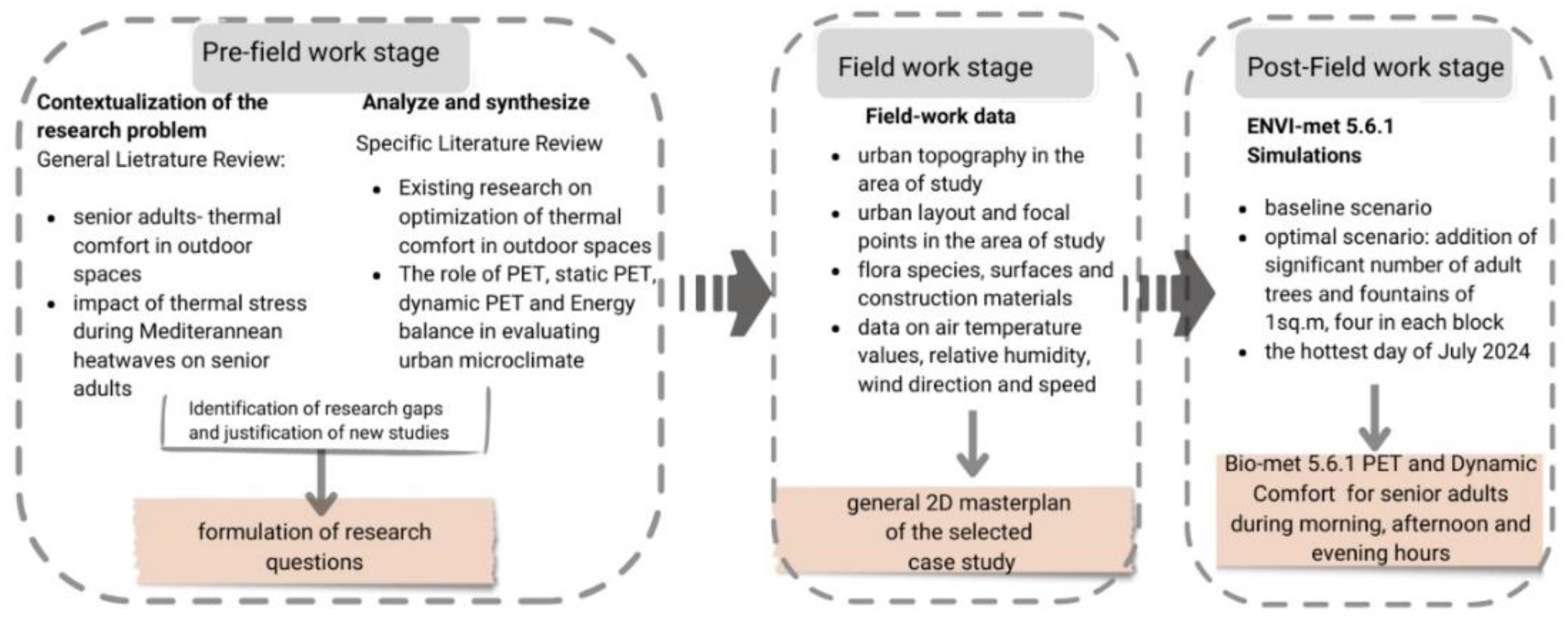
Figure 2.
Aerial view of the selected case study and section A-A.
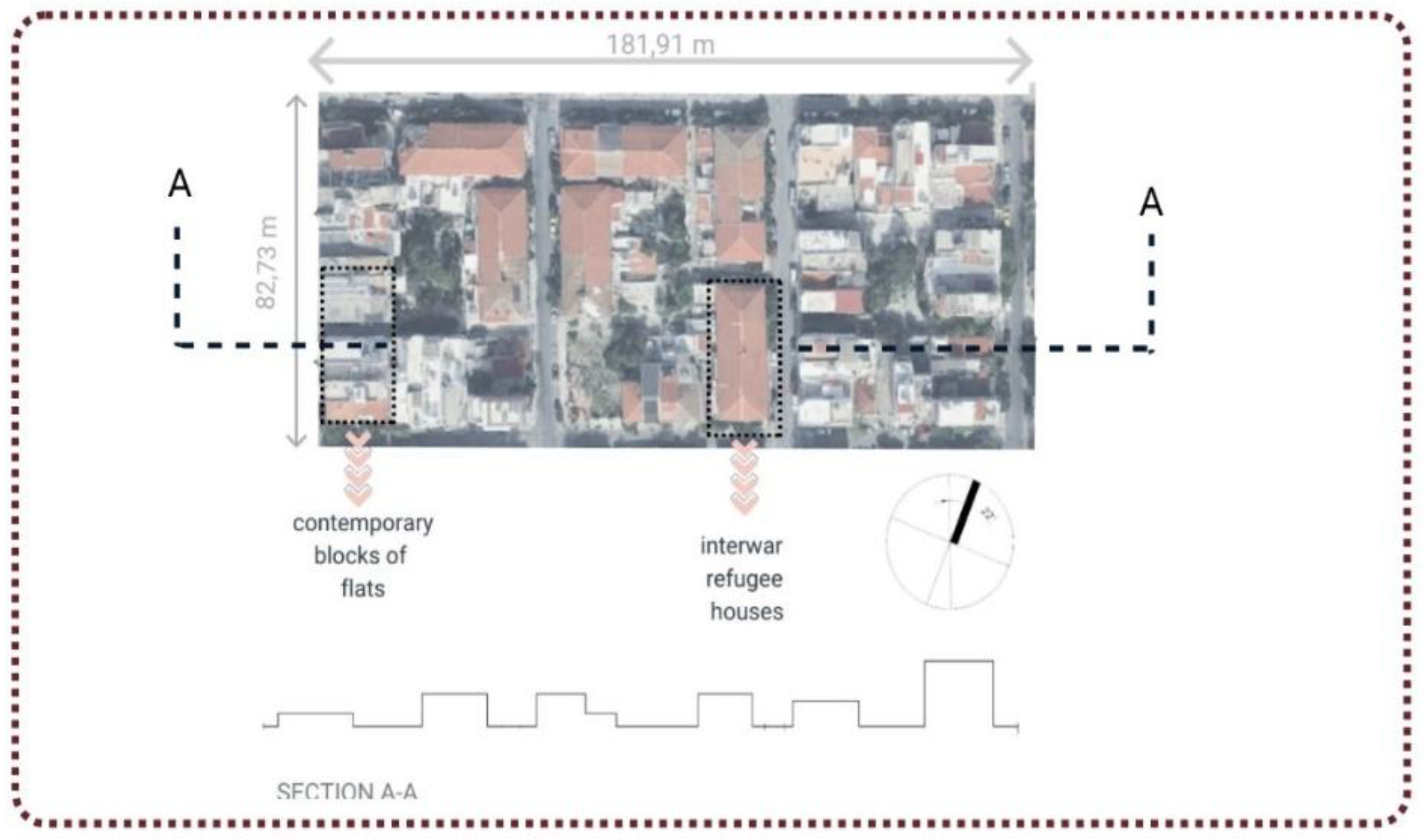
Figure 3.
2d and 3d images of the study area in baseline and optimal scenarios.
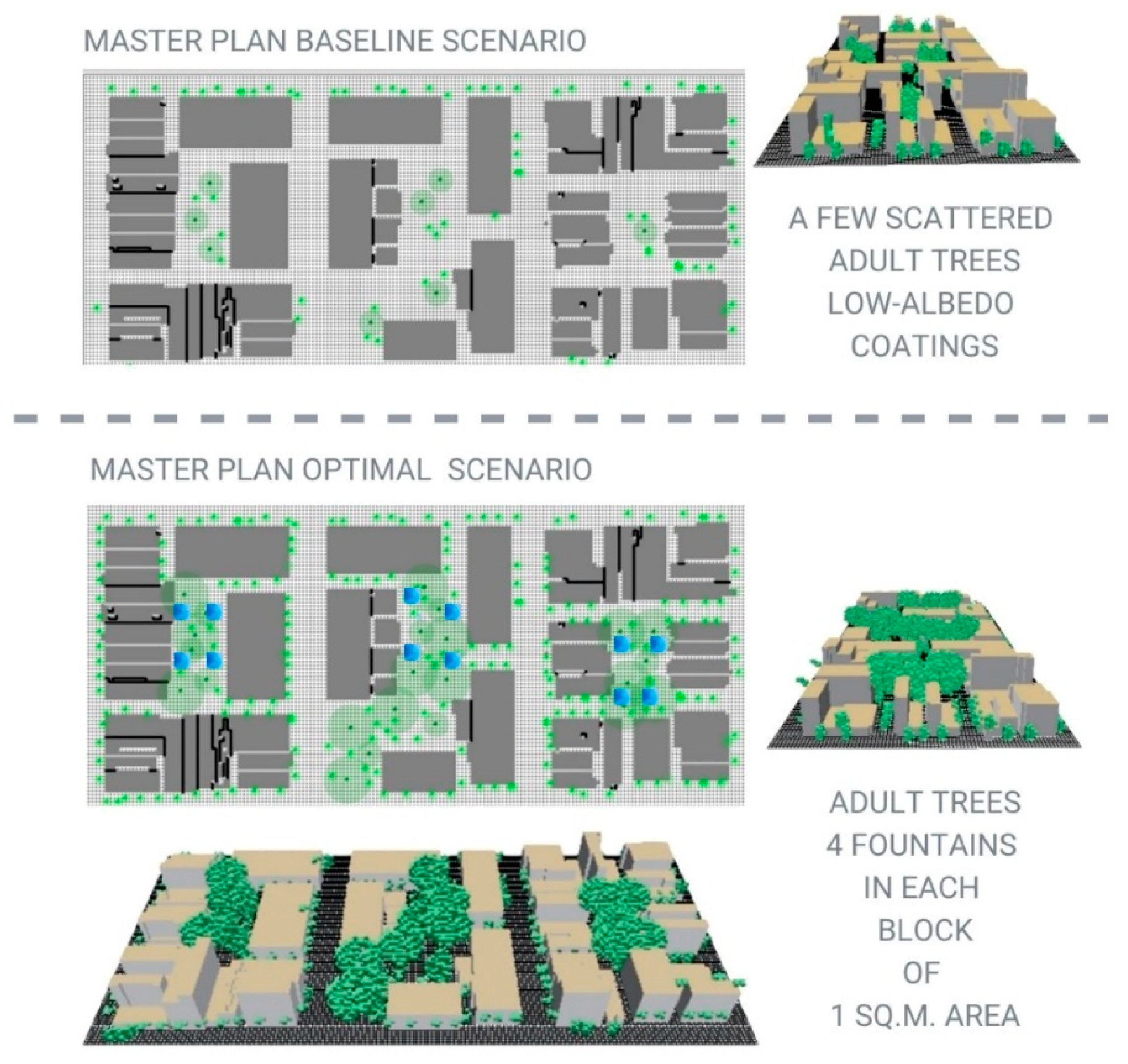
Figure 4.
Baseline scenario, 23/07/2023, PET, male 80 years old, 9:00 A.M.
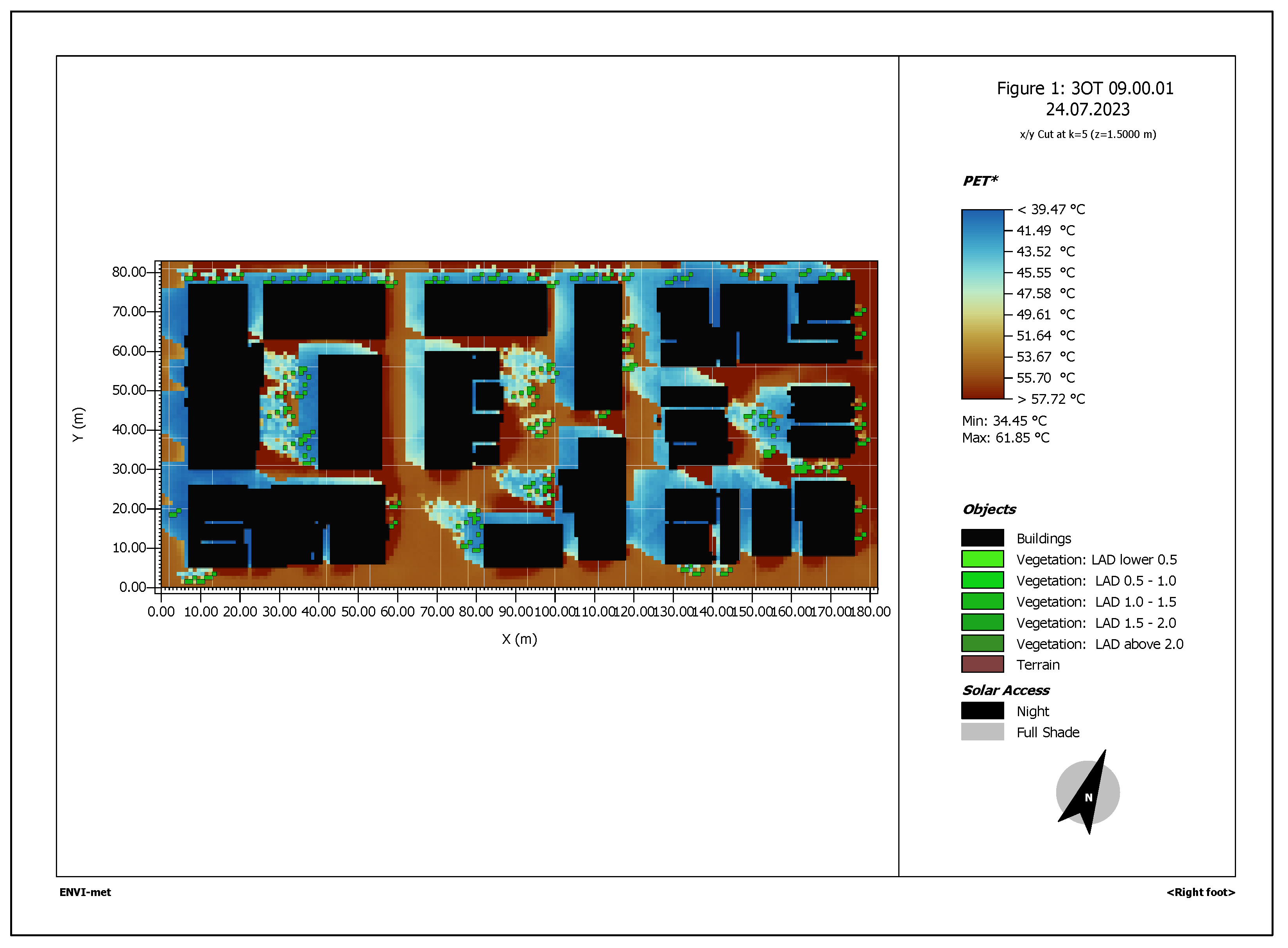
Figure 5.
Baseline scenario, 3 p.m.
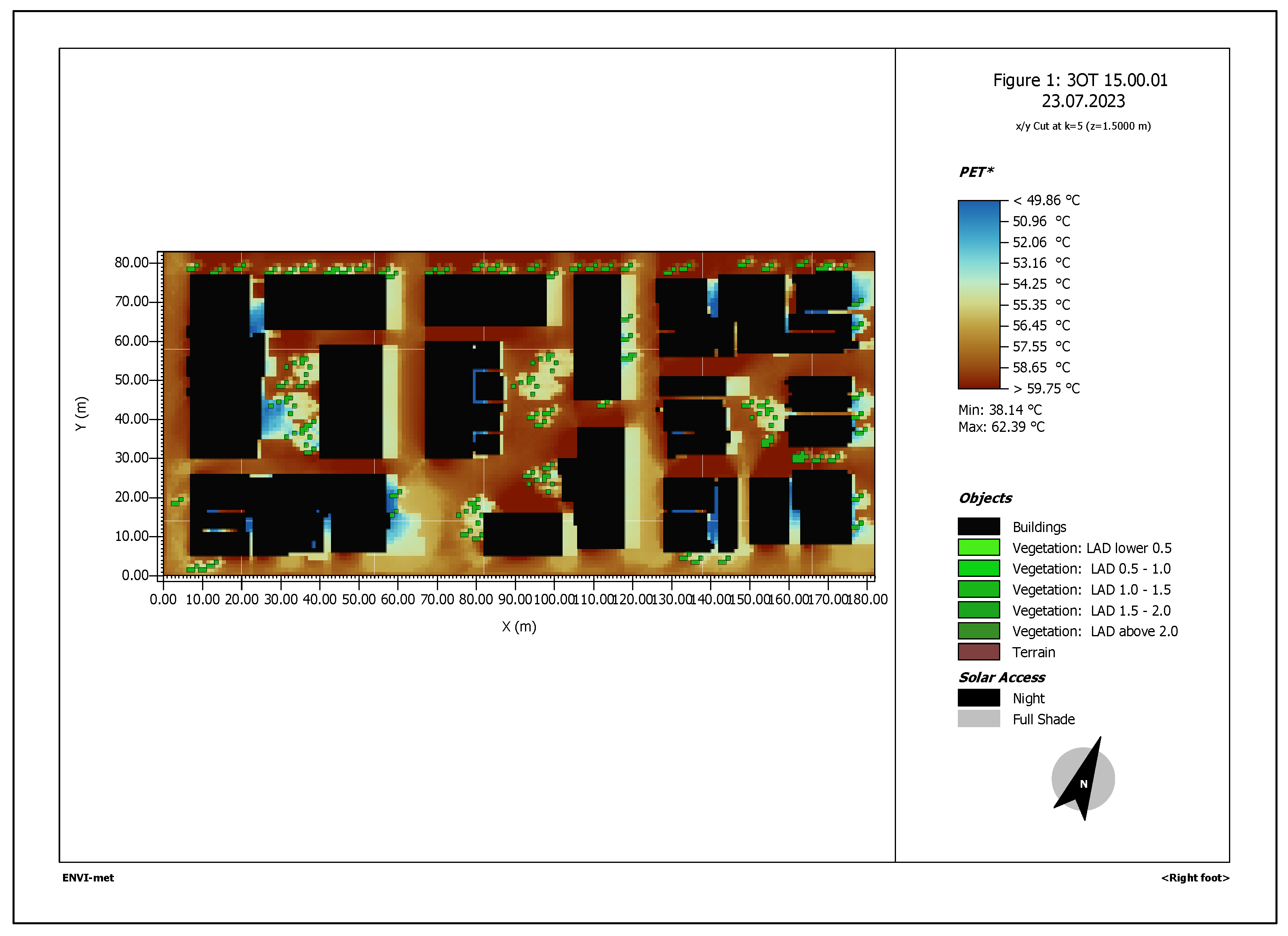
Figure 6.
Baseline scenario, PET, 8 p.m.
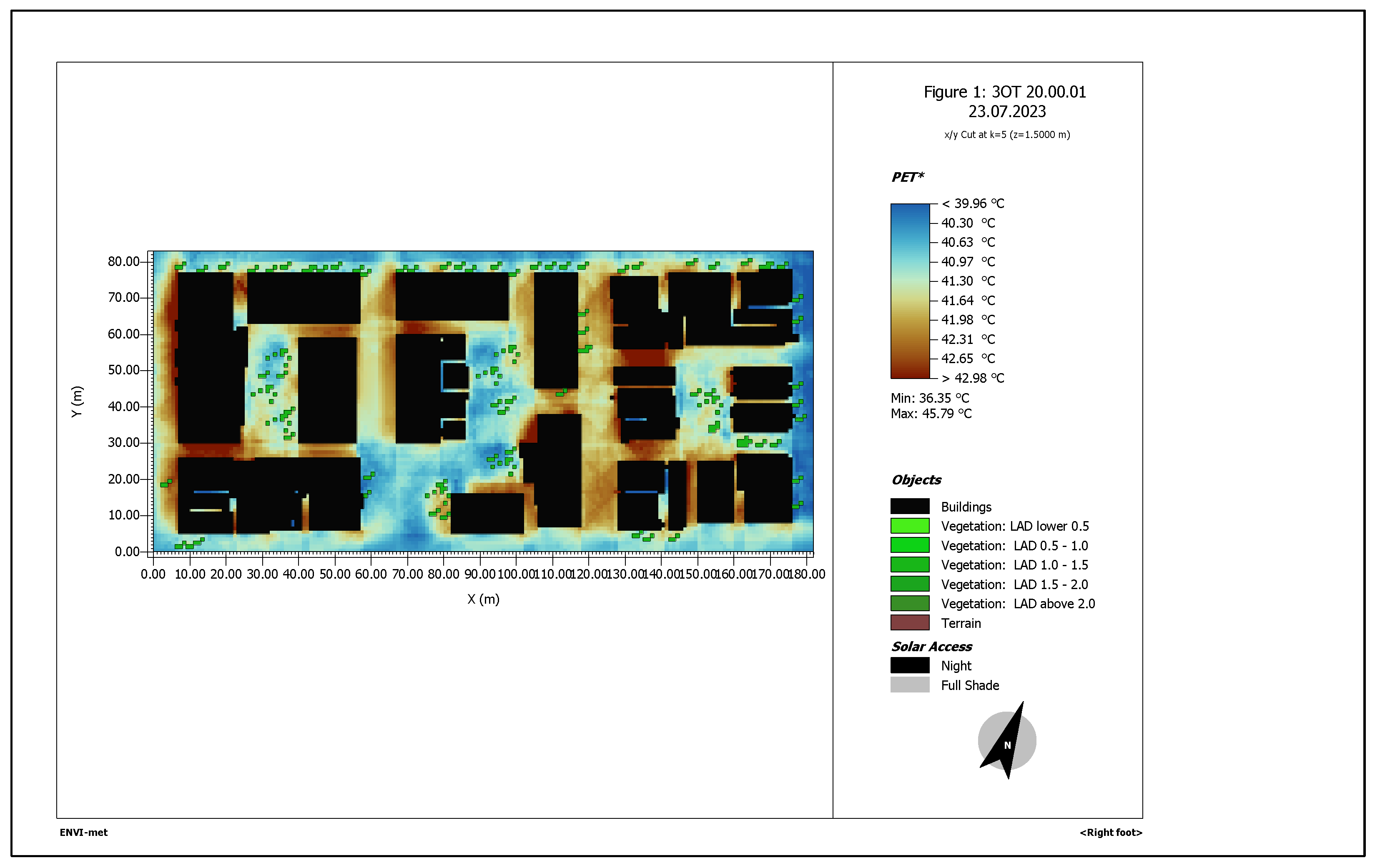
Figure 7.
Optimal scenario, 9 a.m., PET.
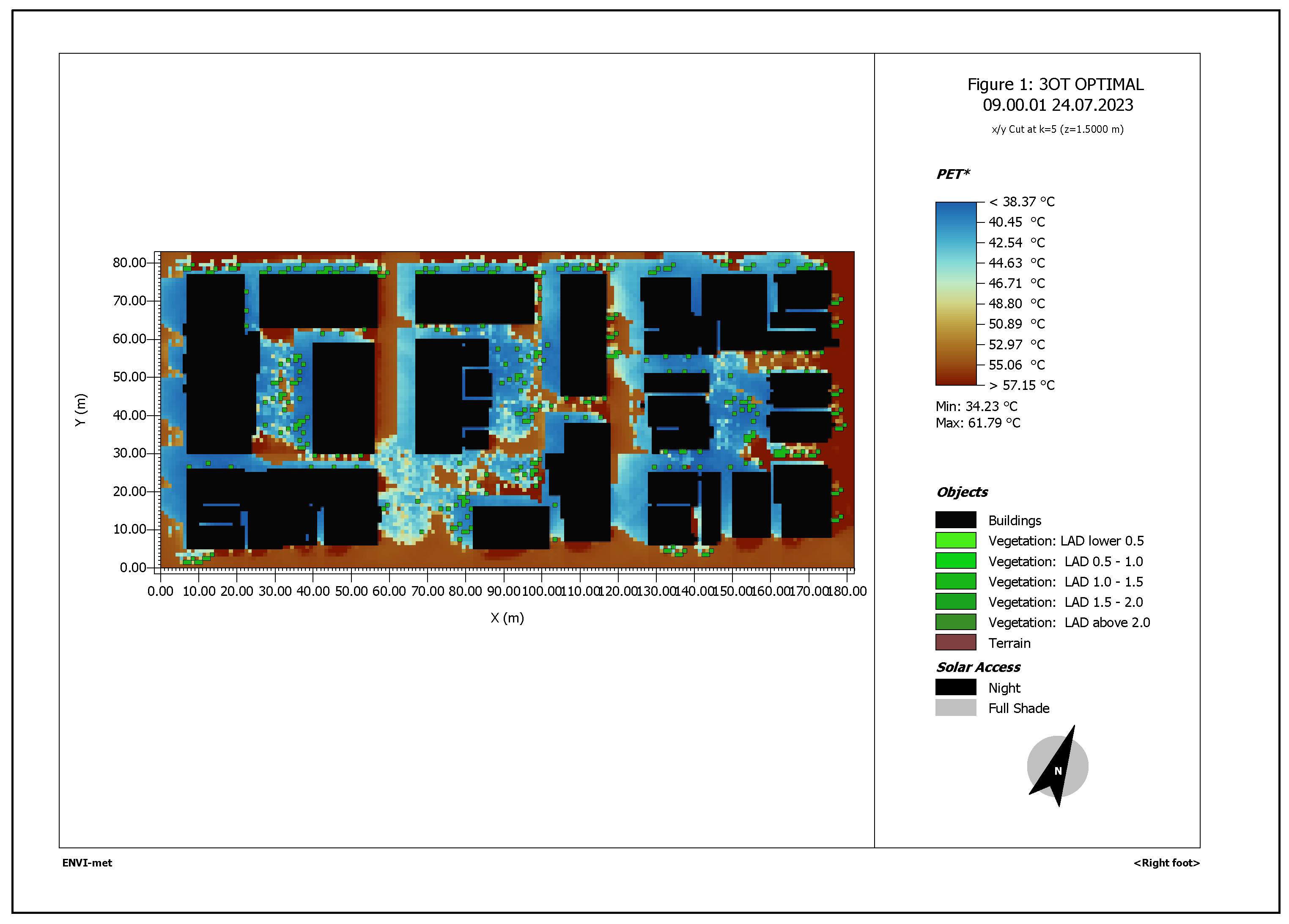
Figure 8.
Optimal scenario, PET, 3 a.m.
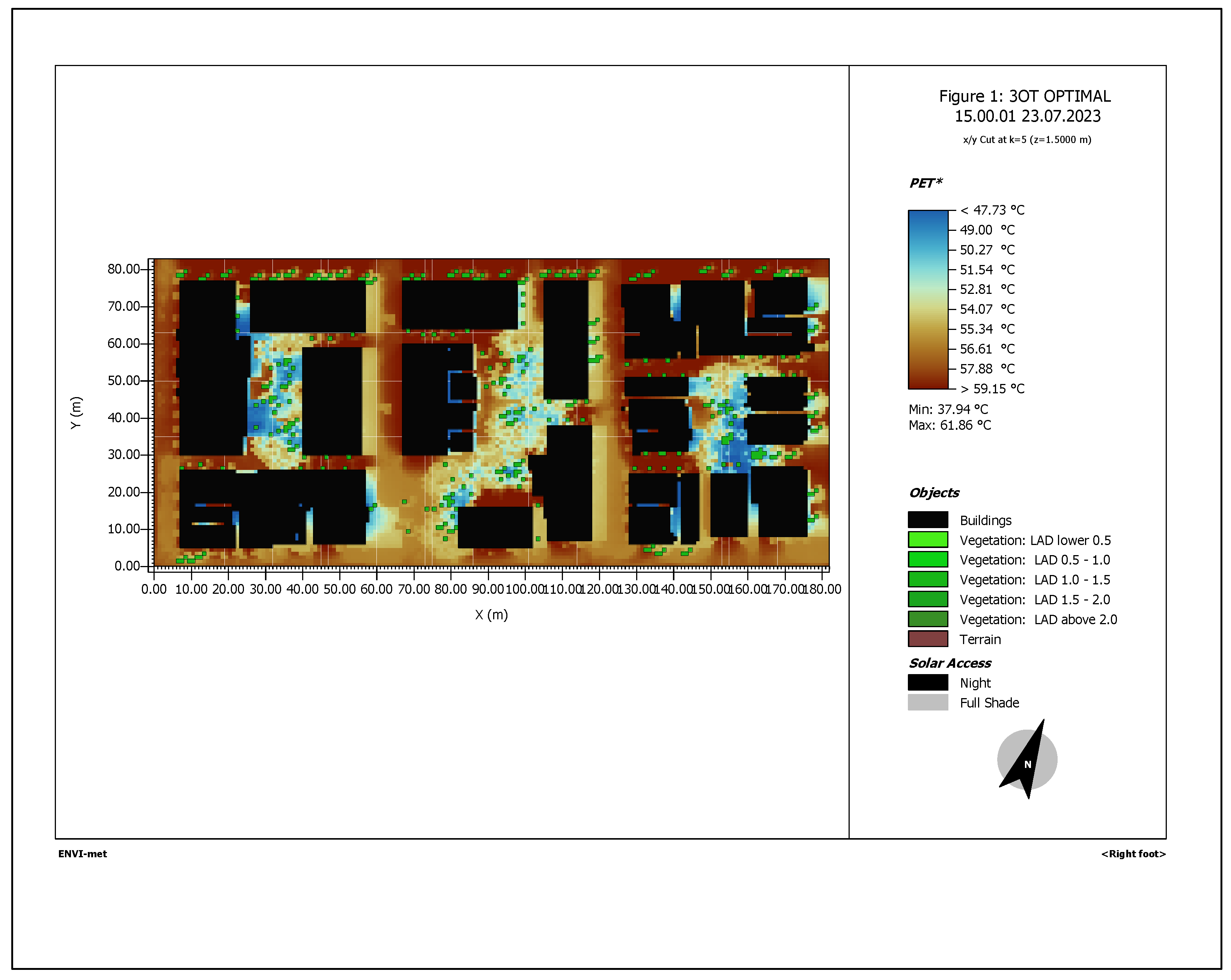
Figure 9.
Optimal Scenario, PET, 8 p.m.
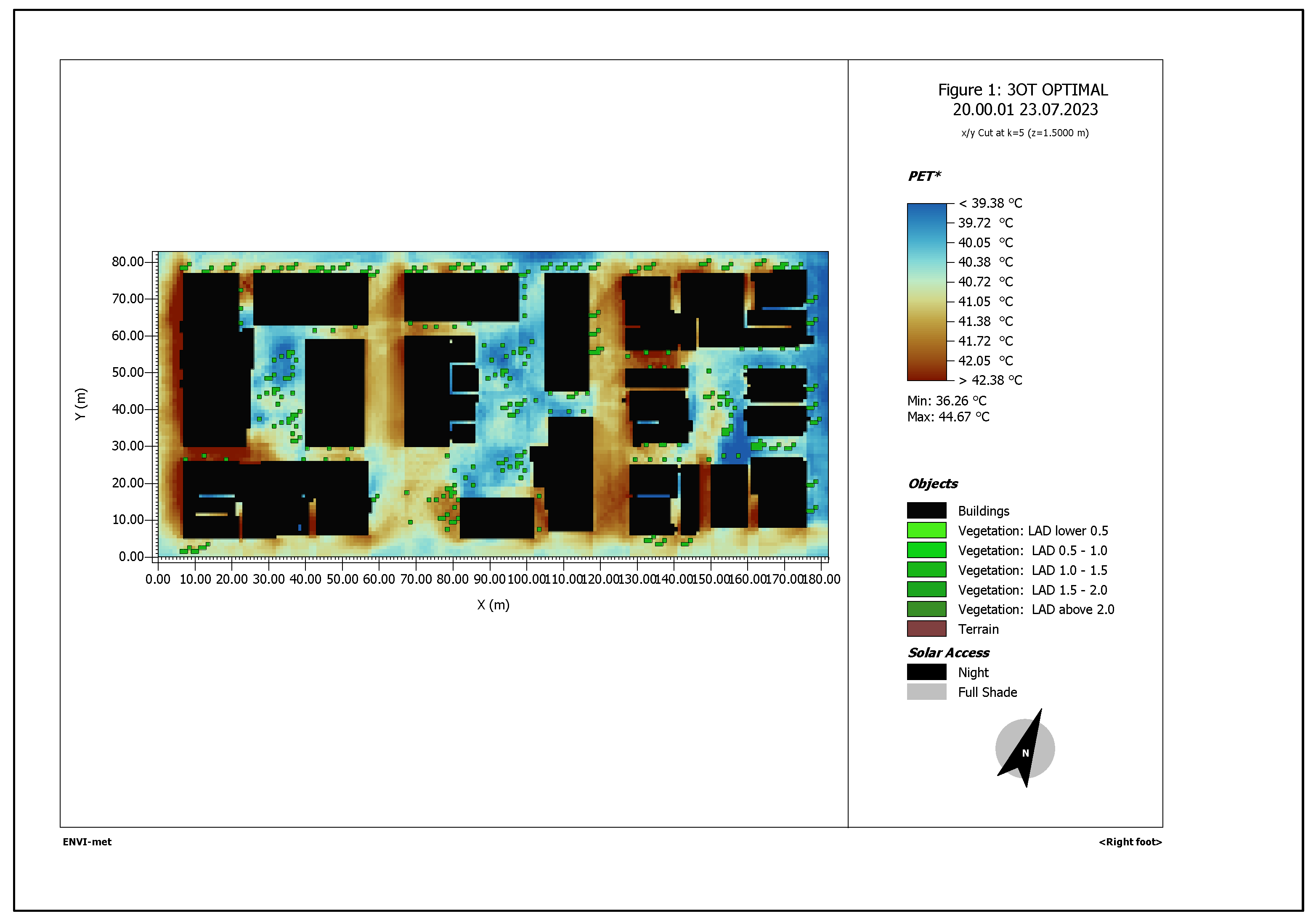
Figure 10.
Absolute difference PET, baseline, and optimal scenarios, 9 a.m.
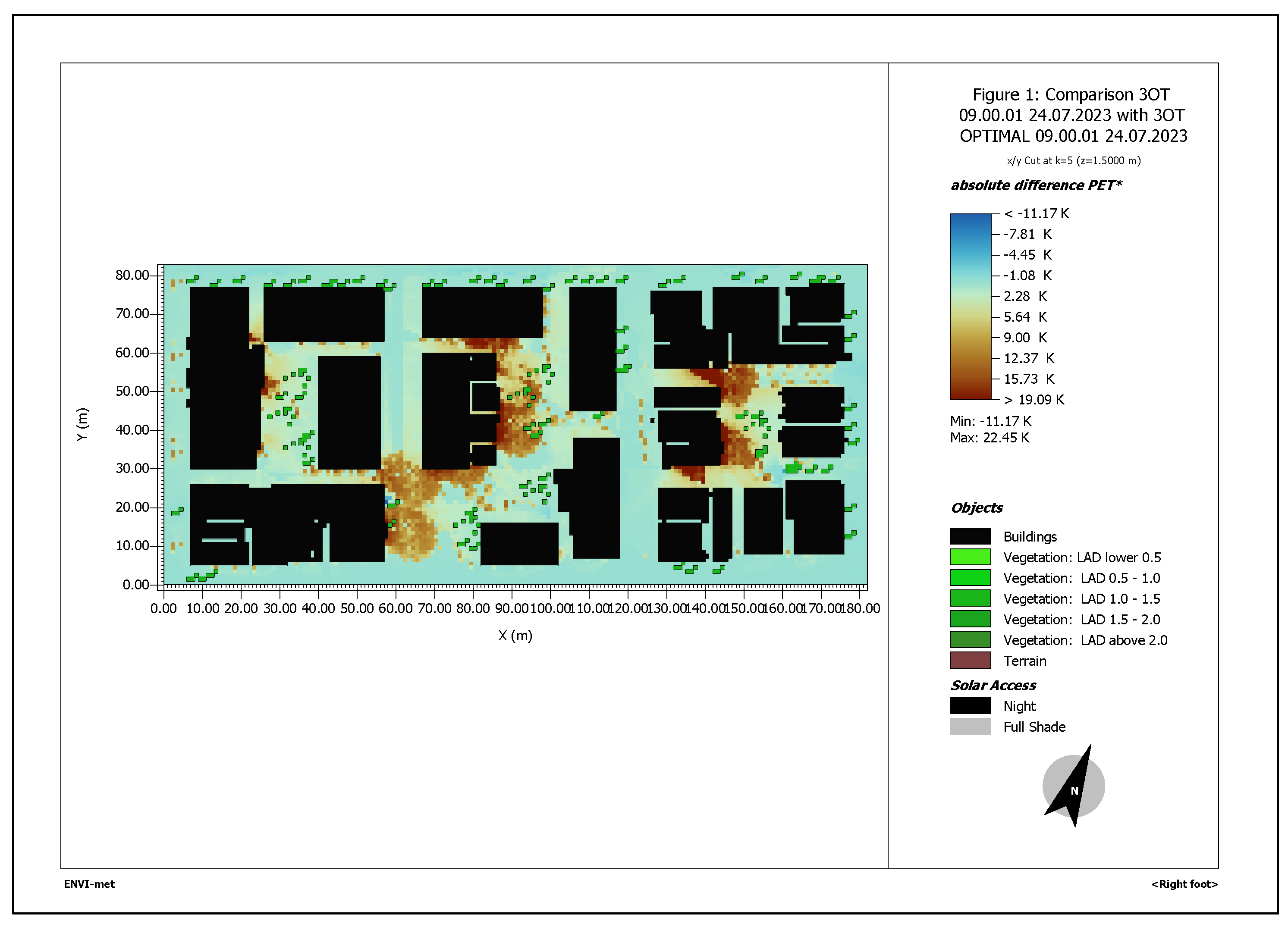
Figure 11.
Absolute Difference in PET values, 3 p.m.
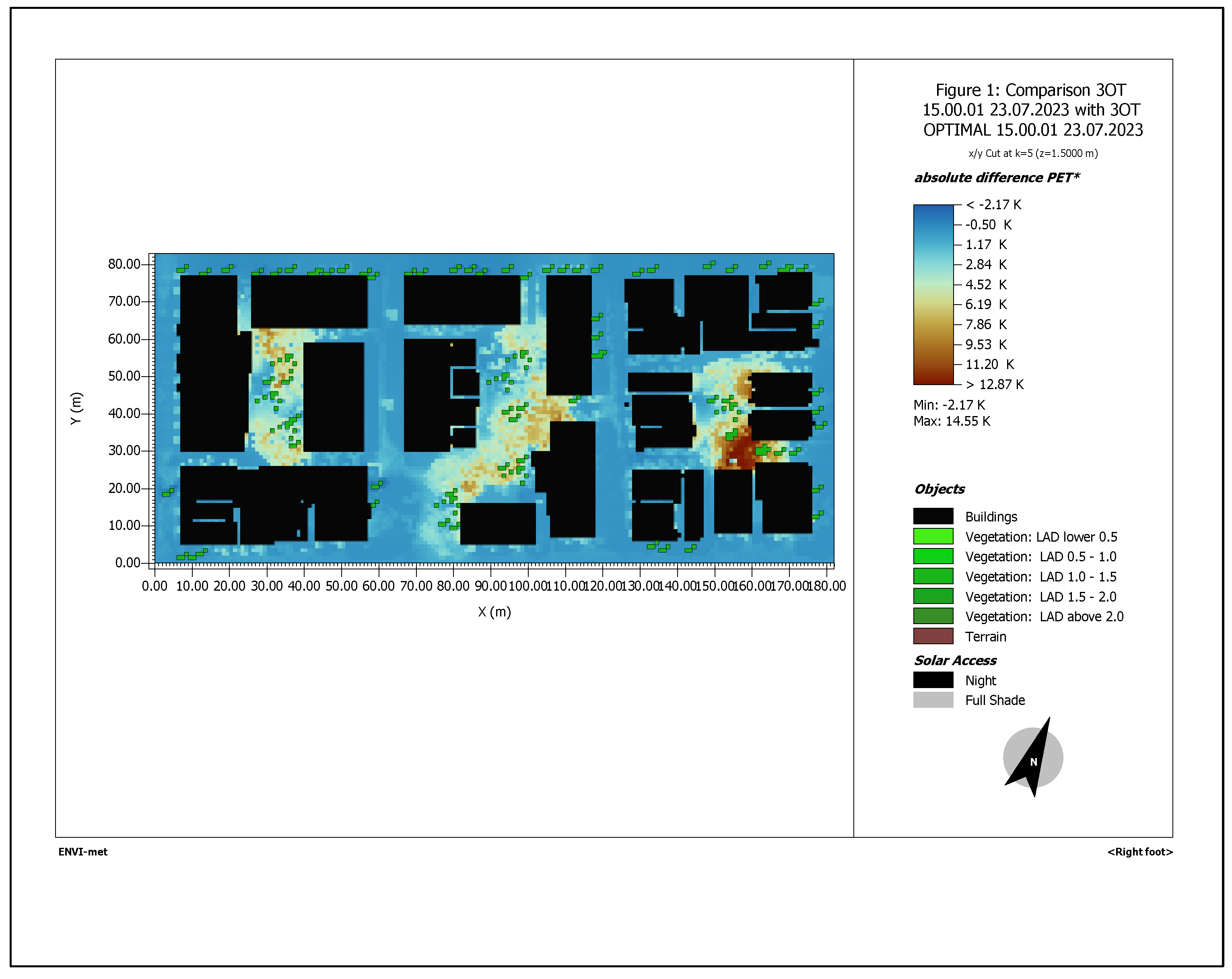
Figure 12.
Absolute PET difference, 8 p.m.
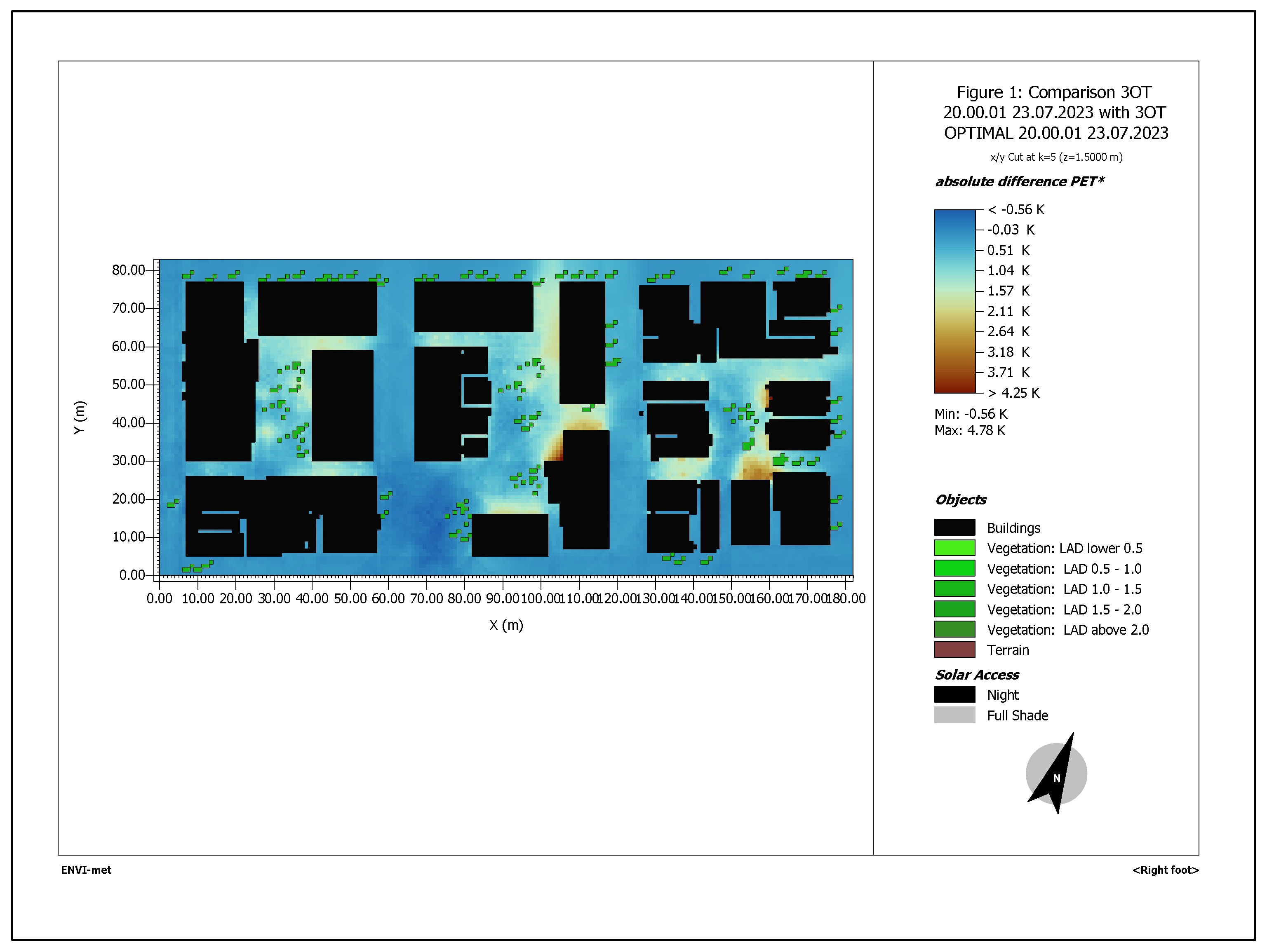
Figure 13.
Baseline scenario, static PET, 3 p.m.
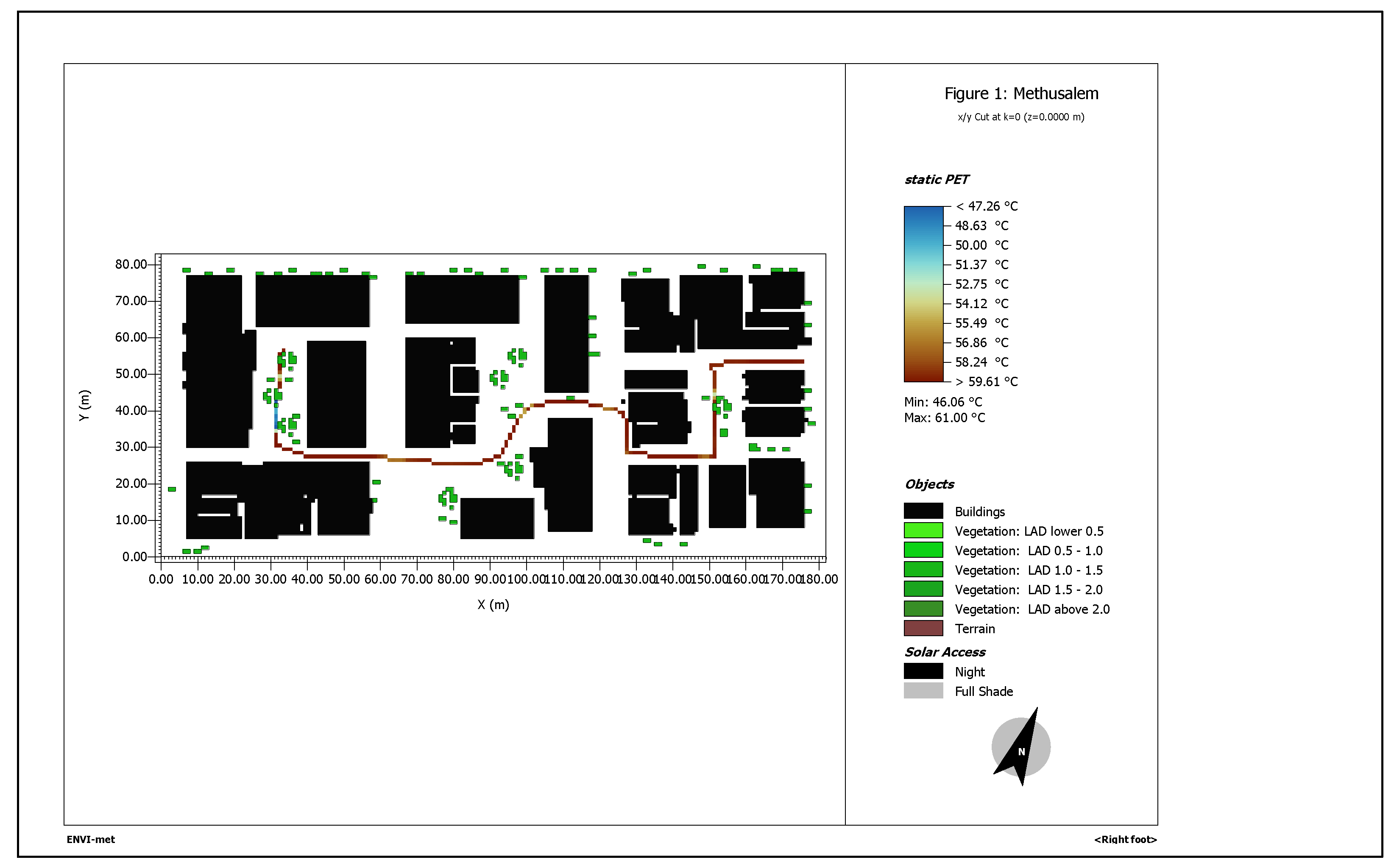
Figure 14.
dPET, Baseline scenario, 3 p.m.
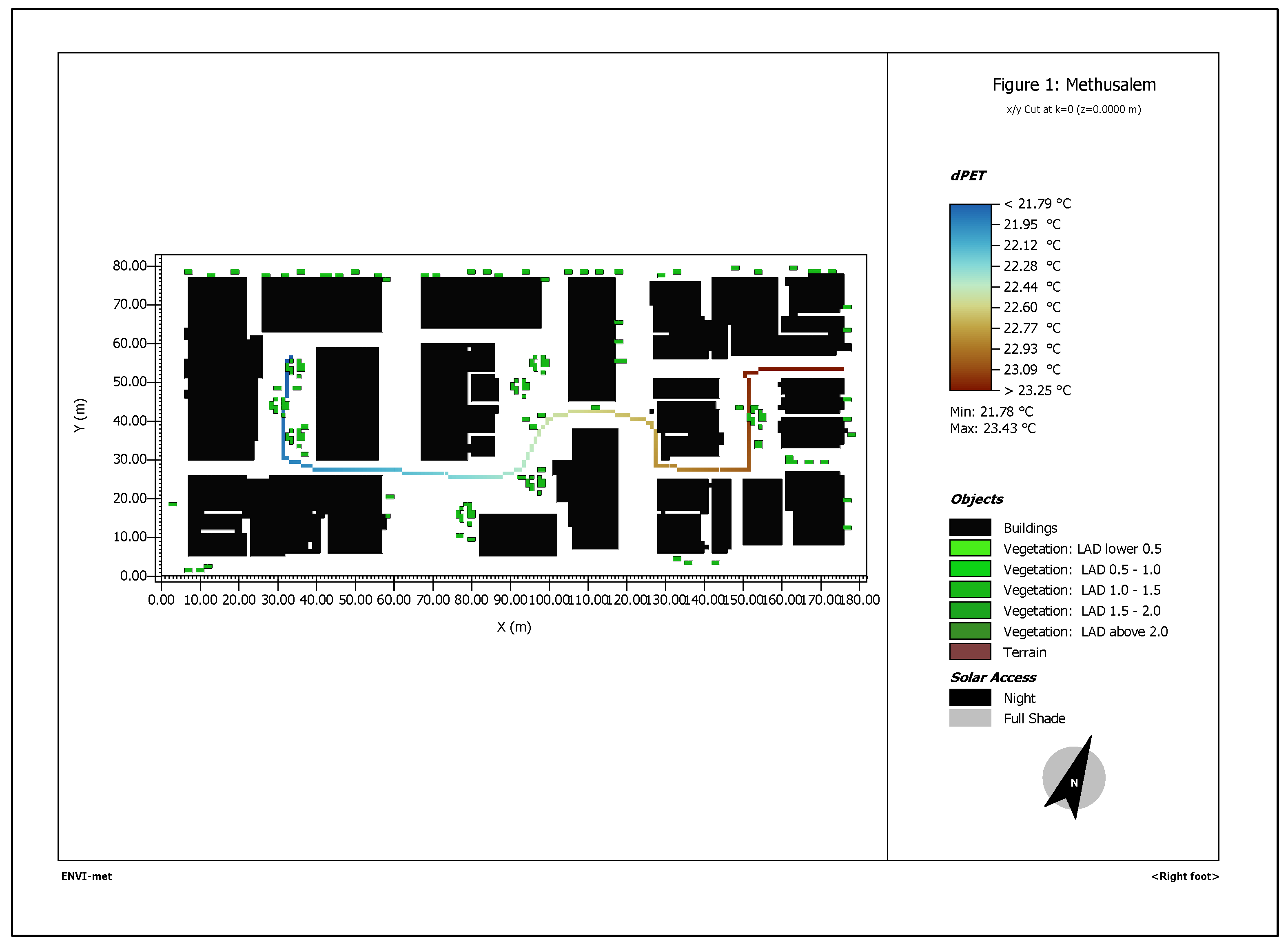
Figure 15.
Energy balance, baseline scenario, 3 p.m.
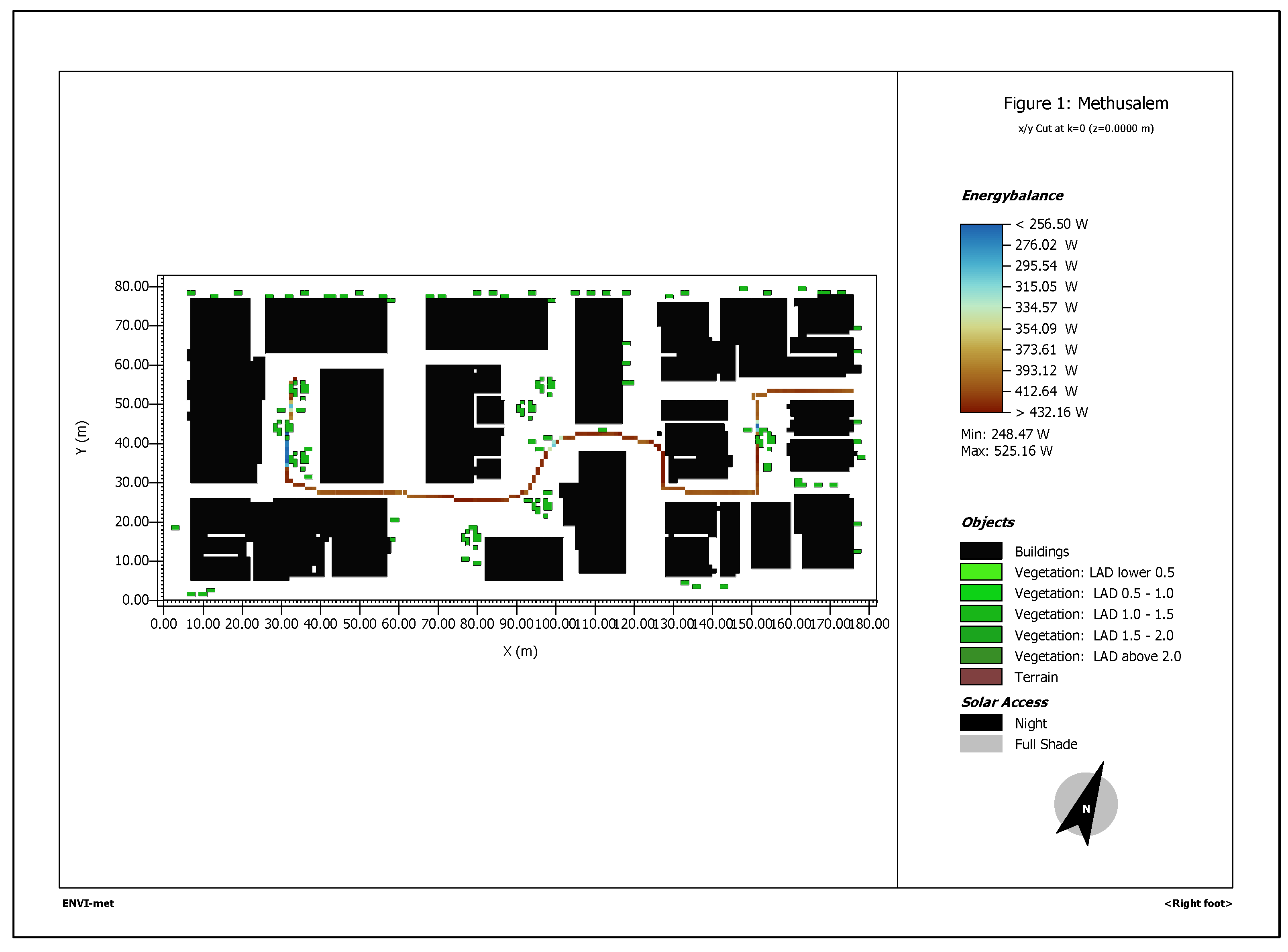
Figure 16.
Static PET, optimal scenario, 3 p.m.
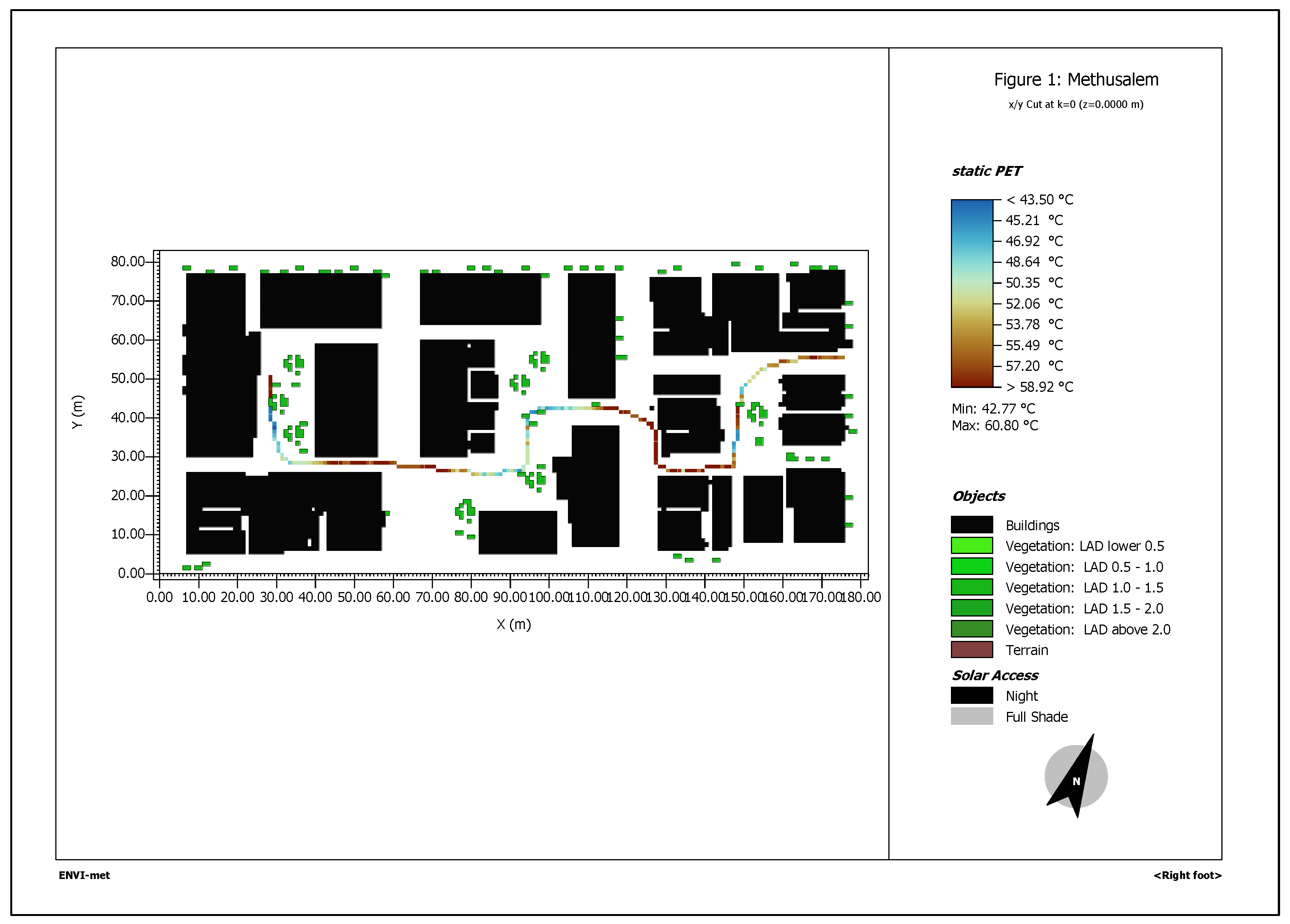
Figure 17.
dPET, Optimal scenario, 3p.m.
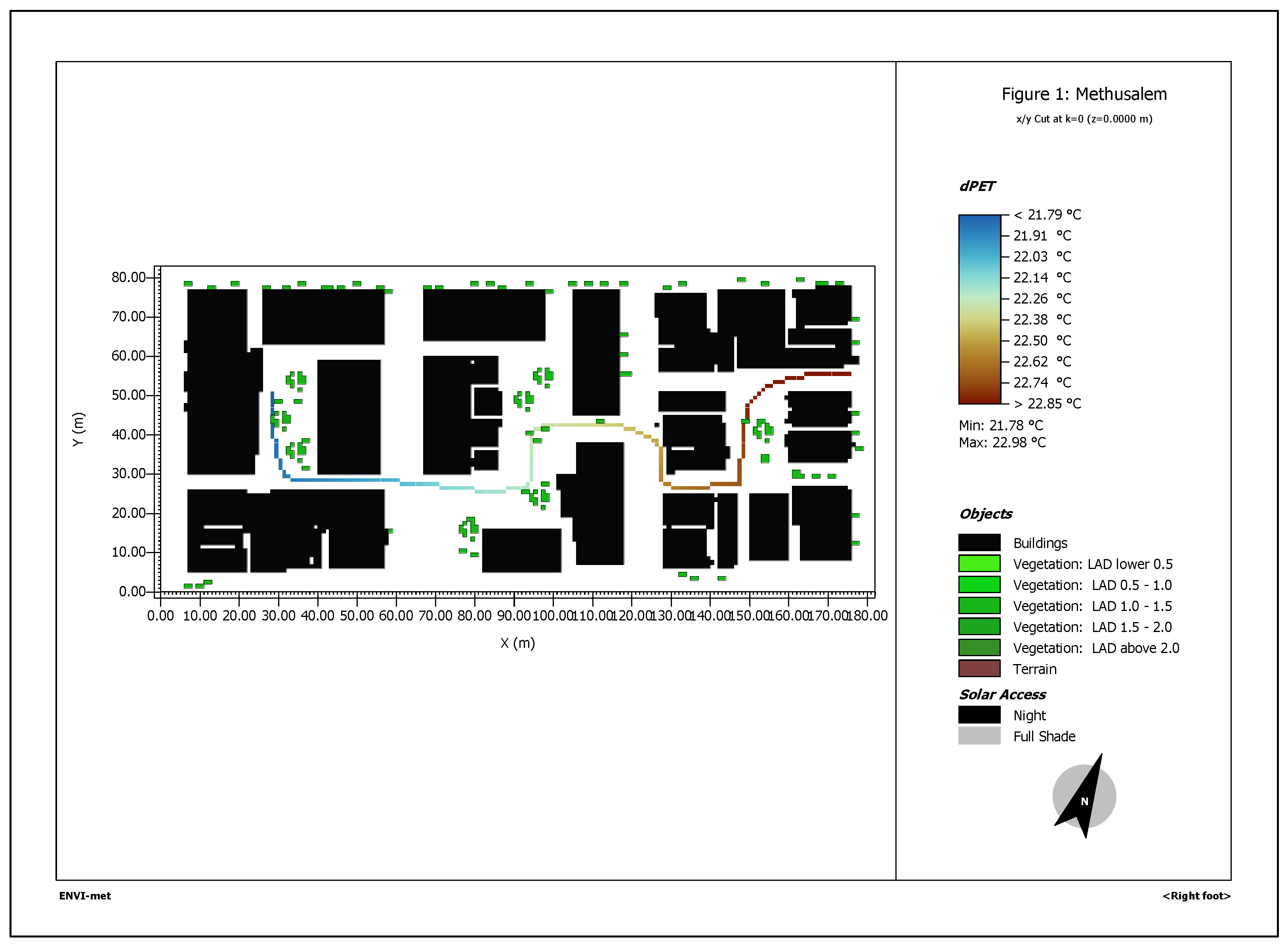
Figure 18.
Energy Balance, Optimal scenario, 3 p.m.
Disclaimer/Publisher’s Note: The statements, opinions and data contained in all publications are solely those of the individual author(s) and contributor(s) and not of MDPI and/or the editor(s). MDPI and/or the editor(s) disclaim responsibility for any injury to people or property resulting from any ideas, methods, instructions or products referred to in the content. |
© 2025 by the authors. Licensee MDPI, Basel, Switzerland. This article is an open access article distributed under the terms and conditions of the Creative Commons Attribution (CC BY) license (http://creativecommons.org/licenses/by/4.0/).
Copyright: This open access article is published under a Creative Commons CC BY 4.0 license, which permit the free download, distribution, and reuse, provided that the author and preprint are cited in any reuse.


