

Submitted:
16 March 2025
Posted:
17 March 2025
You are already at the latest version
Abstract
Smart textiles are also referred to as electronic textiles or e-textiles, which have emerged as any enabling technology dealing with active electronic elements integrated into conventional textile materials in several industries. This review article describes recent development about smart textiles toward their materials, applications, and challenges with respect to their development. Further synthesis of the findings from different research papers has established that smart textiles have huge potentials with regard to use cases in healthcare, sports, fashion, and environmental monitoring. It concludes by pointing out the likely future directionofresearchand development in this ever-changing field.
Keywords:
smart textiles
; advanced textiles
; functional clothes
; future garments and textiles
1. Introduction
Smart textiles are defined as fabrics that implement integrated electronic components in order to realize functionalities different from those fulfilled by traditional textiles. These include sensing, actuation, and data transmission, suitable for a wide range of applications, including healthcare, sports, military, and fashion [1,2]. Since technology stepped into the area of textiles, there was opened a whole new vista for innovation, with new types of garment design that could monitor health parameters, enhance athletic performances, and offer interactive experiences. [5]. Scientific interest in smart fabrics rests on new developments within areas of material science, nanotechnology, and electronics that allow the realization of fabrics with diverse features such as light weight, flexibility, and multifunctionality [12].
2. Related Work
Recent literature has reviewed, rather critically, various aspects of smart textiles, ranging from materials, techniques of manufacture to applications. For instance, Nuroldayeva and Balanay have presented the possible fields of application of flexible electrochromic materials for wearable devices and smart textiles [1]. Ahmed and Ahmed throw light on fluorescent inks employed in printing on textiles for improving aspects relating to the safety and authenticity of textiles [2]. Liu et al., 2024 have presented the scalable production of functional fibers with nanoscale features that are key to the evolution of smart textiles [5].
Further, Sowbhagyam (2024) searched for the integration of nanotechnology into smart textiles, discussing them in line with sustainable attributes and multifunctional capability [3]. Kruse et al. (2024) conducted a systematic review on the application of smart textiles for the care of the elderly and noticed their potential in improving quality of life [4].
3. Methodology
The review synthesizes findings from an impressively wide and varied array of research studies, scholarly works, and authoritative sources including peer-reviewed journals, conference proceedings, white papers, patents, and government and industry reports. The selection criteria are set deliberately wide in order for it to capture developments across a wide spectrum of fields, including innovative materials, advanced technologies, interdisciplinary applications, and sustainable practices. Of particular focus would be the arenas of smart textiles, high-performance materials, green and sustainable material solutions, nanotechnology, biocomposites, additive manufacturing, and emerging trends in material science and engineering.
The search strategy was comprehensive to involve the most relevant and recent developments. A complemented search among established academic databases like Scopus, Web of Science, PubMed, and IEEE Xplore was performed with mining from specialized repositories and open-access journals. While this review embraces studies published in the last decade, it also considers seminal works that present foundational context and offer insights with regard to the evolution of the field. Materials science, engineering, environmental science, and technological innovation-knowledge has been collected, while the scope was extended to a multidisciplinary one within this review.
This review, therefore, has been performed by an in-depth analysis of this vast amount of literature into major developments, technological breakthroughs, and significant trends. Further, the discussion goes on with ongoing barriers like scalability, cost-effectiveness, environmental concern, and regulatory issues. The review further analyzes some important cross-disciplinary collaborations that act as enabling forces behind the innovations and further presents some potential future research calls to bridge the critical gaps in this area. The synthesis intends to serve as a comprehensive tool for researchers, practitioners, and policy planners interested in this dynamic and fast-evolving domain of advanced materials and technologies.
4. Results and Discussion
4.1. Materials Used in Smart Textiles
Smart textiles are significantly based on the development of new materials, mostly nanomaterials and conductive fibers. These materials provide the main potential in adding functionality and sustainability to smart textiles.
4.1.1. Conductive Fibers
Conductive fibers are one of the important materials for smart textiles, since it acts as an electrical signal conductor. Recent improvements have targeted elasticity and strength enhancement of such fibers, important for wearables. On that note, presented yarn- based wireless temperature sensors with V₂O₅ nanowires as the sensing material, showing high sensitivity and response time [5].
4.1.2. Nanomaterials
Meanwhile, the carbon nanotubes or silver nanoparticles representative nanomaterials have lately become important smart textile materials, providing the nanotextile fabric with a range of new properties: from antimicrobial resistance and UV protection to electrical conductivity. Popescu and Ungureanu (2023) synthesized and applied in smart textiles green nanomaterials, underlining its positive impacts on the environment [6].
4.2. Applications of Smart Textiles
Smart textiles have a wide range of applications, particularly in healthcare, sports, and fashion.
4.2.1. Healthcare
Smart textiles find their application in detecting physiological parameters such as heart rate and body temperature for the purpose of continuously tracking medical conditions. Such a medical smart textile integration can be proposed as a future revolutionary action against remote patient monitoring and early diagnosis [7].
4.2.2. Sports
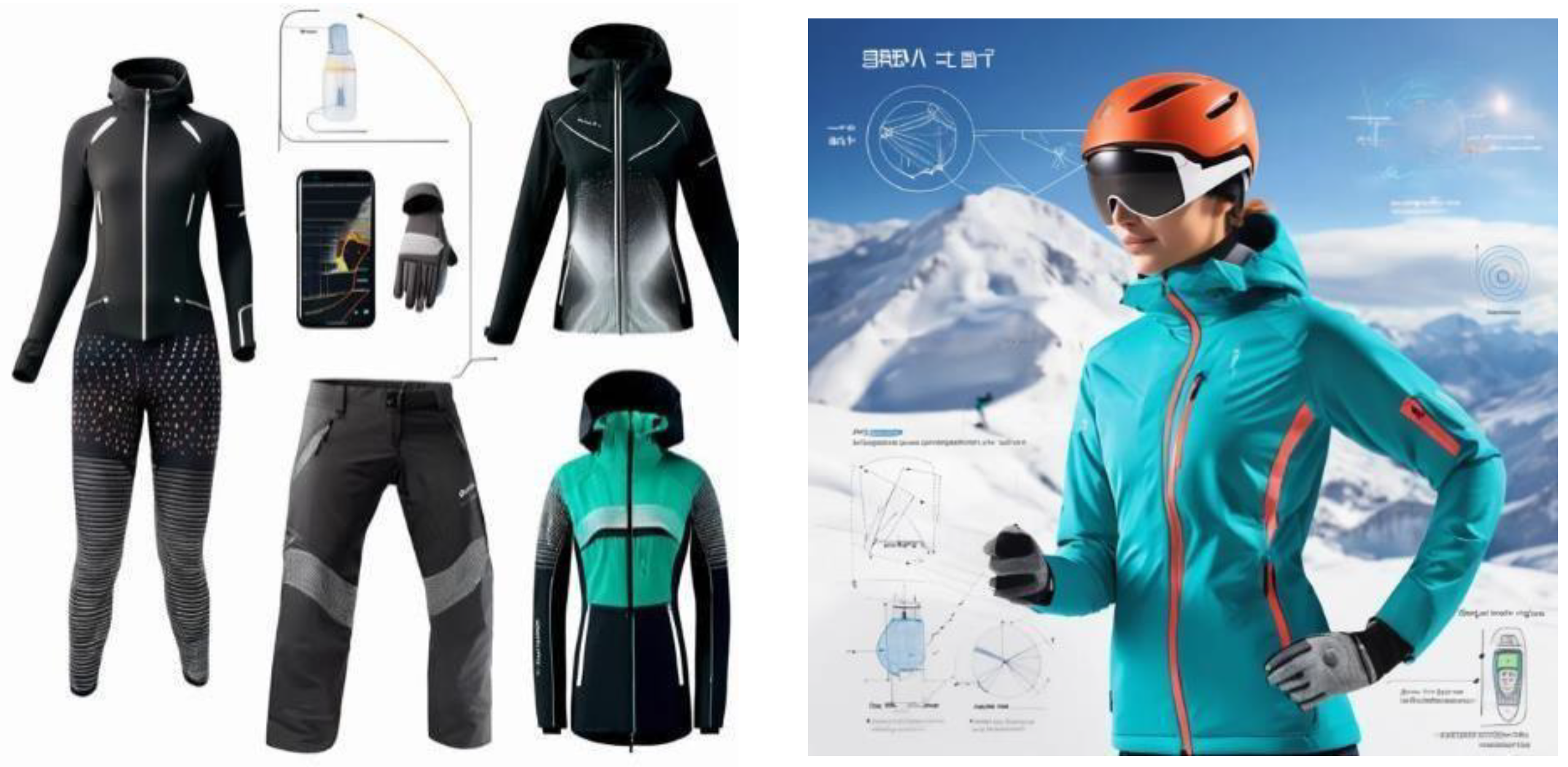
In sport, smart textiles can be increasingly used to help athletes perform better and safer. The wearable device, which is embedded in sportswear, could monitor a player's movement and physiological response in real time to optimize training regimens and potentially prevent injury [8].
4.2.3. Fashion
4.2.4. Challenges in Smart Textile Development
Notwithstanding these promising developments in smart fabrics, there is still a set of challenges facing them. To begin with, there is durability- one of the pivotal challenges facing smart fabrics, a product of integrating electronic factors into fabrics, at least with regard to wash and wear. This thirdly implies that developing styles for testing analogous fabrics also means their responsibility and safety assurance will have to be developed [11].
4.3. Some Pictures of Smart Textile
Figure 1.
Medical Textile.
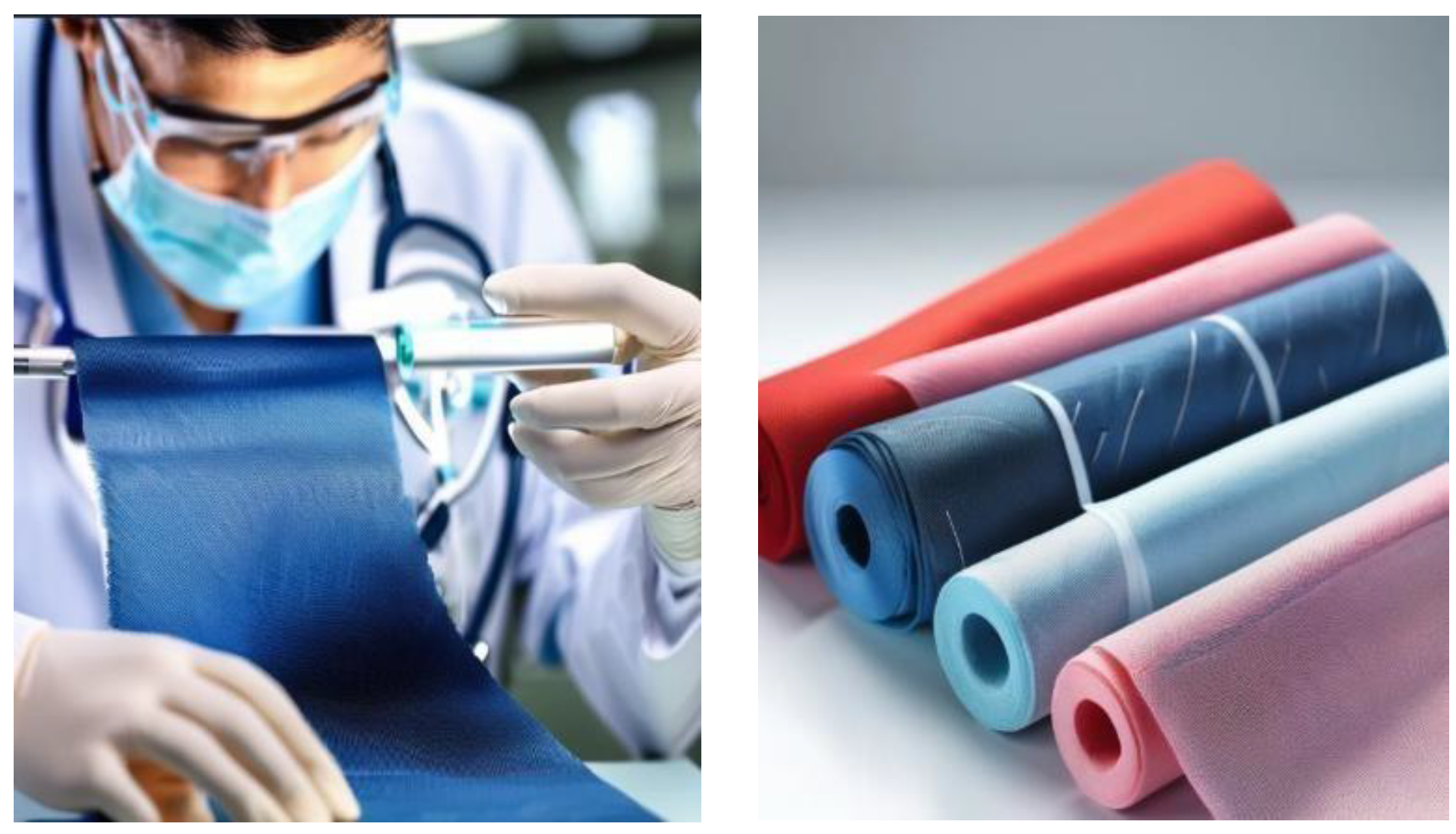
Figure 2.
Ski Jacket.
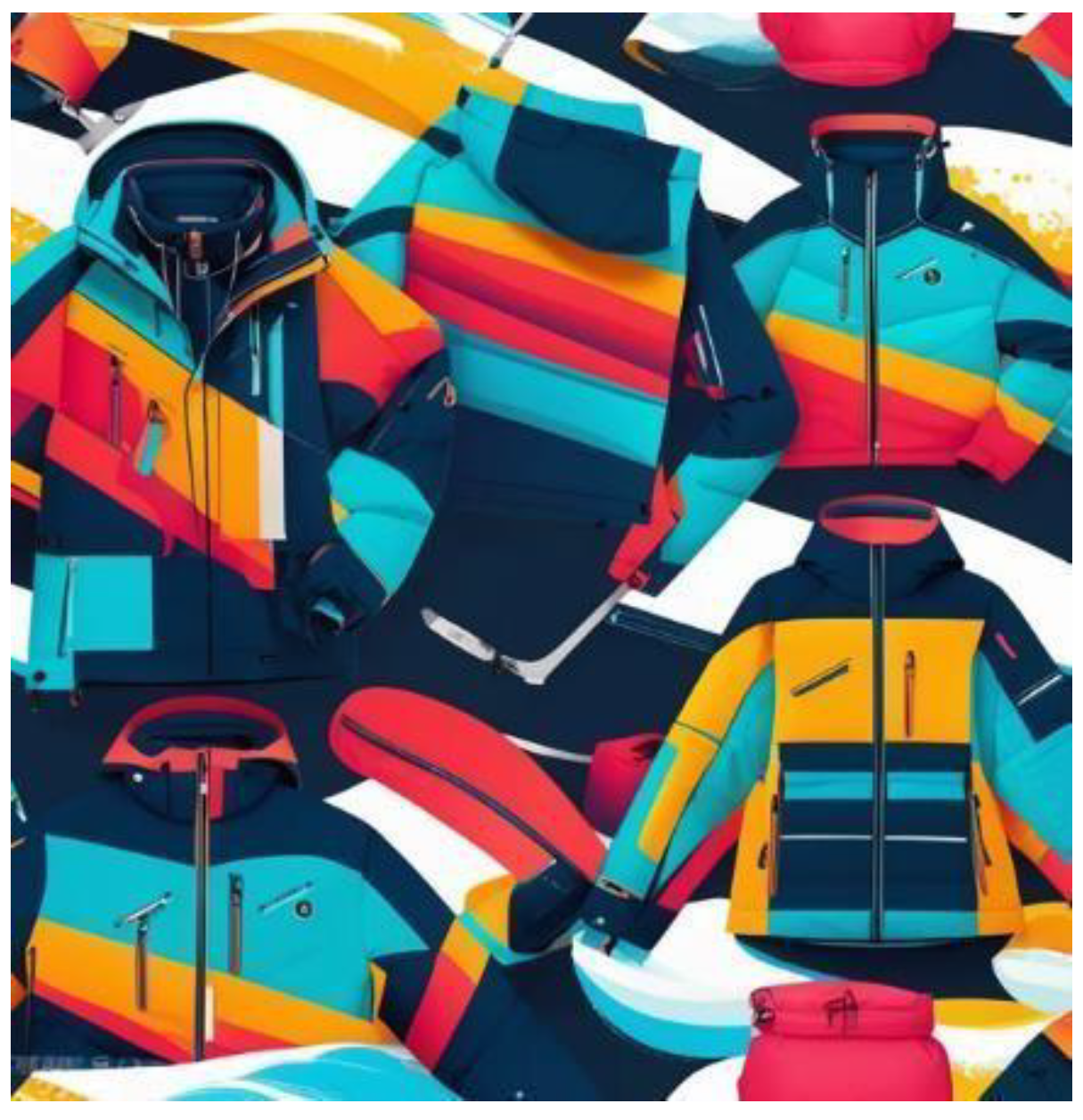
Figure 3.
Tracing Wear.
5. Conclusion
Smart fabrics are a rapidly growing, complex field with the potential for game-changing events across a wide range of industries and disciplines. Advanced equipment, state-of-the-art technologies, and interdisciplinary innovation have enabled the development of innovative applications in health care, sports, fashion, defense, automotive, and environmental monitoring. From operations performed using wearable detectors for health diagnostics to adaptive apparel that may respond to environmental stimulants, the broad versatility of smart fabrics is highlighted. Though much has been achieved with smart fabrics, there are serious drawbacks which offer a barrier to the greater laying-off and perpetration in smart fabrics. Such widely perceived problems with continuity, scalability, cost-effectiveness, standardization, and environmental sustainability are the most basic barriers that need to be overcome. Second, integrating the electronic component with flexible accessories solidly will contribute toward assuring trust ability and user comfort for very long periods. Progress in this dynamic field will be possible only by the continued collaboration of scientists, thinkers, designers, policy framers, and industry players. Other ways to further expand the potentiality of invention include multidisciplinary hookups and investments in exploration and development. Development and efforts toward universal norms of smart fabrics, eco-friendly accoutrements, and cost-effectiveness of manufacturing ways will play a very vital role in the commercialization and acceptance of smart fabrics worldwide. In the future, the development of intelligent textiles will most likely be influenced by emerging trends such as the Internet of Things (IoT), Artificial Intelligence (AI), and bioengineering. These technologies hold the promise of creating a mostly justified and responsive fabric outcome, further extending the range of operations. It will continue to review traditional diligence and produce new openings as the field keeps growing, which in return makes it a foundation of technological and material invention in the 21st century.
References
- Nuroldayeva, G.; Balanay, M. Flexing the Spectrum: Advancements and Prospects of Flexible Electrochromic Materials. Polymers 2023, 15. [Google Scholar] [CrossRef] [PubMed]
- Ahmed, K.A.; Ahmed, E.A. Fluorescent inks and their potential applications in textile printing. J. Ind. Text. 2025. [Google Scholar]
- Sowbhagyam, D.V. Smart Fabric Textiles Using Nanomaterials: A Contemporary Overview. Int. Res. J. Adv. Eng. Hub (IRJAEH) 2024. [Google Scholar]
- Kruse, K.; Sauerwein, W.; Lübben, J.; Dodel, R. Smart technologies and textiles and their potential use and application in the care and support of elderly individuals: A systematic review. Rev. Adv. Mater. Sci. 2024. [Google Scholar]
- Liu, Y.; Chen, L.; Li, W.; Pu, J.; Wang, Z.; He, B.; et al. Scalable Production of Functional Fibers with Nanoscale Features for Smart Textiles. ACS Nano 2024. [Google Scholar]
- Popescu, M.; Ungureanu, C. Green Nanomaterials for Smart Textiles Dedicated to Environmental and Biomedical Applications. Materials 2023, 16. [Google Scholar] [CrossRef] [PubMed]
- Hossain, M.R.; Ahmed, M.R.; Alam, M.S. Smart textiles. Text. Prog. 2023, 55, 47–108. [Google Scholar] [CrossRef]
- Wang, T.; Liu, C.; Zhang, J.; Wang, A. Systematic Evaluation of Research Progress in the Textile Field over the Past 10 Years: Bibliometric Study on Smart Textiles and Clothing. Processes 2023. [Google Scholar] [CrossRef]
- Arshi, O.; Mondal, S. Advancements in sensors and actuators technologies for smart cities: a comprehensive review. Smart Constr. Sustain. Cities 2023, 1. [Google Scholar]
- Tabassum, M.; Zia, Q.; Zhou, Y.; Wang, Y.; Reece, M.; Su, L. A Review of Recent Developments in Smart Textiles Based on Perovskite Materials. Textiles 2022. [Google Scholar]
- Chaudhary, B.; Winnard, T.; Oladipo, B.; Das, S.; Matos, H. Review of Fiber-Reinforced Composite Structures with Multifunctional Capabilities through Smart Textiles. Textiles 2024. [Google Scholar] [CrossRef]
- Singha, K.; Kumar, J.; Pandit, P. Recent Advancements in Wearable & Smart Textiles: An Overview. Mater. Today: Proc. 2019. [Google Scholar]
Disclaimer/Publisher’s Note: The statements, opinions and data contained in all publications are solely those of the individual author(s) and contributor(s) and not of MDPI and/or the editor(s). MDPI and/or the editor(s) disclaim responsibility for any injury to people or property resulting from any ideas, methods, instructions or products referred to in the content. |
© 2025 by the authors. Licensee MDPI, Basel, Switzerland. This article is an open access article distributed under the terms and conditions of the Creative Commons Attribution (CC BY) license (http://creativecommons.org/licenses/by/4.0/).
Copyright: This open access article is published under a Creative Commons CC BY 4.0 license, which permit the free download, distribution, and reuse, provided that the author and preprint are cited in any reuse.


