

Submitted:
10 March 2025
Posted:
10 March 2025
You are already at the latest version
Preprints on COVID-19 and SARS-CoV-2
Abstract
Tourism has proven to be highly vulnerable to external disruptions, particularly in communities with low levels of tourism development. In this context, the study examines residents' attitudes towards tourism during the Covid-19 pandemic and assesses the impact of public and private initiatives in the Cajas Massif Biosphere Area (CMBA), located in southern Ecuador. Employing a mixed-methods approach, 825 surveys were conducted alongside 25 interviews with key sector stakeholders. The objective was to determine whether these attitudes reflect genuine resilience or merely a survival strategy in response to the crisis. The findings indicate that, despite some collective efforts and mitigation plans, the primary focus remained on short-term income preservation, while government policies prioritised tourism promotion over addressing structural needs, ultimately proving inadequate for tourism recovery. This scenario placed the burden of adaptation on residents, with expressions of solidarity that, however, diminished as the crisis subsided. The study concludes that reactive measures may be mistaken for genuine resilience, highlighting the need for comprehensive policies and more equitable stakeholder participation to strengthen social cohesion and ensure the viability of tourism in the face of future crises.
Keywords:
Resilience
; Survival
; Planned behaviour
; Resident attitudes
; Stakeholders
; Covid-19
1. Introduction
The Covid-19 pandemic exposed the vulnerability of tourism to external disruptions [1], generating profound uncertainty that led various industry stakeholders to respond in heterogeneous ways [2]. The responses of tourism stakeholders ranged from individual actions to the formation of coalitions based on shared interests. On the one hand, policymakers reinforced conventional decisions focused on tourism promotion [3].
On the other hand, private enterprises sought to keep their investments afloat [3,4]. As for community residents, their attitudes were primarily linked to the economic benefits derived from tourism [5,6,7]. However, the resilience narrative widely promoted during the pandemic framed resistance and adaptation as virtues in themselves, shifting responsibility for overcoming the crisis to individuals and communities [8].
Power structures, public policies, and economic models that perpetuate inequalities and vulnerabilities remained intact. Consequently, the notion was promoted that if communities “adapted” and “resisted”, they would overcome the challenges of Covid-19. This perspective ignored the deep asymmetries of power and systemic issues that had rendered these communities vulnerable in the first place.
The aim of this article is to determine whether residents’ attitudes towards tourism during the Covid-19 pandemic reflect resilience or mere survival. Hypothetically, the changes triggered by the pandemic may have been either short-term survival responses or part of a longer-term adaptive process, known as resilience.
Although existing literature has examined residents’ attitudes towards tourism [9,10,11], few studies have addressed the implications of these attitudes during crises such as the Covid-19 pandemic [12,13,14,15,16,17,18,19]. This gap is particularly evident in research employing mixed methods, which remain scarce in this field [10,20].
Furthermore, the article explores the distinction between resilience and survival from the perspective of residents in Global South communities, as well as from the standpoint of the private sector and policymakers. Tourism initiatives in these contexts often struggle to function as effective livelihoods due to structural development issues.
This study focuses on eight different communities—rural, urban, and peri-urban—located within the Cajas Massif Biosphere Area (CMBA) in southern Ecuador. Three of these communities belong to the Coastal region and five to the Andean highlands. The selection criteria included the presence of existing tourism enterprises within the biosphere area and the willingness of key stakeholders to collaborate with the research team. Additionally, communities with varying levels of tourism development were selected, including emerging destinations, tourist corridors, and complementary attractions.
2. Literature Review
2.1. Attitudes Towards Tourism
Studies on attitudes towards tourism examine how residents and tourists perceive and react to tourism development and its associated impacts. Despite the abundance of research in this field, many studies have been criticised for their limited replicability beyond their specific contexts, making it challenging to generalise findings to other tourist destinations [9,10,11,21,22]. Attitudes can vary significantly depending on the type of destination [23], economic, sociocultural, and environmental factors [5,24,25,26,27], the level of participation [28], the destination’s development stage and future vision [29], perceptions of equity [30], prior tourism experiences, and phenomena affecting tourism [15], among others. Understanding residents’ attitudes towards tourism is critical, as these attitudes can positively or negatively influence local development through tourism [31,32]. Traditionally, the tourism sector has comprised public entities involved in tourism management and promotion, alongside private businesses operating within the tourism industry [33]. However, residents’ perspectives are vital for balanced tourism development, benefiting both the local community and visitors [12].
The study of residents’ attitudes towards tourism has been approached through various theories, which have generated diverse constructs and perspectives on how residents and local communities evaluate and respond to tourism development. In this context, Social Exchange Theory (SET) has been particularly influential, positing that residents’ attitudes are shaped by evaluating the perceived costs and benefits of tourism, with positive perceptions being more likely if benefits outweigh costs [34,35]. Meanwhile, Social Capital Theory (SCT) emphasises the role of social relationships, trust, and community norms in forming attitudes that promote tourism activity, fostering cooperation and local development [36,37]. The Theory of Planned Behaviour (TPB) provides a framework for predicting residents’ behaviour towards tourism through attitudes, subjective norms, and perceived behavioural control [38]. This theory argues that these factors influence residents’ support for tourism development in a given territory. Similarly, the Theory of Social Distance (TSD) has been used to understand residents’ attitudes towards tourism and their impact on social distance from tourists, shaping how residents interact with and accept visitors in their community [39]. Finally, Self-Perception Theory (SPT) posits that residents’ own travel experiences can influence their attitudes towards tourism [40]. Individuals form attitudes by observing their own behaviour and reflecting on the attitudes that may have caused such behaviour.
Although there is no consensus on the variables defining host communities’ supportive or resistant attitudes towards tourism, they can vary depending on tourist behaviour, tourist density, and residents’ perceived tourism development levels [41]. Gursoy et al. [42] argue that attitudes towards tourism can stem from residents’ relationships with governments, community leaders, local businesses, academia, and other stakeholders concerned with residents’ opposition to tourism. According to Lindberg et al. [25], residents’ attitudes towards tourism are often linked to perceptions of economic benefits and sociocultural factors within the community, where economic expectations tend to better predict attitudes than potential social drawbacks. In contrast, Presenza et al. [35] assert that attitudes towards tourism are shaped by perceptions of both positive impacts (e.g., increased employment and improved infrastructure) and negative impacts (e.g., increased congestion and adverse environmental effects) on local communities. These attitudes may also be associated with perceptions of quality of life and sustainability, integrated into long-term planning and community perception [43,44].
The literature on attitudes towards tourism has adopted diverse perspectives and approaches. Regarding the Covid-19 pandemic, Kamata [15] concluded that the pandemic influenced attitudes towards tourism, highlighting residents’ dilemmas between supporting the local economy and personal health concerns due to tourist interactions. Tse and Tung [45] used implicit association tests to explore how residents’ unconscious stereotypes affect their emotions and behaviours towards tourists, finding that positive implicit stereotypes are associated with positive emotions and behaviours. Torres et al. [46] developed a model to predict which consumers are more likely to engage in travel-related activities despite the challenges posed by global pandemics. Shareef et al. [47] identified reasons for changes in human psychology towards tourism during the Covid-19 pandemic to develop an attitude-behaviour model. Li et al. [16] demonstrated that residents perceive policy measures as more effective when their positive outcomes are highlighted. Additionally, residents are more willing to fund the mitigation of social costs through non-received income, such as anti-pandemic bonds, rather than their wages. Guo et al. [48] found that past travel experiences, planned behaviours, perceived barriers, and resilience significantly enhance travel intentions in the post-Covid-19 period. Blackie et al. [49] argued that during Covid-19, residents were willing to accept certain inconveniences to economically benefit from the tourism industry. Erul et al. [12] developed a value-attitude-behaviour model regarding residents’ support for tourism amidst the pandemic, reflecting that residents’ valuation of tourists plays a vital role in supporting tourism.
2.2. Challenges of the COVID-19 Pandemic for Tourism Activity
The pandemic has posed significant challenges to tourism activities and the resilience of tourist destinations [7,50]. It remains uncertain whether the pandemic has marked a fundamental shift in tourism as a whole, and even more so for communities reliant on tourism for their livelihoods [51]. However, the pandemic has at least revitalised debates on the necessity of rethinking tourism and the balance between growth and sustainable development. Indeed, tourism is highly susceptible to crises, and tourism dependency can exacerbate vulnerabilities [52]. The instability of tourist flows during the pandemic has meant that destination resources and characteristics have become secondary to the cohesion of host communities [53].
The Covid-19 pandemic generated negative perceptions among residents, affecting their support for tourism [18]. However, this persistent threat has also led to increased responsibility and engagement among stakeholders in the tourism sector [54]. For instance, Erul et al. [12] found that residents’ hospitable attitudes were crucial for tourism support. Similarly, Qiu et al. [55] demonstrated residents’ willingness to finance risk mitigation measures during the pandemic. In this context, decision-makers have a significant impact on residents’ attitudes towards tourism. Chou Wong and Wai Lai [56] indicate that residents’ trust in their governments was influenced by the effectiveness of policy responses and the transparency of information dissemination.
For Kamata [15], Covid-19 presented a dilemma between sustaining the local economy and apprehension about welcoming tourists. However, once informed, residents, businesses, and destinations managed their interactions with visitors effectively [57]. This underscores the importance of various factors, such as engagement or aversion [28], well-being or tensions [58], the equitable distribution of benefits [30], economic perspectives [24], respect for nature and culture [26,27], the fostering of social relationships [35], the future of tourism [29], Covid-19 and tourism [15], and governance and risk management in tourism planning [17].
The recovery of tourism systems presents a significant challenge, partly because organisations tend to prioritise their own objectives [59]. However, the crisis has highlighted the growing focus on resilience as a key capacity for adapting to new scenarios [57,60]. Therefore, rather than focusing solely on recovery, it is essential to examine the underlying causes of vulnerability [2]. Returning to “our previous state” necessitates a critical reflection on who constitutes this “we” and whether that previous state is truly desirable [61].
2.3. Resilience or Survival Instincts?
The literature indicates that the concept of “tourism resilience” lacks a unified definition [17,59,62]. An ideal understanding should encompass multiple dimensions, including community, destination, and organisational resilience [17]. This semantic plurality can create confusion when linking resilience to tourism, particularly when the core of the concept revolves around adaptation and recovery in the face of adversity [63].
Within the tourism system, resilience involves interactions and processes at local, regional, and global scales, resulting in varying responses to adversity [17]. Hall [62] argues that tourist destinations are subcomponents of a broader tourism system that is interconnected with socio-economic changes. Resilience refers to the ability of communities and individual residents to adapt and thrive amid uncertainty, which is crucial during crises [17,64,65]. The capacity for direct change is framed by dynamic structures and relationships [59]. From a business perspective, Prayag [17] contends that resilience is shaped by political and economic dynamics. At the organisational level, factors such as staff adaptability and supply chain flexibility come into play; however, they are also influenced by individual entrepreneurial traits and the broader business context.
Resilience in the tourism sector is particularly challenging in the context of economic and social preparedness for crises [66,67]. In such scenarios, the measures adopted often tend to be unsustainable and driven by desperation. Less developed regions are generally less resilient due to factors such as economic development levels, financial resource availability, and administrative capacity [68]. Furthermore, poor coordination among tourism stakeholders can result in slow and fragile responses to crises [50,69].
Additionally, resilience is influenced by the intrinsic characteristics of the tourism system and requires effective leadership to manage change [17]. Thus, proactively addressing vulnerability factors in tourism is crucial [62]. Evans and Reid [8] define vulnerability as a system’s inherent quality that predisposes it to adverse effects in the face of risk. Clark et al. [70] distinguish between exposure to risk in terms of enduring change without alteration (survival) and the ability to manage and adapt to changes (resilience). Indeed, the concept of resilience in tourism is far from straightforward, particularly when its application remains confined to metaphorical descriptions based on normative and positive assumptions [71].
Although interrelated, survival and resilience are distinct concepts with key nuances. Survival is defined as the ability to persist despite adverse conditions and is often an automatic response to immediate threats, driven by fundamental biological and psychological mechanisms [8,72,73]. By contrast, resilience entails a more prolonged and complex process of adaptation and recovery in response to various adversities, encompassing psychological, economic, social, and cultural dimensions [17,74]. Resilience often operates within a collective or community framework [75]. While the survival instinct is reactive and short-term focused, resilience represents a continuous adaptive cycle that may include phases of recovery and growth [71].
3. Description of the Study Area and Methodology
3.1. Study Area
This study examined eight significant cases within an Ecuadorian-Belgian academic project in the Cajas Massif Biosphere Reserve Area, in southern Ecuador (Figure 1). In the Andean region, the study incorporates peri-urban cases such as Baños; rural cases like Sayausí and Migüir; and urban-rural interaction cases, including the Austro Agroecological Producers and the Hat Museum in Cuenca. In the coastal zone near Guayaquil, rural cases from the Naranjal Cluster, Tsuer Entsa, and 6 de Julio were examined.
The Tourist Corridors (TC), Sayausí and Migüir, are located along the Cuenca-Guayaquil highway and feature tourism infrastructure that complements local productive activities. The Complementary Attractions (CA) include the Hat Museum, recognised by UNESCO, and the Austro Agroecological Producers, both of which connect urban and rural areas through their product offerings. Although still emerging, the Tourist Destinations (TD) exhibit high levels of interaction among stakeholders and an increasing reliance on tourism. These destinations are characterised by their cultural and natural elements, such as indigenous communities and diverse landscapes.
3.2. Methodology
A sequential mixed-methods observational design was employed. The quantitative phase focused on a sample of residents from eight different localities, selected as case studies (Figure 1). For each location, 100 respondents were randomly chosen, including both individuals involved in tourism-related activities and those who were not. After rigorous data cleaning, the final sample size consisted of 825 individuals (see Table 1).
Given the variability in the size of the communities—ranging from smaller ones such as Migüir and Tsuer Entsa to larger ones like Baños and Sayausí—non-proportional stratification was applied to adequately represent the inherent heterogeneity of the studied cases.
Between July and August 2021, an anonymous and voluntary survey was conducted via mobile phone using the Kobo Toolbox application. The data collection team consisted of three supervisors (the research team) and 14 student researchers, who were previously trained by the research team. The demographic composition of the sample is detailed in Table 2.
3.3. Data Collection Instrument
The questionnaire consisted of three sections. The first section included control and survey monitoring variables, such as the date and time, the names of the interviewer and supervisor, the case study, and the statement of free and informed consent. The second section comprised 36 statements (Appendix A), divided into nine macro-variables: 1) Engagement or aversion [28]; 2) Well-being or tensions [58]; 3) Equitable distribution of benefits [30]; 4) Economic concerns regarding tourism activity [24]; 5) and 6) Respect for nature and culture [26,27]; 7) Building social relationships [35]; 8) The future of tourism [29]; and 9) Covid-19 and tourism [15]. A Likert scale was used, ranging from 1 (Strongly Disagree) to 7 (Strongly Agree). The third section contained socio-demographic variables, as detailed in Table 2.
3.4. Data Analysis
The statistical software R was used for data analysis. Initially, descriptive analyses were conducted for both socio-demographic variables and responses to the 36 statements. Given that mid-range scores (3, 4, and 5) could indicate indecision, the analysis focused on extreme responses, specifically high levels of agreement (scores 6 and 7) and disagreement (scores 1 and 2). The “I don’t know” option was excluded from the questionnaire to minimise non-committal responses.
The analysis began with an exploratory data analysis (EDA) by calculating the median of each statement. This approach aimed to reduce the subjectivity of Likert scales and identify trends towards lower (Disagree) and higher (Agree) values. Subsequently, multiple stages of statistical analysis and predictive modelling were implemented. The methodological sequence included: Principal Component Analysis (PCA), cluster segmentation using K-means. And decision tree construction. For the PCA, responses were standardised (z-score) before applying PCA to the standardised dataset to reduce dimensionality and extract key components that explain the greatest variance in residents’ attitudes. The Varimax rotation method was used to ensure maximum variance of the data. The Kaiser criterion was applied, selecting components with eigenvalues greater than 1, which led to the identification of seven principal components. Based on the PCA results, the elbow method was employed to determine the optimal number and size of clusters, resulting in four clusters (190, 117, 262, 256). Using the principal components extracted from the PCA as input variables, the K-means algorithm was applied to segment respondents’ answers into the four identified clusters.
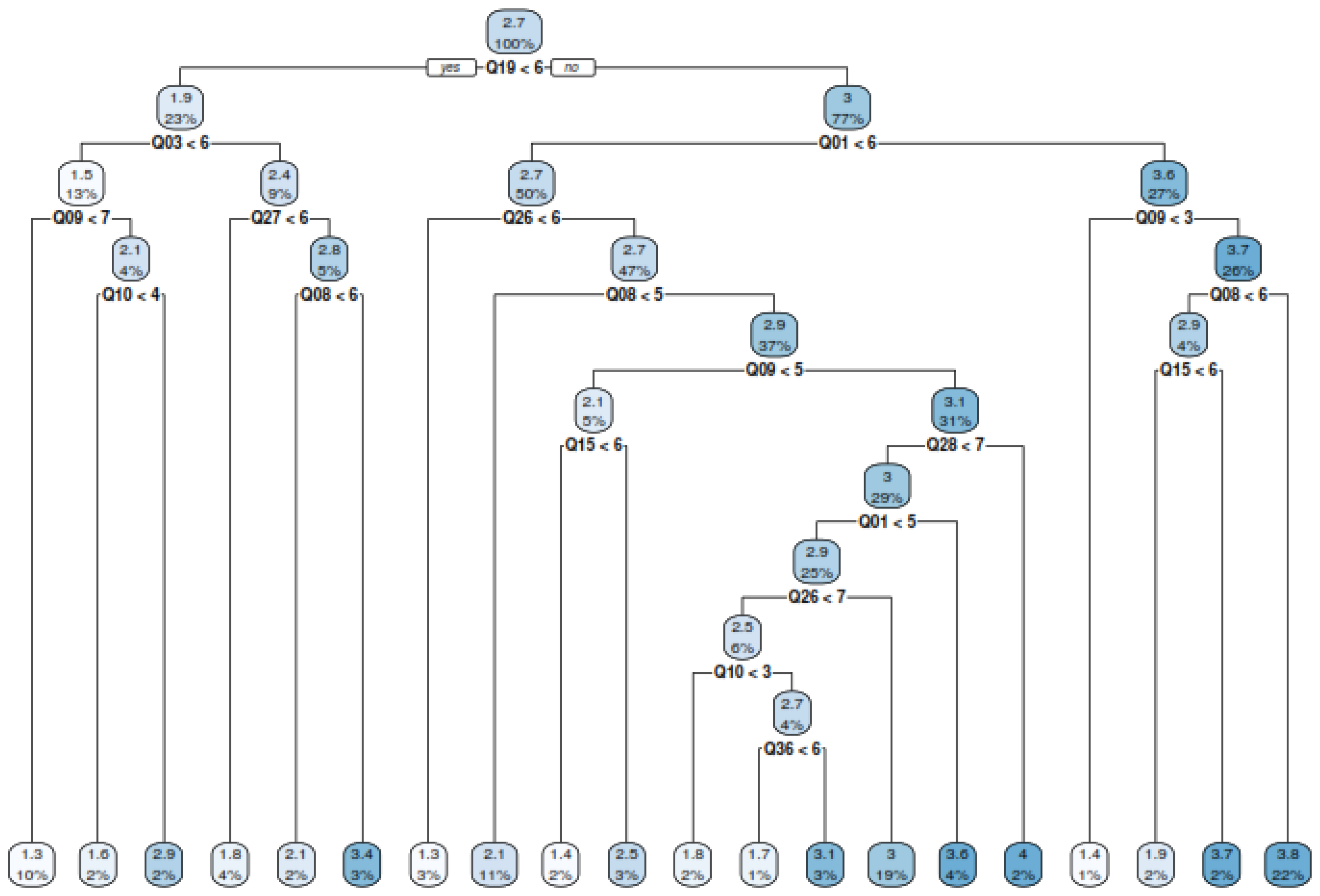
A decision tree was then constructed to predict the clusters assigned by the K-means algorithm within a dataset containing relevant segmentation variables. To ensure reproducibility, a random partitioning of the dataset into training and testing sets was performed. Specifically, 70% of the data was randomly selected for the training set, while the remaining 30% was used as the test set. The decision tree was subsequently used to predict cluster assignments in the test set. At each decision tree node, the mean cluster value was computed for all observations satisfying the conditions up to that node. This mean cluster value was calculated across all four identified clusters (1, 2, 3, and 4), allowing for intermediate nodes to represent averages between clusters. To assess the model’s performance, key metrics such as accuracy, confidence intervals, p-values, and the Kappa index were evaluated. Additionally, stability and robustness were examined through simple cross-validation, by splitting the data into a training set (70%) and a test set (30%). The model was trained on the 70% training data, and its performance was then validated using the remaining 30% of the dataset, which had not been used in training. This approach ensured that the model was not overfitted to the training data and could generalise well to unseen data. It was crucial for verifying whether the model remained consistent and robust across different data partitions. In practice, this validation method helped confirm that the results were not dependent on a single data partition but remained stable across different samples of the dataset. By changing the training and test data, variations in the decision tree structure were observed. If the resulting trees were similar, the model was deemed robust. However, if significant differences emerged, this suggested that the model was sensitive to data selection and might require further adjustments.
3.5. Qualitative Data Collection and Analysis
The initial implementation of surveys ensured a robust quantitative foundation, which guided the selection of topics for interviews, optimising the qualitative approach and preventing a dispersed or redundant exploration. The interviews were designed to delve deeper into critical areas previously identified through quantitative data analysis [76]. An exploratory approach was adopted, employing semi-structured interviews. The participants included tourism authorities (5), business owners (4), and local leaders (16), selected based on convenience sampling (Table 3). In total, 25 interviews were conducted, of which 18 were face-to-face and seven were carried out via Zoom meetings, with prior informed consent. The duration of the interviews ranged from 20 minutes to 1 hour and 15 minutes.
The interviews were recorded and transcribed. Subsequently, the data were translated from Spanish into English in a highly literal manner to preserve the integrity of the captured dialogues. The analysis employed an inductive approach to formulate broad generalisations based on specific observations. During the initial phase of transcript analysis, key themes emerged. These qualitative findings were then contextualised to explain the “why” behind the patterns identified in the surveys [76].
4. Results
4.1. The Statements Assessed: Some Figures
Figure 2 displays 20 statements with strong opinions categorised according to the median of their scores on the Likert scale. The chart is divided into potentially unaffected factors (depicted on the right with dashed lines) and those clearly influenced (on the left) by the pandemic. For instance, the perception that “tourism contributes to species conservation” (Q32) could be stable regardless of the pandemic, in contrast to the statement “tourism will be the predominant activity in the future” (Q17).
The right-hand side of the chart shows a positive attitude towards tourism, except for question 31, which reflects a sense of realism. The left-hand side of the chart contains statements sensitive to the “pandemic”, as tourism, although underdeveloped, came to a halt and impacted many people. In this case, 45% of the respondents claimed to engage in local tourism (Q1); thus, opinions about tourism were generally positive. However, a sense of realism emerges, particularly encapsulated by the statement “The Covid-19 pandemic has shown that we cannot depend on tourism as a source of income in my community” (Q9). This contradicts the equally significant statement “In the future, tourism will be the main activity in my community” (Q17). This reveals that despite the weaknesses of tourism, residents still hope to improve their lives.
4.2. Principal Component Analysis (PCA)
As outlined in the methodology chapter, we aimed to explore broader dimensions and associations, going beyond individual variables (statements) through the application of Principal Component Analysis (PCA). When considering all cases and respondents, the PCA identifies five components that account for 41.6% of the total variance in the data (Table 4). While this result is not entirely satisfactory as a means of summarising dimensions, it suggests the presence of multiple independent variables, which aligns with the fact that the correlation analysis did not reveal many high correlations among the statements (Annex 1). Below, we present the underlying variables identified through the PCA:
4.2.1. Dimension 1: Economic Mutualism
The underlying variable associated with (Q02, Q04, Q06, Q07, Q08, Q29) reveals that the study areas exhibit varying degrees of self-organisation in pursuing livelihoods through tourism. However, this framework collapsed when visitor flows ceased during the Covid-19 pandemic. This indicates that self-organisation is strongly rooted in income expectations rather than in the effective organisation of the social fabric.
Tourism initiatives in the study areas often begin with high expectations, predominantly focused on economic benefits. However, this initial economic motivation—while acting as a strong unifier of community efforts—frequently becomes the primary source of conflicts, limiting community resilience. This paradox reflects an intrinsic dynamic in which economic interests, though fundamental for initial cohesion and mobilisation, can eventually exacerbate divisions and disputes within the community.
4.2.2. Dimension 2: Socioeconomic Participation in Tourism
The underlying variable associated with (Q01, Q13, Q20, Q28) indicates that communities prioritise their involvement in tourism activities based on income and economic development. This dependence on tourism can lead to an improved quality of life for many residents through income generation and job creation. However, it also implies that these communities are highly vulnerable to external fluctuations, such as changes in tourism demand or global crises (e.g., the Covid-19 pandemic).
The priority placed on tourism may, in some cases, overshadow other important aspects such as sustainability, cultural preservation, or the development of alternative economic sectors. This creates an economy that, while prosperous during periods of tourism growth, remains fragile and less resilient to sudden changes.
4.2.3. Dimension 3: Deferral of Tourism’s Social and Environmental Costs
The underlying variable associated with (Q05, Q14, Q23, Q25, Q34) revealed a generally positive attitude towards tourism. In fact, social and environmental costs are often minimised, particularly in the early stages of tourism development. This underestimation can, in part, be attributed to inadequate planning and organisation. These factors constitute a critical component, highlighting the vulnerability of tourism to various risks, including Covid-19.
In the long run, this lack of foresight and proactive action can lead to an unsustainable tourism model, where deferred costs eventually burden communities. This results in declining destination competitiveness, reduced tourism appeal, and, in some cases, the inability to sustain tourism activities in the future.
4.2.4. Dimension 4: Awareness of Tourism Development
The underlying variable associated with (Q17 and Q31) revealed residents’ expectations regarding tourism’s role in their local economy, highlighting both opportunities and challenges. While residents perceive tourism as a key economic driver and are willing to adapt to maximise its benefits, they also fear rising living costs without clear strategies to mitigate these effects.
This reflects a consciously risky attitude towards tourism—where it is viewed as the future, yet one that will inevitably transform residents’ lives, particularly in terms of living costs. Perhaps communities have become accustomed to meeting immediate needs through economic income, but when a crisis such as Covid-19 disrupts tourism as it was previously known, an emerging awareness of tourism’s broader impacts begins to take shape.
4.2.5. Dimension 5: COVID-19 and Tourism—Lessons Learned, Learning Forgotten
The underlying variable (Q09) demonstrates that the Covid-19 pandemic highlighted the risks of relying exclusively on tourism as a source of income. Initially, residents exhibited collaboration both within and across communities, which could explain the confusion between survival and resilience—particularly as they worked together during the most challenging phases of the pandemic.
However, as the pandemic’s effects subsided, communities reverted to previous practices, neglecting the lessons learned and resuming an interest in tourism focused solely on growth.
4.3. Cluster Analysis Based on PCA Dimensions
Four clusters have been identified (190, 117, 262, 256), demonstrating moderate separation and total internal variability (24.4%) due to differences among clusters. The sum of squares reveals that observations in Cluster 2 (825,390) are more tightly grouped. In contrast, Cluster 3 has the highest within-cluster sum of squares (1361,579), indicating that observations in this cluster are more dispersed.

Table 5.
Dimensions of Tourism Perceptions Across Clusters.
| Dimensions | Cluster 1: Economic Pragmatists |
Cluster 2: Critical Realists |
Cluster 3: Survivalist Idealists |
Cluster 4: Moderate Sceptics |
|---|---|---|---|---|
| Dimension 1: Economic mutualism | 0.2440628 | -1.7635238 | 0.5002467 | 0.1128738 |
| Dimension 2: Socioeconomic participation in tourism | -0.0606547 | -0.5193065 | -0.7212485 | 1.0205093 |
| Dimension 3: Deferring the social and environmental costs of tourism | 0.1979907 | 0.06393041 | -0.29030774 | 0.12094741 |
| Dimension 4: Awareness about tourism development | -0.28838378 | 0.20900584 | -0.05076376 | 0.17046617 |
| Dimension 5: Covid-19 and tourism: Lessons, yes; learning, no | -1.2674468 | 0.1078453 | 0.5175333 | 0.3617315 |
4.3.1. Cluster 1: Economic Pragmatists
This cluster focuses on immediate economic benefits and tends to downplay social and environmental risks. It exhibits slightly positive attitudes towards economic mutualism (Dimension 1: 0.244) and the deferral of social and environmental costs (Dimension 3: 0.198), suggesting a prioritisation of short-term economic gains from tourism over long-term social and environmental impacts. However, members of this cluster demonstrate low awareness of tourism development (Dimension 4: -0.288), indicating that while they recognise economic benefits, they do not fully perceive future challenges such as rising living costs or the need for economic diversification. Finally, they exhibit a strong negative attitude towards pandemic-related factors (Dimension 5: -1.267), likely due to the significant disruption caused by Covid-19 to their economic expectations. Therefore, these residents demonstrate a clear survival strategy but show no signs of transformative resilience.
4.3.2. Cluster 2: Critical Realists
This cluster exhibits a strongly negative stance towards economic mutualism (Dimension 1: -1.764), suggesting a belief that tourism benefits are not equitably distributed among residents, possibly due to internal conflicts or ineffective self-organisation within CMBA communities. They also display scepticism towards socioeconomic participation in tourism (Dimension 2: -0.519), reflecting a lack of trust in a development model solely reliant on tourism. Nonetheless, they are more aware of tourism development challenges (Dimension 4: 0.209), indicating recognition of long-term risks such as rising living costs and a more critical perspective on tourism’s future in their communities. Additionally, they hold a neutral to slightly positive view of the pandemic (Dimension 5: 0.108), proposing that while they acknowledge some lessons from Covid-19, it has not significantly altered their perception of tourism as a fundamental element of their communities.
4.3.3. Cluster 3: Survivalist Idealists
This cluster combines a positive attitude towards economic mutualism (Dimension 1: 0.500), indicating that they view tourism as a vital economic driver for their community, with a critical stance on socioeconomic participation in tourism (Dimension 2: -0.721), suggesting that they believe the current tourism model fails to generate fair or sufficient opportunities for all. Additionally, they hold a negative view of deferring social and environmental costs (Dimension 3: -0.290), demonstrating concern for long-term impacts despite recognising immediate benefits. They show strong acceptance of pandemic-related lessons (Dimension 5: 0.518), implying that this group has learned from the crisis and believes tourism must transform to become more resilient and equitable in the future. These residents may be better prepared to face future crises or to develop long-term strategic responses.
4.3.4. Cluster 4: Moderate Sceptics
This group maintains a moderate stance across most dimensions, displaying a positive attitude towards socioeconomic participation in tourism (Dimension 2: 1.021), indicating that they appreciate tourism’s positive impact on quality of life and employment opportunities. However, they remain more critical of economic mutualism (Dimension 1: 0.113) and social and environmental costs (Dimension 3: 0.121), suggesting awareness of the limitations and risks of an overreliance on tourism. Their awareness of tourism development (Dimension 4: 0.170) indicates that they acknowledge both the benefits and future challenges, such as rising living costs. This group appears more balanced and less polarised in their attitudes. However, this could pose a risk, as neutral responses may reflect a lack of awareness regarding tourism-related issues in their communities.
4.4. Decision Tree Analysis
The model demonstrates moderate accuracy (65.6%) with an acceptable confidence interval (0.593, 0.7149). The model performs significantly better than random prediction, as indicated by the low p-value (< 2.2e-16). The Kappa value (0.5335) suggests moderate performance. The decision tree analysis reveals key divisions in residents’ perceptions of tourism, with the root node displaying a mean value of 2.7. This suggests that most residents belong to Cluster 2 (Critical Realists) or Cluster 3 (Survivalist Idealists). Notably, 78% of residents are open to tourism activities promoted within their community (Q19 ≥ 6; mean value: 3). This indicates a predominantly positive attitude towards tourism, though it aligns more closely with Cluster 3, which reflects a survival-oriented approach rather than genuine resilience. Within this branch, 65% of residents do not primarily work in tourism (Q28 < 6; mean value: 2.8), indicating a moderate attitude towards tourism, which suggests a survivalist approach rather than full integration into the sector. Among this group, 52% do not believe that tourism has significantly benefited women in terms of employment or business opportunities (Q08 < 5; mean value: 3). This suggests that residents—primarily from Cluster 3—perceive that tourism has not fostered equity or sustained economic impact, revealing a lack of resilience in terms of equitable development.
A five percent (5%) of residents have a neutral or negative perception regarding post-pandemic tourism dependency (Q09 < 4; mean value: 1.9), reflecting scepticism about tourism’s ability to sustain the local economy in the long term. This aligns with Cluster 2 (Critical Realists), who adopt a critical stance and perceive tourism primarily as a temporary survival resource rather than a sustainable economic pillar. Additionally, 4% of these residents believe that tourism should be supplemented with other productive activities (Q26 < 7; mean value: 2.2), reinforcing the need for economic diversification. This further supports the notion that these groups do not exhibit clear signs of economic resilience, but rather demonstrate partial dependence on tourism as a survival strategy.
In contrast, 45% of residents believe that exclusive dependence on tourism is not feasible (Q26 ≥ 5; mean value: 3.2), reflecting a more critical awareness of the limitations of tourism as the sole source of income. However, this group continues to emphasise the need for additional productive activities, indicating a long-term resilient and adaptive outlook. Moreover, 25% of residents do not actively participate in community tourism activities (Q01 < 5; mean value: 2.9), while 20% are involved in the tourism sector. This suggests that while there is openness towards tourism, its impact has not been broad or inclusive enough to foster wider participation among community members.
Within this group, 16% of residents believe that it is possible to rely solely on tourism for their livelihood (Q26 ≥ 7; mean value: 3.6). This reflects an optimistic yet minority perspective, characteristic of Cluster 3 (Survivalist Idealists). However, 5% of residents adopt a more cautious attitude, indicating doubts about tourism’s viability as the sole source of income. Finally, a small percentage (2%) is fully open to tourism (Q19 ≥ 7; mean value: 4), reflecting a strongly positive attitude toward the sector, though this support remains limited in size.
In the branch grouping 22% of residents who are not open to tourism (Q19 < 6; mean value: 1.8), more critical attitudes predominate, aligning with Cluster 1 (Sceptics) or Cluster 2 (Critical Realists). These residents do not believe in the equitable distribution of tourism income (Q03 < 5; mean value: 1.4), reinforcing the perception that tourism has not been inclusive or equitable. This indicates that survival strategies have been adopted to leverage immediate resources, but without generating structural changes in the community. Furthermore, 11% of residents in this branch explicitly recognise that tourism income is not distributed fairly (Q03 ≥ 5; mean value: 2.1), demonstrating a lack of trust in tourism’s ability to foster long-term economic resilience.
Figure 3.
Decision Tree Representation of Residents’ Tourism Perceptions.

4.4.1. Simple Cross-Validation
The key percentages between both decision trees are highly similar, with the greatest difference observed in the 37% of residents who believe that tourism has benefited women. This suggests a more favourable perception of tourism in terms of gender equity in this second tree. This could indicate that, while overall attitudes remain oriented towards survival rather than resilience, there are signs that certain sectors of the community (such as women) have begun to benefit more from tourism in this context.
The model’s accuracy is 64.37%, meaning it correctly classifies approximately two-thirds of observations. Although this is slightly lower than in the first tree, it still represents a moderate level of accuracy. The 95% confidence interval suggests that the true accuracy of the model is likely to fall between 58.05% and 70.34%, providing a relatively reliable range for model performance. The No Information Rate (NIR) of 0.3279 indicates that, without applying any model, predicting only the majority class would yield a 32.79% accuracy. Since the model’s accuracy is significantly higher, this confirms that the decision tree adds predictive value. The extremely low p-value (< 2.2e-16) further confirms that the model performs significantly better than a baseline majority-class prediction. The Kappa metric (0.5209) indicates a moderate agreement between the model’s predictions and actual values. While not perfect, this reflects a satisfactory model performance in classifying residents’ attitudes towards tourism.
Figure 4.
Decision Tree Representation of Residents’ Tourism Perceptions (Second Model).
4.5. Contextual Insights from a Qualitative Perspective
Qualitative evidence provides nuanced insights that, in some cases, contradict the quantitative findings derived from the PCA, cluster analysis, and decision tree model. For instance, statistical models indicate that a large segment of the population exhibits “pragmatic” or “survival-oriented” attitudes, primarily driven by economic profitability (Dimensions 1 and 2) and an apparently limited learning process from the pandemic (Dimension 5). However, qualitative interviews reveal the emergence of collaborative practices based on reciprocity and solidarity. These practices were consistently activated during the lockdown period, but rapidly dissipated once restrictions were lifted and tourism activity resumed. This finding highlights that the apparent “unity” observed in the quantitative responses—where many respondents emphasised the economic benefits of tourism—did not necessarily translate into collective resilience processes or long-term transformations in social organisation.
The testimonies of key stakeholders affirmed the following:
“We came together with the hope that tourism would bring us better economic opportunities, but this unity was temporary. After the pandemic, individual economic interests prevailed.”(LC01)
Furthermore, a local entrepreneur closely connected to the coastal communities stated:
“We united because there was no other option, but as soon as things returned to normal, we went back to business as usual.”(BS03)
4.5.1. Ephemeral Solidarity vs. Genuine Learning
In the PCA, Dimension 5 (“Covid-19 and tourism: Lessons, yes; learning, no”) suggests that while certain lessons were recognised, they did not translate into long-term changes. However, the qualitative evidence provides a more nuanced perspective, revealing a pattern of “ephemeral solidarity”. Although most interviewees acknowledged the fragility of tourism as an economic activity, in practice, cooperation and mutual support emerged as instinctive responses during the crisis rather than evolving into stable governance mechanisms or participatory planning structures. From a quantitative standpoint, one might assume that many communities simply “returned to business as usual” after the pandemic. However, insights from local stakeholders reveal the underlying reasons for this return: Lack of a strategic vision. The urgency of restoring short-term income. Minimal public intervention in initiatives aimed at strengthening community resilience.
As one local community leader stated:
“We came together with the hope that tourism would bring us better economic opportunities, but this unity was temporary. After the pandemic, individual economic interests prevailed.”(LC01)
4.5.2. Economic Dependence and Community Tensions
In the PCA dimension labelled “Economic Mutualism”, a significant dependence on tourism as an income generator was evident. However, the qualitative interviews reveal that this dependence is neither homogeneous nor uniform across all communities. While quantitative data classify certain groups as “Survivalist Idealists” or “Moderate Sceptics”, the qualitative narratives indicate that some communities successfully developed alternative productive activities—such as agriculture, fishing, and bartering—which temporarily became their primary means of livelihood. Conversely, other territories exhibited a higher level of dependence on tourism. In the absence of visitors, these communities were left in a state of inertia, requiring government assistance or external aid to sustain themselves.
Communities organise themselves with the hope that tourism will become a stable source of economic income, initially serving as a unifying element. However, this economic motivation can also contribute to internal conflicts related to the distribution of benefits, decision-making processes, and unmet expectations. This disparity challenges the statistical analysis assumption that all tourism-dependent communities experience crises in the same way. From a qualitative perspective, this “dependency” is shaped by factors such as: Support networks, organisational capacity and the level of commitment from both internal and external stakeholders.
A resident stated:
“Tourism provides us with jobs and helps us move forward, but we depend on visitors coming. If that fails, we have no other option.”(LC02)
“During the pandemic, there was no tourism, and that was our main activity […] so we focused on the small fields we had around here. We had crops planted on our plots up the verde (hill—greens), yuquitas (cassava) here and there. We also hunted wild animals we found nearby, and that’s how we got through the pandemic.”(LC16)
4.5.3. Underestimation of Social and Environmental Costs: A Stronger Critique in the Qualitative Discourse
The quantitative analysis (Dimension 3: Deferral of Social and Environmental Costs) indicates that most respondents tend to minimise the negative impacts of tourism during the early stages of development. However, the interviews reveal much stronger criticisms, particularly regarding visitor saturation and the lack of adequate planning—especially in communities such as Sayausí and Tsuer Entsa. In these areas, the rapid resurgence of tourism overwhelmed local capacity to manage waste and regulate access to water resources. Far from being merely a “neglect” of issues, residents’ statements reveal latent internal conflicts, including: Disputes over revenue control, accusations of environmental degradation and perceived inequities in the distribution of tourism benefits. These tensions do not emerge as clearly in the statistical data. In fact, some stakeholders openly oppose post-pandemic tourism, expressing an explicit rejection that is not as distinctly captured in the quantitative results.
“The leaders lack self-management and focus solely on carrying out projects with the money they receive from tourism, but they have no vision for investment—only spending. There is no leadership in the community, which causes conflicts among association members. The board arbitrarily determines the salaries to be received. […] There is widespread corruption among the leaders, who expect to gain personal benefits from tourism. There is no transparency in management. They simply aim to receive a salary for two years (the duration of their term).”(LC13)
4.5.4. The Role of the Public Sector and “Promotion Without Planning”
The criticism of the public sector reflected in the qualitative data—summarised as “just promotion, promotion, promotion”—is much harsher than the general perception of “low government effectiveness” that could be inferred from numerical data. While the PCA results indicate moderate scepticism regarding state support, the interviews clearly highlight that the primary grievance among local stakeholders is not merely a lack of efficiency, but rather the absence of risk management strategies and long-term planning. The over-promotion of rural areas as “escape destinations” during the post-pandemic recovery led to: Unrealistic economic expectations, and conflicts over income distribution. This clash between official narratives and community realities is far more evident in residents’ testimonies than in the statistical findings.
“Within the public sector, we only have (...) a political figure (...) just promotion, promotion, promotion, and never any planning.”(BS03)
“Promotion was never set aside. Now, the issue of promotions is very sensitive because promotion requires resources—creating more campaigns and figuring out how to proceed when the central government provided no funding and, therefore, no budget allocation for promotion. This meant there were no resources to ensure that international tourists would not forget about this wonderful destination waiting for them. While it is true that tourism was not possible during the pandemic [...].”(PS01)
4.5.5. Inconsistencies in the “Visibility” of Economic Diversification
While quantitative analysis indicates that a segment of the population recognises the importance of diversifying their income sources (Dimension 2: Socioeconomic Participation), the interviews reveal a more complex process. Communities such as 23 de Noviembre and Migüir did not merely “acknowledge” the need for diversification; they actively implemented concrete initiatives, including: Cacao micro-enterprises, community agriculture, and beekeeping, among others. However, these initiatives emerged primarily during the crisis and faded into the background once tourism normalised. The actual behaviour is not as dichotomous as surveys suggest (high vs. low engagement in non-tourism activities). Instead, it fluctuates depending on the economic context and the pressure to restore profitability in a sector historically promoted by the state. These findings highlight a discrepancy between “quantified intention” (people recognise that diversification is beneficial) and observed practice (during recovery, tourism once again took precedence).
“That was one of the main topics we discussed because it had already been decided that we would go into lockdown. So, I came up with the idea of launching an awareness campaign, which we managed to carry out in time: ’We are here, don’t cancel your trip. We are still a destination. We will take this pause to prepare, but we remain a place you can visit.’”(PS02)
4.5.6. Building Resilience: A Process Still Incomplete
The testimonies of interviewees illustrate that tourism continues to be perceived as a driver of immediate growth, with no clear structural changes aimed at fostering long-term resilience. Both the PCA and decision tree analysis indicate that most communities remain trapped in a cycle of “dependency” and “survival”, with limited adoption of transformative strategies. However, qualitative data provide a more nuanced perspective, revealing moments of genuine cooperation, such as Joint adaptation initiatives and temporary partnerships within the private sector. These short-lived efforts, while not fully captured in quantitative analysis, demonstrate a latent resilience potential greater than what is reflected in numerical findings. Communities have shown the capacity to collaborate and manage resources more equitably, yet they lack the necessary support and strategic vision to sustain these collaborative networks over time. This situation reveals a paradox: while residents have become more critical of tourism, they continue to cling to a dependency-driven model, perpetuating their own vulnerabilities.
The Covid-19 pandemic emerges as a critical determinant in this analysis. While the crisis provided valuable lessons on the need for economic diversification and resilience-building, these insights have not been durably incorporated. Instead, communities have reverted to traditional economic strategies, driven by the urgency to restore income and the lack of viable alternatives. In this regard, both PCA and cluster analysis provide a broad overview of attitudes, revealing profiles that prioritise economic benefits while demonstrating limited concern for social and environmental impacts. At the same time, local stakeholders’ narratives expose a more dynamic and fluctuating social landscape, marked by temporary alliances, internal conflicts, the dissolution of solidarity-driven values as soon as tourism generates income again. Ultimately, qualitative and quantitative data do not contradict each other, but instead complement one another. They illustrate how communities oscillate between the hope for immediate economic development and the lack of social and political structures needed to strengthen their resilience to future crises.
5. Discussion and Conclusions
This article investigates whether residents’ attitudes towards tourism during the Covid-19 pandemic reflect resilience or mere survival in eight emerging tourism territories within the Cajas Massif Biosphere Area in southern Ecuador. We employed a mixed-methods research approach to analyse the responses of various stakeholders—residents, the private sector, and the public sector—to the health crisis.
Overall, residents maintained positive attitudes towards tourism. However, these attitudes stem from what we term the “tourism mirage”, where only economic benefits are emphasised, while social and environmental costs are externalised. This phenomenon is particularly common in contexts with low tourism development, as less consolidated areas tend to exhibit a greater aspiration for tourism dependency, almost perceiving it as a panacea.
The private sector, in turn, recognises its reliance on self-initiative, particularly in times of crisis. Tourism stakeholders focused on mitigating immediate losses, adopting strategies that, while appearing resilient in the short term, were in reality driven by an urgent need for survival. Businesses continued to operate under business models validated in stable contexts, failing to anticipate the profound transformations required in response to the crisis.
Similarly, the public sector failed to diversify its strategies, continuing to promote tourism as if it were its sole responsibility. Operational and strategic changes were implemented without long-term planning, creating confusion between the necessary improvisation for survival and the adaptive capacity that defines resilience. In the short term, both responses may help mitigate the immediate impact. However, only resilience involves a deliberate process of transformation and organisational learning, strengthening the capacity to confront future adversities.
In the studied communities, tourism functioned contrary to expectations, serving as a complement rather than the backbone of the local economy. Less tourism-dependent territories demonstrated better performance during the health crisis. The pandemic forced a diversification of productive activities in response to the widespread decline in tourism. While this diversification could be interpreted as positive, in many cases, it resembled a desperate survival response rather than a deliberate process of adaptation and resilience.
At the resident level, the confusion between resilience and survival stems from the difference between a reactive response and a proactive transformation. During the crisis, residents temporarily displayed values of reciprocity and solidarity. However, positive attitudes focused on short-term economic benefits may obscure the acceptance of a tourism model that fails to drive structural changes within the community. In this context, decision-makers speculated on tourism’s benefits as a means to demonstrate effective management, despite the lack of substantive transformations in governance or economic diversification.
Ultimately, genuine resilience would require communities to critically reassess and reinvent their relationship with tourism. This would involve diversifying productive activities and integrating cultural and environmental values into tourism development, ensuring that the adopted model strengthens both community identity and adaptive capacity in the face of future crises. Such a distinction is crucial for the formulation of tourism policies that aim to foster structurally robust and adaptable development over time.
The practical implications of this study suggest that tourism policies should promote strategies for diversification and structural transformation within communities. The Covid-19 pandemic demonstrated that communities could not depend solely on tourism. The communities studied are aware of this fact because tourism has been promoted as a panacea for less developed regions, and the reality rarely lives up to the expectations. Especially when a crisis jeopardizes a time-consuming process such as tourism development, which many expected to become their main livelihood. However, reality has caused tourism to become complementary to other productive activities, which is not perfect, but it is a magnificent opportunity to implement the framework for tourism as a supportive means for sustainable development, and of course for resilient communities.
Although academic literature insists that tourism can promote collective actions in the territories, the results of the current study clearly suggest that a dominant tourism perspective oriented towards economic growth fragments social structures. As a result, tourism management is marked by an individualistic business motivation, and the social base is not addressed (considered not relevant) in the communities. In other words, there are fractures between the various tourism stakeholders because there is no participatory governance system that promotes associativity and co-creation rather than pure competitiveness for individual growth.
Hence, if tourism stakeholders return to normality - pre-pandemic - without having learned that the social capital of the communities is what kept them afloat during the pandemic. Indeed, our results show that communities have strengthened their collective actions to find livelihood mechanisms and resist the crisis. Unfortunately, this was not the case for the tourism sector. This situation undermined the potential of tourism as a development means, while communities realized that they might have overestimated such potential in the past.
Our findings differ from those of Qiu et al. [55], who emphasises the importance of government trust based on sound decision-making during times of crisis. However, the interviews revealed a significant gap between state provisions and effective support for communities, ultimately making resilience largely dependent on the residents themselves. While authorities at various levels focused their efforts on tourism promotion, they neglected fundamental aspects of infrastructure and superstructure, thereby perpetuating local vulnerability.
While Hall, Prayag, and Amore [59,62] argue that the long-term recovery of tourism systems requires coordination among various stakeholders, our findings indicate that such coordination was fleeting and failed to establish a sustainable restoration of tourism activity. This scenario supports the claims of Kamata [15] and Lamhour, Safaa, and Perkumienė [60], who suggest that organisations tend to prioritise immediate objectives at the expense of collective well-being. It also aligns with the perspective of Prayag [17], which posits that resilience emerges from interactions and processes across multiple scales, resulting in heterogeneous responses to adversity. In this sense, some communities exhibited resilient behaviours, but these were limited to the emergency context. Once the crisis subsided, individual interests resurfaced, suggesting a short-term survival strategy rather than a sustained, transformative resilience process.
As for methodology, we can confirm that mixed methods provide richer and more effective ways to study complex phenomena. While quantitative data revealed key variables in residents’ perceptions on tourism, qualitative data contributed to explain why the variables behave like that, to better understand their context and to make connections between them.
The findings of this study advance knowledge in the field of tourism by clarifying the distinction between resilience and survival in crisis contexts. They demonstrate how the responses of key stakeholders—residents, the private sector, and the public sector—vary depending on their level of dependence on tourism and their strategic approaches. Furthermore, by showing that tourism functions as a complement to the local economy in communities with low tourism development, this study offers an innovative perspective that challenges previous assumptions about the relationship between tourism and resilience in emerging destinations.
Moreover, our findings address key gaps identified in the literature review, particularly the lack of mixed-methods studies examining the implications of residents’ attitudes towards tourism in crisis situations such as the Covid-19 pandemic. This research provides empirical evidence on how diversification strategies can be interpreted either as survival responses or as manifestations of resilience, depending on the structural adaptive capacity of communities. These insights contribute to the formulation of tourism policies and management strategies that foster more sustainable and resilient long-term development.
This study demonstrates that the Covid-19 pandemic has acted as a catalyst, exposing the duality in the responses of tourism stakeholders. Communities, the private sector, and the public sector adopted strategies that appeared to indicate resilience, yet in many cases, these responses were driven by an immediate need for survival. The prevalence of the “tourism mirage”—where economic benefits are prioritised at the expense of social and environmental costs—highlights the inherent vulnerability of development models based on unilateral dependencies. Furthermore, the crisis underscored the insufficiency of management strategies that fail to consider productive diversification and the integration of cultural and environmental values—both of which are essential for strengthening communities’ adaptive capacity in the long term.
Moreover, our findings challenge the dominant perspective that associates tourism exclusively with economic growth and social cohesion. Empirical evidence suggests that in low-tourism-development contexts, promoting tourism as a panacea can instead create divisions and fragment social structures, ultimately hindering genuine community resilience. This study not only fills a gap in the literature through the application of mixed-methods research, capturing the complexity of the phenomenon, but also provides critical insights for tourism policy formulation aimed at fostering structurally robust and adaptable development. Thus, this research underscores the urgent need to transform tourism models towards a participatory and collaborative governance approach, recognising the crucial role of social capital in building sustainable and resilient communities capable of withstanding future crises.
5.1. Limitations of the Study
Several limitations of this study should be noted. First, the research is restricted to eight specific communities within the Cajas Massif Biosphere Area, which limits the generalisability of the findings to other contexts with different levels of tourism development. Second, by focusing on a specific period during the pandemic, it is difficult to assess whether the identified behaviours—whether survival-driven or seemingly resilient—persisted over time or evolved after the most critical phase of the crisis had passed. Additionally, the use of surveys and interviews introduces the potential for response bias, particularly in a moment of health and economic instability. Moreover, this study primarily analyses residents’ attitudes, without a deep exploration of the perspectives of indirect stakeholders (e.g., suppliers or civil society groups not directly involved in tourism). Finally, the perception of tourists is not considered, meaning that the study does not address how visitors experienced and understood the dynamics of these destinations during the crisis.
Author Contributions
Freddy Espinoza-Figueroa: Study design, conceptualisation, data analysis, discussion and conclusion, methodology, original draft, revision and editing. Dominique Vanneste: Study design, supervision, conceptualisation, discussion and conclusion, methodology, acquisition of funding, original draft. Byron Alvarado-Vanegas: Data collection, methodology, discussion and conclusion, original draft. Karina-Farfán-Pacheco: Theoretical section, data analysis, discussion and conclusion, methodology, and acquisition of funding. Santiago Rodríguez-Girón: drafting, revision and editing, theoretical section, discussion and conclusion. Victor Saquicela: data analysis, formal analysis, validation, discussion and conclusion
Funding
The work was supported by the VLIRUOS [EC2020SIN323A101].
Acknowledgments
The authors thank the students of the first pilot course of RBL for their efforts. They also thank the Division of Geography and Tourism of KU Leuven and the Faculty of Hospitality Sciences of the University of Cuenca. They also thank the VLIR-UOS programme, KU Leuven and the Research Department of the University of Cuenca for co-funding the PREIT-Tour project.
Conflicts of Interest
The authors declare no conflicts of interest for publication of this work.
Abbreviations
The following abbreviations are used in this manuscript:
| CMBA | Cajas Massif Biosphere Area |
| PCA | Principal Component Analysis |
| TC | Tourist Corridors |
| TD | Tourist Destinations |
| CA | Complementary Attractions |
| EDA | Exploratory data analysis |
Appendix A
Table A1.
Macro variables and statements.
| COD | Macrovariable | Cod. | Variables |
|---|---|---|---|
| 1 | ENGAGEMENT/AVERSION | Q1 | I participate in tourism activities in my community. |
| Q10 | I am aware of the tourism activities in my community. | ||
| Q19 | I am open to tourism activities promoted in my community. | ||
| Q28 | I work more in tourism than in other productive activities such as livestock, fishing, agriculture, handicrafts, etc. | ||
| 2 | WELLBEING/TENSIONS | Q2 | Tourism causes conflicts among the members of my community. |
| Q11 | I resent the fact that tourism activities are carried out by people/companies outside the community. | ||
| Q20 | My quality of life has improved with tourism | ||
| Q29 | Tourism has made my community more organised. | ||
| 3 | BENEFITS EQUALLY SPREAD | Q3 | I think that the income from tourism is not shared equally among community members. |
| Q12 | Thanks to tourism I have learned new things that I did not know before (customer service, tour guide, administration, etc.). | ||
| Q21 | Tourism in my community depends a lot on economic support from people/agents outside the community. | ||
| Q30 | Tourism is not interesting for me, because it is poorly paid. | ||
| 4 | ISSUES ABOUT TOURISM FROM ECONOMIC PERSPECTIVE | Q4 | Tourism has generated employment/business opportunities in my community |
| Q13 | Tourism has increased my income | ||
| Q22 | Tourism has caused new taxes to be paid in my community | ||
| Q31 | In the future tourism could increase the cost of living in my community (food, housing and land prices) | ||
| 5 | RESPECT FOR NATURE | Q5 | Tourism has caused vehicular disorder (traffic and vehicular noise) in my community |
| Q14 | Tourists pollute my community’s water resources (rivers, lagoons, lakes, mangroves, etc.) | ||
| Q23 | Tourists leave rubbish in my community | ||
| Q32 | Tourism has helped to conserve species (vegetation and animals) in my community | ||
| 6 | RESPECT FOR CULTURE | Q6 | Tourism has helped to maintain local productive activities in my community (agriculture, fishing, crab gathering, livestock, handicrafts, etc.). |
| Q15 | Tourism has fostered friendships (encounters) between tourists and people from the community | ||
| Q24 | Tourism has strengthened our traditions (festivals, rituals and others). | ||
| Q33 | Tourism has encouraged my participation in cultural activities (festivals, rituals, etc.). | ||
| 7 | TOURISM AWARENESS | Q7 | Tourism has improved trust among members of my community. |
| Q16 | Local tourism laws take into account the needs of the people in my community. | ||
| Q25 | Tourism has led to prostitution, alcohol consumption and drug use in my community. | ||
| Q34 | Tourism has led to problems of insecurity in my community | ||
| 8 | FUTURE OF TOURISM | Q8 | Tourism has helped women to have jobs/businesses in my community. |
| Q17 | In the future, tourism will be the main activity in my community. | ||
| Q26 | It is not possible to live only from tourism, other activities such as agriculture, handicrafts, livestock, fishing, etc. are needed. | ||
| Q35 | The Cajas Massif Biosphere Area can attract more tourists in the future | ||
| 9 | IMPACT OF COVID-19 | Q9 | COVID-19 has shown that we cannot depend solely on tourism as a source of income in my community. |
| Q18 | My community has adapted its tourism activities to the scenario brought about by COVID-19. | ||
| Q27 | After COVID-19 tourism will be able to help the community by respecting nature, culture and social relations. | ||
| Q36 | COVID-19 proved that Ecuadorian tourists are more important than we thought. |
References
- Christin, R. Mundo En Venta. Crítica a La Sinrazón Turística; Éditions L.; París, 2018.
- Duro, J.A.; Perez-Laborda, A.; Fernandez, M. Territorial Tourism Resilience in the COVID-19 Summer. Annals of Tourism Research Empirical Insights 2022, 3, 1–9. [CrossRef]
- Farfán-Pacheco, K.; Alvarado-Vanegas, B.; Espinoza-Figueroa, F. Superando La Adversidad: ¿resiliencia Del Turismo En La Ruralidad Durante La COVID-19? Comunidades En El Sur de Ecuador Como Marco de Estudio. Investigaciones Turísticas 2024, 103–126. [CrossRef]
- Biggs, D.; Hall, C.M.; Stoeckl, N. The Resilience of Formal and Informal Tourism Enterprises to Disasters: Reef Tourism in Phuket, Thailand. Journal of Sustainable Tourism 2012, 20, 645–665. [CrossRef]
- Almeida García, F.; Balbuena Vázquez, A.; Cortés Macías, R. Resident’s Attitudes towards the Impacts of Tourism. Tour Manag Perspect 2015, 13, 33–40. [CrossRef]
- Boley, B.B.; Strzelecka, M. Towards a Universal Measure of “Support for Tourism.” Ann Tour Res 2016, 61, 238–241. [CrossRef]
- Joo, D.; Xu, W.; Lee, J.; Lee, C.K.; Woosnam, K.M. Residents’ Perceived Risk, Emotional Solidarity, and Support for Tourism amidst the COVID-19 Pandemic. Journal of Destination Marketing & Management 2021, 19, 1–11. [CrossRef]
- Evans, B.; Reid, J. Una Vida En Resiliencia. El Arte de Vivir En Peligro; Fondo de C.; Ciudad de México, 2016;
- Hadinejad, A.; D. Moyle, B.; Scott, N.; Kralj, A.; Nunkoo, R. Residents’ Attitudes to Tourism: A Review. Tourism Review 2019, 74, 157–172. [CrossRef]
- Nunkoo, R.; Smith, S.L.J.; Haywantee, R. Residents’ Attitudes to Tourism: A Longitudinal Study of 140 Articles from 1984 to 2010. Journal of Sustainable Tourism 2013, 21, 37–41. [CrossRef]
- Sharpley, R. Host Perceptions of Tourism: A Review of the Research. Tour Manag 2014, 42, 37–49. [CrossRef]
- Erul, E.; Uslu, A.; Cinar, K.; Woosnam, K.M. Using a Value-Attitude-Behaviour Model to Test Residents’ pro-Tourism Behaviour and Involvement in Tourism amidst the COVID-19 Pandemic. Current Issues in Tourism 2023, 26, 3111–3124. [CrossRef]
- Fakfare, P.; Sangpikul, A. Resident Perceptions towards COVID-19 Public Policies for Tourism Reactivation: The Case of Thailand. Journal of Policy Research in Tourism, Leisure and Events 2022, 1–21. [CrossRef]
- Godovykh, M.; Ridderstaat, J.; Baker, C.; Fyall, A. COVID-19 and Tourism: Analyzing the Effects of COVID-19 Statistics and Media Coverage on Attitudes toward Tourism. Forecasting 2021, 3, 870–883. [CrossRef]
- Kamata, H. Tourist Destination Residents’ Attitudes towards Tourism during and after the COVID-19 Pandemic. Current Issues in Tourism 2021, 25, 134–149. [CrossRef]
- Li, X.; Boley, B.B.; Yang, F.X. Resident Empowerment and Support for Gaming Tourism: Comparisons of Resident Attitudes Pre- and Amid-Covid-19 Pandemic. Journal of Hospitality & Tourism Research 2022, 1–27. [CrossRef]
- Prayag, G. Tourism Resilience in the ‘New Normal’: Beyond Jingle and Jangle Fallacies? Journal of Hospitality and Tourism Management 2023, 54, 513–520. [CrossRef]
- Vinerean, S.; Opreana, A.; Tileagă, C.; Popșa, R.E. The Impact of COVID-19 Pandemic on Residents’ Support for Sustainable Tourism Development. Sustainability 2021, 13, 12541. [CrossRef]
- Woosnam, K.M.; Russell, Z.; Ribeiro, M.A.; Denley, T.J.; Rojas, C.; Hadjidakis, E.; Barr, J.; Mower, J. Residents’ pro-Tourism Behaviour in a Time of COVID-19. Journal of Sustainable Tourism 2021, 30, 1858–1877. [CrossRef]
- Wassler, P.; Nguyen, T.H.H.; Mai, L.Q.; Schuckert, M. Social Representations and Resident Attitudes: A Multiple-Mixed-Method Approach. Ann Tour Res 2019, 78, 1–13. [CrossRef]
- Harrill, R. Residents’ Attitudes toward Tourism Development: A Literature Review with Implications for Tourism Planning. J Plan Lit 2004, 18, 251–266. [CrossRef]
- Obradović, S.; Stojanović, V.; Kovačić, S.; Jovanovic, T.; Pantelić, M.; Vujičić, M. Assessment of Residents’ Attitudes toward Sustainable Tourism Development - A Case Study of Bačko Podunavlje Biosphere Reserve, Serbia. Journal of Outdoor Recreation and Tourism 2021, 35, 100384. [CrossRef]
- Gursoy, D.; Chi, C.G.; Dyer, P. Locals’ Attitudes toward Mass and Alternative Tourism: The Case of Sunshine Coast, Australia. J Travel Res 2010, 49, 381–394. [CrossRef]
- Li, H.; Chen, J.L.; Li, G.; Goh, C. Tourism and Regional Income Inequality: Evidence from China. Ann Tour Res 2016, 58, 81–99. [CrossRef]
- Lindberg, K.; Munanura, I.E.; Kooistra, C.; Needham, M.D.; Ghahramani, L. Understanding Effects of Tourism on Residents: A Contingent Subjective Well-Being Approach. J Travel Res 2022, 61, 346–361. [CrossRef]
- Hunter, W.C. Syncretism and Indigenous Cultural Tourism in Taiwan. Ann Tour Res 2020, 82, 1–13. [CrossRef]
- Weyland, F.; Colacci, P.; Cardoni, A.; Estavillo, C. Can Rural Tourism Stimulate Biodiversity Conservation and Influence Farmer’s Management Decisions? J Nat Conserv 2021, 64, 1–14. [CrossRef]
- Wang, R.; Dai, M.; Ou, Y.; Ma, X. Residents’ Happiness of Life in Rural Tourism Development. Journal of Destination Marketing & Management 2021, 20, 1–11. [CrossRef]
- Pernecky, T. Critical Tourism Scholars: Brokers of Hope. Tourism Geographies 2020, 22, 657–666. [CrossRef]
- Lee, Y.J.A.; Kim, J.; Jang, S.; Ash, K.; Yang, E. Tourism and Economic Resilience. Ann Tour Res 2021, 87, 1–5. [CrossRef]
- Lee, T.H.; Jan, F.H. Can Community-Based Tourism Contribute to Sustainable Development? Evidence from Residents’ Perceptions of the Sustainability. Tour Manag 2019, 70, 368–380. [CrossRef]
- Wu, M.Y.; Wu, X.; Li, Q.C.; Tong, Y. Community Citizenship Behavior in Rural Tourism Destinations: Scale Development and Validation. Tour Manag 2022, 89, 1–14. [CrossRef]
- Ruiz-Ballesteros, E.; González-Portillo, A. Limiting Rural Tourism: Local Agency and Community-Based Tourism in Andalusia (Spain). Tour Manag 2024, 104, 1–9. [CrossRef]
- Nunkoo, R. Toward a More Comprehensive Use of Social Exchange Theory to Study Residents’ Attitudes to Tourism. Procedia Economics and Finance 2016, 39, 588–596. [CrossRef]
- Presenza, A.; Del Chiappa, G.; Sheehan, L. Residents’ Engagement and Local Tourism Governance in Maturing Beach Destinations. Evidence from an Italian Case Study. Journal of Destination Marketing & Management 2013, 2, 22–30. [CrossRef]
- Hsieh, C.-M.; Tsai, B.-K.; Chen, H.-S. Residents’ Attitude toward Aboriginal Cultural Tourism Development: An Integration of Two Theories. Sustainability 2017, 9, 903–913. [CrossRef]
- Rodriguez-Giron, S.; Vanneste, D. Social Capital at the Tourist Destination Level: Determining the Dimensions to Assess and Improve Collective Action in Tourism. Tour Stud 2019, 19, 23–42. [CrossRef]
- Nunkoo, R.; Ramkissoon, H. Gendered Theory of Planned Behaviour and Residents’ Support for Tourism. Current Issues in Tourism 2010, 13, 525–540. [CrossRef]
- Thyne, M.; Woosnam, K.M.; Watkins, L.; Ribeiro, M.A. Social Distance between Residents and Tourists Explained by Residents’ Attitudes Concerning Tourism. J Travel Res 2022, 61, 150–169. [CrossRef]
- Woosnam, K.M.; Draper, J.; Jiang, J. (Kelly); Aleshinloye, K.D.; Erul, E. Applying Self-Perception Theory to Explain Residents’ Attitudes about Tourism Development through Travel Histories. Tour Manag 2018, 64, 357–368. [CrossRef]
- Vargas-Sánchez, A.; Porras-Bueno, N.; Plaza-Mejía, M. de los Á. Explaining Residents’ Attitudes to Tourism. Ann Tour Res 2011, 38, 460–480. [CrossRef]
- Gursoy, D.; Chi, C.G.; Dyer, P. An Examination of Locals’ Attitudes. Ann Tour Res 2009, 36, 723–726. [CrossRef]
- Abbas, J.; Mubeen, R.; Iorember, P.T.; Raza, S.; Mamirkulova, G. Exploring the Impact of COVID-19 on Tourism: Transformational Potential and Implications for a Sustainable Recovery of the Travel and Leisure Industry. Current Research in Behavioral Sciences 2021, 2, 1–11. [CrossRef]
- Choi, H.C.; Murray, I. Resident Attitudes toward Sustainable Community Tourism. Journal of Sustainable Tourism 2010, 18, 575–594. [CrossRef]
- Tse, S.W.T.; Tung, V.W.S. Understanding Residents’ Attitudes Towards Tourists Through Implicit Stereotypes. Journal of Hospitality & Tourism Research 2023, 49, 99–116. [CrossRef]
- Torres-Delgado, A.; López Palomeque, F.; Ivars-Baidal, J.; Vera-Rebollo, F. Thoughts on Spanish Urban Tourism in a Post-Pandemic Reality: Challenges and Guidelines for a More Balanced Future. International Journal of Tourism Cities 2023, 9, 849–860. [CrossRef]
- Akhter Shareef, M.; Shakaib Akram, M.; Tegwen Malik, F.; Kumar, V.; Dwivedi, Y.K.; Giannakis, M. An Attitude-Behavioral Model to Understand People’s Behavior towards Tourism during COVID-19 Pandemic. J Bus Res 2023, 161, 1–12. [CrossRef]
- Guo, C.; Lu, X.; Huang, S.; Zhao, Y.; Zhao, D. Understanding the Post-Pandemic Travel Intentions Among Chinese Residents: Impact of Sociodemographic Factors, <scp>COVID</Scp> Experiences, Travel Planned Behaviours, Health Beliefs, and Resilience. International Journal of Tourism Research 2024, 26, 1–23. [CrossRef]
- Blackie, I.R.; Tsholetso, T.; Keetile, M. Residents’ Attitudes, Perceptions and the Development of Positive Tourism Behaviours amid COVID -19. Cogent Soc Sci 2023, 9, 1–17. [CrossRef]
- Sharma, G.D.; Thomas, A.; Paul, J. Reviving Tourism Industry Post-COVID-19: A Resilience-Based Framework. Tour Manag Perspect 2021, 37, 1–11. [CrossRef]
- Vanneste, D.; Steenberghen, T.; Neuts, B. Covid-19 and Tourism Opportunities in Rural Flanders (Belgium). In Over-tourism and “tourism over”: Recovery from COVID-19 tourism crisis in Regions with over- and under-tourism; Trono, A., Duda, A.T., Schmude, J., Eds.; World Scientific Publisher, 2022.
- Hall, C.M.; Scott, D.; Gössling, S. Pandemics, Transformations and Tourism: Be Careful What You Wish For. Tourism Geographies 2020, 22, 577–598. [CrossRef]
- Cunha, C.; Kastenholz, E.; Carneiro, M.J. Entrepreneurs in Rural Tourism: Do Lifestyle Motivations Contribute to Management Practices That Enhance Sustainable Entrepreneurial Ecosystems? Journal of Hospitality and Tourism Management 2020, 44, 215–226. [CrossRef]
- Scott, N.; Laws, E. Tourism Crises and Disasters: Enhancing Understanding of System Effects. Journal of Travel & Tourism Marketing 2006, 19, 149–158. [CrossRef]
- Qiu, R.T.R.; Park, J.; Li, S.N.; Song, H. Social Costs of Tourism during the COVID-19 Pandemic. Ann Tour Res 2020, 84, 1–14. [CrossRef]
- Chou Wong, J.W.; Wai Lai, I.K. The Mechanism Influencing the Residents’ Support of the Government Policy for Accelerating Tourism Recovery under COVID-19. Journal of Hospitality and Tourism Management 2022, 52, 219–227. [CrossRef]
- Sigala, M. Tourism and COVID-19: Impacts and Implications for Advancing and Resetting Industry and Research. J Bus Res 2020, 117, 312–321. [CrossRef]
- Sharpley, R. Tourism, Sustainable Development and the Theoretical Divide: 20 Years On. Journal of Sustainable Tourism 2020, 28, 1932–1946. [CrossRef]
- Hall, C.M.; Prayag, G.; Amore, A. Tourism and Resilience: Individual, Organisational and Destination Perspectives; Channel View Publications, 2018;
- Lamhour, O.; Safaa, L.; Perkumienė, D. What Does the Concept of Resilience in Tourism Mean in the Time of COVID-19? Results of a Bibliometric Analysis. Sustainability 2023, 15, 1–23.
- Vale, L.J. The Politics of Resilient Cities: Whose Resilience and Whose City? Building Research & Information 2014, 42, 191–201. [CrossRef]
- Hall, C.M. Resilience in Tourism : Development, Theory, and Application. In Tourism, Resilience and Sustainability: Adapting to Social, Political and Economic Change; Cheer, J.M., Lew, A.A., Eds.; Routledge: London, 2018; pp. 18–33 ISBN 9781315464053.
- Sharifi, A.; Yamagata, Y. On the Suitability of Assessment Tools for Guiding Communities towards Disaster Resilience. International Journal of Disaster Risk Reduction 2016, 18, 115–124. [CrossRef]
- Cheer, J.M. Human Flourishing, Tourism Transformation and COVID-19: A Conceptual Touchstone. Tourism Geographies 2020, 514–524. [CrossRef]
- Yang, E.; Kim, J.; Pennington-Gray, L.; Ash, K. Does Tourism Matter in Measuring Community Resilience? Ann Tour Res 2021, 89, 1–15. [CrossRef]
- Hu, H.; Yang, Y.; Zhang, J. Avoiding Panic during Pandemics: COVID-19 and Tourism-Related Businesses. Tour Manag 2021, 86, 1–6. [CrossRef]
- Rastegar, R.; Seyfi, S.; Shahi, T. Tourism SMEs’ Resilience Strategies amidst the COVID-19 Crisis: The Story of Survival. Tourism Recreation Research 2023, 1–7. [CrossRef]
- Romão, J. Tourism, Smart Specialisation, Growth, and Resilience. Ann Tour Res 2020, 84, 102995. [CrossRef]
- Okumus, F.; Karamustafa, K. Impact of an Economic Crisis. Evidence from Turkey. Ann Tour Res 2005, 32, 942–961. [CrossRef]
- Clark, G.E.; Moser, S.C.; Ratick, S.J.; Dow, K.; Meyer, W.B.; Emani, S.; Jin, W.; Kasperson, J.X.; Kasperson, R.E.; Schwarz, H.E. Assessing the Vulnerability of Coastal Communities to Extreme Storms: The Case of Revere, MA., USA. Mitig Adapt Strateg Glob Chang 1998, 3, 59–82. [CrossRef]
- Hall, C.M. Resilience Theory and Tourism. In Resilient Destinations and Tourism; Saarinen, J., Gill, M.G., Eds.; Routledge: London, 2018; pp. 1–14 ISBN 9781315162157.
- Frey, B.S.; Savage, D.A.; Torglerb, B. Interaction of Natural Survival Instincts and Internalized Social Norms Exploring the Titanic and Lusitania Disasters. Proc Natl Acad Sci U S A 2010, 107, 4862–4865. [CrossRef]
- El Korchi, A. Survivability, Resilience and Sustainability of Supply Chains: The COVID-19 Pandemic. J Clean Prod 2022, 377, 1–11. [CrossRef]
- Wakil, M.A.; Sun, Y.; Chan, E.H.W. Co-Flourishing: Intertwining Community Resilience and Tourism Development in Destination Communities. Tour Manag Perspect 2021, 38, 100803. [CrossRef]
- Yang, J.; Yang, R.; Chen, M.H.; Su, C.H. (Joan); Zhi, Y.; Xi, J. Effects of Rural Revitalization on Rural Tourism. Journal of Hospitality and Tourism Management 2021, 47, 35–45. [CrossRef]
- Creswell, J.W.; Creswell, J.D. Research Design: Qualitative, Quantitative, and Mixed Methods Approaches; 5th ed.; SAGE: Los Angeles, 2018; ISBN 9781506386706.
Figure 1.
Location and type of case studies.
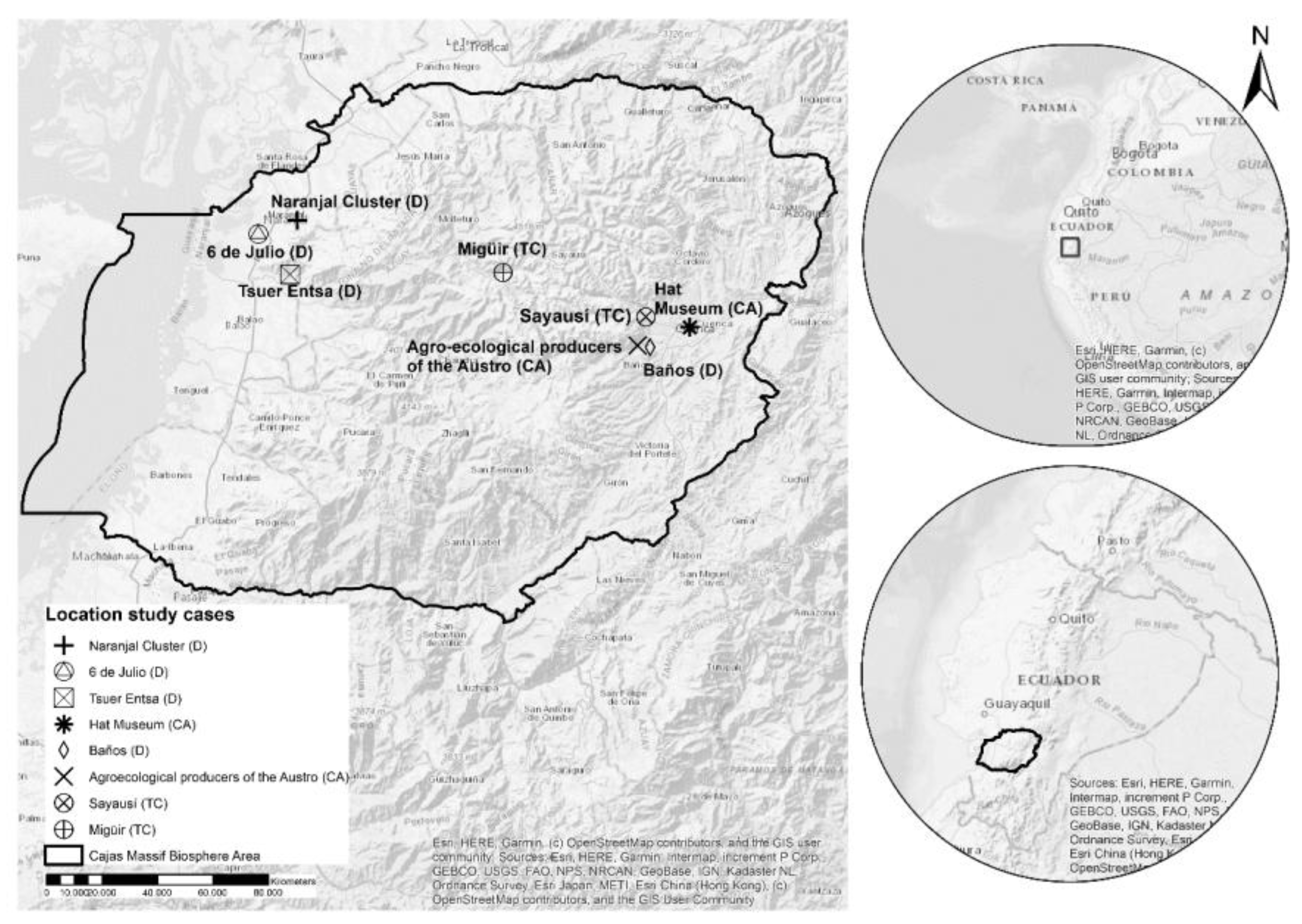
Figure 2.
Initial description based on median calculation (statements with a median of ≥ 6 or ≤ 2).

Table 1.
Stratified sample (n=825).
| Study Case | Population (Except Children) | Sample Size | Sample to Population Ratio |
|---|---|---|---|
| Baños (D) | 9266 | 101 | 12% |
| Sayausí (TC) | 4475 | 105 | 31% |
| Migüir (TC) | 160 | 100 | 98% |
| Agro-ecological producers of the Austro (CA) | 4071 | 100 | 28% |
| Tsuer Entsa (D) | 150 | 100 | 91% |
| Naranjal Cluster (D) | 560 | 110 | 60% |
| 6 de Julio (D) | 949 | 109 | 73% |
| Hat Museum (CA) | 4863 | 100 | 91% |
| Total | 24494 | 825 |
Table 2.
Description of the sample: demographic data.
| Demographic Attribute | Category | Percent of Total |
|---|---|---|
| Gender | Male | 43 |
| Female | 56.9 | |
| Not specified | 0.1 | |
| Work place | Inside the community | 80 |
| Outside the community | 20 | |
| Income dependence | Public sector | 24.1 |
| Private sector | 5 | |
| Own business/entrepreneurship | 58.2 | |
| No income | 12.1 | |
| No reply | 0.6 | |
| Link to tourism | Direct | 31.3 |
| Indirect | 68.7 | |
| Qualification | Primary school | 41.3 |
| Secondary school | 42.7 | |
| University | 10.1 | |
| Postgraduate | 0.8 | |
| No studies | 50.1 | |
| Gender | Min | 18 |
| Average | 38.7 | |
| Max | 83 |
Table 3.
Characteristics of the semi-structured interviews.
| Sector | Code | Interviewed | Gender | Age | Format | Length |
|---|---|---|---|---|---|---|
| Public sector | PS01 | Local government | Female | 39 | Virtual | 0:41:24 |
| PS02 | National government | Female | 58 | Virtual | 0:44:45 | |
| PS03 | Local government | Male | 51 | Virtual | 0:47:01 | |
| PS04 | Local government | Male | 35 | Virtual | 0:31:24 | |
| PS05 | Local government | Female | 46 | Virtual | 1:07:26 | |
| Private sector | BS01 | Businessman | Male | 54 | Face to face | 0:33:20 |
| BS02 | Businessman | Male | 48 | Face to face | 0:31:06 | |
| BS03 | Businessman | Female | 26 | Virtual | 0:36:09 | |
| BS04 | Businessman | Male | 32 | Virtual | 0:41:16 | |
| Local communities | LC01 | Local | Female | 31 | Face to face | 0:26:16 |
| LC02 | Local | Female | 24 | Face to face | 0:58:51 | |
| LC03 | Local | Female | 50 | Face to face | 1:14:49 | |
| LC04 | Local | Male | 38 | Face to face | 0:28:15 | |
| LC05 | Local | Male | 41 | Face to face | 0:27:46 | |
| LC06 | Local | Female | 34 | Face to face | 0:21:44 | |
| LC07 | Local | Male | 34 | Face to face | 0:20:12 | |
| LC08 | Local | Male | 71 | Face to face | 0:21:35 | |
| LC09 | Local | Male | 44 | Face to face | 0:26:55 | |
| LC10 | Local | Male | 45 | Face to face | 0:20:59 | |
| LC11 | Local | Female | 44 | Face to face | 0:25:29 | |
| LC12 | Local | Female | 31 | Face to face | 0:21:40 | |
| LC13 | Local | Male | 35 | Face to face | 0:45:41 | |
| LC14 | Local | Female | 30 | Face to face | 0:38:47 | |
| LC15 | Local | Male | 72 | Face to face | 0:25:32 | |
| LC16 | Local | Male | 61 | Face to face | 0:19:54 |
Table 4.
Attitudes towards tourism (PCA ordinate loadings ≥ 0.5 and ≤ -0.5).
| Variable | Dimension 1 | Dimension 2 | Dimension 3 | Dimension 4 | Dimension 5 |
|---|---|---|---|---|---|
| Improve trust (Q7) | 0.68 | ||||
| Help women (Q8) | 0.68 | ||||
| Help local prod. activities (Q6) | 0.67 | ||||
| Conflicts from tourism (Q2) | -0.54 | ||||
| Organised community (Q29) | 0.54 | ||||
| Employment/business tourism (Q4) | 0.51 | ||||
| Work in tourism (Q28) | 0.75 | ||||
| Active participation in tourism (Q1) | 0.73 | ||||
| Income from tourism (Q13) | 0.63 | ||||
| Quality of life (Q20) | 0.62 | ||||
| Insecurity (Q34) | 0.76 | ||||
| Trash (Q23) | 0.71 | ||||
| Water pollution (Q14) | 0.69 | ||||
| Prostitution/Alcohol/Drugs (Q25) | 0.63 | ||||
| Vehicular disorder (Q5) | 0.61 | ||||
| Cost of living increase (Q31) | 0.63 | ||||
| Tourism as a main activity (Q17) | 0.55 | ||||
| Cannot depend on tourism (Q9) | 0.59 | ||||
| Eigenvalues | 3.88 | 3.22 | 3.09 | 1.82 | 1.69 |
| VAR | 20.6% | 8.1% | 5.2% | 3.9% | 3.8% |
Disclaimer/Publisher’s Note: The statements, opinions and data contained in all publications are solely those of the individual author(s) and contributor(s) and not of MDPI and/or the editor(s). MDPI and/or the editor(s) disclaim responsibility for any injury to people or property resulting from any ideas, methods, instructions or products referred to in the content. |
© 2025 by the authors. Licensee MDPI, Basel, Switzerland. This article is an open access article distributed under the terms and conditions of the Creative Commons Attribution (CC BY) license (http://creativecommons.org/licenses/by/4.0/).
Copyright: This open access article is published under a Creative Commons CC BY 4.0 license, which permit the free download, distribution, and reuse, provided that the author and preprint are cited in any reuse.


