

Submitted:
27 February 2025
Posted:
27 February 2025
You are already at the latest version
Abstract
Mastitis is a major infectious disease that causes significant economic losses in the dairy industry. Current control programs primarily rely on antibiotics, contributing to the growing concerns of antibiotic resistance and drug residues in milk. This study aimed to identify the bacterial pathogens responsible for bovine mastitis, assess their antibiotic resistance profiles, and evaluate the antimicrobial effects of Caesalpinia sappan in treating mastitis through both in vitro and in vivo studies. A total of 138 bacterial isolates representing 40 species were identified from 100 milk samples collected from dairy cows raised under the Maejo Cooperative Group, Chiang Mai, Thailand, between May 2021 and February 2022. The most prevalent species was Escherichia coli (10.87%), followed by Bacillus cereus (9.42%) and Staphylococcus sciuri (7.97%). The highest resistance rates were observed for penicillin (63.04%), followed by streptomycin (60.87%) and lincomycin (57.25%). Nine isolates resisted all 18 antibiotics tested. The minimum inhibitory concentration (MIC) of Caesalpinia sappan against the identified pathogens ranged from 0.63 to 17.68 mg/ml, with the highest MIC observed against Pseudomonas luteola. In the animal experiment, treatment with a prototype of intramammary infusion derived from Caesalpinia sappan with and adding Aloe vera significantly reduced the total bacterial count and California Mastitis Test (CMT) scores (p < 0.01). These results suggest that Caesalpinia sappan exhibit antimicrobial efficacy against various mastitis bacteria and could serve as a potential alternative treatment for managing bovine mastitis in dairy cattle within the study region.
Keywords:
mastitis
; herbal extract
; Caesalpinia sappan
; Aloe vera
; treatment
; disease control
1. Introduction
Bovine mastitis, an inflammatory condition of the mammary gland and udder tissue, is one of the most significant economic concerns in the dairy industry [1]. This condition leads to increased treatment costs, discarded milk, reduced milk yield and quality, higher culling/replacement costs, and negative impacts animal welfare [2,3]. The disease can be classified according to clinical features (clinical vs subclinical) and etiology (non-infectious vs infectious). The infectious causes are most found; bacteria are the most prevalent related. Staphylococcus aureus, Streptococcus agalactiae, Streptococcus dysgalactiae, Streptococcus uberis, Klebsilla pneumoniae and Escherichia coli being the most frequently identified [4]. Intramammary administration of antibiotics is a well-established method for eliminating causative bacteria from infected quarters [5]. However, this approach is not always effective. The development of antibiotic resistance is a major cause of therapeutic failure, posing a significant challenge to disease control [6].
Due to this point, the exploration of therapeutic alternative does not cause resistance has been pushed to reduce the usage of antibiotics. Herbal medicine is one such promising avenue. Plant-derived compounds have the advantage of not inducing resistance, even after prolonged use [7]. Numerous plants have been demonstrated to possess antimicrobial properties. Study of Kimestri [8] stated that Caesalpinia sappan (Sappan wood) has demonstrated effectiveness against various pathogenic bacteria, including Escherichia coli, Shigella flexneri, Salmonella Typimurium, Staphylococcus aureus, and Listeria monocytogenes. These bacteria are known pathogens that can cause a range of infections in both animals and humans. Additionally, Aloe vera has been used for wound healing by increasing tissue formation and reducing inflammation [9]. Given the therapeutic properties of both herbs, they hold potential for use in mastitis treatment. The objectives of this study were to investigate the bacterial species associated with bovine mastitis, assess their antimicrobial resistance profiles, evaluate the in vitro activity of Caesalpinia sappan extracts against these pathogens, and develop of intramammary infusion of Caesalpinia sappan and Aloe vera-based extract compound as a prototype for mastitis treatment. Understanding the bacterial species involved, their resistance characteristics, and exploring new therapeutic alternatives could contribute to reducing the incidence of mastitis in dairy herds, particularly in specific geographical regions.
2. Materials and Methods
2.1. Sample Collection
This study focused on Holstein Friesian dairy cows raised under the Maejo cooperative group, located in Chiang Mai, Thailand. The cooperative includes several farms with a total of 978 milking cows, collectively producing 318,572.62 kg of milk/month, with an average milk yield of 10.85 kg/cow/day.
All procedures involving the experimental cows were conducted under ethical approval reference number MACUC014A/2563 from the Maejo University Animal Care and Use Committee. The study was conducted during the period from May 2021 to February 2022. A schematic diagram summarizing the entire workflow of the study was presented Figure 1. The udders of the cows were washed with clean water, wiped with a towel, and the teats were surface disinfected using a pre-dipping solution. After discarding the first stream of milk, the California Mastitis Test (CMT) was performed.
A total of 100 milk samples from 100 quarters (40-50 ml each) that exhibited CMT scores of 2 or 3 (Table 1, [10]) were included in the experiment. Each sample was collected in a sterile, separately packaged tube and transported in an icebox to the Bacteriology Laboratory Section, Faculty of Animal Science and Technology, Maejo University, for processing within 24 hours.
2.2. Microbial Identification and Susceptibility Testing
Genus and species identification were performed following the method described by Pașca, Mărghitaș, Dezmirean, Matei, Bonta, Pașca, Chirilă, Cîmpean and Fiț [3]. Briefly, milk samples were streaked onto MacConkey agar and Blood agar (Oxiod, United Kingdom). After incubation at 37°C for 24 hours, the plates were examined for colony morphology, pigmentation, and hemolytic characteristics. Distinct colonies from each plate were selected for Gram staining. Each colony was analyzed to determine the appropriate Analytical Profile Index (API) type (bioMérieux, Inc., USA). Rapid identification of clinically relevant species was performed by observing positive reactions in small tubes containing nutrient substrates, with results verified against established bacterial databases. All bacterial isolates identified were counted and documented for further analysis.
The bacterial isolates were then tested for susceptibility to a panel of 18 different antimicrobials using the agar disk diffusion method, following the guidelines of the European Committee on Antimicrobial Susceptibility Testing [11]. Antibiotics tested comprised Amoxicillin (AML) 10 µg, Amoxicillin-clavulanic acid (AMC) 20/10 µg, Cloxacillin (OB) 5 µg, Ceftiofur (EFT) 30 µg, Cephalexin (CL) 30μg, Enrofloxacin (ENR) 5 µg, Gentamicin (CN) 10 µg, Neomycin (N) 30 µg, Oxytetracycline (OT) 30 µg, Penicillin G (P) 10 µg, Streptomycin (S) 10 µg, Sulfamethoxazole (SXT) 25 µg, Amikacin (AK) 30 µg, Ceftriaxone (CRO) 30 µg, Ciprofloxacin (CIP) 10 µg, Lincomycin (MY) 15 µg, Cefotaxime (CTX) 30 µg and cephalothin (KF) 30 µg. The Escherichia coli ATCC® 25922 was used as a control. All isolates displaying intermediate resistance were classified as susceptible strains to prevent overestimation of resistance.
2.3. Testing the Bactericidal Activity of Herbal Preparations
The naturally grown Caesalpinia sappan (Sappan wood) was harvested, and its heartwood was selected and cleaned by removing impurities. The wood was washed thoroughly and then dried in a hot air oven at 60°C for 24 hours. After drying, it was cut into small pieces. The extraction was carried out using deionized water at a ratio of 1:10 (Sappan wood to deionized water). The mixture was then incubated in a water bath at a controlled temperature of 90°C for 1.5 hours. The resulting extract was further processed by spray drying and stored in an opaque container. Finally, the phenolic compound content was analyzed.
The agar microdilution method, modified from Golus, Sawicki, Widelski and Ginalska [12] , was used to test all bacterial isolates, following the guidelines of the Clinical and Laboratory Standards Institute [13]. Caesalpinia sappan extract was diluted in sterile distilled water using a two-fold serial dilution, resulting in final concentrations of 200, 100, 50, 25, 12.5, 6.25, 3.13, 1.56, 0.78, 0.4, and 0.2 mg/ml in 96-well microtiter plates. Each well contained an equal volume of 100 μl, including controls. Molten Mueller-Hinton agar (Oxiod, United Kingdom) with the volume of 50 μl/well, was added to the 96-well plates, and a 2 μl aliquot of bacterial suspension (equivalent to 10⁵ CFU/ml based on the McFarland standard) was inoculated into each well. The plates were then incubated at 37°C for 24 hours. Minimum inhibitory concentrations (MICs) were determined by visually assessing turbidity as an indicator of bacterial growth. Each test was performed in triplicate for each bacterial isolate to ensure accuracy.
2.4. Construction of the Phylogenetic Tree and Data Annotation
A total of 41 bacterial 16S rRNA gene sequences (40 from related field isolates and 1 reference sequence from Staphylococcus aureus 16S ribosomal RNA [16S rRNA] gene, GenBank accession: L37597.1) were retrieved from the NCBI database (https://www.ncbi.nlm.nih.gov) using their respective GenBank accession numbers. The sequences were aligned using a standard multiple sequence alignment tool to ensure accurate comparison of conserved regions. A phylogenetic tree was constructed using the FastME algorithm, a reliable distance-based method for generating phylogenies. Minimum inhibitory concentration (MIC) values were annotated onto the tree using the Interactive Tree of Life (iTOL) platform (https://itol.embl.de/) [14]. This annotation facilitated the visualization of relationships between bacterial taxa and their corresponding MIC values, providing insights into the antimicrobial activity of the tested extract across phylogenetically diverse organisms.
2.5. Animal Experiment
The prototype herbal intramammary infusion product was formulated as a therapeutic treatment for mastitis in dairy cows. Its active ingredients include Caesalpinia sappan extract at the minimum inhibitory concentration effective against all tested bacterial species, combined with 40% Aloe vera extract. The Aloe vera extract was obtained from Thai-China Flavors and Fragrances Industry Co., Ltd. The prototype product was tested on 14 individual quarters that exhibited CMT scores of 3. The sample size was calculated using G*Power (Effect size = 0.85, α err prob = 0.05, Power (1-β err prob) = 0.8). The 14 selected quarters were intramammarily infused with 10 ml of the product once daily for 3 consecutive days. Milk samples were aseptically collected before treatment and 24 hours after the final treatment to assess the total bacterial count and CMT score.
2.6. Statistical Analysis
Statistical analysis was performed using R Studio®. Descriptive statistics were used to calculate the frequency of bacterial species identified and the geometric mean of the MIC for the Caesalpinia sappan extract. In the animal experiment, the log₁₀ total bacterial count and California Mastitis Test (CMT) scores in milk were analyzed using the paired sample T-test and Wilcoxon signed-rank test, respectively.
3. Results
A total of 100 milk samples were analyzed, resulting in 138 bacterial isolates representing 40 different species of spontaneous mastitis pathogens. The distribution of bacterial species per sample was as follows: no bacterial species were detected in 1 sample, a single bacterial species was identified in 62 samples, two bacterial species were identified in 32 samples, and three bacterial species were identified in 4 samples. Among the isolates, bacteria from the genera Staphylococcus and Streptococcus were predominant. However, the most prevalent species was Escherichia coli (E. coli), accounting for 15 isolates (10.87%), followed by Bacillus cereus (13 isolates; 9.42%), Staphylococcus sciuri (11 isolates; 7.97%), Staphylococcus simulans (9 isolates; 6.52%), and Staphylococcus hominis (9 isolates; 6.52%) (Figure 2).
Antimicrobial susceptibility testing revealed that most bacterial isolates exhibited multidrug resistant, with 113 out of 138 isolates resisted against at least three antimicrobial agents tested. The Distribution of them and the others was demonstrated in Figure 3. Overall, resistance was highest to penicillin (87 isolates; 63.04%), followed by streptomycin (84 isolates; 60.87%) and lincomycin (79 isolates; 57.25%), respectively. In contrast, the lowest prevalence of resistance was observed for ciprofloxacin (28 isolates; 20.29%), followed by enrofloxacin (31 isolates; 22.46%). Notably, approximately half of the bacterial isolates tested exhibited resistance to antimicrobials in the cephalosporin group (Figure 4). A total of 114 distinct resistance patterns were identified. Notably, the most prevalent pattern was “pan-drug resistance”, the resistance against all 18 antibiotics tested (AK-AMC-AML-CTX-OB-S-P-MY-CN-N-KF-EFT-CL-CRO-SXT-CIP-OT-ENR), which was detected in nine isolates (6.52%), including of 3 isolates of Bacillus cereus, 2 isolates of Escherichia coli, and each isolate of Bacillus mycoides, Brevibacillus laterosporus, Corynebacterium pseudodiphtheriticum and Klebsiella pneumoniae.
Composition analysis revealed that Caesalpinia sappan crude extract contained 0.61% phenolic compounds, MIC against all bacterial isolates were then tested. A phylogenetic tree based on 16S rRNA sequences obtained from the NCBI taxonomy database, incorporating minimum inhibitory concentration (MIC) data, was constructed using the Interactive Tree of Life (iTOL) platform. The Staphylococcus aureus strain MRSA (16S ribosomal RNA gene, partial sequence; GenBank accession: OR527118.1) served as the reference strain. Taxa belonging to the same genus are represented by the same color on the trees. The overall average MIC values of Caesalpinia sappan extract against various isolated mastitis-causing bacterial species ranged from 0.63 to 17.68 mg/mL, with individual MIC values ranging from 0.4 to 25 mg/mL. The highest average MIC value was observed in Pseudomonas luteola (17.68 mg/mL), followed by Klebsiella pneumoniae (14.03 mg/mL) and Streptococcus agalactiae (12.5 mg/mL). In contrast, the lowest MIC values were recorded for Pseudomonas oryzihabitans (0.63 mg/ml), Pseudomonas fluorescens (0.79 mg/ml), and Staphylococcus hyicus (0.79 mg/ml). In general, the MIC value ranges and the arrangement of bacterial species on the phylogenetic tree appeared to be unrelated, except for genus of Staphylococcus and Bacillus, the MIC values were predominantly lower than 5 mg/ml (Figure 5).
In the animal experiment, 14 selected quarters were targeted. A concentration of 25 mg/mL (2.5%) of Caesalpinia sappan extract was used. Treatment with the prototype pharmaceutical intramammary infusion for three consecutive days significantly reduced the mean total bacterial count from 106.9 to 102.7 CFU/mL (P < 0.01) and decreased the milk California Mastitis Test (CMT) score by two levels (Table 2).
4. Discussion
This study targeted dairy cows raised under a single cooperative group. The average milk yield across all member farms was approximately 11 kg/cow/day, which was quite lower than the national average daily milk yield in Thailand, reported to be 12.17 kg/cow/day [15]. Some subclinical issues appear to be present in the selected herds, with mastitis inferred as a major factor contributing to reduced milk production and potentially impacting economic returns [16,17].
Out of 100 CMT-positive milk samples tested in the study, only one sample did not yield detectable bacteria. Based on a principle of the CMT, it relies on the test reagent reacting with DNA and white blood cells in milk to form a gel [18]. However, elevated somatic cell counts in milk, potentially arising from physiological changes such as acute dry-off periods, late lactation, stress, or systemic illnesses affecting the animal, may result in false-positive [19,20]. On the other hand, more than one-third of all samples yielded 2–3 bacterial species. Predictably, this is often observed in natural infections. Under the circumstances, multiple infections increase the likelihood of antimicrobial resistance, reduce the effectiveness of single-antibiotic treatments, and promote the long-term survival of pathogens [21].
Infections caused by Staphylococcus aureus and Streptococcus agalactiae, known pathogens of contagious mastitis [22,23], accounted for approximately 6.5% of all species detected in our study. While considered rare, these pathogens cannot be overlooked, as they can persist and proliferate within the mammary gland, facilitating transmission from infected to uninfected quarters and between cows during the milking process [24]. Preventing contagious mastitis requires strict adherence to proper sanitation practices, such as using individual towels for each cow and implementing post-milking dipping to minimize the transmission risk [25]. Nonetheless, more than four-fifths of the bacterial species detected in this study were identified as causative agents of environmental mastitis, with Escherichia coli being the most prevalent. Other species, including various Staphylococcus and Streptococcus species, as well as many additional bacterial species, are also classified in this group. These pathogens are often associated with cows frequently lying on grass plots or in environments with inadequate sanitation. Since most environmental mastitis pathogens are part of the normal fecal flora of dairy cows, providing cows with clean and dry resting areas is crucial to preventing the introduction of these pathogens into their udders. Additionally, the use of sanitized equipment and proper pre-milking dipping practices can significantly reduce the risk of pathogen transmission [26].
Monitoring antimicrobial resistance in bacteria causing mastitis holds significant clinical and public health importance, as antimicrobial therapy is commonly employed for the prevention and control of mastitis. Unfortunately, despite the use of optimal antimicrobial treatments, failures in achieving bacteriological cures are frequent, and improperly processed milk contaminated with drug-resistant pathogens can serve as a carrier posing a risk to human health [5,27,28]. In our study, the highest levels of resistance were observed against penicillin, followed by streptomycin and lincomycin, respectively. Penicillin and streptomycin are broad-spectrum agents commonly used for the treatment and prevention of diseases caused by a variety of Gram-positive and Gram-negative bacteria [5]. Both antibiotics are considered first-line options, even in the absence of bacterial culture results or drug susceptibility data. These findings highlight the urgent need to implement strategies that encourage the prudent and responsible use of antimicrobials [28]. Although lincomycin is not widely used in the study region or in Thailand, resistance to this drug was found in various bacterial species. Indicating that no clear pattern or trend can be identified to explain the cause of drug resistance. This presents an opportunity for further research to gain a deeper understanding of the underlying factors. Interestingly, the use of high-generation antibiotics, such as third-generation cephalosporins like cefotaxime and ceftiofur, raises further alarms. These antibiotics are classified as critically important by the World Health Organization and are strictly regulated for use in food-producing animals due to the risk of transmitting resistant bacteria to humans and the potential failure of therapeutic treatments [27]. Therefore, it also confirms that the rational and appropriate use of antibiotics, coupled with stringent control measures, is essential to mitigate these risks [28]. Fluoroquinolones were the most effective antimicrobial agents against spontaneous mastitis-infected bacteria in our study, with resistance rates to ciprofloxacin and enrofloxacin found to be 20% and 22%, respectively. These findings support the beneficial effects of fluoroquinolones in treating mastitis, particularly when caused by Gram-negative bacteria [29]. Therefore, identifying the type of pathogen before initiating treatment is considered crucial.
Most of the bacterial isolates identified in this study were multidrug-resistant, eight of them were classified as pan drug resistant, which exhibited resistance to all antimicrobials tested. This underscores the escalating severity of these pathogens. Multidrug-resistant pathogens are highly prevalent among mastitis cases in dairy farms worldwide [22,25,30]. Transferring resistance genes to other pathogenic and non-pathogenic microorganisms within farm environments as well as between hosts, can occur readily [31], and numerous studies have demonstrated a close correlation between the development of multidrug-resistant bacteria in animals and those found in human patients [5,6,27,32].
The average MIC values of Caesalpinia sappan crude extract against all bacterial isolates ranged from 0.63 to 17.68 mg/ml, with four-fifths of the detected species showing MIC values of 5 mg/ml or lower. This suggests that Caesalpinia sappan possesses the ability to inhibit various multidrug-resistant bacterial strains associated with field mastitis. Srinivasan et al. [33] reported that phenolic components, such as dibenzoxocins, flavones, homoisoflavonoids, chalcones, xanthones, and brazilin, exhibit antimicrobial, anti-inflammatory, and antioxidant properties by disrupting bacterial cell walls and inducing cell death. However, in our study, MIC values exceeding 10 mg/ml were observed in three bacterial species: Pseudomonas luteola, Klebsiella pneumoniae, and Streptococcus agalactiae, reflecting relatively lower efficacy against these strains. Interestingly, A study by Nirmal and Panichayupakaranant [34] reported that brazilin-rich Caesalpinia sappan extracts exhibited high efficacy against similar bacteria, with MIC values ranging from 15.6 to 1000 µg/ml, which were notably lower compared to our findings. In detail, brazilin is a major bioactive compound in the extract, plays a key role by binding to and inhibiting pro-inflammatory cytokines and enhancing macrophage cell production [35]. Therefore, the extraction methods, active ingredient concentration, sources of the plants, as well as various strain-specific traits or intrinsic factors related to the microorganisms, are likely to contribute to these differences [36,37]. This is an opportunity for further research to better understand the extract's therapeutic potential. In the phylogenetic tree analysis, the genera Staphylococcus and Bacillus predominantly exhibited MIC values below 5 mg/ml. However, aside from that, species grouped in nearby phylogenetic positions did not demonstrate consistent MIC values. It is important to acknowledge the limitations of this study, as it does not universally represent all bacterial strains. Expanding the dataset to include additional field strains would improve the robustness and generalizability of the findings, providing more comprehensive knowledge.
As part of the development of an intramammary infusion pharmaceutical prototype, Aloe vera extract was selected for combination with Caesalpinia sappan due to its therapeutic effects on suppressing inflammatory mediators and enhancing tissue formation [38]. The results of the animal experiment met expectations. The prototype significantly reduced bacterial counts and lowered the milk CMT score, suggesting that the combination of these two herbal extracts exhibits antimicrobial efficacy against mastitis bacteria. This approach holds promise as an alternative treatment for managing mastitis in dairy cattle. Additionally, it supports sustainable dairy farming practices by improving operational efficiency and offering safer, less toxic therapeutic options with minimal risk of drug residues.
5. Conclusions
Mastitis remains one of the most common diseases in dairy cows and is a leading cause of antibiotic use on dairy farms. Recently, there has been growing interest in alternative approaches. Our study demonstrates that Caesalpinia sappan exhibits therapeutic potential due to its antimicrobial properties against various antimicrobial-resistant mastitis-causing pathogens, as evidenced by both in vitro and in vivo studies. However, the success of on-field mastitis treatment depends on multiple factors, including improving farm sanitation, enhancing milking hygiene, implementing pre- and post-milking teat dipping, and maintaining milking machines. Moreover, an effective mastitis control program should emphasize prevention over treatment. Early detection of new cases is essential to reduce costs, minimize production losses, and improve cure rates.
Author Contributions
Conceptualization: P.T. (Phacharaporn Tadee); Data curation: P.T. (Phacharaporn Tadee) and P.K.; Formal analysis: P.T. (Phacharaporn Tadee) and P.T. (Pakpoom Tadee); Funding acquisition: P.T. (Phacharaporn Tadee); Investigation: P.T. (Phacharaporn Tadee), W.P., A.M., D.A., S.C., P.T. (Pramote Tipduangta), K.C. and P.T. (Pakpoom Tadee); Methodology: P.T. (Phacharaporn Tadee), P.K. and K.C.; Project administration: P.T. (Phacharaporn Tadee); Resources: W.P., A.M., D.A., S.C., P.T. (Pramote Tipduangta) and K.C.; Software: P.T. (Phacharaporn Tadee); Supervision: P.T. (Phacharaporn Tadee); Validation: P.T. (Phacharaporn Tadee) and P.T. (Pakpoom Tadee); Visualization: P.T. (Phacharaporn Tadee) and P.T. (Pakpoom Tadee); Writing – original draft: P.T. (Phacharaporn Tadee), K.C. and P.T. (Pakpoom Tadee); Writing – review and editing: P.T. (Phacharaporn Tadee) and P.T. (Pakpoom Tadee); All authors have read and agreed to the published version of the manuscript.
Funding
This research was financially supported by Maejo university research fund, Fundamental Fund (Project ID: MJU1-64-018).
Ethics Approval and Consent to Participate
The animal study protocol was approved by the Maejo University Animal Care and Use Committee under protocol reference number MACUC014A/2563, with the approval date of 23 April 2020.
Consent for Publication
All authors approved the final article.
Availability of Data and Materials
The datasets used and/or analyzed during the current study are available from the corresponding author on reasonable request.
Acknowledgments
We would like to thank the technicians who helped with sample collection and processing, as well as staff from the dairy farms and the Maejo cooperative group for their generous co-operation. Finally, we would like to express our thanks to Faculty of Animal Science and Technology and Center of Excellence in Agricultural Innovation for Graduate Entrepreneur, Maejo University for their significant contributions.
Declaration of Competing Interest
The authors have no conflicts of interest in reporting.
References
- Kossaibati, M.; Esslemont, R. The costs of production diseases in dairy herds in England. The Vet. J. 1997, 154, 41–51. [Google Scholar] [CrossRef] [PubMed]
- Bradley, A. J. Bovine mastitis: an evolving disease. Vet. J. 2002, 164, 116–128. [Google Scholar] [CrossRef] [PubMed]
- Pașca, C.; Mărghitaș, L. A.; Dezmirean, D. S.; Matei, I. A.; Bonta, V.; Pașca, I.; Chirilă, F.; Cîmpean, A.; Fiț, N. I. Efficacy of natural formulations in bovine mastitis pathology: alternative solution to antibiotic treatment. J. Vet. Res. 2020, 64, 523–529. [Google Scholar] [CrossRef] [PubMed]
- Dufour, S.; Labrie, J.; Jacques, M. The mastitis pathogens culture collection. Microbiol. Res. Announc. 2019, 8. [Google Scholar] [CrossRef]
- Oliver, S. P.; Murinda, S. E. Antimicrobial resistance of mastitis pathogens. Vet. Clin. Food. Anim. Pract. 2012, 28, 165–185. [Google Scholar] [CrossRef]
- Molla, B.; Miko, A.; Pries, K.; Hildebrandt, G.; Kleer, J.; Schroeter, A.; Helmuth, R. Class 1 integrons and resistance gene cassettes among multidrug resistant Salmonella serovars isolated from slaughter animals and foods of animal origin in Ethiopia. Acta. tropica. 2007, 103, 142–149. [Google Scholar] [CrossRef]
- Cheng, W. N.; Han, S. G. Bovine mastitis: Risk factors, therapeutic strategies, and alternative treatments—A review. Asian-Australas J. Anim.Sci. 2020, 33, 1699. [Google Scholar] [CrossRef]
- Kimestri, A. Microbiological and physicochemical quality of pasteurized milk supplemented with sappan wood extract (Caesalpinia sappan L.). Int Food Res J. 2018, 25. [Google Scholar]
- Teplicki, E.; Ma, Q.; Castillo, D. E.; Zarei, M.; Hustad, A. P.; Chen, J.; Li, J. The Effects of Aloe vera on Wound Healing in Cell Proliferation, Migration, and Viability. Wound 2018, 30, 263–268. [Google Scholar]
- Philpot, W. N.; Nickerson, S. C. Mastitis: counter attack. Babson Bros. Co., 1992. [Google Scholar]
- European Committee on Antimicrobial Susceptibility Testing. Calibration of zone diameter breakpoints against MIC 2021. Available online: https://www.eucast.org/ast_of_bacteria/calibration_and_validation/ (accessed on 20 October 2021).
- Golus, J.; Sawicki, R.; Widelski, J.; Ginalska, G. The agar microdilution method–a new method for antimicrobial susceptibility testing for essential oils and plant extracts. J. Appl. Microbiol. 2016, 121, 1291–1299. [Google Scholar] [CrossRef]
- Clinical & Laboratiry Standards Institute: CLSI Guidelines. Methods for dilution antimicrobial susceptibility tests for bacteria that grow aerobically; Wayne, 2015.
- Letunic, I.; Bork, P. Interactive Tree Of Life (iTOL) v5: an online tool for phylogenetic tree display and annotation. Nucleic acids research 2021, 49, W293–W296. [Google Scholar] [CrossRef]
- Aiumlamai, S. Dairy management, health and production in Thailand. Int. Dairy. Top. 2009, 8, 11–13. [Google Scholar]
- Gonçalves, J.; Kamphuis, C.; Martins, C.; Barreiro, J.; Tomazi, T.; Gameiro, A. H.; Hogeveen, H.; Dos Santos, M. Bovine subclinical mastitis reduces milk yield and economic return. Livest Sci. 2018, 210, 25–32. [Google Scholar] [CrossRef]
- Prasomsri, P. Effect of lameness on daily milk yield in dairy cow. Thai J. Vet. Med. 2022, 52, 679–687. [Google Scholar] [CrossRef]
- Dingwell, R. T.; Leslie, K. E.; Schukken, Y. H.; Sargeant, J. M.; Timms, L. L. Evaluation of the California mastitis test to detect an intramammary infection with a major pathogen in early lactation dairy cows. Can Vet J. 2003, 44, 413. [Google Scholar]
- Kala, S. R.; Rani, N. L.; Rao, V. V.; Subramanyam, K. V. Comparison of different diagnostic tests for the detection of subclinical mastitis in buffaloes. Buffalo. Bull. 2021, 40, 653–659. [Google Scholar]
- Ramuada, M.; Tyasi, T. L.; Gumede, L.; Chitura, T. A practical guide to diagnosing bovine mastitis: a review. Front. Anim. Sci. 2024, 5, 1504873. [Google Scholar] [CrossRef]
- Rifatbegović, M.; Nicholas, R. A.; Mutevelić, T.; Hadžiomerović, M.; Maksimović, Z. Pathogens Associated with Bovine Mastitis: The Experience of Bosnia and Herzegovina. Vet Sci. 2024, 11, 63. [Google Scholar] [CrossRef]
- Abebe, R.; Hatiya, H.; Abera, M.; Megersa, B.; Asmare, K. Bovine mastitis: prevalence, risk factors and isolation of Staphylococcus aureus in dairy herds at Hawassa milk shed, South Ethiopia. BMC Vet. Res. 2016, 12, 1–11. [Google Scholar] [CrossRef]
- Jayarao, B. M.; Wolfgang, D. R. Bulk-tank milk analysis: A useful tool for improving milk quality and herd udder health. Vet. Clin. Food. Anim. Pract. 2003, 19, 75–92. [Google Scholar] [CrossRef]
- Zigo, F.; Vasil', M.; Ondrašovičová, S.; Výrostková, J.; Bujok, J.; Pecka-Kielb, E. Maintaining optimal mammary gland health and prevention of mastitis. Front. Vet. Sci. 2021, 8, 607311. [Google Scholar] [CrossRef]
- Saed, H. A. E.-M. R.; Ibrahim, H. M. M. Antimicrobial profile of multidrug-resistant Streptococcus spp. isolated from dairy cows with clinical mastitis. J. Adv. Ve.t Anim. Res. 2020, 7, 186. [Google Scholar] [CrossRef] [PubMed]
- Klaas, I.; Zadoks, R. An update on environmental mastitis: Challenging perceptions. Transbound. Emerg. Dis. 2018, 65, 166–185. [Google Scholar] [CrossRef] [PubMed]
- Angulo, F. J.; Collignon, P.; Powers, J. H.; Chiller, T. M.; Aidara-Kane, A.; Aarestrup, F. M. World Health Organization ranking of antimicrobials according to their importance in human medicine: a critical step for developing risk management strategies for the use of antimicrobials in food production animals. Clin. Infect. Dis. 2009, 49, 132–141. [Google Scholar]
- Thomas, V.; de Jong, A.; Moyaert, H.; Simjee, S.; El Garch, F.; Morrissey, I.; Marion, H.; Vallé, M. Antimicrobial susceptibility monitoring of mastitis pathogens isolated from acute cases of clinical mastitis in dairy cows across Europe: VetPath results. Int. J. Antimicrob. Agents. 2015, 46, 13–20. [Google Scholar] [CrossRef]
- Timonen, A.; Sammul, M.; Taponen, S.; Kaart, T.; Mõtus, K.; Kalmus, P. Antimicrobial selection for the treatment of clinical mastitis and the efficacy of penicillin treatment protocols in large Estonian dairy herds. Antibiotics 2021, 11, 44. [Google Scholar] [CrossRef]
- Cheng, J.; Qu, W.; Barkema, H. W.; Nobrega, D. B.; Gao, J.; Liu, G.; De Buck, J.; Kastelic, J. P.; Sun, H.; Han, B. Antimicrobial resistance profiles of 5 common bovine mastitis pathogens in large Chinese dairy herds. J. dairy. sci. 2019, 102, 2416–2426. [Google Scholar] [CrossRef]
- Aarestrup, F. M. The livestock reservoir for antimicrobial resistance: a personal view on changing patterns of risks, effects of interventions and the way forward. Philos. Trans. R. Soc. B Biol. Sci. 2015, 370, 20140085. [Google Scholar] [CrossRef]
- Argudín, M. A.; Deplano, A.; Meghraoui, A.; Dodémont, M.; Heinrichs, A.; Denis, O.; Nonhoff, C.; Roisin, S. Bacteria from animals as a pool of antimicrobial resistance genes. Antibiotics 2017, 6, 12. [Google Scholar] [CrossRef]
- Srinivasan, R.; Karthik, S.; Mathivanan, K.; Baskaran, R.; Karthikeyan, M.; Gopi, M.; Govindasamy, C. In vitro antimicrobial activity of Caesalpinia sappan L. Asian. Pac. J. Trop. Biomed. 2012, 2, S136–S139. [Google Scholar] [CrossRef]
- Nirmal, N. P.; Panichayupakaranant, P. Antioxidant, antibacterial, and anti-inflammatory activities of standardized brazilin-rich Caesalpinia sappan extract. Pharm. Biol. 2015, 53, 1339–1343. [Google Scholar] [CrossRef] [PubMed]
- Pattananandecha, T.; Apichai, S.; Julsrigival, J.; Ogata, F.; Kawasaki, N.; Saenjum, C. Antibacterial activity against foodborne pathogens and inhibitory effect on anti-inflammatory mediators’ production of Brazilin-enriched extract from Caesalpinia sappan Linn. Plants 2022, 11, 1698. [Google Scholar] [CrossRef] [PubMed]
- Martinez, J.; Baquero, F. Mutation frequencies and antibiotic resistance. Antimicrob. Agents. Chemother. 2000, 44, 1771–1777. [Google Scholar] [CrossRef] [PubMed]
- Normark, B. H.; Normark, S. Evolution and spread of antibiotic resistance. J. Intern. Med. 2002, 252, 91–106. [Google Scholar] [CrossRef]
- Sarkar, D.; Dutta, A.; Das, M.; Sarkar, K.; Mandal, C.; Chatterjee, M. Effect of Aloe vera on nitric oxide production by macrophages during inflammation. Indian J Pharmacol. 2005, 37, 371–375. [Google Scholar]
Figure 1.
A schematic diagram summarizing the entire workflow of the study.
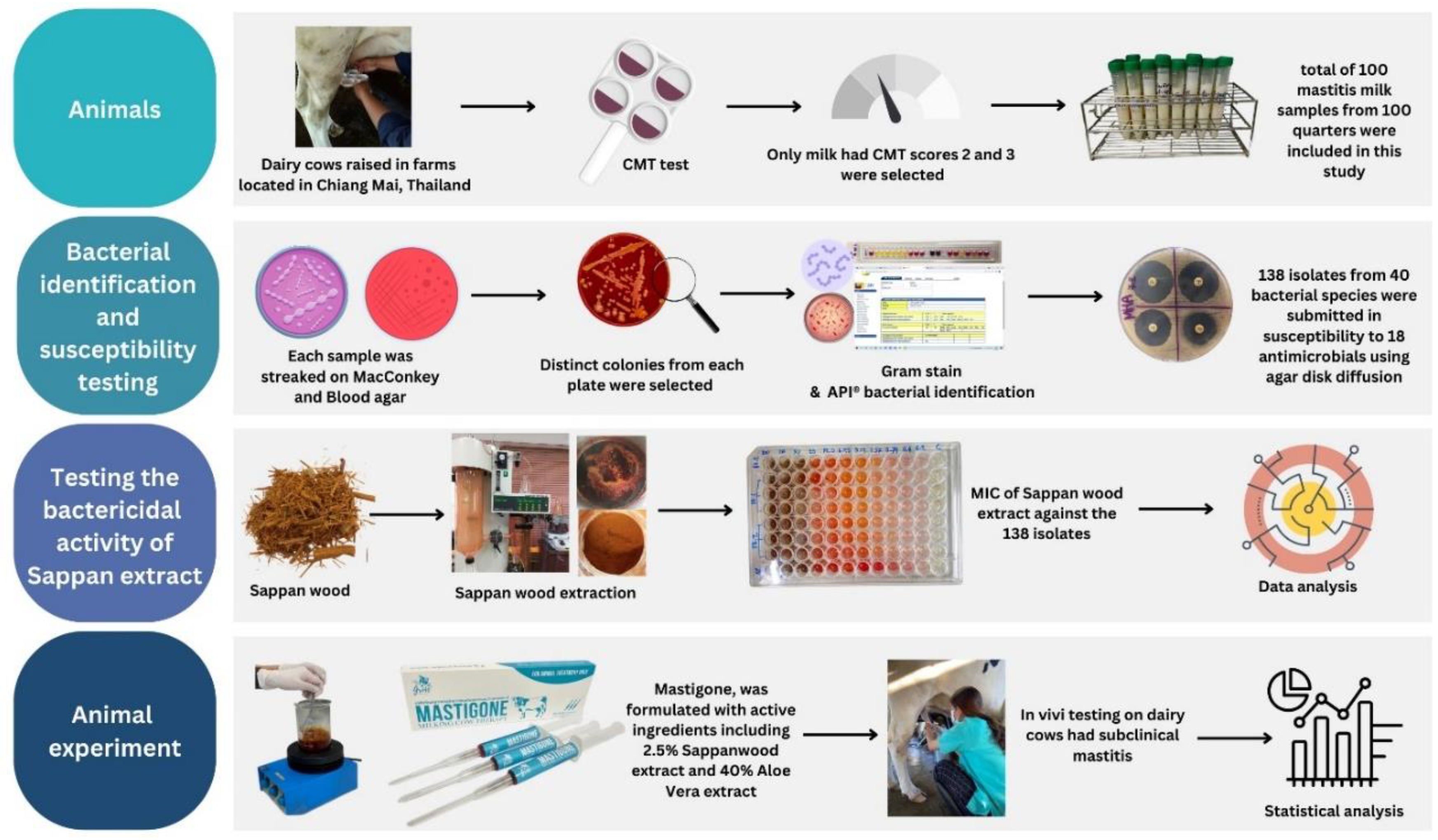
Figure 2.
The distribution of bacterial species isolated from subclinical mastitis milk in the study.
Figure 2.
The distribution of bacterial species isolated from subclinical mastitis milk in the study.
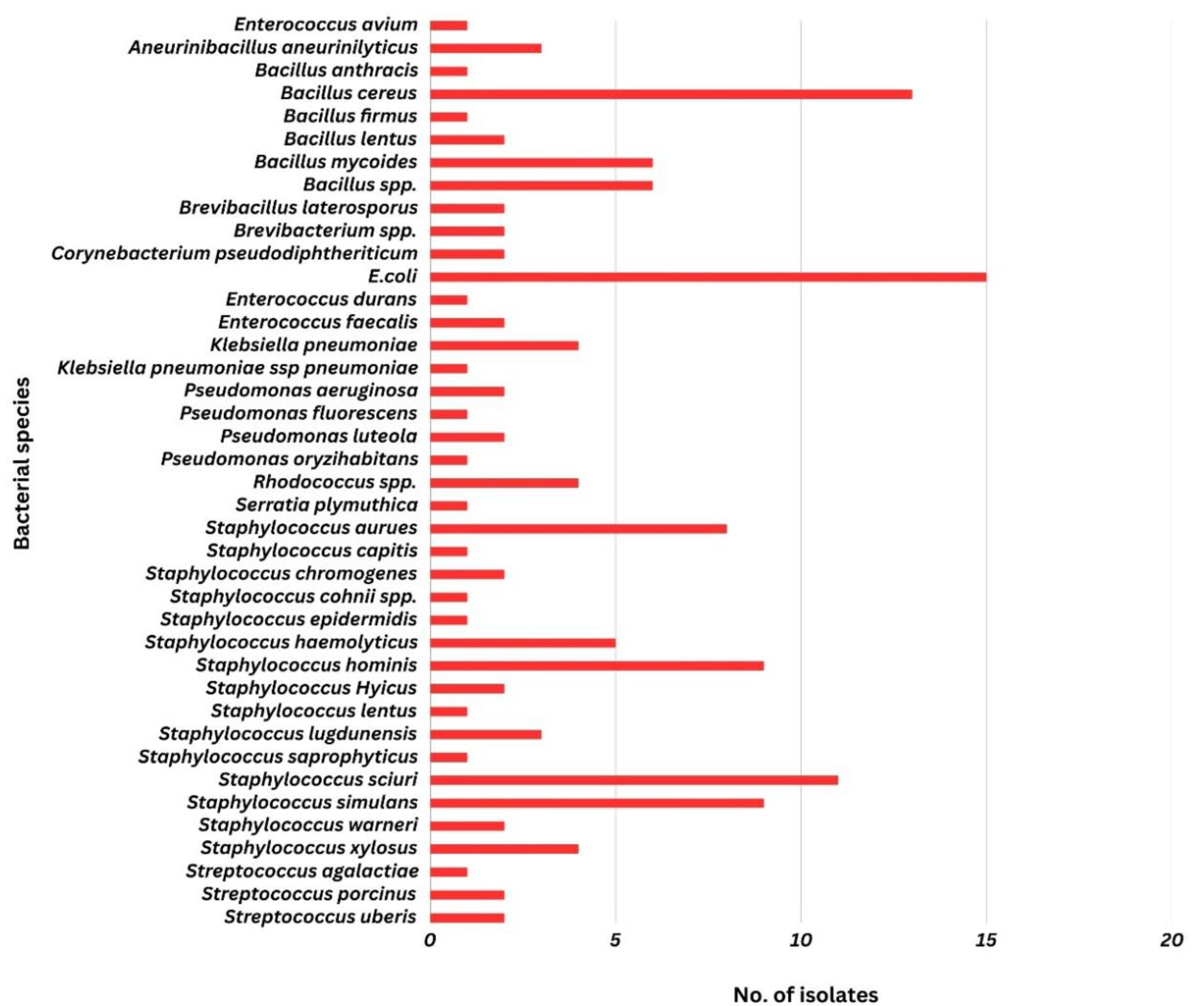
Figure 3.
The distribution of the number of antimicrobial agents to which the bacterial isolates resisted in this study.
Figure 3.
The distribution of the number of antimicrobial agents to which the bacterial isolates resisted in this study.
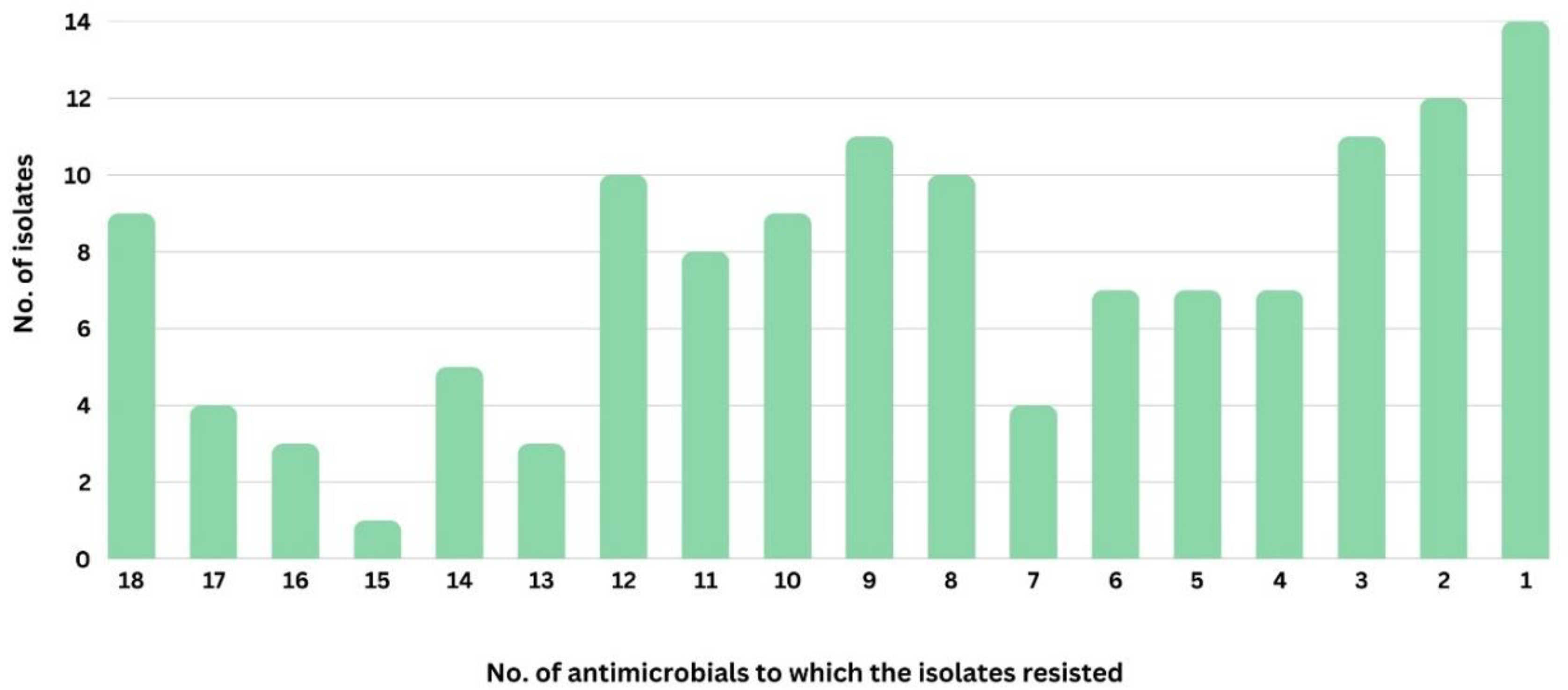
Figure 4.
Resistance rates against 18 antimicrobials of 138 bacterial isolates originated from subclinical mastitis milk in the study. Note: abbreviation of the antimicrobials tested: Amikacin (AK), Amoxicillin-clavulanic acid (AMC), Amoxicillin (AML), Cefotaxime (CTX) , Cloxacillin (OB), Streptomycin (S), Penicillin G (P), Lincomycin (MY), Gentamicin (CN), Neomycin (N), cephalothin (KF), Ceftiofur (EFT), Cephalexin (CL), Ceftriaxone (CRO), Sulfamethoxazole (SXT), Ciprofloxacin (CIP), Oxytetracycline (OT) and Enrofloxacin (ENR).
Figure 4.
Resistance rates against 18 antimicrobials of 138 bacterial isolates originated from subclinical mastitis milk in the study. Note: abbreviation of the antimicrobials tested: Amikacin (AK), Amoxicillin-clavulanic acid (AMC), Amoxicillin (AML), Cefotaxime (CTX) , Cloxacillin (OB), Streptomycin (S), Penicillin G (P), Lincomycin (MY), Gentamicin (CN), Neomycin (N), cephalothin (KF), Ceftiofur (EFT), Cephalexin (CL), Ceftriaxone (CRO), Sulfamethoxazole (SXT), Ciprofloxacin (CIP), Oxytetracycline (OT) and Enrofloxacin (ENR).
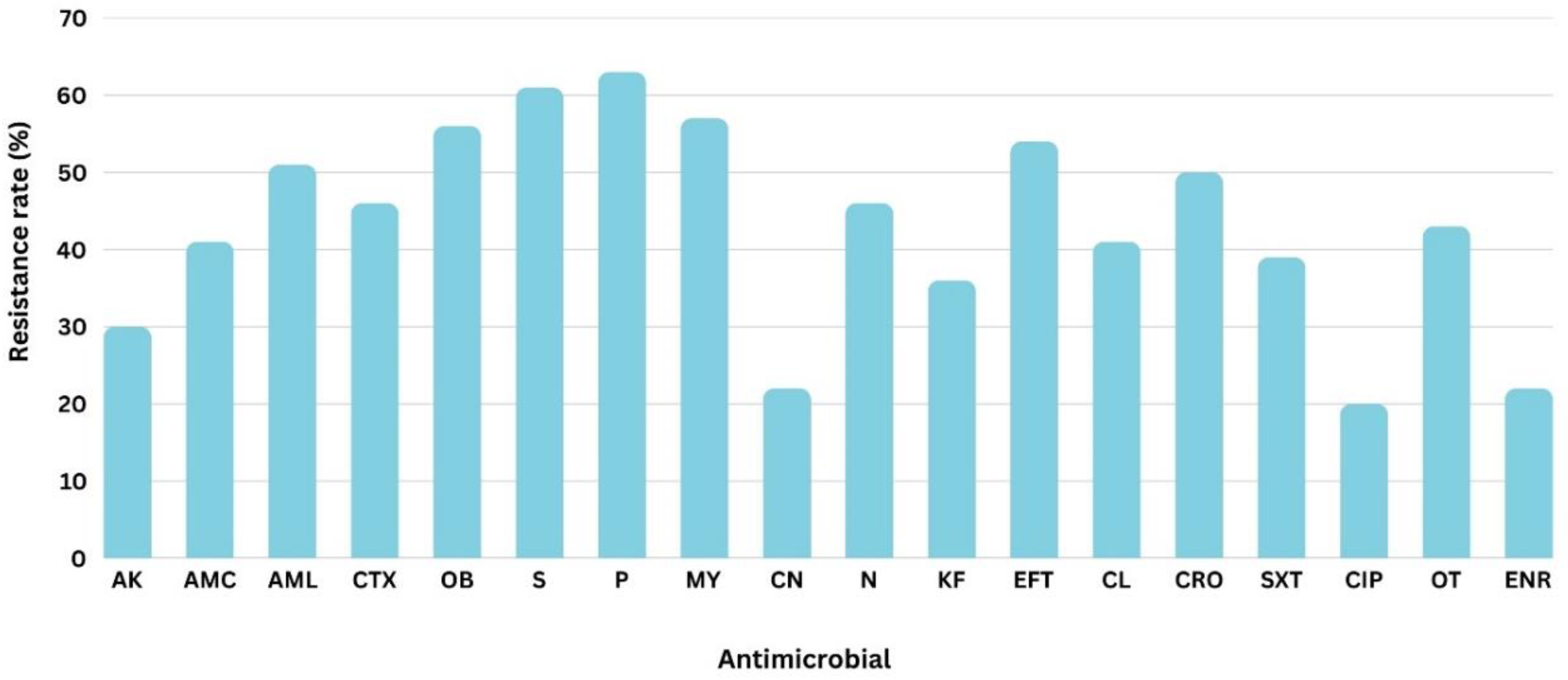
Figure 5.
Phylogenetic trees of mastitis-causing bacteria at a species level generated using 16S rRNA gene with MIC data against Caesalpinia sappan extract. Note: the similar background color in which label represents the similar genus members
Figure 5.
Phylogenetic trees of mastitis-causing bacteria at a species level generated using 16S rRNA gene with MIC data against Caesalpinia sappan extract. Note: the similar background color in which label represents the similar genus members
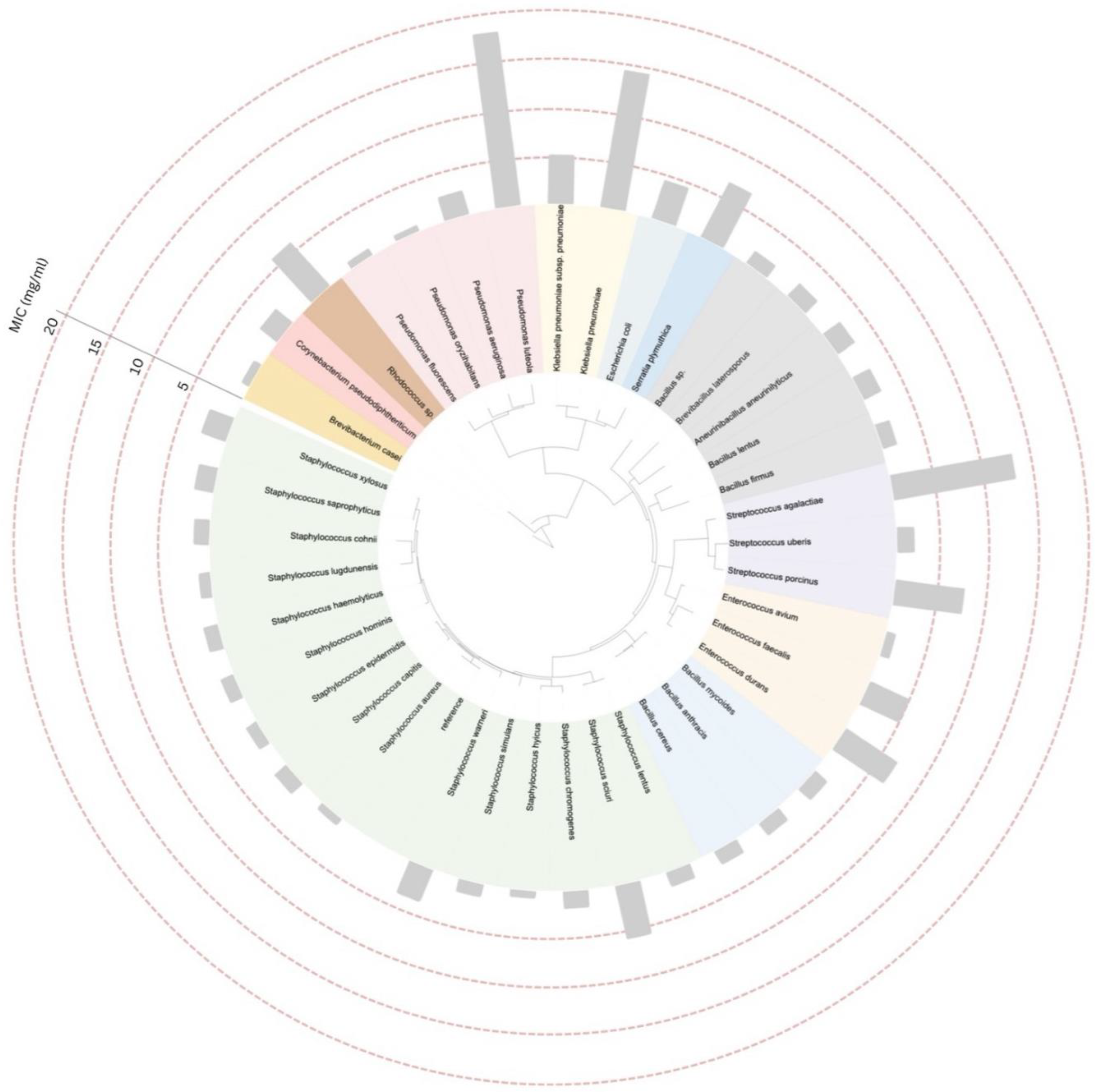

Table 1.
CMT score levels for subclinical-clinical mastitis evaluation.
| Milk Quality | Reaction | Characteristics of Reaction |
|---|---|---|
| Normal, Very Good | 0 | Homogeneous mixture, moves quickly, pale purple color |
| Normal, Good | T | Mixture becomes mucous like, forms a thread and then disappears, moves quickly, pale purple color |
| Normal, Fair | 1 | Mixture is viscous and mucous like, remains slightly, moves slower, and the purple color intensifies |
| Subclinical mastitis | 2 | Mixture is viscous and mucous like, remains significant, moves very slowly, and the purple color intensifies, visually appears normal |
| Clinical mastitis | 3 | Mixture is thick and mucous-like, easily observable |
Note: the table is adapted from 10.
Table 2.
Treatment results (mean ±) of infected quarters (n=14) with 2.5% Caesalpinia sappan and 40% Aloe vera extract intramammary infusion compound.
Table 2.
Treatment results (mean ±) of infected quarters (n=14) with 2.5% Caesalpinia sappan and 40% Aloe vera extract intramammary infusion compound.
| Parameters | Before | After | P-value |
|---|---|---|---|
| Total bacterial count (log10CFU/ml) | 6.875±1.722 | 2.704±2.91 | <0.01 |
| CMT score | 3±0 | 1±0 | <0.01 |
Note: mean ± sd for total bacteria count; median ± IQR for CMT score.
Disclaimer/Publisher’s Note: The statements, opinions and data contained in all publications are solely those of the individual author(s) and contributor(s) and not of MDPI and/or the editor(s). MDPI and/or the editor(s) disclaim responsibility for any injury to people or property resulting from any ideas, methods, instructions or products referred to in the content. |
© 2025 by the authors. Licensee MDPI, Basel, Switzerland. This article is an open access article distributed under the terms and conditions of the Creative Commons Attribution (CC BY) license (http://creativecommons.org/licenses/by/4.0/).
Copyright: This open access article is published under a Creative Commons CC BY 4.0 license, which permit the free download, distribution, and reuse, provided that the author and preprint are cited in any reuse.


