

Submitted:
25 February 2025
Posted:
26 February 2025
You are already at the latest version
Abstract
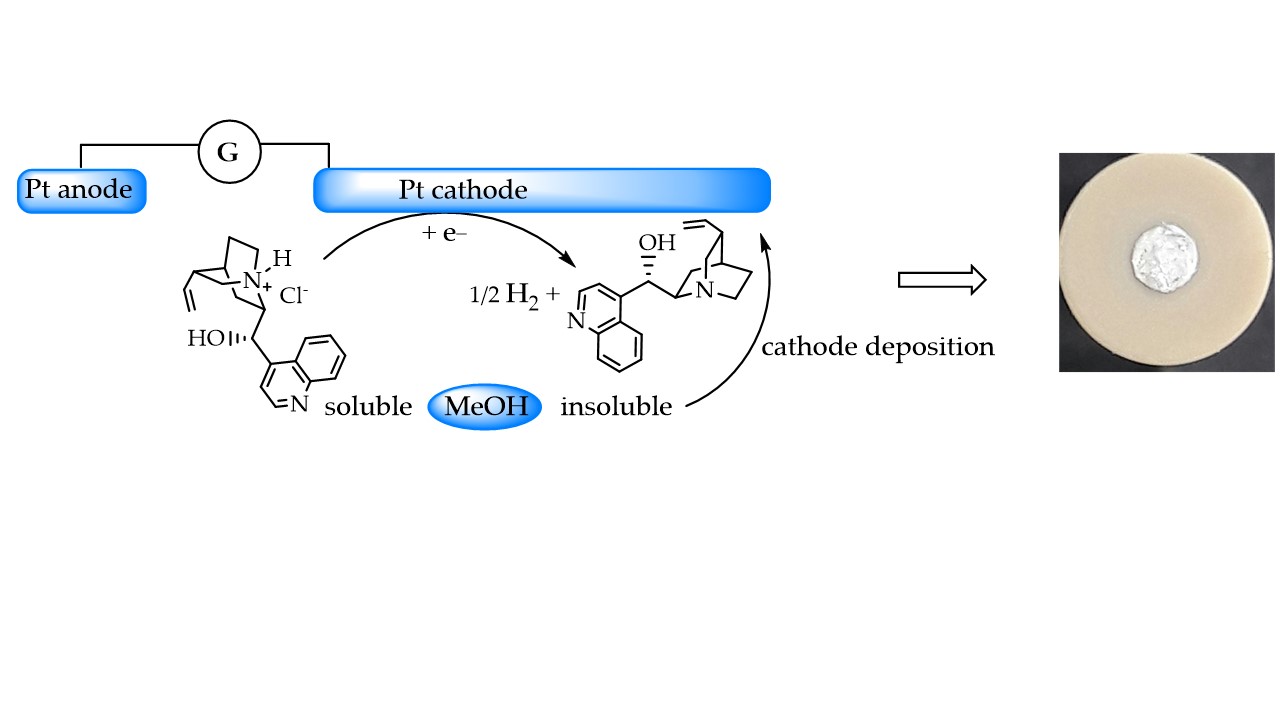
An effective deposition of cinchonine layer on platinum metal surface can be easily achieved by the cathodic reduction of cinchonine hydrochloride methanolic solution at a controlled potential of -220 mV vs. the silver standard electrode (SSE). A coated screen-printed platinum electrode has proven suitable for cinchonine determination in water, urine and serum at ug L-1 level concentrations by differential pulse voltammetry in phosphate buffer solution (pH=7.0). The limits of detection (LOD) and the limits of quantitation (LOQ) are 0.6 ug L-1 and 1.8 ug L-1 respectively.
Keywords:
voltammetric sensors
; screen-printed electrodes
; cinchona alkaloids
; cathodic deposition
; electrode surface coating
1. Introduction
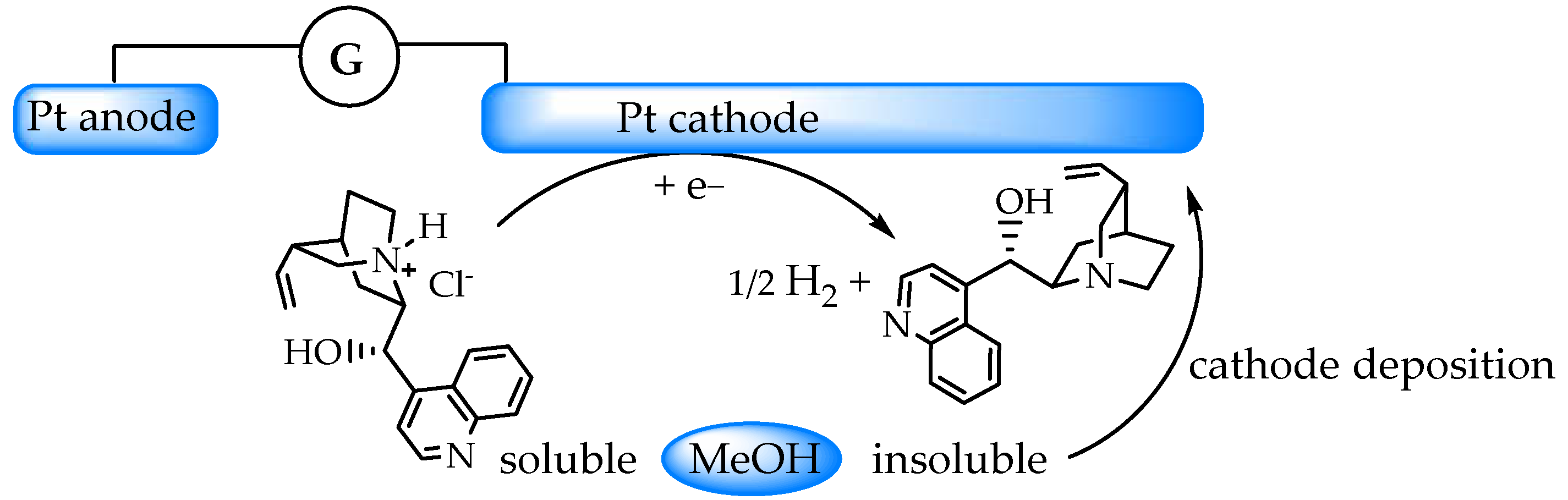
In the past few years, screen-printed electrodes (SPE) have experienced remarkable progress, with many scientific papers published on sensors and biosensors. Screen-printed electrodes exhibit numerous advantages compared to typical electrodes as they can be efficiently used for microvolumes and as single sensors that eliminate the electrode maintenance, thereby paving the way for the development of reproducible, inexpensive, precise, and sensitive sensors. Thus, SPE are ideal for use in decentralized assays or for developing (bio)sensors in environmental [1,2], clinical [3], or agrifood areas, or for applications in electrosynthesis, or compound characterization [4,5]. On the other hand, to increase selectivity and/or sensitivity in numerous applications, appropriate compounds may be used to modify the electrode surface [6,7,8,9,10,11], including that of the SPE [12,13]. However, weak adsorption, especially of organic molecules onto electrode surface, represents a problem that has traditionally limited the usefulness of electrochemical techniques for analyzing organic systems [14,17]. In this work, the electrochemical deposition of cinchonine has been employed to create an organic thin film on platinum electrode surface by cathodic reduction of cinchonine hydrochloride methanol solution. Cinchonine (CN) is an alkaloid isolated from Cinchona succirubra and, when combined with other cinchona alkaloids, such as quinine, quinidine, and cinchonidine, plays an essential role in pharmacological activity [18]. It is used as an important antimalarial [19,20,21,22], exhibits antiarrhythmic activities [23], provides resistance in different types of tumors [24], and acts a potent inhibitor of human platelet aggregation [25,26]. In these activities, cinchonine has much lower toxicity and greater activity compared to other quinine-related compounds [27]. Its lethal dose and LD50 for a human being are 456 mg kg-1 and 152 mg kg-1 [28], respectively. An appropriate assay analysis method is needed to determine an efficient, effective, and selective drug dose. Several analytical approaches to measuring cinchonine have been reported [29,30,31,32,33,34], including electroanalytical methods [35,36,37,38]. In this paper, a novel sensor was developed and applied to determine the concentration of cinchonine. The proposed sensor combines the tendency of platinum to adsorb cinchonine with the advantages of the screen-printed electrodes. The adsorption of various cinchona alkaloids on Pt surfaces has been investigated [39,40,41]. Their adsorptions can be irreversible, and desorption only occurs at relatively high potentials [42]. In fact, as depicted in Scheme 1, the reduction, under galvanostatic or potentiostatic conditions, induces a hydrogen evolution reaction, which results in the stable absorption of insoluble alkaloid at the cathode surface [43].
Scheme 1.
Proposed mechanism for the cathodic deposition of cinchonine from its hydrochloride salt dissolved in a methanol solution. The same mechanism occurs for other alkaloids investigated.
Scheme 1.
Proposed mechanism for the cathodic deposition of cinchonine from its hydrochloride salt dissolved in a methanol solution. The same mechanism occurs for other alkaloids investigated.
This modified electrode was used to quantify the preferentially adsorbed species, namely cinchonine and quinidine, by conventional differential pulse voltammetry. In particular, the increased sensitivity will be demonstrated respect to a screen-printed electrode that was not modified with the alkaloid. The results obtained with this sensor are presented in this paper and are discussed in detail.
2. Materials and Methods
2.1. Reagents
All reagents used in the present study were of analytical grade and all solutions were prepared using ultrapure solvents purchased from Merck. All reagents were of analytical grade. Cinchonine monohydrochloride hydrate, quinine hydrochloride dihydrate, and quinidine hydrochloride monohydrate were all purchased from Merck. Cinchonidine hydrochloride from Alfa chemistry. All human serum and urine samples were obtained from the University Affiliated Hospital.
2.2. Instrumentation and Apparatus
Differential pulse voltammetry (DPV) was applied to an electrochemical system consisting of an Autolab PGSTAT302F potentiostat/galvanostat (EcoChemie, The Netherlands) with an IME663 interface attached to the 663 VA Stand system (Metrohm, Switzerland) and controlled by Nova (EcoChemie, The Netherlands) software. The stand was equipped with a screen-printed electrode holder purchased from Metrohm (6.1241.090), used to connect the working electrode, along with an external Ag/AgCl reference electrode from Metrohm (saturated with 3 mol L−1 KCl, SSE) and an external platinum auxiliary electrode, also from Metrohm, used for carrying out the cathodic deposition at controlled potential. The working electrodes are commercially available as screen-printed platinum (SP-Pt) electrodes (Aux.: Pt; Ref.: Ag), purchased from Metrohm-Dropsens (DRP-550). Both potentiostatic and galvanostatic modes were utilized for electrodeposition on Pt surface of SP-Pt working electrode. An analytical balance with a sensitivity of 0.01 mg was used to measure the masses (Mettler-Toledo Mod. XS105DR). A Julabo circulator Mod. F12 was used to maintain a constant temperature.
2.3. Procedures
2.3.1. Solutions
4.00 mg L-1 of cinchonine standard solution was prepared. Cinchonine monohydrochloride hydrate, 99% (4.50 ± 0.01 mg), was dissolved in distilled water to a final volume of 10.0 mL and vortexed for 5 minutes. The working standard solution was prepared by successive dilution. As reported, a standard solution can also be prepared by dissolving chinconine in acidic solution [44]. Solutions of the other alkaloids were prepared in a similar manner. A solution containing 0.02 mol dm-3 of phosphate buffer (pH 7.0) and 0.1 mol dm-3 of KClO4 as supporting electrolyte was used as a blank in DPV measurements (electrolyte solution).
2.3.2. Electrode Preparation
The electrochemical deposition was carried out using a computer-controlled potentiostat (Autolab PGSTAT302F) with a three-electrode cell that included a Pt bar as counter electrode and an Ag/AgCl as silver standard reference electrode (SSE). The working electrode was a screen-printed platinum electrode (SP-Pt). During the deposition, only the WE contact of the screen-printed electrode holder was connected to the Autolab station. The organic layer was deposited onto the SP-Pt electrode surface by cathodic reduction of alkaloid-derived ammonium salt solutions achieved at a controlled deposition potential of −0.220 V vs. SSE for 60 seconds [45]. The deposition solution was composed of cinchona alkaloid hydrochloride, 3 mg mL-1 in methanol. The deposition was conducted at a constant temperature of 10°C. After deposition, the screen-printed platinum electrode coated with alkaloid (SP-Pt/CN for cinchonine) was thoroughly rinsed with methanol.
2.3.3. Differential Pulse Voltammetry Measurements
For DPV measurements, 10.0 mL of the blank solution was placed in a glass voltammetric cell by Metrohm. The following are the parameters for the DPV experiments: scan from +0.20 V to +1.10 V, pulse amplitude 50 mV, pulse time 50 ms, and scan rates of 10 mV s−1. For methodology validation purposes, the quantification of cinchonine in different samples was carried out. Standard addition was applied as the calibration method. Calibration plots were obtained by successive additions of cinchonine standard solution into the blank solution. All experiments were performed at a temperature of 25.0 °C using a thermostatic cell. Solutions were degassed using pure nitrogen prior the electrochemical measurements.
2.3.4. Data Treatment
All data analyses were conducted and interpreted using NOVA 1.10.5 software, and further calculations were performed with the EXCEL® program. Sensitivities were expressed as the slope of the calibration plot. Limits of detection (LODs) and limits of quantification (LOQs) were calculated as three and ten times the standard deviation of the intercept of the calibration line, divided by the slope, respectively [46,47]. Repeatability was assessed from ten consecutive measurements at a concentration in the middle of the linearity range, and reproducibility was estimated from the relative standard deviation (RSD) of the slopes of three independent calibration plot.
3. Results and Discussion
3.1. Preliminary Studies
It is known that the cinchona alkaloids adsorb onto the Pt surface [40] and that the two asymmetric carbon atoms can determine the chirality of the hydrogenation products [48]. Preliminary experiments were conducted on platinum electrodes at different fixed current densities, ranging from 1.0 mA to 10 μA. These experiments allowed for the deposition of alkaloid layers on the Pt electrode surface, but the deposits were later found to be poorly adherent, probably due to the simultaneous uncontrollable evolution of hydrogen. Similar deposits were formed even if achieved at low temperatures. Therefore, based on the preliminary results obtained, further experiments were conducted using an SP-Pt electrode at a controlled potential in order to mitigate hydrogen evolution [49,50], during the deposition on the Pt electrode surface. Different deposition potentials were then investigated, from 0 to -500 mV vs. SSE. Figure 1 depicts the relationship between the applied potentials and the current densities (μA cm-2) obtained during the cinchonine electrodeposition at controlled potential. The deposition times were 30, 60, 90 and 120 seconds. As seen in Figure 1, there is significant current consumption due to H2 evolution when a more cathodic deposition potential is applied (Eapp >300 mV) [51]. Thus, the cinchonine chemisorption may indeed be accessible under controlled potential conditions, at modest negative potentials, when no significant H2 evolution occurs. We have therefore plotted deposition potential against log current density (Figure 2). It can be observed that above -220 mV, the graph is a straight line: consequently, this deposition potential was selected for the following experiments [52].
To improve the homogeneity of the layer, depositions have been made at low temperatures, ranging from 20°C to 5°C [53]. To this end, we prepared a series of SP-Pt/CN electrodes under potential control at different temperatures of 20°C, 15°C, 10°C and 5°C, and evaluated their reproducibility and stability as probes for differential pulse voltammetric determinations. The stability of the modified SP-Pt/CN electrodes obtained at different temperatures has been examined through multiscan studies to find the deposition conditions that yield the best electrode, which is the one with the smallest relative standard deviation (RSD) in peak current [54]. In these studies, multiple scans (10 scans) were carried out in succession in a 20.0 μg L-1 cinchonine solution. This test also allows us to understand whether the chemisorbed species would diffuse or not from the electrode surface to the bulk solution during continuous measurements under the same conditions. No slight decrease in peak currents, which could be attributed to the diffusion of some particles from the electrode interface into the solution, was observed during multiscan test, but only a variation of the peak current values with a calculated RSD that ranged from 1.1 to 6.4 %. (Table 1). This also confirms that the electroactive material is confined to the electrode surface and has not detached into the bulk of the solution. Therefore, given that the RSD value for electrochemical methods and stationary printed electrodes should be less than 5 %, the reproducibility of the developed method is acceptable under most our conditions [35].
In particular, the deposition conditions achieved at 10°C for 60 seconds, at a controlled potential of -220 mV vs. SSE, yield the lowest value of RSD (1.1 %). This result is shown in Figure 3. Therefore, the developed sensor exhibits good stability and reproducibility in the detection of cinchonine, and it will be used to quantify cinchonine in real samples such as urine or plasma.
3.2. Electrode Testing
Pulse voltammetric techniques, such as DPV, are effective and rapid electroanalytical methods with well-established advantages, including good discrimination against background current and low detection limits [55]. To demonstrate the sensitivity of SP-Pt/CN electrodes to the electrochemical measurement of cinchona alkaloids, the effect of varying the cinchonine concentration using DPV mode was studied. The standard addition method was employed as the calibration approach. Differential pulse voltammograms and the calibration plots reported in Figure 4 were obtained by successive additions of a cinchonine standard solution (4.00 mg L-1) into a blank solution (10.0 mL). Considering the physiological conditions of the human body, a pH = 7.0 was adopted in our work. This pH value prevents cinchonine protonation and facilitates a stable response from the sensor with a cinchonine adsorbed on its surface [56]. As shown Figure 4a, the screen-printed platinum electrode provided a weaker and less intense signal compared to SP-Pt/CN electrode. In cinchonine solutions with concentrations less than 4 μg L-1, the DPV is hardly distinguishable from the voltammogram of the blank, suggesting slow electrode kinetics of the possible faradaic processes generated by cinchonine oxidation, despite the strong affinity of platinum for cinchonine described in the literature [43]. In contrast, SP-Pt/CN electrode showed a well-defined and more intense characteristic oxidation peak even at concentrations of 1.3 μg L-1 (Figure 4b). Evidently, the cinchonine layer improves the sensitivity of the working electrode, promoting the electrochemical processes occurring on the electrode with a larger and specific surface area due to the adsorbed layer [16]. From the electrochemical current-potential responses shown in Figure 4a,b, the peak current Ip was measured at several different concentrations of cinchonine: the resulting calibration plot was linearly related to cinchonine concentration over a range from 39.6 μg L-1 to 1.3 μg L-1 with a regression equation of Ip (μA) = 4.228 c (μg L-1) + 4.812 and a correlation coefficient of 0.9996.
The limits of detection (LOD) and the limits of quantitation (LOQ) were calculated from the oxidation peak currents using the following equations [46]:
where σ is the standard deviation of the oxidation peak current (three runs) and m is the slope of the related calibration curves. They were found to be 0.6 μg L-1 and 1.8 μg L-1, respectively, for the SP-Pt/CN electrode. Calibration plots of untreated SP-Pt electrode were instead linearly related to cinchonine concentration only starting from 12.0 μg L-1, with a regression equation of Ip (μA) = 0.716 c (μg L-1) + 1.435 and a correlation coefficient of 0.9987. Therefore, it also has a lower slope than the SP-Pt/CN electrode. The slope is a measure of sensitivity: a steeper line with a larger slope indicates a more sensitive measurement [57]. In fact, the limits of detection (LOD) and the limit of quantitation (LOQ) of SP-Pt electrode decreased to 5.2 μg L-1 and 17.5 μg L-1, respectively. All data are summarised in Table 2, which shows a comparison between the detection limits for the determination of cinchonine obtained by different sensors, including ours. Therefore, this work demonstrated a lower detection limit than that of the untreated screen-printed Pt electrode, as well as those mentioned in the literature using different modified sensors.
LOD = 3 σ /m
LOQ = 10 σ /m
In this study, we also tested other cinchona alkaloids, as cinchonidine, quinine and quinidine, considering that cinchonine and cinchonidine, as well as quinine and quinidine, are stereoisomers with the same molecular formulas and similar structures (Figure 5).
We found that only the SP-Pt electrodes with cinchonine electrodeposited are sufficiently stable for the subsequent determinations. A balance between adsorption strength of these molecules on the Pt surface and their different solubility can explain the behavior of different cinchona alkaloids, as already reported by Zaera to clarify some apparent contradictions in the behavior of the four cinchona alkaloids documented in the literature in terms of their effectiveness as chiral catalysis promoters [43]. Therefore, no favorable electrochemical conditions have been found to deposit quinine and cinchonidine, due to their very high solubility in methanol compared to the other two alkaloids [58]. On the other hand, the electrode with deposited quinidine has not proven to be sufficiently stable for measurements in neutral aqueous solutions due to its greater solubility in this medium.
3.3. Selectivity
Some expected organic species were selected for the study on the selectivity of the cinchonine sensor (Table 3). The effect of interferents on the electrochemical determination of cinchonine was investigated with the initial cinchonine concentration fixed at 6.0 μg L-1 (10 x LOD) and interferent concentrations fixed at 0.6 μg L-1 (1:0.1), 6.0 μg L-1 (1:1) or 60 μg L-1 (10x). Then varying amounts of cinchonine were added to the initial solution: the recovery studies carried out by the standard addition method showed satisfactory recovery results of 91.8-109.6 % (Table 3). Therefore, all species tested caused no interference when present in amounts up to 10 times higher than our target, except for quinidine. This can be explained by the fact that quinidine is identical to cinchonine, except for the additional methoxy group in the C6’ position of the quinoline ring (Figure 5). However, quinidine does not interfere if its concentration is less than 1/10 that of cinchonine. The SP-Pt/CN electrode has also been successfully used for the determination of quinidine in absence of cinchonine (data not shown).
3.3. Application of Sensor: Determination of Cinchonine in the Urine and Serum
The cinchonine concentration in human serum reaches its highest value in 1–2 h after its assimilation, which is rapid and almost complete in the stomach and intestine. About 3.6–6% of the total amount is excreted with urine in its original form [59]. The proposed SP-Pt/CN electrode was successfully applied to the determination of cinchonine in serum and urine media. A series of sample solutions was prepared by adding an appropriate amount of cinchonine standard solution to 10.0 mL of serum or urine. 1000 μL of each of these solutions were transferred into the voltammetric cell and diluted to 10.0 mL with the buffer solution. Therefore, a series of specific volumes of cinchonine standard solution was added using a micro-syringe, and the relative DPVs were recorded after each standard addition. The results listed in Table 4 showed that the SP-Pt/CN electrode could be used for the determination of cinchonine with satisfactory recovery results.
4. Conclusions
In this work, we demonstrate that an effective deposition of cinchonine on screen-printed platinum surface can be easily achieved by cathodic reduction of its hydrochloride salt dissolved in a methanol solution. A stable cinchonine layer can be formed when deposition is carried out for 60 seconds at a controlled potential of -220 mV vs. silver standard electrode, at a temperature maintained at 10°C. The repeatability and reproducibility of this modified electrode were evaluated from the relative standard deviation of the peak current values of 10 repetitive DPV measurements (multiscan studies) conducted at a cinchonine concentration of 20.0 μg L-1, in the middle of the linearity range. The obtained RSD value of indicates good reproducibility and that the electrode does not undergo surface modification during voltammetric measurements using a coated screen-printed electrode. Modified screen-printed platinum electrodes were employed to determine cinchonine concentration at physiological pH 7.0. A very low detection limit and good linear dynamic range were obtained using the proposed sensor, which combines the tendency of platinum to adsorb cinchonine with the advantages of the screen-printed electrodes. The limits of detection and quantitation are 0.6 μg L-1 and 1.8 μg L-1, respectively, much lower than those reported for other sensors. The applicability of our sensor to clinical assays of cinchonine in human serum and urine was investigated with good results.
Author Contributions
Conceptualization, T.C. and L.P.; methodology, T.C.; software, T.C.; validation, T.C.; formal analysis, T.C.; investigation, T.C.; resources, T.C.; data curation, T.C.; writing—original draft preparation, T.C.; writing—review and editing, T.C.; visualization, T.C.; supervision, T.C.; funding acquisition, T.C. All authors have read and agreed to the published version of the manuscript.
Funding
This research was funded by i-Foria B.V.-Netherland, Icarus EU project N. 2023-1-IT02-KA220-ADU-000152409.
Conflicts of Interest
The authors declare no conflicts of interest. The funder had no role in the design of the study; in the collection, analysis, or interpretation of data; in the writing of the manuscript; or in the decision to publish the results.
Abbreviations
The following abbreviations are used in this manuscript:
| SPE | Screen–printed electrode |
| SP-Pt/CN | Screen–printed platinum electrode coated with cinchonine |
| DPV | Differential pulse voltammetry |
| RSD | Relative standard deviation |
References
- Beitollahi, H.; Mohammadi, S.Z.; Safaei, M.; Tajik, S. Applications of electrochemical sensors and biosensors based on modified screen-printed electrodes: a review. Anal. Methods 2020, 12, 1547–1560. [Google Scholar] [CrossRef]
- Wang, X.; Zhang, Z.; Wu, G.; Xu, C.; Wu, J.; Zhanga, X.; Liu, J. Applications of electrochemical biosensors based on functional antibody-modified screen-printed electrodes: a review. Anal. Methods 2022, 14, 7–16. [Google Scholar] [CrossRef]
- Arduini, F.; Micheli, L.; Moscone, D.; Palleschi, G.; Piermarini, S.; Ricci, F.; Volpe, G. Electrochemical biosensors based on nanomodified screen-printed electrodes: Recent applications in clinical analysis. Trends Anal. Chem. 2016, 79, 114–126. [Google Scholar] [CrossRef]
- Crapnell, R.D.; Banks, C.E. Electroanalytical Overview: Screen-Printed Electrochemical Sensing Platforms. ChemElectroChem 2024, 11, e202400370–1. [Google Scholar] [CrossRef]
- Kelíšková, P.; Matvieiev, O.; Janíková, L.; Šelešovská, R. Recent advances in the use of screen-printed electrodes in drug analysis: A review. Curr. Opin. Electrochem. 2023, 42, 101408–1. [Google Scholar] [CrossRef]
- Bard, A.J. Chemical modification of electrodes. J. Chem. Educ. 1983, 60, 4–302. [Google Scholar] [CrossRef]
- Edwards, G.A.; Bergren, A.J.; Porter, M.D. Chemically Modified Electrodes. Handb. Electrochem. 2007, 295–327. [Google Scholar] [CrossRef]
- Murray, R.W.; Ewing, A.G.; Durst, R.A. Chemically modified electrodes. Molecular design for electroanalysis. Anal. Chem. 1987, 59, 5–379A. [Google Scholar] [CrossRef]
- Durst, R.A.; Baumner, A.J.; Murray, R.W.; Buck, R.P.; Andrieux, C.P. Chemically Modified Electrodes: Recommended Terminology and Definitions, IUPAC. Pure Appl. Chem. 1997, 69, 6–1317. [Google Scholar] [CrossRef]
- White, H.S.; Leddy, J.; Bard, A.J. Polymer films on electrodes. 8. Investigation of charge-transport mechanisms in Nafion polymer modified electrodes. J. Am. Chem. Soc. 1982, 104, 18–4811. [Google Scholar] [CrossRef]
- Zen, J.-M.; Kumar, A.S.; Tsai, D.-M. Recent Updates of Chemically Modified Electrodes in Analytical Chemistry. Electroanalysis 2003, 15, 13–1073. [Google Scholar] [CrossRef]
- Perez-Ràfols, C.; Serrano, N.; Díaz-Cruz, J.M.; Arino, C.; Esteban, M. Mercury Films on Commercial Carbon Screen-Printed Devices for the Analysis of Heavy Metal Ions: a Critical Evaluation. Electroanalysis 2015, 27, 1345–1349. [Google Scholar] [CrossRef]
- Josypcuk, B.; Tvorynska, S. Screen-printed electrodes covered by mercury film or meniscus. Electrochim. Acta 2025, 513, 145565–1. [Google Scholar] [CrossRef]
- Siria, J.W.; Baldwin, R.P. Adsorption Pre-Concentration and Analysis of Dopamine at Platinum Electrode Surfaces. Anal. Lett. 1980, 13, 7–577. [Google Scholar] [CrossRef]
- Trasatti, S. Adsorption of organic substances at electrodes: recent advances. Electrochim. Acta 1992, 37, 12–2137. [Google Scholar] [CrossRef]
- Mittal, M.; Sardar, S.; Jana, A.E. Nanofabrication techniques for semiconductor chemical sensors. Handbook of Nanomaterials for Sensing Applications. Micro and Nano Technologies 2021, 119–137. [Google Scholar] [CrossRef]
- Ayala, M.C.; López, L.L.; Jaramillo-Botero, A.; Valencia, D. Electrochemical modified electrode with bismuth film for ultrasensitive determination of aluminum (III). J. Electroanal. Chem. 2022, 919, 116552–1. [Google Scholar] [CrossRef]
- Lai, J.; Ma, Z.; Mink, L.; Mueller, L.J.; Zaera, F. Influence of peripheral groups on the physical and chemical behavior of cinchona alkaloids. J. Phys. Chem. B. 2009, 113, 34–11696. [Google Scholar] [CrossRef]
- Tracy, J.W.; Webster, J.L. Drugs Used in the Chemotherapy of Protozoal Infections, 9th ed.; Hardman, J.G., Limbird, L.E., Molino, P.B., Ruddon, R.W., Gilman, A.G., Eds.; The Pharmacological Basis of Therapeutics; The McGraw Hill: New York, NY, USA, 1996; pp. 800–808. [Google Scholar]
- Sullivan, D.J. Cinchona Alkaloids: Quinine and Quinidine. In Treatment and Prevention of Malaria; Springer: Basel, Switzerland; Baltimore, MD, USA; Vol. 41, pp. 45–68. [CrossRef]
- Parveen, S.; Maurya, N.; Meena, A.; Luqman, S. Cinchonine: A Versatile Pharmacological Agent Derived from Natural Cinchona Alkaloids. Curr Top Med Chem 2024, 24(4), 343–363. [Google Scholar] [CrossRef]
- Rasoanaivo, P.; Wright, C.W.; Willcox, M.L.; Gilbert, B. Whole plant extracts versus single compounds for the treatment of malaria: synergy and positive interactions. Malar. J. 2011, 15 (Suppl 1), 10. [Google Scholar] [CrossRef]
- Levy, S.; Azoulay, S. Stories About the Origin of Quinquina and Quinidine. Journal of cardiovascular Electrophysiol. 1994, 5, 635–636. [Google Scholar] [CrossRef] [PubMed]
- Genne, P.; Duchamp, O.; Solary, E.; Pinard, D.; Belon, J.P.; Dimanche-Boitrel, M.T.; Chauffert, B. Comparative effects of quinine and cinchonine in reversing multidrug resistance on human leukemic cell line K562/ADM. Leukemia 1994, 8, 160–164. [Google Scholar] [PubMed]
- Shah, B.H.; Nawaz, Z.; Virani, S.S.; Ali, I.Q.; Saeed, S.A.; Gilani, A.H. The inhibitory effect of cinchonine on human platelet aggregation due to blockade of calcium influx. Biochem. Pharmacol. 1998, 56, 955–960. [Google Scholar] [CrossRef] [PubMed]
- Tang, D.; Wang, X.; Wu, J.; Li, Y.; Li, C.; Qiao, X.; Fan, L.; Chen, Y.; Zhu, H.; Zhang, Z.; He, Y. Cinchonine and cinchonidine alleviate cisplatin-induced ototoxicity by regulating PI3K-AKT signaling. CNS Neurosci Ther. 2024, 30, 2–e14403. [Google Scholar] [CrossRef]
- Genne, P.; Ducham, O.; Solary, E.; Magnette, J.; Belon, J.P.; Chauffert, B. Cinchonine per os: Efficient circumvention of P-glycoprotein-mediated multidrug resistance. Anticancer Drug Des. 1995, 10, 103–118. [Google Scholar] [PubMed]
- Johnson, C.C.; Poe, C.F. Toxicity of Some Cinchona Alkaloids. Acta pharmacol. 1948, 4, 3–4. [Google Scholar] [CrossRef]
- Thapliyal, N.; Chiwunze, T.; Karpoormath, R.; Goyal, R.N.; Patel, H.; Cherukupalli, S. Research Progress in Electroanalytical Techniques for Determination of Antimalarial Drugs in Pharmaceutical and Biological Samples. RSC Adv. 2016, 6, 57580–57602. [Google Scholar] [CrossRef]
- Yin, F.; Xu, X. Construction and Analytical Application of a Novel Ion-Selective Capacitive Sensor for Determination of Cinchonine. Anal. Lett. 2004, 37, 15–3129. [Google Scholar] [CrossRef]
- Michele, M.; Pierre, D.; Pierre, L. Determination of cinchonine in mixtures by zero-crossing first-derivative spectrofluorimetry. Analyst 1988, 113, 929–932. [Google Scholar] [CrossRef]
- Feng, M.; Zhang, G.; Zhang, Z. A sensitive chemiluminscence method for cinchona alkaloids. Anal. Lett. 1998, 14, 2537–2548. [Google Scholar] [CrossRef]
- Mroczek, T.; Glowniak, K.J. TLC and HPTLC assay of quinoline and quinuclidine alkaloids in cinchonae cortex and pharmaceutical preparations. J. Planar Chromatogr. 2000, 13, 6–457. [Google Scholar]
- Hu, W.; Wu, N.; Li, D.; Yang, Y.; Qie, S.; Su, S.; Xu, R.; Li, W.; Hu, M. The fluorescence distinction of chiral enantiomers: a Zn coordination polymer sensor for the detection of cinchonine and cinchonidine. J. Mater. Chem. C 2025, 13, 592–599. [Google Scholar] [CrossRef]
- Dushna, O.; Dubenska, L.; Marton, M.; Hatala, M.; Vojs, M. Sensitive and selective voltammetric method for determination of quinoline alkaloid, quinine in soft drinks and urine by applying a boron-doped diamond electrode. Microchem. J. 2023, 191, 108839–1. [Google Scholar] [CrossRef]
- Yang, Y.; Yang, X.; Yang, H.-F.; Liu, Z.-M.; Liu, Y.-L.; Shen, G.-L.; Yu, R.-Q. Electrochemical sensor for cinchonine based on a competitive host–guest complexation. Anal. Chim. Acta 2005, 528, 135–142. [Google Scholar] [CrossRef]
- Prideaux, E.B.R.; Winfield, F.T. The determination of quinine, cinchonine and cinchonidine with the quinhydrone electrode, and the choice of end-points in alkaloidal titrations. Analyst 1930, 55, 561–565. [Google Scholar] [CrossRef]
- Yuan, J.-B.; Tan, Y.-G.; Nie, L.-H.; Yao, S.-Z. Piezoelectric quartz crystal sensors based on ion-pair complexes for the determination of cinchonine in human serum and urine. Anal. Chim. Acta 2002, 454, 65–74. [Google Scholar] [CrossRef]
- Blaser, H.U.; Jalett, H.P.; Monti, D.M.; Reber, J.F.; Wehrli, J.T. Modified Heterogeneous Platinum Catalysts for the Enantioselective Hydrogenation of α-Ketoesters. Stud. Surf. Sci. Catal. 1998, 41, 153–163. [Google Scholar] [CrossRef]
- Ma, Z.; Zaera, F. Competitive Chemisorption between Pairs of Cinchona Alkaloids and Related Compounds from Solution onto Platinum Surfaces. J. Am. Chem. Soc. 2006, 128, 16414–16415. [Google Scholar] [CrossRef]
- Fietkau, N.; Bussar, R.; Baltruschat, H. The stability of adsorbed quinoline and cinchonine on poly- and monocrystalline platinum surfaces. Electrochim. Acta 2006, 51, 5626–5635. [Google Scholar] [CrossRef]
- Bakos, I.; Szabo, S.; Bartok, M.; Kalman, E. Adsorption of cinchonidine on platinum: an electrochemical study. J. Electroanal. Chem. 2002, 532, 1–2. [Google Scholar] [CrossRef]
- Ma, Z.; Lee, I.; Zaera, F. Factors Controlling Adsorption Equilibria from Solution onto Solid Surfaces: The Uptake of Cinchona Alkaloids on Platinum Surfaces. J. Am. Chem. Soc. 2007, 129, 51–16083. [Google Scholar] [CrossRef]
- Hariyanti, H.; Kurniati, N.F.; Sumirtapura, Y.C.; Mauludin, R. Development and validation of an analytical method for the determination of nanostructured lipid carrier’s cinchonine used direct method modified by liquid-liquid extraction using high-performance liquid chromatography. J. Res Pharm. 2023, 27, 2–913. [Google Scholar] [CrossRef]
- Brankovic, S.R. Electrochemical Deposition as Surface Controlled Phenomenon: Fundamentals and Applications. J. Electrochem. Soc. 2016, Y21–Y21. [Google Scholar] [CrossRef]
- Long, G.L.; Winefordner, J.D. Limit of detection: a closer look at the IUPAC detection. Anal. Chem. 1983, 55, 7–712A. [Google Scholar] [CrossRef]
- Thompson, M.; Ellison, S.L.R.; Wood, R. Harmonized guidelines for single laboratory validation of methods of analysis (IUPAC Technical Report). Pure Appl. Chem. 2002, 74, 5–835. [Google Scholar] [CrossRef]
- Exner, C.; Pfaltz, A.; Studer, M.; Blaser, H.-U. Heterogeneous Enantioselective Hydrogenation of Activated Ketones Catalyzed by Modified Pt-Catalysts: A Systematic Structure-Selectivity Study. Adv. Synth. Catal. 2003, 345, 1253–1260. [Google Scholar] [CrossRef]
- Halli, P.; Heikkinen, J.J.; Elomaa, H.; Wilson, B.J.; Jokinen, V.; Yliniemi, K.; Franssila, S.; Lundström, M. Platinum Recovery from Industrial Process Solutions by Electrodeposition–Redox Replacement. ACS Sustainable Chem. Eng. 2018, 6, 14631–14640. [Google Scholar] [CrossRef]
- Posada, J.O.G.; Hall, P.J. Controlling hydrogen evolution on electrodes. Int. J. Hydrog. Energy 2016, 41, 45–20807. [Google Scholar] [CrossRef]
- Ma, F.; Lennox, R.B. Potential-Assisted Deposition of Alkanethiols on Au: Controlled Preparation of Single- and Mixed-Component SAMs. Langmuir 2000, 15, 6188–6190. [Google Scholar] [CrossRef]
- Bockris, J. O’M.; Koch, D.F.A. Comparative rates of the electrolytic evolution of hydrogen on iron, tungsten, and platinum. J. Phys. Chem. 1961, 65, 11–1941. [Google Scholar] [CrossRef]
- Chunga, C.-K.; Chang, W.-T. Handbook of Manufacturing Engineering and Technology; Springer: London, UK, 2013. [Google Scholar] [CrossRef]
- Bard, A.J.; Faulkner, L.R. In Electrochemical Methods: Fundamentals and Applications, 2nd ed.Wiley and Sons: New York, NY, USA, 2001. [Google Scholar]
- Kissinger, P.T.; Heineman, W.R. In Laboratory Techniques in Electroanalytical Chemistry, 2nd ed.; Marcel Dekker, Inc.: New York, NY, USA, 1996; ISBN 0-8247-9445-1. [Google Scholar]
- Yin, F.; Xu, X. Construction and Analytical Application of a Novel Ion-Selective Capacitive Sensor for Determination of Cinchonine. Anal. Lett. 2004, 37, 15–3129. [Google Scholar] [CrossRef]
- Moosavi, S.M.; Ghassabian, S. Linearity of Calibration Curves for Analytical Methods: A Review of Criteria for Assessment of Method Reliability. In Calibration and Validation of Analytical Methods - A Sampling of Current Approaches; Ed. Mark, T., Ed.; IntechOpen Limited: London, UK, 2018. [Google Scholar] [CrossRef]
- Ma, Z.; Zaera, F. Role of the Solvent in the Adsorption-Desorption Equilibrium of Cinchona Alkaloids between Solution and a Platinum Surface: Correlations among Solvent Polarity, Cinchona Solubility, and Catalytic Performance. J. Phys. Chem. B 2005, 109, 1–406. [Google Scholar] [CrossRef] [PubMed]
- Brodie, B. B.; Baer, J.E.; Craig, L.C. Metabolic products of the cinchona alkaloids in human urine. J. Biol. Chem. 1951, 188, 2–567. [Google Scholar] [CrossRef]
Figure 1.
Current density−potential relationship from the applied deposition potentials and the current densities (μA cm-2) obtained during the electrodeposition at different controlled potentials. Deposition times: 30 s, 60 s, 90 s, 120 s. Deposition temperature: 10°C.
Figure 1.
Current density−potential relationship from the applied deposition potentials and the current densities (μA cm-2) obtained during the electrodeposition at different controlled potentials. Deposition times: 30 s, 60 s, 90 s, 120 s. Deposition temperature: 10°C.
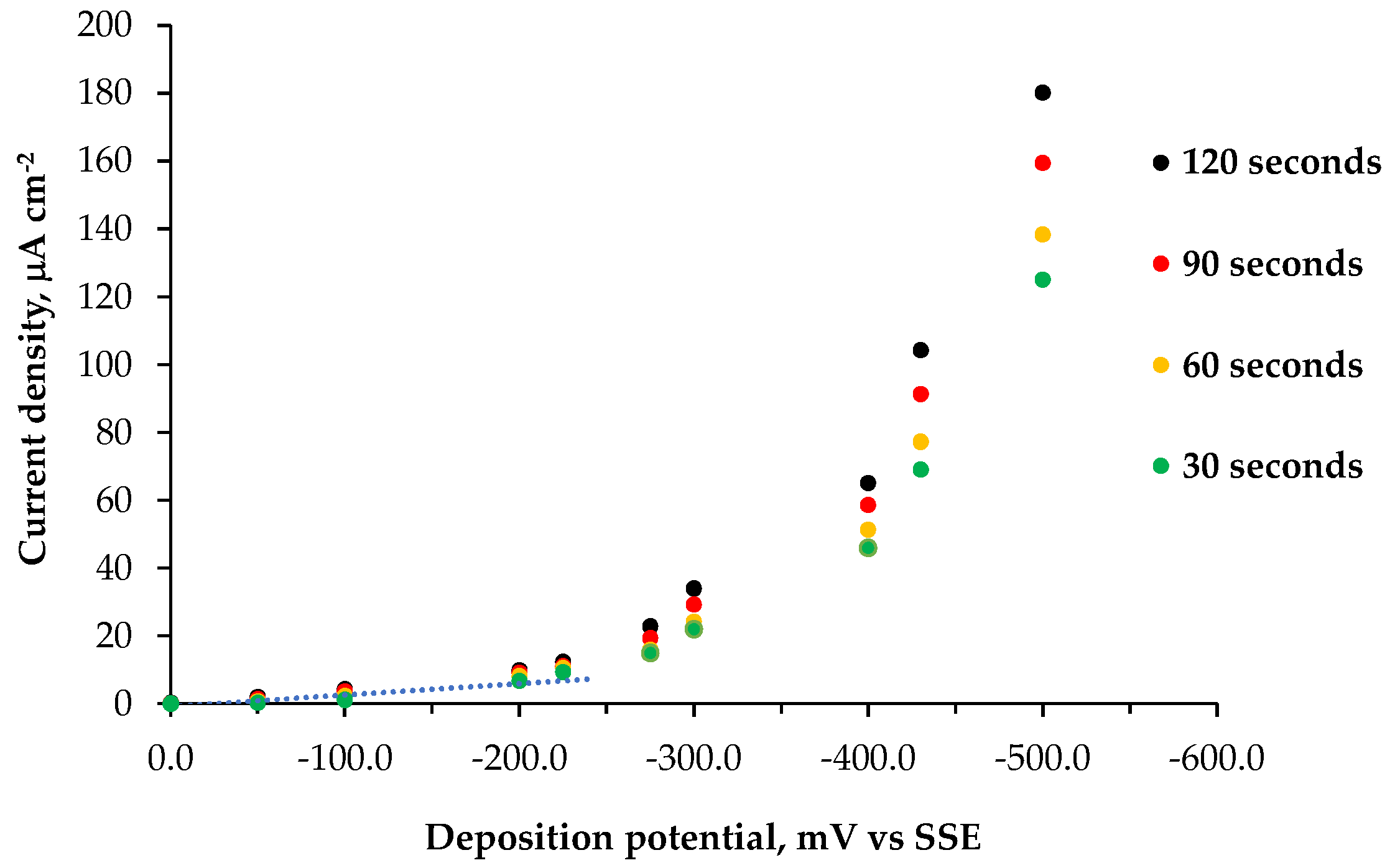
Figure 2.
Relationship between the logarithm of current densities (A cm-2) and the applied deposition potentials obtained during the electrodeposition at different controlled potentials. Deposition times: 30 s, 60 s, 90 s, 120 s. Deposition temperature: 10°C.
Figure 2.
Relationship between the logarithm of current densities (A cm-2) and the applied deposition potentials obtained during the electrodeposition at different controlled potentials. Deposition times: 30 s, 60 s, 90 s, 120 s. Deposition temperature: 10°C.
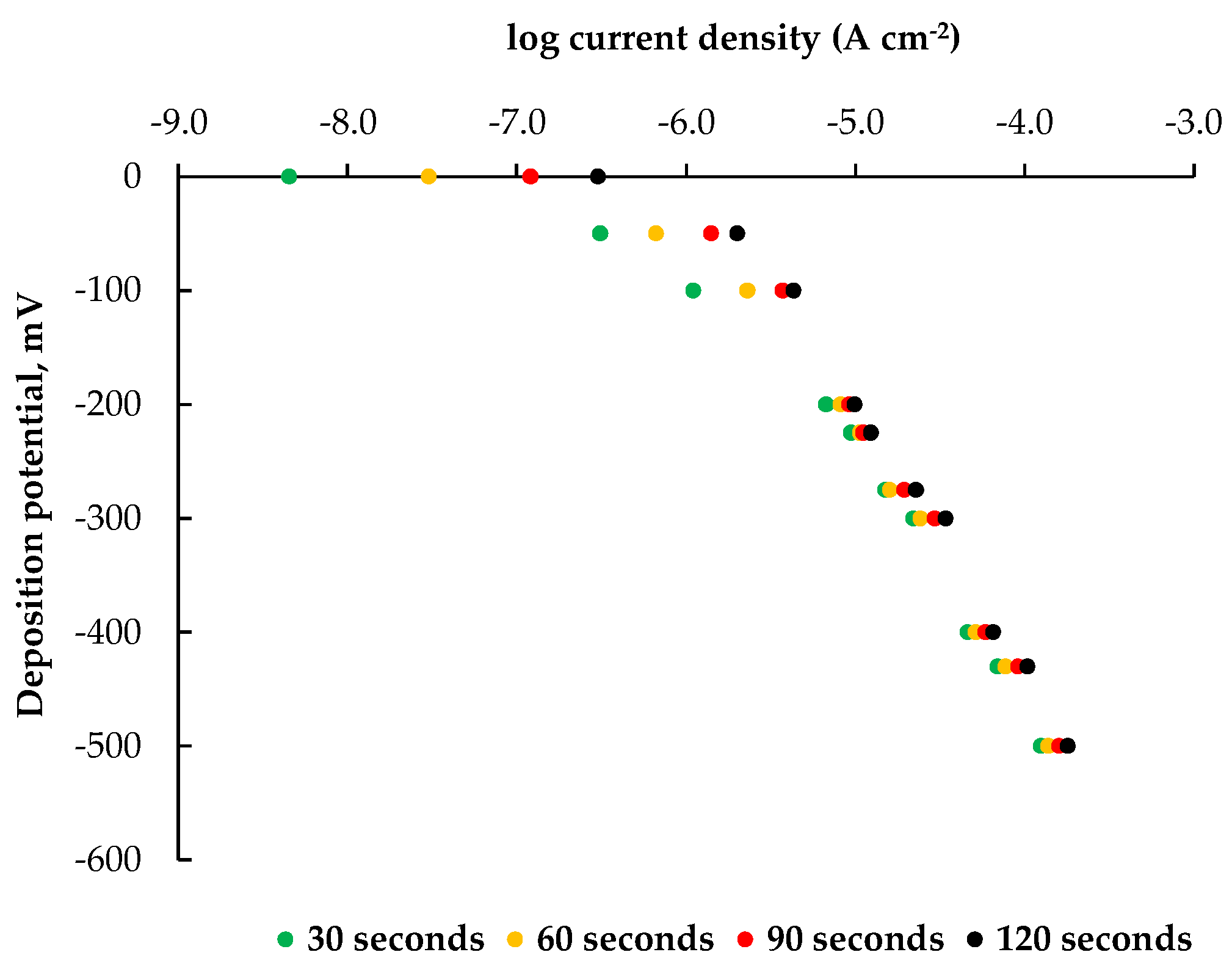
Figure 3.
Stability study using DPV measurements containing 20.0 μg L-1 cinchonine solution: the DPV measurements show a 1,1% change in RSD peak current after 10 scans. The reported DP voltammograms correspond to 10 scans performed in a phosphate buffer 0.02 mol dm-3 (pH 7.0) and 0.1 mol dm-3 KClO4 as supporting electrolyte, recorded on a modified SP-Pt/CN electrode prepared at 10°C for 60 seconds, at a controlled potential of -220 mV vs. SSE. The scan rate was fixed to 10 mV s-1.
Figure 3.
Stability study using DPV measurements containing 20.0 μg L-1 cinchonine solution: the DPV measurements show a 1,1% change in RSD peak current after 10 scans. The reported DP voltammograms correspond to 10 scans performed in a phosphate buffer 0.02 mol dm-3 (pH 7.0) and 0.1 mol dm-3 KClO4 as supporting electrolyte, recorded on a modified SP-Pt/CN electrode prepared at 10°C for 60 seconds, at a controlled potential of -220 mV vs. SSE. The scan rate was fixed to 10 mV s-1.
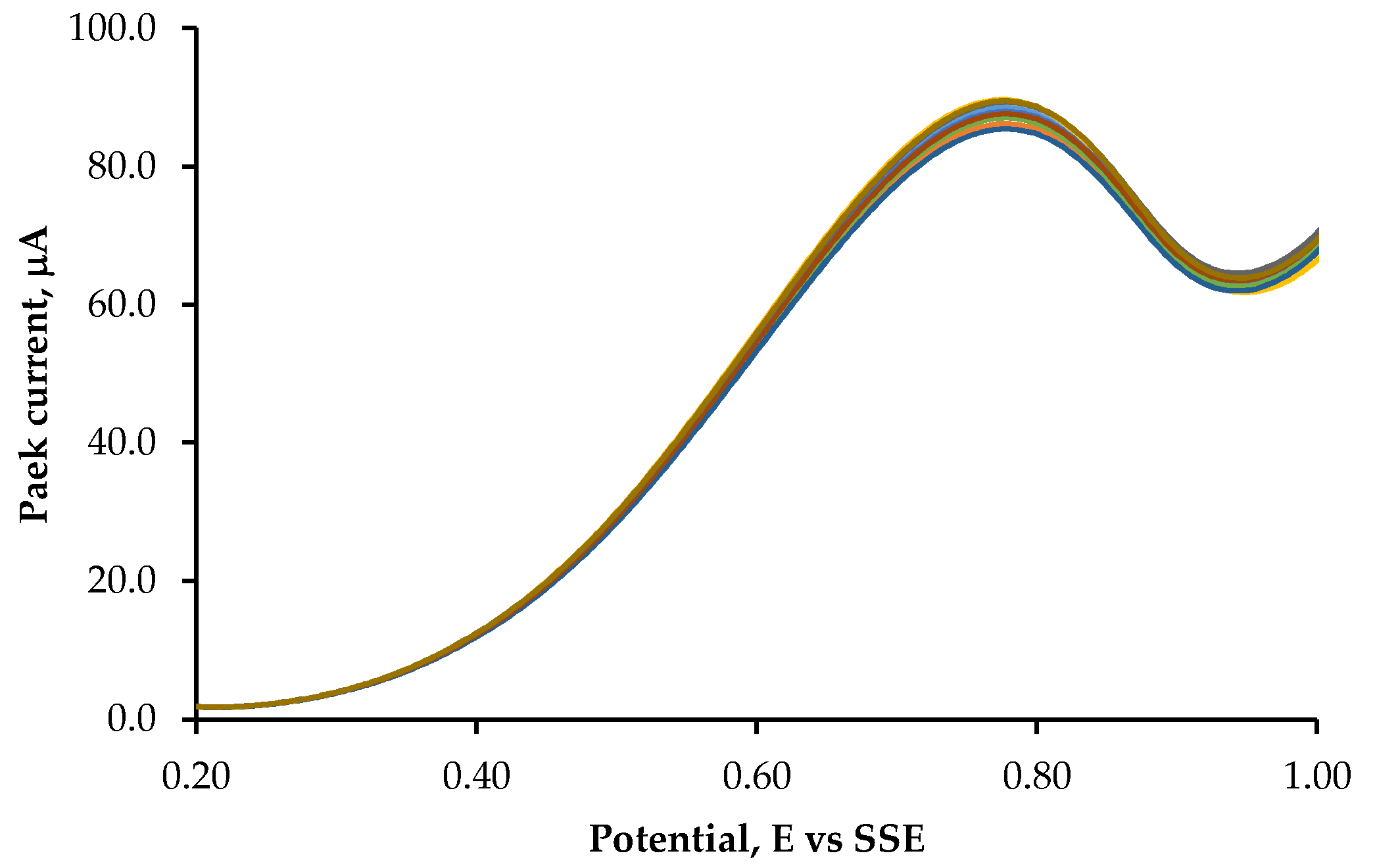
Figure 4.
DPV voltammograms measured in phosphate buffer 0.02 mol dm-3 at pH 7.0 with 0.1 mol dm-3 KClO4 as supporting electrolyte using an SP-Pt electrode (a) and an SP-Pt/CN electrode (b). These were recorded in a solutions containing increasing concentrations of cinchonine. The insets below show the corresponding calibration plots. These lines are drawn in such a manner as to highlight the different slopes. The line with the larger slope, related to SP-Pt/CN electrode, confirms greater sensitivity for this sensor.
Figure 4.
DPV voltammograms measured in phosphate buffer 0.02 mol dm-3 at pH 7.0 with 0.1 mol dm-3 KClO4 as supporting electrolyte using an SP-Pt electrode (a) and an SP-Pt/CN electrode (b). These were recorded in a solutions containing increasing concentrations of cinchonine. The insets below show the corresponding calibration plots. These lines are drawn in such a manner as to highlight the different slopes. The line with the larger slope, related to SP-Pt/CN electrode, confirms greater sensitivity for this sensor.
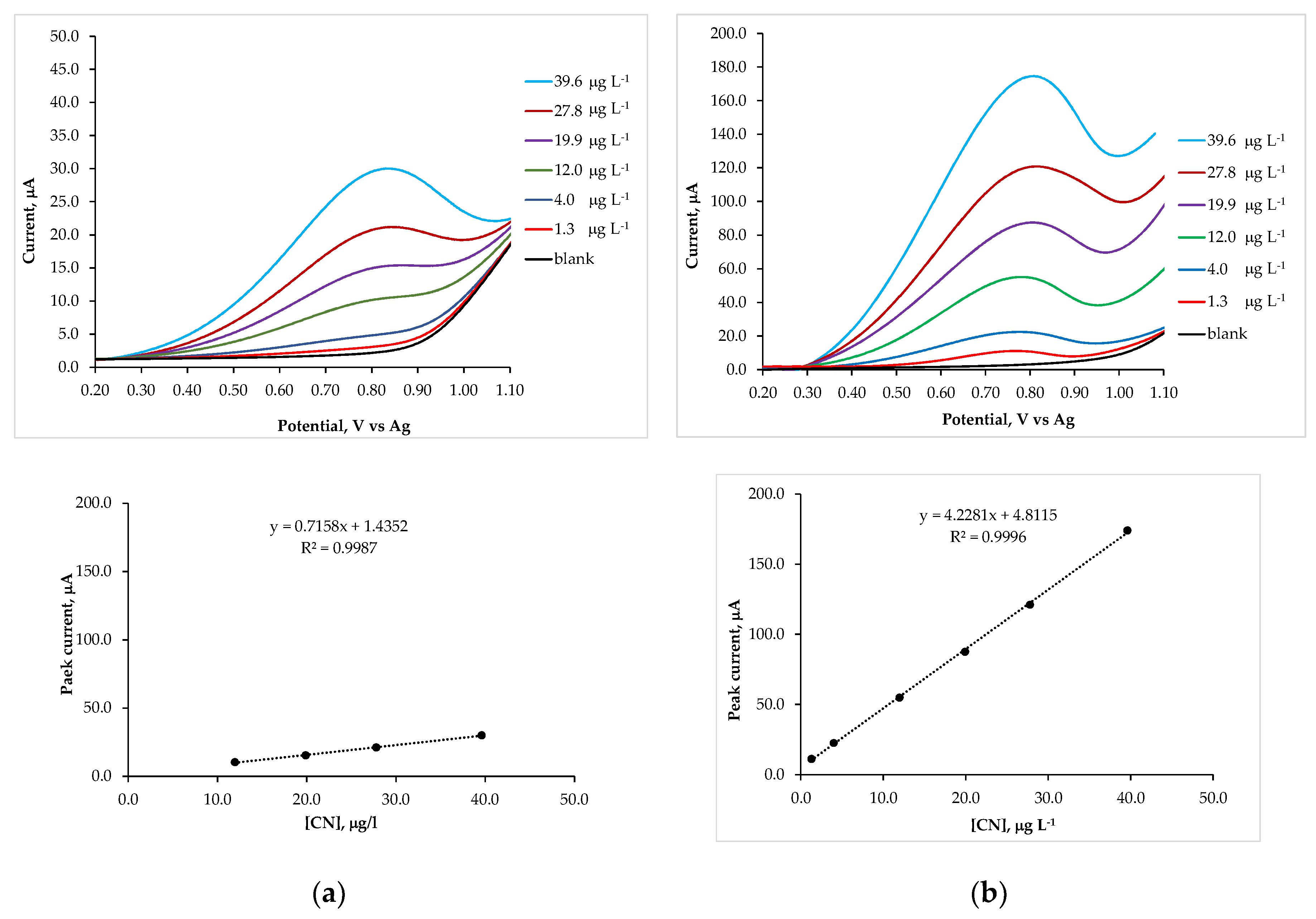
Figure 5.
Molecular structures of cinchonine, cinchonidine, quinidine, and quinine as cinchona alkaloids. Cinchonidine and cinchonine are stereoisomers; quinine and quinidine are identical to cinchonidine and cinchonine, respectively, except for the additional methoxy group in the C6’ position of the quinoline ring.
Figure 5.
Molecular structures of cinchonine, cinchonidine, quinidine, and quinine as cinchona alkaloids. Cinchonidine and cinchonine are stereoisomers; quinine and quinidine are identical to cinchonidine and cinchonine, respectively, except for the additional methoxy group in the C6’ position of the quinoline ring.
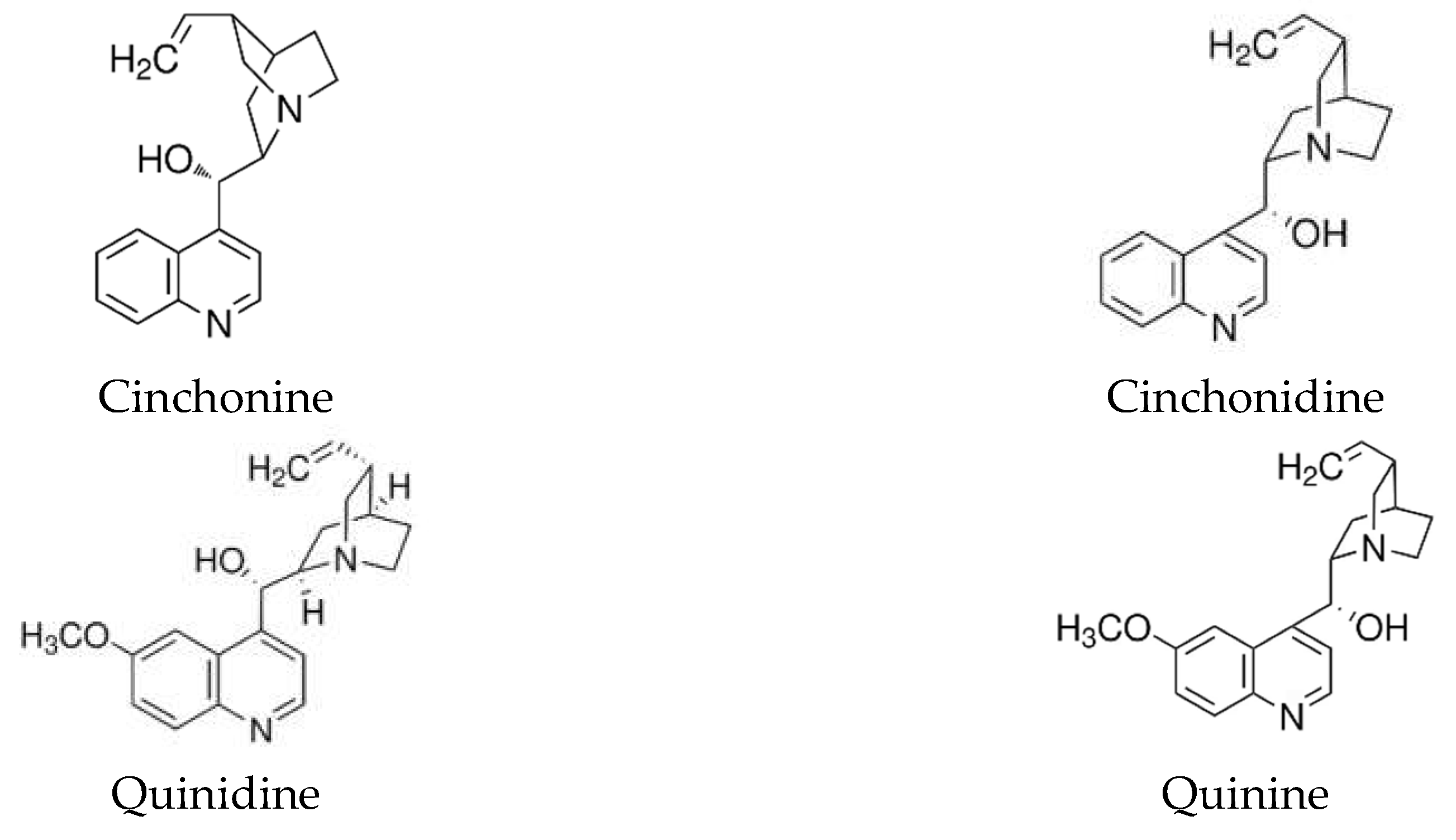

Table 1.
The relative standard deviation, RSD (%) of peak current of the SP-Pt/CN electrodes prepared at a controlled potential of -220 mV vs. SSE for different deposition times and temperatures. The RSD of peak current values was recorded in a phosphate buffer solution at pH=7.0 containing 4.0 μg L-1 of cinchonine, using sixteen independently fabricated electrodes.
Table 1.
The relative standard deviation, RSD (%) of peak current of the SP-Pt/CN electrodes prepared at a controlled potential of -220 mV vs. SSE for different deposition times and temperatures. The RSD of peak current values was recorded in a phosphate buffer solution at pH=7.0 containing 4.0 μg L-1 of cinchonine, using sixteen independently fabricated electrodes.
| Deposition time, s | Deposition temperature, °C | |||
| 5 | 10 | 15 | 20 | |
| 30 | 2.7 | 1.6 | 1.9 | 2.7 |
| 60 | 2.3 | 1.1 | 2.7 | 3.5 |
| 90 | 3.5 | 2.6 | 3.5 | 5.2 |
| 120 | 4.5 | 3.3 | 5.1 | 6.4 |
Table 2.
Comparison of the detection limits of cinchonine determined in this work and those reported in the literature for different sensors.
Table 2.
Comparison of the detection limits of cinchonine determined in this work and those reported in the literature for different sensors.
| Sensor Used | Limit of Detection (LOD) | Reference |
|---|---|---|
| Quinydrone electrode | 588 mg L-1 | [37] |
| GCE modified with β-CD immobilized | 0.6 mg L-1 | [36] |
| Fluorescence sensor based on a Zn coordination polymer | 129 μg L-1 | [34] |
| Gold electrode modified with ion-pair | 29.4 μg L-1 | [30] |
| complex of cinchonine–picrolonate | ||
| Sensor modified with cinchonine-monotetraphenylborate-PVC | 11.8 μg L-1 | [38] |
| SPE-Pt | 5.2 μg L-1 | This work |
| SPE-Pt/CN | 0.6 μg L-1 | This work |
Table 3.
Recovery data related to interferences of different species in the determination of cinchonine using the proposed sensor. The concentration of cinchonine was fixed at 6 μg L-1 in a 0.02 mol dm-3 phosphate buffer (pH 7.0) containing a 0.1 mol dm-3 KClO4 supporting electrolyte. The interferent concentrations were fixed at 0.6 μg L-1 (1:0.1), 6.0 μg L-1 (1:1), and 60 μg L-1 (10x).
Table 3.
Recovery data related to interferences of different species in the determination of cinchonine using the proposed sensor. The concentration of cinchonine was fixed at 6 μg L-1 in a 0.02 mol dm-3 phosphate buffer (pH 7.0) containing a 0.1 mol dm-3 KClO4 supporting electrolyte. The interferent concentrations were fixed at 0.6 μg L-1 (1:0.1), 6.0 μg L-1 (1:1), and 60 μg L-1 (10x).
| Interfering Substances | Concentration Ratio, [CN]: [Interferent] | ||
|---|---|---|---|
| 1:0.1 | 1:1 | 1:10 | |
| Recovery, % | |||
| Urea | 99.8 | 105.2 | 106.3 |
| Creatinine | 102.1 | 98.9 | 100.0 |
| Caffeine | 100.2 | 100.5 | 99.8 |
| Glucose | 98.7 | 100.2 | 101.3 |
| Cinchonidine | 100.6 | 98.6 | 92.7 |
| Quinine | 102.1 | 95.6 | 91.8 |
| Quinidine | 109.6 | High interference | High interference |
Table 4.
Application of SP-Pt/CN sensor for the determination of cinchonine concentration in the urine and serum samples, added with different amounts of cinchonine and diluted 10-fold with an electrolyte solution suitable for voltammetric measurements.
Table 4.
Application of SP-Pt/CN sensor for the determination of cinchonine concentration in the urine and serum samples, added with different amounts of cinchonine and diluted 10-fold with an electrolyte solution suitable for voltammetric measurements.
| [CN]Added, μg L-1 | Urine | Serum | ||
| Found, μg L-1 | Recovery, % | Found, μg L-1 | Recovery, % | |
| 1.99 | 2.15 | 108.0 | 1.93 | 97.0 |
| 3.96 | 3.93 | 99.2 | 4.18 | 105.5 |
| 9.76 | 10.12 | 103.7 | 9.93 | 101.8 |
| 19.05 | 19.77 | 103.8 | 19.00 | 99.8 |
| 36.36 | 36.23 | 99.6 | 36.70 | 100.9 |
Disclaimer/Publisher’s Note: The statements, opinions and data contained in all publications are solely those of the individual author(s) and contributor(s) and not of MDPI and/or the editor(s). MDPI and/or the editor(s) disclaim responsibility for any injury to people or property resulting from any ideas, methods, instructions or products referred to in the content. |
© 2025 by the authors. Licensee MDPI, Basel, Switzerland. This article is an open access article distributed under the terms and conditions of the Creative Commons Attribution (CC BY) license (https://creativecommons.org/licenses/by/4.0/).
Copyright: This open access article is published under a Creative Commons CC BY 4.0 license, which permit the free download, distribution, and reuse, provided that the author and preprint are cited in any reuse.