

Submitted:
04 March 2025
Posted:
05 March 2025
You are already at the latest version
Abstract
The premise of this research is to investigate the influence of ethical climate on the environmentally responsible behavior of employees within the hospitality sector in Pakistan. This study aims to further investigate the concept of regulated mediation by exploring the relationship between environmental information and motivational states. The study's methodology, approach, and design were carefully considered and implemented. The data was gathered from a sample of 290 front-line managers in the hospitality sector of Pakistan, employing a research instrument. Structural Equation Modelling (SEM) was employed to test the hypothesis. (1) The study results indicate a significant relationship between ethical climate and employees' green behavior. (2) Furthermore, the findings indicate that motivational states partially mediate the association between organizational climate and green behavior. (3) Additionally, the results clearly indicate that the influence of ethical climate on motivational states is moderated by environmental knowledge. The present study has significant significance for managers operating within the hospitality sector of Pakistan, as it highlights the relevance of organizational climate in enhancing their environmentally friendly practices. The present study adds to the current knowledge base by investigating the mediating influence of motivational states and the moderating impact of environmental awareness on the association between ethical climate and employees' green behavior within the hotel industry.
Keywords:
ethical climate
; environmental knowledge
; motivational states
; employee green behavior
; hospitality
1. Introduction
The notion of safeguarding the natural environment in order to achieve sustainable development on a global scale has been in existence since the inception of the initial economic, social, and cultural development initiative. This commitment has persisted throughout successive programs, mirroring the actions taken by other nations worldwide (Jagoda et al., 2023). Nevertheless, the pace at which environmental deterioration occurs exceeds the anticipated restoration efforts implemented by development initiatives and regulatory programs (Otaye-Ebede et al., 2020). Intermittent and inconsequential enhancements can be discerned across various environmental indices, norms, and green initiatives. Hence, the ensuing inquiries may be posed: What is the underlying reason of this lack and disparity? (Ahmad & Khan, 2022). Despite the implementation of numerous rules and regulations by governmental and regulatory institutions, organizations worldwide have encountered significant challenges in their endeavors to enhance environmental circumstances (Zhoa et al., 2021). According to Hajli (2018), a further salient aspect pertains to the phenomenon wherein individuals occasionally exhibit cynical dispositions while concurrently professing their apprehension regarding those matters, both on an individual and organizational scale. These phenomena can be observed even within national organizations that operate on an international scale (Saleem et al., 2021). These organizations opt to acquire internationally recognized environmental standard certifications, such as ISO 14000 standards, primarily with the intention of gaining recognition or obtaining authorization to export their products (Lythreatis et al., 2022). Meanwhile, their employees and managers only carry out predetermined actions in order to meet the certification requirements set by regulatory bodies following inspections. The occurrence of this immoral behavior can be ascribed to compliance with hierarchical regulations, lack of awareness, and insufficient encouragement of environmentally-friendly practices by governing bodies (Decoster et al., 2021). Employees' Green Behaviour (EGB) is considered beneficial for society (Al-Ghazali & Afsar, 2021). In practical terms, it is defined as "actions and behaviors that can be expanded and adopted by the workforce to promote environmental sustainability" (Tian et al., 2021). Through these actions, organizations uphold societal rights and fulfil societal expectations. In recent times, there has been a noticeable trend among corporations to pursue the development of motivational states (MOS). These states involve the adoption of a set of rules aimed at achieving a harmonious equilibrium among many stakeholders, including suppliers, society, and consumers/clients (Aboramadan, 2022). Furthermore, it is critical to recognize the critical role this element plays in promoting company competitiveness, enabling sustainable growth, and realizing organizational objectives. Through the application of MOS, our goal goes beyond shareholder satisfaction. According to Yang et al. (2020), this tactic is thought to be helpful in guiding firms through the process of producing value for their stakeholders. Reducing the negative environmental effects of an organization's operations is a critical component that affects a company's sense of purpose, societal standing, and general satisfaction. Apart from the current approaches concerning motivating moods and their manifestation, another critical matter concerns the cultivation of environmental consciousness in the workplace (Saleem et al., 2021). This means providing staff with updated data and a more comprehensive grasp of environmental conservation. People's motivation is greatly affected by the ethical climate (EC) since it is directly related to how they view the workplace, behave, and how they personally feel about environmental dependability. The notion of an EC comprises the assortment of ecologically-focused principles, institutional guidelines, procedures, and customs that people encounter in their place of employment (Dey et al., 2022). The motivational state can be interpreted as the result of social interactions between workers, which makes them aware of the importance of standard operating procedures, best practices, and organizational regulations, as well as the value of their own involvement (Fapohunda, 2022). Educating its members and encouraging a feeling of environmental responsibility is one way to build an organization that is sustainable and ecologically aware (Sarwar et al., 2023). Studies reveal that a range of elements, including as organizational policies, procedures, and human resource management (HRM) practices, impact employees' perceptions of their working environment, particularly with regard to environmental knowledge (Wen et al., 2022; Pham et al., 2020). Dey et al. (2022) suggest that the efficacy of organizations in addressing environmental concerns is contingent upon the strategic methodology they utilize to resolve these issues and allocate their resources. The first steps in developing a theoretical framework for EC were taken by Luthra et al. in 2021. Their goal was to establish a consistent connection between the actions performed within the environmental management system, compliance with ISO 14001, and the impact of human factors. Luthra et al. (2021) state that this approach takes into account a number of human elements, including incentives, teamwork, employee empowerment, training opportunities, and senior management support. It also includes actions related to environmental management, such as planning, implementing, supervising, and developing policies as well as managing reform and review processes. According to Khan et al. (2019), environmental knowledge (EK) includes all of the many aspects of knowledge related to environmental management.
Participating in Employee Green Behavior, or EGB, is regarded as an essential preventive action. There are a number of tactics that can be used to encourage and inspire employees to regularly exhibit these behaviors. Teaching staff members about potential environmental effects and catastrophe mitigation techniques is one strategy. People who believe they can make a difference in their workplace are more likely to engage in preventative behaviors (Saleem et al., 2021; Fawehinmiet et al., 2020; Luu, 2019). Scholars have contended that preventive practices are significantly influenced by people's beliefs about their capacity to change behavior (Fawehinmiet et al., 2020; Luu, 2019). Educating the personnel about the need of participating in environmentally friendly projects is an alternate strategy. Organizations must determine the underlying causes of voluntary behaviors in order to encourage employee participation in them (Ahmed et al., 2022; Saleem et al., 2021). Several scholars have conducted research to investigate the relationships among factors like EK, MOS, ethical atmosphere, and ecologically responsible behavior, acknowledging the important role that EGB plays. As observed by Norton et al. (2021), additional empirical data is necessary to confirm the validity of the conclusions, even if there has been many research on EGB (Safari et al., 2021; Al-Ghazali & Asfar, 2021; Manosuthi et al., 2022). It is critical to focus on the ways in which various contextual and individual factors influence employees' adoption of environmentally friendly practices.
Studies devoted to the theoretical and empirical exploration of EGB within organizational settings are few and far between. Furthermore, the majority of earlier studies have not looked at how important environmental green behavior, or EGB, is in encouraging environmentally conscious companies or activities. Lasrado and Zakaria (2020) and Zhang et al. (2023) have suggested that an ethical environment and motivated states are likely the limiting variables of this oversight. Therefore, the main goal of this study is to close this research gap by investigating the direct and indirect effects of an ethical workplace culture on employees' environmentally friendly activities, while also accounting for the mediating effects of motivating mood and the moderating influence of environmental awareness.
2. Theoretical Framework
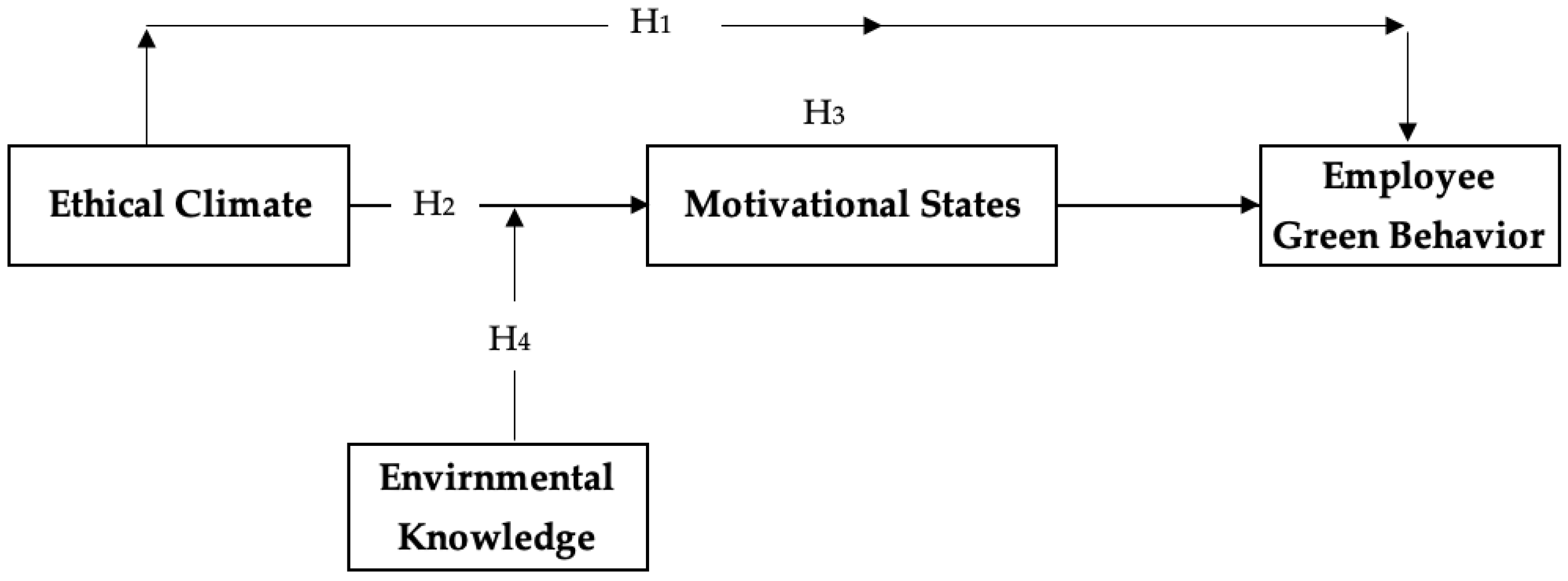
Figure 1.
Research model.
2.1. Ethical Climate and Employee-Green Behavior
Organizational climate reflects shared values and morality. Weber and Opoku-Dakwa (2022) explained organizational culture include an ethical environment. Zhang (2023) argues that an organization's ethical context is linked to its norms, which directly affect its operations and have ethical implications. Support and trust in an organization affect the environment, especially people's mental and emotional health (Ismail, 2015). Marquardt et al. (2021) found EC in decision-making frameworks. These models enable organizational sustainability correlation analysis. Different types of EC have been studied in decision-making (Elci & Alpkan, 2009). The above types include social-legalist, nurturing, autonomy-promoting, instrumental, and organizational-legalistic climates (Chughtai et al., 2015).
An organization's view of its multiple work processes and procedures that lead to ethical principles is called its ethical climate. A caring workplace prioritizes the well-being of all employees by showing genuine concern for others (Marquardt et al., 2021). In a legalistic social context, organizational rules and regulations are followed and enforced. In an ethical environment, the company expects all employees to follow rules. In a utilitarian workplace, employees must put the company first and follow rules (Pasricha, 2018). A corporation creates an autonomous atmosphere when it allows employees to express their ethical views and understanding. Detailed investigation of these environmental variables reveals justice-related components. An organization's culture of caring shows a genuine concern for its employees, which leads to favorable justice judgments (Weber & Opoku-Dakwa, 2022).
Green conduct has traditionally been optional workplace behavior (Barbarossa & Pelsmacker, 2016). However, organizational psychologists agree that not all EGB is discretionary (Ones & Dilchert, 2012). Ones and Dilchert (2012) proposed five job-performance-based categories of EGB. These include taking initiative, avoiding harm, influencing people, using sustainable work practices, and conserving resources. This category indirectly acknowledges required and discretionary acts (Kim et al., 2019). These categories help link the behavior to multiple groups.
A simple and practical taxonomy divides people by performance and citizenship. Imperative behaviors that actively support environmental sustainability goals in an organization are different (Wang et al., 2017). Alternative behaviors enhance the organizational, social, and psychological backdrop for job performance (Safari et al., 2018). There's a difference between environmentally responsible action and workplace behavior. Mandatory and voluntary green behavior exist. Obligatory green behavior is the acts and conducts taken to meet environmental sustainability commitments (Al-Gazali & Afsar, 2021). Research has linked employee performance to an organization's environmental sustainability (Dumont et al., 2017; He et al., 2021). Norton et al. (2017) explained the organizational task performance.
This behavior requires employee participation and enhances business values directly or indirectly. Employee at EGB is urged to exceed the organization's basic environmental criteria voluntarily. EGB is the individual's proactive sustainable practices that exceed the organization's basic expectations. Green behavior at an organization includes prioritizing environmental issues, establishing environmental programs and laws, lobbying and advocating, and influencing others to adopt sustainable practices. Social Cognitive Theory (SCT) by Bandura (2006) explains how ethical context affects EGB. Environment greatly affects learning. Next, people use cognitive processes to internalize and absorb knowledge and apply it in the same situation. Voluntary extra-role behavior is strongly linked to organizational citizenship behavior (OCB) and contextual performance. Kim et al. (2017) defines these terms as acts that create an organizational, psychological, and social environment for task performance. Prior research supports discretionary green behavior (Norton et al., 2017). Thus, this study seeks to completely analyze the multiple links between EC and organizational EGB. So, we propose a relationship that;
H1:
EC has a positive relationship with the EGB.
2.2. Relationship Between Ethical Climate and the Motivational States
Vanello (2020) described motivation as the struggle to reach one's full potential, succeed, and feel competent. Motivation achievement is considered to stir up energy. Without completion incentive, worker unhappiness can increase workplace discontent (Winter & Epstude (2023). Ngo et al. (2023) define motivation for achievement as a strong desire to complete tasks according to preset criteria and to engage in business activities to achieve success. Individual accomplishment motivation comes from two main factors: the desire to succeed and avoid failure (Patwary et al., 2023). People who prefer success to failure and are more responsive in numerous situations.
Personal passion for a goal or success is directly linked to motivation. Achieving motivation implies that a person's motivation depends on their goals. Zhang et al. (2022) define motivation attainment as the cognitive ability to perform behaviors that are better, faster, more effective, and more efficient. Hu et al., (2022) classify motivation as power, affinity, and achievement. Power ambitions can be portrayed positively or negatively. Two types of affiliate motives exist; interest and assurance. Strong ties make people more likely to predict others' feelings and opinions. The completion of duties and great performance are their main goals. Individuals use motivating techniques by working hard and taking calculated risks. It motivates people to take responsibility and seek feedback on their accomplishments. The SCT by Bandura (2006) explains how motivation affects behavior. This philosophy divides motivation into intrinsic and extrinsic. Intrinsic motivation is doing something for its own sake, such as enjoying one's work. This is sometimes called autonomous motivation. The pursuit of honor and distinction in one's community, financial resources, and improved living conditions are examples of extrinsic motivation. Controlled motivation, or social pressures, can lower motivation. Community norms and regulations limit controlled motivation. How the incentive is internalized affects outcomes? Internalization involves integrating a formerly externally governed norm or regulation, which may have been impacted by incentives or penalties (Hu et al., 2022). Internalization is the integration of self-regulatory mechanisms like values and interests. External incentive management norms and reasons can be implemented partially or totally, depending on internalization. An ethical workplace can motivate employees and boost performance and production. Motivation and organizational climate are linked. So, we propose a relationship that
H2:
EC has a positive relationship with MOS.
2.3. Motivational States as a Mediator
Social Cognitive and Learning Theories (i.e., SCT and SLT) describe employee motivation in businesses. SCT explains that motivation shapes behavior (Matthews et al. (2021). This text examines intrinsic and extrinsic drives. Motivation for its own sake, like job satisfaction, is intrinsic. Working hard and making money to enhance one's life and community's reputation is extrinsic motivation. Internalization is how successfully a person combines self-regulation, interests, and values. Many external and internal incentive management requirements depend on internalization. External motivation encompasses rewards and punishments (Bamberg & Verkuyten, 2022). This contains novel self-worth constraints like guilt and ego involvement that limit action. This also helps the company go green. Intervention may be motivated by guilt, compulsion, or self-worth (Murphy et al., 2020). Auto-motivation relates rules to action. Bamberg and Verkuyten (2022) argued that people who do something have life goals. They strive for success. The incentive to communicate with varied organization members to attain these aims is integrated motivation. This extrinsic motivation is independent. Norton et al. (2017) recommend supervising time-consuming tasks like job hunting and professional growth. D’Agostini (2020) said that the controlled-motivated workers feel duty-bound. Organizational constraints limit worker motivation. D’Agostini (2020) further said that self-motivated workers like personal pursuits. Motivated workers promote EGB and green projects.
SCT discusses behavior, motivation, and learning which demonstrates how psychological processes produce motivation and how social factors may support or hinder it. There are two motivation methods. Motivation can be intrinsic or extrinsic (Ryan & Deci, 2020). Autonomous motivation is internal and external. Ryan and Deci (2020) define it as a self-determined action that supports internal aims. Enjoyable or intriguing activities inspire people intrinsically (D’Agostini, 2020; Ryan & Deci, 2020). Extrinsic motivation is more complex than intrinsic motivation since it can be independent or regulated. External motivation or persuasion may motivate people to do uninteresting tasks. External stimuli like incentives or punishments can manage motivation in a specific situation.
A green psychological climate motivates employees to engage in EGB and reduce non-green activities. Bandura (2006)'s SCT informs this investigation. Motivation boosts followers' confidence, creativity, excitement, ingenuity, vision, and empowerment (Norton et al., 2017). Employees who examine and conceptualize challenges solve them better. The measures promote trust, equity, and integrity. An environmental climate in the organization makes employees feel valued and engaged, enhancing their environmental responsibility (Ryan & Deci, 2020). Bamberg and Verkuyten (2022) found that motivated workers are more self-confident, happy, active, and responsible. These attributes boost job performance. Norton et al. (2017) found that EGB and environmental sustainability boost workplace happiness and enthusiasm. Employee motivation and good deeds are linked. A green psychological climate may motivate employees to engage in EGB and reduce non-green behavior.
H3:
The mediating role of MOS between EC and EGB.
2.4. Environmental Knowledge as Moderator
Understanding deforestation, climate change, and marine non-biodegradable waste is part of environmental knowledge (EK). Hamzah and Tanwir (2021) explained that employee environmental awareness improves green product perceptions and attitudes. Employees' mistrust of green items hinders their adoption of eco-friendly practices. Because they fear overstatement and incorrect claims regarding their organizational context knowledge, employees are skeptical (Raza & Khan, 2022). Failure to grasp carbon footprint, ethical climate, green psychological climate, and environmental change knowledge often leaves employees unaware. Employees lack the understanding to make informed environmental carbon emission decisions (Foroughi et al., 2022). Hamzah and Tanwir (2021) further explained employees with moderate environmental awareness are more inclined to encourage green business practices. Environmental awareness explains firm green habit promotion.
Product packaging, harsh chemicals, and carbon emissions are mitigated by EK (Qomariah & Prabawani, 2020). Environmentally aware workers are more devoted to environmental performance targets. EK and passion are valued by recruiters (Norton et al., 2017). Employee environmental awareness should be recognized at work. Therefore, it's vital to assess if environmental information can hinder sustainable practices. SCT (Bandura, 2006) explains that environmental awareness can empower employees and promote environmentally responsible practices in a business. Objective needs include assembly-line speed and working time, whereas social demands are group standards and job expectations. Environmental awareness assistances employee understanding of natural and organizational settings. Workers can make good decisions with this knowledge. A good ethical and psychological climate helps workers grasp context. The information helps staff promote green practices. There has been no study using SCT to examine how EK moderates the link between organizational climate and green employee empowerment. This link explains organizations' motivations and promotes eco-friendly behavior. Employees' environmental awareness may not match their workplace climate. EK may alter eco-friendly behavior depending on comprehension. Norton et al., (2021) observed that eco-conscious personnel are more likely to act sustainably. Thus, we hypothesize that ecologically conscious people act more sustainably.
H4:
EK positively moderates between the EC and Motivation States.
2.5. Theoretical Framework
3. Methods
3.1. Research Design
Pakistan is presently facing considerable scrutiny over environmental disruption due to its intensified industrial growth (Dawn, 2021). According to the Environmental Performance Index (2020), Pakistan ranks 169th in environmental performance. This study aims to investigate the impact of EC on EGB, including the moderating role of EK. This research utilized a quantitative technique to examine the hotel industry in Pakistan. The study utilized a positivist technique. The positivist paradigm method was utilized to determine the relationships among the variables. A thoroughly designed questionnaire is employed to gather and evaluate data. The main aim of this study is to identify the fundamental problem, formulate hypotheses, and then forecast a result that conforms to a law-like generalization. The quantitative technique is utilized to improve result accuracy and enable statistical analysis. Furthermore, the quantitative approach is distinguished by its objectivity, impartiality, precision, and methodical methodology. This study also employs reliability and validity testing (Park, 2016). Furthermore, the application of the quantitative method is beneficial since it offers factual and concrete data (Barnham, 2010). Furthermore, it is essential to ascertain the regression and correlation among the variables. Furthermore, an alternate assessment is performed to alleviate the impact of common method bias (CMB) throughout the data collecting and analysis stages. The survey tool is divided into two separate components. The initial paper contains extensive information on all variables, but the succeeding document focuses only on the demographic features of the research participants. The data has been collected from many industries within the hotel business in Pakistan. This study utilizes Structural Equation Modelling (SEM) as its approach. Reinartz et al. (2009) classified SEM into two separate methodologies: variance-based SEM and covariance-based SEM. In this study the covariance-based SEM is applied with the help of AMOS software which assist in data collecting and analysis. AMOS is beneficial owing to its utilization of many estimators, including ordinary least squares (OLS) regression, as evidenced by Henseler (2017).
3.2. Measures
The adaptation of the EC questionnaire was derived from the six-item scale developed by Schwepker (2001). All the items in the study are assessed using a five-point Likert scale. The organization that I am affiliated with has a structured and documented code of ethics. The acquisition and understanding of information about the environment. The researchers utilized a three-item EK scale developed by Fawehinmi et al. (2020). The Likert scale with five points is employed for the measurement of the sample item such as “I possess knowledge regarding the issue of environmental damage resulting from human activity”. To assess MOS, we employed a 12-item scale developed by Meyer and Gagne (2010). The scale comprises four distinct variables, namely internal motivation, external motivation, intrinsic motivation, and extrinsic motivation. The approach employed in this study is the adoption of a comprehensive scale, wherein the dimensions are not considered separately but rather collectively. The questionnaire was assessed using a 5-point Likert scale, which spanned from the response option of "never" to "frequently." The measurement of EGB is conducted using the twelve-item scale developed by Bissing-Olson et al. (2013). All the items are assessed using a five-point Likert scale. The items might be described as "The assigned duties are effectively fulfilled in a manner that is environmentally sustainable."
4. Results and Discussion
4.1. Demography of the Study
The table presented above provides a clear representation of the demographic distribution in relation to the organization's name, gender, qualification, designation, department, and total experience. The data indicates a male-dominated sample, with 203 male respondents and 87 female respondents.

Table 1.
Demographical characteristics of respondents.
| Demographics | Categories | N | % |
| Pearl Continental Hotel | 120 | 41 | |
| Avari Hotel | 56 | 19 | |
| Name of Organization | Hospitality Inn | 55 | 19 |
| Royal Palm | 59 | 20 | |
| Total | 290 | 100 | |
| Female | 87 | 30 | |
| Gender | Male | 203 | 70 |
| Total | 290 | 100 | |
| Graduation | 83 | 29 | |
| Qualification | Masters | 174 | 60 |
| other | 33 | 11 | |
| Total | 290 | 100 | |
| Middle Level Manager | 237 | 82 | |
| Designation | Top Level Manager | 53 | 18 |
| Total | 290 | 100 | |
| Management | 192 | 66 | |
| Department | Finance | 98 | 34 |
| Total | 290 | 100 | |
| 1-5 year | 95 | 33 | |
| Total Experience | 6-10 year | 85 | 29 |
| 11-15 year | 63 | 22 | |
| 16-20 | 36 | 12 | |
| above 20 years | 11 | 3.8 | |
| Total | 290 | 100 |
4.2. Data Normality Analysis
Table 2.
Data skewness, mean, and kurtosis.
| Variables | Mean | St. Deviation | Skewness | Kurtosis |
| Ethical Climate | 3.639 | 0.66883 | -0.381 | -0.26 |
| Environmental Knowledge | 3.758 | 0.78271 | -0.786 | 0.637 |
| Motivation | 3.777 | 0.65517 | -0.34 | 0.25 |
| Employee Green Behavior | 3.673 | 0.64795 | -0.724 | 0.796 |
Based on the presented table, it is evident that the data exhibits a normal distribution. The skewness value, determined through the application of Bulmer's rule of thumb, is expected to fall within the range of +1 to -1. In the current study, the calculated skewness value aligns with this range. Similarly, the kurtosis value, computed using MacGillivary and Balandin’s method, is anticipated to fall within the interval of +3 to -3, which is indeed the case for this investigation.
Table 3.
Reliability Analysis.
| Variable | Cronbach alpha | No of items |
| Ethical Climate | 0.731 | 6 |
| Environmental Knowledge | 0.753 | 3 |
| Motivation | 0.746 | 12 |
| Employee Green Behavior | 0.775 | 12 |
| Overall reliability | 0.88 | 33 |
To mitigate potential disruptive variables, a reliability analysis was performed to evaluate the instrument and questionnaire items. Before employing alternative approaches, it is imperative to conduct instrument testing to mitigate potential disturbances. Based on the conventional guideline, a Cronbach's alpha coefficient beyond 0.7 is typically regarded as satisfactory, surpassing 0.8 is preferable, and surpassing 0.9 is ideal for assessing the reliability of an instrument. The table above demonstrates that all variables exhibit a Cronbach's alpha coefficient surpassing the threshold of 0.7, widely acknowledged as indicative of strong internal consistency. In addition, it is worth noting that the instrument has a commendable level of reliability, surpassing 0.7, so indicating highly favorable results. The table presented above demonstrates that all of the values above the threshold of 0.7.
Table 4.
Correlation Analysis.
| Items | EC | EK | MOS | EGB |
| EC | 1 | |||
| EK | .404** | 1 | ||
| MOS | .625** | .471** | 1 | |
| EGB | .531** | .510** | .625** | 1 |
Note(s) EC=Ethical Climate; EK= Envirnmental Knowledge; MOS=Motivation States; EGB=Employee Green Behavior.
A two-tailed test at a significance level of 0.01 indicates that the correlation is statistically significant, and the same is observed at a significance level of 0.05. The correlation matrix should range from 0 to 1, with p-values of 0.01 and 0.05 being considered significant. A correlation coefficient of 1 indicates a very strong association between the independent and dependent variables, while a value of 0 indicates no association between the variables. As demonstrated in the table above, all variables display a highly significant correlation at the 1% significance level.
Figure 2.
Path Diagram.
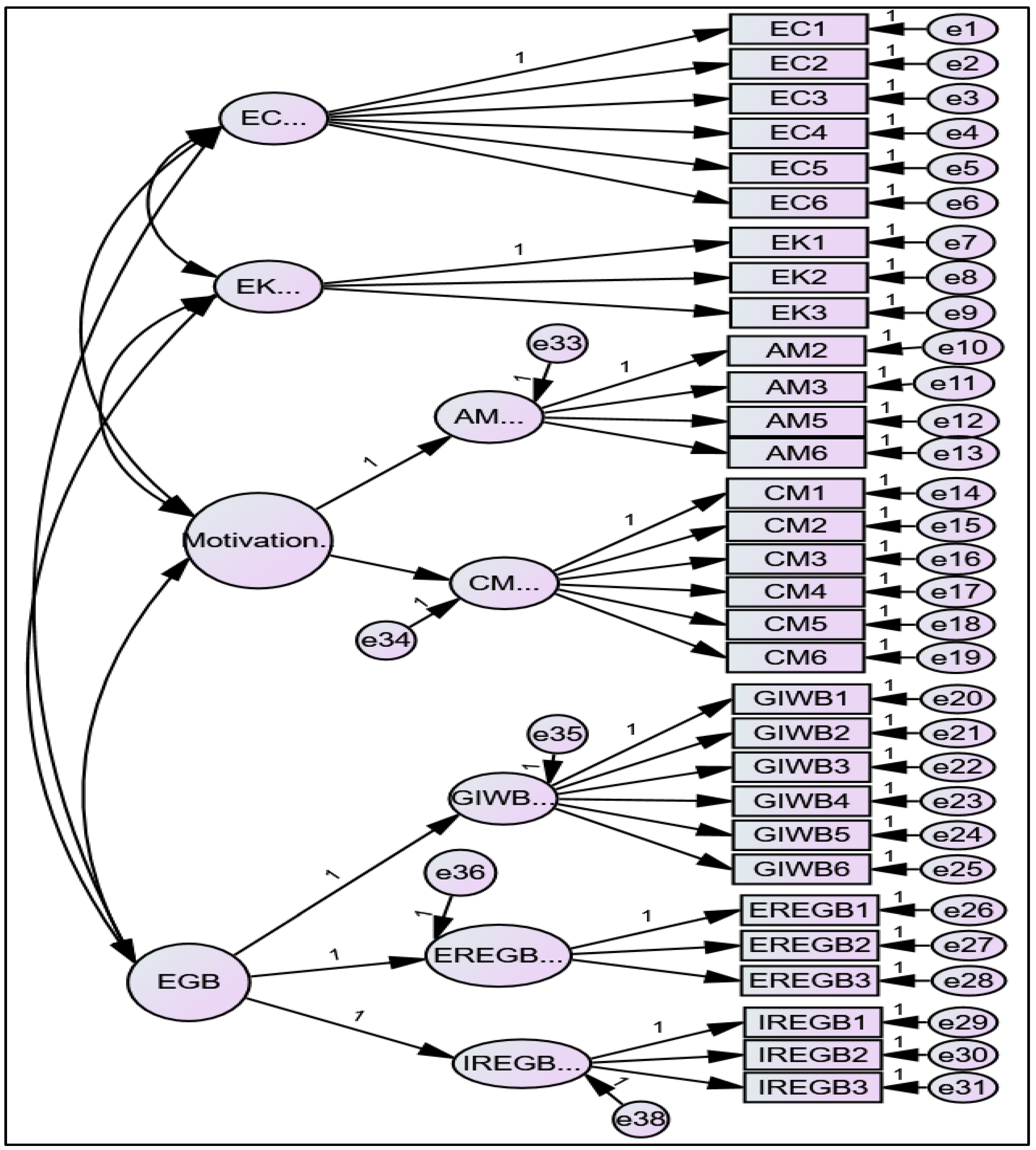
Table 5.
Fitness Summary.
| Model | Hypothesized | Thresholds |
| CMIN/DF | 2.11 | Less than 3 |
| CFI | 0.909 | Near to 0 |
| AGFI | 0.905 | Greater or equal to 0.90 |
| GFI | 0.9 | Greater or equal to 0.80 |
| RMR | 0.054 | Greater or equal to 0.90 |
| RMSEA | 0.043 | Less than 0.080 |
The data in this study underwent analysis and presentation through the utilization of Structural Equation Modelling (SEM), a statistical technique that encompasses factor analysis, route analysis, and regression. This methodology is advantageous for scrutinizing inferential variables and comprehending both confirmatory and foundational models. Confirmatory Factor Analysis (CFA) was performed to assess the reliability of the model using AMOS 28. The research produced a total of 28 figures utilizing the AMOS software to represent each individual element. After the completion of the CFA, the subsequent task involved the development of an appropriate model. Hu and Bentler (1999) stated that the Comparative Fit Index (CFI), which serves as an indicator of the model's goodness of fit, is expected to fall within the range of 0 to 1. The observed values for the model in this investigation were found to be within the acceptable range.
4.3. Mediation Analysis
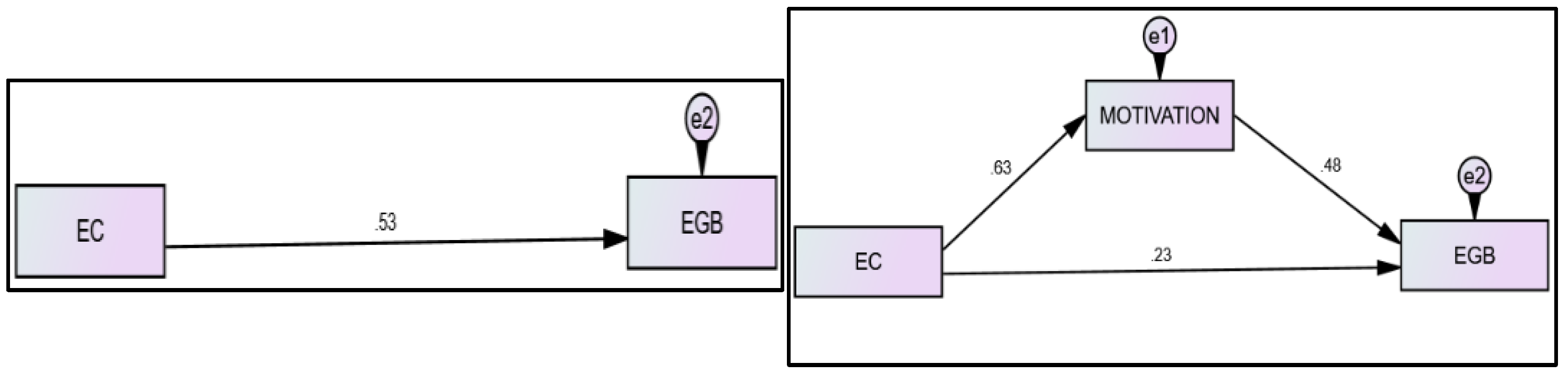
The mediation analysis in this study was conducted using the bootstrapping method with the AMOS software. The mediator is a component of the model that aids in enhancing the clarity of the link between the variables. The mediation analysis revealed a statistically significant direct association between the independent variable, EC, and the dependent variable, EGB. The beta coefficient (β) for this relationship was 0.490, with a p-value of 0.001. The observed link between the independent variable (IV) and dependent variable (DV) in the presence of a mediator is statistically significant, with a beta coefficient of 0.290 and a p-value of 0.001. The statistical analysis reveals a substantial indirect association between the variables, with a coefficient of β=0.190 and a p-value of p=0.001. The significance of the correlations between the variables remains consistent, regardless of the presence or absence of a mediator. This finding suggests the presence of partial mediation between the variables.
Figure 3.
Mediation Analysis.
5. Moderation Analysis
This study examines the moderation effect using the AMOS software and interprets the results using graphical representations provided by the stat-tool wiki. The unstandardized regression coefficients (B) were computed for all variables. The initial variable, EC (IV), exhibits an unstandardized regression coefficient of B1 = 0.422 (p = 0.002). The second variable, EK (moderator), has an unstandardized regression coefficient of B2 = 0.350 (p = 0.000). The third variable in the study indicates the interaction between the independent variable of EC, the dependent variable of Motivation, and the moderator of EK. The unstandardized regression coefficient for this interaction is B3 = 0.212, which is statistically significant with a p-value of 0.000. The results of this study indicate that the use of EK has a positive impact on the relationship between EC (independent variable) and Motivation (dependent variable).
Figure 4.
Moderation Analysis-I.
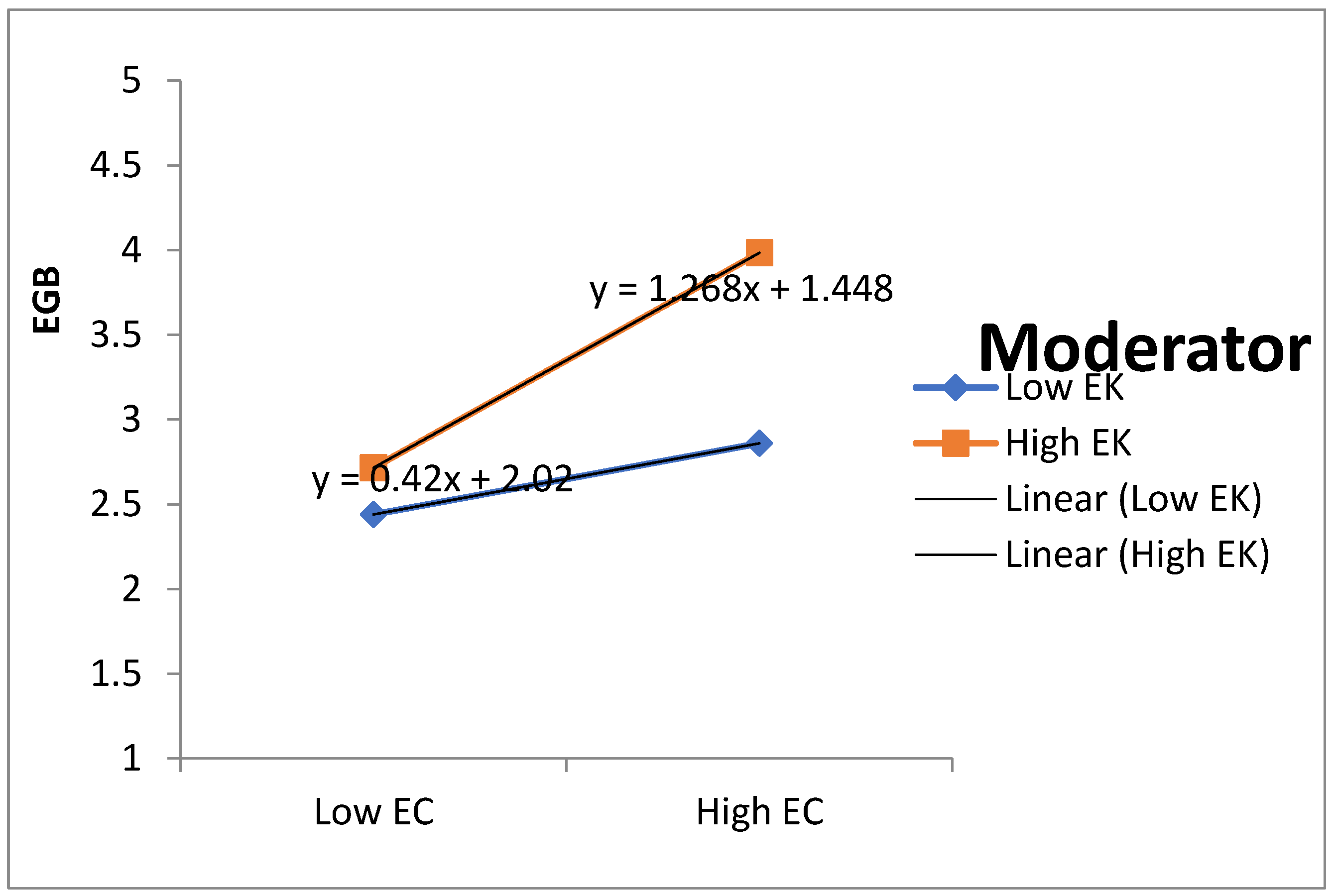
Figure 5.
Moderation Analysis-II.
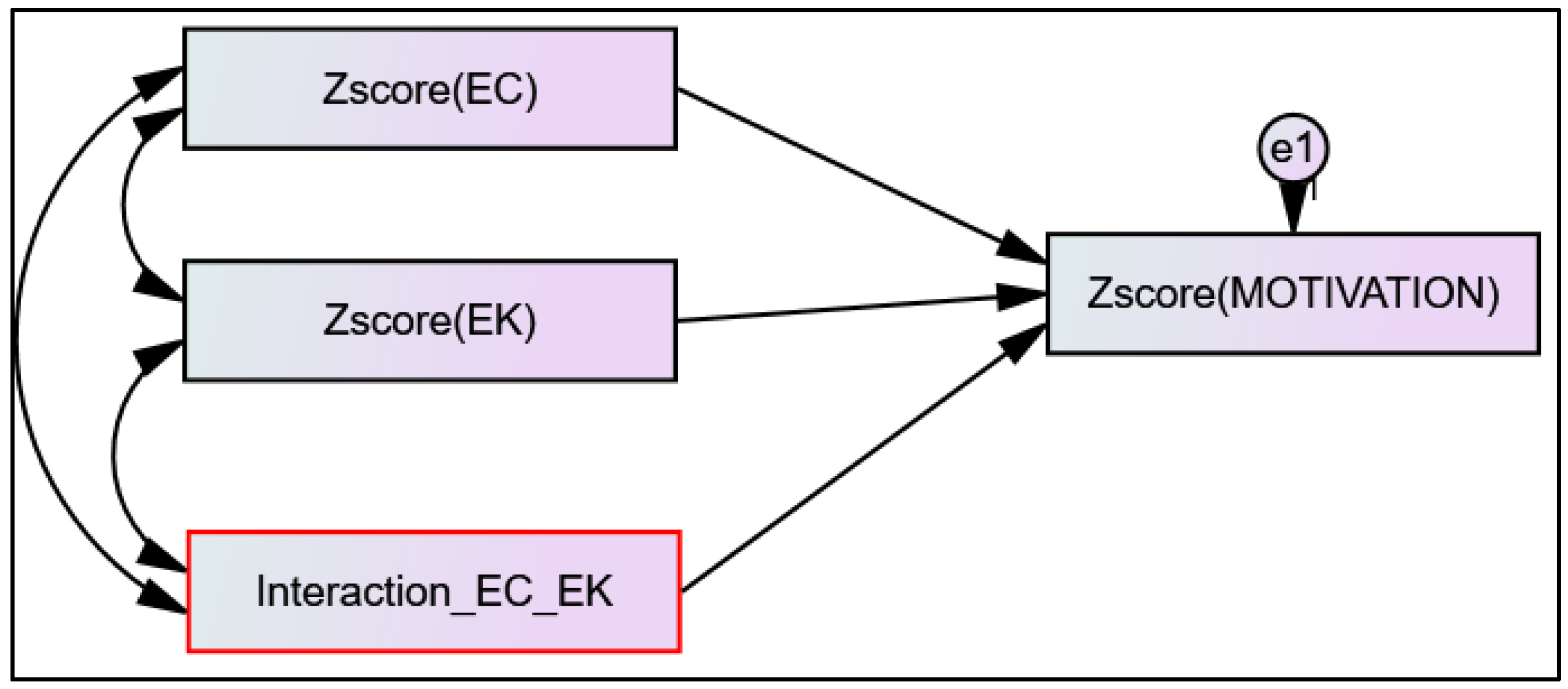
Table 6.
Hypothesis Testing.
| Hypothesis | Results |
| H1: EC has a positive relationship with the EGB. | Accepted |
| H2: EC has a positive relationship with MOS. | Accepted |
| H3: The mediating role of MOS between EC and EGB. | Accepted |
| H4: EK positively moderates between the EC and MOS. | Accepted |
6. Conclusions
The presence of EK is crucial for fostering environmentally responsible behavior within organizations, as highlighted by previous studies conducted by Raza and Khan (2022) and Safari et al., (2018). This study aims to contribute to the existing body of knowledge by examining the impact of EC and green psychological climate on employees' green behavior in Pakistan's hospitality sectors, in light of the concerns raised by Tian et al. (2020) and Ahmed et al. (2022) regarding organizational climates. This study aims to examine the role of MOS in mediating the association between EC and EGB. We also investigated the impact of EK on individuals' sense of motivation within the workplace.
This work possesses various theoretical implications. The initial topic pertains to the literature on ethical climate, specifically emphasizing the consequences of non-environmentally friendly behavior. Nevertheless, the present study offers a comprehensive and analytical perspective on the impact of climates on EGB, a topic that has not yet been thoroughly investigated in previous research (Aboramadan, 2022, Ahmed et al., 2022). Based on the research findings, it can be concluded that the EC has a considerable and positive influence on EGB. The observed association aligns with the SCT as proposed by Bandura (2006). Furthermore, EK has been found to enhance employee motivation within the organizational setting, hence positively impacting the overall quality of life experienced by employees. This pertains to enhancing environmentally conscious behavior among employees. Furthermore, our research addresses a pertinent issue raised by Ahmed et al., (2022) by investigating the impact of EC on the behavioral outcomes of followers within the organizational setting. In addition, the research conducted by Fawehinmi et al., (2020) offers a detailed analysis of the influence of EK on both EC and MOS. In addition, our research uncovered the presence of a mediating mechanism, specifically the role of motivational state, in the relationship between EC and EGB. By augmenting our comprehension of the mechanisms that underlie this organizational environment. In this study, EK was recognized as a significant determinant in the impact of EC on the empowerment of employees in promoting environmentally sustainable practices. This finding demonstrates that the presence of EK in an organization has a moderating effect on the ethical atmosphere, leading to increased employee motivational state, ultimately resulting in enhanced employee job performance.
This study examines the consequences of the findings for the growth and knowledge of organizations. It is imperative for leadership to ensure the incorporation of organizational climates into strategic efforts in order to ensure the long-term survival and longevity of the organization. It has been found that the pro-environmental and ethical conduct of a supervisor has a substantial influence on the green behavior exhibited by their subordinates. The aforementioned findings indicate that it is imperative for executives to ensure the effective implementation of environmentally-friendly procedures and policies. In order to effectively foster pro-environmental behavior and motivate their followers, EK must establish organizational climates within their respective organizations. These climates serve as an example for others to emulate, encouraging individuals to engage in environmentally responsible actions. Organizations should consider implementing employee mentoring schemes. In order to attain performance objectives and foster a culture of open communication inside the organization. When engaging in the promotion of current employees and the recruitment of new personnel, managers should inquire about the past environmental performance of the individuals in question. It is recommended that the selection and promotion committees incorporate the candidate's environmental assessment as part of their evaluation process.
Moreover, the results of this study carry significant implications for society. It garners public interest towards the socially responsible and environmentally conscious endeavors undertaken by individuals and entities. It also helps organizational leaders in demonstrating environmentally conscious behavior. In essence, this research study elucidates the significance of individual members of society engaging in environmentally friendly behavior as a means of safeguarding the natural environment.
6.1. Limitations and Future Research Directions
Despite the essential consequences and methodological soundness, the current study exhibits certain limitations. The determination of causation in the observed correlations remains inconclusive, despite the utilization of a cross-sectional research methodology. The application of a longitudinal research strategy can facilitate the conduct of future studies. Moreover, the restricted scope of data collection exclusively from Pakistan restricts the generalizability of the findings to other national and cultural contexts. In future research endeavors, it is recommended that data collection be expanded to encompass multiple countries, with the aim of investigating the impact of cultural variations on English language outcomes. Additionally, it would be beneficial to examine the behavioral patterns within other cultural contexts, specifically comparing Western and Eastern countries.
In conclusion, our study focused on the examination of EK as the exclusive mediator of organizational climates, as well as the association between green employee empowerment and organizational climates. However, Jiang et al. (2018) argued that there may be other moderating variables that could potentially influence the relationships between these links. Amrutha et al. (2021) suggest that the incorporation of employee green values and EK can mitigate the influence of organizational climates on green employee behavior. Future research should be undertaken to investigate the mediating and regulating mechanisms that link EC with EGB. By concluding the conversation with the inclusion of MOS as a mediator and EK as a moderator, our study provides insights into the mechanisms, motivations, and circumstances under which organizational climates facilitate employee engagement in environmentally friendly behaviors inside the workplace. It is our intention that our research outcomes will serve as a catalyst for fellow scholars to explore and refine more intricate models through the inclusion of novel moderators and mediators. This pursuit aims to enhance comprehension and advocacy of pro-environmental conduct within organizational contexts.
Author Contributions
“Dr. Usman Sarwar contributed in supervision and project administration in addition to editing and visualization. Dr. Waqas Baig worked for validation, formal analysis, investigation and writing—original draft preparation. Additionally, Dr. Samar Rahi contributed in resources, data curation and writing improvement. Furthermore, Ms. Sonia Sattar performed the following tasks such as Conceptualization, methodology & software. All authors have read and agreed to the published version of the manuscript.”
Funding
“This research received no external funding”
Informed Consent Statement
“Informed consent was obtained from all subjects involved in the study.”
Data Availability Statement
Data will be made available on demand.
Conflicts of Interest
“The authors declare no conflicts of interest.”
Abbreviations
The following abbreviations are used in this manuscript:
| EC | Ethical Climate |
| EK | Environmental Knowledge |
| MOS | Motivation States |
| EGB | Employee Green Behavior |
| SCT | Social Cognitive Theory |
References
- Aboramadan, M. (2022). The effect of green HRM on employee green behaviors in higher education: the mediating mechanism of green work engagement. International Journal of Organizational Analysis, 30(1), 7-23. [CrossRef]
- Ahmad, I., Ullah, K., & Khan, A. (2022). The impact of green HRM on green creativity: Mediating role of pro-environmental behaviors and moderating role of ethical leadership style. The international journal of human resource management, 33(19), 3789-3821. [CrossRef]
- Ahmed, I., & Danish, R. Q. (2022). Effect of ethical climate on employee green behavior through moderated mediation mechanism. Journal of Public Value and Administrative Insight, 5(1), 47-61. [CrossRef]
- Al-Ghazali, B. M., & Afsar, B. (2021). Retracted: Green human resource management and employees' green creativity: The roles of green behavioral intention and individual green values. Corporate Social Responsibility and Environmental Management, 28(1), 536-536. [CrossRef]
- Amrutha, V. N., & Geetha, S. N. (2024). Green employee empowerment for environmental organization citizenship behavior: a moderated parallel mediation model. Current Psychology, 43(6), 5685-5702. [CrossRef]
- Bamberg, K., & Verkuyten, M. (2022). Internal and external motivation to respond without prejudice: a person-centered approach. The Journal of Social Psychology, 162(4), 435-454. [CrossRef]
- Bandura, A. (2006). Going global with social cognitive theory: From prospect to paydirt. The rise of applied psychology: New frontiers and rewarding careers, 53-70.
- Barbarossa, C., & De Pelsmacker, P. (2016). Positive and negative antecedents of purchasing eco-friendly products: A comparison between green and non-green consumers. Journal of Business Ethics, 134, 229-247.
- Barnham, C. (2010). Qualis? The qualitative understanding of essence. International Journal of Market Research, 52(6), 757-773. [CrossRef]
- Bissing-Olson, M. J., Iyer, A., Fielding, K. S., & Zacher, H. (2013). Relationships between daily affect and pro-environmental behavior at work: The moderating role of pro-environmental attitude. Journal of Organizational Behavior, 34(2), 156-175. [CrossRef]
- Chughtai, A., Byrne, M., & Flood, B. (2015). Linking ethical leadership to employee well-being: The role of trust in supervisor. Journal of Business Ethics, 128, 653-663. [CrossRef]
- D'Agostini, J. (2020). Internal and External Motivation in Substance Abuse Treatment (Doctoral dissertation, Adler University).
- Decoster, S., Stouten, J., & Tripp, T. M. (2021). When employees retaliate against self-serving leaders: The influence of the ethical climate. Journal of Business Ethics, 168, 195-213. [CrossRef]
- Dey, M., Bhattacharjee, S., Mahmood, M., Uddin, M. A., & Biswas, S. R. (2022). Ethical leadership for better sustainable performance: Role of employee values, behavior and ethical climate. Journal of Cleaner Production, 337, 130527. [CrossRef]
- Dumont, J., Shen, J., & Deng, X. (2017). Effects of green HRM practices on employee workplace green behavior: The role of psychological green climate and employee green values. Human resource management, 56(4), 613-627. [CrossRef]
- Elçi, M., & Alpkan, L. (2009). The impact of perceived organizational ethical climate on work satisfaction. Journal of business ethics, 84, 297-311. [CrossRef]
- FAPOHUNDA, T. M. (2022). Green Motivational Strategies and Environmental Sustainability: Evidence from Selected Paint Firms in Lagos State. WJIACS, 128.
- Fawehinmi, O., Yusliza, M. Y., Mohamad, Z., Noor Faezah, J., & Muhammad, Z. (2020). Assessing the green behaviour of academics: The role of green human resource management and environmental knowledge. International Journal of Manpower, 41(7), 879-900.
- Fawehinmi, O., Yusliza, M. Y., Wan Kasim, W. Z., Mohamad, Z., & Sofian Abdul Halim, M. A. (2020). Exploring the interplay of green human resource management, employee green behavior, and personal moral norms. Sage Open, 10(4), 2158244020982292. [CrossRef]
- Foroughi, B., Arjuna, N., Iranmanesh, M., Kumar, K. M., Tseng, M. L., & Leung, N. (2022). Determinants of hotel guests’ pro-environmental behaviour: Past behaviour as moderator. International Journal of Hospitality Management, 102, 103167. [CrossRef]
- Hajli, N. (2018). Ethical environment in the online communities by information credibility: a social media perspective. Journal of Business Ethics, 149(4), 799-810. [CrossRef]
- Hamzah, M. I., & Tanwir, N. S. (2021). Do pro-environmental factors lead to purchase intention of hybrid vehicles? The moderating effects of environmental knowledge. Journal of Cleaner Production, 279, 123643. [CrossRef]
- He, J., Morrison, A. M., & Zhang, H. (2021). Being sustainable: The three-way interactive effects of CSR, green human resource management, and responsible leadership on employee green behavior and task performance. Corporate Social Responsibility and Environmental Management, 28(3), 1043-1054. [CrossRef]
- Henseler, J. (2017). Partial least squares path modeling. Advanced methods for modeling markets, 361-381.
- Hu, L. T., & Bentler, P. M. (1999). Cutoff criteria for fit indexes in covariance structure analysis: Conventional criteria versus new alternatives. Structural equation modeling: a multidisciplinary journal, 6(1), 1-55. [CrossRef]
- Hu, X., Khan, S. M., Huang, S., Abbas, J., Matei, M. C., & Badulescu, D. (2022). Employees’ green enterprise motivation and green creative process engagement and their impact on green creative performance. International Journal of Environmental Research and Public Health, 19(10), 5983. [CrossRef]
- Ismail, S. (2015). Influence of emotional intelligence, ethical climates, and corporate ethical values on ethical judgment of Malaysian auditors. Asian Journal of Business Ethics, 4, 147-162. [CrossRef]
- Jagoda, S. U. M., Gamage, J. R., & Karunathilake, H. P. (2023). Environmentally sustainable plastic food packaging: A holistic life cycle thinking approach for design decisions. Journal of Cleaner Production, 400, 136680. [CrossRef]
- Khan, M. A. S., Jianguo, D., Ali, M., Saleem, S., & Usman, M. (2019). Interrelations between ethical leadership, green psychological climate, and organizational environmental citizenship behavior: A moderated mediation model. Frontiers in psychology, 10, 1977. [CrossRef]
- Kim, A., Kim, Y., & Han, K. (2019). A cross level investigation on the linkage between job satisfaction and voluntary workplace green behavior. Journal of Business Ethics, 159, 1199-1214. [CrossRef]
- Lasrado, F., & Zakaria, N. (2020). Go green! Exploring the organizational factors that influence self-initiated green behavior in the United Arab Emirates. Asia Pacific Journal of Management, 37(3), 823-850. [CrossRef]
- Luthra, S., Mangla, S. K., de Sousa Jabbour, A. B. L., & Huisingh, D. (2021). Industry 4.0, cleaner production, and circular economy: An important agenda for improved ethical business development. Journal of Cleaner Production, 326, 129370. [CrossRef]
- Luu, T. T. (2019). Green human resource practices and organizational citizenship behavior for the environment: The roles of collective green crafting and environmentally specific servant leadership. Journal of Sustainable Tourism, 27(8), 1167-1196. [CrossRef]
- Lythreatis, S., El-Kassar, A. N., Smart, P., & Ferraris, A. (2022). Participative leadership, ethical climate and responsible innovation perceptions: evidence from South Korea. Asia Pacific Journal of Management, 1-28.
- Manosuthi, N., Lee, J. S., & Han, H. (2022). Green behavior at work of hospitality and tourism employees: Evidence from IGSCA-SEM and fsQCA. Journal of Sustainable Tourism, 1-23. [CrossRef]
- Marquardt, D. J., Casper, W. J., & Kuenzi, M. (2021). Leader goal orientation and ethical leadership: A socio-cognitive approach of the impact of leader goal-oriented behavior on employee unethical behavior. Journal of Business Ethics, 172, 545-561. [CrossRef]
- Mathew, A. O., Jha, A. N., Lingappa, A. K., & Sinha, P. (2021). Attitude towards drone food delivery services—role of innovativeness, perceived risk, and green image. Journal of Open Innovation: Technology, Market, and Complexity, 7(2), 144. [CrossRef]
- Meyer, J. P., Gagné, M., & Parfyonova, N. M. (2010). Toward an evidence-based model of engagement: What we can learn from motivation and commitment research.
- Murphy, P. R., Wynes, M., Hahn, T. A., & Devine, P. G. (2020). Why are people honest? Internal and external motivations to report honestly. Contemporary Accounting Research, 37(2), 945-981. [CrossRef]
- Ngo, M. S. M., Mustafa, M. J., & Butt, M. M. (2023). When and why employees take charge in the Workplace: the roles of learning goal orientation, role-breadth self-efficacy and co-worker support. Review of Managerial Science, 17(5), 1681-1702. [CrossRef]
- Norton, T. A., Ayoko, O. B., & Ashkanasy, N. M. (2021). A Socio-Technical Perspective on the Application of Green Ergonomics to Open-Plan Offices: A Review of the Literature and Recommendations for Future Research. Sustainability, 13(15), 8236. [CrossRef]
- Norton, T. A., Zacher, H., Parker, S. L., & Ashkanasy, N. M. (2017). Bridging the gap between green behavioral intentions and employee green behavior: The role of green psychological climate. Journal of Organizational Behavior, 38(7), 996-1015. [CrossRef]
- Ones, D. S., & Dilchert, S. (2012). Environmental sustainability at work: A call to action. Industrial and Organizational Psychology, 5(4), 444-466.
- Otaye-Ebede, L., Shaffakat, S., & Foster, S. (2020). A multilevel model examining the relationships between workplace spirituality, ethical climate and outcomes: A social cognitive theory perspective. Journal of Business Ethics, 166(3), 611-626. [CrossRef]
- Park, J. (2016). Qualitative versus quantitative research methods: Discovery or justification? Journal of Marketing Thought, 3(1), 1-8.
- Pasricha, P., Singh, B., & Verma, P. (2018). Ethical leadership, organic organizational cultures and corporate social responsibility: An empirical study in social enterprises. Journal of Business Ethics, 151, 941-958. [CrossRef]
- Patwary, A. K., Sharif, A., Aziz, R. C., Hassan, M. G. B., Najmi, A., & Rahman, M. K. (2023). Reducing environmental pollution by organizational citizenship behaviour in hospitality industry: the role of green employee involvement, performance management and dynamic capability. Environmental Science and Pollution Research, 30(13), 37105-37117.
- Pham, N. T., Hoang, H. T., & Phan, Q. P. T. (2020). Green human resource management: a comprehensive review and future research agenda. International Journal of Manpower, 41(7), 845-878. [CrossRef]
- Qomariah, A., & Prabawani, B. (2020, March). The effects of environmental knowledge, environmental concern, and green brand image on green purchase intention with perceived product price and quality as the moderating variable. In IOP conference series: earth and environmental science (Vol. 448, No. 1, p. 012115). IOP Publishing.
- Raza, S. A., & Khan, K. A. (2022). Impact of green human resource practices on hotel environmental performance: the moderating effect of environmental knowledge and individual green values. International Journal of Contemporary Hospitality Management, 34(6), 2154-2175. [CrossRef]
- Reinartz, W., Haenlein, M., & Henseler, J. (2009). An empirical comparison of the efficacy of covariance-based and variance-based SEM. International Journal of research in Marketing, 26(4), 332-344. [CrossRef]
- Ryan, R. M., & Deci, E. L. (2020). Intrinsic and extrinsic motivation from a self-determination theory perspective: Definitions, theory, practices, and future directions. Contemporary educational psychology, 61, 101860. [CrossRef]
- Sabokro, M., Masud, M. M., & Kayedian, A. (2021). The effect of green human resources management on corporate social responsibility, green psychological climate and employees’ green behavior. Journal of Cleaner Production, 313, 127963. [CrossRef]
- Safari, A., Salehzadeh, R., Panahi, R., & Abolghasemian, S. (2018). Multiple pathways linking environmental knowledge and awareness to employees’ green behavior. Corporate Governance: The international journal of business in society, 18(1), 81-103. [CrossRef]
- Saleem, M., Qadeer, F., Mahmood, F., Han, H., Giorgi, G., & Ariza-Montes, A. (2021). Inculcation of green behavior in employees: A multilevel moderated mediation approach. International Journal of Environmental Research and Public Health, 18(1), 331. [CrossRef]
- Sarwar, U., Ahmad, M. B., Mubeen, M., Fatima, I., & Rehan, M. (2023). A bibliometric analysis of sustainability disclosure in high polluting industries. Bulletin of Business and Economics (BBE), 12(3), 28-43.
- Schwepker Jr, C. H. (2001). Ethical climate's relationship to job satisfaction, organizational commitment, and turnover intention in the salesforce. Journal of business research, 54(1), 39-52.
- Shaukat, M. Z., Yousaf, S. U., Sarwar, U., & Sattar, S. (2024). Thriving in Turmoil: Unraveling the Interplay of Resources, Resilience, and Performance among SMEs in Times of Economic Vulnerability. Bulletin of Business and Economics (BBE), 13(2), 164-173. [CrossRef]
- Tian, H., Zhang, J., & Li, J. (2020). The relationship between pro-environmental attitude and employee green behavior: the role of motivational states and green work climate perceptions. Environmental Science and Pollution Research, 27, 7341-7352. [CrossRef]
- Vanello, D. (2020). Affect, motivational states, and evaluative concepts. Synthese, 197(10), 4617-4636.
- Wang, D., Feng, T., & Lawton, A. (2017). Linking ethical leadership with firm performance: A multi-dimensional perspective. Journal of business ethics, 145, 95-109. [CrossRef]
- Weber, J., & Opoku-Dakwa, A. (2022). Ethical work climate 2.0: A normative reformulation of Victor and Cullen’s 1988 framework. Journal of Business Ethics, 1-18.
- Wen, J., Hussain, H., Waheed, J., Ali, W., & Jamil, I. (2022). Pathway toward environmental sustainability: mediating role of corporate social responsibility in green human resource management practices in small and medium enterprises. International Journal of Manpower, 43(3), 701-718. [CrossRef]
- Winter, K., & Epstude, K. (2023). Motivational consequences of counterfactual mindsets: Does counterfactual structure influence the use of conservative or risky tactics?. Motivation and Emotion, 47(1), 100-114. [CrossRef]
- Zhang, H., Omhand, K., Li, H., Ahmad, A., Samad, S., Gavrilut, D., & Badulescu, D. (2022). Corporate Social Responsibility and Energy-Related Pro-Environmental Behaviour of Employees in Hospitality Industry. International Journal of Environmental Research and Public Health, 19(23), 16141. [CrossRef]
- Zhang, S., Ren, S., & Tang, G. (2023). From Passive to Active: The Positive Spillover of Required Employee Green Behavior on Green Advocacy. Journal of Business Ethics, 1-20. [CrossRef]
- Zhao, H., Zhou, Q., He, P., & Jiang, C. (2021). How and when does socially responsible HRM affect employees’ organizational citizenship behaviors toward the environment? Journal of Business Ethics, 169, 371-385.
Disclaimer/Publisher’s Note: The statements, opinions and data contained in all publications are solely those of the individual author(s) and contributor(s) and not of MDPI and/or the editor(s). MDPI and/or the editor(s) disclaim responsibility for any injury to people or property resulting from any ideas, methods, instructions or products referred to in the content. |
© 2025 by the authors. Licensee MDPI, Basel, Switzerland. This article is an open access article distributed under the terms and conditions of the Creative Commons Attribution (CC BY) license (http://creativecommons.org/licenses/by/4.0/).
Copyright: This open access article is published under a Creative Commons CC BY 4.0 license, which permit the free download, distribution, and reuse, provided that the author and preprint are cited in any reuse.


