

Submitted:
21 February 2025
Posted:
24 February 2025
You are already at the latest version
Abstract
Due to the problematic export of black pepper, such as microbiological contaminants, the objective was to develop biodegradable films as a protective film on the seeds. Film-forming solutions (FFS) for coating and cassava starch (CS) and starch and xylitol (CX) films were produced. The technological properties were performed on the films: thickness, water vapor permeability (WVP), solubility, tensile strength (TS), and elongation (%). To monitor the efficiency of the coating, the shelf life of the control (CP- uncoated) and coated (RP) peppers was evaluated regarding moisture (%), water activity (aw), mass loss (ML%), apparent and real specific mass (g/ml), porosity (%), weight of a thousand seeds (g), color analysis and microbiological analysis. The CX film showed no difference (p ≤ 0.05) in thickness, and presented higher values (p ≤ 0.05) of WVP, solubility, and elongation (%) compared to the CS film. The peppers presented a microbiological standard established by current legislation. The RP presented lower (p ≤ 0.05) moisture gain and aw, lower porosity values, thousand seed weight, and ML (%) compared to the CP, demonstrating the positive contribution of the starch and xylitol film in the coating process.
Keywords:
Natural plasticizer xylitol
; film-forming solution
; biodegradable films
; film coating
; spices
; shelf life
1. Introduction
A worrying factor that has been debated is the excessive waste generated by the disposal of synthetic plastic packaging, provided with petroleum residues, which decompose slowly with harmful effects on health and the environment [1,2,3]. Several researchers have been developing packaging that does not cause harm to the environment, biodegradable packaging, biofilms, and green films, all aiming to partially and/or replace synthetic packaging that causes significant ecological damage [4, 5, 6, 7, 8]. Biopolymers are increasingly being used to replace synthetic polymers in the interest of environmental awareness [9].
Biodegradable films/coatings are produced by biodegradable polymers, which do not cause harm to the environment. Edible coatings involve implementing natural and active ingredients on the surfaces of foods in the form of thin, solid, or liquid layers, potentially extending the shelf life and improving the quality of food products through several factors that include mass transfer, diffusivity, permeability, and loss of attributes. The edible coating is environmentally safe and biodegradable, made from naturally available biopolymers and food-grade additives, exhibiting strong mechanical and rheological characteristics [10].
Carbohydrates are biopolymers that can be used in elaborating biodegradable films/coatings due to their biocompatibility, biodegradability, and ability to form a dense and compact network [2]. One of the most widely used carbohydrates for film production is starch [2, 11, 12, 13], which is made from potatoes and cereals for industrial use. However, this macromolecule can also be obtained from tubers and rhizomes and used as a biodegradable polymer, adhesives, pharmaceuticals, textiles, and others [14]. Starch can form transparent, tasteless, and odorless films with good oxygen barrier properties, important characteristics for food preservation [15]. Generally, these are important to control oxygen transmission and other gases [16].
Different compounds and additives can be incorporated into films/coatings to provide specific properties [1]. Plasticizers' primary role is to improve polymers' flexibility and processability. It is known that plasticizers are low molecular weight materials. This means they can occupy intermolecular spaces between polymer chains, reducing secondary forces [17]. An increase in plasticizer content can result in a looser film matrix or greater mobility of the polymer chains due to the plasticizing effect of the added polyol, resulting in increased water absorption and diffusion [18].
Sugar alcohols, sometimes called bio-based polyols, have attracted considerable attention and are commercially important chemicals for green materials. Various sugar alcohols, such as glycerol, xylitol, sorbitol, mannitol, and maltitol, are generally derived from biomass and plant resources [19]. Xylitol-based polymers have attracted great interest as biomaterials due to their biocompatibility, biodegradability, renewability, and low cost. They occur naturally in fruits and vegetables and are essential in foods and beverages [20, 21]. Although xylitol has been used primarily in food products as a sweetener, it has also been used as a biodegradable plasticizer [22]. Xylitol is a white, crystalline, odorless, non-toxic powder with a sweet taste [23]. It is classified as a GRAS (Generally Recognized as Safe) additive by the Food and Drug Administration (FDA) [24]. In Brazil, xylitol is classified by Anvisa as a food additive of the stabilizer and sweetener type that can be used in foods in the amount necessary to obtain the desired effect since it does not affect the identity and authenticity of the food [25]. Xylitol can be a natural plasticizer to produce films to coat food.
Coatings can be applied or formed directly onto food by spraying or immersion [26]. The use of biodegradable films and/or coatings has shown great potential due to their low cost, in addition to providing better preservation and extending the shelf life of the product, as they generate a modified atmosphere, creating a semipermeable barrier against water, oxygen, moisture and the movement of solutes [27, 28, 29]. Developing bio-based food packaging to ensure food quality and safety is of practical importance, especially for packaging perishable products [8].
Spices are grown primarily in developing countries with tropical and/or semitropical climates and are exported worldwide. In addition to climatic conditions, the lack of Good Agricultural Practices and Good Manufacturing Practices is a significant concern in developing countries where peppers are grown. Fungi belonging to the genera Aspergillus, Fusarium e Penicillium pose serious phytopathological and mycotoxicological risks, as they can produce several mycotoxins that cause serious problems to animal and human health. The traditional method of drying peppers outdoors and in the sun is still a common practice, potentially exposing them to the risk of contamination [30]. The use of coating on spices such as black pepper can be an alternative to minimize these problems and increase their shelf life.
Black pepper (Piper nigrum L.) is a climbing plant belonging to the genus Piper, class Dicotyledons, order Piperales, and family Piperaceae, originating from Southeast Asia, more precisely from India, being the most common and important of the spices [31, 32, 33]. Still in the field, the seeds undergo a drying process after harvest, where they are placed on tarps and spread to be dried in the sun, allowing contamination, presenting a critical process to guarantee the quality of the product to be marketed. However, drying reduces the incidence of diseases and pests, in addition to being decisive for the storage and distribution conditions of the product. New methods of protecting this spice need to be implemented. According to Pereira et al. (2021c, 2019a) [5, 34], the use of a protective film, such as coating with a film-forming solution (FFS), shows promise for increasing the shelf life of foods. Authors have been studying the quality of black pepper varieties due to their great market potential [35, 36].
There are no studies published to date on the use of biodegradable coatings made with cassava starch plasticized with natural polyol xylitol in the coating of black pepper. Therefore, the objective of this study was to evaluate the influence of xylitol and cassava starch in the production of film-forming solutions as coating, in the technological properties of the composite films, and the evaluation of the useful life of the seeds during the evaluation of the shelf life at room temperature.
2. Materials and Methods
2.1. Raw Materials
Samples of cassava starch (Manihot sculenta C.) and xylitol (food grade) were purchased from a supermarket chain in Belém-PA, with the starch sold in conventional packaging and sieved (tapioca starch, Santa Maria, Pará, Brazil). The starch samples were dried in an air-circulating oven (070, Fabbe, São Paulo -SP, Brazil) at 60 ºC until a constant mass was achieved for the use of the dry starch in the production of film-forming coating solutions and biodegradable films.
The black pepper seeds (Piper nigrum L.), classified as black, were donated (50 kg) by the Águas do Caripi farm in the municipality of Igarapé Açú in the state of Pará. Both raw materials were transported to the Chemical Engineering Laboratory – LEQ of the Federal University of Pará. The peppers were kept at room temperature, packaged, and stored in burlap sacks. Afterward, the quartering process was carried out to obtain a representative sample of seeds for later use in the experimental tests. The Piper nigrum species was registered in the National System for the Management of Genetic Heritage and Associated Traditional Knowledge (SisGen) to obtain the registration number ACFD945, as provided in Law No. 13,123/2015 and its regulations.
2.2. Production of Film-Forming Solution (ffs) and Biodegradable Films
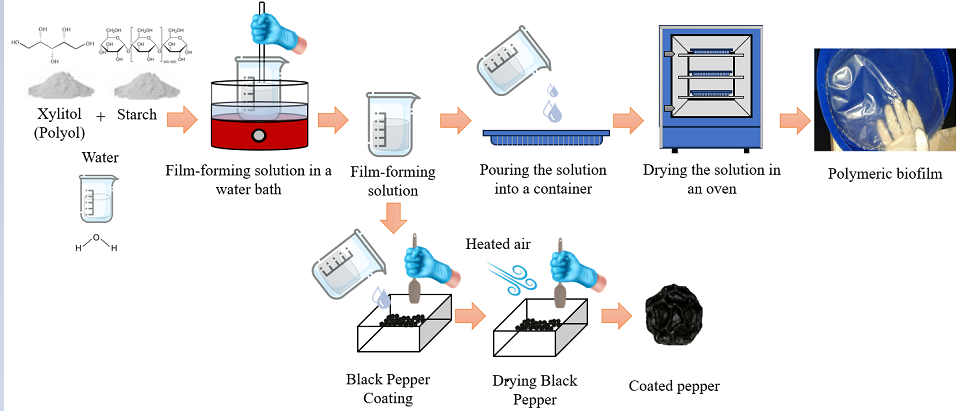
The production of FFS coating based on dry cassava starch plasticized with natural polyol xylitol was carried out according to the methodology proposed by Pereira et al. (2021a) and Rego et al. (2020) [2, 37], with modifications. SF was prepared using 95.0% distilled water, 4.0% cassava starch, and 1.0% xylitol as a natural plasticizer. The solutions were placed in 200 mL Erlemeyer flasks and placed in a water bath (550, Fisatom, São Paulo-SP, Brazil) at 70 ºC, with constant stirring until the starch gelatinized to form FFS. Afterward, 120 ml of solution was added to silicone trays (22 cm diameter x 2.5 cm height) and placed in an oven at 40°C for 17 hours to dry and form films, Figure 1.
2.3. Characterization of Biodegradable Films
2.3.1. Fourier Transform Infrared Spectroscopy with Attenuated Total Reflectance (FTIR-ATR)
FTIR measurements were performed on a Fourier transform spectrometer (630, Agilent Cary, USA) with an ATR zinc selenide crystal. Spectra were obtained in the spectral range of 650 to 4,000 cm-1, and 32 scans with a resolution of 8 cm-1 were collected.
2.3.2. Thickness
The thickness of each film was measured by a digital micrometer (IP54, Insize, Brazil) with a resolution of 0.001 mm at 8 random points 60 mm from the edge [38, 39].
2.3.3. Water Vapor Permeability (WVP)
WVP was determined using the method described by Arfat et al. (2014) [40], with modifications. The films were glued with silicone adhesive (Orbi Química, Brazil) in a 4.5 × 7.0 cm (inner diameter × height) glass container containing 10 g of silica gel (0% RH; 0 Pa water vapor pressure at 30 °C). The containers were stored in desiccators with distilled water at 30 °C (99% RH; 4245 Pa vapor pressure) for 10 h in triplicates. The PVA of the films was calculated using Equation 1.
Where: WVP = water vapor permeability (g.mm/m2.d.KPa); W = weight gain (g); E = average film thickness (mm); A = exposed film surface area (m2); t = time (d); ΔP = vapor pressure difference across the film (4.245 Pa at 30 °C).
2.3.4. Solubility
The method described by Gontard et al. (1994) [41] was used to analyze the solubility of the films, with modifications. Initially, the samples (2 cm in diameter) were dried in an oven (105 °C for 24 h), then immersed in 50 ml of distilled water, shaken at 80 rpm at 25 °C for 24 h in a Shaker Incubator (Luca-223, Lucadema), in triplicates. All samples were filtered (filter paper, code 501.015, 15 cm, Unifil, Brazil) and dried in an oven (105 °C for 24 h) to determine the dry mass not dissolved in water. The solubility calculation was done by Equation 2.
Where: SOL (%) = percentage of solubilized material; Mi = initial mass of the sample (g); Mf = final mass of the sample (g).
2.3.5. Mechanical Properties
Tensile strength (TS) and elongation (%E) were determined using the Limpan et al. (2012) method [42], with adaptations. In a universal testing machine (Biopdi, MBIO I – Portable, São Carlo/SP, Brazil), the initial footprint separation and probe speed were 50 mm and 30 mms-1, respectively. The samples were cut to 70 x 25 mm (length x width). Eight measurements were performed on each sample at room temperature (25 ± 2 °C). The results were calculated using Equations (3) and (4), respectively.
Where: RT: tensile strength (MPa); Fm: maximum force at the moment of film rupture (N); A: cross-sectional area of the film (m2).
Where E: elongation (%); dT: total distance at the moment of rupture (mm); dinitial: initial distance of separation of the claws (50 mm).
2.4. Coating of Black Pepper Seeds
Preliminary tests were performed to define the steps of the coating process. The black peppers were dried in an oven (070, Fabbe, São Paulo -SP, Brazil) at 70 °C/24 h to obtain greater microbiological stability of the product. Afterward, 100 ml of gelatinized film-forming solution (item 2.2) was mixed with 300 g of peppers using a stainless steel spatula and manually homogenized until the solution was completely uniform in the peppers. To cure (polymerize) the starch and xylitol films, the coated peppers were placed on a stainless steel tray and blow-dried using a manual dryer with an air jet at medium temperature and speed for 30 minutes.
2.5. Monitoring the Stability of Black Pepper Seeds
After coating, the dried peppers were placed in burlap sacks and stored inside a properly covered, non-toxic polypropylene container, where the relative humidity (RH) and the air temperature of the internal environment were monitored with a digital thermohygrometer (0817, Incoterm/China) to monitor the shelf life of the control (CP - uncoated) and coated (PR) seeds. The following analyses were used to evaluate the stability of the seeds every 30 days for eight months. Microbiological analyses were performed when the apparent appearance of fungi on the surface of the uncoated seeds was observed, interrupting the evaluation of the shelf life of all peppers.
2.5.1. Análise Microbiológica
It was performed according to the methodology described in the Compendium of Methods for the Microbiological Examination of Foods [43]. Microbiological analyses were performed in serial dilutions (10-1, 10-2, and 10-3) prepared from 25 g of sample and 225 mL of peptone water. The microorganism count determinations were provided according to RDC No. 724 and IN No. 161 of 2022 of the National Health Surveillance Agency [44]. The following microorganisms were researched: Salmonella spp., Escherichia coli, Molds and Yeasts.
2.5.2. Instrumental Color
Color evaluation was performed by reading the parameters L*, a*, b*, C*, hº at superficial points in a colorimeter (Konica Minolta, CR 400) using illuminant D65 (daylight). Color variation (ΔE) was calculated for coated peppers (PR) compared to the control (uncoated (CP)) and between treatments throughout storage, taking the initial point of the peppers as the standard. Color analysis was performed on the seeds only from the 2nd evaluation point of shelf life.
2.5.3. Water Activity
Water activity (aw) was determined by direct measurement in a digital thermohygrometer (Aqualab 4TE, Decagon, Puma, WA, USA), with internal temperature control (25°C) in triplicate.
2.5.4. Moisture
Moisture content was performed using the conventional drying method at 105 °C [45].
2.5.5. Apparent and Absolute Specific Mass
The apparent specific mass was determined using the test tube method [46], Equation 5.
Where: µap– Apparent specific mass (g/cm3); m – Sample mass (g); V – Volume of the test tube (cm3).
The absolute or real specific mass was determined using the pycnometry method [46], Equation 6.
Where: µab – Absolute specific mass (g/cm3); m – Seed mass (g); Vp – Pycnometer volume (cm3). Vwater – Volume of water (cm3).
2.5.6. Particle Porosity
Porosity was determined by the apparent and absolute mass method [47], Equation 7.
Where p is the porosity of the particles, ρap is the apparent specific mass, and ρibs is the absolute specific mass.
2.5.7. Weight of a Thousand Seeds
The thousand seed weight was determined using eight replicates of 100 seeds [48], Equation 8.
Where: WTS – Weight of a thousand seeds (g); mass of the sample (g); number of repetitions – number of repetitions (ADM).
2.5.8. Mass Loss (%)
Plastic pots (8 cm in diameter) with 30 g of pepper were used. The samples were weighed every 30 days to check the mass loss, and a digital thermohygrometer (0817, Incoterm/China) was used to provide temperature and relative humidity of the environment for control during the mass loss. The degree of mass loss (%PM) was calculated according to Equation 9 [49].
ML is the average mass loss, m0 is the initial mass, and mf is the final mass.
2.6. Statistical Analysis
All data were statistically evaluated using one-way analysis of variance (ANOVA) and Fisher's significant difference (LSD) test (p≤0.05) for comparison of means. All calculations were performed in the TIBCO Statistica Ultimate Academic software package version 14, license 56653.
3. Results and Discussion
3.1. Characterization of Biodegradable Films
3.1.1. Fourier Transform Infrared Spectroscopy with Attenuated Total Reflectance (FTIR-ATR)
The spectra of starch and xylitol polyalcohol polymers, starch control films (FA), and films with added natural xylitol polyol (CSX) were studied to understand the vibrational interaction between starch and xylitol functional groups (Figure 2). When chemical groups interact at the molecular level, changes such as the bands' displacement, extension, and intensity are detected in the FTIR spectra. These changes may be an indication of good miscibility of the polymers. According to Kaewprachu et al. (2018) [50], when the FTIR spectra of composite films are similar to the control, they indicate no interaction between the components. However, a change is observed in the FTIR spectra of the films compared to the polymers.
The characteristic peak of starch (Figure 2a) was found around 1000 cm-1, consistent with previous published work [2], which indicates stretching of the C-O bond [51], possibly indicating the addition and vibrational interaction with the plasticizer xylitol (C-OH), and the polymers in the matrix. The peak at 1022 cm-1 is associated with the amorphous region of starch, and the absorbance at 1045 cm-1 is relative to the crystalline region of starch [52]. Peaks around 3000-3500 cm-1 are related to the exposure of -OH groups of the starch polymer, as well as also present in the xylitol polymer [53], also found absorption at 3400 cm-1 attributed to the OH stretching vibration of starch, also demonstrated by the present research.
According to Yang, Kong, and Cai (2018) [54], the FTIR peaks for pure xylitol (Figure 2b) present a broad band around 3431 cm−1 that corresponds to OH groups and water absorption, and the bands presented at 1416 cm−1 and 740 cm−1 correspond to OH groups. In addition, the CH2 bonds that appear in bands between 859 and 920 cm−1 and the bands at 1000 cm−1, 1055 cm−1, 1086 cm−1, and 1116 cm−1 correspond to C-O bonds.
It is observed that the spectra of the starch polymer and xylitol (polyhydroxyalcohol) (Figure 2a and b, respectively) presented different spectra due to the particularity of each material. However, the control film (CS) (Figure 2c) and the film with the addition of the natural polyol xylitol (CX) (Figure 2d) showed changes in the peaks of the FTIR spectra, resulting in miscibility of the materials in the film matrix. The changes in the FTIR intensity spectra indicate that the -OH and -CO constituents of the starch formed cross-links with -OH present in the xylitol, building the polymer network of the films. This can also be confirmed by the sharp bands around 2900-3500 cm-1, obtained with the addition of the starch and xylitol polymers in the films, indicating a possible vibrational interaction with the structure of the film matrix.
The typical spectral characteristics of biocomposite films using starch polymer (Figures 2c and d) are found in the regions 3000-3500, corresponding to the hydroxyl group and the OH stretching bonded to H present in starch and vibration bands at 2900 cm−1 for the CH stretching that is related to the CH2 groups of glucose units in starch. The absorption band around 1600 cm−1 corresponds to the OH vibration in the starch polymer and films due to residual bound water molecules. Thus, the following functional groups, such as OH ester and CO, suggest that starch-based films have excellent biodegradability properties [55].
Pereira et al. (2021a) [2] also found bands around 2900-3400 and 1000 cm−1 for cassava starch films. Júnior and Rocha (2021) [56] also found bands for pure xylitol from 3500 to 3000 cm−1, bands from 1470 cm−1 to 750 cm−1 related to OH, bands between 900 and 800 cm−1 corresponding to CH2, and bands located between 1000 and 1125 cm−1 representing CO, similar to the bands found in this work (Figure 2b). The modifications of the FTIR spectra (Figure 2) indicate that the hydroxyl (-OH) and C-O of the starch formed cross-links with -OH of the xylitol building the polymeric network of the films, also evidenced by the interaction in the technological properties of the composite films.
3.1.2. Thickness, WVP, Solubility and Mechanical Properties
The results of the starch control (CS) and starch and xylitol (CX) films are presented in Table 1. The production of the films proved to be satisfactory and technologically viable since the films' polymerization, formation, and drying occurred effectively, presenting a homogeneous structure without cracks, grooves, or insoluble points and appearing shiny and transparent. Adding xylitol gave the films a more malleable, flexible, and elastic structure. The incorporation of xylitol as a natural plasticizer for the preparation of biodegradable films presented a compatible structure for their formation due to the intermolecular interaction of the polymers in the matrix, presenting no difference (p ≤ 0.05) in thickness compared to the control film without plasticizer (CS). The same behavior was reported by Chang and Nickerson (2014) [57], who did not present a significant difference in soybean seed films with different plasticizers (glycerol, sorbitol, and polyethylene glycol). Khadsai et al. (2024) [58] found an increase in thickness in the composite film compared to the control film, and this change is more pronounced the higher the citric acid (p < 0.05) in the films and concluded that acid incorporation involved a high solids content in the solutions, resulting in an increase in the thickness of the final film.
The CX film showed an increase (p ≤ 0.05) in WVP. This may be related to the amount of hydrophilic component added to the matrix due to the addition of xylitol compared to the control film (CS), given the strong interaction of hydroxyl groups with water. Plasticizers are materials that interact with polymer chains, reducing intermolecular hydrogen bonds due to increased spacing [59]. When an inserted plasticizer interacts with the polymer matrix, there is an increase in intermolecular spaces, which may lead to an increase in WVP. Chang and Nickerson (2014) [57] reported that the types of plasticizers significantly alter the WVP of the films and that these differences in the WVP of films plasticized with glycerol, sorbitol, and polyethylene glycol may be caused by the different hygroscopic properties of the plasticizers.
Researchers studied the drying behavior of cornstarch films plasticized by glycerol (3 hydroxyl groups) and xylitol (5 hydroxyl groups), separately and in combination (1:1). They reported that xylitol is a more effective plasticizer due to its relatively larger molecular size and tendency to form stronger hydrogen bonds with starch molecules, compared to glycerol. They concluded that xylitol-plasticized films showed higher moisture migration fluxes and effective moisture diffusivity values. Strong plasticizer-plasticizer interactions were observed when more than one plasticizer (except water) was present in the system [60].
Plasticized films showed higher permeability values compared to films with starch alone. This is because plasticized films tend to equilibrate at high moisture content. Increasing the concentration of glycerol and xylitol, plasticizers increased the WVP of the composite films [61]. According to Khadsai et al. (2024) [58], the water transmission rate of food packaging refers to the amount of moisture that can pass through a material. The packaging material acts as a moisture barrier between the food and the surrounding environment, especially in the case of dry packaging.
Dang and Yoksan (2022) [18] found higher WVP in thermoplastic cassava starch films plasticized with glycerol than films with mixed plasticizers of glycerol/xylitol and glycerol/sorbitol, probably due to the greater hydrophilic nature of glycerol, leading to increased adsorption of water molecules throughout the film network. Nevertheless, the worse water vapor barrier property of thermoplastic starch films as a function of growing plasticizer content was associated with the looser matrix of the film or greater mobility of the polymer chains due to the plasticizing effect, resulting in greater water absorption and diffusion.
The water solubility test can be used to determine the hydrophilicity or hydrophobicity of the samples. It is a critical parameter, and it is necessary to characterize the solubility of the samples before they can be used commercially [62]. The CX film showed an increase (p ≤ 0.05) in solubility, possibly due to adding xylitol and the greater presence of a hydrophilic component in the matrix. A hydrophilic component incorporated into a matrix increases the distance between polymer-polymer chains, facilitating molecular mobility, which contributes to greater affinity with water [1], thus increasing the solubility of the films. Polar hydroxyl groups in the film components are responsible for inter and intramolecular H-bonds with water molecules [63].
Starch films containing glycerol plasticizer have a high moisture content, mainly due to the high level of glycerol in the film and the presence of polysaccharides with available sites to interact with water molecules [11], which may contribute to increased solubility of films containing hydrophilic plasticizer in their matrix. Furthermore, starch is not soluble in aqueous solutions due to the rearrangement of the hydrophobic segments of the starch chain in aqueous solutions [64], but starch-based materials can adsorb high levels of water [65]. Kaewprachu et al. (2017) [66] reported that the presence of a polyol, a hydrophilic molecule, can be easily solubilized in distilled water, resulting in increased film solubility. Analyzing the solubility of pure xylitol, Júnior and Rocha (2021) [56] showed greater solubility for xylitol compared to carbohydrates, glucose, and xylose sugars, using only water as a solvent.
The measurement of mechanical properties provides essential information for analyzing materials' strength and toughness, reflecting the potential value of applications [67]. It was observed that with the addition of xylitol to the matrix, there was a significant decrease (p ≤ 0.05) in the tensile strength and an increase (p ≤ 0.05) in the elongation of the CX films, which was expected since xylitol was added as a natural plasticizer to the matrix replacing conventional plasticizers such as glycerol and sorbitol. According to Junlapong et al. (2019) [68], films with better tensile properties can be attributed to intermolecular interactions between the hydroxyl groups and increased starch crystallinity. Chang and Nickerson (2014) [57] reported that both the type of plasticizer and its interaction in the matrix significantly influence the tensile and elongation properties of the films.
During thermal processing, the plasticizer can penetrate into the starch macromolecules under high temperature and shear force [69], and the hydroxyl groups of the plasticizer can interact with those of the starch [70]. Consequently, the interaction between the starch macromolecules is reduced. The plasticizer-starch interactions are increased, and consequently, the plasticization of the films increases, thus increasing the elongation and decreasing the tensile strength. Liu et al. (2020) [67] reported that the results showed decreased tensile strength and increased elongation at break with increasing glycerol content in cassava starch films, indicating lower stiffness with increasing polyol. The authors concluded that to facilitate the melt processing of starch, the hydrogen bonding interaction in starch should be broken by adding a plasticizer to the starch to improve its processability.
Starch films without the plasticizers glycerol and xylitol were quite strong, attributed to the extensive intramolecular hydrogen bonds between starch molecules in the absence of a plasticizer. These plasticizers reduced the intramolecular attraction between starch chains, favorably forming hydrogen bonds between the plasticizer and starch molecules. Furthermore, unplasticized starch films presented the lowest elongation at break values compared to films plasticized with glycerol and xylitol [61].
Dang and Yoksan (2022) [18] presented significantly lower tensile strength and higher elongation at break in films with cassava starch plasticized with glycerol than films with mixed plasticizers of glycerol/xylitol and glycerol/sorbitol due to the reduction of the intermolecular interaction of starch-starch molecules, resulting in increased free volume and mobility of the starch chain. The result indicated that the plasticizer's molecular size affects the film's tensile properties. Glycerol, a small molecular size plasticizer, diffuses more easily into the starch polymer chains to disrupt the hydrogen bonding interaction, while the lower penetration of larger size plasticizers such as xylitol and sorbitol causes less destruction of the hydrogen bonds between starch molecules.
3.2. Monitoring the Stability of Black Pepper Seeds
During storage of the peppers, the environment presented a relative humidity of 65 ± 2% at 24.4 ± 2 °C. Coating the black pepper seeds proved viable, with the formation of a film on the surface of the coated peppers (RP), which remained with the protective film throughout the shelf life monitoring. The monitoring process of the evaluated peppers was interrupted after the appearance of visible fungi on the surface of the uncoated peppers (CP-control), leaving a total period of 8 months of storage.
3.2.1. Microbiological Analysis
The microbiological standard is a criterion that defines the acceptability of a batch or a food process. As shown in Table 2, the control (CP) and coated (RP) peppers demonstrated acceptable quality in the analyses to verify the presence of microorganisms that indicate hygiene and quality. Spices and aromatic herbs are grown in a warm and humid environment that promotes the growth of microorganisms. In addition, most of them are harvested under conditions that lack good agricultural and manufacturing practices in developing countries [71]. The heat treatment to which the seeds were subjected before the coating process conferred stability for a longer period of time for all seeds for subsequent processing, thus reducing the free water activity (water available for the growth of microorganisms) (Table 5).
To verify the presence of indicator microorganisms such as Escherichia coli and Salmonella, the seeds were free of pathogens, per current legislation [44], Table 2. The presence of mold and yeast directly reflects the hygiene conditions during food production, processing, and storage processes since their presence can cause deterioration, causing undesirable changes in processing and storage. The application of the starch and xylitol solution in the coating proved to be positive in acting as a protective film on the coated seeds (RP), being within the legislative standards [44], presenting a lower value for mold and yeast compared to the uncoated peppers (CP), which is also a reflection of the good hygiene conditions achieved during the coating process.
All peppers analyzed meet food quality standards, corroborating current microbiological food standards for both spices and edible seeds (with or without the addition of other ingredients), which determine minimum m = 5x10² and maximum M = 104 for molds and yeasts, and for E. coli m = 10 and M = 102 for edible seeds, and for E. coli m = 102 M = 5x10² for spices. Salmonella is absent for both [44]. Applying the starch and xylitol coating has shown promise for reducing total fungi (molds and yeasts) and bacteria indicative of contamination.
In addition to climatic conditions, the lack of Good Agricultural Practices and Good Manufacturing Practices is a major concern where peppers are grown. Fungi belonging to the genera Aspergillus, Fusarium, and Penicillium pose serious risks, as they can produce several mycotoxins that cause serious problems to animal and human health. The traditional method of drying peppers outdoors and in the sun is still a common practice, potentially exposing them to contamination risk [30].
The hygienic conditions of handling herbs and spices, during harvesting and after processes such as drying, determine the initial level of microorganisms resistant to dry stress, such as bacterial spores or some types of Salmonella; however, they will still be viable and have the capacity to multiply if the product is rehydrated and a sufficient amount of nutrients is available [72]. Research on the values of molds and yeasts in foods is important, as they require attention due to the fact that they are powerful deteriorating agents that can cause undesirable changes to the food [73].
3.2.2. Color
The coating had a direct impact on the color of the control peppers (CP) and those coated with starch and xylitol (PR) (Table 3), showing a significant influence between the samples and on the days of storage, which can be confirmed by the significant color variation (ΔE) in the seeds. RP showed a lower value (p> 0.05) of L*since the peppers were coated with a film-forming solution, which caused greater opacity after drying of the film on the surface and lower brightness. However, the film contributed positively since it gave a lighter color to the surfaces of the seeds, presenting lower values of a* and b*.
This same lighter color behavior of the RP samples can be observed by the C* parameter that influences saturation (chroma), with lower significant values at points 1 and 6 for the RP samples since the C* value close to 0 presents a darker color and as it moves away from point 0, it provides a lighter color. The h° (hue angle) of the samples did not present a significant difference between the seeds; however, during storage, both samples presented variation (p> 0.05) in these parameters.
The ΔE values of black peppercorns when < 2 indicate that only an experienced observer can notice the color difference in the sample [74]. For samples that present ΔE values < 1, it indicates that the observer does not notice the color difference in the seeds. ΔE> 2 suggests that even an inexperienced observer could notice the color difference [75]. Thus, when using the coating conditions of this study to increase the shelf life of black peppercorns, the consumer should notice the color change caused by the film formed on the surface at some storage points.
3.2.3. Apparent and Real Specific Gravity and Weight of a Thousand Seeds
The results of the analyses of apparent and real specific mass and Weight of a thousand seeds of the CP (uncoated control peppers) and RP (coated peppers) black peppers are presented in Table 4. In the apparent specific mass of the seeds, the relationship between the mass of the product and the volume that this mass occupies in the container, it was found that all the seeds presented a variation (p ≤ 0.05) throughout the storage. The seeds presented a difference (p ≤ 0.05) among themselves with a higher value (p ≤ 0.05) for the CP seeds at point 3 compared to the coated RP seeds. The real specific mass corresponds to the real volume that a given solid occupies without considering its porosity. The RP seeds presented a higher value (p ≤ 0.05) at the initial storage point than the CP seeds.
Regarding the Weight of a thousand seeds, there was variation (p ≤ 0.05) of the peppers throughout storage. However, the CP showed a decrease (p ≤ 0.05) only at points 4 and 5, while the PR showed a decrease (p ≤ 0.05) up to the last point. There was a significant difference between the two samples; however, the initial point of the PR already showed a high value (p ≤ 0.05), possibly due to the coating film adhered to the surface of the peppers, increasing the value of this measurement, providing heavier peppers, which becomes interesting for the sales market. This significant variation in the PR is possibly due to the hydrophilic film that may have attracted or lost water depending on the relative humidity of the storage environment. This parameter is used to calculate the sowing density, the number of seeds per package, and the Weight of the working sample for purity analysis when not specified in the Brazilian Rules for Seed Analysis or Regras para Análises de Sementes (RAS), which is an information that gives an idea of the size of the seeds, as well as their state of maturity and health. [48].
3.2.4. Moisture Content, Water Activity (aw), Porosity, and Mass Loss
The results of the moisture, aw, porosity, and mass loss analyses of the control black peppers PC (uncoated peppers) and PR (coated peppers) are presented in Table 5. Before analyzing the peppers, they underwent an oven drying process to obtain greater microbiological stability for the product, presenting initial values before drying of 10.09% ± 0.05 units and 0.62 ± 0.00 aw. Since above a water activity of 0.6, total fungi and bacteria growth occurs due to the significant available free water content in this range of water activity [76].

Table 5.
Moisture, aw, porosity, and mass loss analysis of peppers.
| Treatment | ||||
| CP | RP | CP | RP | |
| ST | Moisture (%) | aw (dimensionless) | ||
| 1º | 6.44±0.05bE | 9.72±0.02aF | 0.37±0.00bH | 0.57±0.00aD |
| 2º | 8.30±0.00bD | 10.95±0.02aBC | 0.44±0.00bG | 0.57±0.00aD |
| 3º | 10.94±0.04bA | 12.00±0.15aA | 0.49±0.00aF | 0.52±0.00aE |
| 4º | 9.69±0.34aC | 10.05±0.11aEF | 0.54±0.01aE | 0.52±0.00aE |
| 5º | 10.73±0.00bAB | 11.04±0.07aB | 0.58±0.01aD | 0.59±0.01aC |
| 6º | 10.36±0.08bB | 11.15±0.09aB | 0.60±0.00aC | 0.60±0.01aC |
| 7º | 9.76±0.29aC | 10.39±0.09aDE | 0.62±0.00aB | 0.61±0.00aB |
| 8º | 10.41±0.08aB | 10.61±0.41aCD | 0.65±0.00aA | 0.65±0.00aA |
| PC | PR | PC | PR | |
| ST | Porosidade (%) | Perda de massa (%) | ||
| 1º | 45.36±0.72aBC | 48.61±2.72aA | - | - |
| 2º | 50.99±0.90aA | 48.80±2.03aA | -5.26±0.01bF | 11.98±0.02aA |
| 3º | 45.46±0.60aBC | 47.61±0.99aA | -5.35±0.01bE | 11.93±0.04aA |
| 4º | 48.94±2.93aAB | 47.16±2.08aA | -5.68±0.03bD | 11.69±0.04aB |
| 5º | 47.41±2.75aABC | 44.64±0.31aA | -6.42±0.03bA | 11.05±0.03aD |
| 6º | 44.38±0.86aC | 46.88±0.06aA | -6.20±0.00bB | 11.29±0.01aC |
| 7º | 47.36±1.62aABC | 48.24±3.16aA | -6.45±0.04bA | 11.19±0.01aCD |
| 8º | 47.75±1.14aABC | 47.88±3.43aA | -6.01±0.01bC | 11.69±0.18aB |
The same lowercase letters in the same row do not present a significant difference (p> 0.05), and the same uppercase letters in the same column do not present a significant difference (p> 0.05) throughout storage between the means obtained by the Fisher LSD test. TA (storage time). CP (uncoated control peppers). RP (coated pepper).
It is observed that there was an increase (p ≤ 0.05) in the total water content of all peppers. It is worth mentioning that the PR presented higher values due to the initial moisture of these peppers due to the hydrophilic coating of the starch and xylitol solution, thus increasing the initial moisture content. However, during the monitoring of the shelf life, the CP presented a significant increase of 61.65% considering the initial point (point 1) to point 8, and the PR only 9.15% (p ≤ 0.05) until the final point, demonstrating the positive contribution of the film formed by the starch and xylitol biosolution in the coating process of the peppers, thus ensuring more excellent stability to the food, being an important parameter, as it directly influences their quality and stability. It is worth mentioning that at points 7 and 8, the CP and RP did not present a significant difference between them.
The same behavior occurred in relation to aw, an increase (p ≤ 0.05) throughout the shelf life of all peppers, except at points 3 and 4 for RP, which showed a decrease (p ≤ 0.05) in aw. The PR showed a lower percentage from the 1st to the 8th point, an increase of only 14.04% in relation to the aw gain of the CP, which was 75.68%, with the coated peppers remaining protected for longer. This measurement allows us to assess water availability in food, which is susceptible to various chemical, enzymatic, and microbiological reactions. Microorganisms (such as fungi and bacteria) multiply more quickly with higher water activity [76]. From the 3rd point onwards, the PC and PR showed no difference (p ≤ 0.05) in aw between them. Regarding intergranular porosity, which assesses the percentage of empty spaces in relation to the total volume occupied by a mass of grains, which is directly related to real and apparent density, a significant variation (p ≤ 0.05) was observed during storage only for CP, with no difference (p ≤ 0.05) between CP and RP samples. The film coating of coated seeds (RP) did not interfere with porosity and protected the peppers against water gain. It is worth mentioning that the variation in water gain or loss of CP, observed in the moisture, aw, and mass loss values, is directly related to the significant variation in porosity, in which the peppers increased in size or wilted during storage, varying the porosity in a total volume occupied by the peppers.
This property is essential for defining the type of transport, the dimensioning of structures, such as packaging, and the dimensioning of machines during processing and storage. Intergranular porosity is a property that is influenced by several factors, such as product shape and size, product non-uniformity, percentage of damaged grains, water content, and impurity content [77]. Porosity values directly influence the sizing of seed-drying system fans [78].
Mass loss (ML) is an important attribute for product evaluation. The samples were evaluated in a closed environment with a relative humidity of 60.67 ± 2.56 at 25.48 ºC ± 1.07, which significantly influenced the mass loss of the peppers, with variation (p ≤ 0.05) throughout storage in all samples. A negative ML indicates mass gain (water) during storage, that is, the uncoated peppers (CP) had a significant gain (p ≤ 0.05) of 14.07% about the 2nd point, probably because the relative humidity of the storage environment was high, and the CP was absorbing this humidity from the environment, thus increasing the mass gain. It is worth mentioning that there was a difference (p ≤ 0.05) in all points between the PC and PR. Seeds are hygroscopic materials and can absorb, release, or retain water; therefore, their humidity is mainly influenced by the relative humidity and temperature of the air that surrounds them [79].
The peppers protected with the film showed a very small loss of mass (p ≤ 0.05) during storage, of only 7.76% about the 2nd point, whereas in the 5th point, this loss was even smaller, only 2.42%, indicating that the film of the starch and xylitol biosolution provided protection to the coated peppers, losing less mass during storage due to the lower percentage of moisture gain of the seeds, giving greater stability to the coated product, increasing commercial viability. The components of the film helped to prolong the transfer of water molecules from the environment to the samples. According to Murmu and Mishra (2017) [80], this variation is largely attributed to the loss of water through transpiration due to the difference in water vapor pressure between the atmosphere and the surface of the products. The seeds went through the drying process before coating and consequently lost water (mass) through evaporation, which is in direct contact with the cellular structure known as “free water" and is directly related to deterioration and vigor, and consequently to seed conservation [78], thus indicating that the coating film increased the stability and shelf life of the coated seeds (RP).
4. Conclusions
The coating process was satisfactory from a technological point of view since the starch and xylitol solution presented ideal viscosity for coating the seeds. The processing used to produce the starch and xylitol films (CX) presented a homogeneous and compatible structure for film formation due to the intermolecular vibrational interaction of the polymers in the matrix observed by FTIR, with no significant difference in film thickness. However, it presented higher values (p ≤ 0.05) of WVP solubility due to incorporating the hydrophilic component in the matrix. However, it conferred greater elongation (%E) than the film without plasticizer (CS).
The peppers presented microbiological standards established by current legislation during shelf life monitoring, with the coated peppers (PR) having lower total fungi values than the uncoated control peppers (CP). The RP presented lower (p ≤ 0.05) moisture gain and aw, lower porosity values, thousand seed weight, and ML (%) compared to the CP, demonstrating the positive contribution of the film formed on the surface of the seeds by the starch and xylitol biosolution in the coating process, ensuring an increase in the shelf life of the black peppers. Therefore, the starch and xylitol biosolution can be considered viable for food stability.
Author Contributions
Conceptualization, G.V.P.L.; methodology, G.V.P.L., G.V.S.P, N.J.F.Q, and N.R.F.; software, N.J.F.Q.; resources, J.A.R.R. and D.S.B.B.; writing-original draft preparation, G.V.P.L.; writing-review & editing, G.V.P.L., G.V.S.P., L.H.S.M., J.A.R.R., and D.S.B.B.; visualization, N.R.F, and L.H.S.M.; supervision, J.A.R.R. and D.S.B.B; project administration, D.S.B.B. and J.A.R.R.; funding acquisition, J.A.R.R. and D.S.B.B. All authors have read and agreed to the published version of the manuscript.
Funding
Amazon Foundation for Support of Studies and Research (Fapespa)/Government of the State of Pará.
Institutional Review Board Statement
Not applicable.
Data Availability Statement
The original contributions presented in the study are included in the article; further inquiries can be directed to the corresponding author.
Acknowledgments
All authors would like to thank the Caripi Waters Farm, the Amazon Foundation for Support of Studies and Research (Fapespa)/Government of the State of Pará, the Foundation for Science, Technology, Innovation and Sustainable Development Guamá (Fundação Guamá), PROPESP/UFPA (Dean of Research UFPA) and CNPq (National Council for Scientific and Technological Development).
Conflicts of Interest
The authors declare no conflicts of interest.
References
- Pereira, G.V.S.; Pereira, G.V.S.; Neves, E.M.P.X.; Rego, J.A.R.; Brasil, D.S.B.; Lourenço, L.F.H.; Joele, M.R.S.P. Glycerol and fatty acid influences on the rheological and technological properties of composite films from residues of Cynoscion acoupa. Food Bioscience 2020, 38, 100773. [Google Scholar] [CrossRef]
- Pereira, G.V.S.; Pereira, G.V.S.; Neves, E.M.P.X.; Albuquerque, G.A.; Rego, J.A.R.; Cardoso, D.N.P.; Brasil, D.S.B.; Joele, M.R.S.P. Effect of the Mixture of Polymers on the Rheological and Technological Properties of Composite Films of Acoupa Weakfish (Cynoscion acoupa) and Cassava Starch (Manihot esculenta C.). Food and Bioprocess Technology 2021, 14, 1199–1215. [Google Scholar] [CrossRef]
- Siqueira, L.V.; Arias, C.I.L.F.; Maniglia, B.C.; Tadini, C.C. Starch-based biodegradable plastics: methods of production, challenges and future perspectives. Curr. Opin. Food Sci. 2021, 38, 122–130. [Google Scholar] [CrossRef]
- Pereira, G.V.S.; Pereira, G.V.S.; Neves, E.M.P.X.; Oliveira, L.C.; Pena, R.S.; Calado, V.; Lourenço, L.F.H. Biodegradable films from fishing industry waste: Technological properties and hygroscopic behavior. Journal of Composite Materials, 2021; 55, 4169–4181. [Google Scholar]
- Pereira, G.V.S.; Pereira, G.V.S.; Oliveira, L.C.; Cardoso, D.N.P.; Calado, V.; Lourenço, L.F.H. Rheological characterization and influence of different biodegradable and edible coatings on post-harvest quality of guava. Journal of Food Processing and Preservation 2021, 45, e15335. [Google Scholar] [CrossRef]
- Neves, E.M.P.X.; Pereira, G.V.S.; Pereira, G.V.S.; Vieira, L.L.; Lourenço, L.F.H. Effect of polymer mixture on bioplastic development from fish waste. Boletim do Instituto de Pesca 2019, 45(4), e518.
- Kaewprachu, P.; Osako, K.; Rungraeng, N.; Rawdkuen, S. Characterization of fish myofibrillar protein film incorporated with catechin-Kradon extract. International Journal of Biological Macromolecules 2018, 107, 1463–1473. [Google Scholar] [CrossRef]
- Correa, M.I.L.; Batista-Menezes, D.; Rezende, S.C.; Santamaria-Echart, A.; Barreiro, M.F.; Vega-Baudrit, J.R. Biorefinery of Lignocellulosic and Marine Resources for Obtaining Active PVA/Chitosan/Phenol Films for Application in Intelligent Food Packaging. Polymers 2025, 17, 82. [Google Scholar] [CrossRef]
- Vinod, A.; Sanjay, M.R.; Suchart, S.; Jyotishkumar, P. Renewable and sustainable biobased materials: An assessment on biofibers, biofilms, biopolymers and biocomposites. Journal of Cleaner Production 2020, 258, 120978. [Google Scholar] [CrossRef]
- Peerzada, G.h.J.; Sinclair, B.J.; Perinbarajan, G.K.; Dutta, R.; Shekhawat, R.; Saikia, N.; Chidambaram, R.; Mossa, A.T. An overview on smart and active edible coatings: safety and regulations. Eur Food Res. Technol. 2023, 249, 1935–1952. [Google Scholar] [CrossRef]
- Barizão, C.L.; Crepaldi, M.I.; Junior, O.O.S.; Oliveira, A.C.; Martins, A.F.; Garcia, P.S.; Bonafé, E.G. Biodegradable films based on commercial κ-carrageenan and cassava starch to achieve low production costs. International Journal of Biological Macromolecules 2020, 165, 582–590. [Google Scholar] [CrossRef] [PubMed]
- Colussi, R.; Pinto, V.Z.; El Halal, S.L.M.; Biduski, B.; Prietto, L.; Castilhos, D.D.; Dias, A.R.G. Acetylated rice starches films with different levels of amylose: Mechanical, water vapor barrier, thermal, and biodegradability properties. Food Chemistry 2017, 221, 1614–1620. [Google Scholar] [CrossRef]
- Wongphan, P.; Panrong, T.; Harnkarnsujarit, N. Effect of different modified starches on physical, morphological, thermomechanical, barrier and biodegradation properties of cassava starch and polybutylene adipate terephthalate blend film. Food Packaging and Shelf Life, 2022, 32, 100844. [Google Scholar] [CrossRef]
- Leite, T.S.; Jesus, A.L.T.; Schmiele, M.; Tribst, A.A.T.; Cristianini, M. High pressure processing (HPP) of pea starch: Effect on the gelatinization properties. LWT - Food Science and Technology 2017, 76, 361–369. [Google Scholar] [CrossRef]
- Lin, J.H.; Liang, C.W.; Chang, Y.H. Effect of starch source on gel properties of kappa-carrageenan-starch dispersions. Food Hydrocolloids 2016, 60, 509–515. [Google Scholar] [CrossRef]
- Sukhija, S.; Singh, S.; Riar, C.S. Analyzing the effect of whey protein concentrate and psyllium husk on various characteristics of biodegradable film from lotus (Nelumbo nucifera) rhizome starch. Food Hydrocolloids 2016, 60, 128–137. [Google Scholar] [CrossRef]
- Vieira, M.G.A.; Silva, M.A.; Santos, L.O.; Beppu, M.M. Natural-based plasticizers and biopolymer films: a review. European Polymer Journal 2011, 47, 254–263. [Google Scholar] [CrossRef]
- Dang, K.M.; Yoksan, R. Thermoplastic starch blown films with improved mechanical and barrier Properties. International Journal of Biological Macromolecules 2022, 188(1), 290–299. [Google Scholar] [CrossRef]
- Kunduru, K.R.; Hogerat, R.; Ghosal, K.; Shaheen-Mualim, M.; Farah, S. Renewable polyol-based biodegradable polyesters as greener plastics for industrial applications. Chem. Eng. J. 2023, 459, 141211. [Google Scholar] [CrossRef]
- Lang, K.; Sánchez-Leija, R.J.; Gross, R.A.; Linhardt, R.J. Review on the impact of polyols on the properties of Bio-Based polyesters. Polymers 2020, 12, 2969. [Google Scholar] [CrossRef]
- Salaeh, S.; Thongnuanchan, B.; Bueraheng, Y.; Das, A.; Kaus, N.H.M.; Wießner, S. The utilization of glycerol and xylitol in bio-based vitrimer-like elastomer: Toward more environmentally friendly recyclable and thermally healable cross-linked rubber. European Polymer Journal 2023, 198(17), 112422. [Google Scholar] [CrossRef]
- Fernández-Santos, J.; Valls, C.; Cusola, O.; Roncero, M.B. Improving filmogenic and barrier properties of nanocellulose films by addition of biodegradable plasticizers. ACS Sustain. Chem. Eng 2021, 9, 9647–9660. [Google Scholar] [CrossRef]
- Wouters, J.; Meervelt, L.V.; Parkin, S. Classroom experiments with artificial sweeteners: growing single crystals and simple calorimetry. Acta Crystallographica Section E Crystallographic Communications 2022, 8(9), 874–879. [Google Scholar] [CrossRef] [PubMed]
- Culbert, S.J.; Wang, Y.M.; Fritsche, H.A.; Carr, D.; Lantin, E.; van, E.Y.S.J. Oral xylitol in American adults. Nutrition Research 1986, 6, 913–922. [Google Scholar] [CrossRef]
- BRASIL. Ministério Da Saúde, Agência Nacional de Vigilância Sanitária - ANVISA. Resolução da Diretoria Colegiada - RDC Nº 239, DE 26 DE JULHO DE 2018 da ANVISA. Estabelece os aditivos alimentares e coadjuvantes de tecnologia autorizados para uso em suplementos alimentares. Diário Oficial. Brasília, DF. 2018.
- Hassan, B.; Chatha, S.A.S.; Hussain, A.I.; Zia, K.M.; Akhtar, N. Recent advances on polysaccharides, lipids and protein based edible films and coatings: a review. International Journal of Biological Macromolecules 2018, 109, 1095–1107. [Google Scholar] [CrossRef]
- Maherani, B.; Harich, M.; Salmieri, S.; Lacroix, M. Antibacterial properties of combined non-thermal treatments based on bioactive edible coating, ozonation, and gamma irradiation on ready-to-eat frozen green peppers: evaluation of their freshness and sensory qualities. Eur. Food Res. Technol, 2019, 245, 1095–1111. [Google Scholar] [CrossRef]
- Malvano, F.; Corona, O.; Pham, P.L.; Cinquanta, L.; Pollon, M.; Bambina, P.; Farina, V.; Albanese, D. Effect of alginate-based coating charged with hydroxyapatite and quercetin on colour, firmness, sugars and volatile compounds of fresh cut papaya during cold storage. Eur. Food Res. Technol. 2022, 248, 2833–2842. [Google Scholar] [CrossRef]
- Podshivalov, A.; Zakharova, M.; Glazacheva, E.; Uspenskaya, M. Gelatin/potato starch edible biocomposite films: Correlation between morphology and physical properties. Carbohydrate Polymers 2017, 157, 1162–1172. [Google Scholar] [CrossRef]
- Yogendrarajah, P.; Deschuyffeleer, N.; Jacxsens, L.; Sneyers, P.J.; Maene, P.; Saeger, S.; Devlieghere, F.; Meulenaer, B. Mycological quality and mycotoxin contamination of Sri Lankan peppers (Piper nigrum L.) and subsequent exposure assessment. Food Control 2014, 41, 219-230.
- Abukawsar, M.M.; Saleh-e-In, M.M.; Ahsan, M.A.; Rahim, M.M.; Bhuiyan, M.N.H.; Roy, S.K.; Ghosh, A.; Naher, S. Chemical, pharmacological and nutritional quality assessment of black pepper (Piper nigrum L.) seed cultivars, J. Food Biochem. 2018, 42, e12590.
- Rehman, A.; Mehmood, M.H.; Haneef, M.; Gilani, A.H.; Ilyas, M.; Siddiqui, B.S.; Ahmed, M. Potential of black pepper as a functional food for treatment of airways disorders, J. Funct. Foods 2015, 19, 126–140. [Google Scholar] [CrossRef]
- Tasleem, F.; Azhar, I.; Ali, S.N.; Perveen, S.; Mahmood, Z.A. Analgesic and antiinflammatory activities of Piper nigrum L. , Asian Pac. J. Trop. Med. 2014, 7, S461–S468. [Google Scholar] [CrossRef]
- Pereira, G. V. S. , Pereira, G. V. S., Araujo, E. F. de, Xavier, E. M. P., Joele, M. R. S. P., & Lourenço, L. de F. H. (2019a). Optimized process to produce biodegradable films with myofibrillar proteins from fish byproducts. de F. H. ( 21, 100364.
- Fan, R.; Qin, X.W.; Hu, R.S.; Hu, L.S.; Wu, B.D.; Hao, C.Y. Studies on the chemical and flavour qualities of white pepper (Piper nigrum L.) derived from grafted and non-grafted plants. Eur. Food Res. Technol. 2020, 246, 2601–2610.
- Öz Pereira ogul, F.; Küley, E.; Küley, F.; Kulawik, P.; Rocha, J.M. Impact of sumac, cumin, black pepper and red pepper extracts in the development of foodborne pathogens and formation of biogenic amines. Eur Food Res Technol 2022, 248, 1803–1813. [Google Scholar]
- Rego, J.A.R.; Brasil, C.M.L.; Brasil, D.S.B.; Cruz, J.N.; Costa, C.M.L.; Santana, E.B.; Furtado, S.V.; Lopes, A.S. Characterization and Evaluation of Filmogenic, Polymeric, and Biofilm Suspension Properties of Cassava Starch Base (Manihot esculenta Crantz) Plasticized with Polyols. Brazilian Journal of Development 2020, 6, 50417–50442. [Google Scholar] [CrossRef]
- Pereira, G. V. S., Pereira, G. V. S., Neves, E. M. P. X., Joele, M. R. S. P., Lima, C. L. S., & Lourenço, L. de F. H. (2019b). Effect of adding fatty acids and surfactant on the functional properties of biodegradable films prepared with myofibrillar proteins from acoupa weakfish (Cynoscion acoupa). Food Science and Technology, 39(1), 287–294.
- Zavareze, E.R.; Halal, S.L.M.; Silva, R.M.; Dias, A.R.G.; Prentice-Hernández, C. Mechanical, barrier and morphological properties of biodegradable films based on muscle and waste proteins from the whitemouth croaker (Micropogonias Furnieri). Journal of Food Processing and Preservation 2014, 38(4), 1973–1981. [Google Scholar] [CrossRef]
- Arfat, Y.A.; Benjakul, S.; Prodpran, T.; Osako, K. Development and characterisation of blend films based on fish protein isolate and fish skin gelatin. Food Hydrocolloids 2014, 39, 58–67. [Google Scholar] [CrossRef]
- Gontard, N.; Duchez, C.; Cuq, J.L.; Guilbert, S. Edible composite films of wheat gluten and lipids: Water vapour permeability and other physical properties. International Journal of Food Science & Technology.
- Limpan, N.; Prodpran, T.; Benjakul, S.; Prasarpran, S. Influences of degree of hydrolysis and molecular Weight of poly (vinyl alcohol) (PVA) on properties of fish myofibrillar protein/PVA blend films. Food Hydrocolloids 2012, 29(1), 226–233. [Google Scholar] [CrossRef]
- Salfinger, Y.; Tortorello, L.M. Compendium of Methods for the Microbiological Examination of Foods, 5º ed.; American Public Health Association: Washington, DC, USA, 2015. [Google Scholar]
- BRASIL. Ministério Da Saúde, Agência Nacional de Vigilância Sanitária - ANVISA. Instrução Normativa - IN Nº 161, DE 1º DE JULHO DE 2022 da ANVISA. Estabelece os padrões microbiológicos dos alimentos. Diário Oficial. Brasília, DF. 2022.
- AOAC. Association of Official Analytical Chemists International. Official Methods of Analysis, 1999.
- Paul, W.; Clyde, O. Analytical methods in fine particle technology. Micromeritics Instrument Corp.: Norcross, Ga.,1997; pp. 301.
- McCABE, W.L.; Smith, J.C.; Harriot, T.P. Unit Operations of Chemical Engineering, 5º ed.; McGraw-Hill International Editions: Nova York, NY, USA, 1993. [Google Scholar]
- BRASIL. Ministério da Agricultura, Pecuária e Abastecimento. Regras para análise de sementes. Secretaria de Defesa Agropecuária. – Brasília: Mapa/ACS, 2009, p. 399.
- Martucci, J.F.; Ruseckaite, R.A. Biodegradation behavior of three-layer sheets based on gelatin and poly (lactic acid) buried under indoor soil conditions. Polymer Degradation and Stability 2015, 116, 36–44. [Google Scholar] [CrossRef]
- Kaewprachu, P.; Osako, K.; Rungraeng, N.; Rawdkuen, S. Characterization of fish myofibrillar protein film incorporated with catechin-Kradon extract. International Journal of Biological Macromolecules 2018, 107, 1463–1473. [Google Scholar] [CrossRef]
- Shriner, R.L.; Fuson, R.C. Identificação Sistemática de Compostos Orgânicos. Publisher Guanabara Dois S.A.: Rio de Janeiro, RJ, Brazil, 1993.
- Cao, C.; Shen, M.; Hu, J.; Qi, J.; Xie, P.; Zhou, Y. Comparative study on the structure-properties relationships of native and debranched rice starch. CyTA - J Food.
- Monroy, Y.; Cabezas, D.M.; Rivero, S.; García, M.A. Structural analysis and adhesive capacity of cassava starch modified with NaOH:urea mixtures. International Journal of Adhesion and Adhesives 2023, 126, 103470. [Google Scholar] [CrossRef]
- Yang, Y.; Kong, W.; Cai, X. Solvent-free preparation and performance of novel xylitol based solid-solid phase change materials for thermal energy storage, Energy and Building, 2018, 158, 37-42.
- Rusianto, T.; Yuniwati, M.; Wibowo, H.; Akrowiah, L. Biodegradable plastic from Taro tuber (Xanthosoma sagittifolium) and Chitosan. Saudi Journal of Engineering Technology 2019, 4, 16–22. [Google Scholar]
- Júnior, J.E.M.; Rocha, M.V.P. Development of a purification process via crystallization of xylitol produced for bioprocess using a hemicellulosic hydrolysate from the cashew apple bagasse as feedstock. Bioprocess and Biosystems Engineering 2021, 44, 713–725. [Google Scholar] [CrossRef]
- Chang, C.; Nickerson, M.T. Effect of plasticizer-type and genipin on the mechanical, optical, and water vapor barrier properties of canola protein isolate-based edible films. Eur. Food Res. Technol. 2014, 238, 35–46. [Google Scholar] [CrossRef]
- Khadsai, S.; Janmanee, R.; Sam-Ang, P.; Nuanchawee, Y.; Rakitikul, W.; Mankhong, W.; Likittrakulwong, W.; Ninjiaranai, P. Influence of Cross-linking Concentration on the Properties of Biodegradable Modified Cassava Starch-Based Films for Packaging Applications, Polymers 2024, 16, 1647.
- Chantawee, K. ; Riyajan. S.A. Effect of glycerol on the physical properties of carboxylated styrene-butadiene rubber/cassava starch blend films. Journal of Polymers and the Environment.
- Adhikari, B.; Chaudhary, D.S.; Clerfeuille, E. Effect of plasticisers in the moisture migration behaviour of low-amylose starch films during drying. Drying Technology 2010, 28, 468–480. [Google Scholar] [CrossRef]
- Muscat, D.; Adhikari, B.; Adhikari, R.; Chaudhary, D.S. Comparative study of film forming behaviour of low and high amylose starches using glycerol and xylitol as plasticizers. Journal of Food Engineering 2012, 109(2), 189–201. [Google Scholar] [CrossRef]
- Nizam, N.H.M.; Rawi, N.F.M.; Ramle, S.F.M.; Aziz, A.A.; Abdullah, C.K.; Rashedic, A.; Kassim, M.H.M. Physical, thermal, mechanical, antimicrobial and physicochemical properties of starch based film containing aloe vera: a review. Journal of Materials Research and Technology 2021, 15, 1572–1589. [Google Scholar] [CrossRef]
- Gómez-Aldapa, C.A.; Velazquez, G.; Gutierrez, M.C.; Rangel-Vargas, E.; Castro-Rosas, J. Aguirre-Loredo, R.Y. Effect of polyvinyl alcohol on the physicochemical properties of biodegradable starch films. Mater. Chem. Phys. 2020, 239, 122027. [Google Scholar] [CrossRef]
- Pellá, M.C.G.; Silva, O.A.; Pellá, M.G.; Beneton, A.G.; Caetano, J.; Simões, M.R.; Dragunski, D.C. Effect of gelatin and casein additions on starch edible biodegradable films for fruit surface coating. Food Chem. 2020, 309, 25764. [Google Scholar] [CrossRef]
- Souza, A.C.; Benze, R.; Ferrão, E.S.; Ditchfield, C.; Coelho, A.C.V.; Tadini, C.C. Cassava starch biodegradable films: influence of glycerol and clay nanoparticles content on tensile and barrier properties and glass transition temperature. LWT Food Sci. Technol. 2012, 46, 110–117. [Google Scholar] [CrossRef]
- Kaewprachu, P.; Osako, K.; Tongdeesoontorn, W.; Rawdkuen, S. The effects of microbial transglutaminase on the properties of fish myofibrillar protein film. Food Packaging and Shelf Life 2017, 12, 91–99. [Google Scholar] [CrossRef]
- Liu, W.; Wang, Z.; Liu, J.; Dai, B.; Hu, S.; Hong, R.; Xie, H.; Li, Z.; Chen, Y.; Zeng, G. Preparation, reinforcement and properties of thermoplastic starch film by film blowing. Food Hydrocolloids 2020, 108, 106006. [Google Scholar] [CrossRef]
- Junlapong, K.; Boonsuk, P.; Chaibundit, C.; Chantarak, S. Highly water resistant cassava starch/poly (vinyl alcohol) films. International Journal of Biological Macromolecules 2019, 137, 521–527. [Google Scholar]
- Forssell, P.; Mikkilä, J.; Suortti, T.; Seppälä, J.; Poutanen, K. Plasticization of barley starch with glycerol and water. Journal of Macromolecular Science: Pure and Applied Chemistry.
- Enrione, J.I.; Hill, S.E.; Mitchell, J.R. Sorption and Diffusional Studies of Extruded Waxy Maize Starch-Glycerol Systems. Starch 2007, 59(1), 1–9. [Google Scholar] [CrossRef]
- Duncan, S.E.; Moberg, K.; Amin, K.N.; Wright, M.; Newkirk, J.J.; Ponder, M.A.; Acuff, G.R.; Dickson, J.S. Processes to preserve spice and herb quality and sensory integrity during pathogen inactivation. Journal of Food Science 2017, 82(5), 1208–1215. [Google Scholar] [CrossRef] [PubMed]
- Hertwig, C.; Reineke, K.; Ehlbeck, J.; Knorr, D.; Schlüter, O. Decontamination of whole black pepper using different cold atmospheric pressure plasma applications. Food Control. 2015, 55, 221–229. [Google Scholar] [CrossRef]
- Machado, T.M.F.; Pcolo, M. P.; Maradini Filho, A. M.; Silva, M. B.; Oliveira, M. V.; Santos Junior, A. C.; Martins, L. F.; & Santos, Y.I.C. ; & Santos, Y.I.C. Qualidade de pimenta-do-reino obtida de propriedades rurais do norte do Espírito Santo. Avanços em Ciência e Tecnologia de Alimentos, 2020. [Google Scholar]
- Mokrzycki, W.S.; Tatol, M. Colour difference E-A survey. Machine Graphics and Vision 2011, 20(4), 383–411. [Google Scholar]
- Wei, X.; Verma, T.; Irmak, S.; Subbiah, J. Effect of storage on microbial reductions after gaseous chlorine dioxide treatment of black peppercorns, cumin seeds, and dried basil leaves. Food Control 2023, 148, 109627. [Google Scholar] [CrossRef]
- Silva, N.; Junqueira, V.C.A.; Silveira, N.F.A.; Taniwaki, M.H.; Gomes, R.A.R.; Okazaki, M.M.; Iamanaka, B.T. Manual de Métodos de Análise Microbiológica de Alimentos e água, 6º ed.; Editora Blucher: São Paulo, SP, Brasil, 2017. [Google Scholar]
- Mata, M.E.R.M.C.; Duarte, M.E.M.; Duarte, M.E.M. Porosidade intergranular de produtos agrícolas. Revista Brasileira de Produtos Agroindustriais 2002, 4(1), 79–93. [Google Scholar] [CrossRef]
- Oliveira, L.C.; Costa, E.; Cardoso, E.D.; Binotti, F.F.S.; Jorge, M.H. Propriedades físicas de sementes de baru em função da secagem. Revista de Agricultura Neotropical 2014, 1(1), 92–96. [Google Scholar] [CrossRef]
- Oliveira, J.Á.; Guimarães, R.M.; Rosa, S.D.V.F. Processamento de sementes pós-colheita. Informe Agropecuário.
- Murmu, S.B.; Mishra, H.N. Optimization of the arabic gum based edible coating formulations with sodium caseinate and tulsi extract for guava. LWT-Food Science and Technology 2017, 80, 271–279. [Google Scholar] [CrossRef]
Figure 1.
Control films of starch (CS) (a) and starch and xylitol (CX) (b).
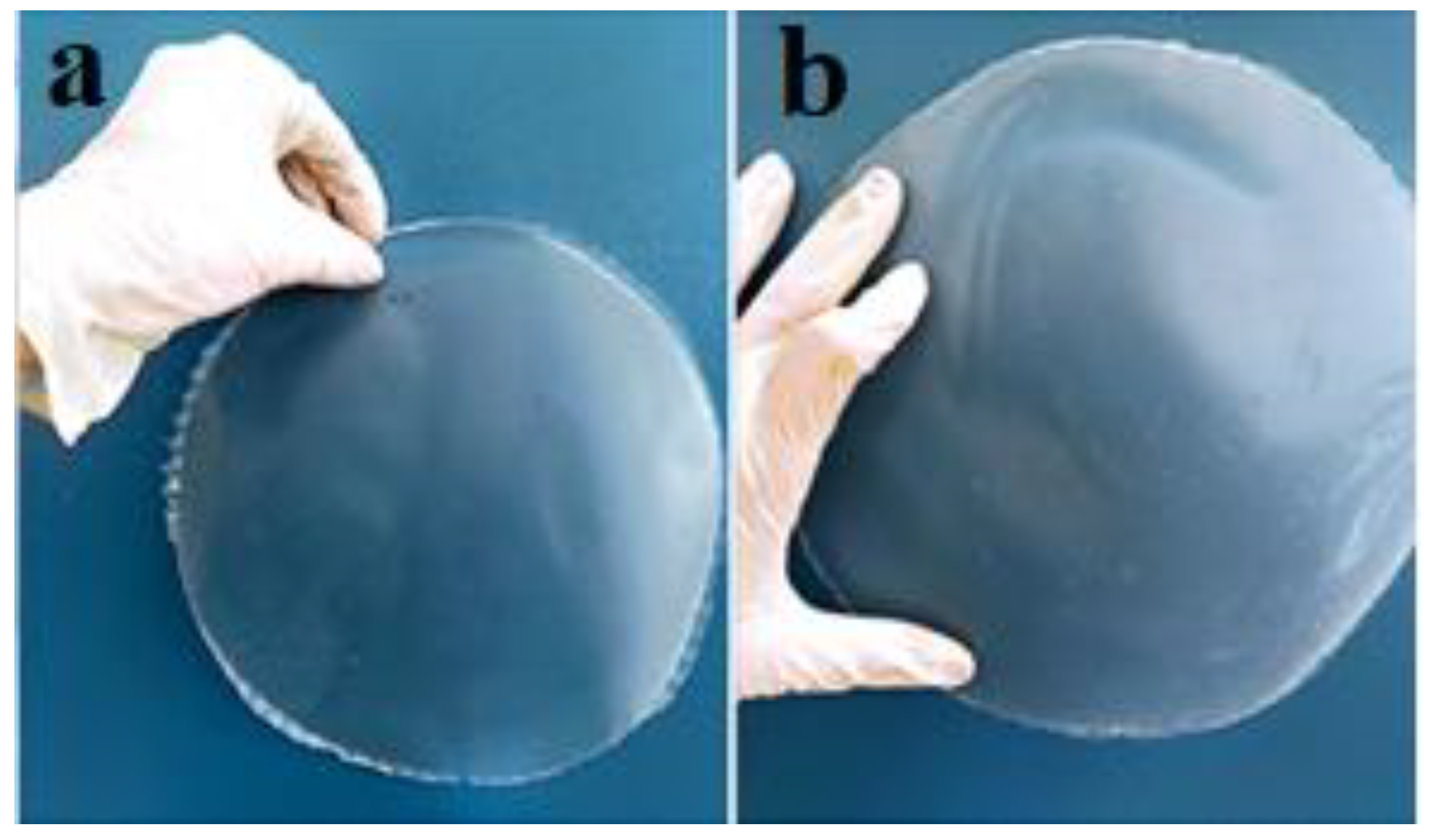
Figure 2.
FTIR of starch polymer (a), natural polyol xylitol (b), starch control (CS), and starch and xylitol (CX) films (c and d, respectively).
Figure 2.
FTIR of starch polymer (a), natural polyol xylitol (b), starch control (CS), and starch and xylitol (CX) films (c and d, respectively).
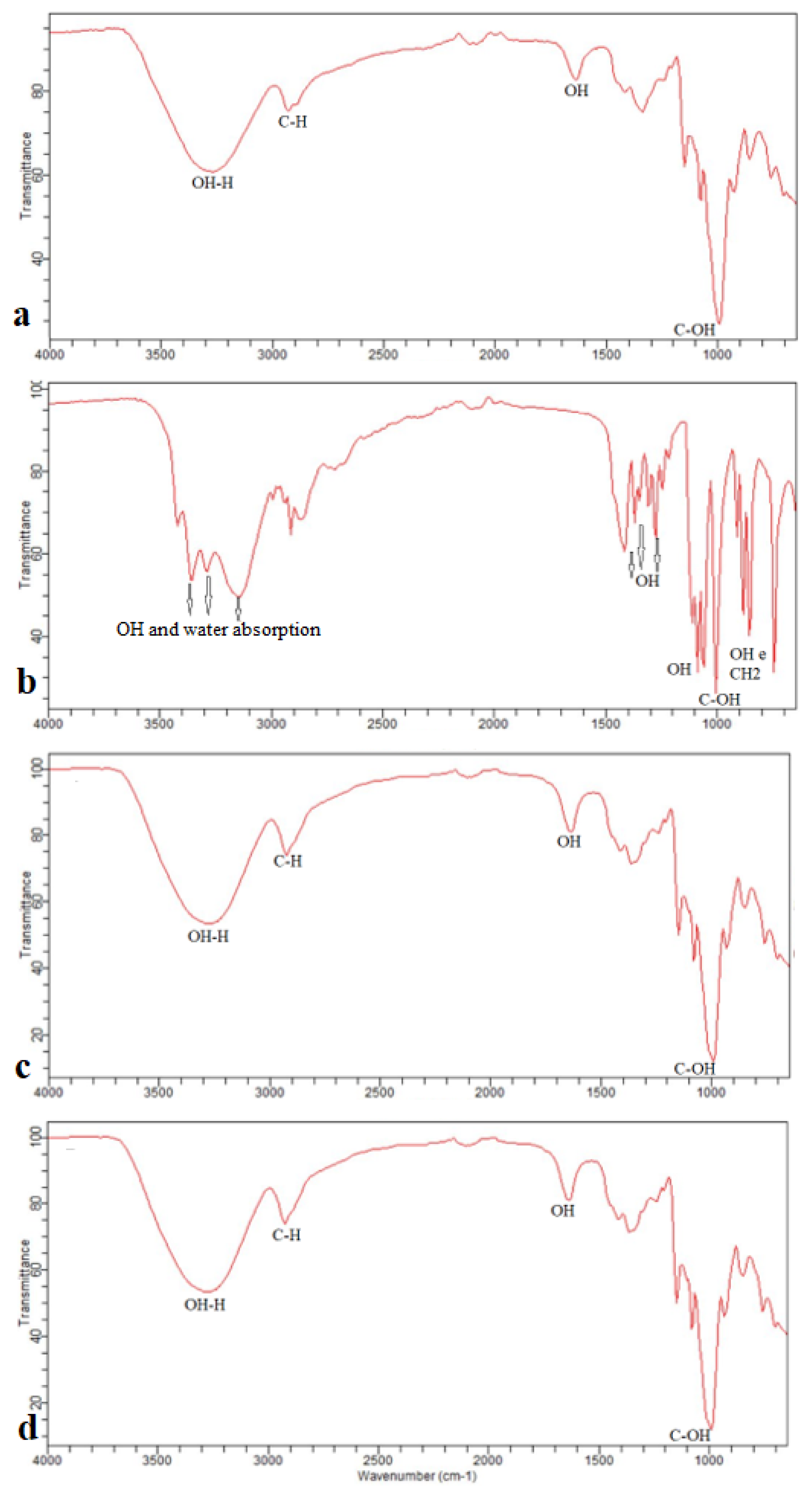
Table 1.
Results of thickness, WVP, solubility, and mechanical properties of the composite films.
| Sample | Thickness (mm) | WVP (g.mm/m2.d.kPa) | Solubility (%) | TS (MPa) | E (%) |
|---|---|---|---|---|---|
| CS | 0.100±0.00a | 2.71±0.13b | 3.05±0.11b | 22.43±0,31a | 8.27±00.31b |
| CX | 0.101±0.00a | 10.84±0.18a | 24.23±0.64a | 4.17±0,18b | 52.67±1.88a |
The lowercase letters in the same column do not show a significant difference (p> 0.05) between the means obtained by the Fisher LSD test. TS (tensile strength). %E (percentage of elongation). WVP (water vapor permeability). CS (starch control film) and CX (starch and xylitol film).
Table 2.
Results of microbiological analysis of black pepper seeds.
| Microorganisms | CP | RP |
|---|---|---|
| Escherichia coli NMP/g | Absence | Absence |
| Salmonella sp/25g | Absence | Absence |
| Molds and yeast (CFU/g) | 1.6 x 10³ | 1.4 x 10³ |
CP (control peppers without coating). RP (coated pepper).
Table 3.
Results of the color parameters of black peppers.
| Treatments | ||||
| CP | RP | CP | RP | |
| ST | L* | a* | ||
| 1º | 26.34±0.26aB | 21.38±0.28bD | 0.93±0.07aBC | 0.93±0.08aC |
| 2º | 19.66±0.54aD | 18.84±0.22aE | 0.38±0.03bD | 0.74±0.02aD |
| 3º | 25.77±0.95aB | 25.35±0.43aA | 0.94±0.07bBC | 1.93±0.04aA |
| 4º | 26.29±0.71aB | 23.45±0.41bB | 1.04±0.14bAB | 1.32±0.08aB |
| 5º | 24.06±0.91aC | 22.30±0.57bC | 0.83±0.05bC | 1.26±0.19aB |
| 6º | 28.39±0.85aA | 21.49±0.93bCD | 1.01±0.02aAB | 1.00±0.09aC |
| 7º | 25.49±0.68aB | 22.06±0.41bCD | 1.08±0.08bA | 1.86±0.07aA |
| ST | b* | C* | ||
| 1º | 10.67±0.33aAB | 11.03±0.10aBC | 11.66±0.27aA | 10.43±0.66bBC |
| 2º | 9.85±0.30bBC | 10.65±0.25aC | 10.19±0.27aBC | 10.08±0.33aC |
| 3º | 10.19±0.63bABC | 11.74±0.32aAB | 11.15±0.47aAB | 11.02±0.36aAB |
| 4º | 11.11±0.81aA | 11.74±0.79aAB | 11.37±0.90aA | 11.08±0.17aAB |
| 5º | 9.63±0.07bC | 10.45±0.41aC | 9.74±0.15aC | 9.97±0.16aC |
| 6º | 10.46±0.82aABC | 10.25±0.40bC | 11.91±0.88aA | 10.28±0.42bBC |
| 7º | 11.08±0.18bA | 12.34±0.63aA | 11.68±0.48aA | 11.58±0.87aA |
| PC | PR | PC | PR | |
| ST | hº | ΔE | ||
| 1º | 84.79±0.71aB | 86.54±1.26aA | - | - |
| 2º | 86.73±0.57aA | 86.96±0.95aA | 6.59±0.14aA | 2.86±0.05bB |
| 3º | 82.62±0.25aD | 83.44±0.45aBC | 1.35±0.63bD | 3.76±0.36aA |
| 4º | 82.98±0.72aCD | 82.60±0.48aCD | 0.76±0.06bE | 2.60±0.27aB |
| 5º | 84.15±0.61aBC | 84.12±1.13aB | 2.04±0.07aC | 0.97±0.06bD |
| 6º | 84.86±0.66aB | 86.20±0.64aA | 2.71±0.22aB | 1.05±0.06bD |
| 7º | 81.30±1.14aE | 81.74±0.24aD | 1.36±0.00bD | 1.52±0.00aC |
The same lowercase letters in the same row do not present a significant difference (p> 0.05), and the same uppercase letters in the same column do not present a significant difference (p> 0.05) throughout storage between the means obtained by the Fisher LSD test. ST (storage time). CP (control peppers without coating). RP (coated pepper).
Table 4.
Analyses of apparent and real specific mass and Weight of a thousand seeds of black pepper.
Table 4.
Analyses of apparent and real specific mass and Weight of a thousand seeds of black pepper.
| Treatments | ||||
| CP | RP | CP | RP | |
| ST | Apparent specific gravity (g/ml) | Actual specific gravity (g/ml) | ||
| 1º | 0.53±0.00aC | 0.53±0.00aB | 0.97±0.00bC | 1.08±0.02aA |
| 2º | 0.53±0.00aBC | 0.53±0.00aAB | 1.09±0.01aA | 1.04±0.02aAB |
| 3º | 0.54±0.00aAB | 0.53±0.00bAB | 1.01±0.03aABC | 1.01±0.02aAB |
| 4º | 0.54±0.00aAB | 0.54±0.00aA | 1.05±0.04aAB | 1.02±0.03aAB |
| 5º | 0.54±0.00aAB | 0.54±0.00aAB | 1.02±0.04aABC | 0.97±0.02aB |
| 6º | 0.54±0.00aA | 0.54±0.00aAB | 0.97±0.01aBC | 1.01±0.00aAB |
| 7º | 0.53±0.00aC | 0.53±0.00aB | 1.00±0.02aBC | 1.02±0.06aAB |
| 8º | 0.54±0.00aAB | 0.53±0.00aAB | 1.03±0.02aABC | 1.02±0.05aAB |
| PC | PR | |||
| ST | Weight of a thousand seeds (g) | |||
| 1º | 43.63±0.23bA | 46.96±0.20aA | - | - |
| 2º | 43.14±0.24bA | 44.84±0.20aBC | - | - |
| 3º | 42.98±0.11aA | 43.80±0.15aCD | - | - |
| 4º | 41.72±0.14bB | 44.04±0.14aCD | - | - |
| 5º | 42.83±0.17aAB | 44.14±0.24aCD | - | - |
| 6º | 43.52±0.17bA | 45.53±0.20aB | - | - |
| 7º | 43.62±0.18bA | 45.57±0.25aB | - | - |
| 8º | 43.33±0.20aA | 43.42±0.12aD | - | - |
The same lowercase letters in the same row do not present a significant difference (p> 0.05), and the same uppercase letters in the same column do not present a significant difference (p> 0.05) throughout storage between the means obtained by the Fisher LSD test. TA (storage time). CP (uncoated control peppers). RP (coated pepper).
Disclaimer/Publisher’s Note: The statements, opinions and data contained in all publications are solely those of the individual author(s) and contributor(s) and not of MDPI and/or the editor(s). MDPI and/or the editor(s) disclaim responsibility for any injury to people or property resulting from any ideas, methods, instructions or products referred to in the content. |
© 2025 by the authors. Licensee MDPI, Basel, Switzerland. This article is an open access article distributed under the terms and conditions of the Creative Commons Attribution (CC BY) license (http://creativecommons.org/licenses/by/4.0/).
Copyright: This open access article is published under a Creative Commons CC BY 4.0 license, which permit the free download, distribution, and reuse, provided that the author and preprint are cited in any reuse.


