

Submitted:
20 November 2023
Posted:
21 November 2023
You are already at the latest version
Abstract
In this study, the efficiency of coating (alginate and carrageenan) and osmotic dehydration pre-treatment (NaCl and sucrose) on decreasing oil uptake of potato strips was assessed. It was examined how various pre-treatments affected the sample’s texture, morphology, color and density properties as well as their moisture content and effective moisture diffusion coefficient (Deff). Results showed that NaCl osmotic dehydration pre-treatment and sucrose solution decreased oil uptake by 30.76% and 41.75%. This is attributed to moisture removal increasing caused by improving dielectric properties. Osmotic dehydration and coating pre-treatment frequently enhanced product shrinkage, browning index, a* and ∆E. Conversely, density, lightness, breaking force, Deff and b* decreased. In control samples, SEM revealed a severely damaged internal structure in comparison to a tissue homogenous layer produced by coating. For moisture loss and oil uptake, the coefficient of determination (R2) and root mean square error (RMSE) of eight empirical models were compared. Finally, the Dehghannya and Krokida model (moisture loss) and the Movahhed and Naghavi model (oil uptake) were found the best fit to the experimental data. Although coating pre-treatment and osmotic dehydration can be used as an alternate de-oiling approach for potato chips, the mechanism of oil uptake reduction differ.
Keywords:
Frying
; Osmotic dehydration
; Potato
; Coating
1. Introduction
The most popular method of food preparation for enhancing the special and distinctive qualities of color, appearance, flavor, taste and texture as well as extending the shelf life of agricultural products is deep fat frying [1]. Immersing of food in oil at a temperature of 150-200°C, which is significantly higher than the water boiling point, implements this simultaneous process of heat and mass transfer [2]. Numerous physicochemical changes are brought about by the process, including starch gelatinization, oil uptake, crust formation, and color changes [3]. Additionally, it results in a significant decrease in weight and volume, which reduces the need for packing, storing, and transporting some products. Fried food consumption has been associated with an increased risk of diabetes, coronary heart disease, hypertension and cancer, according to numerous studies but it is still one of the most common cooking methods [4].
However, consumers are clamoring for healthier alternatives to fried food, particularly those with lower fat contents. Krokida, et al. (2001) suggested that a pre-treatment step before frying might be the best remedy in the production of low-fat products [4]. Pretreatments are primarily used on conventional fruit and vegetable products to increase quality [5], extend shelf life due to a decrease in water activity, moisture content, and oil absorption [6,7], and also decrease energy cost. In the literature, a number of methods to lower oil content in fried goods have been reported. Pre-treatment techniques such as osmotic dehydration [8], coating with hydrocolloids [9], and pre-drying are currently used to reduce oil uptake as environmentally friendly methods [10]. Moreover, these pre-treatments reduced oil uptake by altering the surface area exposed to oil, acting as a lipid barrier, increasing the solid content of raw materials, or changing the microstructure of materials [9]. Furthermore, osmotic dehydration (OD) is the most commonly pretreatment applied to fruits and vegetables, since it improves final quality and reduces energy consumption. This is a beneficial method which increases transpiration through the cell membranes by osmotic pressure, and before diffusion into the hypertonic solution, followed by flow along the intercellular space [11].
Furthermore, hydrocolloids are polysaccharides with a high molecular weight that are employed in a variety of food applications such as thickening and gelling agents, stabilizers, and emulsifiers [12]. Alginates are high molecular weight alginic acid salts having a block structure that allows them to cross-link and bind. Carrageenan, found in the cell wall matrix of red seaweeds, is a broad term that refers to a variety of sulphated polysaccharide compounds.
Furthermore, the coatings engender the surface more brittle and stronger, because of less cracks, resulting in reduced water evaporation and oil uptake; additionally, by trapping moisture inside the food and inhibiting the replacement of water by oil, the coatings change the water holding capacity of foods [13]. All the same in composite films, hydrocolloids can be utilized as emulsifiers [14], which can reduce the surface tension between oil and food, contributing to a decrease in oil uptake. Thus, the application of coatings for reducing the oil content of fried potato chips is a successful strategy. Surface shape and porous structures formed by moisture evaporation have the greatest influence on oil uptake [15]. Modifying the surface micromorphology and dielectric properties of potato chips using pre-treatments such as coating and osmotic dehydration in order to reduce oil absorption, accelerate moisture evaporation and improve overall quality will be very useful. In addition, the correct understanding of the kinetic parameters resulting from the process modeling allows predicting changes in the quality of the final product and improving the process conditions. To describe the moisture loss characteristics of biological products, several models have been developed [16]. Krokida, Oreopoulou, and Maroulis (2000) investigated moisture loss during deep fat frying of potatoes using a first order exponential model [17]. Ashkenazi et al. (1984) found that during frying of French fries, water diffusion is proportional to the square root of the frying time. Furthermore, understanding the complex phenomena that occur during the deep-frying process of food is required in order to optimally design and model this process with the goal of reducing oil absorption of the fried product [18]. Deep fat frying can be divided into 4 stages: initial heating, surface boiling, falling rate, and bubble end point. Surface interactions between oil and food are complicated by the intense migration of water vapor bubbles that escape from the food into the oil. Water vapor bubbles escaping from the food’s surface generate significant turbulence in the oil [19]. Relationships between different variables, such as oil content and time, are provided by oil absorption modeling, which provides details on the relationship between the amount of oil absorbed at various times or the rate of oil absorbed by food during this process. Therefore, by regulating the temperature and length of time of the frying process and using these models, it is possible to reduce the amount of oil absorption in the finished fried product.
Although several studies have been conducted on the use of pretreatment to reduce the oil content of atmospheric fried products. However, the combined effects and mechanisms of coating pretreatment and osmotic dehydration on reducing oil absorption in fried foods have only been briefly discussed in the literature. Furthermore, the evaluation of a good frying model to describe the kinetics of oil absorption and moisture loss of pretreated potato strips has received relatively little attention. In order to clarify the secondary effect on potato chips, this work evaluated the effectiveness of hydrocolloid coating and osmotic dehydration pretreatments on reducing oil absorption, moisture evaporation, effective moisture diffusion coefficient, breaking force, morphology and color parameters of potato chips.
2. Materials and methods
2.1. Preparation of samples and solutions
All from the same producer, fresh potato tubers (Agria variety, initial MC of 80.21% wet basis) were purchased from a local market (Tabriz, Iran) and refrigerated at 8°C before frying. The samples were sorted based on their size, color, and freshness consistency. The frying medium was refined sunflower oil (Bahar, Behshahr Industrial Company, Tehran, Iran). Lotte Chemical Titan supplied commercial food grade sodium alginate (Malaysia).
The raw samples were taken out of the refrigerator 24 hours before to the commencement of each experimental session. This can aid in lowering the potatoes’ reducing sugars prior to experiments. Following a wash to remove debris, the samples were dried using tissue paper to remove excess moisture before being peeled. They were carefully peeled and sliced into strips of 1.2 cm × 1.2 cm × 4 cm using a rectangular-shaped manual peeler [20].
To prepare osmotically dehydrated samples, potato strips were placed in a beaker with osmotic solution (4% w/w NaCl in water or 30% w/w sucrose). The weight ratio of the sample to the osmotic solution in the beaker was 1:10. The beaker was then placed on a hot plate heated to 40°C for 90 minutes with no stirring. Based on preliminary testing, the osmotic immersion time was set to allow for less oil uptake at the end of the frying process. After the required time had passed, the samples were washed with distilled water and blotted with absorbent paper [21].
Sodium alginate powder was dispersed and dissolved in distilled water to prepare alginate or carrageenan gum solution 1% (w/v) at 75°C with constant stirring until a uniform solution was obtained. After that, it was cooled to room temperature. Following that, the samples were immersed in coating solutions (at a ratio of 1:10 w/w) for 2 minutes. The strips underwent coating pre-treatment, were dried in an oven to reduce surface moisture, and then allowed to cool to 25°C. Slices that weren’t coated used as the control samples [20].
Additionally, potato strips were soaked in osmotic solutions (4% w/w NaCl in water and 30% w/w sucrose) individually in each coating-assisted osmotic dehydration pretreatment trial before being coated with carrageenan and sodium alginate (1% w/w). The samples were then submerged in coating solutions for two minutes (at a ratio of 1:10 w/w). The strips were eventually dried in an oven to reduce surface moisture before being allowed to cool to 25°C.
2.2. Experimental design of pretreatment process.
The slices were pre-treated by soaking them in osmotic and coating solutions, respectively., 1) Control: no treatment as a reference; 2) 1% sodium alginate (A); 3) 1% carrageenan (C); 4) 4% NaCl (N); 5) 30% sucrose (S); 6) 4% NaCl with the assist of 1% carrageenan (N-C); 7) 4% NaCl with the assist of 1% sodium alginate (N-A); 8) 30% sucrose with the assist of 1% carrageenan (S-C); 9) 30% sucrose with the assist of 1% sodium alginate (S-A).
2.3. Experimental procedure
For the frying studies, a deep fat fryer (Moulinex, model AM 7000, Ecully Cedex, France) was employed. After sample preparation, the fryer was filled with sunflower oil (2.1 L), preheated for 1 hour prior to frying to establish steady-state conditions, and the oil was removed after 6 hours of use. Potato strips (about 100 g) were automatically immersed in oil in the mesh fryer basket. The potato/oil ratio was kept constant throughout all tests at 1:20 (w/v). At 170°C, the potato strips were fried for 60, 120, 180, and 240 seconds. After frying, the samples were allowed to drain for 5 minutes before being chilled to room temperature (25°C) and the water and oil content were measured [22].
2.4. Analytical Methods
Water content
The oven dried method was used to estimate the moisture content (M) of samples [23]. Approximately 3 g of samples were oven-dried at 103 ± 2°C until their weight remained consistent. The M was given as g/100 g d (AOAC19; Method 934.06).
Oil Content
The oil content of fried samples was measured using the Soxhlet extraction method [23] at each time interval. Approximately 1 g of fried samples were dried to a consistent weight before being extracted for 8 hours in a Soxhlet extraction device with petroleum (30-60 °C, SCRC, China) as the solvent. Finally, the extracted oil was vacuum dried (50°C, 0.085 MPa) to a consistent weight. The oil content was shown on a dry basis.
Determination of Shrinkage
Shrinkage is defined as a relative or reduced dimensional change in volume, as indicated by equation 1:
Where S is the shrinkage (%), Vt is the apparent volume of the sample at a certain degree of dryness after time t and V0 is the apparent volume of the raw sample. The gravimetric volume of the samples was measured using the toluene displacement method. Using this approach, samples were accurately weighed and put into a flask half-filled with toluene. After filling the flask with toluene and weighing it, the level of solvent was carefully adjusted to guarantee consistency. The sample volume (V) was calculated as follows:
Where v is the volume of the flask and M is the sample weight M1 is the flask weight plus the solvent; M2 is the flask weight plus the sample and the solvent; and ρ is the density of toluene (g/cm3 at 20°C) [5].
Measurement of bulk density
Bulk density is the weight of a matter per unit volume. In other words, bulk density is defined as the ratio of a sample’s weight to its total volume:
Where M and V are samples weight (g) and volume (cm3), respectively [24].
Color
The color characteristics of potato strips were measured using a high-precision spectrophotometer (UltraScan Pro 1166, HunterLab Inc., USA). The colorimeter was calibrated with a white and black board before measurement. The color parameters (yellowness to blueness) were expressed using L* (lightness to darkness), a* (redness to greenness), and b*. Following the frying, ten potato strips were selected at random and compactly stacked. Then, at room temperature, color readings were collected at six separate sites, and the average value was recorded. The overall color change (∆E) was computed using the equation below (4) [7]:
Browning index was calculated as equation 5:
Scanning electron microscopy
The materials’ microstructure was examined using a scanning electron microscopy (SEM, SU 1510, Hitachi Co. Ltd. Japan) with a constant acceleration voltage of 5 kV. The de-oiled and dehydrated samples were taped on aluminum stubs with two-sided adhesive tape and vacuum sputtered with gold palladium. At least three samples were observed each treatment, and six photos were recorded on each sample. The photographs displayed were chosen at random [15].
Effective moisture diffusion coefficient (Deff)
The Fick’s diffusion equation is used to express moisture content fluctuations since diffusion is the major factor for transporting moisture to the surface throughout the drying process. This equation 6 was solved using the assumptions of uniform distribution of the initial moisture content, diffusion of moisture, constant diffusion coefficient, minor shrinkage, and resistance to mass transfer:
Where MR is the moisture ratio, Mt is the moisture at the moment (d.b), M0 and Me are the initial and equilibrium moisture contents (d.b), Deff is the effective moisture diffusion coefficient (m2/s), L is half of the sample thickness (m), and t is the drying time (s). Only the first term of the series is considered for long frying times. This is due to the insignificance of the other terms in the series on moisture ratio. Because Me is insignificant in comparison to Mt and M0, Eq. 6 can be written as follows [25]:
Taking logarithms from both sides of Eq. 7, we get the following equation:
The effective moisture diffusion coefficient can be calculated by plotting the ln (MR) curve against time and then solving Eq. 8.
Texture determination
A TA-XT Plus Texture Analyzer (Stable Micro Systems Co. Ltd., United Kingdom) was used to assess the texture of the fries. When the surface temperature of the fries cooled to 50 degrees Celsius, the texture was measured [26]. The texture measurement included a 30 Kg load cell. A cylindrical flat-end punch with a diameter of 2 mm was used to perform a puncture test. The test parameters were as follows: 10 g trigger force; 2 mm/s pre-test and test speed; 10 mm/s post-test speed; and 5 mm trip distance. The force versus distance curves were used to calculate maximum force (Fmax) and positive peak area (area). For each experiment, ten samples were measured at three locations (two ends and a center), and the experiments were carried out in triplication.
Modeling moisture loss and oil uptake
During this experiment, eight empirical models were utilized to represent the variation in oil uptake and moisture loss in fried potato chips (Table 1 and Table 2). The Origin (Version 2016) software program was used to fit the experimental data gathered during each phase of the frying process to the models, with the goodness of fit R2 and lowest mean square error (RMSE) as the criteria.
Where MR is moisture loss; a, b and c are model constants; t is assumed as time.

Table 2.
Mathematical models fitted to potato strips oil uptake curves.
| Number | Model equation | Reference |
|---|---|---|
| 1 | O=a.t2+b.t+c | [48] |
| 2 | O=a.tb | [48] |
| 3 | O=a.exp(-b.t)+c | [52] |
| 4 | O=(1+t)/(a.t+b) | [52] |
Where MR is moisture loss; O is oil uptake; a, b and c are model constants; t is assumed as time.
2.5. Statistical analysis
For statistical analysis, a 3 × 3 factorial experiment (osmotic solution type × coating solution type) with a completely randomized design and three replications was employed in this work. Duncan’s multiple range test (p< 0.05) was used to compare means.
3. Result and discussion
3.1 Moisture content
The effects of coating pre-treatment and osmotic dehydration on the moisture loss kinetics (moisture content versus time) of fried potato chips are shown in Figure 1. Every frying process started with a rapid decrease in moisture content, and as the frying time went on, the rate of dehydration also decreased. The initial moisture content of French fries was reduced by osmotic pretreatment (NaCl solution or Sucrose solution), as shown in Figure 1, by 27% and 42%, respectively, and continuing to decrease throughout frying time. The equilibrium moisture content values ranged from 2.61 to 4.11 kg/kg db depending on the type of solution, and the moisture content of osmotically treated samples was lower than that of untreated samples for the same frying duration. Sucrose solution pretreatment yields the lowest moisture content, followed by NaCl solution and control. The osmotic pre-treatment also markedly (p <0.05) increased the rate of moisture removal from the samples, which decreased the amount of time it took for the samples to reach the endpoint of the fry process (Figure 1). According to Ran et al. (2019), pre-treating carrots in salt solutions significantly improved their dielectric properties [11], which greatly accelerated the rate at which moisture was lost during frying.
As shown in Figure 1, osmotic pre-treatment exacerbated moisture loss rates in the samples, but 1.0% alginate and 1.0% carrageenan coating pre-treatment greatly reduced them. The protective layer generated by coating pre-treatment reduces moisture loss because coating pre-treatment with hydrocolloids can create stronger surfaces and lower surface permeability when the hydrophobicity is lost during frying [1,12]. As a result, water movement inside the sample was reduced, and steam evaporation from the structure was avoided. In comparison to uncoated samples, coated samples retained more moisture through all experiments. As anticipated, alginate had a more significant impact on moisture retention than carrageenan (p<0.05). According to the Figure 1. The potato strips coated with 1% alginate showed the greatest reduction in moisture loss (43%) when compared to the control sample. Additionally, prior studies have demonstrated that foodstuffs lose less water when coated in hydrophilic gums before being fried [27]. The thermo-gelling or film-forming ability of the gum, which in turn increases water-holding capacity (WHC) in the potato strip coated with alginate during frying, is likely what caused the reduced water loss in the alginate-coated samples [28,29].
Table 3 compares the oil and moisture content of fried potatoes to various hydrocolloid types and an osmotic solution. Based on the results, the samples pretreated with sucrose had the lowest moisture content (2.37 kg/kg). Furthermore, coated products had higher moisture contents than uncoated ones; alginate had the highest value (4.11 kg/kg), followed by carrageenan (3.93 kg/kg), and control (3.62 kg/kg). Due to their high capacity to bind water, hydrocolloid coatings on fried potatoes generally offered greater resistance to water vapor migration than non-coated potatoes [1,12]. In addition to the hydrophilic nature and high water-binding capacities of gums, the film structure formed on the coated surface and the thickness of the coating layer, both of which are significantly influenced by the proportion of coating-forming solutions as well as interactions between the food sample and hydrocolloid type, play an important role in defining the moisture content of potato samples. Similar findings were obtained by other researchers who utilized varied concentrations of almond gum and okra [3].
Mean value ± standard deviation; the different lowercase letters (a–g) indicate significant differences within different frying methods (p < 0.05).
3.2. Effective diffusion coefficient of moisture (Deff)
Table 3 depicts the effective diffusion coefficient of moisture (Deff) for potatoes treated with various solutions, indicating that the control sample (3.46×10⁻⁸ m2/s) had a higher effective diffusion coefficient than samples pretreated with salt and sucrose (2.15×10⁻⁸, 2.06×10⁻⁸ respectively). Deff reduces because water discharges slowly and continuously in materials with low moisture content [3]. Furthermore, coating samples with alginate and carrageenan result in a higher diffusion coefficient than samples pretreated with salt and sucrose and then coated with hydrocolloids, although alginate did not show a significant difference, but carrageenan did. The results for the combination of salt and sucrose with each of the coatings showed no significant difference, and salt and sucrose had nearly the same effect on the effective diffusion coefficient of moisture. The effective moisture diffusion coefficient obtained in this study ranged from 2.05×10⁻⁸ to 3.45×10⁻⁸ m2/s, which was within the range previously reported for frying various products. The effect of various coatings in combination with salt and sucrose showed an increasing effect on the effective moisture diffusion coefficient, which was greater for alginate. Although the use of alginate for salt resulted in a significant increase in Deff (2.85×10⁻⁸), sucrose had no significant effect (2.78×10⁻⁸) (Table 3). The use of only coating revealed a significant effect of alginate on Deff, whereas carrageenan had no effect on this parameter. A higher initial moisture content accelerates moisture release; additionally, changes in viscosity, surface tension, and porous solid material deformation help to accelerate moisture release [3]. Several factors influence the effective moisture diffusion coefficient, including thickness, moisture content, pre-treatment type, coating type, frying time, and the use of different pre-treatments [30]. Results of other researchers were in agreement with our results [3,31].
3.3. Oil uptake
One of the most crucial characteristics of fried foodstuffs is the oil uptake. The snack industry is now producing lower oil content goods with appealing texture and flavor as a result of growing customer inclinations for healthier and low-fat items. For all treatments, increasing the frying time gradually increased the amount of absorbed oil, as shown in Figure 2. According to numerous sources, the absorbed oil has reached equilibrium when 50% of it was absorbed in the first minute of the frying process and 50% of the remaining 50% in the next three minutes [4]. Furthermore, Figure 2 shows the impact of coating pre-treatment and osmotic dehydration on the oil uptake of potato chips. The NaCl and sugar osmotic pre-treatments lowered the oil uptake of chips from 0.091 kg/kg db to 0.063, 0.053(kg/kg db), with percentages of about 31.7% and 41.7%, respectively. The current study’s findings were in agreement with those of Krokida et al. (2001), who claimed that osmotic pretreatment with salt, sucrose, and maltodextrin resulted in a reduction in absorbed oil [3]. Osmotic dehydration would significantly increase the heat transmission and moisture removal rate of potato slices’ improved dielectric characteristics, which would result in denser and smaller holes or cell structure damage [32,33]. After frying, the pressure and regions where oil might penetrate were reduced, which decreased the amount of oil absorbed [10]. Additionally, the samples’ lower water content and, to a lesser extent, the starch gelatinization during frying can be blamed for the reduction in oil uptake caused by the application of osmotic dehydration pretreatment. The penetration of solid materials into the food network and, as a result, the inhibition of increased oil absorption, is another factor that may lower oil uptake in the samples prepared with osmotic dehydration [3].
As seen in Table 3, the coating pre-treatment caused samples in the following order to absorb less oil: NA<SA<SC=NC<C, A<Control. According to the findings, the use of alginate and carrageenan coating had a significant effect on reducing oil absorption, with alginate performing better carrageenan (especially in the sample pre-treated with salt). When salt and sucrose were used alone, they surpassed salt-alginate, salt carrageenan, sucrose-alginate, and sucrose-carrageenan in terms of oil absorption. In other words, using osmotic pretreatment and coating at the same time increased oil absorption compared to samples pretreated with osmotic dehydration. According to Alipour et al. (2008), using carrageenan coating reduced oil absorption in potato chips and slices, which is consistent with the results of the current study when only carrageenan coating was used without osmotic pretreatment [34]. Furthermore, according to Mazzini and Zandunadi (2019), hydrocolloid coatings create a barrier on the surface of food, allowing control of oil and moisture loss during the frying process [35]. This is due to hydrocolloids’ ability to gelatinize, forming a thin layer of gel and reducing the space where oil can penetrate into food [35]. The increase in water vapor pressure coming from the food’s surface causes the formation of a faster crust and a stronger structure, and the amount of oil absorption decreases [36]. Furthermore, when sufficient binding between the polymer and the sliced surface occurs, the coatings pre-treatment can change the surface hydrophobicity. This also acts as an oil barrier, preventing the surface from absorbing oil [1]. Yu et al. (2016) reported similar findings, claiming that coatings pre-treated with guar gum and glycerol significantly reduced deep-fried potato chip oil absorption. Many factors, including food components, pre-treatments, frying conditions, and oil type, influenced the specific rate of oil uptake [13].
3.4. Shrinkage
Shrinkage is a significant component in the structure of processed foods. Shrinkage is quite prevalent in deep-fat frying products. It is defined as a volume change caused by water loss, a reduction in open pores, protein denaturation, and an increase in fried product density [37]. The comparison of shrinkage changes through frying time for all treatments shown in Figure 3 revealed that, with the exception of the control sample, alginate, and carrageenan, shrinkage of more than 15% had occurred at the same initial time for all treatments due to osmotic pretreatment with salt or sucrose. With osmotic force, salt or sucrose causes water to escape from the potato before frying, which can be directly related to shrinkage. The rate of shrinkage was higher at the start of the process due to the higher moisture content of the samples, and as humidity decreased, so did the rate of shrinkage. There was no specific shrinkage observed at the beginning of frying in treatments where osmotic pre-treatment was not used. This is congruent with the findings of Baik and Mittal (2005), who reported that 50% of tofu disc shrinkage occurred within one-third of the overall frying duration of 5 minutes [38]. Furthermore, when the amount of water lost during the frying process increases, the material shrinks due to higher contraction stresses generated by the water removal. Fried potato shrinkage has been reported to be more evident as frying time and temperature are increased. This finding is consistent with other researchers’ findings, who discovered that volume shrinkage during the early stages of frying was approximately equivalent to the volume of water lost [39]. However, shrinkage and puffing are two frying events that cause volume changes [4]. These writers defined shrinkage as a decrease in product dimensions. Shrinkage began at the surface and progressed inwards as the frying time increased. The outer layers of the material become hard and their ultimate volume is established early in the process at high frying rates, and other investigations indicated that the volume of the samples did not change with more water loss during the last stages of frying [40]. There is a resistance to further volume change as a result of the hardening of the outer sections generated by extended heating, which may explain for the leveling off signaling no further shrinkage. The initial shrinkage period followed by an increase in product volume has been attributed to the following frying actions: (i) internal cell dehydration occurs, and the evaporated water is partially replaced by the frying oil, resulting in increased porosity [36], and (ii) excessive pressure buildup due to crust formation causes product expansion and puffing [5].
Furthermore, the results show that pretreatments prior to frying had a significant (p<0.05) influence on the shrinkage of fried potato strips. The effect of alginate and carrageenan coatings in combination with salt pretreatments (Figure 3) indicated a decreasing effect on the amount of shrinkage of fried potatoes, whereas coating with sucrose pretreatment did not show a significant difference. Shrinkage has a direct relationship with moisture content, and when the moisture content graph (Figure 1) was compared to the shrinkage graph (Figure 3), the treatment with lower moisture content (sucrose pretreatment) after frying had greater shrinkage. The amount of shrinkage increases with the amount of moisture removed, because shrinkage occurs during dehydration of high moisture food when the viscoelastic matrix contracts in the pores previously occupied by water [41]. According to the findings, potatoes treated with sucrose and alginate experienced the greatest and least amount of shrinkage, respectively. Potatoes coated with carrageenan shrank the least after alginate (Table 3). The current study’s findings were consistent with those of other researchers [20].
3.5. Apparent density
The effect of frying time and pre-treatment on sample apparent density is shown in Figure 4. The values ranged from 1.00 to 1.11 kg/m3, and sample density decreased with frying time. According to the Figure 4, salt pre-treatment had a greater decreasing effect on the apparent density of coated potatoes than sucrose pre-treatment. This is most likely due to the removal of moisture and the replacement of water by air and oil, both of them are less dense than water and can have a decreasing effect on the density of the product. In terms of time, the density of all treatments decreased from about 1.17 g/cm3 to 0.84-1.04 g/cm3 and then decreased as the frying time increased which was attributed to the transition phenomenon [4], cavity formation, moisture content reduction, and oil absorption [36,42]. The effect of different coatings on potato density revealed an increase in density, with alginate and carrageenan leading to an increase in density (Figure 4). The apparent density rises because the coated samples lost less moisture during the process. As shown in Figure 4, the density of all treatments gradually decreased over time. Through frying time, potatoes pre-treated with salt and potatoes coated with alginate had the lowest and highest density, respectively (Table 3). Krokida et al. (2001) discovered that sucrose had a higher density than salt, maltodextrin, and even the control [4], which is consistent with the findings of the current study.
3.6. SEM
Understanding the mechanisms involved and modeling would benefit considerably from observing microstructural changes in foods during processing [41]. In recent years, extensive research has been undertaken on the microstructural changes in fruit and vegetable tissue, using SEM pictures to gain a better knowledge of such goods’ qualities. According to microscopic image inspection of the samples, fresh potato showed consistent cell structure and normal morphology, with undamaged round-shaped starch granules. As seen in Figure 5, pretreatment with a 4% salt or 30% sucrose solution ruptured and physically injured the cells. This phenomenon could be created by the collapse of cavitation bubbles, which results in strong pressure gradients and high local velocity of liquid layers near granules, resulting in shear stresses [13]. Moreover, comparing the microscopic photos of the different treatments shown in the Figure 5 revealed that the potato treated with salt-alginate and salt-carrageenan had a more continuous texture than the other treatments, whereas for sucrose alginate and sucrose carrageenan numerous small pores were visible, however the tissue was almost completely cohesive and without pores for the control treatment. In addition, the use of coating has resulted in a uniform layer on the tissue, especially in the presence of salt pretreatment, whereas is not present in the control sample. This result is agreement with our texture results shown in Figure 6, the higher Fmax of the control sample when compared to the combined treatments is most likely due to the lack of this integrated layer, which increased the Fmax. Other researchers discovered that using osmotic treatment caused severe changes in the tissue structure of apples, resulting in an increase in effective water diffusivity due to the formation of microscopic channels and cell rupture [43].
3.7. Breaking force
One of the key characteristics of fried chips is texture, and crispness in particular is linked to chip acceptance [44]. Heat, mass, and chemical changes that take place during the frying process are what generate the change in texture in fried food. The degree of crispness of the chips can be determined by the power needed to break the fried chips [45]. Lower breaking force values corresponded to more crispy fried potato texture.
Figure 6 depicts the effects of osmotic dehydration and coating pre-treatment on the breaking force of fried potato chips. Salt and sucrose had no effect on the maximum force of potato tissues, but sucrose did cause a decrease in Fmax (1.75 N). Unlike salt and sucrose, using alginate and carrageenan alone resulted in a non-significant increase in Fmax (2.42, 2.15 N respectively) of potatoes when compared to the control sample (2.03 N), whereas using salt and sucrose as pretreatment resulted in a decrease in Fmax. In other words, when alginate and carrageenan were used alone, Fmax increased due to high moisture content, whereas using salt and sucrose osmotic solution along with hydrocolloid coatings decreased breaking force due to lower moisture content [13]. In general, the treatments without osmosis produced the greatest maximum force, while osmotic pretreatment reduced maximum force. The alginate treatment yielded the highest Breaking force, while the sucrose-carrageenan treatment yielded the lowest (Figure 6).
The fundamental rationale for potato chip texture management would be the hydrocolloid characteristics of coatings [1]. The protective layer of hydrocolloid coatings would lose its hydrophilic qualities and create a tougher crust throughout the frying process, increasing the breaking force of fried potato chips [1]. The pre-treatment with hydrocolloid coating would also minimize porosity by covering and occupying pores in the surface layer of the crust and enhance crust thickness, thus improving the crust of fried potato slices [45]. A series of unique connections created between these coatings and salt and sucrose pretreatments most likely caused the decrease in Fmax of potatoes. As a result, textural palatability should be considered when utilizing coatings as a moisture loss and oil uptake barrier [9]. Similar findings were made in previous studies by Piyalungka et al. (2019), who discovered that pre-treatment in a 20% (w/w) maltodextrin solution increased the Breaking force of vacuum fried pumpkin chips [8]. According to Adedeji and Angadi (2018), the use of salt osmotic pretreatment accelerates moisture loss, resulting in less porosity and the formation of a hard crust in chips [32].
3.8. Color
Given that color is frequently the first quality trait people consider, it is a crucial factor in the frying industry. According to the figure, salt and sucrose pretreatment reduced the lightness of the fried potatoes significantly, with the lightness decreasing from 44 for the control to 35 and 32 for the pretreated samples with NaCl and Sucrose, respectively (Table 4). Furthermore, fried potatoes with alginate or carrageenan coating without osmotic pretreatment had a higher lightness than fried potatoes with osmotic pretreatment. Sucrose, as opposed to salt, caused a greater decrease in lightness, which was attributed to non-enzymatic browning, and this sucrose effect was also observed in the coated samples. The current study’s findings were consistent with those of Karukida et al. (2001) [4]. As shown in the Table 4, alginate was more detrimental to potato lightness than carrageenan. Hua et al. (2015) reported that the lightness of coated samples decreased significantly, which is consistent with the current study’s findings [46]. Furthermore, when salt was used as a pretreatment, no significant difference between coatings was observed. According to Figure 7, the lightness decreased over time in all treatments. When sucrose was used as a pre-treatment, the light reduction process had a steeper slope than when salt was used. In addition, within 4 minutes, the lightness of the potatoes in the current study decreased from 50 to around 30. Furthermore, in almost all frying times, the sample pre-treated with sucrose and alginate coating had the least amount of lightness, whereas the treatment coated with carrageenan and the control had the most.
Mean value ± standard deviation; the different lowercase letters (a–g) indicate significant differences within different frying methods (p<0.05).
The a* parameter is used to determine the optimum frying point [43]. High values could indicate an orange hue as a result of non-enzymatic browning. Table 4 presented that the control treatment was greenish (5.21), whereas the samples pretreated with salt and sucrose were reddish (2.73, 2.90 respectively). Furthermore, the pretreated samples with salt and sucrose had a higher a* parameter than the samples with alginate and carrageenan (0.51, -3.59 respectively). Sucrose-treated samples with alginate or carrageenan coating showed more redness than salt-treated samples. The increase in a* parameter was attributed to non-enzymatic browning reactions in the study of Krokida et al. (2001), which was consistent with the results of the current study [4]. According to the Figure 8, the control sample and carrageenan had lower a* parameters than alginate, and alginate had no significant effect on the a* parameter of the salt-treated samples, whereas sucrose pretreatment resulted in a significant increase. In addition, the trend of the a* parameter increased throughout the frying time. After 90 seconds, all treatments tended to turn from green to red. However, for carrageenan, a decreasing trend was observed after 3 minutes. From about 4 minute, the control treatment tended to shift from green to red (Figure 12). The treatment without osmosis-uncoated (control treatment) and the treatment pretreated with sucrose-carrageenan had the lowest and highest values of this parameter, respectively. In other words, using sucrose and carrageenan at the same time increased the redness index of fried potatoes. Bunger et al. (2003) also stated that as frying time is increased in potatoes pretreated with sodium chloride, the a* parameter increases while L* decreases [6], which is consistent with the findings of the current study.
Table 4 depicts the effects of salt and sucrose pretreatments on the b* parameter (blue-yellow index) of fried potatoes, as salt and sucrose use decreases this parameter (40.17, 37.18 respectively). And the yellowness and quality of the samples decreased because golden yellow potatoes have a higher sensory acceptability [4]. In addition, alginate and carrageenan coatings in osmotic pretreated samples reduced the b* parameter. The NA sample had no significant effect on this parameter, whereas the SC and NC samples did. Furthermore, carrageenan preserved the yellow color of potatoes, similar to the control sample, whereas alginate had the opposite effect. Alginate increased the intensity of yellowness in salt-treated samples while decreasing the intensity of yellowness in sucrose-treated samples. Furthermore, a decreasing trend in the b* parameter was observed for all treatments as frying time progressed (Figure 9). Although for the samples pre-treated with sucrose, the downward trend was more intense, and the intensity of yellowness decreased at a faster rate during 4 minutes of frying, this trend was slow for the samples pre-treated with salt or without pre-treatment. In general, the sucrose-alginate treatment had the lowest level of this parameter, while the control treatment had the highest. In other words, using pretreatment and coating reduced the yellowness of potatoes (Figure 12).
Total color difference (E) is one of the crucial fried product physical features that is directly related to consumer acceptance of the foodstuff. Table 4 shows that when osmotic pretreatment was used, the total color difference index increased. The application of osmotic pretreatment to alginate and carrageenan coating resulted in an increase in Total color difference, and the observed result as the same for alginate and carrageenan. Sucrose-treated samples with carrageenan or alginate coatings changed color more than salt-treated samples. The cause of this phenomenon was most probably that the salt did not participate in certain reactions with the coatings that would result in a color change, whereas sucrose acted more actively in this regard and most likely participated in various reactions such as Maillard and caramelization, which eventually increased the Total color difference. According to the Figure 10, the Total color difference trend for all treatments except carrageenan has been increasing over time. Carrageenan’s overall color changes decreased as frying time increased. In general, the control treatment showed the least Total color difference, while sucrose-alginate showed the most.
3.9. Browning index
Table 4 shows the browning index for potatoes treated with salt and sugar. As indicated in the table, salt and sugar significantly increased this index. The browning index increased significantly after the application of alginate coating, although carrageenan had no effect in this regard. Furthermore, salt pretreatment had no effect on alginate or carrageenan, whereas sucrose pretreatment increased the browning index of potatoes with alginate and carrageenan coatings. This tendency is connected with a high solids content, which promotes Maillard reactions and caramelization during frying [47]. Gelatinization does not improve the BI value in general, and samples with lower beginning moisture content reached the highest BI values faster. Furthermore, the browning index increased in all treatments throughout the frying time (Figure 11), except for the sucrose and salt treatments, which showed a declining tendency after three minutes. The browning index of potatoes pre-treated with salt and sucrose was significantly higher than that of untreated samples in the first 1 minute, which can be attributed to the osmotic pre-treatment process. Carrageenan-coated potatoes had the lowest browning index, while potatoes coated with sucrose and alginate and coated with salt and carrageenan had the highest browning index. The Maillard reaction is the most critical process in frying browning. This non-enzymatic reaction affects sugars, producing intermediate products that polymerize quickly to form dark-colored polymers [47].
Overall, based on the results of the three indices L*, a*, and b*, any treatment with the highest lightness, lowest a*, and highest b* will be more acceptable [4]. The control and carrageenan-coated potatoes were more favorable than the others, with the lowest total color change and browning index, and showed good color quality, especially after frying. According to these indicators, the samples that had been pre-treated with sucrose and coated with alginate and carrageenan were the least favorable.
3.10. Modeling
Table 5 depicts the dynamic model of moisture loss kinetics of potato chips during frying with various pre-treatment methods. The R2 of all fitted models was greater than 0.92, indicating that the Logarithmic model fit each frying process perfectly. According to the table, model numbers 1 and 2 predicted the experimental data well for moisture loss in all treatments, resulting in a higher coefficient of determination and a lower mean square error than the other two models. Model 4 had a relatively high fit for some treatments, while model 3 had the lowest fit of the models (Table 5). A statistically acceptable 0.92 or so was the lowest coefficient of determination found for model number 3. Overall, the statistical fit of all the employed models was high, though model numbers 1 and 2 had significantly higher accuracy. The findings of the present study contrasted with those of Mowahed and Chenarin (2018), who claimed that model number 3 was the most accurate model for predicting the outcomes of experiments on the potato frying process [48]. Comparing the three models tested in this study, model number 3 had the worst prediction performance. In accordance with the findings of the current study, Math et al. also claimed that model number 1, which is the same representative model with a few modifications, was the best model for predicting moisture loss in the potato frying process [16].
Additionally, modeling of the oil uptake allows for the identification of information regarding oil uptake during the frying process and the effective parameters, such as the equilibrium oil uptake and the specific rate of oil uptake [49]. According to the equation mentioned, Table 6 shows the equilibrium oil content and the precise rate of oil uptake. Many variables, including food components, pre-treatments, frying conditions, and oil type, influenced the specific rate of oil uptake [50]. The experimental data on oil absorption also demonstrated the highest degree of fit with models 2 and 3. The lowest coefficient of determination for model number 1 was around 0.976, which was a relatively high value. Model number 1 displayed a comparatively high level of fit. In the study by Razzaqpour et al (2014), model number 2 (the power model) had the best oil absorption fit and agreed with the findings of the current study [51]. Despite the fact that the other used models fit reasonably well. The model with the lowest level of fit was model No. 4.
4. Conclusions
The osmotic dehydration pre-treatment significantly improved the dielectric characteristics and moisture loss rate of potato chips. The osmotic dehydration pre-treatment lowered the oil uptake of potato chips, which is connected to the increased energy absorption and changes in porous structures caused by moisture removal during the frying process. The coating pre-treatment alters the dielectric characteristics of potato slices, and the rate of moisture removal during the frying process is affected by the hydrocolloid properties. The oil uptake in samples was reduced by 12% and 10%, respectively, with the 1.0% alginate and 1.0% carrageenan coating pre-treatments. The presence of a colloidal layer created during coating pre-treatment would be the primary cause of changes in dielectric characteristics and the creation of oil uptake barriers during frying. Oil absorption in potato chips is heavily influenced by the microstructure and surface features of the samples. Coating formulas not only improve the barrier qualities of fried potato chips, but also help to eliminate holes and cracks in tougher fried items. Coatings were successful in reducing oil penetration into potato tissue during the frying process, according to SEM photos. When Osmotic and coating were utilized as a pretreatment, however, there was a significant improvement in color (p0.05). The empirical models of Dehghannya and Krokida and Movahhed and Naghavi fit the moisture loss and oil absorption process of potato chips pre-treated with osmotic dehydration and coating pre-treatment better.
It can be concluded that osmotic dehydration (3% NaCl solution, 30% Sucrose solution) and coating (1.0% Alginate, 1.0% Carrageenan) pre-treatment could be utilized as an alternative de-oiling method for potato chips.
References
- Kurek, M.; et al. Edible coatings minimize fat uptake in deep fat fried products: A review. Food Hydrocoll. 2017, 71, 225–235. [Google Scholar] [CrossRef]
- Teruel, M.R.; et al. Use of vacuum-frying in chicken nugget processing. Innov. Food Sci. Emerg. Technol. 2014, 26, 482–489. [Google Scholar] [CrossRef]
- Su, Y.; et al. Reduction of oil uptake with osmotic dehydration and coating pre-treatment in microwave-assisted vacuum fried potato chips. Food Biosci. 2021, 39, 100825. [Google Scholar] [CrossRef]
- Krokida, M.K.; et al. Effect of osmotic dedydration pretreatment on quality of french fries. J. Food Eng. 2001, 49, 339–345. [Google Scholar] [CrossRef]
- Udomkun, P.; Innawong, B. Effect of pre-treatment processes on physicochemical aspects of vacuum-fried banana chips. Food Process Preserv. 2018, 42, e13687. [Google Scholar] [CrossRef]
- Bunger, A.; et al. (2003). NaCl soaking treatment for improving the quality of French-fried potatoes. Food Res. Int. 2003, 36, 161–166. [Google Scholar] [CrossRef]
- Gallegos-Marin, I.; et al. Influence of osmotic pretreatments on the quality properties of deep-fat fried green plantain. J. Food Sc. Technol. 2020, 57, 2619–2628. [Google Scholar] [CrossRef] [PubMed]
- Piyalungka, P.; et al. Effects of osmotic pretreatment and frying conditions on quality and storage stability of vacuum-fried pumpkin chips. Int. J. Food Sci. Technol. 2019, 54, 2963–2972. [Google Scholar] [CrossRef]
- Ananey-Obiri, D.; et al. Application of protein-based edible coatings for fat uptake reduction in deep-fat fried foods with an emphasis on muscle food proteins. Trends Food Sci.Technol. 2018, 80, 167–174. [Google Scholar] [CrossRef]
- Jia, B.; et al. Oil absorption of potato slices pre-dried by three kinds of methods. Eur. J. Lipid Sci. Technol. 2018, 120, 1700382. [Google Scholar] [CrossRef]
- Ran, X.l.; et al. Dielectric properties of carrots affected by ultrasound treatment in water and oil medium simulated systems. Ultrason. Sonochem. 2019, 56, 150–159. [Google Scholar] [CrossRef] [PubMed]
- Sothornvit, R. Edible coating and post-frying centrifuge step effect on quality of vacuum-fried banana chips. J. Food Eng. 2011, 107, 319–325. [Google Scholar] [CrossRef]
- Yu, L.; et al. Effect of guar gum with glycerol coating on the properties and oil absorption of fried potato chips. Food Hydrocoll. 2016, 54, 211–219. [Google Scholar] [CrossRef]
- Skurtys, O. Food hydrocolloid edible films and coatings. Nova Science Publishers: New York, USA, 2010.
- Li, P.; et al. Analysis of quality and microstructure of freshly potato strips fried with different oils. LWT-Food Sci. Technol. 2020, 133, 110038. [Google Scholar] [CrossRef]
- Math, R.G.; et al. Effect of frying conditions on moisture, fat, and density of papad. J. Food Eng. 2004, 64, 429–434. [Google Scholar] [CrossRef]
- Krokida, M.K.; Oreopoulou, V.; Maroulis, Z.B. Effect of Frying Condition on Shrinkage and Porosity of Fried Potatoes. J. Food Eng. 2000, 43, 147–154. [Google Scholar] [CrossRef]
- Ashkenazi, N.; Mizrahi, S.H.; Berk, Z. (1984). Heat and mass transfer in frying. In Engineering in foods, B.M. McKenna Ed.; Elsevier: New York, USA, 1984; Volume 1. [Google Scholar]
- Blumenthal, M.M. A new look at the chemistry and physics of deep fat frying. Food Technol. 1991, 45, 68–71. [Google Scholar]
- Naghavi, E.A.; et al. 3D computational simulation for the prediction of coupled momentum, heat and mass transfer during deep-fat frying of potato strips coated with different concentrations of alginate. J. Food Eng. 2018, 235, 64–78. [Google Scholar] [CrossRef]
- Dehghannya, J.; Abedpour, L. Influence of a three stage hybrid ultrasound–osmotic–frying process on production of low-fat fried potato strips. J. Sci. Food Agri. 2018, 98, 1485–1491. [Google Scholar] [CrossRef]
- Ghaderi, A.; et al. Momentum, heat and mass transfer enhancement during deep-fat frying process of potato strips: Influence of convective oil temperature. Int. J.Therm. Sci. 2018, 134, 485–499. [Google Scholar] [CrossRef]
- AOAC, G. Official methods of analysis of AOAC International. Rockville, MD: AOAC International, 2016, ISBN: 978-0-935584-87-5.
- Dehghannya, J.; et al. Shrinkage of mirabelle plum during hot air drying as influenced by ultrasound-assisted osmotic dehydration. Int. J. Food Prop. 2016, 19, 1093–1103. [Google Scholar] [CrossRef]
- Dehghannya, J.; et al. Low temperature hot air drying of potato cubes subjected to osmotic dehydration and intermittent microwave: Drying kinetics, energy consumption and product quality indexes. Heat Mass Transf. 2018, 54, 929–954. [Google Scholar] [CrossRef]
- Heredia, A.; et al. Evolution of mechanical and optical properties of French fries obtained by hot air-frying. LWT-Food Sci. Technol. 2014, 57, 755–760. [Google Scholar] [CrossRef]
- Karimi, N.; Kenari, R.E. Functionality of coatings with salep and basil seed gum for deep fried potato strips. J. Am. Oil Chem. Soc. 2016, 93, 243–250. [Google Scholar] [CrossRef]
- Mellema, M. Mechanism and reduction of fat uptake in deep-fat fried foods. Trends Food Sci. Technol. 2003, 14, 364–373. [Google Scholar] [CrossRef]
- Singthong, J.; Thongkaew, C. Using hydrocolloids to decrease oil absorption in banana chips. LWT-Food Sci. Technol. 2009, 42, 1199–1203. [Google Scholar] [CrossRef]
- Qiu, L.Q.; Zhang, M.; Wang, Y.C.; Bhandari, B. Effects of ultrasound pretreatments on the quality of fried sweet potato (Ipomea batatas) chips during microwave-assisted vacuum frying. J. Food Process Eng. 2018, 41, e12879. [Google Scholar] [CrossRef]
- Shen, X.; Zhang, M.; Bhandari, B.; Guo, Z. Effect of ultrasound dielectric pretreatment on the oxidation resistance of vacuum-fried apple chips. J. Sci. Food Agri. 2018, 98, 4436–4444. [Google Scholar] [CrossRef] [PubMed]
- Adedeji, A.A.; Ngadi, M. Impact of freezing method, frying and storage on fat absorption kinetics and structural changes of parfried potato. J. Food Eng. 2018, 218, 24–32. [Google Scholar] [CrossRef]
- Isik, B.; Sahin, S.; Sumnu, G. Pore development, oil and moisture distribution in crust and core regions of potatoes during frying. Food Bioproc. Tech. 2016, 9, 1653–1660. [Google Scholar] [CrossRef]
- Alipour, M.; et al. Effects of carrageenan, oil temperature and time of frying on Oil Uptake of Fried Potato Products. Iran Food Sci. Technol. Res. J. 2009, 5, 21–27. [Google Scholar]
- Mazzini, Y.P.; Zandunadi, R.P. Lipid content in French fries after submission to different pre-frying methods. J. Culin. Sci. Technol. 2019, 17, 534–541. [Google Scholar] [CrossRef]
- Dehghannya, J.; Naghavi, E.A.; Ghanbarzadeh, B. Frying of potato strips pretreated by ultrasound-assisted air-drying. J. Food Process. Preserv. 2016, 40, 583–592. [Google Scholar] [CrossRef]
- Bchir, B.; Bouaziz, M.A.; Ettaib, R.; Sebii, H.; Danthine, S.; Blecker, C.; Besbes, S.; Attia, H. Optimization of ultrasound-assisted osmotic dehydration of pomegranate seeds (Punica granatum L.) using response surface methodology. J. Food Process. Preserv. 2020, 44, 1–17. [Google Scholar] [CrossRef]
- Baik, O.D.; Mittal, G.S. Heat and moisture transfer and shrinkage simulation of deep-fat tofu frying. Food Res. Int. 2005, 38, 183–189. [Google Scholar] [CrossRef]
- Garcia-Segovia, P.; Urbano-Ramos, A.M.; Fiszman, S.; Martínez Monzó, J. Effects of processing conditions on the quality of vacuum fried cassava chips (Manihot esculenta Crantz). LWT-Food Sci. Technol. 2016, 69, 515–521. [Google Scholar] [CrossRef]
- Nobaharia, S.; Bassirib, A. Effect of processing conditions on some quality characteristics of vacuum-fried onion slices (Allium cepa L.) at various pre-frying treatments. J. Food Bioprocess Eng. 2021, 4, 168–174. [Google Scholar]
- Aguilera, J.M. Why food microstructure? J. Food Eng. 2005, 67, 3–11. [Google Scholar] [CrossRef]
- Ziaiifar, A.M.; et al. Porosity development and its effect on oil uptake during frying process. J. Food Process Eng. 2010, 33, 191–212. [Google Scholar] [CrossRef]
- Zhang, J.; Fan, L. Effects of preliminary treatment by ultrasonic and convective air drying on the properties and oil absorption of potato chips. Ultrason Sonochem. 2021, 74, 105548. [Google Scholar] [CrossRef]
- Ayustaningwarno, F.; Dekker, M.; Fogliano, V.; Verkerk, R. Effect of vacuum frying on quality attributes of fruits. Food Eng. Rev. 2017, 10, 154–164. [Google Scholar] [CrossRef]
- Su, Y.; et al. Improving the energy efficiency and the quality of fried products using a novel vacuum frying assisted by combined ultrasound and microwave technology. Innov. Food Sci. Emerg. Technol. 2018, 50, 148–159. [Google Scholar] [CrossRef]
- Hua, X.; et al. Edible coatings from sunflower head pectin to reduce lipid uptake in fried potato chips. LWT-Food Sci. Technol. 2015, 62, 1220–1225. [Google Scholar] [CrossRef]
- Bordin, K.; et al. Changes in food caused by deep fat frying-A review. Arch. Latinoam. Nutr. 2013, 63, 5–13. [Google Scholar] [PubMed]
- Movahhed, S.; Chenarbon, H.A. Moisture content and oil uptake in potatoes (Cultivar Satina) during deep-fat frying. Potato Res. 2018, 61, 261–272. [Google Scholar] [CrossRef]
- Mohammadalinejhad, S.; Dehghannya, J. Effects of ultrasound frequency and application time prior to deep-fat frying on quality aspects of fried potato strips. Innov. Food Sci. Emerg. Technol. 2018, 47, 493–503. [Google Scholar] [CrossRef]
- Rahimi, J.; Ngadi, M. Effect of batter formulation and pre-drying time ooil distribution fractions in fried batter. LWT-Food Sci. Technol. 2014, 59, 820–826. [Google Scholar] [CrossRef]
- Razzaqpour, E.; Dehghannya, J.; Ghanbarzadeh, B. The effect of ultrasound and blanching on oil uptake during deep-fat frying of potato. J. Res. Innov. Food Sci. Technol. 2014, 2, 323–337. [Google Scholar]
- Naghavi, E.; Dehghannya, J.; Ghanbarzadeh, B.; Rezaei-Mokarram, R. Empirical shrinkage modeling of potato strips pretreated with ultrasound and drying during deep-fat frying. Iranian J. Nutr. Sci. Food Technol. 2013, 8, 99–111. [Google Scholar]
Figure 1.
Effects of osmotic dehydration and coating pre-treatment on the moisture loss kinetics (moisture content versus time) of fried potato chips.
Figure 1.
Effects of osmotic dehydration and coating pre-treatment on the moisture loss kinetics (moisture content versus time) of fried potato chips.
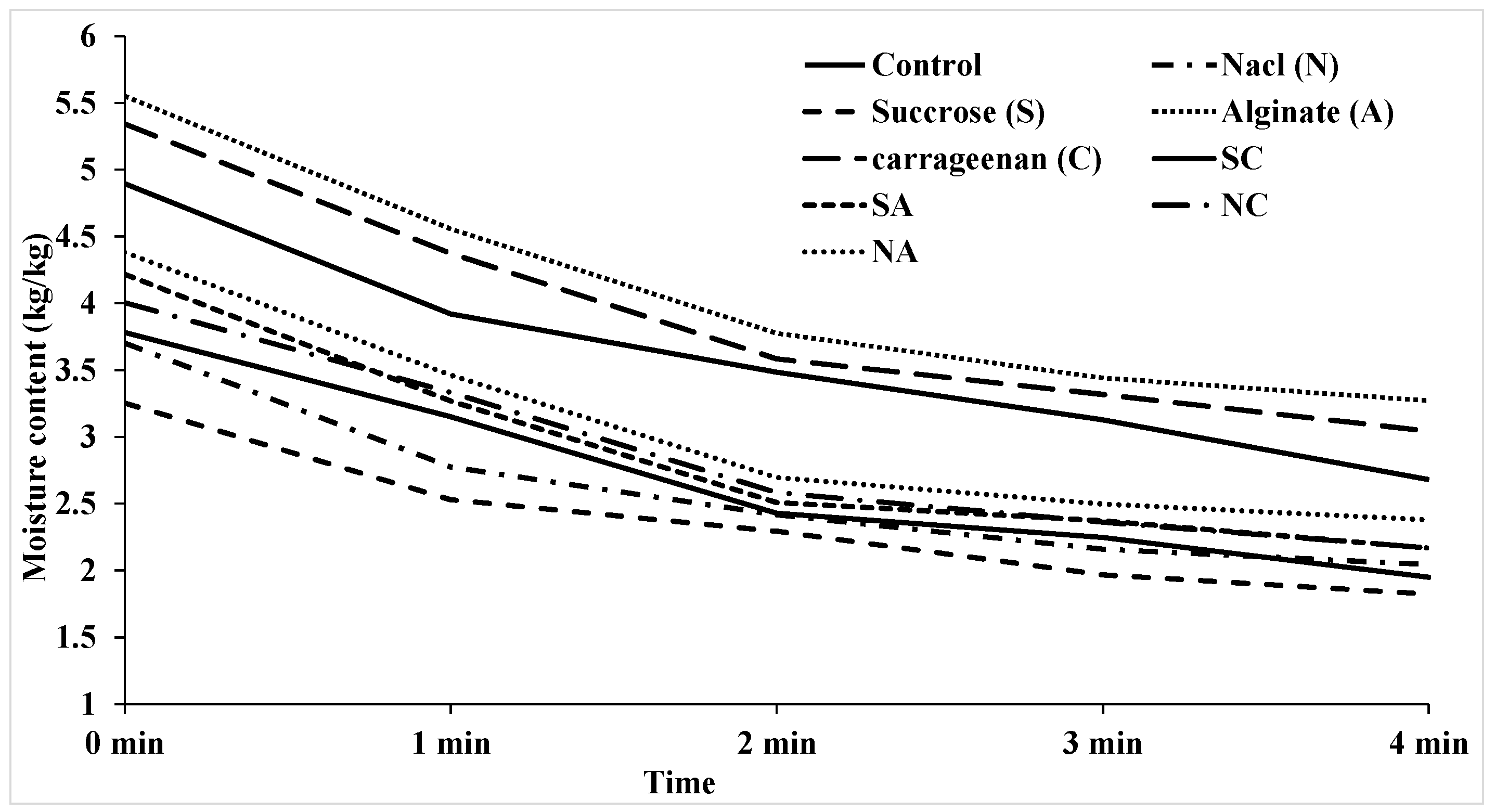
Figure 2.
Effects of osmotic dehydration and coating pre-treatment on the oil uptake (oil uptake versus time) of fried potato chips.
Figure 2.
Effects of osmotic dehydration and coating pre-treatment on the oil uptake (oil uptake versus time) of fried potato chips.
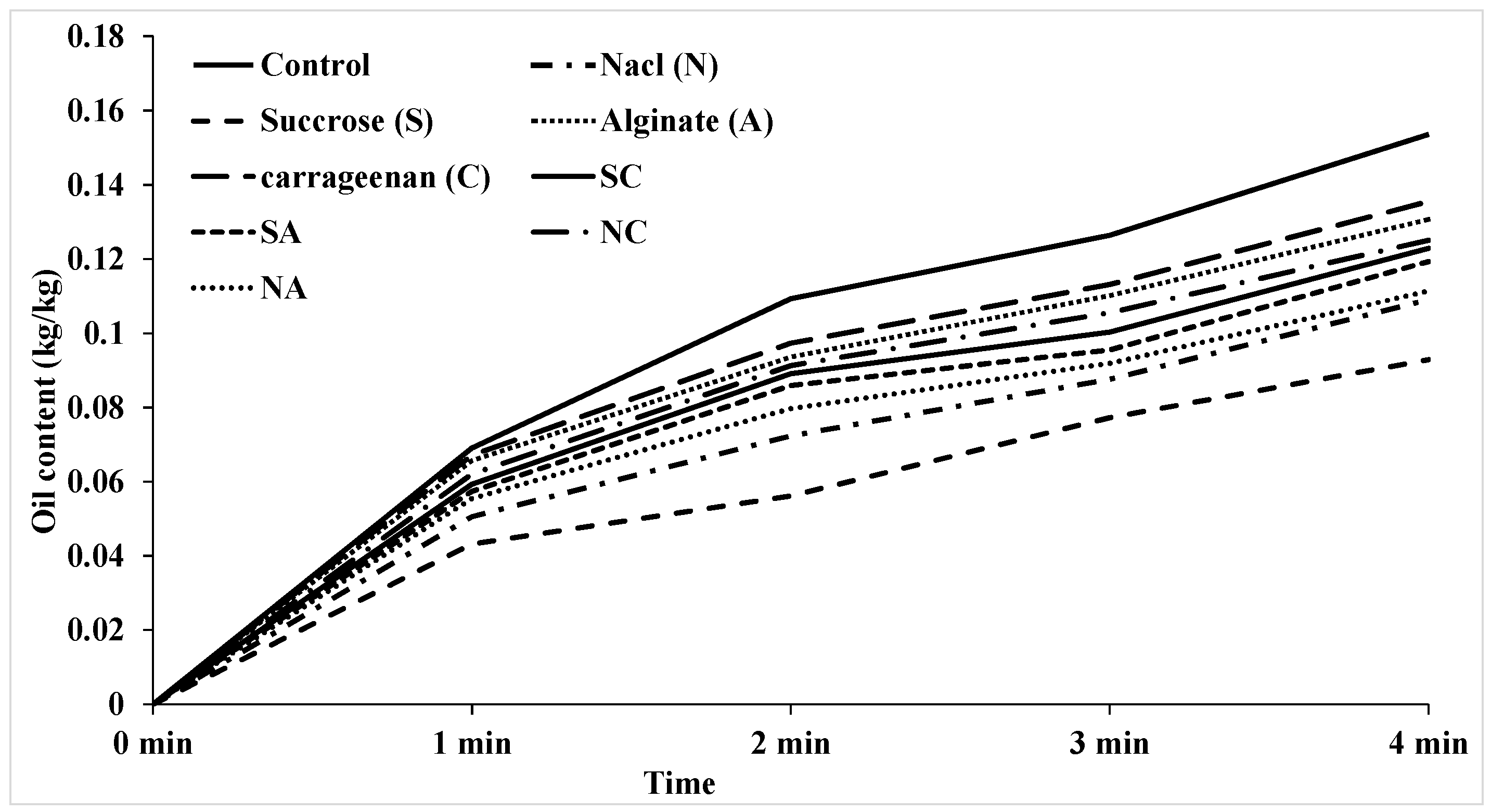
Figure 3.
Effects of osmotic dehydration and coating pre-treatment on the shrinkage kinetics (shrinkage versus time) of fried potato chips.
Figure 3.
Effects of osmotic dehydration and coating pre-treatment on the shrinkage kinetics (shrinkage versus time) of fried potato chips.
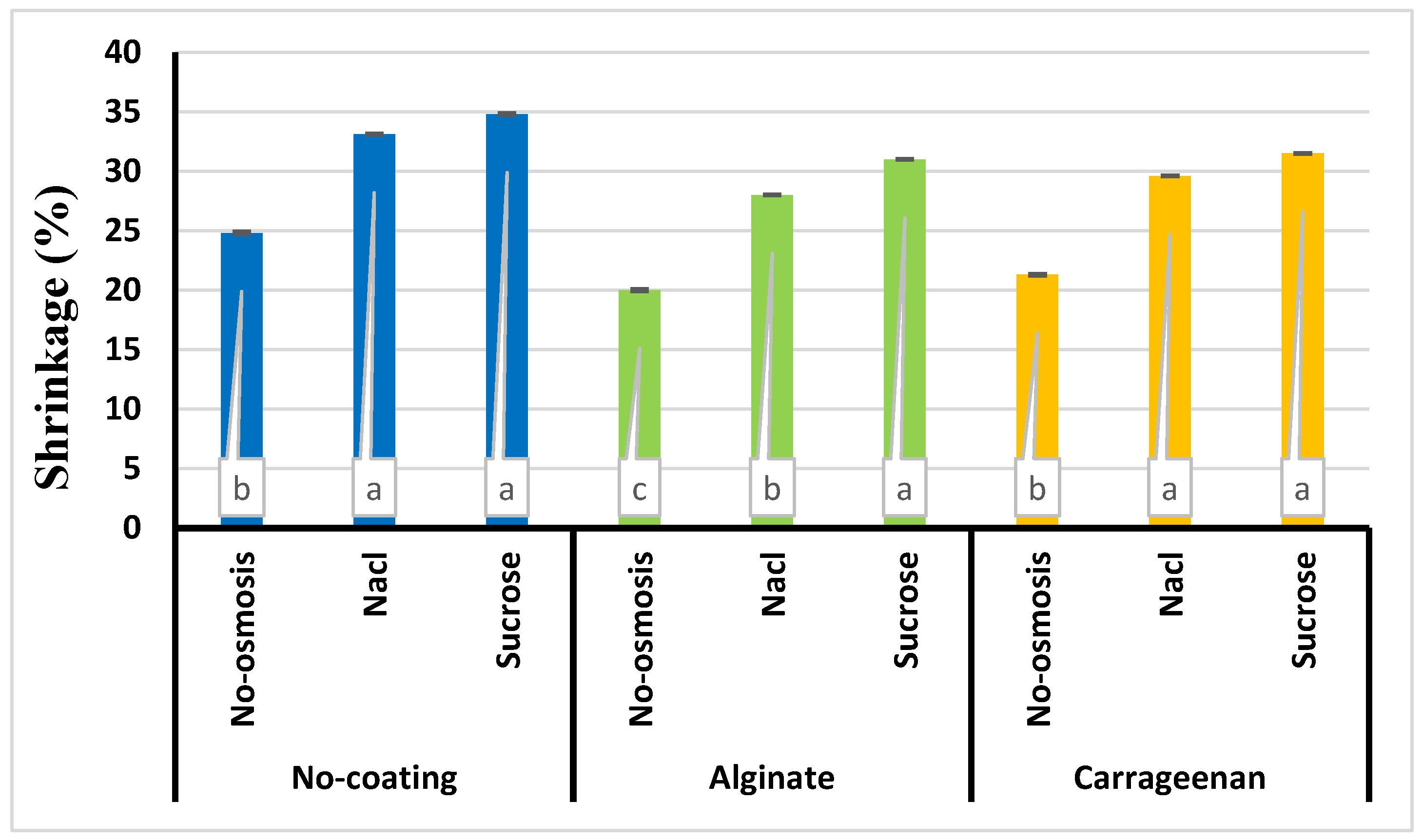
Figure 4.
Effects of osmotic dehydration and coating pre-treatment on the density kinetics (density versus time) of fried potato chips.
Figure 4.
Effects of osmotic dehydration and coating pre-treatment on the density kinetics (density versus time) of fried potato chips.
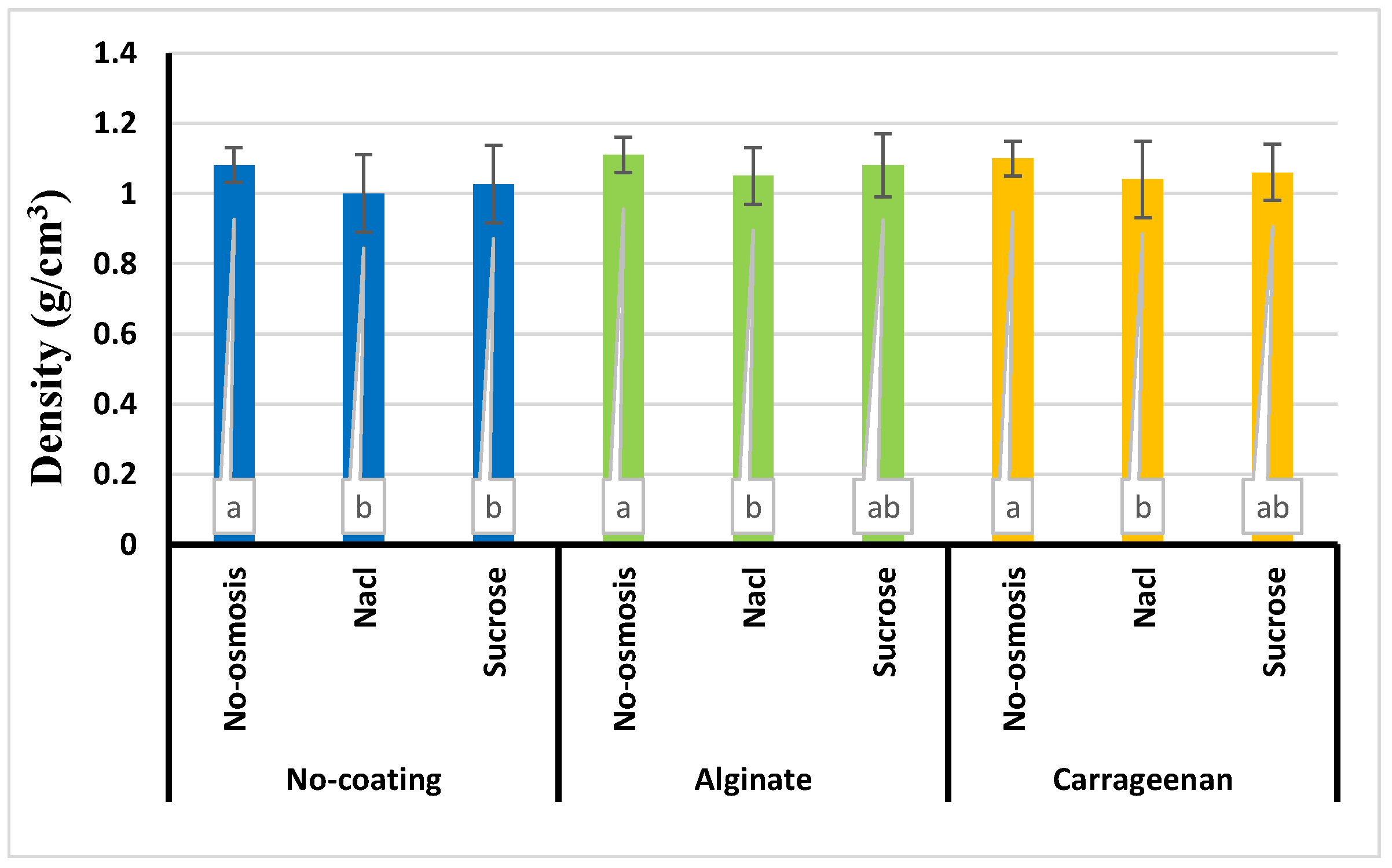
Figure 5.
Scanning electron microscopy (SEM) fried potato strips fried with osmotic dehydration and coating pre-treatment. Samples are presented in the first, and second row were magnified 100 ×, and in the last two lines, were magnified 500 ×. Note: untreated (control), sodium alginate (A), carrageenan (C), NaCl (N) sucrose (S), NaCl with the assist of carrageenan (NC), NaCl with the assist of sodium alginate (NA), sucrose with the assist of carrageenan (SC), sucrose with the assist of sodium alginate (SA).
Figure 5.
Scanning electron microscopy (SEM) fried potato strips fried with osmotic dehydration and coating pre-treatment. Samples are presented in the first, and second row were magnified 100 ×, and in the last two lines, were magnified 500 ×. Note: untreated (control), sodium alginate (A), carrageenan (C), NaCl (N) sucrose (S), NaCl with the assist of carrageenan (NC), NaCl with the assist of sodium alginate (NA), sucrose with the assist of carrageenan (SC), sucrose with the assist of sodium alginate (SA).
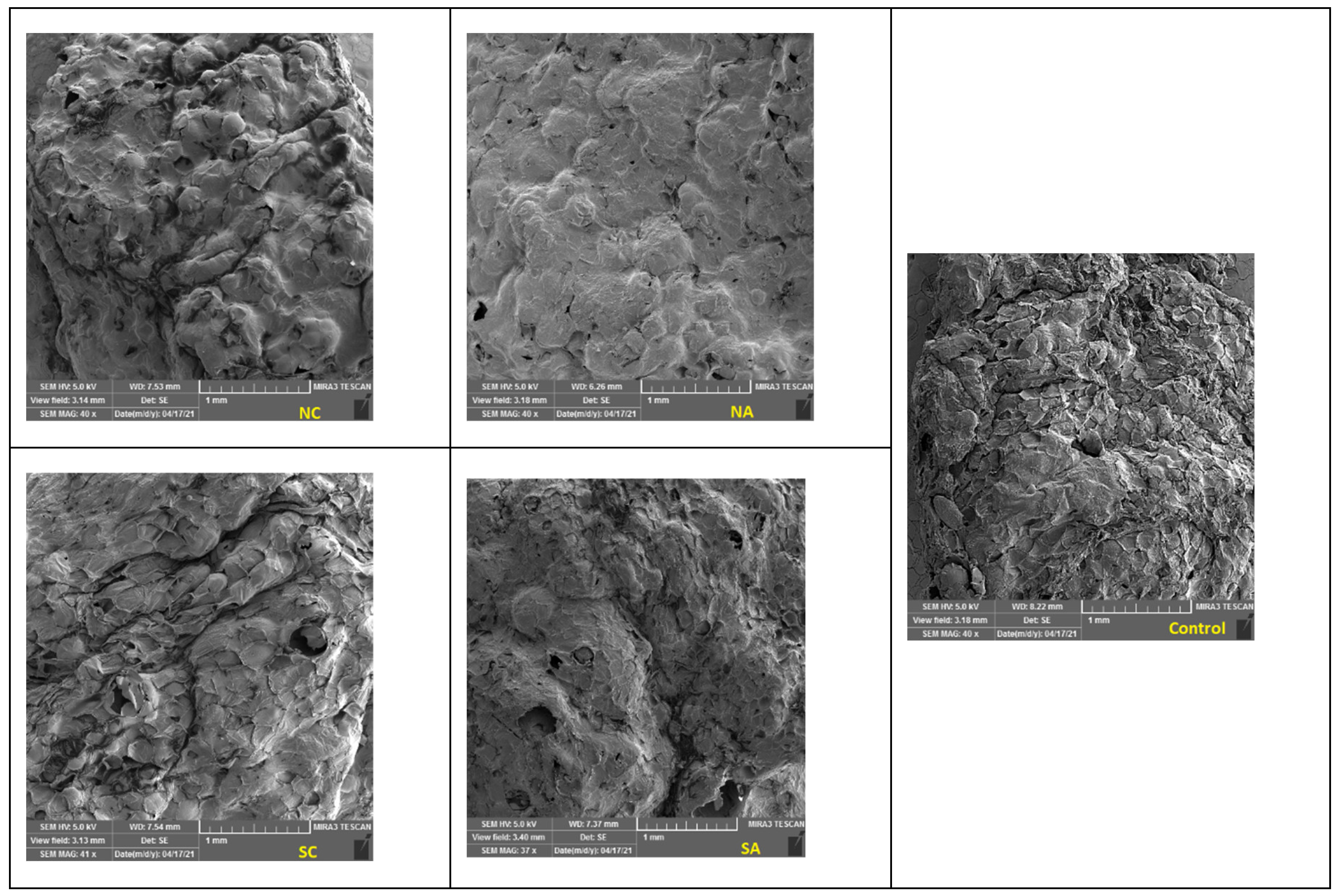
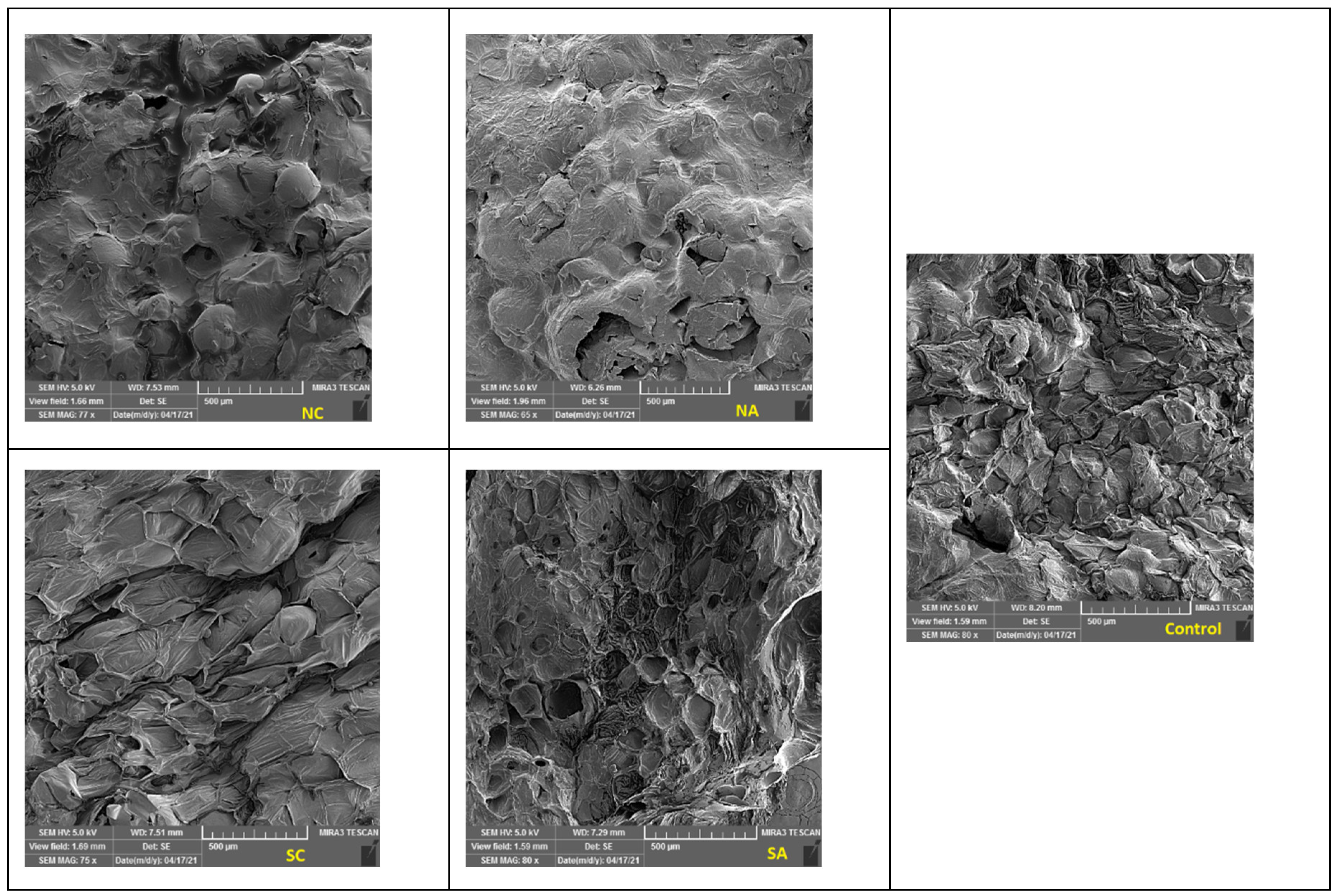
Figure 6.
Effects of osmotic dehydration and coating pre-treatment on the fracture force of fried potato chips. The different lowercase letters (a–d) indicate significant differences within different pre-treatment method (p < 0.05).
Figure 6.
Effects of osmotic dehydration and coating pre-treatment on the fracture force of fried potato chips. The different lowercase letters (a–d) indicate significant differences within different pre-treatment method (p < 0.05).
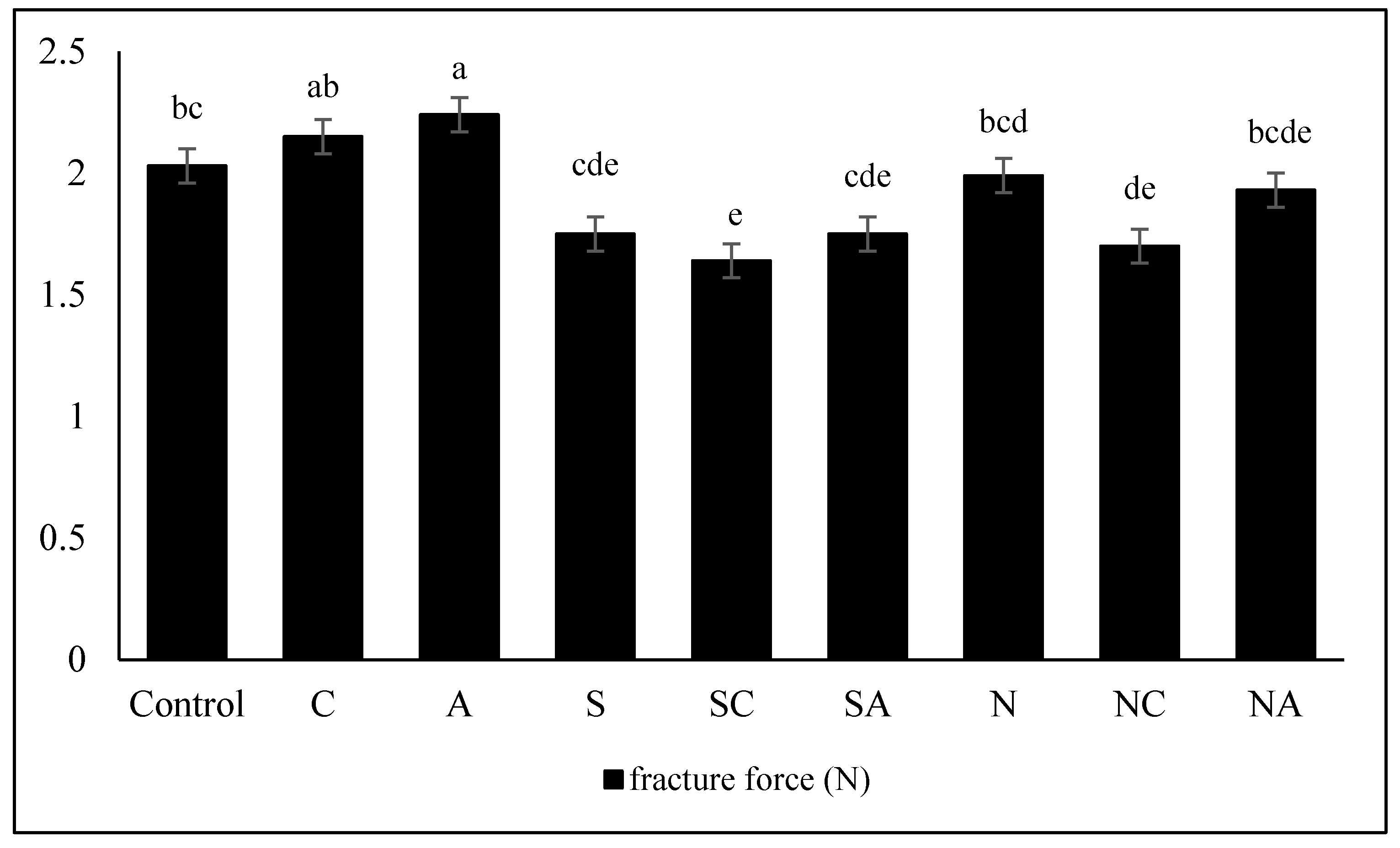
Figure 7.
Effects of osmotic dehydration and coating pre-treatment on the lightness (lightness versus time) of fried potato chips.
Figure 7.
Effects of osmotic dehydration and coating pre-treatment on the lightness (lightness versus time) of fried potato chips.
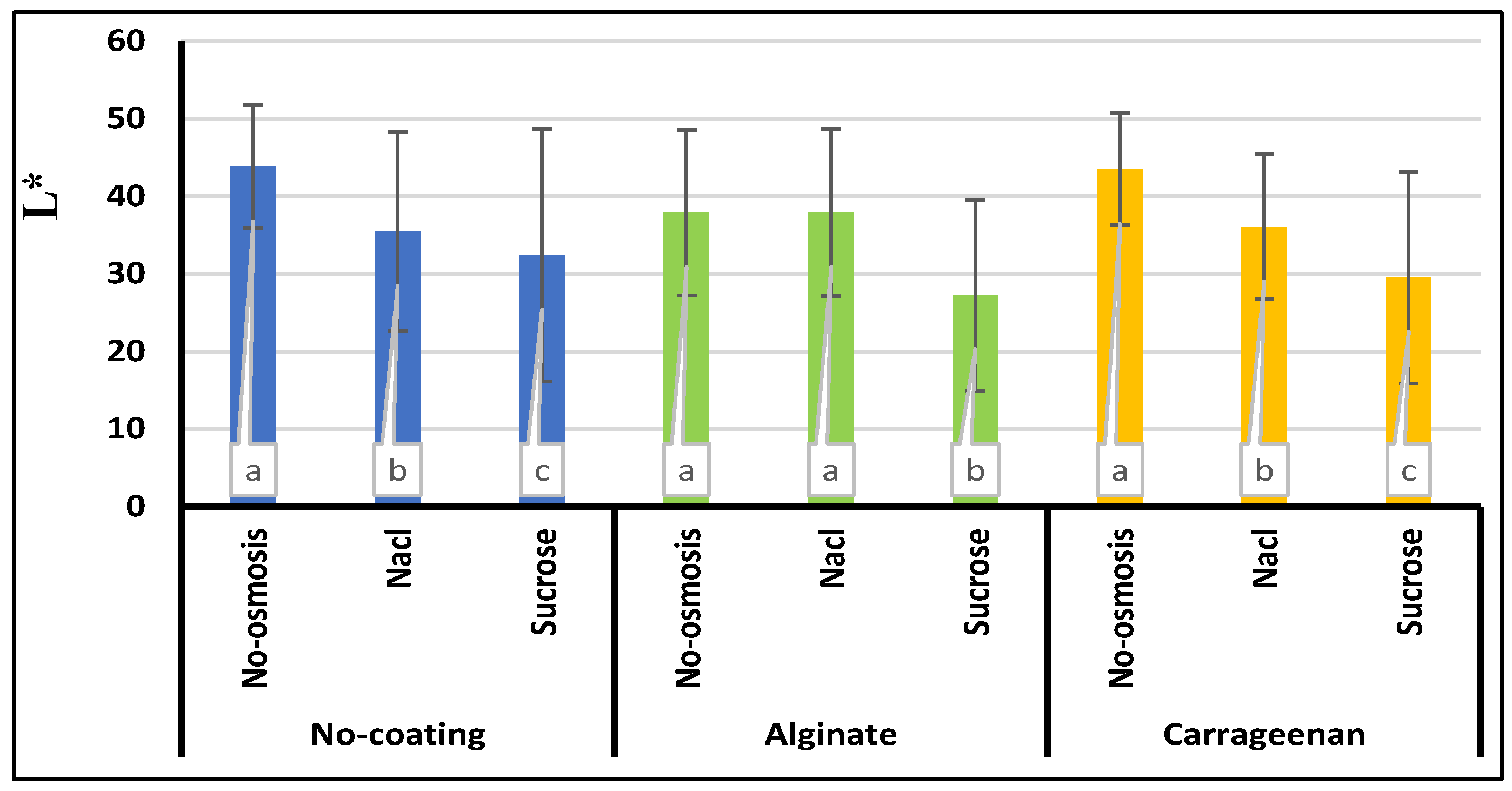
Figure 8.
Effects of osmotic dehydration and coating pre-treatment on the a* parameter (a* versus time) of fried potato chips.
Figure 8.
Effects of osmotic dehydration and coating pre-treatment on the a* parameter (a* versus time) of fried potato chips.
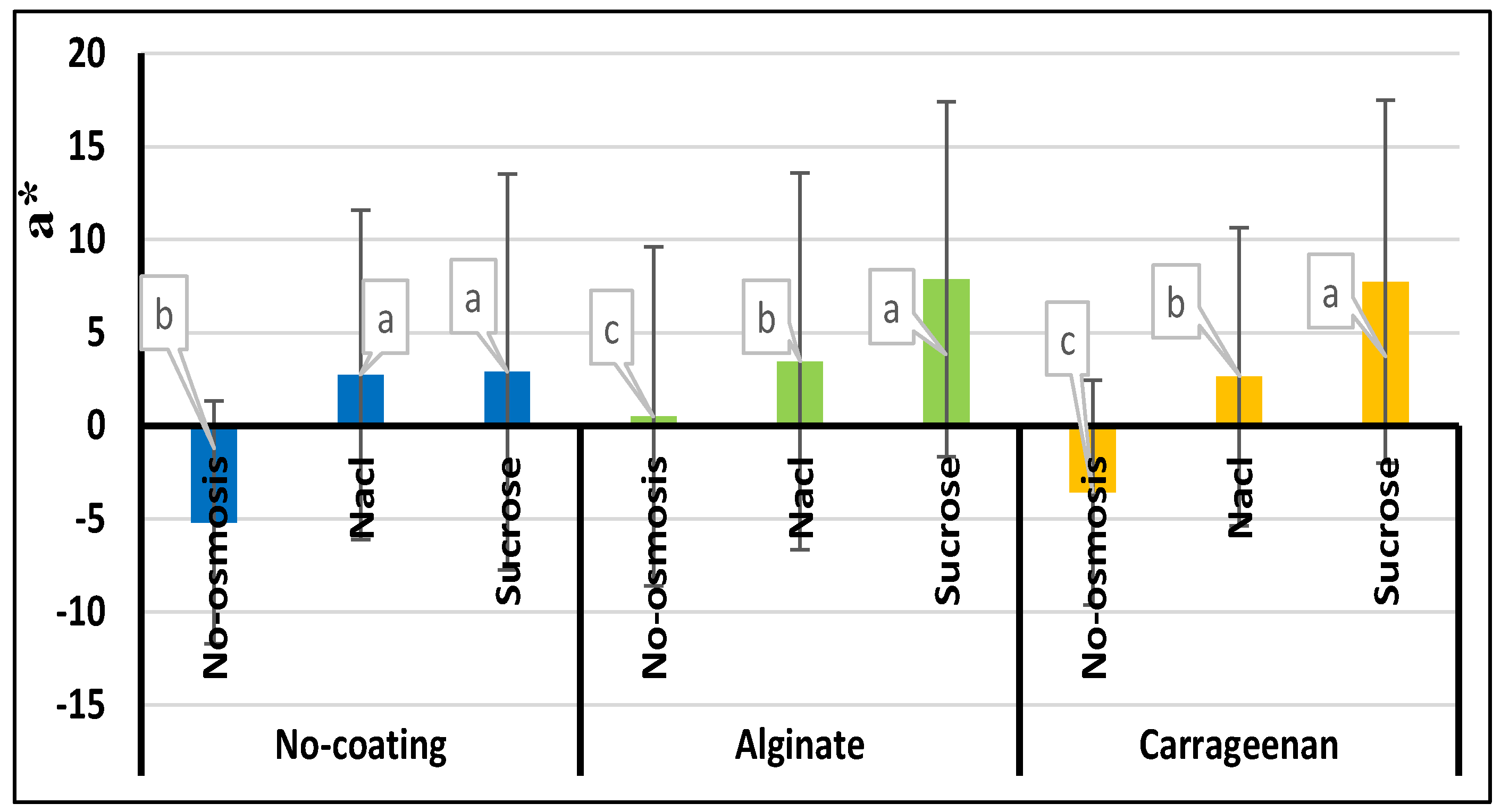
Figure 12.
Color characteristics of potato strips, fried at 1 and 4 minutes. Note: untreated (control), sodium alginate (A), carrageenan (C), NaCl (N) sucrose (S), NaCl with the assist of carrageenan (NC), NaCl with the assist of sodium alginate (NA), sucrose with the assist of carrageenan (SC), sucrose with the assist of sodium alginate (SA).
Figure 12.
Color characteristics of potato strips, fried at 1 and 4 minutes. Note: untreated (control), sodium alginate (A), carrageenan (C), NaCl (N) sucrose (S), NaCl with the assist of carrageenan (NC), NaCl with the assist of sodium alginate (NA), sucrose with the assist of carrageenan (SC), sucrose with the assist of sodium alginate (SA).
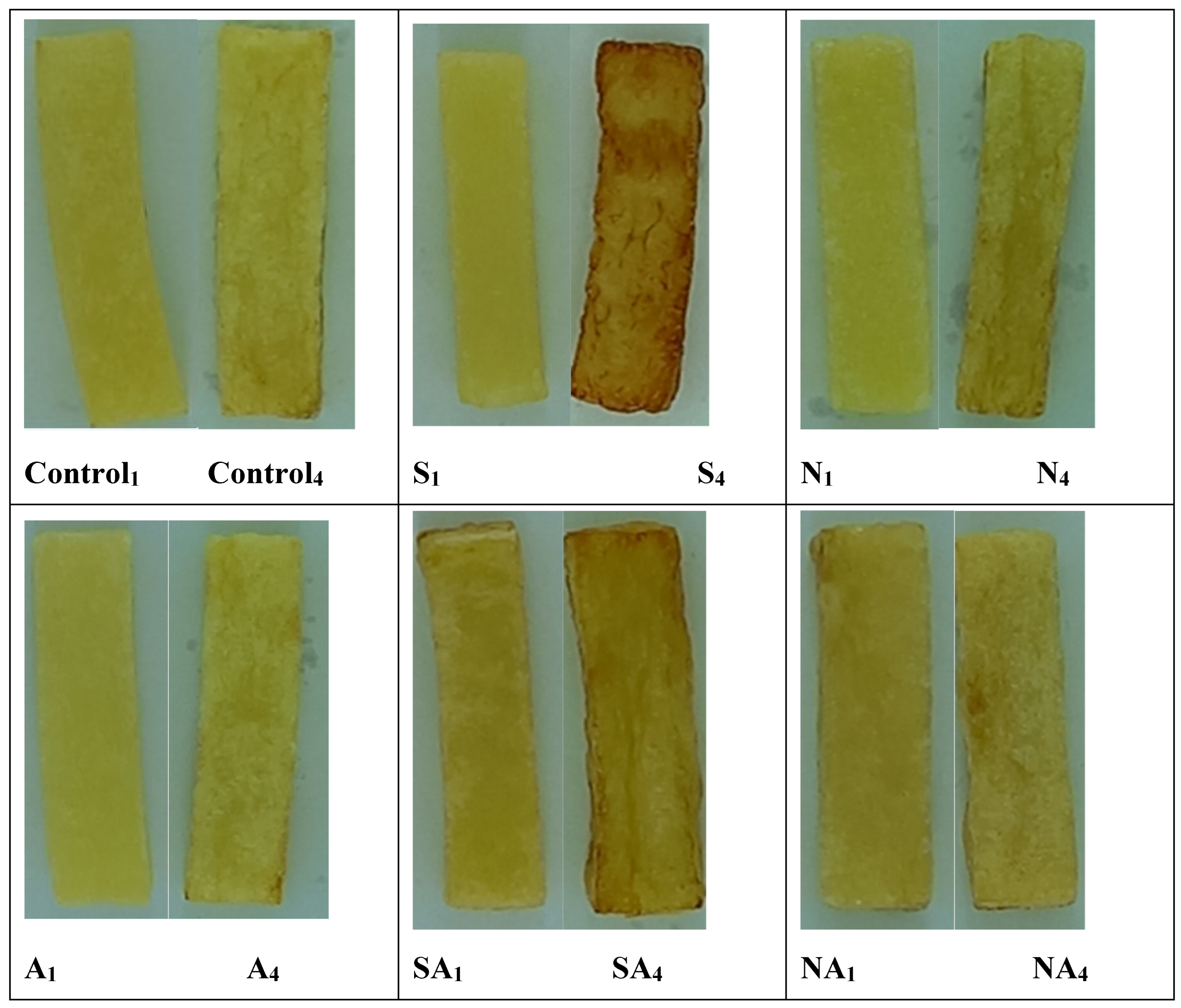
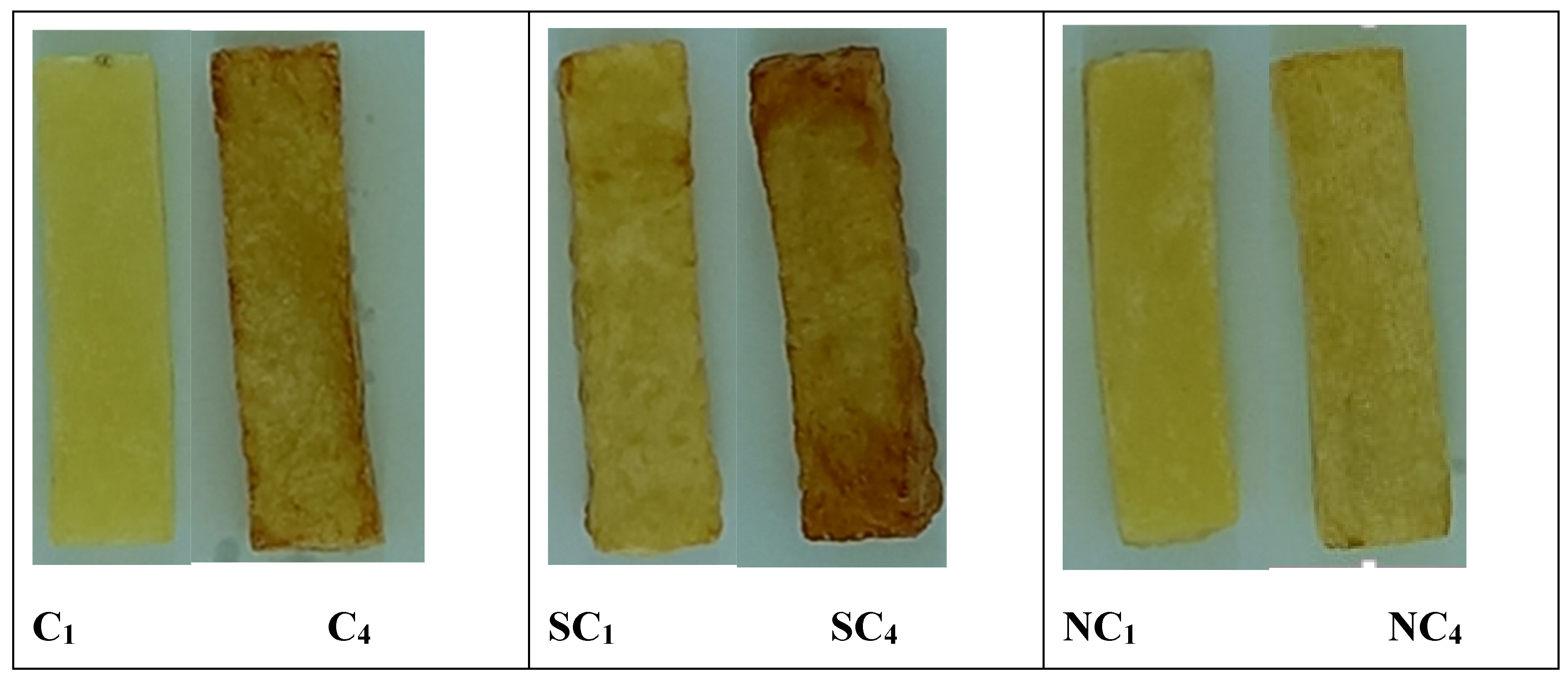
Figure 9.
Effects of osmotic dehydration and coating pre-treatment on the b* parameter (b* versus time) of fried potato chips.
Figure 9.
Effects of osmotic dehydration and coating pre-treatment on the b* parameter (b* versus time) of fried potato chips.
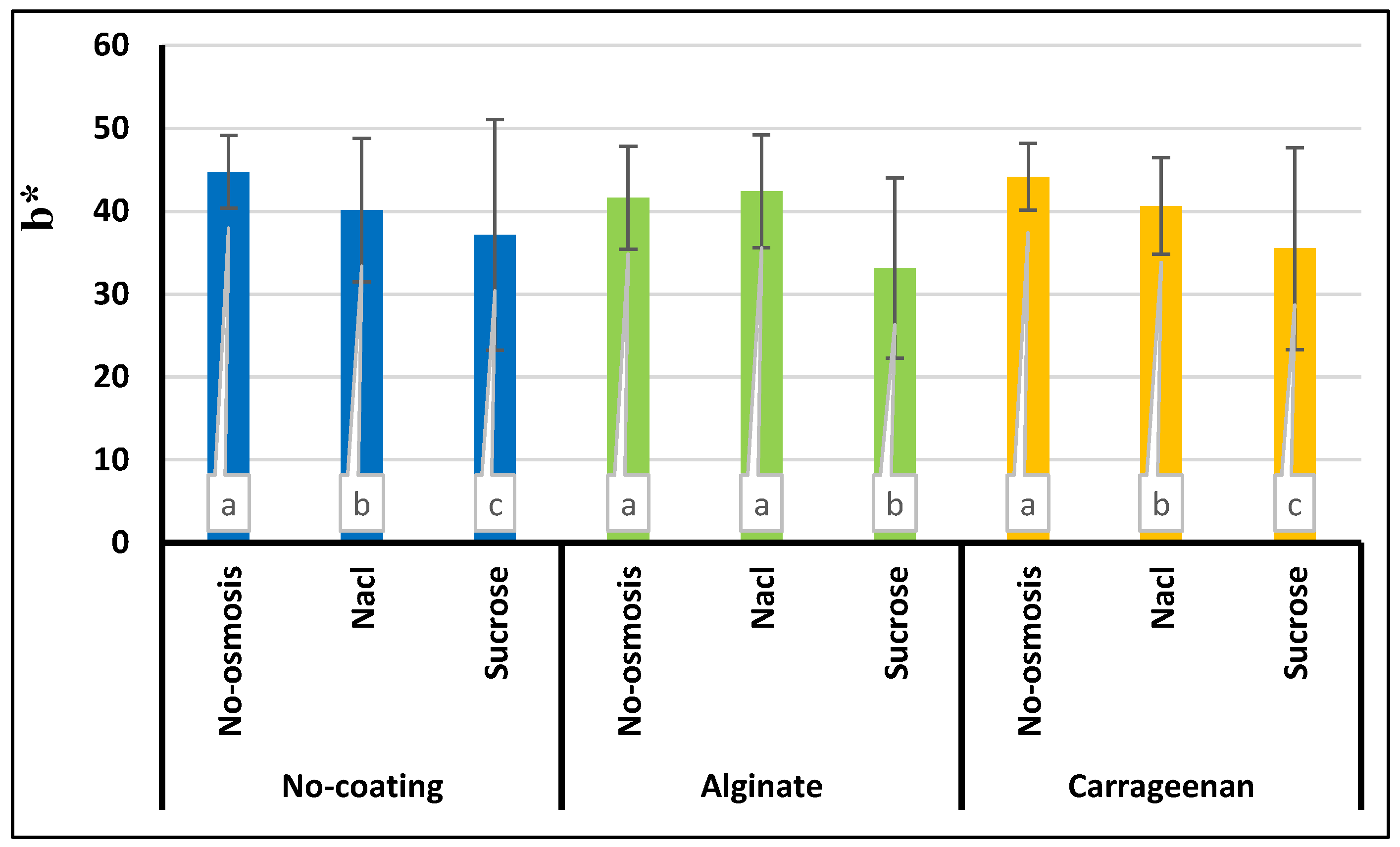
Figure 10.
Effects of osmotic dehydration and coating pre-treatment on the ∆E parameter (∆E versus time) of fried potato chips.
Figure 10.
Effects of osmotic dehydration and coating pre-treatment on the ∆E parameter (∆E versus time) of fried potato chips.
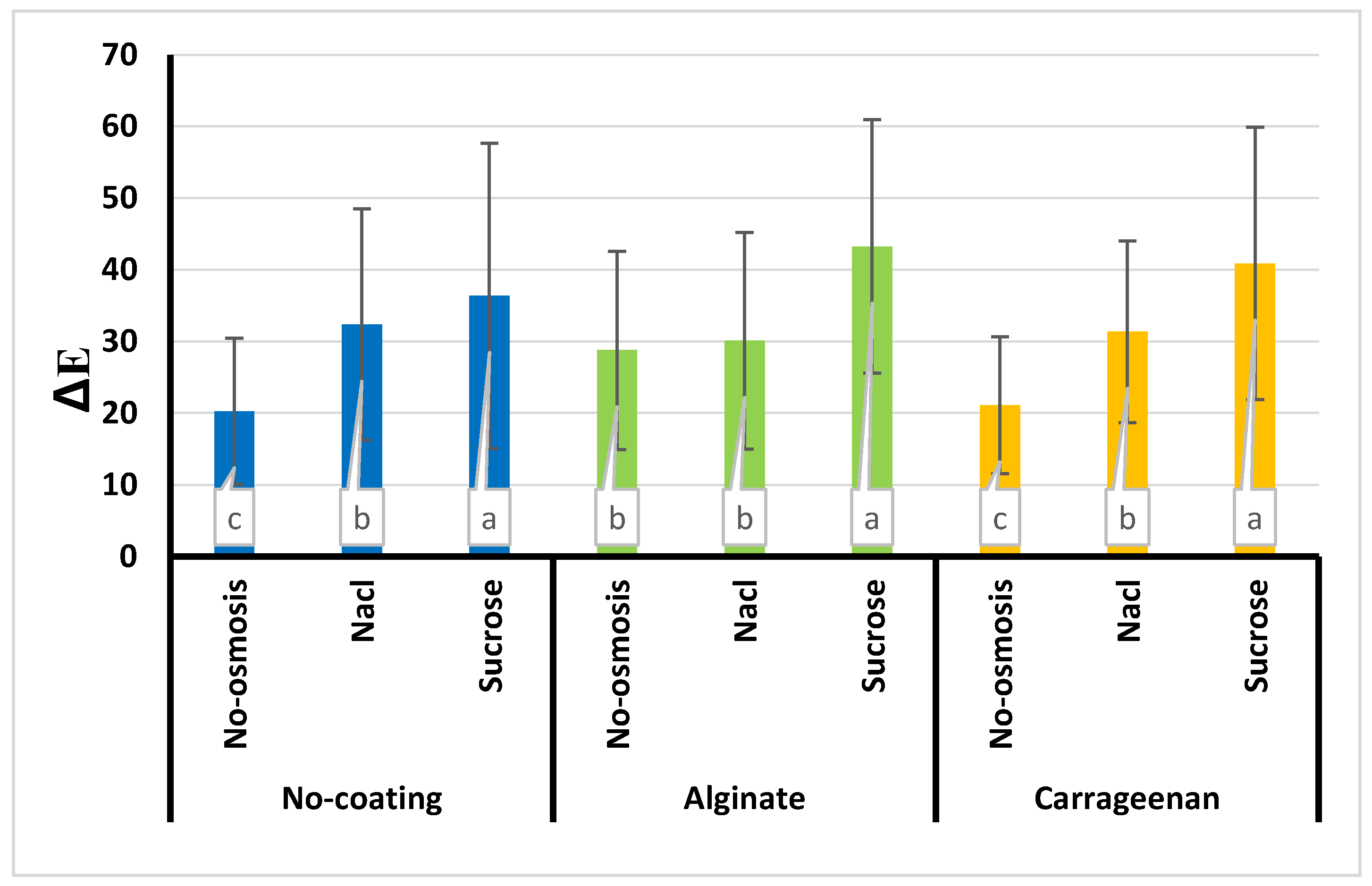
Figure 11.
Effects of osmotic dehydration and coating pre-treatment on the browning index (BI versus time) of fried potato chips.
Figure 11.
Effects of osmotic dehydration and coating pre-treatment on the browning index (BI versus time) of fried potato chips.
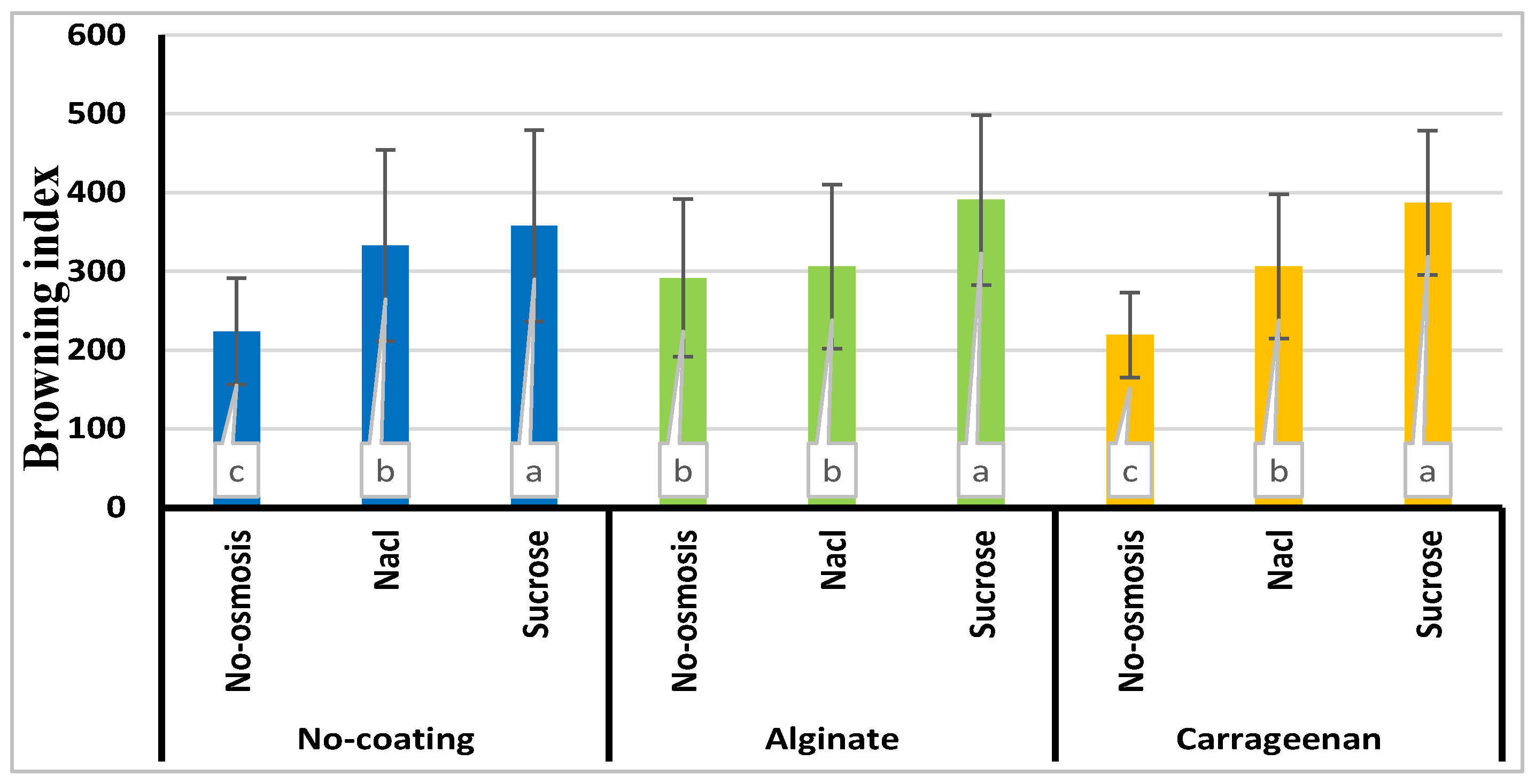
Table 1.
Mathematical models fitted to potato strips moisture loss curves.
| Number | Model equation | Reference |
|---|---|---|
| 1 | MR=a.exp(-b*t)+c | [36] |
| 2 | MR=a.t2+b*t+c | [17] |
| 3 | MR=exp(-a*t) | [17] |
| 4 | MR=1/(a*t+b) | [48] |
Table 3.
Effects of osmotic dehydration and coating pre-treatment on the moisture content, oil uptake, shrinkage, Deff and density of potato slices.
Table 3.
Effects of osmotic dehydration and coating pre-treatment on the moisture content, oil uptake, shrinkage, Deff and density of potato slices.
| Treatment | Moisture content (kg/kg) | Deff ×10-8 (m2/s) | Oil uptake (kg/kg) | Shrinkage (%) | Density (g/cm3) |
|---|---|---|---|---|---|
| Control | 3.62c±0.79 | 3.46a±0.30 | 0.091a±0.05 | 0.24e±0.14 | 1.08abc±0.05 |
| C | 3.93b±0.87 | 3.41ab±0.16 | 0.082b±0.04 | 0.21f±0.11 | 1.10ab±0.05 |
| A | 4.11a±0.86 | 3.26abc±0.84 | 0.080bc±0.05 | 0.20f±0.11 | 1.11a±0.05 |
| S | 2.37g±0.56 | 2.06e±0.55 | 0.053g±0.03 | 0.34a±0.10 | 1.02ef±0.11 |
| SC | 2.71f±0.79 | 2.58cde±0.14 | 0.074cd±0.04 | 0.31bc±0.07 | 1.06bcd±0.09 |
| SA | 2.90e±0.70 | 2.78abcde±0.80 | 0.071de±0.04 | 0.31bcd±0.06 | 1.08abc±0.08 |
| N | 2.61f±0.66 | 2.15de±0.10 | 0.063f±0.03 | 0.33ab±0.08 | 1.00f±0.11 |
| NC | 2.89e±0.78 | 2.68bcde±0.15 | 0.076cd±0.04 | 0.29cd±0.06 | 1.04def±0.08 |
| NA | 3.08d±0.70 | 2.85abcd±0.47 | 0.067ef±0.04 | 0.28d±0.06 | 1.05cde±0.11 |
Table 4.
Effects of osmotic dehydration and coating pre-treatment on the color of fried potato chips.
Table 4.
Effects of osmotic dehydration and coating pre-treatment on the color of fried potato chips.
| Treatment | a* | b* | L* | ∆E | BI |
|---|---|---|---|---|---|
| Control | -5.21e±0.01 | 44.74a±1.5 | 43.87a±7.96 | 20.27e±1.00 | 223.47e±20.54 |
| C | -3.59d±0.03 | 44.17e±2.4 | 43.52a±7.24 | 21.11e±0.90 | 219.52e±32.65 |
| A | 0.51c±0.001 | 41.62b±1.6 | 37.90b±10.96 | 28.78d±1.50 | 291.79d±19.45 |
| S | 2.90b±0.01 | 37.18e±1.00 | 32.40d±12.30 | 36.38b±1.20 | 357.77b±30.33 |
| SC | 7.74a±0.02 | 35.50f±1.10 | 29.52e±13.66 | 40.88a±2.30 | 386.57a±20.66 |
| SA | 7.76a±0.04 | 33.14g±2.30 | 27.26f±12.30 | 43.26a±2.00 | 390.54a±41.32 |
| N | 2.73b±0.01 | 40.17d±2.00 | 35.46c±12.77 | 32.36c±1.70 | 332.76c±22.41 |
| NC | 2.64b±0.01 | 40.62d±2.03 | 36.06bc±9.35 | 31.36d±2.90 | 306.03d±36.78 |
| NA | 3.45b±0.02 | 42.38b±1.02 | 37.92b±10.72 | 30.10d±2.06 | 306.16d±48.59 |
Table 5.
Modeling of moisture loss at different osmotic dehydration and coating pre-treatment.
| treatment | Model 1 | Model 2 | Model 3 | Model 4 | ||||
|---|---|---|---|---|---|---|---|---|
| R2 | RMSE | R2 | RMSE | R2 | RMSE | R2 | RMSE | |
| Control | 0.990 | 0.015 | 0.985 | 0.018 | 0.979 | 0.026 | 0.990 | 0.014 |
| C | 0.996 | 0.009 | 0.995 | 0.010 | 0.962 | 0.034 | 0.985 | 0.019 |
| A | 0.996 | 0.008 | 0.998 | 0.005 | 0.955 | 0.036 | 0.980 | 0.021 |
| S | 0.989 | 0.015 | 0.983 | 0.019 | 0.957 | 0.038 | 0.978 | 0.022 |
| SC | 0.988 | 0.019 | 0.989 | 0.018 | 0.976 | 0.028 | 0.986 | 0.020 |
| SA | 0.992 | 0.015 | 0.991 | 0.016 | 0.940 | 0.049 | 0.974 | 0.029 |
| N | 0.998 | 0.015 | 0.988 | 0.017 | 0.929 | 0.052 | 0.965 | 0.030 |
| NC | 0.988 | 0.018 | 0.991 | 0.015 | 0.965 | 0.033 | 0.983 | 0.021 |
| NA | 0.991 | 0.015 | 0.995 | 0.011 | 0.937 | 0.048 | 0.970 | 0.029 |
Table 6.
Modeling of oil uptake at different osmotic dehydration and coating pre-treatment.
| treatment | Model 1 | Model 2 | Model 3 | Model 4 | ||||
|---|---|---|---|---|---|---|---|---|
| R2 | RMSE | R2 | RMSE | R2 | RMSE | R2 | RMSE | |
| Control | 0.988 | 0.0057 | 0.996 | 0.0030 | 0.994 | 0.0039 | 0.929 | 0.0158 |
| C | 0.982 | 0.0061 | 0.998 | 0.0018 | 0.992 | 0.0039 | 0.919 | 0.0147 |
| A | 0.982 | 0.0059 | 0.999 | 0.0013 | 0.993 | 0.0037 | 0.919 | 0.0143 |
| S | 0.980 | 0.0045 | 0.993 | 0.0025 | 0.984 | 0.0039 | 0.939 | 0.0086 |
| SC | 0.980 | 0.0058 | 0.994 | 0.0055 | 0.991 | 0.0040 | 0.918 | 0.0134 |
| SA | 0.976 | 0.0062 | 0.994 | 0.0031 | 0.987 | 0.0045 | 0.918 | 0.0129 |
| N | 0.982 | 0.0049 | 0.997 | 0.0019 | 0.989 | 0.0038 | 0.934 | 0.0106 |
| NC | 0.984 | 0.0054 | 0.998 | 0.0017 | 0.994 | 0.0032 | 0.918 | 0.0139 |
| NA | 0.979 | 0.0054 | 0.997 | 0.0018 | 0.991 | 0.0036 | 0.918 | 0.0121 |
Disclaimer/Publisher’s Note: The statements, opinions and data contained in all publications are solely those of the individual author(s) and contributor(s) and not of MDPI and/or the editor(s). MDPI and/or the editor(s) disclaim responsibility for any injury to people or property resulting from any ideas, methods, instructions or products referred to in the content. |
© 2023 by the authors. Licensee MDPI, Basel, Switzerland. This article is an open access article distributed under the terms and conditions of the Creative Commons Attribution (CC BY) license (http://creativecommons.org/licenses/by/4.0/).
Copyright: This open access article is published under a Creative Commons CC BY 4.0 license, which permit the free download, distribution, and reuse, provided that the author and preprint are cited in any reuse.


