

Submitted:
19 February 2025
Posted:
19 February 2025
You are already at the latest version
Abstract
Background/Objectives: Happiness is a main topic in psychological research, as a catalyst for transformative change, capable of inspiring growth and well-being. This study aims to identify and understand the themes that compose visual representations of happiness in adolescents, while using an innovative qualitative methodology centered on visual research. Methods: Applying the ‘draw-and-write’ technique, Portuguese adolescents were asked to ‘Draw happiness,’ generating a visual data set of 330 drawings, coined hSquares. Results: By order of prevalence, the thematic analysis identified eight key themes: ‘people,’ ‘hobbies,’ ‘love,’ ‘smile,’ ‘sports,’ ‘basic needs,’ ‘inner harmony,’ and ‘human rights and equality.’ The findings highlight the significance of social contexts, such as family and peer relationships, as central to adolescents' happiness, while also emphasizing the importance of self-selected activities. Visual representations associated with basic needs and human rights emerged as novel contributions to the literature. Differences emerged by age, with younger adolescents often depicting single themes, whereas older adolescents integrated multiple themes in their drawings. Conclusions: This study provides a visual complement to the rich textual conversation about happiness and demonstrates the potential of visual methodologies in psychological research.
Keywords:
Adolescents
; visual representations
; happiness
; iSquare
; draw-and-write technique
1. Introduction
Happiness, a multi-faceted construct that defies simple definition, has long been the subject of study and debate in the scientific community. There are different ways of looking at it. Some consider it a force that shapes human evolution and perception; others see it as a sensory phenomenon that influences our daily experiences; and still others say it reflects social arrangements. What remains undisputed, however, is the remarkable power of happiness as a catalyst for transformative change that can inspire growth and well-being [1]. Nevertheless, it is widely recognized as a fundamental goal sought by both individuals and societies. Cultural aspects play a central role in shaping people's experiences of happiness and have a significant impact on their perceptions and understandings of well-being. Most studies focus on a very limited number of nationalities, which limits the global generalization of this construct in the scientific literature [2], showing the need to include other cultural perspectives, such as that of the Portuguese.
Happiness has been defined as subjective well-being [3,4], life satisfaction [5], and prevalence of positive rather than negative emotions [6]. Considering that happiness is one of the most important goals to be achieved in life [7], the possibility of increasing it makes other goals more desirable [8]. In the context of examining well-being, we encounter two distinct viewpoints: subjective wellbeing, often referred to as hedonia, and psychological well-being, known as eudaimonia [9]. These two perspectives enable a well-rounded exploration, each making distinct and complementary contributions to its overall composition [10].
In a preliminary exploration, the concept of subjective well-being (SWB) delves into how individuals experience positivity in their lives, encompassing both cognitive evaluations and emotional responses. It goes beyond merely the absence of negative factors or emotions. SWB includes various related concepts such as happiness [3]. SWB is rooted in a hedonic perspective, focusing on immediate pleasure, avoidance of pain, and overall life satisfaction [11].
However, some scholars argue that this perspective falls short of capturing the full spectrum of well-being, leading to the emergence of another dimension known as psychological well-being (PWB). According to Ryff and Keyes [12], PWB refers to how individuals perceive meaning in their lives, whether they are realizing their potential, the quality of their relationships, and their sense of control. PWB includes aspects of positive functioning often overlooked, such as flourishing, personal growth, self-awareness, and purposeful engagement in life [13]. PWB aligns with an eudaemonic perspective, envisioning well-being as a long-term process of personal development and self-actualization tied to the creation of meaning [10].
The main focus of current research is knowing how these processes support the construction of individuals’ happiness and how assessments of happiness can effectively measure this construct. As a fact, happiness relates to better mental and physical health with significative consequences in the short- and long-term becoming a significative source of wellbeing and satisfaction. Considering both the hedonic and eudaimonic perspectives, several factors underline the representation and behavioral dimensions of happiness [10].
Psychological assessments on happiness have predominantly employed quantitative methods, using questionnaires and scales, based on predetermined assumptions and expectations [14], with studies mostly using adult populations. A review of current scientific literature shows some points to consider about happiness as the way of measuring that could bias data, especially quantitative ones [15]. Therefore, researchers should also use qualitative investigation since multiple factors influence subjective happiness, and quantitative studies can only reveal part of the phenomena throughout written information [14]. In this sense, (within the qualitative methods), it could provide a chance to examine other factors that influence representations on happiness but are ‘hard to put in words’, shedding light on aspects that might otherwise go unnoticed in verbal discussions, e.g interviews, [16]. To the best of current knowledge, this study is the first to investigate ‘happiness’ through visual methodologies, particularly drawings, following an innovative qualitative methodology centered on visual research, authored by Hartel [17]. This methodology will be strictly applied to understand adolescents’ visual representations of happiness, expanding our understanding of happiness by evaluating what people consider happiness to be without imposing any point of view in a democratic way [18].
1.2. Happiness and Adolescents
Currently, and within the positive psychological approach, several factors have been studied to understand positive human functioning that can relate perceptions of happiness and life consequences of being happy. Compared to adult conceptions, happiness is more unstable in adolescence and young adulthood due to constant changes in the environment, uncertainty about the future, and less crystallized opinions about life [19]. Inside this age group, there are variations in happiness levels, showing that happiness in adolescents tend to decrease up to 16 years old and a minimal recovery until 18 [20]. Age is a significant predictor of happiness in adolescence, showing that younger adolescents are usually happier than older adolescents [21]. This result informs that older adolescents experience higher levels of conflict primarily associated with identity problems [20]. According to López-Pérez and colleagues [22] and Freire and colleagues [23], adolescents tend to consider, in their happiness conceptualizations, familial and social relationships as the main contexts associated with happiness, and emotions and harmony, as internal or psychological variables associated to happiness.
Increased rates of depression in adolescence around 15 years old [24] have been documented as an age coinciding with the decrease of happiness [20]. Although many studies demonstrate that happiness is not the opposite of depression, literature states that depression and anxiety are the main manifestations of unhappiness [25]. The findings with unhappier adolescents show less supportive relationships due to the interdependence between subjective well-being and social relationships [26]. This relation is evident because happiness is strongly related to a more extroverted lifestyle thereby, a happy person usually has higher levels of sociability and quality of social interactions [21,26]. This effect is even more evident in adolescents whose friendships become more important as they grow older [27].
1.3. Arts-Informed/Creative Methods and Visual Research
Arts-informed methods take inspiration from artistic practices and adapt them to the social scientific research process [28]. They are gaining in popularity and are also called creative methods [29]. Visual research is a form of qualitative investigation, which uses images to understand more about the social world [30,31]. Every day, images are present in the ongoing flow of experience, helping to understand and give meaning to individual’s lives. Images are powerful forms of communication, and individuals perceive images through personal and/or collective life experiences, and from a variety of cultural and social contexts [32]. Visual research through drawings, challenge passive roles by actively involving and acknowledging youth as capable of creating meaning and representations of the world around them [33]. Understanding a concept through images produced by participants is one of many ways to use visual approaches in happiness investigation. It can be an alternative and/or complementary method equally as effective as ‘words and numbers’ [16]. When navigating through social media, listening to music or doing other common tasks, images serve as a mediator of the experience of the information being conveyed and the individuals engaged or interactd with [32]. The visual part has been viewed as naïve and adequate for children with difficulties in communicating thoughts and feelings, yet the role of visuals in psychology reveals their instrumental effects in establishing a context for the ‘psychological’ to become observable, and consequently measurable and more scientific. This elevates the accuracy of observations and accessibility of findings to the public [32].
1.4. Draw-and-Write Technique
One modality of arts-informed/creative approaches employ drawing [34]. The ‘draw-and-write’ technique is a specific method to gather data through a drawing activity and a writing exercise [35,36]. Especially with abstract concepts, the draw-and-write technique seems beneficial because abstract words do not exist in space-time dimension, and it is not easy to quickly process and recognize their meaning [37]. The draw-and-write technique was originally developed for studies of children’s health, being mostly applied by teachers or researchers in the classroom. Although some adaptations of this technique have been employed with adults, proving to be effective in providing a rich visual data set [17,38], it remains commonly utilized in scientific research targeting the child age group [39,40,41], and preadolescents [42,43,44], exploring diverse representations such as the natural environment, health professionals and recess experiences. Visual representations have been studied within the field of astronomy [45], medicine [46], mathematics teaching [47,48], scientific communication [49,50], science education [51], information science [52] and engineering [53]. They also have proved to be useful as a metacognitive strategy to learn [54], as a way to better access and comprehend narratives and worldviews of children and youth affected by global adversities [33]. Regarding the construct of happiness, visual representations have studied it through stock photography [55], Instagram posts [56] and metaphoric collage [57]. Thus, this study is innovative both with the technique being used (hSquare protocol) and age group being targeted (adolescents).
1.5. The iSquare Protocol
The iSquare protocol was developed by Hartel [17], using a novel formulation of the draw-and-write technique to study information. Participants were asked to answer, ‘What is information?’ by drawing with a black pen on a 4.25’’ by 4.25’’ square of white paper. On the reverse side of the square, the participants were prompted to ‘Say a few words about your drawing’ [58]. The task occurs for ten minutes (2 minutes to explain and distribute the materials, 7 minutes to fill the iSquare and 1 minute to thank). It produces a compact piece of visual and textual data – the ‘Information Square’ or ‘iSquare’ for short - that contributes to information studies through an alternative visual conception of information [52,58]. Through this formulation of the draw-and-write technique, which is relatively low-cost and straightforward to implement, it is now possible to study almost any concept that has been difficult to grasp with conventional methods and words, alone [52].
Thus, the present study aims to understand: i) how do adolescents visualize “happiness” and ii) how do adolescents express their visual conceptions of happiness according to age.
2. Materials and Methods
2.1. Participants
The sample was constituted by 330 adolescents with ages between 11 and 18 years old (M = 14.89, SD = 1.80) from different schools in the North of Portugal. The participants consisted of 7th to 12th grades and there were 164 females (M = 15.03, SD = 1.74), 154 males (M = 14.76, SD = 1.86) and 12 participants preferred not to identify their gender.
Participants were also characterized according to their levels of Subjective Happiness, collected by the Subjective Happiness Scale [59] (see Instruments section). A total of 272 adolescents scored above the average (M = 5.96, SD = .81), indicating they considered themselves happy , while 58 adolescents scored below the average (M = 3.64, SD = .64). When comparing themselves with people of their age, 212 participants scored above average (M = 5.82, SD = .71), meaning they perceived themselves as happier, while 117 participants scored below average (M = 3.75, SD = .52).
2.2. Instruments
hSquare Protocol: To study visual representations of happiness, this study produced the ‘Happiness Square’ protocol or ‘hSquare’ for short, following the iSquare protocol [58]. The main characteristics and criteria of the iSquare protocol were maintained, although some adaptations were made. This protocol is constituted by a 4.25’’ by 4.25’’ square of white paper and a black pen [58], being maintained these criteria to the hSquare protocol. In the back side of the square, it was asked participants to draw happiness in the reverse side of the square. Then, it was required to describe in words the drawing through the indication “Say some words about your drawing”.
Subjective happiness scale: In order to describe the sample, bellow the written portion of the hSquare, the participant had to fill the two items of the Subjective Happiness Scale [60], validated to Portuguese adolescents [59]. The Subjective Happiness Scale evaluates subjective happiness, which is a subjective evaluation that individuals do to understand if they are happy or unhappy [60]. It is composed by 4 items, on a 7-point Likert scale, but only two items integrated the present study. The items are: “In general, I consider myself: (1) not a very happy person, (7) a very happy person” and “In comparison with most people of my age, I think I am: (1) unhappier, (7) happier” [59]. The validated to Portuguese adolescents version of the scale has good internal consistency, and it is considered a good measure with similar psychometric properties to the original version [59]. This conjunction of techniques is allowed in the iSquare technique protocol, which aims to adapt the technique to the interest construct and field in study [58].
Sociodemographic questionnaire: The sociodemographic questions included in this study were related to gender and age, integrating the back portion of the hSquare.
2.3. Procedure
This study received the approval of the Ethics Committee for Research in Social and Human Sciences (CEICSH 050/2021) of the University of Minho.
Participants in this study responded to the prompt: ‘Draw happiness’. To determine the phrasing of this question, a pilot test was conducted using the ‘thinking aloud’ method. In the pilot, 10 adolescents were asked, ‘What is happiness for you?’ while another 10 were instructed to ‘Draw happiness.’, The latter approach proved to generate a better understanding of the concept.
To implement the study, schools were contacted to obtain permission, with the aims and procedures explained. Upon approval, students were invited to voluntarily participate in the investigation. Exclusion criteria were related to age range and language barriers that could prevent the correct interpretation of the activity. All participation was voluntary, and students were free to withdraw from the task at any point. After a brief and partial explanation of the study that lasted two minutes as the iSquare protocol indicates, the participants who agreed with the stipulated terms signed the informed consent to start the task. Of note, the participants were not informed in advance of the drawing activity, that way, more spontaneous responses were obtained [58]. The duration to fill the hSquares had to be increased to ten minutes, instead of 7 (as defined by the iSquare protocol), due to the insertion of the sociodemographic variables and the two items from the subjective happiness scale [59]. After that time, participants submitted their hSquare, and were given documentation to share with their guardians (approximately two minutes).
The collected hSquares were assigned unique identification numbers, and all drawings were scanned to create digital versions. The text statements (responses to ‘Please say a few words about your drawing’) were entered into an Excel database, while demographic information was entered into IBM-SPSS for analysis. All these elements (visual, textual, numerical) constituted the complete data set used in the analysis.
2.4. Data Analysis
The images were subjected to inductive thematic analysis [61], following analytical precedents employed in the iSquare study. This approach does not begin with predetermined codes or a coding framework; rather, preconceptions are put aside. Then, relying upon the researcher’s intimacy with the data, themes are allowed to organically surface.
The process unfolded in these steps: i) familiarization with the data, ii) initial code generation, iii) search for themes, iv) review of themes, naming themes and producing the report [61]. All steps were reported by two researchers of the LAB Research Group and subsequently validated by two other researchers. A PI researcher was called when discordance emerged, solving the situation by discussion on the topic until consensus emerged. After the identification of the general themes, an additional consideration was to compare participants between ages.
3. Results
3.1. Qualitative Analysis: Thematic Analysis
In this analysis, all the squares were studied according to the visual themes and motifs appearing in the drawing, in team work to achieve consensus. The themes that emerged from data were: ‘people’, ‘hobbies’, ‘love’, ‘smile’, ‘sports’, ‘basic needs’, ‘inner harmony’ and ‘human rights and equality’. Of note the fact that, in several cases, one drawing fitted more than one theme, showing that the themes were not discrete.
Happiness as people (n = 196). Groupings of people were the main image that emerged through the drawings – see Figure 1. In this theme, the drawings came in three forms, as clarified through the written component: ‘family’, ‘friends’ and the majority focused on ‘family and friends’.
When the intention was to draw ‘family’ (n = 56), all the squares had at least two people. These varied according to simpler drawings as only faces and bodies and the majority were more complex as faces smiling in some scenarios (e.g., family at the table). When drawing people as ‘friends’ (n = 68), also two people were at least drawn. Some of these were holding hands, had a smiley face and social interactions associated to them (e.g., balloons were sometimes drawn mostly balloons that represent talking). The squares characterized by the two previous factors (n = 72) showed that even though at least four people were drawn, a good portion of the drawings had a lot of people. Most of the people were smiling and most of the squares had other elements (e.g., a sun, a house, animals).
Happiness as hobbies (n = 88). This theme has a lot of distinct characteristics, all representing an activity, except sports, whose number was enough to create one independent theme, discussed shortly - see Figure 2. The images representing hobbies had three essentials’ subthemes: ‘outdoors activities’, ‘technologies’ and ‘music and reading’. The ‘outdoors activities’ (n = 40) were mainly characterized by nature (e.g., mountain, beach scenario), with a lot of elements (e.g., sun, trees). The images representing ‘technologies’ (n = 21) were composed by PlayStations, games, computers and Netflix. When it comes to ‘music and reading’ (n = 27), a lot of times these two activities were grouped in one image but reading never showed up alone.
Happiness as smile (n = 76). ‘Smile’ is constituted by the simpler images and have always the elements of two eyes and a single smile - see Figure 3. Some drew only a face and others had more complex features as nose, eyebrows, eyelashes, hair, ears and freckles.
Happiness as love (n = 79). This theme included hearts drawn in the images - see Figure 4. Sometimes only a simple heart was drawn and other times the heart was accompanied with other hearts or elements (e.g., the Earth, sun, stars).
Happiness as sports (n = 44). In this theme, the focus was a person or a group of people doing a sportive activity - see Figure 5. Although the characteristics named in the themes ‘people’ and ‘smile’ were also presented, sports were given more emphasis. Soccer was the main sport drawn (n = 30). Most participants drew a group of two or three people with a ball on the ground and some complexified the drawing with some scenario (e.g., sun, goal). Other sports were mentioned (n = 14) but usually only by one person (e.g., swimming, skating, cycling), except for basketball that was characterized by two people.
Happiness as basic needs (n = 36). As it comes to basic needs different contents emerged - see Figure 6, as money, time, clothing, food, drinks, health and a house. Money was represented by coins and bills and time was represented by a clock. Food and drink were drawn as a food plate and a cup. Clothing through some piece of clothing as pants and a shirt. Health was represented by a cross and sometimes by a hospital and the houses with walls, doors and windows.
Happiness as inner harmony (n = 25). This thematic focused on psychological variables such as self-realization, accomplishing goals, self-esteem and mental sanity – see Figure 7. Self-realization and achieving goals were represented through having a job and a home, accomplishing the dream job (e.g., becoming a veterinarian and a doctor), hands up in the air, gaining trophies and medals, climbing stairs and a road with obstacles. Self-love and self-esteem were drawn through smiling looking in the mirror and a heart in the chest. Mental sanity was constituted by elements such as a brain, given emphasis to this with an arrow.
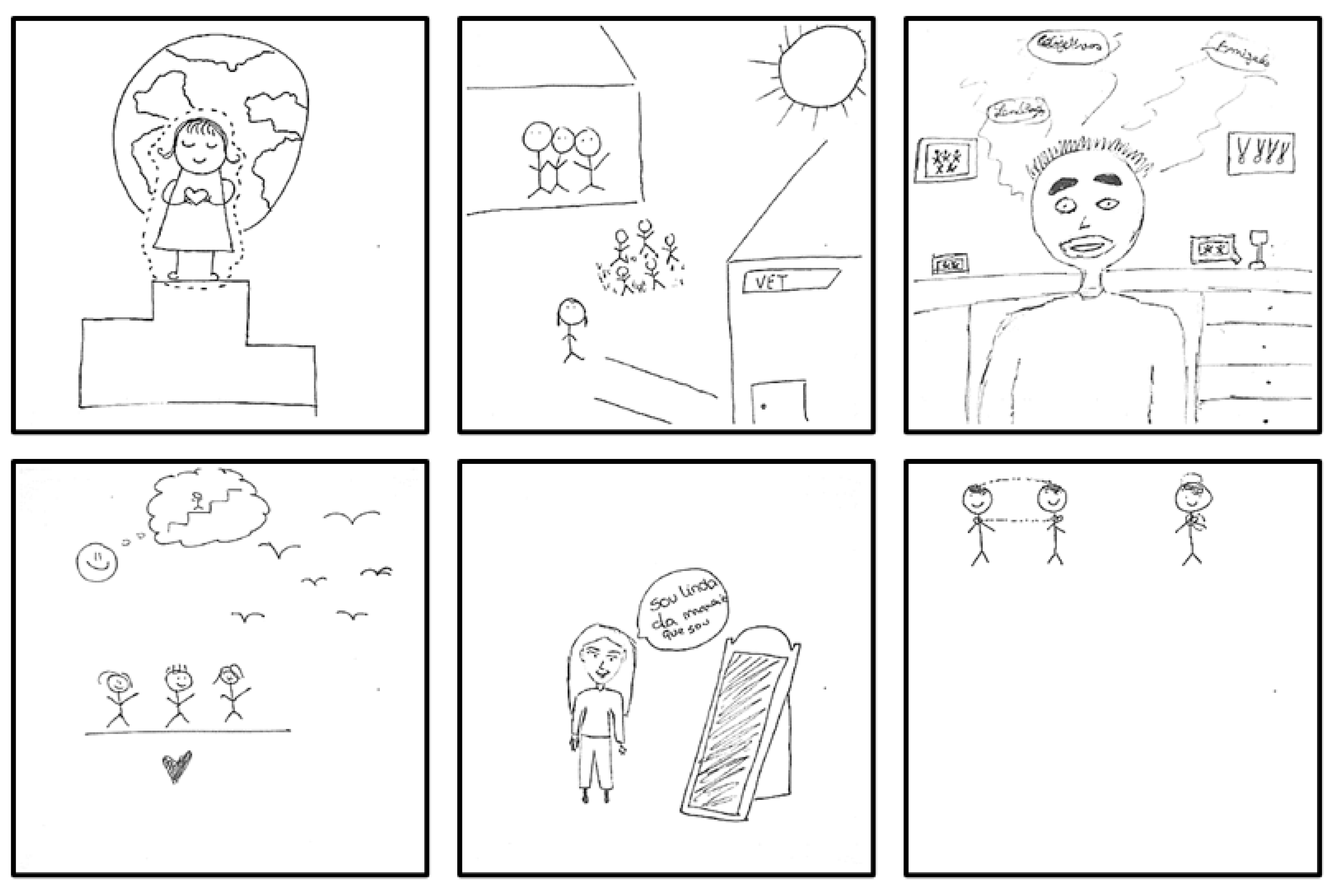
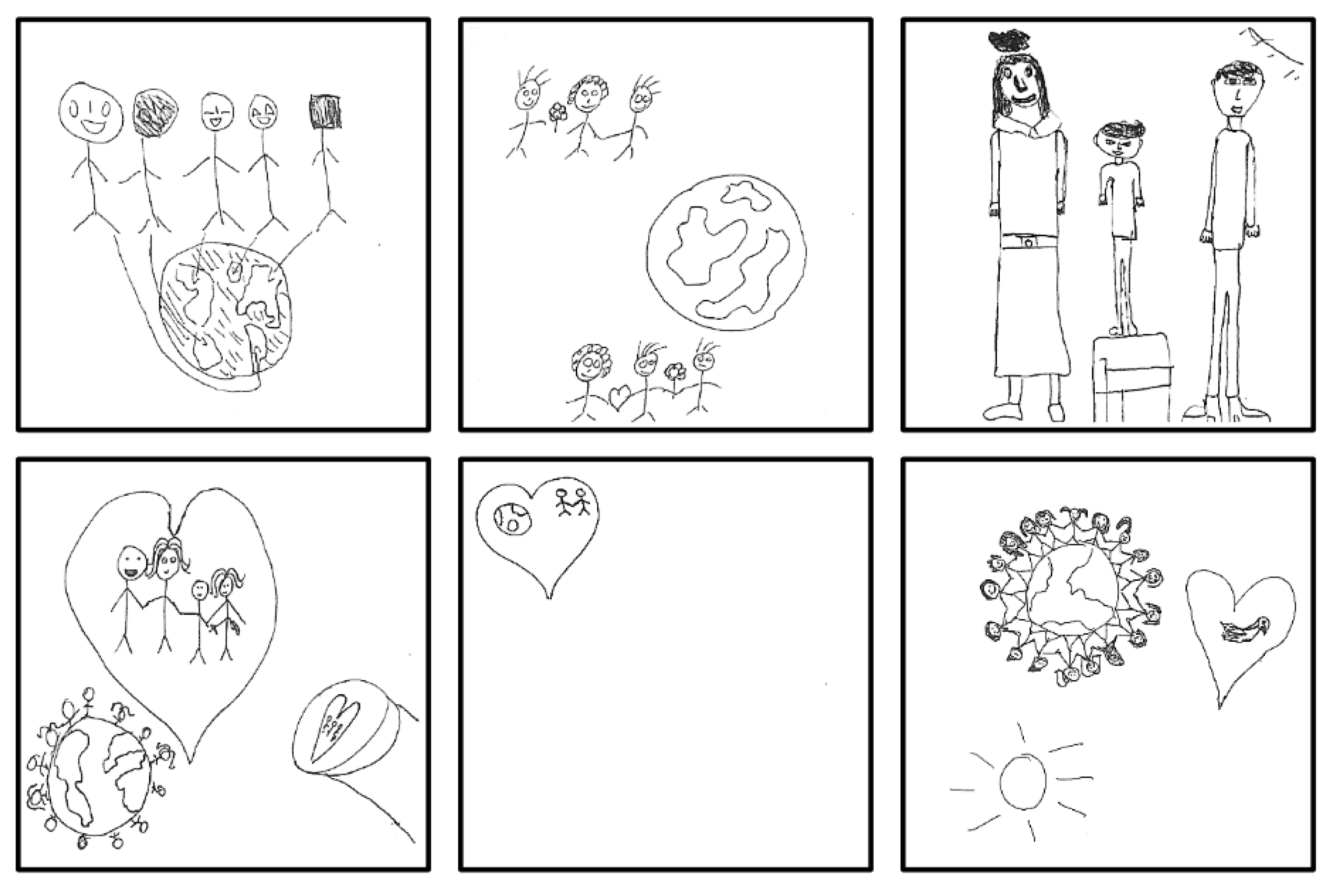
Figure 7.
Examples of images focusing on ‘inner harmony’.
Figure 8.
Examples of images focusing on ‘human rights and equality’.
Unspecific hSquares (n = 16). This number of squares did not fill the criteria to belong to a theme (e.g., only a flower, the sun). Others were just blank and some only had the word ‘happiness’ written on them.
3.2. Thematic Analysis According to Age
For the thematic analysis by age, the sample was divided into two age groups: younger adolescents (11 to 14 years old) and older adolescents (15 to 18 years old). In relation to age, younger adolescents tended to represent only one theme in their images than older adolescents who focused more in two or more themes. As seen in Table 1, it appears that only smile theme was more mentioned in younger ages. The 17-year-old participants were the ones who represented more variables in their images. The ‘people’ and ‘hobbies’ themes seem to be represented more as increasing age, showing that, although mentioned in all ages, later adolescents lean more to these two contextual factors. When observed the ‘people’ subthemes is detected that only ‘family’ tend to disappear from the ages 14 and 15 being substituted by only ‘friends’ and ‘family and friends’. The hobbies subthemes showed that ‘outdoor activities’ and ‘music and reading’ were rarely expressed in the under 15-year-old adolescents, being ‘technologies’ constantly mentioned across ages. ‘Inner harmony’ did not appear until 13-year-old but when it did, the frequency of its representation increased as adolescents grow older, exceptionally on the age of 15.
4. Discussion
This study intended to identify the definitions of happiness among adolescents through their mental images translated into drawings. All the images were categorized into themes to proceed with the analysis to explore differences according to their age.
4.1. Contents and Meanings of the Happiness Drawings
Adolescents in this study associated happiness with the following visual motifs: Family/friends, hobbies, love, smile, sports, basic needs, inner harmony and human rights and equality. These specific themes and visual representations showed the importance of family and/or related social contexts in adolescents’ happiness. When family relationships are positive, adolescents tend to report higher happiness levels compared to positive peer experiences [62]. On the other hand, autonomy from parents increases the importance of social relationships, verifying a positive relation between relationships with peers and happiness [63]. The association of happiness and familial and social support translated by the drawings shows that adolescents recognize the contribution of these two settings to their happiness, facilitating and strongly influencing their creation of happiness images.
Images also highlighted the importance of hobbies through outdoor activities, technologies, music, and reading. This sort of activity was the second most illustrated thematic. The images portraying hobbies showed the importance of self-selected activities to the perception of adolescent’s happiness [64], demonstrating the role of individuality and preferences in choosing a pleasurable activity. The happiness as hobbies representations allowed creating an image where adolescents picture themselves doing what they like in their free time, as being engaged with nature, spending time on the computer, reading a book or/and listening to music.
The happiness as love conception was also a primary representation showing that adolescents attribute a fundamental role to love when imaging their happiness [11]. These particular images present evidence of the strong association between happiness and love in adolescents, happiness being drawn as the concrete image of love – a heart.
The images portraying happiness as a smile were associated with positive emotions and feelings. As smiling is the behavioral manifestation of happiness, the demonstration of positive affect is a central concrete element for its conceptualization in adolescents [65].
The prominence of sports in the drawings showed its role in adolescents’ happiness, especially soccer for the Portuguese adolescents. Literature shows the positive effect of playing a sport, not only in physical and mental health but also in developing specific social skills like leadership and communication [66]. A more recent study showed that positive attitudes towards sports directly and negatively correlate with loneliness in adolescence [66]. It appears that this positive influence of sports is perceived by this sample of adolescents, considering their favorite sport translated as an image of their happiness.
The representation of happiness as basic needs was also present in the completed drawings, being the images focused on physiological (e.g., food, drink) and security needs (e.g., health, money, house). This type of image represents adolescents’ happiness when the primary needs are met, showing the essential role of having the basic requirements assured. The thematic of basic needs associated with happiness is not systematically supported in literature, making this one of the innovative themes that emerged with these drawings.
The images of inner harmony represented some positive intrapersonal variables, such as self-esteem, self-love, success and accomplishing goals, appearing in the drawings through various analogies. Navarro and colleagues [67] also found an association between happiness and the themes ‘feelings towards yourself’ and ‘life aspirations’. Furthermore, investigation shows that when these factors are positive, happiness tends to increase and is perceived by adolescents [68]. Accordingly, adolescents tend to represent happiness associated with self-improvement and self-accomplishment.
The images associated with human rights and equality were portrayed as something beyond themselves, representing altruistic emotions. This result appears as an innovative one, with no support in previous research. It seems that the visual association between happiness and human rights was facilitated using drawings, showing happiness as something bigger and more focused on a collective level of happiness.
Lastly, the presence of drawings falling into multiple categories can unveil the complexity of the happiness construct. Thus, we can acknowledge that happiness is not a static or unidimensional construct, but rather something that can be experimented and expressed through many ways.
4.2. Older Versus Younger Adolescent’s Drawings
In terms of variations across age, our study showed that younger adolescents usually represent only one theme while older adolescents tend to represent two or more themes. Literature shows that more complex concepts of happiness emerge throughout adolescence, progressing to more eudaimonic conceptions [22]. The development of formal thinking during adolescence may explain how and why this imagery representation complexifies over time, becoming predominantly an interaction of multiple factors [69]. Therefore, it is understandable that the smiling image appeared more on younger ones due to the gradual passage from concrete thinking to abstract thinking during adolescence [69]. As for older adolescents (by 17-year-old ones), they seem to make more cognitive evaluations and thus portray more themes [70].
5. Conclusions and Future Research Studies
This study shows how the new draw-and-write technique can be used successfully with psychological concepts and measures, providing different and additional information to previous and traditional studies sustained in well-known approaches and models on happiness and its assessment. This technique proved to be appropriate and suitable to explore the complex concept of happiness, bringing new perspectives to understand this concept and/or reassert old understandings on factors related to happiness. Indeed, this technique proves to be quite valuable since complex and abstract concepts are usually difficult to put in words. As stated in the literature, the benefits of drawing as a facilitator of expressing ideas and representations were evident, looking to the diversity of themes associated with the drawings. It seems that the limitation of a possible difficulty of drawing when fewer artistic skills exist was overcome, not compromising imagery outputs. As expected, some participants attached subtitles to their drawings.
Using this drawing technique, two main themes or images (the more frequent among these Portuguese adolescents) were associated with happiness: on one hand, family and friends; and on the other, hobbies. Our findings demonstrated that happiness is much more omnibus than we could realize. This technique allowed us to explore several different and rich conceptualizations, making research much more comprehensive and innovative. Thus, it is notable that new kinds of data are possible to know about happiness, besides traditional written self-report measures, in this case relating to visual representations on happiness. As for themes, it could be intriguing for future studies to explore whether the fulfillment of basic needs would alter the conceptualization of happiness. It would be also worth considering the types of family activities that most elicit happiness to see if any patterns emerge.
Although research is still needed, another benefit of this new technique could be its capacity to embrace a broader spectrum of individuals (e.g those with varying levels of education or literacy), enabling them to express their thoughts, feelings and overall contribute to more holistic research. Since happiness is part of a broader concept of well-being, it would be interesting in future studies to examine the visual representations of well-being
Besides these contributions, this study also presents a few limitations. In terms of the procedure with the hSquare, we verified that the written part (in the backside of the square) was more about full descriptions of happiness than the drawn itself (as suggested by instructions). The need to clarify this written part's purpose during the task description should be present in future studies. As concerning content analysis of drawings, we only used the thematic analysis. Still, other complex qualitative analysis can be used to deeply exploring the information presented in the drawings. Like this, it will be possible to expand the analysis on happiness and its components, even from a visual and cognitive representation of the concept. Complementing the drawings' information with the written descriptions about them in a more detailed analysis is also a new avenue for future studies.
Lastly, we underline the role of innovative methods to achieve new levels of scientific understanding and knowledge when reporting the study of complex concepts, such as happiness. The draw-and-write technique makes relevant the cognitive components associated with adolescents' visual representations and how these components became articulated with emotions, or behaviours, to produce mental pictures of complex concepts throughout daily scenarios. To know how these images or representations influence, in turn, behaviour or emotions in terms of individuals’ engagement or involvement with life scenarios, is a new open research line for behavioural sciences.
Author Contributions
Conceptualization, T.F., A.R. and J.H.; methodology, T.F., and A.R.; software, A.R. and T.F.; validation, T.F.; formal analysis, A.R. and T.F.; investigation, A.R. and T.F.; resources, A.R. and T.F.; data curation, A.R., B.R. and T.F.; writing—original draft preparation, A.R.; writing—review and editing, A.R., B.R. and T.F.; visualization, A.R., B.R. and T.F.; supervision, T.F.; project administration, T.F.; funding acquisition, T.F. All authors have read and agreed to the published version of the manuscript.
Funding
This work was [partially] conducted at CIPsi, School of Psychology, University of Minho, supported by the Portuguese Foundation for Science and Technology (FCT; UID/01662: Centro de Investigação em Psicologia) through national funds.
Institutional Review Board Statement
The study was conducted in accordance with the Declaration of Helsinki, and received the approval of the Ethics Committee for Research in Social and Human Sciences (CEICSH 050/2021) of the University of Minho.
Informed Consent Statement
Informed consent was obtained from all subjects involved in the study.
Data Availability Statement
Non-digital data supporting this study are curated at the School of Psychology, University of Minho. The data collected for this specific study is not stored in a shared database. However, any inquiries regarding the data can be requested directly from the authors.
Conflicts of Interest
The authors declare no conflicts of interest. The funders had no role in the design of the study; in the collection, analyses, or interpretation of data; in the writing of the manuscript; or in the decision to publish the results.
References
- Johnston, B.R.; Colson, E.; Falk, D.; St. John, G.; Bodley, J.H.; McCay, B.J.; Wali, A,; Nordstrom, C.; Slymovics, S.. On Happiness. Am. Anthropol. 2012, 114, 6–18. [CrossRef]
- Bieda, A.; Hirschfeld, G.; Schönfeld, P.; Brailovskaia, J.; Zhang, X.C.; Margraf, J. Universal happiness? Cross-cultural measurement invariance of scales assessing positive mental health. Psychol. Assess. 2017, 29, 408–421. [Google Scholar] [CrossRef]
- Diener, E. Subjective well-being. Psychol. Bull. 1984, 95, 542–575. [Google Scholar] [CrossRef]
- Diener, E.; Oishi, S.; Tay, L. Advances in subjective well-being research. Nat. Hum. Behav. 2018, 2, 253–260. [Google Scholar] [CrossRef]
- Ryff, C.D. Happiness is everything, or is it? Explorations on the meaning of psychological well-being. J. Pers. Soc. Psychol. 1989, 57, 1069–1071. [Google Scholar] [CrossRef]
- Lyubomirsky, S.; King, L.; Diener, E. The benefits of frequent positive affect: Does happiness lead to success? Psychol. Bull. 2005, 131, 803–855. [Google Scholar] [CrossRef]
- Compton, W.C. An Introduction to Positive Psychology, 2nd ed.; Thomson/Wadsworth: Belmont, CA, USA, 2005. [Google Scholar]
- Csíkszentmihályi, M.; Csikszentmihalyi, I.S. Optimal Experience: Psychological Studies of Flow in Consciousness, 3rd ed.; Cambridge University Press: London, UK, 1992. [Google Scholar]
- Freire, T.; Tavares, D. Influência da autoestima, da regulação emocional e do gênero no bem-estar subjetivo e psicológico de adolescentes. Rev. Psiquiatr. Clín. 2011, 38, 184–188. [Google Scholar] [CrossRef]
- Delle Fave, A.; Brdar, I.; Freire, T.; Vella-Brodrick, D.; Wissing, M.P. The eudaimonic and hedonic components of happiness: Qualitative and quantitative findings. Soc. Indic. Res. 2011, 100, 185–207. [Google Scholar] [CrossRef]
- Park, N. The role of subjective well-being in positive youth development. Ann. Am. Acad. Polit. Soc. Sci. 2004, 591, 25–39. [Google Scholar] [CrossRef]
- Ryff, C.D.; Keyes, C.L.M. The structure of psychological well-being revisited. J. Pers. Soc. Psychol. 1995, 69, 719–727. [Google Scholar] [CrossRef]
- Ryff, C.D. Psychological well-being revisited: Advances in the science and practice of eudaimonia. Psychother. Psychosom. 2014, 83, 10–28. [Google Scholar] [CrossRef]
- Delle Fave, A.; Brdar, I.; Wissing, M.P.; Araujo, U.; Castro Solano, A.; Freire, T.; et al. Lay definitions of happiness across nations: The primacy of inner harmony and relational connectedness. Front. Psychol. 2016, 7, Article 30. [Google Scholar] [CrossRef]
- Galambos, N.L.; Krahn, H.J.; Johnson, M.D.; Lachman, M.E. The U-shape of happiness across the life course: Expanding the discussion. Perspect. Psychol. Sci. 2020, 15, 898–912. [Google Scholar] [CrossRef]
- Weber, S. Using visual images in research. In Handbook of the Arts in Qualitative Research: Perspectives, Methodologies, Examples, and Issues; Knowles, J., Cole, A., Eds.; Sage Press: London, UK, 2008; pp. 41–54. [Google Scholar]
- Hartel, J. An arts-informed study of information using the draw-and-write technique. Assoc. Info. Sci. Technol. 2014, 65, 1349–1367. [Google Scholar] [CrossRef]
- Clark, A.E.; Flèche, S.; Layard, R.; Powdthavee, N.; Ward, G. The Origins of Happiness: The Science of Well-Being over the Life Course; Princeton University Press: Princeton, NJ, USA, 2019. [Google Scholar] [CrossRef]
- Veenhoven, R. Questions on happiness: Classical topics, modern answers, blind spots. In Subjective Well-Being: An Interdisciplinary Perspective; Strack, F., Argyle, M., Schwarz, N., Eds.; Pergamon Press: Oxford, UK, 1991; pp. 7–26. [Google Scholar]
- Moneta, G.B.; Schneider, B.; Csikszentmihalyi, M. A longitudinal study of the self-concept and experiential components of self-worth and affect across adolescence. Appl. Dev. Sci. 2001, 5, 125–142. [Google Scholar] [CrossRef]
- Csikszentmihalyi, M.; Hunter, J. Happiness in everyday life: The uses of experience sampling. J. Happiness Stud. 2003, 4, 185–199. [Google Scholar] [CrossRef]
- López-Pérez, B.; Sánchez, J.; Gummerum, M. Children’s and adolescents’ conceptions of happiness. J. Happiness Stud. 2016, 17, 2431–2455. [Google Scholar] [CrossRef]
- Freire, T.; Zenhas, F.; Tavares, D.; Iglésias, C. Felicidade hedónica e eudaimónica: Um estudo com adolescentes portugueses. Análise Psicol. 2014, 31, 329–342. [Google Scholar] [CrossRef]
- Brooks-Gunn, J.; Petersen, A.C. Studying the emergence of depression and depressive symptoms during adolescence. J. Youth Adolesc. 1991, 20, 115–119. [Google Scholar] [CrossRef]
- Cheng, H.; Furnham, A. Personality, self-esteem, and demographic predictions of happiness and depression. Pers. Individ. Differ. 2003, 34, 921–942. [Google Scholar] [CrossRef]
- Diener, E.; Tay, L. A scientific review of the remarkable benefits of happiness for successful and healthy living. In Psychological Wellbeing; Adler, A., Unanue, W., Osin, E., Alkire, S., Eds.; The Centre for Bhutan Studies and GNH: Thimphu, Bhutan, 2017. [Google Scholar]
- Youniss, J.; Smollar, J. Adolescent Relations with Mothers, Fathers, and Friends; University of Chicago Press: Chicago, IL, USA, 1987. [Google Scholar]
- Cole, A.L.; Knowles, J.G. Arts-informed research. In Handbook of the Arts in Qualitative Research: Perspectives, Methodologies, Examples, and Issues; Knowles, J.G., Cole, A.L., Eds.; Sage Publications: Thousand Oaks, CA, USA, 2008; pp. 55–70. [Google Scholar]
- Mannay, D. Visual, Narrative, and Creative Research Methods: Application, Reflection, and Ethics, 1st ed.; Routledge, Taylor & Francis Group: London, UK, 2016. [Google Scholar]
- Hartel, J.; Thomson, L. Visual approaches and photography for the study of immediate information space. J. Am. Soc. Inf. Sci. 2011, 62, 2214–2224. [Google Scholar] [CrossRef]
- Rose, G. Visual Methodologies: An Introduction to Researching with Visual Materials, 4th ed.; SAGE: Los Angeles, CA, USA; London, UK; New Delhi, India; Singapore; Washington DC, USA; Melbourne, Australia, 2016. [Google Scholar]
- Reavey, P. The return to experience: Psychology and the visual. In A Handbook of Visual Methods in Psychology: Using and Interpreting Images in Qualitative Research; Routledge: London, UK, 2020; pp. 20–38. [Google Scholar]
- D’Amico, M.; Denov, M.; Khan, F.; Linds, W.; Akesson, B. Research as intervention? Exploring the health and well-being of children and youth facing global adversity through participatory visual methods. In Participatory Visual Methodologies in Global Public Health; Routledge: London, UK, 2018; pp. 8–25. [Google Scholar]
- Theron, L.; Mitchell, C.; Smith, A.; Stuart, J. Picturing Research: Drawing as Visual Methodology; SensePublishers: Rotterdam, Netherlands, 2011. [Google Scholar]
- Hartel, J. Draw-and-Write Techniques. In SAGE Research Methods Foundations; Atkinson, S., Delamont, A., Cernat, A., Sakshaug, J.W., Williams, R.A., Eds.; SAGE Publications Ltd.: London, UK, 2020. [Google Scholar] [CrossRef]
- Pridmore, P.; Bendelow, G. Images of health: Exploring beliefs of children using the “draw-and-write” technique. Health Educ. J. 1995, 54, 473–488. [Google Scholar] [CrossRef]
- Kousta, S.; Vigliocco, G.; Vinson, D.; Andrews, A. Happiness is an abstract word: The role of affect in abstract knowledge representation. In Proceedings of the Annual Meeting of the Cognitive Science Society, 1115–1120. 2009; 31. [Google Scholar]
- Weber, S.; Mitchell, C. That’s Funny, You Don’t Look Like a Teacher! Interrogating Images and Identity in Popular Culture; Falmer Press: London, UK; Washington, D.C., USA, 1995. [Google Scholar]
- Bradding, A.; Horstman, M. Using the write and draw technique with children. Eur. J. Oncol. Nurs. 1999, 3, 170–175. [Google Scholar] [CrossRef]
- Nic Gabhainn, S.; Kelleher, C. The sensitivity of the draw and write technique. Health Educ. 2002, 102, 68–75. [Google Scholar] [CrossRef]
- Knowles, Z.R.; Parnell, D.; Stratton, G.; Ridgers, N.D. Learning from the experts: Exploring playground experience and activities using a write and draw technique. J. Phys. Act. Health 2013, 10, 406–415. [Google Scholar] [CrossRef]
- Dasarraju, R.; Nirmala, S.; Kolli, N.R.; Inthihas, S.; Nuvvula, S. Application of write-and-draw technique in pediatric dentistry: A pilot study. Int. J. Pedod. Rehabil. 2016, 1, 56. [Google Scholar] [CrossRef]
- Üztemur, S.; Dinç, E.; Ekinci, H. Using draw-write-tell to explore middle school students’ conceptions of the social studies course. Turk. Online J. Qual. Inq. 2020, 11, 280–305. [Google Scholar] [CrossRef]
- Yue, Z.; Meng, Y.; Chen, J. Multidimensional mental representations of natural environment among Chinese pre-adolescents via draw-and-write mapping. People Nat. 2024, 6, 321–336. [Google Scholar] [CrossRef]
- Galano, S.; Colantonio, A.; Leccia, S.; Marzoli, I.; Puddu, E.; Testa, I. Developing the use of visual representations to explain basic astronomy phenomena. Phys. Rev. Phys. Educ. Res. 2018, 14, 010145. [Google Scholar] [CrossRef]
- Zhang, Y.; Jiang, H.; Miura, Y.; Manning, C.D.; Langlotz, C.P. Contrastive learning of medical visual representations from paired images and text. Proc. Mach. Learn. Res. 2022, 182, 2–25. [Google Scholar]
- Debrenti, E. Visual representations in mathematics teaching: An experiment with students. Acta Didact. Napoc. 2015, 8, 19–25. [Google Scholar]
- Pitta-Pantazi, D.; Christou, C.; Pittalis, M. Number teaching and learning. In Encyclopedia of Mathematics Education, 2nd ed.; Lerman, S., Ed.; Springer: London, UK, 2020; pp. 645–654. [Google Scholar]
- Cook, M.P. Visual representations in science education: The influence of prior knowledge and cognitive load theory on instructional design principles. Sci. Educ. 2006, 90, 1073–1091. [Google Scholar] [CrossRef]
- Trumbo, J. Visual literacy and science communication. Sci. Commun. 1999, 20, 409–425. [Google Scholar] [CrossRef]
- Roth, W.-M.; Bowen, G.M.; McGinn, M.K. Differences in graph-related practices between high school biology textbooks and scientific ecology journals. J. Res. Sci. Teach. 1999, 36, 977–1019. [Google Scholar] [CrossRef]
- Hartel, J.; Noone, R.; Oh, C.; Power, S.; Danzanov, P.; Kelly, B. The iSquare protocol: Combining research, art, and pedagogy through the draw-and-write technique. Qual. Res. 2018, 18, 433–450. [Google Scholar] [CrossRef]
- Johnson-Glauch, N.; Choi, D.S.; Herman, G. How engineering students use domain knowledge when problem-solving using different visual representations. J. Eng. Educ. 2020, 109, 443–469. [Google Scholar] [CrossRef]
- Ainsworth, S.E.; Scheiter, K. Learning by drawing visual representations: Potential, purposes, and practical implications. Curr. Dir. Psychol. Sci. 2021, 30, 61–67. [Google Scholar] [CrossRef]
- Zieba, A. Visual representation of happiness: A sociosemiotic perspective on stock photography. Soc. Semiot. 2023, 33, 188–208. [Google Scholar] [CrossRef]
- De Paola, J.; Hakoköngäs, E.J.; Hakanen, J.J. #Happy: Constructing and sharing everyday understandings of happiness on Instagram. Human Arenas 2022, 5, 469–487. [Google Scholar] [CrossRef]
- Russo-Zimet, G.; Segel, S. The concept of happiness as conveyed in visual representations: Analysis of the work of early childhood educators. J. Educ. Train. Stud. 2014, 2, 97–107. [Google Scholar] [CrossRef]
- Hartel, J. Adventures in visual methods. Vis. Methodol. 2017, 5, 80–91. [Google Scholar]
- Freire, T.; Teixeira, A.; Vilas Boas, D. Subjective Happiness Scale: Validation for Portuguese adolescents. Psic., Saúde & Doenças 2022, 23, 203–215. [Google Scholar] [CrossRef]
- Lyubomirsky, S.; Lepper, H.S. A measure of subjective happiness: Preliminary reliability and construct validation. Soc. Indic. Res. 1999, 46, 137–155. [Google Scholar] [CrossRef]
- Braun, V.; Clarke, V. Using thematic analysis in psychology. Qual. Res. Psychol. 2006, 3, 77–101. [Google Scholar] [CrossRef]
- Aumeboonsuke, V. Parents or peers, wealth or warmth? The impact of social support, wealth, and a positive outlook on self-efficacy and happiness. Int. J. Soc. Econ. 2017, 44, 732–750. [Google Scholar] [CrossRef]
- Oberle, E.; Schonert-Reichl, K.A.; Zumbo, B.D. Life satisfaction in early adolescence: Personal, neighborhood, school, family, and peer influences. J. Youth Adolesc. 2011, 40, 889–901. [Google Scholar] [CrossRef]
- Bartko, W.T.; Eccles, J.S. Adolescent participation in structured and unstructured activities: A person-oriented analysis. J. Youth Adolesc. 2003, 32, 233–241. [Google Scholar] [CrossRef]
- Datu, J.A.D.; Valdez, J.P.M. Exploring Filipino adolescents’ conception of happiness. Int. J. Res. Stud. Psychol. 2012, 1. [Google Scholar] [CrossRef]
- Yavuz, C. The relationships among attitude towards sports, loneliness and happiness in adolescents. Universal J. Educ. Res. 2019, 7, 790–796. [Google Scholar] [CrossRef]
- Navarro, D.; Montserrat, C.; Malo, S.; González, M.; Casas, F.; Crous, G. Subjective well-being: What do adolescents say? Child Fam. Soc. Work 2017, 22, 175–184. [Google Scholar] [CrossRef]
- Malo, S.; Navarro, D.; Casas, F. The use of audiovisual media in adolescence and its relationship with subjective well-being: A qualitative analysis from an intergenerational and gender perspective. Athenea Digit. 2012, 12, 27. [Google Scholar] [CrossRef]
- Gelman, R. Conservation acquisition: A problem of learning to attend to relevant attributes. J. Exp. Child Psychol. 1969, 7, 167–187. [Google Scholar] [CrossRef]
- Coffey, J.K.; Wray-Lake, L.; Mashek, D.; Branand, B. A multi-study examination of well-being theory in college and community samples. J. Happiness Stud. 2016, 17, 187–211. [Google Scholar] [CrossRef]
Figure 1.
Examples of images focusing on ‘people’ (the 1st and 2nd represent ‘family’, the 3rd and 4th ‘friends’ and the 5th and 6th ‘family and friends’).
Figure 1.
Examples of images focusing on ‘people’ (the 1st and 2nd represent ‘family’, the 3rd and 4th ‘friends’ and the 5th and 6th ‘family and friends’).
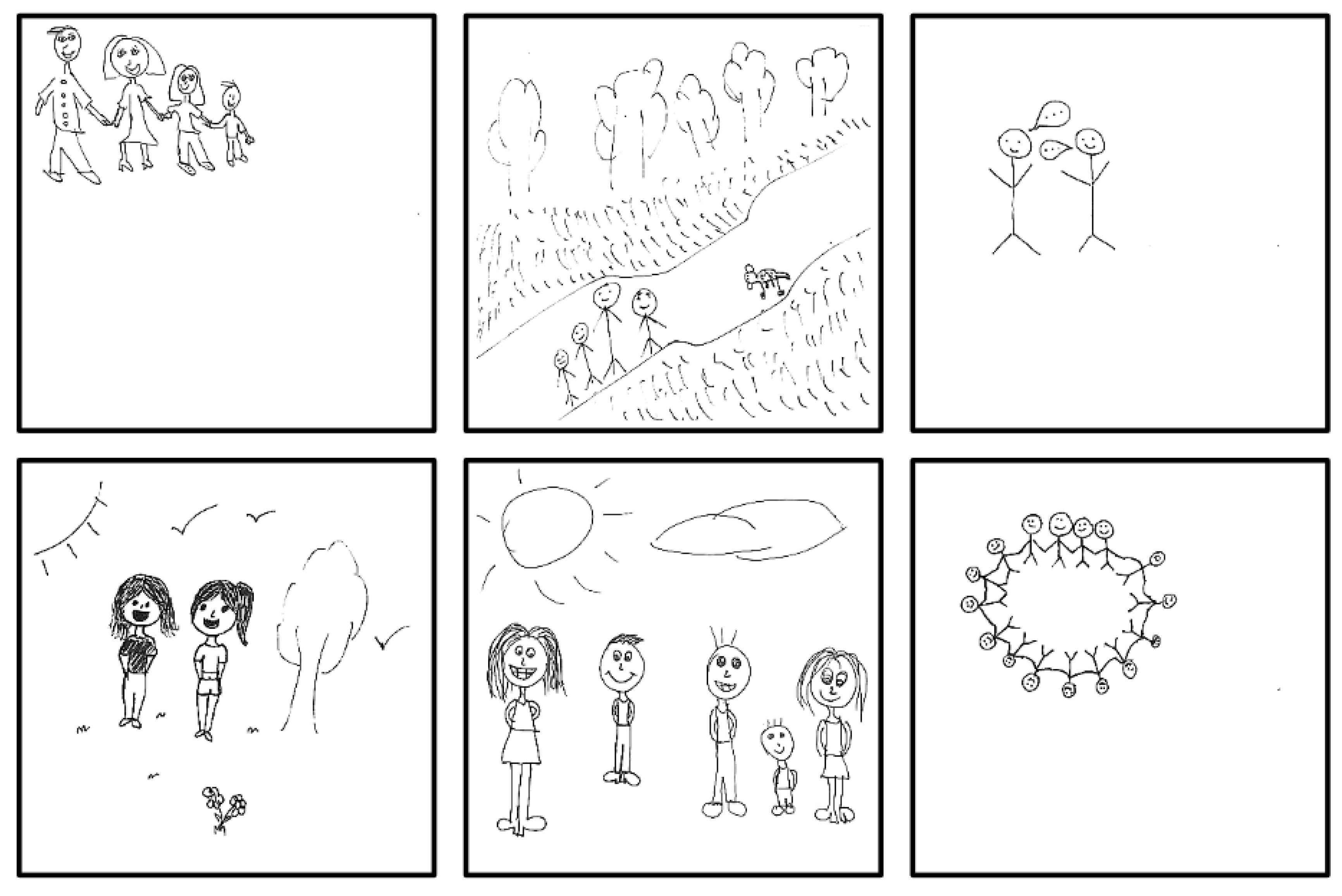
Figure 2.
Examples of images focusing on ‘hobbies’ (The 1st and 2nd represent ‘outdoor activities’, the 3rd and 4th ‘technologies’ and the 5th and 6th ‘music and reading’).
Figure 2.
Examples of images focusing on ‘hobbies’ (The 1st and 2nd represent ‘outdoor activities’, the 3rd and 4th ‘technologies’ and the 5th and 6th ‘music and reading’).
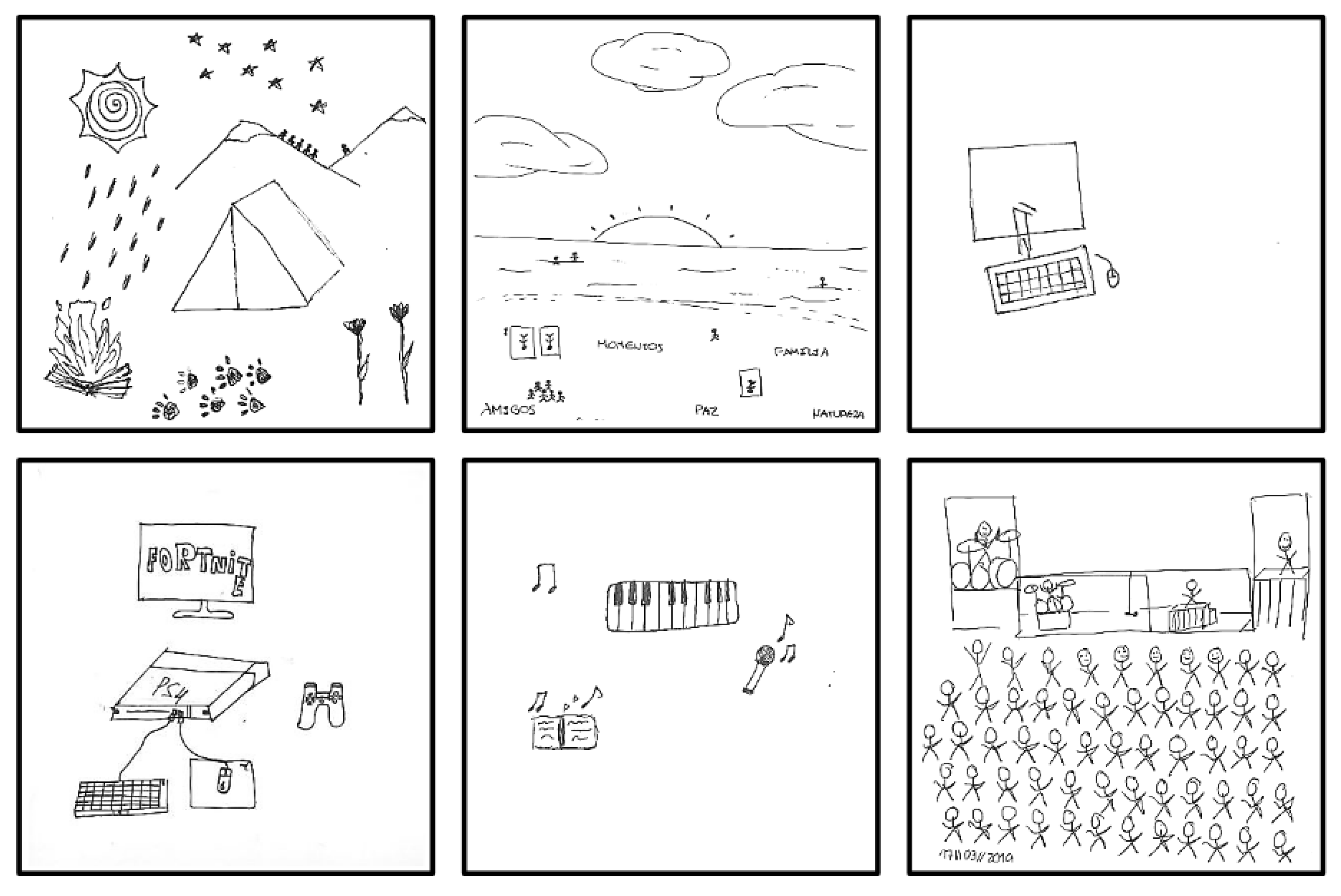
Figure 3.
Examples of images focusing on ‘smile’.
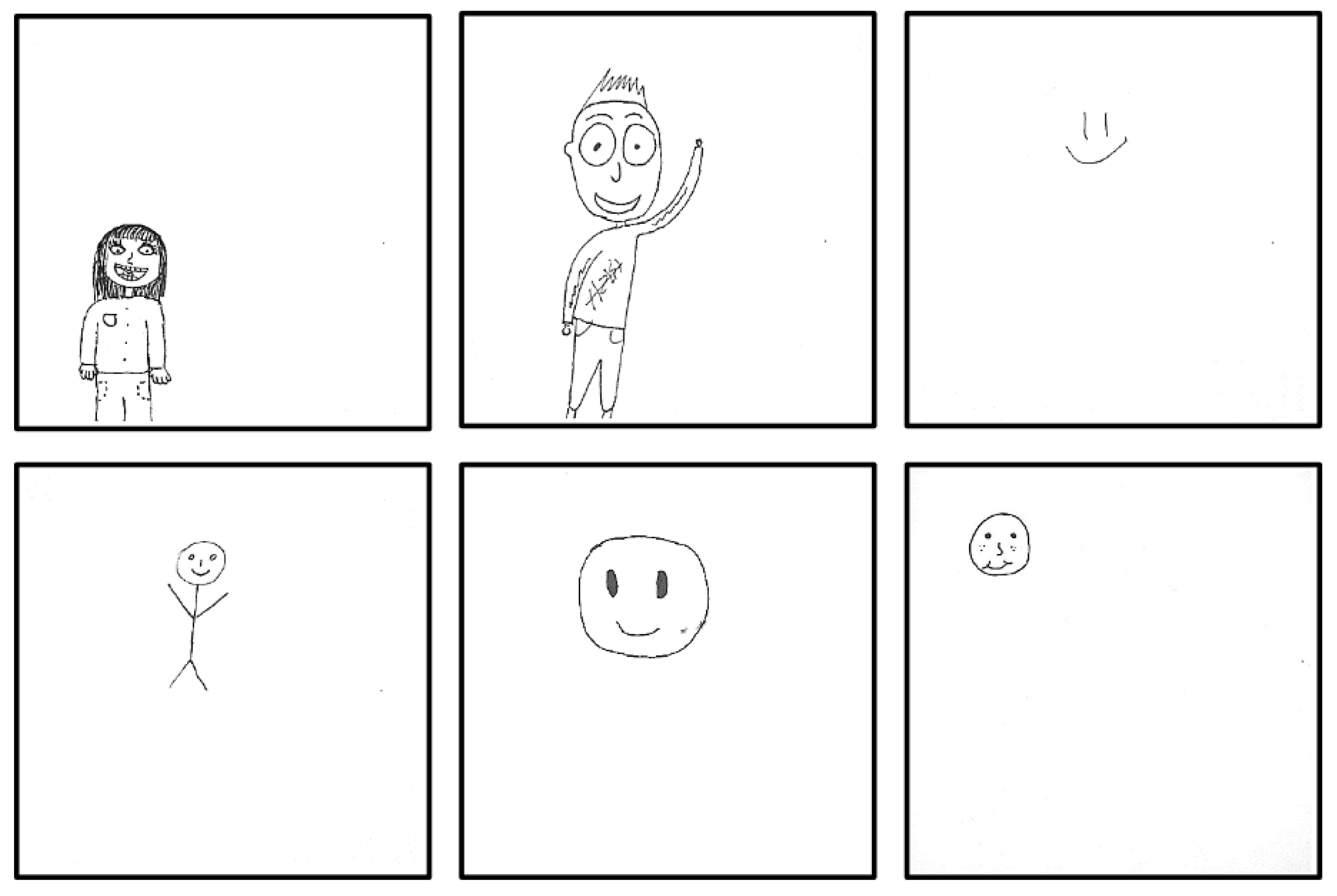
Figure 4.
Examples of images focusing on ‘love’.
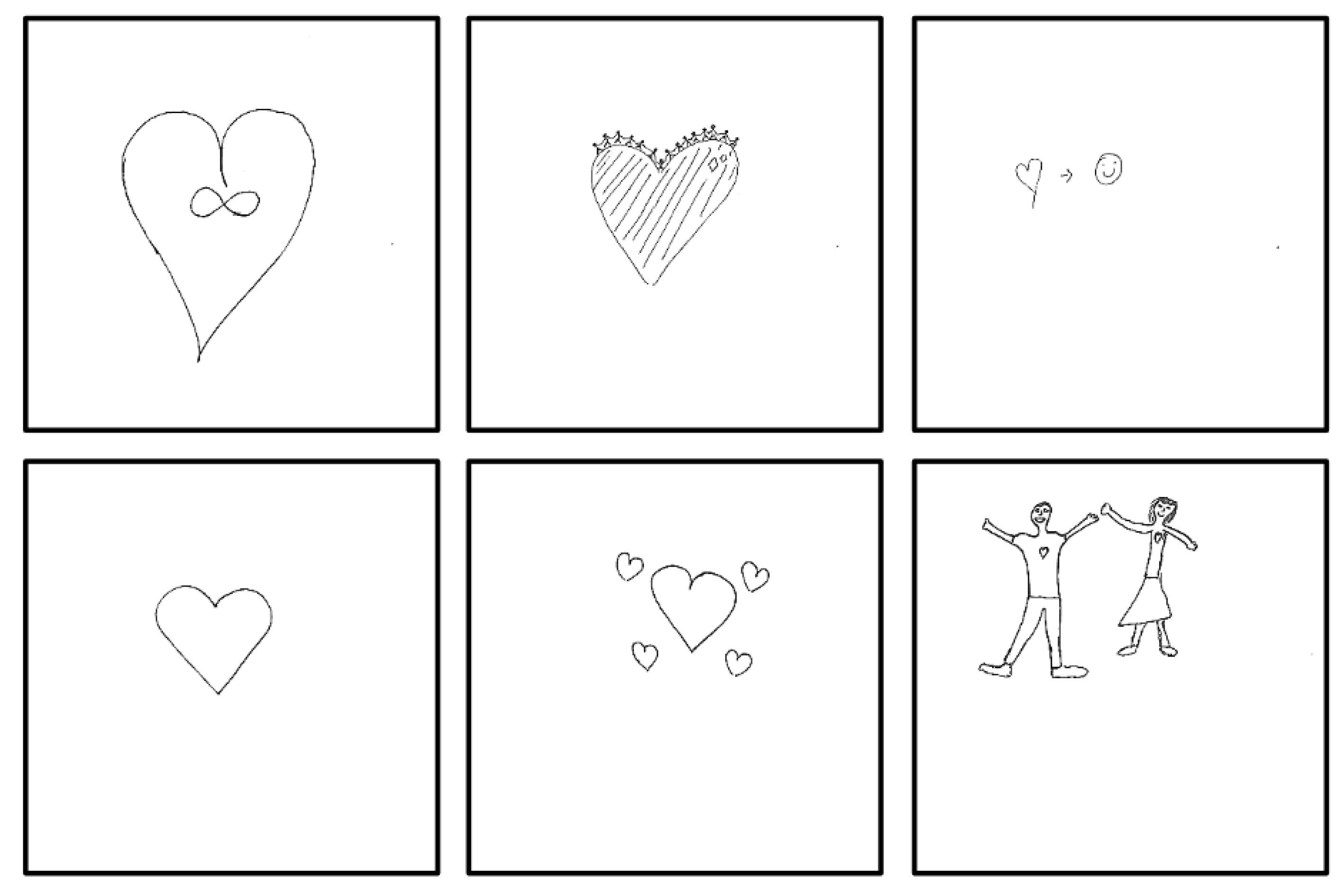
Figure 5.
Examples of images focusing on ‘sports’ (the 1st, 2nd, 3rd and 4th represent ‘soccer’, and 5th and 6th ‘other sports’).
Figure 5.
Examples of images focusing on ‘sports’ (the 1st, 2nd, 3rd and 4th represent ‘soccer’, and 5th and 6th ‘other sports’).
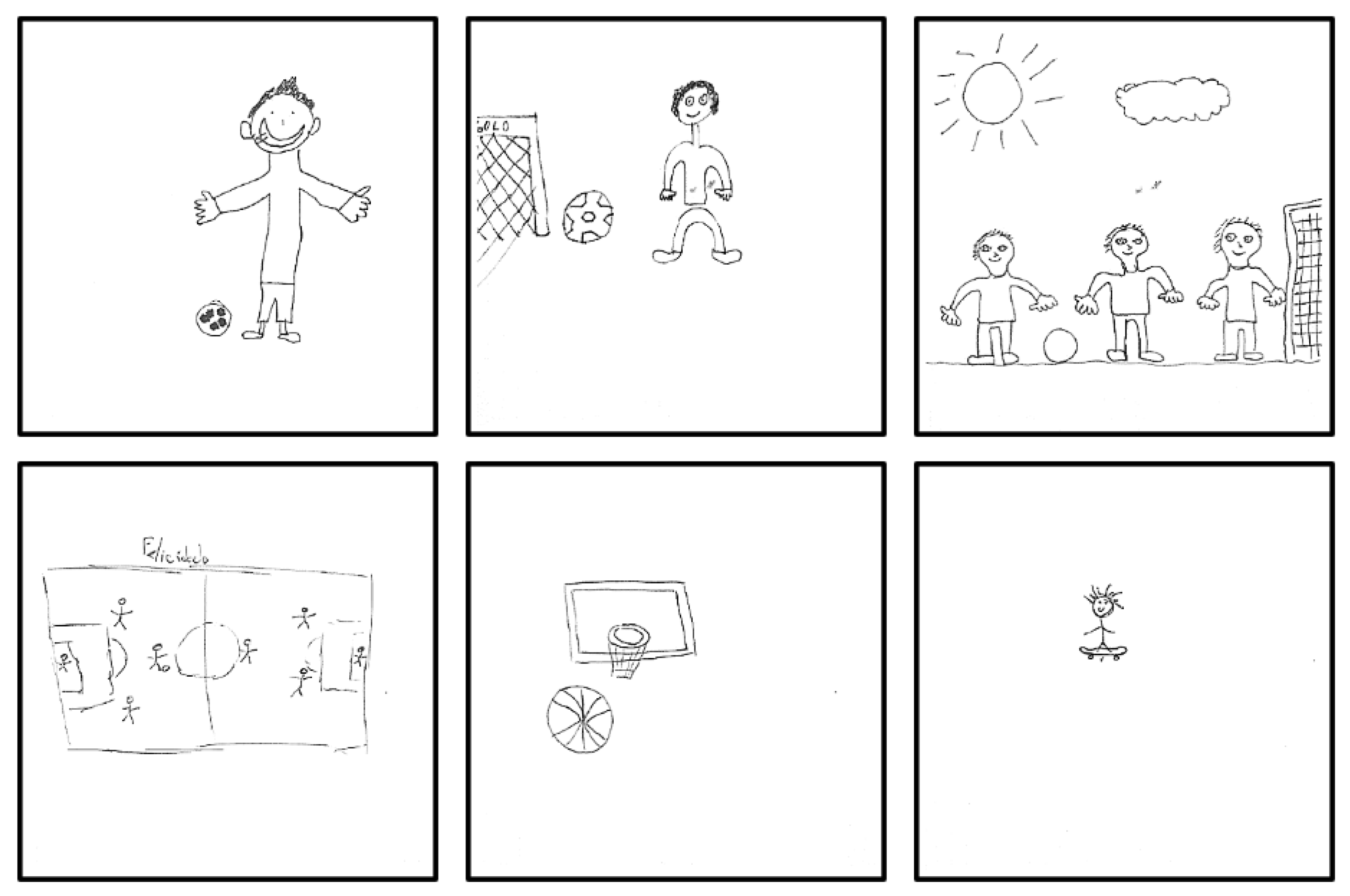
Figure 6.
Examples of images focusing on ‘basic needs’.
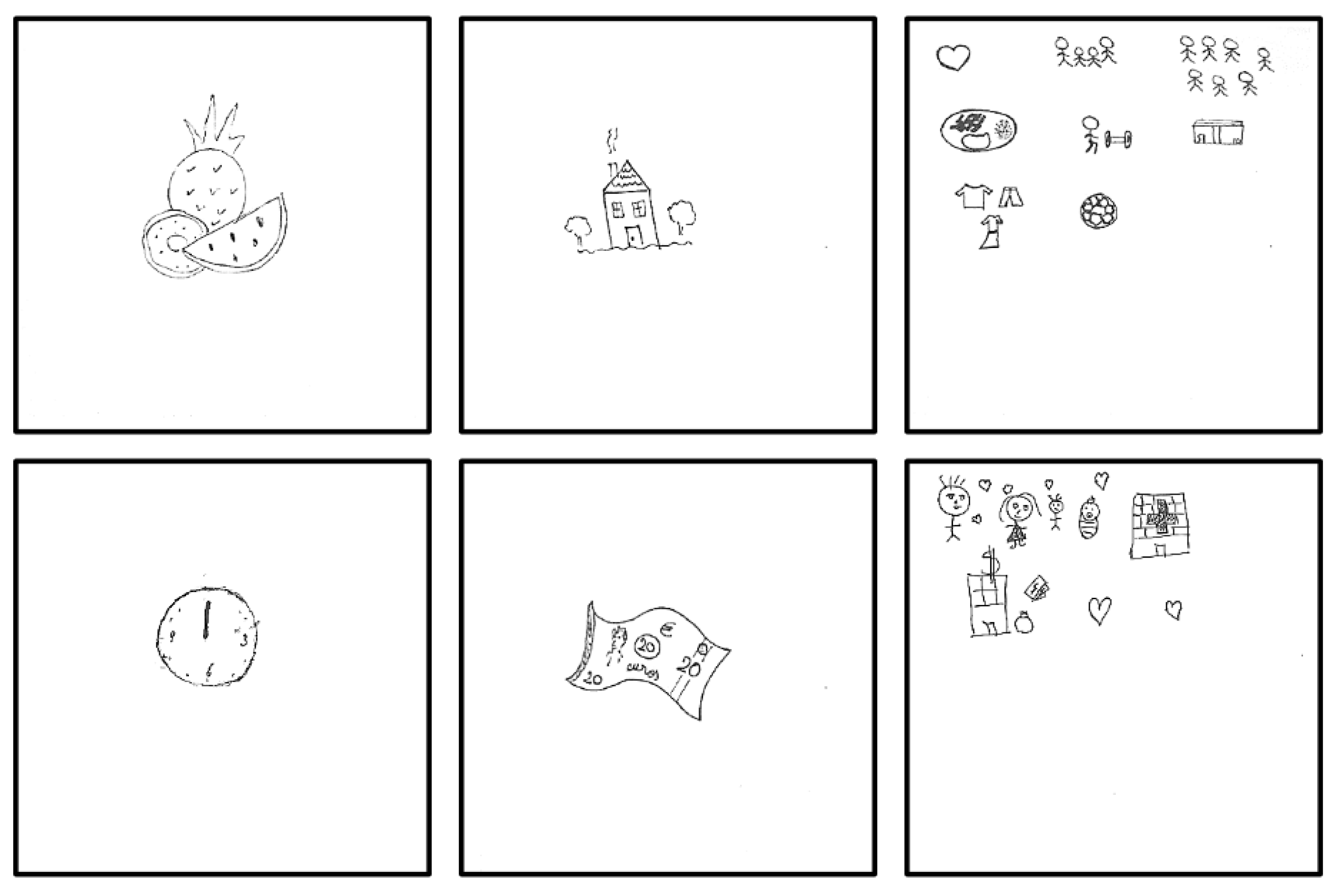

Table 1.
Themes mentioned across ages (%).
| Themes | 11 n = 1 |
12 n = 46 |
13 n = 34 |
14 n = 60 |
15 n = 44 |
16 n = 68 |
17 n = 64 |
18 n = 13 |
| People | 0.51 | 11.73 | 8.67 | 14.80 | 14.29 | 20.41 | 23.98 | 5.61 |
| Hobbies | 0 | 6.82 | 6.82 | 11.36 | 13.64 | 19.32 | 37.50 | 4.55 |
| Love | 1.27 | 3.80 | 8.86 | 22.78 | 12.66 | 25.32 | 24.05 | 1.27 |
| Smile | 0 | 15.79 | 11.84 | 26.32 | 13.16 | 21.05 | 9.21 | 2.63 |
| Sports | 0 | 22.83 | 4.55 | 11.36 | 6.82 | 25.00 | 29.55 | 0 |
| Basic Needs | 0 | 5.56 | 8.33 | 22.22 | 8.33 | 22.22 | 30.56 | 2.78 |
| Inner Harmony | 0 | 0 | 4.00 | 16.00 | 12.00 | 32.00 | 36.00 | 0 |
| Human Rights and Equality | 6.25 | 12.50 | 25.00 | 6.25 | 12.50 | 18.75 | 18.75 | 0 |
| Remaining | 0 | 0 | 6.25 | 25.00 | 18.75 | 31.25 | 12.50 | 6.25 |
Disclaimer/Publisher’s Note: The statements, opinions and data contained in all publications are solely those of the individual author(s) and contributor(s) and not of MDPI and/or the editor(s). MDPI and/or the editor(s) disclaim responsibility for any injury to people or property resulting from any ideas, methods, instructions or products referred to in the content. |
© 2025 by the authors. Licensee MDPI, Basel, Switzerland. This article is an open access article distributed under the terms and conditions of the Creative Commons Attribution (CC BY) license (http://creativecommons.org/licenses/by/4.0/).
Copyright: This open access article is published under a Creative Commons CC BY 4.0 license, which permit the free download, distribution, and reuse, provided that the author and preprint are cited in any reuse.


