

Submitted:
18 February 2025
Posted:
18 February 2025
You are already at the latest version
Abstract
This study presents a systematic review and analysis of optimization techniques (OT) and software tools (ST) in Hybrid Microgrid Systems (HMGS). An advanced SCOPUS search was conducted using core keywords, including microgrids, renewable energy systems, and various OT and ST. The review analyzes 4,134 documents on OT, categorizing them into classical (16.87%), metaheuristic (47.12%), and artificial intelligence (AI)-based methods (36.01%). Metaheuristic techniques dominate the field, reflecting their adaptability and effectiveness, while AI-based methods are rapidly gaining prominence for addressing complex optimization challenges, including operational uncertainties, cost efficiency, and energy reliability. Additionally, 2,667 documents on ST reveal MATLAB/Simulink as the most widely used, accounting for 65.34% of the total, followed by HOMER at 22.08%. These tools are pivotal in enabling techno-economic analysis, system design, and optimization under diverse scenarios. By highlighting trends, leading contributors, and knowledge gaps, this study provides a comprehensive resource to guide innovation in HMGS, fostering sustainable energy integration and addressing global energy challenges.
Keywords:
Renewable Energy Systems
; Hybrid Microgrid Systems
; Optimization Techniques
; Artificial Intelligence (AI)
; Metaheuristic Algorithms
; software tools
1. Introduction
Energy is a pivotal element reflecting the social and economic growth of nations and the quality of life of their citizens. As societies grapple with changes in climate patterns and the rising costs of traditional fuels like gas and oil, the challenge intensifies to diversify energy sources and reduce dependence on fossil fuels. Renewable energy sources (RESs) have emerged as a sought-after solution for electrical energy production, due to their environmentally friendly nature compared to conventional methods. This transition towards renewables is further highlighted by reports from the International Energy Agency (IEA), which show a significant uptick in electricity generation using sustainable energy means. According to IEA report, their central forecast suggests that between 2022 and 2027, the worldwide capacity of RESs will increase by approximately 2,400 GW, which is an increase of almost 75%. Two key factors driev this surge in the adoption of RESs. Firstly, the global energy crisis has resulted in increased costs for fossil fuels and electricity. Secondly, the incursion of Ukraine by Russia has made fossil fuel importers, especially those in Europe, recognize and value the benefits of RESs in enhancing energy security.
In response to the energy crisis, China, the European Union (EU), the United States, and India are rapidly implementing existing policies and introducing regulatory and market changes, as well as rolling out new measures faster than previously expected. This has been a significant factor in the growth trajectory shown in Figure 1. Since the previous report, RESs usage in the EU has seen a 30% increase, with Germany and Spain at the forefront, experiencing boosts of 50% and 60%, respectively [1]. As the need to diversify energy sources and reduce reliance on fossil fuels grows, the significance of RESs continues to increase. However, despite their sustainability, the intermittent nature of RESs such as wind and solar limits their ability to be used independently. To address this challenge, Hybrid Energy Systems (HESs) combine multiple RESs, often integrating energy storage or conventional sources like diesel generators, to provide a more reliable and stable energy supply [2,3]. Microgrids (MGs), which can operate both connected to the grid and in isolation, are at the forefront of this innovation, offering flexibility in energy management [4]. The development of Hybrid Microgrid Systems (HMGSs) further enhances this integration by optimizing the balance between renewable and conventional energy sources, achieving cost reductions, increased grid independence, and reduced environmental impact [5,6,7,8].
Within this context, HMGS provide an advanced solution for energy management by integrating renewable and conventional power sources to reduce costs, enhance grid independence, and minimize environmental impact. Due to the inherent complexity of HMGS, advanced optimization techniques (OT) are essential for achieving high efficiency, cost reduction, and system reliability. Recent advancements in artificial intelligence (AI) and metaheuristics have led to the development of powerful optimization algorithms that effectively address these challenges. Furthermore, specialized software tools (ST) such as HOMER and MATLAB/Simulink provide accurate modeling, simulation, and optimization capabilities, enhancing the practicality and feasibility of HMGS for various applications.
1.2. Area of Study
Despite the rapid development of OT and specialized ST, existing studies often focus on specific methods or tools without providing a holistic view of their integration in HMGS. This review aims to fill this gap by analyzing and comparing the effectiveness and trends of various OT and ST used in HMGS, using Scopus records to assess their prevalence over time.
By reviewing advancements, adoption trends, and identifying promising approaches, this study provides a comprehensive analysis of OT and ST, offering actionable insights to improve the efficiency, reliability, and sustainability of HMGS. Building on suggestions from our earlier investigation [9], the document is organized as illustrated in Figure 2, which outlines the study's workflow and key phases.
The first section presents a systematic review of OT and tools, providing an in-depth analysis of various methods and tools employed in HMGS. This section achieves our goal of delivering a comprehensive review, highlighting the latest advancements and identifying critical optimization approaches. The second section, Evolution of Techniques And Tools (Scopus analysis), examines the trends in the adoption of these techniques over time, providing a broader perspective on their evolution and impact. Finally, The Conclusion and Insights Section synthesizes the findings and presents valuable outcomes for researchers and practitioners.
2. Systematic Review of OT and ST
Through the optimization process, the optimal value or solution can be identified. Optimization problems may involve one or more objectives, aiming to maximize, minimize, or address both in the case of multiobjective optimization. These problems are prevalent in diverse fields such as mathematics, engineering, social studies, economics, agriculture, aviation, and RES, among many others [10,11,12,13,14,15,16,17,18,19]. To ensure the most efficient deployment of HMGSs, an optimization procedure is essential. Figure 3 highlights the critical OT and ST utilized to solve problems and evaluate the effectiveness of HMGSs.
The following sections provide an in-depth analysis of the OT and tools most commonly used in HMGS. The techniques are categorized into classical and modern methods, with each evaluated based on its effectiveness, applications, and limitations, offering a comprehensive view of the current landscape in HMGS optimization.
2.1. Optimization Techniques
The stochastic nature of natural resources, non-linear variation in output power from solar photovoltaic (SPV) and wind turbine (WT), selection of component type and orientations, and economic modeling of energy generation costs in HMGSs all contribute to the complexity of the HMGSs optimization problem [20]. This complexity has driven researchers to develop various methods and techniques for optimizing HMGSs, as detailed below:
2.1.1. Classical Techniques
Various OT are employed to optimize the use of HESs integrated with MGs. This section reviews research utilizing traditional OT methods, including iterative, graphical, linear, nonlinear, and dynamic programming, to address optimization challenges in HMGSs. Table 1 provides a description of these techniques along with literature reviews.
The table above provides a comparative analysis of optimization strategies for HMGS, examining various computational methods such as iterative processes, NLP, linear programming, and dynamic programming. Each method offers distinct advantages in enhancing economic, reliability, and environmental outcomes. Iterative methods are often more cost-efficient than traditional models. Meanwhile, NLP addresses stochastic challenges, offering robust solutions in volatile markets. Linear optimization ensures structured problem-solving but may have limitations in handling complexity. In contrast, dynamic programming excels in decomposing complex issues, albeit at a higher computational cost. Overall, these studies highlight the importance of selecting optimization approaches that align with the specific characteristics, goals, and objectives of HMGS.
2.1.2. Modern Optimization
Modern OT in the context of HMGS include metaheuristic and AI approaches that enhance energy system performance, efficiency, and sustainability by addressing complex challenges in real-time or near-real-time.
Metaheuristics are high-level algorithms used to find good solutions for complex problems, especially when exact methods are impractical. Examples include Genetic Algorithms (GA), Particle Swarm Optimization (PSO), and Ant Colony Optimization (ACO). These techniques mimic natural processes to explore and exploit solution spaces efficiently.
Artificial Intelligence (AI) techniques, such as machine learning , reinforcement learning, and deep learning, learn from data to optimize energy systems. AI is adaptive and can improve system performance by predicting behaviors and making real-time decisions.
Metaheuristics and AI can be combined to leverage their strengths, creating AI-enhanced metaheuristics that improve search efficiency and provide more effective solutions for HMGS optimization.
- AI in HMGS Optimization:
In the context of HMGSs, AI OT play a pivotal role in managing fluctuating energy sources and demands. These techniques enable dynamic, adaptive control strategies that enhance the stability, efficiency, and resilience of the grid. Key AI techniques used in HMGS optimization include artificial neural networks, reinforcement learning, and deep learning:.
- Reinforcement Learning:
Dynamically adjusts control strategies to optimize energy flow within HMGSs. Agents learn by performing actions, observing the outcomes, and adjusting their behavior to maximize a predefined reward. This adaptability makes it powerful for creating control policies that can adjust to varying conditions in real-time [27]. Merits include its adaptability and proficiency in handling sequential decision-making. However, this approach often requires extensive data for training and presents challenges in designing an appropriate reward system. Unlike other AI techniques that rely solely on data, reinforcement learning learns directly from interactions within its environment, making it uniquely suited for complex, dynamic systems like HMGSs.
- Fuzzy Logic:
Fuzzy logic is a method of reasoning that handles approximate rather than fixed and exact conclusions, making it well-suited for dealing with uncertainties and imprecise information in HMGS. It is advantageous in HMG optimization due to its simplicity, transparency, and effectiveness in handling nonlinear systems under various conditions. Its main merits include ease of understanding and implementation, as it relies on expert knowledge rather than extensive data for model training. However, a key challenge lies in defining precise membership functions and rules. Compared to data-driven methods like deep learning and artificial neural networks, fuzzy logic is easier to interpret and implement but may lack the depth and adaptability of those techniques.
- Deep Learning:
Deep learning, a subset of machine learning, leverages artificial neural networks with multiple layers to effectively recognize patterns and extract features from vast datasets. In HMGS optimization, it excels at forecasting energy consumption and generation, capturing complex nonlinear relationships [28]. Its primary merits include high accuracy in pattern recognition and the ability to handle unstructured data. However, this method requires substantial computational resources and large datasets, and it is often considered a "black box" due to its lack of interpretability. Compared to reinforcement learning and fuzzy logic, deep learning is more data-intensive and is particularly effective for modeling complex patterns.
- Artificial Neural Networks:
Artificial Neural Networks are computational systems inspired by the biological neural networks in animal brains. They are highly effective at modeling nonlinear relationships, which is essential for predicting and optimizing energy flows HMGSs [29],[30]. A major advantage of these networks is their ability to learn from large datasets and generalize across various scenarios, enabling accurate forecasting and optimization in complex systems. However, a notable drawback is their "black box" nature, which can make the decision-making process challenging to interpret. Compared to fuzzy logic, artificial neural networks require more data for training but can model more intricate relationships than fuzzy logic or traditional AI/metaheuristic approaches.
- AI-enhanced Metaheuristic (AI/MH):
AI-enhanced Metaheuristic (AI/MH) methods integrate AI techniques, such as learning and adaptation, with metaheuristic algorithms to tackle optimization challenges. In HMGSs, this approach facilitates more effective search strategies for energy management solutions. Key advantages include a balanced exploration and exploitation of the search space, along with faster convergence to high-quality solutions. However, integrating AI techniques with metaheuristic algorithms can be complex and may increase the risk of overfitting. While AI/MH can often achieve solutions more efficiently than traditional metaheuristics, it requires a more sophisticated design compared to standalone AI methods like deep learning or reinforcement learning.
Studies that utilize these techniques are detailed in Table 2, highlighting the applications, objectives, and findings associated with each AI approach in the context of HMGS optimization.
A collection of research spanning references [31,32,33,34,35] underscores the crucial role of AI-enhanced metaheuristic methods in HMGSs optimization. Reinforcement learning and DRNN-LSTM models are notable for their capacity to perform demand-side management and predictive scheduling, leading to improved grid stability and reduced operational costs. The newly developed BWO algorithm exemplifies the efficacy of nature-inspired techniques in the strategic distribution of energy. These studies showcase how intelligent algorithms can adeptly navigate the complexities of energy management, yielding enhanced technical and economic outcomes.
While AI techniques offer advanced capabilities for managing complex, real-time decisions in HMGS optimization, metaheuristic approaches bring a complementary strength through their adaptive, nature-inspired algorithms. These techniques excel in solving multi-objective optimization problems within HMGSs due to their flexibility and robust capacity to navigate vast solution spaces. The following section explores the application of metaheuristic methods in HMGS optimization.
- b. Metaheuristic techniques in HMGS Optimization:
Metaheuristic techniques are algorithmic strategies inspired by natural occurrences and animal behavior that are intended to tackle complicated optimization issues. They use a population-based method, repeatedly improving a collection of options to efficiently identify optimum or near-optimal solutions. These strategies are adaptable, able to solve a broad variety of situations when traditional methods may fail owing to the problem's size or complexity [36]. Here is an overview of the three well-known metaheuristic algorithms, particularly in the context of optimizing an HMGS:
- Particle Swarm Optimization (PSO): PSO is a metaheuristic that seeks solutions by optimizing particle placements based on natural social behavior. PSO is commonly used to assess HMGS, as indicated by its inclusion in several researches. For example, ref [37] identifies optimum system topologies and component sizes while considering dependability, cost, and environmental effect, and for enhancing energy management systems in MGs with optimized artificial networks for improved performance and renewable integration as illustrated in reference [38]. Furthermore, ref. [39] emphasizes PSO's application in designing and optimizing a smart DC MG's multi-objective function for a HMGS of SPV, WT, and biogas-based IC engine generators, with the goal of maximizing power availability while lowering costs, demonstrating PSO's superior performance in cost reduction and high availability when compared to other algorithms.
- Genetic Algorithm (GA): is a metaheuristic inspired by natural selection that use selection, crossover, and mutation to develop solutions toward optimality, has been widely utilized in various studies to evolve candidate solutions towards optimality. For example, in ref. [40], GA improves HMGSs in order to reduce energy production costs while increasing dependability and environmental advantages. Ref. [41] demonstrates GA's use in designing energy management systems for MGs, with an emphasis on maximizing profit from energy exchanges and minimizing system complexity for improved smart grid integration. Another application of GA, as detailed in ref. [42], is optimizing a hybrid SPV/WT, addressing the loss of load probability (LLP) and system cost by selecting optimal capacities for the SPV array, wind turbine, and battery, optimizing the SPV array tilt angle, and determining the ideal inverter size, demonstrating GA's versatility in addressing complex optimization challenges in HMGSs.
- Ant Colony Optimization (ACO): is a metaheuristic inspired by ant foraging behavior that efficiently solves discrete optimization problems such as routing and scheduling. ACO shows adaptability in HMGS optimization across several studies: Ref. [43]investigates the use of ACO for supervisory control in alternative energy distributed generation MGs, aiming to improve dispatch management while taking environmental and economic factors into account. Ref. [44] uses ACO for maximum power point tracking (MPPT) to enhance power quality in islanded MGs by optimizing HRESs units. Lastly, Ref. [45] applies ACO to energy management system (EMS) in MGs, concentrating on cost-efficient scheduling and demonstrating significant cost savings over standard EMS and PSO approaches, demonstrating ACO's efficiency in complicated, multi-objective optimization tasks inside HMGS.
In summary, metaheuristic techniques bring a flexible, adaptive approach to optimizing HMGS by drawing on nature-inspired algorithms to tackle complex, multi-objective challenges. While AI and metaheuristics both play critical roles in HMGS optimization, the need for dedicated ST becomes evident in scaling, simulating, and operationalizing these advanced techniques. The next section explores the ST commonly employed in HMGS optimization, detailing how they assist in system design, simulation, and analysis to achieve cost-effective, reliable, and sustainable energy management solutions.
2.2. ST for HMGS Optimization
The classification of ST for HMGS optimization is based on their primary roles in the design and optimization process [34]. These tools can be categorized into feasibility assessment tools, design and sizing tools, simulation and modeling tools, optimization tools, and comprehensive tools, as illustrated in Figure 4.
- Feasibility Assessment Tools: Used in the initial stages to assess the viability and potential of HMGS designs.
- Design and Sizing Tools: Aid in configuring and sizing system components to ensure they meet design requirements.
- Simulation and Modeling Tools: Analyze system performance under various conditions and predict behavior during operation.
- Optimization Tools: Focus on improving the system's performance by finding the most cost-effective and energy-efficient operational strategies.
- Comprehensive Tools: Integrate multiple functions, offering a holistic approach to designing, simulating, and optimizing HMGSs.
Each category serves a distinct purpose in guiding the development and optimization of HMGSs, ensuring that designs are both technically sound and economically viable.
These tools have been applied in various studies, each emphasizing key economic performance metrics:
Levelized Cost of Energy (LCOE): Represents the average cost per unit of electricity generated over the system's lifetime, serving as a critical metric for assessing long-term economic viability.
- Net Present Cost (NPC): Evaluates total lifetime costs, including installation, maintenance, and operational expenses, providing a comprehensive assessment of overall costs.
- Net Present Value (NPV): Assesses the profitability of a system by comparing the present values of costs and revenues, helping to determine the project’s economic feasibility.
These metrics are essential for designing cost-effective and technically sound HMGSs, particularly in isolated or grid-connected systems. Table 2 provides a summary of research studies that utilize these ST, detailing each tool's functionality and primary findings.
Table 3 presents a diverse range of research studies that have utilized various ST to optimize HMGS. These studies demonstrate how tools like HOMER, RETScreen, and NREL SAM have been employed for feasibility assessments, system design, and cost optimization. A common theme is the frequent integration of SPV with other energy sources such as WT, biomass, and DGs. Many of the studies prioritize reducing costs, particularly through the optimization of the LCOE, which has become a central performance metric. HOMER stands out as a widely used tool for its comprehensive ability to model, simulate, and optimize HMGS, particularly in balancing technical performance with economic feasibility. As the table illustrates, the choice of software is crucial depending on the system’s complexity and the desired outcome, whether it’s for off-grid or grid-connected configurations.
Building on these findings, the next section delves into the evolution of OT and tools in HMGS, highlighting the role of advanced AI and metaheuristic methods in achieving efficiency and reliability. This analysis also examines how ST have adapted to support increasingly complex technical and economic objectives in HMGS, facilitating a balance between performance and cost-effectiveness.
3. Evolution of Techniques and Tools (Scopus Analysis)
The exploration of scientific literature over time enables researchers to track the development and emerging trends within a specific field. This section investigates the evolution of OT and tools for HMGS, utilizing Scopus as the primary database. This analysis sheds light on the increasing complexity and advancements in the field, pinpointing key areas where OT have gained significant traction and addressing insights noted in previous work.
Following established best practices for systematic reviews, as shown in Figure 5, the study followed these steps:
1. Problem Planning and Formulation
- Defined research questions and objectives.
- Established criteria for selecting relevant literature.
- Outlined potential conclusions based on findings.
2. Database, Keywords, and Search String Determination
- Selected Scopus as the primary database.
- Identified relevant keywords to ensure a comprehensive search.
- Developed a focused search string aligned with the study’s objectives.
3. Literature Selection
- Applied the PRISMA methodology to screen and select relevant articles.
- Excluded unrelated studies, books, and non-English publications.
4. Analysis of Results
- Extracted insights from selected studies.
- Analyzed trends, gaps, and emerging areas of focus in the field.
Figure 5 outlines the systematic review process for tracing the evolution of OT and tools in HMGS research. With this structured approach, we have gathered a comprehensive dataset of studies that reflect the trajectory and advancements in the field. The following sections present the results of our bibliometric and Scopus analyses, offering insights into the publication trends, leading journals, and geographic contributions in the domain of HMGS OT and tools. This data reveals patterns and emerging areas of focus that highlight the growing role of AI and metaheuristic methods within HMGS research.
4. Systematic Review Framework and Results
This section presents the findings from the systematic review of OT and ST in HMGS, following the methodology outlined in Figure 5. It encompasses the structured review process (PRISMA) and the results derived from the analysis.
4.1. Problem Formulation
This study aims to map the current knowledge landscape surrounding OT and ST in HMGS through a systematic, category-specific analysis. By carefully selecting and applying relevant keywords in advance SCOPUS search, the study establishes a focused foundation for analyzing advancements in both techniques and tools, setting the stage for in-depth exploration and evaluation.
4.2. Database and Search String Determination
4.2.a. OT
For this study, the SCOPUS database was selected due to its extensive repository of globally significant scientific publications across a wide range of fields. The review focused on core topics in HMGS, including MGs, renewable energy systems, and various OT spanning both classical and modern approaches (as illustrated in Figure 3). To capture relevant studies, an advanced SCOPUS search was performed using the following search string: TITLE-ABS-KEY( ( "microgrid" OR "micro grid" OR "micro-grid" OR "microgrids" OR "hybrid microgrid systems" OR "hybrid microgrid system" OR "rural microgrid" OR "urban microgrid" ) AND ( "renewable energy" OR "renewable energy sources" OR "renewable energy systems" OR "hybrid energy" OR "distributed energy resources" OR "hybrid energy systems" OR "hybrid energy sources" OR "hybrid power system" ) AND ( "optimization techniques" OR "metaheuristics" OR "genetic algorithm" OR "GA" OR "particle swarm optimization" OR "PSO" OR " Ant Colony Optimization" OR "ACO" OR "evolutionary algorithms" OR "swarm intelligence" OR "Genetic programming" OR "Differential evolution" OR "Simulated annealing" OR "Tabu search" OR "Harmony search" OR "artificial intelligence" OR "Deep reinforcement learning" OR "fuzzy logic" OR "deep learning" OR "Deep reinforcement learning" OR "Support vector machine" OR "reinforcement learning" OR "machine learning" OR "artificial neural networks" OR "AI-enhanced metaheuristic" OR "linear programming" OR "non linear programming" OR "graphical technique" OR "iterative technique" OR "dynamic programming" ) ).
4.2.b. ST
Similarly, the SCOPUS database served as the primary source for literature on ST used in HMGS optimization. This segment of the review targeted topics related to microgrids, renewable energy systems, and specialized ST (as illustrated in Figure 3). The advanced SCOPUS search string applied to capture relevant software-focused studies was as follows: TITLE-ABS-KEY ( ( "microgrid" OR "micro grid" OR "micro-grid" OR "microgrids" OR "hybrid microgrid systems" OR "rural microgrid" OR "urban microgrid" OR "hybrid microgrid system" ) AND ( "renewable energy" OR "renewable energy sources" OR "renewable energy systems" OR "hybrid energy" OR "distributed energy resources" OR "hybrid energy systems" OR "hybrid energy sources" OR "hybrid power system" ) AND ( "HOMER" OR "HOGA" OR "TRNSYS" OR "HYGROGEMS" OR "INSEL" OR "ARES" OR "RAPSIM" OR "SOMES" OR "SOLSIM" OR "MATLAB/Simulink" OR "OpenDSS" OR "System Advisor Model" OR "SAM" OR "REopt" OR "PVSYST" OR "Helioscope" OR "DIgSILENT PowerFactory" OR "PSCAD" ) ).
4.3. Literature Selection (PRISMA Analysis)
The PRISMA flowchart methodology was applied to systematically refine and select relevant articles for both OT and ST. The process ensured that the final dataset included only the most pertinent studies aligned with the objectives of this research.
Note: The document count for the year 2024 includes publications retrieved up to November. Documents published beyond this date were excluded due to the review timeline.
The following subsections detail the application of PRISMA for each category:
4.3.a. Optimization Techniques
The selection process for OT was conducted following the PRISMA flowchart guidelines, depicted in Figure 6.
Initially, 4,696 records were retrieved from the Scopus database. Screening excluded publications from 2025, books, book chapters, and retracted documents, narrowing the count to 4,562. Limiting the results to 'Final' publications further reduced this to 4,492. In the eligibility phase, additional exclusions, including book series and trade journals, brought the total to 4,308. Finally, limiting to English-only publications resulted in 4,134 relevant papers for analysis.
4.3.b. ST
Following PRISMA guidelines (Figure 7), the selection began with 2,945 records from Scopus.
Initially, 2,950 records were retrieved from Scopus. Screening excluded 2025 publications, books, chapters, retracted, and undefined documents, narrowing the count to 2,891. Limiting the publication stage to 'Final' reduced this to 2,858. Further refinement in the eligibility phase excluded book series, bringing the count to 2,751. Finally, limiting to English-language publications resulted in 2,667 relevant papers for analysis.
5. Results
This section presents the findings from the systematic literature review, organized into key subsections reflecting the outcomes derived from the analysis. The results include yearly publication trends, contributions from top journals, countries, authors, and insights into highly cited documents. These analyses provide an overarching view of the evolution and focus areas within the field of OT and ST for HMGS.
5.1. Yearly Distribution of Documents
The distribution of documents over the years highlights the growing interest in OT and ST for HMGS.
5.1.a. Optimization Techniques
Figure 8 illustrates the yearly distribution of documents related to OT in HMGS.
A noticeable surge in the number of publications is observed, particularly after 2018, reflecting the growing academic and industrial interest in this field. This trend emphasizes the expanding research focus on optimizing HMGS and the increasing adoption of advanced optimization methods.
To gain deeper insights into this collection of documents, our analysis quantified the percentage participation of each category of OT. The participation ratio of each category () was determined using the following equation:
Where:
= Relative research weight (%) of a specific optimization technique category.
= Number of documents in a specific category.
= Total number of documents analyzed.
This measure provides a normalized representation of research trends, allowing for comparative analysis across different optimization paradigms.
Results from our analysis indicate the following distribution:
- Classical techniques: =16.87% (=697, =4,134)
- Artificial Intelligence-based techniques: =36.01% (=1,489, =4,134)
- Metaheuristic techniques: =47.12% (=1,848, =4,134)
The dominance of metaheuristic methods underscores their adaptability and effectiveness in addressing the complexities inherent in HMGS optimization, such as non-linearity, uncertainty, and multi-objective constraints. This prevalence highlights a growing reliance on advanced algorithms capable of providing robust and efficient solutions for real-world energy systems.
5.1.b. ST
Figure 9 illustrates the yearly distribution of documents related to ST in HMGS, highlighting a notable rise in publications, particularly after 2015.
Among the total 2,667 documents analyzed, the distribution of ST utilization was assessed based on their relative research weight. MATLAB/Simulink exhibited the highest prevalence, appearing in 1,743 documents and accounting for 65.34% of the dataset. HOMER followed with 589 occurrences, contributing 22.08% to the total. This analysis highlights the dominant role of MATLAB/Simulink as the primary computational tool in HMGS research, with HOMER maintaining significant representation. The participation ratios were derived using Equation (1), providing a comparative measure of research focus across different ST.
5.2. Top Contributing Countries
India leads in both categories, followed by China and the United States. Other significant contributors include Iran, Saudi Arabia, and Egypt, along with notable participation from developed countries such as the United Kingdom and Canada. These results emphasize the global interest and collaborative efforts in advancing HMGS research.
5.3. Top Cited Documents
5.3.a. Top Cited Documents in OT
The top 10 cited documents listed in Table 4 illustrate the diverse methodologies and advanced OT applied in HMGS.
A combination of AI techniques with linear programming and fuzzy logic has been effectively employed to optimize energy management, resulting in significant reductions in operational costs and emissions [57]. The Adaptive Modified Particle Swarm Optimization (AMPSO) algorithm, enhanced with Chaotic Local Search (CLS), demonstrates its superiority over traditional methods like GA and PSO by achieving superior cost and emission minimization in HMGSs [58]. Similarly, the integration of fuzzy logic with PSO for frequency control in renewable-powered MGs highlights its adaptability in addressing operational uncertainties and enhancing system stability [59]. AI-driven methodologies further showcase their transformative capabilities in predictive maintenance, big data analysis, and decision-making optimization for complex energy systems [60]. Meanwhile, MILP proves highly efficient in optimizing isolated DC MG operations, achieving rapid convergence and effective management of generation units in real-world scenarios [61]. Together, these approaches underscore the critical role of AI, metaheuristics, and advanced mathematical programming in advancing the efficiency, reliability, and sustainability of HMGS.
5.3.b Top Cited Documents in ST
ST are indispensable for optimizing HMGS, offering advanced capabilities in design, modeling, and management. Table 5 lists the top 10 high-cited articles in this domain, highlighting diverse applications of ST.
One notable study introduced a communication-assisted digital relay protection scheme using MATLAB Simulink, ensuring reliable fault detection in MGs with high DG penetration [55]. Another study utilized HOMER to minimize lifecycle costs and assess environmental impacts across various MG configurations, showcasing its versatility in HESs analysis [66]. HOMER and GAMS software were combined to implement demand response programming, achieving substantial reductions in battery and inverter requirements and total net present costs [25]. These studies collectively underscore the vital role of ST in enhancing the efficiency and reliability of HMGS through robust optimization methodologies.
5.4. Top Contributing Journals
Figure 11a and 11b highlight the top contributing journals in the fields of OT and ST for HMGS, respectively. Both figures underscore the dominance of Energies and IEEE Access in terms of document contributions. Energies leads the field with 218 documents for OT and 120 documents for ST, reflecting its significant role in advancing HMGS research. Other key contributors include Applied Energy, Journal of Energy Storage, and International Journal of Electrical Power and Energy Systems, which consistently publish high-impact research.
The top-cited documents in Table 6 showcase cutting-edge OT driving advancements in HMGS.
A novel energy management approach using DRL modeled as a Markov Decision Process (MDP) effectively addresses the challenges of uncertainty in load demand, RESs variability, and electricity price fluctuations, achieving significant operational cost reductions [72]. To tackle frequency stability in low-inertia MGs with high renewable penetration, self-adaptive virtual inertia control based on fuzzy logic dynamically adjusts inertia constants in real-time, delivering enhanced transient response and robust system stability [73]. Furthermore, a two-stage aggregated control framework for peer-to-peer (P2P) energy sharing within community MGs leverages Constrained Non-Linear Programming (CNLP) optimization. This method achieves up to 30% cost savings for the community and notable economic benefits for individual prosumers [63]. These studies emphasize the essential role of advanced OT in addressing critical challenges in HMGS design and operation.
The highly cited documents listed in Table 7 illustrate the critical role of advanced ST in modeling, simulating, and optimizing HMGS. MATLAB/Simulink has been effectively used for load frequency control (LFC) in isolated MGs, leveraging multivariable generalized predictive control to stabilize frequency amidst fluctuating RESs and continuous load disturbances [77]. HOMER Pro has been instrumental in conducting techno-economic feasibility analyses, identifying optimal configurations for HESs by evaluating parameters such as NPC, COE, and greenhouse gas emissions across various sensitivity scenarios [78].
Additionally, HOMER Pro was employed to assess the viability of hydrogen as a robust energy storage medium in a 100% renewable stand-alone MG, demonstrating its potential to electrify remote communities cost-effectively while reducing carbon footprints [79]. These studies underscore the indispensable role of tools like MATLAB/Simulink and HOMER Pro in advancing HMGS research and achieving sustainable energy solutions.
5.5. Top Contributing Authors
This section highlights the most prolific contributors to HMGS research, categorized into two areas: OT and ST. Table 8 and Table 9 summarize the rankings based on the number of publications and key focus areas for each author.
Table 8 identifies the leading authors contributing to the development and application of OT in HMGS.
These researchers have significantly advanced the field by introducing innovative methodologies to enhance system reliability, efficiency, and cost-effectiveness. Guerrero, J.M., leading the list with 35 publications, has been a pioneer in distributed control and HMGS optimization. Other prominent contributors, such as Gharehpetian, G.B. and Dey, B., focus on fault management and multi-objective optimization, respectively.
Table 9 showcases the authors most active in leveraging ST to design and analyze HMGS. Their work has facilitated the integration of RES and improved MG performance.
Guerrero, J.M. again ranks first, with 24 publications emphasizing the use of tools like HOMER and MATLAB for HESs. Baghaee, H.R. and Shahnia, F. follow closely, contributing to fault-tolerant systems and sustainable MG configurations.
6. Conclusion and Insights
6.1. Overview of Key Findings
This study provides a comprehensive evaluation of OT and ST in the context of HMGS.
- OT: Advanced methodologies, such as AI-driven approaches, metaheuristics, and MILP, play a pivotal role in improving energy efficiency, reliability, and sustainability by addressing challenges like resource intermittency, load management, and cost optimization.
- ST: Tools like HOMER, MATLAB, and SAM are indispensable for designing, optimizing, and evaluating HMGS configurations, enabling researchers to analyze complex systems under diverse conditions.
6.2. Trends and Implications
The steady rise in research outputs, particularly after 2018, reflects the growing global emphasis on decarbonization and energy resilience. The high adoption of metaheuristic techniques, coupled with increasing use of AI-based approaches and robust ST, highlights a paradigm shift towards intelligent energy systems capable of adapting to dynamic conditions and uncertainties. These findings emphasize the integration of advanced algorithms and modeling platforms to accelerate the transition to cleaner energy systems.
6.3. Gaps and Opportunities
While significant progress has been made, several gaps remain:
- Regional Disparities: Limited exploration of HMGS in low-resource settings and regions with unique energy challenges.
- Emerging Technologies: Greater research is needed into the integration of blockchain, quantum computing, and IoT into MG management.
- Cybersecurity and Data Privacy: Ensuring energy data security and privacy is crucial as AI and connected tools dominate HMGS systems.
Opportunities lie in leveraging cross-disciplinary collaborations to address these challenges and adopting a systems-level approach that incorporates social, economic, and technical dimensions.
6.4. Final Takeaways
This work synthesizes critical insights into HMGS research, providing an invaluable resource for academics, policymakers, and practitioners. It highlights:
- The transformative potential of combining advanced OT with versatile ST.
- The contributions of leading researchers and journals in pushing the boundaries of HMGS innovation.
- The need for continued research into emerging technologies and their integration into energy systems.
By fostering innovation and collaboration, the HMGS community is well-positioned to drive a sustainable energy future. This study serves as a roadmap, bridging knowledge gaps and paving the way for impactful advancements in energy systems optimization and management. By leveraging these insights, stakeholders can accelerate the adoption of resilient and sustainable MG solutions, contributing meaningfully to global energy objectives.
7. Conclusion
This comprehensive review provided a systematic analysis of OT and tools employed in hybrid microgrid systems (HMGS), offering an in-depth evaluation of the methods and tools used in the field. The study analyzed 4,134 documents for OT and 2,667 for ST. An advanced SCOPUS search was performed using core keywords for both OT and ST, including microgrids, renewable energy systems, and the relevant tools and techniques from Figure 3, aimed at HMGS design and optimization.
The OT were categorized into classical (16.9%), metaheuristic (48.3%), and AI-based methods (34.8%), demonstrating the dominance of metaheuristics while highlighting the transformative potential of AI-based approaches, particularly in predictive analytics and managing uncertainties. ST like MATLAB and HOMER have established themselves as critical enablers in HMGS design and optimization, facilitating detailed techno-economic assessments and offering scalable solutions for various configurations and geographic conditions. These findings underscore their indispensability in microgrid (MG) planning.
The results indicate a significant surge in research activity post-2018, driven by the global transition to renewable energy sources (RESs) and an increasing focus on energy resilience. Analysis of top-contributing journals, authors, and countries highlights growing collaboration in this field. However, gaps remain in addressing cybersecurity, regional data limitations, and the integration of emerging technologies such as blockchain and IoT. Future research should focus on addressing these gaps through interdisciplinary approaches and enhancing regional applicability.
This study serves as a guiding resource for advancing HMGS innovation. By leveraging the strengths of metaheuristic optimization and robust ST, stakeholders can drive sustainable energy solutions, address global energy challenges, and enhance energy resilience. By fostering innovation and collaboration, HMGS research can accelerate the global shift towards RESs, paving the way for significant advancements in energy systems optimization, resilience, and sustainable management.
Funding
The author would like to express her gratitude to the sponsor of the scholarship, Wasit Province, Iraq, for providing full financial support for the author. This work is supported by Grant C-ING-288-UGR23 funded by Consejería de Universidad, Investigación e Innovación and by ERDF Andalusia Program 2021–2027.
Data Availability Statement
No data were used for the research described in the article.
Conflicts of Interest
The authors declare no conflict of interest.
References
- Iea, “Renewables 2022,” 2022, Accessed: Dec. 10, 2022. [Online]. Available: www.iea.org.
- M. K. Deshmukh and S. S. Deshmukh, “Modeling of hybrid renewable energy systems,” Renew. Sustain. Energy Rev., vol. 12, no. 1, pp. 235–249, Jan. 2008. [CrossRef]
- K. Shivarama Krishna and K. Sathish Kumar, “A review on hybrid renewable energy systems,” Renew. Sustain. Energy Rev., vol. 52, pp. 907–916, Dec. 2015. [CrossRef]
- K. A. Tahir, J. K. A. Tahir, J. Ordóñez, and J. Nieto, “Exploring Evolution and Trends: A Bibliometric Analysis and Scientific Mapping of Multiobjective Optimization Applied to Hybrid Microgrid Systems,” Sustain. 2024, Vol. 16, Page 5156, vol. 16, no. 12, p. 5156, Jun. 2024. [Google Scholar] [CrossRef]
- K. A. Tahir, J. K. A. Tahir, J. Nieto, C. Díaz-López, and J. Ordóñez, “From diesel reliance to sustainable power in Iraq: Optimized hybrid microgrid solutions,” Renew. Energy, vol. 238, p. 121905, Jan. 2025. [Google Scholar] [CrossRef]
- H. Fathima and K. Palanisamy, “Optimization in microgrids with hybrid energy systems – A review,” Renew. Sustain. Energy Rev., vol. 45, pp. 20 May; 15. [CrossRef]
- S. Hartono, Budiyanto, and R. Setiabudy, “Review of microgrid technology,” 2013 Int. Conf. Qual. Res. QiR 2013 - Conjunction with ICCS 2013 2nd Int. Conf. Civ. Sp., pp. 2013. [CrossRef]
- P. Jha, N. P. Jha, N. Sharma, V. K. Jadoun, A. Agarwal, and A. Tomar, “Optimal scheduling of a microgrid using AI techniques,” Control Standalone Microgrid, pp. 297–336, Jan. 2021. [Google Scholar] [CrossRef]
- K. Arar Tahir, M. K. Arar Tahir, M. Zamorano, and J. Ordóñez García, “Scientific mapping of optimisation applied to microgrids integrated with renewable energy systems,” Int. J. Electr. Power Energy Syst., vol. 145, Feb. 2023. [Google Scholar] [CrossRef]
- G. Calinescu, C. Chekuri, M. Pál, and J. Vondrák, “Maximizing a monotone submodular function subject to a matroid constraint,” SIAM J. Comput., vol. 40, no. 6, pp. 1740– 1766, 2011. [CrossRef]
- Askarzadeh, “A novel metaheuristic method for solving constrained engineering optimization problems: Crow search algorithm,” Comput. Struct., vol. 169, pp. 1–12, Jun. 2016. [CrossRef]
- H. O. Mete and Z. B. Zabinsky, “Stochastic optimization of medical supply location and distribution in disaster management,” Int. J. Prod. Econ., vol. 126, no. 1, pp. 76–84, Jul. 2010. [CrossRef]
- R. Metters, “Quantifying the bullwhip effect in supply chains,” J. Oper. Manag., vol. 15, no. 2, pp. 1997. [CrossRef]
- J. Ward, P. J. J. Ward, P. J. Hobbs, P. J. Holliman, and D. L. Jones, “Optimisation of the anaerobic digestion of agricultural resources,” Bioresour. Technol., vol. 99, no. 17, pp. 7928–7940, Nov. 2008. [Google Scholar] [CrossRef]
- F. Baquero, J. L. F. Baquero, J. L. Martínez, and R. Cantón, “Antibiotics and antibiotic resistance in water environments,” Curr. Opin. Biotechnol., vol. 19, no. 3, pp. 260–265, Jun. 2008. [Google Scholar] [CrossRef]
- N. Beume, B. N. Beume, B. Naujoks, and M. Emmerich, “SMS-EMOA: Multiobjective selection based on dominated hypervolume,” Eur. J. Oper. Res., vol. 181, no. 3, pp. 1653–1669, Sep. 2007. [Google Scholar] [CrossRef]
- G. Tsikalakis and N. D. Hatziargyriou, “Centralized control for optimizing microgrids operation,” IEEE Trans. Energy Convers., vol. 23, no. 1, pp. 241–248, Mar. 2008. [CrossRef]
- Y. M. Atwa, E. F. Y. M. Atwa, E. F. El-Saadany, M. M. A. Salama, and R. Seethapathy, “Optimal renewable resources mix for distribution system energy loss minimization,” IEEE Trans. Power Syst., vol. 25, no. 1, pp. 360–370, Feb. 2010. [Google Scholar] [CrossRef]
- R. Jiang, J. R. Jiang, J. Wang, and Y. Guan, “Robust unit commitment with wind power and pumped storage hydro,” IEEE Trans. Power Syst., vol. 27, no. 2, pp. 20 May; 12. [CrossRef]
- Cagnano, *!!! REPLACE !!!*; et al. , “Experimental results on the economic management of a smart microgrid,” 20th IEEE Mediterr. Electrotech. Conf. MELECON 2020 - Proc., pp. 459–463, Jun. 2020. [Google Scholar] [CrossRef]
- F. A. Bhuiyan, A. F. A. Bhuiyan, A. Yazdani, and S. L. [CrossRef]
- J. -H. Zhu, H. Ren, J. Gu, X. Zhang, and C. Sun, “Economic dispatching of Wind/ photovoltaic/ storage considering load supply reliability and maximize capacity utilization,” Electr. Power Energy Syst., vol. 147, p. 10 8874, 2023. [CrossRef]
- F. Jabari, M. F. Jabari, M. Zeraati, M. Sheibani, and H. Arasteh, “Robust Self-Scheduling of PVs-Wind-Diesel Power Generation Units in a Standalone Microgrid under Uncertain Electricity Prices,” J. Oper. Autom. Power Eng., vol. 12, no. 2, pp. 152–162, Apr. 2024. [Google Scholar] [CrossRef]
- “Introduction to Linear Optimization.
- M. H. Amrollahi and S. M. T. Bathaee, “Techno-economic optimization of hybrid photovoltaic/wind generation together with energy storage system in a stand-alone micro-grid subjected to demand response,” Appl. Energy, vol. 202, pp. 66–77, Sep. 2017. [CrossRef]
- “Applied Dynamic Programming - Richard, E. Bellman, Stuart E Dreyfus - كتب Google.” https://books.google.es/books?hl=ar&lr=&id=ZgbWCgAAQBAJ&oi=fnd&pg=PA3&dq=R.+Bellman,+%22Dynamic+Programming,%22+Princeton+University+Press,+1957.&ots=yg_fO3owFu&sig=i69XETEkYVak1DhWciYOlgEX__E#v=onepage&q=R. Bellman%2C %22Dynamic Programming%2C%22 Princeton University Press%2C 1957.&f=false (accessed Nov. 06, 2023).
- H. Moradi, M. H. Moradi, M. Esfahanian, A. Abtahi, and A. 2018. [Google Scholar] [CrossRef]
- J. Y. Lim, B. S. J. Y. Lim, B. S. How, G. Rhee, S. Hwangbo, and C. K. Yoo, “Transitioning of localized renewable energy system towards sustainable hydrogen development planning: P-graph approach,” Appl. Energy, vol. 263, p. 114635, Apr. 2020. [Google Scholar] [CrossRef]
- E. Kuznetsova, Y.-F. E. Kuznetsova, Y.-F. Li, C. Ruiz, E. Zio, G. Ault, and K. 2013. [Google Scholar] [CrossRef]
- G. Kyriakarakos, D. D. G. Kyriakarakos, D. D. Piromalis, A. I. Dounis, K. G. Arvanitis, and G. [CrossRef]
- L. Wen, K. L. Wen, K. Zhou, S. Yang, and X. 2019. [Google Scholar] [CrossRef]
- S. Mohanty, S. S. Mohanty, S. Pati, · Sanjeeb, and K. Kar, “Persistent Voltage Profiling of a Wind Energy-Driven Islanded Microgrid with Novel Neuro-fuzzy Controlled Electric Spring,” J. Control. Autom. Electr. Syst., vol. 34, pp. 2023. [Google Scholar] [CrossRef]
- R. Singh, L. R. Singh, L. Ding, D. K. Raju, R. S. Kumar, and L. P. Raghav, “Demand response of grid-connected microgrid based on metaheuristic optimization algorithm,” Energy Sources, Part A Recover. Util. Environ. Eff., Oct. 2021. [Google Scholar] [CrossRef]
- M. M. D. Ross, D. M. M. D. Ross, D. Turcotte, M. Ross, and F. Sheriff, “Photovoltaic hybrid system sizing and simulation tools: Status and Needs Optimal Design and Energy Management for Northern and Remote Microgrids View project Dave Turcotte Natural Resources Canada PHOTOVOLTAIC HYBRID SYSTEM SIZING AND SIMULATION TOOLS: STATUS AND NEEDS,” 2001, Accessed: Aug. 14, 2023. [Online]. Available: https://www.researchgate.net/publication/228496269.
- T. Hasan, K. T. Hasan, K. Emami, R. Shah, N. M. S. Hassan, V. Belokoskov, and M. Ly, “Techno-economic Assessment of a Hydrogen-based Islanded Microgrid in North-east,” Energy Reports, vol. 9, pp. 3380–3396, Dec. 2023. [Google Scholar] [CrossRef]
- “HOMER - Hybrid Renewable and Distributed Generation System Design Software.” https://www.homerenergy.com/ (accessed Jul. 03, 2023).
- “NSRDB | TMY.” https://nsrdb.nrel.gov/data-sets/tmy (accessed Jul. 03, 2023).
- S. Singh, M. S. Singh, M. Singh, and S. C. Kaushik, “Feasibility study of an islanded microgrid in rural area consisting of PV, wind, biomass and battery energy storage system,” Energy Convers. Manag., vol. 128, pp. 178–190, Nov. 2016. [Google Scholar] [CrossRef]
- J. Ahmad et al., “Techno economic analysis of a wind-photovoltaic-biomass hybrid renewable energy system for rural electrification: A case study of Kallar Kahar,” Energy, vol. 148, pp. 208–234, Apr. 2018. [CrossRef]
- Z. Abdin and W. Mérida, “Hybrid energy systems for off-grid power supply and hydrogen production based on renewable energy: A techno-economic analysis,” Energy Convers. Manag., vol. 196, pp. 1068–1079, Sep. 2019. [CrossRef]
- S. A. Shezan, “Design and demonstration of an islanded hybrid microgrid for an enormous motel with the appropriate solicitation of superfluous energy by using iHOGA and matlab,” Int. J. Energy Res., vol. 45, no. 4, pp. 5567–5585, Mar. 2021. [CrossRef]
- “iHOGA / MHOGA – Simulation and optimization of stand-alone and grid-connected hybrid renewable systems.” https://ihoga.unizar.es/en/ (accessed Jul. 06, 2023).
- M. Żołądek, A. M. Żołądek, A. Kafetzis, R. Figaj, and K. Panopoulos, “Energy-Economic Assessment of Islanded Microgrid with Wind Turbine, Photovoltaic Field, Wood Gasifier, Battery, and Hydrogen Energy Storage,” Sustain. 2022, Vol. 14, Page 12470, vol. 14, no. 19, p. 12470, Sep. 2022. [Google Scholar] [CrossRef]
- Mazzeo, N. Matera, C. Cornaro, G. Oliveti, P. Romagnoni, and L. De Santoli, “EnergyPlus, IDA ICE and TRNSYS predictive simulation accuracy for building thermal behaviour evaluation by using an experimental campaign in solar test boxes with and without a PCM module,” Energy Build., vol. 212, p. 109812, Apr. 2020. [Google Scholar] [CrossRef]
- “TRNSYS 18,” Accessed: Jul. 14, 2023. [Online]. Available: http://sel.me.wisc.edu/trnsyshttp://software.cstb.fr.
- X. Wang et al., “Decarbonization of China’s electricity systems with hydropower penetration and pumped-hydro storage: Comparing the policies with a techno-economic analysis,” Renew. Energy, vol. 196, pp. 65–83, Aug. 2022. [CrossRef]
- H. Lund, J. Z. H. Lund, J. Z. Thellufsen, P. A. Østergaard, P. Sorknæs, I. R. Skov, and B. V. Mathiesen, “EnergyPLAN – Advanced analysis of smart energy systems,” Smart Energy, vol. 1, Feb. 2021. [Google Scholar] [CrossRef]
- M. Pochacker, T. M. Pochacker, T. Khatib, and W. Elmenreich, “The microgrid simulation tool RAPSim: Description and case study,” 2014 IEEE Innov. Smart Grid Technol. - Asia, ISGT ASIA 2014, pp. 2014. [Google Scholar] [CrossRef]
- “RAPSim - Microgrid Simulator download | SourceForge.net.” https://sourceforge.net/projects/rapsim/ (accessed Jul. 15, 2023).
- M. Mukhtar et al., “Effect of Inadequate Electrification on Nigeria’s Economic Development and Environmental Sustainability,” Sustain. 2021, Vol. 13, Page 2229, vol. 13, no. 4, p. 2229, Feb. 2021. [CrossRef]
- “RETScreen.” https://natural-resources.canada.ca/maps-tools-and-publications/tools/modelling-tools/retscreen/7465 (accessed Jul. 15, 2023).
- M. Alam, K. M. Alam, K. Kumar, and V. Dutta, “Analysis of lead-acid and lithium-ion batteries as energy storage technologies for the grid-connected microgrid using dispatch control algorithm,” Stud. Comput. Intell., vol. 916, pp. 2021. [Google Scholar] [CrossRef]
- K. Nithyanandam, J. K. Nithyanandam, J. Stekli, and R. 2017. [Google Scholar] [CrossRef]
- “Home - System Advisor Model - SAM.” https://sam.nrel.gov/ (accessed Jul. 15, 2023).
- “Microgrid Protection Using Communication-Assisted Digital Relays | IEEE Journals & Magazine | IEEE Xplore.” https://ieeexplore.ieee.org/document/5352304 (accessed Nov. 24, 2024).
- “Simulink - Simulation and Model-Based Design - MATLAB.” https://www.mathworks.com/products/simulink.html (accessed Nov. 24, 2024).
- “Multiobjective Intelligent Energy Management for a Microgrid | IEEE Journals & Magazine | IEEE Xplore.” https://ieeexplore.ieee.org/document/6157610 (accessed Nov. 20, 2024).
- A. Moghaddam, A. A. Moghaddam, A. Seifi, T. Niknam, and M. R. Alizadeh Pahlavani, “Multi-objective operation management of a renewable MG (micro-grid) with back-up micro-turbine/fuel cell/battery hybrid power source,” Energy, vol. 36, no. 11, pp. 6490–6507, Nov. 2011. [Google Scholar] [CrossRef]
- H. Bevrani, F. Habibi, P. Babahajyani, M. Watanabe, and Y. Mitani, “Intelligent frequency control in an AC microgrid: Online PSO-based fuzzy tuning approach,” IEEE Trans. Smart Grid, vol. 3, no. 4, pp. 1935– 1944, 2012. [CrossRef]
- T. Ahmad et al., “Artificial intelligence in sustainable energy industry: Status Quo, challenges and opportunities,” JCPro, vol. 289, p. 125834, Mar. 2021. [CrossRef]
- H. Morais, P. H. Morais, P. Kádár, P. Faria, Z. A. Vale, and H. M. Khodr, “Optimal scheduling of a renewable micro-grid in an isolated load area using mixed-integer linear programming,” Renew. Energy, vol. 35, no. 1, pp. 151–156, Jan. 2010. [Google Scholar] [CrossRef]
- L. Suganthi, S. L. Suganthi, S. Iniyan, and A. A. Samuel, “Applications of fuzzy logic in renewable energy systems – A review,” Renew. Sustain. Energy Rev., vol. 48, pp. 585–607, Aug. 2015. [Google Scholar] [CrossRef]
- Long, J. Wu, Y. Zhou, and N. Jenkins, “Peer-to-peer energy sharing through a two-stage aggregated battery control in a community Microgrid,” Appl. Energy, vol. 226, pp. 261–276, Sep. 2018. [Google Scholar] [CrossRef]
- “Distributed Intelligent Energy Management System for a Single-Phase High-Frequency AC Microgrid | IEEE Journals & Magazine | IEEE Xplore.” https://ieeexplore.ieee.org/abstract/document/4084646 (accessed Nov. 20, 2024).
- H. Borhanazad, S. H. Borhanazad, S. Mekhilef, V. Gounder Ganapathy, M. Modiri-Delshad, and A. Mirtaheri, “Optimization of micro-grid system using MOPSO,” Renew. Energy, vol. 71, pp. 295–306, Nov. 2014. [Google Scholar] [CrossRef]
- Hafez and, K. Bhattacharya, “Optimal planning and design of a renewable energy based supply system for microgrids,” Renew. Energy, vol. 45, pp. 7–15, Sep. 2012. [Google Scholar] [CrossRef]
- R. Badal, P. R. Badal, P. Das, S. K. Sarker, and S. K. Das, “A survey on control issues in renewable energy integration and microgrid,” Prot. Control Mod. Power Syst., vol. 4, no. 1, pp. 1–27, Dec. 2019. [Google Scholar] [CrossRef]
- Z. Abdin and W. Mérida, “Hybrid energy systems for off-grid power supply and hydrogen production based on renewable energy: A techno-economic analysis,” Energy Convers. Manag., vol. 196, pp. 1068–1079, Sep. 2019. [CrossRef]
- T. C. Ou and C. M. Hong, “Dynamic operation and control of microgrid hybrid power systems,” Energy, vol. 66, pp. 314–323, Mar. 2014. [CrossRef]
- X. Yu, X. X. Yu, X. She, X. Zhou, and A. Q. Huang, “Power management for DC microgrid enabled by solid-state transformer,” IEEE Trans. Smart Grid, vol. 5, no. 2, pp. 954–965, Mar. 2014. [Google Scholar] [CrossRef]
- J. Li, R. J. Li, R. Xiong, Q. Yang, F. Liang, M. Zhang, and W. Yuan, “Design/test of a hybrid energy storage system for primary frequency control using a dynamic droop method in an isolated microgrid power system,” Appl. Energy, vol. 201, pp. 257–269, Sep. 2017. [Google Scholar] [CrossRef]
- Y. Ji, J. Y. Ji, J. Wang, J. Xu, X. Fang, and H. Zhang, “Real-Time Energy Management of a Microgrid Using Deep Reinforcement Learning,” Energies 2019, Vol. 12, Page 2291, vol. 12, no. 12, p. 2291, Jun. 2019. [Google Scholar] [CrossRef]
- “Self-Adaptive Virtual Inertia Control-Based Fuzzy Logic to Improve Frequency Stability of Microgrid With High Renewable Penetration | IEEE Journals & Magazine | IEEE Xplore.” https://ieeexplore.ieee.org/document/8731984 (accessed Nov. 24, 2024).
- L. Luo et al., “Optimal scheduling of a renewable based microgrid considering photovoltaic system and battery energy storage under uncertainty,” J. Energy Storage, vol. 28, p. 101306, Apr. 2020. [CrossRef]
- H. Wu, X. H. Wu, X. Liu, and M. Ding, “Dynamic economic dispatch of a microgrid: Mathematical models and solution algorithm,” Int. J. Electr. Power Energy Syst., vol. 63, pp. 336–346, Dec. 2014. [Google Scholar] [CrossRef]
- T. Kerdphol, F. S. T. Kerdphol, F. S. Rahman, Y. Mitani, K. Hongesombut, and S. Küfeoğlu, “Virtual inertia control-based model predictive control for microgrid frequency stabilization considering high renewable energy integration,” Sustain., vol. 9, no. 2017; 5. [Google Scholar] [CrossRef]
- P. Wang, D. P. Wang, D. Wang, C. Zhu, Y. Yang, H. M. Abdullah, and M. A. Mohamed, “Stochastic management of hybrid AC/DC microgrids considering electric vehicles charging demands,” Energy Reports, vol. 6, pp. 1338–1352, Nov. 2020. [Google Scholar] [CrossRef]
- M. Nurunnabi, N. K. Roy, E. Hossain, and H. R. Pota, “Size optimization and sensitivity analysis of hybrid wind/PV micro-grids- A case study for Bangladesh,” IEEE Access, vol. 7, pp. 150120–15 0140, 2019. [CrossRef]
- Dawood, G. M. Shafiullah, and M. Anda, “Stand-Alone Microgrid with 100% Renewable Energy: A Case Study with Hybrid Solar PV-Battery-Hydrogen,” Sustain. 2020, Vol. 12, Page 2047, vol. 12, no. 5, p. 2047, Mar. 2020. [Google Scholar] [CrossRef]
- R. Baghaee, M. R. Baghaee, M. Mirsalim, G. B. Gharehpetian, and H. A. Talebi, “A generalized descriptor-system robust H∞ control of autonomous microgrids to improve small and large signal stability considering communication delays and load nonlinearities,” Int. J. Electr. Power Energy Syst., vol. 92, pp. 63–82, Nov. 2017. [Google Scholar] [CrossRef]
- L. Shen, Q. L. Shen, Q. Cheng, Y. Cheng, L. Wei, and Y. Wang, “Hierarchical control of DC micro-grid for photovoltaic EV charging station based on flywheel and battery energy storage system,” Electr. Power Syst. Res., vol. 179, p. 106079, Feb. 2020. [Google Scholar] [CrossRef]
- M. H. Marzebali, M. M. H. Marzebali, M. Mazidi, and M. Mohiti, “An adaptive droop-based control strategy for fuel cell-battery hybrid energy storage system to support primary frequency in stand-alone microgrids,” J. Energy Storage, vol. 27, p. 101127, Feb. 2020. [Google Scholar] [CrossRef]
- C. Yuan, M. A. C. Yuan, M. A. Haj-Ahmed, and M. S. Illindala, “Protection Strategies for Medium-Voltage Direct-Current Microgrid at a Remote Area Mine Site,” IEEE Trans. Ind. Appl., vol. 51, no. 4, pp. 2846–2853, Jul. 2015. [Google Scholar] [CrossRef]
- M. Kumar, S. N. M. Kumar, S. N. Singh, and S. C. Srivastava, “Design and control of smart DC microgrid for integration of renewable energy sources,” IEEE Power Energy Soc. Gen. Meet. 2012. [Google Scholar] [CrossRef]
Figure 1.
Predictions for the expansion of RES capacity between 2021 and 2027 [1].
Figure 1.
Predictions for the expansion of RES capacity between 2021 and 2027 [1].
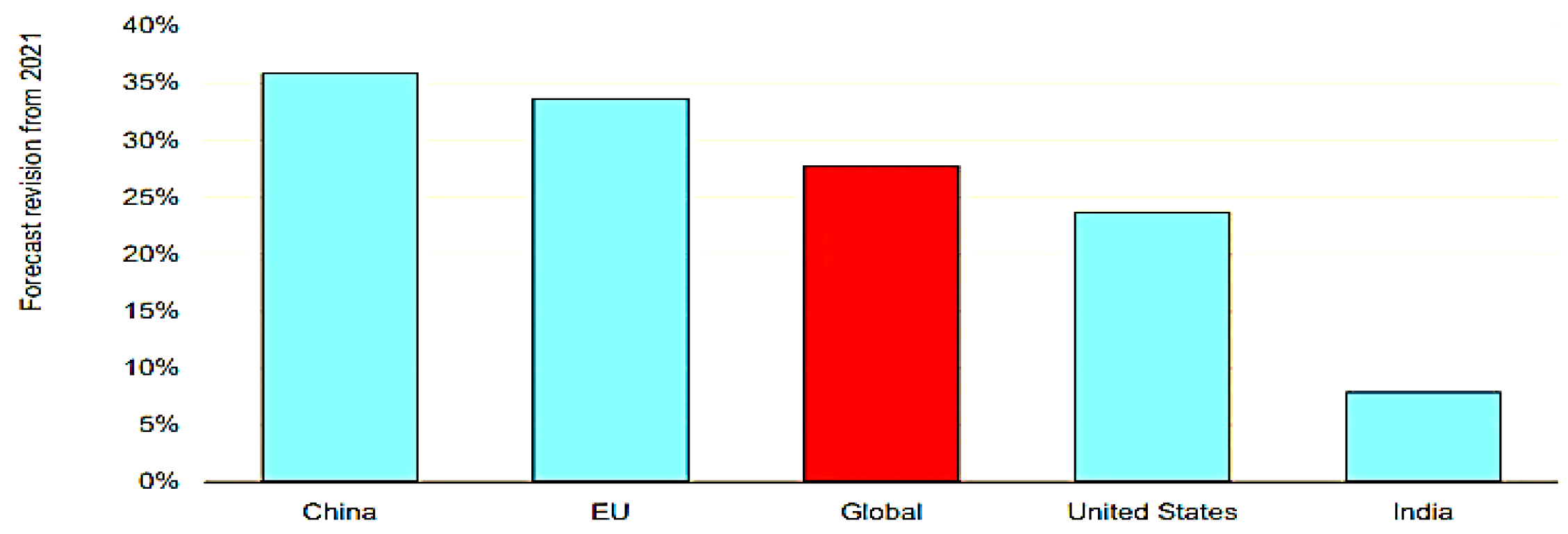
Figure 2.
Workflow of the study.
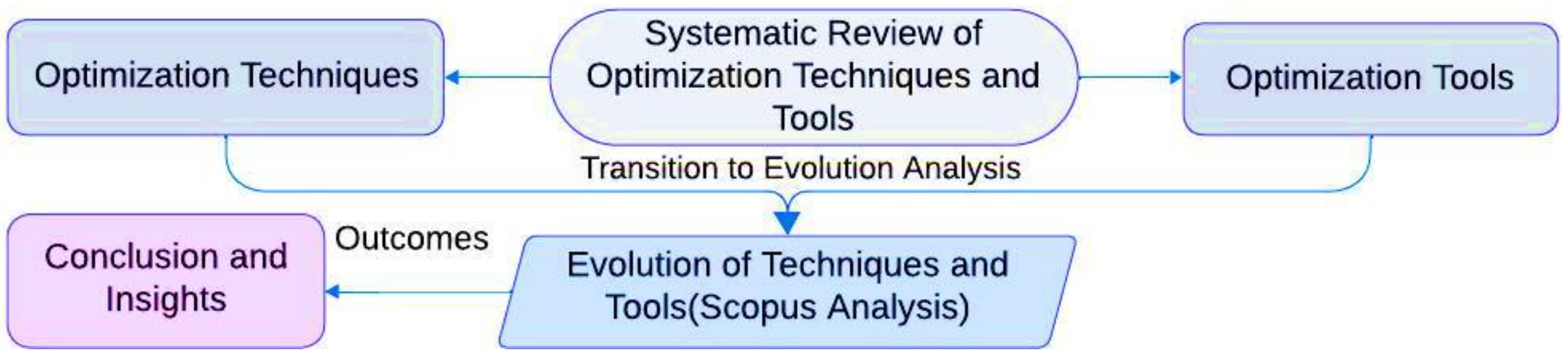
Figure 3.
Key OT and ST for HMGS.
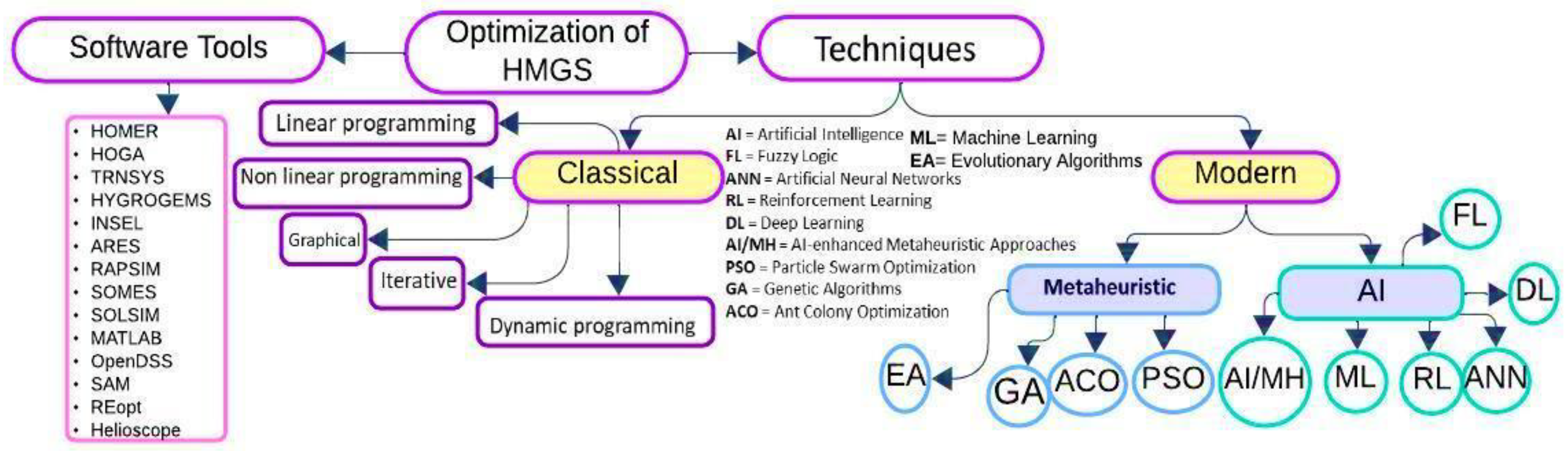
Figure 4.
Classification of ST for HMGS optimization.
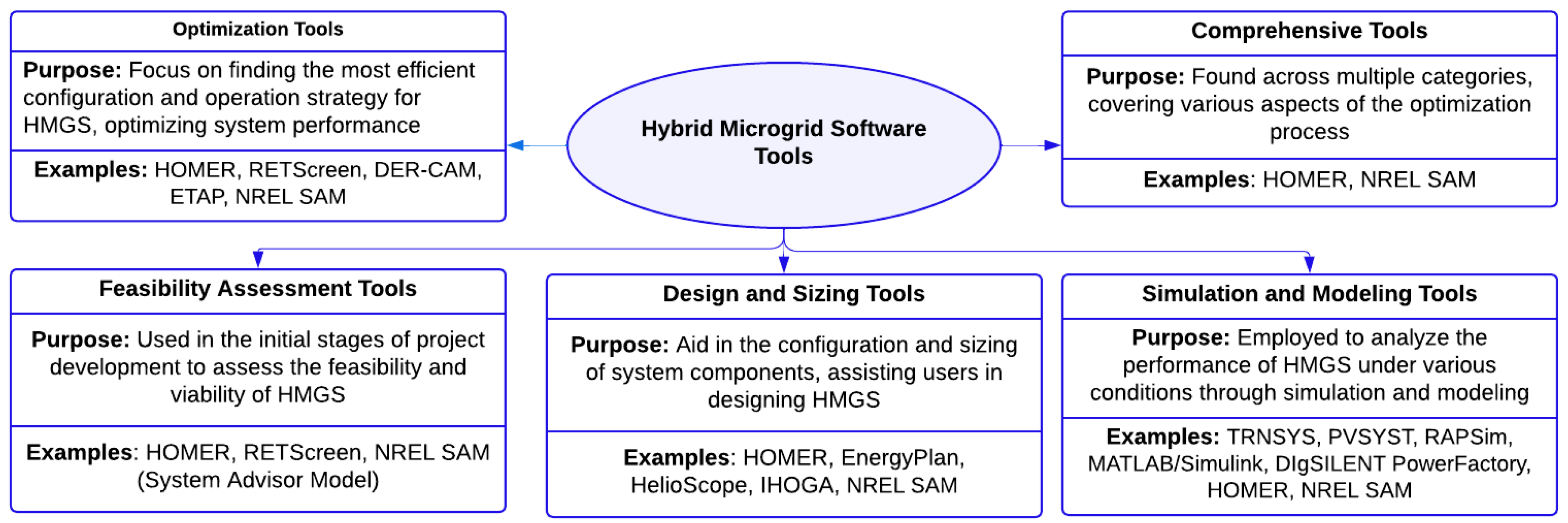
Figure 5.
Systematic review process for the evolution of OT and tools in HMGS.
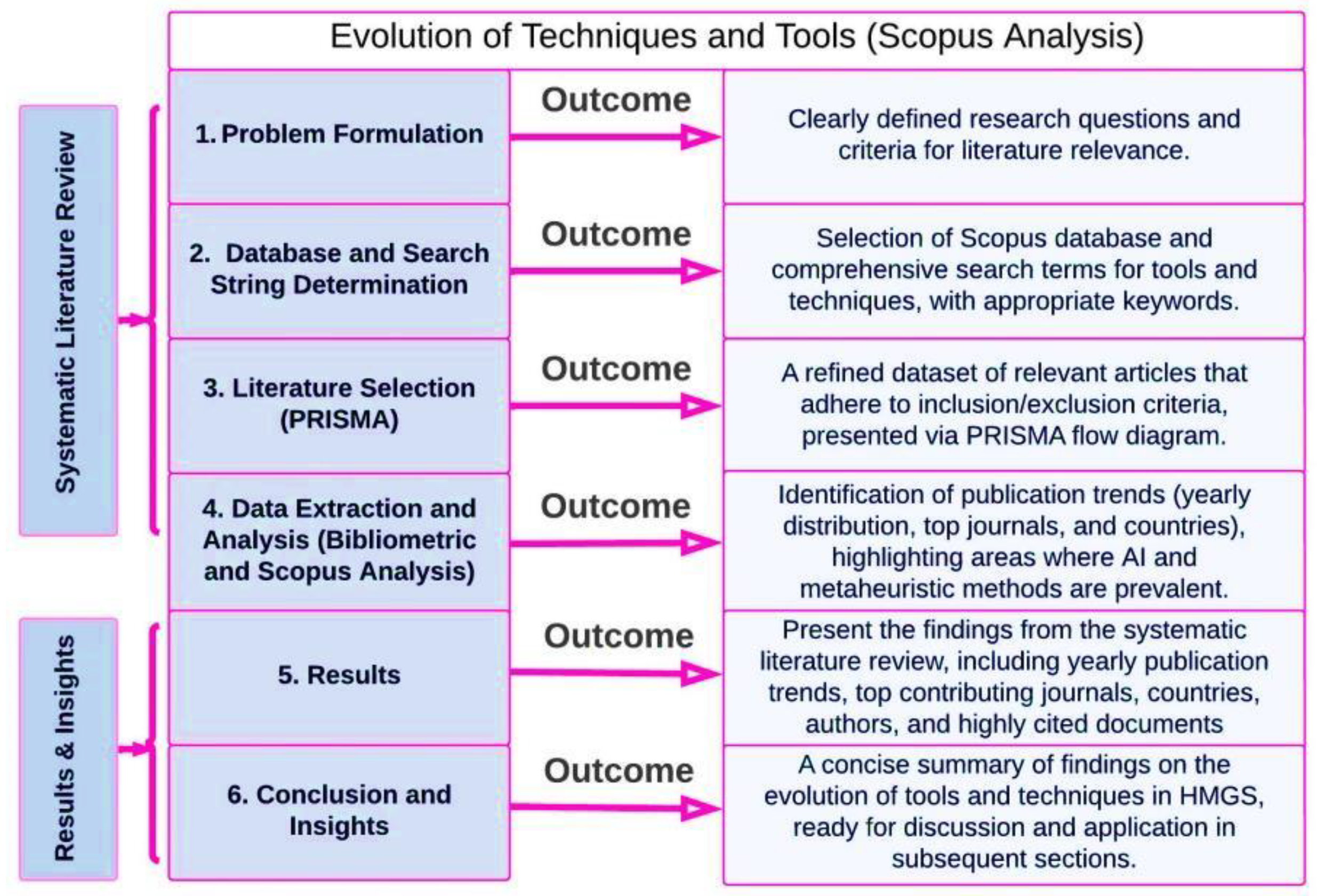
Figure 6.
PRISMA flow diagram for OT selection.
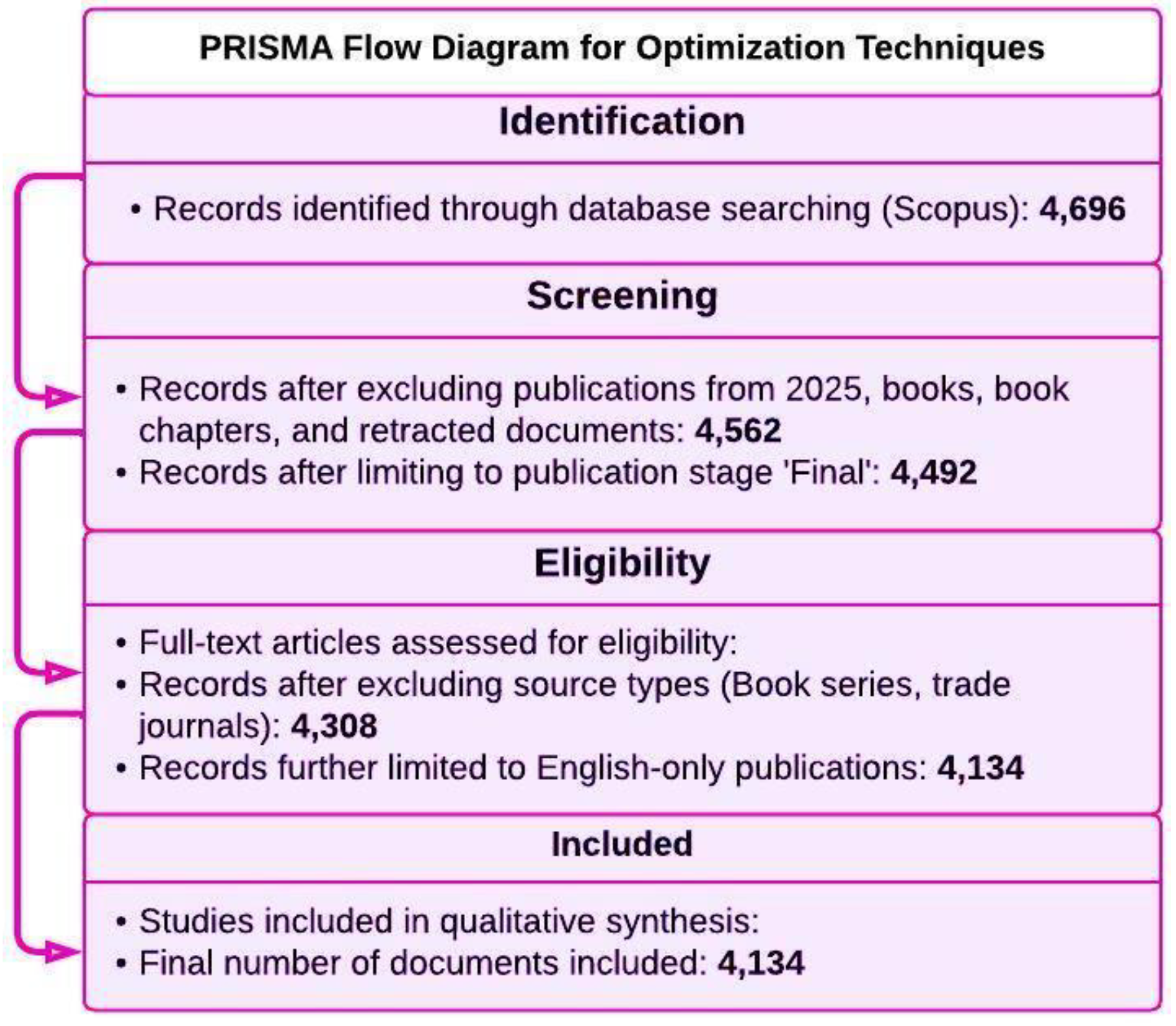
Figure 7.
PRISMA flow diagram for ST selection.
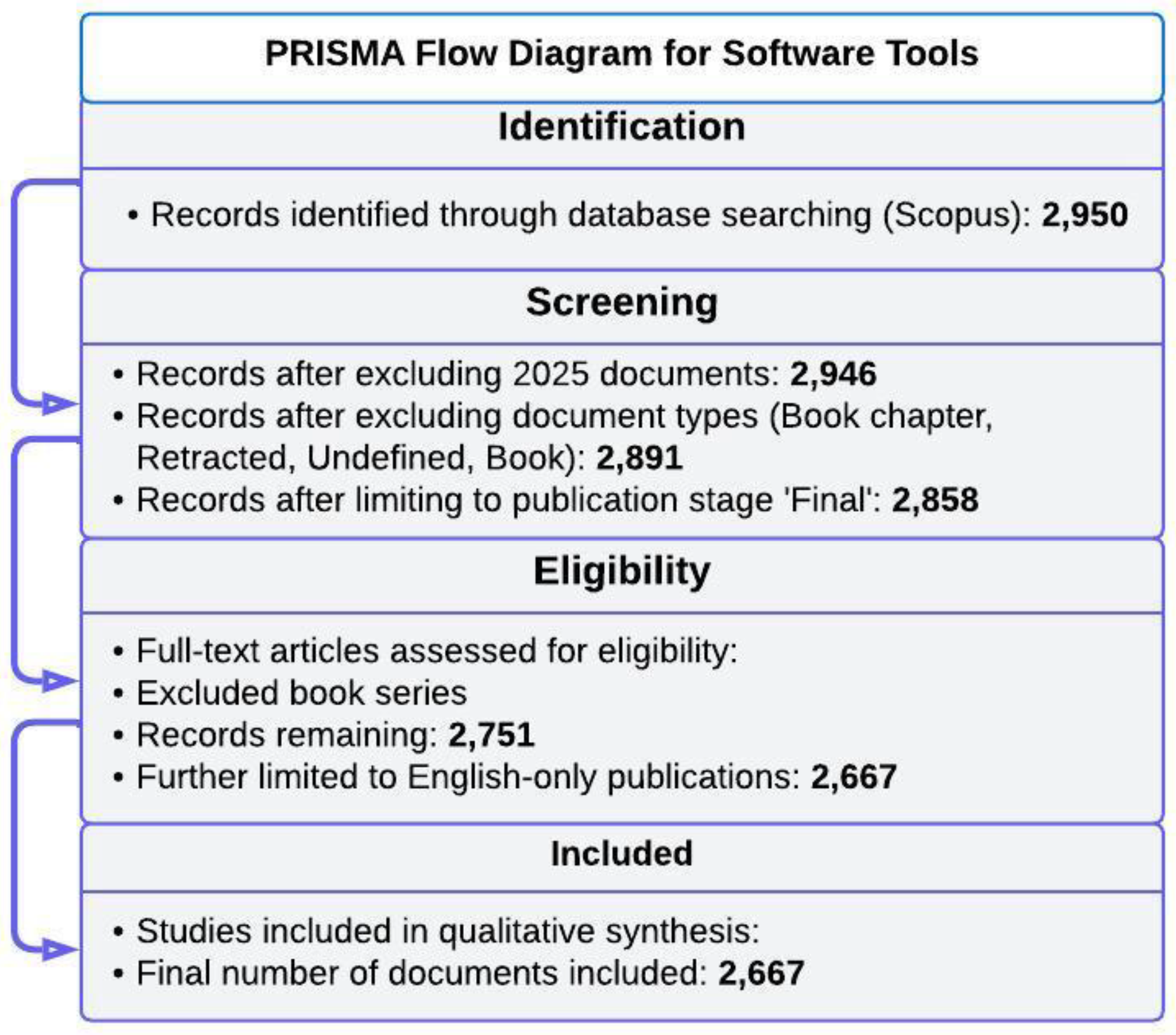
Figure 8.
Yearly distribution of documents related to OT in HMGS (2003–2024).
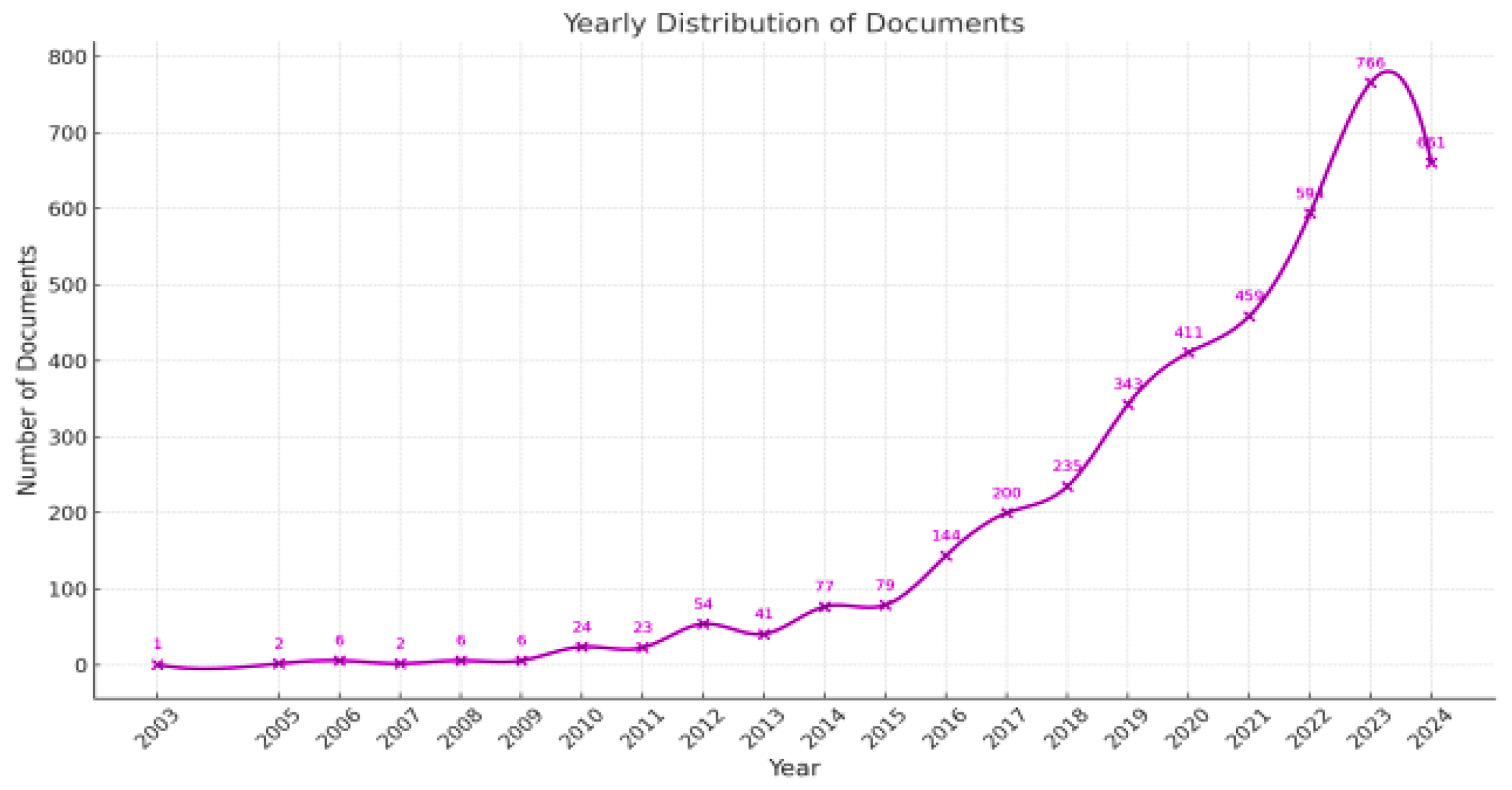
Figure 9.
Yearly distribution of documents related to ST in HMGS (2005–2024).
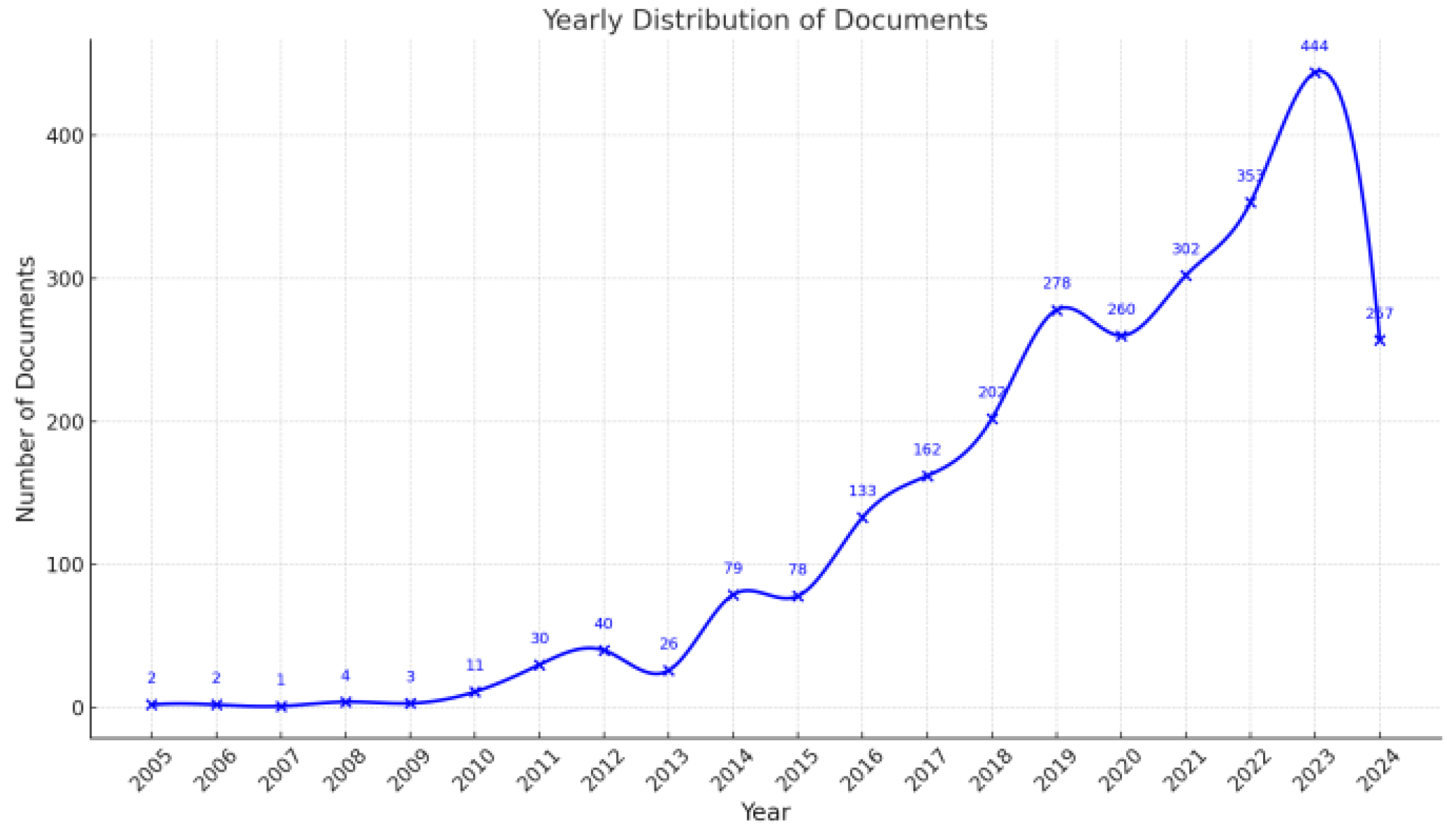
Figure 10.
Top contributing countries in (a) OT and (b) ST.
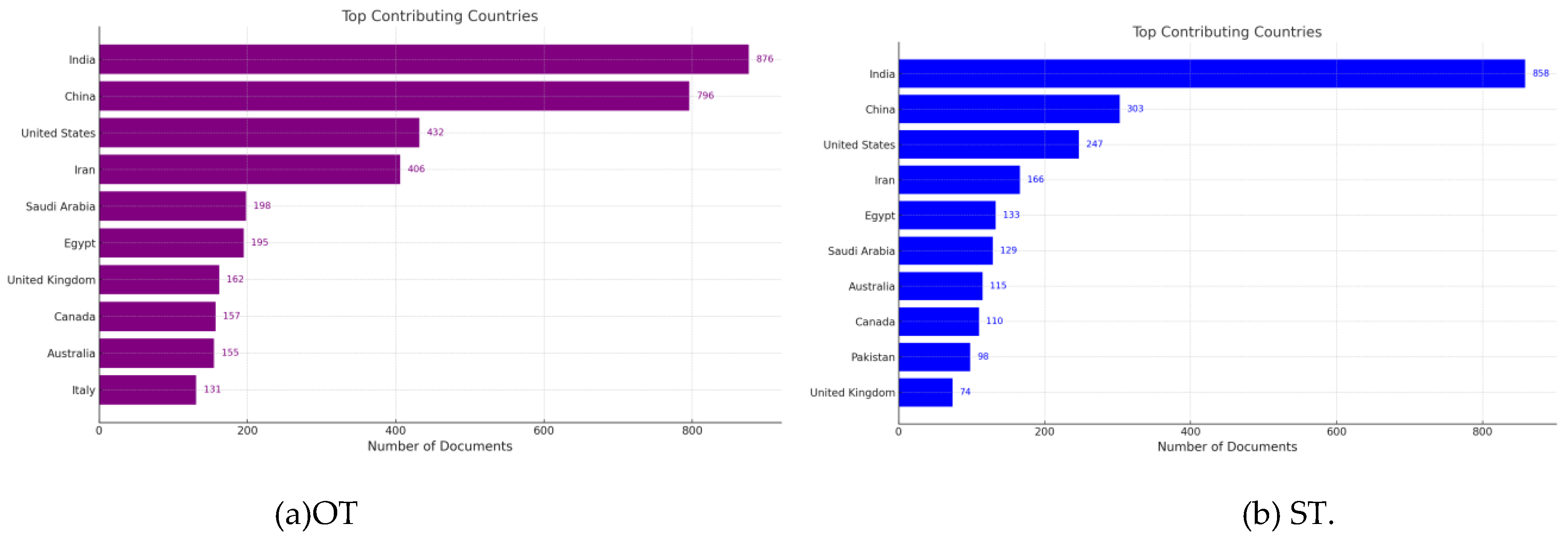
Figure 11.
Top contributing journals in (a) OT and (b) ST.
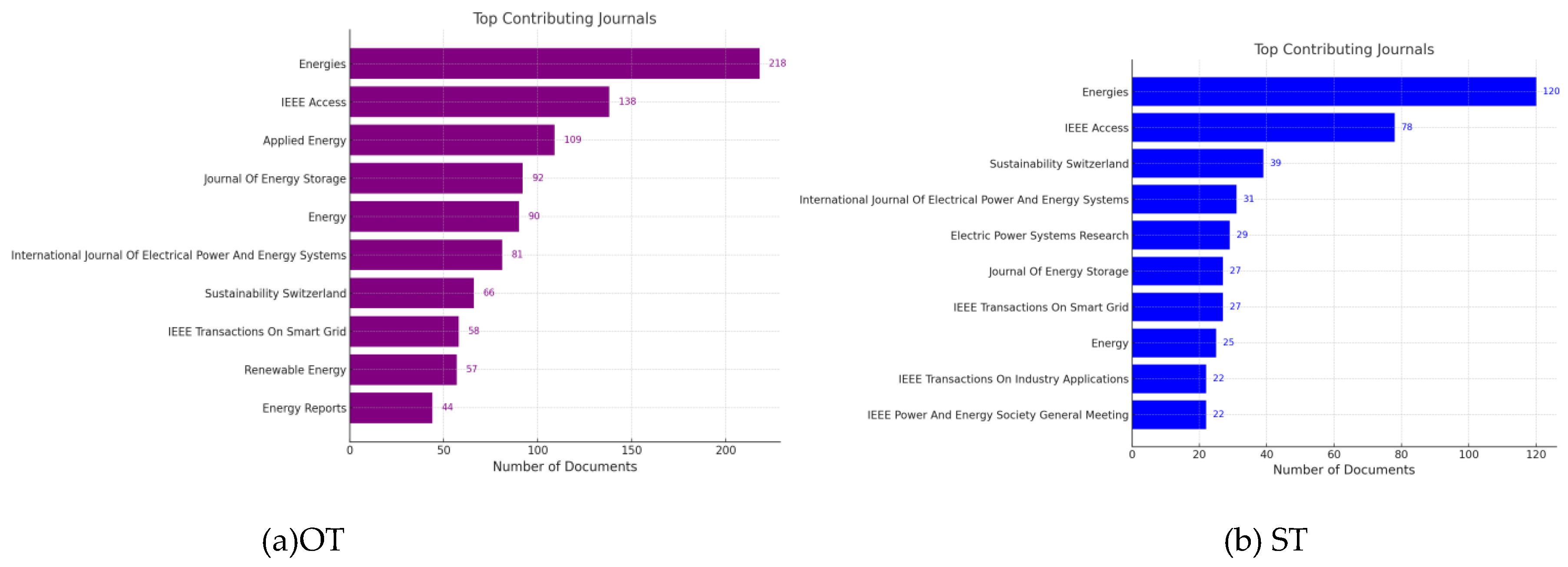

Table 1.
Classical OT applied in HMGS studies.
| ||||||||
| Ref. | SPV | WT | Energy storage | DG | Other sources | Optimization Focus | Key Findings | |
| [21] | ✓ | ✓ | ✓ | ✓ | ✕ | LCOE, LCOH | Investigated the sizing and economic evaluation of an HMGS SPV-WT-DG-battery system in islanded mode. Results demonstrated reduced life cycle cost with low LPSP, outperforming HOMER in cost-effectiveness. | |
| [22] | ✓ | ✓ | ✓ | ✕ | ✕ | Economic, reliability | Developed a multi-objective dispatching model using the MSIIO technique, optimizing energy storage utilization. Achieved 4.18% higher economic gains and 82.83% capacity utilization, outperforming PSO and differential evolution. | |
| ||||||||
| [23] | ✓ | ✓ | ✕ | ✓ | ✕ | Revenue Maximization, cost reduction | Applied a risk-aware mixed integer nonlinear optimization approach to manage stochastic energy sources. Optimized DG, SPV, and WT operations under market price uncertainties, achieving cost minimization through fuel savings and energy sales. Enhanced energy dispatch and load-generation balance with robust scheduling techniques, including cubic spline interpolation. | |
| ||||||||
| [25] | ✓ | ✓ | ✓ | ✕ | ✕ | Cost Reduction, Efficiency Improvement | Modeled and optimized MG components using MILP, integrating demand response programming for standalone systems. Results demonstrated reduced mismatch, cost savings, and lower battery requirements via load scheduling. Validation performed with HOMER and GAMS using the CPLEX solver. | |
| ||||||||
| [27] | ✓ | ✓ | ✓ | ✓ | MT, FC | Cost and emission minimization | Optimized standalone MG energy scheduling using advanced dynamic programming, achieving enhanced efficiency, reduced fuel costs, and decreased emissions. Implemented an optimal energy management system with a constrained single-objective model, minimizing operational and emission costs. Inclusion of battery storage significantly lowered total costs and emissions, demonstrating system feasibility through simulation. | |
| ||||||||
| [28] | Renewable Electricity: Produced from localized HRES.-Non-renewable Electricity: Generated from fossil fuels | Biogas, Hydrogen Generation, Potential Energy Carriers(ammonia, urea) | LCOE, CO2 reduction | Proposed a method for converting surplus renewable electricity, CO₂, and biogas into sustainable hydrogen using a P-graph graphical optimization approach. Scenarios with 20%, 30%, and 40% demand increments showed annual cost increases of 32%, 27%, and 35%, respectively. Transition to non-renewable electricity began at 20% hydrogen demand, with natural gas usage starting at 40%. Sustainability was enhanced through Pareto-frontier and TOPSIS analyses, optimizing the balance between environmental and economic factors. | ||||
Abbreviation: SPV = solar photovoltaic, WT = wind turbine, DG = diesel generator, MG = microgrid, HMG = hybrid microgrid, HRES = Hybrid Renewable Energy System, LCOE = Levelized Cost of Electricity, LCOH = Levelized Cost of Hydrogen, MILP = Mixed Integer Linear Programming, CPLEX = Commercial optimizer by IBM, HOMER = Hybrid Optimization Model for Multiple Energy Resources, GAMS = General Algebraic Modeling System, MT= Micro-gas Turbine, FC= Fuel Cells.
Table 2.
Comparative analysis of AI algorithm utilization in autonomous MG optimization studies.
| Ref. | SPV | WT | Energy storage | DG | Other sources | Optimization Method | Optimization Focus | Key findings |
|---|---|---|---|---|---|---|---|---|
| [29] | ✕ | ✓ | ✓ | ✕ | ✕ | Reinforcement Learning | Optimize battery scheduling, maximize battery and wind utilization, reduce grid dependence | Applied a 2-step-ahead reinforcement learning algorithm for optimized battery scheduling, addressing wind power uncertainties and mechanical failures to reduce grid reliance. Demonstrated a refined strategy for improved decision-making in MG energy management. |
| [30] | ✓ | ✓ | ✓ | ✓ | H₂ Production, Desalination, Heating/Cooling | Fuzzy Logic, Grey Prediction Algorithms | Intelligent demand side management | Utilized a multi-agent system with grey prediction for demand management in polygeneration MGs, maintaining effective operation even when demand exceeded design specifications. Optimized within capital constraints, ensuring adaptability for future conditions. |
| [31] | ✓ | ✕ | ✓ | ✕ | EVs | DRNN-LSTM for forecasting, PSO for load dispatch | Optimal load dispatch with forecasting integration | Applied DRNN-LSTM model, outperforming MLP and SVM in forecasting SPV output and residential load. PSO optimized load dispatch, achieving an 8.97% daily cost reduction through peak load shifting. Coordinated EV charging contributed to cost savings and stability. |
| [32] | ✕ | ✓ | ✕ | ✕ | ✕ | ANN-Based Fuzzy Controller | Voltage stability in wind-fed isolated MG | The ANN-based fuzzy controller effectively maintained voltage stability in variable wind conditions, achieving stable system performance with acceptable THD levels. It successfully managed power distribution between critical and non-critical loads, ensuring near-nominal voltage throughout the system. |
| [33] | ✓ | ✓ | ✓ | ✓ | ✕ | BWO | Optimal MG energy management with DRPs | The stochastic day-ahead EMS, using price-driven DRPs, optimized cost and energy coordination by incorporating a flexible price elasticity model for realistic customer responses. The BWO algorithm determined optimal resource scheduling in a 3-feeder MG system, effectively addressing renewable intermittency through stochastic scenario generation. |
Abbreviation: SPV : Photovoltaic Solar, WT : Wind Turbine, DG : diesel generator, MG : Microgrid, HMG : Hybrid Microgrid, HRES :Hybrid Renewable Energy System, DRNN-LSTM : Deep Recurrent Neural Network with Long Short-Term Memory, PSO: Particle Swarm Optimization, EVs :Electric Vehicles, ES: Electric Spring, AFC: Artificial Fuzzy Controller, ES-AFC: Electric Spring-Artificial Fuzzy Controller, ANN: Artificial Neural Network , THD: Total Harmonic Distortion, BWO: Black Widow Optimization, DRPs: Demand Response Programs, EMS: Energy Management System.
Table 3.
Lists research studies on HMGS optimization using different software programs.
| Ref. | SPV | WT | Energy storage | DG | Other sources | Optimization Focus | Key Findings | Software tool | Software description |
|---|---|---|---|---|---|---|---|---|---|
| [35] | ✓ | ✓ | ✓ | ✓ | ✕ | LCOE, LCOH | Assessed HMG for green hydrogen production on a remote island. Scenario analysis revealed 80% RES as most cost-effective. | HOMER | Hybrid Optimization of Multiple Energy Resources (HOMER) was developed in 1993 by the National Renewable Energy Laboratory (NREL) [36]. It is designed to model and simulate various RESs, and it excels in cost analysis and sensitivity analysis, with integration capabilities for Typical Meteorological Year (TMY2) data for weather and solar radiation, or user-provided data [37]. HOMER employs a proprietary simulation-based approach for optimization, using sensitivity analysis and a search algorithm to identify the lowest-cost system configurations across various input variables. It is widely used for the economic and technical assessment of large-scale HESs. Strength: Excellent for optimizing component sizing and conducting thorough cost analyses, with advanced sensitivity analysis capabilities. Weakness: May not capture all dynamics of complex system behavior without precise, customized input data. |
| [38] | ✓ | ✓ | ✓ | ✕ | biomass | Size, LCOE | Proposed SPV-WT-biomass-storage system to meet remote area needs. ABC algorithm shortened simulation time vs HOMER and PSO. | HOMERABC PSO |
|
| [39] | ✓ | ✓ | ✕ | ✕ | biomass | Size, LCOE | HMGS for a 50 MW power plant in Pakistan; profitable with national grid integration, ideal for regions with frequent power outages. | HOMER | |
| [40] | ✓ | ✓ | ✓ | ✕ | ✕ | LCOE | Techno-economic assessment for off-grid HMGS in the USA, Canada, and Australia; evaluated SPV-WT-battery with hydrogen storage. Minimum COE achieved with integrated SPV-WT-battery, electrolyzer, and hydrogen tank, reducing costs to 0.50 $/kWh compared to non-battery configurations at 0.78 $/kWh. | HOMER | |
| [41] | ✓ | ✓ | ✓ | ✓ | ✕ | Cost, size | Assessed thermal energy storage in an islanded HMGS; DG contributed to higher COE. | IHOGA | IHOGA, developed by researchers at the University of Zaragoza, Spain, is designed for simulating and optimizing RES-based electric power systems. It has two versions: IHGO for systems up to 5 MW and MHOGA for larger systems without capacity limits. IHOGA’s library includes diverse components like SPV, WT, batteries, hydropower turbines, and various generators. It calculates NPC, LCOE, NPV, IRR, and battery lifespan, using genetic algorithms to improve system efficiency and reduce costs over successive iterations [42]. Strength: Effective genetic algorithm for optimizing cost and sizing in HES. Weakness: Computationally intensive; may require fine-tuning for complex systems. |
| [43] | ✓ | ✓ | ✓ | ✓ | biomass | Cost, feasibility | Evaluated HMGS for tourist regions in Europe, achieving 99% user demand coverage with RES in Gdansk, Poland, and 43% surplus in Agkistro, Greece." | TRNSYS | TRNSYS, developed in 1975 by France, Germany, and the United States, is a transient systems simulation tool used across various energy applications, including biomass, cogeneration, hydrogen fuel cells, wind and SPV systems, high-temperature solar, and geothermal heat pumps. It requires minimal data and computational resources, making it suitable for preliminary assessments [44,45]. Strength: High-fidelity transient simulation ideal for detailed technical system analysis. Weakness: Economic optimization is not the primary focus and may need additional modules for financial assessment. |
| [46] | ✓ | ✓ | ✓ | ✕ | BiomassHydropower | CO2 reduction | Decarbonization study for Sichuan Province: scenarios showed energy storage significantly reduced operational costs while requiring high investment, demonstrating feasibility for hydropower-rich regions | EnergyPlan | EnergyPLAN, developed by Aalborg University’s Sustainable Energy Planning Research Group in Denmark in 2000, is a deterministic simulation tool for modeling national energy systems including power, heating, cooling, industry, and transportation [47]. Strength: Effective for strategic policy scenario analysis. Weakness: Primarily a simulation tool, requiring additional software for detailed optimization. |
| [48] | ✓ | ✕ | ✕ | ✕ | ✕ | Modeling and simulation | Demonstrated RAPSim for optimal DG placement in an MG, considering SPV output variability influenced by solar radiation and time-dependent factors. Showcased software’s capabilities in data output, scenario management, and temporal/weather simulation. | RAPSim | Developed at Alpen Adria University Klagenfurt, RAPSim is an open-source tool for RES simulation in grid-connected and off-grid MGs. It prioritizes power production estimation for each source before conducting power flow analysis [49]. Strength: Detailed simulation for RES with scenario management. Weakness: Lacks built-in economic and sensitivity analysis; may require additional tools for comprehensive assessments. |
| [50] | ✓ | ✕ | ✕ | ✕ | ✕ | techno-economic, feasibility | Assessed the viability of a 500 kW SPV MG across 12 sites in Nigeria, including a techno-economic analysis. Findings showed economic feasibility at all sites, with payback periods ranging from 6.3 to 7.4 years based on NPC, internal rate of return, and payback period metrics. | RETScreen | Developed by Canada’s Ministry of Natural Resources, RETScreen is a publicly available tool for assessing the costs and benefits of RE technologies worldwide. Released in 1998, RETScreen is particularly useful for on-grid feasibility analysis [51]. Strength: Comprehensive feasibility analysis, covering financial viability and risk assessment. Weakness: Limited in optimization capabilities; primarily focused on project feasibility rather than detailed system design. |
| [52] | ✓ | ✕ | ✓ | ✕ | ✕ | LCOE, feasibility | Evaluated a grid-connected MG with SPV and energy storage, comparing lead-acid (LA) and lithium-ion (LI) batteries. Findings showed that LI batteries are more feasible with an LCOE of 6.75, compared to 10.6 for LA. | NREL SAM | The System Advisor Model (SAM), developed by NREL and Sandia National Laboratories, provides a robust platform for techno-economic analysis across various RES, including CST, SPV, WT, fuel cells, biomass, and geothermal. It offers insights into CST technologies and RES globally, available as a free, versatile tool for technical and financial assessments [53,54]. Strength: Highly versatile for techno-economic analysis and performance modeling across diverse RES. Weakness: Broad capabilities may lack the specificity found in dedicated optimization tools. |
| [55] | ✓ | ✓ | ✕ | ✓ | ✕ | MG protection using communication-assisted digital relays | Proposed a protection scheme using digital relays with communication networks. Demonstrated detection of high-impedance faults in a high-penetration HMGS. Simulated in MATLAB/Simulink's SimPowerSystems toolbox. | MATLAB/ Simulink |
MATLAB/Simulink, developed by MathWorks, is a high-performance environment for technical computing and simulation, extensively used for modeling, simulating, and analyzing dynamic systems, including MGs [56]. It enables integration with toolboxes like SimPowerSystems for RE applications, grid modeling, and fault detection in MGs [55]. Strength: Flexible and highly customizable, with extensive libraries for RES modeling and advanced fault analysis. Weakness: Requires expertise for custom implementation; computationally intensive for large-scale simulations. |
Abbreviations: SPV: solar photovoltaic, WT: wind turbine, DG: diesel generator, HMGs: hybrid microgrid system, LCOE: Levelized Cost of Energy, LCOH: Levelized Cost of Hydrogen, HOMER: Hybrid Optimisation of Multiple Energy Resources, CO2: Carbon dioxide, NPC: net present cost, ABC: Artificial Bee Colony, PSO: particle swarm optimization, IHOGA: improved hybrid optimization by genetic algorithms, NPV: net present value, IRR: internal rate of return, NPC: net present cost, TRNSYS: Transient System Simulation, RAPSim: Renewable Alternative Power Systems Simulation, SAM: System Advisor Model, CST: Concentrating Solar Thermal, FC: fuel cell, LA: lead-acid battery, LI: lithium-ion battery.
Table 4.
Top 10 high-cited documents in OT for HMGS.
| Ref. | Authors | Journal | Year | Citations |
| [57] | Chaouachi, A., Kamel, R.M., Andoulsi, R., Nagasaka, K. | IEEE Transactions on Industrial Electronics | 2013 | 575 |
| [58] | Moghaddam, A.A., Seifi, A., Niknam, T., Alizadeh Pahlavani, M.R. | Energy | 2011 | 540 |
| [59] | Bevrani, H., Habibi, F., Babahajyani, P., Watanabe, M., Mitani, Y. | IEEE Transactions on Smart Grid | 2012 | 519 |
| [60] | Ahmad, T., Zhang, D., Huang, C., Song, Y., Chen, H. | Journal of Cleaner Production | 2021 | 483 |
| [61] | Morais, H., Kádár, P., Faria, P., Vale, Z.A., Khodr, H.M. | Renewable Energy | 2010 | 476 |
| [62] | Suganthi, L., Iniyan, S., Samuel, A.A. | Renewable and Sustainable Energy Reviews | 2015 | 435 |
| [63] | Long, C., Wu, J., Zhou, Y., Jenkins, N. | Applied Energy | 2018 | 422 |
| [61] | Ramli, M.A.M., Bouchekara, H.R.E.H., Alghamdi, A.S. | Renewable Energy | 2018 | 421 |
| [64] | Chakraborty, S., Weiss, M.D., Simões, M.G. | IEEE Transactions on Industrial Electronics | 2007 | 403 |
| [65] | Borhanazad, H., Mekhilef, S., Gounder Ganapathy, V., Modiri-Delshad, M., Mirtaheri, A. | Renewable Energy | 2014 | 393 |
| Ref. | Authors | Journal | Year | Citations |
| [55] | Sortomme, E., et al. | IEEE Transactions on Power Delivery | 2010 | 513 |
| [66] | Hafez, O., Bhattacharya, K. | Renewable Energy | 2012 | 489 |
| [38] | Singh, S., et al. | Energy Conversion and Management | 2016 | 383 |
| [25] | Amrollahi, M.H., Bathaee, S.M.T. | Applied Energy | 2017 | 340 |
| [67] | Badal, F.R., et al. | Protection and Control of Modern Power Systems | 2019 | 332 |
| [39] | Ahmad, J., et al. | Energy | 2018 | 282 |
| [68] | Abdin, Z., Mérida, W. | Energy Conversion and Management | 2019 | 268 |
| [69] | Ou, T.-C., Hong, C.-M. | Energy | 2014 | 221 |
| [70] | Yu, X., et al. | IEEE Transactions on Smart Grid | 2014 | 206 |
| [71] | Li, J., et al. | Applied Energy | 2017 | 202 |
Table 6.
Top 10 contributing journals in OT for HMGS.
| Rank | Journal Name | Number of Documents | High-Cited Article | Citation Count |
| 1 | Energies | 218 | [72] | 186 |
| 2 | IEEE Access | 138 | [73] | 172 |
| 3 | Applied Energy | 109 | [63] | 422 |
| 4 | Journal of Energy Storage | 92 | [74] | 244 |
| 5 | Energy | 90 | [58] | 540 |
| 6 | International Journal of Electrical Power and Energy Systems | 81 | [75] | 179 |
| 7 | Sustainability Switzerland | 66 | [76] | 127 |
| 8 | IEEE Transactions on Smart Grid | 58 | [59] | 519 |
| 9 | Renewable Energy | 57 | [61] | 476 |
| 10 | Energy Reports | 44 | [77] | 100 |
Table 7.
Top 10 contributing journals in ST for HMGS.
| Rank | Journal name | Number of documents | High-cited article | Citation count |
| 1 | Energies | 120 | [77] | 148 |
| 2 | IEEE Access | 78 | [78] | 125 |
| 3 | Sustainability Switzerland | 39 | [79] | 154 |
| 4 | International Journal of Electrical Power and Energy Systems | 31 | [80] | 130 |
| 5 | Electric Power Systems Research | 29 | [81] | 81 |
| 6 | Journal of Energy Storage | 27 | [82] | 59 |
| 7 | IEEE Transactions on Smart Grid | 27 | [70] | 206 |
| 8 | Energy | 25 | [39] | 282 |
| 9 | IEEE Transactions on Industry Applications | 22 | [83] | 142 |
| 10 | IEEE Power and Energy Society General Meeting | 22 | [84] | 48 |
Table 8.
Top contributing authors in OT.
| Rank | Author | No. of publications | Key Focus Areas |
| 1 | Guerrero, J.M. | 35 | Distributed control, HMGS optimization, and intelligent energy management. |
| 2 | Gharehpetian, G.B. | 19 | Robust control, fault management, and resilient microgrid operation. |
| 3 | Dey, B. | 18 | Multi-objective optimization, renewable integration, and cost minimization in MGs. |
| 4 | Ustun, T.S | 15 | Cybersecurity, distributed control, and load frequency stability in MGs. |
| 5 | Marzband, M. | 15 | Stochastic optimization, demand response, and energy management in smart MGs. |
Table 9.
Top contributing authors in ST.
| Rank | Author | No. of publications | Key Focus Areas |
| 1 | Guerrero, J.M. | 24 | Application of HOMER and MATLAB for hybrid systems, renewable integration, and grid stability. |
| 2 | Baghaee, H.R. | 21 | Fault-tolerant distributed control and resilience in islanded MGs. |
| 3 | Shahnia, F. | 19 | Stability analysis, system coupling, and optimization in sustainable MGs. |
| 4 | Gharehpetian, G.B. | 18 | Fault management, robust distributed systems, and islanded MG controls. |
| 5 | Ghosh, A. | 14 | Cooperative energy storage control, harmonic mitigation, and voltage regulation in MGs. |
Disclaimer/Publisher’s Note: The statements, opinions and data contained in all publications are solely those of the individual author(s) and contributor(s) and not of MDPI and/or the editor(s). MDPI and/or the editor(s) disclaim responsibility for any injury to people or property resulting from any ideas, methods, instructions or products referred to in the content. |
© 2025 by the authors. Licensee MDPI, Basel, Switzerland. This article is an open access article distributed under the terms and conditions of the Creative Commons Attribution (CC BY) license (http://creativecommons.org/licenses/by/4.0/).
Copyright: This open access article is published under a Creative Commons CC BY 4.0 license, which permit the free download, distribution, and reuse, provided that the author and preprint are cited in any reuse.