
Submitted:
14 February 2025
Posted:
14 February 2025
You are already at the latest version
Abstract
In the field of rehabilitation exoskeletons, meeting the requirements of all stakeholders involved in the development of innovative medical technologies is essential. This study presents the validation of a proposed device for the rehabilitation of muscle atrophy caused by rheumatoid arthritis, emphasizing the importance of prototype validation in industrial design. Ensuring compliance with functional, ergonomic, and usability criteria is crucial before implementation, as it enhances effectiveness and user experience. The co-design process, involving patients and therapists, plays a key role in optimizing adaptability, ensuring that the device meets real user needs. Through an iterative design approach, feedback from end users contributes to refining the system, improving usability, and increasing acceptance in clinical practice. The findings reveal patients' perceptions regarding the impact on their condition and ease of use, while therapists provide insights into its potential integration into traditional rehabilitation protocols. These results highlight the significance of user-centered validation, reinforcing the role of rehabilitation technologies in complementing conventional therapeutic approaches and advancing patient-centered innovation in industrial and biomedical design.
Keywords:
Industrial Design
; Exoskeleton
; Prototype Validation
; Ergonomics
; Structural System
; Innovation
1. Introduction
Rheumatoid Arthritis (RA) is a systemic autoimmune disease, of a chronic inflammatory nature that has a predilection for joints, with the synovial membrane being the first compromised structure that in turn alters cartilage, ligaments, and bones [1]. The clinical manifestations of RA vary depending on the severity of the disease, presenting typical symptoms and signs such as edema, pain in the affected joints, warmth to the touch, erythema, and stiffness in the morning, about 25% of patients have palpable rheumatoid nodules on top of bony prominences such as the elbow. The first areas affected are usually the small joints of the hands, wrists, and feet. Deformations are frequent and have a direct impact on the reduction of pressure force and motor dexterity [2]. Globally, in 2017, the number of prevalent cases increased with age and peaked in the 60-64 age group for men and women; After this age, the trend began to decline [3].
Treatment of RA includes medications, physical and occupational therapies, as well as surgery in advanced cases. However, hand rehabilitation is a major challenge for therapists due to the complexity of the hand structure and the limitations of conventional therapies. Rehabilitation aims to improve quality of life by reducing symptoms and preventing or decreasing joint damage and complications of the disease [4]. Scientific evidence has shown that the progression of the disease can be slowed with timely and appropriate treatment [5]. In this sense, ergonomic exoskeleton technology is proposed as a solution for recovering lost functions or making the most of residual capacities [6].
Therapeutic exercises are defined as the systematic and planned application of physical movements, postures, or activities designed to remedy or prevent deterioration, and improve functionality, physical fitness, and sense of well-being [7]. Mainly, the simplest exercises, which promote the strengthening of muscle tone, are recommended, along with range-of-motion exercises that help improve flexibility and low-impact exercises to keep joints healthy and less stiff [8].
An exoskeleton is a device that is placed on the body that provides support and assistance for the performance of motor activities (Leng et al., 2019). In this way, exoskeletons are robots that interact closely with humans and are increasingly used for different purposes, such as rehabilitation, assisting in activities of daily living, increasing performance, or as haptic devices. In recent decades, research activity on these robots has grown exponentially; Sensor and actuation technologies are two fundamental lines of research for its development [9]. Exoskeletons are designed to match the form and function of the human body by mating externally to fulfill specific functions, these systems are used by a person, in such a way that the physical interface leads to a direct transfer of mechanical energy and the exchange of information [10].
Figure 1 shows an exoskeleton for an arthritic hand, with which the movement is autonomous, that is, the user can move the fingers freely once the exoskeleton is placed, however, the movement is provided according to the indications of the professional therapist in charge of the rehabilitation process through stretching exercises and strength testing [11]. Exoskeletons are effective in the rehabilitation of patients with spinal cord injuries and strokes, and their use in hand rehabilitation in RA patients has recently been explored [12], assisting in performing specific movements, such as pincer and finger extension [11].
There is still a lack of rigorous studies evaluating the efficiency of exoskeletons for hand rehabilitation in RA patients from the user’s perspective [13]. It is complex to define what efficiency means because it is necessary to consider that the dimensions taken into account by users to provide an exact or approximate definition of reality; focus on accessibility, interpersonal relationships, follow-up, and comfort offered [14], in the sense of security and the possible improvements obtained. The evaluation of a device of this type has a historical-cultural connotation because it is intended for a target audience, at a given time and in a particular institution [15], a subjective dimension is also addressed since the results are the result of a process in which previous experiences, one’s own or those of others, are compared.
The main objective of this article is to present the analysis of the results of the evaluation process of the rehabilitation system of hand muscle atrophy by RA by means of an adapted exoskeleton in a geriatric center in the city of Quito – Ecuador, from the user’s perspective. When evaluating a rehabilitation device involving several actors, the therapists who accompanied the rehabilitation sessions and direct users were considered to be the patients with a confirmed diagnosis of hand RA. Surveys evaluated the usability, ease of use, impact on rehabilitation and satisfaction of the ARTH-aid ExoGlove and the ARTH-aid System, the first corresponding to the exoskeleton (glove type) Figure 1; and the second to the interaction system Figure 2. The analysis presented contributes to the practice of product co-design by showing the systematic process of validation of prototypes prior to formal production.
2. Materials and Methods
A mixed-approach, experimental-type study was conducted to evaluate therapists’ and patients’ satisfaction with the use of the ARH Hand Muscle Atrophy Rehabilitation System using the ARTH-aid System adapted exoskeleton.
The selection of the participating population is a key element in achieving the evaluation objectives of a product. For this, it was necessary to know the neuromotor characteristics and motor limitations of the elderly people, information provided by the therapists, who considered that the ARTH-aid ExoGlove could be used both by patients in the initial and advanced stages of the disease who had or did not have dependence on medications and that their cognitive constants were optimal to adequately answer the evaluation questions. Therefore, the study population was established in 4 therapists who supervised the rehabilitation process sessions and 30 patients, 10 men and 20 women, aged between 65 and 104 years.
From a statistical point of view and for data processing, the sample size for a final population was determined, i.e. the minimum number of patients to obtain significant statistical data from the tests based on the following formula:
Sample size finite population and Sampling error:
n= sample size
N = population size = 70
p= q = 50%
z= 95% confidence level
ε = 0.05% margin of error
n = 17.58 ≈ 18 patients
It was determined that the minimum number of patients should be 18 to obtain a confidence level of 95%, widely exceeded, since the sample studied was 30 patients. Once the patients were selected, a database was generated and a patient identification number was provided for therapeutic and medical monitoring during all phases of the project. This identification number served to establish a controlled anonymity of the tests and a follow-up of the therapeutic evaluation parallel to the available medical reports that are of a private nature.
At the rehabilitation level, 2 to 3 sessions were performed per week, lasting between 5 to 10 minutes per patient, for 5 weeks in a row. The therapeutic treatment sessions with each patient were supervised by the therapists of the geriatric center. Once the experimentation process was completed, the evaluation surveys were applied, proposing two differentiated groups that allowed the evaluation to be approached from two points of view. The first survey, with 16 premises, of an exploratory nature, focused on expert users with a clinical profile, such as physiotherapists, all of whom are involved in the tasks of control and monitoring of the disease at a clinical level. The second exploratory survey with 18 premises, aimed at patients who were part of all rehabilitation sessions.
The definition of the evaluation criteria based on dimensions of usability, ease of use, impact on rehabilitation and satisfaction, grouped the results of the premises from the point of view of the user and the data processing. The user satisfaction survey (therapists and patients) adapted to evaluate the final prototype has allowed to validate both the functional and technological aspects of the system from a clinical perspective.
Table 1 shows the evaluation dimensions considered and the questions posed for data collection, while Table 2 specifies the evaluation scale applied.
Table 3 shows the questions asked by the therapists of the geriatric center. A score of 3 indicates a neutral value.
Table 4 shows the questions in the survey applied to patients. A score of 3 indicates a neutral value.
3. Results
Evaluation criteria: Usability and Ease of Use of the ARTH-aid ExoGlove
Therapists:
The premise that received the highest rating was number 2, which relates to the quality of glove-controlled movements. The therapists considered this aspect to be very positive, as it helps patients to perform the movements prescribed by the experts during rehabilitation sessions. Premise number 4, referring to the quality of the textile materials used in the creation of the exoglove, also received a high rating from the rehabilitators. According to them, the materials are of high quality due to their surface finish and potential durability to be used by multiple patients in the future. Likewise, statement number 1, which refers to the effectiveness of the exoglove for patients to use frequently, received the third highest rating. As for the 3, which is related to the simplicity of putting on the glove, and the 5, which indicates the perception of the tensioning threads of the ARTH-aid ExoGlove, they were in the last two places of evaluation, respectively.
The ARTH-aid ExoGlove has proven to be an effective tool for improving the quality of life of older adults through hand rehabilitation. The survey of therapists shows that the glove is easy to use and provides good usability for patients, which is reflected in average and generally high satisfaction with the product. The question most valued by the therapists was related to the materials used in the construction of the glove, which suggests that they consider these to be an important factor in the evaluation of the usability and ease of use of the ARTH-aid ExoGlove. The quantitative evaluation of the satisfaction percentages obtained for each question related to the ease of use of the glove is valuable for improving the design and functionality of the glove in the future, and for adapting the rehabilitation approach according to the needs and preferences of patients. Further studies and long-term evaluations are needed to fully understand the potential of the ARTH-aid ExoGlove in the treatment of older patients.
Patients:
The results of the survey of therapists indicate that the ARTH-aid ExoGlove is easy to use and provides good usability to users, which is reflected in high overall satisfaction with the product. The question most valued by therapists in the survey focused on the materials used in the construction of the glove, suggesting that they consider these to be a crucial factor in evaluating the glove’s usability and ease of use. However, the effectiveness of the glove was the least valued question by patients. It is thought that this may be due to the lack of sufficient rehabilitation sessions to evaluate its effectiveness in chronic patients. A quantitative assessment of the satisfaction percentages obtained by each question in the central block in the ease of use of the glove has been carried out. Overall, the results suggest that the ARTH-aid ExoGlove is a product with good usability and therapist satisfaction, although more research is needed to evaluate its effectiveness in chronic patients.
Evaluation criteria: Usability and ease of use of the ARTH-aid System
Therapists:
The therapists assigned the same assessment to all the premises, except for 7, which seeks to define the practicality of the global system rather than the exoglove itself. Despite this, the positive evaluation of the other items with a score of 4 out of 5, globally validates the system by the professionals. It can be suggested that the system has received a favorable rating from therapists, suggesting that the system has a high potential for utility in the clinical setting, although special attention should be paid to the assessment of premise 7 to further improve the system.
Patients:
Regarding statement 8, the results show that it obtained low valuation compared to the other premises evaluated. Likewise, the best-rated statement by patients in the 10th, suggesting that safety is an important factor for patients when evaluating the ease of use and usability of the system. Together, these findings allow us to obtain a detailed and accurate view of patients’ opinions and perceptions regarding the ARTH-aid System, which will contribute to improving and optimizing its use and accessibility in the future.
Evaluation Criteria: Impact on Rehabilitation
Therapists:
The most valued statements were 11 on the reduction of pain and 14 on the improvement of the movements of the patient’s fingers. The lowest assessment in this block focused on the assessment of premise 13 in which doubts, or uncertainty are perceived about the contribution of the glove to the patient’s activities. In reference to this last assessment, it is considered that the tests carried out over five weeks may not be sufficient to assess the real effectiveness of the glove in advanced or chronic arthritic processes, but this question can be contrasted with the value of statement 14 in which it is indicated that there is a significant improvement in finger movements.
Patients:
The statement most valued by patients was number 16, related to the improvement of the finger flexion-extension movement thanks to the use of the ARTH-aid ExoGlove system. This finding suggests that patients consider improvement in finger mobility as an important factor and that the ARTH-aid ExoGlove system appears to be effective in this regard. On the other hand, the statement least valued by patients was number 14, regarding the use of the ARTH-aid ExoGlove system in daily activities. This indicates that the ease of use of the system is not a primary concern for patients. These results should be considered when evaluating the performance and effectiveness of the ARTH-aid ExoGlove system in improving finger mobility.
Evaluation criteria: Recommendation and satisfaction of general use
Therapists:
Related findings were obtained on the confirmation of the recommendation of the ARTH-aid system by the therapists, premise 15. However, regarding the continued use of the ARTH-aid ExoGlove device, premise 16, a divided opinion was presented among therapists, some recommending its use and others not. Further research is needed to better understand the effectiveness and clinical utility of ARTH-aid ExoGlove in the treatment of patients with joint conditions.
Patients:
The final premises of the survey, 17 and 18, which are based on the criteria of general patient satisfaction with the use of the device and its recommendation for frequent use, elicited affirmative answers. This evaluation is critical for future product marketing and potential customer satisfaction rating.
4. Discussion
The analysis of the implementation of the ARTH-aid System in the rehabilitation of hand muscle atrophy due to rheumatoid arthritis confirms the initial hypothesis about the need for highly personalized biomedical devices that optimize motor functionality and reduce painful manifestations in patients with this degenerative pathology. The results obtained show a positive correlation between the use of the exoskeleton and the improvement in digital mobility, reinforcing the viability of the device as an effective therapeutic tool. However, the perception of uncertainty regarding its applicability in daily activities reveals a gap between effectiveness in controlled clinical settings and adaptability to dynamic conditions of daily life. The discrepancy between the high rating in-pain reduction and the moderate acceptance in terms of routine usability suggests that ergonomic and sensory integration aspects still require optimization.
The clinical validation of the ARTH-aid System through mixed methodologies has made it possible to quantify improvements in motor functionality and therapeutic comfort, but the absence of longitudinal studies prevents determining its sustained impact on long-term rehabilitation. In this sense, the future evolution of the device will depend on adjustments in its structural design, optimization of materials and biomechanical adaptability to ensure its effective integration into clinical and home environments. The continuity of development should consider not only experimental validation, but also multidisciplinary interaction with specialists in rehabilitation, biomechanics, and applied neuroscience to consolidate its applicability as a viable therapeutic standard in the management of muscle atrophy associated with rheumatoid arthritis.
5. Conclusions
Research on exoskeletons for rehabilitating body parts affected by rheumatoid arthritis has shown promising results. This study demonstrates that the ARTH-aid ExoGlove system is an effective tool for improving hand rehabilitation. The design and development methodology validated the device for both patients and therapists, showcasing its functionality, usability, and positive impact on rehabilitation outcomes.
Satisfaction surveys revealed high acceptance of the device. Patients reported significant improvements in finger mobility, while therapists emphasized its potential as a complement to traditional therapies. The validated survey elements, including ease of use, overall satisfaction, and therapeutic impact, can serve as a foundation for future studies on rehabilitation-focused exoskeletons.
Despite these encouraging results, further research is required to assess the long-term effectiveness of the ARTH-aid System and its adaptability across diverse patient groups. This includes evaluating its potential for other rheumatic diseases and its integration into broader rehabilitation programs. Larger-scale studies are necessary to confirm its impact and explore improvements.
Refining the device’s design to address usability concerns raised by participants will enhance its functionality and user experience. The continued development of technologies like the ARTH-aid System offers a significant opportunity to advance rehabilitation practices and improve the quality of life for rheumatoid arthritis patients.
Acknowledgments
Special thanks to the Universidad Central del Ecuador, Faculty of Engineering and Applied Sciences, for the support provided in the development of this research. The resources and academic environment offered by the institution were essential for the execution of this study. We also extend our gratitude to the Technical University of Ambato, Faculty of Design and Architecture, and the Directorate of Research and Development (DIDE).
References
- Sociedad Española de Reumatologia, “Guía De Práctica Clínica Para El Manejo De Pacientes Con Artritis Reumatoide,” Madrid, 2018. [Online]. Available: https://www.ser.es/wp-content/uploads/2018/09/Guía-de-Práctica-Clínica-para-el-Manejo-de-Pacientes-con-Artritis-Reumatoide.pdf.
- Ann Crawford and H. Harris, “Conozca los efectos de la artritis reumatoide,” Med., vol. 33, no. 4, pp. 22–27, 2016. [CrossRef]
- S. Safiri et al., “Global, regional and national burden of rheumatoid arthritis 1990-2017: a systematic analysis of the Global Burden of Disease study 2017,” Ann. Rheum. Dis., vol. 78, no. 11, pp. 1463–1471, 2019. [CrossRef]
- R. Caporali, W. K. H. Fakhouri, C. Nicolay, H. J. Longley, S. Losi, and V. Rogai, “New Rheumatoid Arthritis Treatments for ‘Old’ Patients: Results of a Systematic Review,” Adv. Ther., vol. 37, no. 9, pp. 3676–3691, 2020. [CrossRef]
- C. E. Toro-Gutiérreza, Á. Arbeláez-Cortés, A. R. Fernández-Aldana, G. Q. L. Rossana A. Mejía-Romero, Paul Méndez Patarroyo, P. S.-M. Oscar O. Ruiz-Santacruz, and D. G. Fernández-Ávila, “Guía de práctica clínica para la detección temprana, el diagnóstico, el tratamiento y el seguimiento de los pacientes con artritis reumatoide. Asociación Colombiana de Reumatología, 2022,” Rev. Colomb. Reumatol., vol. 1, no. 1, pp. 1–17, 2023. [CrossRef]
- J. A. A. González, Y. C. Valladares, and R. E. B. Selva, “Ejercicio físico terapéutico, sinónimo de calidad de vida.,” Rev. Cuba. Med. física y Rehabil., vol. 2, no. 10, p. 6, 2019, [Online]. Available: https://revrehabilitacion.sld.cu/index.php/reh/article/view/337/431.
- C. Kisner and L. Allen Colby, “Ejercicio Terapéutico: Fundamentos y Técnicas.,” in Therapeutic exercise: foundational concepts., 6th ed., FA Davis Company, Ed. Filadelfia, 2012, pp. 1–69.
- Mayo Clinic, “Exercise helps ease arthritis pain and stiffness.,” 2023. https://www.mayoclinic.org/diseases-conditions/arthritis/in-depth/arthritis/art-20047971.
- M. Tiboni, A. Borboni, F. Vérité, C. Bregoli, and C. Amici, “Sensors and Actuation Technologies in Exoskeletons: A Review,” Sensors, vol. 22, no. 3, pp. 1–61, 2022. [CrossRef]
- D. Sosa-Méndez, M. Arias-Montiel, and E. Lugo-González, “Diseño de un prototipo de exoesqueleto para rehabilitación del hombro,” Rev. Mex. Ing. Biomed., vol. 38, no. 1, pp. 330–342, 2017. [CrossRef]
- R. Moya-Jiménez, T. Magal-Royo, M. Flores, and M. Caiza, Design and Validation of an Exoskeleton for Hand Rehabilitation in Adult Patients with Rheumatoid Arthritis, vol. 543 LNNS, no. September. Springer International Publishing, 2022.
- D. Huamanchahua, P. Toledo-Garcia, J. Aguirre, and S. Huacre, “Hand Exoskeletons for Rehabilitation: A Systematic Review,” 2022 IEEE Int. IOT, Electron. Mechatronics Conf. IEMTRONICS 2022, 2022. [CrossRef]
- J. Henderson, J. Condel, J. Connolly, K. D, and K. Curran, “Review of Wearable Sensor-Based Health Monitoring Glove Devices for Rheumatoid Arthritis.,” ensors (Basel, Switzerland), vol. 21, no. 5, p. 1576, 2021. [CrossRef]
- W. Maggi, “Evaluación de la calidad de la atención en relación con la satisfacción de los usuarios de los servicios de emergencia pediátrica Hospital General de Milagro.,” UNIVERSIDAD CATÓLICA DE SANTIAGO DE GUAYAQUIL., 2018.
- M. M. Arocha, M. Márquez, G. Estrada, and A. Arocha, “Evaluación de la satisfacción de los usuarios y prestadores de servicios en la Evaluation of patients and service providers satisfaction in ‘Fe Dora Beris’ Stomatological Clinic,” Medisan, vol. 19, no. 10, pp. 3005–3011, 2015.
Figure 1.
Arth-aid ExoGlove.
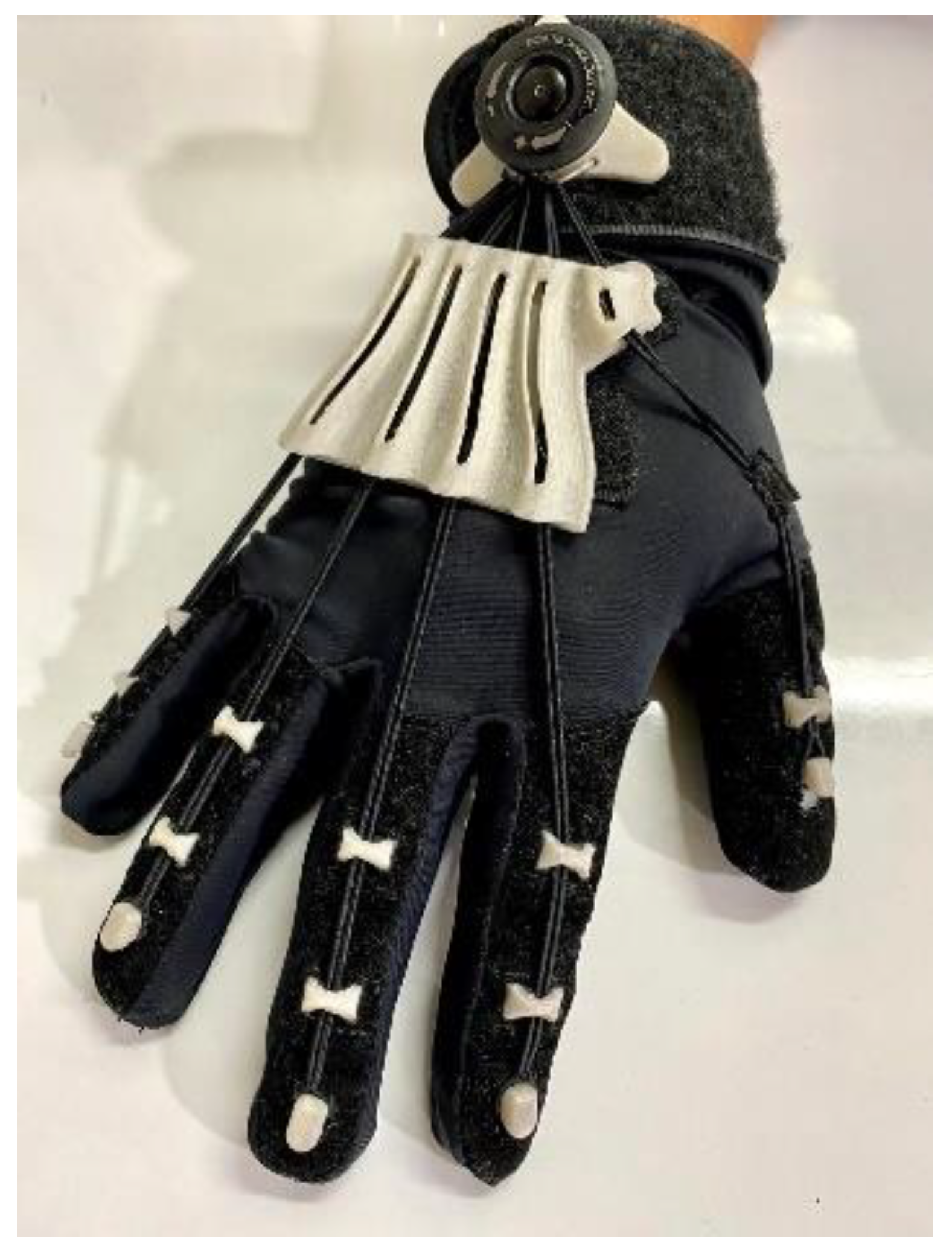
Figure 2.
Arth-aid System.
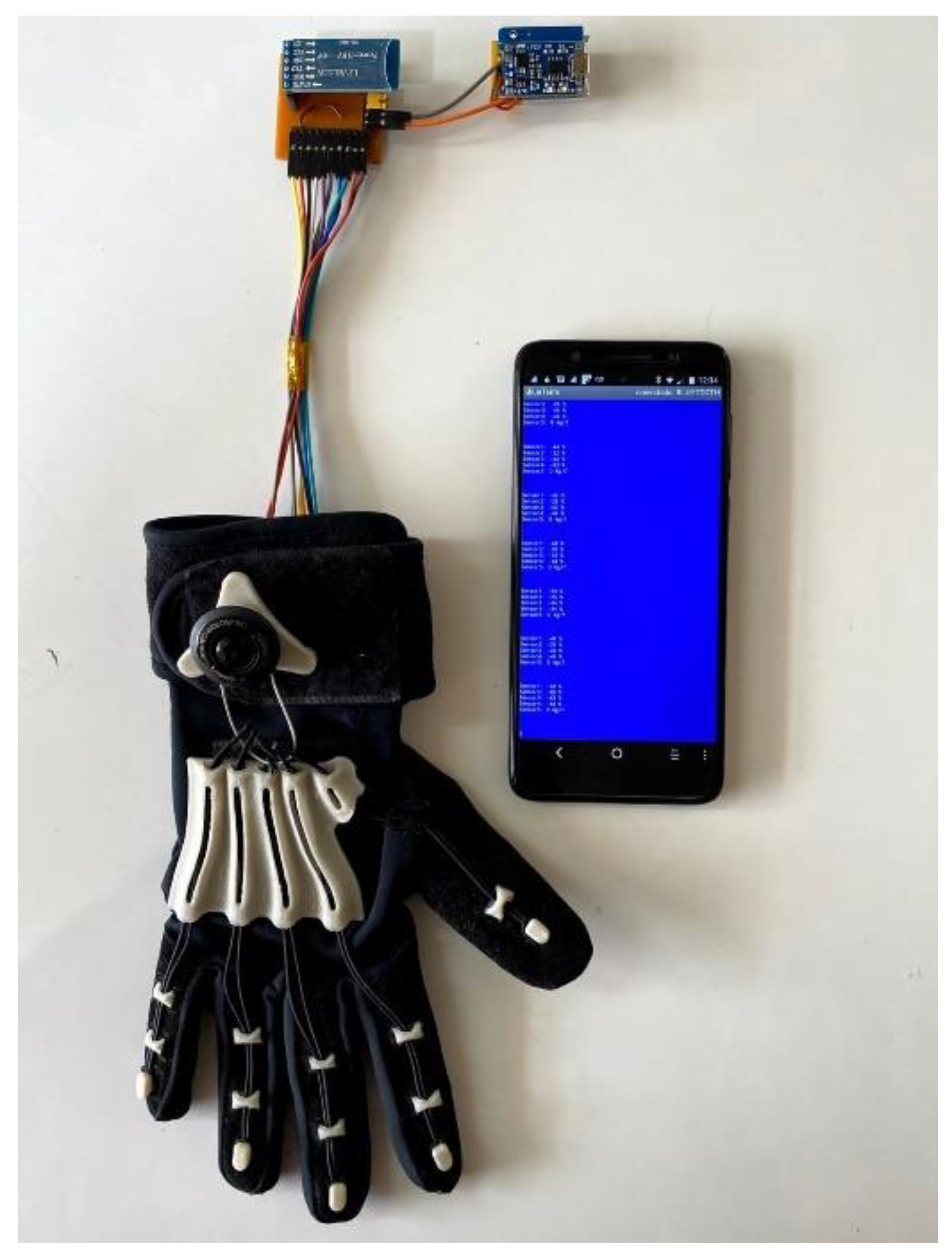

Table 1.
Survey questions for therapists and patients categorized by evaluation criteria.
| Evaluation Criteria | Therapist Questions | Patient Questions | |
|---|---|---|---|
| Usability and Ease of Use of the ARTH-aid ExoGlove. | 1, 2, 3, 4, 5 | 1, 2, 3, 4, 5, 6, 7 | |
| Usability and Ease of Use of the ARTH-aid System. | 6, 7, 8, 9, 10 | 8, 9, 10, 11, 12 | |
| Impact on rehabilitation. | 11, 12, 13, 14 | 13, 14, 15, 16 | |
| Recommendation and satisfaction of general use. | 15, 16 | 17, 18 | |
| Total Questions | 16 | 18 | |
Table 2.
Rating scale used for patient and therapist surveys.
| Scale | Assessment |
|---|---|
| Strongly disagree | 0 |
| Disagree | 1 |
| I agree | 4 |
| Strongly agree | 5 |
| Neutral | 3 |
Table 3.
Survey questions evaluating the usability and ease of use of the ARTH-aid ExoGlove by therapists.
Table 3.
Survey questions evaluating the usability and ease of use of the ARTH-aid ExoGlove by therapists.
| Evaluation criteria: Usability and Ease of Use of the ARTH-aid ExoGlove | |
| 1 | I find it effective that patients use the exoglove frequently |
| 2 | The quality of the movements with the Arth-aid ExoGlove is good. |
| 3 | I find it easy to put on the exoglove. |
| 4 | I consider the materials of the ARTH-AID ExoGlove to be of good quality and durable. |
| 5 | I find the tensioning threads of the ARTH-AID ExoGlove useful. |
| Strongly disagree 1 2 3 4 5 Strongly agree | |
| Evaluation criteria: Usability and Ease of use of the ARTH-aid System | |
| 6 | I find access to the ARTH-aid System application to be fast. |
| 7 | I find it practical to use the ARTH-aid System. |
| 8 | I feel safe using the ARTH-aid System. |
| 9 | I find the ARTH-AID System to be easy to understand. |
| 10 | The information I find in the app seems to be neat. |
| Strongly disagree 1 2 3 4 5 Strongly agree | |
| Evaluation criteria: Impact on rehabilitation | |
| 11 | I believe that with the use of the ARTH-aid ExoGlove, the pain of the patients’ hands has decreased. |
| 12 | It has been easy for patients to use the ARTH-AID ExoGlove in everyday activities. |
| 13 | I feel that the ARTH-aid ExoGlove is a contribution to the activities of the patients. |
| 14 | It has improved the flexion-extension movement of patients’ fingers. |
| Strongly disagree 1 2 3 4 5 Strongly agree | |
| Evaluation criteria: Recommendation and satisfaction of general use | |
| 15 | I would recommend using the ARTH-aid System Yes No |
| 16 | I would continue to use the ARTH-aid ExoGlove Yes No |
Table 4.
Survey questions evaluating the usability and ease of use of the ARTH-aid ExoGlove by patients.
Table 4.
Survey questions evaluating the usability and ease of use of the ARTH-aid ExoGlove by patients.
| Evaluation criteria: Usability and ease of use of the ARTH-aid ExoGlove | |
| 1 | I’ve felt comfortable using the ARTH-aid ExoGlove |
| 2 | I find it effective to use the exoglove frequently |
| 3 | The quality of the movements with the ARTH-aid ExoGlove is good |
| 4 | I find it easy to put on the exoglove |
| 5 | I consider the materials of the ARTH-aid ExoGlove to be of good quality and durable |
| 6 | The ARTH-AID ExoGlove fits seamlessly in my hand |
| 7 | I find the tensioning threads of the ARTH-AID ExoGlove useful |
| Strongly disagree 1 2 3 4 5 Strongly agree | |
| Evaluation criteria: Usability and ease of use of the ARTH-aid System | |
| 8 | I find access to the ARTH-aid System application to be fast |
| 9 | I find it practical to use the ARTH-aid System |
| 10 | I feel safe using the ARTH-aid System |
| 11 | I find the ARTH-aid System to be simple to understand |
| 12 | The information I find in the app seems to be neat |
| Strongly disagree 1 2 3 4 5 Strongly agree | |
| Evaluation Criteria: Impact on Rehabilitation | |
| 13 | I find that with the use of the ARTH-aid ExoGlove the pain in my hands decreases |
| 14 | It has been easy for me to use the ARTH-aid ExoGlove in my daily activities |
| 15 | I feel that the ARTH-aid ExoGlove is a contribution to my activities |
| 16 | I’ve improved the flexion-extension motion of my fingers |
| Strongly disagree 1 2 3 4 5 Strongly agree | |
| Evaluation criteria: Recommendation and satisfaction of general use | |
| 17 | I would recommend the ARTH-aid System to more people in the same situation as me Yes No |
| 18 | I would continue to use the ARTH-aid ExoGlove on a weekly basis Yes No |
Disclaimer/Publisher’s Note: The statements, opinions and data contained in all publications are solely those of the individual author(s) and contributor(s) and not of MDPI and/or the editor(s). MDPI and/or the editor(s) disclaim responsibility for any injury to people or property resulting from any ideas, methods, instructions or products referred to in the content. |
© 2025 by the authors. Licensee MDPI, Basel, Switzerland. This article is an open access article distributed under the terms and conditions of the Creative Commons Attribution (CC BY) license (http://creativecommons.org/licenses/by/4.0/).
Copyright: This open access article is published under a Creative Commons CC BY 4.0 license, which permit the free download, distribution, and reuse, provided that the author and preprint are cited in any reuse.


