Preprint
Review

This version is not peer-reviewed.

Systemic Racism in Canadian Healthcare: Narrative Review and Policy Analysis of Racial Disparities and Institutional Barriers

A peer-reviewed article of this preprint also exists.

Submitted:

13 February 2025

Posted:

17 February 2025

Read the latest preprint version here

Abstract

Background: Systemic racism in Canadian healthcare is deep-rooted, generating inequities in workforce diversity and patient care. Black, racialized, and Indigenous communities encounter heightened barriers to accessing medical care and career advancement due to institutionally rooted biases. Despite Canada’s single-payer, universally accessible care, studies have documented widespread inequities in access, care, and health outcomes. The exclusion of foreign-trained healthcare professionals who benefited from the Canadian Immigration Point-Based Comprehensive Ranking System (CRS) from the labor force further entrenches inequities, mirroring systemic biases [14]. Addressing these issues is crucial for ensuring equitable healthcare delivery. Objective: This narrative review critically assesses systemic racism in Canadian healthcare, with consideration for racial inequality in patient care, career barriers for racialized healthcare professionals, and institution policies with a discriminatory intention. It identifies the structural barriers that preserve inequity and proposes policy-guided recommendations for systemic reform. Methods: This narrative review synthesizes empirical research, government reports, and case studies to examine systemic racism in Canadian healthcare. Sources were selected based on relevance, credibility, and publication within the last 15 years. Inclusion criteria focused on studies examining racial disparities in healthcare access, professional barriers, and policy interventions. Case studies were chosen based on their legal and policy significance, particularly those highlighting systemic failures leading to patient harm. Thematic analysis was used to categorize key issues, ensuring a comprehensive policy-driven discussion. Results: The review identifies three primary systemic barriers: 1. Racial biases in patient care lead to delayed treatment, misdiagnoses, and higher mortality rates among Black and Indigenous patients. 2. Institutional racism in healthcare workforce structures restricts opportunities for racialized healthcare professionals, limiting diversity in medical leadership. 3. Credentialing barriers disproportionately affect internationally trained physicians (ITPs), preventing them from contributing to Canada’s overburdened healthcare system. Case studies highlight the severe consequences of healthcare discrimination. Brian Sinclair, an Indigenous man, died after being ignored for 34 hours in a Winnipeg ER. Joyce Echaquan, an Atikamekw woman, live-streamed racist abuse from nurses before her death. These cases underscore the urgent need for systemic policy reforms to prevent further medical neglect. Conclusion: Several evidence-based policy interventions are necessary to dismantle racism in Canadian healthcare. Some of these interventions include mandatory anti-racism and cultural competency training for Healthcare professionals, the collection of race-based health data to track disparities and inform policies, and fair credentialing processes for international medical school graduates to address workforce shortages. Independent accountability and review processes must also be established to prevent medical abuse. By taking such actions, a fairer, accessible, and effective system will ensure that racialized communities receive the care they deserve. [M1]References should be numbered in order of appearance. Please rearrange all the references to appear in numerical order.

Keywords: 
;  ;  ;  ;  ;  ;  ;  ;  ;  ;  ;  ;  ;  ;  ;  ;  ;  ;  ;  ;  ;  ;  ;  ;  ;  ;  

1. Introduction

1.1. Background of Systemic Racism in Healthcare

Defining Systemic Racism and Its Expressions in Healthcare

Systemic racism refers to entrenched institutional policies, practices, and cultural norms that perpetuate racial inequalities across societal domains, including healthcare [5]. Unlike overt individual racism, systemic racism operates through systemic processes, generating enduring gaps in access, care, and patient outcomes [9].
It is prevalent in Canada’s healthcare system and comes in many forms.
Key manifestations of systemic racism in healthcare include disparities in patient care, whereby racialized individuals are given lower-quality services or experience delays in care [29]. Implicit bias among healthcare professionals also perpetuates the problem, leading to dismissive attitudes toward patients’ symptoms and their frequent misdiagnosis [22]. Barriers to workforce participation for racialized healthcare professionals, such as Black, Indigenous, and internationally trained physicians (ITPs), deter their career progression and hinder their representation in healthcare leadership [23]. Furthermore, the lack of culturally competent care results in worse health outcomes for racialized communities as the healthcare system often fails to address their unique needs [24].

Historical Injustices in Healthcare for Indigenous and Black Communities

The inequities faced by Indigenous and Black communities in Canada’s healthcare system are deeply rooted in historical injustices. As the Truth and Reconciliation Commission of Canada established, residential schools and forced sterilizations were tools of colonial oppression that disrupted Indigenous families and contributed to ongoing mistrust of healthcare institutions [4]. The intergenerational effects of these injustices are evident in the enduring health disparities within Indigenous communities [4].
Similarly, systemic discrimination has shaped the healthcare experiences of Black Canadians, from unethical medical experimentation to the persistent dismissal of pain due to racial stereotypes [29]. Cases such as Brian Sinclair, an Indigenous man who died after waiting 34 hours in a Winnipeg ER without seeing medical professionals, expose the life-threatening consequences of medical neglect [16]. Joyce Echaquan, an Atikamekw woman, died in a Quebec hospital after experiencing racist abuse, which she live-streamed—yet another exposure to systemic biases in Canada’s medical system [6]. These cases underscore the urgent need for intervention to eliminate interpersonal and structural racism that inflicts harm on racialized patients.

Disparities in Access to Care, Health Outcomes, and Workforce Representation

Canada’s racialized communities suffer a high level of inequality in access to healthcare services and health outcomes. For Indigenous communities, such disparities are closely tied to social determinants of health, including housing, income, and education. Systemic inequities in these determinants contribute to high rates of disease, mental illness, and premature death in Indigenous communities [20]. For instance, limited access to clean water, adequate housing, and culturally safe healthcare services exacerbate these health challenges.
Health inequities are particularly evident in early-life health outcomes. Disparities in prenatal care, maternal health services, and pediatric healthcare for Indigenous children can have long-lasting effects on their well-being [19]. These inequities contribute to increased infant mortality, delayed development, and long-term health conditions. The lack of cultural competency in care and systemic failures to address Indigenous health needs further deepen these inequities.
In addition to patient care disparities, workforce diversity remains a critical issue. Black and Indigenous professionals are significantly underrepresented in leadership, which contributes to a lack of culturally sensitive practices and policies [5]. This underrepresentation hinders healthcare reform efforts that prioritize equity and excludes racialized voices from decision-making spaces. Furthermore, systemic barriers prevent many ITPs from practicing in Canada, even when they meet the necessary qualifications [20]. Addressing these inequities requires the inclusion of Indigenous perspectives in policy formulation and ensuring fair access to healthcare for marginalized groups.

1.2. Justification for the Review

The Urgency of Addressing Systemic Racism in Canadian Healthcare

Although Canada’s universal healthcare system is lauded for its accessibility, systemic racism undermines its principles by imposing disproportionate barriers on racialized communities. The COVID-19 pandemic exposed and exacerbated these inequities, as Black and Indigenous communities faced higher infection and fatality rates due to systemic factors such as overcrowding, employment in high-risk industries, and limited access to culturally relevant medical care [16].
Additionally, excluding internationally trained physicians (ITPs) from the workforce worsens healthcare disparities. Instead of leveraging their skills to address physician shortages, ITPs encounter discriminatory credentialing processes and systemic recruitment biases that prevent them from practicing in Canada [23]. This practice not only constrains workforce diversity but also denies racialized communities access to culturally attuned care [10]. Addressing these barriers is essential for achieving equitable healthcare.

Research Gaps in Health Disparities and Healthcare Worker Diversity

Although there is extensive research on racial inequities in the United States, Canada lacks comprehensive data on the impact of race on healthcare access and outcomes [24]. Most studies document individual cases of racism rather than systemic policy and structural barriers perpetuating these inequities [29]. Few studies have explored systemic racism and professional barriers, particularly for immigrant-trained medical professionals. Furthermore, there is limited research on the intersection of systemic racism and professional barriers, particularly for foreign-trained healthcare workers. Although some studies examine individual licensing challenges, few explore how racial bias within credentialing institutions contributes to these challenges [22].
This review, therefore, seeks to fill these gaps by examining case studies within a broader analysis of systemic racism in Canadian healthcare.
Racialized communities in Canada face systemic restrictions in access and quality of care [28]. An Ontario study on inequitable care found that institutional accountability frameworks discourage racialized patients from filing grievances [28]. Systemic racism against Indigenous patients is deeply entrenched, with disparities in health outcomes and treatment access [1]. A discussion paper by the Wellesley Institute highlights how racism in healthcare, including delayed care, misdiagnosis, and medical mistrust, undermines the well-being of Indigenous communities [1]. These findings reinforce the need for culturally safe care and structural reforms to eliminate inequities.

1.3. Objectives of the Review

This narrative review aims to achieve the following objectives:
  • Discuss Healthcare Disparities in Black and Indigenous Communities
    o
    Investigate how racial discrimination in patient care leads to adverse health outcomes.
    o
    Highlight specific cases of medical racism and neglect, such as those of Brian Sinclair and Joyce Echaquan [6,16].
  • Analyze Workforce Challenges for Internationally Trained Physicians (ITPs)
    o
    Examine the structural barriers preventing ITPs from practicing in Canada.
    o
    Assess the impact of credentialing discrimination on racialized professionals [23].
  • Discuss Structural Policies That Reinforce Inequities
    o
    Evaluate the impact of racism on workforce representation and healthcare access.
    o
    Analyze medical accreditation standards and health policies contributing to inequities [9,10].
  • Recommend Policy Solutions for a More Equitable Healthcare System
    o
    Propose reforms such as anti-racism training, equitable credentialing processes, and increasing the representation of racialized professionals.
    o
    Advocate for race-based data collection to inform policy change [16,24].
With these objectives, this review seeks to contribute to Canada’s ongoing discussion about racial health inequities and provide practical recommendations for dismantling systemic racism in healthcare.

2. Conceptual Framework: Healthcare Systemic Racism

Systemic racism within the healthcare system is a multifaceted phenomenon with roots in institutional policy, professional practice, and provider-patient relationships. It is not merely a question of individual bias but becomes embedded at systemic levels, perpetuating racial disparities in health, most notably among Black and Indigenous populations [5]. These disparities reflect broader systemic inequities, from exclusionary hiring practices for racialized healthcare professionals to discriminatory medical decision-making [24]. The extent of systemic racism in healthcare, how it occurs, and the intersectional impacts will be outlined in this section.

2.1. Defining Systemic Racism in Healthcare

Systemic racism in healthcare refers to institutional structures, policies, and practices that disadvantage racialized populations, often without explicit racist intent [25]. Unlike isolated discriminatory behavior, systemic racism is a part of medical care and affects access, care, and patient outcomes. It happens at three general levels:
  • Institutional racism—Policies and hiring practices within health care deny racialized professionals leadership roles and limit career progression for internationally trained physicians (ITPs) [23]. Such institutional racism contributes to the absence of diversity in decision-making, further perpetuating healthcare inequities.
  • Structural Racism – Healthcare inequity is a result of social determinants, including racial segregation, financial inequality, and colonization [24]. Indigenous communities face disproportionate disease burdens due to limited access to healthcare facilities, unsafe housing, and food insecurity [29].
  • Interpersonal Racism – Clinicians’ unconscious racial biases impact medical encounters in a manner that tends to cause delayed diagnosis, under-treatment, and condescending behavior towards racialized patients [3]. Empirical studies confirm that Black and Indigenous patients receive a reduced level of care and have symptoms invalidated at a higher rate [22].

Empirical Evidence of Racial Bias in Healthcare

Several studies have described how systemic racism is manifested in patient care and clinical decision-making:
  • Pain Management – Black patients have less pain management under a misguided assumption that Black individuals have higher pain tolerance, a stereotype that creates poor pain management [29]. Indigenous patients suffer similarly under the weight of bias and receive less-than-optimum care [24].
  • Maternal Health – Black and Indigenous women experience disproportionately high rates of maternal mortality and complications during childbirth. Studies highlight that racialized women frequently receive lower-quality prenatal and postnatal care, contributing to increased preterm births and infant mortality [7].
  • Emergency care – Incidents such as Joyce Echaquan and Brian Sinclair’s deaths expose the danger of racial bias in medical care in an emergency room setting. Sinclair, an Indigenous male, died after 34 hours of neglect in a clinic in Winnipeg, and Echaquan, an Atikamekw female, documented racist abuse at the hands of nurses prior to her demise [6]. Black and Indigenous patients have been shown to have longer waits in an emergency room and have been consistently misdiagnosed as drug-seeking and uncooperative [22].
  • Physician-Patient Interactions – Racial patients have complained for a long time about not being listened to by physicians and, as a result, receiving misdiagnoses and delayed services. Black and Indigenous peoples have long-standing, persistent, and undertreated chronic medical conditions such as diabetes, cardiovascular disease, and mental illness [16].
These examples illustrate systemic racism in its role in medical encounters in generating mistrust in medical institutions in racialized communities.

2.2. Intersectionality and Health Disparities Across Races

Systemic racism in medical care does not act alone but overlaps with other social determinants, including socioeconomic position, gender, and immigrant position. In intersectionality, a theory developed by Kimberlé Crenshaw, intersectionality explains how intersectional identities multiply disadvantages, producing specific inequities in care [29].
i. 
Race, Socioeconomic Status, and Healthcare Access
Economic factors exacerbate racial inequality in terms of health and restrict access to important medical care. Black and Indigenous Canadians disproportionately encounter:
  • Higher Unemployment Rates – Many racialized individuals lack employer-based health benefits, restricting their access to preventive and specialized care [24].
  • Lower Levels of Incomes – Racialized groups find it difficult to afford other medical treatments, including dental, eye, and prescription medication [23].
  • Geographical Inequalities—The rural and remote communities lack well-funded medical centers, and citizens have to travel long distances for basic medical care [16]. For example, First Nations in Northern Canada have long waits for emergency care and delayed long-term disease care [5].
ii. 
Gender, Race, and Healthcare Discrimination
Racialized women face double-barreled forms of both racial and gendered forms of discrimination:
  • Medical Neglect – Black women report high levels of neglect in reproductive care, with symptoms and pain concerns not being dealt with on numerous occasions [7].
  • Forced Sterilization – Aboriginal women have been forced into forced sterilization, a practice documented in the 2010s, an expression of ongoing systemic abuse of reproductive rights [6].
  • Delayed Diagnoses – Women of color’s symptoms have a high likelihood of being ignored and misdiagnosed. As a result of this, Black and Indigenous women have received delayed medical attention for medical conditions like cardiovascular disease and endometriosis [29].
Such inequities need to be addressed through gender-sensitive and culturally sensitive healthcare policy that recognizes racialized women’s particular barriers.
iii. 
Immigrant and Foreign-Trained Physician Barriers
Canada relies on internationally trained physicians (ITPs) to fill physician gaps. However, systemic barriers prevent such workers, many of whom are racialized, from entering the workforce [10]. ITPs encounter a range of barriers, which include:
  • Prolonged credentialing procedures – International medical graduates must undergo expensive, time-consuming accreditation procedures that delay them from commencing practice [23].
  • Discriminatory Hiring Practices – Many healthcare institutions prefer Canadian-trained professionals, leaving qualified ITPs underemployed despite severe physician shortages [24].
  • Limited Residency Positions—Due to a lack of enough residency positions, most ITPs cannot obtain Canadian work experience in a position to practice medicine [16].
The exclusion of ITPs heightens health inequity through restricted access in terms of multilingual and diversity in medical providers. There may be racialized groups who can benefit from having medical providers who understand their healing cultures and language, but systemic obstacles hinder such medical providers.
Systemic racism in medical practice occurs in terms of institution, structure, and interpersonal racism, producing deep inequity in Black, Indigenous, and racialized communities’ health. Empirical studies and real cases reveal inequity in pain management, childbirth care, emergency care, and diversity in medical professionals [25]. Besides, intersectionality reveals that socioeconomic position, gender, and immigrant position deepen racialized health inequity [3].
To mitigate such inequities, a multi-faceted intervention, including anti-racism training for medical professionals, fairer policies for internationally educated physicians, and a heightened racialized presence in medical leadership, is required. In the absence of systemic reform, racial inequity in Canadian healthcare will increasingly drive mistrust and poor health for marginalized communities.

3. Case Studies of Systemic Racism in Canadian Healthcare

Systemic racism in Canadian medical care comes in many forms, including racialized professionals being unfairly discriminated against, medical racism in terms of Indigenous and Black patients, and systemic barriers in opening practice for internationally trained physicians (ITPs). The case studies below illustrate real-life examples of such inequity and, with them, an acute need for systemic policy change.

3.1. The Case of Dr. Amos Akinbiyi (Saskatchewan)

Dr. Amos Akinbiyi, a Black physician trained in Scotland and England, immigrated to Canada in 1996 and began practicing in Canada. Dr. Akinbiyi sued the Saskatchewan Health Authority (SHA) for racial discrimination, workplace reprisal, intimidation, breach of contract, conspiracy, and libel [30]. His case illustrates the barriers Black physicians face in the Canadian medical profession.

Allegations of Racial Discrimination and Retaliatory Actions

Dr. Akinbiyi claims that workers at SHA engaged in a campaign of racial discrimination and professional retribution against him, obstructing his career development and isolating him within the healthcare system. Despite having extensive expertise as an obstetrician-gynecologist, he experienced unjust criticism and professional obstacles [30].
A critical incident in 2017 involved Dr. Akinbiyi being forced to resuscitate his daughter during delivery after she coded, even though other medical staff were in the room. According to the College of Physicians and Surgeons of Saskatchewan, doctors are not allowed to treat families when others are present. However, Dr. Akinbiyi reported that he was asked to intervene despite other doctors being on call, violating both hospital protocols and cultural taboos [30]. The daughter suffered double jeopardy of two racial discriminations as a person of color and her gender.
Following the incident, he filed grievances with Regina General Hospital’s obstetrics unit for a hostile work environment and discriminatory practices. He claimed to have experienced institutional reprisal, including unjustified professional grievances against him. Two have been resolved, with Dr. Akinbiyi agreeing to additional professional training, but a third remains unresolved [30].

Structural Barriers for Black Physicians in Canada

Dr. Akinbiyi’s case reflects more profound systemic barriers Black medical professionals face in Canadian medical environments:
  • Underrepresentation in medical academia and hospital leadership, limiting career advancement [29].
  • Increased workplace discrimination and burnout, with Black doctors disproportionately disciplined for minor infractions compared to white physicians [23].
  • Barriers to career progression and mentorship reduce Black physicians’ access to senior roles [24].
In November 2023, 11 internationally trained African and East Asian physicians at Regina General Hospital complained to Saskatchewan’s Human Rights Commission that only white physicians received teaching shifts, continuing systemic exclusion [30]. An external review commissioned by the government supported these allegations, yet no significant policy changes followed [16].
Dr. Akinbiyi’s case exemplifies systemic racism in Canada’s medical establishment, emphasizing the necessity for fair recruitment policies, mentorship for Black doctors, and anti-racism training for medical administrators.

3.2. Systemic Racism in Canadian Healthcare: Joyce Echaquan and Brian Sinclair

The tragic deaths of Joyce Echaquan and Brian Sinclair expose systemic racism and medical neglect toward Indigenous patients in Canada’s healthcare system. These cases serve as appalling testimonies to racial biases in medical settings and highlight the urgent need for reform.

The Case of Brian Sinclair (Manitoba)

Brian Sinclair, a 45-year-old Indigenous man, passed away in a Winnipeg emergency room after being ignored for 34 hours. Sinclair went to the Health Sciences Centre on September 19, 2008, with a treatable bladder infection after being referred by a community clinic [16]. However, hospital staff assumed Sinclair was intoxicated and homeless rather than an actual medical case [5].
Video footage later revealed that no medical practitioner assessed Sinclair throughout his wait, even as his condition visibly deteriorated [23]. Sinclair passed away in his wheelchair from an infection that would have been treatable with antibiotics [30].
An inquest into Sinclair’s death exposed systemic failures, including implicit bias, triage failure, and medical malpractice [24]. His case epitomizes the systemic neglect Indigenous patients face, leading to prolonged wait times, condescending treatment, and a lack of culturally competent care [9].

The Case of Joyce Echaquan (Quebec)

Joyce Echaquan, an Atikamekw woman, died in September 2020 after live-streaming racist mistreatment from healthcare workers in the days leading to her death [6]. Echaquan was admitted for abdominal pains, but instead of receiving appropriate medical care, she suffered verbal and physical abuse from healthcare providers.
In her final hours, she recorded hospital staff mocking her, dismissing her pain, and making racist remarks rather than treating her condition [6]. Her case sparked national outrage, renewing calls for cultural safety training and the implementation of Joyce’s Principle, a guideline for delivering equitable care to Indigenous individuals [16].

Key Lessons from Sinclair and Echaquan’s Cases

The deaths of Brian Sinclair and Joyce Echaquan illustrate how systemic racism manifests in healthcare settings, with devastating consequences for Indigenous patients. Both cases reflect:
  • Implicit Bias: Healthcare providers fail to recognize their patients’ legitimate needs, assuming intoxication, homelessness, or exaggeration of symptoms.
  • Medical Neglect: In both cases, essential care was delayed or withheld, leading to preventable deaths.
  • Lack of Accountability: Institutional oversight mechanisms were insufficient to effectively prevent or address these incidents.
These tragedies underscore the urgent need for reforms, including mandatory anti-racism training, race-based health data collection, and independent oversight to ensure accountability in healthcare systems. Together, they highlight the human cost of systemic racism and the need to prioritize equitable and culturally safe healthcare for all Canadians [6,13].

3.3. Empirical Evidence of Anti-Black Racism in Healthcare (Montreal Study)

A qualitative study in Montreal examined Black patients’ experiences in medical settings, revealing systemic racial biases in pain management, diagnostic delays, and disrespectful treatment [29].
i. 
Patient Experiences with Racial Bias
Key discriminatory behaviors reported by Black patients included:
  • Minimization of pain—Black patients consistently received less pain management due to implicit biases [5].
  • Longer diagnostic delays—Black patients experienced prolonged waits for necessary tests and referrals, worsening health outcomes [23].
  • Stereotyping—Black patients were less likely to receive necessary medications due to unfounded assumptions about drug misuse [7].
ii. 
Systemic Stereotyping of Black Patients in Clinical Settings
Additional studies confirm that:
  • Racial biases shape clinical judgments, particularly in pain assessment and management [29].
  • Black patients receive fewer specialist referrals, leading to more severe disease progression [24].
  • Discriminatory experiences deter Black individuals from seeking medical care, undermining trust in the system [22].
The Montreal study underscores the need for anti-racism initiatives, improved physician training, and systemic policy reform to counteract biases in medical decision-making.

3.4. Barriers for Internationally Trained Physicians (ITPs) in Canada

Canada faces a critical physician shortage, yet thousands of highly qualified internationally trained doctors (ITPs) remain unemployed or underemployed due to systemic credentialing barriers [10].

Case of Dr. Ismelda Ramirez (Quebec)

Dr. Ismelda Ramirez, a Latin American physician with decades of experience in internal medicine, could not secure a Canadian medical license. As a result, she took a job at a fast-food restaurant to support herself [8,10].
Her case is not unique—many ITPs work low-paid, non-medical jobs despite their credentials, a phenomenon known as “brain waste” [26].
i. 
Key Barriers to ITP Integration
  • Limited residency spots, leaving many ITPs unable to complete licensing requirements [16].
  • Expensive and time-consuming credentialing disproportionately impacts racialized immigrants [23].
  • Hiring discrimination, with Canadian-trained doctors being prioritized, even amid physician shortages [24,30].
ii. 
Lengthy Wait Times: A Natural Consequence of ITP Exclusion
The lack of ITPs in Canada’s healthcare system is a significant contributing cause for growing patient wait times:
  • 6.5 million Canadians, approximately 22% of adults, have no family doctor, a February 2024 report by the OurCare Initiative discloses [17].
  • Emergency department overcrowding is worsening, with record wait times lasting more than 12–24 hours [7].
  • Delays in specialist care, such as cardiology, oncology, and orthopedic care, have patients waiting months for care, exacerbating overall health outcomes [29].
Despite the availability of thousands of qualified ITPs, systemic barriers inhibit them from minimizing such pressures, compounding access to care and care quality for patients.
iii. 
The “Brain Drain” Phenomena and Its Consequences Worldwide
Canada fails to integrate internationally trained doctors and actively exploits the “brain drain”—the migration of doctors from low- and middle-income countries to high-income nations like Canada (28). Those in the system continued to suffer from the same predicament of racism.
Research suggests that:
  • Nearly 25% of high-income nations’ (Canada, U.S., UK, Australia) doctors are immigrants trained abroad (28).
  • Physician shortages in impoverished nations worsen as professionals emigrate to more affluent countries (26).
  • Most ITPs moving to Canada struggle to get licensed, are employed in low-paid, non-clinical jobs, and experience brain waste rather than skill utilization (26).
This paradox worsens Canada’s healthcare disparities and negatively affects the world’s medical workforce, as developing nations lose their top medical professionals to nations that ultimately reject them and cannot integrate them properly.
Béland and Zarzeczny (25) demonstrate how institutions in Canada’s healthcare system fuel medical professionals’ emigration, a root cause of Canada’s “brain drain.” Rigid credentialing policies force numerous internationally trained physicians (ITPs) to seek employment abroad, pursuing patterns of medical tourism outflows. Eliminating such barriers will go far in retaining skilled professionals and strengthening Canada’s access to care.

Policy Suggestions for Addressing ITP Challenges

To address such inequities and expand access to care, Canada will have to implement policy reform that:
  • Increase residency posts for ITPs, prioritizing applicants who have practiced overseas before.
  • Streamline credentialing procedures, reducing unnecessary and expensive licensing examinations.
  • Mandate anti-bias recruitment policies, offering fair employment for foreign medical graduates.
  • Implement a national qualification recognition program to assess ITPs based on qualifications and not impose Canadian-specific limitations.
These case studies illustrate deep-rooted systemic racism within Canada’s healthcare system. Addressing these injustices requires:
  • Mandatory anti-racism training for healthcare providers.
  • Equitable credentialing processes for ITPs.
  • Race-based health data collection to track disparities.
  • Independent oversight bodies to hold institutions accountable.
The timeline of systemic racism in Canadian healthcare (Figure 1) illustrates key milestones, mapping out significant events and policy developments.
This timeline visual illustrates key events and milestones in addressing systemic racism and inequities in Canadian healthcare. It spans from 2008 to 2023, highlighting:
  • 2008: Brian Sinclair’s death due to neglect in an emergency room after being ignored for 34 hours, marking a preventable tragedy.
  • 2015: The Truth and Reconciliation Commission Report calls for reforms to address inequities in Indigenous healthcare.
  • 2020: Joyce Echaquan’s abuse and death after racist mistreatment in a hospital sparked nationwide outrage and demands for reform.
  • 2021: Systemic racism is officially acknowledged, leading to government initiatives for anti-racism programs in healthcare.
  • 2023: Policy reforms and advocacy emphasize cultural safety training and increased oversight to address systemic issues.
This timeline underscores the progression of awareness, advocacy, and reform efforts in tackling healthcare disparities in Canada.

4. Policy and Institutional Reforms

The empirical case studies and observations in the preceding sections illustrate examples of long-standing racial inequity in Canadian healthcare, and these occur at a range of levels—from omission and misdiagnosis at a patient level to workforce exclusion and bias at a professional level. To correct such inequities, systemic, widespread reform at a policy level is necessitated, one that addresses institution, structure, and process barriers to racial discrimination, professional exclusion, and access inequity in healthcare [7,24].
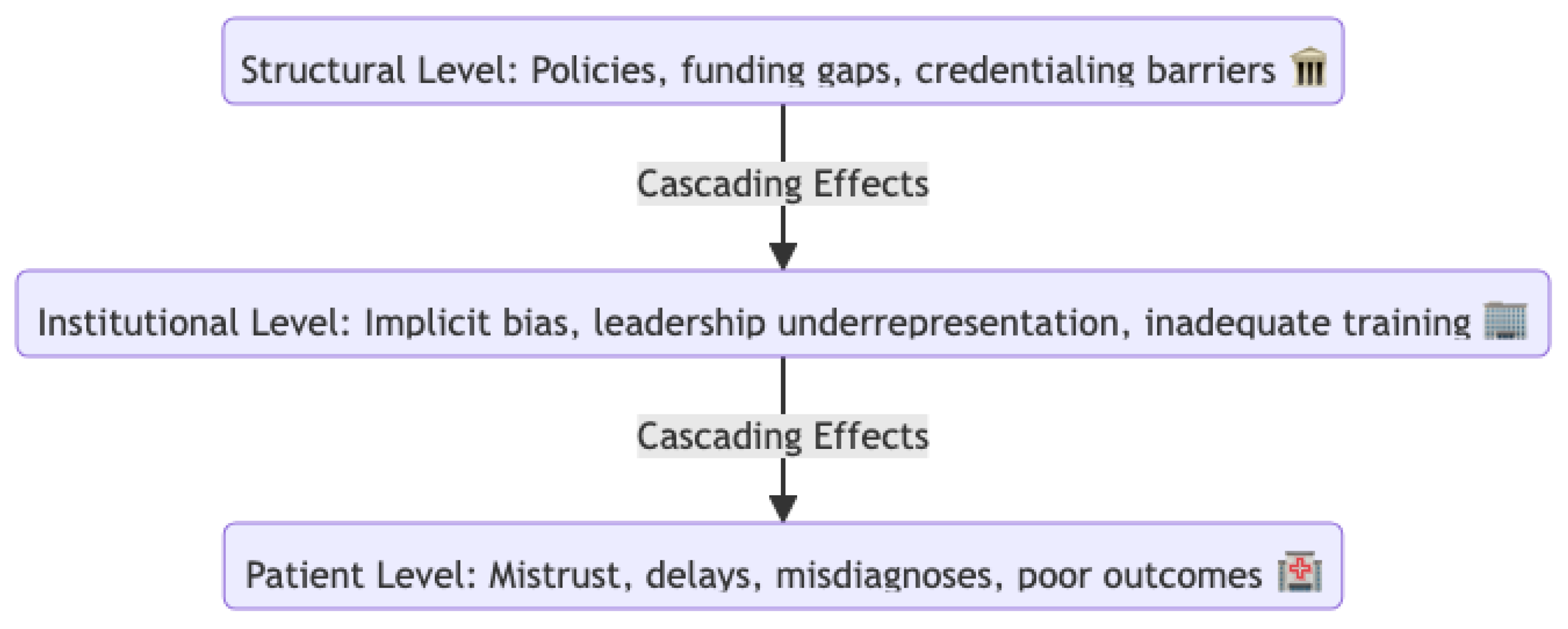
This section identifies critical gaps in Canadian healthcare policies and proposes concrete reforms for creating an equitable, inclusive, and anti-racist healthcare system. Systemic healthcare challenges can be analyzed through a cascading framework (Figure 2), highlighting the structural, institutional, and patient-level barriers, demonstrating the interconnectedness of policy, institutional bias, and patient outcomes.
This figure illustrates a cascading framework of systemic challenges in healthcare across three interconnected levels:
  • Structural Level: At the highest level, challenges include policies, funding gaps, and credentialing barriers. These systemic issues establish the foundational inequities in healthcare infrastructure. The building icon symbolizes institutions or policy-making bodies.
  • Institutional Level: Cascading from structural challenges, this level reflects the effects within organizations, such as implicit bias, underrepresentation in leadership, and inadequate training. These factors limit institutional progress toward equity. The building icon here emphasizes organizational operations.
  • Patient Level: The downstream impact is experienced by patients as mistrust, delays in care, misdiagnoses, and poor health outcomes. The medical icon highlights the direct consequences of healthcare delivery.
Arrows labeled “Cascading Effects” show the impact flow from structural to institutional and finally to the patient level. This figure emphasizes how systemic issues at the top perpetuate inequities at every subsequent level.

4.1. Gaps in Canadian Healthcare Policies

Lack of Collection of Race-Based Health Data

One of Canada’s most conspicuous gaps in its health system is the lack of systemic collection of race-based health information. Unlike in the United States and the United Kingdom, where racial data collection has been mandated to detect inequity, Canada does not have systemic reporting of racial and ethnic inequity in access, care experiences, and diversity in its workforce [24].

Consequences of a Lack of Race-Based Data

Without race-based health information, medical professionals, researchers, and policymakers lack the necessary data to:
  • Identify and measure racial inequities in the prevalence of chronic diseases, maternal mortality, and patient outcomes [29].
  • Evaluate the effectiveness of interventions for improving healthcare service equity [22].
  • Develop targeted programs for health equity that address the individualized care needs of racialized communities [25].

Empirical Evidence for the Need for Race-Based Data

Research indicates that:
  • Indigenous and Black Canadians experience higher rates of chronic illnesses such as diabetes, hypertension, and cardiovascular disease compared to white Canadians [19,20].
  • Black and Indigenous maternal mortality rates are disproportionately high due to systemic racism and a lack of culturally sensitive prenatal and postnatal care [7].
  • Black and Indigenous patients have historically been undertreated for pain, with explicit racial biases in clinical decision-making [29].
Developing and implementing effective interventions for these disparities is impossible without comprehensive race-based health data.

Insufficient Diversity in Healthcare Leadership

Racialized professionals remain underrepresented in leadership positions within Canada’s healthcare institutions. This lack of diversity limits:
  • Culturally competent decision-making at the institutional level [7].
  • Equitable policy development, as racialized groups are often excluded from decision-making spaces [23].
  • The prioritization of anti-racism initiatives within healthcare systems [24].

Structural Barriers to Leadership Diversity

  • Implicit bias in hiring and promotion processes prevents racialized medical professionals from advancing into senior roles [23].
  • Limited mentorship opportunities restrict career progression for Black, Indigenous, and internationally educated health professionals [7].
  • Exclusion from research funding and decision-making boards perpetuates systemic inequities and hinders the development of inclusive policies [5].
Unless these structural barriers are dismantled, racialized healthcare workers will remain underrepresented in leadership, and institutions will continue to fail to address racial inequities.

Credentialing Barriers for Internationally Trained Physicians (ITPs)

Despite a critical physician shortage, many internationally trained physicians (ITPs) remain unemployed or underemployed due to restrictive licensure processes, discriminatory hiring practices, and exclusionary policies [8,16].

Licensing Bottlenecks Violating ITPs’ Right to Practice

  • Limited residency slots disproportionately favor Canadian-trained medical graduates, reducing ITPs’ chances of securing clinical placements [5].
  • Practice Ready Assessment (PRA) programs—an alternative pathway for ITPs—are underfunded, inconsistently implemented across provinces, and largely inaccessible [24].
  • Expensive and unnecessary licensing examinations place an undue burden on racialized immigrant doctors [23].

Discriminatory Hiring Practices

Even ITPs who obtain medical licenses face employment barriers, as hospitals and medical centers often prefer Canadian-trained physicians, exacerbating workforce inequality [8,24].
These policy gaps perpetuate systemic disparities and restrict patient access to a diverse and qualified medical workforce. The following section outlines targeted reforms to address these barriers.

4.2. Recommendations for Systemic Reforms

1. Mandatory Anti-Racism and Cultural Competency Training
Health professionals and administrators must undergo extensive anti-racism and cultural competency training in a bid to undo systemic racism, implicit bias, and patient-provider disparities [29].
Key Components of Anti-Racism Training
  • Implicit bias training for medical professionals, including physicians and nursing staff.
  • Culturally safe care protocols for Black, racialized, and Indigenous communities.
  • Workplace diversity training for medical schools in a bid to prevent discriminatory recruitment and career development processes.
Expected Outcomes
  • Enhanced racial and cultural competency in patient relations.
  • Reduction in racial gaps in care, diagnoses, and pain management [22].
  • Greater diversity in leadership and increased racialized clinicians in senior positions.
2. Race-Based Health Information and Health Equity Metrics
National and territorial governments must collect race-based information to measure and respond to racial health inequity [24].
Key Policy Action
  • Standardized racial and ethnic collection of health information in hospitals, clinics, and public health departments.
  • Public reporting mandates hospitals to report racial discrepancies in care and outcomes.
  • Incorporation of racial factors in national performance assessments for health.
Expected Outcomes
  • Enhanced data-driven policy interventions to address healthcare inequities.
  • Greater transparency and accountability in medical institutions.
  • Decrease in racial gaps in long-term disease prevalence, pregnancy-related maternal deaths, and access to specialist medical care [29].
  • Racial disparities in health outcomes are summarized in Table 1, showing key inequities among different demographic groups.

Table 1. Identifies racial inequality in health status between Canada’s largest groups of citizens. For example, Indigenous individuals have disproportionately high long-term disease, and Black Canadians have high maternal mortality. All such inequities require interventions at a systemic level [29].
Demographic Group Disparity Example Key Finding
Indigenous Patients High rates of chronic illnesses such as diabetes and cardiovascular diseases Need for targeted chronic disease prevention programs
Black Canadians Higher maternal mortality rates compared to non-racialized groups There is an urgent need for improved maternal healthcare and anti-racism training
Other Racialized Groups Increased instances of misdiagnoses and delayed treatments Requirement for equity in diagnostic procedures and timely care
3. Fair Credential Recognition for Internationally Trained Physicians (ITPs)
Canada must reform ITP credentialing processes and discontinue discriminatory recruitment to alleviate physician shortages and racial inequity [8].
Key Policy Responses
  • Expansion of Practice Ready Assessment (PRA) programs in all provinces.
  • Increase in ITP-specific residency positions, reducing overreliance on Canadian-trained candidates.
  • Reform licensure exams to authenticate global medical competency and eliminate excessive testing requirements [23].
  • Mandatory anti-bias hiring policies in hospitals and clinics.
Expected Outcomes
  • Increased ITP workforce integration, overcoming physician shortages.
  • Greater diversity in medical professionals, improving culturally sensitive care.
  • Reducing unnecessary barriers to employment enables qualified professionals to contribute to healthcare.
Some argue that credentialing restrictions for ITPs must occur to maintain patient safety and standardize medical training. However, in nations like the UK and Australia, alternative strategies such as heightened clinical evaluations and mentorship programs allow ITPs to be integrated without compromising patient care [2].
Similarly, social determinants of health (e.g., housing, education, earnings) contribute to inequities in healthcare. However, systemic racism functions independently of socioeconomic status, and its effects persist even when socioeconomic status is considered [29].
4. Independent Health Equity Boards
Creating autonomous health equity oversight boards is essential for ensuring accountability, transparency, and the uniform enforcement of anti-racism policies within Canadian healthcare [5,29]. These boards would operate externally to:
  • Oversee racial inequity in healthcare institutions.
  • Investigate systemic racism in medical settings.
  • Hold hospitals and policymakers accountable for equity-based reforms.
Systemic Issues Due to Lack of Oversight
  • Lack of audits: Without proper oversight, racial health inequities remain unchecked [27].
  • Lack of accountability mechanisms: The absence of independent review bodies allows institutions to perpetuate discrimination with impunity [22].
  • Underrepresentation in leadership: The lack of racialized professionals in executive roles results in policies that fail to reflect lived realities [7].
Major Roles of the Independent Health Equity Oversight Board
A nationally mandated supervisory authority would have several critical functions, including:
1. Monitoring and Tracking Racial Inequality in Healthcare Organizations
  • Conducting routine audits on racial disparities in patient care, workforce composition, and clinical outcomes [24].
  • Assessing whether racialized groups receive fair treatment compared to non-racialized patients [29].
  • Collecting race-based health data to monitor trends in discrimination, pain management, and access to care [25].
2. Investigating Racial Discrimination Complaints in Patient Care & Workplaces
  • Establishing real-time reporting mechanisms for racial discrimination claims by medical professionals and patients [23].
  • Conducting independent case reviews of medical neglect, racial profiling, and workforce discrimination [22].
3. Enforcing Compliance with Anti-Racism and Cultural Competency Training
  • Making anti-racism training mandatory for all healthcare workers [29].
  • Ensuring medical schools implement diverse recruitment and leadership promotion policies [5].
4. Developing Equity-Focused Strategies for Racial Health Disparities
  • Implementing performance metrics for culturally competent care programs [27].
  • Proposing policy reforms to address systemic inequities in healthcare services [24].
  • Holding hospitals accountable for preventable racial disparities in treatment and health outcomes [7].
Evidence Supporting the Need for Oversight
A 2010 study by Walker et al. concluded that cross-cultural patient safety can best be improved by identifying racial disparities and implementing systematic performance indicators (27).
Furthermore, case studies reveal that lack of independent supervision contributes to ongoing racial disparities:
  • Medical neglect of Indigenous patients: The preventable death of Brian Sinclair in a Winnipeg ER underscores the need for independent accountability to prevent systemic failures in patient care [6,14].
  • Discriminatory hiring: Black medical professionals continue to face barriers to employment, as seen in Dr. Amos Akinbiyi’s lawsuit against the Saskatchewan Health Authority, highlighting racial discrimination in healthcare employment [30].
  • Barriers for foreign-trained physicians: Internationally trained doctors face institutional discrimination, with no external review holding medical licensing agencies accountable [21,26].
Expected Outcomes of Independent Health Equity Boards
1. Greater Transparency and Accountability
  • Regularly reporting racial inequities in patient care and healthcare workforce diversity [24].
  • Explicit channels for professionals and patients to report racial discrimination in medical institutions [23].
2. Reduced Medical Neglect and Racial Discrimination
  • Increased monitoring of patient-provider interactions to prevent racial stereotyping, improper pain management, and diagnostic neglect [29].
  • Stronger diversity mandates for medical school admissions, hiring, and promotions [5].
3. Systematic Implementation of Culturally Competent Care Practices
  • Performance measures to ensure hospitals adopt equitable, culturally appropriate patient care standards [27].
4. Improved Trust in Healthcare Among Racialized Communities
  • Demonstrates a clear commitment to eradicating racial inequities through independent investigations and policy enforcement [29].
The Urgent Need for Oversight
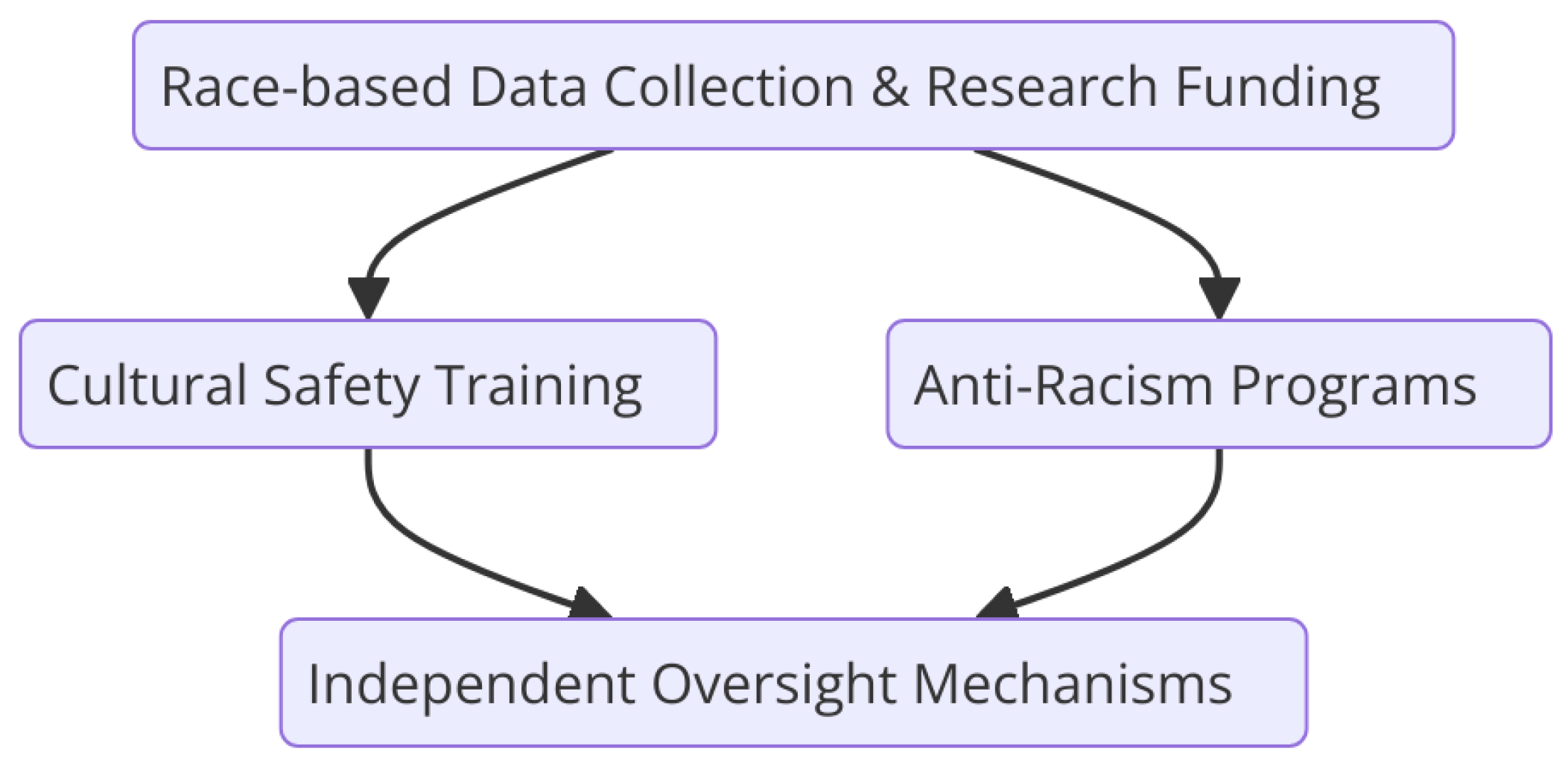
By establishing Independent Health Equity Oversight Boards, Canada can take a critical step forward in addressing systemic racism in healthcare. These boards would ensure accountability, transparency, and racial equity while holding institutions responsible for reducing healthcare disparities (24,27). A comprehensive roadmap for equitable healthcare reform is outlined in Figure 3, demonstrating the integration of data collection, training, and oversight mechanisms.
This flowchart outlines a systemic approach to addressing racial inequities in healthcare. It begins with Race-Based Data Collection and Research Funding as a foundational step, which informs the development of:
  • Cultural Safety Training: Educating healthcare professionals to provide care that respects the cultural identities of patients.
  • Anti-Racism Programs: Initiatives aimed at reducing biases and systemic discrimination within healthcare institutions.
These elements contribute to establishing Independent Oversight Mechanisms, ensuring accountability and continuous improvement in addressing healthcare disparities.

5. Conclusion and Call to Action

Systemic racism in Canadian medical care is institutionally entrenched in practice, professionals’ practice, and patient-provider relationships, producing racial inequality in access, quality, and workforce diversity (29). Cases such as Brian Sinclair and Joyce Echaquan represent life-threatening medical abandonment and Canada’s failure in its acute care system to discover and act on the medical needs of Indigenous patients (6,14).
Black and Indigenous clinicians face discriminatory recruitment, career development restrictions, and underrepresentation in leadership (23), as seen in Dr. Amos Akinbiyi’s workplace rejection and systemic disciplinary inequality (30). On the other hand, despite Canada’s doctor shortages, internationally trained physicians (ITPs) face underemployment through licensure restrictions and recruitment bias, as exemplified in Dr. Ismelda Ramirez’s case (8,16,10). All such systemic failures require immediate, focused policy interventions.
Policy and Leadership Call to Action
1. Dire Need for Healthcare Reforms
Canada must implement compulsory anti-racism training for medical professionals to address implicit bias and improve patient care (29). Race-based health information must be collected to assess inequity and inform policy reform (24). Credentialing processes must be reformed to ensure fair access for internationally trained medical professionals, eradicating unnecessary barriers that disproportionately impact racialized professionals (8). Additionally, review boards must be able to monitor racial inequity and implement anti-discrimination policies in medical institutions (5).
2. Healthcare Organizations and Associations Have a Responsibility
Institutional leaders can contribute to eradicating systemic racism through medical leadership diversity, ensuring a growing presence of Black, Indigenous, and racialized professionals in leadership roles (23). Fair hiring and promotion policies must be adopted to reverse workplace bias (24). Medical training must involve cultural competency education to promote care for racialized patients and counteract biases in providers (7). The Canadian Medical Association, provinces, and accrediting agencies must work towards actively institutionalizing these reforms and ensuring accountability.
3. Government Action: Health Equity Reforms
The federal and territorial governments must enact racial equity audits in medical centers, similar to workplace equity policies in other sectors (16). In addition, there must be investments in abolishing systemic credentialing barriers for ITPs, allowing qualified professionals trained abroad to practice in Canada. Community-based medical models must be expanded to incorporate Indigenous and culturally sensitive medical care, addressing racial inequity in healthcare access and delivery (16).
Potential for Long-term Systemic Change
Eradicating systemic racism in Canada’s medical system will lead to:
✔ Greater access to care
✔ Improved health outcomes for racialized communities
✔ A more diverse workforce
✔ Stronger public trust in medical institutions
Welcoming internationally trained physicians into Canada’s medical system will help alleviate doctor shortages and reduce healthcare costs. These reforms are a moral necessity and a practical imperative for ensuring that Canada’s universal medical system provides equitable, high-quality care for all.
Final Call to Action: Ending Systemic Racism in Healthcare
The experiences of Dr. Amos Akinbiyi, Brian Sinclair, Joyce Echaquan, and internationally trained physicians demonstrate the devastating consequences of systemic racism in healthcare. The burden of change falls on:
✅ Healthcare professionals who must challenge discrimination in medical settings.
✅ Medical institutions, which must implement and enforce anti-racism policies.
✅ Government agencies that must legislate accountability measures and systemic reforms.
✅ Academic researchers who must document racial disparities and advocate for policy transformation.
Systemic racism in Canadian medical care not only affects patients but also impedes career development for Indigenous medical professionals, excluding them from senior positions (23).
As Dr. Amos Akinbiyi stated:
“This is not new for SHA to do such a thing to some ethnic doctors, and I feel I’m duty-bound to see this through to a certain conclusion despite all the financial investment, despite all the burnout, for this is a work for generations to come, not for me.” [30]
The quest for racial equity in healthcare is not a short-term journey but a multi-generational commitment that demands institutional accountability, collective action, and systemic reform.
Evidence-Based Policy Models for Reform
To address systemic racism, Canada can draw lessons from successful international models that have proven effective in increasing healthcare equity and access.
New Zealand’s Cultural Safety Model: New Zealand adopted cultural safety training to tackle Indigenous health disparities, integrating Indigenous perspectives into medical training and practice [11]. Canada must adopt a similar model to rebuild trust between Indigenous communities, marginalized populations, and medical institutions.
Kaupapa Māori Action Research: This Indigenous-led model has improved Māori health outcomes in Aotearoa/New Zealand by identifying systemic obstacles and developing community-driven solutions [18]. Canada must fund Indigenous-led research and policy development to implement meaningful healthcare reforms.
Implicit Bias Reduction Programs: Studies show that habit-breaking interventions help medical professionals recognize and correct racial biases, resulting in fairer medical decision-making and improved patient-provider relationships [12]. Implementing such programs in Canada could reduce racial disparities in healthcare and enhance treatment outcomes.
Unlike Canada, countries like the UK and the US collect race-based health data to inform policy and track disparities [24]. The UK’s National Health Service (NHS) publishes annual reports on racial disparities, leading to targeted interventions. New Zealand’s cultural safety training has successfully reduced disparities for Māori populations, suggesting a similar model could be adapted for Indigenous healthcare in Canada [11].
Policy Implications for Canada
While race-based health data collection is critical for addressing disparities, challenges such as legal privacy concerns and inconsistent provincial policies have hindered its implementation [16]. Similarly, anti-racism training mandates face resistance from some healthcare professionals, who question its effectiveness and impact on workload [29].
Effective implementation requires:
✔ Sustained political commitment
✔ Clear accountability structures
✔ Dedicated funding for compliance
To integrate these evidence-based strategies, Canadian policymakers and healthcare leaders must prioritize:
✔ Mandatory cultural safety training for all healthcare professionals.
✔ Funding for Indigenous-led research and policy initiatives.
✔ Nationwide expansion of implicit bias training in medical education.
Canada’s Path Forward
Dismantling systemic racism in healthcare requires:
✔ Sustained interventions
✔ Institutional accountability
✔ Strong political will
Canada has the resources, research, and responsibility to act.
🔹 How many more Brian Sinclairs and Joyce Echaquans must suffer before Canada enacts systemic reforms?
The time for change is now.

Author Contributions

Kola Adegoke conceptualized the study, contributed to data collection, and led the manuscript writing. Abimbola Adegoke assisted with methodology development and literature synthesis. Both authors reviewed and approved the final manuscript. These authors contributed equally to this work.

Funding

No specific funding was received for this study.

Ethical Statement

This study did not involve human or animal subjects; hence, ethical approval was not required.

Consent Statement

Not applicable, as the study does not involve individual participants.

Conflict of Interest

The authors declare no conflicts of interest.

References

  1. Allan B, Smylie J. First Peoples, second class treatment: The role of racism in the health and well-being of Indigenous Peoples in Canada. Wellesley Institute. 2015. Available from: https://www.wellesleyinstitute.com/wp-content/uploads/2015/02/Full-Report-FPSCT-Updated.pdf.
  2. Béland D, Zarzeczny A. Medical tourism and national health care systems: An institutionalist research agenda. Global Health. 2018;14(1):68. [CrossRef]
  3. Blair IV, Steiner JF, Fairclough DL. Clinicians’ implicit ethnic/racial bias and perceptions of care among Black and Latino patients. Ann Fam Med. 2013;11(1):43–52. [CrossRef]
  4. Bombay A, Matheson K, Anisman H. The intergenerational effects of Indian residential schools: Implications for the concept of historical trauma. Transcult Psychiatry. 2014;51(3):320–38. [CrossRef]
  5. Boyer Y. Healing racism in Canadian health care. CMAJ. 2017;189(46):E1408–9. [CrossRef]
  6. British Columbia Ministry of Health. In plain sight: Addressing Indigenous-specific racism and discrimination in B.C. healthcare. 2020. Available from: https://engage.gov.bc.ca/app/uploads/sites/613/2020/11/In-Plain-Sight-Summary-Report.pdf.
  7. Browne AJ, Varcoe C, Lavoie J, et al. Enhancing health care equity with Indigenous populations: Evidence-based strategies from an ethnographic study. BMC Health Serv Res. 2016;16:544. [CrossRef]
  8. Chughtai W, Lee V. Canada has a doctor shortage, but thousands of foreign-trained physicians already here still face barriers. CBC News. 2025 Jan 17. Available from: https://www.cbc.ca/news/health/international-doctors-canada-barriers-1.7428598.
  9. Canadian Human Rights Commission. Discussion paper on systemic racism. 2023. Available from: https://www.chrc-ccdp.gc.ca/sites/default/files/2023-10/discussion_paper_on_systemic_racism.pdf.
  10. College of Family Physicians of Canada. Health and health care implications of systemic racism on Indigenous peoples in Canada. 2016. Available from: https://www.cfpc.ca/en/policy-innovation/health-policy-goverment-relations/cfpc-policy-papers-position-statements/racisim-indigenous-peoples.
  11. DeSouza R. Wellness for all: The possibilities of cultural safety and cultural competence in New Zealand. J Res Nurs. 2008;13(2):125–35. [CrossRef]
  12. Devine PG, Forscher PS, Austin AJ, Cox WT. Long-term reduction in implicit race bias: A prejudice habit-breaking intervention. J Exp Soc Psychol. 2012;48(6):1267–78. [CrossRef]
  13. Geary A. Ignored to death: Brian Sinclair’s death caused by racism, inquest inadequate, group says. CBC News. 2017 Sep 18. Available from: https://www.cbc.ca/news/canada/manitoba/winnipeg-brian-sinclair-report-1.4295996.
  14. Government of Canada. Check your Express Entry score. Immigration, Refugees and Citizenship Canada. Available from: https://www.canada.ca/en/immigration-refugees-citizenship/services/immigrate-canada/express-entry/check-score.html.
  15. Government of Canada. Minister of National Defense Advisory Panel on Systemic Racism and Discrimination: Final report. 2022. Available from: https://www.canada.ca/content/dam/dnd-mdn/documents/reports/2022/mnd-ap-final-report-7-jan-2022.pdf.
  16. Government of Canada. Government of Canada actions to address anti-Indigenous racism in health systems. 2023. Available from: https://www.sac-isc.gc.ca/eng/1611863352025/1611863375715.
  17. Government of Canada. Supporting Canada’s health workers by improving health workforce research, planning, and data. 2024. Available from: https://www.canada.ca/en/health-canada/news/2024/07/supporting-canadas-health-workers-by-improving-health-workforce-research-planning-and-data1.html.
  18. Kerr S, Penney L, Moewaka Barnes H, McCreanor T. Kaupapa Maori Action Research to improve heart disease services in Aotearoa, New Zealand. Ethn Health. 2009;15(1):15–31. [CrossRef]
  19. Loppie S, Reading C, de Leeuw S. Indigenous experiences with racism and its impacts. National Collaborating Centre for Aboriginal Health. 2014. Available from: https://www.nccih.ca/634/Indigenous_Experiences_with_Racism_and_its_Impacts.nccih?id=1016.
  20. Loppie Reading C, Wien F. Health inequalities and social determinants of Aboriginal peoples’ health. National Collaborating Centre for Aboriginal Health. 2009. Available from: https://www.ccnsa-nccah.ca/docs/determinants/RPT-HealthInequalities-Reading-Wien-EN.pdf.
  21. Mullan F. The metrics of the physician brain drain. N Engl J Med. 2005;353(17):1810–8. [CrossRef]
  22. OmiSoore D. Systemic Anti-Blackness in Healthcare: What the COVID-19 Pandemic Revealed about Anti-Black Racism in Canada. HealthcarePapers. 2023;21(3):9–23. Available from: https://www.longwoods.com/content/27196/healthcarepapers/systemic-anti-blackness-in-healthcare-what-the-covid-19-pandemic-revealed-about-anti-black-racism-i.
  23. Phillips-Beck W, Eni R, Lavoie JG, et al. Confronting racism within the Canadian healthcare system: Systemic exclusion of First Nations from quality and consistent care. Int J Environ Res Public Health. 2020;17(22):8343. [CrossRef]
  24. Public Health Agency of Canada. Inequalities in health of racialized adults in Canada. 2023. Available from: https://www.canada.ca/en/public-health/services/publications/science-research-data/inequalities-health-racialized-adults-18-plus-canada.html.
  25. Smedley BD, Stith AY, Nelson AR. Unequal treatment: Confronting racial and ethnic disparities in health care. National Academies Press; 2003. Available from: https://www.nap.edu/read/12875/chapter/1.
  26. Tankwanchi AB, Ozden C, Vermund SH. Physician emigration from sub-Saharan Africa to the United States: analysis of the 2011 AMA physician masterfile. PLoS Med. 2013;10(9):e1001513. [CrossRef]
  27. Walker R, St. Pierre-Hansen N, Cromarty H, et al. Measuring cross-cultural patient safety: Identifying barriers and developing performance indicators. Healthc Q. 2010;13(1):64–71. [CrossRef]
  28. Wellesley Institute. Racialized people’s perceptions of and responses to differential health care. Regent Park Community Health Centre; 2007. Available from: https://www.wellesleyinstitute.com/wp-content/uploads/2014/05/Racialized-Perceptions-and-Responses.pdf.
  29. Williams KKA, Baidoobonso S, Lofters A, et al. Anti-Black racism in Canadian health care: A qualitative study. BMC Public Health. 2024;24(3152). [CrossRef]
  30. Quon A. Doctor’s lawsuit against Sask. Health Authority alleges discrimination at Regina General Hospital. CBC News. 2025 Jan 31. Available from: https://www.cbc.ca/news/canada/saskatchewan/sha-lawsuit-doctor-discrimination-1.7443882.
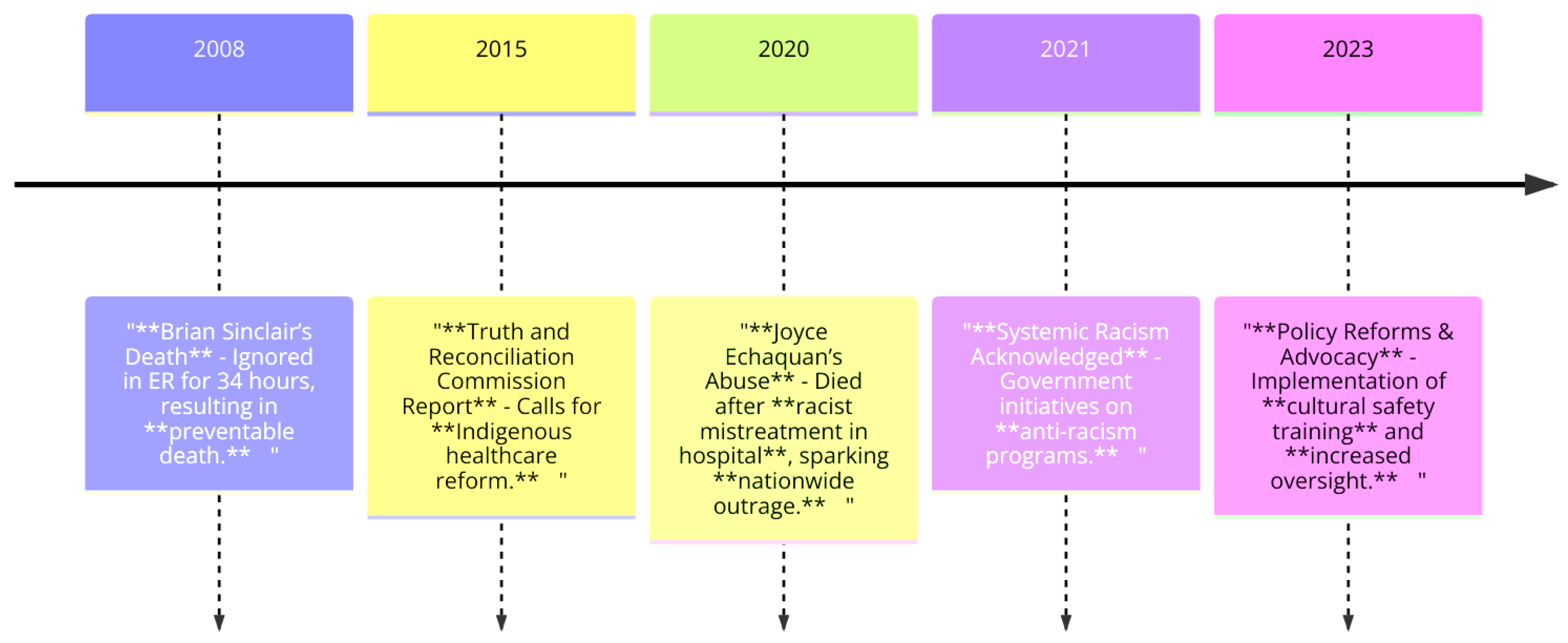
Figure 1. The timeline below depicts the timeline diagram of Systemic Racism in Canadian Healthcare:.
Preprints 149326 g001
Figure 2. Here is the graph diagram illustrating Systemic Racism in Canadian Healthcare.
Preprints 149326 g002
Figure 3. Roadmap to Equitable Healthcare Reform is represented in graphical form below.
Preprints 149326 g003
Disclaimer/Publisher’s Note: The statements, opinions and data contained in all publications are solely those of the individual author(s) and contributor(s) and not of MDPI and/or the editor(s). MDPI and/or the editor(s) disclaim responsibility for any injury to people or property resulting from any ideas, methods, instructions or products referred to in the content.
Copyright: This open access article is published under a Creative Commons CC BY 4.0 license, which permit the free download, distribution, and reuse, provided that the author and preprint are cited in any reuse.
Prerpints.org logo

Preprints.org is a free preprint server supported by MDPI in Basel, Switzerland.

Subscribe

Disclaimer

Terms of Use

Privacy Policy

Privacy Settings

© 2025 MDPI (Basel, Switzerland) unless otherwise stated