Preprint
Article

This version is not peer-reviewed.

Investigating Consumers' Perceptions and Motivations Behind Edible Insects in Greece: A Grounded Theory Approach

A peer-reviewed article of this preprint also exists.

Submitted:

08 February 2025

Posted:

11 February 2025

You are already at the latest version

Abstract

Background: Edible insects constitute a healthy food source with high nutritional value, promoted in coordinated efforts to address global food insecurity by providing a sustainable alternative to tradi-tional animal protein. The present study sought to explore consumers’ perceptions and attitudes to-ward insect consumption, and also define the main motivational factors influencing public awareness and acceptance toward entomophagy. Methods: Using a qualitative research design, individual-level data were selected from a sample of 70 consumers in Greece via semi-structured personal in-depth interviews. The Grounded Theory frame-work was adopted to develop awareness, perception and acceptance drivers. Results: Although a small proportion of participants completely ignored the usage of insects as food and food ingredients, the great majority demonstrated abhorrence toward entomophagy, describing feelings of disgust and repulsion. Furthermore, respondents seemed to be reluctant towards the inclusion of edible insects and insect-based food options available to consumer markets through the food pro-cessing businesses and food distribution channels. Food safety concerns were strong since many con-sumers seemed to question the regulations in insect cultivation and the preparation of insect-based foods. Conclusions: Lack of information and cultural influences were found to restrict consumers’ acceptance of entomophagy, whereas health and food safety concerns comprised an inhibiting factor in incorporating edible insects and insect components in the Greek cuisine. This study emphasized the need for a holis-tic information plan, which will help both food businesses and consumers understand the vital role of edible insects in modern food environments.

Keywords: 
;  ;  ;  ;  

1. Introduction

The growing world population is on the ministerial agenda of many nations since the need to provide enough high-quality food in a sustainable way is a challenge that will require multiple solutions to ensure food security and environmental quality [1]. Projections forecast that the population number will exceed 10 billion by 2050, exacerbating the worldwide food crisis [2]. To have the ability to satisfy the world's feeding demands, the overall food production between now and 2050 needs to increase up to 70 per cent [3]. As a result, ‘higher levels of input and output per unit of agricultural land area are required to produce a sufficient amount of food to nourish the population’ [4], although due to the shrinking amount of arable land and diminishing freshwater supplies, this is not a feasible scenario [5,6]. Recent evidence showed that none of the nations in the world can currently achieve the essential requirements for human wellbeing, while also managing environmental preservation norms [7,8].
Intensive agriculture practices and livestock result in a variety of environmental issues, and the production of animal protein has detrimental environmental costs. These issues include the loss of natural resources, greenhouse gas emissions intensifying global warming, and soil quality degradation [9,10]. Thus, it is of utmost significance to identify alternatives to traditional sources of animal protein [1] without jeopardizing the environmental integrity [4]. Multiple studies suggest edible insects to be the solution to all the aforementioned problems [11,12,13,14,15,16,17], since insect farms demand less land and energy, and compared to other agricultural outputs, the production is fast and constant [18]. Insects have unique physiological characteristics and biological structures that enable high efficiency in the conversion of protein into animal protein and feed energy into food energy with a lower environmental cost [8,19,20]. As a case in point, 3,000 times more water and 12.5 times more feed are needed to produce 1 kg of cattle in comparison to 1 kg of crickets [8]. Besides that, insects can grow on organic waste, solving the problem of waste management and the necessity for landfills [21].
In terms of human nutrition, edible insects’ nutritional value is comparable to that of other meat sources, and from a nutritional perspective the balance of their macro and micro components is even more beneficial in some species [22]. Edible insects constitute high energy-dense food products and are rich in antioxidants and vitamin B12 with a significant content of high-quality micronutrients, such as iron and zinc [19,23,24]. Their protein content ranges from 25% to 65% per 100 gm [25,26], and they also have a high content in mono-unsaturated fatty acids, Omega-3 and Omega-6 fatty acids [27]. However, edible insect consumption might abet health and nutrition risks associated with anti-nutrients included, such as oxalates, cyanides, phytic acid, tannins and hydrogen, which could have serious impacts on nutrients’ absorption, digestion and usage [16,23,28]. It seems that there is still a gap in ensuring food safety, especially in countries in which edible insects are harvested from the wild [29]. Another significant barrier to edible insect consumption is the widespread perception of insects as filthy pests and carriers of dangerous to human health zoonotic illnesses rather than as a wholesome food source [30,31]. Following recent evidence, although insects carry viruses and can infect humans through direct blood injection, it has not been documented that these viruses can spread through consumption (i.e. ingestion) [31,32]. The European Food Safety Authority evaluated the risk profile of insects used for food and feed indicating that both humans and vertebrate animals are at low risk from viruses [33].
The consumption of edible insects among human societies has a lengthy and opulent past. Evidence of people eating insects can be found in prehistoric archaeological sites, dating back thousands of years [34]. Even though in the continents of Africa, Asia, America, Australia, and the country of New Zealand people have consumed insects for centuries [35] (Ramos-Elorduy, 2009), in ancient Greece eating insects was quite uncommon. To a certain degree, however, some historical records reference the utilisation of specific insects as food for humans and feed for the animals. For instance, Aristotle mentioned that caterpillars were consumed in rural areas and they were used as fishing bait [36,37]. Furthermore, in the History of Animals, Aristotle mentioned the consumption of cicadas [38] (Mavrofridis & Petanidou, 2022). In more recent years, bee brood appeared to be a delicacy in the northern part of Andros Island, where locals used to include raw to well-cooked bee brood in their diet, a practice that took place up until the 1960s and was abandoned ever since [38] (Mavrofridis & Petanidou, 2022).
Although eating insects is increasingly becoming more popular on a global scale with over two billion people consuming them regularly [19], attitudes, perceptions and motivations for entomophagy vary greatly between countries. A great body of the literature has paid attention to a combination of cultural, psychosocial and behavioural factors, which influence individuals’ dietary patterns and shape the drivers of insect-based food acceptance [30,39,40,41,42,43,44] [Orsi et al., 2019; Sogari et al., 2019; Lorini et al., 2021; Modlinska et al., 2021; Florenca et al., 2022; Kamenidou et al., 2023; Gkinali et al., 2024). Recent evidence showed that in nations with established culinary heritage, such as Greece, France and Italy, customers were hesitant to try novel foods that they were not traditionally incorporated in their diet in comparison to the South and Latin America [45] (Bisconsin-Júnior et al., 2022), and other Western counties, such as Denmark, Belgium and the Netherlands [46,47] (La Barbera et al., 2018; Toti et al., 2020). In Denmark, edible insect-based foods were widely advertised on the media resulting to a greater consumer familiarity with entomophagy and its benefits, and a higher acceptance of insect-based products in the supermarkets [48] (Videbæk & Grunert, 2020). Similarly, consumers in Belgium were positive to find insect-based products in the supermarkets, particularly energy bars and sandwich spreads, where the insect ingredients were invisible in food [49] (Van Thielen et al., 2019). Comparably, in Finland, customers were more likely to buy products where the insect visibility was low and the insect was either grounded or incorporated in the dish [50,51] (Schäufele et al., 2019; Halonen, 2020). On the contrary, in France and Ireland, food neophobia and feelings of aversion were linked to entomophagy, with customers being unwilling to consume insects that were visible and not incorporated in foods [52] (Ranga et al., 2024). In Italy insects were perceived as a threat [40] (Lorini et al., 2021) and consumers who expressed neophobic reactions were less likely to try edible insects. According to Moruzzo et al.[53] (2021), edible insect-based foods were also perceived as disgusting, and consumer acceptance of entomophagy depended on an array of factors, such as the species of the insect, whether the insect would be visible or incorporated in the food, its life-stage and the type of the dish [54] (Tuccillo et al., 2020). Similarly, evidence from Poland showed that feelings of neophobia and disgust were predominant, and psychological barriers averted consumers from switching to alternative meat substitutes, such as insects [55] (Orkusz et al., 2020).
Edible insects and insect-based foods are not yet available in Greek food markets. A recent study noted that Greek consumers conveyed feelings of repulsion and disgust and seemed to reject the usage of insects as food options [44] (Gkinali et al., 2024). However, negative attitudes could be moderated if insects were incorporated in the food products and became unnoticeable to the customers. With respect to the young adult consumer segment, Kamenidou et al. [43] (2023) demonstrated that although Gen Zs seemed rather familiar with the aspects of entomophagy, young adults were unwilling to replace meat protein with insect protein, and engage in insect consumption. Communication strategies were deemed necessary to increase Gen Zs awareness, and provide information about entomophagy benefits for both human health and environmental ecosystems [43,56] (Gkitsas et al., 2023; Kamenidou et al., 2023). The present study sought to investigate consumers’ perceptions and attitudes towards entomophagy in Greece using qualitative data from a widespread national sample. It also explored individuals’ awareness of edible insect and insect-based food products, and the motivational factors that could help increase people’s willingness to try edible insects. Furthermore, the directions of insect-based foods acceptability were investigated in order to curb the barriers that restrict the adoption of edible insects in Greek consumers’ dietary patterns.

2. Materials and Methods

2.1. Theoretical framework of the study

The present study employed a qualitative research design to delve into the factors influencing individuals’ attitudes and perceptions towards entomophagy, and clarify the mechanism of consumer choice. Qualitative research approaches are employed to address complexities of human behaviours and explore social interactions in order to provide a clear understanding of the “real world issues” [57] (Lim, 2024). Qualitative approaches are also used when a concept has neither been developed before nor is deemed sufficient, and when objective phenomena provide inadequate explanation [58,59] (Taherdoost, 2022; Tenny et al., 2022). To accomplish the study’s goals, the Grounded Theory framework was adopted. Qualitative methods have been widely applied in current food research [60,61,62,63,64] (Bazhan et al., 2017; Eldesouky et al., 2019; Qi et al., 2020; Gyawali et al., 2022; Arviv et al., 2024), whereas the Grounded Theory approach allows researchers to investigate relationships and processes, which can explain and shape consumers’ behavioural intentions and decisions [65] (de Morais Sato et al., 2020).
Huston and Rowan [66] (1998) defined the grounded theory as the “generation of a theoretical model through the experience of observing a study population and developing a comparative analysis of their speech and behavior”. According to Creswell [67] (2007), the grounded theory comprises an appropriate tool for building an explanatory model, surpassing the mere description of a scenario. Since the grounded theory methodology is inductive, it is employed to investigate relationships attempting to explain why an event becomes apparent or why people may behave in a certain way [59,68] (Cleland, 2017; Tenny et al., 2022). An analytical presentation of the Grounded Theory approach is provided by Bryant [69] (2017).

2.2. Sample selection

Theoretical sampling techniques were adopted to select participants from all over Greece, representing various sociodemographic profiles [70,71] (Ligita et al., 2019; Shaheen & Pradhan, 2019). Sample sizes in qualitative research can be rather small for achieving saturation, especially in homogenous populations [72,73,74,75,76] (Guest et al., 2006; Francis et al., 2010; Coenen et al., 2012; Constantinou et al., 2017; Hennik & Kaiser, 2022). However, larger number of participants may help researchers better depict behavioural patterns by exploring a greater variety of perceptions and experiences, and also augment the possibilities of accomplishing data saturation [77,78,79,80] (Morse, 2015; Vasileiou et al., 2018; Mwita, 2022; Rahimi & Khatooni, 2024).
The sample size was set by using the inductive thematic saturation model as a standard for when to cease further data analysis. Following qualitative research fieldwork, the analysis of responses is key to what is known as inductive thematic saturation: when the emergence of new themes and new codes has plateaued. [81,82] (Bengtsson, 2016; Saunders et al., 2018). Since there is a great diversity in eating patterns and gastronomy tradition across Greece, we employed a sample of 70 participants, considering the necessity for a large-scale nationwide survey to ensure participation from all over the country (covering both the Greek mainland and the islands), to get an in-depth understanding of the topic of interest.

2.3. Data collection and analysis

Data were collected through personal in-depth interviews with selected individuals who expressed their interest in the study after seeing a Facebook advertisement post inviting participation in the study. A semi-structured questionnaire was outlined to understand individuals’ perceptions, attitudes, feelings and thoughts [83] (Hsieh & Shannon, 2005). The interview questions were open-ended and conveyed themes, such as participants’ awareness of entomophagy and familiarity with edible insects, as well as perceptions of eating edible insects and processed insects as a whole, or incorporating isolated edible insect components in food products. We also assessed individuals’ attitudes towards edible insect-based foods, the elements influencing consumption choice and purchase decisions, and viewpoints on the prospect of making edible insect-based food products available to the market through the food supply chain (i.e. grocery shops, supermarkets and restaurants). The main questions are presented below:
  • “Have you ever heard of the term entomophagy?”
  • “Are you aware of the benefits of eating edible insects?”
  • “Have you ever eaten edible insects before?”
  • “If yes, in what form (raw, cooked, grounded, or incorporated in food)?”
  • “What are your feelings towards entomophagy?”
  • “What are the images and thoughts that come to your mind when thinking of edible insects?”
  • “Are you willing to try edible insects?”
  • “Are you willing to try food that has edible insects incorporated into it?”
  • “What are your reasons to try edible insects?”
  • “How do you find the idea of having edible insects sold in grocery stores and having them incorporated into the menu of restaurants in the future in Greece?”
The interviews were tape-recorded and performed on Skype, and their duration was approximately 30-40 minutes. The qualitative data selection process was initialized on November 2024, and lasted one month. All participants were made aware of the study's specifics and were ensured personal data confidentiality. Participation was optional and voluntary, and participants were free to leave at any time with no repercussions. Furthermore, there were no time restrictions and respondents were free to share their experiences, thoughts and perceptions. Ethical approval was provided by the Democritus University of Thrace (DUTH/EC/23903/192).
The data analysis, as described in Figure 1, has been implemented according to the Grounded Theory framework [84,85,86,87,88] (Glaser & Strauss, 1967; Charmaz, 2006; Urquhart, 2013; Ünlü, 2015, 2018).
Data were analysed with the three-stage methods of open coding, axial coding, and selective coding [89] (Strauss & Corbin, 1990). During the open coding stage, a sub-category was created for codes that had a similar notion; these were the coding units [90] (Qureshi & Ünlü, 2020). During the axial coding step, the relationships between categories and between a category and its subcategories, were defined. The axial coding procedure eventually established each category's characteristics [91] (Wang et al., 2020). During the selective coding stage, a central category was chosen and the other categories that were connected to it, and the others, were then combined to establish and improve the theoretical background [92,93] (Walker & Myrick, 2006; Amiri et al., 2011). Comparisons were employed throughout to identify the characteristics of each notion, and all analyses were conducted in accordance with the raw data. Data saturation was achieved and the theoretical construction was completed when the new added information failed to create new categories [93] (Amiri et al., 2011).

3. Results

3.1. Participants’ profile

The sample participants presented a diverse range of demographic characteristics, including age, educational attainment and area of residence. In particular, seventy individuals participated in the interviews, of whom 30 were male (43% of the sample) and 40 were female (57% of the sample). Respondents’ age varied between 18 to 72 years with a mean age of 39 years. With regards to their educational level, 47% were university graduates, 27% had completed the basic secondary education and 26% were graduates of a Technical Educational Institute. Furthermore, 77% of the participants resided in the Greek mainland and the remaining 23% in the islands. Fish was a valuable source of animal protein for the 96% of the sample, followed by beef and chicken (94% of the sample), seafood (93% of the sample), turkey (89% of the sample) and pork (86% of the sample).

3.2. Grounded theory results

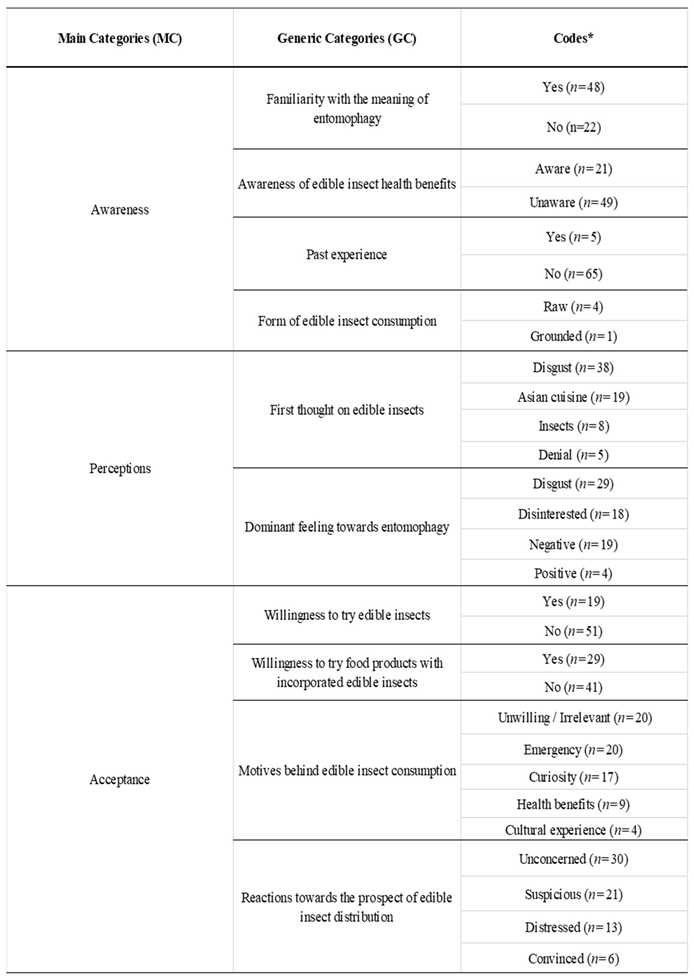
Participants' responses were organised on thematic categories. In total, there were developed three main categories (MC), ten generic categories (GC) and twenty-nine codes that showed the frequency of statements based on participants’ awareness, perception and acceptance of edible insects. The three MCs corresponded to:
  • Consumers’ awareness of entomophagy (MC1),
  • Consumers' perceptions of entomophagy (MC2),
  • Consumers' acceptance of edible insects (MC3).
The data abstraction process and the thematic categories developed from the analysis of participants’ responses are presented in Appendix A.

3.2.1. Participants’ awareness of entomophagy

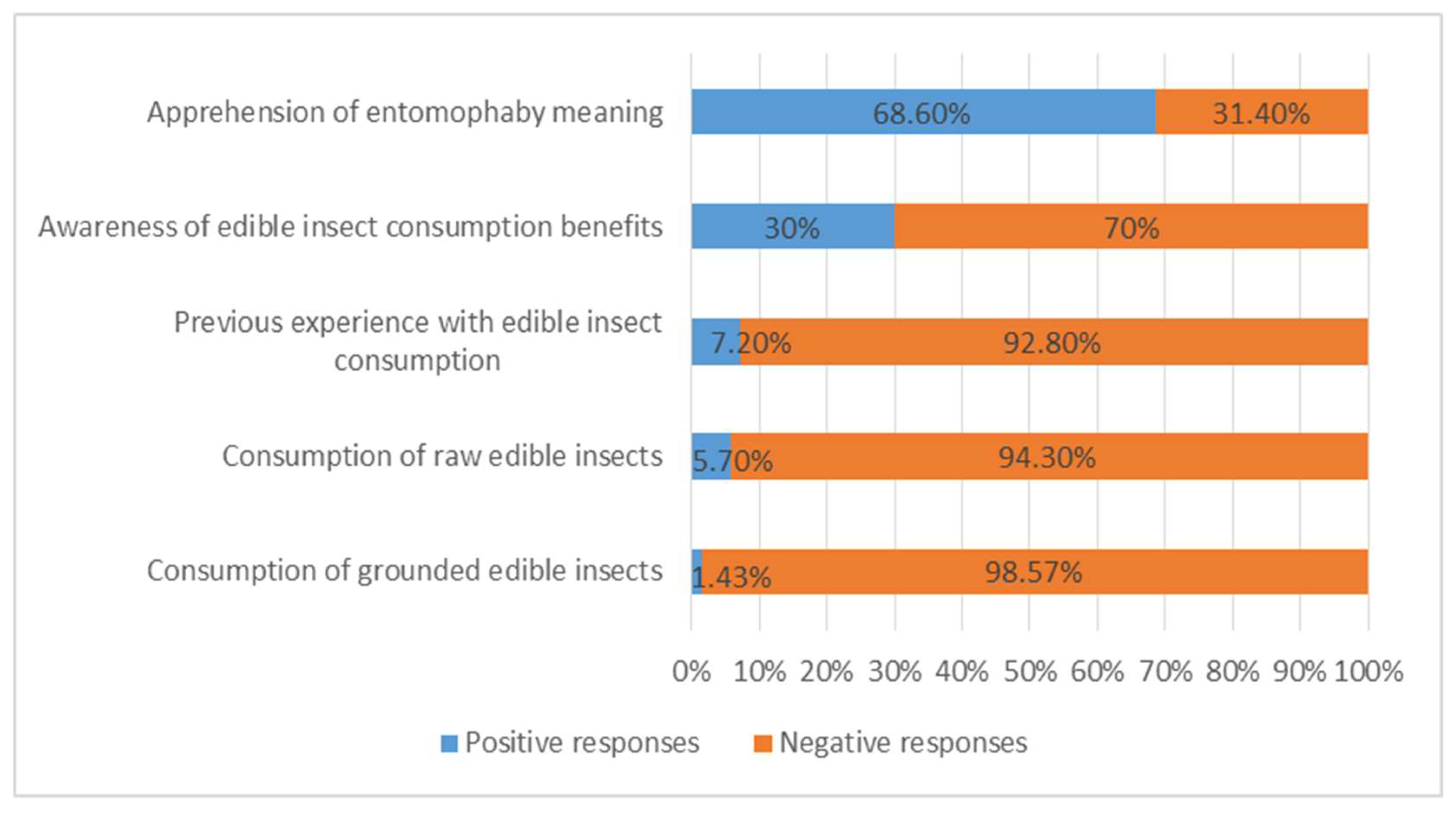
Participants demonstrated their awareness of edible insect consumption by explaining how they perceived entomophagy, entomophagy practices, and their potential benefits in human diet and health. Additional questions on previous eating experience with entomophagy and the type of edible insect consumed (raw, cooked, grounded, or incorporated in food) sought to provide a thorough understanding of consumers’ awareness towards the implementation of edible insects in Greek cuisine. The main findings are summarized in Figure 2. The great majority of participants responded positively when the question “Have you ever heard of the term entomophagy?” was asked. A great proportion of the respondents claimed that they were either acquainted with its meaning or perceived the term as self-explanatory due to its Greek root. Furthermore, almost equal proportions of male and female participants were familiar with the concept of entomophagy. More specifically, over half of both genders reported having been informed through social media, magazine articles, peers, TV advertisements and documentaries, although the information acquired seemed to be limited and somewhat vague.
Some of the participants' responses are presented below:
“Yes, I have heard this term before on the news and social media. More specifically, there was an article on Facebook that was detailing which insects have been approved for human consumption” (Participant 2, female, 59 years old).
“I have heard this term before; it is about the consumption of edible insects. Lately, I have seen it mentioned in various articles online, some (people) were for it and some others were against it” (Participant 5, female, 65 years old).
“No, I have never heard of this term before. However, I have watched some documentaries on TV where people in China ate insects, so I assume this might be it?” (Participant 1, male, 36 years old).
Obliviousness was expressed by the majority of the sample (code: Unaware) in regards to their awareness of edible insect consumption benefits. Several participants mentioned that they had never heard of any benefits before, expressing their doubts as to whether there is any positive contribution of entomophagy to health and nutrition. Furthermore, suspicion and hesitation were displayed among a significant proportion of respondents in terms of the potential benefits of edible insect-based food consumption. Their feedback is provided below:
“Even if the government imposes entomophagy on us, I think there are no benefits at all, and fake research results will be published to convince us that there are” (Participant 25, male, 24 years old).
“No, I don't think there could be any benefits at all” (Participant 55, male, 41 years old).
“I have never been informed, and I really don’t care” (Participant 26, male, 34 years old).
A minor proportion of respondents expressed feelings of impartiality and detachment, showing a lack of motivation to try edible insects, or even learn about their nutritional content and their health aspects.
“I am not aware of any potential benefits but even if there were, entomophagy is such a strange and unfamiliar concept to me that those benefits would never convince me to adopt entomophagy and include edible insects in my everyday diet” (Participant 34, male, 41 years old).
“I would never eat insects; hence, I have never searched for any potential benefits that they may have. For instance, I do not like green peas so what is the point of researching for their benefits if I am not going to eat them?” (Participant 36, male, 36 years old).
On the contrary, 30% of the sample responded positively and raised opinions of apprehension regarding the advantages of edible insect consumption (code: Aware). Some of them considered edible insects a good source of protein, noting that they could help reduce world hunger, either consumed raw or processed:
“Good source of protein. I've seen documentaries that showed gorillas eating ants for this very reason” (Participant 21, male, 24 years old).
“As far as I am concerned edible insects are rich in fatty acids and protein. I read somewhere in an online article that their nutritional value is compared to the one of orange juice and olive oil” (Participant 56, male, 38 years old).
“I am not very informed but I am under the impression that the consumption of edible insects will alleviate world hunger” (Participant 29, female, 33 years old).
When the participants were asked if they had ever eaten edible insects before, only a small proportion of them (5 out of the 70 participants) mentioned a past experience, declaring that they had tried raw insects in salads while on a trip abroad, or grounded in cereal bars and flour.
“Yes, I have eaten insects in cereal bars. You cannot tell the difference in flavour, they were delicious” (Participant 3, male, 64 years old).

3.2.2. Participants’ perceptions of entomophagy

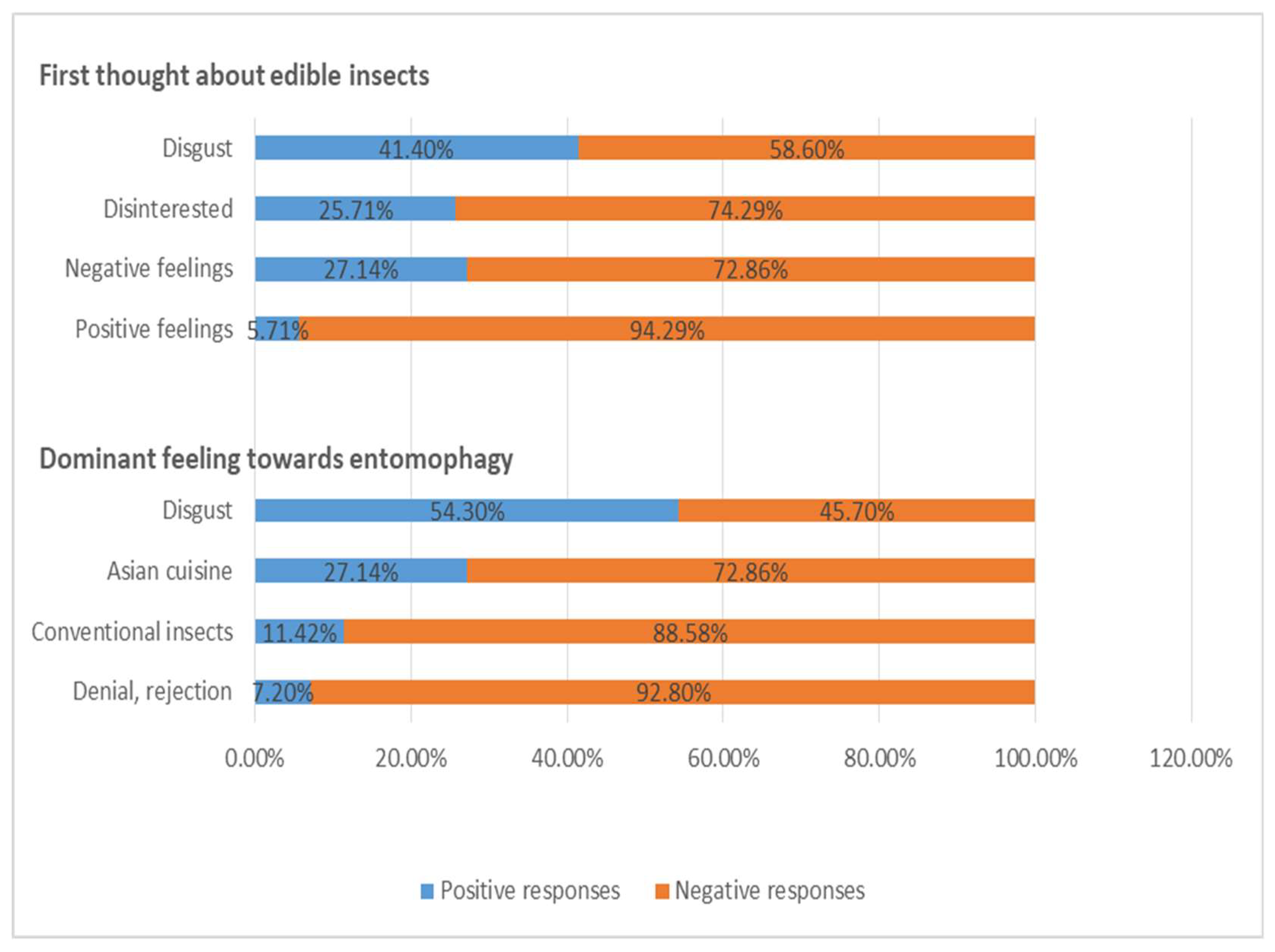
The participants’ perceptions of entomophagy were expressed through a description of their dominant feelings towards edible insect consumption and through sharing the first thoughts on the prospect of “eating bugs”. The main findings are summarized in Figure 3.
Of the 70 participants, twenty-nine (41.4% of the sample) described senses of disgust, aversion and nausea as their dominant feelings towards entomophagy (code: Disgust). Nineteen participants (27.14% of the sample) showed negative feelings of disappointment, embarrassment and frustration towards consuming edible insects (code: Negative), whereas approximately 26% of the sample mentioned either a lack of interest in insect-based foods or mistrust to how insect-based components are implemented in processed foods (code: Disinterested). Relevant respondents’ expressions are reported below:
“I do not have certain feelings about the concept of entomophagy. Unlike other countries where entomophagy is immersed in their culture, in Greece we do not consume edible insects. Thus, I haven’t put much thought into it” (Participant 7, female, 23 years old).
“I have negative feelings but I do not object to anyone who consciously chooses to eat edible insects. However, I am not in support of the misinformation and misapprehension surrounding the subject, i.e. I am opposed to the addition of substances derived from edible insects into food. People are not aware that these substances are implemented into our diet. They may be included on the food labels but they are given fancy names that are unknown to the public. Ultimately, we do not know what we are eating” (Participant 35, female, 52 years old).
However, only a small number of participants expressed positive feelings and satisfaction towards entomophagy, underlining the necessity for an effective food control system to assure the safety and quality of insect-based food products (code: Positive). For instance, the following statements were provided:
“I am willing to try edible insects if they were approved and certified as a food option” (Participant 9, female, 28 years old).
“I have positive images of the food in Chinese markets where they sell bug kebabs (insect skewers)” (Participant 12, female, 29 years old).
When the participants were asked about the thoughts/images they evoked on entomophagy, over half of them expressed disgust and aversion, mixing up edible insect food components with dirty, unhealthy or inappropriate food constituents (code: Disgust). However, a few respondents explained that their apparent curiosity on such types of newly introduced foods might overcome any other obstacles, motivating them to experiment with entomophagy and processed edible insect-based foods.
“I am disgusted but curious at the same time about their flavour. I would try edible insects because I like challenges” (Participant 1, male, 36 years old).
“I am angry because they try to force entomophagy as something natural when it is not. Humans should not be eating insects” (Participant 36, male, 36 years old).
In addition, edible insect consumption seemed to enclose cultural dimensions. Thus, a notable proportion of respondents considered entomophagy a dietary style influenced by the Asian culture and cuisine, and also believed that it could not be adapted to the dietary habits and preferences established in Greek society (code: "Asian cuisine").
“I think of something salty, crunchy and tasty like crisps. Something to whet your appetite. It would potentially go well with cocktails” (Participant 12, female, 29 years old).
However, a few participants highlighted the perceived delicacy of cooked and processed edible insects, claiming that they could comprise delicatessen food products for special dinners and social gatherings.
“Asian food markets, a Chinese habit, a foreign concept in comparison to our diets” (Participant 16, female, 31 years old).
Several participants also noted that unwittingly restrain themselves from exploring new/novel food items, and therefore edible insects could never comprise for them an alternative food source. For this specific consumer segment “insects are just insects” (code: Insects). Furthermore, a small group of respondents mentioned that they were opponent to entomophagy and were reluctant to share their thoughts about edible insects (code: Denial).
“I refrain from eating edible insects and will continue to do so in the future. I have no images and thoughts to share” (Participant 15, male, 30 years old).

3.2.3. Participants’ acceptance of entomophagy

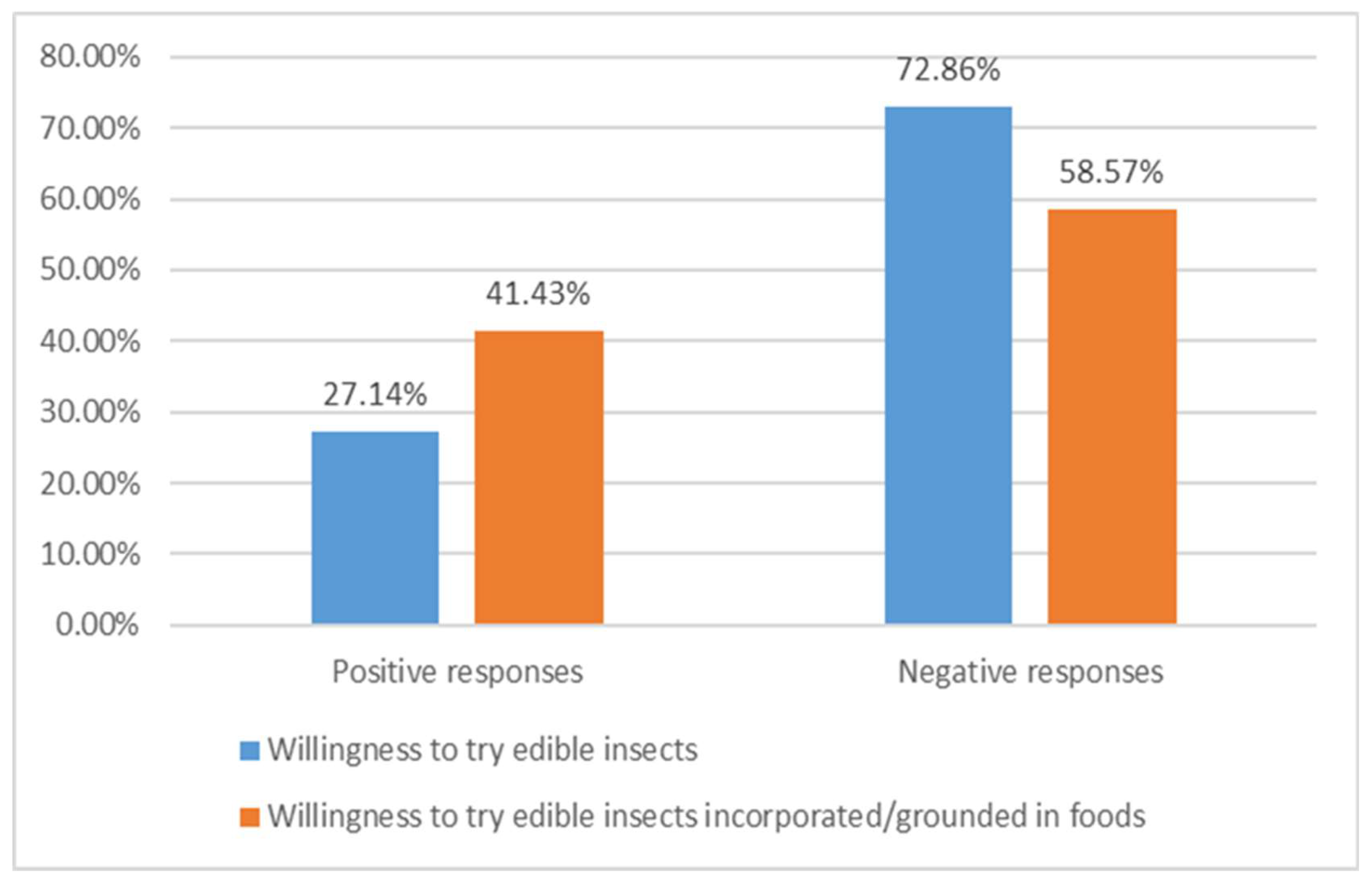
Participants’ acceptance of entomophagy was explored through individuals’ willingness to try/taste edible insects (either raw or incorporated/grounded in food items), their motivations towards entomophagy engagement, and their perceptions on the prospect of edible insects being distributed through supermarkets and grocery stores, and also being incorporated into the restaurant menus. The main findings showed that a significant proportion of respondents (approximately 27%) seemed proponent to entomophagy, explaining that they would rather try edible insects in the near future (Figure 4). Furthermore, the share of consumers revealing attitudes in favour of edible insect consumption was even higher in case of food items with incorporated/grounded insects or insect constituents (approximately 41.4%). However, the great majority of the sample respondents seemed convinced that they would never eat edible insects unless during a traveling experience or due to specific medical conditions. When participants were asked if they would be willing to include edible insects in their dietary routine in a future-time perspective, all of the sample participants expressed negative views, mostly annoyance and frustration.
Some of the participants’ statements are listed below:
“No, not in Greece but perhaps if I was on a trip in Asia” (Participant 13, female, 26 years old).
“No, I consider insects disgusting and I do not even think of eating them - unless I was under a specific medical treatment” (Participant 36, male, 36 years old).
“Yes, but it depends on the type of insect. For instance, I cannot fathom the idea of eating insects that have an exoskeleton” Participant 7, female, 23 years old).
“Yes, if the insects were incorporated in food and I was not aware of it” (Participant 17, female, 42 years old).
“I am willing to eat edible insects if the insect is hidden and not seen. Preferably, if the insect was grounded it would make the transition to an edible insect diet easier” (Participant 7, female, 23 years old).
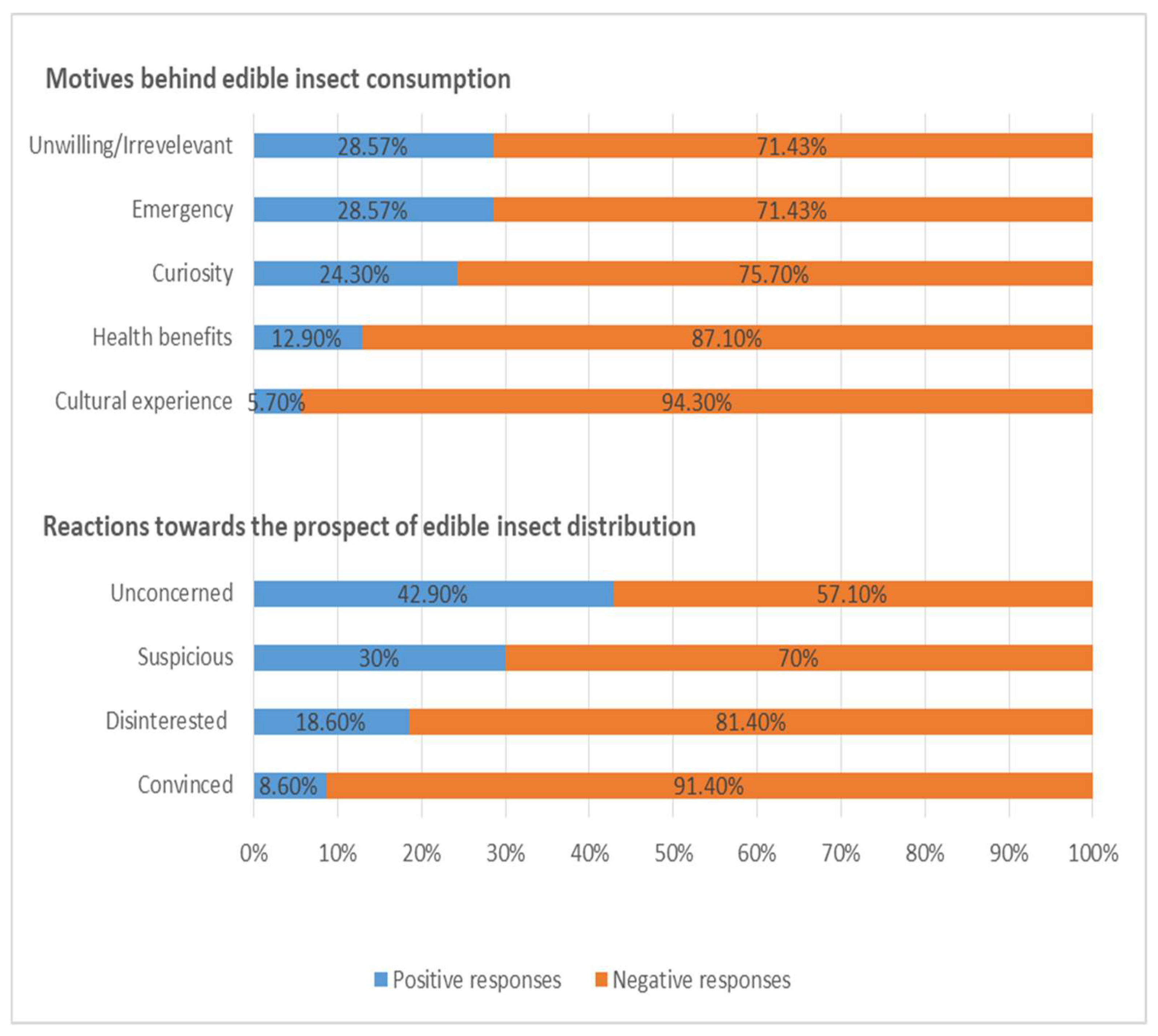
With respect to consumers’ motivations for adopting entomophagy, a significant proportion (approximately 29% of the sample) disclosed their unwillingness, explaining that they felt awkward even in the thought of trying edible insects, and also questioned the hygiene and safety of insect-based foods (code: Unwilling/ Irrelevant) (Figure 5). However, a significant share of respondents attested that they could adapt to entomophagy under a state of emergency (i.e. war or hunger), although adopting a plant based dietary pattern (e.g. vegan) instead would constitute a more reachable option (code: Emergency). More specifically, they professed:
“Edible insects are an unsuitable food option for humans” (Participant 30, male, 33 years old),
“This is an irrelevant question; I have already said that I am disgusted. I will feel sorry for myself if we reach that low point in life where edible insects will be part of our diet in Greece” (Participant 52, female, 41 years old).
“If I was very hungry or we were under war” (Participant 20, male, 44 years old).
“If we were in a state of emergency but if I am being honest, I would much rather convert to veganism than eat insects” (Participant 23, female, 56 years old).
Several participants also agreed that curiosity about the taste, smell and texture of the edible insects would comprise a strong motive for their consumption, noting that it would be best if they were served cooked (code: Curiosity):
“I am curious and that is the only reason why I would ever try edible insects. Having said that though, I would never substitute meat for insects. I like the taste of meat” (Participant 1, male, 36 years old).
“I am curious about their flavour. In France, people eat frog legs and snails, which is not much different than eating edible insects, right?” (Participant 45, female, 38 years old).
Furthermore, medical reasons and anticipated health benefits constituted additional motivations for edible insect consumption (code: Benefits), whereas expectations for new cultural experiences also stimulated participants’ interest in entomophagy (code: Cultural experience). For instance, participants said:
“If something is beneficial to human health then I see no reason why we should not try it. However, Greece is a country where the majority of its citizens are superstitious and do not believe in science so I think it will be difficult to convince them to eat bugs, even in case there were real health benefits” (Participant 56, male, 38 years old).
“As part of a cultural experience. Also, if they were served in a gourmet, fine dining restaurant” (Participant 7, female, 23 years old).
When participants were asked how they would react at the prospect of edible insect being distributed through the food system in Greece, and also incorporated in restaurant menus, there was a noticeable variation in responses, which were categorised under four different codes. In particular, almost one-third of respondents seemed unconcerned to that perspective, noting that it could not cause them any discomfort or anxiety, especially in case edible insects were marketed in smart packaging and placed on separate shelves in food stores (code: Unconcerned).
“As long as they were sold in packages, then I would not have a problem with it” (Participant 44, female, 38 years old).
On the contrary, a significant proportion of the sample participants expressed distress about edible insect distribution through the food chain in the near future, declaring that they would never support businesses selling “bugs” to customers (code: Distressed).
“I am not happy about it. I would rather move to another country than shop from grocery stores where bugs are sold” (Participant 55, male, 41 years old).
“I would be devastated if this were to happen and I would boycott businesses that sell edible insects” (Participant 70, female, 45 years old).
Several participants seemed to perceive edible insect sales as an unrealistic prospect, considering infeasible their implementation in Greek diet and cuisine. Furthermore, respondents were suspicious about the safety and the hygiene of edible insect-based food options, underlining the necessity to build sophisticated food systems with control standards that meet international requirements (code: Suspicious):
“I do not care if this will happen in the future, but I think it is insane. Grocery stores pay a lot towards making sure their stores are disinfected, so why sell insects?” (Participant 8, female, 22 years old).
Lastly, only a few participants (8.6%) seemed to support the development of edible insect distribution systems in the food environment, emphasizing the impacts of the modern agricultural production and livestock systems on natural resources, and the need to introduce more environmentally friendly food options to account for rising environmental concerns (code: Convinced).
“Intensive agriculture and farming have detrimental effects on the environment, so consuming edible insects in the future comes with no surprise to me. I would be willing to try foods with edible insects but only if they were not very expensive. For instance, I would not buy an expensive cake that was made out of insect flour” (Participant 1, male, 36 years old).
“I think this possibility is very much going to happen shortly. It takes a lot of energy to produce mincemeat, so I am hoping that one day we will eat insect burgers that are much more environmentally friendly, in comparison” (Participant 29, female, 22 years old).

4. Discussion

Despite continued efforts by experts to promote edible insects as an environmentally friendly source of protein, our study found that entomophagy is not widely accepted among consumers in Greece with only a small segment of participants willing to try edible insects. A finding that is consistent with other studies focusing on the acceptance of entomophagy in both Greece and other European countries [43,53,94,95,96,97] (Verbeke, 2015; Myers and Pettigrew, 2018; Piha et al., 2018; Moruzzo et al., 2021; Giotis and Drichoutis, 2021; Kamenidou et al., 2023). Edible insect consumption is not practised as insect-based goods are not available in the market, therefore, consumers display a limited familiarity with entomophagy. Lack of knowledge and consumers' feelings of disgust lead to an overall negative attitude that requires a carefully designed strategy to change consumers' well-rooted beliefs.

4.1. Participants’ awareness of entomophagy

The ability of consumers to comprehend the concept of entomophagy and understand the term, even if they had not eaten insects before, was reported by Halonen et al. [51] (2022). Participants of the current study displayed an accurate assumption of the concept of entomophagy, even though a limited number of them practiced it, due to the fact that the word entomophagy is derived from the Greek language. Understanding the term came as a natural occurrence to the majority of the participants but an overall pessimistic attitude heralded our findings subsequent to the unappealing idea of consuming edible insects. The reasons are multi-faceted. In Greece many idioms and proverbs refer to insects, generating negative feelings and, thus, influencing consumers' food choices. Once people are exposed to repetitive linguistic conditions their beliefs change and they express conscious feelings of disgust [98,99] (Casas and Hernández Campoy, 1995; Meyer-Rochow and Kejonen, 2020). The high percentage of consumers diverging from consuming edible insects could also be that insect-based dishes are clashing with the traditional Greek flavours and are not welcomed, or even accepted, by their peers. Celebrity endorsement, peers' opinions and message framing are all factors determining the food choices people make and cannot be overlooked [100,101] (Sogari, 2015; Legendre and Baker, 2021). The same attitude applies among other European countries where insect acceptance has not scaled [51,55] (Orkusz et al., 2020; Halonen et al., 2022) due to food preferences, cultural distaste for entomophagy and insufficient legislation [39,94,102,103,104] (Halloran et al., 2014; Verbeke, 2015; Deroy et al., 2015; Lombardi et al., 2018; Sogari et al., 2019), despite them being available in the market.
The lack of consumers’ previous experience with edible insects is attributed to the fact that insect-based goods are not yet available in the food industry in Greece. As participants were not exposed to insect-based goods and dishes, they illustrated obliviousness to the nutritional value of edible insects reaching the point of ignorance. Kamenidou et al. [43] (2023) in Greece, reported similar findings with none of their study’s participants engaging in entomophagy which is in line with Orsi et al. [30] (2019) in Germany and Lorini et al. [40] (2021) in Italy demonstrating the need for proper public education to enhance the awareness of the edible insects’ nutritional characteristics.
Participants were more likely to opt for edible insects and edible insect-based goods if the insect was cooked and/or grounded as they viewed it less challenging when the novel ingredient is incorporated into a dish. Orkusz et al. [55] (2020) in Poland and Halonen et al. [51] (2022) in Finland reported similar findings as they claimed there is a higher chance for consumers' disposition to entomophagy to increase, when the insect is in a processed form (grounded or cooked) and undetectable. However, it is not just the insect visibility, or lack thereof, that controls consumers’ ability to accept entomophagy. Consumers with a poorer educational background are also less prone to buy edible insects, although in the context of the present study highly educated participants still declined the opportunity to practice entomophagy, contradicting previous studies claiming that consumers with an extensive educational background are inclined to eat novel foods [94,105,106,107,108] (Verbeke, 2015; Caparros Megido et al., 2016; Menozzi et al., 2017; Mancini et al., 2019; Zielinska et al., 2020).
Consumers in Western countries prefer conventional animal protein to insect-based [109,110] (Hartmann and Siegrist 2016; House 2016), a notion that matches the beliefs of consumers in Greece who, regardless of the benefits of insect-based foods, hold that insects are not a food choice [43] (Kamenidou et al., 2023). It appears that the participants are yet to accept entomophagy which highlights the need to educate the public about their diet's carbon footprint and the nutritional benefits of consuming edible insects. Furthermore, it may be critical to examine marketing strategies from a consumer psychology angle [101] (Legendre and Baker, 2021) that are employed to promote alternative protein.

4.2. Participants’ perceptions of entomophagy

The possibility of entomophagy in Greece is frowned upon, as it is in many other Western nations [30,111] (Bodenheimer, 2013; Orsi and Stranieri, 2019) with negative preconceptions [112,113] (Hartmann et al., 2015; Mishyna et al., 2020), leading to consumer rejection and resulting in negative emotions, denial and apathy on the subject. Consumers in our study did not consider edible insects as a primary food source or as a feed ingredient, potentially due to the lack of knowledge regarding the benefits and a total incomprehension on the safety of insect-based goods. Feelings of aversion and disgust were communicated leading to a rejection of edible insects for fear of food poisoning, sickness and unpleasantness with participants claiming that pests are disease vectors. On the whole, the idea of practising entomophagy was either disturbing or generated feelings of refusal. These findings on participants’ perception of entomophagy are consistent with other studies [47,106,114,115,116,117,118,119] (Ruby et al., 2015; Sheppard and Frazer, 2015; Shockley et al., 2017; Sogari et al., 2017; Menozzi et al., 2017; Nystrand and Olsen, 2020; Toti et al., 2020; Bae and Choi, 2020) where participants described almost identical feelings towards entomophagy, profoundly demonstrating the need for consumers’ education on the matter and the design of a clear legal framework on edible insects’ consumption in Greece that would reassure and appease consumers.

4.3. Participants’ acceptance of entomophagy

Food neophobia is a significant obstacle to the integration of novel foods including insect-based food options in the human diet [43,44,46] (La Barbera et al., 2018; Kamenidou et al., 2023; Gkinali et al., 2024), consequently when the participants of our study faced questions that included an unfamiliar food option, fear dominated their acceptance. Considering that entomophagy is not practised in Greece and the barriers to the acceptance of edible insects by consumers are many, our findings are interesting due to partial acceptance of entomophagy on the condition that the insect would be grounded and not on display, and/or that it would occur as part of a cultural experience during a trip abroad. Ostensibly, it is clear that the prospects of accepting entomophagy in Greece rely on the manner a dish or product is presented, insect clarity in food and the cultural circumstances the dish is prepared and served. In this context, an establishment of a series of culinary products made out of grounded edible insects coupled with a positive messaging marketing promotion would have the prospect of consumers appeal in Greece following the example of the Dutch [110] (House, 2016). It is also important to target certain consumer groups that are more likely to accept, taste and endorse these food options to their peers as when consumers enjoy novel food options this can lead to approval and over exploration [120] (Teodorescu & Erev, 2014). In all likelihood, these groups are consumers who have had a past experience with entomophagy and are more inclined to consume edible insects again. Lensvelt and Steenbekkers [121] (2014) concluded the same for consumers in Australia and the Netherlands. Informed consumers changed their perception of the practice. A strategy's likelihood of success in one nation may not apply to another, however, psychological motivation needs to be considered to include insects in the Greek diet.
Participants had no intention to alter their pattern of animal protein consumption and had a strong belief that edible insects would never be sold in the Greek market with a small percentage favouring the idea. On account of this, their reasons for trying edible insects would be curiosity and being in a state of emergency. Potential health benefits were another driver of acceptance as it has also been reported in the past the health benefits of different kinds of food influence behaviours more than views [107] (Mancini et al., 2019). Hedonistic eating values surpassed utilitarian eating values by a wide margin as participants believe insects have no utilitarian aspect, a finding that was also reported by Norwegian consumers [118] (Nystrand & Olsen, 2020). Hedonic values control consumer decision [122] (Cramer & Antonides, 2011), therefore, for edible insect foods to be commercially successful in Greece, the food industry needs to increase their hedonic value, and also inform the public about the health benefits they bring to the table. The production of confectionary products, snacks and appetizers that contain edible insects, such as cereal bars made out of grounded edible insects, and insect chips strongly flavoured with spices is likely to triumph in the Greek market. In conclusion, it is important to educate consumers in Greece about entomophagy in the broadest sense while understanding consumers' food preferences to increase the acceptance of entomophagy. Attitudes must change for consumers to make informed decisions, therefore, there is a deep necessity for public education.
Study limitations
The study has some limitations. The study participants had to discuss about fictitious foods and dishes while eliciting their valuations, since insect-based products are not available in Greece. It is still possible that our participants experienced hypothetical biases even though we followed all the recommended steps outlined in the literature to account for or lessen them. Future studies combining both qualitative and quantitative research designs could provide an integrated picture of consumers’ attitudes and perceptions towards edible insects and motivations behind entomophagy.

5. Conclusions

The current study provides a new understanding of consumers' perceptions and motivations behind entomophagy in Greece based on a theoretical framework that analyses the components impacting individuals’ insights and strives to define the means of consumers’ options. Given the abundance of studies suggesting that edible insects are the liberators of famine and a considerable source of protein [123,124,125,126,127] [Adegboye et al., 2021; Puzari, 2021; Peshuk et al., 2022; Shirolapov et al., 2023; Doi et al., 2021], this study stretches the argument by encompassing social and psychological factors, such as the participants’ past experiences with edible insects, and their thoughts and feelings and how these are intertwined with their beliefs. The study also issues knowledge on consumers’ perception by providing their reactions to edible insects’ availability in the Greek market. In Greece, a small share of the food market product abundance is dedicated to delicacies from the ‘Ethnic Cuisine’ category. These widely accepted commodities (noodles, tortillas, sauces and dips) are advertised as ‘exotic’ and are endorsed by celebrities, influencers and TV cooking shows manufacturing them to the public eyes as ordinary and everyday products in a supportive way. Had it not been for the seal of approval and enormous influence of the mass media, consumers would have not accepted them. That being the case, it is apparent that a collective movement should take place with the mass media, and hospitality and food industries involved to alter the beliefs consumers in Greece have towards edible insects and allow them to welcome this protein source in their diet.
As far as we are concerned, the key step to establishing entomophagy in Greece is to make known to the public that edible insects are safe for human consumption. The employment of academics, health specialists, doctors and dieticians to broadcast their knowledge on the benefits of consuming edible insects, and the health advantages and environmental implications of eating alternative proteins is another step in forming potentially the first segment of consumers that would adopt entomophagy. This could be achieved by teaching relevant courses at schools, distributing educational posters with nutritional facts across all hospitals and health care centres in the country, and having recipes that include edible insects available at the food markets. Online advertisements, TV cooking shows and targeted social media posts should also be materialised to reach all audiences and groups. To arouse curiosity free food samples that include edible insects as one of their ingredients, could also be handed out to consumers at supermarkets and food courts. These trials could be a determinant to convert people to loyal customers of the product. Within the relevance of this work, future research should be conducted to popularise the study’s results, develop strategies and involve stakeholders to allow for the best approach to entomophagy acceptance in Greece while meeting consumers’ demands and expectations.

Author Contributions

Conceptualization, A.F, E.R, K.P, E.T. and T.V.; methodology, A.F, E.R, K.P, E.T. and T.V.; software, validation, A.F, E.R, K.P, E.T. and T.V.; formal analysis, A.F, E.R, K.P, E.T. and T.V.; investigation, A.F, E.R, K.P, E.T. and T.V.; resources, A.F, E.R, K.P, E.T. and T.V; data curation, A.F, E.R, K.P, E.T. and T.V.; writing—original draft preparation, A.F, E.R, K.P, E.T. and T.V.; writing—review and editing, A.F, E.R, K.P, E.T. and T.V visualization, A.F, E.R, K.P, E.T. and T.V.; supervision, E.R.; project administration, E.L., and T.V.; funding acquisition, T.V. All authors have read and agreed to the published version of the manuscript.

Funding

This research received no external funding.

Data Availability Statement

no new data were created.

Conflicts of Interest

The authors declare no conflicts of interest.

Appendix A Thematic categories developed from data abstraction (N=70)
Preprints 148736 i001

References

  1. Verneau, F., Amato, M., & Barbera, F. L. (2021). Edible insects and global food security. Insects 12: 472. [CrossRef]
  2. Ghosh, A., Kumar, A., & Biswas, G. (2024). Exponential population growth and global food security: challenges and) alternatives. In Bioremediation of Emerging Contaminants from Soils (pp. 1-20). Elsevier.
  3. Falcon, W. P., Naylor, R. L., & Shankar, N. D. (2022). Rethinking global food demand for 2050. Population and Development Review, 48(4), 921-957. [CrossRef]
  4. Montoya-Martínez, A. C., Parra-Cota, F. I., & de Los Santos-Villalobos, S. (2022). Beneficial Microorganisms in sustainable agriculture: harnessing microbes’ potential to help feed the world. Plants, 11(3), 372. [CrossRef]
  5. Dinar, A., Tieu, A., & Huynh, H. (2019). Water scarcity impacts on global food production. Global Food Security, 23, 212-226. [CrossRef]
  6. Lin, J., Huang, J., Prell, C., & Bryan, B. A. (2021). Changes in supply and demand mediate the effects of land-use change on freshwater ecosystem services flows. Science of the Total Environment, 763, 143012. [CrossRef]
  7. O’Neill, D. W., Fanning, A. L., Lamb, W. F., & Steinberger, J. K. (2018). A good life for all within planetary boundaries. Nature sustainability, 1(2), 88-95. [CrossRef]
  8. Guiné, R. P., Correia, P., Coelho, C., & Costa, C. A. (2021). The role of edible insects to mitigate challenges for sustainability. Open Agriculture, 6(1), 24-36. [CrossRef]
  9. Chaparro-Encinas, L. A., Santoyo, G., Peña-Cabriales, J. J., Castro-Espinoza, L., Parra-Cota, F. I., & Santos-Villalobos, S. D. L. (2021). Transcriptional regulation of metabolic and cellular processes in durum wheat (Triticum turgidum subsp. durum) in the face of temperature increasing. Plants, 10(12), 2792.
  10. Connolly, S., O'Flaherty, V., & Krol, D. J. (2023). Inhibition of methane production in cattle slurry using an oxygen-based amendment. Journal of Cleaner Production, 394, 136272. [CrossRef]
  11. Maracchi, G. (2012). Cambiamenti climatici e agricoltura del futuro: una rivoluzione smart. Georgofili: atti dell'Accademia dei Georgofili: Serie VIII, Vol. 9, Tomo I, 2012, 34-49.
  12. Palmieri, N., Perito, M. A., Macrì, M. C., & Lupi, C. (2019). Exploring consumers’ willingness to eat insects in Italy. British Food Journal, 121(11), 2937-2950. [CrossRef]
  13. Aravind, L., & Devegowda, S. (2019). Alternative food production and consumption: Evolving and exploring alternative protein supplement potential through Entomoceuticals. Int. J. Chem. Stud, 7, 1393-1397.
  14. Palmieri, N., & Forleo, M. B. (2020). The potential of edible seaweed within the western diet. A segmentation of Italian consumers. International Journal of Gastronomy and Food Science, 20, 100202. [CrossRef]
  15. Van Huis, A. (2020). Insects as food and feed, a new emerging agricultural sector: a review. Journal of Insects as Food and Feed, 6(1), 27-44. [CrossRef]
  16. Imathiu, S. (2020). Benefits and food safety concerns associated with consumption of edible insects. NFS journal, 18, 1-11. [CrossRef]
  17. Halonen, V., Uusitalo, V., Levänen, J., Sillman, J., Leppäkoski, L., & Claudelin, A. (2022). Recognizing potential pathways to increasing the consumption of edible insects from the perspective of consumer acceptance: Case study from finland. Sustainability, 14(3), 1439. [CrossRef]
  18. Van Huis, A., & Oonincx, D. G. (2017). The environmental sustainability of insects as food and feed. A review. Agronomy for Sustainable Development, 37, 1-14.
  19. Lange, K. W., & Nakamura, Y. (2021). Edible insects as future food: chances and challenges. Journal of future foods, 1(1), 38-46. [CrossRef]
  20. Borges, M. M., da Costa, D. V., Trombete, F. M., & Câmara, A. K. F. I. (2022). Edible insects as a sustainable alternative to food products: An insight into quality aspects of reformulated bakery and meat products. Current Opinion in Food Science, 46, 100864. [CrossRef]
  21. Bava, L., Jucker, C., Gislon, G., Lupi, D., Savoldelli, S., Zucali, M., & Colombini, S. (2019). Rearing of Hermetia illucens on different organic by-products: Influence on growth, waste reduction, and environmental impact. Animals, 9(6), 289.
  22. Guiné, R. P., Florença, S. G., Costa, C. A., Correia, P. M., Ferreira, M., Cardoso, A. P., ... & Damarli, E. (2022). Investigation of the level of knowledge in different countries about edible insects: cluster segmentation. Sustainability, 15(1), 450. [CrossRef]
  23. da Silva Lucas, A. J., de Oliveira, L. M., Da Rocha, M., & Prentice, C. (2020). Edible insects: An alternative of nutritional, functional and bioactive compounds. Food chemistry, 311, 126022.
  24. Nowakowski, A. C., Miller, A. C., Miller, M. E., Xiao, H., & Wu, X. (2022). Potential health benefits of edible insects. Critical Reviews in Food Science and Nutrition, 62(13), 3499-3508.
  25. Xiaoming, C., Ying, F., Hong, Z. and Zhiyong, C. (2010) Review of the nutritive value of edible insects. FAO Regional Office for Asia and the Pacific, Bangkok, Thailand „Forest insects as food: humans bite back” (Chiang Mai, Thailand, 19-21 February 2008). In Proceedings of a workshop on Asia-Pacific resources and their potential for development. Chiang Mai (93-98).
  26. Oonincx, D. G. A. B., & Finke, M. D. (2021). Nutritional value of insects and ways to manipulate their composition. Journal of insects as food and feed, 7(5), 639-659. [CrossRef]
  27. Gamboni, M., Carimi, F., & Migliorini, P. (2012). Mediterranean diet: an integrated view. SUSTAINABLE DIETS AND BIODIVERSITY.
  28. Grdeń, A.S.; Sołowiej, B.G. Macronutrients, Amino and Fatty Acid Composition, Elements, and Toxins in High-Protein Powders of Crickets, Arthrospira, Single Cell Protein, Potato, and Rice as Potential Ingredients in Fermented Food Products. Appl. Sci. 2022, 12, 12831. [CrossRef]
  29. Murefu, T. R., Macheka, L., Musundire, R., & Manditsera, F. A. (2019). Safety of wild harvested and reared edible insects: A review. Food Control, 101, 209-224. [CrossRef]
  30. Orsi, L., Voege, L. L., & Stranieri, S. (2019). Eating edible insects as sustainable food? Exploring the determinants of consumer acceptance in Germany. Food Research International, 125, 108573. [CrossRef]
  31. Khalil, R., Kallas, Z., Haddarah, A., El Omar, F., & Pujolà, M. (2021). Impact of COVID-19 pandemic on willingness to consume insect-based food products in Catalonia. Foods, 10(4), 805. [CrossRef]
  32. Dossey, A.T.; Morales-ramos, J.A.; Rojas, M.G. Insects as Sustainable Food Ingredients. Production, Processing, and Food Applications; Academic Press: Cambridge, MA, USA, 2016; ISBN 9780128028568.
  33. European Food Safety Authority (EFSA), Gkrintzali, G., Georgiev, M., Matas, R. G., Maggiore, A., Giarnecchia, R., ... & Bottex, B. (2024). EFSA's activities on emerging risks in 2022 (Vol. 21, No. 9, p. 8995E).
  34. Raubenheimer, D.; Rothman, J.M. Nutritional ecology of entomophagy in humans and other primates. Annu. Rev. Entomol. 2013, 58, 141–160. [CrossRef]
  35. Ramos-Elorduy, Julieta (2009). "Anthropo-Entomophagy: Cultures, Evolution And Sustainability". Entomological Research. 39 (5): 271–288. [CrossRef]
  36. Dalby, A., & Grainger, S. (1996). The classical cookbook. Getty Publications.2002; ISBN 978-0-89236-394-0.
  37. Olivadese, M., & Dindo, M. L. (2023). Edible insects: a historical and cultural perspective on entomophagy with a focus on Western societies. Insects, 14(8), 690. [CrossRef]
  38. Mavrofridis, G., Petanidou, T. (2022) Bee brood as traditional human food on Andros Island, Greece, Journal of Apicultural Research. [CrossRef]
  39. Sogari, G.; Menozzi, D.; Mora, C. The food neophobia scale and young adults’ intention to eat insect products. Int. J. Consum. Stud. 2019, 43, 68–76. [CrossRef]
  40. Lorini, C., Ricotta, L., Vettori, V., Del Riccio, M., Biamonte, M. A., & Bonaccorsi, G. (2021). Insights into the predictors of attitude toward entomophagy: The potential role of health literacy: A cross-sectional study conducted in a sample of students of the University of Florence. International Journal of Environmental Research and Public Health, 18(10), 5306. [CrossRef]
  41. Modlinska K, Adamczyk D, Goncikowska K, Maison D, Pisula W: The effect of labelling and visual properties on the acceptance of foods containing insects. Nutrients 2020, 12:E2498.
  42. Florença, S.G.; Guiné, R.P.F.; Gonçalves, F.J.A.; Barroca, M.J.; Ferreira, M.; Costa, C.A.; Correia, P.M.R.; Cardoso, A.P.; Campos, S.; Anjos, O.; et al. The Motivations for Consumption of Edible Insects: A Systematic Review. Foods 2022, 11, 3643. [CrossRef]
  43. Kamenidou IE, Mamalis S, Gkitsas S, Mylona I, Stavrianea A. Is Generation Z Ready to Engage in Entomophagy? A Segmentation Analysis Study. Nutrients. 2023 Jan 19;15(3):525. [CrossRef] [PubMed] [PubMed Central]
  44. Gkinali, A. -A., Matsakidou, A., Michailidis, A., & Paraskevopoulou, A. (2024). How Do Greeks Feel about Eating Insects? A Study of Consumer Perceptions and Preferences. Foods, 13(19), 3199. [CrossRef]
  45. Bisconsin-Júnior, A., Rodrigues, H., Behrens, J. H., da Silva, M. A. A. P., & Mariutti, L. R. B. (2022). “Food made with edible insects”: Exploring the social representation of entomophagy where it is unfamiliar. Appetite, 173, 106001. [CrossRef]
  46. La Barbera, F., Verneau, F., Amato, M., & Grunert, K. (2018). Understanding Westerners’ disgust for the eating of insects: The role of food neophobia and implicit associations. Food quality and preference, 64, 120-125.
  47. Toti, E., Massaro, L., Kais, A., Aiello, P., Palmery, M., & Peluso, I. (2020). Entomophagy: A narrative review on nutritional value, safety, cultural acceptance and a focus on the role of food neophobia in Italy. European Journal of Investigation in Health, Psychology and Education, 10(2), 628-643.
  48. Videbæk, P. N., & Grunert, K. G. (2020). Disgusting or delicious? Examining attitudinal ambivalence towards entomophagy among Danish consumers. Food Quality and Preference, 83, 103913. [CrossRef]
  49. Van Thielen, L., Vermuyten, S., Storms, B., Rumpold, B., & Van Campenhout, L. (2019). Consumer acceptance of foods containing edible insects in Belgium two years after their introduction to the market. Journal of Insects as Food and Feed, 5(1), 35-44. [CrossRef]
  50. Schäufele, I., Barrera Albores, E., & Hamm, U. (2019). The role of species for the acceptance of edible insects: Evidence from a consumer survey. British Food Journal, 121(9), 2190-2204. [CrossRef]
  51. Halonen, V. (2020). Exploring Finnish consumers' acceptance and potential to increase insect use as food. Masters thesis. LAHTI UNIVERSITY OF TECHNOLOGY, LITHUANIA, https://lutpub.lut.fi/bitstream/handle/10024/161778/Diplomity%C3%B6_Halonen_Vilma.pdf?sequence=1&isAllowed=y. Accessed February 2025.
  52. Ranga, L., Vishnumurthy, P., & Dermiki, M. (2024). Willingness to consume insects among students in France and Ireland. Irish Journal of Agricultural and Food Research, 62(1), 108-129. [CrossRef]
  53. Moruzzo, R., Mancini, S., Boncinelli, F., & Riccioli, F. (2021). Exploring the acceptance of entomophagy: a survey of Italian consumers. Insects, 12(2), 123. [CrossRef]
  54. Tuccillo, F., Marino, M. G., & Torri, L. (2020). Italian consumers’ attitudes towards entomophagy: Influence of human factors and properties of insects and insect-based food. Food Research International, 137, 109619. [CrossRef]
  55. Orkusz, A., Wolańska, W., Harasym, J., Piwowar, A., & Kapelko, M. (2020). Consumers’ attitudes facing entomophagy: Polish case perspectives. International Journal of Environmental Research and Public Health, 17(7), 2427. [CrossRef]
  56. Gkitsas, S., Kamenidou, I., Mamalis, S., Mylona, I., Pavlidis, S., & Stavrianea, A. (2023, September). Generation Z Gender Differences in Barriers to Engage in Entomophagy: Implications for the Tourism Industry. In The International Conference on Strategic Innovative Marketing and Tourism (pp. 1-8). Cham: Springer Nature Switzerland.
  57. Lim, W. M. 2024. What Is Qualitative Research? An Overview and Guidelines. Australasian Marketing Journal 1–31 https://journals.sagepub.com/doi/epub/10.1177/14413582241264619.
  58. Taherdoost, H. (2022) What are Different Research Approaches? Comprehensive Review of Qualitative, Quantitative, and Mixed Method Research, Their Applications, Types, and Limitations. Journal of Management Science & Engineering Research 5, 53-63. [CrossRef]
  59. Tenny S, Brannan JM, Brannan GD. Qualitative Study. [Updated 2022 Sep 18]. In: StatPearls [Internet]. Treasure Island (FL): StatPearls Publishing; 2024 Jan-. Available from: https://www.ncbi.nlm.nih.gov/books/NBK470395/.
  60. Bazhan, M., Nastaran Keshavarz-Mohammadi, Hedayat Hosseini, Naser Kalantari. Consumers’ awareness and perceptions regarding functional dairy products in Iran: A qualitative research British Food Journal, Vol. 119 No. 2, 2017, pp. 253-266.
  61. Eldesouky A, Mesias FJ, Escribano M. Perception of Spanish consumers towards environmentally friendly labelling in food. Int J Consum Stud. 2020; 44: 64–76. [CrossRef]
  62. Qi, X.; Yu, H.; Ploeger, A. Exploring Influential Factors Including COVID-19 on Green Food Purchase Intentions and the Intention–Behaviour Gap: A Qualitative Study among Consumers in a Chinese Context. Int. J. Environ. Res. Public Health 2020, 17, 7106. [CrossRef]
  63. Gyawali, P., Tamrakar, D., Shrestha, A., Shrestha, H., Karmacharya, S., Bhattarai, S., Bhandari, N., Malik, V., Mattei, J., Spiegelman, D., & Shrestha, A. (2022). Consumer acceptance and preference for brown rice—A mixed-method qualitative study from Nepal. Food Science & Nutrition, 10, 1864–1874. [CrossRef]
  64. Arviv, B., Amir Shani, Yaniv Poria. Delicious – but is it authentic: Consumer perceptions of ethnic food and ethnic restaurants. Journal of Hospitality and Tourism Insights, Vol. 7 No. 4, 2024, pp. 1934-1948. [CrossRef]
  65. de Morais Sato, P., Marcia Thereza Couto, Jonathan Wells, Marly Augusto Cardoso, Delanjathan Devakumar, Fernanda Baeza Scagliusi,Mothers' food choices and consumption of ultra-processed foods in the Brazilian Amazon: A grounded theory study, Appetite, Volume 148, 2020, 104602. [CrossRef]
  66. Huston P, Rowan M. Qualitative studies. Their role in medical research. Can Fam Physician. 1998 Nov;44:2453-8. [PMC free article].
  67. Creswell J.W.. Qualitative inquiry and research design. Choosing among five approaches (2nd ed.), Sage Publications, London, Thousand Oaks, New Delhi (2007).
  68. Cleland JA. The qualitative orientation in medical education research. Korean J Med Educ. 2017 Jun;29(2):61-71. [PMC free article. [CrossRef]
  69. Bryant A. Grounded theory and grounded theorizing – Pragmatism in research practice. Oxford University Press, USA, 2017.
  70. Ligita, T., Harvey, N., Wicking, K., Nurjannah, I., and Francis, K. A practical example of using theoretical sampling throughout a grounded theory study A methodological paper. Qualitative Research Journal Vol. 20 No. 1, 2020 pp. 116-126.
  71. Shaheen, M., Sudeepta Pradhan and Ranajee 2019. Sampling in Qualitative Research chapter 2.
  72. Guest, G., Bunce, A., & Johnson, L. (2006). How many interviews are enough? An experiment with data saturation and variability. Field methods, 18(1), 59-82.
  73. Francis, J. J., Johnston, M., Robertson, C., Glidewell, L., Entwistle, V., Eccles, M. P., & Grimshaw, J. M. (2010). What is an adequate sample size? Operationalising data saturation for theory-based interview studies. Psychology and health, 25(10), 1229-1245. [CrossRef]
  74. Coenen, M., Stamm, T. A., Stucki, G., & Cieza, A. (2012). Individual interviews and focus groups in patients with rheumatoid arthritis: A comparison of two qualitative methods. Quality of life research, 21, 359-370. [CrossRef]
  75. Constantinou, C. S., Georgiou, M., & Perdikogianni, M. (2017). A comparative method for themes saturation (CoMeTS) in qualitative interviews. Qualitative research, 17(5), 571-588. [CrossRef]
  76. Hennink, M., & Kaiser, B. N. (2022). Sample sizes for saturation in qualitative research: A systematic review of empirical tests. Social science & medicine, 292, 114523. [CrossRef]
  77. Morse J.M. Vol. 25. Sage Publications Sage CA; Los Angeles, CA: 2015. pp. 587–588. (Data were saturated).
  78. Vasileiou, K., Barnett, J., Thorpe, S. et al. Characterising and justifying sample size sufficiency in interview-based studies: systematic analysis of qualitative health research over a 15-year period. BMC Med Res Methodol 18, 148 (2018). [CrossRef]
  79. Mwita K. Factors influencing data saturation in qualitative studies. International Journal of Research in Business and Social Science. 2022;11(4):414–420. 2147-4478.
  80. Rahimi S, Khatooni M. Saturation in qualitative research: An evolutionary concept analysis. Int J Nurs Stud Adv. 2024 Jan 5;6:100174. [CrossRef]
  81. Bengtsson, M. How to plan and perform a qualitative study using content analysis. Nurs. Plus. Open. 2016, 2, 8–14.
  82. Saunders, B.; Sim, J.; Kingstone, T.; Baker, S.;Waterfield, J.; Bartlam, B.; Burroughs, H.; Jinks, C. Saturation in qualitative research: Exploring its conceptualization and operationalization. Qual. Quant. 2018, 52, 1893–1907.
  83. Hsieh, H.F.; Shannon, S.E. Three Approaches to Qualitative Content Analysis. Qual. Health Res. 2005, 15, 1277–1288. [CrossRef]
  84. Glaser, B. G. (1978). Theoretical sensitivity. University of California,. ISBN: 0686248929 (br.).
  85. Charmaz K. (2006). Constructing grounded theory: A practical guide through qualitative analysis. Sage. https://scholar.google.com/scholar_lookup?title=Constructing+grounded+theory%3A+A+practical+guide+through+qualitative+analysis&author=K.+Charmaz&publication_year=2006.
  86. Urquhart, C. (2022). Grounded theory for qualitative research: A practical guide. Grounded Theory for Qualitative Research, 1-100.
  87. Ünlü Z. (2015). Exploring teacher-student classroom feedback interactions on EAP writing: A Grounded theory approach [Unpublished doctoral thesis]. University of Warwick Centre for Applied Linguistics. https://scholar.google.com/scholar_lookup?title=Exploring+teacher-student+classroom+feedback+interactions+on+EAP+writing%3A+A+Grounded+theory+approach&author=Z.+%C3%9Cnl%C3%BC&publication_year=2015.
  88. Ünlü Z. (2018). Grounded theory method in applied linguistics. Bogazici University Journal of Education, 35(2), 51–66. dergipark.org.tr/en/pub/buje/issue/44507/554744 https://scholar.google.com/scholar_lookup?title=Grounded+theory+method+in+applied+linguistics&author=Z.+%C3%9Cnl%C3%BC&publication_year=2018&pages=51-66.
  89. Strauss, A. L., & Corbin, J. M. (1990). Basics of qualitative research : Grounded theory procedures and techniques. Sage Publications.
  90. Qureshi, H. A., & Ünlü, Z. (2020). Beyond the Paradigm Conflicts: A Four-Step Coding Instrument for Grounded Theory. International Journal of Qualitative Methods, 19. [CrossRef]
  91. Wang, M., Bai,L., Gong,S., Huang, L., 2020. Determinants of consumer food safety self-protection behavior– an analysis using grounded theory. Food Control 113 (2020) 107198. [CrossRef]
  92. Walker, D., & Myrick, F. (2006). Grounded theory: An exploration of process and procedure. Qualitative Health Research, 16(4), 547. [CrossRef]
  93. Amiri, P., Ghofranipour, F., Ahmadi, F., Hosseinpanah, F., Montazeri, A., Jalalifarahani, S., et al. (2011). Barriers to a healthy lifestyle among obese adolescents: A qualitative study from Iran. International Journal of Public Health, 56(2), 181–189. [CrossRef]
  94. Verbeke, W. (2015). Profiling consumers who are ready to adopt insects as a meat substitute in a Western society. Food Quality and Preference, 39, 147–155.
  95. Myers, G., & Pettigrew, S. (2018). A qualitative exploration of the factors underlying seniors' receptiveness to entomophagy. Food Research International, 103, 163–169. [CrossRef]
  96. Piha, S., Pohjanheimo, T., Lähteenmäki-Uutela, A., Křečková, Z., & Otterbring, T. (2018). The effects of consumer knowledge on the willingness to buy insect food: An exploratory cross-regional study in northern and Central Europe. Food Quality and Preference, 70, 1–10.
  97. Giotis,T., Drichoutis, A.C., 2021. Consumer acceptance and willingness to pay for direct and indirect entomophagy, Q Open, Volume 1, Issue 2, 2021, qoab015, . [CrossRef]
  98. Casas, R.M.; Hernández Campoy, J.M. A sociolinguistic approach to the study of idioms: Some anthropolinguistic sketches. Cuad. Filol. Ingl. 1995, 4, 43–61.
  99. Meyer-Rochow, V.B., Kejonen, A. (2020). Could Western Attitudes towards Edible Insects Possibly be Influenced by Idioms Containing Unfavourable References to Insects, Spiders and other Invertebrates? Foods 2020, 9, 172;. [CrossRef]
  100. Sogari, G. Entomophagy and Italian consumers: An exploratory analysis. Prog. Nutr. 2015, 17, 311–316.
  101. Legendre, T.S., and Baker, M.A. (2021) The gateway bug to edible insect consumption: interactions between message framing, celebrity endorsement and online social support. International Journal of Contemporary Hospitality Management Vol. 33 No. 5, 2021 pp. 1810-1829 © Emerald Publishing Limited 0959-6119. [CrossRef]
  102. Halloran A., Mnke-Svendsen C., Van Huis A., Vantomme P. (2014) “Insects in the human food chain: global status and opportunities,” Food Chain, 4: 103–18. [CrossRef]
  103. Deroy, O.; Reade, B.; Spence, C. The insectivore's dilemma, and how to take the West out of it. Food Qual. Prefer. 2015, 44, 44–55.
  104. Lombardi, A.; Vecchio, R.; Borrello, M.; Caracciolo, F.; Cembalo, L. Willingness to pay for insect-based food: The role of information and carrier. Food Qual. Prefer. 2018, 72, 177–187. [CrossRef]
  105. Caparros Megido, R.; Gierts, C.; Blecker, C.; Brostaux, Y.; Haubruge, E.; Alabi, T.; Francis, F. Consumer acceptance of insect-based alternative meat products in Western countries. Food Qual. Prefer. 2016, 52, 237–243. [CrossRef]
  106. Menozzi, D., Sogari, G., Veneziani, M., Simoni, E., & Mora, C. (2017). Eating novel foods: An application of the theory of planned behaviour to predict the consumption of an insect-based product. Food Quality and Preference, 59, 27–34. [CrossRef]
  107. Mancini, S.; Moruzzo, R.; Riccioli, F.; Paci, G. European consumers' readiness to adopt insects as food. A review. Food Res. Int. 2019, 122, 661–678. [CrossRef]
  108. Zielinska, E.; Zielinski, D.; Karas, M.; Jakubczyk, A. Exploration of consumer acceptance of insects as food in Poland. J. Insects Food Feed 2020, 6, 383–392. [CrossRef]
  109. Hartmann C., Siegrist M. (2016) “Becoming an insectivore: results of an experiment,” Food Quality and Preference, 51: 118–22.
  110. House J. (2016) “Consumer acceptance of insect-based foods in the Netherlands: academic and commercial implications,” Appetite, 107: 47–58. [CrossRef]
  111. Bodenheimer F.S. Insects as Human Food: A Chapter of the Ecology of Man. Springer; Cham, Switzerland: 2013.
  112. Hartmann C., Shi J., Giusto A., Siegrist M. The Psychology of Eating Insects: A Cross-Cultural Comparison between Germany and China. Food Qual. Prefer. 2015; 44:148–156. [CrossRef]
  113. Mishyna M., Chen J., Benjamin O. Sensory Attributes of Edible Insects and Insect-Based Foods—Future Outlooks for Enhancing Consumer Appeal. Trends Food Sci. Technol. 2020; 95:141–148. [CrossRef]
  114. Ruby M. B., Rozin P., Chan C. (2015) “Determinants of willingness to eat insects in the USA and India,” Journal of Insects as Food and Feed, 1(3): 215–25.
  115. Sheppard, B., & Frazer, P. (2015). Comparing social and intellectual appeals to reduce disgust of eating crickets. Studies in Arts and Humanities, 1(2), 4–23. [CrossRef]
  116. Shockley, M., Allen, R. N., & Gracer, D. (2017). Product development and promotion. Insects as food and feed: From production to consumption (pp. 398–419). Wageningen, The Netherlands: Wageningen Academic Publishers.
  117. Sogari, Giovanni & Menozzi, Davide & Mora, Cristina. (2016). Exploring young foodies׳ knowledge and attitude regarding entomophagy: A qualitative study in Italy. International Journal of Gastronomy and Food Science. 7. [CrossRef]
  118. Nystrand, B. T., Olsen, S. O. (2020). Consumers’ attitudes and intentions toward consuming functional foods in Norway. Food Quality and Preference, 80, 103827. [CrossRef]
  119. Bae Y, Choi J. Consumer acceptance of edible insect foods: an application of the extended theory of planned behavior. Nutr Res Pract. 2021 Feb;15(1):122-135. [CrossRef] [PubMed] [PubMed Central]
  120. Teodorescu, K., & Erev, I. (2014). On the decision to explore new alternatives: The coexistence of under-and over-exploration. Journal of Behavioral Decision Making, 27(2), 109-123.
  121. Lensvelt, E.; Steenbekkers, L.P.A. Exploring Consumer Acceptance of Entomophagy: A Survey and Experiment in Australia and the Netherlands. Ecol. Food Nutr. 2014, 53, 543–561. [CrossRef]
  122. Cramer, L., & Antonides, G. (2011). Endowment effects for hedonic and utilitarian food products. Food quality and preference, 22(1), 3-10. [CrossRef]
  123. Adegboye, A. R. A., Bawa, M., Keith, R., Twefik, S., & Tewfik, I. (2021). Edible Insects: Sustainable nutrient-rich foods to tackle food insecurity and malnutrition. World Nutrition, 12(4), 176-189. [CrossRef]
  124. Puzari, M. (2021). Prospects of entomophagy. International Journal of Tropical Insect Science, 41(3), 1989-1992.
  125. Peshuk, L. V., Kyrylov, Y. E., Ibatullin, I. I., & Marenkov, M. (2022). Entomophagy as a promising and new protein source of the future for solving food and fodder security problems. Journal of Chemistry and Technologies, 30(4), 627-638.
  126. Shirolapov, I. V., Maslova, O. A., Barashkina, K. M., Komarova, Y. S., & Pyatin, V. F. (2023). Entomophagy as an alternative source of protein and a new food strategy. Kazan medical journal. [CrossRef]
  127. Doi, H., Gałęcki, R., & Mulia, R. N. (2021). The merits of entomophagy in the post COVID-19 world. Trends in food science & technology, 110, 849-854. [CrossRef]
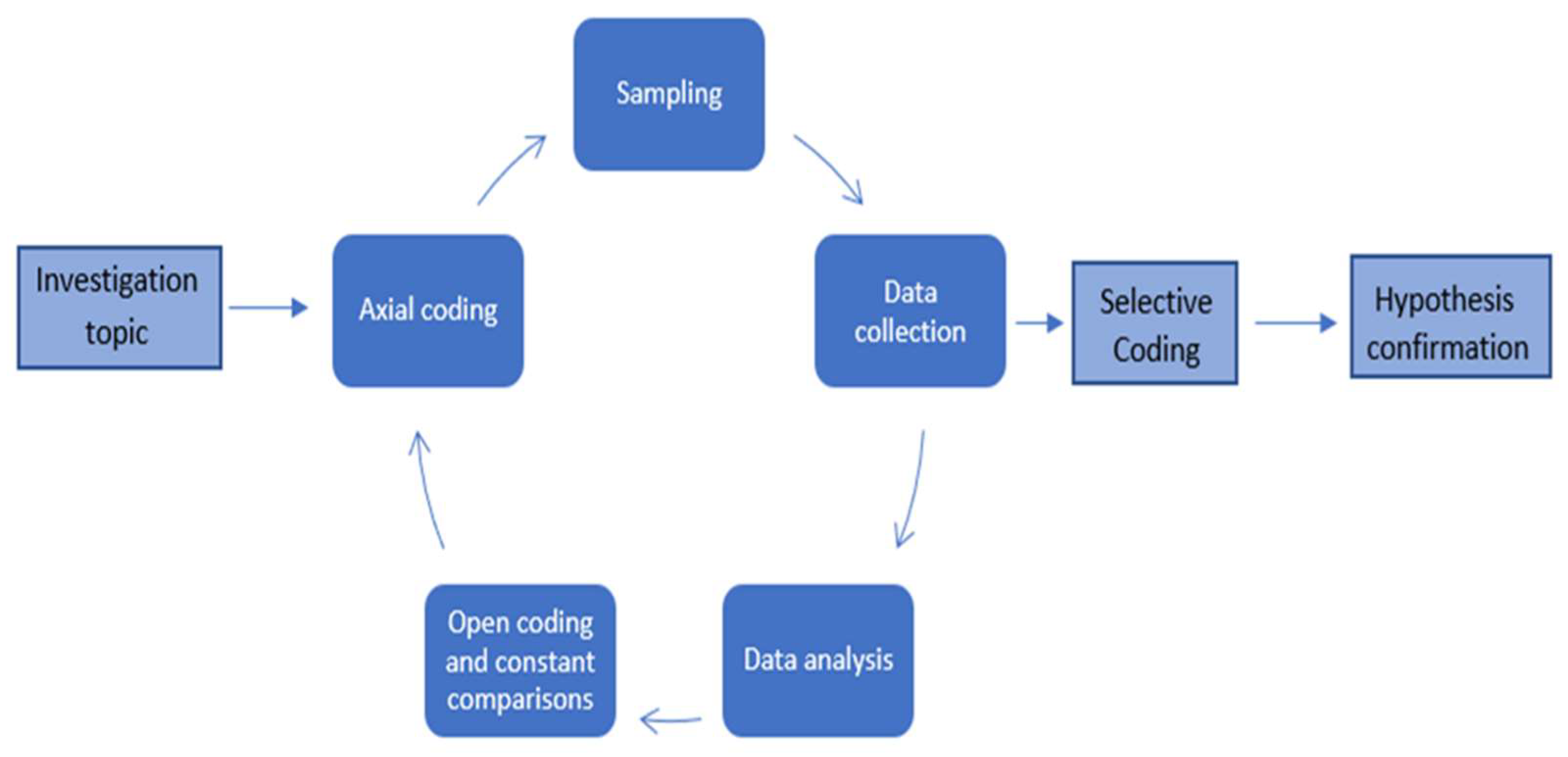
Figure 1. Data analysis process.
Preprints 148736 g001
Figure 2. Participants’ awareness of entomophagy (N=70).
Preprints 148736 g002
Figure 3. Participants’ perceptions of entomophagy (N=70).
Preprints 148736 g003
Figure 4. Participants’ willingness to try edible insects (N=70).
Preprints 148736 g004
Figure 5. Motives behind edible insect consumption and participants’ reactions towards edible insect distribution through the food system (Ν=70).
Preprints 148736 g005
Disclaimer/Publisher’s Note: The statements, opinions and data contained in all publications are solely those of the individual author(s) and contributor(s) and not of MDPI and/or the editor(s). MDPI and/or the editor(s) disclaim responsibility for any injury to people or property resulting from any ideas, methods, instructions or products referred to in the content.
Copyright: This open access article is published under a Creative Commons CC BY 4.0 license, which permit the free download, distribution, and reuse, provided that the author and preprint are cited in any reuse.
Prerpints.org logo

Preprints.org is a free preprint server supported by MDPI in Basel, Switzerland.

Subscribe

Disclaimer

Terms of Use

Privacy Policy

Privacy Settings

© 2025 MDPI (Basel, Switzerland) unless otherwise stated