

Submitted:
14 July 2023
Posted:
17 July 2023
You are already at the latest version
Abstract
In Poland, there has recently been a lot of interest in the possible use of insects as a new food source. Since they have many nutritional and environmental advantages, insects are a promising and sustainable source of protein. Although, in many parts of the world insects are a highly valued food, in Poland the development of insect-based food has only recently started, and the availability of products on the market is constantly increasing. This study examines the market availability of food products with insect additives in Poland, considering both online and sta-tionary stores. The assortment of products was analyzed based on the country of origin, insect species, form of insects, and product category. Polish consumers have more access to in-sect-based food products than ever before, with whole insects, protein bars, and powdered ver-sions predominating the market's offers..
Keywords:
edible insects
; insect-based food
; market avilability
; alternative protein
; Poland
; insect powders
1. Nutritional Value
Food consumption, especially meat consumption, accounts for a large part of the ecological footprint. In many countries, livestock and fish are important sources of protein [1]. Through growing environmental, biodiversity, and welfare concerns, the search for alternative protein sources has accelerated [2]. With each passing year, there is growing interest in introducing edible insects into the western diet [1]. They are considered a potential solution to food insecurity that may arise due to [3]. In recent years, insects have been recognized globally as a potential source of nutritional components, including proteins, carbohydrates, lipids, vitamins, and minerals [4,5]. Edible insects have an excellent nutritional profile, offering individual benefits when incorporated into the diet. For example, oils extracted from insects may contain higher levels of unsaturated fatty acids, including omega-3, compared to meat sources [1]. Additionally, insects contain bioactive compounds such as peptides and antioxidant enzymes [6]. The nutritional composition and profile of insects are influenced by factors such as species, diet, developmental stage, gender, and habitat [7]. Processing and preparation methods also play a role [5]. Zielińska et al. (2018) [8] highlighted the solubility of insect protein across a wide pH range and its water and oil retention capacity. Insect proteins also exhibit high emulsifying activity and moderate foam-forming abilities. Therefore, they can be used in food production, such as to improve the nutritional value, but also to improve the texture, consistency and appearance of food.
Edible insects are a rich source of high-quality protein that contains essential amino acids. They fully meet the requirements for essential amino acids, including threonine, valine, histidine, tyrosine, tryptophan, and lysine [9,10]. The protein content in edible insects ranges from 5 to 77 g per 100 g, depending on the species and developmental stage [11,12]. Compared to beef, which contains approximately 26 g of protein per 100 g, insects offer a more favorable protein content [11]. Insects also exhibit a protein digestibility ranging from 79% to 92%. The content of essential amino acids and protein digestibility in insects is comparable to those found in chicken eggs. Insect peptides have antioxidative properties, which can positively impact human health [13,14]. Furthermore, proteins from crickets and mealworm can be modified through enzymatic hydrolysis to enhance their sensory properties, thus expanding their potential applications in the food industry [15].
Edible insects have a low carbohydrate content, with carbohydrates primarily occurring in the form of chitin and glycogen. Glycogen serves as an energy source stored in the muscular cells and tissues. Chitin, which is indigestible by the human digestive system, exhibits antioxidative, anticancer, and antimicrobial properties [5]. Insects are also rich in dietary fiber, mainly in the form of chitin [4]. The reported ranges of dietary fiber content in insects include 2.8-25.1% for beetle larvae (Rhynchophorus phoenicis), 9.6% for house crickets (Acheta domesticus), 2.0% and 1.8-9.4% for silkworm larvae Bombyx mori and Cirina forda, respectively [11].
The lipid content in insects varies depending on the species, gender, reproductive stage, season, diet, and habitat. Insects undergo metamorphosis, and the lipid content may decrease or increase with the growth of individuals. Hemimetabolic species generally have higher fat content in the adult stage compared to the larval stage, whereas holometabolic species exhibit the opposite pattern, as larvae utilize fat as an energy source during metamorphosis [16]. The fat content in edible insects ranges from 13% for grasshoppers, locusts, and crickets to 28% for caterpillars, 30% for cockroaches, termites, and beetles [17].
The fatty acid composition of insects is comparable to that of fish and poultry fats [13]. However, insects contain a higher proportion of unsaturated fatty acids compared to saturated fatty acids [17,18,19]. The average proportion of saturated fatty acids (SFA) is around 30.3% (mainly palmitic and stearic acids), while monounsaturated fatty acids (MUFA) account for approximately 38.8% (mainly palmitoleic and oleic acids). Polyunsaturated fatty acids (PUFA) make up 29.9% of the total fatty acids, with linoleic and α-linolenic acids being the main components [20].
Insects are rich in iron and zinc and contain smaller amounts of copper, manganese, magnesium, and calcium. Insects can also serve as a source of thiamine, riboflavin, and cobalamin, and certain species exhibit folate, retinol, and β-carotene content [4,20]. Most edible insects have iron content comparable to that of meat sources [5].
Currently, the main factor limiting the use of edible insects in Europe is the lack of consumer acceptance [8]. However, edible insect consumption is gradually appearing in European countries, and it is likely to become more widely accepted shortly [6]. Nevertheless, further research is needed to achieve the best compromise between functionality, palatability, cost-effectiveness, sustainable development, and consumer safety [9].
2. Perception of Food with Insect Additives
There is a long history of human consumption of insects in many parts of the world, especially in areas in Asia, Africa, and South America, where insects have been a primary source of protein for centuries [21,22]. In tropical regions, insects are traditionally prepared by roasting or frying with onions, pepper, salt, and other spices. They are also used as ingredients in dishes, such as larvae (Cirina forda and Bunaea alcinoe) in vegetable stews [23].
In recent years, entomophagy has received much attention worldwide [24]. However, the acceptability of edible insects in Europe, Australia, and North America is still low [25]. Repulsion is one of the most common reactions and also the biggest barrier [26]. Other reasons for rejecting edible insects are fear and neophobia. Insects are considered dirty, primitive foods, and their sensory qualities are generally viewed negatively [27]. Importantly, they are present even in cultures with a long tradition of eating insects [24]. Surveys of Taiwanese and Korean consumers have shown that food neophobia and revulsion toward some forms of insects have also been identified as major factors in not buying or eating insects [28,29]. Mancini et al. (2019) [30] and Grasso et al. (2019) [31] also showed a low propensity to eat insects as a meat substitute, among Italian consumers, mainly based on feelings of disgust and neophobia. Similar results were obtained by Lammers et al. (2019) [32] when studying German consumers' propensity to eat insect burgers. Orsi et al. (2019) [33] also identified disgust as the most common psychological barrier.
When consumers are confronted with new or unfamiliar foods, common reactions are both rejection and curiosity. Interest in trying new things has been defined as an important motivational aspect of food selection [21]. Not all consumers find insects disgusting [34]. In the U.S., 72.5% of study participants were willing to consume at least one product containing insects, and in Canada, it was shown that 67% of participants had already tried foods with insects [27]. Danish consumers see insects as a sustainable food source and a possible alternative to meat. Aspects such as more sustainable production, protein, and other nutrient content are mentioned, and they are also considered tasty [34].
Belgian consumers over the age of 45 were more willing to accept foods with insects compared to other age groups [35]. In other studies, younger consumers were more ready to accept novel foods, such as insects [36], while, for example, young Australians were found to be less willing to accept them [37], and food neophobia had a negative impact on the desire to eat insect burgers among children and adolescents in Germany [38]. Opinions vary on the influence of gender on neophobic behavior, finding either a greater tendency for men to consume insect-containing foods compared to women or no effect of gender [35,39]. In a Danish study, it was examined how in-person classroom exposure to educational and tasting interventions affected children's perceptions of edible insects and insect-based cuisine. Children who attended the live classroom session said that there was a good association between their readiness to eat insects and their agreement that society needs sustainable meals [40].
Stone et al. (2021) [22] found that perceptions of both unprocessed (whole, cooked) and processed insects (such as cricket flour) were more favorable after tasting compared to previous expectations. Therefore, the first step to reducing neophobia is to integrate insects into familiar foods frequently eaten by consumers [27]. Furthermore, an interest in new food experiences and a sense of excitement related to adventure, frenzy, and sensation-seeking have also been identified as important in food acceptance [24]. The predominantly Danish media has shown great interest in entomophagy. There are regular reports on insect production or the use of insects as food [34].
Some studies have been conducted to explore customer attitudes about insect-based food products. The findings found that, while the majority of people had never eaten an insect-based food product previously, there was some readiness to try these goods. Potential acceptance drivers were also found, implying that acceptance hurdles may be addressed by product design, education, and effective marketing strategies [33,34,35].
In Europe, changing perceptions and encouraging consumer acceptance may be facilitated by ensuring the food safety of edible insects. To more effectively and persuasively promote edible insects as nutritious future food, more knowledge is needed about the nutritional value of insects and the environmental advantages of entomophagy [41]. It is crucial to educate people about the health, environmental, and economic benefits of edible insects to introduce them as food in the future since this may enhance their willingness to do so [42].
3. Market Availability
This section may be divided by subheadings. It should provide a concise and precise description of the experimental results, their interpretation, as well as the experimental
Although entomophagy is currently being promoted more and more in Europe and North America, edible insects are typically consumed in Africa, Asia, and South America [43]. To meet the rising demand for a variety of foods and a supply of protein, as well as to provide anticipated nutritional and environmental benefits, people in Europe are becoming more and more interested in eating insects [21].
The consumption of insect-based food products has gained traction as a sustainable and nutritious alternative in Poland. This study aims to provide a detailed analysis of the market availability of such products, highlighting the prevalence of whole insects, protein bars, and powdered forms. Additionally, it explores the origin of these products and the limited variety of insect-based food items found in the Polish market compared to other European countries. Data for this study were collected from various online and physical stores operating in Poland. The assortment of products were analyzed based on their country of origin, insect species, form (whole or powdered), and product category. The analysis encompassed a total of 81 products.
The Polish market predominantly offers food products containing whole insects, accounting for 33% of the available products (Figure 1). These whole insects come in various flavors, such as lime and chili-flavored dried crickets. The next significant categories include protein bars (23%) and powdered forms (19%), which are available in the form of flours, mixes (e.g., brownie or pancake mixes), and multi-flavored protein shakes. Various flavors and spices, such as curry powder, garlic, paprika, or fried onion flavor, can be added to dried insects to increase their acceptance on the European market. Producers also provide insects with chocolate or in salted caramel, so the selection is not just limited to savory tastes [44]. Additionally important is the hue of an insect-based diet. In general, raw insects are a dark gray to grey color, which is not appealing to consumers. However, due to thermal processing, they acquire a crimson tint with brown undertones. Insects that are correctly dried or frozen acquire a golden hue [10].
The Polish market is divided mainly between products containing whole insects and those in powdered form (Figure 2). Products containing ground insects with visible fragments are scarce, while powdered insect products dominate the market, representing 56% of the Polish market. Products with whole insects constitute 43% of the market.
The observed Polish consumer preferences suggest that individuals are more inclined to embrace insect-based food products when they are incorporated in a way that minimizes the visibility of insect fragments. The texture, appearance, and sensory attributes of the bars play a vital role in shaping consumers' perceptions and willingness to consume such products. The bars that contained ground mealworms and ground crickets exhibited better acceptance rates compared to the bars with whole insects, emphasizing the importance of processing techniques in enhancing consumer acceptability [45].
A common trend is that people are less likely to eat whole edible insects than other foods that come from animals [33]. For these reasons, Florença et al. (2021) [46] suggest that if edible insects are to be introduced to the food market, food products that already contain edible insects be used as a starting point rather than moving straight to the possibility of eating the whole counterparts.
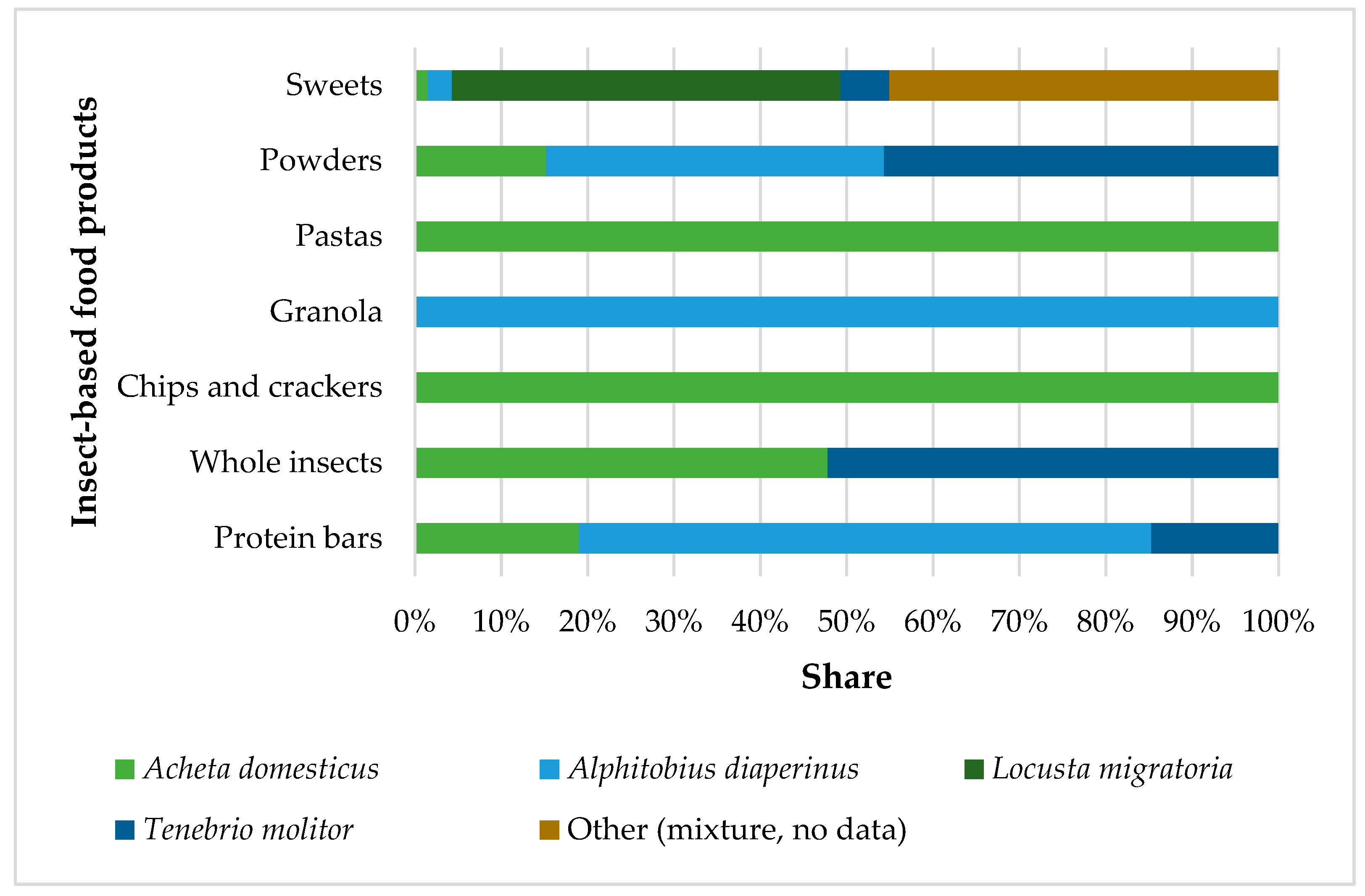
Four insect species are primarily applied in insect-based food products available in the Polish market: domestic cricket (Acheta domesticus), lesser mealworm (Alphitobius diaperinus), migratory locust (Locusta migratoria), and mealworm (Tenebrio molitor) (Figure 3). The majority of food products feature domestic crickets as a key ingredient, particularly in pasta, chips, and crackers. Lesser mealworms are predominantly found in granolas and protein bars. In sweet products, the primary insect ingredient is migratory locust, along with mixtures of various insect species, including the darkling beetle (Zophobas morio). Banana crickets (Gryllodes sigillatus), commonly found in Western countries, are not available in the Polish market.
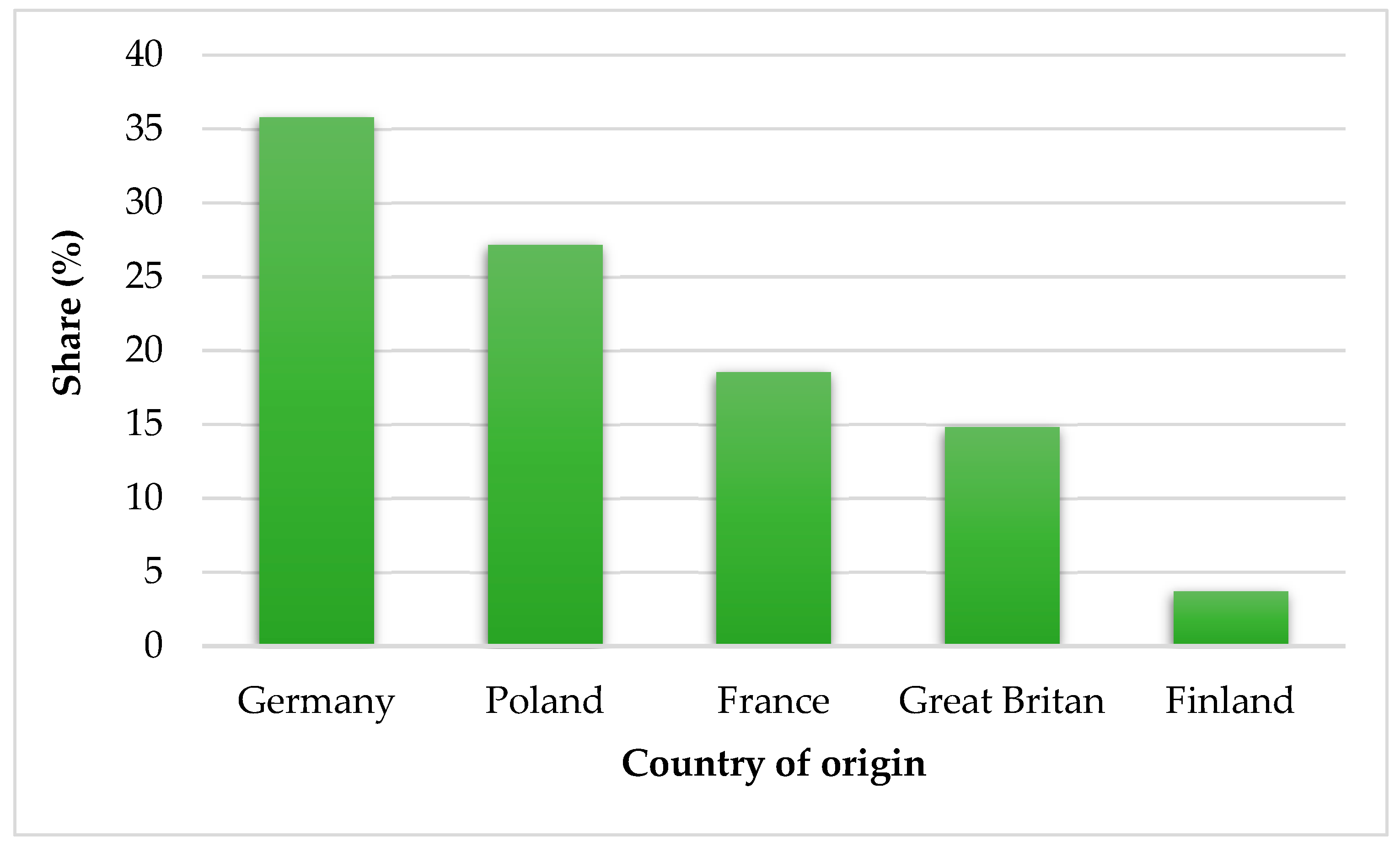
The sector of producing food made from insects is expanding across Europe. Several businesses make food based on insects, even though they are not yet a common food source. In terms of origin, insect-based food products in Poland mainly come from Germany (36% market share) and domestic producers (27%), as well as France, the United Kingdom, and Finland (Figure 4). To fulfill the rising demand, businesses are increasing their production of these insects in Europe by utilizing economies of scale, automation, and technology. Additionally encouraging the industry's expansion, European legislation has improved concerning using insects as food and animal feed [47].
In Europe, there is growing interest in eating edible insects because they are regarded as a more sustainable and interesting source of protein [48]. The lack of familiarity with insect-based food, however, limits consumption and market growth [49]. There is a long history of human consumption of insects in many parts of the world, especially in areas in Asia, Africa, and South America [21], where insects have been a primary source of protein for centuries [22]. In tropical regions, insects are traditionally prepared by roasting or frying with onions, pepper, salt, and other spices. They are also used as ingredients in dishes, such as larvae (Cirina forda and Bunaea alcinoe) in vegetable stews [23].
Figure 4.
Origin of insect-based food products available on the Polish market.
4. Conclusions
Edible insects fit perfectly into the trends related to environmental protection and natural products. A wide range of products is certainly attractive for consumers who want to enrich their diet with an additional source of protein and for people who want to satisfy their curiosity. Poles are curious and willing to try new foods, and their share will grow dynamically over time.
Consumers are increasingly paying attention to the origin of the products they buy and their impact on the environment. Sustainable breeding of insects and the content of nutrients in them, including, above all, protein, allows the introduction of new, attractive products to the market. According to the conducted analysis, producers can both produce food based on insects, as well as articles slightly enriched with this ingredient. In addition, the diversity of insects in terms of functionality allows you to select the most appropriate species for the expected task.
The growing world population year by year, decreasing natural resources, and the search for more ecological food alternatives will contribute to the spread of food with insects in Poland. However, there is still a need to conduct many studies on the properties of insects, as well as the threats that specific species may pose.
The market availability of insect-based food products in Poland is gradually expanding, with whole insects, protein bars, and powdered forms dominating the offerings. However, the variety of product types is currently limited compared to other European markets. The study underscores the potential for further market development and the need to address regulatory challenges and consumer preferences to foster the growth of the insect-based food industry in Poland.
To encourage wider acceptance and uptake of insect-based food items, efforts should be directed toward improving organoleptic properties, addressing visual concerns, and optimizing the formulation of such products. Additionally, educating consumers about the nutritional benefits, sustainability aspects, and cultural acceptance of edible insects could contribute to changing attitudes and increasing their overall acceptance.
Funding
This research received no external funding.
Data Availability Statement
Data will be available upon reasonable request.
Acknowledgments
The author would like to thank to Zuzanna Klimek for her help in conducting the research.
Conflicts of Interest
The author declares no conflict of interest.
References
- Verneau, F.; La Barbera, F.; Kolle, S.; Amato, M.; Del Giudice, T.; Grunert, K. The effect of communication and implicit associations on consuming insects: An experiment in Denmark and Italy. Appetite 2016, 106, 30–36. [Google Scholar] [CrossRef] [PubMed]
- Vauterin, A.; Steiner, B.; Sillman, J.; Kahiluoto, H. The potential of insect protein to reduce food-based carbon footprints in Europe: The case of broiler meat production. J. Clean. Prod. 2021, 320, 128799. [Google Scholar] [CrossRef]
- Ordoñez-Araque, R.; Egas-Montenegro, E. Edible insects: A food alternative for the sustainable development of the planet. Int. J. Gastron. Food Sci. 2021, 23. [Google Scholar] [CrossRef]
- Bueschke, M.; Gramza-Michałowska, A.; Kubiak, T.; Kulczyński, B. Alternatywne źródła białka w żywieniu człowieka. Zesz. Nauk. SGGW w Warszawie - Probl. Rol. Światowego 2017, 17, 49–59. [Google Scholar] [CrossRef]
- Ojha, S.; Bekhit, A.E.D.; Grune, T.; Schlüter, O.K. Bioavailability of nutrients from edible insects. Curr. Opin. Food Sci. 2021, 41, 240–248. [Google Scholar] [CrossRef]
- Zielińska, E.; Zieliński, D.; Jakubczyk, A.; Karaś, M.; Pankiewicz, U.; Flasz, B.; Dziewięcka, M.; Lewicki, S. The impact of polystyrene consumption by edible insects Tenebrio molitor and Zophobas morio on their nutritional value, cytotoxicity, and oxidative stress parameters. Food Chem. 2021, 345. [Google Scholar] [CrossRef] [PubMed]
- Jonas-Levi, A.; Martinez, J.J.I. The high level of protein content reported in insects for food and feed is overestimated. J. Food Compos. Anal. 2017, 62, 184–188. [Google Scholar] [CrossRef]
- Zielińska, E.; Karaś, M.; Baraniak, B. Comparison of functional properties of edible insects and protein preparations thereof. Lwt 2018, 91, 168–174. [Google Scholar] [CrossRef]
- Li, M.; Wang, Z.; Xie, C.; Xia, X. free information in English and Mandarin on the novel coronavirus COVID- Advances in mRNA vaccines. 2020, 77–99. [Google Scholar]
- Kouřimská, L.; Adámková, A. Nutritional and sensory quality of edible insects. NFS J. 2016, 4, 22–26. [Google Scholar] [CrossRef]
- Bartkowicz, J. Owady jadalne w aspekcie żywieniowym, ekonomicznym i środowiskowym. Handel Wewnętrzny 2018, 2, 77–89. [Google Scholar]
- Wiza, P.L. Charakterystyka owadów jadalnych jako alternatywnego źródła białka w ujęciu żywieniowym, środowiskowym oraz gospodarczym. Postępy Tech. przetwórsta spożywczego 2019, 98–102. [Google Scholar]
- Mroczek, K. Alternatywne i egzotyczne źródła białka zwierzęcego w żywieniu człowieka w kontekście racjonalnego wykorzystania zasobów środowiska. Polish J. Sustain. Dev. 2020, 24, 95–102. [Google Scholar] [CrossRef]
- Shockley, M.; Dossey, A.T. Insects for Human Consumption; Elsevier: Amsterdam, The Netherlands, 2013; ISBN 9780123914538. [Google Scholar]
- Grossmann, K.K.; Merz, M.; Appel, D.; De Araujo, M.M.; Fischer, L. New insights into the flavoring potential of cricket (Acheta domesticus) and mealworm (Tenebrio molitor) protein hydrolysates and their Maillard products. Food Chem. 2021, 364, 130336. [Google Scholar] [CrossRef] [PubMed]
- Szeja, N. Entomofagia – Aspekty Żywieniowe I Psychologiczne. Kosmos 2019, 68, 489–501. [Google Scholar] [CrossRef] [PubMed]
- Rumpold, B.A.; Schlüter, O.K. Nutritional composition and safety aspects of edible insects. Mol. Nutr. Food Res. 2013, 57, 802–823. [Google Scholar] [CrossRef]
- Ramos-Bueno, R.P.; González-Fernández, M.J.; Sánchez-Muros-Lozano, M.J.; García-Barroso, F.; Guil-Guerrero, J.L. Fatty acid profiles and cholesterol content of seven insect species assessed by several extraction systems. Eur. Food Res. Technol. 2016, 242, 1471–1477. [Google Scholar] [CrossRef]
- Dossey, A.T.; Tatum, J.T.; McGill, W.L. Modern Insect-Based Food Industry: Current Status, Insect Processing Technology, and Recommendations Moving Forward; Elsevier Inc., 2016; ISBN 9780128028568. [Google Scholar]
- Zielińska, E.; Baraniak, B.; Karaś, M.; Rybczyńska, K.; Jakubczyk, A. Selected species of edible insects as a source of nutrient composition. Food Res. Int. 2015, 77, 460–466. [Google Scholar] [CrossRef]
- Nyberg, M.; Olsson, V.; Wendin, K. Reasons for eating insects? Responses and reflections among Swedish consumers. Int. J. Gastron. Food Sci. 2020, 22, 100268. [Google Scholar] [CrossRef]
- Stone, H.; FitzGibbon, L.; Millan, E.; Murayama, K. Curious to eat insects? Curiosity as a Key Predictor of Willingness to try novel food. Appetite 2022, 168, 105790. [Google Scholar] [CrossRef]
- Mishyna, M.; Chen, J.; Benjamin, O. Sensory attributes of edible insects and insect-based foods – Future outlooks for enhancing consumer appeal. Trends Food Sci. Technol. 2020, 95, 141–148. [Google Scholar] [CrossRef]
- Wendin, K.M.; Nyberg, M.E. Factors influencing consumer perception and acceptability of insect-based foods. Curr. Opin. Food Sci. 2021, 40, 67–71. [Google Scholar] [CrossRef]
- Niva, M.; Vainio, A. Towards more environmentally sustainable diets? Changes in the consumption of beef and plant- and insect-based protein products in consumer groups in Finland. Meat Sci. 2021, 182, 108635. [Google Scholar] [CrossRef] [PubMed]
- Gumussoy, M.; Macmillan, C.; Bryant, S.; Hunt, D.F.; Rogers, P.J. Desire to eat and intake of ‘insect’ containing food is increased by a written passage: The potential role of familiarity in the amelioration of novel food disgust. Appetite 2021, 161, 105088. [Google Scholar] [CrossRef]
- Dion-Poulin, A.; Turcotte, M.; Lee-Blouin, S.; Perreault, V.; Provencher, V.; Doyen, A.; Turgeon, S.L. Acceptability of insect ingredients by innovative student chefs: An exploratory study. Int. J. Gastron. Food Sci. 2021, 24. [Google Scholar] [CrossRef]
- Bae, Y.; Choi, J. Consumer acceptance of edible insect foods: An application of the extended theory of planned behavior. Nutr. Res. Pract. 2021, 15, 122–135. [Google Scholar] [CrossRef]
- Chang, H.P.; Ma, C.C.; Chen, H.S. Climate change and consumer’s attitude toward insect food. Int. J. Environ. Res. Public Health 2019, 16. [Google Scholar] [CrossRef]
- Mancini, S.; Moruzzo, R.; Riccioli, F.; Paci, G. European consumers’ readiness to adopt insects as food. A review. Food Res. Int. 2019, 122, 661–678. [Google Scholar] [CrossRef]
- Grasso, A.C.; Hung, Y.; Olthof, M.R.; Verbeke, W.; Brouwer, I.A. Older consumers’ readiness to accept alternative, more sustainable protein sources in the European Union. Nutrients 2019, 11. [Google Scholar] [CrossRef]
- Lammers, P.; Ullmann, L.M.; Fiebelkorn, F. Acceptance of insects as food in Germany: Is it about sensation seeking, sustainability consciousness, or food disgust? Food Qual. Prefer. 2019, 77, 78–88. [Google Scholar] [CrossRef]
- Orsi, L.; Voege, L.L.; Stranieri, S. Eating edible insects as sustainable food? Exploring the determinants of consumer acceptance in Germany. Food Res. Int. 2019, 125, 108573. [Google Scholar] [CrossRef] [PubMed]
- Videbæk, P.N.; Grunert, K.G. Disgusting or delicious? Examining attitudinal ambivalence towards entomophagy among Danish consumers. Food Qual. Prefer. 2020, 83, 103913. [Google Scholar] [CrossRef]
- Caparros Megido, R.; Sablon, L.; Geuens, M.; Brostaux, Y.; Alabi, T.; Blecker, C.; Drugmand, D.; Haubruge, É.; Francis, F. Edible insects acceptance by belgian consumers: Promising attitude for entomophagy development. J. Sens. Stud. 2014, 29, 14–20. [Google Scholar] [CrossRef]
- Verbeke, W. Profiling consumers who are ready to adopt insects as a meat substitute in a Western society. Food Qual. Prefer. 2015, 39, 147–155. [Google Scholar] [CrossRef]
- Sogari, G.; Bogueva, D.; Marinova, D. Australian consumers’ response to insects as food. Agric. 2019, 9, 1–15. [Google Scholar] [CrossRef]
- Dupont, J.; Fiebelkorn, F. Attitudes and acceptance of young people toward the consumption of insects and cultured meat in Germany. Food Qual. Prefer. 2020, 85, 103983. [Google Scholar] [CrossRef]
- Ruby, M.B.; Rozin, P.; Chan, C. Determinants of willingness to eat insects in the USA and India. J. Insects as Food Feed 2015, 1, 215–225. [Google Scholar] [CrossRef]
- Maya, C.; Sterling, K.; Rukov, J.L.; Roos, N. Perception of edible insects and insect-based foods among children in Denmark: educational and tasting interventions in online and in-person classrooms. J. Insects as Food Feed 2023, 9, 989–1001. [Google Scholar] [CrossRef]
- Lange, K.W.; Nakamura, Y. Edible insects as future food: chances and challenges. J. Futur. Foods 2021, 1, 38–46. [Google Scholar] [CrossRef]
- Ros-Baró, M.; Sánchez-Socarrás, V.; Santos-Pagès, M.; Bach-Faig, A.; Aguilar-Martínez, A. Consumers’ Acceptability and Perception of Edible Insects as an Emerging Protein Source. Int. J. Environ. Res. Public Health 2022, 19. [Google Scholar] [CrossRef]
- Raheem, D.; Carrascosa, C.; Oluwole, O.B.; Nieuwland, M.; Saraiva, A.; Millán, R.; Raposo, A. Traditional consumption of and rearing edible insects in Africa, Asia and Europe. Crit. Rev. Food Sci. Nutr. 2019, 59, 2169–2188. [Google Scholar] [CrossRef] [PubMed]
- Skotnicka, M.; Karwowska, K.; Kłobukowski, F.; Borkowska, A.; Pieszko, M. Possibilities of the development of edible insect-based foods in europe. Foods 2021, 10. [Google Scholar] [CrossRef] [PubMed]
- Bartkowicz, J.; Babicz-Zielińska, E. Acceptance of bars with edible insects by a selected group of students from Tri-City, Poland. Czech J. Food Sci. 2020, 38, 192–197. [Google Scholar] [CrossRef]
- Florença, S.G.; Correia, P.M.R.; Costa, C.A.; Guiné, R.P.F. Edible insects: Preliminary study about perceptions, attitudes, and knowledge on a sample of portuguese citizens. Foods 2021, 10, 1–17. [Google Scholar] [CrossRef] [PubMed]
- Thrastardottir, R.; Olafsdottir, H.T.; Thorarinsdottir, R.I. Yellow mealworm and black soldier fly larvae for feed and food production in europe, with emphasis on iceland. Foods 2021, 10, 1–35. [Google Scholar] [CrossRef]
- Mancini, S.; Sogari, G.; Diaz, S.E.; Menozzi, D.; Paci, G.; Moruzzo, R. Exploring the Future of Edible Insects in Europe. Foods 2022, 11, 1–12. [Google Scholar] [CrossRef]
- Roma, R.; Palmisano, G.O.; De Boni, A. Insects as novel food: A consumer attitude analysis through the dominance-based rough set approach. Foods 2020, 9, 1–19. [Google Scholar] [CrossRef]
Figure 1.
Availability of insect-based food products by category on the Polish market.
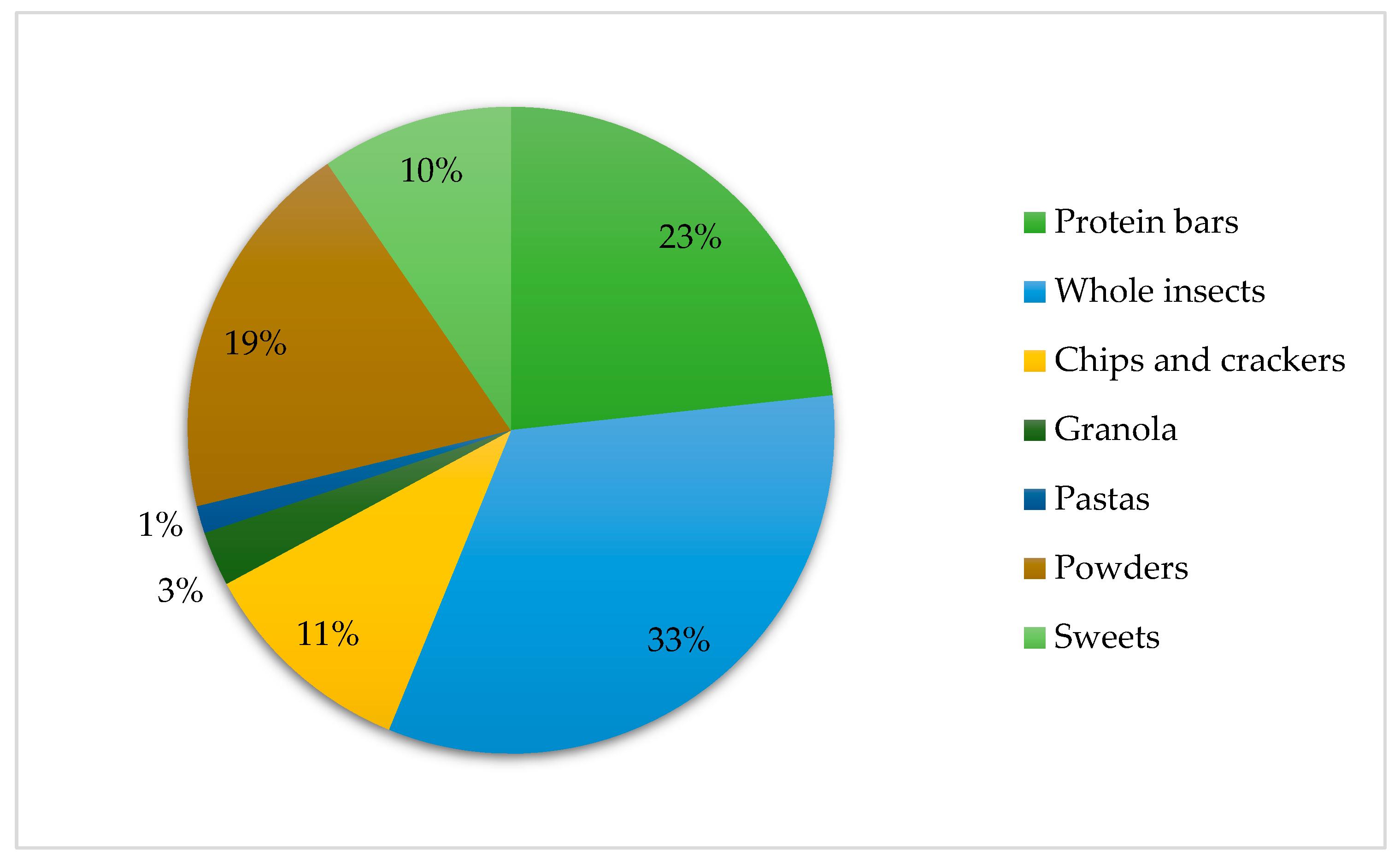
Figure 2.
Availability of insect forms in food products on the Polish market.
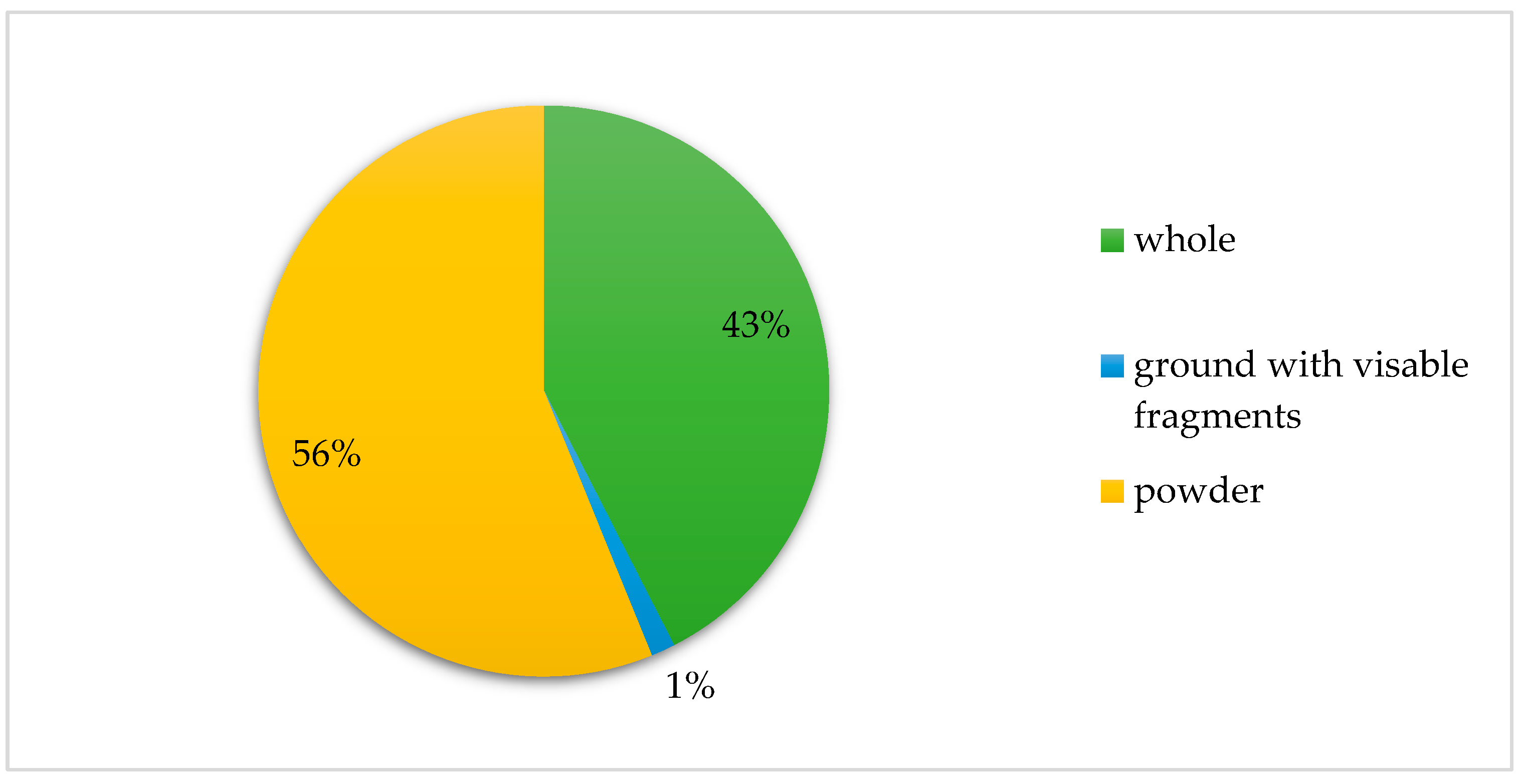
Figure 3.
Species availability of insects in given food product categories on the Polish market.
Disclaimer/Publisher’s Note: The statements, opinions and data contained in all publications are solely those of the individual author(s) and contributor(s) and not of MDPI and/or the editor(s). MDPI and/or the editor(s) disclaim responsibility for any injury to people or property resulting from any ideas, methods, instructions or products referred to in the content. |
© 2023 by the authors. Licensee MDPI, Basel, Switzerland. This article is an open access article distributed under the terms and conditions of the Creative Commons Attribution (CC BY) license (http://creativecommons.org/licenses/by/4.0/).
Copyright: This open access article is published under a Creative Commons CC BY 4.0 license, which permit the free download, distribution, and reuse, provided that the author and preprint are cited in any reuse.


