Preprint
Review

This version is not peer-reviewed.

Overview of Recent Advances in Rare-Earth High-Entropy Oxides as Multifunctional Materials for Next-Gen Technology Applications

A peer-reviewed article of this preprint also exists.

Submitted:

06 February 2025

Posted:

07 February 2025

You are already at the latest version

Abstract

Rare-earth high-entropy oxides are a new promising class of multifunctional materials characterized by their ability to stabilize complex, multi-cationic compositions into single-phase structures through configurational entropy. This feature enables fine-tuning structural properties such as oxygen vacancies, lattice distortions, and defect chemistry, making them promising for advanced technological applications. While initial research primarily focused on their catalytic performance in energy and environmental applications, recent research demonstrated their potential in optoelectronics, photoluminescent materials, and aerospace technologies. Progress in synthesis techniques has provided control over particle morphology, composition, and defect engineering, enhancing electronic, thermal, and mechanical properties. Rare-earth high-entropy oxides exhibit tunable bandgaps, exceptional thermal stability, and superior resistance to phase degradation, positioning them as next-generation materials. Despite these advances, challenges remain in scaling up production, optimizing compositions for specific applications, and understanding the fundamental mechanisms governing their multifunctionality. This review provides a comprehensive analysis of the recent developments in rare-earth high-entropy oxides as relatively new and still underrated material of the future.

Keywords: 
;  ;  ;  ;  ;  ;  ;  ;  

1. High-Entropy Oxides

The development of advanced materials, as one of the most important focuses in scientific research, roughly means the discovery of substances with adaptable and enhanced physico-chemical properties. “Transformation” in material science was introduced by the discovery of high-entropy alloys, which offered opportunities to manipulate the phase stability of solid solutions through configurational entropy [1]. This approach represents an advancement in the material design and understanding of complex material systems. High-entropy materials, including non-metallic compounds such as oxides [2], fluorides [3], sulfides [4], nitrides [5], etc., are distinguished by their ability to form single-phase multielement structures. This material category exhibits higher levels of mixing entropy (Smix) or configurational entropy (Sconfig), resulting in crystal structure distinct from those of their constituent elements. The thermodynamic stability of these materials is governed by the Gibbs energy of mixing at high temperatures, which enables the formation of single-phase solid solutions when the entropy contribution to the crystal system outweighs the enthalpy of mixing. The main criteria for high-entropy materials have been expanded to include systems containing five or more elements in concentrations ranging from 5 – 35% [6], as well as those with configuration entropy values exceeding 1.5 times the universal gas constant from the Boltzmann entropy equation [7]. These definitions allow for the inclusion of a wide range of materials with unique properties and potential applications.
In the field of high-entropy oxides (HEOs), a breakthrough was first achieved by Rost et al. [2], who demonstrated the successful incorporation of five distinct cations into a single-phase oxide system. This achievement introduced the concept of entropy-stabilized oxides, which can be marked as a fundamental shift in the understanding of phase stabilization in solid solutions. Their work demonstrated that by increasing the number of metal cations in the cationic sublattice, the system’s configurational disorder is significantly enhanced, resulting in stabilization effects similar to those observed in multi-element alloys. From a thermodynamic perspective, the configurational entropy of multi-element oxides can be derived using the Boltzmann entropy equation, where the number and relative proportions of distinct cations and anions contribute to the overall entropy. The parameter Sconfig provides a quantitative measure of the material’s complexity, with the entropy value increasing as a function of the number of cations in the system. In typical HEOs, the assumption is that the oxide ion serves as the sole anionic species within the lattice, simplifying the structural analysis.

1.1. Desing of HEOs

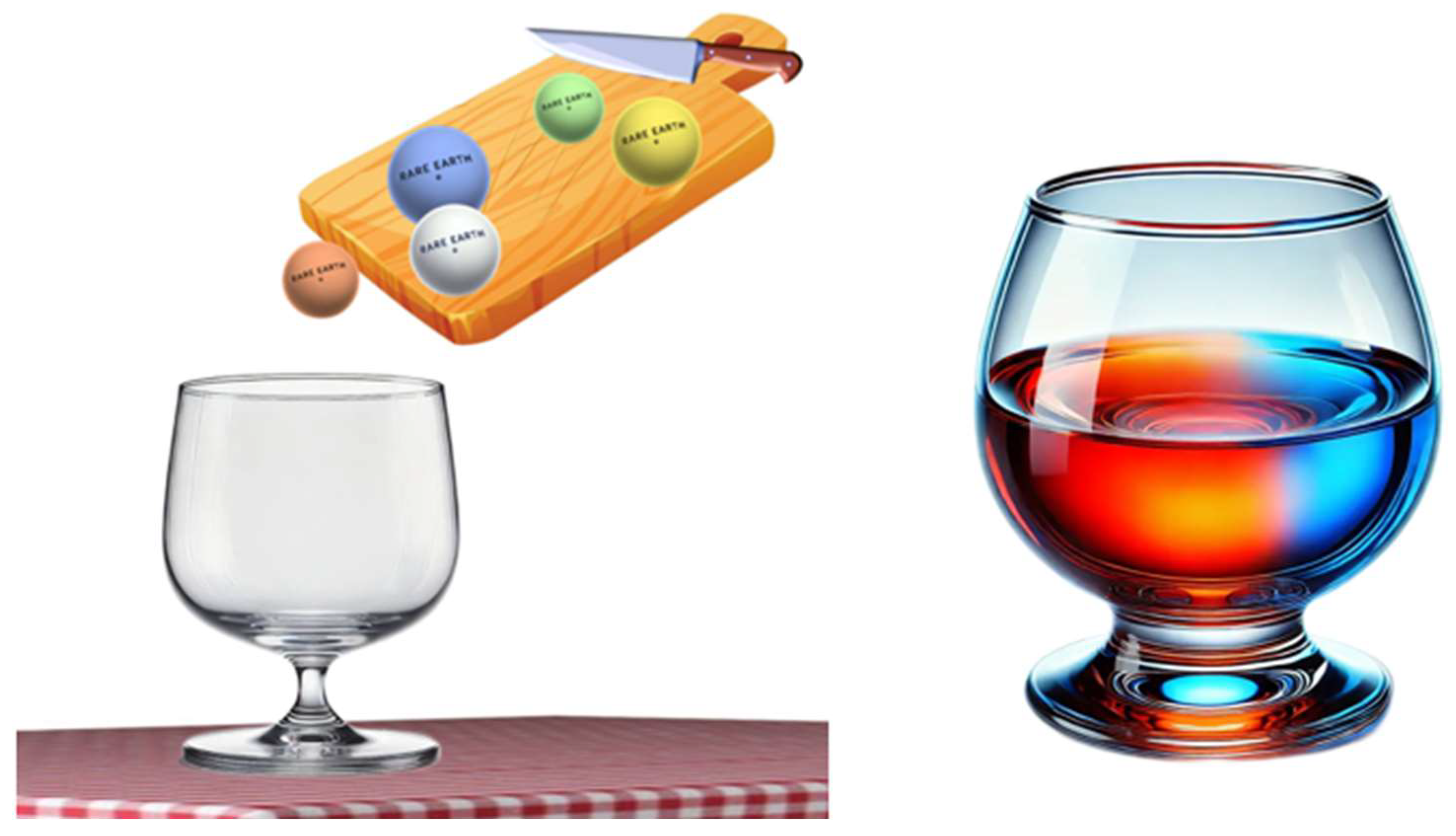
The selection of suitable components for the formation of single-phase HEOs depends on several factors, including mixing enthalpy, ionic radius, oxidation state, and coordination number of the cations. The main idea is to achieve the so-called “cocktail effect”, which indicates that pristine metal oxides have different properties compared with the ones they obtain while in high-entropy form. The mixing enthalpy influences only under specific conditions, such as solid-state or mechanochemical synthesis, where appropriate metal oxides serve as precursors. However, it is important to note that mixing enthalpy is less applicable in solution-based syntheses using non-oxide precursors [8], such as alkoxides or nitrates. For optimal HEO formation, the mixing enthalpy value should ideally be close to zero, which is particularly relevant in solution-based methods. Extremely positive or negative mixing enthalpy values, typical for certain metal oxides, can pose challenges to achieving single-phase high-entropy compounds. These cases may require higher temperatures to facilitate phase transitions and mixing. Another parameter is the ionic radius of the metal cations, which significantly influences the formation of single-phase structures. Selecting cations with similar ionic radii is crucial for obtaining a single-phase structure, particularly in sodium chloride or fluorite crystal configurations [9]. In such systems, isovalent metal cations occupy equivalent positions, while anions maintain the lattice’s overall electrical neutrality [10]. The oxidation state of the metal cations is equally critical for determining the type of crystal structure. For instance, in cubic oxides with a NaCl structure, metal cations typically exhibit a +II oxidation state, while in fluorite structures, cations often have a +IV oxidation state. This flexibility in oxidation states allows for the formation of single-phase HEOs with varying crystal structures, providing a versatile platform for designing materials with tailored properties [11]. A variety of physical and chemical approaches have been developed to address the thermodynamic and kinetic requirements for synthesizing HEOs. Achieving homogeneous single-phase solid solutions with uniform elemental distribution requires precise control of synthesis methods and conditions to optimize material properties such as particle size, phase structure, and chemical composition. Traditional solid-state synthesis methods, which involve mixing metal salts or oxides, are commonly employed for producing HEO powders. However, these approaches typically require high temperatures [12], which can be a limitation. In contrast, low-energy solution-based methods are more interesting due to their ability to synthesize HEO nanoparticles with diverse compositions and crystal structures. These include co-precipitation [13], solvothermal [14] and hydrothermal synthesis [13], mechanochemistry [15] etc. Such innovative methods offer enhanced control over key synthesis parameters, enable the development of materials with desirable properties, and minimize the high-temperature requirements associated with conventional approaches.
Figure 1. “Cocktail effect” illustration.
Preprints 148487 g001

2. Rare Earth Elements

2.1. Properties and Significance

Rare earth elements are commonly classified into two categories: the lanthanide series and the elements scandium and yttrium. The lanthanides, comprising elements with atomic numbers ranging from 57 (lanthanum) to 71 (lutetium), represent a distinct group characterized by their unique atomic structure, which sets them apart from other elements while sharing some similarities with actinides. The lanthanides exhibit several consistent characteristics [16]. Physically, their properties remain uniform across the series. In crystalline compounds, they typically display a trivalent oxidation state, although divalent and tetravalent states are also observed in some cases. These compounds often possess coordination numbers greater than VI, with a general trend of decreasing coordination numbers across the series [17]. Furthermore, lanthanides exhibit a strong affinity for highly electronegative elements, such as oxygen or fluorine [17]. The unique behavior of the lanthanides can largely be attributed to their electronic configurations. The neutral lanthanides generally exhibit an electronic configuration of 4fn+1, 5s2, 5p6, and 6s2, where the progressive filling of the 4f orbitals defines their chemical properties [17]. The formation of the characteristic trivalent cations occurs through the loss of one 4f electron and two 6s2 electrons. In certain instances, a small energy difference between the 4f and 5d orbitals allows for electron transitions, leading to the formation of tetravalent ions, such as Ce4+, or divalent ions, such as Sm2+, Yb2+, and Eu2+. One notable phenomenon observed across the lanthanide series is the “lanthanide contraction,” a gradual decrease in ionic radii from La3+ (1.06 Å) to Lu3+ (0.85 Å) [18]. This contraction arises due to the incomplete shielding of the increasing nuclear charge by the 4f orbitals, which results in a stronger effective nuclear attraction. This contraction significantly influences their bonding behavior and coordination chemistry. Rare-earth elements play an indispensable role in modern technology due to their exceptional magnetic [19], phosphorescent [20], and catalytic properties [21].

2.2. Properties and Application of Ceria

Cerium dioxide, commonly known as ceria (CeO2), and its doped variants have been the focus of intensive research over the last several decades due to their remarkable properties, including structural stability, electronic and ionic conductivity, elastic behavior, and catalytic efficiency [22]. These materials have proven highly suitable for a range of industrial applications, owing to their exceptional functional attributes and chemical inertness, which make them compatible with both inorganic and biological systems [23]. Typically, it adopts a fluorite-type crystal structure, characterized by cubic symmetry within the Fm-3m space group. In this configuration, cerium atoms occupy the 4a lattice sites (0, 0, 0), while oxygen atoms reside at the 8c positions (1/4, 1/4, 1/4) [24]. The fluorite structure demonstrates stability across broad temperature ranges and accommodates significant variations in oxygen stoichiometry, manifesting as oxygen vacancies. Upon reduction to compositions approximating CeO1.7−1.8, a disordered non-stoichiometric phase associated with the fluorite structure emerges [25]. Further increases in oxygen deficiency lead to the development of superstructures, arising from the ordered arrangement of vacancies within the lattice [26]. Although fluorite structures may appear simplistic, they exhibit a high degree of complexity due to their ability to incorporate substantial concentrations of lattice defects, particularly oxygen vacancies [27]. The structural stability of fluorites under varying temperature and stoichiometry conditions often obscures the underlying local atomic arrangements, which are critical to their behavior in complex materials with practical applications [28]. Extrinsic doping is a common strategy for modifying CeO2 to enhance its properties [23]. Trivalent dopants are often used as acceptors, creating oxygen vacancies in a 2:1 ratio to maintain charge neutrality. Dopants such as samarium [29] and gadolinium [30] are notable for their ability to achieve high ionic conductivity, making them ideal for such applications. In contrast, divalent dopants create a higher density of oxygen vacancies but generally exhibit lower ionic conductivity [31], limiting their practical use. Even without extrinsic doping, CeO2 can host intrinsic defects, particularly through the partial reduction of Ce4+ to Ce3+. This behavior leads to a combination of ionic and electronic conductivity [32], which becomes increasingly significant under high temperatures and low oxygen partial pressures. Non-stoichiometric CeO2 exhibits exceptional catalytic activity, particularly in automotive three-way catalysts, where precise oxygen-fuel ratio control is critical [33]. Its ability to store and release oxygen efficiently, known as oxygen storage capacity (OSC), has also made it a key material in solar-driven thermochemical water-splitting technologies for clean energy production [34]. Furthermore, doping with tetravalent cations such as zirconium or hafnium enhances the reducibility of CeO2, improving its OSC and lowering the operational temperatures for applications like exhaust gas treatment and thermochemical processes [35].

2.2.1. Ceria Electronic Structure and Defect Chemistry

Ceria exhibits a complex electronic structure defined by two energy gaps: one between 2p and 4f orbitals and another between 2p and 5d orbitals. Oxygen vacancies emerge as fundamental intrinsic defects when oxygen atoms leave their lattice positions. These defects create a doubly charged vacancy, which induces a reduction in the oxidation state of nearby cerium ions from +IV to +III [36]. The formation of such vacancies introduces significant local lattice distortions, where neighboring oxygen atoms are pulled inward, and cerium atoms shift outward, generating strain within the crystalline matrix [36]. The stoichiometric variation in ceria is governed by the temperature and oxygen partial pressure, with defect concentrations directly influencing the material’s properties. The presence of oxygen vacancies enhances ionic conductivity by facilitating the diffusion of oxygen ions through the lattice, a process critical for solid-state ionic devices. Moreover, these vacancies play a pivotal role in ceria’s catalytic activity, enabling the material to dynamically store and release oxygen. This oxygen storage capacity is central to its application in catalytic processes, particularly in redox reactions. Catalytic functionality arises from the ability of ceria to generate and annihilate oxygen vacancies under reaction conditions. Oxygen atoms released from the lattice during catalytic reactions leave behind vacancies that act as active sites for subsequent reactions. These vacancies, dynamically forming and dissolving at the surface, enable efficient interaction with reactants and intermediates. Surface vacancies are especially critical, as they facilitate the adsorption and activation of reactants, driving heterogeneous catalysis. A nuanced understanding of oxygen vacancies also requires attention to their charge states and associated polarons, which can trap electrons within the lattice. These electronic interactions are crucial for describing CeO₂’s defect chemistry. The interplay between charge carriers and lattice distortions profoundly impacts its electromechanical properties, including electrostriction. Defect formation in ceria involves the migration of oxygen ions to interstitial positions leaving behind doubly charged vacancies at the original lattice sites. Using Kröger-Vink notation [23], these processes can be modeled to describe the material’s defect behavior. During catalytic oxidation reactions, lattice oxygen is released as molecular oxygen, creating reactive oxygen species on the surface. These reactive species enhance the catalytic efficiency of ceria, making it highly effective in oxidation and reduction reactions.

3. Synthesis Approach and Structural Features

Rare-earth high-entropy oxides (RE-HEOs) combine the structural stability of the crystal system with unique configurational entropy-driven phase stabilization inside the crystal lattice. The synthesis methods, compositional variations, and resulting morphologies are central to understanding and optimizing the properties of RE-HEOs for advanced applications. Various synthesis techniques have been employed to obtain phase pure RE-HEOs, each influencing the resulting unique structural and surface characteristics. The solid-state reaction method represents one of the earliest and simplest approaches for producing RE-HEOs. This method typically involves the high-temperature calcination of equimolar metal oxides or salts, resulting in single-phase bulk materials. Rost et al. [2] initially demonstrated the feasibility of this synthesis to produce rock-salt-type RE-HEOs, a finding later corroborated by Xue et al. [37], who synthesized (La0.2Nd0.2Sm0.2Eu0.2Gd0.2)2Ce2O7. While the solid-state reaction is effective for achieving uniform elemental distribution and excellent thermal stability, it often requires high calcination temperatures, limiting its capacity to produce nanoscale morphologies with higher surface areas. These limitations served as a primer for the development of solution-based synthesis methods.
The sol-gel method has proven particularly effective in producing RE-HEOs with relatively high surface areas and homogeneous particle distributions. In the study by Tatar et al. [38], a citrate-based sol-gel synthesis was employed to prepare several phase pure ceria-zirconia-based RE-HEOs achieving a single-phase cubic fluorite structure with enhanced oxygen vacancy concentrations. The sol-gel process offers advantages such as lower synthesis temperatures and the ability to tailor porosity by adjusting gelation parameters. Modified versions of this method, incorporating citric acid as a chelating agent, further improve compositional uniformity and thermal stability. The gelation process, followed by the calcination at controlled temperatures, resulted in a flake-like morphology interspersed with hollow tube-like structures [39]. These morphological features enhanced the material’s surface area and porosity.
Solution combustion synthesis represents another innovative approach [40], characterized by rapid exothermic reactions between metal precursors and fuels. This method has been widely utilized to produce highly porous, crystalline RE-HEOs at relatively low temperatures [41].
Spray pyrolysis (SP) and nebulized spray pyrolysis (NSP) are advanced methods capable of producing nanostructured RE-HEOs with controlled morphologies (Sarkar et al.) [42]. Utilized NSP to synthesize rock-salt-type RE-HEOs, achieving sub-micron spherical particles with uniform elemental distribution. These methods stabilize metastable phases through rapid quenching, resulting in materials with high catalytic stability and specific surface areas, ideal for industrial-scale applications.
Sol-gel and solution combustion methods excel in producing materials with high surface areas and porous networks. The ability to manipulate defect chemistry, particularly oxygen vacancies, further enhances the functional properties of RE-HEOs. These vacancies act as active sites for catalytic reactions and are pivotal for applications like CO oxidation and CO₂ hydrogenation. The configurational entropy inherent in RE-HEOs stabilizes these defect structures, ensuring consistent performance under extreme conditions.
The structural stability of RE-HEOs is attributed to their ability to form solid solutions where cations occupy specific lattice sites, resulting in uniform elemental distribution and high configurational entropy. These materials are typically stabilized in fluorite, perovskite, and pyrochlore structures, depending on the cationic combination and synthesis approach. For instance, fluorite-type RE-HEOs such as Ce0.2Zr0.2La0.2Pr0.2Y0.2O2 [38,43], synthesized through sol-gel methods, adopt a cubic symmetry (Fm-3m space group), with Ce3+/Ce4+ ions occupying the 4a positions and oxygen anions filling the tetrahedral position as shown in Figure 2. This arrangement promotes the formation of oxygen vacancies. Pyrochlore-structured RE-HEOs exhibit an FCC lattice where rare-earth cations occupy the A-site and transition metals stabilize the B-site. These structures are particularly notable for their thermal stability and defect engineering capabilities. Variations in ionic radii and oxidation states among the constituent cations lead to lattice distortions, which further enhance oxygen mobility and catalytic activity. For example, in Nd2Zr2O7, the introduction of oxygen vacancies through cation substitution has been shown to significantly improve ionic conductivity [44]. In perovskite-type structures cations are distributed across the A- and B-sites, creating a versatile platform for tailoring electronic and catalytic properties [44,45]. These materials have demonstrated exceptional performance in electrocatalytic oxygen reduction reactions [45] and hydrogen evolution reactions [46], with enhanced activity attributed to the synergistic effects of rare-earth and transition metal cations. The multicomponent composition of these RE-HEOs ensures thermal stability and resistance to phase degradation under harsh reaction conditions. The compositional flexibility of RE-HEOs enables fine-tuning of properties for specific applications. The inclusion of cerium in fluorite structures facilitates redox cycling between Ce3+ and Ce4+, creating a high density of active sites for catalytic reactions. Additionally, the incorporation of smaller cations like zirconium enhances lattice contraction, which increases the material’s stability at higher temperatures [22]. Advanced characterization techniques such as X-ray diffraction (XRD), Raman spectroscopy, and transmission electron microscopy (TEM) are typically used to analyze the structural integrity and defect chemistry of RE-HEOs.

4. Next Generation Technologies

As the demand for cleaner energy, faster computation, and more efficient resource utilization grows, next-generation technologies provide the innovative solutions required to address these needs. For instance, renewable energy technologies like solar cells [47] and hydrogen fuel cells [48] are considered to be the perfect “weapon” to fight rapid climate change by reducing reliance on fossil fuels. Similarly, materials science breakthroughs, such as high-entropy oxides, and further rare-earth high-entropy oxides, offer the development of multifunctional systems that integrate durability, efficiency, and sustainability. These technologies are not only beneficial for addressing environmental and social challenges but also for ensuring global competitiveness in rapidly advancing technological years. In the field of energy technologies, RE-HEOs were successfully incorporated in solid oxide fuel cells (SOFCs) [49,50,51,52], due to their ionic conductivity and thermal stability. Materials such as Gd-doped CeO2 have notable performance as electrolytes, allowing efficient ion transport and reducing operational temperatures in SOFCs [53,54]. This reduction in temperature enhances system longevity and lowers overall costs, making SOFCs more attractive for future usage. Furthermore, RE-HEOs are successfully integrated into thermochemical water-splitting cycles for hydrogen production [55]. The presence of oxygen vacancies, which can be tailored through rare-earth doping, significantly facilitates the redox reactions necessary for splitting water molecules. This process (especially when driven by solar energy) represents a sustainable pathway for generating hydrogen. RE-HEOs with perovskite or fluorite structures offer high capacity and cyclic stability which potentially makes them suitable for next-generation energy storage devices [56,57]. Moreover, thermal and chemical robustness provided by high entropy material design could ensure consistent performance in demanding operational environments, such as electric vehicles and grid-scale energy storage systems [58,59]. The catalytic properties of RE-HEOs are another area of significant impact, particularly in environmental and industrial applications. The presence of rare-earth elements in catalysts enhances the catalytic efficiency of materials, primarily through their ability to create oxygen vacancies [22]. These vacancies serve as active sites for catalytic reactions, enabling the efficient oxidation of pollutants and the reduction of greenhouse gases. In electronics and optoelectronics, rare earth present in high entropy oxides could contribute to the development of devices with enhanced performance and functionality [60]. The dielectric properties of HEOs, influenced by the electronic structure of rare earth elements, have also been investigated [61]. Their high permittivity and low dielectric loss make them suitable for miniaturized electronic components in portable and high-speed devices. Additionally, HEOs with tunable band gaps are being explored for photovoltaic applications, where their ability to absorb and convert sunlight into electricity is optimized by precise compositional control [62]. Only several rare earth metals in HEO systems are used in electronic applications due to the challenges of complex structure with multicationic system, which is still not quite investigated by how each element influences in cocktail effect [62]. Another domain where high-entropy oxides with rare-earth metals were investigated is magnetic and spintronic technologies [63,64,65]. Rare-earth elements add unique magnetic properties to high-entropy systems, enabling the design of advanced materials for data storage, magnetic sensors, and spintronic devices. In general, the integration of rare earth elements into high-entropy oxide systems enables the customization of materials for specific applications. This multifunctional nature of high-entropy oxides and rare-earth-based high-entropy oxides makes them suitable materials for the future.

4.1. Energy Conversion and Storage

4.1.1. Application in Solid Oxide Fuel Cells

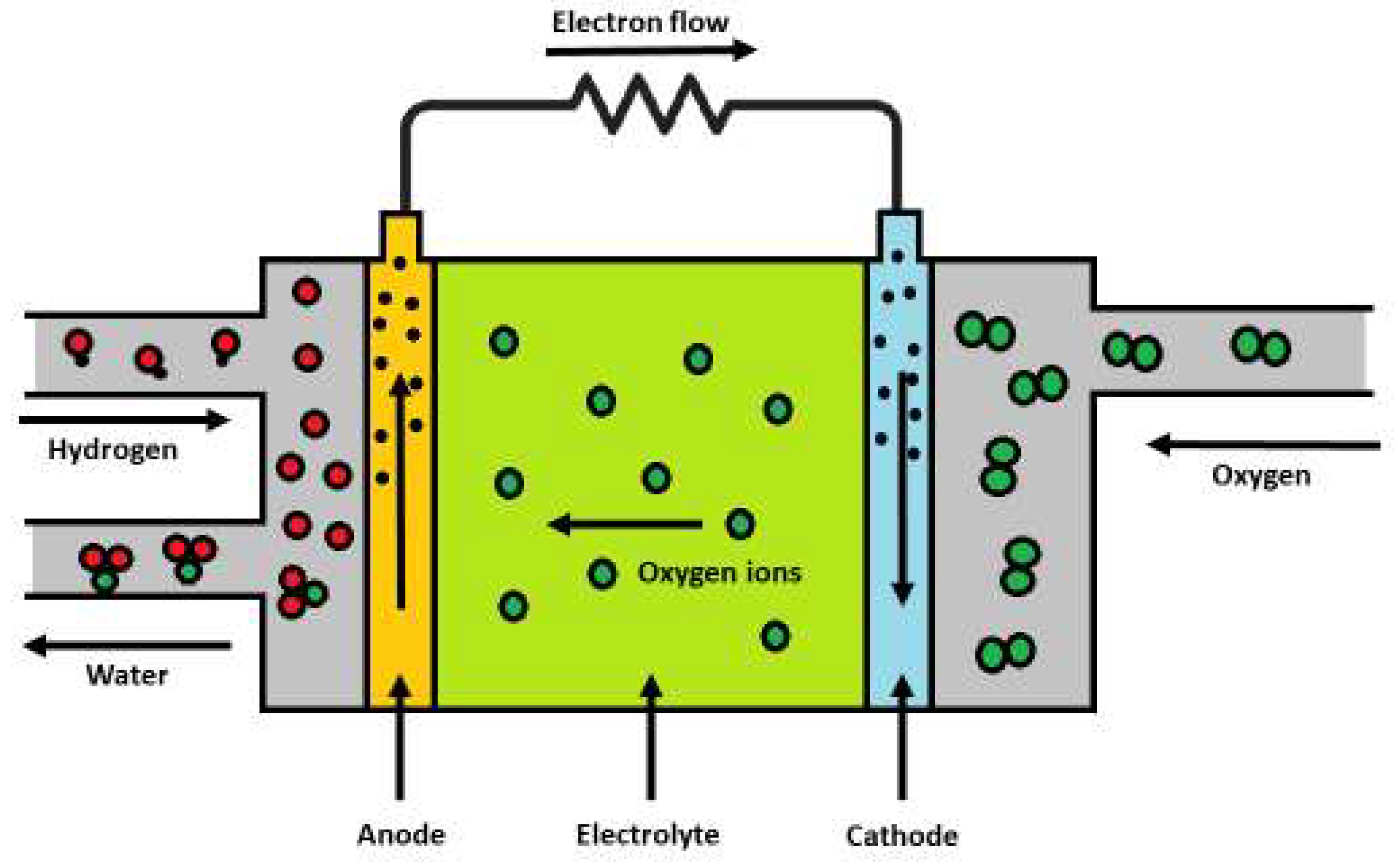
In the past few decades, the need for renewable energy sources has become more and more emphasized. Therefore, the research activities have headed on the way to develop green technologies to address the existing environmental challenges. Figure 3 shows a scheme of a solid oxide fuel cell. Here, two chemical reactions take place, reduction of oxygen (from air) into oxygen anions (Eq. (1), cathode) and oxidation of hydrogen with oxygen anions to form water (Eq (2), anode). In other words, SOFCs use the tendency of oxygen and hydrogen to react. Thus, this reaction transforms the chemical energy in fuels (natural gas, biofuel, etc.) to electrical energy with no emission of harmful gases [56,57,66,67].
C : O 2 + 2 e 2 O 2
A : H 2 + O 2 H 2 O + 2 e
Yttrium- and scandium-stabilized zirconia (YSZ and ScSZ) and RE-doped ceria are one of the most common ion conductor electrolytes in SOFCs because of their chemical stability and excellent ionic conductivity [68,69].
One of the most notable roles of RE-HEOs in SOFCs lies in their development as advanced electrolytes. Traditional materials, such as yttrium-stabilized zirconia and gadolinium-doped ceria [70], are effective but encounter limitations in medium-to-low-temperature operation [71,72,73] and long-term aging. HEOs have addressed these limitations by incorporating multiple elements, alongside rare earth elements to create highly stable and conductive oxide-ion pathways [74,75]. These materials demonstrate significant ionic conductivity, surpassing conventional electrolytes, while maintaining excellent chemical and thermal stability. The configurational entropy inherent in RE-HEOs reduces phase separation, ensuring durability under harsh operating conditions [76]. For instance, the synthesis of high-entropy oxides such as Ce doped systems (Ce1–x(Gd1/5Sm1/5Er1/5Y1/5Bi1/5)xO2–δ) [77], has resulted in electrolytes with exceptional ionic conductivity and reduced activation energies for oxygen ion transport [77,78]. These advancements are particularly valuable for operating at reduced temperatures, which enhances the efficiency of SOFCs. HEOs are also often used as cathode materials in SOFCs [76,79,80].
The application of rare earth elements as fuel electrodes in SOFCs has also gained traction due to their remarkable catalytic properties and resilience against degradation. Nickel-based electrodes, though widely used, face challenges such as carbon deposition and sulfur poisoning during operation with hydrocarbon fuels [81,82]. The inclusion of rare earth elements such as La, Nd, Sm, and Gd significantly contributes to the stabilization of oxygen vacancies, crucial for maintaining high ionic conductivity under SOFC operating conditions methods have been employed to fine-tune the properties of RE-HEOs. Materials such as (La0.2Nd0.2Sm0.2Eu0.2Gd0.2)2Zr2O7 demonstrated increased thermal stability and high ionic conductivity, making them suitable as electrolytes in SOFCs [49]. By fine-tuning the entropy effects and elemental compositions, these materials enhance the compatibility of electrodes with electrolytes and interconnects. For instance, compositions like (La0.2Pr0.2Nd0.2Sm0.2Gd0.2)2CuO4 exhibit a high degree of stability and improved conductivity, which serves as a chromium-resistant air electrode [50]. Its high-entropy design inhibits Ba polarization, thereby enhancing stability and reducing Cr poisoning effects during prolonged operation. This demonstrates the material’s capability to withstand harsh SOFC environments while maintaining high catalytic activity for the oxygen reduction reaction. This directly proves that rare earth-containing high-entropy oxides enable efficient electrochemical reactions by stabilizing oxygen vacancies and facilitating the adsorption and dissociation of molecules. This capability is critical for hydrocarbon-based SOFCs [52,83,84,85,86], allowing direct utilization of fuels such as methane and ethanol without pre-reforming, thereby reducing system complexity and costs. In the context of air electrodes, RE-HEOs have proven instrumental in optimizing oxygen reduction reaction and oxygen evolution reaction kinetics [87]. Their high configurational entropy contributes to excellent mixed ionic-electronic conductivity, crucial for expanding the reaction zones in porous electrodes [81,86,87]. For instance, high-entropy perovskites with rare earth elements have demonstrated exceptional ORR activity due to their flexible lattice structures, which accommodate multiple valence states and facilitate efficient oxygen ion transport. This is specifically crucial in compositions like (Pr0.2Sm0.2Nd0.2Gd0.2La0.2)BaCo2O5+δ which enabled operation for over 142 hours at 800 °C, with low degradation rates [51]. This stability translates into prolonged cell lifespans and enhanced performance metrics, including higher power densities and lower polarization losses.

4.1.2. Achievements in Hydrogen Production

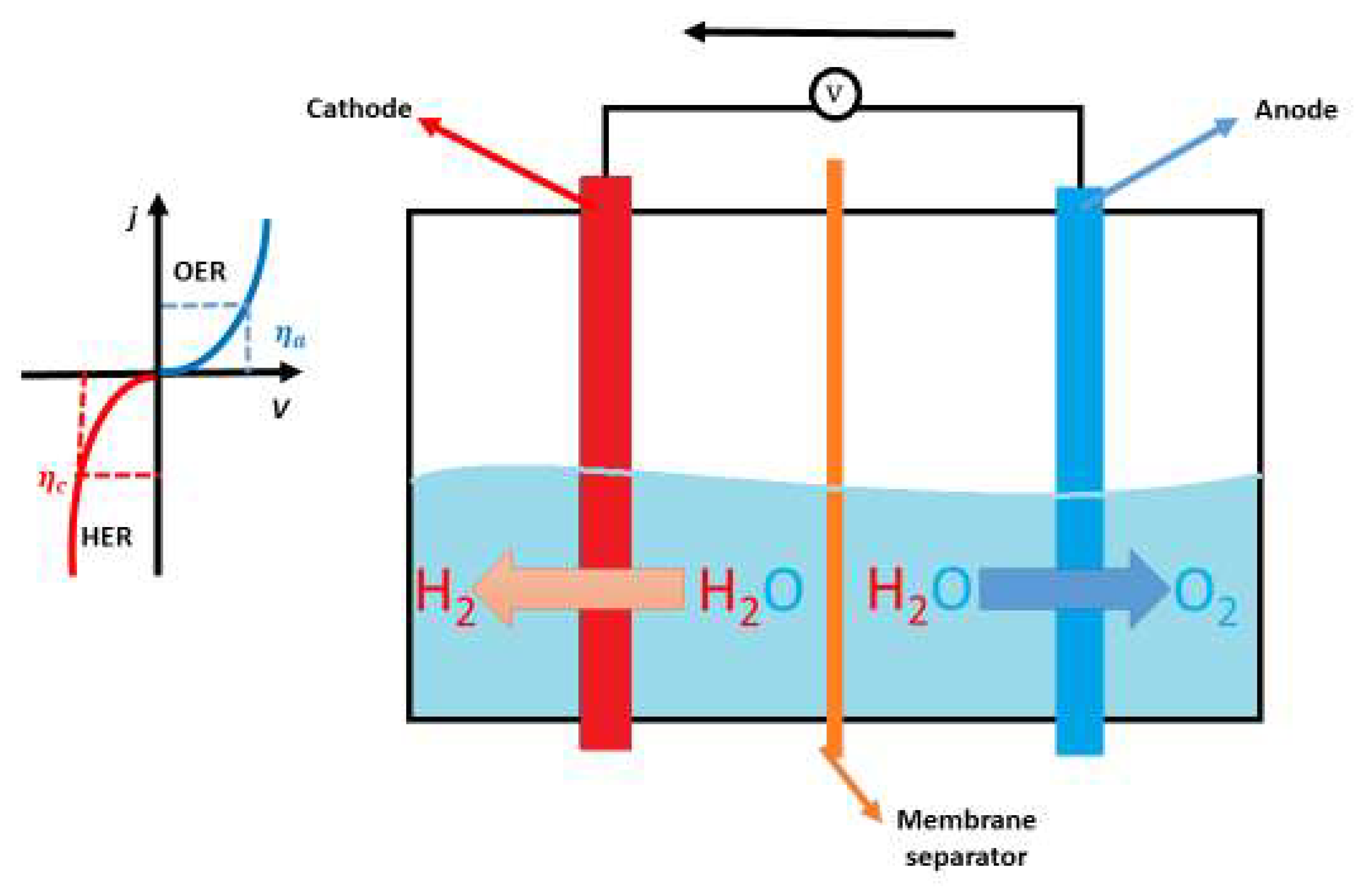
Hydrogen as an energy source is a clean, eco-friendly, and the most promising alternative to fossil fuels. This is why in the past few years the research has focused on finding materials that could enhance electrochemical water splitting [88,89,90,91]. During the electrocatalysis, two half-reactions take place on the cathode and the anode (Eq (3) and Eq (4)):
K : 2 H + ( a q ) + 2 e H 2 ( g )
A : 2 H 2 O l 4 H + + 4 e + O 2 ( g )
However, the energy barrier needs to be overcome for an electrochemical reaction to occur (overpotential, η). This is where catalysts are needed because they should minimize the overpotential on the cathode (ηc) and anode (ηa). The electrochemical water splitting reaction is visualized in Figure 4.
The elemental compositions of RE-HEOs are carefully engineered to optimize their catalytic performance. Most of the Rare-Earth HEOs have been used for oxygen evolution reaction (OER) because of their ability to oxidize other materials due to the high OSC [92,93,94]. However, compositions such as Ce0.2Zr0.2La0.2Pr0.2Y0.2O2 have been synthesized to investigate the synergistic effects of elements toward hydrogen evolution reaction [43]. Each of these elements contributes distinct properties: cerium provides redox flexibility, enabling oxygen vacancy formation; zirconium enhances thermal stability; lanthanum promotes lattice homogeneity; praseodymium adds redox versatility due to its mixed oxidation states; and yttrium stabilizes the fluorite lattice. These multicomponent oxides exhibit a bandgap between 1.9 and 3.0 eV, suitable for visible-light photocatalysis, and also for UV light catalysis. The bandgap tuning, facilitated by the incorporation of rare earth and transition metals, is critical for maximizing light absorption and optimizing the charge carrier dynamics essential for hydrogen production. The results on these materials indicate a significant enhancement in photocatalytic activity compared to “parent” oxides (pure CeO2), achieving hydrogen production rates up to 9.2 µmol/mg/hour, while pure cerium oxide achieves 0.8 µmol/mg/hour under the same conditions. Computational and experimental studies demonstrated that these defects increase the adsorption and activation of water molecules, leading to improved catalytic kinetics [43]. Further, the role of platinum and other noble metals in modifying HEOs has been explored to amplify their catalytic capabilities [44,95,96]. Platinum-modified HEOs, synthesized by decorating oxide surfaces with platinum nanoparticles, have shown excellent HER performance across a universal pH range [44]. The interaction between platinum and oxygen vacancies on the RE-HEO surface enhances catalytic efficiency by optimizing hydrogen adsorption and desorption dynamics.

4.2. Catalysis and Environmental Achievements

4.2.1. CO Oxidation

Carbon monoxide (CO) is a colorless, flammable gas that is also very toxic in high concentration in closed space [97]. The main source of carbon monoxide is incomplete oxidation of fuel systems such as oil, natural gas, coal, wood, etc. [98]. Considerable amounts of CO are also detected in major urban areas due to emissions from the exhaust of internal combustion engines, fuel-burning stoves, and domestic heating, affecting environmental and climate processes [99]. The most representative equation of CO oxidation is shown as a simple reaction (Eq. 5.)
2 C O g + O 2 ( g ) 2 C O 2 ( g )
To minimize the concentration of carbon monoxide in the atmosphere and to protect the environment, CO oxidation reactions in the field of heterogeneous catalysis have been studied. To reduce and convert CO in the atmosphere, early research focused on using ozone and catalysts such as simple metal oxides or Ag, Au, Pt, etc. The main goal was to obtain reaction product CO2 as it was believed it was inert and does not interfere with reaction as long as no reducing species are adsorbed. CO oxidation can also be seen in electrochemistry when carbon monoxide is dissolved in water, using the hydroxyl (OH) group as an oxidant. To clean hydrogen streams, in this case, to eliminate CO by oxidating it to CO2, gold nanoparticles can be used even below room temperature. The catalyst surface is also a viable factor in terms of CO oxidation reaction. Higher specific surface area enables more CO molecules that can adsorb onto the catalyst material and therefore react with oxygen transforming to carbon dioxide and at the same time oxidizing metallic sites, making the material an oxide phase. Factors that can also affect CO oxidation reaction are catalysts’ chemical structure, crystallite size, temperature, weight, and water vapor [100,101].
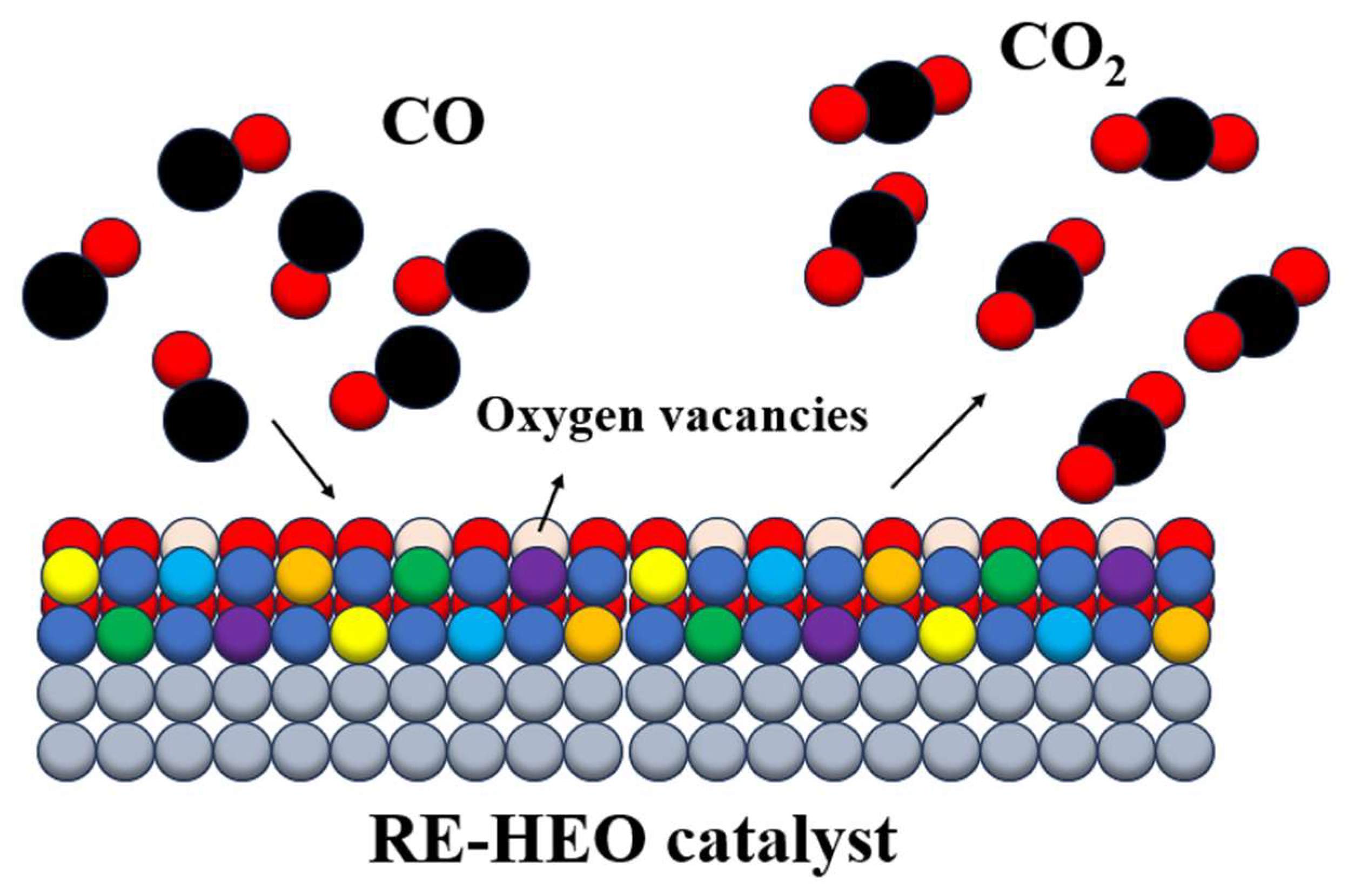
Two main categories exist when talking about catalysts for CO oxidation: supported noble metal catalysts and non-noble metal catalysts. For non-noble metal catalysts, transition metals are primarily used to synthesize oxides such as Fe, Mn, Co, Cr, Cu-based oxides, and also rare-earth elements such as Ce, Zr, La, Nd, Sm, Pr, etc. Their abundant surface-activated oxygen enables them to keep CO oxidation functionality under cycling conditions [102]. In recent years, it was reported several materials with extraordinary potential as CO oxidation catalysts. Elemental compositions typically include rare earth cations often paired with transition metals like chromium, molybdenum, and tungsten. These compositions are designed to exploit the redox-active nature of transition metals and the structural stability provided by rare earth elements. The catalytic performance of high-entropy rare-earth perovskite nanofiber in carbon monoxide oxidation was studied by Krawczyk et al. [103]. Using the glycothermal method, they managed to synthesize rare-earth high-entropy perovskite oxide (Y0.2La0.2Nd0.2Sm0.2Gd0.2)CoO3 which demonstrated exceptional catalytic performance due to their balanced incorporation of these elements. The presence of rare earth cations contributes to maintaining the integrity of the crystalline structure at high temperatures, while the transition metals enhance oxygen vacancy formation. These vacancies serve as active sites where CO molecules can adsorb and react with lattice oxygen to form CO₂ (Figure 5). The synthesis path consisted of mixing precursor salts with a solvent mixture of 1,4-butanediol and diethylene glycol in a volume ratio of 9:1, heating at 250 °C for 72h, removing organic by-products by high-speed centrifugation and drying in a vacuum oven at 120 °C. The CO oxidation behavior showed conversion of 78% at 50 °C and 97% at 100 °C, which are quite effective results for low temperature and mild conditions. The study showed that by incorporating rare-earth elements in the high-entropy composition, the synergistic effect occurs, which enhances the catalytic properties of high-entropy oxide catalysts [103].
For example, studies on fluorite-structured RE-HEOs, such as (Ce0.2La0.2Sm0.2Gd0.2Y0.2)O2, have shown that their high oxygen vacancy concentrations facilitate rapid CO conversion, achieving nearly complete oxidation at temperatures as low as 100 °C. Modifying the Ce-based fluorite phase by adding cationic elements like La, Nd, Pr, Sm, Y, Zr, Fe, and Al, enhances the thermal stability, redox properties, and oxidation activity of HEOs in general. RE-HEO with the composition of (CeLaPrSmY)O2-y was synthesized using the sol-gel method in which the composition of cerium varied from 20-80 at. % while maintaining equimolar concentrations of other rare-earth elements. Metal precursors were mixed within the aqueous solution and bonded with a complexing agent, in this case, polyvinylpyrrolidone. The mixture was stirred and dried to form a hard gel at 110 °C which was subjected to a box furnace for 2 h at 500 °C to obtain RE-HEO. Adding more rare-earth elements that have different ionic radii than Ce4+, disrupts the ceria lattice which as a consequence has destabilization of lattice oxygen that reacts more rapidly with carbon monoxide. The study showed that the activity of HEO for CO oxidation immensely improved by increasing cerium content to 80 % and adding rare-earth elements like La, Nd, Zr, and Pr onto the cerium site compared to pure CeO2 [104].
Reducing crystallite size positively affects CO oxidation till a certain size limit after which it decreases proportionally. Melting point depression at the nanoscale can take place on the particles and increase the flexibility of metal atoms over the support surface. For example, Au has always been seen as an inert metal for catalysis until Haruta et al. [105] managed to decrease crystallite size to less than 10 nm to oxidize CO. The oxidation was successful, but on the other hand, the catalyst suffered problems such as deactivation in indoor light and storage, upscale value, etc. Temperature is one of the main factors for the deactivation of catalysts as it influences the degree of crystallization, crystallite size, formed metal oxide, and surface area of catalysts. Two main types of temperatures need to be taken in hand when talking about the effect of temperature on CO oxidation reaction which are calcination temperature and catalytic reaction temperature. Using higher calcination temperatures, phases with a high degree of crystallization can be formed thus having a higher % of CO oxidation than those at lower temperatures. It also affects formed metal oxide, the support phase, and the oxidation state. As reported by Chang et al. [106], calcinating CeO2 at 400 °C instead of 200 °C, increases CO oxidation by more than 20 % which can be dedicated to increasing the concentration of Ce4+ species by 5 %. Catalytic reaction temperature also greatly affects CO conversion % as high temperatures can lead to catalyst sintering. Halim et al. reported that using high reaction temperatures such as 400 °C and 500 °C towards the oxidation of CO, the catalytic activity increases till 400 °C and reaches its equilibrium and then decreases till 500 °C due to the sintering effect [107]. Overheating of the active sites of the catalysts can also occur prior to CO oxidation due to the release of excessive heat from the exothermic reaction of carbon monoxide to carbon dioxide oxidation. Enlarging catalyst weight proportionally increases its total surface area and the number of sites available for the reaction of the catalyst which as a consequence has increasement of the conversion % of CO to CO2. Soliman reported that increasing the weight of metal oxide which consists of Ce, Cu, Y, Fe, and Al, from 0.3 g to 3 g raises conversion % from 48% to 80% [100].
Transition metal-doped RE-HEOs, such as those incorporating Cr, further enhance the reaction kinetics by lowering the activation energy required for oxygen exchange. The balance between the redox activity of transition metals and the structural stability provided by rare earth elements ensures sustained catalytic performance even under harsh operating conditions [104]. Another significant achievement in the development of RE-HEOs for CO oxidation is their inherent resistance to thermal degradation. Conventional catalysts often suffer from sintering and phase segregation at elevated temperatures, leading to the loss of activity. In contrast, RE-HEOs maintain their single-phase structure and catalytic properties due to the stabilizing effect of configurational entropy. This thermal stability has been demonstrated in materials that retain high activity after prolonged exposure to temperatures exceeding 800 °C. Such resilience makes RE-HEOs ideal for applications in automotive exhaust systems and industrial processes that involve high-temperature oxidation reactions [104].

4.2.2. CO2 Reduction

In recent years, carbon dioxide (CO2) has become the main topic when talking about the global warming and environmental control. It belongs to the group of greenhouse gases that contribute to global warming by gripping infrared radiation and holding it back from going into space. CO2 emission contributes over 60 % to global warming since fossil fuels are still the main sources of energy. To overcome that, several technologies have been proposed to use and capture CO2 cost-effectively and reasonably, such as conversion to chemicals, reduction, welding, water treatment, hydrogenation, etc [108,109].
Utilization of CO2 as raw material for producing valuable and usable compounds such as carbon monoxide, formic acid, formaldehyde, methane, methanol, etc. is an inviting way of making carbon flow in the ecosystem. The main methods have been investigated for CO2 conversion, but the main approaches involve photocatalysis, thermal catalysis, and electrocatalysis. High productivity for CO2 reduction is visible in thermal catalysis but conditions with high pressure and high temperature cause significant energy cost and safety issues. When talking about electrocatalysis, uses an external electric field, in which there is a compromise between selectivity and activity, as a result of overpotential. An encouraging way for artificial carbon recycling to help the global challenges in preserving energy is developing electrocatalysts that have the potential to selectively reduce CO2 to oxygenated hydrocarbon products. Raciti and Wang [110] reported Cu electrocatalysts for CO2 reduction where it is seen that structural effects, involving surface crystalline facets and grain boundaries, morphology, porosity, and pH, have a huge impact on the conversion rate of CO2. The most promising way of CO2 reduction lies in photocatalysis which uses solar energy to convert CO2 into organic compounds that can be used for further chemical reactions. It depends on solar energy for reduction, which shows small energy consumption, reasonable operation conditions, and enormous conversion % of CO2 reduction [111].
Recent advances in their development have expanded our understanding of their compositional frameworks, synthesis techniques, reaction mechanisms, and catalytic efficiencies. One of the most promising advances in RE-HEOs for CO₂ hydrogenation is the development of fluorite-structured systems. A notable example is (Ce0.2Zr0.2La0.2Nd0.2Sm0.2)O2-δ, which demonstrated significant catalytic performance for CO2 conversion under photocatalytic conditions [22]. This material achieved a remarkable 14.4 mol CO kg-1 h-1 and 1.27 mol CH3OH kg-1 h-1, with a high selectivity of 89.26% for CO and 7.84% for methanol. Advanced characterization techniques, such as X-ray photoelectron spectroscopy and in situ diffuse reflectance infrared Fourier transform spectroscopy, proved the formate-driven mechanism underlying CO2 activation in these systems. Fluorite RE-HEOs, such as Ce0.5(LaPrSmY)0.5O2-y, are also used as catalysts for the synthesis of dimethyl carbonate from carbon dioxide and methanol [112]. The catalyst was synthesized using the anchoring method which included the adsorption of rare earth metal cations by the negative functional groups on the surface of graphene oxide. By dissolving graphene oxide in ethylene glycol and mixing that with a certain molar ratio of mentioned rare-earth nitrates, refluxing for 4h at 170 °C and calcinating at temperatures over 500 °C, high-entropy rare-earth oxides were obtained. Direct synthesis of DMC from CO2 and CH3OH followed the catalytic performance of Ce0.5(LaPrSmY)0.5O2-y that showed the yield of DMC of 7.2 mmol/g using 0.05g of catalyst [113]. RE-HEO revealed a much faster time (almost 2 times) to convert DMC to desired products compared to pristine CeO2 which is dedicated to higher specific surface area, larger pores, and the gaps between the layers that provided more active sites. Adding more rare-earth metals onto the same lattice site with different atomic radii and bond lengths led to severe distortion of the lattice which enriched the number and size of oxygen vacancies and advanced electron transfer of active species [113]. The catalytic performance of RE-HEOs for CO2 hydrogenation is linked to their defect chemistry, particularly the formation and stabilization of oxygen vacancies. For example, the introduction of transition metals such as Ni or Cu into the rare earth elements showed significant enhancement of the reactivity and selectivity of these materials [114].

4.3. Emerging Applications Beyond Energy and Environment

One of the most promising next-generation technology applications is quantum materials and spintronics, where the material’s ability to sustain long-range magnetic interactions and modulate electron correlation effects directly influences on high-performance memory storage, magneto-resistive devices, and topological insulators [115,116]. The role of transition metals within the high-entropy lattice induces tunable exchange interactions, offering a robust platform for multifunctional magnetic and electronic materials [117]. In aerospace and defense technological applications, HEOs exhibit superior phase stability under extreme thermal and mechanical stress [118]. Their configurational entropy minimizes atomic diffusion and grain growth at elevated temperatures, making them ideal candidates for ultra-high-temperature ceramics, thermal barrier coatings, and radiation-resistant materials [2]. These attributes position HEOs as potential replacements for conventional oxides in hypersonic vehicles, space propulsion systems, and nuclear reactor components [119]. Biomedical applications of HEOs also gained attention, particularly in bioelectronics, antibacterial coatings, and implantable materials [56]. The incorporation of biocompatible elements such as cerium, yttrium, and calcium enhances their functional integration with biological systems [23]. Rare-earth high-entropy oxides are a relatively new class of materials that have emerged as a promising extension of high-entropy material design. Initially, RE-HEOs were mostly investigated for catalytic applications, particularly in oxygen evolution reaction, hydrogen evolution reaction, CO oxidation, and CO2 reduction, where their multi-element synergies enhance surface activity and stability under harsh conditions [120]. However, recent research demonstrated multifunctionality, extending their applications beyond catalysis into non-conventional fields such as optoelectronics, photoluminescent materials, and thermal barrier coatings. Recent advancements show that RE-HEOs are adaptable to optoelectronic applications due to their bandgap tunability and photoluminescence properties. For example, Kumbhakar et al. [121] investigated high-entropy fluorite oxides and demonstrated that these materials offer a tunable bandgap range of 2.0–3.5 eV, making them ideal candidates for photovoltaic and LED applications. Similarly, Nundy et al. [43] validated the photoluminescent potential of RE-HEOs, showing that La, Ce, Pr, Eu, Gd, Y, and Zr-based RE-HEOs have stable light emission properties, which could be interesting for display technologies and semiconductor applications. Optoelectronics is an interdisciplinary field integrating photonics and electronics to manipulate and control light for applications ranging from telecommunications and solid-state lighting to advanced sensing technologies and quantum information processing [122]. The 4f orbitals of rare earth elements are shielded by outer 5s and 5p orbitals, leading to sharp and stable emission lines across the infrared, visible, and ultraviolet regions. By incorporating multiple rare-earth cations into a high-entropy lattice, they can enhance photoluminescence efficiency, increase defect tolerance, and broad tunability of emission spectra, making them suitable for applications in laser systems, phosphors, and next-generation display technologies [123]. Recent studies have demonstrated the application of rare earth elements in optoelectronic applications through controlled synthesis and doping strategies [124]. Beyond traditional photoluminescence applications, RE-HEOs have also been explored for tunable bandgap engineering in optoelectronics. The incorporation of multivalent rare-earth cations such as Ce, Pr, and Tb into high-entropy fluorite-type oxides has enabled bandgap through controlled synthesis atmospheres, broadening their applicability in optoelectronic devices. This tunability allows for the development of energy-efficient materials suitable for ultraviolet and visible-light photodetectors, as well as solar energy harvesting systems [121]. Studies on high-entropy zirconate-based oxides have shown remarkable phase stability and defect-tolerant photonic properties [125]. These materials maintain their structural integrity under high-radiation exposure but also exhibit stable luminescent performance, making them suitable for deep-space exploration and high-energy optical sensors [125]. Another promising application of RE-HEOs in optoelectronics is in thermally stable phosphors for solid-state lighting. Conventional phosphor materials often suffer from thermal quenching, which degrades their luminescence efficiency at elevated temperatures. However, incorporating elements such as Eu, Gd, Dy, and Tb, demonstrated reduced thermal quenching effects, maintaining strong emission intensity even at temperatures exceeding 800°C [126]. This characteristic is important for next-generation LED and laser-based illumination systems [126]. Photoluminescence, the emission of light from a material upon absorption of photons, is fundamental to a variety of advanced applications, including solid-state lighting, displays, optical sensing, and quantum information technologies. Materials exhibiting strong, tunable photoluminescence have gained significant attention due to their potential to enhance efficiency, stability, and functionality in optoelectronic devices. Rare-earth-based materials, particularly oxides, are interesting materials for photoluminescent applications due to their unique 4f electronic configurations, which result in sharp emission lines and long-lived excited states [127]. The development of high-entropy materials with rare earth elements ensures that the materials maintain their optical integrity under various operating conditions, making them candidates for long-term applications in optoelectronics and phosphors. The disorder induced by the entropy effect contributes to broadening emission spectra while maintaining high quantum efficiency [128]. The approach in the photoluminescent behavior of rare earth elements involves the doping of multiple rare-earth ions, such as Eu3+, Tb3+, and Dy3+, within a stable host matrix. Eu3+ ions, for example, are well known for their sharp red emissions due to electric dipole transitions making them suitable for display technologies and lighting applications [129,130]. Tb³⁺ and Dy³⁺ ions, on the other hand, provide green and yellow emissions, respectively, facilitating multi-color luminescence within a single phase [131]. This compositional flexibility allows for tunable emission spectra by varying the relative concentrations of different rare-earth ions, a significant advantage over traditional phosphor materials. Recent research showed that RE-HEOs based on zirconate and hafnate compositions exhibit remarkable photoluminescent properties due to their high thermal and chemical stability. In particular, pyrochlore-type RE₂Zr₂O₇ compositions containing multiple rare-earth elements (La, Nd, Sm, Eu, Gd) displayed enhanced photoluminescence due to the cooperative effects of different luminescent centers and their interactions with the host lattice [132]. Thermal barrier coatings are an important factor in reducing thermal stresses and enhancing the lifespan of structural components in high-temperature applications, including jet engines, gas turbines, and hypersonic flight systems. Traditional TBC materials, such as yttria-stabilized zirconia, face significant limitations, including thermal conductivity degradation and phase instability beyond 1200°C, which can be solved by the development of alternative compositions capable of maintaining structural integrity and thermal insulation at ultra-high temperatures [133,134]. Recent studies demonstrated that multicomponent zirconates with high configurational entropy can maintain their structural phase over prolonged thermal cycling [134]. Multicomponent pyrochlores, synthesized through entropy stabilization, exhibit enhanced thermal shock resistance and oxidation durability. Experimental results indicate that compositions such as (La0.2Ce0.2Pr0.2Sm0.2Eu0.2)2Hf2O7 can retain phase stability up to 1600°C, outperforming traditional hafnates in high-temperature environments [135].

5. Future Perspectives

One of the most important challenges is the development of advanced synthesis techniques that are scalable and energy-efficient while maintaining the structural and compositional integrity of RE-HEOs. Current methods are effective at the laboratory scale but require optimization to achieve industrial scalability. Innovations in methods like flame spray pyrolysis and hydrothermal processing could allow for the production of RE-HEOs with high surface area, tailored defect concentration, and controlled particle sizes. These scalable techniques are essential for expanding the use of RE-HEOs in commercial catalytic processes and energy storage systems. To date, most studies have been focused on a limited subset of rare earth elements, often combined with transition metals. Future research could systematically investigate the effects of incorporating less commonly studied rare earth elements, such as terbium, dysprosium, and holmium, alongside unconventional dopants. The strategic inclusion of these elements could further enhance the redox properties, thermal stability, and catalytic activity of RE-HEOs, enabling their application in more demanding environments, such as high-temperature fuel cells or CO2 hydrogenation under industrial conditions, and towards more precious products. The combination of RE-HEOs with other functional materials could be also progressive in the field of material science. Hybrid systems, integrating RE-HEOs with carbon-based materials such as graphene, carbon nanotubes, or porous carbons, could address challenges related to mass transport and active site dispersion. Similarly, the incorporation of RE-HEOs within metal-organic frameworks or anchoring them to zeolite supports could enhance their selectivity and efficiency in catalytic reactions. These hybrid systems may also provide unique opportunities for improvement of the local chemical environment around active sites, further improving their performance in applications such as water splitting, CO oxidation, and greenhouse gas reduction. The defect chemistry of RE-HEOs, particularly the formation and dynamics of oxygen vacancies significantly influences catalytic and electronic properties. However, a deeper mechanistic understanding of how these vacancies interact with reactants during catalytic processes remains necessary. Advanced characterization techniques, such as operando X-ray absorption spectroscopy, neutron scattering, and in situ electron microscopy, should be employed to study vacancy formation, migration, and annihilation in the real time for each composition. Coupling these experimental approaches with computational modeling and machine learning-based simulations could provide new insights into the structure-function relationships in RE-HEOs for industrial processes. Scalability and cost reduction will be one of the most important factors when determining the industrial relevance of RE-HEOs. The relatively high cost of rare earth elements and the energy-intensive nature of some synthesis methods are potential barriers to commercialization. The environmental implications of RE-HEOs also are worth consideration. While their catalytic properties make them promising for CO2 reduction, CO oxidation, hydrogen production, and pollution removal, a comprehensive life cycle determination is necessary to evaluate their overall environmental impact. Such investigations would provide valuable data on the carbon footprint, resource consumption, and end-of-life recyclability of RE-HEOs. In energy systems, for example, RE-HEOs could serve as next-generation electrodes or electrolytes in solid oxide fuel cells, batteries, and supercapacitors, benefiting from their high ionic conductivity and thermal stability. In catalysis, their unique defect structures and multi-component nature make them ideal for developing selective, robust catalysts for industrial chemical processes, such as ammonia synthesis, methane reforming, and hydrocarbon oxidation. Finally, interdisciplinary collaboration will be essential to advancing the field of RE-HEOs. Chemists, material scientists, physicists, and engineers will need to work together to address the challenges associated with designing, synthesizing, and applicability of these materials.

Funding

Not applicable.

Institutional Review Board Statement

Not applicable.

Informed Consent Statement

Not applicable.

Acknowledgments

Not applicable.

Conflicts of Interest

The authors declare no conflicts of interest.

References

  1. Cantor, B.; Chang, I.T.H.; Knight, P.; Vincent, A.J.B. Microstructural development in equiatomic multicomponent alloys. Mater. Sci. Eng. A 2004, 375–377, 213–218. [Google Scholar] [CrossRef]
  2. Rost, C.M.; Sachet, E.; Borman, T.; Moballegh, A.; Dickey, E.C.; Hou, D.; Jones, J.L.; Curtarolo, S.; Maria, J.P. Entropy-stabilized oxides. Nat. Commun. 2015, 6. [Google Scholar] [CrossRef] [PubMed]
  3. Wang, T.; Chen, H.; Yang, Z.; Liang, J.; Dai, S. High-Entropy Perovskite Fluorides: A New Platform for Oxygen Evolution Catalysis. J. Am. Chem. Soc. 2020, 142, 4550–4554. [Google Scholar] [CrossRef] [PubMed]
  4. Zhang, R.Z.; Gucci, F.; Zhu, H.; Chen, K.; Reece, M.J. Data-Driven Design of Ecofriendly Thermoelectric High-Entropy Sulfides. Inorg. Chem. 2018, 57, 13027–13033. [Google Scholar] [CrossRef]
  5. Jin, T.; Sang, X.; Unocic, R.R.; Kinch, R.T.; Liu, X.; Hu, J.; Liu, H.; Dai, S. Mechanochemical-Assisted Synthesis of High-Entropy Metal Nitride via a Soft Urea Strategy. Adv. Mater. 2018, 30, 1–5. [Google Scholar] [CrossRef] [PubMed]
  6. Zhang, Y.; Zuo, T.T.; Tang, Z.; Gao, M.C.; Dahmen, K.A.; Liaw, P.K.; Lu, Z.P. Microstructures and properties of high-entropy alloys. Prog. Mater. Sci. 2014, 61, 1–93. [Google Scholar] [CrossRef]
  7. Yeh, J.W. Alloy design strategies and future trends in high-entropy alloys. Jom 2013, 65, 1759–1771. [Google Scholar] [CrossRef]
  8. Amiri, A.; Shahbazian-Yassar, R. Recent progress of high-entropy materials for energy storage and conversion. J. Mater. Chem. A 2021, 9, 782–823. [Google Scholar] [CrossRef]
  9. Rost, C.M.; Rak, Z.; Brenner, D.W.; Maria, J.P. Local structure of the MgxNixCoxCuxZnxO(x=0.2) entropy-stabilized oxide: An EXAFS study. J. Am. Ceram. Soc. 2017, 100, 2732–2738. [Google Scholar] [CrossRef]
  10. Sarkar, A.; Wang, Q.; Schiele, A.; Chellali, M.R.; Bhattacharya, S.S.; Wang, D.; Brezesinski, T.; Hahn, H.; Velasco, L.; Breitung, B. High-Entropy Oxides: Fundamental Aspects and Electrochemical Properties. Adv. Mater. 2019, 31. [Google Scholar] [CrossRef]
  11. Djenadic, R.; Sarkar, A.; Clemens, O.; Loho, C.; Botros, M.; Chakravadhanula, V.S.K.; Kübel, C.; Bhattacharya, S.S.; Gandhi, A.S.; Hahn, H. Multicomponent equiatomic rare earth oxides. Mater. Res. Lett. 2017, 5, 102–109. [Google Scholar] [CrossRef]
  12. Bérardan, D.; Franger, S.; Dragoe, D.; Meena, A.K.; Dragoe, N. Colossal dielectric constant in high entropy oxides. Phys. Status Solidi - Rapid Res. Lett. 2016, 10, 328–333. [Google Scholar] [CrossRef]
  13. Biesuz, M.; Spiridigliozzi, L.; Dell’Agli, G.; Bortolotti, M.; Sglavo, V.M. Synthesis and sintering of (Mg, Co, Ni, Cu, Zn)O entropy-stabilized oxides obtained by wet chemical methods. J. Mater. Sci. 2018, 53, 8074–8085. [Google Scholar] [CrossRef]
  14. Wang, D.; Liu, Z.; Du, S.; Zhang, Y.; Li, H.; Xiao, Z.; Chen, W.; Chen, R.; Wang, Y.; Zou, Y.; et al. Low-temperature synthesis of small-sized high-entropy oxides for water oxidation. J. Mater. Chem. A 2019, 7, 24211–24216. [Google Scholar] [CrossRef]
  15. Balcerzak, M.; Kawamura, K.; Bobrowski, R.; Rutkowski, P.; Brylewski, T. Mechanochemical Synthesis of (Co,Cu,Mg,Ni,Zn)O High-Entropy Oxide and Its Physicochemical Properties. J. Electron. Mater. 2019, 48, 7105–7113. [Google Scholar] [CrossRef]
  16. Nassau, K. Handbook on the physics and chemistry of rare earths, vol. 14; 1993; Vol. 28; ISBN 9780444503466.
  17. Voncken, J.H.L. Physical and Chemical Properties of the Rare Earths. 2016, 53–72. [CrossRef]
  18. Balaram, V. Rare earth elements: A review of applications, occurrence, exploration, analysis, recycling, and environmental impact. Geosci. Front. 2019, 10, 1285–1303. [Google Scholar] [CrossRef]
  19. Koehler, W.C. Magnetic properties of rare-earth metals and alloys. J. Appl. Phys. 1965, 36, 1078–1087. [Google Scholar] [CrossRef]
  20. Zhang, H.; Zhang, H. Special Issue: Rare earth luminescent materials. Light Sci. Appl. 2022, 11, 10–12. [Google Scholar] [CrossRef]
  21. Zhang, S.; Saji, S.E.; Yin, Z.; Zhang, H.; Du, Y.; Yan, C.H. Rare-Earth Incorporated Alloy Catalysts: Synthesis, Properties, and Applications. Adv. Mater. 2021, 33, 1–25. [Google Scholar] [CrossRef]
  22. Tatar, D.; Ullah, H.; Yadav, M.; Kojčinović, J.; Šarić, S.; Szenti, I.; Skalar, T.; Finšgar, M.; Tian, M.; Kukovecz, Á.; et al. High-Entropy Oxides: A New Frontier in Photocatalytic CO2 Hydrogenation. ACS Appl. Mater. Interfaces 2024, 16, 29946–29962. [Google Scholar] [CrossRef]
  23. Schmitt, R.; Nenning, A.; Kraynis, O.; Korobko, R.; Frenkel, A.I.; Lubomirsky, I.; Haile, S.M.; Rupp, J.L.M. A review of defect structure and chemistry in ceria and its solid solutions. Chem. Soc. Rev. 2020, 49, 554–592. [Google Scholar] [CrossRef] [PubMed]
  24. Coduri, M.; Checchia, S.; Longhi, M.; Ceresoli, D.; Scavini, M. Rare earth doped ceria: The complex connection between structure and properties. Front. Chem. 2018, 6. [Google Scholar] [CrossRef]
  25. Swartz, S. C. Catalysis by Ceria and Related Materials Edited by Alessandro Trovarelli, vol. 2; 2002; ISBN: 1-86094-299-7. J. Am. Chem. Soc. 2002, 2, 12923–12924. [Google Scholar] [CrossRef]
  26. Yashima, M.; Kobayashi, S.; Yasui, T. Crystal structure and the structural disorder of ceria from 40 to 1497 °c. Solid State Ionics 2006, 177, 211–215. [Google Scholar] [CrossRef]
  27. Kim, D. -J Lattice Parameters, Ionic Conductivities, and Solubility Limits in Fluorite-Structure MO2 Oxide [M = Hf4+, Zr4+, Ce4+, Th4+, U4+] Solid Solutions. J. Am. Ceram. Soc. 1989, 72, 1415–1421. [Google Scholar] [CrossRef]
  28. Takeshi, E.; Billinge, S.J.L. Underneath the Bragg Peaks: Structural Analysis of Complex Materials; 2012; Vol. 16; ISBN 9780080971339.
  29. Coles-Aldridge, A. V.; Baker, R.T. Oxygen ion conductivity in ceria-based electrolytes co-doped with samarium and gadolinium. Solid State Ionics 2020, 347, 115255. [Google Scholar] [CrossRef]
  30. Skinner, S.J.; Kilner, J.A. Oxygen ion conductors. Mater. Today 2003, 6, 30–37. [Google Scholar] [CrossRef]
  31. Molenda, J.; Świerczek, K.; Zajac, W. Functional materials for the IT-SOFC. J. Power Sources 2007, 173, 657–670. [Google Scholar] [CrossRef]
  32. Chueh, W.C.; McDaniel, A.H.; Grass, M.E.; Hao, Y.; Jabeen, N.; Liu, Z.; Haile, S.M.; McCarty, K.F.; Bluhm, H.; El Gabaly, F. Highly enhanced concentration and stability of reactive Ce 3+ on doped CeO 2 surface revealed in operando. Chem. Mater. 2012, 24, 1876–1882. [Google Scholar] [CrossRef]
  33. Kašpar, J.; Fornasiero, P.; Graziani, M. Use of CeO2-based oxides in the three-way catalysis. Catal. Today 1999, 50, 285–298. [Google Scholar] [CrossRef]
  34. Roy, S.; Ernst, J.; Kheradpour, P.; Bristow, C.A.; Lin, M.F.; Washietl, S.; Ay, F.; Meyer, P.E.; Stefano, L. Di; Candeias, R.; et al. High-Flux Solar-Driven Thermochemical Dissociation of CO2 and H2OUsing Nonstoichiometric Ceria. Science (80-. ). 2010, 330, 1797–1801. [Google Scholar]
  35. Kuhn, M.; Bishop, S.R.; Rupp, J.L.M.; Tuller, H.L. Structural characterization and oxygen nonstoichiometry of ceria-zirconia (Ce1-xZrxO2-δ) solid solutions. Acta Mater. 2013, 61, 4277–4288. [Google Scholar] [CrossRef]
  36. Huang, B.; Gillen, R.; Robertson, J. Study of CeO2 and its native defects by density functional theory with repulsive potential. J. Phys. Chem. C 2014, 118, 24248–24256. [Google Scholar] [CrossRef]
  37. Xue, Y.; Zhao, X.; An, Y.; Wang, Y.; Gao, M.; Zhou, H.; Chen, J. High-entropy (La0.2Nd0.2Sm0.2Eu0.2Gd0.2)2Ce2O7: A potential thermal barrier material with improved thermo-physical properties. J. Adv. Ceram. 2022, 11, 615–628. [Google Scholar] [CrossRef]
  38. Tatar, D.; Kojčinović, J.; Marković, B.; Széchenyi, A.; Miletić, A.; Nagy, S.B.; Ziegenheim, S.; Szenti, I.; Sapi, A.; Kukovecz, Á.; et al. Sol-Gel Synthesis of Ceria-Zirconia-Based High-Entropy Oxides as High-Promotion Catalysts for the Synthesis of 1,2-Diketones from Aldehyde. Molecules 2021, 26, 6115. [Google Scholar] [CrossRef]
  39. Nundy, S.; Tatar, D.; Kojčinović, J.; Ullah, H.; Ghosh, A.; Mallick, T.K.; Meinusch, R.; Smarsly, B.M.; Tahir, A.A.; Djerdj, I. Bandgap Engineering in Novel Fluorite-Type Rare Earth High-Entropy Oxides (RE-HEOs) with Computational and Experimental Validation for Photocatalytic Water Splitting Applications. Adv. Sustain. Syst. 2022, 6, 1–20. [Google Scholar] [CrossRef]
  40. Fang, S.; Yang, T.; He, W.; Yang, W.; Wang, N.; Ma, S.; Shih, K.; Liao, C. Solution combustion synthesis of Ce-free high entropy fluorite oxides: Formation, oxygen vacancy and long-term thermal stability. Ceram. Int. 2024, 50, 7431–7440. [Google Scholar] [CrossRef]
  41. Yin, Z.; Mao, Y.; Shi, S.; Wang, J.; Zong, R. Solution combustion synthesis of high-entropy rare earth oxide Ce0.2La0.2Gd0.2Y0.2Lu0.2O1.6:Eu3+phosphor with intense blue-light excitable red emission for solid-state lighting. J. Adv. Ceram. 2024, 13, 1852–1860. [Google Scholar] [CrossRef]
  42. Sarkar, A.; Loho, C.; Velasco, L.; Thomas, T.; Bhattacharya, S.S.; Hahn, H.; Djenadic, R. Multicomponent equiatomic rare earth oxides with a narrow band gap and associated praseodymium multivalency. Dalt. Trans. 2017, 46, 12167–12176. [Google Scholar] [CrossRef]
  43. Nundy, S.; Tatar, D.; Kojčinović, J.; Ullah, H.; Ghosh, A.; Mallick, T.K.; Meinusch, R.; Smarsly, B.M.; Tahir, A.A.; Djerdj, I. Bandgap Engineering in Novel Fluorite-Type Rare Earth High-Entropy Oxides (RE-HEOs) with Computational and Experimental Validation for Photocatalytic Water Splitting Applications. Adv. Sustain. Syst. 2022, 2200067, 1–20. [Google Scholar] [CrossRef]
  44. Wei, H.; Chem, W.; Hou, K.; Duan, X.; Liu, L.; Xu, J. Phases, Electrical Properties, and Stability of High-Entropy Pyrochlores [(La0. 25Nd0.25Sm0.25Eu0.25)1−xCax]2Zr2O7−δ Oxides. Phys. Status Solidi A, 2024, 221, 2300753. [Google Scholar] [CrossRef]
  45. Tanveer, R.; Windsor, D.; Drewry, S.; Page, K.; Xu, H.; Keppens, V.; Weber, W.J. Synthesis and properties of rare-earth high-entropy perovskite, Appl. Phys. Lett. 2024, 124, 214101. [Google Scholar] [CrossRef]
  46. Chatterjee, A.; Ganguly, D.; Sundara, R.; Bhattacharya, S. Noble Metal-Free High Entropy Perovskite Oxide with High Cationic Dispersion Enhanced Oxygen Redox Reactivity, ChemistrySelect 2024, 9, e202401836. [CrossRef]
  47. Wang, Q.; Xuan, Y.; Gao, K.; Sun, C.; Gao, Y.; Liu, J.; Chang, S.; Liu, X. High-entropy perovskite oxides for direct solar-driven thermochemical CO2 splitting. Ceram. Int. 2024, 50, 1564–1573. [Google Scholar] [CrossRef]
  48. Cheng, Q.Y.; Wang, M.F.; Ni, J.J.; He, Y.Z.; Ji, H.Q.; Liu, S.S.; Qian, T.; Yan, C.L. High-entropy alloys for accessing hydrogen economy via sustainable production of fuels and direct application in fuel cells. Rare Met. 2023, 42, 3553–3569. [Google Scholar] [CrossRef]
  49. Mao, H.R.; Guo, R.F.; Cao, Y.; Jin, S.B.; Qiu, X.M.; Shen, P. Ultrafast densification of high-entropy oxide (La0.2Nd0.2Sm0.2Eu0.2Gd0.2)2Zr2O7 by reactive flash sintering. J. Eur. Ceram. Soc. 2021, 41, 2855–2860. [Google Scholar] [CrossRef]
  50. Shijie, Z.; Na, L.; Liping, S.; Qiang, L.; Lihua, H.; Hui, Z. A novel high-entropy cathode with the A2BO4-type structure for solid oxide fuel cells. J. Alloys Compd. 2022, 895, 162548. [Google Scholar] [CrossRef]
  51. Zhu, F. ; Xu, K; He, F. ; Xu, Y.; Du, Z.; Zhang, H.; Zeng, D.; Liu, Y.; Wang, H.; Ding, D.; Zhou, Y.; Chen, Y. An Active and Contaminants-Tolerant High-Entropy Electrode for Ceramic Fuel Cells, ACS Energy Lett. 2024, 9, 2, 556–567. [Google Scholar] [CrossRef]
  52. Xiao, M.; Liu, Z.; Di, H.; Bai, Y.; Yang, G.; Medvedev, D.A.; Luo, Z.; Wang, W.; Zhou, W.; Ran, R.; et al. High-entropy materials for solid oxide cells : Synthesis, applications, and prospects. J. Energy Chem. 2024. [Google Scholar] [CrossRef]
  53. Kaur, T.; Kumar, R.; Khan, S.; Singh, K.; Kolte, J. Structural and Electrical Properties of Gd Doped CeO2 (GDC) Nanoceramics for Solid Oxide Fuel Cell Applications. Transactions of the Indian Ceramic Society, 81, 127–132.
  54. Zhang, S.; Yu, H.; Wang, L.; Luo, L.; Cheng, L.; Xu, X.; Yu, J. Insight into the effect of Gd-doping on conductance and thermal matching of CeO2 for solid oxide fuel cell. Ceram. Int. 2024, 50, 55190–55200. [Google Scholar] [CrossRef]
  55. Betti, L.A.; Bosetti, A.; Malavasi, L. High-Entropy Perovskite Oxides for Thermochemical Solar Fuel Production. Energy Technol. 2024, 2401199. [Google Scholar] [CrossRef]
  56. Corey, Z.J.; Lu, P.; Zhang, G.; Sharma, Y.; Rutherford, B.X.; Dhole, S.; Roy, P.; Wang, Z.; Wu, Y.; Wang, H.; et al. Structural and Optical Properties of High Entropy (La,Lu,Y,Gd,Ce)AlO3 Perovskite Thin Films. Adv. Sci. 2022, 9, 1–9. [Google Scholar] [CrossRef] [PubMed]
  57. YILDIZ, İ. Synthesis and characterization of b-site controlled la-based high entropy perovskite oxides. J. Sci. Reports-A, 2023; 124–131. [Google Scholar] [CrossRef]
  58. Nowak, M.; Walczak, K.; Milewska, A.; Płotek, J.; Budziak, A.; Molenda, J. Electrochemical performance of different high-entropy cathode materials for Na-ion batteries. J. Alloys Compd. 2023, 968, 172316. [Google Scholar] [CrossRef]
  59. Ali, M.; Saleem, M.; Sattar, T.; Khan, M.Z.; Koh, J.H.; Gohar, O.; Hussain, I.; Zhang, Y.; Hanif, M.B.; Ali, G.; et al. High-entropy battery materials: Revolutionizing energy storage with structural complexity and entropy-driven stabilization. Mater. Sci. Eng. R Reports 2025, 163, 100921. [Google Scholar] [CrossRef]
  60. Tio, L.O.; Wo, N.O.; Asri, M. Investigation of optical properties of high-entropy oxide glasses. 2024, 3.
  61. Salian, A.; K, A.P.; Mandal, S. Phase stabilized solution combustion processed (Ce0.2La0.2Pr0.2Sm0.2Y0.2)O1.6-δ: An exploration of the dielectric properties. J. Alloys Compd. 2023, 960, 170786. [Google Scholar] [CrossRef]
  62. Patil, A.S.; Patil, A. V.; Dighavkar, C.G.; Adole, V.A.; Tupe, U.J. Synthesis techniques and applications of rare earth metal oxides semiconductors: A review. Chem. Phys. Lett. 2022, 796, 139555. [Google Scholar] [CrossRef]
  63. Yang, W.; Zhu, S.; Luo, X.; Ma, X.; Shi, C.; Song, H.; Sun, Z.; Guo, Y.; Dedkov, Y.; Kang, B.; et al. Magnetic phase transition and continuous spin switching in a high-entropy orthoferrite single crystal. Front. Phys. 2024, 19, 1–11. [Google Scholar] [CrossRef]
  64. Witte, R.; Sarkar, A.; Velasco, L.; Kruk, R.; Brand, R.A.; Eggert, B.; Ollefs, K.; Weschke, E.; Wende, H.; Hahn, H. Magnetic properties of rare-earth and transition metal based perovskite type high entropy oxides. J. Appl. Phys. 2020, 127. [Google Scholar] [CrossRef]
  65. Kumar, A.; Bérardan, D.; Dragoe, D.; Riviere, E.; Takayama, T.; Takagi, H.; Dragoe, N. Magnetic and electrical properties of high-entropy rare-earth manganites. Mater. Today Phys. 2023, 32, 101026. [Google Scholar] [CrossRef]
  66. Pikalova, E.Y.; Kalinina, E.G.; Pikalova, N.S.; Filonova, E.A. High-Entropy Materials in SOFC Technology: Theoretical Foundations for Their Creation, Features of Synthesis, and Recent Achievements. Materials (Basel). 2022, 15. [Google Scholar] [CrossRef]
  67. Duan, C.; Kee, R.; Zhu, H.; Sullivan, N.; Zhu, L.; Bian, L.; Jennings, D.; O’Hayre, R. Highly efficient reversible protonic ceramic electrochemical cells for power generation and fuel production. Nat. Energy 2019, 4, 230–240. [Google Scholar] [CrossRef]
  68. Mathur, L.; Jeon, S.Y.; Namgung, Y.; Hanantyo, M.P.G.; Park, J.; Islam, M.S.; Sengodan, S.; Song, S.J. Ternary co-doped ytterbium-scandium stabilized zirconia electrolyte for solid oxide fuel cells. Solid State Ionics 2024, 408, 116507. [Google Scholar] [CrossRef]
  69. Zhigachev, A.O.; Rodaev, V. V.; Zhigacheva, D. V.; Lyskov, N. V.; Shchukina, M.A. Doping of scandia-stabilized zirconia electrolytes for intermediate-temperature solid oxide fuel cell: A review. Ceram. Int. 2021, 47, 32490–32504. [Google Scholar] [CrossRef]
  70. Li, J.; Fan, L.; Hou, N.; Zhao, Y.; Li, Y. Solid oxide fuel cell with a spin-coated yttria stabilized zirconia/gadolinia doped ceria bi-layer electrolyte. RSC Adv. 2022, 12, 13220–13227. [Google Scholar] [CrossRef] [PubMed]
  71. Bellon, O.; Sammes, N.M.; Staniforth, J. Mechanical properties and electrochemical characterisation of extruded doped cerium oxide for use as an electrolyte for solid oxide fuel cells. J. Power Sources 1998, 75, 116–121. [Google Scholar] [CrossRef]
  72. Omeiza, L.A.; Kabyshev, A.; Bekmyrza, K.; Kuterbekov, K.A.; Kubenova, M.; Zhumadilova, Z.A.; Subramanian, Y.; Ali, M.; Aidarbekov, N.; Azad, A.K. Constraints in sustainable electrode materials development for solid oxide fuel cell: A brief review. Mater. Sci. Energy Technol. 2025, 8, 32–43. [Google Scholar] [CrossRef]
  73. Solovyev, A.; Shipilova, A.; Smolyanskiy, E.; Rabotkin, S.; Semenov, V. The Properties of Intermediate-Temperature Solid Oxide Fuel Cells with Thin Film Gadolinium-Doped Ceria Electrolyte. Membranes (Basel). 2022, 12, 1–7. [Google Scholar] [CrossRef]
  74. Zhang, P.; Yang, Z.; Jin, Y.; Liu, C.; Lei, Z.; Chen, F.; Peng, S. Progress report on the catalyst layers for hydrocarbon-fueled SOFCs. Int. J. Hydrogen Energy 2021, 46, 39369–39386. [Google Scholar] [CrossRef]
  75. Chen, T.; Wang, W.G.; Miao, H.; Li, T.; Xu, C. Evaluation of carbon deposition behavior on the nickel/yttrium-stabilized zirconia anode-supported fuel cell fueled with simulated syngas. J. Power Sources 2011, 196, 2461–2468. [Google Scholar] [CrossRef]
  76. Shi, Y.; Ni, N.; Ding, Q.; Zhao, X. Tailoring high-temperature stability and electrical conductivity of high entropy lanthanum manganite for solid oxide fuel cell cathodes. J. Mater. Chem. A 2022, 10, 2256–2270. [Google Scholar] [CrossRef]
  77. Zhu, M.; Du, C.; Zhou, R.; Li, D.; Wang, S.; Tian, C.; Chen, C. Synthesis and characterization of Ce1–x(Gd1/5Sm1/5Er1/5Y1/5Bi1/5)xO2–δ solid electrolyte for SOFCs. J. Rare Earths 2024. [Google Scholar] [CrossRef]
  78. Bonnet, E.; Grenier, J.C.; Bassat, J.M.; Jacob, A.; Delatouche, B.; Bourdais, S. On the ionic conductivity of some zirconia-derived high-entropy oxides. J. Eur. Ceram. Soc. 2021, 41, 4505–4515. [Google Scholar] [CrossRef]
  79. Dąbrowa, J.; Stępień, A.; Szymczak, M.; Zajusz, M.; Czaja, P.; Świerczek, K. High-entropy approach to double perovskite cathode materials for solid oxide fuel cells: Is multicomponent occupancy in (La,Pr,Nd,Sm,Gd)BaCo2O5+δ affecting physicochemical and electrocatalytic properties? Front. Energy Res. 2022, 10, 1–12. [Google Scholar] [CrossRef]
  80. Chunjiao, L.; Liping, S.; Qiang, L.; Lihua, H.; Hui, Z. Doping effects of alkaline earth element on oxygen reduction property of high-entropy perovskite cathode for solid oxide fuel cells. J. Electroanal. Chem. 2023, 941, 117546. [Google Scholar] [CrossRef]
  81. Liu, Y.; Shao, Z.; Mori, T.; Jiang, S.P. Development of nickel based cermet anode materials in solid oxide fuel cells – Now and future. Mater. Reports Energy 2021, 1, 100003. [Google Scholar] [CrossRef]
  82. Wang, F.; Kishimoto, H.; Ishiyama, T.; Develos-Bagarinao, K.; Yamaji, K.; Horita, T.; Yokokawa, H. A review of sulfur poisoning of solid oxide fuel cell cathode materials for solid oxide fuel cells. J. Power Sources 2020, 478, 228763. [Google Scholar] [CrossRef]
  83. Song, Y.; Li, H.; Xu, M.; Yang, G.; Wang, W.; Ran, R.; Zhou, W.; Shao, Z. Infiltrated NiCo Alloy Nanoparticle Decorated Perovskite Oxide: A Highly Active, Stable, and Antisintering Anode for Direct-Ammonia Solid Oxide Fuel Cells. Small 2020, 16, 1–8. [Google Scholar] [CrossRef]
  84. Yang, Q.; Wang, G.; Wu, H.; Beshiwork, B.A.; Tian, D.; Zhu, S.; Yang, Y.; Lu, X.; Ding, Y.; Ling, Y.; et al. A high-entropy perovskite cathode for solid oxide fuel cells. J. Alloys Compd. 2021, 872, 159633. [Google Scholar] [CrossRef]
  85. Rabuni, M.F.; Li, T.; Othman, M.H.D.; Adnan, F.H.; Li, K. Progress in Solid Oxide Fuel Cells with Hydrocarbon Fuels. Energies 2023, 16, 1–36. [Google Scholar] [CrossRef]
  86. Han, X.; Ling, Y.; Yang, Y.; Wu, Y.; Ga, Y.; Wei, B.; Lv, Z. Utilizing High Entropy Effects for Developing Chromium-Tolerance Cobalt-Free Cathode for Solid Oxide Fuel Cells, Adv. Funct. Mater. 2023, 33, 2304728. [Google Scholar] [CrossRef]
  87. Baek, J.; Hossain, M.D.; Mukherjee, P.; Lee, J.; Winther, K.T.; Leem, J.; Jiang, Y.; Chueh, W.C.; Bajdich, M.; Zheng, X. Synergistic effects of mixing and strain in high entropy spinel oxides for oxygen evolution reaction. Nat. Commun. 2023, 14. [Google Scholar] [CrossRef]
  88. Jiao, Y.; Zheng, Y.; Jaroniec, M.; Qiao, S.Z. Design of electrocatalysts for oxygen- and hydrogen-involving energy conversion reactions, Chem. Soc. Rev., 2015, 44, 2060–2086. [Google Scholar] [CrossRef] [PubMed]
  89. Zheng, Y.; Jiao, Y.; Vasileff, A.; Qiao, S.-Z. he Hydrogen Evolution Reaction in Alkaline Solution: From Theory, Single Crystal Models, to Practical Electrocatalysts, Angew. Chem. Int. Ed. 2018, 57, 7568. [Google Scholar] [CrossRef] [PubMed]
  90. Zou, X.; Zhang, Y. Noble metal-free hydrogen evolution catalysts for water splitting, Chem. Soc. Rev., 2015, 44, 5148–5180. [Google Scholar] [CrossRef] [PubMed]
  91. Morales-Guio, C. G.; Stern, L.A. ; Hu. X. Nanostructured hydrotreating catalysts for electrochemical hydrogen evolution, Chem. Soc. Rev., 2014, 43, 6555–6569. [Google Scholar] [CrossRef]
  92. Petel, R.K.; Jenjeti, R. N.; Kumar, R.; Bhattacharya, N.; Kumar, S.; Ojha, S.K.; Zhang, Z.; Zhou, H.; Qu, K.; Wang, Z.; Yang, Z.; Klewe, C.; Shafer, P.; Sampath, S.; Middey, S. Thickness dependent OER electrocatalysis of epitaxial thin film of high entropy oxide, 2023, Appl. Phys. Rev. 10, 031407; [CrossRef]
  93. Patel, R.K.; Jenjeti, R.N.; Kumar, R.; Bhattacharya, N.; Klewe, C.; Shafer, P.; Sampath, S.; Middey, S. Epitaxial thin film of high entropy oxide as electrocatalyst for oxygen evolution reaction. 2022, 1–19.
  94. Liu, Z.; Tang, Z.; Song, Y.; Yang, G.; Qian, W.; Yang, M.; Zhu, Y.; Ran, R.; Wang, W.; Zhou, W.; et al. High-Entropy Perovskite Oxide: A New Opportunity for Developing Highly Active and Durable Air Electrode for Reversible Protonic Ceramic Electrochemical Cells. Nano-Micro Lett. 2022, 14, 1–16. [Google Scholar] [CrossRef]
  95. Fan, M.Y.; Wang, J.J.; Zhao, J.; Zhang, H.; Ma, T.Y.; Han, X.P.; Hu, W. Bin High-entropy oxide-supported platinum nanoparticles for efficient hydrogen evolution reaction. Rare Met. 2024, 43, 1537–1546. [Google Scholar] [CrossRef]
  96. Jiang, Y.; Liang, Z.; Fu, H.; Sun, M.; Wang, S.; Huang, B.; Du, Y. Pt-Modified High Entropy Rare Earth Oxide for Efficient Hydrogen Evolution in pH-Universal Environments, J. Am. Chem. Soc. 2024, 146, 13, 9012–9025. [Google Scholar] [CrossRef]
  97. Zhou, Y.; Wang, Z.; Liu, C. Perspective on CO oxidation over Pd-based catalysts, Catal. Sci. Technol., 2015, 5, 69–81. [Google Scholar] [CrossRef]
  98. Kinoshita, H.; Türkan, H.; Vucinic, S.; Naqvi, S.; Bedair, R.; Rezaee, R.; Tsatsakis, A. Carbon monoxide poisoning. Toxicol. Reports 2020, 7, 169–173. [Google Scholar] [CrossRef]
  99. Bierhals, J. Carbon Monoxide, 2001, In Ullmanns Encyclopedia of Industrial Chemistry, Wiley.
  100. Soliman, N.K. Factors affecting CO oxidation reaction over nanosized materials: A review. J. Mater. Res. Technol. 2019, 8, 2395–2407. [Google Scholar] [CrossRef]
  101. Freund, H.-J.; Meijer, G.; Scheffler, M.; Schlogl, R.; Wolf, M. CO Oxidation as a Prototypical Reaction for Heterogeneous Processes, Angew. Chem. Int. Ed., 50, 10064-10094. [CrossRef]
  102. Wang, Y.; Mi, J.; Wu, Z.S. Recent status and challenging perspective of high entropy oxides for chemical catalysis. Chem Catal. 2022, 2, 1624–1656. [Google Scholar] [CrossRef]
  103. Krawczyk, P.A.; Wyrwa, J.; Kubiak, W.W. Synthesis and Catalytic Performance of High-Entropy Rare-Earth. 2024.
  104. Riley, C; De La Riva, A.; Park, J. E.; Percival ,S. J.; Benacidez, A.; Coker, E. N.; Aidun, R. E.; Paisleyy, E.A.; Datye, A.; Chou, S. S. A High Entropy Oxide Designed to Catalyze CO Oxidation Without Precious Metals. ACS Appl. Mater. Interfaces 2021, 13, 7, 8120–8128. [CrossRef]
  105. Haruta, M.; Kobayashi, T.; Sano, H.; Yamada, N. Novel Gold Catalysts for the Oxidation of Carbon Monoxide at a Temperature far Below 0 °C, Chemistry Letters, 1987, 16, 405–408. [CrossRef]
  106. Chang, L.H.; Sasirekha, N.; Rajesh, B.; Chen, Y.W. CO oxidation on ceria- and manganese oxide-supported gold catalysts. Sep. Purif. Technol. 2007, 58, 211–218. [Google Scholar] [CrossRef]
  107. Abdel Halim, K.S.; Khedr, M.H.; Nasr, M.I.; El-Mansy, A.M. Factors affecting CO oxidation over nanosized Fe2O3. Mater. Res. Bull. 2007, 42, 731–741. [Google Scholar] [CrossRef]
  108. Huang, C.H.; Tan, C.S. A review: CO2 utilization. Aerosol Air Qual. Res. 2014, 14, 480–499. [Google Scholar] [CrossRef]
  109. Kweku, D.; Bismark, O.; Maxwell, A.; Desmond, K.; Danso, K.; Oti-Mensah, E.; Quachie, A.; Adormaa, B. Greenhouse Effect: Greenhouse Gases and Their Impact on Global Warming. J. Sci. Res. Reports 2018, 17, 1–9. [Google Scholar] [CrossRef]
  110. Raciti, D.; Wang, C. Recent Advances in CO2 Reduction Electrocatalysis on Copper, ACS Energy Lett. 2018, 3, 7, 1545–1556. [CrossRef]
  111. Fang, S.; Rahaman, M.; Bharti, J.; Reisner, E.; Robert, M.; Ozin, G. A.; Hu, Y. H. Photocatalytic CO2 reduction, Nat Rev Methods Primers 2023, 3. [CrossRef]
  112. Stolan, D.; Medina, F.; Urakawa, A. Improving the Stability of CeO2 Catalyst by Rare Earth Metal Promotion and Molecular Insights in the Dimethyl Carbonate Synthesis from CO2 and Methanol with 2-Cyanopyridine, ACS Catal. 2018, 8, 4, 3181–3193. [CrossRef]
  113. Gu, Y.; Cheng, Q.; Li, X.; Zhang, S.; Wang, Z.; Wang, Y. Direct Synthesis of Dimethyl Carbonate from Methanol and Carbon Dioxide Catalyzed by Cerium-Based High-Entropy Oxides. Catal. Letters 2024, 154, 513–523. [Google Scholar] [CrossRef]
  114. Regulska, E.; Breczko, J.; Basa, A.; Dubis, A.T. Rare-earth metals-doped nickel aluminate spinels for photocatalytic degradation of organic pollutants. Catalysts 2020, 10, 1–13. [Google Scholar] [CrossRef]
  115. Mazza, A.R.; Skoropata, E.; Sharma, Y.; Lapano, J.; Heitmann, T.W.; Musico, B.L.; Keppens, V.; Gai, Z.; Freeland, J.W.; Charlton, T.R.; et al. Designing Magnetism in High Entropy Oxides (Adv. Sci. 10/2022). Adv. Sci. 2022, 9, 2200391. [Google Scholar] [CrossRef]
  116. Cocconcelli, M.; Miertschin, D.; Regmi, B.; Crater, D.; Stramaglia, F.; Yao, L.; Bertacco, R.; Piamonteze, C.; Van Dijken, S.; Farhan, A. Spin reorientation in Dy-based high-entropy oxide perovskite thin films. Phys. Rev. B 2024, 109, 134422. [Google Scholar] [CrossRef]
  117. Sarkar, A.; Kruk, R.; Hahn, H. Magnetic properties of high entropy oxides. Dalt. Trans. 2021, 50, 1973–1982. [Google Scholar] [CrossRef] [PubMed]
  118. Yang, Z.; Xiang, X.; Yang, J.; Zhao, Z.Y. High-entropy oxides as energy materials: from complexity to rational design. Mater. Futur. 2024, 3. [Google Scholar] [CrossRef]
  119. Bererdan, D.; Franger, S.; Dragoe, D.; Meedna, A.K.; Dragoe, N. Colossal dielectric constant in high entropy oxides, Phys. Status Solidi 2016, 10, 328–333. [Google Scholar] [CrossRef]
  120. Sarkar, A.; Eggert, B.; Velasco, L.; Mu, X.; Lill, J.; Ollefs, K.; Bhattacharya, S.S.; Wende, H.; Kruk, R.; Brand, R.A.; et al. Role of intermediate 4 f states in tuning the band structure of high entropy oxides. APL Mater. 2020, 8. [Google Scholar] [CrossRef]
  121. Kumbhakar, M.; Khandelwal, A.; Jha, S.K.; Kante, M.V.; Keßler, P.; Lemmer, U.; Hahn, H.; Aghassi-Hagmann, J.; Colsmann, A.; Breitung, B.; et al. High-Throughput Screening of High-Entropy Fluorite-Type Oxides as Potential Candidates for Photovoltaic Applications. Adv. Energy Mater. 2023, 13, 1–10. [Google Scholar] [CrossRef]
  122. Shandilya, P.K.; Lake, D.P.; Mitchell, M.J.; Sukachev, D.D.; Barclay, P.E. Optomechanical interface between telecom photons and spin quantum memory. Nat. Phys. 2021, 17, 1420–1425. [Google Scholar] [CrossRef]
  123. Dwivedi, A.; Roy, A.; Rai, S.B. Photoluminescence behavior of rare earth doped self-activated phosphors (i.e., niobate and vanadate) and their applications. RSC Adv. 2023, 13, 16260–16271. [Google Scholar] [CrossRef] [PubMed]
  124. Surendran, M.; Rollag, J.R.; Stevens, C.E.; Fu, C.-T.-; Kamarasubramanian, H.; Wang, Z.; Schlom, D. G.; Gibson, R.; Hendrickson, J.R.; Ravichandran, J. Epitaxial Rare-Earth-Doped Complex Oxide Thin Films for Infrared Application, ACS Appl. Electron. Mater. 2024, 6, 3539–3544. [Google Scholar] [CrossRef]
  125. Jothi, P.R.; Liyanage, W.; Jiang, B.; Paladugu, S.; Olds, D.; Gilbert, D.A.; Page, K. Persistent Structure and Frustrated Magnetism in High Entropy Rare-Earth Zirconates, Small 2022, 18, 2101323. [CrossRef]
  126. Yu, Y.; Li, K.; Dai, M.; Xu, H.; Wei, Y.; Wang, R.; Fu, Z. oward Ultra-High Sensitivity Optical Thermometers and Bright Yellow LEDs Based on Phonon-Assisted Energy Transfer in Rare Earth-Doped La2ZnTiO6 Double Perovskite, Inorg. Chem. 2024, 63, 30, 14142–14151. [Google Scholar] [CrossRef]
  127. Ćirić, A.; Stojadinović, S.; Dramićanin, M.D. An extension of the Judd-Ofelt theory to the field of lanthanide thermometry. J. Lumin. 2019, 216, 116749. [Google Scholar] [CrossRef]
  128. Bai, Z.; Luo, B.; Peng, T.; Wang, J. High-Entropy Perovskite Oxide Photonic Synapses, Adv. Optical Mater. 2024, 12, 2303248. [Google Scholar] [CrossRef]
  129. Bekker, T.B.; Ryadun, A.A.; Rashchenko, S. V.; Davydov, A. V.; Baykalova, E.B.; Solntsev, V.P. A Photoluminescence Study of Eu3+, Tb3+, Ce3+ Emission in Doped Crystals of Strontium-Barium Fluoride Borate Solid Solution Ba4−xSr3+x(BO3)4−yF2+3y (BSBF). Materials (Basel). 2023, 16. [Google Scholar] [CrossRef] [PubMed]
  130. Shinde, V.V.; Dhoble, S.J.; Yerpude, A.N. Photoluminescence properties of Pb5(PO4)3Br:RE (RE = Dy3+, Eu3+ and Tb3+) phosphor synthesised using solid-state method, Luminescence 2024, 39, e4751. [CrossRef]
  131. Lü, W.; Wang, H.; Jia, C.; Kang, X. Generating green and yellow lines in Y6Si3O9N4:Ce3+,Tb3+/Dy3+ oxynitrides phosphor. J. Lumin. 2019, 213, 297–303. [Google Scholar] [CrossRef]
  132. Öztürk, E.; Kalaycioglu Ozpozan, N.; Kalem, V. The Investigation of the Effect of La3+, Eu3+, and Sm3+ Ions on Photoluminescence and Piezoelectric Behavior of RE1.90Y0.10Zr2O7 (RE: Eu, Sm and Y: La, Sm, Eu) Pyrochlore-Based Multifunctional Smart Advanced Materials. Luminescence 2024, 39, 1–9. [Google Scholar] [CrossRef]
  133. Vaßen, R.; Mack, D.E.; Tandler, M.; Sohn, Y.J.; Sebold, D.; Guillon, O. Unique performance of thermal barrier coatings made of yttria-stabilized zirconia at extreme temperatures (>1500°C). J. Am. Ceram. Soc. 2021, 104, 463–471. [Google Scholar] [CrossRef]
  134. Yang, G.; Han, C.; Chen, Y.; Guo, F.; Lu, J.; Zhou, M.; Luo, L.; Zhao, X. Interfacial Stability between High-Entropy (La0.2Yb0.2Sm0.2Eu0.2Gd0.2)2Zr2O7 and Yttria-Stabilized Zirconia for Advanced Thermal Barrier Coating Applications. Coatings 2024, 14. [Google Scholar] [CrossRef]
  135. Cong, L.; zhang, S.; Gu, S.; Li, W. Thermophysical properties of a novel high entropy hafnate ceramic. J. Mater. Sci. Technol. 2021, 85, 152–157. [Google Scholar] [CrossRef]
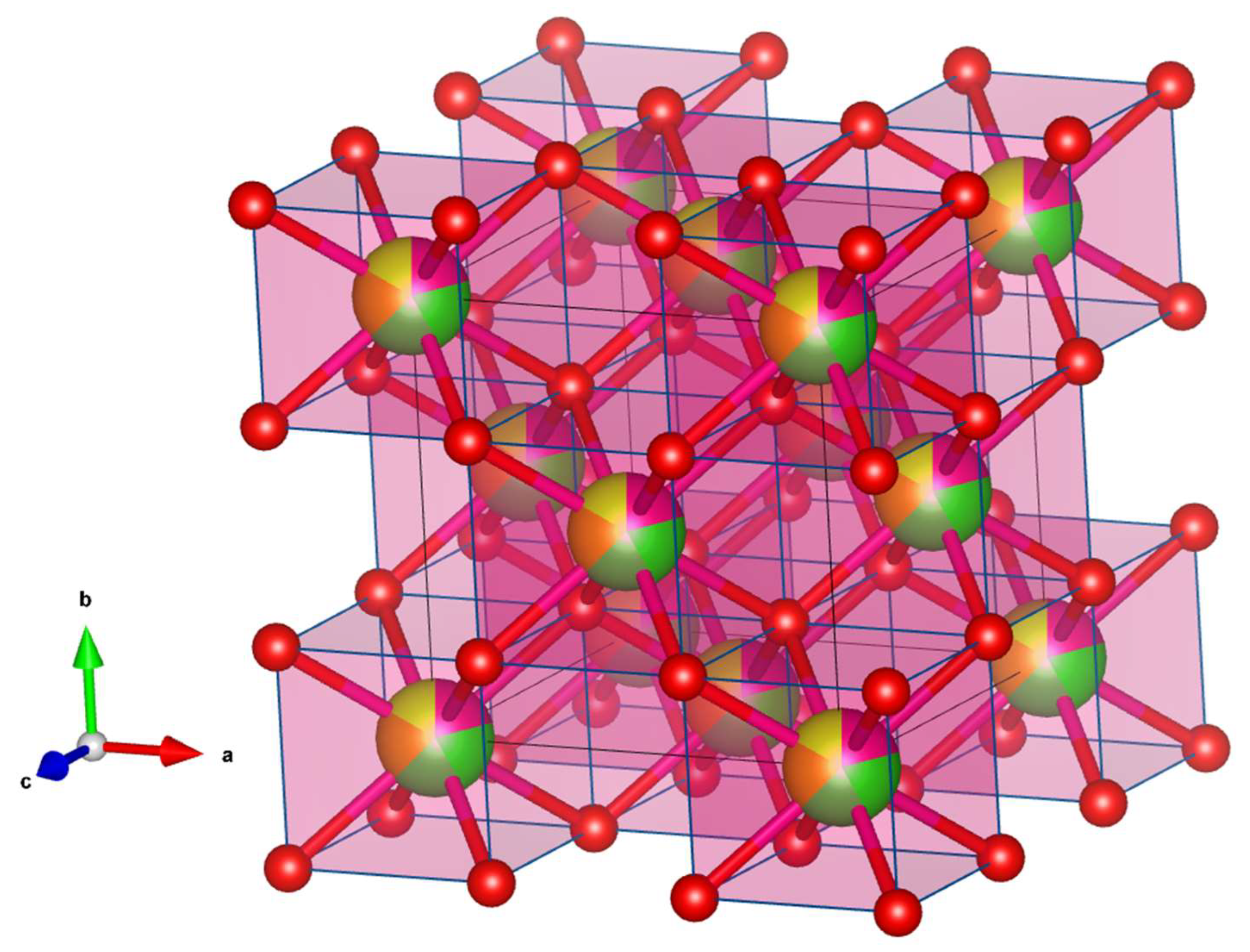
Figure 2. Visualized fluorite-type crystal structure of ceria-based high entropy oxides shows the incorporation of 5 cations with similar ionic radii, oxidation state, and the same coordination number into a single crystallographic position, with each cation occupying 1/5 of the position, while anion remains untouched.
Preprints 148487 g002
Figure 3. General scheme of a solid oxide fuel cell (SOFC).
Preprints 148487 g003
Figure 4. Schematic representation of electrochemical water splitting reaction.
Preprints 148487 g004
Figure 5. Schematic overview of CO oxidation catalysis over the formed oxygen vacancies formed on the surface of RE-HEOs.
Preprints 148487 g005
Disclaimer/Publisher’s Note: The statements, opinions and data contained in all publications are solely those of the individual author(s) and contributor(s) and not of MDPI and/or the editor(s). MDPI and/or the editor(s) disclaim responsibility for any injury to people or property resulting from any ideas, methods, instructions or products referred to in the content.
Copyright: This open access article is published under a Creative Commons CC BY 4.0 license, which permit the free download, distribution, and reuse, provided that the author and preprint are cited in any reuse.
Prerpints.org logo

Preprints.org is a free preprint server supported by MDPI in Basel, Switzerland.

Subscribe

Disclaimer

Terms of Use

Privacy Policy

Privacy Settings

© 2025 MDPI (Basel, Switzerland) unless otherwise stated