1. Introduction
The dynamic advancement of technology, coupled with a consistent increase in industrial production levels, has significantly influenced human daily life, providing new possibilities and a higher level of comfort. Unfortunately, technological progress is not indifferent to the natural environment. Negative consequences of certain areas of human activity include, among others, climate change, global warming, species extinction, and an increase in pollution levels. Changes in the natural environment have also influenced the way contemporary markets operate. In society, awareness of the threats stemming from the excessive exploitation of natural resources has significantly increased, and various social campaigns have sparked interest in responsible consumption. For this reason, many brands emphasize their pro-environmental actions, such as using recycled materials, refraining from animal testing, or incorporating vegan ingredients. Researchers point to the positive impact of aligning with eco-trends on company performance [
1,
2].
Pro-environmental ideas are also being integrated into the marketing strategies of businesses. Principles of green marketing are applied in managing each of the classic marketing mix components. Actions based on environmental responsibility have become a factor influencing consumer purchasing decisions [
3]. Simultaneously, in the present times when the market is saturated with diverse offerings, there is a noticeable increase in the brand image importance, particularly in aspects unrelated to product’s direct functionality. With the growing environmental consciousness of society, establishing an environmentally friendly brand image has become paramount for companies. Therefore, marketers make efforts to communicate the ecological attributes of a brand through various tools. One significant element of brand communication, serving to distinguish a product and shape its image, is packaging, which often functions as a key information carrier [
4].
The primary objective of the research is to assess the influence of claims suggestion eco-friendly nature of products, presented on food product packaging, on consumers’ purchase intentions and brand image. An empirical study of an experimental nature, involving the presentation of participants with 14 prototypes of packaging characterized by diverse characteristics and the collection of data regarding their perception of the packaging and the image of the represented brands. For the purposes of the experiment, research stimuli in form of packaging prototypes were designed to represent two different food product types—apple juice and a box of chocolates. Some of these prototypes exhibited pro-environmental features (stimulating altruistic or egoistic motivations of buyers) or featured a green design, while others lacked such attributes.
There are multiple research papers investigating the influence of packaging on consumers’ intentions and behaviour [
5,
6,
7,
8,
9,
10]. However, numerous of them apply only the survey technique, mostly presenting the packaging as two-dimensional graphics in the questionnaires, while some of them simply rely on respondents declarative answers without even showing them visuals. However, not many of them use the experimental approach based on confronting the participants with real-life stimuli, allowing the participant a direct contact with physical packaging. There have been certain experiments conducted in shelf-setting with three-dimensional packets, cans or bottles [
11,
12], however they do not cover the topic of green claims and purchase intentions. Our study aims to fill this research gap by examining how real, three-dimensional packaging that conveys environmental friendliness influences consumers’ purchase intentions and brand perception. By presenting participants with tangible packaging prototypes, we provide deeper insights into the impact of sustainability-oriented packaging elements in real-world decision-making contexts.
2. Theoretical Framework
2.1. Green Product in the Green Marketing Theory
A green product can be defined as a product characterized by a lower environmental impact throughout its entire life cycle as compared to other offerings [
13,
14]. The market currently features numerous products that can be considered environmentally friendly, based on factors such as the reduction of water usage in the production process, the use of bio-based materials, reliance on renewable energy sources, and adherence to principles of fair trade and sustainable farming. The aforementioned environmental features of products, commonly described by researchers [
15,
16], serve as a focal point in green marketing strategies, with the objective of attracting customers and persuading them to make purchasing choices that are favorable for the company’s interests.
As consumer purchasing preferences have evolved, businesses have had to adapt their strategies to this new reality and one of the approaches had been the introduction of green marketing principles into the marketing mix of their brands. The term “green marketing” refers to actions involving the production and promotion of goods or services that fulfill consumer needs while simultaneously causing the least possible impact on the natural environment [
17]. It can also be stated that green marketing represents the sum of a company’s efforts in designing, producing, promoting, and distributing products in an environmentally friendly manner [
18].
The primary goal of green marketing is to persuade consumers to shift from a cost-oriented perspective to a sustainability-oriented perspective [
19]. The design of products with pro-environmental characteristics is the initial step in the entire process. The key task of green marketing is to encourage customers to purchase sustainable products, even if they are often more expensive or simply different than what customers are accustomed to. Research even suggests that green marketing can play an educational role in shaping pro-environmental attitudes, showing the consumers how they can contribute to environmental well-being while still satisfying their needs [
20].
The ecological aspect can be applied to all elements of the classic marketing mix. While price, place, and promotion usually serve as a kind of support in building an eco-strategy, the central point is typically the green product. The connection between green marketing activities and gaining a competitive advantage in the market has been the subject of numerous studies. Most of the results support its positive impact on a brand’s position among competitors [
21,
22].
2.2. Packaging as a Tool of Green Marketing
Over the past few years, the significance of packaging in marketing has been emphasized by numerous researchers and practitioners. While the fundamental, primary function of packaging is product protection [
23], its role in marketing communication has become increasingly prominent over time [
24,
25]. The primary goal of promotional effect of packaging can be described as acquiring customers through the strategic use of visual stimuli [
26]. It has been demonstrated that packaging can significantly influence a product’s pre-purchase evaluation, cause specific emotional reactions [
27], ultimately prompting consumers to make a particular purchase [
7]. This aspect becomes particularly critical for fast-moving consumer goods (FMCG) [
28].
The attractiveness of packaging primarily relies on visual stimuli that capture consumers’ attention and shape their perception of products, strongly influencing the final purchasing decision [
29]. According to the conceptual model proposed by Silayoi and Speece [
30], packaging elements can be divided into two groups:
visual (graphic) elements, including size, shape, color combinations, graphic layout, typography, etc., which have an impact on product selection, especially in situations involving time pressure and lower personal involvement, such as hurried purchases of basic fast-moving consumer goods in a supermarket;
informational elements, which encompass actual product information presented on the packaging in written or graphic form, such as ingredients, usage instructions, technical data, etc. These elements play a more significant role in purchase decisions made with less time pressure and requiring greater effort in making a choice.
In many cases, the packaging of eco-friendly products is itself environmentally friendly and referred to as sustainable packaging [
31]—biodegradable, made from recycled materials, or otherwise adapted for closed-loop economy. It might also serve as a mean of communicating the brand’s environmental friendliness [
32], presenting specific information about eco-friendly features or influencing consumers’ subconsciousness through the use of colors and shapes that evoke associations with nature and environmental concern. For the purposes of this article, we define eco-friendly packaging as packaging that communicates a product brand’s environmentally friendly actions.
2.3. Consumer Attitudes and Decisions in the Context of Green Marketing
With the increasing awareness of environmental threats, consumers have also become more conscious of the impact their purchasing choices have on the environment. Common behaviors of modern shoppers include analyzing product ingredients, checking for potentially harmful components, seeking more sustainable packaging materials etc. [
33]. Moreover, the aspects of ethics in consumption became a salient point in the purchase decisions of certain society members [
34]. Consequently, the significance of brand’s pro-environmental actions has been on the rise, given the growing importance of their visibility.
The choice of eco-friendly products is motivated by various factors. Researchers, basing on Ajzen’s theory of planned behavior [
35], point to two primary psychological sources behind the selection of environmentally friendly options: altruistic and egoistic values [
36,
37,
38]. Certain sources [
39,
40] would further divide the non-egoistic values group into biosphere values (connected strictly with the concern for the nature) and altruistic ones (related to care for other people), however for the purpose of this study the simplified two-dimensional motivation division, in which biosphere and altruistic values are combined into the altruistic motivation, would be used to simplify the experiment [
41].
Consumers motivated by altruistic values opt for eco-friendly products guided by a concern for nature and society, aiming to counter existing environmental threats through more sustainable purchases [
42,
43]. On the other hand, egoistic values are associated with a predominant concern for oneself, typically expressed through health concerns [
44,
45]. Egoistic consumers may choose eco-friendly products to gain benefits for themselves and their loved ones, such as purchasing products free from chemical components that could pose potential health risks.
Green marketing activities and environmentally oriented CSR are commonly considered to have a positive impact on purchasing decisions. Business benefits can be observed in case of applying green marketing to each element of the marketing mix [
46,
47]. Research has particularly confirmed the highly positive influence of eco-friendly advertising and green packaging, especially when made from biodegradable materials [
48].
Despite the widespread recognition of environmental factors’ positive impact on marketing outcomes, the most significant obstacle to the development of green brands still is the financial aspect. Quite frequently, eco-friendly brands are at least slightly more expensive than their non-eco counterparts, leading to the introduction of the concept of “willingness to pay”(WTP), which refers to the maximum amount of money a consumer is willing to pay for a product with specific characteristics [
49]. Price sensitivity is noted particularly among the youngest adults, at the beginning of their career or still studying, without a steady income—such consumers would be less willing to pay for the more eco-friendly option [
50,
51]. The marketers’ task is therefore to determine how much of a price premium a buyer is willing to accept for an environmentally friendly product [
52,
53].
3. Materials and Methods
In the research, we focused on assessing the influence of claims suggestion eco-friendly nature of products (both of informational and visual character), presented on food product packaging, on consumers’ purchase intentions and brand perception. For the purposes of the study, the following research questions were formulated:
Q1: Does the eco-friendly nature of a product’s packaging, presented through pro-ecological cues, influence consumers’ purchase intentions?
Q2: Does the eco-friendly nature of a product’s packaging, presented through pro-ecological cues, influence the brand’s image?
To achieve the objective, we performed an experimental study [
54,
55,
56]. The experiments have been lately growing popular in management and marketing research [
57,
58,
59], becoming also present in studies related to the presence of environmental factors in brand communication [
60,
61]. This experiment was designed to take into account the independent variable, which is the presence of eco-friendly elements on the packaging, and the dependent variables related to purchase intentions and brand image.
The study was conducted at Lodz University of Technology in the third quarter of 2023 and involved inviting willing participants to visit the university building and take part in the experiment. The purpose was to create the conditions during which the research was performed as similar as possible for everyone to prevent the bias resulting from varied presentation of stimuli, such as different lighting, different background colours of the display or different atmosphere in the room while viewing the presented mockups [
62]. The study was conducted in eight focus groups divided by age, including respondents in the age ranges of 18–24, 25–34, 35–44, 45–54, 55–64, and 65 and older, selected through purposive sampling [
63,
64]. The choice of participants aimed mainly at obtaining equally numerous age groups with possibly equal gender composition. Since the research was in fact a pilot stage, no other, more restrictive criteria has been used. The composition of the research sample is presented in
Table 1.
Each participant was presented with 14 packages (two types of food products in seven versions). We prepared fictional brand packaging designs of apple juice and box of chocolates. The stimuli were prepared to resemble a realistic packaging as much as possible, however they were not referring to any actual brand to prevent the bias caused by brand familiarity [
65]. It is important to note that the only indicators of product eco-friendliness were the information or graphics on the packaging—the main product features were the same in all cases (the net weight, size and shape of packaging were identical, the packaging did not contain information about the actual ingredients, origin, etc.).
Another significant assumption is that the research design did not include the price factor—no value of products was presented and the participants were not informed whether all brands cost the same or not. Knowing that price is often the critical factor for consumers, it was omitted in this study to prevent influence on respondents’ judgment of products’ quality, as cheap products are often considered low-quality and expensive are associated with higher quality levels, as stated in cue utilization theory [
66,
67,
68]. The only exception was the packaging category of budget brand which did not directly state the price in monetary terms, yet it presented the claims related to cost savings. Not including this factor was intended to allow the participants to concentrate only on the visual aspects of packaging and, in result, the eco-factors, without paying that much attention to the practical financial reasoning.
In both categories, packaging for brands with the following characteristics:
eco-friendly brand corresponding to altruistic motivation—presenting references to environmental concern, harmlessness to nature, etc.;
eco-friendly brand corresponding to egoistic motivation—addressing concerns about personal health, e.g., not containing ingredients considered harmful to humans;
brand with an eco-friendly or “green” name (without other eco-friendly elements)—in this case only the brand name refers to ecology and the environment (e.g., using the prefix “eco”, “green”, etc.);
brand with a green design (without other eco-friendly elements)—packaging contains green, plant-related visual elements but has no textual references to ecology;
luxury brand—packaging design emphasizes high quality and has a luxurious character (contains labels like “premium quality” or similar);
budget brand—affordable, featuring simple packaging that emphasizes cost savings (e.g., labels like “cheapest”, “low price”, etc.);
default brand—without distinguishing features suggesting its character.
It can be noted that only two brands were designed to be truly eco-friendly, while two other packaging stimuli suggesting green character in fact contain no direct messages regarding the pro-ecological character, exactly as in case of many entrepreneurs practicing unethical methods of greenwashing. The packaging employs the stereotypical association of green colour and floral or plant imagery with environmentally-safe products [
69,
70], however it does not relate to product’s particular green characteristics, as there are in fact none.
The design of the experiment assumed that the participants should be divided into small groups (4 to 5 persons) to ensure the right visibility and easy access to the packaging mockups. The mockups were displayed in product groups, one by one, with a clear numeral identification. The groups of respondents took turns in viewing mockups of specific product groups—there could be only 2 groups in the room, each in front of the display of one product category. After a specified time, the groups changed the display they were looking at.
During the experiment, each participant was exposed to each group of visual stimuli twice: at first for a short period of 30 s (simulating a rushed shopping situation, where participants were instructed not to touch the packaging and assess it solely based on a brief visual contact), and then for 90 s (in this case, participants could assess the packaging more thoroughly and freely touch the prototypes)—the time refers to the period of contact with stimuli of each product group. At each of the two stages, participants completed brief, structured questionnaires, recording their purchase intentions and opinions on the selected brands—to make filling in the form easier, the possible answers were represented by numbers which were also displayed on the packaging (e.g., the respondent could tick product 1, 2 or 5 without concentrating much on the exact brand name). The questionnaire in the first stage concerned the selection of the product brand the participants would prefer to purchase in each product category. In the second questionnaire, the participants were asked to rethink the choice (and possibly change it if needed) and afterwards they focused solely on their preferred brands. A five-point scale was provided to participants to express their feelings and opinions about the brand in regard to specified characteristics. Seven pairs of such characteristics were presented: high quality—low quality, expensive—cheap, innovative—traditional, exclusive—accessible, eco-friendly—not caring for environment, interesting—boring, enticing to purchase—not enticing to purchase.
After completing both stages, participants were asked a final question aiming at investigating the significance of eco-friendly factors in their choices. This question was not disclosed in the questionnaires before the completion of the study to avoid suggesting the research purpose and to obtain responses as close to reality as possible. Such practice has been recommended by researcher [
71,
72] in order to prevent the experiment participants from concentrating on one specific aspect of the stimuli and to ensure the possibly most natural and realistic behavior of the sample members.
4. Results and Discussion
4.1. The Impact of Eco-Friendly Packaging Elements on Purchase Intentions
The research results demonstrated significant interest in eco-friendly factors among the participants. Brands whose packaging contained content suggesting environmental friendliness were indeed chosen more frequently than others, especially in the second, longer stage of consumer decision-making.
In the first stage of the research, simulating a hurried shopping situation, participants were tasked with choosing a product based on a brief visual contact with packaging prototypes. In this case, depending on the product category, participants showed interest in both eco-friendly and other brands. In the apple juice category, the options of an altruistic eco-friendly brand and a luxury brand were the most popular (both selected by 10 participants), followed by default brand and the one with green design (8 each). In the case of chocolates, nearly 1/3 of the participants opted for a brand with no specific features and the altruistic eco-friendly and budget ones coming in second (each chosen by 8 people). The detailed results of the first and second stages of the research are presented in
Table 2.
The second stage of the study, during which participants had more time for a closer examination of the packaging, revealed even greater interest in environmentally friendly products. Ultimately, the majority of participants chose an altruistic ecological brand for apple juice (20 participants) and chocolates (19). It has to be noted that the second most popular choices were also eco-friendly—14 people choosing egoistic ecological brand in case of chocolates and 7 choosing this option of apple juice (the same result was obtained by the luxury brand in case of this product).
When it comes to gender differences, in general women tended to choose eco-products more often than the non-eco options or the ones disguised as environmentally friendly—in the second stage of research 17 women picked the green juice (only 7 did not) and in case of chocolates the ecological packaging was the most tempting for 18 out of 24. The group of men exhibited similar attitudes in case of chocolates (15 to 9), however when it comes to apple juice, surprisingly most of them (14) chose the options without concrete indicators of brands’ pro-ecological character.
Certain differences are also visible between the studied age groups. In the juice category; only the participants aged 45–54 and 65 or older did not mostly choose the eco options; however as far as chocolates are considered; the eco-friendly option was picked by everyone in 45–54 and 55–64 age groups; while the only group declaring the decision to purchase a non-eco brand are the consumers aged 35–44.
It is worth noting that, having had the opportunity to interact with the packaging for a longer period of time, some respondents revised their initial choice of a brand imitating environmentalism (with a green name or design, but without any other content presenting specific pro-environmental aspects) and opted for a brand presenting actual actions related to environmental concerns (resulting from altruistic or selfish motivation). Such situation has been observed in both categories: in the first stage 11 participants showed the intention to buy a falsely green brand of juice and 7 in case of chocolate box, while in the longer second round of the experiment these numbers dropped to 6 and 1 respectively.
The obtained results indicate a positive impact of pro-environmental factors on consumers’ purchase intentions. It should be emphasized that the respondents were not informed about the purpose of the study, so they were not in any way encouraged to seek out features indicating environmental concern in the evaluated brands. Therefore, it can be stated that the inclusion of pro-environmental elements on packaging can serve as an impetus to increase the sales of a brand’s products. The presented results are consistent with the conclusions of multiple other studies [
73,
74,
75].
4.2. The Significance of Pro-Environmental Factors in Making Purchase Decisions
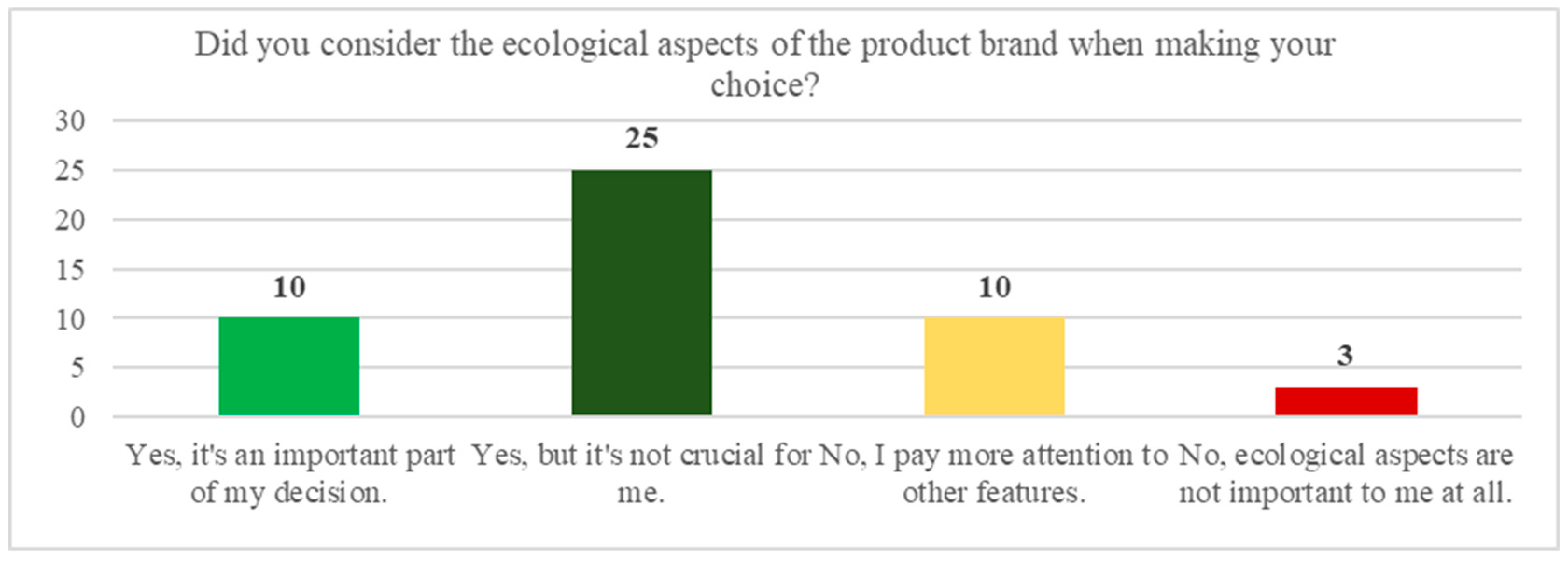
After completing both stages of the research, which involved selecting their preferred brands, participants were asked about the significance of environmental aspects in their choices. This question, as well as any indication of the real purpose of the study, was not disclosed in the previous parts of the experiment to avoid potential biases that could influence the outcomes. The results presented in
Figure 1 indicate that environmental factors were of significant importance for the respondents in the situation of making purchase-related decisions.
The results indicate that almost ¾ of the study participants declared that they took ecological aspects of the brand into account when making purchasing decisions. 10 of them considered the significance of these factors to be crucial, and 25, which is more than half of the respondents, while not considering them the most important, still took them into consideration. It is worth noting that only three respondents declared that pro-ecological factors did not interest them at all, what might suggest that even though, in case of many consumers, the eco-friendly character might not be a decisive feature for making a purchase (e.g., due to economic reasons), the green elements would still be visible and possibly contribute to the overall image of the brand.
The research results indicate the important role of pro-ecological packaging elements in brand management. The exposure to “green” content directly on the packet; bottle or other container can have a positive impact on consumers’ purchasing decisions. Therefore; presenting pro-ecological brand features directly on the packaging is recommended for brand owners in order to influence sales and build a competitive advantage in the market
4.3. The Influence of Pro-Ecological Packaging Elements on Brand Image
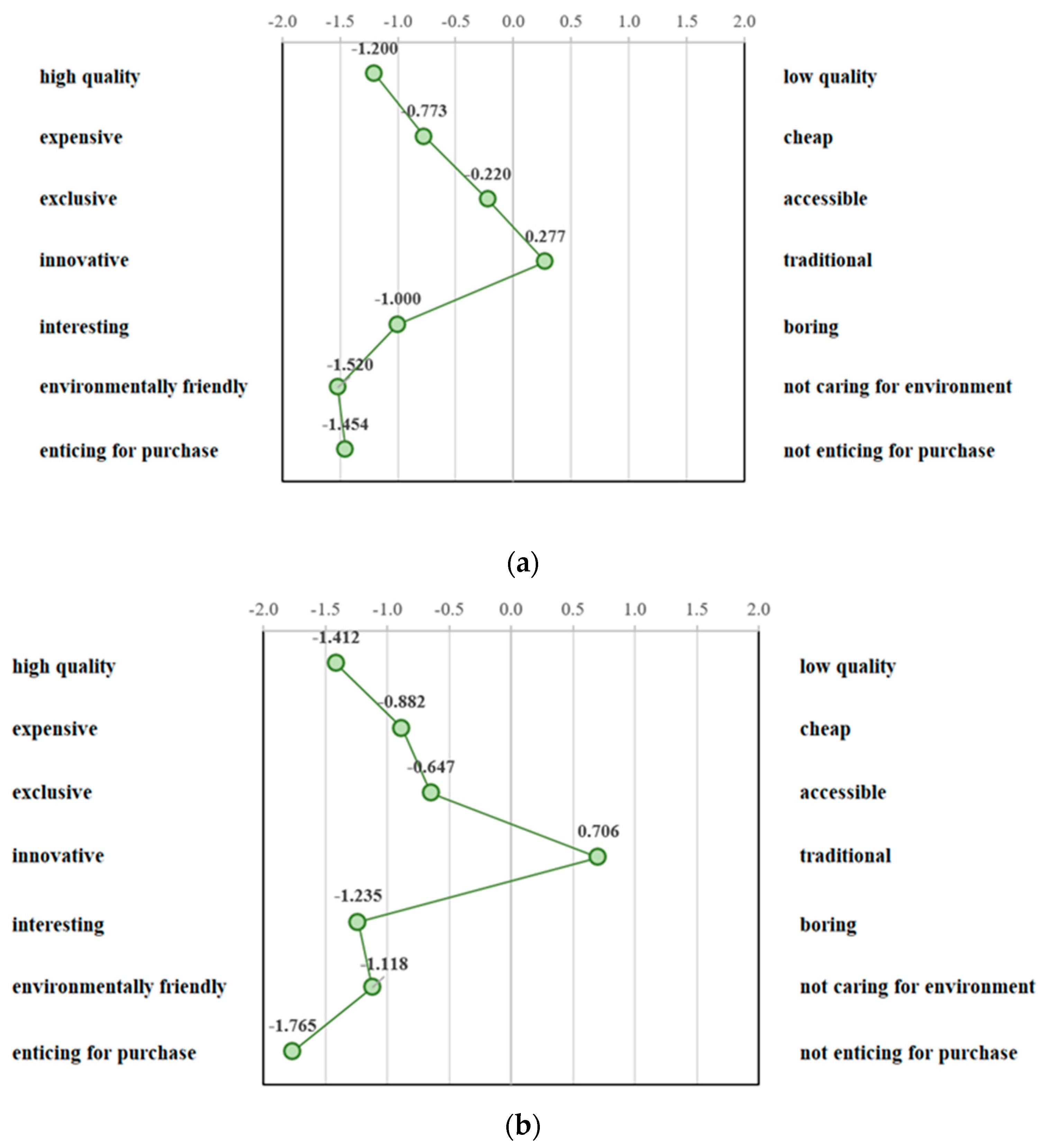
The results of the study also allowed to estimate the impact of the pro-ecological character of packaging on the brand image forming in the minds of consumers. The responses, coming from those participants who have chosen either of the two ecological brand options (omitting those intent on buying the falsely green brands), were analyzed in regard of brand perception. The research results indicate an overall positive influence of green marketing elements of packaging on brand image. Ecological brands were perceived as high-quality, slightly more expensive but still arousing interest and encouraging the purchase. In
Figure 2, the average results achieved by ecological brands in selected image-related categories are presented (the values adopted for the study purposes are presented on the scale range from −2 to 2).
The results show that brands incorporating pro-environmental elements on their packaging, appealing to both egoistic and altruistic motivations, are generally perceived as offering high quality, interesting, and significantly enticing for purchase, even though respondents noted a likely higher product price.
As expected, these brands, in line with the packaging’s intended purpose, were considered environmentally friendly, proving that using the packaging as the carrier of green brand identity actually works effectively and the pro-ecological traits shown there have an impact on how the brands were perceived. As a result, it can be stated that environmental factors are visible, and consumers do not remain indifferent to them. Therefore, highlighting pro-environmental actions on packaging is recommended for brands involved in any initiatives related to environmental care or simply offering eco-friendly products.
Although the ratings obtained for brands corresponding to egoistic and altruistic motivations show a high degree of similarity, some differences can be observed between them. Brands appealing to altruistic motivation are considered slightly more expensive, more innovative, but seem to be slightly less enticing for purchase compared to brands stimulating egoistic motivation. On the other hand, egoistic environmental brands are perceived as more traditional. What seems quite surprising in these results is the fact that even though the egoistic brands were seen as less encouraging to purchase, more consumers declared the intent to purchase these kind of brands—it might be caused by certain difficulties in locating one’s opinions on the Likert scale and the differences in ratings were slight.
What might also be interesting is the fact that green food brands are in general considered to be more traditional instead of innovative. When compared with the results of similar research that investigated the image of a more varied product set [
76], the brands referring to altruistic motives were considered to be quite innovative, while the egoistic ones were seen as neutral in this aspect. That suggests that in case of food products, the ecological character might be associated with traditional natural ingredients or traditional production and farming methods.
Finally, basing on the results of this research part, it can be concluded that pro-environmental factors displayed on the product’s packaging have a positive impact on the brand’s image. Although respondents perceived brands with pro-environmental characteristics as somewhat expensive, the impression of a higher price aligns with the perceived high quality. Furthermore, as demonstrated by the choices of study participants, a significant portion of them might not be discouraged by potentially higher costs, declaring the purchase intention for a product that is safe for them and for the environment, even when aware of a possible price premium.
5. Conclusions
The research has demonstrated that incorporating pro-environmental elements on product packaging has a positive impact on both consumers’ purchase intentions and brand image. Brands with packaging that suggests environmental friendliness were indeed chosen by a greater number of respondents, especially in the second, longer phase of the study. Additionally, ecological brands were perceived as high-quality, somewhat expensive, yet interesting and enticing for purchase.
The obtained research results largely confirm the conclusions drawn by other researchers who have delved into the impact of green marketing on consumers’ purchase intentions. Like in many studies, the influence of pro-environmental elements in marketing communication can be considered positive [
77,
78]. The results also indicate that consumers are more influenced by specific information about the brand’s pro-environmental attributes rather than its “green” design or name. This corroborates the findings of [
79], who advocated the greater role of rational elements over emotions in the decision-making process. By allowing participants to interact with physical packaging prototypes, we gain deeper insights into how sustainability-oriented packaging elements influence consumer decision-making in real-world contexts.
The results are also consistent with the findings of many studies that demonstrate the positive impact of green marketing, including pro-environmental packaging, on brand image, as well as brand attachment and trust. The green brand image is described by many researchers as playing a crucial mediating role in consumer decision-making [
80,
81].
As for the managerial implications, it can be concluded that incorporating pro-environmental elements on packaging can be recommended to improve a brand’s performance in the market. Presenting eco-friendly brand features can be a factor influencing an increase in product sales, as well as a component for building a strong brand. However, the focus should be on highlighting specific pro-environmental initiatives of the brand, rather than just suggesting environmental friendliness through design and appearance. While this tactics may initially attract some customers, consumers, having time for a more detailed examination of the packaging content, will choose products from those brands that specifically address their concerns about the environment and health. Therefore, it might be recommended for the brand owners and the packaging visual designers to include both green decorative visuals to get the consumers’ attention as well as the actual pro-ecological claims, presented in a textual or symbolic (e.g., green certificates) form.
The research was a pilot study conducted for the purposes of a larger project to be carried out in the future. To obtain a more comprehensive understanding, the study should be conducted in a larger group of consumers (e.g., a sample representative of a specific population) and among citizens of other countries. Additionally, it’s worthwhile to investigate the influence of demographic factors (such as education, place of residence) on purchase intentions related to pro-environmental packaging. Obviously, as this study purposefully omitted the price factor, it might be useful to build an experiment which would also take financial value into consideration, e.g., by checking how high is the price premium the consumers are willing to pay for eco-friendly products. Combining the price elasticity aspect with the green purchase intentions would provide a more complex understanding of the issue of ecology importance in consumption.
Author Contributions
Conceptualization, D.S. and M.G.K.; methodology, D.S. and M.G.K.; investigation, D.S.; resources, D.S.; data curation, D.S.; writing—original draft preparation, D.S.; writing—review and editing, D.S. and M.G.K.; visualization, D.S.; project administration, D.S.; funding acquisition, D.S.
Funding
The research project was funded by the National Science Center NCN (Miniatura-5, project no. 2021/05/X/HS4/00461, “Assessment of the impact of the pro-ecological nature of packaging on the brand image”).
Institutional Review Board Statement
Not applicable.
Informed Consent Statement
Informed consent was obtained from all subjects involved in the study.
Conflicts of Interest
The authors declare no conflicts of interest. The funders had no role in the design of the study; in the collection, analyses, or interpretation of data; in the writing of the manuscript; or in the decision to publish the results.
References
- Lombart, C.; Louis, D. A study of the impact of corporate social responsibility and price image on retailer personality and consumers’ reactions (satisfaction, trust and loyalty to the retailer). J. Retail. Consum. Serv. 2014, 21, 630–642. [Google Scholar] [CrossRef]
- Lavorata, L. Influence of retailers’ commitment to sustainable development on store image, consumer loyalty and consumer boycotts: Proposal for a model using the theory of planned behavior. J. Retail. Consum. Serv. 2014, 21, 1021–1027. [Google Scholar] [CrossRef]
- Blasi, S.; Brigato, L.; Sedita, S.R. Eco-friendliness and fashion perceptual attributes of fashion brands: An analysis of consumers’ perceptions based on twitter data mining. J. Clean. Prod. 2020, 244, 118701. [Google Scholar] [CrossRef]
- Grundey, D. Functionality of product packaging: Surveying consumers’ attitude towards selected cosmetic brands. Econ. Sociol. 2010, 3, 87–103. [Google Scholar] [CrossRef]
- Wang, X.; Chen, J.; Ma, C.; Jiang, Y. Simpler is greener: The impact of packaging visual complexity on products’ eco-friendliness perception. Psychol. Mark. 2024, 41, 2992–3008. [Google Scholar] [CrossRef]
- Wang, L.; Mohamed, F.N. A Study on Design Appeal of Green Packaging in China. South Asian Journal of Social Sciences and Humanities 2024, 5, 192–215. [Google Scholar] [CrossRef]
- Waheed, S.; Khan, M.M.; Ahmad, N. Product packaging and consumer purchase intentions. Mark. Forces 2018, 13, 97–114. [Google Scholar]
- Pan, C.; Lei, Y.; Wu, J.; Wang, Y. The influence of green packaging on consumers’ green purchase intention in the context of online-to-offline commerce. J. Syst. Inf. Technol. 2021, 23, 133–153. [Google Scholar] [CrossRef]
- Ecevit, M.Z. The effect of sustainable packaging on quality perception and purchase intention: the moderator role of environmental consciousness and health consciousness. J. Manag. Econ. Res. 2023, 21, 1–15. [Google Scholar] [CrossRef]
- Jerzyk, E. Design and Communication of Ecological Content on Sustainable Packaging in Young Consumers’ Opinions. J. Food Prod. Mark. 2016, 22, 1–10. [Google Scholar] [CrossRef]
- Mehlhose, C.; Schmitt, D.; Risius, A. PACE labels on healthy and unhealthy snack products in a laboratory shopping setting: perception, visual attention, and product choice. Foods 2021, 10, 904. [Google Scholar] [CrossRef]
- Bartels, M.; Tillack, K.; Jordan Lin, C.T. Communicating nutrition information at the point of purchase: An eye -tracking study of shoppers at two grocery stores in the United States. Int. J. Consum. Stud. 2018, 42, 557–565. [Google Scholar] [CrossRef]
- Fraccascia, L.; Giannoccaro, I.; Albino, V. Green product development: What does the country product space imply? J. Clean. Prod. 2018, 170, 1076–1088. [Google Scholar] [CrossRef]
- Ljungberg, L.Y. Materials selection and design for development of sustainable products. Mater. Des. 2007, 28, 466–479. [Google Scholar] [CrossRef]
- Larranaga, A.; Valor, C. Consumers’ categorization of eco-friendly consumer goods: An integrative review and research agenda. Sustain. Prod. Consum. 2022, 34, 518–527. [Google Scholar] [CrossRef]
- Hojnik, J.; Ruzzier, M.; Konečnik Ruzzier, M. Transition towards Sustainability: Adoption of Eco-Products among Consumers. Sustainability 2019, 11, 4308. [Google Scholar] [CrossRef]
- Dangelico, R.M.; Vocalelli, D. “Green Marketing”: An analysis of definitions, strategy steps, and tools through a systematic review of the literature. J. Clean. Prod. 2017, 165, 1263–1279. [Google Scholar] [CrossRef]
- Polonsky, M.J. Transformative green marketing: Impediments and opportunities. J. Bus. Res. 2011, 64, 1311–1319. [Google Scholar] [CrossRef]
- Moravcikova, D.; Krizanova, A.; Majerova, J.; Rypakova, M. Green marketing as the source of the competitive advantage of the business. Sustainability 2017, 9, 2218. [Google Scholar] [CrossRef]
- Edeh, M.B. Green marketing as a marketing tool and consumer purchase behavior. J. Glob. Soc. Sci. 2020, 1, 37–54. [Google Scholar] [CrossRef]
- Schuitema, G.; de Groot, J.I. Green consumerism: The influence of product attributes and values on purchasing intentions. J. Consum. Behav. 2015, 14, 57–69. [Google Scholar] [CrossRef]
- Dangelico, R.M.; Pujari, D. Mainstreaming green product innovation: Why and how companies integrate environmental sustainability. J. Bus. Ethics 2010, 95, 471–486. [Google Scholar] [CrossRef]
- Wikström, F.; Williams, H.; Verghese, K.; Clune, S. The influence of packaging attributes on consumer behaviour in food-packaging LCA studies—a neglected topic. J. Clean. Prod. 2014, 73, 100–108. [Google Scholar] [CrossRef]
- Husić-Mehmedović, M.; Omeragić, I.; Batagelj, Z.; Kolar, T. Seeing is not necessarily liking: advancing research on package design with eye-tracking. J. Bus. Res. 2017, 80, 145–154. [Google Scholar] [CrossRef]
- Rundh, B. The role of packaging within marketing and value creation. Br. Food J. 2016, 118, 2491–2511. [Google Scholar] [CrossRef]
- Kauppinen-Räisänen, H. Strategic use of colour in brand packaging. Packag. Technol. Sci. 2014, 27, 663–676. [Google Scholar] [CrossRef]
- Panda, D.; Masani, S.; Dasgupta, T. Packaging-influenced-purchase decision segment the bottom of the pyramid consumer marketplace? Evidence from West Bengal, India. Asia Pac. Manag. Rev. 2022, 27, 145–153. [Google Scholar] [CrossRef]
- Simms, C.; Trott, P. Packaging development: A conceptual framework for identifying new product opportunities. Mark. Theory 2010, 10, 397–415. [Google Scholar] [CrossRef]
- Mohebbi, B. The art of packaging: An investigation into the role of color in packaging, marketing, and branding. Int. J. Organ. Leadersh. 2014, 3, 92–102. [Google Scholar] [CrossRef]
- Silayoi, P.; Speece, M. Packaging and purchase decision: An exploratory study on the impact of involvement level and time pressure. Br. Food J. 2004, 106, 607–628. [Google Scholar] [CrossRef]
- Jerzyk, E. Sustainable packaging as a determinant of the process of making purchase decisions from the perspective of Polish and French young consumers. J. Agribus. Rural Dev. 2015, 37, 437–445. [Google Scholar] [CrossRef]
- Orquin, J.L.; Bagger, M.P.; Lahm, E.S.; Grunert, K.G.; Scholderer, J. The visual ecology of product packaging and its effects on consumer attention. J. Bus. Res. 2020, 111, 187–195. [Google Scholar] [CrossRef]
- do Paço, A.; Alves, H.; Shiel, C.; Filho, W.L. An analysis of the measurement of the construct “buying behaviour” in green marketing. J. Integr. Environ. Sci. 2014, 11, 55–69. [Google Scholar] [CrossRef]
- Caruana, R. A sociological perspective of consumption morality. J. Consum. Behav. 2007, 6, 287–304. [Google Scholar] [CrossRef]
- Ajzen, I. The theory of planned behavior. Organ. Behav. Hum. Decis. Process. 1991, 50, 179–211. [Google Scholar] [CrossRef]
- Adamczyk, D.; Maison, D. Ideologia czy zdrowie—dwa typy wegetarianizmu. Mark. I Rynek 2019, 8, 15–24. [Google Scholar] [CrossRef]
- Prakash, G.; Choudhary, S.; Kumar, A.; Garza-Reyes, J.A.; Khan, S.A.R.; Panda, T.K. Do altruistic and egoistic values influence consumers’ attitudes and purchase intentions towards eco-friendly packaged products? An empirical investigation. J. Retail. Consum. Serv. 2019, 50, 163–169. [Google Scholar] [CrossRef]
- Gatersleben, B.; Murtagh, N.; Abrahamse, W. Values, identity and pro-environmental behavior. Contemp. Soc. Sci. 2014, 9, 374–392. [Google Scholar] [CrossRef]
- Zhang, Y.; Zhao, Y.; Zhang, H.; Zheng, S.; Yao, J. The Impact of Different Value Types on Environmentally Responsible Behavior: An Empirical Study from Residents of National Park Communities in China. Land 2024, 13, 81. [Google Scholar] [CrossRef]
- Schultz, P.W. The structure of environmental concern: Concern for self, other people, and the biosphere. J. Environ. Psychol. 2001, 21, 327–339. [Google Scholar] [CrossRef]
- Dong, Y.; Gao, L. Consumer attitude and behavioural intention towards organic wine: the roles of consumer values and involvement. Br. Food J. 2024, 126, 1743–1764. [Google Scholar] [CrossRef]
- Yadav, R. Altruistic or egoistic: Which value promotes organic food consumption among young consumers? A study in the context of a developing nation. J. Retail. Consum. Serv. 2016, 33, 92–97. [Google Scholar] [CrossRef]
- Magnier, L.; Schoormans, J. Consumer reactions to sustainable packaging: The interplay of visual appearance, verbal claim and environmental concern. J. Environ. Psychol. 2015, 44, 53–62. [Google Scholar] [CrossRef]
- Verma, V.K.; Chandra, B.; Kumar, S. Values and ascribed responsibility to predict consumers’ attitude and concern towards green hotel visit intention. J. Bus. Res. 2019, 96, 206–216. [Google Scholar] [CrossRef]
- Birch, D.; Memery, J.; de Silva Kanakaratne, M. The mindful consumer: Balancing egoistic and altruistic motivations to purchase local food. J. Retail. Consum. Serv. 2018, 40, 221–228. [Google Scholar] [CrossRef]
- Mahmoud, T.O. Impact of green marketing mix on purchase intention. Int. J. Adv. Appl. Sci. 2018, 5, 127–135. [Google Scholar] [CrossRef]
- Weisstein, L.F.; Asgari, M.; Siew, S.W. Price presentation effects on green purchase intentions. J. Prod. Brand Manag. 2014, 23, 230–239. [Google Scholar] [CrossRef]
- Steenis, N.D.; van der Lans, I.A.; van Herpen, E.; van Trijp, H.C.M. Effects of sustainable design strategies on consumer preferences for redesigned packaging. J. Clean. Prod. 2018, 205, 854–865. [Google Scholar] [CrossRef]
- Gomes, S.; Lopes, J.M.; Nogueira, S. Willingness to pay more for green products: A critical challenge for Gen Z. J. Clean. Prod. 2023, 390, 136092. [Google Scholar] [CrossRef]
- Shahsavar, T.; Kubeš, V.; Baran, D. Willingness to pay for eco-friendly furniture based on demographic factors. J. Clean. Prod. 2020, 250, 119466. [Google Scholar] [CrossRef]
- Tan, C.N.L.; Ojo, A.O.; Thurasamy, R. Determinants of green product buying decision among young consumers in Malaysia. Young Consum. 2019, 20, 121–137. [Google Scholar] [CrossRef]
- Yue, B.; Sheng, G.; She, S.; Xu, J. Impact of consumer environmental responsibility on green consumption behavior in China: The role of environmental concern and price sensitivity. Sustainability 2020, 12, 2074. [Google Scholar] [CrossRef]
- Gleim, M.; Smith, J.S.; Andrews, D.; Cronin Jr., J. Against the green: A multi-method examination of the barriers to green consumption. J. Retail. 2013, 89, 44–61. [Google Scholar] [CrossRef]
- Podsakoff, P.M.; Podsakoff, N.P. Experimental designs in management and leadership research: Strengths, limitations, and recommendations for improving publishability. Leadersh. Q. 2019, 30, 11–33. [Google Scholar] [CrossRef]
- Arora, A.; Gittelman, M.; Kaplan, S.; Lynch, J.; Mitchell, W.; Siggelkow, N.; Chatterji, A.K.; Findley, M.; Jensen, N.M.; Meier, S.; Nielson, D. Field experiments in strategy research. Strateg. Manag. J. 2016, 37, 116–132. [Google Scholar]
- Kaniewska-Sęba, A. Wykorzystanie eksperymentu do testowania komunikacji marketingowej—dylematy metodologiczne. Zesz. Nauk. Uniw. Szczecińskiego: Ekon. Probl. Usług 2011, 660, 73–83. [Google Scholar]
- Lude, M.; Prügl, R. Experimental studies in family business research. J. Fam. Bus. Strategy 2021, 12, 100361. [Google Scholar] [CrossRef]
- Di Stefano, G.; Gutierrez, C. Under a magnifying glass: On the use of experiments in strategy research. Strateg. Organ. 2019, 17, 497–507. [Google Scholar] [CrossRef]
- Spilski, A.; Gröppel-Klein, A.; Gierl, H. Avoiding pitfalls in experimental research in marketing. Mark. ZFP–J. Res. Manag. 2018, 40, 58–90. [Google Scholar] [CrossRef]
- Szabo, S.; Webster, J. Perceived Greenwashing: The Effects of Green Marketing on Environmental and Product Perceptions. J. Bus. Ethics 2021, 171, 719–739. [Google Scholar] [CrossRef]
- Kłeczek, R. Efektywność i skuteczność działań ekologicznych w marketingu: problem decyzyjny i badania empiryczne. Rocz. Ochr. Sr. 2013, 15, 2829–2839. [Google Scholar]
- Orquin, J.L.; Perkovic, S.; Grunert, K.G. Visual Biases in Decision Making. Appl. Econ. Perspect. Policy 2018, 40, 523–537. [Google Scholar] [CrossRef]
- Etikan, I.; Musa, S.A.; Alkassim, R. S. Comparison of convenience sampling and purposive sampling. Am. J. Theor. Appl. Stat. 2016, 5, 1–4. [Google Scholar] [CrossRef]
- Kauf, S. Badania rynkowe w sferze marketingu i logistyki; Wydawnictwo Uniwersytetu Opolskiego: Opole, Poland, 2004. [Google Scholar]
- Orth, U.R.; Malkewitz, K. Holistic Package Design and Consumer Brand Impressions. J. Mark. 2008, 72, 64–81. [Google Scholar] [CrossRef]
- Katt, F.; Meixner, O. Is it all about the price? An analysis of the purchase intention for organic food in a discount setting by means of structural equation modeling. Foods 2020, 9, 458. [Google Scholar] [CrossRef]
- Olson, J.C. Price as an informational cue: effects on product evaluations. In Consumer and industrial buying behavior; Woodside, A.G., Sheth, J.N., Bennett, P.D., Eds.; North-Holland Publishing: Amsterdam, Netherlands, 1977; pp. 267–286. [Google Scholar]
- Jacoby, J.; Olson, J.C.; Haddock, R.A. Price, brand name, and product composition characteristics as determinants of perceived quality. J. Appl. Psychol. 1971, 55, 570–579. [Google Scholar] [CrossRef]
- Boncinelli, F.; Gerini, F.; Piracci, G.; Bellia, R.; Casini, L. Effect of executional greenwashing on market share of food products: An empirical study on green-coloured packaging. J. Clean. Prod. 2023, 391, 136258. [Google Scholar] [CrossRef]
- Parguel, B.; Benoit-Moreau, F.; Larceneux, F. How sustainability ratings might deter greenwashing: A closer look at ethical corporate communication. J. Bus. Ethics 2011, 102, 15–28. [Google Scholar] [CrossRef]
- Vargas, P.T.; Duff, B.R.; Faber, R.J. A Practical Guide to Experimental Advertising Research. J. Advert. 2017, 46, 101–114. [Google Scholar] [CrossRef]
- Lee, M.; Faber, R.J. Effects of product placement on on-line games on brand memory: A perspective of the limited-capacity model of attention. J. Advert. 2007, 36, 75–90. [Google Scholar] [CrossRef]
- Majeed, M.U.; Aslam, S.; Murtaza, S.A.; Attila, S.; Molnár, E. Green marketing approaches and their impact on green purchase intentions: Mediating role of green brand image and consumer beliefs towards the environment. Sustainability 2022, 14, 11703. [Google Scholar] [CrossRef]
- Tan, H.; Li, J.; He, M.; Li, J.; Zhi, D.; Qin, F.; Zhang, C. Global evolution of research on green energy and environmental technologies: A bibliometric study. J. Environ. Manag. 2021, 297, 113382. [Google Scholar] [CrossRef] [PubMed]
- Gong, S.; Sheng, G.; Peverelli, P.; Dai, J. Green branding effects on consumer response: Examining a brand stereotype-based mechanism. J. Prod. Brand Manag. 2020, 30, 1033–1046. [Google Scholar] [CrossRef]
- Siuda, D. Wpływ proekologicznego charakteru opakowań na intencje zakupowe i wizerunek marki. Marketing i Rynek 2023, 03/2023, 22–32. [Google Scholar] [CrossRef]
- Correia, E.; Sousa, S.; Viseu, C.; Larguinho, M. Analysing the Influence of Green Marketing Communication in Consumers’ Green Purchase Behaviour. Int. J. Environ. Res. Public Health 2023, 20, 1356. [Google Scholar] [CrossRef]
- Bailey, A.A.; Mishra, A.; Tiamiyu, M.F. GREEN consumption values and Indian consumers’ response to marketing communications. J. Consum. Mark. 2016, 33, 562–573. [Google Scholar] [CrossRef]
- Koenig-Lewis, N.; Palmer, A.; Dermody, J.; Urbye, A. Consumers’ evaluations of ecological packaging. Rational and emotional approaches. J. Environ. Psychol. 2014, 37, 94–105. [Google Scholar] [CrossRef]
- Yang, Y.-C.; Zhao, X. Exploring the relationship of green packaging design with consumers’ green trust, and green brand attachment. Soc. Behav. Pers. 2019, 47, 1–10. [Google Scholar] [CrossRef]
- Dziwulski, J. Wizerunek marki a proces podejmowania decyzji przez konsumentów. Marketing i Rynek, 2018. [Google Scholar]
|
Disclaimer/Publisher’s Note: The statements, opinions and data contained in all publications are solely those of the individual author(s) and contributor(s) and not of MDPI and/or the editor(s). MDPI and/or the editor(s) disclaim responsibility for any injury to people or property resulting from any ideas, methods, instructions or products referred to in the content. |
© 2025 by the authors. Licensee MDPI, Basel, Switzerland. This article is an open access article distributed under the terms and conditions of the Creative Commons Attribution (CC BY) license (http://creativecommons.org/licenses/by/4.0/).