

Submitted:
29 January 2025
Posted:
31 January 2025
You are already at the latest version
Abstract
The jacaranda (Jacaranda mimosifolia D. Don.) is a species with a prominent role in urban gardening and to which new uses are increasingly being found, such as timber production or the production of antioxidant compounds for the medical industry. In this article we study the environmental conditions of the western Mediterranean, such as temperature, in order to make a phenological description of the species due to the growing interest in its cultivation and to find out how these conditions affect its development. Its phenology has been classified based on the extended BBCH, establishing ten stages and assigning them a digit. These describe bud dormancy, bud burst and leaf growth, inflorescence emergence, flowering, fruit set, fruit ripening and leaf senescence. Within each of the seven stages, sub-stages are defined with a second digit. All the phenological stages observed have been described, assigning photographs to those most representative of the annual cycle of the species. In order to know how each phenological stage has developed according to temperature, the thermal integral has been calculated from the thermal data obtained. Knowledge of the phenology of the species allows us to know its adaptation and the viability of its cultivation in the latitudes studied, as well as its possible response to other geoclimatic environments.
Keywords:
Jacaranda
; BBCH Scale
; Phenology
; Development stages
; Characterization
; Temperature
1. Introduction
Jacaranda mismosifolia D. Don. is a tree species of tropical and subtropical areas whose uses are increasingly numerous. It is mainly used as an ornamental species, very widespread in urban environments as a decorative plant in streets and squares, both for its beauty and for the shade it provides. However, it is also commonly used to obtain compounds for the treatment of illnesses, for example, to help heal ulcers or to obtain antioxidant compounds and glycosides. Even its use as a reforestation plant in degraded environments is a new area of research due to its growth and adaptation capabilities (Aguirre-Becerra et al.; 2020; Sidjui et al.; 2014; Gilman and Watson, 1993; Gachet and Schühly, 2009; Rana et al.; 2012; Torrico et al.; 1994).
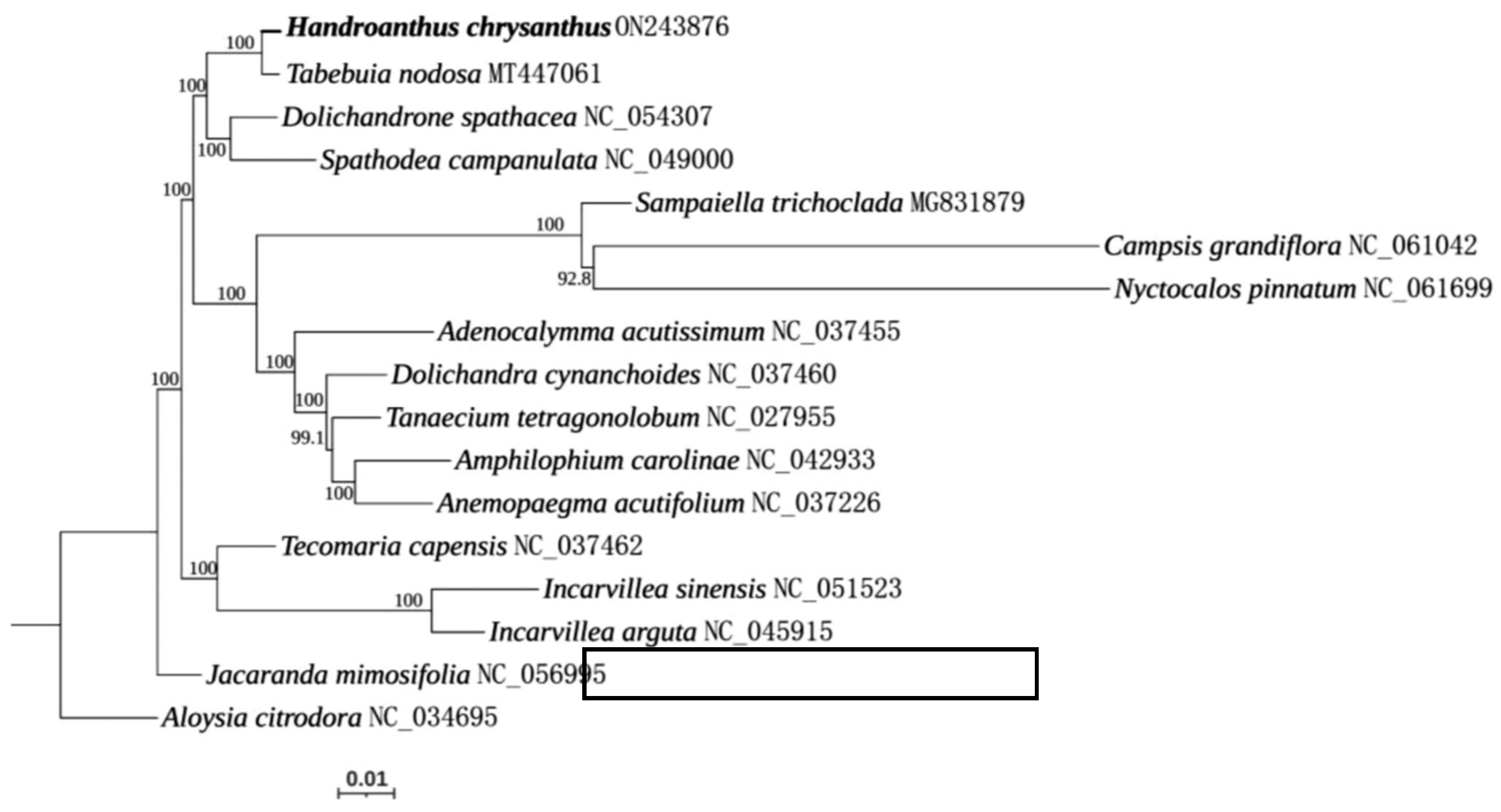
Jacaranda mismosifolia D. Don. comes from Central America (Mostafa et al.; 2014; Vavilov, 1992) and belongs to the Bignonaceae family (Liao et al.; 2022). It is a botanical taxon that is widely used in gardening in Spain (particularly on the Mediterranean side) and as a timber crop internationally. In gardens and nurseries, there are numerous species of this family such as Capsidium valdivianum B.; Campsis radicans L.; etc. (Fabris, 1959; 1965; 1979; 1993) and the use of Handroanthus chrysanthus J. as a species for timber production (Aguirre, 2015).
Figure 1.
Genome family tree of the Bignonaceae family (Liao et al.; 2022).
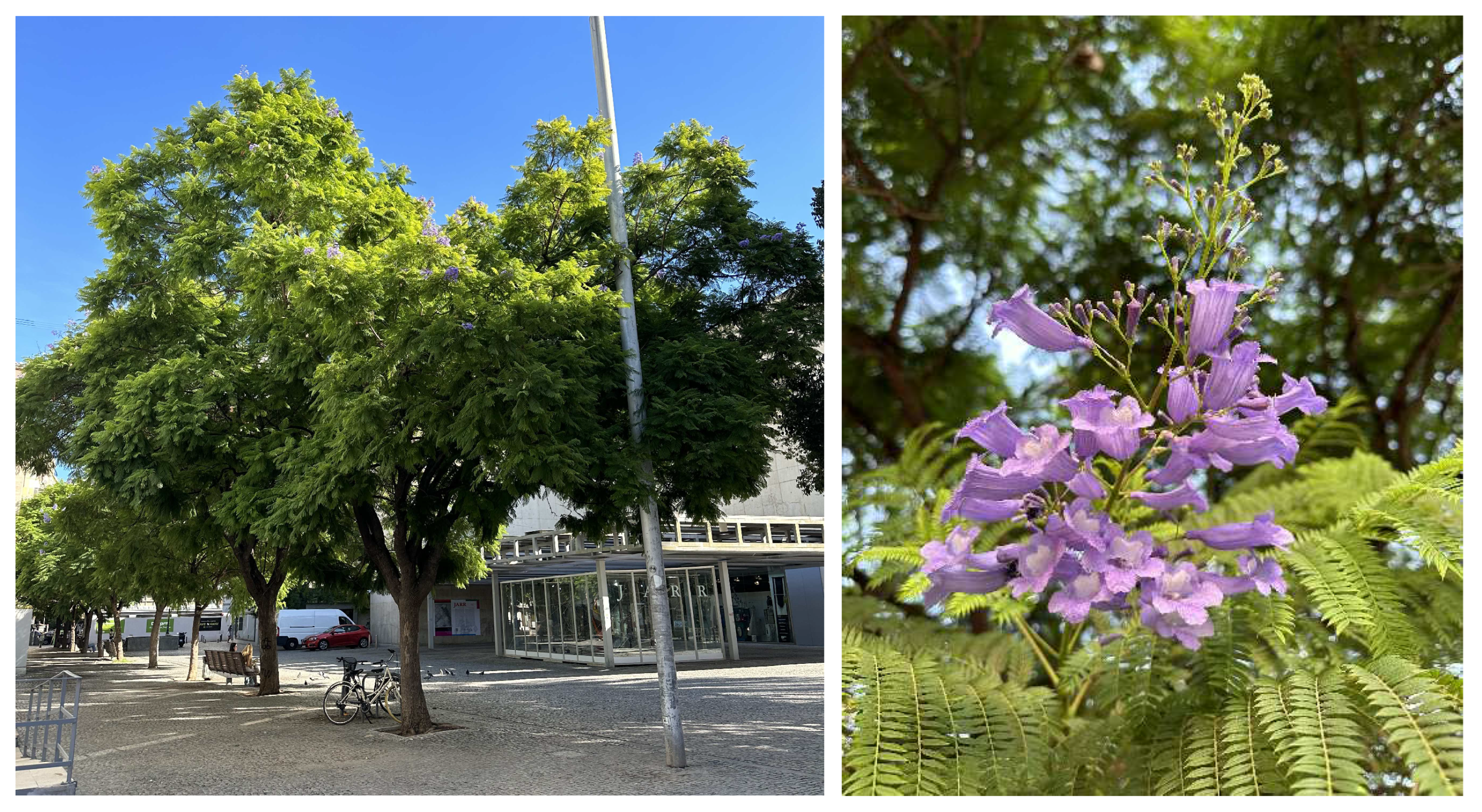
These trees can reach a height of 12 metres and a crown area of 18 metres wide. Their crown is globose and consists of bipinnate, opposite, large leaves (30 to 60 cm long) with a large number of small leaflets (Lahitte et al. 1998).
The flowers are large, bell-shaped, hermaphrodite, arranged in terminal panicles (although in some cases they are axial) and 25-30 cm long (Dimitri, 1977).
The fruit is a woody, disc-shaped, dehiscent capsule. It persists in the crown for long periods of time after which it opens, releasing the seeds inside (Macouzet et al.; 2013).
López (2006) describes the seeds as small, brown, circular (with diameters of 7-9 mm) and surrounded by a transparent membrane.
Figure 2.
Specimen of Jacaranda mimosifolia D. Don. (left) and detail of flowering (right).
In order to know in greater depth its adaptation to new environments, it is necessary to carry out a phenological monitoring of the species.
Phenology is the science that studies cyclical biological phenomena, such as budding, flowering, fruit growth and ripening, etc.; which are influenced by climatic events such as changes in temperature and photoperiod, among others (Font Quer, 1953; Dubé et al.; 1984; Alvarado et al.; 2002; Schwartz, 2013).
Knowing these ecobiological changes and their relationship with climate allows us to know what the plant’s response to different places will be, thus being able to know if its adaptation is correct and adequate (Agustí et al.; 1995), which is one of the greatest challenges of the current state of sciences such as ecology (Wolkovich et al.; 2012).
Flowering, for example, is determined by the temperature of the months prior to the appearance and evolution of flowers (Fitter and Fitter, 2002) and, according to Smith-Ramírez et al. (1998) the flowering period of a species is practically identical and, therefore, extrapolable, to that of another species of the same botanical family, so that by knowing one, we can know, with a high level of precision, how species of the same family will behave in different environmental conditions.
One of the first authors to try to classify the phenological stages, such as flowering, for an in-depth knowledge of them was Zadoks et al. (1974). These researchers designed a decimal code that consisted of assigning two digits to the stages of cereals, homogenised for all the species of the families that form them. Up to this time, the only projects dealing with phenology had been developed by Fleckinger (1946; 1948), who designed tables describing the biological cycle of fruit trees in detail, and Baggiolini (1952), who established nine main stages coded by letters from A to I for vines.
Aubert and Lossois (1972) also developed a system based on categorising the phenological stages by grouping them into ten main stages. It should be noted that these researchers were the first to establish phenological observation networks for the collection of phenological data over large areas.
Using the work of Zadoks et al. (1974) as a basis, other research groups, such as the Federal Biological Research Centre for Agriculture and Forestry in Germany developed scales for different species in 1979. The scale assigned a first digit for a primary stage and a second digit for the secondary stage (Meier et al.; 2009).
This work, although necessary to lay the foundations for the study of phenology, did not resolve an obstacle that had to be overcome: obtaining a homogeneous code for all plant species (Meier, 1985).
Finally, different researchers integrated in a working group developed a new scale to specify phenological stages, known as the BBCH scale (Bleiholder et al.; 1989). It is based on a decimal code incorporating two digits, the first number describing the main stage of the plant and the second one defining the secondary stage. Although this scale allowed its use in a large number of species, it was German and Italian researchers who developed the extended BBCH scale, which included a third number in some phenological stages to specify in greater detail the stage in which the plant was found, a fundamental fact for geneticists (Lancashire et al.; 1991; Hack et al.; 1992; Hack et al.; 1993), as it allows us to know in greater detail the phenology and, therefore, the adaptation of the different species to the environment.
Stauss (1994) unifies all the codes developed so far for different species in a single publication for use in the field.
Thus, the extended BBCH scale has been applied to a large number of crops to describe their biological cycle, highlighting the work carried out by Acosta-Quezada et al. (2016) with Solanum betaceum Cav, and other research with Mangifera indica L. (Hernández et al.; 2011), with Persea americana Mill. (Alcaraz et al.; 2013), with Solanum muricatum Aiton (Herraiz et al.; 2015), with Olea europaea L. (López et al.; 2004) and Prunus dulcis Mill. (López et al.; 2004).
Phenological knowledge by species is absolutely necessary if we want to study the adaptation and survival of a species to its environment, for this reason the phenological monitoring of Jacaranda mimosifolia D. Don. will allow us to know in depth its biological cycle and, therefore, to know how it behaves in different environments, to have enough information to know where its cultivation can be viable.
2. Materials and Methods
In order to know the phenology of Jacaranda mimosifolia D. Don. a phenological monitoring of the species was carried out on individuals located in the municipality of Bétera, Valencia, Spain.
2.1. Study Location
Bétera is located in the province of Valencia, Spain, at 92 a.m.s.l. (Spindle 30N X:717949.708 Y:4385462.519).
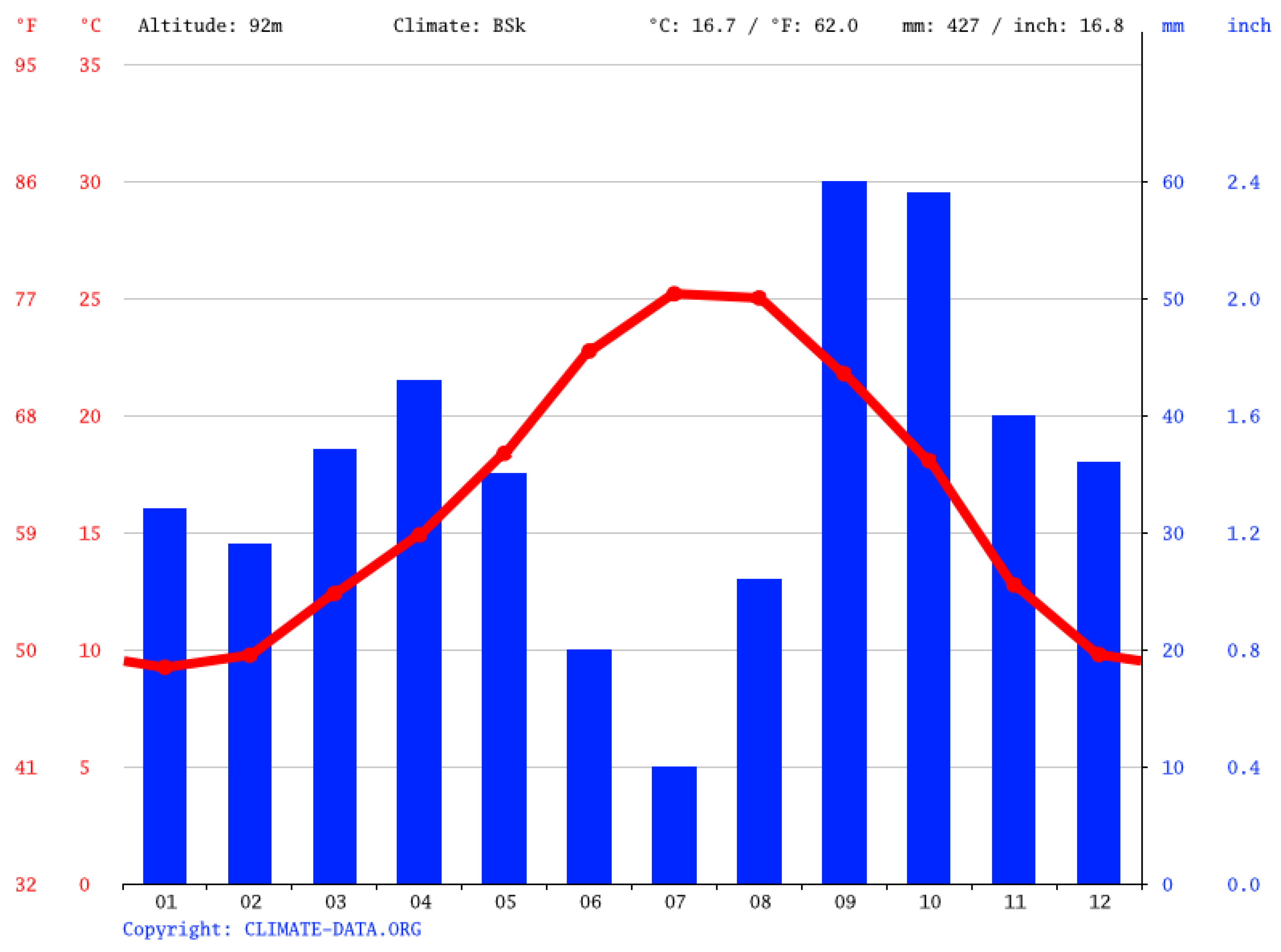
The climate is typically Mediterranean, with hot, dry summers and mild, sometimes wet winters. Rainfall is mainly concentrated in September and October, with short, intense rainy spells. Average annual rainfall is 427 mm (Climate data, 2024).
Its average temperature is 16.7°C, with average maximum temperatures around 30°C and average minimum temperatures around 5°C (Climate data, 2024).
Figure 3.
Climogram of Bétera, Valencia, Spain, source: Climate data, 2024.
Its agriculture is a fundamental pillar of its economic activity, with citrus and vegetable crops standing out (Navarro, 1966). However, the use of Jacaranda mimosifolia D. Don may be of interest in areas such as the one in question.
2.2. Study Description
Phenological monitoring was carried out on 50 adult individuals, covering two consecutive biological cycles, corresponding to the years 2022, 2023 and 2024, which allows for the complete crop cycles.
During the monitoring, the individuals were visited weekly and their main phenological stage was noted, as well as the phenological stage furthest ahead and furthest behind with respect to the cycle.
Finally, meteorological data were obtained from the nearest reference meteorological station to calculate the thermal integral.
The reference meteorological station is the one in Bétera, belonging to the Instituto Valenciano de Investigaciones Agrarias (IVIA), with a Campbell Scientific CR1000 Datalogger, a Vaisala T/HR probe, model HMP45C, a Skye pyranometer model SP1110, a R.M. Young anemovelette model 05103 and a Campbell Scientific plastic cup rain gauge, model ARG100.
Each phenological stage observed was assigned its description according to the BBCH scale, and compared with the classic scale of Aubert and Lossois (1972).
2.2.1. Principal growth stage: Germination, sprouting, bud development
During the months of January, February and March the plant remains dormant, its buds do not sprout and it does not show any development, although its leaves from the previous season remain on the tree.
- 00
- Winter dormancy or resting period (Aubert and Lossois scale: A) (Table 2).
- 01
- Swelling of the yolk begins.
- 03
- End of yolk swelling.
- 07
- The yolk begins to open or sprout.
- 09
- The bud shows green shoots.
2.2.2. Principal growth stage: Leaf development
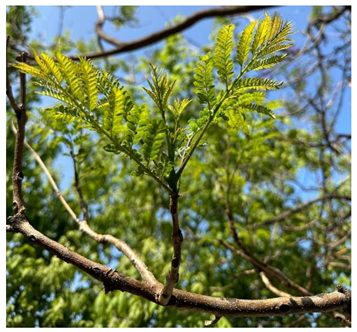
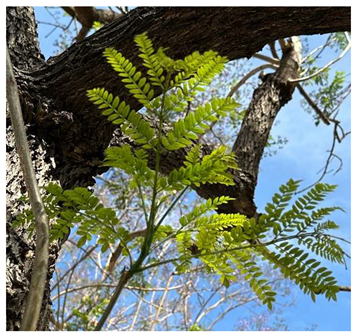
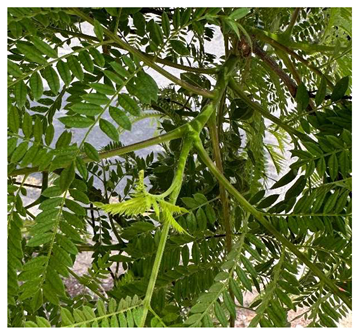
From April onwards, as temperatures rise, the plant begins to sprout and develop leaves. This phase lasts until the beginning of May.
- 12
- Development of the second leaf (Table 2).
- 13
- Development of the third leaf (Table 2).
- 14
- Development of the fourth leaf.
- 15
- Development of the fifth leaf.
- 16
- Development of the sixth leaf.
- 17
- Development of the sevent leaf.
- 18
- Development of the eighth leaf.
- 19
- Develpoment of nine leaves or more.
2.2.3. Principal growth stage: Emergence of the flowering organ
After vegetative growth during the month of April, the flower buds began to appear, which will form the flowering of the tree in later stages.
51. Flower organs or flower buds visible (Aubert and Lossois scale: C) (Table 2).
55. First individual buds and buds (florets) visible (unopened) (Aubert and Lossois scale: D) (Table 2).
59. First petals (flower leaves) visible.
2.2.4. Principal growth stage: Flowering
During the months of June and July the tree flowers, with bell-shaped flowers 3 to 5 centimetres in diameter, arranged in clusters, with a purplish colouring characteristic of the species. Occasionally, some inflorescences develop during later months of milder weather, such as September and October.
60. First flowers, open (Aubert and Lossois scale: E) (Table 2).
61. Beginning of flowering: 10% of flowers open
62. 20% of open flowers
63. 30% of flowers open
64. 40% of flowers open
65. Full flowering: 50% of flowers open (Aubert and Lossois scale: F) (Table 2).
67. Flowering coming to an end: most petals fallen or dry.
69. End of flowering: fruit set visible.
2.2.5. Principal growth stage: Fruit formation
The fruit develops during July, August and September. It is a dehiscent capsule containing a large number of seeds, which are propagated by wind-pushing.
70. First visible fruits.
71. Fruits reach 10% of their final size.
72. Fruits reach 20% of their final size.
73. Fruits reach 30% of their final size.
74. Fruits reach 40% of their final size.
75. Fruits reach 50% of their final size.
76. Fruits reach 60% of their final size.
77. Fruits reach 70% of their final size.
78. Fruits reach 80% of their final size.
79. The fruits have reached the size appropriate to their species/variety (Aubert and Lossois scale: H) (Table 2).
2.2.6. Principal growth stage: Ripening of fruit and seeds or fruit colouring.
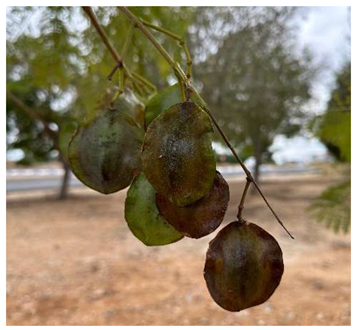
The fruit begins to change colour from green to brown and eventually dries out completely and opens to release the seeds it contains.
81. Beginning of ripening or fruit colouring (Aubert and Lossois scale: I) (Table 2).
85. Continuation of fruit colouring according to species/variety (Table 2).
88. Decrease in fruit consistency.
89. Full or harvest maturity (Aubert and Lossois scale: J) (Table 2).
2.2.7. Principal growth stage: Beginning of dormancy.
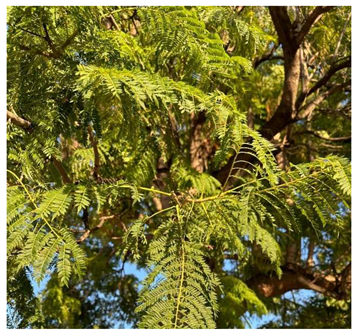
During the final months of the year and with the arrival of cold temperatures, the tree stops growing and remains with old foliage.
91. End of wood or shoot growth, but foliage remains green (Table 2).
93. Beginning of leaf discolouration or leaf drop.
95. 50% of leaves discoloured or fallen off.
97. End of leaf fall. The plant is in winter dormancy or vegetative rest.
The expected phenological scale of the species considered covered the following phenological stages.

Table 1.
Basic proposal of stages and sub-stages to be observed in the phenological monitoring of Jacaranda mimosifolia D. Don.
Table 1.
Basic proposal of stages and sub-stages to be observed in the phenological monitoring of Jacaranda mimosifolia D. Don.
| Principal Stage | BBCH code | Description |
|---|---|---|
| Germination, sprouting, bud development | 00 | Winter dormancy or resting period |
| 01 | Swelling of the yolk begins | |
| 03 | End of yolk swelling | |
| 07 | The yolk begins to open or sprout | |
| 09 | The bud shows green shoots | |
| Leaf development | 10 | First leaves separate from the shoot |
| 11 | Development of the first leaf | |
| 12 | Development of the second leaf | |
| 13 | Development of the third leaf | |
| 1… | Continuation of stages until ... | |
| 19 | Develpoment of nine leaves or more | |
| Side shoot formation | 21 | First visible side shoot |
| 22 | Second visible side shoot | |
| 23 | Third visible side shoot | |
| 2… | Continuation of stages until ... | |
| 29 | Nine or more visible side shoots | |
| Emergence of the flowering organ | 51 | Flower organs or flower buds visible |
| 55 | First individual buds and buds (florets) visible (unopened) | |
| 59 | First petals (flower leaves) visible | |
| Flowering | 60 | First flowers, open |
| 61 | Beginning of flowering: 10% of flowers open | |
| 62 | 20% of open flowers | |
| 63 | 30% of flowers open | |
| 64 | 40% of flowers open | |
| 65 | Full flowering: 50% of flowers open | |
| 67 | Flowering coming to an end: most petals fallen or dry. | |
| 69 | End of flowering: fruit set visible. | |
| Fruit formation | 70 | First visible fruits. |
| 71 | Fruits reach 10% of their final size | |
| 72 | Fruits reach 20% of their final size | |
| 73 | Fruits reach 30% of their final size | |
| 74 | Fruits reach 40% of their final size | |
| 75 | Fruits reach 50% of their final size | |
| 76 | Fruits reach 60% of their final size | |
| 77 | Fruits reach 70% of their final size | |
| 78 | Fruits reach 80% of their final size | |
| 79 | The fruits have reached the size appropriate to their species/variety | |
| Ripening of fruit and seeds or fruit colouring | 81 | Beginning of ripening or fruit colouring |
| 85 | Continuation of fruit colouring according to species/variety | |
| 88 | Decrease in fruit consistency | |
| 89 | Full or harvest maturity | |
| Beginning of dormancy | 91 | End of wood or shoot growth, but foliage remains green |
| 93 | Beginning of leaf discolouration or leaf drop | |
| 95 | 50% of leaves discoloured or fallen off | |
| 97 | End of leaf fall. The plant is in winter dormancy or vegetative rest |
3. Results and Discussion
Under our working conditions, the results of the different phenological stages of Jacaranda mimosifolia D. Don are shown in the following table:
Table 2.
Phenological stages of Jacaranda mimosifolia D. Don. Own elaboration with BBCH scale and Aubert and Lossois scale (1972).
Table 2.
Phenological stages of Jacaranda mimosifolia D. Don. Own elaboration with BBCH scale and Aubert and Lossois scale (1972).
| BBCH Code | Phenological Code | Photography |
|---|---|---|
|
00 Winter dormancy or resting period. |
A | 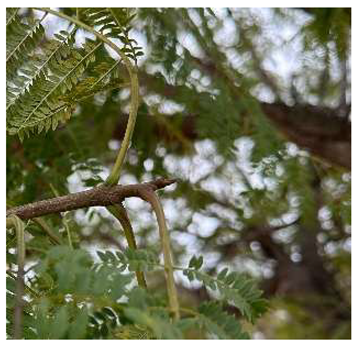 |
|
12 Development of the second leaf. |
- |  |
|
13 Development of the third leaf. |
- |  |
|
16 Development of the sixth leaf. |
- |  |
|
51 Flower organs or flower buds visible. |
C | 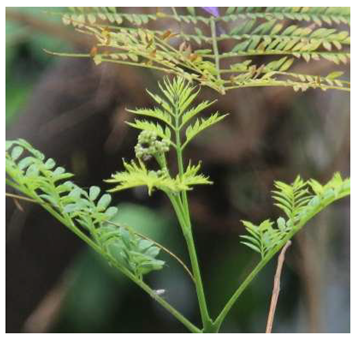 |
|
55 First individual buds and buds (florets) visible (unopened). |
D | 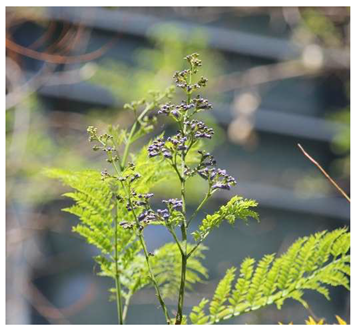 |
|
60 First flowers, open. |
E | 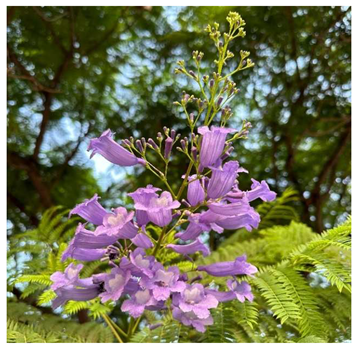 |
|
65 Full flowering: 50% of flowers open |
F | 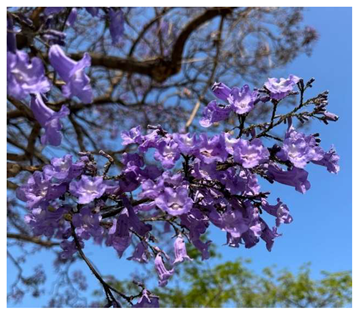 |
|
79 The fruits have reached the size appropriate to their species/variety.. |
H | 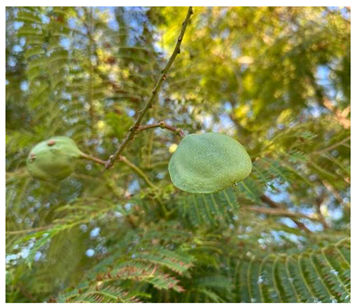 |
|
81 Beginning of ripening or fruit colouring. |
I | 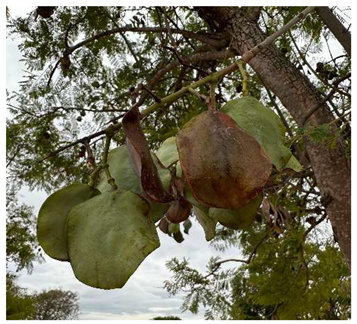 |
|
85 Continuation of fruit colouring according to species/variety. |
- |  |
|
89 Full ripening or harvesting. End of the typical colouring depending on the species/variety. Fruit or infructescences detach relatively easily. |
J | 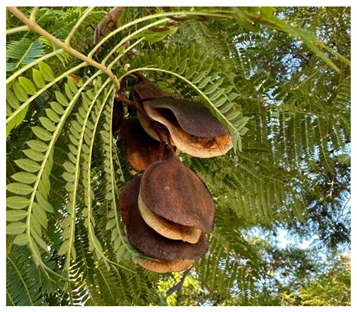 |
|
91 End of growth of wood or shoots (sprouts), but foliage remains green. |
- |  |
This phenological description provides a more in-depth knowledge of the vegetative cycle of Jacaranda mimosifolia D. Don.; which is essential for the correct management of the species and for determining the most suitable growing areas for timber uses and for the extraction of possible components for cosmetic and health purposes.
Based on the temperatures obtained at the Bétera weather station in 2022, 2023 and 2024 (Figure 4), the thermal integral of the species is obtained.
The following results were obtained:
The column ‘Accumulated degree days’ refers to the total value of accumulated degree days since the beginning of the annual cycle, while the column ‘Difference degree days’ refers to the number of average degree days that have been necessary over the two seasons from the previous phenological stage to reach the new stage of development.
As can be seen in Table 3, stage 89 - ‘Full or harvest ripening’ is the phenological stage that has required the most degree days, with a total of 2673. Phenological stage 13 - ‘Development of the third leaf’ is the stage that required the least number of degree days, which may be usual due to the speed with which the plant species of this botanical taxon grow when they reach sufficient temperatures for their vegetative development.
Author Contributions
Methodology, Ignacio Gandia-Ventura, Borja Velazquez Marti and Isabel Lopez-Cortes; Validation, Borja Velazquez Marti and Isabel Lopez-Cortes; Formal analysis, Ignacio Gandia-Ventura; Investigation, Ignacio Gandia-Ventura and Isabel Lopez-Cortes; Writing—original draft, Ignacio Gandia-Ventura and Isabel Lopez-Cortes; Writing—review & editing, Borja Velazquez Marti and Isabel Lopez-Cortes; Supervision, Ignacio Gandia-Ventura, Borja Velazquez Marti and Isabel Lopez-Cortes. All authors have read and agreed to the published version of the manuscript.
References
- ACOSTA-QUEZADA, P.G.; RIOFRÍO-CUENCA, T.; ROJAS, J.; VILANOVA, S.; PLAZAS, M.; PROHENS, J. ; 2016. Phenological growth stages of tree tomatos (Solanum betaceum Cav.) an emerging fruit crop, according to the basic and extended BBCH scales. Scientia Horticulturae, 199, 216–233.
- AGUIRRE, Z. ; 2015. Pasado, presente y futuro de los “guayacanes” Handroanthus chrysanthus (Jacq.) S. O. Grose y Handroanthus billbergii (Bureau & K. Schum.) S. O. Grose, de los bosques secos de Loja, Ecuador. Arnaldoa, 22, 85–104.
- AGUIRRE-BECERRA, H.; PINEDA-NIETO, S.A.; GARCÍA-TREJO, J.F.; GUEVARA-GONZÁLEZ, R.G.; FEREGRINO-PÉREZ, A.A.; ÁLVAREZ-MAYORGA, B.L.; RIVERA, D.M. ; 2020. Jacaranda flower (Jacaranda mimosifolia) as an alternative for antioxidant and antimicrobial use. Heliyon, 6, 1–9.
- AGUSTÍ, M.; ZARAGOZA, S.; BLEIHOLDER, H.; BUHR, L.; HACK, H.; KLOSE, R.; STAUB, R. ; 1995. Escala BBCH para la descripción de estadios fenológicos del desarrollo de los agrios (Gén. Citrus). Levante Agrícola, 3, 189–199.
- ALCARAZ, M.L.; THORP, T.G.; HORMAZA, J.I. ; 2013. Phenological growth stages of avocado (Persea americana) according to the BBCH scale. Scientia Horticulturae, 164, 434–439.
- ALVARADO, A.M.; FOROUGHBAKHCH, R.; JURADO, E.; ROCHA, A. ; 2002. El cambio climático y la fenología de las plantas. Ciencia UANL, 4, 493–500.
- AUBERT, B.; LOSSOIS, P. ; 1972. Considérations sur le phènologie des espèces fruitières arbustives. Fruits, 27, 269–286.
- BAGGIOLINI, M. ; 1952. Les stades repères dans le développement annuel de la vigne et leur utilisation practique. Rev. Rom. Agric. 1952, 8-10.
- BLEIHOLDER, H.; VAN DEN BOOM, T.; LANGELÜDDEKE, P.; STAUSS, R. ; 1989. Einheitliche Codierung der phänologischen Stadien bei Kultur- und Schadpflanzen. Gesunde Pflanzen, 41, 381–384.
- CLIMATE DATA, 2024. Available online: https://es.climate-data.org/europe/espana/comunidad-valenciana/betera-56926/ (accessed on 15 July 2024).
- DUBÉ, P.A.; PERRY, L.P.; VITTUM, M.T. ; 1984. Instructions for phenological observations: Lilac and honeysuckle. Vermort Agricultural Experiment Station Bulletin, 692.
- DIMITRI, M.J.; LEONARDIS, R.F.J.; BILONI, J.S. ; 1977. Especies Forestales de la Argentina Occidental, en: Libro del Árbol, Ed. El Ateneo. 35-44.
- FABRIS H., A. ; 1959. Bignoniáceas. Las plantas cultivadas en la República Argentina, 10, 1–57.
- FABRIS, H. A. ; 1965. Flora Argentina: Bignoniaceae. Rev. Mus. La Plata, 9, 273–419.
- FABRIS, H. A. ; 1979. Bignoniaceae, in Burkart A. Fl. Il. Entre Ríos, Colec. Ci. Inst. Nac. Tecnol. Agropecu. 6, 504–526.
- FABRIS, H. A. ; 1993. Bignoniaceae, in Cabrera, A.L. Fl. Prov. Jujuy, Colec. Ci. Inst. Nac. Tecnol. Agropecu. 13, 226–262.
- FITTER, A.H.; FITTER, R.S.; 2002. Rapid changes in flowering time in British plants. Science 296( 5573), 1689–1691. [CrossRef] [PubMed]
- FLECKINGER, J. ; 1946. Notations phénologiques et représentations du développement des bourgeons floraux du porier. Fruit Belge, 14, 41–54.
- FLECKINGER, J. 1948. Les stades vegétatifs des arbres fruitiers, en raport avec les traitements. Pomologie Francaise Supplément, 81-93.
- FONT QUER, P. 1953. Diccionario de Botánica. Ed. Labor, Barcelona, España. 642 pp.
- GACHET, M.S.; SCHÜHLY, W. ; 2009. Jacaranda—An ehtnopharmacological and phytochemical review. Journal of Ethnopharmacology, 121, 14–27.
- GILMAN, E.F.; WATSON, D.G. 1993. Jacaranda mimosifolia. Fact sheet ST-317.
- HACK, H.; BLEIHOLDER, H.; BUHR, U.; MEIER, U.; SCHNOCK-FRICKE, U.; WEBER, E.; WITZENBERGER, A. ; 1992. A uniform code for phenological growth stages of mono-and dicotyledonous plants—Extended BBCH scale, general. Nachr. Des. Dtsch. Pflan-Zenschutzd, 44, 265–270.
- HACK, H.; GALL, H.; KLEMKE, T.; KLOSE, R.; MEIER, R.; STAUSS, R.; WITZENBERGER, A. 1993. The BBCH scale for phenological growth stages of potato (Solanum tuberosum L.), in: Growth Stages of Mono and Dicotyledonous BBCH Monograph, Federal Biological Research Centre for Agriculture and Forestry.
- HERNÁNDEZ DELGADO, P.M.; ARANGUREN, M.; REIG, C.; FERNÁNDEZ GALVÁN, D.; MESEJO, C.; MARTÍNEZ FUENTES, A.; GALÁN SAÚCO, V.; AGUSTÍ, M. 2011. Phenological growth stages of mango (Mangifera indica L.) according to the BBCH scale. Scientia Horticulturae 130, 536-540.
- HERRAIZ, F.J.; VILANOVA, S.; PLAZAS, M.; GRAMAZIO, P.; ANDÚJAR, I.; RODRÍGUEZ-BURRUEZO, A.; FITA, A.; ANDERSON, G.J.; PROHENS, J. ; 2015. Phenological growth stages of pepino (Solanum muricatum) according to the BBCH scale. Scientia Horticulturae, 183, 1–7.
- INSTITUTO VALENCIANO DE INVESTIGACIONES AGRARIAS (IVIA). Available online: http://riegos.ivia.es/datos-meteorologicos (accessed on 10 April 2024).
- LAHITTE, H.J.; HURRELL, J.; BELGRANO, M.; JANKOWSKI, L.; HELOVA, P.; MEHLTRETE, K. 1998. Plantas medicinales Rioplatenses. Buenos Aires: Ed. L.O.L.A. 240 pp.
- LANCASHIRE, P.D.; VAN DEN BOOM, T.; LANGELÜDDEKE, P.; STAUSS, R.; WEBER, E.; WITZENBERGER, A. ; 1991. A uniform decimal code for growth stages of crops and weeds. Ann. Appl. Biol. 119, 561–601.
- LIAO, H.; MAN-MAN, S.; ZHOU, H.; LIU, X. ; 2022. Characterization of the complete chloroplast genome of Handroanthus chrysanthus (Bignonaceae). Mitochondrial DNA Part B 7, 1479–1480.
- LÓPEZ, I.; SALAZAR, D.M.; RECIO, D. ; 2004. Fenología del Olivo. Comparación de distintas notaciones fenológicas. Fruticultura Profesional, 145, 35–49.
- LÓPEZ GONZÁLEZ, G. 2006. Los árboles y arbustos de la Península Ibérica e Islas Baleares. Mundi-Prensa. 1731 pp.
- MACOUZET, M.; CASTILLÓN, E.; JIMÉNEZ, J.; VILLAREAL, J.; HERRERA, M. 2013. Plantas medicinales de Miquihuana, Tamaulipas. México: Universidad Autónoma de Nueva León. 146 pp.
- MEIER, U. ; 1985. Die Merkblattserie 27 «Entwicklungsstadien von Pflanzen» der Biologischen Bundesanstalt fúr Land- und Forstwirtschaft. Nachrichtenbl. Deut Pflanzenschutzd, 37, 76–77.
- MEIER, U.; BLEIHOLDER, H.; BUHR, L.; FELLER, C.; HACK, H.; HEB, M.; LANCASHIRE, P.; SCHNOCK, U.; STAUB, R.; VAN DE BOOM, T.; WEBER, E.; ZWERGER, P. ; 2009. The BBCH system to coding the phenological growth stages of plants -history and publications-. Journal für Kulturpflanzen, 61, 41–52.
- MOSTAFA, N.M.; ELDAHSHAN, O.A.; SINGAB, A.N. ; 2014. The genus Jacaranda (Bignoniaceae): An updated review. Pharmacognosy communications, 4, 1–9.
- NAVARRO, E. ; 1966. Evolución de los cultivos en Bétera. Tesis Doctoral en Filosofía y Letras. U. de Valencia.
- RANA, A.; BHANGALIA, S.; PRATAP SINGH, H. 2012. A new phenylethanoid glucoside from Jacaranda mimosifolia. Formerly Natural Product Letters 27(13), 1167-1173.
- SCHWARTZ, M.D. ; 2013. Phenology: An integrative environmental science. Ed. Springer. New York. 610 pp.
- SIDJUI, L.; PLACIDE, O.; NGOSONG, G.; MENKEM, E.; KOUIPOU, R.M.; MAHIOU-LEDDET, V.; HERBETTE, G.; BOYOM, F.; OLLIVIER, E. 2014. Secondary metabolites from Jacaranda mimosifolia and Kigelia africana (Bignonaceae) and their anticandidal activity. Records of natural products 8(3), 307-311.
- SMITH-RAMÍREZ, C.; ARMESTO, J.J.; FIGUEROA, J. 1998. Flowering, fruiting and seed germination in Chilean rain forest myrtaceae: ecological and phylogenetic constraints. Plant Ecology 136, 119-131.
- STAUSS, R. 1994. Compendium of growth stage identificación keys for mono and dicotyledonous plants. Extended BBCH scale. Postfach, Basel: CibaGeigy AG. ISBN 3-9520749-0-x.
- TORRICO, G.; PECA, C.; GARCIA, E. 1994. Leñosas útiles de Potosí. Potosí. 469 pp.
- VAVILOV, N. 1992. Origin and geography of cultivated plants. Cambridge University. 498 pp.
- WOLKOVICH, E.M.; COOK, B.I.; ALLEN, J.M.; CRIMMINS, T.M.; BETANCOURT, J.L.; TRAVERS, S.E.; PAU, S.; REGETZ, J.; DAVIES, T.J.; KRAFT, N.J.B.; AULT, T.R.; BOLMGREM, K.; MAZER, S.J.; McCABE, G.J.; McGILL, B.J.; PARMESAN, C.; SALAMIN, N.; SCHWARTZ, M.D.; CLELAND, E.E. 2012. Warming experiments underpredict plant phenological responses to climate change. Nature 485, 494-497.
- ZADOKS, J.C.; CHANG, T.T.; KONZAK, C.F. 1974. A decimal code for the growth stages of cereals. Weed Research 14, 415-421.
Figure 4.
Temperature and thermal integral graph of the Bétera weather station for 2023 (Source: IVIA, 2024).
Figure 4.
Temperature and thermal integral graph of the Bétera weather station for 2023 (Source: IVIA, 2024).
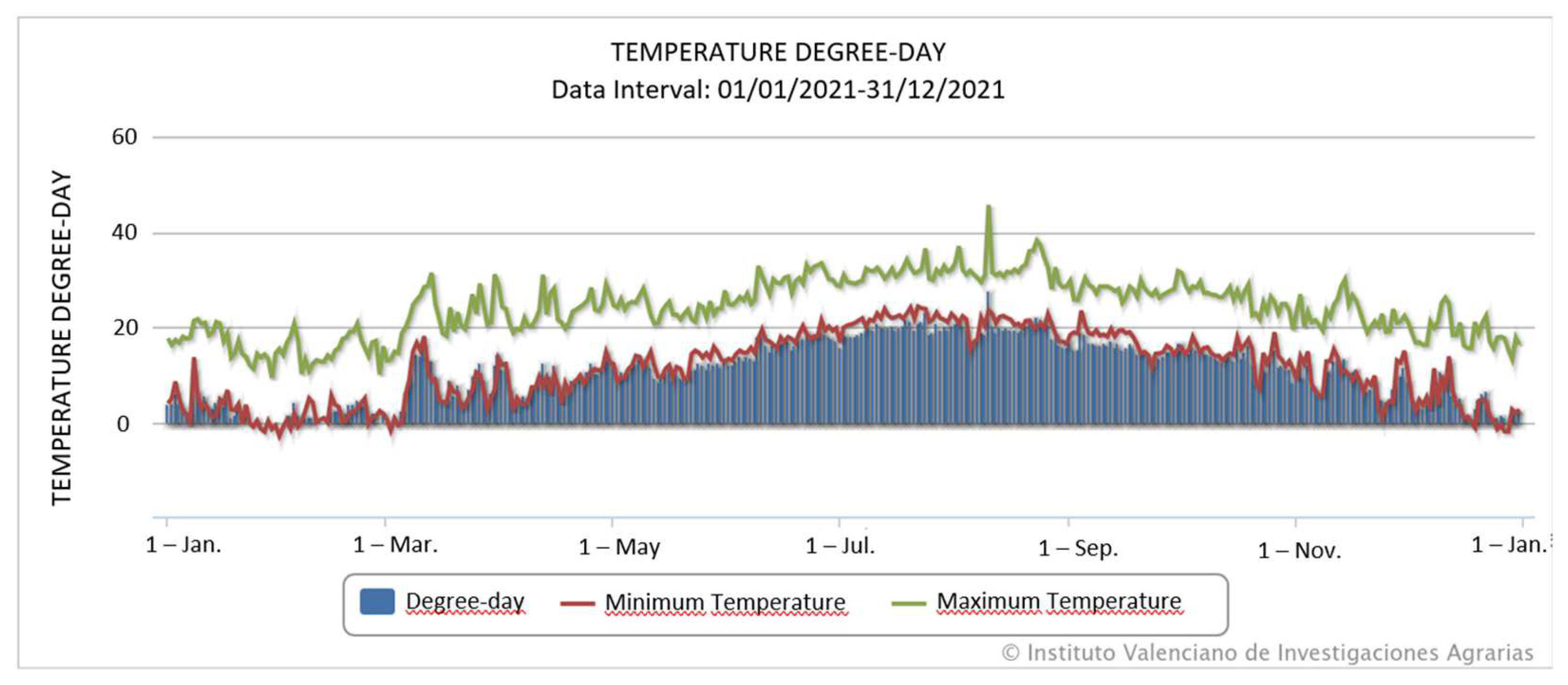
Table 3.
Cumulative degree days for each phenological stage described for Jacarana mimosifolia D. Don.
Table 3.
Cumulative degree days for each phenological stage described for Jacarana mimosifolia D. Don.
| Phenological Stage | Accumulated Degree Days | Difference Degrees Day |
|---|---|---|
| 0 (A) - Winter dormancy or resting period | 0 | 0 |
| 12 - Development of the second leaf | 394 | 394 |
| 13 - Development of the third leaf | 463 | 69 |
| 16 - Development of the sixth leaf | 650 | 581 |
| 51 (C) - Flower organs or flower buds visible | 705 | 124 |
| 55 (D) - First individual buds and flower buds (florets) visible (unopened) | 840 | 716 |
| 60 (E) - First flowers, open | 992 | 276 |
| 65 (F) - Full flowering: 50% of flowers open; first petals fall off or dry up | 1186 | 910 |
| 79 (H) - Fruits have reached the size appropriate to their species/ variety | 1771 | 861 |
| 81 (I) - Beginning of ripening or fruit colouring | 3348 | 2487 |
| 85 - Continuation of fruit colouring according to species/ variety | 3534 | 1047 |
| 89 (J) - Full ripening or harvesting. End of species-typical colouring. | 3720 | 2673 |
| 91 - End of wood or shoot growth (shoots), green foliage | 3800 | 1127 |
Disclaimer/Publisher’s Note: The statements, opinions and data contained in all publications are solely those of the individual author(s) and contributor(s) and not of MDPI and/or the editor(s). MDPI and/or the editor(s) disclaim responsibility for any injury to people or property resulting from any ideas, methods, instructions or products referred to in the content. |
© 2025 by the authors. Licensee MDPI, Basel, Switzerland. This article is an open access article distributed under the terms and conditions of the Creative Commons Attribution (CC BY) license (http://creativecommons.org/licenses/by/4.0/).
Copyright: This open access article is published under a Creative Commons CC BY 4.0 license, which permit the free download, distribution, and reuse, provided that the author and preprint are cited in any reuse.


