

Submitted:
30 January 2025
Posted:
30 January 2025
You are already at the latest version
Abstract
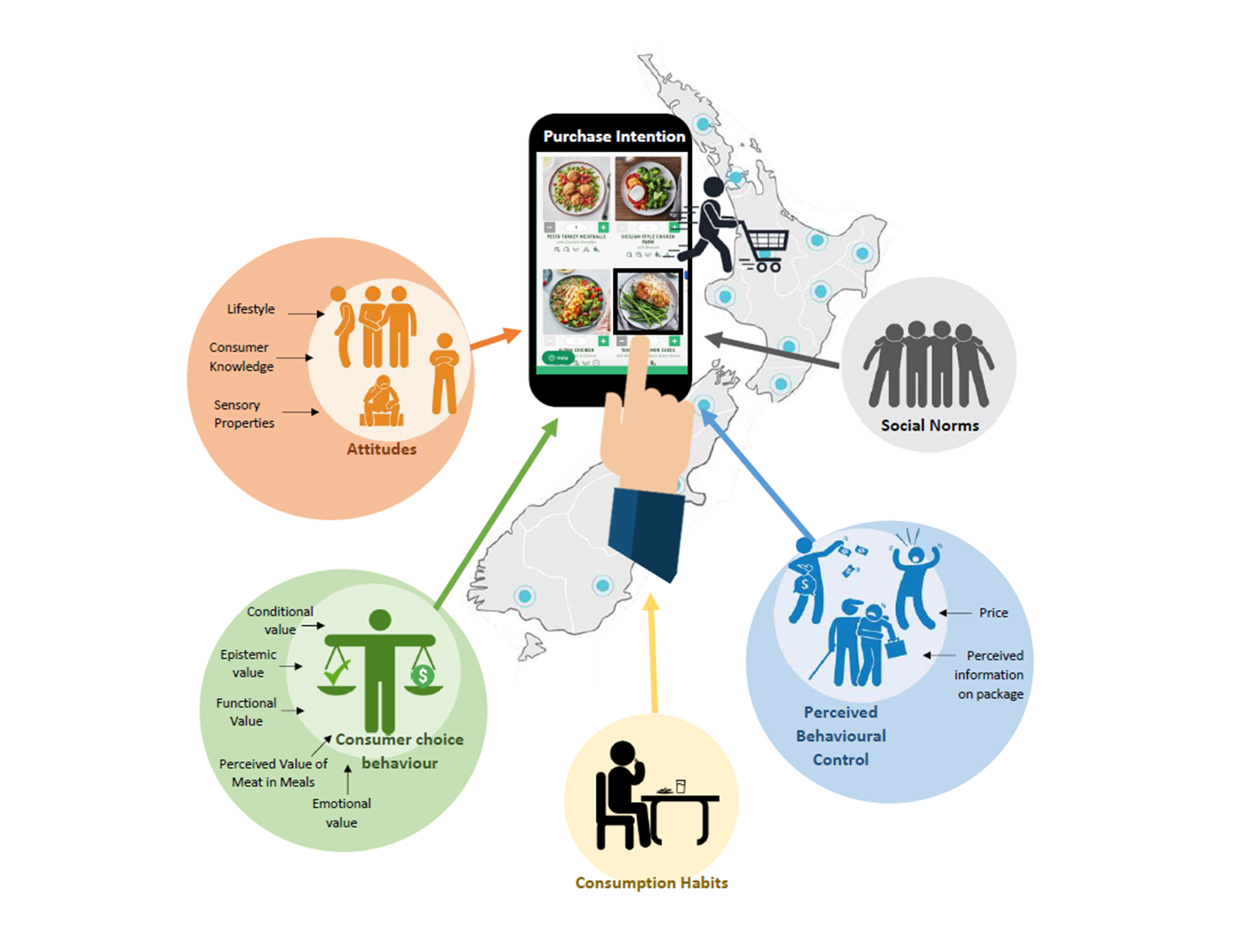
The chilled ready-meal market in New Zealand has witnessed substantial growth, fuelled by the increasing demand for convenient food options. This study employs a social psychological approach, integrating Theory of Consumption Value (TCV) to extend the Theory of Planned Behaviour (TPB). It examines the impact of lifestyle, consumer knowledge, sensory properties, subjective norms, consumer choice behaviour, consumption habits, and perceived behavioural control on the purchase intention of meat-based chilled ready meals. Insights into consumer attitudes highlight the positive influence of lifestyle, consumer knowledge and sensory properties on attitudes toward meat-based chilled ready meals. However, these attitudes negatively impacted purchase intention, emphasising a nuanced consumer decision-making process. Subjective norms, particularly social influences, played a significant role in shaping consumers’ intentions. Consumer choice behaviour, encompassing conditional value, epistemic value and emotional value, significantly influenced purchase intentions, with consumption habits emerging as the strongest predictor. Price had the highest influence on perceived behavioural control, while information on packaging had little direct effect on perceived behavioural control. The findings of this study provide actionable insights for businesses to tailor marketing strategies and enhance consumer acceptance by improving product quality and sensory appeal of meat-based chilled ready meals in New Zealand.
Keywords:
Purchase intention
; Consumer choice
; Meat-based
; Chilled ready meals
; Consumer behaviour
1. Introduction
The global ready-meal market has undergone significant expansion in recent years, primarily driven by increased demand for convenience foods [1]. The global ready-meal market is projected to grow from $156.33 billion in 2022 to $248.13 billion by 2029, at a compound annual growth rate (CAGR) of 6.8% in the forecast period, 2022-2029 [2]. This global trend has been met with a corresponding increase in the availability and variety of pre-prepared meal solutions, including chilled ready meals, offered by the food industry and retailers. Additionally, ready meal online subscriptions and delivery services are becoming more popular in New Zealand. These allow consumers to order ready meals easily on a weekly basis for their entire family. According to StatsNZ, the weekly expenditure of a family on ready-to-eat food including ready meals has experienced notable growth in recent years, while spending on grocery items has decreased [3,4], suggesting the necessity to obtain a deeper understanding of the factors that influence consumers’ intentions to purchase ready meals.
The ready meal can be defined as a complete meal that requires few or no extra ingredients, prepared by external providers and designed to fully and speedily substitute the main course of a homemade main meal [5,6,7]. Ready meals could be distinguished from ready-to-eat (RTE) takeaway foods, as the former still require some cooking or re-heating prior to serving [8]. Consumers are increasingly gravitating towards healthy and high-quality ready meals that are prepared fresh with minimal or no preservatives and, often substituting them for fresh home-cooked meals [9]. However, the key factors influencing and driving consumers’ intentions to purchase chilled ready meals in New Zealand are relatively unknown.
Several factors have been reported to influence consumer intention to purchase ready meals and convenience foods, including socio-demographic and economic determinants such as household size, age, income level and employment status [1,10,11]. Other factors include consumption habits [6], moral attitude [12], health [1,5] and personal values [13]. According to Olsen, Sijtsema [12], working families, long work hours and commuting time, as well as the desire to spend less time on meal preparation and to maximise leisure time, resulted in consumer demands for convenience foods like takeaways and ready meals. The lack of culinary skills and experience with preparing meals at home also boosted the demand for easy-to-prepare meals [14,15].
This study aims to investigate the determinants of purchase intention of meat-based chilled ready meals in New Zealand using human behavioural research methodologies. These methodologies are frequently employed in consumer studies to ascertain the underlying factors determining food-related behaviours. In this research, a social psychological approach was adopted, integrating the theory of planned behaviour (TPB) with the theory of consumption value (TCV) to provide insights into consumers’ intentions to purchase meat-based chilled ready meals in New Zealand. By examining these theories, the key factors that influence consumers’ purchase intentions of meat-based chilled ready meals can be determined.
Theoretical Background
2.1. Theory of Planned Behaviour (TPB)
The TPB model offers a structured framework for predicting and explaining human behaviour by understanding beliefs and attitudes. This theory is a belief-based social-cognitive consumer theory that was developed as an extension to the theory of reasoned action [16]. The model suggests that people’s expectations and values about engaging in a behaviour form their behavioural, normative and control beliefs. These beliefs, in turn, influence consumers’ attitudes, subjective norms, and perceived behavioural controls toward their purchase intentions and, ultimately, their purchasing behaviours.
The TPB has been applied extensively to food studies but rarely focuses on the intention to purchase or the consumption of ready meals. Among the few, Olsen, Sijtsema [12] investigated the usefulness of integrating moral attitude into the TPB model when predicting intention to consume RTE meals in three countries: Norway, Netherlands and Finland. They found that the intention to consume RTE meals was partly driven by a moral attitude. According to their study, in all three countries the feeling of moral obligation, operationalised as a negative feeling of guilt, had a negative effect on the intention to consume RTE meals. Another study by Mahon, Cowan [6] included a measure of habit into their TPB study model to investigate the consumption of ready meals and the purchase of takeaways by British consumers. Their findings revealed that including habit in the regression improved the model's predictive power by 26%, demonstrating that habit is the strongest predictor of the intention to consume ready meals.
2.2. Theory of Consumption Value (TCV)
Consumption value is the perceived value acquired from product consumption [17,18]. The theory of consumption value was developed by Sheth, Newman [17], who reported that the consumers’ choice behaviour is influenced by several consumption values that include functional value, emotional value, social value, epistemic value and conditional value. Each of these five values influenced the consumers’ choices and purchase decisions in different ways.
The TCV has been applied in several food-related research contexts, and recent literature suggests that the consumption value leads to purchase intention [19,20,21,22] and other behavioural intentions [23,24]. Al-Waseti and ve İrfanoğlu [20] used the consumption value theory to determine the consumer purchase intention towards organic food. They found significant relationships between various factors and the intention to purchase organic food. For instance, functional value (quality + price) and emotional value were found to have a positive direct impact, whereas social value had a negative impact on the purchase intention of organic food.
2.3. Linking TPB and TCV Constructs
The integration of the TPB and TCV offers a comprehensive approach to understanding consumer behaviour and purchase decisions, especially in the context of purchasing meat-based chilled ready meals. The TPB emphasises the formation of intention, while TCV highlights the significance of consumption values in predicting purchase behaviour. Several researchers point out the limitations of both TPB and TCV. For instance, TPB overlooks the role of emotions in shaping intentions and decision-making, as well as the importance of human needs prior to taking action [25]. Meanwhile, TCV is a narrower framework that primarily focuses on how values influence choice behaviour and identifies perceived values related to product purchases, but it fails to explain the underlying causes of those values [26]. To address these research gaps and achieve a more comprehensive understanding of the complexities of consumption behaviour, we have integrated TPB and TCV to examine purchase intentions for ready meals. Previous research has also recognised the complementary aspects of these theories [26,27,28]. In this study, we anticipate that our integration of TCV into the TPB model both relevant and appropriate. This integrated research framework will provide comprehensive and complementary insights on consumers' purchase intentions for meat-based chilled ready meals in New Zealand.
2.4. Hypotheses Development and Proposed Research Model
In this study, the TPB model was extended to incorporate consumer choice behaviour and consumption habits. The proposed model and hypotheses for the study are presented in Figure 1. The model proposes possible links between five latent variables, namely attitudes, subjective norms, consumer choice behaviour, consumption habits and perceived behavioural control. Additionally, consumer demographics are taken into consideration because buying decisions can be influenced by personal factors such as age or stage of life, family size, education, occupation, cultural background, and economic situation.
This section provides a detailed explanation and supporting rationale for the hypotheses proposed in this study. Figure 1 shows the conceptual model that developed to depict the relationships between the variables.
H1: Consumer attitude has a significant positive relationship with the consumer willingness to purchase meat-based chilled ready meals.
Attitude can be defined as either a positive or negative evaluation of the performance of a particular behaviour [29] based on the consequences of engaging in a particular behaviour and the corresponding favourable or unfavourable judgment about the possible consequences [30]. According to Kotler and Armstrong [31] lifestyle influences consumers’ attitudes, buying behaviours and decisions. Busy lifestyles and the associated time pressure or stress may lead consumers to prioritise convenience in their purchases [32]. This can translate into a preference for online purchase, subscription services, or in-store shopping of ready meals that save time and effort.
Consumers lack knowledge about the nutritional or functional value of ready meals [1,33]. Most ready meals are considered unhealthy by consumers, although, the ready meals available in the market now are healthier and more varied [34].
The sensory properties of chilled ready meals play a crucial role in shaping consumer attitudes and preferences. Consumer attitudes and beliefs and/or previous experiences contribute to their expectations [35]. When evaluating a particular chilled ready meal, the association with the homemade version aids consumers in envisioning the product [36]. Therefore, when consuming the meal, the actual sensory characteristics of the chilled ready meal should also match their expectations. At present, limited information is available regarding the influence of sensory properties on consumer attitudes, specifically in the context of purchasing meat-based chilled ready meals.
Therefore, we predict that consumers’ attitudes to meat-based chilled ready meals will be influenced by lifestyle, consumer knowledge, and sensory properties. Hence,
H1a: Lifestyle positively and directly influences the attitude towards meat-based chilled ready meals.
H1b: Consumer knowledge of meat-based chilled ready meals positively and directly influences attitudes.
H1c: Sensory properties of meat-based chilled ready meals positively and directly influence attitudes.
H2: Subjective norms have a significant positive relationship with the consumer willingness to purchase meat-based chilled ready meals.
The subjective norm refers to the perceived social pressure to approve and adopt a certain behaviour [30], which means that if the purchase of ready meals becomes more socially accepted and associated with higher social status, it is likely to result in an increased demand for ready meals on the market. This can be understood within the framework of consumption value theory, specifically in social value which reflects the benefits a consumer perceives in terms of social approval, social status, or group affiliation. It includes the perception of how a product influences a consumer’s social standing or acceptance among peers [17].
H3: Consumer choice behaviour of chilled ready meals has a significant positive relationship with the consumer willingness to purchase meat-based chilled ready meals.
The theory of consumption values (TCV) is the leading framework for understanding how consumers perceive value [37]. According to Sheth, Newman [17] consumer choice decision making is influenced by multiple consumption values, the consumption values make differential contributions in any given choice situation, and the consumption values are independent. Sheth identified five key value dimensions that significantly impact consumer preferences: conditional value, functional value, social value, emotional value, and epistemic value.
The consumption values associated with a product play a critical role in shaping consumers' behavioural intentions [38]. Therefore, we consider consumption values to be direct predictors of the consumer choice behaviour of meat-based chilled ready meals. For our study, we exclude social value, as it aligns with the subjective norm in the TPB.
Conditional value refers to the perceived worth of a product based on specific contexts or circumstances [17]. Chilled ready meals are often selected for their convenience, allowing consumers to save time and effort in meal preparation. Consequently, when evaluating these meals, consumers' purchase intentions are shaped by the conditional value associated with their ability to meet immediate convenience needs.
Functional value relates to the practical benefits that a product offers, influencing decision-making and purchase intentions [38]. Chilled ready meals can be customized to address various dietary needs, providing functional benefits such as weight loss, muscle gain, and quick nutrient absorption. These attributes make them particularly appealing to specific consumer segments, including fitness enthusiasts, athletes, and elderly individuals.
Evaluating the value of meat separately from its functional value is crucial for understanding consumers’ choice behaviour towards meat based chilled ready meals. Meat often serves as a focal point in purchase decisions, influenced by factors like quality, source, and health perceptions [39]. Its unique attributes such as nutritional benefits and alignment with dietary trends, merit independent examination. This approach helps researchers uncover value of meat in meals, offering deeper insights into how it enhances the consumer choice behaviour of meat-based chilled ready meals and influence purchasing decisions.
Epistemic value is associated with the desire for knowledge and new experiences [17]. As consumers become more health-conscious, they actively seek food options that align with the latest dietary trends and innovations. Chilled ready meals that promote well-being such as those low in calories, sodium, and fat, but high in protein or essential nutrients, can spark consumer curiosity. This epistemic value motivates consumers to explore healthful options that enhance their well-being, thus increasing their intention to purchase. Additionally, knowledge about the health benefits of meat, including its essential amino acids, can further elevate consumers' perception of its value in chilled ready meals.
Emotional value encompasses the feelings and psychological benefits derived from a product, which influence overall satisfaction and purchase intentions [17]. The visual appeal of a meal significantly contributes to its emotional value. Well-presented chilled ready meals can evoke feelings of anticipation and satisfaction even before consumption. Attractive packaging and vibrant ingredients can generate excitement and desire, making consumers more inclined to choose those products.
In the context of this study, it is predicted that the consumers’ choice behaviour of meat-based chilled ready meals will be influenced by conditional value, epistemic value, functional value, the perceived value of meat in the meal and emotional value.
H3a: Conditional value positively and directly influences the consumer choice behaviour towards meat-based chilled ready meals.
H3b: Epistemic value positively and directly influences the consumer choice behaviour towards meat-based chilled ready meals.
H3c: Functional value positively and directly influences the consumer choice behaviour towards meat-based chilled ready meals.
H3d: Perceived value of meat in the meal positively and directly influences the consumer choice behaviour towards meat-based chilled ready meals.
H3e: Emotional value positively and directly influences the consumer choice behaviour towards meat-based chilled ready meals.
H4: Consumption habits have a significant positive relationship with consumer purchase intention of meat-based chilled ready meals.
Habitual decisions are usually made routinely with little or no conscious effort. This is the opposite of extended decision-making where information is sought and thought through. Habitual behaviour poses a challenge for marketers aiming to disrupt established consumer routines when introducing new products [40]. Moreover, Mahon, Cowan [6] has shown that the predictive power of the TPB model they used in their study, about the consumption of ready meals and purchase of takeaways by British consumers, was improved by the addition of the measure of consumer habit in their hypothesis testing.
H5: Perceived behavioural control has a significant positive relationship with consumers’ intentions to purchase meat-based chilled ready meals.
Behaviour is affected by adequate resources and the ability to control any barriers to behaviours [41]. More resources, such as money and ready meal information, combined with fewer obstacles, such as low prices, could result in a greater perceived behavioural control and a stronger intention to purchase. In this study, we predict that consumers’ perceived behavioural control on the intention to purchase meat-based chilled ready meals will be influenced by perceived information on package and price.
H5a: Perceived information on the package of the meat-based chilled ready meals positively and directly influences the perceived behavioural control on ready meals.
H5b: Price of the meat-based chilled ready meals positively and directly influences consumers’ perceived behavioural control over their purchase decisions.
3. Materials and Methods
3.1. Development of the Survey Instrument
The online questionnaire was prepared using Qualtrics and included questions related to consumer demographics (gender, age, annual household income, educational qualifications, working status, occupation, annual household income, ethnicity, type of household, and location of residence in New Zealand), and six constructs (attitude, subjective norms, perceived behavioural control, intention to purchase, measures of consumer choice behaviour, and consumption habits of meat-based chilled ready meals). All the survey measurement items were adapted from previous relevant studies and validated scales as shown in Appendix 1. The survey items were measured on a seven-point Likert scale ranging from strongly disagree (1) to strongly agree (7). A pilot survey was conducted with 24 participants to check the understanding and validity of the question statements before data collection. Some wording was refined, and some statements were rephrased to improve clarity.
3.2. Sampling and Survey Distribution
The link of the online questionnaire was emailed or shared with participants via social and professional networks. Data were gathered in New Zealand through a convenience sampling technique. All the participants were New Zealand residents. Since the survey was administered via the internet and social media, there was a limitation for individuals who did not have internet access or chose not to respond to social media. Even though we lacked control over the sample, it was the least expensive and least time-consuming option compared to other sampling techniques. Belonging to the target population ourselves, we attempted to leverage our network and asked specific respondents to encourage other individuals to participate in the survey. This is known as snowball sampling [42,43]. Incomplete responses were dropped from the analysis. Ethics approval for this study was granted by the Auckland University of Technology Ethics Committee (AUTEC Reference number 20/285).
The questionnaire was completed by 543 individuals, although only 85% of the questionnaires were fully completed for all demographics and TPB questions. A priori power analysis (G*Power 3.1) was conducted before the survey using the expected power (1-β error probability) of 0.80 as suggested by Cohen [44] and Hair, Risher [45], an alpha (α) error probability of 0.05, sixteen predictors, and effect size of 0.15 to represent the medium effect size (R2 of 0.13). The minimum required sample size was 142 so the final sample of 464 was large enough to detect medium effects. The socio-demographic profile of the survey respondents is summarised in Table 1.
3.3. Statistical Analysis
In this study, the conceptual research model analysed with XLSTAT 2020.5.1. using partial least squares path modelling (PLSPM). The PLS model used in the analysis is a component-based structural equation modelling approach. This was preferred over the traditional covariance-based approach because PLS can handle small sample sizes as long as there is adequate statistical power, and any outliers or missing data have been identified and treated [46]. Only completed survey responses with no missing data were used in the data analysis. This analysis captured both the relationship between the constructs and their indicators, as well as the relationship between latent variables. PLS can also handle complex models. Previous studies that have used PLS had an average of 8 latent constructs, 27 indicators, and 11 structural relationships per model [46]. The current study used a model that had 16 latent constructs, 59 indicators and 15 structural relationships, suggesting that the model is complex enough. Therefore, PLS was appropriate in analysing the model.
4. Results and Discussion
4.1. Measurement Model Analysis: Reliability and Validity
The measurement model specifies the relationship between a construct and its observed indicators and provides quantitative measures of the constructs’ validity and reliability [47]. It is expected that the observed indicators measure the same underlying latent variable. These observed variables must be unidimensional where they practically belong to one construct indicating the same latent variable [48]. The unidimensionality of the model constructs is shown in Appendix 2. The eigenvalue of the second vector has consistently been found to be below 1 for all constructs, indicating a unidimensional structure for every construct.
Table 2 shows the reliability and validity measurements, including Cronbach’s alpha coefficients, Dillon-Goldstein’s rho (D.G.rho), and Average Variance Extracted (AVE) scores for all constructs. The internal consistency of the model is acceptable because the Cronbach’s alpha ranged from 0.702 to 0.934, exceeding the threshold of 0.70 (Nunnally and Bernstein, 1994) for most variables except for three control variables; price (0.501), epistemic value (0.445) and perceived behavioural control (0.645). However, the D.G. rho reliabilities for all the constructs ranged from 0.728 to 0.958, exceeding the recommended 0.70 minimum (Vinziet al., 2010). The convergent validity of each construct was further tested using the Average Variance Extracted (AVE), which describes the amount of variance that can be explained by items compared with the variance caused by measurement error. Constructs that have AVE values greater than 0.5 are said to have convergent validity or unidimensionality [49,50]. In the measurement model shown in Table 2, the AVE values for 13 out of 16 constructs were above the required minimum level of 0.50, except for perceived behavioural control (0.373), epistemic value (0.474) and price (0.497).
Although the Cronbach’s alpha and AVE were low for three of the constructs, they were not dropped out of the model since they had an acceptable D.G. rho of more than 0.70 (Table 2), an acceptable overall model fit (Table 3), and all the standardised factor loadings in the model were statistically significant (Table A2) and higher than 0.50 [51]. This indicates satisfactory composite reliability, so they were retained in the model.
4.2. Structural Model Analysis: Goodness of Fit
The conceptual research model of this study had a strong explanatory value for the intention to purchase meat-based chilled ready meals. The model fit indices assessed how well the model explains the data. The relative goodness of fit (GoF) for the overall model (Table 3) was 0.87, which is above the acceptable threshold of 0.80. Hence, the proposed model explains a significant number of relationships in the data.
The R2 value represents the predictive power of the model. The model was successful in predicting the intention to purchase meat-based chilled ready meals (Figure 2). This model explained 62% of the variation in the data. The unstandardised (original) R2 values for attitudes, consumer choice behaviour, and perceived behavioural control were 0.18, 0.30 and 0.14, respectively. These values indicate the proportion of variance in the dependent variable explained by the independent variables. However, to have a more accurate understanding of how well the model fits the data, the standardised R2 values through bootstrapping were calculated. The standardised R2 values for attitudes, consumer choice behaviour, and perceived behavioural control were 0.20, 0.32 and 0.17, respectively. These standardised values provide a better indication of the effect size and the strength of the relationship between the independent and dependent variables. It is important to note that R2 values higher than 0.10 are typically considered adequate for a latent construct [52,53]. In the current study, all three constructs (attitudes, consumer choice behaviour, and perceived behavioural control) exceeded this threshold. This suggests the model satisfactorily explains each construct. Furthermore, values between 0.33 and 0.67 indicate a moderated effect [53,54]. While the standardised R2 values in this study did not fall within this range, it is valuable to assess the effect size and potential moderating factors when interpreting the results.
4.3. Path Analysis and Hypotheses Testing
Table 4 summarises the findings of the structural model. Path coefficients are useful for understanding the magnitude and direction of the relationships among variables in the model [55]. They inform the amount of variance in the outcome variable that can be explained by each predictor variable and represent the magnitude of the effect of a change in one variable on another.
Bootstrap validation of path coefficients was carried out. This involved resampling the data 100 times with a sample size of 464 and running the analysis on each resampled dataset. This process allowed us to assess the stability and significance of the path coefficients across multiple iterations. The validation results indicate the likelihood of observing the original data in comparison to the bootstrapped samples. According to the bootstrap validation, all paths in the model were found to be valid and fit for interpretation.
T-tests were conducted to evaluate the significance of the path coefficients in the model, using a significance level of 0.05. The results, detailed in Table 4, support all the main hypotheses (H1, H2, H3, H4, and H5) and their associated sub-hypotheses. However, two sub-hypotheses (H3c and H5a) were not supported. Specifically, this lack of support indicates that the functional value and the information provided on the packaging did not have a significant direct effect on consumer choice behaviour and perceived behavioural control.
4.3.1. Attitudes
To assess the impact of lifestyle on attitudes, the study included question statements such as “I purchase ready meals for consumption when I finish work late” and “Ready meals are less stressful than preparing a cooked meal from scratch and help me lead a relaxed lifestyle.” These statements highlight that perceptions of a busy lifestyle and the desire for convenience contribute to more positive attitudes toward meat-based chilled ready meals. The findings revealed that consumers' attitudes toward these meals were positively influenced by their lifestyle (H1a; β=0.19, p<0.001). This aligns with findings from Kotler and Armstrong [31], which also identified lifestyle as influencing buying behaviour and decisions.
This study revealed that consumers’ attitudes towards meat-based chilled ready meals were positively influenced by their knowledge about these products (H1b; β=0.31, p<0.001). However, many consumers often lack awareness about the nutritional and functional benefits of ready meals [1,33]. Despite improvements in the healthiness and versatility of ready meals, our survey indicated that many consumers still perceive them as unhealthy and poorly balanced nutritionally (mean scores for each question statements are detailed in Appendix 2).
During initial focus group interviews with ready meal consumers in this study, a recurring theme was their dissatisfaction with the sensory quality of ready meals. Many participants considered ready meals as inferior to freshly cooked meals. Consumers rated very high on the question statements to indicate how the meals’ taste, aroma, texture and appearance and fresh cooked quality important to them. Together these sensory properties positively influenced (H1c; β=0.11, p<0.05) their attitudes towards meat-based ready meals. This finding is consistent with Reed, McIlveen-Farley [56] who found that the taste of chilled ready meals was a more important factor than price when it came to consumer preferences. This highlights that the sensory appeal of products should not be underestimated. These insights from our research, and from previous studies, emphasise the need for the future development of ready meals to focus on sensory factors. Creating ready meals with a desired sensory quality that closely resembles freshly cooked meals can have a positive impact on consumers’ overall perception and attitudes toward chilled ready meal purchase intention.
Although lifestyle, consumer knowledge and sensory properties positively influence attitudes, overall attitudes had negative effect on purchase intention of meat-based chilled ready meals (H1; β=-0.08, p<0.05). This suggests that despite favourable perceptions of certain attributes, underlying concerns may still deter consumers from making a purchase. To address this issue, it's essential to not only enhance the sensory quality of ready meals but also to educate consumers about ingredients, packaging information, claims and overall quality of ready meals. This could help counteract negative perceptions and improve attitudes toward chilled ready meals.
4.3.2. Subjective Norms
Subjective norm, as hypothesised in H2, had a direct positive effect on consumers’ intentions to purchase meat-based chilled ready meals. The path coefficient for this relationship was calculated as 0.29 (H2; β=0.29, p<0.001), indicating a significant influence. This means that participants’ intentions to purchase ready meals can be predicted by their perceptions of social influence, specifically the opinions and attitudes of friends, family and people who are important to them. The key social factors include reference groups, family, and role and status [57]. According to Kotler and Armstrong [31] consumers are part of various social, membership or reference groups. Reference groups, such as family, close friends, neighbours, colleagues, or other associations, play a crucial role in shaping consumers’ self-image and behaviours. These groups significantly impact consumers’ purchasing decisions, including those related to ready meals [31].
It is also important to consider the significant role that personal factors can play. Several studies suggest that the influence of personal factors, such as attitudes and product attributes, can often outweigh the impact of social norms or pressures in shaping consumer behavioural intentions [57,58]. Hence, both social influences and individuals’ own beliefs, habits, and perceptions of product-related attributes can influence consumers’ intentions to purchase ready meals.
4.3.3. Consumer Choice Behaviour of Meat-Based Chilled Ready Meals
According to the theoretical framework of consumer choice behaviour developed by Sheth, Newman [17], consumer choice is regarded as a function of multiple ‘consumption value’ dimensions that ultimately influence purchase intentions and decisions. In the marketing context, efforts are made to influence and increase the perceived value of a product or service through qualities such as aesthetic design, accessibility, or convenience. Consumer choice behaviour had a significant positive influence on consumers’ intentions to purchase meat-based chilled ready meals, supporting hypothesis H3 (β=0.10, p<0.01). As expected, conditional value (H3a; β=0.29, p<0.001) was the most influential factor in determining the consumer choice behaviour of meat-based chilled ready meals. It contributed to 40% of the overall R2 value. This could be because of the benefits of convenient meals in saving time, physical and mental energy. Several studies have outlined the importance of convenience in meal selection, purchasing, and preparation [59,60].
The second important element influencing the consumer choice behaviour of meat-based chilled ready meals was the perceived value of meat itself (H3d). This element contributed to 23% of the R2 of consumer choice (β=0.19, p<0.001). Interestingly, despite the recent trend towards vegetarian diets [61], consumers perceived better value in ready meals containing meat.
Although consumers have different beliefs about the nutritional or health value of ready meals, it was found that epistemic value (H3b) positively affected the intention to purchase meat-based chilled ready meals. This indicates that consumers value the epistemic values associated with these products (β=0.11, p<0.05). The epistemic value of foods is a hidden characteristic, which cannot be directly perceived through our senses. However, it is becoming increasingly valued by consumers [62]. According to Van der Horst, Brunner [1], some consumers perceived ready meals as containing more vitamins and nutrients, leading to more positive beliefs about the health value of ready meals and, ultimately, influencing their ready meal intake [1].
In addition to epistemic value and the value of meat in the meal, the emotional value of ready meals also plays a role in influencing consumer intentions and their perception of value. Emotional value (H3e) was found to be a positive predictive factor of consumer choice behaviour (β=0.18, p<0.001). This becomes crucial when consumers cannot directly sense the flavour or texture of the product because it is pre-packaged. This includes elements such as package design, graphics, and the visual attributes of the ready meal, including its appearance of being freshly cooked. In this study, 85.6% of respondents agreed (rating score >5) with the statement “Ready meals that have a “freshly cooked” appearance would positively influence my purchasing intention.” This attests to the positive influence observed, indicating that ready meals characterised by freshness, visual appeal and a ‘freshly cooked’ aesthetic exerted a positive effect on consumers’ intentions to purchase.
The functional value (H3) had no impact on the consumer choice behaviour of meat-based chilled ready meals (β=0.09, p>0.05). Basaran and Aksoy [63] also reported that functional value did not affect the willingness to pay more, but it had a greater impact on repeat purchase behaviour.
4.3.4. Consumption Habits
Consumer habit had the strongest impact on the intention to purchase meat-based chilled ready meals (H4; β=0.54, p<0.001). This result suggests that habit is the most important predictor of consumers’ intentions to purchase ready meals. To measure the influence of consumption habits on the intention to purchase ready meals, four question statements were used, including “I regularly purchase ready meals during my weekly shopping; I usually consume ready meals as my main meal; A large proportion of my weekly food consumption is ready meals, and I eat ready meals at least once a week.” It is important to note that not all subjects responded with higher rating scores (>5) for consumption habit question statements. Rather, those who had higher ratings (31.5%) also expressed their willingness or intention to purchase a ready meal in the next four weeks. On the other hand, those who responded with lower rating scores (<4) on those statements also had lower ratings of the intention to eat a ready meal in the following four weeks. This suggests a strong relationship between consumption habits and purchase intentions.
Several studies have shown that the habit can influence the intention to purchase or consume ready meals. [1,6,64,65]. For example, Mahon, Cowan [6] found that including a measure of habit in their regression model increased the predictive power, indicating the importance of habit as the most important predictor of intention to consume ready meals. Similarly, in our model, strong path coefficients were observed between consumer habits and purchase intention, further supporting the influence of habit on consumers’ intentions.
4.3.5. Perceived Behavioural Control
Perceived behavioural control (H5) had a significantly positive influence on the intention to purchase meat-based chilled ready meals, with a path coefficient of 0.13 (p<0.001). When examining the factors that influence perceived behavioural control, it was found that the price had a significant positive influence (H5b; β=0.36, p<0.001), while the perceived information on the packaging had no impact (H5a; β=0.09, p>0.05). The impact of ‘Price’ on perceived behavioural control was gauged through three statements: ‘Price of the ready meal is important to me,’ ‘I am willing to pay a premium price if the ready meals meet my nutritional needs,’ and ‘I am happy to pay a premium price if the ready meal is of excellent quality.’ These statements were designed to capture both the significance of price and the consumers’ willingness to pay a premium for meat-based chilled ready meals that align with their quality and nutritional requirements. The strong path coefficient (β=0.36) indicates that price was the most influential factor in predicting perceived behavioural control. Moreover, the price accounted for 90% of the variation the perceived behavioural control construct.
The finding that perceived information on packaging had no significant effect on perceived behavioural control does not diminish the value of nutritional information on packaging. Consumers often perceive this information as a credible source when selecting food products (Campos et al., 2011). However, in the context of meat-based chilled ready meals, it appears that other factors, such as price, have a stronger influence on consumers’ perception of control over their behaviour. This aligns with previous findings discussed by Weatherell, Tregear [66], wherein the priorities of consumers in food selection emphasised the greater importance of price and convenience in comparison to image-related factors, such as packaging and brand.
5. Conclusions
This study employs a novel approach by combining the consumption value theory with the theory of planned behaviour to determine the factors influencing the intention to purchase meat-based chilled ready meals in New Zealand. The results highlight the consumers’ responses towards their intention to purchase these meals, as evidenced by consistent and significant influences identified through path coefficients and hypothesis testing. The findings reveal that several key factors, including lifestyle, consumer knowledge, sensory properties, subjective norms, consumer choice behaviour, consumption habits and perceived behavioural control, play a significant role in shaping consumers’ decision-making process when it comes to meat-based chilled ready meal purchases.
The study has practical implications for marketers, manufacturers, and researchers in the chilled ready meal industry. It highlights the importance of consumer education regarding product ingredients, packaging information and quality, to positively impact the purchase intentions in the context of meat-based chilled ready meals. Additionally, the study underscores the need for improvements in sensory appeal, as consumer dissatisfaction with sensory quality had a significant impact on overall attitudes and purchase intentions. By understanding the underlying factors that influence consumer behaviour on chilled ready meals, businesses can unlock avenues for innovation and growth, ensuring their sustained presence in the market. This study contributes to the existing body of knowledge and provides actionable recommendations for enhancing consumer acceptance and adoption of ready meals.
Author Contributions
Conceptualization, C.S.S.S.M., N.H. and M.M.F.; Methodology, C.S.S.S.M; Software, C.S.S.S.M; Validation, C.S.S.S.M and K.K.; Formal analysis, C.S.S.S.M.; Investigation, C.S.S.S.M; Resources, N.H. and M.M.F.; Data curation, C.S.S.S.M.; Writing—original draft C.S.S.S.M; Writing—review & editing, C.S.S.S.M., N.H., C.E.R. and M.M.F.; Visualization, C.S.S.S.M.; Supervision, N.H. C.E.R. and M.M.F.; Project administration C.S.S.S.M. All authors have read and agreed to the published version of the manuscript.
Funding
This research received no external funding.
Data Availability Statement
The original contributions presented in this study are included in the article/supplementary material. Further inquiries can be directed to the corresponding author(s).
Conflicts of Interest
The authors declare no conflicts of interest.
Abbreviations
The following abbreviations are used in this manuscript:
| TPB | Theory of planned behaviour |
| TCV | Theory of consumption values |
| PLSPM | Partial least squares path modelling |
| AVE | Average variance extracted |
Appendix A
Appendix A.1

Table A1.
Consumer Purchasing behaviour Question statements and sources of adaption of question elements.
Table A1.
Consumer Purchasing behaviour Question statements and sources of adaption of question elements.
| Construct | Manifest variables | Question statements (seven-point Likert scale) | Source of adoption |
|---|---|---|---|
| Conditional Value (CON) | CON1 | I can save time in the shop when I purchase chilled ready meals. | [60,67] |
| CON2 | Chilled ready meals are a good back up to have in the home when I have little time to prepare meals. | [6] | |
| CON3 | Chilled ready meals are fast to prepare at home. | [6] | |
| CON4 | It is easier for me to purchase a meat-based chilled ready meal than cooking a meal from scratch. | [68,69] | |
| Epistemic Value (EPV) | EPV1 | I would be more likely purchase a meat-based chilled ready meal if it’s labelled as less salt and less fat. | [70] |
| EPV2 | When I purchase a meat-based chilled ready meal, I always look at nutritional information. | ||
| EPV 3 | I like meat-based chilled ready meals if those promote my wellbeing and healthy lifestyle. | [71,72] | |
| Perceived value of meat in meals (PMTV) | PMTV1 | I would be more likely to purchase a chilled ready meal if it contains meat and vegetables as it provides me with better nutrition. | [71] |
| PMTV2 | I would be more likely to purchase a meat-based chilled ready meal as it promotes my health and well-being. | [67] | |
| PMTV3 | I would expect chilled ready meals containing meat to be healthier and more nutritious than those without meat. | ||
| PMTV3 | I would pay more if the chilled ready meals contain meat. | ||
| Attitudes (ATU) | ATU1 | Meat-based chilled ready meals are well balanced meals | |
| ATU2 | Meat-based chilled ready meals can provide my daily nutritional requirements. | ||
| ATU3 | I would be happy to purchase meat-based chilled ready meals that would give sustained energy. | [73] | |
| ATU4 | I think chilled ready meals containing meat would boost my mood over those without meat. | [73] | |
| Functional value (FUN) | FUN1 | It is great if the meat-based chilled ready meal has its own functional benefits (for example, weight loss, muscle gain, digestibility, fast absorption of nutrients, etc.). | |
| FUN2 | I prefer if the meat-based chilled ready meals have higher protein content. | ||
| FUN3 | I prefer if the meat-based chilled ready meals are easy to digest. | ||
| FUN4 | I will prioritize the functional benefits over other attributes of the meal when I am purchasing a chilled ready meal contain meat. | ||
| Consumer knowledge on ready meals (CNKW) | CKNW1 | I feel that I have clear understanding and knowledge of meat-based chilled ready meals. | [71] |
| CKNW2 | Most meat-based chilled ready meals have an acceptable standard of quality. | [18] | |
| CKNW3 | I am knowledgeable about meat-based chilled ready meals I eat and how they can meet my nutritional need. | [71] | |
| Consumer Choice behaviour (CCB) | CCB1 | Meat-based chilled ready meals can be good value for money when reasonably priced. | [6] |
| CCB2 | Meat-based chilled ready meals have acceptable standard of quality for paid price. | [18] | |
| CCB3 | Meat-based chilled ready meals can be an economical meal. | ||
| CCB3 | When I buy meat-based chilled ready meals, I would ensure that I am getting my money’s worth | [74] | |
| Subjective Norms (SUBN) | SUBN1 | I’m happy to tell people in my social circle that I purchase meat-based chilled ready meals. | |
| SUBN2 | If people in my social circle recommend that I purchase meat-based chilled ready meals, I would purchase meat-based chilled ready meals. | [12,47] | |
| SUBN3 | If people whose opinion I value recommend that I purchase chilled ready meals containing meat, I would purchase chilled ready meals containing meat. | [68] | |
| Emotional Value (EMV) | EMV1 | Meat-based chilled ready meals that look fresh and appealing would positively influence my purchasing intention. | [70] |
| EMV2 | Meat-based chilled ready meals that have a “freshly cooked” appearance would positively influence my purchasing intention. | ||
| EMV3 | Ready meal package design and graphics would positively influence my purchasing intention. | [47] | |
| EMV4 | I expect the meat-based chilled ready meal inside the packaging to look the same as displayed on the packaging | ||
| Perceived information on package (PINF) | PINF1 | I would like to know nutrition facts, shelf life and ingredients before purchasing meat-based chilled ready meals. | [70] |
| PINF2 | I’m more likely to purchase a meat-based chilled ready meal that has a clear image of the meal on the packaging. | ||
| PINF3 | When I purchase, I look for graphics that indicate meals contain low fat and salt. | ||
| PINF4 | When I purchase, I look for health star ratings on the package. | ||
| Sensory appeal (SEAP) | SEAP1 | The taste of the meat-based chilled ready meal is very important for me | [72] |
| SEAP2 | The texture of the meat-based chilled ready meal is very important for me | [60,72] | |
| SEAP3 | The aroma of the meat-based chilled ready meal is very important for me | ||
| SEAP4 | The appearance of the meat-based chilled ready meal is very important for me | ||
| SEAP5 | The fresh cooked quality of the meat-based chilled ready meal is very important for me. | ||
| Consumption habits (CHAB) | CHAB1 | I usually consume meat-based chilled ready meals as my main meal. | [6] |
| CHAB2 | I eat meat-based chilled ready meal at least once a week | [6] | |
| CHAB3 | I regularly purchase meat-based chilled ready meals during my weekly shopping. | [75] | |
| CHAB4 | A large proportion of my weekly food consumption is meat-based chilled ready meals. | [74] | |
| Perceived behavioural control (PBCN) | PBCN1 | I make most of the decisions around what myself and my household consume. | [47] |
| PBCN2 | I do most of the household food shopping. | ||
| PBCN3 | I am in control of the number of meat-based chilled ready meals I consume. | [12,68,70] | |
| PBCN4 | I think it’s easy for me to buy meat-based chilled ready meals. | [12,68,70] | |
| PBCN5 | I believe that I have the money resources and the ability to buy meat-based chilled ready meals. | [47] | |
| Price (PRIC) | PRIC1 | Price of the meat-based chilled ready meal is important to me. | [70] |
| PRIC2 | I am willing to pay a premium price if the meat-based chilled ready meals meet my nutritional needs. | [76] | |
| PRIC3 | I am happy to pay a premium price if the meat-based chilled ready meal is excellent quality. | ||
| Lifestyle (LFST) | LFST1 | I purchase meat-based chilled ready meals for consumption when I finish work late. | [14,71,77] |
| LFST2 | Meat-based chilled ready meals are less stressful than preparing cooked meal from scratch and help me lead a relaxed lifestyle. | ||
| Purchase Intension (PINT) | PINT1 | I am willing to purchase meat-based chilled ready meals within next 4 weeks. | [47,68] |
| PINT2 | I intend to purchase meat-based chilled ready meals within next 4 weeks. | [47,68] | |
| PINT3 | I plan to purchase meat-based chilled ready meals within next 4 weeks. | [47,68] |
Appendix A.2
Table A2.
Mean, standard deviation, loadings, and communalities of manifest variables (XLSTAT PLSPM software).
Table A2.
Mean, standard deviation, loadings, and communalities of manifest variables (XLSTAT PLSPM software).
| Latent variable | Manifest variables | Mean | S.D. | Standardized loadings | Loadings | Communalities | Standardized loadings (Bootstrap) | Standard error | Lower bound (95%) | Upper bound (95%) |
|---|---|---|---|---|---|---|---|---|---|---|
| Purchase intention | PINT1 | 4.155 | 1.895 | 0.901 | 0.058 | 0.812 | 0.902 | 0.010 | 0.882 | 0.923 |
| PINT2 | 3.517 | 1.859 | 0.976 | 0.061 | 0.953 | 0.976 | 0.003 | 0.966 | 0.982 | |
| PINT3 | 3.310 | 1.888 | 0.944 | 0.060 | 0.891 | 0.944 | 0.007 | 0.924 | 0.958 | |
| Attitudes | ATTU1 | 4.709 | 1.426 | 0.809 | 0.058 | 0.655 | 0.809 | 0.028 | 0.745 | 0.859 |
| ATTU2 | 3.744 | 1.672 | 0.780 | 0.058 | 0.609 | 0.777 | 0.032 | 0.705 | 0.839 | |
| ATTU3 | 3.862 | 1.294 | 0.684 | 0.054 | 0.468 | 0.680 | 0.043 | 0.592 | 0.766 | |
| ATTU4 | 4.144 | 1.351 | 0.776 | 0.071 | 0.603 | 0.774 | 0.034 | 0.696 | 0.840 | |
| Subjective norms | SUBN1 | 4.446 | 1.551 | 0.743 | 0.054 | 0.552 | 0.743 | 0.037 | 0.649 | 0.813 |
| SUBN2 | 3.972 | 1.470 | 0.917 | 0.063 | 0.840 | 0.916 | 0.013 | 0.869 | 0.934 | |
| SUBN3 | 4.313 | 1.481 | 0.883 | 0.062 | 0.780 | 0.881 | 0.021 | 0.827 | 0.912 | |
| Perceived behavioural control | PBCN1 | 5.642 | 1.385 | 0.549 | 0.047 | 0.302 | 0.547 | 0.098 | 0.330 | 0.738 |
| PBCN2 | 5.478 | 1.709 | 0.590 | 0.062 | 0.348 | 0.579 | 0.109 | 0.332 | 0.777 | |
| PBCN3 | 6.183 | 1.086 | 0.503 | 0.033 | 0.253 | 0.496 | 0.082 | 0.289 | 0.633 | |
| PBCN4 | 4.767 | 1.551 | 0.810 | 0.077 | 0.655 | 0.803 | 0.054 | 0.664 | 0.881 | |
| PBCN5 | 5.401 | 1.377 | 0.553 | 0.047 | 0.305 | 0.551 | 0.068 | 0.418 | 0.714 | |
| Emotional value | EMV1 | 5.310 | 1.214 | 0.871 | 0.060 | 0.758 | 0.873 | 0.026 | 0.805 | 0.918 |
| EMV 2 | 5.397 | 1.206 | 0.849 | 0.058 | 0.720 | 0.851 | 0.029 | 0.770 | 0.908 | |
| EMV 3 | 4.836 | 1.377 | 0.837 | 0.066 | 0.700 | 0.840 | 0.027 | 0.764 | 0.892 | |
| EMV 4 | 5.356 | 1.442 | 0.645 | 0.053 | 0.416 | 0.633 | 0.063 | 0.480 | 0.751 | |
| Conditional value | CON1 | 4.675 | 1.547 | 0.729 | 0.055 | 0.531 | 0.725 | 0.041 | 0.636 | 0.804 |
| CON2 | 5.231 | 1.552 | 0.845 | 0.064 | 0.713 | 0.844 | 0.021 | 0.800 | 0.887 | |
| CON3 | 5.707 | 1.143 | 0.677 | 0.038 | 0.459 | 0.675 | 0.045 | 0.562 | 0.754 | |
| CON4 | 4.690 | 1.764 | 0.826 | 0.071 | 0.683 | 0.826 | 0.028 | 0.745 | 0.886 | |
| Epistemic value | EPV1 | 4.552 | 1.601 | 0.783 | 0.066 | 0.614 | 0.787 | 0.051 | 0.664 | 0.903 |
| EPV 2 | 4.606 | 1.791 | 0.662 | 0.062 | 0.439 | 0.648 | 0.084 | 0.450 | 0.830 | |
| EPV 3 | 4.972 | 1.577 | 0.608 | 0.050 | 0.370 | 0.598 | 0.092 | 0.377 | 0.750 | |
| Functional value | FUN1 | 4.636 | 1.465 | 0.823 | 0.070 | 0.677 | 0.826 | 0.031 | 0.743 | 0.888 |
| FUN2 | 4.780 | 1.324 | 0.677 | 0.052 | 0.459 | 0.672 | 0.057 | 0.520 | 0.779 | |
| FUN3 | 4.860 | 1.283 | 0.738 | 0.055 | 0.545 | 0.745 | 0.044 | 0.639 | 0.827 | |
| FUN5 | 3.897 | 1.481 | 0.682 | 0.059 | 0.466 | 0.667 | 0.076 | 0.467 | 0.807 | |
| Consumption habits | CHAB1 | 2.269 | 1.634 | 0.763 | 0.049 | 0.582 | 0.765 | 0.029 | 0.704 | 0.822 |
| CHAB2 | 2.558 | 1.906 | 0.927 | 0.070 | 0.859 | 0.927 | 0.009 | 0.907 | 0.946 | |
| CHAB3 | 2.537 | 1.826 | 0.935 | 0.067 | 0.875 | 0.935 | 0.008 | 0.914 | 0.950 | |
| CHAB4 | 1.804 | 1.319 | 0.812 | 0.042 | 0.660 | 0.812 | 0.023 | 0.766 | 0.859 | |
| Sensory properties | SEAP1 | 6.252 | 0.935 | 0.756 | 0.050 | 0.572 | 0.733 | 0.103 | 0.401 | 0.854 |
| SEAP2 | 6.086 | 0.961 | 0.821 | 0.055 | 0.674 | 0.808 | 0.060 | 0.666 | 0.904 | |
| SEAP3 | 5.940 | 1.007 | 0.857 | 0.061 | 0.735 | 0.843 | 0.045 | 0.700 | 0.905 | |
| SEAP4 | 5.897 | 1.035 | 0.892 | 0.065 | 0.796 | 0.891 | 0.023 | 0.827 | 0.939 | |
| SEAP5 | 6.073 | 0.999 | 0.838 | 0.059 | 0.702 | 0.828 | 0.056 | 0.633 | 0.894 | |
| Perceived info on package | PINF1 | 5.825 | 1.113 | 0.644 | 0.046 | 0.415 | 0.634 | 0.065 | 0.472 | 0.752 |
| PINF2 | 5.711 | 1.113 | 0.618 | 0.044 | 0.381 | 0.621 | 0.076 | 0.462 | 0.760 | |
| PINF3 | 4.724 | 1.421 | 0.851 | 0.077 | 0.725 | 0.846 | 0.039 | 0.769 | 0.923 | |
| PINF4 | 5.358 | 1.317 | 0.769 | 0.065 | 0.591 | 0.757 | 0.065 | 0.564 | 0.859 | |
| Lifestyle | LFST1 | 4.647 | 1.786 | 0.840 | 0.057 | 0.706 | 0.837 | 0.034 | 0.749 | 0.900 |
| LFST2 | 4.168 | 1.779 | 0.910 | 0.062 | 0.829 | 0.910 | 0.024 | 0.859 | 0.950 | |
| Consumer knowledge | CKNW1 | 4.088 | 1.514 | 0.713 | 0.057 | 0.508 | 0.686 | 0.089 | 0.419 | 0.835 |
| CKNW2 | 4.190 | 1.510 | 0.624 | 0.050 | 0.389 | 0.598 | 0.107 | 0.348 | 0.806 | |
| CKNW3 | 3.853 | 1.334 | 0.900 | 0.064 | 0.811 | 0.906 | 0.047 | 0.805 | 0.997 | |
| Perceived value of meat in meals | PMTV1 | 4.959 | 1.584 | 0.769 | 0.058 | 0.592 | 0.767 | 0.035 | 0.666 | 0.825 |
| PMTV2 | 3.944 | 1.659 | 0.792 | 0.063 | 0.627 | 0.793 | 0.032 | 0.681 | 0.842 | |
| PMTV3 | 3.377 | 1.639 | 0.812 | 0.064 | 0.659 | 0.811 | 0.030 | 0.739 | 0.864 | |
| PMTV4 | 4.050 | 1.573 | 0.734 | 0.055 | 0.539 | 0.740 | 0.039 | 0.656 | 0.807 | |
| Consumer choice behaviour | CCB1 | 4.332 | 1.521 | 0.879 | 0.070 | 0.773 | 0.880 | 0.013 | 0.846 | 0.902 |
| CCB2 | 3.966 | 1.367 | 0.830 | 0.059 | 0.689 | 0.827 | 0.019 | 0.769 | 0.859 | |
| CCB3 | 3.821 | 1.503 | 0.808 | 0.063 | 0.653 | 0.805 | 0.021 | 0.746 | 0.837 | |
| CCB4 | 4.922 | 1.335 | 0.540 | 0.038 | 0.292 | 0.542 | 0.050 | 0.447 | 0.657 | |
| Price | PRIC1 | 4.636 | 1.412 | 0.505 | 0.028 | 0.164 | 0.412 | 0.098 | 0.209 | 0.583 |
| PRIC2 | 5.220 | 1.355 | 0.709 | 0.061 | 0.503 | 0.698 | 0.070 | 0.488 | 0.806 | |
| PRIC3 | 5.817 | 1.110 | 0.907 | 0.075 | 0.823 | 0.901 | 0.028 | 0.835 | 0.948 |
References
- Van der Horst, K., T.A. Brunner, and M. Siegrist, Ready-meal consumption: associations with weight status and cooking skills. Public health nutrition, 2011. 14(2): p. 239-245. [CrossRef]
- Prepared Meals Market, 2022-2029. 2022, Fortune Business Insights. p. 156. https://www.fortunebusinessinsights.com/prepared-meals-market-105002.
- StatsNZ, Kiwis eating more food on the go. 2017, Statistics New Zealand.
- StatsNZ, Kiwis growing taste for takeaways and eating out. 2020, Statistics New Zealand.
- Geeroms, N., W. Verbeke, and P. Van Kenhove, Consumers’ health-related motive orientations and ready meal consumption behaviour. Appetite, 2008. 51(3): p. 704-712. [CrossRef]
- Mahon, D., C. Cowan, and M. McCarthy, The role of attitudes, subjective norm, perceived control and habit in the consumption of ready meals and takeaways in Great Britain. Food Quality and Preference, 2006. 17(6): p. 474-481. [CrossRef]
- Costa, A.I.d.A., et al., A consumer-oriented classification system for home meal replacements. Food Quality and Preference, 2001. 12(4): p. 229-242. [CrossRef]
- Verlegh, P.W.J. and M.J.J.M. Candel, The consumption of convenience foods: reference groups and eating situations. Food Quality and Preference, 1999. 10(6): p. 457-464. [CrossRef]
- Calderón, L.A., et al., The utility of Life Cycle Assessment in the ready meal food industry. Resources, Conservation and Recycling, 2010. 54(12): p. 1196-1207. [CrossRef]
- Olsen, N.V., et al., Likelihood of buying healthy convenience food: An at-home testing procedure for ready-to-heat meals. Food quality and preference, 2012. 24(1): p. 171-178. [CrossRef]
- Raj, S. and B. Mishra, Socio-demographic factor and selected buying behavioral attributes of purchasing convenience food: Multiple correspondence analyses to explore the relationship. Parikalpana: KIIT Journal of Management, 2020. 16(1and2): p. 84-107. [CrossRef]
- Olsen, N.V., S.J. Sijtsema, and G. Hall, Predicting consumers’ intention to consume ready-to-eat meals. The role of moral attitude. Appetite, 2010. 55(3): p. 534-539. [CrossRef]
- Botonaki, A. and K. Mattas, Revealing the values behind convenience food consumption. Appetite, 2010. 55(3): p. 629-638. [CrossRef]
- Ana, I.d.A., et al., To cook or not to cook: a means-end study of motives for choice of meal solutions. Food quality and preference, 2007. 18(1): p. 77-88. [CrossRef]
- Gofton, L., Convenience and the moral status of consumer practices, in Food choice and the consumer., D. Marshall, Editor. 1995, Blackie Academic & Professional: Glasgow, United Kingdom. p. 152-181.
- Fishbein, M. and I. Ajzen, Belief, attitude, intention, and behavior: An introduction to theory and research. Philosophy and Rhetoric, 1977. 10(2): p. 130-132.
- Sheth, J.N., B.I. Newman, and B.L. Gross, Why we buy what we buy: A theory of consumption values. Journal of Business Research, 1991. 22(2): p. 159-170. [CrossRef]
- Sweeney, J.C. and G.N. Soutar, Consumer perceived value: The development of a multiple item scale. Journal of Retailing, 2001. 77(2): p. 203-220. [CrossRef]
- Amin, S. and M.T. Tarun, Effect of consumption values on customers’ green purchase intention: a mediating role of green trust. Social Responsibility Journal, 2021. 17(8): p. 1320-1336. [CrossRef]
- Al-Waseti, L. and M. ve İrfanoğlu, The effect of consumption value on organic food purchase intention with the mediating role of consumer involvement. Turkish Online Journal of Design Art and Communication, 2022. 12(1): p. 177-191. [CrossRef]
- Chakraborty, D. and G. Dash, Using the consumption values to investigate consumer purchase intentions towards natural food products. British Food Journal, 2022. 125(2): p. 551-569. [CrossRef]
- Shin, Y.H., H. Kim, and K. Severt, Predicting college students’ intention to purchase local food using the theory of consumption values. Journal of Foodservice Business Research, 2021. 24(3): p. 286-309. [CrossRef]
- Choe, J.Y.J. and S.S. Kim, Effects of tourists’ local food consumption value on attitude, food destination image, and behavioral intention. International journal of hospitality management, 2018. 71: p. 1-10. [CrossRef]
- Stone, M.J. and S. Zou, Consumption value in food tourism: the effects on purchase involvement and post-travel behaviours. Tourism Recreation Research, 2023: p. 1-15. [CrossRef]
- Sussman, R. and R. Gifford, Causality in the Theory of Planned Behavior. Personality and Social Psychology Bulletin, 2018. 45(6): p. 920-933. [CrossRef]
- Nekmahmud, M., H. Ramkissoon, and M. Fekete-Farkas, Green purchase and sustainable consumption: A comparative study between European and non-European tourists. Tourism Management Perspectives, 2022. 43: p. 100980. [CrossRef]
- Koay, K.Y., C.W. Cheah, and N. Ganesan, The rise of the food truck phenomenon: an integrated model of consumers' intentions to visit food trucks. British Food Journal, 2023. 125(9): p. 3288-3303. [CrossRef]
- Huriah, T., et al., Understanding the purchasing behaviors of halal cosmetics of teenagers in Indonesia using the theory of planned behavior and theory of consumption value. Bali Medical Journal, 2022. 11(3): p. 1608-1613. [CrossRef]
- Ajzen, I., et al., Understanding Attitudes and Predicting Social Behaviour. 1980: Prentice Hall PTR.
- Ajzen, I., The theory of planned behavior. Organizational Behavior and Human Decision Processes, 1991. 50(2): p. 179-211. [CrossRef]
- Kotler, P. and G. Armstrong, Principles of marketing. 17 ed. 2018, United Kingdom: Pearson Education Limited. 736.
- De Boer, M., et al., The influence of lifestyle characteristics and beliefs about convenience food on the demand for convenience foods in the Irish market. Food quality and preference, 2004. 15(2): p. 155-165. [CrossRef]
- Veenma, K., C. Kistemaker, and M. Lowik, Socio-demographic, psycho-social and life-style factors affecting consumption of convenience food. ACR European Advances, 1995.
- Remnant, J. and J. Adams, The nutritional content and cost of supermarket ready-meals. Cross-sectional analysis. Appetite, 2015. 92: p. 36-42. [CrossRef]
- Costell, E., A. Tárrega, and S. Bayarri, Food acceptance: The role of consumer perception and attitudes. Chemosensory perception, 2010. 3: p. 42-50. [CrossRef]
- Laguna, L., et al., Do Consumers Change Their Perception of Liking, Expected Satiety, and Healthiness of a Product If They Know It Is a Ready-to Eat Meal? Foods, 2020. 9(9): p. 1257. [CrossRef]
- Kalafatis, S., L. Ledden, and A. Mathioudakis, Re-specification of the theory of consumption values. 2010.
- Sheth, J., B. Newman, and B. Gross, Consumption Values and Market Choices: Theory and Applications. 1991: South Western Publishing Co.
- Macdiarmid, J.I., et al., How important is healthiness, carbon footprint and meat content when purchasing a ready meal? Evidence from a non-hypothetical discrete choice experiment. Journal of Cleaner Production, 2021. 282: p. 124510. [CrossRef]
- Solomon, M.R. and N.J. Rabolt, Consumer behavior: In fashion. 2004, Upper Saddle River, N.J.: Prentice Hall.
- Ajzen, I. and T.J. Madden, Prediction of goal-directed behavior: Attitudes, intentions, and perceived behavioral control. Journal of Experimental Social Psychology, 1986. 22(5): p. 453-474. [CrossRef]
- Heckathorn, D.D., Comment: Snowball versus respondent-driven sampling. Sociological methodology, 2011. 41(1): p. 355-366. [CrossRef]
- Browne, K., Snowball sampling: using social networks to research non-heterosexual women. International journal of social research methodology, 2005. 8(1): p. 47-60. [CrossRef]
- Cohen, J., Statistical power analysis for the behavioral sciences. 2 ed. 2013, New York: Academic press.
- Hair, J.F., et al., When to use and how to report the results of PLS-SEM. European Business Review, 2019. 31(1): p. 2-24. [CrossRef]
- Ringle, C.M., M. Sarstedt, and D.W. Straub, Editor's comments: a critical look at the use of PLS-SEM in" MIS Quarterly". MIS quarterly, 2012. 36(1): p. iii-xiv. [CrossRef]
- Wong, S.-L., C.-C. Hsu, and H.-S. Chen, To buy or not to buy? Consumer attitudes and purchase intentions for suboptimal food. International journal of environmental research and public health, 2018. 15(7): p. 1431. [CrossRef]
- Sanchez, G., PLS path modeling with R. Berkeley: Trowchez Editions, 2013. 383: p. 2013.
- Hair Jr., J.F., et al., Partial Least Squares Structural Equation Modeling (PLS-SEM) Using R. International Journal of Research & Method in Education. Vol. 38. 2021: Springer Nature. 197.
- Chin, W.W. and P.R. Newsted, Structural equation modeling analysis with small samples using partial least squares. Statistical strategies for small sample research, 1999. 1(1): p. 307-341.
- Cheung, G.W., et al., Reporting reliability, convergent and discriminant validity with structural equation modeling: A review and best-practice recommendations. Asia Pacific Journal of Management, 2023. [CrossRef]
- Dirsehan, T. and E. Cankat, Role of mobile food-ordering applications in developing restaurants’ brand satisfaction and loyalty in the pandemic period. Journal of Retailing and Consumer Services, 2021. 62: p. 102608. [CrossRef]
- Falk, R.F. and N.B. Miller, A primer for soft modeling. 1992: University of Akron Press.
- Chin, W.W., The partial least squares approach to structural equation modeling, in Modern methods for business research. 1998, Psycology Press: 605 Thrid Avenue, New York, NY10017, USA. p. 295-336.
- Olobatuyi, M.E., A user's guide to path analysis. 2006, 4501 Forbes Boulevard, Suite 200, Lanham, Maryland 20706: University Press of America. 168.
- Reed, Z., H. McIlveen-Farley, and C. Strugnell, Factors affecting consumer acceptance of chilled ready meals on the island of Ireland. International Journal of Consumer Studies, 2003. 27(1): p. 2-10. [CrossRef]
- Niosi, A., Introduction to consumer behaviour. 2021: BCcampus Open Education.
- Biswas, A. and M. Roy, Leveraging factors for sustained green consumption behavior based on consumption value perceptions: testing the structural model. Journal of Cleaner Production, 2015. 95: p. 332-340. [CrossRef]
- Wales, M.-E., Understanding the role of convenience in consumer food choices: a review article. SURG Journal, 2009. 2(2): p. 40-48. [CrossRef]
- Candel, M.J., Consumers' convenience orientation towards meal preparation: conceptualization and measurement. Appetite, 2001. 36(1): p. 15-28. [CrossRef]
- Kamiński, M., et al., Global and local diet popularity rankings, their secular trends, and seasonal variation in Google Trends data. Nutrition, 2020. 79-80: p. 110759. [CrossRef]
- Barrett, D.M., J.C. Beaulieu, and R. Shewfelt, Color, Flavor, Texture, and Nutritional Quality of Fresh-Cut Fruits and Vegetables: Desirable Levels, Instrumental and Sensory Measurement, and the Effects of Processing. Critical Reviews in Food Science and Nutrition, 2010. 50(5): p. 369-389. [CrossRef]
- Basaran, U. and R. Aksoy, The effect of perceived value on behavioural intentions. Journal of Management Marketing and Logistics, 2017. 4(1): p. 1-16. [CrossRef]
- Siekierski, P., M.C. Ponchio, and V.I. Strehlau, Influence of lifestyles related to eating habits in ready meal consumption: comparative study between São Paulo and Rome. Revista Brasileira de Gestão de Negócios, 2013. 15: p. 325-342. [CrossRef]
- Contini, C., et al., Food habits and the increase in ready-to-eat and easy-to-prepare products, in Food hygiene and toxicology in ready-to-eat foods. 2016, Elsevier. p. 3-14.
- Weatherell, C., A. Tregear, and J. Allinson, In search of the concerned consumer: UK public perceptions of food, farming and buying local. Journal of rural studies, 2003. 19(2): p. 233-244. [CrossRef]
- Lee, S.W., H.J. Sung, and H.M. Jeon, Determinants of continuous intention on food delivery apps: Extending UTAUT2 with Information Quality. Sustainability, 2019. 11(11): p. 3141. [CrossRef]
- Ajzen, I., Perceived Behavioral Control, Self-Efficacy, Locus of Control, and the Theory of Planned Behavior. Journal of Applied Social Psychology, 2002. 32(4): p. 665-683. [CrossRef]
- Wang, Y., et al., Understanding the purchase intention towards remanufactured product in closed-loop supply chains. International Journal of Physical Distribution & Logistics Management, 2013. 43(10): p. 866-888. [CrossRef]
- Steptoe, A., T.M. Pollard, and J. Wardle, Development of a measure of the motives underlying the selection of food: the food choice questionnaire. Appetite, 1995. 25(3): p. 267-284. [CrossRef]
- Saleem, B. and A. Recker, The Effects of Consumer Knowledge and Values on Attitudes and Purchase Intentions: A Quantitative Study of Organic Personal Care Products Among German Female Consumers, in Umeå School of Business and Economics. 2014, Umeå University.
- Gómez-Luciano, C.A., et al., Consumers’ willingness to purchase three alternatives to meat proteins in the United Kingdom, Spain, Brazil and the Dominican Republic. Food Quality and Preference, 2019. 78: p. 103732. [CrossRef]
- Urala, N. and L. Lähteenmäki, Consumers’ changing attitudes towards functional foods. Food Quality and Preference, 2007. 18(1): p. 1-12. [CrossRef]
- Jaafar, S.N., P.E. Lalp, and M.M. Naba, Consumers’ perceptions, attitudes and purchase intention towards private label food products in Malaysia. Asian Journal of Business and Management Sciences, 2012. 2(8): p. 73-90. [CrossRef]
- Pavlou, P.A. and M. Fygenson, Understanding and predicting electronic commerce adoption: An extension of the theory of planned behavior. MIS quarterly, 2006. 30(1): p. 115-143. [CrossRef]
- Demirtas, B., Assessment of the impacts of the consumers’ awareness of organic food on consumption behavior. Food Science and Technology, 2019. 39(4): p. 881-888. [CrossRef]
- Gould, S.J., Health consciousness and health behavior: the application of a new health consciousness scale. American Journal of Preventive Medicine, 1990. 6(4): p. 228-237. [CrossRef]
Figure 1.
The conceptual model developed for this study.
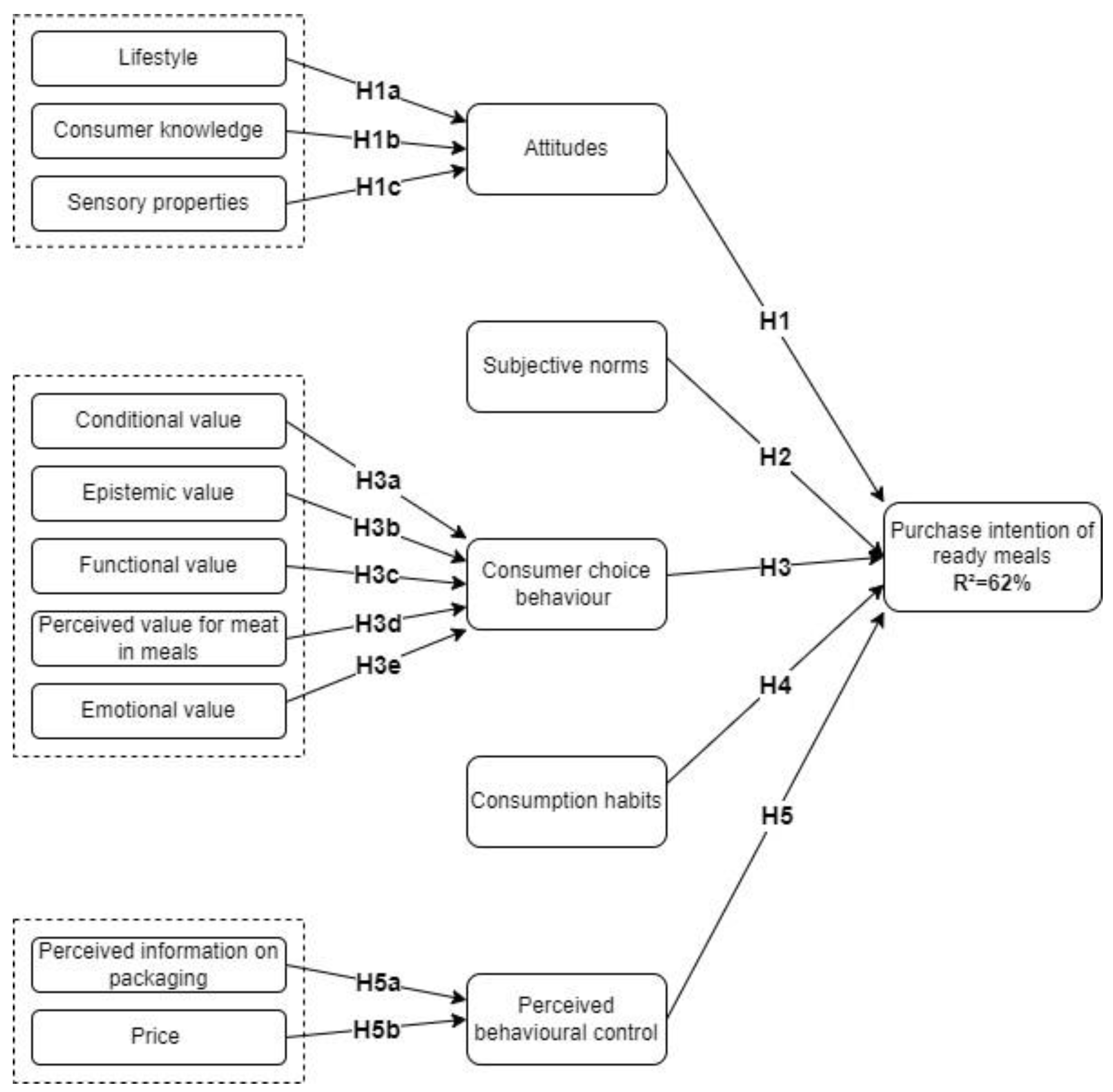
Table 1.
Sociodemographic profile of the respondents.
| Variable\Statistic | Categories | Frequencies | Percentage (%) |
|---|---|---|---|
| Gender | Female | 321 | 69.2 |
| Male | 143 | 30.8 | |
| Age range | Below 20 | 9 | 1.9 |
| 20-29 | 107 | 23.1 | |
| 30-39 | 118 | 25.4 | |
| 40-49 | 92 | 19.8 | |
| 50-59 | 75 | 16.2 | |
| 60 or more | 63 | 13.5 | |
| Highest level of education | Secondary school qualification-Not completed | 13 | 2.8 |
| Secondary school qualification-Completed | 55 | 11.9 | |
| Certificate/Diploma | 54 | 11.6 | |
| Bachelors degree | 135 | 29.1 | |
| Postgraduate cert/diploma | 8 | 1.7 | |
| Masters degree | 104 | 22.4 | |
| PhD | 95 | 20.5 | |
| Working status | Casual | 15 | 3.2 |
| Full time | 286 | 61.6 | |
| Part-time | 83 | 17.9 | |
| Retired | 12 | 2.6 | |
| Self-employed | 17 | 3.6 | |
| Studying | 44 | 9.5 | |
| Unemployed | 7 | 1.5 | |
| Occupation | Accommodation and Food Services | 22 | 4.7 |
| Administrative and Support Services | 34 | 7.3 | |
| Agriculture, Forestry and Fishing | 49 | 10.6 | |
| Art, Sport and Recreation | 7 | 1.5 | |
| Construction | 4 | 0.9 | |
| Education and Training | 107 | 23.1 | |
| Electricity, Gas, Water and Waste services | 1 | 0.2 | |
| Financial and Insurance Services | 5 | 1.1 | |
| Health Care and Social Assistance | 14 | 3.0 | |
| Housewife/Househusband | 8 | 1.7 | |
| Information, Media and Telecommunication | 12 | 2.6 | |
| Manufacturing | 18 | 3.9 | |
| Professional, Scientific and Technical Services | 150 | 32.3 | |
| Public administration and Safety | 6 | 1.3 | |
| Transport, Postal and Warehousing | 2 | 0.4 | |
| Wholesale and Retail Trade | 21 | 4.5 | |
| Other Services | 4 | 0.9 | |
| Annual income before tax (NZD) | Below 10,000 | 52 | 11.2 |
| 10,001-30,000 | 72 | 15.6 | |
| 30,001-50,000 | 60 | 12.9 | |
| 50,001-70,000 | 99 | 21.3 | |
| 70,001-100,000 | 115 | 24.8 | |
| Above 100,001 | 66 | 14.2 | |
| Type of household | Single person residing alone | 62 | 13.4 |
| Shared house with siblings | 2 | 0.4 | |
| Shared house with unrelated individuals | 77 | 16.6 | |
| Family home-one parent with child(ren) | 11 | 2.4 | |
| Family home-couple with no children | 134 | 28.9 | |
| Family home-couple with child(ren) | 150 | 32.3 | |
| Extended family/multi-generation home | 28 | 6.0 | |
| European (including NZ European) | 318 | 68.5 | |
| Ethnic group | Māori | 18 | 3.9 |
| Pacific | 8 | 1.7 | |
| Asian | 99 | 21.3 | |
| Middle Eastern/ Latin American/ African | 17 | 3.7 | |
| American | 4 | 0.9 |
Table 2.
Reliability and validity of the measurements model (XLSTAT PLSPM software).
| Latent variable | Dimensions | Cronbach’s alpha | D.G. rho (PCA)† | Condition number | AVE‡ |
|---|---|---|---|---|---|
| Sensory properties | 5 | 0.897 | 0.924 | 3.822 | 0.696 |
| Lifestyle | 2 | 0.702 | 0.870 | 1.832 | 0.768 |
| Consumer knowledge | 3 | 0.710 | 0.844 | 2.322 | 0.569 |
| Attitudes | 4 | 0.754 | 0.847 | 3.024 | 0.584 |
| Subjective norms | 3 | 0.801 | 0.884 | 3.543 | 0.724 |
| Perceived information on package | 4 | 0.709 | 0.827 | 2.255 | 0.528 |
| Price | 3 | 0.501 | 0.759 | 1.718 | 0.497 |
| Perceived behavioural control | 5 | 0.645 | 0.777 | 2.579 | 0.373 |
| Consumption habits | 4 | 0.885 | 0.927 | 3.962 | 0.744 |
| Emotional value | 4 | 0.804 | 0.872 | 4.240 | 0.649 |
| Conditional value | 4 | 0.778 | 0.864 | 2.759 | 0.596 |
| Epistemic value | 3 | 0.445 | 0.728 | 1.435 | 0.474 |
| Functional value | 4 | 0.713 | 0.824 | 2.187 | 0.537 |
| Perceived value of meat in meals | 4 | 0.781 | 0.860 | 2.479 | 0.604 |
| Consumer choice behaviour | 4 | 0.775 | 0.860 | 2.669 | 0.602 |
| Purchase intention | 3 | 0.934 | 0.958 | 6.587 | 0.885 |
† Dillon-Goldstein’s rho (Principal Component Analysis). ‡ Average Variance Extracted.
Table 3.
Goodness of Fit (GoF) index and model measurement.
| GoF | GoF (Bootstrap) | Standard error | Lower bound (95%) | Upper bound (95%) | |
|---|---|---|---|---|---|
| Absolute | 0.435 | 0.445 | 0.014 | 0.414 | 0.477 |
| Relative | 0.870 | 0.856 | 0.014 | 0.829 | 0.884 |
| Outer model | 0.987 | 0.984 | 0.004 | 0.972 | 0.991 |
| Inner model | 0.881 | 0.870 | 0.014 | 0.847 | 0.898 |
Table 4.
Path coefficients and hypotheses testing results.
| Hypotheses | Hypothesised Path | Path Coefficients | Path Coefficients (Bootstrap) | Pr > |t| | Testing results |
|---|---|---|---|---|---|
| H1a | Lifestyle → Attitudes | 0.19 | 0.19 | 0.000 | Supported |
| H1b | Consumer knowledge →Attitudes | 0.30 | 0.31 | 0.000 | Supported |
| H1c | Sensory properties → Attitudes | 0.10 | 0.11 | 0.028 | Supported |
| H3a | Conditional value → Consumer choice behaviour | 0.29 | 0.29 | 0.000 | Supported |
| H3b | Epistemic value → Consumer choice behaviour | 0.10 | 0.11 | 0.027 | Supported |
| H3c | Functional value → Consumer choice behaviour | 0.08 | 0.08 | 0.064 | Not supported |
| H3d | Perceived value of meat in meals → Consumer choice behaviour | 0.19 | 0.19 | 0.000 | Supported |
| H3e | Emotional value → Consumer choice behaviour | 0.16 | 0.18 | 0.000 | Supported |
| H5a | Perceived info on package → Perceived Behavioural Control | 0.07 | 0.09 | 0.149 | Not supported |
| H5b | Price → Perceived Behavioural Control | 0.35 | 0.36 | 0.000 | Supported |
| H1 | Attitudes →Purchase intention | -0.07 | -0.08 | 0.028 | Supported |
| H2 | Subjective norms →Purchase intention | 0.28 | 0.29 | 0.000 | Supported |
| H3 | Consumer choice behaviour→ Purchase intention | 0.10 | 0.10 | 0.009 | Supported |
| H4 | Consumption habits → Purchase intention | 0.54 | 0.54 | 0.000 | Supported |
| H5 | Perceived behavioural control → Purchase intention | 0.14 | 0.13 | 0.000 | Supported |
Disclaimer/Publisher’s Note: The statements, opinions and data contained in all publications are solely those of the individual author(s) and contributor(s) and not of MDPI and/or the editor(s). MDPI and/or the editor(s) disclaim responsibility for any injury to people or property resulting from any ideas, methods, instructions or products referred to in the content. |
© 2025 by the authors. Licensee MDPI, Basel, Switzerland. This article is an open access article distributed under the terms and conditions of the Creative Commons Attribution (CC BY) license (http://creativecommons.org/licenses/by/4.0/).
Copyright: This open access article is published under a Creative Commons CC BY 4.0 license, which permit the free download, distribution, and reuse, provided that the author and preprint are cited in any reuse.


