

Submitted:
29 January 2025
Posted:
29 January 2025
You are already at the latest version
Abstract
As bacteriophages (phages) are viruses that infect and destroy bacterial cells, they can be considered natural bactericides that can either directly or indirectly contribute to the achievement of the United Nations Sustainable Development Goals (UN SDGs) on health and well-being, food production and food security, as well as environmental protection and climate change mitigation, thus contributing to the success of the European “One Health” strategy to combat antimicrobial resistance in humans, animals, plants and the environment. The biological activity of lytic bacteriophages can operate in the fields of microbiology and biotechnology for clinical, veterinary, agricultural and industrial applications, among others, to achieve the proposed goals, mainly because the phages can help increase crop productivity by reducing bacterial diseases; constitute alternative therapies against infections caused by multi-drug resistant bacteria; can reduce populations of pathogenic bacteria that contaminate soil and water, therefore providing with healthier and safer food production; and they can help reduce environmental pollution caused by the presence of agrochemicals and antibiotics. For the benefits of using them, phage-based therapies developed through research and innovation have the potential to facilitate greater global food security and health in a more environmentally friendly and eco-sustainable way.
Keywords:
virus
; phage
; biological control
; phage therapy
; biotechnological application
; resistant bacteria
; agrochemical
; antibiotic
; global health
; SDGs
To achieve a more sustainable future, it is essential to make optimal use of all natural resources, including the microorganisms found in ecosystems, such as bacteriophage viruses (Clokie et al., 2011; Naureen et al., 2020), abbreviated as phages. These viruses are highly abundant and possess valuable biological properties. Phages specifically target and replicate within bacteria while leaving other living organisms unharmed. They were first discovered in 1915 by William Twort, and in 1917 by Felix d’Herelle, who realized about their potential to kill bacteria (Clokie et al., 2011). Since then, phages have been extensively studied for their potential to treat bacterial infections, among other biotechnological applications (Abril et al., 2022; Jo et al., 2023). They are recognized as potent natural antimicrobials, making them suitable for the sustainable and safe treatment of bacterial infections in humans, animals, and plants. In fact, phages can serve as an alternative or complement to traditional antibiotics and other chemical antimicrobials (García et al., 2023; Jo et al., 2023; Álvarez and Biosca, 2024; Haq et al., 2024). This approach aligns with the Sustainable Development Goals (SDGs) established by the United Nations (UN) as part of the 2030 Agenda for Sustainable Development (United Nations, 2015). These goals represent a global effort to address social, economic, and environmental challenges. Additionally, they correspond with the European “One Health” Action Plan, which aims to combat antimicrobial resistance in humans, animals (2017/2254/INI) and, more recently, in plants of agronomic interest (European Commission, 2017).
Based on their life cycles, bacteriophages can be classified into two main types: lytic and lysogenic (Erez et al., 2017; Makky et al., 2021). Lytic phages act as natural antimicrobials with a bactericidal effect. After infecting their target bacterium, they utilize their metabolic machinery to replicate themselves and ultimately destroy the host cell through lysis when numerous new virions are released. On the other hand, lysogenic phages integrate their genome into that of the host bacterium and replicate without causing cell lysis. Therefore, lytic phages are considered most important for controlling or treating pathogenic bacteria (Principi et al., 2019; Haq et al., 2024).
Bacteriophages and their lytic proteins are primarily used to treat multi-resistant bacterial infections (Lin et al., 2017; Jo et al., 2023; Behera et al., 2024). They also have other notable applications; for instance, bacteriophages and their enzymes can effectively disrupt the biofilms formed by their bacterial hosts (Liu et al., 2022; Behera et al., 2024). Biofilms pose a significant challenge in eradicating bacterial infections, even when the bacteria are susceptible to antibiotics. This can lead to the re-establishment of biofilms after treatment. Some bacteriophages produce depolymerases that can either prevent biofilm formation or break down existing biofilms, thereby enhancing their ability to lyse the target bacteria (Biosca et al., 2021; Islam et al., 2024; Zhao et al., 2024). Additionally, bacteriophages can be employed in the biodetection of pathogens (Bertolini et al., 2023). This approach consists of detecting pathogens by detecting their specific phages, and other applications are related to the synthesis of their lytic proteins (Ranveer et al., 2024). Phage-based biodetection is considered a very useful tool to monitor and ensure the safety of various products, such as food and drugs, and to identify pathogens in environmental samples (Rogovski et al., 2021; Bertolini et al., 2023). Moreover, bacteriophages can be used for the improvement and/or modification of the gut microbiota. Thus, the consumption of phages as probiotics can contribute to the reduction in the use of antibiotics in humans and animals, as well as of other types of pollutants in the environment (Duan et al., 2019; Grubb et al., 2020; Zhang et al., 2023; Milijasevic et al., 2024). In relation to that, bacteriophages have been proposed to decrease livestock-produced methane. Since ruminal fermentation usually leads to methane generation, phage treatment would cause perturbations of the microbial populations taking part in this process, resulting in a reduction of this production (Lobo and Faciola, 2021). Other uses of bacteriophages include biogas production, which is a a renewable energy source, since phage cocktails have been shown to act as efficient enhancers of biogas production in the anaerobic digestion processes taking place in industrial bioreactors (Aydin et al., 2022). In a similar way, phages have a beneficial role in the inhibition of contaminating bacteria during industrial fermentation processes, which traditionally relied on chemicals and/or antibiotics. Such is the case of fermentations by yeasts, where phages can improve ethanol production by suppressing unwanted lactic and acetic acids through inhibition of the target undesirable bacteria (Lu et al., 2023).
One significant advantage of bacteriophages is their high specificity (Loc-Carrillo and Abedon, 2011; Principi et al., 2019; Ranveer et al., 2024). They usually infect only one pathogenic bacterial species without harming the beneficial microbiome of the host or the surrounding environment, making them environmentally friendly. Bacteriophages replicate solely within the target bacteria and do not infect animal or plant cells, ensuring their safety for use. Moreover, they are typically needed in low concentrations since their natural replication in the infected area increases the likelihood of contacting the target bacteria, and therefore very few doses are required after the initial administration (Durbas and Machnik, 2022; Álvarez and Biosca, 2024). Bacteriophages can be combined with other prevention or control strategies, both sustainable and chemical, which adds to their versatility (Chen et al., 2024; Mirzaei et al., 2024; Rastegar et al., 2024; Shymialevich et al., 2024). Their production costs are generally low, and they can be administered through various routes depending on how the pathogenic bacteria enter the host, whether orally, intravenously, subcutaneously, or transcutaneously in humans and animals, or via irrigation, soil drenching or spraying of aerial parts in plants (Álvarez and Biosca, 2017; Durbas and Machnik, 2022). Significantly, they do not alter the organoleptic properties of foods and are generally unaffected by standard preservation methods (Álvarez et al., 2022).
The use of bacteriophages, while promising, may be limited due to their narrow host range (Principi et al., 2019). This challenge can be addressed by employing phage cocktails, consisting of formulations targetting multiple bacterial strains simultaneously, which additionally help to overcome bacterial resistance (Álvarez et al., 2019; Durbas and Machnik, 2022; Ranveer et al., 2024). Clinical studies have generally demonstrated that bacteriophages are safe and tolerable for human and animal use (Chung et al., 2023), and present a lower risk of adverse side effects than certain antibiotics. Although there is some evidence of mild immune responses to phages, these responses are usually manageable (Liu et al., 2021).
With increasing regulatory pressure on governments and organizations to meet the Sustainable Development Goals of the 2030 Agenda, identifying a common framework to address them has become an urgent priority (Crowther et al., 2024). Many countries have adopted the “One Health” strategy and the SDGs as part of their national policies, including those in the European Union Green Pact. The overarching objective is transitioning to a greener, healthier, and more sustainable economy. However, the rise of antimicrobial resistance among bacterial pathogens seriously threatens global health and hinders efforts to achieve the SDGs (Mohsin and Amin, 2023). Antimicrobial resistance is one of the main global threats to health and has significant implications for the world economy (Durbas and Machnik, 2022; Mohsin and Amin, 2023; Samson et al., 2024). In response to this growing concern, there is an increasing demand for novel, innovative, and effective antimicrobial treatments able to reduce or eliminate the bacterial infections and/or limit the spread of emerging diseases under the „One Health” framework (Samson et al., 2024). In recent years, research on bacteriophages has significantly increased, especially focusing on designing optimal phage cocktails to combat bacterial infections successfully. The goal is to develop new therapies based on phage activity that are more sustainable and environmentally friendly for controlling bacterial infections in humans, animals, and plants, as well as for managing pathogens and/or undesirable bacteria in food and the environment (García et al., 2023; Álvarez and Biosca, 2024). There are already some of these therapies patented (Summer and Liu, 2016; González Biosca et al., 2017, 2019, 2020) and the commercialization of phage-based bioproducts is progressively increasing in the fields of microbiology and biotechnology (Álvarez et al., 2022; García et al., 2023; Samson et al., 2024).
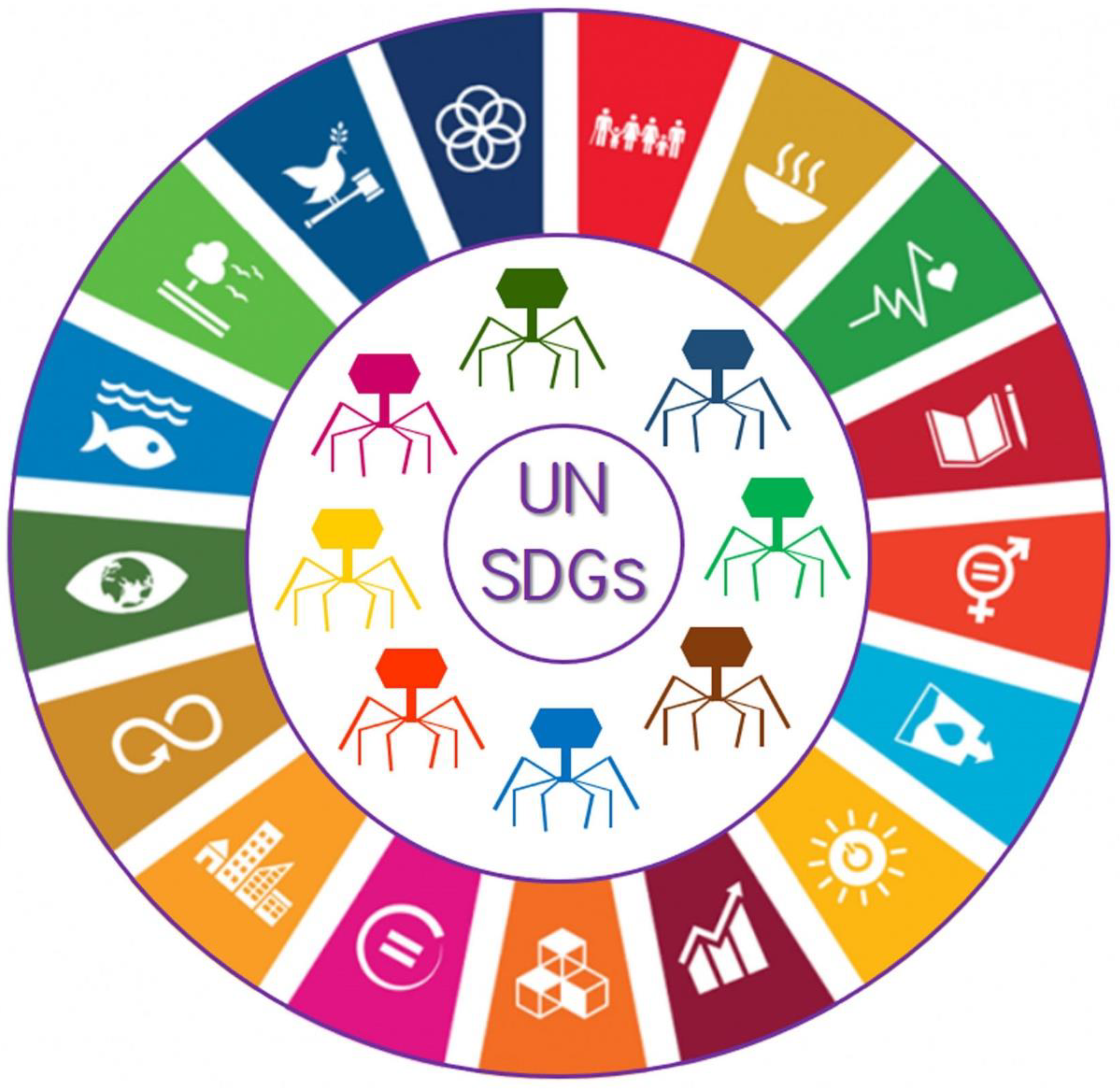
In terms of achieving the 17 internationally agreed UN SDGs (United Nations, 2015), bacteriophages can contribute to them, either directly or indirectly, as follows (Figure 1):
With respect to UN SDG 1 “No Poverty”, which aims to end global poorness and privation, phages can be relevant through their applications in health, sanitation, food production, and environmental sustainability (Gutiérrez et al., 2019; Crowther et al., 2024; Siyanbola et al., 2024). Phage therapy offers a more affordable alternative to antibiotics to treat multi-drug resistant bacterial infections, not only in humans but also in crops and livestock, reducing losses from bacterial infections, improving agricultural yields, and securing the livelihoods of rural households. Also, in food safety, by improving food preservation and controlling food-borne diseases (Vikram et al., 2022; García et al., 2023), as well as in the bioremediation of bacterial contaminated environments (Batinovic et al., 2019), promoting health, food safety and a healthier environment in areas with fewer economic resources.
In relation to UN SDG 2 “Zero Hunger”, bacteriophages can be employed for the biological control of pathogens in food, helping to reduce food contamination and the incidence of foodborne bacterial infections, thereby enhancing food security (Holtappels et al., 2021; Garvey, 2022; García et al., 2023; Álvarez and Biosca, 2024; Ranveer et al., 2024). Phages serve as effective and specific natural predators of various bacterial species. They can be utilized as therapeutic agents in aquaculture, crop and livestock farming, and agriculture, and as biopreservatives in food production (Álvarez et al., 2019; Garvey, 2022; Vikram et al., 2022; García et al., 2023; Biosca et al., 2024; Suja and Gummadi, 2024). The use of phages reduces the reliance on antibiotics in animal production and agriculture, thus promoting more sustainable and safe food production while decreasing chemical antimicrobial application (Jo et al., 2023).
UN SDG 2 “Zero Hunger” is closely related to UN SDG 3 „Global Health and Well-Being”. The implementation of bacteriophage-based therapies is considered a promising alternative or complement to antibiotics, especially given the current rise in antimicrobial resistance among significant pathogenic bacteria affecting humans, animals, and plants (García et al., 2023; Álvarez and Biosca, 2024). Phages specifically target their host bacteria, eliminating pathogenic strains without harming beneficial microbiota. Recent literature includes numerous successful examples of phage therapy managing chronic and challenging infections in humans, animals, and plants (Álvarez et al., 2019; García et al., 2023; Álvarez and Biosca, 2024; Haq et al., 2024; Pirnay et al., 2024). Additionally, phage therapy allows for the reduction in the usage of antibiotics and chemicals in medicine, veterinary practices, and agriculture, while keeping under control the spread of multidrug-resistant bacteria, which is crucial for global health (Mohsin and Amin, 2023).
On the other hand, bacteriophages can have a role in the UN SDG 4 “Quality Education”, which aims for inclusive and equitable training for sustainable development. Both, education and dissemination of information, are essential to promote social acceptance for the widespread use of phages, and therefore favourable reception among consumers (McCammon et al., 2023; Thompson et al., 2024). Raising public awareness about the benefits of bacteriophages and the necessity for regulatory changes to combat multidrug resistance is a significant challenge. There is a pressing need to inform the public about the safety and advantages of phage therapy and other biotechnological applications to foster understanding and acceptance (McCammon et al., 2023; García et al., 2023; Heller et al., 2024). Science projects that directly involve citizens can play a vital role in this effort by promoting scientific literacy and community engagement, which can accelerate the development of new therapies for treating resistant bacterial infections in humans, animals, and plants (Maicas et al., 2020; Timmis et al., 2024). Educational initiatives to collaborate with society to know about the phages as beneficial viruses potentially effective against multidrug-resistant bacteria, can contribute to inspire pre-university students to pursue careers in science (Hatfull, 2021; Heller et al., 2024; Citizen Phage Library, 2025) as well as to raise awareness among citizens about antimicrobial resistance.
UN SDG 4 “Quality Education” can be related to UN SDG 5 “Gender Equality”. Although the relationship between phages and UN SDG 5, which aims to achieve parity and equal opportunities for women, may not seem obvious, connections can be made when placed in a broader societal context, such as the scientific research in bacteriophages and their multiple applications, an emerging field in microbiology and biotechnology (Holtappels et al., 2021; Hitchcock et al., 2023; Jo et al., 2023). Supporting and encouraging participation of women in phage research and STEM (Science, Technology, Engineering and Mathematics) careers can help to promote gender equality and the inclusion of women into the world of work in these scientific matters (Khan et al., 2024).
UN SDG 2 “Zero Hunger” and UN SDG 3 „Global Health and Well-Being” are closely related to UN SDG 6 „Clean Water and Sanitation”. Bacteriophages can enhance the availability of clean water by having a role in the remediation of water contaminated with pathogenic bacteria. They can be used to treat urban sewage and other wastewater effectively by reducing or eliminating bacterial pathogens (Batinovic et al., 2019), as well as agricultural irrigation water contaminated with plant pathogenic bacteria (Álvarez et al., 2019; Álvarez and Biosca, 2024). This application improves water quality, decreases the risk of waterborne disease transmission to humans, animals, and plants, and mitigates the spread of bacterial resistance, revealing that phages are valuable for addressing current health and environmental challenges.
Bacteriophages can contribute to UN SDG 7 “Affordable and Clean Energy” at least indirectly, by improving the efficiency and sustainability of waste-to-energy technologies for biofuel production (Summer and Liu, 2016; Aydin et al., 2022). Phages can help manage bacterial infections that can disrupt fermentation processes, decreasing energy waste and enhancing biofuel and bioethanol outcomes (Lu et al., 2023). This supports the transition to cleaner and more sustainable energy generation, reducing dependence on fossil fuels.
UN SDG 4 “Quality Education” and UN SDG 5 “Gender Equality” are in most cases related to UN SDG 8 “Decent Work and Economic Growth”. Bacteriophages and their applications can assist in achieving UN SDG 8 through the creation of new jobs in the fields of microbiology and biotechnology and/or the implementation of practices favouring the development of sustainable agriculture, livestock and fish farming while reducing production costs (Álvarez and Biosca, 2017; Sieiro et al., 2020; García et al., 2023). The biotechnological applications of phages contribute to open new lines of work to implement innovative safe strategies for an environmentally sustainable economic development (Lin et al., 2017; Abril et al., 2022; Jo et al., 2023; Ranveer et al., 2024).
The previous UN SDGs are also linked to UN SDG 9 “Industry, Innovation and Infrastructure”, which emphasizes building resilient infrastructure, promoting sustainable industrialization, and fostering innovation. Phages, either alone or in combination with other biological or chemical strategies, can stimulate research and innovation, leading to new biotechnological applications in the agri-food industry, environmental bioremediation, and global health (Gutiérrez et al., 2019; Holtappels et al., 2021; Lu et al., 2023; Zhang et al., 2023; Ranveer et al., 2024).
The use of bacteriophages can be relevant to UN SDG 10 “Reduced Inequalities”, which focuses on addressing social disparities, mitigating differences and bridging gaps among and within countries, and is related to other UN SDGs. Phage applications can reduce inequalities in health, access to clean water and sanitation, and food security and production of organic and sustainable food (Álvarez et al., 2019; Rogovski et al., 2021; Garvey, 2022). They can contribute to more accessible antimicrobial therapy against multi-resistant bacterial infections in humans, animals and agriculturally relevant plants, and improve food security for populations in countries with less developed health systems, food safety services and food production (Khalid et al., 2021).
Phages have the potential to contribute to UN SDG 11 “Sustainable Cities and Communities” by promoting public health, food security and environmental sustainability in the urban environment (Samson et al., 2024). Their use supports urban resilience, manages bacterial infections, reduces urban pollution and promotes sustainable urban development.
The contribution of bacteriophages to the achivement of the UN SDGs includes the UN SDG 12 “Responsible Consumption and Production”. Thus, phages represent a sustainable alternative to antibiotics in aquaculture, agriculture, and animal husbandry, which can help reduce bacterial multiresistance and the environmental impact associated with use of antibiotics and agrochemicals (García et al., 2023; Jo et al., 2023; Álvarez and Biosca, 2024; Siyanbola et al., 2024).
Moreover, all of these UN SDGs relate to UN SDG 13, which is centered on „Climate Action”. Using phages in bioremediation can sustainably reduce bacterial contamination in natural environments such as water and soil, particularly from sanitary and agro-food wastewater. This contributes to the remediation of these contaminated environments while decreasing reliance on agrochemicals and antibiotics (Batinovic et al., 2019; Mohsin and Amin, 2023; Álvarez and Biosca, 2024; Huang et al., 2024; Siyanbola et al., 2024). Furthermore, the implementation of phage activity in agriculture can mitigate the adverse effects of climate change, promote sustainability, and ensure food security in an evolving climate (Siyanbola et al., 2024).
Phages also benefit UN SDGs 14 and 15, which focus on „Life below Water” and „Life on Land,” respectively, due to their multiple applications in animal and plant production (Sieiro et al., 2020; Holtappels et al., 2021; Lobo and Faciola, 2021; Garvey, 2022; Fiedler et al., 2023; Zhang et al., 2023; Álvarez and Biosca, 2024).
In the same way, bacteriophages can contribute to UN SDG 16 “Peace, Justice and strong Institutions” by providing more affordable, economical, safe and environmentally friendly alternatives in public health and food production systems, and in the bioremediation of contaminated environments, particularly in developing countries (Khalid et al., 2021).
Phages support UN SDG 17 “Partnerships for the Goals” by promoting knowledge sharing and cooperation in research and technology transfer globally. This promotes equitable access to phage-based solutions to achieve many of the Sustainable Development Goals in health, agriculture and environmental sustainability (Crowther et al., 2024).
In the context of the bactericidal activity of phages, a number of synergies can be identified that may help achieve multiple sustainability goals. Bacteriophage-based biotechnological innovations are crucial for attaining most of the UN SDGs and have the potential to facilitate a rapid transition to a sustainable global economy. However, despite their beneficial impacts concerning the UN SDGs, it is surprising that research and biotechnological development related to bacteriophages are not included in government policies (Yang et al., 2023; Crowther et al., 2024). There are still several challenges in implementing phage uses and applications across various sectors, such as medicine, aquaculture, agriculture, livestock, and bioremediation. These challenges often originate from the lack of clear regulations for each phage administration and/or treatments, which are necessary to ensure their efficacy and safety (Hitchcock et al., 2023). Additionally, funding limitations pose a significant barrier to the widespread adoption of phage-based technologies. To successfully implement these innovations, financial and regulatory policies must be created that acknowledge the unique potential of bacteriophages.
Research has shown that phage-based technologies could help combat antimicrobial resistance, enhance global food security in an environmentally sustainable way, and contribute to achieving most of the UN SDGs outlined in the 2030 Agenda. However, raising public awareness about the benefits and safety of phages for global health and sustainability is essential for their widespread acceptance and use in the society.
Phages have been identified as a potentially effective solution to the global threat posed by multidrug-resistant bacteria. Taken into consideration the mounting challenges created by antimicrobial resistance, there is an urgent need to explore phage-based interventions as a means to enhance global health security and to facilitate the development of a safer and healthier future.
Funding and acknowledgements: Projects AICO/2021/261 of the “Conselleria de Innovación, Universidades, Ciencia y Sociedad Digital de la Generalitat Valenciana” and I+D+i PID2021-123600OR-C44, funded by MICIU/AEI/10.13039/501100011033 and by FEDER A way to make Europe FEDER/EU.
References
- Abril AG, Carrera M, Notario V, Sánchez-Pérez Á, Villa TG. 2022. The use of bacteriophages in biotechnology and recent insights into proteomics. Antibiotics (Basel) 11(5):653. [CrossRef]
- Álvarez B, Biosca EG. 2017. Bacteriophage-based bacterial wilt biocontrol for an environmentally sustainable agriculture. Front Plant Sci 8:1218. [CrossRef]
- Álvarez B, Biosca EG. 2024. Potential of the bacteriophage-based therapy for a more eco-sustainable agriculture. Int J Biol Nat Sci (ISSN 2764-1813) 4(6):1-9. [CrossRef]
- Álvarez B, Gadea-Pallás L, Rodríguez A, Vicedo B, Figàs-Segura À, Biosca EG. 2022. Viability, stability and biocontrol activity in planta of specific Ralstonia solanacearum bacteriophages after their conservation prior to commercialization and use. Viruses 14(2):183. [CrossRef]
- Álvarez B, López MM, Biosca EG. 2019. Biocontrol of the major plant pathogen Ralstonia solanacearum in irrigation water and host plants by novel waterborne lytic bacteriophages. Front Microbiol 10:2813. [CrossRef]
- Aydin S, Can K, Çalışkan M, Balcazar JL. 2022. Bacteriophage cocktail as a promising bio-enhancer for methanogenic activities in anaerobic membrane bioreactors. Sci Total Environ 832: 154716. [CrossRef]
- Batinovic S, Wassef F, Knowler SA, Rice DTF, Stanton CR, Rose J, Tucci J, Nittami T, Vinh A, Drummond GR, Sobey CG, Chan HT, Seviour RJ, Petrovski S, Franks AE. 2019. Bacteriophages in natural and artificial environments. Pathogens 8(3):100. [CrossRef]
- Behera M, De S, Ghorai SM. 2024. The synergistic and chimeric mechanism of bacteriophage endolysins: opportunities for application in biotherapeutics, food, and health sectors. Probiotics Antimicrob Proteins. [CrossRef]
- Bertolini E, Figàs-Segura À, Álvarez B, Biosca EG. 2023. Development of TaqMan real-time PCR protocols for simultaneous detection and quantification of the bacterial pathogen Ralstonia solanacearum and their specific lytic bacteriophages. Viruses 15(4):841. [CrossRef]
- Biosca EG, Català-Senent JF, Figàs-Segura À, Bertolini E, López MM, Álvarez B. 2021. Genomic analysis of the first European bacteriophages with depolymerase activity and biocontrol efficacy against the phytopathogen Ralstonia solanacearum. Viruses 13(12):2539. [CrossRef]
- Biosca EG, Delgado-Santander R, Morán F, Figàs-Segura À, Vázquez R, Català-Senent JF, Álvarez B. 2024. First European Erwinia amylovora lytic bacteriophage cocktails effective in the host: characterization and prospects for fire blight biocontrol. Biology 13(3):176. [CrossRef]
- Chen B, Ponce Benavente L, Chittò M, Post V, Constant C, Zeiter S, Nylund P, D’Este M, González Moreno M, Trampuz A, Wagemans J, Lavigne R, Onsea J, Richards RG, Metsemakers WJ, Moriarty TF. 2024. Combination of bacteriophages and vancomycin in a co-delivery hydrogel for localized treatment of fracture-related infections. NPJ Biofilms Microbiomes 10(1):77. [CrossRef]
- Chung KM, Nang SC, Tang SS. 2023. The safety of bacteriophages in treatment of diseases caused by multidrug-resistant bacteria. Pharmaceuticals (Basel) 16(10):1347. [CrossRef]
- Citizen Phage Library. 2025. Developing therapeutic phages to fight antimicrobial resistance with Citizen Science. https://www.citizenphage.com (accessed on 26 January 2025).
- Clokie MR, Millard AD, Letarov AV, Heaphy S. 2011. Phages in nature. Bacteriophage 1(1):31-45. [CrossRef]
- Crowther TW, Rappuoli R, Corinaldesi C, Danovaro R, Donohue TJ, Huisman J, Stein LY, Timmis JK, Timmis K, Anderson MZ, Bakken LR, Baylis M, Behrenfeld MJ, Boyd PW, Brettell I, Cavicchioli R, Delavaux CS, Foreman CM, Jansson JK, Koskella B, Milligan-McClellan K, North JA, Peterson D, Pizza M, Ramos JL, Reay D, Remais JV, Rich VI, Ripple WJ, Singh BK, Smith GR, Stewart FJ, Sullivan MB, van den Hoogen J, van Oppen MJH, Webster NS, Zohner CM, van Galen LG. 2024. Scientists’ call to action: microbes, planetary health, and the Sustainable Development Goals. Cell 187(19):5195-5216. [CrossRef]
- Duan Y, Llorente C, Lang S, Brandl K, Chu H, Jiang L, White RC, Clarke TH, Nguyen K, Torralba M, Shao Y, Liu J, Hernandez-Morales A, Lessor L, Rahman IR, Miyamoto Y, Ly M, Gao B, Sun W, Kiesel R, Hutmacher F, Lee S, Ventura-Cots M, Bosques-Padilla F, Verna EC, Abraldes JG, Brown RS Jr, Vargas V, Altamirano J, Caballería J, Shawcross DL, Ho SB, Louvet A, Lucey MR, Mathurin P, Garcia-Tsao G, Bataller R, Tu XM, Eckmann L, van der Donk WA, Young R, Lawley TD, Stärkel P, Pride D, Fouts DE, Schnabl B. 2019. Bacteriophage targeting of gut bacterium attenuates alcoholic liver disease. Nature 575(7783):505-511. [CrossRef]
- Durbas I, Machnik G. 2022. Phage therapy: an old concept with new perspectives. J Appl Pharm Sci 12(05):027-038. [CrossRef]
- Erez Z, Steinberger-Levy I, Shamir M, Doron S, Stokar-Avihail A, Peleg Y, Melamed S, Leavitt A, Savidor A, Albeck S, Amitai G, Sorek R. 2017. Communication between viruses guides lysis-lysogeny decisions. Nature 541(7638):488-493. [CrossRef]
- European Commission. 2017. A European One Health Action Plan against antimicrobial.
- resistance (AMR). Available online: https://health.ec.europa.eu/system/files/2020-01/amr_2017_action-plan_0.pdf (accessed on 26 January 2025). :.
- Fiedler AW, Gundersen MS, Vo TP, Almaas E, Vadstein O, Bakke I. 2023. Phage therapy minimally affects the water microbiota in an Atlantic salmon (Salmo salar) rearing system while still preventing infection. Sci Rep 13(1):19145. [CrossRef]
- García P, Tabla R, Anany H, Bastias R, Brøndsted L, Casado S, Cifuentes P, Deaton J, Denes TG, Islam MA, Lavigne R, MorenoSwitt AI, Nakayama N, Muñoz Madero C, Sulakvelidze A, Svircev AM, Wagemans J, Biosca EG, Rivera D. 2023. ECOPHAGE: Combating antimicrobial resistance using bacteriophages for eco-sustainable agriculture and food systems. Viruses 15(11):2224. [CrossRef]
- Garvey M. 2022. Bacteriophages and food production: biocontrol and bio-preservation options for food safety. Antibiotics 11(10):1324. [CrossRef]
- González Biosca E, López González MM, Álvarez Ortega B. 2017. Procedimiento para la prevención y/o el control biológico de la marchitez causada por Ralstonia solanacearum, a través del uso de bacteriófagos útiles para ello y composiciones de los.
- mismos. Patente ES2592352B2.González Biosca E, López González MM, Álvarez Ortega B. 2019. Method for the prevention and/or the biological control of bacterial wilt caused by Ralstonia solanacearum, via the use of bacteriophages suitable for this purpose and compositionsthereof. U.S. Patent US10508266B2.
- González Biosca E, López González MM, Álvarez Ortega B. 2020. Method for the prevention and/or the biological control of bacterial wilt caused by Ralstonia solanacearum, via the use of bacteriophages suitable for this purpose and compositionsthereof. Eur. Patent EP3305892B1.
- Grubb DS, Wrigley SD, Freedman KE, Wei Y, Vázquez AR, Trotter RE, Wallace TC, Johnson SA, Weir TL. 2020. PHAGE-2 study: supplemental bacteriophages extend Bifidobacterium animalis subsp. lactis BL04 benefits on gut health and microbiota in healthy adults. Nutrients 12(8):2474. [CrossRef]
- Gutiérrez D, Fernández L, Rodríguez A, García P. 2019. Role of bacteriophages in the implementation of a sustainable dairy chain. Front Microbiol 10:12. [CrossRef]
- Haq IU, Rahim K, Paker NP. 2024. Exploring the historical roots, advantages and efficacy of phage therapy in plant diseases management. Plant Sci 346:112164. [CrossRef]
- Hatfull GF. 2021. Wildy prize lecture, 2020-2021: who wouldn’t want to discover a new virus? Microbiology (Reading) 167(9):001094. [CrossRef]
- Heller DM, Sivanathan V, Asai DJ, Hatfull GF. 2024. SEA-PHAGES and SEA-GENES: Advancing virology and science education. Annu Rev Virol 11(1):1-20. [CrossRef]
- Hitchcock NM, Devequi Gomes Nunes D, Shiach J, Valeria Saraiva Hodel K, Dantas Viana Barbosa J, Alencar Pereira Rodrigues L, Coler BS, Botelho Pereira Soares M, Badaró R. 2023. Current clinical landscape and global potential of bacteriophage therapy. Viruses 15(4):1020. [CrossRef]
- Holtappels D, Fortuna K, Lavigne R, Wagemans J. 2021. The future of phage biocontrol in integrated plant protection for sustainable crop production. Curr Opin Biotechnol 68:60-71. [CrossRef]
- Huang D, Xia R, Chen C, Liao J, Chen L, Wang D, Alvarez PJJ, Yu P. 2024. Adaptive strategies and ecological roles of phages in habitats under physicochemical stress. Trends Microbiol 32(9):902-916. [CrossRef]
- Islam MM, Mahbub NU, Shin WS, Oh MH. 2024. Phage-encoded depolymerases as a strategy for combating multidrug-resistant Acinetobacter baumannii. Front Cell Infect Microbiol 14:1462620. [CrossRef]
- Jo SJ, Kwon J, Kim SG, Lee SJ. 2023. The biotechnological application of bacteriophages: what to do and where to go in the middle of the post-antibiotic era. Microorganisms 11:2311. [CrossRef]
- Khalid A, Lin RCY, Iredell JR. 2021. A phage therapy guide for clinicians and basic scientists: background and highlighting applications for developing countries. Front Microbiol 11:599906. [CrossRef]
- Khan AN, Soomro MA, Khan NA, Bodla AA. 2024. Psychological dynamics of overqualification: career anxiety and decision commitment in STEM. BMC Psychol 12(1):686. [CrossRef]
- Lin DM, Koskella B, Lin HC. 2017. Phage therapy: an alternative to antibiotics in the age of multi-drug resistance. World J Gastrointest Pharmacol Ther 8(3):162-173. [CrossRef]
- Liu S, Lu H, Zhang S, Shi Y, Chen Q. 2022. Phages against pathogenic bacterial biofilms and biofilm-based infections: a review. Pharmaceutics 14(2):427. [CrossRef]
- Liu D, van Belleghem JD, de Vries CR, Burgener E, Chen Q, Manasherob R, Aronson JR, Amanatullah DF, Tamma PD, Suh GA. 2021. The safety and toxicity of phage therapy: a review of animal and clinical studies. Viruses 13(7):1268. [CrossRef]
- Lobo RR, Faciola AP. 2021. Ruminal phages - A review. Front Microbiol 12:763416. [CrossRef]
- Loc-Carrillo C, Abedon ST. 2011. Pros and cons of phage therapy. Bacteriophage 1(2):111-114. [CrossRef]
- Lu SY, Liu S, Patel MH, Glenzinski KM, Skory CD. 2023. Saccharomyces cerevisiae surface display of endolysin LysKB317 for control of bacterial contamination in corn ethanol fermentations. Front Bioeng Biotechnol 11:1162720. [CrossRef]
- Maicas S, Fouz B, Figàs-Segura À, Zueco J, Rico H, Navarro A, Carbó E, Segura-García J, Biosca EG. 2020. Implementation of antibiotic discovery by student crowdsourcing in the Valencian Community through a service learning strategy. Front Microbiol 11:564030. [CrossRef]
- Makky S, Dawoud A, Safwat A, Abdelsattar AS, Rezk N, El-Shibiny A. 2021. The bacteriophage decides own tracks: when they are with or against the bacteria. Curr Res Microb Sci 2:100050. [CrossRef]
- McCammon S, Makarovs K, Banducci S, Gold V. 2023. Phage therapy and the public: increasing awareness essential to widespread use. PLoS ONE 18(5): e0285824. [CrossRef]
- Milijasevic M, Veskovic-Moracanin S, Babic Milijasevic J, Petrovic J, Nastasijevic I. 2024. Antimicrobial resistance in aquaculture: risk mitigation within the One Health context. Foods 13(15):2448. [CrossRef]
- Mirzaei A, Esfahani BN, Ghanadian M, Wagemans J, Lavigne R, Moghim S. 2024. Alhagi maurorum extract in combination with lytic phage cocktails: a promising therapeutic approach against biofilms of multi-drug resistant P. mirabilis. Front Pharmacol 15:1483055. [CrossRef]
- Mohsin S, Amin MN. 2023. Superbugs: a constraint to achieving the Sustainable Development Goals. Bull Natl Res Cent 47:63. [CrossRef]
- Naureen Z, Dautaj A, Anpilogov K, Camilleri G, Dhuli K, Tanzi B, Maltese PE, Cristofoli F, De Antoni L, Beccari T, Dundar M, Bertelli M. 2020. Bacteriophages presence in nature and their role in the natural selection of bacterial populations. Acta Biomed 91(13-S):e2020024. [CrossRef]
- Pirnay JP, Djebara S, Steurs G, Griselain J, Cochez C, De Soir S, Glonti T, Spiessens A, Vanden Berghe E, Green S, Wagemans J, Lood C, Schrevens E, Chanishvili N, Kutateladze M, de Jode M, Ceyssens PJ, Draye JP, Verbeken G, De Vos D, Rose T, Onsea J, Van Nieuwenhuyse B, Bacteriophage Therapy Providers, Bacteriophage Donors, Soentjens P, Lavigne R, Merabishvili M. 2024. Personalized bacteriophage therapy outcomes for 100 consecutive cases: a multicentre, multinational, retrospective observational study. Nat Microbiol 9(6):1434-1453. [CrossRef]
- Principi N, Silvestri E, Esposito S. 2019. Advantages and limitations of bacteriophages for the treatment of bacterial infections. Front Pharmacol 10:513. [CrossRef]
- Ranveer SA, Dasriya V, Ahmad MF, Dhillon HS, Samtiya M, Shama E, Anand T, Dhewa T, Chaudhary V, Chaudhary P, Behare P, Ram C, Puniya DV, Khedkar GD, Raposo A, Han H, Puniya AK. 2024. Positive and negative aspects of bacteriophages and their immense role in the food chain. NPJ Sci Food 8(1):1. [CrossRef]
- Rastegar S, Skurnik M, Tadjrobehkar O, Samareh A, Samare-Najaf M, Lotfian Z, Khajedadian M, Hosseini-Nave H, Sabouri S. 2024. Synergistic effects of bacteriophage cocktail and antibiotics combinations against extensively drug-resistant Acinetobacter baumannii. BMC Infect Dis 24(1):1208. [CrossRef]
- Rogovski P, Cadamuro RD, da Silva R, de Souza EB, Bonatto C, Viancelli A, Michelon W, Elmahdy EM, Treichel H, Rodríguez-Lázaro D, Fongaro G. 2021. Uses of bacteriophages as bacterial control tools and environmental safety indicators. Front Microbiol 12:793135. [CrossRef]
- Samson R, Dharne M, Khairnar K. 2024. Bacteriophages: status quo and emerging trends toward One Health approach. Sci Total Environ 908:168461. [CrossRef]
- Shymialevich D, Wójcicki M, Sokołowska B. 2024. The novel concept of synergically combining: high hydrostatic pressure and lytic bacteriophages to eliminate vegetative and spore-forming bacteria in food products. Foods 13(16):2519. [CrossRef]
- Sieiro C, Areal-Hermida L, Pichardo-Gallardo Á, Almuiña-González R, de Miguel T, Sánchez S, Sánchez-Pérez Á, Villa TG. 2020. A hundred years of bacteriophages: can phages replace antibiotics in agriculture and aquaculture? Antibiotics 9(8):493. [CrossRef]
- Siyanbola KF, Ejiohuo O, Ade-adekunle OA, Adekunle FO, Onyeaka H, Furr C-LL, Hodges FE, Carvalho P, Oladipo EK. 2024. Bacteriophages: sustainable and effective solution for climate-resilient agriculture. Sustainable Microbiol 1(1):qvae025. [CrossRef]
- Suja E, Gummadi SN. 2024. Advances in the applications of bacteriophages and phage products against food-contaminating bacteria. Crit Rev Microbiol 50(5):702-727. [CrossRef]
- Summer EJ, Liu M. 2016. Application of bacteriophages for the control of unwanted bacteria in biofuel production mediated by non-bacterial reactive agents. US-9453247-B2 Patent.
- Thompson T, Kilders V, Widmar N, Ebner P. 2024. Consumer acceptance of bacteriophage technology for microbial control. Sci Rep 14:25279. [CrossRef]
- Timmis K, Hallsworth JE, McGenity TJ, Armstrong R, Colom MF, Karahan ZC, Chavarría M, Bernal P, Boyd ES, Ramos JL, Kaltenpoth M, Pruzzo C, Clarke G, López-Garcia P, Yakimov MM, Perlmutter J, Greening C, Eloe-Fadrosh E, Verstraete W, Nunes OC, Kotsyurbenko O, Nikel PI, Scavone P, Häggblom MM, Lavigne R, Le Roux F, Timmis JK, Parro V, Michán C, García JL, Casadevall A, Payne SM, Frey J, Koren O, Prosser JI, Lahti L, Lal R, Anand S, Sood U, Offre P, Bryce CC, Mswaka AY, Jores J, Kaçar B, Blank LM, Maaßen N, Pope PB, Banciu HL, Armitage J, Lee SY, Wang F, Makhalanyane TP, Gilbert JA, Wood TK, Vasiljevic B, Soberón M, Udaondo Z, Rojo F, Tamang JP, Giraud T, Ropars J, Ezeji T, Müller V, Danbara H, Averhoff B, Sessitsch A, Partida-Martínez LP, Huang W, Molin S, Junier P, Amils R, Wu XL, Ron E, Erten H, de Martinis ECP, Rapoport A, Öpik M, Pokatong WDR, Stairs C, Amoozegar MA, Serna JG. 2024. A concept for international societally relevant microbiology education and microbiology knowledge promulgation in society. Microb Biotechnol 17(5):e14456. [CrossRef]
- United Nations. 2015. Transforming our world: the 2030 Agenda for sustainable development. A/RES/70/1. Available online: sustainabledevelopment.un.org (accessed on 26 January 2025).
- Vikram A, Callahan MT, Woolston JW, Sharma M, Sulakvelidze A. 2022. Phage biocontrol for reducing bacterial foodborne pathogens in produce and other foods. Curr Opin Biotechnol 78:102805. [CrossRef]
- Yang Q, Le S, Zhu T, Wu N. 2023. Regulations of phage therapy across the world. Front Microbiol 14:1250848. [CrossRef]
- Zhang Y, Sharma S, Tom L, Liao YT, Wu VCH. 2023. Gut phageome - An insight into the role and impact of gut microbiome and their correlation with mammal health and diseases. Microorganisms 11(10):2454. [CrossRef]
- Zhao J, Wang J, Zhang C, Xu S, Ren H, Zou L, Ma J, Liu W. 2024. Characterization of a Salmonella abortus equi phage 4FS1 and its depolymerase. Front Vet Sci 11:1496684. [CrossRef]
Figure 1.
Bacteriophages towards the United Nations (UN) Sustainable Development Goals (SDGs) globally proposed in the 2030 Agenda for Sustainable Development. [Adapted from United Nations (2015)]. See text for details.
Figure 1.
Bacteriophages towards the United Nations (UN) Sustainable Development Goals (SDGs) globally proposed in the 2030 Agenda for Sustainable Development. [Adapted from United Nations (2015)]. See text for details.
Disclaimer/Publisher’s Note: The statements, opinions and data contained in all publications are solely those of the individual author(s) and contributor(s) and not of MDPI and/or the editor(s). MDPI and/or the editor(s) disclaim responsibility for any injury to people or property resulting from any ideas, methods, instructions or products referred to in the content. |
© 2025 by the authors. Licensee MDPI, Basel, Switzerland. This article is an open access article distributed under the terms and conditions of the Creative Commons Attribution (CC BY) license (http://creativecommons.org/licenses/by/4.0/).
Copyright: This open access article is published under a Creative Commons CC BY 4.0 license, which permit the free download, distribution, and reuse, provided that the author and preprint are cited in any reuse.


