

Submitted:
28 January 2025
Posted:
29 January 2025
You are already at the latest version
Abstract
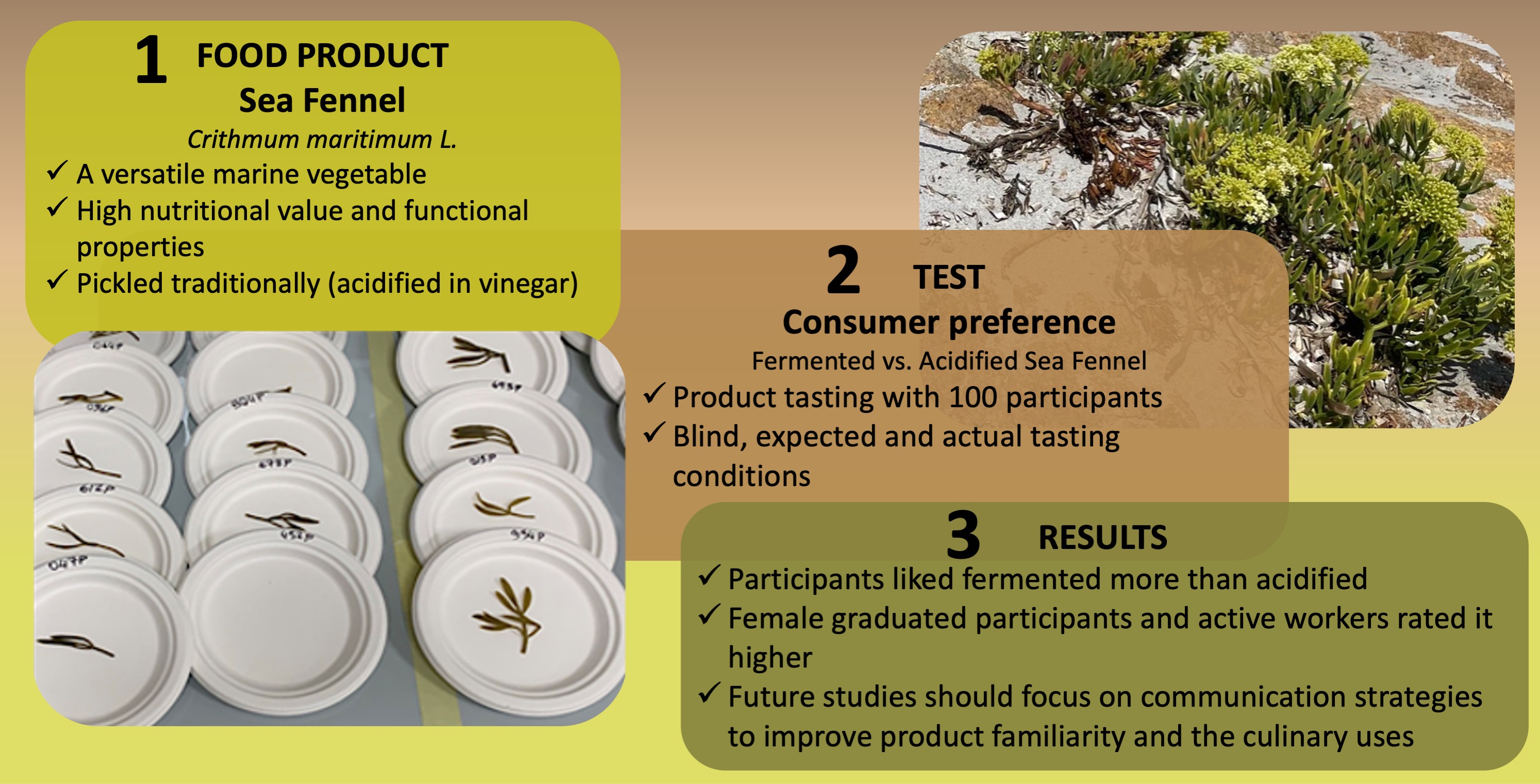
Sea fennel (Crithmum maritimum L.), a marine vegetable, has been gaining attention for its potential uses in food, medicine, and crop protection. Although numerous studies have recently focused on its chemical composition and promising functional food properties, consumer perception remains underexplored. The present study aimed to investigate the consumer acceptance of the sea fennel preserves in Italy, including fermented and acidified versions, assessed in blind, expected, and actual conditions. Physicochemical analyses revealed that vinegar acidification resulted in a lower pH compared to lactic acid fermentation. In blind conditions, tasting without information, participants liked fermentation more than acidification with female graduated participants and active workers rating it higher. The results suggest that introducing fermented sea fennel preparations to the market will likely appeal to ‘adventurous women’ with higher education and employment. Future studies should focus on communication strategies that aim to improve product familiarity, the nutritional and health attributes, and the culinary uses of the product.
Keywords:
Crithmum maritimum L.
; sensory analysis
; physico-chemical characteristics
; product liking
; innovative foods
; novel foods
; nutraceuticals
1. Introduction
The growing world population is facing the urgent need for sustainable food production and consumption solutions because of increasing environmental problems such as climate change, loss of biodiversity, salinization, and degradation of soil properties [1,2]. Among the possible answers, proposing alternative crop species that can adapt to adverse conditions has gained immense importance in recent decades [1,3,4,5]. In this respect, halophytes that include salt-resistant plants (e.g., glasswort, sea aster, sea fennel) are considered viable options due to their adaptive mechanisms, especially for the salt-affected agricultural soils in the Mediterranean region [6]. Sea fennel, with its unique properties, holds great promise.
Halophytes are already naturally grown or partially domesticated in almost all regional ecosystems, especially in the Mediterranean basin [7]. However, the cultivation and valorisation of these crops still need to be improved to provide an important addition to Mediterranean agriculture and food biodiversity [1,8]. Among halophytic species, sea fennel (Crithmum maritimum L.), which is also known as samphire, crest marine, marine fennel, or St. Peter’s herb, grows spontaneously along the coastlines and exists specifically abundant in Mediterranean countries such as France, Italy, Portugal, Spain, and Turkey [9,10]. Although the commerce of this spontaneous plant was quite popular in Europe in the past, it was forgotten for a long time after being lost in several coastal areas due to extensive harvest [7]. More recently, sea fennel has been gaining attention as an emerging crop that can be used for food, medicinal, and crop protection purposes [11]. Sea fennel is a perennial halophyte belonging to the Apiaceae family, like parsley and celery [12]. Its sensory attributes are described by Renna et al. [13] as a slightly salty taste accompanied by notes of celery, common fennel, and green citrus peel, followed by a powerful aftertaste. Sea fennel’s traditional culinary use is mainly in salads, soups, and sauces as a fresh ingredient, or preserved in vinegar, brine, or olive oil which is deeply rooted in the Mediterranean culture. Sea fennel canned in vinegar is listed by the Italian Ministry of Agriculture as a traditional agrifood product of the Apulia Region in Southern Italy [14]. In addition to consumption as food, sea fennel has also been used in folk medicine due to its diuretic, antiscorbutic, digestive, and purgative properties [15].
With its growing popularity, sea fennel has been the focus of numerous studies exploring its chemical composition and potential uses. Its high nutritional value and functional properties make it an excellent candidate for producing health-promoting foods and food ingredients [12,16,17]. Depending on the parts of the plant studied (e.g., leaves, flowers), sea fennel is rich in vitamin C, fatty acids, phenolics, dietary fibre, and calcium [12,18,19,20,21,22]. A recent study of Politeo et al. [23] identified a wide variety of bioactive compounds in sea fennel essential oil and its residual water, suggesting potential health benefits. Indeed, numerous previous studies highlighted the positive effects of sea fennel due to its antioxidant, antibacterial, anti-inflammatory, or anti-parasitic properties [17,24,25,26,27]. This aspect of sea fennel is particularly intriguing and warrants further exploration.
Despite promising results, sea fennel still represents a niche market in the food industry with a limited product range. Currently, pickled sea fennel, widely used in Mediterranean cuisine, can be found in local shops [28]. Besides, fresh sea fennel or a few types of sauces are available [7,14,21]. Other uses of sea fennel are also suggested in the literature. For example, [14] reported that dried sea fennel can be used in several gastronomy products as an aromatic herb and a new spice-colourant [13]. Maoloni et al. [16] suggested that sea fennel is a valuable candidate for producing probiotic-enriched foods.
With its diverse potential applications, sea fennel holds great promise for the food market as both a traditional and novel product. However, understanding consumer acceptance is crucial to realise its potential and fully communicate its benefits [6]. A recent study by Custòdio et al. [29] in Portugal revealed that most consumers are not familiar with halophytes. Similarly, sea fennel has been the subject of only a few sensory analysis [7,16,28,30,31] leaving a significant gap in our understanding of its broader consumer appeal. This framework underscores the importance of this research, as our insights can help bridge this gap and pave the way for a wider acceptance of sea fennel.
Considering the above context, the overall aim of the present study was to investigate the consumer acceptance of the sea fennel preserves in Italy. Two types of preserves, one pickled traditionally (acidified in vinegar) and the other prepared in an alternative way (fermented, which is innovative for this plant), were introduced to consumers with a tasting protocol to understand their perceived, actual, and expected liking [32]. The innovative preparation method involves the use of techniques through lactic fermentation in brine. In addition, physicochemical analyses were conducted to explore differences in these sea fennel preserves.
The literature showed that the type of treatment impacts the consumer acceptance of preserved vegetables [28,33,34]. Besides, product information such as origin, brand, production methods, descriptive food names, and ingredients, may also influence consumer preferences [35]. Therefore, this comparative study investigates the impact of processing information on consumers’ liking, which might interest the food sector in terms of how to introduce the new sea fennel products to larger markets. The previous studies of sea fennel-based products included only a certain number of panellists in their consumer acceptance test. To our knowledge, this is the first study to reach a more significant sampling number to obtain a more accurate consumer perspective on sea fennel preserves.
2. Materials and Methods
2.1. Sea Fennel Samples
Pickling is one of the oldest ways to preserve foods [36]. Vegetables may be pickled via fermentation, acidification, or a combination of these processes [28]. In the fermentation process, lactic acid is produced by fermentative microorganisms under anaerobic conditions, and due to the lower pH of the medium, the growth of food-poisoning bacteria and other spoilage organisms is prevented [37]. In acidification, acetic acid (an acidifier, usually in the form of vinegar) is directly added and it is usually followed by heat treatment (pasteurisation) to guarantee food safety [28]. In Italy, sea fennel is traditionally pickled by acidification with vinegar [14] and fermentation has emerged as an innovative method of processing this plant [7].
In the present study, two types of sea fennel samples were used for physico-chemical analysis and consumer tests: one pickled traditionally (acidified in vinegar) and the other prepared in an innovative way (fermented). The samples were supplied by a local company (Rinci S.r.l, Castelfidardo, Ancona, Italy), which produces organic sea fennel destined for the food industry and the manufacture of sea fennel preserves and sauces.
2.2. Physico-Chemical Analysis
Aliquots (80 g) of acidified and fermented sea fennel were homogenized with an equal amount of oil to obtain a paste and subjected to pH measurement with a pH-meter pH 7 Vio (XS Instruments, Carpi (MO), Italy) equipped with a solid electrode. Organic acid quantification was carried out as described by [7] with slight modifications. Briefly, chopped sea fennel sprouts were homogenized for 5 min at 260 rpm in a Stomacher apparatus (400 Circulator, International PBI, Milan, Italy) and clarified using (i) Carrez I solution, prepared by dissolving 3.60 g of potassium hexacyanoferrate (II) {K4[Fe(CN)6] x 3H2O} (VWR, International, Radnor, Pennsylvania, USA) in 100 mL of distilled water; (ii) Carrez II solution, prepared by dissolving 7.20 g of zinc sulphate (ZnSO4.7H2O) (VWR) in 100 mL of distilled water; and (iii) sodium hydroxide solution (NaOH, 100 mM), prepared by dissolving 4 g of NaOH in 1 L of distilled water. The resulting solutions were decoloured using 2 % (w v-1) polyvinylpolypyrrolidone (VWR) and subjected to further analyses. Acetic acid and lactic acid were quantified using the commercial K-ACETRM 06/18 kit (Megazyme, USA) and K-DLATE 08/18 kit (Megazyme, USA), respectively, following the manufacturer’s instructions. The results of organic acid quantification were expressed as g/100g sea fennel. For titratable acidity determination, aliquots (10 g) of chopped sea fennel sprouts were homogenized with distilled water (90 mL) for 5 min at 260 rpm in a Stomacher machine, and the resulting suspension was subjected to titration with NaOH (0.1 N) to reach a fixed pH value of 8.3. The (%) TTA of acetic acid and lactic acid equivalents was calculated as reported by Rampanti et al. [38], where N is the normality of the titrant, and EW is the equivalent weight of the organic acid.
Overall data collected were subjected to one-way analysis of variance (ANOVA) through the Tukey-Kramer honest significant difference (HSD) test at the level of significance 0.05 with JMP Version 11.0.0 software (SAS Institute Inc., Cary, NC, USA). All analyses were performed in triplicate, and the results were expressed as the mean value ± standard deviation.
2.3. Consumer Studies
A consumers’ panel with 100 participants was constituted for the sensory evaluation of sea fennel preserves. A non-probabilistic convenience sampling method, through volunteer mailing lists, including university staff and student population, was followed for the recruitment. Participants, including professors, researchers, staff, and students, were recruited inside Università Politecnica delle Marche (UNIVPM) in Ancona (Italy). However, other participants outside the atheneum were included in the sampling to increase the sample variety. All participants had no food allergies and were responsible for household food shopping. Participants were also aware of sea fennel as it is a locally consumed plant. The final sample included 100 participants, aged between 20 and 76 years old (mean age 45.9), from which 41% were male. Most participants were active workers (56%) and had a bachelor’s or master’s degree (63%). Vegetarian participants were 3% in total. All participants received monetary incentives for participation.
The consumer sensory experiment was split into two subsequent days as three tests. Test 1 and Test 2 were conducted on the first day (Day 1) and Test 3 on the second day (Day 2).
- Blind liking (perceived sensory acceptability): in Test 1, each participant tasted a sample of each sea fennel, acidified and fermented, without any information (bind condition). They expressed their liking scores over a 9-point Likert scale verbally anchored from ‘dislike extremely’ to ‘like extremely’ and at the mid-point with ‘neither like nor dislike’ [32].
-
Expected liking (expected acceptability): immediately after the blind liking test, Test 2 was conducted to determine the expected liking of both samples. The aim of Test 2 was to investigate the effect of information on the expected acceptability. To this end, each participant received an information sheet explaining the main characteristics of the acidified and fermented samples. Particularly, the descriptions were specifically neutral and focused on processes, without reporting the origin, brand, or health benefits of these products, to avoid any influence on the expected and actual liking procedure. The descriptions of both processes were as follows:
- Acidified sea fennel: The production of acidified sea fennel involves using preservation techniques, generally vinegar-based, through acidification by immersion in an acid solution. In addition to preserving food safely, this procedure gives the products a sour taste due to vinegar. This preservation process can be combined with a heat treatment (pasteurization) to obtain a safe product that can be preserved at room temperature. The acidified product can be consumed as it is, without rinsing in water.
- Fermented sea fennel: The production of fermented sea fennel involves using preservation techniques through lactic fermentation in brine, i.e., an aqueous solution with a salinity greater than 5%. In addition to preserving food safely, this procedure gives the products a sour taste due to lactic acid bacteria. This preservation process guarantees the preservation of safe products that can be stored at room temperature even without heat treatment (pasteurization), which would destroy some of their nutritional properties. For consumption, it is advisable to rinse the product briefly in fresh water to remove excess salt.
Participants were asked to read the information carefully and to express their acceptability on the same 9-point scale based only on information and without tasting the products.
- 3.
- Actual liking (informed acceptability): test 3 was carried out on the second day (Day 2) and aimed to evaluate the effect of information on the actual liking of the innovative sea fennel sample (fermented). Participants simultaneously received the fermented sea fennel sample for tasting and the same product information sheet used in Test 2. They were asked to taste the sample after reading the information and invited to score their liking on the same scale as the previous two tests (see Figure 1 for the experimental design).
This methodology is based on the expectancy-disconfirmation model [39] and the assimilation/contrast theory [40,41]. The difference between the expected and blind liking, positive or negative, is defined as a ‘disconfirmation’. The assimilation occurs when the hedonic ratings change in the same direction as the expectation, while the contrast model takes place if changes are in the opposite direction.
Tasting sessions were conducted between November and December 2022 in the university sensory analysis laboratory. All samples were prepared identically (similar amount, same visual aspects, and inside small paper plates without any seasoning) on the same day of the tests. Each serving plate had a three-digit numerical sample code for traceability. At least two persons were assigned to prepare and distribute all the servings during the tasting evaluation. Besides, participants were provided still water and some bread without salt to rinse/clean their mouths before tasting each sample (Figure 2).
a) Sample preparation
b) Product tasting in the sensory analysis laboratory
All data collected from liking scores were analysed using Stata (version 17). Two-sample t-tests for paired samples were used to evaluate differences between mean scores calculated for each product.
3. Results and Discussions
3.1. Physico-Chemical Characteristics
Acidification with vinegar resulted in a significantly lower pH (3.47 ± 0.04) than acidification through lactic acid fermentation (pH: 4.26 ± 0.01). As far as the organic acid quantification is considered, acidified samples were characterized by 1.66 ± 0.07 g/100g acetic acid and 0.04 ± 0.00 g/100g lactic acid. In contrast, fermented samples contained 0.26 ± 0.03 g/100g lactic acid and 0.06 ± 0.00 g/100g acetic acid. The titratable acidity determination agreed with the data for the organic acid. It resulted in equal to 1.63 ± 0.01 % of acetic acid equivalents for the acidified samples and equal to 0.20 ± 0.01 % of lactic acid equivalents for the fermented samples.
The data collected for fermented sea fennel agreed well with Maoloni et al. [7]. Analogously, the authors measured a pH value of 4.24 ± 0.21 in the brines, related to concentrations of 0.29 ± 0.02 g/100g lactic acid and 0.02 ± 0.01 g/100g acetic acid after 29 days of fermentation.
3.2. Consumer Acceptance of Sea Fennel Preserves
The consumer acceptance analysis results were summarized in Table 1 according to the tasting conditions. Therefore, both traditional (acidified) and innovative (fermented) sea fennel samples have received liking scores above the central point (5 = Neither pleasant nor unpleasant) in all conditions (See Table 1, blind, expected, and actual liking). Sea fennel is one of the local spontaneous plants known as ‘paccasassi’ [42] in Riviera del Conero in Marche Region, where the study was conducted. Therefore, overall liking above the central point represents an excellent opportunity to promote the consumption of such sea fennel products in the region and Italy.
In blind conditions (perceived liking, without information), fermented sea fennel was liked significantly more than acidified sea fennel (p<0.001) by all participants. Given these results, a higher pH was preferred. Besides, few differences in liking were observed related to different sociodemographic characteristics. Accordingly, females (p<0.01), graduated participants (p<0.00001), and active workers (p<0.001) rated significantly higher the fermented sea fennel preserve than the acidified sample. Women, as with similar seafood produce Salicornia [29], appeared to be a key segment compared to men. Their involvement in food-related choices and a more adventurous approach make them a strategic target for these new products and preparations. Nevertheless, further investigations are necessary to understand these differences and, eventually, the motivations behind consumer choices.
In the case of expected liking, which is based on only information about the processing method, the results showed that the expected liking of fermented sea fennel was slightly higher than that of acidified sea fennel. However, no statistically significant difference was found.
As for the comparisons among different information conditions for each preserve, the expected liking of acidified sea fennel was significantly higher than its blind liking (p<0.001). However, no difference was found for fermented sea fennel, meaning that information did not affect its liking.
4. Conclusions
Recent scientific studies have focused on sea fennel highlighting its properties and potential use as a novel ingredient. However, this potential can only be fully realised with sufficient demand. Before fully integrating sea fennel into our (sea)food production systems, it was essential to assess consumer perspectives on this novel marine vegetable and gain further insights into the critical role of the sensory properties (of traditional and new preparations) in determining sea fennel liking.
Understanding the sensory liking of a food is significant for product development. This preliminary study on the acceptance of the sea fennel in Italy showed a general positive perception of both sea fennel preserves (acidified and fermented). However, sensory liking showed relatively low ratings in both cases, suggesting that, akin to other unconventional novel foods such as edible insects, consumers typically exhibit little sensory appeal [43]. Also, this preliminary study provides little evidence to describe why this unusual ingredient received moderate liking. The sensory acceptance analysis did not reveal significantly higher preferences for the fermented sea fennel when comparing blind and actual conditions, suggesting that in contrast with the literature, the liking was not affected by information [32]
This interesting result may indicate that for sea fennel – a traditional but unused ingredient – the taste experience is highly relevant. It is important to note that participants tasted sea fennel preserves that were not combined with other ingredients. Finding the proper presentation may strongly influence the acceptance of novel ingredients [43]. In other words, like in other consumers’ studies, presenting the ingredient in familiar recipes or as an alternative to other commonly consumed ingredients could represent a strategy to increase consumers’ acceptability as they expect the taste of this novel ingredient to be similar to the taste of more familiar ingredients [44]. Moreover, the resemblance of sea fennel with more familiar halophytes such as Salicornia (e.g., sea asparagus) could enhance favourable associations if specifically communicated and promoted, contributing to demand increase [45]
Concerning the absence of a significant difference between blind and actual liking of the fermented sea fennel, it is relevant to underline how providing information only based on the production method is insufficient to influence the liking. Hence, more detailed information and effective labels on nutritional and health benefits could be a strategy for encouraging consumption [46,47]. Hence, for other speciality foods like cheese, the appreciation for sustainable and local cultivations should be another base for more effective communication [48]. Lastly, similar to other unusual foods in the past (i.e., sushi), promotion based on tasting events may arouse curiosity among consumers and enhance their hedonic experience.
According to the results, introducing new sea fennel (fermented) preparations to the market will likely appeal to ‘adventurous women’, with higher education and work. They could be the target segment, particularly in the early stages of market development, due to their greater propensity for innovation in food-related choices and higher appreciation for dietary vegetable diversity.
Of course, this preliminary study presents limitations. First, the participant sample selection could be more targeted on specific characteristics. Selecting participants more familiar with similar preserves (e.g., capers) could influence the results. Finally, sea fennel acceptance must be further explored by conducting other studies (both qualitative and quantitative) to gain deeper insight into consumers’ knowledge and experience and evaluate other sensory characteristics. Specific communication strategies that aim to improve product familiarity, the nutritional and health attributes of sea fennel, and the culinary uses of the product should be studied. Moreover, increasing exposure (e.g., cooking shows) may enhance consumers’ intentions to purchase certain unusual foods. Exploring the general acceptance of sea fennel represents an opportunity to spread consumption, which is now limited to a niche market. A pricing strategy based on consumer preferences using WTP estimates should also be analysed.
Author Contributions
Conceptualization: R.Z., S.N., L.A.; Data Curation: S.M., A.M.; Investigation: E.O., A.M.; Methodology: S.M., R.Z.; Formal Analysis: E.O., S.M., A.M.; Project Administration: L.A.; Validation: R.Z., S.N., L.A.; Writing - Original Draft: E.O., S.M., A.M.; Writing - Review & Editing: S.N., R.Z., L.A.; Supervision: R.Z. All authors have read and agreed to the published version of the manuscript.
Funding
This work was partially funded by the Italian Ministry of University and Research (MUR) and the Marche Regional government and part of the following projects: PRIMA programme supported by the European Union, project title: “Innovative sustainable organic sea fennel (Crithmum maritimum L.)-based cropping systems to boost agrobiodiversity, profitability, circularity, and resilience to climate changes in Mediterranean small farms” (acronym: SEAFENNEL4MED, https://seafennel4med.com/), and project title: “Valorisation of thistle-curdled CHEESES in MEDiterranean marginal areas” (acronym: VeggieMedCheeses, https://veggiemedcheeses.com). PSR Marche 2014-2020 “Nuove conserve vegetali biologiche da varietà autoctone di finocchio marino (Crithmum maritimum L.) coltivato in biologico” (Acronym: BioVegConserve).
Data Availability Statement
The data presented in this study are available on request from the corresponding author.
Conflicts of Interest
The authors declare no conflicts of interest.
References
- Petropoulos, S.A.; Karkanis, A.; Martins, N.; Ferreira, I.C.F.R. Edible Halophytes of the Mediterranean Basin: Potential Candidates for Novel Food Products. Trends Food Sci Technol 2018, 74, 69–84. [CrossRef]
- FAO The Future of Food and Agriculture: Alternative Pathways to 2050. Summary Version; Food and Agriculture Organization of the United Nations: Rome, Italy, 2018; ISBN 9789251309896.
- Panta, S.; Flowers, T.; Lane, P.; Doyle, R.; Haros, G.; Shabala, S. Halophyte Agriculture: Success Stories. Environ Exp Bot 2014, 107, 71–83. [CrossRef]
- Wendin, K.; Stedt, K.; Steinhagen, S.; Pavia, H.; Undeland, I. Sensory and Consumer Aspects of Sea Lettuce (Ulva Fenestrata) – Impact of Harvest Time, Cultivation Conditions and Protein Level. Future Foods 2024, 10, 100431. [CrossRef]
- Basheer, L.; Niv, D.; Cohen, A.; Gutman, R.; Hacham, Y.; Amir, R. Egyptian Broomrape (Phelipanche Aegyptiaca): From Foe to Friend? Evidence of High Nutritional Value and Potential Suitability for Food Use. Future Foods 2024, 10, 100413. [CrossRef]
- Ben Hamed, K.; Castagna, A.; Ranieri, A.; García-Caparrós, P.; Santin, M.; Hernandez, J.A.; Espin, G.B. Halophyte Based Mediterranean Agriculture in the Contexts of Food Insecurity and Global Climate Change. Environ Exp Bot 2021, 191, 104601. [CrossRef]
- Maoloni, A.; Milanović, V.; Osimani, A.; Cardinali, F.; Garofalo, C.; Belleggia, L.; Foligni, R.; Mannozzi, C.; Mozzon, M.; Cirlini, M.; et al. Exploitation of Sea Fennel (Crithmum Maritimum L.) for Manufacturing of Novel High-Value Fermented Preserves. Food and Bioproducts Processing 2021, 127, 174–197. [CrossRef]
- Karkanis, A.; Polyzos, N.; Kompocholi, M.; Petropoulos, S.A. Rock Samphire, a Candidate Crop for Saline Agriculture: Cropping Practices, Chemical Composition and Health Effects. Applied Sciences (Switzerland) 2022, 12, 737. [CrossRef]
- Özcan, M. The Use of Yogurt as Starter in Rock Samphire (Crithmum Maritimum L.) Fermentation. Eur Food Res Technol 2000, 210, 424–426. [CrossRef]
- Atia, A.; Barhoumi, Z.; Mokded, R.; Abdelly, C.; Smaoui, A. Environmental Eco-Physiology and Economical Potential of the Halophyte Crithmum Maritimum L. (Apiaceae). Journal of Medicinal Plants Research 2011, 5, 3564–3571.
- Renna, M. Reviewing the Prospects of Sea Fennel (Crithmum Maritimum L.) as Emerging Vegetable Crop. Plants 2018, 7, 92. [CrossRef]
- Pereira, C.G.; Barreira, L.; da Rosa Neng, N.; Nogueira, J.M.F.; Marques, C.; Santos, T.F.; Varela, J.; Custódio, L. Searching for New Sources of Innovative Products for the Food Industry within Halophyte Aromatic Plants: In Vitro Antioxidant Activity and Phenolic and Mineral Contents of Infusions and Decoctions of Crithmum Maritimum L. Food and Chemical Toxicology 2017, 107, 581–589. [CrossRef]
- Renna, M.; Gonnella, M. The Use of the Sea Fennel as a New Spice-Colorant in Culinary Preparations. Int J Gastron Food Sci 2012, 1, 111–115. [CrossRef]
- Renna, M.; Gonnella, M.; Caretto, S.; Mita, G.; Serio, F. Sea Fennel (Crithmum Maritimum L.): From Underutilized Crop to New Dried Product for Food Use. Genet Resour Crop Evol 2017, 64, 205–216. [CrossRef]
- Meot-Duros, L.; Cérantola, S.; Talarmin, H.; Le Meur, C.; Le Floch, G.; Magné, C. New Antibacterial and Cytotoxic Activities of Falcarindiol Isolated in Crithmum Maritimum L. Leaf Extract. Food and Chemical Toxicology 2010, 48, 553–557. [CrossRef]
- Maoloni, A.; Cardinali, F.; Milanović, V.; Osimani, A.; Verdenelli, M.C.; Coman, M.M.; Aquilanti, L. Exploratory Study for Probiotic Enrichment of a Sea Fennel (Crithmum Maritimum L.) Preserve in Brine. Foods 2022, 11, 2219. [CrossRef]
- Alemán, A.; Marín, D.; Taladrid, D.; Montero, P.; Carmen Gómez-Guillén, M. Encapsulation of Antioxidant Sea Fennel (Crithmum Maritimum) Aqueous and Ethanolic Extracts in Freeze-Dried Soy Phosphatidylcholine Liposomes. Food Research International 2019, 119, 665–674. [CrossRef]
- Sánchez-Faure, A.; Calvo, M.M.; Pérez-Jiménez, J.; Martín-Diana, A.B.; Rico, D.; Montero, M.P.; Gómez-Guillén, M. del C.; López-Caballero, M.E.; Martínez-Alvarez, O. Exploring the Potential of Common Iceplant, Seaside Arrowgrass and Sea Fennel as Edible Halophytic Plants. Food Research International 2020, 137, 109613. [CrossRef]
- Generalić Mekinić, I.; Blažević, I.; Mudnić, I.; Burčul, F.; Grga, M.; Skroza, D.; Jerčić, I.; Ljubenkov, I.; Boban, M.; Miloš, M.; et al. Sea Fennel (Crithmum Maritimum L.): Phytochemical Profile, Antioxidative, Cholinesterase Inhibitory and Vasodilatory Activity. J Food Sci Technol 2016, 53, 3104–3112. [CrossRef]
- Martins-Noguerol, R.; Pérez-Ramos, I.M.; Matías, L.; Moreira, X.; Francisco, M.; García-González, A.; Troncoso-Ponce, A.M.; Thomasset, B.; Martínez-Force, E.; Moreno-Pérez, A.J.; et al. Crithmum Maritimum Seeds, a Potential Source for High-Quality Oil and Phenolic Compounds in Soils with No Agronomical Relevance. Journal of Food Composition and Analysis 2022, 108. [CrossRef]
- Maoloni, A.; Cardinali, F.; Milanović, V.; Garofalo, C.; Osimani, A.; Mozzon, M.; Aquilanti, L. Microbiological Safety and Stability of Novel Green Sauces Made with Sea Fennel (Crithmum Maritimum L.). Food Research International 2022, 157, 111463. [CrossRef]
- Nartea, A.; Orhotohwo, O.L.; Fanesi, B.; Lucci, P.; Loizzo, M.R.; Tundis, R.; Aquilanti, L.; Casavecchia, S.; Quattrini, G.; Pacetti, D. Sea Fennel (Crithmum Maritimum L.) Leaves and Flowers: Bioactive Compounds, Antioxidant Activity and Hypoglycaemic Potential. Food Biosci 2023, 56, 103417. [CrossRef]
- Politeo, O.; Popović, M.; Veršić Bratinčević, M.; Kovačević, K.; Urlić, B.; Generalić Mekinić, I. Chemical Profiling of Sea Fennel (Crithmum Maritimum L., Apiaceae) Essential Oils and Their Isolation Residual Waste-Waters. Plants 2023, 12, 214. [CrossRef]
- Souid, A.; Croce, C.M. Della; Frassinetti, S.; Gabriele, M.; Pozzo, L.; Ciardi, M.; Abdelly, C.; Hamed, K. Ben; Magné, C.; Longo, V. Nutraceutical Potential of Leaf Hydro-Ethanolic Extract of the Edible Halophyte Crithmum Maritimum L. Molecules 2021, 26, 5380. [CrossRef]
- Sousa, G.; Alves, M.I.; Neves, M.; Tecelão, C.; Ferreira-dias, S. Enrichment of Sunflower Oil with Ultrasound-Assisted Extracted Bioactive Compounds from Crithmum Maritimum L. Foods 2022, 11, 439. [CrossRef]
- Generalić Mekinić, I.; Šimat, V.; Ljubenkov, I.; Burčul, F.; Grga, M.; Mihajlovski, M.; Lončar, R.; Katalinić, V.; Skroza, D. Influence of the Vegetation Period on Sea Fennel, Crithmum Maritimum L. (Apiaceae), Phenolic Composition, Antioxidant and Anticholinesterase Activities. Ind Crops Prod 2018, 124, 947–953. [CrossRef]
- Pereira, C.G.; Moraes, C.B.; Franco, C.H.; Feltrin, C.; Grougnet, R.; Barbosa, E.G.; Panciera, M.; Correia, C.R.D.; Rodrigues, M.J.; Custódio, L. In Vitro Anti-Trypanosoma Cruzi Activity of Halophytes from Southern Portugal Reloaded: A Special Focus on Sea Fennel (Crithmum Maritimum L.). Plants 2021, 10, 2235. [CrossRef]
- Radman, S.; Brzović, P.; Radunić, M.; Rako, A.; Šarolić, M.; Ninčević Runjić, T.; Urlić, B.; Generalić Mekinić, I. Vinegar-Preserved Sea Fennel: Chemistry, Color, Texture, Aroma, and Taste. Foods 2023, 12, 3812. [CrossRef]
- Custódio, M.; Lillebø, A.I.; Calado, R.; Villasante, S. Halophytes as Novel Marine Products – A Consumers’ Perspective in Portugal and Policy Implications. Mar Policy 2021, 133, 104731. [CrossRef]
- Rico, D.; Albertos, I.; Martinez-Alvarez, O.; Lopez-Caballero, M.E.; Martin-Diana, A.B. Use of Sea Fennel as a Natural Ingredient of Edible Films for Extending the Shelf Life of Fresh Fish Burgers. Molecules 2020, 25, 5260. [CrossRef]
- Amoruso, F.; Signore, A.; Gómez, P.A.; Martínez-Ballesta, M.D.C.; Giménez, A.; Franco, J.A.; Fernández, J.A.; Egea-Gilabert, C. Effect of Saline-Nutrient Solution on Yield, Quality, and Shelf-Life of Sea Fennel (Crithmum Maritimum L.) Plants. Horticulturae 2022, 8, 127. [CrossRef]
- Napolitano, F.; Braghieri, A.; Piasentier, E.; Favotto, S.; Naspetti, S.; Zanoli, R. Cheese Liking and Consumer Willingness to Pay as Affected by Information about Organic Production. Journal of Dairy Research 2010, 77, 280–286. [CrossRef]
- Sultana, S.; Iqbal, A.; Islam, M.N. Preservation of Carrot, Green Chilli and Brinjal by Fermentation and Pickling. Int Food Res J 2014, 21, 2405–2412.
- Wilson, E.M.; Johanningsmeier, S.D.; Osborne, J.A. Consumer Acceptability of Cucumber Pickles Produced by Fermentation in Calcium Chloride Brine for Reduced Environmental Impact. J Food Sci 2015, 80, 1360–1367. [CrossRef]
- Fernqvist, F.; Ekelund, L. Credence and the Effect on Consumer Liking of Food - A Review. Food Qual Prefer 2014, 32, 340–353. [CrossRef]
- Hassan, Q.U.; Sarfraz, R.A. Effect of Different Nutraceuticals on Phytochemical and Mineral Composition as Well as Medicinal Properties of Home Made Mixed Vegetable Pickles. Food Biology 2018, 7, 24–27. [CrossRef]
- Perez-Diaz, I.M.; Breidt, F.; Buescher, R.W.; Arroyo-Lopez, F.N.; Jimenez-Diaz, R.; Fernandez, A.G.; Gallego, J.B.; Yoon, S.S.; Johanningsmeier, S.D. 51. Fermented and Acidified Vegetables. In Compendium of Methods for The Microbiological Examination of Foods; American Public Health Association, 2013.
- Rampanti, G.; Belleggia, L.; Cardinali, F.; Milanović, V.; Osimani, A.; Garofalo, C.; Ferrocino, I.; Aquilanti, L. Microbial Dynamics of a Specialty Italian Raw Ewe’s Milk Cheese Curdled with Extracts from Spontaneous and Cultivated Onopordum Tauricum Willd. Microorganisms 2023, 11, 219. [CrossRef]
- Oliver, R.L. A Cognitive Model of the Antecedents and Consequences of Satisfaction Decisions. Journal of Marketing Research 1980, 17, 460. [CrossRef]
- Napolitano, F.; Caporale, G.; Carlucci, A.; Monteleone, E. Effect of Information about Animal Welfare and Product Nutritional Properties on Acceptability of Meat from Podolian Cattle. Food Qual Prefer 2007, 18, 305–312. [CrossRef]
- Vitale, M.; Kallas, Z.; Rivera-Toapanta, E.; Karolyi, D.; Cerjak, M.; Lebret, B.; Lenoir, H.; Pugliese, C.; Aquilani, C.; Čandek-Potokar, M.; et al. Consumers’ Expectations and Liking of Traditional and Innovative Pork Products from European Autochthonous Pig Breeds. Meat Sci 2020, 168, 10879. [CrossRef]
- Bianco, V.V.; Renna, M.; Santamaria, P. Ortaggi Liberati - Dieci Prodotti Straordinari Della Biodiversità Pugliese; 2018th ed.; Università degli Studi di Bari Aldo Moro: Bari, Italy, 2018; ISBN 978-88-6629-030-8.
- Deroy, O.; Reade, B.; Spence, C. The Insectivore’s Dilemma, and How to Take the West out of It. Food Qual Prefer 2015, 44, 44–55. [CrossRef]
- Tan, H.S.G.; Fischer, A.R.H.; van Trijp, H.C.M.; Stieger, M. Tasty but Nasty? Exploring the Role of Sensory-Liking and Food Appropriateness in the Willingness to Eat Unusual Novel Foods like Insects. Food Qual Prefer 2016, 48, 293–302. [CrossRef]
- Tuorila, H.; Meiselman, H.L.; Bell, R.; Cardello, A. V.; Johnson, W. Role of Sensory and Cognitive Information in the Enhancement of Certainty and Linking for Novel and Familiar Foods. Appetite 1994, 23, 231–246. [CrossRef]
- Ballco, P.; Gracia, A. Tackling Nutritional and Health Claims to Disentangle Their Effects on Consumer Food Choices and Behaviour: A Systematic Review. Food Qual Prefer 2022, 101, 104634. [CrossRef]
- Barkla, B.J.; Farzana, T.; Rose, T.J. Commercial Cultivation of Edible Halophytes: The Issue of Oxalates and Potential Mitigation Options. Agronomy 2024, 14, 242. [CrossRef]
- Stefani, G.; Romano, D.; Cavicchi, A. Consumer Expectations, Liking and Willingness to Pay for Specialty Foods: Do Sensory Characteristics Tell the Whole Story? Food Qual Prefer 2006, 17, 53–62. [CrossRef]
Figure 1.
Experimental design of product tasting.
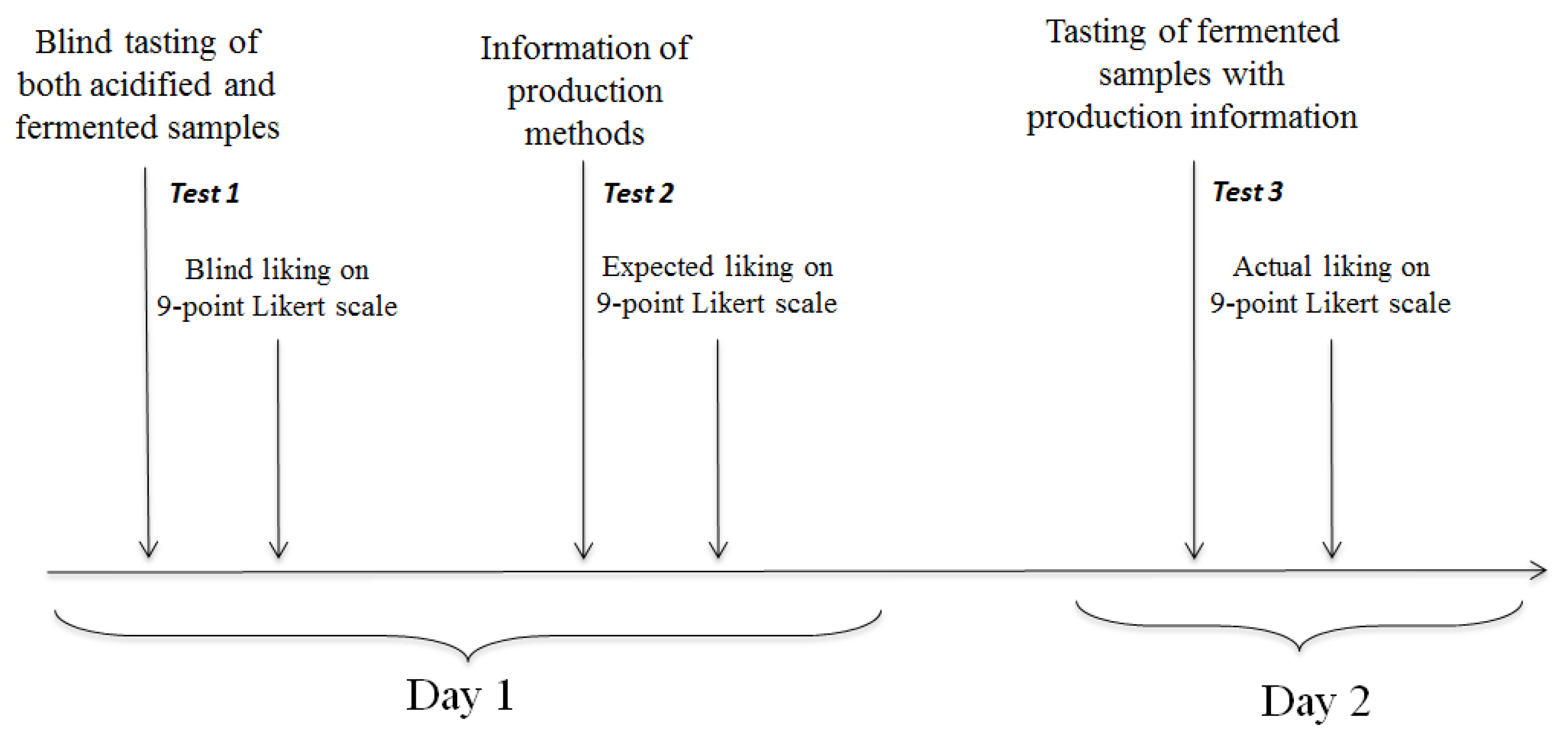
Figure 2.
Product liking test a) sample preparation and b) tasting.
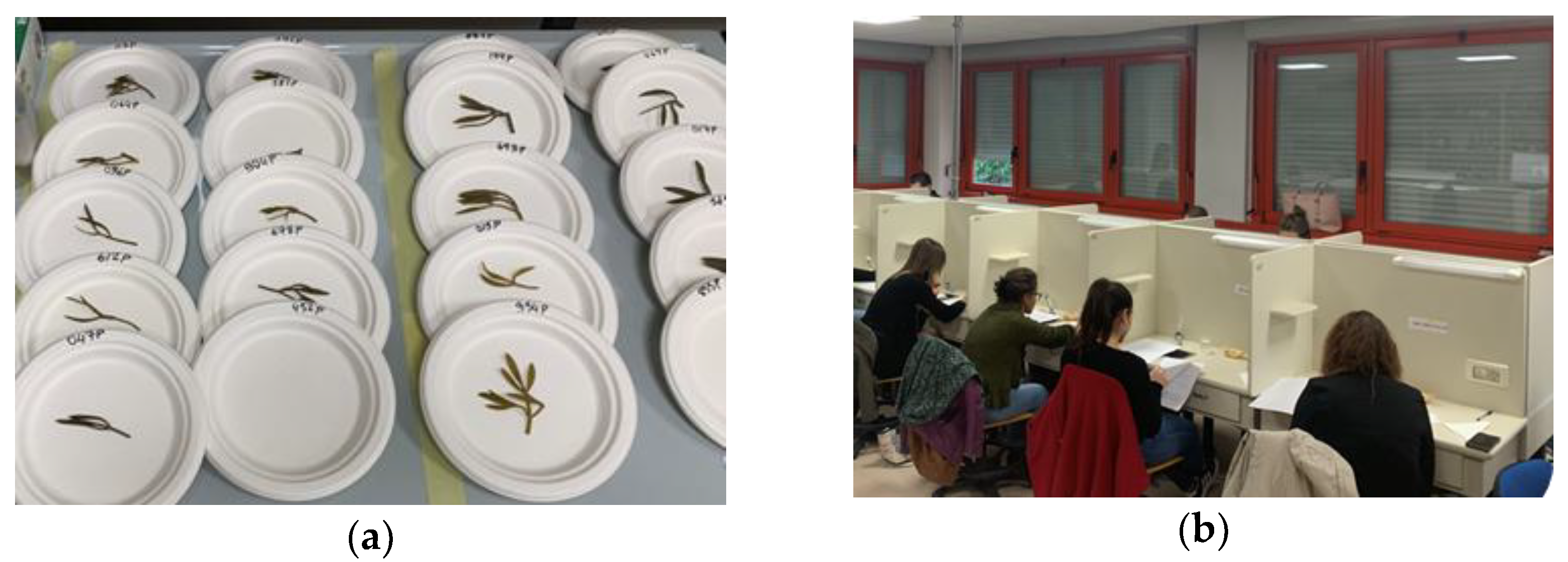

Table 1.
Acceptability scores (means ± standard error) for the blind, expected, actual liking and their differences.
Table 1.
Acceptability scores (means ± standard error) for the blind, expected, actual liking and their differences.
| Type of scores | Acidified sea fennel (traditional) |
Fermented sea fennel (innovative) |
|---|---|---|
| Blind liking | 5.09 ± 0.211 | 5.88 ± 0.22 |
| Expected liking | 5.71 ± 0.20 | 6.05 ± 0.20 |
| Actual liking | n/a | 5.96 ± 0.21 |
| Expected minus Blind | 0.621 | 0.17 |
| Actual minus Blind | n/a | 0.08 |
| Actual minus Expected | n/a | -0.09 |
1 p<0.001.
Disclaimer/Publisher’s Note: The statements, opinions and data contained in all publications are solely those of the individual author(s) and contributor(s) and not of MDPI and/or the editor(s). MDPI and/or the editor(s) disclaim responsibility for any injury to people or property resulting from any ideas, methods, instructions or products referred to in the content. |
© 2025 by the authors. Licensee MDPI, Basel, Switzerland. This article is an open access article distributed under the terms and conditions of the Creative Commons Attribution (CC BY) license (http://creativecommons.org/licenses/by/4.0/).
Copyright: This open access article is published under a Creative Commons CC BY 4.0 license, which permit the free download, distribution, and reuse, provided that the author and preprint are cited in any reuse.


