

Submitted:
21 October 2023
Posted:
24 October 2023
You are already at the latest version
Abstract
The lack of adequate knowledge of the culinary and sensory properties of most indigenous and wild foods hampers their promotion in human diets and the market. In the present study, 80 Burkinabe volunteers evaluated the sensory appeal and attributes of three selected Senegalia seed species (Zamnè, pseudoZamnè or Kumatiya, and S. erythrocalyx) and their food formulas (traditionally cooked, harvested as green and fresh legumes, and fermented as tempeh) using the 9-point hedonic scale and check-all-that-apply questionnaire. They found that the traditionally cooked Zamnè, pseudoZamnè or Kumatiya, and derived tempeh had good sensory appeal (scoring between 5-7) and subtle alkaline and nutty tastes, which will facilitate their blending in cuisines. Yet, an appreciable number (32%) of the participants, as unaccustomed to tempeh, scored all the tempeh products very low (2.5-3.4), suggesting food neophobia. In contrast, the traditionally cooked seeds of Senegalia erythrocalyx and the green and fresh Zamnè evoked bitter and sour off-tastes, respectively, and were not much appreciated (scoring 4). The present study provides unprecedented insight into consumers’ non-sensory perceptions and the culinary and sensory properties of Senegalia seed foods – which will be essential for their valorization, branding, and marketing.
Keywords:
consumer perception
; indigenous food
; Kumatiya
; Senegalia seeds
; sensory properties
; tempeh
; Zamnè
1. Introduction
Senegalia seeds are wild legumes tapped by indigenous people in the arid and semi-arid tropics as famine and traditional foods [1,2,3]. However, despite the fact that some of the seed species have become delicacies (i.e., Zamnè and Kumatiya) locally, they remain overlooked and underresearched for a very long time. Particularly, the knowledge of their food uses is sparsely disseminated, and reports on their sensory properties are hardly documented. For example, though Kumatiya (i.e., Senegalia senegal seeds) is considered a delicacy in Rajasthan (Northern India state), it is regarded as a pseudoZamnè in Burkina Faso. Needless to say, the pseudoZamnès are claimed to be of lower quality compared to Zamnè (i.e., Senegalia macrostachya seeds) despite the limited knowledge of their culinary, sensory, and nutritional properties. In fact, Senegalia seeds are traditionally boiled as legumes and rarely nibbled fresh and green during foraging, harvested fresh and green as a condiment for sauce, or milled and used in bakery products (e.g., cakes and bread). As it stands, Kumatiya and Zamnè have demonstrated comparable cooking and nutritional properties, and both have shown similar hard-to-cook problems. Their traditional cooking process is very harsh, compromising their nutritional properties [4,5,6].
Considering the hard-to-cook defects, we recently demonstrated the fermentability of Zamnè, as a benchmark of edible Senegalia seeds, into tempeh [4]. Tempeh is originally a traditional Indonesian food, which is currently receiving attention as a healthy, highly nutritious, and multifunctional food product worldwide [7,8]. As expected, compared to traditional cooking, tempeh fermentation improved the nutritional properties and the digestibility of Zamnè. Besides, since raw Senegalia seeds seem edible [2,9], they could also be harvested early as fresh and green vegetables to bypass the hard-to-cook problem. Suffice it to say, Senegalia seeds are potential food resources that can support food diversification and a safety net in the arid and semi-arid tropics. On the other hand, tempeh fermentation is a promising processing alternative that could help valorize them. However, as noted, there is sparse information on the culinary properties, sensory properties, and non-sensory perceptions (such as a priori and historical imprints) of Senegalia seed foods, and tempeh is still an unaccustomed food product outside Indonesia [7]. Yet, while the promotion of Senegalia seeds in human diets and markets requires accurate language to describe them, it is essential to select product formulations that align with the food culture and the sensory preferences of the targeted consumers. Therefore, the objective of this study was to assess the non-sensory perceptions and sensory profiles and appeals of selected Senegalia seed species and their traditional cooking and processing alternatives (i.e., early harvesting and blanching as green legumes and tempeh fermentation) by consumers in Burkina Faso. Besides, the psychographic traits of the participants in the study, such as food neophobia and their overall attitudes toward the products, were derived.
2. Materials and Methods
2.1. Ethical clearance and recruitment of the participants
This study was approved on the 5th of January 2022 by the ethics committee for health-related research of the health ministry of Burkina Faso (clearance number: CERS 2021-12-290). Then, volunteers for the sensory test were invited from the general population in Ouagadougou, students from University Joseph Ki-Zerbo, and personnel from the Department of Food Technology (Institute of Research in Applied Sciences and Technologies, Burkina Faso) using flyers. The flyers provided brief information on the study, illustrations of the products, and the requirements for participation in the study, i.e., health status (such as no food allergies, smoking, and respiratory infections), good sensory acuity, ages (>18 years old), familiarity with Zamnè). The volunteers were not given any cash incentive for their participation.
2.2. Products
Zamnè (Senegalia macrostachya) and pseudoZamnè (Senegalia senegal) mature and dry seeds (5 kg each) were harvested from the wild (N 13.09 W 03.12, Burkina Faso) in December 2018, and specimens were identified and deposited at the Herbarium INFOBIO (reference N° 6887 and 6886) of University Joseph Ki-Zerbo. Senegalia erythrocalyx mature and dry seeds (1 kg) and soybean (2 kg) were purchased from the National Centre of Forest Seeds (Centre National de Semence Forestière, CNSF, Burkina Faso) and a local market in Ouagadougou, respectively. All the samples were vacuum sealed in airtight plastic bags and stored at -20 °C until analysis. It is important to note that no record of human consumption of S. erythrocalyx seeds was found [2]. The species was included considering its food potential, i.e., specific compositional properties and cookability [10].
One kilogram of Zamnè, pseudoZamnè, and S. erythrocalyx seeds were cooked the same day (early morning) of the sensory test, following the traditional cooking process of Zamnè (i.e., boiling of the seeds in 1% w/v potash solution) [5]. Besides, 1 kg of Zamnè and soybean were fermented into fresh tempehs using Rhizopus oryzae starter culture (Culture for Health, USA), as also described earlier [4]. It was ensured that the fermentation was completed (48 hours) on the morning of the testing day. In addition, 1 kg of Zamnè tempeh was prepared, sliced, and dried at 60° for 24 h to obtain crispy tempeh slices (as a new snack). The tempeh crisps were prepared one day before the test and stored at room temperature. Finally, mature and still green and fresh Zamnè (3 kg) was harvested at the end of November 2021 at the urban zoo-botanical park Bangr-Weogo (Ouagadougou, Burkina Faso), washed, boiled (98°±2C) for 10 min in plain water the day of the harvest, transferred into glass bottles (with the seed covered with water 2 inches above), and steamed for 15 minutes. The so-blanched and -canned green Zamnè was stored at 4 °C in order to preserve it fresh and green until the day of the test (i.e., one month after). It was then drained on the day of the test before being served to the participants. The products are illustrated in Figure 1.
2.3. Assessment of the products
2.3.1. Accommodation of the participants and pre-questionnaire
The study was presented to the volunteers as a sensory analysis of Zamnè, pseudoZamnès, and tempeh (i.e., a novel product to them), and they were invited to the Department of Food Technology (Institute of Research in Applied Sciences and Technologies, Burkina Faso). The instructions for the test were given in a meeting room, where the volunteers were received and asked to sign a voluntary consent. The volunteers were asked when they ate their last meal and then immediately guided to the sensory test room (~25 °C, noise-free, and adequately lighted (daylight type illumination)) and given individual booths or kept for some time in the meeting room to standardize their stomach emptying times (2-3 hours) before the test, according to Meilgaard et al. [11]. While waiting for the food products, the participants were invited to respond to a pre-questionnaire, including their gender, age, recent illness, medications, smoking status, food allergies, frequency of consumption of Zamnè, a priori on Zamnè (i.e., “Are you a fan of Zamnè?”), knowledge of tempeh (i.e., “Do you know tempeh before this study?”), and open-ended questions to know why they like or dislike Zamnè and what they expect from a novel food like tempeh (introduced to them as an Indonesian fermented food with a mold). After that, the sensory test was conducted in one day (with an approximate testing time of 30 minutes for each participant), and the volunteers were accepted from 9 am until the required number (80) of participants was reached (i.e., 4 p.m.). The number of participants was determined according to Gacula and Rutenbeck [12] and Ares et al. [13] in order to detect any minimum difference of 0.6 points on the 9 points hedonic scale and to have reliable sensory descriptors configuration with the check-all-that-apply questionnaire.
2.3.2. Sensory test and overall attitudes toward the products
The products were kept at room temperature, served (3 full tablespoons of each cooked/blanched seed product and one slice for each tempeh product) in transparent and disposable plastic cups, labeled with three random digits, and presented to the participants in a monadic series and balanced orders by using the generalized Latin Square [14]. The participants were asked to score the appearance, smell, taste, aftertaste, texture (i.e., mouthfeel), and overall sensory appeal of the products using a labeled 9 points hedonic scale (1 = “dislike extremely”, 2 = “dislike very much, 3 = “dislike moderately”, 4 = “dislike slightly”, 5 = “neutral”, 6 = “like slightly”, 7 = “like moderately”, 8 = “like very much”, and 9 = “like extremely”) and then check-all-that-apply sensory attributes from a list of 20 sensory descriptors. The sensory descriptors list was constituted after an unstructured survey (including 3 non-timber forest product business holders and 9 individual respondents) to know how consumers describe Zamnè and preliminary sensory tests of the products by 5 laboratory personnel. The descriptors included 20 general terms on taste, appearance, and texture (i.e., mouthfeel) characteristics. According to Lim, Wood, & Green [15], 3 extra points, though not used by any of the participants, were added to both tails (with the label “most pleasant sensation imaginable” for a score of 12 and “most unpleasant sensation imaginable” for a score of -2) of the scale to reduce the ceiling effect. Besides, the participants were given mineral water to cleanse their palates between the evaluations of the different products. After the sensory evaluations, the participants were asked to give their overall perception (i.e., willingness to buy and willingness to eat if last resort) of the products using a labeled 5 points scale (1 = “certainly will not buy/eat even if last resort”, 2 = “probably will not buy/eat even if last resort”, 3 = “undecided”, 4 = “probably will buy/eat if last resort”, and 5 = “certainly will buy/eat if last resort”)[16]. Last but not least, space was given to the participants to provide any additional remarks.
2.4. Data collection and analysis
The data were collected using paper questionnaires, entered into Excel sheets, and analyzed using R program version 4.2.0. The sensory appealing scores were subjected to a two-factor (i.e., products and clusters) analysis of variance (ANOVA) and Tukey range test. The inter-relationships between the scores were subsequently assessed by running Pearson’s correlation test. The clustering of the participants, based on their scoring of the sensory appeal of the products, was assessed by performing K-means clustering, and the number of clusters was determined based on their substantiality (i.e., the size of the clusters) and differentiability (i.e., the conceptual distinction of the clusters) [17]. Afterward, the frequencies of use of the sensory descriptors at the whole panel level to describe the products were compared using Cochran-Q and Dunn tests (with Bonferroni-corrected p-value). Then, the differences between the frequencies of use of the sensory descriptors by the different panel clusters were determined using Fisher’s Exact test. The configurations of the products and the sensory descriptors between the clusters were compared by calculating the RV coefficients. Subsequently, a correspondence analysis (CA) was used to map the relationships between the products and the sensory attributes. Finally, the mean drops in the overall appeal scores (or penalties) due to the deviation in the sensory attributes of the unfamiliar products from the reference product (i.e., Zamnè) were calculated according to Plaehn [18]. Based on Pareto’s principle, the 20% consensus cutoff was applied to determine the significance of the penalties [18,19].
3. Results
3.1. Panel composition and a priori of the participants
Table 1 summarizes the panel composition. In total, 80 volunteers participated in this study and comprised 61% females, 39% males, and 95% of 19-40 years old adults. The participants were all familiar with Zamnè, and 39% of them asserted they were fans of Zamnè, though most (77%) of them were eating Zamnè occasionally (less than once every month). In contrast, less than 3% of the participants had heard about tempeh before this study but never tried it. Besides, three participants did not complete the sensory questionnaire and were not included in the sensory data analysis.
Furthermore, the participants expressed their perception of the traditionally cooked Zamnè and expectations from any alternative processing of it as follows (Table 2). The fans of the traditionally cooked Zamnè (26% of the panel) felt somehow culturally attached to Zamnè and perceived it as tasty, wholesome, and nutritionally rich. Very few of them (6%) were aware of the health claims or medicinal properties of Zamnè. In contrast, the participants who were not a priori fans of the traditionally cooked Zamnè perceived it as tasteless and hardly accessible. Only a few (16%) who were not fans of it noted it as bitter and smelly. Still, the participants expected that any new processing of Zamnè should provide better nutritional properties, health benefits, and preparation convenience.
3.2. Sensory appeal of the products
At the whole panel level, the traditionally cooked Zamnè and the pseudoZamnè demonstrated an appreciable sensory appeal and higher scores (6-7) for all the sensory attributes compared to the blanched green Zamnè (score = 3.8), the traditionally cooked S. erythrocalyx seeds (score = 4.0), and all the tempeh products (score = 5.0) (Table S1). Though the blanched green Zamnè, the traditionally cooked S. erythrocalyx seeds, and the tempeh products received similar scores for their aromas, appearances, and texture, the latters had relatively better overall sensory appeal and slightly higher scores for the taste and the aftertaste. Accordingly, the participants intended to buy the traditionally cooked Zamnè and pseudoZamnè and showed some reservations about the tempeh products. They were disgusted with the blanched green Zamnè and the traditionally cooked S. erythrocalyx, as shown by the hesitation (60-70% of the panel) to eat them even if they were last resort foods (Table S1).
However, based on the scoring of the sensory attributes and the overall sensory appeal of the products, the participants were segmented into three clusters, and interestingly, the clusters were not associated with their a priori (i.e., fans or not) for Zamnè (Figure 2). In contrast, though 32% of the participants (cluster 2) were very peaky and only liked the traditionally cooked Zamnè and pseudoZamnè, an appreciable number (52%) of them (cluster 1) were moderately selective and did not like mainly the blanched green Zamnè and the traditionally cooked S. erythrocalyx (Table S1). Also, though modest, 16% of the participants found all the products appealing.
Furthermore, in line with the clustering, the participants showed variable attitudes to the products (Figure 3). While there was unanimity (92% of the participants) in the willingness to buy and eat the traditionally cooked Zamnè and pseudoZamnè, a lesser (but still appreciable) number of participants (38% and 60%) were willing to, respectively, buy and eat the tempeh products. Meanwhile, many participants (77% and 62%, respectively) were not willing to buy the blanched green Zamnè and the traditionally cooked S. erythrocalyx seeds or eat them even if they were last resort foods.
3.3. Sensory profile of the products
The products had quite different sensory profiles, as shown by the significant differences in all the frequencies of uses of the sensory descriptors (Table S2) and the correspondence analysis (Figure 4). Up to four major dimensions (with 45, 28, 16, and 8% of the total inertia, respectively) were needed to capture the variances in the frequencies of uses of the sensory descriptors. Meanwhile, 3 sensory descriptors (i.e., fish-like taste, astringency, and earthiness) did not receive appreciable consensus (i.e., less than 20% of the participants) as characteristics of any of the products, considering Pareto’s principle [18]. So, 17 descriptors were variably used to describe the products.
For instance, the traditionally cooked Zamnè and pseudoZamnè revealed very similar sensory profiles and were asserted to be soft and to have a soumbala appearance and a unique taste with a note of nut and potash or alkali. In contrast, though the traditionally cooked S. erythrocalyx seeds were also considered soft and with a note of potash, they were identified as greasy, bitter, and with a persisting aftertaste and a dull and (relatively) soumbala appearance. The blanched green Zamnè, for instance, was checked sour, in between soft and hard, but appealing in appearance. Except that a nutty taste was noted in the fresh Zamnè tempeh and not in the fresh soy tempeh, they had relatively similar sensory profiles (particularly a subtle taste and softness). Last but not least, the drying of Zamnè tempeh into crisps produced a soumbala-like taste, a persisting aftertaste, and a soumbala and dull appearance.
Besides, an appreciable number of the participants (30-60% of the panel) concluded that all the products had unique tastes. The clusters of the participants differed only in the use of very few descriptors for some of the products (i.e., the potash or alkaline taste for the traditionally cooked Zamnè and S. erythrocalyx seeds, the lack of taste for the traditionally cooked pseudoZamnè and the fresh soy tempeh, and the crispiness and the fish-like taste for the Zamnè tempeh crisps) (Table S3). Therefore, an excellent agreement between the clusters and between the participants at the whole panel level was achieved, as supported by the high RV coefficients (0.93 and 0.79, respectively) (p < 0.001) between the product configurations and between the descriptor configurations.
3.4. Penalties of the sensory attributes on the overall sensory appeal of the products
Two approaches (i.e., Pearson correlation and penalty analysis) were used to assess the influence of the sensory attributes on the overall sensory appeal of the products. As shown with the Pearson correlation coefficients, the taste and the aftertaste appeared to be the most determinant factors for the overall sensory appeal and the willingness to buy and eat (if last resort) the products (Table S4). They were followed in order by the texture, the aroma, and the appearance of the products. In more detail (Figure 5), in line with section 3.3, and considering the traditionally cooked Zamnè as a reference product, the perception of the hardness and the sourness likely penalized (> 3 points) the sensory appeal of the blanched green Zamnè. In contrast, the bitterness, the greasiness, the persistence of the aftertaste, and the dull appearance likely penalized (> 3 points) the traditionally cooked S. erythrocalyx seeds. Since the traditionally cooked pseudoZamnè demonstrated a similar sensory profile to the traditionally cooked Zamnè, no relevant penalty was determined. Meanwhile, it is important to note that the penalty on the sensory appeal of the tempeh products could not be determined since the participants were unfamiliar with tempeh and could not define the ideal or reference product, as shown by the similar score (5.0) they gave to all the tempeh products, including the (soy) tempeh standard (Table S1).
4. Discussion
This study was designed as consumer-based research, including sensory tests (i.e., overall sensory appeal and sensory profile) and psychographic evaluations (i.e., a priori, intention to purchase, and post-hoc segmentation). Interestingly, as presented in section 3.1, the panel was composed as expected (according to an unstructured preliminary survey) and provided a good representation of Zamnè consumers (i.e., almost equal numbers of fans and non-fans). The contrast between the number of fans and the frequency (less than once a month) of the consumption of Zamnè could be explained by the fact that Zamnè is an expensive, hard-to-cook, and rarely cooked food as a family dish but mainly as a delicacy during social events (where people occasionally get access to it) [20,21]. This observation could be supported by the remarks of the participants on the accessibility and the cooking labor of Zamnè (Table 2). The low familiarity of the assessors with most of the products is an important limitation of the present study—which is an inherent concern in the sensory analysis of non-conventional or underutilized food products like Senegalia seeds [22]. Furthermore, despite the use of Zamnè as a traditional food and delicacy [20], a very limited number of the participants (<1%) expressed a cultural attachment to Zamnè. The observed low cultural attachment could be explained by the fact that most (95%) of the participants were of a young generation (<40 years old) and likely were not aware of the reason (i.e., the memory of Zamnè as a famine food and historical heritage) behind the promotion of Zamnè as a traditional and cultural food [8,23]. In fact, the knowledge of traditional foods, such as Zamnè, is rapidly disappearing, and it is essential to reinforce the education of the young generation in order to safeguard those cultural heritages and underpin food diversity, which is essential to support healthy diets and maintain the environmental stewardship and sustainability [8,24,25].
Nevertheless, as shown in section 3.2, the sensory appeal of Zamnè and pseudoZamnè should have been key to their maintenance in human diets, compared to many related species, which remain solely famine emergency foods [2,3,26]. Accordingly, the off-taste (bitterness, sourness, and aftertaste) of some Senegalia seed species (e.g., Zamnè and S. erythrocalyx) (section 3.4) should be first reduced, masked, or eliminated before their promotion as foods. Yet, compared to the blanching, the traditional cooking was sufficient to eliminate the off-taste of Zamnè but not for S. erythrocalyx seeds, underlining the differences in their culinary properties and chemical composition. It is important to highlight that it was not possible to find a report on human consumption of S. erythrocalyx seeds, and, as shown, alternative processing to the traditional cooking procedure will be necessary to make them palatable. S. erythrocalyx was included in this study because of its conventional cooking quality and particular compositional properties (e.g., saponins and starch content), compared to Zamnè and pseudoZamnè [10]. The green Zamnè, for instance, is mainly nibbled during foraging or used to prepare a traditional sauce (i.e., Kari) in the ethical group Yadcé in Burkina Faso. So, the unfamiliarity of the study participants with the (blanched) green Zamnè could explain why they disliked it.
Besides, it is worth noting that the traditionally cooked Zamnè and pseudoZamnè (without any additional ingredient) were only liked moderately, and a large percentage (61%) of the participants were not a priori fans of them. In fact, Zamnè or pseudoZamnè are mainly merely boiled and served with only oil and salt in Burkina Faso. The participants, who asserted not to be fans of them, found them a priori tasteless and somehow bitter (Table 2). But interestingly, none of the participants noted the bitterness in the traditionally cooked Zamnè after the sensory test (Table S2). The a priori that Zamnè is bitter could be explained by the eventual mix-up of Zamnè with other seed species or pseudoZamnès [5,23], indicating the need for more control of fraud in the market. Meanwhile, the pseudoZamnè is more prepared as a stew (namely Panchkuta) in India [1,27], and Zamnè is getting more and more prepared as a stew, too [20]—which could improve their overall sensory (and particularly taste) appeal. Considering the subtle taste of the traditionally cooked Zamnè and the pseudoZamnè, they could be used in diverse food preparations to add some unique flavors. Hence, it is essential to develop and disseminate alternative processing of Senegalia seeds in order to promote them in human diets.
Accordingly, considering the hard-to-cook defects of Senegalia seeds [5,6], Zamnè (as a prototype) has been processed into tempeh in our earlier study [4]. As an outcome, the fermentation into tempeh improved its nutritional properties and digestibility. Subsequently, the present study aimed to determine the sensory appeal of the newly developed tempeh products from Zamnè. Interestingly, only a moderate number (32%) of the participants (moderately) disliked the developed tempeh products (Table S1), indicating that there is a considerable opportunity to promote Zamnè or Senegalia seeds’ tempeh—if their nutritional properties and culinary uses are well disseminated (section 3.1). In fact, tempeh is not yet well-known in West Africa (including Burkina Faso) [7,28]. It has been reported as moderately appealing to people in West Africa [28], likely due to a food neophobia of some part of the population, as suggested in the present study. Yet, it is worth noting that the earliest evaluation of the acceptance of tempeh in West Africa was 20 years ago, and the food culture might have changed since then. But still, the fact remains that tempeh could be processed into functional food products (e.g., stew, infant flour, beverage, and bakery products) that can hide the original appearance and improve its acceptability [7,29]. Therefore, attention should be paid to the drying or dehydration of Zamnè tempeh, which was associated with the development of a soumbala-like taste and a persisting aftertaste (Table S2). Further investigation, with a larger number of participants, is needed to determine the factors (e.g., socio-demographic profiles and food cultures and neophobia scales) behind the variations in the appreciation of tempeh products [7,8].
Last but not least, to our knowledge, this study is the first to provide data on the sensory properties and appeals of Senegalia seed foods. Also, there are a limited number of reports on the sensory properties of related Acacia s.l. seed foods. Only a few studies describe the sensory properties of roasted Acacia s.l. seeds and their blended flours [22,30,31,32], limiting any sensory matching with all of the products presented in the present study. Only the developed fresh Zamnè tempeh had a relatively good sensory match (especially the subtle nutty flavor) to fresh soy tempeh [8,33]. Suffice it to say, Zamnè could be a promising substrate for tempeh production. However, it is important to clarify that, as a consumer-based study, a list of general sensory descriptors was provided to (untrained) participants, and most of them resolved themselves by describing all the products as unique in tastes (Table S2), likely due to the difficulty to associate them with other products they know and the limited understanding of the sensory vocabulary. A further study, particularly with trained sensory assessors, is needed to refine the lexicon and determine the detailed sensory profiles of the products.
5. Conclusions
The lack of adequate knowledge about consumers’ perceptions and the culinary and sensory properties of wild and indigenous food products such as Senegalia seeds and tempeh constitutes an important barrier to promoting them in human diets. The present study provides essential information on consumer psychographic traits or non-sensory perceptions, sensory profiles, and sensory appeals of selected Senegalia seed species and their traditional cooking and processing alternatives (i.e., greens and tempeh). The blanching and the traditional cooking appeared ineffective in eliminating the off-taste (bitterness, sourness, and aftertaste) of Zamnè greens and S. erythrocalyx seeds, respectively, indicating the need for alternative processing to make some Senegalia seed species palatable. In contrast, the fermentation of Zamnè resulted in a product with comparable sensory properties to the tempeh standard (from soybean), revealing a potential processing alternative for Senegalia seeds. However, the study participants had variable perceptions and sensory appreciations of the selected Senegalia seed species and food formulas presented in the present study (i.e., greens, traditionally cooked products and tempeh). It will be essential to disseminate the food uses of Senegalia seeds and develop alternative processing methods that align with the food culture and the sensory preferences of the targeted consumers.
Supplementary Materials
The following supporting information can be downloaded at the website of this paper posted on Preprints.org. Table S1: Sensory appeals and overall perceptions (mean scores ± standard deviation) of the products; Table S2: Frequencies (%) of use of the sensory descriptors by the participants (N = 77); Table S3: Differences between the clusters in the frequencies (%) of use of the sensory descriptors; Table S4: Inter-relationships between the sensory attributes and the overall appeal of the productsΩ.
Author Contributions
Conceptualization, M.S.D. and K.R.; methodology, M.S.D., K.T., C.P., F.H.B. and K.R.; investigation, M.S.D. and K.T.; resources, C.P. and F.H.B.; data curation, M.S.D. and K.R.; formal analysis, M.S.D.; writing—original draft preparation, M.S.D.; writing—review and editing K.T., C.P., F.H.B, A.S. and K.R.; supervision, C.P.; project administration, M.S.D.; funding acquisition, M.S.D., A.S. and K.R. All authors have read and agreed to the published version of the manuscript.
Funding
The first author is grateful to Ghent University for his PhD scholarship (Ref: Scholarship number: 01W05318) and West Africa Economic and Monetary Union for the academic excellence grant. The bench fees of this scholarship and this grant were used to fund this study.
Data Availability Statement
The data generated for this study are available on request to the corresponding author.
Conflicts of Interest
The authors declare no conflict of interest. The funders had no role in the design of the study, in the collection, analyses, or interpretation of data, in the writing of the manuscript, or in the decision to publish the results.
References
- Asati, V.; Deepa, P.R.; Sharma, P.K. Silent Metabolism and Not-so-Silent Biological Activity: Possible Molecular Mechanisms of Stress Response in Edible Desert Legumes. J. Plant Biochem. Biotechnol. 2021, 30, 640–645. [Google Scholar] [CrossRef]
- Drabo, M.S.; Shumoy, H.; Savadogo, A.; Raes, K. Inventory of Human-Edible Products from Native Acacia Sensu Lato in Africa, America, and Asia: Spotlight on Senegalia Seeds, Overlooked Wild Legumes in the Arid Tropics. Food Res. Int. 2022, 159, 111596. [Google Scholar] [CrossRef] [PubMed]
- Fagg, C.W.; Stewart, J.L. The Value of Acacia and Prosopis in Arid and Semi-Arid Environments. J. Arid Environ. 1994, 27, 3–25. [Google Scholar] [CrossRef]
- Drabo, M.S.; Savadogo, A.; Raes, K. Effects of Tempeh Fermentation Using Rhizopus Oryzae on the Nutritional and Flour Technological Properties of Zamnè (Senegalia Macrostachya Seeds): Exploration of Processing Alternatives for a Hard-to-Cook but Promising Wild Legume. Food Biosci. 2023, 54, 102823. [Google Scholar] [CrossRef]
- Drabo, M.S.; Shumoy, H.; Cissé, H.; Parkouda, C.; Nikiéma, F.; Ismail, O.; Traoré, Y.; Savadogo, A.; Raes, K. Mapping the Variability in Physical, Cooking and Nutritional Properties of Zamnè, a Wild Food in Burkina Faso. Food Res. Int. 2020, 138, 109810. [Google Scholar] [CrossRef] [PubMed]
- Guissou, A.W.D.B.; Parkouda, C.; Ganaba, S.; Savadogo, A. Technology and Biochemical Changes Associated with the Production of Zamne : A Traditional Food of Senegalia Macrostachya Seeds from Western Africa. J. Exp. Food Chem. 2017, 3, 1–6. [Google Scholar] [CrossRef]
- Ahnan-Winarno, A.D.; Cordeiro, L.; Winarno, F.G.; Gibbons, J.; Xiao, H. Tempeh: A Semicentennial Review on Its Health Benefits, Fermentation, Safety, Processing, Sustainability, and Affordability. Compr. Rev. Food Sci. Food Saf. 2021, 20, 1717–1767. [Google Scholar] [CrossRef] [PubMed]
- Fibri, D.L.N.; Frøst, M.B. Indonesian Millennial Consumers’ Perception of Tempe – And How It Is Affected by Product Information and Consumer Psychographic Traits. Food Qual. Prefer. 2020, 80, 103798. [Google Scholar] [CrossRef]
- Arbonnier, M. Arbres, Arbustes et Lianes Des Zones Sèches d’Afrique de l’Ouest; 1st ed.; CIRAD-MNHN-UICN: Paris, 2000; ISBN 2-85653-530-5. [Google Scholar]
- Drabo, M.S. Spotlight on Senegalia Seeds, Overlooked Potentials and a Benchmark of Acacia Foods, Ghent University, 2023.
- Meilgaard, M.; Civille, G.V.; Carr, B.T. Sensory Evaluation Techniques, Third Edition; 3rd Editio.; CRC Press: Boca Raton, New York, 1999; ISBN 0-84930-276-5. [Google Scholar]
- Gacula, M.; Rutenbeck, S. Sample Size in Consumer Test and Descriptive Analysis. J. Sens. Stud. 2006, 21, 129–145. [Google Scholar] [CrossRef]
- Ares, G.; Tárrega, A.; Izquierdo, L.; Jaeger, S.R. Investigation of the Number of Consumers Necessary to Obtain Stable Sample and Descriptor Configurations from Check-All-That-Apply (CATA) Questions. Food Qual. Prefer. 2014, 31, 135–141. [Google Scholar] [CrossRef]
- Williams, E.J. Experimental Designs Balanced for the Estimation of Residual Effects of Treatments. Aust. J. Sci. Res. 1949, 2, 149–168. [Google Scholar] [CrossRef]
- Lim, J.; Wood, A.; Green, B.G. Derivation and Evaluation of a Labeled Hedonic Scale. Chem. Senses 2009, 34, 739–751. [Google Scholar] [CrossRef]
- Popper, R. Use of Just-about-Right Scales in Consumer Research. In Novel techniques in sensory chracterization and consumer profiling; Varela, P., Ares, G., Eds.; CRC Press: Boca Raton -USA, 2014; pp. 137–156. [Google Scholar]
- Kotler, P. Marketing Management, Millenium Edition, 15th ed.; Pearson Custom Publishing: Boston, MA, USA, 2015; ISBN 0–536–63099-2. [Google Scholar]
- Plaehn, D. CATA Penalty/Reward. Food Qual. Prefer. 2012, 24, 141–152. [Google Scholar] [CrossRef]
- Ares, G.; Dauber, C.; Fernández, E.; Giménez, A.; Varela, P. Penalty Analysis Based on CATA Questions to Identify Drivers of Liking and Directions for Product Reformulation. Food Qual. Prefer. 2014, 32, 65–76. [Google Scholar] [CrossRef]
- Hama-Ba, F.; Siedogo, M.; Ouedraogo, M.; Dao, A.; Dicko, H.M.; Diawara, B. Modalités de Consommation et Valeur Nutritionnelle Des Legumineuses Alimentaires Au Burkina Faso. African J. Food Agric. Nutr. Dev. 2017, 17, 12871–12888. [Google Scholar] [CrossRef]
- Yamkoulga, M.; Waongo, A.; Sawadogo, L.; Sanon, A. Gestion Post-Récolte Des Graines d’Acacia Macrostachya Reichenb. Ex DC. Dans La Province Du Boulkiemdé Au Burkina Faso: Diagnostic Participatif En Milieu Paysan. J. Appl. Biosci. 2018, 130, 13148–13161. [Google Scholar] [CrossRef]
- Smyth, H.E.; Sanderson, J.E.; Sultanbawa, Y. Lexicon for the Sensory Description of Australian Native Plant Foods and Ingredients. J. Sens. Stud. 2012, 27, 471–481. [Google Scholar] [CrossRef]
- Ganaba, S. Caractérisation d’une Légumineuse Alimentaire Sauvage, l’arbre à Zamnè; Ceprodif, Ed.; 1er Essai.; Ceprodif: Ouagadougou, 2017. [Google Scholar]
- Crane, P.R.; Ge, S.; Hong, D.; Huang, H.; Jiao, G.; Knapp, S.; Kress, W.J.; Mooney, H.; Raven, P.H.; Wen, J.; et al. The Shenzhen Declaration on Plant Sciences — Uniting Plant Sciences and Society to Build a Green, Sustainable Earth. Plants People Planet 2019, 1, 59–61. [Google Scholar] [CrossRef]
- Mariutti, L.R.B.; Rebelo, K.S.; Bisconsin-Junior, A.; de Morais, J.S.; Magnani, M.; Maldonade, I.R.; Madeira, N.R.; Tiengo, A.; Maróstica, M.R.; Cazarin, C.B.B. The Use of Alternative Food Sources to Improve Health and Guarantee Access and Food Intake. Food Res. Int. 2021, 149, 110709. [Google Scholar] [CrossRef]
- Muller, J.; Almedom, A.M. What Is “Famine Food”? Distinguishing between Traditional Vegetables and Special Foods for Times of Hunger/Scarcity (Boumba, Niger). Hum. Ecol. 2008, 36, 599–607. [Google Scholar] [CrossRef]
- Ram, H.; Jatwa, R.; Purohit, A. Antiatherosclerotic and Cardioprotective Potential of Acacia Senegal Seeds in Diet-Induced Atherosclerosis in Rabbits. Biochem. Res. Int. 2014, 2014, 436848. [Google Scholar] [CrossRef]
- Egounlety, M. Sensory Evaluation and Nutritive Value of Tempe Snacks in West Africa. Int. J. Food Prop. 2001, 4, 513–522. [Google Scholar] [CrossRef]
- Osundahunsi, O.F.; Aworh, O.C. A Preliminary Study on the Use of Tempe-Based Formula as a Weaning Diet in Nigeria. Plant Foods Hum. Nutr. 2002, 57, 365–376. [Google Scholar] [CrossRef] [PubMed]
- Njume, C.; Donkor, O.N.; Vasiljevic, T.; McAinch, A.J. Consumer Acceptability and Antidiabetic Properties of Flakes and Crackers Developed from Selected Native Australian Plant Species. Int. J. Food Sci. Technol. 2021, 56, 4484–4495. [Google Scholar] [CrossRef]
- Shelat, K.J.; Adiamo, O.Q.; Mantilla, S.M.O.; Smyth, H.E.; Tinggi, U.; Hickey, S.; Rühmann, B.; Sieber, V.; Sultanbawa, Y. Overall Nutritional and Sensory Profile of Different Species of Australian Wattle Seeds (Acacia Spp.): Potential Food Sources in the Arid Semi-Arid Regions. Foods 2019, 8, 482. [Google Scholar] [CrossRef] [PubMed]
- Francis, R. Wattle We Eat for Dinner. In Proceedings of the Proceedings of the Wattle We Eat for Dinner Workshop on Australian Acacias for Food Security; pp. 20111–146.
- Codex Alimentarius Regional Standard for Tempe (CODEX STAN 313R-2013) 2017, 3.
Figure 1.
Illustration of the products: (A) traditionally cooked Zamnè (Senegalia macrostachya seeds); (B) Blanched green Zamnè; (C) traditionally cooked pseudoZamnè or Kumatiya (Senegalia senegal seeds); (D) Traditional cooked Senegalia erythrocalyx seeds, (E) fresh Zamnè tempeh; (F) Zamnè tempeh crisps and (G) fresh soy tempeh (tempeh standard).
Figure 1.
Illustration of the products: (A) traditionally cooked Zamnè (Senegalia macrostachya seeds); (B) Blanched green Zamnè; (C) traditionally cooked pseudoZamnè or Kumatiya (Senegalia senegal seeds); (D) Traditional cooked Senegalia erythrocalyx seeds, (E) fresh Zamnè tempeh; (F) Zamnè tempeh crisps and (G) fresh soy tempeh (tempeh standard).
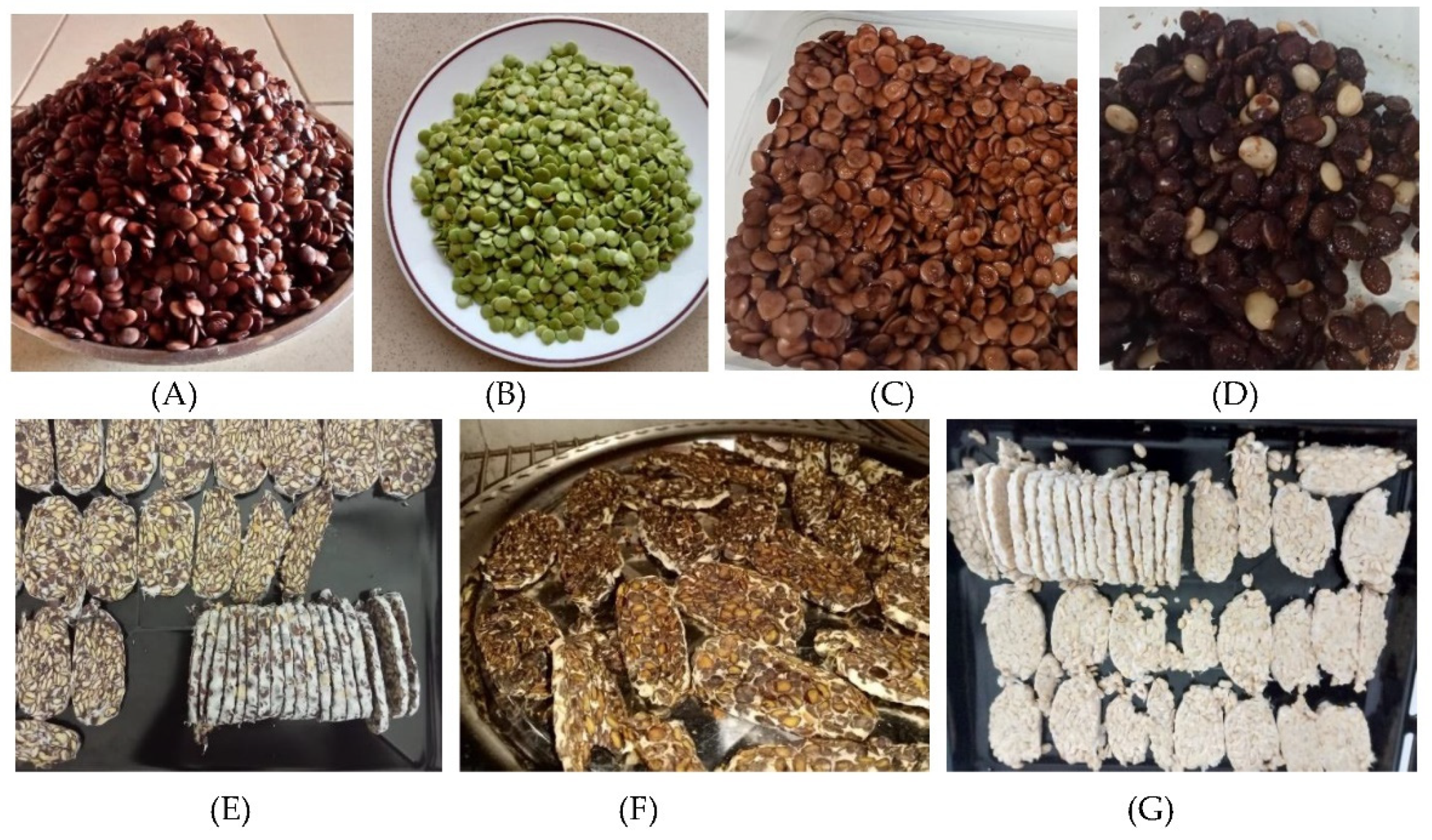
Figure 2.
Clustering of the participants based on their scoring of the aroma, appearance, texture, taste, aftertaste, and overall sensory appeal of the products. The participants were encoded A when they were a priori fans of Zamnè and NA when they were not a priori fans of Zamnè. Cluster 1 includes 40 participants and counts 39% of fans of Zamnè. Cluster 2 consists of 25 participants and counts 36% of fans of Zamnè. Cluster 3 contains 12 participants and counts 45% of fans of Zamnè.
Figure 2.
Clustering of the participants based on their scoring of the aroma, appearance, texture, taste, aftertaste, and overall sensory appeal of the products. The participants were encoded A when they were a priori fans of Zamnè and NA when they were not a priori fans of Zamnè. Cluster 1 includes 40 participants and counts 39% of fans of Zamnè. Cluster 2 consists of 25 participants and counts 36% of fans of Zamnè. Cluster 3 contains 12 participants and counts 45% of fans of Zamnè.
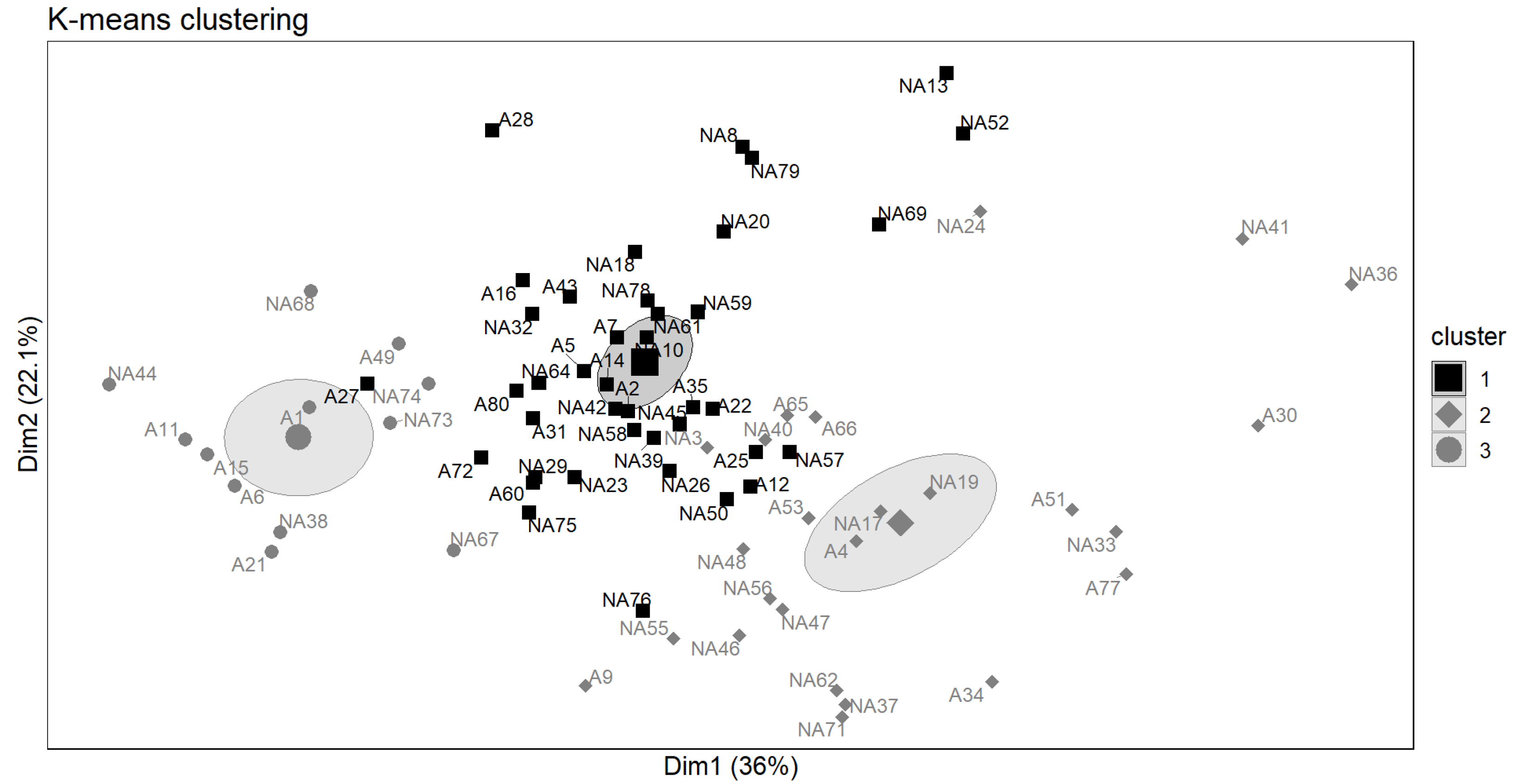
Figure 3.
Overall appeal of the productsΩ. Ω Seventy-seven (77) participants scored the products. TCZ, CSs, and CSe refer to the traditionally cooked Zamnè (Senegalia macrostachya seeds), pseudoZamnè (Senegalia senegal seeds), and Senegalia erythrocalyx seeds, respectively. RZ, fST, fZT, and dZT refer to the blanched green Zamnè, fresh soy tempeh, fresh Zamnè tempeh, and Zamnè tempeh crisps, respectively.
Figure 3.
Overall appeal of the productsΩ. Ω Seventy-seven (77) participants scored the products. TCZ, CSs, and CSe refer to the traditionally cooked Zamnè (Senegalia macrostachya seeds), pseudoZamnè (Senegalia senegal seeds), and Senegalia erythrocalyx seeds, respectively. RZ, fST, fZT, and dZT refer to the blanched green Zamnè, fresh soy tempeh, fresh Zamnè tempeh, and Zamnè tempeh crisps, respectively.
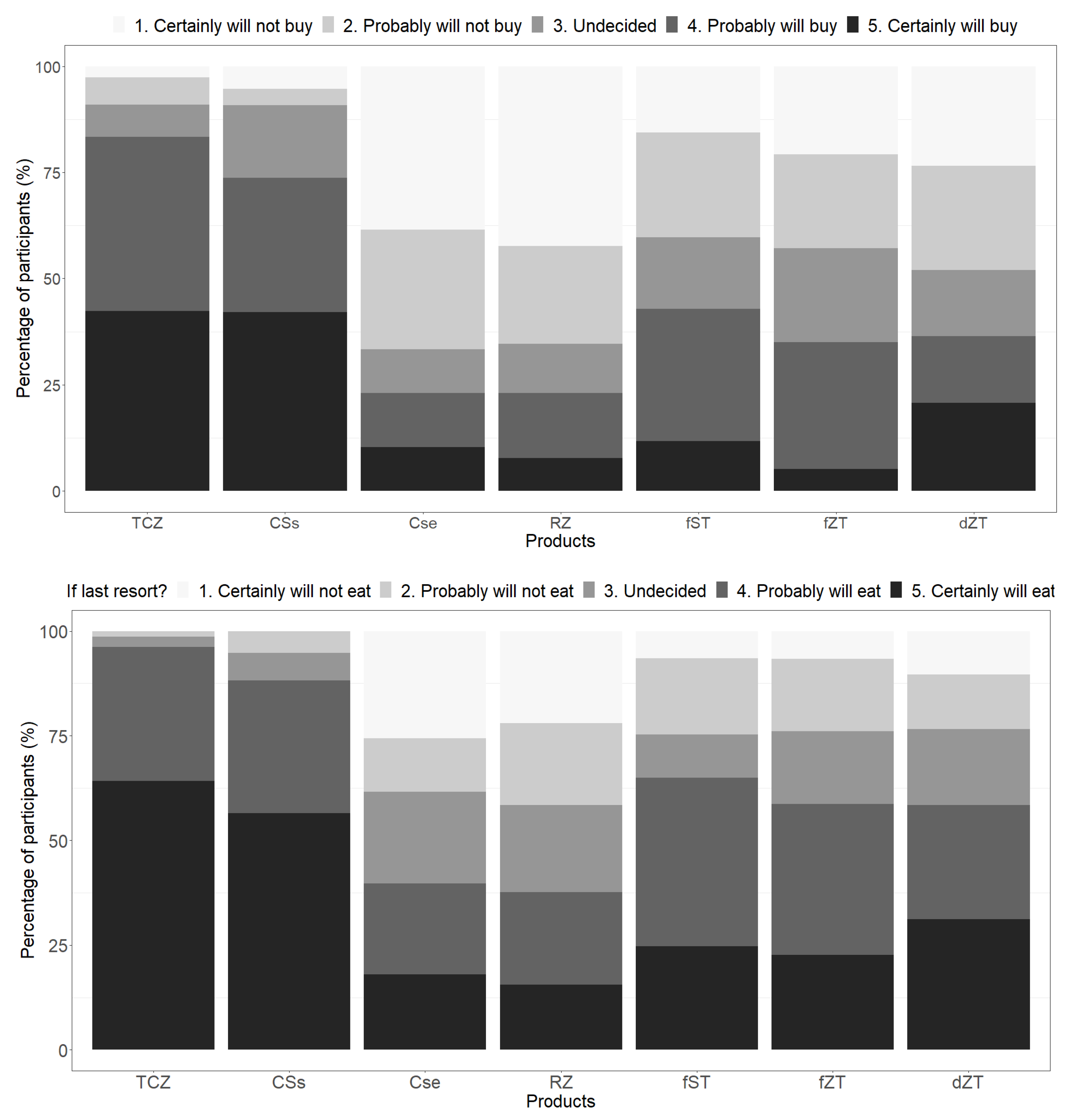
Figure 4.
Relationships between the products and their sensory descriptors. TCZ, CSs, and CSe refer to the traditionally cooked Zamnè (Senegalia macrostachya seeds), pseudoZamnè (Senegalia senegal seeds), and Senegalia erythrocalyx seeds, respectively. RZ, fST, fZT, and dZT refer to the blanched green Zamnè, fresh soy tempeh, fresh Zamnè tempeh, and Zamnè tempeh crisps, respectively. The dimensions (dim) 3, 4, 5, and 6 accounted for 15.7, 8.0, 2.5, and 1.3% of the total inertia.
Figure 4.
Relationships between the products and their sensory descriptors. TCZ, CSs, and CSe refer to the traditionally cooked Zamnè (Senegalia macrostachya seeds), pseudoZamnè (Senegalia senegal seeds), and Senegalia erythrocalyx seeds, respectively. RZ, fST, fZT, and dZT refer to the blanched green Zamnè, fresh soy tempeh, fresh Zamnè tempeh, and Zamnè tempeh crisps, respectively. The dimensions (dim) 3, 4, 5, and 6 accounted for 15.7, 8.0, 2.5, and 1.3% of the total inertia.
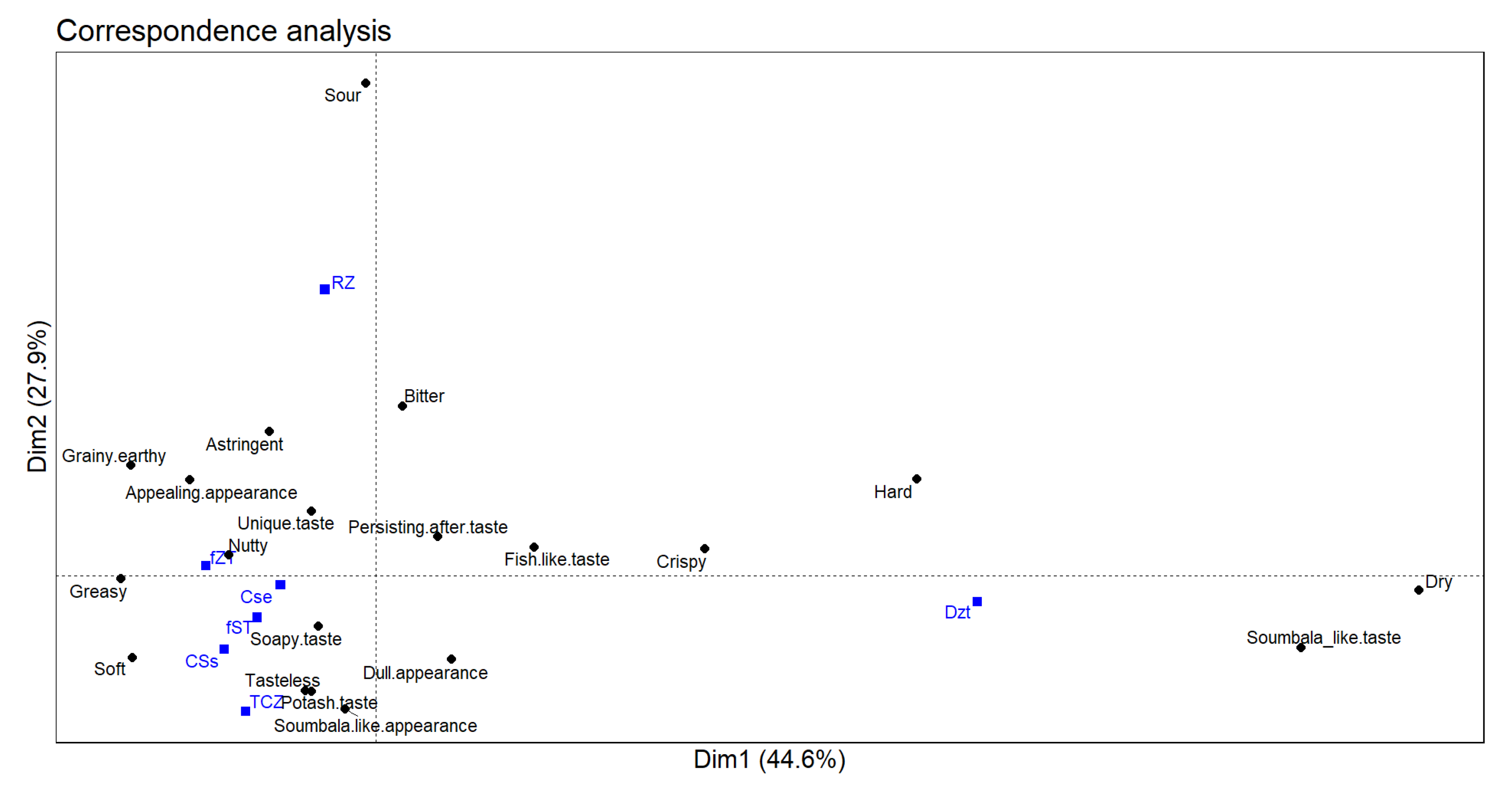
Figure 5.
Penalties on the overall sensory appeal of the unfamiliar products as a function of the percentage of participants (N = 77) who checked sensory descriptors differently from the traditionally cooked Zamnè (i.e., reference product). Mean drops of more than one point with a consensus of more than 20% of the participants were considered significant (cutoffs indicated by the dashed lines).
Figure 5.
Penalties on the overall sensory appeal of the unfamiliar products as a function of the percentage of participants (N = 77) who checked sensory descriptors differently from the traditionally cooked Zamnè (i.e., reference product). Mean drops of more than one point with a consensus of more than 20% of the participants were considered significant (cutoffs indicated by the dashed lines).
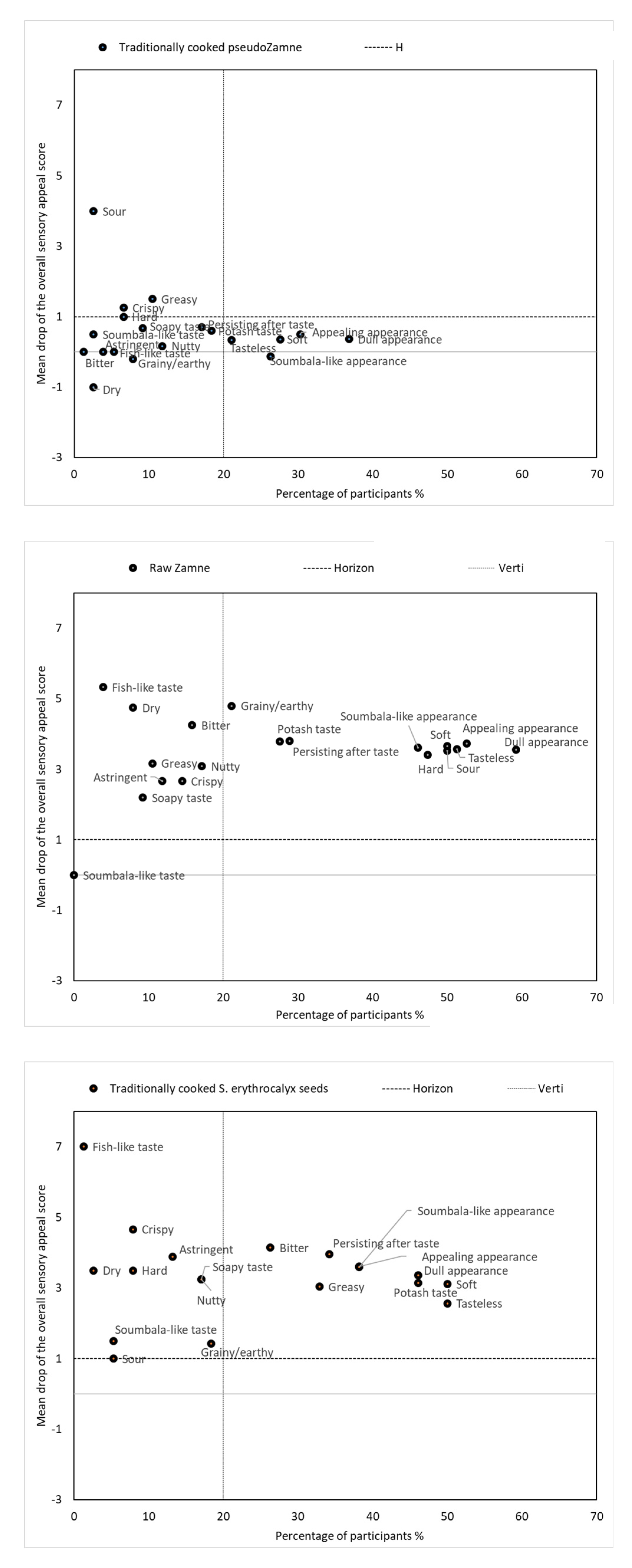

Table 1.
Panel composition.
| Information on the participants | N | % | |
|---|---|---|---|
| Total participants | 80 | 100 | |
| Gender | |||
| Female | 49 | 61 | |
| Male | 31 | 39 | |
| Age (years) | |||
| 19–30 | 55 | 69 | |
| 31–40 | 21 | 26 | |
| 41–53 | 4 | 5 | |
| Fans of Zamnè | 31 | 39 | |
| Frequency of consumption of Zamnè | |||
| At least once every week | 3 | 4 | |
| At least once every month | 15 | 19 | |
| At least once every year | 25 | 31 | |
| Very occasional | 35 | 43 | |
| Tried only once | 2 | 3 | |
| Any knowledge of tempeh before this study? | |||
| Yes | 2 | 3 | |
| No | 78 | 97 | |
| % = percentage of the total participants | |||
Table 2.
A priori on the traditionally cooked Zamnè and expectations from any alternative processing^.
Table 2.
A priori on the traditionally cooked Zamnè and expectations from any alternative processing^.
| Descriptors | n | % | |
|---|---|---|---|
| Reasons for liking the traditionally cooked Zamnè (N = 31) | |||
| Taste | 14 | 45 | |
| Nutritional properties | 11 | 35 | |
| Culture | 8 | 26 | |
| Wholesomeness | 4 | 13 | |
| Medicinal properties | 2 | 6 | |
| Not responded | 5 | 16 | |
| Reasons for disliking the traditionally cooked Zamnè (N = 49) | |||
| Low accessibility | 16 | 33 | |
| Tasteless | 11 | 22 | |
| Bitterness | 8 | 16 | |
| Smell | 2 | 4 | |
| Appearance | 1 | 2 | |
| Lack of nutritional information | 1 | 2 | |
| Cooking labor | 1 | 2 | |
| Not responded | 11 | 22 | |
| Expectations from any novel product from Zamnè (N = 80) | |||
| Higher nutritional properties | 30 | 38 | |
| Health benefits | 23 | 29 | |
| Easy to prepare | 19 | 24 | |
| Affordability | 2 | 3 | |
| ^ The table summarizes the responses to a check-all-that apply questionnaire and open-ended comments. n = number of respondents and % = percentage of the total participants (N) | |||
Disclaimer/Publisher’s Note: The statements, opinions and data contained in all publications are solely those of the individual author(s) and contributor(s) and not of MDPI and/or the editor(s). MDPI and/or the editor(s) disclaim responsibility for any injury to people or property resulting from any ideas, methods, instructions or products referred to in the content. |
© 2023 by the authors. Licensee MDPI, Basel, Switzerland. This article is an open access article distributed under the terms and conditions of the Creative Commons Attribution (CC BY) license (http://creativecommons.org/licenses/by/4.0/).
Copyright: This open access article is published under a Creative Commons CC BY 4.0 license, which permit the free download, distribution, and reuse, provided that the author and preprint are cited in any reuse.


