

Submitted:
30 July 2025
Posted:
31 July 2025
You are already at the latest version
Abstract
This study addresses the need for consumer-relevant sensory evaluation tools in the context of traditional food products. It aimed to develop a Check-All-That-Apply (CATA) questionnaire for ovine stews made with meat from the endangered Churra Algarvia sheep breed. Descriptor generation was conducted through two structured focus groups involving regular consumers of lamb meat and culinary herbs. Participants engaged in guided tastings and discussions, resulting in a vocabulary of 36 sensory descriptors covering appearance, aroma, texture, flavor, and hedonic impressions. These descriptors were validated and used to construct a CATA form. Multivariate analyses, including Multiple Correspondence Analysis (MCA) and Hierarchical Cluster Analysis (HCA), revealed that consumer-generated descriptors captured both objective sensory attributes and subjective attitudes, particularly regarding the influence of aromatic herbs. The findings demonstrate that untrained consumers can provide meaningful sensory input when guided appropriately. The resulting CATA tool supports the sensory characterization and valorization of heritage-based food products and may inform future product development and consumer research.
Keywords:
sensory analysis
; CATA
; focus group
; sheep meat
; Churra Algarvia
; consumer descriptors
1. Introduction
Sensory analysis plays a critical role in the development and commercial success of food products, particularly those rooted in traditional and regional heritage. In recent years, consumer-centered methods have gained prominence for their ability to capture authentic perceptions and preferences. The Check-All-That-Apply (CATA) methodology has proven to be a practical and effective tool for sensory profiling, especially when applied to untrained consumers. This approach is consistent with Liu et al. [1], who successfully applied CATA and TCATA with untrained Taiwanese consumers to evaluate cold-brewed specialty teas. Their findings demonstrated that even without formal training, consumers could reliably identify key sensory attributes and distinguish between products with different fermentation levels. This study builds on previous research that applied Real-Time Delphi methods to develop digital sensory tools for traditional food and wine pairing [2], supporting the use of consumer-centered approaches in heritage food innovation.
Recent comparative studies, such as Weerawarna et al. [3], have confirmed the robustness of CATA in capturing consumer emotional responses, showing high consistency across sessions and strong product discrimination, even when compared to implicit methods like Go/No-go tasks. Lee and Ju [4] demonstrated the effectiveness of the CATA method in capturing consumer-relevant sensory attributes in plant-based cookies. Their study showed that descriptors such as “crispy,” “sweet aroma,” and “mouthfeel” were strongly correlated with consumer liking and purchase intention, reinforcing the method’s sensitivity to hedonic drivers. This supports the application of CATA in heritage meat products, where consumer perception is equally nuanced and culturally embedded.
However, the relevance and clarity of the descriptors used are essential for the quality of CATA data. While trained panels offer high precision in sensory profiling, their formation requires rigorous selection and training protocols, as demonstrated by Gutiérrez and Chucuya [5], who emphasized the importance of sensory acuity and methodological consistency in panelist preparation for olive tasting. In contrast, our study prioritizes ecological validity by engaging regular consumers familiar with the product category. As noted by Ciappini and Arias [6], while CATA is a practical and cost-effective method, it may not fully replace trained sensory panels when a more precise and nuanced description of aroma and flavor is required.
Although CATA tasks are relatively straightforward, citation frequency reliably reflects perceived intensity and relevance, enabling meaningful comparisons across samples [7]. Focus groups (FGs) offer an effective method for identifying consumer-relevant descriptors, particularly when evaluating heritage-based foods. This is aligned with the findings of Palazzo and Bolini [8], who proposed the Self-CATA approach, allowing consumers to enrich predefined descriptor lists with their vocabulary, thereby enhancing the ecological validity and discriminative power of the CATA method. FGs also promote richer data collection through participant interaction, enhancing the authenticity of the descriptors. Rodrigues et al. [9] demonstrated that FGs are a valid and efficient approach for generating CATA descriptors that reflect real consumer perceptions, especially in meat-based products.
Aung et al. [10] demonstrated the effectiveness of CATA and RATA methodologies in assessing consumer perceptions of germinated-wheat beverages, highlighting the importance of sensory attributes such as “barley tea odor,” “nutty taste,” and “neat taste” as positive drivers for liking, while “astringent taste,” “stuffy taste,” and “bitterish taste” were identified as negative drivers. The findings of Aung et al. [10] further support the robustness of CATA in capturing consumer sensory perceptions, particularly in complex matrices such as germinated-wheat beverages. Their study underscores the value of integrating consumer-driven sensory attributes to enhance product development and market positioning.
This study applied a qualitative focus group methodology to identify meaningful sensory descriptors for lamb stews made with meat from the endangered Churra Algarvia sheep breed, locally known as “Churritas.” The aim was to develop a CATA sensory tool reflecting authentic consumer language and to investigate how the inclusion of aromatic herbs in different concentrations influenced sensory perception. However, previous studies have questioned whether the addition of herbs and spices can effectively reduce the perceived need for salt. In this context, the findings of Guerreiro et al. [11] further expand the potential of Salicornia (samphire) as a culinary ingredient, suggesting its application not only in salt-reduction strategies but also in enhancing texture and flavor when used at different stages of cooking. Tuorila et al. [12] found that the inclusion of flavor enhancers such as allspice, marjoram, onion, and monosodium glutamate did not lead to a reduction in the preferred sodium concentration in beef broth, despite enhancing overall pleasantness.
2. Materials and Methods
2.1. Product Description
The study evaluated three formulations of lamb stew—Churritas—with Churra Algarvia sheep meat developed from a basic recipe. All the formulations shared the same ingredients as a base recipe and were cooked using a traditional cooking method—stew—with no added preservatives. All recipes followed a traditional stew preparation and contained the same base ingredients, with the only variation being the predominant aromatic herb: parsley, salicornia ramosissima (RiaFresh® [13], samphire), or thyme.
2.2.“. Churritas” Preparation
Meat from the leg and shoulder cuts of Churra Algarvia sheep were sourced from certified local producers. Additional ingredients included corn starch, samphire powder, dehydrated parsley, and thyme. All ingredients were weighed and homogenized using a bowl cutter (Eduard Müller GmbH, MK 28), with the meat pre-chilled to 4°C before processing. The meat was chopped for 1 minute, after which the remaining ingredients (Table 1) were added and mixed until a homogeneous batter was achieved.
This approach aligns sustainable and community-based production models, such as those described by José et al. [14], who emphasized the value of agroecological sheep meat production in family farming systems to ensure product quality and cultural preservation.
The “Churritas” were shaped into 12 g rectangles and deep-frozen in silicone molds. Each formulation of “Churritas” was cooked separately using a moist heat method, specifically a stew with olive oil, garlic, onion, salt, and bay leaves. These ingredients are part of the liquid element in the proportions presented in Table 2.
Firstly, researchers sauteed olive oil, garlic, and onion. Then, tomato pulp, white wine, and water have been added to cook 20 units of “Churritas” of each recipe, cooked, and blended the mixture until smooth. “Churritas” has been added and cooked, enhancing the flavor and texture of the recipe.
2.3. Participants and Session Design
Two FG were conducted, the first with seven and the second with eight purposively selected participants who regularly consume sheep meat and are familiar with culinary herbs. In each session, a structured FG protocol was developed to explore consumer perceptions of lamb meat preparation derived from the endangered Churra Algarvia sheep breed. Participants were guided through a six-stage process to elicit qualitative and sensory feedback, as shown in Table 3. This structured approach is aligned with the methodology proposed by Rodrigues et al. [15], who used FGs to elicit consumer-generated descriptors for CATA tests in meat products.
The session began with a briefing on research goals, confidentiality, and sample coding. Following this, participants introduced themselves and shared habits related to ovine meat and the use of aromatic herbs such as thyme, parsley, and samphire. The samples were coded and presented in a random order. During the first evaluation stage, participants examined each sample individually, providing descriptors related to appearance, color, aroma, and tactile texture. This was followed by a structured tasting stage, during which participants discussed sensory attributes including flavor complexity, texture in the mouth, and olfactory intensity.
Hedonic responses, including perceptions of distinctive descriptors, preferences among formulations, and willingness to purchase, were elicited throughout. The sessions concluded with a comparative analysis of all samples and final reflections. Crackers and water were provided to neutralize palate bias, and all participants evaluated each sample simultaneously to ensure uniform conditions. The design enabled rich, detailed insight into consumer acceptance, guiding product optimization and valorizing native livestock breeds. Water and unsalted crackers were provided to cleanse the palate between tastings. All sessions were audio-recorded and transcribed [16].
Recent methodological advances have emphasized the importance of evaluating panel performance in CATA tasks, particularly when using trained or semi-trained assessors. Llobell et al. [17] introduced the CATATIS method, which enables the assessment of panel homogeneity and individual agreement through statistical indices and permutation-based significance testing.
2.4. Sensory Analysis
Liu et al. [1] also highlighted the effectiveness of CATA in capturing consumer perceptions of complex sensory matrices, such as cold tea infusions, reinforcing the method’s applicability to traditional food products with nuanced flavor profiles.
CATA has also been shown to outperform implicit methods in terms of clarity and ease of use, particularly in consumer testing contexts, as demonstrated by Weerawarna et al. [3], who found that CATA provided more distinct product differentiation and was less cognitively demanding for participants.
Findings by Geffroy et al. [18] underscore the importance of question sequencing in sensory protocols, demonstrating that administering the CATA task before hedonic evaluation enhances product discrimination and statistical robustness. Accordingly, our study adopted this sequence to optimize the reliability of consumer-derived sensory data.
The sensory analysis was carried out using 2 FGs to develop a CATA methodology. The sessions were carried out by 15 volunteer tasters of both sexes, randomly selected from habitual consumers of sheep meat and its products, and aged between 40 and 59 years. The meat formulations were divided into small cubes of 2 cm in length and served to each taster to assess the sensory characteristics such as color, flavor, appearance, texture, aroma, and general evaluation [14]. Transcriptions were subjected to thematic content analysis. Frequently mentioned terms were grouped by sensory domain and refined through the removal of redundancies and unclear expressions. The final set of descriptors was collaboratively validated by the research team and formatted for use in a CATA questionnaire. Multivariate data analyses, including MCA and HCA, were performed using XLSTAT software [19].
3. Results
3.1. Descriptor Development
Liu et al. [1] demonstrated that CATA could effectively differentiate between tea infusions with varying fermentation levels, suggesting that the method is sensitive enough to capture subtle sensory differences even in consumer-driven contexts. Similarly, Llobell et al. [17] demonstrated that CATA data with repetitions can be analyzed using CATATIS to derive weighted configurations and perceptual maps, enhancing the interpretability of sensory differences among products.
This aligns with findings by Weerawarna et al. [3], who reported that CATA was more effective than implicit response time methods in differentiating between similar products, particularly in complex matrices such as plant-based milk alternatives.
This approach is further validated by Geffroy et al. [18], who found that presenting CATA questions before liking ratings not only improved the clarity of sensory attribute associations but also reduced the number of participants required to achieve statistical significance in correspondence analyses. The initial analysis yielded 52 terms, which were refined to a final set of 36 descriptors and distributed into four categories (attributes), as presented in Table 4.
Figure 1 presents a symmetric plot illustrating the sensory evaluation of lamb meat from the Churra Algarvia breed, with axes F1 and F2 explaining 100% of the variance (F1: 77.91%, F2: 22.09%). This plot is instrumental in understanding the relationship between various sensory descriptors and the evaluated products. Descriptors positioned on the positive side of the F1 axis, such as “Succulent/nutritious,” “Irregular color,” “Dense/clumped/aggregated,” “Odor of lamb meat (mild),” and "Broth-taste (complementary),” are associated with favorable sensory characteristics of the lamb meat. These descriptors are predominant in sensory evaluation, indicating a positive perception of the products.
Conversely, descriptors located on the negative side of the F1 axis, such as “Rancid taste” and “Woody fragments,” indicate undesirable sensory qualities. The clear segregation of these descriptors in the plot allows for a distinct visualization of less favorable characteristics. On the F2 axis, descriptors such as “Rancid taste” and “Salty” are positioned on the positive side, suggesting a potential overlap or interaction between these descriptors in the sensory perception of the products. Descriptors like “Taste (undefined)” and “Point of meat grinding,” located on the negative side of the F2 axis, may represent less defined or less impactful sensory characteristics.
The distribution of descriptors along the F1 and F2 axes refines the understanding of these sensory characteristics, indicating potential interactions or combined effects that may influence the overall sensory perception. The clustering of favorable descriptors on the positive side of the F1 axis highlights the predominance of these characteristics in the sensory evaluation. In contrast, the negative side of the F1 axis emphasizes fewer desirable descriptors.
Although the base for the formulations was similar, participants identified clear sensory differences driven by the dominant aromatic herb. The most intense parsley version (0.45%) was perceived as fresher (F2), the samphire version (0.70%) as saltier and more marine (F1), and the thyme preparation (0.30%) as more intense and rustic (F3). These variations were reflected in the choice of descriptors.
The FG approach allowed participants to express their perceptions using natural, experience-based vocabulary. Similarly, Palazzo and Bolini [20] demonstrated that enabling consumers to contribute descriptors through Self-CATA led to the identification of novel and significant sensory terms, such as “pink color” and “metallic flavor”—that were not captured by traditional panels, reinforcing the value of consumer-driven vocabulary in sensory profiling. This aligns with findings by Lee and Ju [4], who emphasized that consumer-generated descriptors in CATA tasks, such as “crumble” and “roughness,” not only reflect sensory perception but also emotional and cultural familiarity with the product. This led to selecting descriptors that were not only discriminative but also emotionally resonant. Participants frequently reference traditional cooking and personal preferences, highlighting how deeply sensory evaluation is tied to cultural familiarity. This reinforces the findings of Rodrigues et al. [15], who emphasized that consumer-generated descriptors in FGs are more representative of actual sensory perception than those derived from trained panels.
Based on the CATA test, the analysis of churra sheep meat descriptors reveals several key characteristics across four attributes: appearance, aroma, taste/flavor, and texture. The churra sheep meat was meticulously prepared, being free from most fats, nerves, and tendons. It was seasoned with aromatic herbs and spices and cooked with a base of sautéed onions and white wine. This careful preparation enhances the meat's regional value, originating from the Churra Algarvia breed, making it ideal for collective catering due to its rapid freezing process. This highlights the importance of preserving regional culinary identity and valorizing native livestock breeds. Similar attention to hygienic and sensory quality was reported by José et al. [14], who demonstrated that sheep processed under agroecological conditions met microbiological safety standards and achieved high consumer acceptance, particularly for smoked formulations. Aung et al. [10] demonstrated the effectiveness of CATA and RATA methodologies in assessing consumer perceptions of germinated-wheat beverages, highlighting the importance of sensory attributes such as “barley tea odor,” “nutty taste,” and “neat taste” as positive drivers for liking, while “astringent taste,” “stuffy taste,” and “bitterish taste” were identified as negative drivers. The findings of Aung et al. [10] further support the robustness of CATA in capturing consumer sensory perceptions, particularly in complex matrices such as germinated-wheat beverages. Their study underscores the value of integrating consumer-driven sensory attributes to enhance product development and market positioning.
Participants described the meat as dense and clumpy, like the texture of a hamburger or meatball. It was well-aggregated, tender, and free from fats, nerves, and tendons. The FG highlighted the meat's correct density and structured texture, noting its fibrous nature. The meat had a rigid appearance with a light color, which was considered the least attractive aspect. The color could be improved with a marinade in red wine. Despite this, the meat's structured and well-prepared nature was appreciated.
The aroma was light and pleasant, with noticeable hints of sautéed onions, although the fragrance of spices could be more pronounced. The flavor was mild and delicate, lacking the typical strong aroma of lamb, and could be enhanced with more intense spices. The FGs noted that the meat did not have the typical scent of lamb and described the flavor as unfamiliar but more pleasant with aromatic herbs, although it lacked salt.
Nonetheless, the application of CATATIS, as proposed by Llobell et al. [17], could further validate the consistency of these descriptors by quantifying attribute-level agreement and identifying potential outliers or misunderstood terms.
4. Discussion
4.1. Common and Novel Sensory Descriptors
In the sensory evaluation of ovine meat, it is essential to distinguish between descriptors commonly reported in the literature and those emerging from recent focus group discussions. Established descriptors such as juiciness, tenderness, flavor, color, and aroma are frequently assessed due to their significant impact on consumer perception and acceptance [21,22].
Juiciness and tenderness are pivotal attributes influencing the palatability of ovine meat. Recent studies have demonstrated that these textural properties are closely associated with consumer satisfaction and are influenced by factors such as intramuscular fat content and muscle fiber composition [23]. For instance, Brouwer et al. [23] reported that higher intramuscular fat contributes to enhanced juiciness and tenderness, thereby improving overall eating quality.
Flavor remains a critical determinant of meat quality, encompassing a range of descriptors including “lamb flavor,” “meaty,” and “gamey.” The development of these flavor profiles is influenced by various factors such as animal diet, age, and post-mortem processing conditions. Advances in analytical techniques have enabled a more comprehensive understanding of the volatile compounds responsible for these sensory traits [22].
Color, both in raw and cooked states, serves as a visual cue for freshness and quality, significantly affecting consumer purchasing decisions. Variations in meat color are attributed to factors such as myoglobin concentration, pH levels, and cooking methods [24]. These authors emphasize the importance of standardizing color measurement protocols to ensure consistent sensory evaluation results.
Aroma, including descriptors such as “aroma intensity” and “lamb aroma,” plays a vital role in the overall sensory experience of ovine meat. The complexity of meat aroma results from interactions among various volatile compounds that emerge during cooking and storage. Modern techniques such as gas chromatography–olfactometry and electronic nose systems have improved the ability to characterize and quantify aroma profiles in meat products [9].
Incorporating both traditional and emerging sensory descriptors in sensory assessment protocols is essential for capturing a comprehensive profile of ovine meat. This integrated approach not only aligns product development with consumer expectations but also supports innovation in meat quality evaluation [21; 9].
In this research, novel descriptors identified from the FGs, particularly through the CATA method, include regular/irregular color, which is a unique descriptor not commonly found in the literature. Dense/clumped/aggregated is a texture-related attribute that seems to be novel and specific to the sensory characteristics identified by the FGs. Odor of lamb meat (mild) is another novel attribute; while general lamb aroma is common, the specific mention of a “mild” odor could be a new nuance identified in the study. Broth - taste (complementary) is a specific taste attribute related to broth, not commonly found in standard sensory evaluations of lamb meat. Although untrained consumers generated these descriptors, their relevance is supported by the structured elicitation process. Gutiérrez and Chucuya [5] highlight the importance of sensory acuity in trained panels, yet our findings suggest that, when guided appropriately, consumers can also produce nuanced and discriminative sensory vocabulary. Point of meat grinding is an attribute related to the processing of the meat, which is unique and not typically highlighted in the literature.
4.2. Sensory Descriptor Grouping Based on Hierarchical Cluster Analysis (HCA)
An HCA was conducted using Ward’s method and Euclidean distance to better understand the relationships among sensory descriptors derived from the CATA method. The analysis grouped the 36 sensory descriptors into five distinct clusters, reflecting different dimensions of consumer sensory perception.
The dendrogram (Figure 2) illustrates the hierarchical structure of descriptor proximity and cluster centroids. Table 5 indicates how these groups differ in sensory space along the two dimensions (F1 and F2), which together explain 100% of the variance (F1: 77.91%, F2: 22.09%).
The five clusters are described as follows:
Cluster 1 – Balanced/Nutritious: Centered around descriptors such as “Succulent/nutritious,” “Odor of lamb meat (mild),” and “Broth - taste (complementary),” this group reflects positive hedonic characteristics with smooth textures and mild flavors. It presents low within-cluster variance (0.032), indicating internal homogeneity.
Cluster 2 – Intense Lamb Aroma and Color Attributes: Includes “Odor of lamb meat (intense),” “Irregular color,” and “Color tone.” This group represents more traditional or robust lamb characteristics. Though slightly more variable (0.054), the cluster expresses stronger visual and olfactory traits.
Cluster 3 – Herbaceous/Fresh Attributes (Parsley): This compact group (lowest variance: 0.013) includes “Taste (parsley),” “Aroma (parsley),” and “Visible herbs (small dots),” highlighting descriptors related to herbal freshness and visual cues from seasoning. This contrasts with findings by Tuorila et al. [12], who reported that although flavorings increased the hedonic ratings of beef broth, they did not significantly alter the preferred salt concentration, suggesting that flavor enhancement and salt preference may operate independently.
Cluster 4 – Complementary Broth Flavors: With “Broth - aroma (complementary),” “Aroma (thyme),” and “Taste (thyme),” this cluster captures the nuanced complexity of stew flavors enriched with herbs. The variance is moderate (0.095), reflecting more diverse perceptions.
Cluster 5 – Undesirable Traits: Defined by “Rancid taste,” “Woody fragments,” and “Rancid odor,” this group represents negative sensory perceptions. Despite being the smallest cluster (3 descriptors), it has the highest within-cluster variance (0.115), possibly reflecting different sources of defects.
These groupings offer a more interpretable structure of consumer sensory language. Clusters 1 and 3 appear to be the most positively received, while Cluster 5 isolates undesirable attributes. This structure can refine the design of future CATA questionnaires and inform targeted product development.
HCA proved to be an essential tool in the design phase of the CATA questionnaire, as it made it possible to identify patterns of proximity between descriptors based on consumer perception. This approach not only facilitated the elimination of redundancies and the logical organization of terms but also contributed to constructing an instrument that was more intuitive and representative of the participants' spontaneous sensory language. Thus, the clusters obtained guided the structure of the final form, promoting a more efficient evaluation in line with the real consumer experience. The final list of descriptors used in the CATA form was grouped based on MCA and HCA (Figure 1 and Figure 2). The full sensory evaluation form is available as Supplementary Material.
4.3. Structure and Purpose of the Consumption Test CATA Form
This structure aligns with recommendations by Geffroy et al. [18], who emphasized that the CATA-first approach yields more discriminative sensory profiles and enhances the interpretability of hedonic responses, particularly in complex matrices such as wine and traditional food products.
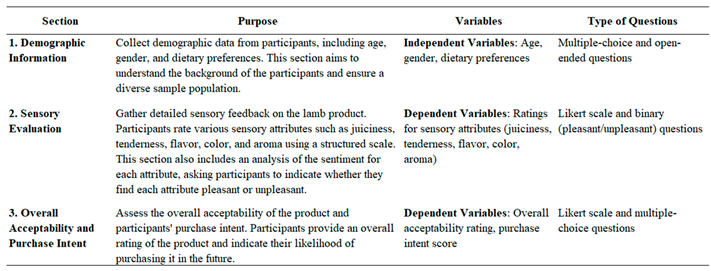
The consumption test form is divided into three distinct sections, each designed to capture specific aspects of the sensory evaluation of the innovative lamb product from the Churra Algarvia breed, as shown in Table 6.
In the sensory evaluation section, the need to analyze the sentiment of each attribute was identified through the symmetric plot analysis. Participants are asked to indicate whether they find each sensory attribute pleasant or unpleasant. This binary sentiment analysis provides additional insights into the overall sensory perception and consumer preferences. While the use of focus groups and the CATA methodology provided rich consumer-driven sensory data, the findings are limited by the small sample size and the regional specificity of the participants (see Figure 3). The descriptors generated may not fully represent broader consumer populations or cultural contexts.
Additionally, the absence of trained sensory panels may have constrained the precision of certain sensory characterizations. Future studies should consider integrating larger and more diverse consumer samples, as well as complementary descriptive analysis techniques. As shown by Llobell et al. [17], future applications of CATATIS could enhance the methodological rigor of consumer-based CATA studies by providing objective metrics of panel agreement and attribute reliability.
5. Conclusion
The robustness of the CATA methodology in consumer contexts is further supported by Liu et al. [1], who demonstrated that untrained participants could generate meaningful sensory profiles and preference data for cold tea infusions. Their study reinforces the value of consumer-centered sensory tools in product development and market positioning. The methodological strengths of CATA are further supported by Weerawarna et al. [3], who concluded that despite the potential of implicit methods, CATA remains a reliable and practical tool for capturing consumer emotional responses, particularly when clarity, consistency, and ease of implementation are priorities.
Our methodological choice to position the CATA task before hedonic evaluation is supported by Geffroy et al. [18], whose multi-product study demonstrated that this sequence improves the sensitivity of sensory profiling and strengthens the statistical linkage between product attributes and consumer preferences.
By structuring the form in this manner, we aim to obtain comprehensive data that will provide valuable insights into the sensory characteristics and market potential of the innovative lamb product from the Churra Algarvia breed. Using FGs to identify sensory descriptors proved effective for developing a consumer-relevant CATA form for sheep meat stews made from the Churra Algarvia breed. Despite identical base formulations, participants were able to differentiate samples based on the highlighted aromatic herbs. The descriptors generated reflect both objective sensory characteristics and subjective consumer attitudes, making the CATA form a powerful tool for tradition-based food innovation. This methodological direction is supported by Palazzo and Bolini [20], who emphasized that combining expert-derived descriptors with consumer-generated terms in Self-CATA enhances the sensitivity and consumer relevance of sensory tools, particularly in complex or culturally embedded food products. This is consistent with Lee and Ju [4], who demonstrated that CATA descriptors can effectively predict consumer acceptance and guide product development in plant-based bakery products. This approach supports product development and sensory differentiation of heritage-based culinary innovations. In line with Ciappini and Arias [6], CATA can be considered a valuable preliminary tool for sensory characterization, particularly when resources are limited, but should be complemented by descriptive analysis when aiming for precise product profiling. The CATA form can be applied in market tests and product development for other traditional foods. Furthermore, the findings resonate with those of José et al. [14], who highlighted that traditional processing techniques, such as smoking and the use of local herbs, can enhance both the nutritional profile and consumer acceptance of sheep meat products while ensuring compliance with food safety regulations. While Tuorila et al. [12] concluded that flavorings did not reduce salt preference in beef broth, our findings suggest that in culturally embedded products such as Churra Algarvia lamb stews, aromatic herbs may play a more nuanced role in shaping sensory perception and consumer acceptance. In particular, the inclusion of samphire not only enhanced the broth’s marine and salty character but also contributed positively to overall sensory acceptance, indicating its potential as a natural flavor enhancer in salt-reduction strategies.
Supplementary Materials
The following supporting information can be downloaded at the website of this paper posted on Preprints.org.
Author Contributions
Conceptualization, M.S. and J.P.; methodology, M.S.; software, M.S. and C.A.; validation, M.S., J.P. and C.A.; investigation, M.S. and J.P.; data curation, M.S., J.P. and C.A.; writing—original draft preparation, M.S.; writing—review and editing, M.S., J.P. and C.A.; visualization, M.S., J.P. and C.A.; supervision, M.S.; project administration, J.P.; funding acquisition, J.P. and M.S. All authors have read and agreed to the published version of the manuscript.
Funding
This research was funded by RRP (Recovery and Resilience Plan), grant number PRR-C05-i03-I-000237 (RevitAlgarve Project); This paper is financed by National Funds provided by FCT- Foundation for Science and Technology through project UIDB/04470/2020 with DOI 10.54499/UIDB/04470/2020 (https://doi.org/10.54499/UIDB/04470/2020).
Institutional Review Board Statement
Not applicable.
Informed Consent Statement
Informed consent was obtained from all subjects involved in the study.
Data Availability Statement
Not applicable.
Acknowledgments
We thank all the panelists of the Focus Groups and collaborating institutions of the RevitAlgarve project. This work contributes to preserving regional culinary identity and valorizing native livestock breeds in Portugal.
Conflicts of Interest
The authors declare no conflicts of interest
References
- Liu, S.-L.; Jaw, Y.-M.; Wang, L.-F.; Chuang, G.; Zhuang, Z.-Y.; Chen, Y.-S.; Liou, B.-K. Evaluation of Sensory Quality for Taiwanese Specialty Teas with Cold Infusion Using CATA and Temporal CATA by Taiwanese Consumers. Foods 2021, 10, 2344. [Google Scholar] [CrossRef] [PubMed]
- Afonso, C.M.; Serra, M.; Almeida, C.M.; Antonio, N. Real-Time Delphi questionnaire development at LimeSurvey: A Design Science Research approach. In Proceedings of the 2021 16th Iberian Conference on Information Systems and Technologies (CISTI); IEEE: Chaves, Portugal, June 23, 2021; pp. 1–6.
- Weerawarna N.R.P., M.; Godfrey, A.J.R.; Loudon, M.; Foster, M.; Hort, J. Comparing Traditional Check-All-That-Apply (CATA) and Implicit Response Time Go/No-Go Approaches for Profiling Consumer Emotional Response When Tasting Food. Food Quality and Preference 2023, 112, 105027. [Google Scholar] [CrossRef]
- Lee, J.; Ju, S. What Is the Relationship Between Sensory Attributes Identified Using CATA (Check-All-That-Apply) Questionnaire and Consumer Acceptance of Cookies Using Plant-Based Oils? Foods 2024, 13, 3593. [Google Scholar] [CrossRef] [PubMed]
- Gutiérrez, Y.; Chucuya, A. Formación de Panel de Cata Para La Evaluación Sensorial de Aceitunas de Mesa Negra Criolla: Un Enfoque En La Percepción de Atributos Sensoriales. Ingeniería Investiga 2024, 5. [Google Scholar] [CrossRef]
- Ciappini, C.; Arias, L. Perfil Sensorial y Check-All-That-Apply (CATA) Como Herramientas Para Evaluar Las Características Sensoriales de La Miel. Eunk 2023, 2, 28–37. [Google Scholar] [CrossRef]
- Jaeger, S.; Chheang, S.L.; Jin, D.; Ryan, G.; Ares, G. How Do CATA Questions Work? Relationship between Likelihood of Selecting a Term and Perceived Attribute Intensity. Journal of Sensory Studies 2023, 38. [Google Scholar] [CrossRef]
- Palazzo, A.; Bolini, H. Self-CATA: A New Consumer Test Approach with Descriptors Ranked by Stepwise Discriminant Analysis. Research, Society and Development 2023, 12, e7512742575. [Google Scholar] [CrossRef]
- Rodrigues, I.; Magalhaes, D.; Trindade, M. Use of Focus Group as Selection Method of Descriptors for Check-All-That-Apply (CATA) for Sensory Characteristics of Hot Dogs. Foods 2022, 11, 269. [Google Scholar] [CrossRef] [PubMed]
- Aung, T.; Kim, M.J.; Kim, B. Check-All-That-Apply (CATA)- and Rate-All-That-Apply (RATA)-Based Sensometric Assessment of Germinated-Wheat Beverages. Journal of Food Science and Technology 2023, 61, 1–10. [Google Scholar] [CrossRef] [PubMed]
- Guerreiro, A.; Rassal, C.; Afonso, C.M.; Galego, L.; Serra, M.; Rodrigues, M.A. Healthy, Tasty and Sustainable Mediterranean Food. UMAMI Taste and Polyphenols of Twiggy Glasswort (Salicornia Ramosissima). In INCREaSE - Proceedings of the 1st International congress on engineering and sustainability in the XXI century - INCREaSE 2017; Springer International Publishing, 2018; pp. 191–198 ISBN 978-3-319-70271-1.
- Tuorila, H.; Hellemann, U.; Matuszewska, I. Can Sodium Contents of Foods Be Reduced by Adding Flavors? Studies with Beef Broth. Physiology & Behavior 1990, 47, 709–712. [Google Scholar] [CrossRef] [PubMed]
- RiaFresh RiaFresh - Onde Comprar Available online: https://riafresh.com/onde-comprar/ (accessed on 20 May 2025).
- José, A.E.; Carvalho, H.H.C.; Nanelo, R.F.; Ncube, P.N.; Wiest, J.M. Production and Microbiological and Sensory Quality of Food Based on Sheep (Ovis Aries) Meat in an Agro-Ecological Family Farm. AJFST 2023, 11, 96–103. [Google Scholar] [CrossRef]
- Rodrigues, I.; Magalhaes, D.; Trindade, M. Use of Focus Group as Selection Method of Descriptors for Check-All-That-Apply (CATA) for Sensory Characteristics of Hot Dogs. Foods 2022, 11, 269. [Google Scholar] [CrossRef] [PubMed]
- TurboScribe TurboScribe.ai Available online: https://turboscribe.ai/pt/dashboard (accessed on 10 May 2025).
- Llobell, F.; Bonnet, L.; Giacalone, D. Assessment of Panel Performance in CATA and RATA Experiment. Journal of Sensory Studies 2024, 39. [Google Scholar] [CrossRef]
- Geffroy, O.; Maza, E.; Lytra, G.; Chervin, C. ‘Liking Then CATA’ or ‘CATA Then Liking’? Impact of the Hedonic Question Positioning on the Wine Sensory Description and Appreciation. OENO One 2024, 58. [Google Scholar] [CrossRef]
- Lumivero XLSTAT | Statistical Software for Excel Available online: https://www.xlstat.com/ (accessed on 28 May 2025).
- Palazzo, A.; Bolini, H. Self-CATA: A New Consumer Test Approach with Descriptors Ranked by Stepwise Discriminant Analysis. Research, Society and Development 2023, 12, e7512742575. [Google Scholar] [CrossRef]
- López-Pedrouso, M.; Rodríguez-Vázquez, R.; Purriños, L.; Oliván, M.; García-Torres, S.; Sentandreu, M.Á.; Lorenzo, J.M.; Zapata, C.; Franco, D. Sensory and Physicochemical Analysis of Meat from Bovine Breeds in Different Livestock Production Systems, Pre-Slaughter Handling Conditions, and Ageing Time. Foods 2020, 9, 176. [Google Scholar] [CrossRef] [PubMed]
- Park, M.K.; Choi, Y.-S. Effective Strategies for Understanding Meat Flavor: A Review. Food Science of Animal Resources 2025, 45, 165–184. [Google Scholar] [CrossRef] [PubMed]
- Brouwer, R.; Zhang, Y.; Scholten, E.; Forde, C.G.; Stieger, M. Influence of Juiciness on In Vivo Aroma Release and Perception of Plant-Based Meat Analogue and Beef Patties. J. Agric. Food Chem. 2025, 73, 9286–9296. [Google Scholar] [CrossRef] [PubMed]
- Domínguez, R.; Pateiro, M.; Purriños, L.; Munekata, P.E.S.; Lorenzo, J.M. 2 - Necessary Considerations for Sensory Evaluation of Meat Products: Quality Indicators of Meat Products. In Sensory Analysis for the Development of Meat Products; Lorenzo, J.M., Pateiro, M., Saldaña, E., Munekata, P.E.S., Eds.; Woodhead Publishing, 2022; pp. 31–50 ISBN 978-0-12-822832-6.
Figure 1.
Symmetric plot of MCA for sensory attributes of Churra sheep meat.
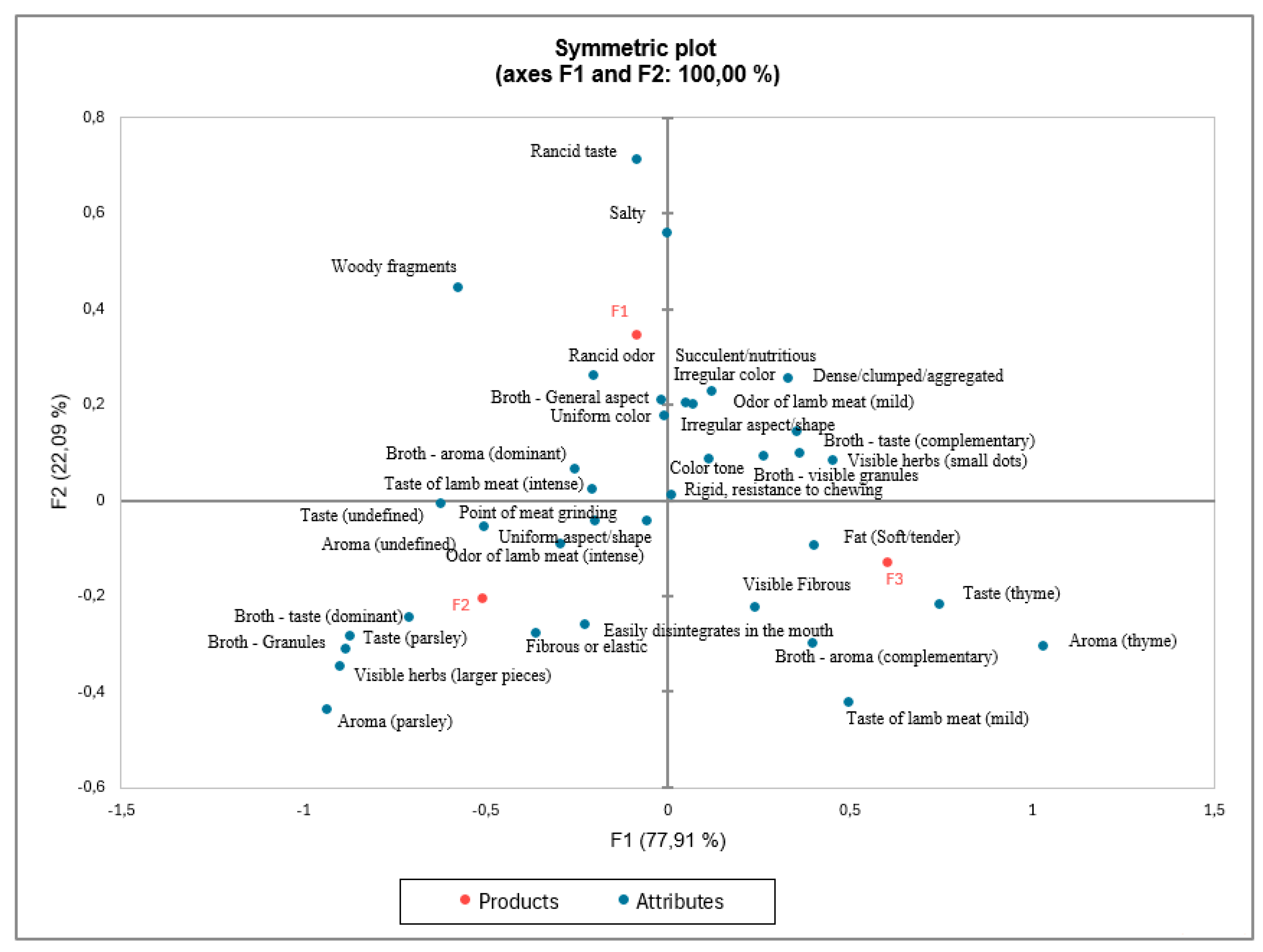
Figure 2.
Hierarchical cluster dendrogram of sensory descriptors derived from CATA responses using Ward’s method and Euclidean distance.
Figure 2.
Hierarchical cluster dendrogram of sensory descriptors derived from CATA responses using Ward’s method and Euclidean distance.
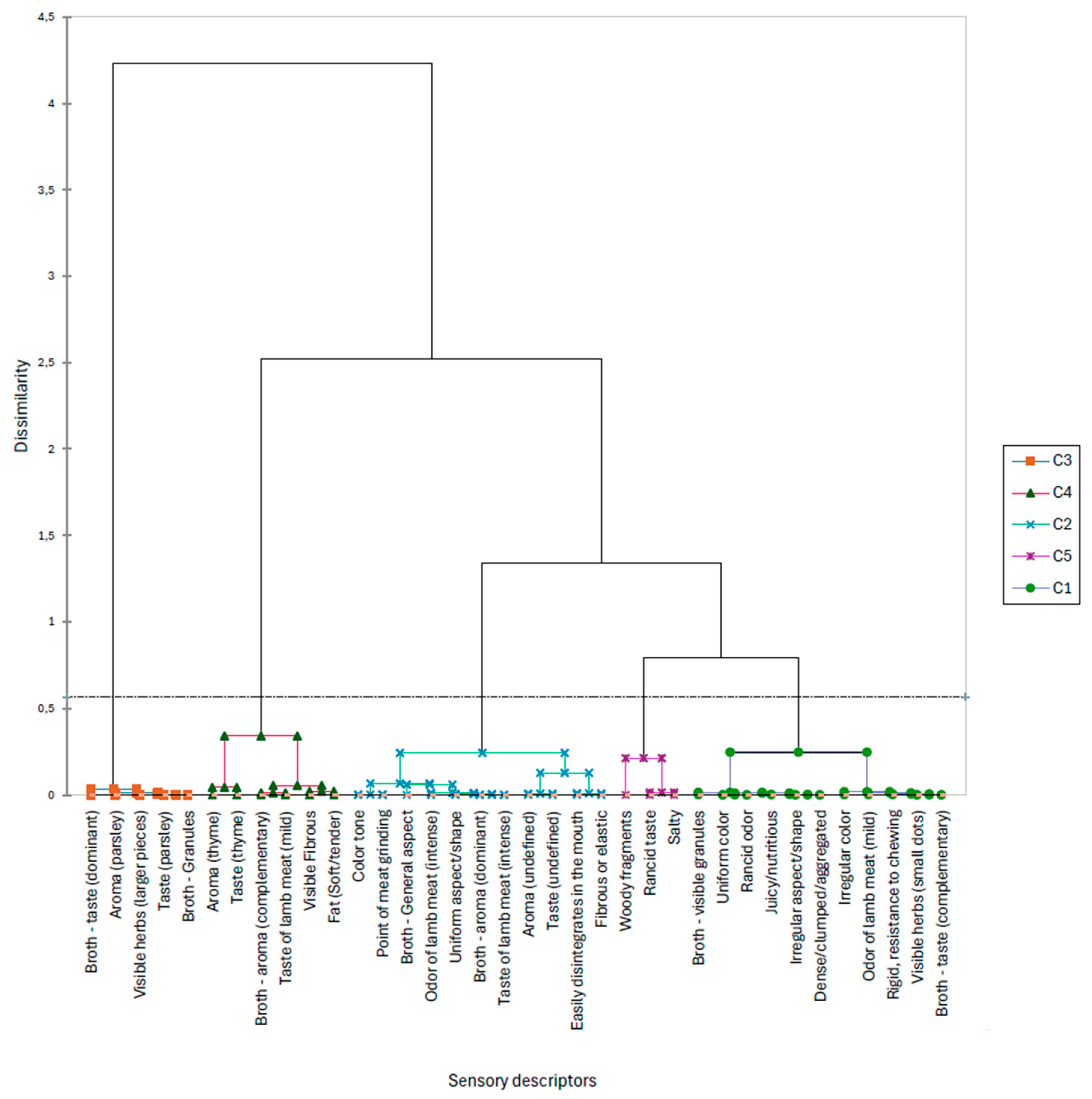
Figure 3.
CATA Sensory Tool for Heritage Ovine Stews.
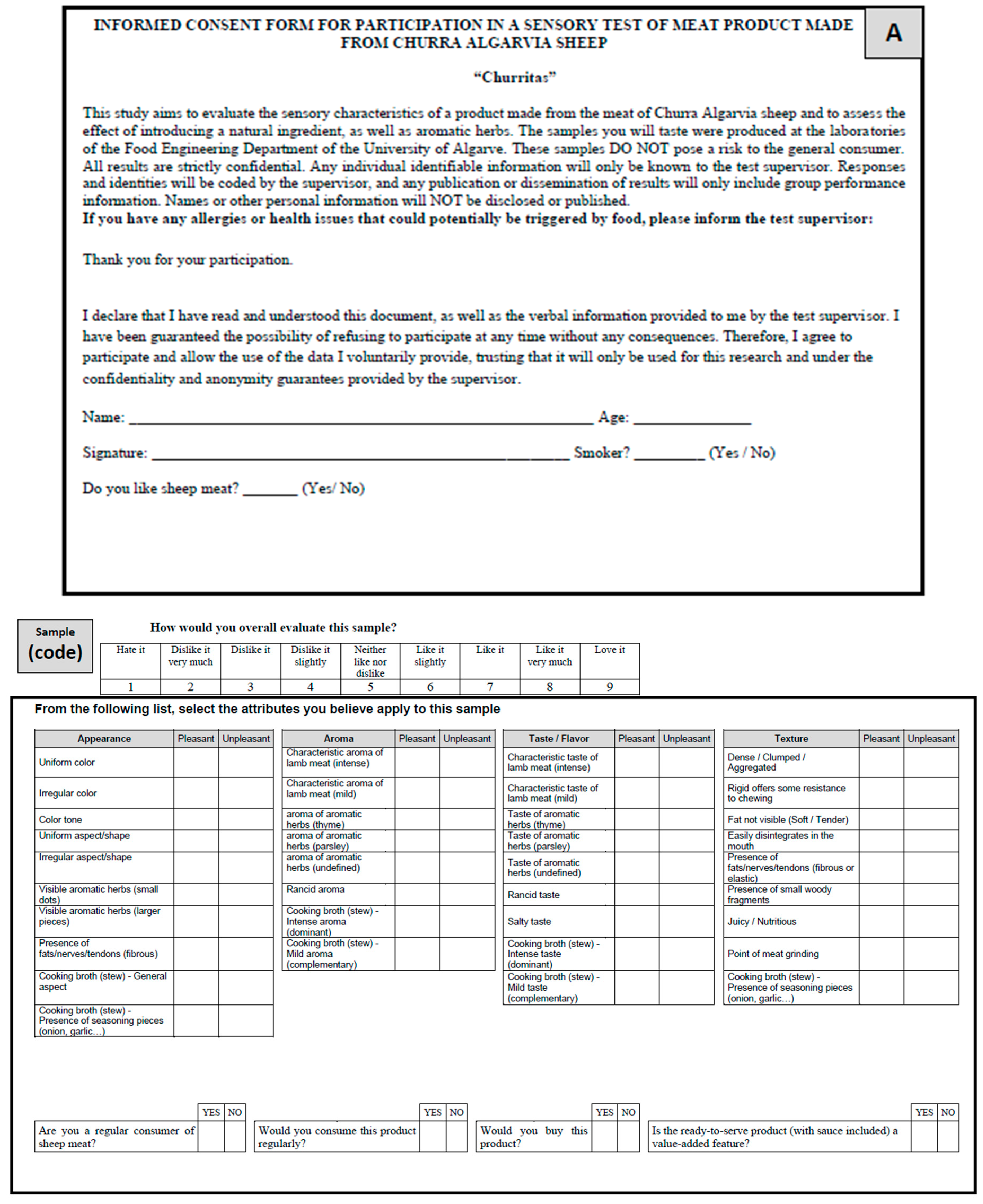

Table 1.
Formulations of “Churritas” - 20 units of 12 g.
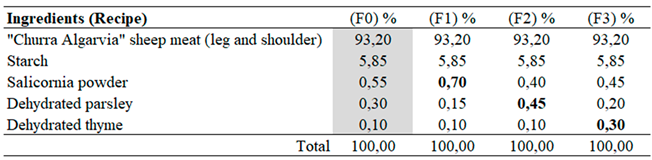 |
Table 2.
Formulation for the stew to cook 20 units - 1000 ml (1350 g).
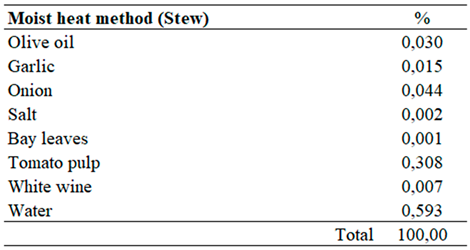 |
Table 3.
Six-stage process to elicit qualitative and sensory feedback.
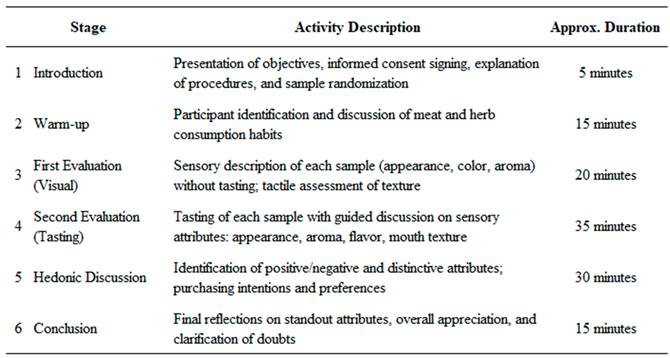 |
Table 4.
Descriptors selected to compile the CATA test list applied to “Churritas” with distinct formulations.
Table 4.
Descriptors selected to compile the CATA test list applied to “Churritas” with distinct formulations.
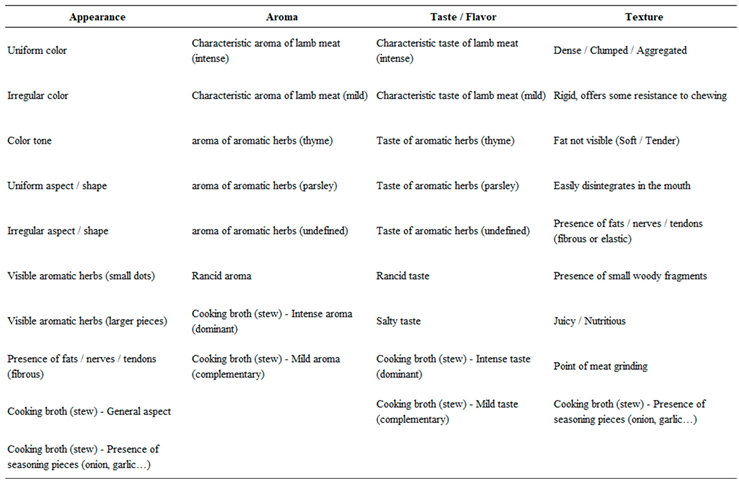 |
Table 5.
Sensory descriptor clusters derived from HCA, showing central descriptors, factor coordinates (F1 and F2), key sensory traits, and within-cluster variance.
Table 5.
Sensory descriptor clusters derived from HCA, showing central descriptors, factor coordinates (F1 and F2), key sensory traits, and within-cluster variance.
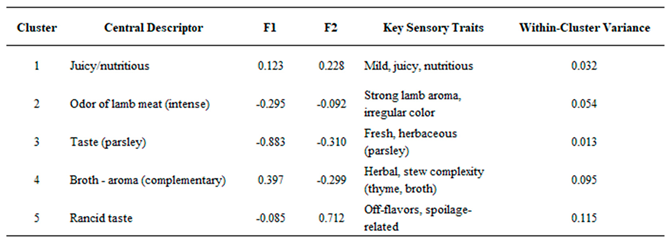 |
Table 6.
Structure and Purpose of the Consumption Test Form.
 |
Disclaimer/Publisher’s Note: The statements, opinions and data contained in all publications are solely those of the individual author(s) and contributor(s) and not of MDPI and/or the editor(s). MDPI and/or the editor(s) disclaim responsibility for any injury to people or property resulting from any ideas, methods, instructions or products referred to in the content. |
© 2025 by the authors. Licensee MDPI, Basel, Switzerland. This article is an open access article distributed under the terms and conditions of the Creative Commons Attribution (CC BY) license (http://creativecommons.org/licenses/by/4.0/).
Copyright: This open access article is published under a Creative Commons CC BY 4.0 license, which permit the free download, distribution, and reuse, provided that the author and preprint are cited in any reuse.


