1. Introduction to Liposomal Targeting
In the past decades, drug delivery has grown enormously with growing demands for precision and efficiency in drug delivery to sites of action. The new application of liposomal drug delivery systems has been a new approach in drug delivery research that gives numerous advantages such as enhanced bioavailability, the therapeutic index, and reduced side effects [
1,
2]. This lipid-based vesicular carrier has rich utility against the challenges facing traditional drug delivery, such as low solubility, systemic toxicity, and rapid clearance of APIs.
1.1. Need for Targeted Drug Delivery and Its Benefits
Targeted drug delivery is a highly innovative approach directed at enhancing the precision and specificity of therapeutic agents with minimal off-target effects [
3]. While traditional systems are mostly nonspecific in the way they distribute drugs throughout the body, targeted delivery uses strategic mechanisms to concentrate therapeutic agents at the desired site of action.
For example, the liposomal carrier offers encapsulation of hydrophilic as well as hydrophobic drugs, which provides protection against enzymatic degradation and early clearance in vivo [
2]. This has greatly ameliorated the basis of disease treatment and management; diseases include cancer infections, inflammatory conditions, et cetera. Besides this, targeted drug delivery enhances compliance in a patient since it decreases dosing frequency with the resultant improvement in patient outcomes [
1,
3].
Table 1.
Need for Targeted Drug Delivery and Its Benefits.
Table 1.
Need for Targeted Drug Delivery and Its Benefits.
| No. |
Key Points |
Details |
References |
| 1 |
Need for Targeted Drug Delivery |
Enhances precision and specificity of therapeutic agents with minimal off-target effects. |
[3] |
| 2 |
Limitation of Traditional Drug Delivery Systems |
Mostly nonspecific drug distribution throughout the body. |
[3] |
| 3 |
Mechanism of Targeted Drug Delivery |
Uses strategic mechanisms to concentrate therapeutic agents at the desired site of action. |
[3] |
| 4 |
Example: Liposomal Carrier |
Encapsulates hydrophilic and hydrophobic drugs, protecting them against enzymatic degradation and clearance. |
[2] |
| 5 |
Disease Applications |
Includes cancer, infections, inflammatory conditions, etc. |
[2,3] |
| 6 |
Patient Compliance |
Reduces dosing frequency, leading to improved patient outcomes. |
[1,3] |
1.2. Passive Targeting: Exploiting the Enhanced Permeability and Retention (EPR) Effect
Passive targeting is one of the basic principles of liposomal targeting, wherein the enhanced permeability and retention (EPR) effect facilitates its functioning. The tumor vasculature has a very peculiar architecture; it is marked by leaky blood vessels and poor lymphatic drainage. As a result of this, due to their nanoscale dimensions and biocompatibility, liposomes tend to naturally accumulate in such a manner that leads to site-specific drug delivery without requiring any active intervention [
9].
The EPR effect is particularly beneficial in oncology because it allows liposomal formulations to preferentially localize within tumor tissues, thus reducing damage to normal cells [
9]. Passive targeting, although efficient, is generally dependent on the pharmacokinetic and physicochemical properties of the liposomal carrier, making it important to optimize factors such as particle size, surface charge, and lipid composition.
1.3. Active Targeting Approaches and Receptor-Mediated Delivery
In addition to the successful use of passive targeting, active targeting strategies have been reported to be promising techniques in order to enhance specificity in drug delivery. Ligands like antibodies, peptides, or small molecules attached to the surface of a liposome selectively attach to receptors that are overexpressed on target cells [
13]. Receptor-mediated internalization by diseased cells ensures greater therapeutic efficacy.
For instance, folic acid-functionalized liposomes target folate receptors that are often overexpressed on tumor cells of various types of cancers, while immunoliposomes tagged with antibodies can deliver a chemotherapeutic agent directly to the tumor cells [
13]. Such developments speak of the need for molecular design at a molecular level in order to achieve precision and efficacy in drug delivery.
2. Targeting Strategies in Liposomal Systems
Increasingly, liposomal drug delivery systems are becoming interesting since they would enhance targeted delivery of therapeutic agents. Targeting strategies are the first priority so that their selectively interacting liposomal formulation will target with the definite nature of tissue or cell; this will enhance their efficacy and minimize their systemic side effects. The current chapter will discuss these two approaches in liposomal targeting: surface modifications for selective targeting and nanotechnology-based strategies for personalizing medicine.
2.1. Surface Modifications for Selective Targeting
Surface modification of liposomes has proven to be the prime approach in exploiting the targeting capabilities. Modulations of physicochemical properties change the ability of the liposomes to have selective association with the target cells and tissues. The method that most researchers provide in this matter is ligand-based modification where specific ligands are attached to the surface of liposomes. These ligands could be antibodies, peptides, or small molecules specific for overexpressed receptors of target cells [
11,
17]. The rationale is to make sure the liposomes will get endocytosed into target cells by receptor-mediated endocytosis.
For example, PEG-functionalized or antibody-functionalized liposomes may selectively accumulate within tumor tissues for an improved therapeutic outcome in cancer treatments [
11,
17]. Stealth liposomes, which are loaded with PEG molecules, reduce their recognition by the immune system to prolong circulation times and increase the chances of delivering drugs to target sites.
Another major surface modification is the application of cationic liposomes, which are taken up by negatively charged cells with much greater efficiency. This has found particular application in drug delivery to cancerous cells. Such modifications ensure that the liposomal formulation is stable in circulation and very selective for the target. Liposomes have emerged as a very essential tool in advanced drug delivery systems [
8].
2.2. Personalized Care with Nanotechnology-Based Targeting
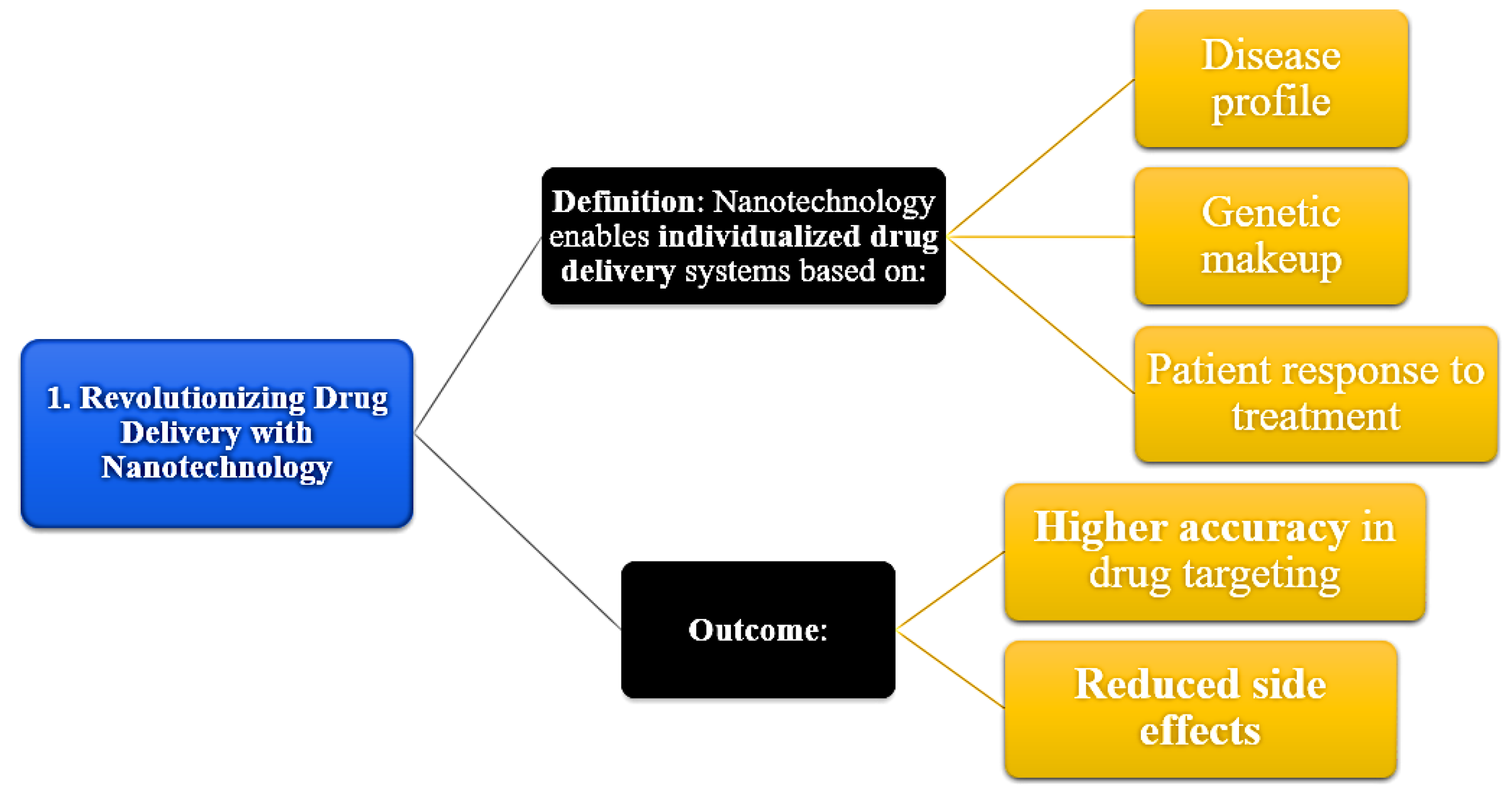
The science of nanotechnology has revolutionized targeted drug delivery systems, more so with the advent of liposomes. The nanotechnology approach offered by personalized medicine adapts the drug delivery to an individual’s profile of disease, genetic makeup, and response to treatment [
9]. This holds promise to deliver significant improvement in drug delivery accuracy, thus providing a better therapeutic result with reduced side effects.
Tailoring nanoparticles for a specific kind of disease is one of the promising approaches that are underway to target diseases by the use of nanoparticles. Nanoparticles have proven to be one of the excellent drug delivery systems where drugs encapsulated in liposomes can reach the site of the disease. For example, liposomes loaded with drugs comprising chemotherapeutic drugs are engineered to encapsulate molecular markings that would selectively identify only cancerous cells. This will, therefore, restrict the delivery of drugs to the site of the tumor sparing normal tissue [
9,
10]. New developments in nanotechnology could open new avenues for more effective targeted therapies against tumors with clearer genetic profiles, paving the way for the better treatment of diseases such as cancer, autoimmune diseases, and neurological disorders.
Furthermore, multicomponent liposomes integrate various targeting strategies into one single entity, including receptor targeting, gene therapy, and controlled release mechanisms. Liposomes can be designed precisely to address the needs of an individual patient depending on the rate of disease progression, genetic mutations, and environmental conditions, thus making them more personalized treatment approaches [
3,
10].
Figure 1.
General understandings of Modern Drug Delivery.
Figure 1.
General understandings of Modern Drug Delivery.
3. Clinical Applications of Liposomal Drug Delivery
Liposomal drug delivery systems have a great potential, which has been realized in a variety of clinical settings through the targeted exposure to specific tissues and limited systemic side effects. Their applications have been very broad and widespread throughout a range of therapeutic areas-from oncology and pulmonary diseases to infectious diseases and even alternative medicine. It is in this light that the chapter interprets the broad spectrum of clinical applications of liposomal formulations, where such versatility and possibility for improvement are found.
3.1. Oncology: Liposomal Formulations for Chemotherapy
Liposomal drug delivery has influenced the treatment of cancer, especially in chemotherapy. Conventional chemotherapy drugs are toxic to both normal and cancerous tissues, thus leading to a very severe side effect such as nausea, fatigue, and immunosuppression. In contrast, liposomal formulations allow the incorporation of chemotherapeutic agents in a lipid bilayer that enhances the stability and solubility of the drug and also allows for targeted delivery at the tumor sites.
Probably the best example of liposomal chemotherapy formulations is Doxil
®, the liposomal formulation of anthracycline doxorubicin. The EPR effect endows this liposomal formulation with increased ability to accumulate in tumor tissues and at the same time drastically reduces the cardiotoxicity associated with the free doxorubicin [
2,
12]. Targeted delivery will increase the therapeutic index of the drug, killing more tumor cells while the minimum amount of nontargeted healthy tissue is affected. Liposomal systems can also encapsulate a wide range of chemotherapeutic agents including poor water-soluble ones, thus expanding the scale of cancer treatments.
3.2. Naso-Pulmonary Drug Delivery Systems for Respiratory Health
Improvements in the system of liposomal drug delivery have led to more effective conditions and management regarding asthma, COPD, or infection in lungs. The utilization of this advanced liposomal formulary is enabled with naso-pulmonary delivery of drug in the drugs administered directly within the lungs to attain high doses directly at the action site thus excluding systemic injection and side effects caused by this medication.
For instance, corticosteroids and bronchodilators have been incorporated into liposomes for increased stability and bioavailability in lung tissues. In addition, liposomal formulation prevents drugs from enzymatic pulmonary degradation because it could ensure release of these drugs and enhance therapeutic outcome [
4]. These types of drug delivery systems also promise the delivery of antibiotics for the treatment of respiratory infections with improved intrapulmonary penetration and enhanced clinical outcome for patients.
3.3. Liposomal Antibiotics for Overcoming Resistance and Enhancing Bioavailability
Antibiotic resistance is one of the biggest modern medical concerns that have made what were once routinely treatable, common bacterial infections increasingly difficult. Liposomal formulation of antibiotics therefore holds promise and improves the drug’s bioavailability and targeted delivery to the infected site.
The liposomal antibiotics may better penetrate the bacterial biofilms, and improve the penetration of drugs within the intracellular pathogens, overcoming some of the limitations of the conventional antibiotic therapy [
14]. Liposomal formulations further reduce the systemic toxicity related to the traditional antibiotics and make their increased dosages use at the site of infection without causing damage to other tissues. Several studies about its usage are done, and it has shown promising results in conditions like tuberculosis and pneumonia and also in sepsis [
6].
3.4. Chewable and Effervescent Liposomal Drug Delivery Systems
The development of chewable and effervescent liposomal formulations is one of the most innovative drug delivery areas. In effect, it combines the advantages of liposomal encapsulation with the ease of administration as chewable tablets and effervescent formulations, which are very useful for pediatric and geriatric populations.
Formulations for drugs that are unpleasantly or difficultly administered in any other way can be conveniently done through chewing tablets containing a liposomal preparation. Another convenient easy-to-swallow route of drug administration for the liposomal form is effervescent formulations, which dissolve quickly in water to form a solution. This has been specially helpful for drugs requiring rapid absorption such as analgesics and antipyretics. They have exhibited better bioavailability than the equivalent conventional formulations [
5,
7].
Table 2.
Chewable and Effervescent Liposomal Drug Delivery Systems [
5,
7].
Table 2.
Chewable and Effervescent Liposomal Drug Delivery Systems [
5,
7].
| No. |
Key Points |
Details |
| 1 |
Definition |
Combines liposomal encapsulation benefits with ease of administration as chewable tablets and effervescent formulations. |
| 2 |
Target Populations |
Particularly useful for pediatric and geriatric populations. |
| 3 |
Chewable Liposomal Tablets |
Convenient for drugs that are unpleasant or difficult to administer via other routes. |
| 4 |
Effervescent Liposomal Formulations |
Dissolve in water to form a solution, providing an easy-to-swallow and quick-administration route. |
| 5 |
Applications |
Particularly effective for drugs requiring rapid absorption, such as analgesics and antipyretics. |
| 6 |
Enhanced Bioavailability |
These formulations have shown better bioavailability compared to equivalent conventional formulations. |
3.5. Application in Herbal Formulations for Urolithiasis
Herbal remedies have been in use for a long time for the treatment of different conditions, and one of the common kidney stone disorders is urolithiasis. New advances in liposomal drug delivery systems have allowed for the successful use of herbal compounds. A medicinal plant used as a diuretic and anti-inflammatory is Tribulus terrestris. Liposomal formulations of this medicinal plant have enhanced its bioavailability and therapeutic effects.
The liposomal encapsulation of the herbal extracts especially targets delivery to the kidneys and improves the therapeutic effects with minimal risk of side effects associated with herbal medicines. This is also improving the solubility and stability of herbal compounds, which have little or no solubility in water, and ensures that the release of herbal compounds will be sustained and effective in treating urolithiasis [
8,
15].
4. Future Directions in Liposomal Drug Delivery
The evolution in drug delivery systems based on liposomes revolutionized the pharmaceutical world. And that is not all. The march ahead continues, and with continuous innovation of technology, liposomes find themselves at the heart of emerging innovative drug delivery strategies in precision medicine and addressing the resolution of many unmet clinical needs. The following sections will outline the emerging trends in drug delivery through liposomes and potential to address problems of personalized therapy as well as untreated health conditions.
4.1. Emerging Trends in Precision Medicine
Precision medicine, also known as personalized medicine, refers to the tailoring of medical treatment to individual characteristics such as genetics, environment, and lifestyle. Liposomal systems have therefore been increasingly recognized to really enable precision medicine; helping in a rather deliverable pathway towards the customized drug delivery solution so as to enhance the therapeutic outcome.
New addressable liposomal formulations are designed to deliver drugs to target tissues as specific as each patient’s needs at a time. This reduces the adverse side effects that broad-spectrum drugs are often associated with and increases the overall therapeutic efficacy because it is made sure that it reaches the target tissue or organ with accuracy. Nanotechnology is behind such developments with nanoparticles designed to carry drugs and targeting moieties which specifically recognize the biomarkers of disease.
This results in surface-labeled liposomes possessing targeting ligands, monoclonal antibodies or aptamers, with an ability to target specific cells or tissues, including in cancer treatment - tumor cells - by mediator of receptor-dependent endocytosis [
9,
10]. This enhances the dosing levels without toxicities but with high therapeutic impact potential of such drugs, for instance in oncology, neurology and genetic diseases.
4.2. Liposomal Systems in Addressing Unmet Clinical Needs
There is still largely a ready supply of unmet clinical needs except in the field of drug delivery, where gigantic strides have been achieved. Liposomal systems can answer these scattered domains of chronic diseases, infections, and rare genetic disorders. This will offer scope for improvement in the treatment of the disease as drugs will be better soluble, bioavailable, and targeted due to the liposomal formulations.
The drug delivery system with low bioavailability uses liposomes to allow increased absorption of drugs and subsequent distribution in the body. In neurological conditions, such as Parkinson’s disease, the liposome formulations have been beneficial in crossing the blood-brain barrier, one of the biggest challenges in neurotherapeutics. Similarly, liposomes can make diseases that have lifelong treatment modalities, such as chronic pain and rheumatoid arthritis, tolerable by having extended-release drug capabilities, therefore encouraging compliance by fewer injections and thereby improving quality of life.
Besides, the liposomal systems have been used as new therapeutic agents for diseases that are not adequately treated by the drugs currently in use. This is in the form of liposomal antifungals or antivirals that may be able to breach any drug resistance barrier. Additionally, the formulation of peptide or protein-based drugs in a liposomal preparation offers a pathway for the delivery of biologics that would otherwise degrade in the body or provoke immunogenic responses [
3,
16].
5. Final Perspectives
Further, it has been realized that liposomal drug delivery systems are evolving as a revolutionary approach to targeted and effective delivery systems of drugs for therapeutic agents. Based on the versatility and biocompatibility of liposomes, in my understanding, these systems have filled the gap between innovative research and clinical practice and represent a paradigm shift in modern therapeutic strategies. This ability, including structurally varied molecules of drugs in the broad space of anticancer drugs, or antibiotics, etc, has greatly proven to benefit therapeutic efficacies while cutting untoward side effects, most importantly including oncology as well as infectious diseases [
12,
15].
Future surface functionalization and PEGylation of liposomes promise to hold even more efficacious applications based on active targeting and longer times in circulation. This is with the realization of concepts of precision medicine that move closer to current practice through therapeutic strategies tailored toward individual patient-specific profiles. Nanotechnology itself within liposomes formed new pathways for drug control and selective delivery that filled important clinical unmet needs [
9,
10].
The ease of liposomal formulations ensures their applicability in response to new challenges in drug delivery in the future. Gene therapy, nanomedicine, and herbal preparations are found robust platforms for the extension of drug therapeutic horizons through liposomes. The use of liposomes with innovative dosage forms like chewable and effervescent tablets further places them as a cornerstone to modern therapeutic development [
3,
16].
In short, this is the gap that needs to be filled between high-level research and real-world clinical applications that would unlock the complete human potential in these liposomal drug delivery systems. Then, the systems would continue bettering patient outcomes through provision of targeted and tailored solutions for better quality of life across diverse therapeutic domains [
12,
15,
18].
Conclusions
This appears to be a revolutionary method as drugs are indeed delivered effectively and accurately in liposomes. Since such liposomes bring with a special group of characteristics, for instance, a structure of the phospholipid bilayer or biocompatibility and the potential encapsulation for almost any agent of therapeutical agent in question, then these systems indeed improve significantly both the bioavailability of the given drugs and a reduction of a systemic toxicity to a minimal state. This review reflects the progress and innovations of the liposomal formulation through surface modifications, PEGylation, and incorporation with nanotechnology in reframing the definition of precision therapy and providing roads to personalized treatment.
The versatility of liposomes places them at the core of modern drug delivery compared with nanoparticles and other vesicular systems. The scope of liposomal systems is as versatile as it is in their clinical applications, such as oncology and infectious diseases, naso-pulmonary therapies, and herbal formulations. Scalability, stability, and regulatory pathways remain major limitations, but relentless advancement is pushing liposomal innovations toward impactful clinical solutions.
This long-standing unmet clinical need in the future will be bridged through advanced precision medicine and targeted therapies in the application of liposomal drug delivery systems. This bridge from research to a clinical application drug delivery is likely to hold a bright future with better treatment outcomes with patients and will, in turn be better for treatments in the future.
References
- Sengar, A. (2023). Targeting methods: A short review including rationale, goal, causes, strategies for targeting. International Journal of Research Publication and Reviews, 4(8), 1379-1384. ISSN 2582-7421.
- Jagrati, K. M., & Sengar, A. (2024). Liposomal vesicular delivery system: An innovative nano carrier. World Journal of Pharmaceutical Research, 13(13), 1155-1169. [CrossRef]
- Prajapati, R. N., Jagrati, K., Sengar, A., & Prajapati, S. K. (2024). Nanoparticles: Pioneering the future of drug delivery and beyond. World Journal of Pharmaceutical Research, 13(13), 1243-1262.
- Sengar, A., Jagrati, K., & Khatri, S. (2024). Enhancing therapeutics: A comprehensive review on naso-pulmonary drug delivery systems for respiratory health management. World Journal of Pharmaceutical Research, 13(13), 1112-1140.
- Sengar, A., Vashisth, H., Chatekar, V. K., Gupta, B., Thange, A. R., & Jillella, M. S. R. S. N. (2024). From concept to consumption: A comprehensive review of chewable tablets. World Journal of Pharmaceutical Research, 13(16), 176-189.
- Sengar, A., Yadav, S., & Niranjan, S. K. (2024). Formulation and evaluation of mouth-dissolving films of propranolol hydrochloride. World Journal of Pharmaceutical Research, 13(16), 850-861.
- Sengar, A., Tile, S. A., Sen, A., Malunjkar, S. P., Bhagat, D. T., & Thete, A. K. (2024). Effervescent tablets explored: Dosage form benefits, formulation strategies, and methodological insights. World Journal of Pharmaceutical Research, 13(18), 1424-1435.
- Sengar, A., Saha, S., Sharma, L., Hemlata, Saindane, P. S., & Sagar, S. D. (2024). Fundamentals of proniosomes: Structure & composition, and core principles. World Journal of Pharmaceutical Research, 13(21), 1063-1071.
- Sengar, A. (2024). Precision in Practice: Nanotechnology and Targeted Therapies for Personalized Care. Preprints. [CrossRef]
- Sengar, A. (2024). Precision in practice: Nanotechnology and targeted therapies for personalized care. International Journal of Advanced Nano Computing and Analytics, 3(2), 56–67.
- Sengar, A. (2025). Innovations and Mechanisms in Liposomal Drug Delivery: A Comprehensive Introduction. Preprints. [CrossRef]
- Sengar, A. (2025). “Liposomal Drug Delivery Systems: An Intro as a Primer for Advanced Therapeutics.” Preprints. [CrossRef]
- Sengar, A. (2025). Targeting Strategies in Liposomal Drug Delivery. Preprints. [CrossRef]
- Sengar, A., Chatekar, V. K., Andhare, S. B., & Sharma, L. (2025). Clinical pharmacology of antibiotics: Mechanisms, therapeutic uses, and resistance patterns. World Journal of Pharmaceutical Research, 14(1), 1531–1545. [CrossRef]
- Sengar, A. et al. (2025). Advancing urolithiasis treatment through herbal medicine: A focus on Tribulus terrestris fruits. World Journal of Pharmaceutical Research, 14(2), 91–105.
- Sengar, A. (2024). Liposomes and beyond: Pioneering vesicular systems for drug delivery. Preprints. https://www.preprints.org/manuscript/202412.2230/v1.
- Sengar, A. (2025). Innovations and mechanisms in liposomal drug delivery: A comprehensive introduction. Journal of Emergency Medicine Open Access (J Emerg Med OA), 3(1), 01-05.
- Sengar, A. (2025). Next-generation liposomal drug delivery systems: Core principles, innovations, and targeting strategies. Preprints. [CrossRef]
|
Disclaimer/Publisher’s Note: The statements, opinions and data contained in all publications are solely those of the individual author(s) and contributor(s) and not of MDPI and/or the editor(s). MDPI and/or the editor(s) disclaim responsibility for any injury to people or property resulting from any ideas, methods, instructions or products referred to in the content. |
© 2025 by the authors. Licensee MDPI, Basel, Switzerland. This article is an open access article distributed under the terms and conditions of the Creative Commons Attribution (CC BY) license (http://creativecommons.org/licenses/by/4.0/).