

Submitted:
22 January 2025
Posted:
23 January 2025
You are already at the latest version
Abstract
New chemical entities are consistently being investigated in antimalarial drug discovery and they require animal models for toxicity and efficacy testing. Murine models in searching for novel antimalarial drugs are inevitable because they show unique similarities to human physiology during malaria pathogenesis. Therefore, they provide a preclinical basis (following in vitro assessments of newly identified lead compounds) for further assessment in the drug development pipeline. Specific mouse strains, non-humanized and humanized, have successfully been infected with rodent Plasmodium species and the human Plasmodium falciparum respectively. Infected mice provide a platform for the assessment of treatment options being sought. In vivo pharmacokinetic evaluations are necessary when determining the fate of new lead compounds in addition to the efficacy assessment of these chemical entities. This review highlights specific murine models important for antimalarial drug discovery and their resultant critical in vivo pharmacokinetic, safety, and efficacy assessments necessary for making appropriate choices of lead compounds.
Keywords:
Antimalaria
; Drug Discovery
; Efficacy Assessments
; Murine Models
; Pharmacokinetics
1. Introduction
The Global Technical Strategy for Malaria has maintained a responsibility to facilitate the global eradication of malaria through salient measures [1]. A major driver of malaria elimination is the control efforts galvanized into achieving great strides in the global eradication pursuit [2]. Essential to global control efforts are the tools embraced for the fight, including modern diagnostic, prophylactic, and treatment measures [2]. As a key factor of the treatment measure, the effectiveness of existing medications has seen a decline over the years as a result of drug resistance [3]. This has posed a notable challenge and has influenced unrelenting continuous efforts towards the discovery and development of new antimalarial drugs [4]. The discovery and development of new antimalarial entities focuses on evading the drug resistance hurdle and embracing increased effectiveness with easily suitable dosage regimens [5]. Novel drug entities are also being discovered based on specific targets and newly identified mechanisms of action [6,7]. Potent novel entities are prioritized based on their fast antimalarial action and capacity to evade drug resistance hurdles determined by their pharmacodynamic and pharmacokinetic profiles [8].
Due to the significant amount of time required to begin the antimalarial drug discovery process from natural sources, modern antimalarial drug discovery has employed computational and technological tools to develop computer-aided potential antimalarial compounds by virtual screening as an initiation into the drug discovery pipeline [8,9]. The discovery of new chemical entities through high throughput screening of thousands of potentially active compounds is also an initiation into the drug discovery pipeline [8,9,10]. In silico-based predicted ligands are prioritized based on their predicted binding affinity to specific target proteins and the molecular dynamics associated with the ligand interactions [11]. Predicted pharmacokinetic and physicochemical properties aid in filtering through identified hits that should proceed to be active early lead compounds [9]. Early leads then undergo lead optimization procedures, and the successful ones proceed to late leads. Once optimized and passing all required tests as outlined by the Medicine for Malaria Ventures (MMV) conducted in vivo, the resulting compounds may proceed as antimalarial preclinical candidates (Figure 1) [5].
Animal models (in vivo) are part and parcel of the antimalarial drug discovery venture [5]. Hamsters (Mesocricetus auratus), mice (Mus musculus), rats (Rattus norvegicus), dogs (Canis lupus familiaris), and monkeys (Macaca mulatta) (Figure 2) are commonly employed as animal models during the drug discovery process for pharmacokinetic studies and humanized mice for efficacy studies [5,12,13]. The animal model of choice for in vivo evaluations depends on the similarity of the target protein between the animal model parasite and the human parasite [14]. These models are necessary to predict drug responses in humans [15]. Nevertheless, murine (mice) models are considered more accessible and versatile, hence their preference over other animal species in early drug discovery [14,16].
The discovery of new antimalarials employs the use of murine models for investigative purposes, including efficacy, vaccine development, safety, and so on; this program dates back decades ago [17]. Human physiology and genetics are closely related to murine models providing many opportunities to explore malaria research [18]. Humans and mice share 99% similar conserved regions of their genome [19]. Understanding murine responses in host-pathogen interactions during malaria infection or drug discovery provides insights into the possible parallel outcomes in humans especially when murine strains are passaged with the matching Plasmodium strain [18]. Genetic engineering also easily manipulates rodents to produce transgenic strains, especially humanized mice models which are easily adaptable to different experimental designs in malaria research [20]. Despite the similarities between humans and murine, there are specific differences such as P. berghei hepatocytic development occurring faster than P. falciparum hepatocytic development [21].
Some of the advantages of murine models over other animal species used in antimalarial drug discovery include:
- Mice genes can be easily manipulated [18].
- This animal model is miniature-sized and can be handled easily [23].
- Mouse models are easily affordable [23].
- Immune responses to Plasmodium infection in murine models is widely used to understand that in human Plasmodium infection owing to their well-defined immune system [20].
Four Plasmodium species central to murine infection are Plasmodium berghei, Plasmodium chabaudi, Plasmodium vinckei, and Plasmodium yoelii. These parasite species share certain conserved regions with Plasmodium falciparum, although these parasites share stage-specific differences in their intraerythrocytic development within the host [24]. P. berghei and P. yoelii are phylogenetically related and infect mature erythrocytes [24,25]. P. berghei and P. yoelii infect murine through the invasion of reticulocytes [26,27]. P. berghei. P. vinckei and P. yoelii are lethal murine parasites unlike P. chabaudi [25,28]. P. yoelii exterminates its host within one week of infection but the murine mortality rate of P. vinckei infection varies according to the strain involved [25,29]. P. yoelii is commonly used to evaluate liver/pre-erythrocytic stage Plasmodium activities in rodents [30,31]. Overall, the rodent malaria models are more straightforward to use for drug discovery than for vaccine development, as it is easier to protect mice from malaria infection than humans [32].
2. Current Murine Models Used in Antimalarial Drug Discovery
Most rodent species used in malaria research are inbred strains owing to the uniformity obtained from individual experimental outcomes, especially in antimalarial drug discovery [33,34]. Although outbred strains are widely used, their diversity from humans continues to inspire more adventure in the use of humanized mice strains [20].
Mice are either susceptible or resistant to Plasmodium infections and their resistance may indicate non-lethality of the parasite to mice or late mortality [35]. Screening of novel compounds that consider the fatality of cerebral malaria also requires the use of murine models susceptible to cerebral malaria pathogenesis [36]. Different strains of mice important to antimalarial drug discovery are highlighted in this review.
2.1. Inbred Mice
Plasmodium-infected Bagg Albino c (BALB/c) mice are widely used in malaria research, from understanding the gut microbiome and its relationship with malaria pathogenesis over vaccine development to the discovery of new chemical entities in ethnomedicine and more [37,38,39]. BALB/c mice are albino and inbred strains, photophobic, and possess a lengthy reproductive threshold [40,41]. Mortality in these mice is delayed until high parasitemia is reached, and they are resistant to cerebral malaria [20,42]. These mice can be infected with the different rodent Plasmodium species and could be used in the efficacy studies of new chemical entities for antimalarial drug discovery (Table 1).
AKR/J inbred mice are resistant to P. berghei infection therefore, they are rarely considered models for in vivo antimalarial efficacy testing in drug discovery [43,44].
C3H/HeJ is an immunocompetent inbred strain susceptible to both P. berghei and P. chabaudi malaria that has displayed reduced responses to chloroquine treatment but efficacious responses to dihydro triazines and biguanides in the treatment of babesiosis and malaria [45,46,47]. This strain of mice is more commonly associated as a model for babesia research than malaria [48].
CBA mice are an inbred strain susceptible to P. berghei infection. They are commonly used as a model for cerebral malaria because they are genetically predisposed to it at hypoparasitemic conditions even when infected with other rodent strains including P. chabaudi and P. yoelii [43,49].
SJL/J is an inbred mouse strain susceptible to P. berghei and P. chabaudi . P. berghei infection may lead to severe malaria and, consequently, cerebral malaria but in an asymptomatic condition [36,50]. This strain may be considered a murine model for screening of lead compounds in antimalarial drug discovery.
C57BL/6 mice are commonly used inbred strains in antimalarial drug discovery programs. They have a competent immune system, and they are also called ‘B6” [51,52,53,54]. C57BL/6 were successfully inoculated with P. falciparum. Hence, they are recommended for use in antimalarial drug discovery [52]. They are also widely used as a model of human cerebral malaria and immunological responses to malaria. They are resistant to P. chabaudi malaria [20,24,55,56].
DBA/2J mice are inbred strains rarely used as models in antimalarial drug testing but they have been explored for neurological experiments. However, they are resistant to cerebral malaria but susceptible to P. berghei infection [42,43,45,57]. This mouse strain has also been infected with other rodent parasite strains, including P. yoelii, P. chabaudi, and P. vinckei making it suitable for drug screening [43,45].
2.2. Outbred Mice
Swiss Webster is a widely used outbred mouse susceptible to P. berghei, P. chabaudi and P. yoelii infection and is currently still used in the determination of in vivo efficacy of new chemical entities [58]. This outbred strain also manifests cerebral malaria in severe parasitemia cases which is also considered in treatment development [59]. Transgenic parasite lines of P. berghei have also been explored in this mouse model [60].
Institute of Cancer Research (ICR) mice are outbred and highly susceptible to P. chabaudi infection as they are to P. berghei [56,61]. They are commonly used as a model for the in vivo screening of potential antimalarial molecules obtained from plant sources [62,63,64]. These mice also manifest cerebral malaria in severe cases [36].
CD1 mice are Swiss-based outbred strains susceptible to multiple rodent Plasmodium species [13]. This mouse strain is employed to evaluate the pharmacokinetic properties and the safety of novel lead compounds [13,65].
Naval Medical Research Institute (NMRI) mice are outbred strains susceptible to P. berghei infection [66,67]. In NMRI mice, P. berghei parasite development occurs exponentially. Therefore, the efficacy of new chemical entities can be estimated suitably in this mouse model [67]. Hepatic-stage Plasmodium infection is also assessed using this model which could mean inoculation of transgenic parasites [68]. NMRI mice are also models for cerebral malaria pathogenesis from P. berghei or P. yoelii infection [36].
2.3. Humanized Mice
Humanized mice are now the order of the day in antimalarial drug discovery because of their potential for being engrafted with human cells at immunocompromised conditions while also knocking in human genes into the mouse genomes. Therefore, more effectively representing human physiology for treatment purposes [69].
NOD/SCID/gamma (c) (null), known as NOG mice, are immunocompromised and void of essential lymphocytes like the B and T cells although macrophages remain present [70]. Meanwhile, macrophages have emerged as critical natural protective agents in malaria pathogenesis in humans which can now be assessed in this mouse strain [71]. These human model mice can be engrafted with human Plasmodium parasites for novel therapeutic studies, as well as the evaluation of pharmacological parameters [72].
NOD.Cg-Prkdcscid Il2rgtm1Wjl/SzJ mouse strain, similar to NOG, is susceptible to both P. falciparum and Plasmodium vivax. They are helpful for the efficacy determination of new chemical entities against P. falciparum. Efficacy can also be evaluated against liver-stage hypnozoites characterized by P. vivax infection [73,74].
FRG NOD huHep mouse is a model for the human chimeric liver in P. falciparum malaria research. They have aided the understanding of P. falciparum pathology transiting from hepatic to erythrocytic stage development, which presents a platform for novel antimalarial screening [75].
5xfad mice is a transgenic mouse model that is predisposed to Alzheimer's disease as they are characterized by the presence of some amyloid plaques [76]. Cerebral malaria has been hypothesized to be associated with apolipoprotein-mediated amyloidosis, whose pathogenicity may also be observed in Alzheimer’s disease [77]. Elevated levels of apolipoprotein are observed in the mouse brain during cerebral malaria pathogenesis, that could result in neurological dysfunction, as was observed in mice [77]. Artesunate is reported to alleviate the amyloidosis pathology in 5xfad mice [78]. This suggests that 5xfad mice could be explored for antimalarial drug development in treating cerebral malaria.
Specific non-clinical assessments are conducted to identify or validate new chemical entities from ethnobotanical sources or synthetic approaches. Pharmacokinetic and pharmacodynamic properties inform the process of drug dosage optimization [101].
3. In Vivo Pharmacokinetic (PK) Studies
Several factors, including excellent pharmacokinetic properties, increased half-life, and appropriate metabolic distribution, can influence the potency of a compound [102]. Pharmacokinetic properties such as in vivo bioavailability are considered a significant complement to the in vitro efficacy assessment in the identification of lead compounds [103]. Drug metabolism and pharmacokinetic (DMPK) profiling are essential to the optimization of lead compounds in the antimalarial drug development program, and it determines how far lead compounds can get on the drug discovery pipeline [104]. DMPK profiling involves both in vitro and in vivo experiments. In vitro experiments require the use of cells in a controlled environment, but In vivo experiments require the use of animal models, of which murine models are critical and therefore emphasized here [104].
3.1. Oral Bioavailability
In vivo, oral bioavailability of drugs is associated with oral absorption [105]. Oral bioavailability in rodent models may be used to predict that in humans [105,106]. Oral bioavailability is the percentage of administered test compound/drug that ends up in the bloodstream (Figure 3). In contrast, oral absorption is the amount of test compound taken up by the gastrointestinal system [105,107]. Oral bioavailability influences the decision on drug exposure and dosage regimen of test compounds. Low oral bioavailability may lead to the failure of lead compounds despite in vitro potency, which must be prevented in clinical trials to avoid the wastage of resources [108,109]. Although several in silico tools have been designed to predict oral bioavailability, actual in vivo experiments do not always correlate [105,108]. Nevertheless, predictive tools can guide the decision processes for potent test compounds' experimental oral bioavailability determination that should be selected as acceptable lead compounds [105,108]. In vivo, oral bioavailability is usually estimated from calculations after the experiment has been conducted in rodent models using high-performance liquid chromatography-electrospray ionization-tandem mass spectrometry (HPLC-ESI-MS/MS) [105,110]. The oral bioavailability of a test compound can be elevated by increasing the solubility and reducing the compound's melting point [109,110]. Excellent oral bioavailability represents good drug gastrointestinal permeability and absorption [109,110].
In the selection process of potent hits traveling from phenotypic screening, it is of essence to first consider their in vivo pharmacokinetic profile [111]. If the pharmacokinetic properties are undesirable due to challenges occurring from oral bioavailability, other routes of administration are best employed, such as the intravenous route [111].
3.2. Drug Distribution Profiling
Drug distribution in vivo is determined by evaluating how barriers such as the blood-brain barrier (BBB) are penetrated and the volume of compound molecules that traverse the membrane to reach their target as a measure of plasma protein binding (PPB) as well as the apparent volume of distribution of the drug [112,113]. Drug distribution is a reversible process in pharmacokinetic profiling that begins with the process of drug dilution to plasma binding through absorption, and then drug molecules are dispersed to other parts (Figure 3) [114].
The volume of distribution (Vd) of a test compound or drug is the apparent volume of the drug or test compound in plasma, it measures the extent of distribution of the compound [111,115]. Vd is very important because it influences the half-life of the test compound as well as the dosage frequency [115]. When the Vd of a test compound is low, the half-life of that compound will be low [116]. The apparent volume of distribution of a test compound is a pharmacokinetic property required when a decision is to be made on the choice of lead compounds, especially if they are considered in combination with other compounds or existing antimalarials such as artemisinin-based treatment [112,117,118]. The apparent volume of distribution is usually determined after intravenous administration [119,120]. Dosage optimization of drugs is also influenced by Vd, amongst other pharmacokinetic parameters [121].
Drugs or test compounds in vivo are either bound to plasma or unbound. When bound in the blood, they are bound to proteins and lipid molecules, hence plasma protein binding (PPB) [122]. Determining PPB for lead compounds is critical to inform further decisions in the drug development pipeline; If it is reversible, PPB does not influence the efficacy of the test compound in vivo [123,124]. High PPB means that the apparent volume of distribution and lipophilicity is high. Still, the elimination of the test compound is reduced, which is advantageous in the context of the extended half-life [114,125,126]. PPB can be determined using ultracentrifugation or equilibrium dialysis [126]. The increased half-life of lead compounds may be traced to high PPB. It influences the raising of the apparent volume of distribution and may prosper the course of a single dose regimen of the lead compound being validated in vivo [126]. Albumin and alpha-1-acid glycoprotein (AAG) are two common plasma proteins measured when evaluating the PPB property of a test compound [116,127]. Both plasma proteins are produced in the liver, and plasma albumin exists in higher concentrations than plasma AAG. Abnormal physiological conditions, therefore, alter the functioning of the plasma proteins [125,127]. PPB can be assessed in vivo in rodents [128]. Albumin in plasma binds to both acidic and basic compounds. Meanwhile, AAG binds to more basic, neutral lead compounds [125]. It is worth noting that children have reduced plasma protein binding, and pregnant women also display reduced levels of plasma protein binding to albumin. Therefore, the apparent volume of distribution will be reduced, and this should be considered in the drug development plan for neonates [101,121,125].
Blood Brain Barrier (BBB) penetration is an important in vivo pharmacokinetic parameter for consideration during antimalarial drug development. BBB penetration is a parameter for the representation of the drug distribution profile of test compounds [113,129]. It is a measure of the concentration of test compounds present in the brain against the concentration found in the blood [113]. BBB is of particular interest when treating cerebral malaria. A dysfunctional BBB is significantly associated with cerebral malaria [130]. Plasmodium parasites compromise the BBB, leading to neurological dysfunction in the current mouse model (C57BL/6) for cerebral malaria infected with P. berghei. Artesunate is currently recommended as a treatment for cerebral malaria [131,132]. Novel treatments tailored toward cerebral malaria are encouraged. In vivo BBB integrity is determined through spectrophotometry, having extracted the brain from experimental mice injected with Evans blue [130,131]. Intravenous administration of lipid-carrying lead molecules could elevate BBB integrity [132]. Intranasal delivery of nanostructured lipid carriers has also been reported to effectively traverse the blood-brain barrier for the transport of treatment for cerebral malaria [132,133].
3.3. Metabolic Stability
Microsomal stability assay is a test conducted to evaluate the metabolism rate of lead compounds undergoing optimization. It measures the metabolic stability of the test compounds in both in vitro and in vivo hepatocytes. The metabolism of test molecules is usually a function of hepatic processes facilitated by the liver cytochrome enzymes [134].
Microsomes are packed with cytochrome P450 enzymes that metabolize most antimalarials in the liver [28,135]. Microsomal stability of several potential antimalarials has been tested in rats, mice, dogs, and human microsomes[53,136]. Nevertheless, the metabolic rate of microsomal enzymes in Plasmodium-infected mice is reported to be lower than in the uninfected counterparts, and the measurement of how low this clearance would be is yet unclear [28]. Metabolic stability is measured as a function of the half-life of the test compounds, the level of liver microsome proteins present, and the intrinsic clearance (in vitro) [28,136]. The half-life explains the removal of 50% of the test compound, while intrinsic clearance describes the hepatic activity (as a function of the microsome protein content) against the test compound minus the influence of other hepatic factors such as the blood flow in the liver [137]. During the assay, samples of the test compound in the presence of extracted liver microsomes are collected at different time points for the estimation of intrinsic clearance [138]. Increased clearance rates insinuate decreased half-lives of the test compounds in the liver, indicating a large volume of drug distribution [139,140]. Microsome stability assays are evaluated for blood stage, liver stage, and transmission-blocking potential antimalarials [141,142,143,144]. Lead compounds displaying excellent metabolic stability proceed further in the antimalarial drug development pipeline [144]. In vitro microsomal stability assays are conducted more frequently than in vivo microsomal assay in antimalarial drug development [138,141,142,143,144,145].
3.4. Drug Clearance and Excretion
The rate at which an efficacious lead molecule is eliminated from the animal describes the excretion process. Meanwhile, the total clearance involves the disappearance of the drug molecules from the plasma-compound-bound complex at a given time [146]. The metabolic activities in the liver and kidney marshal this plasma clearance (Figure 3). Clearance from the liver is termed ‘hepatic intrinsic clearance,’ and from the kidney, it is called ‘renal clearance’ [10,134]. In vitro, hepatic intrinsic clearance of free unbound molecules is evaluated using liver microsomes. High intrinsic clearance is directly proportional to a rise in the octanol/pH 7.4 buffer partition coefficient. Nevertheless, reduced levels of intrinsic clearance of unbound molecules increase the half-life of the molecules [126,134]. This intrinsic clearance provides a basis for the prediction of in vivo total clearance of the test molecule [134]. The transition from in vitro to in vivo hepatic intrinsic clearance requires the use of scaling factors that consider the weight of the in vivo mammalian species to be used [134].
The excretion of lead compounds as a pharmacokinetic property incorporates the half-life or elimination of the drug in vivo [146]. Renal excretion provides the means for eliminating unbound test molecules and can be evaluated in vivo in rodent models [53]. Renal clearance is facilitated by glomerular filtration and active transport (both can be extrapolated using the rodent model for evaluation) [147].
4. In Vivo Safety Studies
Due to the desired extended half-life of potential antimalarial drugs, toxicity outcomes of lead molecules must be considered at an early stage of the drug discovery program using pre-clinical testing such as mouse models [148]. Hewitt et al., [148] provided a guideline for safety tests to be conducted on lead compounds in vivo before they are decided as fit to proceed for further drug development. Some in vivo toxicity assays include cardiotoxicity, genotoxicity, phototoxic potential, Good Laboratory Practice (GLP) toxicology studies, combination toxicity studies, cumulative exposure studies, and developmental and reproductive toxicology testing [5,148,149].
4.1. Cardiotoxicity (hERG)
Cardiotoxicity as a detrimental side effect has been associated with certain classes of antimalarials, including the quinolines. This is a critical subject as new molecules are being investigated for antimalaria development [150,151]. At an early stage of preclinical studies, assessing toxic effects of lead compounds on cardiomyocytes (Figure 4) are recommended (World Health Organization) for investigation with measurements of the molecular marker human ether-ago-go related gene (hERG) [148,150,151,152]. Siqueira-Neto et al., [152] recommend an absence of toxicity against hERG at 1 µm during the early stage of preclinical tests. Meanwhile, at the late stage, the threshold for hERG toxicity must be further reduced when evaluated in vivo. In vivo, cardiotoxicity of antimalarials and potential antimalarials has been determined in rats and zebrafish [151,153].
4.2. Genotoxicity
Genotoxicity assays are designed to measure the level of genetic damage conferred by a test molecule (Figure 4), and the odds of the damage caused are the risk of transmission from one generation to another. There are both in vitro and in vivo assays conducted to determine the genotoxic status [154,155]. It is essential to conduct in vivo genotoxicity experiments in addition to in vitro experiments in order to obtain reliable results [155]. Drug candidates with genotoxic potential are excluded during early preclinical screening [155,156]. In vivo genotoxicity has been conducted in rodent models and dogs in the early stages of antimalarial drug discovery [149,157]. Carcinogenicity studies are not considered during antimalarial drug discovery because the dosage regimen is for a short period [148].
4.3. Phototoxicity
Phototoxicity occurs when undesirable skin responses (Figure 4) are observed after administering a drug candidate or a test molecule [158,159]. The phototoxic potential of antimalarial drug candidates has recently been considered for assessment during an early preclinical phase. This test is also conducted in vivo [148,152,160].
4.4. Good Laboratory Practice (GLP) Toxicology Studies
Good Laboratory Practice (GLP) toxicology assessment is a regulatory laboratory procedure conducted in vivo (in rodents and dogs) for 2 weeks [148,161]. This toxicity study is a dose range-finding experiment (in rodents) to determine how harmful specific concentrations of the lead molecule will be to rodents according to GLP standards (Figure 4) [162]. One frequently used method is the maximum tolerated dose (MTD) approach that assesses the toxicity and dose range of the lead compound [162,163]. GLP procedures are primarily non-clinical studies conducted before clinical studies in drug development [148,162].
4.5. Combination-Toxicity Studies
Combination therapy in antimalarial drug development is critical to the elimination of malaria due to the challenge of monotherapy resistance, yet the toxicological outcomes are not to be overlooked [164,165]. In the process of discovering new drug combinations of excellent efficacies, the combination of compounds must not be of increased toxicity to get maximum safety [166]. Combination toxicity is a non-clinical study conducted for about three months using rodents (Figure 4). Each compound is evaluated individually (and in combination), especially when each compound is exclusively efficacious as a requirement for the combination of test compounds used [167].
4.6. Repeated Dose Toxicity
Repeated dose toxicology (RDT) study is a non-clinical approach to evaluating the toxicity of the test compounds to determine safety [168]. RDT for potential antimalarials is determined in both rodent and non-rodent species, but particularly in rats (Figure 4). Usually for a period of 14 days, where the test compound is administered for all the days [148,169,170]. RDT is a significant testing approach for new chemical entities that are not administered as a single dose, and side effects of the test compounds are sufficiently estimated before further development while considering test compounds with increased half-lives [148,171].
4.7. Developmental and Reproductive Toxicity Testing
Artemisinin displayed embryotoxicity in the first three months of pregnant women (Figure 4). Therefore, developmental and reproductive toxicology is paramount in considering lead compounds that should proceed for further development [172,173,174]. Development and reproductive toxicological studies are preclinical studies conducted to determine the test compound's embryotoxic or teratogenic effects in vivo, informing the decisions of choice and how to improve the selected lead compounds [5,172,173,175].
5. In Vivo Rodent Efficacy Studies
In vivo, efficacy testing in antimalarial drug discovery is an indispensable aspect of the development pipeline [176]. The potency of lead compounds is evaluated at different developmental stages of the parasite in vivo [6]. Rodents are the face of preclinical efficacy testing in antimalarial discovery, following validations from in vitro screenings and the identification of lead compounds [24]. During efficacy studies, infected rodents with matching rodent Plasmodium strains are carefully selected based on the class of antimalarial candidate being evaluated or the type of population the drug is designed for [176].
5.1. Prophylactic Test
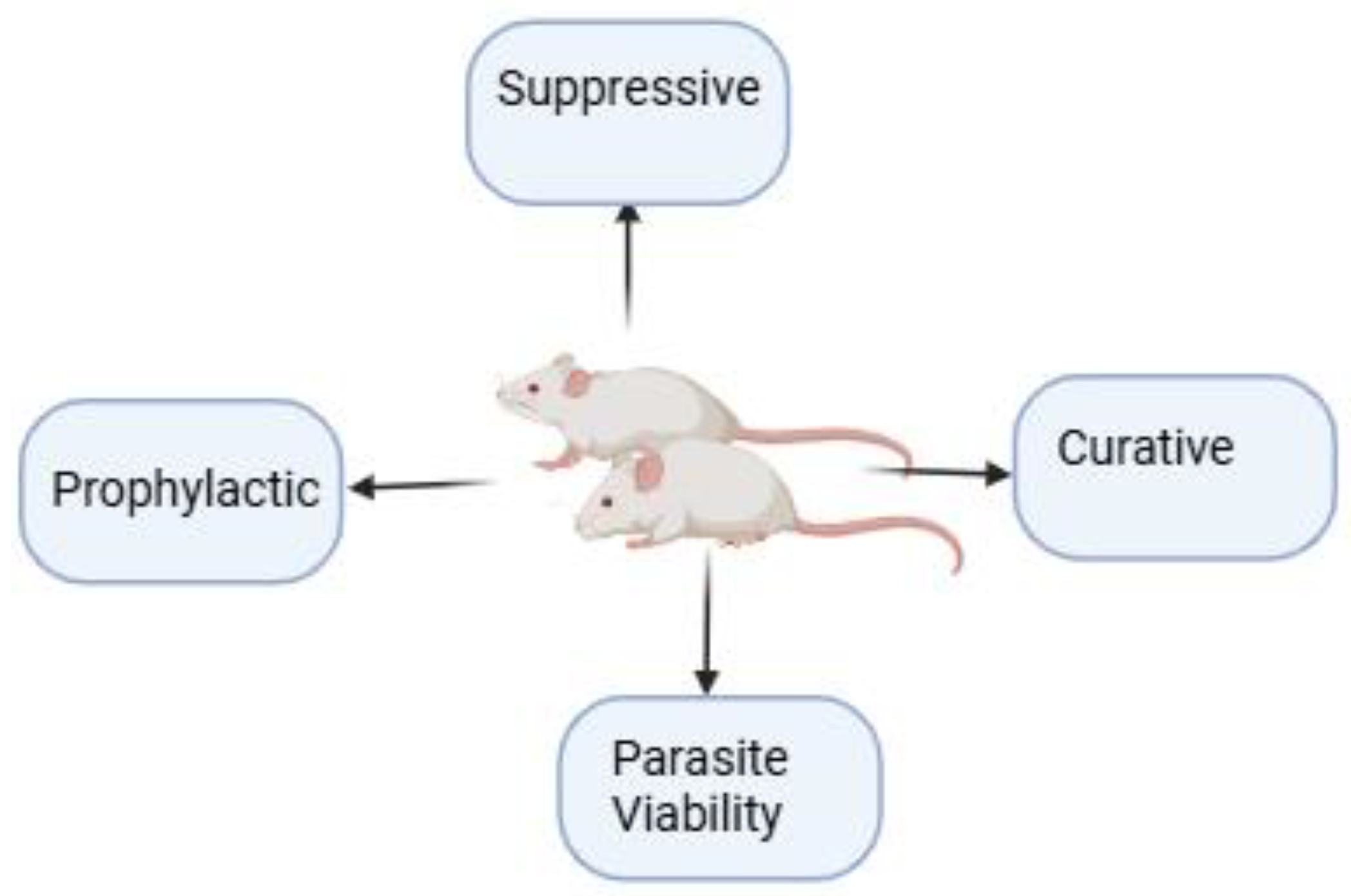
In vivo prophylactic test is an immediate efficacy evaluation to be conducted, having pinpointed the lead compound [177]. The compound's prophylactic efficacy is the lead compound's capacity to prevent the development of the Plasmodium parasite, thereby preventing the progression of the parasite's pathological cycle [178,179]. Prophylactic treatment is administered chiefly to travelers and migrants to and from malaria-endemic countries [178]. To evaluate prophylaxis in animals, rodents are initially administered the test compound and inoculated with the rodent Plasmodium strain afterward. The efficacious activity of the test compound is measured by the level of parasite densities or parasitemia at the end of the experiment [180,181]. Therefore, an advantageous edge to new chemical entities considered for prophylactic treatment is their long half-life [181]. Lead compounds may be evaluated for their prophylactic efficacy by hindering the parasite development at the pre-erythrocytic/ hepatic (causal) or erythrocytic (suppressive) stage [179,182]. Suppressive treatment inhibits erythrocytic-stage parasitic infections [183].
5.2. Suppressive Test
The most prevalent in vivo chemo-suppression assay is Peter’s four-day suppressive test, which entails a four-day treatment procedure a few hours after parasite inoculation [24,180]. Mean survival time is also determined during Peter’s suppressive test, which estimates how long the animals survive post-treatment [184]. Parasitemia and percentage suppression are determined from the experiments as a measure of chemo-suppression [180].
5.3. Curative Test
Rane’s test is the most widely used to assess the curative efficacy of new chemical entities in vivo [180,185]. During this experiment, treatment of the animals inoculated with the rodent Plasmodium strain begins from day 3 post-infection and lasts for four days. Curative treatment is usually administered orally, intraperitoneally, and through other avenues [185]. Curative tests conducted for lead molecules are particularly essential when treating cerebral malaria [185,186].
Routes of administration of drug treatments include oral, intraperitoneal, intravenous, and subcutaneous. Other routes of administration aside from oral dosage are explored when test compounds are not quickly soluble [103].
5.4. Parasite Viability
In vivo parasite viability estimation post-treatment has been considered a more informative measure of drug efficacy than just the number of parasites or strength of a reporter signal [187]. Analogous to the concept of colony-forming units in virology, this method uses limiting dilution and in vitro regrowth to determine the number of viable parasites after drug-wash out. While this is very laborious and time-consuming, it aids in measuring the lead compound’s cidal effect and the maximal concentration to obtain the optimal cidal effect [187]. Parasite viability as a read-out can correct for underestimation of a drug's efficacy e.g. with artesunate, which appeared to leave some parasites in circulation after treatment [187] . Nevertheless, these were not actually viable and over-estimation of efficacy was observed with a P. falciparum field isolate that appeared to respond to piperaquine but actually would not be cleared by it [188].
Figure 5.
In vivo Efficacy Parameters in Antimalarial Drug Discovery.
Murine models are currently being explored in other areas of malaria research apart from drug discovery, emphasizing their indispensable utility.

Table 2.
Current Areas in Malaria Research Utilizing Murine Models Apart from Drug Discovery.
| Murine Model | Area of Malaria Research | Reference |
|---|---|---|
| Theiler’s Original (TO) | Drug resistance mechanisms | [24] |
| Humanized | Liver and Blood Stage Malaria Pathogenesis | [24,189] |
| C57BL/6 | Kinetics of the Infection and Disease Progression in mice compared to humans | [190] |
| C57BL/6 | Malaria-induced kidney impairment | [191] |
| C57Bl/6 | Vaccine Development | [192,193] |
| CBA | Lipidome Profile Assessment in Cerebral Malaria | [194] |
| ICR based | Understanding metabolic responses from immune perturbations through liver transcriptomics | [195] |
| C57BL/6 | Alterations in Cardician of parasite development and the resulting effect in cerebral malaria | [196] |
| C57BL/6 | Understanding malaria infection during pregnancy and the consequential birth effects | [197,198] |
| BALB/c | Vaccine Development against Malaria Relapse | [199] |
| C57BL/6 | Malaria Pathogenesis and Associated Lung Impairment | [200,201,202] |
| BPH/2 (transgenic) | The possibility of association between Malaria and Hypertension | [203] |
| BALB/c/C57BL/6 | Understanding the difference in metabolic responses between Uncomplicated and severe malaria | [204] |
| C57BL/6 | Immunity and Malaria infection | [205] |
| BALB/c/C57BL/6 | Environmental temperature and its association with malaria disease progression | [206] |
| C57BL/6 | Neonatal Immune response in malaria pathogenesis | [207,208] |
6. Conclusion
Selecting appropriate lead molecules during the antimalarial drug discovery program is essential to prevent drug failures during clinical trials. Therefore, the availability of murine resources in in vivo validation experiments of in vitro identified lead compounds provides a rich basis for assessing these new chemical entities for their safety, toxicity, dosage-regimen and efficacy in preclinical trials. This informs the Phase I clinical trials and can reduce the risk of failures during clinical trials.
Author Contributions
Conceptualization, G.A., G.O and E.A; resources, O.OA., O.I.A., E.A., S.A.,M.R. and O.A.; writing—original draft preparation, G.A.; writing—review and editing, G.O., J.M., O. A., P.M., and E.A.; supervision, O.I.A., and E.A.; funding acquisition, O.O.A., and E.A. All authors have read and agreed to the published version of the manuscript.
Funding
This study was funded by the NIH grant number U2RTW010679-02, through Covenant University Bioinformatics Research (CUBRe), Covenant University, Ota, Ogun State, Nigeria.
Data Availability Statement
Not Applicacble.
Acknowledgments
Our appreciation goes to the staff of Covenant University Bioinformatics Research (CUBRe), and the Department of Biochemistry Nigerian Institute of Medical Research (NIMR), for the provision of support and infrastructure for this study..
Conflicts of Interest
The authors declare no conflicts of interest.
Abbreviations
| AAG | Albumin and alpha-1-acid glycoprotein |
| BALB/c | Bagg Albino |
| BBB | Blood-brain barrier |
| GLP | Good Laboratory Practice |
| hERG | human ether-ago-go related gene |
| HPLC-ESI-MS/MS | high-performance liquid chromatography-electrospray ionization-tandem mass spectrometry |
| ICR | Institute of Cancer Research |
| PPB | Plasma protein binding |
| PK | Pharmacokinetic |
| RDT | - Repeat dose toxicology |
| TO | Theiler’s Original |
| Vd | Volume of distribution |
| MDPI | Multidisciplinary Digital Publishing Institute |
| DOAJ | Directory of open access journals |
| TLA | Three letter acronym |
| LD | Linear dichroism |
References
- Lindblade, K.A.; Li Xiao, H.; Tiffany, A.; Galappaththy, G.; Alonso, P.; Abeyasinghe, R.; Akpaka, K.; Aragon-Lopez, M.A.; Baba, E.S.; Bahena, A.; et al. Supporting Countries to Achieve Their Malaria Elimination Goals: The WHO E-2020 Initiative. Malar. J. 2021, 20, 481. [Google Scholar] [CrossRef] [PubMed]
- Hemingway, J.; Shretta, R.; Wells, T.N.C.; Bell, D.; Djimdé, A.A.; Achee, N.; Qi, G. Tools and Strategies for Malaria Control and Elimination: What Do We Need to Achieve a Grand Convergence in Malaria? PLOS Biol. 2016, 14, e1002380. [Google Scholar] [CrossRef] [PubMed]
- Pandey, S.K.; Anand, U.; Siddiqui, W.A.; Tripathi, R. Drug Development Strategies for Malaria: With the Hope for New Antimalarial Drug Discovery—An Update. Adv. Med. 2023, 2023, 1–10. [Google Scholar] [CrossRef] [PubMed]
- Dhameliya, T.M.; Kathuria, D.; Patel, T.M.; Dave, B.P.; Chaudhari, A.Z.; Vekariya, D.D. A Quinquennial Review on Recent Advancements and Developments in Search of Anti-Malarial Agents. Curr. Top. Med. Chem. 2023, 23, 753–790. [Google Scholar] [CrossRef]
- Siqueira-Neto, J.L.; Wicht, K.J.; Chibale, K.; Burrows, J.N.; Fidock, D.A.; Winzeler, E.A. Antimalarial Drug Discovery: Progress and Approaches. Nat. Rev. Drug Discov. 2023, 22, 807–826. [Google Scholar] [CrossRef]
- Siqueira-Neto, J.L.; Wicht, K.J.; Chibale, K.; Burrows, J.N.; Fidock, D.A.; Winzeler, E.A. Antimalarial Drug Discovery: Progress and Approaches. Nat. Rev. Drug Discov. 2023, 22, 807–826. [Google Scholar] [CrossRef] [PubMed]
- Singh, A.P.; Rathi, B. Editorial: Advances in Anti-Malarial Drug Discovery. Front. Drug Discov. 2023, 3. [Google Scholar] [CrossRef]
- Rao, S.P.S.; Manjunatha, U.H.; Mikolajczak, S.; Ashigbie, P.G.; Diagana, T.T. Drug Discovery for Parasitic Diseases: Powered by Technology, Enabled by Pharmacology, Informed by Clinical Science. Trends Parasitol. 2023, 39, 260–271. [Google Scholar] [CrossRef] [PubMed]
- Ncube, N.B.; Tukulula, M.; Govender, K.G. Leveraging Computational Tools to Combat Malaria: Assessment and Development of New Therapeutics. J. Cheminform. 2024, 16, 50. [Google Scholar] [CrossRef] [PubMed]
- Akash, S.; Abdelkrim, G.; Bayil, I.; Hosen, M.E.; Mukerjee, N.; Shater, A.F.; Saleh, F.M.; Albadrani, G.M.; Al-Ghadi, M.Q.; Abdel-Daim, M.M.; et al. Antimalarial Drug Discovery against Malaria Parasites through Haplopine Modification: An Advanced Computational Approach. J. Cell. Mol. Med. 2023, 27, 3168–3188. [Google Scholar] [CrossRef]
- Duay, S.S.; Yap, R.C.Y.; Gaitano, A.L.; Santos, J.A.A.; Macalino, S.J.Y. Roles of Virtual Screening and Molecular Dynamics Simulations in Discovering and Understanding Antimalarial Drugs. Int. J. Mol. Sci. 2023, 24, 9289. [Google Scholar] [CrossRef]
- Tisnerat, C.; Dassonville-Klimpt, A.; Gosselet, F.; Sonnet, P. Antimalarial Drug Discovery: From Quinine to the Most Recent Promising Clinical Drug Candidates. Curr. Med. Chem. 2022, 29, 3326–3365. [Google Scholar] [CrossRef]
- Peric, M.; Pešić, D.; Alihodžić, S.; Fajdetić, A.; Herreros, E.; Gamo, F.J.; Angulo-Barturen, I.; Jiménez-Díaz, M.B.; Ferrer-Bazaga, S.; Martínez, M.S.; et al. A Novel Class of Fast-acting Antimalarial Agents: Substituted 15-membered Azalides. Br. J. Pharmacol. 2021, 178, 363–377. [Google Scholar] [CrossRef] [PubMed]
- JIMÉNEZ-DÍAZ, M.B.; VIERA, S.; FERNÁNDEZ-ALVARO, E.; ANGULO-BARTUREN, I. Animal Models of Efficacy to Accelerate Drug Discovery in Malaria. Parasitology 2014, 141, 93–103. [Google Scholar] [CrossRef] [PubMed]
- Ingber, D.E. Human Organs-on-Chips for Disease Modelling, Drug Development and Personalized Medicine. Nat. Rev. Genet. 2022, 23, 467–491. [Google Scholar] [CrossRef] [PubMed]
- Cauvin, A.J.; Peters, C.; Brennan, F. Advantages and Limitations of Commonly Used Nonhuman Primate Species in Research and Development of Biopharmaceuticals. In The Nonhuman Primate in Nonclinical Drug Development and Safety Assessment; Elsevier, 2015; pp. 379–395.
- Greenwood, B. Malaria — Obstacles and Opportunities. Parasitol. Today 1992, 8, 391. [Google Scholar] [CrossRef]
- De Niz, M.; Heussler, V.T. Rodent Malaria Models: Insights into Human Disease and Parasite Biology. Curr. Opin. Microbiol. 2018, 46, 93–101. [Google Scholar] [CrossRef]
- Zuberi, A.; Lutz, C. Mouse Models for Drug Discovery. Can New Tools and Technology Improve Translational Power? ILAR J. 2016, 57, 178–185. [Google Scholar] [CrossRef] [PubMed]
- Olatunde, A.C.; Cornwall, D.H.; Roedel, M.; Lamb, T.J. Mouse Models for Unravelling Immunology of Blood Stage Malaria. Vaccines 2022, 10, 1525. [Google Scholar] [CrossRef] [PubMed]
- Flannery, E.L.; Foquet, L.; Chuenchob, V.; Fishbaugher, M.; Billman, Z.; Navarro, M.J.; Betz, W.; Olsen, T.M.; Lee, J.; Camargo, N.; et al. Assessing Drug Efficacy against Plasmodium Falciparum Liver Stages in Vivo. JCI Insight 2018, 3. [Google Scholar] [CrossRef] [PubMed]
- Gifford, A.J. A Primer for Research Scientists on Assessing Mouse Gross and Histopathology Images in the Biomedical Literature. Curr. Protoc. 2023, 3. [Google Scholar] [CrossRef] [PubMed]
- Singh, V.K.; Seed, T.M. How Necessary Are Animal Models for Modern Drug Discovery? Expert Opin. Drug Discov. 2021, 16, 1391–1397. [Google Scholar] [CrossRef]
- Simwela, N. V.; Waters, A.P. Current Status of Experimental Models for the Study of Malaria. Parasitology 2022, 149, 729–750. [Google Scholar] [CrossRef]
- Ramaprasad, A.; Klaus, S.; Douvropoulou, O.; Culleton, R.; Pain, A. Plasmodium Vinckei Genomes Provide Insights into the Pan-Genome and Evolution of Rodent Malaria Parasites. BMC Biol. 2021, 19, 69. [Google Scholar] [CrossRef] [PubMed]
- Guo, T.L.; White, K.L. Methods to Assess Immunotoxicity*. In Comprehensive Toxicology; Elsevier, 2010; pp. 567–590.
- Thakre, N.; Fernandes, P.; Mueller, A.-K.; Graw, F. Examining the Reticulocyte Preference of Two Plasmodium Berghei Strains during Blood-Stage Malaria Infection. Front. Microbiol. 2018, 9, 166. [Google Scholar] [CrossRef] [PubMed]
- Xie, Y.; Zhang, Y.; Lin, F.; Chen, X.; Xing, J. The Effect of Malaria-Induced Alteration of Metabolism on Piperaquine Disposition in Plasmodium Yoelii Infected Mice and Predicted in Malaria Patients. Int. J. Antimicrob. Agents 2024, 64, 107209. [Google Scholar] [CrossRef] [PubMed]
- Xia, L.; Wu, J.; Pattaradilokrat, S.; Tumas, K.; He, X.; Peng, Y.; Huang, R.; Myers, T.G.; Long, C.A.; Wang, R.; et al. Detection of Host Pathways Universally Inhibited after Plasmodium Yoelii Infection for Immune Intervention. Sci. Rep. 2018, 8, 15280. [Google Scholar] [CrossRef] [PubMed]
- Longley, R.J.; Hill, A.V.S.; Spencer, A.J. Malaria Vaccines: Identifying Plasmodium Falciparum Liver-Stage Targets. Front. Microbiol. 2015, 6. [Google Scholar] [CrossRef] [PubMed]
- Yadav, N.; Parthiban, C.; Billman, Z.P.; Stone, B.C.; Watson, F.N.; Zhou, K.; Olsen, T.M.; Cruz Talavera, I.; Seilie, A.M.; Kalata, A.C.; et al. More Time to Kill: A Longer Liver Stage Increases T Cell-Mediated Protection against Pre-Erythrocytic Malaria. iScience 2023, 26, 108489. [Google Scholar] [CrossRef]
- Sedegah, M.; Finkelman, F.; Hoffman, S.L. Interleukin 12 Induction of Interferon Gamma-Dependent Protection against Malaria. Proc. Natl. Acad. Sci. U. S. A. 1994, 91, 10700–10702. [Google Scholar] [CrossRef]
- Conteh, S.; Kolasny, J.; Robbins, Y.L.; Pyana, P.; Büscher, P.; Musgrove, J.; Butler, B.; Lambert, L.; Gorres, J.P.; Duffy, P.E. Dynamics and Outcomes of Plasmodium Infections in Grammomys Surdaster (Grammomys Dolichurus) Thicket Rats versus Inbred Mice. Am. J. Trop. Med. Hyg. 2020, 103, 1893–1901. [Google Scholar] [CrossRef] [PubMed]
- Peter, A.E.; Sudhakar, P.; Sandeep, B. V.; Rao, B.G.; Kalpana, V.L. Murine Models for Development of Anti-Infective Therapeutics. In Model Organisms for Microbial Pathogenesis, Biofilm Formation and Antimicrobial Drug Discovery; Springer Singapore: Singapore, 2020; pp. 611–655. [Google Scholar]
- Olanlokun, J.O.; Abiodun, W.O.; Ebenezer, O.; Koorbanally, N.A.; Olorunsogo, O.O. Curcumin Modulates Multiple Cell Death, Matrix Metalloproteinase Activation and Cardiac Protein Release in Susceptible and Resistant Plasmodium Berghei-Infected Mice. Biomed. Pharmacother. 2022, 146, 112454. [Google Scholar] [CrossRef] [PubMed]
- Comino Garcia-Munoz, A.; Varlet, I.; Grau, G.E.; Perles-Barbacaru, T.-A.; Viola, A. Contribution of Magnetic Resonance Imaging Studies to the Understanding of Cerebral Malaria Pathogenesis. Pathogens 2024, 13, 1042. [Google Scholar] [CrossRef] [PubMed]
- Sriboonvorakul, N.; Chotivanich, K.; Silachamroon, U.; Phumratanaprapin, W.; Adams, J.H.; Dondorp, A.M.; Leopold, S.J. Intestinal Injury and the Gut Microbiota in Patients with Plasmodium Falciparum Malaria. PLOS Pathog. 2023, 19, e1011661. [Google Scholar] [CrossRef] [PubMed]
- Kamaraj, C.; Ragavendran, C.; Kumar, R.C.S.; Ali, A.; Khan, S.U.; Mashwani, Z. ur-R.; Luna-Arias, J.P.; Pedroza, J.P.R. Antiparasitic Potential of Asteraceae Plants: A Comprehensive Review on Therapeutic and Mechanistic Aspects for Biocompatible Drug Discovery. Phytomedicine Plus 2022, 2, 100377. [Google Scholar] [CrossRef]
- Nevagi, R.J.; Good, M.F.; Stanisic, D.I. Plasmodium Infection and Drug Cure for Malaria Vaccine Development. Expert Rev. Vaccines 2021, 20, 163–183. [Google Scholar] [CrossRef]
- Nakamura, H. BALB/c Mouse. In Brenner’s Encyclopedia of Genetics; Elsevier, 2013; pp. 290–292.
- Barr, J.T.; Tran, T.B.; Rock, B.M.; Wahlstrom, J.L.; Dahal, U.P. Strain-Dependent Variability of Early Discovery Small Molecule Pharmacokinetics in Mice: Does Strain Matter? Drug Metab. Dispos. 2020, 48, 613–621. [Google Scholar] [CrossRef] [PubMed]
- Cimperman, C.K.; Pena, M.; Gokcek, S.M.; Theall, B.P.; Patel, M. V.; Sharma, A.; Qi, C.; Sturdevant, D.; Miller, L.H.; Collins, P.L.; et al. Cerebral Malaria Is Regulated by Host-Mediated Changes in Plasmodium Gene Expression. MBio 2023, 14. [Google Scholar] [CrossRef] [PubMed]
- Aubouy, A.; Camara, A.; Haddad, M. Medicinal Plants from West Africa Used as Antimalarial Agents: An Overview. In Medicinal Plants as Anti-Infectives; Elsevier, 2022; pp. 267–306.
- Hernandez-Valladares, M.; Rihet, P.; Iraqi, F.A. Host Susceptibility to Malaria in Human and Mice: Compatible Approaches to Identify Potential Resistant Genes. Physiol. Genomics 2014, 46, 1–16. [Google Scholar] [CrossRef] [PubMed]
- Huang, H.M.; McMorran, B.J.; Foote, S.J.; Burgio, G. Host Genetics in Malaria: Lessons from Mouse Studies. Mamm. Genome 2018, 29, 507–522. [Google Scholar] [CrossRef] [PubMed]
- Zhang, Y.; Richter, N.; König, C.; Kremer, A.E.; Zimmermann, K. Generalized Resistance to Pruritogen-Induced Scratching in the C3H/HeJ Strain. Front. Mol. Neurosci. 2022, 15. [Google Scholar] [CrossRef] [PubMed]
- Vydyam, P.; Chand, M.; Gihaz, S.; Renard, I.; Heffernan, G.D.; Jacobus, L.R.; Jacobus, D.P.; Saionz, K.W.; Shah, R.; Shieh, H.-M.; et al. In Vitro Efficacy of Next-Generation Dihydrotriazines and Biguanides against Babesiosis and Malaria Parasites. Antimicrob. Agents Chemother. 2024, 68. [Google Scholar] [CrossRef] [PubMed]
- Djokic, V.; Akoolo, L.; Parveen, N. Babesia Microti Infection Changes Host Spleen Architecture and Is Cleared by a Th1 Immune Response. Front. Microbiol. 2018, 9. [Google Scholar] [CrossRef] [PubMed]
- Su, X.; Wu, J.; Xu, F.; Pattaradilokrat, S. Genetic Mapping of Determinants in Drug Resistance, Virulence, Disease Susceptibility, and Interaction of Host-Rodent Malaria Parasites. Parasitol. Int. 2022, 91, 102637. [Google Scholar] [CrossRef] [PubMed]
- Schnider, C.B.; Yang, H.; Starrs, L.; Ehmann, A.; Rahimi, F.; Di Pierro, E.; Graziadei, G.; Matthews, K.; De Koning-Ward, T.; Bauer, D.C.; et al. Host Porphobilinogen Deaminase Deficiency Confers Malaria Resistance in Plasmodium Chabaudi but Not in Plasmodium Berghei or Plasmodium Falciparum During Intraerythrocytic Growth. Front. Cell. Infect. Microbiol. 2020, 10. [Google Scholar] [CrossRef]
- Muqbil, I.; Philip, P.A.; Mohammad, R.M. A Guide to Tumor Assessment Methodologies in Cancer Drug Discovery. In Animal Models in Cancer Drug Discovery; Elsevier, 2019; pp. 233–248.
- Sunita, K.; Rajyalakshmi, M.; Kalyan Kumar, K.; Sowjanya, M.; Satish, P.V.V.; Madhu Prasad, D. Human Malaria in C57BL/6J Mice: An in Vivo Model for Chemotherapy Studies. Indian J. Exp. Biol. 2014, 52, 67–72. [Google Scholar] [PubMed]
- Chen, Y.; Zhu, F.; Hammill, J.; Holbrook, G.; Yang, L.; Freeman, B.; White, K.L.; Shackleford, D.M.; O’Loughlin, K.G.; Charman, S.A.; et al. Selecting an Anti-Malarial Clinical Candidate from Two Potent Dihydroisoquinolones. Malar. J. 2021, 20, 107. [Google Scholar] [CrossRef]
- An, J.; Woodward, J.J.; Lai, W.; Minie, M.; Sun, X.; Tanaka, L.; Snyder, J.M.; Sasaki, T.; Elkon, K.B. Inhibition of Cyclic <scp>GMP</Scp> - <scp>AMP</Scp> Synthase Using a Novel Antimalarial Drug Derivative in Trex1 -Deficient Mice. Arthritis Rheumatol. 2018, 70, 1807–1819. [Google Scholar] [CrossRef] [PubMed]
- Gujjari, L.; Kalani, H.; Pindiprolu, S.K.; Arakareddy, B.P.; Yadagiri, G. Current Challenges and Nanotechnology-Based Pharmaceutical Strategies for the Treatment and Control of Malaria. Parasite Epidemiol. Control 2022, 17. [Google Scholar] [CrossRef]
- Acosta, M.M.; Bram, J.T.; Sim, D.; Read, A.F. Effect of Drug Dose and Timing of Treatment on the Emergence of Drug Resistance in Vivo in a Malaria Model. Evol. Med. Public Heal. 2020, 2020, 196–210. [Google Scholar] [CrossRef]
- Chunduri, A.; Watson, P.M.; Ashbrook, D.G. New Insights on Gene by Environmental Effects of Drugs of Abuse in Animal Models Using GeneNetwork. Genes (Basel). 2022, 13, 614. [Google Scholar] [CrossRef]
- Novita, R.; Suprayogi, A.; Agusta, A.; Nugraha, A.; Nozaki, T.; Agustini, K.; Darusman, H. Antimalarial Activity of Borrelidin and Fumagilin in Plasmodium Berghei-Infected Mice. Open Vet. J. 2024, 14, 2007. [Google Scholar] [CrossRef] [PubMed]
- Hermanto, F.; Sutjiatmo, A.B.; Subarnas, A.; Haq, F.A.; Berbudi, A. The Combination of Apigenin and Ursolic Acid Reduces the Severity of Cerebral Malaria in Plasmodium Berghei ANKA-Infected Swiss Webster Mice. J. Appl. Pharm. Sci. 2023. [Google Scholar] [CrossRef]
- Annang, F.; Pérez-Moreno, G.; Díaz, C.; González-Menéndez, V.; de Pedro Montejo, N.; del Palacio, J.P.; Sánchez, P.; Tanghe, S.; Rodriguez, A.; Pérez-Victoria, I.; et al. Preclinical Evaluation of Strasseriolides A–D, Potent Antiplasmodial Macrolides Isolated from Strasseria Geniculata CF-247,251. Malar. J. 2021, 20, 457. [Google Scholar] [CrossRef] [PubMed]
- Aly, N.S.M.; Matsumori, H.; Dinh, T.Q.; Sato, A.; Miyoshi, S.-I.; Chang, K.-S.; Yu, H.S.; Kobayashi, F.; Kim, H.-S. Antimalarial Effect of Synthetic Endoperoxide on Synchronized Plasmodium Chabaudi Infected Mice. Parasites, Hosts Dis. 2023, 61, 33–41. [Google Scholar] [CrossRef]
- Ounjaijean, S.; Romyasamit, C.; Somsak, V. Evaluation of Antimalarial Potential of Aqueous Crude Gymnema Inodorum Leaf Extract against Plasmodium Berghei Infection in Mice. Evidence-Based Complement. Altern. Med. 2021, 2021, 1–7. [Google Scholar] [CrossRef]
- Ounjaijean, S.; Somsak, V. Exploring the Antimalarial Potential of Gnetum Gnemon Leaf Extract Against Plasmodium Berghei in Mice. J. Trop. Med. 2024, 2024. [Google Scholar] [CrossRef]
- Chaniad, P.; Techarang, T.; Phuwajaroanpong, A.; Na-ek, P.; Viriyavejakul, P.; Punsawad, C. In Vivo Antimalarial Activity and Toxicity Study of Extracts of Tagetes Erecta L. and Synedrella Nodiflora (L.) Gaertn. from the Asteraceae Family. Evidence-Based Complement. Altern. Med. 2021, 2021, 1–9. [Google Scholar] [CrossRef]
- Klope, M.T.; Tapia Cardona, J.A.; Chen, J.; Gonciarz, R.L.; Cheng, K.; Jaishankar, P.; Kim, J.; Legac, J.; Rosenthal, P.J.; Renslo, A.R. Synthesis and In Vivo Profiling of Desymmetrized Antimalarial Trioxolanes with Diverse Carbamate Side Chains. ACS Med. Chem. Lett. 2024, 15, 1764–1770. [Google Scholar] [CrossRef] [PubMed]
- Burgert, L.; Rottmann, M.; Wittlin, S.; Gobeau, N.; Krause, A.; Dingemanse, J.; Möhrle, J.J.; Penny, M.A. Ensemble Modeling Highlights Importance of Understanding Parasite-Host Behavior in Preclinical Antimalarial Drug Development. Sci. Rep. 2020, 10, 4410. [Google Scholar] [CrossRef]
- Burgert, L.; Zaloumis, S.; Dini, S.; Marquart, L.; Cao, P.; Cherkaoui, M.; Gobeau, N.; McCarthy, J.; Simpson, J.A.; Möhrle, J.J.; et al. Parasite-Host Dynamics throughout Antimalarial Drug Development Stages Complicate the Translation of Parasite Clearance. Antimicrob. Agents Chemother. 2021, 65. [Google Scholar] [CrossRef]
- Khandelwal, A.; Arez, F.; Alves, P.M.; Badolo, L.; Brito, C.; Fischli, C.; Fontinha, D.; Oeuvray, C.; Prudêncio, M.; Rottmann, M.; et al. Translation of Liver Stage Activity of M5717, a Plasmodium Elongation Factor 2 Inhibitor: From Bench to Bedside. Malar. J. 2022, 21, 151. [Google Scholar] [CrossRef] [PubMed]
- Moreno, A.; Ferrer, E.; Arahuetes, S.; Eguiluz, C.; Rooijen, N. Van; Benito, A. The Course of Infections and Pathology in Immunomodulated NOD/LtSz-SCID Mice Inoculated with Plasmodium Falciparum Laboratory Lines and Clinical Isolates. Int. J. Parasitol. 2006, 36, 361–369. [Google Scholar] [CrossRef]
- Tejada, M.A.; Antunez, C.; Nunez-Badinez, P.; De Leo, B.; Saunders, P.T.; Vincent, K.; Cano, A.; Nagel, J.; Gomez, R. Rodent Animal Models of Endometriosis-Associated Pain: Unmet Needs and Resources Available for Improving Translational Research in Endometriosis. Int. J. Mol. Sci. 2023, 24, 2422. [Google Scholar] [CrossRef] [PubMed]
- Salazar-Castañón, V.H.; Juárez-Avelar, I.; Legorreta-Herrera, M.; Rodriguez-Sosa, M. Macrophage Migration Inhibitory Factor Contributes to Immunopathogenesis during Plasmodium Yoelii 17XL Infection. Front. Cell. Infect. Microbiol. 2022, 12. [Google Scholar] [CrossRef]
- Rayner, C.R.; Smith, P.F.; Andes, D.; Andrews, K.; Derendorf, H.; Friberg, L.E.; Hanna, D.; Lepak, A.; Mills, E.; Polasek, T.M.; et al. Model-Informed Drug Development for Anti-Infectives: State of the Art and Future. Clin. Pharmacol. Ther. 2021, 109, 867–891. [Google Scholar] [CrossRef] [PubMed]
- Aparici Herraiz, I.; Caires, H.R.; Castillo-Fernández, Ó.; Sima, N.; Méndez-Mora, L.; Risueño, R.M.; Sattabongkot, J.; Roobsoong, W.; Hernández-Machado, A.; Fernandez-Becerra, C.; et al. Advancing Key Gaps in the Knowledge of Plasmodium Vivax Cryptic Infections Using Humanized Mouse Models and Organs-on-Chips. Front. Cell. Infect. Microbiol. 2022, 12. [Google Scholar] [CrossRef] [PubMed]
- O’Neill, P.M.; Amewu, R.K.; Charman, S.A.; Sabbani, S.; Gnädig, N.F.; Straimer, J.; Fidock, D.A.; Shore, E.R.; Roberts, N.L.; Wong, M.H.-L.; et al. A Tetraoxane-Based Antimalarial Drug Candidate That Overcomes PfK13-C580Y Dependent Artemisinin Resistance. Nat. Commun. 2017, 8, 15159. [Google Scholar] [CrossRef] [PubMed]
- Goswami, D.; Kumar, S.; Betz, W.; Armstrong, J.M.; Haile, M.T.; Camargo, N.; Parthiban, C.; Seilie, A.M.; Murphy, S.C.; Vaughan, A.M.; et al. A Plasmodium Falciparum ATP-Binding Cassette Transporter Is Essential for Liver Stage Entry into Schizogony. iScience 2022, 25, 104224. [Google Scholar] [CrossRef] [PubMed]
- Oblak, A.L.; Lin, P.B.; Kotredes, K.P.; Pandey, R.S.; Garceau, D.; Williams, H.M.; Uyar, A.; O’Rourke, R.; O’Rourke, S.; Ingraham, C.; et al. Comprehensive Evaluation of the 5XFAD Mouse Model for Preclinical Testing Applications: A MODEL-AD Study. Front. Aging Neurosci. 2021, 13. [Google Scholar] [CrossRef]
- Kioko, M.; Mwangi, S.; Njunge, J.M.; Berkley, J.A.; Bejon, P.; Abdi, A.I. Linking Cerebral Malaria Pathogenesis to APOE-Mediated Amyloidosis: Observations and Hypothesis. Mol. Neurobiol. 2024. [Google Scholar] [CrossRef] [PubMed]
- Kisler, K.; Sagare, A.P.; Lazic, D.; Bazzi, S.; Lawson, E.; Hsu, C.-J.; Wang, Y.; Ramanathan, A.; Nelson, A.R.; Zhao, Z.; et al. Anti-Malaria Drug Artesunate Prevents Development of Amyloid-β Pathology in Mice by Upregulating PICALM at the Blood-Brain Barrier. Mol. Neurodegener. 2023, 18, 7. [Google Scholar] [CrossRef] [PubMed]
- Neto, Z.; Machado, M.; Lindeza, A.; do Rosário, V.; Gazarini, M.L.; Lopes, D. Treatment of Plasmodium Chabaudi Parasites with Curcumin in Combination with Antimalarial Drugs: Drug Interactions and Implications on the Ubiquitin/Proteasome System. J. Parasitol. Res. 2013, 2013, 1–11. [Google Scholar] [CrossRef] [PubMed]
- Rocha e Silva, L.F.; Nogueira, K.L.; Pinto, A.C. da S.; Katzin, A.M.; Sussmann, R.A.C.; Muniz, M.P.; Neto, V.F. de A.; Chaves, F.C.M.; Coutinho, J.P.; Lima, E.S.; et al. In Vivo Antimalarial Activity and Mechanisms of Action of 4-Nerolidylcatechol Derivatives. Antimicrob. Agents Chemother. 2015, 59, 3271–3280. [Google Scholar] [CrossRef] [PubMed]
- Saroa, R.; Kaushik, D.; Rakha, A.; Bagai, U.; Kaur, S.; Salunke, D.B. Pure TLR 7 Agonistic BBIQ Is a Potential Adjuvant Against Plasmodium Berghei ANKA Challenge In Vivo . In Drug Development for Malaria; Wiley, 2022; pp. 353–366. In Drug Development for Malaria; Wiley, 2022; pp. 353–366. [Google Scholar]
- Sonoiki, E.; Ng, C.L.; Lee, M.C.S.; Guo, D.; Zhang, Y.-K.; Zhou, Y.; Alley, M.R.K.; Ahyong, V.; Sanz, L.M.; Lafuente-Monasterio, M.J.; et al. A Potent Antimalarial Benzoxaborole Targets a Plasmodium Falciparum Cleavage and Polyadenylation Specificity Factor Homologue. Nat. Commun. 2017, 8, 14574. [Google Scholar] [CrossRef] [PubMed]
- Rios, K.T.; Dickson, T.M.; Lindner, S.E. Standard Selection Treatments with Sulfadiazine Limit Plasmodium Yoelii Host-to-Vector Transmission. mSphere 2022, 7. [Google Scholar] [CrossRef]
- Draper, M.P.; Bhatia, B.; Assefa, H.; Honeyman, L.; Garrity-Ryan, L.K.; Verma, A.K.; Gut, J.; Larson, K.; Donatelli, J.; Macone, A.; et al. In Vitro and In Vivo Antimalarial Efficacies of Optimized Tetracyclines. Antimicrob. Agents Chemother. 2013, 57, 3131–3136. [Google Scholar] [CrossRef] [PubMed]
- Jezewski, A.J.; Lin, Y.-H.; Reisz, J.A.; Culp-Hill, R.; Barekatain, Y.; Yan, V.C.; D’Alessandro, A.; Muller, F.L.; Odom John, A.R. Targeting Host Glycolysis as a Strategy for Antimalarial Development. Front. Cell. Infect. Microbiol. 2021, 11. [Google Scholar] [CrossRef]
- Marrelli, M.T.; Wang, Z.; Huang, J.; Brotto, M. The Skeletal Muscles of Mice Infected with Plasmodium Berghei and Plasmodium Chabaudi Reveal a Crosstalk between Lipid Mediators and Gene Expression. Malar. J. 2020, 19, 254. [Google Scholar] [CrossRef] [PubMed]
- Ha, Y.R.; Kang, Y.-J.; Lee, S.J. In Vivo Study on Splenomegaly Inhibition by Genistein in Plasmodium Berghei -Infected Mice. Parasitol. Int. 2015, 64, 369–376. [Google Scholar] [CrossRef] [PubMed]
- Chaniad, P.; Techarang, T.; Phuwajaroanpong, A.; Plirat, W.; Viriyavejakul, P.; Septama, A.W.; Punsawad, C. Antimalarial Efficacy and Toxicological Assessment of Medicinal Plant Ingredients of Prabchompoothaweep Remedy as a Candidate for Antimalarial Drug Development. BMC Complement. Med. Ther. 2023, 23, 12. [Google Scholar] [CrossRef] [PubMed]
- Hong, H.; Moon, K.; Trinh, T.-T.T.; Eom, T.-H.; Park, H.; Kim, H.S.; Yeo, S.-J. Evaluation of the Antimalarial Activity of SAM13-2HCl with Morpholine Amide (SKM13 Derivative) against Antimalarial Drug-Resistant Plasmodium Falciparum and Plasmodium Berghei Infected ICR Mice. Parasites, Hosts Dis. 2024, 62, 42–52. [Google Scholar] [CrossRef] [PubMed]
- Degotte, G.; Pendeville, H.; Di Chio, C.; Ettari, R.; Pirotte, B.; Frédérich, M.; Francotte, P. Dimeric Polyphenols to Pave the Way for New Antimalarial Drugs. RSC Med. Chem. 2023, 14, 715–733. [Google Scholar] [CrossRef] [PubMed]
- Yeates, C.L.; Batchelor, J.F.; Capon, E.C.; Cheesman, N.J.; Fry, M.; Hudson, A.T.; Pudney, M.; Trimming, H.; Woolven, J.; Bueno, J.M.; et al. Synthesis and Structure–Activity Relationships of 4-Pyridones as Potential Antimalarials. J. Med. Chem. 2008, 51, 2845–2852. [Google Scholar] [CrossRef] [PubMed]
- Chughlay, M.F.; El Gaaloul, M.; Donini, C.; Campo, B.; Berghmans, P.-J.; Lucardie, A.; Marx, M.W.; Cherkaoui-Rbati, M.H.; Langdon, G.; Angulo-Barturen, I.; et al. Chemoprotective Antimalarial Activity of P218 against Plasmodium Falciparum: A Randomized, Placebo-Controlled Volunteer Infection Study. Am. J. Trop. Med. Hyg. 2021, 104, 1348–1358. [Google Scholar] [CrossRef] [PubMed]
- Basilico, N.; Parapini, S.; D’Alessandro, S.; Misiano, P.; Romeo, S.; Dondio, G.; Yardley, V.; Vivas, L.; Nasser, S.; Rénia, L.; et al. Favorable Preclinical Pharmacological Profile of a Novel Antimalarial Pyrrolizidinylmethyl Derivative of 4-Amino-7-Chloroquinoline with Potent In Vitro and In Vivo Activities. Biomolecules 2023, 13, 836. [Google Scholar] [CrossRef] [PubMed]
- Dobrescu, I.; de Camargo, T.M.; Gimenez, A.M.; Murillo, O.; Amorim, K.N. da S.; Marinho, C.R.F.; Soares, I.S.; Boscardin, S.B.; Bargieri, D.Y. Protective Immunity in Mice Immunized With P. Vivax MSP119-Based Formulations and Challenged With P. Berghei Expressing PvMSP119. Front. Immunol. 2020, 11. [Google Scholar] [CrossRef] [PubMed]
- Andrews, K.A.; Wesche, D.; McCarthy, J.; Möhrle, J.J.; Tarning, J.; Phillips, L.; Kern, S.; Grasela, T. Model-Informed Drug Development for Malaria Therapeutics. Annu. Rev. Pharmacol. Toxicol. 2018, 58, 567–582. [Google Scholar] [CrossRef]
- Yang, T.; Ottilie, S.; Istvan, E.S.; Godinez-Macias, K.P.; Lukens, A.K.; Baragaña, B.; Campo, B.; Walpole, C.; Niles, J.C.; Chibale, K.; et al. MalDA, Accelerating Malaria Drug Discovery. Trends Parasitol. 2021, 37, 493–507. [Google Scholar] [CrossRef]
- Brancucci, N.M.B.; Gumpp, C.; van Gemert, G.-J.; Yu, X.; Passecker, A.; Nardella, F.; Thommen, B.T.; Chambon, M.; Turcatti, G.; Halby, L.; et al. An All-in-One Pipeline for the in Vitro Discovery and in Vivo Testing of Plasmodium Falciparum Malaria Transmission Blocking Drugs 2024.
- Baragaña, B.; Forte, B.; Choi, R.; Nakazawa Hewitt, S.; Bueren-Calabuig, J.A.; Pisco, J.P.; Peet, C.; Dranow, D.M.; Robinson, D.A.; Jansen, C.; et al. Lysyl-TRNA Synthetase as a Drug Target in Malaria and Cryptosporidiosis. Proc. Natl. Acad. Sci. 2019, 116, 7015–7020. [Google Scholar] [CrossRef]
- Tyagi, R.K. Plasmodium Falciparum -Infected Humanized Mice: A Viable Preclinical Tool. Immunotherapy 2021, 13, 1345–1353. [Google Scholar] [CrossRef]
- Okombo, J.; Kanai, M.; Deni, I.; Fidock, D.A. Genomic and Genetic Approaches to Studying Antimalarial Drug Resistance and Plasmodium Biology. Trends Parasitol. 2021, 37, 476–492. [Google Scholar] [CrossRef] [PubMed]
- Moore, B.R.; Davis, T.M. Updated Pharmacokinetic Considerations for the Use of Antimalarial Drugs in Pregnant Women. Expert Opin. Drug Metab. Toxicol. 2020, 16, 741–758. [Google Scholar] [CrossRef] [PubMed]
- Okombo, J.; Chibale, K. Recent Updates in the Discovery and Development of Novel Antimalarial Drug Candidates. Medchemcomm 2018, 9, 437–453. [Google Scholar] [CrossRef]
- Yeung, B.K. . KAE609 (Cipargamin): Discovery of Spiroindolone Antimalarials. In Comprehensive Medicinal Chemistry III; Elsevier, 2017; pp. 529–543.
- Mak, K.-K.; Epemolu, O.; Pichika, M.R. The Role of DMPK Science in Improving Pharmaceutical Research and Development Efficiency. Drug Discov. Today 2022, 27, 705–729. [Google Scholar] [CrossRef] [PubMed]
- Fu, C.; Shi, H.; Chen, H.; Zhang, K.; Wang, M.; Qiu, F. Oral Bioavailability Comparison of Artemisinin, Deoxyartemisinin, and 10-Deoxoartemisinin Based on Computer Simulations and Pharmacokinetics in Rats. ACS Omega 2021, 6, 889–899. [Google Scholar] [CrossRef] [PubMed]
- Musther, H.; Olivares-Morales, A.; Hatley, O.J.D.; Liu, B.; Rostami Hodjegan, A. Animal versus Human Oral Drug Bioavailability: Do They Correlate? Eur. J. Pharm. Sci. 2014, 57, 280–291. [Google Scholar] [CrossRef] [PubMed]
- Stielow, M.; Witczyńska, A.; Kubryń, N.; Fijałkowski, Ł.; Nowaczyk, J.; Nowaczyk, A. The Bioavailability of Drugs—The Current State of Knowledge. Molecules 2023, 28, 8038. [Google Scholar] [CrossRef] [PubMed]
- Fagerholm, U.; Hellberg, S.; Spjuth, O. Advances in Predictions of Oral Bioavailability of Candidate Drugs in Man with New Machine Learning Methodology. Molecules 2021, 26, 2572. [Google Scholar] [CrossRef]
- Bhanot, A.; Sundriyal, S. Physicochemical Profiling and Comparison of Research Antiplasmodials and Advanced Stage Antimalarials with Oral Drugs. ACS Omega 2021, 6, 6424–6437. [Google Scholar] [CrossRef]
- Li, P.; Peng, J.; Li, Y.; Gong, L.; Lv, Y.; Liu, H.; Zhang, T.; Yang, S.; Liu, H.; Li, J.; et al. Pharmacokinetics, Bioavailability, Excretion and Metabolism Studies of Akebia Saponin D in Rats: Causes of the Ultra-Low Oral Bioavailability and Metabolic Pathway. Front. Pharmacol. 2021, 12. [Google Scholar] [CrossRef]
- Samby, K.; Willis, P.A.; Burrows, J.N.; Laleu, B.; Webborn, P.J.H. Actives from MMV Open Access Boxes? A Suggested Way Forward. PLoS Pathog. 2021, 17. [Google Scholar] [CrossRef] [PubMed]
- Who Methods and Techniques for Assessing Exposure to Antimalarial Drugs in Clinical Field Studies. World Health 2011, 165.
- Waithera, M.W.; Sifuna, M.W.; Kariuki, D.W.; Kinyua, J.K.; Kimani, F.T.; Ng’ang’a, J.K.; Takei, M. Antimalarial Activity Assay of Artesunate-3-Chloro-4(4-Chlorophenoxy) Aniline in Vitro and in Mice Models. Parasitol. Res. 2023, 122, 979–988. [Google Scholar] [CrossRef] [PubMed]
- Coelho, M.M.; Fernandes, C.; Remião, F.; Tiritan, M.E. Enantioselectivity in Drug Pharmacokinetics and Toxicity: Pharmacological Relevance and Analytical Methods. Molecules 2021, 26, 3113. [Google Scholar] [CrossRef]
- Smith, D.A.; Beaumont, K.; Maurer, T.S.; Di, L. Volume of Distribution in Drug Design. J. Med. Chem. 2015, 58, 5691–5698. [Google Scholar] [CrossRef] [PubMed]
- Alia, J.D.; Karl, S.; Kelly, T.D. Quantum Chemical Lipophilicities of Antimalarial Drugs in Relation to Terminal Half-Life. ACS Omega 2020, 5, 6500–6515. [Google Scholar] [CrossRef] [PubMed]
- Carucci, M.; Duez, J.; Tarning, J.; García-Barbazán, I.; Fricot-Monsinjon, A.; Sissoko, A.; Dumas, L.; Gamallo, P.; Beher, B.; Amireault, P.; et al. Safe Drugs with High Potential to Block Malaria Transmission Revealed by a Spleen-Mimetic Screening. Nat. Commun. 2023, 14, 1951. [Google Scholar] [CrossRef] [PubMed]
- Na-Bangchang, K.; Karbwang, J. Pharmacology of Antimalarial Drugs, Current Anti-Malarials. In Encyclopedia of Malaria; Springer New York: New York, NY, 2019; pp. 1–82. [Google Scholar]
- Wesolowski, C.A.; Wesolowski, M.J.; Babyn, P.S.; Wanasundara, S.N. Time Varying Apparent Volume of Distribution and Drug Half-Lives Following Intravenous Bolus Injections. PLoS One 2016, 11. [Google Scholar] [CrossRef] [PubMed]
- Yu, R.; Cao, Y. A Method to Determine Pharmacokinetic Parameters Based on Andante Constant-Rate Intravenous Infusion. Sci. Rep. 2017, 7, 13279. [Google Scholar] [CrossRef] [PubMed]
- Banda, C.G.; Tarning, J.; Barnes, K.I. Use of Population Pharmacokinetic-pharmacodynamic Modelling to Inform Antimalarial Dose Optimization in Infants. Br. J. Clin. Pharmacol. 2024. [Google Scholar] [CrossRef]
- Smith, D.A.; Di, L.; Kerns, E.H. The Effect of Plasma Protein Binding on in Vivo Efficacy: Misconceptions in Drug Discovery. Nat. Rev. Drug Discov. 2010, 9, 929–939. [Google Scholar] [CrossRef] [PubMed]
- Toma, C.-M.; Imre, S.; Vari, C.-E.; Muntean, D.-L.; Tero-Vescan, A. Ultrafiltration Method for Plasma Protein Binding Studies and Its Limitations. Processes 2021, 9, 382. [Google Scholar] [CrossRef]
- Di, L. An Update on the Importance of Plasma Protein Binding in Drug Discovery and Development. Expert Opin. Drug Discov. 2021, 16, 1453–1465. [Google Scholar] [CrossRef] [PubMed]
- Mhango, E.K.G.; Snorradottir, B.S.; Kachingwe, B.H.K.; Katundu, K.G.H.; Gizurarson, S. Estimation of Pediatric Dosage of Antimalarial Drugs, Using Pharmacokinetic and Physiological Approach. Pharmaceutics 2023, 15, 1076. [Google Scholar] [CrossRef]
- Charman, S.A.; Andreu, A.; Barker, H.; Blundell, S.; Campbell, A.; Campbell, M.; Chen, G.; Chiu, F.C.K.; Crighton, E.; Katneni, K.; et al. An in Vitro Toolbox to Accelerate Anti-Malarial Drug Discovery and Development. Malar. J. 2020, 19, 1. [Google Scholar] [CrossRef] [PubMed]
- Bteich, M. An Overview of Albumin and Alpha-1-Acid Glycoprotein Main Characteristics: Highlighting the Roles of Amino Acids in Binding Kinetics and Molecular Interactions. Heliyon 2019, 5, e02879. [Google Scholar] [CrossRef]
- Perić, M.; Fajdetić, A.; Rupčić, R.; Alihodžić, S.; Žiher, D.; Bukvić Krajačić, M.; Smith, K.S.; Ivezić-Schönfeld, Z.; Padovan, J.; Landek, G.; et al. Antimalarial Activity of 9a- N Substituted 15-Membered Azalides with Improved in Vitro and in Vivo Activity over Azithromycin. J. Med. Chem. 2012, 55, 1389–1401. [Google Scholar] [CrossRef]
- Yahya, M.H.; Babalola, S.A.; Idris, A.Y.; Hamza, A.N.; Igie, N.; Odeyemi, I.; Musa, A.M.; Olorukooba, A.B. Therapeutic Potency of Mono- and Diprenylated Acetophenones: A Case Study of In-Vivo Antimalarial Evaluation. Pharm. Front. 2023, 05, e15–e24. [Google Scholar] [CrossRef]
- Zhao, S.; Duan, H.; Yang, Y.; Yan, X.; Fan, K. Fenozyme Protects the Integrity of the Blood–Brain Barrier against Experimental Cerebral Malaria. Nano Lett. 2019, 19, 8887–8895. [Google Scholar] [CrossRef]
- Crowley, V.M.; Ayi, K.; Lu, Z.; Liby, K.T.; Sporn, M.; Kain, K.C. Synthetic Oleanane Triterpenoids Enhance Blood Brain Barrier Integrity and Improve Survival in Experimental Cerebral Malaria. Malar. J. 2017, 16, 463. [Google Scholar] [CrossRef] [PubMed]
- Das, N.; Prabhu, P. Emerging Avenues for the Management of Cerebral Malaria. J. Pharm. Pharmacol. 2022, 74, 800–811. [Google Scholar] [CrossRef] [PubMed]
- Goli, V.V.N.; Tatineni, S.; Hani, U.; Ghazwani, M.; Talath, S.; Sridhar, S.B.; Alhamhoom, Y.; Fatima, F.; Osmani, R.A.M.; Shivaswamy, U.; et al. Pharmacokinetics and Pharmacodynamics of a Nanostructured Lipid Carrier Co-Encapsulating Artemether and MiRNA for Mitigating Cerebral Malaria. Pharmaceuticals 2024, 17, 466. [Google Scholar] [CrossRef] [PubMed]
- Gajula, S.N.R.; Nadimpalli, N.; Sonti, R. Drug Metabolic Stability in Early Drug Discovery to Develop Potential Lead Compounds. Drug Metab. Rev. 2021, 53, 459–477. [Google Scholar] [CrossRef] [PubMed]
- Siramshetty, V.B.; Shah, P.; Kerns, E.; Nguyen, K.; Yu, K.R.; Kabir, M.; Williams, J.; Neyra, J.; Southall, N.; Nguyễn, Ð.-T.; et al. Retrospective Assessment of Rat Liver Microsomal Stability at NCATS: Data and QSAR Models. Sci. Rep. 2020, 10, 20713. [Google Scholar] [CrossRef]
- Watson, D.J.; Laing, L.; Gibhard, L.; Wong, H.N.; Haynes, R.K.; Wiesner, L. Toward New Transmission-Blocking Combination Therapies: Pharmacokinetics of 10-Amino-Artemisinins and 11-Aza-Artemisinin and Comparison with Dihydroartemisinin and Artemether. Antimicrob. Agents Chemother. 2021, 65. [Google Scholar] [CrossRef] [PubMed]
- Słoczyńska, K.; Gunia-Krzyżak, A.; Koczurkiewicz, P.; Wójcik-Pszczoła, K.; Żelaszczyk, D.; Popiół, J.; Pękala, E. Metabolic Stability and Its Role in the Discovery of New Chemical Entities. Acta Pharm. 2019, 69, 345–361. [Google Scholar] [CrossRef] [PubMed]
- Lagardère, P.; Mustière, R.; Amanzougaghene, N.; Hutter, S.; Casanova, M.; Franetich, J.-F.; Tajeri, S.; Malzert-Fréon, A.; Corvaisier, S.; Azas, N.; et al. New Antiplasmodial 4-Amino-Thieno [3,2-d]Pyrimidines with Improved Intestinal Permeability and Microsomal Stability. Eur. J. Med. Chem. 2023, 249, 115115. [Google Scholar] [CrossRef] [PubMed]
- Bertram-Ralph, E.; Amare, M. Factors Affecting Drug Absorption and Distribution. Anaesth. Intensive Care Med. 2023, 24, 221–227. [Google Scholar] [CrossRef]
- Watson, D.J.; Laing, L.; Gibhard, L.; Wong, H.N.; Haynes, R.K.; Wiesner, L. Toward New Transmission-Blocking Combination Therapies: Pharmacokinetics of 10-Amino-Artemisinins and 11-Aza-Artemisinin and Comparison with Dihydroartemisinin and Artemether. Antimicrob. Agents Chemother. 2021, 65. [Google Scholar] [CrossRef] [PubMed]
- Dorjsuren, D.; Eastman, R.T.; Wicht, K.J.; Jansen, D.; Talley, D.C.; Sigmon, B.A.; Zakharov, A. V.; Roncal, N.; Girvin, A.T.; Antonova-Koch, Y.; et al. Chemoprotective Antimalarials Identified through Quantitative High-Throughput Screening of Plasmodium Blood and Liver Stage Parasites. Sci. Rep. 2021, 11. [Google Scholar] [CrossRef]
- Taft, B.R.; Yokokawa, F.; Kirrane, T.; Mata, A.-C.; Huang, R.; Blaquiere, N.; Waldron, G.; Zou, B.; Simon, O.; Vankadara, S.; et al. Discovery and Preclinical Pharmacology of INE963, a Potent and Fast-Acting Blood-Stage Antimalarial with a High Barrier to Resistance and Potential for Single-Dose Cures in Uncomplicated Malaria. J. Med. Chem. 2022, 65, 3798–3813. [Google Scholar] [CrossRef]
- Appetecchia, F.; Fabbrizi, E.; Fiorentino, F.; Consalvi, S.; Biava, M.; Poce, G.; Rotili, D. Transmission-Blocking Strategies for Malaria Eradication: Recent Advances in Small-Molecule Drug Development. Pharmaceuticals 2024, 17. [Google Scholar] [CrossRef] [PubMed]
- Lagardère, P.; Mustière, R.; Amanzougaghene, N.; Hutter, S.; Casanova, M.; Franetich, J.-F.; Tajeri, S.; Malzert-Fréon, A.; Corvaisier, S.; Since, M.; et al. Novel Thienopyrimidones Targeting Hepatic and Erythrocytic Stages of Plasmodium Parasites with Increased Microsomal Stability. Eur. J. Med. Chem. 2023, 261, 115873. [Google Scholar] [CrossRef] [PubMed]
- Uddin, A.; Gupta, S.; Shoaib, R.; Aneja, B.; Irfan, I.; Gupta, K.; Rawat, N.; Combrinck, J.; Kumar, B.; Aleem, M.; et al. Blood-Stage Antimalarial Activity, Favourable Metabolic Stability and in Vivo Toxicity of Novel Piperazine Linked 7-Chloroquinoline-Triazole Conjugates. Eur. J. Med. Chem. 2024, 264, 115969. [Google Scholar] [CrossRef]
- Lim, S.; Lee, S.; Piao, Y.; Choi, M.; Bang, D.; Gu, J.; Kim, S. On Modeling and Utilizing Chemical Compound Information with Deep Learning Technologies: A Task-Oriented Approach. Comput. Struct. Biotechnol. J. 2022, 20, 4288–4304. [Google Scholar] [CrossRef]
- Liu, X.; Jusko, W.J. Physiologically Based Pharmacokinetics of Lysosomotropic Chloroquine in Rat and Human. J. Pharmacol. Exp. Ther. 2021, 376, 261–272. [Google Scholar] [CrossRef] [PubMed]
- Hewitt, P.; Hartmann, A.; Tornesi, B.; Ferry-Martin, S.; Valentin, J.-P.; Desert, P.; Gresham, S.; Demarta-Gatsi, C.; Venishetty, V.K.; Kolly, C. Importance of Tailored Non-Clinical Safety Testing of Novel Antimalarial Drugs: Industry Best-Practice. Regul. Toxicol. Pharmacol. 2024, 154, 105736. [Google Scholar] [CrossRef] [PubMed]
- Singh, V.; Mambwe, D.; Korkor, C.M.; Chibale, K. Innovation Experiences from Africa-Led Drug Discovery at the Holistic Drug Discovery and Development (H3D) Centre. ACS Med. Chem. Lett. 2022, 13, 1221–1230. [Google Scholar] [CrossRef]
- Saadeh, K.; Nantha Kumar, N.; Fazmin, I.T.; Edling, C.E.; Jeevaratnam, K. Anti-malarial Drugs: Mechanisms Underlying Their Proarrhythmic Effects. Br. J. Pharmacol. 2022, 179, 5237–5258. [Google Scholar] [CrossRef] [PubMed]
- Kadioglu, O.; Klauck, S.M.; Fleischer, E.; Shan, L.; Efferth, T. Selection of Safe Artemisinin Derivatives Using a Machine Learning-Based Cardiotoxicity Platform and in Vitro and in Vivo Validation. Arch. Toxicol. 2021, 95, 2485–2495. [Google Scholar] [CrossRef] [PubMed]
- Siqueira-Neto, J.L.; Wicht, K.J.; Chibale, K.; Burrows, J.N.; Fidock, D.A.; Winzeler, E.A. Author Correction: Antimalarial Drug Discovery: Progress and Approaches. Nat. Rev. Drug Discov. 2024, 23, 880–880. [Google Scholar] [CrossRef]
- Achilefu, R.C.; Jumbo, U.K.; Oti, D.C.; Agwaraonye, C.K.; Okezie, O.P.; Anyanwu, W.C. Histopathological Evaluation of the Cardiotoxicity of Dihydroartemisinin-Piperaquine on Male Albino Rats. J. Biosci. Med. 2023, 11, 69–76. [Google Scholar] [CrossRef]
- Turkez, H.; Arslan, M.E.; Ozdemir, O. Genotoxicity Testing: Progress and Prospects for the next Decade. Expert Opin. Drug Metab. Toxicol. 2017, 13, 1089–1098. [Google Scholar] [CrossRef] [PubMed]
- Gupta, R.; Polaka, S.; Rajpoot, K.; Tekade, M.; Sharma, M.C.; Tekade, R.K. Importance of Toxicity Testing in Drug Discovery and Research. In Pharmacokinetics and Toxicokinetic Considerations; Elsevier, 2022; pp. 117–144.
- Araujo-Lima, C.F.; de Cassia Castro Carvalho, R.; Rosario, S.L.; Leite, D.I.; Aguiar, A.C.C.; de Souza Santos, L.V.; de Araujo, J.S.; Salomão, K.; Kaiser, C.R.; Krettli, A.U.; et al. Antiplasmodial, Trypanocidal, and Genotoxicity In Vitro Assessment of New Hybrid α,α-Difluorophenylacetamide-Statin Derivatives. Pharmaceuticals 2023, 16, 782. [Google Scholar] [CrossRef] [PubMed]
- Veeragoni, D.; Deshpande, S.S.; Singh, V.; Misra, S.; Mutheneni, S.R. In Vitro and in Vivo Antimalarial Activity of Green Synthesized Silver Nanoparticles Using Sargassum Tenerrimum - a Marine Seaweed. Acta Trop. 2023, 245, 106982. [Google Scholar] [CrossRef] [PubMed]
- Kim, K.; Park, H.; Lim, K.-M. Phototoxicity: Its Mechanism and Animal Alternative Test Methods. Toxicol. Res. 2015, 31, 97–104. [Google Scholar] [CrossRef] [PubMed]
- Davis, A.E.; Kennelley, G.E.; Amaye-Obu, T.; Jowdy, P.F.; Ghadersohi, S.; Nasir-Moin, M.; Paragh, G.; Berman, H.A.; Huss, W.J. The Phenomenon of Phototoxicity and Long-Term Risks of Commonly Prescribed and Structurally Diverse Drugs. J. Photochem. Photobiol. 2024, 19, 100221. [Google Scholar] [CrossRef]
- Neidle, S. A Phenotypic Approach to the Discovery of Potent G-Quadruplex Targeted Drugs. Molecules 2024, 29, 3653. [Google Scholar] [CrossRef]
- Li, W.; Vazvaei-Smith, F.; Dear, G.; Boer, J.; Cuyckens, F.; Fraier, D.; Liang, Y.; Lu, D.; Mangus, H.; Moliner, P.; et al. Metabolite Bioanalysis in Drug Development: Recommendations from the <scp>IQ</Scp> Consortium Metabolite Bioanalysis Working Group. Clin. Pharmacol. Ther. 2024, 115, 939–953. [Google Scholar] [CrossRef] [PubMed]
- Andrade, E.L.; Bento, A.F.; Cavalli, J.; Oliveira, S.K.; Schwanke, R.C.; Siqueira, J.M.; Freitas, C.S.; Marcon, R.; Calixto, J.B. Non-Clinical Studies in the Process of New Drug Development - Part II: Good Laboratory Practice, Metabolism, Pharmacokinetics, Safety and Dose Translation to Clinical Studies. Brazilian J. Med. Biol. Res. = Rev. Bras. Pesqui. medicas e Biol. 2016, 49, e5646. [Google Scholar] [CrossRef] [PubMed]
- Koshman, Y.E.; Winters, B.R.; Ryans, J.; Authier, S.; Pugsley, M.K. Maximum Tolerated Dose (MTD) Studies in Drug Toxicology Assessments. In Drug Discovery and Evaluation: Safety and Pharmacokinetic Assays; Springer International Publishing: Cham, 2023; pp. 1–14. [Google Scholar]
- Tibon, N.S.; Ng, C.H.; Cheong, S.L. Current Progress in Antimalarial Pharmacotherapy and Multi-Target Drug Discovery. Eur. J. Med. Chem. 2020, 188, 111983. [Google Scholar] [CrossRef]
- Bulusu, K.C.; Guha, R.; Mason, D.J.; Lewis, R.P.I.; Muratov, E.; Kalantar Motamedi, Y.; Cokol, M.; Bender, A. Modelling of Compound Combination Effects and Applications to Efficacy and Toxicity: State-of-the-Art, Challenges and Perspectives. Drug Discov. Today 2016, 21, 225–238. [Google Scholar] [CrossRef] [PubMed]
- Cheng, F.; Kovács, I.A.; Barabási, A.-L. Network-Based Prediction of Drug Combinations. Nat. Commun. 2019, 10, 1197. [Google Scholar] [CrossRef] [PubMed]
- Sacaan, A.; Hashida, S.N.; Khan, N.K. Non-Clinical Combination Toxicology Studies: Strategy, Examples and Future Perspective. J. Toxicol. Sci. 2020, 45, 365–371. [Google Scholar] [CrossRef] [PubMed]
- Azri-Meehan, S.; Latriano, L. Repeated-Dose Toxicity Studies in Nonclinical Drug Development. In Nonclinical Safety Assessment; Wiley, 2013; pp. 197–218.
- Schultz, T.W.; Cronin, M.T.D. Lessons Learned from Read-across Case Studies for Repeated-Dose Toxicity. Regul. Toxicol. Pharmacol. 2017, 88, 185–191. [Google Scholar] [CrossRef] [PubMed]
- Rodrigues-Junior, V.S.; Machado, P.; Calixto, J.B.; Siqueira, J.M.; Andrade, E.L.; Bento, A.F.; Campos, M.M.; Basso, L.A.; Santos, D.S. Preclinical Safety Evaluation of IQG-607 in Rats: Acute and Repeated Dose Toxicity Studies. Regul. Toxicol. Pharmacol. 2017, 86, 11–17. [Google Scholar] [CrossRef]
- Denny, K.H. Acute, Subacute, Subchronic, and Chronic General Toxicity Testing for Preclinical Drug Development. In A Comprehensive Guide to Toxicology in Nonclinical Drug Development; Elsevier, 2024; pp. 149–171.
- González, R.; Pons-Duran, C.; Bardají, A.; Leke, R.G.F.; Clark, R.; Menendez, C. Systematic Review of Artemisinin Embryotoxicity in Animals: Implications for Malaria Control in Human Pregnancy. Toxicol. Appl. Pharmacol. 2020, 402, 115127. [Google Scholar] [CrossRef] [PubMed]
- El Gaaloul, M.; Tornesi, B.; Lebus, F.; Reddy, D.; Kaszubska, W. Re-Orienting Anti-Malarial Drug Development to Better Serve Pregnant Women. Malar. J. 2022, 21, 121. [Google Scholar] [CrossRef]
- Clark, R.L. Safety of Treating Malaria with Artemisinin-Based Combination Therapy in the First Trimester of Pregnancy. Reprod. Toxicol. 2022, 111, 204–210. [Google Scholar] [CrossRef] [PubMed]
- Olagunju, A.; Mathad, J.; Eke, A.; Delaney-Moretlwe, S.; Lockman, S. Considerations for the Use of Long-Acting and Extended-Release Agents During Pregnancy and Lactation. Clin. Infect. Dis. 2022, 75, S571–S578. [Google Scholar] [CrossRef]
- Rudrapal, M.; Chetia, D. In Vitro and in Vivo Models Used for Antimalarial Activity: A Brief Review. Asian J. Pharm. Pharmacol. 2019, 5, 1251–1255. [Google Scholar] [CrossRef]
- Fidock, D.A.; Rosenthal, P.J.; Croft, S.L.; Brun, R.; Nwaka, S. Antimalarial Drug Discovery: Efficacy Models for Compound Screening. Nat. Rev. Drug Discov. 2004, 3, 509–520. [Google Scholar] [CrossRef] [PubMed]
- Castelli, F.; Odolini, S.; Autino, B.; Foca, E.; Russo, R. Malaria Prophylaxis: A Comprehensive Review. Pharmaceuticals 2010, 3, 3212–3239. [Google Scholar] [CrossRef]
- White, N.J. The Assessment of Antimalarial Drug Efficacy in Vivo. Trends Parasitol. 2022, 38, 660–672. [Google Scholar] [CrossRef]
- Alaribe, S.C.; Oladipupo, A.R.; Uche, G.C.; Onumba, M.U.; Ota, D.; Awodele, O.; Oyibo, W.A. Suppressive, Curative, and Prophylactic Potentials of an Antimalarial Polyherbal Mixture and Its Individual Components in Plasmodium Berghei-Infected Mice. J. Ethnopharmacol. 2021, 277, 114105. [Google Scholar] [CrossRef]
- Bakshi, R.P.; Tatham, L.M.; Savage, A.C.; Tripathi, A.K.; Mlambo, G.; Ippolito, M.M.; Nenortas, E.; Rannard, S.P.; Owen, A.; Shapiro, T.A. Long-Acting Injectable Atovaquone Nanomedicines for Malaria Prophylaxis. Nat. Commun. 2018, 9, 315. [Google Scholar] [CrossRef] [PubMed]
- Siddiqui, A.J.; Bhardwaj, J.; Goyal, M.; Prakash, K.; Adnan, M.; Alreshidi, M.M.; Patel, M.; Soni, A.; Redman, W. Immune Responses in Liver and Spleen against Plasmodium Yoelii Pre-Erythrocytic Stages in Swiss Mice Model. J. Adv. Res. 2020, 24, 29–41. [Google Scholar] [CrossRef] [PubMed]
- Wang, C.; Zhang, B.; Krüger, A.; Du, X.; Visser, L.; Dömling, A.S.S.; Wrenger, C.; Groves, M.R. Discovery of Small-Molecule Allosteric Inhibitors of Pf ATC as Antimalarials. J. Am. Chem. Soc. 2022, 144, 19070–19077. [Google Scholar] [CrossRef] [PubMed]
- Ravindar, L.; Hasbullah, S.A.; Rakesh, K.P.; Hassan, N.I. Pyrazole and Pyrazoline Derivatives as Antimalarial Agents: A Key Review. Eur. J. Pharm. Sci. 2023, 183, 106365. [Google Scholar] [CrossRef]
- Nkrumah, D.; Isaac Nketia, R.; Kofi Turkson, B.; Komlaga, G. Malaria: Epidemiology, Life Cycle of Parasite, Control Strategies and Potential Drug Screening Techniques. In Mosquito-Borne Tropical Diseases [Working Title]; IntechOpen, 2024.
- Sinha, S.; Medhi, B.; Radotra, B.D.; Batovska, D.; Markova, N.; Sehgal, R. Evaluation of Chalcone Derivatives for Their Role as Antiparasitic and Neuroprotectant in Experimentally Induced Cerebral Malaria Mouse Model. 3 Biotech 2023, 13, 260. [Google Scholar] [CrossRef]
- Radohery, G.F.R.; Walz, A.; Gumpp, C.; Cherkaoui-Rbati, M.H.; Gobeau, N.; Gower, J.; Davenport, M.P.; Rottmann, M.; McCarthy, J.S.; Möhrle, J.J.; et al. Parasite Viability as a Measure of In Vivo Drug Activity in Preclinical and Early Clinical Antimalarial Drug Assessment. Antimicrob. Agents Chemother. 2022, 66. [Google Scholar] [CrossRef] [PubMed]
- Walz, A.; Sax, S.; Scheurer, C.; Tamasi, B.; Mäser, P.; Wittlin, S. Incomplete Plasmodium Falciparum Growth Inhibition Following Piperaquine Treatment Translates into Increased Parasite Viability in the in Vitro Parasite Reduction Ratio Assay. Front. Cell. Infect. Microbiol. 2024, 14, 1396786. [Google Scholar] [CrossRef] [PubMed]
- Minkah, N.K.; Schafer, C.; Kappe, S.H.I. Humanized Mouse Models for the Study of Human Malaria Parasite Biology, Pathogenesis, and Immunity. Front. Immunol. 2018, 9. [Google Scholar] [CrossRef] [PubMed]
- Georgiadou, A.; Dunican, C.; Soro-Barrio, P.; Lee, H.J.; Kaforou, M.; Cunnington, A.J. Comparative Transcriptomic Analysis Reveals Translationally Relevant Processes in Mouse Models of Malaria. Elife 2022, 11. [Google Scholar] [CrossRef] [PubMed]
- Bensalel, J.; Roberts, A.; Hernandez, K.; Pina, A.; Prempeh, W.; Babalola, B. V.; Cannata, P.; Lazaro, A.; Gallego-Delgado, J. Novel Experimental Mouse Model to Study Malaria-Associated Acute Kidney Injury. Pathogens 2023, 12, 545. [Google Scholar] [CrossRef] [PubMed]
- Genito, C.J.; Brooks, K.; Smith, A.; Ryan, E.; Soto, K.; Li, Y.; Warter, L.; Dutta, S. Protective Antibody Threshold of RTS,S/AS01 Malaria Vaccine Correlates Antigen and Adjuvant Dose in Mouse Model. npj Vaccines 2023, 8, 114. [Google Scholar] [CrossRef] [PubMed]
- Jelínková, L.; Jhun, H.; Eaton, A.; Petrovsky, N.; Zavala, F.; Chackerian, B. An Epitope-Based Malaria Vaccine Targeting the Junctional Region of Circumsporozoite Protein. npj Vaccines 2021, 6, 13. [Google Scholar] [CrossRef] [PubMed]
- Batarseh, A.M.; Vafaee, F.; Hosseini-Beheshti, E.; Safarchi, A.; Chen, A.; Cohen, A.; Juillard, A.; Hunt, N.H.; Mariani, M.; Mitchell, T.; et al. Investigation of Plasma-Derived Lipidome Profiles in Experimental Cerebral Malaria in a Mouse Model Study. Int. J. Mol. Sci. 2022, 24, 501. [Google Scholar] [CrossRef] [PubMed]
- Hu, X.; Zhao, J.; Zhao, J.; Yang, E.; Jia, M. Genome-Wide Liver Transcriptomic Profiling of a Malaria Mouse Model Reveals Disturbed Immune and Metabolic Responses. Parasit. Vectors 2023, 16, 40. [Google Scholar] [CrossRef]
- Carvalho Cabral, P.; Weinerman, J.; Olivier, M.; Cermakian, N. Time of Day and Circadian Disruption Influence Host Response and Parasite Growth in a Mouse Model of Cerebral Malaria. iScience 2024, 27, 109684. [Google Scholar] [CrossRef] [PubMed]
- Andrew, A.K.; Cooper, C.A.; Moore, J.M. A Novel Murine Model of Post-Implantation Malaria-Induced Preterm Birth. PLoS One 2022, 17, e0256060. [Google Scholar] [CrossRef] [PubMed]
- Chua, C.L.L.; Khoo, S.K.M.; Ong, J.L.E.; Ramireddi, G.K.; Yeo, T.W.; Teo, A. Malaria in Pregnancy: From Placental Infection to Its Abnormal Development and Damage. Front. Microbiol. 2021, 12. [Google Scholar] [CrossRef] [PubMed]
- Matos, A. da S.; Soares, I.F.; Rodrigues-da-Silva, R.N.; Rodolphi, C.M.; Albrecht, L.; Donassolo, R.A.; Lopez-Camacho, C.; Ano Bom, A.P.D.; Neves, P.C. da C.; Conte, F. de P.; et al. Immunogenicity of PvCyRPA, PvCelTOS and Pvs25 Chimeric Recombinant Protein of Plasmodium Vivax in Murine Model. Front. Immunol. 2024, 15. [Google Scholar] [CrossRef]
- Techarang, T.; Jariyapong, P.; Viriyavejakul, P.; Punsawad, C. High Mobility Group Box-1 (HMGB-1) and Its Receptors in the Pathogenesis of Malaria-Associated Acute Lung Injury/Acute Respiratory Distress Syndrome in a Mouse Model. Heliyon 2021, 7, e08589. [Google Scholar] [CrossRef]
- Jackeline Pérez-Vega, M.; Manuel Corral-Ruiz, G.; Galán-Salinas, A.; Silva-García, R.; Mancilla-Herrera, I.; Barrios-Payán, J.; Fabila-Castillo, L.; Hernández-Pando, R.; Enid Sánchez-Torres, L. Acute Lung Injury Is Prevented by Monocyte Locomotion Inhibitory Factor in an Experimental Severe Malaria Mouse Model. Immunobiology 2024, 229, 152823. [Google Scholar] [CrossRef] [PubMed]
- David-Vieira, C.; Carpinter, B.A.; Bezerra-Bellei, J.C.; Machado, L.F.; Raimundo, F.O.; Rodolphi, C.M.; Renhe, D.C.; Guedes, I.R.N.; Gonçalves, F.M.M.; Pereira, L.P.M.C.; et al. Lung Damage Induced by Plasmodium Berghei ANKA in Murine Model of Malarial Infection Is Mitigated by Dietary Supplementation with DHA-Rich Omega-3. ACS Infect. Dis. 2024, 10, 3607–3617. [Google Scholar] [CrossRef] [PubMed]
- Tiwari, A.; De, A.; Sinha, A. Malaria and Hypertension: What Is the Direction of Association? Function 2024, 5. [Google Scholar] [CrossRef]
- Das, A.; Sahu, W.; Ojha, D.K.; Reddy, K.S.; Suar, M. Comparative Analysis of Host Metabolic Alterations in Murine Malaria Models with Uncomplicated or Severe Malaria. J. Proteome Res. 2022, 21, 2261–2276. [Google Scholar] [CrossRef] [PubMed]
- Ibraheem, Y.; Bayarsaikhan, G.; Inoue, S.-I. Host Immunity to Plasmodium Infection: Contribution of Plasmodium Berghei to Our Understanding of T Cell-Related Immune Response to Blood-Stage Malaria. Parasitol. Int. 2023, 92, 102646. [Google Scholar] [CrossRef] [PubMed]
- Vialard, F.; Allaeys, I.; Dong, G.; Phan, M.P.; Singh, U.; Hébert, M.J.; Dieudé, M.; Langlais, D.; Boilard, E.; Labbé, D.P.; et al. Thermoneutrality and Severe Malaria: Investigating the Effect of Warmer Environmental Temperatures on the Inflammatory Response and Disease Progression. Front. Immunol. 2023, 14. [Google Scholar] [CrossRef] [PubMed]
- Opata, M.M.; Gbedande, K.; Smith, M.R.; Onjiko, R.S. Neonatal Immunity to Malaria Using a Mouse Model. J. Immunol. 2022, 208, 170.25–170.25. [Google Scholar] [CrossRef]
- Parra, M.; Yang, J.; Weitner, M.; Akkoyunlu, M. Neonatal Mice Resist Plasmodium Yoelii Infection until Exposed to Para-Aminobenzoic Acid Containing Diet after Weaning. Sci. Rep. 2021, 11, 90. [Google Scholar] [CrossRef] [PubMed]
Figure 1.
Antimalarial Drug Discovery Workflow.
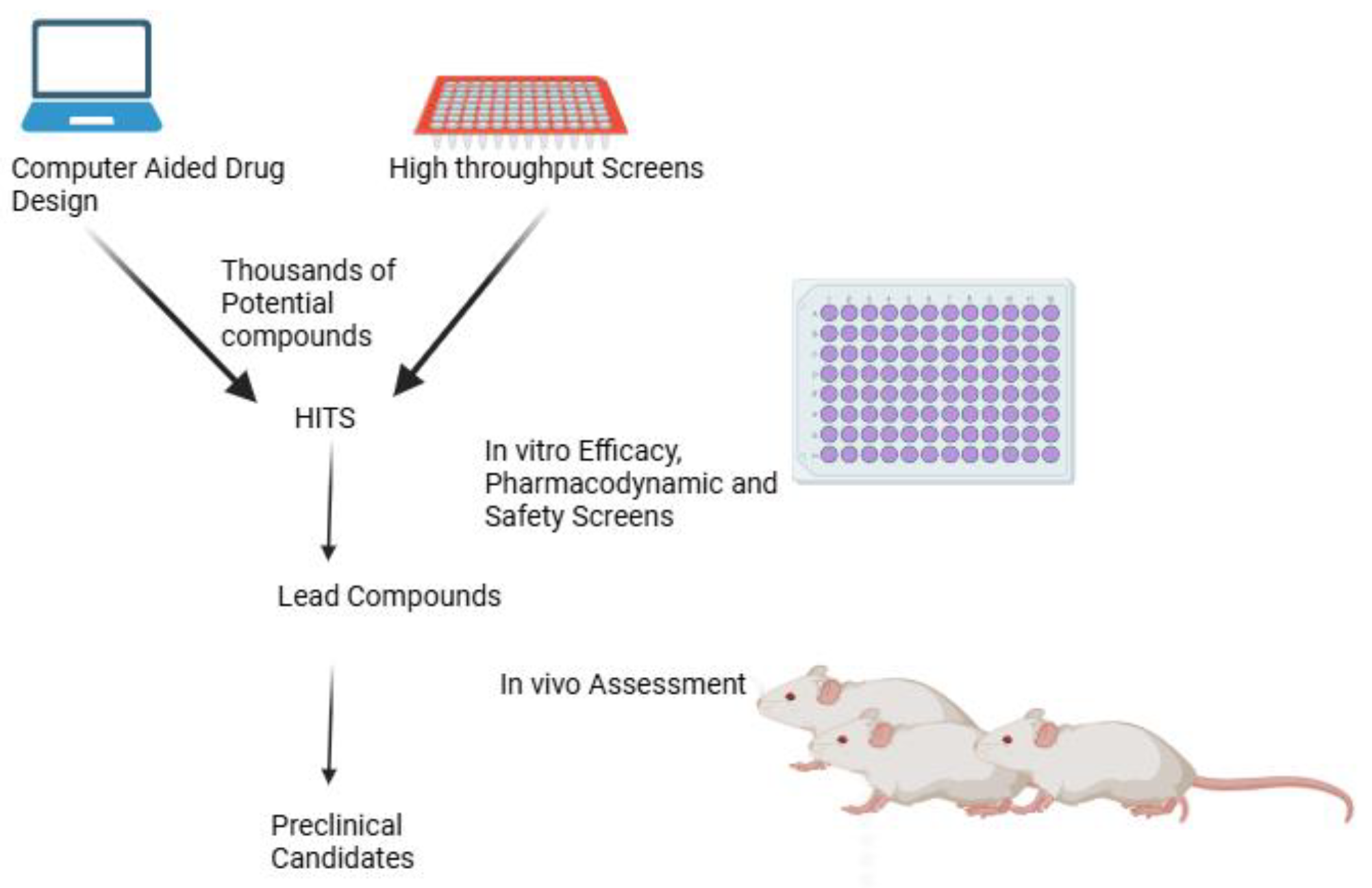
Figure 2.
Animal species used as in vivo models in Antimalarial Drug Discovery.
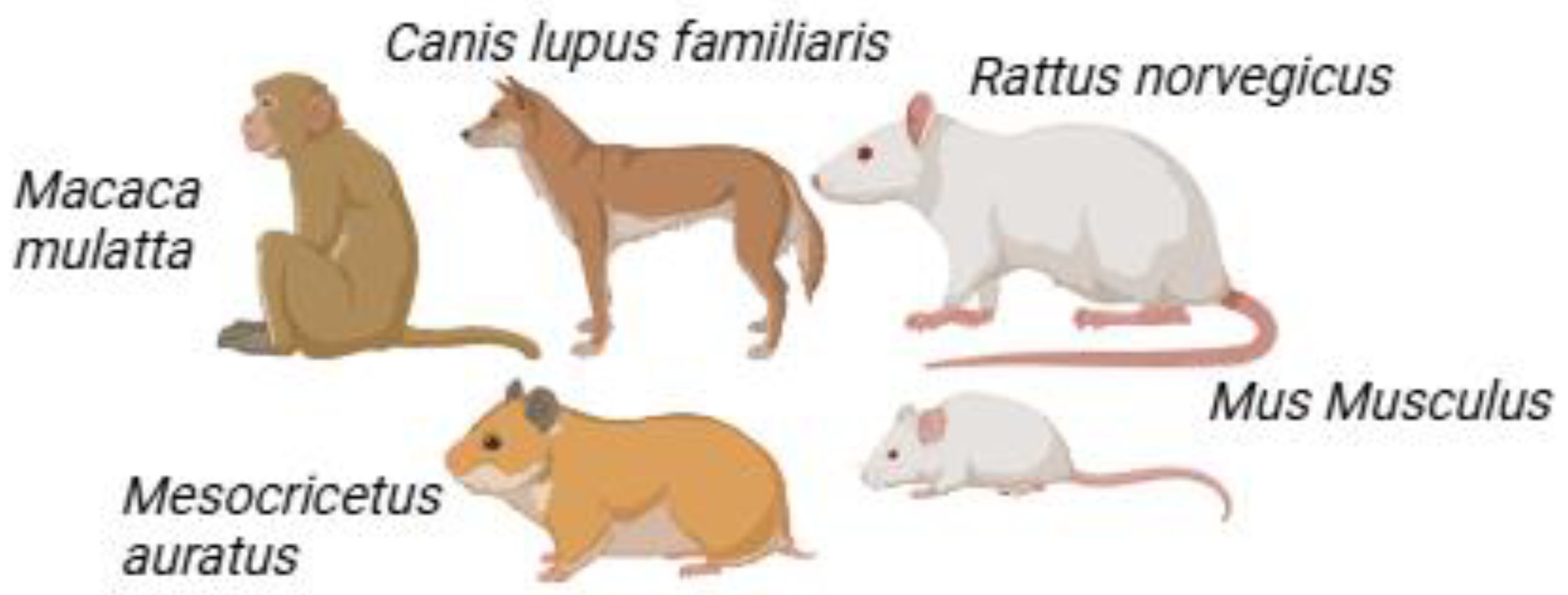
Figure 3.
In vivo Pharmacokinetic Parameters in Antimalarial Drug Discovery.
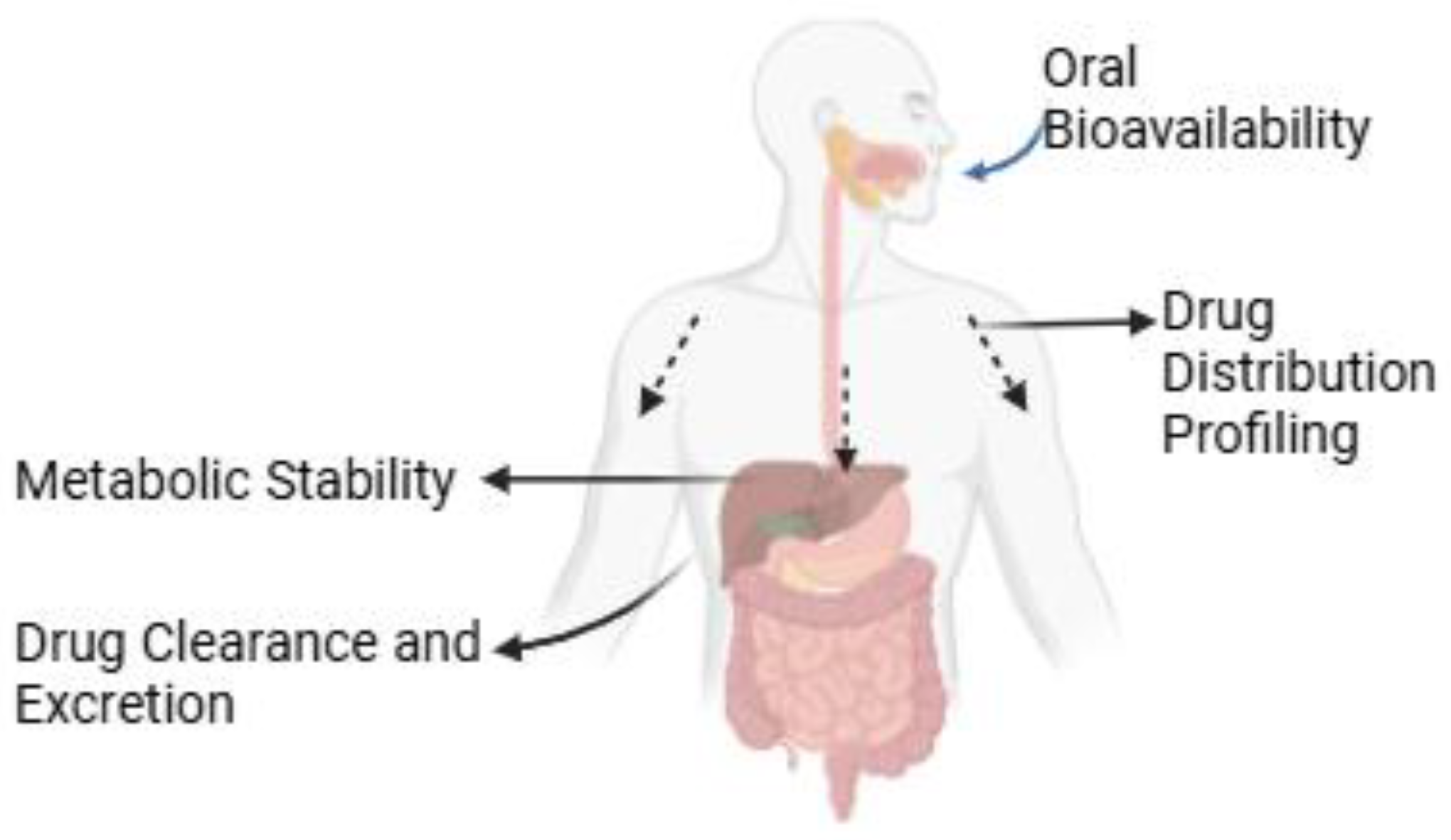
Figure 4.
In vivo Safety Parameters in Antimalarial Drug Discovery.
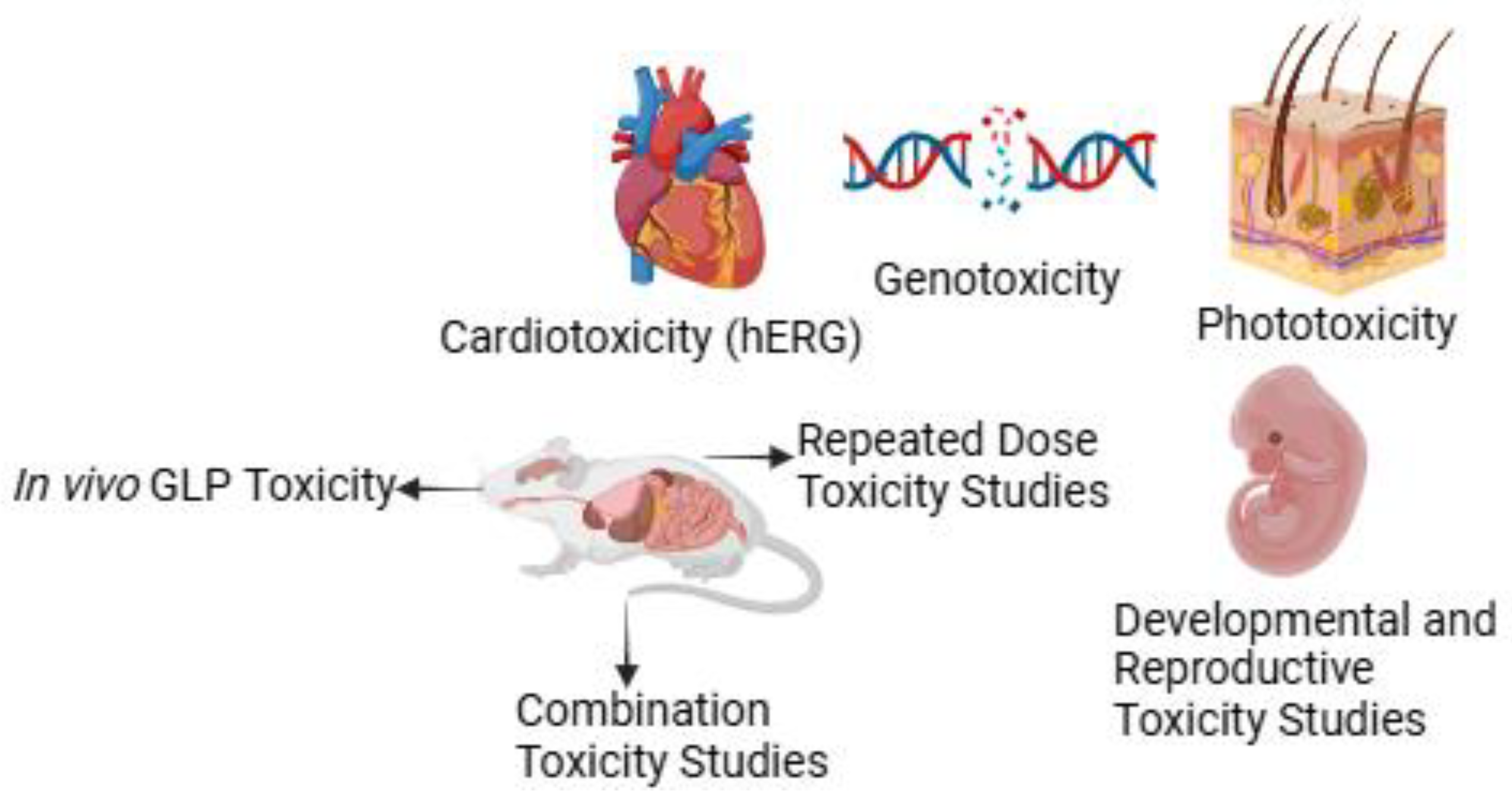
Table 1.
Current List of Murine Strains as Used in Previous Studies and Their Excellent Inputs to Antimalarial Drug Discovery.
Table 1.
Current List of Murine Strains as Used in Previous Studies and Their Excellent Inputs to Antimalarial Drug Discovery.
| Murine Model (Mice) | Inbred/Outbred | Preclinical Assays Conducted | Resistant/Susceptible to P. berghei | Murine Plasmodium Species Assessed | References |
|---|---|---|---|---|---|
| BALB/c | Inbred | Efficacy, Pharmacokinetics, Safety, | Susceptible |
P. yoelii, P. chabaudi, P. vinckei |
[33,37,45,79,80] |
| AKR/J | inbred | Pharmacokinetics | Resistant | - | [45] |
| C3H/HeJ | Inbred | Efficacy | Susceptible | P. chabaudi | [45,47] |
| CBA | Inbred | Efficacy | Susceptible |
P. yoelii, P. chabaudi, P. vinckei |
[43,49,81] |
| SJL/J | Inbred | Susceptible | P. chabaudi | [45,50] | |
| C57Bl/6 | Inbred | Efficacy, Safety |
Susceptible |
P. yoelii, P. chabaudiP. falciparum, P. vinckei |
[20,24,43,55,56]. |
| DBA/2J | Inbred | Resistant |
P. yoelii , P. chabaudi, P. vinckei, |
[82,83,84,85,86] | |
| Swiss Webster | Outbred | Efficacy, Toxicity |
Susceptible |
P. yoelii P. chabaudi |
[28,25,28,87,88,89] |
| ICR | Outbred | Efficacy, Pharmacokinetics, Safety |
Susceptible |
P. yoelii , P. chabaudi, P. vinckei |
[13,90,91,92,93] |
| CD1 | Outbred | Efficacy, Pharmacokinetics, Safety |
Susceptible | P. chabaudi, P. yoelii | [36,66,67,68,94] |
| NMRI | Outbred | Efficacy, Pharmacokinetics, Safety |
Susceptible | P. chabaudi, P. yoelii | [72,95,96,97,98] |
| NOD/SCID/γcnull (NOG) | Humanized | Efficacy, Pharmacokinetics |
P. falciparum | [73,74,82] | |
| NOD.Cg-Prkdcscid Il2rgtm1Wjl/SzJ | Humanized | Efficacy, Pharmacokinetics |
P. falciparum | [99,100] |
|
| FRG NOD huHep | Humanized | Efficacy | P. falciparum | [78] | |
| 5xfad | Transgenic | - | - | - |
Disclaimer/Publisher’s Note: The statements, opinions and data contained in all publications are solely those of the individual author(s) and contributor(s) and not of MDPI and/or the editor(s). MDPI and/or the editor(s) disclaim responsibility for any injury to people or property resulting from any ideas, methods, instructions or products referred to in the content. |
© 2025 by the authors. Licensee MDPI, Basel, Switzerland. This article is an open access article distributed under the terms and conditions of the Creative Commons Attribution (CC BY) license (http://creativecommons.org/licenses/by/4.0/).
Copyright: This open access article is published under a Creative Commons CC BY 4.0 license, which permit the free download, distribution, and reuse, provided that the author and preprint are cited in any reuse.


