Preprint
Article

This version is not peer-reviewed.

Design and Optimization of Sustained Release Tablets of Axitinib—A DoE Based Approach

Submitted:

21 January 2025

Posted:

22 January 2025

You are already at the latest version

Abstract

Axitinib is classified as BCS class II by the Biopharmaceutical Classification System (BCS). Axitinib is used to treat renal cancer patients. However, no sustained-release tablets have been documented using the Quality by Design (QbD) method. The aim of the research work was to design sustained release formulations of AXB, using response surface methodology through Box-Behnken statistical design (BBD) by wet granulation technique. The amounts of release retardant polymers investigated were HPMC K4M (X1), HPMC K15M (X2), and Polyvinyl pyrrolidone (PVP) (X3). In vitro cumulative percentage release in 0-24 (h), such as (R1), (R2), (R3), (R4), (R5), (R6), (R7), (R8), (R9), and (R10), are employed as dependent variables. The desirability 0.793 functions were found to be optimized in sustained-release formulations. Finally, the BBD proved valuable in improving the sustained release formulation and determining the impacts of formulation factors. The research finding is to develop the ideal formulation with great strength and long-term release.
Keywords: 
;  ;  ;  ;  

1. Introduction

Axitinib (AG-013736) (AXB) is a tyrosine kinase inhibitor that inhibits angiogenesis when taken orally (TKI). Angiogenesis, vascular permeability, and blood flow have all been inhibited by the compound in vitro [1,2]. AXB showed an anticancer effect in Phase III clinical studies against kidney neoplasms [3], including renal cell carcinoma (RCC) [4,5], pancreatic cancer [6], and thyroid cancer [7]. The first pharmacokinetic investigation utilized a rapid assay that combined liquid chromatography-tandem mass spectrometry (LC/MS/MS) with liquid-liquid extraction [8].
Ángeles et al. have demonstrated the oxidized lipids in the metabolic profiling of neuroendocrine tumors by utilizing RP-LC-ESI-QTOF-MS/MS [9]. Huynh et al. used LC-MS/MS to develop and validate a technique for simultaneously quantifying 14 tyrosine kinase inhibitors in human plasma [10]. Finally, Yu et al. have developed and validated the eight tyrosine kinase inhibitors by utilizing LC-MS/MS method simultaneously with pharmacokinetic studies [11]. The utilization of a new generation LC system and column with higher pressures and sub-2 m particles, which had not previously been employed for TKI medications using the QbD technique, may explain this approach's increased sensitivity compared to other approaches TKI drugs. The primary goal of anticancer drug development has been to develop molecules with improved efficacy and reduced toxicity commonly associated with anticancer treatment with dose management, as well as to improve the dissolution rate of poorly water-soluble drugs through the formulation of solid drug solutions in polymeric matrices. In this regard, experimental design trials, also known as the Design of Experiments (DoE), have been widely utilized to create (Quality by Design) QbD in both commercial and academic contexts, as well as a regular aspect of the robustness study of the pharmaceutical manufacturing process [12].
Hydroxypropyl methylcellulose (HPMC) is extensively used in several application because of its unique properties and is extensively studied in different fields such as pharmaceuticals, biomaterials, agriculture, food, and water purification, etc [13]. The drug and HPMC ratio, particle size of HPMC and drug molecule, and compression force impacts the release of drug from the matrix [14]. The effect of mean particle size of HPMC and number of polymer particles on the release of aspirin from swelling hydrophilic matrix tablets was investigated [15]. HPMC pore formers have resulted in increased implant porosity and overall drug release, whereas methyl cellulose tends in lower porosity with slow, delayed release [16]. Authors reported that the water content of swollen matrices consisting of HPMC and theophylline could be measured using texture analysis [17]. Transport phenomena played a crucial role in water up-take, gel swells and erosion. Due to increased diffusivity, hydration occurs [18].
HPMC could be a potential enhancer of biopharmaceutical properties via ball-milled solid dispersion, and HPMC stabilizes the solid dispersions through a dilution mechanism have shown that in the in-vivo setting, matrix formulations with a lower HPMC concentration and higher lactose concentration are more likely to perform poorly. [19,20]. HPMC molecular weight, concentration, and effect of food could affect the in vivo erosion rate on HPMC matrix tablets [21]. Authors have developed the nateglinide controlled release tablet formulations and optimized by using mathematical response surface methodology [22]. Authors has suggested that drug release can be influenced by increased the methoxyl content of HPMC, whilst high content of hydroxypropoxyl can largely reduce the difference in drug release profiles [23].
The traditional models of optimization, where one factor is controlled at a time, since they do not take into account potential correlations between variables, which can lead to an inability to determine the optimal combination. An effective remedy for this issue could be statistical optimization, using a suitable experimental design. The recently developed QbD regulatory framework describes a highly practical approach to find the optimum product and process characteristics by applying the concept of experiments. DoE offers tremendous information from the least number of experimental runs through systematic variation of the conditions and simultaneous evaluation of the effects of multiple variables. DoE output variables have been recognized as an important strategy for the in-vitro dissolution profile of the drug development process. Several kinetic equations have been employed to interpret the drug release from immediate and sustained oral dosage formulations. DOE is used to optimize the variables of the process and formulation in order to achieve the most effective formulations.These studies are frequently used to develop and validate a robust manufacturing process. The following type of study is to better value the critical method parameters and impact of tiny changes in method conditions. Authors have reported the characterize and optimize loxoprofen immediate release (IR)/sustained release (SR) tablet utilizing a three-factor, three-level Box–Behnken design (BBD) combined with a desirability function [24]. Authors have demonstrated about the developed sustained release gastro floating tablets of metformin HCl using BBD method to find out the impact of formulation variables and process variable on response variables, including drug release rate were investigated [25]. Authors have reported the optimized chrono-modulated dual release bilayer tablets of fexofenadine and montelukast using BBD method [26]. Authors have developed the cinnarizine gastro-retentive floating tablets using hot melt extrusion coupled with 3D printing [27]. The goal of this study was to use a QbD technique to create once-daily sustained-release Axitinib tablets. The ideal formulation, a quadratic D-optimal experimental design, was utilized to examine the influence of matrix-forming polymer (HPMC) % and PVP (binder) cumulative ratio of medication released at different time intervals during 24 hours. The optimization approach would aid in the development of the design space and the establishment of formulation parameters for the development of sustained-release tablets with predictable properties.

2. Material and Methods

2.1. Materials

Axitinib was kindly donated by MSN Laboratories, Hyderabad, India. HPMC K4M and HPMC K15M was gifted from Colorcon Pvt Limited; Mumbai, India; Avicel PH 101 (50̴ µm), Kollidon®30 polyvinylpyrrolidone K-30 (PVP), Magnesium Stearate were purchased from SRL India:, Isopropyl alcohol purchased from SD fine chem-Limited, India. All other chemicals and solvents were of analytical grade.

2.2. Compatibility Studies

2.2.1. Thermal Analysis

The melting point change of Axitinib was measured using a DSC instrument to evaluate its thermal behavior. Thermo gravimetric and Differential Scanning Calorimetry (TG-DSC, NETZSCH STA 449 F3 Jupiter ®Germany) from 30°C to 350°C with nitrogen purging gas at a ramping rate of 10 K/min.

2.2.2. FTIR Analysis

The physiochemical compatibilities of the drug and excipients were tested by Fourier transform infrared spectroscopy using Perkin Elmer Spectrum GX FTIR Spectrometer. SpectraGyrph 1.2 spectroscopy software was used to assess the spectral data. It used to detect the functional groups present in the Axitinib.

2.3. Experimental Design

In the current research, a 17 run, three-factor, three-level Box–Behnken design was employed for the optimization procedure using Design-Expert Software (Design-Expert® 11, Stat-Ease, Inc., Minneapolis, MN 55413, USA). The investigated factors independent variables were HPMC K4M content (X1), HPMC K15M content (X2), and PVP-30 content (X3). From adequate preliminary trials, the levels of these three factors were calculated. At three different stages, these independent variables are analyzed, such as low (-1), medium (0), and high (+1), as shown in Table 1. The cumulative percentages of drug released at 30 min,1,2,3,4,6,8,10,12, and 24 hours at (R1), (R2), (R3), (R4), (R5), (R6), (R7), (R8), (R9), and (R10), respectively were selected as dependent variables. Which are considered as prominent factors in the formulation ingredients on the drug release of sustained-release tablets.

2.4. Preparation of Axitinib Sustained Release Tablets

Using a glass mortar and pestle, 0.324 mg of Axitinib, HPMC K4M, and HPMC K15M were accurately weighed and blended for 20 minutes. The mixture was then granulated using a PVP (5% w/w) binder solution in isopropyl alcohol. The wet mass was sieved with a 16# sieve, and granules were dried in a tray drier at 50°C for 30 minutes. Finally, the dry granules were blended with MCC's requisite amounts and 1% magnesium stearate by weight. On a 10-station rotary tablet press (Rimek, Ahmedabad, India), amounts of the resulting granules equivalent to 100 mg of Axitinib were compressed using 5mm concave punches and a compression force of 9KN for all formulations.

2.5. Preparation of Axitinib Immediate Release Tablets

The wet granulation method was employed to develop axitinib immediate release (IR) tablets. In a tumble mixer, 0.324 mg of Axitinib, lactose, and other excipients were blended for 5 min to form a wet mass. The powder blend was wetted with isopropyl alcohol containing PVP-K-30 as a granulating fluid. The moist bulk was then passed through BSS, which had a 1.7 mm opening aperture. The granules were collected and dried for 60 minutes at 60 C. Finally, the formulations 100mg of Axitinib were compressed using 5 mm concave punches (Rimek, Ahmedabad, India) at a compression force of 9 KN.

2.6. In Vitro Drug Release Profile

The release properties of Axitinib from the prepared formulations were determined using a Dissolution Tester (Lab India): DS 8000. According to the USP dissolution II paddle technique, 37 .5°C with a rotation speed of 50 rpm.In a 900 ml medium of 0.01NHCl, the release profile was evaluated at 50rpm and 37 ± 0.5°C. For time intervals 0 to 24 h, a 5 ml sample was taken and replaced with fresh dissolving media at specified time intervals. Millipore 0.45 m filters were used to filter the collected samples. After appropriate dilutions, the concentration of Axitinib in samples was quantified using a UV double beam spectrophotometer at 335nm (Shimadzu, Kyoto, Japan). The percentage of drugs released from the tablets was estimated and Plotted.

2.7. LC-MS/MS Analysis

Shimadzu LC-MS/MS 8030 system with electro spray ionization interface was used. We have utilized the LC-20AD pump, SPD-M20 PDA detector, CTO-20AC column oven, CBM-20 alite controller, SIL-20AC auto sampler and 20AC auto sampler. Lab Solutions software was used to develop the process. The chromatographic separation was performed using Zorbax C18 (50 mm x 4.6 mm i.d., 5 m) as a stationary phase in isocratic elution mode with 10 mM Ammonium formate (pH- 4.5): acetonitrile in the ratio of 30:70 (v/v) with a flow rate of 0.87 ml/min and an injection of 30 µl whilst maintaining the column ambient temperature. The preliminary tests for designing the LC-MS/MS system for estimating Axitinib were carried out according to the literature reports.

3. Results and Discussion

3.1. Compatibility Studies

3.1.1. Thermal Analysis

Drug–excipient interaction study at an early stage of product development is an important exercise in the development of a stable dosage form. As shown in Figure 1a,b sharp endothermic peak was observed at 215 ◦C in DSC thermogram of Axitinib. However, the endothermic peak of Axitinib was well preserved at 215 ± 5◦C in the DSC thermogram of Axitinib-excipients mixtures. This result inferred that there was no interaction between drug and excipients. In isothermal stress testing, it was observed that there was no physical change (color and appearance) as well as drug content after storage of drug–excipient blends under stressed conditions which supported a previously reported result of DSC study on drug–excipient compatibility testing.

3.1.2. FTIR Analysis

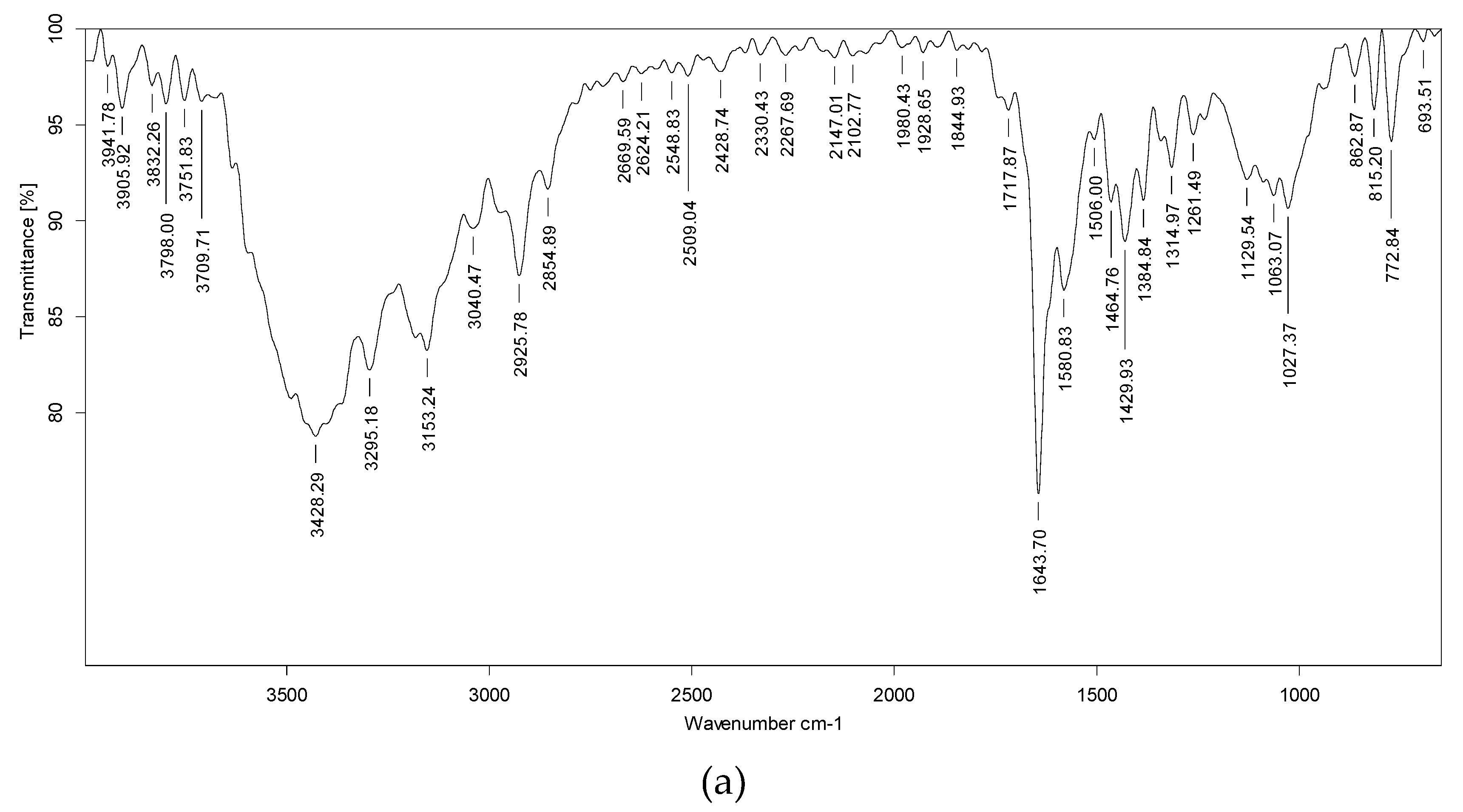
The FTIR spectra of Axitinib, and Axitinib+excipient mixtures were obtained using Fourier transform infrared spectroscopy using Perkin Elmer Spectrum GX FTIR Spectrometer. Excipient polymer and drug peaks were not prominently observed in the pre-formulation as it might be available as a molecular dispersion within the polymer matrix. The results of the FTIR suggest the absence of any potential chemical incompatibility between the polymer and drug in the formulation Figure 2a,b.

3.2. Evaluation of Physical Parameters of Granules and Tablets

From the angle of repose, compressibility index and Hausner ratio, the flow properties of granules can be measured. The angle of repose (almost) <30 C implies free flowing material and > 40 with weak flow properties. The <10 percent compressibility index shows excellent flow properties and >38 percent with weak flow properties. The Hausner ratio of 1.00-1.11 reveals free flow and weak flow characteristics of >1.60.
Values for angle of repose (θ), compressibility index (%), and Hausner ratio for all prepared granules were found to be in the range of 23.65–25.55 ◦C, 16.05-19.12%, and 1.19–1.25, respectively, Which indicates that the granules flow freely and can be used for compression of the tablet. Within the limit of ±5 percent (w/w) for all prepared tablets, the percentage of weight variation was observed, which is well accepted for uncoated tablets as per United State Pharmacopeia, National Formulary (USP,2004). Friability testing of all batches of the prepared tablet was passed (weight loss <1%, w/w), which assumed that tablets had adequate mechanical integrity and strength.

3.3. Effect of Model Independent and Dependent Factors of Dissolution Study

The amount of HPMC K4M (X1) and HPMC K15M (X2) in tablets were chosen as independent variables in a 32 full factorial design. A statistical model incorporating interactive and polynomial terms was used to evaluate the responses.
Y = b 0 + b 1 X 1 + b 2 X 2 + b 12 X 1 X 2 + b 11 X 1 2 + b 22 X 2 2
where, Y is the dependent variable, b0is the arithmetic mean response of the 9 runs, and biis the estimated coefficient for the factor Xi. The main effects (X1and X2) represent the average result of changing one factor at a time from its low to high value. The interaction terms (X1,X2) showed how the response changes when two factors are simultaneously changed. The polynomial terms (X12andX22) are included to investigate nonlinearity.
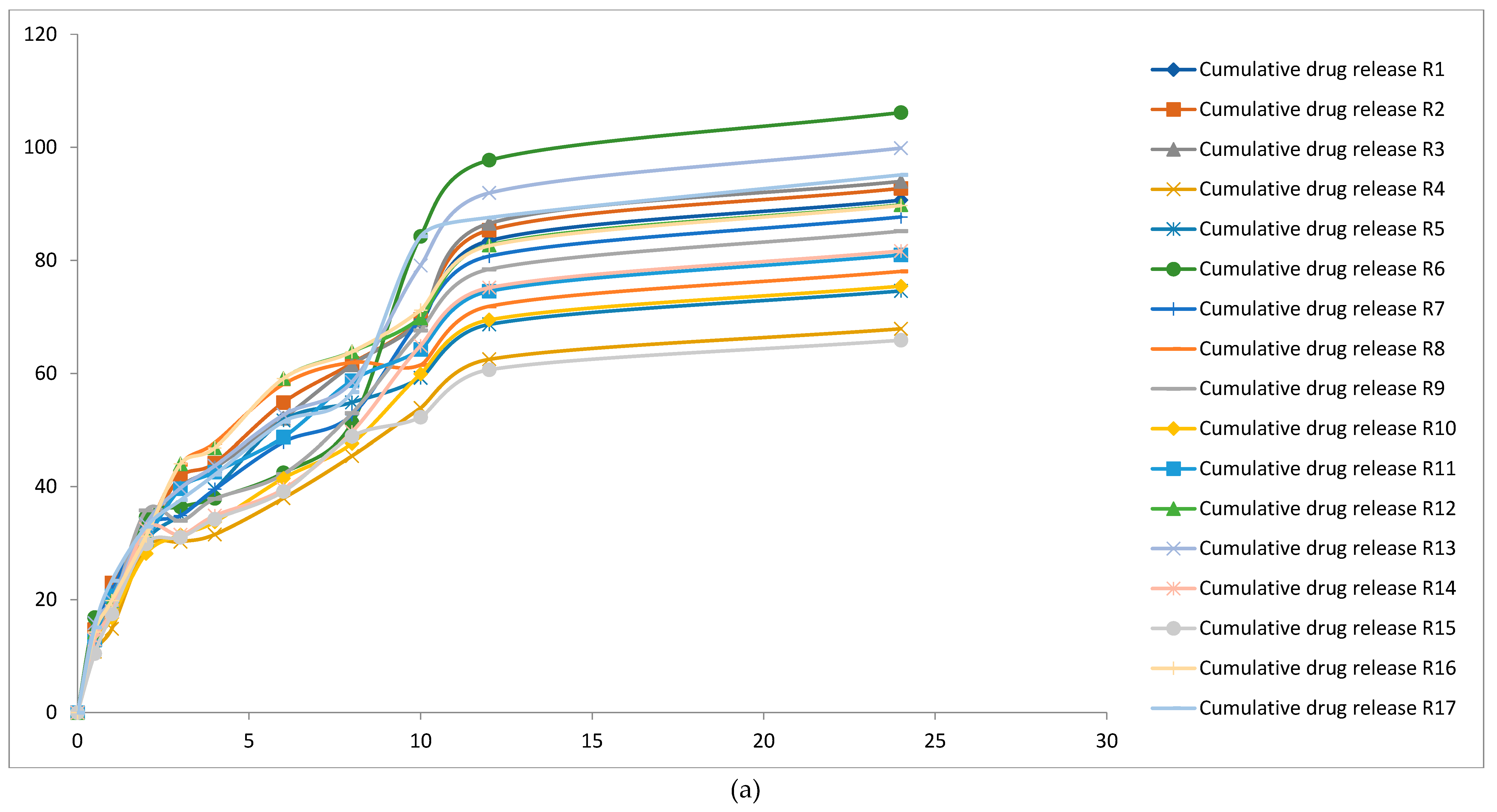
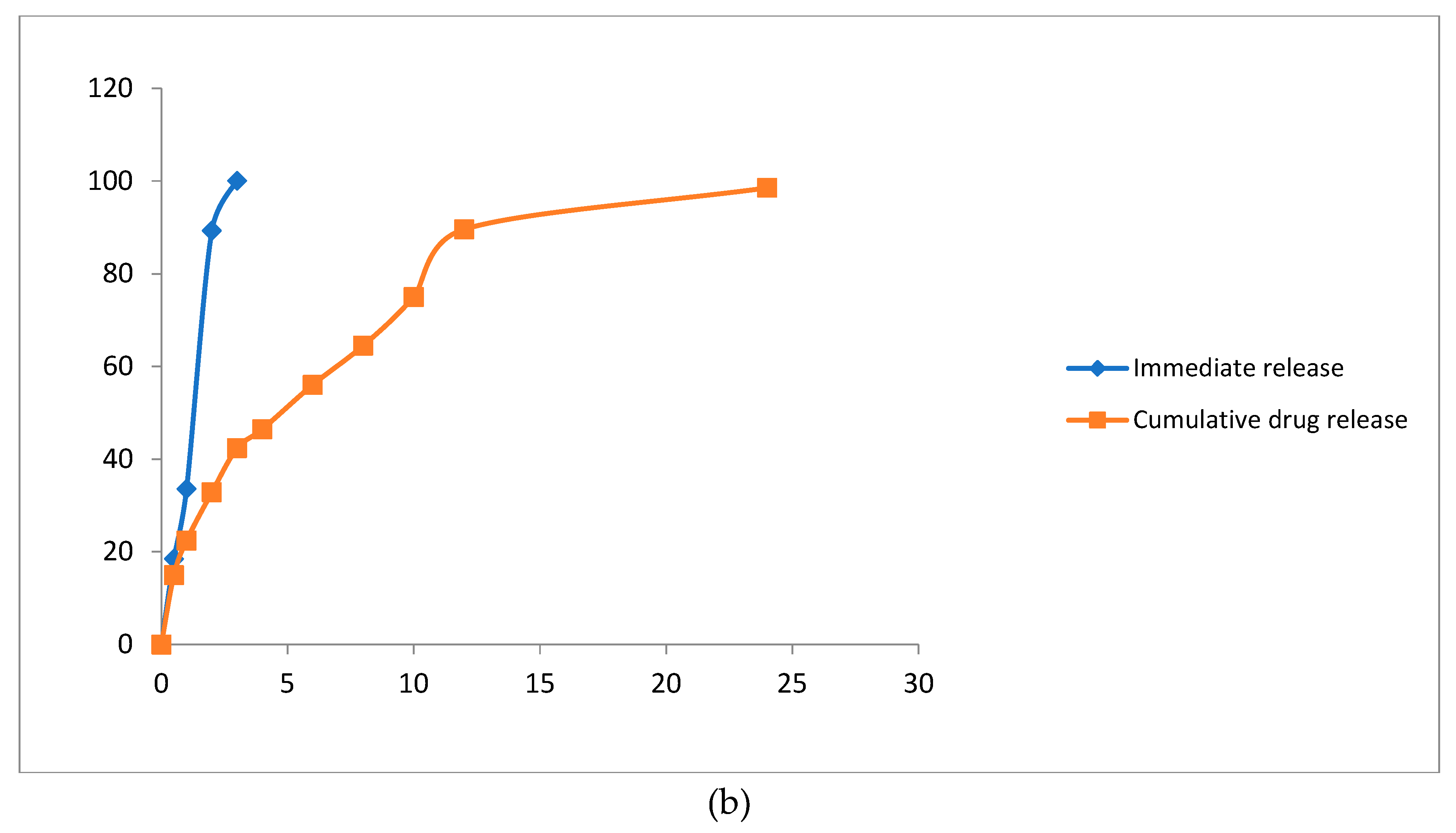
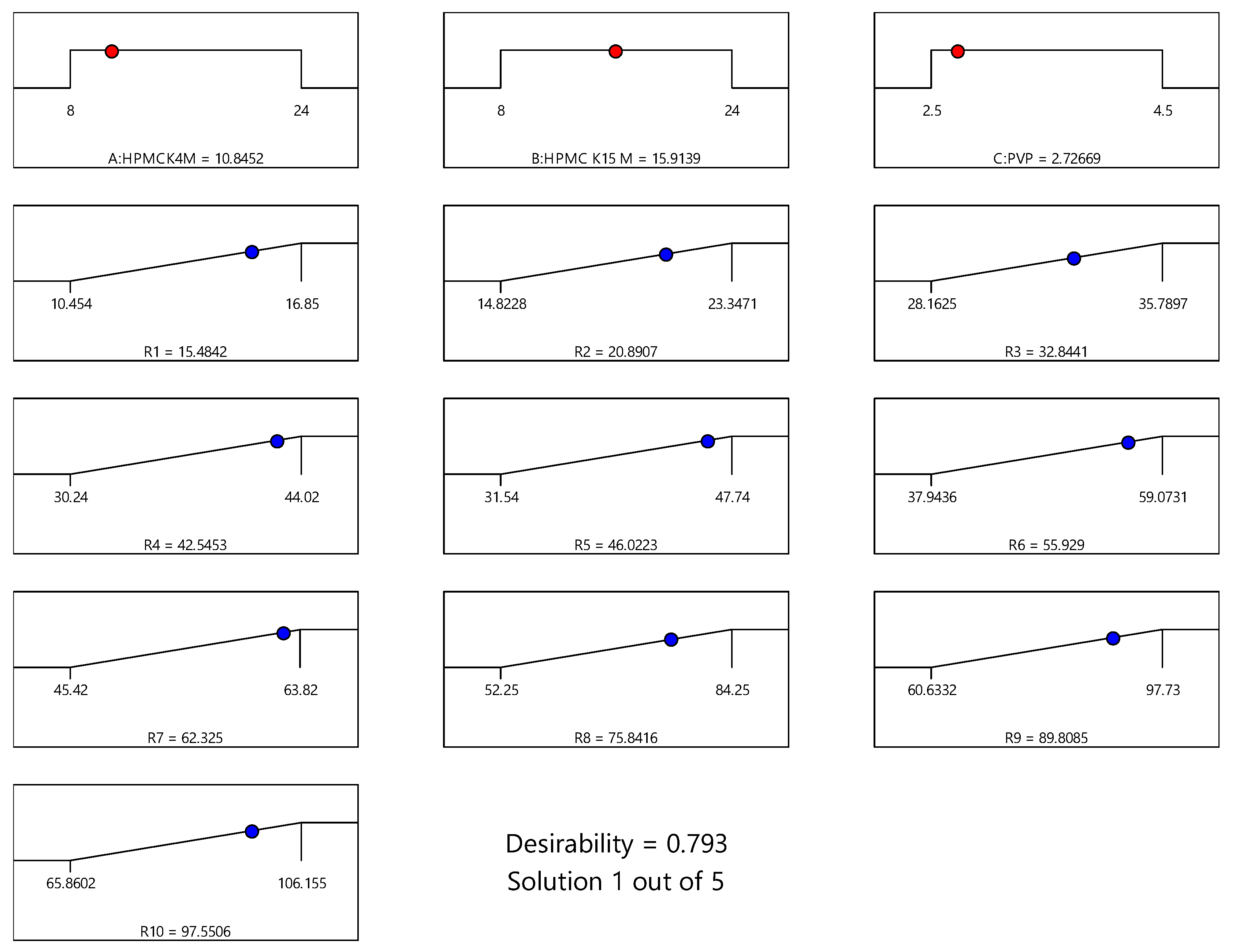
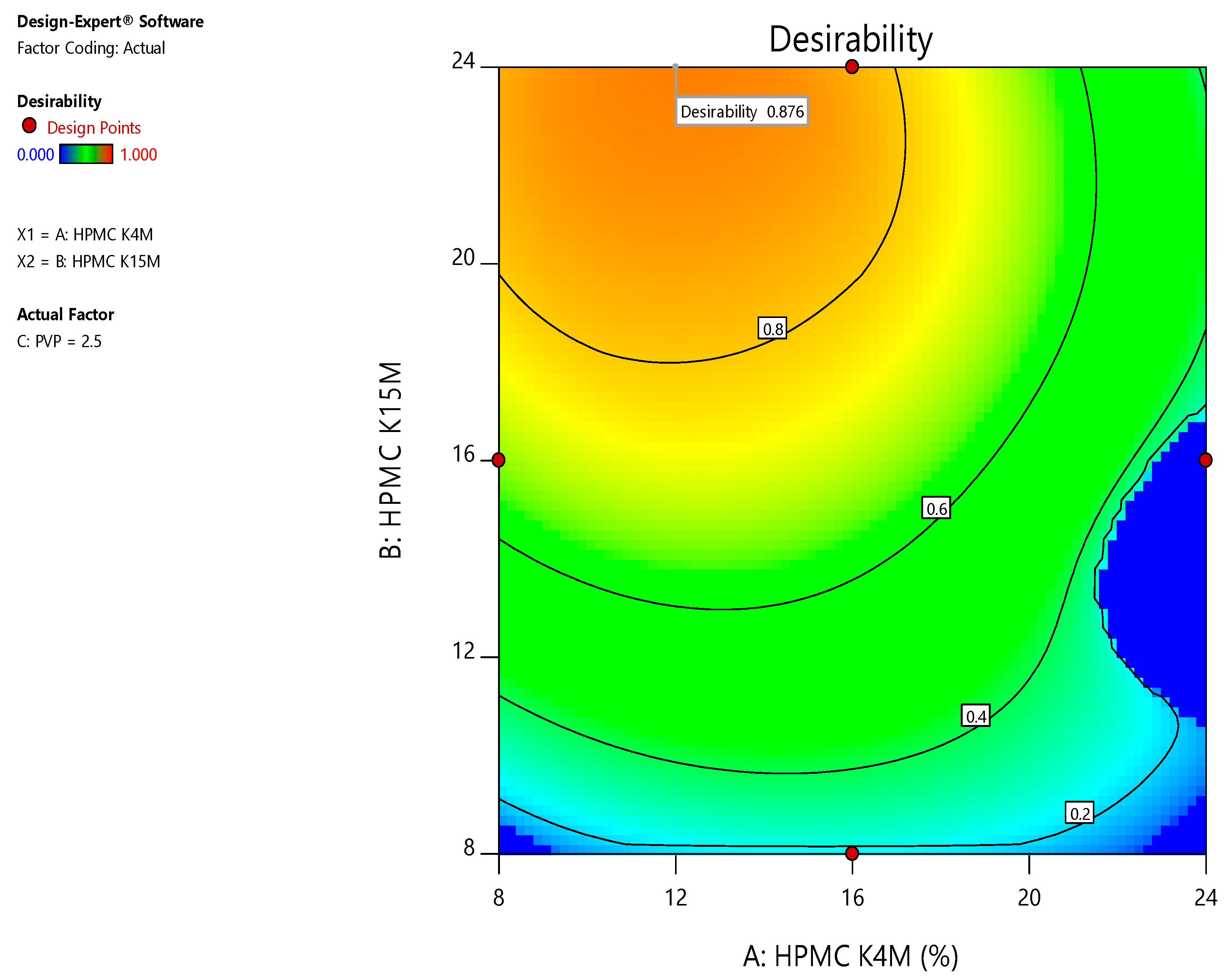
The BBD produced a total of 17 confirmative runs that included the midpoint of each edge and the repeated center points to refine Axitinib sustained-release formulations. The 17 experiments were performed for optimizing the three independent variables (HPMC K4M, HPMC K15M and PVP K30 concentrations). The formulations developed were characterized by dependent properties, such as dissolution, and the values shown in Table 2. (Figure 3a,b) For the 17 formulations, the observed responses were evaluated using Statease Design-Expert software. A significant impact on the observed responses was shown by polynomial equations which identified the individual main effect, the interaction effect and the quadratic effect of the selected independent formulation variables. The optimum values of the variables were obtained by the Design-Expert software and based on the criterion of desirability Figure 4. Three dimensional reaction surface plots and the contour plots were conspired to interpret the influence of independent variables on the dependent responses Figure 5 Through two and three-dimensional graphs, they help decide the optimum range of experimental parameters and calculate the relationship between the input parameters and the interest response.

3.4. LC-MS/MS Analysis

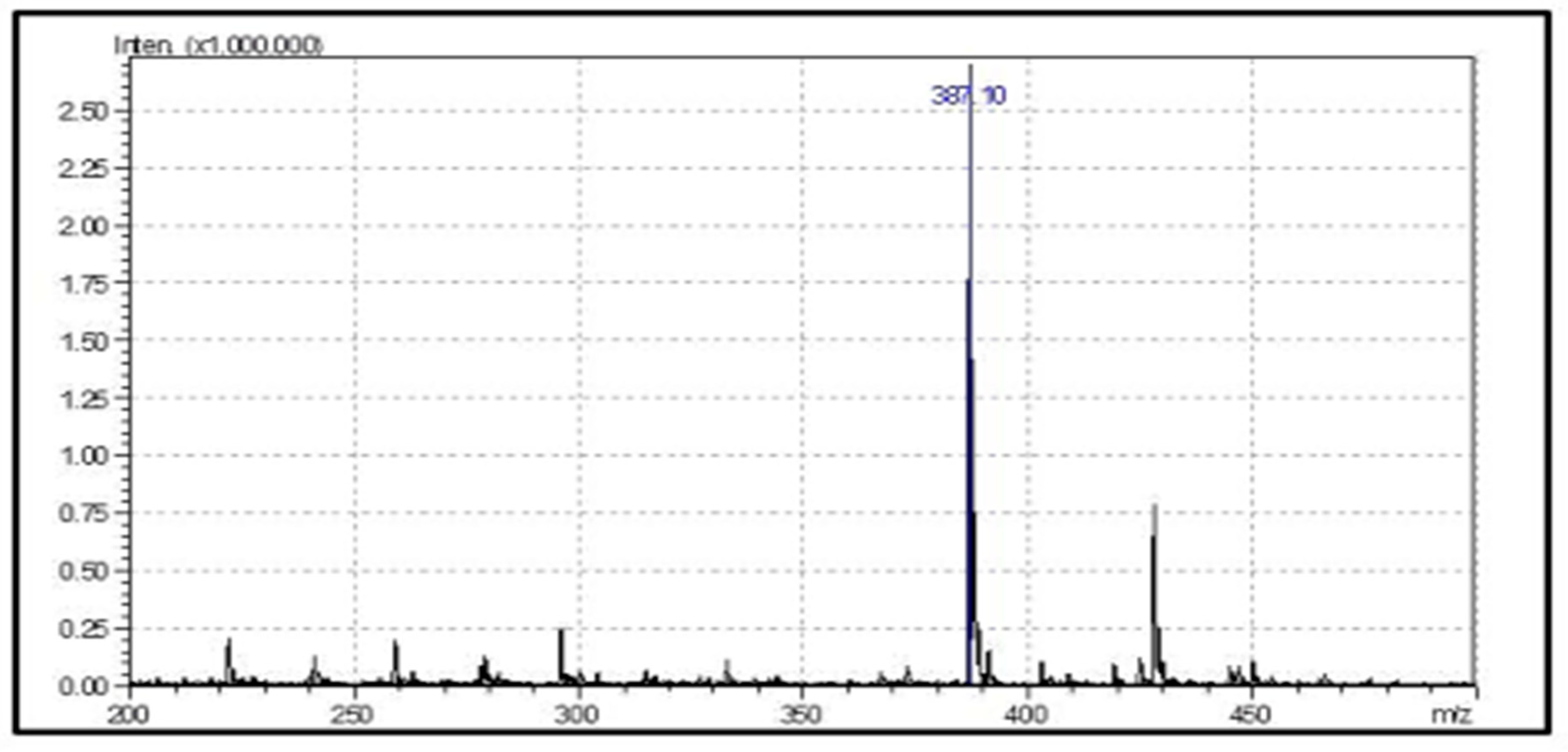
Five tablets were weighed and thoroughly powdered, and a weight of powder equal to 10 mg Axitinib was transferred to 10 ml volumetric flask. The contents were dissolved with acetonitrile and filtered. The filtered solutions were diluted to get a Conc.10μg/ml of Axitinib. The linearity range for axitinib was found to be 10,20,30,40, and 50 ng/ml with correlation coefficient (r2) 0.99. The present method was capable of quantifying the lower concentration of Axitinib accurately. %nominal values for all the standards were within the limits of 98.37–98.68 which was between 80 and 120%, as per the US-FDA guidelines. Initially, acetonitrile, methanol, and buffer species containing ammonium acetate and ammonium formate (each at 20 and 50 mM strength) with differing pH (between 3.0 and 5.0) and variable flow rate (between 0 and 100 mL/min) were used to measure different combinations of mobile phase 0.5 and 2.0 mL/min). Because of the quick chromatographic separation (i.e., lower Rt) seen in Figure 6, preliminary studies proposed using acetonitrile and formate buffer (pH 3.0) as an appropriate mobile phase mixture.

4. Conclusions

The current study focused on the formulation of sustained release tablets of Axitinib by using HPMC as a matrix forming water soluble polymer. The sustained release formulations were successfully formulated using the wet granulation method. This study has proven that the DoE approach allows quick finding of a formulation having a desired dissolution profile and helps to in experimental design to analyze the influence of formulation factors on the in vitro dissolution behavior. BBD was used to study and optimize effect of formulation variable on dissolutions on different time intervals. The combination of both the HPMC K4M and K15M at different concentrations in the tablets of various formulations (SR-1 to SR-17) was attempted through a response surface approach involving 32 randomize full factorial design to optimize the concentration of HPMC K4M and HPMC K15M. Optimization was performed based on desirability value. The optimized batch sustained release formulations attained the desirable 98.52% drug release with first order kinetics.

Funding

Author sincere thanks to Indian Council of Medical Research (award No. 3/2/2/6/2018 Online Fship NCD-III to Mohamed Sheik Tharik Abdul Azeeze).

Acknowledgements

The authors thank MSN Laboratories, Hyderabad, India for the generous gift sample of Axitinib.

Conflict of interest

The authors declare no conflict of interest, financial or otherwise.

References

  1. Wilmes LJ, Pallavicini MG, Fleming LM, Gibbs J, Wang D, Li KL, Partridge SC, Henry RG, Shalinsky DR, Hu-Lowe D, Park JW. A novel inhibitor of VEGF receptor tyrosine kinases, inhibits breast cancer growth and decreases vascular permeability as detected by dynamic contrast-enhanced magnetic resonance imaging. Magnetic resonance imaging. 2007 Apr 1;25(3):319-27. [CrossRef]
  2. Li KL, Wilmes LJ, Henry RG, Pallavicini MG, Park JW, Hu-Lowe DD, McShane TM, Shalinsky DR, Fu YJ, Brasch RC, Hylton NM. Heterogeneity in the angiogenic response of a BT474 human breast cancer to a novel vascular endothelial growth factor-receptor tyrosine kinase inhibitor: assessment by voxel analysis of dynamic contrast-enhanced MRI. Journal of Magnetic Resonance Imaging: An Official Journal of the International Society for Magnetic Resonance in Medicine. 2005 Oct;22(4):511-9. [CrossRef]
  3. https://clinicaltrials.gov/ct2/show/NCT00678392.
  4. Rixe O, Bukowski RM, Michaelson MD, Wilding G. hudes GR, Bolte O, Motzer Rj, Bycott P, Liau Kf, freddo j, Trask PC, Kim S, Rini BI. Axitinib treatment in patients with cytokine-refractory metastatic renal-cell cancer: a phase II study. Lancet Oncol. 2007;8:975-84. [CrossRef]
  5. Trask PC, Bushmakin AG, Cappelleri JC, Bycott P, Liau K, Kim S. Health-related quality of life during treatment for renal cell carcinoma: results from a phase II study of axitinib. Acta Oncologica. 2008 Jan 1;47(5):843-51. [CrossRef]
  6. Spano JP, Chodkiewicz C, Maurel J, Wong R, Wasan H, Barone C, Létourneau R, Bajetta E, Pithavala Y, Bycott P, Trask P. Efficacy of gemcitabine plus axitinib compared with gemcitabine alone in patients with advanced pancreatic cancer: an open-label randomised phase II study. The Lancet. 2008 Jun 21;371(9630):2101-8. [CrossRef]
  7. Cohen EE, Needles BM, Cullen KJ, Wong SJ, Wade III JL, Ivy SP, Villaflor VM, Seiwert TY, Nichols K, Vokes EE. Phase 2 study of sunitinib in refractory thyroid cancer. Journal of Clinical Oncology. 2008 May 20;26(15_suppl):6025-.
  8. Rugo HS, Herbst RS, Liu G, Park JW, Kies MS, Steinfeldt HM, Pithavala YK, Reich SD, Freddo JL, Wilding G. Phase I trial of the oral antiangiogenesis agent AG-013736 in patients with advanced solid tumors: pharmacokinetic and clinical results. Journal of Clinical Oncology. 2005 Aug 20;23(24):5474-83. [CrossRef]
  9. López-López Á, Godzien J, Soldevilla B, Gradillas A, López-Gonzálvez Á, Lens-Pardo A, La Salvia A, del Carmen Riesco-Martínez M, García-Carbonero R, Barbas C. Oxidized lipids in the metabolic profiling of neuroendocrine tumors–Analytical challenges and biological implications. Journal of Chromatography A. 2020 Aug 16;1625:461233. [CrossRef]
  10. Huynh HH, Pressiat C, Sauvageon H, Madelaine I, Maslanka P, Lebbé C, Thieblemont C, Goldwirt L, Mourah S. Development and validation of a simultaneous quantification method of 14 tyrosine kinase inhibitors in human plasma using LC-MS/MS. Therapeutic drug monitoring. 2017 Feb 1;39(1):43-54. [CrossRef]
  11. Guan S, Chen X, Wang F, Xin S, Feng W, Zhu X, Liu S, Zhuang W, Zhou S, Huang M, Wang X. Development and validation of a sensitive LC–MS/MS method for determination of gefitinib and its major metabolites in human plasma and its application in non-small cell lung cancer patients. Journal of pharmaceutical and biomedical analysis. 2019 Aug 5;172:364-71. [CrossRef]
  12. Fukuda IM, Pinto CF, Moreira CD, Saviano AM, Lourenço FR. Design of experiments (DoE) applied to pharmaceutical and analytical quality by design (QbD). Brazilian Journal of Pharmaceutical Sciences. 2018 Nov 8;54. [CrossRef]
  13. Nechita P. Review on polysaccharides used in coatings for food packaging papers. Coatings. 2020 Jun;10(6):566. [CrossRef]
  14. Velasco MV, Ford JL, Rowe P, Rajabi-Siahboomi AR. Influence of drug: hydroxypropylmethylcellulose ratio, drug and polymer particle size and compression force on the release of diclofenac sodium from HPMC tablets. Journal of Controlled Release. 1999 Jan 1;57(1):75-85. [CrossRef]
  15. Heng PW, Chan LW, Easterbrook MG, Li X. Investigation of the influence of mean HPMC particle size and number of polymer particles on the release of aspirin from swellable hydrophilic matrix tablets. Journal of Controlled Release. 2001 Sep 11;76(1-2):39-49. [CrossRef]
  16. Yi S, Wang J, Lu Y, Ma R, Gao Q, Liu S, Xiong S. Novel hot melt extruded matrices of hydroxypropyl cellulose and amorphous felodipine–plasticized hydroxypropyl methylcellulose as controlled release systems. AAPS PharmSciTech. 2019 Aug;20(6):1-4. [CrossRef]
  17. Cascone S, Lamberti G, Titomanlio G, d’Amore M, Barba AA. Measurements of non-uniform water content in hydroxypropyl-methyl-cellulose based matrices via texture analysis. Carbohydrate polymers. 2014 Mar 15;103:348-54. [CrossRef]
  18. Barba AA, d’Amore M, Chirico S, Lamberti G, Titomanlio G. Swelling of cellulose derivative (HPMC) matrix systems for drug delivery. Carbohydrate Polymers. 2009 Oct 15;78(3):469-74. [CrossRef]
  19. Riekes MK, Kuminek G, Rauber GS, de Campos CE, Bortoluzzi AJ, Stulzer HK. HPMC as a potential enhancer of nimodipine biopharmaceutical properties via ball-milled solid dispersions. Carbohydrate polymers. 2014 Jan 2;99:474-82. [CrossRef]
  20. Nart V, Franca MT, Anzilaggo D, Riekes MK, Kratz JM, de Campos CE, Simões CM, Stulzer HK. Ball-milled solid dispersions of BCS Class IV drugs: Impact on the dissolution rate and intestinal permeability of acyclovir. Materials Science and Engineering: C. 2015 Aug 1;53:229-38. [CrossRef]
  21. Jain AK, Söderlind E, Viridén A, Schug B, Abrahamsson B, Knopke C, Tajarobi F, Blume H, Anschütz M, Welinder A, Richardson S. The influence of hydroxypropyl methylcellulose (HPMC) molecular weight, concentration and effect of food on in vivo erosion behavior of HPMC matrix tablets. Journal of controlled release. 2014 Aug 10;187:50-8. [CrossRef]
  22. Pani NR, Nath LK. Development of controlled release tablet by optimizing HPMC: Consideration of theoretical release and RSM. Carbohydrate polymers. 2014 Apr 15;104:238-45. [CrossRef]
  23. Yang Y, Chang S, Bai Y, Du Y, Yu DG. Electrospun triaxial nanofibers with middle blank cellulose acetate layers for accurate dual-stage drug release. Carbohydrate Polymers. 2020 Sep 1;243:116477. [CrossRef]
  24. Tak JW, Gupta B, Thapa RK, Woo KB, Kim SY, Go TG, Choi Y, Choi JY, Jeong JH, Choi HG, Yong CS. Preparation and optimization of immediate release/sustained release bilayered tablets of loxoprofen using Box–Behnken design. AAPS PharmSciTech. 2017 May;18(4):1125-34. [CrossRef]
  25. Thapa P, Jeong SH. Effects of formulation and process variables on gastroretentive floating tablets with a high-dose soluble drug and experimental design approach. Pharmaceutics. 2018 Sep;10(3):161.
  26. Singh B, Saini G, Vyas M, Verma S, Thakur S. Optimized chronomodulated dual release bilayer tablets of fexofenadine and montelukast: quality by design, development, and in vitro evaluation. Future Journal of Pharmaceutical Sciences. 2019 Dec;5(1):1-20. [CrossRef]
  27. Vo AQ, Zhang J, Nyavanandi D, Bandari S, Repka MA. Hot melt extrusion paired fused deposition modeling 3D printing to develop hydroxypropyl cellulose based floating tablets of cinnarizine. Carbohydrate Polymers. 2020 Oct 15;246:116519. [CrossRef]
Figure 1. (a) Differential scanning calorimetry (DSC) spectra of axitinib. (b) Differential scanning calorimetry (DSC) spectra of axitinib and polymers.
Preprints 146839 g001
Figure 2. (a) Infrared (IR) spectra of axitinib. (b) Infrared (IR) spectra of axitinib and polymers.
Preprints 146839 g002
Figure 3. (a) Release profile of axitinib from HPMC (polymers) containing formulations. (b) Optimized mean dissolution profile for axitinib sustained and immediate release formulations.
Preprints 146839 g003aPreprints 146839 g003b
Figure 4. The optimum values of the variables were obtained by the Design-Expert software and based on the criterion of desirability for axitinib sustained release formulations.
Preprints 146839 g004
Figure 5. Contour plot for drug release of different time intervals for axitinib sustained release.
Preprints 146839 g005
Figure 6. LC-MS-MS of chromatogram of Axitinib.
Preprints 146839 g006
Table 1. Experimental factor and levels of Box-Behnken design for axitinib.
Independent Variables Levels
Low% High%
HPMC K4M X1 8 24
HPMC K15M X2 8 24
PVP K 30 X3 2.5 4.5
Table 2. Summarization of Box-Behnken design with factors and levels with percentage Axitinib drug release.
Factor 1 Factor 2 Factor 3 Drug Release
Std Run A:HPMCK4M B:HPMC K15 M C:PVP 30 Minutes 1 hours 2 hours 3 hours 4 hours 6 hours 8 hours 10 hours 12 hours 24 hours
17 1 16 16 3.5 14.390 21.381 31.084 39.84 43.34 52.021 61.48 69.12 83.465 90.660
13 2 16 16 3.5 14.72 22.952 31.812 41.74 44.16 54.833 61.78 69.56 85.376 92.736
16 3 16 16 3.5 14.92 21.381 31.084 39.84 43.34 52.021 61.48 69.42 86.536 93.996
4 4 24 24 3.5 10.775 14.822 29.241 30.24 31.54 37.943 45.42 53.87 62.495 67.882
6 5 24 16 2.5 11.84 19.411 30.528 34.94 39.54 51.680 54.86 59.2 68.672 74.592
1 6 8 8 3.5 16.85 19.350 34.617 36.42 37.93 42.444 51.24 84.25 97.73 106.15
11 7 16 8 4.5 13.92 21.420 32.842 34.86 39.54 47.847 52.66 69.6 80.736 87.696
10 8 16 24 2.5 12.39 20.626 31.688 43.88 47.74 58.084 61.94 61.5 71.862 78.057
9 9 16 8 2.5 13.52 18.567 35.789 33.98 37.84 42.223 52.94 67.6 78.416 85.176
8 10 24 16 4.5 11.975 16.766 28.162 31.45 33.75 41.463 47.64 59.875 69.455 75.442
3 11 8 24 3.5 12.85 20.643 30.594 39.62 42.58 48.722 58.72 64.25 74.53 80.955
14 12 16 16 3.5 14.26 19.819 31.248 44.02 46.84 59.073 63.82 69.82 82.708 89.838
5 13 8 16 2.5 15.85 19.836 33.394 39.74 43.68 52.660 58.48 79.1 91.93 99.855
12 14 16 24 4.5 12.96 17.975 32.478 31.48 34.86 39.566 49.64 64.9 75.168 81.648
2 15 24 8 3.5 10.454 17.475 29.885 31.02 34.24 39.141 48.86 52.25 60.633 65.860
15 16 16 16 3.5 14.24 19.819 31.248 44.02 46.84 59.073 63.82 71.2 82.592 89.712
7 17 8 16 4.5 15.1 23.347 32.915 37.62 42.12 51.452 56.7 84.25 87.58 95.13
Disclaimer/Publisher’s Note: The statements, opinions and data contained in all publications are solely those of the individual author(s) and contributor(s) and not of MDPI and/or the editor(s). MDPI and/or the editor(s) disclaim responsibility for any injury to people or property resulting from any ideas, methods, instructions or products referred to in the content.
Copyright: This open access article is published under a Creative Commons CC BY 4.0 license, which permit the free download, distribution, and reuse, provided that the author and preprint are cited in any reuse.
Prerpints.org logo

Preprints.org is a free preprint server supported by MDPI in Basel, Switzerland.

Subscribe

Disclaimer

Terms of Use

Privacy Policy

Privacy Settings

© 2025 MDPI (Basel, Switzerland) unless otherwise stated